Another shooting in Kotahena

February 21st, 2025

Courtesy The Daily Mirror

Colombo, Feb 21 (Daily Mirror) – A man was shot dead this afternoon at Galpotta Junction, Kotahena, in a targeted attack carried out by two assailants on a motorcycle, police said.

The gunmen fled the scene immediately after the attack. 

Kotahena Police have launched an investigation into the incident.

Attempted shooting in Negombo fails as gun malfunctions

February 21st, 2025

Courtesy The Daily Mirror

Colombo, Feb 21 (Daily Mirror) – A shooting attempt in the Negombo area failed this afternoon when the gunman’s firearm malfunctioned, police said.

The intended target was the eldest son of Chaminda, alias ‘Miris Anthony’, and the attack was allegedly planned near a shop owned by the family.  

According to police, two individuals on a motorcycle approached the location and attempted to open fire. However, the weapon failed to discharge prompting the suspects to escape the scene.  

Authorities have launched an investigation to identify and apprehend the suspects.

“රජය බිලියන 5ක් වෙන් කරලා අපිට පාට් එක දානවා” – ඩඩ්ලිගෙන් වී ගැනිල්ල ගැන සැර කතාවක්

February 21st, 2025

Courtesy Hiru News

මෙවර කන්නයේ දී වී මෙට්‍රික් ටොන් මිලියන 26ක අස්වැන්නක් අපේක්ෂා කරත් එය මිලදී ගැනීම සඳහා රුපියල් බිලියන 325ක් අවශ්‍ය නමුත් රජය වී මිලදී ගැනීමට රුපියල් බිලියන 5ක් වෙන්කර කයිවාරු ගසන බව සහල් ව්‍යාපාරික ඩඩ්ලි සිරිසේන පවසනවා.

ව්‍යාපාරික ප්‍රජාව සහ ආර්ථික විශ්ලේෂකයන් සමඟ කොළඹ සංවිධානය කර තිබූ පශ්චාත් අයවැය සංවාද සභාවකදී අදහස් දක්වමිනුයි ඔහු මේ බව සඳහන් කර සිටියේ.

එහි දී ඔහු පැවසුවේ, “මම හිටපු ජනාධිපතිවරයෙකුගේ මල්ලි කෙනෙක්. ඒ නිසා වැඩ සිද්ධවෙන විදිහ ගැන දන්නවා. මේ හැම දේශපාලනඥයකුටම රටේ ප්‍රශ්න විසඳන්න නෙවෙයි ඕන. රටේ ප්‍රශ්න ඇතිකරන්නයි ඕන. රටේ කන්න සහල් නෑ, පොල් නෑ, මොකක්ද මේ ? මාෆියාව කියලා තමන්ගේ නොහැකියාව, බැරිකම, නොදැනුවත්කම වහගන්න හදනවා. දැන් බලන්න පෞද්ගලික අංශයේ සේවක වැටුප් වැඩිවීම රුපියල් 30000ක් කියන්නේ මොකක්ද ? රුපියල් 30000ක් දීලා මිනිස්සු තියාගන්න පුළුවන් ද ? ඕක අයවැයෙන් කියන්න දෙයක්ද ? මොනවද මේ මෝඩ කතා ?

මේ කන්නයේ වී මෙට්‍රික් ටොන් මිලියන 26ක් බලාපොරොත්තු වෙනවා. එය මිලදී ගැනීමට නම් රුපියල් බිලියන 325ක් අවශ්‍යයි. රජය බිලියන 5ක් වෙන් කරලා අපිට පාට් එක දානවා. හාල් මාෆියාව නවත්වන්න කයිවාරු ගහනවා.” යනුවෙන්.

” උගන්ඩා සල්ලි ගැන කියන්ඩ කලින්, ඔයා රාජපක්ෂලාගෙන් ඇහැව්වාද? ”

February 21st, 2025

SEPAL – short clips

බත් කන මිනිසුන්ට සාධාරණ විසඳුමක් දෙමු

February 20th, 2025

මතුගම සෙනෙවිරුවන්

                බත සහ බරත යනුවෙන් දෙකොටසක ජනතාවක් අතීතයේ දී සිටි බව අපේ ශිලා ලේඛන වලින් පැහැදිලිය.කුරහන් ඇතුළු කටුසර ධාන්‍ය වලින් යැපුණු ලංකාවේ ජනතාව බත්කෑම ප්‍රධාන බවට පත් කර ගන්නට ඇත්තේ බත වරුන් ගේ පැමිණීමත් සමග බවට සිතන්නට හැකිය. නිවසේ දී බත් කනවා යැයි කියන මිනිසුන් කුඹුරේ කමතේ දි ඉතාමත් ගෞරවයෙන් ඒවාට බැත යයි කිවූහ. බැත ගෙදරට ගෙන ආයේ දෙවියන්ට කොටසක් වෙන් කරමිනි. නැතිනම් කමතේම බැත සුද්ද කර වී කොටා සහල් වලින් අලුත් බත් දානයක් දීමෙන් පසුවයි.බත් සමග සංස්කෘතියක් බිහි වීම මෙරට ජනතාවගේ සභ්‍යත්වය පුළුල් කරන්නට සමත් විය. වර්තමානය වන විට ලංකාව පුරා ජනතාව බත් ප්‍රධානතම ආහාරය වශයෙන් සලකති. ඒ නිසා බත් නිසා සහල් නිසා අනවශ්‍ය ප්‍රශ්ණ ගැටුම් ඇති කර ගැනීම අපට නොහොබිනේය.ඒ අපගේ ශ්‍රේෂ්ඨ සංස්කෘතියට ඉන් අවැඩක් සිදු වන බැවිනි.

       කෙසේ වෙතත් මේ වන විට බත් කන මිනිසුන්ට පොදුවේ මහත් ගැහැටක් විඳින්නට පසුබිම සැලසී තිබේ.රටේ සහල් හිඟයක් කෘතිමව නිර්මාණය වී තිබීම මීට හේතුවයි. රතු කැකුළු සහල් සහ සුදු කැකැළු සහල් විශේෂයෙන්ම හිඟ වී තිබේ.නාඩු යනුවෙන් ව්‍යවහාරයක් වෙළෙඳුන් අතර තිබුණද අතීතයේ දී ගොවි ජනතාව භාවිතා කල වචන අතර තිබුණේ කැකුළු සහ තැම්බූ සහල් සහ සම්බා සහල් යනුවෙනි. ඉන් තැම්බූ සහල් බහුලව භාවිකා වූ අතර සම්බා පරිභෝජනය රජ වාසල සහ සිටු වරුන්ට සීමා වී තිබුණි. සම්පන් යාත්‍රා මගින් ඉන්දියාවේ සිට සහ අනෙකුත් රටවලින් ගෙන්වා ගත් බැවින් සම්බා යනුවෙන් ව්‍යවහාරයක් ඇති වූ බව දැක්වේ.කයිවර සම්බා ,මුතු සම්බා, කොත්තමල්ලි සම්බා ආදී නම් අතීතයේ අපට අසන්නට පිළිවන් විය. හරිත විප්ලව ක්‍රියාවලිය සහ වී අභිජනන සංවර්ධනය නිසා සම්බා භාවිතය සහ සුදු සහල් දෙන වී වර්ගයන් ජනතාව අතර වැඩි වැඩියෙන් ප්‍රචලිත කරනු ලැබීය. රතු සහල් භාවිතය ක්‍රමයෙන් අඩු කිරීමට මේ වෑයම හේතු විය. විශේෂයෙන්ම ආපන ශාලා වල සහ හෝටල් වල ප්‍රයිඩ් රයිස් භාවිතයේ වර්ධනය නිසා විශේෂ සම්බා වර්ග අවශ්‍යතාවය වර්ධනය විය.මේ තත්වය මත මහා වාරි කලාප වල සහ මහවැලි කලාප වල සම්බා වර්ග වැඩි වැඩියෙන් වගා කිරීම තේරුම් ගත හැකිය.ඒ කලාප වල ගොවීන් යැපුම් මට්ටමේ සිට වානිජ මට්ටමට පරිවර්තනය වීම මෙයට හේතුවයි.

        ගොවියා, කම්කරුවා, ඉංජිනේරුවා, වෛද්‍යවරයා ඇතුළු සමස්ත ජනතාව ම පාරිභෝගිකයන් වෙති. ඒ සැම දෙනටම අත්‍යවශ්‍ය ආහාර මෙන්ම විවිධ භාණ්ඩ ලබා ගැනීමට සිදු වේ.ඩොලර්යේ උච්චාවචනය අනුව ආනයනික භාණ්ඩ වල මිල ඉහළ යන අතර රුපියලේ මිළ උච්චාවචනය අනුව දේශීය භාණ්ඩ වල මිළ ඉහළ පහළ යයි.ගොවිතැන අතහැර පාරි‌භෝගිකයන් බවට පත් වූ ජනතාවට මේ කාරණය තදින්ම බලපායි. ඒ නිසා වැටුප් වැඩි කර ගැනීමට ඔවුහු සටන් වදී.පහසුකම් ඇති කර ගැනීමට පෙළ ගැසෙති. මධ්‍යම පන්තියේ වර්ධනය නිසා චන්දයකින් පත්වන රජයකට නිතරම පාරිභෝගිකයාට හිස නමන්නට සිදු වේ. හඳෙන් හාල් ගෙනවිත් දෙන පොරොන්දුව සහ ධාන්‍ය රාත්තල් අටේ කතාව චන්ද වේදිකාවේ රැව් දුන්නේ මේ තත්වය නිසාය.වෙළඳ පළ ආර්ථිකය වර්ධනය නිසා මේ ගැටළුව තවත් සංකීර්ණ වී තිබේ. විපක්ෂයේ සිට පැවති ආණ්ඩු විවේචනය කරමින් සිටි ජනතා විමුක්ති පෙරමුණේ සාමාජිකයන් බලයට පැමිණීමෙන් පසු මහත් අර්බුදයකට පත් වූයේ ප්‍රායෝගික තත්වය අත් දකින්නට වූ බැවිනි.එම නිසා වර්තමානයේ පවතින වී අර්බුදයට නිසි පිළියමක් සෙවීම සඳහා දේශපාලන පක්ෂ කෝණයෙන් බැහැරව කටයුතු කිරීම සඳහා බලධාරීන් උනන්දු විය යුතුය.

         ස්වයංපෝෂිත ආර්ථිකයක සිටි ගොවියා පාරිභොගික භාණ්ඩ පරිහරණය කරන ලද්දේ අල්ප වශයෙනි. ඒවා මිළදී ගැනීමට ඔවුහු තල මුං කුරහන් ඇතුළු ධාන්‍ය වර්ගද කිතුල් පැණි සහ හකුරුද පුවක් ද අලෙවි කළහ.අනෙකුත් සියළුම ආහාර ඔවුහු ගමෙන්ම සපයා ගත්හ. 1977 න් පසු සිදු වූ ආර්ථික පෙරළියෙන් පසු සීඝ්‍ර ලෙස මේ තත්වය වෙනස් විය. 1972 දී වී අලෙවි මණ්ඩලය පිහිටුවනු ලැබූයේ එවකට විශාල වශයෙන් වී අස්වනු රැස් කරගත් ගොවියාට වෙලඳ පළ තුළ යම් සහතික මිළක් ලබා දීමට සහ සහල් හිඟ කාලයට පාරිභෝගිකයා ආරක්ෂා කරලීම සඳහා ආරක්ෂත තොග රැස් කිරිමටත්ය. නමුත් වෙළදපළ ආර්ථිකය වර්ධනය වීමත් සමගම රජය ව්‍යාපාරික කටයුතු වලින් ඉවත්ව වෙළඳ පළ හැසිරීමට ඉඩ සැලැස්විය යුතුය යන මතය ජාත්‍යන්තර මූල්‍ය අරමුදලෙන් කොන්දේසියක් ලෙසට පැමිණියහ. එහි ප්‍රතිඵලය වූයේ වී අලෙවි මණ්ඩලය වසා දැමීමට තීරණය කිරීමය. එහි ගබඩා විකුණා දැමීමට කටයුතු කිරීමය. ඉන්පසු වෙළඳ පළ වාසිය ලබා ගනිමින් වී මොල් කරුවන් දිවයින පුරාම වර්ධනය විය. ඔවුහු තම ලාභය උපරිම කර ගැනීමට ද කර්මාන්තයක් ලෙසට පවත්වා ගෙන යෑමට ද නවීන තාක්ෂණය සමග ඒකාබද්ධව ඉදිරියට ගියහ. ඒ මගින් ආර්ථිකයට ලබා දෙන දායකත්වය අති මහත්ය.නමුත් ගොවියාගේ පැත්තෙන් බලන කල්හි ඔවුන් ගේ ජීවන තත්වයේ වර්ධනයක් සිදු නොවීය. පූර්ණ කාලිනව ගොවිතැන් කොට කන්නය අවසානයේ අතට ලාභයක් ගැනීමට සිටින පිරිසට වෙනත් රැකියා සොයා යන්නට සිදු විය. එයට හේතුව ලැබෙන ආදායම ජීවත් වීමට ප්‍රමාණවත් නොවන බැවිනි.මෙම තත්වය තවදුරටත් වර්ධනය නොවිය යුත්තකි.ගොවිතැන් කරන මිනිසුන් ගේ සමෘද්ධිය සහ පාරිභෝගිකයා ගේ යහපත සැලසීම රජයේ යුතුකමකි. නමුත් තවමත් වර්තමාන කෘෂිකර්ම අමාත්‍යවරුන් අඳුරේ අතපත ගාමීන් සිටී.ආහාර ස්වෛරී භාවය සහ වෙළඳ පළ ආර්ථිකය අතර සාම්‍යයක් ඇති කිරීමට ඔවුන් අසමත් වී තිබේ.මහජන ආණ්ඩුවක වගකීම ඔවුහු පැහැර හරිමින් සිටී.

     සැබවින්ම මෙම වී සහල් ගැටළුවට සරල විසඳුමක් අපට යෝජනා කළ හැකිය.නූතන වෙළඳ පළ බලවේග තුළ ගොවියා රැක ගැනීම සහ ආර්ථිකයට දක්වන දායකත්වය ප්‍රතිශතයක් ලෙසට ගණනය කිරීමට සැලස්වීම මෙහි අරමුණයි.වර්තමාන රජය වී වලට නිකුත් කල සහතික මිළ රුපියල් එක සිය විස්සකි. සහල් වල පාලන මිළ රුපියල් දෙසිය තිහකි.එවිට ප්‍රතිශතයක් වශයෙන් ගොවියාට ලැබෙන්නේ සියයට පණස් තුනකට ආසන්න ගණනකි..අනෙක් සියළුම ආදායම මොල් කරුවන් ට ,ප්‍රවාහනයට ,තොග වෙළන්දන්ට, සිල්ලර වෙළන්දන්නට ,ඇසුරුම් නිෂ්පාදකයන් ඇතුලු වෙළඳපළට බෙදී යයි. එයට අමතරව මොල් කරුවන්ට සමාජ ආරක්ෂණ බද්දක් ද වැට් එකක් ද ගෙවීමට බල කර තිබේ. එය සියයට විස්සකි.ඒ සියල්ලම සහල් කිලෝවට එකතු වේ.මෙය කිසිසේත්ම සාධාරණ නැත.

      වර්ෂ 1837 දී කොළඹ තේ වෙන්දේසිය ආරම්භ කරනු ලැබිණ.තේ වතු වලට ලැබිය යුතු ලාභාංශ ප්‍රතිශතය ඒ තේ වෙන්දේසියේ දී ගණනය වේ.වර්තමානය වන විට තේ දළු සඳහා සියයට 68 ක්ද තේ නිෂ්පාදකයන්ට සියයට 32 ක් ද වශයෙන් ප්‍රතිශතය තීරණය කරනු ලබයි.වෙන්දේසියේ ලබන මිළ අනුව තේ වතු හිමියන්ට සහ කුඩා තේ වතු හිමියන්ට ආදායම ලැබේ.තේ වතු වල තේ කම්හල මගින් වියළන ලද තේ කිලෝවක් එළියට එන විට සියළුම වියදම් වල ප්‍රතිශතයන් ගිණුම් ගත වේ.තේ වත්තද අතැම් විට පුද්ගලික තේ කම්හලද පවත්වාගෙන යනු ලබන්නේ ඉහත සඳහන් ප්‍රතිශතය අනුවයි.තේමණ්ඩලයේ නීති රීති අනුව වරින් වර මෙම ප්‍රතිශතය පිළිබඳ තීරණ ගනු ලබයි.

      දේශීයව සකස් කරන සහල් යම් තරමකින් අපනයනය කළද එය අපනයන මූලික කරගත් භාණ්ඩයක් නොවේ.එය දේශීය පාරිභෝගික භාණ්ඩයකි.පාරිභෝගිකයාට සහල් සපයනුයේ වෙළන්දන්ය. එතනදී වෙළඳ පල බලවේගයන්ට අවශ්‍ය ප්‍රතිශතය තිරණය නොවේ.වී සහතික මිළ මගින් ප්‍රතිශතයක් පිළිබඳ දැනුම් නොදෙන අතර ව්‍යාපාරිකයාට අවශ්‍ය ආකාරයට සහල් සහ වී මිළ තීරණය කරනු ලබයි.තේ නිෂ්පාදනයේ දී භාවිතා කරන ප්‍රතිශත ක්‍රමය වී වෙළඳ පළටත් ආදේශ කලහොත් යහපත් ප්‍රතිඵල ලැබිය හැකි බව මාගේ විශ්වාසයයි. පහත සඳහන් වගුව පරිශීලනය කරන විට දැනට ගොවියාට සහ වෙළඳ පළ බලවේග වලට ලැබෙන ආදායම් ප්‍රතිශතය පිළිබඳ යම් අවබෝධයක් ලැබිය හැකිය.සහල් පාලන මිළ රුපියල් 230 ක් ලෙසට සළකා සහ අක්කරයක අස්වැන්න(මධ්‍යන අගය ) කිලෝ 2000 ක් ලෙසට සළකා මෙම වගුව සකස් කර ඇත.එසේම අක්කරයක නිෂ්පාදන වියදම ලක්ෂ 02 ක් බව ( අම්පාර පොලොන්නරුව මඩ කලපුව  අනුරාධපුර ) දැනට තහවුරු වී තිබෙන අතර ඒ වියදම අනුව ලාභය ගණනය කර ඇත.

සහල්පාලන මිළ (සහල් කිලෝ 01)ප්‍රතිශතය (ගොවියාට සහ වෙලෙඳපළට )ගොවියාගේ තීරුවවෙළෙඳ පළ තිරුවගොවියාගේ ආදායමගොවියාගේ ශුද්ධ ආදායම 
රුපියල් 23052% -48%රු- 119.6රු -110.4රු -2,39200රු -39200
   එම55% -45%රු- 126.5රු -103.5රු -2,53000රු-53000
    එම58% -42%රු -133.4රු -96.6රු- 2,66800රු-66800
    එම60% -40%රු -138 රු-92රු- 2,76000රු -76000

පූර්ණ කාලීනව ගොවිතැන් කරන ගොවියෙකුට ලැබෙන ඉහතකී ලාභය ජීවත් වීම සඳහා ප්‍රමාණවත් නොවන අතර අර්ධ කාලීනව ගොවිතැන් කොට වෙනත් රැකියාවක ද නිරත වන ගොවියෙකුට එය ප්‍රමාණවත්ය.එහෙත් ගොවියා ගොවිතැනෙහි රැඳී සිටීම ට ඉන් පෙළඹීමක් නැත. ව්‍යාපාරිකයා සිය වෙළඳ පළ තීරුව අනුව උපරිම ලාභයක් ලබා ගන්නා අතර සේවක පිරිසක් ද නඩත්තු කරමින් රජයට බදු ආදායමක් ද ලබා දෙයි.තේ නිෂ්පාදනයේ ප්‍රතිශතයන් තීරණය කරන පරිදිම සහල් වෙළෙඳ පලේ ප්‍රතිශතයන් තීරණය කළහොත් යම් සාධාරණ තත්වයක් රටේ නිර්මාණය වනවා නිසැකය.දැනට සහල් නිෂ්පාදනය මත පටවා තිබෙන අධික වැට් බදු සමාජ ආරක්ෂණ බදු ආදිය අඩු කිරීම මගින් ව්‍යාපාරිකයා ශක්තිමත් වන අතර රසායනික පොහොර භාවිතය ක්‍රමානුකූලව අඩු කර ගනිමින් කෘෂි රසායන භාවිකය ද ඉතාමත් අවම කරමින් නිෂ්පාදන වියදම සමබර කර ගැනීම ගොවියාගේ යුතුකමකි.ස්වයං බිත්තර වී නිෂ්පාදනය ද අත්‍යවශ්‍ය වේ. එසේම ඩීසල් මිළ අඩු කළහොත් සීසෑමට ගොයම් කැපීමට යන වියදම අඩු කරගත හැකිය.ගොවියාගේ පැත්තෙන් වී වෙනුවට සහල් වෙළඳ පළක් නිර්මාණය කර ගැනීමද ලාභ ඉපැයිය හැකි ප්‍රවේශයකි.වර්තමාන ආණ්ඩුවේ දළ දඩු පිළිවෙත සහ අදූර්දර්ශී ප්‍රකාශ නිසා ගොවියා සහ ව්‍යාපාරිකයා අතර ගැටුමක් නිර්මාණය කිරීම ද වී ගොවිතැනෙහි තිරසාර බවට බලවත් අනතුරකි. දැන් විපක්ෂ දේශපාලනය කරන කාලය නොවේ. රට හැදීම සඳහා යහපත් කළමනාකරණයක් සකස් කිරීමේ කාලයයි. ඒ බැව් දේශපාලකයන් මැනවින් තේරුම් ගත යුතුය.

මතුගම සෙනෙවිරුවන්

” ජේ වී පීකාරයො රාජපක්ෂලාටත් වඩා අවුල් නේද…”

February 20th, 2025

SEPAL – short clips

රටටම වරද්දපු හැටි විමල් දන්න අපි නොදන්න යටගිය පැතිකඩ මෙන්න

February 20th, 2025

Madyawediya

“මේ ගොබ්බසේන… ඇඟිල්ල තුවාල වෙලා කොළඹ ආවා යුද්දෙ ඉවරවෙනකල් ගියේ නෑ”

February 20th, 2025

Hiru News

Ex-Senior DIG Lalith Jayasinghe sentenced to 4 years RI

February 20th, 2025

Courtesy Adaderana

The Vavuniya High Court has sentenced former Senior Deputy Inspector General of Police (SDIG) Lalith Jayasinghe to four years of rigorous imprisonment for releasing a suspect in connection with the gang rape and murder of 18-year-old schoolgirl S. Vidya in Punguduthivu in 2015.

All steps will be taken to end the underworld in near future – President

February 20th, 2025

Courtesy Adaderana

President Anura Kumara Dissanayake has emphasized in Parliament that investigations have disclosed that underworld activities have infiltrated certain individuals within official institutions responsible for public security. 

He further stated that all necessary measures will be taken to completely eradicate the underworld in the future, while also acknowledging that this process will take some time.

The President made these remarks during the first meeting of the Ministerial Consultative Committee on Defence of the 10th Parliament, held today (20) in Parliament under his Chairmanship, the Department of Communications in the Parliament said in a statement.

During the discussions held regarding the security of court complexes in the country, Minister of Justice and National Integration, Attorney at Law Harshana Nanayakkara, stated that a proposal has been prepared regarding the security of the court complexes and in the future measures will be taken to increase the security of the court complexes by using modern technology by examining all the parties including lawyers.

Furthermore, Members of Parliament raised concerns regarding the release of lands in the Northern and Eastern provinces that are currently occupied by military camps, to their original owners. 

In response, the Secretary of the Ministry of Defense stated that a reassessment or evaluation will be conducted not only for lands in the Northern and Eastern provinces but across the entire country occupied by the tri-forces, and appropriate decisions will be taken regarding their release.

The Members of Parliament also inquired regarding military-run businesses, including tourist hotels, and their potential for being directed towards more productive investments in the tourism industry. In response, the President stated that a study will be conducted in this regard, and appropriate decisions will be made to utilize these businesses to achieve economic benefits.

Moreover, the Members of Parliament stated that there is a possibility of some ethnic and religious divisions based on certain shrines established in the Northern Province. In response, the President emphasized that religious and ethnic extremism should be completely removed from politics. 

He further stated that all such issues can be resolved based on the genuine aspirations of the residents of those areas. He also highlighted that certain groups seeking narrow political gains tend to turn such situations into political conflicts. Therefore, he affirmed that steps will be taken to ensure that no one is given the opportunity to incite ethnic or religious divisions for political advantage.

Additionally, the need to establish a Committee pertaining to National Disaster Management was also highlighted during the discussion. Accordingly, the President instructed officials to expedite the necessary processes to complete this task promptly.

Among those present at the event were the Deputy Speaker Dr. Rizvie Salih, Deputy Minister of Defense Major General (Retd.) Aruna Jayasekera, Ministers, Deputy Ministers, and several Members of Parliament. Also in attendance were the Secretary to the Ministry of Defense Air Vice Marshal (Retd) Sampath Thuyacontha, the heads of the tri-forces, officials from the Ministry of Defence and its affiliated institutions, as well as Chief of Staff and Deputy Secretary-General of Parliament Chaminda Kularatne, along with several other officials.

“අපරාධකරුවන් පැමිණිය හැකි බවට මින් පෙරත් බුද්ධි වාර්තා ලැබුණා” – හිටපු අධිකරණ රාජ්‍ය අමාත්‍ය අනුරාධ ජයරත්න

February 20th, 2025

නඩු විභාග පැවැත්වෙන අතරවාරයේ නීතිඥවරුන් ලෙස සැරසී අවි ආයුධ හෝ වෙනත් දෙයක් සහිතව අපරාධකරුවන් අධිකරණ ශාලාවට ඇතුළු විය හැකි බවට මීට පෙර බුද්ධි වාර්තා ලැබී තිබූ බව හිටපු අධිකරණ රාජ්‍ය අමාත්‍ය අනුරාධ ජයරත්න අද (20) පාර්ලිමේන්තුවේදී අනාවරණ කළා.

එහිදී ඔහු සඳහන් කළේ, 2022 වර්ෂයේදී පාස්කු චූදිතයින් අධිකරණය හමුවට ඉදිරිපත් කරන අවස්ථාවේදී “අදාල නඩු විභාග අවස්ථාවේදී නීතිඥවරුන්ගේ ස්වරූපයෙන් සැරසී අවි ආයුධ හෝ වෙනත් දෙයක් සහිතව යම් පුද්ගලයෙකු අධිකරණයට ඇතුළුවීමේ හැකියාවක් පවතින බැවින්, නඩු විභාගය පැවැත්වෙන අවස්ථාවේදී අධිකරණ ශාලාවේ ආරක්ෂාව සම්බන්ධයෙන් තර්ජනාත්මක තත්ත්වයක් පවතින බව වැඩිදුරටත් පෙන්වා දී ඇත.”යනුවෙන් බුද්ධි අංශ වාර්තාවක සඳහන් කර ඇති බවයි.

ඔවුන් අධිකරණ අමාත්‍යවරුන් ලෙස කටයුතු කළ අවස්ථාවේදී එම සිද්ධිය වලක්වාගැනීමට හැකි වූ බවයි ඔහු පාර්ලිමේන්තුවේදී පැවසුවේ.

ඒ අනුව, බුද්ධි අංශ සඳහා ලැබෙන තොරතුරු ඔස්සේ ඒ සඳහා නිවැරදි පියවර ගැනීමට ආණ්ඩුව වැඩපිළිවෙලක් සකස් කිරීමක් සිදු නොකළහොත් මේ තත්ත්වය තවදුරටත් බරපතළ වන බවයි ඔහු සඳහන් කළේ.

රෝහිණි කුමාරි ආණ්ඩුවේ කට්ටියට කනේ ඇඟිලි ගහගන්න කියලා දෙයි

February 20th, 2025

Courtesy Hiru News

අයවැය පොඩි එකාගේ ලියුම වගේ. එහෙම වුණේ කොහොමද ? 

February 19th, 2025

Udaya Gammanpila

කොන්ත්‍රාත්තුව ලක්ෂ150යි.දුන්නේ 2යි.බුද්ධි අංශයේ -මෙන්න මහ රෑ ගනේමුල්ලේ සංජිව ඝාතකයා වමාරපු කතා

February 19th, 2025

Sri Lankan TV

LIVE: Biden, Kamala in Trouble? Trump Aide Kash Patel Bombshell Stuns Dems In FBI Senate Hearing

February 19th, 2025

Ukraine-Russia war: Donald Trump calls Volodymyr Zelenskyy a ‘dictator’

February 19th, 2025

Courtesy ITV News

Middeniya shooting: Death toll rises to three as 9-year-old succumbs to injuries

February 19th, 2025

Courtesy AdaDerana

The death toll in the Middeniya shooting incident has risen to three, as the 9-year-old son of the 39-year-old victim has also succumbed to his injuries while receiving treatment at  hospital, police confirmed.

He had succumbed to gunshot injuries this evening while receiving treatment in the Intensive Care Unit (ICU) of the National Hospital, Galle.

Police said that a group of unidentified individuals had opened fire at a 39-year-old resident of Galpotta, who was traveling on a motorcycle with his son and daughter, at around 10:15 p.m. last night (18).

Two including the father and his six-year-old daughter, were killed following the shooting near Kadewatta Junction in Middeniya.

The motorcycle rider was killed on the spot, while his son and daughter were admitted to the Embilipitiya and Tangalle hospitals, respectively, with critical injuries, police said.

However, the victim’s six-year-old daughter succumbed to her injuries shortly after while receiving treatment at Tangalle Hospital.

Police suspect that a T-56 assault rifle was used in the shooting, while investigations are ongoing to apprehend the suspects.

Main suspect in murder of ‘Ganemulla Sanjeewa’ arrested

February 19th, 2025

Courtesy Adaderana

The suspected gunman who shot and killed notorious drug trafficker and criminal gang leader Sanjeewa Kumara Samararathne, also known as Ganemulla Sanjeewa”, inside the Hulftsdorp Court Complex this morning (19) has been arrested. 

He has been arrested in the Palaviya area in Puttalam by Police Special Task Force (STF) personnel while fleeing in a van.

The arrested suspect has been identified as 34-year-old Mohamed Azman Sheriffdeen.

The infamous gang leader known as Ganemulla Sanjeewa” was fatally shot this morning (19) in the No. 05 Magistrate’s Court within the Aluthkade Courts Complex (Hulftsdorp).

Ganemulla Sanjeewa,” who was remanded in custody at Boosa Prison, was escorted to court this morning (19) by prison officials for court proceedings. He was a suspect in 19 murder cases, according to police.

Police have also discovered the revolver-type firearm which was used in the shooting inside the court complex.

According to police, the suspect had entered the court premises disguised as an attorney while the firearm used in the shooting, a revolver, was smuggled into the court premises by concealing it inside a hollowed-out book, with the pages cut out in the shape of the gun.
 
The suspect had managed to flee the scene following the shooting and investigations were launched to arrest the suspect.

Sri Lanka Police later said that they have also identified a woman who aided and abetted the shooting. 

Speaking during a special press conference held in Colombo today, Police Media Spokesman SSP Buddhika Manathunga said that the suspected woman, who has also disguised as a lawyer and entered the court complex, has brought the gun which was used in the assassination, into the court.

He confirmed that the firearm used in the shooting, a revolver, was smuggled into the court premises by the suspected woman by concealing it inside a hollowed-out book.

Furthermore, the police spokesman clarified that several gates were available to access the court premises and that the assailant had fled the scene from a nearby gate while telling the other people that there is a shooting inside”.

He also explained that although the police immediately took action to close the gates and conducted a search covering the court premises, the suspect had already left the premises amidst the commotion that followed the situation, whereas the police were managing to ensure the security of the magistrate, prevent any escapes of other suspects within the court premises and several more procedures.

However, the Police Spokesman had mentioned that further investigations are carried out by the Colombo Crimes Division (CCD) with the assistance of the Criminal Investigations Department (CID).

The suspected shooter in the killing of Ganemulla Sanjeewa” is also believed to be the same gunman responsible for the recent double murder at Watarappala, Dehiwala.

Furthermore, it has been revealed that the woman who had brought the weapon used in the shooting is a suspected drug dealer from Negombo.

Meanwhile, Police Media Spokesperson SSP Buddhika Manatunga stated that in addition to prison officials, 12 Special Task Force (STF) personnel had been deployed to provide security to Ganemulla Sanjeewa” when he was brought to the Aluthkade Courts Complex from the Boossa Prison this morning.

ආණ්ඩුව ‘කියුබන් ක්‍රමයට’ රාජ්‍ය සේවක පඩි වැඩි කරලා-ආණ්ඩුවට රාජ්‍යය පවත්වාගෙන යාමට ඇති නොහැකියාව පෙන්වන අය වැයක්

February 18th, 2025

රජිත් කීර්ති තෙන්නකෝන් හිටපු ආණ්ඩුකාරවර

‘අයි.එම්.එෆ්. මාර්ගෝපදේශ යටතේ ඉදිරිපත් කළ අනුර කුමාර දිසානායක ගේ අය වැය ව්‍යූහාත්මක, සංකල්පීය හා මෙහෙයුම් ක්‍රියාවලිය අනුව රොනී ද මෙල්, මංගල සමරවීර, රනිල් වික්‍රමසිංහ ගේ අච්චුවේ කැටයම් කැපීමක් බව හිටපු ආණ්ඩුකාර රජිත් කීර්ති තෙන්නකෝන් මහතා පවසයි. අද නාරාහේන්පිට දී පැවති ‘ආර්ථික යුක්තිය’ සංවිධානයේ පුවත්පත් සාකච්ඡාවට එක් වෙමින් ඔහු මේ බව පැවසීය.  

මැතිවරණ පොරොන්දු නැවති සුරංගනා ලෝකයෙන් මිදිලා මහපොළෙවට පැමිණීමට ‘කොමන් සෙන්ස්’ පාවිච්චි කිරීම වත්මන් ආණ්ඩුක පියවර ගැනීම ඉතා යහපත් ප්‍රවණතාවයක්. තමන්ගේ ජනප්‍රියවාදී වාමාංශික හණ මිටිය බිම තියලා, නියෝ ලිබරල් ආර්ථික ප්‍රතිපත්තිය පිළිගැනීම ආර්ථික ස්ථාවරත්වයට වැදගත්වේවි.

අනෙක් අතට, මේ අය වැය අරගලයට පෙර බැසිල් රාජපක්ෂ මහතාගේ අවසන් අය වැය වගේමයි.  මුදල් වියදම් කරන හැටි තියෙනවා. මුදල් හම්බකරන ක්‍රමයක් නෑ.  

ඡන්දය ඉලක්ක කරගෙන දිළිඳු ජනතාවට ජයප්‍රිය අල්ලස් කිහිපයක් ලබාදී තෙයනවා.  සමාජ ආරක්ෂණයට මුදල් වැය කිරීම හොඳයි.

අය වැයේ සමහර ගණන් හදලා තියෙන හැටි දැක්කාම පුදුම හිතෙනවා. තඹුත්තේගම දුම්රියපොළේ සක්‍යතා අධ්‍යායනයට රු. මි. 100 යි. සමස්ත කැලණිවැලි දුම්රිය මාර්ගයටම රු. මිලියන 250 යි. ගමට සලකන එක හොඳයි. ප්‍රමුඛත්වය තෝරා ගෙන කටයුතු කරනවා නම් ඊටත් වැඩ හොඳයි.  

ජනාධිපති වැය ශිර්ෂය කපලා කියලා කියනවා. ජනාධිපති මන්දිර නඩත්තු නොකිරීම, විදේශ සංචාර විදයම් අඩු කරලා තියෙන බව ඇත්ත.  නමුත් මුලිකවම වෙලා තියෙන්නේ ජනාාධිපතිවරයා ලඟ තිබුණ ව්‍යාපෘති අමාත්‍යාංශවලට බෙදා දීම. 

හිටපු ජනාධිපතිවරුන්ගේ වරප්‍රසාද කපනවා කියලා කිව්වා.  එක් කරන්න බැරිවුණා. විතරක් නෙවෙයි, මේ අය වැයෙන් රු. මිලියන 131 ක් හිටපු ජනාධිපතිවරුන්ට වෙන් කරලා තියෙනවා.

ජනාධිපති කාර්යාලයේ තිබුණු වෙනත් රාජ්‍ය ආයතන ටික වහලා දාලා, නැත්තම් පැවරීම් කරලා තියෙනවා. ඒ නිසා එතන වියදම අඩු වෙලා තියෙනවා. 

ලෝක ආහාර වැඩසටහන 2024 විදයම, ‘0’ කරලා තියෙනවා හැබැයි ඒක වෙන අමාත්‍යාංශයකින් විදයම් කරනවා.

විමධ්‍යගත අයවැය  මි. 13250  අයින් කරලා මේ අවුරුද්දේ එම ව්‍යාපෘතිය මුදල් අමාත්‍යාංශය හරහා වැය කරනවා.

ජ්‍යෙෂ්ඨ පුරවැසියන්ගේ ස්ථිර තැම්පතු සඳහා 3% ක අතිරේක පොලියක් ලබාදීමට කටයුතු කර තිබෙනවා.  මේ සඳහා වසරකට රු. බිලියන 15 ක් වැය වෙතැයි අපේක්ෂා කරනවා. අමතක කරන්න එපා, මේ මුදල වැට් බද්ද 1% කින් වැඩි කිරීම මගින් උපයා ගන්නා ආදායම හා සමානයි. මේ වන විටත් රජය වානිජ්‍ය බැංකු‍වෙත රු. බිලියන 85 කට වැඩි මුදලක් පසුගිය වසරවල ලබාදූන් මේ 3% පොලිය වෙනුවෙන් ගෙවිය යුතුව තිබෙනවා.  නව වැඩසටහන ආරම්භ කරන්නට පෙර එම මුදල් ගෙවීමට නම් අය වැය මගින් මුදල් වෙන් කරලා නෑ.

රාජ්‍ය සේවක වැටුප් වැඩිවීම

‘මිනිසුන් රැවටිය හැක්කේ ගණිතයෙන් නොව, සංඛ්‍යානයෙනි’ න්‍යාය අනුව තමයි රාජ්‍ය සේවකයින්ගේ වැටුප් වැඩිවෙලා තියෙන්නේ. සිසංඛානය කියන්නේ, ගණිතයෙන් පටන් අරගෙන අතරමැදදී, වංගුවක් ගහලා, අවසන් ප්‍රතිඑලය වෙනස් කරන විද්‍යාවක්.  රාජ්‍ය සේවකයින්ගේ වැටුප් වැඩි කරලා තියෙන්නේ, ගණිතයෙන් නොව සංඛ්‍යානයෙනි.

රාජ්‍ය සේවකයින්ගේ වැටුප් වැඩි කරලා තියෙන්නේ ‘කියුබන් ක්‍රමයට’.  ඉහළ සහ පහළ රැකියාවල වැටුප් පරතරය අඩු කරලා තියෙනවා.

ලඟම සතුරාට රෙදවීම තුලින් තෘප්තියක් ලබාදීමට තමයි මෙවර අය වැය මගින් කටයුතු සලසා තිබෙනවා.

උදාරහණයක් ලෙස මාණ්ඩලික නිලධාරීන්ට සතිඅන්ත හා නිවාඩු දිනවල සේවය වෙනුවෙන් දැන් ලබාදෙන මුලික වැටුපෙන් 1/20 ක දීමනාව, 1/30 ක් බවට පත් කර තිබෙනවා.  මාණ්ඩලික නොවන සේවා සඳහා දැනට ගෙවන්නේ 1/30 ක් පමණයි. ලොක්කොන්ගේ දීමනාව පොඩ්ඩන්ගේ ගානට ගෙනල්ලා ආතල් එකක් දීලා තියෙනවා.

සෞඛ්‍ය සේවයේ වෛද්‍යවරුන්ට, හෙදියන්ට ගෙවන ඇතිකාල පැයකට ගෙවන දීමනාව පවා මෙයට සාපේක්ෂව අඩු වෙනවා. එය සෞඛ්‍ය කේෂ්ත්‍රයේ පහල සේවකයින්ට ආතල් එකක් දෙනු ඇති.

වෛද්‍යවරුන්ගේ අමතර රාජකාරි දිමනාව 1/80 සිට 1/120 ක් දක්වා අඩු වෙලා.

මාණ්ඩලික නිලධාරීන්ට ලබා දෙන වාහන බලපත්‍රය නැති කිරීමත් එවැනිම වැඩක්. අපිටත් නෑ, ලොක්කන්ටත් නෑ. සංකල්පය තමයි මෙතැන තියෙන්නේ.

ගුරු වැටුප – සුබෝධිනී අතුරුදහන් කිරීම 

2023 අය වැයට පස්සේ මහින්ද ජයසිංහ බත්තරමුල්ලේ ලොකු උද්ඝෝෂනයක් තියලා රු. 20,000 ක් ඉල්ලුවා. ගුරු විදුහල්පති 2/3 ඉල්ලුවා.  දැන් සුබෝධිනී වාර්තාව අතුරුදහන්. 20,000 වෙනුවට රු. 1,500 ක් ලැබිලා තියෙනවා. ඒ ලැබුණු ගාන නිල නිවාස, වැන්දඹු අනත්දරු වගේ දේවල් වලට කැපුනාම ආපහු රජයටම ලැබෙනවා.

විශ්වවිද්‍යා කථිකාචාර්යවරුන්ගේ අධ්‍යයන දීමනාව කපලා තියෙනවා.  

ප්‍රධාන ව්‍යාපෘති මුදල් වෙන් කිරීම

අය වැය මගින් ප්‍රධාන ව්‍යාපෘති 37 කට මුදල් වෙන් කර තිබේ.  මෙයින්, ක්ලීන් ශ්‍රී ලංකා ව්‍යාපෘතිය හා වඩ්ඩුවකල් පාලම (මුලතීව්) හැර අනෙකුත් ව්‍යාපෘති 35 ම පසුගිය රජය විසින් ආරම්භකර තිබූ ව්‍යාපෘතිව වේ. වඩ්ඩුවකාල් පාලම කියන්නේ ප්‍රභාකරන්ගේ මෘත ශරීරය අරගෙන ආපු පාලම වීම හැර නව ඉදිකිරීමට වෙනත් කිසිදු හේතුවක් නෑ. වැසි කාලයේ දී යම් ගමනාගමන අපහසුවක් පාලමේ පටු බව නිසා ඇති වන නමුත් එය උතුරේ සැබෑ ප්‍රශ්න සමඟ බැලූවිට ඉතාමත් සුළු දේවල්.

රාජ්‍ය අංශයේ වියදම් කළමනාකරණයට එක පැත්තකින් ප්‍රයත්න දරමින් තව 30,000 ක් ගන්න යන්නේ මොන අරමුණකින්ද පැහැදිලි නෑ. අර අසමතුලිත පිරමිඩය තවත් විකෘති වීම වළක්වන්නේ කොහොමද ?

පළාත් පාලන විෂයේ ඇති ලොකුම ගැටලුව කසළ කළමනාකරණය. මේ අයවැයෙන් හඳුනාගෙන තියෙන්නෙ අනුරාධපුරයෙ කසළ කළමණාකරණ ගැටළුව වීම ජාත්‍යන්තර විහිළුවක් වගෙයි. විශේෂයෙන් නොදිරන කසළ කළමනාකරණයට incinerators හෝ සනීපාරක්ෂක බිම් පිරවුම් කෙරෙහිවත් අවධානය යොමු නොකර ක්ලීන් ශ්‍රී ලංකා කරන්නෙ කොහොමද ?

උද්ධමනය ඉහළ යාම

මෙවැනි අයවැයකින් උද්ධමනය ඉහළ යාම වළක්වන්න බෑ. එය ආර්ථික ස්ථායිතාවයට බෙහෙවින් හානිකර වේවි. මේ අය වැය සකස් කර ඇත්තේම මේ වන විට පවතින අවධමන තත්වය වෙනුවට උද්ධමයක් ඇති කර ගැනීම සඳහායි.  දැන් මාස 6 කට වැඩි කාලයක් පවතින අවධමනය අවසන් වී, අප්‍රේල් මාසයෙන් පසුව රට තුල බඩු මිල ඉහළ යමින් උද්ධමනය වැඩවීම  අනිවාර්යයෙන්ම සිදු වනු ඇති.

නිෂ්පාදන ආර්ථිකය ගැන විශාල උනන්දුවක් පැවති නමුත්, නිෂ්පාදන ආර්ථිකයක් හෝ එවැනි නිෂ්පාදන සංස්කෘතියක් ගොඩනැගීමට විධිමත් වැඩපිළිවෙලක් අය වැය මගින් යෝජනා වී නැත.

ශ්‍රී ලංකන් ගුවන් සේවය වෙනුවෙන් රු. මිලියන 20,000 ක් වැය කිරීම වැටුප් වැඩිවීමට පසුව දෙවන විශාලතම වියදමයි.

විශ්‍රාමිකයින්ගේ දීමනා ගෙවීමට, නව සේවක බඳවා ගැනීම් සඳහා වන පිරිවැයට වැඩි වියදමක් ශ්‍රී ලංකන් සඳහා වැය කරනවා. දිස්ත්‍රික් සංවර්ධන වැඩසටහන් සඳහා වැය කරන රු. මිලියන 2000 වගේ 10 ගුණයක් ශ්‍රී ලංකන් සඳහා වැය කරන්න සිදු වෙනවා. 

රජය ශ්‍රී ලංකන් සම්බන්ධයෙන් ගෙන ඇති තීරණය ආර්ථිකයට විශාල බරක් වන බව ඉතා පැහැදිලිය.

සමස්ථයක් ලෙස ගත් විට, මේ අය වැය මගින් ‘ආණ්ඩුවට රාජ්‍ය පවත්වාගෙන යාමේ නොහැකියාව පෙන්වනවා’ ‍තිබෙනවා.  මේ ආණ්ඩුවට රාජ්‍ය දරාගත නොහැකි තරම් විශාලයි. ඒ නිසා ආණ්ඩුව හා එහි නායකයෝ ‘රාජ්‍යය තමන්ගේ ප්‍රමාණයට කුඩා කර ගනිමින් සිටිනවා.  ලංකාව කියන්නේ ක්ලෝඩියස් සීසර් තානාපතිවරු ජාත්‍යන්තර සම්බන්ධතා තිබුණු ආර්ථික වශයෙන් කොහොම වුනත් දේශපාලනික වශයෙන් බලවත් රාජ්‍යයක්. 

එවැනි රාජ්‍යයක් ආණ්ඩුවේ තරමට පුංචි කර ගැනීමට අය වැය මගින් දරා ඇති උත්සාහය දීර්ඝ කාලීනව රාජ්‍යයට නරක බලපෑමක් ඇති කරනු ඇති.

රජිත් කීර්ති තෙන්‍නකෝන්

හිටපු ආණ්ඩුකාරවර

“SETTLER COLONIALISM” AND TAMIL EELAM Part 6E1

February 18th, 2025

KAMALIKA PIERIS

MADURU OYA SETTLEMENT PROJECT 1983

When work started on Maduru Oya Right Bank construction Mahaweli officials and engineers found that the Tamil Separatist Movement was quietly settling estate Tamils on the land intended for the new settlements. They were filling it up so that the Sinhalese could not get in. The UNP government of JR Jayewardene   was allowing them to do so. The government was behaving as if the north was not a part of Sri Lanka. [1]

Two Mahaweli officers in particular, were very concerned about these encroachments. They were T.H. Karunatilleke, then Director, Planning at Mahaweli and B.H. Hemapriya, Consultant to the Media Unit of the Mahaweli Centre.

Karunatilleke was a career public servant. He had worked as a resident project manager In the Mahaweli scheme and knew Mahaweli like the back of his hand”. Hemapriya had been the media man for Mahaweli under three Ministers, CP de Silva, Maitripala Senanayake and Gamini Dissanayake. He had powerful contacts with the media.  He ‘knew his Mahaweli’  and was ‘alert to every flash point in the Mahaweli scheme’ said Malinga Gunaratne.

Leelananda de Silva recalled that he had met B.H. Hemapriya when Hemapriya was Press officer, Ministry of Lands under C.P. de Silva. He was genuinely interested in the work he did and he had great knowledge of Sri Lanka’s history, specially of its irrigation works. Hemapriya was an honest and hard working public servant. He was not interested in making money, and his retirement years were not easy, concluded Leelananda. [2]

Karunatilleke and Hemapriya, who were friends, saw the significance of Maduru Oya for Eelam. Tamil settlements would strengthen Eelam. A Sinhala settlement there could puncture Eelam. They turned to Malinga Gunaratne.

Malinga Gunaratne had joined the Central Engineering Consultancy Bureau (CECB), a   Department of the Mahaweli Ministry, in 1980 as Additional General Manager, on the invitation of Minister Gamini Dissanayake, Minister for Mahaweli.  Malinga was   put in charge of the high powered battery of media men at Mahaweli Authority.

Malinga had direct access to the Minster, Gamini Dissanayake, whom he seems to have known personally and to the Director General of the Mahaweli Authority, NGP Panditeratne. Gamini and Panditeratne hardly spoke to each other. Malinga conveyed their messages. Malinga also had complete freedom to enlist the support of any official in the Ministry from Secretary downwards to perform the tasks allotted to him.      Malinga was therefore able to cut through red tape and get many things done at Mahaweli.    Malinga, it appears, had some clout at Mahaweli.

Malinga met Hemapriya at the Media unit and the two developed a friendship outside working hours.  Hemapriya briefed Malinga on how Tamil public servants were manipulating the Mahaweli water. Eelamists were at work at all strategic points in the Mahaweli Ministry and other organizations, using all sorts of tricks. Tamil separatists carried out their activities carefully, noted Gunaratne. ‘Their machinations were well calculated, well planned out and executed with clinical precision’.

The Tamil Separatist Movement was attempting to take Mahaweli waters   to the north and east through clever stratagems. Kotmale water was going to the north east. Large tracts of land were called elephant corridors, forest reserves, national parks and no settlement was allowed in them. There are more elephant corridors and forest reserves   here than in the rest of Sri Lanka, said Hemapriya.

Karunatilleke and Hemapriya briefed Malinga on the illegal Tamil settlements at Maduru Oya project. These illegal   Tamil settlements were taking place with the active assistance of the Tamil administrators in Batticaloa. The Tamil public officers in Batticaloa   out maneuvered and outflanked their complacent Sinhala counterpart with regard to work on Maduru Oya Right Bank which was close to Batticaloa.  The Left bank was close to Polonnaruwa.  

Malinga was concerned.  They met regularly in Malinga’s office from April to June 1983.  Hemapriya gave Malinga information on   what the Tamil Separatist Movement was doing at Mahaweli and Malinga alerted the Mahaweli authorities.  Malinga was receptive to what these two said because in 1980, Malinga had made a routine visit to Maduru Oya right bank when he assumed duties at Mahaweli Authority.

 On that visit, the engineers at Maduru Oya had approached him and told him that the Tamil officials in Batticaloa were creating illegal Tamil settlements at Maduru Oya. These settlements were known to the Tamil politicians. Sinhala politicians in the government were also supporting.  There will not be an inch of land left by the time the project is ready, they told him. 

Malinga conveyed this to the Minister. Gamini responded immediately. He asked Malinga to contact Additional Defense Secretary-General Attygalle and get an army post placed there. The Maduru Oya engineers when they heard this wanted the army post created quickly, the situation was very serious, they said.

But Malinga was not prepared to phone General Attygalle directly. He conveyed the request to Panditeratne, who did nothing about it. Therefore a vital action that could have halted illegal Tamil occupation was not carried out, despite the fact that the Minister had requested it. Neither the Minister nor the DG, Mahaweli were prepared to take direct action on the matter.  The illegal Tamil settlements continued without obstruction.

In early August 1983 Malinga received information of a massive encroachment of lands on the Right Bank. At that time Malinga says they were busy helping their Tamil friends who had been victims of the July riots.  Malinga dispatched two of his officers to Maduru Oya to report. They were asked to visit the Batticaloa    section of the Maduru Oya scheme and see whether unauthorized Tamil settlements were going on.   

The officers reported that organized Tamil settlements were taking place around numerous small tanks in Maduru Oya. These settlements were made in a systematic and methodical manner. Houses were coming up overnight. Food was sent in to the settlers by an organized body. Villages were given Tamil names, district boundaries were altered. The Tamil government officials in Batticaloa were behind the activity.    

 When Panditeratne was informed of this, he immediately declared the Maduru Oya delta as a part of the Mahaweli scheme. The Government agent, Batticaloa no longer had authority over the area.  

Right at this time, Dimbulagala Hamuduruvo stormed into the Mahaweli Centre and informed the DG, Mahaweli about the encroachments. Dimbulagala had come to complain about the Tamil encroachments from Batticaloa area on the right bank of Maduru Oya. There will be no land left for the Sinhala people.  There is tremendous pressure for land from people in Polonnaruwa, Minneriya and Hingurakgoda. They are objecting to the Tamil encroachments, said Dimbulagala. Malinga was present at the discussion.  Malinga informed Gamini Dissanayake.  

Malinga Gunaratne   told Gamini Dissanayake in   July 1983,    that there were unauthorized Tamil encroachments on Maduru Oya right bank. Tamils of Indian origin were encroaching on state lands in Vadamunai.  Gamini Dissanayake had replied, Why you don’t settle some people unofficially in Maduru Oya.

Malinga wanted President Jayewardene informed before he took any action on the matter. Gamini Dissanayake assured Malinga that he had informed the President about the Maduru Oya project.  N.G.P. Panditeratne, Director General of Mahaweli Authority also assured Malinga that the President would be informed.  

Gunaratne then contacted   Dimbulagala Hamuduruwo and asked him to   settle Sinhalese at Maduru Oya right bank. Malinga told Dimbulagala that the project had the quiet support of the Minister and assured him of the Mahaweli Authority’s assistance.  The priest acted on that assurance.

Hemapriya, Malinga, Dimbulagala, P. Pelpola and a Mr. X met at Mahaweli Centre and   discussed the procedure. They identified suitable tanks for Dimbulagala to go and   check out. Malinga released several public relations officers (PRO) from his Media unit to help Dimbulagala with the project. Dimbulagala wanted a vehicle, which was supplied.

Dimbulagala Hamuduruwo went back happily. He advertised in Riviresa that land was available for settlers. He planned to settle at least 500 Sinhala in Maduru Oya .  the date was September 1, 1983. He had a good response. Sinhala settlers came in droves. Almost 3000 men had turned up at his temple, with cadjans, alavangu,   mammoties and food stuffs to last for three months. Dimbulagala also had obtained a large stock of cadjans. 

Before leaving with his convoy, on September 1st, Dimbulagala addressed the crowd. The   settlement that you are about to start is a historic one, he said. We are being threatened on all sides by separatists, he told them.  The separatists want continuous block of land in the east. You are going to break that. You are assembled here not only to get a piece of land. You are going to be the frontier men. You are not to return from this journey. Whatever happens, stick to your land. Proudly hold aloft the flag of Sri Lanka. Remember Dutugemunu. Now let’s go.” Sadhu, Sadhu, said the future settlers.

The convoy left for its destination at an auspicious time. Dimbulagala heading the convoy in a vehicle prominently flying the Buddhist flag and blaring pirith through a loudspeaker.  He had obtained over 200 vehicles, vans, lorries, cars and motorcycles from rich mudalalies in Polonnaruwa for the project.

N.G.P. Panditeratne, Director General of Mahaweli Authority who knew of the project, initially had doubts about it ever happening. Panditeratne had told Malinga you wait and see what happens”. But when the settlement actually took place, Panditeratne released Rs 2 lakhs from Mahaweli funds for the project.

Officials at Mahaweli Authority welcomed a Sinhala settlement and supported the project whole heartedly. They were concerned about the unauthorized Tamil settlements at Maduru Oya Right Bank and the fact that the government was allowing it.

Mahaweli Authority officials, contractors and workers helped the project. Vehicles belonging to the Mahaweli Ministry were shown transporting men and materials. Its fleet of lorries transported the peasants from the Dimbulagala temple to the settlement site, said journalist T. Sabaratnam. [3] 

The fleet ferried poles, tin sheets, cadjan and other materials needed to put up sheds to house the settlers.  It carried stocks of cement and provisions needed for the settlers.  The Mahaweli Authority’s tractors and bulldozers cleared the land needed to put up the sheds, Sabaratnam said.

The Tamil officials responded immediately.  IGP Rudra Rajasingham reported to Mahaweli Chairman NGP Panditaratne that a massive convoy was moving towards Batticaloa, headed by Dimbulagala monk. K.W. Devanayagam, MP for Batticaloa    protested.

 Government Agent Batticaloa, M.Anthonimuttu, informed Secretary, Mahaweli, that there is large scale encroachment in System B in Meeradavillu .About 700 persons led by Ven. Seelalankara have come in a large number of vehicles and started clearing the land.  Wadiyas have been put up Mahaweli authority officers were also there. We saw a Mahaweli authority jeep with Mahaweli officials in it.  GA further reported that the police refused to evict Dimbulagala and his group because he had the unofficial backing of Mahaweli Minister Gamini Dissanayake and his ministry. 

AGA of Koralai Pattu had complained to Antonimuttu that a Buddhist monk had led about 15 lorry loads and 10 tractor loads of people into Meerandavillu from Polonnaruwa distinct, with the intention of settling them on state land there. They were mostly from Aralaganwila, Hindurakgoda, Jayanthipura and adjoining areas. These new settlers had threatened the earlier settlers with bodily harm and chased them away.  Those had been long standing settlers.     Pillaiyar temple was damaged, moaned the AGA. 

AGA said that    when they went there, the monk was holding a meeting of a society he had formed. The monk and the settlers flatly refused to leave. If necessary they were going to occupy the land by force and will not withdraw under any circumstances. They were very emphatic about it and their utterances were marked by loud cries of ‘sadhu, sadhu’ reported the AGA. Ven. Seelalankara had flatly refused to leave. In 1972 when he had come with settlers to the area, he had been chased away by the MP, the GA and others. This time he was staying.

GA Batticaloa reported to Devanayagam on 15 September that the number had swelled to about 40,000. They occupied 3000 acres at Meerandavillu-Wadamunai area, 2,500 to 3000 acres at Mathavanai Mahaella area and 100 acres at Punani in Koralai Pattu, Batticaloa district. 

 KW Devanayagam MP for Batticaloa   promptly responded. He made strong representation to the President and released press statements objecting to the presence of Sinhalese in his area. Devanayagam produced photographs which showed Mahaweli Authority officials, contractors and workers in action.  lorries and other vehicles belonging to the Mahaweli Ministry were transporting men and material.  A highly worked-up Devanayagam issued two warnings during the press briefing. He said if a Sinhala- Tamil clash is to be avoided, the squatters should be sent away.

The matter was taken up by the press. there was talk of intrusion into Tamil lands.   Press statements were made not only by Devanayagam but also by Gamini Dissanayake and Dimbulagala Hamuduruwo. Controversy raged, there were accusations and counter accusations,  recalled Malinga Gunaratne.

In the meantime, the Maduru Oya settlement  settler project had acquired a momentum of its own.   It was reported that more and more people were flocking toward the Right Bank. Dimbulagala told Riviresa later   that people from all four corners of Sri Lanka had bundled up their belongings and come”. The movement of 40,000 person to Maduru Oya was something that we did not expect, said Malinga.

Tamil Separatist Movement had no intention of allowing a Sinhala settlement at Maduru Oya. They had known In August, even before the settlement started,  that something was up. in mid August Tamil settlers at   Meerandavillu had seen Dimbulagala Hamuduruwo come in a jeep, inspect the area and leave. Obviously a Sinhala settlement was being planned.

Tamil Separatist Movement  promptly tried to prevent such  a Sinhala settlement from taking place. They informed India In August 1983 .India responded.  Prime Minister Indira Gandhi sent G. Parthasarathy to Sri Lanka as her personal envoy in August.  This was a secret visit. the media were not informed. He met Gamini Dissanayake   and discussed the issue of human settlements at Mahaweli. But Gamini   did not give in  and the settlement took place as scheduled on September 1st.

In September after the Maduru Oya settlement took place, the frantic Tamil Separatist Movement informed India again. TULF leaders who were in Chennai at that time alerted Indira Gandhi.  Amirthalingam, who was in London, telephoned Parthasarathi and Indira Gandhi and drew attention to the Maduru Oya Sinhala invasion” which he said, was supported by President Jayawardene. Indira Gandhi was annoyed, Amirthalingam said.

 India objected to the Sinhala settlement at Maduru Oya and told JR Jayewardene so. S.J.S. Chhatwal, High Commissioner for India in Sri Lanka, was told to meet President Jayewardene and convey India’s displeasure.  Chhatwal told Jayewardene that India was worried and displeased with the Maduru Oya invasion.  JR was also informed by Sri Lanka’s High Commissioner in India, Bernard Tilakaratna   that   that Indira Gandhi was angry.

Tamil Separatist Movement also  alerted others. Tamilnadu newspapers took up the cry. They called it an invasion into traditional Tamil lands. Aid giving agencies started to make noises.

Jayewardene who had not objected to the settlement   when told about it earlier, now  got alarmed. he did not want a confrontation with India. He feared India.  JR sent Ranil Wickremasinghe for a first hand report on ‘what the Dimbulagala priest is doing out there.’  Ranil reported that there were about 40,000 unauthorized settlers there.

Jayewardene held a series of high-level conferences with Mahaweli Authority officials.  Panditaratne and other officials played down the invasion.  They told President Jayewardene that the reports appearing in local, Indian and international media were exaggerated.  Panditaratne said that Dimbulagala priest had taken the settlers there. 

President Jayewardene was not interested in all this. He wanted the    Maduru settlement completely dismantled. He asked Panditaratne to evict the settlers. Panditeratne told Malinga, we cannot allow these squatters to remain, at Maduru Oya. We must shift them. President is very angry, we must move them 

 Panditeratne decided to keep 500 families behind at Maduru Oya so that future encroachments from Batticaloa were halted. The rest would be sent to Trincomalee, Vavuniya and Mullaitivu.  Instead of retreating Panditeratne was getting ready to penetrate  even deeper into Eelam.

On the 10th of October Dimbulagala Hamuduruwo went to see Malinga at his residence. Mahattaya, tell me clearly, does the government want us to settle on the Right Bank or not,” he asked. He was told that the settlers had to leave. We plan to transfer them to Trincomalee, Vavuniya and Mullaitivu. Will you lead them there, asked Malinga. I will lead them to any part of Sri Lanka, replied Dimbulagala.

President Jayewardene  however,  did not want an embryo settlement left  at Maduru Oya. He  wanted the new Sinhala settlement at Maduru completely dismantled. He wanted a mass scale evacuation. Since Mahaweli Authority officials seemed reluctant to do so  JR turned to UNP Minister Paul Perera, the invisible leader of the Gampaha underworld”.[4]

Paul Perera was  quickly made Additional District Minister of Polonnaruwa and authorized to evict the settlers, using force if necessary.  Col. Benedict Silva, a volunteer soldier from Katana, was appointed his assistant.

Dimbulagala Hamuduruwo tried to protect his settlement. He rushed to Colombo to meet Gamini Dissanayake and Panditaratne to get their assistance to press President Jayewardene to reverse his order.   He went to the Mahaweli Ministry, but Panditaratne and Gamini Dissanayake declined to meet him

He visited all the newspaper offices in Colombo.  He visited Lake House and met the Dinamina editor and the editorial staff.  I was present at the Daily News office at that time, said Sabaratnam. The monk was fuming.  He was shouting at the top of his voice.  He charged that Paul Perera was indulging in anti-national and anti-Sinhala actions.  He charged that Paul Perera was doing this because he was a Catholic.  He raised his umbrella and said, if I see him I will hit him with this. 

Dimbulagala then went to Independent Newspapers office. He  told   ‘ Weekend’ newspaper that his settlers could be evicted only if all illegal settlers of Indian origin were evicted from state land in Vavuniya, Trincomalee and Batticaloa .

 He gave  them information on Tamil settlements  in Batticaloa area. There were large areas of barren land there. These lands have now been encroached on by Indian Tamils from the tea estates. They were illegal settlers. Nearly 15,000 acres have been colonized in this manner in Pullimalai, Unnichchai, Rugama and Pumnakuda.  When Devanayagam heard this, he provided the usual counter argument. Batticaloa was part of the Tamil homeland. It is the Sinhalese, who are encroaching into Kalkudah, he replied.

Dimbulagala was unable to stop the   dismantling of his Maduru Oya settlement. Paul Perera carried out JR’’s order and the smell of blood was everywhere”, said Malinga Gunaratne. The loquacious Gunaratne, whose book is full of irrelevant observations went silent at this point in his book, saying he did not like to besmirch his narrative with the methods they used .He should have done so. That information would have far more been useful than some of the trivia included in the book.

But Malinga does say atrocities were committed. There are living but lame witnesses in Nikawewa at Padaviya who will bear testimony to the atrocities committed. They were chased out with butt stroke and jackboot. The evicted settlers confirmed that their houses at Maduru Oya had been burnt. According to eye-witnesses, the encroachers were treated quite brutally, said Ajit Kanagasunderam. [5]The people who did the chasing were Sinhala, observed Malinga.  They were chased away by Sinhalese, he said.

Medhananda corroborated. The settlers were    assaulted and chased away, on JR’s orders, by Paul Perera, said Medhananda . [6] The houses of the settlers were set on fire. The settlers took refuge in Dimbulagala pansala. Maduru Oya and  20 other  projects were closed down, reported Asoka Bandarage.

Maduru Oya settlers were resettled elsewhere, said Muggah. [7]  Settlers were assembled in groups of between two and three hundred  and resettled along a line from Padaviya to Nedunkerni in the Mullaitivu district with jungles being cleared and new roads being opened from Padaviya to Dollar Farm, Kumbakarna Malai, Ariyakundam, Kokkuchchankulam, Kokkuttoduwai and Veddukkan malai. The project was done with the resources and vehicles of the Army, Agrarian Services, Illmenite Corporation, Tobacco Corporation and Petroleum Corporation,said Wikipedia. [8]

To summarize, Dimbulagala was asked to send in some Sinhala settlers to Maduru Oya, to match the Tamil settlements there. He overdid it. Instead of doing it quietly and secretly as expected, Dimbulagala took his settlers in to Maduru Oya  openly, with much enthusiasm .  Tamil politicians complained, the government got scared, the Sinhala settlers  were forcibly and brutally  removed. The Tamil settlements continued undisturbed. (Continued)


[1]  Malinga Gunaratne. For a sovereign state 

[2] Leelananda de Silva. , The Long Littleness of Life island.  2022/08/14 https://island.lk/ministry-of-lands-irrigation-and-power

/

[3] www.sangam.org/articles/view2/?uid=626 T Sabaratnam

[4] Dharman Wickremaratne, https://www.lankaweb.com/news/items/2015/08/15/how-the-unp-gave-birth-to-underworld-rapist-gonawala-sunil-dies-under-a-hail-of-bullets/

[5] https://thuppahis.com/2017/01/14/gal-oya-addressing-errors-in-ajit-kanagasundrams-recollections/ GH Peiris

[6]  Lakshman Kahatapitiya. Ellawela Medhananda hamuduruwo. P    314

[7] Robert Muggah 2008 https://dokumen.pub/relocation-failures-in-sri-lanka-a-short-history-of-internal-displacement-and-resettlement-9781350222250-9781848130463.html

[8] https://en.wikipedia.org/wiki/Weli_Oya

“SETTLER COLONIALISM” AND TAMIL EELAM Part 6E2

February 18th, 2025

KAMALIKA PIERIS

YAN OYA SETTLEMENT PROJECT 1983

The aborted Maduru Oya Sinhala settlement of September 1983 was part of a much grander Sinhalisation plan suggested by an officer at the Mahaweli Authority in 1983.T.H. Karunatilleke Director of Planning in Mahaweli [1] had studied the Eelam strategy and had come up with a plan to thwart it. The plan had two phases.

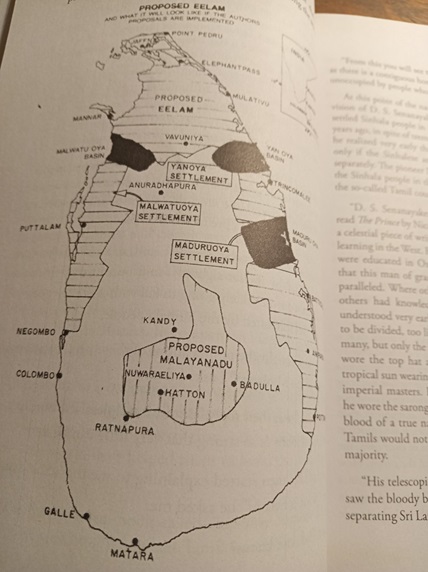
Phase one of Karunatilleke’s plan was to break the north- east Tamil settler continuum by creating three Sinhala settlements in the river basins of Maduru Oya, Yan Oya and Malwatu Oya.  The Maduru Oya settlement (Mahaweli system B) would come between Batticaloa and Trincomalee districts.  The Yan Oya settlement (Mahaweli system L) would be between Trincomalee and Mullaitivu districts.  The Malwatu Oya settlement (Mahaweli system I) would prevent a connection between Mannar and Puttalam districts. [2]

The landsaround these three streamswere mostly jungle and sparsely populated. The plan was to settle at least 50,000 Sinhala families in each of these settlements, thus completely altering the ethnic composition of the population in these areas.

The Yan Oya settlement was the most urgent and most important of these settlements. Yan Oya is a fourth order stream with a drainage area of 1,551.3 km, and length of 142 km. The basin has seven sub-watersheds.  It starts in the hilly areas of Dambulla and Sigiriya, and flows to the sea at Pulmoddai in the Trincomalee district.

Maduru Oya is a sixth order stream approximately 135 km (84 mi) in length. It meets the sea at Kalkudah. Malwatu Oya is a second order stream which discharges into Mannar Lagoon after passing through Anuradhapura, Vavuniya and Mannar districts. The Malwatu Oya segment selected by Karunatilleke for settlement is in the arid zone and its carrying capacity is low. Therefore the Malwatu settlement could be administered last, Karunatilleke said.    

The second phase of the plan was to make use of the demographic change brought about by the Sinhala settlements and redraw the provincial map of Sri Lanka.  The boundaries of the Northern, North Central, North Western and Eastern provinces would be altered and a fifth province created, North Eastern Province.

Northern Province would contain Jaffna, Kilinochchi and Mullaitivu districts. North Central Province will have Vavuniya, Anuradhapura and Weli Oya districts. Weli Oya would be made a new district thus reducing the area of the Mullaitivu district. North Western Province will contain Mannar, Puttalam and Kurunegala districts. Eastern Province will have Batticaloa and Ampara districts.  The new province, North Eastern Province will contain Polonnaruwa and Trincomalee districts.  [3]

T.H. Karunatilleke, B.H. Hemapriya and Malinga Gunaratne met to discuss Karunatilleke’s plan. This meeting was held in    July 1983 days before the 1983 riots. Karunatilleke and Hemapriya had the sense to keep the plan secret, noted Malinga.

Malinga found the plan feasible. System M is adjacent to Padaviya on the north, to Trincomalee and Kantale on the south and Horowopotana and other Sinhala settlements on the west. The Sinhala settlements already in place were close to each other Weli Oya to Padaviya is 18.4 km and 27 minutes travel. Morawewa to Padaviya was just 15 minutes flying time. If you settle in Yan Oya, expand Padaviya and fortify Trincomalee, it is done,   said Malinga.

Yan Oya and Maduru Oya settlements were discussed simultaneously, but Maduru Oya settlement was the first to be actually carried out by the group. The resulting Maduru Oya settlement fiasco” has been discussed. This essay looks at the settlement project planned for Yan Oya at the Mahaweli Ministry.

Karunatilleke had prepared a report for the Mahaweli Authority, titled Geo-political significance of developing Yan Oya, Mahaweli system M.” Yan Oya had approximately 40-50,000 acres of land, mostly un- utilized.  We must develop this immediately, Karunatilleke said in the report. System M could be developed at low cost and within a short period of time. Excess water from the Mahaweli should be diverted to Yan Oya.

A new Sinhala settlement must be established at Yan Oya. This should be done straightaway he said. Yan Oya already had a predominantly Sinhala population  at Huruluwewa. Upper region of the future settlement must therefore start at Huruluwewa.  Karunatilleke also wanted small e also

farms created and given out to ex-servicemen. He wanted the outer perimeter of the settlement fortified with cadju plantations. There should be massive cadju plantations there, he said

Karunatilleke pointed out that at present the Eastern Province has small Sinhala settlements distributed over a wide area. These small settlements cannot survive on their own. They are too far apart, and since they depend on small tanks which do not give them sufficient water for assured cultivation, they are economically weak. They will   be easy prey for Eelamists. For the continuous existence of these small settlements it is necessary to anchor them to large Sinhala settlements.

Yan Oya settlement will strengthen the already established Padaviya and Kantale schemes as well as small settlements like Morawewa and Mahadivulwewa in the Trincomalee district.   When Yan Oya settlement   links with Padaviya and  Morawewa a large Sinhala area starting at Padaviya and extending to the eastern sea coast will be created   Padaviya is narrow and surrounded by Tamil settlements,  But when linked to  the  Yan Oya settlement, there will be a ‘large strong anchorage’. The Sinhala settlement must then move upwards from Padaviya into Mullaitivu district where there are sufficient natural resources to accommodate the increased population, said Karunatilleke.     

Establishing small scattered   settlements cannot solve the problem of Eelam. What is needed is a permanent solution, and that is to set up large Sinhala settlements.  Small settlements can get wiped out but a large region of the magnitude planned at Yan Oya will not succumb.  If these small settlements are anchored in this way, they will get firmly established and will help Sinhalise the Northern Province said Karunatilleke.

Malinga conveyed Karunatilleke’s plan to Gamini Dissanayake, Minster for Mahaweli. Gamini thought the proposal an excellent one. He would inform the President JR Jayewardene. He wanted to meet Karunatilleke and he wanted a paper prepared.  Karunatilleke was very happy about his meeting with Gamini. He wrote up the report discussed above.  

Around 23 July 1983, Gamini told Malinga that the President was in complete agreement with the plan. Malinga was told to go ahead with arrangements for Yan Oya. Malinga discussed the project with NGP Panditeratne, Director General of Mahaweli authority. Panditeratne was cautious. He said this Yan Oya proposal is not a new one. It had been there for some time. He okayed the project.

Malinga contacted the authorities at Central Engineering Consultancy Bureau. CECB was at the time attached to Ministry of Mahaweli Development and Environment. A.N.S. Kulasinghe (Chairman), G.G. Jayawardene and H.B. Jayasekera of the CECB were enthusiastic about the project when they heard that President had given approval.   Karunatilleke and Hemapriya came in and briefed them 

HB Jayasekera, deputy General Manager, CECB   had fought many battles in Mahaweli to prevent the inequitable distribution of water to the north and east. He knew intimately, in detail and depth, how Eelam lobbyists had penetrated the Mahaweli nerve centers, said Malinga  

Jayasekera visited Yan Oya and reported back that Yan Oya valley is a very fertile basin of 25-30,000 acres. Soil is very rich and any kind of crop can be grown. River flows through lush uninhabited country and into the sea. The valley is not inhabited but some Tamil settlements have come up in near the perimeter of Yan Oya close to the sea. They have seen the importance of this basin and these settlements appear to be illegal.

Jayasekera suggest advance alienation of the land to prevent Eelamists from grabbing the land. The Sinhala settlers should be given the land before the dam is built. They can do one cultivation with the monsoon rains and some of the settlers can be utilized for development of the project.      State cadju plantations can also be started.

Mahaweli Authority wanted to test the political mood in the Yan Oya with regard to security for the settlers. Karunatilleke and Palitha Pelpola were sent to find out. They reported that that there was absolutely no problem in settling a Sinhala population there as there was  a predominantly Sinhala population already in the upper reaches and that can be extended quietly.

Kulasinghe sent his officers to find a suitable location for the dam across Yan Oya. Once a location was found, Kulasinghe ordered a dam in Yan Oya. Dam could be thrown across Yan Oya in six months at cost of 300 million rupees, water sufficed for 30,000 people, reported Malinga in his book. There is no mention of this dam  after that.

In August 1983, Gamini  wanted to meet the key officers who would implement the Yan Oya project. Malinga was asked to organize the meeting. They decided it was best to meet at Gamini’s house and not the Ministry.   At this meeting Gamini had outlined the plan for Yan Oya and Malwatu Oya settlements. He said that he had discussed this with the President and was now formally instructing his officials to go ahead with the plan.   Kulasinghe spoke on the engineering aspects of the Yan Oya dam and Panditaratne stated that funds were available. Kulasinghe was instructed to go ahead with the dam and Malinga was asked to get suitable persons as settlers.

However, Panditaratne was not happy about the meeting.He told Malinga to ask   Gamini not to arrange any further meetings of this sort, but to allocate tasks to persons, with Malinga monitoring them for the Minister. He was correct. The other officials in the Ministry objected to being left out and opposition to the project started building. Some tried to scuttle the project. No more meetings were held.  

Malinga started to look for settlers. He instructed the Public Relations Officers in his Department to go out and select the future settlers. Choose able bodied men between 30-40 with an aptitude for farming,  who will not look to the state for assistance. The PROs were not told where the settlers were going, only that it would be around Trincomalee. The PROs fanned out to the different parts of the island in search of settlers. We were going to do a massive settlement in system M of the Yan Oya basin.

In early October, 1983 Gamini Dissanayake  assembled a group of business men at the home of Nawaloka Mudalali’s son to obtain financial support for future Sinhala settlements in the Eelam area. Malinga was present and wrote about it in his book. He said that about 15 were present including at least two MPs, GV Punchinilame and GM Premachandra. The business men included, H. K. Dharmadasa (Nawaloka Mudalali) and his son, S. D. Gunadasa  (Dasa Mudalali), Chandra Hemachandra and his son. Chandra was  a  bus magnate  owning  one of Sri Lanka largest transport fleets.

This group were told about the illegal Tamil settlements in the Mahaweli system. Mahaweli officials   explained the ‘secret plan’. Yan Oya and Malwatu Oya  settlement plans were described. Gamini said he wanted the settlements in  Yan Oya and Malwatu   be done in the same style as Maduru Oya.

Gamini said that the state would not be able to undertake the plan as it would upset India.  He suggested that a private fund be established to finance the project. Dasa  Mudalali  had his doubts about this plan. He wanted to know whether the President actually knew about this.  Gamini said  Yes, the President knows and I will get a contribution   from  Presidents fund for the purpose. The group then pledged sums of money  totaling Rupees 3 ½ million. Malinga  had noted down each sum.  Nawaloka Mudalali   was asked to find a name for the fund  and an auspicious time to start it.

The inaugural meeting  of the fund was  held at Gamini’s house on 16 October 1983. Malinga was present. Nawaloka Mudalali handed over the first  cheque at the auspicious time, followed by  the others. The cheques were not cashed because the next day Jayewardene ordered the arrest of  Malinga Gunaratne and other prime movers of the  ‘secret plan’.  At the same time, he also ordered  the  complete removal of the Maduru Oya settlement. That was the end of the Yan Oya project . (continued)


[1]  Malinga Gunaratne. For a sovereign state

[2] www.sangam.org/articles/view2/?uid=626 T Sabaratnam

[3] www.sangam.org/articles/view2/?uid=626 T Sabaratnam

අගමැතිණියගේ ලෙඩේ පාසල් දරුවන්ටත් බෝ කරන්නයි හදන්නේ – විමල් වීරවංශ

February 18th, 2025

Courtesy Lanka Leader

අගමැති හරිනි අමරසූරිය අධ්‍යාපන ඇමතිවරිය විදියට ඇගේ ලෙඩේ පාසල් දරුවන්ටත් බෝ කිරීමේ උත්සාහයක් නියැලෙමින් සිටින බව ජාතික නිදහස් පෙේමුණේ නායක විමල් වීරවංශ මහතා පවසයි. 

ඊයේ (17) ජාතික නිදහස් පෙරමුණෞ මූලස්ථානයේදී පැවැති මාධ්‍ය හමුවකට එක් වෙමින් ඒ මහතා මේ බව පැවසීය. එහිදී වැඩිදුරටත් අදහස් දැක්වූ විමල් වීරවංශ මහතා මෙසේද පැවසීය. 

”අපේ රටේ අගමැතිනිය, හරිනි අමරසූරිය මහත්මිය. එතුමියටත් ලොකු ව්‍යාධියක් තිබෙන බව පේනවා. එතුමියගේ මාධ්‍ය අංශයෙන් 2025-02-11 ලෝක බැංකුවේ නිලධාරීන් සමග සිදුකළ සාකච්ඡාවක වාර්තාවක් නිකුත් කරලා තිබෙනවා. එම මාධ්‍ය වාර්තාවේ කොටසක් මම කියවන්නම්”

” මෙම අතිරේඛ මුදල් යොදවමින් පාසල් දරු දැරියන්ගේ සෞඛ්‍ය හා ප්‍රතිශක්තිය වර්ධනය, පාසල් සංවර්ධනය සඳහා වැඩසටහන් ක්‍රියාත්මක කිරීම, නව අ්‍ධ්‍යාපනය සදහා ගුරුවරුන් පුහුණු කිරීම, ස්ත්‍රී – පුර්ෂ සමාජභාවය සහ සමානාත්මතාවය ඇති කිරීම. “

මොකක්ද මේ ස්ත්‍රී පුරුෂ සමානාත්මතාවය කියන්නේ මෙන්න මේ වගේ බර වචන දාලා තමයි මේවා හංගන්නේ යැයි ඔහු පැවසීය. මෙම මාධ්‍ය හමුවේදී 2025 අය වැය සම්බන්ධයෙන් සහ පොලීසියේ ජොබ් එක කරන පුනරුද රාළහාමිලා සම්බන්ධනේද ඔහු අදහස් දැක්වීය. 

සම්පූර්ණ මාධ්‍ය හමුව පහළින් 

“The government’s budget has followed the exact path suggested by the IMF, so it’s supposedly good for the country – Central Bank Governor Nandalal assures.”

February 18th, 2025

Courtesy Lanka Leader

The Governor of the Central Bank, Nandalal Weerasinghe, stated that it is the government’s responsibility to act in accordance with the parameters of the IMF’s overall macroeconomic stabilization program and that, in line with this, the current budget is a good one for the country.

Expressing his views on the budget in Colombo, he said:

**”Looking at the targets, this time we can place greater confidence in them. Although the expected revenue target is 5 trillion rupees and the primary surplus is anticipated to be 2.3%, based on my expectations, the performance may even surpass these figures.

Furthermore, implementing safeguards to absorb the short-term pressures on government securities is crucial. This would allow us to maintain stable interest rates in line with our monetary policy.

If we talk about an ‘IMF budget’ as some suggest, as someone who has been involved in discussions with the IMF for many years, I can say that the commitments made to external stakeholders for achieving overall economic stability as a country have remained unchanged. Even if there is a change in administration, it is reassuring that the direction of macroeconomic policies has not shifted.

In my view, this is something that must necessarily happen. Acting in accordance with the IMF’s overall macroeconomic stabilization framework is not only the government’s responsibility but also a positive sign. As I see it, this is not an ‘IMF budget’ but a budget that is good for the country.

ආණ්ඩුවේ අයවැය IMF කියූ පාරේම ගිය අයවැයක් නිසා රටට හෙඳයිලු – මහ බැකු අධිපති නන්දලාල් සහතික වෙයි…

February 18th, 2025

උපුටා ගැන්ම  ලංකා ලීඩර්

ජාත්‍යන්තර මූල්‍ය අරමුදලේ සමස්ත සාර්ව ආර්ථික ස්ථාවරකරණ වැඩසටහනේ පරාමිතීන් අනුව කටයුතු කිරීම රජයේ වගකීමක් බවත් ඒ අනුව මෙවර අයවැය රටට හොඳ අයවැයක් බවත් මහ බැංකු අධිපති නන්දලාල් වීරසිංහ මහතා පවසයි.

අයවැය සම්බන්ධයෙන් කොලඹදී අදහස් පල කරමින් ඔහු මෙසේ පැවසුවේය.

ඉලක්ක දෙස බැලුවාම මේ වතාවේ ඒ පිළිබඳ වැඩි විශ්වාසනීයත්වයක් තැබිය හැකියි. රුපියල් ට්‍රිලියන 5ක ආදායම් ඉලක්කයක් සහ 2.3%ක ප්‍රාථමික අතිරික්තයක් අපේක්ෂා කළත්, මගේ අපේක්ෂාවන් අනුව එය ප්‍රමාණය ඉක්මවා ගිය ක්‍රියාකාරීත්වයක්.

ඒ වගේම රජයේ සුරැකුම්පත් සඳහා වූ කෙටිකාලීනව පැන නගින පීඩනයන් අවශෝෂනය කරගැනීම සඳහා ආරක්ෂණ යෙදීමද වැදගත්. එමගින් අපේ මූල්‍ය ප්‍රතිපත්තිය අනුව ස්ථාවර පොලී අනුපාත පවත්වාගෙන යාමට හැකියාවක් ලැබේවි.

ඇතැමුන් කියන විදියට IMF අයවැයක් ගැන කතා කළොත්, වසර ගණනක් තිස්සේ IMF සමග සාකච්ඡාවලට සහභාගී වූ අයෙකු විදියට මට කියන්න පුළුවන් මේ වතාවේ රටක් විදියට සමස්ත ආර්ථික ස්ථාවරත්වයක් උදෙසා නිවැරදි මාර්ගයේ ගමන් කිරීම සඳහා බාහිර පාර්ශ්වකරුවන්ට ලබාදී ඇති ප්‍රතිඥාවන් වෙනස් වී නොමැති බව. පරිපාලනයේ වෙනසක් සිදුවුවත් සාර්ව ආර්ථික ප්‍රතිපත්තිවල දිශානතිය වෙනස් නොවීම සතුටට කරුණක්.

මගේ අදහස හැටියට එය අනිවාර්යයෙන් සිදුවිය යුත්තක්. ජාත්‍යන්තර මූල්‍ය අරමුදලේ සමස්ත සාර්ව ආර්ථික ස්ථාවරකරණ වැඩසටහනේ පරාමිතීන් අනුව කටයුතු කිරීම රජයේ වගකීමක් වගේම එය සුබවාදී ලකුණක් හැටියටයි මම දකින්නේ. මම දකින විදියට මේක IMF අයවැයක් නොව , රටට හොඳ අයවැයක්”

Namal granted bail in Krrish deal case

February 18th, 2025

Courtesy The Daily Mirror

Colombo, Feb 18 (Daily Mirror) – The Colombo High Court today granted bail to Sri Lanka Podujana Peramuna (SLPP)  Parliamentarian Namal Rajapaksa after serving him with indictments in connection with the controversial Krrish deal case.

Colombo High Court Judge Manjula Tillekaratne ordered Namal Rajapaksa to be released on a cash bail of Rs.100,000 with two sureties of Rs. 10 million each. 

The court further ordered that his fingerprints be obtained to ascertain any previous criminal records. 

Meanwhile, the court fixed the pre-trial conference for March 27.

The Attorney General filed criminal proceedings before the High Court against Namal Rajapaksa over the alleged misappropriation of Rs. 70 million belonging to Krrish Company.

The indictments were filed before the Colombo High Court by the Attorney General, alleging the misappropriation of Rs. 70 million provided by the Indian real estate company Krrish Lanka Pvt. Ltd. for the development of rugby in Sri Lanka.

Effectiveness of public service decisions questioned amid 2025 budget benefits

February 18th, 2025

Courtesy The Daily Mirror

Colombo, Feb 18 (Daily Mirror) – Considering the benefits provided to state sector employees in the 2025 budget, doubts arise over the effectiveness of decisions made regarding the public service, United Postal Trade Unions Front (UPTUF) Co- convener Chinthaka Bandara said.

Addressing the media, he said this budget can be described as one that creates a problematic situation in terms of people’s expectations. 

“This budget will determine how the public service will be implemented in the country. We do not see any significant benefits for the people from this budget. The salary anomaly issue in the education sector remains unresolved. It is clear that the current government will not address the salary issues of state sector employees even within the given three years. The budget only included a Rs. 15,750 salary increment for state sector employees,” he said.  

Therefore, state sector employees are not satisfied with the proposed salary increments in the budget. Nothing was provided to support the cost of living for the people, and no tangible benefits were offered, he added.  

“As trade unions, we hope to be directly involved in the budget process,” Bandara said.

Canteen, hotel food prices to increase from tonight

February 18th, 2025

 CHATURANGA PRADEEP SAMARAWICKRAMA   Courtesy The Daily Mirror

Colombo, Feb 18 (Daily Mirror) – The All Island Canteen and Restaurant Owners’ Association (AICROA) has decided to increase the prices of all canteen and hotel food items from midnight today.  

Association Chairman Harshana Rukshan said that the price of a cup of plain tea will increase by Rs. 5, a cup of milk tea by Rs. 10, a plate of fried rice and kottu by Rs. 30, and the prices of short eats by Rs. 10.  

Addressing the media, he said that no concessions were provided for canteen and restaurant owners in the recent budget.  

“Even though the price of a packet of salt has increased to Rs. 200, the price of an egg has risen again to Rs. 35, a kilogram of chicken costs more than Rs. 1,000 and the price of coconuts has reached a maximum of Rs. 220, we did not request the President to reduce the prices of any of these items.  

“Unfortunately, no support has been provided for the protection of canteens and restaurants in the country,” he added.

Government has failed to address teachers’ salary issues in budget: Stalin

February 18th, 2025

 CHATURANGA PRADEEP SAMARAWICKRAMA  Courtesy The Daily Mirror

Colombo, Feb 18 (Daily Mirror) – Ceylon Teachers’ Union (CTU) Secretary Joseph Stalin claimed today that the government has not addressed the issue of teachers’ salaries in the recent budget.

Addressing the media, he said that both the President and the Prime Minister had assured that the existing salary issues would be resolved in the 2025 budget.

He reminded that state employees staged protests demanding a Rs. 20,000 salary increment, while principals and teachers protested for the remaining two-thirds of their salary anomalies to be rectified according to the Subodhini Committee report. However, according to the budget, the salary increase has only been planned for three years, suggesting that there will be no budget allocations for 2026 and 2027.

With the reduction of the Rs. 7,500 allowance, there will only be a Rs. 6,225 salary increment by April 1 for Grade 1 teachers and principals. Teachers in Service Grade 2.1 will receive an increase of Rs. 4,056, those in Grade 2.2 will receive Rs. 2,061, and teachers in Grade 3.1 will receive only Rs. 860.

“We all expected a Rs. 20,000 salary increment, but not a single word was mentioned about implementing the two-thirds of the remaining salary increment approved in the Subodhini Committee report. The budget only referred to an increase in the basic salary by Rs. 15,000,” Stalin said.

“The teachers who took to the streets in protest were assured that their demands would be met, but now they have been let down by the government. The future decisions of teachers and principals will depend on the government’s response to their concerns,” he added.

I have been instructed by the party not to speak to the media – Kottahachchi

February 18th, 2025

Courtesy The Daily Mirror

Colombo, Feb 18 (Daily Mirror) – Following recent controversial remarks to the media, MP Nilanthi Kottahachchi has been adviced to refrain from making statements to the media.

“I ‘m sorry, I am unable to make any comments to the media as I have been instructed by the party not to speak to the media,” she stated when reporters posed a question to her on Sunday (16) during the Clean Sri Lanka programme in Gimpatha, Keselwatta.

Farmers to promptly receive compensation for flood-damaged crops

February 18th, 2025

Courtesy Adaderana

The Agricultural and Agrarian Insurance Board says that measures will be taken to swiftly provide insurance compensation to farmers in districts that have not yet received payments for crops damaged by the floods last November during the 2024/25 ‘Maha Season’.

Accordingly, Rs. 202 million is expected to be credited to the back accounts of 9,368 farmers in the Batticaloa District tomorrow (19).

Furthermore, the board stated that Rs. 98 million will be credited to compensate 6,671 farmers in the Trincomalee District for their damaged crops by February 21, the board said.  

Thus far, a total of Rs. 306 million has been credited to the bank accounts of a portion of the farmers in the districts of Polonnaruwa, Vavuniya, Mullaitivu, and Trincomalee as insurance compensation of the crops damaged.


Copyright © 2026 LankaWeb.com. All Rights Reserved. Powered by Wordpress