Pivithuru Hela Urumaya (PHU) leader Udaya Gammanpila said that he was delighted that the National People’s Power (NPP) government had decided to go ahead with the Trincomalee Oil Tank Farm development project agreement inked during President Gotabaya Rajapaksa’s presidency.
The former Energy Minister said so in response to The Island query regarding President Anura Kumara Dissanyake’s declaration at a public rally held at Katukurunda that 61 out of the 99 oil storage tanks would be jointly developed. The President sought credit for the project implying that his recent state visit to New Delhi facilitated it, former lawmaker Gammanpila said.
Declaring that the agreement on the Trincomalee oil tank farm had been signed on January 06, 2022, Attorney-at-Law Gammanpila emphasized that it was tabled in Parliament on Feb 08, 2022. The signatories to the agreement were Sri Lanka, Ceylon Petroleum Corporation (CPC), Lanka IOC and the subsidiary company Trinco Petroleum Terminal Pvt. Ltd., of which CPC retained 51% and Lanka IOC 49%. President Dissanayake, who had been the leader of a three-member NPP ministerial delegation that made a state visit to India last month, couldn’t be unaware of the agreement that was approved by the Cabinet of Ministers on January 03, 2022, in the run-up to the eruption of public protest campaign demanding President Gotabaya Rajapaksa’s ouster, the PHU leader said.
Having been severely critical of the then government’s plans, it would be unfair of the NPP leader ,who is also the leader of the JVP, to take credit for this strategically important Trinco project.
The ex-MP stressed that Lanka IOC is a subsidiary of Indian Oil Corporation which is under the ownership of that country’s Ministry of Petroleum and Natural Gas.
Alleging that the NPP has nothing to do with the Trinco project, the ex-Energy Minister said that in terms of the agreement that covered lower and upper sections of the oil tank farm – consisting of 99 tanks – 14 tanks were further leased to Lanka IOC, 24 tanks to the CPC and the rest to be jointly developed by India and Sri Lanka.
Of the 24 tanks allocated to CPC, five had been already renovated, the PHU chief said, adding that Sri Lanka and India first covered the Trinco oil tank farm in an agreement at the time of the Indo-Lanka Accord that was forced on President J.R. Jayewardene. Since then there had been a couple of agreements that dealt with the British built Trinco oil tank farm targeted by a Japanese naval task force during the Second World War. Of the 100-tank facility, only one was hit.
The PHU leader said that President Dissanayake also claimed credit for securing, what his media division dubbed, the single largest foreign direct investment worth USD 3.7 bn on a state-of-the-art oil refinery at Mirijjawila, Hambantota, whereas the actual agreement was finalized in Nov. 2023 during Ranil Wickremesinghe’s presidency. SLPP’s Kanchana Wijesekera served as the Energy Minister at that time.
The former Minister urged the NPP to accept the truth. Having repeatedly accusing the previous governments of selling national assets to India, the NPP now pursued the same policy, Gammanpila said, declaring the NPP took the electorate for a mega ride. The NPP had been badly exposed and humiliated in the eyes of the public who really believed their catchy and often touted vow to change the system.
The former Minister said that President Dissanayake’s state visits to New Delhi and Beijing advanced the agendas that had been previously agreed. That is the truth the NPP is reluctant to accept. The NPP claims on Trinco oil tank farm and Mirijjiwila oil refinery proved beyond doubt that previously agreed projects were continuing,” ex-lawmaker Gammanpila said.
Contrary to routine criticism of the IMF, the NPP leadership faithfully followed the IMF agenda as agreed during the Wickremesinghe-Rajapaksa administration, the lawyer said, reminding the NPP conveniently refrained from opposing the Economic Transformation Bill that received parliamentary approval during Wickremesinghe’s presidency.
Gammanpila said that essentially the NPP’s overall policies were the same. There couldn’t be better examples than the continuation of the Trinco project inked before Aragalaya and the Mirijjawila project finalised a year after Aragalaya to highlight the NPP’s duplicity, he said.
Colombo, January 22 (Daily Mirror)- Claiming that no one will be allowed to sell rice beyond the control price, President Anura Kumara Dissanayake said rice mills will be taken under army control if they fail to agree to the mechanism of the government.
He said in a television programme that the government will put in place a mechanism to face the rice shortage in the country and said it will take some time for that.
“There is a massive discrepancy in data. So, how can a government take decisions?. It is false that some major rice millers are hoarding stocks. let us have a few days. We will not allow rice to be sold beyond the Maximum Retail Price. We will have a mechansim to face that. We will take the mills under the army’s control if they fail to agree to our plan, “he said.
The President said after the mills which fail to agree to government mechanism were taken under army control, army personnel will be stationed in the mill to take records of rice issued by the mill and will monitor at which price the rice is issued to shops. “The mill will function under its managers and operate by its employees,” he explained.
When asked if such a move is democratic, the President said it is absurd talking about democracy when it comes to rice in this country.
He also said the government will announce the control price for paddy soon and urged the rice millers to purchase paddy at a price which they can sell rice at control price.
The President said those who purchase paddy must register with the Consumer Affairs Authority and the government will take records of the paddy stocks in the country.
The case involving alleged financial irregularities amounting to Rs. 70 million during the leasing of 4.3 acres of land at the Krrish Transworks Square in Fort, Colombo, was taken up before the Fort Magistrate’s Court today (22).
Sri Lanka Podujana Peramuna (SLPP) MP Namal Rajapaksa, who has been named as a suspect in the case and currently out on bail, was present in court during the trial.
During the proceedings, investigating officers informed the court that the Commission to Investigate Allegations of Bribery or Corruption (CIABOC) has launched a separate inquiry into MP Rajapaksa concerning the same incident.
Following the submissions, Fort Magistrate Nilupuli Lankapura directed that the ongoing case being handled by the Criminal Investigation Department (CID) be taken up again on June 04, pending the Attorney General’s advice.
Civilized society is perpetually menaced with disintegration through this primary hostility of men towards one another. Sigmund Freud. Velupillai Prabhakaran (1954–2009) was the leader of the Liberation Tigers of Tamil Eelam, and he launched a destructive proxy war against the Sri Lankan government for over nearly three decades. Prabhakaran was the most lethal and cataclysmic force experienced by the Sri Lankan state in recent history. For many years, he was able to continue his ferocious attacks against the people and the state of Sri Lanka. Following these aggressions, over 100,000 lives were lost, and millions of dollars’ worth of property were destroyed.
Prabhakaran permanently changed the Sri Lankan political landscape and created a collective trauma among people. He became the public enemy number one in the South. Furthermore, he turned the rich Tamil values that are flourished with the doctrine of Hinduism and the teachings of Mahatma Gandhi into a totalitarian cyanide culture. Although Prabhakaran was considered a megalomaniac or a mass murderer in the South among his followers, they used to worship him as a demigod. They hailed him as a hero, a messiah, or a deliverer. Some compared him to the ancient Tamil warrior Sagkillian, who fought against the Portuguese. According to them, Prabhakaran was the person who brought respect and identity to the Tamil people. He had been recognized de facto as the sole representative of the Sri Lankan Tamils, despite the fact that he had eliminated thousands of Tamils, including intellectuals like Dr. Rajini Theranagama, Dr. Nelan Theruchelvam, Mr. Lakshman Kadirgamar, PC, etc. Some of his blind followers still believe that Prabhakaran is alive and is secretly living in Eritrea.
Prabhakaran committed high-profile killings. He was directly involved in the assassination of Rajiv Gandhi, the former Prime Minister of India. Also, under his orders, Ranasinghe Premadasa, the 3rd President of Sri Lanka, was killed. Moreover, he violated local and international laws, killing statesmen, ministers, and civilians. Also, he was accused by the United Nations of nonstop child conscription. His involvement in human rights abuses was seriously questioned by the West. However, his alleged war crimes and crimes against humanity were not taken to the International Criminal Court (ICC) in The Hague. Upon his death in 2009, he got away with war crime charges.
Although Prabhakaran was a destructive force, he had military capabilities and organizational skills and knew how to motivate people and convert them into diehard fighters and suicide bombers. His leadership qualities were exceptional. His cadres feared and respected him. He was a tactician and had remarkable skills in the military operations. He launched a number of attacks against the Sri Lankan forces, sometimes overrunning military camps. Furthermore, he was a lethal force that kept fighting for nearly three decades. Even the Indian Army, which is the second largest in the world after China and has over 1.4 million active troops, could not defeat him. One time, he was invincible.
His war machine faced a number of experienced military commanders. Was he a military genius or a skilled tactician? Some say he followed the war tactics of the great Vietnam General Vo Nguyen Giap, who launched massive attacks against the American forces.
How could such an uneducated common man make such a huge accomplishment? Indeed, he was a destructive force. But his talents cannot be underestimated. We ought to understand how Prabhakaran was able to create an immense killing machine. Maybe the secret lies within his personality.
In his book “Inside an Elusive Mind, Prabhakaran M.R. Narayan Swamy describes him as the world’s most ruthless guerrilla leader. Moreover, M.R. Narayan Swamy highlights some of Prabhakaran’s personality traits. According to M.R. Narayan Swamy, these personalities and psychological features transformed Prabhakaran into a remorseless, unsympathetic, and vindictive person. However, in my opinion, M.R. Narayan Swamy had not gone deep enough inside Prabhakaran’s inner psyche to analyze his behavior and personality traits.
Indeed, (according to his assumptions), Prabhakaran had valid reasons to start his vicious military campaigns against the Sinhalese and the Sri Lankan government. As a child, he observed Sinhala nationalism and ethnic riots against innocent Tamil civilians. These events created a blazing hatred for the Sinhalese nation.
Once, when I delivered a lecture on war trauma in Sri Lanka at Washburn University in Kansas, USA, in 2006, one of the professors asked me a direct question. He asked me whether the Prabhakaran factor was created by Sinhala–Buddhist Chauvinism. According to Professor Daya Somasundaram of the University of Jaffna, Tamil militancy was a creation of the Sri Lankan State and armed forces (Page 56: Scarred Minds by Daya Somasundaram). Perhaps these statements do not validate the rising of the Prabhakaran factor. There were other certain personality traits that made the former LTTE leader a ruthless killing machine. His remorseless, die-hard personality made him one of the most callous paramilitary leaders in recent history.
Undeniably, specific personality factors contributed to Prabhakaran’s character and his destructive nature. Along with Prabhakaran, other Tamil militants like Sri Sabarathnam (Tamil Eelam Liberation Organization (TELO) leader) and Uma Maheswaran (People’s Liberation Organization of Tamil Eelam (PLOTE) leader) launched attacks against the Sri Lankan security forces.
The other two leaders were more moderate, and they had no strong prejudice or racial hatred towards Sinhalese people. They were more educated than Prabhakaran. The PLOTE leader, Uma Maheswaran, had Marxist ideas, and he was willing to collaborate with the Sinhalese people who respected the right of nations to self-determination. But Prabhakaran was an uncompromising nationalist. He condemned Uma Maheswaran and Sri Sabarathnam and later killed them.
Prabhakaran was unschooled and a dropout. His school education was limited to year 10. Some of Prabhakaran’s contemporaries indicate that he had a dislike and resentment towards educated people. He had feelings of inadequacy and inferiority when he dealt with educated people. He refuted a number of Tamil intellectuals and even went to the extent of physically eliminating them. Prabhakaran disrupted the school education of thousands of children and sometimes forcibly conscripted them to his baby brigade.
Dr. Gustavo Gilbert, a renowned American psychologist, analyzed some of the Nazi leaders, like Hermann Göring and the commandant of the Auschwitz concentration camp, during the Nuremberg trial. Dr. Gilbert found an explicit factor that was specific to the Nazis. He identified that the Nazis had a low level of empathy. Also, they had some kind of dual nature. In their private lives, they loved their wives and kids, but when the savage side came into action, they could kill tens of thousands of women and children in gas chambers. There are marked personality traits that were characteristic of Prabhakaran.
At school, Prabhakaran was mediocre. He was struggling and falling behind in school. He continuously had learning difficulties. Furthermore, he displayed cruelty toward animals, especially cats, squirrels, and birds. Also, he practiced unusual pain-inducing rituals like pricking himself with needles and sleeping in gunny bags with chili powder. These show sadistic and masochistic instincts, which he displayed during the adolescent period.
As a child, Prabhakaran had an inclination towards violence. He hardly obeyed the social rules. Sometimes he used to steal chemicals from the school laboratory to make primitive bombs. On several occasions, he ran away from home and stayed with his relatives. At the age of 16, he set fire to a bus that belonged to the Ceylon Transport Board. At a certain point, young Prabhakaran was uncontrollable to his parents. His adolescent spitefulness and vindictiveness later turned into mass social aggression.
It is possible to believe that young Prabhakaran suffered from conduct disorder. As described by Fairchild and colleagues (2019), conduct disorder (CD) is a common and highly impairing psychiatric disorder that usually emerges in childhood or adolescence and is characterized by severe antisocial and aggressive behavior. Conduct disorder usually emerges in childhood or adolescence and lies on a spectrum of disruptive behavioral disorders. Conduct disorder demonstrates aggression and violations of the rights of others and evolves over time. Often, they have repetitive and persistent antisocial behaviors.
However, there was another side to Prabhakaran. He was a loving father and a cordial person to his personal friends. Anita Pratap, who is an Indian writer and journalist, met Prabhakaran in person and describes him as a charismatic and charming person. In 2003, I interviewed Karate Grand Master Shihan Bonnie Roberts, who met Prabhakaran in Vanni. Mr. Bonnie Roberts stated that Prabhakaran was a friendly and warm person. Nevertheless, his warmth never extended to Sinhalese people.
During his childhood, Prabhakaran frequently heard horrendous stories about the Sinhalese people and their atrocities committed against Tamil people. During the 1958 communal riots, Prabhakaran was a four-year-old child. He heard many stories that revealed brutalities unleashed by Sinhalese people against the Tamil people. During that era, such stories were often fabricated and exaggerated by both parties in order to arouse national feelings. As a child, Prabhakaran often heard these stories, and naturally he developed an animosity against the Sinhalese people.
Young Prabhakaran had a private tutor, and he was an ultranationalist. This tutor became one of the most influential men of his life, and he injected racial venom into young Prabhakaran. Prabhakar grasped many ideas and racial prejudices from this tutor.
Another unconfirmed story (told to me by Capt. Amith of the Military Intelligence Corps – Sri Lanka) describes how seven-year-old Prabhakaran witnessed one of his uncles being savagely beaten by a police constable in Jaffna. I think this story has some credibility. During the fifties and sixties, even in the seventies, many policemen who went to serve in Jaffna went with wrath and discontentment. Many police officers were sent to the North following disciplinary issues. Those who went to Jaffna following punishment transfers. These people suffered from severe work-related stress. Their anger and frustration were often focused on the civilians living in the Northern peninsula. Unlike in the South, the police brutality was interpreted in racial terms.
His birthplace, VVT, or Valvettithurai, was famous for illicit smuggling. This village was often raided by the Sri Lanka Police and the Navy. The first Sinhalese people Prabhakaran saw were these law enforcement officers. Little Prabhakaran became emotionally shattered when he heard about the killing of a poosari in Panadura during the 1958 anti-Tamil riots. This event was described in Malith Jayathilaka’s book titled Alimankada as well. The poosari was savagely beaten and burnt alive by the mob.
In his childhood image, the Sinhalese people were brutal, disrespectful to the Tamil people and their culture, and violent by nature. He believed that the majority Sinhalese were constantly tormenting the Tamil people. He wanted to take revenge someday, and he was determined. He wanted to create a brutal, violent force to fight against the Sinhalese.
Certainly, there were a number of atrocities committed against the Tamil people by some Sinhalese factions. Most of them were politically motivated. These atrocities were not accepted by the peace-loving Sinhalese majority, and they condemn such attacks. Even during the 1983 communal riots, many Sinhalese families protected their Tamil neighbors from mob attacks. Professor Rajan Hoole describes the 1983 communal riots as well-planned, politically organized terror against Tamil civilians. According to him, it was not a racial attack due to the high emotions of the Sinhalese public. The burning of the Jaffna Public Library in 1981 was a form of cultural attack against the Tamil people. This malicious act was orchestrated by a group of politicians, and the blame went to the Sinhalese people.
Prabhakaran was a victim of caste discrimination. social exclusion, stigmatization, and marginalization by the high-caste Tamils made him indignant. Prabhakaran belonged to the fishing (Karayer) caste. The caste system was very much authoritative in Jaffna, and the people of the Karayer caste could not freely move with the high-caste Vellalar Tamils. As a matter of fact, Prabhakaran and his family suffered caste oppression, and it created insecurity, low self-esteem, and an inferiority complex in him. Moreover, he had anger and resentment towards high-caste Vellalar Tamils. His attacks against Vellalar Tamils were less discussed. His first victim, Alfred Thangarajah Duraiappah, the mayor of Jaffna, was a well-respected high-caste Vellalar Tamil. He demanded respect from the Vellalar Tamils, and once he kidnapped a Vellalar girl. This girl, Mathivathani Erambu, later became his wife. Moreover, he arranged Vellalar brides for his lieutenants, such as S. P. Thamilselvan, who belonged to the Ambattan caste. The Ambattans are the Tamil barbers. (S. P. Thamilselvan was the leader of the political wing of the Liberation Tigers of Tamil Eelam).
Prabhakaran became a fugitive in 1975 after killing the mayor of Jaffna. In 1976, he was charged with a bank robbery. Prabhakaran closely associated with many outlaws, like Sivakumar, Kuttumani, Sellakelli, etc. But he had his own uniqueness.
From 1972 to 1978, Police Officer Bastianpillai was behind Prabakaran. He was determined to arrest Prabhakaran and put him behind bars. But many times, he failed. The main reason for the failure was that Inspector Bastianpillai thought Prabhakaran was a conventional criminal. But he was more than a conventional criminal, even in his early years. He was different from other Tamil outlaws. The authorities were able to arrest his associates, but they could not track Prabhakaran.
Prabhakaran never had any constant, sincere friends. Over the years, he was close to Gopalaswamy Mahendraraja, aka Mahattaya, and Vinayagamoorthy Muralitharan, alias Karuna Ammaan.” Later, he disliked and suspected them, and both became his enemies. Prabhakaran killed Gopalaswamy Mahendraraja. However, Vinayagamoorthy Muralitharan was able to escape from Prabhakaran’s deadly claws.
For Prabhakaran, friendship had no meaning. He was manipulative and used people for his own gain. Prime Minister Rajiv Gandhi and President Premadasa underestimated his manipulative nature. They thought he was genuine. But they made a fatal mistake.
The former LTTE member Srikumar Selvarajah Kanagaratnam, aka Raheem, was with Prabhakaran from 1983 to 1990. According to Srikumar Selvarajah Kanagaratnam, Prabhakaran was a religious person but not a religious extremist, and he worshiped the Lord Muruga. Once Prabhakaran went to Palani Murugan Temple in Tamil Nadu to prove a pledge. Selvarajah Kanagaratnam further says that Prabhakaran was a teetotaler and never even drank tea or coffee. He was soft-spoken and never went into a rage throwing tantrums. Srikumar Selvarajah Kanagaratnam once saw Prabhakaran shedding tears while resolving an internal dispute. He was a sensitive person, says the former LTTE member who is now living in Canada.
Prabhakaran admired Ernesto “Che” Guevara, Mao Zedong, and the freedom fighters of the Indian struggle, mainly Subhas Chandra Bose and Bhagat Singh. However, Prabhakaran never had any specific political ideology or vision. The LTTE theoretician Anton Balasingham Stanislaus was a Marxist. But Prabhakaran had no deep knowledge of Marxism or Leninism. His religion and ideology were Tamil ultranationalism.
Prabhakaran had a deep mortal fascination with torture, and he often used torture to eliminate his enemies. Pottu Amman (Shanmugalingam Sivashankar), LTTE’s intelligence chief, was Prabhakaran’s personal instrument of terror. Pottu Amman’s role could be described as that of the SS chief, Heinrich Himmler, or Lavrentiy Beria of the NKVD. According to an eyewitness’s testimony, Prabhakaran had a torture house in Devipuram village, Kilinochchi, in Northern Sri Lanka. Whoever went to Devipuram Torture House endured unimaginable torture and was finally driven to death. Torture had become a method of political control for the LTTE.
Prabhakaran had an ultimate fantasy in his mind. He wanted to create a Great Chola Empire. (The Chola Tamil dynasty originated from southern India and at its peak achieved imperialism under the Medieval Cholas in the mid-9th century CE.). This may have looked absurd, but his inner mind was geared towards this fantasy. Mr. J. N. Dixit, former Indian High Commissioner, has also described this fantasy in his book Assignment Colombo. Prabhakaran closely interacted with Hindu mythology. Unconsciously, he wished to be the Great Destroyer and the Great Creator. Prabhakaran’s inner fantasies had caused severe human trauma. As a result of three decades of armed conflict, many had lost their lives, and a large number are suffering from various physical and psychological ailments, especially PTSD.
The paradoxical feature of Prabhakaran’s character was fear of death. The Tamil poet Archives Kasi Ananthan stated that Prabhakaran had extreme fears of his death. (Inside an Illusive Mind Prabhakaran by Narayan Swami). He felt anxious about death from time to time. Following death anxiety,” Prabhakaran took drastic measures to strengthen his security. Even the Indian Army could not reach him. However, he experienced negative emotional reactions in his mortality, which forced him to eliminate his opponents.
Some followers of Prabhakaran thought that he had some sort of divine guidance and some sort of divine power. This was a part of Cult Prabhakaran and the veneration by his supporters. The suggestibility was very high among his followers. They blindly contributed to his fantasy. His fantasy of Greater Eelam” encompasses Tamil Nadu and the other South Indian states (Andhra Pradesh, Tamil Nadu, Karnataka, and Kerala). It’s interesting to know that the dictators like Pol Pot, Saddam Hussein, etc., had fantasies too. Pol Pot wanted to take Cambodia to the ancient Angkor Civilization via killing fields. Saddam Hussain believed that he was the reincarnation of King Nebukad Nazar. This nostalgia caused the deaths of tens of thousands. Similarly, Prabhakaran’s Great Chola fantasy caused a lot of deaths and chaos.
Prabhakaran created a cult of personality that glorified violence and death. He created the Black Tigers, who were motivated to kill and get killed. He used children as young as 10 to kill and inflict torture, becoming the world’s most ruthless terrorist leader. In the latter stages he was overconfident and thought that he was invincible. With such a pompous attitude, he closed Mavil Aru’ sluice gates in July 2006, depriving over 15,000 farmers of water. It was the beginning of his downfall. The Prabhakaran saga ended in May 2009 in the Nanthikadal lagoon. According to General Kamal Gunarathna, Prabhakaran was killed by a senior NCO of the 4th Vijayabahu Infantry Regiment. However, the former LTTE member Srikumar Selvarajah Kanagaratnam (Raheem) believes that in the final moment, when he realized that there was no escape, Prabhakaran shot himself.
Interviews
1. Interview with the Late Lt. Col Thuwan Meedeen Military Intelligence Unit Sri Lanka Army 2002/ 2005
2. Interviews with Lance Corporal PS (Former POW for more than 5 years)
3. Interview with Mr. Jayalath -POW and a civil worker attached to the Poonariyn Camp
4. Interview with Major P Military Intelligence Unit Sri Lanka Army
5. Lt Gen Gerry De Silva – Former Commander of the Sri Lanka Army
6. Ravi De Siva – Undergraduate Rochester University USA –
7. 2 Interviews with Mr. X – Former member of the LTTE
8. Interview with Mr. R – Member of the LTTE
9. The former LTTE member Srikumar Selvarajah Kanagaratnam aka Raheem
10. Corporal Th Member LLRP Special Forces
11. Lt Col Sarath Embawa Special Forces Sri Lanka Army
12. Re Fr A – LTTE Sympathizer from Mulangavil Killinochi
13. Brigadier Roshan Silva – Director Infantry Sri Lanka Army
14. Brigadier K. H Thammita
15. Brigadier D.S.G Kempetiya
16. Maj. General Wajira Wijegunawardana Former Commander of the East
17. Maj General Sunil Thenakoon Former Commander of the North
18. Dr. Jayalath Jayawardana M.P
19. Mr. Bonny Roberts – Who met Prabhakaran in 2005
References:
Clifford T. Morgan / Richard A King/ John R Weisz – Introduction to Psychology ISBN 0-07-043210-4 P 661
Dixit J.N- Assignment Colombo;2001
Hoffman, L. (1993). An introduction to Child Analysis. Journal of Clinical Psychoanalysis 2:5-26.
Hoole.R -Sri Lanka Arrogance of Power
Jayatunge Ruwan M. – Posttraumatic Stress Disorder ISBN 955-599-370-5 P 47
Jayatunge Ruwan M. – Combat Stress ISBN 955-20-8233-4
P40-43
James C. Coleman/ James Butcher Abnormal Psychology and Normal Life ISBN 0-673-15213-8 P275,278 279
Linda C. Mayes, M.D. and Donald J. Cohen, M.D (1993) The Social Matrix of Aggression-Enactments and Representations of Loving and Hating in the First Years of Life.
Psychoanalytic Study of the Child, 48:145-169.
Lahey B.L/ Ciminero A.R Maladaptive Behaviour- An Introduction to Abnormal Psychology ISBN0-
673-15151-4 P322-333
Narayan Swami -Inside an Illusive Mind Prabhakaran
News Paper Articles (Daily News, Dinamina, Ravaya, Island, Lakbima )
Philip C. Kendall/ Constance Hammen – Abnormal Psychology ISBN 0-395-62183
p 46, 60, 164, 459, 460, 461, 465, 475
Ross Vasta / Marshall M. Haith / Scott A. Miller- Child Psychology P 440, 446, 461,467 12
Robert S. Feldman – Understanding Psychology – ISBN -0-07-289146-7 P628,630.
Selma Fraiberg (1982) Pathological Defenses in Infancy. Psychoanalytic Quarterly, 51:612- 635.Sigmund Freud (1930) Civilization and its Discontents.
Somasundaram Daya – Scarred Minds ISBN 81-7036-725-5
P95, 116
Tinbergen N (1981) On the History of War, in aggression and Violence: A Psychobiological and Cultural Approach
Zimbardo P.G Psychology and Life ISBN 0-673-15418-1
Betrayal of the Kandyan Sinhalese and handing over the central Hill Country, the geographical and historical Heartland of our motherland to India by our politicians firstly, to woo the Estate labour votes and secondly, due to their subservience to India as none of them have a back born to stand up against Indian bullying.
My active interests on the plight of the Kandyan peasants(Sinhalese) started in 1965 as a 27 year old CAS cadet attached to the Kandy Kachcheri, when the then Government Agent Mr. Mahinda Wijenayaka (one of the most lovable persons I have ever met in my life) gave me an assignment as a 3 months old CAS cadet to prepare a report on the plight of the Kandyan peasants for him, to be presented to the then Minister of Home affairs. (Even today I am grateful to Mr. Wijenayaka for introducing me to this field)
In this work my first visit was made to the Office of the Kandyan Peasantry Rehabilitation Coordinator’s office in the backyard of the Temple of the Tooth and met Mr. Lawana Madurawe, the first Coordinating Officer, of the Kandyan Peasantry Rehabilitation Department who was coordinating the disbursement of limited amount of funds voted for his department, among the Government departments within the Kandyan Provinces, for a briefing on the subject. The chief clerk one Mr. Ekanayaka gave me a copy of the first and the ever, 6-Year Plan prepared in 1953 on this subject that was designed by the government under the leadership of Mr. A. Ratnayaka the then Minster of Home Affairs, to be implemented between 1954/55 and 1959/60 six-year period. That 6-year plan which I still possess as a priceless treasure and souvenir in my library that aroused my deep interest for the first time on this subject.
On that day I was told by the coordinator that the plan envisaged in that document was to be completed by the end of 1959/60 financial year and it covered the two provinces of Central and Uva. Although it was far away from the wider objectives of the expectations of the Report of the Kandyan Peasantry Commission 1951, and also looked like a first aid prescription given to a serious patient, it was a very objective and task-oriented work plan. Going through the plan, I was thrilled to find a reference to a minor irrigation village development plan, designed to be implemented in my own village Meemure, under the caption Maha-Oya anicut Scheme on its page 19.
It was designed to provide irrigation facilities for 300 acres under Maha Oya and 225 acres under Heen Ganga, under a minor irrigation canal 3 miles long from Maha Oya to Meemure Oya, for the benefit of people of Meemure Village Headman’s division, covering about 35 sq miles and this project was to be completed during the 1959/60 financial year. But other than the construction of the two anicuts at Maha Oya and Heen Ganga and the canal from Maha Oya to Heen Ganga, no other development was undertaken until 1966, thirteen years since its inception.
When Icame as DRO Udadumara in 1966 June, it fell upon my destiny to implement this project already belated for 11 years. Meemure is my village within the Udadumbara D.R.O. division. It was the largest Rata of the Kandyan Kingdom where Meegastenne Maha Adikaarama was the last Ratei Mahaththaya and historically it had been the safest hide out in the Kandyan Kingdom. In this backdrop I immediately drew my attention to Maha Oya and Heen Ganga Project, where nothing has happened until then and started to work on it and made all preliminary work to start the development from where it had been stopped. During my time I was able to repair the neglected irrigation canal up to Heenganga and commence the completion up to Bathalahena paddy tract in Meemure proper. Thereafter, the first stage of settlements in Pusse Ela-Heen Ganga section was completed during my tenure as DRO. Unfortunately, the completion of this project up to the Meemure Oya came to an end in 1971, as I was transferred to Kandy Kachcheri with effect from 1st April 1971.
The story of completing this project beyond Kaikaawala was abandoned due to an earth slip near Karandagehalla stream in December 1970. Development beyond Heen ganga ended thereafter up to date, leaving the proposed 225 acres development under Heen Ganga completely neglected. When I inquired about this project in 2023 (27 years after retiring from public service) from the irrigation department, as they were the people who were doing this type of minor irrigation work in our times, they told me now such works come under the Agrarian Services Department. When I inquired from them their reply was, there is no such project like that on their records, although there are some traces of an abandoned irrigation canal to be seen. This in short is the 72 years long and sad story of the completion of the Maha Oya-Heen Ganga – Meemure Oya Project, listed under the first 6 -Year plan of the KPC Department.
This I think, summarizes the story of the implementation of the first and the only Six Year (1955/60) development plan of the KPC. The same tragic end is true of almost all the recommendations made by the Kandyan Peasantry Commission Report 1951.
To begin with, the most important recommendation, to set up a special Board of Rehabilitation with sweeping powers under the Prime Minister as the main mechanism to implement the proposals of the KPC Report was rejected by the Cabinet and it was never done up to date. That is how the rehabilitation of Kandyan Peasants in this country had been treated by all Governments since 1948 up to date.
Furthermore, the following attitude of all successive government since 1948 proves beyond all reasonable doubts firstly, as to how the successive governments elected by the people have betrayed the sons of the soil, the legitimate prescriptive owners of this land for 2/1/2 millennia, the brave Kandyan patriots, who had defended and protected the hill country, the geographical and historical Heartland of this nation for 310 years (1505-1815) against all powerful Western colonial invasions at heavy cost, dying in tens of thousands, for the present generation to live and harvest the benefits of their sacrifices on their motherland.
What I propose to tell you in these pages is the sad and pathetic story of the descendants of those brave Kandyan Sinhalese, who live in abject poverty as landless, jobless, and hopeless paupers on their own motherland, where their ancestors had developed and left behind a unique Sinhala Buddhist civilization that stood in par with those of all the great civilizations of the ancient world, both in the East and the West, had lived for 2 ½ millennia and who Faught and died in battle to protect the motherland for their future generations. I hold the unpatriotic and power-hungry governments and self-seeking westernized politicians, who have no idea of their own history or the motherland and the Sinhala nation for this appalling and criminal betrayals and unforgivable neglect committed, by neglecting the restoration of the birth rights of the native Sinhalese.
Instead of first restoring the lost birth rights of the sons of the soil what all post-independence governments have done is to support the Indian estate slave labour brought by the British after 1840 to work on their plantations to fatten their Banks in UK and left behind as an army stateless migrant Indians labour on our soil. The following narrative on how the successive governments have acted on the recommendations of the KPCR clearly proves their pro-Indian labour attitude.
Going through the post-colonial political history of this country, I see only two exceptions to this tragic approach. They were disenfranchising of Indians by D.S. in 1949 and the Nehru-Kotalavala Agreement of 1953. Both these were positive approaches. But all actions taken by the Parliament thereafter were clearly anti Sinhala and they were pro Indian estate labour, to woo their vote.
The following attitude followed by all successive governments aptly proves what I have said above.
1. The proposal made by the KPC report 1951 ‘to set up a powerful Development Board under the Prime Minister nominated by the Governor General was put in to the waste paper basket by all Governments since 1948. It has never been set up to date. This anti Kandyan move was spearheaded by politicians led by Finance Minister M. D. H. Jayawardhana (1954 February 1956) who argued against special treatment given to the Kandyan areas, completely ignoring the historic role they had played in saving the motherland from all Western invasions for all of us to live today. He also refused to provide financial allocations needed for the project. Unfortunately, there was none in the Parliament or outside up to date to fight back in support of the need for the rehabilitation of the Kandyan areas and their people.
2. Instead of Establishing a Special Development Board as recommended by the KPC report the 1956 government also created a C grade Department under a Coordinating Officer for Kandyan Peasantry Rehabilitation that was set up under the Home Ministry in 1958 for the first time, only to distribute the limited funds voted by Parliament, among the government departments within the two provinces. Development under that set up was largely confined to subjects like a small irrigation project, a village road, construction of a school building or a rural hospital etc.
3. In the year 1964, this officer was re-designated as the Commissioner of Kandyan Peasantry Rehabilitation with a road development at Asgiriya.
(Incidentally my name as proposed to be appointed as the Commissioner in 1971.But the then Minister appointed one of his classmates as the commissioner Had I been appointed the story of the Kandyan Peasanty Rehabilitation would have been
4 The name Kandyan Peasantry Rehabilitation Department was changed to Upcountry Peasantry Department on 01.04.1968, to satisfy the Indian Tamil labour living on these lands and the Sinhalese living outside this area.
5 it was upgraded to class a B” Department in 1990 and subsequently to class A” in 1994. A similar powerless Ministry of Upcountry Development with very little financial allocations and adequate administrative support.
7. although the KPR Commission had identified landlessness as the main problem among the Kandyans, no tea estate was acquired to open up a single settlement scheme at any time as fearing Tamil objection. The upper Kotamale Sinhala evacuees who were sent to the system C in the Dry zone is a good example in this case, while the Tamil evacuees were given land within the Nuwara Eliya District at the request of Thondaman. Here again there was not a single Sinhala politician, including the powerful Minister Gamini Disanayaka, the 1st MP for Nuwaraeliya, to safeguard the interests of the original owners of this land the Kandyan Sinhalese
8 All evacuees from the Kothmale and Victoria reservoir areas were also sent to the Dry Zone without finding alternative land within the respective districts.
9 And thereby nearly Sinhala 75,000 families were sent out of the central Hill country. This meant at least 300,000 persons if you calculate at 5 per family. I strongly believe that this was a well calculated conspiracy to reduce the Sinhala population in the Central Province and thereby make room to increase the number of Tamils
10.Again, a proposal made by me to give life to the The Udarata Development Authority originally proposed by the KPCR Commission to fight back on behalf of the Kandyan Sinhalese,as Secretary to Mrs. Sirimavo Bandarnayaka in 1994 was also put in limbo for 9 years. As a sequel to this proposal made by me in 1994 An organization called the Upcountry Area Development Authority was established by Act no 26 in 2005 after 11 years by someone who had picked it up that proposal in the Prime Minister’s. However, it was only a name sake Authority operating on the same premises at Getambe Peradeniya where the Kandyan Peasantry Rehabilitation Department was also sited. This Authority was established by interested politicians, first to give employment to their political supporters and secondly to hoodwink the Kandyans.
11.. Finally, they put the last nail on the coffin of the subject of Kandyan Peasantry Development on Jan 2014 by abolishing both the Kandyan Peasantry Department as well as the Kandyan Peasantry Development Authority and thereby closed the chapter on the subject of Kandyan Peasantry Rehabilitation for good. The man behind this coup was Basil Rajapaksa the Minister of Economic Development at that time
2 Years later a new Authority named ශ්රි ලංකා කන්ද උඩරට උරුමය සුරැකීමේ සහ සවිබල ගැන්විමේ අධිකාරිය was also created around 2018. But it also had completely alienated the main objective of the KPC report and it was only a replica of the 2005 අංක 26 දරණ ශ්රි ලංකා උඩරට සංවර්ධන අධිකාරිය පනත” වශයෙන් 2005 අගෝස්තු 24 වන දින ශ්රි ලංකා පාර්ලිමේන්තුවේ සම්මත කරන ලද පනතේ අනු පිටපතක් පමණි.
In fact, the draft Act 2018 was given to me by the Asgiriya Temple for my comments>But my observation were never taken in to account ( I will publish my observations in a day or two in the Lankaweb for my readers to see it)
But as, usual that was also enacted in parliament as an eye wash to deceive the Kandyan people and the caravan continues up to date to ensure that the interests of the Estate labour are further consolidated.
In my opinion it was only another first-class betrayal of the Kandyan Sinhalese and a stepping stone to the establishment of the Malayanadu right at the center of the Land as the last nail of the coffin that will be laid to rest.
Conclution
The subject of Kandyan areas Rehabilitation had always been given the stepmotherly treatment by all governments from its inception in 1951. Doing justice by these patriotic people was always put in limbo by all Governments. Finally, both the Kandyan Peasantry Commissioners Department and the Kandyan Areas Development Authority were closed down and buried for good by another anti-Kandyan politician Basil Rajapaksha, the Minister of Economic Development.
I must emphatically state it here that it never took off the ground. It is a national tragedy that apart from the national leaders like the Mahaanayaka Theras of the Three Chapters or any other Kandyan or a single Sinhala Minister, or a politicians has raised any objection against this treacherous action of all the governments since 1948 and finally the action by Minister Basil Rajapaksa, as if there is not a single Sinhala man or woman in this country to take up this naked truth of discrimination by a great nation, the Kandyan Sinhalese. I am wondering whether the Sinha nation has already got extinct
Meanwhile the long chain of neglecting and discriminating the Kandyans even against the Sinhalese living in the other parts of the country, by all post 1956 governments deployed an anti-Kandyan and pro Indian State labour program to get the Estate Tamil vote in spite of the fact DS Senanayaka had defranchised all estate Tamils in1949 and John Kotalaawala had singed his famous Nehru/Kotalawala Accord of 1953, which in my opinion was the most patriotic and humanitarian agreement on this Indo-Lanka problem. Had that being implemented to the letter this problem would have seen its end by 1963.
Instead of following up with that agreement Bandarnayaka singed the Bandaranayaka -Chelvanayagam agreement, although it was foiled due to the objections raised by the Buddhist Clery.
However again in 1962 Mrs Bamdaaranayaka picked up Thondaman from the streets an appointed MP and Made him the Minister of Labour in her government and at the same time she also entered in to an agreement with the Indian Prime Minister Sastri (called the Sirima Sasthri Agreement) by which she agreed to retain 300,000 Indians here. In return India agreed to take back 550,000. Following this agreement action was taken to repatriate the 550 000. All compensations were paid and arrangements were made to send them to India by train. Meanwhile the Tamil politicians in the north got them to disembark at Vavuniya and they were settled in the surrounding districts like Mannar, Kilinochchi and Mulathive. So instead of their going to India they got the double benefit of getting the compensation in the South and land to settle down in the North.
Finally in 1987 J.R entered in to what is called the Rajiv/JR Accord of 29th July 1987. Under that Agreement India by force Sri Lanka government to accept all the people of Indian origin living in this country including the kallathonis and even gypsies were given Sri Lankan citizenship just on a simple affidavit singed on a Rs 1 stamp before a JP. unknown and unchecked by any, a process of illegitimate unethical and unheard way of giving citizenship anywhere else in the whole world.
As for me, I have not heard or read of such an ungrateful nation or a native government in the whole world anywhere else, on this earth in world history. It also gives a broader perspective of how all the post 1948 governments have treated and served heroic Kandyan’s who Faught against three ruthless and savages’ European colonial invaders and defended and protected the motherland for us to live today, as a proud nation with a proud Sinhala Buddhist cultural identity
This has been the apathy and neglect of all governments since 1953 towards the heroic Kandyans who saved the country from all the Western invaders in war for 443 years.
This in short was the tragic legacy of not only the poor people of Meemure but also of the first and the only six -year plan of development and also of all the recommendations of the Report of the Kandyan Peasantry Commission of 1951 as well. Furthermore, it also speak in mute terms how all governments, packed up with kalusuddaa politicians, who had no understanding of the patriotic role played by the heroic Kandyan people in the history of this country in protecting it, had treated their own heroic and patriotic ancestors of this country who had fought for 443 years from 1505 to 1948 to protect their motherland for the present-day generation to live, at great cost dying in tens of thousands and losing everything they had inherited from their ancestors for two and half millennia.
Government after governments have come and governments gone. But where is justice on earth for a people who Faught valiantly for 443 years in fierce battle against three savages’ Western colonial powers to save their motherland including their own hereditary land and life and defended and protected and won it back for the present generation to live and proudly claiming, This is our Motherland, the land of the Sinhala nation unlike what happened to the native people of North and South America, Australia and New Zealand, all of which became white man’s new colonial settlements after annihilating all the natives
The same situation was true of all the work of the 54/55-59/60 plan in all Kandyan areas other than the construction of few badly designed roads. This gives a complete mirror image of not only how the development included in the first 6 -year plan and but it also tells in mute language the sad fate of development of the Kandyan areas envisaged by the Kandyan Peasantry Commission Report, one of the best Commission Reports (the other being the Kannangara Report on Free Education).
I have been writing nearly for the past 40 years regarding the pathetic plight of the Kandyan Sinhalese, pleading the successive governments and Presidents and calling upon the Kandyan to get organized and fight back in unison like what our ancestors have done in the past to retrieve our motherland and the proud Sinhala nation. But up to now I haven’t got any positive response either from anyone.
None of the Governments in power since 1948 have solved the burning issues of the Kandyan Sinhalese is 76 years since we gained the so-called independence in 1948.But all governments have failed to address the legitimate and genuine grievances of the Kandyan people who are the de facto and de Jurei owners of this country. No one has ever paid any attention to rectify the historical injustices done to the Native Sinhalese by the colonial invaders. Instead, they all are struggling to solve their personal problems only.
China’s Sinopec has agreed to set up an oil refinery with an investment of $3.7 billion in Hambantota.
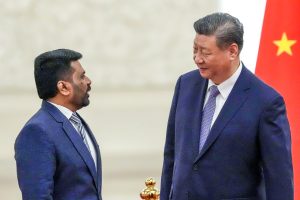
Sri Lankan President Anura Kumara Dissanayake meets his Chinese counterpart Xi Jinping in Beijing on January 15, 2025.Credit: X/Anura Kumara Dissanayake
During his visit to China from January 14-17, Sri Lankan President Anura Kumara Dissanayake secured several agreements, including a $3.7 billion deal with Sinopec to set up an oil refinery in Hambantota. The Sri Lankan foreign minister is expected to reveal details of 15 other agreements soon.
Key agreements include advancing Belt and Road Initiative (BRI) projects, such as Colombo Port City and Hambantota Port, a renewed currency swap agreement, and expanded cooperation in trade, agriculture, digital economy, education, and climate action. China committed to assisting with Sri Lanka’s debt restructuring and pledged to encourage investments in logistics, green development, and digital transformation. The two sides agreed to enhance maritime cooperation, cultural exchanges, and people-to-people ties through tourism, education, and vocational training. China will also support Sri Lanka’s health sector and cultural heritage preservation. Both nations emphasized judicial and security cooperation and shared a commitment to multilateralism and global development initiatives.
Dissanayake invited Chinese leaders to visit Sri Lanka, reflecting a shared desire to strengthen bilateral relations based on mutual respect, trust, and shared development goals.
The visit was typical of how China has been dealing with countries of the Global South like Sri Lanka since 2018.
In the initial years of the BRI, China offered countries significant high-risk, high-volume loans for large-scale infrastructure projects. Often vanity projects for the leaders from developing countries, these projects were disastrous for China. It prompted the Chinese to become more discerning about who they worked with and what they funded. Consequently, they switched to funding more financially viable projects.
And Sri Lankan leaders visiting China returned without much to show in recent years.
Sri Lanka’s ruling National People’s Power needs to attract investment to fulfill its promises to industrialize the country, alleviate rural poverty, and modernize agriculture. This will not be easy.
Previously, when China was looking for reliable and serious counterparts, Sri Lankan leaders repeatedly proved themselves to be unreliable partners who had plunged the country into a fragile state. The Sri Lankan government will need to convince China that there will be returns on Chinese investments, and that they can ensure policy consistency and stability.
Unlike the good old days,” as when the Rajapaksas were in power, you can’t just visit Beijing and come home with easy money,” geopolitical analyst Asanga Abeyagoonasekera told The Diplomat. Dissanayake and the NPP will have to convince the Chinese that they are not like the Rajapaksas.”
Shiran Illanperuma, a researcher at the Tricontinental Institute for Social Research, said that several agreements signed during Dissanayake’s visit to China would be beneficial for Sri Lanka’s economic development. While the agreement to build an oil refinery in Hambantota has been on the cards for years, this is the first time that Beijing officially confirmed the deal to a Sri Lankan leader, he said. The Hambantota International Port Group (HIPG) has been steadily building up the Hambantota International Port, and an oil refinery there fits well into the plans of the HIPG as well as Sinopec. The refinery will also benefit the proposed Hambantota Industrial Zone, Illanperuma pointed out.
In a bid to carve out career opportunities for women in a male-dominated hospitality industry, a resort staffed entirely by women has opened in central Sri Lanka.
Amba Yaalu at Kandalama is a 33-room resort led by 80 staff – all women in various positions, from resort manager to gardener. It offers panoramic views of the Kandalama Lake and the surrounding mango garden with 457 trees, while its interiors celebrate Sri Lanka’s rich cultural heritage.
Amba Yaalu at Kandalama is staffed by an all-women team
Owned by Thema Collection, which has several resorts across Sri Lanka, the property was built at a cost of 800 million rupees (US$2.7 million).
Company chairman Chandra Wickremesinghe said the resort’s opening last week: We envisage a radical change with more women joining the hospitality industry; our women need not seek employment in other countries, leaving their families, if they can be gainfully employed here.”
While women make up nearly 70 per cent of the global tourism workforce, in Sri Lanka, female participation in the formal hospitality sector is low at 10 per cent. This is despite women comprising 52.8 per cent of the population and achieving high literacy rates, the company said in a statement.
Thema Collection added that due to cultural and social norms, traditional gender roles and societal expectations can limit women’s career choices and their mobility while concerns about safety and security, especially in jobs that require travel or late hours, can deter women from pursuing careers in hospitality.
Colombo, January 21 (Daily Mirror) – A mudslinging campaign is underway against former President Mahinda Rajapaksa and everyone is saying that he is whining. But lions do not whine like puppies do, Ven. Iththakande Saddatissa thera said.
He told the media that the former President shed tears after the bomb attack on a moving bus in Kebithigollewa, which claimed the lives of several children. That moment of grief led to the eventual end of Velupillai Prabhakaran in a stretch of land near the Nandikadal Lagoon.
“Mahinda Rajapaksa is not someone who cries over losing his residence or having his security officials reduced. He is a great leader. The person sent to assess his official residence must have been a mere clerk from the Assets Management Branch. He is not someone who needs to live by spending Rs. 4.6 million at Wijerama in Colombo. If necessary, he could have rented a residence at the Shangri-La Hotel in Colombo,” the Thera said.
“Therefore, I believe there should be someone to lay a wet sack near the bed of the current leader to wake him up and remind him that he is the President of the country now,” the thera added.
The United National Party (UNP) and the Samagi Jana Balawegaya (SJB) have agreed to form a united front to contest the forthcoming elections, following a secret discussion held yesterday (20) with representatives from both parties.
The need for collaboration between the two parties had gained momentum after their defeats in the last presidential and general elections. The SJB Working Committee recently approved the move to explore joint efforts, while the UNP also expressed the necessity for such discussions.
The meeting, chaired by former President and UNP leader Ranil Wickremesinghe, took place at the Sirikotha party headquarters in Pitakotte. Meanwhile, SJB leader and Opposition Leader Sajith Premadasa convened a parliamentary group meeting at the Opposition Leader’s office.
Key representatives from the SJB, including Kabir Hashim, Gayantha Karunathilaka, Mujibur Rahuman, Harshana Rajakaruna, and Tissa Attanayake, participated in the discussions. The UNP side included Ranil Wickremesinghe, General Secretary Thalatha Athukorala, Deputy Leader Ruwan Wijewardena, and former Presidential Advisor Dr. H.S. Samaratunga.
During the talks, the UNP proposed a complete unification of the two parties, a suggestion rejected by the SJB. However, both parties agreed to form a united front for the elections, with discussions set to continue tomorrow to finalize the implementation of the proposal.
President Dissanayake offering a floral tribute at the Mao Zedong Mausoleum during his state visit to China. Image courtesy – PMD
If the government had the required convincing power it could have turned around one of the much talked about rice merchants of this country to their side in the quest to find a solution to the rice problem
There is a Colombo ‘elite’ still controlling the show from the availability of rice, coconuts, eggs, essential grocery items and who gets to study in which popular school
After Ranil Wickremesinghe handed the baton over smoothly to the winner at the 2024 Presidential Elections, Sri Lankans still had ‘concerns’ if ‘worries’ wasn’t the best word to use at that period of time. The concerns were whether an inexperienced set of lawmakers could play administrator roles and turn around a crashed economy. Now those concerns are slowly turning into worries.
This is a country where its inhabitants see the word ‘worry’ etched in their minds. Some have it running in their blood. The present generation is looking for success stories from within the island itself to psych themselves up.
And the failure in such attempts makes hordes of youth leave the shores of beautiful Sri Lanka in search of greener pastures. There is a crude Sinhala saying ‘can beautiful be eaten’? We have to wait and see. But for how long?
For those who want inspiration, you just have to make a study of those leaving villages and heading for Colombo with one set of clothes and a few rupees in hand to start a new life. Those are the people who have completed their studies, worked hard and climbed the rungs in the ladder of the executive cadre. But among these success stories we hear of how bogus Colombo addresses were created to admit children to popular schools. There is a Colombo ‘elite’ still controlling the show from the availability of rice, coconuts, eggs, essential grocery items and who gets to study in which popular school. The new government must include in their agenda to make Colombo a city where anyone putting in the hard work can prosper during a reasonable time. We cannot be nurturing pipe dreams for ever. It’s so expensive to live and work in Colombo.
Past governments very openly used giving free gifts and aid as tools to strengthen their vote base. This new regime has put that practice into oblivion. This regime under Anura Kumara Dissanayake has stated very clearly that it will lay an even playing field for everybody. But this regime must take note that all individuals don’t have equal skills or may have different skills; hence they need different types of help and facilities. This regime must cultivate the skill to cater to the individual who has the expertise or the potential to make a significant contribution to the nation’s economy. Right now, the government has recruited into their working cadre, professors and very educated people who are serving as decision makers of state institutes. There is a fear that the private sector may not get the same opportunities that the state sector gets when it comes to engaging in the same businesses in the future.
This government is sweating to find a solution to the high prices of rice and coconuts. Soon they can utilise uncultivated lands and turn loss-making private properties for this venture. If the government had the required convincing power it could have turned around one of the much talked about rice merchants of this country to their side in the quest to find a solution to the rice problem. This rice merchant still pulls his own line.
What the educated people of this country fear most is a certain characteristic in the less educated people. Sadly this feature in the latter is the lack of depth when it comes to cultivating patience. We have fears because it is the not very educated voter who decides who enters parliament and who serves as the executive president.
Most of us don’t own cars, hence we take the bus or a tuk tuk to get to work. Now people employed in both these sectors are up in arms because the government recently gave orders to remove decorations from the vehicles they use in the transport business. The reactions of bus and tuk tuk owners have been harsh. Most of them have vouched not to vote for this government at the next elections. Decisions like these expose the lack of political experience in this regime. We fear the ‘agitated’ daily wage earner because they don’t think far when taking their next decision.
The lyrics of the song ‘Master Sir’ ring in our ears at this time. It is still a popular song in this country and it is originally sung by Neville Fernando. The lyrics of the song tell us how peasants of this country were treated by the British when it came to employment. The peasants feared the British and hated the tug-of-war between the local hierarchy and the peasants who were workers. After the British left the island, the Sinhala elite took control of politics and served themselves; baring just a handful of individuals who worked for a common cause of the less privileged.
Then we had power hungry individuals like Ranasinghe Premadasa and much later Mahinda Rajapaksa who ruled with the whip of terror in their hands. After that we were afraid of Gotabaya Rajapaksa, not because he had a military background, but because his thinking was not supported by any logic or reasoning.
The new regime under President Dissanayake is quite secretive in its dealings. Visuals shown on television during news in the night consists mostly of handouts and are accompanied by still pictures when it comes to covering of state events. This is the method used by the Chinese government when it comes to feeding the public with news. Just for the record, the present head of state of the Government of Sri Lanka is a on a tour of China.
Our learned friends of Sri Lanka can negotiate business blunders ‘if’ the present regime would make any. But they cannot plan for the future when the government doesn’t stick to preplanned decisions and are secretive in its business dealings. Remember President Dissanayake, as an elections candidate, boasting that the regime he installs would not import a single grain of rice? Did he live up to this statement?
Ranil, Mahinda and even Gotabaya to some extent were predictable in their dealings as Presidents, but not Dissanayake. This is why we are living in times of anxiety. To make matters worse for the new regime, the NPP has suffered many losses at some of the recent co-operative elections. Would this regime change its stance of adopting a work-driven approach to governance or change to playing politics for survival?
Whether one reads the newspaper, switches on the radio or watches social media, one topic dominates. They all have one criticism or the other of our four-month old regime. It started with the Speaker of the House and his claim of a doctorate.
We all know even Mervyn Silva was awarded a doctorate. The electorate unfortunately, did expect a similar character would exist in a political party claiming to be squeaky clean as the JVP. That was our mistake. The crux of the matter was that once the sham was in public domain, the former Speaker was forced to resign, despite his relationship with party hierarchy.
Quite a change from recent past traditions in our parliament.
President Dissanayake a month ago was in India where he thanked India for the help it had extended during our country’s financial bankruptcy. In addition he inked many agreements, which he opposed during the time he was part of his party’s three-member team in parliament.
He figuratively embraced India and hailed the important role India was playing in helping Sri Lanka overcome a financial crisis. He additionally praised India for maintaining its identity and leadership in the international scene.
He forgot, that in the periods 1989 and 1990s, his comrades in the JVP were threatening to kill ordinary Sri Lankan traders for selling ‘Bombay Onions’. The name of the onion was changed to ‘Big Onions’ and the killings stopped. Perhaps in their naivete, the then JVP leadership believed that the ‘Big onions’ were suddenly locally produced.
Prey let us not condemn the lads. They were just growing up to the fact, that we in Sri Lanka did not produce sufficient onions to meet local needs. They were as well, beginning to recognise realities of real life which were far from the translated theoretical doctrines they had picked up.
Today, it is in this light that we must read and view our current president’s words and actions. While in the opposition he felt he could in a jiffy change the IMF agreement. Government officials present at that meeting let on, that in five minutes our young president was able to realise that he could not change even a dot or coma in the agreement.
We cannot fault the president for wanting to alleviate the sufferings of the poor. AKD, as our president is affectionately referred to, shares the pain of more deprived sections of the Sri Lankan community. Today, he even changes into formal attire when meeting international figures of importance. Thank God he wasn’t in his double-pocketed shirt and jeans when he met the Chinese President.
He kept protocol -a system of rules that explain the correct conduct and procedures to be followed in formal situations.
In this way our president has shown how his party members have grown in stature. They have learned quickly it is easier to make promises and statements puffing up their chests to local audiences than in the face of international dignitaries who actually wield power and position.
Knowing the danger of putting all eggs in one basket, so-to-say, President Dissanayake who earlier saw a danger of Indian expansionism and feared Sri Lanka was becoming a pocket borough of China due to excessive loans from that country, has now provided extended facilities of the oil farm tanks in Trincomalee to India.
To balance international relationships, the President has signed an agreement with SINOPEC which will see the Chinese Petroleum Corporation invest 3.7 billion US Dollars in a state-of-the-art oil refinery with a capacity of 200,000 barrels in Trincomalee.
Earlier president AKD saw such deals as ‘selling important sections of our economy to foreigners. Thankfully, the president has now recognised the value of pragmatism. His visit to China will apparently bring in Chinese investments worth US $ 10 billion to Sri Lanka.
Additionally a grant of RMB 500 million (Rs. 20 billion) is also on the cards and 15 Memorandums of Understandings have been signed.
Today Sri Lanka is still paying back loans taken from international agencies. It’s going to take more than a ‘fistful of dollars’ to repay these debts. Rather than making fun of the about turns the president and his cabinet of ministers have made, lets appreciate that they have at least temporarily dropped ideology before country needs.
President Anura Kumara Dissanayake is resorting to political revenge by suggesting that former President Mahinda Rajapaksa should should pay the rent or leave his official residence in Wijerama Mawatha, MP Namal Rajapaksa said today.
MP Namal Rajapaksa told the media that Dissanayake was planning to take the residence from the former President and sell it.
He also pointed out that the residence is a privilege granted by the Constitution to executive presidents or former presidents for their safety.
“If Dissanayake wants to remove former President Mahinda Rajapaksa, he can make that request in writing. Granting a residence to former presidents is a practice in every country. Sri Lanka is not the only country where it is practiced,” he said.
Rajapaksa added that instead of prioritizing the needs of the people, Dissanayake was more focused on political revenge and his mask was finally falling off, showing his true face.
President Anura Kumara Dissanayake assured that the government has implemented measures to ensure that there will be no shortage of rice during the upcoming ‘Maha’ cultivation season.
Addressing a public gathering in Horana, the President emphasized the importance of maintaining rice reserves to stabilize food security.
Speaking at the event, which was part of a National People’s Power (NPP) meeting in the Horana electorate of the Kalutara District, the President outlined key relief measures planned from the forthcoming national budget.
These include provisions for government employees, university students, and individuals with disabilities, according to Dissanayake.
The meeting was attended by several prominent figures, including the Minister of Health and Mass Media, Dr. Nalinda Jayatissa, along with other NPP leaders and supporters.
The Working Committee of the United National Party (UNP) has reportedly approved initiating discussions with the Samagi Jana Balawegaya (SJB) on the possibility of the two parties collaborating in the upcoming elections.
The Working Committee of the UNP convened this afternoon (20) at the party headquarters to deliberate on the matter.
Meanwhile, the General Secretary of the Samagi Jana Balawegaya (SJB), Ranjith Madduma Bandara, confirmed that the first discussion regarding the potential unification of the UNP and the SJB for the upcoming elections will take place in Colombo tonight (20).
Additionally, former Parliamentarian Rajitha Senaratne revealed that the UNP has sent two representatives to participate in the meeting.
Recently, the SJB Working Committee approved a proposal to initiate discussions about uniting the two parties for the elections.
Amidst these developments, a special meeting of the SJB parliamentary group was held this afternoon at the Opposition Leader’s office in Colombo.



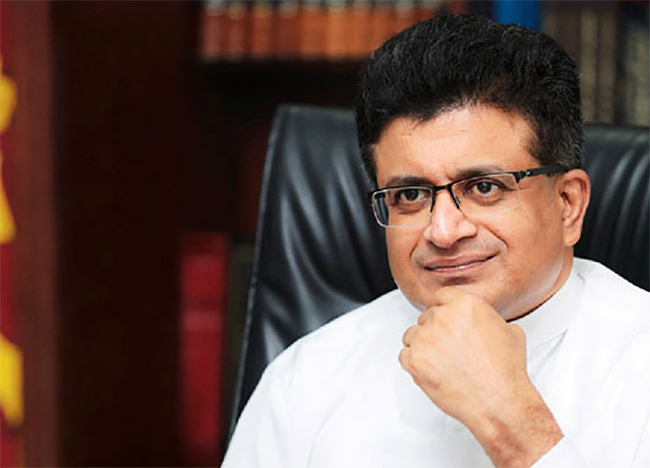 ජනාධිපති අනුර කුමාර දිසානායක මහතා ත්රිකුණාමලය තෙල් ටැංකි සංකීර්ණය පිලිබදව සිය ආණ්ඩුවේ අළුත් වැඩක් ලෙසින් ඉදිරිපත් කරන ව්යාපෘතිය මින් වසර තුනකට පෙර තමන් බලශක්ති අමාත්යධූරය දරන සමයේ සම්පූර්ණ කල ව්යාපෘතියක් බව පිවිතුරු හෙළ උරුමය නායක නීතිඥ උදය ගම්මන්පිල මහතා පවසයි. මේ සම්බන්ධ ගිවිසුම 2022 වසරේ අත්සන් කල බවත් එවකට එයට දැඩිව බාධා කලේ ජාතික ජන බලවේගය බවත් ඒ මහතා වැඩි දුරටත් සදහන් කර සිටීයි.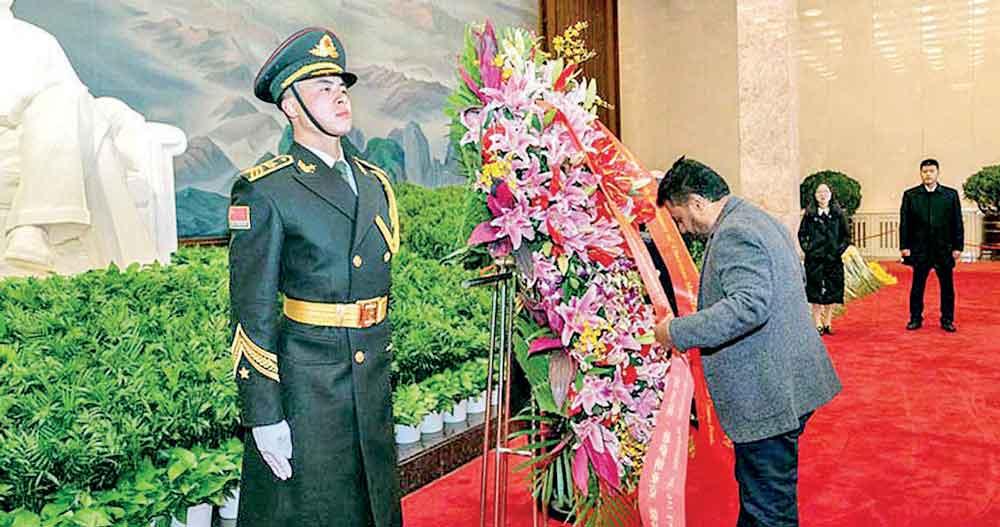
 After Ranil Wickremesinghe handed the baton over smoothly to the winner at the 2024 Presidential Elections, Sri Lankans still had ‘concerns’ if ‘worries’ wasn’t the best word to use at that period of time. The concerns were whether an inexperienced set of lawmakers could play administrator roles and turn around a crashed economy. Now those concerns are slowly turning into worries.