Advent and decline of a martial race: The Malays of Ceylon

July 21st, 2020

By P.K.Balachandran Courtesy NewsIn.Asia

Absence of war and expansion of civil, especially, police administration from 1833 onward, led to the Malays giving up soldiering as their dominant occupation

Advent and decline of a martial race: The Malays of Ceylon

Sri Lanka’s tiny community of Malays (40,189 as per the 2012 census) had an overwhelmingly dominant position in the island’s military and police in the colonial period, thanks to the trust the Dutch and the British had in this immigrant group in the context of hostility from the indigenous Sinhalese.

But come independence in 1948, political and State patronage shifted wholesale to the majority Sinhalese community which affected the composition of the forces also. Only one Malay, Brig.T.S.B.Sally, rose to the highest position in the army and that too as an Acting Commander. However, the Eelam Wars in the 1980s and 1990s led to an expansion of the army and police, and a handful of Malays came to hold important commands. In the police, three Malays rose to Deputy Inspectors General level.

Martial Tradition

Sri Lankan Malays came to Ceylon (Sri Lanka was then called) essentially as warriors. The very first notable Malay to arrive was Chandrabhanu, the Buddhist king of Nakhon Si Tammarat in the Isthmus of Kra in the Malay peninsula, who came during the reign of Parakramabahu II (1236-1270). B.A. Hussainmiya author of Orang Regimen: The Malays of Ceylon Rifle Regiment quotes the Chulavamsa as saying that Chandrabahu landed with a terrible Javaka (Malay) army under the treacherous pretext that they were also followers of the Buddha. All these wicked Javaka soldiers who invaded every landing place and who with their poisoned arrows like terrible snakes, without ceasing, harassed the people who they caught sight of, laid waste, raging in their fury, all Lanka.”

The ethnic group we now refer to as Malay’ was, in ancient Lanka, called Javaka or Java, as they were basically from Java in the Dutch East Indies (modern Indonesia). According to inscriptions attributed to the South Indian Pandian king, Jatavarman Vira Pandyan (1235-1275), Chandrabhanu established himself in Northern Lanka. Indian historian Nilakanta Sastri says that in Kudumiyamalai Prasasti there is a reference to a Malayan king (Chavaka maindan) who ruled Jaffna. Hussainmiya says that footprints of Malayan rule can still be found in place names like Chavakacheri (Javaka settlement) and Jaffna (Javagama).

In the 17 th. Century, the Dutch brought Javanese (who had become Muslim by then) from Batavia in the East Indies for various purposes. Some were exiled Princes and banished convicts and others were free Malays. Hussainmiya says that by the end of the 18 th.Century at least 200 princely families and their retinue were in Lanka. Some of the convicts were absorbed in the army of the then ruling Dutch East India Company (Vereenigde Oostindische Compagnie or VOC). In fact, the Malays were the single largest component of that army. As the territorial ambitions of the Dutch grew, the Batavian government dispatched troops annually, apart from reinforcements sent in times of emergencies, Hussainmiya notes.

Malay troops took part in Dutch campaigns against the Portuguese in Galle (1640); Colombo (1655-56); and Jaffna (1658). In 1658, a Malay force under its own Malay commander, went along with Dutch commander Rycklof van Goens, to attack the Portuguese on the Malabar coast in Kerala. Christopher Schweitzer wrote in 1680 that the Malays proved to be very nimble and active in leaping and fencing” and that the Cingulayans (Sinhalese) were mightily afraid” of them.

Ceremonial dress of the Malay Regiment

During the Kandyan wars in which the Kandyans employed guerilla tactics, the Dutch threw the Malays into the front as they could take on the Kandyans in close combat with their kris knives and short swords. By 1764, there were 2500 Malays in the Dutch forces. In 1795-96, when the British began to attack the Dutch, the Malays were the only ones to offer any resistance. Hussainmiya recalls that in 1795, the Malays led by Jaya Bangsa staged a daring attack on the British in Trincomalee, spiked their guns and killed several artillery men. They ambushed British troops as they landed in Beruwela and pushed them back into the sea. The Malays also attacked the British camp in Mutuwal with deadly kisses and adder tongued daggers.”

The British were so impressed, that when they took over the maritime provinces from the Dutch in 1796, they made Malays a permanent source of military manpower”. In 1802, Governor Frederic North sent Malays to fight against the Polygar rebels in Tamil Nadu. They distinguished themselves by their active and indefatigable intrepidity,” North wrote to the Secretary of State in London.

North formed a Malay Corps” with 1200 men and 22 European officers. The Corps was given the King’s Commission on 23/April/1801. On May 31, 1803, North presented the Corps its colors. At the function held in Gale Face Esplanade in Colombo, North said he had great pleasure in presenting these Colors, not to a new Levy, but to a regiment whose past service is an earnest of future glory.”

North formed a Malay Boy’s Regiment to catch them young. The boys were given an English education which was useful when they were discharged in an era, when the British were setting up a civil administration. In addition to local Malays, the British recruited Malays serving with the Raja of Cochin in Kerala and Peninsular Malaya after the Dutch prevented recruitment from the East Indies. North offered Malays good pay and free passage for the family. If a Malay was killed in battle, the government would look after his family, he said.

However, the response from the Malay peninsula was poor. Further, to the disappointment of North, Malay troops defected to the Kandyan side during the First Kandyan War in June 1803. Though this was due to incompetent British military commanders, North blamed the Malays for the British rout.

However, due to alienation from the cruel and insecure King of Kandy Sri Wickrema Rajasinghe, Kandyan Malays swung to the British side eventually. Governor Robert Brownrigg welcomed the Malays from Kandy from 1811 onwards. In 1813, Brownrigg recruited Malays from Java with the help of Sir Stamford Raffles, the British Lt.Governor of Java. The expanded Malay contingent helped the British defeat Sri Wickrama Rajasinghe in 1815 and capture him. This ended native rule in Sri Lanka.

In 1816 a batch of 228 Javanese soldiers of superior quality arrived in the island. In 1818, Malays helped the British suppress the Sinhalese rebellion in Uva. 1819 saw recruitment of Malays form Penang in Malaya.

In 1827, when peace was fully established in Ceylon, the government created a single native regiment, the Ceylon Rifle Regiment (CRR). Governor Edward Paget expanded the wholly Malay First Ceylon Regiment by adding African Roman Catholic Kaffirs and Hindu Sepoys from South India. But this was disliked by the Muslim Malays.

In 1830 there was a pay reduction done at the instance of the Home government even as Governor Edward Barnes protested. In 1833, the original pay was restored but by then, the Malays were seeking and getting employment in the civilian sector. The newly established police paid more than the army. According to Hussainmiya, in 1833, nine of the ten police sergeants were Malays and 75% of the constables were Malay. Writing in Sri Lanka Guardian Tuan M. Zameer Careem says that at that time, every police station became a Malayu kampong” (Malay village).

In fact, the first Ceylonese police officer who died during the course of his duties was a Malay constable named Sabhan who was shot dead on March 21st, 1864 in an attempt to apprehend the Highway Bandit Saradiel,” Careem points out.

With the establishment of peace in the island and falling recruitment, keeping an army proved to be an unnecessary expenditure. Governor William Gregory disbanded the Ceylon Rifle Regiment on August 15, 1873, thereby ending the Malays’ long and deep association with army in their adopted island home. (This article first appeared in Daily Mirror, July 21, 2020)

(The picture at the top shows Malay soldiers. By Packeer Ally/Sri Lanka Guardian)

Friends of virus

July 21st, 2020

Courtesy Editorial Island

A decision by the British government to make it mandatory for everyone to wear facemasks in shops has sparked protests in London. Some protesters staged a march at Hyde Park, the other day, condemning the government move, which they called a severe blow to their human rights. These anti-mask campaigners are not alone in opposing the mandatory use of face coverings. There are many others of their ilk across the pond, and they include US President Donald Trump, himself, who, however, seems to be buckling under pressure. These dyed-in-the-wool liberals insist that governments have no right to tell them what to do with their faces. They are also against vaccination, physical distancing and contact tracing, we are told.

There is no gainsaying the validity of the argument that the state is duty bound to protect and preserve people’s rights and freedoms. But there occur certain situations where the curtailment of these rights and freedoms becomes necessary for sustaining the greater good, and such restrictions are consistent with deontological ethics as well. Otherwise, it becomes well-nigh impossible to ensure public safety in emergency situations. What if persons afflicted with Covid-19 were allowed to move about freely in crowded places without covering their faces?

Liberalism, underpinning liberal democracy, which is widely believed to be an antidote to ethnonational autocracies, is universally cherished, but, if taken to an extreme, it can make governance impossible in any country.

The biggest challenge for liberal democracy is to reconcile conflicting imperatives, e. g. striking a fine balance between safeguarding individual freedoms and ensuring public safety. Crimes, especially terrorism, contagions, social problems arising from economic inequalities and the like have caused liberal democracy to be redefined. The US democracy has undergone a sea change since the 9/11 attacks, which necessitated stringent security measures at the expense of some of the rights and freedoms of American citizens. Covid-19 has posed a new challenge to democracy; in battling the pandemic, democratic nations, even in the Global North, have had to adopt some drastic measures that are in conflict with the liberal values they claim to uphold, and act somewhat like their bete noire, China, which has brought Covid-19 under control.

It is believed that the modern state has emerged from an unwritten social contract, which delimited the authority of rulers and defined the rights and freedom of the ruled on the grounds of self-interest and rational consent. Even political philosophers (including John Locke), who cherished life, liberty and property, which they said could not be taken away, held that people had to abide by the law. Hence the need for rational consent to obey quarantine and disease prevention laws!

Unless the world succeeds in beating coronavirus decisively, Covid-19 will lead to far more serious problems than what we are experiencing at present. Health systems will be overwhelmed, the world over, and we might witness a situation similar to that in Europe, in the mid-1300s, when the Black Death carried off about one third of the Continent’s population; cartloads of corpses were removed several times a day from houses and streets and buried in mass graves, according to historians. We recently saw some chilling pictures of refrigerated trucks deployed in New York to help store bodies as hospital morgues and funeral homes could not cope with the load. The UN has warned that at the present rate of job cuts, about one half of the global workforce will be at risk unless the pandemic is effectively tackled and conditions are created for the ailing economies to recover fast. Job losses entail a steep rise in the poverty level and are likely to give rise to uprisings that threaten democratic governance. People do not behave rationally when their survival is threatened. During lockdowns we saw people jostling to secure essentials even in the developed world, where there were fights over toilet paper. How ugly the situation would get if there happened to be a global food shortage owing to the pandemic is not difficult to imagine. In such an eventuality, liberal values would fall by the wayside and humans would find themselves in a ‘state of nature’, again, where according to Thomas Hobbes, life was ‘solitary, poor, nasty, brutish and short’.

Those who resist the health guidelines in place to battle Covid-19 are the true friends of coronavirus. One can only hope that the anti-mask protesters in London will not inspire people in other countries, especially here, to follow suit.

St Sebastian church suicide bomber’s wife believed to have fled to India

July 21st, 2020

By Rathindra Kuruwita Courtesy The Island

article_image

Pulasthini Rajendran alias Sarah, the wife of Achchi Mohammdu Mohammadu Hasthun, suicide bomber, who blew himself up at St. Sebastian’s Church in Katuwapitiya, most likely had fled to India by sea in September 2019 and a person who helped her escape had been arrested, Chief Inspector Arjuna Maheenkanda, yesterday told the Presidential Commission of Inquiry (PCoI) investigating the Easter Sunday attacks.

Maheenkanda is currently attached to the Investigation Unit of the PCoI. The witness said that in October 2019, he had been detailed by the PCoI to look into what had transpired in the Eastern Province with regard to the attacks and the National Thowheed Jamaat (NTJ) activities. He visited a number of sites and interviewed a large number of people.

The witness said that, on 6 July, 2020, he had received a tip-off from an informant, who said that Sarah, who was in the NTJ safe house in Sainthamaruthu on 26 April, 2019 had escaped and was hiding in Mankadu.

Maheenkanda said he had left for Batticaloa on 8 July 2020 to conduct further investigations.

“When we were in Batticaloa, we met another person who had seen a woman, whom he believed was Sarah. This informant said he had seen a cab parked along Batticaloa – Kalmunai main road, near Beach Road, Mankadu area around 3 a.m. on a day in September 2019. He felt suspicious and slowed down. Then he saw Sarah and two other men walking towards the Batticaloa – Kalmunai main road, from Beach Road. There was a street light there and that’s how the informant saw them. This informant had lived near Sarah’s house for a long time. He also saw that she got into the back seat of the cab parked near the road.”

Maheenkanda said that the informant had felt extremely suspicious and thus he turned the cab he was driving and drove towards the vehicle Sarah got into. When the informant drove near the cab he saw a person he recognized in the passenger seat in front.

“The informant identified this person as Abu Bakr, the OIC of the Kalawanchikudi Police Traffic Division. The informant stopped his cab on the opposite side and tried to speak to Abu Bakr.

Then the cab had sped towards Batticaloa,” the witness said. Abu Bakr was recently arrested by the Colombo Crime Division (CCD.)

Maheenkanda said that there had been information that Sarah had fled to India by boat from the Mannar area. Two persons, Sarah’s mother’s sister’s husband and his brother, had helped her escape

“One of the suspects is currently in custody. The other person has gone abroad. Investigations have also revealed that a person in the Mannar area helped her flee,” the witness said.

The Colombo Crimes Division was currently conducting further investigations, he added.

SLPP faults EC for interfering with CID on behalf of Rishad

July 21st, 2020

By Shamindra Ferdinando Courtesy The Island

article_image

The ruling Sri Lanka Podujana Peramuna (SLPP) yesterday (21) alleged that the Election Commission (EC)was playing politics with the electoral process by interfering in a high level CID investigation into the alleged involvement of ACMC (All Ceylon Makkal Congress) leader and Samagi Jana Balavegaya (SJB) Vanni district candidate Rishad Bathiudeen with those involved in the 2019 Easter Sunday attacks.

The EC consists of Mahinda Deshapriya (Chairman), Prof. Ratnajeevan Hoole and Nalin Abeysekere, PC. SLPP Chairman Prof. G.L. Peiris questioned the basis the EC, in a letter signed by all three Commissioners, requested Acting IGP C.D. Wickramaratne to suspend the investigation pertaining to the alleged involvement of the former minister.

At the time of Easter attacks, Bathiudeen was on the cabinet of President Maihripala Sirisena, having contested the last parliamentary polls in August 2015 on the UNP ticket.

Responding to another The Island query, the former External Affairs Minister, who heads the SLPP National List, said that they were quite surprised by the contents of the EC’s letter. The EC, on behalf of the SJB candidate had requested the Acting IGP to suspend investigations till August 10, 2020, to allow him to spearhead the polls campaign.

Pointing out that the EC wanted Bathiudeen allowed to campaign freely in several districts as his party fielded over 30 candidates on the SJB ticket, Prof. Peiris compared the EC missive with that of General Secretary of ACMC.

The SLPP Chairman said that the ACMC released the EC’s letter dated July 15 to the media as part of its campaign to counter growing accusations regarding the former minister’s alleged involvement. Referring to a recent statement attributed to Police Spokesman SSP attorney-at-law Jaliya Senaratne in a front page story of The Island that dealt with the current status of the Easter Sunday investigation, Prof. Peiris said the politician was being probed whether he knew what Zahran Hashim was planning.

Prof. Peiris said the EC exposed its partiality by quoting a Parliamentary Select Committee (PSC) report to clear the former minister and also justify its request to the Acting IGP.

The EC informed the Acting IGP that it would be writing to the Secretary to the President and the Attorney General regarding its intervention on behalf of the leader of a political party contesting the general election.

Prof. Peiris said he was quite amused by the EC warning to the Acting IGP that obstruction of Baithudeen would distort Sri Lanka’s democratic traditions and freedoms. The SLPP Chairman asked whether the EC really considered such an important police investigation an obstruction to a particular politician under investigation over a heinous crime. SLPP National List nominee said that Bathiudeen’s younger brother Riyaj was in police custody over his alleged involvement with Zahran’s gang. Didn’t a former intelligence officer recently tell the Presidential Commission of Inquiry (P CoI) how Riyaj helped Zahran to flee Sri Lanka to India in 2018?, the former Colombo University law professor asked.

Prof. Peiris said that the EC was working overtime to lose whatever was left of its credibility. The former External Affairs Minister said that the EC taking up cudgels for Bathiudeen should be examined against the backdrop of its failure to inquire into member Prof. Hoole, in an interview with Jaffna based television channel undermining the SLPP. The EC didn’t even bother to reply to its complaint let alone probing it, Prof. Peiris alleged, pointing out that the outfit subsequently ignored Constitutional Council member attorney-at-law Javid Yusuf taking a political stand against the government on civil society movement stage on the eve of the forthcoming national poll. The SLPP Chairman emphasized that some of those responsible for ensuring a level playing field were obviously busy backing the Opposition.

Addressing the regular SLPP briefing at its Nelum Mawatha Office on Monday (20), Prof. Peiris alleged that the independent commissions were nothing but a fraud. Alleging that EC member Prof. Hoole openly backed two candidates, Prof. Peiris said that the powers enjoyed by the President were transferred to Commissions in terms of the 17th and 19th Amendments enacted in 2001 and 2015, respectively. Prof. Peiris said that the SLPP required a two thirds majority to address the crisis caused by the setting up of those purported independent commissions. The parliament needed a two-thirds majority to introduce laws meant to tackle extremism, the former Vice Chancellor of the Colombo University said.

The SLPP Chairman said that a powerful parliament would be able to address the major crisis resulting from the previous government co-sponsoring three resolutions in 2015, 2017 and 2019 in Geneva at the expense of the Sri Lankan State, its armed forces et al. The former minister said that those in the parliamentary polls fray already accepted defeat; hence the SLPP didn’t expect a strong Opposition in parliament.

Pulasthini Mahendran not among the dead in Sainthamaruthu attack, PCoI told

July 21st, 2020

Courtesy Adaderana

The Presidential Commission of Inquiry (PCoI) on Easter Sunday terror attacks heard that there are doubts as to whether Pulasthini Mahendran alias ‘Sara Jasmine’, a converted Islamic extremist and part of Zahran Hashim’s terror group, was among the 16 dead at the Sainthamaruthu safe house raided on the 26th of April last year.

SSP Samantha Wijeseskara, who was in charge of Ampara Police during the Easter Sunday terror attacks last year, told the PCoI on Tuesday (21) that according to new information, none of the DNA samples from the 16 bodies matched the sample from Pulasthini’s mother.

He recalled that on the 26th of April 2019, while searching a safe house in Ninthavur, he had received reports of shots fired at traffic policeman in Sainthamaruthu from a house in the area.

The panel questioned the witness of the warning that were received regarding the suspicious individuals at the location. He responded that 02 female residents at the Voliverian Housing Scheme had on suspicion visited the house along with a mosque representative to question the residents.

At the location, the group was approached by an armed male suspect who stated they are preparing to sacrifice our lives for them.

The trio had then left the premises and informed an on-duty traffic police officer of the matter.

After receiving reports on shots being fired at the police officer, the witness, along with his team, had gathered at the metal bridge near the entrance to the Voliverian Housing Scheme.

The witness revealed that they saw a tracer bullet fired into the air from the house, followed by a loud explosion, which led to a 40-minute gun fight between the suspects and security forces. This was followed by another explosion.

The PCoI was told that the witness’s police team discovered Rs. 980,000 in 5,000 notes lying on the wayside near the house.

He added that while searching the house, they had discovered Central Bank receipts for the issuance of 1,000 Rs. 5,000 notes.

The witness went on to say that the 16 bodies recovered from the house, including 05 males. 05 females, 03 male minors and 02 female minors.

The Additional Solicitor General then showed the witness the photographs of the bodies and asked him to confirm the identities.

He stated that the first suspect shown in the photograph was identified by them as Mohamed Niyaz, who had helped Zahran’s group store material in Ninthavur and Sendalgam.

The witness was then showed the video uploaded to the interned by the individuals who were inside the house prior to the confrontation and asked him to confirm the deaths of the individuals seen in the video.

He revealed that they were able to identify the remains of Zahran Hashim’s father as well as Zahran’s brother Zaini, who was seen in the video holding a child.

He added that they also identified the remains of another brother of Zahran named Mohamed Cassim Mohamed Rilwan, which were recovered on the roof possibly killed while attempting to either escape via or launch an attack from the roof.

Among those who were dead inside the house were Zahran’s eldest son Mohamed Zahran Wasim, Zahran’s pregnant sister Mohamed Cassim Hidiya and his mother Abdul Sakar Siththi Umma.

The witness stated that upon entering they also discovered a heavily injured female child and an adult identified later as Zahran’s daughter Mohamed Zahran Rudeina and her mother Abdul Cader Fathima Hadiya.

The PCoI was also told that a wallet belonging to Pulasthini Mahendran alias ‘Sara Jasmine’ was also found in another room of the house.

When the witness was asked if Pulasthini was identified among the dead, he responded that interrogation of a suspect named Siyam confirmed that this woman had been among the group before the rain on the 26th of April which was corroborated by Zahran Hashim’s spouse.

The witness added that recent information received through intelligence sources revealed that no DNA samples from any of the remains matched the DNA from Pulasthini’s mother.

He said the investigations were then hampered by his sudden transfer on the 24th of July 2019.

He revealed that his replacement, a diligent police officer named Marapana was also transferred after only 06 months, leading him to conclude that the transfers were undoubtedly politically motivated.

There were ample reasons to believe this, as certain information uncovered during the investigations were deemed politically damaging to certain groups at the time, he continued.


Meanwhile, the PCoI heard new evidence regarding the whereabouts of Sara Jasmine Chief Inspector Arjuna Mahilkanda, an investigating officer at the PCoI investigation unit who revelaed information about an eyewitness who had seen the woman in question in September last year.

New evidence that come to light from the said eyewitness claimed that the suspect was seen at around 3.15 am entering the Beach Road from Batticaloa-Kalmunai main road in the company of two males, last September.

The eyewitness has said that Sara Jasmine had then entered a beige coloured pickup truck along with the duo.

The person occupying the driver’s seat was an individual known to the eyewitness, CIP Mahilkanda revealed.

The eyewitness has further stated that the individual in question had been the OIC of the Kalavanchikudy Traffic Police named Abubakar. He had been later attached to the Colombo Crimes Division (CCD), however, he is reportedly now in custody over having links to the attacks.
When the eyewitness had approached the vehicle to speak to him, the pickup had sped away towards Batticaloa.

CIP Mahilkanda said he had received information of 02 individuals who had assisted Sara Jasmine to flee to India by boat.

Investigations later revealed that it was the husband of her mother’s sister and his brother who has assisted her escape.

Rishad ordered to appear before CID

July 21st, 2020

Courtesy Adaderana

Fort Magistrate has ordered former Minister Rishad Bathiudeen to appear before the Criminal Investigation Department (CID) at 9.00 am on the 27th of July.

The All Ceylon Makkal Congress (ACMC) leader will be recording a statement on Easter Sunday terror attacks in 2019.

According to reports, he had been issued notices on two previous occasions to record a statement with the CID pertaining to its probes on the coordinated bombings, however, the former minister had failed to make an appearance.

Notices were issued to Bathiudeen, ordering him to provide a statement to the CID next Monday (27) after the officers presented submissions to the Fort Magistrate in this regard.

The Election Commission, meanwhile, instructed the CID yesterday (20) to postpone the summoning of former Minister Rishad Bathiudeen until August 01 as Bathiudeen is the Wanni District group leader of Samagi Jana Balawegaya (SJB) and is set to contest the forthcoming General Election.

In a letter to Acting Inspector General of Police (IGP) C. D. Wickramaratne, the election body stated that the members of the Commission had taken this decision unanimously.

Appeals Court rejects petition seeking Karuna Amman’s arrest

July 21st, 2020

Courtesy Adaderana

The Court of Appeal today rejected the petition filed seeking the arrest of former deputy minister Vinayagamoorthy Muralitharan alias Karuna Amman, over his recent controversial statement on the killing of Sri Lankan army soldiers.

The decision was delivered by a judge bench comprising President of Court of Appeal Justice A.H.M.D Nawaz and Sobitha Rajakaruna.

The President of the Appeals Court pointed out that it had been reported by the media recently that the Elections Commission had informed the Acting IGP not to summon candidates contesting the upcoming general election for investigations.

He further said that it is evident that police investigations pertaining to the incident in question are at the preliminary stages and therefore they found no reason to continue with the petition.
 
The fundamental rights petition was filed on June 25 requesting the Supreme Court to issue a directive to the Acting IGP to arrest the one time LTTE commander and to enforce the law.

The FR petition had been filed by Kaduwela Municipal Council member and tuition class teacher Boseth Kalahepathirana.

The Attorney General Dappula De Livera, the Acting IGP C.D. Wickramaratne and the Leader of the Tamil United Freedom Front (TUFF) Vinayagamoorthy Muralitharan had been named as respondents in the petition. 

The petition had states that during a public meeting held in Digamadulla on June 19, former LTTE leader turned politician Karuna Amman had openly claimed that he is more dangerous than COVID-19 and also that he has killed 2,000 to 3,000 Sri Lankan soldiers in one night at Elephant Pass.

The petitioner states that through this statement Karuna Ammanhas committed offenses under Articles 293 and 294 of the Penal Code as well as the Prevention of Terrorism Act (PTA) and the International Covenant on Civil and Political Rights (ICCPR) Act.

The petitioner further states that according to Section 17(1) of the Evidence Ordinance, this is an acceptance and a confession to a crime.

However, the Appeals Court today decided to reject the FR petition without taking it up for hearing.

Samagi Jana Balawegaya and TNA have similar policies – PM

July 21st, 2020

Courtesy Hiru News

Prime Minister Mahinda Rajapaksa stated that the policies of the Samagi Janabalavegaya and the Tamil National Alliance are similar.

He was participating in a public meeting held in the Teldeniya area today.

Owner of the Buwaneka hotel calls the HIRU news team

July 21st, 2020

Courtesy Hiru News

The Owner of Buwaneka Hotel, WW Chandrasena said today that it was stated in the agreement he signed with the Kurunegala Urban Council, the particular building his hotel was housed in, is an archaeological monument.

Speaking to our news team, he said that he maintained the building with extra care due to its historical value.

However, the Mayor of Kurunegala, who is accused of demolishing the King’s Council building told the media yesterday that the particular building has not been gazetted as a historical monument.

Meanwhile, owner of Buwaneka hotel told our news team that he assured no immoral activities took place in the hotel.

Addressing a media conference today, Director General of the Archaeological Department, Professor Senarath Dissanayake said that it is not necessary to gazette the archaeological monuments which were built before 1815.

Former Minister of Cultural Affairs pressurized the Head of Archaeology (Video)

July 21st, 2020

Courtesy Hiru News

Director General of Archeology Senarath Dissanayake stated that he was subjected to various pressures from the Minister of Cultural Affairs  during the previous government.

He was speaking at a media briefing today regarding the demolition of a building allegedly belonging to King Bhuvanekabahu’s royal palace in Kurunegala. He further stated that the Department of Archeology was not politicized.

Mayor should be given the maximum punishment if he has commited any offense – Gammanpila

July 21st, 2020

Courtesy Hiru News

Minister Johnston Fernando stated that no one will be allowed to touch the Mayor of Kurunegala as long as he is the District Leader.

Meanwhile, speaking at a media briefing held today, a former Member of Parliament stated that Minister Johnston does not know the name Buwaneka.

Former Member of Parliament Mayantha Dissanayake has condemned the demolition of a part of the Kurunegala Royal Palace, condemning the practice of two laws in the country.

Former Member of Parliament Sisira Jayakody stated that many people who were calling for the Kurunegala incident were silent on many incidents that took place during the previous government.

Udaya Gammanpila, the leader of the Pivithuru Hela Urumaya who participated in a media briefing held today stated that if the mayor has committed an offense, he should be given the maximum punishment irrespective of his position.

Comments made by politicians in the political stage -Video

July 21st, 2020

Courtesy Hiru News

Comments made by politicians in the political stage.

Minister Wimal Weerawansa stated at a media briefing held today that the 19th amendment is a ploy to set the President against the Prime Minister.

Leader of the JVP Anura Kumara Dissanayake stated that the time has come to clean up the parliament due to the crippled opposition.

Dullas Alahapperuma stated that there is a strong protest among the people against the Members of Parliament.

Former Member of Parliament Duminda Dissanayake stated that no one can deny the process of rebuilding the country.

Former parliamentarian Ravi Karunanayake addressing a public meeting held today stated that the battle for the UNP is with Pohottuwa.

Former Member of Parliament Ajith P. Perera stated that many UNP members are currently with them.

Former Member of Parliament Roshan Ranasinghe stated that Anura Kumara does not have a backbone to talk about the sand mafia in Polonnaruwa.

Deficits and Implied Taxation

July 21st, 2020

The Prince of Kandy

I am not saying it is a life and death matter when you print money. During my period it isn’t that we didn’t have excess printing but every time the treasury secretary asked me if we could accommodate the government with an excess of treasury bills I always got a date by which it was settled. We made sure that was settled. It is like a good bank manager. – Former Central Bank Governor Ajith Nivaard Cabraal[i]

To take on a loan one of the most important questions a bank will ask you is how you expect to pay it back? Loan applicants must submit business plans, offer collateral, provide credit histories, and offer lenders enviable access into their ledgers.

Banks try to forecast revenue streams to predict whether you can pay them back. For a business one would look at sales, for an individual one would look at salary, and for a government, one would look at taxation.

The Central Bank as alluded to by the former governor also has the capacity to fund the government. This funding comes in the form of seigniorage. By printing money, the Central Bank is creating assets for itself as the value of the money tends to exceed the cost of printing it.

By providing the government with increased purchasing power at the expense of public purchasing power, it imposes what is metaphorically known as an inflation tax on the public.

Implied Taxation

Given that the government is running a deficit estimated at 8.5 percent of GDP[ii] for 2020 at some point in the future it will have to raise tax revenues to pay the debt. This can be likened to someone planning to go on a diet.

A person choosing to exceed their budgeted caloric intake on one day must make economies on the next if their diet is to have an impact. In the same way, society impose judgments on people going on diets, we also are quite divided on the debt dynamics of a government.

Debt not only plays into intergenerational politics within society but also on issues such as class and regionalism. Whose burden it is to service the debt and for whose benefit the debt is created are highly politically divisive issues.

It however is economic orthodoxy that high debt is a risk factor for any economy. As an excessive diet may lead to things like heart disease an excessive debt burden can lead to for example severe fiscal constraints on the government, a run on the currency, insolvency, and a loss of business confidence.

Debt Dynamics

Let us ignore the volume of debt on which as alluded to earlier we might be divided on given our varying demographic characteristics. Instead, let us draw our attention to the cash flow implications of debt servicing.

Sri Lanka is not Japan. Japan’s debt is denominated in its local currency and they with their long-lasting export-strength have built up reserves and stakes in important global institutions like the Asian Development Bank. Sri Lanka is not the United States. The United States has hegemonic power over energy, military, and international institutions and is the global reserve currency.

If our debt dynamics become worse, we are likely to face further downgrades to our already dangerously weak credit rating. This will skyrocket the cost of debt and thus the cost of projects requiring external financing. In simple terms, if our debt dynamics weaken the costs of developing roads sans the political commission will become even higher than they are now.

Cash Flow

In terms of going concern the sovereign is treated differently than a legal entity or person. Markets value sovereign debt based on cash flows and reserves in a more forgiving manner. This is odd because if entities had the same wastage, excesses, and grandiose plans as the government markets would surely be closed to them.

This is to say that the markets assume that even if Sri Lanka is to default on debt payment it would continue to exist the next day. For instance, land in Greece still has a positive value. Having defaulted Greece can both issue new debt and retain ownership of their assets. Greece does not become part of Germany just because it has defaulted to Germany.

This contrasts with let us say when one of our many highly indebted holding companies goes insolvent or worse bankrupt and though they may have viable subsidiaries it is difficult for them to part with the asset without their creditors getting worked up.

Insolvency

Imagine learning that you have lost your wallet on public transport. Regardless of what you look like you will quickly be treated as if though you are as a busking beggar. You will most likely be asked to get down at the next stop.

Here Sri Lanka’s borrowing to China is important as though they insist that the terms are good it does not happen through the same channels as traditional lenders. Traditional lenders like the Asian Development Bank have established offices and interface with the treasury with well-established formal procedures whereas the Chinese come through promoters and the political system.

This is most exemplified in the Central Expressway. Chinese financiers linked to the state won contracts[iii] on the expressway and subsequently withheld funds and delayed progress on the infrastructure. On the return to power of their political puppet,[iv] they will resume the project.

Intelligent Economic Policy

This can become an economic crisis. Not only big countries but also small countries have Central Banks that have acted. In the US they have taken a US $ 600 billion action. The US Federal Reserve commits to use the full range of tools to help the economy through unprecedented times. What has our Central Bank done? Nothing. Our Central Bank does not use a single tool they just sleep. Give Rs 150 billion to these businesses.

Due to the mistakes of the past, there are debts owed by the government to companies. Let companies collateralize that debt to run the economy. This is money circulation. This is the basics of economics.

Your mistakes are perceived to be that of the government. Look at the failure of the finance companies, it is the fault of the Central Bank. All of you are economists who take large salaries. You have a duty in this crisis to act. – President Gotabaya Rajapaksa[v]

These statements look to deflect heat towards the Central Bank which does not have to stand for election and suggests that the Central Bank is behind the economic failings of the interim government. The monolithic media structure backing the SLPP has gone on overdrive under the premise that the public is concerned with a cricket match played in 2011 to deflect from the massive economic failings of the government.

Central Bank actions, directly and indirectly, influence monetary aggregates. Monetary transmission in Sri Lanka takes about six months. In other words, it takes time for the major levers of Central Bank policy to have an impact on the economy.

Ignoring the health risks to improve cash flow in the economy it would have been more effective to open the economy. It would have been even better if the COVID-19 relief fund were distributed earlier as opposed to just before an election.

Fiscal policy is a much better tool and the interim government had already exhausted that measure through their massive tax handouts. These policies were a joke with VAT reductions not resulting in price reductions.

Developed countries could take larger action proportional to their economies because they had built reserves that our Central Bank has not.

Intelligent Action

We live in a country where the two major spenders in the upcoming election (the SJB and SLPP) are dogged with huge corruption scandals. The SJB leader spent the central cultural fund as if it were his own and the party of the current interim government’s scandals are well known. Parliament will have its fair share of idiots and they will invariably push the country into more tender fraud.

We live in a country wherein despite considerable evidence to the contrary people watching the news at 7 feel informed. They watch as newscasters picked mostly on the sole basis of their sexual appeal speak on the eve of an election on whether a cricket match played in 2011 was rigged. A bipartisan opinion would agree that the cricket administration is corrupt but would also agree that cancer will cross the political aisle.

We are not a country that is capable even after the President makes a big deal of the Central Bank to consider the fact that the deposit cost of funds to the banks has reduced further than their average lending rates to the economy. Ignoring impairment during the crisis the net interest margin of the banks widened.

Central Bank Stupidity

Sri Lanka’s commercial banks are at present in a state of massive excess liquidity. They are sitting on a huge amount of cash but there are no matching loan applications to dispense it. Hence, on a day to day basis, they have been parking their excess cash in an interest-earning deposit with the Central Bank under its Standing Deposit Facility or SDF at 5.5%. At the time the Board decided to cut SRR by 2%, the banking sector was with excess liquidity of about Rs. 100 billion which they had deposited with the Central Bank under SDF. – W A Wijewardane[vi]

Instead of going into the secondary market on long term government securities and providing the economy with a true monetary stimulus that ordinary businesses can use the Central Bank chose to create liquidity for wheeler-dealers looking to make a quick buck as foreigners escape our banana republic.

The construction sector will require a nuclear level of money printing to be bailed out. It is the only sector in the country that imports manual labor and the signs that it has overheated are clear to any casual observer. Take the Labour Department building amongst many others which is for the most part empty while the government continues to procure more building space at a ridiculously high spec.

Debt Management of the Government

The Central Bank management of Government debt has been concerning for decades now. There are huge conflicts of interest in the issuance of debt for the government by the Central Bank.

Despite several public statements made in recent years about plans for the management of government debt to be transferred to an independent agency, no progress appears to have been made. Whether this is due to bureaucratic inertia or active resistance to change by vested interests, the net result is slow progress on modernizing capital markets. – Arjuna Mahendran 4 July 2020[vii]

Consider the way monetary aggregates are being increased and the quality of government securities. The General public would find it very difficult to get government securities. The primary dealer network is very poorly regulated. Though people lead by the quite weak financial press may look to focus on Perpetual Treasuries they fail to remember Entrust Securities. Entrust Securities put to question the entire issuance system established by the Central Bank. Ignoring those two institutions we also have stand-alone Primary Dealers who pose significant counterparty risk to the system and have exposure to the microfinance sector.

Given the Domestic Operation[viii] Directive on 3 July the Central Bank has gone from completely messing up government debt issuance to outsourcing it to the government. This allows the government without going to parliament to issue Promissory Notes that the Banking Sector must recognize. This effectively creates money and hands that power directly to the Minister with no checks and balances. The Central Bank loses control of Monetary Aggregates in the system.

Construction Bailout

The Monetary Board has approved a ‘Liquidity Facility to the Construction Sector’ (LFCS), … for the construction sector enterprises to borrow from LCBs, backed by a ‘Letter of Acceptance of Payments of Outstanding Bills Due to Contractors” (LAPC)… In turn, Licensed Commercial Banks provide promissory notes secured by pledged Treasury Bills and Treasury bonds in their holding to the CBSL to obtain credit facilities at a concessionary rate of interest. – Operating Instructions No: 35/03/023/0001/002

The above quote was a directive sent to all bank CEOs. The economic consequences of a delay to the construction of a bridge or road pose a much smaller existential threat to the construction industry than for instance the ability of a bakery to keep its doors open the next month by paying it’s bakers a salary. Why is it so pertinent that the construction sector be bailed out first? My take is that the workers in those industries tend to be Chinese and that is where the government seems to be seeking credit.

When Greece was bailed out by the European Central Bank those funds were used to pay down Greek bonds that apart from the stock that we managed to get our hands on were held by German banks. Power is what gets bailed out. The bailout to the construction sector already makes the SME bailout seem miserely.

Solving the Cash Problem

The financial markets identified the problem as one of cash flow early on. Why did not the Central Bank look to fix that issue? Let ordinary people withdraw from their time deposits with no penalty. Let employers delay their EPF contribution or divert those funds directly to the employee. Invest EPF funds in the stock market to boost liquidity and take advantage of low prices.

Reducing the statutory reserve ratio still requires the banks to intermediate to get cash into the real economy. That takes time. It also is unsustainable as the rate will invariably have to rise and with no timelines on when this will happen it will be driving more uncertainty into banking decisions. As alluded to before this move only exists to get money into the hands of wheeler-dealers to be put on the stock exchange or into the election.

Reserves are not just a tool to control monetary aggregates but also ensure banking stability. With such a low rate is the Central Bank risking the entire payment system?

Prediction

Given that the Central Bank details the debts of the government and when they mature it is easy to predict that whichever government comes into power, they will have to implement a high tax regime[ix].

Inland Revenue has been clever and pushed through a new system for Income Tax[x]. Commendations are due as this system will make it more difficult for people to lower their effective rate of taxation and not disclose income.

In the past, people would only be subject to WHT on their formal instruments and would receive payment in cash for their clinic or legal services. Inland Revenue could not feasibly investigate people. Under the new system, any formal instrument would be a giveaway as through the submission of a statement of estimated tax you would no longer be lying through means of omission and actively misleading the government.

Thresholds were lifted so people would lose concern in income taxation and shall be shocked when they realize that both thresholds and the system have changed. The tax code will have to be retrospectively enacted. This is an election year. Do not buy into the marketing. As stated earlier you should be getting out of taxable assets.


[i] Sampath Securities Investor Symposium – Post COVID 19 Impact on the Economy and CSE:https://www.youtube.com/watch?v=GUQ_Vkh1s_Q

[ii] https://economynext.com/sri-lanka-eyes-8-5-pct-of-gdp-deficit-in-2020-rs440bn-revenue-loss-after-stimulus-70809/

[iii] http://www.themorning.lk/chinese-funds-for-expressway-project-delayed/

[iv] http://www.adaderana.lk/news/64825/pm-on-observation-visit-to-central-expressway

[v] https://www.youtube.com/watch?v=TKBEcVfVazo

[vi] http://www.ft.lk/columns/Accelerating-credit-flows-Address-structural-issues-first/4-701937

[vii] https://www.colombotelegraph.com/index.php/bond-scams-were-caused-by-a-broken-bond-market-part-iii/

[viii]https://www.cbsl.gov.lk/sites/default/files/cbslweb_documents/laws/cdg/dod_20200706_operating_instructions_no_35_03_023_0001_002_e.pdf

[ix] https://www.cbsl.gov.lk/gosl-debt-securities-series-available-for-investors

[x] http://www.ird.gov.lk/en/publications/sitepages/apit_tax_tables.aspx?menuid=1503

කොරෝනාව හා දේශපාලනය.

July 20th, 2020

චන්ද්‍රසේන පණ්ඩිතගේ

කොරෝනා වෛරසය සිදුකරමින් සිටින්නේ, දේශපාලන ක්‍රියාවලියකි. මේ වෛරසය කුමන පදනමකින් හෝ මේ ලෝකය මත බිහිව ලොව පුරා පැතිරී යාමට ස්වභාව මනාව උපකාරිව ඇත. ඒ හේතුවෙන් අද ලොව පුරා සියලුම රටවල සිටින රාජ්‍ය නායකයින්ට මේ වෛරසය සමග පොරබදමින්, තම තමන්ගේ බලය පෙන්වීමට අවස්තාවක් ලැබී ඇත.එක්සත් ජාතීන්ගේ සංවිධානයේදී තම මුදල් බලය හා ආයුධ බලය පා ලෝකයේ මහා බලවතුන් ලෙස පෙනී සිටි ලෝක චන්ඩින් අද කොරෝනාව ඉදිරියේ ,උන්ඩිවි, නොන්ඩි ගසමින් සිටින තත්වයක් හමුවේ, ශ්‍රී ලාංකික අපි විරෝධාර ජාතියක්  බවට පත්ව සිටිමු. මේ ගෞරවය රටක් ජාතියක් වශයෙන් ලද ගෞරවයකි..

ලෝකයේ කොරෝනා වෛරසය  නිසා, දිනපතා සියගණන් මියයන වර්තමානයක, අපි ජීවත්වෙමු. මේ වනවිට ලක්ෂ එකහමාරකට අධික සංඛ්‍යාවකට මියැදෙන්නට ඉඩ හැර ඇති ඇමරිකා එක්සත් ජනපදය, අපට එරෙහිව සිට ගනිමින්, අප රට  මානව හිමිකම් කඩකරන රාජ්‍යක් ලෙස නම් කොට අපිට දඩුවම් කිරීමට ලෝකයේ සියලුම රාජ්‍යන්ට බලකරමින් සිටින තත්වයක් තුල , අප මේ වෛරසයෙන්, මියැදෙන්නට ඉඩදී ඇත්තේ 11 දෙනෙකුට පමණක් වීම, අපව මානව හිමිකම් සුරකින රටක් ලෙස ලොව ඉහලින්ම දිදුලන තත්වයක් නිර්මානයව ඇත. මෙය අපට මහත් ආඩම්බරයකි. අපි ඒ සම්බන්ධව සතුටු වෙමු. .

මේ අවස්ථාවේදී, ආමරිකාව සමග එක්ව අපිට එරෙහිව හිටගත් ඉන්දියාවද කොරෝනා ගොහොරුවේ එරී සිටින්නේ, ස්වභාවයේ විනිශ්චය ඉදිරියේ බව ඉතාමත් පැහැදිලිව දක්නට ඇති කරුණකි.තව ටිකදිනකින් ඇමරිකාව පළමු තැනත් ඉන්දියාව දෙවන තැනත් ගෙන ලෝකයේ කොරෝනාවෙන් පිඩනයට පත්වෙන රාජ්‍යන් දෙක, එදා ලෝකයා ඉදිරියේ අපිට එරෙහිව මානව හිමිකම් කඩ කරා යන යෝජනාව ගෙන ආ රාජ්‍යන් දෙක බව දකින,  ශ්‍රී ලාංකික අපිට ඇති වන්නේ කනගාටුවක් නොව, අපි විසින් කොරෝනාව පාලනය කර ඇති ආකාරය සම්බන්ධව ඇති වෙන අභිමානයයි.

සැබෑ ලෙසම කොරෝනාව යනු ස්වභාවය විසින් නිර්මාණය කර මේ ලොවමත මුදා හල දේශපාලන වෛරසයකි. මේ වෛරසය විසින් මේ අවස්ථාවේදී සිදුකරනුයේ, කාල්මාක්ස් හා ෆ්‍රෙඩ්රික් එංගල්ස් විසින් අවබෝධකරගත් ස්වභාවයේ ගමන් මාර්ගයේ පිලි පැනීම යතා තත්වයට පත් කිරීමයි.මේ සංසිද්ධිය යතාර්ථයක් බැවින් සියලුම දේශපාලන සත්වයින් විසින් අවබෝධකරගත යුතු දේශපාලන ක්‍රියාවලියකි.

සමාජ පරිනාමය යතාර්තයකි. මෙය සිදුවන්නේ ස්වභාවයේ නියාමයන්ට අනුකුලවය. ඒ අනුව ධනවාදය සිය කාර්ය නිමකළ වහාම සමාජවාදයට ඉදිරි කාර්ය පවරා ලොවින් තුරන්ව යා යුතුය. කාල් මාක්ස් හා ෆ්‍රෙඩ්රික් එංගල්ස් මේ සිදුවෙන සමාජ පරිවර්තනයන් හෙළි කිරීමත් සමග ලෝකයේ මාක්ස්වාදී කණ්ඩායමක් නිර්මාණය කර මේ ස්වභාවයේ සමාජ පරිවර්තනය වේගවත් කිරීමට කාල මාක්ස් හා ෆෙඩ්රික් එංගල්ස් වෙර දැරිය. එම මාක්ස්වාදී කණ්ඩායම සිය කාර්යයන් සිදුකරමින් සිටින අතර පසුව තවත් මාක්ස්වාදී කණ්ඩායමක් නිර්මාණය කර  මේ සමාජ පරිනාමය නවතාලීමට තවත් කණ්ඩායමක් ආරම්භ කළහ. මේ කණ්ඩායම් දෙකම මාක්ස්වාදී කණ්ඩායම් වුවද, එකක් .

1. මේ සත්‍ය පිළිගෙන ධනවාදය ඉක්මනින්ම පෙරලා දැමීමට සංවිධානය වූ කණ්ඩායම හා අනික
2. මේ සත්‍ය අවබෝධ කරගෙන එයින් ධනවාදයට ඇති තර්ජනය දුරවල කිරීමට නිර්මාණය වී කණ්ඩායම වේ.

මේ කණ්ඩායම් දෙකම මාක්ස්වාදින්ය. ඔවුන් මාක්ස්ගේ ඉගැන්වීම් තදින් පිළිගන්නා අයවලුන්ය.ඔවුන් තම ඉගෙන ගැනීම් තුලින් ලද ඥාණයෙන්, එක කණ්ඩායමක් සමාජ පරිනාමය ඉදිරියට තල්ලු කිරමට කටයුතු කරන අතර අනිත් කණ්ඩායම සිදුකලේ අධිරාජ්‍යවාදීන් සමග එක්ව එය පසුපසට තල්ලු කිරීමයි. මෙසේ  සිදු කිරීම නිසා, මුළුමහත් ලෝකයේ, සමාජ පරිනාම ක්‍රියාවලිය ඉදිරියටවත් පසුපසටවත් ගමන් නොකරමින්, කාලාන්තරයක් එක තැනම දිරාපත්වෙමින් පැවතීණි., පසුව එය නොසිතු ආකාරයට යලි පසුපසට ගමන් කිරීම ආරම්භ විය. ඒ හේතුවෙන් ආසියාව පුරාම තිබුන සමාජවාදී රාජ්‍යන් බිද වැටී, සෝවියට් දේශය නම්වූ ප්‍රබල සමාජවාදී රාජ්‍යද ලොවට අහිමි විය. මේ චලනයත් සමග ශ්‍රී ලංකාවේද විප්ලවය සඳහා ගොඩනැගුන දේශපාලන පක්ෂ පසුව ප්‍රතිවිප්ලවය සඳහා සැකසෙන්නට විය. එහි පලයක් ලෙස වර්තමානයේ අපි දකින ජනතා විමුක්ති පෙරමුණේ, ප්‍රතිනිර්මාණය සමාජයට උරුම විය. මෙය ශ්‍රී ලංකාවේ පමණක් නොව ලෝකය පුරාම සිදුවූ ක්‍රියාවලියකි.

මේ සමග විප්ලවවාදී නිර්ධන පන්තියක් වෙනුවට වාමාංශික පක්ෂය විසින් දුර්වල කරන ලද නිර්ධන පන්තියක රටපුරාම දක්නට ලැබිණි. මෙය ස්වභාවය අපේක්ෂා කල තත්වයක් නොවිණි. දැන් ධනවාදයට එරෙහිව සටන්වදින දේශපාලන පක්ෂ වෙනුවට ගොවි කම්කරු සංවිධාන ගොඩනංවාගෙන ඒ බලය අධිරාජ්‍යවාදීන්ට හා දේශීය ධනපතියන්ට පෙන්වා ඔවුන්දෙන මුදලින් හා වෘත්තීය සමිති අරමුදල් වලින් යැපෙන කාලකන්නි වාමාංශික ව්‍යාපාරයක් ලොව පුරාම ජනිත විය.

කාර්මික විප්ලවයත් සමග ඉදිරියට ආ ධනවාදයට, තාක්ෂණික විප්ලවය ඉදිරියේ, තම ආධිපත්‍ය අත්හැරීමට සිදුවීම අනිවාර්ය අංගයකි. තාක්ෂණික විප්ලවය සමග අත්වැල් බදාගන්නෙ අලුත් සමාජ ක්‍රමයකි. සැබෑ සමාජවාදය වන්නේ එයයි. මේ සමාජ ක්‍රමය බිහි කිරීමට වාමාංශික දේශපාලන පක්ෂම අවශ්‍ය නොවේ. එය ස්වභාවයෙන්ම ගොඩනැගෙන තත්වයකි. මේ වනවිට එම ක්‍රියාවලිය ඉතා වේගයෙන් ධනවාදී ලෝකය තුල ධනවාදයට එරෙහි පිළිකාවක් ලෙස මුල් බැසගෙන වේගයෙන් පැතිරෙමින් පවතී.

1.ගෙදර සිට වැඩ කිරීම
2.ගෙදර සිට ඉගෙන ගැනීම
3.ගෙදර සිට බඩු අනවුම්කර ගෙන්වා ගැනීම
4.ගෙදර සිට සිය බැංකු කටයුතු කර ගැනීම.
5.ගෙදර සිට කුඹුරට වතුර හා පොහොර දැමීම.
6.සියලුම මුදල් නෝට්ටු අහෝසි වී ඉලෙක්ට්‍රොනික් මුදල් ක්‍රමය ස්තාපිතවිම යන සියලුම කරුණු ඉතා කෙටිකාලයකදී මේ තාක්ෂනය ජයගත් ලෝකය විසින් ලෝකයේ ජනතාවට උරුම කරදේ..

මේ ඔබට උරුම වෙන්නට යන්නේ සැබෑ සමාජවාදී සමාජයයි. එය මෙවර ගලාගෙන එන්නේ වාමාංශික දේශපාලනය තුලින් නොවේ ස්වභාවය තුලිනි. මේ තත්වයට එරෙහිව සිටින්නේ ධනවාදයයි. කොරෝනා වෛරසය විසින් මේ සිදුකරන්නේ, කාල් මාක්ස් විසින් එදා අපේක්ෂා කල නිර්ධනපන්තිය විසින් ඉටුකළ යුතු කාර්ය නවතම ආකාරයකින් ඉටු කිරීමයි. තවත් ආකාරයකින් කියනවා නම් ආයුධ සන්නද්ධ විප්ලවයකින් සිදුකල යුතුදේ, ඇසට නොපෙනෙන වයිරසයකින් ඉටුකර ගැනීමයි.

අපි එදා මුළු ලෝකයම් ගිනිගෙන දැවෙමින් සිටිනු දුටුවෙමු. ඒ අධිරාජ්‍යවාදය නිසාය. අද ඒ අධිරාජ්‍යවාදය කොරෝනා වෛරසයෙන් බැටකන විට අපි එදා මෙන්ම අදත්,

“අධිරාජ්‍යවාදයට විනාශය -ජනතාවට විමුක්ය්හිය” යයි හඬ නගා කියමු. මේ ප්‍රකාශයත් සමග අප එදා පවිත්‍ර අරමුණු වලින් ගොඩනැංවූ ජනතා විමුක්ති පෙරමුණ හොරිකඩ දේශපාලන පක්ෂයක් බවට පත්කළවුන්ටද විනාශය පතමු.

මව්බිම දිනේවා! ජනතා විමුක්ති පෙරමුණේ, හොරිකඩයින් බංග වේවා!

Voter fraud allegations dog east Toronto riding | CBC News

July 20th, 2020

Mahinda Gunasekera

To Marlene Gallyot, Cons Party

Dear Marlene,

Trust you are keeping well and happy with your new surroundings in
Niagara Falls.

The voter fraud that came to light when you contested the federal
election nearly 10 years back continues to prevail on a much larger
scale in the ridings of Scarborough where most Sri Lankan Tamils
reside, and they have members of their community seeking elected
office.

I am aware that you lodged a complaint with Elections Canada but
they have not carried out a proper investigation, but state that there
have not been any irregularities. In your case, with your French name
and appearance of a person of western background did not alert the
fraudsters from openly discussing the criminality of their actions to cast
a vote when they belonged to another riding, not knowing that you were
brought up by your missionary parents and grandparents in Tamilnadu,
South India, and thereby being fully conversant in speaking and
understanding Tamil, that they boldly discussed the fraud in your presence.

The current complainant is one Ponnambalam whom I have met who
has contested a City of Toronto Council Ward where the same fraudulent
voting has taken place, with people from outside the riding merely
producing some ID and swearing an Oath to the effect that they reside
in that ward or riding.

It is indeed a shame that Elections Canada are unwilling to make a thorough
investigation and bring to book the offending persons, when they flout
established Election Laws. Click the LINK below to access the CBC news
report:
 https://www.cbc.ca/news/canada/toronto/voter-fraud-allegations-dog-east-toronto-riding-1.1180051

With warm regards,

Mahinda Gunasekera

Toronto

Voter fraud allegations dog east Toronto riding

Watch

Voting irregularities

Allegations of voter fraud in Scarborough – Rouge River. 3:47

A CBC News investigation has uncovered allegations of electoral fraud concentrated in the Tamil community in the east Toronto riding of Scarborough – Rouge River.

The allegations, which span both the federal and provincial ridings, centre largely on what appears to be a lack of oversight surrounding election-day additions to the official voters list.

Only Canadian citizens are legally allowed to vote in Canadian federal and provincial elections, and even people whose names are on the voters list must provide identification before they vote. In a federal election, a  person who shows up at a polling station without ID can get a fellow constituent to vouch for them. In Ontario elections, voters without ID are asked to sign a form verifying they live in the riding.

It’s this polling-station process that lacks the most basic oversight, say candidates who spoke to CBC News. And the lack of oversight allows voters to illegally cast ballots in a practice the candidates say was common in Scarborough – Rouge River during last May’s federal election and in October’s  provincial election.

Marlene Gallyot, a federal Conservative candidate who lost to the NDP’s Rathika Sitsabaiesan, has complained to Elections Canada, alleging ineligible voters “by the dozens” turned up on voting day and filed ballots illegally.

“They came with a Future Shop bill,” she told CBC News. “They came in with a Canadian Tire bill. They were coming in without proper identification.”

Gallyot alleges that despite lacking the required ID, voters were still allowed to cast their ballots.

She also said scrutineers — party volunteers who oversee voting on behalf of candidates — were approaching voters at polling stations, speaking to them in Tamil and coaching them on who to vote for. Gallyot overheard such coaching inside and outside a polling station she was allowed to visit as an “observer,” she said.

Gallyot was born in India but speaks Tamil as a second language. She told CBC she tried to put a stop to the alleged vote-coaching when she saw it but could not prevent it from happening at other polling stations.

“When they got to know that I could speak and understand Tamil, they were shocked, at least to some degree I was able to control it but there were too many polling stations.”

Gallyot, who lost to Sitsabaiesan by almost 5,000 votes, outlined her complaints in a letter to Elections Canada.

“I have reason to believe that many had voted illegally,” she wrote. “And most voters gave a fake address or fake identification in order to cast their vote for their chosen candidate.”

NDP candidate denies intimidation

Sitsabaiesan, in an interview with CBC on Tuesday, denied she or the NDP were involved in voter fraud in Scarborough-Rouge River.

Sitsabaiesan, whose election win made her the first person of Tamil origin to be elected to Parliament, said she has problems with the conduct of Conservative campaign workers during the election.

“None of my campaign volunteers did intimidate anybody,” she said. “I do know of examples when the Conservative candidate’s workers intimidated me. I witnessed them intimidating voters, threatening voters. I witnessed that myself.”

Elections Canada responded to Gallyot’s complaint and said they found no evidence of any wrongdoing by scrutineers at the polling station.

Even if Gallyot’s complaint sounds like sour grapes, she is one of a handful of Scarborough politicians who say voting irregularities are common in the riding, both at  the federal and provincial level.

Liberal MPP Bas Balkissoon captured Scarborough-Rouge River in the October provincial election but has also raised questions surrounding election-day additions to the voters list. The problems he points to are almost identical to those outlined in Gallyot’s complaint to Elections Canada.

“People have studied the system,” Balkissoon told CBC News. “They have figured out that you can register at the poll without the proper documents.”

Scarborough-Rouge River Liberal MPP Bas Balkissoon says the government must step up its scrutiny of election-day additions to the voters list. ‘The Elections Canada and Elections Ontario people hide behind the law.’ (CBC)

He said part of the problem is that late additions to the voters list can be made with a driver’s licence, utility bill or other identification that doesn’t verify citizenship.

“People came to the poll and showed improper ID and were given a ballot,” said Balkissoon. “There was no process to verify citizenship.”

Balkissoon carried out his own investigation, visiting addresses listed on voter registration cards.

“I started going to some of the doors to ask if the people [listed] live there,” he told CBC News. “And they told me, ‘No, such and such a person doesn’t live here.’ That got me very concerned.”

Balkissoon also claims to have proof of voters casting ballots in adjacent ridings on election day. He’s filed a complaint with Elections Ontario but says he’s not heard back from them.

Balkissoon said any thorough investigation must come from elections officials at both the federal and provincial levels, who have the power to examine each declaration form.

Elections officials ‘hide behind the law’

“The Elections Canada and Elections Ontario people hide behind the law because they know most of us cannot afford to take them to court,” he said.

One man who worked as a deputy returning officer for Elections Ontario in October’s election told CBC News that poll workers were encouraged to allow people to vote, even if they lacked the required ID.

The man, who asked that his name not be used, worked at a polling station in Scarborough, serving voters who lived in a large residential building.  

One after another, voters showed up without the required ID, he said.

“They would have a driver’s licence to show that they live in Scarborough but [the address] wasn’t for that particular riding,” he said. “When we asked for a bill or a letter that shows they live in the building, they would say they moved in last Friday, for instance, and they don’t have any paperwork to show, but that they would like to vote.

“After a while you see 10 or 12 you start to wonder, ‘Is this a trend or what?’ We found it strange that they come to the building they don’t have anything to show you that they live there.

‘Our job was not to turn anyone away’

“Even if they didn’t have ID, our instructions were to register them. Our job was not to turn anyone away. So we’d register them and get them to vouch that they are who they say they are. They have to take an oath to say that.”

Namu Ponnambalam ran as a candidate in a 2010 municipal election in Scarborough. He showed CBC News a suitcase of documents outlining 1,400 of the 3,500 names added to the municipal voters list on voting day.

Many of the names listed are Tamil. CBC confirmed that many of the addresses used on the voting forms do not exist.

‘We need to fix this’

“More than 10 per cent of the voters [in that ward] came to the polling station on the day of the vote,” he said. “That’s a really big margin in comparison to the total number of voters.”

Namu Ponnambalam said once a voter’s name is fraudulently added to a municipal voters list, it will be automatically moved to the provincial and federal voters list. (CBC)

“[Voters] only need to show some sort of an  ID to get on the voter list and then it will translate into federal voters list later on,” he said. “So these illegal voters become legal voters within a few years time. Within two or three federal elections, they can take over the whole system in the Canadian democratic system. This is very shameful … we need to fix this.”

Like Balkissoon, Ponnambalam said none of the checks required by election laws can provide proof that the voter is actually a Canadian citizen.

“As a citizen of this country, I’m really frustrated,” he said.

“This is an organized group going door to door and campaigning not on the values of the Canadian political system. You are breaking down the whole democratic institution in this regard. You are teaching the next generation to cheat at voting. This is really bad.”

‘Time to blow the whistle’

Before quitting politics prior to last May’s federal election, Derek Lee served as Scarborough-Rouge River’s MP for 23 years.

He won the riding six times and says the allegations in the riding, combined with the continuing Robocalls scandal, are proof the election laws need tightening.

“It’s time to blow the whistle,” he told CBC News.

“We have all these voters lists with almost no one taking responsibility for their accuracy. It’s a problem, it’s enough to make me say ‘Let’s go back to the old enumeration, let’s make the list up every election.”

Death of Dhanasiri Weerasinghe – Funeral oration by Dr. Ranjith Hettiarachi

July 20th, 2020

Dr. Ranjith Hettiarachi delivered the Funeral Oration

WEERASINGHE. — Dhanasiri H.A.

Son of Hector and Vivien Weerasinghe.

Passed away peacefully on the 7th of July 2020 at home in Melbourne surrounded by family.

He was best known in Sri Lanka for his cricketing prowess as an all-rounder. He attended Ananda College, Colombo, captaining the Ananda cricket team in 1955 and eventually being selected for the Ceylon Cricket Team. He captained the All Ceylon Cricket team in 1969. At the age of 20, he joined the Colombo police force and attained the rank of Inspector. During this time he married his teenage sweetheart, Chatra Tennakoon in 1965, followed in quick succession by the birth of their 3 daughters. Migrating to Australia in 1974 with his family, he formed strong and lifelong friendships, contributing in roles such as the President of the Sri Lanka Club for many years.

His funeral was held on Saturday 11th July, 2020 in Melbourne.

Dr. Ranjith Hettiarachi delivered the Funeral Oration

DHANASIRI WEERASINGHE

A FUNERAL ORATION

THANK YOU SEPI AND THE FAMILY FOR INVITING ME TO DELIVER THIS TRIBUTE TO Dane at his funeral. SEPI ADVISED ME OF A FIVE MINUTE ORATION, BUT I MUST SAY THAT I WOULD NEED 5 MONTHS TO DELIVER A PROPER TRIBUTE TO DANE.

IT WAS THE YEAR 1951. TWO HANDSOME, CHARISMATIC YOUNGSTERS DANASIRI AND HEMASIRI WEERASINGHE HAD WALKED INTO ANANDA COLLEGE FROM ST. JOHN’S cOLLEGE, PANADURA. THEY WERE WITH TIME, SHINING, OUTSTANDING PERSONALITIES AT ANANDA, PARTICULARLY IN THE SPORTING ARENA.

DANE, HAVING PLAYED UNDER-SIXTEEN CRICKET, IMMEDIATELY FIGURED IN THE FIRST ELEVEN CRICKET ARENA AS A STAR ALL ROUNDER, ULTIMATELY CAPTAINING ANANDA IN 1955 AND SCORING 4 CENTURIES IN THE SEASON. ONLY TWO YEARS BEFORE, I WATCHED HIS MATCH BAG OF 9 WICKETS FOR 93 RUNS.

HE WAS SEEN as a member of A FEARSOME FOURSOME- CHAMPION CRICKETER DANE, CHAMPION BOXER CP( KAPILA’S FATHER), STAR BOWLER NIMAL TAMMITA AND CHARISMATIC FLAMBOYANT PERSONALITY ASOKA WARUSAVITANA. REVERED MONK VENERABLE KOTAGAMA VACISSARA DELIVERED A THUNDERING SLAP TO ONE OF THEM ON ACCOUNT OF THEIR MISCHIEF TO CORRECT THEM.

HAVING ENTERED THE THEN CEYLON POLICE force, HE DUTIFULLY EXCELLED AS A POLICE INSPECTOR, DURING WHICH TIME HE MARRIED DR CHATRA- HIS CHILDHOOD LOVE AND PRODUCED THREE DAUGHTERS- SEPI, TAMARA AND SURAMYA. IN THE SIXTIES HE PLAYED FOR BLOOMFIELD CRICKET CLUB, CAPTAINED SRI LANKA AND COACHED ANANDA CRICKET. HE WAS A MEMBER OF THE OUTSTANDING SRI LANKAN CRICKET TEAM, THAT COMPRISED OF h.i.k FERNANDO, CHANDRA SHAFFTER, MICHAEL TISSERA, BUDDY REID AND SONNY YATAWARA.

HE MIGRATED TO AUSTRALIA IN 1975 AND HERE IN MELBOURNE HIS OUTSTANDING PERSONALITY WAS REFLECTED IN ALL SPHERES OF PUBLIC LIFE. ANOTHER GIANT PERSONALITY FROM THE YESTERYEARS HIS FATHER DON HECTOR PASSED AWAY IN MELBOURNE IN THE LATE 70’S. IN THE 1980’S HE SERVED ON THE committee OF THE THEN SRI LANKA ASSOCIATION OF VICTORIA AND LATER AS ITS PRESIDENT.

IN 1988, DANE AND CHATRA BOUGHT AND DEVELOPED AN ATTRACTIVE FARM HOUSE IN TOORA GIPPSLAND (HAKGALA) WITH THE ASSISTANCE OF NIHAL & SRIMA DE ZOYSA, WHERE PUSHPA & i, VAJIRA & SONIA FERNANDO SPENT MOST ENJOYABLE AND MEMORABLE HOLIDAYS SEVERAL WEEK-ENDS A YEAR FOR WELL OVER 10 YEARS, AND SO DID MANY OTHER MELBOURNE FRIENDS/RESIDENTS ENJOYING THE LARGE HEARTEDNESS OF DANE & CHATRA.

AT A MEMORABLE EVENT IN THE YEAR 1994, I STOOD AS A YOUNGER BROTHER TO DANE & CHATRA, AND AS AN UNCLE TO SEPI IN CONDUCTING HER WEDDING CEREMONY.

CHATRA AFTER A LONG PERIOD OF ILLNESS PASSED AWAY IN 2004. IT WAS A TRAGIC BLOW TO DANE AND THE FAMILY, BUT THEY NEVERTHELESS STOICALLY ACCEPTED HER SAD DEPARTURE AS PART OF THE REALITY OF LIFE AND INDEFEASIBLE IMPERMANENCE. 

i HAVE TRIED TO GIVE YOU HERE A BRIEF INSIGHT INTO THE LIFE AND TIMES OF DANE OVER A 70 YEAR PERIOD.

dANE, SINCE HIS TEENS, HAD SHONE IN MANY SPHERES OF LIFE THAT INCLUDED HIS PERIOD AS AN EXCITING BATSMAN AND CRICKETER IN SCHOOL, AND THEN PLAYING FOR SRI LANKA, AND LAST NOT THE LEAST HIS ROLE AS A SRI LANKAN COMMUNITY LEADER IN MELBOURNE. WITHOUT A SHADOW OF A DOUBT HE DISCHARGED A CHALLENGING ROLE SPREAD OVER SEVERAL DECADES.

AS A HIGHLY SOCIABLE PERSON, DANE COULD BE CONSIDERED AS HAVING HAD ONE OF THE LARGEST SOCIAL CIRCLES OF FRIENDS AND ASSOCIATES IN MELBOURNE.

HE WAS HONOURABLE, A MAN OF INTEGRITY, MAGNANIMOUS AND DOWN TO EARTH PERSON WHO HAS ALWAYS REMAINED firm and UNSHAKEN BY THE PASSING CLOUDS OF THE DAY WITH A CAPACITY TO WEATHER THE STORM IN WHATEVER WAY IT CONFRONTed HIM. THIS IS THE CONSIDERED VIEW OF ALL THOSE WHO HAD KNOWN HIM CLOSELY.

AS A CRICKETER, HE WAS A STYLISH, ELEGANT AND RELIABLY CONSISTENT PLAYER AT ALL LEVELS OF THE GAME.

AS A FATHER,   HE WAS MUCH LOVED AND ADORED BY HIS DAUGHTERS AND GRANDCHILDREN.

HIS STATE OF MIND, IN SPITE OF THE UNRELENTING PAINFUL AILMENTS WAS IMPECCABLE AT ALL TIMES, MEMORY AND MINDFULNESS FLAWLESS AND PERFECT.

WE REMEMBER HIM AS AN ILLUSTRIOUS AND HIGHLY VALUED SRI LANKAN BORN PERSONALITY WITH OUTSTANDING ACHIEVEMENTS IN CRICKET, AN UNTARNISHED REPUTATION IN PUBLIC LIFE AND AS A DISTINGUISHED AND RESPECTED MEMBER OF THE SRI LANKAN COMMUNITY.

DANE, WAS A DEVOUT BUDDHIST, WHO SOUGHT REFUGE IN THE BUDDHA, DHAMMA AND THE SANGHA. HE WALKED TO THE BATTING CREASE, RECITING /CHANTING THE STANZA ‘ITI  PI  SO  BHAGAVA’ (THE NINE ATTRIBUTES) OF THE BUDDHA.

MAY HIS SANSARIC JOURNEY BE SHORT AT THE END OF WHICH HE WILL ACHIEVE THE BLISS OF NIRVANA LIBERATING HIM FROM THE Mortal COIL of PAIN and SUFFERiNG. 

THANK YOU, LADIES AND GENTLEMEN.

Dr. RANJITH HETTIARACHI

Melbourne

July 11, 2020

China poised for diplomatic windfall in Sri Lanka elections

July 20th, 2020

MARWAAN MACAN-MARKAR, Asia regional correspondent Courtesy Nikkei Asian Review

Beijing backs politicians and influential Buddhist leaders, expert says

Chinese President Xi Jinping, pictured here next to Mahinda Rajapaksa, a former president of Sri Lanka, appears to have outplayed India and the U.S. in a strategically located island nation that votes for its parliament in a little more than two weeks.   © Reuters

BANGKOK — China is cultivating a wide swathe of political allies in Sri Lanka ahead of the nation’s general elections on Aug. 5, marking a break from throwing its lot in with one dominant political camp.

Foreign policy insiders in the small South Asian nation reckon the strategy fortifies the edge China has over geopolitical adversaries India, Japan and the U.S. when it comes to influencing a country that straddles an increasingly contested stretch of the Indian Ocean.

This diplomatic shift, the insiders say, has been marked by quiet, behind-the-scenes meetings between Chinese emissaries and the leading political parties vying for votes ahead of elections that in a little more than two weeks will determine parliament’s 225 lawmakers.

The coronavirus’s impact in Sri Lanka provided China with an opening to demonstrate its newly tuned diplomacy. Song Tao, minister of the international department of the Chinese Communist Party’s Central Committee, in June hosted a video conference with leaders of Sri Lanka’s major political parties to cultivate bipartisan bonds under the guise of fighting COVID-19.

The island nation has reported 2,674 infections and 11 deaths.

According to Luo Chong, a spokesperson of the Chinese embassy in Colombo, the meeting was a goodwill gesture that has been repeated with other allies in the wake of the pandemic. “The International Department of the Communist Party of China conducted several joint-video conferences with different parties in Sri Lanka, Nepal, [the] Philippines, Indonesia and Arab counties, which is a common practice, especially under the current COVID-19 situation,” he told the Nikkei Asian Review.

The pandemic has boosted China’s influence in Sri Lanka, a veteran Sri Lankan diplomat said, referring to a $500 million loan President Gotabaya Rajapaksa desperately sought from China to help fight COVID-19.

“China is the only international player who has the funds to help with such emergencies,” the diplomat said. “Beijing was prompt because it knows which political players it is closer to in Sri Lanka — the Rajapaksas,” referring to the president and his elder brother Prime Minister Mahinda Rajapaksa, a former president.

But seasoned observers of Chinese diplomacy read more into Beijing’s preelection encounters with parties across Sri Lanka’s political spectrum.

An election officer looks at an identity card of a mock voter during a trial run ahead of Sri Lanka’s general elections at a school in Negombo, one of Sri Lanka’s biggest cities, on June 13, 2020.   © Reuters

Patrick Mendis, a visiting professor of global affairs at the National Chengchi University, based in Taiwan, said the CCP constantly adjusts its diplomacy based on previous outcomes. “It has remarkable agility to change as China learns from its past mistakes in Sri Lanka,” Mendis said. “Now, it supports not only political parties but influential Buddhist leaders, as China realizes the power of the Buddhist clergy in domestic politics.”

In 2015, China was perceived as backing then incumbent President Mahinda Rajapaksa. But Mahinda lost his reelection bid in a shock setback for the country’s most politically influential clan, the Rajapaksas, who had displayed signs of dynastic ambitions.

That 2015 poll, the second after the Rajapaksas presided over the end of a nearly 30-year Civil War, was marked by allegations that India, the regional power in South Asia, and China were bankrolling competing campaigns.

The Rajapaksa camp accused the Research and Analysis Wing, India’s spy agency, of pouring funds into a coalition of anti-Rajapaksa political parties to defeat Mahinda in his run for a third term.

Former President Maithripala Sirisena ended up winning, and his camp accused a Chinese company with investments in Sri Lanka of financing the Rajapaksa campaign.

Last year, in November, Gotabaya Rajapaksa, a former military lieutenant colonel, won a decisive mandate in the presidential poll, signaling voter appetite for a strongman leader after five years of a divisive and dysfunctional administration under an anti-Rajapaksa coalition.

While China burrowed deep into Sri Lankan politics — it has even commissioned local pollsters to gauge voter sentiment — it was also lavishing multibillion-dollar loans on the country for large infrastructure projects ranging from a new harbor and airport to highways. Not surprisingly, China accounts for 10% of Sri Lanka’s ballooning external debt of $55 billion. Compare that number to $88 billion, the size of the island’s economy

Gotabaya Rajapaksa waves to party members next to his elder brother and former President Mahinda Rajapaksa, in Colombo last fall, about a month before winning the nation’s presidential election.   © Reuters

The China-funded projects have become a hot-button issue during election cycles as some Sri Lankan voters take a dislike to foreign money paying for strategic assets. “This was never the case before,” a senior South Asian diplomat said. “Foreign policy and foreign investment [used to have] bipartisan backing no matter which party won, but that has changed over the last few years, and strategic investments have become campaign fodder.”

As for Japan, for decades Sri Lanka’s largest bilateral lender and development partner, it now must deal with the Rajapaksa tilt toward China. Mere months into his first term, Gotabaya Rajapaksa has sent mixed messages to Japan about the fate of two multibillion-dollar infrastructure projects, both of which were championed by the previous coalition government.

One is an elevated light railway system through parts of Greater Colombo, the island’s largest commercial city. The new government says the rail will have to be delayed.

The other is an expanded container terminal in Colombo Port, which also has Indian and Sri Lankan backers. The tripartite agreement, signed in 2019 by the previous government, is also at the whim of the Rajapaksa government, which wants new terms.

Japan appears unmoved for now. “There is no such fact that Japan and Sri Lanka have agreed to revise the plan of the LRT project,” an official at the Japanese Embassy in Colombo told Nikkei, referring to the Light Railway Transit project. “We understand that this project has so far been implemented as planned by the Sri Lankan implementing agency.”

But India’s government is fuming over the matter, especially now that the Rajapaksa camp is turning the Colombo Port container terminal project into an anti-India campaign issue.

Diplomatic sources in Colombo say India eyed a stake in the Colombo Port as a counterweight to China’s growing dominance in Sri Lanka’s maritime economy.

“The Indians don’t trust the Rajapaksas,” said a diplomat from a Western embassy in Sri Lanka’s former capital. “They see them as doubled-tongued. A reversal on the port project would see India returning to the pre-2015 days of distrusting Colombo.”

The U.S. faces a similar quandary. A $480 million grant under Washington’s so-called Millennium Challenge Corporation was partially meant to help upgrade Sri Lanka’s transport and logistics infrastructure, but it too has become an electoral football, as it was during the presidential election in November. Rajapaksa has profited from the anti-MCC campaign rhetoric of his ultranationalist constituency among the country’s Sinhala-Buddhist ethnic majority.

The U.S. may have to bite this political bullet to achieve its longer-term strategic vision in the Indian Ocean, which includes Sri Lanka.

“Washington’s attention to Sri Lanka appears to be increasingly fueled by geostrategic concerns about China,” said Nilanthi Samaranayake, director for strategy and policy analysis at the Center for Naval Analysis, a Washington-based think tank. “[There is more] attention on Sri Lanka than ever before… [and there will be] questions [after the elections] about which direction Sri Lanka will move in regarding its policies toward India, the U.S. and China.”

Ranil is worse for SL than COVID-19

July 20th, 2020

By Prof. Tissa Vitarana Courtesy Ceylon Today

The general opinion in the country, including among many UNPers, is that the present SLFPA Government, with the leadership provided by President Gotabaya Rajapaksa and Prime Minister Mahinda Rajapaksa, has effectively controlled the first wave of the COVID-19 epidemic, and that this would not have been the outcome under a UNP Government, specially if it was headed by Ranil Wickremesinghe. (The occurrence of two or more waves of increased cases is due to people not observing the health rule when the restrictions are relaxed. The magnitude of the wave depends primarily on human error and secondarily on appropriate government action).

This is because of the miserable performance of the UNP Government that was headed by Ranil in the five years since 2015, among one of the worst in Sri Lanka’s history. Instead of ‘Yahapalanaya,’ the outcome was a ‘(dushta) vindictive palanaya,’ widespread corruption topped by the colossal Central Bank fraud, prices of food and other goods soared so that some people had only one meal a day, poverty (40 per cent), the rich/poor gap and malnutrition increased, patients died due to the lack of medicines in government hospitals and high prices in private pharmacies, national assets were underpriced and sold cheap to foreigners, very little new development, real unemployment rose, household debt and national debt reached highest levels. It was evident from the results of the elections, both Presidential and Local Government, that the people have clearly rejected Ranil and the UNP, and warned to completely eliminate them at this General Election. 

Controlling the disease

It is this incompetent, disgraced leader who is now, without any expertise, trying to pontificate on what should be done to prevent the emerging second COVID-19 wave. As if no one knew about it, he states that the WHO had laid down four steps to control the disease, ‘testing, tracing, isolating and treatment.’ He adds we did not implement any of them,” meaning not himself, but the SLFPA Government. 

This incorrect brash statement may be pardonable in a schoolboy, but not in a former PM. It was because all these WHO directives were properly done under the SLFPA Government that Sri Lanka has only about 2,500 cases and a mere 11 deaths. This is a figure for COVID-19 control that is superior to that of a large majority of both developed and developing countries. When each test costs about Rs 6,000, and the Government has done 125,000 tests (total cost of Rs 750 million), the cost is substantial. 

There is no doubt that random testing of large statistically -significant samples of the total population is ideal to detect community spread. This is feasible for rich countries, but with our limited resources we need to be selective. I suggested to the President that the best option would be to test all those presenting with COVID-19 like symptoms in the so called safe or unaffected districts, and this was done. The contact tracing and isolation are about the best I have seen anywhere in the world in my 25 years of work as a member of the Expert Advisory Panel on Virus Diseases to WHO, Geneva. When global figures for death rates is around 5 per cent, Sri Lanka’s figure of 0.5 per cent speaks very well for our treatment. With such a record, I have the fullest confidence that under the leadership of President Gotabaya Rajapaksa and the present and future PM Mahinda Rajapaksa, Sri Lanka can bring under control the second COVID-19 wave before long.

But, it needs the support of all the people. They must be disciplined and cooperative. Certainly not creating doubts in the minds of people and generating unwarranted fears and panic, as Ranil Wickremesinghe is doing. This will result in the breakdown of the health rules – that of maintaining at least one, but better 2, metres, between people, wearing face masks properly, and frequent hand washing. In a leaflet, I have explained how these ensure each one’s safety and also help to get rid of the virus from Sri Lanka, as the virus cannot survive or multiply outside our bodies. 

It dies on its own within a matter of hours. It is clear that a campaign to postpone the 5 August General Election led by Ranil is underway, and an irresponsible attempt is being made to destroy the people’s confidence in the Government’s ability to control it in the hope that the people will not observe the health rules, thereby helping to spread the virus and aggravate the epidemic, so that the General Election cannot be held. Even if it is held, the voter turnout will be low due to the low key election campaign amidst the many restrictions imposed by the Election Commission, both necessary and unnecessary. This could be used to question the international credibility of the Government, so that pressure can be exerted on it by the USA.

Local economic crisis

Ranil then claims that the continuing epidemic will lead to a local economic crisis and that it will take ten years for the economy to bounce back. The saviour of the country and the people will be none other than Ranil Wickremesinghe and the UNP, as he claims his Uncle J.R. Jayewardene did in 1977. 

But both claims are faulty, because the problems faced by the Centre Left governments then and today are not local ones, but the result of international crises – the massive triple fuel, food and economic crises of 1973 and the global economic, social and health crisis of today. Ranil adds, why wait ten years? Defeat this Government now and let the magician Ranil save Sri Lanka from the COVID-19 epidemic and solve all the economic problems. 

But, the economic problems arise from the strong action taken to control the spread of COVID-19 including lockdowns and curfews. His implied criticism is that the Government has failed to take strong action when necessary. But he seems to forget that such action is a principal factor in aggravating the economic downturn. At this point of time, DGHS Dr. Jasinghe, who has hitherto led the health interventions successfully, states that the situation is not bad enough yet to call for extreme measures. The political leaders must act on the scientific advice given. Ranil Wickremesinghe, who is pressing panic buttons to exaggerate the magnitude of the COVID-19 epidemic, is trying to get an overreaction that will aggravate the virus problem and thereby the economic problems, so that the cacophony for putting off the elections indefinitely led by him will be the final outcome. 

The actions of Ranil in Sri Lanka pose a greater problem to the country than COVID-19 itself. The best course of action for the people of Sri Lanka is to ensure that the UNP, led by Ranil, is soundly defeated at the forthcoming election, which must be held on time, so that the Government can get a strong majority, to also defeat the COVID-19 crisis. But the economic and viral crises are of global origin and the ultimate solution is an international one. Sri Lankans must not fall into the American-led trap being laid by Ranil, to make us believe his frog in the well presentation of the problems that face our country.

Warning letter should have been given priority at intelligence reviews: fmr IGP Illangakoon

July 20th, 2020

Yoshitha Perera Courtesy The Daily Mirror

After receiving the warning letter on April 9, 2019, about the possible terror attack, that particular letter should be the priority of all intelligence reviews and Security Council meetings during that time, former IGP N. K. Illangakoon on Friday informed the PCoI probing Easter Sunday Attacks.

N. K. Illangakoon was a former IGP who served from July 16, 2011 to April 11, 2016. He also served as an advisor to the Ministry of Defence.

The official representing the Attorney General’s (AG) Department showed the intelligence letters informing about the attack and questioned the witness, as if the witness had received such an advance warning about the attack, how would he act as an IGP then on?

After examining the letter, former IGP Illangakoon said that if he was at the position during the time, he would realise the seriousness of the matter and gather the relevant information about names of the suspects stated in it.

Before receiving this letter, the Criminal Investigation Department (CID) had already commenced investigations into two incidents in Mawanella and Wanathawilluwa about two suspicious incidents related to attacks,” witness said.

Illangakoon said that the IGP who served during that time should immediately summon the officers attached to the Terrorism Investigation Division (TID), State Intelligence Services (SIS) and all other intelligence agencies for immediate discussions.

Witness also said that it is important to inform the threat to the Secretary of Defence and the Minister of Defence after conducting discussions with the head of SIS.

There was sufficient evidence to arrest Zahran Hashim and his accomplices. The IGP should have informed the Senior DIGs in charge of the provinces to launch a special operation to arrest these suspects,” witness said.

Illangakoon pointed out that the security of the endangered areas mentioned in the letter should be taken into consideration thereafter and the IGP should have continued to monitor the situation until the threat subsides. 

Summons on Prof. Hoole, three others for contempt of court

July 20th, 2020

T. Farook Thajudeen Courtesy The Daily Mirror

The Colombo High Court issued summons on Elections Commission member Prof. Ratnajeevan Hoole and three others for contempt of Court for allegedly publishing a distorted version of a court interim order.

Senior Counsel N.R.Sivendran appearing with Danushan Ganeshayogan, Anusha Raman and Achini Ranasinghe instructed by K. Ganeshayogan for seven respondents, said the court had only restrained the petitioners in this application from giving effect to the board meeting and preventing them from obstructing the official functions of the Principal of Bauldeus Theological College Trincomalee.

However, he said the first Petitioner Prof. Hoole who is the Managing Director and Chief Editor of a news letter called ‘Direction’ had published in the paper that the petitioners in this application had been prevented from claiming to be board members of Baldeus Theological College Ltd, Trincomalee. He said they had misinterpreted the official court order.

The Counsel said first petitioner-respondent Dr. Sam Thevabalasingham and third respondent Selvaraja Jeyaraj had misquoted Court order and published a distorted version of it.

The Counsel said that Prof. Hoole and his wife who is the Principal of the school had written to the banks and other persons about the court order which had been distorted by them.

The Counsel alleged that the respondents had diabolically lied and misrepresented court orders which amounted to contempt of Court.

The Counsel moved Court to issue summons on Dr. Sam Thevabalasingham, Prof. S.R. Hoole, George S. David and Prof. Dushanthi Hoole to face contempt charges.

High Court Judge D.H.F. Gunawardena considering the submissions and perusing the material placed before him in support of the petition, issued summons on the respondents ordering them to appear before court on July 23. 

CID investigates threats made by underworld criminals

July 20th, 2020

Nimanthi Ranasinghe Courtesy The Daily Mirror

The Criminal Investigations Department (CID) has initiated an inquiry into the threats said to have made by prominent underworld criminals currently under detention in the Boossa Prison to three senior prison officers, that they have the capacity to kill anyone they want, even the president or the defence secretary.

We have weapons, we have our men out, and you can do nothing keeping us in a cell. We will kill all of you – the head of the prison, defence secretary, even the president. His position is nothing to us – he will be president only for five years,” these underworld criminals had told top prison officials.

Accordingly, it was revealed that underworld leaders known as Dharmakeerthi Perera Wijesekera alias ‘Kosgoda Tharaka’ and a group of detainees of organised criminal gangs, Kelum Indika Sampath alias Kewuma and Janith Madusanka de Silva now under detention in Boossa Prison, had made this remark.

Statements from Prison Commissioner (Welfare and Rehabilitation) Chandana Ekanayaka, Prison Commissioner(Operations), Thusitha Uduwara and Head of Prison Intelligence Division Prasad Premathilaka were recorded yesterday by the CID for over four hours.

Kosgoda Tharaka and other detainees had made these remarks to the prison officers when they met the detainees during their visit to look into the fasting protest these detainees engaged in.

The complaint regarding these remarks of the detainees made to the top prison officers, was made to the ministry of defence and the police headquarters. 

HC issues summons on Patali, ex-Welikada OIC

July 20th, 2020

Courtesy The Daily Mirror

The Colombo High Court today issued summons on former minister Patali Champika Ranawaka, ex-Welikada OIC Sudath Asmadala and the then minister Ranawaka’s driver Dilum Thusitha Kumara to appear in court on August 20 over the Rajagiriya accident case.

Colombo High Court Judge Gihan Kulatunga issued summons over the accident which took place at Rajagiriya in 2016.

The summons were issued after considering the case filed against the defendants by the Attorney General.

Earlier, the Attorney General filed indictments in the Colombo High Court against Mr. Ranawaka for causing grievous injury to a person by rash and negligent acts and other charges.

Sri Lanka’s Covid-19 cases total climbs to 2,730

July 20th, 2020

Courtesy Adaderana

The total number of coronavirus cases reported in the country so far has increased to 2,730 following the detection of two more cases of Covid-19.

Two persons who had returned from Saudi Arabia and were in quarantine had tested positive for the virus.

Accordingly 678 patients infected with Covid-19 are currently being treated at hospitals while the toal number of recoveries stands at 2,041.

Covid-19 tally rises to 2,728 with four more cases

Four new cases of novel coronavirus have been detected bringing the total number of confirmed cases reported in Sri Lanka to 2,728.

The four new cases include 03 returnees from Saudi Arabia, who were in quarantine, and a resident of Rajanganaya, who is a close contact of a Covid-19 positive patient from the Kandakadu rehabilitation center.

Accordingly a total of 675 patients infected with the virus are currently under medical care while the total number of recoveries has climbed to 2,041. 

Kosgoda Tharaka threatens prison officials saying my network is still active

July 20th, 2020

Courtesy Hiru News

The CID has commenced an investigation into the death threats made by Kosgoda Tharaka, a drug dealer detained at the Boossa Prison, to three senior officers of the Prisons Department.

A senior spokesman of the prison headquarters stated that a team of officers had recorded statements from the relevant prison officials today.

Several inmates of the Boossa Prison, including Kosgoda Tharaka, went on a hunger strike recently demanding an extension of their stay outside the cell.

Later the Commissioner General of Prisons – Administration Chandana Ekanayake, Commissioner of Prisons – Thusitha Uduwara and Assistant Superintendent of Police Prasad Premathilaka visited the Boossa Prison to inquire into the matter

The officers had separate discussions with the detainees. They have said that they have guns, that they have people and their network is active. Kosgoda Tharaka had also threatened these officers with death.

The Mirihana Divisional Anti-Corruption Unit today arrested two persons named Roda and Naliya with heroin in connection with the drug trafficking of Podi Thilina, a member of an organized crime gang.

The suspects, aged 32 and 35, were arrested in the Hanwella – Diddeniya area.

EC informs CID not to summon Rishad over Easter attacks until Aug 10

July 20th, 2020

Courtesy Adaderana

The Elections Commission has instructed the Criminal Investigation Department (CID) to postpone the summoning of former Minister Rishad Bathiudeen until August 10 to make statements regarding the 2019 Easter Sunday attack.

Leader of All Ceylon Makkal Congress (ACMC) Party Bathiudeen is the Wanni District group leader of Samagi Jana Balawegaya and is set to contest the forthcoming General Election.

The Elections Commission in a letter to Acting Inspector General of Police (IGP) C. D. Wickramaratne, stated that the members of the Commission had taken this decision unanimously.

The Commission further said that the President and the Attorney General have been informed of this decision.

President sets target for officials to increase fallen pepper price

July 20th, 2020

Courtesy Hiru News

Before 2015 price of pepper per kilo gram stood between Rs. 1,500-1,300. However, it had now come down to Rs. 450-500. The price of raw pepper per kilo is between Rs.150-175.

During recent visits by President Gotabaya Rajapaksa to several districts, farmers requested him to safeguard the cultivators by taking measures to increase the pepper price.

A discussion was held at the Presidential Secretariat today (20) to review actions that need to be taken to find a long-term solution pertaining to the pepper price.

Sri Lanka is among the world’s best pepper producers. The demand is high for Sri Lankan pepper in the world market. India buys around 75% of Sri Lankan pepper exports. There is a high demand from America and European countries as well.

In recent years, low quality pepper from Vietnam had been imported, mixed with locally grown pepper and re-exported to the world market. In this context, the demand for pepper in countries including India has decreased drastically.

After my assumption to office the importation of pepper was halted completely. As a result of this step yet again the environment has been created to export high quality pepper. We should win the foreign market by appraising the buyer countries through all the diplomatic missions”, President stressed.

The attention was drawn to increase quota for pepper following consultations with India. The President pointed out that our key strategy should be to supply pepper as a value-added product to the world market.

It was discussed in detail how to increase the demand for pepper worldwide, by encouraging new exporters and the development of post-harvest techniques.

President instructed the institutes led by the Ministry of Agriculture to jointly plan necessary steps for drying, sterilization and setting up of processing centers at district level to add more value to pepper. It has also decided to allocate funds for equipment from the next budget.

President also advised the officials to take steps to encourage farmers towards pepper cultivation and to provide required knowledge to them.

President Rajapaksa emphasized that the end result of all the decisions should be to ensure maximum price for the pepper harvest. The President giving advice to implement all the decisions immediately said that the target of the next year should be to receive higher prices for the pepper productions.

Secretary to the President, P.B. Jayasundera, Secretary to the Ministry of Finance, S.R. Attygalle, Secretary to the Ministry of Agriculture, Major General (retd) Sumedha Perera, Secretary to the Ministry of Plantation Industries and Export Agriculture, Ravindra Hewavitharana, Secretary to the Ministry of Industrial Export and Investment Promotion, M.P.D.U. K. Mapa Pathirana, Secretary to the Ministry of Industries J.A. Ranjith, pepper exporters and officials participated in this meeting.

Legal action will be taken against all those who destroyed the ancient ruins of Kurunegala irrespective of their rank – PM (Video)

July 20th, 2020

Courtesy Hiru News

The Prime Minister stated this while participating in a public meeting held in Badalkumbura area in Moneragala.

A public meeting to confirm the victory of the Sri Lanka Podua Jana Peramuna in the forthcoming general election was held under the patronage of Prime Minister Mahinda Rajapaksa at Badalkumbura in Moneragala yesterday afternoon.

All those who destroyed the Kurunegala Raja Sabha Mandapa should be removed from their posts immediately – Ven. Mugunuwatawana Siddatta thero (Video)

July 20th, 2020

Courtesy Hiru News

The sangha nayaka of the North Western Province, Chief Incumbent of the Tissawa Rajamaha Viharaya Ven. Mugunuwatawana Siddatta thero says that all those involved in the demolition of the royal palace of King Bhuvanekabahu II, which is of archaeological value, should be removed from their positions immediately. 

He made this statement convening a press conference in Kurunegala today.

Rishad did not come to CID despite 3 written notifications (Video)

July 20th, 2020

Courtesy Hiru News

The Criminal Investigations Department (CID) says that former Member of Parliament Rishad Bathiudeen is aware of the circumstances surrounding the Cinnamon Grand bomb blast during the Easter Sunday series of terrorist attacks.

A statement has to be made in this regard, but Rishad Bathiudeen, who did not appear on three occasions, had been infromed in writing to appear before the CID but he did not appear today.

Meanwhile, the Election Commission has sent a letter to the Acting Inspector General of Police (IGP) asking him to postpone investigations into Rishad Bathiudeen, a leader of a well-known political party, as his election campaign has been hampered by repeated summonses to the CID.

ACSA, SOFA, MCC Once concluded there is no walking away from treaties

July 19th, 2020

by Dr Palitha Kohona

We have been hearing lengthy and, at times learned, discussions on Treaties in the last few months, especially in the lead up to the Presidential election. This rich discourse, occasionally not well informed, has not ceased. The Millennium Challenge Compact (MCC) was the main focus of many and generated a highly charged range of views, including a fast unto death, (thankfully, it was called off at the last moment), and the Free Trade Agreement with Singapore also featured prominently in the discussions, especially in professional circles. Earlier it was the proposed Comprehensive Economic Partnership Agreement (CEPA) with India that caused animated debate, particularly in business and professional circles. We have also heard many views on the Acquisitions and Cross Services Agreement (ACSA) and the proposed Status of Forces Agreement (SOFA). Both with the USA. Against the background of the raging debates, on November 6, 2019, the Government Medical Officers Association (GMOA) filed a fundamental rights petition seeking to stay all approvals and decisions in respect of the MCC as well as the ACSA and the SOFA. The petitioners asserted that if signed and executed, the MCC would violate the fundamental tenet of sovereignty of the country, which the constitution expressly upholds to be “free, sovereign and independent.”We are still uncertain whether the SOFA has been concluded. The Cabinet spokesman certainly suggested that this was the case and no denial or retraction has been forthcoming. The Gunaruwan Committee appointed by the Government to examine the implications of the proposed MCC has recommended that it not be concluded, at least in its present form.

Let us first dispose of some of the basic issues which provide the backdrop to this discussion on treaties. Sri Lanka follows the ‘pluralist’approach to international law, like many others. It basically means that in our approach there is a difference between national and international law, and requires the translation of the latter into the former. Without such translation, international law cannot be implemented as domestic law. Thus, if a treaty concluded by the State is intended to have domestic legal consequences, including the MCC, it must be properly adopted by the legislature. This legal premise states that international law and municipal law are two separate and independent legal systems, one national and the other international.

International law regulates relations between States (and now even between states and intergovernmental organizations and among intergovernmental organisations) and is broadly based on treaty law and customary law. Under a dualist approach, national law attributes rights and duties to individuals and legal persons deriving their force from the national Constitution. This principle was discussed at length by the former Chief Justice Sarath Silva in the Singarasa case. (The other eminent judges on that bench were, Nihal Jayasinghe, Judge of the Supreme Court, N.K. Udalagama, Judge of the Supreme Court, N.E. Dissanayake, Judge of the Supreme Court, Gamini Amaratuga, Judge of the Supreme Court. S.C. Spl(LA) No. 182/99 Nallaratnam Singarasa).

This discussion of the principle in Singarasa is consistent with the framework of Sri Lanka’s Constitution, which is based on the understanding that municipal law and international law are two distinct systems. Accordingly, when Sri Lanka ventures to conclude international treaties with domestic legal implications, this basic premise must be borne in mind. The constitutional premise of the United Kingdom, from which we derived inspiration, adheres to the dualist theory.

Under the “monist”theory, international law and municipal law constitute a single legal system. Accordingly, in countries which subscribe to the monist principle, the generally recognized rules of international law constitute an integral part of the municipal law and produce direct legal effect without any further implementing law being required to be enacted within those countries. Treaties, thus, are considered part of domestic law. In fact, in the USA, Article 2 Section 2 of the Constitution states that “The President) shall have power, by and with the advice and consent of the Senate, to make treaties, provided two-thirds of the Senators present concur” The Supremacy Clause of the Constitution of the United States (Article VI, Clause 2) establishes that the Constitution, made pursuant to it, and treaties made under its authority, constitute the “supreme Law of the Land”, and thus take priority over any conflicting state laws.

Given that Sri Lanka subscribes to the dualist model, it is understandable that the draft MCC, which will have wide ranging implications within Sri Lanka, requires it to be submitted to and enacted by the Parliament (MCC Article 7, Section7.1). One can also detect the influence of the US lawyers and their thinking in its drafting.

The MCC itself is intended to be of treaty status. (Article 6 Section 6.4 , This Compact is an international agreement and as such shall be governed by international law.). It is between two entities capable of entering into treaties, the MCC ( The Preamble to the Compact states that it is a US Government Corporation acting on behalf of the US Government) and Sri Lanka (acting through its Ministry of Finance and Mass Media). It is intended to create legally binding rights and obligations. The draft itself says that it is governed by international law. This may suggest that the Compact and all its activities will be above the Sri Lankan law and Sri Lankan citizens may not be able to seek legal assistance from their country’s judicial system. Moreover, Sri Lanka could be taken to an international court or tribunal if it backs out of the Compact or contravenes any of its clauses. Sri Lanka, unlike the USA, has only limited experience in international adjudication and is likely to be confronted by serious constraints in such a situation.

It is important to note that the MCC’s provisions are carefully drafted and also includes a sunset clause (Article 7 Section 7.4, The compact shall remain in force for five years after its entry into force, unless terminated earlier under Section 5.1). It contains provisions on termination (Article 5 Section 5.1, Either Party may terminate this Compact without cause in its entirety by giving the other Party 30 days prior notice. The MCC may also terminate this Compact or MCC funding without cause in part by giving the Government 30 days prior written notice.) While Sri Lanka could theoretically terminate the Compact under this provision, the practicalities of doing so and incurring the displeasure of the US superpower needs to be kept in mind by our policy makers. On the other hand, the US and the MCC could and have, in other instances, terminated MCC Compacts without cause and for reasons not connected with its stated goals of alleviation of poverty or development. E.g. in the case of Madagascar where the Compact was terminated after three years for political reasons.

The above provision would enable the MCC to terminate the Compact or the funding for reasons that would be purely political. That is where the risk for Sri Lanka lies. The US and the MCC could walk away, even for political reasons, perfectly in accordance with the provisions of the Compact, without incurring any liability.

Political factors are never too far from even the economic decision making processes of a major power. In 2007, the US withdrew the MCC offer made to Sri Lanka after the Tsunami for exactly such political reasons. A diplomatic cable sent by Ambassador Blake on January 14, 2008 (reproduced in Wikileaks), 12 days after the Sri Lankan government decided to abrogate the CFA (Ceasefire Agreement)”on January 2, states that in December 2007, the Board of the Millennium Challenge Corporation removed Sri Lanka as a country eligible for MCC lending for 2008.”The cancellation of Sri Lanka’ eligibility status was one among a number of measures taken by the US to signal its “displeasure”at “the escalating violence and growing human rights problems”in Sri Lanka. The determination that there were human rights problems in Sri Lanka was made by the US in accordance with its own criteria with no input from the affected country, Sri Lanka.

The MCC draft, as it stands at present, would enable the US to adopt similar measures without incurring any liability for resulting loss or damage. Given the implications of the MCC for the lives of hundreds of thousands of individuals, the ability to walk away without incurring any liability raises serious legal and other issues.

Very importantly, the MCC explicitly provides immunity to the Government of the USA, the MCC, its employees and contractors for a range of actions and omissions. (Article 6 Section 6.8. “CC is a United States government corporation, acting on behalf of the United States Government in the implementation of the Compact. MCC and the United States Government assume no liability for any claims or loss arising out of activities or omissions under this Compact” “he Government agrees that MCC and the United States Government or any current or former officer or employee of MCC or the United States Government shall be immune from the jurisdiction of all courts and tribunals of Sri Lanka for any claim or loss arising out of activities or omissions under this Compact”

Should the US Government or the MCC decide to walk away from their commitments under the MCC at any stage of the five year Compact period, for whatever reason, they would assume no liability for any claims or loss. Furthermore, it is not only the US Government and the MCC that would enjoy immunity from the jurisdiction of our courts and tribunals for loss or claims arising out of the activities under the Compact but also current and former officers and employees of the US and the MCC. We note that all these provisions protect only the US side.

The fact that the MCC is a treaty does not leave room for any degree of complacency. A treaty is different from a contract. A treaty is governed by international law and recourse in the case of a dispute with regard to a treaty is international courts and tribunals while a contract is governed by domestic law and is enforced in the domestic courts.

The international law on treaties has mostly been codified by 1969, which codifies the rules and procedures for creating, enforcing, amending, and interpreting treaties. As one of the earliest manifestations of , treaties are recognized as a . A treaty can be labeled under different names, compact, convention, agreement, covenant, accord, protocol, etc. What is important is whether the agreement is intended to create international legal rights and obligations.

Only the head of state, the head of government or the foreign minister or someone duly authorised by one of these entities could conclude a treaty on behalf of a State. Thus it is not possible for an official or a Minister, to conclude a treaty without proper authorization, which is termed “ull Powers” Treaties are binding at international law.

International law requires that once entered into a treaty must be implemented faithfully by the parties. It is not an excuse to argue that domestic legal constraints prevent the implementation of a treaty solemnly concluded. Article 26 of the Vienna Convention on the Law of Treaties, which substantially reflects customary international, states, pacta sunt servanda, “very treaty in force is binding upon the parties to it and must be performed by them in good faith” Article 27 states, Internal law and observance of treaties, “A party may not invoke the provisions of its internal law as justification for its failure to perform a treaty. This rule is without prejudice to article 46”

If domestic legal constraints exist, it is for the party concerned not to enter into the treaty or bring the domestic legal framework in line with the provisions of the intended treaty. Usually, the practice is for this to be done prior to the conclusion of the treaty. Once a treaty has been concluded, it is not possible to plead that even the Constitution is a constraint without incurring adverse international legal consequences.

Once concluded, a party cannot simply walk away from a treaty. It remains binding as it must either be terminated according to its own provisions, customary practice or modified (amended). Thus it would not be possible for Sri Lanka to walk away willy nilly from the MCC, or from any other treaty, once it had become party to it.

Failure to comply with the provisions of a treaty solemnly concluded could result in the activation of sanctions incorporated in the treaty itself, a dispute resolution provision being triggered (some Treaties contain dispute resolution mechanisms, including judicial and arbitration provisions), the aggrieved party suspending its obligations, or attract retaliation. Unilateral retaliation for the breach of a treaty provision can take different forms such as the imposition of economic and political sanctions, denial of the benefits intended under the treaty, suspension of cooperation, and exclusion from international initiatives. The US has not been reluctant to impose sanctions on many countries that have incurred its displeasure.

The United States has signed but not ratified the Vienna Convention on the Law of Treaties. Sri Lanka has not even signed. But it is widely accepted that the VCLT is reflective of international custom. As a treaty, if concluded, the MCC should be registered with the United Nations in accordance with Article 102 of the UN Charter. “. Every treaty and every international agreement entered into by any Member of the United Nations after the present Charter comes into force shall as soon as possible be registered with the Secretariat and published by it.

2. No party to any such treaty or international agreement which has not been registered in accordance with the provisions of paragraph 1 of this Article may invoke that treaty or agreement before any organ of the United Nations.”This provision has been effective since the Charter came in to force in October 1945 and the UN has been performing this Charter mandated function since then. Member States of the UN have registered with the UN over 55,000 bilateral treaties, covering almost all aspects of international interaction, including human rights, terrorism, the seas and oceans, disarmament, outer space, the environment, organised crime and money laundering, cultural cooperation, development assistance, border demarcations, etc. In addition, over 555 multilateral treaties, most deposited with the UN Secretary-General, are also registered with the UN. There is even a multilateral treaty on white slavery inherited from the League of Nations. (International Agreement for the Suppression of the White Slave Traffic, signed at Paris on 18 May 1904, amended by the Protocol signed at Lake Success, New York, 4 May 1949). These treaties provide a rich framework of law governing international relations. Today this vast body of international law has been placed on the internet and can be accessed by clicking a few buttons on a computer.

Not all treaties concluded by the Member States of the UN have been registered in accordance with Article 102. It is quite likely that around 40% of treaties concluded by Member States have not been registered which prompted the Treaty Section of the Secretariat to organise a high level event to promote the signature of treaties at the Millennium Summit. Following the success of that event, now an annual Treaty Event is held during the UN General Assembly to encourage participation in and registration of treaties. Not surprisingly, most defense and security related agreements have not been registered with the UN.The widely accepted view is that registration per se does not add to the legal quality of an Agreement while non-registration would preclude a treaty being invoked before a UN tribunal. Sri Lanka has concluded over 900 Treaties. It would be interesting to see if the MCC would be registered with the UN if it were to be concluded.

The is a bilateral US foreign aid agency established by the US Congress in 2004. It is said to be an independent agency, separate from the State Department and USAID. But this statement has been challenged by many. The (Chair), Secretary of the Treasury, US Trade Representative, Administrator of USAID, CEO of the MCC, and four private sector members appointed by the US President with the advice and consent of the US Senate. The current Chief Executive Officer of the Millennium Challenge Corporation was nominated by President Donald J. Trump on January 8, 2018 and sworn in on June 24, 2019. Against the above background, it is difficult to resist the suggestion that the MCC is yet another arm of the US foreign policy establishment.

Although the MCC’ primary commitment is said to be poverty reduction, many have argued that it is all about “the legal, institutional, infrastructural and financial contexts of poorer countries to better suit US economic and commercial interests.”The MCC is seen as an instrument of the “new imperialism”pursuing “economic hegemony through the extension and ever-deepening penetration of “

The MCC will be funding in Sri Lanka –the transport project focuses on improving traffic management, improving the road network along the Central Ring Road for better connectivity between the Western Province and peripheral provinces, and the modernization of the public bus system.

The land project, which has caused considerable disconcert, focuses on creating a parcel fabric map and inventory of state lands, digitizing the deeds registry, facilitating the ongoing work to move Sri Lanka from a deed registration system to a title registration system, digitizing key valuation information for properties in targeted districts, and establishing land policy councils to support the Government’ work on land policy and legislation.

Sri Lanka’ project proposals for the compact were submitted to the MCC Board in November 2017 and the in April 2019, just a few days after the disastrous Easter Sunday bombings. Curiously the MCC was negotiated in secret. In response to persistent public demands for transparency, a was at last published on the website of the Sri Lankan Ministry of Finance last November 5, just 11 days before presidential elections.

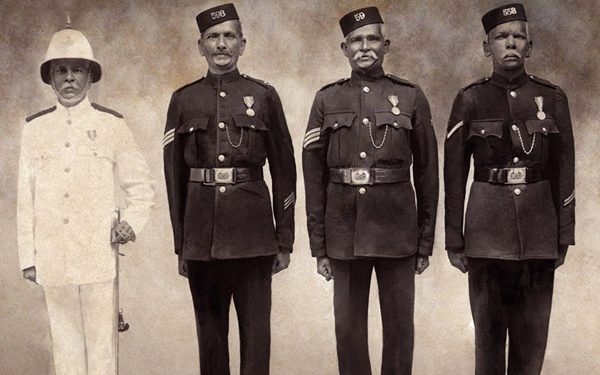
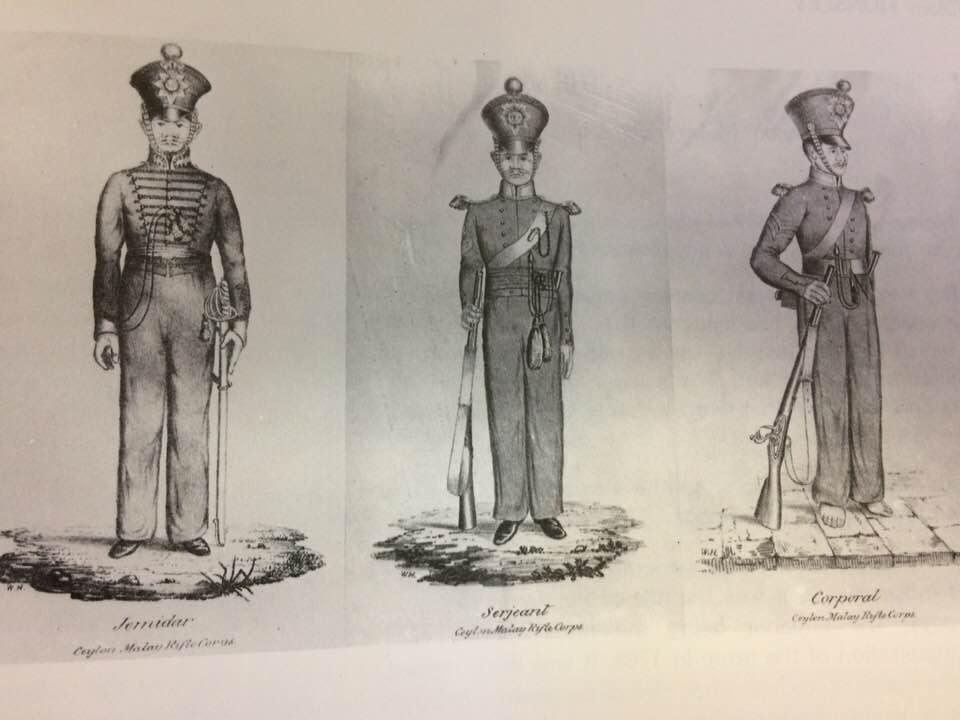
Copyright © 2026 LankaWeb.com. All Rights Reserved. Powered by Wordpress