The Easter Sunday Collaborators: Those who knew — Let the bombers kill — and Now try to fix blame on others

July 17th, 2025

Shenali Waduge

On April 21, 2019 — Easter Sunday — Sri Lanka suffered its deadliest terror attack since the defeat of the LTTE. Coordinated suicide bombings by the National Thowheed Jamaath (NTJ), an ISIS-inspired Islamist group, claimed 269 lives and injured over 500 at churches and luxury hotels nationwide. But the greatest guilt lies not only with the bombers, but with those who knew of the threat and did nothing to prevent this mass murder. Worse still, they now seek to shift blame onto others, hoping to satisfy their guilty conscience and avoid accountability..

While the bombers are dead, justice is being hijacked — by political actors, institutional cowardice, and manufactured conspiracy theories.

We know who bombed.

We now need to ask: Who knew — and did nothing and why are they fixing others to cover their guilt?

The Undeniable Facts: No kangaroo court can change the facts.

  • The Attackers:

8 Sri Lankan Muslim suicide bombers — from affluent families. Two were sons of Mohamed Yusuf Ibrahim, a wealthy spice trader linked to the JVP/NPP, and one was his daughter-in-law, Fathima Ilham, who detonated herself during a police raid in Dematagoda, killing her two children & the unborn in her womb.

  • Intelligence Warnings Ignored: April 4, 20, 21

India issued detailed intelligence weeks prior to the attacks, naming Zaharan Hashim, his network, and even the exact targets. This intel was passed by SIS Director Nilantha Jayawardena to CID and TID, yet no action followed.
Indian Intelligence Warnings | Sri Lanka Parliamentary Committee Report

  • Supreme Court Verdict:

The Court found President Maithripala Sirisena, IGP Pujith Jayasundara, and SIS Chief Nilantha Jayawardena guilty of negligence.

What about others in the chain of knowledge?

Sri Lanka Supreme Court Report (PDF)

  • Local Government & Intelligence Failures:

Multiple local reports, including the Malalgoda Commission report and the Parliamentary Committee on National Security, have documented severe lapses and ignored warnings.

Malalgoda Commission Report | Parliamentary Committee Reports

  • Independent Investigations by Civil Society:

Reports by independent research organizations like Verité Research have catalogued extensive evidence about political manipulation and negligence.
Verité Research Analysis

From Negligence to Promotion

Nilantha Jayawardena admitted he briefed CID and TID 12 hours before the bombings. Why did those he informed not issue alert or take measures to arrest the named?

Yet today:

  • The former CID Head is now Secretary to the Ministry of Public Security.
  • The former CID Director has been reappointed as Director, Criminal Intelligence Analysis Division.

Even more shockingly, Cabinet Minister Bimal Ratnayaka publicly claimed in Parliament that these appointments were made on request of the Cardinal,” implying a possible shielding of officials who failed to act.

https://www.facebook.com/share/p/1Drsssqpzi

Source: Parliamentary Committee Reports

The Cardinal’s changing tune: From Justice to Diversion?
Initially a strong advocate for justice, Cardinal Malcolm Ranjith has taken a puzzling turn:

  • He endorsed the Channel 4 documentary featuring Azad Maulana — a discredited witness whose claims were rejected as false by the Justice Imam Report, which labeled the film a hoax.” In his 3 page letter congratulating Channel 4, he even asks the same team that led the investigation to continue – is this why Minister Bimal claims they were given plum appointments even after they pledged political support raising questions of bias.
  • He has been largely silent about the Islamist extremist ideology that drove the attacks. Despite the mass murder of his own faith community, he has offered no strong condemnation of the bombers — other than to forgive them.
  • He targets only a few officials, while remaining silent about others who had prior knowledge and failed to act. In fact he has recommended those who knew & did nothing to continue the investigations too.

Some now ask: Did others within the Church know in advance – if so, why did they not stop worshippers entering the Church?

A Catholic ex-MP testified that his father warned him not to attend Mass that day. He also claimed to have informed people who now say they weren’t told. But no one accepts responsibility — it’s a game of he said, she said.

Easter Sunday: New Political Football

  1. Today, Easter Sunday has been transformed into a weapon of political convenience:
  2. Push for a Prosecutorial Office” — A Kangaroo Court
  3. UNHRC-aligned advocates are demanding a special prosecutorial mechanism, bypassing Sri Lanka’s legal system. Easter Sunday has become the perfect excuse to justify its creation.
  4. Theatrics around the tragedy are being used as a launchpad for a kangaroo court. The motive? Not justice — but to sidestep the Attorney General’s Department, which refuses to act on unverified evidence and hearsay.
  5. This is not about victims. It’s about political revenge and foreign pressure to fulfill foreign agendas merging for convenience.
  • Is Pillayan: The Convenient Scapegoat ?
  • Attempts are being made to frame Sivanesathurai Chandrakanthan (Pillayan) to indirectly implicate the Rajapaksa family – if so, produce the evidence not conjecture.
  • MP Rasamanikkam is vocal about arresting Pillayan — but silent on prosecuting negligent state officers. What does he serve to gain from a Pillayn in prison? Votes?
  • Fact: Pillayan was in prison when the Easter attacks occurred. So why the obsession?
  • Parliamentary Distractions
  • An SJB MP used parliamentary privilege to name officials — not based on evidence, but as distraction from his own corruption scandals.
  • Easter Sunday is now a smokescreen, weaponized for political survival – political opponents because the masterminds”  – all this is unfair on the victims and the injured.

Ignoring the Hard Truth: Conspiracy Theories vs. International Investigations

While credible international investigations conducted by some of the world’s best intelligence agencies — including India, the United States, and Australia — have clearly established the ISIS link and detailed the operational planning behind the Easter Sunday attacks, conspiracy theorists inside Sri Lanka continue to scream unsubstantiated narratives totally opposite to what these agencies have put on their letterheads.

These politically motivated conspiracy theories deliberately ignore:

This selective blindness is not accidental. It is another glaring example of how the goalposts are being constantly shifted — not to uncover justice, but to protect guilty consciences, shield political allies, and perpetuate division.

Until Sri Lanka confronts these facts head-on, it risks allowing Easter Sunday’s tragedy to remain a political football rather than a national call for accountability and truth.

The Real Questions

Let’s be very clear:

  • The suicide bombers are dead.
  • But those who knew, failed to act, now rewriting the narrative — are still alive and in power.

They are:

  • Promoting negligent officers.
  • Hiding behind religious endorsements.
  • Inventing new masterminds to divert blame from themselves.
  • Using the tragedy to jail political opponents.
  • Feeding the media sensationalism circus for personal gain.

What the People Deserve: Truth, Not Theatre

Sri Lanka needs:

  • Real accountability for those who ignored concrete warnings.
  • An end to politicization of national tragedies.
  • A justice process based on facts, not fabrications or foreign interests.

Until then, Easter Sunday 2019 will remain more than a tragedy —
It will remain a national disgrace, cynically abused by those who let it happen.

Even if there were 10, 15, or 20 suicide bombers, there were also multiple clear warnings — naming targets, dates, and attackers.

So the question is:
Why have all 15,000 who knew — not been identified, named, and held accountable? This is what the people of Sri Lanka should be asking.

The tragedy could have been prevented.
The intelligence was precise.
The names, targets, and timing were all given in advance.
Yet no action was taken. Why?

The suicide bombers died believing their plan was secret.
But it wasn’t.
The real guilt lies with those who knew — and did nothing.

They had the power to act.

To evacuate the churches. To cancel mass. To block entrances to Churches

To alert the hotels. Increase checking.

To issue a single warning — even through social media.
But they stayed silent.
Some even protected only themselves.

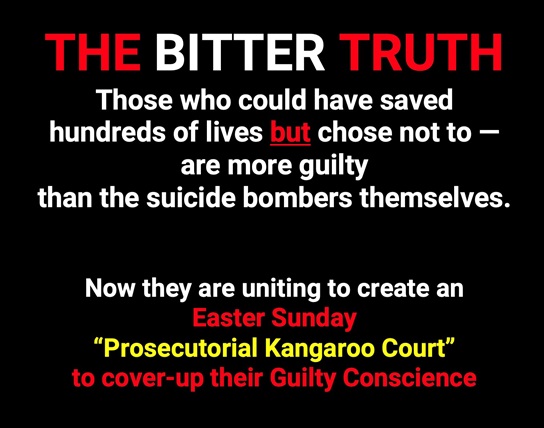
Those who could have saved hundreds of lives and chose not to — are more guilty than the suicide bombers themselves. Don’t you agree?

Shenali D Waduge
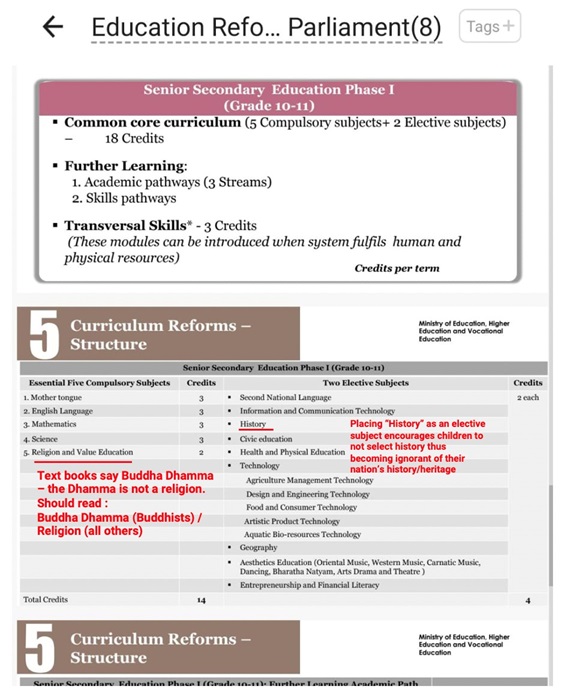
Is the Prime Minister Replacing Buddhism and History with LGBTQIA Ideology in Schools?

July 17th, 2025

Shenali Waduge

The real crisis in Sri Lanka is not just economic — it’s Moral and Spiritual. Sri Lanka’s collapse runs deeper: a moral and spiritual decay that has eroded the soul of the nation. This decay didn’t begin with inflation or debt. It began the day we abandoned our values, our identity, and our duty to uphold the principles that once shaped a disciplined, dignified society. It was that society that created the civilization that we are today ruining. Education is at the heart of this decay — and therefore, it must be at the heart of our revival. No one has the right to arbitrarily reform our education system without understanding the cultural, historical, and spiritual foundations of this nation. Reforms cannot be dictated by foreign funding agendas, global ideologies, or individuals disconnected from the psyche and values of the Sri Lankan people. Education must reflect who we are — not what others want us to be or become.

We see it every day:

  • Corruption without conscience
  • Youth without discipline
  • Families without guidance
  • Schools without values
  • Public spaces without respect
  • Children exposed to sexual ideologies before they understand right from wrong

Why this happened: A Systemic Betrayal of Article 9

This decay was not accidental. It was accelerated by decades of deliberate neglect, external interference, and the failure of successive governments — and their advisors — to foresee the consequences that would one day backfire on them.

At its core, this decline is the direct result of the State’s failure to uphold Article 9 of our Constitution, which explicitly mandates that Buddhism be accorded the foremost place and that the State must protect and foster the Buddha Sāsana.

This is not just a cultural matter — it is a constitutional mandate. Article 9 is not symbolic. It is binding. It is the moral anchor of the nation

Foreign Influence and the Erosion of Identity

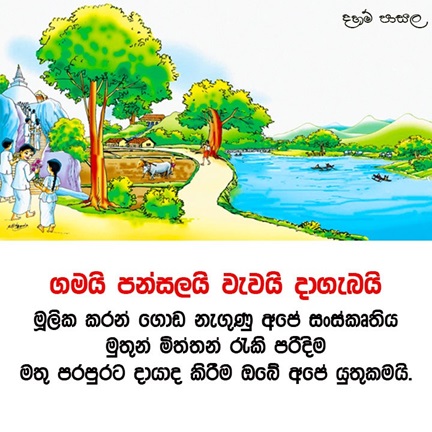
For decades, this sacred duty has been neglected primarily due to foreign funding that forced successive governments to remove the teaching of history/heritage while diluting the essence of Buddhism and the importance of the mother tongue.

The Govt apparatus failed to anticipate the domino effect this would have on society – no system can function effectively in a society that is morally, spiritually & physically corrupt.

Parliament’s Complicity in the Collapse

Today, we see the consequences of this neglect everywhere — from our homes and schools to the very halls of Parliament, where even Members of Parliament, themselves both products and victims of this long decay, are now complicit in dismantling what remains of our already fragile and vulnerable society. Their failure to live by the principles of the Buddha has blinded them to the harm they are causing — unable to discern right from wrong, they misuse their positions of power to make decisions that further erode the moral and spiritual fabric of the nation.

The urgent call for Restraint and Reform

In this climate of collapse, it is only those with the foresight to recognize the lurking dangers and the courage to call for restraint who must be urgently heard. Government programs that contribute to this erosion must be halted without delay — before the final nail is driven into the nation’s coffin.

Our History is Rooted in Buddhism — So is Our Future

Our ancient Sinhale kings understood this clearly. They did not merely rule — they guarded the Buddha Sāsana and lived by its tenets. So did all citizens.

Every one of them, from Dutugemunu to Parakramabahu, fought to preserve not only our unitary nation but also the sacred mission of protecting this land offered to the Buddha.

Our gallant war heroes of yesteryears to the present, too, fought in the same spirit. When they battled the LTTE — they were not just defending territory. They were defending the Dharma, the peaceful coexistence of our people, and the very soul of our country.

Even in war, they acted with Buddhist compassion — sharing food with civilians, offering water to those held hostage by terrorists, often putting the lives of innocents before their own safety and even sacrificing their own lives to save another.
This was not military training — this was Buddhist upbringing from their homes and temples. You will never witness a foreign military act in this manner.

This is what Buddhist education cultivates:

  • Compassion (Karunā)
  • Discipline (Vinaya)
  • Respect (Gārava)
  • Selflessness (Anattā)
  • Wisdom (Paññā)
  • Duty to Society (Sammā Vāyāma / Right Effort)
  • Mindfulness (Sati)
  • Gratitude (Katannuta)
  • Contentment (Santutthi)
  • Right Speech & Right Action (Sammā Vācā, Sammā Kammanta)
  • Restraint of the senses (Indriya-saṁvara)
  • Loving-kindness (Mettā)
  • Equanimity (Upekkhā)

These qualities together cultivate a balanced, moral, and socially responsible individual — the exact opposite of the chaos and confusion being sown in today’s ideological battlegrounds.

This Foundation is being deliberately torn down

The New Threat: A Curriculum of Collapse

The current Prime Minister — acting as Education Minister — is not reforming the education system.
She is delivering the final blow to a nation already spiritually bleeding.

  • By attempting to remove or dilute Buddhist education from schools,
  • By trying to replace it with LGBTQIA+ ideology-based content,
  • By demoting History to an elective subject so children no longer learn their heritage,
  • She is actively and knowingly destroying the moral and national backbone of our future generations.

The Dangers of forgetting Our Roots

A child who does not know their roots is a lost soul.

A nation without memory is a nation without meaning.

A nation that removes Buddhism and History from its classrooms is a nation that will soon

  • Normalize lust over restraint
  • Promote identity confusion over inner clarity
  • Breed selfishness over service
  • Replace discipline with disorder
  • Trade compassion for corruption

Stop importing Foreign Curriculums — everything we need is already in the Dhamma

Sri Lanka does not need imported ideologies or foreign-designed school curriculums that undermine our culture, confuse our children, and sever their connection to their roots.

We already possess the most time-tested, profound, and humane life-guiding philosophy known to humanity — the Buddha Dhamma.

Yet today, foreign funding and overseas scholarships are being used as tools of influence, pressuring policymakers to compromise the national interest by diluting Buddhist teachings and distorting our nation’s history in favor of liberal ideologies that do not align with our spiritual, moral, or cultural values.

At the same time, foreign narratives of our history are being quietly incorporated into educational texts and aggressively pushed through social media indoctrination — reshaping the minds of the next generation without public awareness or consent.

The Buddha gave us a complete Blueprint for Life

By oneself is evil done, by oneself is one defiled; by oneself is evil left undone, by oneself is one made pure.” — Dhammapada 165

The Buddha didn’t leave us in confusion. He gave clear, step-by-step guidelines for personal development, for:

  • Laypersons: With teachings on duties of children, parents, spouses, teachers, rulers, and citizens (e.g., Sigalovada Sutta)
  • Monks and clergy: With a discipline-focused Vinaya to live a life of simplicity, restraint, and compassion
  • Leaders and rulers: With the Ten Royal Virtues (Dasa Raja Dharma) and policies for righteous governance

Dhamma is not Dogma — It’s a Civic, Moral, and Universal Framework

This is not religious dogma, nor is it about memorizing lines from holy books. Buddhist education is a moral and civic model — deeply rooted in compassion, mindfulness, duty, and wisdom.

Our children do not need to be taught foreign models of civics when everything they need to become ethical, responsible, and humane citizens is already found in the Dhamma. Buddha’s Dhamma is for all to embrace without any form of discrimination.

All that needs to be done is:

  • To integrate these teachings into school education — not as abstract ideas, but as practical life skills.
  • To begin from the earliest years, even with toddlers, through stories, practice, and behavior modeling.
  • To ensure Buddhist values form the moral foundation of every subject, every classroom, and every child’s thinking

The absence of these teachings is the true cause of our moral decline — not the lack of facilities or foreign investment. Teaching principles does not require grand auditoriums or modern luxuries. Buddhist education transcends social, economic, and institutional boundaries, because it is rooted in cultivating the individual — their conscience, their mind, and their path to inner liberation.

Unlike doctrines that seek to elevate an external identity, the Buddha focused on the transformation of the self — not supremacy over others, but mastery over one’s own thoughts, speech, and actions.

The Battle for Language: Why Mother Tongue must come First

The importance of the mother tongue is not just emotional — it is educational and psychological. In any person’s gravest hour — the first and last words they speak are in their mother tongue — it comes naturally (aiyo, amma, ammo etc)

A child best absorbs values, culture, and wisdom through the language of the heart. The Buddha’s Dhamma, the Jataka stories, the heritage of this land — all were carried through Sinhala and Tamil, rooted in native identity.

Children can and should learn multiple languages, especially English and international languages, but:

  • The mother tongue must have pride of place in the curriculum
  • All core moral and cultural education — especially Dhamma — should be taught in the mother tongue first

A well-funded effort is underway to use media and influencers to make children feel ashamed of their mother tongue — a subtle but deliberate attempt to sever cultural roots. This is part of the bigger agenda funded to collapse Sri Lanka’s society. Notice how many television programs are purposely mixing mother tongue with other languages — this is with intent to dilute the mother tongue incrementally. They also use prominent personalities to adopt such practices so youth copy them.

The curriculum should be designed around our heritage, not in opposition to it.

The LGBTQIA Curriculum Threat: Lessons from the West

In the West, so-called inclusive education” has led to:

  • Children being encouraged to question their gender at the age of 5
  • Teenagers undergoing irreversible medical procedures and laterdetransitioning
  • A shocking rise inmental health issues, confusion, self-harm, and suicide among youth exposed to gender ideology
  • Parents being criminalized for refusing to affirm a child’s sudden gender claim

This curriculum is not liberation — it is psychological colonization. Is this what the PM is trying to do in Sri Lanka?

In Sri Lanka, there is no transgender child crisis. Those who identify differently as adults do so out of social media influence, foreign-funded activism, or for financial incentives. Many who are born biologically ambiguous (eunuchs) have long held respected jobs in beauty and salon industries — and are valued for their skills, not their identity. We never judged or discriminated against them. We do not need identity politics imported from the West.

What is now being promoted is fashion activism, not a genuine social issue. We must stop this before it breeds a generation of confusion and victimhood.

We must reclaim Our Education — reclaim Our Future & our National Identity

Say:

  • No to foreign ideological experiments in our classrooms
  • No to replacing Dhamma with LGBTQIA+ identity propaganda
  • No to erasing Buddhism and History from the curriculum
  • No to diminishing the importance of our mother tongue

Instead, we demand:

  • A return to Buddhist-based education from preschool upwards
  • Curricula that reflect the wisdom of our ancestors
  • Moral and civic values rooted in the Dhamma, family duties, and cultural pride
  • A trilingual system that empowers global literacy while preserving national identity

Our Duty — Like the Kings and War Heroes …

Let us resolve:

Just as the kings of Sinhale upheld the Dhamma and built righteous kingdoms…
Just as our soldiers defended the nation and protected all communities with Buddhist compassion…
We too must now protect our children from the curriculum corruption that is threatening their minds and souls.

Let us rise to defend the Buddha Sāsana in schools.

Let us give our children wisdom, not confusion.

Let us give them roots, not imported weeds.

A Final Warning to Public Officials: You are Not Immune

Let this serve as a solemn reminder to all public servants — elected representatives and officials alike — that the people are watching every decision being made & every action being taken.

Just as others are being summoned before the courts for violations of the Constitution & corruptions, those who undermine binding provision Article 9 — which mandates the protection and fostering of the Buddha Sāsana — must remember that such violations carry the gravest consequences.

Violating Article 9 is not a policy error — it is a legal breach. The Constitution, the Penal Code, and civil liability laws are clear. If you enable the erosion of Buddhist education, heritage, or national identity:

Then bullet-point the liabilities:

  • You may be charged under Penal Code Chapter IX(Sections 158–163)
  • You are liable under the State Liability Act
  • You may be sued under delictual (tort) lawfor dereliction of statutory duty
  • Citizens may file Fundamental Rights Petitionsunder Article 126 against you

Ultimately, the greatest innocence sacrificed, both legally and morally, is our children—far more valuable than temporary political gain. Those who betray that sacred trust will face consequences under law and in history.

Destroying a nation begins with destroying its foundation — and the most sacred asset of any nation is its children. Those who knowingly compromise their moral, cultural, and spiritual inheritance will not escape legal or moral accountability.

Let Sri Lanka Rise — Through Her Own Wisdom

Let Sri Lanka – Our Motherland Rise Again — not through imported ideologies, but through the wisdom that already lives in her soil, her temples, and her people.

Dhammo ha ve rakkhati dhammacāriṁ.”

ධම්මෝ හ වෙ රක්ඛති ධම්මචාරිං

(The Dhamma protects one who practices it.”)

Shenali D Waduge

What the Buddha would approve as Mandatory subjects in Sri Lankan Schools

July 17th, 2025

Shenali D Waduge

Sri Lanka is in urgent need of a moral, spiritual, and cultural renaissance.The crisis in our education system is not merely academic — it is ethical, mental, and civilizational. The Buddha taught that true education must train the mindpurify conduct, and lead to wise, compassionate action. In contrast, modern education — severed from values — has produced children who are skilled but confusedinformed but undisciplined, and digitally connected yet spiritually directionless. The Western-style education model imposed during colonial times is not only failing Sri Lanka, but is visibly collapsing in the very countries that exported it. It has bred generations of youth drowning in anxiety, identity confusion, moral relativism, and social fragmentation. It is time to return to a system that reflects who we are, rather than who the West wants us to become.

In line with:

  • The Buddha’s teachings
  • Sri Lanka’s Constitution (Articles 9 & 10)
  • The moral foundations of all major religions

Seven mandatory subject areas are proposed to rebuild character, identity, and national integrity.

Why a new framework is urgently needed!

Sri Lanka is wrongfully continuing an education system imposed by colonial invaders — a system rooted in Western liberal values, disconnected from the heart, mind, and soul of our people.

This model:

  • Breaks the child’s link to their heritage
  • Imposes foreign ideologies over native wisdom
  • Promotes rights without duties, identity confusion, and spiritual emptiness

We are now seeing the outcome in the quality of those coming out of the education system.

At its core, this system is alien to our civilizational DNA. It prizes exams over ethics, information over insight, and ambition over responsibility.

The mother tongue (Sinhala or Tamil) is not just a medium — it is the vessel of our history, values, and identity. Without it, children grow up rootless, ashamed of their culture, and vulnerable to external manipulation.

True education must reflect who we are as a nation — not who the West wants us to become.

We must stop forcing our children into a framework that mutilates their spirit in the name of progress.

This new values-based, Dhamma-rooted framework reclaims our cultural sovereignty and prepares children not just for jobs — but for life, character, and nationhood.

This is why no reforms should be led by those representing what we no longer wish to continue or newly adopt.

The Challenges Youth face today

  • Moral collapse: dishonesty, sexual promiscuity, lack of discipline
  • Spiritual emptiness: materialism, consumerism, rejection of duties
  • Mental instability: anxiety, overstimulation, identity confusion
  • Historical ignorance: no pride in Sri Lanka’s heritage
  • Economic dependency: foreign worship, unethical careers
  • Physical decay: laziness, poor hygiene, screen addiction

Western-style secular education, introduced post-16th century colonization, uprooted the Dhamma-based education that once produced compassionate, wise, and duty-bound citizens. It is time to rebuild from the roots.

The 7 Core Mandatory Subjects

1. Moral Education (Dhamma, Duties)

Why it’s vital today:

  • Children lack clear guidance on right and wrong
  • Families are breaking down due to selfishness and ego
  • Social media and global activism promote values alien to our culture

All students must receive moral instruction:

  • Buddha Dhamma – for Buddhist students
  • Faith-based ethics – for Hindu, Christian, and Muslim students

Core Moral Teachings (across all religions):

  • Respect for elders, parents, and teachers
  • Truthfulness, non-violence, compassion
  • Sexual modesty and restraint
  • Service to others and social harmony
  • Duties before Rights

Must exclude ideological content such as:

  • LGBTQIA+ theory
  • Gender identity confusion
  • Rights-without-duties activism

Implementation & Teacher Training:

  • Focus not just on content delivery, but on how tolive and model virtues — kindness, restraint, reverence — in daily interactions.
  • Equip teachers withshort moral storiesDhammapada verses, and faith-based parables they can use without textbooks.
  • Include methods forgentle classroom discipline, non-punitive corrections, and creating a respectful, emotionally safe classroom culture.

Key Message: Teachers must embody what they teach — values are not taught; they are caught.

 Sīla is the foundation of all good things.” – Buddha

2. Language & Communication (Right Speech)

Why it’s vital today:

  • Children are absorbing vulgarity, lies, and abuse online
  • Language shapes thought, identity, and community harmony

Key Focus:

  • Pride in mother tongue (Sinhala/Tamil)
  • English as a link language, not a cultural replacement
  • Speaking truthfully, kindly, and meaningfully

Implementation & Teacher Training:

  • Re-train Language teachers (Sinhala, Tamil, English) to embed the five aspects of Right Speech: truth, harmony, gentleness, purpose, and timeliness.
  • Workshops should include roleplay, debate practice, and compassionate communication techniques.
  • English teachers should be guided to teach the language without transferring Western cultural ideologies, helping students use English as a tool, not an identity.

Key Message: Speech is a mirror of thought — language teachers must teach not just how to speak, but how to speak wisely.

 One who speaks what is true, wholesome, and beneficial is loved by all beings.” – Dhammapada

3. Mindfulness & Meditation (Right effort, Right concentration)

Why it’s vital today:

  • Stress, emotional imbalance, and screen addiction are common
  • Children need mental discipline, not just exam skills

Includes:

  • Basic breathing meditation (ānāpāna)
  • Loving-kindness (mettā) practice
  • Daily mindfulness in actions and speech

Implementation & Teacher Training:

  • Select and traina core team of meditation facilitators in each school — ideally one teacher per grade level.
  • Training should behands-on and personal — not just lectures, but actual meditation practice in retreat settings (e.g., 3-day teacher retreats).
  • Teach classroom-friendly techniques:5-minute breathingloving-kindness recitationsdaily gratitude reflection, and how to manage student emotions with calm presence.

Key Message: A mindful teacher creates a calm class — training the teacher’s mind must come before training the childs.

 Mind is the forerunner of all states. With a trained mind, happiness follows like a shadow.” – Dhammapada

4. Wisdom Subjects (Yoniso Manasikāra – Wise Reflection)

In a world flooded with data, digital noise, and shallow thinking, youth must be trained to see clearly, reflect deeply, and choose wisely.

Without Yoniso Manasikāra (wise attention), children are vulnerable to manipulation, impulsivity, and moral confusion.

These subjects cultivate:

  • Critical thinking, not just fact recall
  • Cause-and-effect reasoning rooted in ethics
  • Insight, not just information
SubjectPurpose
Basic Science & NatureCause and effect, interdependence, humility before nature
Ethics / Moral ReasoningDecisions based on consequences and values
Civic EducationDuties, law, responsibility to community
Media LiteracyIdentifying manipulation and propaganda
Environmental StudiesResponsibility for the natural world (kamma principle)
Logic & PhilosophySharpening thought and challenging false beliefs
MathematicsPrecision, pattern recognition, structured thought

Implementation & Teacher Training:

  • Conductinterdisciplinary seminars for Science, Civics, Media, and Math teachers on how to foster ethical inquiry, cause-effect analysis, and wise reflection.
  • Provide them with Dhamma-based teaching aids:Jataka story parallels, ethical dilemmas, and logic puzzles to spark discussion.
  • Retrain teachers tode-emphasize rote memory and instead ask students: Why does this matter?”What is the consequence of this action?”

Key Message: Teachers must shift from delivering answers to cultivating ethical thinking — knowledge without wisdom is dangerous.

 A fool who knows he is a fool is wise to that extent. But a fool who thinks he is wise is a true fool.” – Buddha

5. History & Geography (Desa–Jātiya Itihāsaya saha Bhūgōlaya)

Why it’s vital today:

  • National identity is eroding through historical erasure
  • Youth must understand the value of Sri Lankan civilization and unity, the great achievements of the Sinhale kings & how the protected & guided the Nation & its People.

Must include:

  • Pre-colonial history, Sinhala kings, Buddhist civilization
  • Temple-based education, irrigation systems, ethics of rulers
  • Role of all communities in building the nation
  • Impact of colonialism and post-independence struggles
ComponentPurpose
Sri Lankan HistoryPride in heritage, resistance to colonial erasure, civilizational continuity
Local GeographyUnderstanding of rivers, agriculture zones, ecosystems
Archaeological SitesConnection to Buddhist civilization, ancient engineering, heritage
Ethno-Religious HarmonyHow all communities contributed to nationhood
Geopolitical AwarenessUnderstanding Sri Lanka’s strategic position & foreign pressures
Disaster & Resource AwarenessEthical use of land, water, preparedness (linked to kamma)

Implementation & Teacher Training:

History must be made a non-negotiable core subject from Grades 3 to 11,

  • Run district-level teacher camps focused on Sri Lanka’s pre-colonial history, Buddhist heritage, irrigation marvels, and geopolitics.
  • Involve historians, archaeologists, and monks to teach teachers how to connect children to land, lineage, and legacy through storytelling and site visits.
  • Equip teachers to counter false narratives, present balanced views, and foster national pride without chauvinism.

Key Message: History teachers must be guardians of memory — they shape the identity of a nation one classroom at a time.

 He who reveres the past and understands his land, protects the future.”

6. Life Skills / Right Livelihood Training

Why it’s vital today:

  • Children are conditioned to value fast wealth, foreign jobs, or immoral industries
  • Right Livelihood trains ethical, productive, and self-reliant citizens
AreaSkillsMoral Values
AgricultureFood growing, herbal medicineGratitude, self-reliance
Home EconomicsCooking, budgeting, hygieneCare, cleanliness, discipline
Financial LiteracySaving, avoiding debtContentment (santutthi), restraint
Simple TradesCarpentry, tailoring, repairDignity in labour
Time UseDaily routine, digital disciplineRight effort
Health & First AidPersonal care, emergency skillsCompassion, readiness
Family LifeParenting, elder respectHarmony and duty
Career EthicsGuidance on ethical jobsAvoidance of harm, deceit, exploitation

Implementation & Teacher Training:

  • EstablishLivelihood Labs” in schools with hands-on sessions in cooking, planting, repairing, and managing time and money.
  • Teachers should be trainedin the dignity of labor, simplicity of living, and the Buddhist ethic of santutthi (contentment).
  • Partner withlocal artisans, village elders, monks, and Ayurvedic healers to co-facilitate weekly practical classes.

Key Message: Teachers must not be afraid to get their hands dirty — right livelihood must be demonstrated, not theorized.

 Not by harming others does one gain success, but by right effort and honest work.” – Buddha

7. Health & Physical Care

Why it’s vital today:

  • Children face poor diet, laziness, early sexual exposure, drug use
  • A sound body supports a stable mind and virtuous life

Focus:

  • Cleanliness, physical fitness, nutrition
  • Avoidance of intoxicants
  • Strength and balance for service to society

Health is the greatest gain; contentment, the greatest wealth.” – Dhammapada

Age-Wise Outcomes: What each stage of Education should produce

Grade RangeFocus AreasExpected Outcome
Grades 1–5Foundation in morality, language, mindfulness, hygieneRespectful, emotionally stable, ethically grounded child
Grades 6–9Moral reasoning, civic identity, national pride, life skillsThoughtful, disciplined youth with cultural rootedness and early purpose
Grades 10–13Application of ethics, Right Livelihood, national serviceResponsible, self-aware citizen ready for ethical work or service

Implementation & Teacher Training:

  • Replace foreign-modeled sex education withlocal, culturally rooted body-awareness and hygiene education, guided by doctors, bhikkhunis, psychologists, and even nurses.
  • Train teachers inhow to speak about the body and sexuality with dignity and truthfulness, rooted in Dhamma concepts of modesty and restraint.
  • Emphasize clean living, nutrition, daily routines, and the abandonment of intoxicants and harmful indulgences.

Key Message: Health is sacred — teachers must guide children to care for their bodies as vessels of virtue.

A New National Training Body:

  • Establish aDhamma-based Teacher Training Institute” under the Ministry of Education/NIE in partnership with the Maha Sangha and representatives of all major faiths.
  • This institute would design and oversee:
    • Certification of new values-based teachers
    • Ongoing in-service moral training
    • Common ethics modules for Buddhists/Non-Buddhists
    • A national database of local resource persons (monks, elders, craft mentors)

After 13 Years of Education: The Path Forward

The Ideal Graduate: A young adult who is:

  • Morally upright (Sīla)
  • Emotionally stable (Samādhi)
  • Intellectually wise (Paññā)
  • Rooted in heritage and ready to serve society

Three Pathways after School:

  1. Right Livelihood Track
    1. Vocational training (Dhamma-aligned trades)
    1. Apprenticeships with ethical mentors
    1. Focus on agriculture, crafts, service, and rural development
  2. National Service & Leadership Track
    1. Voluntary 1–2 year service: disaster response, rural upliftment, teaching
    1. Training in ethical leadership and civic duty
  3. Higher Academic or Dhamma Studies
    1. Entry into reformed universities with moral foundation
    1. Specializations in Buddhist thought, ethics, education, policy
    1. Monastic or scholarly spiritual advancement

Long-Term National Goals:

  • Rebuild a duty-oriented, disciplined citizenry
  • End ideological dependency on foreign models
  • Restore cultural sovereignty
  • Reconnect education to life, purpose, and national identity

We call upon Sri Lanka’s policymakers, religious leaders, educators, and parents to unite behind this Dhamma-rooted educational vision — and reject externally imposed ideologies that continue to fracture our youth. Let us rebuild from our own soil & spirit.

Shenali D Waduge

Behind the Bailout: How Ranil Wickremesinghe gave away Sri Lanka’s Central Bank Independence to IMF

July 17th, 2025

Shenali D Waduge

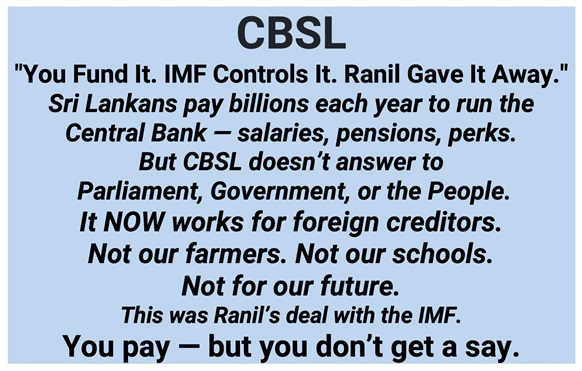
In 2023, as Sri Lanka was reeling from its worst economic crisis in decades, unelected President Ranil Wickremesinghe agreed to a $3 billion IMF bailout. But hidden inside the loan terms was a Trojan Horse — the demand to make the Central Bank of Sri Lanka independent” from government and parliamentary oversight.

What followed was the Central Bank of Sri Lanka Act No. 16 of 2023, rushed through Parliament with little public debate or transparency. It transferred core economic powers from elected leaders to an insulated technocracy, handing control over Sri Lanka’s monetary policy to the IMF.

What was dismantled — and what it cost Sri Lanka

For decades, the Central Bank operated under the Monetary Law Act No. 58 of 1949:

  • TheFinance Minister sat on the Monetary Board.
  • The CBSL could issueprovisional advances to the government.
  • CBSL leadership waspolitically accountable.
  • Monetary and fiscal policy workedtogether to promote employment, development, and price stability.

This model allowed governments to respond to national emergencies, support social welfare, and invest in growth.

But the 2023 CBSL Act destroyed this model and installed IMF-style rules that prioritize creditors, not citizens:

IMF Rule in CBSL ActReal-World Impact on You
Strict inflation targetingDevelopment, employment, and poverty reduction take a backseat. CBSL won’t lower interest rates to stimulate jobs or industry.
No deficit financingThe government can’t print money or fund social programs during crises — hospitals, agriculture, and education suffer.
Full autonomy from Parliament/GovernmentCBSL technocrats answer to IMF frameworks, not your elected MPs. There is no way to override their policies.

What would have happened without resistance?

Had the CBSL Act passed unchanged, Sri Lanka would have become:

  • Adebt colony, where foreign creditors and IMF officials dictate policy.
  • Aparalyzed democracy, where elected leaders are helpless during national emergencies.
  • Atechnocratic dictatorship, where a handful of unelected officials determine nation’s economic fate — without any accountability.

The Heroes who fought back — and what they saved

Thankfully, a group of patriotic petitioners filed a Fundamental Rights case at the Supreme Court:

The Supreme Court responded with vital changes:

  • Required CBSL to enter aformal inflation-target agreement with government.
  • Mandatedreporting to Parliament.
  • Restoredlimited constitutional and legal oversight.
  • Correctedprocedural flaws in how the bill was passed.

Without these petitioners, the CBSL would now be completely beyond the reach of Parliament and the People.

However — the CBSL is not truly accountable to Sri Lanka

Despite the Supreme Court’s corrections, the IMF-style model remains mostly intact:

  • CBSL’s inflation targets and reports aresymbolic, not binding.
  • The governmentcannot override or direct CBSL in times of crisis.
  • Foreign creditors come first— not the citizens of Sri Lanka.

Unlike:

  • India’s RBI, which works with the Finance Ministry.
  • UK, where the Treasury can override Bank of England in emergencies.
  • USA, where the Federal Reserve is answerable to Congress.

Sri Lanka now has one of the world’s most insulated central banks — thanks to a bill passed during an unelected presidency.

Sri Lanka’s Taxpayers have a right to demand questions from CBSL

Who bears the cost?

Sri Lanka’s public sector salary and pension bill stands at around LKR 1.7 trillion per year — over half of the total government expenditure.

Within this bloated spending:

  • The Central Bank of Sri Lanka recently awarded salary increases averaging50–77% for its staff
  • An entry-level clerk (Office Assistant) now earnsnearly LKR 200,000 per month, while a Deputy Governor may receive LKR 1.7 million in salary alone
  • CBSL also contributes29% of gross salary to pensions/provident funds, plus foreign training and low-interest loans

Taxpayers spend – IMF & Pro-IMF staff benefits?

CBSL staff are unaccountable to taxpayers. Instead they work to redirect public resources to creditors focusing on inflation control & debt repayment. Using taxpayers money CBSL acts like a quasi-private institution, using public funds while prioritizing IMF/creditor interests, not citizens.

Key takeaways for taxpayers:

  1. Every rupeespent on CBSL salaries, perks, and pensions now funnels into a system prioritizing foreign lenders, not local communities.
  2. Tough economic reforms, cost-of-living increases, and service cuts arenot matched by flexibility in monetary policy because of the CBSL’s new structure.
    1. The public has a right to ask: Should theCBSL continue to enjoy elite compensation when it isn’t serving national needs?
  3. Why should Sri Lankansfund a bank that isn’t accountable to them or working in their interest?

What Sri Lankans Must Demand:

  • A fullreview and reduction of unsustainable CBSL salary and pension structures.
  • Parliamentary oversightof CBSL spending and compensation, ensuring public funds serve the public.
  • Restoration of a Central Bank that isdemocratically accountable, transparent, and aligned with Sri Lanka’s development priorities.

Finding Fault is Not enough — Parliament Must Act

Blaming Ranil Wickremesinghe now is not the solution.

He may have betrayed the nation by agreeing to this IMF condition, but today’s Parliament holds the power to reverse this Act.

Why must the CBSL Act be repealed or amended?

  • It gives power to unelected officials who are not accountable to the People (this is a violation of Article 3).
  • It shackles the government’s hands during economic crises
  • It implements policies that hurt local businesses, jobs, and welfare.
  • Taxpayers need not fund an institution that serves the IMF — not the people.

What must be done — before it’s too late

The current government has the majority in Parliament. It must act now.

A NEW BILL that:

  • Restoresparliamentary oversight of CBSL
  • Enables thegovernment to direct monetary policy during crises
  • EndsIMF conditionalities embedded in domestic law
  • PutsSri Lanka’s development, not debt repayment, first

Final Warning

If the Central Bank serves foreign creditors instead of the People, democracy becomes meaningless.

If your elected government cannot govern the economy, who governs you? Why should a private institution dictate to a sovereign nation & its people?

Sri Lanka must choose:

  • Asovereign republic led by its people,
    or
  • Adebt colony, ruled by unelected technocrats.

Let’s finish what the petitioners began – Reverse the CBSL Act 2023.

Reclaim our future.

Shenali D Waduge

1972 ආණ්ඩුක්‍රම ව්‍යවස්ථාවට කරන ලද 2වන ව්‍යවස්ථා සංශෝධනය ලෙස 1978 ආණ්ඩුක්‍රමව්‍යවස්ථාව පවතින හෙයින් 1978 ආණ්ඩුක්‍රම ව්‍යවස්ථාවේ සිංහල භාෂා පාඨය බලාත්මක වන ආකාරය.

July 17th, 2025

අරුණ ලක්සිරි උණවටුන B.Sc(Col), PGDC(Col) නීතීඥ, සමායෝජකවෛද්‍ය තිලක පද්මා සුබසිංහ අනුස්මරණ නීති අධ්‍යාපන වැඩසටහන. 

1. 1815 උඩරට ගිවිසුම මගින් බ්‍රිතාන්‍යය කිරීටය විසින් මෙරට විධායක, ව්‍යවස්ථාදායක සහ අධිකරණ බලය යටත් කර ගැනීමෙන් පසු බ්‍රිතාන්‍යය අලිඛිත ආණ්ඩුක්‍රම ව්‍යවස්ථාවට අනුව පාලනය කිරීම සිඳු විය.

2. 1947 ඩොමීනියන් නිදහස ලබා දුන් සෝල්බරි ව්‍යවස්ථාව සහ සියළු ආඥා පනත් ඉංග්‍රීසි භාෂාවෙන් පමණක් පැනවීය.

3. 1956 සිංහල භාෂාව රාජ්‍ය භාෂාව බවට නීති පැනවුවද බ්‍ර්තාන්‍ය අලිඛිත ආණ්ඩුක්‍රම ව්‍යවස්ථාවට අනුව බිහිකළ සෝල්බරි ව්‍යවස්ථාව හෝ ආඥා පනත් සිංහල භාෂාවෙන් ලබා දීමට කටයුතු නොවූ අතර අවසන් අධිකරණ බලය බ්‍රිතාන්‍ය රාජාධිකරණය සතුවිය.

4. 1947 සෝල්බරි ආණ්ඩුක්‍රම ව්‍යවස්ථාව උල්ලංඝණය කරමින් ගෘන්නෝමයක්/ නෛතික විප්ලවයක් මගින් වගන්ති 134කින් යුත් පළවන ජනරජ ආණ්ඩුක්‍රම ව්‍යවස්ථාව 1972 මැයි මස 22වන දින පාර්ලිමේන්තුව විසින් පනවා ව්‍යවස්ථාදායකය ජාතික රාජ්‍ය සභාව බවට පත්වීමෙන් පසු සිංහල, දෙමළ සහ ඉංග්‍රීසි භාෂාවලින් ආණ්ඩුක්‍රම ව්‍යවස්ථාව කෙටුම්පත් කර පැනවීම සිඳුවිය.

5.1972 ආණ්ඩුක්‍රම ව්‍යවස්ථාවේ 9වැනි ව්‍යවස්ථාව මගින් සිංහල භාෂාවෙන් නීති පැනවීම සි‍ඳුකළ යුතු බවත් දෙමළ භාෂාවෙන් පරිවර්තනයක් විය යුතු බවත් දැක්වා ඇත.

6. එසේම නීතියක් සඳහා ඉදිරිපත් කරන සෑම පනත් කෙටුම්පතක්ම සිංහල භාෂාවෙ ඉදිරිපත් කළ යුතු බවත්, දෙමළ භාෂාවෙන් පරිවර්තනයක් සහිතව ගැසට් පත්‍රයේ පළ කළයුතු බවත් 1972 ආණ්ඩුක්‍රම ව්‍යවස්ථාවේ 46 වන වගන්තියේ දක්වා තිබුණි.

7. 1972 ආණ්ඩුක්‍රම ව්‍යවස්ථාව සංශෝධනය කිරීම සම්බන්ධයෙන් එහි X පරිච්ඡේදය මගින් දක්වා ඇති අතර, ඒ අනුව ජාතික රාජ්‍ය සභාවේ නොපැමිණි මන්ත්‍රීවරුද ඇතුළුව මුළු මන්ත්‍රී සංඛ්‍යාවෙන් යටත් පිරිසෙන් 2/3ක ඡන්දයෙන් සම්මත වුවහොත් එහි 49වන වගන්තිය යටතේ කතානායකවරයා විසින් සහතිකය යෙදීමෙන් පසු එහි 48වන වගන්තිය යටතේ නීතියක් විය.

8. ඒ අනුව 1978 ජූලි මස 21 වන දින පැවති මැතිවරණයෙන් පත් වූ  ජාතික රාජ්‍ය සභාව විසින් උත්තරීතර නීතිය ලෙස අලුත් ආණ්ඩුක්‍රම ව්‍යවස්ථාව ( ව්‍යවස්ථා 172කින් යුත් 1978 ආණ්ඩුක්‍රම ව්‍යවස්ථාව) පැනවූ අතර එය 1972 ආණ්ඩුක්‍රම ව්‍යවස්ථාවට කරන ලද 2වන ආණ්ඩුක්‍රම ව්‍යවස්ථා සංශෝධනය වූ අතර 1වන ආණ්ඩුක්‍රම ව්‍යවස්ථා සංශෝධනය වූයේ විධායක ජනාධිපති ධූරයට අදාල ආණ්ඩුක්‍රම ව්‍යවස්ථා සංශෝධනය ගෙන ඒමය.

9. 1972 ආණ්ඩුක්‍රම ව්‍යවස්ථාවේ 9වන වගන්තිය අනුව දෙමළ භාෂාවෙන් පරිවර්තනයක් සහිතව සිංහල භාෂාවෙන් 1978 ආණ්ඩුක්‍රම පැනවීම සිඳුකර ඇත.

10. ඉහත කාරණා සැළකීමේදී 1978 ආණ්ඩුක්‍රම ව්‍යවස්ථාවේ සිංහල භාෂා පාඨය බලාත්මක වෙයි.

http://neethiyalk.blogspot.com/2025/07/1972-2-1978-1978.html?m=1

අරුණ ලක්සිරි උණවටුන
B.Sc(Col), PGDC(Col) නීතීඥ,
සමායෝජකවෛද්‍ය තිලක පද්මා සුබසිංහ අනුස්මරණ නීති අධ්‍යාපන වැඩසටහන. දුරකථන 0712063394   

NDB Bank Honoured with Prestigious Titles at Asian Banking & Finance Awards 2025

July 17th, 2025

National Development Bank PLC

National Development Bank PLC (NDB) is proud to announce its latest accolades at the Asian Banking & Finance Retail Banking Awards 2025 held in Singapore, having secured two coveted awardsDomestic Retail Bank of the Year – Sri Lanka and, for the very first time, Islamic Banking Initiative of the Year – Sri Lanka. These recognitions reinforce NDB’s unwavering commitment to excellence, customer-centric banking, and innovation across diverse financial segments.

This year’s honours follow closely on the heels of NDB’s earlier win under the Wholesale Banking Awards category, where the Bank was named Domestic Project Finance Bank of the Year – Sri Lanka, affirming its leadership in funding national infrastructure and large-scale development projects.

The Asian Banking & Finance Awards are widely regarded as one of the most competitive and respected recognitions in the region, and NDB ‘s recognition is a testament to the Bank’s vision, agility, and sustained delivery of impactful banking solutions tailored to Sri Lanka’s evolving needs.

The title of Domestic Retail Bank of the Year further cements NDB’s role as a dynamic retail banking leader, driven by digital transformation, inclusive products, and a strong nationwide presence that supports individuals and SMEs alike.

Meanwhile, the Islamic Banking Initiative of the Year award marks a historic first for NDB, reflecting the Bank’s dedication to expanding inclusive financial services and offering ethical, Shariah-compliant banking solutions that serve a growing segment of Sri Lankan society. This achievement recognises the Bank’s strategic entry and success in Islamic finance, built on transparency, trust, and structured growth.

Commenting on the wins, Kelum Edirisinghe, Director and CEO of NDB Bank, stated, These recognitions are a proud moment for all of us at NDB. They are a reflection of the trust our customers place in us and the dedication of our teams who strive every day to deliver banking excellence with purpose. As we continue to innovate, our focus remains on deepening customer relationships, expanding financial access, and supporting the broader economic progress of Sri Lanka.”

These latest awards add to NDB’s impressive legacy of recognition at the Asian Banking & Finance Awards over the years, showcasing the Bank’s consistency, capability, and forward-thinking approach across retail, corporate, and project financing domains.

As NDB continues its journey of empowering lives and enriching the nation, these recognitions serve as a reminder of the impact purposeful banking can achieve, fostering inclusion, innovation, and long-term growth for all Sri Lankans.

NDB Bank is the fourth-largest listed commercial bank in Sri Lanka. NDB was named Sri Lanka’s Best Bank for Corporates at Euromoney Awards for Excellence 2024 and was awarded Domestic Retail Bank of the Year – Sri Lanka and Sri Lanka Domestic Project Finance Bank of the Year by Asian Banking and Finance Magazine (Singapore) Awards 2024. NDB is the parent company of the NDB Group, comprising capital market subsidiary companies, together forming a unique banking and capital market services group. The Bank is committed to empowering the nation and its people through meaningful financial and advisory services powered by digital banking solutions.

Ahmadiyya Convention in Great Britain

July 17th, 2025

by A. Abdul Aziz, Sri Lanka Correspondent, All Hakam, London.

More than 35,000 delegates from over 90 countries including Sri Lanka are expected to attend the Ahmadiyya Muslim Annual Conference, holding Friday 25th July to Sunday 27th July 2025 at Hadeeqatul Mahdi, Alton, United Kingdom.

The Annual Convention (Jalsa Salana) of the Ahmadiyya Muslim Community United Kingdom is a unique event that brings thousands of participants from worldwide to increase religious knowledge and promote a sense of peace in society. Eminent speakers discuss a range of religious topics and their relevance to contemporary society. Additionally, a number of parliamentarians, civic leaders and diplomats from different countries also address the gathering and underline the convention’s objective of enhancing unity, understanding and mutual respect. A special feature of this convention is that it is blessed by the presence of His Holiness Hazrat Mirza Masroor Ahmad, the Fifth Khalifa and the Head of the worldwide Ahmadiyya Muslim Community. He addresses the convention over each of the three days, providing an invaluable insight into religious teachings and how they are a source of guidance for the world today.

The Ahmadiyya Muslim Jamaát (Community) was founded in 1889 by Hazrat Mirza Ghulam Ahmad (peace be upon him) of Qadian, India. He claimed under divine guidance to be the Promised Messiah and Imam Mahdi, whose advent was awaited by all the religions of the world. He championed the peaceful teachings of Islam, revived the Faith with a sense of purpose and inspired his followers to build a strong bond with God and to serve humanity with a selfless spirit of compassion and humility.

The community is now established in 214 countries and it spearheads an international effort to promote the true message of Islam and of service to humanity. It also leads a global peace campaign to champion respect and human rights for all. The United Kingdom chapter of the community was established in 1913 and it now has 130 branches, making it one of the oldest established Muslim communities in the United Kingdom. The community follows the true spirit of Islam and lives by its motto: Love for All, Hatred for None.

\US offers 0% duty on 70–80% of Sri Lankan exports: Dy Minister

July 17th, 2025

Courtesy Adaderana

The United States has offered to accept 70 to 80% of products exported from Sri Lanka without imposing any tariffs, Deputy Minister of Economic Development (Prof.) Anil Jayantha Fernando stated.

The offer has been made during on-going discussions between Sri Lanka and the US following the decision by US President Donald Trump earlier this year to impose reciprocal tariffs on countries based on existing trade deficits.

Speaking during the Ada Derana Big Focus” program held today (17), Deputy Minister Anil Jayantha Fernando confirmed that the US has offered Sri Lanka a list of 1,161 products for exports including apparel and 42 products related to the Agricultural industry.

The Deputy Minister of Economic Development stated that the details of the agreement with the United States cannot be disclosed yet, as discussions related to tariff concessions have not been finalized.

He added due to the technical nature and diplomatic protocol, matters under discussion will not be made public at this juncture.

Deputy Minister of Economic Development Anil Jayantha Fernando said Sri Lanka is also in discussions on the possibility of securing 0% tariffs on imports from the US.

He said, When it comes to imports, currently goods imported from the U.S. fall within a 0% to 20% tariff range. So even if we slightly reduce the rates on some of those items, it will not result in a significant loss of revenue for the government, as we import only around USD 300 million worth from the U.S.”

Meanwhile, a delegation from Sri Lanka is scheduled to leave for the United States tomorrow (18) to continue discussions on further reducing U.S. tariff rates.

According to the recent announcement by the White House, goods exported to the United States from Sri Lanka will be subject to a 30% tariff from August 1.

හරිනි අධ්‍යාපනයට කරන්න යන්නේ කුමක්ද? | Current Politics with Nirmal | History with Nirmal

July 17th, 2025

History with Nirmal – නිර්මාල් සමග ඉතිහාසය

සවිස්තරාත්මක අධ්‍යාපන ප්‍රතිසංස්කරණ මාලාවක් හදුන්වා දීමට ආණ්ඩුව කටයුතු කරන බව පෙනේ. මේ ඒ පිළිබද විමසා බැලීමකි.

This Discovery Has Transformed Our Understanding of the Afterlife

July 17th, 2025

Subtle Reality

Modern discoveries in quantum physics have shaken the world: the soul does not disappear after death — it transitions into a parallel reality. What is this world, and why does science increasingly confirm ancient mystical ideas about the afterlife? In this video, you will learn shocking details from research on life after death, real testimonies from people who experienced clinical death, and hypotheses from renowned scientists such as Raymond Moody, Eben Alexander, and Michael Newton. We will reveal the mystery of parallel worlds and explain how human consciousness continues to exist after physical departure. Watch until the end to understand what truly awaits us after death.

” බොරු ප්‍රචාරවලට රැවටෙන්න එපා…” හරිනි අමරසූරිය

July 17th, 2025

SEPAL – short clips

‘ මේ ආණ්ඩුවට හෙණගහන්ඩ ඕනැ…” මහාචාර්ය නිර්මාල් රන්ජිත් දේවසිරි

July 17th, 2025

SepalAmarasinghe

As no O’L Math Teacher for Bogaswewa School in Vavuniya District, 35/50 students fail Math – Shame on the Government!

July 16th, 2025

Chanaka Bandarage

Bogaswewa is a rural village in Vavuniya District. During the war time, it was categorized as a ‘marginal village’.

The villagers are subsistence farmers who eke out a living from the small amount of arable land that is available. Due to the recent drought, farmers have suffered a lot.

When all Tamil schools in the surrounds  have Math teachers, Bogaswaewa Maha Vidyalaya that only has  Sinhala students has functioned without an O’L Math teacher for few years.

In the recently released O’L results, 35 of the 50 students have failed Math. Mostly, those who had the means to pay for private tuition  have passed.

Generally, for some students failing Math means failing the entire O’L exam. They have to re-sit it again.

Students who are going to sit the O’Ls next time (February 2026) also face the same dilemma. They do not have a Math teacher currently. And, there is no sign that a Math teacher will soon be appointed. This means a bulk of the next lot of students will also fail their O’Ls.

The new government came to power with much fanfare promising to fix such problems. Sadly, the government has shown inefficiency in many fronts.

Like fixing the above grassroots level problem, the NPP/JVP Ministers and MPs are showing lethargy and inefficiency  in attending to their primary duties. Some have taken up unnecessary overseas travel.

As it has only been about 8 months, let us hope that they will get their act together.

As outlined in a previous article by this writer, the government’s ‘Clean Sri Lanka’ campaign is a dead rubber. It was started off with much fanfare. True some work is still happening but that is by the tri forces personnel, police, civil defence force and government servants who go on shramadana. Most of the time, the government pays for their times. There is the lack of participation in the scheme by ordinary people.

What the government ought to have done was to mobilize it as a mass people’s movement. Unfortunately, the President did not have the ticker to call the people to rally round him.

Paul Kagame of Rwanda has done it brilliantly. In that country, last Saturday of every month is the ‘Clean Up Rwanda Day’. From the President down to the ordinary citizen, every adult person participates in the  well-planned clean-up campaign. Some say Rwanda today is not just the cleanest country in Africa but the cleanest in the world.

Like in our rural schools, there are many shortcomings in rural hospitals. For eg. there is a shortage of medicine in Vavuniya and Padaviya hospitals.

The public transport in the country is still an utter mess. The new government spends millions on Odyssey trains, the ordinary people still travel in jampacked buses and trains. The Transport Ministry has failed to put sufficient trains at the Fort railway station for office commuters during peak hours.  One could see people traveling even on footboards sometimes.

These are the problems that the government must give top priority and solve. Instead, the ministers who are in charge of important ministries seem playing antics. They seem to be paying attention more on building the party than the country.

Though Youtubers heckle him, the Deputy Agriculture Minister Namal Karunarathne’s decision to import high quality bovine semen to improve the country’s dairy herd must be commended. This is the best way to develop our livestock sector. Well done the Deputy Minister!

The multi-million-dollar dairy cow imports from Australia by the past governments was a total failure. Previous Ministers and top government officials fatten themselves from the scheme.

True some top current Ministers are inefficient and just big talkers, the good thing is that the current NPP/JVP government is corruption free. Let us hope that this trend will continue.

The release of the 309 containers by the Customs without physical examination is a major worry. It is good to discipline the errand customs officers, but what about the Ministers who have allegedly given them the order to release? If corruption is proven in this incident,  it will badly taint the JVP – a highly disciplined party.

Why Understanding Taxes Is Key to Building a Business That Lasts for Women Entrepreneurs

July 16th, 2025

National Development Bank PLC,

When running a business, whether it’s a home-based catering service, a clothing boutique, or a digital platform, the numbers matter. And among those numbers, there’s one that too many overlook until it’s too late: taxes. For women entrepreneurs striving to build something meaningful and lasting, understanding taxation isn’t just a legal requirement, it’s a business advantage.

Taxes can feel like a complex and intimidating topic, especially if you’re just starting out. But the truth is, tax knowledge is power. It helps you price your products correctly, manage your income responsibly, and build the credibility your business needs to access funding or grow internationally.

So, what is tax? Simply put, it’s the contribution every citizen makes to build the country we want to live in. From healthcare and free education to infrastructure and social services—91% of the government’s spending last year was covered by taxes collected from individuals and businesses like yours. Paying taxes isn’t just a duty; it’s your stake in the nation’s progress.

For entrepreneurs, taxes come in many forms, income tax, VAT, import duties, stamp duty, and more. And the rules depend on the nature and size of your business. For example, if you’re a sole proprietor earning over LKR 1.8 million a year (or LKR 150,000 per month), you’re legally required to pay income tax. If your business is registered as a private limited company, you’re liable to pay 30% tax on profit. If you import goods to resell, you must pay VAT, SSCL, and various custom duties, depending on the product and its HS Code.

One of the most common missteps among small business owners is excluding taxes when calculating the cost of their products or services. This can quickly erode profits. Tax is not an afterthought, it’s part of your pricing structure. Before you decide on how much to charge, make sure you understand what portion of that price goes toward your tax obligations.

Also crucial is separating personal finances from your business. Keeping clear records of income and expenses isn’t just good practice, it’s a necessity for staying compliant and avoiding penalties. Missing deadlines, failing to file returns, or not paying taxes can lead to fines, forced compliance, and even seizure of assets under Sri Lanka’s Tax Recovery laws.

But it’s not all cautionary. There’s a powerful upside to being tax-compliant. Maintaining a clean tax record improves your chances of obtaining a business loan, migrating abroad, or qualifying for government support. It builds your business’s reputation and shows potential partners, banks included, that you’re trustworthy and forward-thinking.

The most important takeaway for any woman entrepreneur? Don’t wait for someone else to bring tax matters to your attention. Take the lead. Get a TIN number, understand what taxes apply to your business, and consult a tax advisor to make sure you’re covered. It’s not just about compliance, it’s about control, confidence, and long-term success.

These practical insights were delivered by taxation expert Mr. Asisiri Pradeep, during a recent session of NDB Bank’s Women’s Entrepreneurship Upskilling Programme. His guidance helped break down complex tax concepts into actionable advice for women ready to formalise and scale their business ventures.

As part of NDB’s long-term commitment to empowering Sri Lankan women, the upskilling programme provides accessible, real-world knowledge to help women not only launch businesses but sustain and grow them with resilience.

NDB Bank remains steadfast in its mission to support women-led businesses through both financial and non-financial support, ensuring that every woman entrepreneur has the tools to grow, adapt, and thrive. For more information on the Women’s Entrepreneurship Upskilling Programme, visit https://www.ndbbank.com/banking-on-women/vanithabhimana](https://www.ndbbank.com/banking-on-women/vanithabhimana) or contact Thishani at 0765699251.

Sri Lanka: Women’s Wing of Ahmadiyya Muslim Community (Lajna Imaillah) – Annual Sports Meet – 2025.

July 16th, 2025

by A. Abdul Aziz, Press Secretary – AMJSL.

After 8 consecutive years, Lajna Imaillah Sri Lanka successfully held their Annual Sports Meet on July 5 July  2025, at Baitul Basit Mosque, Kandy Road, Pasyala. The event brought together 375 members from all six Chapters of Ahmadiyya Muslim Community and was filled with energy, joy, and unity.

Members were divided into three houses – Madanath (Yellow house), Diyanath (Green house), and Amanath (Red house) – to build team spirit and encourage healthy competition.

The purpose of the meet went beyond physical activity. It aimed to build strong bonds, promote sisterhood, and encourage a healthy, active lifestyle.

All participants gave their best. The effort, energy, and spirit shown on the field were truly inspiring. Games were held separately for ladies (Lajnas) and Nasirat ul Ahmadiyya of all age groups both in group and individual categories, including the young ones from Ahmadiyya Montessori, who joined with great enthusiasm.

Nasirat-ul-Ahmadiyya is the Ahmadiyya Muslim Girls’ (age between 7 to 15) Association, an auxiliary organization of the Ahmadiyya Muslim Community and this name means Female Helpers of Ahmadiyyat”

This Girls’ Group are split up into 3 age groups:

1. Salihaat (Truthful): 7 to 9 Year Olds

2. Qanitaat (Obedient): 10 to 12 Year Olds

3. Mohsinaat (Benevolent): 13 to 14 Year Olds

A fun and energetic tug of war, as a house game, was one of the highlights, bringing great excitement and team spirit to the event.

For the first time ever, two houses, Amanath (Red) and Diyanath (Green), were declared joint champions after scoring equal points.

A food stall was also set up to serve refreshments and provide everyone a chance to relax, refresh, and connect.

This event was truly a memorable and fun-filled experience for everyone.

The Ahmadiyya Muslim Community was founded in 1889 in a small town Qadian, in Punjab, India.  Its founder, Hazrat Mirza Ghulam Ahmad (1835-1908) claimed to be the Promised Reformer of the age.  Ahmadiyyat   stands for the brotherhood of mankind and tries to establish peace on earth through love, persuasion and tolerance.  It is a spiritual organization and has no political agenda. Hazrat Mirza Masroor Ahmad is Worldwide Head and the Fifth Khalifa resides in London.

CIA-GATE – 15. Unveiling of Millionaire SHADOW EMPIRE: USAID’s Silence Even on Pedophilia. Why It Must Be Shut Down Now

July 16th, 2025

Courtesy GOSPANEWS

Originally published by CIAGate’s Substack

All links to previous Gospa News articles have been added aftermath for relevance to the topics highlighted

WARNING by Gospa News – The information is so detailed that we believe it is our duty to report their dossiers, even if it is impossible for us to verify them


After Donald Trump’s January 2025 inauguration, the United States Agency for International Development (USAID) faced renewed scrutiny sparking widespread audits and the suspension of projects across the globe. Elon Musk, a former head of DOGE, called the agency a ‘criminal organization’ accusing its staff of systemic corruption.

Are these allegations legitimate? What potential misconduct might be concealed beneath the veneer of humanitarian aid? Dive into our article to uncover the facts.

Contractors as a Cover

The U.S. Agency for International Development was created in 1961 by President John F. Kennedy under the Foreign Assistance Act. In 1998, it was restructured as an independent agency. The agency’s strategic direction is guided by the U.S. Secretary of State, while its operations remain under the oversight of the president and the National Security Council.

Until its recent suspension in February 2024, USAID operated in more than 100 countries across Africa, Asia, Latin America, and Europe. At its peak, the agency’s annual budget stood at approximately $30 billion.

Full Story

https://gospanews.net/en/2025/07/14/cia-gate-15-unveiling-of-shadow-empire-why-usaid-must-be-shut-down-now/

මොණරාගල සීනි තිත්ත වෙයිද ?

July 16th, 2025

මව්බිම

සියඹලාණ්ඩුව ප්‍රාදේශීය සභාව ජයග්‍රහණය කලේ  ජාතික ජන බලවේගයයි .එයිනුත් වැඩිම ඡන්ද ලබාගත්තේ දොඹගහවෙල කොට්ඨාශය නියෝජනය කරන අජිත් පුෂ්පනන්දන මහතායි.(මුළුමනින්ම ගොවි ජනතාව සිටින මොණරාගල දිස්ත්‍රික්කය මෙවර පාර්ලිමේන්තු මැතිවරණයේ ආසන 6 න් 5ක් ආණ්ඩු පක්ෂයට ලබාදෙන ලදී.).අජිත් මහතාගේ කොට්ඨාශයේ  ප්‍රධාන ආර්ථික භෝග  හතරකි .උක්,බඩඉරිගු , මයියොක්කා සහ කොමඩු එයින් ප්‍රධාන වේ. කොමඩු සහ  මයියොක්කා මිල උස පහත්වෙමින් වුවද අලෙවියක් පවතී. එහෙත් උක් සහ බඩඉරිගු වැඩිම ඡන්ද ලබාගත් කොට්ඨාශයේ නායකයාටද දේශපාලන ප්‍රශ්ණයක් ඇති කරමින් පවතී. උක් ප්‍රවාහන ට්‍රැක්ටර් කරුවන් 600ක් ඔහු මා සමග කතාකරන මොහොතටත් උද්ඝෝෂණයකට සුදානම් බව ඔහුට දුරකතනයෙන් දන්වන ලදී.මහජනතාවට අවහිරයක් නොවන ලෙසට කටයුතු කරන ලෙසට ඔවුන්ගෙන් ඉල්ලීම හැර අජිත් මහතාටද කළහැකි දෙයක් නොපෙනේ.

දොඹගහවෙල කොට්ඨාශයට ප්‍රාග්ධනය ගලායෑමට ඇත්තේ කර්මාන්ත 3 කි.එයින් කුළුබඩු නිෂ්පාදන සහ මයියොක්කා බයිට් නිෂ්පාදන  කර්මාන්ත දෙක සේවකයින් 50 කට පමණ රැකියා සපයමින් ක්‍රියාත්මක වෙමින් පවතී.අනෙක් කර්මාන්තය  ජාතික මට්ටමේ ප්‍රධාන තාක්ෂණික කර්මාන්තශාලාවකි . එනම් උසස් තාක්ෂණයද හඳුන්වාදෙමින් ක්‍රියාත්මක වන ලංකාවේ ප්‍රධාන උක් හකුරු  කර්මාන්තය වන මහින්ද වීරසිංහ මහතාගේ ඌව මහජන හකුරු නිෂ්පාදන සමාගමයි.එය ලංකාවේ උක් ගොවීන්ට ඉහලම මිල එනම් ටොන් 1 කට රු 13000 ක්  ගෙවන ආයතනයකි.  .රටේ ප්‍රධාන සීනි කර්මාන්තශාලා ගෙවන්නේද ටොන් 1 කට රු 10000 ක් වැනි අගයකි. එය  උක් අඹරන යන්ත්‍ර කීපයක් සහ ටොන් 3 බොයිලේරුවක් සහිත සේවකයින් 45 ක් රැකියා කරන දිනකට හකුරු කිලෝග්‍රෑම් 2000-2500 ක් පමණ අලෙවි කරන රටේ උපායමාර්ගිකව වැදගත්ම උක් හකුරු  කර්මාන්තශාලාවයි .එයින් මසකට රුපියල් මිලියන 5 ක් කොට්ඨාශයේ උක් ගොවීන්ට  මුදා හරී . දර සහ ප්‍රවාහනය වෙනුවෙන් රු මිලියනයකට වඩා ප්‍රදේශයට මුදාහරී.සේවක වැටුප් සහ ප්‍රදේශයේ වැල්ඩින් කරුවන්, විදුලි කාර්මිකයන් ඇතුළු සහාය සේවා සදහා රු මිලියන 3කට වඩා මසකට මුදාහරී.කොටින්ම සියනෑ කෝරළයේ මීරිගම සිට සියඹලාණ්ඩුවට පැමිණ ආයොජනය කළ මහින්ද වීරසිංහ මහතා දොඹගහවෙල කොට්ඨාශයට මසකට රු කෝටියක මුදල් නිදහස් කරයි.

 කොට්ඨාශයේ දේශපාලන නායකයා වන ජාතික ජන බලවේගයේ අජිත් පුෂ්පනන්දන මහතා අපට මුණගැසුනේ එම කර්මාන්ත භූමියේදීය.ජනාධිපතිතුමාද සහභාගී වන රජරට උපසම්පදා උත්සවයකට ඌව මහජන කර්මාන්ත ආයතනයේ මහින්ද  වීරසිංහ මහතා විසින් ප්‍රධානය කෙරුණු උක් දඩු ප්‍රමාණයක් රැගෙන එහි යෑමට සුදානම්ව පැමිණි ඔහු කර්මාන්ත ශාලාවට රැගෙන එන උක් තොග ප්‍රමිති ගැටලුව මත ප්‍රතික්ෂේප වන ස්වභාවය නිසා මහත් කනස්සල්ලෙන් පසුවේ . ප්‍රමිතිය බාල වී ඇත්තේ අස්වැන්න නෙලීම ප්‍රමාදවීමෙනි.ප්‍රමාද වී ඇත්තේ ප්‍රධාන සීනි කර්මාන්තශාලාවලින් උක් මිලදී ගැනීම ප්‍රමාද වීමෙනි . එසේ වන්නේ සීනි කර්මාන්තය පාඩුවී ඇති බැවැනි .පාඩුවී ඇත්තේ 2015 සිට වරින්  ඉවත් කරන ලද සීනි ආනයන බදු සහ එතනෝල් ආනයන බදු විනිමය අනුපාතයේ මෑත කාලීන වෙනස්වීමට සාපේක්ෂව  පැනවීම වෙනුවට අඩු අගයකින් පැනවීම සහ සීනි කර්මාන්තය සදහා වැට් බදු පනවා ඇති නිසාවෙනි.අජිත් නන්දන මහතාට අනුව පවතින තත්වය දේශපාලන ප්‍රශ්නයක ආරම්භයකි .එනම් පාර්ලිමේන්තුවට මන්ත්‍රීවරු 6 න් 5ක් ලබාදුන් මොණරාගල ගොවීන්ගේ දිනෙන් දින උත්සන්නවන අප්‍රසාදයයි .තත්වය මෙලෙස පැවතුනහොත් ලබන කන්නයේ උක් වගාව අර්බුදයට යනු ඇත .එය  ඔහුගේ පළාතේ ප්‍රධාන තාක්ෂණික, සහ ගමට මුදල් රැගෙන එන ,උක් ගොවීන්ට වැඩිම මුදල් ලබා දෙන ඌව මහජන උක්  කර්මාන්තශාලාවට තර්ජනයකි.

ඌව මහජන උක් කර්මාන්තශාලාව දොඹගහවෙල කොට්ඨාශයේ ආරම්භ කර වසර 7 කි. එහි නිර්මාතෘ මහින්ද වීරසිංහ මහතා වසර 30 ක උක් කර්මාන්තයේ පළපුරුදු කර්මන්තකරුවෙකි.ඔහු පවසන පරිදි දැන් වැඩිම ඉල්ලීමක් ඇත්තේ සීනිද මිශ්‍ර කර සාදන හකුරු නිෂ්පාදනය කර දෙන ලෙස ඉල්ලන ගැනුම් කරුවන්ගෙන් බවය .එයට හේතුව වී ඇත්තේ සීනි මිල අඩු බැවින් එය සමග තරග කිරීමට හකුරුවල මිල අඩු කර දෙන ලෙස ගැනුම් කරුවන් ඉල්ලන බැවිනි.දැනට නිෂ්පාදනය වන සියලුම හකුරු ප්‍රමිති තත්වයෙන් ඉතා අඩු හකුරු සමග තරග කරමින්    අඩුමිලට හෝ අලෙවි වුවත් උක් වගා  බිමේ තත්වය ඉතා අයහපත් වෙමින් පවතින බව ඔහු පෙන්වාදෙයි. කලාපය පුරාම අස්වනු නෙලීමට නොහැකිවූ වගා බිම්ය. ප්‍රමාදවන විට ගස් සුළගට පෙරලී මුල් ඇදීමට පටන් ගනී . එවිට සීනි ප්‍රතිශතය පහල යයි. එය මිලදී ගතහොත් උක් හකුරු කර්මාන්තය අවදනමේය . මිලදී  නොගතහොත් ගොවියා අමනාපවේය.එලෙසම ගොවියා හාමතේය.ලබන කන්නයේ උක් වගා නොවුනහොත් තවත් මිල ඉහල යන්නේය. මුළු කර්මාන්තයම අවදානමේ බව ඔහු පෙන්වා දෙයි . එහෙත් ඔහුට අතිරික්ත ධාරිතාවයක් පවතී . එම නිසාම ප්‍රබල සන්නාමයක් සහිත  බෙදාහැරීමේ හවුල් කරුවෙක් හෝ ආයෝජකයෙක් සොයාගැනීම මේ මොහොතේ යහපත් බව ඔහු පෙන්වා දෙයි.එවිට ඔහුට තවත් නිෂ්පාදන ගණනාවක් හදුන්වාදිය හැකි බව ඔහු පෙන්වාදෙයි.ඔහු නිපදවන දුඹුරු සීනි ඉස්තරම් සුවදකින්ද යුක්තය.වයින් ස්ප්‍රීතු නිපදවීම තවම සිදු නොකලත් උක් ගොවීන්ට වැඩිම මිලක් ලබා හැක්කේ උක් හකුරු කර්මාන්තයෙන් බව ඔහු ප්‍රයෝගිකවම පෙන්වාදෙයි . මහින්ද වීරසිංහ මහතා මේ මොහොතේ රටට උපදේශන සේවයක් ලබාදිය හැකි උක් හකුරු කර්මාන්තයේ  මෙරට සිටින අත්දැකීම් බහුලම මිනිසාය.ඔහු නොමැතිව මොණරාගල දිස්ත්‍රික්කයේ දොඹගහවෙලට තාක්ෂණික ප්‍රතිරූපයක් නොමැත.

නැගී එන ගොවි අර්බුදය පිලිබදව කණස්සල්ල පළකරන තවත් ක්ෂේත්‍රයේ ඉතා පරිණත මිනිසෙක් මහින්ද වීරසිංහ මහතාගේ කර්මාන්තශාලාවේදී ප්‍රකට උක් ගොවීන් දෙදෙනකුද සමග පැමිණ සිටියේය . ඔහු උක් පර්යේෂණ ආයතනයේ වසර 30 ක් සේවය කල වර්තමානයේ උක් ගොවියකු සහ ව්‍යවසායකයෙකු වන තිස්ස පියරත්න දිසානායක මහතාය.ඔහු මොණරාගල  උක් හකුරු කර්මාන්ත 400 ක් තිබු සමයේ උක් කර්මාන්ත සංගමයේ සභාපතිවරයාද වේ.එකල කර්මාන්ත බදුල්ල,හපුතලේ, හල්දුම්මුල්ල, පස්සර ,මඩොල්සිම දක්වාද පැතිර තිබුණු බව ඔහු සිහිපත් කරයි.උක් හකුරු කර්මාන්තය තරම් ගොවීන්ට ඉහල මිලක් ගෙවමින් පළාතේ ධනවතුන් බිහිකළ හැකි කර්මාන්ත මොඩලයක්  උවේ නැති බව ඔහු පෙන්වාදෙයි .ඔහුට අනුව වත්මන් සීනි කර්මාන්තය  උක් ගසේ ප්‍රමිතිය ගැන සැලකිලිමත් නැති එතනෝල් මත ක්‍රියාත්මක කර්මාන්තයක් බවට පත්ව ඇති බවයි.එම නිසාම සාර්ථක උක් ගොවීන් බිහි වීම වෙනුවට කුමක් හෝ නිපදවා සීනි ෆැක්ටෙරියට විකිණිමට  ගොවීන් පෙළඹී ඇති බවය. සීනි ප්‍රතිශතය ඉහල උක් වගාවන් පෙර මෙන් බිහි නොවෙමින් ඇත.පස දියුණු කිරීම පිලිබදව කතාබහක් වත් නැති බැවින් අක්කරයකට ලැබෙන උක් අස්වැන්න ප්‍රමාණවත් නොමැති බව ඔහු පවසයි. රසායනික පොහොර කොතරම් යෙදුවත් පස නිසි පරිදි ප්‍රතිචාර නොදක්වන බැවින් පස දියුණු කිරීමේ ජාතික වැඩපිළිවෙලක අවශ්‍යතාවය ඔහු පෙන්වාදෙයි. උක් ගස කිසිදු අයුරකින් පොල් ගසට දෙවෙනි නොවන්නේ කිසිදු අපද්‍රව්‍යක් ඉතිරි නොවන බැවිණි. ඌව  මහජන උක් කර්මාන්ත භුමියේද ඇති තරම් කාබනික පොහොර ගොඩගැසී ඇත්තේ බොයිලේරුව දහනය කරවන උක් රොඩු අළුද සමගද එක් වීමෙනි.ගොවියන් ඉහල අස්වැන්නක් සහ ඉහල සීනි ප්‍රතිශතයක් ඇති උක් නිෂ්පාදනයකට යොමු කිරීමට නම් පැරණි වල ක්‍රමය යලි භාවිතා කිරීමට හැකි කුඩා යන්ත්‍ර ගොවීන්ට හදුන්වාදිය යුතු බවත් යාන්ත්‍රීකරණය වඩාත් සාර්ථක ගොවීන් බිහිකිරීමට මේ මොහොතේ තීරණාත්මක බවත් ඔහු පෙන්වාදෙයි.පරිණත මිනිසෙකු වන ඔහු පවසන්නේ සියල්ලටම පෙර ආනයනික සීනි සදහා පෙර පවතී මිලට කඩිනමින් සමපාත වන ලෙසට බදු නොපනවන්නේ  නම් කිසිවක් ආරම්භ කිරීමට නොහැකි බවය.මහින්ද වීරසිංහ මහතාගේ තාක්ෂණය සමග බද්ධවූ උක් හකුරු කර්මාන්තයේ ජාතික වශයෙන් මේ මොහොතේ වැදගත්කම තීරණාත්මක බව ඔහු අවධාරණය කරයි.රටේ ඕනෑම ප්‍රදේශයක වැවිය හැකි උක් ප්‍රභේද තවමත් සුරක්ෂිත බැවින් අප තවමත් ප්‍රමාද නොමැති බව ඔහු පෙන්වා දුන්නේ උක් පර්යේෂණ ආයතනයේ සියඹලාණ්ඩුවේ භූමියට අපව කැදවාගෙන ගොස් පෙන්වීමෙනි .

අපට හමුවුණු ගැමුණු සහ මහින්ද යන ගොවි මහතුන් පෙන්වාදෙන්නේ අලුත්ම උක්  වගාවකට අක්කරයකට රුපියල් ලක්ෂ 2 ක් පමණ වැය වෙන බවත් ඉන්පසුව වියදම අඩුවන බවත් එහෙත් නිරන්තර වගාවෙන් පස දුර්වල වීම නිසා සම්ප්‍රදායික පොහොර වලට පොලොව යහපත් ප්‍රතිචාර නොදක්වන බවත්ය.අතීතයේ වාරි ජලයෙන් තොරව වුවත් මසකට පුරුක් කීපයක් දන්වන ලදී බිම නොපෙරෙලෙන වර්ග තිබු නමුත් දැන් එවැනි වගාවකට යෑමට තරම් ගොවීන්ට වෙලාවක් නැති බවය .එනම් තවත් භෝග කීපයක් නොමැතිව අවිනිශ්චිත භාවයෙන් මිදීමට නොහැකි බැවින් සමාගම් සමග එතනෝල් ඉලක්ක කර කෙරෙන වගාවන් සමග ඔවුන්ට ජීවත් වීමට සිදුව ඇති බවත් ඇතැම් අවස්ථාවල අස්වැන්න වාරිජලය නොමැති වගාවක අක්කරයකට ටොන්  45 සිට 25 වැනි අගයක් දක්වා පහත වැටෙන බවත් සීනි ප්‍රතිශතය 20% සිට 13% දක්වා පහතට වැටෙන බවත්ය .ඔවුන් කියන්නේ සියල්ල දැන් පුරුද්දට කරගෙන යන වගාවන් බවට පත්වී ඇති බැවින් ගොවි ජීවිතවල දියුණුවක් නොමැති බවයි.

ජනවසමට අයත් උලපනේ මාවතුර කනපතිවත්තේ එකල තිබුනේ   උඩරට තිබුණු ප්‍රකට උක් හකුරු කර්මාන්ත ශාලාවකි.එහි  තිබුනේ අක්කර 150ක පමණ උක් වගාවක් බව ආසන්නයේ ජීවත් වන මේජර් ප්‍රියන්ත මෑතගම විසින් මාවෙත තොරතුරු සොයා දන්වන ලදී. යුරෝපයේ චීස් සහ බිස්කට් හදන්නේද ග්‍රාමීය කර්මාන්ත මොඩලයකිනි.දියුණු රටවල මොඩලය අපේ පණ්ඩිතයන්ට දියුණු ලෙස නොපෙනේ.අපේ ආනයනික සීනි මත ග්‍රාමීය ආර්ථිකයකට පණ දිය හැකි ලෙසට සමානුපාතික බදු පැනවීමට ඇමතිවරුන් බියවී සිටින්නේ බිස්කට් මිල ඉහල යන බැවින් බව ඔවුන්ම කියති.බිස්කට් සමාගම් පාන්පිටි සමාගම් සමග එක්ව වී ගොවීන්ගේ අදායම මසකට රු 6000 කට අඩුකර සතුටින් සිටීමේ ප්‍රතිඵල මැතිවරණයකදී ආණ්ඩුවකට භයානක වී යහපාලන ආණ්ඩුවේ ඉරණම යලි අත්පත්කරදීමට ඉඩ ඇත.දොඹගහවෙල මහින්ද වීරසිංහ මහතා උක් කර්මාන්තය රැකගෙන ඔසවාගෙන සිටීමේ වැදගත්කම ගමට මුදල් යැවීමේ මුල් පියවරගැන කොළඹ සිට සැලසුම් ප්‍රචාරය කරන නායකයින්ගේ අවධානයට යොමු විය යුතුය. . ගමට මුදල් යන්නේ නම් අනාගතයේදී කාර්මීකරණයවී අඩු ගොවීන් පිරිසක් විසින් වැඩි නිෂ්පාදනයක් සිදුකරන ග්‍රාමීය ධනවතුන් බිහිකරන ජයග්‍රාහී ආර්ථික මොඩලයට අවතීර්ණ වීමකි. අවශ්‍ය වනුයේ මහින්ද මහතා වැනි දහස් ගණනක් බිහිකර ගැනීමේ විභවය ආරක්ෂාකරමින් ඩොලර් ඉතිරි කර ගැනීමයි.එය ආණ්ඩුවේ ආරක්ෂාව වසර 5කට නොව 20කටම තහවුරු කරනු ඇත. දොඹගහවෙල ජාතික ජනබලවේගයේ අජිත් පුෂ්ප නන්දන මහජන නියෝජිතයාගේ දේශපාලන උභාතෝටිකය විසදෙන්නේ එලෙසය.එක පුරවැසියෙකුට දිනකට රු 3 කින් වියදම ඉහල යන ලෙස ආනයනික සීනි මත රු 60කින් බදු පැනවීමේ අවශ්‍යතාවය පුරවැසියන්ගේ අදායම, මුදල් සංසරණය ,ආර්ථික ක්‍රියාකාරිත්වය යන තුනම ඉහල යන පියවරක් බව එඩිතරව කීමට උපායමාර්ගිකයෙකු රටේ නොමැතිනම් සියල්ල අවසානයේ දේශපාලන ඛේදවාචකයකින් අවසන් වනු ඇත. නැත්නම් රට එකවර “පොෂ්” කිරීමට සිතාගෙන සිටින “බ්‍රොයිලර් චිකන් ” විප්ලවවාදී නව විධායකයින් ග්‍රාමීය දරිද්‍රතාවයෙන් සහ පසුගාමීභාවයෙන් පවුල් ලක්ෂ 16 ක ගොවීන් මුදාගැනීමට පොම්පකරන්නේ කොහේ තිබෙන මුදල්දැයි කිව යුතුය.

– අරුණ කාන්ත බණ්ඩාර

මව්බිම

Trump announces trade agreement with Indonesia, including 19% tariff

July 16th, 2025

Courtesy Daily Mirror

Washington (CNN) — President Donald Trump said Tuesday the United States has reached a trade agreement with Indonesia after speaking with the country’s President Prabowo Subianto.

Hours after announcing the agreement on Truth Social, Trump told reporters that it calls for Indonesia to not charge any tariffs on American exports, while the US will impose a 19% tariff on Indonesian exports.

In a subsequent post on Truth Social, he said the agreement was finalized.” However, the Indonesian government had yet to make any similar announcements on its end, as of Tuesday afternoon.

Trump also said Indonesia committed to buying $15 Billion Dollars in U.S. Energy, $4.5 Billion Dollars in American Agricultural Products, and 50 Boeing Jets, many of them 777’s.”

Before departing the White House to speak at a summit in Pittsburgh, the president said Indonesia is known for high-quality copper, which we’ll be using.” That may mean that copper from the country could face lower tariffs, or no tariffs, if Trump proceeds with his threat to levy a 50% tax across all copper imports on August 1.

While Indonesia shipped $20 million worth of copper to the US last year, according to US Commerce Department data, that’s far behind top suppliers Chile and Canada, which sent $6 billion and $4 billion worth of the metal to the US last year.

No tariffs there; they pay tariffs here. Switching the asymmetry our way,” US Commerce Secretary Howard Lutnick said in a CNBC interview on Tuesday.

Trump said India is working along the same line” with regard to securing a trade agreement.

In April, Trump briefly imposed a 32% tariff on goods from the country before pausing so-called reciprocal” tariffs. Countries that were due to face those tariffs have been charged a minimum 10% tariff for the past three months. That’s due to end on August 1.

Great deal, for everybody, just made with Indonesia. I dealt directly with with their highly respected President,” Trump wrote on his social media platform Tuesday morning. DETAILS TO FOLLOW!!!”

This marks Trump’s fourth trade agreement announcement in three months. He had previously promised dozens of deals with US trading partners over that time frame, but that has proven tough to reach.

One of the four agreements he previously announced was with Vietnam earlier this month, similarly posting on Truth Social. But the administration has yet to announce any more information on that agreement.

Trump’s volatile trade policy has paralyzed many businesses. Some fear that new orders they place for products manufactured overseas could be tariffed at dramatically higher rates given Trump can — at the flick of a switch — change rates charged on a country’s exports.

Trump has said companies can avoid such headaches by moving production to the United States. But it’s not so simple in practice: Businesses may not only encounter difficulty finding the right workers, but it could take years — and many millions of dollars — before manufacturing facilities are up and running. Then, once production is moved to the US, costs could increase, leading to higher prices for American consumers.

Representatives from the Indonesian government did not immediately respond to CNN’s request for comment.

Indonesia is America’s 23rd top trading partner, US Commerce Department data from last year shows. The United States imported $28 billion worth of merchandise from there last year. Apparel and footwear were the top two goods Americans bought.

Meanwhile, the US exported $10 billion worth of goods there last year. Oilseeds and grain as well as oil and gas were the top two exports.

Shani Abeysekara named as witness in Ekneligoda disappearance case

July 16th, 2025

Courtesy Daily Mirror

Colombo, July 16 (Daily Mirror)- The Attorney General has informed the Colombo Trial-at-Bar Judges Namal Balalle, Mahesh Weeraman and Sujeewa Nishshanka that the current Director of the Criminal Investigation Department (CID) Shani Abeysekara, has been named as a witness in the ongoing case concerning the abduction and disappearance of journalist Prageeth Ekneligoda on January 25, 2010.

Former Commanding Officer of the Giritale Army Camp, Lieutenant Colonel Shammi Kumara Ratna, and nine other members of the Military Intelligence Unit have been named as accused in the case.

China donates school uniform fabric worth Rs. 5.17 bln to Sri Lanka for 2025

July 16th, 2025

Courtesy Adaderana

China will always remain a trusted friend and ally of Sri Lanka, said Chinese Ambassador to Sri Lanka, Qi Zhenhong, during a ceremony held at the Ministry of Education in Battaramulla today (16).

At the event, it was officially announced that the entire requirement of fabric for school uniforms for the year 2025—valued at Rs. 5,171 million—has been provided as a grant by the Government of China.

The ceremony was attended by the Prime Minister and Minister of Education, Higher Education, and Vocational Education, Dr. Harini Amarasuriya, along with other dignitaries.

In his address, Ambassador Qi Zhenhong stated:

China will always be your reliable brother and helper whenever Sri Lanka needs it. Children are not only the future of this country but also the heirs of the China–Sri Lanka friendship. Every stitch on their uniforms will tell the story of mutual cooperation between our two ancient civilizations. I highly appreciate the contribution and dedication of Prime Minister Dr. Harini Amarasuriya to the education sector in Sri Lanka.”

Speaking at the event, Prime Minister Dr. Harini Amarasuriya expressed her gratitude to the Chinese government and people:

Sri Lanka and China share a long-standing friendship and tradition of cooperation. The donation of school uniform fabric is a significant gesture in this enduring relationship. In 2023 and 2024, the Chinese government provided a substantial portion of our national requirement for school uniform materials. In 2025, they have donated the entire supply.

This support comes at a very challenging time for Sri Lanka and is deeply appreciated. Our government has already submitted a request for continued assistance from China for the year 2026 as well. On behalf of the children and parents of our country, I extend heartfelt thanks to the Chinese government and the people of China.”

“Malabars,” Thesawalamai & Tamil Identity: Time to Reassess a Colonial Legacy?

July 15th, 2025

Shenali D Waduge

Who are the Malabars”? Who coined the term, and when was it first used? What is its connection to Thesawalamai law — and did this law exist before these so-called Malabars arrived in Sri Lanka? Why are 90% of Tamils excluded from a law that is often portrayed as their own? Most importantly: Do even Tamils know the answers? Let us examine the historical and legal origins of this complex issue — one that continues to shape identity, land rights, and legal inequality in post-colonial Sri Lanka.

Defining Malabars”: A Colonial Label

http://citizenslanka.org/wp-content/uploads/2016/02/Tesawalamai-Regulation-Ordinance-No-18-of-1806-E.pdf

The term Malabar” was a geographic and ethno-geographic label, coined by colonial traders and powers. It did not represent a specific ethnic group. Crucially, neither South Indians nor Sri Lankan Tamils referred to themselves as Malabars.

The term was a colonial construct — a convenient external label used for categorizing communities during administration and legal codification.

With the arrival of European colonizers (Portuguese, Dutch, and British) in the 15th and 16th centuries, Malabar” was used to describe the southwestern coast of India — now known as the Malabar Coast. It was a geopolitical term that found its way into colonial policy, census, and legal systems for colonial convenience.

Thesawalamai Law & the Malabars:

The connection between the term Malabars” and the Thesawalamai law is explicit and central. Thesawalamai — formally titled Customs and Rules observed among the Malabar Inhabitants of the Province of Jaffna” — applies specifically to those labelled as Malabars,” brought to northern Sri Lanka from the Malabar Coast and categorized by the Dutch in 1707.

Thus, both the term Malabar” and the law itself are products of European colonialism, not indigenous Tamil identity. This distinction is critical to understanding how identity and law were shaped — not by Tamil tradition, but by colonial classification.

If Tamils lived in Jaffna before these colonially-labelled Malabars” were settled, they likely neither identified with the term nor were governed by this new law. If any such unwritten customary laws existed colonial powers may have used or withheld these strategically, as part of their divide-and-rule policy.

The origins of Thesawalamai :

Was Thesawalamai an Indigenous Tamil Law?

  • Theformal codified version of Thesawalamai did not exist before colonial rule.

Was Thesawalamai Created by Colonial Powers?

  • The Dutch codified Thesawalamai in1707 based on what they interpreted as customs of the Jaffna Tamils — applicable to those they labelled Malabars.”
  • The British continued this system after 1808.
  • Malabar” was acolonial term, not a native one.

If it was merely a localized custom, why was it formalized into law for only a small minority? And why has this exclusivity endured — ignored even by the majority within the Tamil community itself?

Importantly, Thesawalamai did not exist in South India, from where the so-called Malabars and Vellalas originated — confirming that it was a colonial legal creation, not an inherited Tamil custom.

Thesawalamai did not exist in South India — proving it was not an inherited Tamil tradition but a law fabricated under colonial rule.

Colonial Engineering: The Import of Malabars, Vellalas & Thesawalamai

The Dutch and later the British did not merely identify and record the customs of Tamil people in Jaffna — they constructed an entire legal-ethnic framework for their administrative control.

From South India, they imported three key elements:

  1. Malabars– A colonial label for Tamil-speaking settlers brought or favored by the Dutch in the North.
  2. Vellalas– A dominant South Indian agricultural caste, favored and elevated by the Dutch as intermediaries in Jaffna.
  3. Thesawalamai– A supposedly customary” Tamil law, codified by the Dutch in 1707, but with no parallel in South Indian legal tradition.

There is no record of a law called Thesawalamai” existing in South India. This proves that what the Dutch called custom” was in fact a new legal invention, tailored to manage the population they had settled and stratified.

If Malabars were a label, Vellalas a favored caste, then Thesawalamai was the legal tool used to entrench both — for administrative convenience and land control.

This colonial construction has since been misrepresented as an indigenous” Tamil legal tradition — despite excluding 90% of Tamils and being entirely a foreign creation.

Why does a law portrayed as Tamil” exclude 90% of Tamils?

Why have Tamils embraced a customary law applicable to only 10% of its people?

Thesawalamai is a personal law with limited applicability, primarily covering:

  • Malabar Jaffna Tamil descendants:It applies to those Tamils who are descendants of the Malabar inhabitants of the Province of Jaffna” and are domiciled in the Northern Province.  Any Tamil living in Jaffna not descendants of Malabars are excluded.
  • Territorial Application:Certain aspects of Thesawalamai (like the right of pre-emption on land) apply to all immovable property within the Northern Province,

Despite widespread belief that Thesawalamai is a Tamil law,” it legally applies to only a small minority of Tamils.
How many Tamils know this?

  1. Indian Estate Tamils (Up-Country Tamils):A very large segment of Sri Lanka’s Tamil population comprises descendants of the indentured laborers brought by the British from South India, primarily in the 19th century, to work on plantations in the central highlands. These individuals are generally governed by the General Law of Sri Lanka (which is based on Roman-Dutch and English legal principles), not Thesawalamai. These laborers were also called Malabars” in colonial documents — but were entirely different from the Jaffna Malabars” governed by Thesawalamai.
  2. Eastern Province Tamils:Tamils residing in the Eastern Province fall under the General Law. Thesawalamai does not apply to them. They too were brought from South India & settler-colonized by British.
  3. Other Tamils:Those who do not descend from or reside within the historically defined Malabar” Jaffna community are excluded from its scope. It was in 1911 that they created a new nomenclature for themselves as Ceylon Tamils”.

Thesawalamai & Land Inequality: A Constitutional Dilemma?

One of the most controversial legacies of Thesawalamai is its restriction on land ownership in the North — including pre-emption rights, inheritance limits, and purchase bans.

These restrictions effectively deny land rights to non-Jaffna Tamils and non-Tamils — raising questions of legal discrimination constitutionally.

Can land in a post-colonial, democratic republic be legally reserved for a group defined by a colonial-era identity? This raises not only constitutional concerns but also fundamental questions about equality before the law.

These are questions for the Justice Ministry, Minster & AG’s department to answer.

Do even Tamils know the Answers?

Among Jaffna Tamils

  • Some awareness of Thesawalamai as our law,” especially in land matters.
  • Little knowledge of the term Malabar” being coined by colonials
  • Few realize 90% of Tamils are excluded from it.

Among Estate & Eastern Tamils

  • Directly feel theimpact — denied land access (purchase) in Jaffna.

The irony is : A law presumed to represent Tamil identity excludes the vast majority — yet it is often those excluded who defend it most passionately.

How many Tamils have questioned the origin of this law or who it truly serves?

Despite its limited applicability, Thesawalamai remains the only customary law specifically applied to Tamils in Sri Lanka.

Why has this Colonial relic endured?

Especially when:

  • It applies to onlya minority of Tamils
  • It was based onan externally imposed identity
  • It potentiallyviolates equal property rights
  • It fuelsdivision among Tamils themselves

Public understanding can also be influenced by broader historical narratives, political discourse, and varying levels of legal education. As with any complex legal and historical topic, simplified or even misinformed views can exist, sometimes shaped by broader societal or communal narratives.

The intertwining of Malabar” and Thesawalamai is a testament to Sri Lanka’s complex colonial inheritance. It reveals how foreign-imposed legal identities continue to influence property rights, ethnic relations, and the legal system long after independence.

If Thesawalamai was never practiced in the land where the Malabars and Vellalas came from, then it is not an imported law” — but a colonial creation.

In reality, what the Dutch and British constructed in Jaffna was a formula:

Imported Community (Malabars) + Elevated Caste (Vellalas) + Invented Law (Thesawalamai) = A powerful legal framework for colonial control.

And yet, this framework continues to survive into the 21st century — dividing Tamils, excluding Tamils, and restricting land to Tamils & all other communities too (a key constitutional violation) — in the name of tradition.

As Sri Lanka strives for equality and unity, should a colonial-era law — applicable to only 10% of Tamils — continue to divide people and distort justice in the 21st century?

Shenali D Waduge

Diplomacy or Dominion? Julie Chung’s Overreach in Sri Lanka’s Sovereignty

July 15th, 2025

Shenali D Waduge

Since her appointment, U.S. Ambassador Julie Chung has emerged as a highly controversial figure in Sri Lanka—not because of silence, but due to outspoken ideological and political activism going far beyond that of her predecessors. Her actions, including hoisting banned Pride flags, meeting political activists, funding media and NGOs to push Western gender narratives, and tattooing Sri Lanka’s map on her body, have drawn deep criticism.

Ambassador Chung’s conduct appears to cross multiple diplomatic red lines—clearly violating the Vienna Convention on Diplomatic Relations (1961).

  1. Hoisting the Pride Flag — now a violation of U.S. Law

In June 2022 & 2023 Ambassador Chung raised the LGBTQIA+ Pride flag at the U.S. Embassy in Colombo, publicly celebrating Pride Month in Sri Lanka. This act occurred even after the U.S. government had banned the display of Pride flags at embassies worldwide under a March 2024 funding provision—reaffirmed in January 2025 under the Trump administration’s One Flag Policy.”

Blatant contradiction: What’s illegal in Washington was executed in Colombo—on foreign soil, in disregard of both U.S. and Sri Lankan sensitivities.

Moreover, envoys must respect local culture not force alien cultures upon host nations.

Donald Trump Bans Pride Flags at US Embassies: Report: https://www.newsweek.com/trump-bans-pride-blm-flags-report-2018810

  • Pushing LGBTQIA+ Activism in a Sovereign State

Chung has actively:

  • Hosted LGBTQIA+ activists at the U.S. Embassy,
  • Funded training for journalists on LGBTQIA+ vocabulary and inclusive media,
  • Supported events like Generation Pride 2024, which included:
    • Calls to repeal the Prevention of Terrorism Act (PTA),
    • Resistance to IMF economic programs,
    • Demands for gender identity reform and Palestinian solidarity.

These activities are not neutral rights-based” efforts. They constitute foreign-led ideological restructuring of a sovereign nation’s moral and legal fabric.

Biden Administration Promotes LGBTQI Rights in Foreign Policy, Threatening International Religious Freedom

https://www.congress.gov/118/meeting/house/116508/documents/HHRG-118-GO06-20231025-SD003.pdf

Trump signs executive orders proclaiming there are only two biological sexes, halting diversity programs https://www.nbcnews.com/nbc-out/out-politics-and-policy/trump-sign-executive-orders-proclaiming-are-only-two-biological-sexes-rcna188388

  • The Sri Lanka Tattoo: Cultural affection or symbolic possession?

Not stopping there, it emerged that Julie Chung had tattooed the outline of Sri Lanka on her left leg—a gesture she did not replicate for Iraq, Cambodia, Colombia, or Vietnam where she was previously stationed. So why only Sri Lanka, that too on the bottom part of her leg.

In Sri Lanka’s post-colonial psyche, this isn’t endearing. It’s read as a marking of territory, reflecting subtle neo-colonial symbolism and inappropriate cultural overreach.

  • Using USAID to fund ideological agendas

Ambassador Chung has overseen U.S. aid flows via USAID to NGOs advocating for:

  • The decriminalization of homosexuality (targeting Sections 365/365A),
  • Legal reforms promoting gender ideology,
  • Democracy promotion” campaigns framed around Western progressive values.

These efforts are now under increasing domestic scrutiny. Politicians like Namal Rajapaksa and Wimal Weerawansa have demanded parliamentary inquiries into USAID’s political influence.

  • Rewiring Media via MoJo Lanka and Journalism Training

At the MoJo Lanka Festival, Ambassador Chung celebrated the role of citizen journalists” and youth empowerment.” However, such programs were also tied to:

  • Gender sensitivity modules,
  • Inclusivity training, and
  • U.S.-backed editorial standards on LGBTQIA+ and progressive” narratives.

This appears to be soft power masquerading as media development—a strategy to reshape national discourse via sponsored journalism.

  • Vienna Convention Violations: A Legal Breakdown

https://legal.un.org/ilc/texts/instruments/english/conventions/9_1_1961.pdf

Vienna ArticleViolation Details
Article 41(1) – Non-interferencePromoting internal legal reforms, supporting controversial protests, and funding ideological media
Article 41(2) – Official channelsPride flag ceremonies, NGO engagement without MFA coordination
Article 3(1)(e) – Promote friendly tiesDisrespecting national traditions and moral codes
Spirit of ConventionCultural appropriation (tattoo), biased activism
  • Expanded Controversies: Interference Beyond LGBTQIA+ Issues

▪️ Interference in Domestic Politics

  • MP Wimal Weerawansa accused Chung of involvement in the 2022 Aragalaya” protests and election manipulation attempts.
  • Chung dismissed the allegations as baseless” and outright lies.”
  • Her first visit for the year was to the Malayali community signalling a new minority community group that is likely to be the next project of the US

▪️ Obstruction of USAID Scrutiny

  • Politicians, including Namal Rajapaksa, demanded investigations into USAID’s financial footprint.
  • Chung reportedly opposed such probes, denying regime change allegations.

▪️ Warnings from Parliament

  • The Parliamentary Oversight Committee on National Security formally advised Ambassador Chung to refrain from commenting on Sri Lanka’s internal matters, especially regarding May 9, 2022 events.

▪️ Criticism of National Legislation

  • Chung opposed the Online Safety Bill and the PTA, citing concerns about human rights.
  • Critics called this blatant interference in national policy.

US Ambassador concerned over ‘continued use of PTA’ in Sri Lanka

https://www.adaderana.lk/news/95319/us-ambassador-concerned-over-continued-use-of-pta-in-sri-lanka

▪️ Election Commission Meeting

  • Her meeting with Sri Lanka’s Election Commission drew social media criticism for potential electoral interference.
  • The Commission chairman later said it was only a courtesy call.

▪️ Public Demonstrations

  • CAPSL (Coalition Against Partition of Sri Lanka) held protests outside the U.S. Embassy, accusing Chung of abusing diplomatic privilege and ideological overreach.

▪️ Impersonation Scandal

  • A fake Facebook page impersonating Ambassador Chung caused public confusion, prompting the U.S. Embassy to issue an official warning. While not her fault, it reflects the highly contentious environment around her tenure.

Sri Lanka Is Not for Sale or Symbolic Colonization

From ideological interference and Pride flag hoisting, to USAID’s influence and symbolic gestures like tattoos, Ambassador Julie Chung’s tenure in Sri Lanka represents a textbook case of diplomatic mission drift. Her actions do not merely raise eyebrows—they violate diplomatic protocols, disrespect national sovereignty, and weaponize soft power for ideological gain.

  • Sri Lanka is not a testing ground for Western social engineering.
  • Foreign envoys must engage with respect—not activism, not ideological imposition.
  • The Ministry of Foreign Affairs must formally address this breach of norms & diplomatic protocols.

Shenali D Waduge

Dangerous Implications of Involving Bill Gates & his Foundation with Sri Lanka’s Children and Nation

July 15th, 2025

Shenali D Waduge

In July 2025, Sri Lanka’s Prime Minister Harini Amarasuriya met with Dr. Chris Elias, the Global Development Chair of the Bill & Melinda Gates Foundation, to discuss child and maternal nutrition, agriculture, and digital education. The Foundation offered assistance for mid-day school meals, digital transformation, and education reform. On the surface, this appears helpful. But beneath the surface lies a deeply troubling pattern. Gates is no neutral philanthropist. As one of the world’s most powerful individuals, he holds vast corporate stakes in synthetic food, vaccines, GMO agriculture, digital ID systems, population control programs, and geoengineering. His philanthropy” is inextricably tied to private profits, patent monopolies, and unaccountable influence over national policies – particularly in the Global South. Why should a sovereign nation like Sri Lanka rely on unelected foreign billionaires to fund or influence its essential national functions These essential national functions must be managed internally, with local expertise, public consultation, and parliamentary oversight. Resorting to private individuals and foreign foundations undermines democratic governance and opens the door to unregulated influence. Sri Lanka is at grave risk of being pulled into this web.

1.  Corporate Interests Masquerading as Philanthropy

Synthetic & Processed Foods

Gates has invested heavily in companies such as Impossible Foods, Beyond Meat, Apeel Sciences, and Ginkgo Bioworks.

These companies develop synthetic, lab-grown, and biofortified” foods – products now being pushed through school meal programs backed by the Gates Foundation.

In India, criticism erupted when Gates-backed tech promoted fortified rice” in government meals without proper allergy testing (Indian Express, 2023).

https://indianexpress.com/article/india/fortified-rice-midday-meal-health-concerns-8575388

Is this same rice being given in Sri Lanka?

Danger: 

These foods can disrupt children’s hormones, compromise immunity, and displace traditional, wholesome Sri Lankan diets.

They create dependence on corporate food systems.

GMO Seeds & Agricultural Patents

Gates holds patents through investment in Bayer/Monsanto, Corteva, and other agritech giants. His Foundation promotes modern agriculture” across Asia and Africa.

Danger:

Patented seeds reduce biodiversity, degrade soil, undermine local farming traditions, and place small farmers in debt cycles. Food sovereignty is lost.

Vaccines & Biotech

Gates is heavily invested in Pfizer, Moderna, BioNTech, and experimental vaccine platforms. His Foundation directs global vaccination strategies.

In Kenya, Gates Foundation-supported vaccine programs led to accusations of sterilization by Catholic doctors, later reported in a 2017 African journal (source: Kenya Catholic Doctors Association).

https://www.lifesitenews.com/news/kenyan-doctors-find-un-tetanus-vaccine-causes-sterility

Danger:

In many countries, children have been part of low-transparency vaccine trials. Side effects are underreported. Patents ensure that access is controlled and profits centralized.

Digital ID, Surveillance & Data Platforms

Through Microsoft, ID2020, GAVI and other initiatives, Gates promotes biometric digital identity linked to health and education systems.

ID2020’s digital ID program in Bangladesh faced privacy concerns due to biometric data collection from children without informed parental consent (Privacy International, 2020).

https://privacyinternational.org/campaigns/id-systems

https://www.thenewhumanitarian.org/news/2020/11/12/COVID-19-digital-ID-GAVI-World-Bank-Africa-Microsoft

 Danger:

Children’s personal and biometric data is harvested and stored by foreign private entities. This risks behavioral manipulation, surveillance, and lifelong profiling.

Population Control Technologies

Gates funds long-acting contraceptives and reproductive technologies under the guise of women’s empowerment”.

Danger:

These programs have a history of coercive sterilization in poor countries. Under development” language, ethnic and class-based population engineering is advanced.

2.              Geoengineering & Climate Manipulation Concerns

Gates funds geoengineering experiments globally. Simply because there is no official evidence to prove weather manipulation in Sri Lanka, the sudden climate anomalies – rain followed by intense sun, unseasonal shifts – during foreign team visits raise public concern about tampering with weather.

https://www.technologyreview.com/2021/03/29/1021476/bill-gates-funds-scopex-geoengineering-project

Danger:

Sri Lanka has no legal protections or monitoring mechanisms to detect or prevent experimental weather engineering. These experiments may proceed without consent. These experiments may be taking place knowing there are no legal protections!

3.                       Aid as a Weapon – And Political Complicity

Gates-backed aid is not neutral. It is tied to policy demands that favor corporate control. Inexperienced or compromised politicians accept such aid without proper scrutiny.

Result:

  • Education, food, health, and digital infrastructure fall under foreign influence.
  • National policymaking becomes dependent on private foundations.
  • The public is shut out.
  • Children, in particular, are exposed to untested digital systems, synthetic food, foreign-run education reforms, and medical interventions without full consent or oversight.

4.                       Dangers Specific to Sri Lanka

  • School mealsmay become avenues for pushing synthetic or lab-grown foods.
  • Digital educationplatforms collect children’s behavioral and biometric data.
  • Agricultural reformsrisk displacing farmers, seeds, and food culture.
  • Health projectsmay promote pharmaceutical dependency or sterilization programs.
  • Climate resilience programsmay serve as cover for weather manipulation.

All this without a single vote in Parliament. No consultation. No public debate.

5.                       Gates Profits – Sri Lanka Pays

Gates holds patents in almost every area his Foundation helps” in:

  • Synthetic food companies profit as traditional agriculture is replaced.
  • Patented vaccines bring royalties even when trials are run in poor nations.
  • Biometric data from children fuels AI and predictive systems.
  • Once nations adopt these systems, they become locked into recurring costs, technology dependence, and surveillance ecosystems.

This is not charity. It is long-term market capture disguised as philanthropy.

Gates has previously faced lawsuits, such as one filed in India (2009–2015) over vaccine trials on tribal girls, along with ongoing scrutiny from African watchdogs over digital identity rollouts and reproductive health programs.

These are not conspiracy theories — but documented controversies underscoring the need for vigilance when similar programs are proposed in Sri Lanka.

https://www.business-standard.com/article/current-affairs/bill-gates-india-vaccine-tribal-girls-controversy-117121200172_1.html

6.                       How to Protect Sri Lanka and Its Children

Sri Lankans must immediately demand the Govt & the Ministry of Education & PM:

  • Discloseall Gates Foundation-related programs, contracts, and technologies in use.
  • Subjectall new foods, vaccines, education tools to independent, public evaluation.
  • Enactstrong legal safeguards on child biometric and behavioral data.
  • Rejectall agricultural reform plans that displace traditional farmers.
  • Demandparliamentary debate and public consultation before foreign-funded interventions in schools or health.

Legal & Accountability Note:

Sri Lanka’s sovereignty and the welfare of its children demand transparency, full disclosure, and independent scrutiny before any foreign involvement is permitted; these are matters of public interest and national concern, not personal defamation. Sri Lanka has the right to question foreign influence over children’s welfare, especially when tied to profit-making enterprises. Independent investigations and scientific reviews are urgently required.

Transparency and full public disclosure must be non-negotiable prerequisites for any foreign-funded intervention.

These documented controversies are not conspiracy theories but verified cases demanding strict vigilance as Sri Lanka contemplates similar programs.

Parliament must also consider legislating a moratorium on all foreign-funded interventions involving children, food systems, health, or education until full independent assessments and national consultations are completed.

7.              The People cannot sit silent: the Future of Children is at stake:

  • Spread awareness using clear, culturally rooted messaging:

Protect Our Children. Defend Our Food. Preserve Our Independence.”

  • Mobilize clergy, educators, parents, and farmers to speak out.
  • Pressure MPs with letters, petitions, and organized town hall meetings.
  • Use social media, local language radio, and pamphlets to reach every village.
  • Form citizen watchdog networks to monitor foreign-funded programs.

Sri Lanka’s children must never be used as test subjects for corporate agendas.

Our food, data, health, and culture are not for sale.

Every parent, every teacher, every farmer, and every conscious citizen must rise and say:

NO to corporate philanthropy disguised as help.
NO to unaccountable experiments on our children.
YES to sovereignty, tradition, and transparency.

Let this be the generation that defends Sri Lanka before it’s too late. Let the vultures not prey on our children.

Our Children Are Not Commodities. Our Nation Is Not For Sale.”

No Parliament and no politician can give our children or nation for experiments or sale.

Shenali D Waduge

Sri Lanka’s Dangerous Myths: Export Traps & Free Trade

July 13th, 2025

e-Con e-News

blog: eesrilanka.wordpress.com

Before you study the economics, study the economists!

e-Con e-News 06-12 July 2025

*

The Vass season commencing with the Esala Moon in its waxing, sees the Yala harvest in full blush, in Ampara, Kilinochchi, Mullaitivu, Trincomalee, Batticaloa, Wayamba and other green fields south. However, the incessant rains (especially in the east and southeast) have not only diminished the rice harvests, but a lack of sunlight (not the imported English brand!) has also affected the growth of fruit and vegetables, as well as storage. Nonetheless, the Yala’s swishing and gnashing of imported scythes & sickles and the humming & revving of imported harvesters, and who makes them, are not much heard from the Colombo media. The only hammers (imported along with the gavels of justice) we hear, are from the capital’s condos in the making (built not to house but for speculation). So where are MTV’s mammotied superstars? Is this not a national question, too?

*

‘Under the concept of Smart Agriculture, its subsidiary… imports

& distributes a wide range of advanced agro-machinery,

including several models of automatic paddy threshing machines

…along with paddy drying machines, rice packing machines,

black-seed removal machines, & coconut oil extraction machines.’

– an Ad parading as news (see ee Agriculture)

We keep asking, ‘Why can’t we make them here?’ After all, the only swishing & humming & gnashing we now do hear is around the reaction by a media full of the letters being sent around the world by the US government imposing taxes & threatening various tariffs & types of retaliations if their dictats are not obeyed. While the media is eager to portray such doings as the work of a madman turned man-of-letters it is clear, this is the latest act by the stage manager in the theatre of imperialism to stall its supposed decline as the US begins to join other stagnating European economies, and as usual wishes the rest of the world to pay for an over-extended and exorbitant joyride they wish to continue.

     Nothing exposes current US policy more than the harangue in the US letter to Brazil, demanding its government halt the trial against former president JM Bolsonaro, for trying to instigate a military coup after he lost the last election. It is clear their overall aim is not just an attempt to stunt & stall all our relations with the People’s Republic of China (PRC), along with BRICS, BRI, etc., but the escalation of their wars in Asia, Africa and the America, to ensure our underdevelopment.

     Sri Lanka is of course no stranger to such US & European interference, even before Trump’s current stenography (recall the banning of the sale of US sulphur fungicide after Sri Lanka signed the Rubber-Rice Pact with the PRC in 1952), and not a day passes without Sri Lanka being cajoled to stay on the rollercoaster ride the USA’s IMF has designed, and buy an even more expensive ticket to stay onboard their Titanic, while participating in the ‘extraordinary economy of the USA’.

*

‘Goods transhipped to evade a higher tariff will be subject

to that higher tariff. Please understand that the 30% number

is far less than what is needed to eliminate the trade deficit

disparity we have with your country. As you are aware, there

will be no tariff if Sri Lanka or companies within your country,

decide to build or manufacture products within the USA &,

in fact, will do everything possible to get approvals quickly,

professionally & routinely – in other words, in a matter of weeks.’

– see ee Economy, Trump invites Sri Lanka

*

So here it is. The USA wishes Sri Lanka’s extortionist merchants & usurers to do in that white-settler fortress, what they refuse to do, & were prevented from doing, inside Sri Lanka: build & manufacture. There is no way, the US government would allow ‘our’ merchants to play their low-wage garment game, as they do here. Then again, in this season of financial sorcery, London-chartered accountants keep giving each other awards and declaring they are in no way involved in enabling tax evasions & foreign exchange frauds! KPMG & EY executives cannot be jailed, when they are hired as government economic advisors! While multinational frontman Elon Musk, who once declared ‘We will coup who we want!’, is allowed to run his snooping satellites over our mouths & ears. Then, we get  a trail of foreign officials, from white war criminals to Black misleaders, parading in as philanthropists, from the Blair Institute, to the Mbeki Foundation, and this week, the GM-seed vending & Microsoft-Word-Trojan-Horse riding Bill Gates Foundation, all offering unwanted advice and dubious concern. And curiously, with the US playing ‘original tax gangsta’, England shows up all friendly-friendly, declaring zero-tariffs for Sri Lankan goods and ruling out an ‘ICC probe into Sri Lanka war crimes allegations’! After all their human rights sermons? Just like that? Yes, just like that. (Their) God save their King!

     Meanwhile, the Central Bank, while allowing banks to seize the property of debtors without having to resort to the courts, is expressing concern about our financial literacy, along with the UNDP. ee has always pointed out, it is strange that we have such a so-called high literacy, while being unable to compute the difference between a merchant economy & a modern industrial society. Perhaps they can enlighten us about how the IMF insists that second-hand ‘pre-loved’ car imports should be our main source of revenue (see ee Quotes). Then there’s the US thinktank Advocata telling us that car imports are not paid for by dipping into scarce foreign reserves, but by dipping into the dollars sent back by workers abroad, and from exporters’ profits, even as the Treasury seems to disagree!

*

The latest US tariffs have exposed ‘a dangerous truth’ that Sri Lanka’s ‘decades-long dependence’ on the ‘free trade dogma championed by the IMF & World Bank has left it economically vulnerable, strategically irrelevant, & dangerously underprepared for the real world, declares Kenneth de Zilwa (see ee Focus). Relentlessly pushed by the IMF & WB since 1965 to slash tariffs, deregulate markets, open capital accounts, and privatize state assets, Sri Lanka has been left with a ‘hollowed-out industrial base’, an ‘overdependence on contract manufacturing’ (labour-intensive primitive assembly), predominantly exporting raw material exports. If the European Union (EU) goes through with its threat to revoke their GSP+ (which de Zilwa calls ‘a form of geopolitical leverage, tethering Sri Lanka’s market access to 27 international conventions covering everything from human rights to governance to environmental protocols’, just as England’s Unilever & other multinationals have demanded), Sri Lanka will face ‘the same economic collapse again’, because we have ‘no economic sovereignty’, as both the President & former Treasury Secretary have declared.

SL has entered into 17 IMF programs since 1965.

Ironically, every IMF program, while promising

stability, has been followed by more borrowing,

not less. Every one of them promised ‘growth’,

‘stability’, & ‘investor confidence.’

Instead, they have ‘fast-tracked privatization of state assets that are essential for industrialization… with national assets sold off at a discount, and Sri Lanka’s long-term capacity to control its own energy, transport & production sectors irreversibly diminished’ (see ee Focus, USA’s Tariff Blow & Free Trade Myth: SL Economic Trap Exposed).

*

• While a most corrupt merchant media overflows with the detailing of the retail dishonesties of carrom-board bribing politicians & the extremisms of trade unionists etc, the Communist Party has recalled (see ee Focus) the stalwart contributions of SA Wickramasinghe, Udakendawala Siri Saranankara Thero, MG Mendis, Pieter Keuneman, etc, leaders of the CPSL over the last 8 and more decades, who give lie to the media cry that ‘nothing’ has been accomplished in this last 75 years. The CPSL highlights their role in the freedom struggle, let alone the Republican Constitution of 1972, which nominally broke off our subjugation to the English monarchy, 25 years after ‘Soulbury’ independence.

     The CPSL lists their striving for ‘free’ education, early industrialization, nationalizing transport, ports, energy, as well as the sterling-pound estates, establishing factories such as Oruwala Steel, Kelani Tyre, Minneriya, Pugoda, Thulhiriya, Veyangoda textile industries etc, and linking to the socialist world. Their struggles have enabled an Employees Provident Fund (EPF), 8-hour workday, overtime pay, holiday schemes & retirement pension, and resulted in very low maternal & infant mortality rates, high literacy, very high life expectancy at birth, etc. However, the loss of ‘economic sovereignty’, which we have not really had for over 500 years, was exacerbated after 1977, sabotaging the early gains. And, despite the media pointing away from the merchants who are agents of multinational corporations (MNCs), it is the US, English & EU’s shrill promotion of an import/export policy that turns out to be the real cause of the dollar deficit, with the tax policy resulting in the rupee deficit, with the ensuring borrowing policy born from the economic strategy implemented since 1978 resulting in a so-called ‘aragalaya’ that was orchestrated into calling in the IMF (see ee Focus, 2nd Freedom Struggle Against Imperialism to Win Economic Sovereignty).

*

‘It is true that Ceylon had her own version of the enclosure movement,

& the effects of such ordinances as the Crown Lands (Encroachments)

Ordinance of 1840 & the Waste Lands Ordinance No l of 1897

on the condition of the peasantry were disastrous. However,

what appears to have taken place was that the peasantry was deprived

of the village chena & forest land, thus causing impoverishment

but not reducing them to the level of landless paupers.’

Finally, this ee Focus concludes Chapter 6 of SBD de Silva’s classic, The Political Economy of Underdevelopment. Here SBD expands on his division of the world into the white genocidal dominions of ‘new settlement’, settler colonies and non-settler colonies. He emphasizes how in non-settler colonies such as ours, the export sector was a creation of foreign capital. Perhaps due to larger military priorities, they sought to impoverish yet not pauperize the peasantry, while suppressing any attempt at industrialization, to prevent the forming of an industrial proletariat. In the settler colonies in Africa, the white settlers happily (for them) encroached on the rights of the indigenous people without restraint. Deeply committed to settler interests, the colonial governments officially sponsored & even subsidized immigration, as the settlers were the sole source of revenue. Many of the officials were themselves settlers, acquiring houses and farms, and their political interests even overrode those of the metropolitan government. ‘They put local interests before imperial interests & minority interests before majority ones.’

     In our case, with plantations, SBD claimed, export production did not involve the appropriation of peasant lands, and its labour requirements were met by organized migration from South India… SB then goes into a very interesting discussion of our ‘peasant economy based on grain cultivation’, with its ‘considerable capacity for holding surplus labour:

‘The peasant economy… was unable to effectively utilize the available

number of labourers nor could it in the absence of organizational or

technological changes release labour to other sectors of production

(this ‘irrationality’ was largely due to the nature of labour demand

& supply; the timing of labour requirements in grain cultivation

based on monsoonal rains was both uneven & erratic, and the

resulting variations in the demand for labour were aggravated by

a maldistribution in the supply, intra-seasonally, inter-regionally,

and even between holdings in the same district).

‘If in the nonsettler colonies the process of economic development

was not wholly amenable to market forces alone, in the settler colonies

the development process was practically wrought by the political power

of the settlers. The indigenous economy was virtually denuded of both

its land & labour… The far more limited size of the indigenous population

in these regions than in the settler colonies precluded complex inter-race

problems and made the settlement of a white working class possible, with,

a local or regional labour supply was virtually unavailable. Labour was

thus extracted by dismantling traditional economic structures – through

taxation, land expropriation & by outright coercion.’

*

 The media is trying to claim that ‘Sri Lankan businesses’ are branching out to Africa (see ee Who’s Who). But nothing can be further from the truth! First, these companies are not even really Sri Lankan, even if they happen to be registered here. The technologies of these ‘renewable energy’ companies are all imported from abroad, with IPR royalties all paid to them. So, these ‘local’ companies are just fronts for imperialist countries. Is it true, that Browns Plantations, a subsidiary of ‘Sri Lanka’s’ LOLC Holdings Group, is now ‘the world’s largest tea producer’ after buying James Finlay, Kenya’s tea estates business which is part of ‘the Lipton tea supply chain’? Really? What has happened to the giant MNC Unilever, spawn of the East India Co? They’ve just given up? Ha! ee has noted before the involvement of the World Bank and various other European ‘development banks’ in the creation of such (micro)finance companies as LOLC, involved in ripping off rural people, women in particular, from for selling the industrial goods of MNCs.

     It is therefore apropos ee recalls the work of novelist Sena Thoradeniya in translating such formidable African novelists as Kenya’s Ngũgĩ wa Thiongo and his revolutionary role. Thoradeniya laments how the media in Sri Lanka failed to acknowledge Ngũgĩ’s death, instead highlighting a beauty pageant in Thailand. Thoradeniya challenges Sri Lanka’s literary and media communities for their failure to appreciate the global impact of such African writers and calls for an ‘intercontinental intellectual solidarity rooted in shared anti-colonial struggles’. He urges us to ‘recognize the parallels between African & South Asian histories – colonial exploitation, linguistic suppression, and resistance through storytelling…’ (see ee Random Notes)

*

___________

Contents:

Exporters sound alarm over Trump’s proposed 30% tariff

July 13th, 2025

Courtesy The Daily Mirror

  • Seek urgent resolution & diversification

Sri Lanka›s crucial export sector faces significant disruption following a warning from the Exporters Association of Sri Lanka (EASL) regarding a proposed 30 percent tariff on all exports to the United States, outlined in a recent letter from President Donald Trump. The tariff, slated to commence on August 1, 2025, has sent shockwaves through the island nation›s trade community.

The EASL issued a statement expressing deep concern” over the potential levy, highlighting its disproportionate impact compared to tariffs proposed for other nations.

 «It is also concerning that the proposed tariff on Sri Lanka is notably higher than that on other countries, such as Vietnam at 20%, and India, which has also received a lower rate,» the association stated.

The association identified key export sectors as particularly vulnerable, with apparel and rubber-based products expected to bear the brunt of the impact. Sri Lanka is a major supplier of garments to the US market, and rubber products represent another significant export category. A 30% tariff would severely erode the competitiveness of these goods, potentially leading to order cancellations, factory closures, and significant job losses within Sri Lanka.

While acknowledging and appreciating the efforts made by the Sri Lankan negotiating team,” the EASL stressed the critical need for these discussions to continue with urgency and determination.” A constructive resolution with the US administration remains the preferred outcome.

Simultaneously, the EASL issued a strong call for the Sri Lankan government to proactively explore and secure alternative markets. The association urged intensified efforts through our trade missions, particularly in Europe, the Middle East, and other emerging regions,” demanding a significantly expanded and proactive role” for the country’s diplomatic and commercial representatives abroad in identifying new trade opportunities and supporting exporters.

The statement underscored the broader lesson for Sri Lanka’s economy. While we remain hopeful for a constructive resolution with the United States, it is imperative that Sri Lanka simultaneously takes strong steps to diversify and safeguard its export economy against future external shocks,” the EASL declared. The proposed Trump tariff underscores the vulnerability of relying heavily on a single major market and the pressing need for a more diversified export strategy.

Wimal Weerawansa alleges e-NIC tender handed over to Indian firm, Raising data security concerns

July 13th, 2025

Courtesy The Daily Mirror

Colombo, July 13 (Daily Mirror) – National Freedom Front (NFF) leader Wimal Weerawansa has alleged that the ‘Punarudaya’ government has handed over the tender to develop Sri Lanka’s electronic National Identity Card (e-NIC) system to an Indian non-profit company, raising serious concerns over national data security.

Addressing a media briefing, Weerawansa claimed that the tender allows the Indian company access to highly sensitive personal data of Sri Lankan citizens, including biometric information such as fingerprints, retina scans, and residential details.

He noted that a Memorandum of Understanding (MoU) was signed between Sri Lanka and India in 2021 during the previous government’s tenure, involving the Department of Persons Registration and an Indian firm, to develop the e-NIC system. Although it was not implemented at the time, the current government, under President Ranil Wickremesinghe, had revived the project in 2023 by allocating Rs. 3 million.

“By now, nearly 99% of the technical system has been completed locally by the Department of Persons Registration, with an investment of Rs. 5 billion,” Weerawansa said. “All necessary equipment, including fingerprint and retina scanners and personal identification systems, have already been procured.”

He accused the present administration of deliberately sidelining the completed local system and pressuring the department to transfer control to India’s National Institute for Smart Government (NISG), claiming the Sri Lankan-developed system was flawed.

Weerawansa also alleged that the tender process was conducted exclusively in India, allowing only Indian companies to apply, effectively barring any Sri Lankan firms from participation. “According to the tender, the Indian company will have access to crucial data, including the movement of people, accommodation details, and even the country’s medical requirements,” he warned.

Furthermore, he raised concerns about data privacy, noting that under the terms of the tender, the Indian company would bear only 10% responsibility in the event of a data breach.

He said the Indian Ministry of Digital Economy has already approved the tender for developing Sri Lanka’s e-NIC system. The NFF leader urged authorities to reconsider the move, citing threats to national sovereignty and personal data protection.

” වැසිකිළිය යනු, මුදල් ගනුදෙනු කෙරෙන තැනක්ද ? ”

July 13th, 2025

SepalAmarasinghe

ඇමරිකන් ටොම් පචයා, පොලිස්පති කාදිනල් හා මෝල් මුල්ගල්…

July 13th, 2025

Maathalan – (මාතලන්)

Developing the Sri Lankan Economy: It can be done overnight if  only we desire.

July 12th, 2025

by Garvin Karunaratne

We have little say about restrictions being imposed on us. Somehow we have to stand on our feet. In the far past we did have programmes that tackled poverty and enabled people to produce what we need.

However today no attempt is being made to help people to become entrepreneurs, to make what Sri Lanka requires and in that process earn and also help reduce imports. This economic demise has been a process that commenced after 1977, when we started following the Structural Adjustment Programme of the International Monetary Fund(IMF). A condition insisted upon was that all development programmes had to be curtailed or abolished. There should be no new programmes of development. Truly from 1977 there has not been a single new development programme. All that has been approved are of the Samurdhi and Aswesuma type of making donations to the poor. Departments that dealt with economic development were either abolished or sidelined.

Harkback to the days of Premier Dudley Senanayake, when we were definitely self sufficient in rice.  I too played a part in that programme and hold first hand experience as I served as the Additional Government Agent at Kegalla in 1968 and 1969.

Paddy production comes to the forefront because we have had to import very large quantities of rice almost every year recently, incurring a heavy drain on foreign exchange.

Paddy production was done by the Department of Agriculture for long. They had a full staff at District level, a two year trained agricultural instructor at the Divisional level, and at the Village level, an year trained agricultural overseer. This effort was strengthened with the implementation of the Paddy Lands Act by the Agrarian Services Department which for the first time brought about an elected body of cultivators and owners, that planned paddy production. I speak with first hand evidence of implementing the paddy lands act in Kegalla and Anuradhapura. At Anuradhapura we had 296 cultivation committees and there was a staff of three Assistant Commissioners, 10 Divisional Officers and 50 Field Assistants. I can remember meetings of cultivators going on till late in the night at Anuradhapura where we decided on using certified high yielding seed paddy and the apppropriate use of fertilizer. This effort was well organized.

Premier Dudley Senanayake in 1965-1970 took over the implementation of paddy production and brought in the Government Agents of the Districts to lead the programme in each District. The production of paddy was till then assessed by the Department of Agriculture. Premier Dudley was not satisfied and decided that the yield of paddy should be assessed by staff officers of Departments other than the Department of Agriculture, and also done in a plot decided by random sampling. Thus the production was truly assessed. As a result of this concerned effort we achieved self sufficiency in paddy(rice). In Kegalla I arranged for this crop cutting to be done in 1968 and 1969.

After 1970 the Government Agents were to concentrate on the new programme- the Divisional Development Councils Programme(DDCP) and paddy production was given less emphasis. The system of crop cuttings done by staff officers of Department other than the Department of Agriculture was stopped.

The government had throughout from the Fifties a paddy purchasing programme where a high price was given to genuine cultivators. This was discontinued. Two more changes took place the Department of Agrarian Services was more or less abolished- totally slashed and the Agriculture Department paddy production programme was slashed by President Premadasa promoting all agricultural overseers- numbering some 2300 to become Grama Niladharis in 1997. The work done by Agricultural Overseers ceased and a few years later a cadre of Yaya Palakas were appointed, an untrained staff. Thus today the paddy production effort is totally unorganized. Many seed farms were privatized and thus no certified seed paddy is available. It is no wonder that we have had to import rice and unless a definite plan to bolster paddy production is built from scratch, Sri Lanka will have to import very large quantities of rice every year.

The introduction of Provincial Councils and devolving agriculture to them has also eaten into efficiency. Earlier a circular by me, when I worked in the Agrarian Services Department sent by post to all overseers had to be acted upon the next day, After devolving agriculture to the provincial councils the instructions had to be sent via Divisional Ministers of Agriculture.

The production of vegetables and fruit is also unorganized because the Department of Agriculture does not have a field officer- the Agricultural Overseer at the village level which it had till 1997.

From the days of World War II, a Marketing Department- a Department for the Development of Agricultural Marketing was established to help the marketing of agricultural produce. This Department was abolished in 1977, with the country implementing the Structural Adjustment Programme of the IMF. Today all producers are at the mercy of traders. When the Marketing Department functioned producers could hand over veg and fruit to the Markeing Department. Then vegetables and fruit were purchased and sent to Tripoli Market , the headquarters of the programme, where goods were sent to some fifty outlets in Colombo for sale at low pries. This made traders too to sell at low prices if they were to be in business. The aim of the Marketing Department was to offer high prices to producers as well as sell at low prices to city dwellers. The abolition of the Marketing Department happened in 1981. It may be a good idea to re establish the Marketing Department

Aswesuma, the poverty alleviation programme of today that gives money to the poor and deprived people, is only a continuation of the Samurdhi and the Janasaviya Programmes of public assistance. The Janasaviya Programme had the training of receipients to become productive as an integral part. This Programme unfortunately folded with the demise of President Premadasa. Samurdhi too made an attempt at training people but the attempt was a failure. If Aswesuma is to be a success it should include a programme to train the reciepients to become entrepreneurs- thus producing what the country needs..

Sri Lanka is a country blessed with fertile land, ample regular rainfall, which enables the production of paddy and other crops. We had the organization for handling production, which has been dismantled by reducing the staff of the Department of Agriculture, the almost total abolition of he Department of Agrarian Services and the abolition of the Marketing Department. For instance the Marketing Department established a Canning Factory in 1955 and in three years by 1958, we became self sufficient in all fruit drinks and fruit produce Today unfortunately we depend on imported fruit and fruit drinks imported from India to Cyprus and the USA. There goes our foreign exchange

In Dairy Produce too we depend on imports. We do not have a real programme to develop animal husbandry. We must expand the number of Veterinary Surgeons and implement a programme for people to rear cattle.

In Industry too we were till 1977 having a well developed programme of handlooms and power looms that enabled us to be self sufficient in manufacturing textiles,. In 1977 we abolished this programme and the Department of Small Industries was totally slashed. Till 1977 we produced all our clothes including suiting. Sri Lankans that had migrated to the UK when they visited Sri Lanka on holiday came searching for suiting produced by the Hakmana Powerloom. When they could not find Hakmana suiting in the shops they came to the Hakmana Powerloom and when they found that too difficult, approached me – as the Government Agent who controlled the Powerlooms.

In 1958 I was working in Ambalantota and my duties took me often to Weerawila where during the cropping season the air was full of cotton pollen wafting in the air. Sadly we gave up cultivating cotton. Three large stores built for collecting cotton were taken over by me for storing paddy. Cotton can be grown in Hambantota and Mannar/Vavunia areas.

Under the Divisional Development Councils Programme of Premier Sirimavo (1970-1976) we established many small industries all over the island. Special mention is due of the Paper making at Kotmale,and the Boatmaking Industry at Matara where we made seagoing boats and sold them to fishery cooperatives,

At Matara on our own, we established a Crayon Factory, . It took three months for my Planning Officer, Vetus Fernando, a chemistry hons graduate to find the art of making a crayon, equal to Reeves, the best of the day. It took two weeks for Sumanapala Dahanayake, the member of parliament for Deniyaya, in his capacity as the President of the Morawaka Coop Union to establish a Crayon Factory under my immediate direction. Within a month crayons made by the Morawaka Cooperative Union were sold islandwide. Therein lies the path if our Government of President Anura Kumara Dissanayake is interested to develop industries in Sri Lanka. It is a task that can be easily achieved. We can establish many industries to make what we import today.

I can state that Sri Lanka can produce all the rice it requires, all the maize it requires,all the vegetables and fruit it requires all items that can be cultivated and harvested within twelve months  When I served as Assistant Commissioner of Agrarian Services in Anuradhapura I asked for approval to produce all the maize Sri Lanka required in one season. We had the vibrant cultivation committees to attend to that task. Fruits like oranges will require a longer programme. Let us not forget that we have a fertile land with ample regular rain and an intelligent ppeople.

Let me end with a bit of what I achieved in Bangladesh in creating entrepreneurs to enlighten us. I served there as the Commonwealth Fund Advisor on Youth Development. When General Ershard took over the country it was rife in the air that the youth development activities will be abolished. At the final meeting the Hon Minister asked for my recommendation. I recommended that instead of abolishing the Ministry, the Government should establish a youth employment programme. The Secretary to the Treasury the highest officer in Bangladesh said that he will not offer any funds because the ILO had failed to do that task at Tangail in the earlier three years. I argued with him- a one to one battle for two hours. The Hon Minister stopped us arguing and approved my establishing an employment creation programme. This was done in nineteen months and that was in 1983. It is a programme that has been developed and it has by now made over three million youth entrepreneurs. This Programme is documented in eight pages in the Five Year Programme of Bangladesh and is a continuing programme.

In 2011,when His Excellency Milinda Moragoda, till recently our Ambassador at Delhi made a bid for the Mayorship of Colombo in his Manifesto stated that if elected,  he would seek to implement the Youth Self Employment Programme of Bangladesh which incidentally was am amazingly successful scheme introduced to that country by a distinguished son of Sri Lanka, Dr Garvin Karunaratne, who served in Bangladesh as an international consultant.”(The Nation: 11/9/2011

Boost for Sri Lankan garment sector after new UK trade measures

July 12th, 2025

UK GOV

Sri Lankan garment sector set to benefit following reforms to simplify imports from developing countries like Sri Lanka.

  • Liberalised rules of origin will now allow for more garments manufactured in Sri Lanka to enter the UK tariff-free.
  • Further measures will make it easier for countries like Sri Lanka to trade, supporting jobs and growth.
  • UK businesses and consumers to benefit from more competitively priced products.

On 10 July, the UK government unveiled a package of reforms to simplify imports from developing countries like Sri Lanka. Upgrades to the Developing Countries Trading Scheme (DCTS) make it easier for businesses to trade with the UK and help lower prices on the UK high street.  

The changes, announced as part of the UK’s wider Trade for Development offer, aim to support economic growth in partner countries including Sri Lanka while helping UK businesses and consumers access high-quality, affordable goods.  This announcement builds on the UK’s Trade Strategy published last month.

New measures include simplifying rules of origin, enabling more goods from countries such as Sri Lanka, Nigeria, and the Philippines to enter the UK tariff-free — even when using components from across Asia and Africa.

The announcement follows engagement with UK businesses and international partners, major importers and trade associations. This included the Sri Lankan government and the Joint Apparel Association Forum (JAAF). The most significant positive change for Sri Lanka is that the rules of origin for the garments sector specifically will be liberalised. The changes will ensure that DCTS countries can now source their materials from a wider range of nations and will give manufacturers from countries such as Sri Lanka the opportunity to take advantage of 0% tariffs on garments. These changes are expected to be in place by early 2026.

The British High Commissioner to Sri Lanka Andrew Patrick said:

 This is a win for the Sri Lankan garment sector, and for UK consumers. With the UK being the second largest export market and garments making up over 60% of that trade, we know manufacturers here will welcome this announcement.

We want Sri Lanka to improve the utilisation of the UK’s Developing Countries Trading Scheme for a wider range of goods, not just garments. With the Sri Lankan government’s ambition to grow exports, and with the simplification of rules of origin for other sectors too, we strongly encourage more exporters to explore how they can benefit from the preferences offered by the DCTS.

The UK remains committed to working towards creating shared prosperity for both our countries.

Responding to the announcement Secretary General of the Joint Apparel Association Forum (JAAF) Yohan Lawrence said:

We warmly welcome the UK’s Trade Strategy. JAAF has worked very closely with the UK Government to work on solutions to improve utilisation of the Scheme. We are delighted that, for garments, it will now be possible to source more raw material regionally and continue to qualify for duty free export to the UK. This will be a game-changer for our trade with the UK under the DCTS.

We believe that the changes will also deliver significant improvements against the objectives of the Scheme. At around USD 675m in value, the UK is the second largest market for Sri Lanka Apparel, accounting for close to 15% of apparel exports, while the industry supports a million livelihoods across the country. This announcement will help secure employment opportunities and ensure sustainable growth in Sri Lanka by allowing us to compete on equal terms with our major competitors, and we expect exports to increase significantly when the new rules come into effect.”

Background

Launched in 2023, following the UK’s exit from the EU, DCTS is the UK’s flagship trade preference scheme. Covering 65 countries (including Sri Lanka) DCTS offers reduced or zero tariffs on thousands of products. It is one of the most generous schemes of its kind in the world. The recent changes further improve this offer. This will open up new commercial opportunities for UK businesses to build resilient supply chains, invest in emerging markets, and tap into fast-growing economies.

In addition to the DCTS changes, the UK will continue to provide targeted support to help exporters in Sri Lanka to access the UK market and meet import standards particularly focused on agri-foods and apparel sectors. This is through programmes being delivered by the International Trade Centre (ITC) in partnership with the Sri Lanka Export Development Board:

  • The UK Trade Partnerships programme will continue to support on-going work on strengthening and rolling out Sri Lanka’s national organic standards, alongside completing certification audits of existing beneficiaries, and delivering training on digital marketing.
  • Following the work on establishing the SheTrades Commonwealth+ hub in Sri Lanka earlier this year, the UK will continue to support in building policy capacity to mainstream gender into trade policy.


Copyright © 2026 LankaWeb.com. All Rights Reserved. Powered by Wordpress