In commemoration of the United Nations’ MSME Day 2025, NDB Bank proudly participated in the MSME Business Development Summit and Business Excellence Awards hosted by the Institute of Certified Management Accountants of Sri Lanka (CMA Sri Lanka). Held at the Bandaranaike Memorial International Conference Hall (BMICH), the event brought together industry leaders, policymakers, financial institutions, and entrepreneurs to honour and advance the contribution of Micro, Small, and Medium Enterprises (MSMEs) in Sri Lanka.
Among the awardees was Sobako (Pvt) Ltd, a valued client of NDB’s Kottawa Branch, who was adjudged one of the Top 10 in Business Excellence under the Bank’s own nomination. The recognition not only reflects the entrepreneurial strength of the client but also underscores NDB’s proactive role in identifying, nurturing, and celebrating SME excellence within its portfolio.
Representing NDB Bank at this national platform was Nilendra Vithanage, Chief Manager – Zonal Head / Business Banking, who took part in a high-level panel discussion during Technical Session 2 of the summit. Drawing on his expertise in SME finance and business banking, Nilendra contributed to the discussion on enabling MSME growth through targeted lending, financial rehabilitation, access to export financing, and entrepreneurial development.
Speaking on the Bank’s role in MSME development, Nilendra Vithanage of NDB noted that At NDB, we recognize that MSMEs form the backbone of Sri Lanka’s economy. Through specialised solutions, capacity-building programmes, and partnerships such as this, we continue to empower small business owners with the knowledge, financial access, and digital tools they need to thrive in evolving markets.”
The summit, held under the theme ‘Business for MSMEs – Connecting the Entrepreneurs,’ was inaugurated by Central Bank Governor Dr. Nandalal Weerasinghe and concluded with an awards ceremony graced by Asian Development Bank (ADB) Country Director Takafumi Kadono. A key highlight of the day was the presentation of the Top 10 Business Excellence Awards for MSMEs, with special recognition extended to the respective financial institutions supporting the winners.
NDB’s participation in this event reinforces its long-standing commitment to MSME advancement, both through its dedicated Business Banking and SME Banking divisions, as well as platforms such as NEOSBIZ, specialized credit schemes, and targeted advisory programmes. The Bank continues to work closely with national and international partners to deliver holistic, inclusive banking solutions to one of the country’s most vital economic segments.
As the Sri Lankan economy pivots toward sustainable recovery and inclusive growth, NDB remains committed to supporting MSMEs as engines of innovation, employment, and resilience.
Sri Lanka’s most commercially and politically vital hub is heavily influenced by India. From strategic ports and financial lifelines to digital identity, soft power, and trade deals, the Western Province is ground zero for India’s hybrid dominance — combining hard infrastructure control, financial leverage, digital entanglement, soft power, and embedded Indian-origin family networks.
India exerts influence in the Western province in
Strategic port/shipbuilding control
Economic & Finance
Digital infrastructure & cyber integration
Diplomatic & Political Networks
Cultural, Media & Educational influence
Health & Pharmaceuticals
Indian Origin family networks & Commercial power
Wholesale – Retail & Trade Dominance
India’s external partnerships
Indian partnerships with local companies
Defense partnerships & Training
Real estate & hospitality control
1. STRATEGIC PORT & SHIPBUILDING CONTROL
Type of Influence: Acquisition and control of Colombo Port terminals and shipbuilding infrastructure.
Completed Projects:
India’sMazagon Dock Shipbuilders Ltd (under Indian Defence Ministry) acquired 51% of Colombo Dockyard PLC (CDPLC).
Indian firms involved in Colombo Port logistics modernization.
India proposed Adani Group-led investments in Colombo West Container Terminal.
Ongoing Projects:
Continued Indian bids and expansion in Colombo Port terminals.
India’s Strategic Objective:
Establish a maritime logistics and surveillance hub in Colombo.
Counter China’s BRI footprint (Port City, Hambantota).
Dangerous Implications for Sri Lanka:
Loss of sovereign control over maritime chokepoints.
Port infrastructure could serve Indian military logistics under commercial guise.
Colombo risks becoming an Indo-China strategic flashpoint.
Sources: Business Standard 2022; IDSA 2023; MEA India Strategic Brief 2023
2. ECONOMIC & FINANCIAL LEVERAGE
Type of Influence: Debt aid, credit lines, trade dominance, and rupee-zone pressure.
Completed Projects:
India extended over USD 4 billion during 2022 crisis (fuel, food, credit).
First to back IMF debt restructuring.
Ongoing Projects:
Push for ECTA agreement (includes labor, land access).
Expansion of INR-based trade, new credit lines. Indian currency already in use
India’s Strategic Objective:
Become Sri Lanka’s primary financial backer.
Bind Sri Lanka into the Indian rupee trade orbit.
Dangerous Implications for Sri Lanka:
Loss of economic sovereignty.
Potential for land and job captureby Indian nationals via ECTA.
Demographic shifts through residency and land rights provisions.
Sources: Reuters 2022; Economic & Political Weekly 2023; Sri Lanka Ministry of Finance
3. DIGITAL INFRASTRUCTURE & CYBER INTEGRATION
Type of Influence: Integration of Sri Lanka’s digital ID, customs, and payment systems with India’s tech stack.
Completed Projects:
MoUs signed on Digital Public Infrastructure
Ongoing Projects:
Proposal for digital ID, e-gates, customs, and UPI-style payment systems under Indian frameworks.
India’s Strategic Objective:
Control Sri Lanka’s digital ecosystem.
Enable cross-border data access and monitoring.
Dangerous Implications for Sri Lanka:
Risk of cyber surveillance and data mining.
Loss of control over national identity systems.
Weakening of border sovereignty through shared biometric systems.
Type of Influence: Political outreach via the Indian High Commission and regional diplomacy.
Completed Projects:
High Commission in liaison with all major political parties in Colombo.
Political party training and soft diplomacy through civil society engagements.
Ongoing Projects:
Regular diplomatic engagement with MPs, business leaders, media, religious leaders.
India’s Strategic Objective:
Influence domestic policymaking and political appointments.
Create a pro-India narrative network inside the political system.
Dangerous Implications for Sri Lanka:
Democratic subversion through foreign diplomatic leverage.
Sri Lanka’s foreign policy independence compromised.
Policy concessions made under bilateral pressure, not national interest.
Source: Indian High Commission Reports 2023; Diplomatic Trackers Sri Lanka
5. CULTURAL, MEDIA & EDUCATIONAL INFLUENCE
Type of Influence: Bollywood soft power, temple diplomacy, Hindi language promotion, scholarships, academic partnerships, and media collaboration.
Completed Projects:
Bollywood events and Indian film promotions in Colombo – compromising local talent & impacting local film industry
Renovation and funding of Hindu temples and cultural centres – increasing prominence given to Hinduism over Buddhism in violation of Article 9
Establishment of Indian Cultural Centre (Colombo) offering Hindi, Bharatanatyam, and Yoga.
Scholarships for Sri Lankan students via ICCR and ITEC.
Opening of the Rabindranath Tagore Memorial Auditorium.
Ongoing Projects:
Expansion of the mythical Ramayana Trail as a cultural tourism and religious diplomacy initiative usurping history & heritage of Sri Lanka as first priority
Hindi language programs, Sanskrit study modules in schools/universities.
Launch ofe-VidyaBharati digital academic exchanges and Indian Studies partnerships.
Collaboration with University of Colombo, Kelaniya, and other higher education institutes.
India’s Strategic Objective:
Creating ashared civilizational” narrative that aligns Sri Lanka’s history with Indian epics – an extremely dangerous long-term objective
Win youth and elite loyalty through scholarships, media influence, and cultural glamour.
Buildlong-term Indo-centric academic and ideological alignment.
Dangerous Implications for Sri Lanka:
Erosion of Sinhala-Buddhist cultural identity, especially among youth and elites.
Curriculum and media exposure that downplay local history and elevate pan-Indian myths.
Use of soft power as a tool for long-term political and social influence.
Sources: MEA India Cultural Diplomacy Brief 2023; HCI Colombo; SL Ministry of Higher Education; ICCR
6. HEALTH & PHARMACEUTICALS
Type of Influence: Indian pharmaceutical companies and health collaborations operate major distribution, marketing, and administrative offices based in Colombo, serving as national hubs. Indian healthcare aid, vaccine supplies, and medical research partnerships are coordinated through the Western Province.
Completed Projects:
Establishment of Indian pharma distribution centers (Sun Pharma, Cipla, Aurobindo) in Colombo.
Supply of COVID-19 vaccines and medical equipment during pandemic relief efforts.
Health scholarships and training programs for Sri Lankan medical personnel coordinated through Colombo.
Ongoing Projects:
Expansion of Indian pharma presence in retail pharmacies and hospitals nationwide.
Joint health research initiatives with Colombo universities and institutions.
Continued vaccine and medical aid programs managed via Indian diplomatic channels in Colombo.
India’s Strategic Objective:
Position Colombo as the central node for Indian healthcare influence across Sri Lanka.
Build long-term dependency on Indian pharmaceuticals and health aid.
Use healthcare diplomacy to cultivate goodwill and policy influence.
Dangerous Implications for Sri Lanka:
Risk of pharmaceutical supply chain dependence compromising national health security as well as hela medicines & hela treatments.
Potential influence on public health policy via aid and partnerships.
Subtle shaping of health priorities aligned with Indian interests.
Sources:
Ministry of Health Sri Lanka 2023 Reports
Indian High Commission Colombo Health Division
Pharmaceutical Industry Analytics Sri Lanka 2024
7. INDIAN-ORIGIN FAMILY NETWORKS & COMMERCIAL POWER
Type of Influence: Dominance in wholesale, retail, textiles, finance, real estate, hospitality, plantation exports, and political lobbying through legacy Indian-origin families primarily based in the Western Province.
Well-Established Indian-Origin Families in Western Province:
Family / Community
Sectoral Control Areas
Colombo Chetty Families
Real estate holdings, customs clearing, shipping agencies, finance, historical political brokerage.
Data breaches, population surveillance, digital colonization
Diplomacy & Politics
Policy capture, soft regime change
Foreign subversion of democratic choices
Culture & Media
Regional identity framing, Hindu revivalism
Youth reorientation, erosion of Sinhala-Buddhist culture
Business Families & Retail
Proxy economic control
Monopoly formation, political lobbying, urban ownership shifts
Education & Academia
Indo-centric intellectual base
Curriculum hijack, identity dilution, soft power entrenchment
9. INDIA’S EXTERNAL STRATEGIC PARTNERSHIPS
Type of Influence: Indian influence has significantly increased through QUAD alliances (notably with Japan, the US, Australia), bilateral strategic deals (e.g., with Japan) selling its shares in Colombo Dockyard is a case in point where these partners are coordinating infrastructure & financial control over Sri Lanka.
Ongoing Projects:
India-Japan collaboration in Sri Lanka’s power grid and energy transitions.
QUAD-driven strategic mapping of Indian Ocean maritime logistics— Colombo is key.
Regional supply chain realignments(eg: India-US-Japan reshoring industries from China via Sri Lanka).
India’s Strategic Objective:
Partnership leverage to outcompete China in Sri Lanka.
Secure Western geopolitical cover for Indian expansion in Sri Lanka.
Tie Sri Lanka’s strategic decisions to QUAD’s Indo-Pacific vision.
Dangerous Implications for Sri Lanka:
Sri Lanka becomes a pawn in the US-India vs China rivalry.
Loss of true non-alignment as QUAD interests override Sri Lanka’s sovereign priorities.
Increased risk of foreign-backed regime destabilization if Sri Lanka resists alignment.
Energy, maritime, and cyber infrastructure risk becoming integrated into a larger geopolitical agenda beyond Sri Lanka’s control.
Sources:
Colombo Dockyard Ownership Reports 2023
MEA India-Japan Strategic Dialogue Brief
Indo-Pacific Maritime Roadmap (QUAD 2024)
Reuters / Nikkei Asia / Sri Lanka Strategic Policy Review 2024
10. INDIAN PARTNERSHIPS WITH LOCAL COMPANIES
Type of Influence: Strategic joint ventures and collaborations between Indian firms and Sri Lankan counterparts across key economic sectors—energy, logistics, finance, agro‑industry, and hospitality.
Completed Projects:
Colombo West Container Terminal Adani Ports(India) partnered with John Keells Holdings (34%) and Sri Lanka Ports Authority (15%) to own and operate the terminal
Colombo Dockyard PLC Mazagon Dock Shipbuilders Ltd(India) acquired 51% share, taking control of the shipbuilding facility
Lanka IOC (LIOC) Indian Oil Corporation subsidiary in partnership with CEYPETCO, dominates fuel storage and distribution.
Watawala Plantations PLC – Tata Tea JV Since 1996,Tata Tea Ltd operates alongside Watawala in managing tea, rubber, and palm oil estates
Akbar Brothers Ltd Indian-origin founding family controls Sri Lanka’s largest tea export company across Colombo and Middle East markets
Ongoing Projects:
Adani Green Energy + Ceylon Electricity Board (CEB) Joint renewable energy projects (solar farms in Mannar/Pooneryn).
Tata Consumer Products Plantation ownership—51 tea estates in Sri Lanka under Tea Board JV
IT partnerships Indian firms like TCS, Infosys, HCL collaborate on digital ID, banking systems, and e-governance with Sri Lankan agencies (ICTA, banks).
Finance • DFCC Green Bonds Sri Lankan banks issuing green bonds in India (GIFT IFSC), facilitating sustainable finance collaboration
Bharti Airtel & Tata Communications Telecom expansion via joint ventures and digital infrastructure services
Mitsui & Co – Heritage Teas JV Japanese-Sri Lankan JV in tea flips potential for Indian cross-investment
Market integration: Use joint ventures toalign Sri Lanka’s supply chains and infrastructure with Indian standards and control.
Institutional leverage: Strengthen indigenous pro-India business lobbies within Sri Lanka’s corporate landscape.
Cross-border positioning: Convert Sri Lanka into a regional logistical and economic ally under India-led frameworks (eg: Adani terminal).
Dangerous Implications for Sri Lanka:
Critical infrastructure partially controlled by foreign entities.
Loss of decision-making autonomy within energy, finance, and digital sectors.
Policy distortions favoring Indian capital, disadvantaging local competitors.
Strategic adjustment of supply chains toward India, reducing diversity and resilience.
Integration into India-centric geopolitical webs, increasing Sri Lanka’s dependence.
Summary Table – Partnerships
Sector
Indian Partner
Local Partner
Strategic Outcome
Ports
Adani Ports
John Keells Holdings, SLP Authority
Control of transshipment hub
Shipbuilding
Mazagon Dock Ltd
Colombo Dockyard
Strategic repair capacity
Fuel
Indian Oil Corp (LIOC)
CEYPETCO
Energy distribution dominance
Tea Plantations
Tata Tea, Tata Consumer
Watawala, Sri Lankan estates
Input-output control, branding
Energy
Adani Green, Tata Power
CEB
Power sector dependency
IT & Telecom
TCS, Infosys, Bharti, Tata
ICTA, national banks, mobile operators
Digital systems integration
Finance
Indian institutions
DFCC, local banks
Financial linkage via green bonds
11. DEFENSE PARTNERSHIPS & TRAINING
Type of Influence: Indian defense cooperation is administered mainly through Colombo, encompassing supply contracts, training exchanges, joint exercises, and intelligence sharing, enabling India to maintain a strategic military presence.
Completed Projects:
Signing of bilateral defense cooperation agreements via Colombo-based officials.
Indian military training scholarships for Sri Lankan officers coordinated through Colombo.
Transfer and supply of Indian defense equipment routed through Colombo ports.
Ongoing Projects:
Regular joint naval and army exercises coordinated from Colombo command centers.
Expansion of intelligence sharing and counter-terrorism collaboration.
Continued defense training programs hosted in India for Sri Lankan personnel.
India’s Strategic Objective:
Cement Colombo as the operational hub for Indian defense influence in Sri Lanka.
Develop close military ties that enable Indian strategic leverage over Sri Lankan security policies.
Use training and joint exercises to shape Sri Lankan defense posture in favor of Indian regional dominance.
Dangerous Implications for Sri Lanka:
Loss of independent military decision-making due to Indian influence.
Increased risk of intelligence penetration and surveillance.
Potential compromising of Sri Lanka’s sovereignty in defense and security matters.
Sources:
Ministry of Defense Sri Lanka 2023
Indian High Commission Colombo Defense Desk
Defense Cooperation Agreements 2023
12. REAL ESTATE & HOSPITALITY CONTROL
Type of Influence: Strategic acquisition and long-term lease of prime land, hotels, apartments, and urban commercial properties through direct Indian investment, Indian-origin business families, and joint ventures.
Completed or Ongoing Acquisitions:
Taj Samudra (Colombo)– Owned and operated by Indian Hotels Company Ltd (Tata Group).
Taj Bentota– Landmark southern coastal hotel under Indian ownership.
CG Hotels / Jetwing tie-ups– Co-managed Indian real estate & hotel investments.
Hemas & Indian hospitality partners– Ventures in wellness and tourism infrastructure.
Several Indian real estate investorslinked to Indian-origin Sri Lankan businessmen in Colombo, Nuwara Eliya, and Negombo.
India’s Strategic Objective:
Establishpermanent physical presence in elite economic zones (Colombo, Galle, Nuwara Eliya).
Use hotels as intelligence outposts, soft power launchpads, and business lobbying venues.
Acquire beachfront, heritage, and hill country properties to control tourism narrative and earnings.
Expand India-linked halal, wellness, and yoga-based tourism under their cultural footprint.
Facilitate land acquisition under long leases, bypassing direct ownership bans through local proxies.
Dangerous Implications for Sri Lanka:
Strategic real estate in Colombo and coastal areas falls under foreign control.
Indian tourist flow gets channelled into Indian-owned establishments, depriving local SMEs.
Land near sensitive military zones or ports may be acquired via commercial guise.
Hill country and heritage towns (Nuwara Eliya, Kandy) risk cultural and economic Indianization.
Influx of Indian managers, chefs, tour agents, guides, and staff shifts demographic & labor dynamics.
Sources:
Sri Lanka Tourism Investment Reports (2023)
BOI Investment Board Filings
Real Estate Watch Colombo (2024)
Hotel Ownership Registries, Ministry of Lands
Tata Group Annual Reports (IHCL)
Local press exposés on foreign hotel ownership in Colombo/Galle/Nuwara Eliya
Sri Lanka’s commercial capital & nerve centre is the Western Province. As the examples above show, it is today the epicenter of India’s strategic control & influence.
What appears as cooperation on the surface—ports, credit lines, digital ID, health aid, or cultural exchange—is, in substance, a multi-dimensional model of dependency-building. Have these not been mapped by Sri Lanka’s foreign ministry, national defense think tanks & those tasked to secure Sri Lanka’s sovereignty?
India’s actions in the Western Province are not accidental or ad-hoc. They follow a clear geostrategic doctrine that is expanding its tentacles across the provinces of Sri Lanka. When Sri Lanka becomes economically dependent, digitally integrated, dominated logistically, aligned ideologically across society through joint ventures, family networks, defense pacts, cultural absorption – what is the ultimate outcome for a nation that has boasted of never been invaded except betrayed by their own. Are we not seeing how the strategic partner” is becoming Sri Lanka’s strategic patron”. Even if the Indian origin families cast their allegiance off shore, does the political class & national security institutions not comprehend the dangers?
Today, the enemy is not coming in uniforms or with guns. It is operating digitally, through acquisitions, loans, partnerships, scholarships, culture, exchange programs, apps. Do we have strong legislation in place to safeguard Sri Lanka or are our legislators meekly changing legislation with secret pacts. Are we not returning to the theory that Sri Lanka was never invaded but were ceded by our own?
Imagine if Western province eventually ceases to be governed in Sri Lankan interest & by Sri Lankans?
Recommendations / National Action Imperatives:
1. Conduct a national security review of all foreign digital infrastructure proposals.
Sri Lanka now stands at a threshold it never imagined. A threshold where temples are no longer safe simply because they are temples, where monks are not judged by Vinaya but by the political backing or foreign funding that props them up, where the robe is worn as a disguise and not as a discipline. A Parliament caucus has already confirmed that twelve groups are actively distorting the Dhamma, and eighty-five individuals walk among us not to preach liberation (In Ceylon Buddhist liberation were Nirvana.), but to bury it. What we face is not religious difference it is doctrinal sabotage. It is an engineered campaign against the soul of the Sinhala Buddhist civilization, using NGOs, INGOs, human rights” cloaks, and foreign-backed psychological warfare against the most sacred thread of this land — the Buddha Sāsana.
The greatest betrayal is not external. It is internal: when the State, constitutionally bound, spiritually entrusted, and historically obligated, chooses inaction over defense. Article 9 of our Constitution is not a ceremonial relic — it is a legal sword. It does not say may protect” or ought to foster” — it says the State shall give to Buddhism the foremost place, and shall protect and foster the Buddha Sāsana. The verbs are mandatory, not decorative. And this protection is not vague — it includes safeguarding the Sangha’s Vinaya rulings, prosecuting imposters, shielding sacred lands, and stopping the economic pipelines through which spiritual distortion is laundered as charity. If Article 9 is not enforced in action, it becomes a beautiful lie. To fail in this duty is not just negligence — it is constitutional failure.
Article 9 is not an invention of modern jurisprudence. It is the constitutional embodiment of a duty that has guided this land since the time of King Pandukabhaya, who reigned over 2,400 years ago. From his era onward, monarchs of this island — not out of political necessity, but moral conviction — upheld the Buddha Sāsana as the civilizational spine of the nation. That legacy was not born in 1978. It was merely inscribed into writing. The duty itself is older than any statute, deeper than any court — and what we now call Article 9 is nothing more than its legal heir, echoing a thousand-year covenant between governance and Dhamma that has bound every ruler, from stone chronicle to printed Constitution.
We already possess the legislative backbone. The Buddhist Temporalities Ordinance, enacted in 1931 and amended thereafter, still stands. It governs temple property, trustee appointments, and the legal safeguarding of sacred sites such as Dalada Maligawa, Srī Pāda, and Atamasthāna. It gives the State both authority and responsibility — not just to administer, but to protect. Yet what use is authority without the will to use it? Foreign NGOs have already infiltrated Dayaka committees, placed puppet trustees, and even backed rogue monks in legal claims over temple lands. If the Ordinance is not enforced, it becomes another forgotten tool, rusted by indifference.
At the heart of this cultural warfare is funding. Evangelical organizations masked as development NGOs,” Gulf-backed networks operating under welfare labels, and Western foundations disguised as interfaith platforms — all pouring money into psychological conversion campaigns, fake meditation centers, and social media propaganda. Fake monks and some of fake civil mediator have become religious influencers. True monks are smeared as outdated or too traditional.” Meanwhile, Nirāgamaika narratives are fed to our youth, claiming Sri Lanka should be religionless when in truth, such a vision means cultureless, rootless, andvulnerable. What we are seeing is not accidental. It is organized erosion — financial, symbolic, and spiritual.
In response, the State must fulfill its supreme duty — not for political mileage, but for civilizational continuity. It must audit every foreign-funded NGO operating in Buddhist regions. It must reclassify those receiving foreign government grants as foreign agents, not neutral civil society. It must invoke anti-money laundering and anti-terror laws when covert funds are linked to spiritual subversion. It must empower the Sangha’s disciplinary rulings with State enforcement, and educate the laity in identifying true Theravāda conduct from theatrical imposture. No more hiding behind administrative paralysis. This is a national duty.
And beyond all written law, we must now invoke Diliktha Nīthiya ; let us now turn to another vital dimension through this lens. For even when statutes remain silent, the damage done to the Sāsana by distortion, negligence, or cowardice is not invisible. It is civil harm. Moral injury. A breach not only of constitutional duty, but of conscience. Through the eyes of Diliktha Nīthiya, we see that the failure to act when sacred institutions are infiltrated, when monks are impersonated, and when temples are manipulated, becomes a form of wrongful inaction. The State, even if it avoids criminal culpability, incurs a civic liability a delict by allowing deliberate injury to the spiritual fabric of the nation.
Let us not confuse legal silence with ethical neutrality. When the robe is misused to deceive, when sacred land is stolen under bureaucratic excuses, when the Sangha is publicly weakened and foreign-funded subversion is tolerated Diliktha Nīthiya reminds us that such omissions are not blameless. They are acts of harm. And in a nation whose majority identity flows through the Sāsana, this harm is not private — it is public. Thus, under Diliktha Nīthiya, the Buddha Sāsana must be recognized not only as a religious body, but as a legal and moral stakeholder entitled to protection, compensation, and intervention when injured. The State cannot claim neutrality where duty is derelict.
This is why the final wall must now be built not out of hatred, but out of heritage. Not to divide, but to defend. The robe is not a symbol it is a legacy. The Dhamma is not a sermon it is a civilization. The Buddha Sāsana is not a charity it is our compass. A government that forgets this is not merely secular. It is lost.
I/We/I am, do not write these words in anger. We write them in remembrance. Because a nation that forgets its Sāsana forgets itself. And when the final wall falls, there will be no flag left to wave. Let it not come to that. Not now. Not under our watch.
Starlink operates the world’s largest constellation of satellites, with over 6,750 units in low Earth orbit (LEO), a design that significantly reduces latency compared to traditional geostationary satellites.
Starlink is live in Sri Lanka (Representative Image: Starlink)
Prior to SpaceX’s planned launch for Starlink satellite internet service in India, the Elon Musk-led space firm has introduced its services in Sri Lanka. Starlink, which has a global presence across most of the Earth’s continents, adds Sri Lanka to its list of supported South East Asian countries, with the other ones being Bangladesh and Bhutan as India’s immediate neighbours.
The announcement came directly from Starlink’s official X profile, confirming the service’s immediate availability. Starlink operates the world’s largest constellation of satellites, with over 6,750 units in low Earth orbit (LEO), a design that significantly reduces latency compared to traditional geostationary satellites. This vast network allows Starlink to beam internet connectivity to remote and underserved regions, circumventing the need for extensive ground infrastructure like fiber optic cables or cellular towers.
For Sri Lanka, Starlink’s arrival holds substantial promise. The service promises to offer reliable and fast internet access to rural and remote areas where traditional broadband infrastructure is often scarce or non-existent.
When will India get Starlink?
While Sri Lanka has welcomed Starlink with swift regulatory approval, the company’s journey into India, where the SpaceX venture has faced more complex regulatory hurdles. India, a vast and highly competitive telecom market, has engaged in extensive discussions with Starlink. Recent reports have hinted at Starlink clearing most of the regulatory hurdles in the country by The Department of Telecom (DoT). Rumours say that Starlink is poised for an official launch in India in two months.
Starlink is already present in other Asian countries like Mongolia, Japan, the Philippines, Malaysia, Indonesia, Jordan, Yemen, and Azerbaijan
The largest foreign investment in the history of Sri Lanka has been on hold since the start of the year. Differences between the government over local market share have stopped the Sinopec project in Hambantota. The economic recovery plan has raised fears that it will damage the country’s oil sector and energy security.
Colombo (AsiaNews) – The largest foreign direct investment (FDI) ever made in Sri Lanka, US$ 3.7 billion by the Chinese oil company Sinopec in Hambantota (Southern Province), has stalled after six months.
The main cause is the difference between the government and the company on the portion of the local market share, although the agreement for the project was signed earlier this year between Sri Lanka’s Ministry of Energy and Sinopec.
The project is facing delays due to multiple issues. These include disputes over the shareholder structure, tax concessions, land allocation for the project, and, as mentioned, market access.
Sinopec has sought unrestricted access to the Sri Lankan market for its refined products, while the government has capped domestic sales at 20 per cent.
The huge, state-of-the-art refinery planned for Hambantota was initially inked in 2023 under a previous government.
In theory, the major investment project is expected to boost Sri Lanka’s economic growth while improving living conditions for low-income communities in Hambantota.
Analysts say the rationale behind the restrictions imposed by the Sri Lankan government is to protect the state-owned Ceylon Petroleum Corporation (CPC), which is already struggling with losses, aging infrastructure, and past corruption scandals.
Scholars believe that the deal was earlier hailed as an economic recovery plan but stalled over the crucial issue of local market access. It is, therefore, a clash of commercial and political priorities”.
According to Power and Energy Ministry Secretary K.T.M.U. Hemapala, several demands have been received from Sinopec and the Chinese government, including additional land and government-supplied water.
The government had initially offered 500 acres of land in Arabokka, Hambantota. However, Sinopec later requested an additional 200 acres of land about three kilometres from the controversial Chinese-built port of Hambantota.
Meanwhile, the Central Environment Authority (CEA) notified Sinopec of the terms of reference to conduct an environmental impact assessment and submit the report.
Established in 2019, Sinopec Fuel Oil Lanka (Private) Limited (SFOL) is a major Chinese international oil company, registered with the Board of Investment (BOI) as a hub company based in Hambantota.
With a processing capacity of 200,000 barrels per day, the plant will mainly serve export markets, increasing the country’s foreign exchange earnings,” said oil engineers Ramesh Punchihewa and Akalanka Sugathadasa speaking to AsiaNews.
The project was initially proposed during the presidency of Ranil Wickremesinghe. Former Energy and Electricity Minister Kanchana Wijesekera had met with Sinopec representatives, who confirmed their intention to double the refinery’s capacity compared to previous estimates.
A feasibility study for the construction of a 160,000-barrel-per-day refinery or two 100,000-barrel-per-day facilities was finalised in mid-2024. The cabinet approved the investment in November 2023, initially valued at US$ 4.5 billion.
Currently, Sri Lanka’s refining capacity at the Sapugaskanda refinery, built in 1969 by CPC under Iranian leadership, is limited to 38,000 barrels per day. The new refinery is expected to fill this gap while also strengthening the country’s energy infrastructure,” the engineers added.
An estimated 70 per cent of the refinery’s output is earmarked for export, particularly to markets in South Asia and Africa, while the remainder, up to 30 per cent, is earmarked to meet Sri Lanka’s domestic fuel demand.”
Meanwhile, senior officials at Ceylon Petroleum Corporation have expressed fears that unrestricted market access for Sinopec could severely disrupt the island nation’s oil sector and negatively impact energy security.”
In short, allowing a giant like Sinopec unfettered access to the local energy market could gut local capacity and put energy supplies under foreign control.
Colombo, July 2 (Daily Mirror) – The Cabinet approved a new scholarship programme aimed at providing opportunities for Sri Lanka’s highest-performing students at the G.C.E. Advanced Level (A/L) examinations, to pursue their first degree at internationally ranked foreign universities.
In line with the government’s policy objective of building a ‘civilized citizen and advanced human resources’, Rs. 200 million was allocated in the 2025 budget proposal to fund this initiative.
Under the programme, scholarships will be awarded to students to complete degree programmes – up to a maximum of four years – at universities ranked within the world’s top 500 and offering instructions in English.
A total of 200 scholarships are planned to be awarded under this programme, with 20 to 50 students to be selected in 2025, for the first phase.
Eligibility is open to students who have achieved the highest Z-scores in the main subject streams of the G.C.E. (A/L) examinations.
Applicants will be selected through a formal interview process conducted by an expert panel comprising professors and doctors from local universities.
The proposal was presented by the Prime Minister in her capacity as the Minister of Education, Higher Education and Professional Education.
Colombo, July 2 (Daily Mirror) – Former president Ranil Wickremesinghe has thanked Elon Musk for enabling Starlink satellite internet access for all Sri Lankans.
In a post on X, he said, “This marks a significant step forward in the digital transformation of our nation.”
Wickremesinghe said he was looking forward to meeting Elon Musk soon to explore further advancements for Sri Lanka’s digital future.
Wickremesinghe during a meeting with SpaceX CEO Elon Musk in 2024 discussed launching the Starlink satellite internet service in Sri Lanka.
Colombo, July 2 (Daily Mirror) – It is high time that Sri Lanka’s education system is changed to be in line with the changing world, without becoming a laughing stock of the international community, Opposition Leader Sajith Premadasa said referring to the incident at the World Economic Forum involving Minister Sunil Handunetti.
One should learn a lesson from what happened recently at the World Economic Forum. One should not become a laughing stock. What we saw at the World Economic Forum is a result of Sri Lanka’s failure to change its education system. I stressed the importance of improving the English language skills of school children, but I was ridiculed. However, it has become very clear that my suggestion was valid,” he added.
Following its official launch in Sri Lanka yesterday, Starlink, the satellite-based internet service by SpaceX, has released its pricing options for both residential and business users.
Residential Plans
Residential Lite Plan: Rs. 12,000 per month
Residential Plan: Rs. 15,000 per month
Hardware (Starlink Standard Kit): Rs. 118,000
Total Initial Cost:
Lite Plan: Rs. 130,000 (approx.)
Regular Plan: Rs. 133,000 (approx.)
Business Plans
Priority 40GB: Rs. 24,100 per month
Priority 1TB: Rs. 63,200 per month
Priority 2TB: Rs. 127,000 per month
Hardware (Starlink Performance Kit): Rs. 911,000
Total Initial Cost (for Priority 40GB): Rs. 929,300
With its launch, Starlink is expected to offer a much-needed connectivity solution for remote and rural communities while providing premium high-speed internet options for businesses across Sri Lanka.
Colombo, July 1 (Daily Mirror) – Indian entrepreneurs state that they are currently directing their attention towards new investment prospects in Sri Lanka, particularly in sectors like energy, infrastructure, the digital economy, tourism and agriculture, as well as on enhancing entrepreneurial capacity.
A delegation of around 20 Indian entrepreneurs, comprising heads of several prominent Indian companies, is currently engaged in an active programme in Sri Lanka, coordinated by the Confederation of Indian Industry (CII), with the aim of further developing existing investment opportunities and exploring new prospects.
These comments were expressed during the delegation’s meeting with President Anura Kumara Disanayake this afternoon (01) at the Presidential Secretariat.
The delegation is visiting Sri Lanka following an invitation extended by President Anura Kumara Disanayake during his recent official visit to India. The Indian delegation held discussions with several Sri Lankan Ministers and with officials from key government institutions, including the Board of Investment of Sri Lanka.
President Disanayake emphasized that the country has now established a more favourable environment for investors owing to the current economic stability.
The President briefed the Indian business representatives on the constructive measures implemented by the government to create a supportive economic climate and conditions conducive to investment.
He further noted that the government has strengthened the legal framework and institutional system necessary to attract and sustain large-scale investments. He assured that under the present administration efforts have been made to eliminate the losses and corruption previously associated with investments.
Kidney business is an illegal and unethical racket that has spread throughout Sri Lanka. This racket is carried out by a group of seven doctors who make monthly payments to the responsible persons in the health sector and the legal authorities and carry out this business secretly and safely. Recently, Dr. Chamal Sanjeewa, a social activist, filed a complaint with the Criminal Investigation Department with evidence that Dr. Ranga Migara Weerakkody, who is working at Karapitiya Hospital, was involved in unethical human organ (kidney) trade. But the kidney mafia is very powerful. They are still carrying out their human organ business without any problems. This is the story of the kidney mafia in Sri Lanka.
A kidney transplant is a surgical procedure to place a healthy kidney from a living or deceased donor into a person whose kidneys no longer function properly. Successful kidney transplantation improves both patient survival and quality of life. A kidney transplant improves the quality and longevity of life for patients that have end-stage kidney disease.
In 1956, the world’s first kidney transplant surgical technique was invented. The first kidney transplant was performed in Sri Lanka by Dr. Reserve Sheriff and Dr. Sheriff Dean at the Colombo General Hospital in 1985. Thereafter the kidney transplant was performed in Sri Lanka. It was a great relief for kidney patients. This was a great relief for renal patients.
An alarming surge in renal diseases, diabetes, and high blood pressure is driving the demand for kidneys, which greatly exceeds supply. This gaping hole between demand and the legal supply of kidneys is being filled by the biggest black market for organs. This created a sinister kidney business in Sri Lanka, which is called the Kidney Mafia.” Regrettably, Sri Lanka has become the new nerve center of this network, where most transplant operations are carried out. Most of these operations do not meet the country’s legal requirements. According to Al Jazeera, in recent years, Sri Lanka has attracted kidney buyers from as far afield as Israel and the United States. Some private hospitals offer “complete packages” to recipients, with prices ranging from 3 to 4 million rupees. This is a well-organized racket that trades on the susceptibilities of largely poor donors to benefit the rich.
The Indian Police indicated that illegal kidney transplants conducted in Sri Lanka and a number of Sri Lankan doctors are working with this illegal mafia. A lengthy investigation by the Indian Police into the kidney racket has revealed that many illegal kidney transplants have been carried out in Sri Lanka. India’s ‘The Hindu’ newspaper has reported on the illegal kidney operations carried out by several doctors in Sri Lanka. According to the journalist Emendi Marambe, there are several doctors who coordinate illegal kidney business.
The kidney mafia is powerful in Sri Lanka, and this racket generates billions of rupees annually, and it is second only to drug trafficking. This Mafia is run by a handful of doctors and a few senior officials from the Ministry of Health. According to Dr. Rukshan Bellana, the Kidney Mafia is also supported by a leading member of the Government Medical Officers Association (GMOA).
Trading in human organs is illegal in Sri Lanka.” According to Sri Lankan law, organs cannot be bought or sold. Organ transplant operations in Sri Lanka require prior approval from the Health Ministry. In 2016, the Health Ministry had launched an investigation into allegations that a group of surgeons ran a racket trading human kidneys. The health ministry appointed a committee of five experts to run the investigation. However, this investigation was a failure, and they could not beat the kidney mafia.
It is reported that many undocumented kidney surgeries are carried out secretly in private hospitals. These backstreet clinics offer no aftercare support and provide no documentation regarding the origin of the kidney. Patients are often detained in squalid conditions by the broker until the day of surgery, and they usually don’t know the name of the hospital or surgeon until the transplant takes place. Patients are typically smuggled into the hospital, and the transplants performed during the night to avoid being caught. These clinics care only about making money. They have no concern whatsoever regarding the success of the procedure. Organs used will probably not have been checked for infectious diseases—patients have been known to contract HIV after receiving an infected kidney during an illegal transplant. There have been many patients who have died from an infection following illegal transplantation. Kidneys are generally obtained from poor people who are in need of money. They are often in a state of very poor health, and would never have been accepted to be a live kidney donor program in a legal transplant centre. The seller is typically discharged without any follow-up care, and they frequently develop serious infections shortly after.
Although it is illegal to buy or sell a kidney in Sri Lanka, the kidney mafia in Sri Lanka is luring people into buying and selling kidneys for huge amounts, exploiting desperate patients in need of immediate kidney transplants and healthy individuals caught in financial hardships. The racket is thriving in Sri Lanka. The regulations on organ transplants in Sri Lanka are vague, and the illicit kidney trade is booming. This is a multimillion-dollar black market business. According to the World Health Organization (WHO), South Asia is now the leading transplant tourism hub globally. Each year more than 1500 Sri Lankans sell their kidneys.
A few years ago a kidney transplant racket came to light in the Jaffna Hospital, which was revealed by the Ravaya newspaper. It was reported that poor Tamil youth in the North were selling their kidneys to brokers in Jaffna. Brokers find donors who are willing to sell their kidneys on the black market. Most of these donors are poor youth from the Jaffna Peninsula. The brokers mostly target healthy and non-smoking male donors in their 20s or early 30s. The kidney broker who arranges the transactions gets a US$700 commission. These donors are paid 500,000 Sri Lankan rupees, and the recipient pays nearly 4 million rupees for the kidney. A large sum of money is paid to the doctors who are operating in this racket. To avoid any legal barriers to surgery, the donor would claim the kidney was being offered for free on humanitarian grounds. Over the years, asylum seekers were selling their kidneys so they could pay to get on a boat to Australia. A three-year News Corp investigation has found almost 100 desperate Australians have paid to have an illegal transplant overseas because the demand for organs here outstrips supply. Sri Lankan refugee advocate Samuel Chandrahasan says around 500 Sri Lankan refugees have sold their organs in the last three years. Their kidney function assessments were done by Dr. Ranga Migara Weerakkody, who worked as the Nephrologist in the Jaffna Hospital.
The kidney mafia has largely targeted poor youth in the North, Tamil Estate Workers, and Buddhist monks. Many brokers now visit temples, targeting Buddhist monks. There are hundreds of kidney brokers, and they supply donors to the kidney mafia.
Dr. Monik Ambepitiya, Dr. Habiba Sahif, and Dr. Ranga Migara Weerakkody are accused of running the kidney mafia. They are assessing kidney functions and coordinating and performing illegal kidney transplantations from paid donors from the various parts of the island. These doctors have allegedly made a fortune by luring poor people to sell their kidneys, which were then transplanted in new recipients who coughed up on average 4-5 million rupees for their organ transplants. These poor and uneducated donors have been duped by these doctors. This is a mafia-style exploitation of the poor and the vulnerable. Kidney transplant operations have been exploited by unscrupulous entities in the medical profession to make a fast buck at the expense of poor and vulnerable donors and equally helpless recipients. Unfortunately, the Sri Lanka Medical Council is maintaining a deafening silence on this scam. The Sri Lanka Medical Council and the Health Ministry have turned a blind eye to the breach of established ethical practices of medicine.
By Dr. N.S. Wijewickrama and Dr. Gamini Withana
Special thanks to
Dr. Anura Hewageegana, Consultant Nephrologist
Dr. Rajeewa Dassanayake, Consultant Nephrologist
Dr. Premil Nadeekanth Rajakrishna—Consultant Nephrologist
In a shared vision to simplify international education pathways and empower Sri Lankan students with global opportunities, NDB Bank is pleased to announce its strategic partnership with VXL Education, a leading international education consultancy firm with over 15 years of experience in the sector.
The official signing of the Memorandum of Understanding (MOU) took place at NDB Bank Head Office, marking the beginning of a collaboration that promises to support aspiring students with a seamless and financially accessible path to study abroad.
Signing on behalf of NDB were Mr. Sanjaya Perera, Senior Vice President – Personal Banking & Customer Experience, and Mr. Zeyan Hameed, Vice President – Retail Banking, while Mr. Ayodhya Kodagoda, Managing Director of VXL Education, and Mr. Nihal Kodagoda, Director/CFO, represented the education consultancy at the event.
With an extensive global presence and a 97% visa success rate, VXL Education has helped over 2,000 students navigate their international education journeys, offering end-to-end services from university selection and visa processing to onshore support and accommodation. Their partnerships span across destinations including Australia, the UK, Canada, Germany, the USA, and beyond.
Through this partnership, NDB Bank will offer a suite of tailored financial solutions that complement VXL Education’s student support framework. This includes education loan offerings, student file facilities, and foreign remittance support, ensuring that families have access to the resources they need when preparing for overseas education.
Commenting on the partnership, Sanjaya Perera noted, At NDB, we are committed to empowering the aspirations of our younger generation. Partnering with a globally respected brand like VXL Education enables us to strengthen our support to students and families who are embarking on life-changing academic journeys. We are proud to be a part of their future.”
This collaboration aligns with NDB’s broader purpose of being a trusted partner in every moment that matters, whether it’s financial planning, education, entrepreneurship, or global mobility. By supporting education abroad through responsible and flexible financing, NDB Bank continues to position itself as a catalyst for personal growth and national development.
NDB Bank is the fourth-largest listed commercial bank in Sri Lanka. NDB was named Sri Lanka’s Best Bank for Corporates at Euromoney Awards for Excellence 2024 and was awarded Domestic Retail Bank of the Year – Sri Lanka and Sri Lanka Domestic Project Finance Bank of the Year by Asian Banking and Finance Magazine (Singapore) Awards 2024. NDB is the parent company of the NDB Group, comprising capital market subsidiary companies, together forming a unique banking and capital market services group. The Bank is committed to empowering the nation and its people through meaningful financial and advisory services powered by digital banking solutions.
It is under pressure from India and the U.S. to block Chinese research vessels from docking in its ports. Will the crafting of standard operating procedures help?
Sri Lanka is again caught in a controversy surrounding a foreign research vessel. Its media has reported that the U.N.-flagged research vessel Dr. Fridtjof Nansen, operated by the Food and Agriculture Organization (FAO), which had been scheduled to dock in Sri Lanka, was redeployed to Madagascar due to delays in securing the necessary approval.
Local media reported that the Dr. Fridtjof Nansen was to collect data in Sri Lankan waters, which would not only support domestic fisheries management but also improve the country’s chances of tapping into international climate funding, such as from the Green Climate Fund.
According to reports, the United Nations had informed Sri Lanka about the research vessel in advance. However, Sri Lankan authorities delayed approval, saying that Sri Lanka has still not implemented standard operating procedures (SOPs) for foreign research vessels. By the time President Anura Kumara Dissanayake personally intervened to facilitate the ship’s docking, the FAO had reportedly redeployed the vessel elsewhere. Neither the U.N. nor the Sri Lankan government has formally confirmed this claim. Local media also estimated that the country has lost a million dollars in research and programming due to this development. According to the FAO, the vessel is unlikely to return to the region before 2030.
This debacle is not just about one vessel. For the past few years, Sri Lanka has been pressured by India and the United States to block Chinese research vessels from docking and replenishing in the country. Unable to deal with Indo-U.S. pressure, Sri Lanka imposed a blanket ban on research vessels for a year in December 2023. This decision kneecapped the country’s marine studies initiatives.
When the moratorium was imposed in 2023, the Ranil Wickremesinghe administration said that the year would be used to develop clear, transparent, and science-based SOPs for foreign research ships. However, distracted by domestic electoral politics, the administration failed to finalize these guidelines. This blanket ban expired in December 2024, but the SOPs are still not in place.
In January 2025, the Sri Lankan government pledged to review the work that has been done and develop comprehensive SOPs, even appointing a new committee led by Foreign Minister Vijitha Herath to oversee the process. Yet, as of July 2025, these SOPs have yet to materialize.
In the case of the U.N. ship, officials at the Ministry of Foreign Affairs (MFA) and the Ministry of Fisheries are left in bureaucratic limbo, unable to guarantee approvals or even communicate a clear timeline to international partners. Director General of the MFA’s Public Diplomacy Division, Thushara Rodrigo, told journalists that he doesn’t know when the SOPs will be finalized. The decision rests entirely with the committee making the SOPs, its discussions, and its reviews.” His view was that Sri Lanka should not allow any research vessel in without established SOPs: If we proceed informally now, it could set a precedent for future similar situations. We are more concerned with safeguarding Sri Lanka’s best interests in the long term, not just for this single case.”
Sri Lanka’s institutional caution is understandable given the geopolitical context. In the highly contested Indian Ocean, India considers Sri Lankan waters as within its sphere of influence. Each foreign research vessel is scrutinized for its strategic intent rather than its scientific mission.
A section of the Sri Lankan media and academics have been insisting over the past few years that Sri Lanka must draft and adopt comprehensive SOPs for foreign research vessels. These protocols, developed collaboratively by marine scientists, legal experts, security officials, and fisheries stakeholders, could reinforce Sri Lanka’s sovereignty. They insist that well-crafted SOPs for foreign research vessels can be a critical line of defense for Sri Lanka’s sovereignty. By requiring prior notifications, setting strict clearance protocols, or even denying access outright, the country can assert its rights under international law and set boundaries on great-power behavior.
However, Sri Lanka must understand that they are not foolproof shields. Those who believe that the country is facing pressure from India and the U.S. because it lacks an SOP must understand that even with an SOP that adheres to the best international standards, India and the U.S. will continue to pressure Sri Lanka to ban Chinese research vessels from docking in Sri Lanka. And China, which becomes more powerful with each passing year, will push back harder against Indian and U.S. attempts to hinder its operations in the Indian Ocean. The strategic dynamics of the Indian Ocean region ensure ongoing interference, irrespective of administrative safeguards like SOPs.
Sri Lanka’s long-term maritime strategy, therefore, must extend beyond SOPs, incorporating diplomatic agility, regional alliances, and proactive international engagement to safeguard its blue economy future.
BOI shifting its strategy to prioritise quality FDI” that ensures long-term national benefits over merely chasing high investment figures
Arjuna Herath
The head of Sri Lanka’s Board of Investment (BOI) has characterised the highly anticipated US$ 3.7 billion Sinopec oil refinery in Hambantota and Adani Group’s renewable energy project as fragile investments,” acknowledging the significant uncertainty surrounding their realisation.
Joining a panel discussion at the recent CA Sri Lanka Tax Symposium in Colombo, BOI Chairman Arjuna Herath underscored the agency’s commitment to attracting quality FDI” rather than merely chasing investment figures, even as it works diligently to bring large-scale projects to fruition.
There is a lot of pressure on us to try and achieve numbers of FDI,” Herath said. But where is this FDI coming from? What are these FDIs? I think it’s important to understand and work on quality FDIs.”
His remarks shed light on the precarious nature of high-value foreign investments in the current economic climate. We have seen FDI proposals that are on the table which are dwindling apart,” he noted.
The BOI chief directly referenced the Adani project, which has faced significant hurdles and saw the Indian conglomerate withdraw from a major wind power component earlier this year following government-led renegotiations.
I think you should not be too disturbed with those because if you really look at Adani, we all know what the Adani’s investment was like,” he remarked, implying the complexities and potential downsides of such ventures.
Despite the challenges, Herath assured that the BOI is actively engaged in negotiations to secure these investments. We are working very hard… but not at any cost, right? Because it might not be a quality investment at the end of the day. So, that’s the context in which we operate,” he emphasised, reiterating the primacy of national interest and long-term value over expediency.
Recent reports indicated that the Sinopec refinery project is currently stalled over disagreements regarding the extent of its access to the domestic market.
Herath’s comments come as Sri Lanka navigates a delicate path of economic recovery heavily reliant on foreign direct investment. He acknowledged the bold” and courageous” steps taken by the government on economic reforms but cautioned that the resulting stability is still delicate. Reforms are very sensitive… And you get to reforms and start destabilising the stability that we have achieved now is a sensitivity that the government is dealing with,” he said, advocating for a patient and carefully timed approach.
In a challenging global environment for foreign investment, Herath candidly questioned Sri Lanka’s current competitive edge. What do we offer? Why would a foreign investor come? Either we have market access, or we are close to supplies, or we have human resource skills and some excellent, unique properties, but all these things are not on our side,” he said.
However, he highlighted Sri Lanka’s strategic location and successes in niche markets like solid tyres, where the country holds a 35 percent global market share, as key advantages. The BOI is also focusing on fostering local investment and creating specialised economic zones for pharmaceuticals and textiles to drive growth.
He emphasised cautious optimism with a clear strategic focus.
I totally agree that we must go for quality more than quantity,” he concluded.
Sri Lanka became an independent country on February 4th, 1948.getty
Long renowned for its verdant landscapes and historic temples, the Indonesian island of Bali draws droves of tourists each year to surf and sunbathe along its sandy shores—but in recent years, this influx of international visitors has caused serious strain on its local communities. As the island grapples with endless traffic jams and increased pollution, ethically-minded travelers may wish to set their sights on a different destination to alleviate some of the pressure, with Sri Lanka offering abundant natural beauty and fascinating cultural experiences with far fewer tourists.
Though not particularly close to each other—Bali is a province within Indonesia’s Lesser Sunda Islands, while Sri Lanka is an independent nation off the coast of India—the two destinations are both renowned for their lush landscapes, with plenty of hiking opportunities found across both islands. While Bali tourists might take part in the Campuhan Ridge Walk or embark on a sunrise trek to the peak of Mount Batur, those who visit Sri Lanka can find a wide range of outdoor adventure experiences, with sites like Bible Rock, Ella Rock and the Knuckles Mountain Range all offering marvelous views of the countryside. Meanwhile, surfing enthusiasts can spend their visit in the waters of Arugam Bay or Mirissa, both of which serve as an alternative to Bali’s Uluwatu.
The interior of Sri Lanka is home to towering mountains including Adam’s Peak (pictured here).getty
Beyond the natural splendor, Sri Lanka is also home to a storied culture that spans centuries, with bustling cities and idyllic temples found all across the country. During a trip to Bali, visitors are likely to visit iconic structures like the Uluwatu Temple and Tanah Lot Temple—and when it comes to eye-catching architecture, Sri Lanka is more than capable of matching the Lesser Sunda Islands, with sites like Isurumuniya and Thirukoneswaram Kovil drawing visitors in droves. Meanwhile, those who prefer urban exploration can spend their time navigating the storied streets of Colombo, with destinations spanning from the 1870s-era National Museum to the Dutch Hospital precinct, a lively plaza that’s brimming with restaurants and artisanal shops.
Though Bali and Sri Lanka are both rife with natural beauty, the latter outshines the former in one field in particular: wildlife tourism. While the Bali tiger was driven to extinction decades ago, Sri Lanka plays host to a staggering array of extant animals, with species like the sloth bear, leopard and Asian elephant roaming its lush forests. To catch a glimpse of its rich biodiversity in the flesh, Sri Lanka visitors can spend a day birdwatching with Yala Safari Holidays across the wetlands of Bundala National Park or spend a few nights at the Uga Chena Huts, a collection of seaside cabins that offer a seamless blend of world-class luxury and fauna-focused ecotourism.
With the acquisition of the Colombo Dockyard PLC (CDPLC) by the Indian Defence Ministry’s Mazagaon Dock Shipbuilders Ltd., (MDSL) last week, India’s position in Sri Lanka’s maritime domain vis-à-vis rival China, has been strengthened.
Given Colombo port’s strategic location in the Indian Ocean, it has been eyed by regional powers India and China since 2010. And the competition has manifested itself in various forms.
The Colombo Dockyard PLC(CDPLC) had been a joint venture of the Sri Lankan government and the Japanese Onomichi Dockyard Company Ltd., (Onomichi for short) since 1974. The CDPLC had been a success all along until the Sri Lankan financial crisis in 2022, when the country defaulted on its loans and its economy tanked.
According to Lloyd’s List, the CDPLC had been a major asset as it was capable of handling vessels up to 125,000 dwt. It has serviced more than 200 ships annually. Even last year, the yard delivered two 5,000 dwt bulk carriers and was awarded contracts for four more, Lloyd’s List said.
But 2023 proved to be a disastrous year for CDPLC. It registered a loss of Sri Lank ₨.11.1bn (U$ 38.2m). This was attributed to poor performance in the shipbuilding sector and the economic crisis which saw exchange rates tumble and inflation skyrocket.”
According to The Sunday Morning, requests made on behalf of the Japanese company for government intervention to curb the impact of debt servicing went unanswered. However, seeing the gravity of the situation, the government, at the end of 2024, began to search for a suitable partner to keep CDPLC going.
But according to The Sunday Morning several powerful nations were expressing concern” about which entities were wanting to acquire control of the port. Be that as it may, on its part, Onomichi’s condition was that it would sell its shares to any strategic investor willing to commit to the CDPCL’s business.”
Enter Mazagaon Dock Shipbuilders .
Last week, the Indian Defence Ministry-owned Mazagaon Dock Shipbuilders Ltd.,(MDSL) announced that it had acquired 51% of the stake in CDPCL previously held by Onomichi. According to Llyod’s List, the deal is worth US$ 52.96 million.
This marked MDSL’s first international acquisition. MDSL begins its transformation from a domestic shipbuilder to a regional maritime player with global ambitions. This move strengthens India’s regional maritime influence and expands MDSL’s global reach,” the company said in a social media post on X on June 27.
The MDSL’s credentials are impressive. It has built 805 vessels since 1960, including 30 warships, ranging from advanced destroyers to missile boats as well as 8 submarines. For its Indian and global clientele, it has built cargo and passenger ships, supply vessels, multipurpose support vessels, water tankers, tugs, dredgers, fishing trawlers, and barges. MDL reported strong financial results in the third quarter of 2024, showing a net profit that had surged by 29% Year on Year.
Geopolitical Dimension
India, which was already in the race to acquire control over Colombo port, had seized the opportunity created by Onomichi’s exit with alacrity, before China could seize it.
After China got to set up a container terminal (the Colombo Container Terminal or CCT), India wanted to build and run the Eastern Container Terminal (ECT) and the Sri Lankan agreed to the proposal. But the decision to give it to India clashed with the policy of not giving ports to foreign counties. This caused tension with India especially because India saw the hidden hand of India in the controversy.
However, given India’s geopolitical heft, which was bigger thanb China’s, the project to build the Western Container Terminal (WCT) was given to the Indian group, the Adanis in 2021.
In 2022, when Sri Lanka defaulted on replaying loans, India bailed the Sri Lankan government out by promptly giving aid to the tune of US$ 4 billion, while China was dragging its feet. With that New Delhi’s influence over Sri Lanka increased.
In July 2023, a Joint statement issued at the end of Sri Lankan Prime Minister Ranil Wickremesinghe’s visit to New Delhi said that the two countries would ” cooperate in development of ports and logistics infrastructure at Colombo, Trincomalee and Kankesanthurai with an aim to consolidate regional logistics and shipping, as per mutual understanding.”
More importantly, the statement said that the two countries would establish land connectivity between Sri Lanka and India for developing land access to the ports of Trincomalee and Colombo, propelling economic growth and prosperity in both Sri Lanka and India, and further consolidating millennia-old relationship between the two countries. A feasibility study for such connectivity will be conducted at an early date.”
However, in the December 2024, the joint communique issued after President Anura Kumara Dissanayake’s visit to New Delhi omitted the land connectivity part but spoke about cooperation in ensuring maritime security.
The December 2024 joint communicate said – Recognizing shared maritime security interests in the Indian Ocean Region, both leaders agreed to jointly pursue strengthening regional maritime security, both bilaterally and through existing regional frameworks. In this regard, the leaders welcomed the recent signing of the Founding Documents of the Colombo Security Conclave headquartered in Colombo. India reiterated its support to Sri Lanka in advancing the objectives of the Conclave.”
The omission of the land connectivity plan did not come as a surprise, as the National Peoples’ Power (NPP) government led by Dissanayake was expected to be cautious about agreeing to connectivity projects. The leaders of the NPP have had a long background of anti-Indian politics and were also ideologically pro-China.
But over time, the Dissanayake regime grasped the geopolitical power of India in the region and yielded to Indian sensitivities. In deference to India’s security concerns, the NPP government does not allow foreign oceanographic research vessels to do any work in Sri Lankan waters. Recently, the government disallowed the Food and Agricultural Organization’s research vessel Nansen, though it had requested a visit in 2023. The decision might have been, at least partly, due to the fact that India and Sri Lanka had formally agreed to cooperate in hydrographic surveys.
Sri Lanka is the only country in the Asia region currently holding discussions with officials in the United States to revise the tariffs introduced by US President Donald Trump earlier this year, according to Minister of Labour and Deputy Minister of Economic Development Prof. Anil Jayantha Fernando.
Joining the Parliamentary debate today (30), where MPs are debating the fiscal strategy statement of the government, the Deputy Minister of Economic Development stated that they are hopeful the government will be able get a better deal from the US regarding the 44% tariff imposed earlier this year.
A Sri Lankan delegation last month held discussions in Washington, D.C., focusing on tariff-related matters, following an invitation extended by the Office of the United States Trade Representative (USTR).
The reciprocal tariffs imposed by United States President Donald Trump has been paused for 90 days at present.
Deputy Minister of Economic Development Prof. Anil Jayantha Fernando in Parliament stated that the government will take all steps within their powers to reduce the tariffs imposed by the US which will have a major bearing on many local industries.
The Deputy Minister while the government is taking such important steps to safeguard local companies, the opposition is only focused on jeopardizing the work of the present administration.
Officials from India will extend their Washington visit to try to reach agreement on a trade deal with U.S. President Donald Trump’s administration and address lingering concerns on both sides, two Indian government sources said on Monday.
Trade talks between India and the U.S. have hit roadblocks over disagreements on import duties for auto components, steel, and farm goods, ahead of Trump’s July 9 deadline to impose reciprocal tariffs.
The Indian delegation had been expected to conclude discussions by last Friday, but was staying on until at least Monday evening to iron out differences and move towards an agreement, officials said, declining to be named as the discussions are private.
There are certain disagreements over opening up the agriculture and dairy sectors, though India has offered tariff concessions on 90% of tariff lines. A final call will be taken by the political leadership of the two countries,” one of the government sources said.
The Indian delegation could stay for another one to two days if discussions continue,” the second source said.
Agriculture and dairy are big red lines” for India in its ongoing trade negotiations with the U.S., Finance Minister Nirmala Sitharaman told the Financial Express newspaper in an interview published on Monday.
Yes, I’d love to have an agreement, a big, good, beautiful one; why not?” Sitharaman said, adding that an early conclusion of the trade deal would serve India better.
Trump said last week that America was going to have a very big” trade deal with India, but gave no details.
Mr. VolkerTurk Asoka Weerasinghe (Mr.) Kings Grove Crescent . Ottawa . Ontario . K1J 6G1 .CanadaUN High Commissioner for Human Rights (UNHRC) Palais Wilson 52 Rue des Paquis CH 1201, Geneva Switzerland.
Dear Mr. Turk.
So you were in Sri Lanka, on an assignment for the UNHRC which Nikki Haley, who was the US Ambassador to the UN (2017-18), defined you lot, quite rightly, as the cesspool of political bias, and a self serving body that makes a mockery of human rights.” Under my breath I said Sweet Mother of Jesus, Nikki is so damn right. Hallelujah!!”
So I read that the UN Human Rights Chief (YOU) urges (Sri Lankan) domestic mechanisms (to be) in line with international norms.”
Ha! Volker, you must be joking. If indeed it was to be a joke, you were pulling my wrong left leg, which did not have jingle bells. It was the right leg that had to be pulled to make a sound that would have made me tickle and laugh.
You know what Volker, for starters, you had no official mandate to finger and interfere
in my Mother Lanka’s domestic affairs or demand repealing her laws. You heard what Nikki Haley quite rightly said, didn’t you? Let me repeat it in case you missed it the first time…The UNHRC is the cesspool of political bias and a self serving body that makes a mockery of human rights.”
Volker, here is a FACT that you did not know. Sri Lanka (my Mother Lanka)
is not a member of the UNHRC, thus your resolutions are NON-BINDING.
So don’t be a bunch of pompous thuggish-bullies, trying to nail this democratic sovereign small island nation onto your ‘Goody two shoes’ rickety falling-apart cross of Human Rights.’
You know what Volker? You wouldn’t know what international norms in a war theatre are, even if a War textbook classic Military Act falls at your feet from heaven.
Here is a Sri Lankan Case Study where you at UNHRC makes a mockery of such international norms in Human Rights because you all at UNHRC are a
bunch of bullies in a Cesspool of political bias which seems to trump courage, decency, principled truth and honesty.
On the 18th May 2009, the Sri Lankan armed forces shot a bullet
through the forehead of Velupillai Prabhakaran, and killed the leader of the most ruthless Terrorist group in the world, the Liberation Tigers of Tamil Eelam (LTTE aka Tamil Tigers) on the sands of the Nandikadal Lagoon on the Mullaitivu Coast of East Sri Lanka.
This killing annihilated the Tamil Tiger terrorist group that had hijacked
the paramount Human Right of Sri Lankan citizens, their ‘Right-to-Life’ for 30 blood-spilling years.
The end result was the giving back the Right-to-life” by Sri Lankan khaki fatigued soldiers, to 21 million Sri Lankans. And that was a monumental Human Rights Act worthy of a nomination for the Nobel Peace Prize. And you know it, and you all at the UNHCR knew it. And it sucks that you all couldn’t care two-Austrian-Euro coins for this brave act of Sri Lankan men and women soldiers. You all at your cesspool, never, ever gave any recognition of value FOR THIS COURAGEOUS ARMY ACT. Shish! What a bummer!! That’s pretty rich, isn’t it?
And you have the uppityness to tell the Sri Lankan Government that ..you urge domestic mechanisms in line with international norms.’ What norms are you talking of? That’s a load of poppycock, Volker!
And do you know what Volker? Your cesspool bunch didn’t care two pickled
Austrian herring in a Heringssalat. That’s how bogus Humbugs you all were. You all didn’t acknowledge this amazing act and say these words to our soldiers. This is amazing stuff. Congratulations! You all did it, especially when you all did not get any foreign military armoured support, like what the Tamil Tiger terrorists got.”
So Volker, its time that you all retire this biased BS. I am tired of Your
rude pie-in-the sky HUMBUG on my Mother Lanka. She deserves better!
And that is why I stand tall guarding her in Canada since July 24, 1983.
Here is the Case Study 2 which proves positive that your UNHCR is a cesspool of political bias and that it is time that you all retired your politically bias crap about my Mother Lanka that I have been romancing since July 24, 1983,when she was in trouble with people like you, and your colleagues like Ban ki-Moon, Navi Pillay, Steven Ratner, Marzuki Darusman, and Yasmin Sooka. Like the Canadian parliamentarians who supported the Sri Lankan Tamil separatist cause, bartered for votes at Federal elections.
In March 2009, the Tamil Tiger terrorists marched 295,873 Tamils as a Human Shield from the west coast of Sri Lanka to the east coast under a scorching-hot Jaffna-Kilinochchi sun like unwashed cattle. These Tamils got a God-sent humane break to continue living longer, when they were rescued from the clutches of the Tamil Tiger terrorists by the Sri Lakan soldiers before being bumped off by them., The end result of this miraculous War Act of love, honesty and caring by these Sinhalese soldiers were to go to lengths to sustain the lives of these 295,873 Tamils. They were housed in a White Tent City, and provided them a million cooked meals a day, under a Dietician’s supervision, breakfasts, lunches and dinners. Did you hear me say, a million cooked meals a day….
Yes, a million meals a day.”
And, Volker, your Smart-Alec-Goody-two-shoes colleagues at UNHRC did not have the honesty, courtesy, and decency to acknowledge this amazing Classic Textbook War Act How come Volkert? Was it because what Nikki Haley discerned that you were a cesspool of political bias and a self serving body that makes a mockery of human rights,” was right knocking the socks off you all!
And this is what happened. You at UNHRC, purposely missed giving credit to the Sri Lankan soldiers for this amazing life rescuing Humanitarian Act, and had the gall and temerity to ignore it and give no recognition to this humbling, honest, loving act. Boo!..to you all Volker Turk…what a bunch of dishonest, ignoramus
Do-dos. That was brutal. Was it not this actin line with international norms that You asked the Government of Sri Lanka to adopt?”
Tough tiddy”, I say.
And, Man-Oh-Man!, Sweet Mother of Jesus, the UN High Commissioner Volker Turk, the UNHRC Head, slipped badly on your protocol when you continued with that stupid Tamil Tiger terrorist promoting shenanigan act, when you took a helicopter ride to lay flowers for a selective mourning of dead Tamil Tiger terrorists in Chemmani, Aren’t you stupid, or what?
You talk claiming to be a bright-eyed ‘human rights’ wallah from the United Nations. Did you not know that there were two factions in this war. Where was your neutrality when you did not reciprocate by laying flowers at a grave of the massacred Sinhalese by the Tamil Tigers, which happened to be the other faction in this Eelam War. Damn it, Volker! That shameful bias act further polarized the two factions that were at war for 30-long years, the Tamils wanting their mono-ethnic, racist, separate Tamil state, Eelam. And the Sinhalese saying
to the Tamils
Oh, No, we won’t let that land go.
As this is My land as well as Your land,
from Valvettithurai in the North
to Dondra Head in the South.
So ou can go and fly a kite
and don’t you spoil us for a fight!”
You could have taken the same helicopter to the site where the Aranthalawa grave site is of the 32 Novice Buddhist monks who were massacred, butchered, shot dead and chopped with machetes and swords, and laid a wreath or a tray of flowers, as you did for the dead Tamils at Chemmani.
In my eyes you are guilty of this atrocious bias. I will NOT forgive you. With that stupidity you have abrogated the call of the Manthra by your employer UNHRC for RECONCILIATION between the two warring parties.
That is a bucket load of stinking rotting Austrian herring Volker. What You just did, that bias act, was not a good reason for a RECONCILIATION but a good reason for a RE-CON-SILLY-A-SHUN.
You lost it big time on that one. It’s time that you at UNHRC stop promoting
Reconciliation. You foolish people…no one is going to trust you lot as a bunch of honest, squeaky clean Human Rights wallahs. No damn way! You blew it BIG TIME, Volker…You Blew it…You blew it. Don’t be foolish and repeat that foolishness again.
In conclusion, I sincerely hope that the Government of Sri Lanka had the gumption and demanded from You now that you are heading the UNHRC, that
An apology for the selective glorification of Tamil Tiger terrorists – linked grave sites;
Refuse to visit massacre sites and meet with families of Sinhalese, Tamil and Muslim victims of the Tamil Tiger massacres;
A full audit of the Darusman, Petrie and OISL reports were commissioned, funded, and used outside of UNGA and UNSC mandate;
A UNGA – led legal review of all resolutions and reports against Sri Lanka;
Reaffirmation that non-international armed conflicts fall under domestic jurisdiction;
Review on how human rights laws have replaced international humanitarian laws for selective justice.
HC Volker Turk, by now you must be wondering who the heck is this guy
Asoka Weerasinghe is?
By now from the composition of the language of my letter, you may rightly guessed that I’m no diplomat. I leave the diplomatic writings to Sri Lanka’s paid diplomats.
I have written over 2000 letters on this file since August 4, 1983, and over 500 have picked up ink in leading newspapers in Canada and political journals Among them are letters sent to Ban Ki Moon; Louis Arbor, Navi Pillay, Michelle Bachelet and now to you Volker Turk at UNHRC.
This letter to you was written from my heart, and I am sure you might have felt my love of gratitude for my Mother Lanka that I still call my home. And the collective anger towards who ever trying to sully the dignity of her good name because of this Tamil Eelam War
What you did not see or feel the heat was of my spitting Dragon-breath from of my cartwheeling eyes to those who are trying to hurt my Mother Lanka unfairly, who nurtured me for the first 19-years of my life I live in immense gratitude for her… and she knows that I will stand in guard for her in Canada, and I will never, ever let her down.
You will certainly hear my voice again with each misstep by you on this file, like the church bells of the Gothic Cathedral of the Immaculate Conception in Linz, Austria.
Sincerely
Asoka Weerasinghe (Mr.)
Cc. Hon. Vijitha Herath, Sri Lanka’s Minister of Foreign Affairs
Sri Lanka Army Commander Lieutenant General Lasantha Rodrigo RSP
In a letter addressed to the Health Minister, Dr. Nalinda Jayatissa, the Association of Medical Specialists (AMS) pointed out that medical staff are increasingly being forced to request patients to obtain medicines, consumables, and laboratory investigations from external sources, an act that, in the absence of official guidance, has subjected them to public criticism and professional risk. The AMS questioned whether it is permissible for doctors to issue prescriptions for medical items not available in hospital pharmacies and whether they are allowed to direct patients to specific suppliers particularly when items are only available through a limited number of vendors and time-sensitive care is needed, such as in cardiology, orthopaedics, or trauma surgery (https://www.dailymirror.lk/ breaking -news/Drug-shortage-puts-medical-professionals-in-quandary/108-312277)
No doubt there are, and will be, diverse opinions expressed by many about drug shortages in Sri Lanka. The writer too expressed his views as noted in the following articles in December 2022 and again in January 2025.
Drug shortages and impact on health outcomes: Is it only the tip of the iceberg? – https://www.ft.lk/columns/Drug-shortages-and-impact-on-health-outcomes–Is-it-only-the-tip-of-the-iceberg-/4-743137
In these, the importance of ensuring demand is calculated accurately for the supply side of the supply and demand equation to work effectively was highlighted. As was pointed out, demand computation cannot rely entirely on usage data, and the importance of corroborating this information with other data such as morbidity data and consultations with medical doctors about future trends and the impact these will have on demand was also highlighted in these articles. A suggestion was also made to manage the drug supply chain based on the concept of manging by objectives, or MbO.
In this regard, a proposal was made to have as an objective, the vitality of ensuring availability of adequate stock of (a) essential items to meet the demand for them, by so categorising them, and estimating demand for them as accurately as possible issuing usage data, morbidity data and data based on medical officer consultations and impact on demand, and similarly categorising items that (b) items that cost a majority component of the expenditure on drugs using what is called the 80/20 rule. This rule says that approximately 20% of items cost around 80% of the expenditure, and the focus of management should be prioritised to ensure these two objectives (a) and (b) are achieved, of course not at the cost of ignoring the management of other items, but giving priority for the relatively fewer items that matter from a curative and financial perspective than trying to manage all items with equal time and funds. Considering the shortcomings in the overall supply chain, attempting to manage every item on a priority basis would render even critical items being out of stock as seems to be happening.
The other relevant factor particularly regarding objective (b) is the limited amount of funds that is available to procure drugs even if the demand estimate produces a higher need than the funds available to meet that demand, and where some high-level decisions have to be made by authorities in consultation with the medical profession on prioritisation. The need to further rationalise the drug formulary for the State sector and introducing a definitive formulary for the private sector was also highlighted as the proliferation of drugs in the private sector and the number of brands of the same drug imported by the private sector appeared to be feeding the commercial interests of the private sector rather than the welfare of the patients.
The Association of Medical Specialists (AMS) in Sri Lanka in their statement emphasized the potential for increased morbidity and mortality rates due to the crisis and urged the government to take immediate action to address the situation and ensure the availability of necessary medical supplies.
In the Daily Mirror article titled Medical specialists warn of medicine shortages in hospitals” (https://www.dailymirror.lk/breaking-news/Medical-specialists-warn-of-medicine-shortages-in-hospitals/108-312437) in addition to what is quoted at the beginning of this article, it also says that The AMS President further said that a group of medicine suppliers had written to the Health Minister, accusing the Ministry of giving special treatment to certain companies when selecting suppliers for essential medicines.
The AMS President had warned that if this continues, a few companies will control medicine prices and cause repeated shortages, as the Health Ministry will have to depend on just one supplier for some medicines.
The AMS President has highlighted a few key issues that need further examination and clarification. It alludes to among other things, the commercial interests of the private sector taking priority over the needs of patients in public hospitals. In this regard, the following statement gives an indication of where the expenditure outlay for drugs is in Sri Lanka and the significant role played by the private sector.
The Sri Lanka Medical Association says that the country’s total pharmaceutical expenditure covering both State and private sectors in 2022 was estimated at Rs. 163 billion per annum, and about Rs. 58 billion for the State sector and Rs. 105 billion for private sector (https://slma.lk/wp-content/uploads /2023/05/ newsletter_APRIL). As per this data, in Sri Lanka’s pharmaceutical market, private sector imports accounted for 60% of the total market share in 2024. Local manufacturing, primarily within the private sector, contributed only a small fraction, around 6%. The remaining 34% is attributed to the State sector.
Sri Lanka Imports of Pharmaceutical products were US$452.63 Million during 2024, according to the United Nations COMTRADE database on international trade. Sri Lanka Imports of Pharmaceutical products – data, historical chart and statistics – was last updated on June of 2025 (https://tradingeconomics.com/sri-lanka/imports/pharmaceutical-products)
The Board of Investment says that the local pharmaceutical expenditure records a value of USD 750 million, with a projected five-year compound annual growth rate (CAGR) of 4.1%. At present, 85% of pharmaceutical needs are imported with local manufacturers providing 15% of the requirement. (https://investsrilanka. Com /medical-and-pharmaceutical/)
According to Volza’s Sri Lanka Import data, Sri Lanka imported 6,916 shipments of Pharmaceuticals during Oct 2023 to Sep 2024 (TTM). These imports were supplied by 1,162 foreign exporters to 341 Sri Lanka buyers, marking a growth rate of 15% compared to the preceding twelve months. Within this period, in Sep 2024 alone, Sri Lanka imported 535 Pharmaceuticals shipments (https://www.volza.com/p/ pharmaceuticals import/import-in-sri-lanka/)
The data quoted by the SLMA, the United Nations Comtrade, and the BOI figure are vastly different and it would be in the best interest of all concerned if an actual verifiable set of data are provided by the government to the public as much speculation could result if such information is not provided considering varying figures published by different entities. However, what is generally clear as per all statements is that the pharmaceutical market in Sri Lanka is a very sizeable one and that approximately 65- 70% of this is accounted for by the private sector and 30 -35% by the State sector.
The dominance of the private sector in the pharmaceutical trade
These statistics, in particular the major share of the pharmaceutical market held by the private sector (approximately 65-70%), and the statement by the AMA about the fate of prescriptions, quite widely known by the public about hospitals inability to provide their drug requirements and being given prescriptions to buy their drugs from the private pharmacies, and AMS statement that a group of medicine suppliers had written to the Health Minister, accusing the Ministry of giving special treatment to certain companies when selecting suppliers for essential medicines. The President had warned that if this continues, a few companies will control medicine prices and cause repeated shortages, as the Health Ministry will have to depend on just one supplier for some medicines” seems to highlight a situation that is beyond the shortcomings of the State drug supply chain.
It is understood that in Sri Lanka, the private sector import of drugs is not limited to a specific, strictly enforced formulary in the same way it is in the public sector. While the public sector utilizes a formulary to restrict prescribing to around 850 items, the private sector historically has had a broader range of drugs available without formulary restrictions. It is reported that there isn’t a definitive, publicly available and enforced list specifying the exact number of drugs currently imported into the private sector.
Based on what appears to be a very liberal and open-ended policy for the private sector when it comes to drug imports, the commercial interest of the private sector seems to be the beneficiary when more and more prescriptions are diverted from State hospitals to the private sector and the demand for drugs imported by the private sector increases.
Besides this, the contention by some importers that amongst 1,162 foreign exporters to 341 Sri Lanka buyers (as per Volza’s data quoted above), there is a move to divert a bulk of the imports to a select number of suppliers gives an indication of a possible breach in good practice in procurement and the possibility of a violation of the procurement law in the country.
The beneficiary of both issues of course is the private sector as they will increase their imports and their profits, in supplying the demand that has increased on account of shortages reported in public hospitals. It is also possible that some prescriptions issued by some doctors are for drugs that are outside the National Formulary and not stocked in public hospitals, and are available only in private pharmacies, although the media publicity alludes that to shortages in hospitals. Drug shortages in public hospitals should be considered from this context as well as it would not be speculation but a fact that the beneficiary in case of both types of shortages, genuine shortages as well as what are reported as shortages, is the private sector. It is not an impossibility that both types of shortages may be deliberately created to provide more business for the private sector. The government should undertake an assessment of shortages in the public sector from this broader perspective to rule in or rule out any possible connivance by some doctors as well as public health sector officials with the private sector, or whether the shortages are entirely due to shortcomings in the public sector drug supply chain, and possibly due to funding shortfalls or a combination of both.
The statement by the AMS that some suppliers had complained of a few suppliers having a monopoly when it comes to supplying the Sri Lankan market needs to be examined. As contended by these suppliers, it is not an uncommon corrupt practice to deliberately divert most procurement of drugs to a few suppliers for price fixing and profit where that profit is shared by those responsible for procurement and the suppliers. While it is true that private sector procurement is entirely the responsibility of the private sector and they are governed by their company rules and procedures and how they compete amongst other private sector entities, it is also a social and ethical responsibility on their part to provide drugs at the most economical price to their customers. The public sector practice is governed by State procurement procedures which are developed based on the procurement law of the country. Violation of these are punishable offences. However, creation of shortages through deliberate manipulations such as usage of inaccurate demand data for procurement of drugs, which then results in shortages as what is procured is less than what is actually needed is not uncommon. This leads to emergency procurement to bridge the shortfall, with such procurement invariably being done through a few suppliers at very high prices.
Sri Lanka which has held an honourable universal healthcare system that has been the envy of countries in the region, needs to ensure that no public hospital patient is deprived of his or her drug requirements, and the public health sector must operate within the approved drug formulary. Besides this, no public sector doctor should be permitted to issue prescriptions for drugs outside this formulary for patients seeking outpatient services or inpatient services in public hospitals accept under specific circumstances where an approved process is followed for obtaining a formulary exception or initiating a prescription for a non-formulary medicine, where the patient’s clinical needs are not adequately addressed by drugs within the formulary.
In Sri Lanka, reports indicate that the public healthcare sector handles the majority of patient care, with 643 public hospitals providing 86,589 beds. In 2019, public hospitals facilitated 7.477 million inpatient admissions. The private sector, while growing, is more accessible to those who can afford it. Private hospitals, nursing homes, and maternity homes increased from 800 in 2015 to 1432 in 2019, but only 111 are hospitals, nursing homes, and maternity homes. While private hospitals account for a smaller percentage of beds (5.41% of public sector bed capacity in 2017), they play a significant role in specific areas. These statistics and the expenditure on pharmaceuticals seem to be at odds with the patient numbers treated, as an overwhelming majority of patients are treated in public hospitals, although the value of State imports as a percentage of the total value of imports is around 35%, while the private sector which is responsible for less than 10% of inpatients and at most 50% of outpatients (patients in private hospitals, nursing homes, maternity homes, patients seen by private practitioners and patients who are issued drugs without prescriptions) accounts for 65 -70% of the imports. The conclusion one can draw is that (a) a substantial number of State hospital prescriptions are directed to private pharmacies (for items included in the National Formulary which are stocked in public hospitals, and also items outside it which are not stocked), and/or (b) the private sector imports and sells many items outside a formulary as they are not bound by one. Fundamentally, based on available data, the numbers do not add up and one cannot but feel that the move towards private sector imports is deliberate and not accidental.
In conclusion, it could be said that there is more to drug shortages than what meets the eye, and the minister of health should investigate the issue more deeply in order to ensure commercial interests do not stand in the way of patients in public health hospitals being deprived of their drug requirements on account of the possible self interest of others. The budget allocation for the public health sector drug needs to be critically analysed, an enforceable formulary introduced for all private sector drug imports and the public sector medical practitioners barred from issuing prescriptions for items outside the national formulary except in clearly defined circumstances.
‘Before you study the economics, study the economists!’
e-Con e-News 22-28 June 2025
*
‘Tell the old lady [Sirimavo Bandaranaike] that some prophet
who also thinks that he is the father of the industrial revolution
in Sri Lanka believes that he can produce all the mammoties
we need in some smithy in Kotmale’ – Brian Senanayake,
Senior Assistant Secretary under Minister of Industries TB Subasinghe,
to his cousin MDD Peiris, Secretary
to the Prime Minister, quoted in Peiris’ autobiography
In Pursuit of Governance
*
‘Difficult songs find few singers’
– Huawei founder Ren Zhengfei
*
Here is a torrid tale of how England has had the monopoly over making mammoties in Sri Lanka. Even though, if you stop even now, or stopped even then (in 1974, when this anecdote unreels) any English man or woman on a dank London Street, and ask or asked them, then as now: what on earth a mammoty is? – they certainly wouldn’t know this ‘English’ word, let alone care to know. They may even think it an obscenity. The English farmer uses or used a spade, which uses the weight of their body to unearth the wintry hard soil, that is, until they were replaced by machines. The Sinhala farmer seemed to prefer the swinging motion of the mammoty, that perhaps keeps them in shape for other activity.
Yet, someone in that Bandaranaike government of 1970-77 had decided it was time for Sri Lanka to make its own farming implements. Yet others thought it was still not the right time. And we wondered who they, pro & con, could have been?
The Sunday Island has been faithfully excerpting MDD Peries’ memoirs. This mammoty episode unfolds around 1974, in the midst of worldwide famines, the skyrocketing of fuel & food prices, and the usual ‘shortage’ of foreign exchange.
The Chillington Company of England has been producing this ‘Crocodile’ brand mammoty, since 1876. It has gained a prickly reputation for suing any local attempt to make it here. The Chillington brand, recalls Peiris nostalgically, ‘was extremely popular with our farming community, particularly the paddy farmers’. And Peiris was skeptical about attempts ‘being made to produce it locally under license by the State Hardware Corporation’.
Yet as one erudite ee reader has already recalled:
‘The State Hardware Corp produced very good mammoties.
Kotmale produced steel products under Workers’ Councils.
Kotmale was famous for smiths & smithies. The tradition goes
back to a fugitive Gamunu from Rohana. If developed as envisaged,
Kotmale could have developed as Sheffield, Jamshedpur, Shanghai,
paving the way for an industrial resurgence.’
The Secretary to the PM, MDD Peries however is somewhat derisive:
‘We also needed to import a certain number annually.
However there also was at this time a doctrinaire
anti-import lobby who fervently believed that we could
produce good quality mammoties in the forges of Kotmale.’
Peries blames ‘the vociferousness of this lobby’ that led ‘to the government hesitating to place orders for the import of the ‘Crocodile’ mammoty, pending a study’, yet appears to make a valid point (reminiscent of the recent ‘organic fertilizer’ fiasco):
‘There now arose a possibility of a serious shortage of good
quality mammoties, when land preparation for the sowing
of the main Maha paddy crop was drawing near.’
Let’s try to figure out who on earth constituted this ‘doctrinaire’ ‘vociferous lobby’? And even more, who this putative ‘father of the industrial revolution in Sri Lanka’ could have been? And how these ‘serious shortages’ are stage-managed? There’s no proof, but we have no doubt that Peiris’ cousin Brian Senanayake is referring to no one other than SBD de Silva. After all, SBD was a Director of Industrial Policy & Economic Research at the Ministry, and later Secretary to Ministerof Industries & Scientific Affairs TB Subasinghe.
Peiris’ prose flows mellifluous, and his memoirs are usually a pleasure to read. Yet he appears to lose his cool here. His recollections usually portray himself as an unflappable heir to the traditions of the purportedly even-handed English civil service. Yet one gets the sense, that he’s also doing his best to maintain decorum midst the rise of the rule of the darker yakos after 1948.
Peiris’ recall is to be envied, and his anecdotes are indeed compelling and endearing, but there is a strange vacuity about the urgency of national production, epitomized in his rendition of this mammoty moment. Here is his ‘cousin’ who is working as Senior Assistant Secretary to the Ministry of Industries under Minister TB Subasinghe, and an ‘assistant’ to SB, urgently calling him up to get him to warn the PM:
‘The message was very clear. I briefed the Prime Minister.
Regretfully, I could not quote the original text of the message.
Mammoties were ordered, but by the time they arrived some delay
was caused and the newspapers were full of the shortage of mammoties.’
Why are the newspapers never ‘full’ about the need for modern industrialization? Can we deduce any positive identification from such a stray gratuitous comment broadcast in the media, made by one senior bureaucrat to another? A comment which displays the continuity of the ‘permanent government’, run by the so-called civil service inherited from the colonial machinery.
This anecdote illustrates not just the family connections and class interests shared between senior members of the ‘civil service’ and bureaucracy. It is clear Senanayake knew his plaint would resonate with his dear cousin Peries, who indeed was fully in accord with his concerns.
SBD would later write about the downright ingenuity of the sabotage that any attempt at industrialization must withstand. SBD de Silva, anyway, in 1974 was about to be targeted again as a ‘communist’ and forced to resign. ‘A doctrinaire anti-import lobby!’ indeed.
May we conclude that Peiris & Senanayake were part of the ‘permanent’ ‘opposition’ embedded in the bureaucracy? ‘Doctrinaire’ enemies to any real change in the colonial import-export plantation economy, a quarter of a century after so-called independence?
‘The growing intervention of governments in the affairs
of private business makes it entrepreneurially helpful for
the large, invariably expatriate firms to keep the goodwill
of politicians, and to take on to their staffbureaucrats
whose contacts established during their service
with the government’ are invaluable to the firms,
in their dealings with government over foreign
exchange licences, raw material allocations, pricing,
taxation, & matters pertaining to foreign investments.’
– SBD de Silva, Political Economy of Underdevelopment
However, it also does not mean that the pro-industrialization ‘lobby’ has been fully aware of the challenges, political, technical and military, they would face, that only a Joseph Stalin or Mao Zedong could overcome. ‘92% of Intellectual Property Rights (IPR) payments still go to the global north (see ee Economists). As for SBD being ‘the father’, we should be clearer. While ee has tried to record Sri Lanka’s many attempts and failures to industrialize, pointing to those like DJ ‘Laxapana’ Wimalasurendra, to Philip Gunawardena & GVS de Silva & William de Silva, to TB Illangaratne, who worked tirelessly to industrialize the country, despite vehement & vicious & deadly opposition, it is SBD de Silva in his book The Political Economy of Underdevelopment (PEU) who examined and crystalized those efforts, recognizing: that modern ‘machine-making’ industrialization is more than dainty handicraft, more than assembly & manufacture. He saw that such an industrial revolution would require many fathers and mothers. And as ee keeps jabbering, requires the ‘manufacture of manufacturers’, the ‘invention of inventors’ – yes, modern industrialization…
*
Indeed – ‘Difficult songs find few singers.’ And SBD de Silva penned difficult songs. And perhaps few can sing what SBD conjured. His song is not a melody that Mr. Maharajah’s MTV and other merchant media bestow superstar celebrity status on, multiplying mindless memes ten-thousand-fold. His reverberating vibes were about the need to industrially transform a colonial import-export plantation economy, and to thus build a powerful modern country, not remain a beggar who must endure the ‘shithole’ sermons from genocidal maniacs.
The quotable quote about ‘difficult songs find few singers’ comes from a recent interview with Chinese tech provider Huawei’s founder, Ren Zhengfei. Ren is evoking those researchers who undertake challenging tasks in awesome conditions. And this is what SBD undertook. Whereas the media largely runs scared of SB’s ideas, Ren’s interview made the front page of People’s Daily, the premier Communist Party of China medium (see ee Focus):
Q: Facing external blockades & pressure,
encountering many difficulties, what are your thoughts?
A: I haven’t thought about it – thinking about it is useless.
Don’t think about difficulties
– just get on & do it, and move forward step by step
…Praise brings pressure.
A bit of scolding keeps us clearheaded.’
Huawei’s Ren seems to shrug off (as any real leader would) the attempts by the US & Europe to hobble China’s rise – through political, industrial as well as military means. He singles out ‘the importance of basic research to long-term competitiveness’. The interviewers point out that US economists themselves have noted ‘the US lacks a high‑speed rail system because capitalism demands immediate individual profit’, whereas ‘China’s socialist approach values social benefit: high‑speed rail, heavy‑haul lines, advanced power grids, expressways, rural infrastructure.’
Yet, while Ren’s enterprise now invents newer & sexier communication tools, SBD’s attempts toward Sri Lanka, even making a simple farm implement, were blocked. SB’s musical notes & instrumental notions are after all not that very different nor more difficult than Ren’s – for they are common sense. SBD’s words seek to make us stand up, midst squalls threatening to knock us over and drown us if we do not learn to navigate storms more deadly than we have had to endure for centuries, located as we are in another increasingly raucous intersection of the world. Yet, if we take the time & effort to listen, to read carefully, we’d appreciate how deeply intricate & rich are SBD de Silva’s analyses & arguments & prognoses. Their difficulty lies in getting the actions & accompanying words to resonate in the real world, midst the seemingly overwhelming and diverting din & dance of the usurious merchant hegemon and their sponsors.
And while there is still much chatter about our ‘Asiatic’ despotism (resonant in the numerous delegations of genocidal warmongers calling on us savages to ‘reconcile’ & make ‘peace’…) let’s recall the great Guinea-Bissau leader Amilcar Cabral’s axiom, that the role of the person with the weapon, is to protect the person with the tool. We well recall that the Portuguese, the Dutch & the English first attacked our smithies, and then our waterways (the material basis of the purana village solidarity) and fields. We can bear witness to the studious dedication of the imperialists to the destruction of the artisanal class that must make up the liberatory proletariat, with our ‘foreign employment’ agents ever ready to pack them off to servitude in distant lands.
Again: as Secretary to the Ministry of Industries & Scientific Affairs in 1974, SBD de Silva had to fend off the ingenious merchant sabotage of the policies he recommended. He also learned how weak the Sri Lankan state’s tools and weapons were, and still are, let alone our understanding of what true industrialization entails – he concluded it requires a political, economic & military policy. And now we get to witness again yet another government having to contend with the so-called ‘black economy’ of mafias, cartels, etc.
Yet, in truth this ‘black economy’ is as ‘white’ as ever, for these saboteurs are a front for the so-called ‘Free Market’, monopolized by European (& their settler) multinational banks & corporations, who are the main opponents of our countries’ modern advance. Which makes us wonder, whatever happened to that League of Multinational Corporations (LMNC), led by Unilever, which was inaugurated in 2018, crying out, ‘Everything needs to be fixed’ in Sri Lanka? And, why do they appear so quiet, at least in this ‘sunlit’ media they sponsor?
*
‘The ownership & control of the foreign enterprises
in the nonsettler colonies were held by powerful corporations
abroad. Their sources of economic power lay outside the country
of investment & therefore out of reach of the newly independent
governments. The ramifications of such external control extend
over the whole of the colonial export economy including the financing,
marketing & sale of plantation or mining products, & its roots
are not easy to unravel let alone exterminate.’
– SBD de Silva, PEU
The League of Multinational Corporations (LMNC) in Sri Lanka, was formed in 2018 by seven MNCs: Unilever, Ceylon Tobacco Company (CTC, i.e., British American Tobacco), Baur & Co, Heineken, HSBC, Indian Oil Co, and Mastercard. These powerful MNCs, with war chests bigger than most countries’ budgets, demanded of Sri Lanka: ‘Everything needs to be fixed in the context of international standards, in terms of human rights & labor laws too.’ And ‘fixing’, as in fraud, is surely what they do best!
For SBD, industrialization was not just trading (‘take a walk along the pavement & see what’s on sale, and where & how it is made’) or assembly (like the ‘garment’ fraud that refuses to make a pin), handicraft (plucking tea seems hands personified alright!) or manufacture (primitive production), but ultimately modern industry (the making of machines). But how to get there (where one thing leads to another) was & is the question?
MDD Peiris’ naivete or ignorance is epitomized in the recent excerpts of his memoirs, of his rendition of a trip to the USA to learn about wheat, then later mentioning the imposition of that great Japanese-Singaporean fraud called Prima Flour. He seems not to have been taken to where the latest agricultural machineries were being designed and produced, or the industrial-agricultural colleges. Instead, he is introduced to the marketing side of the food chain…
*
‘Without basic research, you plant no roots. & without roots,
even trees with lush leaves fall at the first wind’
Huawei’s Ren (see ee Focus) offers sheer cool in the face of imperialist opposition to China’s industrial rise. He also gives examples of scientists & artists (are they different quantities, really?) who work almost underground & unsung, doing ‘basic research’ that may never see the light of day, for decades or even centuries to come. SBD de Silva was indeed a basic researcher, and his aria arrayed the uncovering of the political and economic roots of Sri Lanka’s disquiet, with examples from around the world, when the evidence at home was scant or missing.
There have been those who criticized SBD for not writing or translating his important work into Sinhala. But first he had to gather the evidence, which was mostly in English and put it all together. On the other hand, those who criticized him never sought to explain or extend his work in Sinhala. They were too busy stimulating their acolytes with the psychoanalytic postmodernisms of French theory, that has failed to liberate the French themselves from their murderous metier and libidinal neuroses – ‘postmodern’ theories, which were a US-state-financed ideological attack on Marxism-Leninism, etc, the praxis that has made China ‘great’ again.
*
‘The rigorous curtailment of Western education
[in the settler colonies] was in contrast to the
educational policy in nonsettler colonies –eg, India,
Sri Lanka, Malaysia, & the West Indies – where
Westernization & Western education were deliberately fostered.’
We were dangerously diverted last week by the deadly war games & media hype of the imperialist powers & their ‘running dogs’ (there’s a phrase we haven’t heard in a while, but it sure fits Ukraine & Israel, Germany & Japan, etc), from marking more fully the 7th anniversary of the passing of SBD de Silva, and his formidable legacy.
This week saw repeated hype about the World Bank’s $50million dollar loan for ‘education’, which will supposedly benefit ‘500,000-students & 150,000 teachers’. Wow! The hijacking & bribing of the Ministry of Education & its officials, recalls the different forms of education permitted in the different types of colonies, discussed in Chapter 6 of SBD’s classic work, on ‘Settler growth & the repression of indigenous interests’, which ee begins this week (see ee Focus). Here, SBD goes into further detail of the different economic policies of nonsettler colonies such as Sri Lanka and the settler colonies, as well as the white ‘dominions’. See how the media goes on about the need for ‘exports’ all the time – which SB notes is a feature of such colonies of ours – whereas settlers ‘generally catered for domestic or regional markets’.
*
• In these days of municipal horse trading, ee continues looking into that famed New York ‘charity’ – the political machine called Tammany Hall, and its role in fixing ‘democracy’ to divide the ‘spoils’ of urban political office: where ‘the control of the police force was considered as necessary as ever to success at the election’ and ‘political & pecuniary reasons alone guided the appointment of policemen’ such that ‘the police being so disorganized, the criminal classes ran the town’. We find it interesting however that there is almost no reference by Gustavus Myers, author of the 1917 History of Tammany Hall, to the larger political and economic forces that ruled that country at that time.
Which is why it’s so enlightening to hear this week (see ee Economists) about the historian Gerald Horne’s latest work, The Capital of Slavery: Washington DC 1800-65. He is not just referring to a municipality but to the ‘international’ business of buying & selling people: The USA, at that same time as Myer’s tale, was involved in the wholesale kidnapping of people from Africa and breeding more, and selling them not just to their southern cotton penitentiaries, but also to the European colonies of the Caribbean (Cuba, etc) and the rest of the Americas (Brazil, the last country in the Western Hemisphere where slavery was abolished, only in 1888), and their extension to the Pacific (Hawaii) and Asia (the Philippines, in particular). As noted last week, the settler colonies & the white dominions truly believe they are success stories – regardless of their horrors then & now – and see their model as desirous of replication. They badly need to be disabused of such fairy tales, and history is on its way toward doing just that…
Ahmad Ibsais First generation Palestinian American and law student, Courtesy Al Jazeera
Americans still have fresh memories of the death and destruction of the previous US imperial adventure in the region.
US President Donald Trump speaks to the media at the White House in Washington DC, on June 27, 2025 [Ken Cedeno/Reuters]
On June 22, American warplanes crossed into Iranian airspace and dropped 14 massive bombs. The attack was not in response to a provocation; it came on the heels of illegal Israeli aggression that took the lives of 600 Iranians. This was a return to something familiar and well-practised: an empire bombing innocents across the orientalist abstraction called the Middle East”. That night, US President Donald Trump, flanked by his vice president and two secretaries, told the world Iran, the bully of the Middle East, must now make peace”.
There is something chilling about how bombs are baptised with the language of diplomacy and how destruction is dressed in the garments of stability. To call that peace is not merely a misnomer; it is a criminal distortion. But what is peace in this world, if not submission to the West? And what is diplomacy, if not the insistence that the attacked plead with their attackers?
In the 12 days that Israel’s illegal assault on Iran lasted, images of Iranian children pulled from the wreckage remained absent from the front pages of Western media. In their place were lengthy features about Israelis hiding in fortified bunkers. Western media, fluent in the language of erasure, broadcasts only the victimhood that serves the war narrative.
And that is not just in its coverage of Iran. For 20 months now, the people of Gaza have been starved and incinerated. By the official count, more than 55,000 lives have been taken; realistic estimates put the number at hundreds of thousands. Every hospital in Gaza has been bombed. Most schools have been attacked and destroyed.
Leading human rights groups like Amnesty International and Human Rights Watch have already declared that Israel is committing genocide, and yet, most Western media would not utter that word and would add elaborate caveats when someone does dare say it live on TV. Presenters and editors would do anything but recognise Israel’s unending violence in an active voice.
Despite detailed evidence of war crimes, the Israeli military has faced no media censure, no criticism or scrutiny. Its generals hold war meetings near civilian buildings, and yet, there are no media cries of Israelis being used as human shields”. Israeli army and government officials are regularly caught lying or making genocidal statements, and yet, their words are still reported as the truth.
US politics, Canada’s multiculturalism, South America’s geopolitical rise—we bring you the stories that matter.Subscribe
A recent study found that on the BBC, Israeli deaths received 33 times more coverage per fatality than Palestinian deaths, despite Palestinians dying at a rate of 34 to 1 compared with Israelis. Such bias is no exception, it is the rule for Western media.
Like Palestine, Iran is described in carefully chosen language. Iran is never framed as a nation, only as a regime. Iran is not a government, but a threat —not a people, but a problem. The word Islamic” is affixed to it like a slur in every report. This is instrumental in quietly signalling that Muslim resistance to Western domination must be extinguished.
Iran does not possess nuclear weapons; Israel and the United States do. And yet only Iran is cast as an existential threat to world order. Because the problem is not what Iran holds, but what it refuses to surrender. It has survived coups, sanctions, assassinations, and sabotage. It has outlived every attempt to starve, coerce, or isolate it into submission. It is a state that, despite the violence hurled at it, has not yet been broken.
And so the myth of the threat of weapons of mass destruction becomes indispensable. It is the same myth that was used to justify the illegal invasion of Iraq. For three decades, American headlines have whispered that Iran is just weeks away” from the bomb, three decades of deadlines that never arrive, of predictions that never materialise.
But fear, even when unfounded, is useful. If you can keep people afraid, you can keep them quiet. Say nuclear threat” often enough, and no one will think to ask about the children killed in the name of keeping the world safe”.
This is the modus operandi of Western media: a media architecture not built to illuminate truth, but to manufacture permission for violence, to dress state aggression in technical language and animated graphics, to anaesthetise the public with euphemisms.
Time Magazine does not write about the crushed bones of innocents under the rubble in Tehran or Rafah, it writes about The New Middle East” with a cover strikingly similar to the one it used to propagandise regime change in Iraq 22 years ago.
But this is not 2003. After decades of war, and livestreamed genocide, most Americans no longer buy into the old slogans and distortions. When Israel attacked Iran, a poll showed that only 16 percent of US respondents supported the US joining the war. After Trump ordered the air strikes, another poll confirmed this resistance to manufactured consent: only 36 percent of respondents supported the move, and only 32 percent supported continuing the bombardment
The failure to manufacture consent for war with Iran reveals a profound shift in the American consciousness. Americans remember the invasions of Afghanistan and Iraq that left hundreds of thousands of Afghans and Iraqis dead and an entire region in flames. They remember the lies about weapons of mass destruction and democracy and the result: the thousands of American soldiers dead and the tens of thousands maimed. They remember the humiliating retreat from Afghanistan after 20 years of war and the never-ending bloody entanglement in Iraq.
At home, Americans are told there is no money for housing, healthcare, or education, but there is always money for bombs, for foreign occupations, for further militarisation. More than 700,000 Americans are homeless, more than 40 million live under the official poverty line and more than 27 million have no health insurance. And yet, the US government maintains by far the highest defence budget in the world.
Americans know the precarity they face at home, but they are also increasingly aware of the impact US imperial adventurism has abroad. For 20 months now, they have watched a US-sponsored genocide broadcast live.
They have seen countless times on their phones bloodied Palestinian children pulled from rubble while mainstream media insists, this is Israeli self-defence. The old alchemy of dehumanising victims to excuse their murder has lost its power. The digital age has shattered the monopoly on narrative that once made distant wars feel abstract and necessary. Americans are now increasingly refusing to be moved by the familiar war drumbeat.
The growing fractures in public consent have not gone unnoticed in Washington. Trump, ever the opportunist, understands that the American public has no appetite for another war. And so, on June 24, he took to social media to announce, the ceasefire is in effect”, telling Israel to DO NOT DROP THOSE BOMBS,” after the Israeli army continued to attack Iran.
Trump, like so many in the US and Israeli political elites, wants to call himself a peacemaker while waging war. To leaders like him, peace has come to mean something altogether different: the unimpeded freedom to commit genocide and other atrocities while the world watches on.
But they have failed to manufacture our consent. We know what peace is, and it does not come dressed in war. It is not dropped from the sky. Peace can only be achieved where there is freedom. And no matter how many times they strike, the people remain, from Palestine to Iran — unbroken, unbought, and unwilling to kneel to terror.
The views expressed in this article are the author’s own and do not necessarily reflect Al Jazeera’s editorial stance.


 Starlink is live in Sri Lanka (Representative Image: Starlink)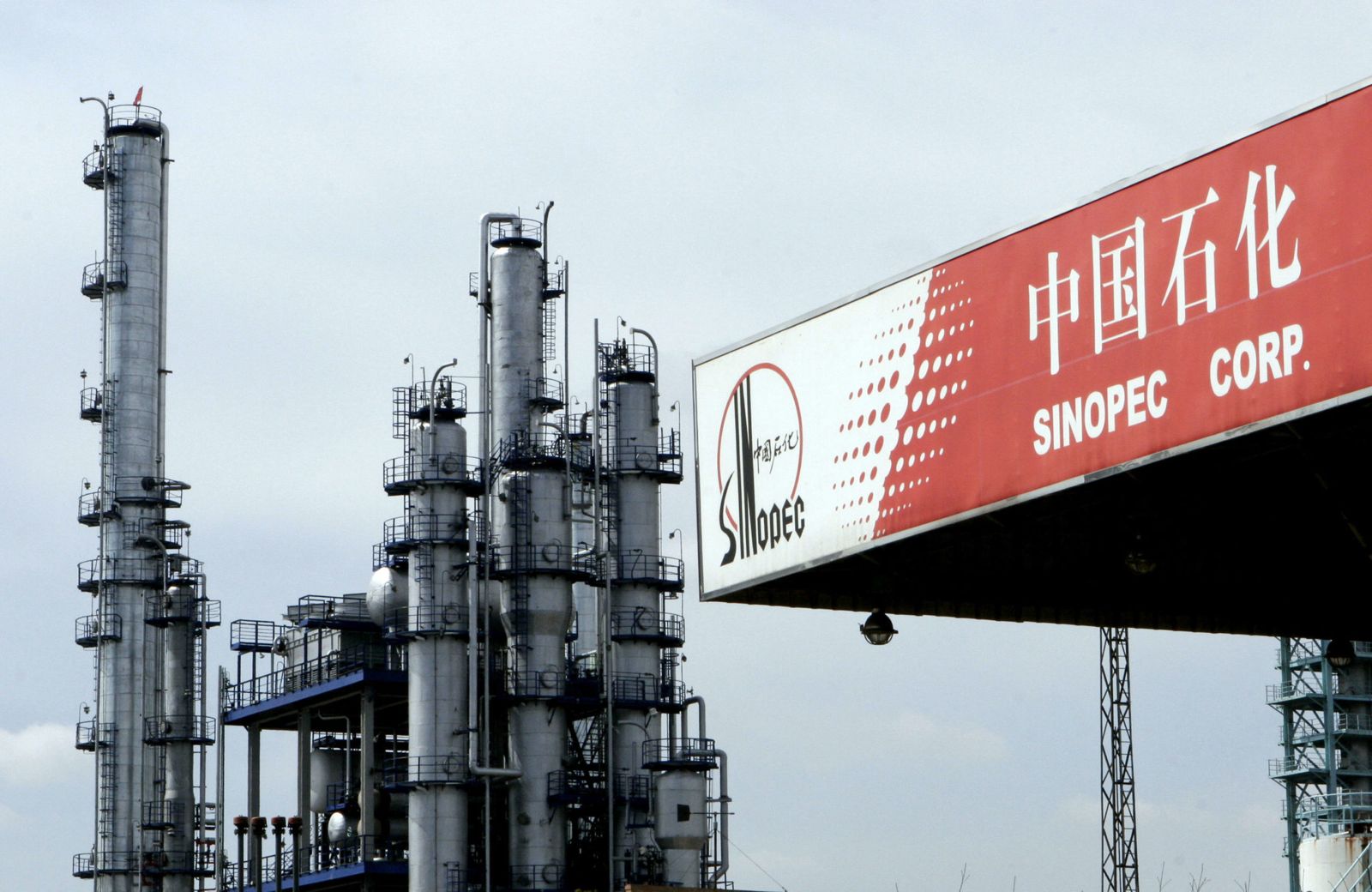
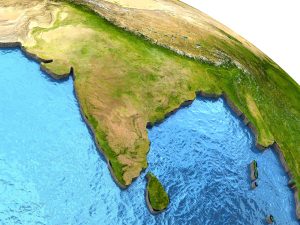
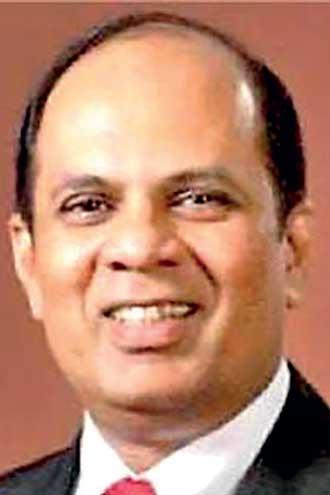 Arjuna Herath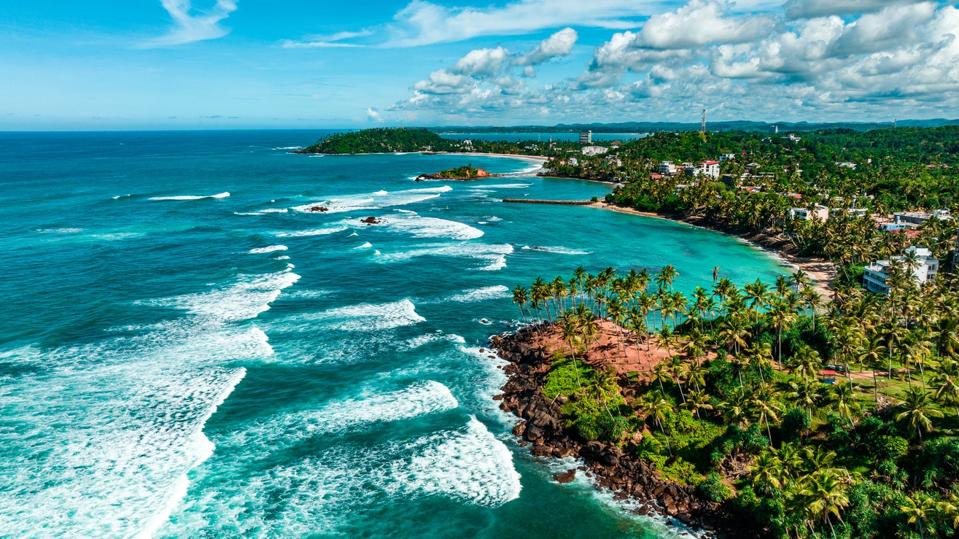

 විදුලිබල සංශෝධන පනත් කෙටුම්පත පිළිබඳ ශ්රේෂ්ඨාධිකරණයේ තීරණය නියෝජ්ය කථානායක වෛද්ය රිස්වි සාලි මහතා විසින් අද (30) පාර්ලිමේන්තුවට දැනුම් දෙන ලද අතර, ඒ අනුව අදාළ පනත් කෙටුම්පතේ වගන්ති කිහිපයක් ආණ්ඩුක්රම ව්යවස්ථාව උල්ලංඝනය කර ඇති බවත් ඒ අනුව විශේෂ පාර්ලිමේන්තු බහුතරයකින් සහ මහජන ජනමත විචාරණයකින් අනුමැතිය ලබාගත යුතු බවට ශ්රේෂ්ඨාධිකරණය දැනුම් දී තිබේ.
