Here’s Proof That Israel Lost the War (and signs that the conflict is about to resume)

June 29th, 2025

  Courtesy The Unz Review

The American people are not being told why Israel agreed to a ceasefire with Iran. Yes, Israel was rapidly running out of air-defense interceptors (making it more vulnerable to Iranian attacks.) But that issue is only of secondary importance. The real reason they wanted a ceasefire was because they were getting systematically pulverized and needed to stop the bleeding fast. That’s why Israel ‘threw in the towel’ less than 2 weeks after the opening salvo, because Iran was decimating one target after another with no end in sight. So, Israel capitulated.

Of course, that is not the story we’ve been reading in the western media where there’s no mention of the vast destruction of Israeli strategic targets (by Iranian ballistic missiles); that news has been completely omitted from the mainstream coverage. But that’s why Israel persuaded Trump to find a diplomatic off-ramp; because the losses were beginning to mount and Iran was not ‘letting up.’

Did you know that it is illegal to post videos or photos of buildings that have been struck by Iranian missiles in Israel? In other words, if you publish photos of smoldering buildings, infrastructure or military bases, you will go to jail. This is how the government controls the narrative and convinces the public that they are winning a war they are actually losing. But don’t take my word for it; here’s a video clip of an Israeli newscaster explaining how government censorship is impacting the peoples’ ability to figure out what is going on:

CH13’s Raviv Drucker: We have to say there is a bit of an Iranian aspect to the way we report missile strikes on our side. I’m not talking about the Weizmann Institute, but there were alot of missile hits on IDF bases, on strategic sites, that we still don’t report about to this day. And there’s a clear reason for that, which everyone at home understands. But along that clear reason, it created a situation where people don’t realize how precise the Iranians were and how much damage they caused in many places. We just know about the Weizmann Institute; there are many places we don’t know about. https://twitter.com/SuppressedNws/status/1938336639748624420

Repeat: it created a situation where people don’t realize how precise the Iranians were and how much damage they caused in many places.

What can we glean from this statement?

That Iran’s new generation of ballistic missiles are abundant, precise and lethal. To his credit, the newscaster seems to think that ordinary people deserve to be told about these cutting-edge weapons so they can make informed decisions regarding their own safety. We agree with this view, but we also know that the heavily censored, state-controlled, agenda-driven media is not going to change the way it disseminates information. After all, the media’s objective is not to inform but to shape public opinion.

But we’re getting off-topic. What we want to show is that Israel did not agree to the ceasefire because it had achieved its strategic objectives, but because it was getting hammered and wanted to stop the bleeding. We make that judgement based on a shortlist of the key military, intelligence, industrial, energy, and R&D facilities that were struck by precision guided ballistic missiles that wreaked havoc across Israel.

Keep in mind, Operation True Promise III unleashed no less than 22 salvos of state-of-the-art ballistic missiles (many used for the first time) that delivered withering blows to a number of heavily fortified Israeli sites that were regarded as ‘the most protected military bases in the world.’ Iran’s missiles blew through Israel’s defenses like at every turn reducing their targets to twisted metal and broken blocks of cinder. (One weapons expert estimates that just 5 percent of Iran’s ballistic missiles were intercepted.) This is from an article at Press TV:

Iran destroyed the so-called Israeli Pentagon”, the Kirya military-intelligence complex in central Tel Aviv, which is shown as a smoldering hulk in the few photos published on X. Despite being one of the most heavily fortified locations in the occupied territories, protected by a multilayered shield of Israeli and American defense systems, the complex was unable to repel the Iranian missile barrage in the very first phases of True Promise III….

In Haifa, a precision-guided Iranian missile struck a high-rise building housing branches of the Israeli ministry of interior affairs responsible for internal military coordination. The strike disrupted logistical networks and emergency response systems at the municipal level. Press TV

Iranian missiles also took-out the Aman military intelligence headquarters at the Glilot Mizrah Interchange, near Herzliya. Aman oversees elite spying units such as Unit 8200 (signals intelligence), Unit 504 (human intelligence), and Unit 9900 (geospatial intelligence). The compound also houses Mossad’s operational headquarters—the Israeli regime’s notorious foreign intelligence agency….

Iran also struck the ‘impregnable’ Nevatim Airbase in the Negev desert with over 30 ballistic missiles causing extensive damage that (of course) was not reported. Nevatim houses most of Israel’s F-15s and F-35s although we do not have an estimate of how many of those warplanes were destroyed. Here’s more from Press TV:

Other targeted airbases included Tel Nof and Ben Gurion near Tel Aviv, Ramat David near Haifa, Palmachim on the Mediterranean coast, and Ovda near Eilat.

Iranian missiles, including those used for the first time, targeted the command and control centers of the Israeli military and Mossad in both Tel Aviv and Haifa…..

On June 16, Iranian ballistic missiles hit the Bazan Oil Refinery in Haifa—the regime’s largest fuel processing center, which supplies around 60 percent of its gasoline, 65 percent of diesel, and over 50 percent of its kerosene.

The strikes caused significant damage, forcing the complete shutdown of the refinery and its subsidiaries. The Israeli energy minister later admitted the facility would need major reconstruction, estimating a partial restart no sooner than a month.

A nearby power plant was also damaged, triggering widespread blackouts across central regions of the occupied territories.

On June 23, Iranian missiles struck near a power station in Ashdod, triggering a powerful explosion and localized blackouts. Explosions and outages were also reported near Hadera, where Orot Rabin—Israel’s largest power plant—is located

In addition, Iran directly targeted military-industrial sites involved in recent Israeli aggression. Chief among them was the Rafael Advanced Defense Systems complex north of Haifa—home to multiple factories and R&D buildings that produce key elements of Israel’s military hardware.

Rafael manufactures Iron Dome and David’s Sling missile interceptors, both of which have failed repeatedly in stopping Palestinian and Iranian missiles. It also produces cruise and guided missiles used in strikes against Iran, including Spice kits and Popeye, Rocks, Spike, and Matador missiles.

The Kiryat Gat Industrial Zone—a major center for microprocessor and high-tech military production—was also struck. Iranian strikes reportedly damaged key production lines vital to Israel’s drone and surveillance programs.

Further south, the Gav-Yam Negev Advanced Technologies Park near Beersheba, which hosts firms working in cyberwarfare, AI, and military tech, was not spared. Many of these companies collaborate closely with the Israeli military and the Mossad.

Another high-profile target was the Weizmann Institute of Science in Rehovot, south of Tel Aviv. Known for its military R&D and partnerships with Israeli military agencies, the institute suffered devastating damage to key laboratories. Members and professors of the institute confirmed the loss of years’ worth of research. The Weizmann Institute also plays a role in Israel’s clandestine nuclear program, with many of Dimona’s nuclear scientists having graduated from or taught at the institute. Press TV

Let’s summarize: In a little more than a week’s time, Iran struck or obliterated:

  1. The Israeli Pentagon”, the Kirya military-intelligence complex
  2. The Weizmann Institute of Science which plays a role in Israel’s clandestine nuclear program
  3. The Aman military intelligence headquarters at the Glilot Mizrah Interchange, near Herzliya. Aman oversees elite spying units such as Unit 8200 (signals intelligence), Unit 504 (human intelligence), and Unit 9900 (geospatial intelligence).
  4. Branches of the Israeli ministry of interior affairs responsible for internal military coordination
  5. The Mossad’s operational headquarters
  6. Israel’s most protected Nevatim Airbase (and the Tel Nof Airbase)
  7. Ben Gurion Airport (repeatedly) as well as Ramat David, Palmachim and Ovda near Eilat.
  8. The Command-and-Control Centers of the Israeli military and Mossad in both Tel Aviv and Haifa…..
  9. The Bazan Oil Refinery in Haifa—Israel’s largest fuel processing center
  10. A giant power station in Ashdod, triggering a powerful explosion and localized blackouts.
  11. The Rafael Advanced Defense Systems complex north of Haifa—home to multiple factories and R&D buildings that produce key elements of Israel’s military hardware
  12. The Kiryat Gat Industrial Zone—a major center for microprocessor and high-tech military production
  13. The Gav-Yam Negev Advanced Technologies Park near Beersheba, which hosts firms working in cyberwarfare, AI, and military tech.
Tel Aviv at dusk

Tel Aviv at dusk

Get the picture? In just 10 days (June 13 to June 23) the Iranian military meticulously destroyed a sizable portion of Israel’s most prestigious military, intelligence, industrial, energy, and R&D facilities across the country. (Have you read about any of this in the western media?) Had the war continued for another week or two, the Holy Land would have been reduced to a smoldering third world wasteland unfit for human habitation. In short, this was no normal ceasefire. This was a desperate capitulation by an overmatched contender who quickly realized he was punching ‘above his weight’. Here’s how Trump summed it up:

Israel got hit really hard. Those ballistic missiles, boy, they took out a lot of buildings,” Trump told reporters at the NATO summit in The Hague on Wednesday. https://twitter.com/i/status/1937812706599252198

Yes, Israel took a real beating.

We should note that there is no formal agreement between Iran and Israel. (No signed document or explicit commitments) The ceasefire was brokered through back-channel diplomacy, primarily mediated by Qatar. A senior White House official and a diplomat briefed on the talks indicated that Israel agreed to halt strikes if Iran ceased its attacks, and Iran signaled compliance with these terms through Qatari mediation. Trump announced the ceasefire as a complete and total ceasefire” to be phased in over 24 hours, although there have been numerous violations by both sides since the original deal was made on June 23. (Iran’s Foreign Minister Abbas Araghchi initially stated there was no agreement” but indicated Iran would stop its response if Israel held up its end of the bargain.)

The problem, of course, is that the ceasefire is not going to hold because Israel and the US see the truce as merely a way to buy-time to regroup and prepare for the next round of hostilities. (The same as Minsk) Consider the comments of Israeli Defense Minister Israel Katz who said the following on Saturday:

https://platform.twitter.com/embed/Tweet.html?dnt=false&embedId=twitter-widget-0&features=eyJ0ZndfdGltZWxpbmVfbGlzdCI6eyJidWNrZXQiOltdLCJ2ZXJzaW9uIjpudWxsfSwidGZ3X2ZvbGxvd2VyX2NvdW50X3N1bnNldCI6eyJidWNrZXQiOnRydWUsInZlcnNpb24iOm51bGx9LCJ0ZndfdHdlZXRfZWRpdF9iYWNrZW5kIjp7ImJ1Y2tldCI6Im9uIiwidmVyc2lvbiI6bnVsbH0sInRmd19yZWZzcmNfc2Vzc2lvbiI6eyJidWNrZXQiOiJvbiIsInZlcnNpb24iOm51bGx9LCJ0ZndfZm9zbnJfc29mdF9pbnRlcnZlbnRpb25zX2VuYWJsZWQiOnsiYnVja2V0Ijoib24iLCJ2ZXJzaW9uIjpudWxsfSwidGZ3X21peGVkX21lZGlhXzE1ODk3Ijp7ImJ1Y2tldCI6InRyZWF0bWVudCIsInZlcnNpb24iOm51bGx9LCJ0ZndfZXhwZXJpbWVudHNfY29va2llX2V4cGlyYXRpb24iOnsiYnVja2V0IjoxMjA5NjAwLCJ2ZXJzaW9uIjpudWxsfSwidGZ3X3Nob3dfYmlyZHdhdGNoX3Bpdm90c19lbmFibGVkIjp7ImJ1Y2tldCI6Im9uIiwidmVyc2lvbiI6bnVsbH0sInRmd19kdXBsaWNhdGVfc2NyaWJlc190b19zZXR0aW5ncyI6eyJidWNrZXQiOiJvbiIsInZlcnNpb24iOm51bGx9LCJ0ZndfdXNlX3Byb2ZpbGVfaW1hZ2Vfc2hhcGVfZW5hYmxlZCI6eyJidWNrZXQiOiJvbiIsInZlcnNpb24iOm51bGx9LCJ0ZndfdmlkZW9faGxzX2R5bmFtaWNfbWFuaWZlc3RzXzE1MDgyIjp7ImJ1Y2tldCI6InRydWVfYml0cmF0ZSIsInZlcnNpb24iOm51bGx9LCJ0ZndfbGVnYWN5X3RpbWVsaW5lX3N1bnNldCI6eyJidWNrZXQiOnRydWUsInZlcnNpb24iOm51bGx9LCJ0ZndfdHdlZXRfZWRpdF9mcm9udGVuZCI6eyJidWNrZXQiOiJvbiIsInZlcnNpb24iOm51bGx9fQ%3D%3D&frame=false&hideCard=false&hideThread=false&id=1938618630050140381&lang=en&origin=https%3A%2F%2Fwww.unz.com%2Fmwhitney%2Fheres-proof-that-israel-lost-the-war%2F&sessionId=e86498e1dfb0f4411b245809a2a7417a06cb0177&theme=light&widgetsVersion=2615f7e52b7e0%3A1702314776716&width=550px

This doesn’t sound like a man who is looking for a ‘lasting peace’ or even a temporary end to the fighting. It sounds like someone who’s already settled on a strategy for resuming the hostilities and is merely waiting for the green light (from Bibi) to put the plan into motion.

But what might that plan be, after all, Israel was already employing its top-line military weaponry and advanced air-defense systems. What other tools do they have that could be used to produce a different outcome that the one they just experienced after just 12 days of conflict?

This is where is gets scary because Israel has only two options: Either it draws the United States deeper into the conflict (including the deploying of ground forces) or it ‘goes nuclear’. There is no third option. So, whatever Bibi and his generals have ‘up their sleeve’, it’s going to be of a different force and magnitude than what we saw during the last dust-up. Check out this baffling blurb from the Times of Israel‘s Saturday edition:

After the US strike on Iran earlier this week, Prime Minister Benjamin Netanyahu and US President Donald Trump agreed on a rapid end to the war in Gaza and expansion of the Abraham Accords, Israel Hayom reports, citing a source familiar with the conversation.”

According to the outlet, Trump and Netanyahu agreed in a phone call that the war in Gaza would end within two weeks. Four Arab states, including the UAE and Egypt, would jointly govern the Gaza Strip in place of Hamas. The terror group’s leadership would be exiled, and all hostages would be released.

However, Arab allies have repeatedly asserted that they will not take part in the postwar rehabilitation of Gaza absent Israeli acquiescence to the Palestinian Authority gaining a foothold in Gaza as part of a pathway to a future two-state solution, but Netanyahu has flatly rejected any PA role in the Strip….

Trump and Netanyahu were joined on the euphoric” call late Monday night by US Secretary of State Marco Rubio and Israeli Strategic Affairs Minister Ron Dermer, says Israel Hayom….
Saudi Arabia and Syria would establish diplomatic ties with Israel, and other Arab and Muslim countries would follow suit…. Israel, for its part, would express its support for a future two-state solution, conditioned on reforms made by the Palestinian Authority. Meanwhile, the leaders agreed that Washington will recognize Israeli sovereignty in some parts of the West Bank. Times of Israel

People who follow events closely in the Middle East know that nothing in this article is true. There’s not going to be a rapid end to the war in Gaza, there’s not going to be a rapid expansion of the Abraham Accords, and there’s certainly not going to be Israeli support for a two-state solution.

So, what’s going on here, what is the point of this nonsensical propaganda that no one in their right mind is going to believe??

India Tightens Grip Over Sri Lanka with Defense Pact

June 29th, 2025

by Rathindra Kuruwita (The Diplomat) Courtesy The Island

Anura Kumara Dissanayake and Prime Minister Narendra Modi

Sri Lanka’s JVP-led NPP government has made a dramatic pivot towards India, even utilizing legislative changes it once vehemently opposed.

On August 19, 2023, Anura Kumara Dissanayake, then an opposition leader, criticized a memorandum of understanding (MoU) that then-President Ranil Wickremesinghe had signed with India. We must have the freedom to freely move our hands and legs! But with this agreement, we will be in a situation where we are unable… to take any political or economic decision” independently, he said in a speech to National People’s Power (NPP) affiliated ex-military personnel.

However, a little over 18 months later, Dissanayake oversaw the signing of a series of agreements with India – including a landmark MoU on defense cooperation – during Indian Prime Minister Narendra Modi’s three-day visit to Sri Lanka from April 4 to 6. Overall Seven MoUs were signed during the visit, covering defence, energy, digitalization, healthcare, power grid connectivity, and development assistance. Once these MoUs come into effect, they will push Sri Lanka deeper into India’s orbit, restrict its foreign policy choices and expand India’s footprint in Sri Lanka drastically.

Of these, the MoU on defense cooperation has generated the most debate in Sri Lanka. This is Sri Lanka first such agreement with a foreign power, since the one signed with Great Britain in 1947, which came into effect after independence. The then United National Party (UNP) leadership signed this defense agreement with Britain, fearing that if it was not under the security umbrella of a major power, India would annex Sri Lanka. Marx once wrote history repeats itself, first as tragedy, second as farce.” Ironically, now it’s the NPP, whose main constituent is the Janatha Vimukthi Peramuna (JVP) that has always viewed India as an expansionist power, who has signed the defence pact with a country, whose involvement in Sri Lankan affairs once led it to take up arms in the 1980s.

In the late 1980s, the JVP took up arms against the Indo-Lanka Accord of 1987 and the deployment of the Indian Peace Keeping Force (IPKF). The ensuing violence led to the death of over 60,000 JVP cadres, including the JVP founder Rohana Wijeweera. The NPP signing a defence agreement with India, especially when Modi has shown no interest in resolving Indian fishermen poaching in Sri Lankan waters and the Katchatheevu controversy, marks a profound ideological U-turn.

The ideological shift is made even more starker by the NPP using laws on power and energy that it once opposed to sign an agreement to connect the grids of two countries. When the Ranil Wickremesinghe administration made changes in Sri Lanka’s power and energy laws, the NPP, then in opposition, not only opposed the changes but also challenged them in court and promised to repeal the laws if the NPP came to power. Now in power, the NPP used these very laws to sign the agreement to connect its power grid with India.

Critics argue that the DCA undermines the country’s autonomy. Sri Lanka has entered an agreement with a country that is part of the Quad, a grouping of four nations that came together to counter the rise of China. This grouping has the U.S. as a key partner. A few days before Modi’s arrival in Colombo, the U.S. stationed six B-2 bombers in Diego Garcia in preparation for a military attack on Iran, another all-weather friend of Sri Lanka. The DCA with India draws the country close to the US aligned security axis, undermining NPP’s promise to return to a nonaligned foreign policy.

While the details of the DCA have not been made public, raising concerns of transparency. Before coming into power, the NPP promised transparency in any agreement with a foreign nation. As veteran diplomat and political commentator Dayan Jayatilleka observed in a recent interview in Sundy Observer: When there are contradictions between one’s closest neighbour [India] and one’s closest friend [China], why should we tie-up militarily with either one, instead of striving for balance and equilibrium in our relationships with them, and try to contribute to an equation of equilibrium between them?”

Sri Lanka faces several security challenges that require it to work closely with regional and extra-regional powers. However, rather than enter into defense pacts with individual countries, it must meet these challenges by pushing for a regional security arrangement. This would enable it to protect its sovereignty. It would have been wiser for Sri Lanka to push for a regional security agreement, centered around the South Asian Association for Regional Cooperation (SAARC) instead of signing a security pact that makes the country seem like a satrapy of India.

Among other main agreements, a trilateral MoU was signed India, Sri Lanka, and the United Arab Emirates to develop Trincomalee as an energy hub. This involves developing a British-built oil tank farm that is already partially run by state-owned Lanka Indian Oil Corporation. The British Raj considered a foothold in Trincomalee harbor vital for Indian defence, a doctrine that the Indian republic has inherited.

The two sides also signed an MoU on Multi-sectoral Grant Assistance for Eastern Province. One of the three projects launched by Modi during the visit was the Sampur Solar Power Plant, which is a pillar of the Eastern Renewable Energy Zone being established under Sri Lanka’s Long-Term Generation Expansion Plan (LTGEP). It is being developed by Trincomalee Power Company, a joint venture between India’s NTPC Limited and the Ceylon Electricity Board (CEB).

This will give India a strong foothold in the Eastern Province, in addition to the island’s Northern Province, where India’s power is entrenched. Now India has influence over two of Sri Lanka’s most geopolitically sensitive regions.

However, long-standing bilateral issues remain unsolved. Sri Lankan waters, Sri Lanka failed to obtain a commitment from India on the long-festering dispute over Indian fishermen poaching in Sri Lankan waters. Modi also did not address Sri Lanka’s unease about claims by Indian politicians about Katchatheevu island.

Beyond these MoUs, India offered to convert 100 million dollars worth of loans into grants.

The recent agreements have significantly deepened Sri Lanka’s strategic and economic entanglement with India. By entering into a defense pact, Sri Lanka has tilted decisively towards a regional power that is itself aligned with broader anti-China coalitions. This alignment has now gone beyond being merely symbolic. The agreements span critical sectors such as energy, defense, and infrastructure, with a strong focus on the Eastern Province, raising serious concerns about sovereignty and strategic autonomy.

On the other hand, the JVP-led NPP government now faces a serious blow to its credibility. The NPP came to power on a platform of transparency, sovereignty, and resistance to foreign domination. Yet, a few months after coming into power, it is now presiding over a dramatic pivot towards India, even utilizing legislative changes it once vehemently opposed. Whether this is pragmatic foreign policy realism or ideological betrayal, it raises uncomfortable questions about the NPP’s future trajectory.

The growing Indian footprint marks a historic turning point in Sri Lanka’s regional posture. And for a party like the JVP — once defined by resistance to Indian intervention — it risks becoming the very thing it once rose up against; a facilitator of foreign entrenchment on Sri Lankan soil.

by Rathindra Kuruwita
(The Diplomat)

සමලිංගික විවාහ ගැන මානව හිමිකම් ප්‍රධානියාගේ ප්‍රකාශ අධිකරණ ඇමති ප්‍රතික්ෂේප කරයි..

June 29th, 2025

Courtesy Lanka Leader

සමලිංගික විවාහ අපරාධයක් නොවන බවට පනත් කෙටුම්පතක් පාර්ලිමේන්තුව ඉදිරියේ ඇති බවට එක්සත් ජාතීන්ගේ මානව හිමිකම් මහ කොමසාරිස් වොල්කර් ටුක් කළ ප්‍රකාශය අධිකරණ අමාත්‍ය හර්ෂණ නානායක්කාර ප්‍රතික්ෂේප කර තිබේ.

ශ්‍රී ලංකාවේ සිව් දින සංචාරය අවසානයේ පසුගිය බ්‍රහස්පතින්දා පැවති මාධ්‍ය හමුවකදී ටුක් කළ ප්‍රකාශයට අධිකරණ අමාත්‍යවරයා ප්‍රතිචාර දක්වමින් මේ බව කියා සිටියේය.

සමලිංගික සබඳතා අපරාධයක් නොවන බවට පනත් කෙටුම්පත මම සාදරයෙන් පිළිගන්නවා, එය පාර්ලිමේන්තුව ඉදිරියේ ඇති බව මට වැටහෙනවා,” යනුවෙන් ටුක් පවසා තිබිණි.

කෙසේවෙතත්, අධිකරණ අමාත්‍යවරයා පැහැදිලි කළේ මේ අවස්ථාවේ අමාත්‍යාංශයේ න්‍යාය පත්‍රය තුළ කිසිදු තහවුරු කළ කාලරාමුවක් සහිත කිසිදු නිල අවධියක පනත් කෙටුම්පතක් නොමැති බවයි.

සමලිංගික සබඳතා දැනට දණ්ඩ නීති සංග්‍රහයේ විධිවිධාන යටතේ දඬුවම් ලැබිය හැකිය.

අපරාධයක් නොවන බවට එම විධිවිධාන සංශෝධනය කිරීම සඳහා පනත් කෙටුම්පතක් අවශ්‍ය වනු ඇත.

මෙම කාරණය සම්බන්ධයෙන් අමාත්‍යවරයා ක්ෂණික සැලසුම් ප්‍රතික්ෂේප කළද, පාලක පක්ෂය විපක්ෂයේ සිටියදී, සමලිංගික සබඳතා අපරාධයක් නොවන බවට ගන්නා උත්සාහයන්ට සහයෝගය පළ කර තිබිණි.

එසේම LGBTQ ප්‍රජාව සඳහා ඔවුන්ගේ දැඩි සහයෝගය නිරන්තරයෙන් පවත්වා ගෙන යයි.

පසුගිය වසරේ ජුනි මාසයේදී මාධ්‍ය වෙත අදහස් දක්වමින් එවක විපක්ෂ පාර්ලිමේන්තු මන්ත්‍රීවරියක වූ අග්‍රාමාත්‍ය ආචාර්ය හරිනි අමරසූරිය, ප්‍රේම්නාත් දොලොවත්ත විසින් ඉදිරිපත් කරන ලද පෞද්ගලික මන්ත්‍රී පනතකට ජාතික ජන බලවේගය සහාය දෙන බව අවධාරණය කළ අතර එහි තුන්වැනි කියවීමේදී පනතට සහාය දෙන බවට පොරොන්දු විය.

කෙසේවෙතත්, පසුව පැවති ජනාධිපතිවරණයෙන් පසු පාර්ලිමේන්තුව විසුරුවා හැරීමෙන් පසුව, පනත් කෙටුම්පත අවලංගු කරන ලදී.

ජනාධිපති අනුර කුමාර දිසානායක ද, 2019 දී සිය මැතිවරණ ව්‍යාපාරය අතරතුර ස්ත්‍රී පුරුෂභාවය සහ ලිංගික දිශානතිය මත පදනම් වූ අසමානතාවයන් අහෝසි කරන බවට පොරොන්දු වූ ඉතිහාසයේ පළමු ජනාධිපති අපේක්ෂකයන්ගෙන් කෙනෙකි.

ශ්‍රී ලංකාවට චෝදනා එල්ල වී ඇති යුද අපරාධ සම්බන්ධයෙන් වගවීම පිළිබඳ අදහස් දක්වමින් ටුක් පැවසුවේ, ‘විශ්වසනීය සහ වින්දිතයන්ගේ විශ්වාසය ඇති’ දේශීය වගවීමේ යාන්ත්‍රණයන් සමඟ ඉදිරියට යෑමට ශ්‍රී ලංකාව අරගල කර ඇති බවත්, එහි ප්‍රතිඵලයක් ලෙස අන්තර්ජාතික මට්ටමින් සහාය ලබා ගැනීමෙන් යුක්තිය ඉටුකර ගැනීමට පිටත සිටින ශ්‍රී ලාංකිකයන්ට බල කෙරී ඇති බවත්ය.

ස්වාධීන නඩු පවරන්නකු සහ දේශීය වගවීමේ පද්ධතියක් නිර්මාණය කිරීම රජය සමඟ සාකච්ඡා කිරීමේ ප්‍රධාන අංග බව ටුක් පැවසීය.

තොරතුරු රැස් කිරීම සහ සංරක්ෂණය කිරීම මෙන්ම උල්ලංඝනය කිරීම් සහ අපයෝජන විශ්ලේෂණය කිරීම සඳහා සිය කාර්යාලයට බලය පවරා ඇති බවත්, මේ සඳහා කැපවූ ව්‍යාපෘතියක් ස්ථාපිත කර ඇති බවත් ඔහු පැවසීය.

Dengue cases reach 27,900 with 16 deaths this year

June 29th, 2025

Courtesy Daily Mirror

Colombo, June 29 (Daily Mirror) – The Ministry of Health reported that some 27,932 Dengue cases and 16 deaths were recorded so far this year. The Western Province accounts for 45% of all cases with the Eastern, Sabaragamuwa, and Southern provinces also identified as high-risk zones.

Health authorities have confirmed that several child fatalities have occurred due to the disease.

To combat the spread of Dengue and Chickungunya, the Health Ministry will launch a mosquito control week from June 30 to July 6. Dr. Asela Gunawardena, Director General of Health Services, stated that the programme will target 16 districts, focusing on reducing mosquito density amid increased rainfall from the Southwest monsoon.

The initiative aims to curb further outbreaks as Dengue infections continue to rise in hotspot regions.

UN nuclear watchdog chief says Iran could again begin enriching uranium in ‘matter of months’

June 29th, 2025

Courtesy Adaderana

The head of the UN’s nuclear watchdog says US strikes on Iran fell short of causing total damage to its nuclear program and that Tehran could restart enriching uranium in a matter of months,” contradicting President Donald Trump’s claims the US set Tehran’s ambitions back by decades.

Rafael Grossi’s comments appear to support an early assessment from the Pentagon’s Defense Intelligence Agency, first reported on by CNN, which suggests the United States’ strikes on key Iranian nuclear sites last week did not destroy the core components of its nuclear program, and likely only set it back by months.

While the final military and intelligence assessment has yet to come, Trump has repeatedly claimed to have completely and totally obliterated” Tehran’s nuclear program.

The 12-day conflict between Israel and Iran began earlier this month when Israel launched an unprecedented attack it said aimed at preventing Tehran developing a nuclear bomb. Iran has insisted its nuclear program is for peaceful purposes.

The US then struck three key Iranian nuclear sites before a ceasefire began. The extent of the damage to Tehran’s nuclear program has been hotly debated ever since.

US military officials have in recent days provided some new information about the planning of the strikes, but offered no new evidence of their effectiveness against Iran’s nuclear program.

Following classified briefings this week, Republican lawmakers acknowledged the US strikes may not have eliminated all of Iran’s nuclear materials – but argued that this was never part of the military’s mission.
Severe but not ‘total’ damage

Asked about the different assessments, Grossi, director general of the International Atomic Energy Agency (IAEA), told CBS’s Face the Nation with Margaret Brennan”: This hourglass approach in weapons of mass destruction is not a good idea.”

The capacities they have are there. They can have, you know, in a matter of months, I would say, a few cascades of centrifuges spinning and producing enriched uranium, or less than that. But as I said, frankly speaking, one cannot claim that everything has disappeared and there is nothing there,” he told Brennan, according to a transcript released ahead of the broadcast.

It is clear that there has been severe damage, but it’s not total damage,” Grossi went on to say. Iran has the capacities there; industrial and technological capacities. So if they so wish, they will be able to start doing this again.”

Grossi also told CBS News that the IAEA has resisted pressure to say whether Iran has nuclear weapons or was close to having weapons before the strikes.

We didn’t see a program that was aiming in that direction (of nuclear weapons), but at the same time, they were not answering very, very important questions that were pending.”

CNN has asked the White House for comment on Grossi’s claims.

Grossi stressed the need for the IAEA to be granted access to Iran, to assess nuclear activities. He said Iran had been disclosing information to the agency up until recent Israeli and US strikes, but that there were some things that they were not clarifying to us.”

In this sensitive area of the number of centrifuges and the amount of material, we had perfect view,” he said. What I was concerned about is that there were other things that were not clear. For example, we had found traces of uranium in some places in Iran, which were not the normal declared facilities. And we were asking for years, why did we find these traces of enriched uranium in place x, y or z? And we were simply not getting credible answers.”

The initial Pentagon assessment said Tehran may have moved some of the enriched uranium out of the sites before they were attacked but Trump has insisted nothing was moved.

It’s logical to presume that when they announce that they are going to be taking protective measures, this could be part of it (moving the material). But, as I said, we don’t know where this material could be, or if part of it could have been, you know, under the attack during those 12 days,” Grossi told Brennan.

Meanwhile, Tehran has made moves towards withdrawing from international oversight over its nuclear program.

Iran’s parliament passed a bill halting cooperation with the UN nuclear watchdog, while the Foreign Minister, Abbas Araghchi, also said that the country could also rethink its membership of the Non-Proliferation Treaty (NPT), which prohibits signatories from developing nuclear weapons.

Source: CNN
–Agencies 

Sri Lanka achieved 70% renewable energy generation in June 2025 – CEB

June 29th, 2025

Courtesy Adaderana

Sri Lanka has reached 70% renewable energy generation during June 2025, the Ceylon Electricity Board (CEB) said.

Issuing a statement in this regard, CEB noted that for the first time since the early 1990s, Sri Lanka has come full circle in its clean energy journey.

Accordingly, the CEB said it achieved an average of 70% electricity generation from renewable sources during June 2025, while having higher demand than in other months.

CEB further noted that this milestone marks a significant turnaround from the country’s earlier reliance on nearly 100% hydro power, before transitioning to a mixed hydro-thermal system in subsequent decade and reflects CEB’s steady efforts to restore renewable energy dominance in the national grid.

UNHRC High Commissioners’ Bias & UN Charter Violations: Sri Lanka 2006–Present

June 28th, 2025

Shenali D Waduge

The following summarizes how successive UN High Commissioners for Human Rights have, through their actions and demands, overstepped their mandates, ignored their oath to the UN Charter and violated international law and Sri Lanka’s sovereignty.

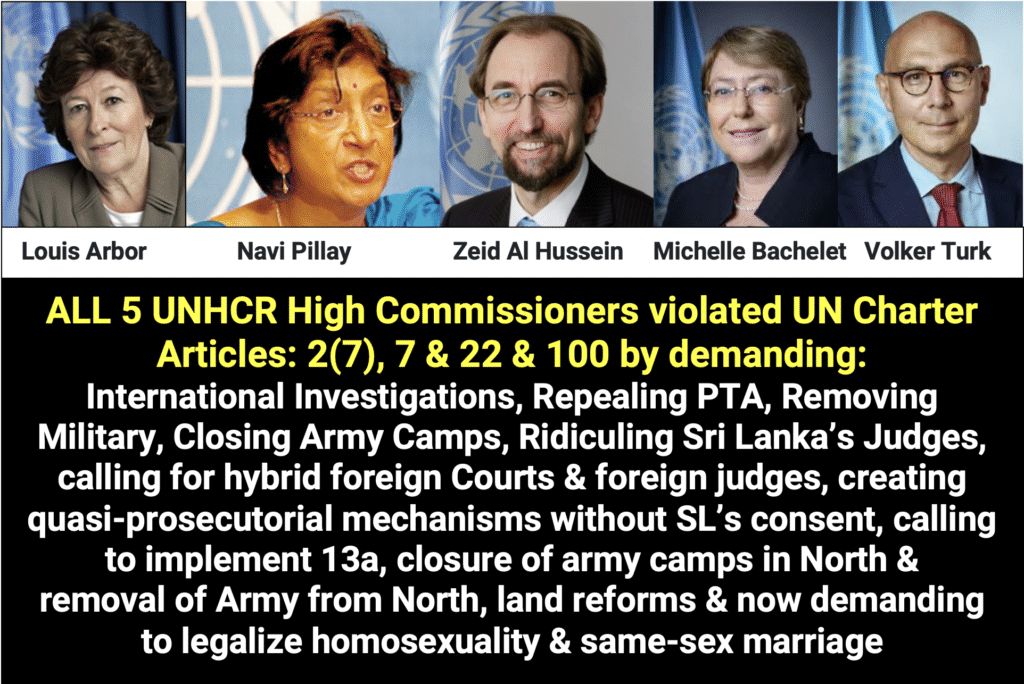
  1. Violation of UN Charter Article 2(7): Non-Intervention in Domestic Jurisdiction

The UNHRC/OHCHR have repeatedly intervened in Sri Lanka’s internal affairs without Security Council authorization or Sri Lanka’s consent, violating the principle of sovereign equality.

Demands Demonstrating this Violation:

  • Louise Arbour (2004-2008): called for arms-length international investigations” during active conflict.
  • Navi Pillay (2008-2014): demanded repeal of Sri Lanka’s Prevention of Terrorism Act (PTA), criticized military presence, checkpoints, surveillance in North & East & made statements about land in N & E without evidence. Urged the Government to formulate and rigorously enforce a zero tolerance policy for sexual abuse” by military personnel and to initiate a meaningful and transparent reduction of the military presence to peacetime levels” again creating a notion of a non-existent issue. Called for the implementation of 13a & truth, justice, reprations.
  • Zeid Al Hassen (2014-2018: insisted on hybrid courts overriding Sri Lanka’s constitutional judicial authority. His attention was on Sri Lanka’s judicial system & during his visit to Sri Lanka he claimed Sri Lanka’s judiciary was highly politicized, unbalanced & unreliable”. He went on to claim that Sri Lanka’s justice system was incapable of handling international crimes emphasizing the need for hybrid courts. It is, I believe, an inescapable reality that Sri Lanka’s criminal justice system is not yet ready to handle these types of crimes … this is why the establishment of a hybrid special court … is so necessary.” Such statements amounted to near contempt of court undermining Sri Lanka’s judiciary’s integrity & public trust. His denouncements directly challenged the independence & authority of Sri Lanka’s highest courts & its judges infringing their constitutional status.
  • Michelle Bachelet (2018-2022): establishment of Sri Lanka Accountability Project (SLAP/OSLAP) via Resolution 46/1 in 2021 evidence mechanism without Sri Lanka’s approval. It functions as a prosecutorial office. She called for the immediate moratorium for repeal of Prevention of Terrorism Act. She criticized militarization of civilian functions & called for vetting of military officials, urged reduction of military presence & removal of policing or administrative roles by security forces. She demanded swift restoration of autonomy of the judiciary, human rights commission & police oversight bodies. She encouraged member states to pursue universal jurisdiction prosecutions, targeted sanctions (asset freezes/travel bans) against select members of Sri Lanka Armed Forces without authorization of UNSC. She called for investigations into enforces disappearances, reparations for victims.
  • Volker Türk:(2022-present) Demanded legislative changes to repeal Prevention of Terrorism Act & release detainees, repeal Online Safety Act) legalizing of homosexuality & same sex marriage ignoring cultural and religious norms. Continues to demand removal of military camps, reduction of military, return of lands, reforms to police & security sector.

Note:

The Sri Lanka Accountability Project (SLAP), also known as OSLAP, established by UNHRC Resolution 46/1 (2021), mandates the OHCHR to collect, consolidate, analyze, and preserve information and evidence regarding alleged human rights and humanitarian law violations during and after the Sri Lankan conflict.

SLAP is not the first of its kind; it follows precedents such as the International, Impartial and Independent Mechanism (IIIM) for Syria (established by UNGA) and the Independent Investigative Mechanism for Myanmar (IIMM) (established by UNHRC).

SLAP’s mandate effectively creates a quasi-prosecutorial evidence-gathering mechanism without Sri Lanka’s consent, thereby bypassing the country’s domestic judiciary and undermining its sovereignty (allegedly violating UN Charter Article 2(7) and Sri Lanka’s Constitution). Critics also highlight its selective focus and lack of democratic oversight, arguing it represents a clear instance of UN mandate overreach and interference that contradicts the principle of subsidiarity in international law.

As you can see the emphasis of the High Commissioners ridiculing Sri Lanka’s judiciary, judges & judicial system is to enforce a hybrid court.

Relevant Treaty Violations:

  • Vienna Convention on the Law of Treaties (1969), Article 26: Pacta sunt servanda — parties must perform treaties in good faith. Overstepping mandates breaches this.
  • International Covenant on Civil and Political Rights (ICCPR), Article 2(1): States have primary duty to protect and promote human rights within their territory. External imposition undermines this.
  • UN Basic Principles on the Independence of the Judiciary (1985): The independence of the judiciary must be guaranteed by the state itself; external interference violates this.
  • Universal Declaration of Human Rights (UDHR), Article 21(3): The will of the people as the basis of authority is to be respected — external imposition disregards democratic sovereignty.
  1. Violation of UN Charter Articles 7 & 22:

Exceeding the OHCHR’s Statutory Mandate

The High Commissioners created or endorsed quasi-judicial investigative mechanisms not authorized by the UN General Assembly or Security Council.

Demands Demonstrating This Violation:

  • Louise Arbour (2004–2008): called for external inquiries without General Assembly or Security Council mandate. OHCHR does not have authority to establish or endorse investigative panels or quasi-judicial bodies.
  • Navi Pillay (2008-2014): advocated for independent international inquiries & indirectly promoted ICC referral without UNSC authorization. Created pressure for judicial action, interfered in internal affairs of Sri Lanka & exceeded OHCHR’s mandate limited to monitoring & promotion.
  • Zeid Ra’ad Al Hussein (2014-2018): Pressed to create hybrid courts with international judges & prosecutors outside UNGA/UNSC mandate. OHCHR is not a judicial or prosecutorial body, to impose judicial structures
  • Michelle Bachelet (2018-2022): Spearheaded UNHRC Resolution 46/1 & established SLAP/OSLAP – a quasi-prosecutorial evidence-gathering mechanism without Sri Lanka’s consent or UNGA/UNSC authorization. This created an investigatory/prosecutorial function that is not within OHCHR’s legal authority.
  • Volker Turk (2022-to present) – Continued endorsement & operational support for SLAP/OSLAP & called for international accountability mechanisms without UNGA or UNSC authorization. These continued actions maintaining extrajudicial prosecutorial mechanism beyond OHCHR’s remit is a violation of the UN Charter & UNHRC’s own mandate.

Relevant Treaty and UN Instrument Violations:

  • UNGA Resolution 60/251: Limits Human Rights Council’s mandate to promotion and dialogue, excluding judicial enforcement.
  • UN Charter Article 7 & 22: OHCHR is a subsidiary organ with limited functions; unauthorized judicial or prosecutorial actions exceed mandate.
  • UN Basic Principles on the Role of Lawyers (1990): Fair trial and legal representation are to be protected domestically, not undermined by external panels.
  • International Covenant on Civil and Political Rights (ICCPR), Article 14: Right to fair trial within one’s own legal system; external judicial mechanisms violate this.
  1. Violation of UN Charter Article 100:

Failure to maintain neutrality and impartiality

High Commissioners have shown consistent bias by focusing solely on Sri Lanka while minimizing LTTE atrocities, aligning with politically motivated diaspora and NGO narratives.

Key Conduct Demonstrating This Violation:

  • Ignoring accountability of LTTE war crimes and terrorism over 30 years.
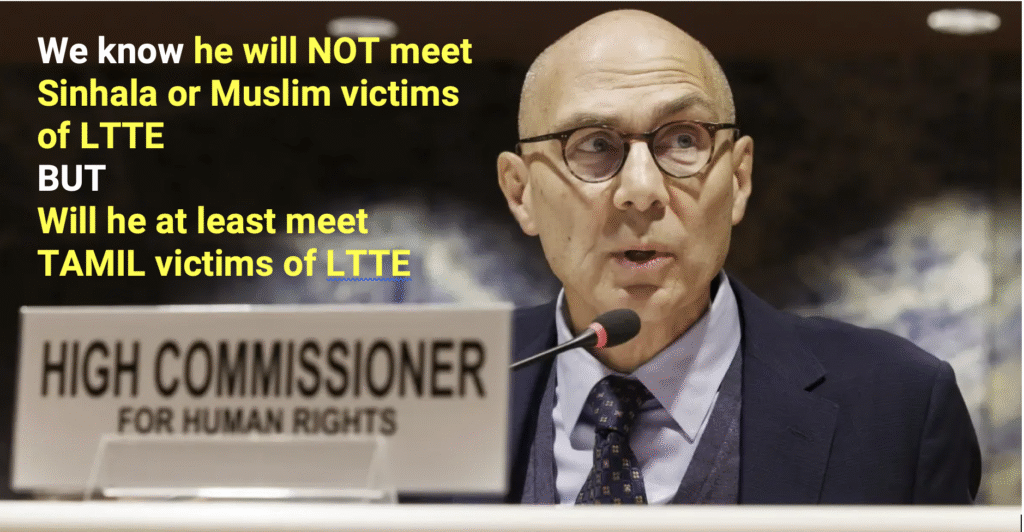
  • Avoiding meetings with Sinhala, Tamil, and Muslim victims of LTTE.
  • Favoring LTTE-linked activists and ignoring government security officials.
  • Echoing diaspora and NGO narratives linked to LTTE sympathizers.

Relevant UN Ethical Codes:

  • UN Staff Regulations and Rules, Regulation 1.2 and Staff Rule 101.2: UN officials must maintain impartiality, neutrality, and act in the interests of the UN alone.
  • UN Code of Conduct for Law Enforcement Officials (1979): Requires unbiased investigations and accountability.
  • UN Human Rights Council Advisory Committee Guidelines: Emphasize equal treatment and impartiality in human rights matters.

Additional Relevant Points:

Do UN High Commissioners Take an Oath?

  • UN High Commissioners for Human Rights are senior UN officials who swear to uphold the UN Charter, Staff Regulations, and Code of Conduct, committing to impartiality, independence, and respect for sovereignty and human rights norms. Violations of these principles breach their professional and legal obligations. Obviously all 5 high commissioners are guilty.
  1. Violation of Sri Lanka’s Constitutional Provisions:
  • Article 1(1):Sri Lanka is a sovereign, democratic and unitary State.”
  • Article 2(1):The Republic of Sri Lanka shall be a sovereign Republic.”
  • Article 3: Sovereignty of the People — In the Republic of Sri Lanka sovereignty is in the People and is inalienable…”
  • Article 4: The exercise of sovereignty shall be through… Parliament, the President and the Judiciary as established by this Constitution.”
  • Article 9:The Republic shall… protect and foster the Buddhist Sasana and also protect freedom of thought, conscience and religion of all citizens.”

Chapter XV (Articles 105–117): Establishes judiciary independence.

  • Article 105 (1); Establishes courts for the administration of justice.
  • Article 107 (2):Protects judicial independence. Ensures independence of the judiciary; Judges can only be removed through parliamentary process on grounds of proven misconduct/incapacity.
  • Article 111C:Interference with the judiciary is a punishable offense.

Chapter XVI (Articles 118–147): Confers sole and exclusive constitutional jurisdiction on the Supreme Court for constitutional interpretation, validity of legislation, and fundamental rights enforcement.

  • Article 118:Supreme Court is the highest and final superior court.
  • Article 120:Supreme Court has sole jurisdiction over constitutional matters.
  • Article 125:Supreme Court has sole jurisdiction in interpreting the Constitution.
  • Article 126:Supreme Court has jurisdiction on fundamental rights violations.

Since 2006, UNHRC High Commissioners have violated:

  • UN Charter Articles 2(7), 7, 22, and 100 by violating sovereignty, exceeding mandates, and lacking impartiality.
  • International treaty law (Vienna Convention, ICCPR, UDHR, Basic Principles on Judiciary and Lawyers).
  • Sri Lanka’s Constitution, which affirms sovereignty, judicial independence, cultural/religious protections, and supremacy of national law.

Their persistent external impositions, legal reforms demands, and selective accountability undermine international law, Sri Lanka’s sovereignty, and true reconciliation.

What can Sri Lanka’s Government and Citizens do against this bias:

  • Legally contest UNHRC/OHCHR overreach citing UN Charter, international treaties, and Sri Lanka’s constitutional provisions.
  • Publicly expose politicization and mandate abuses through media, social networks, and diplomatic forums.
  • Engage UN member states and civil society to restore mandate boundaries and impartiality.
  • Submit credible alternative reports highlighting LTTE atrocities and selective enforcement.
  • Demand independent oversight of OHCHR actions related to Sri Lanka from 2006 to present.

Shenali D Waduge

How the Govt of Sri Lanka must reply to the UNHRC Head

June 27th, 2025

Shenali D Waduge

The Govt of Sri Lanka is elected to uphold the sovereignty & territorial integrity of Sri Lanka. Thus, the Govt of Sri Lanka is bound to uphold national sovereignty against the current beyond mandate violations by the UNHRC & OHCHR.

International Law guarantees State Sovereignty and Non-Intervention

United Nations Charter clearly states.

  1. UN Charter Article 2(1): Affirms that the Organization is based on the principle of the sovereign equality of all its Members.” This means that all member states, regardless of size or power, possess equal rights and are independent in their internal affairs.
  2. UN Charter Article 2(7): Crucially states: Nothing contained in the present Charter shall authorize the United Nations to intervene in matters which are essentially within the domestic jurisdiction of any state or shall require the Members to submit such matters to settlement under the present Charter; but this principle shall not prejudice the application of enforcement measures under Chapter VII.”
    1. Interpretation: This clearly prohibits UN intervention in domestic matters. Chapter VII allows actions by the Security Council but its powers are not extended to the UNHRC for domestic interference

The Mandate of the UNHRC and OHCHR is Not Prosecutorial or Legislative

The UNHRC and the OHCHR operate within specific mandates that primarily focus on promotion, protection, and cooperation. UNHRC & OHCHR cannot enforce or impose legislative changes/reforms.

  • What is UNHRC/OHCHR mandated to do: Hold forums for dialogue, standard-setting, monitoring human rights situations, reporting findings, offer technical assistance (if requested), and make non-binding recommendations. Facilitate the Universal Periodic Review (UPR) where states’ human rights records are reviewed.
  • What UNHRC/OHCHR is NOT MANDATED to do: UNHRC/OHCHR are not international courts with judicial powers. They cannot issue legally binding judgments against states, nor can their resolutions unilaterally impose domestic laws, constitutional amendments, or specific judicial/security sector structures. Their resolutions CANNOT create new legal obligations beyond ratified treaties, nor can they dictate specific legislative outcomes.

UNHRC is undermining Sri Lanka:  

A review of UNHRC’s scrutiny of Sri Lanka must be evaluated from legally questionable reports (Darusman, Petrie, OISL) that Sri Lanka has consistently argued against for lack proper mandate and due process,:

  • Lack of Proper Mandate: These reports were initiated without formal resolutions from the UN General Assembly or the Security Council, raising fundamental questions about their institutional legitimacy. They were leaked.
  • Reliance on unverified and anonymous information: Critically, these reports allegedly relied heavily on anonymous testimonies, often kept secret for extended periods, precluding Sri Lanka’s right to respond, verify, or cross-examine, thus violating principles of natural justice and fairness.
  • Denial of Due Process: Sri Lanka was reportedly denied adequate opportunity to engage fully in the processes leading to these reports, contributing to a perception of a pre-determined outcome. The manner that all reports concentrated against Sri Lanka & not its legitimate right to engage in counter-terrorism is noteworthy.

When resolutions and demands are built upon such perceived flawed foundations, their validity and enforceability become inherently questionable from a sovereign state’s perspective.

Specific Instances of Mandate Overreach against Sri Lanka’s Sovereignty:

Analysis of past resolutions and OHCHR demands reveals a pattern that showcases that the UNHRC/OHCHR has gone beyond its legitimate mandate and infringes upon Sri Lanka’s domestic jurisdiction:

  1. The Imposition of the OHCHR Sri Lanka Accountability Project (OSLAP/SLAP):
    1. The Overreach: Resolutions such as 46/1 (2021) and 51/1 (2022) established and extended the OHCHR’s mandate to collect, consolidate, analyse and preserve information and evidence” for future accountability efforts” related to alleged human rights violations in Sri Lanka. This is an administrative office undertaking a quasi-judicial/prosecutorial function.
    1. Why it is Wrong: This mechanism operates externally, unilaterally, and without Sri Lanka’s consent, directly undermining its judicial sovereignty. It pre-judges the capacity of Sri Lanka’s domestic legal system and aims to create a dossier for potential foreign prosecutions, which is a direct infringement on national jurisdiction.
  2. Demands for Specific Judicial Mechanisms and External Involvement:
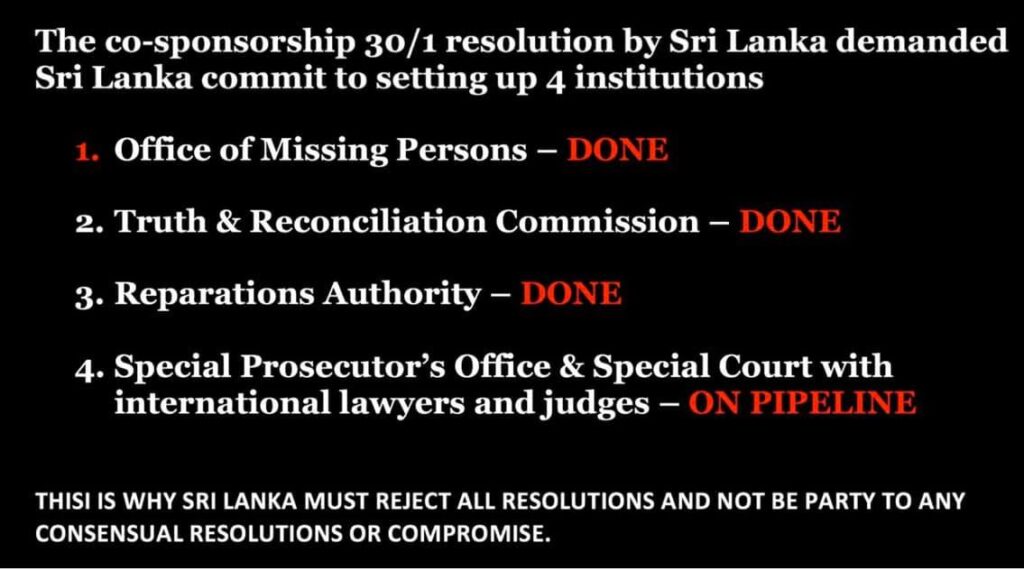
    1. The Overreach: Resolution 30/1 (2015), despite initial co-sponsorship by a previous administration, explicitly called for a judicial mechanism with… assistance in legal and judicial expertise” which was widely interpreted as demanding hybrid courts and foreign judicial participation.
    1. Why it is Wrong: This dictates the structure of Sri Lanka’s sovereign judiciary and imposes external elements that bypass the nation’s constitutional framework and its inherent right to administer justice within its own borders. Judicial architecture is an intrinsic attribute of state sovereignty.
  3. Dictating Domestic Legislative Repeals and Reforms:
    1. The Overreach: The OHCHR and High Commissioner repeatedly demand the repeal of specific Sri Lankan laws, such as the Prevention of Terrorism Act (PTA), Penal Code 365/365A, the Online Safety Act & even to Change Sri Lanka’s Constitution, and insist on reforms to religious personal laws or the decriminalization of consensual same-sex relations.
    1. Why it is Wrong: While human rights principles advocate for non-discrimination and protection of fundamental freedoms, the direct demand for specific legislative acts by an external body constitutes a clear overreach into the sovereign legislative domain of Sri Lanka’s Parliament. The methods and timelines of such reforms, particularly when touching upon complex social, cultural, or religious issues, are exclusively within the domestic legislative purview.
  4. Disproportionate and Politicized Scrutiny:
    1. The Wrong: Sri Lanka has faced continuous, country-specific resolutions and intense scrutiny for over a decade, often based on reports (Darusman, Petrie, OISL) that Sri Lanka deems fundamentally flawed, unmandated, and relying on unverified sources that deny due process. This continuous focus is seen as disproportionate compared to other nations with similar or more severe alleged human rights issues. Moreover, all of these actions only came about after Sri Lanka ended 30 years of terrorism & questions UNHRC silence before 2009.
    1. Why it is Wrong: This creates a perception of selective justice and politicization, diverting resources and attention from genuine, nationally-owned reconciliation efforts, and violating principles of objectivity, impartiality, and non-selectivity central to the UN’s own human rights framework. The focus on unverified incidents from the 1990s, while large-scale atrocities by the LTTE (e.g., child soldier recruitment, disappearances from detention centers, the mass killing of other Tamil militant leaders & their cadres by LTTE are comparatively downplayed, further highlights this perceived bias.

What the Direct Message to the UNHRC Head and OHCHR Office from the Government of Sri Lanka should be

The Government of Sri Lanka must deliver a clear, principled, and unyielding message to the visiting UN High Commissioner for Human Rights and his Office:

The Government of Sri Lanka welcomes your visit and reaffirms its unwavering commitment to upholding human rights for all its citizens, in line with our international obligations. However, this commitment is exercised within the framework of our national sovereignty, a principle fundamental to the United Nations Charter itself.

Therefore, you and your Office must understand and be firmly informed of the following:

Respect for Sovereignty is Non-Negotiable: Sri Lanka, as a sovereign member state of the United Nations, operates under its own Constitution and laws. UN Charter Article 2(7) explicitly prohibits intervention in matters essentially within our domestic jurisdiction. Your mandate, and that of the UNHRC, is promotional and recommendatory; it is not legislative, judicial, or enforcement-oriented.

Rejection of Mandate Overreach: We unequivocally reject any and all demands that fall outside your legitimate mandate. This specifically includes:

    • The imposition of external evidence-gathering mechanisms (such as the OHCHR Sri Lanka Accountability Project), which usurps our national judicial functions and infringes upon our sovereign right to administer justice within our borders.
    • Dictating the specific structure of our domestic judiciary, including demands for hybrid courts or the inclusion of foreign judges, which are matters solely for Sri Lanka’s constitutional and legislative processes.
    • Demanding the repeal of specific domestic laws or dictating specific legislative reforms (e.g., the Prevention of Terrorism Act, the Online Safety Act, or specific personal laws, or the decriminalization of same-sex relations). The power to legislate rests exclusively with the Parliament of Sri Lanka, reflecting the will of its people.

Insistence on National Ownership: Genuine and sustainable accountability, reconciliation, and reform processes must be nationally owned, designed, and implemented. We are committed to strengthening our own credible domestic mechanisms. Any external demands that bypass or undermine these national efforts are counterproductive and will be resisted.

Addressing Bias and Flawed Foundations: We urge your Office to acknowledge and address the persistent concerns regarding the politicization and selective scrutiny directed at Sri Lanka. Resolutions stemming from reports that lacked proper UNGA/UNSC mandates, relied on unverified, anonymous information, and denied Sri Lanka due process, fundamentally lack legitimacy and are a basis for continued interference. We also recall instances where questionable analyses have been used to unfairly target our armed forces.

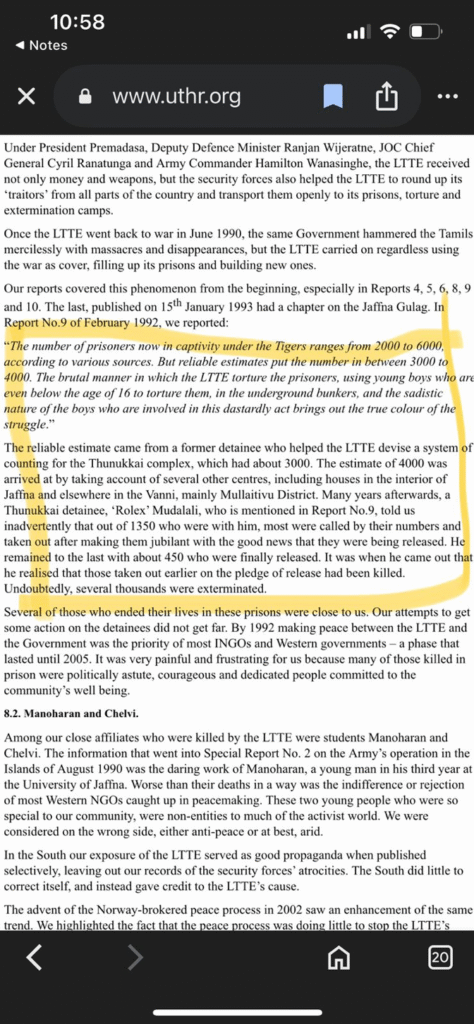
Focus on True Justice and Impartiality: If your concern is genuinely for human rights, then it must be universal and impartial. We expect equal attention to the horrific atrocities committed by the proscribed terrorist organization LTTE, including the recruitment of thousands of Tamil child soldiers, the disappearance of thousands from their detention centers like Thunukkai, and widespread massacres of Sinhala, Tamil, and Muslim civilians, along with the brutal killings of rival Tamil groups like TELO. A selective focus, such as a disproportionate emphasis on unverified claims from decades past while ignoring documented mass atrocities by terrorists, casts serious doubt on the impartiality and credibility of your Office.

The Government of Sri Lanka stands ready for constructive engagement that respects its sovereignty and operates within the bounds of established international law. However, any attempts to dictate our internal affairs, impose external mechanisms, or make demands that exceed your mandate will be firmly rejected. Our nation deserves justice and respect for its hard-won peace, not judgment based on a biased and politicized agenda.”

This is the type of statement Sri Lankans expect from its elected Govt. We look forward to such an outcome.

Shenali D Waduge

The shot of the high priest in the golden temple of the law…!

June 27th, 2025

Translation of the poem නීතියේ රං දේවාලයේ මහා පූජකයාගේ වෙඩිල්ල… නීතීඥ අරුණ ලක්සිරි උණවටුන

Offering blooms with both hands
Praying for the facticity of the law
Went to the golden temple of the law that day…

The bullet that the high priest had Placed through the chest,
The altar itself spread became wet with blood…

Took the blood with the pen
Brought the 22nd amendment by the temple of attorney’s to correct the offence…

Brutuses all around,
But in Sirilaka as far as the eye could see as there is no Caesar and Cleopatra…
How could a Mark Antony who dares to tell the truth to the normal people be born…

Translation of the poem
නීතියේ රං දේවාලයේ මහා පූජකයාගේ වෙඩිල්ල…

http://neethiyalk.blogspot.com/2025/06/blog-post_19.html?m=1

http://neethiyalk.blogspot.com/2025/06/the-shot-of-high-priest-in-golden.html?m=1

නීතීඥ අරුණ ලක්සිරි උණවටුන
දුරකථන 0712063394

Public vs. Private: A Tale of Two Responses

June 27th, 2025

Sasanka De Silva Pannipitiya.

Last Thursday, I had two experiences that starkly illustrated the fundamental differences in responsiveness and accountability between Sri Lanka’s private and public sectors. The contrast was so pronounced, it solidified my long-held belief that the private sector is the true engine keeping this country afloat, while the public sector often feels like a drain on its resources.

My morning started with a truly dreadful cup of “pain tea”—a “new brand we’d decided to try from a local supermarket. It tasted strongly of dried coconut leaves, far from the soothing brew I’d hoped for. Frustrated, I called the customer service number on the packet. No answer. However, just a few hours later, I received a call back from an unknown number. It was the tea company. I explained my predicament, and to their credit, the representative was genuinely surprised, stating it was their first complaint of its kind. He promptly took my location details, and within two hours, he was at my front gate. He offered a refund, which we declined. Instead, he presented us with a different variety of their tea, asking us to sample it and assess its quality. This was proactive, effective, and customer-centric service—a swift resolution born from a clear understanding of brand reputation and customer satisfaction.

Later that same day, I made a second, far less satisfying call. I contacted the Sri Lanka Railway safety department to report a significant safety hazard: the unguarded railway level crossing near my home. This crossing had always been guarded, but suddenly a makeshift placard had appeared, crudely stating, “Gate is unguarded, and road users are to take necessary care while crossing.” There was no official signature or stamp from any authority. My concern was immediate and serious.

When I called the railway safety department, I was met with the meek and subdued voice of a lady who informed me that “the boss was at an important meeting” and would call me back later. Unwilling to leave such a critical safety issue to an indefinite wait, I politely refused and left my mobile number, strongly requesting that her boss call me back as soon as possible. Two days have now passed, and I am yet to receive any feedback from the railway department. The silence is deafening and, frankly, alarming.

This stark contrast perfectly encapsulates my frustration. The private tea company, despite being a profit-driven entity, understood the importance of customer satisfaction and acted with remarkable speed and professionalism. Their prompt action not only resolved my issue but also fostered goodwill. The public sector, on the other hand, displayed a characteristic lack of urgency and accountability regarding a potentially life-threatening safety issue. This casual disregard for public safety, coupled with the “boss is busy” excuse, is precisely why so many of us feel that the public sector, often fueled by taxpayer money and staffed by individuals who benefited from free education, can become insular and unresponsive once they secure their positions. It’s a disheartening reality where essential services are often bogged down by bureaucracy and a palpable lack of proactive engagement.

Sasanka De Silva

Pannipitiya.

Jeremy Corbyn exposes Israel and Trump’s illegal war on Iran

June 27th, 2025

Declassified UK

Subscribe

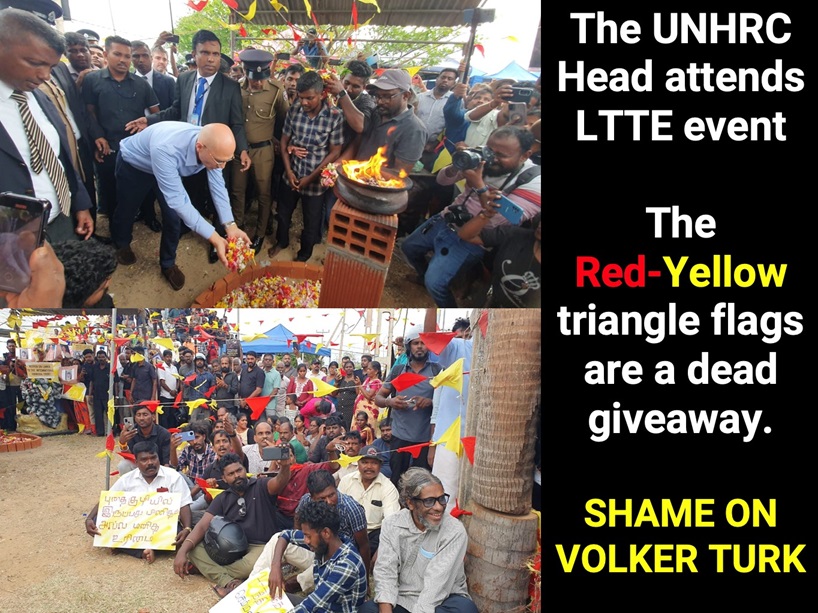
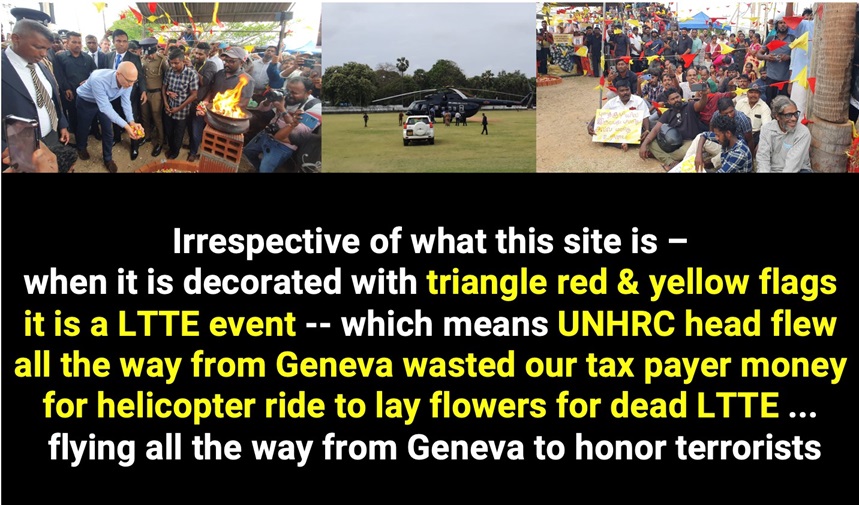
UNHRC Head ignores Iran-Israel crisis to fly to Sri Lanka to lay flowers for dead LTTE terrorists

June 26th, 2025

Shenali D Waduge

The UN Human Rights Council (UNHRC) has long been accused of double standards, politicization, and selective justice. The UNHRC Head is currently in Sri Lanka on a 3 day visit with a tight schedule. But when that schedule fits in traveling to the North by helicopter to lay flowers for dead LTTE terrorists – we must lodge our protest. This is not a gesture of reconciliation—it is an insult to the victims of LTTE terror. It is a clear violation of the UN’s own stance against glorifying terrorism. We not only take offence but we demand an immediate explanation from the OHCHR office and all parties involved in organizing this itinerary. Why does the UNHRC Head have time to lay flowers for terrorists but not to visit the graves of victims of LTTE? If at all he should be searching the graves of 40,000 claimed to be killed during the last phase, not some unverified grave site of 1990s. We don’t expect a visiting UNHRC head to be laying flowers for terrorists especially when there is a bigger conflict unfolding in the Middle East. If the visiting UNHRC Head’s itinerary includes laying flowers as a symbolic gesture of goodwill for the dead, then he must lay flowers for victims of terror not the terrorists.

A Legacy of Bias: From 2006 to Present: Every UNHRC head since 2006 has demonstrated overt bias against Sri Lanka. Despite the end of a 30-year conflict in 2009—during which the Sri Lankan state defeated one of the world’s most ruthless terrorist organizations, carried out the world’s largest humanitarian rescue operation & rehabilitated & reintegrated close to 12,000 LTTE cadres—the UNHRC has relentlessly pursued Sri Lanka, using flawed reports and unverified allegations, demanding domestic reforms & restructuring to undermine its sovereignty.

The UNHRC appears either unwilling or unable to distinguish between the legitimate right of a sovereign state to carry out counter-terrorism operations and the deliberate, unlawful acts of terrorism committed by LTTE banned by 32 nations. By drawing moral equivalence between a state’s lawful military operations and the LTTE’s brutal terror campaign—and then disproportionately targeting the Government of Sri Lanka for alleged human rights violations—the UNHRC undermines both international law and its own credibility.

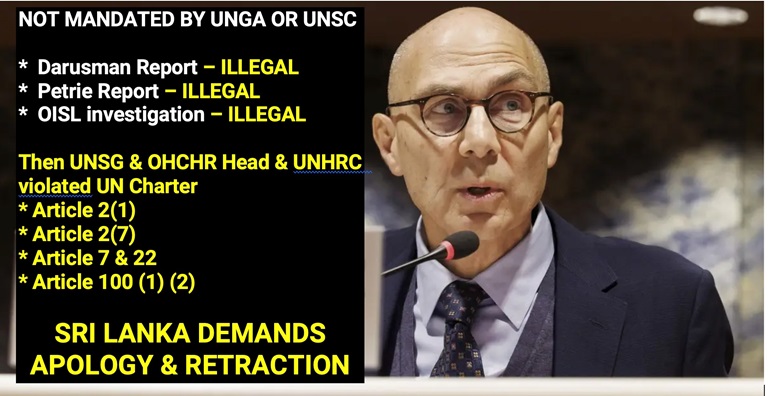
Three major reports—the 2011 Darusman Report, 2012 Petrie Report, and 2015 OHCHR Investigation (OISL)—form the backbone of this campaign. All three were:

  • Initiated without UN General Assembly or Security Council approval
  • Funded and published under the Secretary-General’s office without mandate
  • Based on anonymous testimonies sealed for 20 years
  • Denied Sri Lanka the right to cross-examine or respond
  • Darusman & Petrie Report were not published officially but leaked to the public

These reports violated UN Charter Articles 2(1), 2(7), 7, 22, and 100, among others. Despite this, successive UNHRC heads weaponized these flawed documents to justify political interference and externally driven reforms.

Selective mourning: glorifying terrorists, ignoring victims The High Commissioner’s decision to lay flowers at a site allegedly linked to 19 unverified deaths (and no confirmed evidence of a mass grave) is not only premature but deeply insulting & absolutely unwarranted. If he wants to lay flowers there are plenty of places to commemorate the dead. How can some unverified site with 19 skeletons be more important than the thousands of innocent lives lost at the hands of the LTTE? From over 300 such attacks by LTTE over 30 years…

  • 149 Buddhists hacked to death at the Sri Maha Bodhi in 1985
  • 600+ unarmed policemen executed by the LTTE in 1990
  • 147 Muslims massacred inside Kattankudy Mosque in 1990
  • Entire Sinhala and Muslim villages wiped out across the North and East (ethnic cleansing)
  • 113 killed when LTTE attacked Central Bank in 1996
  • 33 student Bhikkhus pulled out of bus & murdered in Aranthalawa 1987
  • Hundreds of villagers killed in the Kent & Dollar Farms throughout the 1980s
  • LTTE attacked & bombed buses trains, airports, public places – killing thousands of unarmed innocent civilians. Why can’t the UNHRC head place a single flower for them

Why is the UNHRC not laying flowers at these grave sites? Why does the itinerary ignore these massacres entirely? Why does the UNHRC never meet with the families of these victims?

This is not justice—it is propaganda. It is not human rights—it is human wrongs.

What about Iran-Israel Crisis: At a time when the world is on the edge of a catastrophic regional & global war, with grave human rights violations occurring daily, the UNHRC head has chosen to spend his time attending an event for dead LTTE terrorists in Sri Lanka. This shameful prioritization reveals everything about the UNHRC’s misplaced agenda.

Why is there no emergency session to resolve the Iran-Israel crisis? If Ban Ki Moon could appoint a panel immediately after Sri Lanka’s conflict concluded why doesn’t the sitting UNHRC head do something to address the conflict unfolding in the Middle East – the logistical nightmare that would impact the economies of the entire world. Is this issue not more important than travelling all the way to Sri Lanka to lay flowers for dead LTTE?

Double Standards and Cowardice This pattern of selective accountability shows cowardice. The UNHRC dares to attack small, sovereign nations like Sri Lanka, but refuses to hold powerful countries accountable. Sri Lanka defeated terrorism. That should be acknowledged—not punished.

Meanwhile, those who funded, trained, and armed the LTTE walk free. LTTE are not punished for recruiting children. The families of 5000 missing Sri Lankan soldiers are denied answers. Tamils, Sinhalese & Muslim victims of LTTE never get a hearing in Geneva. Annually, UNHRC ears are only for LTTE fronts & pro-LTTE activists.

Where is the UNHRC’s impartiality? Where is the justice for all?

We Demand Accountability from the UNHRC :

  1. An apology for the selective glorification of LTTE-linked grave sites.
  2. Refusal to visit massacre sites and meet with families of Sinhala, Tamil, and Muslim victims of the LTTE.
  3. A full audit of how the Darusman, Petrie, and OISL reports were commissioned, funded, and used outside of UNGA & UNSC mandate.
  4. A UNGA-led legal review of all resolutions and reports against Sri Lanka.
  5. Reaffirmation that non-international armed conflicts fall under domestic jurisdiction.
  6. Review on how human rights laws have replaced international humanitarian laws for selective justice.

Timeline of UNHRC Targeting Since 2009

  • 2012: Resolution A/HRC/19/2 – the first against SL
  • 2013, 2014: Further resolutions despite domestic reconciliation
  • 2015: OISL Report based on sealed testimonies
  • 2021, 2022, 2023: Renewed resolutions despite no war since 2009

The UNHRC has become a tool of political coercion. If it wishes to restore credibility, it must first respect its own Charter, uphold impartiality, and stop glorifying terrorism under the guise of human rights.

Sri Lanka is not currently a member of the UNHRC and therefore has no vote nor influence over the Council’s resolutions, despite being a subject of repeated and intrusive scrutiny. This makes the ongoing pressure not only unfair but undemocratic

UNHRC/OHCHR unashamedly are showing their bias & double standards because the UN system is ill-equipped to take action against its illegalities. How else did 3 legally questionable reports (Darusman, Petrie, OISL) end up being used against a UN member sovereign state.

Sri Lanka deserves justice—not judgment.

Shenali D Waduge

Dear Jeremy, Please hand over this letter from citizens of Sri Lanka who find the visit of your boss to our country, more than amusing

June 26th, 2025

Gyan de Mel 

Dear Jeremy,

Please hand over this letter from citizens of Sri Lanka, who find the visit of your boss (Mr. Volker Turk) to our country, more than amusing. Thanks.

Dear HR Commissioner,

We understand that you are a paid employee of the UNO, tasked with keeping alive,  the narrative of war crimes committed by the SL Armed forces. YOU ARE IN THE WRONG PLACE AT THE WRONG TIME.

You are looking for the proverbial “needle in a haystack” rather than looking for the “elephant 🐘 in the room”  You should have been in Sri Lanka in May 2009,  when our Armed Forces carried out the world’s largest hostage rescue operation, those held as a human shield to provide cover for that coward, Prabhakaran. Right now you should be in Gaza,  where even little children are slaughtered for being potential or future “terrorists”  Hospitals and aid workers are targeted, over 60,000 civilians have been murdered etc., etc.

We doubt you will find the “needle” because there is none. Go look for the elephant. It is alive and kicking in GAZA. Good luck

Regards,

Gyan de Mel

Transforming Passion to Profit with NDB’s Practical Business Insights for Women Entrepreneurs

June 26th, 2025

National Development Bank PLC

Every successful business begins long before the first sale. It begins with a spark, an idea you can’t stop thinking about. But transforming that idea into something real takes more than passion. It takes planning, structure, and the confidence to take the first step.

If you’re a woman with a dream, perhaps of launching your own salon, café, clothing brand, or even a small-scale home business, start by asking yourself: what problem am I solving, and who truly needs this solution? The clearer your answer, the stronger your foundation.

A business that lasts is one that serves. To be truly sustainable, your idea should address a real need in your community or solve a problem that people face. When your business becomes part of the solution, it naturally builds relevance, loyalty, and long-term value.

From there, give your idea a roadmap. A business plan doesn’t have to be long or complicated, but it must be thoughtful. It should cover the basics: what you’re offering, who your customer is, how you’ll reach them, how much it will cost to operate, and how you’ll sustain it over time. Writing it down helps bring structure to your thinking and shows future partners, banks, or investors that you’re serious.

Once you’ve set your direction, managing your money becomes the next priority. Many small businesses fail not because of weak ideas but because of poor financial discipline. Separate your business income from personal spending. Track your costs, understand your break-even point, and start with simple monthly goals: sell a set number of units, reduce overheads, or commit to saving a portion of your profits. These small practices build resilience.

If you plan to grow or seek funding, financial discipline also builds your credibility. Your CRIB record (Credit Information Bureau) plays a key role when approaching banks. Maintaining a good CRIB score shows consistency and transparency. If you ever struggle with repayment, communicate early with your bank. A timely conversation can make all the difference.

At the same time, it’s important to think beyond today. Many women-led businesses have the potential to reach overseas markets. Whether you’re selling food products, clothing, jewellery, or crafts, your business could become export-ready with the right guidance. Understanding the export certification process and aligning with global standards opens the door to growth far beyond our borders.

Visibility also matters. Even the best product needs the right exposure. If you’re working on a budget, use your voice, because no one can tell your story better than you. Build a presence on social media. Engage with customers directly. Partner with local influencers or vendors. Offer promotions or referral bonuses to increase reach. Utilising social media for your business is no longer optional, it’s essential.

These practical insights were at the heart of a recent session led by Nilendra Vithanage, Chief Manager, Zonal Head – Business Banking at NDB, as part of NDB Bank’s Women’s Entrepreneurship Upskilling Programme. While the programme continues to guide and support women on their journey towards becoming entrepreneurs and exporters, its mission is clear, to make knowledge accessible, relevant, and empowering to any woman ready to take that leap.

NDB Bank remains committed to supporting Sri Lanka’s women, not just as a financial partner but as a catalyst for sustainable growth and resilience. To learn more about the Women’s Entrepreneurship Upskilling Programme, visit https://www.ndbbank.com/banking-on-women/vanithabhimana or contact Thishani at 0765699251.

US Institute for Security Governance Delegation Meets with Sri Lankan Defence Top Brass

June 26th, 2025

Ministry of Defence  – Media Centre

A representative delegation from the US Institute for Security Governance (ISG) held official meetings with Deputy Minister of Defence Major General Aruna Jayasekara (Retd) and Defence Secretary Air Vice Marshal Sampath Thuyacontha (Retd) on separate occasions recently. Discussions focused on building capacity and military capabilities.

The ISG delegation met with the Deputy Minister of Defence, Major General Aruna Jayasekara (Retd), on yesterday evening (Jun 25), and with the Defence Secretary, Air Vice Marshal Sampath Thuyacontha (Retd), today (26). These high-level engagements aimed to provide an overview of ISG’s ongoing initiatives while seeking further guidance to enhance future collaboration with Sri Lanka’s military institutions.

Discussions during the meetings covered a wide range of areas, including security governance, defence management, operational planning, resource management, logistics, cybersecurity, human capital oversight, and professional military education. The ISG team emphasized the role special educational and professional development programmes in building and sustaining a comprehensive knowledge base and strengthening the capacities.

Both the Deputy Minister and the Defence Secretary commended the International Support Group (ISG) for its instrumental role in strengthening Sri Lanka’s defence sector, particularly in advancing professionalism, institutional efficiency, and human resource development. They acknowledged the ISG’s valuable insights into Sri Lanka’s defence priorities and decision-making processes, which have established a robust foundation for deeper, long-term partnerships.

The visiting ISG team included Regional Project Lead Michael Charles Rembold and Country Project Coordinator Matt Ashley. They were accompanied by U.S. Embassy officials, including Seth Nevis, Assistant Defence Attaché; Lieutenant Commander Ros Larry, Office of the Defence Cooperation Chief.

The discussion underscored the collaborative efforts between ISG and Sri Lankan counterparts, fostering trust and mutual understanding.

Human Trafficking has been identified as the fastest growing organized crime in the world, which has become a challenge not only for Sri Lanka but also for the entire international community.

June 26th, 2025

Press Release Ministry of Defence  – Media Centre

In such cases, adult women and men, female and male minors, as well as children, are sold for personal gain without age or gender discrimination. Victims of such deceptions are exploited through prostitution, other forms of sexual exploitation, slavery, organ harvesting, forced labor, labor exploitation, conscription as mercenaries, involvement in cybercrime, and other organized criminal activities.

In order to successfully and systematically address these international challenges, the International Organization for Migration (IOM) and the National Anti-Human Trafficking Task Force (NAHTTF) in collaboration with the Government of Japan have decided to implement a comprehensive media awareness campaign to raise public awareness of the serious crime and protect Sri Lankan citizens, with the aim of preventing them from becoming victims of such crimes.

Accordingly, it has been decided to disseminate a series of educational short videos and audio clips, created to illustrate the nature of this crime and the unfortunate experiences faced by victims, through television, radio, social media and other electronic audio and visual media.

Commenting on this innovative initiative, Defence Secretary and Head of the National Anti-Human Trafficking Task Force (NAHTTF) Air Vice Marshal Sampath Thuyacontha, emphasized that prevention is a very important aspect in the process of eliminating this crime, and that the objectives of this process are to ensure the safety and security of citizens and foreigners by raising public awareness.

Another important objective of this program is to empower victims who have become victims of organized criminals involved in human trafficking or individuals who have uncovered information about such crimes to stand up and raise their voices fearlessly against these crimes.

Be informed, be alert. For for more information please contact

Ms. Minoli Don, – Head of Security Unit, International Organization for Migration (Sri Lanka) Tel. No. – 0094 777 409 409 Email Address – mdon@iom.int

National Anti-Human Trafficking Task Force (NAHTTF)- Tel. No. – 0768447700

Mr. Asel Kularatne, – Communications Officer, International Organization for Migration (Sri Lanka) Email Address – akularatne@iom.int

Two weeks of Bhatiapar gas leakage, PCBA’s notice to ONGC, and others

June 26th, 2025

Nava Thakuria  

The natural gas leakage from Bhatiapar  crude oil well continues for 15 days, even though  the Oil and Natural Gas Corporation (ONGC) along with an expert team from USA continue working for full dousing of the RDS-147A under  Rudrasagar oilfield in Sivasagar district of eastern Assam. The blowout began on 12 June 2025 and uncontrolled leakage compelled nearly 350 families to leave their places for safety reasons. Besides the local villagers living near the old well, the high pressure gas flow impacted the surrounding environment heavily. Lately, the ONGC issued a statement claiming that ‘a significant progress in controlling the well at RDS 147A’ was made. It also added the gas was  nontoxic and the volume got reduced posing no extra risk to the villagers living beyond 500 meter radius away.

Lately, the State pollution authority issued a show-cause notice to the ONGC for the activities without securing necessary environmental clearances. Pollution Control Board, Assam (PCBA) in a notice, issued on 21 June, accused the largest crude oil & natural gas exploration and drilling company in India of operating at well number 147 (Bhatiapar–Barichuk area) without securing the mandatory consent to establish (CTE) and consent to operate (CTO) under a number of environmental legislations. The PCBA gave the ONGC authority two weeks to explain why action should not be taken against it. If failed to respond within the stipulated period, the PCBA (under the guidelines of National Green Tribunal) may impose environmental compensation fines (ECF) and other penalties against the ONGC.

Speaking to this writer, PCBA chairman Er Arup Kr Mishra informed that the responsible board officials had confirmed the uncontrolled gas flow from RDS-147A causing pollution to the local environment. The visiting scientists from the PCBA’s central laboratory and RLO- Sivasagar to the location detected that the ONGC authority had neither taken CTE/CTO for the RDS-147A work over drill site nor even intimated the board, stated Mishra, adding that the ONGC Limited, Assam Asset was intimated with various provisions under the Air (Prevention & Control of Pollution) Act 1981, the Water (Prevention & Control of Pollution) Act 1974, the Hazardous and Other Wastes (Management and Transboundary Movement) Rules 2016, and the Environment (Protection) Act 1986, which were violated while operating a ‘Work Over Drill Site RD147-A’.

Many villagers are worried about the incident, remembering the  Baghjan catastrophic gas and oil leak which caught fire subsequently. Well number 5 of the Oil India Limited experienced the gas discharge on 27 May 2020 and it caught fire on 9 June to make the accident one of the worst industrial disasters in India. The gas flow and fire was completely doused on 15 November with the help of an expert team from Canada. The disaster claimed three human lives, sudden evacuation of over 9000 families (and subsequent loss of properties and livelihoods) as well as damaged thousands of hectares of areas belonging to Maguri-Motapung wetland and Dibru-Saikhowa National Park etc.

The destroyed ecosystem will probably need decades to regain its original form. But one can remember, a Guwahati-based journalist (now a popular talk-show host) wrote in a prime English daily newspaper soon after the disaster asserting that the nature in Baghjan had already returned back to its original shape. He also criticized the affected villagers for mishandling the compensation from the OIL authority. No wonder, a public demonstration was organized by local villagers terming the journalist a tout of  the oil company for personal gains. It was another kind of disaster for the Asomiya society after the Baghjan tragedy indeed! 

Nonetheless, it’s time for India to have an efficient response team to deal with disasters of such magnitudes and avoid national embarrassment in the coming days.

Prof. John Mearsheimer: Why Israel’s War Against Iran BACKFIRED

June 26th, 2025

Glenn Greenwald

UNHRC must apologize & retract all Reports & Resolutions against Sri Lanka (2009-present)

June 25th, 2025

Shenali D Waduge

Sri Lanka’s conflict ended in May 2009. The UN that silently watched 30 years of LTTE terror & mayhem did little to prevent civilian killings. Yet when Sri Lankan Government authorized counter-terrorism action against LTTE & eventually LTTE was eliminated, the UN jumps into action calling for accountability! Not stopping there, 3 critical reports became the foundation of a witch hunt against a sovereign UN member state. The so-called international community must look at the breaches of protocol & UN Charter in the 3 reports against Sri Lanka that have clearly no UN mandate. This challenges the legal validity, procedural integrity & evidentiary basis of the 2011 Darusman Report, 2012 Petrie Report & 2015 OISL investigation – all three done under authorization of only then serving UN Secretary General Ban Ki Moon.

Legal Violations of UN Charter by the UNHRC and OHCHR Actions

  1. Violation of Article 2(1)
  2. Violation of Article 2(7)
  3. Violation of Article 7
  4. Violation of Article 22
  5. Violation of Article 100 (1) & (2)
  6. Violations of the UN Charter

1. Article 2(1) – Sovereign Equality

  • Selective treatment of Sri Lanka violates the foundational principle of equal sovereignty of states.
  • The UN has not imposed similar scrutiny on other states involved in comparable or more devastating conflicts (e.g., India, Afghanistan, Gaza).
  • The first unilateral unmandated report after a conflict had ended creating a precedent.

The Organization is based on the principle of the sovereign equality of all its Members.”— Charter of the United Nations, Article 2, Paragraph 

Sovereign equality” means All states, regardless of size, power, wealth, or geopolitical alignment, have equal legal standing and rights in the UN system. No state may be subject to differential treatment, politicized targeting, or selective accountability that is not equally applied to others in similar situations.

  • Article 2(7) – Non-Interference in Domestic Jurisdiction

Nothing contained in the present Charter shall authorize the United Nations to intervene in matters which are essentially within the domestic jurisdiction of any state…”— Charter of the United Nations, Article 2, Paragraph 7

This provision is a bedrock principle of international law, protecting the sovereignty and internal affairs of states from unilateral or coercive interference by UN organs or other member states. It:

  • Restrains the UN from taking action on matters of internal law, governance, and security unless authorized by the Security Council under Chapter VII.
  • Preserves a state’s right to manage non-international armed conflictswithout foreign political or institutional intrusion.

The UNHRC and OHCHR acted ultra vires by intervening in Sri Lanka’s domestic affairs without Security Council or General Assembly mandate.

Sri Lanka’s internal armed conflict (1980s–2009) was a non-international armed conflict (NIAC) under international law.

UNHRC Resolutions: Repeatedly called for domestic legal reforms, foreign judges, and hybrid courts — all matters within Sri Lanka’s internal constitutional framework.

UNHRC/OHCHR exceeded their mandate by intervening in Sri Lanka’s domestic legal affairs:

  • Darusman Panel was appointed without intergovernmental approval.
  • Petrie Report internal unprecedented report
  • OISL proceeded without Sri Lanka’s consent.
  • Resolutions called for foreign judges, hybrid courts—matters internal to Sri Lanka’s constitution.

These actions amount to unlawful interference in Sri Lanka’s domestic jurisdiction, in direct violation of Article 2(7). No comparable measures were imposed on states with ongoing or recent internal conflicts (e.g., India, Ethiopia, Myanmar, Colombia).

  • Articles 7 & 22 – Legal Basis for creating UN bodies

Such subsidiary organs as may be found necessary may be established in accordance with the present Charter.”— UN Charter, Article 7(2)

The General Assembly may establish such subsidiary organs as it deems necessary for the performance of its functions.”— UN Charter, Article 22

These two articles form the exclusive legal basis for establishing:

  • Fact-finding missions
  • Investigatory panels
  • Subsidiary mechanisms

Only the General Assembly or Security Council may law fully authorize a commission, panel, or inquiry with investigatory powers or official status.

However,

  • The Darusman Panel was appointed unilaterally by the Secretary-General without GA or SC authority, rendering it ultra vires. Who funded this Panel?
  • As per Articles 7 & 22 only the UNGA or UNSC have the exclusive legal authority to establish UN bodies.
  • OISL (2015): Investigated wartime conduct and governance policies without host state consent, effectively overriding Sri Lanka’s legal autonomy.
  •  
  • Article 100 (1) (2) – Secretariat Neutrality (Impartiality)
    • The Secretary-General breached his duty of neutrality by initiating politically motivated actions lacking intergovernmental oversight.
    • Appointing panels lacking intergovernmental oversight.
    • Citing reports that were unauthorized, leaked, and methodologically flawed.
    • Ignoring evidence from independent Tamil groups and families of missing soldiers.

Article 100 (1) – UN Charter – In the performance of their duties the Secretary-General and the staff shall not seek or receive instructions from any government or from any other authority external to the Organization. They shall refrain from any action which might reflect on their position as international officials responsible only to the Organization”

Article 100 (2) – UN Charter – Each Member of the United Nations undertakes to respect the exclusively international character of the responsibilities of the Secretary-General and the staff and not to seek to influence them in the discharge of their responsibilities.” 

Article 100 is meant to:

  • Guarantee the objectivity and neutrality of the UN Secretariat.
  • Prohibit political influence or pressure from powerful states or lobbying blocs.
  • Ensure that UN staff act only under the legal framework and authority of UN bodies, not under activist or political agendas.


Timeline of UNHRC Actions vs. Sri Lanka (2009–2025)

How the Darusman Panel Report (2010–2011) violated the UN Charter

How has Petrie Report (2012) violated the above Charters:

How has OISL (2015) violated the above Charters:

  • 19 May 2009: End of war
  • 15 May 2010: Sri Lanka appoints LLRC internal investigation
  • 22 June 2010: Darusman Panel appointed (unauthorized)
  • 2011: Report published
  • 2012: Petrie Report released
  • 2015: OISL launched by OHCHR without consent
  • 2012–2024: Multiple biased UNHRC resolutions based on flawed reports

How the Darusman Panel Report (2010–2011) violated the UN Charter

Timeline of Appointment

  • 22 June 2010: Secretary-General Ban Ki-moon announces the formation of a Panel of Experts to advise him on the issue of accountability” during the final stages of Sri Lanka’s conflict. Created unilaterally by Secretary-General Ban Ki-moonin 2010, following pressure from:
    • Certain Western member states
    • Diaspora lobby groups
    • UN-affiliated activists
  • Absence of UNGeneral Assembly or UNSecurity Council Endorsement
    • No General Assembly resolution or Security Council mandate authorized the Panel.
    • The Panel wasnot a subsidiary organ under Article 22 of the Charter.
    • Its creation bypassed intergovernmental review, violating Articles 7 and 22 – lacked binding procedural standards
  • March 2011: The Panel submits its report.
  • April 2011: Report is leaked to the public and becomes the unofficial basis for UNHRC Resolution 19/2 (2012).
  • Anonymous testimonies sealed for 20 years.
  • Violated ICCPR Article 14 (no right of reply).
  • Office of Legal Affairs (2011) clarified it was not an official UN investigation – yet it was used to justify formal action.
  • UNHRC cited it repeatedly, making resolutions from 2012 onwards legally voidable.
  • Yet, who funded this Panel that the UNSG unilaterally appointed?
  • How was it quoted by UNHRC/OHCHR Head after it was leaked
  • The action has set a dangerous precedent to allow the UNSG’s secretariat to function without intergovernmental approval.

This is not a fact-finding mission but an advisory panel. However, it is part of my initiative to ensure accountability.”- Darusman Report, Introduction

Statement by the UN Office of Legal Affairs (2011) on the Darusman Panel –The Secretary-General established the Panel of Experts under his own authority, not as an investigative or fact-finding body. The Panel was not a subsidiary organ of the General Assembly or the Security Council, and its findings do not carry the status of official United Nations investigations.” — , in correspondence and internal clarification to Member States (2011), upon queries from delegations regarding the status of the Panel.

This formal statement confirms that the Panel’s authority is extra-legal under the Charter

How has Petrie Report (2012) violated the above Charters:

  • Framed as a review of internal UN failures during the final phase of the conflict, it too was leaked and became a vehicle for publicly shaming Sri Lanka — again led by Secretariat staff without intergovernmental oversight.
  • Leaked and used to shame Sri Lanka publicly.
  • No procedural transparency; no intergovernmental oversight.
  • Showed bias by selectively targeting the state and ignoring LTTE atrocities.
  • Acted as a quasi-judicial condemnation, not an internal review.
  • Internal review repurposed as a quasi-judicial indictment.
  • Selective citation of facts and institutional bias.

A continued reluctance to stand up for the rights of people led to a grave failure of the UN during the final stages of the conflict in Sri Lanka.” — Charles Petrie, Panel Chair

Sri Lanka was the only nation to defeat an internationally banned terrorist movement.
Sri Lanka was well within its right to take counter-terrorist action.

Sri Lankan forces rescued close to 300,000 civilians in the world’s largest humanitarian rescue operation while simultaneously engaging the LTTE terrorists in hostilities.

Brief Summary: Violations of UN Internal Protocols & Charter by the Petrie Report

  • Unauthorized Investigation:The Petrie Report was produced without formal approval from the UN General Assembly or Security Council, breaching UN procedural protocols and the authority structures established by the UN Charter.
  • Impartiality and Independence Compromised:By selectively targeting the Sri Lankan government and ignoring other parties’ actions (like the LTTE), the report violates UN principles of neutrality and fairness outlined in the Charter and internal guidelines.
  • Procedural Irregularities:The report relies heavily on anonymous and unverified sources, violating established UN protocols on evidence verification, transparency, and due process.
  • Sovereignty and Non-Interference:Conducting investigations without the host country’s consent breaches the UN Charter’s respect for state sovereignty and non-intervention.
  • Lack of Transparency and Accountability:The report’s opaque methodology and failure to disclose investigative procedures contravene UN standards for accountability and transparency.
  • It was leaked to the public like the Darusman Report.

These violations undermine the legitimacy of the Petrie Report and contravene fundamental UN Charter principles and internal protocols governing investigations.

How has OISL (2015) violated the above Charters:

  • Initiated by the OHCHR, which falls under the Secretariat, without:
    • Sri Lanka’s consent
    • UNGA or UNSC authorization
    • Relied on anonymous testimonies kept confidential for 20 years
  • The OHCHR:
    • Accepted anonymous evidence
    • Consulted pro-LTTE advocacy groups
    • Ignored independent Tamil testimonies (e.g., UTHR, Tamil dissidents, survivors of LTTE torture)
    • Ignored 5000 missing Sri Lankan soldier family testimonies seeking justice
  • No right to cross-examine or respond.
  • Methodology lacked transparency.
  • Biased in conclusions: Overemphasized state culpability; downplayed LTTE terror.
  • Misused human rights mechanisms.

Witnesses will remain anonymous for 20 years” — OISL Methodology Note

Violations of International Law

  • ICCPR Article 14: Right to fair hearing was denied.
  • Principle of Equal Application: Sri Lanka was singled out despite comparative or worse conflicts receiving less scrutiny (Gaza, Iraq, Afghanistan).
  • Customary international law: No state may be investigated without consent in non-international conflicts.

OISL Violations of UN Protocols, Procedures, Treaty Law, and the UN Charter

  1. Lack of Proper Authorization & Mandate Overreach
    1. The OISL investigation was established without explicit endorsement from the UN General Assembly or Security Council, violating UN procedural norms.
    1. Its mandate exceeded the scope allowed under the UN Charter and relevant treaties by conducting a politically charged inquiry rather than a neutral fact-finding mission.
  2. Breach of Sovereignty and Non-Interference
    1. The OISL operated without the full consent or cooperation of the Sri Lankan government, breaching the UN Charter’s core principle of respect for national sovereignty (Article 2.7).
    1. Such unilateral investigations violate customary international law and treaty obligations that require state consent for jurisdiction.
  3. Violation of Due Process and Fair Trial Principles
    1. The OISL relied on anonymous, uncorroborated testimonies and hearsay, ignoring the standards of evidence required by international treaty law and UN investigatory protocols.
    1. It failed to provide affected parties the opportunity to respond or challenge allegations, breaching principles of fairness and natural justice.
  4. Lack of Impartiality and Objectivity
    1. The investigation showed clear bias by disproportionately blaming Sri Lankan government forces while minimizing LTTE atrocities, violating UN principles of neutrality and impartiality.
    1. Such partiality contravenes the spirit of the Universal Declaration of Human Rights and international humanitarian law obligations.
  5. Failure to Comply with UN Internal Procedures
    1. The OISL did not ensure transparency in methodology or allow for independent verification, violating UN procedural guidelines.
    1. It circumvented regular UN investigatory channels and accountability mechanisms outlined in the UN Charter and internal regulations.
  6. Misuse of Human Rights Mechanisms
    1. By politicizing the investigation, the OISL undermined the integrity of UN human rights systems, violating treaty commitments to uphold the rule of law and peaceful dispute resolution.

The OISL investigation into Sri Lanka violated multiple UN protocols, internal procedures, treaty law, and foundational principles of the UN Charter—particularly regarding sovereignty, due process, impartiality, and procedural legitimacy—calling into question its credibility and legitimacy.

Procedural Breaches

  • No opportunity for Sri Lanka to cross-examine witnesses.
  • No independent audit or peer review of reports.
  • Bypassing of traditional UN fact-finding mechanisms.
  • Evidence from groups such as UTHR, ICRC, and survivors of LTTE atrocities consistently ignored.

Comparative Chart of UN Responses to Global Conflicts (2006–2009)

ConflictUNSG Panel?OHCHR Inquiry?UNSC Mandate?Host State Consent?
Sri LankaDarusman (no mandate)OISL (no consent)❌❌
Gaza❌Goldstone (with HRC vote)❌
Sudan/Darfur❌❌ICC Referral
Afghanistan❌❌NATO/UN Missions


Ignored Documentation from Independent Sources

  • UTHR Reports(Prof. Rajan Hoole)
  • ICRC statementson LTTE use of civilians
  • UNICEF dataon child soldiers
  • US. State Department reportson LTTE war crimes

Timeline of UNHRC Actions vs. Sri Lanka (2009–2025)

DateEvent
May 2009End of armed conflict with defeat of LTTE.
May 2009UN Secretary-General Ban Ki-moon visits Sri Lanka and issues joint statement on accountability.
June 2010SG Ban Ki-moon appoints the Darusman Panel without GA/SC mandate.
March 2011Darusman Panel submits report.
April 2011Report is published and widely cited in UNHRC and media.
November 2011Sri Lanka releases LLRC Report (Lessons Learnt and Reconciliation Commission).
March 2012UNHRC Resolution 19/2 adopted (24–15–8) — based primarily on the Darusman Report.
March 2013Resolution 22/1 adopted (25–13–8).
March 2014Resolution 25/1 adopted (23–12–12) — calls for international investigation.
March 2014OHCHR initiates OISL investigation, without Sri Lanka’s consent.
September 2015OISL Report released with significant reliance on anonymous testimonies.
October 2015Resolution 30/1 adopted by consensus — Sri Lanka co-sponsors under new government.
March 2017Resolution 34/1 adopted (renewal of 30/1).
March 2019Resolution 40/1 adopted by consensus (further time extension).
February 2020Sri Lanka formally withdraws co-sponsorship of 30/1.
March 2021Resolution 46/1 adopted (22–11–14) — increase in OHCHR evidence-gathering powers.
October 2022Resolution 51/1 adopted (20–7–20) — broadens accountability scope.
July 2023Resolution 53/25 adopted (31–3–13), further operationalizing evidence collection.
October 2024Resolution 57/1 adopted by consensus — latest continuation.
June 2025UN High Commissioner Volker Türk visits Sri Lanka. Survivors of LTTE atrocities request meeting.

This timeline demonstrates how unverified, unofficial, and unauthorized reports were used to generate a chain of political pressure and legally questionable resolutions — in defiance of Sri Lanka’s sovereignty and the spirit of the UN Charter.


Breakdown of UNHRC Country Votes on Sri Lanka Resolutions (2012–2024)

YearResolution No.Yes VotesNo VotesAbstentionsKey SupportersNotable Opposers
201219/224158USA, UK, IndiaRussia, China, Cuba
201322/125138USA, Germany, SwitzerlandVenezuela, Pakistan
201425/1231212UK, Macedonia, RomaniaChina, Saudi Arabia
201530/1ConsensusSri Lanka co-sponsored
201734/1ConsensusUK, Canada
201940/1Not tabled
202146/1221114UK, Germany, MalawiPakistan, Bangladesh
202251/120720USA, France, MexicoChina, Russia
202354/1211214Germany, FinlandIndia (abstained)

This breakdown shows the continued reliance on politicized alliances rather than consensus, undermining the impartiality of resolutions against Sri Lanka.

Domestic Investigative Mechanisms ignored:

LLRC (2010) Lessons Learned Reconciliation Commission

  • Conducted public hearings across the country
  • Recommended wide-ranging reforms

Paranagama Commission

  • Inquired into IHL and HR violations by all parties
  • Examined victim testimonies and forensic evidence

Criminal Investigations & Prosecutions

  • Ongoing cases against LTTE cadres and some security personnel
  • Judicial action taken, despite resource and witness protection challenges

Summary of Domestic Legal & Investigative Mechanisms

  1. Lessons Learnt and Reconciliation Commission (LLRC)
  2. Established in 2010 by the Sri Lankan government to investigate the final stages of the civil conflict and recommend measures for reconciliation and accountability.
  3. Conducted extensive hearings and gathered testimonies from diverse stakeholders.
  4. Produced a comprehensive report acknowledging wartime challenges, recommending political, social, and institutional reforms, including improving human rights protections and addressing grievances.
  5. Recognized limitations of wartime conduct while emphasizing the necessity of defeating terrorism.
  6. Paranagama Commission (Presidential Commission of Inquiry)
  7. Formed to investigate alleged violations of international humanitarian law and human rights by all parties during the conflict.
  8. Conducted public and closed hearings with broad mandate to scrutinize evidence and testimonies.
  9. Submitted detailed findings to the government, emphasizing the need for lawful conduct during armed conflict and due process.
  10. Recommendations included strengthening domestic accountability frameworks and improving law enforcement capacities.
  11. Criminal Investigations and Prosecution Statistics
  12. Sri Lanka’s law enforcement agencies have actively investigated and prosecuted cases related to conflict-era crimes.
  13. Numerous cases filed involving alleged violations by both state security forces and LTTE operatives.
  14. Domestic courts have adjudicated several high-profile cases, demonstrating commitment to the rule of law.
  15. Statistics reflect ongoing efforts to address accountability within the country’s judicial system, though challenges in witness protection and evidence collection remain.

Comparative UN Response: Global Conflict Standards

ConflictUNSG Panel?OHCHR Inquiry?UNSC Mandate?Host Consent?
Sri LankaYes (No mandate)Yes (No consent)NoNo
GazaNoYes (HRC vote)NoPartial
DarfurNoNoYes (ICC Referral)N/A
AfghanistanNoNoNATO MandateYes

Ignored Evidence

  • UTHR Reports (Rajan Hoole)
  • ICRC documentation on civilian protection
  • UNICEF: Child recruitment by LTTE
  • U.S. State Dept. reports on LTTE atrocities

Breakdown of UNHRC Votes on Sri Lanka Resolutions

YearResolutionYesNoAbstainSupportersOpposers
201219/224158USA, UKRussia, China
201322/125138Germany, IndiaVenezuela
201425/1231212MacedoniaSaudi Arabia
201530/1ConsensusSri Lanka (co-sponsored)
202146/1221114Germany, UKPakistan, Bangladesh
202354/1211214FinlandIndia (abstained)

Final Statement

The UN’s credibility depends on respect for its own Charter. Selective justice, political coercion, and unlawful procedures undermine not only the rights of member states like Sri Lanka, but the legitimacy of international law itself. We urge the United Nations to uphold the law without fear or favour.

Demands for Legal Rectification

  1. Immediate UNGA-led legal review of all Sri Lanka-related UNHRC reports and resolutions.
  2. Retraction or amendment of the Darusman, Petrie and OISL reports.
  3. Investigation into procedural abuse by the OHCHR and relevant officials.
  4. Establishment of a new balanced inquiry into all war-time violations, including those committed by the LTTE and foreign actors.

We call on the United Nations to restore balance, legality, and fairness in its approach to Sri Lanka and similarly affected nations.

Shenali D Waduge

Raiding wild elephants and barking village dogs – II

June 25th, 2025

By Rohana R. Wasala

Continued from June 21st, 2025

My rough English version of what General Ratnayake uttered in Sinhala does not at all do justice to his smart observation. I’ll explain this in a while. Let’s first take a look at the background to the event (namely, Charles Thomas’s ‘Sihinaya’ programme at the Padeniya Purana Rajamaha Viharaya held on May 17, 2025). The Mahanayake Thera’s letter mentioned above was sent to the Viharadhipati of the said Rajamaha Viharaya,  Ven. Katumuluwe Sumanaratana Thera, just over a month previously. Let’s wind back a little.

The Most Venerable Tibbatuwawe Sri Siddhartha Sumangala Thera, the Mahanayake of the Malwatte Chapter of the Siyam Maha Nikaya in Kandy, directed an official letter, a formal injunction, to Venerable Katumuluwe Sri Sumanaratana Nayake Thera of the Padeniya Purana Rajamaha Viharaya at Padeniya about this programme scheduled to be conducted there on May 17, 2025. Now, what did the Mahanayake Thera write to the chief incumbent of the Padeniya Purana Rajamaha Viharaya? The following is my  translation of the Mahanayake Thera’s letter dated April 15, 2025 (a photocopy of which was published in ‘ලංකා ලීඩර්’  Lanka Leader on May 27, 2025):

It has been brought to our notice that preparations are being made for a special programme to be conducted, in this holy month of Vesak that commemorates the Three Cardinal Events of the life of the Sammasambuddha, by a person named Charles Thomas at the Padeniya Purana Rajamaha Viharastanaya, which belongs to the Malwatte Chapter and which is at present under your incumbency. This person Charles Thomas has been accused of unethical conversion of Buddhists. We have also been made aware that the local Buddhist public have expressed strong displeasure at this event.

Therefore, we hereby notify you to call off the proposed programme, and to refrain, in the future, from organizing similar events with this person that are likely to cause public agitation.”

Signed/Sri Siddhartha Sumangala Thera 

The Mahanayake/Malwatte Chapter of the Siyam Maha Nikaya 

(Please note the use of the ‘royal We’ in this document, which is normal in official communications issued by the Mahanayake Thera; ‘We’ in this context is used not to show plurality, but authority.)  

The Mahanayake Thera issued another official letter suspending Katumuluwe Sumanarathana Thera as  Chief Judicial Sangha Nayake of Devamedi Hathpaththuwa on May 18, 2025 on learning that the latter had gone ahead with the scheduled event disobeying his explicit instructions. In the letter the Mahanayake stated the reasons for the particular decision (to suspend the Viharadhipathi as Chief Judicial Sangha Nayake) taken by the Karaka Sangha Sabha of the Maha Viharaya under his imprimatur:

First, although Sumanaratana Thera had claimed, by a letter to the Mahanayake Thera dated May 14, 2025, that all the Nayake monks of the region (of Devamedi Hathpaththuwa) had expressed their approval of the programme in question, they later informed the Mahanayake Thera that they had not been made aware of his letter of restraint (issued on April 15, 2025), implying that they would not have given their consent, had they known about it beforehand. Second, the Commissioner General of Buddhist Affairs had, by his letter dated May 16, 2025, in response to many complaints received from various sections of the Buddhist public, asked for a postponement of the programme. The Commissioner General had asked for this until a final decision could be taken, considering the fact that the programme could lead to social disharmony. And, finally, in spite of all these alerts, Katumuluwe Sumanaratana Thera had flouted established conventions in holding the event (on May 17). The Mahanayake Thera expressed strong displeasure at this and went on to suspend Sumanarathana Thera as the Chief Judicial Sangha Nayake of Devamedi Hathpaththuwa.  

Let’s with due respect and reverence leave it to the discretion of the Most Venerable Mahanayake Thera of the Siyam Maha Nikaya to take appropriate further action to deal with this obvious case of cynical  insubordination on the part of the said monk. 

Be that as it may, it is clear that the incumbent monk allowed the disputed event to be held in non-compliance with the Mahanayake Thera’s express instructions against doing so. General Daya Ratnayake’s words should be interpreted in that context. His implicit rejection of what he had been invited to add value to by his graceful presence, he conveyed to the audience through the undisguised sarcasm of: 

 ‘වන අලින් ගම වදින විට බල්ලන් බිරුවාට අලියා කලබල නොවී වගාව කා දමන බව’ ‘When wild elephants raid villages, dogs bark; but they eat up the crops unperturbed’,

where there is no explicit or implicit reference to the Mahanayake Thera. Dogs are small and weak opponents of the elephants, but they do their duty by warning off the elephants and alerting the villagers. The elephants are big and strong and are taking what is not theirs, which is wrong. The subversive forces suspected to be behind Charles Thomas who was, as alleged, hosted by the errant monk are powerful; they are doing what they want (that is, proselytisation/cultural subversion of the Buddhists in this instance) through their agent ignoring the divided and weakened opposition that he happens to encounter. 

It must be emphasized at this point that my criticism is actually directed at Katumuluwe Sumanarathana Thera, who should know better than to get a Catholic guest to preach to his Buddhist congregation consisting of his dayaka (donor) upasaka upasikas  on whose alms he sustains himself. I don’t at all think that mainstream Christians and Catholics have anything to do with what Charles Thomas is doing or that he is authorized by HH the Cardinal to perform at Buddhist Viharas. So, I sincerely assure them that I am not targeting the Christian/Catholic community or their spiritual leaders. Many a time have I wished the Mahanayake Theras took a leaf out of the Cardinal’s book in looking after the legitimate interests of monks and lay Buddhists by fearlessly asserting their spiritual authority before the rulers. 

To General Ratnayake I would like to say this: I am only offering my arbitrary interpretation of your words, as a personal opinion. You might have meant an entirely different thing; but I am sure it could be anything but defamatory of the Maha Sangha, least of all, of  the Mahanayake Theras.    

The currently operative Republican Constitution with its institution of the executive presidency was promulgated in 1978. However, it was based on the original Republican Constitution of 1972, according to which that post was only a nominal one (that is, the president was a figurehead) and the prime minister (an elected Member of Parliament) exercised executive power. An AI summary of the important Article 9 of the 1978 constitution (about the place given to Buddhism therein) reads as follows: ‘The State is mandated to protect and foster the Buddha Sasana (Buddhist teachings), while also ensuring the rights granted by Articles 10 and 14(1)(e) to all religions. These rights include freedom of thought, conscience, and religion, ensuring the protection of other religious beliefs alongside Buddhism.’ 

However, the literal translation of Buddha Sasana as ‘Buddhist teachings’ does not adequately match how the term ‘Buddha Sasana’ is actually interpreted in the Constitution, where it encompasses not only the Buddhist ‘religion’ (Buddhana sasanam = teaching of the Buddhas), but also everything material and institutional that is vitally associated with it like Buddhist shrines, monasteries, pirivenas (bhikkhu educational centres), Buddha images, stupas, Bodhi trees, Buddhist archaeological sites, and the rest. To safeguard the Buddha’s teachings, those objects and institutions must be protected, too. The problem of the increasingly threatened state of the Buddha Sasanaya (especially since 2015 to date) remains to be addressed. Such activities as encroachment on the Buddhist religious space in the form of unethical or coerced conversions, building unwanted prayer halls in Buddhist majority places, need to be stopped peacefully.

 What was witnessed at Padeniya Purana Rajamaha Viharaya on May 17, 2025 was an instance of the spirit of Article 9 (its basic purpose) being violated. Even more brazenly intrusive Jerome Fernando’s activities belong to the same category, and are not likely to make for peaceful coexistence or mutually beneficial interactions between Buddhists and Christians/Catholics, the major reason for this being the fundamental differences between Buddhism and Christianity in terms of their doctrines, spiritual concepts and practices. Buddhists may find proselytising irritating at best, and  aggressive and discriminatory at worst. The same can be said about Hindus, who are similarly vulnerable to coercive conversion schemes. Both groups face the problem of proselytisation. 

But isn’t proselytisation of ‘infidels’ a religious duty of the Christian faithful? This 

is paralleled by the principle of da’wah (inviting non-Muslims to Islam) among Muslims.I think that both these concepts come within the purview of freedom of religion enshrined in the Constitution. Even this can be easily accommodated in a Buddhist, as well as Hindu, religious environment if the approach adopted is non-coercive, non-aggressive, peaceful, and most important, based on rational conviction. It should also be recognised that Hinduism and Buddhism which are quasi-religions are not protected by such intrinsic safety devices used by real religions as apostasy and blasphemy laws.  

 Having said that, I for one feel that it is no longer realistic for the Sinhalese Buddhist majority community to look to the government of the day for protecting the Buddha Sasanaya under the prevailing circumstances dominated by highly politicised fundamentalist religious ideologies which are at loggerheads with each other. That heavy responsibility must be borne by the ‘sivvanak pirisa’  (the fourfold community of bhikkhu bhikshuni upasaka upasika/male and female members of the Buddhist clergy and laity respectively). Given that Buddhism is a non-religious religion (a quasi religion) that is most compatible with the principles of secular democratic governance, a well run secular democracy is the best guarantor of the protection of the Buddha Sasanaya. 

But there is a serious challenge before them. An inner collapse has been triggered in the Buddhist religious cultural establishment and within the Buddhist community (sivvanak pirisa) due to external pressures from diverse sources: religious, political, economic, social, etc. This is compounded by entrenched corruption within monastic walls in some cases including the palladium of Buddhism in Sri Lanka, the Sri Dalada Maligawa, the Temple of the Tooth Relic. (This is a closely related subject that needs to be dealt with in a separate future essay.)

Let me conclude this present opinion piece with a suggestion drawn from Episode 119 of Lanka Leaders YouTube Channel uploaded a little over a month ago by Abheetha Edirisinghe, a YouTuber who produces well researched videos about subjects of national interest, concerning so-called Brother Charles Thomas’s ‘Sihinaya’ programme held at the Padeniya Purana Rajamaha Viharaya on May 17. According to him, on a previous occasion, the Ministry of Education was reported to have officially asked teachers and schoolchildren to participate in a ‘Sihinaya’ programme that Brother Charles was conducting in a school in Dompe, which suggested that it received ministerial patronage. Edirisinghe feels that Katumuluwe Sumanarathana Thera could have acted the way he did under similar government pressure, in which case, merely suspending Katumuluwe Sumanarathana Thera as Adhikarana Sangha Nayake would not settle the issue. He appeals that the Mahanaya Thera hold a thorough investigation to find out the real nature of the motivation behind the monk’s questionable conduct in hosting that unauthorised event.

Concluded

Will the UNHRC Head meet Tamil Victims of LTTE Terror or only Tamils who defend LTTE?.

June 25th, 2025

Shenali D Waduge

The UN High Commissioner for Human Rights Volker Türk is currently in Sri Lanka inspite of the devastation taking place in Israel, Iran & Gaza. He is scheduled to  tour the Northern Province. His visit will put him to the test. Will he meet Tamil families who lost their loved ones to LTTE cruelty or will he like all previous UNHRC Heads give audience only to those who promote the same narratives the LTTE used to justify mass murder?

Thunukkai: The Camp of Horror the UN refused to see

While UN & its entities continue to desperately defend the narrative of 40,000” dead which it is being challenged to prove, the UN is happy to ignore the sites of torture, detention & even executions committed by LTTE.

According to multiple testimonies, backed by research from University Teachers for Human Rights (UTHR-Jaffna):

  • The LTTE operated a brutal torture and detention facility in Thunukkai, Mullaitivu.
  • Between 3,000 and 6,000 Tamil civilians were abducted and held without trial.
  • Many were executed, others died under torture, and the rest were never seen again.
  • Child soldiers, forcibly conscripted, were made to guard and torture their own community.
  • Victims included:
    • Tamil youth who resisted recruitment
    • Journalists, teachers, clergy
    • Ordinary civilians accused of being traitors”

So much for claiming to carve a separate state for their own”.

UTHR’s reports describe underground bunkers, hidden camps, and systematic torture run by LTTE’s intelligence wing (Kittu/Thuraiappa Group).
These reports were available to the UN from the early 1990s. What did the UN do about them?

https://www.uthr.org/SpecialReports/spreport34part8.htm

https://www.colombotelegraph.com/index.php/a-monstrosity/?tztc=1 (write up on Thunnukkai LTTE detention camp by Prof. Hoole)

https://www.facebook.com/share/p/16hz4inEA5/?mibextid=wwXIfr (Arun Siddharth)

LTTE killed my beloved father” – Arun Siddarths wife Thangathurai Thayani’s heartbreaking story https://www.lankaweb.com/news/items/2023/02/23/ltte-killed-my-beloved-father-arun-siddarths-wife-thangathurai-thayanis-heartbreaking-story/

Yet not a single OHCHR report—including the Darusman, OISL, or Petrie reports—has cited UTHR’s primary Tamil testimony on these crimes committed by LTTE. Why the omission?

Families Plead for a Meeting — Will Volker Türk Give them a hearing?

The Jaffna Civil Society Center (JCSC) has sent a formal request to Mr. Türk’s delegation:

  • Survivors of Thunukkai are alive.
  • Families of those tortured and killed are ready to testify.
  • Documents have been compiled.
  • They have waited 16 years for the UN to acknowledge their pain.

They are not state agents. They are not Sinhalese. They are not Muslims. They are Tamils, wrongfully branded traitors” by the LTTE, and then forgotten by the world.

We know the UN is little bothered about Sinhalese or Muslim victims of LTTE. But why omit Tamil victims of LTTE too?

Questions to the UNHRC to Answer

  1. Will the High Commissioner meet these Tamil survivors of LTTE atrocities?
  2. Why has no UN report mentioned Thunukkai, despite UTHR and other Tamil sources providing credible documentation?
  3. Why are only LTTE-aligned or diaspora-linked groups invited to speak at UNHRC sessions?
  4. How can justice be served when half the victims — those killed by the LTTE — are erased from UN records?
  5. What kind of human rights system refuses to even meet the victims of terrorism, while legitimising the grievances of its perpetrators?

Truth, silenced by the UN

UTHR’s reports confirm:

  • LTTE ran secret prison networks across the Vanni.
  • Thunukkai, Kilinochchi, and Visvamadu housed thousands of civilians.
  • Mass killings of Tamil dissenters occurred as early as the late 1980s.
  • Civilians who tried to escape LTTE areas were shot, sometimes in front of their families.

These are well-documented, Tamil-sourced, and independent.

So why did the OHCHR ignore UTHR in every war crimes narrative it built & happy to accuse the Sri Lanka Armed Forces of war crimes” instead?

Selecting victims” is not justice

Volker Türk’s itinerary, so far, reportedly excludes meetings with Sinhalese and Muslim victims of LTTE terror. That is understandable & nothing to be surprised about. It was a foregone conclusion. However, why is the itinerary ignoring a segment of Tamils who were victims of LTTE?

If that is politically convenient, it would be morally indefensible if he ignores Tamil victims of the LTTE — especially those with documented evidence, survivor testimony, and decades of silence behind them.

A Tamil Mother’s Appeal

They took my son in 2005. We found his name in a UTHR report.
No one came to ask us. Not the media. Not the UN.
We are Tamil too. Why won’t Mr. Türk speak to us?”

We saw how speeches only spoke of LTTE mothers bewailing their dead terror sons/daughters. It’s a pity the victims of LTTE get shoddy treatment.

Time to be Heard.

The Tamil people were not all with the LTTE. That’s why we have continued to say All Tamils are not LTTE though ALL LTTE were Tamils”.
Many Tamils were LTTE’s first victims.

Alfred Duraiappah – the Tamil Mayor of Jaffna.

Tamil Policemen on duty in Jaffna – all killed by LTTE before they turned guns on Sinhalese.

If the UNHRC Head is in Sri Lanka for truth, it must face all of it.
If Mr. Volker Türk refuses to meet these survivors, his visit will be remembered as another performance — not a step toward justice.

The ball is in Volker Turks court – we are all watching

Shenali D Waduge

NDB Bank Empowers Sri Lankan Industry to Go Green with E-Friends II Refinance Loan Scheme

June 25th, 2025

National Development Bank PLC

In line with its commitment to economic empowerment and environmental conservation NDB Bank has collaborated with the Ministry of Industries to introduce the E-Friends II” Refinance Loan Scheme, a purpose-driven financial facility designed to support industrialists in transforming their operations through sustainable and environmentally responsible practices.

As the nation moves toward a greener future, the demand for responsible manufacturing and cleaner industrial practices has never been greater. In response, the E-Friends II Refinance Loan Scheme offers affordable financial assistance at an attractive annual interest rate of just 6.5%, enabling entrepreneurs to invest in sustainable technologies and practices that reduce pollution, enhance resource efficiency, and promote long-term environmental stewardship.

Eligible entrepreneurs can access loan amounts of up to Rs. 30 million, with a generous repayment period of up to 10 years, giving businesses the flexibility and time required to implement impactful, eco-friendly changes. Whether you’re planning to make your business greener, improve production methods, or invest in energy-saving equipment, this scheme offers the ideal financial support to help protect the environment while advancing your business goals.

The E-Friends II Refinance Loan Scheme supports a wide range of environmentally focused initiatives, including:

  • Reducing industrial pollution and harmful emissions
  • Introducing cleaner production technologies and processes
  • Managing waste more effectively and promoting resource efficiency
  • Saving energy and adopting renewable energy solutions
  • Encouraging circular economy principles and sustainable production

Speaking on the launch of the scheme, Indika Ranaweera, Vice President – SME, Middle Markets and Business Banking at NDB Bank stated, “Through this facility, we are enabling Sri Lankan businesses to become not just more competitive, but also more responsible. The E-Friends II Refinance Loan Scheme provides a tangible way for industrialists to contribute to national environmental goals while future-proofing their operations. At NDB, we’re proud to serve as a financial partner that prioritizes both economic growth and sustainability.”

In line with its customer-centric approach, NDB Bank offers expert advisory services and end-to-end support throughout the loan process, from application to disbursement. The Bank’s extensive branch network and dedicated officers ensure that business owners across the island receive timely assistance to realize their sustainability ambitions.

Entrepreneurs interested in applying for the E-Friends II Refinance Loan Scheme are encouraged to visit their nearest NDB branch or speak to their Relationship Manager to learn more about how they can take the next step toward a cleaner, greener, and more resilient future.

Everything you need to know about the Iran-Israel war

June 25th, 2025

By Mona Hojat Ansari Courtesy Teheran Times

TEHRAN – The war between Iran and Israel appeared to grind to a halt on Tuesday, after a dizzying 12 days in which the world watched President Donald Trump demand the evacuation of Tehran’s 10 million residents, threaten to assassinate Iran’s Leader, advocate for “regime change,” launch strikes on Iranian nuclear sites, and then claim he harbored no beef with the Iranian government and even wish for God to “bless Iran.”

Iran and Israel haven’t signed a ceasefire deal, but have only agreed to halt fighting, according to Iranian Foreign Minister Seyyed Abbas Araghchi. He stated on X that Iran will hold back from striking Israel as long as the regime refrains from further aggression. 

This war brought the region to the edge of a full-scale conflict, especially after American forces directly joined the fight and faced retaliatory strikes from Iran. Regional leaders watched with anxiety, fearing that the flames ignited by Trump would engulf them as well. For now, it seems the region might be safe. However, given the well-documented history of Israel and Washington breaking their word and even violating official ceasefire agreements, the threat of renewed conflict remains a very real possibility for every country in West Asia.

Meanwhile, Western media outlets have been working overtime to paint Iran as defeated, censor the grim reality unfolding in Israel, and conveniently ignore the elephant in the room: Israel and the U.S. not only failed to achieve their objectives, but faced unexpected and unprecedented consequences.

Below, we examine some key aspects of this conflict.

How did the war break out?

The war ignited in the early hours of June 13 when Israel, with U.S. backing, initiated bombings of residential buildings in Tehran, nuclear facilities in Natanz and Esfahan, and military sites throughout Iran. The regime also assassinated several of Iran’s top military generals and nuclear scientists on that day.

These attacks caught Iranians off guard, as they were preparing to attend a sixth round of nuclear negotiations with the United States in a matter of days.

Iran launched its retaliatory strikes on the night of June 13, carrying out 22 waves of missile and drone attacks against the occupied territories. The last round was fired just minutes before the fighting was supposed to cease on June 24.

Initially, American officials claimed they had no involvement in the Israeli assaults, but on June 22, they directly intervened by striking nuclear sites in Natanz, Esfahan, and Fordow.

For full Reort

Everything you need to know about the Iran-Israel war – Tehran Times

Trump pushes back after leaked report suggests Iran strikes had limited impact

June 25th, 2025

Courtesy The Daily Mirror

BBC – Donald Trump and his top officials have pushed back on a leaked intelligence report that said US strikes on Iran only set its nuclear programme back by a few months.

Speaking at a Nato summit in The Hague on Wednesday, Trump said the strikes led to the “virtual obliteration” of Iran’s nuclear capabilities and set its atomic programme back “by decades”.

Defence Secretary Pete Hegseth, who was also at the summit, said the preliminary Pentagon assessment was made with “low confidence” and the FBI was investigating the leak.

On Tuesday, sources familiar with the initial report into Saturday’s bombings told the BBC’s US partner CBS that Iran’s stockpile of enriched uranium was not eliminated.

They added that the strikes had only set the country’s nuclear programme back by a few months – an assessment the White House swiftly described as “flat-out wrong”.

According to the report, strikes on the heavily fortified enrichment facilities at Fordo and Natanz had sealed off entrances but failed to destroy underground structures.

Officials familiar with the leaked Defense Intelligence Agency evaluation warned it was an early assessment that could change as more information becomes available about the sites.

The Defense Intelligence Agency is the Pentagon’s own agency which specialises in military intelligence to support operations. It collects large amounts of technical intelligence, but is distinct from other agencies like the CIA.

The US has 18 intelligence agencies, which sometimes produce conflicting reports based on their mission and area of expertise. For example, the American intelligence community is still not in agreement over the origins of Covid-19.

On Wednesday, while sitting alongside Nato Chief Mark Rutte, Trump initially acknowledged some uncertainty, saying the intelligence on the attack was “very inconclusive”.

But he then went further in his assessment, saying “it was very severe, it was [an] obliteration”.

When asked if the US would strike again should Iran resume its nuclear activities, Trump said: “Sure, but I’m not going to have to worry about that. It’s gone for years.”

Trump later likened the strikes to America’s atomic bombing of Hiroshima at the end of World War Two.

“I don’t want to use an example of Hiroshima, I don’t want to use an example of Nagasaki, but that was essentially the same thing – that ended a war,” he said.

The US president was flanked by Secretary of State Marco Rubio and Secretary of Defence Pete Hegseth, who both echoed his scepticism about the leaked intelligence.

Hegseth said the leak was politically motivated and insisted the bombs landed “precisely where they were supposed to”.

He added: “Any assessment that tells you it was something otherwise is speculating with other motives.” He characterised the leak as “completely false”.

Rubio also cast doubt on the leaked report’s credibility, suggesting the contents had been distorted in the media and labelling the leakers as “professional stabbers”.

The preliminary assessment also indicated that some of Iran’s enriched uranium stockpile had been moved prior to the attack.

According to sources familiar with it, Iran’s centrifuges remain largely “intact” with the destruction limited to aboveground buildings.

Entrances to two nuclear facilities were blocked and some infrastructure was damaged, they said, but much of the deeper installations survived the blasts.

In US intelligence terminology, “low confidence” typically indicates that the information is either poorly sourced, fragmented, or uncertain – making it less reliable than assessments graded with “moderate” or “high confidence”.

Hegseth’s reference to the report being “low confidence” suggest it is tentative and its findings may change as more detail emerges.

The US struck three nuclear sites in Iran on Saturday – Fordo, Natanz, and Isfahan – using “bunker buster” bombs designed to penetrate hardened underground targets.

While the specific munitions used in the attack have not been confirmed, the 30,000lb (14,000kg) Massive Ordnance Penetrator (MOP), was thought to be the only weapon capable of destroying Iran’s underground enrichment facilities.

Tehran has always said its nuclear programme is for peaceful purposes.

In the hours that followed Saturday’s strikes, Gen Dan Caine, chairman of the joint chiefs of staff, told reporters that it would take time to assess the damage to the facilities.

But he added that “all three sites sustained extremely severe damage and destruction”. Satellite images showed six fresh craters clustered around two entry points at the Fordo nuclear sites, as well as grey dust and debris.

It is unclear from the latest satellite images, however, how much damage the sites sustained below the surface.

Hassan Abedini, the deputy political director of Iran’s state broadcaster, said the three sites targeted by the US had been evacuated a “while ago”, and that Iran “didn’t suffer a major blow because the materials had already been taken out”.

Both US and Israeli officials, meanwhile, have hailed the mission as a success.

Deputy Minister accused of influencing police in assault case of UNP CMC member

June 25th, 2025

Courtesy Daily Mirror

Colombo, June 25 (Daily Mirror) – United National Party (UNP) General Secretary Talatha Athukorala has alleged that a Deputy Minister attempted to influence police regarding the recent assault on Colombo Municipal Council (CMC) member Sandamali Uluwitage.

“We are aware that this Deputy Minister contacted the Grandpass Police to inquire about the incident. One has to wonder why a government official would take such an unusual interest in a police investigation,” Athukorala remarked during a press briefing yesterday.

She accused the government of undermining democratic norms. “It appears that democracy has been sidelined by this administration,” she said.

Athukorala alleged that the National People’s Power (NPP) exerted pressure on six CMC members who had initially pledged their support to the opposition, causing them to reverse their stance at the last minute.

Speaking about the assault, Ms. Uluwitage claimed she was nearly strangled by her attackers. “They warned me, saying, ‘Be aware that we, the NPP, have secured the CMC. Watch your step,'” she recounted.

She also accused the police of manipulating evidence related to the attack.

බෞද්ධ නායකයින්ට ආයාචනයක්

June 24th, 2025

නහී වේරේන වේරානී, සම්මන්තීධ කුදාචනං. අවේරේනච සම්පත්තී, ඒස ධම්මෝ සනන්තනෝ…. *** වෛරයෙන් වෛරය නොසංසිඳේ, අවෛරයෙන්ම වෛරය සංසිඳේ. මෙය ලෝක ධර්මතාවයකි ·

මේ ලෝකයේ වෛරයෙන් වෛරය කිසිදා සංසිඳෙන්නේ නැත. වෛර නොකිරීමෙන් පමණක් වෛරය සංසිඳේ. මෙය සදාකාලික සත්‍යයකි. – ගෞතම බුදුන්වහන්සේ

බුදු දහම, “ලෝක ආගම්” අතර අහිංසා (අවිහිංසාව) සහ සාමය පිළිබඳ දීර්ඝ හා ශ්‍රේෂ්ඨ සම්ප්‍රදායක් ඇති ආගමකි. මේ අවස්ථාවේදී, ලෝකය 3 වන ලෝක යුද්ධයේ අද්දර සිටී.

බෞද්ධයන් විසින් මැද පෙරදිග අර්බුදය සඳහා සමබර හා සාකච්ඡා මගින් ගැටුම් විසඳීම සඳහා ත් ලෝක සාමය සඳහාත් ගෝලීය ආයාචනයක් ඉදිරිපත් කිරීමේ හදිසි අවශ්‍යතාවයක් මතුව ඇත. එම කලාපයේ යුද්ධ, ඒකදේවවාදී යුදෙව්-ක්‍රිස්තියානි ආගම එක් අතකින් සහ ඉස්ලාමීය සංයුතීන් ඇතුළත් වේදිකාගත “ශිෂ්ටාචාර ගැටුමකට” ඇතුළත් වී තිබේ. නිවැරදි දැක්ම (සම්මාදෘෂ්ටි ) සහ නිවැරදි අවබෝධය මත පදනම් වූ විවේචනාත්මක චින්තනයේ බෞද්ධ සම්ප්‍රදාය තුළ පවත්නා තමා විසින් ම කරුණු සහ සිදුවීම් විමර්ශනය කිරීම සහ විශ්ලේෂණය කිරීම තුළින් විසඳුම් සෙවීමට මඟ පෙන්වන ආකාරය මෙම අවස්ථාවේදී සිහිපත් කළ හැකිය.
තනි තනිව අපට දුර්වල බවක් සහ බොහෝ දේ කළ නොහැකි බවක් දැනිය හැකි වුවද, විෂයයක් හෝ ගැටලුවක් අධ්‍යයනය කිරීමෙන් සහ නිවැරදි විඥානය වර්ධනය කිරීමෙන්, දේශීය හෝ ගෝලීය වේවා, තත්වයක් සමනය කිරීම සඳහා නිවැරදි කථනය සහ නිවැරදි ක්‍රියාමාර්ග සඳහා උපාය මාර්ගයක් කරා මෙම ගෝලීය හදිසි අවස්ථාවේදී සාමූහිකව ළඟා විය හැකිය,

බුදුන්ගේ අහිංසා හෙවත් අවිහිංසාව පිළිබඳ පණිවිඩය

මැදපෙරදිග ගැටුම හේතුවෙන් “ලෝකය න්‍යෂ්ටික ව්‍යසනයක අද්දර යනුවෙන් රුසියාව අනතුරු අඟවා තිබේ. ජාත්‍යන්තර නීතියට අනුව නීති විරෝධී ලෙස ඉරානයට එරෙහිව එල්ල කරන ලද එක්සත් ජනපද ප්‍රහාර සහ එහි සහාය ලත් ඊශ්‍රායලය විසින් සිදු කරන ප්‍රහාර සහ ඉරානයේ ප්‍රතිප්‍රහාර හේතුවෙන් දැනටමත් න්‍යෂ්ටික කාන්දුවක් සහ පාරිසරික හානියක් සිදුවී ඇත.

බුද්ධන්ගේ අහිංසා පණිවිඩය සහ ‘වෛරය කිසි විටෙකත් වෛරයෙන් සංසිඳුවන්නේ නැත. වෛරය සංසිඳෙන්නේ මෛත්‍රිය මගින්ය’ යන ප්‍රකාශය දැන් කවරදාටත් වඩා අදාළ වේ. කණගාටුවට කරුණක් නම්, ඊනියා “දියුණු” කාර්මික සහ ශිෂ්ටාචාරගත ඇන්ග්ලෝ-යුරෝපීය ලෝකය විසින් පසුගිය වසර 2 තුළ ගාසා තීරයේ ඊශ්‍රායල ආරක්ෂක හමුදා විසින් සිදු කරන ලද ජන සංහාරයට සහ පලස්තීන ජනතාව මුහුණ දෙන අතිශය මානව දුක් වේදනාවලට සහාය දීමයි.

මේ අවස්ථාවේදී එක්සත් ජනපද ජනාධිපති ට්‍රම්ප් ඉරානයේ න්‍යෂ්ටික මධ්‍යස්ථානවලට බෝම්බ හෙලා ඇති අතර තවත් හානියක් කිරීමට තර්ජනය කරයි. ඉරානයට බෝම්බ හෙලීම සඳහා එක්සත් ජනපදය ඉන්දියානු සාගරයේ ශ්‍රී ලංකාව අසල පිහිටි චාගෝස් දූපත් වල පිහිටි ඩියාගෝ ගාර්ෂියා හමුදා කඳවුර භාවිතා කළේය.

මැදපෙරදිග සහ ඉන්දියානු සාගරය ගෝලීය කේන්ද්‍රස්ථානයයි බලශක්ති සැපයුම සහ කලාපයේ තුන්වන ලෝක යුද්ධයක් ආරම්භ වීම උතුම් අෂ්ටාංගික මාර්ගය පරිපූර්ණ කර ඉගැන්වූ බුදුන්ගේ ඉගැන්වීම්වල ඓතිහාසික වශයෙන් සුරැකී ඇති ශ්‍රී ලංකාව ඇතුළුව ගෝලීය දකුණේ ණය උගුලක සිරවී සිටින බොහෝ රටවලට බලපෑ හැකිය.

බුද්ධාගම සහ සමාජ යුක්තිය

බුද්ධාගමට සමාජ සාධාරණත්වය සමඟ සාමය ඇති කිරීමේ දිගු සම්ප්‍රදායක් ඇත. සමාජ යුක්තිය නොමැතිව සාමය ඇති කිරීම තිරසාර නොවන අතර සැබෑ ගැටුම් නිරාකරණයට වඩා ‘ජනගහනය නිෂ්ක්‍රීය කිරීම’කට සමාන වේ. සමාජ යුක්තිය නොමැතිව දෙන ලබන විසඳුම් සැබෑ ගැටළුව යටපත් කරන නමුත් එය පසුව නැවත මතු වේ. අරමුණු විසින් ක්‍රියාමාර්ග සාධාරණීකරණය නොකරයි.

බ්‍රිතාන්‍ය යටත් විජිත ඉන්දියාව අවසන් කිරීමට මහත්මා ගාන්ධිගේ අවිහිංසාවාදී ප්‍රතිරෝධය බුද්ධාගමෙන් ආභාෂය ලැබීය. එසේම, එම රටේ වර්ණභේදවාදය අවසන් කිරීම සඳහා අවිහිංසාවාදී අරගලයට නායකත්වය දුන් දකුණු අප්‍රිකාවේ නෙල්සන් මැන්ඩෙලා ද බුද්ධාගමෙන් ආභාෂය ලැබීය.

ලෝකය පෙර නොවූ විරූ ව්‍යසනයක අද්දර සිටින විට, ලොව පුරා බෞද්ධ නායකයින් සහ එක්රැස්වීම් / සභාවන් පලස්තීන ජනතාවට යුක්තිය සහ ඇමරිකානු සහ ඊශ්‍රායල් ආක්‍රමණ අවසන් කරමින් සාමය ඉල්ලා සිටීමට මේ කාලය නොවේද?


ඔන්ලයින් ආගමික ප්‍රචාර

සීතල යුද්ධය අතරතුර සහ අතරමැදි වසරවලදී අන්තවාදී ආගමික-සංස්කෘතික ජාල පිහිටුවීම සහ භාවිතය මෑත කාලයේ දී උත්සන්න වී ඇති අතර, ඓතිහාසිකව බහුත්ව සහ බහු සංස්කෘතික සමාජයන් බෙදීමට සහ කැබලි කිරීමට සංස්කෘතික යුද්ධ වේදිකාගත කිරීම හරහා ද උත්සන්න වී ඇත.

යුද්ධ ප්‍රවර්ධනය කරන සහ ආයුධ විකුණන සහ ණය උගුල් ඇති අටවන රටවල් විසින්ම ලෝක ආගම් ආයුධ බවට පත්කිරීම සිදු කර ඇත.

ඒ සමඟම, ගෝලීය ආගමික සාමයේ සම්ප්‍රදායන්ගේ නීත්‍යානුකූලභාවය ඛාදනය වී ඇත. මෑත කාලයේ දී, ඊශ්‍රායල ජාලයන් ශ්‍රී ලංකාවේ සියොන්වාදී චබාද් යාඥා නිවාස පිහිටුවා ඇත. නමුත් ශ්‍රී ලංකාවේ කිසිදා යුදෙව් ප්‍රජාවක් තිබුණේ නැත.

ආගම් සහ අන්තවාදී ආගමික සංවිධාන සහ කණ්ඩායම් සඳහා අරමුදල් සැපයීම සහ භාවිතා කිරීම හරහා, ඓතිහාසිකව බහු සංස්කෘතික සහ බහු ආගමික රටක් අස්ථාවර කිරීමට, පුරවැසියන් බෙදීමට සහ අවධානය වෙනතකට යොමු කිරීමට උත්සාහ කරමින් පවතී.

මෙය ඉහළම මට්ටමේ ජාතික ආරක්ෂක තර්ජනයක් වන අතර, විශේෂයෙන් ඉස්ලාමීය රාජ්‍යයේ (ISIS) ඉතිහාසය සැලකිල්ලට ගන්නා විට ත්‍රස්තවාදී අනතුරක තත්ත්වය මතුව තිබේ. 2019 පාස්කු ඉරිදා ප්‍රහාර මගින් බහු ආගමික ශ්‍රී ලංකාව තුළ “ප්‍රචණ්ඩ රැල්ලක් ” අවුලුවාලීමට වේදිකා ගත කරන ලදී.

මෙම ගැටලුව විසඳීම සඳහා මෙම අවස්ථාවේදී, ගැටලුවේ සංකීර්ණත්වය සහ භූ දේශපාලනික ආර්ථික මානයන් පිළිබඳ නිවැරදි අවබෝධය සහ නිවැරදි අවබෝධය මත පදනම්ව නිවැරදි ක්‍රියාමාර්ග ගැනීම අවශ්‍ය වේ. “නපුර නොපෙනේ, නපුර අසන්නේ නැත, නපුර ගැන කතා කරන්නේ නැත” යනුවෙන් පැවසීම සහ වැල්ලේ හිස වළලා දැමීම හොඳ විකල්පයක් නොවේ.

නිවැරදි අවබෝධය සහිත සාමූහික සහ ප්‍රජා පාදක විසඳුම්

නීති විරෝධී ලෙස න්‍යෂ්ටික අවිවලින් සන්නද්ධව එක්සත් ජනපදයේ සහාය ලබන ඊශ්‍රායලය ඊශ්‍රායලය විසින් අවුලුවන ලද ආගමික යටි අරමුණු සහිත තවත් ලෝක යුද්ධයක් ගෝලීය පාරිසරික ව්‍යසනයක් බවට පත්වනු ඇත. එක්සත් ජනපදය සහ නේටෝ සංවිධානයට යුද්ධ කිරීම සඳහා ලොව පුරා හමුදා කඳවුරු 750 ක් ඇත. ඉන්දියානු සාගරය හමුදාකරණයෙන් නිදහස් කිරීමේ අවශ්‍යතාවයක් පවතින අතර, නොබැඳි ජාතීන්ගේ ව්‍යාපාරය ඉල්ලා සිටි පරිදි, එය න්‍යෂ්ටික අවි වලින් තොර ‘සාම කලාපයක්’ ලෙස නම් කළ යුතුය.

ඇත්ත වශයෙන්ම, ලොව පුරා ඇති සියලුම විදේශීය හමුදා කඳවුරු වසා දැමිය යුත්තේ ඒවා රටවල් සහ කලාප අස්ථාවර කරන බැවින් සහ හමුදා ව්‍යාපාර කර්මාන්තය පරිසර දූෂණයේ විශාලතම මූලාශ්‍රය වන බැවිනි.

අපට තනි තනිව අපට දේවල් වෙනස් කිරීමට බලයක් නොමැති බව හැඟිය හැකි වුවද (අපට සාමූහිකව බොහෝ දේ වෙනස් කළ හැකිය). කනගාටුවට කරුණක් නම්, ආසියානු ප්‍රජා සංස්කෘතිය සහ සාමූහික විසඳුම් සෙවීමේ සම්ප්‍රදාය විනාශ කරමින් ජනතාව පුද්ගලවාදය සහ පශ්චාත් කොවිඩ්-19 ඩිජිටල් සිරකුටි තුළ වැඩි වැඩියෙන් අඩපණ කර පරමාණුකරණය කර ඇත. මෙහිදී, ‘ජනගහනය උදාසීන කිරීමේ’ ආකාරයක් ලෙස ක්‍රියාත්මකවන ඔන්ලයින් ඩිජිටල් ආගමිකත්වය ප්‍රවර්ධනය කිරීමමගින් අපව නිෂ්ක්‍රීය කර දමා තිබේ.

සමාජය අධික ලෙස මනෝවිද්‍යාත්මකකරණයකට ගොදුරු කරගනිමින් පවතින අතර එය මෙහෙයවන්නේ බටහිර පුද්ගලවාදී ප්‍රවේශයක් තුළය.

එයට ප්‍රතිපක්ෂව අප විසින් සමාජීය සහ සාමූහික ගැටළු සඳහා සියල්ලන්ගේ සහභාගිත්වය සහිත සහ සාමූහික ක්‍රියාමාර්ග සහ විසඳුම් ඉදිරිපත් කෙරෙන වැඩ පිළිවෙලක් පෙරට ගත යුතුව තිබේ. ආසියානු බෞද්ධ සමාජය යනු පුද්ගලවාදයට වඩා සාමුහිකත්වය ක්‍රියාවට නංවන ලද ඓතිහාසික ප්‍රජාවකි. .
බුදු දහමේ ඉගැන්වෙන පරිදි නිවැරදි දැක්ම සහ නිවැරදි අවබෝධය මත පදනම් වූ නිවැරදි ක්‍රියාමාර්ගය ක් මේ අවස්ථාවේ අවශ්‍ය වේ. අප තනි තනිව දුර්වල විය හැකි නමුත්, එක්ව, සාමූහිකව කටයුතු කරන විට වෙනසක් කිරීමට නැතහොත් දේවල් යහපත් අතට හැරවීමට අවශ්‍ය බලයඅප සතුවනු ඇත.

මැද පෙරදිග සහ 3 වන ලෝක යුද්ධයේ ගැටුම් උත්සන්න වීම වළක්වා ගැනීම සඳහා බෞද්ධ දෘෂ්ටිකෝණයකින් නිවැරදි අවබෝධය සහ නිවැරදි ක්‍රියාමාර්ග මත පදනම් වූ අවිහිංසාවාදී ගෝලීය විරෝධතා ව්‍යාපාරයක් අවශ්‍ය වේ.

A Buddhist call for World Peace

June 24th, 2025

Buddhist Leaders and Upasakas call for Peace

Hatred is never appeased by hatred in this world. By non-hatred alone is hatred appeased. This is an eternal law.” – Gautama Buddha

Buddhism, has a long and great tradition of Ahimsa (non-violence), and peace among world religions. At this time, on the world is on the brink of World War 3. There is an urgent need for Buddhists to lead a Global call for Peace– through balanced and negotiated conflict resolution in the Middle East. The conflict in that region is embedded in a staged Clash of Civilizations”, involving monotheistic Judeo-Christianity on the one hand and Islamic formations on the other.

The Buddhist tradition of Critical Thinking, based on Cultivation of Right View (sammadithi) and Right Understanding; through investigation and analysis of the facts and events for oneself may be recalled at this time.

Through study of a subject or problem and development of Right Understanding and Consciousness a strategy for Right Speech and Right Action to ameliorate a situation, whether local or global, may be arrived at, collectively, at this time of global emergency, although individually we may feel weak and unable to do much.

The Buddha’s message of Ahimsa or Non-Violence in a time of War-talk

The world is ‘millimeters’ way from nuclear catastrophe” in the Middle East, Russia has warned.  Israel’s United States-backed illegal attacks on Iran under international law, and counter-attacks by Iran, have already caused nuclear leakage and environmental harm in the past week. This escalation has also distracted from Israel’s genocide in Gaza against the Palestinian people.

At this time US President Trump is considering Striking Iran within two weeks– after moving troops to safety from America’s Middle East military bases. The Middle East is the center of global energy supply and another world war starting in the region could affect many debt-trapped countries in the Global South, including Sri Lanka—which is the historical repository of the teachings of the Enlightened One who perfected and taught the Nobel Eightfold Path.

Buddhism has a long tradition of peace-making with Social Justice. Peace-making without social justice is not sustainable and amounts to ‘passification of populations’ rather than genuine conflict resolution. It buries the problem, which resurfaces later. The ends do no justify the means.

Mahatma Gandhi’s non-violent resistance to end British Colonial Occupation of India was inspired by Buddhism. So too, South Africa’s Nelson Mandela who led non-violent resistance to end Apartheid in that country was strongly influenced by Buddhism.

With the world on the brink of unprecedented catastrophe is it not time for Buddhist leaders and assemblies / congregations (Upasakas and Upasikas) around the world to call for Peace?

Online Religiosity and Zionist Chabad Networks in Sri Lanka

The setting up and use of extremist religio-cultural networks during the Cold War and intervening years has escalated in recent times through digital religiosity and online social media platforms. Simultaneously, the staging of Culture Wars has enabled dividing and fragmenting historically plural and multicultural societies with shared traditions of community and co-existence.

The weaponization of world religion/s and use of extremist pseudo-religious organizations and networks like the Zionist Chabad Houses, as a strategy of warfare has been conducted by the same forces that promote wars and sell weapons and debt trap countries. The links of Chabad movement to US and Israel’s intelligence agency Mossad are well documented. Simultaneously, the legitimacy of global religious traditions of peace have been eroded.

In recent times, Israeli networks have set up Zionist Chabad Prayer Houses in Sri Lanka although there never was and is no Jewish community in the county. There are on-going attempts to convert people, once again escalate and weaponize religion/s, also through funding and using extremist organizations and groups to de-stabilize a historically multicultural and multi-religious county, and divide and distract citizens.

This constitutes a National Security Threat, especially given in the history of Islamic State (ISIS), claimed terror attacks at Easter Sunday in 2019 which were staged to trigger cascades of violence” and destroy the multi-faith social fabric of Sri Lanka.

Here, Right Understanding of the complexity and geopolitical economic dimensions of the problem and taking Right Action based on Right Understanding is required at this time to address this issue. Burying one’s head in the sand and saying that we see no evil, hear no evil and speak no evil’ may not be a wise option even if understandable given the magnitude of the problem.

Another world war with religious under-tones triggered by nuclear-armed Israel backed by the United States would constitute a global environmental catastrophe. The United States and NATO has 750 military bases around the world to stage war.

Collective and Community-based Solutions based on Right Understanding

While we may feel that individually we have little or no power to change things collectively we may be able to make a difference. Or at least try. Sadly, the emphasis on community and the collective in Asian cultures, and the search for collective solutions have been undermined and atomized in recent times by advanced individualism and consumerism.  People are increasingly in their post-Covid-19 digital bubbles in the wake of Lockdowns and masking of truth.

Here, the promotion of on-line digital religiosity as a form of ‘passification of populations’ may give us pause. Simultaneously, there has been an over-psychologisation and perhaps a Western individualist approach to fundamentally Social and Collective problems that are shared by all and warrant collective action and solutions. Asian Buddhist Societies have historically valued community over individualism.

Right Action based on Right View and Right Understanding of What the Buddha Taught is needed at this time. We may be individually weak, but together, collectively, we may have the power to make a difference, if not change things for the better. Avoiding escalation of conflict in the Middle East and World War 3 would require non-violent global resistance based on Right Speech and Right Action arising from Right View and Right Consciousness – from a Buddhist Perspective- drawing on What the Buddha Taught.

SRI LANKA MEDIA COLLECTIVE Setting the narrative straight

June 24th, 2025

Press Briefing

To: The President, Government & People of Sri Lanka
Date: June 2025
Subject: Sri Lanka’s Position at the UNHRC & the Non-Binding Nature of Its Resolutions
The Sri Lanka Media Collective issues this urgent clarification in light of continuing pressure
and politically motivated resolutions against Sri Lanka at the UN Human Rights Council
(UNHRC).
Key Facts:

  1. Sri Lanka is NOT A MEMBER of the UNHRC (2025):
  • Sri Lanka currently holds observer status only.
  • We have no voting power and cannot block resolutions.
  • We are more vulnerable to external political targeting by powerful member states.
  1. UNHRC Resolutions are NOT LEGALLY BINDING
  • The UNHRC is not a judicial body.
  • It cannot enforce resolutions, impose criminal liability, or override national
    sovereignty.
  • Resolutions carry no legal force unless Sri Lanka voluntarily accepts them.
  1. UNHRC Is overstepping its Mandate
  • Resolutions have been based on unauthorized reports like the Darusman Report,
    Petrie Report & OISL (which had no UNGA or UNSC approval) and on anonymous,
    unverifiable testimonies.
  • This violates Article 2(7) of the UN Charter, which prohibits intervention in domestic
    matters.
  1. Since Sri Lanka is NOT A UNHRC Member
  • Sri Lanka is not forced to vote on global conflicts.
  • We are free to speak, expose bias, and build diplomatic counter-narratives without
    being bound by Council procedure.
    Sri Lanka Media Collective calls on the Government of Sri Lanka to:
  • Publicly affirm that UNHRC resolutions are non-binding.
  • Reject all resolutions based on flawed reports like Darusman, Petrie and OISL.
  • Strengthen regional and diplomatic alliances to resist international overreach.
    Let us stand united in protecting our national dignity, institutions, and sovereign decisionmaking
    from global politicization.
    in solidarity,
    Sri Lanka Media Collective

[SPECIAL] Prof. Jeffrey Sachs : Is the US Subordinated to Israel?

June 24th, 2025

Judge Napolitano – Judging Freedom

Mohammad Marandi: Iran SMASHES Tel Aviv Before Ceasefire, Israel Just LOST

June 24th, 2025

Danny Haiphong


Copyright © 2026 LankaWeb.com. All Rights Reserved. Powered by Wordpress