In September 2024, for the first time, a rural lad was voted into the highest position in the land, a position which snobs thought should be filled only by a Colombo based ‘kalu sudda’. Anura Kumara Dissanayake ‘s appointment as President, made the non-snobs very happy. We had a ‘Tanamalvila kollek ‘ on our television screen some time ago, now we have a ‘Tambuttegama kollek’ as our President, they said.
Anura Kumara Dissanayake came into politics through the JVP. We must, therefore, look first at the JVP. JVP is associated with two brutal movements, of the 1970s and 1980s, which killed many people and paralyzed the country. The government suppressed both insurgencies very successfully.
Contrary to what was expected, JVP did not disappear after that. Instead JVP quietly transformed itself from an insurgent movement into a main stream political party. We were determined to rebuild the party at the earliest opportunity, said Tilvin Silva. between 1990 and 1994, we were unable to regroup without risking arrest. The political situation changed by 1994. We decided it was time to re-enter popular politics and we began to regroup.
JVP did not have any difficulty in re-entering the political mainstream, observed analysts. JVP won one seat in 1994 Parliament election, 10 in 2000 and 16 in 2001. Also a number of seats in local government.
JVP entered into coalition with the major political parties, who welcomed the JVP, probably because of the vote bank they controlled. JVP entered into coalitions with PA, SLFP, UNP and contested Parliament elections with them. JVP astutely linked with the winning political party at several general elections. The first was with President Chandrika Kumaratunga’s People’s Alliance (PA) in September, 2001. JVP had 10 members in that Parliament. Anura Kumara Dissanayake was one of them.
JVP contested the 2004 April Parliamentary election in coalition with PA/SLFP. 36 JVP candidates were elected. Some candidates polled the best results in their electoral districts. JVP also had a lot of preferential votes at this election.
JVP was entitled to four ministerial portfolios in 2004. Kurunegala District MP Anura Kumara Dissanayake became the Agriculture, Lands and Irrigation Minister. Bimal Rathnayake was named AKD’s deputy. Vijitha Herath, Gampaha District was given the Cultural Affairs portfolio with Badulla district MP Samantha Vidyaratne as deputy. Anuradhapura district MP Lal Kantha received the Rural Economy portfolio with Sunil Handunetti as deputy. Fisheries and Aquatic resources portfolio went to Galle District MP Chandrasena Wijesinghe.
At the 2005 presidential election, the JVP threw its weight behind Mahinda Rajapaksa. If not for the JVP’s support, Mahinda Rajapaksa would not have won, said Shamindra Ferdinando. In 2010, JVP joined the Democratic National Alliance that contested the 2010 parliamentary election. Dissanayake was a National List MP of the DNA. From 2015 to 2019 the JVP joined the UNP.
In 2019 the JVP decided to go it alone, led by Anura Kumara Dissanayake. JVP has always had a strong presence in the state university system. Universities provided the JVP with a large number of energetic young activists. They included Anura Kumara Dissanayake. Anura Kumara Dissanayake had been in JVP politics from his university days. He helped to establish pro-JVP students’ unions in the universities. Anura Kumara was on the Central Committee of the JVP in 1997. In February 2014, Anura Kumara became the leader of the JVP succeeding Somawansa Amarasinghe.
Anura Kumara entered Parliament in 2000. He was in the 2001 and 2004 Parliaments and served as Minister of Agriculture, Livestock, Land and Irrigation from 2004 to 2005. In 2008, he was appointed the leader of the JVP in Parliament. in 2010 He entered Parliament through the national list. In 2015 He was elected to Parliament from the Colombo District . He served as Chief Opposition Whip from 2015 to 2018 .NPP put forward Dissanayake as Presidential Candidate in 2019. Dissanayake came third with 3% of the vote, receiving 418,553 votes.
In 2019, JVP set up a new political alliance, National People’s Power (NPP), also known as Jathika Jana Balavegaya, led by the JVP. It contained 20 other groups, which were a mix of political parties, worker unions, women’s rights groups, youth organizations, trade unions and civil society organizations.
Critics observed, however, that while the NPP calls itself a dynamic political movement comprising 21 diverse groups, the only notable political force within the alliance, is the same JVP founded by Wijeweera. This JVP, remains the main decision maker, said analysts.JVP leader Dissanayake was elected as NPP leader as well.There hasn’t been a previous instance of the same person heading two recognized political parties, observed Shamindra Ferdinando.
JVP has decided to rebrand and presented itself as a new political avatar as the National People’s Power (NPP) n 2019, critics said .This is the first step by the JVP to acquire an image that would appeal to all classes, ethnicities and religious groups .JVP has also distanced itself, at least publicly, from the bloody politics of its leader Wijeweera and come out as a force that is willing to adapt to changing times, they observed.
President Dissanayake has publicly apologized for the JVP violence of the past and vowed that there would be no return to the days when just hearing the party’s name was enough to make people run indoors and bolt the locks of their homes.
JVP is now a party with a split identity with those within its inner circle remaining committed to revolutionary ideals, analysts observed. The JVP’s six-member, all-male politburo remains the main decision-making body, with its decisions shrouded in secrecy. The General Secretary of the JVP, Tilvin Silva, though holding no official position in the Malimawa government, remains the powerful figure behind the movement, one of the few remaining links to the JVP of Wijeweera.
There is now some doubt as to whether the last two election victories, 2024 and 2025 are truly JVP victories. There is extremely weak JVP voter alliance to NPP, said Nirmal Devasiri. JVP has only a tiny fraction of the massive voter attraction that the NPP enjoyed in the two recent elections.
The public on the other hand eagerly embraced the new political party and its platitude uttering leader. Anura Kumara Dissanayake won the Presidential election of 2024 with 574,179 votes. This was followed by a sweeping win for the NPP at the general election of 2025. The public elected an untested party with a landslide.
in 2025, NPP ran a high-gloss, foreign-funded, election campaign to market its policies as a ‘new dawn’, critics observed. JVP had not lost its supreme organizational ability. These skills were widely instrumental in helping to carry Anura Kumara Dissanayake to the presidency last year, propelling the party from virtual obscurity to high visibility. NPP was leaps and bounds ahead of the rest, said observers.
Party cadres told us how they had been organizing at village level months before the date of the presidential election was announced. During the election campaign, party members went canvassing house-to-house in the same neighborhood several times. This was so that they would be able to talk to inmates of houses who may not have been present when they had gone earlier. By this method, they made sure to cover every home. It was old-fashioned campaigning perfected to a fine art, apart from the glitzy mass rallies that attracted media coverage.
Another facet of this organizational ability was the party’s communication strategy, which was also far ahead of the others. Social media, in particular, was used expertly to advance its narrative. Official statements from the party leadership in response to various matters were also mostly fast, clear and to the point.
Voting in Jaffna showed a phenomenal spike in the NPP’s popularity. From a mere 7% during the presidential election, it shot up to 25%. NPP had set up a permanent party office there. Bimal Ratnayake and Ramalingam Chandrasekaran, former JVP activist from the plantation sector had taken up residence in Jaffna and carried out the NPP campaign.
At the General election of 2025, NPP set an all-time record by securing 159 member seats in Parliament. This was a significant win. NPP drew near-unanimous support from the public servants, as indicated by the very high percentage of postal votes polled.
The support for NPP came from across the country as shown by the spread of their victorious candidates, noted commentators. The south was openly in support of the JVP/NPP and victory there was expected. But NPP also bagged the entire Christian Belt. Wattala, Ja-Ela, Katana, Negombo, Wennappuwa, Naththandiya and Chilaw. In addition, electorates with a significant Christian population including Moratuwa, Dehiwala and Colombo West also voted for NPP.
NPP obtained a sizeable number of votes in North and East. NPP won two seats in the Vanni district and got around 20.37% votes. They bagged three seats in Jaffna with 24.85%.They won two seats in Trincomalee, getting around 42.48% of the votes in the district. In the Nuwara Eliya district, the NPP obtained 105,057 votes (22.175%), while in the Batticaloa district, they polled 38,832 (12.19%), and in the Trincomalee district, their tally was 49,886 (20.83%).
But these two electoral wins are not as rosy as they look. Anura Kumara Dissanayake’s victory as President was not an impressive win. He failed to get 51% of the main vote in the first count. He was declared President only after the preferential votes were counted. This was the first time that preferential vote was included in a Sri Lanka election, and it was a novel experience for Sri Lanka, observed the media.
The wave of popular support Dissanayake claimed to have was not as huge as it was made out to be. The voter turnout was a high 79% and AKD polled 42.31%. In some districtsSajith Premadasa (SJB) and Ranil Wickremesinghe (UNP) between them, polled more votes than Dissanayake. Premadasa retained the Nuwara-Eliya, Jaffna, Vanni, Trincomalee, Batticaloa, and Digamadulla seats which he won in 2019 and also secured Badulla district which he lost in 2019.
The media said that Anura Kumara Dissanayake got 55% of the votes in the Presidential election in September 2024. That calculation is based only on the total votes cast, not the total votes registered. There was a large gap between the total registered vote and the actual votes cast.
The Commissioner General of Elections said that out of the 17.1 million voters, approximately 3.5 million (21.54 %) had not used their votes at the 2024 Presidential Election. The total registered electors at the election were 17,140,354. Total votes polled: 13,619,916 (79.46% turnout). Total valid votes: 13,319,616. Rejected votes: 300,300 (2.2%).
The General Election of November 2024 was no better. The result was: Total registered electors 17,140,354. Total Polled: 11,815,246 (68.93% voter turnout). Valid Votes: 11,148,006. Rejected Votes: 667,240. This means that out of 17.1 million registered voters, Jathika Jana Balawegaya only got 6,863,136 votes. That is less than 50%, it is certainly not 68%. The 68% was calculated from the votes cast, not the total registered vote.
NPP’s support is much more unstable than its two-thirds parliamentary majority suggests,said analysts. Support came mainly from anger about the economic crisis rather than positive support for NPP policies. It is a weak support based.
The columnist Ryp Van Winkle also thought so. He said: My Dear Anura Kumara sahodaraya, It is a remarkable turnaround. Just a few years ago, you and your rathu sahodarayas were being ridiculed by your opponents as the ‘three percent’ party. That was after you polled just over three per cent at the last presidential poll and only a little more than that at the last general election
So, Anura Kumara sahodaraya, it looks as if most people who are disappointed and disgusted with decades of rule by these parties and the people in them looked around and thought that they should give your sahodarayas a chance. At least, they seem to think, you are not tainted with corruption.That would explain what is being described as the ‘rella’
The ‘rella’ that you are experiencing right now appears to be founded on similar reasons. Most people are disappointed with most parties, so they want to vote for you. It would be better if they are voting for you because of what you have to offer instead of voting for you just because you are not corrupt.
In terms of your policies, many wish to know what your exact position is about key issues such as the economy and the devolution of power. Will you work with the private sector or try to stifle them.
You have transitioned from the JVP and its ‘seenuwa’ symbol to the Jathika Jana Balawegaya and its ‘maalimawa’. Is this a clever attempt to re-brand the JVP and sell the same product under a different label, because the JVP brings back old memories, asked Ryp Van Winkle. (continued)
Sri Lanka elected a brand-new political party, Jathika Jana Balavegaya, (Malimawa) to power at the 2025 general election and treated it to a landslide win. There was a sharp swing away from known politicians to the totally unknown. It was a huge protest vote against the mainstream parties. Voters were fed up and wanted to take a gamble. They hoped the new government will deliver.
Voters were attracted to this new Party because of its lovely promises, which the gullible section of the electorate readily fell for. NPP promised to deliver everything the way the voters wanted. They said that they would bring down prices, make essential goods readily available and anything else the voters wanted to hear. For instance, they promised a 30 percent decrease in electricity tariffs as soon as they came to power.
NPP presented itself as a clean, pure, political party engaged in a high cause. Malimawa said We have undertaken a very serious mission, not merely to run a government, but to transform society as outlined in our manifesto, A thriving nation, a beautiful life.” These are not just words. They carry a profound meaning.
Our vision is for economic development that involves the entire population, ensuring that the benefits of growth are shared fairly, not concentrated in the hands of a few. We aspire to a society where everyone can live happily, children can enjoy their childhood and receive a good education, and people can lead healthy lives with fewer illnesses. A society free from communal or racial conflict, where fairness and justice are guaranteed to all, concluded Malimawa.
NPP’s election strategy of blaming all economic problems on corruption worked politically but created dangerously unrealistic expectations, said analysts. NPP suggested that complex economic problems had simple solutions, with corruption as the cause, not poor management. They promised that everything would be perfect” once corruption ended.
The public believed this and voted. The people have voted for a complete overhaul of the political order in Sri Lanka, hoping to usher in a corruption free administration based on a level playing field, transparency and meritocracy, said analysts.
The country could look forward to a clean slate of new parliamentarians, said one commentator. The NPP will assuredly field a slate of new candidates who have never been in parliament. Hopefully, their list will include candidates with a range of educational qualifications and life experiences, and will scrupulously exclude family members and individuals with a criminal record, he concluded.
The level of expectation of the voters was extremely high. With a commanding Parliamentary majority and control of Local Councils, expectations were immense.
Malimawa started well. They created a small Cabinet which was not packed with family members. The MPs included many graduates. They had no experience of government or politics, but had the gift of the gab and heaps of confidence.
NPP had the most graduates in Parliament. Here are the figures.Sixteen of the 20 doctors were NPP. Of the 14 arts graduates, 13 were NPP. Of the 20 science graduates 15 were NPP. 16 out of the 27 accountants and lawyers were from NPP. There was one MP with a dental degree and one MP with a veterinary degree. Both were NPP. There were 11 MPs with PhDs, eight were from NPP.
It soon became clear that Malimawa had no intention of keeping its promises. The disappointed electorate condemned the government. They called it aseemitha boru kiyapu, vada karanna bari, vada bari anduwak”.Its leaders were labelled conceited. NPP’s claim to political purity and ethical high ground was rejected.
Discerning voters had known all along, that the NPP was making promises they could not keep. NPP gave the impression that the country’s political and economic issues had swift, straightforward solutions, hiding the fact that they were actually very complex issues which could not be solved easily. This audience had pointed out that past governments had some achievements and were not the total failures that the NPP said they were. This group did not vote for the NPP.
Critics observed that NPP seemed to have no economic vision at all. The NPP manifesto, ‘For a beautiful life’, sets out in 30 pages what the NPP will do, observed Lalith de Mel. They will carry out something like 1,800 programs, to create the beautiful life they have promised. But there is something missing in the manifesto. There is no overall economic vision. Further, the document has been written by people who have never executed any project in their lives. Executing a project is a long and difficult process.
The angry, disappointed electorate got another chance of showing their distress when the local government elections were held in May 2026. The public’s simmering frustration showed in the election results. Malimawa got just 4,503,930 votes.
This showed that the government’s popularity had nose dived just six months after its sweeping win in the parliamentary election. The approval rating also dropped significantly. Further, the election results showed that if SJB and the UNP had got together, they would have had the majority in many councils.
Malimawa had worked hard to win this election. The President himself spearheaded the election effort, leading from the front, just as he did during the presidential and parliamentary races.
Malimawa did emerge as the overall winner in the LG polls, but there was a decline in its total vote. It found itself precariously positioned in a number of Municipal Councils, where it won razor-thin majorities. Also, it lost dozens of hung councils to the Opposition although it secured pluralities in them.
NPP refused to accept defeat. There is a hugely feigned surprise that the NPP vote dropped to 43.76% in the local government election, said Rajan Phillips. It was argued that a clear majority of voters still chose to back the NPP, as shown by the number of councils the NPP won and the members it had elected.
President Dissanayake insisted that the NPP would form the administration of every single council it won. He also publicly scoffed at claims that the result of the election showed his party had suffered a drastic drop in popularity within six months and rattled off a series of victories the party had achieved at the polls, reported Sunday Times.
We haven’t lost a single Pradeshiya Sabha in the Southern Province. Except for three Pradeshiya Sabhas in the Kalutara District, we have won every other Pradeshiya Sabha in the Western Province. In the Sabaragamuwa Province, we have won all Pradeshiya Sabhas in the Kegalle and Ratnapura districts. In the Wayamba (North-Western) Province, we have won everywhere except in Kalpitiya, though there too, the numbers are tied 10:10.
In Nuwara Eliya, we have won 10 out of 12, with numbers being tied in the other two. We won all local authorities in the North-Central Province. The NPP won the largest number of votes in the Vanni District, made up of Mullaitivu, Mannar and Vavuniya. We have the highest number of votes in Ampara and Trincomalee districts, while our vote in Batticaloa is the same percentage we received during the parliamentary election. We came second in the Kilinochchi and Jaffna districts, and we had 93 members elected in Jaffna. We got 10 members elected in the Jaffna Municipal Council. Where have we lost?” asked President Dissanayake.
Malimawa supporters agreed with the President. While the NPP has underperformed, the results are not indicative of a wholesale rejection or widespread disillusionment, Malimawa said. They gave explanations for the defeat, which are most entertaining and worth recording.
One explanation is that there was voter fatigue. This was the third election in nine months. NPP supporters did not see this election as worth their time. They skipped the election as they thought that NPP would win the local government election easily. Actually, the voter turnout did not fall greatly. It fell from 69% in the General election to 62% in the LG election.
Results of a local council election cannot be compared to presidential and parliamentary elections, another group said. At a local government election people are not thinking of political parties. They are simply picking the best person to fix potholes and manage garbage collection. They vote for known people in the area and take into account caste ties and petty village rivalries (continued)
South African Lawyer David Becker ‘s flawed legal opinion on authorship of Player – Referral (DRS) which was misconceived in law (overlooked legal principle of Constructive Notice) has not only embarrassed the ICC but also has led to a crisis and tension between Sri Lanka and ICC
South African lawyer David Becker
The Dispute
The Creator: Colombo-based lawyer Senaka Weeraratna publicly proposed the “Player Referral” concept in mainstream media starting in 1997. This idea—which gives dissatisfied players the ability to request a limited number of reviews routed to a third umpire—laid the foundation for the DRS.
The ICC: The ICC developed the Umpire Decision Review System (UDRS) and began using it in 2009. Weeraratna requested formal recognition, alleging a violation of his intellectual and moral copyright.
The ongoing dispute regarding the authorship of the Umpire Decision Review System (DRS)—originally proposed as the “Player Referral” concept—centers on a highly publicized intellectual property battle between Sri Lankan lawyer Senaka Weeraratna and the International Cricket Council (ICC). [1, 2]
The crux of the legal argument against the ICC’s stance, specifically involving its former Head of Legal, South African lawyer David Becker, relies on a foundational legal principle that Weeraratna’s camp claims was entirely overlooked. [1, 2]
1. The Core of the Legal Dispute
The Sri Lankan Claim: Senaka Weeraratna established that he conceptualized and published the “Player Referral” system as early as March 25, 1997, in an article for The Australian. This occurred nine years before the ICC introduced its version in 2006.
The ICC’s Defense: Spearheaded historically by its legal department under David Becker, the ICC maintained that its cricket committees conceived the technology and application independently, claiming total ignorance of Weeraratna’s earlier global publications. [1, 2]
2. Misconception of Law: The Doctrine of Constructive Notice
Legal analysts and Weeraratna’s supporters argue that David Becker’s legal positioning was profoundly flawed because it ignored the Doctrine of Constructive Notice. [1]
Definition of Constructive Notice: A legal principle dictating that a party is legally presumed to have knowledge of a fact or document if it has been made a matter of public record or widely disseminated in mainstream public domains, regardless of whether they have actual, subjectively verified knowledge of it.
The Application: Because the Player Referral concept was widely publicized across prominent international sports media beginning in 1997, the ICC—as the global governing body of cricket—is legally presumed to have been aware of the concept.
The Flaw: Denying knowledge of the concept does not absolve the ICC of copyright or moral attribution claims under this doctrine, making a defense based on pure “unawareness” legally weak and highly embarrassing on an international level. [1, 2]
3. Diplomatic and Institutional Fallout
The strict refusal to grant moral or economic authorship to the Sri Lankan inventor has triggered ongoing friction between cricket authorities: [1, 2]
Institutional Tension: Sri Lanka Cricket (SLC) officials have historically backed Weeraratna’s claims, asserting that the system is a Sri Lankan “brainchild”.
Diplomatic Crisis: The refusal of an international body like the ICC to credit a Global South innovator, relying on defensive legal technicalities that ignore basic IP doctrines, has turned a standard copyright dispute into a point of national pride and systemic tension between Sri Lankan sports governance and the ICC establishment. [1, 2, 3]
If you are researching this specific case further, I can provide a breakdown of how the ICC defines independent creation or the specific moral versus economic copyright laws that govern international sports innovations. Let me know how you would like to proceed. [1]
For centuries, Sri Lankans have repeated the legend of Kuweni and Prince Vijaya. According to folklore, when Vijaya abandoned Kuweni after using her help to establish his kingdom, the betrayed queen cursed the land and its rulers before her death. Many believe that the suffering and turmoil faced by Sri Lanka through the centuries are linked to that ancient curse.
Whether myth or metaphor, the story continues to haunt the national conscience.
Sri Lanka has endured repeated waves of tragedy and conflict. Ethnic riots between communities, the long civil war and Tamil militancy, two violent JVP insurrections, the arrival of the Indian Peace Keeping Force, extremist terrorism culminating in the Easter Sunday attacks, political instability, economic collapse, droughts, floods,Tsunami,0 and devastating natural disasters have tested the nation repeatedly.
Yet despite all this, Sri Lanka survives.
That is perhaps the greater story.
Few countries of this size have endured such continuous cycles of upheaval while preserving democratic traditions, cultural diversity, religious coexistence, and social resilience. Farmers return to flooded paddy fields. Fishermen rebuild after storms. Families recover after terrorism and war. Children continue schooling amid crisis. The nation bends, but does not break.
Perhaps the curse of Kuweni” is not a supernatural punishment at all. Perhaps it symbolizes the consequences of betrayal, disunity, injustice, and failure to learn from history. Nations suffer when communities distrust one another, when power is abused, and when short-term politics overtakes long-term vision.
But there is another side to the legend.
If Sri Lanka carries a curse, it also carries an extraordinary endurance.
The island has repeatedly produced people capable of rebuilding from ashes — entrepreneurs, workers, farmers, religious leaders, doctors, engineers, soldiers, and ordinary citizens who refuse to surrender to despair.
The lesson may be that history and legends should not divide us further. Instead, they should remind us that survival alone is not enough. Sri Lanka must move beyond cycles of anger and revenge toward reconciliation, discipline, development, and national unity.
Kuweni’s curse may remain a powerful legend. But the future of Sri Lanka will ultimately depend not on curses from the past, but on the wisdom and actions of those living today.
The International Cricket Council (ICC) has several distinct non-litigious, institutional, and symbolic options to resolve the ongoing intellectual property and authorship dispute with Sri Lankan lawyer Senaka Weeraratna. [1, 2]
Weeraratna’s legal representatives—including Sydney-based law firm Carroll and O’Dea—maintain that he pioneered the modern four-pillar framework of the Decision Review System (DRS) through his 1997 “Player Referral” concept published in The Australian. Conversely, the ICC’s historical legal stance is that Weeraratna waived confidentiality by publishing his idea openly without a patent, and that the modern DRS evolved progressively via committee refinements. [1, 2, 3, 4, 5]
To resolve this impasse outside of standard court litigation, the ICC has the following procedural and reparative options:
1. Alternative Dispute Resolution (ADR)
Independent Third-Party Arbitration: The ICC can agree to Weeraratna’s request to submit the dispute to an independent body, such as the WIPO Arbitration and Mediation Center, which specializes in international intellectual property and sports-related ownership contentions.
Joint Commission of Inquiry: The ICC Board can appoint an independent appraisal committee to formally review the 1997–1999 published records and determine if the governing body had “constructive notice” of his blueprint before implementing the Umpire Decision Review System (UDRS) in 2008. [1, 2, 3, 4]
2. Restorative Justice and Symbolic Recognition
Because Weeraratna’s camp frequently emphasizes moral copyright and recognition over purely financial windfalls, the ICC can employ symbolic gestures: [, 2]
Official Nomenclature Rebranding: The ICC could rename the framework to the “Weeraratna Decision Review System” (WDRS). This mirrors how the ICC officially recognized statisticians Frank Duckworth and Tony Lewis by naming the rain-delay framework the Duckworth-Lewis (now DLS) method.
Formal Authorial Attribution: The ICC can modify its official documentation, digital media, and cricket rulebooks to formally credit Weeraratna as the “intellectual architect” or creator of the player-led review concept.
Hall of Fame or Special Commendation: Honoring Weeraratna with a lifetime contribution award or permanent plaque at the ICC headquarters for his “Cricket Reformation” ideas that protected the integrity of the game. [1, 2, 3, 4, 5, 6, 7]
3. Diplomatic and Institutional Settlement
Sri Lanka Cricket (SLC) Mediation: The ICC can settle the matter through a tripartite negotiation involving Sri Lanka Cricket (SLC) and the Sri Lankan sports ministry. A structured settlement could grant institutional credit to Sri Lanka as the birthplace of the player-referral concept.
Ex-Gratia Token Compensation: While an outright copyright royalty structure remains legally complex due to the “idea-expression dichotomy” in IP law, the ICC could offer a one-time, non-adversarial ex-gratia settlement or funding for grassroots cricket infrastructure in Sri Lanka in Weeraratna’s honor. [1, 2, 3, 4, 5]
This is a tribute to a famous diver from Galle who passed away
Underwater welding and commercial diving are among the most dangerous professions in the maritime industry. Yet, they are also among the least understood by the public. The recent sudden death of a prominent diving expert has once again drawn attention to the hidden risks faced daily by divers working beneath the sea.
For many years, divers have been regarded as fearless professionals capable of carrying out underwater ship repairs, salvage work, offshore construction, pipeline maintenance, and military operations under extreme conditions. However, behind the courage and technical expertise lies a profession that places enormous strain on the human body.
Many people associate diving deaths only with decompression sickness — commonly known as the bends” — caused by nitrogen bubbles forming in the bloodstream during rapid ascent. But experienced doctors and diving specialists know that the reality is far more complex.
My wife, a medical doctor, once mentioned that several divers under her care died from unexplained complications despite receiving treatment. In our own shipyard, two divers passed away under mysterious circumstances while working in only about ten feet of water. Similar unexplained incidents have occurred among professional scuba divers in the Maldives and elsewhere.
This raises an important question: are we fully aware of the long-term physiological and neurological impacts of commercial diving?
Scientific studies suggest that prolonged exposure to pressure changes may affect the heart, lungs, brain, and nervous system. Tiny gas embolisms, repeated decompression stress, toxic exposure from underwater welding fumes, contaminated water, fatigue, and psychological stress may collectively contribute to long-term health deterioration.
Underwater welders face even greater risks. In addition to pressure-related illnesses, they work with electricity in wet environments, often in poor visibility and dangerous currents. Exposure to toxic metals, hydrogen gas pockets, and electric shock hazards make underwater welding one of the most hazardous occupations in the world.
Despite these risks, countries with advanced maritime industries continue to train divers because the work is essential for ports, shipyards, offshore energy, and marine infrastructure. The key difference is that these countries invest heavily in safety systems, hyperbaric facilities, medical screening, training standards, and emergency preparedness.
Sri Lanka is now exploring opportunities in marine engineering, ship repair, offshore services, and blue economy development. Therefore, introducing underwater welding and commercial diving training cannot be avoided if the nation wants to build a competitive maritime sector.
However, such training should never be approached merely as a commercial course. It must be developed with strict international standards, proper medical supervision, psychological evaluation, emergency response systems, decompression chambers, and continuous health monitoring.
Perhaps the question is not whether we should establish underwater welding courses, but whether we are prepared to do so responsibly.
The sea offers opportunity, but it also demands respect. Behind every successful underwater repair lies a diver who risks his life in silence beneath the waves. Sri Lanka must recognize both the economic value and the human cost of this profession before moving forward.
SLSI and Labour department should have control over certification of welders
Let me start the final part of my personal commentary on the spectrum of active interventions in national politics in Sri Lanka by external and internal actors from 2009 to date (2026). The range of deliberately planned actions that I am commenting on may be identified as an evolving continuum of forced regime change through a so-called ‘colour revolution’ misleadingly named Aragalaya or Struggle (March to November 2022). I referred to this conspiracy towards the end of Part IV: ‘Lingering apparitions of those ancient demonic powers are forming a coalition of destabilizing fifth columnists in the form of racist Tamil separatists and Christian and Islamic religio-political extremists arrayed against the island state……’. Readers will remember that I stressed that these three kinds of extremists are only a handful within each of the peace loving mainstream minority communities. I hope that they will also agree that the particular conspiracy that ousted the honest, idealistic, and patriotic (nationalist) President Gotabhaya Rajapaksa should be subsumed under that broader ‘internationally sponsored regime change (conspiracy that) made a mockery of democracy in Sri Lanka’.
The alert reader need not be told that the allusion here is to the subtitle of former president Gotabaya Rajapaksa’s 2024 book THE CONSPIRACY to oust me from the Presidency”. But it must be stated that my negative view of the Aragalaya was formed while it was taking place in Colombo in 2022, based on internet news researched through academic and public digital archives. Talking about the ‘Composition of the aragalaya’ on pages 89 to 92, GR outlines his opinion of why he was perceived as inimical to their interests by the minority communities. According to him, each had a motivating factor to take part in the so-called aragalaya: he was seen as anti-Tamil after the military defeat of the separatists; the Tamil diaspora supported the idea of a united Sri Lanka instead of a unitary state. Problems including the cremation issue during the Covid-19 pandemic (which, as he mentions elsewhere in the book, he tried to resolve mainly by leaving it to the science-based recommendations of a duly appointed competent authority, but also adopting alternative means to accommodate Muslim wishes, still within the parameters set by scientific consultants), caused him to be regarded as anti-Muslim.
Then I went on to explain that Sri Lanka’s Sinhalese Buddhist majority community (though a negligible global minority) is not totally free from its own type of extremists: for example, agitating monk activists like Bhikkhus Balangoda Kassapa and Galagoda-aththe Gnanasara have criticised or paid left-handed compliments to the recently concluded Walk for Peace (April 21 to 28, 2026) from Anuradhapura to Colombo led by Vietnamese American Bhikkhu Pannakara. The two Sri Lankan monks mentioned seem to have misunderstood the true purpose behind the Peace Walk (which is promoting non-violence, compassion, and unity among people in the world including Sri Lanka through mindfulness meditation focused on inducing inner peace, and this has nothing to do with religion or politics). Gnanasara and Kassapa theros’ apparent failure to recognize this is regrettable. Even outside that context, they are doing a great disservice to the genuine national causes that they are themselves trying to champion within Sri Lanka; the noisy brash approach that they habitually adopt contradicts the typical serene image of Buddhist monks. Their kind of extremism, though nonviolent except for the lack of verbal restraint, proves as harmful to the beleaguered Sri Lankan state as the extremism of the antinational forces that have sought its demise especially since the end of the armed conflict in 2009. These monks are among a few dozens of genuine Theravada Buddhist monks out of the estimated 40,000 in Sri Lanka, who are trying to raise public awareness about the very real existential threat that the oldest sovereign Buddhist majority unitary state is currently facing. Unfortunately their cries for help have been reduced to just voices in the wilderness for lack of a unifying and empowering leadership.
Both of these monks are genuine whistleblowers, though. The younger Kassapa thera recently got into trouble with the police while trying to stop the forceful removal of a Buddha statue from a lawfully permitted makeshift shrine room by a politically motivated police officer allegedly acting on the orders of a local politician at Trincomalee adjacent to the sanctified spot on the shore where the Siamese monks arrived bringing the hallowed Higher Ordination tradition to Sri Lanka in 1753. The government of Ranil Wickremasinghe, the constitutionally appointed 8th president who succeeded the ousted Gotabaya Rajapaksa, quite casually ignored the commemoration of that historic event in 2023 at that same place. The older Gnanasara thera brought to the notice of the authorities what he perceived as growing extremist Islamist activity as early as 2012 or even earlier, and tried to raise public awareness regarding the danger. But he had to face constant harassment and even litigation instead on various agitation-related charges. In August 2018, he was handed down a sentence of a surprising 19 years of rigorous imprisonment (later commuted to be served within a span of 6 years) by the Court of Appeal of Sri Lanka after being found guilty on four counts of contempt of court.
As reported in the media before the appeal was heard, these charges had originated at the Magistrate’s Court of Homagama in 2016, where the monk was accused of intimidating a witness and committing hate speech in the court premises itself, which amounted to severe cases of contempt of court. But Gnanasara thera had to serve only a few months of his prison term as he was given a presidential pardon in May 2019 by the then president Maithripala Sirisena. Ironically, the person who had been ‘deafeningly whistleblowing’ (if the phrase be permitted), at the risk of his life, based on independently researched investigable evidence, about the probability of a massive islamist attack that he sincerely wanted to prevent, was in prison when that attack was actually carried out in the form of the April 21, 2019 Easter Sunday suicide bombings by local IS jihadists led by Zaharan Hashim. Gnanasara thera could only cry when he heard about it while still in prison, as he said on his release on May 23, 2019.
But Gnanasara Thera was accused of having contributed to the radicalisation of Muslim youth including Zaharan Hashim, leader of Jamiyathul Millatu Ibrahimi Fi Seylani (JMI) and his followers through his (Gnanasara’s) anti Islamist activism as mentioned in professor Rohan Gunaratna’s book Sri Lanka’s Easter Sunday Massacre: Lessons for the International Community” (2023, Penguin Books). Gnanasara Thera has been in JMI’s death list for years. Gunaratna says the (Wahhabist) JMI members also planned to assassinate Sri Lankan Shia Muslims, although these threats, apparently, were not carried out (pp. 176-177).
The JMI members arrested after the bombings were introduced to a rehabilitation programme focused on deradicalising their brutalised mindset filled with resentment, anger and hatred. However further plans to introduce critical thinking, mathematics, philosophy and religious knowledge classes were reportedly disrupted by Cardinal Malcolm Ranjith who allegedly opposed rehabilitation over punishment.” Gunaratna also mentions the ambivalent behaviour of the Cardinal. Although he was praised for having prevented possible retaliatory attacks on ordinary Muslims by the enraged members of the victim community (Catholics) after the Easter Sunday attacks, it was said his belief in a conspiracy theory and seeming lack of a far-reaching leadership to implement rehabilitation reportedly disappointed many, including some of his hitherto admirers” (pp. 192-193).
There was another piece of irony of contextual relevance in this case. After the monk had done what he later realised was a legal offence, he sincerely apologised to the court, but this was ignored (as he was heard saying several times in his later media briefings as the chief of his well known organisation). The Homagama magistrate at the time was Ranga Dissanayake, the present Director General of the Commission to Investigate Allegations of Bribery or Corruption (CIABOC). There are a number of Opposition claims against him, though, such as that he served as the legal officer for the Janatha Vimukthi Peramuna (JVP), the leading partner of the ruling JVP/NPP coalition, that he used improper means to have his child admitted to a prestigious Colombo school, and that his wife worked under former Central Bank Governor Arjuna Mahendran (himself accused of a massive treasury bond scam committed on February 27, 2015, and a fugitive from justice), which could cause a conflict of interest that might affect Dissanayake-led CIABOC’s investigations, according to Opposition politicians. But Ranga Dissanayake has rejected all these allegations. Former Supreme Court judge C.V. Wigneswaran’s post-retirement chauvinist politics subjected the judgements he delivered among litigants in the Sinhalese majority South where he spent almost all his professional life to a tinge of suspected insincerity. Ranga Dissanayake is not retired yet. Retired law professor and Opposition politician G.L. Peiris recently criticised Ranga Dissanayake for trying to override the authority of the three commissioners who head the CIABOC.
Shani Abeysekera, presently the Director of the Criminal Investigation Department (CID), appointed to that post on an unprecedented contract basis after retirement by the JVP/NPP government, soon to be promoted to the rank of Deputy Inspector General of Police (DIG), and his current boss Ravi Seneviratne, Secretary to the Ministry of Public Security, who accepted responsibility for his failure to prevent a road accident in 2023 through his lawyers at the Mount Lavinia Magistrate’s Court on May 8, 2026, and is waiting to be sentenced, are in a less defensible position in the face of Opposition allegations against them in this regard. Both of them confessed their political affiliation to the JVP/NPP in an affidavit submitted to the Supreme Court (according to Opposition claims); more importantly, Ravi Seneviratne and Shani Abeysekera were respectively the Senior Deputy Inspector General (SDIG) of Police in charge of the Criminal Investigation Department (CID),and the Director of the CID (under the Maithripala Sirisena – Ranil Wickremasinghe yahapalanaya regime) at the time of the Easter Sunday suicide bombings. They both failed to prevent the jihadist atrocity even though they had precise prior information about it. Ironically, Opposition politicians maintain that it was Cardinal Malcolm Ranjith the Catholic prelate himself, apparently not unaware of their past, who insisted on Shani and Ravi being appointed to their current posts in order to probe the Easter Sunday bombings in a transparent way acceptable to him! .
Gig workers” are people who work on short-term, flexible jobs instead of permanent full-time employment.
The term comes from the gig economy,” where workers are paid per task, delivery, ride, project, or assignment.
Common examples include:
Taxi and delivery app drivers such as Uber, PickMe, or food delivery riders
Freelance graphic designers, programmers, writers, or translators
Temporary construction or hotel workers hired per project
Online workers on platforms like Fiverr or Upwork
Characteristics of gig work:
Flexible working hours
Usually no permanent employer
Workers are often paid per job/task
Limited job security and benefits such as EPF, ETF, pensions, or medical insurance
In many countries, governments are debating:
Whether gig workers should receive labour protections
Minimum wages and insurance
Taxation and regulation of foreign gig workers
In the Sri Lankan context, people may also use the term for:
App-based drivers and delivery riders
Casual tourism and restaurant staff
Online freelance workers earning foreign income
Contract labour brought from abroad for specific industries
The phrase gig workers” is increasingly important because digital platforms are changing traditional employment systems worldwide.
*India’s Gig Economy* is one of the largest and fastest-growing in the world. Our gig workers are 10 million ie. One Crore today and projected to rise to 2.35 Crore or 23.5 million by 2029–30. Gig workers are defined to be independent contractors working for Platform based service /goods market operators. While they make our lives better their own lives are difficult and this Podcast is raising the issues faced by them and PPP based solutions for the same. If you too sympathise with their cause then do forward it to your friends and help their upliftment become a National priority.
British estate worker migration took place with very little control, although in the long run it benefited Sri Lanka. Today, our tea industry survives largely because of workers of South Indian origin.
Now the Government is planning to allow inbound foreign labour migration. But under what categories will these workers be permitted?
We have already allowed hundreds of Chinese and Vietnamese nationals into Sri Lanka, many reportedly employed as hotel and restaurant workers, while Indian workers are engaged in rice mills and shipbuilding activities.
At the same time, many European countries are now facing the consequences of uncontrolled migration and are taking the brunt of the social and economic pressures created by it.
Personal experience has also raised concerns for me. A neighbour had rented out a large house to about six or seven young Chinese men and women who appeared educated and professionally trained. One day I noticed large quantities of food waste and garbage being dumped onto my land. After informing the police, I learned that they stayed indoors most of the day cooking and working online during the night, apparently engaged in cyber-related activities.
Communication itself reflected how rapidly technology is changing. When I attempted to speak in English, one of them used a mobile phone application that instantly translated our conversation into Chinese. While technology itself is not the issue, such experiences raise legitimate questions about monitoring, registration and the nature of activities being carried out by some foreign residents.
Similarly, allowing uncontrolled foreign labour migration could create long-term social, economic and security challenges. There are reports that some large-scale businesses and rice mill owners are employing significant numbers of foreign workers for labour-intensive work that many local workers are unwilling to undertake.
At the same time, Sri Lanka must also address its own labour culture and productivity issues. Thousands of able-bodied young people remain trapped in low-income informal activities with limited skills development. The country should seriously consider vocational training, disciplined national service programmes, agricultural and industrial apprenticeships, and structured employment initiatives to channel youth into productive sectors that support national development
By failing to officially credit Sri Lankan lawyer Senaka Weeraratna as the true architect of the “Player-Referral” concept that underpins the Decision Review System (DRS), the International Cricket Council (ICC) faces significant criticism regarding its moral authority, sportsmanship, and institutional integrity. Advocates argue that the ICC’s stance violates the “Spirit of Cricket”—a core tenet that demands absolute fairness and ethical conduct both on and off the field. [1, 2, 3, 4, 5]
Erosion of Moral Authority: The ICC positions itself as the custodian of fair play. Failing to recognize the composer of the game’s most revolutionary officiating concept undermines its moral authority.
Double Standards in Credit: Critics highlight an unfair disparity. The ICC openly named and celebrated the Duckworth-Lewis-Stern (DLS) method for its inventors, yet leaves the authorship of the DRS uncredited.
The “Composer vs. Song” Paradox: The cricket world widely celebrates the DRS for increasing umpiring accuracy by roughly 7%. However, by ignoring Weeraratna’s published 1997 framework, the ICC enjoys the “song” while refusing to acknowledge its composer. [1, 2, 3, 4, 5, 6, 7]
Undermining the “Spirit of Cricket”
A Violation of Natural Justice: Weeraratna originally modeled his player-referral idea on legal jurisprudence, arguing that an on-field umpire’s absolute power violated natural justice. By utilizing a legal technicality—claiming Weeraratna “waived confidentiality” by publishing his idea openly in newspapers like The Australian—the ICC chooses rigid bureaucratic posturing over sportsmanship.
Damaged Trust with Smaller Nations: Analysts note that ignoring a lone voice from Sri Lanka reinforces the perception of a geopolitical bias within cricket’s governing structures. [1, 2, 3]
Broader Cross-Sport Precedent
Cricket was the pioneer of the player-led review system. Weeraratna’s core concept has since transformed global sports, directly influencing VAR in football, the Television Match Official (TMO) in rugby, and challenges in tennis. By acting unjustly, the ICC misses an opportunity to position itself as a progressive champion of intellectual honesty across the wider sporting landscape. [1, 2, 3]
Impact on Sports Law Curricula and Institutional Reputation
As a sports law case study, this dispute offers valuable lessons regarding institutional power asymmetries.
Intellectual Property Boundaries: The study evaluates whether an abstract concept for a sporting rule change can receive formal copyright protections or if sports federations can absorb public ideas without accountability.
Governance Critiques: Analyzing this case forces students and legal scholars to scrutinize how international federations manage grassroots and third-party innovations. Failing to acknowledge outside creators can damage the body’s reputation among athletes and legal minds
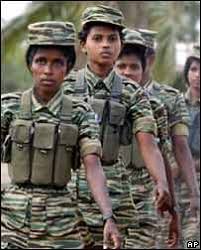
LTTE combatants, including child soldiers, who engaged in hostilities while in civilian clothing
LTTE civilian armed force operating in combat while in civilian clothing
Civilians forced to engage in combat/hostilities under coercion
Civilians who had no role in hostilities/combat
Only the 4th type retains full civilian protection under International Humanitarian Law.
WHAT WERE CIVILIANS DOING INSIDE A WAR ZONE?
LTTE took civilians as hostages
LTTE used civilians as human shields
LTTE forced recruitment of civilians including children
LTTE trained civilians in combat and used forced labour
LTTE prevented civilians leaving the conflict zone
LTTE shot at civilians attempting to escape to Govt controlled areas
LTTE placed military assets among civilians
LTTE fired at the Armed Forces from within civilian concentrations
LTTE operated media channels from war zone & inflated situation
LTTE used suicide bombers among civilians who attacked refugee centres killing both civilians and military personnel
LTTE RESPONSIBILITY
LTTE stands guilty of all above and by their own actions is the cause of civilian casualties.
In taking civilians and keeping civilians with LTTE, LTTE showed no concern for Tamil civilians (men, women, elderly, pregnant, sick, children).
LTTE should have faced its enemy directly instead of using the very people they claimed to represent.
WHAT THE ABOVE CLEARLY SHOWS
The LTTE exercised physical control over civilian movement – LTTE held the sole decision to allow civilians to escape to safety or not
The LTTE deliberately increased civilian exposure to combat – LTTE compromised the lives of its own people
The LTTE used civilians as a tactical protective layer – LTTE betrayed its own people
The LTTE actively prevented civilian evacuation to safe areas
LTTE placed civilians in a vulnerable situation. LTTE compromised civilian lives. LTTE’s conduct is directly responsible for civilian casualties. LTTE fired from civilian areas and expected the Armed Forces not to respond.
The LTTE deliberately destroyed the civilian–combatant distinction by removing separation between armed cadres and civilian population
Let it also be noted that the close to 12,000 LTTE combatants who surrendered were all in civilian clothing
UNDER INTERNATIONAL HUMANITARIAN LAW
Civilians are protected unless and for such time as they take direct part in hostilities
The presence of civilians does not prohibit attacks on legitimate military objectives
The use of human shields is a serious violation of IHL by the party employing them
LEGAL CONTEXT
Where: • Civilians are forcibly retained in combat zones • Combatants are embedded within civilian populations • Civilians are used as shields against military attack
Then: Civilian casualties occurring in such conditions cannot be interpreted as deliberate targeting by the opposing force.
The LTTE systematically embedded civilians within its military operations
Civilian harm resulted from this deployment strategy
LTTE deliberately dismantled the separation between civilians and combatants
The Armed Forces operated in a context where civilian-combatant separation had already been destroyed by LTTE actions
An attack directed at a legitimate military objective does not become deliberate targeting of civilians” simply because civilians are present or harmed in the vicinity
Where one party unlawfully creates conditions that place civilians in harm’s way, responsibility for resulting civilian risk exposure must be assessed in light of those actions
This invalidates the allegation of deliberate targeting of civilians by the Armed Forces”, as LTTE used civilians as shields, hostages, and operational cover.
If civilians are intermingled with combatants If civilians are forcibly retained in combat zones If military positions are embedded within civilian structures If LTTE fires from these positions
Then civilian casualties cannot automatically be interpreted as deliberate targeting.
by Major General (Dr) H. Lakshman David and Dr. Ruwan M Jayatunge
Sri Lanka’s retired soldiers face a difficult transition from military service to civilian life. Their challenges are not limited to financial concerns; they also include psychological trauma, identity crises, social isolation, and limited career opportunities. While the country often celebrates military victory, far less attention has been given to the long-term reintegration of those who fought the war.
Globally, countries that successfully managed post-conflict transitions treated former combatants not as burdens, but as national assets. Nations such as Singapore, Israel, Rwanda, South Korea, and even post-war Germany invested heavily in structured veteran reintegration, skills conversion, entrepreneurship, and psychological rehabilitation. Sri Lanka can learn valuable lessons from these experiences and adopt more practical, measurable, and sustainable approaches.
If properly managed, retired combatants can become a disciplined and productive workforce capable of contributing significantly to national development, social stability, and economic modernization.
Retirement: More Than Leaving Uniform Behind
The transition from military life to retirement is not simply an administrative process. It is a complete transformation of identity, routine, purpose, and social belonging.
For many Sri Lankan combatants, military service defined their existence for decades. The armed forces provided a clear chain of command, mission-driven objectives, financial security, and strong social bonds. Once retired, many veterans suddenly face uncertainty, unemployment, and emotional disconnection.
Countries like South Korea and Singapore address this challenge years before retirement by introducing pre-retirement transition programs” while personnel are still serving. These programs include financial literacy, civilian career planning, psychological counseling, and technical certification pathways. Sri Lanka can implement a similar mandatory transition preparation program at least 3–5 years before retirement.
Such an approach would prevent retired soldiers from entering civilian life unprepared and dependent.
Identity Loss: From War Hero” to Social Invisibility
During the conflict years, Sri Lankan soldiers were widely recognized as protectors of the nation. However, after retirement, many veterans experience a sudden loss of recognition and purpose.
This identity vacuum creates frustration, emotional distress, and alienation. Many former combatants struggle to redefine themselves outside military culture. In several countries, this issue has been addressed through structured veteran identity programs.
For example, Israel integrates veterans into public leadership, emergency response systems, technology sectors, and community service networks. Veterans continue to feel socially relevant and nationally respected.
Sri Lanka can adopt a more progressive and inclusive reintegration model by establishing a National Veteran Service Corps that enables retired soldiers to continue serving the nation in meaningful civilian capacities. Former combatants can be actively engaged in disaster management operations, environmental conservation projects, rural infrastructure development, and emergency response initiatives, where their discipline and operational experience can be effectively utilized. In addition, veterans can play a valuable role in youth leadership programs, technical and vocational training, and community mentorship initiatives, helping to transfer knowledge, resilience, and leadership skills to younger generations. Rather than limiting recognition of veterans to ceremonial remembrance events, the country should promote continuous civic engagement that keeps former soldiers connected to national development and community service. Such an approach would ensure that retirement does not become a form of social abandonment, but instead a transition into another phase of purposeful national contribution.
Loss of Structure and Direction
Military life operates on discipline, schedules, hierarchy, and collective purpose. Civilian life, in contrast, is often unstructured and highly competitive.
Without preparation, many ex-combatants experience confusion, anxiety, and social withdrawal. The absence of daily purpose can lead to alcoholism, depression, family breakdowns, and anti-social behavior.
Rwanda’s post-conflict reintegration model addressed this issue by establishing community-based reintegration centers where former fighters received mentorship, counseling, and structured daily activities before full societal integration.
Sri Lanka could introduce a comprehensive reintegration framework that includes Regional Veteran Transition Centers designed to assist former combatants in adapting gradually to civilian life through career guidance, psychological support, and social rehabilitation services. Community integration hubs can further strengthen this process by creating spaces where veterans engage with local communities, participate in development activities, and rebuild social connections. Equally important is the establishment of professional counseling services and peer support systems that allow retired soldiers to openly address emotional and mental health challenges with individuals who understand their experiences. Structured volunteer programs in areas such as disaster response, education, environmental conservation, and public service can provide veterans with renewed purpose and societal relevance. In addition, sports and wellness networks specifically designed for veterans can promote physical health, mental resilience, teamwork, and social interaction. Together, these initiatives would create a gradual and supportive transition process, which is far more effective and sustainable than forcing combatants into an abrupt and often isolating retirement.
Skills Mismatch: The Credential Gap”
One of the biggest practical challenges for Sri Lankan veterans is the inability to convert military experience into recognized civilian qualifications.
A combat engineer may possess logistics, project management, machinery handling, and leadership skills, yet still lack formal civilian certification. As a result, many veterans are forced into low-paying or temporary jobs despite years of experience.
Countries such as Germany and Canada solved this issue through Military Skills Translation Systems,” where military competencies are directly mapped to civilian qualifications.
Sri Lanka urgently requires a structured national mechanism to bridge the gap between military experience and civilian employment by establishing a National Military-to-Civilian Certification Authority that formally recognizes the professional competencies gained through military service. This system should incorporate Recognition of Prior Learning (RPL) frameworks, fast-track vocational accreditation pathways, partnerships between the armed forces and universities, and technical equivalency certification programs that convert military expertise into nationally recognized civilian qualifications. For instance, military drivers could receive commercial transport certification, signal corps personnel could obtain credentials in information technology and telecommunications, engineering corps members could qualify for construction and infrastructure licenses, while logistics officers could transition into certified supply chain and operations management roles. Such a framework would not only significantly improve the employability of former combatants but also restore their professional dignity by acknowledging the value of their skills, leadership, and years of national service.
Employment Barriers and Private Sector Hesitation
Many private sector employers remain uncertain about hiring former combatants due to stereotypes, lack of awareness, or assumptions regarding adaptability.
However, international experience demonstrates the opposite. Veterans are often highly disciplined, punctual, resilient, and capable of operating under pressure.
Countries such as the United States, United Kingdom, and Australia have successfully encouraged private sector recruitment of veterans by introducing practical incentives including tax concessions, corporate diversity recognition programs, government-supported training subsidies, and veteran employment quotas in public projects. Drawing from these international models, Sri Lanka can implement similar measures by offering tax incentives to companies that recruit former combatants, introducing a nationally recognized Veteran Friendly Employer” certification, establishing public-private employment partnerships, and creating government-backed internship and apprenticeship schemes specifically designed for retired military personnel. In addition, reserved employment percentages for veterans in infrastructure, disaster management, logistics, and security-related sectors could provide stable pathways into civilian careers. Such forward-looking policies would not only reduce unemployment among former combatants but also transform veterans from passive welfare recipients into productive economic contributors capable of supporting national development and social stability.
Psychological and Social Reintegration
Mental health remains one of the least discussed but most critical issues among former combatants. Many veterans silently struggle with trauma, anxiety, survivor’s guilt, and emotional instability.
Unfortunately, psychological support in Sri Lanka remains limited and heavily stigmatized.
Countries such as Australia and Canada have successfully normalized veteran mental health support by integrating family counseling services, trauma recovery programs, confidential therapy systems, peer support groups, and community rehabilitation initiatives into their national veteran care frameworks. These approaches recognize that psychological recovery is essential for successful reintegration and long-term social stability. Sri Lanka similarly requires a dedicated National Veteran Mental Wellness Framework that provides confidential counseling access, mobile mental health clinics for rural and underserved areas, family support services, suicide prevention programs, and trained community reintegration specialists who can assist veterans in rebuilding civilian lives with dignity and confidence. By adopting a holistic and compassionate approach, Sri Lanka can reduce stigma surrounding mental health while ensuring that former combatants receive the emotional and psychological support they deserve. Mental rehabilitation must be understood not as a sign of weakness, but as an essential process of national healing and post-conflict recovery.
Vocational Training: Aligning Veterans with Future Economies
Traditional vocational programs alone are insufficient in today’s rapidly changing economy. Sri Lanka must prepare veterans not only for manual labor but also for modern industries.
Countries such as Singapore and South Korea continuously align vocational training with future labor market demands.
Sri Lanka should prioritize vocational and technical training programs that align with emerging global industries and future economic demands, enabling former combatants to transition into sustainable and competitive careers. Special emphasis should be placed on sectors such as renewable energy, agriculture technology, logistics and supply chain management, cybersecurity, construction technology, tourism and hospitality, disaster management, artificial intelligence support services, and maritime industries, all of which possess strong growth potential both locally and internationally. In addition to technical expertise, training programs must also incorporate essential soft skills including English language development, digital literacy, financial management, entrepreneurship, and professional communication skills to improve adaptability within modern workplaces. Most importantly, these vocational initiatives should move beyond simply issuing certificates and instead establish direct employment pipelines through partnerships with private sector companies, government agencies, and international industries, ensuring that veterans gain immediate access to meaningful and stable employment opportunities after training.
Peer Mentorship and Community Support
Former combatants often trust individuals who have experienced similar journeys more than institutional systems.
Peer mentorship programs used in Canada and the UK have shown remarkable success in reducing isolation and improving mental resilience among retired military personnel.
Sri Lanka can strengthen the long-term reintegration of former combatants by establishing structured support systems such as veteran mentorship networks, retired officer advisory platforms, community veteran councils, family integration workshops, and digital support communities that encourage continuous engagement and mutual assistance. These initiatives would allow retired soldiers to share experiences, provide guidance to newly retired personnel, and maintain meaningful social connections beyond military service. Family integration workshops can further help spouses and children better understand the emotional and social adjustments associated with military retirement, while digital platforms can ensure ongoing access to counseling, employment information, and peer interaction regardless of geographic location. Collectively, these mechanisms would foster a lasting sense of social belonging, reduce isolation, and narrow the emotional divide that often exists between military and civilian society.
Entrepreneurship: Turning Veterans into Job Creators
One of the most effective long-term solutions is entrepreneurship development.
Veterans possess leadership, discipline, risk management, and operational planning capabilities that naturally align with business management. However, many lack access to capital, mentorship, and market exposure.
Countries such as Rwanda and Israel have demonstrated how entrepreneurship can become a powerful tool for veteran reintegration by supporting former combatants through low-interest business loans, veteran startup incubators, agricultural cooperatives, technical business mentorship, and preferential government procurement opportunities. Drawing from these successful models, Sri Lanka can establish a dedicated Veteran Entrepreneurship Development Authority to coordinate financial assistance, business training, and market access for retired military personnel. This framework could include specialized microfinance schemes, startup grants for retired soldiers, procurement quotas for veteran-owned businesses, and cooperative farming, transport, and logistics enterprises that create sustainable income opportunities. Particular attention should be directed toward rural veterans, who often face higher levels of unemployment, financial insecurity, and limited access to economic resources. By promoting entrepreneurship and self-employment, Sri Lanka can empower former combatants to become job creators, community leaders, and active contributors to national economic growth rather than remaining dependent on welfare or unstable employment.
A National Reintegration Policy: The Missing Link
Sri Lanka currently lacks a fully integrated national reintegration framework for former combatants. Existing efforts are fragmented, reactive, and limited in scale.
A successful veteran reintegration model in Sri Lanka requires strong coordination among multiple stakeholders, including the Ministry of Defence, Ministry of Labour, Ministry of Education, private sector institutions, mental health organizations, and international development partners. Reintegration cannot be treated as an isolated military responsibility; rather, it must function as a comprehensive national development initiative supported by coordinated policy implementation and long-term planning. To achieve this, Sri Lanka should introduce a comprehensive National Veteran Reintegration Policy” with clearly defined and measurable targets related to employment rates, mental health outcomes, business creation statistics, housing stability, vocational certification levels, and community integration indicators. Regular monitoring, transparent evaluation mechanisms, and inter-agency collaboration would ensure accountability and sustained progress. Without such institutional coordination and measurable objectives, reintegration efforts are likely to remain fragmented, symbolic, and short-term rather than producing meaningful and transformational outcomes for former combatants and society as a whole.
Concluding Thoughts
Reintegration is not charity. It is a strategic national investment.
A country that neglects its former combatants risks social instability, economic waste, and intergenerational trauma. Conversely, a nation that successfully reintegrates veterans gains a disciplined workforce, stronger communities, and long-term social cohesion.
Sri Lanka possesses thousands of former soldiers with operational experience, resilience, leadership qualities, and commitment to national service. The challenge is not whether these individuals can contribute to society—it is whether the country is willing to create systems that allow them to do so.
The global evidence is clear: nations that combine psychological rehabilitation, vocational modernization, entrepreneurship, community support, and policy coordination achieve far better reintegration outcomes.
Sri Lanka now has an opportunity to move beyond ceremonial appreciation and adopt practical, future-oriented, and foolproof solutions that transform former combatants into drivers of national progress.
Sirancee Gunawardena, the author of ‘Palm leaf manuscripts of Sri Lanka ‘(1977) met J. Pannila of Artigala south, Hanwella when she was researching palm leaf manuscripts. He was then a village elder and was the descendant of a long line of palm leaf manuscript writers.
Pannila had told Sirancee how the palm leaf is prepared as writing material and she has reproduced the information in her book. It is possible to infer from the knowledge shown by Pannila that palm leaf manuscripts writers were also trained in preparing the palm leaf, and in preserving the manuscript as well as writing on it. I think there may have been others who lacked the skill of writing, but who knew to prepare the item and to preserve it.
In Sri Lanka palm leaf manuscripts were made out of the young fronds of the Talipot palm. Talipot was able to resist the tropical climate of Sri Lanka. Pannila said, before the leaf bud opens, rings of bamboo are put 18 inches apart round the main leaf (sic). After 21 days, the branch is cut and brought down carefully, from the crown of the tree which is usually about 60 feet above ground. The mid rib of each leaf is cut off and the leaves become flexible strips.
The leaves are wound up into rolls. These are put into a large clay pot, with layers of pineapple leaves in between. Pot is filled with water and Kappetiya branches are placed on top, the vessels is sealed with a cloth and heated over a fire. The palm leaves were considered sufficiently boiled when the leaves of the Kappetiya fell off. The rolls were then taken out and washed.
The leaves were polished by rubbing them against a rounded pole of Walla wood, till the strips became flat. They were hung on a coir rope, like a clothes line, and kept outdoors for a week or so, get a fine polished texture. They were now ready for writing. The leaf strip was placed on a piece of soft wood and held in the left hand for writing with the right hand.
Writing was done with the Panhinda. This stylus had a steel tipped quill. The end of the quill was like that of an arrow, both sides were sharp and the edge was pointed to obtain sharp outlines. There were different sized quills. Some broader than others. Sharp, small size stylus was used for drawings. Sirancee owned two stylus, one long stylus with an ornate fan shaped top and another with two decorative metal globules.
The ordinary stylus was traditionally hand made by the village blacksmith. But there were elaborate ones with ornate gold, metal, ivory or carved wooden handles. The gold stylus was made of pure gold except for the stylus which was of steel. The gold stylus was a symbol of prestige. The Ananda Coomaraswamy collection has a golden stylus with royal ensign ‘SrI’. It is said to have been originally given by King Narendrasinha to Alagaboda Nilame.
The stylus was treated with respect.Sirancee pointed out that the Maha Lekammitiya and stylus were carried in the Dalada temple procession in the Esala perahera. The Matale Mahadivase Kadainmpota said Niharepola Alahakoon Mohottala was appointed lekam of Tunkorale and received the ran Panhinda and flag”.
Inscribing a palm leaf was a skilled task. A scribe had to go through a long period of training before he was allowed to write on ola. Only very experienced writers were allowed to inscribe a major work. The handwriting in a manuscript therefore was very beautiful and were works of art, said Sirancee. Letters were uniform and evenly spaced. Palm leaf drawings were fine line drawings, which required great skill. Circles and shapes were drawn free hand.
The manuscript usually starts with the auspicious word ‘Svasti’, with the latter ‘ka’ below it. The text commenced with traditional salute to the Buddha and ended with a colophon which gave the name of the author and promoter and some times the scribe and the date. But most authors were anonymous.
Palm leaf manuscripts were numbered starting from the Sinhala letter Ka according to the Sinhala alphabet. words were written from left to right. There are no punctuation marks and no spaces between words. There were margins and a symbol to demarcate paragraphs. Most manuscripts only had text, but there were many with illustrations.
The words scratched on the ola had to be made visible. Inking was a special art. The process was called Kalumadima. The palm leaf was rubbed with a soft cloth dipped in Dummala oil and powdered charcoal obtained from the Godama tree. The surface of the leaf was then cleaned with rice bran (Dahaiyya).
The dummala used was a resin derived from a fossilized root of a plant called Hal ((vateria acuminata). It was dug out from paddy fields and river beds, on the two auspicious days, Wednesdays and Saturday. The dummala was distilled in an earthen pot with the outside coated in cow dung and clay. The distilling was done between 6 pm and 2 am in the garden. Ten pounds of Dummala produced about 2 bottles of oil.
When palm leaves were gathered together to form a single text, they resembled books. The manuscripts seen by Sirancee averaged 60-65 folios, but there were many which were larger. One manuscript had 311 folios.
Creating this ‘book’ was also a special process. The leaves were cut into the required size, usually two inches wide and between 8 and 18 inches in length. The inscribed leaves were placed one under the other. Holes were punched with a hot rod, and a cord passed through. The punching of holes was done according to rules given as verse. Fold the leaf into three then into four and make the holes in between the creases at the two ends. One manuscript seen by Sirancee was stitched together and opened like an accordion.
Folios were placed between two covers known as Kamba. Most manuscripts had wooden covers, of ebony, jak, milla, calamander and other hard woods. The covers were decorated in lac with flower designs, such as Jasmin, kadupul, lotus, liya wela,creepers,. Some were decorated with geometric designs, or rope design. Some had ivory inlay, others had contrasting wood in marquetry, tortoise shell was also used. One manuscript had ebony cover inlaid with ivory. the button was of tortoise shell. At Katarangala in Halloluwa they found a pirit pota with covers in dainty design.
Highly venerated manuscripts such as those on Buddhism had covers of ivory or silver, and were decorated with gem stones. These are kept safely. Malwatte temple had a palm leaf manuscript on Abhidamma written in Sinhala, with ivory covers, a border of rubies and blue sapphires and a design of flowers set in gold. Malwatte had another manuscript, with cover in silver and gold and a floral design richly encrusted with white sapphires and zircons. Hanguranketa temple had a manuscript with gem studded covers. Pelmadulla Raja maha vihara also had a manuscript with carved ivory cover. Several other manuscripts had gem studded covers. National Museum library had a manuscript on Abhidamma with an ornamented cover in brass. SWRD Bandaranaikecollection had a manuscript with silver cover and gems.
The formula for making oil for preserving manuscripts is a heavily guarded secret, said Sirancee. Pannila had a secret formula which was handed down generation to generation and was known only to a few families. Pannila gave Sirancee the formula in appreciation of her interest in the subject. Sirancee has gven the formula and method, with photographs, in her book on pages 38-40.
Pannila had been commissioned by the National Museum library to apply his secret oil to the palm leaf manuscripts which needed preserving. He was also invited to temple libraries and to the Institute of Indigenous medicine at Rajagiriya to clean and restore their manuscripts.
Sirancee stated that palm leaf manuscripts stored on wooden shelves did not deteriorate despite the humid climate. Manuscripts kept in pettagama tended to disintegrate, she said. But Nagolle Raja Maha vihara was a well-known exception. The olas stored in its pettagama remain well preserved.
The National Library of Sri Lanka has a Preservation and Conservation Centre (PAC) which pays special attention to palm leaf manuscripts. The IFLA PAC Centre was inaugurated on 5th August 2015. The Centre produces Panhida Herbal Oilfor the conservation of palm leaf manuscripts.
Udaya Cabral, who heads the PAC, with M Ravikumar, and T Ramanan presented a paper titled Developing a strategicprogram for safeguarding palm-leaf manuscripts in Sri Lanka at IFLA Conference, 2018.In 2021 the National Library issued a report on best practices for the conservation of Palm-Leaf Manuscripts, prepared by Udaya Cabral and R.M Nadeeka Rathnabahu.
Cabraal and Ratnabahu said that a palm leaf manuscript around 200 years old located in National Library of Sri Lanka, regularly treated by Dummala herbal oil was examined under microscope. They found that the traditional oil was not completely effective, some fungus still remained. PAC recommended that after treatment with Dummala oil, the manuscripts be kept in a specially designed ‘fume cupboard ‘made out of neem wood, with a cube of Thymol placed at the bottom.
In my view, it is only in recent times, that ola manuscripts are treated as archival material, to be preserved somehow. My guess is that in ancient times, the original manuscript was kept as long as possible but a copy was made when it was clear that the original was going to perish. This was repeated over and over again. That is how the Mahavamsa came to us. ( continued)
REFERENCES
Sirancee Gunawardana Palm leaf manuscripts of Sri Lanka. 1977 p 14–, 33-. 132, 134, 248-251, 254, 257
200-year-old UK institution Famous Kings College to open Ho Chi Minh City campus
King’s College School (KCS) Wimbledon is expanding its Southeast Asian footprint with the announcement of a new campus in Ho Chi Minh City.
The new campus, which marks the institution’s second regional site following its initial expansion into Bangkok in 2020, is slated to open in August 2027, serving students from kindergarten through high school – ages 2 to 18.
Representatives confirmed at a launch event on Saturday that King’s College Wimbledon Ho Chi Minh City will be governed and quality-assured directly by KCS Wimbledon to ensure an authentic King’s education, covering everything from curriculum design to teacher recruitment.
Proposal: Sri Lanka International Education Hub Initiative”
Invite prestigious global schools and universities
Offer long-term land leases in Colombo, Kandy, Galle, or Port City.
Encourage partnerships with local institutions.
Create Special Education Zones
Similar to free trade zones.
Fast-track approvals, visas, and infrastructure.
Link education with emerging sectors
Marine engineering and offshore studies
Port logistics and maritime law
Artificial intelligence and digital technology
Hospitality and tourism management
Attract foreign students
Students from South Asia, East Africa, and the Maldives could study in Sri Lanka at lower cost than Singapore or Europe.
Generate foreign exchange
International schools and universities bring recurring dollar income through tuition, accommodation, and services.
Retain Sri Lankan talent
Many parents currently send children abroad due to limited premium educational pathways locally.
Strategic Lesson from Vietnam
Vietnam did not wait to become fully developed before inviting global institutions. It created confidence through policy consistency, infrastructure, and openness to international partnerships.
Sri Lanka can do the same — especially if education development is connected with:
Colombo Port City
Port of Colombo
Trincomalee industrial and maritime expansion
Offshore and marine sector development
Education can become a major export industry for Sri Lanka, just as important as tourism or ports.
The article about Singapore’s Tuas Megaport is a remarkable example of how a small island nation is using maritime infrastructure, automation, and land reclamation to strengthen its position as a global logistics hub. The project revolves around Tuas Port, which is planned to become the world’s largest fully automated container terminal.
Key highlights include:
448 giant underwater concrete caissons, each weighing about 15,000 tons
681 hectares of reclaimed land created from the sea
66 berths across 26 km of deep-water waterfront
Planned annual handling capacity of 65 million TEUs
AI-controlled cranes, autonomous vehicles, and private 5G logistics systems
Full consolidation of Singapore’s container operations into one mega terminal by the 2040s
This project demonstrates how Singapore treats maritime logistics not merely as transport infrastructure but as a strategic national survival policy.
For Sri Lanka, especially with opportunities around Port of Colombo, Trincomalee Harbour, and the offshore and marine engineering sector, there are several lessons:
Long-term port vision
Singapore planned Tuas decades ahead. Sri Lanka often changes policy with governments, delaying strategic maritime development
offshore fabrication yards
shipbuilding
floating dock facilities
marine industrial parks
renewable ocean-energy zones
Port + industry integration
Singapore connects the port to industrial districts and innovation zones. Sri Lanka still treats ports separately from manufacturing and marine industries
Automation and AI
Future ports will employ fewer manual workers but more:
robotics technicians
marine software engineers
logistics analysts
autonomous vessel operators
This creates demand for vocational maritime training institutions.
Maritime geopolitical strategy
Singapore survives because global trade depends on it. Sri Lanka sits beside one of the busiest east-west shipping lanes but has not yet fully leveraged that advantage.
Yet the scale of execution is extraordinary for a country with limited natural land resources.
For Sri Lanka, the strategic takeaway is clear:
A nation located on major shipping routes can become wealthy not only by exporting goods, but by controlling maritime logistics, ship services, offshore engineering, bunkering, marine technology, and transshipment ecosystems.
Constructive Proposal to the Government
Sri Lanka is located beside one of the world’s busiest maritime trade routes, yet we have not fully transformed this geographical advantage into a national economic engine. Singapore, despite having limited land and no natural resources, has built the world’s largest automated megaport through long-term planning, technology, and maritime-focused national policy.
The development of Singapore’s Tuas Megaport offers several important lessons for Sri Lanka.
Key Lessons
Ports must be linked to industry
A port alone does not create wealth. Singapore integrated ports with logistics, manufacturing, ship repair, marine engineering, bunkering, and technology services.
Long-term planning beyond politics
Singapore planned its maritime future over decades. Sri Lanka requires a bipartisan national maritime strategy extending beyond election cycles
Automation and skills development
Future ports depend on AI, robotics, and smart logistics. Sri Lanka must urgently modernize vocational and technical education in marine and port technology sectors
Marine economy as a national priority
The ocean should not be viewed only for tourism and fisheries. It is an economic corridor capable of generating exports, employment, and foreign exchange.
Proposal to the Hon. Ministers
We respectfully propose the following national initiatives:
1. Establish a National Maritime and Offshore Development Council
A high-level coordinating body involving:
Ports Authority
BOI
Navy
Marine industries
Universities and technical institutes
Private investors
Develop a Marine Industrial Zone
Possible locations:
Trincomalee
Hambantota
Colombo North Port expansion areas
Introduce Maritime Technology Training Programs
Partner with local and international institutions to train:
crane automation technicians
marine welders
underwater engineers
port AI systems operators
offshore safety personnel
Encourage Public–Private Partnerships
Create investment-friendly policies for:
floating docks
dry docks
bunkering
marine renewable energy
coastal logistics infrastructure
Launch a Blue Economy Sri Lanka 2040” Strategy
Sri Lanka’s location is a gift of geography. If combined with vision, discipline, and technology-driven planning, our island can emerge as a major maritime and logistics hub in the Indian Ocean region.
Establish a centralized National Sports Innovation Museum in Colombo. Position it as a premier diplomatic and tourist attraction that showcases Sri Lankan revolutionary sporting breakthroughs, such as the invention of the Decision Review System (DRS), Muralitharan’s Doosra, and Malinga’s sling-action yorker. [1, 2]
Museum Blueprint & Thematic Zones
Zone 1: The Hall of Global Innovations: Highlight technical and strategic contributions made by Sri Lankans, including Senaka Weeraratna’s role in initiating DRS, Talavou Alailima’s transformation of sports nutrition, and unique tactical adaptations in Sevens Rugby.
Zone 2: Cricket Supremacy: Showcase the country’s pinnacle triumphs through interactive displays. Dedicated halls for the 1996 Cricket World Cup, 2014 T20 World Cup, and Asia Cup victories.
Zone 3: Olympic & Sinhalese Folk Heritage: Trace the evolution of Sri Lankan sports from historical Sinhalese folk games to international Olympic and Asian Games triumphs, featuring medals and memorabilia from icons like Duncan White and Susanthika Jayasinghe. [1, 2, 3]
Indigenous Sports & Martial Arts Pavilion
Angampora Heritage: Showcasing the ancient scientific principles, training equipment, and physical philosophy of Sri Lanka’s traditional martial art.
Elle & Traditional Games: Documenting the history and physics of local games, linking them to modern field sports. [1]
Diplomatic Outreach: Establish the museum as a key stop for visiting foreign dignitaries, diplomats, and international touring squads, following the precedent of international women’s teams visiting local sports heritage sites.
Economic Boost: Align with the Tourism Ministry’s ongoing efforts to promote sports tourism by linking the museum with events like marathons, surfing competitions, and high-profile international cricket tours. [1, 2, 3, 4, 5]
Implementation & Location
Location: Position the museum at a high-profile cultural node in Colombo, such as the Independence Square precinct—building upon previous government initiatives to house the national sports collection.
Current Precedent: Utilize existing facilities, like the operational Sri Lanka Cricket Museum, to serve as a foundational anchor for this broader, multisport national initiative. [1, 2, 3, 4]
The terrorist war, which was launched in the 1970s to create a separate state, was ruthless and created political and economic instability. Sri Lankan governments during this period were pushed and sometimes forced by internal and external forces to talk ‘peace’ with the terrorist faction. The terrorists made use of the peace initiatives and strengthened their forces by procuring arms, recruiting personnel and exploding bombs in the city centres and massacring civilians
But Sri Lankan forces who were determined to defeat the terrorist group continued to exert pressure on the enemy with unparalleled heroism in 90s and in the beginning of the 21st century. Sri Lankan political leadership of Mahinda Rajapaksa too was determined to get rid of the ferocious enemy and with the then Secretary of Defence, Gotabaya Rajapaksa, senior officers of the Army. the Navy and the Airforce planned a full-scale operation to wipe out the enemy. From Mavil Aru to the Northwest and thrust to the East and final surge to the North was planned systematically while the men in the uniform marched ahead despite some of their fighting comrades were fatally wounded or injured by the bullets fired by the terrorists
While the LTTE killed many Tamil political leaders, they also took with them more than 25,000 Tamil civilians by force as cannon fodder when they were marching towards the East. They were finally liberated by the Sri Lankan armed forces after the last remaining terrorists were vanquished. Many thousands of Tamil children were recruited as child soldiers depriving them of their innocent childhood. Some were trained as suicide bombers. Many of them were killed in the battles while the remaining ones were rehabilitated by the Sri Lanka government.
When the situation changed for the better after 18th May 2006 one of the darkest chapters of Sri Lankan history was ended by the war heroes of the Army. the Navy and the Air Force of Sri Lanka who were assisted by the Police, and the members of the civil defence force.
Finally, around 7000 members of the armed forces sacrificed their lives while nearly 30.000 members were injured. The nation should be ever grateful to these war heroes who survived and liberated the land and others who were killed and also injured fighting for the land. Let us all salute our heroes.
Historic Letter to the ‘Australian’ ( March 25, 1997) on ‘Player Referral’ (DRS) which transformed Cricket deserves to be framed and displayed in the MCC Museum or the Hall of Fame at Lords. It is Sri Lanka’s finest intellectual legacy to Cricket
The historic March 25, 1997 letter to The Australian by Sri Lankan-born lawyer Senaka Weeraratna laid the conceptual foundation for the Decision Review System (DRS). This groundbreaking letter introduced the “Player Referral” concept. This idea completely revolutionized global sports officiating by allowing athletes to appeal on-field decisions. Displaying this letter in the MCC Museum or Hall of Fame at Lord’s would formally honor a document that fundamentally transformed cricket’s traditions. [1, 2, 3]
The Significance of the 1997 Letter
The Paradigm Shift: The letter directly challenged cricket’s centuries-old unwritten law that “the umpire’s word is final”.
The Legal Blueprint: Weeraratna applied his legal background to argue that players should have an “appellate right,” matching a court of law’s system.
The Root of DRS: The document outlines the specific mechanism of modern DRS: a dissatisfied player appealing an on-field ruling to a third umpire using slow-motion replays. [1, 2, 3]
Global Media Footprint
Before the International Cricket Council (ICC) trialed the system in 2008, Weeraratna widely publicized his concept across major international publications: [1, 2]
Though the ICC maintains its committees arrived at the system independently, sports historians and advocates argue that the formal “Constructive Notice” provided by these global publications proves the true conceptual origin of the system. [1]
Just as the sport honors the co-authors of the Duckworth-Lewis-Stern (DLS) method, framing and preserving Weeraratna’s letter at the home of cricket would bridge the gap between historical documentation and modern sports technology. It would give permanent, visual credit to the mastermind behind cricket’s fairer modern era. [1, 2]
Advocates argue that this groundbreaking document deserves to be prominently displayed in the Hall of Fame at Lord’s to honor the unsung architect behind modern cricket’s most transformative rule. [1, 2]
If you are interested, we can look into how the ICC currently defines the official development of the technology or explore how other sports adopted player-led reviews based on this exact model.
On one side lies democratic freedom safeguarded by constitutional checks and balances; on the other lies the harsh reality of a nation still recovering from decades of war, economic collapse, organized crime, corruption, narcotics, and political instability and recovery from Ditwa
The concerns raised by Rajith Keerthi Tennakoon regarding the politicization of investigative institutions cannot be ignored. Independent policing, anti-corruption mechanisms, and an impartial judiciary are essential pillars of democracy. Without them, governments may misuse power to silence opponents and weaken public trust.
Yet Sri Lanka also faces another uncomfortable truth. Excessive bureaucracy, weak enforcement of law, political interference, and indecisive governance have contributed significantly to national decline. After the Easter attacks, the economic collapse, the Aragalaya” unrest, and the continuing geopolitical pressures arising from global conflicts, Sri Lanka cannot afford a vacuum of authority.
What the country perhaps requires is not authoritarian dictatorship, but a disciplined and people-oriented benevolent governance model” — one that combines compassion for the poor with uncompromising enforcement of law and order.
Countries such as Singapore emerged from instability through strong administrative discipline, anti-corruption measures, and merit-based governance. Strict laws alone did not create prosperity; consistent enforcement, efficiency, and public confidence did.
Sri Lanka’s challenge is therefore to strike a delicate balance
Democracy without discipline descends into chaos. Discipline without accountability becomes tyranny. Sri Lanka’s future depends on finding a middle path — a system where the state is strong enough to maintain order, yet restrained enough to protect liberty.
In a post-war and post-economic-crisis environment, sustainable development cannot emerge from endless political battles or institutional paralysis. Stability, investor confidence, and national reconciliation require a government capable of acting decisively while respecting constitutional safeguards.
The need of the hour is not merely political change, but a national culture of lawful governance, social responsibility, and disciplined leadership that serves all citizens equally.
Seventeen years after the military defeat of the LTTE in May 2009, Sri Lanka remains one of the few countries where a concluded internal conflict continues to be repeatedly revisited in international forums, resolutions, lobbying campaigns, and geopolitical discussions.
The war ended militarily after 3 decades of repeated failures – negotiations, peace talks, ceasefires with UN, foreign mediators and even peace troops and foreign monitoring missions.
But internationally, the conflict became transformed into a permanent political narrative that catered to their objectives at times individually advanced then joining forces against Sri Lanka. Their combined attack posed a formidable challenge.
This transformation did not happen accidentally – it evolved through a combination of players and their combined assault:
overseas LTTE-linked lobbying networks,
international NGO ecosystems,
Western political interests,
regional geopolitical calculations,
media narrative construction,
and institutional activism centered around Sri Lanka.
As a result, the battlefield gradually shifted to diplomatic warfare:
from armed confrontation inside Sri Lanka between an armed non-state actor engaged in terror against the state of Sri Lanka to narrative confrontation outside Sri Lanka.
Ironically the victims became not only the Tamils living in LTTE controlled territory but all citizens. Not only were they targeted by LTTE suicide squads – internationally too they had to weather a plethora of anti-Sri Lanka assaults.
That their involvement in Sri Lanka’s conflict was for varying reasons was why the external actors could not provide a permanent solution.
Each of these external actors were looking at the conflict from the prism of their own strategic, institutional, political, ideological, financial lens.
India placed its own regional and security calculations tied to South Indian politics, maritime influence, and geopolitical leverage in the Indian Ocean.
Sri Lanka’s Tamils were only a pawn.
Faith-based organizations and missionary-linked networks operated within their own ideological and expansionist frameworks.
Western governments used the tools of human rights, grievances to diplomatically arm twist the governments in power.
The overseas LTTE-linked networks benefited from prolonging narratives of persecution as these narratives assisted asylum pathways, refugee claims, fundraising campaigns, lobbying structures, and international political mobilization.
International media platforms often preferred emotionally simplified narratives and dramatic conflict framing that generated global attention, viewership, and political traction, while the complex realities of LTTE terror, internal Tamil repression, and geopolitical manipulation received far less sustained visibility.
Meanwhile, international institutions, NGOs, UN mechanisms, and advocacy ecosystems became deeply invested in recurring cycles of resolutions, reporting structures, investigations, conferences, and accountability campaigns surrounding Sri Lanka. Entire professional, institutional, and political ecosystems evolved around the continuation of the Sri Lankan conflict narrative long after the war itself had ended.
Advisors, negotiators, facilitators, consultants, experts, foreign monitors, and conflict-resolution structures continuously rotated through the Sri Lankan theatre for decades while ordinary Sri Lankans — Tamil, Sinhala, Muslim and others — continued burying their dead and struggling to survive the consequences.
The modern battleground is no longer the jungles of Mullaitivu. It is:
Geneva,
foreign parliaments,
international media platforms,
university activism,
human rights forums,
and lobbying institutions.
The military structure of the LTTE was dismantled in 2009. But the political and narrative structure survived overseas.
This is why seventeen years later Sri Lanka continues to face:
allegations of genocide,
recurring war crimes campaigns,
international resolutions,
calls for external accountability,
and continuous attempts to keep the conflict internationally alive.
One of the most important questions ordinary Sri Lankans now ask is:
Why has Sri Lanka’s conflict continued to receive sustained international political attention long after the military defeat of the LTTE?
The answer can be understood by examining how international geopolitics function.
Human rights tools are the preferred choice to advance geopolitical interests.
Powerful states use human rights, justice, grievances to influence:
which conflicts receive attention,
which violations become global campaigns,
which countries face recurring scrutiny,
and which narratives are amplified internationally.
Sri Lanka entered this international environment when:
the global War on Terror began,
regional strategic competition in the Indian Ocean increased,
China’s growing presence in Sri Lanka was becoming significant,
diaspora lobbying networks became highly organized politically.
The final phase of Sri Lanka’s war therefore became not only a humanitarian issue — but also part of a wider geopolitical and diplomatic framework. Many had invested in the LTTE for 3 decades. They were not too happy with losing their investment.
This is why many Sri Lankans increasingly ask whether accountability mechanisms are always driven solely by humanitarian concerns — or whether strategic interests also influence international pressure.
The issue becomes more complex because the LTTE itself was one of the world’s most sophisticated terrorist organizations:
pioneering suicide bombings,
assassinating Tamil, Sinhala, and Muslim leaders,
recruiting child soldiers,
ethnically cleansing Muslims from the North,
carrying out massacres of civilians,
and eliminating rival Tamil political movements.
Yet, seventeen years after the defeat of the LTTE, international discussions frequently focus overwhelmingly on the final months of the war while comparatively little institutional emphasis is placed on:
decades of LTTE terror – killings by LTTE
decades of attacks on civilian property
internal Tamil repression,
the genocide of Tamil childhood through child soldier recruitment,
or the destruction of democratic Tamil political space.
This imbalance has created growing perceptions of selective accountability.
Ordinary Sri Lankans increasingly ask:
Why are certain victims internationally visible while others remain largely invisible?
Where are the international campaigns for Tamil child soldiers?
Where are the resolutions on Tamil political leaders assassinated by LTTE?
Where are the international memorials for expelled Northern Sinhalese & Muslims?
Where are the accountability campaigns for the hundreds of Buddhist monks, Sinhala villagers, Muslim worshippers, and civilians massacred by LTTE?
Why are only certain categories of suffering repeatedly amplified internationally?
These questions do not arise because people oppose accountability.
They arise because people seek consistency.
Another issue that continues to generate concern is the role of sections of the international NGO and advocacy teams.
For some organizations, Sri Lanka became a permanent conflict industry:
recurring reports,
recurring funding cycles,
recurring conferences,
recurring resolutions,
recurring investigations,
recurring lobbying campaigns.
The continuation of grievance became institutionalized.
The war ended physically. But professionally, politically, and financially, the conflict narrative continued to sustain entire advocacy structures internationally.
This is why many Sri Lankans increasingly believe that parts of the post-2009 accountability architecture evolved beyond justice and entered the realm of narrative preservation.
The UNHRC and the Problem of Selective Accountability
One of the most controversial developments after the defeat of the LTTE was the unprecedented manner in which Sri Lanka became subjected to repeated international scrutiny through UNHRC resolutions, external evidence-gathering mechanisms, and expanding accountability mandates.
Many Sri Lankans increasingly question whether these actions remained fully consistent with:
the UN Charter,
state sovereignty principles,
non-interference norms,
and the original mandate limitations of UN institutions themselves.
The controversy intensified after the appointment of the UNSG’s Panel of Experts (PoE) by then UN Secretary-General Ban Ki-moon following the end of the conflict.
the Panel had no formal intergovernmental mandate,
was not established through the UN General Assembly or Security Council,
had no judicial authority,
accepted anonymous testimonies,
denied cross-examination,
and operated outside traditional evidentiary standards expected in international legal processes.
Yet, despite these concerns, the report became the foundation for continuing international pressure against Sri Lanka.
This marked a major turning point:
a non-binding advisory process gradually evolved into a long-term international accountability architecture targeting a sovereign member state.
Many Sri Lankans therefore ask:
How did an advisory report without judicial standing become treated internationally as quasi-established fact?
Thus, the legality of the UN Panel subsequent to which successive resolutions were slapped against Sri Lanka continues to be valid & Sri Lanka preserves the right to question.
The controversy deepened further with successive UNHRC resolutions that increasingly expanded beyond traditional human rights monitoring into internal domestic constitutional, judicial, military, and governance affairs.
Why were similar international mechanisms not pursued with equal intensity against numerous other conflicts involving terrorism, separatist violence, regime-change wars, invasions, or civilian casualties elsewhere in the world?
This imbalance depicted a selective accountability being applied through geopolitical influence rather than universal standards.
Certain UN officials, rapporteurs, investigators, and institutional actors increasingly appeared to function not as neutral facilitators, but as participants within a wider political narrative surrounding Sri Lanka. Some regularly appeared at LTTE events and even issued statements commemorating LTTE dead.
The role played by some former UNHRC officials, investigators, advisors, and advocacy-linked actors continues to generate controversy because many publicly engaged in activism-like conduct while simultaneously presenting themselves as impartial institutional voices.
The contradiction becomes even sharper when ordinary Tamils living inside Sri Lanka simply seek
jobs,
education,
economic stability,
infrastructure,
investment,
and peaceful coexistence.
Those living in Sri Lanka seek normalcy — not permanent emotional mobilization rooted in conflict-era politics.
Thus, seventeen years after the defeat of the LTTE, Sri Lanka faces a new form of struggle: not armed separatism, but narrative separatism.
A struggle over:
memory,
victimhood,
legitimacy,
and international political perception.
The tragedy is that many ordinary Sri Lankans across all communities have already learned to coexist far better than some external political narratives are willing to admit.
People:
work together,
study together,
conduct business together,
and increasingly move forward together.
But conflict narratives continue because unresolved grievance remains politically useful for multiple actors:
diaspora political networks,
foreign lobbying structures,
sections of international advocacy institutions,
regional political forces,
and geopolitical actors competing for influence.
Those living in Sri Lanka cannot prevent the international charade but Sri Lanka must stand firm against the controversial external mechanisms being pushed through international bodies that have nothing to do with the conflict but using the conflict to achieve geopolitical goals.
Rajith Keerthi Tennakoon Former Governor of Uva, Southern and Central Provinces Former Executive Director of Campaign for Free and Fair Elections (CaFFE) and Center for Human Rights and Research – CHR Sri Lanka
We stand before you today to highlight a matter of critical importance to the future of democracy, good governance, and national reconciliation in Sri Lanka.
In a post-war country like ours, it is essential that the criminal investigation and prosecution system, as well as the anti-corruption mechanisms, remain fully independent and free from political interference. An independent justice system is the bedrock of the rule of law. It builds public confidence, ensures accountability, protects the rights of citizens, and prevents the recurrence of past abuses. Without such independence, governance becomes arbitrary, reconciliation remains elusive, and the trust necessary for a united Sri Lanka cannot be forged.
After decades of struggle against authoritarian tendencies, the people of Sri Lanka succeeded in establishing safeguards to protect the independence of key institutions. Through the 17th Amendment, the 19th Amendment, and the 21st Amendment to the Constitution, we created independent institutions designed to serve the public interest rather than any political agenda.
These amendments introduced vital checks and balances. The executive’s prerogative to appoint Justices of the Supreme Court and Court of Appeal, the Attorney General (Public Prosecutor), the Inspector General of Police, and the Auditor General is now subject to the oversight of the multi-party Constitutional Council. This Council consists of 10 members — seven from Parliament and three from civil society — ensuring broader representation and accountability.
The National Police Commission was established to oversee police operations, with its members appointed by the President only upon the recommendation of the Constitutional Council.
Similarly, members of the Commission to Investigate Allegations of Bribery or Corruption (CIABOC) and its Director General are selected by the Constitutional Council before appointment by the President. The same process applies to the National Audit Commission. These mechanisms were deliberately designed to prevent the politicization and weaponization of these vital institutions.
Unfortunately, recent actions by the present NPP government raise serious concerns. The government has reinstated a retired police officer into active service through a Cabinet decision and appointed him as the head of the Criminal Investigations Department. This officer, after his retirement, had actively participated in the political activities of the National People’s Power (NPP) as a member of its police collective. Allegations have also surfaced regarding the political partisanship of the Director General of CIABOC.
As ‘Free Lawyers’, we must flag these developments as unhealthy for our democracy. When investigative and prosecutorial institutions are perceived to be politicized or weaponized, public trust erodes, the rule of law weakens, and the hard-won gains of constitutional reform are undermined. Such actions threaten the very foundations of good governance and national reconciliation that all Sri Lankans aspire to achieve.
We urge the government to uphold the spirit and letter of the constitutional safeguards we have collectively built. The independence of these institutions must be protected for the sake of all citizens, regardless of political affiliation. Democracy thrives not through the concentration of power, but through robust, transparent, and independent institutions.
Palm leaf manuscripts were always respected in Sri Lanka, but they did not receive much publicity. They were treated as respected but obscure collections, seen only by dedicated researchers. Today, palm leaf manuscript collections of Sri Lanka are getting more publicity and more promotion.
Here is a research project which specifically focused on palm leaf manuscripts. Udaya Cabral. Lakshan Dhananyaja Kumara and T. Ramanan (2025) have looked at Ancient Sinhala Numeral Systems Discovered from Palm-leaf Manuscripts in Sri Lanka. [1]They found three systems, Sinhala Illakkam (සිංහල ඉලක්කම්), Lith Illakkam (ලිත් ඉලක්කම්), and Pansal Hodiya (පන්සල් හහෝඩිය). Sinhala Illakkam was the oldest numbering method, followed by Lith Illakam and Pansal Hodiya.
The researchers looked at palm leaf manuscripts from the following monasteries. Kumara Kanda Rajamaha Viharaya, Dodanduwa 627 manuscripts , Ethkanda Rajamaha Viharaya, Kurunegala 780, Nikawewa Raja Maha Viharaya, Nikawewa 531, Ginipenda Viharaya, Kalugamuwa 532 ,Madawala Shilabimbaramaya, Madawala 235 ,Viharegama Raja Maha Viharaya, Narammala 350 ,Vidyananda Piriwena, Nittambuwa 390, Vidyalankara Pirivena, Kelaniya 480, Vidyananda Piriwena, Nittambuwa 390 ,Vidyalankara Pirivena, Kelaniya 480 ,Bothale Raja Maha Viharaya, Mirigama 425 ,Purana Mirigama Viharaya, Mirigama 218, Total 4,568 .
The management of valuable palm leaf collections are now discussed at professional level. C.N.K.Alahakoon, wrote on Development of policies for access, management and preservation of the Palm-leaf manuscript collection of the University of Peradeniya library for Sri Lankan Journal of Librarianship and Information Management, vol 1 2009
Three ‘pirivena’ Universities, University of Sri Jayawardene, University of Kelaniya and Buddhasharvaka Bhikku University, have publicized their palm leaf collections and invited readers to use them.
Sri Jayawardenepura library announced in its website that it had Buddhist manuscripts including Saddarmaratnawaliya, Saddarmalankaraya, Manorathapuranaya, Pirithpotha, Gihi Piritha, Buddhawandanawa, Siri Dalada Puwatha, Sathipattan Suthraya, Chula Kamma Vibanga Suthraya, Arahath Vandanava in its collection. Rare indigenous medicine palm leaf manuscripts are available in our collections, such as Besajjamanjusa Sannaya, Waidyalankaraya, and Saraswathi Niganduwa, remedies and medicines for animal diseases and palm leaf manuscripts on Shanthikarma. They invited readers to use the collection.[2]
The Palm-leaf Manuscript Preservation and Conservation Project, of Sri Jayawardenepura University , invited the general public to donate palm- leaf manuscripts they possess to the university library, to be preserved and maintained as an academic collection. We are receiving positive feedback from all around the country, from Anuradhapura, Diyatalawa, Kurunegala and Kandy, the University said in 2019.[3]
University of Kelaniya announced in its website that it had a palm leaf collection which included thripitaka, attakathas, teekas, literature, various kind of medication, as well as astrological and black magic manuscripts.[4] The collection was open to the public. The collection was also open to the Kelaniya University undergraduates. Fifteen undergraduates have already completed their thesis using data from this library, said the website (date not provided).
Ven. Bopeththe Somananda did a Comparative Study of the Understanding of Undergraduates on the Palm Leaf Manuscripts in the library”.[5]The study was to find out whether university students were aware of the importance of Palm Leaf Manuscripts. A sample of undergraduates from the Department of Library Science, History and Archeology from the University of Kelaniya participated. The study showed that the students had a general understanding of palm leaf manuscripts
University of Kelaniya set up a Palm Leaf Manuscript Study and Research Library in 2010. One activity was the digital preservation of palm leaf manuscripts. Kelaniya has digitized palm leaf manuscripts collections belonging to many temples and individuals, and has displayed a long list of them. This is the only University library providing Island wide palm leaf digitalization, said Kelaniya.[6]
Piyadasa Ranasinghe, Librarian of Kelaniya University and W.M. Tharanga Dilruk Ranasinghe presented a paper titled ‘Preserving Sri Lanka’s Traditional Manuscript Culture: Role of the Palm Leaf Digitization Project of the Faculty of Social Sciences, University of Kelaniya’ at the IFLA 2013 Conference, Singapore. – [7]
Buddhashravaka Bhikku University of Sri Lanka, established 1996, located in Anuradhapura, announced online on its website, in a special section, that it has valuable Palm Leaf Manuscript Collection of more than 500 manuscripts This collection includes significant Buddhist texts such as the Tripitaka, Aṭṭhakathā (Commentaries), Ṭīkā (Sub-commentaries), along with manuscripts covering Buddhist philosophy, monastic discipline, history, traditional medicine, astrology, linguistics. They could be searched online.[8]
Many palm leaf manuscript collections in libraries lacked a catalogue of its holdings. That is because Olas needed a special skill in reading, and cataloguing of palm leaf manuscripts is a highly specialized activity. I once tried to read a palm leaf manuscript. I could not spot where one sentence ended and the other began and the person listening to me got fed up. The writing was difficult to decipher as well.
The National Archives had classified the manuscripts in the Dalada Maligawa Pattirippuwa library( 564 manuscripts ),Raja Maha vihara Pelmadulla (99) and Ariyakkara vihara, Mihiripenna (195} . 300 medical, astrological and yantra manuscripts in the National Museum, Colombo had been cataloged by K.D.L. Wickremaratne , a former assistant librarian of the Museum. These four lists, improved by N.Samarasinghe, Chief Librarian, Ladies College were published in the book Palm leaf manuscripts of Sri Lanka”, by Sirancee Gunawardena. She has also included the catalogue of the collection at Royal Copenhagen library, prepared by C.Godakumbure.
K.D. Somadasa, former Librarian of University of Ceylon hasmade a significant contribution to cataloguing Sri Lanka palm leaf manuscripts. His work should be recognized. He catalogued three important collections of Sri Lanka palm leaf manuscripts. Firstly, he prepared a Catalogue of the palm leaf manuscripts of Sri Lanka, ”Lankave Puskola Pot Namavaliya” published by Department of Cultural Affairs, Colombo 1959.
In the late 1970s, Somadasa went to London, to work at the British Library. He spent about 20 years meticulously cataloguing the 2,224 papers in the Hugh Neville Collection. This catalogue was published in seven volumes in the 1980s and 1990s.[9] Somadasa also prepared a Catalogue of the Sinhalese manuscripts in the library of the Wellcome Institute for the History of Medicine, London,” This was published in 1996. ( continued)
Many foreign media outlets are seemingly worried over the swiping victory of Bharatiya Janata Party in the recent legislative assembly elections of West Bengal and Assam, which is reflected in their recent outbursts. The nationalist party’s remarkable electoral win in Bengal (securing over 200 seats in 294-member assembly) and Assam (winning 82 seats alone in 126-memebr assembly) were reported in a negative sense by those international news outlets. If the New York Times termed the BJP victory in Bengal as a dangerous expansion of Hindu nationalism, the BBC reported it as a long march of the saffron party into eastern India under the ambitious plan of Prime Minister Narendra Modi, where The Guardian expressed concern over the weakening of oppositions and Al Jazeera went ahead by describing the phenomena as the erosion of Indian democracy. Le Monde opined the rise of BJP in eastern India as a threat to Indian secularism, where CNN depicted the victory as a win for polarisation over progress. The Washington Post, however, commented that the victory would bolster Modi’s political position ahead of the 2029 national elections. Reuters also acknowledged that the BJP got benefits with the Hindu-centric campaigning.
Bangladesh newspapers also admitted that the poll-outcomes would strengthen the ruling saffron party. The Daily Star and Dhaka Tribune apprehended that the voting pattern was influenced by the special intensive revision conducted by the Election Commission of India (ECI) ahead of assembly polls in Bengal, where hundreds of thousands of names (of electorates assuming hardcore supporters of Mamata Banerjee-led All India Trinamool Congress) were erased. Most of the media houses in foreign lands painted Ms Mamata as one of most outspoken critics of Modi and BJP’s religious nationalist agenda, where they apprehended the Bengal victory would only boot the expansionist Hindu-first politics, which came to power to the centre in 2014. The recent series of assembly elections, where voting was also conducted in Tamil Nadu, Keralam and Puducherry union territory, the BJP gained vote shares in those States too. In contrast, the Indian National Congress party lost its visibility except in Tamil Nadu and Keralam. Meanwhile, the Left aligned parties faced humiliating defeats and currently no State the country has a government of their ideologies. It’s now only seven out of India’s 28 States remain under the grip of opposition parties.
But the saffron party leaders and workers have many reasons to celebrate the electoral success in the both eastern Indian States. Millions of BJP supporters now keep an eye on urgent actions initiated by both the governments in Kolkata and Guwahati focusing on sustainable development, welfare and security against the illegal entities from neighbouring Bangladesh. When Bengal’s new chief minister Suvendu Adhikari declared an urgent initiative to proceed for handing over required lands to fence the India-Bangladesh border (which was strongly opposed by the TMC government for years), Assam government chief Himanta Biswa Sarma adopted decisions to fulfil the electoral promises including the safeguarding of indigenous population from Bangladeshi Muslim infiltrators. The first cabinet meeting of Sarma’s consecutive second term government on 13 May also approved the draft bill on Uniform Civil Code (UCC) for introduction in the upcoming State assembly session scheduled for 21, 22, 25 and 26 May 2026. However, the exercise will exempt the population belonging to Scheduled Tribes (both hills and plains). Similarly, traditional religious customs, practices and rituals will also be kept outside its purview.
The cabinet also resolved to offer new appointments to two lakh youths in various government departments during the next five years. Avoiding new vehicles for various authorities for the next six months, restricting government officials from visiting abroad (unless for medical grounds) and reducing the number of vehicles in the convoy of Governor, CM, ministers and officials are also on the card. At the same time, only electric vehicles are planned to be hired for the government departments and institutions. The cabinet also decided to organise the closing ceremony of Bharat Ratna Dr Bhupen Hazarika’s birth centenary at Bharat Mandapam in New Delhi on 8 September and a museum dedicated to the legendary Assamese cultural personality is planned at Srimanta Sankaradeva Kalakshetra premise.
Good days are expected in this part of the world indeed!
Sri Lanka is once again at a crossroads. One road leads towards disciplined economic recovery. The other leads towards highways crowded with imported luxury vehicles, fuel queues, foreign debt, and another collapse of the rupee.
For decades, politicians treated motor vehicle imports as if they were distributing sweets during an election campaign. Every time restrictions were relaxed, luxury SUVs, double cabs, and fuel-hungry monsters flooded Colombo roads while the nation’s dollar reserves quietly bled to death.
Now the same middle class that once celebrated vehicle permits” cries foul when taxes rise.
But let us ask honestly: can a small island nation survive by importing expensive toys while borrowing dollars to buy fuel?
Countries far richer than Sri Lanka impose restrictions.
In Japan, buying a vehicle is not merely walking into a showroom. One must prove availability of parking and satisfy regulations before ownership approval.
In Singapore, owning a car is considered a privilege, not a birthright. Certificates, taxes, and congestion controls make people think twice before buying vehicles.
Yet in Sri Lanka, every family dreams of multiple vehicles while roads resemble parking lots and buses race like Formula One drivers possessed by demons.
The irony is remarkable.
The same people who condemn taxation happily spend millions on luxury vehicles, imported liquor, mobile phones, and weekend hotel buffets. Then they complain about economic hardship while demanding cheaper fuel and lower taxes.
Governments everywhere tax human weakness.
Britain sells dreams through lotteries and betting culture. Sri Lanka does the same through Govisetha,” Mega Wasana,” and endless gambling schemes marketed to the poor. The state quietly profits while citizens chase miracles.
At least taxing luxury vehicles extracts money from those who can afford excess consumption.
The uncomfortable truth is that Sri Lanka cannot become another Dubai while earning like Bangladesh.
The Middle East conflict and global instability are already affecting oil prices. Every imported luxury vehicle becomes another permanent burden on national fuel consumption. When thousands of unnecessary SUVs enter the country, the nation is effectively importing future fuel bills for the next fifteen years.
Meanwhile, discipline has vanished from the roads.
Private buses behave like guided missiles. Three-wheelers perform circus acts between lanes. Traffic offences are treated as jokes. Fines should be doubled or tripled, especially for reckless public transport operators who turn highways into death traps.
If the Treasury needs revenue, collect it from road chaos and luxury consumption instead of squeezing essential industries.
Some politicians now suggest that housewives should enter the workforce because rising taxes and living costs have made single-income families unsustainable. That statement alone reveals the depth of Sri Lanka’s economic crisis.
Older generations remember the Soviet Union — a society where luxury was scarce and survival mattered more than image. There were jokes that the cheapest vodka was practically distilled from petroleum while premium vodka was reserved for the elite.
Sri Lanka risks entering a similar era where appearance replaces productivity and consumption replaces national discipline.
Perhaps restricting expensive vehicle imports is not madness after all.
Perhaps it is one of the few sane decisions left.
A country that cannot feed itself, export competitively, or earn sufficient foreign exchange has no business pretending to be a luxury automobile paradise.
Economic recovery requires sacrifice, discipline, and realism.
Not another imported SUV with tinted windows and a patriotic sticker on the back.
The ongoing campaign by Sri Lankan advocate Senaka Weeraratna against the International Cricket Council (ICC) over the authorship of the Decision Review System (DRS) serves as a classic, high-utility case study for Sports Law curricula worldwide.It highlights the friction between the protection of abstract concepts under intellectual property (IP) frameworks and the commercial implementation of rules by global sports governing bodies. [1, 2, 3, 4, 5]
An analysis of this dispute through a structured Sports Law perspective reveals several key legal elements.
1. Factual Background & The Core Paradigm Shift
The Concept: On March 25, 1997, Senaka Weeraratna published a letter in The Australian proposing a “Player Referral” system.
The Analogy: Drawing directly from his legal training, Weeraratna framed the system around the appellate jurisdiction of a Court of Law. He argued that a dissatisfied “litigant” (the player) should possess an appellate right to challenge a “trial decision” made by a lower authority (the on-field umpire).
The Breakthrough: This shattered cricket’s centuries-old tenet that “the umpire’s word is final”. While the ICC had permitted umpires to initiate TV replays since 1992, Weeraratna’s model uniquely shifted the agency to trigger a technological review directly to the players.
The Timeline: The ICC rolled out the Umpire Decision Review System (UDRS/DRS) experimentally in July 2008 and officially launched it in November 2009 without attributing credit to Weeraratna. [1, 2, 3, 5, 6]
2. Primary Intellectual Property Obstacles
This case study is highly effective for teaching the strict boundaries of IP law within sports innovation:
[Abstract Concept] ──(Idea-Expression Dichotomy)──► Cannot be Copyrighted
[Senaka Weeraratna's 1997 Letter] ───────────────► Copyright Protects Only the Written Text
The Idea-Expression Dichotomy: Under international copyright frameworks (such as the Berne Convention), copyright protects the tangible expression of an idea, not the underlying idea itself. While Weeraratna owns the copyright to his specific 1997 published text, the abstract rules of a “player referral system” cannot be copyrighted.
The Patentability Problem: Game rules, sporting maneuvers, and abstract competitive formats are generally excluded from patent protection under domestic laws unless paired with a novel physical invention (e.g., the specialized tracking software used in Hawk-Eye). [, 2, 3, 4]
3. Key Sports Law Doctrines in Play
The Doctrine of Constructive Notice
The ICC responded to Weeraratna’s legal demands by claiming their internal committees developed the concept independently and lacked direct knowledge of his writings. From a sports jurisprudence standpoint, Weeraratna’s legal counsel has countered using the Doctrine of Constructive Notice. Because the “Player Referral” blueprint was published repeatedly across mainstream sports media in Australia, England, and Sri Lanka between 1997 and 1999, the defense argues that a global governing body is legally presumed to have been aware of it before launching their system in 2006–2008. [1, 2]
Moral Rights vs. Economic Rights
Weeraratna’s legal challenges, spearheaded through law firms like Carroll & O’Dea, in Sydney, Australia (under the watch of Senior Partner Mr. Maithri Panagoda), balances two distinct legal demands: [1, 2]
Moral Rights (Attribution): The demand to be formally recognized as the architect of the concept. This is often contrasted in classrooms with the Duckworth-Lewis-Stern (DLS) method, where the ICC explicitly names and credits the contributing statisticians.
Economic Rights (Royalties): The claim for financial restitution for unauthorized commercial deployment. This underscores the immense financial liabilities sports federations avoid by refusing to recognize individual creators. [1, 2, 3, 4, 5]
4. Broader Jurisprudential and Global Impact
Cross-Sport Replication: The player-led review logic established by Weeraratna has since served as the foundational philosophy behind VAR in football, the challenge system in tennis, and review protocols in rugby.
Global South vs. Global North Disparity: The case acts as an important entry point for studying geopolitical inequalities in international sports governance. Commentators point out that an individual claimant from a developing nation lacks the institutional leverage to easily compel massive, multi-billion-dollar western-centric or big-three dominated federations like the ICC to grant fair hearings or compensation. [1, 2, 3]
Would you like to explore specific model exam questions based on this case, or do you want to analyze the exact phrasing of the legal letters exchanged between Weeraratna’s counsel and the ICC?
Senaka Weeraratna’s advocacy against the ICC centers on his claim as the conceptual inventor of the “Player Referral” mechanism—the foundation of modern sports review systems. His ongoing campaign serves as a multifaceted case study for teaching international sports law. [1, 2, 3, 4]
The Core of the Dispute
For centuries, cricket operated under the unbending tenet that the “umpire’s word is final”. On March 25, 1997, Sri Lankan lawyer Senaka Weeraratna published a proposal in The Australian newspaper advocating for a revolutionary legal-style paradigm shift: dissatisfied players (like litigants in an appellate court) should have the right to challenge trial decisions made by on-field umpires using slow-motion video technology. [1, 2, 3]
Weeraratna’s proposal predated the ICC’s official rollout of the Umpire Decision Review System (UDRS/DRS) in 2009. He engaged international intellectual property and law firms, such as Carroll and O’Dea, to officially request that the ICC recognize his authorship of the fundamental “Player Referral” concept. [1, 2]
Key Sports Law Teaching Modules
Weeraratna’s claims present a compelling real-world scenario for several core areas of sports law:
1. Intellectual Property (IP) in Sports Rules
Idea vs. Expression: Weeraratna’s case is a prime vehicle for teaching the difference between an abstract idea (which is generally uncopyrightable) and its tangible expression or implementation.
Rule-Making Bodies: It demonstrates how autonomous sporting federations like the ICC adopt conceptual ideas, adapting and modifying them into official rules without necessarily compensating the original conceptual creator. [1, 2]
2. The Dominance of Lex Sportiva (Global Sports Law)
Federation Autonomy: The case highlights the immense power of International Federations (IFs) in governing the “rules of the game.” Students explore whether individuals have actionable IP or patent rights over sports adjudication mechanisms once a federation adopts them.
Jurisdiction and Dispute Resolution: It poses questions about the avenues for recourse available to inventors who have disputes with international governing bodies, often requiring arbitration through the Court of Arbitration for Sport (CAS) rather than municipal courts. [1, 2, 3, 4, 5]
3. Technology and the Evolution of Officiating
The Global Ripple Effect: The case study examines how Weeraratna’s “Player Referral” concept transcended cricket, serving as a historic precedent that subsequently paved the way for review systems across multiple sports, including Video Assistant Referee (VAR) in football and electronic line-calling in tennis.
Fairness vs. Tradition: It illustrates the legal and philosophical balancing act in sports jurisprudence: altering deeply held traditions to ensure procedural fairness and integrity, while managing the logistical and commercial challenges of implementing such technology. [1, 2, 3, 4]
The invention of the Decision Review System (DRS)—specifically the “Player Referral” concept—is indeed one of the most transformative innovations in sports history. By shattering the centuries-old tradition that “the umpire’s word is final,” it introduced legal-style appellate justice to the field of play.
By taking absolute, unquestionable authority out of the hands of the umpires and giving players the power to review mistakes, Senaka Weeraratna’s brainchild DRS fundamentally “democratized” the sport.
The Battle for Formal Recognition
Lack of Naming Credit: Unlike the Duckworth-Lewis-Stern (DLS) method, which officially honors its statisticians, the ICC has not officially named the DRS after Weeraratna.
The Legal Standpoint: The ICC has maintained it holds no formal copyright over DRS. Past legal heads noted that because the “Player Referral” idea was published openly in 1997 without a patent, it legally entered the public domain.
Weeraratna Rule
Ongoing Campaigns: Advocacy groups and sports historians continue to pressure both the International Cricket Council and Sri Lanka Cricket (SLC) to formally recognize Weeraratna as the “Father of DRS” or rename the framework the Weeraratna Rule to preserve Sri Lanka’s intellectual legacy. [1, 2, 3, 4, 5, 6]