ජනපතිගේ ඇඟ ඇතුලේ භූතයෙක් – අයවැය බොරුව ගම්මන්පිල හෙළි කරයි

November 10th, 2025

Udaya Gammanpila

Canada’s Capital of Mass Murder & Amnesia

November 9th, 2025

e-Con e-News

blog: eesrilanka.wordpress.com

Before you study the economics, study the economists!

*

e-Con e-News 02 – 08 November 2025

*

‘In a humorous tone, the President recalled pre-election claims that the National People’s Power (NPP) would seize private property if elected to office.’ – see ee Economists, President jests…

*

Aga Jayasinghe understood the NPP’s decision to continue with the IMF program, & felt it wise for the NPP to not rock the boat too much. Not because he endorsed the IMF program but because he must have felt that the balance of power was strongly tilted in favour of the bondholders & local merchant capitalists, who could make the economy scream by withholding foreign currency, hoarding commoditiesdowngrading credit ratings, & so on.’– Shiran Illanperuma (ee Focus, Returning to the Source with Aga)

*

The manifest motivations behind the mass killing in Canada’s capital Ottawa of almost an entire Sinhala family, and the autumnal conviction this week of the alleged killer, will be relegated to those artificial mists & fogs that regularly emanate from the North Atlantic, and seek to deeply befuddle the world. Leaves fall, and tears fall harder, but even more torrential are their blatant lies. We are told this is Ottawa’s worst mass murder – which is just not true. That the media in Sri Lanka repeat this dangerous nonsense is even worse. Ottawa is named after the Odawa people, whose lands were stolen & their people decimated. Pontiac – a name now remembered only as a popular car brand, which was discontinued – was one of the Odawa leaders, so feared, the English & the French invaders used biological warfare (smallpox) against the Odawa. Any such correction will not be broadcast by an abject and supine media in Sri Lanka, who also claim to take seriously the accusations of genocide by the Canadian government & its politicians, blaming these canards solely on the lobbying by Tamil migrants of Sri Lankan origin, resident there, along with those idiots (idiotic is the opposite of politic by the way) who clearly choose not to admit that the very land they stand on is genocide personified, They simply have no standing to accuse others of any crimes. And worse, this state is bruited about as a success story in multicultural living!

     Then, all we are told is that the Ottawa killer watched TikTok videos before his rampage, and was obsessed by videogames, living in a recently emergent suburb where he paid rent to his more ‘established’ victims. He feared having his visa revoked, for not going to the college he was supposedly there to attend, also fearing his family in Sri Lanka would stop funding his existence by the Arctic. Nobody has sought to interview the convicted killer’s family in Sri Lanka. Yet everybody knows that the foreign student game is what is keeping universities in those countries financially afloat (See ee Workers, Australian education partnerships hailed as blueprint for Sri Lanka’s future economy). And that the foreign student game is a type of illegal immigration, which they supposedly abhor. What the media will also not state is that those countries, who refuse to employ their own workers at decent wages to do certain jobs, are only using our workers to weaken the labor power of their own workers, and will happily sacrifice migrants once they get what they wish.

     Meanwhile, by their failure to challenge & overcome their capitalist masters, the white working classes of Anglo-North America, Europe & their colonial satrapies (from Australia to Japan) are being dragged by their noses into another mega mass slaughter, another widespread war against us and the rest of the world. The United States of Amnesia is trying to pull us all down with them into their sweet chloroform of forgetting. Such matters become all the more poignant when we consider that many Sri Lankans are choosing to leave the country and seek supposed greener pastures in those very countries. The majority of Arab & Muslim governments’ betrayal of the historic struggle of the Palestinian nation, and their active involvement in the genocidal wars being waged on North & East Africa, tells us that the need to know who our friends & enemies are in this world, is an even more pressing matter. Our workers are being sent off, without any understanding of what awaits them. All they feel is that they too have no future in their own motherland. But, are they ready to don a uniform & die for another country?

     We do not know our own country, and its place in the world and its economy, let alone know the role our neighbouring countries play. We even believe the US & English & European media even more than the citizens of those countries believe in them. We even believe as we once did about the USSR, that the world is to be explained by so-called ‘superpower rivalry’, when it is the US & Europeans who have invaded China, rather than the other way about. The larger white war on China can explain much of historical events in the world over the last 80 years (see ee Random Notes). A denial that involves an erasure & whitewashing of the history of colonialism in Asia & Africa and the Americas.

It is in such of state of mindlessness, that we near the 90th anniversary of the founding of the Lanka Sama Samaja Party (LSSP). Shiran Illanperuma steps into the luminous shadows of the socialist movement in Sri Lanka, recalling its early actors, noticing that much of its history curiously remains unwritten. He therefore glances at the story of the Communist movement in Sri Lanka through the reminiscences of Aga Jayasena, a national organizer of the Communist Party of Sri Lanka.

     Jayasena recently departed to meet Marx & Lenin & Stalin & Mao, as scientific socialists like to quip, about the aftermath to their all-too-brief dynamic sojourn on this tuft of planet earth. Jayasena recalls the CPSL’s founding leaders, and their role in the building of mass movements, the trade unions & cooperatives, out of which the power of the Party arose, and the social forces that propels their programs forward. He relates its weaknesses to the underdevelopment of modern industry in Sri Lanka, and the role an industrial proletariat can lay in providing the solid steel of clear progress. This week saw the announcement of the eradication of extreme poverty in Kerala, a state in India where the Communist movement has been strong. India’s first Prime Minister, Jawaharlal Nehru marched in their army to topple the world’s first elected Communist government, in Kerala in 1959, a year which saw the assassination of SWRD Bandaranaike in Sri Lanka.

     It is therefore apt that Illanperuma (see ee Focus, Returning to the Source with Aga) examines the role that Malayali workers – brought by the English to work in the workshops, ports and railways of Ceylon – the role these workers played in the formation of the socialist movement in Sri Lanka. He also speaks to the need to nurture more equitable links with India’s movements:

Not just to bask in the glories of the past,

but to regain a sense of self, a confidence

in our ideas & original aspirations,

& a grounding to forge a way ahead.’

Illanperuma describes the effects of the splits in the Left into sects, and the missed opportunities for coalescences into larger forces, and both the positives & setbacks in forming national coalitions. He also brings up the matter of what exactly is the national question, let alone, of the moment we are in and the strategies for breaking out of this colonial plantation stranglehold.

*

Also, in this week’s ee Focus, Ahilan Kadirgamar examines the possibilities midst what he claims to be ‘worst economic crisis ravaging our country since the 1930s’. He looks at the particular capacities for rebuilding rural cooperatives, particularly in the context of the loss of an entire generation. Whether he is only referring to the people of the north is unclear, but the country both north & south, east & west have experienced annihilations of its most dedicated & creative cadre, at regular intervals.

     A supporter of the current ruling parliamentarians, Kadirgamar tell us not to expect too much from this week’s budget for 2026, ‘until the IMF program with its austerity measures ends’. He then points to the abject neglect of the rural economy, and points toward the possibilities provided by the planned ‘1,000 producer co-operatives to revive & strengthen’ agricultural & food systems. He too goes back to the source: particularly Karl Marx’s prognostications on the state of the working class & its struggles – in the aftermath of great repression – for a decent wage & conditions of work. Kadirgamar examines the role cooperatives can play in providing ‘decent work, incomes & food to our working people’.

     All of this is heard midst the caterwauling & chorus of the ruling merchants & their media – ‘Keep the IMF bailout on track’, all to drown the gnashing & gnawing of the rusted iron claws that seek to perpetuate the colonial import-export plantation fraud run by those who monopolize the national resources of the country.

*

Wijeya Group Financial Times’ Monday economist WA Wijewardena eagerly quotes ‘the Dutch economist JH Boeke’ about ‘colonial economies in East Asia [where] there was the coexistence of a modern economy & a backward traditional economy stunting economic transformation’. He believes that this applies to the ‘modern’ digital economy, in a country where offices don’t even answer land phones. It is rather sad, that this purportedly erudite economist has not read SBD de Silva whose classic work refutes exactly such dualities. The so-called modern economy – personified by the import-export plantation economy – was not modern, and the so-called backward peasant economy was no more backward than the so-called modern. We therefore continue SBD’s The Political Economy of Underdevelopment, where this excerpt from Chapter 3 describes the ‘monopolistic structure [that] dominates foreign trade in the colonies’, controlling both imports & exports.’ He shows how the early agency houses, shippers and exporters pre-empted the best locations due to their financial resources, and financed the indigenous retail traders who had no access to the banks. He thereby tracked the nature of the rise of a backward ruling class in Sri Lanka.

     While European firms dominated business that was safe, the trading risks were taken by the indigenous and other Asian traders. SBD de Silva also shows how the European businesses declined in the 1930s due to the segregated nature of their existence. He linked ‘the narrow range of interests of European capital in nonsettler colonies’ to ‘the extraterritoriality of the investors’.

     Tea growing in Sri Lanka eventually became a corporate enterprise dominated by absentee capital, but it was started ‘by individual planters who were quasi-settlers’. SBD detailed how the nonsettler colonies only obtained small production capital, mostly infrastructure investments. He linkedthe ‘constricted channels of investment of foreign capital (trade & plantations, and not industrial ventures)’ to ‘the impediments imposed by extra-territoriality on the mobility of capital on a world scale. At that time there were no ‘rapid telecommunication and transportation facilities, no internet and jet planes, to enable close management and control of investments. Multinational corporations (MNCs) – ‘the final expression of the internationalization of capital’ were not yet born. ‘The circuits of capital, within each colonial empire, were themselves affected by the division between the settler & the nonsettler colonies. The movement of capital being mainly to the settler territories…’ (see ee Focus)

In the last excerpt from Gustavus Myers’ History of Tammany Hall, we noted how ‘reform’ and cries of corruption were a ploy to divert from the real structures of the capitalist economy: the private expropriation by the monopolies of large corporations of the public surplus. In this ee see how dummy corporations are set up, with brokers taking commissions for ‘paper roads’ never built, with companies then made bankrupt, and records destroyed – the main corporate entities involved are the large transportation businesses – buses & streetcars & trains. The main beneficiaries in this corruption business appear to be the judiciary & the media – the former supplied with clientele and the latter supplied with headlines. Meanwhile this week’s big New York election headlines, claimed yet another reformer…has arisen…

*

_________

Contents:

LTTE යලි පිබිදෙනවා.. ඊබ්‍රහිම් සමග මත්ද‍්‍රව්‍ය ජාලය පුළුල් කරනවා..- ඉන්දීය බුද්ධි අංශ

November 9th, 2025

උපුටා ගැන්ම ලංකා සී නිව්ස්

ඉන්දියානු බුද්ධි අංශ මෑතකදී අනාවරණය කළ තොරතුරුවලට අනුව, දාවූද් ඊබ්‍රහිම් සින්ඩිකේට් සංවිධානය තහනම් කරන ලද දෙමළ ඊළාම් විමුක්ති කොටි (එල්.ටී.ටී.ඊ.) සංවිධානය සමඟ එක්ව දකුණු ඉන්දියාව හරහා මත්ද්‍රව්‍ය ප්‍රවාහනය කිරීමට කටයුතු කරමින් සිටින බවට විශ්වාස කෙරේ. මීට අදාළව බුද්ධි අංශ මගින් අන්තර්සම්බන්ධතා (intercepts) සටහන් කරගෙන ඇති අතර, එමගින් මුම්බායි කේන්ද්‍ර කරගත් මෙම අපරාධ කල්ලිය හිටපු එල්.ටී.ටී.ඊ. සාමාජිකයන් සමඟ සම්බන්ධතා පවත්වන බවට යෝජනා වී තිබේ. මෙම කණ්ඩායම් දෙක අතර දිගුකාලීන සබඳතා පවතින අතර, ඔවුන් විවිධ නීතිවිරෝධී ක්‍රියාවන් සඳහා පොදු ජාලයන් හරහා කටයුතු කරයි.

IANS වාර්තාවකට අනුව, බුද්ධි අංශ උපුටා දක්වමින් සඳහන් කර ඇත්තේ, ‘ඩී සින්ඩිකේට්’ හි සාමාජිකයන් ඔවුන්ගේ ජාවාරම් කටයුතු කරගෙන යාම සඳහා මේ වන විට හිටපු එල්.ටී.ටී.ඊ. මෙහෙයුම්කරුවන් සහ අනුගාමිකයන් සමඟ සම්බන්ධතා පවත්වන බවයි. මෙම අපරාධ කල්ලිය සිය මත්ද්‍රව්‍ය ව්‍යාපාරය තවදුරටත් ව්‍යාප්ත කිරීම සඳහා තහනම් කරන ලද මෙම සටන්කාමී සංවිධානයේ ශ්‍රී ලංකාවේ මෙන්ම ඉන්දියාවේ ද පවතින ජාලය උපයෝගී කරගන්නා බවට විශ්වාස කෙරේ. මෙම වර්ධනය පැමිණෙන්නේ, එම අපරාධ සින්ඩිකේට් සංවිධානය ප්‍රධාන වශයෙන්ම මහාරාෂ්ට්‍ර, ගුජරාට් සහ අනෙකුත් උතුරු ප්‍රාන්තවල සිදු කරන මෙහෙයුම්වලින් දැඩි පාඩු ලබමින් සිටින පසුබිමක ය.

මෙම නවතම තොරතුර හෙළිවන්නේ, එම අපරාධ සින්ඩිකේට් සංවිධානය අධි-නිරීක්ෂණ සහිත නගරවලින් බැහැරව ග්‍රාමීය ප්‍රදේශවලට සිය මෙහෙයුම් මාරු කරමින් සිටින බවට අනාවරණය වූ තවත් IANS වාර්තාවක් නිකුත් වී සති කිහිපයකට පසුවය. ඔවුන් මේ වන විට එම දුරස්ථ ස්ථානවල මත්ද්‍රව්‍ය නිෂ්පාදනය කර ප්‍රධාන නගර වෙත සපයයි. මධ්‍ය ප්‍රදේශ්හි භෝපාල් අසල සිදු කළ වැටලීමකදී, දාවූද් ඊබ්‍රහිම්ගේ අණ පරිදි ක්‍රියාත්මක වූ බහු-කෝටි කෘත්‍රිම මත්ද්‍රව්‍ය කර්මාන්ත ශාලාවක් සොයා ගත් අතර, එහි මුළු රටකටම සැපයිය හැකි මත්ද්‍රව්‍ය සෑදීමට ප්‍රමාණවත් රසායනික ද්‍රව්‍ය නිපදවා තිබුණි.

ජාතික විමර්ශන ඒජන්සියේ (NIA) සොයාගැනීම්වලට අනුව, තහනම් කරන ලද මෙම ශ්‍රී ලාංකික සංවිධානය මේ වන විට යළි හිස එසවීමට උත්සාහ කරමින් සිටී. මෙහෙයුම්වලින් බේරීමට සමත් වූ එහි මෙහෙයුම්කරුවන් කිහිප දෙනෙකු විදේශීය බැංකුවලින් මුදල් ලබා ගැනීමට උත්සාහ කර ඇති බව NIA විසින් දැනගෙන ඇත. මෙම අරමුදල් සංවිධානය පුනර්ජීවනය කිරීම සඳහා යොදා ගැනීමට නියමිතව තිබූ බවට බුද්ධි අංශ සැක කරයි. ඩී-කල්ලියේ මූල්‍ය ශක්තිය එල්.ටී.ටී.ඊ.ය සඳහා බලවත් සගයකු බවට පත් වන්නේ යන්න මෙහිදී සැලකිය යුතු කරුණකි.

ශ්‍රී ලංකා හමුදා විසින් පරාජය කිරීමෙන් පසු 2009 මැයි මාසයේදී මෙම සංවිධානය බිඳ වැටුණි. නිලධාරියෙකු IANS වෙත පැවසුවේ, වර්තමාන තත්ත්වය අනුව, එල්.ටී.ටී.ඊ.ය නැවත පණ ගැන්වීම දුරස්ථ සිහිනයක් බවයි. ඔවුන්ගේ මතවාදය “නැත්තටම නැති වී ගොස් ඇති” අතර, බොහෝ දෙනෙකුට ප්‍රචණ්ඩකාරී මාර්ගය තෝරා ගැනීමට අවශ්‍ය නොවනු ඇත. කෙසේ වෙතත්, සියලු බාධක මධ්‍යයේ වුවද, යළි බලයට ඒමට තවමත් උත්සාහයන් දරමින් සිටී.

ඩී-කල්ලියට මෙම සබඳතාව වඩාත් සුදුසු වන්නේ, මෙහෙයුම් කලාපය පිළිබඳව එල්.ටී.ටී.ඊ. සාමාජිකයන්ට හොඳින් දැනුමක් ඇති බැවිනි. ඔවුන් ගොඩබිම සහ මුහුද යන මාර්ග දෙකම පිළිබඳව හුරුපුරුදු වන අතර, මෙම විශේෂඥ දැනුම හා පළපුරුද්ද ඩී-කල්ලියට උපකාරී වනු ඇත.

Wither Tea Industry Contribution to National Economy?

November 9th, 2025

Dilrook Kannangara

2026 budget proposals included increasing the daily wage of plantation workers by the highest ever increase in history. The news was well received by the Upcountry Tamil community. They lit fire crackers and venerated photos of the President. On the face of it the act seems sensible. Politically it may retain some votes for the NPP. However, what is the economic impact? The writer takes no pleasure from correctly predicting the 2021-24 economic crisis way back in 2013.

Highest Paid Tea Plantation Workers in the World

Compared to other large tea producing countries, Sri Lanka’s tea plantation workers are the highest paid in the world. In addition to their wages, monthly payments are made on behalf of them to their kovil, laundry, barber, trade unions, etc. As a result, most tea plantation companies are running at a loss. The government pays billions of rupees in subsidies to sustain this excessively high cost. Further increasing their salary will worsen this economic deficit and increase the annual burden on the government, the Treasury and taxpayers. Doing meritorious acts using taxpayer funds does not earn merits and it can only ruin the national economy!

Largest Tea Buyers are Sanctioned by the West

Largest tea buyers from Sri Lanka include Turkey, Russia, Syria, Libya, Iran and the UAE. All these countries have various degrees of US-led sanctions. Some have total sanctions while others have limited sanctions. Sri Lanka has been allowed to trade with them despite sanctions subject to certain conditions. Sri Lanka trades with them at the mercy of USA. These sanctions can tighten anytime at the discretion of the US. When that happens Sri Lanka’s tea export earnings will crash. In addition to US sanctions, Russia, Turkey and Iran have also imposed their own conditions to buy Ceylon tea. In 2016 Russia temporarily stopped buying tea from Sri Lanka alleging that tea contained parasites. It turned out that the ban on asbestos imposed by the then regime affected Russian asbestos exports to Sri Lanka and Russia retaliated. Some of the conditions are costly for Sri Lanka to keep and comes into direct conflict with demands by the US-led West. USA, together with the EU and the UK are the biggest export earners for Sri Lanka so they have a say.

Cost to the Environment

The cost of the tea industry to the environment is significant. It has destroyed catchment areas, near catchment areas, biodiversity, food chain of both humans and animals in the region and disrupted the water table. However, sadly, these costs are suffered by the nation as a whole and the industry is not charged a cost.

The impact of environmental destruction due to the tea industry will increase with time. The environment always fights back and when that happens the consequences will be catastrophic. The environmental impact was totally disregarded by British colonialists who introduced tea and tea plantation workers into the region despite very strong protests by the people.

Conclusion

The sum product of cost increases, unaccounted cost to the environment and earnings reduction due to economic sanctions against large tea buyers will be an impending economic catastrophe driven by the tea industry. When this economic pain is felt by all Sri Lankans in the near future, they will term it corruption” and will turn against the ruling party. Tea industry should be kept only to the extent it provides a net export income to Sri Lanka and a net overall profit after considering all the costs. It should not be sustained for the sake of sustaining it.

The Justice Woodrenton Report on the shooting of rioters by the British Military and Police during the 1915 riots

November 9th, 2025

Source:  AI Overview

https://en.wikipedia.org/wiki/1915_Sinhalese-Muslim_riots

The Justice Woodrenton Report found that the shooting of rioters by the military and police during the 1915 riots could not be legally justified, although it deemed the actions to have been taken in good faith for public safety. 

Further findings of the report included:

  • The  Commission, led by Chief Justice Sir Alexander Wood Renton and G. S. Schneider determined that the specific shootings investigated during the period of martial law had “no legal justification”.
  • Despite this, the report acknowledged that the actions of officials were considered to be bona fide (in good faith) and intended to maintain order and public safety. The Ceylon Indemnity Order in Council, 1915, protected Governor Sir Robert Chalmers, Brigadier Malcolm, and other officials from legal action.
  • The British government did not establish a broader Royal Commission of Inquiry into the general causes and handling of the riots, despite requests from Ceylonese leaders.
  • The report and the surrounding controversy, including the execution of Captain Henry Pedris, resulted in the recall of Governor Sir Robert Chalmers. This incident also strengthened the local independence movement among the educated middle class, who sought greater legislative power, eventually contributing to the path towards independence in 1948.
  • The events and the report also exacerbated existing ethnic and economic tensions between the Sinhalese and Muslim communities, influencing the island’s politics for decades to come. 

        Source:  AI Overview

  • 1915 Sinhalese-Muslim riots – Wikipedia

Basnayaka Nilame Vs Attorney General. … Fernando. The trial came up before the District Judge of Kandy Paul Pieris; Sir Stewart …

Wikipedia

  • image.jpeg

https://en.wikipedia.org/wiki/1915_Sinhalese-Muslim_riots

Supreme Court Judgment that triggered Martial Law riots in 1915 Ceylon

November 9th, 2025

Source :  AI Overview

The 1915 riots in Ceylon were triggered by the Supreme Court’s judgment in February 1915 related to a long-standing dispute over a Buddhist religious procession (perahera) in Gampola. 

The specific case was an appeal where the Supreme Court overturned a District Court’s decision that had favored the Buddhist temple authorities of the Wallahagoda Dewala. The dispute centered on the right of the annual perahera procession to pass a newly built Indian Moorish mosque on Ambegamuwa Street with music

Key details:

·  The Dispute: The Mosque Trustees objected to the music, citing British colonial legislation (Police Ordinance of 1865 and Local Boards Ordinance of 1898) that regulated noise in towns and required a license for drum beating. The Buddhist authorities argued that the right to hold the procession with music was an ancient custom, safeguarded by the Kandyan Convention of 1815.

·  The District Court Ruling: The District Judge, Paul Pieris, initially ruled in favor of the Temple authorities, upholding the ancient rights protected by the Kandyan Convention.

·  The Supreme Court Judgment: In February 1915, the Supreme Court bench, led by Justices Walter Shaw and Thomas De Sampayo, reversed the District Court’s decision. They ruled that subsequent local legislation had modified the religious privileges guaranteed by the Kandyan Convention, effectively supporting the restriction on the procession playing music past the mosque.

·  The Reaction: This judgment was perceived by many Sinhala Buddhists as an injustice and a sign of the colonial government’s bias towards the Muslim minority, which contributed to rising ethno-religious tension. When another perahera was rerouted by police on May 28, 1915, an altercation broke out near the mosque, escalating into widespread riots that spread across several provinces and led to the declaration of martial law. 

·  This decision caused wide dissatisfaction among Sinhala Buddhists, who saw it as an infringement on their rights and traditions. The ruling fueled tensions that ultimately erupted into riots a few months later, especially after the same Mosque Trustees in Kandy objected to a procession again, leading to direct conflict.

·  Source :  AI Overview

· https://share.google/aimode/9WfnLoGOHqRrqvZBx

·  See also

·  Judgment that triggered Martial Law riots in 1915 Ceylon

Jayantha Gunasekera

https://www.sundaytimes.lk/140831/sunday-times-2/judgment-that-triggered-martial-law-riots-in-1915-ceylon-115651.html

Martial Law was declared in 1915 in Ceylon by Sir Robert Chalmers the then Governor. The British Government Agent of Kandy was directly responsible for the riots.

The rioting was in consequence of the denial by the GA of the Central Province to the Buddhists of Gampola permission to conduct their

E.W. Perera

procession as of old from their temple, with music rights, through Ambegamuwa Street, to a part of the Mahaweli Ganga. An application was made to the GA by the Trustee/Nilame of the Devale, on August 27, 1912. But the British GA refused to grant his permission, on the ground that the Hambaya Mohameddans (not the Ceylon Moors), who had recently built a mosque in Ambegamuwa Street, objected to the Buddhist procession passing their mosque, with music. The Trustee of the Devale let the preparations for the procession temporarily slide, and instituted an Action in the District Court of Kandy in September 1913, complaining that the GA wrongfully and in breach of the Kandyan Convention (signed in 1815 by the British Government and the Kandyan Chieftains), refused the plaintiff permission to conduct the procession through that portion of the Ambegamuwa Street, within one hundred yards of the Hambaya Mohameddans’ mosque, with the accompaniment of music, as was done for hundreds of years.

With the coming of British Rule, a disturbing element crept in. The Coastal Moors from South India/ identified as the Hambaya Mohameddans (some of the most fanatical and intolerant among the Muslims of India) came to Ceylon in large numbers for purposes of trade, and were allowed to establish themselves in various towns. The Ceylon Muslims somewhat looked down upon these Coastal Moors. They, therefore, erected their own mosques for their worship. They then insisted on the stoppage of all music whenever a procession passed one of their mosques. This was a preposterous and unprecedented demand, which the British GA gladly gave into, in a predominantly Buddhist country of nearly 82% Buddhists, and not even half per cent Coastal Moors! Processions like peraheras play an important part in the religious and national life of the people. The stoppage of this particular procession was bound to lead to trouble. It was the obtuse intransigence of the Coastal Moors (the Hambayas) that was the direct cause of the Riots of 1915. The GA and the British authorities foolishly and short- sightedly backed the demands of the Coastal Moors. In any event, the British adopted the policy of Divide and Rule in all the countries they colonised.

Colonial life in Ceylon: Pic courtesy Srilankaequity.com

In this instance it boomeranged on the British.

For the Diyakapana” ceremony, the procession from time immemorial had gone from the Devale along Ambegamuwa Street to Porutota, to the Mahaweli Ganga, with the accompaniment of music. It had to pass some Christian churches, Hindu temples and even some mosques of the Ceylon Moors. No one objected to this perahera with music, passing these places of worship. These Coastal Moors threatened to riot if the perahera passed with music, within 100 yards of their mosque.

On the refusal of the British GA to grant him a licence, Basnayake Nilame Tikiri Banda Elikewela on September 30, 1913, filed action against the British Attorney General of Ceylon. The plaint was settled by the well-known Kandy lawyer C.A. La Brooy. To this plaint, the AG filed answer through F.C. Liefching, settled by Sir Thomas Garvin – Solicitor General. Sir Thomas was later elevated as a Judge of the Supreme Court of Ceylon. He was assisted by Crown Counsel V.M. Fernando (later Justice Fernando).

The trial in the District Court of Kandy came up before a Christian judge, Sir Paul E. Peiris (D. Litt/Cantab), Barrister, and member of the Ceylon Civil Service. He was one of the cleverest judges of his day surpassing the intellect of many British judges. The Judgment of the District Judge, Sir Paul, permitting the perahera to pass along the streets accompanied by music, was delivered in June 1914. He found that instead of binding the Hambaya Mohammedens of the mosque to keep the peace, the British GA directed the Police to plant pipes 50 yards away from each side of the mosque, and to inform the Buddhists that they should not sound their music while going over these 100 yards. Incidentally, Sir Paul’s daughter Miriam de Saram was a great meditator, though a practising Christian. Two of her sons Rohan and Druvi, are world famous musicians, the former a cellist and the latter a pianist.

At the Trial before Sir Paul, Sir Stewart Schneider with C.A. La Brooy, E.W. Perera, Charles Batuwantudawe and D.R. Wijewardene (owner of Lake House) appeared for the plaintiff. After the DJ Sir Paul gave judgment in favour of the Plaintiff, Basnayake Nilame, the British authorities promptly appealed against this judgment.

We can see to what extent they would go to appease those whom they are sponsoring. The present generation of British rulers is no better. The leopard can never change its spots. The appeal came up before Justice W.S. Shaw and Sir Thomas E. de Sampayo KC, and argued from January 18 to 21, 1915. Sir Anton Bertram KC Attorney General, with James Van Langenburg KC Solicitor General, and V.M. Fernando Crown Counsel appeared for the Govt. B.W. Bawa KC with E.W. Perera and D.R. Wijewardene of Lake House fame appeared for Plaintiff-Respondent Elikawela. This was during World War I (1914 to 1918).

In 1915, the riots between the Sinhalese and the Coastal Moors broke out, and spread to Kandy and other neighbouring areas. The British panicked. They thought that this was to oust them from Ceylon. Governor Sir Robert Chalmers was determined to quell the riots by foul means or fair. He declared Martial Law, with orders to shoot the Sinhalese at sight. Before his arrival in Ceylon he was the financial genius of the British Treasury. He prepared the famous budget of Prime Minister Lloyd George in 1909. As a reward for his services he was sent to Ceylon as Governor. He was no administrator. He lived in an ivory tower in Queen’s House, Colombo, and Queen’s Cottage in Nuwara Eliya. He was a Pali scholar. Chalmers Granaries in Pettah was named after him. Now it houses the SL Customs.

Herbert Dowbeggin the IGP enlisted the British planters to quell the riots in the Central Province. Several Kandyan Chieftains were killed. Edward Henry Pedris (the son of William Pedris) was court martialed and shot dead in a gruesome manner by the British. It is reported that Edward Pedris’ father was prepared to give his son’s weight in gold to the British to save his life. Isipathanaramaya in Greenland Road (now Isipathana Mawatha) was built by Edward’s father in his memory.

The great patriot Lawyer E.W. Perera braved the submarine-infested seas and sailed to England to make known the situation in Ceylon to the British authorities in London. It is said that this trip was financed by another patriot, Barrister F.R. Senanayake (brother of D.S. Senanayake). E.W. Perera whilst in England made a nuisance of himself to the Secretary of State for the Colonies, by persistently getting some Irish Members of Parliament to put awkward questions about the atrocities taking place in Ceylon by the British, in the suppression of the riots. The Secretary of State called upon Governor Chalmers for a report. It is said that E.W. Perera risked his life by smuggling a Shoot at Sight” Order of the Governor, stitched into his shoe, when he set sail. Had it been detected in Ceylon, he would have surely been shot. Such were the dirty tactics of the British.

The whole country was inflamed by the atrocities committed by the Governor, the IGP and the Commander of the Army. Several leaders such as D.S. Senanayake, F.R. Senanayake, Charles Batuwanthudawe, the Hewavitharanes, Proctor A.A. Wickremasinghe of Kegalle were incarcerated and were to be shot. They committed no crime but agitated against the British as members of the Temperance Movement. One man who was perfectly unafraid was Proctor Wickremasinghe (father of Lawyer Winston and father-in-law of General Wijekoon) who boiled with indignation when he learnt of the wanton shooting of the poor villagers. When once roused by any injustice, nothing could stop him.

After E.W. Perera’s representations in England, and after being released from jail, DS, FR and Wickremasinghe were elected to a committee to collect necessary material, and a Memorial was sent to Bonar Law, the Secretary of State for the Colonies. Many commissions were appointed. The British here knew that the Ceylonese were going hell for leather for Independence, if nothing was done to redress the grievances of the Sinhalese.

Tamil Leaders headed by Sir Ponnambalam Ramanathan KC, and Sinhalese Leaders spoke in one voice. Governor Sir Robert Chalmers was recalled, and Sir John Anderson was sent to replace him. Though it appeared that Chalmers made an ignominious exit he was later made Lord Chalmers. This was no punishment for atrocities committed, but a reward for maintaining their policy of Divide and Rule.

To restore order, Governor Anderson gave peremptory orders that the perahera was not to be interfered with. The Coastal Moors climbed down and cooled their fanaticism. In 1917, Sir John Anderson himself attended the perahera as did the Sinhalese Kings of old, and the perahera marched thereafter along Ambegamuwa Street in all its splendour and glory, with the accompaniment of music.

Sunday Times

Indo-Lanka FTA – bilateral trade grown, but Sri Lanka lags behind: Ravi K

November 9th, 2025

Courtesy The Daily Mirror

Colombo, Nov 8. (Daily Mirror) – The Indo-Lanka bilateral trade volume has grown exponentially, but Sri Lanka appears to be a loser with a trade gap heavily in favour of India, Parliament was informed today.

Raising a question under Standing Order 27 (2), National Democratic Front (NDF) MP Ravi Karunanayake said that the Free Trade Agreement between the two countries entered into force 25 years ago and that both sides completed tariff liberalisation by 2008.

He said Sri Lanka’s exports to the Indian market amounted to only USD 884 million last year, whereas imports stood at USD 3.76 billion during the period. 

Asserting that the FTA is now outdated and non-tariff barriers stand in the way of realising the full potential of trade, he said the proposed Economic and Technology Cooperation Agreement (ETCA) is the solution. He recalled that India had asked for the appointment of a chief negotiator to resume talks on ETCA. 

“We cannot ignore the global context. India is well on track to become the world’s third largest economy by 2027. As transformation unfolds, Sri Lanka should position itself as a partner, influencer and facilitator in India’s supply chains, logistics corridors and services integration,” he said.

He asked the government to declare its position in this regard. 

Trade Minister Wasantha Samarasinghe said he will provide his answer in a week.

Cardinal blasts sex education move backed by foreign agencies

November 9th, 2025

Courtesy  The Daily Mirror

Colombo, Nov. 9 (Daily Mirror) – Archbishop of Colombo Malcolm Cardinal Ranjith has raised serious concern over what he described as an inappropriate sexual education program” proposed for inclusion in Sri Lanka’s school curriculum next year.

Speaking at the reopening ceremony of the renovated St. Stephen’s Church in the Meerigama–Kinadeniya area, the Cardinal said the initiative—scheduled to begin in January under planned education reforms—is being developed under the influence of international organizations.

He noted that the proposed curriculum seeks to introduce sexual education from Grade 6, with plans to train teachers and organize related seminars. Is this really education? Isn’t it the parents’ responsibility to teach such matters to their children at the right time?” he questioned.

Cardinal Ranjith further alleged that the program includes lessons on same-sex relationships and birth control, claiming these components are supported by foreign agencies such as the United Nations Population Fund (UNFPA). 

They have given money to the government and the Education Ministry, printed books, and are now implementing a plan that misleads our children,” he said.

He warned that the program, scheduled to commence on January 27, could undermine the nation’s cultural and moral values. This is an attempt to destroy our children. They are trying to bring the values of a decayed Western world that has lost religion and morality into our country,” he added.

Opposition Leader Sajith Premadasa’s Declaration to Fully Implement the 13th Amendment  

November 8th, 2025

Statement by the Sri Lanka Sovereignty Forum

The Sri Lanka Sovereignty Forum expresses its deep concern and categorical opposition to the recent statement made by Opposition Leader Sajith Premadasa, pledging to fully implement the 13th Amendment to the Constitution.

Such a declaration represents not merely a political position, but a direct challenge to the sovereignty, unity, and territorial integrity of the Republic of Sri Lanka. 

The 13th Amendment was imposed under foreign duress in 1987, without the consent of the Sri Lankan people, and remains one of the most divisive and externally engineered constitutional impositions in our post-independence history.

Key Concerns:

1.    Externally Imposed Amendment:

The 13th Amendment and the Indo-Lanka Accord were products of Indian coercion, signed under threat of military intervention. It cannot be regarded as a legitimate act of sovereign consent.

2.    Threat to National Unity:

The devolution of land, police, and administrative powers to Provincial Councils risks creating quasi-separatist regional structures, undermining the unitary nature of the State safeguarded by Article 2 of the Constitution.

Further, Article 9 enshrines the duty of the State to protect and foster the Buddha Sasana — an obligation that cannot be divided across nine provinces or subjected to regional authority.

3.    Contradiction to the Spirit of the Constitution:

Successive Supreme Court rulings and constitutional experts have affirmed that sovereignty is indivisible. Any attempt to transfer core powers of the State to regional units compromises the constitutional supremacy of Parliament and national security.

4.    Irresponsible Political Opportunism:

At a time when Sri Lanka requires strong national unity, economic stability, and disciplined governance, such promises — made to appease foreign interests or secure minority votes — are reckless and dangerous.

Our Position:

The Sri Lanka Sovereignty Forum reiterates that:

·      The 13th Amendment must be reviewed, not expanded.

·      National security and territorial integrity must take precedence over political expediency.

·      Devolution must never become division.

·      True reconciliation can only arise from equal citizenship, economic empowerment, and unified national identity, not from federal-style fragmentation paving to separatism. The unilateral declaration of independence in 1990 is an example that cannot be forgotten.

We urge all political leaders to act with patriotism and foresight, resisting all forms of external pressure and partisan manipulation that threaten the sovereignty of Sri Lanka. The people of this nation have sacrificed too much to protect her unity to allow any leader to barter it away for political gain.

We urge citizens to pledge allegiance with political parties & politicians who undertake to protect the territorial integrity & sovereignty of Sri Lanka not be agents for foreign nations.

Sri Lanka Sovereignty Forum
Guardians of the Nation’s Unity and Independence

‘වැය’ මිසක් ‘අය’ක් නැති පැය 4ක්

November 8th, 2025

Dark Room

A Study on Combat-Related PTSD Among Sri Lankan Army Personnel

November 7th, 2025

Dr. Neil J Fernando / Dr. Ruwan M Jayatunge

Abstract

From 1983 to 2009, the Sri Lankan Army engaged in an extended conflict known as the Eelam War, which saw a significant number of soldiers deployed in combat zones for prolonged periods. This relentless exposure to warfare led to a considerable incidence of combat stress among the troops. It was crucial to examine the effects of combat trauma on soldiers. Between March 2002 and December 2006, a clinical study was conducted involving 824 Army personnel who were referred to the psychiatric unit at the military hospital in Colombo due to various battle-related physical and psychological issues, as well as disciplinary infractions.  Each soldier underwent a structured face-to-face interview conducted by the Consultant Psychiatrist of the Sri Lanka Army, utilizing the PTSD Check List based on the DSM-IV criteria. The assessment focused on their combat experiences, personal circumstances, and current mental health status. Out of the 824 servicemen evaluated, 56 were diagnosed with full-blown Post-Traumatic Stress Disorder (PTSD), while an additional 6 exhibited partial PTSD symptoms. Those suffering from PTSD faced numerous psychosocial challenges that adversely impacted their military performance, family relationships, and social dynamics. The identified issues included low life satisfaction, a suboptimal state of physical well-being, diminished motivation, suicidal thoughts, substance abuse, social isolation and instances of domestic violence. To address these complex problems, affected combatants received a combination of pharmacological treatment and psychological therapies aimed at alleviating their symptoms and improving their overall well-being.

Key Words: Sri Lankan Army Servicemen, Eelam War, Post-Traumatic Stress Disorder

Introduction

The protracted armed conflict in Sri Lanka, lasting three decades, has given rise to a new cohort of veterans who are increasingly vulnerable to chronic mental health issues stemming from their extensive exposure to warfare. Over 100,000 personnel from the Sri Lanka Army experienced combat situations, either directly or indirectly, during this tumultuous period. Many of these soldiers faced traumatic events that are far beyond the realm of typical human experience, including enduring life in a war-torn environment, fear stemming from threats of enemy assaults, witnessing the deaths and injuries of fellow soldiers, handling human remains, and hearing the desperate cries of the wounded, all while feeling powerless to provide assistance. Such harrowing experiences have profoundly altered their psychological well-being.

As the conflict escalated, particularly during the Eelam War, the Sri Lankan military engaged in nearly 20 major military operations against insurgents from 1987 to 2009, deploying its full combat strength for over 25 years. The culmination of this conflict came in May 2009, when the Sri Lankan government announced a decisive victory over the LTTE, or the Liberation Tigers of Tamil Eelam. However, this military success was accompanied by substantial social repercussions, as both combatants and civilians continue to grapple with the psychological aftermath of the war. A considerable number of soldiers have been diagnosed with Post-Traumatic Stress Disorder (PTSD), highlighting the enduring impact of combat trauma on their lives.

The Sri Lankan Armed Conflict

The armed conflict in Sri Lanka was distinct from other global conflicts, characterized by its specific dynamics and underlying issues. This protracted struggle primarily involved the Sri Lankan government forces and the Liberation Tigers of Tamil Eelam (LTTE), a rebel group advocating for racial separation. Initially marked by small-scale guerrilla attacks, the conflict escalated into a full-scale war that predominantly affected the northern regions of the island. From 1976 until its end in 2009, the LTTE executed numerous assaults on both military and civilian targets, resulting in significant casualties and injuries. The group gained notoriety as one of the most formidable terrorist organizations worldwide, leading to its designation as a banned entity in several countries, including the United Kingdom, the United States, India, and Canada.

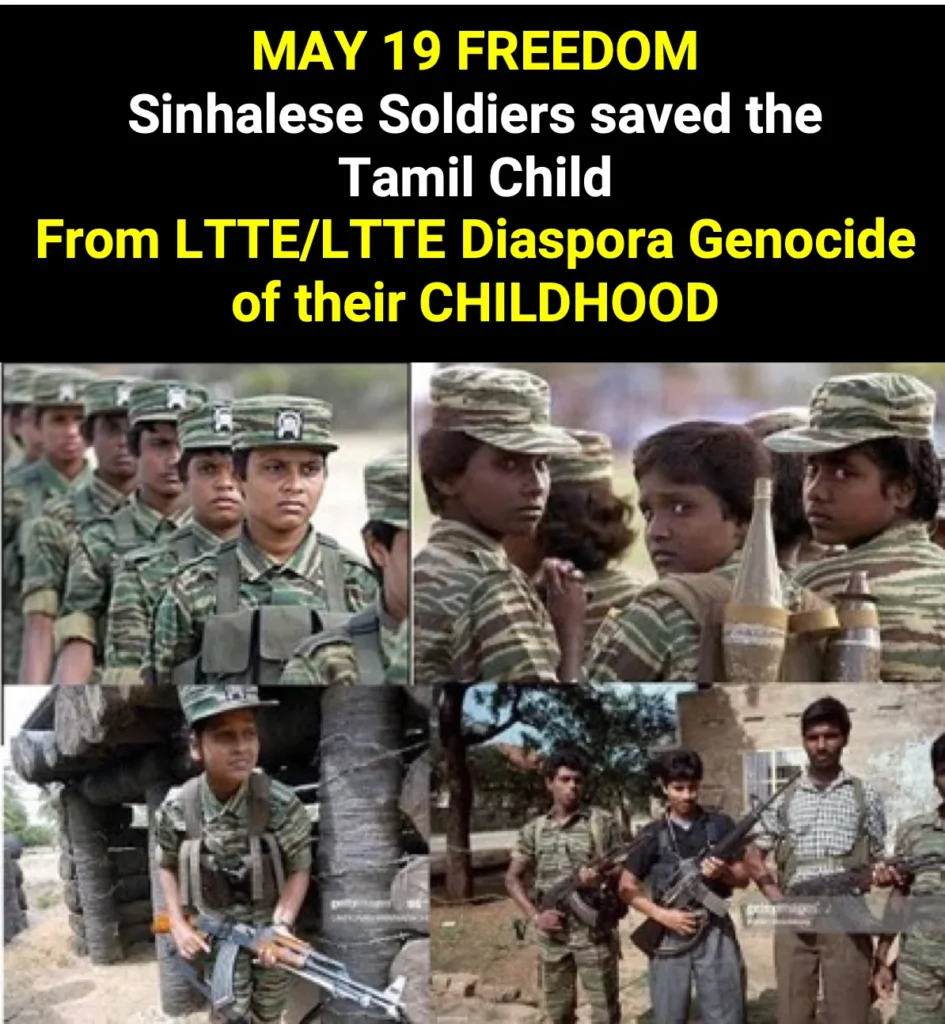
Employing modern weaponry and unconventional tactics, such as the use of child soldiers and suicide bombers, the LTTE posed a considerable challenge to the Sri Lankan military, which was compelled to mobilize its entire force for nearly three decades. The conflict, known as the Eelam War, became one of the longest-running conflicts in contemporary history. The war left behind a legacy of profound psychological trauma, manifesting as paralyzing anxiety, grief, and hopelessness among the affected populations. The Eelam War also resulted in a significant number of soldiers suffering from combat-related stress, yet the psychological impact on these combatants has received minimal attention. Tragically, the mental scars inflicted by the conflict have not been adequately addressed, and the lingering effects of combat trauma continue to haunt those who served.

Methodology

This research was carried out by the Visiting Psychiatrist of the Sri Lanka Army, with the approval of the Medical Advisor of the Sri Lanka Army Medical Corps. Spanning from March 2002 to December 2006, the study involved a thorough screening of 824 Sri Lankan Army personnel from infantry and service units who were referred to the Psychiatric Ward at the Military Hospital following various stress-related symptoms and disciplinary infractions. Notably, this investigation took place while the soldiers remained on active duty. The participants were primarily referred by medical officers from the outpatient department, as well as consultants from both medical and surgical units at Palaly Military Hospital, Victory Army Hospital in Anuradhapura, Colombo, Panagoda and various other military healthcare facilities.

The servicemen exhibited a range of psychological issues, including behavioural disturbances, psychosomatic disorders, symptoms of depression and anxiety, self-harm tendencies, suicide attempts, substance abuse, and stress-related misconduct. The sample comprised 824 individuals, predominantly male (806), with a small female representation (18). Throughout the study, strict client safety protocols were adhered to, ensuring that informed consent was obtained and that the anonymity of participants was maintained. Each soldier underwent a structured face-to-face interview utilizing the PCL-4 (PTSD Checklist for DSM-4) is based on the Diagnostic and Statistical Manual of Mental Disorders, Fourth Edition (DSM-IV), which was published in 1994.  (American Psychiatric Association, 2000). This assessment tool was adapted from similar trauma questionnaires employed globally to effectively identify cases of PTSD.

Results


Study results among the Sri Lankan Army soldiers and officers were as follows:
The PTSD rate was 6.7% following analysis of the questionnaire from 824 combatants.

PTSD Full criteria 56   / Partial PTSD 6

The level of exposure to combat was notably higher for individuals deployed in the northern and eastern regions of Sri Lanka. Consequently, a significant proportion of participants in the study exhibited responses that met the criteria for major depression, generalized anxiety disorder, or post-traumatic stress disorder (PTSD) after their service in these areas.

Among the 824 Sri Lankan combatants assessed, 135 individuals, representing 16.38%, were diagnosed with Adjustment Disorder. Additionally, 129 combatants, or 15.65%, were found to have Depressive Disorder. The study also identified 78 individuals, accounting for 9.46%, with various psychiatric conditions, including Schizophrenia, Bipolar Affective Disorder, and Acute Transient Psychotic Disorder. Furthermore, 65 combatants, or 7.88%, were diagnosed with Somatoform Disorder, while 89 individuals, representing 10.8%, were identified with Dissociative Disorder. The assessment revealed that 27 combatants, or 3.27%, suffered from Traumatic Brain Injury, and 29 individuals, accounting for 3.51%, were diagnosed with Alcohol Abuse and Dependence, as well as Substance Abuse Disorder.  

The combatants with full-blown symptoms of PTSD were found to have with following associations:

Those who have served in the operational areas (for more than 3 years)      45
Sustained grievous injuries –    15
Sustained non-grievous injuries –    22
Witnessed Killing-    49
Past attempted suicides-    17
Experienced childhood trauma    30

Research indicates that the experience of active combat can significantly contribute to the development of stress-related disorders, including post-traumatic stress disorder (PTSD), among those who have participated in such intense and often life-threatening situations. The psychological impact of engaging in combat is profound, as individuals are frequently exposed to traumatic events that can overwhelm their coping mechanisms. This exposure not only affects their mental health during and immediately after their service but can also lead to long-term psychological challenges. The symptoms associated with PTSD, such as flashbacks, severe anxiety, and emotional numbness, can severely disrupt the lives of combatants, making it essential to understand the relationship between combat exposure.

Discussion

The recognition of posttraumatic stress disorder (PTSD) as a distinct diagnostic category emerged with the publication of the Diagnostic and Statistical Manual (DSM-III), largely influenced by the clinical observations of Vietnamese war veterans (Dadic-Hero et al., 2009). In contrast, despite the onset of the Sri Lankan armed conflict in the early 1980s, PTSD remained largely unacknowledged as a significant mental health issue affecting soldiers for an extended period (Jayatunge, 2014).

This study represents the first investigation into combat-related PTSD within the Sri Lankan context, offering a foundational understanding of the psychosocial challenges faced by combatants involved in the Eelam War. Notably, the research was conducted while many of these individuals were still actively serving in the military, underscoring its relevance and timeliness. Structured interviews were carried out in the Sinhalese language, allowing for a comprehensive assessment of each combatant’s military deployment history. In certain instances, the study also involved discussions with commanding officers and family members, ensuring that cultural dimensions of trauma were adequately addressed.

The prevalence of PTSD within military populations is well-documented, attributed to the high frequency and nature of traumatic experiences encountered in combat zones (Romanoff, 2006). Research by Clancy et al. (2006) indicates that factors such as age, extensive combat exposure, and both pre- and post-military traumas contribute to heightened PTSD symptoms.

Sri Lankan combatants experienced prolonged exposure to combat, surpassing the durations faced by veterans of World War II, Vietnam, Korea, and the Gulf War. As a result, a significant number of these soldiers have developed PTSD and other trauma-related mental health disorders, with many cases remaining undiagnosed.

Combat exposure significantly alters the psychological landscape of military personnel. Those who have faced the traumas of war are particularly vulnerable to developing post-traumatic stress disorder (PTSD), as highlighted by Friedman et al. (1994). Research by Collie and colleagues (2006) suggests that nearly 30% of individuals who have served in combat zones may experience PTSD. Furthermore, combatants often grapple with a range of mental health issues, including depression, traumatic brain injury, and substance abuse, as noted by Kane et al. (2013). Gaylord (2006) emphasizes that combat veterans are susceptible to the adverse effects associated with deployment. The current study reveals that a striking 80.35% of combatants diagnosed with PTSD had spent over three years in combat zones, indicating that the length of exposure to combat is a significant risk factor for developing this debilitating condition. 

In addition to the challenges faced by combat veterans, the prevalence of PTSD is also notably high among adult survivors of childhood trauma, including sexual and physical abuse. Research conducted by Ehring and colleagues (2014) underscores that early adversities, such as emotional neglect, parental loss, and abuse, are critical risk factors for the emergence of various psychiatric disorders in adulthood, including PTSD, as supported by findings from Anda et al. (2006) and Burri et al. (2013). The current study further reveals that 53.57% of soldiers diagnosed with PTSD reported having endured adverse childhood experiences, such as physical and sexual abuse, neglect, and the loss of parental figures, highlighting the profound impact of early trauma on mental health outcomes in later life.

The National Vietnam Veterans Readjustment Study, which took place between 1986 and 1988, revealed that the lifetime prevalence of post-traumatic stress disorder (PTSD) among Vietnam veterans was 31% for men and 27% for women, with current prevalence rates at 15% and 9%, respectively, according to the Department of Veterans Affairs (2007). In contrast, the estimated rates of PTSD among veterans of the Iraq and Afghanistan conflicts are approximately 11% and 18%, respectively, although these figures are believed to be underreported (Hoge et al., 2004; Nacasch et al., 2010).

A recent investigation into Sri Lankan combatants shows a significantly lower rate of PTSD, recorded at 6.7%, compared to veterans from Vietnam, Iraq, and Afghanistan. This difference may be due to various cultural and religious influences that serve as protective factors against developing PTSD. These elements not only provide solace but also help in finding meaning in traumatic experiences and encourage quicker post-traumatic growth and recovery after trauma. However, it is important to note that the sample in this study was not randomly selected; rather, it consisted of individuals who were referred for treatment and psychological evaluations. Consequently, the findings may not accurately represent the broader reality of combat trauma within the Sri Lanka Army, suggesting that the actual prevalence of PTSD could be significantly higher, with rough estimates indicating rates between 12% and 16% among soldiers.

In this research, six soldiers were identified as having partial PTSD. The term “partial PTSD” is used in the literature to describe individuals who do not fully meet the diagnostic criteria for PTSD but still exhibit significant symptoms (Kulka, Schlenger, & Fairbank, 1990; Gudmundsdottir & Beck, 2004). Stein and colleagues (1997) note that those with partial PTSD may be missing one or two of the three necessary avoidance or numbing symptoms, as well as one of the two required hyperarousal symptoms. Breslau, Lucia, and Davis (2004) emphasize that PTSD is typically associated with the most severely affected trauma victims, who can be clearly differentiated from those with subthreshold PTSD. However, Dickstein et al. (2013) point out that individuals exhibiting subthreshold PTSD symptoms are at an elevated risk for psychological and functional impairments, including a higher likelihood of suicidal thoughts.

Among the six Sri Lankan soldiers diagnosed with partial PTSD, significant functional impairments were evident, manifesting as difficulties in marital relationships, parenting, and overall quality of life.  Sri Lankan soldiers returning from war encounter a range of psychosocial challenges. Pearrow and Cosgrove (2009) highlight that veterans often experience heightened stress levels due to combat and the associated traumatic events, which can severely disrupt their functioning both during active duty and upon reintegration into civilian life. This pattern was similarly observed in Sri Lankan soldiers suffering from PTSD, who displayed various work-related and psychosocial dysfunctions. Issues such as domestic violence, substance abuse, suicide attempts, and self-harm were prevalent among these individuals. The symptoms stemming from combat trauma significantly affected their marital relationships, vocational stability, and social interactions, underscoring the profound impact of their experiences on their daily lives.

Individuals diagnosed with post-traumatic stress disorder (PTSD) often experience a range of comorbid psychiatric conditions, including depression, various anxiety disorders, and issues related to alcohol or substance abuse and dependence, as noted by Friedman et al. (1994). The presence of these comorbid disorders can significantly hinder both the prognosis and treatment outcomes for those suffering from PTSD, as highlighted by Abram et al. (2013). Epidemiological studies reveal that a considerable majority of individuals with PTSD also fulfill the criteria for at least one additional psychiatric disorder, with a notable portion having three or more such diagnoses (Brady, 2000). In Sri Lanka, combatants with PTSD have been observed to frequently present with other psychiatric issues, including depression, substance use disorders, and, in some cases, psychosis. 

The primary approaches to treating PTSD encompass both psychotherapy and pharmacological interventions. Current guidelines advocate for psychotherapy to be the first-line treatment for PTSD (National Collaborating Centre for Mental Health, 2005). Among the medications commonly prescribed, antidepressants, particularly selective serotonin reuptake inhibitors (SSRIs), have been widely utilized (Davidson, 2000; Davidson & Connor, 1999; Cukor et al., 2009). Notable therapeutic interventions identified by Spinazzola, Blaustein, and van der Kolk (2005) include prolonged exposure therapy, cognitive processing therapy, cognitive restructuring, and eye movement desensitization and reprocessing (EMDR), all of which have shown efficacy in treating PTSD. 

In Sri Lanka, combatants suffering from PTSD receive a combination of pharmacological treatments, such as antidepressants, mood stabilizers, antipsychotics, and pain relievers, alongside various psychotherapeutic approaches, including Cognitive-behavioural therapy (CBT), EMDR, and Rogerian therapy. The pharmacological treatments aim to alleviate acute PTSD symptoms and improve sleep quality. Rogerian Person-Centred Therapy provides a supportive environment for combatants to express and process their repressed negative emotions, while Cognitive Behavioral Therapy has been effective in enhancing their social functioning. A study conducted in 2005 involving eighteen Sri Lankan combatants treated with EMDR revealed that twelve participants experienced significant clinical improvement after just five to six sessions of this therapy.

Among the traditional therapies, Thovilaya has been identified as a conventional healing method. It is a form of psychodrama geared to heal the patient as well as his environment. Spiritual therapy also plays a vital role in treating soldiers with combat trauma. Spiritual therapy, especially Buddhist psychotherapy, helps the war victims to find meaning and achieve post-traumatic growth.

In Sri Lanka, a considerable number of former combatants have reintegrated into civilian life without undergoing any prior screening, leading to various readjustment challenges. The psychosocial rehabilitation of these war veterans has been acknowledged as an essential aspect of recovery in the country. To effectively meet the diverse needs of combatants affected by the war, a comprehensive array of interventions is necessary, encompassing social, educational, occupational, behavioural, and cognitive strategies.

Conclusion

This study marks the first investigation into combat-related posttraumatic stress disorder (PTSD) in Sri Lanka, focusing specifically on soldiers from the Sri Lankan Army who served during the Eelam War. A total of 824 soldiers were subjected to clinical interviews utilizing the PTSD Checklist for DSM-4, which identified 56 individuals exhibiting full-blown PTSD symptoms. The findings underscore the emergence of combat-related PTSD as a pressing mental health concern for these veterans. Those grappling with the aftermath of war-related trauma encounter significant difficulties across various facets of their lives, including personal relationships, job performance, and social engagements. The long-term effects of such trauma have profoundly impacted their mental health and overall functionality. To effectively address and alleviate the consequences of combat trauma in Sri Lanka, it is imperative to implement targeted interventions. Additionally, further research is crucial to thoroughly assess the extent of combat-related trauma among these veterans, ensuring they receive the essential psychosocial support and treatment necessary for their recovery.

Acknowledgments

1)     Gen (Dr) Dudley Perera – The former Medical Advisor -Sri Lanka Army Medical Corps

2)     Gen (Dr) Sanjeewa Munasinghe – Colonel Commandant of the Sri Lanka Army Medical Corps


References


Abeyratne, S. (2002). Economic Roots of Political Conflict: The Case of Sri Lanka. Retrieved from

https://crawford.anu.edu.au/acde/asarc/pdf/papers/2002/WP2002_03.pdf


Abram K. M., Teplin L. A., King D. C., Longworth S. L., Emanuel K. M., Romero E. G., Olson, N. D. (2013). PTSD, trauma, and comorbid psychiatric disorders in detained youth. Retrieved from http://www.ojjdp.gov/pubs/239603.pdf

Abeyratne, S. (2002). Economic Roots of Political Conflict: The Case of Sri Lanka. Retrieved from

https://crawford.anu.edu.au/acde/asarc/pdf/papers/2002/WP2002_03.pdf

Anda RF, Felitti VJ, Bremner JD, Walker JD, Whitfield C, et al. (2006) The enduring effects of abuse and related adverse experiences in childhood. A convergence of evidence from neurobiology and epidemiology. Eur Arch Psychiatry Clin Neurosci 256: 174–86.


Brady, K.T., Killeen, T.K., Brewerton, T., Lucerini, S. (2000). Comorbidity of psychiatric disorders and posttraumatic stress disorder. J Clin Psychiatry:61 Suppl 7:22-32.

Breslau, N., Lucia, V.C., Davis, G.C.(2004). Partial PTSD versus full PTSD: an empirical examination of associated impairment. Psychol Med. 34(7):1205-14.

Burri A, Maercker A, Krammer S, Simmen-Janevska K (2013) Childhood Trauma and PTSD Symptoms Increase the Risk of Cognitive Impairment in a Sample of Former Indentured Child Laborers in Old Age. PLoS ONE 8(2): e57826. doi:10.1371/journal.pone.0057826.

Clancy, C.P,. Graybeal, A., Tompson, W.P., Badgett, K.S., Feldman, M.E., Calhoun, P.S, Erkanli ,A., Hertzberg, M.A., Beckham, J.C.(2006). Lifetime trauma exposure in veterans with military-related posttraumatic stress disorder: association with current symptomatology. J Clin Psychiatry. 67(9):1346-53.


Collie, K., Backos, A., Malchiodi, C.,Spiegel, D. (2006). Art therapy for combat-related PTSD: Recommendations for research and practice. Art Therapy: Journal of the American Art Therapy Association, 23(4) pp. 157-164.


Cukor, J., Spitalnick, J., Difede, J.A., Rizzo, A., & Rothbaum, B.O. (2009). Emerging treatments for PTSD. Clinical Psychology Review, 29(8), 715-726.

Dadic-Hero , E. , Toric , I. , Ruzic , K. , Medved , P. & Graovac , M . (2009) . Comorbidity –A troublesome factor in PTSD treatment. Psychiatria Danubina, 21, 420 – 424.


Davidson, J. R., & Connor, K. M. (1999). Management of posttraumatic stress disorder: Diagnostic and therapeutic issues. Journal of Clinical Psychiatry, 60(Suppl 18), 33−38.


Davidson, J. R. (2000). Pharmacotherapy of posttraumatic stress disorder: Treatment options, long-term follow-up, and predictors of outcome.Journal of Clinical Psychiatry, 61(Suppl 5), 52−56 discussion 57–59.


Dickstein, B. D., Walter, K. H., Schumm, J. A. and Chard, K. M. (2013), Comparing Response to Cognitive Processing Therapy in Military Veterans With Subthreshold and Threshold Posttraumatic Stress Disorder. J. Traum. Stress, 26: 703–709.

Ehring T, Welboren R2, Morina N, Wicherts JM, Freitag J, Emmelkamp PM. (2014).Meta-analysis of psychological treatments for posttraumatic stress disorder in adult survivors of childhood abuse.Clin Psychol Rev.34(8):645-657.

Friedman, M.J., Schnurr, P.P., McDonagh-Coyle, A. (1994). Post-traumatic stress disorder in the military veteran. Psychiatr Clin North Am. 17(2):265-77.

Gaylord KM.(2006).The psychosocial effects of combat: the frequently unseen injury.Crit Care Nurs Clin North Am. 18(3):349-57.


Gudmundsdottir, B., Beck, J.G. (2004). Behaviour Research and Therapy 42. 1367–1375.

Hoge, C. W., Castro, C. A., Messer, S. C., McGurk, D., Cotting, D. I., & Koffman, R. L. (2004) Combat duty in Iraq and Afghanistan, mental health problems, and barriers to care. New
England Journal of Medicine, 351(1), 13–22.


Jayatunge , R.M. (2013). Shell Shock to Palali Syndrome- PTSD Sri Lankan Experience. Sarasavi Publishers. Colombo.


Nacasch, N., Foa, E.B., Huppert, J.D., Tzur, D., Fostick, L., Dinstein, Y., Polliack, M., Zohar, J.(2010). Prolonged Exposure Therapy for Combat- and Terror-Related Posttraumatic Stress Disorder: A Randomized Control Comparison With Treatment as Usual. Journal of Clinical Psychiatry .71(0):1-7.


National Collaborating Centre for Mental Health. (2005). Post-traumatic stress disorder: The management of PTSD in adults and children in primary and secondary care. London (UK): National Institute for Clinical Excellence (NICE).

Pearrow, M., Cosgrove, L. (2009). The aftermath of combat-related PTSD: Toward an understanding of transgenerational trauma. Communication Disorders Quarterly, 30(2), 77-82.


Romanoff ,M.R.(2006). Assessing military veterans for posttraumatic stress disorder: a guide for primary care clinicians. J Am Acad Nurse Pract.18(9):409-13.

Stein, M. B., Walker, J. R., Hazen, A. L., & Forde, D. R. (1997). Full and partial Posttraumatic Stress Disorder: Findings from a community survey. American Journal of Psychiatry, 155, 1114–1119.

The Role of the Judiciary in British occupied Ceylon (1796 – 1948)

November 7th, 2025

 Courtesy:   AI Overview

During the British Occupation of Ceylon (1796-1948), the judiciary ultimately supported the colonial administration’s “divide and rule” strategy through its judgments. By weakening traditional indigenous systems of justice and elevating Roman-Dutch law and aspects of English common law, the British-controlled courts eroded traditional Buddhist authority and custom, thus aiding colonial objectives and hindering the freedom struggle. 

British judicial system and colonial strategy

  • Replacement of traditional systems: After the conquest of the Kandyan Kingdom in 1815, the British extended a unitary judicial system across the entire island. This move effectively replaced the traditional Kandyan justice system and marginalized the role of native officials and traditional laws.
  • Hierarchical court structure: A modern, British-style court system was established with a Supreme Court and appellate courts that replaced traditional adjudication methods. The British judicial system also included an appeal to the Privy Council in London as the final arbiter, cementing British control.
  • Introduction of colonial-era laws: The British introduced new legislation, such as the Penal Code of 1883, which reflected Victorian-era moral standards. These codes criminalized acts against “the order of nature” and had a lasting impact on Sri Lankan law, with some provisions remaining in place for over a century. 

The Judiciary, the freedom struggle, and the Buddha Sasana

  • The 1915 riots: The colonial judiciary played a direct and biased role during the 1915 riots. British officials used the judiciary to quell the unrest by imposing martial law and incarcerating Sinhalese leaders, some without trial. The British government’s subsequent rewarding of officials involved suggested their actions were aligned with colonial policy.
  • Weakening the Buddhist establishment: Through judicial and administrative means, the British placed the institutional privileges of Buddhism on an equal footing with other religions, eroding its historically “foremost place”. In court cases concerning religious property, the British judges often relied on Roman-Dutch or English legal principles, undermining traditional Buddhist customary law.
  • Favoring elites and divisions: The judiciary’s structure and the administration’s policies created new divisions within Ceylonese society.
    • Favoring certain groups: British policies favored certain segments of the Tamil elite, providing them with more education and government jobs, and later creating political rivalries and communal demands that weakened the national independence movement.
    • Creating a new elite: The British-educated elite, both Sinhalese and Tamil, who worked within the colonial system, were often at odds with more radical, indigenous leaders, which fragmented the independence movement.
  • Legal obstacles for the poor: The British judicial system introduced complex and expensive legal procedures that favored the wealthy, making access to justice difficult for the poor. This was particularly evident in matters concerning land and small claims, which benefited the colonial land acquisition agenda. 

       Courtesy:   AI Overview

https://share.google/aimode/UQXq3TzfYDi6vddLu

List of the specific sites of Buddhist and Hindu Temples destroyed by the Portuguese and names of Churches constructed on top of destroyed Temple sites 

November 7th, 2025

Source:  AI Overview

According to the Portuguese Historian Fernão de Queirós, and other sources detailing the Portuguese colonial period, many Buddhist and Hindu temples were systematically destroyed in Sri Lanka to make way for the construction of Christian churches

Temples and corresponding churches mentioned in historical accounts

Based on available historical accounts, including some that reference Queirós’s work, specific sites of temple destruction and church construction include:

  • Kelaniya Temple: The historic Kelaniya Raja Maha Viharaya was completely demolished by the Portuguese in 1575. The Church of St. Anne was later built on the same site.
  • Devundara Temple: A large “thousand-pillar” Buddhist and Hindu temple in Devundara (Dondra) was destroyed, and a church dedicated to Our Lady of Guidance (Nossa Senhora da Guia) was built in its place.
  • Nallur Kandasamy Kovil: This significant Hindu temple was razed to the ground by Filipe D’Olivera, the Portuguese commander of Jaffna. The stones from the temple were used to build a church in Nallur and the Jaffna fort.
  • Pattini Devales: Some popular Catholic churches, such as the Kochikade church in Colombo and the Madu church in Mannar, were built on the ruins of former Pattini Devales. 

Other Buddhist sites destroyed by the Portuguese

While not explicitly linked to a replacement church in the search results, Queirós and other chroniclers mention the destruction of several other prominent Buddhist sites: 

  • Saman Devale in Ratnapura
  • Sunethra Devi Pirivena in Kotte
  • Vidagama Pirivena in Raigama
  • Wijebahu Pirivena in Totagamuwa
  • Temples in Nawagamuwa, Mapitigama, and Wattala 

Note

Queirós, a Jesuit priest, wrote his chronicle, The Temporal and Spiritual Conquest of Ceylon, documenting the 150 years of Portuguese involvement in the island. While he did not visit Sri Lanka himself, his work documented the events of the period, including the destruction of temples. Historians acknowledge that Queirós’s full work contains many accounts of the Portuguese campaign to destroy non-Christian places of worship and proselytize the local population. 

Source:  AI Overview

King Don Juan Dharmapala’s Betrayal of Buddhism under the influence of the Portuguese Christian Missionaries

November 7th, 2025

AI Overview

King Don Juan Dharmapala’s

conversion to Christianity and subsequent actions were a significant turning point in Sri Lankan history, widely viewed as a betrayal of Buddhism by the Sinhalese majority. His actions were heavily influenced by the Portuguese Christian missionaries and had lasting negative impacts on the Buddhist religious structure in his kingdom. 

Influence of Portuguese Missionaries and Conversion

  • Early Influence: As a young prince, Dharmapala was tutored by Franciscan priests under the supervision of his maternal grandfather, King Bhuvanekabahu VII. This early exposure and education by the missionaries laid the groundwork for his later conversion.
  • Political Circumstances: After the assassination of his grandfather in 1551, Dharmapala ascended the throne but became a puppet ruler heavily dependent on Portuguese military support for his survival against rival claimants, especially King Mayadunne of Sitawaka.

       Formal Conversion: In 1557, he formally renounced Buddhism and was baptized as Dom João Dharmapala Peria Bandara, the first                   Christian king in Asia. His queen also converted, taking the name Dona Catherina

       Betrayal of Buddhism

  • Systematic Repression: Dharmapala became a willing collaborator in the systematic repression of Buddhism within his domain.
  • Destruction of Temples: He allowed the Portuguese to ransack and burn down highly venerated Buddhist temples, including the historic Kelaniya Temple and the Sunethra Devi Pirivena in Kotte.
  • Gifting the Kingdom: The most controversial act came in 1580 when, having no heir, he signed a “Deed of Gift” bequeathing his entire Kingdom of Kotte to the King of Portugal upon his death. This was seen as a complete surrender of Sinhalese sovereignty and a profound betrayal of his royal inheritance to foreign invaders.
  • Aristocracy Conversion: Following the King’s conversion, many members of the Sinhalese aristocracy also followed suit, further weakening the traditional Buddhist establishment and generating widespread hostility towards Christianity among the populace.

        Consequences

       Dharmapala’s conversion and his subservience to the Portuguese led to the near extinction of Buddhism in the territories under Portuguese control. The majority of the Buddhist population opposed him, leading them to support rival kings like Mayadunne and his son, Rajasinha I of Sitawaka, who resisted Portuguese power and defended the Buddhist faith. This era marked a tragic chapter of colonial oppression and a significant cultural and religious shift in Sri Lankan history.

Courtesy:  AI Overview

Repression of Buddhism in Sri Lanka by the Portuguese

Kindness of Buddhism in Sri Lanka

The Battle of Gannoruwa remains a symbol of the resilience and strength of the Kandyan Kingdom, a turning point in the Buddhist Sinhala resistance to colonial rule.

The Battle of Gannoruwa In 1638, the Battle of Gannoruwa marked the final defeat of the Portuguese in Sri Lanka. They sought to capture the Kandyan Kingdom, but King Rajasinghe II had other plans. The Portuguese forces, led by Diogo de Melo, marched toward Kandy with confidence, expecting an easy victory. However, the Kandyan army was prepared and strategically trapped the invaders near Gannoruwa. The result? A complete annihilation of the Portuguese forces. Most were killed in the fierce battle, and only a few managed to escape. This decisive victory not only ended the Portuguese ambitions in the Kandyan region but also solidified Rajasinghe II as one of the most formidable kings in Sri Lankan history. The Battle of Gannoruwa remains a symbol of the resilience and strength of the Kandyan Kingdom, a turning point in the Buddhist Sinhala resistance to colonial rule. 

Mulleriyawa: Blood & Glory | How Sri Lanka Defeated the Portuguese

https://www.youtube.com/watch?v=JERf1Rf2eZ

Step back into history and witness one of Sri Lanka’s greatest battles—the Battle of Mulleriyawa (1562). Led by the fearless Tikiri Bandara and King Mayadunne, the Sinhala forces crushed the Portuguese invaders in a legendary fight for freedom. Discover the tactics, the bravery, and the legacy that shaped our nation’s pride. Join us on this journey through Sri Lanka’s heroic past and see how our ancestors stood strong against colonial powers!

MP Archchuna busy sleeping during AKD’s budget speech

November 7th, 2025

Courtesy The Daily Mirror

Colombo, Nov. 7 (Daily Mirror) – Opposition Member of Parliament from the Jaffna district Dr. Ramanathan Archchuna, was seen fast asleep during the budget speech, which concluded a short while ago.

The presentation of the 2026 Budget commenced at 1.30 p.m. and continued until nearly 6.00 p.m.

The budget speech was presented by President Anura Kumara Dissanayake.

A budget presented by a confused government: Harsha

November 7th, 2025

Courtesy The Daily Mirror

Colombo, Nov. 7 (Daily Mirror) – The  President seems to be confused with his new neo-liberal free market ideology and his party’s protectionist industrial policy production economy concept, SJB MP Dr. Harsha de Silva said today. 

“The President was like a parish priest preaching bana at a Buddhist temple. Totally confused with his new neo-liberal free market ideology and his party’s protectionist industrial policy production economy concept,” Dr. De Silva said.

President Anura Kumara’s Budget Speech 2026: Summary

November 7th, 2025

Courtesy The Daily Mirror

Colombo, Nov. 7(Daily Mirror) – President Anura Kumara Dissanayake is currently presenting the Budget 2026 in Parliament, unveiling a series of allocations and reforms.

So far, the proposals reflect a reform-driven and inclusive direction — highlighting investments in health services, digital infrastructure, education, and support for vulnerable groups. The budget emphasizes fiscal consolidationdigital transformation, and inclusive development, with notable investments in healthcare, transport, rural infrastructure, and welfare.

Macroeconomic & Fiscal Direction

  • The 2026 Budget targets a deficit of 5.2% of GDP, reflecting continued fiscal consolidation.
  • State revenue is expected to rise to 15.3% of GDP by 2026, aligning with debt sustainability targets.
  • Debt-to-GDP ratio will be reduced to 95%, and further to 87% by 2030.
  • Inflation will be maintained below 5% through disciplined monetary policy.
  • The economy is projected to grow at 7% annually, driven by investment and productivity-led expansion.
  • A competitive bidding system for government procurement is introduced to ensure fair pricing and eliminate irregularities.
  • E-procurement and digital asset management systems will be launched in 2026.
  • The Social Security Contribution Levy will be charged at the point of import, manufacture, or sale of vehicles, effective April 2026, exempting after-sales transactions.
  • The Special Commodity Levy on imported coconut and palm oil will be replaced with the standard VAT-based tax structure, effective April 2026.

Public Sector Employment & Benefits

  • All employees serving over six months under Public Administration Circulars 25/2014 and 29/2019 will be granted permanent appointments.
  • Rs. 110 billion allocated for the second phase of the 2025 salary revision, effective January 2026.
  • Rs. 20 billion allocated for the second phase of pension revisions.
  • Distress loan limit for public servants increased from Rs. 250,000 to Rs. 400,000 at 4.2% interest, with Rs. 10 billion allocated for disbursement.
  • Festive advance for public employees increased from Rs. 10,000 to Rs. 15,000.
  • Agrahara Insurance Scheme contributions increased by Rs. 75 minimum and Rs. 150 for higher tiers.
  • Rs. 250 million allocated to raise the railway gatekeeper allowance from Rs. 7,500 to Rs. 15,000 per month.
  • 75,000 new recruits to be added to the public service in technical, revenue, and law enforcement roles.
  • Rs. 12.5 billion allocated for vehicles and machinery for government institutions and to replace vehicles for outgoing parliamentarians.

Housing & Urban Development

  • Rs. 15 billion under the Urban Regeneration Project to construct housing in Colombo and suburbs (Applewatta, Madampitiya, Fergusson Mawatha, Obeysekarapura, Stadiumgama, Colombage Mawatha, Torrington Place).
  • Rs. 3 billion for 70,000 houses and Rs. 7.2 billion for 10,000 houses under the A Place of Your Own – A Beautiful Life” program for low-income families.
  • Rs. 4.29 billion, with assistance from the Government of India, for 2,000 houses for Malayagam estate workers in multiple provinces.
  • Rs. 840 million allocated for resettlement of unauthorized settlers along the Kelani Valley Railway.
  • Rs. 1.18 billion to renovate old government-built apartment complexes.
  • Rs. 2 billion allocated for urban development feasibility studies in 10 cities including Jaffna, Eheliyagoda, Batticaloa, Chilaw, and Matara.
  • Rs. 900 million for solid waste management, equipment, and vehicles for local councils.
  • Rs. 500 million to expand Matale City to four lanes and prepare a traffic management plan for Hatton.
  • Rs. 100 million allocated for a pilot project for stray dog and pet management in urban areas.

Roads, Transport & Connectivity

  • Rs. 34.2 billion allocated for road development, including Rs. 10.5 billion for the Central Expressway (Potuhera–Galagedara) and Rs. 20 billion for the Rambukkana–Galagedara segment.
  • Rs. 1.5 billion allocated for Ruwanpura Expressway land acquisition and reassessment.
  • Rs. 1 billion allocated to complete Kurunegala–Dambulla Expressway land acquisition.
  • Rs. 1 billion for a comprehensive national road-safety program.
  • Rs. 250 million allocated for short-term flood mitigation and Rs. 500 million for long-term flood control projects.
  • Rs. 24 billion for rural road construction and Rs. 2.5 billion for rural bridges.
  • Rs. 790 million for equipment upgrades at SLTB depots and workshops.
  • Rs. 2.06 billion to replace engine units in 307 SLTB buses.
  • Rs. 3.6 billion for 600 new long-distance SLTB buses.
  • Rs. 3.3 billion to procure five new Diesel Multiple Units (DMUs) for Sri Lanka Railways.

Agriculture, Livestock & Irrigation

  • Rs. 91.7 billion allocated for irrigation infrastructure, including restoration of Senanayake Samudraya, Gal Oya, Rajanganaya, Huruluwewa, and Minneriya.
  • Rs. 5 billion allocated for the Lower Malwathu Oya Multipurpose Project.
  • Rs. 50 million to recommence the Mundeni Aru Project.
  • Rs. 3 billion for the renovation of the Milco Badalgama Factory.
  • Rs. 1 billion each for cattle and swine breeding and milk production (aiming for 75% self-sufficiency by 2030).
  • Rs. 600 million for the Jaffna Coconut Triangle development.
  • Rs. 250 million to install solar panels at the Dambulla cold storage facility.

Fisheries & Coastal Development

  • Rs. 350 million for the Valaichchenai Fishing Harbour development.
  • Rs. 500 million for wharf infrastructure to improve the livelihoods of fishing communities.
  • Rs. 100 million each for life-saving equipment for fishermen, satellite-based fish-ground tracking systems, and aquaculture development centres.

Health, Social Welfare & Inclusion

  • Rs. 11 billion for medical faculties in state universities.
  • Rs. 4.2 billion for the Suwasariya Ambulance Service.
  • Rs. 1.5 billion to introduce Primary Healthcare Centres nationwide.
  • Rs. 200 million to establish a National Cardiologic Hospital in Colombo.
  • Rs. 250 million to provide a monthly Rs. 10,000 allowance for thalassaemia patients.
  • Rs. 500 million for day-care centres for children with disabilities, including autism.
  • Rs. 750 million for AI Service Centres.
  • Rs. 1 billion to relocate Dambulla and Deniyaya Hospitals.
  • Rs. 570 million for a Community Science and Health Survey.
  • Rs. 50 million for educational support for differently-abled children, and a Rs. 5,000 monthly allowance for those pursuing higher education.
  • Mahapola Scholarship increased by Rs. 2,500.
  • 3% of all state recruitments reserved for persons with disabilities.

Employment, SMEs & Women’s Empowerment

  • Rs. 5.9 billion in loans for small and medium enterprises.
  • Rs. 800 million for a Sustainable Agricultural Loan Fund.
  • Rs. 240 million allocated for self-employment and women entrepreneurs, and Rs. 200 million for women’s welfare programs.
  • Estate workers’ daily wage to increase from Rs. 1,350 to Rs. 1,750 by January 2026, with a government attendance incentive.
  • Rs. 2 billion from the Foreign Employment Bureau to establish a pension scheme for migrant workers in 2026.

Digital Transformation & Innovation

  • All government payments to become fully digital, with no fees for QR transactions below Rs. 5,000.
  • Digital ID cards to be issued by March 2026.
  • Establishment of a Virtual Economic Zone to attract investment and innovation.
  • Five-year tax concession for digital communication towers.
  • Installation of 100 new telecom towers nationwide.
  • Broadband vouchers for low-income students to improve digital access.
  • Rs. 6.5 billion allocated for the Clean Sri Lanka Initiative to enhance sanitation and environmental sustainability.

Governance & Reform Commitments

  • 900 state bungalows to be transformed into Public-Private Partnership (PPP) ventures.
  • Introduction of a residence visa system for tourists.
  • Expert committee to draft a Judicial Code of Ethics.
  • The President reiterated zero tolerance for corruption:

    Regardless of position, those engaging in fraud or corruption will be punished.”

Sri Lanka’s Budget 2026 positions the nation for a sustained post-crisis recovery, steering toward a resilient, technology-driven, and inclusive economy.

As of 5.45pm

Sri Lanka’s economic recovery strengthens but remains incomplete

November 7th, 2025

By bno – Mumbai bureau November 7, 2025

Sri Lanka’s economy has shown solid signs of recovery in 2025, but the rebound remains partial, with output still below pre-crisis levels and poverty rates significantly elevated, according to the World Bank’s latest Sri Lanka Development Update titled Better Spending for All. The report projects growth of 4.6% in 2025, supported by steady industrial and service sector activity, but warns that the recovery must be reinforced through fiscal prudence, private sector investment, and structural reforms.

The World Bank notes that while the country has made measurable progress since its 2022 economic collapse, the gains are uneven. Inflation remains subdued, and foreign inflows have stabilised, but high food prices, weak job creation, and persistent poverty continue to pose challenges. Poverty rates, though declining, are now double the levels seen in 2019. Many families have yet to recover lost livelihoods, and nearly 10% of the population lives just above the poverty line.

According to the report, Sri Lanka’s economic output remains below its 2018 level, highlighting the fragility of the recovery. Malnutrition, particularly among vulnerable communities, remains a serious concern, even as headline indicators suggest macroeconomic stabilisation.

Uneven recovery amid fiscal constraints

The World Bank estimates that Sri Lanka’s economy will grow by 4.6% in 2025 before moderating to 3.5% in 2026, with the current account expected to stay in surplus, buoyed by services exports and remittances. However, reserve accumulation has slowed as external debt servicing resumes. Public revenues have strengthened, but capital spending has been weak, resulting in a narrower fiscal deficit.

The Bank’s analysis finds that while inflation has stabilised and credit growth has picked up, overall demand remains subdued, with private consumption and investment leading the modest rebound. The monetary easing cycle has reduced lending rates, boosting private sector credit growth to nearly 20% year-on-year by mid-2025. Still, the report warns that sustained recovery will depend on the government’s ability to maintain macroeconomic stability and deepen structural reforms.

Medium-term growth prospects are expected to hover around 3%, with consumption-led growth and limited contributions from investment and exports. Without substantial policy action, the World Bank cautions, Sri Lanka’s growth could stagnate below potential, undermining poverty reduction efforts.

Reforms needed to sustain growth

To consolidate recovery, the World Bank calls for reforms to boost private sector participation, reduce barriers to trade and investment, and modernise tax and regulatory systems. The report stresses that private capital — rather than public expenditure — must drive future growth, given Sri Lanka’s limited fiscal space.

It recommends policies that make it easier for businesses to invest, hire, and expand by addressing inefficiencies in land, labour, and capital markets. The Bank highlights that easing these constraints could unlock new investment, attract foreign capital inflows, and generate employment.

Revitalising private sector-led job creation is a key priority, particularly as Sri Lanka’s labour market remains sluggish. Real wages and participation rates are still below 2019 levels, underscoring the need for more dynamic employment policies. The report adds that higher growth that raises household incomes is critical for sustained poverty reduction and improved resilience to economic shocks.

Fiscal reforms are also essential. The World Bank urges Sri Lanka to broaden its tax base, strengthen tax administration through digital systems, and improve taxpayer engagement to enhance compliance. Shifting from indirect to direct taxation, it says, would make revenue mobilisation more equitable and sustainable.

Public spending efficiency under scrutiny

A major theme of the Better Spending for All report is the need to optimise existing public spending. More than 80% of Sri Lanka’s expenditure goes to public sector wages, welfare benefits, and interest payments, leaving little fiscal room for productive investments in infrastructure, health, and education.

At an average of 19.7% of GDP, the country’s overall spending remains below regional and lower-middle-income benchmarks. The World Bank emphasises that rather than expanding expenditure, Sri Lanka must improve how existing funds are allocated and managed.

Key recommendations include reforms to manage the public wage bill more effectively. Although Sri Lanka’s wage bill, at 5% of GDP, appears modest by international standards, the public sector employs nearly 15% of the national workforce — much higher than in comparable economies. This has resulted in low average pay and challenges in retaining skilled staff.

Real wages in the public sector have fallen sharply — by about one-third between 2020 and 2023 — while compensation structures have become fragmented due to widespread ad hoc allowances. The Bank suggests rationalising pay structures, introducing a national compensation commission, and modernising payroll management systems to improve efficiency and transparency.

Revamping capital investment

On public investment, the World Bank notes that Sri Lanka’s capital expenditure remains limited at just 3.4% of GDP and is often poorly prioritised. Project implementation has been slow, with less than 80% of planned capital spending executed in recent years.

The report identifies major inefficiencies in project appraisal, approval, and monitoring systems, which have constrained infrastructure delivery. The World Bank recommends focusing resources on near-complete projects, redirecting funds from stalled initiatives, and establishing unique project identifiers to track progress across ministries.

Maintenance spending on infrastructure has also been inadequate, leading to higher long-term costs. Increasing allocations for regular upkeep and adopting a more rigorous project selection process are seen as crucial steps for improving investment efficiency.

Outlook and risks

While Sri Lanka’s near-term growth outlook is broadly positive, the World Bank warns of significant downside risks, including global uncertainty, tightening external financing conditions, and domestic policy slippages. Sustaining recovery will require consistent policymaking and political commitment to reform.

The Sri Lanka Development Update complements the World Bank’s South Asia Development Update (October 2025 edition), which highlights regional growth of 6.6% this year but warns of a slowdown ahead. It notes that reforms promoting trade openness, technology adoption, and job creation will be critical for maintaining momentum across South Asia.

For Sri Lanka, the World Bank concludes that the immediate priority is not higher spending but better spending—making every rupee count by improving efficiency, transparency, and accountability.

Portuguese Inquisition in Goa and Ceylon (Sri Lanka) was authorized and sanctioned by the Vatican

November 6th, 2025

Source :  AI Overview

The Vatican was associated with the Portuguese Inquisition in Goa and Ceylon (Sri Lanka), as it authorized the establishment of the Inquisition in the Portuguese territories and Popes sanctioned Portuguese conquests for the propagation of the Catholic faith. However, the Goa Inquisition was primarily an extension of the Portuguese Inquisition and operated under the authority of the Portuguese Crown, with significant autonomy from direct, day-to-day Vatican control. 

Key points of the association:

  • Papal Sanction and the Padroado: The Vatican (Holy See) granted the Portuguese Crown the Padroado (patronage) through a series of Papal Bulls (e.g., Romanus Pontifex in 1454). This gave Portugal a monopoly on trade and the responsibility/right to propagate the Catholic faith in newly discovered territories in Asia and elsewhere.
  • Establishment of the Tribunal: The Holy See granted permission for the Inquisition to be established in Portugal itself, which subsequently extended its operations to its colonies, including Goa, in 1560. St. Francis Xavier, a prominent Jesuit missionary, formally requested the establishment of an Inquisition in Goa in a 1545 letter to the King of Portugal to address what he perceived as heretical practices among “New Christians” and the “scandalous” behavior of some Portuguese colonists.
  • Doctrinal Oversight: The Inquisition was a church court designed to maintain Catholic orthodoxy and fight heresy, aligning with the broader goals of the Counter-Reformation as defined by the Council of Trent.
  • Operational Control: While the Grand Inquisitor in Portugal was appointed by the Pope, they were chosen by the King, giving the Portuguese Crown significant control over the institution’s operations both in Portugal and its colonies. The actual implementation and its often brutal methods in Goa were carried out by Portuguese colonial administrators and clergy.
  • Ceylon Connection: The religious jurisdiction in Ceylon fell under the Archbishopric of Goa through the Padroado system. This connection remained until the late 19th century when the Holy See, through the Congregation of Propaganda Fide, began appointing Vicars Apostolic directly, thus ending Goa’s jurisdiction in Ceylon. 

In essence, the Vatican provided the overarching mandate and authorization for the Inquisition and the missionary enterprise in the Portuguese Empire, but the specific, often harsh, implementation in Goa and the broader colonial territories was managed by the Portuguese state and local church officials under the Padroado system. 

Source :  AI Overview

https://share.google/aimode/hg89MmZuUmQoseR1z

see also

PORTUGUESE – The Untold Invasion of Sri Lanka | AI Documentary

The Portuguese Inquisition in Sri Lanka

Sinhalese Kings | King Seethawaka Rajasinghe 1 (පළමුුවන රාජසිංහ රජතුමා)

පළමුුවන රාජසිංහ රජතුමාhttps://www.youtube.com/watch?v=Uo9kHhTaS_o

Jeevaka the Buddha’s Personal Physician deserves to be venerated in Sri Lanka as a patron of Medicine.  If Thailand can do it admirably why not Sri Lanka being a prominent Theravada Buddhist nation?

November 6th, 2025

AI Overview

https://share.google/aimode/pRSGiplqdOoCqgQu4

Question

Jeewaka was the Buddha’s Physician. He is venerated in Thailand by its Medical Profession and statues of Jeewaka are a common sight in Thai Hospitals. Can Sri Lanka being another Theravada Buddhist country adopt the practice of remembering Jeewaka like in Thailand. What measures are required by the authorities in Sri Lanka to do so?

AI Overview

Answer

Yes.

Sri Lanka, as a prominent Theravada Buddhist nation with its own rich history of ancient medicine, can certainly adopt the practice of venerating Jeewaka (Jīvaka Komārabhacca) as a patron of medicine. This practice would align well with the country’s Buddhist heritage and existing appreciation for traditional healing systems. 

Currently, Jivaka is already honored by Indians and Thais as a patron of traditional healing systems.

This practice would align well with the country’s Buddhist heritage and existing appreciation for traditional healing systems. 

Currently, Jivaka is already honored by Indians and Thais as a patron of traditional medicine, playing a central role in their related ceremonies. While Jivaka’s story is known in Sri Lankan Buddhist literature, his widespread public veneration in hospitals like in Thailand is not a current national practice, as local indigenous medical traditions often look to other historical figures or kings as patrons. 

Required Measures for Adoption

Adopting this practice would involve a combination of official recognition, educational initiatives, and cultural promotion:

  • Official Endorsement: The Ministry of Indigenous Medicine and the Ministry of Health could officially recognize Jivaka as a symbolic figure or patron for the medical profession (both indigenous and Western medicine).
  • Medical Community Engagement: Professional medical associations, including the Sri Lanka Medical Council and Ayurvedic Medical Council, could promote his story and values (skill, compassion, ethics) among their members and students.
  • Educational Integration: Jivaka’s life and ethical conduct could be integrated into the curricula of medical schools and traditional medicine institutions (e.g., the University of Colombo’s Faculty of Medicine, University of Ruhuna, etc.).
  • Physical Installations: Statues or images of Jivaka could be placed in prominent locations within hospitals, medical faculties, and research institutions, similar to the practice in Thai hospitals. Plaques could explain his significance as the Buddha’s physician and a model healer.
  •  
  • Ceremonial Practices: Annual ceremonies or events could be established where medical professionals gather to pay respect to Jivaka, recite Buddhist pirith (chanting for protection and health), and reflect on medical ethics and patient care.
  • Public Awareness Campaigns: The government and Buddhist organizations could launch campaigns to raise awareness among the general public about Jivaka’s legacy and his connection to the core values of the medical profession.
  • Research and Documentation: Encouraging historical and cultural research into Jivaka’s connection to ancient Sri Lankan or Indian medicine can help solidify the practice’s cultural relevance.

By implementing these measures, Sri Lanka could foster a deeper connection between its rich Buddhist heritage and the modern practice of medicine, using Jivaka as a powerful symbol of compassionate and skilled healing.

Source: AI Overview

see also

Jivaka_Komarabhacca.jpg
Jivaka Komarabhacca physician of ancient India. also known in China and Japan. jivaka has Influenced Traditional Chinese Medicine

Jīvaka  –  https://en.wikipedia.org/wiki/J%C4%ABvaka

Bang_Khon_Thi_-_Wat_Bang_Kung____________(2022)_-_img_09.jpg
A shrine to Jivaka at Wat Bang Kung temple in Thailand 

Wrangle for an ass’s shadow

November 6th, 2025

RANJITH SOYSA

Vijitha Herat, the Minister of Foreign Affairs, has stated that Sri Lanka did not attempt to join a losing race when he and the government decided to let the UNHRC to adopt the proposal A/HRC/60/21/2025 against Sri Lanka. He also added that they wanted to save funds by not getting involved in canvassing support from other nations. The minister’s excuses remind us of a tale of Demosthenes of an ass’s shadow in which two persons contended about trifles while both lost what they should have protected.

What happened in Geneva, was the losing of an opportunity to expose UNHRC ‘s continuous questionable approach to the defeating of the Tamil Tigers who were waging a separatist war. Their numerous crimes against Sri Lanka and her people had been excused by the UNHRC while extending a blind eye to the naked aggressions conducted by the USA, the UK , France, etc., in Afghanistan, Iraq Libya, etc. Further the UNHRC’s continuous insistence that the SL government has failed to probe the allegations is unreasonable. The UNHRC’s charter requires it to conduct its activities objectively”, impartiality , and non-selectivity” Without any justification to authorize investigation of a country it is illegal and unauthorized.

Sri Lanka under the present NPP government opposed the UNHRC Resolution but failed to insist on a vote perhaps to please its supporters from the overseas pro-LTTE organizations as the government’s approach was to allow the High Commissioner to proceed ahead with his programme of penalising Sri Lanka with their Accountability Project(SLAP) It is a known fact that the government is in the process of implementing the key requirements of the SLAP. In short. the government has exposed its policy of giving into the ‘’unauthorized’ process as proposed by the High Commissioner, The government has also encouraged the High Commissioner to gather ‘war crimes’ information and use this to plan to persecute war criminals”  under universal jurisdiction, Sri Lanka could have gained time by requesting a vote at the sessions through persuasive contributions from a number of friendly countries exposing the arbitrary actions of the UNHRC.

It is said that the UNHRC has spent over US$16 million of member states’ funds from 2021 for the process of of punishing of Sri Lanka” It is high time the member nations investigated how the money was spent as many UN affiliated organizations are well known for their lack of transparency.

While Sri Lankan government has opted to be satisfied in wearing a fool’s cap the country has missed an opportunity to explain the right  action taken to defeat the violent terrorism of the LTTE

RANJITH SOYSA

Vision of Dr. Gamani Corea and the South’s present development policy options

November 6th, 2025

Courtesy The Island

Dr. Gamani Core / Dr. Carlos Maria Correa

The ‘takes’ were numerous for the perceptive sections of the public from the Dr. Gamani Corea 100th birth anniversary oration delivered at ‘The Lighthouse’ auditorium, Colombo, by Dr. Carlos Maria Correa, Executive Director of the South Centre in Geneva on November 4th. The fact that Dr. Gamani Corea was instrumental in the establishment of the South Centre decades back enhanced the value of the presentation. The event was organized by the Gamani Corea Foundation.

The presentation proved to be both wide-ranging and lucid. The audience was left in no doubt as to what Dr. Gamani Corea (Dr. GC) bequeathed to the global South by way of developmental policy and thinking besides being enlightened on the historic, institutional foundations he laid for the furtherance of Southern economic and material wellbeing.

For instance, in its essential core Dr. GC’s vision for the South was given as follows: sustainable and equitable growth, a preference for trade over aid, basic structural reform of global economy, enhancement of the collective influence of developing countries in international affairs.

Given the political and economic order at the time, that is the sixties of the last century, these principles were of path-breaking importance. For example, the Cold War was at its height and the economic disempowerment of the developing countries was a major issue of debate in the South. The latter had no ‘say’ in charting their economic future, which task devolved on mainly the West and its prime financial institutions.

Against this backdrop, the vision and principles of Dr. G.C. had the potential of being ‘game changers’ for the developing world. The leadership provided by him to UNCTAD as its long-serving Secretary General and to the Group of 77, now Plus China, proved crucial in, for instance, mitigating some economic inequities which were borne by the South. The Integrated Program for Commodities, which Dr. G.C. helped in putting into place continues to serve some of the best interests of the developing countries.

It was the responsibility of succeeding generations to build on this historic basis for economic betterment which Dr. G.C. helped greatly to establish. Needless to say, all has not gone well for the South since the heyday of Dr. G.C. and it is to the degree to which the South re-organizes itself and works for its betterment as a cohesive and united pressure group that could help the hemisphere in its present ordeals in the international economy. It could begin by rejuvenating the Non-aligned Movement (NAM), for instance.

The coming into being of visionary leaders in the South, will prove integral to the economic and material betterment of the South in the present world order or more accurately, disorder. Complex factors go into the making of leaders of note but generally it is those countries which count as economic heavyweights that could also think beyond self-interest that could feature in filling this vacuum.

A ‘take’ from the Dr. GC memorial oration that needs to be dwelt on at length by the South was the speaker’s disclosure that 46 percent of current global GDP is contributed by the South. Besides, most of world trade takes place among Southern countries. It is also the heyday of multi-polarity and bipolarity is no longer a defining feature of the international political and economic order.

In other words, the global South is now well placed to work towards the realization of some of Dr. GC’s visionary principles. As to whether these aims could be achieved will depend considerably on whether the South could re-organize itself, come together and work selflessly towards the collective wellbeing of the hemisphere.

From this viewpoint the emergence of BRICS could be seen as holding out some possibilities for collective Southern economic betterment but the grouping would need to thrust aside petty intra-group power rivalries, shun narrow national interests, place premium value on collective wellbeing and work towards the development of its least members.

The world is yet to see the latter transpiring and much will depend on the quality of leadership formations such as BRICS could provide. In the latter respect Dr. GC’s intellectual leadership continues to matter. Measuring-up to his leadership standards is a challenge for BRICS and other Southern groupings if at all they visualize a time of relative collective progress for the hemisphere.

However, the mentioned groupings would need to respect the principle of sovereign equality in any future efforts at changing the current world order in favour of all their member countries. Ideally, authoritarian control of such groupings by the more powerful members in their fold would need to be avoided. In fact, progress would need to be predicated on democratic equality.

Future Southern collectivities intent on bettering their lot would also need to bring into sharp focus development in contrast to mere growth. This was also a concern of Dr. G.C. Growth would be welcome, if it also provides sufficiently for economic equity. That is, economic plans would come to nought if a country’s resources are not equally distributed among its people.

The seasoned commentator is bound to realize that this will require a degree of national planning. Likewise, the realization ought to have dawned on Southern governments over the decades that unregulated market forces cannot meet this vital requirement in national development.

Thus, the oration by Dr. Carlos Maria Correa had the effect of provoking his audience into thinking at some considerable length on development issues. Currently, the latter are not in vogue among the majority of decision and policy makers of the South but they will need ‘revisiting’ if the best of Dr. GC’s development thinking is to be made use of.

What makes Dr. GC’s thinking doubly vital are the current trade issues the majority of Southern countries are beginning to face in the wake of the restrictive trade practices inspired by the US. Dr. GC was an advocate of international cooperation and it is to the degree to which intra-South economic cooperation takes hold that the South could face the present economic challenges successfully by itself as a collectivity. An urgent coming together of Southern countries could no longer be postponed.

ජනාධිපතිගේ කතා ඇහුවම හිඟන පාතාල සුද්දෙක් මිසක් වැදගත් මිනිහෙක් රටට එන්නේ නෑ…

November 6th, 2025

උපුටා ගැන්ම ලංකා සී නිව්ස්

ජනාධිපති අනුර දිසානායක විදේශ තානාපතිවරුන් කැඳවා රට වැටී ඇති ආගාධය ගැන ප්‍රකාශ කරන විට ඒ රටවල් සිය රට වැසියන් ලංකාවේ සංචාරය සඳහා එවනු ඇතිදැයි සර්වජන බලය නායක, ව්‍යවසායක දිලිත් ජයවීර විමසයි.

ජනාධිපතිවරයාට ව්‍යවසායකත්ව මනසක් තිබිණි නම් මෙම ප්‍රශ්න රහසේ විසඳාගනු විනා ලෝක ප්‍රසිද්ධ කිරීමට කටයුතු නොකරන බවයි, ඔහු පෙන්වා දෙන්නේ. 

පාතාලයන් අල්ලා ගෙන එන විට අන්තර්ජාතික මාධ්‍ය කැඳවා ලෝකයටම අදාළ  පුවත ලබා දුන් බවත් ඔහු සඳහන් කරයි.

එවිට රටට පැමිණෙන්නේ දෙකයි පනහේ සුද්දන් බවත් ඊළඟ පාතාලය ඊළඟට රටට හිස රදයක් වන්නේ මෙම සුද්දන්ගේ පාතාලය බව ද දිලිත් ජයවීර අවධාරණය කරයි.

ජා ඇල පැවති ජන හමුවක් අමතමින් හෙතෙම මේ බව කීය.

After eight years behind bars, Court frees man sentenced to death

November 6th, 2025

Courtesy The Daily Mirror

Colombo, Nov. 6 (Daily Mirror) – A man who had spent eight years in prison under a death sentence for drug trafficking was acquitted by the Court of Appeal, which found that the raid and recovery of productions in the case had not met the test of probability.

The Court of Appeal two-judge bench comprising Justice P. Kumararatnam and Justice Pradeep Hettiarachchi set aside the conviction and death sentence imposed by the Colombo High Court on March 20, 2017, citing that the prosecution had failed to prove the case beyond reasonable doubt.

In its judgement, the Court further observed that the accused had been denied the right to a fair trial, as the High Court Judge had not permitted him to call a witness in his defence. The Court held that this amounted to a violation of the constitutional guarantee of a fair trial.

The accused, Osman Perera, had been indicted by the Attorney General before the Colombo High Court under Sections 54(A)(d) and 54(A)(b) of the Poisons, Opium and Dangerous Drugs Ordinance, as amended by Act No. 13 of 1984, for possession and trafficking of 4.4 grams of heroin (diacetylmorphine) on February 22, 2002.

Following the trial, the High Court found him guilty on both counts and imposed the death sentence. The accused subsequently filed an appeal, contending that the trial judge had failed to properly evaluate the evidence and that the production chain had not been established beyond reasonable doubt.

Justice Kumararatnam, delivering the judgement, observed that the prosecution’s version of the raid and the recovery of the drugs failed to meet the test of probability. If the learned Trial Judge had examined the evidence presented from the correct perspective, he would have been inclined to accept the testimony provided by the accused,” the Court noted.

The Court also observed the inconsistencies regarding the weight of the production. While the first police witness testified that 7 grams of heroin (excluding the cellophane cover) were sent for analysis, the Government Analyst reported receiving 7.44 grams, indicating a 0.44-gram discrepancy.

The Court of Appeal accordingly ordered that the conviction and sentence be quashed and directed that the accused be acquitted forthwith.

2026 Budget: Govt should ensure economic transformation

November 6th, 2025

Courtesy The Daily Mirror

Today is the budget day. The NPP government, under the leadership of President Anura Kumara Dissanayake, will present its second maiden budget today when the country is at a critical juncture between hard-won stabilisation and the promise of sustainable growth. The past two years have been spent under the IMF programme, with the focus on restoring macroeconomic balance.  Sri Lanka went for the IMF programme in March 2023 under the previous government. The current economic stabilisation is attributed to the successful continuation of the programme despite the change of government in the last presidential election. Now, a task lies ahead for the NPP government—to move from stabilisation to economic transformation.

The IMF Extended Fund Facility (EFF) succeeded in reversing the economic downfall. Inflation is under control, foreign reserves have improved modestly, and fiscal discipline has been restored through higher tax revenues and reduced monetary financing. Yet, the real economy remains sluggish, with growth hovering way below the expected level, unemployment rising, and living costs continuing to burden people. Macroeconomic stability alone cannot guarantee prosperity. In its 2026 budget, the government must therefore articulate a credible pathway for growth acceleration, job creation, and social relief without undermining fiscal prudence. Fiscal consolidation remains at the core of the IMF programme. The sharp rise in direct and indirect taxes over the past two years has already tested the resilience of businesses and middle-income earners. Now is the time to lay the groundwork further for the enhancement of investments and production. 

The government should focus on widening the tax base, improving digital tax administration, and rationalising exemptions rather than repeatedly squeezing the same segments of the economy. 

If the 2026 Budget is to mark a turning point, it must send a strong message of confidence to investors—both domestic and foreign. Bureaucratic red tape, policy unpredictability, and corruption have long undermined Sri Lanka’s investment climate, as highlighted even by the U.S. Investment Climate report on Sri Lanka. The NPP administration’s early emphasis on clean governance has been welcomed, but investors now expect policy clarity and consistency. The proposed establishment of a ‘Single Window’ investment facilitation system, if implemented effectively, could reduce administrative delays that deter investors. 

Equally important is the need to revive exports. Sri Lanka’s export basket remains narrow and overly dependent on apparel and tea, while regional competitors have diversified rapidly. Budgetary measures to support new export sectors—ICT, logistics, agro-processing, and green manufacturing—can provide a crucial boost. Linking these sectors to regional value chains through trade facilitation and infrastructure improvement is essential to enhance competitiveness. 

One of the most significant reforms under the IMF programme involves restructuring State-Owned Enterprises (SOEs). With over 400 SOEs, many operating at a loss, the state’s fiscal burden has become unsustainable. The government has been talking about the need for the revitalisation of these SOEs. It is time to walk the talk. The 2026 Budget should focus attention on it. Also, a key focus of the budget should be to balance fiscal consolidation with social protection. Around 25 per cent of households remain vulnerable to poverty due to stagnant wages and rising living costs.  People are normally used to looking at annual budgets for benefits in terms of pay hikes for the public sector, an increase in welfare allowances for various sectors, price reduction of essential items, subsidies for the agriculture sector, etc. Right throughout history, the budget was projected as a box containing surprises for the public. 

Instead, it should be the blueprint for economic growth. Under the current circumstances, it will be challenging for the government to give relief to people at this juncture. The government is under compulsion to manage expenditure. In the realisation of the IMF targets, tangible relief measures for people are out of the question.

But, the government should improve its efficiency to improve the business, investment climate of the country rather than trying populist giveaways.  The government, in the budget, can still inspire confidence through efficient governance, transparency, and a clear reform agenda. Today, bureaucracy is not moving fast enough. Corruption remains at different levels of governance and administrative layers, though there are no major allegations against key politicians of the ruling party. It is important to address these issues. Ultimately, the success of the 2026 Budget will rest on implementation. Successive governments have often produced ambitious fiscal plans only to falter at the execution stage due to inefficiency, corruption, and weak institutional capacity. This time, the government cannot afford such complacency. It has a mandate only to undo past mistakes. Let’s wait for the budget to be presented to see what is in store for the country!

The spicy truth: uncovering cinnamon fraud in the EU market

November 6th, 2025

Courtesy New food magazine

When you dust a little cinnamon over your cappuccino, the last thing on your mind is fraud. However, scientists at the European Commission’s Joint Research Centre (JRC) have uncovered cases of mislabelling that could lead to potential health risks, as Project Coordinator Anastasia Vlachou reveals.

The spicy truth: uncovering cinnamon food fraud in the EU market. EFF-CoP

Two cinnamons, one big problem

Cinnamon is a cultivar from the inner bark layer of different evergreen trees belonging to the genus Cinnamomum. Once the cinnamon bark is shaved from the tree stump, it naturally takes on a coiled shape. The processing method continues when the bark is dried, portioned into smaller segments for cinnamon sticks, or processed into a fine powder for ground cinnamon.

The trouble unfolds when Cassia is sold as true cinnamon. Consumers pay premium prices for what they believe is a pure, high-quality product and instead get something that could potentially pose a health risk, especially for children.”

There are two primary categories of cinnamon: Ceylon and cassia.

Ceylon (Cinnamomum verum), sometimes referred to as ‘true cinnamon’ originates from Sri Lanka and is the variety that initiated the spice trade when it was first discovered during the Age of European Exploration. It is valued for its delicate, warm, sweet yet spicy aroma and low levels of the potentially-toxic compound coumarin.1

The cassia category of cinnamon has three main varieties that relate to its place of origin: China (Cinnamomum cassia, or cassia), Vietnam (Cinnamomum loureiroi, or Saigon), and Indonesia (Cinnamomum burmannii, or korintje). Cassia has a stronger, sharper and more pungent aroma than true cinnamon, as well as a far higher coumarin content.

Ceylon vs Cassia Cinnamon comparison

Ceylon vs Cassia cinnamon comparison

The trouble unfolds when Cassia is sold as true cinnamon. Consumers pay premium prices for what they believe is a pure, high-quality product and instead get something that could potentially pose a health risk, especially for children.

The JRC study tested cinnamon samples from 10 EU countries, the results of which were rather alarming since over two-thirds showed irregularities. Around nine percent of products labelled Ceylon” turned out to be Cassia or a mixture of both. Of greater concern is that approximately one in ten samples exceeded the EU’s legal limits for lead.

Catching the cheats

Catching this kind of food fraud is not a simple process; it’s part science and part detective story.

To separate the genuine from the fake, researchers employed an impressive toolkit of testing methods:

  • Energy dispersive X-ray fluorescence (EDXRF) to check the elemental composition
  • FT-Raman spectroscopy to identify chemical fingerprints
  • Gas chromatography-mass spectrometry (GC-MS) to detect tell-tale compounds like coumarin
  • Thermo-gravimetric analysis to measure impurities.

Together, these techniques were able to paint a clear picture of authenticity – or lack thereof in many cases.

As with other types of food fraud or food safety investigation, not only was the scientific data impressive, but the dedication of the researchers collecting the samples was particularly striking. Teams of scientists were meticulous in tracing supply chains across continents, comparing bark samples and confirming suspicions one test at a time – such is the detail of work required to ensure that what we sprinkle on our food is safe and genuine.

Why it matters

This isn’t just a niche issue for spice lovers. Food fraud in all manner of ingredients and commodities undermines consumer trust, damages honest producers and, in some cases, endangers public health.

This cinnamon fraud may seem trivial to some, but it illustrates a bigger picture: when profit drives deception, everyone pays the price.”

This cinnamon fraud may seem trivial to some, but it illustrates a bigger picture: when profit drives deception, everyone pays the price. One of the most vulnerable groups in our society is children and the consumption of cassia with high coumarin levels could result in them exceeding recommended daily intake limits, even with just a small portion.

The economic impact is also a concern. Genuine Ceylon producers, many of whom are smallholders in Sri Lanka, lose out when fake products flood the market and indeed the integrity of the entire spice trade comes under question.

Building a culture of food integrity

There is however good news amid all the concerns around food fraud. The European Food Fraud Community of Practice (EFF-CoP) was formed to help tackle cases like this. It aims to connect scientists, regulators and industry experts with the ultimate goal of sharing knowledge, refining detection tools and fostering a culture where transparency is the rule, not the exception.

Minimising – and even eliminating in some cases  – food fraud is a collective effort that extends beyond the lab and beyond countries; it involves everyone from importers and retailers to consumers who read labels and ask questions.

What’s next?

Fighting food fraud is not just a regulatory matter, it requires input at every level. We must stay alert, use smarter tools and better science, and ask more questions at every step of the food chain. In the case of cinnamon fraud, this extends from the cinnamon groves of Sri Lanka to the shelves of our local stores.

So next time you shake a little cinnamon onto your latte, pause for a second. That tiny sprinkle carries a story of farmers who harvest with care, of scientists working behind the scenes, and of regulators determined to keep our food honest. It’s a reminder that trust in what we eat does not just happen; it’s earned, one test and one spice jar at a time.


NPP’s Peliyagoda UC member resigns

November 6th, 2025

Courtesy Hiru News

The National People’s Power (NPP) Councillor of the Peliyagoda Urban Council, whose husband and son faced drug charges, has resigned from her post.

Accordingly, she has submitted her resignation letter to the Gampaha District Returning Officer, with a copy directed to the Chief Secretary of the National People’s Power.

Disna Niranjala Kumari, who is related to the incident, was elected as the National People’s Power Councillor for the Peliyagoda Urban Council in the last local government election.

පෑලියගොඩ මාලිමා මන්ත්‍රිනිය කොස්ගොඩ සුජීගේ ඥාතිවරියක්

November 6th, 2025

උපුටා ගැන්ම  හිරු පුවත්

පෑලියගොඩ නගර සභාවේ ජාතික ජන බලවේගයේ නාගරික මන්ත්‍රී දිස්නා නිරංජලා කුමාරි යන අය නමගිය මත්ද්‍රව්‍ය ජාවාරම්කරුවකු වන කොස්ගොඩ සුජීගේ” සමීපතම ඥාතියෙකු බවට තොරතුරු හෙළිව ඇතැයි පොලිසිය කියයි.

මෙම තොරතුරු අනාවරණය වී ඇත්තේ එප්පාවල කටියාව යාය 10 ප්‍රදේශයේ පාසලක විදුහල්පතිවරයෙක් සම්බන්ධ සිද්ධිය විමර්ශනය කරන අවස්ථාවේදී බවද පොලිසිය සඳහන් කරයි.

එප්පාවල කටියාව යාය 10 ප්‍රදේශයේ පාසලක විදුහල්පතිවරයෙක් හෙරොයින් මත්ද්‍රව්‍ය ජාවාරමේ නිරතවන බවට අනුරාධපුර කොට්ඨාස අපරාධ විමර්ශන ඒකකයේ ප්‍රධාන පොලිස් පරීක්ෂක නුවන් වික්‍රමසිංහ මහතාට ලැබුණු තොරතුරක් මත අදාළ විදුහල්පතිවරයාට අයත් එප්පාවල ප්‍රදේශයේ පිහිටි අදාල හෝටලය වටලා තිබුණා.

එහිදි හෙරොයින් කිලෝ ග්‍රෑම් 2කට ආසන්න ප්‍රමාණයක් හෝටලය පිටුපස වළදමා තිබියදී සොයා ගැණුනු අතර ඒවායෙහි වෙළෙඳ පොළ වටිනාකම රුපියල් කෝටි දෙකකට ආසන්න බවයි පොලිසිය සඳහන් කළේ.

ඒ අනුව අදාළ විදුහල්පතිවරයා පොලිස් අත්අඩංගුවට ගත් අතර සැකකාර විදුහල්පතිවරයාගේ බිරිඳ පෑලියගොඩ නගර සභාවේ ජාතික ජන බලවේගය නියෝජනය කරන දිස්නා නිරංජලා කුමාරි නමැති මන්ත්‍රීවරිය බව ද පසුව අනාවරණ වුණා.

සැකකාර විදුහල්පතිවරයා සහ අදාළ මන්ත්‍රීවරියගේ 26 හැවිරිදි දෙවැනි පුත්‍රයා වන හිරාන් මියුරංග බාලසූරිය නමැත්තා ද පසුගියදා හෙරොයින් ග්‍රෑම් 21ක් යතුරු පැදියකින් ප්‍රවාහනය කරමින් සිටියදී ඉපලෝගම පොලිසිය විසින් අත්අඩංගුවට ගෙන තිබූ අතර ඔහු මේ වනවිට රක්ෂිත බන්ධනාගාර ගත කර සිටිනවා.

ඔහුගෙන් කරන ලද ප්‍රශ්න කිරීම් අනුව ඔහුට ආධාර අනුබල දුන් තරිදු ධනංජය නමැති ඔහුගේ මිතුරෙකු ද පසුගිය 04වැනිදා අත්අංගුවට ගත් අතර මෙම හෙරොයින් සම්බන්ධ තොරතුරු අනාවරණ වී ඇත්තේ ඔහුගෙන් කරන ලද ප්‍රශ්න කිරීම් අනුවයි.

තරිදු ධනංජය නමැත්තා බන්ධනාගාරගතව සිටින විදුහල්පතිවරයාගේ පුත්‍රයාගේ සුවදුක් බැලීමට ගොස් ඇති අතර එහිදී ගල්නෑව ප්‍රදේශයේ පිහිටි නිවසෙහි සඟවා ඇති හෙරොයින් පාර්සලයක් සම්බන්ධයෙන් විදුහල්පතිවරයාගේ පුත්‍රයා ඔහුගේ මිතුරාට දැනුම් දී තිබෙනවා.

එහිදී ඔහු මිතුරාට පවසා ඇත්තේ එය වෙනත් ස්ථානයක සඟවන ලෙසයි.

ඒ අනුව අදාළ මිතුරා විසින් එම හෙරොයින් පාර්සලය වෙනත් ස්ථානයක සඟවා ඇති බවයි අනාවරණ වී ඇත්තේ.

කෙසේ වෙතත් අදාළ හෙරොයින් පාර්සලය හෝටලය පිටුපස සඟවන ලෙසයි අත් අඩංගුවේ පසුවන තරුණයා තම පියා වන විදුහල්පතිවරයාට පවසා තිබෙන්නේ.

ඒ අනුව හෙරොයින් පාර්සලය සැඟවූ මිතුරා විසින් එම හෙරොයින් පාර්සලය යළිත් විදුහල්පතිවරයා වෙත ලබා දී ඇති අතර ඉන් පසුව එය හෝටලය පිටුපස සඟවා තිබුණා.

අනුරාධපුර කොට්ඨාස අපරාධ විමර්ශන ඒකකය විසින් විදුහල්පතිවරයාගෙන් කරන ලද ප්‍රශ්න කිරීම්වලදී වැඩිදුරටත් අනාවරණ වී ඇත්තේ ඔහුගේ වැඩිමහල් සොහොයුරාගේ පුත්‍රයෙකු ඩුබායි හි රැඳී සිටින අතර ඔහු ‘ඩුබායි ශෂී’ ලෙස හදුන්වන බවයි.

එම පුද්ගලයා ‘කොස්ගොඩ සුජී’ නමැති මත්ද්‍රව්‍ය ජාවාරම්කරු සමඟ සබඳතා පවත්වා ඇති බවත් ඒ අනුව ‘ශෂි’ නමැත්තා ඩුබායි හි සිට සිය පුත්‍රයා සමග හෙරොයින් ජාවාරම සිදු කර ඇති බවත් සැකකාර විදුහල්පතිවරයා පොලිසිය හමුවේ පාපොච්චාරණය කර තිබෙනවා.

වැඩිදුර විමර්ශනවලදී අනාවරණ වී ඇත්තේ අදාළ මාලිමා මන්ත්‍රීවරියද  නමගිය මත්ද්‍රව්‍ය ජාවාරම්කරුවෙකු වන ‘කොස්ගොඩ සුජීගේ” ඥාතියෙකු බවයි.

පෑලියගොඩ නගර සභාවේ ජාතික ජන බලවේගයේ නාගරික මන්ත්‍රී දිස්නා නිරංජලා කුමාරිගේ පෑලියගොඩ ප්‍රදේශයේ පිහිටි නිවසද පෑලියගොඩ පොලිසිය විසින් පරීක්ෂාවට ලක්කළේ ඒ අනුවයි.

මේ අතර අත්අඩංගුවේ පසුවන විදුහල්පතිවරයා සහ අනෙක් සැකකරු අනුරාධපුර ශික්ෂණ රෝහලේ අධිකරණ වෛද්‍යවරයා වෙත ඉදිරිපත් කිරීමෙන් අනතුරුව අද තඹුත්තේගම මහේස්ත්‍රාත් අධිකරණය හමුවට ඉදිරිපත් කළා.

එහිදී සැකකරුවන් දෙදෙනා රඳවාගෙන ප්‍රශ්න කිරීමට පොලිසිය අධිකරණයෙන් අවසර ඉල්ලා සිටියා.

සැකකරු වෙනුවෙන් පෙනී සිටි නීතීඥවරයා අධිකරණ හමුවේ කියා සිටියේ පොලිසිය එල්ල කරන චෝදනා තරයේ ප්‍රතික්ෂේප කරන බවයි.

කරුණු සලකා බැලූ තඹුත්තේගම මහේස්ත්‍රාත් ගයත්‍රි හෙට්ටිආරච්චි සැකකාර විදුහල්පතිවරයා සහ සහ අනෙක් සැකකරු දින 07ක් රඳවාගෙන ප්‍රශ්න කිරීමට පොලිසියට අවසර දුන්නා.

මෙලෙස රඳවා තබාගෙන ප්‍රශ්න කිරීමට අවසර දුන්නේ, ගල්නෑව පාර, ඇඳගල එප්පාවල පදිංචි බී. ජයන්ත බාලසූරිය (59) නමැති විදුහල්පතිවරයා සහ නල්ලමුදාව පාර, ඇඳගල, එප්පාවල පදිංචි එච්. ටී. ධනංජය වික්‍රමසිංහ (30) නමැති සූපවේදියෙක්.

මේ අතර පෑලියගොඩ නගර සභාව අද රැස්වූ අවස්ථාවේදී මතභේදාත්මක තත්ත්වයක් ඇති වුණා. ඒ, ජාතික ජන බලවේග නාගරික මන්ත්‍රීවරියගේ සැමියා හෙරොයින් සමග අත්අඩංගුවට ගැනීමේ සිද්ධිය හේතුවෙන්.

එවැනි පසුබිමක සැකකාර විදුහල්පතිවරයාගේ බිරිඳ වන පෑලියගොඩ නගර සභාවේ ජාතික ජන බලවේග මන්ත්‍රී දිස්නා නිරංජලා කුමාරි නමැත්තිය සිය නාගරික මන්ත්‍රී ධුරයෙන් ඉල්ලා අස්වී තිබෙනවා.

මෙම සැකකරුවන් සම්බන්ධයෙන් තඹුත්තේගම මහේස්ත්‍රාත් ගයත්‍රී හෙට්ටිආරච්චි ලබාදුන් තවත් නියෝගයකට අනුව, සැකකරුවන් දෙදෙනාගේ නමින් ඇති බැංකු ගිණුම් පිළිබඳ විස්තර විමර්ශන පොලිස් නිළධාරින්ට ලබා දෙන ලෙසට රාජ්‍ය සහ පෞද්ගලික බැංකුවල කළමනාකාරිත්වයට නියෝග කළා.

එමෙන්ම, සැකකරුවන්ගේ ජංගම දුරකථනවලට අදාල විශ්ලේෂණ වාර්තා විමර්ශන පොලිස් නිළධාරින්ට ලබා දෙන ලෙසට ද සියලුම රාජ්‍ය සහ පෞද්ගලික දුරකථන සමාගම්වල කළමනාකාරිත්වයට තවදුරටත් අධිකරණයෙන් නියෝග නිකුත් වුණා.

එප්පාවල ඇඳගල ප්‍රදේශයේ පිහිටි සැකකාර විදුහල්පතිවරයාට අයත් නිවසක් සහිත හෝටලයක් පරික්ෂා කර හෙරෝයින් කිලෝ 1 යි ග්‍රෑම් 184 යි මිලි ග්‍රෑම් 400 ක් සමඟ සැකකාර විදුහල්පතිවරයා අත්අඩංගුවට ගත් බවත් සැකකාර විදුහල්පතිවරයා විදුහල්පති තනතුරේ රාජකාරි කරන අතරවාරයේ  දිර්ඝකාලයක් සිට මෙම හෙරොයින් ජාවාරම කරගෙන ගොස් ඇති බවට මුලික පොලිස් විමර්ෂණවලදි අනාවරණය වු බවත් පොලීසිය අධිකරණයට දැනුම් දුන්නා.

මේ පිළිබඳව වැඩිදුර සහ නිශ්චිත තොරතුරු අනාවරණය කර ගැනිම සඳහා තව දුරටත් විමර්ශණ ක්‍රියාත්මක බවද පොලිසිය සඳහන් කළා.

A community-based health promotion system change initiative- A remarkable example for emulation

November 5th, 2025

By Raj Gonsalkorale

Community members drawn from grassroots who have experienced and dealt with challenges at that level and who have much to share with countless numbers of people in similar situations become community scientists who offer suggestions for advancing the health and well-being of communities based on their experience and acquired expertise. A unique bottom-up approach that contrasts with the traditional top-down approaches that continue to yield less than satisfactory outcomes

A recent international conference on Shaping our Future through New Coalitions” (SOFTN 2025) was held in Colombo at the Cinnamon Lakeside hotel. The conference was conducted in collaboration with the University of East Anglia, UK, General Sir John Kotelawala Defence University Sri Lanka, University of Sharjah, UEA, Federation University, Australia, St Augustine Campus, Trinidad and Tobago, West Indies, University of Technology, Jamaica, it drew 50 overseas delegates and 90 local delegates.

A special feature of the conference was symposium titled Successful Change through Community Engagement, for which a full day was set aside by the conference organisers. While the entire conference was of immense benefit to the attendees as well as the participating countries, including Sri Lanka, the one-day symposium on successful change through community engagement is the special focus of this article. This community scientists’ concept was introduced by Professor Duminda Guruge of the Rajarata University as a way to engage communities in health promotion decision making; and the symposium was chaired by Professor Duminda Guruge with Dr Kalpani Abhayasinghe from the General Sir John Kotelawala Defence University as the co-chair. The keynote address at the symposium was delivered by Professor Diyanath Samarasinghe, a distinguished academic, clinician, a public health advocate and a recipient of an Honorary Degree of Doctor of Science from the Rajarata University.

The speeches that were delivered, presentations made by the Community Scientists, and the wide ranging discussions held were of particular benefit as the message being delivered was about giving a voice to communities at grassroot level about the importance of their engagement, their advice on determination of policies that affect them, and overall, advocacy for bottom up rather than top-down decision making.

The session witnessed a unique initiative perhaps not witnessed before in Sri Lanka nor likely not even in any other country. It transformed the long-standing function of disseminating knowledge and expertise on health promotion primarily by theorists, to those drawn from grassroots with first-hand experience, knowledge and expertise, and rightly referred to as Community Scientists. This approach is indeed a practical and appropriate transformation of a system arising from a change in mindset that calls for a bottom-up strategy to make health promotion more effective and efficient. It contrasts with the traditional methodology of top-down advocacy without consultation with the grassroots irrespective of the impracticality and/or inappropriateness of such advocacy at grassroot level

The symposium provided a forum for the Community Scientists drawn from activists at grassroot level to make presentations, present case studies, and to have a meaningful discussion with the participants. The event explored practical ways ordinary community members apply health-promotion principles to achieve measurable, and sustainable improvements in well-being across Sri Lanka.

As stated in the introduction to the Foundation for Health Promotion (FHP), a non-profit training and research organization dedicated to advancing the discipline of Health Promotion (HP) in Sri Lanka, established in September 1999. It was created to introduce, advocate for, and strengthen the understanding and application of Health Promotion principles across the country. At the time of its inception, Health Promotion was a relatively unfamiliar concept in Sri Lanka. The Foundation emerged to fill this gap providing a formal organizational base for training, advocacy, and applied research aimed at integrating Health Promotion philosophy and practice into health and community development.

The participants at the Symposium included community scientists, practitioners, and partner organizations representing a wide range of settings, approaches, and outcomes. Their work demonstrated how

  • Local knowledge, participatory methods, and simple, context-sensitive interventions have strengthened health literacy, fostered social support, reduced risk factors, and improved access to services.
  • Health-promotion theory is translated into practice: how to initiate and sustain health-promotion processes, how to assess community health and its determinants, and how to address those determinants using simple, locally developed tools. The abstract book provides examples from urban, rural, and plantation communities, together with accounts of coalition-building, youth engagement, monitoring and evaluation, and adaptations made in response to cultural and resource constraints.

The abstract book published by the Foundation for Health Promotion, Sri Lanka, is intended as a practical resource for community leaders, public health professionals, policymakers, researchers, and funders who wish to learn from grassroots experience and replicate or adapt successful practices. Anyone interested in the abstract book, symposium outcomes and more information regarding the Foundation and its activities could contact them via their website (https://www.healthpromotion.lk/contact/).

The panel discussions included the following, with Community Scientists as panellists. Their experience arising from challenges faced and how they were addressed at grassroots level in discussion and consultation with the community formed a critical backdrop to the discussions that ensued.

  • The Community-Led Early Childhood Development in Sri Lanka’s Plantation Sector: A Participatory Model for Transformative Change – Panellists V. Mallika, S. Subani, V. Malini  

Key take away – This initiative demonstrated the efficacy of community-owned, low-cost, and culturally embedded processes in marginalized communities. It offered a replicable model for other underserved populations seeking to break intergenerational cycles of poverty through education. Between December 2022 and July 2025, participation in the intervention grew from 75 to 134 families. The number of families regularly documenting their children’s learning increased from 40 to 95. Households creating educational toys rose from 8 to 115, and playhouses in the village tripled from 3 to 9. Notably, 39 children demonstrated improved verbal expression, and 33 showed enhanced colour recognition. These outcomes point to a significant cultural shift toward collective responsibility of the community for child development.

  • Combating Childhood Malnutrition through Community-Led Nutrition Education in Sri Lanka’s Plantation Sector – Panellists V. Sivaranjani, S. Darshani, P. Sivapkkiyam

Key take away – This case study highlighted the power of community-owned, culturally sensitive approaches in addressing malnutrition. It emphasized the importance of practical tools, local leadership, and low-cost solutions in achieving sustainable health outcomes in marginalized communities. A key innovation was the introduction of Keetkkara Pillai” (Clever Baby), a playful method using emotive face symbols to encourage children to eat nutritious meals. Nutrient tracking and dietary adjustments were implemented at the household level, including among pregnant mothers. The results were significant and only 2.56% of children under five were underweight by 2025, and no cases of low birth weight were reported in 2024 or 2025.

  • The Kitchen Calendar: A Youth-Led Initiative to Reduce Non-Communicable Disease (NCD) Risks Through Household Dietary Change – Panellist Dewmini Chamathka – Anuradhapura

Key take away – The initiative empowered youth and shifted kitchen management dynamics, fostering sustainable dietary practices. Inspired by this initiative, children’s group in Matara (more than 300km away in the southern province) and in Kegalle adopted the method producing the same results in those areas. This low-cost, replicable model underscored the potential of community-driven tools in mitigating NCDs and promoting health equity. Broader implementation of similar processes could catalyze national-level impact in similar socio-economic settings. The grassroots intervention, the “Kitchen Calendar”—designed to monitor and reduce the consumption of high-risk food items, including oil, refined flour, sugar, salt, and instant foods. Over a one-month period, 47 participating families demonstrated significant quantitative outcomes including monthly average savings of LKR 6000–7000 (USD 20 to 25) per household and reduced reliance on medication for the control of NCDs.

  • Empowering Communities to End Malnutrition: Lessons from a Maternal-Led Nutrition Program in Kegalle, Sri Lanka – Panellist Wasana Damayanthi – Kegalle

Key take away – By June 2025, 16 of the original 19 children reached optimal weight, and 22 of 26 tracked children achieved healthy weight and height. The program’s success underscores the power of collective maternal leadership, peer support, and culturally adapted, community-led tools in combating malnutrition. This model offers a scalable framework for improving child health outcomes in resource-limited settings. From Savings to Sustainability: Collective Behavioural Change and Community Gardening for Rural Well-being

  • From Savings to Sustainability: Collective Behavioural Change and Community Gardening for Rural Well-being -Panellist Samanthika Jeewanie –Anuradhapura

Key take away – The initiative fostered economic resilience, improved nutrition, and strengthened social cohesion. This model demonstrates the transformative potential of collective action, behavioural change, and sustainable agriculture in enhancing rural livelihoods. It offers a replicable framework for empowering communities to address health, environmental, and economic challenges through localized, collective solutions. Community-based agricultural initiatives offer sustainable solutions to food insecurity and economic hardship, particularly in low-resource settings. This study documents the success of Samuha Gowipola” (Communal home garden), a grassroots program initiated by seven women in a Sri Lankan village. Faced with financial constraints, the group collectively saved Rs.100 daily per household by reducing non-essential expenses such as junk food, tobacco, and alcohol.

Over one year, they accumulated LKR 252,000 (USD 830) in a shared fund named Sepa Ketaya” (Happy Till), which financed the purchase of gardening tools and materials. The group cultivated organic vegetables using homemade fertilizers and pesticides derived from food waste and natural ingredients. A participation calendar tracked family involvement, encouraging husbands and children to contribute. During the COVID-19 lockdowns, the garden provided food security and enabled surplus distribution to the wider community

  • Children Leading Change: A 13-Year-Old’s Happiness Calendar for Reducing Conflict and Building Empathy – Panellist Nethsarani Sandaruwani – Matara

Key take away – The initiative fostered self-awareness, empathy, and conflict resolution skills among children, contributing to improved familial relationships. This low-cost, child-led model highlights the potential of visual reinforcement tools in promoting emotional intelligence and behavioural change. The Happiness Calendar offers a scalable framework for enhancing psychosocial well-being in domestic and educational settings, with implications for broader community mental health initiatives. Interpersonal conflict among siblings can negatively impact emotional development and family harmony, particularly during early adolescence. The presentation explored the implementation of a behavioural intervention tool—the Happiness Calendar” by a 13-year-old girl. The calendar uses visual cues: angry faces for conflict days and yellow smiley faces for peaceful interactions. Over a three-month period (June to September 2025), the younger sibling’s angry face count decreased from 12 to 1, indicating a significant behavioural shift. The intervention leveraged intrinsic motivation, as the child actively sought to increase positive markings. The child introduced this tool to her peers at school and the peer adoption 14 of the calendar further demonstrated its replicability and appeal. The initiative fostered self-awareness, empathy, and conflict resolution skills among children, contributing to improved familial relationships.

CONCLUSION

The initiative and approach taken for health promotion based on a concept introduced by Professor Duminda Guruge as outlined here with results of case studies that demonstrates the success of the initiatives is worthy of emulation for fostering an environment where communities feel they are partners and drivers of activities that improve the health and well-being of people at community level. Collective ownership of initiatives to address challenges associated with many sociological, economic, health and well-being issues will follow as has been demonstrated during this symposium. This concept could form the basis for propagating the governments rural community empowerment or Praja Shakthi program to transform and empower the population in the rural sector which is estimated at around 80% of the total population of the Nation. Productive participation by communities in implementing policies which they themselves have had an opportunity to contribute towards their formulation, is not only desirable, but a necessary moral and ethical imperative as well as a more effective and efficient way to deliver sustainable benefits to the communities themselves. The sessions that were led by the Community Scientists and the input provided by them as well as participants provided ample evidence on the advantage and success derived from a simple practice of listening and consulting communities at grassroots level when policies are formulated on matters that have a direct effect on them.

NDB delivers exceptional 65% growth in post-tax profit during nine months

November 5th, 2025

National Development Bank PLC

 Highlights

  • Profit after taxes reach an institutional high of LKR 7.5 billion in a normalized standalone basis
  • Net loans, deposits and total assets expand by 22.1%, 7.2% and 10.6% respectively on a normalized basis
  • Nine months ROE was 12.4% while 3rd quarter ROE was 16.0%

FINANCIAL PERFORMANCE

National Development Bank PLC, released its financial results for the nine months ended September 30, 2025, to the Colombo Stock Exchange recently. The results showcase impressive profitability growth backed by sound core banking operational growth as evidenced by net operating income and pre-tax profit expands by 32.3% and 62.1% to reach LKR 28.4 billion and LKR 11.0 billion, respectively (9M-24: LKR 21.5 billion and LKR 6.8 billion).

Fund based income

Net interest income improved by 6.4% to LKR 25.9 billion over 2024. This is noteworthy considering the tapering interest rate environment which prevailed during the period under review. Reflecting the Bank’s efforts to diligently maintain its margins, Net Interest Margins broadly stabilized at 4.1% (2024: 4.3%) which, excluding items of a one-off nature, was 4.3% on a like for like basis (2024: 4.5%). At end September 2025, the Bank had close to LKR 46.8 billion in Loans and Deposits under a special arrangement with its customer(s) with a netting-off feature (end 2024: LKR 19.6 billion).

Non-fund based income

Net fee and commission income grew by 13.8% to reach LKR 5.8 billion YoY, whilst for the third quarter alone it reported an impressive 24.2% over the third quarter of 2024. This evidenced targeted efforts made to strengthen non-fund sources of income, thereby enhancing the resilience of the Bank’s overall income composition. This growth was enabled by improved performance across almost all aspects of the Bank’s core business operations.

Credit and operating costs

Impairment charges continued to decline, driven by concerted efforts to enhance the quality of the loan book, resulting in a charge of LKR 5.9 billion for the period under review, representing a 46.7% reduction YoY. The resultant total impairment coverage ratio, excluding such one-off items of a special nature stood at 8.8% (end 2024:10.1%); which compared well with industry averages at the said period end. Operating expenses netted LKR 13.9 billion, marking a 14.8% YoY increase – predominantly driven by staff related routine increments and realignments to the industry, and higher investments in IT infrastructure and those of a direct business development nature.

 Investor key performance indicators

Return on average equity was 12.4% during the nine months period whilst for the third quarter alone it was 16.0%. Annualized Earnings per share was LKR 23.41 for the said period which was LKR 21.25 for 2024. Respective ratios at a Group level were 12.6% (2024: 12.5%) and LKR 25.28 (2024: LKR 23.05), respectively. The Bank’s pre-tax return on average assets was 2.3% whilst, for the third quarter alone, it was 2.6% (2024: 3.1%, 1.5%, respectively). Net asset value per share was LKR 194.01 (2024: LKR 186.91) and compared with a closing share price of LKR 142.00, which posted a 25.4% appreciation since end 2024. Group Net asset value per share was             LKR 207.34 (2024: LKR 199.13).

FINANCIAL POSITION

The Bank’s total deposits amounted to LKR 702.9 billion at September 30, 2025 (end 2024: LKR 631.7 billion, 11.3% growth) whilst net loans expanded to LKR 585.4 billion (end 2024: LKR 460.7 billion, 27.1% growth). Excluding transactions of a one off and special nature, this represented a normalized absolute net growth of 7.2% and 22.1% over end 2024, respectively. The Bank’s CASA ratio on a normalized basis was 23.8% having improved from 22.5% at end 2024. This continued to reflect the Bank’s efforts to consistently improve its low cost funding from current levels.

The Bank’s Impaired loans (Stage 3) to total loans ratio was 4.5% (end 2024: 5.2%) which compared well with the industry average. Its Stage 3 provision coverage was 55.6% (end 2024: 54.5%) which also was close to the industry norm.

LIQUIDITY AND SOLVENCY

Liquidity levels also remained strong with the Bank’s Liquidity coverage ratios, across both Rupee and All currency, being 343.3% and 226.6%, respectively at September 30, 2025 (end 2024: 358.1% and 308.3%) and its Net stable funding ratio was 136.1% (end 2024: 152.4%) – all of which were well above the minimum regulatory requirements of 100.0%. The Bank’s solvency levels as measured by CET1/ Tier I and Total CAR were 11.5% and 15.4%, respectively representing adequate buffers over its regulatory minimums (end 2024: 13.7% and 19.1%).

Commenting on the financial results for the nine months’ period under review, the Bank’s Director/Chief Executive Officer, Mr. Kelum Edirisinghe, stated:

Our performance over the nine months’ period ended provides ample testimony to the consistent positive progress made across almost all aspects of our business operations. It reflects the strategic clarity, agility, and commitment of our staff at all levels in navigating this fast-paced market landscape whilst creating excellence in every aspect of our operations. These results also speak for our internal resilience and operational excellence, and also to the encouraging progress of the Sri Lankan economy, which we are proud to be a part of.

Amongst others, one of our key performance highlights is growth of Small and Medium Scale Enterprise (SME) loan book which expanded by over 24.0% on a year-to-date basis underscoring the Bank’s commitment to support the sector.

Looking ahead, we remain focused on further sharpening our strategic focus with significant groundwork underway. A broad strategic realignment is taking shape across the Bank, positioning us for sustainable growth and value creation for the benefit of our shareholders and other stakeholders in the years ahead.

As we look to the future, our commitment to Environmental, Social, and Governance (ESG) principles remains steadfast. From very early on, we have embedded sustainability into our business model, ensuring that our growth is inclusive, responsible, and aligned with the long-term well-being of our communities and stakeholders. We appreciate that this is an imperative.

I take the opportunity to extend my sincere appreciation and gratitude to all our customers for their trust and loyalty, our shareholders for their continued confidence and the staff at all levels for their relentless pursuit of excellence, and to all our other stakeholders and service providers who support us in multiple ways. Together, we remain focused on creating a future of enduring impact and shared prosperity for the benefit of all our shareholders.”


Copyright © 2026 LankaWeb.com. All Rights Reserved. Powered by Wordpress