
Sri Lanka’s current growth level not enough to create jobs: World Bank experts
Posted on December 16th, 2025
KELUM BANDARA Courtesy The Daily Mirror
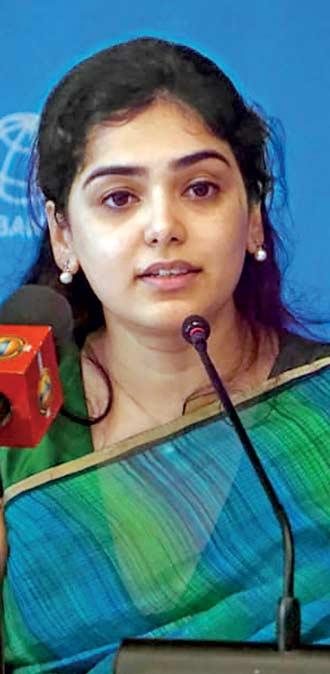
Ms Shruti Lakhtakia
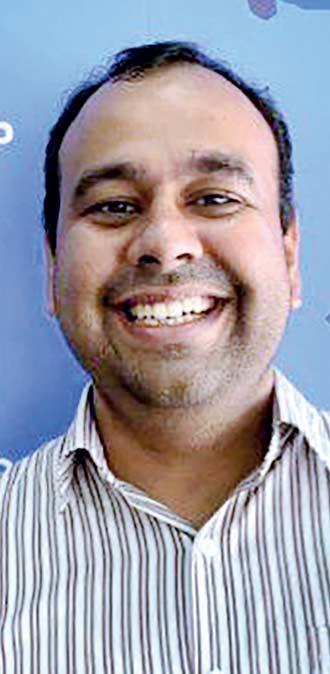
Arvind Nair
One million Sri Lankans will enter the job market in the next decade
Poverty has increased, public servants real incomes dropped
Since spending is capped at 13% of nominal GDP, growth becomes absolutely critical
The government now has a spending cap that it must stick to
Sri Lanka stands out compared to its South Asian peers in its ability to deliver health and education services
Revenue collection a tough balance
World Bank Lead Economist for Maldives, Nepal and Sri Lanka, Arvind Nair and Country Economist for Sri Lanka, Ms Shruti Lakhtakia, shared their views on the status of the economy in an interview with Daily Mirror. However, the interview was taken in the pre-disaster context, and slightly modified after. Excerpts
 QDo you agree with the government’s view that the economy has stabilised? What does that mean for growth going forward?
Shruti: We broadly agree with that assessment. Since the crisis in 2022, things have settled quite a bit. There have been improvements on both the fiscal and external fronts, which we see as a good sign. And really, for any kind of growth, that’s the first step – we need stability before we can think about achieving higher and more sustained growth, and before the private sector can invest.
We also need to make sure that stability continues. That means staying on the fiscal path and making sure the exchange rate adjustments continue.
When it comes to growth, though, it’s important to recognise the need for much higher growth. At the moment, both the International Monetary Fund (IMF) and the World Bank project growth at around 3 to 4 per cent. That’s enough to keep debt sustainable — if we define debt sustainability as reaching a debt to GDP target of 95 per cent by 2032, as outlined under the IMF programme. In fact, you can technically reach that target even with 3 per cent growth.
But that level of growth is not enough to achieve the aspirations of the Sri Lankan people. And achieving those debt targets with only 3 per cent growth means the government has to maintain a very high level of fiscal austerity. That kind of austerity, as we know, is hard to sustain for a long period. The government also needs room to respond to unanticipated shocks, like the devastating natural disaster that we just experienced with Cyclone Ditwah.
So if we want to ease the pressure on the government—and on the people—we really do need higher growth, at least 5 per cent and above.
Arvind: Just to add a bit more colour there on the jobs side—we’ve said before that about a million Sri Lankans will enter the workforce over the next decade. And if growth rates continue the way they are, the number of new jobs created will be significantly lower than the million needed. So we are looking at a real jobs gap if growth remains slow. That’s why we need the private sector to invest and create jobs.
There’s also the issue of welfare. If you look at poverty, the rate has basically doubled since the crisis. And to reverse that, growth is a prerequisite. So growth becomes essential—not just from the angle of fiscal, but also for jobs and improving people’s living standards.
That’s why it’s absolutely critical that growth goes up towards the 7 per cent target.
QCould you elaborate a bit more on this fiscal austerity that is needed to stimulate growth?
Shruti: So there are many things that the government can do to support growth—some require resources, and some do not—and all of it needs to be done in a way that still allows the debt targets to be met.
For context, we need to remember that in the past, the government spent beyond its means. For example, a lot of the borrowing was at high interest rates, which contributed to the crisis. So we can’t completely reverse track on fiscal discipline. We need to be careful about when and where we expand fiscal spending.
This has three implications for how the government can support growth.
First, even though the government needs to do more to boost growth, that doesn’t mean that the government can simply spend more. Indeed, under the new Public Financial Management Law, the government spending is capped at 13 per cent of GDP. That’s a very tight ceiling, so there isn’t much room to increase spending overall.
Second, because the budget is limited, the real question is how the government can spend more efficiently. For example, over the last decade, there were a lot of public investment projects where the returns were not clear, even though a lot of money was spent. So improving the quality of spending is crucial. The Sri Lanka Development Update we released in October has a special chapter called ‘Better Spending for All,’ which has many ideas on how to improve the quality of the spending on wages, welfare programmes, public investment, and more.
Third, there are a lot of structural reforms that can help growth and don’t require extra fiscal spending. For example, reforms in trade, investment, and SOE governance, as well as steps to improve the overall investment climate. These reforms don’t cost the budget money. Of course, they have other kinds of costs which we need to be mindful of.
Arvind: Just to add to that—on public investment, fiscal space is very limited.
While efficient spending is important, we also need to crowd in private investment where possible. We know there is an ongoing discussion around a Public-Private Partnerships (PPP) law, and having a transparent, clear framework for PPPs will be important as fiscal space tightens.
As for structural reforms, these don’t necessarily have fiscal implications, but they do have significant growth benefits. These are reforms aimed at boosting private sector growth. Many of these reforms were also touched upon in the budget speech: on the trade side, on investments, as well as improving the management of State Owned Enterprises (SOEs).
QThere’s been some concern that spending allocations announced in the last budget haven’t really moved. How do you view this situation?
Shruti: Coming out of a crisis, there’s a lot of pressure on the government to spend more. For example, poverty has increased, creating an urgent need to support people who are struggling. Many public servants have also seen the real value of their incomes decline over time—once you factor in inflation, their real wages are actually lower than they used to be. This means the government has to invest in public sector wages.
At the same time, because of past fiscal issues, the government now has a spending cap that it must stick to. So, it’s a very delicate balance to strike.
The government has to manage spending very carefully going forward—whether it’s increasing salaries or looking at pensions, the question is how to do it in a way that doesn’t create longer-term pressure on the budget.
On service delivery, Sri Lanka stands out compared to its South Asian peers in its ability to deliver health and education services. But the crisis saw a lot of skilled workers leaving, who were essential to delivering these services. The challenge now is how to maintain the quality of health and education with fewer workers.
Overall, it’s really about the right allocation and the right quality of spending. Are we putting enough into health and education rather than expensive infrastructure? We have seen good signs in this budget on that front.
The second part is the quality of spending. When we do a project, are we able to realise its benefits adequately? For wages, improving quality means establishing a pay commission to review and rationalise pay structures and modernising payroll systems to improve efficiency and transparency. For public investment, it means focusing on projects that fill real infrastructure gaps, addressing stalled projects, and strengthening investment management in line with the new Public Financial Management Act. And for transfers and subsidies, it means better-targeted support—aligning eligibility with real deprivation, expanding the social registry, enhancing administrative data quality, and, over time, moving away from universal subsidies, particularly for fertiliser and water.
So, as we mentioned before, we hope the focus on the right allocation and quality of spending continues.
Arvind: And to add to that, since spending is capped at 13% of nominal GDP, growth becomes absolutely critical. Higher growth means a slightly bigger spending envelope without breaking the cap.
On allocations, one area we highlight in our report is the maintenance of existing public assets. Sri Lanka has historically under-invested in maintenance, just 0.05% of GDP—much lower than peer countries and far below what is needed to maintain the actual capital stock. Current levels are about 13 times lower than recommended.
So, prioritising maintenance over building new expensive assets is critical. It’s a way of making sure we get the most out of what we already have.
QThe government’s revenue collection has improved. It is going to be 16 per cent this year, even better than the target. But much of this is coming from import duties, which also drain foreign reserves. How do you see this trade-off?
Shruti: Honestly, it’s a tough balance. The government needed quick wins on revenue—and this has been done well. But when you tax trade heavily, you make Sri Lankan goods more expensive abroad. That hurts competitiveness.
And that’s the trade-off.
So while the revenue numbers look good, their sustainability is not guaranteed, because they rely on measures that may not hold over time. That’s why we recommend shifting to a more sustainable revenue mix.
Our (World Bank’s) Public Finance Review from September highlights three priorities,
First, move away from indirect taxes like VAT and import duties to direct taxes like income and corporate taxes. Because indirect taxes fall heavily on households and reduce consumption and spending.
Second, improve tax administration. Make compliance easier, strengthen IRD systems and make processes fairer. The government has started working on this, but there’s a long road ahead.
Third, improve tax morale. People are paying more taxes at a time when poverty is higher, so every rupee matters to households.
On trade, again, the government can do a lot more to reduce its reliance on trade tariffs, including the para tariffs that discourage trade and make it more costly. The global environment in terms of trade is also quite uncertain right now. Any steps that the government can take to diversify trading partners, put in place bilateral or multilateral trade agreements, and facilitate exports would also help revenue.
Ultimately, Sri Lanka needs to think beyond year-to-year fixes and move toward a more stable three-to-five-year revenue strategy. A more medium-term, sustainable approach is what we recommend.
QThe government, in the budget, proposes to lower the VAT threshold. What impact will that have, especially on the cost of living and small businesses?
Arvind: I think there’s always a balancing act. We know that in the budget, there was a target for moving towards more direct taxes over the medium term. But in the short term, it’s harder to rely on direct taxes alone, so measures like lowering the VAT threshold are brought in.
As more small businesses are brought into the VAT system, it’s crucial that compliance processes are simple and efficient and that administrative costs are low.
In the medium term, it is still important for Sri Lanka to shift toward more direct taxes. One key area is improving the corporate income taxes, as Sri Lanka’s corporate tax revenue as a share of GDP is low compared to peers.
Improving corporate tax collections requires actions to enhance compliance among existing corporate taxpayers. It also calls for a new approach to providing tax incentives. We have seen some positive changes, particularly in reducing the number of channels through which incentives can be provided. But going forward, a comprehensive tax incentives framework would be helpful. Such a framework can clearly and transparently balance the fiscal costs of these incentives with the benefits they provide. Both the costs and benefits need to be made much more transparent.
Shruti: Just to add a bit of context, Sri Lanka had very low tax thresholds for a long time. When the thresholds were raised in 2019, a large number of taxpayers were lost from the tax base. And even after the tax changes in 2022-23, the number of registered taxpayers is still below to pre-2019 levels. So, part of the challenge is bringing those taxpayers back into the net, and importantly, thresholds today are already comparable to other countries.
Q The World Bank has repeatedly said that Sri Lanka has an untapped export potential of about US $10 billion. How have you assessed it?
Arvind: When we did this analysis, the export potential was calculated by looking at the existing export basket and the actual versus potential exports within that basket, based on characteristics of Sri Lanka and its trading partners, such as size, distance, etc.
But there is a gap between actual and potential. If we look at actual exports as a share of GDP, Sri Lanka has seen a large decline—from 39% in 2000 to about 20% in 2024. That’s a sharp drop over a 20-25 year period and reflects declining competitiveness driven by rising tariffs and less openness.
Improving competitiveness will allow Sri Lanka to close the gap and reach the country’s full potential. And get the country closer to achieving the export target of $36bn by 2030 and create more jobs.
QHow can Sri Lanka improve its export competitiveness?
First is more openness. The new national tariff policy is encouraging. Implementing it is a key signal of openness. It will lower costs for exporters, who are also importing intermediate goods and raw materials.
Second is customs reforms and trade facilitation. Reducing the cost and time involved in trade makes a big difference for growth.
Third is modernising the legal and institutional framework for investments. We’ve talked about this in our report as well. This will enable the country to increase investment, boost FDI flows, which are also critical for technology and knowledge transfer.