
Hydrology expert issues warning: Poor land-use planning, high population density can cause major catastrophes
Posted on December 31st, 2025
Kamanthi Wickramasinghe Courtesy Daily Mirror
Sri Lanka was not ready for Cyclone Ditwah, both in terms of the intensity of rainfall and winds, and also in terms of infrastructure. Even though Sri Lanka discussed about incorporating disaster-resilient infrastructure post-Tsunami, many of these discussions remained in black and white. In this backdrop, hydrology experts underscore the fact that Sri Lanka should prioritise on proactive planning, resilient infrastructure and community readiness, at least now. In a candid interview with the Daily Mirror, Lakshman Galagedara, Professor in hydrology and agrogeophysics at Grenfell Campus, Memorial University of Newfoundland, Canada, explained the importance of proper land-use planning, advance weather forecasting and nature-based approaches in mitigating natural disasters. Prof. Galagedara is a leading researcher in sustainable land and water resources management, with a strong focus on agriculture, water security, and food security.
Excerpts :
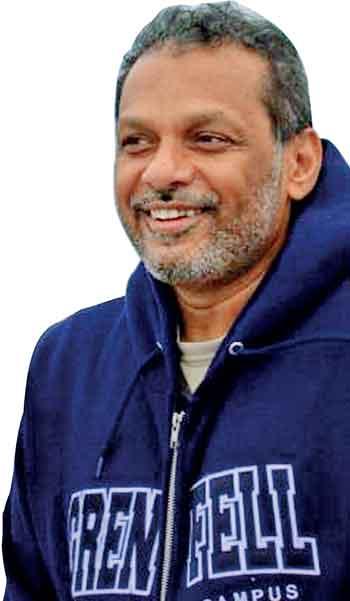 |
| Lakshman Galagedara, Professor in hydrology and agrogeophysics at Grenfell Campus |
Q : Sri Lanka wasn’t ready for the kind of disaster it faced following Cyclone Ditwah. As a coastal nation how should we have been prepared?
For any natural disaster, including Ditwah, proactive planning, resilient infrastructure, and community readiness are critical to avoid any catastrophes. I think that the country never thought of such a strong cyclone that would cover the entire country within a very short time period. We did not have advance forecasting instruments like Doppler Radar or sophisticated computing power to forecast it accurately. Correct land-use planning for zoning and strict enforcement of that zoning is essential. In addition, we should have clear evacuation plans, public education and even drills, well-equipped emergency response systems particularly led by respective communities, and coordinated communication across all levels of government. Long-term climate adaptation planning should be a priority now, which should be guided through proper land-use decisions and infrastructure investments to reduce exposure and vulnerability before disasters occur.
Q : Over 100,000 houses have been partially damaged and over 6000 of these are fully damaged. Going forward, what sort of infrastructure is necessary for Sri Lanka to minimise damage caused by disasters?
We are basically living everywhere without a correct plan or identification of zones for different activities. We have very limited land and most of it has been allocated for agriculture, plantation crops etc (other than the around 20% for forests and wildlife). So that, housing, business and services areas should be properly planned rather than building everywhere. The best is to go for 4-6 storey buildings on identified locations/clusters (sub-divisions), and the ground floor can be allocated for business and services. Each building can have 4 to 6 units horizontally and 4-6 vertically. This will bring to around 16 (4 * 4) to 36 (6 * 6) units in one building.
Q : Much attention is now being given to Central Highlands which is described as a fragile area. It is a watershed area that has a huge population. What are your observations on this matter? Yes, the biggest issue in the Central Highlands is unplanned living and livelihood. It is a very sensitive area where most of our river basins originate and drain radially to every direction of the country. The other point is that other than a Hydrological/Physical Unit, watersheds are also considered Social-economic and Political Units. That means people live there and take decisions that will affect directly or indirectly on the ecosystem. In the past, we have had politically supported/motivated land encroachments. This has created a lot of pressure in some of the most sensitive areas leading to all these issues including increasing the frequency and magnitude of landslides. We need to immediately stop (if land encroachment is still being done) and start zoning. When managing sensitive areas in watersheds, degraded/risky areas must be corrected promptly. In addition to the high-tech and expensive engineering approaches, we should also look into simple and cost effective Nature Based Solutions” when restoring degraded watersheds.
Q : Do we have the capacity to decentralise the population living in such vulnerable areas with prevailing land issues for instance?
Yes, I think we should begin with proper zoning and the development of planned subdivisions, such as 4–6 storey housing complexes. For residents interested in home gardening, suitable nearby land can be designated for community gardens. This zoning process should be led by a trans-disciplinary team that includes researchers from universities as well as representatives from relevant government departments and institutions. Ideally, this work would be overseen by a high-level body operating directly under the President.
Q : Sri Lanka has lacked scientific approaches in terms of reconstruction post-tsunami, resettling people. What are some scientific approaches that need to be incorporated in post-disaster management?
We can’t say we do not have scientific approaches, but the issue is the those approaches are either not fully developed or implemented correctly.
We should focus on: Ecosystem based approaches (nature-based solutions) including identification of sensitive areas, restoration of wetlands in some areas as needed; Watershed and hydrological modelling, specifically under the threats of changing climates to identify/predict potentials risks; Land-use planning and identification & demarcation of risky areas (these are being done to some extent by the NBRI); Socio-economic and livelihood assessment, focusing on what has to be done and where, and what should not be done; Data driven decision making through transdisciplinary approaches; and Community awareness and strengthening.
Q : We don’t have the technology to determine accurate rainfall and early warnings. What should be our immediate priorities in terms of getting down the necessary technology at this juncture?
As far as I am aware, we are not fully equipped with all the necessary instrumentation (for example, lack of Doppler Radar systems to track Cyclones/Severe weather). I think, the government is going to install one or two very soon. The other point is lack of a data sharing culture, which hinders some of the forecasting by independent scientists. I think data belongs to the people as most of these are generated through tax payer’s money. So that, data should be freely available for researchers to use (This – Open Data Policy is the world trend now).
At the same time, we should place greater emphasis on scientific approaches such as AI-based tools and high-performance computing to simulate weather and hydrological events, as well as hazards including landslides, floods, and droughts. Downscaled future climate projections under different emission scenarios can help forecast long-term impacts and identify potential risks more accurately.
Q : What are the challenges and opportunities we have in terms of transforming Sri Lanka into a disaster-resilient nation?
Challenges are as follows;
High exposure to multiple hazards in particular due to changing climates (climate change has increased frequency and magnitude natural hazards like severe weather worldwide) and unplanned development. Island nations like Sri Lanka are highly vulnerable to these changes and effects would be severe similar to what we experience with Ditwah. Poor land use and high population densities increases the chances for catastrophes and low-income communities are highly vulnerable to these disasters (especially due to aging and vulnerable infrastructures).
Limited use of science in decision-making: Gaps in data integration, modelling capacity, and evidence-based planning hinder effective risk reduction.
Institutional fragmentation: Weak coordination among agencies leads to overlaps, delays, and inefficient disaster response and recovery.
In terms of opportunities, the priority should be given to take the advantages from advances in science and technology (as mentioned earlier: AI, remote sensing, GIS, and high-performance computing enable better hazard forecasting, early warning, and risk mapping).
Focus on Ecosystem/Nature-based solutions (mangroves, wetlands, forests, biodiversity etc) and use of Trans-disciplinary approaches in understanding problems and then finding solutions.
Policy and planning reforms: land-use planning, zoning (where to live and livelihood and what to do in sensitive/risky areas. These will significantly lower future losses.
Balanced Development and Environmental Sustainability: Again, supported by proper Zoning and land-use planning and will avoid encroachments to sensitive areas.
Community engagement, and local knowledge: Empowering communities through education, preparedness, and participatory planning strengthens resilience. Should also focus on Equity-Diversity-Inclusion in all aspects of planning and implementation. This also goes with Early Warning & Communication Systems: Expand real-time monitoring networks for rainfall, river levels, and severe weather indicators; Standardise multilingual alert systems (SMS, radio, sirens, apps) to ensure all communities receive timely warnings; Integrate community-based communication networks so trusted local leaders can amplify official alerts.
Q : What are some key lessons we need to learn from the recent disaster?
Very simply, we need to change the way we think—both as individuals and as communities, and as a country—and be prepared for real change. Challenges will continue, and the frequency and intensity of hazards and disasters are increasing. Poor land-use planning and high population density can turn natural hazards into major catastrophes. Preparing for the future requires genuine change. This is not only the responsibility of the government; citizens also share equal responsibility. We must listen to guidance from government officials and agencies and be ready to adapt our ways of living and our livelihoods to build a safer and more resilient society.