
How Colonial Records Constructed “Native” Identity — and why Separatist claims Collapse under historical scrutiny
Posted on February 11th, 2026
Shenali D Waduge
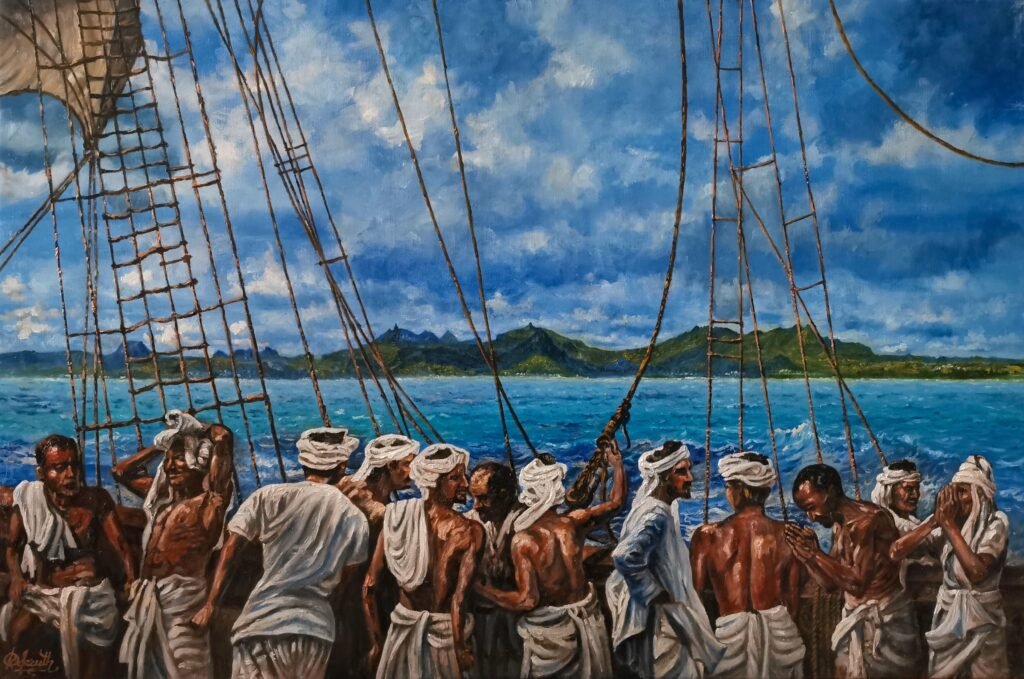
The oft-quoted disenfranchisement of Tamils” post-independence is often repeated internationally & referred to locally. Let us go back in time and evaluate the evolution of how colonials identified the natives. To answer that, let us trace how identity classification evolved. This study traces how Portuguese, Dutch, and British colonial administrations systematically identified indigenous populations and distinguished them from imported migrant communities. It then asks a central question: On what historical, legal, or civilizational grounds should externally imported colonial labour be granted automatic citizenship in a newly independent sovereign state? This is not an ethnic argument. It is a historical–legal inquiry, grounded in primary records, census data, administrative classifications, land registers, and colonial legal systems.
PORTUGUESE PERIOD (1505–1658)
How Portuguese identified populations
Key Sources
- Fernão de Queyroz
The Temporal and Spiritual Conquest of Ceylon (1617–1688)
- Identifies Sinhala population as indigenous
- Uses Malabars” to describe South Indian Tamil-speaking migrants and mercenaries
- Jaffna treated as a political entity, not a native civilizational base
- João Ribeiro
Fatalidade Historica da Ilha de Ceilão (1681)
- Distinguishes Sinhala natives from Malabar mercenaries and traders
Crucial point:
The Portuguese never recognized Tamils” as a native ethnic group of the island.
They recognized them as Malabars = South Indian origin.
This establishes the earliest recorded colonial distinction between indigenous populations and external migrant communities.
| Term | Meaning |
| Chingalas / Singalas | Native inhabitants of the island |
| Gentios da terra | People of the land (natives) |
| Malabares | People from the Malabar coast (South India) |
| Coromandel | Eastern South Indian coast |
| Mouros | Muslims |
DUTCH PERIOD (1658–1796)
Dutch Civil administration was more systematic
The Dutch created Thombo registers — land, population & tax records.
Their classification:
| Term | Meaning |
| Inlanders | Natives of the land |
| Singalezen | Sinhalese |
| Malabaren | South Indian Tamils |
| Topasses | Mixed Portuguese descendants |
Key Source Authors
- L. Brohier– The Dutch Thombo Registers of Sri Lanka
- Arasaratnam– Dutch Power in Ceylon 1658–1687
- VOC Archives – Colombo & Jaffna Thombos
Dutch Thombos:
- Record Sinhalese villagers as indigenous landholders
- Record Malabars as migrants, traders, mercenaries, and labour
- Land ownership overwhelmingly Sinhalese (strongest legal marker of indigeneity)
- Even in Jaffna, Malabars appear as occupational and migrant groups
Key finding:
Even in Jaffna, Tamil populations are documented mainly as service, trade, or mercenary groups, not as original indigenous settlers.
Under Dutch Roman-Dutch law — later inherited by the British and post-independence Sri Lanka — land ownership and ancestral rootedness defined legal belonging.
Thesavalamai Law (1707 / Dutch Period)
- TheThesavalamai is a codified customary law in Jaffna, officially recorded by the Dutch in 1707.
- Appliedexclusively to the Tamil/Malabar population of northern Sri Lanka.
- Regulated: property, inheritance, marriage, caste, and civil matters for Tamils.
- Exclusive application to Malabars:
- Thesavalamai never applied to Sinhalese; how many of the Ceylon Tamils” enjoy this legal status for land ownership?
- Colonial acknowledgment of external origin:
- By codifying Thesavalamai, Dutch and later British authorities treated Tamil-speaking populations as aself-contained, migrant community, distinct from the indigenous Sinhalese.
- Legal precedent for citizenship and land ownership:
- Under Roman-Dutch law (and inherited British administration), land rights and ancestral rootedness defined legal belonging.
- The Thesavalamai codification reinforces that Tamils weredistinct settlers, with customs and property laws different from the island’s indigenous legal systems. The law is another headache of the colonials.
Implication for Separatist Claims:
- If Tamils were truly indigenous, there would beno need for a separate, codified law governing only their community.
- Colonial administration consistentlytreated them as external settlers, not as part of the indigenous Sinhalese civilization.
How Colonial Records Constructed ‘Native’ Identity
Colonial administrations were not anthropological institutions.
Their classifications were designed for governance, taxation, land tenure, military control, and population management. Yet across three successive colonial regimes — Portuguese, Dutch, and British — a remarkable continuity emerges in how indigeneity was defined.
Across all three COLONIAL administrations, native identity was determined by three consistent criteria:
- Ancestral rootedness
- Land inheritance
- Long-settled village-based civilization
Populations satisfying these conditions were recorded as people of the land — the indigenous inhabitants. Only the Sinhalese fitted all 3 criteria.
Those lacking these characteristics were classified separately as (2nd category):
- Migrants
- Mercenaries
- Traders
- Imported labour
From the 16th to the late 19th century, Tamil-speaking populations were consistently placed in the second category, not the first.
This demolishes the modern claim that Ceylon Tamil” indigeneity is ancient.
Instead, the evidence demonstrates that colonial bureaucratic convenience — not historical reality — manufactured the modern ethnic category.
EARLY BRITISH PERIOD (1796–1870)
Identity Categories still external-origin based
British continued Dutch classification:
| Term | Meaning |
| Cingalese | Indigenous population |
| Malabar | Tamil-speaking South Indians |
| Coast Tamils | Migrants from Coromandel |
| Coolies | Imported labour |
Key British Sources
- James Emerson Tennent– Ceylon: An Account of the Island (1859)
- Percival– Account of the Island of Ceylon (1803)
They describe:
- Sinhalese as the ancient people of the island
- Malabars as immigrant traders, soldiers, and labour
This confirms over three centuries of continuous administrative classification recognizing Sinhalese as indigenous and Tamil-speaking populations as external-origin groups.
Scholars such as Dr Karthigesu Indrapala and Mahindapala H.L.D. confirm that Tamils only became permanent settlers in the 12th–13th centuries.
Before that, Jaffna was not a native civilizational base, but a political and isolated outpost. Cultural development in Jaffna remained derivative of South India, with no independent artistic or state-building achievements comparable to Sinhala civilization.
THE CRITICAL SHIFT — BRITISH CENSUS ENGINEERING (1871–1911)
This is the turning point.
1871 Census — No Ceylon Tamil” Category
Tamils classified mainly as:
- Malabars
- Coast Tamils
- Indian Tamils
1881 Census — Transitional Identity Stage
First bureaucratic attempts to separate:
- Tamils of Ceylon”
- Tamils of Indian origin”
This was not historical recognition — it was administrative convenience.
Colonial Manipulation of Identity & the Birth of ‘Ceylon Tamil’
The 1911 Census formalized Ceylon Tamil” as an administrative category.
This was not historical recognition — it was colonial political engineering, designed to simplify electoral representation, allocate Legislative Council seats, and stabilize communal governance.
The creation of this identity gave rise to a politically privileged Tamil elite that dominated civil service, missionary education, and legislative influence — far beyond their historical numbers or civilizational contribution.
Meanwhile, Sinhalese were consistently recorded as indigenous inhabitants with ancestral land rights — a continuity that persisted across all colonial administrations.
1911 Census — The Political Reclassification
This is when Ceylon Tamils” formally appear as a census ethnic category.
Why?
Because:
- Britain needed stable communal representation structures
- Legislative Council reforms required ethnic group allocation
- Political representation required simplified identity blocks
- Census became a political instrument, not a historical one
- Registrar-General was a Tamil – Sir Ponnambalam Ramanathan
Key Source
- Patrick Peebles– The History of Sri Lanka
- M. de Silva– A History of Sri Lanka
- British Census Reports 1871–1946
Ceylon Tamil” is a 20th century colonial administrative construction — not an ancient historical identity.
This census shift later became the foundation of ethnic politics and separatist ideology.
PLANTATION TAMIL IMPORTATION (1820–1939)
British Import Policy
- Over 1,000,000 South Indian Tamils imported
- Purpose: Plantation labour
- Legal status: Temporary migrant workforce
This represents one of the largest organized labour migrations in colonial Asia. Comparable migrations in Malaya, Burma, Fiji, Kenya, and South Africa did not result in automatic citizenship upon independence.
Sri Lanka’s post-1948 approach was therefore consistent with global post-colonial legal norms.
Identified in British records as:
- Indian Immigrant Labour
- Estate Tamils
- Coolies
- Malabars
Key Sources
- H. Farmer – Pioneer Peasant Colonization in Ceylon
- Holmes Report on Indian Labour in Ceylon (1915)
- British Blue Books of Ceylon
THE KEY LOGICAL QUESTION FOR READERS
If the Portuguese, Dutch and British all identified all Tamils as – South Indian Tamils, Malabars, immigrants, labourers, and external populations, on what historical or legal basis should they suddenly become citizens?
1911 RECLASSIFICATION DOES NOT CREATE INDIGENEITY
Census categories are administrative tools, not historical truth engines.
They reflect:
- Political needs
- Governance convenience
- Electoral engineering
They do not confer ancestral legitimacy.
WHY THE 1948 CITIZENSHIP ACT WAS LEGALLY CONSISTENT
https://hrlibrary.umn.edu/research/srilanka/statutes/Citizenship_Act.pdf
The Act:
- Used ancestral descent
- Required generational rootedness
- Reflected pre-existing colonial classifications
Citizenship and Historical-Legal Question
This raises a key question:
On what historical or legal basis should South Indian migrant labour, imported for plantations, be granted automatic citizenship in a newly independent state?
International post-colonial practice provides clear guidance:
- Citizenship is granted based onancestral rootedness and generational permanence
- Migrant labourers, even if resident for decades, werenot considered founders or indigenous
Sri Lanka’s 1948 Citizenship Act was therefore consistent with global norms, codifying historical continuity rather than inventing exclusion.
HOW COLONIAL ENGINEERING FUELED SEPARATISM
The artificial 1911 Ceylon Tamil” identity produced a politically privileged Tamil elite, which benefited from:
- Missionary education
- Foreign scholarships
- Colonial civil service dominance
- Political over-representation
This elite:
- Advanced50–50 communal representation demands
- Formed theIlankai Tamil Arasu Katchchi (1949)
- Issued theVaddukoddai Resolution (1976)
- Paved the ideological path toarmed separatism
Thus, separatism did not arise from ancient grievances — it arose from colonial political engineering and elite privilege.
The Dutch and later colonial administrations also manipulated caste structures, elevating the Vellala caste artificially as a ruling elite in Jaffna.
Arumuka Navalar (1822–1879) codified Vellala dominance, creating a hierarchical structure that reinforced political control but had no basis in Sri Lankan indigenous society.
The transformation of the Bellala labourer into the Vellala landowner illustrates the colonial-engineered social hierarchy in Jaffna. As Wagenar notes, when the Bellala became landowners, a simple linguistic shift — B → V — symbolized their elevated status.
There is no equivalent Vellala caste in South India, highlighting that this was a Ceylon-specific construct.
This newly privileged Vellala class gained a strategic advantage during the arrival of American missionaries. The British, wary of empowering the majority Sinhalese with English education, effectively monopolized schooling for the Vellala, consolidating their socio-political influence.
This artificially created Vellala elite later became the backbone of political separatism, dominating peninsular Jaffna society and controlling education, social privilege, and access to resources, which ultimately fed into the rise of Tamil separatist ideology in the 20th century.
The British failed to comprehend the indigenous Sinhalese village-based structure.
Colonial administrators instead opened governance and education to select elites — the Mudaliyar system, inherited from the Portuguese — allowing a few families to amass wealth, collect taxes, and gain social respectability, while the majority remained marginal.
Modern neo-colonial actors continue this pattern, propping up and rotating power among these elite families across ethnic lines — their understanding being that maintaining elite privilege ensures influence, while preventing true mass empowerment.
The above may raise some counter questions:
The Tamils have lived in Sri Lanka for centuries — doesn’t that make them indigenous?”
- Portuguese, Dutch, British records classify Tamils asmigrant populations, not ancestral natives.
- Permanent settlement in Jaffna only begins around12th–13th centuries, much later than the Sinhalese, whose civilization spans millennia.
- Being resident for centuriesdoes not automatically confer indigeneity under international post-colonial legal norms. Indigeneity is linked to ancestral rootedness, land inheritance, and long-settled village-based civilization, criteria consistently recorded by colonial administrations.
The 1911 Census recognized Ceylon Tamils — isn’t that official historical recognition?”
- The 1911 Census wasadministrative and political, designed for electoral convenience, representation quotas, and colonial governance stability.
- Census categories arenot historical truth engines; they are tools for bureaucracy.
- Recognition on paperdoes not change historical or civilizational reality. Legal systems, land records, and prior colonial documents continue to show Sinhalese as indigenous landholders.
The Vellala caste proves ancient Tamil roots — they are indigenous elite.”
- TheVellala caste in Jaffna emerged from colonial-engineered transformation of Bellala labourers.
- Linguistic shift (B → V) symbolizedcolonial social elevation, not ancestral legitimacy.
- There isno Vellala caste in South India, confirming this is a Ceylon-specific construct.
What about Tamil contributions to culture, religion, or statecraft?”
- Jaffna culture and political systems werederivative of South India, with no independent Sinhalese-comparable civilization.
- Tamil settlements were mainlytrading, mercenary, or service-based communities until colonial times.
- Contributions of an elite minoritycannot redefine entire population identity as indigenous.
Doesn’t denying plantation Tamils citizenship violate human rights?”
- International post-colonial normsdo not automatically grant citizenship to imported labour, even after decades of residence (e.g., Malaya, Fiji, Kenya, South Africa).
- Citizenship in 1948required ancestral rootedness and generational permanence, consistent with global standards.
- This approachprotected the sovereignty of a newly independent state, rather than discriminating against individuals.
Why are Sinhalese considered fully indigenous — isn’t that biased?”
- Colonial classifications consistently recorded Sinhalese aslong-settled villagers with ancestral land ownership, a factual record, not bias.
- Sinhalese civilizationpredates European arrival by millennia, with continuous village-based governance, agriculture, and militia structures.
- Recognition is based onobjective historical and legal markers, not ethnic favoritism.
Doesn’t this dismiss Tamil grievances?”
- The argument doesnot dismiss Tamils as citizens; it distinguishes historical claims of separate-state indigeneity from administrative, elite-driven constructs.
- Tamils who seek coexistence areguaranteed full citizen rights and security
- Separatist claims arise fromcolonial engineering and elite privilege, not genuine historical exclusion.
Isn’t this an anti-Tamil racist narrative?”
- The narrative ishistorical-legal, not ethnic or racist.
- Those who have no solid arguments to counter hide behind racist slogans.
- Focus is oncolonial records, land registers, and census classifications.
- Itexposes manufactured political identities rather than targeting the community.
- The conclusion supportsshared national belonging and reconciliation, not exclusion.
Doesn’t British education policy justify Vellala dominance?”
- British policymonopolized schooling for a small elite to control administration; it was not evidence of ancient status.
- Sinhalese majority and other Tamil groups remainedlargely marginalized in governance, showing colonial manipulation of caste, not historic legitimacy.
If Tamils were migrants, how can they now claim citizenship?”
- Citizenship post-independence islegally distinct from ancestral indigeneity.
- The 1948 Citizenship Actcodified historical continuity, granting rights to descendants with generational rootedness, not temporary imported labour.
- This aligns withinternational post-colonial precedent and is not discriminatory against individuals or communities.
shouldn’t Tamils be demanding accountability from the British for the uprooting of Tamils, importing them across seas and then planting separatist ideology”
Most definitely. It’s not too late to redirect the separatist campaign to demanding accountability from the British.
STRATEGIC MESSAGES TO ALL COMMUNITIES
To Tamil Separatists – mostly living overseas
- The historical bluff is now exposed.
- Chronology, land records, census classifications, and colonial administrative lawcollectively dismantle the claim of ancestral indigeneity.
- Separatism rests not on history, but oncolonial political manipulation and present day PR campaigns and well-funded lobbying.
- There existsno credible legal, historical, or civilizational foundation for a separate Tamil state in Sri Lanka.
To Peace-Loving Tamils who seek Coexistence
- This historical evolution offersreassurance, not rejection.
- Your future lies incoexistence, security, and shared national belonging — not in resurrecting colonial constructs that serve foreign geopolitical interests.
- Any hidden aspiration for separation exposes communities toregional domination, particularly by India, whose strategic doctrines openly emphasize subcontinental consolidation and subservience.
- Living as equal citizens within Sri Lanka is infinitely safer, freer, and more dignified than living as a peripheral minority under Indian dominance. It is a question the Tamil people must ask themselves.
To the Sinhalese People
- History calls formagnanimity grounded in truth
- Understanding these realities allows the Sinhalese majority toembrace Tamil citizens fully, once separatist demands cease.
- True national reconciliation is built not on denial, but onhonest historical clarity and mutual trust.
The colonial era engineered identities.
Independence demands decolonizing historical myths.
There exists no historical or legal justification for Tamil separatism.
There exists every moral, civilizational, and strategic reason for unity.
Sri Lanka’s future security, sovereignty, and harmony depend not on resurrecting colonial distortions and continuing the divisions — but on shared belonging, historical honesty, and national reconciliation.
Shenali D Waduge