
“Don’t count on IMF or World Bank” – Independent economist Ahilan Kadirgamar
Posted on February 22nd, 2026
Courtesy The Daily Mirror
- If you look at Sri Lanka’s debt crisis, I have argued it is not because of China or India or Japan. The main culprit are the bond markets
- The IMF programme puts a lot of constraints on spending
- The Rajapaksas might have thought they can play China against India, but that doesn’t work
- There is a lot of financing for green energy. But often, I would say a lot of that is ‘green washing’
 As a response to Managing Director of the International Monetary Fund (IMF), Kristalina Georgieva, saying, while on a visit to Sri Lanka, as to how government discussions with the IMF can help recover from the impact of Cyclone Ditwah-which had disastrous effect on ailing economy- internationally renowned political economist and senior academic Ahilan Kadirgamar is of the view that this country cannot count on either IMF or the World Bank. Despite Georgieva’s assertion that economically devastated Sri Lanka can count on the support of the Washington based international organization with the assurance that Sri Lanka’s arrangement with the IMF under the Extended Fund Facility is not rigid—it can and will be adapted to the new post-Ditwah reality, the economist is of the view that Sri Lanka needs a comprehensive plan to fight the present and future shocks. A Senior Lecturer in the Department of Sociology at the University of Jaffna, Ahilan holds a PhD in Anthropology from the Graduate Center, City University of New York, and a Master of Arts in Economics from the New School for Social Research. He is also a member of the International Development Economics Associates (IDEAs).
Excerpts of an interview Kadirgamar had with the Daily Mirror:
- And the way forward I would suggest we have to start with where we are most vulnerable that is with the food and agriculture systems. We have to strengthen it because you have to feed your people. I think it was the great British playwright George Bernard Shaw who said Every country is only three meals away from a revolution”
- The World Bank and IMF were also supported by the Americans. I’m not sure what Mr. Trump would do to them next year or the year after. So don’t count on them being around for the long haul
- We know that we should be building a different kind of economy and a different kind of infrastructure. Because who gets affected by these crises? It’s not the wealthy people in this country. The economic crisis also, who got affected? Ordinary workers, farmers and fisher folk. Their incomes are still low, but their cost of living has gone up
 QShould a nation have expected a disaster like this at any point by any country like Sri Lanka?
Now, if we look at the global situation, I would say over the past 4-5 decades, we are faced with two major challenges. One is how our global order has changed due to what we call neoliberalism. It is a project which undermined our state institutions, dependent completely on the market and the private sector. And what we have seen around the world is repeated crisis.
Now, Sri Lanka was the first country in South Asia to liberalise its economy, with the so-called open economy reforms under J R Jayewardene. But many countries followed in the 1980s, India by 1991, and since then we are seeing repeated crisis around the world. In the 1980s, the Latin American countries went into a crisis.
In the late 1990s, East Asia crisis, where Korea, Thailand, and Indonesia were severely affected. And then in the late 2000s, in 2008, the North Atlantic crisis, where Western countries experienced a financial crisis. So, the global system of free trade, and the free flow of finance, has made every country extremely vulnerable. In some cases a debt related problem and sometimes a trade related shock!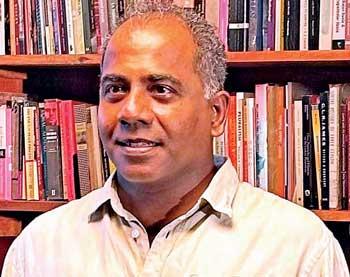 And of course, we have over last four years been in a deep economic crisis. From 2020 the COVID pandemic and then the economic collapse in 2022, which is also a debt crisis. And not only Sri Lanka, about half of the countries in the developing world, are facing some kind of debt problem.
So, on the one hand, we have this kind of very fragile economic systems around the world with the onslaught of what we call neoliberal reforms. And neoliberalism really is, ultimately, a class project. It’s a class project of finance capital. Because who gains, even though a lot of destruction, a lot of crisis, some people are making huge amounts of wealth. Mainly using finance. So, money is making money. But actual production is not happening. People are not benefiting.
QWhen you say crisis, it could be war, disaster, anything?
I’m focusing mostly on economic crisis. But sometimes economic problems also aggravate wars and other social disasters. So, with economic policies, we have to think about how the global order has changed, how capitalism has changed in the last four to five decades. Now, another big problem we have been facing during the last many decades is climate change, which is also man-made in the sense from the impact of the industrial revolution.
We have been destroying our environment and we are facing the consequences. Now, in 2016-17, we faced a drought. Almost every year we are having some floods. But sometimes, like this time, it’s maybe once in a 100 years or once in a 500 years type of massive cyclone. And it’s very hard to prepare for such a big, once in a many century, event.
But we know that these kinds of crises are happening and they are going to happen again. So, we need to both rethink the economic order and approach both globally and in our country.
We need to change what I would call the built environment. That is the kind of infrastructure that we build, the kind of financial system that we have. So, both in terms of the economic system and in terms of our built environment, we have to change.
And I think now we’ve been through both types of crises. We’ve been through an economic crisis and now a climate-oriented crisis. So, we really should rethink where we want our country to go. What kind of system we want to build. I see this as much bigger than even the National People’s Power (NPP) government’s challenge. I’m saying this is a national challenge for all of us. This is something we have to think about for the next generations.
So, the causes of what has happened now, I don’t trace it to one year’s preparedness or even three years. We know that we should be building a different kind of economy and a different kind of infrastructure. Because who gets affected by these crises? It’s not the wealthy people in this country. The economic crisis also, who got affected? Ordinary workers, farmers and fisher folk. Their incomes are still low, but their cost of living has gone up.
Malnutrition is on the rise. Even according to the World Bank, poverty has more than doubled. The World Bank says we will only return to pre-crisis poverty level, say the poverty level in 2017-18, only in 2034. So, we’ve lost two decades in terms of poverty alleviation. Our GDP growth according to the World Bank, we will only go back to the same size of our GDP that we were in 2018, only in 2026. Almost a decade, no growth.
Whereas a developing country in that period, I would say, should have grown by 50 or 60%. If you take China, they doubled their GDP in that time frame, that is when they were going through their high growth period. So, this is a huge loss. This has to be a wake-up call that we need to change our economic system.
Also, who are the people who have been most affected by this climate shock? It is the Malaiyaha Tamil people and the working class. Of course, everybody gets affected, but now even the Malaiyaha Tamils children’s future is going to be affected.
So, this is should make us rethink how we should be building and whatever investment that we can make. Should we be building big highways for the tourists and the wealthy to travel on? Or should we be building rural roads, public transport systems? Should we be rehabilitating our tanks and ponds which can absorb this kind of flooding?
QAnd we should have been concerned about the environment as well. Isn’t it?
Environment and again, I don’t see environment as separate from people. It is very much intertwined. I’ll give you an example. Now, one serious concern we have is, of course, globally they have set certain benchmarks. The climate crisis is caused by the western countries and their industrialization. But they of course put the pressure on countries like us (Sri Lanka) to make the changes to reach certain targets.
So, Sri Lanka is to have 30% forest coverage, because that will reduce greenhouse gases.
Now, what has happened? As a country, should we blindly consider such targets? And they may even give us some so-called incentives to get into green energy. There is a lot of financing for green energy. But often, I would say a lot of that is ‘green washing’.
So what happened? Here is a concrete example I can give you. If you take the Mullaitivu district, after the war, Mullaitivu district’s forest coverage has gone up from something like 34% to 72%.
Now, the government, the Wildlife Department, Forest Department have taken steps and gazetted forests, just using satellite imagest. Now, there were villages there, there were tanks there, there were people living there before the war. They were displaced. So, there has been some overgrowth. Now, people can’t resume their agriculture there. But why did the previous government push for that? This all happened after the war from 2012 onwards. This is so we can reach that 30% forest coverage national target. But then, who is getting affected? It is the farmers, fisher folk and ordinary people. So, we have to be concerned about the environment, we have to reduce pollution, we have to and all that is good.
But we have to realize that the environment is there for the people and people’s livelihoods are also important. So again, the most marginal people, the farmers and so on, were asked to pay the cost. Why aren’t we reducing the number of private vehicles on the road? Why don’t we build a better public transport system? That is also environmentally friendly. We should be investing in bus transport and railway transport. But that we are not doing enough of. So, the environment has to be thought in, along with people’s lives and livelihoods.
QAnd you said about green washing. Can you please explain?
So, now there is all kinds of talk, right? Now they say, billions of dollars is not enough to address environmental challenges. We need trillions of dollars. And that is the global discourse. And they say, that this trillions of dollars, governments cannot supply. But that we can get it from the private markets and capital markets. Now, if you look at Sri Lanka’s debt crisis, I have argued it is not because of China or India or Japan. The main culprits are the bond markets. Sri Lanka started floating what is called international sovereign bonds. Starting in 2007 and by the time we defaulted, about 52% of our debt was commercial debts and commercial borrowings. Not bilateral borrowing or multilateral borrowing, but all kinds of commercial borrowing of which 40% amounted to these international sovereign bonds.
They charge very high interest. They charge, Sri Lanka high interest for these, and these are 10-year bonds. Sometimes 6%, 7%, it even went up to 9%. Now, if you do the compound interest on a 10-year bond, 6, 7%, the total interest payment is almost equal to the principal.
We will never get such returns. Our GDP growth is 3%, 5%, but we are borrowing in dollars for 6%, 7%, 8%. So, obviously, we are going to default because of those private actors and their extraction, that’s the power of finance. They proved large loans and they extract huge profits.
QWhen we come to the disaster, do we have an estimate of what is the cost this recent disaster?
A: It’s hard to say. Now, I think the government is working with the World Bank assessment of 4.1 billion US dollars of the destruction. And how much investment will be necessary and what different donors can contribute.
My opinion is, we would need a few trillion rupees in investment. What does few trillion rupees mean? Now, our GDP is about 35 trillion rupees. So, when we say a few trillion rupees, it is about 5 to 10 percent of our GDP in investment. Anyway that investment was necessary to even get out of the economic crisis. But we were not doing that the last few years. Why? Because of the IMF programme, because the IMF programme puts a lot of constraints on spending. So, now our economy has been hammered by the economic crisis. We have not recovered.
And, you know, John Maynard Keynes, the famous economist was a crucial thinker of this idea of why governments need to spend after a crisis, because only if the government start spending, the demand will be created for the private sector to come in.
QCan we get support from the international agencies for this kind of projects as well?
We can and we should. But, now they don’t give grants. The World Bank and IMF now only provide commercial interest loans. Not concessionary loans. Now we are considered a middle-income country.
The IMF says they will have a special fund for 200 million US Dollars. The World Bank has said, and World Bank ADB together, something like another 200 or 250 million US Dollars. Let’s say if you put all of it together, 500 million US Dollars, it’s only 150 billion rupees. Now, as I mentioned, we need trillions of rupees.
The government, has put forward a proposal for an additional 500 billion rupees. So, if you compare it with the 150 billion, that 500 billion is more than thrice. I would say, the government has to take the responsibility because we don’t need US Dollars to build rural roads. We can do it with rupees.
They say you can’t spend more than about 12.8% of GDP. Now, 12.8% of GDP is hardly enough to just pay our salaries. So, then there’s no investment. Right? So, that is a big constraint for us, but the government has to figure out a way. In my view, in a crisis like this, we can’t be listening to the IMF. Our people are most important. So, the government, if necessary, has to say, no, we are going to have to spend and the IMF can decide if they want to keep the IMF programme or not.
But there are, again, another problem. The Central Bank has kept our interest rates very high. Policy rate at 7.75%. Last year, our inflation was negative, minus 4%. Now, it is coming to a little above zero. So, they should be bringing down the interest rates. Because if they bring down the interest rates only, banks will lend at lower interest rates. Then, private actors will borrow and invest. If you keep interest rates so high, by the time an enterprise goes and borrows from a bank, it will be like 11-12%. Now, the government has said 9% for lending as a cap, but then what will happen if banks just won’t lend. Because at 9%, if they can earn almost the same amount in treasury bonds, why do they need to take the risk to lend to a business? There is risk, right? But if you put in a treasury bond, it is safe.
So, this is a trap that we are in. So, the Central Bank needs to bring the interest rates down.
In my view, this government soon or later has to change the Central Bank Act and the Public Finance Management Act. They have the two thirds majority in the parliament they can very easily do that. Of course when they do that the IMF won’t be happy, but that is the reality. These laws were rushed through by an unelected President and an undemocratic Government before the NPP Government assumed power. Mr. Ranil Wickremesinghe and the Rajapaksas passed these laws to keep the IMF and the World Bank happy. Now we have to undo all the damage if we as a country are going to move forward. There are powerful countries, and there are vulnerable countries like ours, and the powerful dictate to us what to do through the IMF and institutions like the World Bank. But we have to take the responsibility, and there may be political costs, but that is a reality of the system.
And the way forward I would suggest we have to start with where we are most vulnerable that is with the food and agriculture systems. We have to strengthen it because you have to feed your people. I think it was the great British playwright George Bernard Shaw who said Every country is only three meals away from a revolution”. If you don’t have food on the table you don’t care which government is there! So we have to focus on our food system and agriculture. You know, during the last 40-50 years with neo-liberalism, they said if you can’t produce something you can get it from the global market cheaper. So what was present in the 1970s called the import substitution became a bad word. You can export as much as you want and you can import what you need. But in the 1930s when the global system was going through a major crisis, the great depression even John Maynard Keynes, he is not a Marxist, he is the one who set the system for the global order. It is in his vision that the World Bank and the IMF were started. Anyway, amidst the depression he said every country should focus on self-sufficiency.
You see we have destroyed all our systems. So we need strong food systems, and agriculture systems. We need self-sufficiency, or I would say an import substitution programme, and then we need a proper financial system. Not a financial system that is going into villages giving micro finance and extracting what little people are producing. But a financial system that will support a production economy with development banks. Our commercial banks should be given proper directions. But everybody is thinking about profits. Over the last year, all our commercial banks are making record profits. The economy is not recovering but the banking sector is making huge profits and why? Because the interest rates are high.
Lot of diseases surface because people are experiencing malnutrition. That’s why I said every crisis affects the marginalised and in our case marginalised is bottom 60 percent of our population.
So we need to change the strategy. The Noble prize winning economist Prof. Amartya Sen said ‘Famines are not caused by scarcity, famines are caused by lack of democracy’. I think the government should learn from that. Unless our economic policies are democratically decided in terms of what people’s needs are that is what can lead us into even more serious crisis. Listening to the technocrats from the IMF and the World Bank; that is not democracy. That is the Washington perspective. We need to listen to the people. This government has got a huge mandate from the people and they have to do what the people need, so that we don’t end up in famines, and we don’t end up in crisis that cripples our people.
QWhat about the imports and how are we doing right now?
We need to prioritise our imports and have a control over our imports. If there’s an external trade shock like what Mr. Trump suddenly said, 44% or 20%, and you know next month he might wake up and now decide on something else, we have to manage our import bill.
QWhen you say prioritising imports now, for example a huge rush to get new vehicles. Are these priorities?
In my view this government’s move to import vehicles was a bad idea. I think we have to save every dollar of foreign exchange possible because we know there will be more shocks. There are certain things we can produce more. We need machinery that makes sense. If we need certain transport facilities for public transport we need to import them, but we shouldn’t be importing luxury vehicles for the country’s wealthy.
Q Our economy is so vulnerable that once it rained and there’s another landslide happening so it’s very uncertain how our economy is going forward. We don’t have excess budgets in our hands. How can we come out of this difficult situation?
I think it’s very important that we have a long-term vision and work backwards, knowing that there will be many shocks. We can’t be reactive. Right now, for example, I would say our higher education system has really declined because successive governments have not invested in the education system. Sri Lanka has one of the lowest investment in education. We’ve been down to I think 1.3% now it’s about 2% of GDP. This is how much the government is investing in the education system. This government has said that they will work towards 6% of GDP target. Now I know that in the next five years, 6% is difficult, but how about10 years. What I mean by working back is that right now we don’t have excess funds, but the government owns land, the government owns buildings, some of them are sitting idle. They can contribute that to the education system in the form of assets; they might have some excess transport facilities they can use that in rural areas to transport children. So we have to be creative.
Q: As an economist what should be our targets for this year and the next year, 2027?
I think 2026 has to be a year of recovery and reconstruction. I don’t think we can just suddenly rebuild, but it should be our priority. We should have as much funds as possible. Now in 2027 March, the IMF programme comes to an end. And at least by then we have to have a strategy. Now how are we going to move forward after that? We can’t wait till 2027.
We have to start now. Borrowing in the capital markets is a dead end, interest rates are going to be so high, so we have to find other financing options. We should be able to live within our means in terms of our balance of payments, but internally we have to use all our resources.
Having said that I am very concerned about two things; one, globally as we are seeing racism is on the rise, and tensions all over with wars. Every country is now for itself, and the global order itself I would say is unravelling.
The World Trade Organization, which was what the Americans, were championing. Now Mr. Trump has killed it. Now this idea of free trade, it’s become a joke.
The World Bank and IMF were also supported by the Americans. I’m not sure what Mr. Trump would do to them next year or the year after. So don’t count on them being around for the long haul. So we have to understand the global order is changing and we have to prepare for that, we have to be very clear about having a non-aligned policy. We cannot get caught in these tussles because a small country like ours will always be the loser.
The Rajapaksas might have thought they can play China against India, but that doesn’t work. So we have to realise it is very dangerous times and the global order itself is unraveling.
The second concern I have is when these kinds of crises happen, internally also all kinds of nasty chauvinist forces emerge from all sections of society, it can be Sinhala, it can be Tamil.
They will see this as an opportunity to deflect people to polarise communities because they want to make political capital, so we have to be very careful, and we have to you know build stronger relations between communities.
We have to support each other we have to look out for the most marginalised communities. My real concern is that you know after 200 years, the people who built the wealth of this country, the Malaiyaha people, they have been the most affected by this crisis again. So I think we have to have a special programme to support them and to support the next generation of them in terms of education employment, building housing and giving them their land rights. This crisis is again a wake-up call.
These climate shocks also affect the most marginalised people and we should ensure that they don’t have to keep facing these kinds of crisis.
QYou mentioned how the Rajapaksas were playing against the India and China. So as a sovereign country where should we stand because we need China, India, Japan and US. So where should we place ourself?
I think we should stay very principled and say our policy is non-alignment. We are not going to align with anyone. We will work with everyone, but we will also work in a very principled way.
If an unfair project for Sri Lanka is being pushed on us we have to say sorry we can’t take this; it’s not because you are China or India.
We won’t accept projects that undermine our country because in these kinds of times that will also happen.
These powerful actors will use this as an opportunity, when our country is vulnerable to push their interests. So we have to be politically strong. For all this we have to stand on strong principles of democracy.