
Draft National Electricity Policy is backward looking – Dr. Vidura Ralapanawe
Posted on January 27th, 2026
Kamanthi Wickramasinghe Courtesy The Daily Mirror
There are two groups who’ll get reductions too, first is commercial organisations, but the biggest beneficiary are those households who consume large amounts of electricity (over 180 units per month) who will see close to 50% reduction, with those who consume more, seeing larger reduction. When that happens, they will steeply increase their consumption, while the poor people will have to reduce consumption even for essentials
If you have a solar rooftop, you will be converted into time-of-use tariff – so your solar generation will only be offset against the daytime consumption. Evening use will be billed at Rs 67/unit and overnight consumption at Rs 21/unit. For many solar prosumers, this is going to be a steep increase of costs which will even compromise their ability to pay the loans they have procured for solar system installation
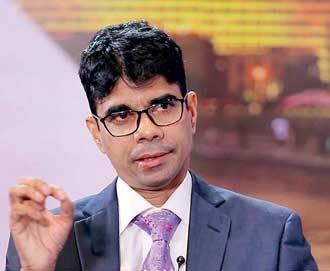 Concerns have been flagged regarding the incumbent government’s draft National Electricity Policy which had been tabled with the objective of ‘ensuring an efficient electricity supply at cost-effective prices.’ However, according to industry stakeholders and energy experts, imposing mandatory time-of-use tariffs for solar power users, removing feed-in tariffs and removing cross-subsidies are certain proposals that could possibly weaken access to sustainable and affordable energy. In a candid interview with the Daily Mirror, renewable energy expert Dr. Vidura Ralapanawe pointed out several alarming concerns in the draft Policy, simplifying certain technical terms and explaining in detail how certain proposals would affect normal electricity consumers and solar power users. Excerpts:
QDoes the draft National Electricity Policy address the needs of the normal consumer?
No, it does not appear to do that. It increases the cost for the large majority of consumers – for quite a lot of them by significant amount. Some of the other measures in the policy will keep the overall electricity costs high, which will then be passed to the consumers.
Could you explain about lifeline tariff and cost reflective pricing mentioned in the Policy?
The majority of consumers in Sri Lanka consume very small amounts of electricity. This electricity is provided at affordable prices to the consumers. The tariff policy asks for multiple changes that impact the current pricing. They include;
a) Removal of consumption bands (0-30, 31-60 etc) to go to a flat tariff irrespective of consumption
b) Cost reflective pricing” for each category of consumers
c) Calculation of fixed rates based on the cost to service each consumer group
d) Lifeline tariff restricted to consumers with consumption less than 30 units per month
The first three will result in steep electricity cost consumption for majority of Sri Lankan consumers (5.2 Million households – about 17 million citizens). The policy says a subsidy will be given to those who consume less than 30 units per month. This means those between 31-90 units will see sharp price increases-a staggering 3.4 million households which is more than 50% of the population.
In addition, the changes to the fixed rates envisaged above will disproportionately impact poorer households with lower consumption, with steep increases for them.
Alongside that, religious institutions will also see a steep increase with some getting bills as much as 600% increase. Hotels and factories will see steep rises too, affecting their competitiveness.
There are two groups who will get reductions too, first is commercial organisations, but the biggest beneficiary are those households who consume large amounts of electricity (over 180 units per month) who will see close to 50% reduction, with those who consume more, seeing larger reduction. When that happens, they will steeply increase their consumption, while the poor people will have to reduce consumption even for essentials.
This even goes against the policy which is supposed to promote conservation and efficiency. These changes in consumer tariff will lead to electricity deprivation (through high cost) for less affluent people, while the affluent people lose all incentives to conserve and increase efficiency.
This is a deeply inequitable tariff approach that would be bad policy for any government let alone the current NPP government who wears their progressive credentials on their lapels.
QCould you explain about cross subsidies?
We have a differentiated tariff system where we look at equity, ability to pay and competitiveness as part of tariff principles. This means some consumers pay more than others – so that their excess payment is used to provide a subsidy to others. This is called the cross subsidy. Historically, CEB provided direct subsidies to keep overall tariffs low, in addition to cross subsidies, and these became large losses for the treasury to take over from tax revenue (or go bankrupt).
This is not an unfair system – as our system has a high marginal cost. Hydropower which produces 30-35% of our electricity is quite cheap – about Rs 3 per unit, and at the higher end, diesel based generation of Sobadhanavi is Rs 75 per unit. When consumption increases, that increase is coming from the higher cost generators such as Sobadhanavi. Thus people who consume less paying a lower cost cannot be considered unfair.
From 2022, the total cost of CEB is covered through the income keeping CEB from defaulting on their payments or creating a dependency on the treasury.
The policy is asking for a range of direct treasury subsidies to the sector, including lifeline subsidy (for consumers with less than 30 units per month), connection subsidy for SME industries, competitiveness subsidy for factories etc. These may come or not come creating a dependency on the treasury to keep the power system operational, and increasing risk of deferred payments and default.
There is no need for this rather than rightwing economic fundamentalism. Plenty of countries do cross subsidies, including our neighbours and even Europe.
QWhat is the demand for electricity by 2030?
As per CEB it’s about 21,245 GWh.
QWhat is the current demand and do we have the capacity to meet this demand with existing issues?
It is 18,100 GWh for 2025.
Yes, we have capacity to meet current demand, thanks to renewable energy and rooftop solar growth in the last 3 years. If you remember, we were plagued with energy shortages, and what used to be routine emergency power procurement” which were steeped in corruption and insider deals. This got stopped from 2024 due to the high renewable energy especially rooftop solar addition. We saw multiple coal plant breakdowns in 2025 including instances where two coal units were not operational (it is the case even now), and we were able to operate the grid without any hitch or shortages.
Renewable energy – especially rooftop solar – has removed oil use during the daytime and also drastically reduced the use of hydro power during daytime. This gives CEB extra water to generate electricity during evening peak hours, reducing high cost oil generation. These have helped us to operate the grid smarter and at a lower cost. The current tendered battery storage will also increase the power capacity in the evenings, and reduce oil.
So in addition to meeting the demand, renewable energy has done an amazing job of reducing costs, especially by reducing oil use for electricity generation.
QHow does this policy affect solar power users?
In two ways for existing system holders.
If you have a solar rooftop, you will be converted into time-of-use tariff – so your solar generation will only be offset against the daytime consumption. Evening use will be billed at Rs 67/unit and overnight consumption at Rs 21/unit. For many solar prosumers, this is going to be a steep increase of costs which will even compromise their ability to pay the loans they have procured for solar system installation. For some, removing the solar system and going back to the standard tariff system will be more financially better than moving to time-of-use tariff with a solar system.
For a company with a ground mounted solar system, or any other renewable energy system for that matter, policy is blocking CEB for paying if the CEB asks them to stop generating. As you may know, CEB has an excess power problem during daytime on weekends and holidays (in part created by CEB not building battery storage as per their own plan), and they order renewable energy power producers to stop generating. Since their power purchase agreements does not allow this, this policy directive is against the contract, in addition to being arbitrary. It is also against specific clauses in the Electricity Act that guarantees all power companies financial viability.
So the policy is attempting to punish anyone who is involved in renewable energy by pure vindictiveness. This tells a whole lot about the real author” of this policy.
Policy also proposes abolition of solar net metering (where we offset our own consumption with solar) and solar net accounting (where we offset our consumption and sell excess to the grid) – two very popular schemes. With these changes, it will not be worthwhile for many consumers to install solar systems, which will also collapse the industry with companies going out of business. Even your existing solar plant may not have someone to service and provide spare parts.
Policy also proposes cancelling of Feed-in-Tariff methodology of buying renewable energy – this mechanism accounts for over 80% of ground mounted solar and wind power and 100% of mini-hydro and biomass power plants in this country. CEB has tenders but they do not add sufficient capacity to the grid with low success rate especially for solar. This is a singular attempt to kill future of renewable energy in Sri Lanka.
There is one direct beneficiary of this policy – that is LTL Holdings, who is the owner of the two (expensive) private oil based generators with a third one on the way. Renewable energy developers will get wiped out and general public will see a continuous increase of electricity costs for a foreseeable future.
QWhat are the biggest concerns about this policy?
In addition to the above there are few major concerns.
The policy is not forward looking, and is backward looking. The sector is evolving fast and there is nothing in this policy that advances Sri Lanka’s energy sector to be in par with the global transition. What we are seeing is massive democratization of energy generation, storage and system services (mainly from rooftop solar, batteries etc) which the policy reverses. Energy security is now measured from a lens of energy independence – for example, India plans to be energy independent (not just with electricity) by 2047 – this policy misses the point, and actively works against it. Many provisions in the policy are Orwellian – for example provisions under the section heading enhancing renewable energy share of the grid” is actually mechanisms to reduce the renewable energy in the grid. The section under open access are studies, and rules that are designed to delay and block viable implementation of this mechanism.
This is also a badly written policy. In addition to providing a policy framework, this document goes to minute implementation details and timelines which are not part of a policy, and has the result in straightjacketing the Minister himself and the regulator. It has multiple provisions which are legally ambiguous, which will lead to confusion, conflict and block action. It gets technical terms wrong, and is written with poor understanding of technical terms. It has multiple contradictions. It is shockingly bad scholarship that I would die of shame if my name was in there.
This policy is bad for investment in the sector for both local and foreign investors, and will see the sector starved of investment. Not only we are signaling massive policy reversals (for example in renewable energy), it takes a bold step to destroy financial viability of existing renewable energy projects (including rooftop solar). Why would any investor think this is a good environment for future investment?
QThere is a question about affordability of electricity. The government said it would reduce electricity tariff by 30% or so. Is this doable? Where did we go wrong?
It is quite difficult to do 30%, because quite a lot of the power system costs are tied to the dollar. So one main problem is the Rupee depreciation which drives up the costs of electricity. But this does not mean that the costs cannot be reduced.
The largest cost of generation is going to oil plants, and the way to reduce the costs is to replace this with renewable energy, local, small scale contracts that are in Rupee terms. Rooftop solar is the best here, because it does not require transmission upgrades. Then we also have projects with Feed-in-tariffs, which are also Rupees. The same projects the current policy is trying to block. Some large scale renewable energy projects are also tagged to the exchange rate, so they are not as cost saving as Rupee tariffs, though cheaper than coal or oil.
These coupled with battery storage is what we need to rapidly develop – this has the possibility for reducing tariffs, but 30% is simply not a serious number in any timeframe.
Where we went wrong is government policy. As soon as they came, they said LNG is the path to go, and promoted an unviable project for now almost 18 months, even when we pointed out that this is going to increase costs. But they went on this charade, probably to promote the completely unviable Sahasdhanavi combined cycle diesel plant, which got cabinet approval by showing artificially low costs. Now the government has announced that LNG project is unviable. This makes Sahasdhanavi unviable too (but that doesn’t get cancelled because it is a LTL project).
They used future LNG as an excuse to significantly dismantle renewable energy development pipeline – this policy is a continuation of this – and we are still going down this road even without the cover of LNG.
QWhat does the future look like for power generation through renewable energy in Sri Lanka ?
There is no future coal, or nuclear plants for Sri Lanka, nor do we need them for electricity or for lowering costs. Nor can we bring/afford LNG. So the pathway that is in front of us is renewables, of which we have all types (water, wind, sun) and with which we can create a low cost electricity system. We can also export if we have the courage to dream big.
But with these types of policies in place, we will be forever dependent on oil based generation, and higher electricity costs.