
The Buddhist Resistance to entry of Christian Missionaries to the Kandy heartland in violation of the Ingrisi – Sinhala Givisuma ( Kandyan Convention ) of 1815
Posted on July 18th, 2026
AI Overview
The Buddhist Sinhala resistance in Kandy against Christian missionaries stemmed directly from the British violation of the Ingrisi-Sinhala Givisuma (the Kandyan Convention of March 2, 1815). This geopolitical and religious friction shaped Sri Lankan history throughout the 19th century and a good part of the 20th century. [1, 2, 3, 4, 5], though much less now.
The Broken Promise of Article 5
When the Kandyan chiefs and Buddhist clergy surrendered sovereignty to the British Crown, they did so on one non-negotiable condition. Article 5 of the Kandyan Convention explicitly stated: [1, 2, 3]
“The religion of Boodhoo [Buddhism], professed by the chiefs and inhabitants of these provinces, is declared inviolable, and its rites, ministers, and places of worship are to be maintained and protected.” [1]
However, the British viewed this clause merely as a temporary political maneuver to pacify the region until their military rule was consolidated. Shortly after, the colonial government allowed Protestant Christian mission societies (such as the Church Missionary Society and Wesleyan Missionaries) into the Kandyan heartland, directly threatening the “inviolable” status of Buddhism. [1, 2, 3]
Evolution of the Buddhist Resistance
1. Armed Rebellions (1817–1848)
Initial resistance was violent, as the Sangha (monastic community) and native chiefs realized they had been deceived. [1, 2, 3]
- The Uva Rebellion (1817–1818): Sparked in large part by the feeling that the British were undermining Buddhism and traditional governance. Following its brutal suppression, the British issued a proclamation unilaterally stripping the word “inviolable” from their legal obligations. [1, 2, 3, 4]
- The Matale Rebellion (1848): Led by figures like Puran Appu and Gongalegoda Banda, this uprising was heavily backed by Buddhist monks. The tension peaked when the British executed Kudahahapola Sri Sumangala Thero in his sacred saffron robes at Bogambara, an act that deeply traumatized and unified the Buddhist public. [1, 2, 3, 4, 5]
2. Intellectual and Institutional Resistance
By the mid-19th century, the British government officially severed its constitutional ties with Buddhism (1853), shifting its patron privileges fully toward Christian institutions. In response, the resistance transitioned from armed warfare to an intellectual and cultural revival: [1, 2, 3]
- The Panadura Debate & Public Controversies: Monks like Ven. Migettuwatte Gunananda Thero utilized Western biblical criticism and profound oratorical skills to defeat Christian missionaries in open, public debates. [1]
- The Printing Press and Lay Activism: Activists like Anagarika Dharmapala established the Buddhist printing press. They published counter-tracts against Christian literature, founded Buddhist schools to rival missionary schools, and restored indigenous Sinhala Buddhist pride. [1, 2, 3, 4]
https://share.google/aimode/TksLjwD2IrkXINbgL
Kandy: the roots of the rebellion
Our history is replete with instances where the country was mercilessly plundered by invaders. As we mark fifty years as a free nation, Dilrukshi Handunnetti looks at the Kandyan rebellions against the British which assume particular significance as protest groups oppose the visit of Britain’s Prince Charles for the Independence celebrations
Sinhalese rulers were not the most prudent and wise when employing tactics to be rid of foreigners. They made the repeated mistake of trying to play one group against the other which culminated in the fall of the Kandyan Kingdom in 1815- making every inch of this country the territory of the British Crown.
When the British arrived in ancient Ceylon, the country was being governed by the Dutch East India Company which was shrewdly monopolizing trade and export in Ceylon at that time. Whilst ruling the Maritime Provinces, the Dutch also had established links with the Kandyan Kingdom in order to obtain certain concessions. They disliked these methods. Jan Schreuder, Dutch Governor from 1757-1762 recorded, “We cannot even stir, if we did not play the crouching little dog to the Court which is not amenable to reason.”
According to historians, the tussle between the Dutch authorities and the Kandyan rulers existed for a long time, and owing to the monopolistic attitude of the Dutch, the Kandyans with much reservations decided to accept the British offer of help. The animosity between the Dutch and the Sinhalese grew especially with the introduction of new taxes in the areas governed by the Dutch.
When the British became the masters of the Dutch possessions in Ceylon in 1796, the desire to capture the rest of the territory bringing it entirely under the King of England also increased. But as England was at war with Holland, the Dutch East India Company was allowed to manage the affairs of the island for the time being, and Ceylon became part of the territory governed by the Governor in Madras.
Many British delegations seeking to arrange treaties of alliance between the British and the Kandyans failed. After a turbulent period of civil dissatisfaction, Ceylon was declared a Crown Colony and Frederic North (subsequently the 5th Earl of Guildford) became the first Governor North despite his state craft and shrewdness made several mistakes during his rule. He realised the country’s potential and the benefits the British could derive by bringing the Kandyan Kingdom under the Crown.
What paved the way for the fall of the Kandyan Kingdom which appeared indestructible to the forces outside, was the death of King Rajadhi Raja Sinha in 1798 leaving no children.
It is his first Adigar Pilima Talawe who promoted a Malabar Prince named Kannasami who was a nephew of one of the King’s wives. He had no right to the throne as other close relatives were alive. Kannasami had no proper education and were considered young and immature. But these disadvantages were overlooked by Pilima Talawe who intended the king to be a mere puppet in his hands. Certain historians have been kinder to Pilima Talawe- attributing his zeal to the noble cause of restoring the Sinhala Dynasty, for he himself was a descendant from the Royal family of Ceylon. The Adigar’s efforts paid off when Kannasamy ascended the throne as Sri Wickrama Rajasinghe. As Rajadhi Rajasinghe’s relatives were imprisoned and his second Adigar was killed by Pilima Talawe, the former king’s brother in law Muttusamy who was the rightful heir, sought protection from the British.
Pilima Talawe provoked the British on many occasions to make them wage war against the Kandyan Kingdom. From 1803 there had been sporadic fighting. Despite the lack of intense fighting, there was civil unrest and disenchantment.
Maitland, who succeeded Governor North, tried to understand the Buddhist Sinhala culture. He was greatly assisted in this endeavour by John D’Oyly who had mastered the language of the country thereby establishing good links with the Sinhalese, and earned their much needed respect and trust. D’Oyly contributed largely to the expansion of the Bogambara Lake, and imposed severe penalties on British subjects who infringed upon the rights of the Sinhalese. All this culminated in his gradually winning many Kandyan leaders to his side.
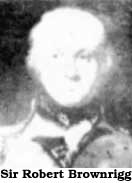 The significant changes in the Kandyan Kingdom took place during the tenure of Sir Robert Brownrigg who succeeded Sir Thomas Maitland in 1812. Whilst improving the living conditions of the people, Brownrigg also invited the various Missions to establish themselves here. As a result, the Baptist Missionaries came in 1812, Wesleyan Missionaries in 1814, American Missionaries in 1816 and the Church Missionaries in 1818.
Meanwhile, the young king had embarked upon a course of tyrannical rule. But the King committed his ultimate mistake when he employed brutal methods to kill Ehelepola Adigar’s entire family. This brutal act shocked the people and led to a week of mourning. This thrust the Adigar into the arms of the British, and Brownrigg promised all support to relieve the Adigar of his suffering. The king also provided the much awaited excuse when he tortured ten native traders who were British subjects, hence leading to the proclamation of war against him in January 1815.
The Proclamation stated that the war was not against the Kandyan nation but against the King who had by the violation of every religious and moral law, become an object of abhorrence to mankind. It promised the Kandyans full protection of person and property.
Several days later, the
The Kandyan Convention was signed in the historic Magul Maduwa (Royal Audience Hall) of the royal palace in Kandy. It deposed King Sri Vikrama Rajasinha and transferred the sovereignty of the Kandyan Kingdom to the British Crown, effectively ending 2,300 years of independent Sinhalese sovereignty.
The treaty was not signed by the deposed king, who was in hiding, but rather by British Governor Sir Robert Brownrigg and the chieftains (Dissawas and other nobles) of the Kandyan Kingdom. [1, 2, 3]. Altogether ten representative Adikars, Dissaves and other Chiefs of the Kandyan Provinces.
The shrewd British rulers capitalizing on the sentiments of the inhabitants who had faced a tyrannical rule under Sri Wickrama Rajasinghe, pressed the point in the Treaty’s 1st clause that emphasised the cruelties of the Malabar ruler, for his arbitrary and unjust infliction of bodily tortures and the pains of death, – the cited reason for dethroning the king.
Clause five of the Kandyan Convention held Buddhism inviolable, and its temples and priests were to be protected and maintained as before, and the laws of the country were not to be amended and the king’s levies were to be levied as before. The British agreed to this as they saw no other way to get the Kandyan aristocracy to accept them without the protection clause.
The absorption of the old Kandyan Kingdom to the British administration posed serious problems to the British in making it part of the Crown Colony of Ceylon as the British had consented to the continuation of the traditional administration of the Kandyan Kingdom with the signing of the Convention. Here it was specified that the British would administer the Kandyan region without much change, according to the laws, institutions and customs established and in force amongst them. However, the British retained the right to introduce any changes as and when they deemed fit.
In 1817, Muslims in the Wellassa area began agitating , demanding that a member of their community be appointed as Muhandiram. This request was met. Meanwhile, the fields were destroyed and the British began killing the cattle for food, driving the Buddhist Sinhalese to a frenzy. The cultural clash and the tyrannical conduct by the British ultimately led to the Rebellion of 1817. The first outbreak was in Uva, with the blessings from the Uva Disawe, Keppetipola. The rebellion caused heavy losses to both sides. Except for a few Provinces, the rebellion spread to all parts of the country and the British sought to suppress the rebels applying the motto by famine, sword and flame. This revolt exhibited the strength of the British military might, making Kandyans suffer severe setbacks.
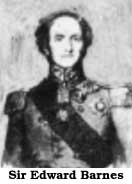 A significant change with regard to Buddhism was made by the British Government at the same time. As they found that the Buddhist priests were the main architects of the rebellion, the hostile British created a new agreement which merely stated that the priests and the ceremonies of Buddhism shall receive the respect which in former times was shown to them. Despite Governor Brownrigg’s resolve to set up a proper road network which would provide the British with the necessary access to the hill country, he could do little to achieve this goal with two uprisings during his tenure. It was therefore Governor Barnes who fulfilled this objective of the British for which he took a decade and did so at much cost.
The challenges of governing increased with the crumbling of the economy. Coffee plantations became non-profit making ventures driving the native and British cultivators to despair.
The seething hatred was fuelled further when the Governor sought to impose new taxes-on boats, roads, dogs etc.; Of all the taxes, the road tax was the most hated as the Sinhalese did not care for new roads and thought that they were being constructed for the benefit of the Europeans alone. Every male between 18-60 years except a few categories, were made to compulsorily give six days labour for road construction. It was misunderstood to be a practice similar to the rajakariya system which was abolished in 1832.
The rebellion began in the Dambulla area, where people rallied around Gongalegoda Banda and soon spread to other areas. Many were shot dead on the spot and their houses were burnt by the British Army which went on a rampage, burning and looting the properties of the Buddhist Sinhalese. Puran Appu was one of the 18 executed following a brief trial by a Court Martial during this reign of terror.
Kurunegala and Matale districts were the most affected, and Kandy was placed under martial law and reinforcements were sought from Madras. In this backdrop, the monk Ven. Kudahahapola Therunnanse was shot dead at Bogambara in his saffron robes-insulting Buddhist monkhood and injuring the religious sensitivities of the Buddhists. It was symbolic that monks be executed in their robes which also marked the destruction of the last Buddhist Kingdom of Sri Lanka by the British. In less than three months, the Sinhalese Rebellion had been brutally crushed. Torrington’s manner of governing the Colony drew much criticism from the British themselves. A Parliamentary inquiry in Britain followed,resulting in Torrington’s resignation in 1850 which marked the end of one of the darkest chapters in the European colonial history of Ceylon.
https://www.sundaytimes.lk/980201/plus7.html
Sunday Times
AI Overview