
President directs allocation of Rs. 1,400 billion recurrent expenditure for grassroot-level projects in 8 months
February 27th, 2025Courtesy Adaderana
President Anura Kumara Dissanayake has directed the District Secretaries to allocate Rs. 1,400 billion in recurrent expenditure for the implementation of productive projects at the grassroots level over the next eight months.
The President made these remarks during a discussion held with the District Secretaries, today (27) at the Presidential Secretariat, the President’s Media Division (PMD) reported.
The President also emphasized that by developing the rural economy, the country’s economic growth could be elevated by 3% to 4%. He stressed the need to enhance existing economic opportunities and identify new sources of growth during the expansion of the economy to rural areas, the PMD said.
The pension schemes proposed in the 2025 budget were also deliberated upon during this meeting.
Moreover, the President pointed out that there is a prevailing negative perception of the public sector and that inefficiency within government services has contributed to this situation. He underscored the necessity of creating satisfied and effective government officials, and emphasized the need to improve the efficiency of public services.
Currently, 30,000 vacancies have been identified within the public service, and the President stated that the government plans to recruit for these positions in categories, which would complete the mid-level staffing of the public service, it added.
The President emphasized that development is not limited to constructing buildings and bridges but also involves uplifting the fractured social structure, a responsibility that primarily lies with the District Secretaries.
Additionally, the District Secretaries raised issues specific to their districts, which were brought to the President’s attention, and extensive discussions were held on possible solutions and proposals.
The meeting was attended by the Minister of Public Administration, Provincial Councils and Local Government, Dr. Chandana Abeyratne; Secretary to the President, Dr. Nandika Sanath Kumanayake, Secretary to the Ministry of Public Administration Alok Bandara, as well as the District Secretaries, according to the PMD.
ඇප ලැබුණු ඥාණසාර හිමි අධිකරණයෙන් යන ගමන් මාධ්යට කියාගෙන ගිය දේ
February 26th, 2025ආණ්ඩුව වරද්දගත්ත හරිය දැන් හොඳටම ඇති
February 26th, 2025Gnanasara Thera granted bail
February 26th, 2025Courtesy The Island
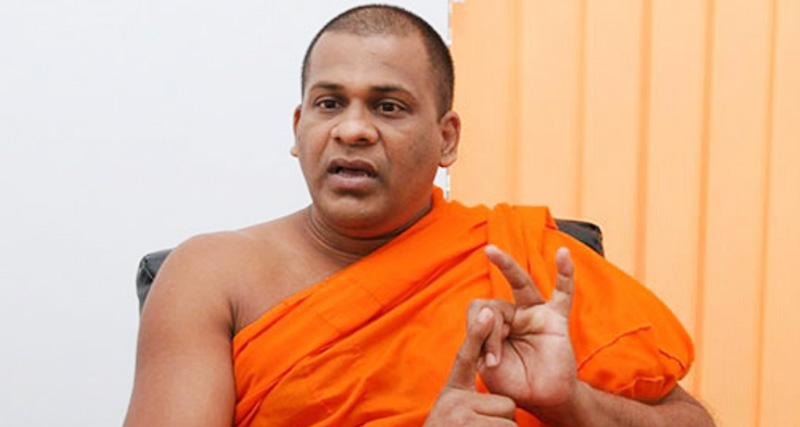
Gnanasara Thera
The Colombo High Court yesterday (25) released on bail Bodu Bala Sena (BBS) General Secretary Ven. Galagodaaththe Gnanasara Thera, who was sentenced on 09 January, 2025, for a nine-month jail term for making defamatory comments on Islam.
The court issued the order after examining a revision petition filed by the counsel for Gnanasara Thera. They sought bail pending the hearing of an appeal filed related to the case and the announcement of a final decision.
The Colombo Additional Magistrate Pasan Amarasena also ordered the imposition of a fine of Rs. 1,500 on the defendant.
Police had filed this case against Ven. Galagoda Aththe Gnanasara Thera under Section 291 of the Penal Code. The police alleged that the Thera violated ethnic harmony by declaring, Islam is a cancer… it must be eradicated” during a press conference held at Kirulapone on July 16, 2016.
NPP govt. continues ban on Tamil organisations
February 26th, 2025Courtesy The Island
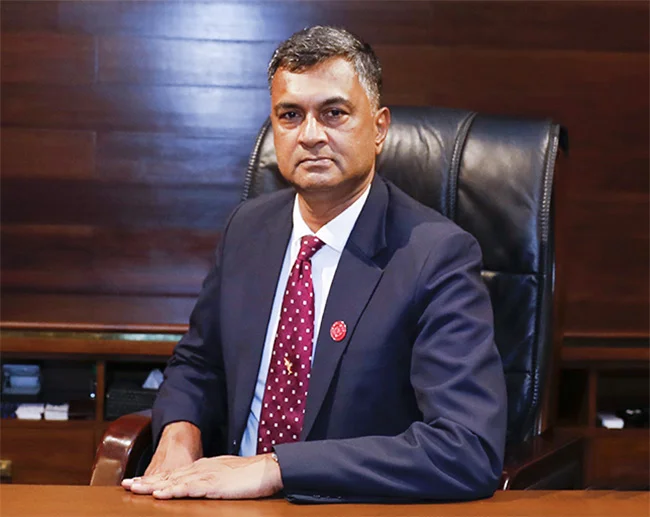
Thuyyakontha
… Easter Sunday carnage suspects among them
The government has issued a gazette extending the ban on several Tamil diaspora groups, alleging they supported terrorism-related activities,” The Tamil Guardian has reported.
The gazette, signed by Defence Secretary Air Vice Marshal (retd.) Sampath Thuyyakontha, declared that these organisations have repeatedly provided financial support for terrorism.” As a result, their financial and economic assets remain frozen, and Sri Lankans are prohibited from having any contact with them. Those that do risk being arrested.
The list also reaffirms the ban on 222 individuals allegedly linked to terrorism.
The organisations blacklisted by the Sri Lankan government include:
* Liberation Tigers of Tamil Eelam (LTTE)
* Tamil Rehabilitation Organisation (TRO)
* Tamil Coordinating Committee (TCC)
* World Tamil Movement (WTM)
* Transnational Government of Tamil Eelam (TGTE)
* World Tamil Relief Fund (WTRF)
* National Council of Canadian Tamils (NCCT)
* Tamil Youth Organisation (TYO)
Other organisations listed include several linked to Islamic groups, such as the National Towhead Jema’ah (NTJ) and the Sri Lanka Islamic Student Movement (SLISM).
The Tamil Guardian reported that successive Sri Lankan governments have used terrorism laws to ban Tamil organisations that continue to function openly and legally in the United States, United Kingdom, Canada, and throughout Europe. This ban, however, stifles links between these diaspora organisations and Tamils, making it a criminal offence for Sri Lankan citizens to maintain contact with them.
The reposition of the ban follows a pattern seen in previous years. In 2024, Sri Lanka renewed its prohibition of Tamil diaspora organisations, days after India extended its own ban on the LTTE. The move was widely condemned as politically motivated and an attempt to justify Sri Lanka’s military presence in the Tamil homeland”.
Over two million people donate eye corneas
February 26th, 2025By Poojathmi Rivithma Courtesy The Daily Mirror
Colombo, Feb 26 (Daily Mirror) – A total of 2.5 million people have started to focus on donating their eye corneas after their death, marking a significant step in supporting eye donation efforts, the Sri Lanka Eye Donation Society (SLEDS) said.
SLEDS Senior Manager, Janath Saman Matara Arachchi, told the Daily Mirror that 114 cities in 57 countries have been sending eye corneas, which help people suffering from blindness.
He said that, from the beginning until now, a total of 95,203 eye corneas have been sent overseas.
However, the most eye corneas have been donated to Pakistan, followed by Egypt gaining second place in receiving eye corneas.
Meanwhile, the process within Sri Lanka’s healthcare system is providing worldwide medical services where anyone can help for better access to eye care.
In Sri Lanka, 59,202 eye corneas have been donated for the local patients, improving the lives of many individuals suffering from loss of vision.
Furthermore, SLEDS continues raising public awareness on the importance of eye donation, with hopes to restore vision for many more individuals in the future.
Namal Rajapaksa summoned to CID
February 26th, 2025Courtesy Hiru News
Parliamentarian Namal Rajapaksa arrived at the Criminal Investigation Department (CID) this morning to provide a statement regarding the ongoing investigation into an Airbus deal involving SriLankan Airlines.
According to reports from the scene, he reached the CID at around 9.15 am.
The Financial Crimes Investigation Unit of the Financial and Commercial Crimes Investigation Division is conducting the probe following a complaint filed by a former Secretary to the Ministry of Public Enterprise Development.
Budget 2025 and Export Development
February 25th, 2025Sugath Kulatunga
As a person associated with Export Development from 1975, in Sri Lanka and abroad, I am delighted to note the priority given to Export Development in the current Budget. I am also happy to see the restoration of the Export Development Council of Ministers and the proposal to formulate a National Export Development Plan.
An Export Development Plan is a statutory provision mandated by Article 12 of
Sri Lanka Export Development Act, no. 40 of 1979 vide:
12 (d) to formulate a national export development plan and program for approval by the Export Development Council of Ministers.
(e) to monitor the implementation of the national export plan and program and actively assist in the implementation of the plan.
Accordingly, the EDB formulated a comprehensive export plan on all relevant sectors of the economy with the participation of state agencies and the private sector. In the formulation of a new plan, it would be useful to look at the strategies and procedures followed in that successful operation.
In the following note the Budget proposals are given in Italics.
The Budget also proposes to support expansion of export-oriented investment, sector-specific zones, establishing eco-industrial parks….through Public Private
Partnership (PPPs) and privately run zones.”
Most effective way to promote investments is to make available well formulated feasibility studies on our potential. This too was a function provided for in the EDB ACT ref;
Article 12 (m) to carry out feasibility studies on export-oriented projects and to undertake any special projects on export development on a pilot basis.
In view of the absence of any other financial institution to provide funds for innovative investments involving some risk, the EDB Act provides for investments in selected export projects. In 1979 a special Division was created in the EDB to support the private sector formulate projects and evaluate them and serve as a Venture Capital window to invest in innovative pioneering projects. Through this facility a number of pioneering projects were established. But a subsequent Board of Management not only abandoned the concept of venture capital but disbanded the EDB division with its trained staff.
The Budget Speech states on Investment Promotion
Government will support expansion of export-oriented investment…
Budget Speech also stresses that
The development of small and medium enterprises and entrepreneurship is a key
objective of the Government.
A strategy followed with success by countries like India and Pakistan to induce investments and develop SMEs is to make freely available a comprehensive portfolio of feasibility studies on investment opportunities. Such professionally formulated investment proposals also obviate project failures.
A sample list of such feasibility studies/project reports are available on the following websites.
https://smeda.org/index.php/business-facilitation/smeda-downloads/pre-feasibility-studies;
https://smeda.org/index.php/business-facilitation/smeda-downloads/pre-feasibility-studies
https://www.entrepreneurindia.co/project-and-profile
https://www.niir.org/project-reports/
These agencies not only provide feasibility/project reports but provide consultancy services.
It is strongly recommended that the EDB Projects Division be restored and strengthened with technically qualified staff.
In order to enable the EDB to serve as a venture capital provider, the export cess should be continued and the cess collection be remitted directly to the EDB Fund as required by the EDB ACT in which (Section 14 (1) for a CESS on imports and exports.
By Sub Section 14 (5) it is required that the proceeds of the cess recovered under this section shall be paid monthly by the Principal Collector of Customs to the credit of the EDB Fund.)
The 2025 Budget proposals to establish a function of a development bank through a new administrative structure will be established through the existing state bank mechanism.
Government of Sri Lanka had established the National Development Bank for the purpose of promotion of industrial, agricultural, commercial and other development of the economy of Sri Lanka having regard inter alia to the development of the rural sector. One of the objectives of the NDB was to undertake development projects, including pilot projects, in order to achieve the purposes of the Bank. Unfortunately, the NDB acted like any other commercial bank and was finally privatized by CBK who was on a selling spree. It is no more national but continues to call itself national. The other development bank, the DFCC was also privatized. They are now doing quite well as commercial banks.
In the 1980s the EDB promoted the creation of a subsidiary unit in the then NDB, with contributions from the EDB, NDB, BOC and People’s bank as a venture capital unit. But the experience was that this unit functioned as a normal commercial bank and was risk averse. A new development bank has to be ready to take informed risks and should serve as a venture capital facility and not tainted by collateral dependent commercial banks.
We observe that there are a number of research findings which have not been commercialized and utilized for the benefit of the economy, and reaping the investment opportunities. For this purpose, we propose to allocate Rs. 1,000 million to create an Innovation Invention Fund for commercialization of Research Findings.
The proposed venture capital facility can serve the proposed Innovation Invention Fund for commercialization of Research Findings.
The neglect of this concern has already cost the country money as well as essential inputs into agriculture. One such example is the non-commercialization of a patent on Nano urea. Sri Lanka failed to take advantage of the nano urea patented by SLINTEC 12 years back. It is claimed that the local product is superior to the imported product as it has a 38-40 percent loading of nitrogen.
The irony is that the SLINTEC patent was sold to an Indian firm for 3 million US dollars in 2013 and later in 2021 the cabinet approved the purchase from India nano urea for 52 million US dollars for the maha season only. Our loss was a huge gain for India.
Industrial Development
The industrial sector in Sri Lanka plays a crucial role in its economy
predominantly in providing employment opportunities, increasing income,
fostering innovation, and driving exports.
The neglect of industrialization by our policy makers despite having the experience of a number of basic industries like ceramics, paper, plywood, leather and glass established during the days of World War II was inexcusable. This was due to the politicization of economic decisions which continued for the last seventy-five years of independence. The curse of the original sin of ignoring industrialization continues to plague the development of the country. A land with a potential economic miracle and a paradise has been made into a miserable failed nation. Leaders who achieved political independence of the county also made the country economically dependent on continuity.
The world is now in the fourth industrial revolution. The lack of vision of our politicians and policy makers have left us at least half a century behind in technology and industrialization. We may still have a leapfrog advantage to graduate from elementary technology into emerging high technology. For this the present education system has to be completely overhauled. Patch work measures will be unproductive.
Industrialization does not fall from heaven and not from radical statements. It depends on the skills and basic technological knowledge of the manpower in the country. They go a long way to attract foreign investment which accelerates industrialization. In countries in East Asia which achieved rapid economic development, the triad of education,technology and industrialization functioned in unison.
In the near future we should have an industrial policy which is supported with a technology policy which in turn feeds into education policy.
Now on the more controversial subject of exchange control. One wonders why the repeal of the Exchange Control Act is not indicated in the Budget Speech.
According to a Global Integrity Report d during the last 22 years export proceeds that should have been repatriated back to the country but not sent back was USD 53.5 billion. The Central Bank and the Ministry of Finance of Ranil have been evasive on why no action is being taken to ensure that this vast sum is more than the total amount of our foreign debt of 36 billion USD.
The real reason why it will not happen is with the covenant the government has agreed with the IMF. These conditions are in the Attachment I. to the Letter of Intent dated March 6,2023 signed by both President Wickremesinghe and the Governor of the Central Bank Nandalal Weerasinghe in the Memorandum of Economic and Financial Policies. At Page 98 of the IMF Staff Report 23/116, it is stipulated in Article 21:
21. We will phase out the administrative measures imposed to support the balance of payments, including those introduced on an emergency basis, once conditions allow. These measures include import restrictions, exchange restrictions, multiple currency practices (MCPs), and capital flow management (CFM) measures.
While the mentioned import restrictions, exchange restrictions, MCPs and CFMs could help mitigate FX shortages in the near term, we believe they should not be a substitute for the comprehensive policy package and ongoing macroeconomic adjustment. We are committed to phasing these measures out as the balance of payments stabilizes. To this end, by June 2023, we will prepare a plan for the phased removal of these measures during the program period as we make progress with achieving macroeconomic stability, particularly with respect to the exchange rate, debt sustainability, and financial stability, improved market access.
Reference footnote 36 the main CFM measures introduced or tightened in 2020-2022 and currently in force include: (i) a repatriation requirement for exports of goods and services; (ii) a surrender requirement for exporters on proceeds from exports of goods; (iii) a surrender requirement for banks on purchases of export proceeds; (iv) a surrender requirement for banks on purchases of inward worker remittances; (v) suspension of outward remittances on capital transactions; (vi) restrictions on purchases of Sri Lankan ISBs by local bank”.
These exports were generated with precious of foreign exchange released for imported inputs. It is proposed that this exchange control offence is brought under the proposed Proceeds of Crime legislation and this huge amount of funds criminally hoarded abroad is recovered urgently.
War and Peace in Europe: Ukraine as a Proxy War Lesson for the Global South
February 25th, 2025by Dimitris Konstantakopoulos
Feb 23, 2025
In a previous article (https://www.defenddemocracy.press/a-first-look-at-trumps-foreign-policy/) we highlighted the (apparent and at first glance) contradictory nature of Donald Trump’s foreign policy. On one hand, we observe an extreme expansionism reminiscent of the 1930s (Greenland, Canada, Palestine, Panama), and on the other, a significant push for peace in Ukraine and an end to the terrible tragedy that has struck this country.
Trump’s overtures to Moscow regarding Ukraine are, in principle, the most promising for the Ukrainian people, who are dying needlessly in the trenches by the hundreds of thousands, watching their country being destroyed. They are also promising for humanity as a whole, given the increased risk of nuclear weapons or other weapons of mass destruction being used, as well as the ongoing massive direct and indirect environmental destruction caused by this conflict.
Trump has acknowledged that Ukraine will never join NATO—a position that, if adopted by Biden or even Trump during his previous term, or by the supposedly democratic imperialist Europeans, would have prevented the war and the destruction of the second-largest country in Europe.
Trump also stated that Ukraine would not regain the territories of Donbass and Crimea, thereby respecting the will of the Russian majority in those regions. It is worth noting that Ukraine would not have lost” Crimea if the Americans had not orchestrated a coup in Kyiv in 2014. Similarly, it would not have lost” Donbass if Kyiv, Berlin, and Paris had honored their commitments under the Minsk 1 and Minsk 2 agreements, and if Mr. Biden or even Mr. Trump during his previous term had pressured Kyiv to implement them. Not only would Ukraine not have lost” these territories, but it would also have avoided the greatest catastrophe in Europe since World War II.
As we argued in our previous article, by making these statements and significantly reducing his support for the Zelensky regime, Mr. Trump is effectively acknowledging that NATO has been defeated by Russia and that its goals—overthrowing Putin’s regime and dismantling Russia—are unattainable.
Therefore, rather than continuing a war that cannot be won and that fuels anti-Western sentiment and alliances worldwide, it is better for the new leaders of the US to acknowledge reality and attempt a new, large-scale strategic maneuver.
At the same time, Mr. Trump is demanding, in a rather piratical and mafia-like manner, to seize Ukraine’s mineral resources—the concession agreement Zelensky is now being pressured to sign is worse than the war reparations Germany was forced to pay in 1918 at the end of World War I https://www.pravda.com.ua/eng/news/2025/02/18/7498843/ .
By the way, why do these European governments, who claim to want to continue the war because they supposedly care about the rights of Ukrainians, say nothing and fail to protest the plunder Mr. Trump is orchestrating in plain sight?
In reality, the United States itself and its allies should compensate Ukraine for the destruction it has suffered, primarily due to their own policies and the war they pushed it into (without underestimating the responsibilities of the local neo-fascist element and extreme nationalism, particularly in western Ukraine). What is happening now has never happened before. The CIA stages a coup in a country, drags it into a war with a neighbor and unimaginable destruction, and then the United States demands reparations on top of it all, instead of helping it recover in any way!
This detail” is revealing of the true intentions of the United States under Trump, and it is good to keep it in mind for those who have illusions about the type of policies the new American president intends to implement. Policies that are certainly very positive in the case of Ukraine, as they end a terrible catastrophe, but which risk being extremely destructive in other regions of the world.
Incredible Armaments in Europe. Preparing for the Next War!
On the other hand, regarding Europe itself, Mr. Trump’s policy is not without contradictions. For example, on one hand, he appears to be working for peace on the old continent, while on the other, he is demanding an increase in European defense spending to totally absurd levels, up to 5% of GDP (an increase that, if realized, will be the final blow to any attempt to fight for the preservation of the natural environment and what remains of the European welfare state).
However, no one is truly threatening Europe (**), but even if it were threatened, the solution would obviously not be the defense systems it plans to purchase—systems that, if used, would guarantee not only the destruction of the adversary but also of those who use them. These systems are, in reality, designed not to defend Europe but for America’s global wars.
Russia has only once, and on a very limited scale, launched an expedition to the west (we are not counting, of course, instances where it reacted to an attack it had suffered). On the contrary, since the 13th century and the invasion of the Teutonic Knights, it is Russia that has continually been attacked from the west, including Napoleon’s campaign, the intervention of 21 countries in the Russian Civil War, Hitler’s attack, and NATO’s attack using Ukraine as a proxy. Most of those attacks were perpetrated through Ukraine. Not only is Russia the one constantly under attack from the west, but it is also the one that unilaterally dissolved the Warsaw Pact and the Soviet Union itself.
The primary and foremost use of this European armament, therefore, can only be a future war against Russia, under better conditions. Secondarily, it can also serve to support NATO, that is, the Americans in other missions outside Europe.
We are not claiming that such a war will necessarily happen. We are simply pointing out that Trump’s policy in no way implies—and it could not be otherwise—any renunciation by the United States of Western imperialism and militarism, which are structural elements of the Western system. Without them, it is impossible to ensure the necessary transfer of a significant portion of global surplus to the West, without which Western capitalism could not function properly. The primary cause of wars is economic, not ideological. Ideologies are invented to serve interests, even if they retain a certain autonomy from the initial causes of their creation.
In our next article, we will examine Trump’s plans for a new Star Wars” and the new strategic framework in which the Americans are operating, which may explain the apparent contradictions in their policy.
(*) An interesting proposal to restore the flow of Russian gas to Europe and introduce a special tax for Ukraine’s reconstruction was made in a recent article by Greek-French university professor Dimitris Skarpalezos https://www.defenddemocracy.press/a-kapodistrian-agreement-for-ukraine/. Normally, the United States and its allies should also contribute to compensating Ukraine for the destruction caused by their policies.
(**) Only two countries in Europe face a real military threat, Greece and Cyprus. They are not threatened by Russia, but by a NATO member and EU candidate member that recently almost invaded Syria, has occupied half of Cyprus for fifty years, and periodically invades Iraq, without this overly disturbing the leaders of NATO and the EU! The same leaders who claim to be so concerned about Russia and its alleged threat to Europe.
Translated from Greek by Christian Haccur
War and Peace in Europe (Trump, Putin and Zelensky)
පාසල් දරුවන් ඉලක්ක කර ගනිමින් සූක්ෂමව බෞද්ධ සංකල්ප වලට පහරදීමට රාජ්ය අනුග්රහය
February 25th, 2025උපුටා ගැන්ම ලංකා ලීඩර්
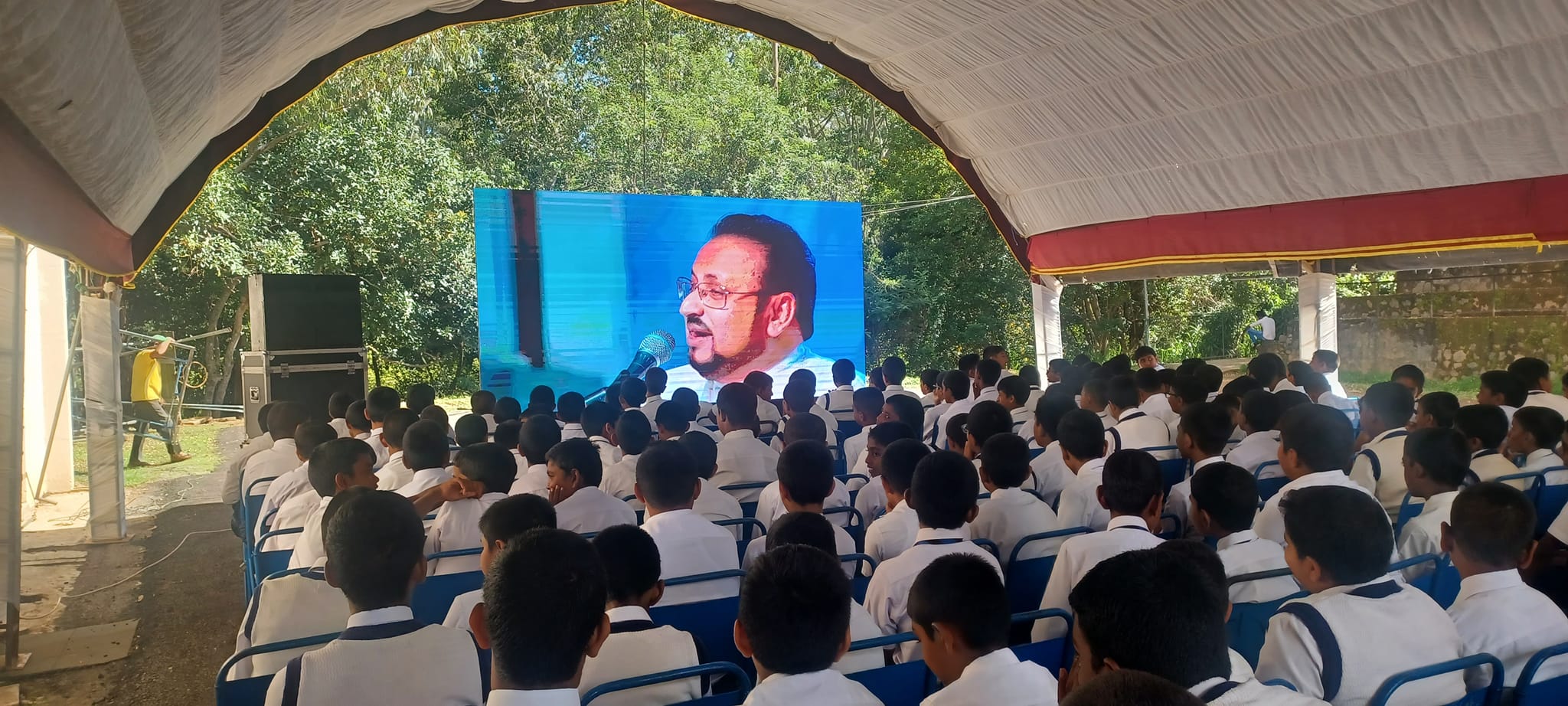 පාසල් දරුවන් ඉලක්ක කර ගනිමින් සූක්ෂමව බෞද්ධ සංකල්ප වලට පහරදීමට රාජ්ය අනුග්රහය ලබාදෙන බවට “ලංකා ලීඩර්” පාඨකයෙකු විසින් අප වෙත තොරතුරු වාර්තා කර ඇත.
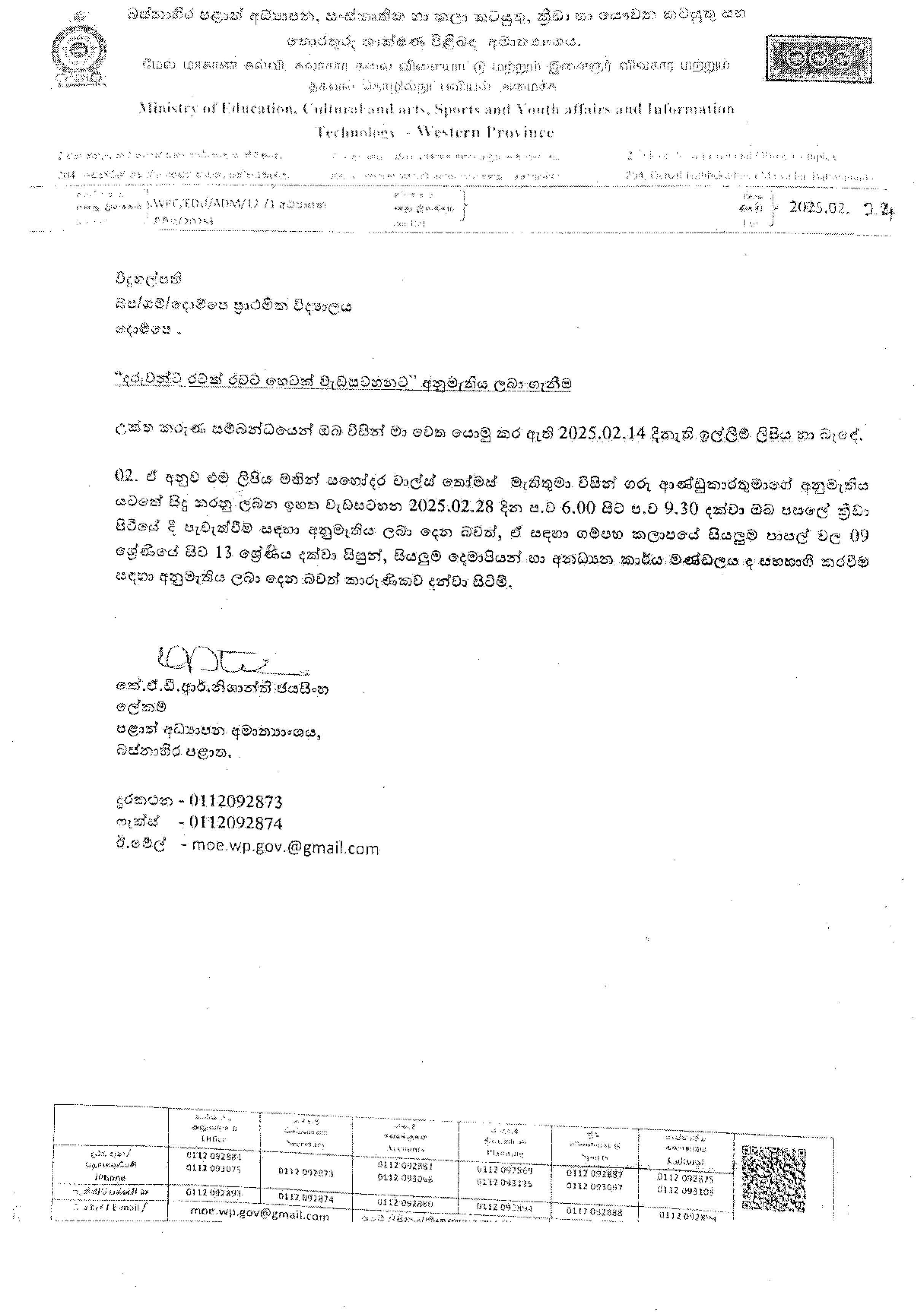
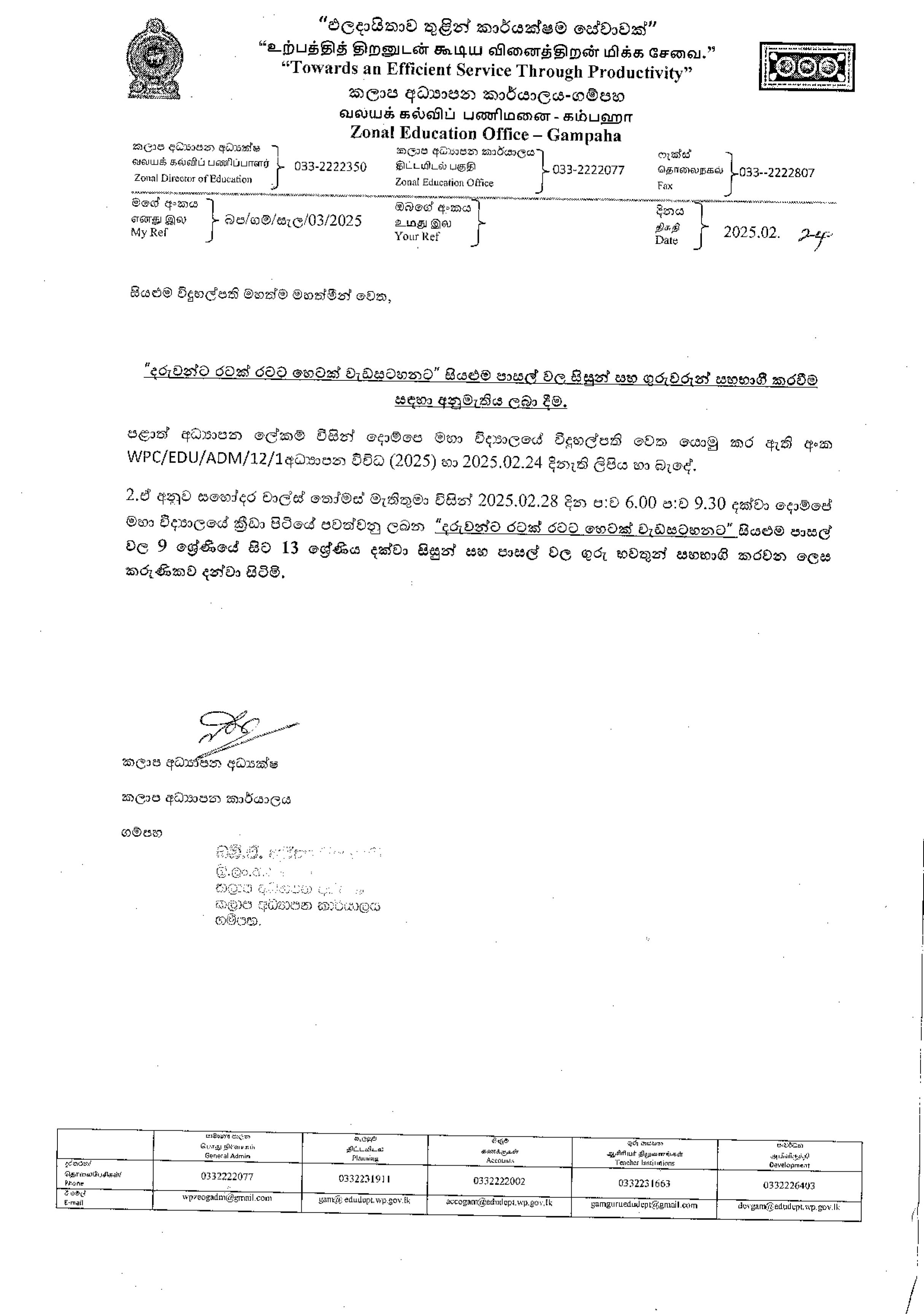
ඔහු සදහන් කරන ආකරයට බස්නාහිර පළාත් ආණ්ඩුකාරවරයාගේ මැදිහත්වීම මත චාල්ස් තෝමස් නැමති පුද්ගලයාගේ මොහෙයවීමෙන් ගම්/ දොම්පේ මහා විද්යාලයීය ක්රීඩාංගණයේදී 2025/02/28 දින පැවත්වීමට නියමිත දරුවන්ට රටක් රටට හෙටක් (අලුත් හුස්ම) වැඩසටහන සදහා බස්නාහිර පළාතේ ගම්පහ කලාපයේ සියලුම දරුවන් සහ දෙමාපියන් මෙන්ම විදුහල්පතිවරුන්, ගුරුභවතුන් හා අනධ්යන කාර්ය මණ්ඩලය සහභාගීකරවන ලෙස දැනුම් දෙමින් බස්නාහිර පළාත් අධ්යාපන ලේකම්ගේ අත්සනින් යුතුව ගම්පහ කලාප අධ්යාපන අධ්යක්ෂකක වෙත ලිපියක් යොමුතර ඇත. ගම්පහ කලාප අධ්යාපන අධ්යක්ෂ විසින් මෙම ඉල්ලීම ගම්පහ කලාපයේ සියලුම විදුහල්පතිවරුන් වෙත දැනුම් දී ඇති බවද ඔහු සදහන් කරයි. මෙම වැඩසටහන මගින් සිදුකරනු ලබන්නේ සක්ෂමව බෞද්ධ සංකල්ප වලට පහරදීම බව සදහන් කරන ඔහු පවසන්නේ රාජ්ය ආනුග්රහය මත පාසල් දරුවන් ඉලක්ක කරගනිමින් සිදුකරන මෙවැනි ක්රියා සම්බන්ධයෙන් වත්මන් ආණ්ඩුව දැනුවත්ව භාවයෙන් මුනිවත රකිනවාද යන්න පිළිබඳ ගැටළුවක් බවයි.
අදාල ලිපි පිටපත් ද ඔහු අප වෙත යොමුකර ඇත. එම ලිපි පහතින්
LG Polls: EC to announce date early March
February 25th, 2025BY Buddhika Samaraweera Courtesy The Morning
- Elections likely to be end-April or early-May
The Election Commission (EC) stated that all legal issues related to holding the Local Government (LG) Elections have been resolved and that the Election date will be announced in early March 2025.
It was reported that the EC is scheduled to meet tomorrow (27), during which a decision on the date for the LG Elections is expected to be made.
Speaking to The Daily Morning about the preparations for declaring the elections, EC Chairperson R.M.A.L. Rathnayake said that the declaration could not be made during the course of this month due to a certain administrative issue.
Nominations must be accepted within 14 to 17 days from the date of declaration. However, if the declaration is made in the remaining days of this month, the nomination period will have to begin in the week starting from 10 March. The Thursday of that week being a holiday is an issue as nominations should be accepted continuously for three and a half days. To avoid that, we will be making the declaration in early March,” he noted.
He also said that all legal issues related to holding the LG Elections have now been resolved as the decisions pertaining to the relevant legal proceedings have been delivered by the respective courts.
The LG Elections were initially scheduled for March 2023, but the Finance Ministry, along with the General Treasury, had not released the required funds to the EC. As a result, the EC rescheduled the elections to April 2023. However, since the funds were not released by that time either, the EC was forced to postpone it indefinitely. As per a recent gazette notification issued by the Ministry of Public Administration, Provincial Councils, and LG, the LG bodies are scheduled to convene for the first time on 2 June after the elections.
Sources from the EC indicated that the LG Elections are expected to take place either at the end of April or in the first week of May.
Common framework, uncommon challenges: lessons from the post-COVID debt restructuring architecture
February 25th, 2025Insight Written by Yunnan Chen, Tom Hart Courtesy ODI Global
This year’s G20 presidency has shifted to South Africa, under which sovereign debt will be a key priority. South Africa is pushing for a review of the G20’s Common Framework (CF) for debt treatments, five years since its creation during the Covid-19 crisis in 2020. It was part of broader G20 debt relief efforts to alleviate the economic impacts of the pandemic, but also to bring to the table both official creditors and commercial creditors and bondholders for the first time to work in tandem.
The CF has delivered substantive debt relief – as we show below – but these restructurings illustrate the significant challenges in how contemporary restructurings for low and middle-income countries work: that they are too little, too late and too complex.
Too little, reflecting tensions over the scope and size of debt relief, defined by the IMF debt sustainability analyses (DSA), and the treatment of domestic debt. Too late, due to the (weak) effectiveness of the Common Framework in enabling coordination and supporting inter-creditor equity to enable swift, efficient restructurings. And too complex because of the deployment of state-contingent debt instruments (SCDIs) in enabling restructurings, which may help incentivize bondholder participation – but at the cost of debt relief to borrowers.
Nearly three decades on since the HIPC initiative, the landscape of sovereign debt restructuring has shifted dramatically. Non-traditional creditors such as Chinese state-owned banks, as well as the growth of international bond markets, have transformed how and from whom countries borrow, and have complicated restructuring processes once dominated by the Paris Club.
Three landmark bondholder restructurings were concluded by the end of 2024: two, in Ghana and Zambia, were finalised under the Common Framework, and one, Sri Lanka, outside of the CF. A further Common Framework participant, Ethiopia, is yet to finalise negotiations. These cases illustrate the innovations and trends in bondholder restructurings, such as the CF and the use of SCDIs, but also the weaknesses of these tools, and of the broader debt restructuring architecture.
As these countries try to reset, what do their restructurings show about where the debt restructuring architecture is going? And how does the Common Framework need to evolve?
A tale of three restructurings: Ghana, Zambia and Sri Lanka
A debt restructuring aims to bring down a country’s debt burden to sustainable levels, providing sufficient breathing room in terms of debt relief so that these crises are resolved, and ensure that countries can once again gain access to international capital, and return to a sustainable economic growth path. The diverse cases over the last few years also illustrate the challenges and trade-offs involved in balancing the need for swift, efficient restructurings to restore capital market access, and the depth of debt relief needed to support longer-term sustainability.
The G20 Common Framework, used for Ghana and Zambia’s restructuring process, brings together all official creditors (Paris Club countries plus China and others) to negotiate in a single official creditor committee (OCC), which is then sequentially followed by negotiating with bondholder groups and commercial creditors. Ghana and Zambia respectively sought to restructure $13bn and $3bn of sovereign bonds. Sri Lanka, as an middle-income country, was not eligible for the CF, and pursued restructuring of their $12.5bn of bondholder debt through separate creditor committees with official creditors, Chinese creditors and bondholders.
Full Report
Sri Lanka’s Northern Fishermen Finding Themselves Ensnared In Growing Geopolitical Rivalry Throughout Indian Ocean – Analysis
February 25th, 2025By A. Jathindra Courtesy Eurasia Review
We will not allow ourselves to be used against India – we will get help from anyone – on that basis we received help from China – for that China cannot use us to threaten India’s national security in the maritime area – we will not allow that,” stated the President of the Northern Province Rural Fishermen’s Association during a media briefing held in Jaffna recently, as reported by Eelanadu, a local Jaffna-based media outlet, on February 19, 2024.
Meanwhile, Jaffna-based local media has reported that fishermen from the Northern islands — Delft, Nainathivu, Eluvaithivu, Mandaithivu, Kayts, and Punkudithivu — plan to protest in front of the Fisheries Department office in Jaffna on the 27th of this week to condemn the encroachment of Indian fishermen. Earlier this month, senior Chinese embassy officials met with representatives of fishermen leaders at a hotel in Jaffna where the delegation was briefed on difficulties, particularly bottom trawling by Indian fishermen in the Northern Sea.
The categorization of Indian Fishermen’s Encroachments” and the opposition from Northern Fishermen” has paved the way for China’s involvement in this situation. Furthermore, this situation has the potential to heighten tensions between India and China in the Indian Ocean region. China appears to be trying to create the appearance of sympathy for the northern fishermen who are suffering from the encroachment of Indian fishermen. It should not be underestimated that sympathy shown to those affected may eventually turn into goodwill towards those who show sympathy.
The Northern Province fishermen’s associations have long alleged that their livelihoods are being affected by South Indian fishermen. However, there is a continuing stalemate in finding a permanent solution to this issue. South Indian fishermen continue to be arrested, and their belongings confiscated by Sri Lankan authorities. When South Indian fishermen are arrested, it is politicized in Tamil Nadu, while Northern fishermen in Sri Lanka continue to condemn and protest against the poaching by South Indian fishermen. This issue has also become a domestic political issue on both sides. New Delhi continues to insist on a humanitarian approach to this issue.
While the issue remains unresolved, antipathy towards Indian fishermen has strengthened among the coastal community in the Northern Province. In the past, the fishermen associations have also been involved in protests in front of the Consulate General of India, Jaffna in Sri Lanka. In a way, this issue has become a domestic factor for leveling accusations against India. It was against this backdrop that the Chinese Embassy in Sri Lanka reached out to the fishermen of the Northern Province and extended to the Eastern Province. However, historically China had never extended its helping hands to Tamils in the North and Eastern provinces until 2021.
In December 2021, the Chinese Ambassador Qi Zhenhong visited Jaffna for the first time. It was seen as an initial visit to gauge the mindset of Tamils in the North. During the trip, the Ambassador, wearing a Vesti (Hindu Traditional cloth) paid homage with Jaffna devotees at the Nallur Kandaswamy Temple, which is seen as a cultural symbol of the Jaffna middle class. Similarly, the Chinese Ambassador also visited the Jaffna Library, which is seen as a symbol in Tamil nationalist politics.
During this visit, China provided dry food items worth 20 million to the fishing community affected by Indian fishermen and granted Rs 1.5 billion worth of humanitarian assistance, which included a prefabricated housing scheme, fishing equipment, and packets of rice for fisherfolk communities in the Northern and Eastern provinces. This is only the start, the first phase,” Zhenhong promised fishermen in Jaffna.
In 2023, Zhenhong emphasized that No matter what kind of challenges and difficulties you face, the Chinese people will firmly stand with you, no matter in the past, now, or in the future,” Qi Zhenhong told a public gathering in Jaffna. He added further, We have great potential… Chinese investors and entrepreneurs have great interest in coming to the Northern Province. I hope the Northern Province also warmly welcomes Chinese investors and tourists to come to the Northern Province.”
The Chinese Ambassador was the first foreign diplomat to visit the North following the general election in November 2024 and appreciated that Tamils had made ‘a correct decision’ in helping the ruling National People’s Power (NPP), a cadre-based Marxist-Leninist party in Sri Lanka. Historically, northern-based Tamils have largely voted for Tamil parties that represent Tamil nationalism, but for the first time, they turned towards a deep south-based national party.
When it comes to the question of the ethno-politics of Sri Lanka, it is ironic that the Chinese embassy, which tactfully dismisses the issue with the rhetoric of ‘we do not interfere in the internal affairs’ of other countries, now says that China welcomes the Tamil people voting for the NPP. There is a hidden point in this too. India has always had a ‘say’ in the ethnic question of the Tamil people. If the Tamil people turn towards a national party, then China can also assume that India will no longer have a voice in the Tamil issue.
It is clear that China, which initially showed its main interest only in the Southern part of Sri Lanka, is now showing greater interest in the North and East provinces as well. After Gotabaya Rajapaksa came to power, the political environment pushed Colombo further into China’s lap. According to sources, the Gotabaya Rajapaksa government facilitated several Chinese ventures in northern Sri Lanka. During Rajapaksa’s tenure, his main point of contact, Eastern Province Governor Anuradha Yahampath, was keen to closely work with China. She convinced them of potential investment projects as well as plans of land available for Chinese projects, including land belonging to the Trincomalee Harbour and investment using Pulmoddai mineral sand. She also advocated for collaboration with Yunnan province of China. Even after being removed from governorship by President Ranil Wickremesinghe, she met with the Governor of Yunnan Province, China, Wang Yubo, who appreciated her efforts to develop the relationship between Yunnan province and the Eastern Province.
Apart from the efforts of the Eastern governor, China was eager to seek spaces to enhance its foothold in the Eastern province. When Ambassador Qi visited the Kayakerni archaeological site in the Eastern Province, he highlighted that Sri Lanka’s eastern coast has always been an important global trade hub on the Maritime Silk Road.
Why does China want to make inroads into the North and Eastern parts of Sri Lanka? Definitely, the answer is not for economic benefit. Many of India’s major strategic investment projects are based in the North and Eastern parts of Sri Lanka. Against this backdrop, China is seeking loopholes to increase its involvement in these provinces. According to the 1987 Indo-Lanka Accord, the North and Eastern provinces of Sri Lanka are identified as the historical habitation of Tamil-speaking people, who have ethnically, linguistically, and culturally intertwined relationships with South India. In the understanding of the international connection of Tamils, India has always been the primary focus. China definitely would not underestimate this. However, China may consider this situation to be potentially reversible. It is imperative that India approaches this situation with the utmost seriousness.
- This article was published at The Centre for Strategic Studies — Trincomalee
Does Sri Lanka really have a crime wave?
February 25th, 2025Courtesy The Daily Mirror
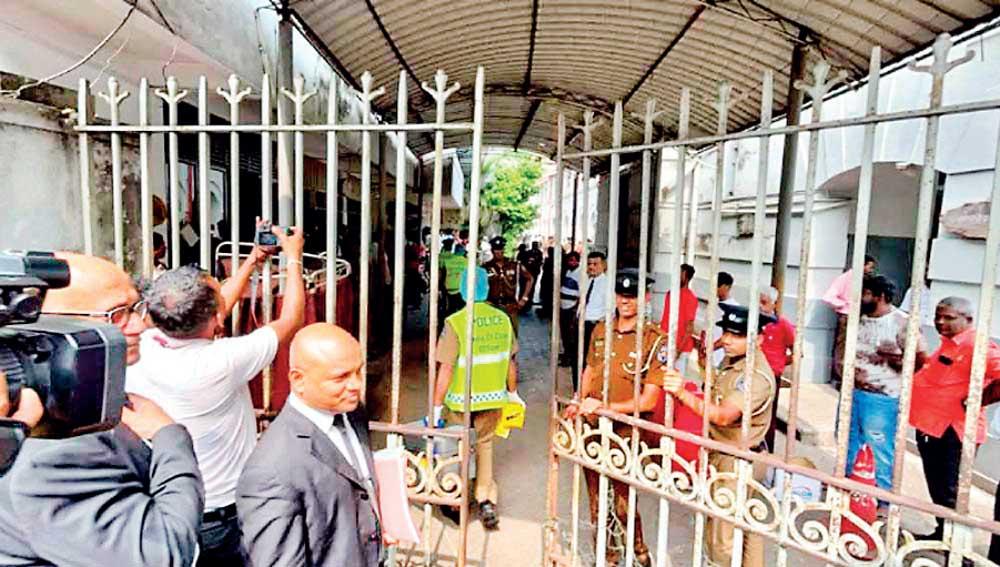
Security tightened outside Hulftsdorp court complex moments after underworld kingpin alias Ganemulla Sanjeewa was shot dead inside a courtroom
 Last week, underworld kingpin Sanjeewa Kumara Samararathne, alias ‘Ganemulla Sanjeewa’, was shot dead inside the Colombo magistrate court by a gunman disguised as a lawyer. The killing, as shocking as it was, also highlighted major security lapses: Producing a high-risk inmate before the magistrate was unwanted at a time when much of bail hearings are taking place over Skype.
However, what is equally disturbing is hyperventilating over the incident, projecting it as an existential threat to national security, which is not the case.
Sri Lankans have an obsession with lumping everything together in the realm of national security -from egg imports to the Millenium Cooperation grant of 480 million dollars, which the country lost due to a similar fallacy. That effectively provides an expansive interpretation of national security, which not only makes the whole affair confusing but also dangerously leviathan.
National security should be gauged in matters of priority concern for sovereignty, territorial integrity and security of the people – and challenges which may be latent now but have a historical record of seriously undermining the state and its very survival as a functional unit.
The underworld is still law and order- concern unless the Sri Lankan underworld morphed into the kind of narco-mafias in much of Latin America, which are essentially states within states.
While this description may sound superficial or overly philosophical, there is a point where the difference between the two would be laid bare most graphically. If a nation is faced with a serious threat to its national security, which, by extension, is an existential threat to its survival and security of its people, a state worth its salt would use all means available, right and wrong, and necessary evil, to defeat it. In the extremes, though not unusual, the law and order and moral and ethical conventions take a back seat because the state should survive in a functional form for the law and order within it to exist.
That is not a benign state of affairs. That was how the JVP was defeated in 1989-90, and the LTTE’s sleeper cells in Colombo were liquidated, and that is why Israel has pulverised Gaza.
Those are extreme examples. But, under any circumstances, invoking national security grants the government a large gamut of laws and regulations which curtail personal liberties and civic freedoms while also turning a blind eye to the excesses and violations of law enforcement agencies and security forces.
Mahinda Rajapaksa thrived in creating imaginary national security boogeymen, at the same time, cultivating a personal cult and dynastic rule. Journalists and political dissenters were hunted down, and then the investigations were obstructed under the pretext of national security.
I, myself, do not want to test the resolve of the NPP government in fighting an imaginary national enemy because when Marxists and communists do that, they have historically made tinpot despots like Rajapaksas look like convent nuns.
Sajith Premadasa keeps hyperventilating about a crime wave. However, statistics beg to differ. Sri Lanka is, by international comparison, a low-crime country. Its homicide rate ( 3 for 100,000 people) is below the world average (6) and low and middle-income countries (6), OECD countries ( 5) and on par with high-income countries (3).
You are extremely unlikely to get mugged in the street or carjacked in this country. The obsession to oversell a non-existing crime wave is common in two groups. One is the NGO captains looking to skim some money by solving imaginary problems. The intensity of this campaign may reduce as the US curtail USAID funding and Scandinavian good Samaritans get busy with their own migrant problems. The second group is the self-interested politicians and their acolytes, who amplify isolated incidents to generate a public perception that runs counter to reality. That was how Gotabaya Rajapaksa won the presidential election.
There are also more sinister elements who had internalised the securitised state of the past. Rear Admiral Sarath Weerasekara was heard lamenting about opening roads for the public and removing checkpoints.
Hyperventilating about imaginary threats and marginal grievances is not necessarily new in this country, and like everyone else, the stakeholders in this government excelled in it. However, now that it is in power, it should not give a free pass to the opposition to indulge in the same. Legitimate criticism of the government and selfish ploys to undermine the collective prosperity of people are two totally different matters. An imaginary crime wave would effectively sully Sri Lanka’s image as a safe destination for travel, effectively ruining the livelihood of many hundreds of thousands of Sri Lankans. Such degenerative scheming should be exposed.
Sri Lanka, nonetheless, has an emerging law and order problem where growing underworld gun violence is concerned.
For instance, in 2024, a total of 103 shooting incidents were recorded, with 56 linked to underworld activities. Of the 63 fatalities, 45 were connected to organised crime.
Thirteen shootings were reported in the first month of this year, with seven linked to organised crime.
Police say intensified gang rivalries between underworld gangs have contributed to the rise of gun violence. There are 58 identified underworld gangs with 1400 members, many operated by their exiled leaders from foreign countries, mainly Dubai and India.
Sri Lanka needs a practical approach to neutralise the underworld, and considering the experience of local security apparatus in fighting more sophisticated terrorist groups and its intelligence cells, that should not be much to ask. Yet, the country needs political will to dismantle the underworld rather than trying to contain it, as most law enforcement officials and politicians prefer. Sri Lanka did not strategise to contain the LTTE, but to annihilate it. So does El Salvador, in its successful fight against the underworld, which has now made the once world’s homicide capital into Latin America’s safest country, safer than many cities in America.
However, Sri Lanka’s fight against the underworld is compromised by its catch-and-release strategy, where underworld kingpins are produced before the court and released on bail after completing the bare minimum of the mandatory remand custody. The whole idea of flight risk is not counted, and most suspects, released on bail, simply disappear and reappear in a foreign safe haven to remotely manage criminal operations. This sinister cycle continues. If Sri Lanka is to combat the underworld decisively, it should revamp its legal system and introduce mandatory prolonged detention for the underworld, similar to the Prevention of Terrorism Act.
Combatting the underworld would address other major societal problems- drug addiction and petty crimes mainly associated with drug addicts to finance their daily doses.
නිරුවත් වානරයාගේ කතා වස්තුව 🇺🇸 | USAID | NED | ආරාධිත දේශනය, මහාචාර්ය ටියුඩර් වීරසිංහ මහතා
February 25th, 2025Wimal Weerawansa
මහාචාර්ය ටියුඩර් වීරසිංහ මහතා විසින් ජාතික අධ්යයන කේන්ද්රය සංවිධානය කළ නිරුවත් වානරයාගේ කතා වස්තුව බුද්ධිමය සම්මන්ත්රණයේදී සිදුකළ ආරාධිත දේශනය
Hiru TV Salakuna Live | Wimal Weerawansa | Episode 471 | 2025-02-24 | Hiru News
February 25th, 2025Hiru News
”අරගලය වෙලාවෙ කුරුසෙ කරේ තියන් ආව කෙනා ඇතුලු පවුල් ගණනාවක් මාසයක් පේරාදෙණියෙ හෝටලයක … –
February 25th, 2025උපුටා ගැන්ම හිරු පුවත්
පාතාලය මර්ධනය කිරීම Palali Syndrome..!
February 24th, 2025Dr Ruwan M Jayatunge M.D.
පාතාලය මර්ධනය කිරීම සඳහා හමුදාවෙන් පැන ගිය සොල්දාදුවන් අත් අඩංගුවට ගැනීමට ආරක්ෂක ලේකම් නියෝග කොට තිබේ. ඔවුන් අත් අඩංගුවට ගැනීමට ගැනීමෙන් පමණක් මේ ප්රශ්නය විසඳිය නොහැක. යුද ආතතියට ලක්ව සිටින සහ සමාජ විරෝධී පෞරුෂ ලක්ෂන පෙන්වන කොටස් මනෝ විද්යාත්මක සහ මනෝ සමාජීය පුනරුත්තාපනයට යොමු කල යුතුය. ඒ සඳහා දැණුමක් තිබෙන කණ්ඩායමක් ස්ථාපිත කල යුතුය.
මෙය දශක ගනනාවක් පුරා මා සහ මනෝ වෛද්ය නීල් ප්රනාන්දු වගකිව යුත්තන්ට කියූ දෙයකි. එහෙත් අපගේ සමාජය ලොල් වූයේ ශෝට් කට් වලටය. ආයුධ පෙන්වීමට ගෙන යාමෙන් පාතාලය අහෝසි කල හැකි බව ඔවුන් සිතුවෝය. මෙවර වත් නව ආණ්ඩුවට සහ ආරක්ෂක ලේකම්වරයාට මේ මිනිසුන් පුනරුථාපනය කිරීමට යොමු කිරීමට අන්තර් ඥානය පහල වේවා. මේ ලිපිය කියවන්න. එය පලාලි සින්ඬ්රෝමය හෙවත් යුද ආතතිය විසින් ශ්රී ලංකා සමාජය වෙනස් කරන ලද අයුරු පිලිබඳව කියවෙයි. ;
Palali Syndrome..!
*****************
Palali Syndrome represents the symptom complex of battle stresses that has been experienced by the new generation of combatants. It has developed into a syndrome. Palali syndrome describes various clinical and psychosocial ailments experienced by the Sri Lankan combatants and in the final score how it affects the society at large.
The Country was in an armed conflict for thirty years and during that period, the society was severely traumatized. Even three years after the war the Sri Lankan society is still experiencing the repercussions of the Palali syndrome. Many distressing and heartbreaking stores reveal the magnitude of combat trauma in the country. If necessary psychosocial rehabilitation is not provided adequately to the victims of war trauma it would harm the spirit of the Nation.
Read more; https://lankapowernews.com/palali-syndrome-in-civil-war/
The Secret Evasions of England’s Ceylon Tobacco Company in Sri Lanka
February 23rd, 2025e-Con e-News

blog: eesrilanka.wordpress.com
‘Before you study the economics, study the economists!’
e-Con e-News 16-22 February 2025
The deadly, malignant role played by England’s Ceylon Tobacco Co (CTC) in Sri Lanka is a story yet to be told, and the media sure ain’t gonna tell it. The media’s function in Sri Lanka is to create diversionary dramas that take us away from the manoeuvrings of huge multinational corporations (MNCs) – with budgets larger than countries. The media have to churn out soap operas (for they own the soap, too), that have absolutely no impact on – nor offer insight into – transforming the merchant-run plantation economy that dominates the country. Then again, why should they bother? The media, too – at least the variety mislabelled as ‘free’ and ‘independent’ and ‘national’ – is controlled by these very MNCs.
This week’s ee begins a glimpse into CTC, owned by British American Tobacco (BAT), which operates an over-100-year monopoly. The media & those thinktanks that love to whinge & whine about the economy – that love to go on about free trade, etc – dare not approach, let alone touch CTC. How CTC not only deprives the country of revenues but also spreads cancers to both smokers & the peasants that grow their tobacco, leaving the state with a huge health bill!
The news this week was dominated by the farce of a boxed-in 2025 budget, ‘formulated to augment state revenues within limited fiscal space’. Imposed by the IMF’s ‘parameters’, the ‘appropriations’ are being accompanied by screeching hallelujahs in high notes (‘positive’, ‘bold’); by bass demurrals in low notes from the merchants (‘the proof of the [English] pudding is in the eating’). Meanwhile, chattering ‘renewable’ green monkeys trip the national grid. And fearsome falsettos crescendo about murder most foul in a courtroom where justice is otherwise meted out (with a little help from USAID, see ee Random Notes).
*
In Sri Lanka too, the true history of the media
and its oligarchic owners is yet to be written…
(see ee Focus)
Not a day – nay, a minute – goes by without some negative media reference to China – the People’s Republic, that is – and its ‘conniving’ Communist Party. This week we heard again in the supposedly nationalist Island newspaper from ‘a PhD candidate of political science at Wayne State University, USA’, one ‘Mitchell Gallagher’. This ‘doctor in training’, ominously intones – ‘As Africa toes Chinese line’:
‘Yet as CGTN Africa & Xinhua become entrenched in African media
ecosystems… Will Africa’s journalists & press be able to uphold
their impartiality & retain intellectual independence? As China
continues to make strategic inroads in Africa, it’s a fair question.’
(Island, 21/02/25, see ee Media)
*
Really! In Sri Lanka, 90% of all foreign news, even about countries right next door, has to come from the English King’s BBC, etc. Talk about trenches! This constant demonization by the ‘global’ north’s media of a rising Asian country blathers on, despite revelations of how ‘USAID spent $7.9mn to train Sri Lankan media’. This ee Focus therefore reproduces Shiran Illanperuma’s foray into ‘How Chinese Capacity Building & USAID Slush Funds Reveal Ideological Biases of Our Media’, and offers startling revelations about China’s media.
And as for USAID, while the media focuses on their more wild & weird ways, they yet lament that ‘poor’ countries will now suffer minus the USA’s weaponized philanthropy. This ee Focus therefore peeks also into their more pernicious role in Sri Lanka, with the CTC, the US NGO Care International & the local Ministry of Health (!!!) pushing US soya beans: Charles Abeysekera’s ‘A Transnational in Peasant Agriculture: the Case of the Ceylon Tobacco Company’ (1985) looks at how the monopoly of CTC in the manufactures & sale of cigarettes continues undisturbed. CTC impoverishes Sri Lankan farmers and holds them hostage to their financing & inputs. Meanwhile, CTC, which plays tax-collector for the state, has ‘brought no foreign capital into its operations in Sri Lanka’ since at least 1932, and ‘all capital increases since then have been derived from accrued earnings in Sri Lanka’! FDI, anyone!
Abeysekera also exposes how CTC uses third countries – where they do not have industrial operations – as channels to transfer ‘inputs’ (cigarette papers!) from countries where they do have industrial operations, to Sri Lanka, to inflate prices & avoid paying taxes. Even more interesting is the role played by numerous accounting firms in the game of transfer pricing, an act which would surely burn a hole in the widespread huffing and puffing about local ‘corruption’. He quotes an UNCTAD report of 1978:
‘One of the salient features of TNC operations… is the absence
of rigorous public accountability of their corporate practices.
Discourse & analysis is all the more vital since economic
intelligence of such relevance is invariably shrouded in secrecy,
strikingly so in respect to transfer pricing techniques. This is
particularly evident in the Developing countries where knowledge
of the financial marketing & output decisions of the TNCs’ global
decision making power is confined to rudimentary data eg, the
conventional corporate balance sheet which is largely stripped of
any content. Data concealment is assisted by the giant accounting
firms acting in alliance with corporate power.’ (see ee Focus)
While recognizing the straitjacket the government must operate within, the Sri Lanka Administrative Service Association (SASA) praised the budget, and the government’s commitment to curbing ‘tax evasion by implementing digital financial transaction systems’. But what of the massive evasions of CTC, Unilever, Exxon and other multinationals? Indeed, we look forward to a government that can also ensure investment in modern industry, but this can only be enabled by controlling these MNCs, their accounting firms and their ‘chambers’ of merchants, that get away with a more pernicious form of robbery and murder in the country.
The Frontline Socialist Party (FSP), which is deployed by the media to hit the government with Left hooks, recalls Margaret Thatcher saying her greatest accomplishment was ‘Tony Blair & Blairism’. The decades-long effort to tame the JVP through mass murder and now sweet lullabies, recalls SBD de Silva’s cautioning about how ‘merchant interests’ have resisted the progressive policies of governments with ‘boundless ingenuity’. Hence one of the SJB’s leading merchant triplets, Kabir ‘Kanay’ Hashim, has offered to cut off his ear, Van Gogh style, if the government actually establishes a development bank, as promised in the budget. Meanwhile, the government has also promised an ‘Industrial Zone dedicated for Chemical Manufacturing’ in its budget:
We have noted over the last few months benign and intriguing references to the Institute of Chemistry Ceylon, holding a Christmas Party (toasting themselves with lots of local chemicals no doubt), and then recently hosting a ‘Global Women’s Breakfast 2025’ with the US-based International Union of Pure & Applied Chemistry. England’s Royal Society of Chemistry also had their ‘delegates’ visit the Institute of Chemistry Ceylon. We wonder why? England’s CTC & Unilever & ICI’s CIC are among the biggest importers of chemicals into the country. eewill also look into CTC’s umbilical links to gaseous Exxon and Deloitte.
ee Readers may recall our recent references to Germany’s dye industry, which during their First World War quickly turned their dye factories in making ‘high explosives & noxious gases’, and another ee Focus on US-occupied Korea’s Heavy-Chemical Industrial (HCI) policies, which shifted Korean manufacturing into ‘more advanced markets’. Unilever et al would not be amused…
*
CTC and their English twin Unilever operate in Sri Lanka through 100s of ‘independent’ front companies, and we therefore found it intriguing this week that Unilever launched a ‘Rs3.8mn malt drink & food manufacturing plant’, claiming it is their ‘largest investment in South Asia’. Hindustan Lever anyone? ‘Industry & Entrepreneurship Development Minister Sunil Handunnetti calls the ‘investment’, ‘a testament on confidence on the Sri Lankan economy by a leading multinational such as Unilever’. Apparently, it was ‘built using state-of-the-art technology’, ‘with local engineering.’ There is no mention of where and how the raw materials, including chemicals and machinery and parts, have been and will be made. Which again makes us invoke VS Naipaul’s classic novel The Mimic Men (1967):
*
‘Industrialization, in territories like ours, seems to be a process of
filling imported tubes & tins with various imported substances.
Whenever we went beyond this, we were likely to get into trouble…’
*
Contents:
ජනපතිගේ සහ නි.ආරක්ෂක ඇමැතිගේ අතීතය පස්සෙන් පන්නයි
February 23rd, 2025උපුටා ගැන්ම ලංකා ලීඩර්
 දේශපාලකයන් පසුපසින් අතීතය ලුහුබැඳ ඒම වැළක්විය නොහැකිය.
නියෝජ්ය ඇමැති චතුරංග අබේසිංහ සහ මන්ත්රී නිලන්ති කොට්ටහච්චි වැනි ජාතික ජන බලවේගයේ සාමාජිකයන් අතීතයේ සිය සමාජ මාධ්ය ගිණුම් ඔස්සේ ප්රකාශ කළ ප්රකාශ සහ ඔවුන් කළ ප්රසිද්ධ ප්රකාශ දැන් ඇතැම් විට ඔවුන්ට පාරාවළල්ලක් වී ඇති බව දැකගත හැකිය.
නියෝජ්ය ආරක්ෂක අමාත්ය විශ්රාමික මේජර් ජෙනරාල් අරුණ ජයසේකර සම්බන්ධයෙන්ද මේ දිනවල එම තත්වය සමානය.
ඔහු පසුගිය මැතිවරණ වේදිකාවේ කළ ප්රකාශයක් මේ දිනවල වේගයෙන් සමාජ මාධ්ය ඔස්සේ සංසරණය වේ.
එහිදී ඔහු පවසන්නේ, ‘ජාතික ආරක්ෂාව පිළිබඳව නොදන්නා’ අය මේසයක් සහ පුටුවක් රැගෙන් තමා හමුවීමට පැමිණෙන ලෙසයි. එවිට ඔහුට මෙම විෂය පිළිබඳව ‘ටියුෂන්’ ලබාදිය හැකි බව ඔහු පවසයි.
කෙසේවෙතත් පසුගිය දිනවල වාර්තා වූ වෙඩි තැබීම් සහ ඝාතන හමුවේ එම ප්රකාශය ඔහුට එරෙහිව පාරාවළල්ලක් වී ඇත.
ඊයේ පොලිසිය කියා සිටියේ, ‘සැඟවුණු ආයුධ’ සොයාගැනීමට රැගෙන ගිය පසු, නිලධාරීන්ගේ ගිනි අවි පැහැර ගැනීමට සහ ඔවුන්ට පහර දීමට උත්සාහ කළ සැකකරුවන් දෙදෙනෙකු පොලිස් වෙඩි පහරින් මියගිය බවයි.
සිකුරාදා රාත්රියේ කොටහේනේදී පුද්ගලයෙකුට මාරාන්තික වෙඩි තැබීම සම්බන්ධයෙන් ඔවුන්ව අත්අඩංගුවට ගෙන තිබිණි.
පොලිසිය එය නිවේදනය කළ විගසම ජනාධිපති අනුර කුමාර දිසානායකගේ පැරණි වීඩියෝ පටයක්ද සමාජ මාධ්ය ඔස්සේ වේගයෙන් සංසරණය විය.
ඔහු විපක්ෂයේ සිටියදී, පොලිසිය විසින් කරන ලද එවැනි ප්රකාශ සම්බන්ධයෙන් දැඩි විවේචන එල්ල කරන අයුරු දක්නට ලැබිණි. මෙම වීඩියෝ පටය 2021 දෙසැම්බර් මාසයේදී විපක්ෂ මන්ත්රීවරයකු ලෙස අනුර දිසානායක පාර්ලිමේන්තුවේදී කළ කතාවක කොටසකි.
පොලිස් අත්අඩංගුවේදී වෙඩි වැදී පුද්ගලයන් මියයෑම ඔහු හඳුන්වන්නේ තිර පිටපතකට රඟදක්වන නාටකයක් ලෙසිනි.
එවැනි සිදුවීම් හරහා ප්රචලිත වී ඇති ‘ඝාතන සංස්කෘතිය’ පොලිසිය විසින් අවසන් කළ යුතු බවත්, වැරදිකරුවන් නීතිය හමුවට ගෙන ඒමට පියවර ගත යුතු බවත් අවධාරනය කරමින් ඔහු තම කතාව අවසන් කරයි.
මෙම වීඩියෝ පට නැවත හුවමාරු කරගන්න අය ප්රශ්න කරන්නේ, අනුර දිසානායක නායකත්වය දෙන ආණ්ඩුවක් යටතේ එවැනි සිදුවීමක් වාර්තා වී ඇති විට ජනාධිපතිවරයා ලෙස ඔහු කෙසේ ප්රතිචාර දක්වනු ඇත්ද යන්නයි.
Govt. under fire over extrajudicial killings
February 23rd, 2025by Shamindra Ferdinando Courtesy The Island

Spokesman for the Frontline Socialist Party (FSP) Pubudu Jagoda yesterday said that the government owed an explanation regarding the circumstances the courtroom killing took place on 19 February and two suspects who died in police shooting two days later.
Jagoda pointed out that Ganemulle Sanjeewa had been produced in court without a specific court directive and those in authority were yet to explain as to why he was brought in regardless of intelligence warning issued the previous week regarding a possible attempt on the suspect’s life.
Justice and National Integration Minister Harshana Nanayakkara yesterday (23) said that the NPP government hadn’t considered re-implementation of judicial executions under any circumstances.
Attorney-at-Law Nanayakkara said so when The Island asked him whether the government would examine that option as part of its overall response to tackle the underworld, in the wake of the assassination of Sanjeewa Kumara Samararatne, aka Ganemulla Sanjeewa, in court room 05 of the Aluthkade court complex on 19 February.
Barely 24 hours before thecourtroom killing an unidentified gunman killed Aruna Vidanagamage aka Meegas-are Kajja, 39, and his six-year-old-daughter and nine-year-old son. The triple-murder took place in the Middeniya police area.
Minister Nanayakkara said that President Anura Kumara Dissanayake, who also holds the defence portfolio, has been quite clear that resumption of judicial executions wouldn’t be an option. What you mentioned never came up for discussions held following the courtroom killing, the minister said.
Sri Lanka suspended implementation of capital punishment in 1976 though the court continued to pass death sentences. Sri Lanka has reached an understanding with the European Union that judicial executions wouldn’t be resumed.
We are taking tangible measures to address issues at hand. Discussions are taking place at the highest level to map out strategy,” lawmaker Nanayakkara said.
President Dissanayake assured the Ministerial Consultative Committee on Defence on February 20, the day after the courtroom killing that the underworld would be wiped out. Acknowledging that the underworld had infiltrated institutions responsible for public security, President Dissanayake said that the eradication of criminal gangs would take some time. Justice Minister Nanayakkara explained the measures taken to enhance security at courts and subject of all entering court rooms, including lawyers.
The Island also raised the recent killing of a gunman and his accomplice apprehended by the Grandpass police soon after they killed a person at Galpoththa Junction in Kotahena. The police identified the victim as 38-year-old Shashi Kumar. Justice Minister Nanayakkara said that the government would take appropriate measures in this regard. The death of persons who had been taken into custody were the first since the last presidential election held in Sept 2024.
The minister emphasized that they were concerned about the development and would take appropriate measures.
President Dissanayake during his parliamentary career repeatedly attacked successive governments over deaths in government custody.
The Bar Association of Sri Lanka (BASL) constantly called for a halt to deaths in custody, especially during Saliya Peiris, PC, tenure as the President of the body.
In April 2023, the Supreme Court summoned the then IGP Chandana Wickremaratne to seek an explanation why police failed to comply with an order made by the SC to formulate guidelines to police officers to prevent deaths in police custody.
In a judgment dated 3 February, 2023, the Supreme directed the IGP to formulate, issue and implement, guidelines to the police, elaborating the steps that should be taken by each officer to avoid such deaths.
Heritage Foundation (USA) and Pathfinder Foundation to conduct a joint briefing session on US-Sri Lanka relations under the Second Trump administration.
February 22nd, 2025The Pathfinder Foundation
The Pathfinder Foundation and the Heritage Foundation (USA) will conduct a joint briefing session online on 28th February 2025 at 7:30 p.m. (SLST), which is 9:00 a.m. (EST), via Zoom. The session’s main topic is titled Prospects for US-Sri Lanka Relations: Impact of the Second Trump Administration.” It will also address US-South Asia relations and American policy on significant global issues.
The Heritage Foundation is an American conservative think tank based in Washington, D.C. Founded in 1973, it took a leading role in the conservative movement during the 1980s under the presidency of Ronald Reagan, whose policies were derived from Heritage Foundation studies, including its Mandate for Leadership. It is a research and educational institution dedicated to building and promoting conservative public policies. Heritage’s world-renowned experts—deeply experienced in business, government, the military, non-profits, academia, and communications—devote each day to developing innovative solutions to the issues America faces. They also engage with the international community to promote freedom, peace, and trade that benefits America and the world.
The Heritage Foundation’s experts who will speak at the event include Diana Roth (Energy), Steve Yates (US-China Policy), Brent Sadler (US Defence and Maritime Policy for South Asia), Eric Holtz (US Economic and Trade Policy), Mike Gonzalez (US Politics), and Jeff Smith (US South Asia Policy).
Dr. Dayaratna Silva, Executive Director of Pathfinder Foundation; Amb. (Retd.) Ravinatha Aryasinha, Executive Director of Lakshman Kadirgamar Institute; Prof. Rohan Samarajiva, Founding Chair and CEO of LIRNEasia; and Admiral (Prof.) Jayanath Colombage, Distinguished Fellow of Pathfinder Foundation, will serve as Expert Commentators. Bernard Goonetilleke, Chairman of the Pathfinder Foundation, will moderate the session.
The event will be an open forum, inviting pre-registered individuals and institutions to participate in the discussion. Further information can be obtained by contacting pm@pathfinderfoundation.org.
The main reason behind the arrival of the Dutch
February 22nd, 2025by, Professor Nishan C. Wijesinha
First of all, it is highly important to note, that after the incorporation of the
Dutch East India Trading Company (VOC), on the 20th of March 1602; thereafter
soon afterwards, within a month and ten days; on the 2nd of May 1602, the Dutch Admiral Joris van Spilbergen’s arrival in Batticaloa, with three ships from the Dutch port of Veere.
It should be pointed out here, that, although, through the passages of time vivid changes occurred in the body of Ceylon; yet it sustained itself as the trader’s paradise of the Indian Ocean; with its remarkable “Thearavada Trading Economy”.
This is the reason, which led the Dutch, to arrive in Batticaloa, the very moment after they incorporated the Dutch East India Trading Company as mentioned above.
From 1602 to 1706, a hundred years later, the corruption builds up, as the reigning Dutch Governor Simons, destroyed the core essence of the Dutch role
in Ceylon, with the 1706 Dutch Codification of the Tesawalami regulation, giving
predominance to the Malabar caste of the Tamil people as the indigenous Tamil people, of the Northern Province of Ceylon; which gave them hope of a Tamil Eelam State.
The embodiment of its practice was preserved in the unique monuments which I have managed through great and profound struggle to take it to my custody from it’s hideout in the Nainativu Nagapooshani Amman Kovil.
The total history of it and my intentions of its preservations for public homage and education is given by me separately; in another message.
මානව හිමිකම් කවුන්සලය ඉදිරිපිට ගිය විජ්ජුම්බරයයි
February 22nd, 2025සිංහල දීප ජාතික පෙරමුණ විරෝධයක
මා කරන අවසාන ප්රකාශයක් විය හැකි. #මඩකලපුවෙ_හාමුදුරුවෝ #madakalapuwe_hamuduruwo
February 22nd, 2025Ven. Ampitiye Sumanarathana Thero
2025 රාජ්ය අයවැය පිළිබඳ පුළුල් විග්රහය | 2025 Budget | Patali Champika Ranawaka
February 22nd, 2025Patali Champika Ranawaka
A tribute to a quintessential friend and colleague
February 22nd, 2025Somar Wijayadasa Courtesy The Island
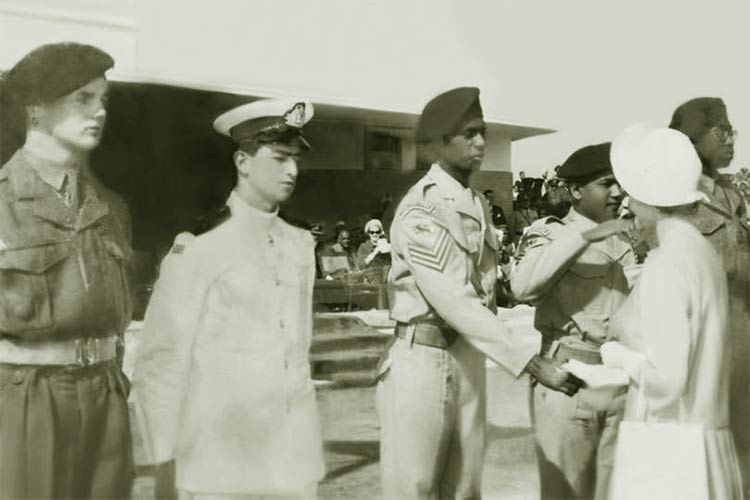
Kuru as a cadet sergeant and Queen’s Scout meeting the Queen at India’s 1961 Republic Day.
A talented son of Sri Lanka, Dr. Mahinda Kurukulasuriya (1942-2025) passed away peacefully in Vientiane, Laos on 29 January 2025 – with his daughter Liza by his side. According to his wishes, a three-day memorial service was held in a Buddhist temple in Vientiane, Laos.
Among close friends, he was fondly referred to as ‘Kuru” and as Dr. Kuru” among his professional colleagues.
He was born in 1942 to a wealthy family in Nakulugamuwa. His father owned the Ruhunu Transit Bus Company that was nationalized in 1957.
Kuru had his Education at Mahinda College, Galle, where he excelled in studies, sports, and athletics. In 1961, as a Cadet and a Queen’s Scout, he had the rare opportunity to greet Queen Elizabeth II at the Republic Day Celebrations in New Delhi.
After a 13-year hiatus of losing cricket matches to Richmond College, in 1962, Mahinda College under Kuru’s captaincy won a memorable victory against Richmond.
In 1962, he won a Scholarship to pursue engineering studies at the Moscow State University. That same year, I met Kuru in Moscow, and we forged a friendship that lasted 65 years.
Kuru married his University batch-mate Elena – an amiable person who also completed her Ph.D. and the rare Doctor of Science (D.Sc.) degrees along with Kuru. She predeceased him in 2015 leaving two equally brilliant daughters who live in Europe.
Kuru’s education abroad opened up the world for him to explore. Upon his graduation in 1968, he returned to Sri Lanka and worked for the River Valleys Development Board (RVDB). From 1971-1976, he and his wife Elena were appointed as water engineers in Zambia. They returned to Moscow and completed their Ph.D.’s. Kuru returned to Sri Lanka in 1979 and worked for the Mahaweli River Development.
Later, he worked on United Nations assignments as a senior engineer and Program Manager in Zaire, Congo, Maldives, Myanmar, Cambodia, Thailand, and Laos. He was fluent in English, Russian, French, Burmese, Khmer and Thai, and he excelled in his UN assignments.
In 2006, he garnered another Ph.D. from the Postgraduate Institute of Agriculture of the Peradeniya University. Over the years, he wrote several books, including his memoirs One Drop of my Sweet Sweat”.
Upon his mandatory UN retirement, the Government of Laos – aware of Kuru’s technical expertise, commitment and integrity – persuaded Kuru to lead several key development projects in Laos. It allowed Kuru to continue working with the perks of a UN official, and the Government took good care of him as he was away from his native Sri Lanka, and his beloved family. He had many Laotian friends.
Above all, he was kind and friendly to everyone he knew. Despite many achievements, Kuru was the most virtuous and unassuming person I came across in my life.
Kuru is survived by his sisters Indra and Lalita, daughters Angelika and Liza, and his wife Seuth and his son Souminta.
His family and friends will miss him dearly. Yet, we shall cherish his memory forever.
May he attain the supreme bliss of Nirvana.
Somar Wijayadasa
Justice Minister announces armed security for special detainees in courts
February 22nd, 2025Courtesy The Sunday Island
Justice and National Integration Minister Harshana Nanayakkara informed Parliament on Thursday (20) that armed officers will be deployed inside courtrooms to ensure the security of special detainees during proceedings.
Responding to a question from Kalutara District NDF MP Rohitha Abeygunawardena, the Minister highlighted that the absence of armed officers within courtrooms poses a security risk. He noted incidents of individuals disguising themselves as lawyers, emphasizing the urgent need for enhanced security measures.
A special committee will be formed to engage with key stakeholders, including the Judicial Service Commission, the police, and the Bar Association, to implement armed security when necessary. Additionally, advanced screening procedures will be introduced to further bolster courtroom safety. The government also aims to improve the welfare of prison officers, including aligning their salaries with those of the police service.
As part of broader judicial reforms, an amendment to the Criminal Procedure Code will be introduced, allowing detainees to testify via video link, reducing the need for their physical presence in court, the Minister said.
LTTE සංවිධානය ඇතුළු සංවිධාන 15ක් තහනම් කරමින් ගැසට් නිවේදනයක්
February 22nd, 2025උපුටා ගැන්ම ලංකා ලීඩර්
LTTE සංවිධානය ඇතුළු ත්රස්තවාදී සංවිධාන 15ක් තහනම් කරමින් අතිවිශේෂ ගැසට් නිවේදනයක් නිකුත් කර තිබේ.
ආරක්ෂක අමාත්යංශ ලේකම් සම්පත් තුයියකොන්තා මහතාගේ අත්සනින් යුතුව මෙම අතිවිශේෂ ගැසට් නිවේදනයක් නිකුත් කර ඇත.
මෙලෙස තහනමට ලක් වූ සංවිධාන, ත්රස්තවාදය හා සම්බන්ධ ක්රියාකාරකම් සඳහා වරින්වර මුදල් සැපයීම සිදු කර ඇති බව සදහන් වේ.
ඒ අනුව එම සංවිධානවන මූල්ය වත්කම් සහා ආර්ථික සම්පත් තහනමට ලක්කර ඇත.
මීට අමතරව ත්රස්තවාදය හා සම්බන්ධ පුද්ගලයන් 222කගේ නාම ලේඛනයක් ද මෙම අතිවිශේෂ ගැසට් පත්රය මගින් ප්රකාශයට පත් කර තිබේ.
තහනම් කළ ත්රස්තවාදී සංවිධාන 15
1 ද්රවිඩ ඊලාම් විමුක්ති කොටි සංවිධානය
2 දෙමළ පුනරුත්ථාපන සංවිධානය
3 දෙමළ සම්බන්ධීකරණ කමිටුව
4 ලෝක දෙමළ ව්යාපාරය
5 දේශසීමා ඉක්ම වූ දෙමළ ඊලම් රාජ්යය
6 ලෝක දෙමළ සහනසාධක අරමුදල
7 මූලස්ථාන කණ්ඩායම
8 ජාතික තව්හිද් ජමාත්
9 ජමාතේ මිලාතේ ඊබ්රාහීම්
10 විලයාත් අස් සෙයිලානි
11 කැනේඩියානු දෙමළ ජාතික කවුන්සිලය
12 ද්රවිඩ තරුණ සංවිධානය
13 දාරුල් අදර් අත්තබවියා
14 ශ්රී ලංකා ඉස්ලාමීය ශිෂ්ය ව්යාපාරය
15 සේව් ද පර්ල්ස්