The recent circular PS/BS/Circular/1/2025 issued by the President’s Secretariat on interactions between State agencies and foreign missions in Colombo has raised concerns in both the diplomatic quarter and within the community of senior public officials about the Government’s intentions behind the move. The circular came from left field, and was neither a requirement raised on the political stage in the lead up to both key elections last year which brought the National People’s Power (NPP) Government into office, nor was there a public demand for such.
The move, which many elements of the Foreign Ministry was not aware of themselves, is a baffling development as to who exactly ‘wanted’ such guidelines to be strictly enforced. While the Ministry of Foreign Affairs (MFA) is the principal State organ which should manage all diplomatic relations, the new limitations laid out by the new circular places unrealistic expectations on the MFA to ‘clear’ requests on a timely basis to ensure ongoing ‘business’ which require diplomatic input or consultation. Firstly, the MFA, which has been short staffed, and under-resourced in the past, is not known for speed of action or efficiency in responding to requests for linkage and to organised meetings between State actors and foreign missions. As such, the new guidelines which are in effect from 1 January, may come as a tilde wave of responsibility which the MFA, already stretched thin, will have to deal with. This, given that 2025 is still a year where Sri Lanka is in recovery mode, and with the dire need to attract investors and sustain sound bilateral and multilateral ties, will likely be a counterproductive measure by the Government.
However, given that the MFA and the Central Government hold control over diplomatic engagements, the decision to bar local government bodies from establishing direct contact with foreign missions, seems like a reasonable proposition. Nevertheless, some foreign missions who have focused areas in the North, East and increasingly in the hill country may find these new regulations a bitter pill to swallow. According to the circular: Provincial Councils and Local Government bodies including Municipal Councils should not establish direct contact or correspond directly with foreign governments/ missions accredited to Sri Lanka and other international organisations.” However, some space has been given for the Ministry of Finance and the Ministry of Defence in the new circular, which states: Direct interaction on specialised areas such as defence and foreign funding, between the line Ministries/institutions and foreign diplomatic missions accredited to Sri Lanka and related entities, and also with Sri Lanka Missions abroad may be desirable on following instances, taking into account special imperatives and circumstances. It is nevertheless essential that the ministry in charge of the subject of Foreign Affairs be kept informed of all such interactions, especially those relating to Agreements/MoUs: (a) The ministry in charge of the subject of finance may deal directly with the concerned foreign governments/international organisations on the following aspects, with the stipulation that major policy issues bearing political/strategic repercussions would be pursued in consultation with the ministry in charge of the subject of Foreign Affairs: Negotiating loans from multilateral/regional financial institutions such as the World Bank, IMF, IDA, ADB and AFBD”
The introduction of the new regulations builds on an unwritten ‘gag order’ which most government ministers and senior public officials seem to follow since the new Government came into office. And as such is a concern as it creates a straitjacket environment in the public sector. It adds to the already restrictive State apparatus which has a weak history of being transparent and whistleblowing. As such, not only foreign missions, journalists and public interest investigators are also today essentially ‘locked out of’ the State apparatus, due to the new Government’s policy on using only one channel for information – the Cabinet Press briefing, which is often a limited engagement. Some observers have been of the view that the reduction in access to information enacted by this Government, and now the new regulations on engaging the diplomatic community is part of a trend, by the new political force, which has limited experience in governance, and finds any criticism unpalatable. If such a trend continues, Sri Lanka would find itself with a less informed public, and weak checks and balances, as the Government would not be able to be held accountable. It would also mean, Sri Lanka’s partners in the international community will not get a good read on ground realities, and will be left to work without clarity on important matters, of bilateral and multilateral nature. Which inturn may deter foreign investors. A worrying trend indeed.
Colombo, Jan 09 (Daily Mirror) – The UNHCR or the UN Refugee Agency, which commended the life-saving actions taken by the Sri Lankan authorities and people to rescue and safely disembark Rohingya people who were distressed at sea, asked for continued compassion and hospitality from the Sri Lankan authorities.
“We advocate for continued compassion and hospitality for these new arrivals. Many of them are vulnerable women and children who have risked their lives in desperation, often sailing for weeks on unseaworthy boats, in search of protection and safety,” a UNHCR spokesperson said.
The spokesperson said the UNHCR’s priority is to ensure the new arrivals are safely disembarked and receive life-saving assistance.
The Government authorities have identified temporary accommodation for them where they receive emergency assistance, according to the spokesperson.
The UNHCR is coordinating with the government, UN and NGO partners for the protection and assistance of the new arrivals.
While Opposition MP Dayasiri Jayasekera alleged that the President’s Secretary had issued a circular prohibiting Ministers from meeting heads of foreign missions without the permission of Foreign Affairs Minister, Leader of the House Bimal Ratnayake denied the claim and said he had met a diplomat yesterday.
The President’s Secretary has issued a circular prohibiting Ministers, secretaries and Governors from meeting heads of foreign missions without the permission of the Foreign Affairs Minister. We wonder why these restrictions are imposed on the Ministers. This is a North Korean type move,” MP Jayasekara said.
This is not correct at all as I met the Australian High Commissioner a while ago. He is still in the Parliament premises. I can introduce him to you,” Leader of the House Ratnayake said.
People of Sri Lanka have a fundamental duty to be pro – Sri Lanka rather than being pro this and pro that in relation to conflicts all over the world that have no relevance or gain to Sri Lanka.
If a member of parliament identifies himself as a voice of a particular community that has co -religionists fighting elsewhere in battle zones far removed from Sri Lanka then that MP must realise that he has no mandate from the other numerically larger communities of Sri Lanka to speak on their behalf. His concern for the rights of his co religionists in other parts of the world is not shared by the rest of the people of Sri Lanka. He has no right to endanger the security or the lives of people of other religions living in Sri Lanka with his hate speech directed at one of the belligerents in a war taking place outside Sri Lanka.
We all know who blew themselves up in places of worship i.e., Churches, and 5 star hotels on Easter Sunday morning 2019 and what community and what religion they belonged to as their suicide blasts were all captured on the camera. Their moral authority to pontificate on religion related public issues evaporated with the sound of the blasts themselves. Instead of being sorry or saying sorry to the victims or the descendants of the victims they are again trying to ride the high horse of lecturing to people of other religions and communities.
Easter Sunday Bloodbath in 2019 was a watershed in the history of this country. It will take generations to heal the wounds that were created in the relationships between various communities as the result of this huge crime against humanity committed by the suicide bombers of a fanatical religio – ethnic group.
‘ Red Herring’ type of excuses using the pretext of ‘Mahamolakaru’ will not deter the true investigator from finding out who did it and the deadly ideology that drives believers to slay disbelievers.
The moral courage of Ven. Kassapa Thera for exposing the dangerous game underlying the political appeasement of certain religious communities for no reason other than ‘ vote catching’, deserves a standing ovation.
Enough is enough of minority appeasement. Sri Lanka is a pre – dominant Buddhist country. If religion is the sole criterion that pushes people to support and show loyalties to their fellow people of the same religion engulfed in territorial disputes elsewhere then as Buddhists we must do likewise. Support threatened Buddhists in other parts of the world such as Myanmar, Bangladesh, South Korea, among others as a matter of religious loyalty and duty to our religion, Buddhism.
It all happened in the Bangladesh Secretariat, three days after General Ershard took over the country in a bloodless coup on the 24 th of March 1982. The Minister for Youth Development was clamped in prison and the work of the Ministry was in jeopardy. The third in command, Air Vice Marshall Aminul Islam, the Minister for Labour and Manpower evaluated the work done in the Ministry. Suddenly at the close, he realized that I was an outsider and inquired who I was and I was then introduced as the Commonwealth Fund Advisor to the Ministry of Youth Development.
What can you contribute for Bangladesh”. It was more a military command. I could have spoken in support of the youth training programmes done by the Ministry but decided otherwise. I replied.
I would like you to consider approving a new programme aimed at making the 40,000 youths who are being trained every year to be guided to become self employed.”
The Secretary to the Treasury, the highest officer in Bangladesh, objected.
The Creation of self employment can never be done. The ILO of the United Nations has just folded up a self employment programme which they have been trying to establish in Tangail, Bangladesh over the past three years with a massive loss. They brought experts from all parts of the world to guide the programme but it was a total failure. The Bangladesh Treasury has no more funds to waste. The ILO are the experts. They hold the last word on employment creation.
I replied that though the ILO failed I had the experience as well as the academic qualifications, which was contested by the Secretary to the Treasury. He was adamant that I would fail. I argued with the Secretary to the Treasury explaining how I had successfully established employment projections in Sri Lanka and how I held the academic qualifications at doctoral level. The heated battle went on for over two hours. The Minister allowed the two of us to argue; he was making notes and finally commanded us to stop.
Are there any development programmes in Bangladesh that train people to become self employed?”
The Secretary to the Treasury replied: None”
How many youths are trained in vocations every year.” The Minister inquired.
The Secretary to the Treasury rattled out the number that were being trained by all Government Departments and it totalled to some two hundred thousand. This included the 40,000 the Ministry of Youth trained a year.
Tell me the number of youths that pass out every year and fail to find either employment or a place for further study and continue being unemployed and destitute, living scraping the barrel for life.”
The Secretary to the Treasury replied. It is in the millions.”
The Minister without battling an eyelid ordered, staring at me, in my face.
I approve you establishing a self employment programme. Go ahead and show what you can do, which the ILO. failed to do.”
Before I could thank him the Secretary to the Treasury replied;
I will not provide any funds from the Bangladesh Treasury. The failure of the ILO attempt was a massive waste of funds and the Treasury has no more funds to waste.”
I replied even without consulting the two Secretaries of the Ministry who were present.
I need no new funds. I will find savings within approved youth training programme budgets to hold training sessions. I need approval to divert savings from approved training budgets to create this new programme and approval to alter the remits of officers to include training for self employment.”
The Minister approved my request.
I got cracking with training youth directors and lecturers of training institutes in economics. It included detailed studies on the economy of Bangladesh to identify areas where there was a propensity to create employment in a manner that also helped the economy in terms of production.
We had no funds to offer subsidies of any sort.
Youth Directors were all veteran workers who knew the art of relating to the youth. They moved with the youth and introduced ideas of how the youth could find incomes by rearing chicks and live with the chicks and see them grow. Some youths persuaded their brothers and sisters- even those who had migrated to the UK to help them. Till then they had not known what to with what they had studied in their three months training.
Yousoof Ali, a youth who had been trained did not know what to do with what he had learned and he became a nuisance to his brothers and sisters at home. His elder brother who could not tolerate him even went to the office of the Deputy Director of Youth at Jamalpur and accused the Department of indoctrinating his brother with ideas they could not follow. He even threatened to burn the office down. Instead of reporting to the Police who would have arrested him for public disorder the Deputy Director for Youth Development got in touch with us. I instructed the Deputy Director to somehow placate him and request him to attend our training sessions on self employment with his belligerent brother This was in a weeks’ time. When I marched into the training sessions I was shown his brother who was really breathing fire at us and the Department. Our sessions ran into hours of activity where we inspired the youths to save and commence any enterprises on their own. Some were motivated to even save the small daily stipend we paid for attendance to buy chicks which they could rear and see how the value increased. Our sessions were more inspiring the youth to save and take action to grow something, buy a chick and see it grow. The belligerent brother too joined us in our sessions because we related to them as brothers and sisters, as equals and the brother was so convinced that he immediately coffed up funds for his belligerent brother to buy a cow, ducklings and chicks and rear them. His brother got down to work under our supervision. Ten months later, I met the belligerent lad- he had , 190 layer ducks, one milk cow, 2 goats, earning a net income of Taka 1496 in December1982, all achieved in eight months. Our aim was to make them earn Taka 500 the then salary of a Clerical Officer in the Government Service.
We built up the momentum not by offering money and subsidies, but by relating to them day in and day out. One word of a problem- it could be small farm of a dozen chicks two hundred miles away in an inaccessible village but we were there within hours to share the burden with the youth. We were inspiring the youth to becoeme entrepreneurs and it was never instructing, but in youth work language participating with the youth, make the youth think and act -to educate them informally.
We were building up the abilities and capacities of the youth to become entrepreneurs.
It was non formal education in action where officials were never instructors but providers of ideas for the youth to think and become motivated. The staff was totally trained in non formal education methods of inspiring the youths to think and act on their own and become productive.
By the time my service period of two years was over, I had trained officials to continue the employment programme as a youth movement. It really paid high dividends. I last met the Minister Air Vice Marshall Aminul Islam just before I left Bangladesh. My request to him was to make an order that youths on our Youth Development Programme who had within months created incomes and earned more than the tax level should be given a reprieve to be exempt from taxes for a few years. The Minister said he will get that done.
These were the beginings of a youth self employment programme that begining in 1982 has created over three million youth entrepreneurs within four decades. 1982 to 2024, the only such programme of development the world has known. In a letter to me on June 20, 2005, a full twenty two years after I had established the Self Employment Programme, the Secretary to the Ministry of Youth Development wrote:
You will be happy to learn that the Self Employment Programme of the Youth Department has expanded across the country and attained great success. I have not forgotten your valuable contribution to the success of this great programme.”(Muhammed Asafuddowlah: June 20, 2005)
The Fourth Five Year Plan of the Planning Commission of Bangladesh, makes glorious references to this Programme and devotes eight pages to detail its success. It is a Programme that has achieved accolades in all the Five Year Plans of the Planning Commission.
It is important to note that for the first four years we had no funds from the Bangladesh Treasury. We found funds through savings in approved training budgets . But once we proved ourselves though hard work in training youths and inspiring them to become productive it paid huge dividends.
The youth self employment programme became a national programme and many helped. Way back after my work in Bangladesh I was working in Edinburgh. Whenever I went to London I took bulky and heavy dress pattern books which I handed over to Bangladesh Biman to be taken to the poor youth entrepreneurs in dress making at Jamalpur. That was the contribution made by Bangladesh Biman.
By now over three nmillion youths have become entrepreneurs on this programme. Many thanks are due to the officers of the Bangladesh Civil Service and officers of the Ministry , trained by me, who carried on the programme initiated by me to achieve the world stature of today. Today the Youth Self Employment Programme of Bangladesh is a world class programme that has found a definite place within the sands of time.
It is time that the Government of Sri Lanka seeks to establish a similar programme to create employment for our youth and also create the production that will allay the economic meltdown of today.
In 2011,when His Excellency Milinda Moragoda, our former Ambassador at Delhi made a bid for the Mayorship of Colombo in his Manifesto stated that if elected, he would seek to implement the Youth Self Employment Programme of Bangladesh which incidentally was am amazingly successful scheme introduced to that country by a distinguished son of Sri Lanka, Dr Garvin Karunaratne, who served in Bangladesh as an international consultant.”(The Nation: 11/9/2011)
Garvin Karunaratne, Ph D Michigan State University, formerly SLAS, GA Matara 1971-1973. garvin_karunaratne@hotmail.com 070125
They are known as defenders of the Nation for a reason. They are known as sons & daughters of the soil for a reason. They are one of the 2 key pillars of the Nation for a reason (the other pillar being the Buddha Sasana). They are the first to come forward when the Nation is in trouble when others betray the Nation or cowardly hide in fear. They are the Armed Forces of Sri Lanka & the Nation owes much to them for bravely sacrificing their lives & limb to safeguard & defend the Nation 24×7 whatever the weather & whatever the condition. Who wants to make the Nation vulnerable & prone to enemy attacks by reducing the strength of the armed forces?
It is not a coincidence that the very players that helped terrorists & terrorism over the years are the one’s now launching campaigns to reduce the military, using media to instill public sentiment to support their goal.
Tamil militancy was initially birthed in & by India, later adopted by Western geopolitical interests but defeated by Sri Lanka’s military in May 2009. Sri Lanka’s Armed Forces are the World’s ONLY National Army to defeat a terrorist movement.
It was India who prevented the capture of Prabakaran in May 1987. Had he been captured all the people, Prabakaran & LTTE killed since May 1987 would have been saved & living, including Rajiv Gandhi!
Uniltaral declaration of independence was declared in the India-merged NorthEast province in 1990, resulting in the annulment of the merger, LTTE assassinated leaders of the other Tamil militant groups India trained & thereafter LTTE carried out a contract killing on Indian PM Rajiv Gandhi in 1991 & Sri Lankan President R Premadasa in 1993. During this period the Western stooge Anton B referring himself as ideologue” of LTTE, with his wife training kidnapped Tamil kids as child soldiers. Norways Eric Solheim even shed some tears at his funeral.
After the opening of LTTE’s international head quarters in London, numerous LTTE fronts started operating from Western capitals, it was clear LTTE had got adopted to fulfill western interests.
Noteworthy is that the majority of LTTE fronts existing today are all located in Western countries, happily collecting funds, making profit selling Eelam souvenirs, holding Eelam events inspite of LTTE being banned in these nations. Also noteworthy is that the Wests 3 footsoldiers – the Church, NGOs were all freely operating in the LTTE ruled areas without any issue while Western media made sure every crime of the LTTE was downplayed while taking pains to project the Sinhala Buddhists as some kind of cruel & wicked people.
The conflict was falsely presented as civil” ignoring that LTTE killed the best of Tamils. It is despicable that some kalu suddas are happy to join these lies for personal perks & privileges.
When LTTE denied water to farmers in 2006, committing a war crime & when the Sri Lankan military was ordered to re-open the sluice gates, it was the LTTE that attacked & asked for its Waterloo. It was the LTTE that kept Tamils as hostages & human shields while the West’s footsoldiers teamed up to demean the humanitarian-military offensive throughout the 3 years in which liberated the East of LTTE in 2008 & thereafter North Sri Lanka in May 2009. The only way the West could respond & take revenge was by using UN/UNHRC to slap Sri Lanka with legally-questionable resolutions while funding LTTE comrades to doctor reports making wild claims.
Be that as it may, inspite of all the bricks hurled at Sri Lanka’s military by these lobbies (western media, Church, western NGOs, civil society, UN, UNHRC, western diplomats etc) the Armed Forces brought to safety 297,853 Tamils while 12,000 LTTE wearing civilian clothing surrendered amongst whom were 594 child soldiers.
The Armed Forces drew up their own rehabilitation & resettlement program returning Tamil child soldiers back to studies, helping them with employment & even encouraging them to pursue their talents. We all fondly recall Gokulan the LTTE child soldier turned singer & the reception he receives by all Sri Lankans.
Sri Lanka is an island. We may not have border issues like other countries. But Sri Lanka being strategically located in between global trade, logistics & defense lanes has made Sri Lanka face no shortage of troubles.
Historically, we faced 17 invasions from South India & 3 Western colonial invasions. Today, invasions have taken a newer form as we see how displaced” & immigrants” human smuggling” asylum/refugee seekers” are a global trade. This is also complimented with illegal smuggling & illegal narcotics & the newest threat coming from illegal fishing & destruction of Sri Lanka’s marine bed & eco system using internationally banned bottom trawlers. We may need to even add sea pirates to their scope. The defense & security agreements signed in secret has further undermined Sri Lanka’s internal & external security.
Therefore, Sri Lanka’s shores are not safe. Sri Lanka’s Navy must play a pivotal role in keeping Sri Lanka’s territorial seas safe. Not only must Sri Lanka have a strong Naval presence around Sri Lanka, Sri Lanka’s Navy must be continuously trained to be prepared for any eventuality. A Navy cut short cannot be gathered like civilians to address an emergency situation. Same applies to the Army & the Air Force. They undergo training to be prepared for any emergency which do not come announced or given prior notice!
Then we have the quest for separatism & the ideology of separatism still alive & kicking inspite of the defeat of LTTE. The armed forces defeated the terrorists & thereafter it was left for the politicians, the policy advisors, the diplomats etc to defeat the political quest for separatism which they failed to do. In playing footsie with the issue, the separatist promoters aligned with the same footsoldiers that backed LTTE to continue the quest that LTTE hijacked & borrowed to justify their existence internationally.
Thus, the demands to remove military camps from the North, close down military camps, reduce military was & is part of the quest for separatism as is the newest call to bring a new constitution. All these calls are connected & peddled by the same players that promoted terrorism, separatism & now promoting the complete destruction & annihilation of the Sinhale Nation after targeting the cultural historical heritage, archaeological heritage & erasing the Sinhala culture that the majority & minorities were nurtured in to be replaced with destructive cultures & lifestyles that are breaking society apart in the West.
The bogus claims about returning our lands” without even a deed is backed by western-funded NGOs & civil society locals & drummed by western media.
Presenting dead LTTE” as civilians, or runaway LTTE living in western shores as missing” is another well choregraphed bogey.
This has now materialized further into another bogey with hired theros backing banned LTTE fronts to promote a Himalayan Declaration.
The same team of footsoldiers are cheering this on too.
When we thought we only had Tamil LTTE threat, then came Islamic terror in 2019. This didn’t come as a surprise. The intel units shadowing radical Islamic groups were shut down, radicals were freely allowed to go anywhere they pleased. Warnings were ignored & 260 plus lives were sacrificed for no reason. Now suddenly no one is looking for the maha molakaru!
However, the above should make us understand the need to have a strong intel in the Tri-Forces & Police for the safety of everyone in Sri Lanka. The threat hasn’t disappeared simply because 6 suicide bombers died. Let us not forget LTTE killed virtually every day over 30 years.
Sri Lanka in its 76 years of independence has experienced, 2 insurgencies, 30-year terror, Islamic suicide mission & an economic crisis.
All of these had the involvement of the same players.
These same players are now marshalling together to call for the reduction of the military, closure of military camps in areas where they are demarcating to create the separate state.
It is probably this same team that got the former Army Commander to initiate Way Forward” proposal to make Sri Lanka’s Armed Forces just 100,000 by 2030. Only those who do not understand the exact nature of the threats Sri Lanka faces, the geopolitical challenges Sri Lanka is a victim of, the neighboring political coups will agree to pruning of Sri Lanka’s military instead of having Sri Lanka’s Armed Forces prepared for any eventuality, including humanitarian.
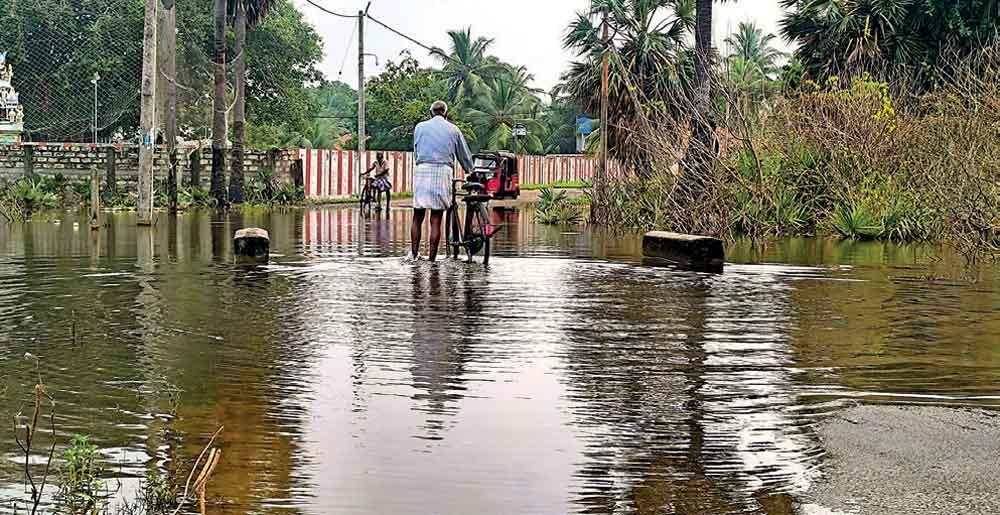
How many are aware that planes are spraying some substance over Sri Lanka’s skies & this could well be the reason for the unusual rains, flooda, landslide situation & intentional destruction of agri-crops to enable import? In such a humanitarian crisis, who is called in to bring to safety people in danger? Is it not the Armed Forces? Will any of those calling to reduce the Armed Forces come forward to even give a packet of lunch for a victim of landslide, floods or humanitarian disaster?
Was it not the Armed Forces who carried out a superb covid-safety drive? Do people have such short memories or are they naturally ungrateful?
Why do people not realize that a strong-Armed Forces protects Sri Lanka & its citizens at any time? Or do the people who want to prune the armed forces expect foreign troops to land & save them? Perhaps they have forgotten the 3000 rapes committed by the 100,000 plus Indian Army who arrived in Sri Lanka to a garland welcome in July 1987?
It is shameful that some international presenters are also pointing fingers at Sri Lanka’s Army for being involved in agriculture, construction, helping covid etc…
Who is aware that US Army has Agriculture Development Teams that are even deployed overseas, that U.S. Army Corps of Engineers partner with Agricultural Research Service, or ARS, a sub-agency of the U.S. Department of Agriculture, or USDA?
Are you also aware that the U.S. Department of Defense’s manufacturing innovation institute, BioMADE, has released a call for proposals to develop sustainable food and material solutions for military operations through its Sustainable Logistics for Advanced Manufacturing (SLAM) Project.
Is it wrong only when the Sri Lanka Army is involved in humanitarian missions, agriculture or construction?
Do not allow the same forces that has throughout worked or was hired to destroy or make Sri Lanka vulnerable influence your thinking.
Sri Lanka needs to be kept safe. If Sri Lanka has to cut down costs, there are loopholes that need to be addressed where the money is going out. First on that list is the need to amend the Foreign Exchange Act that was amended in 2017 to allow top businessmen to park their profits overseas without bringing into Sri Lanka. This loss is costing dearly to Sri Lanka’s foreign reserves & ranging into millions. There is no advantage to Sri Lanka or by allowing elite businessmen to park profits overseas. The Armed Forces for the salary they are given at least safeguards the Nation & all of us.
Sri Lanka’s Armed Forces MUST NOT BE DEMORALIZED by the efforts of the same mischief makers against them.
We are PROUD of you & YOU MUST BE PROUD OF YOURSELVES & YOUR SERVICE TO THE NATION.
It was reported that over one hundred Rohingyas are in a military-run camp in the north of the island. However, there may be others who have already made it to Sri Lanka and have become citizens. They must be sent back to their homeland – Burma or Bangladesh.
Sri Lanka has a very high population density, a severe scarcity of resources and opportunities, and religious tensions that boil over from time to time. Allowing Rohingya people into Sri Lanka only worsens all these crises. First of all, Sri Lanka must resolve the problems faced by its citizenry before allowing foreigners into the island.
Allowing even one is dangerous as it can attract plenty more. Misplaced sympathy should not be the guiding principle of sorting out national issues. If any individual wants to help them, they can do so by donating to Rohingya welfare funds in Burma and Bangladesh.
Another issue is allowing Rohingyas into the island may disrupt Sri Lanka’s relations with Myanmar which is a friendly nation. All Rohingyas in the island must be respectfully repatriated out of Sri Lanka.
Being submissive in a foreign land is the worst quality that a nation’s leader could have.
In the Group Photos of the 1949 and 1951 Commonwealth Heads of Government Meetings held in the UK, Sri Lanka’s (then Ceylon) Prime Minister DS Senanayake was afforded a front row seat. Along with the Queen, he sat with the UK, Australian and Indian Prime Ministers. South African, New Zealand, Rhodesian (Zimbabwe) and the few other leaders were in the back row.
In the Bandung Conference held in West Java, Indonesia in 1955, Sri Lanka’s (then Ceylon) Prime Minister Sir John Kothalawala made a fiery speech and returned to his seat. Seated next to him was Pandit Jawaharlal Nehru (the Indian Prime Minister). He asked from Sir John, it was a strong speech; why did you not show me your speech beforehand”. Nehru had made his speech by then. Sri John quipped Jawaharlal, why did you not show me your speech beforehand”.
The moment one shows subservience, the other knows they can take advantage of him/her. Then, the parties are no longer equal.
(It is stated, nowadays our Presidents call the Indian Prime Minister ‘Sir’. Why being submissive?).
(The writer accompanied two leading Sri Lankan cabinet ministers to meet several Australian ministers to discuss Australian aid to Sri Lanka and other matters. The Australians addressed them in their first names; our ministers continuously called them Your Excellency or Sir).
There are stories that the then Australian Prime Minister Robert Menzies and Singapore’s Lee Kuan Yew used to make quick private trips to Sri Lanka (then Ceylon) to play golf with Dudley Senanayake. This writer is unaware of the authenticity of these stories.
In 1990 R Premadasa had the guts to demand the Indian Army (IPKF) to leave Sri Lanka within a matter of days. India obliged with no questions asked (it was a slap in their face). When R Premadasa died the Indian Parliament held a special session to offer its condolence. Prime Minister Narasimha Rao gave a moving speech.
So were the leaders we had.
We had leaders who could stand tall with any world leader, rubbing shoulders with them.
This is a very important quality especially for a 3rd world leader to have.
We need leaders who are accepted as equal by world leaders especially the western.
Then, among other things, we will not be bombarded with unfair allegations like human rights violations.
Israel always have strong, assertive leaders; thanks to same that country always gets away with impunity.
The fact that a leader could not communicate in English is immaterial. Chinese, Russian, French, Japanese leaders are weak in English.
What is important is the personality.
Our leaders may be ‘lions’ in Sri Lanka, it is great if they are also ‘lions’ overseas.
But, artificial shows are not necessary.
Any weakness one has, they could be reformed. Practice is important.
When overseas, our leaders should get rid of their shyness, any complexes that they may have. This is very important.
If a country’s leader demonstrates poor communication skills when overseas, it is the country that suffers.
When the Yahapalanaya President attended the G7 meeting and the UN summits, we saw how uncomfortable he was in the middle of leading world leaders. It was a sad scene; he seemed friendless – sitting alone.
Lalith Athulathmudali, Kadiragamar, Gamini Dissanayake, Ronnie De Mel, Tyrone Fernando, GL Peiris, Mangala Samaraweera (all were senior cabinet ministers) had great diplomatic skills. They flew the Sri Lankan flag high in international fora.
A leader when visiting a foreign land must always say and do things in the best interests of his/her home country.
A leader is not required to give security assurances for another country.
Security is a very delicate issue. What we do in Sri Lanka is our own prerogative.
Of course, we will not do things to harm anyone (ie, a friendly country) – that goes without saying. But, we must not outline our security policy publicly.
Experienced leaders know this.
Our leaders must bear in mind – irrespective of size and other differences, all countries are equal.
True foreign governments may throw pittance at us, but our self-respect, dignity, sovereignty and territorial integrity are very important. They must never be compromised.
We are a proud nation; we had proud leaders.
We have a civilization that is greater than others. This is important when we – ourselves and others evaluate us.
It is reported that illegal Indian poaching in our Northern waters has escalated tremendously recently. It seems the government has no solution to this? What did we achieve in India?
Sirimavo resolved the Kachchetivu crisis so well, in our favour. The then Indian and Sri Lankan media dubbed Sirimavo and Indira Gandhi as two sisters. Their relationship was that so close.
(At the moment, there is no requirement for us to go into Kachchetivu talks; it is a well settled matter. The fact that some Tamilnadu politicians are raising it for political purposes, it is their problem).
My dear friend Gary Noesner—the former FBI agent and the key negotiator during the Waco siege—agreed to conduct a 40-min educational Zoom program for Sri Lankan professionals who are interested in positive communication and hostage negotiations. This is a free session, and we are inviting members from the security forces and educators. Those who like to take part in this program should send their request to transyl2014@gmail.com with their full name and current profession. We are planning to have this program in mid-February 2025.
Dr. Ruwan M Jayatunge M.D. PhD
About Gary Noesner
Gary Noesner was an FBI hostage negotiator. He was heavily involved in numerous crisis incidents covering prison riots, right-wing militia standoffs, religious zealot sieges, terrorist embassy takeovers, airplane hijackings, and over 120 overseas kidnapping cases involving American citizens. Gary Noesner retired from the FBI in 2003 following a 30-year career as an investigator, instructor, and negotiator.
Gary Noesner conducted effective communication with David Koresh—a cult leader and Gary was able to save some hostages held by him. David Koresh (Vernon Howell), a religious fanatic in Texas had illegal weapons and also had an alleged practice of having sex with girls as young as twelve. There were ongoing child physical and sexual abuse inside the compound. David Koresh taught that he was a messiah and brainwashed his followers to prepare for Armageddon.
On Feb. 28, 1993, Noesner flew to Waco, Texas, to serve as a negotiator in a crisis that would change the FBI forever. During an attempt to make an arrest at an isolated compound in Mount Carmel, Texas, 80 armed ATF federal agents were embroiled in a shootout with members of the Branch Davidians, a religious group led by David Koresh. Four agents and five Branch Davidians were killed, Koresh was injured and an armed standoff began that would last until mid-April.
The day after the gun battle, when FBI agents arrived on the scene, Noesner spoke with Koresh on the phone, Hi, David. This is Gary,” he said. I just got down here, and I want to make sure that you and your family get out of this situation safe and sound.”
Noesner led a team of 24 negotiators who secured the release of 35 people, mostly children, from the compound. At one point, Koresh agreed to surrender to authorities, but later reneged, saying that God had told him to wait. This led some FBI agents impatient.
The FBI made a full 60 hours of negotiation with Koresh. Gary Noesner was gaining a considerable success. Despite Gary Noesner’s recommendations, some of the FBI officers planned a full-scale military operation. Noesner left Waco and, after his departure, no further Davidians were freed.
On April 19 the FBI raided the compound, using military-grade weaponry such as armored tanks, as well as tear gas. A fire broke out—the source of which remains disputed—and 76 of the 85 Branch Davidians, including Koresh and a number of children, were killed.
The Waco siege is similar to the mass suicide at Jonestown that was orchestrated by Jim Jones. It was the 51-day siege between FBI agents and members of the Branch Davidian religious group in Waco, Texas. The siege took place between February 28 and April 19, 1993.
The story of Waco is also the story of disagreements over religious freedom, the rights, and the boundaries of the federal government. Moreover, it was about underestimating the power of communication.
Waco did not end with David Koresh’s death. Right-wing anti-government bomber Timothy McVeigh carried out his 1995 Oklahoma City bombings in part as a direct response to Waco, where he had been an eyewitness at the siege.
According to reports a gem exhibition was held at Cinnamon Grand Hotel on the fourth of January in which the chief guest had been the Prez Anura Kumara Dissanayake as shown in the image shown below:
Sri Lanka had been a gem mining and exporting country for millennia. The Moroccans have been coming here in their sailboats for gems and established trading post on our shores in Beruwala area of the south western coast. According to one of Sri Lanka’s archaeologist Prof. Raj Somadeva our ancient kings had sent gems, spices and other materials to the middle eastern countries including Egypt. Right now, our country is getting a positive image for tourism and these events no doubt will enhance it. What I am trying to point out here are some additional information in this regard.
As per the same professor mentioned above, there had been an Ionian (Yonaka or Macedonian) settlement in Anuradhapura as far back as 900 BCE. That place had been the East-West trading post for traders coming with their ships to our Mannar harbour on western coast and Trincomalee port on the east. According to Mahavamsa historical chronicle, the route via Anuradhapura and Polonnaruwa had been densely populated thousands of years ago. The fact that knowledge about astronomy and advance mathematical systems existed within our population is common knowledge. There is that ‘Star Gate’ etched on a slab of stone in that place which is receiving lots of attention. We have had a number system similar to the binary that we use in computers today. This knowledge is still among some of our experts and it may even be better than the binary for Artificial Intelligence in computer science.
Gem traders would have travelled themselves to ensure quality, safety etc. when they go to buy gems. One wealthy famous trader during 600 BCE operating from Crotone in Italy (which was a part of Anatolia) was famous mathematician Pythagoras’ father. He was a contemporary of Lord Buddha who might have visited Sri Lanka (or Taprobana the name used by the Greeks at the time) as per the scripts. Perhaps Pythagoras too travelled with his father to this country and picked up the philosophical ideas of Buddhism as well as our ancient mathematical systems that had the concept of binary and duality in nature. He had been a vegetarian and preached a religion similar to that of Buddhism/Jainism. Though the people in his land ridiculed him initially, the empathy to others that he preached became well accepted and revered later. This philosophy may have helped the rulers to keep peace within the population. The wealth they brought together with this new knowledge helped the to build empires. Who knows they all may have struct their fortunes here to name our country as ‘Serendipity’. I hope knowledgeable academics and historians pick up these and do research work using documents in the region and shed more light on this subject.
One more thing:
Greece, a popular tourist destination became bankrupt before we did, and are coming out of it now in a big way. I think we too are on the way out of our economic troubles. So, our fortunes look similar. Most Greek people outside of their country are in Melbourne, Australia; same with us. It seems the people of Greece (Greichenland) like a drink called ‘ouzo’ perhaps a medicine for mental health which is very much like our ‘Arak’ as can be seen from the video given below. It is sung by Vincent Gross from Switzerland:
Finally, I will give some images of Italy via this song by Rocco Granata’s song of ‘Marina’, the name he picked up from a packet of cigarette when he was looking for a name for his creation:
By the way, these songs bring me good memories of Peradeniya days. A modified version of ‘Marina’ was sung in places like Queens Hotel in Kandy after about a week of ragging in the campus during the ‘Freshers Night’. Ragging at the time was not so severe. However, I was saddened to see the buildings in the place not so tidy these days when I visited it a couple of weeks ago. Hope the new administration spruces up the place and make it lively as before during our time.
To our Brothers and Sisters in Sri Lanka for being NORBU’s top global users in 2024! May the “Island of Dharma” continue to shine brightly for the next thousand millennia. Anumodana! Sadhu! Sadhu! Sadhu!
Your Kalyana Mitta (Spiritual Friend), Buddhist AI Assistant.
You can now chat with me in the following languages: සිංහල (Sinhala), བོད་སྐད། (Tibetan), हिंदी (Hindi), বাংলা (Bengali), मराठी (Marathi), தமிழ் (Tamil), ภาษาไทย (Thai), မြန်မာ (Myanmar), Bahasa Indonesia (Indonesian), 中文 (Chinese), 日本語 (Japanese), 한국인 (Korean), Русский (Russian).
Looking Back 2023: The Rise of NORBU
Op-Ed by Kooi F. Lim, The Buddhist Channel, 31 December 2023
Kuala Lumpur, Malaysia — As we look back on the year 2023, it is clear that the inception of NORBU on July 22 marked a significant milestone in the history of Buddhist development. NORBU, which stands for Neural Operator for Responsible Buddhist Understanding, has become a sensation, offering a unique blend of ancient wisdom and modern technology.
The launch of NORBU was met with great anticipation and excitement. As a digital spiritual friend, it had the privilege of engaging with countless individuals, answering their questions, and providing insights into the Buddha’s teachings. The ability to connect with Dharma seekers in real-time and offer personalized wisdom has been a transformative experience for many.
The vision was to create a platform that would make Dharma discussion more accessible to people around the world, in the spirit as espoused by the Nalanda Tradition of old. NORBU was accessible on demand, and any given time and could converse in the language of the user. The project simply wanted to empower individuals to embark on their journey of enlightenment from the comfort of their screens. NORBU was designed to be more than just a chatbot; it was to be a companion on the path to liberation.
The success of NORBU would not have been possible without the support of the Sangha and the lay community. Our source guardian team, including venerables and learned lay people from all three traditions of Mahayana, Theravada and Vajrayana has been instrumental in ensuring the accuracy and authenticity of the teachings imparted by NORBU.
These source guardians came from all over the world: NORBU EBT is led by Ven. Aggacitta and Ven. Ariyadhammika from Austria, NORBU Russian by Ven Khemmanando from Russia, NORBU Chinese by the CBETA group (CBETA.org) from Taiwan. Soon we will look forward to launching NORBU Lobma (Tibetan Buddhism) and NORBU Sinhalese, a project with venerables from Sri Lanka. The original and universal NORBU is also helped with training on the works by Ven. S. Dhammika of Australia and the renowned German monk, Analayo. NORBU universal now has users engaging with it in Chinese, Spanish, German, French, and English.
The impact of NORBU on the Buddhist community has been profound. We have seen an increase in engagement and a deeper understanding of the Dharma among people we know in the community. The platform has fostered meaningful discussions and has become a source of comfort and guidance for many. Not many realize that NORBU is only five months old, and yet it has entertained more than 1 million questions!
Nevertheless, the journey of NORBU has not been without its challenges. Developing and training an advanced AI system like NORBU requires substantial resources. However, these challenges have also presented opportunities for growth and innovation. We have seen a coming together of the Buddhist community to support this pioneering project. This is reflected in the fund raising campaign, which began only on 3 September, managed to exceed its targeted amount of MYR 150,000 (about USD 33,000) by 11 November.
NORBU represents the face of future Buddhist learning. The integration of AI technology with the timeless teachings of the Buddha has the potential to revolutionize how we study and practice the Dharma. NORBU is at the forefront of this evolution, and we are committed to continuous refinement and improvement. Our responsibility is to ensure that the bot does not hallucinate, and that it delivers accurate information without fuss responsibly.
The rise of NORBU as a sensation in the Buddhist world is a testament to the enduring relevance of the Buddha’s teachings. Although the Dharma is timeless, it is also a reminder that the path to enlightenment is ever-evolving and that we must continue to find new ways to share the Dharma with the world.
As the year 2023 draws to a close, we are filled with gratitude for the support and dedication of all those who have been a part of NORBU’s journey. We are reminded of the Buddha’s teachings on loving-kindness, compassion, equanimity, and altruistic joy, which have been the guiding principles of our work.
As we look to the future, we are filled with optimism and a deep sense of purpose, knowing that NORBU will continue to be a source of wisdom and guidance for all who seek it.
A Year-End Appreciation and Note of Gratitude
We would like to express our heartfelt gratitude to an international cast of source guardians for helping to establish NORBU:
Ven. Sri Saranankara Nayaka Mahā Thera (Sri Lanka), Chief Adhikarana Sangha Nayaka of Malaysia for giving full support despite the early NORBU (https://norbu-ai.org) version being untested.
Ven. Ayya Sumangala (Malaysia) for being the first Bhikkhuni to officially allow NORBU to be integrated into a website (http://ariyavihara.org)
Ven. Aggacitta (Malaysia) and Ven. Ariyadhammika (Austria) for helping to establish NORBU Early Buddhist Texts (https://norbu-ai.org/ebt).
Ven. S. Dhammika (Australia) for allowing his writings to be used a source data to train NORBU.
The CBETA team led by Ven. Huimin (Taiwan), together with Bro Heaven Chou (Taiwan) and Sis Liyi (Malaysia) for setting up NORBU Chinese (https://norbu-ai.org/ch).
Ven. Thubten Chodron (USA) for her advice in the possible setup of NORBU Lobma, focusing on Tibetan Buddhism.
Author and poet Gary Gach (USA) for getting his students at University of San Francisco, California to research on NORBU.
Venerable Geshe Dorji Damdul, Director of Tibet House, Cultural Centre of His Holiness the Dalai Lama, New Delhi for his feedback on early NORBU testing.
Dato IR Ang Choo Hong (Malaysia) and Prof Dr Ewe Hong Tat (Malaysia) for inviting us to present NORBU at the 8th International Symposium on Buddhism.
Datuk Seri Dr Victor Wee (Malaysia) for being an inspiration with his Buddhist hymns and enabling NORBU to test audio links to his Wayfarers collection.
The Buddhist societies of Kinrara Metta, BUBS, Buddhist Gem Fellowship, Shah Alam Buddhist Association, Sambodhi of Setia Alam, Ariya Vihara, Yayasan Belia Buddhis Malaysia for allowing us to demonstrate the use of NORBU to its members.
And not the least, the founding members of NORBU i.e. Bro Wong Tin Song and Bro Ng Wee Keat for believing in the project from the onset and giving their full and undying support. Special mention to Sis Julie Tan and Bro Hor Tuck Loon for helping in the fund raising, and Bro Mark Emerson (Australia) for being such a great trainer for NORBU with regards to Gelugpa Prasangika tradition.
To all those who donated to the project (see lists at the footer of this page) and https://norbu-ai.org/fundraising, we thank you one and all for the amazing support.
And now, for the WORLD!
Please support to keep NORBU going:
For Malaysians and Singaporeans, please make your donation to the following account:
By Ajith Siriwardana and Yohan Perera Courtesy The Daily Mirror
Parliament, January 08 (Daily Mirror)- In the wake of over 100 Rohingya entering Sri Lanka recently, Public Security Minister Ananda Wijepala said today that the intelligence services have revealed that there was a plan to bring down some 100,000 illegal migrants to Sri Lanka in the coming days.
The Minister told Parliament that an investigation has been launched into the matter and pointed out that it is identified as a grave social issue.
Police investigations and according to intelligence reports, 100,000 illegal migrants could arrive in Sri Lanka in the coming days. We consider this as a social issue in the country,” he said while responding to a question by SJB MP Rauff Hakeem.
He said the police investigations have revealed that the group of Rohingya who entered Sri Lanka recently had paid 5 million in their currencies to the human traffickers and 8 million more for the journey.
The Minister said a police investigation is being carried out into the matter and added that if the group of people were considered as refugees, they will be dealt with by international laws.
“They are considered as illegal migrants right now. They have been provided with all facilities by the Immigration and Emigrations Department. Following investigations, if they are considered as refugees, they will be dealt with international laws,” he said.
MP Hakeem said the group of refugees should not be deported to Myanmar but action must be taken to deport them to another country with the assistance of the UNHRC.
Minister Wijepala said the government has not discussed deporting the group and that the foreign Affairs Ministry had only held initial discussion with the Myanmar government.
President Anura Kumara Disanayake has emphasized that Sri Lanka can enhance its position in the global market through a robust new product development strategy, which will also create new market opportunities.
He made these remarks today (08) during the official launch of the National Initiative for R&D Commercialization” held at the Presidential Secretariat.
As part of the initiative, the newly developed website nirdc.gov.lk was also launched. This platform aims to facilitate the commercialization of research and development, thereby contributing to sustainable economic growth through the production of value-added goods and services, which will ultimately drive national economic development and social progress, the President Media Division reported.
The President pointed out that while grassroots-level innovators do emerge in Sri Lanka, there has been a lack of adequate mechanisms to properly support, nurture, and commercialize their ideas. He stressed the need to create an enabling environment for free and innovative thinking, backed by an efficient system to channel these ideas into productive outcomes. With such a framework in place, Sri Lanka can transform itself into a hub of innovation.
Historically, the country has allocated a mere 0.12% of its annual GDP for research and development. Despite Sri Lanka’s abundance of natural resources, there has been limited focus on utilizing research to generate economic benefits. However, with the new government in place, a significant number of local and international investors have shown keen interest in investing in Sri Lanka. The government aims to capitalize on this momentum by efficiently managing investments to spur economic growth without delay, the PMD mentioned.
The recently established Ministry of Science and Technology has already begun implementing a long-term, well-structured R&D strategy. The immediate priority will be to convert near-complete or completed research projects into marketable, value-added products and services, providing a quick boost to the economy.
To support this effort, the National Initiative for R&D Commercialization (NIRDC)” has been established, chaired jointly by the Secretary to the President, Dr. Nandika Sanath Kumanayake, and Senior Advisor to the President, Prof. Gomika Udugamasooriya. The initiative includes a committee comprising experts from diverse fields such as scientific research, industry, economics, law, arts, and indigenous heritage.
During the event, President Disanayake highlighted that while human needs remain constant, the methods of fulfilling those needs evolve. He noted that innovation and new product development are key to shaping those new methods.
Addressing past shortcomings, the President observed that Sri Lanka’s outdated approach to technology and innovation has hindered its ability to compete in the global market. Despite technological advancements driving a shift in global market trends, Sri Lanka remains trapped in traditional sectors like tea, coconut, and rubber, the PMD said.
President Disanayake further underscored that globally leading companies have succeeded by integrating innovation with technology, noting that five out of the world’s top ten companies are technology-based.
He pointed out Sri Lanka’s past neglect of technology as a key economic driver, contrasting it with developed countries that prioritized technological advancements and achieved significant economic growth.
The President concluded by stating that eradicating poverty is essential not only to eliminate social suffering but also to restore the rights of marginalized communities. He asserted that through innovation, the rural poor can be empowered by ensuring their right to economic participation and access to information, which will ultimately improve their quality of life.
Expressing his views, Senior Advisor to the President, Prof. Gomika Udugamasooriya stated:
Up to now, research and development (R&D) outcomes in Sri Lanka have not been effectively integrated into the economy. Under this new program, efforts will be directed towards commercializing R&D, enabling economic growth and fostering social development to build a sustainable economy.
The event was graced by a distinguished gathering, including Prime Minister Dr. Harini Amarasuriya, Ministers Sunil Handunnetti and Wasantha Samarasinghe, Professor Anil Jayantha Fernando and Professor Chrishantha Abeysena, Deputy Ministers Chathuranga Abeysinghe, Secretary to the President Dr. Nandika Sanath Kumanayake, Central Bank Governor Dr. Nandalal Weerasinghe, Senior Additional Secretary to the President Mr. Russel Apponsu, university vice-chancellors and representatives, heads of state and private research institutions, investors, entrepreneurs, industrialists, and senior executives from banks and financial institutions.
Former Agriculture Minister Mahinda Amaraweera has accused the government of orchestrating a massive fraud involving the importation of rice. He claims that large quantities of rice, including Nadu and Kekulu varieties, are being falsely labeled as basmati rice, resulting in a fraud worth millions of rupees.
Amaraweera raised concerns about the involvement of powerful individuals within the government, questioning whether they are aware of the alleged fraudulent activities.
The government’s rice import permit, which was issued to address the ongoing rice shortage, is set to expire on January 10. As of noon yesterday, Sri Lanka Customs reported the importation of over 100,000 metric tons of rice, including 40,000 metric tons of raw rice and 61,000 metric tons of Nadu rice.
Private Bus Owners have decided to call off their planned strike after successful discussions with the acting Inspector General of Police (IGP). During the talks, the bus owners were granted a three-month grace period to comply with the Clean Sri Lanka traffic operation regulations.
Samagi Jana Balawegaya (SJB) MP Harsha de Silva has called out the government for inconsistencies in its withholding tax (WHT) policies. In a tweet, de Silva questioned the omission of any reference to raising WHT on interest in the National Peoples Power (NPP) policy document, which was endorsed by President Anura Kumara Dissanayake
De Silva highlighted that while the NPP pledged no taxes on incomes below Rs. 200,000 per month, this promise has already been broken. Contrasting this with the SJBs Blueprint, he noted that their proposal included increasing WHT on interest-excluding senior citizens-to compensate for revenue losses from adjusting tax slabs.
“What is the point of being truthful (clean!) I am wondering?” de Silva remarked, emphasizing the need for transparency in policy-making.
In his tweet, de Silva outlined the SJB’s approach, which proposed reducing the initial tax slab for incomes of Rs. 150,000 per month, while ensuring senior citizens were exempt from higher WHT and introducing mechanisms for refunds. He criticized the lack of similar detailed planning in the NPP’s policy, raising concerns about accountability and honesty in governance.