The People’s Republic of China has played a vital role in the social and economic development of Sri Lanka for decades, President Anura Kumara Dissanayake said after meeting Chinese President Xi Jinping today.
Dissanayake said his visit will strengthen bilateral collaborations for the benefit of both countries and their people.
President Dissanayake, who is currently on a four-day state visit to China, held an official meeting with Chinese President Xi Jinping this afternoon (15) at the Great Hall of the People.
Upon President Dissanayake’s arrival at the Great Hall, he was warmly received by President Xi Jinping. The welcoming ceremony was conducted with great honour, including a ceremonial gun salute, according to the President’s Media Division (PMD).
Following the initial cordial discussions between the two leaders, bilateral talks commenced. During the discussions, President Xi Jinping emphasized China’s readiness to work closely with Sri Lanka in ushering in a new era of development.
He also recalled the longstanding relationship between the two countries, highlighting the close friendship that has existed for decades. President Xi reiterated China’s commitment to continuing its cooperation with Sri Lanka in the future, the PMD said.
Upon concluding the official meeting, both sides proceeded to sign several key Memoranda of Understanding (MoUs) aimed at strengthening collaboration in areas such as economy, social development, and industry.
Minister of Foreign Affairs, Foreign Employment, and Tourism Vijitha Herath, Minister of Transport, Highways, Ports, and Civil Aviation Bimal Rathnayake, and Director General of the Government Information Department H.S.K.J. Bandara were also part of the delegation accompanying President Disanayake.
The international lifestyle magazine ‘Vogue’ has given Sri Lanka a glowing endorsement by claiming the Island as this winter’s hottest travel destination. This recognition from the prestigious magazine will certainly help Sri Lanka in more than one way.
Revenues earned from tourism and foreign remittances are the two main single factors that are contributing to strengthening our economy. Therefore, high recommendations from highly influential sources as Vogue not only boost tourist arrivals. It will greatly support a deeply troubled economy.
How is the Sri Lankan tourism faring?
Sri Lanka’s tourism industry has many reasons to feel optimistic. Year 2024 recorded over two million (2,053,465 tourist to be exact) tourist arrivals. This is a 28 percent increase compared to 2023. In the month of December alone 248,592 visitors came to Sri Lanka. According to the Central Bank of Sri Lanka, we earned USD 3,168.6 million. This is a significant 53.2% increase from our earnings in 2023.
Though 2025 is still young, tourist arrivals continue to show an upward trend. In the first nine days of this month, 70,944 visitors have been recorded.
While these figures are encouraging, we still have not reached the numbers we had before the Easter Sunday attacks in April 2019. Just the year before, Sri Lanka recorded 2.3 million tourists.
Our tourism industry has been through a lot. Terrorism that gripped this Island nation for nearly 30 years took a toll on tourism. However, its rise since the annihilation of terrorism in 2009 was mercuric. This growing industry took a devastating blow with the Easter Sunday attack. The global pandemic thereafter kept the sector down on its knees. The anti-government protests hit tourism hard and refused to let the industry help the collapsing economy.
Yet throughout all these misadventures, Sri Lanka’s tourism remained resilient. Especially during the pandemic, we saw the industry coming up with very innovative solutions.
However, while our industry has shown immense courage and resilience, we have fallen short on imagination. Our tourism is being sustained by mostly the natural beauty, wild life and archaeological sites. In every other aspect pertaining to adventure that travellers seek, we still have only a skeleton of it. When we think of enhancing the industry, we look at increasing our accommodation capacities.
If we are to compare ourselves with other popular tourist destinations as Singapore or the Maldives, we can see that we are falling short in a very bad way. Even a frequent visitor to Singapore will see that the city nation’s landscape is constantly changing. It’s a country with very little landmass. Yet, every inch is devoted to its economy.
Everything in Singapore has been made into an adventure. For instance, compare our Dehiwela zoo against the Singapore zoo, the night life safari, the underwater world and the bird park where one can breakfast” with colourful parakeets. Compare our museums with archaeological artifacts with Singapore’s museums for history and science for children.
We are looking at the numbers of tourist arrivals and feel satisfied to see it edging beyond two million. Today we have a three million USD industry whereas Singapore is enjoying approximately an USD 21 billion industry.
The sad truth is that our tourism is simply acting as a buoyant to our sinking economy. If it is to actually strengthen our economy, then we need to look beyond just the arriving numbers. We have to attract tourist with high spending capacities and give them plenty of reasons to spend. This is the strategy of Singapore.
Remittances saving the day
Foreign remittances from migrant workers that come to Sri Lanka as cross -border payments to friends and family have also been a lifesaver to our economy. In 2023, remittances to Sri Lanka through formal banking channels increased by 57 percent. By June 2024, workers’ remittances increased by 11.4 percent from the same period in 2023. Last December, a significant increase of USD 613.8 million was recorded, which was USD 44.1 more than what was received during December 2023 and a jump from the remittances received in November 2024, which was USD 530.1 million.
Our main sources of remittances are from countries as Saudi Arabia, Qatar, India, Italy, China, Japan, Australia, and Canada. Most of our migrant workers in these countries are employed as skilled or semi-skilled workers. Therefore, most of our migrant workers do not earn high wages and forced into compromises just so that they can save enough to send money home.
Foreign remittances was a revenue that saved the Indian economy. The Indian migrant worker was also either skilled or semi-skilled. However, most of those who secured overseas jobs, especially in the computer field, never stayed in that job for long. Citing experience from their current job, they would apply for the next level in the corporate ladder. While on the job, they would be single-mindedly focussed on learning everything they could learn about it. Today, Indians fill a significant portion of top level executive positions in the corporate world.
Sri Lanka too must learn this lesson from India. If we are to depend from foreign remittances, then we need to improve our education programmes so that our workers can move from skilled to highly skilled categories.
Can our earnings support our imports?
The USD 613.8 million we received as foreign remittances in December 2024 may seem like a lot of money. However, we must not forget that we are an import dependent country. Even the flimsiest polytene bag is made from imported materials.
Our biggest bane is our dependency on oil imports. This literally runs our entire economy. In an average month, we spend around USD 200 million on fuel. For instance, in the first four months of 2024, we spent USD 648.7 million on oil imports.
We do have renewable energy sources in the form of hydro electricity power plants as well as solar and wind. However, this has not made much of a dent in our dependency for fuels and this will deepen as the restrictions on vehicle ban is lifted. The excise duties ranging from 200 percent to 300 percent have been imposed on the imported vehicles. While this will improve the State revenue, the fuel bill will continue to rise.
Instead of addressing this glaring issue, the Government has embarked on the ambiguous programme, The Clean Sri Lanka project. According to PM Harini Amarasuriya, the objective of this programme is to, integrate and facilitate all efforts made in the country with social, moral and environmental principles to restore Sri Lanka as a developed nation. Our ultimate goal is to establish good governance concepts and establish values and ethics for interactions and human relations at all levels of our society, thereby creating a beautiful nation of smiling people.”
So far this programme has not tackled vehicles that emit toxic fumes, which is a clear sign of fuel wastage and a major contributor to environmental pollution as well as a health hazard. Instead, the police are pouncing on public buses and three wheelers for their vehicle modifications items. How removal of these would contribute to a clean Sri Lanka is unclear.
However, it has already forced a factory in Bandaragama that produce these modifications under a government-approved license to close down. Consequently, 80 lost their livelihoods overnight. What this will do for the spirit of individuality, entrepreneurship and economy is already written on the wall.
By Shiran Illanperuma Courtesy Tricontinental: Institute for Social Research
Positioned at the geographic and political heart of the Indian Ocean, Sri Lanka is the epicentre of the 21st century struggle for regional influence.
U.S. Department of State, Integrated Country Strategy – Sri Lanka, 2022
On 23 September 2024, Anura Kumara Dissanayake (referred to locally as AKD) was sworn in as the 9th executive President of the Democratic Socialist Republic of Sri Lanka. AKD is the first President of Sri Lanka to not belong to the political duopoly of the nationalist Sri Lanka Freedom Party (SLFP) and comprador United National Party (UNP), and their offshoots which have ruled the country in turns since the 1950s.
In the first elections held since the collapse of the Sri Lankan economy in 2022 and its default on external debt, AKD secured 42.31% of the popular vote, while his right-wing rivals Sajith Premadasa and Ranil Wickremesinghe secured 32.76% and 17.27% respectively. A month later, on 15 October 2024, AKD’s party the Jathika Jana Balawegaya (National People’s Power – NPP) won a thumping 61.56% of the popular vote in the general elections.
In contrast to his fiery pre-election speeches, which lashed out at the corruption of establishment politicians, AKD struck a measured tone in his first speech as President. Acknowledging the significant challenges that his government inherits, AKD said that the ‘profound crisis’ facing the country could not be resolved by a single government, political party, or individual. ‘I am not a magician. I am simply an ordinary citizen of this country, with both strengths and limitations, knowledge and gaps,’ AKD said. Now in power, AKD must temper messianic expectations and govern under conditions given to him. All this while commanding a party with little experience in holding the reins of government, let alone withstanding the daily harangues that can be expected from the local and foreign agents of imperialism.
Following these elections, mainstream media outlets moved rather recklessly to label AKD and the NPP government as, ‘Marxist’, ‘Marxist-leaning’ or ‘Neo-Marxist’. It is true that the core constituent party of the NPP is the Marxist-Leninist Janatha Vimukthi Peramuna (People’s Liberation Front – JVP), of which AKD is also the leader. However, the main representatives of this force have been far more cautious in how they label themselves. In 2023, AKD compared the NPP to a national liberation movement. On the eve of elections this was moderated to the more neutral sounding ‘national renaissance’. Some intellectuals close to the party have described the NPP as ‘Left-populist’. More recently, JVP General Secretary Tilvin Silva has said that, ‘Ours is not a leftist government, but one of leftists, democratic, and progressive forces’.
The NPP’s caution to label itself gives an indication of the delicate balance of political forces, both within the party and in the country at large. The fledgling government has already shown its inclinations and limitations. On foreign policy, the government has formally applied for membership in BRICS, although neither the President, Prime Minister nor Foreign Minister attended the summit in Kazan. In his first speech to the diplomatic community, the NPP foreign minister Vijitha Herath reiterated Sri Lanka’s call for an immediate ceasefire in Gaza, alongside support for the establishment of an independent State of Palestine. On the domestic front, one of AKD’s first acts was to instruct the Treasury to provide subsidies for farmers and fisherfolk. The government has also scrapped plans to privatise national carrier Sri Lankan Airlines and public electricity provider Ceylon Electricity Board.
However, the risk of lapsing into neoliberal immobility remains ever present. While there may be a new President and a slew of new faces in Parliament, the officials in charge of the Treasury and Central Bank of Sri Lanka remain the same. The government has chosen to continue with an ongoing IMF program and its path of fiscal consolidation. It has also continued with a disastrous debt restructuring agreement negotiated by the preceding government. According to IMF Director Kristalina Georgieva, ‘The Sri Lankan authorities have reaffirmed their determination to persevere with their reform agenda and put the economy on a path of sustained and high growth’.
To understand Sri Lanka’s present conjuncture, and the dilemma’s facing the new government, a concrete analysis of the preceding years is required. The main factors for analysis are the interplay between Sri Lanka’s geopolitical significance in the US Indo-Pacific Strategy, as well the country’s legacy of colonial underdevelopment and indebtedness.
Sri Lanka as epicentre of Indo-Pacific Strategy
Shortly after the conclusion of Sri Lanka’s Civil War in 2009, the US Senate Committee on Foreign Relations, then led by senator John Kerry, published a report titled Sri Lanka: Recharting U.S. Strategy After the War. The report argued that policymakers in Washington tended to ‘underestimate Sri Lanka’s geostrategic importance’, insisting that, ‘the United States cannot afford to lose Sri Lanka’.14 These statements were partly in reference to the Western criticism of Colombo’s handling of the war against the separatist group Liberation Tigers of Tamil Eelam (LTTE). Amid Western pressure to pursue peace talks, including a US arms embargo, Colombo forged closer ties with China, Russia, Iran, and Libya, who provided the arms and financing needed to clinch victory against the LTTE. During the final years of the war, the JVP played a pivotal role in mobilising public support, insisting that peaceful negotiations were impossible with the LTTE. Given a history of repeated failed peace talks and ceasefires, this was a persuasive argument to many war-fatigued Sri Lankans. Thus, Washington’s fear of ‘losing Sri Lanka’ needs to be understood in the context of Sri Lanka’s domestic nationalist upsurge against separatism, as well as the country’s foreign policy swing towards forces in the Global South.
Sri Lanka’s economic and foreign policy shifted to the right after the 2015 elections, as the nationalist SLFP split and one faction formed a coalition with the UNP, whose leader Ranil Wickremesinghe became Prime Minister. Despite criticising Sri Lanka’s human rights record in diplomatic forums, the US began a concerted effort to improve military engagement with Sri Lanka’s armed forces, specifically with the Navy. This entailed training and joint military exercises, and the donation of navy vessels. The US also sought to pressure the government in Colombo into signing a trifecta of agreements, which Sri Lankan diplomat Tamara Kunanayakam warned were ‘part and parcel’ of the US Indo-Pacific strategy, and, if signed, would violate Sri Lanka’s sovereignty and drag the country into ‘a war not of its own making’. These agreements were:
The Millennium Challenge Corporation (MCC). Political economist W.D. Lakshman (who served as governor of the Central Bank of Sri Lanka from 2019 to 2021) warned that the MCC’s provisions for the privatisation of publicly owned land would pave the way for a land grab by multinational companies. A government committee appointed to review the MCC agreement recommended rejecting it unconditionally, noting that certain stipulations would be in violation of the constitution.
The Acquisition and Cross Servicing Agreement (ACSA). ACSA, which provides the US military with logistical support and refuelling services in Sri Lanka was first signed in 2007. The agreement was never tabled in Parliament despite pressure from the Left. ACSA was renewed under hasty and similarly opaque circumstances in 2017. The new agreement was said to be open-ended and over ten times as long as the previous one.
The Status of Forces Agreement (SOFA). SOFA was first signed by the Sri Lankan government in 1995, and a new draft was sent to the government in 2018. A leaked version of the draft revealed that US security forces and contractors, as well as personnel of Department of Defence, would enjoy legal immunities equivalent to diplomatic staff.
The JVP constituted part of the popular opposition to these agreements. For example, in an interview in 2020, AKD said that his position on the MCC was ‘a big no’, citing concerns over land privatisation. However, the political formation that most effectively drove and capitalised upon popular opposition to these neocolonial proposals was the Sri Lanka Podujana Peramuna (Sri Lanka People’s Front – SLPP), a big-tent party founded by former President Mahinda Rajapaksa, which included Sinhala nationalists and elements of the Old Left (namely the Lanka Sama Samaja Party founded in 1935 and the Communist Party of Sri Lanka founded in 1943). In the 2019 presidential elections, the SLPP candidate Gotabaya Rajapaksa (Mahinda Rajapaksa’s brother) scored a comfortable victory in a campaign that was inflected with a combination of economic grievances and concerns over the erosion of the country’s sovereignty.
Following the 2019 elections, US pressure on Sri Lanka intensified. A government-appointed commission recommended that the country refrain from signing the proposed MCC agreement with the US. In 2022, the US sanctioned Sri Lanka’s Chief of Army Staff Lt. Gen Shavendra Silva. The same year, US Secretary of State Mike Pompeo visited Sri Lanka for a 12-hour trip, during which he told the media that the ‘Chinese Community Party is a predator’. This blunt and aggressive posturing by Pompeo made perfectly clear that the US viewed Sri Lanka as key part of its Indo-Pacific Strategy and New Cold War against China. Indeed, the US State Department notes ‘more than 60,000 ships – including two- thirds of the world’s seaborne crude oil, half of its container ships, and all U.S. Navy vessels passing between the 5th and 7th Fleets – annually transit Sri Lankan waters’.
In March 2022, on the eve of the protests that would go on to oust President Rajapaksa, US Under Secretary of State for Political Affairs Victoria Nuland visited the country to meet with civil society. Rajapaksa’s ouster bore some similarities to the protests that overthrew Sheikh Hasina in Bangladesh, constituting a combination of internal factors and genuine grievances over governance failures and economic conditions, as well as hybrid war tactics by the US and its network of soft power agencies to gain advantage through the crisis. As is the case in many of these situations, external interests capitalised on internal contradictions. Following Rajapaksa’s ouster, right-wing leader Ranil Wickremesinghe was appointed interim President. Under his leadership, the US had donated more navy cutters to the Sri Lankan military. Months later, Sri Lanka appeared further subordinated to US imperialism after it sent one of its own navy vessels to the Red Sea in order to help the US fight the Ansarullah government in Yemen.
Sri Lanka in the International Sovereign Bond Debt-Trap
Sri Lanka was the original poster child for the myth of the Chinese debt-trap, which has now been thoroughly debunked by both local and foreign experts. The truth is that the cause for Sri Lanka’s indebtedness can be traced back to the colonial structure of its plantation economy, which has only been augmented through additional dependencies on tourism, remittances, and low-value added manufacturing. Despite attempts by nationalist and left-leaning governments, Sri Lanka has failed to achieve food and energy self-sufficiency, or to set in motion a self-expanding process of industrialisation.
The end of Sri Lanka’s Civil war in 2009 coincided with the Global Financial Crisis (GFC) and the Great Recession. Sri Lanka was relatively insulated from economic downturn as the end of the war brought about a honeymoon period as tourism and property speculation boomed. The Obama administration’s bailing out of the banks through Quantitative Easing unleashed a wave of speculative investments to the Global South, including countries like Sri Lanka. Meanwhile, China’s going out in the wake of the GFC allowed the Sri Lankan government to engage in further fiscal expansion through an ambitious program of infrastructure development, focusing on roads, ports, energy, and not just a few white elephants. However, these shortcomings in the mobilisation of Chinese development finance are more attributable to Colombo’s lack of vision and coherent industrial policy, than any malice on the part of China. As Chinese envoys have often emphasised, all projects were undertaken at the request of the Sri Lankan government, and shortcomings have usually been due to the lack of domestic capacity to manage projects efficiently.
As a lower-middle income country, Sri Lanka found itself increasingly locked out of concessionary finance from multilateral organisations, and so began turning towards private lenders. The country launched its first International Sovereign Bond (ISB) in 2007. However, it is the rightward shift in policy following the change of government in 2015 that completely transformed Sri Lanka’s debt profile, as the government binged on over USD 10 billion worth of ISBs. Therefore, on the eve of Sri Lanka’s default in 2022, only 13.67% of external debt was owed to China. By contrast, 42.43% of external debt was to private bondholders, like Blackrock and Ashmore. To make matters worse, this private debt was of much higher interest rates than bilateral debt from China, accounting for over 70% of interest payments in 2021.
When the COVID-19 pandemic hit, the vulnerabilities of Sri Lanka’s economic structure became painfully apparent. The lack of foreign exchange inflows due to the collapse of tourism and remittances, combined with inflation caused by global supply chain crunches and commodity price booms, brought the economy to its knees. Following the ouster of President Gotabaya Rajapaksa in 2022, the governor of the Central Bank of Sri Lanka announced a ‘pre-emptive default’ on external debt. In the months that followed, the interim President Ranil Wickremesinghe used the chaos to enforce a dizzying array of shock therapy style reforms, unthinkable under conditions of normality. These included:
Austerity. Withdrawals of fuel subsidies and cost reflective pricing of energy. This contributed to plunging thousands into poverty and off the electricity grid.
Domestic debt restructuring. A restructuring of domestic debt that singled out the pension funds of the working class while allowing domestic capitalists, bankers, and bondholders to walk away scot-free.
Central Bank independence. Legislating Central Bank independence, which would prevent the Central Bank of Sri Lanka from purchasing government debt. Concretely, this means that the government is significantly restrained from countercyclical spending in the event of an external shock. Additionally, it could weaken the government’s ability to control interest rates. The act severs monetary sovereignty as it forces the country to rely exclusively on private lenders for financing.
External debt restructuring. An external debt restructuring agreement negotiated with the mediation of the IMF has been described by local critics as a sell-out. The agreement includes swapping existing bonds for newer bonds, some of them being novel financial instruments.
Macro-linked bonds – These are bonds, whose interest rates will be linked to Sri Lanka’s economic performance. As GDP growth rates increase, so too do the interest payments. In effect, Sri Lanka must pay its creditors more for growing faster.
Governance-linked bonds – These bonds tie the interest rate to the government’s implementation of anti-corruption legislation. There is a reasonable concern that this amounts to a kind of blackmail on a sovereign government to adjust its administrative structure according to the whims of international finance capital.
The Rise of the NPP
The NPP coalition includes 21 civil society organisations including trade unions. However, the prime mover within the party is undoubtedly the JVP. The JVP was established by Rohana Wijeweera in 1965, largely through the youth wing of the Ceylon Communist Party (Maoist), which in turn was the result of a 1964 split in the undivided Communist Party of Ceylon that mirrored the tragic Sino-Soviet split.
Till date, the JVP was targeted, and their ranks were decimated twice. First, following an attempted youth insurrection in 1971, and again during another insurrection from 1987-1989. The latter resulted in the assassination of Wijeweera along with the entirety of the party’s politburo, except for Somawansa Amarasinghe. Building the party from scratch, Amarasinghe went on to lead the party on the path of reform and was instrumental in taking JVP into electoral politics. During Amarasinghe’s leadership, the JVP dabbled in electoral coalitions, first supporting the SLFP’s Chandrika Bandaranaike Kumaratunga in 1994, then SLFP’s Mahinda Rajapaksa in 2005, and finally joining the UNP in supporting Army Commander Sarath Fonseka’s bid for Presidency in 2010.
It was in 2014 that the next big shift came, as AKD was made the new leader of the JVP. He has attempted to chart a more independent and centrist path for the party, rejecting coalitions with established political parties and personalities. Following the JVP’s 7th National Congress, the party released a document which proposed a national policy framework for a ‘modernised and industrialised Sri Lanka’. In 2019, the National People’s Power was launched, with the JVP at its core. The broader coalition of NPP helped open JVP’s doors to the middle-class that traditionally was wary of the Party’s radical history. This included professionals, academics, artists, public intellectuals, and even traders and business owners.
The NPP’s success lays in this ability to overcome the JVP’s previous sectarianism and incorporate a broader coalitions of class forces, while at the same time remaining independent of established political parties. For the most part, NPP’s recent electoral campaign avoided a frontal assault that identified the enemy as capitalism, imperialism, or even neoliberalism. Rather, the NPP chose to focus on the vaguer category of corruption, which struck a chord among large portions of the middle-class who felt that the immediate cause of their plight was bad governance. The NPP was able to locate elements of the petty bourgeois that did not have direct access to state power through the established patronage networks of the main parties. This combined with a generational shift in politics helped the JVP construct the NPP as its own ‘civil society’ front. The hunger of this young petty bourgeois to reproduce itself as a class constitutes the strength and weakness of the NPP.
On the election campaign trail, the NPP faced much scrutiny from both the rightist and leftist elements which honed on its lack of an articulate economic plan or strategy. While the NPP platform is explicit about its intention to retain and strengthen public ownership of energy, finance, healthcare and education, questions regarding policy specifics were often dodged with the promise that life would improve with the eradication of corruption. That said, the NPP’s main economic promise was to establish a ‘production-based economy’ that prioritises farmers, fishers and Small and Medium Enterprises (SMEs). Furthermore, the NPP pledged to renegotiate the debt restructuring agreement with the IMF and bondholders in order to ease the tax burden on the people, to establish a development bank, and initiate an expansive science and technology policy to modernise the economy. Concretising these disparate promises into a viable developmental program continues to be the main challenged for the NPP.
One of the most remarkable features of the NPP’s political campaign was its mobilisation of women. This was conducted not in any paternalistic manner but by women party cadres themselves. Rural party meetings often featured women speaking to women, about the specific ways in which economic hardships affected women. This, combined with the party’s sympathies towards people’s economic plights and their sharp vitriol against the perceived corruption of establishment politicians, helped drive an emotive bottom-up campaign. Women in these meetings took the message home, influencing their children, who would go on to popularise the party’s platform on social media platforms, including Tik Tok. In Sri Lanka, where labour force participation for women (FLFPR) is extremely low, 29.6%, they are particularly sensitive to price swings in essential commodities. Meanwhile, the women who work do so predominantly in the public sector, or in export-oriented sectors such as plantations and export processing. This makes political conscious women extremely sensitive to economic shocks, and a powerful political resource once organised.
Struggle for the 21st Century
Sri Lanka’s dilemma is a striking example of the close link between neoliberal debt bondage and subordination to the interests of US-led militarism. In other words, the struggle for sovereignty and development requires a political, economic and even military strategy. In the past, various administrations in Sri Lanka have attempted compromise, thinking that concessions in one area would enable advances in others. The reality is that there is little possibility for negotiation with an increasingly irrational imperialism bent on maintaining US preponderance of power.
The fact is that the NPP governs under conditions favourable to the right. This is to say that the NPP inherits a state that is deeply in debt to Western finance capital, with a military that has been gradually encroached by the US through use of carrot and stick. Moreover, the networks of knowledge production and distribution in Sri Lanka remain downstream of monopoly capital. The JVP itself has only been able to climb into power by moderating rather than dialling up its past socialist and anti-imperialist rhetoric, meaning it does not necessarily have a popular mandate to carry out a revolutionary break from the status quo. Yet even the moderate mandate of the NPP, to improve social welfare and establish a production-based economy, cannot but bring them into confrontation with an imperialism which seeks to stymie the development of the productive forces.
To borrow from the US State Department’s own choice of words, Sri Lanka today stands at the ‘epicenter’ of the struggle for the 21st century. It is a struggle between peaceful development and militarised underdevelopment. Between productive investment for the benefit of the working majority, or debt bondage for the benefit of a ruling minority. While the country appears hemmed in on all sides, entangled in US imperialism both militarily and financially, it would be too simplistic and nihilistic to suggest that there are no alternatives. This struggle for sovereignty and development is today being waged across the darker nations, from the Bolivarian countries in Latin America, to the Sahel region in Africa, and by the Palestinians in West Asia. The struggle of the Sri Lankan people too, will play its role in defining the trajectory of this century.
Prior to 1977 the country had an Island wide system of paddy stores for the storage of paddy purchased by the Paddy Marketing Board under the Guaranteed Price Scheme (GPS). This well run complex was disused by the UNP government in their frenzy for privatization. The stores network was given away to loyalists for other purposes or simply abandoned. The GPS too did not function allowing the private sector to dominate the purchase and milling of paddy leading to the development of an oligopoly (mafia) of paddy and rice marketing. The present government is resolved to operate the GPS effectively. For this the government has decided to restore the Paddy Stores network.
A valid criticism of the operation of the former Paddy Stores was that the store keepers managing the sores were corrupt.They had the discretion to manipulate the system to their benefit. They could delay the purchase and payments. In the determination of the moisture content they colluded with the farmers to buy low quality paddy. Another criticism was that the GPS and sale to the government stores did not give the farmer the best price. In most situations the best price is obtained by holding on to the paddy for some time. But the problem is that the farmers do not have the storage capacity to hold the produce until prices improve. Especially at the time of harvest, the prices are pushed down by buyers. The GPS and the government Paddy Stores can cater to only a limited percentage of the market and operates mainly as a check price mechanism.
In Africa, this problem has been addressed with a system that may be adapted by Sri Lanka. For example, in Kenya the system is established under the Warehouse Receipt System Act, 2019. The primary objective of the WRS Act is to promote the development of a county network of privately or publicly managed warehouses that have the capacity to issue warehouse receipts. http://kenyalaw.org:8181/exist/rest//db/kenyalex/Kenya/Legislation/English/Acts%20and%20Regulations/W/Warehouse%20Receipt%20System%20Act%20-%20No.%208%20of%202019/docs/WarehouseReceiptSystemAct8of2019.pdf
Under the WRS, warehouse receipts are issued by warehouse operators as evidence that specified commodities of stated quantity and quality have been deposited at particular locations by named depositors. The depositors are entitled to sell the produce at any time of their choice. The warehouse operator holds the stored commodity by way of safe custody. The receipts may be transferable, allowing transfer to a new holder, a lender (where the stored commodity is pledged as security for a loan) or a trade counterparty which entitles the holder to take delivery of the commodity upon presentation of the WR at the warehouse. The depositor may be a producer, farmers group, trader, exporter, processor, or any individual or corporate entity. WRS system operates in many other countries in East and Sub-Saharan Africa.
In Sri Lanka it may be possible to lease out the abandoned paddy stores to the private sector or cooperatives to operate a WRS scheme. The private sector may also be encouraged and given incentives to open more WRS stores.
The African WRS system serves to provide for the establishment and registration of warehouses associated with the issuing of warehouse receipts and the licensing of warehouse persons; to provide for the storage of agricultural commodities in registered warehouses; to provide for the setting up of a system of inspection, grading and weighing of such agricultural commodities; to provide for a negotiable warehouse collateral receipt system.
The Clean Sri Lanka project is urged to advocate for stronger legal measures against unethical religious conversion practices. It is crucial for local Buddhist temples, government authorities, and the public to unite in preserving Sri Lanka’s Buddhist identity and cultural cohesion. Strengthening legal frameworks and raising awareness will help safeguard the nation’s religious and cultural heritage, ensuring peaceful coexistence for future generations.
The Supreme Court ruled that the Sri Lankan Constitution does not guarantee a fundamental right to propagate religion
January 13, 2025 – The growing trend of illegal and unethical religious conversions in Sri Lanka has raised alarming concerns among the Buddhist community and beyond. Areas such as the street toward the Sri Dalada Maligawa (Temple of the Sacred Tooth)and other culturally and religiously significant locations have become hotspots for missionaries and religious groups engaging in illegal activities aimed at converting Buddhists and other local populations. One of the troubling developments includes the distribution of missionary books, particularly in Dalada Street, Kandy, located just about two hundred meters from the entrance to Sri Dalada Maligawa. If such activities can occur without fear in this cultural hotspot, one can only imagine what might be happening in other locations, especially in rural villages and popular urban centers. In light of these developments, I urge Clean Sri Lanka to consider adopting stronger legal actions to safeguard the nation’s Buddhist identity and cultural heritage.
Recent observations and reports have shed light on the disturbing issue of local missionaries and religious groups attempting to spread non-Buddhist ideologies under the guise of charitable work. These activities serve as a reminder of the potential risks posed by these efforts to the religious and cultural fabric of Sri Lanka, particularly as they occur in violation of existing laws that regulate religious propagation in the country.
Religious groups, particularly local missionary groups, have increasingly engaged in deceptive religious conversions, targeting vulnerable communities in both villages and cities. These missionaries often offer monetary gain in exchange for people’s visits to their centers, effectively using financial incentives as a form of bribery. By luring individuals with material promises, these groups disrupt local communities, threatening the peaceful coexistence that has long been the hallmark of Sri Lankan society.
The Constitution of Sri Lanka, under Articles 10 and 14(1)(e), guarantees freedom of religion but prohibits any religious activity that involves coercion, manipulation, or undermines the religious and cultural integrity of the country. The practice of religious conversion through financial promises or coercion is not only unethical but also illegal under Sri Lankan law.
While some of these groups disguise their true intentions under the pretext of providing humanitarian aid or social services, their ultimate aim is often proselytism and religious conversion. This method of offering money to visit their centers acts as a bribe and undermines the social fabric of villages and cities, particularly in areas with strong Buddhist traditions. These activities, if left unchecked, could create division in communities and erode the unity that has existed for generations.
Religious propaganda that manipulates vulnerable populations through coercion, bribery, or unethical means is illegal under Sri Lankan law. The practice of religious conversion through deception or material gain undermines the religious freedom of others and disrupts the peaceful coexistence that Sri Lanka has long enjoyed.
These activities present a direct threat to the identity and continuity of Sri Lanka’s Buddhist culture, which has been nurtured for centuries. The violation of both ethical norms and national laws by certain local missionaries underscores the urgent need for stronger regulatory mechanisms to prevent these activities from gaining further ground in the country.
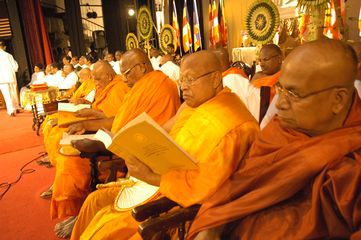
Image: courtesy by The All Ceylon Buddhist Congress:The first copy of the Commission Sabha Report forwarded to Rev. Udugama Sri Buddharakkita mahanayaka Thero.The unethical Commission Sabha was appointed on the day of poson in the year 2006 at the premises of most historic Mihintale. Around 348 monastic and laities have given their evidence before the commission for whole 4 year period during appointed its visit to various places throughout the Srilanka.
The All Buddhist Congress has previously raised concerns about the illegal ramifications of religious conversion efforts that employ unethical methods. These efforts highlight the potential risks they pose to the country’s Buddhist identity. The continued activism and discourse surrounding this issue further emphasize the importance of addressing the ongoing concerns regarding local missionary influence.
One of the most critical legal frameworks for addressing this issue is the S.C. Special Determination No. 19/2003, a landmark ruling by the Supreme Court of Sri Lanka. This ruling significantly impacts the understanding of religious propagation and the constitutional framework surrounding religious rights in the country.
The Supreme Court ruled that the Sri Lankan Constitution does not guarantee a fundamental right to propagate religion. This is a crucial distinction from other constitutions, such as India’s, which provide the right to propagate religion. In Sri Lanka, the Constitution guarantees individuals the right to practice, observe, and manifest their religion, but it does not extend this right to the active propagation or conversion of others to a different faith.
The Court emphasized the importance of freedom of conscience, which includes the right to follow one’s own belief system without coercion. The act of converting others could potentially infringe on an individual’s freedom of conscience by involving manipulation or coercion.
The Court noted that Sri Lanka’s Constitution recognizes Buddhism as the foremost religion, and the state has a duty to protect and foster the Buddha Sasana (Buddhist heritage). Any attempt to propagate another religion, particularly through coercive means or material benefits, could disrupt the Buddhist identity of the nation and violate the special protections afforded to Buddhism under Article 9 of the Constitution.
The ruling made clear that conversion practices that rely on deceit, coercion, or material incentives would not be protected under the Constitution. These practices threaten the social fabric and harm the national identity of Sri Lanka, especially given Buddhism’s central role in the country’s history and culture.
Article 9 of the Constitution of the Democratic Socialist Republic of Sri Lanka states that Buddhism is the foremost religion in the country and that the state is responsible for its protection and promotion. The article also guarantees that all religions are entitled to the rights granted in Articles 10 and 14(1)(e). This special protection of Buddhism reinforces the need for vigilance in maintaining the country’s Buddhist identity and the integrity of its cultural and religious values.
The Clean Sri Lanka project, with its mission to address both environmental sustainability and ethical standards across the country, has a significant opportunity to expand its focus on moral integrity. The project aims to ensure a cleaner physical environment and a nationwide moral commitment that promotes ethical principles. In light of the rising concerns surrounding religious conversion, Clean Sri Lanka can play an active role in safeguarding Sri Lanka’s Buddhist identity and cultural heritage by advocating for stronger legal protections and public awareness about the constitutional rights and the protection of Buddhism.
It is critical for Clean Sri Lanka to incorporate the principles of Environmental, Social, and Governance (EESG) into its strategic goals. This framework addresses not only physical cleanliness but also promotes the ethical responsibility of protecting the nation’s cultural and religious heritage.
There is an urgent need for Clean Sri Lanka to advocate for legal reforms that prohibit religious propagation that disrupts Sri Lanka’s social and cultural fabric. By integrating constitutional rights and reinforcing the importance of Buddhism as the nation’s primary religion, Clean Sri Lanka can help mitigate the negative impacts of illegal religious conversions.
It is important for all Sri Lankans to unite in their efforts to protect the country’s religious and cultural heritage. The growing influence of local missionary groups, particularly those engaging in unethical conversion practices, poses a threat not only to Buddhism but also to the cultural cohesion of Sri Lanka. Local Buddhist temples and religious leaders must take proactive measures to raise awareness about the ongoing missionary activities and the potential dangers they pose.
By collaborating with Clean Sri Lanka and other organizations, these temples can ensure that the public is informed and equipped to resist attempts at illegal religious conversion. Political leaders and government authorities must also demonstrate a firm commitment to protecting Sri Lanka’s Buddhist identity. As part of a national strategy to safeguard the nation’s cultural heritage, lawmakers should work together to tighten the laws regulating missionary activity and ensure that those who violate these laws face appropriate legal consequences.
The rising concerns over illegal religious conversions and the potential threat posed by local missionaries in Sri Lanka call for immediate and decisive action. Clean Sri Lanka has a unique opportunity to lead the charge in advocating for stronger legal protections and oversight to prevent religious manipulation and ensure that Sri Lanka’s Buddhist identity is preserved.
By adopting stronger legal frameworks, educating the public, and working collaboratively with local religious institutions, Clean Sri Lanka can play a central role in curbing the spread of illegal religious activities. This will not only protect Buddhism but also contribute to maintaining the peaceful coexistence of all Sri Lankans, regardless of their religious backgrounds.
As Sri Lanka continues to navigate these complex challenges, it is essential that the nation’s laws are enforced rigorously and that its cultural and religious integrity is safeguarded for generations to come. The time to act is now—Clean Sri Lanka must step forward and advocate for change.
By Palitha Ariyarathna
On the Duruthu Poya Day
References
The Constitution of the Democratic Socialist Republic of Sri Lanka – Article 9, Article 10, and Article 14(1)(e) [Source: Official Constitution of Sri Lanka, available online at: http://www.parliament.lk/en/constitution]
S.C. Special Determination No. 19/2003 – Sri Lanka Supreme Court ruling on religious propagation [Source: Supreme Court of Sri Lanka, available online at: http://www.supremecourt.lk]
Clean Sri Lanka Project – Vision and Mission Statement [Source: Official Clean Sri Lanka website: https://cleansrilanka.gov.lk/]
Buddhist Congress Position on Religious Conversions [Source: Buddhist Congress Reports and Statements on Ethical Conversion Practices, available at local Buddhist institutions]
Ancient wisdom is applied to modern life in Life Hacks from the Buddha. (Source: Supplied)
One of the most notable New Zealand self-help books of last year was by Auckland-based psychiatrist and sleep specialist Dr Tony Fernando. ‘Life Hacks from the Buddha: How to be calm and content in a chaotic world’ does what it promises, presenting ancient Buddhist wisdom in bite-sized hacks, easily applicable to modern life. The following extract focuses on mindfulness and meditation – practices Fernando has taught to inmates at Mt Eden Correctional Facility.
When in a mindful mode, we can see our irrational thought patterns, emotional reactions, uncontrolled cravings and our desire for things to be different as random, ever changing and impermanent. We see them as reactive brain impulses. We have a choice to just let them pass or invest unnecessary energy in a never-ending rabbit hole of exhausting mental processes.
Mindfulness is one of the best ways to unhook ourselves from the click-baiting mind.
Mindfulness is a superpower because we see everything in our mind arise and pass away. Our thoughts are empty, like soap bubbles that come and go. Yet we still tend to engage with our crazy thoughts and emotions.
The mind sometimes behaves like a deceptive online seller. It employs exaggerated headlines or flashy advertisements that lure customers to its online stores and play on the customer’s fantasies or anxieties, which are often useless or lacking in substance. The mind wants us to click on its various attention-grabbing links. With mindfulness, you are aware that the eye-catching advertisements are there. They look enticing but you know that once you click, you are hooked. Or worse, scammed!
If I am being mindful at this very moment, I observe that I am staring at the laptop screen, noticing my fingers tapping away with a muted clickety clacking of the keys; the amorphous background café music melding with soft conversations of customers; I am smelling the soft scent of some air deodoriser; feeling the pressure of the rolled-up towel on my butt to prop me up on the chair. I am noticing the sleeves of my jacket brushing up on my wrist. A WhatsApp notification pinging. My mind is calm.
If I am not mindful, my mind will wander. That man eating his muesli is slurping … how uncivilised. I cannot believe he was allowed to enter this posh café. Instead of writing, I should be hitting the pool and burning calories because my GP said my blood sugar is a bit high and is prediabetic. Yes, prediabetic! If I don’t lose weight and improve my laboratory numbers, in a few years I will be taking insulin, going blind, losing the feeling in my feet, which will cause nasty infections. Maybe they’ll have to be amputated… That will ruin my swimming. Life is hard. Bloody hell, another message from the clinic! What is it this time?
Mindfulness and meditation
To many people in the west, mindfulness has become synonymous with the word meditation. Meditation is a general term that involves mental practices that result in various mind states including enhanced attention, increased insight, relaxation, stress relief and even sleep.
There are plenty of other types of meditation practice, both Buddhist and non-Buddhist, but here I will focus on mindfulness meditation. This is a specific form of meditation developed by the Buddha, and it is the best way to become mindful.
Six-piece musical band
Mindfulness is noticing the moment-by-moment experience of the mind and the body. That sounds complicated, doesn’t it? What does moment-by-moment experience of the mind and body really mean? For me, this part of the mindfulness definition is best felt rather than explained. You might have gathered already that Buddhism emphasises a lot of experiential learning rather than intellectual or philosophical knowledge.
We can subdivide our moment-by-moment experience by what our various sense organs are registering. In Buddhist psychology, we have six senses, which include the traditional five senses of sight, hearing, smell, taste and touch. The sixth sense is the mind, which involves our thoughts, feelings and emotions.
A simple way of conceptualising our conscious moment-by moment experience of the six sense organs is to imagine our awareness as a stage with six musical performers. This metaphor is derived from American Buddhist teacher Joseph Goldstein’s concept of a 6-piece chamber orchestra. On the stage of our awareness are six performers: a vocalist who represents thoughts and emotions; a drummer who symbolises the sensations in the body; a lead guitarist who represents sight; a bass guitarist who represents hearing; a violinist who represents taste and a flautist who represents smell.
If this line-up isn’t to your musical taste, you can assign the different sense organs to whatever musical performer you prefer. At any one point, these six players are on our stage of awareness. For most of us, the vocalist, who represents thinking and emotions, tends to be the loudest. For the anxious and overthinking people like me, it takes control of the stage, with the rest of the players in the background.
If I have a stomach-ache, the drummer, who represents the body, becomes loudest, with the vocalist singing various scary tunes like, ‘It might be cancer!’ If I am focused on my food, the violinist (taste), lead guitar (sight) and flautist (smell) take centre stage. If I’m judging the food negatively and getting annoyed by the whole experience, the vocalist takes centre stage again: ‘This is not nice, why are they feeding you this?’
When I am quietly mindfully meditating, fully absorbed by the breath, the drummer (body sensations) takes centre stage in a calm way, while the rest of the musicians are quiet. When my cell phone rings, the bass guitar (hearing) is triggered followed by the vocalist (thoughts): ‘Who is ringing me now? I am supposed to be meditating!’
When we are mindful, we are aware and watching what is going on in our moment-by-moment experience. We are alert and not sleepy. We notice the different things going on with the musicians. We are kind to them even if they are unruly and out of control at times. Sometimes, when mindfulness is strong, we see the gaps between the music. We notice space. We eventually see the stage where all the happenings occur. This suggests that our ability to be aware is getting stronger.
Let’s practise
Try the following short exercise to focus on your moment-by-moment mind and body experience.
Notice what is going on with the various musicians in your awareness.
Avoid adding stories or commentaries. Just focus on what you notice.
Pay full attention to what you are seeing.
Avoid making comments on what you see. Just see for a few seconds. Just see.
Pay attention to what are you hearing. Just hear for a few seconds. Just hear.
If it is quiet, just notice the quiet. Pay attention to your sense of smell. Just smell for a few seconds. Just smell. If there is no smell, notice there is no smell.
Pay attention to your sense of taste. Just taste for a few seconds. Just taste. If you cannot taste anything, note the absence of taste.
Pay attention to your body. Notice body sensations, the expansion and relaxation of your chest and abdomen while breathing, your clothes caressing your body, your buttocks pressing on the chair, your feet on the ground. Just feel.
Pay attention to your mind. What are you thinking about? What are your emotions like? Are you calm? Are you annoyed? Are you excited to be learning something new? Notice for a few seconds.
Congratulations! You just engaged in a mindfulness meditation practice.
If you didn’t complete the exercise, notice what are you feeling now. Be aware of your thoughts about why you skipped the instructions. Did you feel bored? If you noticed boredom or sleepiness, that’s being mindful as well. If you noticed that your mind was elsewhere, the fact that you became aware that you were thinking about something else is being mindful too.
Mindfulness is knowing the various characters in your mind.
Expanding the practice
Noticing our experience is an important aspect of mindfulness but it is not enough on its own. Remember the definition of mindfulness is as a state of mind that is:
• aware and alert
• noticing and accepting of moment-by-moment experiences
• leading to kindness and compassion.
Aware and alert
Our quality of noticing is important. We need to be aware and alert. Are we watching with alertness and relaxed vigilance? Or are we watching with dullness, not fully attentive to the experience? The other extreme is to watch with tension and hypervigilance. Like a stringed instrument, mindfulness has to be tuned just right. If the strings are too lax, the instrument will not sing. If the strings are too tight, they will snap.
Kind acceptance
The next component of a mindful practice involves our attitude to our experience. A mindful attitude is peaceful and kindly accepting of the experience. Since whatever is going on at this specific moment is a culmination of multiple causes and conditions, many of which we do not have control over, we cannot do much to change the current situation at this very second. Instead, we have to accept it.
Acceptance, however, does not mean resignation that we cannot do anything about the future. An important aspect of mindfulness is knowing that what we do now, in speech or action, will influence the future. Accepting with kindness is vital in practising mindfulness because when we are kind to the situation, there is an attitude of peace and relaxation to whatever is happening.
I was once flying to London from New Zealand via Los Angeles. The airport in Los Angeles is notorious for having long queues and airport staff who have a penchant for screaming at airline passengers. I had a three-hour layover there, which is tight at the best of times. Our plane arrived an hour late, which meant that my layover was down to two hours.
I was at the back of the plane, so it took a while for me to disembark. As I waited, a sense of dread overcame me, a pit in my stomach, cold clammy hands, throbbing headache, and tightened breathing. My mind went on an overdrive. If I missed my connection, I’d have to deal with long queues at the transfer desk, then I’d have to tell the conference organisers in London that I might not make it to my talk. I worried that this might tarnish my professional reputation and people would think I was unreliable.
Then I had a mindful moment, I noticed that I was close to panic. I consciously watched my breathing, noticed my body tension, noticed the anxious mind. It was pointless getting mad at the airlines or the airport.
The plane being late was a result of multiple variables including a slight delay departing Auckland because of a sick passenger, strong headwinds and the busy air traffic in LA’s airspace. I had a choice to be angry and tense, or to kindly accept that this was the current situation from which I could not escape. I chose the latter and I noticed my chest relax, my back loosen and my breathing ease. I calmly made a contingency plan, which included calling my travel agent to get help organising an alternate connecting flight if I needed it. I called the conference organisers to let them know I might be delayed. I asked airport staff if I could get ahead of the immigration queue in order to make my flight. Surprisingly, I was calm throughout the process. Eventually, I made my flight to London on time, so all that worrying and papañca was not worth it!
Leading to kindness and compassion
The last component of the mindfulness definition is often neglected in western interpretations. In many western and modern definitions, mindfulness is limited to awareness and concentration training without any reference to ethical behaviour.
As such, a sniper could develop high levels of awareness, alertness and focus, which makes him ‘mindful’ and an efficient killing machine. This is totally against the Buddhist definition of mindfulness where ‘with mindfulness as his gatekeeper, the noble disciple abandons the unwholesome and develops the wholesome…’
According to Ajahn Amaro, if so-called mindfulness practice does not involve ethical sensitivity, it cannot be said to be genuine mindfulness.
An important aspect of daily mindfulness practice is cultivating wholesome, kind, generous, compassionate thoughts and actions, while abandoning harmful, hateful and greedy tendencies.
Extracted with permission from Life Hacks from the Buddha: How to be calm and content in a chaotic world, by Dr Tony Fernando (HarperCollins). Available now.
The Annual Convention (Jalsa Salana) of Sri Lanka Ahmadiyya Muslim Jama’at to be held today Tuesday the 14 January 2025 at Baitul Basit Mosque Sri Lanka in Pasyala, Pre-dawn (Thahajjud prayer in congregation at 4.16 am local time is also beginning of the event. Prior to the main program, flag hoisting to be done followed by silent prayer.
The main event will start at 9.30 a.m. with the recitation of Holy Qur’an followed by its translations.
The objective of this Convention (Jalsa Salana) is to present pure, pristine and peaceful teachings of Islam. Likewise to call people towards their creator, to develop love, affection and compassion among the creations of God, and promote brotherhood, are also its objectives.
Speakers will address on various topic quoting from Holy Qurán, Sayings of Prophet of Islam (PBUH), writings of Promised Messiah, peace be on him and also from the advice of His Holiness Ahmadiyya Khalifa Hazrat Mirza Masroor Ahmad (may Allah be his Helper).
These addresses will include on the tenets of Islam and its power to promote peace and harmony in the world.
INAUGURATION OF BAITUL KHABEER MOSQUE IN PUTTALAM.
It is worthy to mention here, by the Grace of God, Sri Lanka Ahmadiyya Community on last Friday inaugurated a beautiful Mosque in Puttalam. It was named by Ahmadiyya Khalifa as Baitul Khabeer. The completed Mosque has two story building with Dome and a Minara.. This Mosque has the spacious of worshipping 200 people.
Ahmadiyya Jama’at is a Community of Islam which is widely perceived to be different from the mainstream Muslism of the religion as they believe that the advent of a Messiah, as promised by the Prophet Muhammad (PBUH), has already happened. They believe, unlike the mainstream believers of Islam, that the Messiah was incarnated in 1835 in the form of Mirza Ghulam Ahmad.
Under Divine Command, in 1889, Ahmad proclaimed himself under the Divine Command, awaited Messiah, and was widely subscribed to be so by Muslims from around the world. The followers of Ahmad thus came to be called ‘Ahmadis’ or ‘Ahmadiyyas’.
We are completely same as the other mainstream followers of Islam but for our belief in the advent of a Messiah, which they believe is yet to take place. Qadian is the birth-place of Hazrat Mirza Ghulam Ahmad – Founder of Ahmadiyya Muslim Community
AKD to engage in China tour from 14-17 Jan.; several MOUs on media, tourism, exports to be signed
US, India, others on close watch on AKD’s Chinese visit; concerns over approval for ‘One China’ policy
India converts nearly $ 100 m worth loans to SL to grants; total grant assistance at $ 780 m
Chamara vows to quit over Rs. 7 m spent on Clean Sri Lanka programme launch claim; Govt. denies
Revelation on role played by RW in splitting votes from the SJB, ensuring AKD and JVP/NPP victories
Ravi asks Govt. plan to raise Rs. 5,000 b this year; Anil says Govt. has a plan, but tough with set targets
Opposition takes Govt. to task on rice shortages, prices; Govt. blames RW’s pre-polls rice distribution
Namal asks if fertiliser subsidy is to be paid after Maha harvest; PM says payments in two instalments
Contradictions and confusion in key sectors like energy, lands; latest decisions put projects in limbo
Vijitha says complaints received from S. Korea, Australia of minister who sought monies; won’t name
MR and SLFP discuss JVP/NPP Govt. in Kataragama; Mahinda asks Chamara to give tuition to new MPs
MR wishes a trouble-free year for the people in Kataragama; Namal missing, in hospital with a son
Sajith loyalists push for changes in SJB; Imthiaz sidelined after saying no to Sajith loyalist, say seniors
SJB Working Committee holds decisive meeting; Sajith displeased with leaking Imthiaz letter to media
Imthiaz denies involvement in leak, says letter sent only to a handful of office bearers, including Leader
Sajith adopts several of Imthiaz’s proposals; four-member committee to look into changes to the party
Management Committee to meet every Wednesday; Working Committee to meet every third Thursday
Talks recommence on SJB-UNP alliance; SJB seeks alliance leadership or other leadership role for Sajith
Thalatha assumes duties as UNP’s first female Gen. Sec. and is to serve as bridge between SJB and UNP
SLFP puts on show of unity at S.W.R.D. Bandaranaike memorial; Chandrika, Maithri, Nimal, et al sit together
President Anura Kumara Dissanayake (AKD) and his Janatha Vimukthi Peramuna (JVP)-led National People’s Power (NPP) Government have their work cut out for them in every sphere – economic, political, and social – this year.
In fact, how AKD steers his JVP/NPP Government and the country as a whole this year will determine the future of not only the President and his party but that of an entire nation as well. While being engaged in the ongoing economic recovery programme, Sri Lanka has to manage geopolitics and political developments as well as ensure social welfare and justice.
The Clean Sri Lanka programme, which is the main programme of AKD and his Government, is now on a bumpy road, with attempts being made for the programme to stay the course.
While the Clean Sri Lanka programme is gathering steam in some aspects, the Government will have to ensure that the programme progresses without meeting the fate that befell the voluntary clean-up programme that was launched by youth groups in 2019 after then President Gotabaya Rajapaksa (GR) assumed office.
Soon after GR assumed office, youth groups engaged in various programmes islandwide to clean public places and to paint walls in such places as well. They claimed at the time that the voluntary programme was aimed at cleaning and beautifying the country and instilling discipline among the public.
The JVP/NPP Government will also have to work in a manner that will not draw criticism from the public and to get them involved as stakeholders of the programme. The ideal scenario would have been for the Government to engage in awareness campaigns to educate the public about the Clean Sri Lanka programme, its intended work, and outcomes, before launching it on 1 January without specific details and directions and expecting the public to get on board with it.
The revelation made by outspoken Opposition Member of Parliament (MP) Chamara Sampath Dasanayake that a sum of around Rs. 7 million had been spent to launch the Clean Sri Lanka programme on 1 January without following proper procurement procedures, making it difficult for officials to make the relevant payments, also left the public wondering about the allegations while Leader of the House, Minister Bimal Rathnayake requested details from Dasanayake to respond.
Dasanayake claimed that he would table the details that include Rs. 200,000 allegedly allocated to a singer, Rs. 15,000 to models who had served as ushers at the event, Rs. 700,000 for the theme song, and Rs. 2.1 million to create the website.
The due procurement process has not been followed with regard to spending this Rs. 7 million. The Presidential Secretariat accountant has refused to issue the relevant cheque. You (the Government) will have to pay this sum from the fund in Pelawatte (a reference to the NPP fund). If the Government can prove that I am wrong, I will step down as an MP. This project failed at the inception itself.”
However, the following day (10), Chief Government Whip, Minister Dr. Nalinda Jayatissa denied Dasanayake’s allegations, saying that only Rs. 900,000 had been approved for the Clean Sri Lanka launch and that not a cent would be paid extra. He added that Dasanayake’s allegation of Rs. 7 million was wrong.
Dr. Jayatissa pointed out that Dasanayake seemed to have gotten the quotations that were received for the event with the actual expenses. The Minister added that the quotations had not been approved and only a sum of Rs. 900,000 had been approved for the programme.
It will now be interesting to see Dasanayake’s response since he threatened to quit the House if his allegations were proved to be false.
Be that as it may, the outspoken Dasanayake also went on to reveal in Parliament the actions of former President Ranil Wickremesinghe that eventually resulted in the JVP/NPP victory at the last elections. The MP claimed that the Samagi Jana Balawegaya (SJB) and its Leader Sajith Premadasa would have won the election had Wickremesinghe not taken steps to break away 2.2 million votes from the SJB vote bank.
You always scold Ranil (Wickremesinghe) and us. There’s no point in it. If we had not broken 22 (2.2 million), Sajith (Premadasa) would have been president. It is because we broke away 22 that you received 159 (seats). Otherwise, you would not have gotten 159. You will be seated on this side (Opposition) and they (the SJB) will be seated on that side (Government side),” Dasanayake claimed.
Budget 2025
Amidst all this, the AKD Government is gearing for one of the focal points in its economic and governance area – Budget 2025.
In terms of the Consolidated Fund, the recurrent expenditure is Rs. 3,021,901,982,000, the capital expenditure is Rs. 1,594,850,000,000, and the total expenditure is Rs. 4,616,751,982,000.
The maximum expenditure limit for governmental activities is Rs. 43,218,025,000. The maximum debit balance limit for governmental activities is Rs. 84,532,500,000. The maximum limit of liabilities for governmental activities is Rs. 12,065,000,000.
The Second Reading (Budget Speech) of the bill is scheduled to be held on 17 February and the Second Reading debate is scheduled to be held for seven days from 18-25 February. Thereafter, the vote on the Second Reading of the bill is scheduled to be held on 25 February at 6 p.m.
The AKD Government’s 2025 Budget will play a decisive role in the International Monetary Fund’s (IMF) approval of the pending tranche under the ongoing Extended Fund Facility (EFF).
Gearing for China
Meanwhile, President AKD is set to travel to China on Tuesday (14) and the final touches to the visit are being made, with plans to sign several agreements between Sri Lanka and China during the visit.
The President is to be accompanied by Foreign Affairs, Foreign Employment, and Tourism Minister Vijitha Herath and Transport, Highways, Ports, and Civil Aviation Minister and Leader of the House Bimal Rathnayake.
AKD is to meet Chinese President Xi Jinping and Prime Minister Li Qiang on Wednesday (15).
Meanwhile, the Cabinet of Ministers has also granted approval for the continuation of supporting the ‘One China’ policy. The Government has maintained that Sri Lanka has consistently followed the ‘One China’ policy, which means that it recognises only the People’s Republic of China as the legitimate China, with Taiwan as an inalienable part of China.
The AKD Government’s decision has resulted in increased interest among many other countries, including the US and India, which are keeping a close watch on President AKD’s visit to China.
It is learnt that President AKD will underscore the importance of Chinese businesses not making various payments to individuals outside project-related work in order to ensure there will be no more commission payments.
Meanwhile, Chinese Foreign Minister Wang Yi made a brief stopover in Sri Lanka last Sunday (5) while on his way to Namibia.
Airport and Aviation Services Sri Lanka (AASL) had stated that Communist Party of China (CPC) Central Committee Political Bureau member, Foreign Minister Wang had arrived at the Bandaranaike International Airport at around 2.18 p.m. for a transit stopover enroute to Namibia.
The Chinese delegation of 18 members had been welcomed by Ambassador of China to Sri Lanka Qi Zhenhong, AASL Chairman Air Chief Marshal (Retd) Harsha Abeywickrama, and AASL Vice Chairman Cyril Wannigama.
The Chinese Foreign Minister and his delegation had left Sri Lanka at 4.23 p.m. local time.
Agreements on media
It is learnt that among the agreements that are to be signed between Sri Lanka and China are several that will link Sri Lanka’s State media with Chinese media institutions.
Accordingly, the Cabinet had reportedly given approval to a Cabinet paper presented by Health and Mass Media Minister Dr. Nalinda Jayatissa that includes the following agreements:
Memorandum of Understanding (MOU) between the Ministry of Health and Mass Media and the National Radio and Television Administration of the People’s Republic of China; MOU between United Newspapers Company Ltd. and XinhuaNews Agency of China; Memorandum of Cooperation between the Department of Government Information and Xinhua News Agency of China; MOU between the Sri Lanka Rupavahini Corporation and China Media Group; and MOU between the Sri Lanka Broadcasting Corporation and China Media Group.
Other agreements
The Cabinet last week also approved the signing of a MOU between China Media Group and the Sri Lanka Tourism Promotion Bureau, with the aim of positioning Sri Lanka as a leading destination for Chinese tourists by using the latest technology and expertise of the media group based on the cooperation between the two parties.
The proposal was submitted by Foreign Affairs, Foreign Employment, and Tourism Minister Herath.
The Cabinet had also approved the signing of an agreement on the protocol related to the export of chicken meat to the Chinese market.
Indian support
Meanwhile, India last week announced that the Indian Government had converted nearly $ 100 million worth of loans issued to Sri Lanka to grants. This was announced by Indian High Commissioner to Sri Lanka Santosh Jha during a briefing with media personnel last week.
$ 20.66 million has been extended as grant assistance to settle the payments related to seven completed line of credit projects in Sri Lanka. Similarly, there is another important project of rehabilitation of the Kankesanthurai Harbour in the Northern Province with total grant assistance from India to the tune of $ 65 million. This is also something that was to be executed through a line of credit but will now be executed through a grant.
Along with $ 14.9 million for the Maho-Anuradhapura Railway Signalling Project that I mentioned earlier, more than $ 100 million worth of loans have been converted by India into grants. This conversion of loans to grants was also discussed in the Sri Lankan Parliament, on the return of the President, with much appreciation,” the Indian High Commissioner told the press.
According to the High Commissioner, India’s grant assistance to Sri Lanka stands at $ 780 million at present. Out of these, completed projects are estimated to be worth $ 390 million, ongoing projects are approximately $ 211 million, and committed grant projects in the pipeline stand at nearly $ 180 million. The total new assistance overall is $ 391 million.
Jha also noted that President AKD had also invited Premier Narendra Modi to visit Sri Lanka this year.
Expressing confidence
Sri Lanka is however confident that it can drive the debt-to-GDP ratio well below 95% by 2032 with GDP and currency overperformance, as debt has already fallen below the required level.
A statement from the Finance Ministry said that various critiques had been made of the IMF’s Debt Sustainability Analysis (DSA) target, with the view that the debt-to-GDP target of 95% by 2032 was too high.
However, 95% is just the target; there is nothing to prevent the Government from achieving a debt to GDP well below that target,” the statement read.
The Finance Ministry said that debt to GDP had already declined below the level the IMF anticipated at the time of the programme review and that any overperformance in GDP growth and currency would help the country drive the debt-to-GDP ratio below the 95% target.
Moreover, it said that the negotiations with the bondholders had ensured that even at the highest state of growth overperformance, a nominal haircut of 16% had been obtained and a Net Present Value (NPV) haircut of 33% (at an 11% discount rate) had been achieved.
Ravi’s question
However, Opposition MP Ravi Karunanayake, while explaining the current economic conditions in the country, asked the Government in Parliament how Rs. 5,000 billion required for this year was going to be raised.
He asked the Government to explain its programme under the current path to raise revenue and investments apart from the IMF since the programme with the IMF alone could not help the country in this endeavour.
According to Karunanayake, managing inflation alone will not address the issue of raising the targeted revenue for the year.
Minister of Labour and Deputy Minister of Economic Development Prof. Anil Jayantha Fernando responded to Karunanayake’s question agreeing that following the IMF framework and managing inflation targets alone would not address the issue.
However, Prof. Fernando noted that, unfortunately, the Public Financial Management Act had put in place limits for 2025 that included revenue and expenditure. He explained that these limits had been put in place according to projected GDP for 2025, which had been done in line with the IMF programme by the Public Finance Department.
No one can project 100% about these statistics. For this year it has been set that 13% GDP should be the expenditure while 15% has to be raised,” the Minister explained.
He further noted that the Government had set its policies within this framework and would work to increase production and get more investments to the country.
Karunanayake then asked about the Government’s plan to support and uplift the 70% of Small and Medium-sized Enterprises (SMEs) in the country.
Prof. Fernando stated that the Government had already discussed with all officials in the country’s finance establishment and had planned a programme to develop the SME sector as well. He noted that growth could be considered successful only if the benefits were equitably distributed and the latest figures showed that it was not so.
According to Prof. Fernando, the current welfare measures carried out by the Government are not merely for welfare but to provide assistance to the people to uplift them and get them involved in the economic process.
Blaming RW
Meanwhile, the Government continues to face pressure from the Opposition over the ongoing shortage of certain varieties of rice and the high prices of the stocks in the market. The issue resulted in a heated exchange of words between the Government and the Opposition during last week’s parliamentary sessions.
Former President Wickremesighe was also blamed by the Government for the ongoing shortage of red rice.
Minister of Trade, Commerce, Food Security, and Cooperative Development Wasantha Samarasinghe, responding to questions posed in Parliament by Sri Lanka Podujana Peramuna (SLPP) National Organiser Namal Rajapaksa, acknowledged a shortage of red rice in the local market, but said the shortage was a result of the former Government distributing 20 kilos of rice per person free of charge ahead of the Presidential Election.
Samarasinghe alleged that the Wickremesinghe Government had distributed red rice to the public who did not consume red rice as well, which had resulted in the shortage. The Minister however stated that the Government had taken necessary measures to address the issues and ensure the continuous supply of rice to the local market.
Meanwhile, Namal also locked horns with Prime Minister Dr. Harini Amarasuriya over the fertiliser subsidy allocated for farmers for the Maha season, asking the Government if the promised subsidy would be paid after the Maha harvest.
The Premier stated that 996,992 farmers would be given the allocated Rs. 25,000 fertiliser subsidy in two instalments between 1 October 2024 and 15 February this year and that the first instalment had already been made while the second instalment would be completed next month.
Contradictions and confusion
Despite attempts by the JVP/NPP Government to streamline systems and act against corruption, there seems to be quite a bit of chaos being created, resulting in several key programmes coming to a standstill and stakeholders looking at initiating legal action against the Government’s unilateral decisions without any stakeholder consultations.
Some decisions taken by several key ministries have adversely impacted the power and energy and land sectors.
One incident that was recently reported was where the Ministry of Plantation and Community Infrastructure had suspended a power project in the Badulla District aimed at providing electricity to families in the Sinhalayagama, Unakanda, and Annasigala regions, saying it was necessary to facilitate an investigation into the land allocations, while the Energy Ministry maintained that the project was moving ahead and was in active status. Despite being over 85% complete, the project had reportedly been halted on the orders of JVP/NPP Minister Samantha Vidyarathna.
Energy Ministry Secretary Prof. Udayanga Hemapala denied any official cancellation of power projects since 26 September 2024 and Ceylon Electricity Board (CEB) General Manager Wasantha Edussuriya had confirmed that the project was in the commissioning stage. There is no reason to halt it because the project is still under commissioning. Sometimes it may stop under their requirement,” he had added.
Another incident related to the power and energy sector was the move by the Energy Ministry to cancel several renewable energy projects while also cancelling the tariffs that had been agreed for several projects through previous Cabinet approvals.
The relevant Cabinet paper was approved last week and several previous Cabinet decisions on renewable energy are to be revoked as a result. The renewable energy industry has expressed dismay at the Government’s move, claiming it will have an adverse impact on investor confidence in the industry.
Another incident is the Government’s decision to stop releasing lands even for projects in order to launch an investigation into the lands released by the Land Reform Commission (LRC) since 2015. This inquiry has resulted in land releases for projects coming to a standstill, resulting in a delay in the recommencement of some stalled projects.
This delay in assigning lands for projects is a contradiction of President AKD’s call for businesses and investors to explore opportunities to carry out development projects. The President has announced that Sri Lanka is open for business and foreign investments while the Government is yet to take measures to ensure the ease of doing business in the country.
While irregularities and corruption need to be addressed and acted upon, such actions need to be pursued without hindering the economic processes at play, given that Sri Lanka’s economy is still in a fragile state.
Corruption complaints
Meanwhile, Foreign Minister Herath has claimed that complaints have been made by diplomats from South Korea and Australia that businesses and investors from the two countries who have tried to do business in Sri Lanka have left for India and Vietnam instead due to the request for monies by some politicians in previous governments to support businesses or investments from these two countries.
These complaints have been made during recent meetings held between Herath, the South Korean Ambassador in Sri Lanka, and the Australian High Commissioner in Sri Lanka.
The South Korean envoy had pointed out that a South Korean company had won the open tender for the construction of an oil pipeline from Muthurajawela to the Bandaranaike International Airport. However, this tender had been cancelled without giving any reason.
However, there are now calls by the public for the Minister to reveal the names of the politicians who had requested monies from foreign companies in keeping with the JVP/NPP Government’s pledge to be transparent and act against irregularities.
Tuition for the Govt.
The JVP/NPP Government’s actions and work have now become a topic of discussion among the general public as well as political circles.
The Government was also the key topic of discussion during an unexpected meeting that took place between former President Mahinda Rajapaksa (MR) and senior members of the Sri Lanka Freedom Party (SLFP) in Kataragama on the night of 31 December 2024.
The SLFP has a tradition of holding a pirith chanting ceremony at the Kiri Vehera in Kataragama. MR and his family also have a tradition of engaging in religious activities in Kataragama as the new year dawns.
MR and SLFP seniors were entertained by the Chief Incumbent of the Abhinavarama Temple in Kataragama. Over a cup of tea, everyone had discussed the current state of the country and the JVP/NPP Government’s actions.
SLFP MP Chamara Sampath Dasanayake had made an interesting comment about the incumbent Government’s inability to carry out its work and failure at governance. He had noted that the Government’s inabilities were so great that some members had even failed to engage in extramarital affairs (Me anduvata kochchara veda berida penava neda, hariyata kotuvakvath paninna be ahuvenne nethiva”).
Everyone had laughed at this statement and former Minister Mahinda Amaraweera had said while laughing that Dasanayake as a senior MP should give tuition to the newcomers to the House, especially from the Government side. Dasanayake had laughed and said that there were more qualified people than him in the House to tutor JVP/NPP MPs on such matters.
MR’s wish
Meanwhile, former President MR was among the first devotees in the new year to make offerings to the Ruhunu Maha Kataragama Devalaya.
Accepting his offerings, the kapu mahaththaya had asked MR if he had any wish from the gods. MR had smiled and said that he wished that the people would not suffer from shortages of food and other difficulties during the new year (Hemotama karadarayak nethiva kanna endala inna puluvan wewa kiyala pathuva”).
Namal in hospital
However, Namal was not present with his father, MR, in Kataragama, like during previous years.
MR and the family had spent the holiday season in Nuwara Eliya and returned to Colombo on 31 December 2024 in order to leave for Kataragama for the religious observances at midnight. Namal however was unable to make it to Kataragama since he had to take one of his sons, who was down with the flu, to hospital for treatment in Colombo.
Namal on 1 January attended the New Year celebrations at the SLPP Headquarters from hospital.
Changes in SJB
The main Opposition SJB meanwhile is still trying to recover from last year’s electoral defeats and is looking at making changes to several key positions in the party amidst the growing dissension within the party over the party leadership, the lack of party democracy, and the interference of what is termed as third parties affiliated to the party leadership.
There were first reports of changes being made to the post of national organiser held by Tissa Attanayake following the critical comments made by him against the party leadership calling for immediate party reforms.
However, it is learnt that there are now moves mooted by loyalists of Opposition and SJB Leader Premadasa to make changes to the posts of party chairman and general secretary.
SJB Chairman Imthiaz Bakeer Markar it seems has earned the wrath of the SJB leadership and his loyalists following his recent letter containing 12 proposals to address the issues faced by the party. When there had been no response to the letter from the party leadership, Bakeer Markar had copied the letter to the General Secretary, National Organiser, and Treasurer of the party, which was later leaked and publicised in the media.
However, many SJB seniors have expressed their opposition to making changes to key positions in the party, which they claim is being mooted by Premadasa and his loyalists, once again in an arbitrary manner to make way for a few Premadasa loyalists.
Being sidelined
However, many SJBers as well as others in the political scene have been wondering about the reason for Bakeer Markar being sidelined by the party leadership.
It is in such a backdrop that several senior SJBers had discussed an incident that had taken place during a meeting of SJB seniors after the party’s defeat at the last Presidential and Parliamentary Elections.
During this meeting, which was chaired by SJB Leader Premadasa, Bakeer Markar had stated that the party had been defeated at the two elections due to shortcomings within the party and that these issues needed to be properly identified and addressed to ensure the SJB’s victory at future elections.
Bakeer Markar had proposed that a committee be appointed for the purpose. Premadasa had then proposed that his confidant, Lakshman Fonseka, also be included in the proposed committee. Bakeer Markar had responded immediately saying that Fonseka should not be included in this committee since those who had decided on the party strategies and campaigns for the elections should not be part of it since the report and recommendations needed to be done impartially.
According to several senior SJBers, Bakeer Markar’s comments at this meeting had resulted in him being sidelined by the party leadership, which eventually resulted in him being axed from the party’s National List members to Parliament as well as not receiving a response to his letter containing proposals to address the issues currently faced by the SJB.
Decisive meeting
Amidst this increasing dissension within the party, the SJB Working Committee met last week, resulting in a decisive discussion.
Unlike during other Working Committee meetings, this time around, the party leadership had distributed a document to all members outlining the meeting agenda prior to commencement. The document had shown that among the key issues to be discussed at the meeting was Bakeer Markar’s letter with proposals to reform the party.
However, at the outset of the meeting, a majority of the Working Committee members had spoken about the current political situation and the elections to cooperatives and the SJB winning some of them.
After listening for a while, MP S.M. Marikkar had said that they should not lose focus and veer away from the main reason for the meeting. He had noted that there was no point in talking about the ‘feel-good’ stories instead of talking about the real issues and working to strengthen the party.
National Organiser Tissa Attanayake had also supported Marikkar’s statement, saying that the proposals presented by Bakeer Markar needed to be discussed. He had pointed out that there were shortcomings within the SJB that needed to be addressed and everyone needed to reflect on them and correct their mistakes or the SJB would continue to lose future elections.
Prior to discussing the proposals, Premadasa had expressed his displeasure over the leaking of Bakeer Markar’s letter to the media. Bakeer Markar had denied releasing it to the media, saying he had only given the letter to the Party Leader and a few other party office bearers – General Secretary Ranjith Madduma Bandara, National Organiser Attanayake, and Treasurer Harsha de Silva. It is learnt that the letter had been leaked to the media from the table of one of the party seniors who had been given the letter.
New committee
However, Premadasa decided to implement several proposals made by Bakeer Markar, which included the holding of regular and timely meetings of key party committees and for the appointment of a committee to study the changes that need to be made to the SJB as part of the reforms process.
Accordingly, a four-member committee was appointed consisting of SJB General Secretary Madduma Bandara, Chairman Bakeer Markar, National Organiser Attanayake, and Kabir Hashim.
It was also decided that the SJB Management Committee would meet every Wednesday and that the party’s Working Committee would meet every third Thursday of the month.
Three new members were also appointed to the SJB Management Committee – Marikkar, former MP Buddhika Pathirana, and Lalith Bandara.
Continuing push for alliance
Amidst the ongoing internal conflicts within the SJB, there is a continuing push for the party to unite with the United National Party (UNP).
The unofficial talks between senior members of the UNP and a group of SJBers that commenced after the Parliamentary Polls last November have recommenced this month, with several UNP and SJB seniors engaged in unofficial talks.
It is learnt that several key Premadasa loyalists have expressed willingness to explore possibilities of the two parties joining forces.
The SJB side, it is learnt, has proposed to the UNP side that Premadasa be given a leadership role in the proposed alliance. It is also learnt that the UNP is also agreeable to giving more powers to the SJB in the new alliance.
Thalatha’s bridge
The appointment of former SJB MP Thalatha Atukorale as the General Secretary of the UNP has renewed hope among the UNPers and SJBers of the possibility of uniting. This renewed hope has been further strengthened after Atukorale officially assumed duties as the UNP General Secretary at the Party Headquarters, Sirikotha, last Friday (10).
Senior SJB members, including several Premadasa loyalists, have also expressed hope that Atukorale will serve as a bridge between the UNP and SJB and that it is the best opportunity for the two parties to unite. A senior SJBer noted that there were several issues that needed to be ironed out with the UNP before proceeding with alliance talks and that these areas were being discussed at present.
Atukorale has been pushing for the two parties to unite even during her tenure in the SJB before defecting to support Wickremesinghe at the Presidential Election last September.
Only under the ‘elephant’
Meanwhile, the UNP has decided to maintain that the party will contest future elections only under the ‘elephant’ symbol.
The decision to stick to the ‘elephant’ was made after the UNP’s recent experience with the New Democratic Front (NDF) alliance under the ‘gas cylinder’ symbol, where the NDF General Secretary arbitrarily filled the two National List slots the alliance obtained at the Parliamentary Elections.
Sajith-RW meet
Meanwhile, SJB Leader Premadasa and UNP Leader Wickremesinghe met last week at the almsgiving held to mark the 50th birthday of Ven. Welipana Dharmarama Thera. It was interesting to see the UNP’s Wajira Abeywardena seated between Premadasa and Wickremesinghe. However, both leaders had engaged in a friendly chat.
It is learnt that the two Leaders had spoken about the incumbent Government and its actions. The discussion had also included the recent statements being made by Government ministers, the upcoming budget, and the matters to be raised in the House.
SLFP’s united front
The SLFP meanwhile put forward a united front last week when all senior members gathered at the S.W.R.D. Bandaranaike statue on Wednesday (8) to mark their late Founder’s birth anniversary.
The event was graced by former Presidents Chandrika Bandaranaike Kumaratunga and Maithripala Sirisena, who have both served as Leaders of the SLFP, and the new office bearers of the party led by SLFP Leader, former Minister Nimal Siripala de Silva. The SLFP seniors, who have been at loggerheads for some time, were seen seated together and talking to each other.
Docs group calls for SPC Chair and Board to resign
Strap: SPC says tender not awarded to implicated Co.
Ministry of Health Secretary Dr. Anil Jasinghe, has announced that the Government is focusing on the establishment of several laboratories to test medicines in the near future.
Dr. Jasinghe also indicated that an investigation is planned into recent allegations regarding the importation of medicines by a blacklisted company.
It was recently revealed that the State Pharmaceuticals Corporation (SPC) tender board had allegedly awarded a tender to purchase 270,000 bottles of an antiseptic mouthwash used for the treatment of inflammatory dental conditions, ‘Chlorhexidine’, to a Bangladeshi company that had been blacklisted.
Speaking in response to several questions raised by journalists in Kandy, Dr. Jasinghe elaborated on the Government’s plans: These tests should be conducted at various stages of quality checking. However, so far, such testing has only been carried out when a complaint arises. This approach is insufficient. Now, the Government is concentrating on setting up one or two testing laboratories in Sri Lanka,” he said. Although Sri Lanka is a small country, its procurement process is much larger than that of many developed countries, given that the healthcare system is State run and the supply of medicines is centralised,” he added.
Meanwhile, the Medical and Civil Rights Professional Association of Doctors (MCPA) has called for the resignation of the SPC Chairperson and its Board of Directors following allegations that the SPC tender board awarded a Rs. 37 million antiseptic mouthwash tender to a blacklisted company. Speaking to The Daily Morning, the MCPA President Dr. Chamal Sanjeewa said that the SPC has enjoyed a strong reputation among health sector institutions; however, the alleged transaction has tarnished its reputation. “The public’s trust in the SPC has been damaged by this transaction. How can a tender be awarded without the knowledge of the Chairperson and the Board of Directors? They must take responsibility and resign from their positions.” Attributing the tender in question to be the first tender issue that took place under the current Government, he said that Health Minister Dr. Nalinda Jayatissa should also pay immediate attention and take appropriate action against those involved.
Dr. Jayatissa and the SPC were not available for comment.
However, Minister Dr. Jayatissa has vowed to safeguard all employees dedicated to resolving and correcting issues within the pharmaceutical sector. He stressed that the pharmaceutical industry, while being one of the most profitable globally, has also become a hub for racketeering. Dr. Jayatissa made these remarks during an emergency inspection tour of the SPC, located at the ‘Mehewara Piyasa’ office complex in Narahenpita. He held an extensive discussion with the governing authority of the SPC to find ways to improve the institution’s operations, ensuring that they are carried out in a more systematic and transparent manner. Additionally, Dr. Jayatissa provided guidance on several aspects of the drug supply network, including the current functioning of the system, the drug procurement process, and the drug distribution programme, as well as outlining strategies for the future development of these activities.
According to Dr. Sanjeewa, dealings with the company in question had been suspended as a default supplier due to a non-settlement of claim” with legal action underway to recover an unsettled amount of nearly Rs. 130 million. However, he claimed that the SPC tender committee, led by its Managing Director and the Deputy Director of the National Hospital of Sri Lanka, Colombo, awarded the tender despite the company lacking National Medicines Regulatory Authority registration or World Health Organisation standard certification at the time. The relevant transaction is alleged to have been made by officers appointed under the current Government last month (in December 2024) under tender bearing number DHSP/WW/15/2025.
Meanwhile, in a statement issued yesterday (13), SPC Chairperson Dr. Manuj Weerasinghe said that the SPC Procurement Committee had initially decided to award the tender to the said blacklisted supplier; however, the decision was suspended after it was identified that the company had been blacklisted as a defaulter on 29 October of last year (2024). He however denied the allegations that the supplier did not possess the NMRA registration. Following the suspension of the decision to award the tender, he said that the necessary steps to select a suitable bidder from the remaining candidates had already been finalised. He added that this process was completed before media reports about the tender emerged.
President Anura Kumara Dissanayake was set to depart the country last evening (13) for a four-day State visit to the People’s Republic of China.
This visit, taking place from 14-17 January, is undertaken at the invitation of Chinese President Xi Jinping.
During the visit, President Dissanayake will hold discussions with President Xi Jinping and Premier Li Qiang, as well as engage with other senior Chinese officials to strengthen diplomatic ties.
The agenda includes key focus areas such as technology, agriculture, and poverty alleviation. The President is also scheduled to visit strategic facilities and participate in high-level business forums aimed at enhancing economic collaboration and investment opportunities, a statement said.
A series of bilateral agreements to deepen mutual understanding and cooperation between Sri Lanka and China will be signed during the visit.
This marks President Dissanayake’s second international State visit since assuming office and is considered a pivotal step in fortifying the longstanding partnership between Sri Lanka and China. It is anticipated that the visit will significantly advance bilateral relations, particularly in the areas of trade, investment, and economic cooperation.
Meanwhile, last month (December 2024), Dissanayake visited India, marking his first overseas trip since the Presidential Election.
In recent years, China has provided ongoing assistance in areas such as foreign direct investment, infrastructure, energy and more. Following Sri Lanka’s economic crisis, China played a significant role in debt restructuring and its timely support further strengthened the deep friendship between the two nations.
In general, Dissanayake’s China trip is expected to focus on exploring opportunities for collaborative development.
The government is taking significant steps to address salary disparities in the education sector and elevate five key education services, including teachers and principals, to be among the 10 highest-paid professions in the country, Deputy Minister of Labour Mahinda Jayasinghe said.
Speaking at an event held in Maharagama, the Deputy Minister outlined the government’s commitment to improving remuneration and addressing long-standing salary issues in the education sector.
We will present the first budget next month, and there will be an increase in the salaries of public servants in that budget. Do not have any doubts about that,” said Jayasinghe, emphasizing the government’s efforts to prioritize public sector wage reforms.
He also acknowledged the persistent concerns about salary disparities in the education sector. Many people are asking about the two-thirds salary disparity for teachers. We are already conducting the necessary preliminary discussions to resolve this issue,” he added.
Highlighting the government’s plans for educators, the Deputy Minister noted that five services—teachers, principals, educational administrators, teacher educators, and teacher advisors—are being considered for inclusion among the top 10 salary scales.
Discussions are currently underway to not only address the salary scales but also to improve the quality of these services. Our goal is to enhance the standards of education through appropriate salary adjustments,” he stated
In my previous article published in Sunday Observer of 3rd November, 2024 entitled Digital Transformation: Avoid paving the cow path”, we discussed about the general benefits of the Digital Transformation to the economy as a whole. One of the very important sectors of this overall digital transformation effort is the Digital Transformation in Education. Digital transformation in education uses the technology to improve teaching and learning. Artificial Intelligence (AI) is a key part of this transformation. This article attempts to discuss the benefits, challenges and the way forward on the use of Artificial Intelligence (AI) in the digital transformation in education. While AI can revolutionize learning by making it more accessible and tailored, concerns about misuse and ethical implications do remain. The question remains: Is AI a cheater that undermines learning or a tutor that enhances it? Let us examine the circumstances that the use of AI in education exemplifies the role of cheater and tutor and how best we could balance these two roles for the best advantage of the learners.
AI as a Tutor: Transforming Education Positively
AI’s role as a tutor is demonstrated through its ability to provide personalize education in more efficient and student-centered manner. The AI-based tools can monitor the student’s rate of progress and tailor the learning experience to best suit the student’s ability and level of competence through Intelligent Tutoring Systems, etc. Such learning systems are highly adaptive and can adjust content delivered in real-time to suit the individual student’s demonstrated ability and to keep the students engaged and motivated.
Further, AI can bridge the student’s knowledge gaps by offering scalable learning opportunities. Students who do not have access to quality teachers or appropriate resources can make use of the AI tools to avail 24/7 learning assistance from anywhere. AI chatbots can serve as virtual tutors which on demand will answer questions and provide explanations. This democratization of education allows students from underserved areas to benefit from personalized support which otherwise is impossible or very expensive to receive.
AI can also alleviate teachers’ administrative burdens. AI-powered grading systems streamline evaluation processes, lesson planning, etc., enabling educators to focus on teaching rather than spending time on routine and laborious tasks. Further, the analytics from the AI tools can help teachers identify trends in student performance. This makes it easier for teachers to address learning gaps proactively and design suitable learning materials.
AI as a Cheater: Ethical Concerns and Academic Dishonesty
While AI holds immense potential, its misuse raises serious concerns. The rise of AI-powered tools with the capability of generating essays and predicting answers, has made it easier for students to plagiarize and submit work they did not create. Platforms like ChatGPT, Gemini, etc. can generate essays and assignments with simple prompts by the user, and even provide answers to exam questions, allowing students to bypass the real learning process altogether.
The consequences of the above misuses are very serious. The learning outcomes such as ability to apply gained knowledge, ability to summarize, analyze, evaluate, etc., critical thinking, problem-solving skills, and ability to synthesize acquired knowledge and create new work – core competencies that education seeks to develop among learners – are undermined by the overreliance on AI. When students use AI to complete their assignments without having to go through the cognitive processes needed to complete them as learners, it disrupts the long-term learning outcomes that learners need to achieve in the progression of their studies and devalues the integrity of education.
Moreover, distinguishing between genuine student work and AI-generated content is challenging. Even with plagiarism detection tools, AI outputs can often pass as original work, creating a dilemma for educators. This increases the need for stricter academic integrity policies and a re-evaluation of traditional assessment methods.
Striking a Balance in AI’s Role in Education
Considering the benefits and risks in using AI in education, it is not possible to label the use of AI, simply, as a Cheater or Tutor. To determine whether AI is a cheater or tutor, it is essential to strike a balance between harnessing its benefits and addressing its risks.
Educational institutions must focus on fostering a culture of ethical AI use by setting clear guidelines and expectations. Students should be taught how to use AI tools as supplements to learning rather than shortcuts.
Educators can use the AI’s capabilities to develop students as the ones who can think critically rather than being rote learners, who are taught to learn by memorizing the information by mere repetition. The use of AI as a tutor needs a great deal of effort and dedication by the educators. Educators can leverage AI’s capabilities to create assessments that prioritize understanding and critical thinking over rote memorization. For instance, oral presentations, project-based learning, and open-ended assignments are less susceptible to AI misuse and encourage genuine student engagement.
Furthermore, AI literacy should become part of the curriculum. Teaching students about AI’s capabilities, limitations, and ethical considerations can empower them to use these tools responsibly. When used effectively, AI can complement human instruction, fostering a collaborative and innovative learning environment. AI’s ability to serve as a tutor anytime, anywhere solves the problem of one to one tutor support for those who are in need but cannot afford. This could be used to alleviate the issues that comes from the understaffing of schools in certain geographical locations and perhaps need for private tuition.
Way Forward
AI in education is neither inherently a cheater nor a tutor; it is a tool whose impact depends on how it is used. While it holds the potential to revolutionize learning by making education more personalized and accessible, its misuse poses ethical and academic challenges. Striking a balance requires educators, policymakers, and students to collaborate in developing guidelines that promote ethical and responsible AI use. If harnessed correctly, AI can serve as a powerful tutor, enhancing education and preparing students for a technologically advanced future.
(Dr. Gamini Padmaperuma is a Chartered Professional Engineer, Honorary Fellow Member of the IESL, former Director, Academic Affairs at Saegis Campus and Senior Lecturer at OUSL. He holds a PhD in Instructional Design for Computer-Based Learning from the University of Canterbury, New Zealand and can be contacted at gamini_pad@hotmail.com)
The construction of a colossal hydropower project by China in Tibet has emerged as a matter of grave concern for India, especially for those residing in its eastern regions including Bangladesh. These areas now face a perpetual threat akin to living under a water bomb, controlled by a foreign power governed by a Communist regime that lacks credible bilateral relations with India, the world’s largest democracy. The recent earthquake in the Tibetan plateau, which claimed over 125 lives and injured numerous others, has exacerbated these fears. The disaster has underscored the seismic vulnerabilities of the region, further alarming those downstream who depend on the Brahmaputra river system.
Often referred to as the Earth’s third pole, the Tibetan plateau experienced a powerful earthquake on 7 January 2025, registering a magnitude of 7.1 on the Richter scale. The tremors, which were felt in neighbouring Nepal, Bhutan, and India’s eastern states, also led to aftershocks that intensified the destruction. More than 3,500 homes were damaged in this high-altitude Himalayan region, which maintains an average elevation exceeding 4,000 metres. Over 400 individuals were rescued, and nearly 30,000 people were relocated due to the disaster. The epicentre of the quake, located approximately 80 kilometres from Mount Everest, highlights the region’s vulnerability to seismic activity. With Beijing’s stringent internet restrictions in Tibet, the full extent of the devastation remains unknown, but it has already heightened anxieties about the safety of China’s hydropower infrastructure in the region.
China’s planned dam on the Yarlung Zangbo River, which becomes the Brahmaputra downstream, has further amplified these concerns. The hydropower project, estimated to cost USD 137 billion, is touted to generate 300 billion kilowatt-hours of electricity annually, making it the world’s largest such venture. Situated in the Shigatse region of Tibet, a mere 22 kilometres from the Arunachal Pradesh border, the dam’s proximity and potential risks are alarming. While Chinese officials argue that the dam will have minimal impact on downstream areas, experts and local organisations in India have expressed serious doubts about these assurances.
All Assam Engineer’s Association (AAEA), a prominent forum of graduate engineers, has raised concerns about the devastating impact a high-intensity earthquake near the dam could have on the Brahmaputra River basin. They have urged the Union government to address the issue firmly with Beijing, emphasising the potential havoc a dam failure could wreak across eastern India and northern Bangladesh. Adding to these concerns, the Chief Ministers of Arunachal Pradesh and Assam have also voiced their apprehensions. Arunachal CM Pema Khandu has highlighted the issue to New Delhi, while Assam CM Himanta Biswa Sarma has warned that mismanagement of the dam could disrupt the entire ecosystem of the lower riparian areas. Sarma further noted that the fertile regions of eastern India could be left solely reliant on rainfall from Bhutan and Arunachal Pradesh if the dam’s operations go awry.
In a proactive measure to mitigate potential fallout, India has initiated the Siang Upper Multipurpose Project in Arunachal Pradesh. Unlike typical hydropower projects, this dam is designed not only to generate electricity but also to regulate the Brahmaputra’s flow throughout the year, counteracting any sudden water releases from China’s dam upstream. However, this project has not been without controversy. Local communities and human rights groups have opposed the Siang dam, citing concerns about the fragile ecosystem and the displacement of thousands of indigenous families living near the project site.
The broader issue remains the lack of a formal water-sharing agreement between India and China. New Delhi has called upon Beijing to respect the principles outlined in the United Nations Convention on the Law of the Non-Navigational Uses of International Watercourses (1997). These guidelines advocate for fair and sustainable use of transboundary rivers. Despite this, Beijing has shown little willingness to adhere to these principles for rivers originating in Tibet, including the Brahmaputra, Irrawaddy, and Mekong.
The absence of such an agreement leaves India vulnerable to unilateral decisions by China, which could have catastrophic consequences for millions living downstream. As the international community continues to grapple with water resource management and cross-border cooperation, India must intensify diplomatic efforts to pressure Beijing into adopting and respecting global water-sharing norms. Until then, the threat of potential disasters caused by China’s mega dam in Tibet will remain a looming shadow over the lives of those dependent on the Brahmaputra basin.
In the 8th century Middle East, a new dynasty seized control of one of the world’s greatest empires – the Islamic Caliphate. Though little remembered in the west today, the Abbasids reigned for five centuries. They oversaw an era of Islamic military dominance… city-building… brilliant scholarship, and technological innovation. It has come to be remembered as Islam’s ‘golden age’. This is the rise and fall of the Abbasid Caliphate.
TACC, a wholly owned subsidiary of HEG has entered into a Non-Binding Memorandum of Understanding (MOU) with Ceylon Graphene Technologies (CGT) with regard to advancing graphene technology and unlocking its vast potential for diverse applications.
CGT, a LOLC company based in Sri Lanka, is a global expert in graphene production. Leaveraging Sri Lanka’s premium vein graphite, renowned for its purity and backed by its expertise in material science, CGT is at the forefront of delivering innovative and high-quality graphene products.
This MoU establishes a strategic collaboration between TACC and CGT to jointly explore the manufacturing of graphene and its derivates, leveraging Sri Lanka’s premium vein graphite and TACC’s synthetic graphite expertise.
The facility will enable large-scale production, ensuring the delivery of sustainable and innovative graphene solutions to global markets, HEG says in regulatory filing
TACC Ltd, a wholly-owned subsidiary of HEG Ltd, has entered into a partnership with Ceylon Graphene Technologies/CGT (a joint venture between LOLC Advance Technologies and Sri Lanka Institute of Nanotechnology) to establish a state-of-the-art graphene manufacturing facility at TACC’s premises in India.
The partnership comes in the wake of TACC Ltd entering into a non-binding Memorandum of Understanding (MOU) with CGT to advance graphene technology and unlock its vast potential for diverse applications, per a regulatory filing by HEG (LNJ Bhilwara group). HEG is a graphite electrode manufacturer.
The proposed graphene manufacturing facility will enable large-scale production, ensuring the delivery of sustainable and innovative graphene solutions to global markets, said the regulatory filing. The company did not disclose the investment being made to set up the facility.
This MoU establishes a strategic collaboration between TACC and CGT to jointly explore the manufacturing of graphene and its derivatives, leveraging Sri Lanka’s premium vein graphite and TACC’s synthetic graphite expertise. Together, the two companies aim to develop high quality graphene materials and solutions…,” per HEG’s regulatory filing.
Graphene is a revolutionary material made of a single layer of carbon atoms arranged in a hexagonal lattice, known for its exceptional strength, conductivity, and lightweight nature. It is widely regarded as a game-changer across industries, enabling advanced applications in electronics, energy storage, coatings, composites, construction material, textiles and more.
On 6 January, Vijitha Herath, Minister of Foreign Affairs, launched the initiative as part of the digitisation process initiated by Dissanayake. A pilot project is active in seven embassies, including Japan, Qatar and Kuwait. Jasintha Subasinghe, Sinhalese in Italy: ‘Visits to the homeland were races for documents’. Cases of abuse of power by officials in some countries.
Colombo (AsiaNews) – ‘This online system is very valuable for us who are abroad. We are very grateful to benefit from such an effective measure. Until now we had to rush and waste time. We are facilitated because we only go on holiday to our homeland for a short period of time’.
AsiaNews gathered the views of some Sinhalese living abroad on the 6 January launch of the digital platform that allows overseas citizens to quickly obtain birth, marriage and death certificates through their respective embassies, without any delay.
The initiative is part of the ambitious digitisation programme initiated by President Anura Kumara Dissanayake. In this context, on Monday, Foreign Minister Vijitha Herath inaugurated the new platform: a website managed by the Ministry of Foreign Affairs, Foreign Employment and Tourism.
The pilot project is being implemented in seven embassies in Sri Lanka, Japan, Qatar, Kuwait, as well as in Milan, Toronto, Melbourne and Dubai. The project aims to cover all embassies in the future.
‘This opportunity for Sri Lankans abroad is the result of dedicated efforts over the past two months by officials of the presidential secretariat,’ said Minister Herath.
‘Although the officials could have implemented it earlier, they did not have the necessary leadership. However, with the new political leadership, the officials managed to turn it into reality within two months. This is the first successful initiative of the President’s digitisation process’. For Herath, the new service would also support the economy: Sri Lankans abroad can obtain documents for a fee of about USD 22.
The minister also announced that a tender had been issued for the printing of new passports. ‘In this way, we intend to get the quantities of passports quickly and provide the same technology for renewing and obtaining new documents,’ he added. ‘With over three million Sinhalese currently living abroad, this is a critical step.’
Lester Jans, who lives in Los Angeles, California, US, told AsiaNews that the system needs to be set up as soon as possible to allow Sri Lankans living abroad to obtain documentation online. Even in his case, visits to Sri Lanka turned into office runs.
‘The short time we have to spend with our relatives back home, we have to spend on getting these documents. So, my friends and I appreciate these new measures. We abroad are very grateful to the new government for making this progress,’ Jasintha Subasinghe, who represents herself and her friends living in Breccia (Como), Italy, told AsiaNews .
Philippe Ratnayake, a resident of Brussels, Belgium, sees this step by the government with two perspectives. ‘Firstly, we congratulate the government for taking a step forward towards Sri Lankan citizens abroad. Because some had to wait a long time to get the necessary certificates through embassies and offices in their respective countries,’ he told AsiaNews.
Then, he says he is aware of cases where officials in some countries have extorted money from people by claiming to provide those documents quickly.
He explained that ‘when we go to make requests for documents we are given a yellow sheet. That yellow sheet indicates that we are Sri Lankan citizens and the officials try to trick us and get money by saying that it is a long process. There have been friends of ours who have faced similar situations’.
Another thing Philip explained is that only migrant workers or people who have a visa can be involved in this process, but people staying abroad under political protection cannot be involved in the new process. Everyone said that this new step will have to be kept under control to avoid any drift, because it is still a pilot project.
Eight Indian fishermen were arrested on charges of fishing in Sri Lanka’s territorial waters, the Sri Lankan Navy said. So far, 18 fishermen have been arrested this year.
The Sri Lankan Navy on Sunday said it has arrested eight Indian fishermen for allegedly fishing in the island nation’s territorial waters and seized two fishing trawlers.
The arrests took place on Saturday night “during a special operation conducted in the sea area north of Mannar”, it said in a press statement.
With this arrest, so far, this year, 18 Indian fishermen have been arrested and three trawlers confiscated, the statement said.
The Sri Lanka Vehicle Importers’ Association has raised concerns about the potential hike in vehicle import taxes, which are currently at approximately 300%. According to the association, taxes could climb to 400%, 500%, or even 600% for certain vehicles.
The president of the association, Prasad Manage explained that the sharp increase in taxes is due to multiple layers of taxation.
There is a special import tax based on the vehicle’s value. Additionally, there’s a luxury tax, and all three are added to the CIF value. On top of that, an 18% VAT is applied. This results in four types of taxes determining the final cost of a vehicle,” he said.
The association predicts that taxes on some vehicles will increase significantly. For instance:
Taxes on a Wagon R could rise from Rs. 1.6 million to over Rs. 1.8 million.
Taxes on a Vitz could jump from Rs. 2 million to approximately Rs. 2.4 million.
Taxes on vehicles like the Toyota Aqua, Corolla, and Axio, previously Rs. 5.7 million to Rs. 6.6 million, could now exceed Rs. 6.6 million.
While the cost of importing vehicles will rise sharply, the association noted that the prices of vehicles already in the local market are likely to see only a slight increase.
Despite the rising taxes, the association urged the public not to panic. Mr. Manage encouraged potential buyers to wait until new vehicles arrive in Sri Lanka, as the supply situation may stabilize.
Sri Lanka imposed strict restrictions on vehicle imports in 2020 during the severe economic downturn. However, with the implementation of the International Monetary Fund’s (IMF) Extended Fund Facility (EFF) program and the recovery of foreign reserves, optimism about vehicle imports returned.
In September 2024, the Cabinet approved the phased import of motor vehicles and wheeled items under 304 Harmonized System (HS) Codes, effective from February 2025.
However, a recent gazette notification issued by the President introduced new excise duty amendments on vehicle imports. These adjustments increase excise duties on both fuel-powered and electric vehicles, depending on cylinder capacity and vehicle age.