Religious wars are nothing new. History will recount the Holy Wars & Crusades between Christians & Islam. Abrahamic religions find no fault in killing in the name of religion. Religious texts & verses continue to be used to manipulate youth to kill. Such killers are treated as martyrs. This is why majority of terrorist groups & terrorists belong to the same faith & their terror always quotes their religious texts. Thus, undeniably verses play a key role in molding people to kill & form groups of radicals. This is why Sri Lanka had intel units shadowing radical groups & were watching them. The tape issued by Zaharan is also noteworthy of revisiting & investigating to explain the source for the attacks. If any reconciliation has to take place it is between these 2 religious sects.
However, what is alarming is the fact that scores of people knew there was going to be an attack before the attack. The evidence of SIS Head Nilantha Jayawardena claims that by 11 April 2019 (one week before attacks) at least 10,000 including embassies knew of an impeding attack. He claims that in all at least 15,000 would have known of an impending attack.
How many of this 10,000 neglected to prevent the attacks?
Then Defense Secretary, Hemasiri Fernando admitted he knew something would happen but thought it was something small!
Who else outside of the security apparatus, knew other than Harin’s father?
Harin’s father informed Harin not to go to Church – who else did Harin inform not to go to Church on Easter Sunday?
How come most of those who annually attend Easter Sunday mass decided not to attend mass on that particular Easter Sunday?
Did Harin tell the Church, some fathers were aware – did they or did they not inform the Cardinal?
How many Catholics in Parliament did not attend Easter Sunday mass that day?
Who knew but kept silent? Investigate this!
Why didn’t the keyboard mavericks even put a single social media post giving a warning?
All those who knew but kept silent are as guilty as the 8 Islamic suicide bombers who carried out the mass murder. Those who knew did nothing to prevent innocent people getting killed. Their conscience should prick them daily for this.
Yahapalana govt is also guilty of dividing officials along political lines & to follow political orders without independence to their job role. The closure of intel units monitoring radical Islam youth & without charge putting intel officers in prison resulted in weakening & making vulnerable Sri Lanka’s security apparatus as well as demoralizing the forces & intel units. Their ability to quickly round up & arrest those involved after the attacks showed they had the network in place.
It was on account of the politicized divisions created by the yahapalana government in the Law & Order apparatus that left every authority passing the pillow of decision taking.
If as per SIS Head Nilantha Jayawardena at least 15000 knew of an impending attack WHY WAS EASTER SUNDAY MASS NOT CANCELLED? Why were people NOT PREVENTED from entering the church? Why were hotels not informed to beef up security? Why were the suicide bombers not apprehended & arrested before they could carry out the attack given their names were released before the attacks?
With these facts very clear, there are some ranting on about conspiracy theories and political conspiracies of mastermind Easter Sunday to come to power which includes the Church.
While the Church has to first respond & be investigated for being aware of the attacks before the attacks, for those peddling political conspiracies need to be reminded that the yahapalana govt by 2019 were on their way out. Having promised the people to deliver good governance, they delivered nothing of the sort – 2 bond scams, 99-year lease of Hambantota Port, taking $12.5b ISBs from Western private hedge funds & passing repayment to the next govt, the 2018 local government elections clearly showed the yahapalana govt was on their way out of power. Therefore, contrary to what some want to believe, there was no requirement to brainwash 8 suicide bombers when 15000 in the govt knew that an attack was going to happen before the attack happened. The conspiracy is nowhere else but inside the yahapalana govt. However even Interpol congratulated President Sirisena https://www.defence.lk/Article/view_article/480 – 27 Aug 2019. In 8 January 2021, FBI charged 3 Sri Lankans with conspiring to provide material support to ISIS.
In May 2021, America’s FBI confirmed Maulavi Mohamed Naufer as mastermind of Sri Lanka’s 2019 Easter Sunday bombing.
In October 2021, some 25 suspects were issued 23,270 charges over the deaths of 269 civilians on Easter Sunday.
President AKD must also investigate the radicals in his own party, after his national list member’s 2 sons were 2 of the suicide bombers and their wives also committed suicide. This is important given their closeness to the President himself & the security risk involved.
There is also need to investigate the role of Indian intel & why they did not make public the warnings that were sent? India released names, mobile numbers & target venues hours before the attacks – this was sufficient to prevent people entering the Church & evacuating people from the hotels.
The yahapalana government came to power with help of a consortium of political parties that included the JVP and assisted by US & India who openly applauded their triumph in 2015. If there was a political conspiracy to overthrow the government they helped bring to power given that India issued 90 plus warnings, surely, they would have included this in their warnings too!
How much of public funds have so far been spent on Commissions & investigations? Let us not forget that Easter Sunday is not the only murders that have taken place in Sri Lanka. LTTE killed thousands over 30 years. Why have these deaths not been given the same justice in the form of repeated Commissions & investigations? Treat all dead equally. Commissions & investigations cannot be reopened for only one crime ignoring others especially when those calling for justice” have to first respond to whether they were aware of the attacks before the attacks.
Therefore instead of repeating the investigations, a better option is to investigate all those who were aware of the attacks before the attacks including the family members of the suicide bombers & hold them accountable for neglect & aiding & abetting murder.
This article examines the global significance of ham radio stations and licensing, with a particular emphasis on Sri Lanka and its community benefits.
Ham radio, or amateur radio, is a crucial communication resource that connects individuals worldwide. It plays an essential role in emergencies, offering reliable communication when other systems fail.
To operate ham radio equipment legally, operators must obtain a license. This process ensures they possess the technical knowledge necessary to comply with regulations that prevent interference with other communication services. While licensing procedures differ across countries, they typically involve passing an exam covering radio theory, regulations, and operating practices.
In the United States, the Federal Communications Commission (FCC) issues licenses in various tiers: Technician, General, and Extra. Each tier provides different operating privileges, with the Extra class granting the most extensive frequency access. Similarly, in the United Kingdom, the Office of Communications (Ofcom) offers three license levels: Foundation, Intermediate, and Full.
In Sri Lanka, the Telecommunications Regulatory Commission (TRC) manages the licensing process for amateur radio operators. The TRC provides multiple classes of licenses, each with unique privileges and requirements. Obtaining a license involves a written exam that assesses technical knowledge, operating practices, and regulations.
Ham radio can be used for direct radio to radio communication, interfacing with disaster response agencies, and even sending off-grid email using Winlink. Link: Post..
Ham radio serves as a critical lifeline during natural disasters such as hurricanes, earthquakes, and floods. For instance, during Hurricane Helene, ham radio operators maintained essential communication links when other systems failed. As of October 7, 2024, over 200 lives have been lost due to the hurricane, and many are still missing. Over 100,000 people in Western North Carolina remain without power, highlighting the urgent need for reliable communication in disaster situations to locate missing persons and coordinate rescue efforts.
Ham radio fosters community among operators, promoting collaboration, knowledge sharing, and mutual assistance. This is particularly beneficial in rural areas of Sri Lanka, where modern communication infrastructure may be limited. Additionally, ham radio encourages interest in science, technology, engineering, and mathematics (STEM). Schools and universities in Sri Lanka can incorporate ham radio into their curricula, offering hands-on learning experiences. It also enables operators to connect with people from diverse cultures and countries, fostering cultural understanding and global friendships that enrich Sri Lankan society.
During Hurricane Helene, ham radio operators were instrumental in disaster response. Their ability to communicate without relying on the internet or cell service provided critical support. Ham radio operators facilitated locating missing persons, coordinating supply drops, and sharing information about road conditions. Notable operators like Dan Kitro (K2DMG) and Thomas Whitherspoon (K4WSL) have made significant contributions in managing communications and disaster response efforts.
Ham radio has proven its value in other disaster scenarios as well. After the devastating earthquake in Haiti in 2010, ham radio operators quickly established communication links, providing essential information to aid organizations and coordinating rescue efforts when other systems failed. In the aftermath of the 2004 Indian Ocean tsunami, ham radio operators in affected areas, including Sri Lanka, relayed information about survivors and facilitated relief efforts, operating independently of damaged infrastructure. During Hurricane Katrina in 2005, ham radio operators provided emergency communication when power and phone lines were knocked out, aiding rescue operations and supply deliveries. Following the 2011 earthquake and tsunami in Japan, ham radio operators helped bridge communication gaps, offering updates on the situation and assisting with relief coordination.
In the United States, the FCC allows individuals to use any means, including ham radio, to communicate without a license in life-threatening situations. However, obtaining a license is crucial for gaining hands-on experience and preparing for emergencies. It only takes a few hours of study and passing a straightforward 35-question exam to get your ham radio license, so don’t wait for the next disaster to take this important step.
Ham radio is more than a hobby; it is a vital communication tool with significant advantages for individuals and communities. By promoting and supporting ham radio in Sri Lanka, the country can improve its emergency preparedness, foster community spirit, and create valuable educational opportunities. As evidenced by Hurricane Helene and other disasters, the need for dependable communication during emergencies underscores ham radio’s importance for Sri Lanka’s future resilience.
By Palitha Ariyarathna
Reference: 1: ARRL: Amateur Radio Response to the 2010 Haiti Earthquake 2: OnAllBands: Bharathi Prasad and the Indian Ocean Tsunami 3: ARRL: Amateur Radio Response to Hurricane Katrina 4: ARRL: Amateur Radio Response to the 2011 Japan Earthquake and Tsunami
Malcolm Gladwell in his book “The Outliers” states that the reason Asian kids consistently outperform western kids in international math tests is because of the cultural attitude these kids have towards solving a math problem, or any task that requires patience and effort for a long period of time. In China and other Asian cultures, there is a logical pattern to learning math based on a confidence and expectation that if we apply enough effort the problem is solvable while in the West, kids believe their ability is innate and can’t be changed or influenced. Malcolm’s theory is that the reason for this difference in attitude has to do with the historical agriculture practices in both cultures, where the rice growing Asian culture had a different lifestyle for thousands of years that required consistent hard work which translates in the today’s attitude of their kids when trying to solve a math problem.
NPP scored a stellar election victory bagging the entire Christian Belt – Wattala, Ja-Ela, Katana, Negombo, Wennappuwa, Naththandiya and Chilaw.
In addition, electorates with a significant Christian population including Moratuwa, Dehiwala and Colombo West also went the NPP way.
Colombo North was once a Christian majority electorate but it is now a Hindu majority electorate while Colombo Central is a Muslim majority electorate.
It’s unusual for one party to win them all and even more interesting when the JVP/NPP wins them. The JVP was never popular in the Christian community. It’s communism association and past violence were the main reasons for the intense dislike towards the JVP. However, things had dramatically changed over the past couple of years to make them embrace the NPP/JVP.
The main reason is the absence of tribalism/sectarianism from politics and policy within the NPP/JVP party. As the smallest creed in the island, Christians are sensitive to racist politics. Though some sections were distracted by sectarian politics in the recent past, the vast majority shunned it. NPP/JVP gave them hope.
Shedding old and outdated opposition to open economic policies is another reason. NPP/JVP took a long time to come to the fold of supporting open economic policies. It delayed minority acceptance of the party.
The third reason is the full integration of the Sinhala Christian community into the broader Sinhala community. Whatever that affects the Sinhala broader community affects the Sinhala Christian community too. This was not the case until the late 1990s when the two communities retained their differences coming from colonial times.
This is a promising development not just for politics but also for the nation. Hope the government will leverage this to improve Sri Lanka’s standing in the international community and gain acceptance and investments from world’s largest developed economies, a preserve limited to UNP regimes so far.
Eliminating corruption, re-establishing judicial independence, curtailing wastage and unnecessary imports, and embracing technology are key priorities for the new National People’s Power (NPP) government in Sri Lanka. Now is the time for the NPP leadership to deliver on their promises, ensuring that appointments to government positions, such as chairmanships, are made based on merit rather than favors. Furthermore, public corporations and departments are overstaffed and top-heavy. Instead of mindlessly filling these positions, it is in the country’s best interest for the President to carefully assess and eliminate unnecessary roles first.
Prioritizing actions:
The NPP must gain the public’s confidence through decisive actions, such as eliminating the corruption that the people demand. This assertive approach will help the NPP secure a significantly larger majority in the next Parliament, surpassing the minimum 108 seats required. A stronger mandate would enable the NPP to implement an effective economic development plan to lift the country from bankruptcy without resorting to additional loans or raising taxes, thereby restoring public confidence.
Addressing the structural problems within the government and eliminating wasteful and duplicate programs created by previous presidents, governors, and mayors as favors to cronies would make systems more efficient and increase public trust. This, in turn, would make it easier for the NPP to navigate the difficult decisions it must make in the coming days. The government should not function as a job creation factory; instead, the private sector should be encouraged to generate employment opportunities for the public.
These actions, both directly and indirectly, will boost the business community’s and investors’ confidence, increasing opportunities, employment, and productivity. Prioritizing the reduction of burdensome regulations and taxes would further stimulate private sector growth and, consequently, the economy. The government should emphasize and facilitate local production and growth over importation while also expanding technologies and making fertilizers more readily available to the agricultural sector to jump-start output.
What needs to be done in the short term?
In parallel, enacting anti-corruption laws and re-establishing the independent committees eliminated by the past two regimes is essential to maintaining law and order and eradicating corruption. It is crucial to ensure that the executive and legislative branches do not interfere with the judiciary, as this is critical to preserving the country’s integrity and curb corruption, particularly by the privileged. Expert examiners appointed to investigate corruption and other irregularities in committees and commissions must be able to operate without interference.
Regarding candidate nominations for elections, it is vital to uphold the democratic process by ensuring that party leaders and headquarters are not involved in selecting regional representatives or nominees. This responsibility should lie with local residents to eliminate the practice of nominating corrupt individuals as candidates through favoritism. Candidates must be chosen from those who live locally, have pledged to prioritize the nation’s interests, oppose the sale of national assets and federalism, and commit to eliminating all forms of discrimination.
Medium-term actions:
These actions will make systems more efficient in the medium to longer term, boosting business opportunities and productivity. Reducing regulatory burdens and taxes will facilitate this progress. Another critical step is prioritizing local production and properly distributing products at affordable costs over importation. These measures will increase agricultural outputs and ensure the safe storage and distribution of goods.
Organic farming is not a viable option when the country is bankrupt, facing severe food shortages, and people are starving. Instead, ensuring safe storage through refrigerated transportation and storage facilities would significantly reduce wastage and preserve nutritional value. Alongside enhancing research and development, providing affordable, appropriate, and cost-effective fertilizers and pesticides in recommended amounts, based on guidance from the Department of Agriculture, would drastically improve agricultural output, food security, and sufficiency.
IMF Conditions are Not Favourable to Economic Growth
The two and a half years under the caretaker government, led by a self-serving and ineffective leader alongside a corrupt cabinet, have brought no tangible progress in restoring the economy or balancing the budget. Instead, these officials have enriched themselves at the expense of taxpayers. Many International Monetary Fund (IMF) conditions appear designed to prolong public suffering rather than address corruption, foster economic recovery, or promote sustainable growth. This approach has kept the country in a state of dependence, allowing foreign powers, notably the West, to exert control, including installing puppet governments.
Any successes during this period have resulted from the private sector’s internal efforts, independent of government policies. Meanwhile, the interim President has unthinkingly and willingly accepted the stringent conditions imposed by the IMF.
The last government signed much less than optimal agreements with the IMF; whether due to poor negotiating skills or ignorance and poor policies of the Central Bank and Finance Committee), they had had a detrimental impact. Despite the harmful effects of the IMF conditions on the country and its people, the unelected President and cabinet remain singularly focused on retaining power at any cost. Their only achievement was postponing payments, which merely increased interest and proved disastrous.
Contrary to claims, the IMF conditions do little to promote economic development in Sri Lanka, increase GDP, or ease loan repayments. While the IMF offers a platform for negotiating loan repayment structures with other entities, it also serves as an obstacle to implementing real growth and GDP expansion solutions.
The country must shift from a survival-focused, loan-dependent consumption economy to a productive one prioritizing local needs and value-added exports. Restructuring the IMF loan conditions, including securing a portion of loan forgiveness, will create the breathing space needed to transfer the debt to a more favorable country like Japan.
Modifications of the Process of Nominating Candidates for Elections:
Upholding the democratic process in nominating candidates for public elections is essential. Party leaders and headquarters should not participate in selecting or recommending regional representatives or nominees; this responsibility must rest with residents in the locality. This approach is critical to preventing the nomination of corrupt or unrepresentative candidates as favors from party leadership.
Candidates must be chosen from individuals who live locally, are committed to prioritizing the nation, opposing the sale of national assets, uphold sovereignty, and are dedicated to eliminating discrimination. Those with criminal convictions or liabilities should be prohibited from running for elected office or holding public positions. Any false declarations or violations must result in jail time and permanent disqualification from public office.
In addition, election expenditures must be capped, and all political contributions above a specified amount must be disclosed, along with the donor’s information. This information should be made publicly available on a government website. Furthermore, all nominees for elected positions must disclose and certify their assets under oath for public scrutiny. Alongside enforcing strict term limits (e.g., two or three terms), these measures will help ensure qualified individuals receive nominations and reduce the likelihood of corrupt individuals gaining elected positions.
Given the unnecessary costs, the NPP should rely on obtaining a two-third parliamentary majority rather than a public referendum to replace the Constitution. However, the new Constitution must be devoid of loopholes, uphold law and order, ensure an independent judiciary free from external influence, and abolish the executive presidency. To achieve the required two-thirds majority, the NPP may need to form a coalition with patriotic parties, such as Vinivida Padanama, that are truly committed to fighting corruption and preserving the nation’s sovereignty, thus making this vision a reality.
Additionally, the Vinivida Padanama draft represents the most relevant and legally sound Constitution to date, one that preserves democratic values and upholds law and order. The author urges the NPP leadership, particularly President Dissanayake, to collaborate with Mr. Kodituwakku, a leading constitutional scholar, to refine and adapt it to suit the country’s best interests. Aside from personal pride, there is little reason to reinvent the wheel or revert to older versions when an excellent draft is available, which Mr. Kodituwakku is willing to share for the nation’s benefit.
Concluding Remarks
The government must avoid temporary fixes or superficial solutions and address the root causes of financial mismanagement. This requires eliminating harmful practices, reducing the size of the government by at least one-third, cutting expenses to the bare minimum, curtailing unnecessary foreign trips and public expenditures, and serving as a role model for responsible governance. Establishing robust oversight mechanisms is crucial to prevent the recurrence of such issues in the future.
By taking these decisive actions, the NPP leadership can expect to earn the public’s trust and confidence. This will empower the NPP to secure a significantly larger majority in the next Parliament, exceeding the minimum threshold needed. With this majority, the NPP could implement an effective economic development plan, allowing the country to emerge from bankruptcy without relying on further loans or tax increases, thus restoring confidence in the government and its leadership.
In the raw statistics of the island-wide results of the votes cast at the last Presidential election it is noted that the NPP polled only 42% of the votes and the opposition together polled 50 percent of the votes with a million votes more than the NPP. On this basis the opposition argues that they can muster a majority in the next Parliament. The picture changes drastically when the statistics are desegregated. The NPP has won with a 40% majority and over in 13 Districts where the total number of members to be returned is 173. In the 8 Districts where the NPP polled less than 40% are due to return only 53 members. Here again other than in Jaffna and Batticaloa the NPP is likely to return at least one member each and 2 from Ratnapura making a pessimistic total of 7 members. The triumph at the Presidential elections will motivate elector who did not cast their votes to increase the NPP performance. NPP needs to return only 85% of the 173 members and the seven out of 53 to make an absolute majority in the next Parliament (147+7=154). They need to win only 62% of the173 to secure a simple majority (62% of 173=107 +7=114).
This cursory projection is made on the premise that the electors who voted 40 % and over at the last election will not change their minds. It is unlikely that those who deliberately wrenched themselves out of old loyalties will go back again. They will be eager to ensure the systems change they wanted.
By Engr. Kanthar BalanathanDipEE (UK), GradCert (RelEng-Monash), DipBus&Adm (Finance-Massey), C.Eng., MIEE, Former Director of Power Engineering Solutions Pty Ltd, Consulting Electrical EngineersAssociate of the Australian Institute of PhysicsLeading Engineer of the World 2006, UK Authority Award
Mother Lanka is blessed with a true honest young dynamic son, Comrade AKD to govern Sri Lanka free of nepotism, bribery, corruption, profligate expenditure, improper car and house allocation and excessive allowances and liquor bar licenses to politicians. The country will be cleansed maybe, in another six months, afterwards, the country will be cleansed and fit to rise on an economic platform. The corrupt politicians will leave politics, retire or migrate overseas provided they are not found guilty of crimes and undergo a jail sentence. The current President is a Graduate in Physics which envelops all sciences and determines his superior capability.
The 2015 BOND scam is a serious economic offence which resulted in a disaster which should be dealt with by the government.
Implementation, of reinstating the Provincial Councils immediately will impact on Sri Lankan budget and increase country expenditure, should be deferred until the country returns to a normal sound economic platform, with normalizing the inflation fit as decided by the CB. Reinstating the Provincial Councils will not stabilize and control the expenditure stream, but will be a heavy liability to the country’s economy. Nine PCs are a luxury to a small country. Dr Nandalal Weerasinghe is a specialist in economic and financial subjects and practices who can guide the government.
It is unbelievable to note the unearthing of the number of cars and housing allocated to the politicians and the allowances paid to these culprits. Air Lanka’s mismanagement and corruption, a serious affairs which should be dealt with by the government.
Now the people will know what type of politicians Sri Lanka had in the 21st century and how these politicians have brought the country to a standstill in 2022. The prime reason is that these politicians were not patriotic and did not have any obligation to the people whom they served.
Sorry to say this: As far as Tamils are concerned they are not patriotic to Sri Lanka and do not love Sri Lanka, however only interested in POWER and WEALTH. Could the Tamils prove that the country will survive economic downfall if PCs are reinstated, immediately, and how? Will the economy boost?Prove with acceptable sound arguments with political, and economic facts and figures and financial solutions. (Minding that 49 % of the Tamils live outside the North and East). The shortfall in our society is that we don’t carry out a reasoning process**” before deciding on a project. This is the main difference between us and the Western world. In the 80s the economic and political disorder required a solution to avert a critical situation of political collapse, which necessitated the PC solution and the economy was conventional, and nepotism, bribery & corruption were minimal. The impulsive economic collapse began after the year 2000.
Political project implementations should be prioritised based on the economic condition only, not to please some jokers to enjoy power and wealth.
**I am proud to state that the English (British) and the European ethos are the best forms of culture in the world.
Bribery and Corruption: embraced exercises and run-throughs by humans based on their culture and customary practices from childhood.
Corruption is a basic oddity of third world underdeveloped and uncivilised humans which clinched in their mind with their culture, and the corruption transforms into various dimensions as they mature. English ethos is the best form of culture in the world along with the related European race civilisation. The reason for this presumption is the reasoning for every action by the said party. In the English and European cultures, the parents teach their children to act on the reasoningprocess before they take due action. Therefore, from childhood, children practice thinking of a reasoning process before they decide to act. Even before they want to enjoy a piece of cake or food the children reason out whether the item is good for them. This culture has been inflicted into the minds of the English/European minds from childhood. Not in the minds of the third world.
As per Newton’s theory: For every action, there is an equal and opposite reaction. This has to be analysed and practised. However, for humans, the action could lead to a reaction in various dimensions. This needs to be understood and digested.
Note
Tamils have fallen behind humanistic, political and social science and in the North and East, they live like that in the jungle. We are not cohesive and interconnected with each other. Tamils must open their mind and accept the majority as their brothers as the majority of people have been living in SL since 5BC. They have accepted and allowed 49% of the Tamils to live and work in the area other than the N&E. The majority of people are magnanimous.
The PC implementation should be deferred until the economy returns to normal and CB gives a clearance. Tamils must attempt to execute and govern the Local government Councils efficiently. India should be quite careful of what they demand and avoid interfering with Sri Lanka’s political affairs.
India is the worst country like Nigeria on Nepotism, bribery and corruption.
In modern warfare, few events expose their ethical complexities as dramatically as the recent Israeli operation against Hezbollah, where explosives were concealed in ordinary pagers, leading to numerous casualties (Israel planted explosives in Hezbollah’s Taiwan-made pagers, say sources, September 20,www.reuters.com). The fusion of cutting-edge technology and conflict has blurred the line between the battlefield and civilian life, demanding urgent moral scrutiny. Currently, these attacks are initiated through programmed triggers; however, in the not-so-distant future, the algorithm itself will be responsible for identifying and initiating attacks. As artificial intelligence (AI) takes a seat at the table of warfare, the Israeli pager incident reminds us of the pressing need to recalibrate our ethical compass.
Throughout history, civilian casualties have been presented under the euphemism of collateral damage” (Crawford, Neta C., Accountability for Killing: Moral Responsibility for Collateral Damage in America’s Post-9/11 Wars, www.academic.oup.com). This rhetorical sleight of hand has dulled our sensitivity to the devastating loss of innocent lives. Yet, with precision-guided weapons becoming commonplace and AI promising to remove human interface in combat, we now find ourselves in a moral predicament. Precision may increase, but so too does the ethical ambiguity.
Before the nuclear age, the Just War Theory” offered a moral framework that emphasized distinguishing combatants from civilians (Nathanson, Stephen, Terrorism and the Ethics of War, Cambridge University Press, 2010, www.cambridge.org). However, the advent of modern warfare, beginning with the bombings of Hiroshima and Nagasaki, has shown how technological advancements erode these boundaries. The Israeli pager operation is but one example of how civilian and military targets can be obscured, leaving us to grapple with the question of when acceptable risk morphs into indiscriminate harm. This is no longer an academic exercise—it is a matter of life and death.
Religious teachings have long offered moral guidance in times of conflict. The Holy Quran cautions, And create not disorder in the earth after it has been set in order…” (Surah Al-A’raf Ch.7: V.57) reflecting Islam’s commitment to humane warfare. Similarly, Judaism, Christianity, and Buddhism advocate for restraint and compassion in conflict (Deuteronomy 20:19; Matthew 5:44; Contemporary Buddhism 22 (1–2): 73–87”)
These ethical principles offer a beacon for navigating the stormy seas of modern warfare, where the line between combatant and civilian is increasingly blurred.
In today’s world, we witness numerous armed conflicts where civilian casualties, environmental destruction, and disregard for sacred sites have become tragically commonplace. In stark contrast, we can look back to a pivotal moment in Islamic history for guidance on ethical conduct during times of war. Shortly after the passing of the Holy Prophet Muhammadsa, Islam faced a critical juncture. Hazrat Abu Bakrra, newly elected as the first Khalifa, was confronted with an advancing army of apostates threatening to crush the Muslims. He upheld and emphasised the moral principles of warfare established by the Prophetsa. As the Muslim army prepared to depart Medina, Hazrat Abu Bakrra, advising them not to harm any places of worship or the scholars of faith, issued a profound set of instructions: Do not kill women or children or an aged, infirm person. Do not cut down fruit-bearing trees. Do not destroy an inhabited place. Do not slaughter sheep or camels except for food. Do not burn bees and do not scatter them.” (Muwatta Imam Malik, Kitab al-Jihad, Book 10, Hadith 10)
As we advance into the era of AI-driven combat, the ethical stakes become even higher. The integration of AI introduces new dilemmas surrounding accountability. If an algorithm miscalculates and causes civilian casualties, who is responsible? The programmers? The commanders? The machine itself? These questions reflect an urgent need to establish ethical guidelines that minimize harm to innocents. (Editorial: Ethical challenges in AI-enhanced military operations, www.frontiersin.org)
Addressing these dilemmas requires more than individual morality; it demands systemic reform. Military organisations must prioritize the protection of civilians at all levels of decision-making.(Crawford, Neta C., Accountability for Killing: Moral Responsibility for Collateral Damage in America’s Post-9/11 Wars, www.academic.oup.com). This includes investing in non-lethal technologies and focusing on conflict resolution strategies. The aim must be to steer the world towards peace rather than further destruction.
The stakes are nothing short of monumental. Civilian casualties do not merely cost lives; they also sow resentment, weaken public support, and prolong conflicts. The Holy Quran’s wisdom, And if they incline to peace, then incline thou also to it…” (Surah Al-Anfal Ch.8: V.62), transcends religious boundaries, offering a strategic insight that restraint is often the most effective course of action.
So, how do we proceed in a world increasingly driven by greed and aggression? First, global militaries must develop rigorous ethical frameworks for emerging technologies, drawing from both secular and religious traditions. Second, decision-making processes need an overhaul to prioritize civilian protection(Roblyer, D. A.(2005),Peace and Conflict: Journal of Peace Psychology, www.doi.org)As Israel’s recent operations demonstrate, decisions are often made behind closed doors, leaving casualties uncounted and accountability elusive (Israeli undercover forces disguised as women and medics kill three Palestinians in West Bank hospital, www.pbs.org).
Finally, there must be greater transparency about military actions and their consequences. Governments must foster trust with their citizens by providing clear and accurate information about operations. The details are often obscured to prevent public outcry, an approach that erodes trust and undermines democratic accountability (Roblyer, D. A. (2005). Peace and Conflict: Journal of Peace Psychology, www.doi.org).
Technological advancements should prompt us to devote more resources to developing non-lethal alternatives and improving diplomacy. Navigating this ethical minefield won’t be easy, war is chaotic, and split-second decisions can have devastating consequences. Yet, if we fail to confront these moral challenges, we risk stumbling into a future where warfare becomes increasingly lethal and indiscriminate.
The words of the Prophet Muhammadsa, The best of people are those who bring the most benefit to the rest of mankind” (Ibn Abi ad-Dunya, Qada’ al-hawa’ij, Hadith 36), serve as a guiding light. In the age of AI, as we create ever more efficient methods of warfare, accountability of action is further eroded.
While technology may revolutionise the battlefield, some truths are immutable. Innocent lives matter. The use of excessive force without responsibility is counterproductive. And lasting peace can only be achieved through justice, not military dominance. As we navigate the ethical terrain of 21st-century warfare, these principles must remain our guide. The task before us is clearly to harness technological innovation while holding fast to our ethical convictions. Anything less risks leading us into a grim future where collateral damage becomes the accepted norm.
Having competent advisors is vital for the Executive President. Their expertise can guide the development of policies that enhance the nation’s prosperityIn the health sector, having knowledgeable advisors focused on medicinal drugs is crucialAdvisors who are well-versed in international relations can help the President identify emerging threats, such as security risks, trade disputes, or humanitarian crises, and develop proactive strategies to address them
President Dissanayake was careful not to rock the boat when appointing new Ministry Secretaries, notably retaining the Finance Secretary—a positive sign of his balanced and pragmatic approach. However, he has also appointed two honorary advisors, emphasising his commitment to public service and expert counsel over political gain.
Duminda Hulangamuwa of the Ceylon Chamber of Commerce, (right) and Prof. Anil Fernando of the Sri Jayawardenapura University were appointed as Senior Advisors for Economic Affairs and Finance by President Dissanayake (File Photo)
In today’s complex world, high-ranking politicians require knowledgeable advisors for effective decision-making on key issues. These advisors help navigate the intricacies of governance, offering insights and strategies that enhance decision-making. They provide expertise on matters ranging from economic policy to international relations, all while maintaining a long-term vision for the country’s development.
The President might gain some favorable attention ahead of his upcoming elections, but without a formal commitment, honorary advisors may not feel the pressure to deliver results or respond effectively to the needs of those they are supposed to guide. This lack of accountability can create situations where critical decisions are made based on incomplete or inadequate information, ultimately impacting the effectiveness of policies and initiatives.
In matters of economy and commerce, it is essential that these advisors are not merely academics or representatives from commercial institutions; they must also possess a deep understanding of political dynamics and practical governance experience.
The complexity of economic and commercial issues necessitates advisors who can combine theoretical knowledge with real-world insights to navigate the multifaceted challenges faced by high-ranking officials. Offering competitive compensation to attract the right individuals is a worthy investment. Having erudite advisors with a profound grasp of politics ensures that the counsel provided is grounded not only in sound economic principles but also in an awareness of the political implications and potential consequences of various decisions. Advisors who can effectively integrate economic knowledge with political acumen are better equipped to provide strategic guidance that aligns with the broader goals of governance.
This lesson is particularly poignant when reflecting on the fate of former President Gotabaya Rajapaksa, who relied on a group of advisors now labeled as the Viyath Maga-Flawed Strategists.” Their lack of comprehensive understanding of the political landscape and failure to offer sound counsel significantly contributed to his premature exit from power.
By ensuring that his advisors are well-rounded, experienced, and adequately compensated, President Dissanayake can enhance the effectiveness of his administration and better serve the interests of the nation. The recent hold imposed by the election commission on the enhanced fertiliser subsidy, which was promised to farmers, serves as a stark reminder of the critical importance of having seasoned advisors in government. Ideally, a knowledgeable advisor would have counseled President Dissanayake to issue the necessary Gazette notification before the dissolution of Parliament, ensuring that the subsidy could be implemented smoothly without interruption.
Oversight
This oversight has left many poor farmers in a difficult predicament. With the rising costs of fertilisers and agricultural inputs, farmers were relying on the promised subsidy to ease their financial burdens and sustain their livelihoods. However, the delay in honoring this commitment, along with the embarrassment of not adhering to election commission restrictions, has created a difficult situation. This setback not only hampers their ability to procure essential supplies for the current planting season but also jeopardises the overall productivity of the agricultural sector, which is crucial for both the economy and food security.
This situation highlights the importance of surrounding oneself with advisors who understand the nuances of both policy and political timelines. By prioritising experienced counsel, President Dissanayake can avoid such lapses in the future and better support the agricultural community, ultimately ensuring that farmers receive the assistance they need in a timely manner.
Some flexibility by the Election Commission is also anticipated on such sensitive issues.
Another crucial area where the Executive President needs good advisors is foreign policy and international relations. In an increasingly interconnected world, the ability to navigate complex global dynamics is essential for any leader. Experienced advisors in this field can provide valuable insights into geopolitical trends, international law, and diplomatic strategies, helping to shape a foreign policy that promotes national interests while fostering positive relationships with other countries.
Effective foreign policy is not only about responding to current events but also about anticipating future challenges and opportunities. Advisors who are well-versed in international relations can help the President identify emerging threats, such as security risks, trade disputes, or humanitarian crises, and develop proactive strategies to address them. They can also assist in negotiating treaties, trade agreements, and partnerships that enhance the country’s standing on the global stage. Moreover, a strong advisory team can facilitate effective communication with international stakeholders. Building and maintaining relationships with foreign governments, NGOs, and multilateral organisations require nuanced understanding and skillful diplomacy. Advisors with experience in these areas can guide the President in crafting messages that resonate with diverse audiences and promote cooperation.
Next, the health and education sectors are critical areas where the Executive President must prioritise having good advisors, particularly regarding private educational institutions and medicinal drugs in healthcare. Both areas significantly impact national development and the well-being of citizens, making it essential to have knowledgeable counsel to navigate their complexities.
In the education sector, private educational institutions play an increasingly important role in providing quality education and filling gaps in the public system. Advisors with expertise in private education can offer valuable insights into best practices, regulatory frameworks, and strategies for enhancing educational quality. They can help the President develop policies that promote collaboration between public and private institutions, ensuring that all students, regardless of their background, have access to high-quality educational opportunities.
Knowledgeable advisors
In the health sector, having knowledgeable advisors focused on medicinal drugs is crucial. The pharmaceutical industry significantly impacts public health, and effective management of this sector can improve healthcare outcomes. Advisors with expertise in pharmacology, healthcare policy, and drug regulation can guide the President in ensuring that citizens have access to safe, effective, and affordable medications. These advisors can also help address critical issues such as drug pricing, availability, and the regulation of pharmaceutical companies. By developing policies that promote transparency and competition within the pharmaceutical market, the President can ensure that essential medications are accessible to all, particularly vulnerable populations who may struggle to afford them.
In summary, having competent advisors is vital for the Executive President. Their expertise can guide the development of policies that enhance the nation’s prosperity and the well-being of its citizens. By prioritising these areas, the President can take decisions essential for sustainable development.
Honorary Titles or Real Expertise?
Providing generous financial perks to the right” individuals is clearly a brilliant investment, especially when compared to the alternative of relying on free or honorary, half-baked professionals who might just wing it. After all, who wouldn’t want to gamble the future of critical policies on those who are merely in it for the accolades or the title? It’s far more prudent to seek out those who truly know their stuff and are motivated by more than just a pat on the back.
Real professionals have been appointed to media institutions, reflecting a clear commitment to competence and progress. Why settle for second-rate advisors when you can invest in expertise that will truly drive innovation and forward-thinking solutions?
Colombo, October 7 (Daily Mirror) – After a decrease in tourist arrivals and an excess supply of eggs resulted in a reduction in market prices, the All Island Poultry Farmers’ Association has called for a stabilization of poultry feed prices.
Due to the excess supply of eggs, the market price has reduced to below the cost of production. Therefore we have asked for a stabilization of prices of poultry feed, or we may risk poultry owners no longer supplying eggs,” President of the Association Ajith Gunasekera said.
A reduction in tourists arrivals and the reduced demand from consumers had resulted in the prices of eggs falling, leading to excess supply in the market, Gunasekera said.
The Election Commission announced that all candidates representing recognized political parties and independent groups contesting the upcoming general elections are required to submit their asset and liability statements along with their nomination papers.
As per Sections 80(01)(P), 82(01)(E), 82(02), 89, and 90(04) of the Anti-Corruption Act No. 9 of 2023, the declarations must reflect the candidates’ assets and liabilities as of the date on which the election poll is officially announced, the election regulatory body said.
Additionally, in compliance with Article 99A, candidates nominated for National List positions in Parliament must also submit their asset and liability statements to the Election Commission alongside their nomination documents.
The Election Commission has issued a reminder that failure to provide the required declarations along with the nomination papers will constitute a punishable offense under the law.
The World Bank and the Government of Sri Lanka today signed the Second Resilience, Stability, and Economic Turnaround (RESET) Development Policy Operation (DPO) for $200 million. This is the second operation in a two-part series that began in 2022. The first operation, totaling $500 million, was disbursed in June and December 2023.
The Second RESET DPO aims to support reforms that improve economic governance, enhance growth and competitiveness, and protect the poor and vulnerable, helping to build Sri Lanka’s resilience and fostering an equitable economy.
The operation focuses on improving economic governance to create a stable macroeconomic environment and restore investor confidence through key reforms. These include enacting a new Public Debt Management Act to better inform borrowing decisions, implementing tax administration reforms to boost revenues, and addressing financial sector risks by tightening single borrower limits and improving mechanisms for resolving non-performing loans. To improve living standards and boost private sector development, the operation includes amendments to the Telecommunications Act and a new Electricity Act to improve services in these markets, as well as measures to enhance export competitiveness by phasing out para-tariffs and lowering customs duties.
Central to the operation is the protection of the poor and vulnerable. This will be achieved by revitalizing the social protection system to help the poor and vulnerable cope with the lasting effects of the economic crisis and price adjustments resulting from macro-fiscal reforms. Enhancing women’s empowerment and reducing gender discrimination to promote higher and more sustainable growth in Sri Lanka is another key feature.
We are very proud of the excellent collaboration with the authorities and their steadfast dedication to addressing the needs of the Sri Lankan economy. This operation represents support for critical reforms over the past two years, which were central to economic stabilization,” said David Sislen, World Bank Regional Country Director for Maldives, Nepal, and Sri Lanka. Moving forward, Sri Lanka will now have the opportunity to focus on maintaining its hard-earned stability and investing in the private sector to transform the national growth trajectory. Doing so is vital to boosting economic growth, creating jobs, and ensuring that everyone benefits from a stronger, more resilient economy.”
‘Before you study the economics, study the economists!’
e-Con e-News 29 September – 05 October 2024
The droning headlines in the capitalist media about a ‘Marxist’, ‘Socialist’, ‘Leftist’ being elected as the President of Sri Lanka are meant to mislead, but serve a purpose. So suggests an anonymous ‘Senior Stockbroker’, quoted by the Sunday Times, long-time mouthpiece of ye olde colonial import-export plantation economy.
The accession to head of state by the leader of the JVP is a performance yet again of the hegemony of Sri Lanka’s ruling traders – merchants & moneylenders – we dare not call them a ‘capitalist’ class. The ‘resilience’ of this ‘business community’ is evident, says this Stockbroker, in the JVP-front NPP being forced to ‘maintain’ the ‘status quo at the Central Bank’ and ‘going ahead with IMF program’ (see ee Economists, Senior Stockbroker).
‘Status quo’ perhaps refers to the retention of an ex-IMF salaryman as the Central Bank governor, or to the new Central Bank Act, which removes public accountability over the country’s bank of banks.
Having labelled the President as Marxist, etc, this media will now proceed on 2 lines about the JVP: 1) They are too Marxist; 2) They are not Marxist enough.
Meanwhile, the anonymous ‘Senior Stockbroker’ perhaps wishes to declare that the USA (which controls the IMF) always wins, no matter who gets the votes in Sri Lanka’s elections. Sri Lanka apparently has to now send a friendly team to the IMF’s US headquarters later in October. The President will yet then have to first secure endorsement, after the November 14 elections, from the new parliament – for a debt restructuring deal with international bondholders, ‘negotiated by his predecessor at the 11th hour and announced last week’. Why, in the last week before a major election, from 12-18 September 2024, would an ‘Ad Hoc Group of Bondholders’, comprising Wall Street’s finest, hold ‘restricted discussions’ with Sri Lanka. To buttress democracy, no doubt!
*
‘Washington-based lender unlikely to budge on core components
of its $2.9billion bailout, including a ban on printing money &
revenue & spending targets agreed by the last administration’
– ee Economists, Leftist Sri Lanka leader Stuck with Painful IMF deal
*
The ‘plural forum’ Yukthi Collective is calling on President AK Dissanayake to reject the ‘pre-poll deal’ with International Sovereign Bond (ISB) holders. Yukthi believes the IMF’s DSA is setting up a debt trap for Sri Lanka. Is this new? ‘The IMF is complicit with the bondholders, enabling them to extract as much wealth as possible.’ Is this also new? Maybe this is: ISBs were ‘the cause of the debt crisis in the first place’, and the IMF agreement ensures we will be forced to borrow more ISBs at ‘extractive’ high interest rates (see ee Focus). The problem with Yukthi is they wish to get a better ‘deal’ on ‘debt’, the sole purpose of which has been to prevent our industrialization. Yukthi does not or cannot offer an alternative: a program for industrialization, which is what all this arithmetic of debt – ‘no printing’ – is supposed to prevent.
The ‘pre-poll’ deal, Yukthi is objecting to, was announced ‘on 19 September 2024, 2 days before’ the Presidential election, and ‘after the election blackout period was announced’. The opposition SJB saw the UNP’s announcement as an illegal attempt to influence voters, especially their fraction of the merchant/moneylender/capitalist-wannabe vote bank. The IMF’s connivance in undermining their own much touted ‘rule of law’ is also no surprise. Senior Professor of Economics at the University of Colombo Sirimal Abeyratne, marks this Debt Sustainability Analysis (DSA) agreement as ‘a significant milestone for Sri Lanka’s economy’.
Other budding economists also feel they have to act as the IMF’s lower mouth organs to get ahead in life. One ‘economics lecturer at the University of Colombo’ warns the government about taking on Wall Street sharks in their own courtrooms. ‘Failing to secure the deal’s passage could open Sri Lanka to legal action from its creditors. It would be in the best interest of the country to avoid litigation with bondholders,’ he told AFP. It turns out, bondholders are seeking to choose courts outside New York, preferably in England or in President Joe Biden’s corporate tax-haven of Delaware.’ Why? Someone please tell this ‘economics lecturer’: 52% of the world’s private debt from colonized nations is governed under New York law, making the State the most important jurisdiction for those bond issuers. Wall St is fighting New York State lawmakers who feel capitalists avoid sharing in debt relief for developing countries, even though the US government and other public counterparts share! (see ee Economists, The Sovereign Debt Stability Act). What relief any one of them offer is of course moot.
• Japanese Envoy as Used-Car Salesman – This week we learned that the ambassadors of the US, Europe, India & Japan also moonlight as secondhand car salesmen (though they sell all kinds of other used industrial goods, not just cars). They hover outside Cabinet meetings with their traders. But it is the IMF who quarterbacks such yearnings. Imports of motor vehicles ‘will support revenue mobilization in 2025’, says the IMF’s Senior Mission Chief Peter Breuer. The term, ‘Trade Liberalization’ as Sugath Kulatunga reminds, is a euphemism for ‘import liberalization which is a primary objective of the IMF, which has to be resisted.’
Meanwhile, Mizukoshi Hideaki, Japan’s departing ambassador to Sri Lanka (another dead-car salesman) has decided to give us yet another lecture on corruption, clothed in a parable about Japan’s modernization. Alongside his master’s voice, the US envoy Julie Chung, who is also said to be imminently departing Sri Lanka, he seems to have been here from November 2021: ‘at the time of Gotabaya government. I experienced with Sri Lankan people the worst ever economic crisis and Aragalya (sic!) movement in 2022’.Really!
Without batting an eye, we imagine, he added: he had just met Nandika Sanath Kumanayake, the new secretary to the President, who studied at the National Graduate Institute for Policy Studies (GRIPS) in Japan and ‘is an expert on the corruption issue’.
While seeing no link between himself and the import mafia, the ambassador admits: ‘once Sri Lanka lifts its import restriction, there is a danger of foreign currency shortage happening again. Therefore, after achieving the stabilization, it is essential to build up a competitive industry that can push sustainable development of the country and earn foreign currencies. In building up industries, Sri Lanka may learn lessons from Japan’s industrial policies…’ under the benevolent eye of their master, the USA. In ‘competitive speak’, competitive means don’t mess with our exports to Sri Lanka.
The Japanese envoy recites: ‘Immediately after the attack on Pearl Harbor, Japan also started to attack South East Asian & South Asian countries including Ceylon under colonial rule at the time. The consequences of the war were devastating. Japan’s economy was left in ruins, and the societal impact was immense.’ He skips over the ‘consequences’ of Japan’s war on the rest of Asia, and all of Europe’s wars on Sri Lanka.
He is however full of a jumble of grammatical tenses (well, perhaps he doesn’t really speak English, but it’s unclear if Japan’s invasion of Asia was just a strategic ‘miscalculation‘) and makes no mention of the imposition of over 50,000 US troops on Japan (making it appear to be a thing of the past), or of sustained involvement in anti-China mischief. He therefore makes no mention of the role of US military procurement in Japan’s industrialization, or of Japan’s central bank’s role in guiding credit, of huge cartels and foreign exchange controls. Let alone about that US Plaza Accord crippling Japanese industry…
The USA’s Colombo mouthpiece, EconomyNext which also reported on the Japanese envoy’s speech, mischievously added assertions that were not made in his speech, like: ‘A mass-privatization program was also done.’ Hideaki also mentioned Japan’s latest Prime Minister, Ishiba Shigeru, though he did not add that Ishiba wants an ‘Asian NATO’ to consider introduction of nuclear weapons, and wishes to station Japanese troops in the US too. (see Japanese Envoy, SL can learn from Japan’s Meiji restoration, Dodge line stabilization, ee Sovereignty)
• Interesting Times: Almost one year (Oct 7) after renewed Palestinian resistance to the latest European settler state in Asia, we see the USA threatening nuclear war through their proxies in both West Asia & Eastern Europe. Of course, the English media turns this news upside-down. The forthcoming BRICS summit will take place in Kazan, Russia, on October 20-22. As a prelude perhaps, there are reports that the ‘the Russian naval fleet in the East Mediterranean downed 13 Israeli missiles last week near Lebanon’ (see ee Sovereignty, West Asian Crisis prompts Biden to break ice with Putin – Bhadrakumar).
England claims it has struck a 99-year deal with Mauritius to operate a military base at Diego Garcia for at least the next 99 years. They say India agrees. And so does the USA, too. How’s that!? England’s Foreign Office claims, now ‘the status of the base will be undisputed and legally secure.’ Diego Garcia is in the Chagos Archipelago, and England chased the Chagosians off their lands, and then rented the port out to the US in exchange for a nuclear submarine. Bombers from the USA refuel in Diego Garcia before they bomb East Africa & West Asia. ee 31 August 2024 reported, the USA’s 110th Expeditionary Bomb Squadron(EBS) was part of a Bomber Task Force (BTF) Mission over Diego Garcia (see ee Random Notes).
*
• The US is scouring the planet for outposts to indirectly wage war on enemies, perceived and projected. They seek to shape a sacrificial ‘Israel’ out of Sri Lanka. Some call Taiwan, Israel East, and Ukraine as Israel West. If Palestine is Israel Centre, then is Sri Lanka, Israel South? A Brookings Institute report on Iran calls for the US use of proxies: Of course, it is an issue of how we read such reports that are made public. As menus? That hide their real menus? Where do these ‘menus’ fit in with, the US tool kit: sanctions (tariffs), subversion, terrorism, provocation, waging war, invasion and occupation (see, Washington Sets Trap for Iran, Will Iran Take the Bait? – Bertelic, ee Sovereignty)
PRESS RELEASE South Asian Centre for Teacher Development Meepe, Padukka
Enhancing Professionalism & Esteem, is the Best Respect and Gratitude that Can be Given to Teachers; Says, Dr. Harini Amarasuriya, Hon. Prime Minister and Minister of Education.
There are nearly 250,000 teachers and Principals who play a pivotal role in our endeavours to create ‘A Thriving Nation’, ‘A Beautiful Life’. The Yoemen service they deliver to nurture a future generation who are accomplished with knowledge, skills, and attitudes has not been adequately recognized, stated Dr. Harini Amarasuriya, Hon. Prime Minister and Minister of Education, in a message issued on ‘World Teachers Day 2024’, hosted by the South Asian Centre for Teacher Development (SACTD) in Meepe-Sri Lanka.
Reiterating her commitment and that of the country to uplift the education system, she further says that there is a need to look beyond a specific Day of felicitations, and take measures to uplift the standards of living and ensuring a satisfactory work environment, which has been a key reason for the departures of qualified teachers from the service and being non-attractive to the skillful youth.
Secretary to the Ministry of Education Mrs. Thilaka Jayasundare too felicitated the teacher community and commended the Director-General and SACTD-the only UNESCO Category 2 Center in Sri Lanka, for taking initiative to commemorate the World Teachers’ Day 2024, with a rich programme hosted at its premises in Meepe-Sri Lanka on 5th October. It is the 30th Anniversary of the world event, since jointly recommended by the United Nation’s Educational, Scientific and Cultural Organization (UNESCO) and the International Labour Organization (ILO) in 1994.
The highlight of the event was the launch of a ‘Virtual Community Learning Platform’ (https://sites.google.com/sactd.edu.lk/virtual-com-learning-platform/home) adding value to the theme of the global event Valuing Teachers’ Voices: Towards a New Social Contract for Education.”
The Platform enable the teacher educators, mentors, and teacher community in the South Asian Region, to share ideas, pedagogical resources, pragmatic suggestions, experiences, and best practices. It further envisages to focus on promoting teacher empowerment through professional development, and cross-border collaboration in educational research, and setting standards for professional attributes of a teacher, which are the core mandates of SACTD.
The host of the celebration, Director-General of SACTD, Mr. Kamal Pathmasiri and the SACTD Officials were joined in person by the Secretary-General of the UNESCO National Commission of Sri Lanka, and a cross section of invitees representing University Academics, The National Institute of Education (NIE), Education Administrators from the Ministry of Education, Pre-Service and In Service Teacher Educators and, Principals of National Collages of Education and Teacher Training Collages respectively, School Principals and Students, and Private sector.
Among the experts joining virtually were Mr. Carlos Vargas, the Chief of Section for Teacher Development, Secretariat of the ‘International Task Force on Teachers for Education 2030’ of UNESCO Headquarters in Paris, Education Experts and Professionals from India, Maldives, and Nepal, and the Senior Officials of the Permanent Delegation of Sri Lanka to the UNESCO in Paris
An open discussion enabled all participants, including the students to share their candid views on the challenges, and solutions to overcome them. A Song Composed by the President of the National Collage of Education in Kalmune-Sri Lanka added vibe to the solemn event.
Former JVP Leader Somawansa Amerasinghe in conversation with JVP members Tilvin Silva and Anura Kumara Dissanayake. (File Photo)
Anura Kumara Dissanayake who was a short lived cabinet minister in 2004-05 is now the ninth executive president of Sri Lanka
When the P-TOMS agreement came into being the JVP demanded that the Kumaratunga Government abandon the project and set the deadline of June 15th 2005 to do so
The JVP performed very creditably in the 2004 election. The party fielded three candidates in each district as part of the UPFA list
As mentioned earlier, Somawansa had returned to Sri Lanka and was engaged in reviving the JVP. Somawansa liked Anura and was impressed by the young man’s intellect, ability and convictions
The JVP worked for Chandrika Kumartunga in the 1994 Presidential elections. After she became President, the JVP ban was lifted
Sri Lanka’s newly elected ninth Executive President Anura Kumara Dissanayake (AKD) continues to be the focus of this column. In the first part of this article published last week, the early years of Anura’s eventful life were delved into in some detail. In this week’s second part, AKD’s steady rise as a political leader within the Janatha Vimukthi Peramuna (JVP) will be related to some extent.
As stated in this column last week, the JVP’s second insurgency was ruthlessly suppressed by the Ranasinghe Premadasa regime. Tens of thousands of youths were killed or made to disappear. Thousands of youths were incarcerated for years. Hundreds of youths fled Sri Lanka for safety. Hundreds of youths avoided arrest and possible execution while in Sri Lanka by changing identities and relocating elsewhere.Anura was among those who stayed in Lanka and evaded capture by going underground.
The JVP’s founder leader Rohana Wijeweera, the second leader Saman Piyasiri Fernando and the third leader Lalith Wijerathne were among the top 14 JVP leaders killed by the state in 1989-90. The only senior top leader and Politburo member to survive was Somawansa Amerasinghe alias Siri Aiyaa. He became the fourth JVP leader. Somawansa escaped to India in 1990 and from there went to Thailand. He later travelled to Italy and from there sought political asylum in France.
Somawansa Amerasinghe
Somawansa Amerasinghe shuttled between various European countries and set up JVP branches among Sinhala expatriates. He also interacted with dormant cadres in Sri Lanka and began a clandestine process of reviving the near extinct JVP. Tiny cells of 5 to 10 members were set up. Somawansa was in contact with these cells from France and the UK and coordinated activities. Meanwhile the security situation began easing. Detained cadres were gradually released but the JVP proscription remained in force.
After Premdasa’s death in May 1993, the political climate changed for the better as far as the JVP was concerned. Somawansa Amerasinghe returned to Sri Lanka in 1994 and began re-organising the JVP quietly. When Parliamentary elections were announced, the JVP was still a proscribed party. So Somawansa formed a front entity called Sri Lanka Progressive Front (SLPF) and contested only in the Hambantota district. The SLPF (JVP) got 15,309 votes. Janith Vipulaguna was elected MP. But he resigned soon and Nihal Galappaththi became H’tota MP.
The JVP worked for Chandrika Kumartunga in the 1994 Presidential elections. After she became President, the JVP ban was lifted. The JVP resumed its political work openly again. The JVP under Somawansa Amerasinghe’s leadership held its national convention in Tangalle in 1995.
Kelaniya University
Meanwhile Anura had resumed his tertiary studies again. He became an undergraduate at the Kelaniya University in 1992. AKD adopted a low profile during his undergraduate days but participated in student union activity. He also conducted classes at a tutorial institution.
Anura was also in contact with Somawansa and used to convey confidential messages from him to other JVP members. AKD completed his studies and obtained a Bachelor’s degree (BSc) in Physical Science in 1995.Instead of seeking full time employment AKD turned to full time politics.
As mentioned earlier, Somawansa had returned to Sri Lanka and was engaged in reviving the JVP. Somawansa liked Anura and was impressed by the young man’s intellect, ability and convictions. He took Anura under his wing.
Anura’s Rapid Rise
The JVP backed Socialist Students Association was re-organised in 1995 after the national convention at Tangalle. AKD was appointed National Organiser. Thereafter his rise was rapid within JVP ranks. In 1996 he became a member of the JVP central committee. AKD was elevated to the all-powerful JVP Politburo (Political Bureau) in 1998.
JVP Third Phase
The first JVP insurgency of 1971 was aiming for a socialist revolution. The JVP second insurgency of 1987-90 objective was patriotic resistance to an Indian Invasion”. Now the JVP was in its third phase. It was a bruised and battered JVP.
Even though people were sad and horrified about the massacre of thousands of youths by the state, they were also terrified about the atrocities committed by the JVP. The reign of JVP terror was still fresh in memory. The JVP therefore required a new platform to launch its resurgence.
The Sri Lankan forces were at war with the Liberation Tigers of Tamil Eelam (LTTE). The JVP led by Somawansa adopted a Sinhala chauvinist line under the guise of Sri Lankan patriotism and anti-separatism. The JVP backed the war and fully supported the war effort in many ways. They engaged in promotional campaigns to recruit more personnel for the armed forces. The JVP also visited the frontlines with the assignment of boosting the morale of soldiers.
Contesting Elections
Even as the JVP was re-inventing itself in a bid to transform its negative anti-state image into a positive pro-state image, the party commenced contesting in elections regularly. Even though the JVP was against the Indo-Lanka accord and the 13th Amendment, the party was not averse to contesting Provincial council elections. The JVP also contested Municipal councils, urban councils and divisional councils (pradeshiya sabhas). By contesting electoral bodies, the JVP broadened its support base. Party stalwarts gained recognition by becoming elected members.
Parliamentary Elections
The prize sought after most was of course Parliament. The JVP contested the Parliamentary elections of 2000 and polled 518,774 votes. The JVP got 10 MPs (8 elected and 2 appointed).The JVP again contested the 2001 poll and garnered 815,353 votes. The JVP got 16 MPs of whom 13 were elected and 3 were appointed on the National List.
As stated earlier Anura was by now a key member of the JVP. He was the national organiser of the Socialist Students Association, central committee member and member of the politburo. AKD was rather influential as the student union organiser. The students were the mainstay of the JVP when it organised demonstrations. Under Anura’s direction, the pro-JVP students union had expanded considerably and established itself in most universities and institutions of higher studies.
So when the JVP contested polls, AKD was placed on the National List so that he could engage in propaganda all over instead of being tied down to the district as a candidate. He had blossomed into an able speaker but did not indulge in fanciful rhetoric. AKD was a direct, straight to the point kind of speaker who appealed to reason. Sometimes he was emotional too.
National List MP
Thus in 2000 AKD was appointed as national list MP and entered Parliament for the first time. In 2001 Anura was re-appointed as National List MP for the second time. Soon AKD made his mark as a powerful orator and skilful debater in Parliament.
Although Chandrika Kumaratunga was the president in 2001, her party the People’s Alliance (PA) came off second best in the election. The United National Front (UNF) led by Ranil Wickremesinghe came first with 4,086,026 votes and obtained 109 MPs. The Chandrika Kumaratunga led People’s Alliance (PA) got 3,330,815 votes entitling it to 77 MPs. The JVP with 815,353 votes got 16 MPs. It was obvious that if the PA and JVP votes were combined the UNP led UNF could have been relegated to second place.
JVP Part of UPFA
It was on this basis that former minister Mangala Samaraweera forged an alliance with the JVP for the 2004 elections. The envoy of a concerned country stationed in Colombo also facilitated this axis. Thus the JVP contested as part of the SLFP led United People’s Freedom Alliance (UPFA) in the 2004 elections. The UPFA polled 4,223,970 votes entitling it to 105 seats. The UNF with 3,504,200 votes got 82 seats.
The JVP performed very creditably in the 2004 election. The party fielded three candidates in each district as part of the UPFA list. JVP cadres worked hard to get the maximum number of preference votes for their candidates. Due to this, the JVP obtained 39 MP seats in the 2004 election.
Cabinet Minister AKD
2004 was a watershed year for Anura Kumara Dissanayake. The April 2004 election was his electoral baptism. AKD contested in the Kurunegala district on the UPF ticket. He was elected with 153,868 preference votes. When President Kumaratunga formed the Cabinet, four portfolios were allocated to the JVP. AKD was appointed as the Cabinet minister of Agriculture, Livestock, Land and Irrigation.
AKD was delighted over his portfolio as farming and agriculture was a subject close to his heart. He set about his duties diligently and worked out plans to rejuvenate the country’s agricultural and livestock breeding sectors. Unfortunately matters took a different turn. Anura’s ministerial duties came to an abrupt end. Dissanayake along with other JVP colleagues in the UPFA Government resigned their posts. All 39 MP’s of the JVP quit the Government.
2004 Tsunami
What had happened was this. The country had experienced terrible calamity in December 2004 in the form of Tsunami. Deaths, destruction and displacement occurred on a mammoth scale. Large coastal areas in the regions controlled by the LTTE were also affected by the Tsunami. So too were other coastal areas in the North and the East.
International donors were prepared to allocate 3 billion dollars aid for rehabilitation and reconstruction of Tsunami affected families and areas. A strict condition for aid was that the money had to be spent equitably to help affected Tamil speaking regions also.
President Kumaratunga entered into discussions with the LTTE through Norwegian facilitation. An unconventional joint structure with the LTTE was set up by the Government. This was known as the Post-Tsunami Operational Management Structure (P-TOMS). The P-TOMS was set up to enable equitable distribution of funds procured through foreign assistance to affected Tamil speaking areas under LTTE control. The P-TOMS was a joint Govt-LTTE mechanism.
JVP Opposes P-TOMS
However, the JVP Led by Somawansa Amarasinghe strongly objected to the P-TOMS. The JVP forgetting its own past described the LTTE as terrorist and condemned the P-TOMS for equating the LTTE on par with the Government.
Incidentally the JVP had opposed the ceasefire and Oslo facilitated talks with the LTTE. When the then Prime Minister Ranil Wickremesinghe initiated the peace process in 2002, the JVP organised huge protests against the talks with the LTTE.
When the P-TOMS agreement came into being the JVP demanded that the Kumaratunga Government abandon the project and set the deadline of June 15th 2005 to do so. When President Kumaratunga refused, the JVP quit the Government en masse on 16 June 2005. All the four ministers including Dissanayke resigned their posts. Somawanasa Amerasinghe, the JVP leader said at the press conference, We now announce our leaving the United People’s Freedom Alliance with a sense of deep regret of work unfulfilled.”
FR Petition Against P-TOMS
Thereafter all 39 MPs of the JVP filed a fundamental rights petition in the Supreme Court against the P-TOMS agreement that had been signed between the Government and the LTTE. The JVP parliamentarians including AK Dissanayake cited five reasons in their FR petition for seeking an injunction against the P-TOMS. A three- judge bench of the Supreme Court headed by the then Chief Justice Sarath Nanda Silva heard the petition and issued an interim order restraining the key operational clauses of the agreement for the P-TOMS. With Presidential elections being scheduled for November 2005, the P-TOMS became a non-starter. The JVP welcomed the injunction saying it had effectively stopped” the implementation of the joint mechanism. There are no wheels in the bus,” the JVP’s former propaganda secretary, Wimal Weerawansa, gloated.
JVP Supported Mahinda
The JVP Parliamentarians were now in the opposition. However, the JVP supported Mahinda Rajapaksa in the 2005 presidential elections after signing a memorandum of understanding with him. The JVP helped Mahinda win in 2005. 19 years later the JVP has won a presidential election on its own.
Anura Kumara Dissanayake who was a short lived cabinet minister in 2004-05 is now the ninth executive president of Sri Lanka. The story of Anura’s political ascendancy within the JVP and within the country at large will be narrated in the third part of this article.
Colombo, October 6: The traditional Hindu social structure is made up of four castes” which are hierarchically arranged. The priestly/scholarly Brahmins are placed at the top; the Kshatriyas or warriors and rulers are placed second; the Vaisyas/traders are placed third, and the Sudra/workers are placed at the fourth and bottom rung.
In addition, there is a fifth category called the Panchamas who are deemed to be outside the pale of Hindu society. These are now called Dalits, Harijans or Scheduled Castes. These castes were considered untouchable until untouchability was abolished under Art 17 of the Indian constitution adopted in 1950.
However, the Vedic or original caste system was not the same everywhere and all the time. It varied from region to region and time to time. For example, today, the classic Vedic caste categorization exists only in North India, to be precise in the Gangetic plain and the Hindi-speaking States of North and Central India. In South India and even in Maharashtra, there are only three caste categories, Brahmins, Sudras and Dalits.
But some Sudra groups like the Marathas of Maharashtra claim Kshatriya status given their warlike history and a history of being rulers of principalities. As peasants the Marathas are actually Sudras as per the Vedic order.
When the great 17 th. Century Maratha warrior-chieftain Shivaji was wanting to be crowned as Chhatrapati” or Emperor, the Brahmins of Maharashtra refused to perform the consecration because he was not a Kshatriya but a Sudra. A Sudra could not be an Emperor, they argued. But Sivaji was eventually crowned Chhatrapati in 1674 by Pandit Gaga Bhatt, a Maharashtrian Deshastha Brahmin scholar settled in Varanasi. For a hefty fee, Pandit Gaga Bhatt approved Shivaji’s genealogy that was worked out by a local genealogist who traced his ancestry to the Solar Clan (Surya Vamsa) of the Kshatriyas of Rajasthan. However, this was challenged by the Maharashtrian Brahmins during the consecration ceremony itself, as per Dutch East India Company records.
Other non-Kshatriya castes in South India which had acquired political power through conquest, also claimed Kshatriya status. And the Brahmin priesthood would routinely acquiesce if the claimant had political power and could grant privileges and gifts such as land.
This brings us to the fluidity of the caste system that marked it right from the earliest times in India. The hierarchical system based on Manu Dharma (Laws of Manu) with Brahmins, Kshatriyas, Vaisyas and Sudras, being assigned the first, second, third and fourth positions, was only an ideal or a framework within which social groups were assigned positions or jostled with each other claiming higher positions. Political power was essential for acquiring a suitable caste ranking.
According to Dr.Thomas William Rhys Davids (Buddhist India (T.Fisher Unwin, London 1911) in Buddha’s time, there were rules about which caste one could marry into (connubium) and which caste one could eat with or accept food from (commensality). While there were people who adhered to these rules, others did not. But violators were not necessarily punished for their transgressions.
He further says that there were three main ethnic (racial) divisions at that time: Aryan, Dravidian and Kolarian (the Kolarians are modern-day tribes of Central India called Mundas. Mundas were apparently numerous in the Buddha’s time). These distinctions were based on skin colour (Varna or Vanna). The Brahmins and Kshatriyas were fair and stately, the Dravidians were dark and the Kolarians darker.
Although Brahmins and Kshatriyas were both fair and stately, the Kshatriyas were given a higher status in the de facto caste hierarchy. This was because the Kshatriyas were fighters who had led the Aryan hordes into India from Central Asia. By virtue of their physical power, the Kshatriyas constituted the nobility in India.
The Brahmins only advised the nobility and performed sacrifices (Yagas) for their welfare. For these services, the Brahmins were paid in land grants or in kind. They were, in effect, service specialists and were employees of the Kshatriya rulers. The Brahmins were dependent on the Kshatriya nobles for their livelihood and generally kowtowed to them.
An interesting aspect that emerges from Rhys Davids’ account of Buddhist India is that the Vaisyas or Vessas were not traders as we know them today, but peasants.
Rhys Davids says that the Sudras in Buddha’s time were groups which were hired to do a variety of manual jobs. They were the smiths, carpenters, barbers potters etc.
These service castes (Sudras) were further subdivided into acceptable and unacceptable castes, the latter being dubbed Hina Jatiyo or Hina Sippani. These were the low tribes” or Kolarians. They were the barbers, potters, weavers, leather workers etc., occupations considered to be polluting.
Some Kolarians were called Chandalas or Pukkusas who were confined to the extreme margins of Hindu society. Then they were slaves” who could be criminals or those captured in wars. The slaves could be from any caste. They were mostly employed as domestics.
However, strangely enough, the various trades or occupations described as low were not exclusive to the low tribes. For example, a man born in a Kshatriya family could be a potter without losing his Kshatriya identity. According to the Jataka Tale 6.372, a man of the Seththi (trader) caste was earning a living as a potter without losing caste. In the Jataka stories, Brahmins are shown to be engaged in agriculture when, as per the Vedic norm, they should not handle the plough at all.
Besides the easy transferability of occupations, castes could move up or down the hierarchy. Poor men could become nobles, and both could become Brahmins,” Rhys Davids says and adds that the lines between the Colours or Vannas were not strictly drawn.”
The caste system at that time allowed cross-caste marriages. When a higher caste man married a low caste woman (hypergamous marriage), the children of that marriage were deemed members of the man’s higher caste. For example, the child of a Kshatriya man-Sudra woman marriage would be a deemed a Kshatriya.
However, there were constant clashes over the old caste order, practices and ideas. The Sakyas (the Buddha’s caste) and the Kosala kingdom clashed over this issue. The Sakyas considered themselves superior to the Kosalas. The Buddha had to intervene repeatedly to settles their issues and tell them that thinking of groups as being high or low and shedding blood over it was pointless.
About the colour differential, not all Brahmins and Kshatriyas were White. This was partly because of sexual intermixing or marriage customs which allowed an upper caste man to marry a low caste woman. Additionally a low caste man could promote himself to a higher category by acquiring the right traits (wealth or skills).
The remarkable thing about those days is that there was no physical repulsion between the advanced and backward races as is the case today, Rhys Davids says. Though colour was a mark of distinction, colour variation was no bar for social mobility or for cultivating relationships.
Society at the time of the Buddha was thus practically equalitarian and not static, unlike today’s India in which inter-caste unions are frowned upon and punishable by society (example the honour killings in North India).
However, down the ages society broke away from an ideology of equality to one of inequality based on the Varna Ashrama Dharma of the earlier Vedic era, with rigid distinctions between the Brahmin, Kshatriya, Vaisya and Sudra. Primordial links were revived and progressive ideas were seen as being disruptive and rejected.
The Brahmins put themselves at the top of the caste hierarchy, though this was vigorously challenged by the Kshatriyas. Simultaneously, the kula” (family or clan) and jati” (related to birth) were replaced by larger formations which were later identified as castes”. Caste is a derivation of the Portuguese word casta” which means race, lineage, tribe or breed.”.
Colombo, October 05 (Daily Mirror)- The responsibility of uplifting the lives of the innocent people of this country and protecting the nation, race and religion now rests on the shoulders of President Anura Kumara Dissanayake, the Atamasthanadhipathi Most Venerable Pallekumbura Hemarathana Nayake Thera said today.
The Thera made this remark when President Dissanayake visited the sacred Jaya Sri Maha Bodhi in Anuradhapura this afternoon to pay homage and receive blessings.
The Thera pointed out that, as a leader emerging from the North Central Province (Raja Rata), the President has a special obligation to improve the lives of the people in the region who have long endured hardships.
The Chief Prelate said that the current political environment is not conducive to someone with wisdom and insight. However, the Maha Sangha believes that the new President has the ability to foster a healthy political culture in the country.
Venerable Hemarathana Thera also highlighted the importance of establishing a National Policy, stressing that if the President can craft a long-term, beneficial national policy with the support of all Members of Parliament, it will be a significant achievement.
President Anura Kumara Dissanayake visited the Sacred Jaya Sri Maha Bodhi in Anuradhapura this afternoon to pay homage and receive blessings and engaged in a brief discussion with the Atamasthanadhipathi, Chief Sanghanayaka of Nuwara Kalaviya, and Chief Administrator of the Anuradhapura Maha Viharaya, Most Venerable Pallekumbura Hemarathana Nayake Thera.
Sri Lanka’s foreign exchange revenue from tourism has reached USD 181 million within the month of September this year.
According to the Central Bank of Sri Lanka (CBSL), this revenue represents a significant increase compared to September of last year, which saw USD 152 million in tourism earnings.
Data from the Central Bank also revealed that revenue earned during the first nine months of this year has surged by 61.2%, totaling USD 2.35 billion compared to USD 1.46 billion during the same period last year.
The Sri Lanka Tourism Development Authority’s weekly report indicated that there were 122,140 tourist arrivals in September, marking a 9.11% increase from 111,938 arrivals in September of the previous year.
So far, the number of tourist arrivals for the first nine months of 2024 stands at 1.48 million, with Sri Lanka expecting a total of 2.3 million tourist arrivals for the year.
India topped the list of tourist arrivals in September, with 27,884 visitors, followed by China with 9,078 arrivals.
The Inland Revenue Department has successfully collected Rs. 1,417 billion in taxes as of September 30, 2024, surpassing 70% of the annual revenue target of Rs. 2,024 billion.
In a statement, the Commissioner General of the Department of Inland Revenue Sepalika Chandrasekara noted that while the collection progress is commendable, there are still outstanding taxes owed by certain taxpayers under the self-assessment payment system.
She mentioned that beginning today (06), the department will conduct visits to the premises of these taxpayers to ensure prompt collection of dues.
Moving forward, we will enforce the collection of unpaid self-assessment taxes through the appropriate legal procedures,” said Chandrasekara.
President Anura Kumara Dissanayake announced that the investigations into the Easter Sunday attacks will be expedited, and steps will be taken to ensure that such a tragedy never occurs again in the country. He assured that justice will be delivered to the victims.
The President made these remarks during a discussion held today (06) at St. Sebastian’s Church in Katuwapitiya, Negambo, with the families of those killed and injured in the Easter Sunday attack, the President’s Media Division (PMD) reported.
President Anura Kumara Dissanayake visited the church during the morning and laid floral tributes at the memorial established in honor of the victims. To mark the occasion, a commemorative gift was also presented to the president.
During the discussion the President met with the families of the victims, who shared their concerns and difficulties with him directly. He highlighted that the Easter Sunday Attack which happened on 21st April 2019 was the most tragic disaster in the recent past and that it will not be allowed to be buried with time.
President Anura Kumara Dissanayake expressed his belief that one of the key factors influencing the people’s decision in the last presidential election was their hope for justice concerning the Easter Sunday attacks.
He emphasized that the aspirations of the citizens align with his own, stating that his goal is to deliver the justice and fairness the people seek in relation to the Easter Sunday attack. He assured that efforts have already begun to achieve this, the PMD added.
The President also stressed the importance of conducting the investigation without any preconceived conclusions or biases. He instructed the Secretary to the Ministry of Public Security to ensure a transparent and impartial investigation, guided by openness and objectivity.
President Anura Kumara Dissanayake acknowledged that there is a widespread belief in society that the Easter Sunday attacks may have been carried out to gain political mileage. He stated that if hundreds of innocent lives were sacrificed for political purposes, it would be a profound tragedy. He emphasized that if politics in the country has reached such an extreme, the first priority must be to eliminate this dangerous situation.
The President also highlighted growing suspicions that the government apparatus at the time may have been involved in the attacks. If such allegations are true, he warned, the country would remain in a dangerously unstable and insecure state. Therefore, it is of utmost importance to uncover the truth behind these events, he emphasized.
Additionally, President Dissanayake stressed that justice must be delivered to the victims of the tragedy, which claimed the lives of nearly 274 people and left many others injured, to honor the love and devotion of their families.
He also expressed his deep appreciation for the role played by the priests, who helped prevent an even greater social catastrophe in the aftermath of the attacks. The President extended his gratitude to them once again for their efforts, it said.
President Anura Kumara Dissanayake further stated that if the bonds, trust, and harmony within society are weakened, and people begin to view others with anger and suspicion, it would pose a serious threat to the well-being of the community. In light of this, he emphasized the need for a fair and transparent investigation into the Easter Sunday attacks.
The President also noted that for the past five years, those who gathered on the streets on April 21 were driven by a hope for justice, which sustained them year after year.
His Eminence Malcolm Cardinal Ranjith, Archbishop of Colombo, speaking at the event, shared that despite appealing to the Human Rights Commission in Geneva for justice for the Easter Sunday victims, no resolution has been achieved. He also pointed out that while the government has been working to provide necessary support to the victims, the public continues to question the true cause of the attack.
His Eminence Cardinal Ranjith expressed his belief in President Anura Kumara Dissanayake, acknowledging the trust the people of Sri Lanka have in him and appreciating his integrity. He added that he believes the President will deliver on the promise of justice. He further expressed his belief that the President will take action to hold those responsible for the Easter Sunday attack accountable and ensure justice is served.
Rev.Fr. Manjula Niroshan, the mission in charge of Katuwapitiya Church, along with a large number of Easter attack victims and devotees, attended the event, according to the PMD.
The Police Spokesman DIG Nihal Thalduwa has confirmed that the security detail for former President Ranil Wickremesinghe, which includes 50 Special Task Force (STF) personnel, will remain unchanged.
However, he noted that the necessary number of personnel required for the former president’s security will be reviewed and allocated soon.

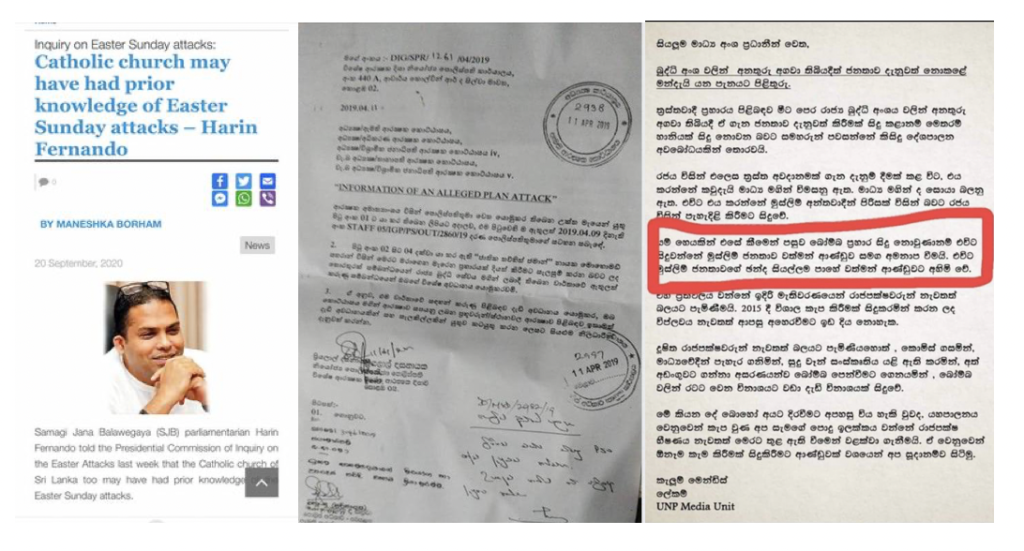
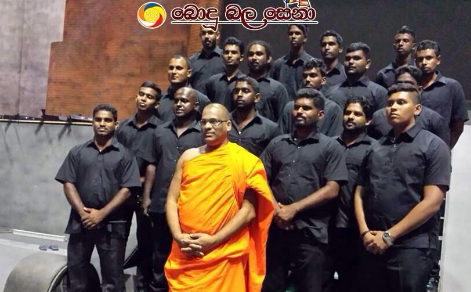

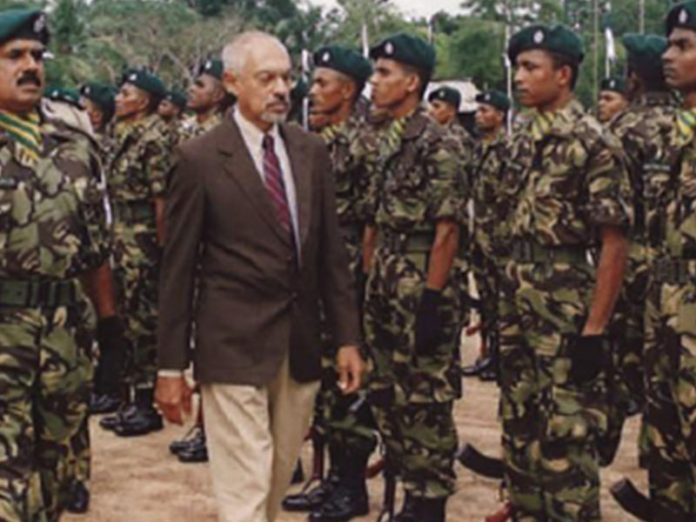
 President Dissanayake was careful not to rock the boat when appointing new Ministry Secretaries, notably retaining the Finance Secretary—a positive sign of his balanced and pragmatic approach. However, he has also appointed two honorary advisors, emphasising his commitment to public service and expert counsel over political gain.
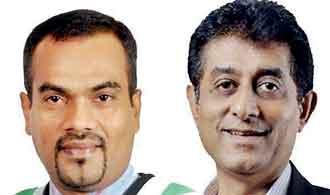 Duminda Hulangamuwa of the Ceylon Chamber of Commerce, (right) and Prof. Anil Fernando of the Sri Jayawardenapura University were appointed as Senior Advisors for Economic Affairs and Finance by President Dissanayake (File Photo)
  පසුගිය ජනාධිපතිවරණයේ දී ප්රධාන අපේක්ෂකයන් විසින් ඉදිරිපත් කළ ප්රතිපත්ති ප්රකාශ සියල්ලම සියලු පෝෂක අඩංගු එහෙත් නමක් දැමිය නොහැකි පානය කළ නොහැකි ‘සුප්’ එකක් බව දේශ හිතෛෂී ජාතික ව්යාපාරයේ මහ ලේකම් වෛද්ය වසන්ත බණ්ඩාර මහතා පවසයි.
 පොහොර සහනාධාරය ලෙස රු. 25,000ක මුදලක් ගොවීන්ගේ බැංකු ගිණුම් වලට බැරකළ ද එමගින් දුෂිත පොහොර වෙළදුන්ට සහ දූෂිත රාජ්ය නිලධාරීන් එය වාසියක් කරගන්නා බව පෙන්වා දෙමින් ජනාධිපති අනුර කුමාර දිසානායක මහතා වෙත ලිපියක් යොමුකර තිබේ.
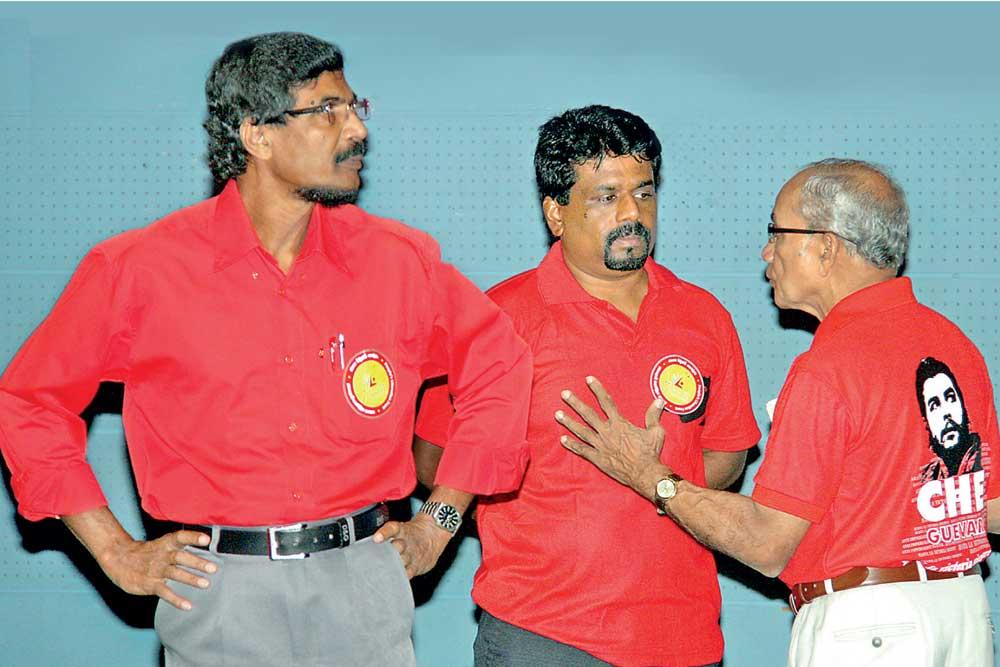
 Sri Lanka’s newly elected ninth Executive President Anura Kumara Dissanayake (AKD) continues to be the focus of this column. In the first part of this article published last week, the early years of Anura’s eventful life were delved into in some detail. In this week’s second part, AKD’s steady rise as a political leader within the Janatha Vimukthi Peramuna (JVP) will be related to some extent.