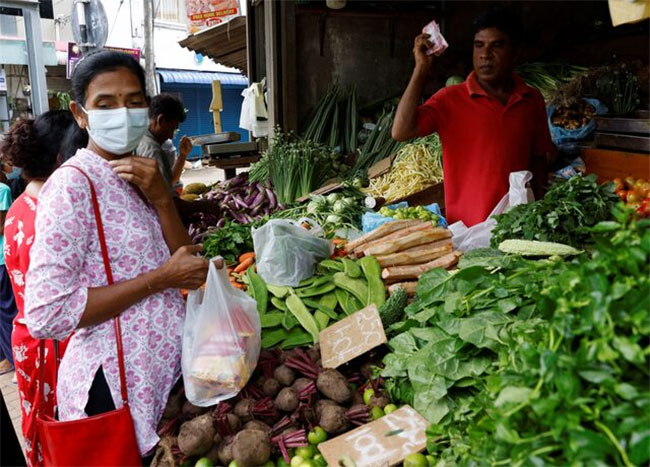
The government has decided an immediate write-off of all crop loans taken by farmers, in response to requests received from several farmer associations, the President’s Media Division (PMD) said.
Furthermore, it mentioned that the decision was reached with a view to providing financial relief and support to farmers.
US and Australian air forces practiced ‘hot pit’ bomber exercises southwest of Sri Lanka in this ocean called Indian recently – unreported by media in Sri Lanka. It was all part of ‘an overall US Bomber Task Force (BTF) Mission deployment to exhibit ‘joint force lethality… in the Indo-Pacific by demonstrating the US Air Force’s ability to operate anywhere in the world at any time’ (see ee Random Notes).
Add these old colonial practices to the evidence dribbling out that the IMF’s bitter prescriptions are aimed at creating further chaos in the country.
MP Wimal Weerawansa recently pointed out in Parliament, that it is useless to keep electing leaders, without dealing with the promoters and funders of ‘color revolutionaries’, who keep thwarting the people’s mandate, and keep destabilizing elected leaders, if they do not toe the white line: Sri Lanka, Pakistan, Bangladesh, Myanmar, Thailand, Indonesia (see ee Focus, CIA Front Preparing Color Revolution Using Elections in Indonesia). We will not point to Korea, Gaza, the Sudan or the Congo.
Dive no deeper then, than into that sunken unsinkable yacht in the Mediterranean. That once-luxurious yacht is giving up more secrets from its depths, quite revealing of the vested mathematics behind calculating Sri Lanka’s so-called debt. Add Sri Lanka-linked bankers, media, accounting firms, law firms and consultants, to the company owned by the drowned ‘tech wizard’, which ‘boasts a veritable closet of former operatives on the books: MI5, MI6, CIA, NSA, & FBI. One multimillion-pound investor, with a family long linked to the colonization of Sri Lanka and to the Peninsular & Oriental Steam Navigation Co (P&O), which still controls our oceanic shipping, is Alexander Arbuthnot, whose father is a former English war (defence) minister, and mother, the Westminster chief magistrate, ‘Lady’ Emma Arbuthnot, who ‘presided over part of the lengthily cruel & prolonged extradition proceedings of Julian Assange.’ (see ee Focus)
The links of spy agencies in the USA & England to the ‘financiers’ & ‘advisors’ who drowned and survived in that luxury yacht, expose their now-soggy fingers deep in ‘insider’ stock market manipulations. The practices of debt advisor Clifford Chance & Deloitte, the accounting firm responsible for selling off Sri Lanka’s national assets, offer insights into the – no doubt legal – practices of that world.
Meanwhile, there is still no word about, or name given, to the Sri Lankan crew member still being detained in Baltimore USA, following the crash of the Maersk-chartered ship into a bridge on March 26. Still no name or personality given to the Sri Lankan passengers or crew onboard ‘the English-flagged luxury yacht The Bayesian [which] capsized in a storm early Monday, August 19 off northern Sicily with 22 people aboard… The 12 passengers & 10 crew members were believed to have hailed from Canada, France, Ireland, Myanmar, New Zealand, Sri Lanka, England & the USA’ (see ee Focus).
*
• Politicsappears clearer in Sinhala: ‘Politics’ is desha + palana – the ruling of a country, and politicians, those who would rule the country. According to the capitalist mass media, politicians, those who rule Sri Lanka, are all corrupt. So if the politicians of the country don’t rule us, who should? The capitalist media? Artists? The unelected judiciary (who jump on the boards of private corporations at the first chance)? The armed forces, then? The multinational corporations (MNCs, larger than countries), and their subsidiaries, branch plants, whatever it is they call them now? Wish to be ruled by a former microfinancier & Nobel Prize-winning usurer? How about offshore rule? Indian National Security Advisor Ajith Doval dropped in and met with Ministers and Generals….(see ee Focus, Poliitical Officers)
The media use of surveys and polls in a supposedly democratic electoral process, is rather pernicious. The pollsters named in most news items admit to being ‘funded by the Neelan Tiruchelvam Trust, England’s National Institute for Health & Care Research (NIHR), The Asia Foundation in Sri Lanka, and others.’ The USA’s Asia Foundation is a notorious CIA front (see ee Focus, Political Economy).
Looking through the fog of fine words about diversity, and inclusion & equality, transparency, sustainability, etc, the USA, like their colonial predecessor England, clearly has no solution to ‘the continuing development of Sri Lanka’s underdevelopment’. The US is both working to unite the UNP & SJB, while putting pressure on both these merchant and usurers’ parties. They wish to weaken and strengthen certain tendencies, to especially contain ‘national feeling’, in all the parties. Likewise, they are also funding the JVP’s NPP, and promoting them in the media. This is meant to help stoke the JVP’s fantasies, as well as help to ‘whip’ certain sections of the UNP & SJB into uniting against that eternal specter of ‘Marxists’.
Imperialism still controls the media in Sri Lanka, in Sinhala, in Tamil, in English. As is evident in Bolivia, Venezuela, and the USA itself, it is the corporate media that influences or can cast doubt on elections, regardless of the voting.
All sides could be provoked to collude in unleashing or subjecting people to violence prior to any election, which would eventually help the current unelected President Ranil Wickremesinghe to stay in office under certain provisions of the Constitution. They are fattening chickens to feed monkeys, or fattening frogs for snakes. This is meant to exacerbate instability. An NPP government may not last for even 2 years, given the type of superficial criticisms – corruption, tax avoidance, etc – legal or not, which do not get to the root of the crisis. These usually unsubstantiated accusations could also be used by and against any opponent.
Neither will a UNP-SJB government last. The US has no plans to enrich or resell the country, since their main plan is to prevent any increasing relations with China. They would prefer to promote a Ukraine style-chaos rather than help resolve any of the longstanding economic underdevelopment after centuries of colonialism.
*
• Last week, ee reported on how ‘the colonial project created an international division of labour to ensure that the colonized would never achieve modern industrialization & development… The fetters placed on Sri Lanka’s fiscal & monetary sovereignty appear almost tailor made to perpetuate its underdevelopment & prevent modern industrialization’(Shiran Illanperuma).
In this ee Focus, Indian economistPrabhat Patnaik shows how Bangladesh entry into an IMF agreement has furthered economic disaster, meant to accelerate long-term chaos. More importantly, the IMF seeks to block the state’s ‘capacity to intervene’ so that it cannot ‘promote domestic industrialization’. They have no wish for countries to actually pay back supposed debts. To promote production, requires ‘some degree of protection of the home market. This protection is however disallowed by the IMF.’
Patnaik recalls how the World Bank & IMF after having hailed Bangladesh: as an economic ‘miracle’ just a few months ago, calling it ‘a success story of export-led growth’, are now actively pushing it into chaos. Wholly dependent on ‘garment exports’, and remittances from overseas workers, Bangladesh was hit by the ‘restrictions’ on such world trade by the pandemic. Bangladesh also depended on imported fuel, which saw spikes blamed on the NATO war on Russia. Then Bangladesh approached the International Monetary Fund (IMF)…. This sounds rather eerily familiar to our ears.
Patnaik concludes: ‘the transcendence of neoliberalism requires the mobilisation of people around an alternative economic strategy that gives a greater role to the state, focuses on the home market, and on national control over mineral & other natural resources.’ This is what ee has always advocated for Sri Lanka. However, ee still wonders what the term neoliberalism includes, and leaves out…
‘The Indians will not reap the fruits of the new elements
of society scattered among them by the British bourgeoisie,
till in Great Britain itself the new ruling classes shall have
been supplanted by the industrial proletariat, or till the
Hindoos themselves shall have grown strong enough
to throw off the English yoke altogether.’
Karl Marx, Manuscripts on the Polish Question (1863-64)
*
‘Neoliberalism is often associated with a set of economic
liberalization policies, including privatization, deregulation,
& reductions in government spending =100% IMF Proposals’
‘Often associated’ may be the key words here. This above definition came up during a social discussion of ‘neoliberalism’. But let’s see what neoliberalism & the IMF is not ‘associated’ with, especially in Sri Lanka? 1) Imperialism, 2) Anti-Marxism-Leninism (particularly anti-Stalinism). All of which amounts to anti-industrialization – to prevent the country from capturing the ‘commanding heights of the economy’ (Lenin).
Imperialism was taken out of fashion almost suddenly, in the white world (let say, after 1976). No self-promoting academic would want to use such words, especially at a time when the white world was absorbing Asian & African ‘scholars’ (US Vice-Presidential Candidate JD Vance’s wife & other ‘Green Card’ Indians etc, are the manufactures of an immigration category called B1?).
But in one shot the mighty eraser fogged out our major contradiction (500 years of contradiction at least – so now their calculations say: we owe them!) just as they were (expanding) launching their latest round of genocidal world wars (talk about real Keynesian – military – ‘welfare, and, Schumpeterian – military – ‘creative destruction’) to keep capitalism going.
Then, while taming their working classes (actually saying ‘goodbye’ to them) and smashing unions, they welcomed an amorphous supposedly leaderless autonomous ‘multitude’ – ara gollo, indeed!). All this while also assassinating and massacring modern leadership, they also made nationalism a bad word. Especially industrial nationalism, the yakada nationalism of steel.
After all, USSR leader Joseph Stalin, despite misrepresentations, gave leadership to gathering the late-19thC and early 20thC working genius around world into the USSR – expertise not only obtained from England & USA – to build an industrial state that can still defend itself – if it wishes to.
So, they made the type of industrialized nationalism, of the USSR, PRC, DPRK, Eastern Europe, etc, a bad word, from which we are not supposed to study and learn, especially about the forms of organization (cadre party, central committee, politbureau) and machinery required.
The word neoliberal is also so academic (using it, may make an academic, ‘edgy’ & ‘radical’ but retain their tenured career) and confusing (We doubt the word liberal was/is even used in daily (Sinhala) conversation. And also because few people even know what the 2-faced role of just ‘liberalism’ alone has been (the ‘freedom’ to own slaves). Neoliberal may mean even less but larger concentrated groups of slave owners. The original Rockefeller-funded economists who coined the word, also wished to call their attack, New Capitalism, and were clear this was about holding the rest of the world back.
So now ‘analysts’ go into great details on ‘neoliberal’ policies – but these policies (free trade, globalization) have been there all along. Colonialism has been a ‘private ‘enterprise of the English state to keep its ruling class happy!? Again, people’s understandings of what ‘socialism’, ‘imperialism’ and ‘communism’ means, have also been happily confused, especially by so-called well-funded ‘Westernized’ Marxists (see ee Focus, Distorting Political Economy in Sri Lanka)
Jaffna will be the second destination in Sri Lanka for IndiGo, after Colombo
Air links between Chennai and Jaffna, Sri Lanka, were strengthened on Sunday, September 1, with private airline IndiGo beginning a once daily turboprop ATR72 service (6E1177/6E1178). The former Air India subsidiary and current Government of India feeder airline, Alliance Air, also flies a daily service on the same route (9I101/9I102), with an ATR72, which it inaugurated on October 17, 2019. Jaffna will be the second destination in Sri Lanka for IndiGo, after Colombo.
An aviation source associated with the route launch said the passenger demographic for this service would be the Sri Lankan Tamil diaspora visiting India from the United Arab Emirates and using Chennai as a transit point. The airline is also looking to tap tourist interest in the ‘Ramayana circuit’, covering Jaffna, Trincomalee, Kandy, and Colombo. Trader traffic and medical tourism have potential too, given the liberal bilateral air services agreement between India and Sri Lanka, the source added.
Passengers could contact the airline’s general sales agent in Sri Lanka, Acorn Aviation for travel-related assistance, the source said. With Chennai emerging as a major hub for IndiGo for the South East Asian region, the airline is preparing to begin more and new flights to Singapore, Kuala Lumpur, Colombo, Penang, and Siem Reap, Cambodia.
Increased activity of Chinese research vessels and warships – specially when India is conducting military or space-related tests – stokes security and diplomatic worries
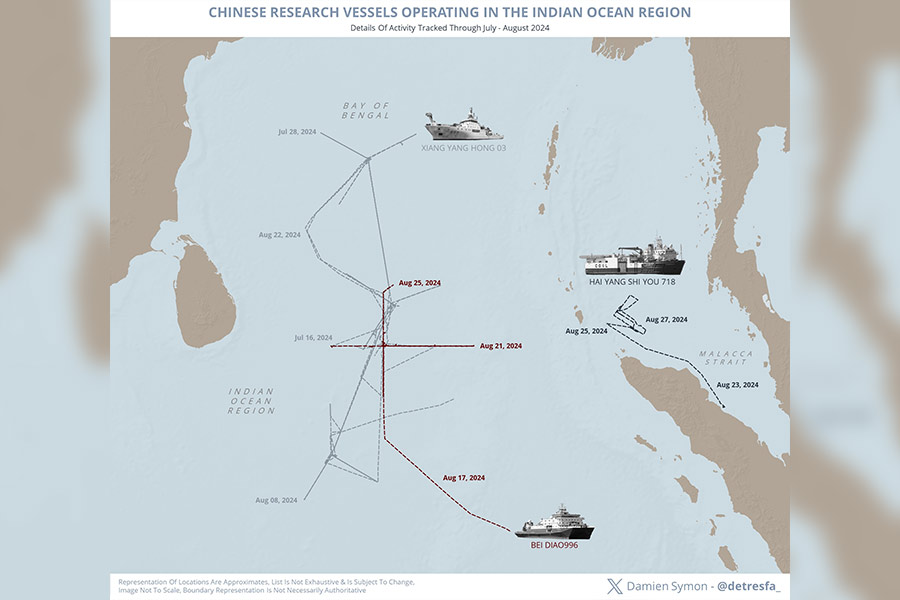
The Indian Ocean Region continues to witness the presence of Chinese research vessels with new units recently deployed, this graphic illustrates the paths taken during their current surveys.X/@detresfa_
The Chinese Navy is intensifying its presence in the waters surrounding India. Chinese research vessels have been active in the Bay of Bengal and the Indian Ocean and a mini-fleet of three warships have docked in Colombo on an official visit.
Throughout August, three Chinese survey ships have been prowling in the seas around the subcontinent with a notable pattern of increased activity when India is conducting military or space-related tests.
The heightened Chinese presence in Indian waters come as China and the Philippines exchanged charges at the weekend of deliberately ramming each other’s coast guard vessels near the Sabina Shoal. The disputed atoll is the newest flashpoint in a row between Beijing and Manila over territory in the South China Sea.
The Chinese survey ship Xiang Yong Hong 03 spent several weeks in the Bay of Bengal and Indian Ocean through July and early August. At one point, it was located 380 nautical miles from Chennai and 120 nautical miles from the area where India had announced it would be holding a sub-surface firing between July 27 and August 10.
Two other Chinese survey ships were also sailing in the Indian Ocean region during the same period. One was the Yuan Wang 7, a ship used for satellite and missile tracking. The other was the Zhong Shan Da Yue, commissioned in 2020 and described as China’s largest-ever oceanographic research and training vessel. The Zhong Shan Da Yue features a landing platform for drones and helicopters and has been referred to as a large mobile laboratory at sea”.
Earlier in June, the Yuan Wang 07 also entered the Indian Ocean region just three days before India put out a warning about a 415 km No-fly zone from Balasore in Odisha where India has an integrated missile test range.,
In February and March, the Xiang Yang Hong 3 was the centre of a three-way diplomatic spat between India, the Maldives and China. The ship made a port call at Male ‘for rotation of personnel and replenishment’. India had opposed the stopover and was hoping the Maldives government would deny the request.
Sri Lanka imposed a ban at the start of the year on Chinese research ships docking at its ports after strong lobbying by New Delhi and Washington which said the vessels might be spying. But under intense pressure from the Chinese, Sri Lanka is widely expected to lift the ban from next year. Cash-strapped Sri Lanka considers both India and China important partners in its task to restructure its external debt.
Globally, China’s naval activity is stirring concerns. Beijing has used the Chinese Navy as a key force to push aggressive claims against China’s neighbours. On Saturday, a Chinese coast guard ship collided with a Philippine coast ship at the Sabina Shoal.
China accused the Philippine ship of causing the collision. But a video of the incident clearly shows the Chinese ship was the aggressor. This was the latest of a series of midsea clashes between the two countries.
The US State Department condemned China for what it said was deliberately” colliding with a Philippine coast guard vessel, calling the incident the latest in a series of dangerous and escalatory actions” by Beijing.
Additionally on Saturday, a Chinese survey ship entered Japanese coastal waters, prompting a protest from Japan. It was the second incursion of its kind in less than a week.
In response to Chinese activities, the Indian Navy is closely monitoring all Chinese ships entering the Indian Ocean region. It tracks them and, in some cases, follows them at a discreet distance. When three Chinese warships – the He-Fei, Wuzhishan and Qillanshan – docked in Colombo last week, an Indian Navy vessel, the INS Mumbai, was berthed not far away in the port.
India has also stepped up its presence in the South China Sea. In May, the Indian Navy’s eastern fleet made a visit to the Philippines, Vietnam, Malaysia, Singapore and Brunei, reflecting India’s growing engagement in regional maritime activities.
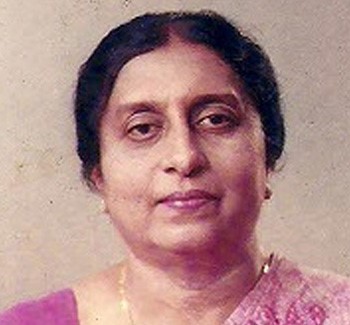
It is with deep sadness that the Royal Asiatic Society of Sri Lanka (RASSL) announces the death of its current President Dr. Malini Dias, who passed away on August 31. She was 81 years old.
Her funeral will be held on Monday, September 02, at the General Cemetery, Kanatte at 4.00 p.m.
She has served the RASSL with distinction in various capacities before being elected as the President in March 2021. She was an Archaeologist, specializing in Epigraphy. She served at the Department of Archaeology for a period of 35 years (1968 – 2004) ending as the Director of Epigraphy and Numismatics. She had her primary school education at Weragoda Vijayaba Vidyalaya, Southlands College (Galle), and Visakha Vidyalaya, Colombo. She obtained BA (oriental languages), University of Ceylon, (1967), MA (1985), Kelaniya University, Discipline- Sinhala language, and Doctor of Philosophy (Ph.D.) focused in Sinhalese Epigraphy from the School of Oriental and African Studies, U. of London.
Author of Epigraphical Notes. Author of Epigraphia Zeylanica Vol. VIII – Title – The growth of Buddhist monastic institutions in Sri Lanka from Brahmi inscriptions, Department of Archaeology, Sri Lanka, 2001
She has also held offices in various international institutions including the World Fellowship of Buddhists (WFB) where she has served as the Vice – President, and as Chairperson of two Standing Committees on Dharmaduta Activities, and the Publications, Publicity, Education, Culture & Art.
Royal Asiatic Society of Sri Lanka (RASSL)
……………………………………
Brief Resume
Royal Asiatic Society
President of the Royal Asiatic Society of Sri Lanka (since March 2021 to August 2024, until her death)
Served as the Vice President (2011-2017 and 2019-2021) and Joint Secretary (2009-2011)
Published a number of articles to the Society journal
Delivered several lectures
Date of Birth
Born 15 April 1943, Metiwala village, Ambalangoda District.
Education
Weragoda Vijayaba Vidyalaya, Southlands College Galle and Visakha Vidyalaya Colombo.
BA (1967), University of Ceylon
MA (1985), Kelaniya University, Discipline- Sinhala language
PhD (1989), School of Oriental and African Studies, University of London. (title of the thesis: the growth of Buddhist monastic institutions in Sri Lanka from Brahmi inscriptions)
Service at the Department of Archaeology
– joined 01.02.1968 as a Technical Assistant (epigraphy)
– Became the Director Epigraphy and Numismatics in 1999.
– Retired in 2003
– Advisor of the Department (2003-04) – a cabinet appointment
Profession
Professional Archaeologist
Subject (specific): Epigraphy
Publications:
Epigraphia Zeylanica Vol VIII (PhD Thesis)
Epigraphical Notes
Vallipuram Ranpatha (in Sinhala)
Eithihasika Badulla (in Sinhala)
Mahiyangana Rajamaha Viharaya (in Sinhala)
Sri Sankhapala Rajamaha Viharaya (in Sinhala)
A number of edited volumes, translations
A number of research articles and general articles
Served as
– a visiting lecturer, University of Kelaniya
– board member, Post-Graduate Institute of Archaeology
– a post-graduate supervisor for several universities
Attended several national and international conferences etc.
Organizational work
Fellow of the Sri Lanka Council of Archaeologists
Held several positions in the World Fellowship of Buddhists (Sri Lanka Chapter)
Vice – President of the WFB
Chairperson of the WFB Standing Committee on Dharmaduta Activities
Chairperson of the WFB Standing Committee the Publications, Publicity, Education, Culture & Art
Awards received:
Swarna Award (Ministry of National Heritage) 2014
Swarna Mudrika (Sri Lanka Council of Archaeologists) 2019
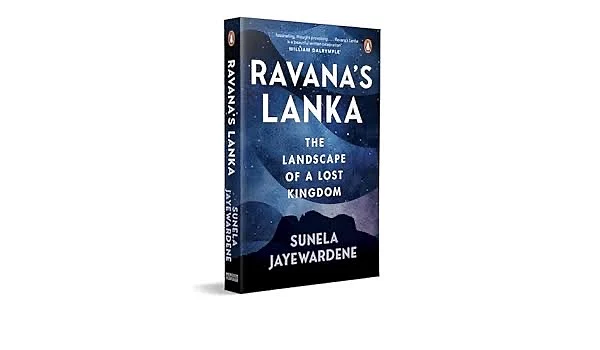
With ‘Ravana’s Lanka,’ Sunela Jayewardene transforms the mythical past of Sri Lanka into a tangible, vivid exploration of history and legend.
Ravana’s Lanka: The landscape of a lost kingdom Photo: Penguin Vintage
Book – Ravana’s Lanka: The landscape of a lost kingdom
Author – Sunela Jayewardene
Publisher – Penguin Vintage
INR 499
Sunela Jayewardene, celebrated as Sri Lanka’s foremost environmental architect, embarked on a journey through the heart of her homeland. She immersed herself in the narratives from the oral traditions, delving into Sri Lanka’s folklore and navigating the intricate web of race and religion that was woven over time. With these threads, she meticulously wove together a narrative of a long-forgotten landscape, the second in her Lanka series.
The tale of the kingdom once ruled by Ravana lies draped over the island consigned to mythology through the pages of the Ramayana yet the contours of the ancient land are still to be found lingering in the terrain which Jayawardene unearthed with the help of archaeologist friends. It is the mix of the myth and the real that makes Ravana’s Lanka so intriguing to those accustomed to a ten-headed demon killed by a magic bow.
Jaywardene’s book begins on a very down to earth note with the geological shifts that resulted in the creation of Lanka and the different migrant peoples that came with the shifts, hunter gatherers and the like. There are tales of the mask makers of Sinhala who were descended from the Nagas, another early dynasty and who still exist to this day, creating masks as symbols of protest. Jayawardene also traces an ecologically sensitive artistic super civilisation that built spas which she is certain Conde Nast would have raved over these days.
King Ravana of Lanka, demonised in the annals of history, had his reign and that of his powerful ancestors, the Mayuranga, obscured and veiled in myth. Legend has it that their kingdom once stretched far beyond Lanka’s shores, conquering lands across the seas—a vast empire the likes of which the island would never see again. Jayewardene takes the narrative beyond the Ramayana to the Yaksas and Rakusas who ruled Lanka until they were conquered by the Indian Buddhist Prince Vijaya with the help of a treacherous Yaksa princess. Vijaya brought Mahayana Buddhism to Lanka and this was apparently the first time Buddhism came to the island, a fact that Jayawardene debunks through archaeological evidence.
Jayewardene puts her architectural skills to archaeological use as she tracks Ravana’s history down various mountain trails with the threats of maneating leopards and marauding elephants to be tackled. While Ram gets not much mention she points out an inscription in a cave by Ravana’s daughter as proof that the king of the Mayurangas existed. She also tells the story of his banishing his baby daughter to King Janak’s fields so that she would not destroy Lanka which like all such predictions came true since he later heard that she was unhappy in her forest hut and kidnapped her. However again, she is unsure which story to follow in the end since the fact that Ravana never touched Sita was apparent and the fact that he would kidnap a woman for lust and then let her be seems unlikely.
Ravana has never shone in the Ramayana context – a dark demon according to the way the Aryans saw the original inhabitants of Lanka – though the same was true for the Indian subcontinent too. However, he created the first musical instrument to sing the first raga of praise to Lord Shiva whose devotee he was. She also mentions the aircraft invention, the Pushpak Rath merging magic and history. Ravana also apparently visited the Buddha after he materialised on earth. Though Theraveda Buddhism was in Lanka before Mahayana Buddhism and Ravana’s brother Kuber, whom some called the god of wealth, was shown as the Laughing Buddha, a form that still exists across South East Asia – this fluidity of eras makes the Ravana Buddha encounter feasible.
The history that she narrates veers between myth and reality crossing the lines between the two on occasion. This is her second book on the past of Lanka and the vast gap that exists between documented history and oral tradition. One might say that Ram’s character is shadowy – she locates him between the coming of the Buddha and Prince Vijaya. Armed with a nuclear astra, his bow, guided by Ravana’s treacherous younger brother, he shoots and kills Ravana in the heart of his palace in the Dumbara Kanduvetiya or Mist Laden Mountains, from an incredible distance away. Jayawardene’s focus remains Ravana, the once and future king whose role was transformed by the conquerors who overran the kingdom.
National People’s Power (NPP) presidential candidate Anura Kumara Dissanayake has stated that a relief package will be provided under a NPP government until the country’s economy stabilizes.
He has made these remarks while addressing a rally held in Kottawa.
A large number of citizens in our country incur high expenses for transportation needs. Those who buy a car can buy a car. Those who buy a bike can buy a bike”, he said.
However, he said the NPP government will mainly focus on strengthening the public transport service. We will remove VAT on food through the very first budget proposal”, said Anura Kumara.
The overall rate of inflation as measured by the Colombo Consumers Price Index (CCPI) on a Y-on-Y basis has decreased to 0.5% in August 2024 compared to the 2.4% calculated for the month of July 2024, according to the latest data released by Sri Lanka’s Department of Census and Statistics.
The CCPI for all items for the month of August 2024 was 191.1 and it records a decrease of 3.6 index points compared to July 2024, for which the index was 194.7.
The overall rate of inflation as measured by CCPI on a Y-on-Y basis is 0.5% in August 2024, the report said.
The CCPI for all items for the month of August 2024 was 191.1 and it records a decrease of 3.6 index points or 1.85 per cent compared to the month of July 2024 for which the index was 194.7. This represents a decrease in expenditure value by Rs 3304.55 in the Market Basket”.
The month-on-month change in CCPI from July 2024 to August 2024 was contributed by a decrease in Food items by 0.64% and a decrease in Non-Food items by 1.21% respectively, it said.
The overall rate of inflation as measured by the CCPI on a Y-on-Y basis is 0.5% in August 2024 and Y-on-Y inflation calculated for the month of July 2024 was 2.4%.
The Y-on-Y inflation of the Food Group decreased to 0.8% in August 2024 from 1.5% in July 2024 and the Y-on-Y inflation of Non-Food Group decreased to 0.4% in August 2024 from 2.8% in July 2024.
For the month of August 2024, on a Y-on-Y basis, the contribution to inflation by food commodities was 0.25%.
The CCPI is an economic indicator constructed to measure inflation which is defined as a percentage change in CCPI over the year. There are two measures of inflation in general use. One measure is Year-on-year base or Point to Point inflation (The percentage change in the CPI during the last 12 months). The other measure is Moving Average Inflation (The percentage difference between the average Price Index of the last 12 months & the average Price Index of the previous 12 months).
Sri Lanka’s economy relies heavily on various sectors to generate foreign exchange, with key earners including workers’ remittances, tourism, the tea industry, and the apparel and textile industry. Notably, remittances stand out as the sole category with no import content, making it a significant contributor to the country’s foreign income. In contrast, sectors like tourism and the apparel industry require substantial foreign expenditure for imports such as food and beverage, transportation facilities, and materials needed to produce and export their goods.
However, despite the import expenses associated with sectors like tourism and apparel, the foreign income generated from remittances remains a crucial source of net foreign income for the country. This distinction underscores the importance of remittances in bolstering Sri Lanka’s economic stability and resilience.
Year
Amount in US$ Billions
Sri Lanka
Bangladesh
Vietnam
Pakistan
2000
1.15
1.97
1.34
1.07
2001
1.17
2.1
1.1
1.46
2002
1.3
2.86
1.77
3.55
2003
1.42
3.17
2.1
3.96
2004
1.57
3.58
2.31
3.94
2005
1.98
4.31
3.15
4.28
2006
2.17
5.43
3.8
5.12
2007
2.51
6.56
6.18
6
2008
2.92
8.94
6.8
7.04
2009
3.34
10.52
6.02
8.72
2010
4.12
10.85
7.57
9.69
2011
5.15
12.07
8.33
12.26
2012
6
14.12
7.91
14.01
2013
6.42
13.87
8.43
14.63
2014
7.04
14.99
9.79
17.24
2015
7
15.3
7.91
19.31
2016
7.26
13.57
8.41
19.82
2017
7.19
13.5
9.24
19.86
2018
7.04
15.57
10.01
21.19
2019
6.75
18.36
10.7
22.25
2020
7.14
21.75
10.53
26.09
2021
5.52
22.21
12.71
31.31
2022
3.82
21.5
13.2
30.18
2023
5.4
23.00
14.00
26.56
The remittance statistics extracted from the World Bank site for the period 2000 to 2023 are provided in the attached table, comparing the remittance income of Sri Lanka, Bangladesh, Vietnam, and Pakistan. Notably, Sri Lanka was the only country experiencing a downward trajectory from 2020 onwards. This prompts the question: was this decline due to the pandemic in 2020?
While the pandemic likely played a role, its impact varied among the countries. Sri Lanka’s decline from 2020 might have been exacerbated by unique factors. Although Pakistan and Bangladesh also experienced declines from 2021 onwards, the severity of their downturns may differ due to various economic factors.
Between 2015 and 2020, Sri Lanka earned approximately US $7 billion in remittances, a sum significant enough to offset the country’s trade deficit during that period. Had Sri Lanka maintained this level of income in 2021 and 2023, it could have avoided financial distress (Bankruptcy). The absence of US $3 billion in remittances exacerbated the crisis.
Several factors may have contributed to this loss:
Pandemic Impact: The pandemic likely disrupted global remittance flows, affecting Sri Lanka disproportionately.
Currency Devaluation: Devaluation of the Sri Lankan rupee could have reduced the value of remittances, impacting overall income.
Management Issues: Poor governance or mismanagement may have hindered efforts to maintain remittance inflows.
Black Market Economy: The promotion of black market exchanges by powerful politicians during 2021 and 2022 could have diverted remittance flows away from official channels.
In summary, if Sri Lanka can regain its previous remittance income of US $7 billion or more annually, it has the potential to overcome its current financial crisis without external assistance. However, addressing the underlying factors contributing to the decline in remittances is essential for sustainable economic recovery.
Election time is a bonanza time for the hearing pleasure of the public. Besides the carnival atmosphere that prevails, with one side trying to outdo others with crowd numbers, and extravaganza of the nature the country could hardly afford, unless funding comes from sources who have their own expectations in return, election promises are dished out to resounding cheers of the crowds at political meetings.
Past post-election experience demonstrates that most election promises made from political platforms are not kept or watered down ones are presented. Election manifestos face the same fate. In the current presidential election, the NPP has at least gone a step further and rightly termed their manifesto as a social and economic contract between them and the public. However, this contract is not an enforceable contract and only a statement of intent. Not much different to political promises made at political meetings or in the media. Ideally and if the NPP wished to be different, they could have stated that if their candidate were to win the election, they will present their manifesto as a Parliamentary bill for approval by the Parliament that will be elected at the next general election. If passed by the Parliament, it would have had the legal status that would enable any member of the public to seek legal redress if any item in the manifesto was not actioned by a government.
Other parties including the SJB, the SLPP and Independent candidate incumbent President Ranil Wickremasinghe are expected to release their formal manifestos. It is unlikely they will be any different to other manifestos of the past or present as none will give the public an idea of how promises will be funded without affecting other expenditure lines or raising new taxes or increasing current taxes.
This leads to the question of accountability, responsibility and duty of any Presidential aspirant to desist from making promises that are not tenable, and affordable and which simply cannot be kept based on the present economic situation of the country. Delivering such promises could have very adverse consequences for the economy of the country as no specific revenue raising measures have been included in the manifestos. The public needs to know how some of these promises are to be kept and how funds would be forthcoming to keep such promises without impacting on the economy of the country.
It is here that an independent economic entity becomes the only avenue to cost promises made by all aspirants and present their findings to the public well before the election date. A serious discussion could then be had in the country about the feasibility of the promises, affordability and the role they will play in setting the stage for a better economic future for the country.
The country has withstood very tough times and thanks to the financial discipline introduced as a condition for IMF support, and the debt restructuring agreed with them, Sri Lanka has a four-year window of opportunity to work itself towards a more financially disciplined and stable country. This benefit is there for anyone who becomes the next President. If the incumbent President wins the election, he could build on what he has achieved so far. To the credit of President Wickremasinghe, he has always maintained that the country is not out of the woods yet, although it is not lost in the woods anymore as it was two years ago not knowing what to do and which direction to go. When others failed to navigate the leaking boat, he took over and guided it to relative safety.
The election will provide opportunities for other aspirants to explain what they will do if elected, and how they will find the resources to implement their promises. The culture of Sri Lankan elections has always been about promises, raising the hopes of voters but delivering little of what was promised. A promise was made some years ago that rice will be brought even from the Moon when a shortage of rice was an issue in Sri Lanka.
An independent economic entity to undertake the costing of election promises and to report on the impact on the country’s economic situation has never been more important than now as Sri Lanka has just managed to emerge from bankruptcy and on a path towards greater economic stability.
Its foreign reserves, pitiful in comparison to many other countries in the region, is healthier than before although it is not even 6% of its GDP. Tourism is flourishing, exports are increasing, foreign investment is increasing although not to the extent expected and its rupee income is increasing. These achievements are meagre in comparison to what is needed to provide a platform of stability and opportunities for growth. Any potential winning aspirant should demonstrate to the people how they will strengthen this platform and work on the opportunities that are available at least for the next four years to do so.
Excessive debt, both foreign and local and the precedent of bankruptcy experienced by Sri Lanka just two years ago is akin to a Sword of Damocles hanging over Sri Lanka. Paraphrasing what it conveys, it could be said that it is a real threat of a future cut in funding to Sri Lanka unless the country manages its economy well and builds up its own local and foreign reserves. This cannot be done by making populist election promises that will adversely impact on the meagre resources of the country. Economic priorities should be investments in areas that will increase the country’s GDP, reduce its local and foreign debt, increase its local and foreign earnings and reserves while providing relief to those genuinely in hardship should be at the top of priorities of any Presidential aspirant. While the incumbent President Ranil Wickremasinghe stresses these priorities and has often invited others to formulate an economic plan together for the sake of the country, other aspirants have, in the main, offered populist promises that are not linked to the essential economic priorities of the country.
As per the Quarterly Debt Bulletin (2024 First Quarter), Ministry of Finance, Economic Stabilization and National Policies Sri Lanka (https://www.treasury.gov.lk/api/file/1f884c2c-71db-4058-9b99-a9cb7f0690b7), the debt summary as at March 2024 as shown indicates a domestic debt that comprises 57% of the total debt and an external debt that is 37% of the total government debt of USD 100.184 Billion. The Gross Domestic Product (GDP) in Sri Lanka was 84.36 billion US dollars in 2023, according to official data from the World Bank. Trading Economics says it is expected to reach 87.14 USD Billion by the end of 2024. However, based on the 2023 GDP, the country’s total government debt reported as US 100.184 billion translates to a Debt to GDP ratio of nearly 120% of its GDP, meaning that the country still owed 20% more than its worth.
The 2023 fiscal numbers, recently released through the Central Bank of Sri Lanka’s Annual Economic Review, reveal that the Government of Sri Lanka’s total expenditure for 2023 was LKR 5,357 billion (USD 17.83 Billion) and that a significant portion of this expenditure, amounting to LKR 2,456 billion (43%) (USD 8.1 billion), was spent on interest payments for existing government debt. This was followed by transfer payments at LKR 1,005 billion and salaries and wages at LKR 939 billion.
The government financed 57% of its expenditure through revenue sources, primarily taxes, which amounted to LKR 3,017 billion leaving an income deficit of 43% (LKR 2,340 Billion). The main revenue contributors were taxes on domestic goods and services (mainly VAT and excise duties) totalling LKR 1,399 billion, and taxes on income and profit (mainly corporate and personal income taxes) totalling LKR 911 billion.
The remaining 43% of the government expenditure was financed through borrowings, amounting to LKR 2,282 billion. Notably, the government borrowings included borrowings for its interest payments for the year, which totalled LKR 2,456 billion. This additional borrowing to cover the budget deficit increased the total amount of government debt, ultimately raising the interest bill further.
The government has increased its revenue in 2023, amounting to 10.2 percent of the nation’s gross domestic product (GDP). This was an increase from 2022, when the government revenue in Sri Lanka amounted to 8.4 percent of the country’s GDP. This no doubt is a significant achievement.
The point here is that election promises must consider the debt analysis carried out by the Central Bank as noted earlier, and the projected revenue shortfall indicated by research carried out by Verité., and no doubt by others as well. As noted by the Central Bank, if 43% of revenue in 2023 had to be used to settle debt repayments, and if the projected revenue for 2024 drops as indicated by Verité, Sri Lanka is bound to borrow more to repay existing debt plus additional debt arising from some of the unrealistic, unaffordable election promises, leaving less money to fund existing expenditure and additional expenditure accruing from such election promises. The debt cycle will continue and generations to come will pay for this shortsightedness of their elders.
Election manifestos therefore should be more realistic, accountable and affordable. It should become a social contract by law, through an Act passed in Parliament. Such an Act should provide for the establishment of an independent body to cost election promises, monitor their implementation and submit periodic reports to the Parliament. The public which is entering into a contract with a victorious President and government, should then be able to exercise their right to accountability through the courts if in their opinion the President and the government have violated the contract.
Milinda Moragoda presented a copy of the Pathfinder Foundation’s Study Group Report on India-Sri Lanka Physical Connectivity to Ajit Kumar Doval, National Security Advisor to the Prime Minister of India yesterday (29 August) Doval is in Colombo on an official visit.
The Study Group report which was recently launched, provides a comprehensive blueprint for physical connectivity in the sectors of road, rail, electricity and petroleum. The ultimate goal of this initiative is to increase Sri Lanka’s annual economic growth rate from 3 to 6% through economic integration between the two countries.
Photo: Milinda Moragoda presenting a copy of the Pathfinder Foundation’s Study Group Report on India-Sri Lanka Physical Connectivity to Indian National Security Advisor Ajit Kumar Doval
Indian National Security Advisor Ajit Doval said there is immense potential for India and Sri Lanka to further strengthen economic cooperation and it is for mutual benefit considering the aspect of complementarity in bilateral ties.
He said this when he called on Prime Minister Dinesh Gunwardena at the Prime minister’s Office in Colombo today (August 29). Mr Doval said India wanted to further expand cooperation with Sri Lanka and sought the Prime Minister’s views on priority requirements.
The Prime Minister said the energy sector is one area and thanked India for supporting the large scale and small scale alternative energy projects. He said that the government has taken steps to amend the Ceylon Electricity Board regulations to facilitate private sector participation in electricity generation and distribution and Indian investments could be increased in solar and wind power projects.
Mr Doval said in the long run Sri Lanka could generate more power than its domestic requirement and sell excess power to India and gain huge financial benefits. He pointed out that Bhutan is selling large amount of hydro power generated electricity to India and it is the largest revenue of that country.
The Prime Minister said Sri Lanka’s theravada economic policy is based from the economic practices in India 25 centuries ago during the time of Gauthama Buddha and it would be complementary for economic growth.
He thanked India for the proving training for armed forces members and the public servants to enhance their skills and efficiency.
The National Security Advisor led a high-level delegation comprising High Commissioner Santosh Jha , Additional Secretary Puneet Agrawal and senior officials Akshay Joshi, Gaurav Aluwhalia and Teja Chandan.
Secretary to the Prime Minister, Anura Dissanayake, Additional Secretary Harsha Wijewardene and Advisor Sugeeswara Senadhira also took part in the discussion.Prime Minister’s Media Division


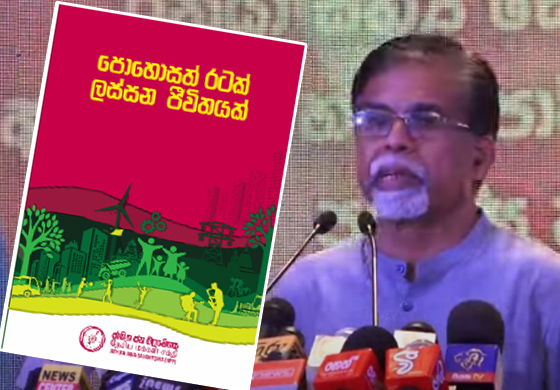 ජාතික ජනබලවේගයේ ප්රතිපත්ති ප්රකාශයේ 230 වෙනි පිටුවේ සත්ය සෙවීමේ කොමිසම තවත් බලගන්වා ක්රියාත්මක කරන බව සඳහන් කර ඇති බවද ඔවුන් එසේ පවසන්නේ කෙසේදැයි සිතාගත නොහැකි බවද දේශහිතෛෂී ජාතික ව්යාපාරයේ මහ ලේකම් වෛද්ය වසන්ත බණ්ඩාර මහතා පවසයි.
 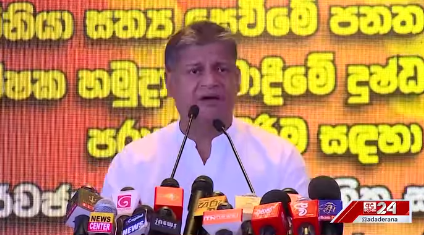 සත්ය සෙවීමේ කොමිසම පිහිටුවීමට ඔන්න මෙන්න කියා තිබිය දී ජනාධිපති අපේක්ෂකයක් වීමට තමන්ට ලැබීම ජාතියෙන් තමන්ට හිමිවූ වගකීමක් බව සර්වජන බලය ජනාධිපති අපේක්ෂක මව්බිම ජනතා පක්ෂයේ නායක දිලිත් ජයවීර මහතා පවසයි.