Auditory Hallucinations in Schizophrenia

December 3rd, 2023

 Dr. MUPK Peris / Dr. Ruwan M Jayatunge 

People with schizophrenia can experience auditory perceptions without external stimuli or for any other rational reasons to explain such an experience. These perceptions known as auditory hallucinations are unintentional and intrusive. For the patients, these sensory perceptions are often compelling and experienced in quality of true perceptions (Patricia Casey et al 2019). These voices are internally generated speech perceptions (Hugdahl et al., 2008) and generally cause distress which in turn may affect a patient’s functionality.

Typically, 70% of individuals with schizophrenia experience Auditory hallucinations (a plethora of sounds) (Sartorius et al., 1986) and it has been considered a part of the positive symptoms of schizophrenia. Auditory hallucinations result from spontaneous activation of the auditory network and can be described in terms of parameters of loudness, pitch, and clarity.

Auditory hallucinations are not specific or unique to schizophrenia. They are also found in normal healthy individuals and also in patients with borderline personality disorder, post-traumatic stress disorder (PTSD), hearing loss, sleep disorders, seizure disorders, and brain lesions to name a few.  However, Schizophrenia auditory hallucinations can be identified with Comorbid negative symptoms of schizophrenia spectrum disorder and also by the characteristics of the auditory hallucinations themselves.

Waters and team (2006) suggest that auditory hallucinations are auditory representations derived from the unintentional activation of memories and other irrelevant current mental associations. Lennox and team (200) indicate that auditory hallucination reflects abnormal activation of normal auditory pathways. McGuire   Shah and Murray (1993) observed increased blood flow in Broca’s area during auditory hallucinations in schizophrenia. Auditory hallucinations are associated with gray matter volume (GMV) reductions in the superior temporal gyrus (Allen et al., 2012).

 Patients experience auditory hallucinations and auditory perceptual illusions during periods of high cognitive load or stress and on some occasions, hallucinations command the patient to hurt himself or others known as command hallucinations leading to dangerous behaviour in such patients J Junginger 1995. They have deficits in emotional prosodic processing (Shea et al., 2007).  According to Linn (1977), hallucinations appear to be related to the schizophrenic’s sense of society’s disparagement of him.

Auditory hallucinations aka voice-hearing experiences are often shaped by local culture. Luhrmann (2011) proposes that hallucinations are shaped both by culture and particularly by local theories of mind and by practices of mental cultivation. Hallucinations occur as phenomena that arise from the interaction between biological, psychological, social, and cultural factors (Laroi et al., 2014). Some researchers believe that auditory hallucinations conform to cultural expectations and that culture forms the content of auditory hallucinations.

Auditory hallucinations in schizophrenia can vary. A 38-year-old male diagnosed with Schizophrenia used to hear first-person auditory illusions regularly. He heard his own ideas, and thoughts spoken out loud to him. Another 18-year-old young patient heard second-person auditory hallucinations. He heard an anonymous female voice constantly talking directly to him giving commands. A woman in her mid-forties who was a known Schizophrenia patient used to hear critical voices addressing her by her name or in reference to her   (third-person auditory hallucinations) always telling hideous things about her.  As described by the patient she was hearing several voices referring to her in the third person. These voices were giving a running commentary making her extremely distressed.  

 The patients react in different ways to the auditory hallucinations.  Most of them experience anxiety and panic feelings with entrapment while hearing voices and may continue to talk as a normal dialogue which others interpret as self-talking or muttering to themselves. Some experience fear and humiliation and may end up causing harm to themselves or others. Some patients challenge the voices with shouting and swearing. Some give up and show appeasement and may use earplugs of anything to cover their ears ( loudly playing headphones). Self-medication and alcohol and drug abuse are also common among patients who want to suppress their auditory hallucinations.

The first treatment option for hallucinations in schizophrenia is antipsychotic medication (Sommer et al., 2012).  Behavioral and coping-focused interventions can be used as an adjunctive therapy. Psychological therapies tend to foster healing, recovery, and personal growth (Pandarakalam, 2016). Recent developments include the application of acceptance- and mindfulness-based approaches (Thomas et al., 2014).  Furthermore, Hallucination-focused integrative treatment (HIT) can be recommended to treat auditory hallucinations, along with anti-psychotics. HIT seems to be an effective treatment strategy with long-lasting effects for treatment-refractory voice-hearing patients (Jenner et al.,2006). Pharmacological and psychological treatments are essential for reducing distress and risk of violence in patients.   

Dr. MUPK Peris 

Dr. MUPK Peris obtained his basic medical degree MBBS from the Faculty of Medicine Colombo Sri Lanka in 1982. Following completion of the Postgraduate training for specialization in Psychiatry, he obtained MD(Psych) in 1992 with Board certification as a specialist in Psychiatry. He further completed the training in Psychiatry at the Oxford Rotation in the UK in 1993 and got the membership of the Royal College of Psychiatrists UK in 1995. Dr Peris subsequently worked as a Consultant Psychiatrist at Whakatane Hospital New Zealand, and took up the post of senior Lecturer in Psychiatry at the University of Kelaniya Sri Lanka and also discharged duties as the honorary consultant Psychiatrist at the North Colombo Teaching Hospital Ragama Sri Lanka from Feb 2002 till Sept 2023 when he retired.

References

Allen P, Modinos G, Hubl D, Shields G, Cachia A, Jardri R, Thomas P, Woodward T, Shotbolt P, Plaze M, Hoffman R. Neuroimaging auditory hallucinations in schizophrenia: from neuroanatomy to neurochemistry and beyond. Schizophr Bull. 2012 Jun;38(4):695-703. doi: 10.1093/schbul/sbs066. Epub 2012 Apr 25. PMID: 22535906; PMCID: PMC3406523.

Casey, P., Kelly, B.   (2019). Fish’s Clinical Psychopathology: Signs and Symptoms in Psychiatry 5th Edition.

Hugdahl K, Løberg EM, Specht K, Steen VM, van Wageningen H, Jørgensen HA. Auditory hallucinations in schizophrenia: the role of cognitive, brain structural and genetic disturbances in the left temporal lobe. Front Hum Neurosci. 2008 Mar 28;1:6. doi: 10.3389/neuro.09.006.2007. PMID: 18958220; PMCID: PMC2525988.

Jenner JA, Nienhuis FJ, van de Willige G, Wiersma D. “Hitting” voices of schizophrenia patients may lastingly reduce persistent auditory hallucinations and their burden: 18-month outcome of a randomized controlled trial. Can J Psychiatry. 2006 Mar;51(3):169-77. doi: 10.1177/070674370605100307. PMID: 16618008.

Junginger J. Command hallucinations and the prediction of dangerousness. Psychiatr Serv. 1995 Sep;46(9):911-4. doi: 10.1176/ps.46.9.911. PMID: 7583501.

Laroi, F., Luhrmann, T. M., Bell, V., Christian, W. A., Jr., Deshpande, S., Fernyhough, C. et al. (2014) Culture and Hallucinations: Overview and Future Directions. Schizophrenia Bulletin, 40 Suppl 4, S213–S220. 

Lennox BR, Park SB, Medley I, Morris PG, Jones PB. The functional anatomy of auditory hallucinations in schizophrenia. Psychiatry Res. 2000 Nov 20;100(1):13-20. doi: 10.1016/s0925-4927(00)00068-8. PMID: 11090721.

Linn EL. Verbal auditory hallucinations: mind, self, and society. J Nerv Ment Dis. 1977 Jan;164(1):8-17. doi: 10.1097/00005053-197701000-00003. PMID: 318677.

Luhrmann, T. M. (2011) Hallucinations and Sensory Overrides. Annual Review of Anthropology, 40, 71–85.

McGuire PK, Shah GM, Murray RM. Increased blood flow in Broca’s area during auditory hallucinations in schizophrenia. Lancet. 1993 Sep 18;342(8873):703-6. doi: 10.1016/0140-6736(93)91707-s. PMID: 8103821.

Pandarakalam JP. Pharmacological and non-pharmacological interventions for persistent auditory hallucinations in schizophrenia. BJMP. 2016;9:a914.

 Sartorius N, Jablensky A, Korten A, Emberg G, Anker M, Cooper JE, et al. Early manifestations and first contact incidence of schizophrenia in different cultures. Psychol Med. 1986;16:909–28.

Shea TL, Sergejew AA, Burnham D, Jones C, Rossell SL, Copolov DL, Egan GF. Emotional prosodic processing in auditory hallucinations. Schizophr Res. 2007 Feb;90(1-3):214-20. doi: 10.1016/j.schres.2006.09.021. Epub 2006 Nov 14. PMID: 17107773.

Sommer IE, Slotema CW, Daskalakis ZJ, Derks EM, Blom JD, van der Gaag M. The treatment of hallucinations in schizophrenia spectrum disorders. Schizophr Bull. 2012 Jun;38(4):704-14. doi: 10.1093/schbul/sbs034. Epub 2012 Feb 24. PMID: 22368234; PMCID: PMC3577047.

Thomas N, Hayward M, Peters E, van der Gaag M, Bentall RP, Jenner J, Strauss C, Sommer IE, Johns LC, Varese F, García-Montes JM, Waters F, Dodgson G, McCarthy-Jones S. Psychological therapies for auditory hallucinations (voices): current status and key directions for future research. Schizophr Bull. 2014 Jul;40 Suppl 4(Suppl 4):S202-12. doi: 10.1093/schbul/sbu037. PMID: 24936081; PMCID: PMC4141318.

Waters FA, Badcock JC, Michie PT, Maybery MT. Auditory hallucinations in schizophrenia: intrusive thoughts and forgotten memories. Cogn Neuropsychiatry. 2006 Jan;11(1):65-83. doi: 10.1080/13546800444000191. PMID: 16537234.

USA Wants Legal Right to Overthrow Leaders & Steal Resources in Sri Lanka

December 3rd, 2023

e-Con e-News

Before you study the economics, study the economists!

e-Con e-News 25 November – 02 December 2023

How many people know foreign courts are about to grab jurisdiction over Sri Lanka!? We often wonder why the LTTE & its footstools (TNA, etc.), dedicated as they are to a separate ‘independent’ state, would demand Sri Lanka submit to international (read: white) courts, and UN Committees hijacked by private corporations? And why are our economists so dedicated to foreign investment & exports?

     It turns out that we have been (1948, notwithstanding) subject to England’s and even India’s courts! And now, taking advantage of the hallucinatory season of bacchanal, Parliament is set to pass a new law, which will also give other foreign courts (especially in the US & for their multinational corporations, MNCs) the right to enforce their foreign judgments on Sri Lanka.

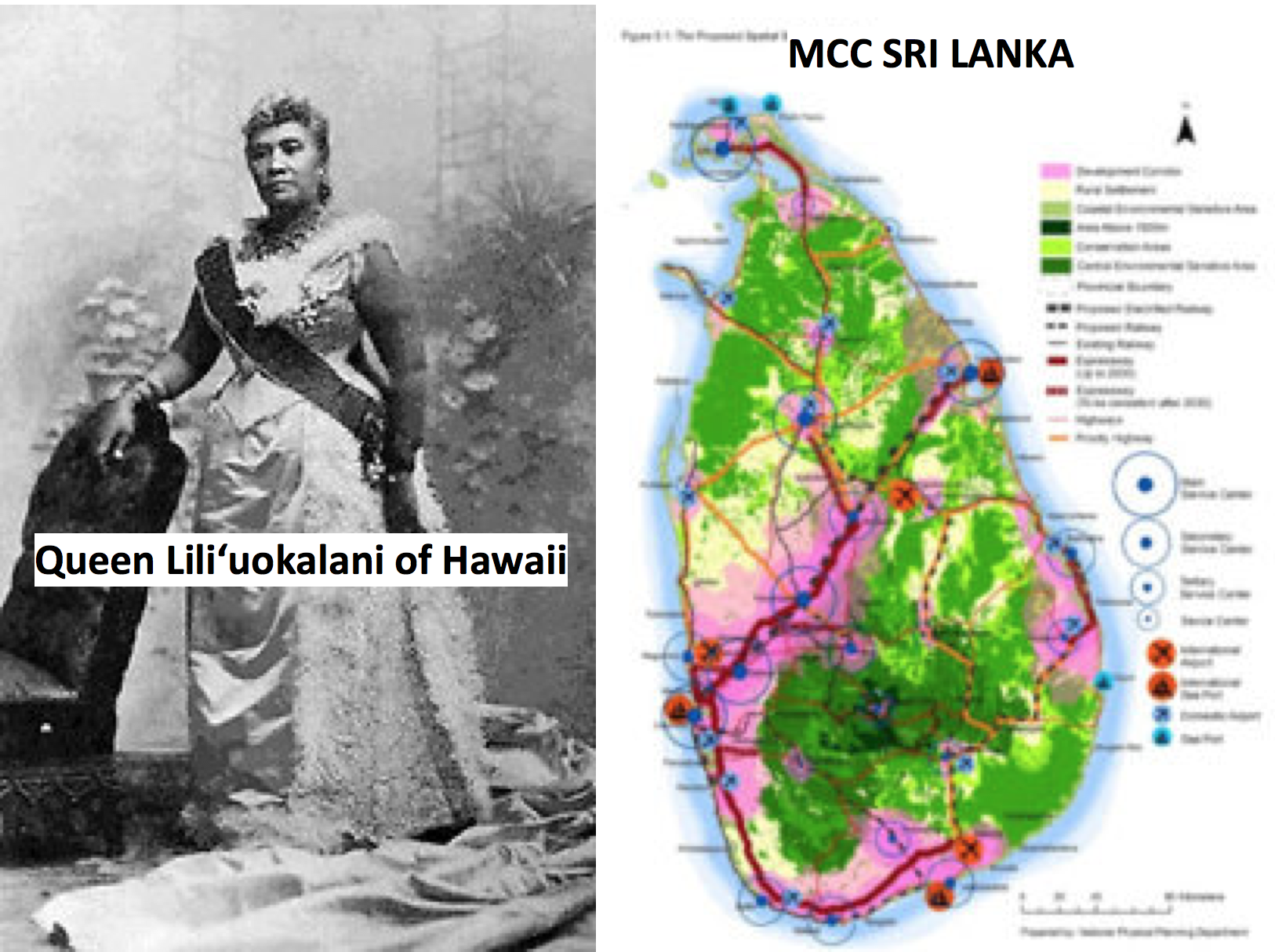
     The timing of this act, between December 25 (known to Christians as Christmas) and January 7 (known to them as Epiphany – a sudden revelation!) is not coincidental. Curiously, media recently revealed a ‘repudiation’ of Roman-Dutch Law in allowing banks to seize property without going to court! (see ee Random Notes). It turns out all this is part of a long-term plan to be able to overthrow leaders and grab national resources – ‘legally’ of course! Also related to this is the ‘generosity’ in handing over title deeds under the guise of correcting the wrongs of colonialism. This will only increase land fragmentation and promote the USA’s MCC program for MNCs to take over agricultural lands. (see ee Focus)

*

• ‘Back on K Street (famous for the offices of lobbyists in Washington DC), we turned a corner and within about 10 minutes found the World Bank’s main campus in Washington DC – a large complex of buildings spanning several city blocks. Somewhere inside them was the ICSID (International Centre for the Settlement of Investment Disputes).

     ICSID’s website calls itself the ‘world’s leading institution devoted to international investment dispute settlement’, saying it had ‘administered the majority’ of these cases globally. ICSID also said it ‘contributes to the [World Bank’s] overall goal of poverty reduction’[not elimination! – ee] by promoting foreign investment via ‘providing confidence in the dispute resolution process’… ICSID’s offices were in the Bank’s J building – across the street from its main building on Pennsylvania Avenue… We’d imagined that once we were in the right building it would be enough to ask people there for specific directions. But those we stopped in the lobby & corridors also gave us puzzled looks. Some of them didn’t even seem to recognise the name ICSID, asking us to repeat it. But when we finally found this branch’s offices, we saw that it occupied an entire wing of a floor. It wasn’t well known, but it certainly didn’t look small.

     We went through a glass door and found the person that had answered the archive staffer’s phone call. She was friendly and took us on an impromptu tour of the office, showing off its file rooms, meeting rooms and desks for what she said was the centre’s rapidly growing team. ‘Our office wasn’t always this big,’ she emphasized.’ (see ee Focus)

*

• This ee continues our charting of the corporate coup d’etat to overthrow ‘independent’ governments. In Sri Lanka, this attack is led by Unilever, one of the largest corporations in the world, who not only has captured our home market, but also controls our media. ee is therefore examining the setup of an international legal system to control and plunder the resources of the world, and overthrow governments that challenge corporate domination. This involves, the ‘nefarious alliance’ between so-called NGOs & corporations (Unilever also claims to be an NGO!). They seek to promote profit over justice, weakening labor laws and eviscerating workers’ protections & rights. To enforce this predatory behaviour, MNCs have created a global Supreme Court and are raising and funding private mercenary militias (death squads) to crush labor movements, and intimidate & murder activists.

     The mechanisms of control used to plunder the colonies always blows back and are also being used in the industrial world. Large corporations are looting and pillaging so-called ‘independent’ yet still-colonized countries by forcing them to accept international agreements & investment treaties – corporate courts – that favor multinational corporations. A shadow legal system is in operation across the world to enshrine a system where MNCs can sue states for enacting policies they don’t like, which they say infringe on ‘investor rights’. This system was created ‘in the heat of the decolonization movement and the end of formal empire’. The main body where these cases are heard is actually an arm of the World Bank’s International Centre for the Settlement of Investment Disputes (ICSID) created in 1966, when countries were supposedly getting independence. Capitalists panicked about maintaining control, how to ensure their investments in underdevelopment are protected when they don’t have formal empires and garrisons of troops (like the colonial East India Company did) where they can take out a leader if he does something they don’t like? The system was the brainchild of Hermann Abs, a German Nazi exonerated by the English and the US at the Nuremberg trials. (see ee Focus)

*

• So why does the media not say what’s going on? There is no transparency demanded when it comes to naming private creditors. The truth is they are not a national media. They are controlled by Unilever. Media owners should be made to meet the people every week, at press conferences where people can ask questions about their priorities, their commissions & omissions, and most importantly, their funding sources. Who will make them do so? Not politicians who are provided access to the droppings of the MNCs – licenses to distribute imported fuels, foods, alcohols, cigarettes, consumer goods, etc.

     Some compare ee’s function to a garbage picker scavenging at the city dump, looking through rubbish to find things for use or sale. This is what it is like going through their media, local & international.

     We know the English media, both national (if they can even be called that!) & international (read: white world), are thoroughly backward. Again, it is not a matter of capacity but determination. We’re surprised to learn the Sinhala media is even worse. Then again, this makes sense. It would be deadly to the imperialist project if people knew what was going on in the world let alone with their own neighborhoods.

*

• Ensuring self-sufficiency in grain & basic food products, increasing the purchasing power of the rural home market, and supplying industrial workers with nutritious food at stable prices: This ee Focus continues sharing the Communist Party of Sri Lanka’s Alternate Program: this week examining agriculture and the much-touted Green Economy… Sri Lanka has one of the lowest arable lands per capita in South Asia, and lower than even China. This demands rationalizing the use of agricultural land, and increasing yields & productivity through modern technology & capital-intensive farming (see ee Focus).

*

• Our economists are either purposely or inadvertently ignorant of what modern industrial culture is all about. Modern industrialization has its own logic. It is not only agriculture or services. Industries impart an internal dynamic, expanding markets, lowering costs. The role of industry is not to earn foreign exchange, but to multiply productsdevelop the division of laborspecialization, like in the motorcar industry.

     In modern industrialization, the entire system becomes an integrated process. Garments need textiles, and involve the production of machinery & component parts, including chemicals. An integrated chain is a self-expanding process. Garments in Sri Lanka have not been allowed to go thru this change, and cannot transform the economy.

     During the US (‘civil’) war, the northern government contracted to produce revolvers. The invented techniques from weapons were used for making sewing machines & motorbikes. Such industrial organization absorbs, transforms and integrates. Without production forces, productive relations cannot develop to be more conducive to socialism, compared to what we have now (– remember SBD de Silva…).

*

Contents:

Let the Countdown Begin: Parliamentary Elections in March 2024

December 3rd, 2023

by Rajan Philips Courtesy The Island

President Wickremesinghe has now made repeated assurances that the presidential and parliamentary elections will be held in 2024. Financial allocations for the two elections were also announced in parliament. Parliamentary elections are expected to come first, apparently in March 2024, according to news reports citing sources close to the President. Let us assume that the sources are correct and start the political countdown before the official call is made early in the new year. It is going to be a 100-day countdown.

A parliamentary election in March will be the first parliamentary election to be held before the presidential election since the twosome began their co-existence in 1982. In that year of disgrace, President Jayewardene conducted and won the country’s first presidential election, calling the election before his first, appointed, term was over, courtesy of the Third Amendment to the Constitution. He then went on to cancel the parliamentary elections that were due that year by staging an undemocratic referendum and doubled the life of an old parliament.

The purpose of advancing the presidential election was to give himself (JRJ) time to manipulate the timing of parliamentary election. This was on top of the arbitrary power that the constitution gave the executive to dissolve parliament any time after one year of its election. This power of dissolution is an unusual, if not unique, constitutional power vested in the executive over the legislature.

So much for the much vaunted separation of powers. The 19th and 20th Amendments have somewhat limited this power, but even what is left of it privileges the executive over the legislature.

President Wickremesinghe will be exercising the presidential power of dissolution to dissolve parliament and call for elections in March 2024, before they are due more than a year later in 2025. In 1982, President Jayewardene did not want to let go of the massive majority he had in the parliament elected in 1977. He kept it going through the referendum chicanery. No one wants this parliament to keep going except the Rajapaksa MPs. The prospect of its dissolution in March is as good as it can get in the circumstances.

Ranil’s Last Hurrah

So far, President Wickremesinghe has been refusing to use the power of dissolution – in order to delay elections. Not anymore, we hope. Now it makes sense for him to dissolve parliament and have parliamentary elections before the presidential election. If the presidential elections were to come first, Ranil Wickremesinghe would likely have faced two unwelcome choices: not to run as a candidate, or to run and lose. That will be the end of his presidency and he would be long gone by the time the next parliamentary elections are held, as they are due, in 2025.

By calling parliamentary elections in March, Mr. Wickremesinghe will have the opportunity and the power to first ‘preside’ over the election in whatever way he can, and then to appoint the Prime Minister and cabinet of Ministers from among the MPs of the newly elected parliament. Neither of which he would probably be able to do if the presidential elections were to go first. In the most likely situation of no single party winning by a clear majority in the next general elections, President Wickremesinghe will be well positioned to call the shots as he pleases, and all within his constitutional powers. But not quite every shot as he might please.

President Wickremesinghe

First, the President should not overplay his hand. For unlike in Thailand, it would be counterproductive to try to thwart the results of a popular parliamentary election through clever-by-half executive means. Second, he has a massive trust-deficit with practically every political party in parliament other than an insufficient number of Ministers and MPs who would like to see him continue as President for their own self-serving ends. It will all depend on how the President conducts himself during the parliamentary election.

If he were to take sides or take to machinating between MPs and Parties to forge a new alliance for the election, he had better make sure that such an alliance would be a winning alliance. Otherwise, and that is more likely to be the case, he would be a goner by the time his (really Gota’s) term is up. On the other hand, if he were to exercise enlightened selfishness and stay above the electoral fray, he may have a chance to form a consensus government in the new parliament and take yet another shot at extending his political life. But that will be quite a long shot even for a man who is known for playing the long game.

The revelations that TNA MP Sumanthiran recently made in parliament, about the manner in which Ranil Wickremesinghe broke opposition consensus and broke ranks to become Gotabaya’s crisis Prime Minister, are quite damaging. Add to that, President Wickremesinghe’s recent shenanigans with the Judiciary, the Constitutional Council, and with the appointment of the IGP, have left him thoroughly discredited and untrustworthy. Adding injury to insult, he has appointed the universally lampooned and reviled Deshabandu Tennakoon as the new IGP for a three month term. The upshot of all of this is that no one contesting the next parliamentary election would like to have anything to do with President Wickremesinghe. Other than the irrationally selfish.

Framing the Elections

At the same time, there is no shortage of irrationality or selfishness in Sri Lankan politics, and going by Mr. Wickremesinghe’s long past, he is not going to remain quiet or neutral as President in the next parliamentary election. He may even pull up the abolition card and play it one more time and tack a referendum question on abolition to the vote at the parliamentary election. Whatever Ranil Wickremesinghe may or may not do, the elections should not be about Ranil Wickremesinghe, and he should not be allowed to frame the election.

The elections should be about the possibilities and the potentialities for a Sri Lanka that is finally becoming free from two decades of Rajapaksa-Wickremesinghe political monopoly. The elections will also be about how Sri Lanka is going to be led out of the economic pits by those now vying for power. Then there are carryovers all the way from the twentieth century which have not been addressed but only aggravated during the Rajapaksa yugaya of this century.

The election will be framed by the dialectic of the contenders for power and/or parliamentary seats, and their positions on the manifold issues and problems that are preoccupying the people.

The SJB and the NPP have been calling for elections for almost two years and now they will get their chance to show what they are capable of. The remnants and rumps of the historically governing parties – the UNP, the SLFP and the SLPP will not have any significant identity of their own, but they may not all go into alliances with either the SJB or the NPP. Also, in a parliamentary election there is space for political parties and individuals to enter into multiple alliances.

It will be interesting to see who will be allying with the SJB, and if any of the recognized political parties will be joining the NPP/JVP formation. Any of the Sinhalese parties who are not part of either the SJB or NPP alliances, will not likely be significant players in the election, but may gain specific weights after the election as contributors to a governing majority in return for ministerial portfolios. If it were the first-past-the-post system, the Rajapaksas would probably be wiped off the electoral slate, but some of them could still manage to return because of proportional representation and preferential voting.

The political parties of the Sri Lankan Tamils, Muslims and the Indian Tamils will have their respective, and in some cases overlapping, universes, with their corresponding national overtones. The TNA will likely have to go through a leadership change before the election which may create internal rivalries even as it tries to ward off external rivals especially in the Northern Province. In the East, Sri Lankan plurality will be electorally reproduced with proportionate returns of Tamil, Sinhalese and Muslim MPs.

Political parties of the Indian Tamils, as well as Muslim political parties, have usually joined one or the other of the two main contending alliances. Where they will land this time remains to be seen. Some are with the SJB, while those who are with the current ‘government’ of President Wickremesinghe may have to find new suitors if they are to be relevant after the elections.

Again, it will be interesting to see if the JVP would be able to attract and accommodate any of the minority political parties under its NPP umbrella. It is known that the JVP and especially its leader Anura Kumara Dissanayake have excellent working relationship with many of the Tamil, Muslim and Indian Tamil political leaders, but whether the JVP would be able to draw them into a formal alliance is one of the crucial questions that will be answered during the countdown period.

Even a broadened NPP alliance will not be broad enough if it fails to include one or more of the minority political parties. On the other hand, an NPP alliance that includes minority political parties would send a powerful signal that the JVP/NPP has come of age electorally. Anything less would only mean that the JVP continues to immature in spite of age.

The countdown and the campaign will see shifting focuses around issues along with competing defenders and detractors. The main issues and those that matter are on people’s minds and in their still harrowing living and medical experiences. Then there are issues that preoccupy the pundits and elicit editorial commentaries. How will political parties and alliances respond to them? As well, the formation of political alliances and groupings will be implicated by their positions on the issues and problems facing the country, and will in turn implicate how different issues or privileged or prioritized.

The economic crisis will provide an arresting backdrop to the election campaign. President Wickremesinghe presented his budget on November 13, outlining his purported plan to take Sri Lanka out of the economic crisis. The very next day, the Supreme Court came down with its ruling on the fundamental rights applications against decision makers in the Gotabaya Rajapaksa Administration. The Court apportioned blame for decisions made wrongfully by elected and unelected officials that precipitated Sri Lanka’s worst and its only man-made” economic crisis.

The voters deserve to know where the SJB, the NPP and everyone else running for election stand on the economy – the current crisis, its perpetrators, and a plausible way out. The upcoming election will also provide a new opportunity for the Catholic Church hierarchy to reiterate the yet unanswered questions about the perpetrators of the 2019 Easter Sunday tragedy. There are shortages of all kinds in Sri Lanka. But there is no shortage of election issues.

AKD crosses 50-percent in voting intent poll

December 3rd, 2023

Courtesy The Island

ECONOMYNEXT –Sri Lanka leftist leader Anura Kumara Dissanayake has crossed a seemingly elusive 50-percent hurdle in a voting intent poll conducted among 567 interviewees for October, though his net favourability rating remained negative at minus 9 indicating continued unpopularity.

A Sri Lanka Opinion Tracker Survey (SLOTS) by the Institute for Health Policy (IHP) showed that Dissanayake, who leads the leftist National People’s Power (NPP) gained support to half of likely voters (51 percent) in October, followed by opposition leader Sajith Premadasa with a third (30 percent), and President Ranil Wickremesinghe on 13%.

A generic” candidate for the ruling Sri Lanka Podujana Peramuna (SLPP) was on 6 percent with little change from September.

IHP executive director and SLOTS project director Ravi Rannan-Eliya said in a statement: Although polling is a hazardous exercise and our MRP estimates are subject to quite a lot of uncertainties, it does appear that Dissanayake would have likely won a Presidential Election in October even against a joint SJB-UNP ticket. I suspect this is less voters buying the NPP/JVP policy platform and more most voters rejecting the political establishment and business as usual. Establishment parties wanting to compete with the NPP probably need to be doing some serious soul-searching,” he said.

In October, Premadasa’s net favourability rating dropped 13 points to a new low of -66 and President Ranil Wickremesinghe’s dropped 8 points to -65 while leftist leader Anura Kumara Dissanayake’s rating improved by 10 points to -9, a poll showed.

A net favourability rating of less than zero means that the individual or institution is unpopular. Only positive scores where net favourability is more than zero mean that the individual or institution is popular on average.

According to the IHP, SLOTS combines interviews from a national sample of adults (ages 18 and over) reached by random digit dialling of mobile numbers, and others coming from a national panel of respondents who were previously recruited through random selection. IHP estimates voting intent using an adaptation of Multilevel Regression and Post-Stratification (MRP), with multiple imputation to account for uncertainties in its modelling, exploiting data from all SLOTS interviews to estimate voting in a particular month.

The October 2023 MRP estimates are based on 567 interviews conducted in October 2023, and 13,935 interviews conducted overall from 1 October 2021–12 November 2023, with a margin of error assessed as 3–4% for Dissanayake, Premadasa and 1–2% for Wickremesinghe and the other potential candidate. All estimates are adjusted to ensure the sample matches the national population with respect to age, sex, ethnicity, socioeconomic status, education, geographical location, and voting in the 2019 Presidential and 2020 General Elections, the IHP said.IHP is an independent, non-partisan research centre based in Colombo, Sri Lanka.

’Will create political culture where politicians will travel in public transport’: Anura

December 3rd, 2023

 By AJITH SIRIWARDANA  Courtesy The Daily Mirror

Kegalle, Dec. 3 (Daily Mirror)- The National People’s Power (NPP) will create a new political culture where politicians will travel in public transport such as in buses and trains, NPP Leader Anura Kumara Dissanayake said today.

Speaking at the Kegalle District Convention of the Retired Tri-Forces Forum, he said the JVP MPs had never used police personnel for their private security.

“You may have seen politicians in other countries travel in buses, trains, bicycles and public transport and work abreast with people. Do we need such a political culture here? We will create that political culture and transformation. We will assure you that,” he said.

Dissanayake said they have the confidence to take over the bankrupt country and the courage to revive the economy.

He said they have a plan to utilise the knowledge of the people locally and Sri Lankans living in other countries to revive the economy.

Kelaniya University: Several students accused of kidnapping and assaulting security officers

December 3rd, 2023

Courtesy Hiru News

A group of students is alleged to have kidnapped and assaulted two security officers on the Kelaniya university premises. The victims, identified as security personnel, are currently receiving medical treatment at Kiribathgoda Hospital.

According to the police report, the incident occurred when the two security officers were residing in a dormitory within the university campus. A group of students reportedly approached them, forcibly took them on motorcycles, and transported them to another location on the university grounds. Subsequently, the security officers were subjected to a violent assault.

Law enforcement authorities have initiated an investigation into the matter, aiming to identify and apprehend those responsible for the attack. The police are working to gather evidence and interview witnesses to piece together the sequence of events leading up to the assault.

The injured security officers are currently receiving medical attention, and their condition is being closely monitored

Climate Colonialism at CoP 28: Carbon Laundering via Green Bondscams?

December 2nd, 2023

Darini Rajasingham-Senanayake

Sri Lankan President unveils ambitious national green vision paving the way for a sustainable future Fri, Nov 3, 2023, 07:43 pm SL Time, ColomboPage News Desk, Sri Lanka.

The elephant in the room of the United Nations CoP-28 Anthropocene climate confab in Dubai is the environmental cost of war and the global military business industrial complex that President Dwight Eisenhower warned the American people about in his farewell address to the nation. This includes Directed Energy Weapons (DEW), increasingly used to stage climate disasters around the world, especially in countries that do not tow the party line—from Covid-19 to the Anthropocene.

Despite the graphic Armageddon visuals on our television screens of dead children, dying adults, and those poisoned by the massive plumes of smoke rising from the Israeli bombing of the Gaza Strip in Palestine, the UN Secretary General remains studiedly silent about the environmental costs of NATO (proxy) wars led by the United States which has 750 military bases around the world.

There clearly is a need to make those who manufacture and use bombs, guns, nuclear submarines, missiles, land mines and other weapons of massive environmental destruction to pay for climate change. But this subject seems to be off the table hot air CoP-28 show in Dubai, despite its proximity to the carnage in Gaza.

Chaired by an oil Sheik in a country that is one of the biggest fossil fuel producers in the world, the Climate Hypocrisy show in Dubai also saw French President Emmanuel Macron have another extended tete a tete with Sri Lankan President Ranil Rajapakse on the IMF’s bailout of the colonial Club de Paris sovereign bond creditors that caused Sri Lanka’s first ever default.

Sri Lankan President Ranil Rajapakse is leading the largest-ever Lankan delegation at a climate summit –in Dubai. The technical delegation consists of 15 negotiators and ministry officials. The overflow delegation, consists of private sector organisations and one of Sri Lanka’s biggest-ever contingents of 20 youth delegates.

France having been recently booted out of several post-colonies in the Sahel, from Mali to Burkina Faso, seems keen to extend French (fisheries and maritime) neocolonialism in the Indian Ocean through engagement with the Indian Ocean Rim Association (IORA) that Sri Lanka currently chairs, and by setting up a French Agency for Development (AFD), office in Colombo.

Although France is in the Atlantic Ocean it has claimed a huge extent of Indian Ocean sea bed resources under the United Nations’ Convention on the Law of the Sea (UNCLOS), where France seeks to extend its maritime and fisheries empire as in days gone by across the Indian Ocean, from France- Afrique to Indo-Chine.

Climate Science Fiction and Green Hydrogen

Amid the Global Boiling grand narrative promoted by UNSG Antonio Guterrez, climate science fiction-based Green Transition policy debacles are not new to Sri Lanka. 

Currently there is a rush to develop a USAID-funded Green Hydrogen policy plan and switch to expensive Electric Vehicles (EVs), in the debt trapped island. Recently, the Minister of Transport was advertising EVs – Buses, tuk-tuks, boats etc.-  although the price of electricity has gone through the roof and many who were unable to pay their soaring Electricity bills have been disconnected from the grid.

 This also means that poor people who consume electricity would end up subsidizing wealthy folks switch to EVs and ‘green energy’. The purchase of expensive EVs would further drain the island’s foreign reserves and deepen the debt trap.  A green transition leading to Double Jeopardy?

A couple of years ago there was a rush to switch to organic fertilizer in the name of environmental conservation” with a ban on chemical fertilizer, without a transition plan. The result was the destruction of crops and farmers’ livelihoods and corruption in rushed organic fertilizer purchases sans a proper tender process. 

All this predictably occurred in the name of ‘environment conservation’ by the Gotabaya Rajapakse regime. Ironically, the green transition to organic fertilizer raised fears of famine in a lush and fertile tropical country, but President Gotabaya Rajapakse got an invite to address the UNGA about his Green policy successes in Sri Lanka!

However, rather than a Green Hydrogen plan what Sri Lanka needs as a development policy priority is to grow the economy out of the debt trap and poverty that the Default caused by leveraging low hanging fruit, such as, the rich fisheries in the Seas of Sri Lanka and mineral resources (Graphite, Phosphates, Zircon, Titanius, Boxite, Illmanite etc.), through a systematic development plan that includes transfer of technology, value addition and industrialization.

Such a national development policy plan for maritime and mineral resources would enable growing the strategic island’s economy to escape the Eurobond debt trap in a very short time. However, it is increasingly clear Sri Lanka’s national development policies, plans and strategies are drafted by Globalists in Washington, London and Paris and at CoP summits in Dubai– in true colonial style as evident in the Green Hydrogen plan.

The previous President’s organic fertilizer policy catastrophe clearly did not moderate the current President’s much hyped push to an expensive and unnecessary ‘green energy transition’, (including Green hydrogen) that Sri Lanka does not need and cannot afford at this time. This is being promoted by local politicians, foreign Aid donors, and UN policy makers with a host of MIND-less conservation NGOs — to further debt trap the strategic island nation.

Earlier this month at the International Climate Change Forum in Colombo, the President spoke of a tough task ahead for his ambitious Green Transition and made the grandiose and absurd claim that tiny Sri Lanka’s green transition was necessary for the planet’s well-being, heedless of the cost to debt-trapped and impoverished citizens!

Few in the audience thought to ask why Sri Lanka whose carbon foot print is minute should rush into a green transition costing $ 100 billion, which its impoverished citizens cannot afford when the big carbon emitting G7 industrialized countries and companies are expanding fossil-fueled profits, and oil and gas exploration and production? 

Is this not a case of double standards and double jeopardy? This question is doubly relevant given that Eurobond trading was the primary cause of the accumulation of Odious Debt that caused the country’s first ever sovereign default.

From the Organic Fertilizer Debacle to Green Hydrogen via EVs

Like the organic fertilizer debacle the EV policy debacle appears to be well thought out. On November 20, addressing the USAID funded Sri Lanka Green Hydrogen Symposium 2023, President Wickremesinghe outlined a comprehensive vision for embracing cutting-edge green energy technologies. President Wickremesinghe opened his speech by drawing attention to the alarming findings of a UNF emission report for 2023. [i]

The UNF or United Nations Foundation is an NGO in Washington DC that claims to support the UN, and seems to specialize in Green science fiction with lots of Big Datafication!

On the back of the much hyped climate catastrophe/ global boiling grand narrative, attempts are ongoing through the IMF’s opaque debt data calculations, to deepen the debt trap and further impoverish citizens, with equally opaque carbon calculations, this time with Green and Blue bonds and scams, also referred to as Debt for Nature Swaps (DFNS), or Environment, Social and Governance (ESG), bonds. But such a green transition would clearly cause more harm than good.

At this time, questions arise about the Ranil Rajapakse regime’s IMF debt restructuring program with Debt for Nature Swaps (DFNS) and Environment, Social and Governance debt bondage, and the rational of making policies based on over-generalized climate catastrophe global narratives– a practice that compounds problems and debt, and turns science on its head. This was also evident during the Covid-19 panicdemic global lockdown policies that debt trapped many global south countries where the virus was mild.

After all, it is a truism that local and national context-specific and evidence based policies are necessary, rather than those hyped in Global media narratives about climate boiling.

It is clear that Sri Lanka has lost economic sovereignty and policy autonomy to the International Monetary Fund (IMF), and its Paris Club creditors debt restructuring, although attempts are on-going to blame Asian neighbours, China and India, for the strategic Indian Ocean island’s first ever Sovereign Default in March 2022.

BlackRock and Adani to benefit from Sri Lanka’s the Green transition

Sri Lanka is a test case for 54 other debt-trapped countries in the Global South that are being primed for Debt for Nature Swaps (DFNS), or Green and Blue Environment, Social and Governance (ESG), bonds and scams. The strategic Indian Ocean island staged its first Sovereign Default last year, fundamentally as a consequence of the geopolitical stand-off between the US, China and India, as much as, corruption of local politicians and their crony business elites.

Yet, according to the IMF Extended Fund agreement, Sri Lanka must borrow almost USD 2 billion this year alone from the same private markets/ bond traders that had caused the Odious debt trap in the first place by charging predatory interest rates – especially, during economic shocks like Covid-19 lockdowns and the 2019 ISIS claimed Easter Sunday attacks on economy and society.

Hardly surprising then that the IMF’s Sri Lanka debt restructuring program with a mere USD 3.9 billion loan over four years seems designed to sustain and deepen its control of the strategic island’s policy space and economic sovereignty by requiring more borrowing on predatory private Eurobond markets now based on obtuse and unscientific carbon credit calculations and DFNS.

In the context it is relevant to quote the statement issued by a group of more than 80 International economists and development experts, including Professors Jayati Ghosh, Thomas Piketty, Dani Rodick, Yanis Varoufakis, which called for outright Eurobond debt cancellation given the practice of charging predatory interests rates as well as the lack of transparency. [ii] The statement available at the Debt Justice UK website clearly stated:

Private creditors own almost 40% of Sri Lanka’s external debt stock, mostly in the form of International Sovereign Bonds (ISBs), but higher interest rates mean that they receive over 50% of external debt payments. Such lenders charged a premium to lend to Sri Lanka to cover their risks, which accrued them massive profits and contributed to Sri Lanka’s first ever default in April 2022. Lenders who benefited from higher returns because of the risk premium” must be willing to take the consequences of that risk. Indeed, ISBs are now trading at significantly lower prices in the secondary market. In this context, giving private bondholders an upper hand relative to sovereign debtors in the Paris Club and the IMF’s required debt negotiations violates the basic principles of natural justice.

However, the IMF debt restructuring” agenda is designed to deepen the country’s Eurobond debt trap by promoting more borrowing on bondmarkets! Only, now the bonds would be green and blue and pink washed, or Environment, Social (gender) and Governance sensitive bonds, based on obscure and unscientific datafication regarding the volume of carbon emitted by trees and sea grass to mask the lack of transparency in opaque climate science fiction narratives to justify carbonated bond trading

Moreover, the bond holders’ names would still be a secret. In short, the IMF is systematically deepening the debt trap and its control of the island’s economic policy with its bailout conditionalities, and the country is being further impoverished to benefit Colonial Club de Paris bond holders though ESG Debt bondage.

Simultaneously, BlackRock the world’s biggest wealth fund that worth trillions (having received huge US Government Covid-19 bailout funds under the CARES Act to asset strip around the panicdemic locked down and debt trapped Global South), and Adani are now being green, blue and pink washed to trade in Green and Blue Bond and scams.

Climate Colonialism with Cabondated Green Bonds: Macron’s Finance Shock”

All this begs the question: who drafted the ambitious and unnecessary national Green transition plan to the tune of USD 100 billion, when by the President’s own admission, Sri Lanka lacks the necessary technical expertise on the subject?!

 ‘Debt for Nature Swaps’ (DFNS), or Environment, Social and Governance (ESG) bonds for Carbon Laundering in the Global South, based on gamed carbon credit calculations increasingly appear to be a ‘bailout’ of private creditors of the colonial Club de Paris.

In tandem with French President Macron’s New Global Financial Pact’ ESG bonds would once again benefit private creditors who charge predatory interest rates. Should an expensive green transition posited on more Eurobond borrowing be a national policy priority for at this time?

Earlier this year French President Emmanuel Macron inaugurated the ‘Summit for a New Global Financial Pact’. In his opening remarks, Macron, told delegates that the world needs a public finance shock” – a global push of innovation and financing.[iii] Macron later paid a midnight visit to the Sri Lankan President to seal the deal — as France an Atlantic Ocean country extends its Carbon footprint in the Seas of Sri Lanka and the Indian Ocean with nuclear submarines and fishing trawlers companies!

Sri Lanka is a test case for 54 other countries in post-Covid-19 US dollar-Eurobond debt traps, many near Default.

Macron’s Green Debt Bondage Financial Shock: De-linking debt and climate colonialism

The Global South under Macron’s New Global Financial Shock would be expected to launder the Carbon Emissions of industrialized G7 countries through DFNS and ESG bonds as part of the new Climate Colonialism!

It is hence that in the final analysis, there is a need to de-link debt restructuring from the climate catastrophe metanarrative and carbon trading proposal based on questionable science, experts and green hydrogen reports, designed to benefit Sovereign bond traders.

 The ‘Polycrisis; grand narrative obscures more than it reveals, while enabling conflation and inflation of debt numbers, while enabling a new round of colonialism, in the form of forest lands and ocean grabbing” as the Transnational Institute in Amsterdam has detailed in several reports.

 Carbon credit laundering in the Global South would entail debt trapped countries being compelled into Green debt bondage, carbon sequestering by depriving indigenous communities and local farming and fisher communities access to their traditional forest and fisheries grounds, demarcated for conservation and carbon sequestering. The result would be impoverishment of indigenous communities in the name of’ environmental conservation’ in a context of expanding carbon emissions of the industrialized countries that are again ramping up hydrocarbon exploration and production.

UK Prime Minister, Rishi Sunak had pledged in July to max out” the UK’s oil and gas reserves as he revealed a new round of intensive North Sea drilling in July, which experts said could be catastrophic for the climate. The new oil and gas exploration and drilling and carbon emissions would ensure Britain’s energy security from Russia’s redoubtable Mr. Putin and the BRICS Plus’ increasing control of the global oil trade. This after the Nord Stream gas pipelines from Russia to Germany were hacked last year by the US– if Nobel prize winning journalist Seymore Hersch and other experts it to be believed. Meanwhile the  Biden administration  had announced in September, plans for as many as three new oil and gas drilling lease sales in federal waters over the next five years.

The Anthropocene ‘polycrisis’ metanarrative increasingly masks climate (neo)colonialism and a push to land and ocean grabbing, while further debt trapping and impoverishing global south countries under the rubric of ‘environmental conservation”, as part of a new blue-green debt deal for the Global South.

This would further a Global Governance agenda that violates core principles of the United Nations Charter, such as, the Right to Self-determination of colonized peoples, sovereignty, and the territorial integrity of States, while turning science and the need for locally-grounded, empirical, evidence-based policy-making, on its head.

Finally, are we increasingly seeing the Financialization and weaponization of Mother Nature with DFNS, and Directed Energy Weapons (DEW)? The latter (DEW), enable Staging climate disasters such as, storms, flash floods, forest fires, earthquakes, tsunamis etc. while enabling humanitarian disaster capitalism and re-construction to benefit Bond holders and hedge funds like BlackRock and Adani that charge predatory interest rates for Green transitions in debt trapped Global South Countries.

TO BE CONTINUED

(Of Unsinkable aircraft carriers: and Indian Ocean Islands From Chagos Islands, to the Maldives to Sri Lanka)


[i] http://www.colombopage.com/archive_23B/Nov21_1700580675CH.php

[ii] https://debtjustice.org.uk/wp-content/uploads/2023/01/Sri-Lanka-debt-statement.pdf

[iii] https://www.aljazeera.com/news/2023/6/22/macron-opens-climate-summit-in-paris-calls-for-finance-shock

CÐP 28 and 80 strong delegation to Dubai What is the benefit ?

December 2nd, 2023

Dr Sarath Obeysekera

 Green Marine is now part of the new Offshore Energy platform that connects communities to tell the story of the energy transition and sustainable solutions in the maritime and offshore world. 

 From phasing out fossil fuels to investing in greener innovations within the maritime and offshore industry, the energy transition is relevant for all of us. 

The developments in these industries are driven by the changing landscape in the energy sector and the necessity to have all industries working together for the same goal: a more sustainable future. The platform focuses on the energy transition and sustainable solutions in the maritime and offshore energy industry. 

 That means we may be forced to phase out coal power generation , LNG based power generation , and petroleum fuel based power plants by 2040 Most of the exhausting offshore rigs and platforms may be converted into wind power plants and green hydrogen plants If we start our offshore sector Industires we will be ready by 2030 to meet above challenge Government should clearly spell out road map for moving into achieving carbon zero plan

 Any opinions ??


ජාතික විමුක්ති පෙරමුණ හා සිංහල බුද්ධාගම (JVP & Buddhism)-part 2

December 2nd, 2023

චන්ද්‍රසිරි විජයවික්‍රම, LL.B., Ph.D

මාක්ස්වාදය හා ලංකාවේ පන්සල

ලංකාවේ මාක්ස්වාදීන් විසින් සිංහල බෞද්ධ සමාජය සමඟ ඇතිකරගත් තකතිරු ඝට්ටනය අවසාන (අවම?) කර ගැනීමට අනගි අවස්ථාවක් දැන් 2023 අගවනවිට JVP නායකයින්ට උදාවී තිබේ. නෝත් ආණ්ඩුකාරයාගේ සිටම පන්සල (සිවුර) සමඟ සුද්දන්ට තිබූ හිසරදයට සමානම මානසික ලෙඩක් ලන්ඩන් සිට ආපසු පැමිණි තරුණ මාක්ස්වාදීන්ට 1930ස් ගණන්වල සිටම ගමේ පන්සල සමඟ තිබුණේය. දලයිලාමා කෙරෙහි කොමියුනිස්ට් චීනයේ තිබු වෛරය, ඉඩම් හිමි රදල නෂ්ටාවශේෂයක් ලෙස මල්වතු-අස්ගිරි ප්‍රමුඛ පන්සල් ඉඩම් යනාදිය පිළිඹඳවද ආරෝපණය කිරීම නාගරික මාක්ස්වාදීන්ගේ විනෝදය (hobby) විය. ලංකාව ක්‍රිස්තියානි රටක් නොවී බේරුණේ පන්සල (මුරදේවතා සංකල්පය) නිසා නොවේද යන කරුණ පොදුවේ වාමාංශික වරිගයට අදටත් අදාල නැති බව සමසමාජ, කොමියුනිස්ට්, පෙරටුගාමි, JVP පිරිස් වල හැසිරීමෙන් හා කතාවලින් පෙනීයන්නේය. ඒවාට හා වෘත්තිය සංගම් පස්සේ පෙලපාලි යන කොණ්ඩේ වවාගත් සිවුරු දමාගත් ලෝභ-ද්වේෂ-මෝහයෙන් පිරි පංචකන්ධ වලටද මේ ගැන කිසිම හෝඩුවාවක්  නැත.

 එහෙත් තම පක්ෂය, UNP/SLFP පක්ෂ දෙකට අඩතබමින් සියේට තුනක් ලෙස චන්දදායකයින්ට දොස් කියමින් සිටියා වෙනුවට, අනිකුත් දේශපාලක පංචස්කන්ධ මෙන් කුමණ හෝ උප්පරවැට්ට්වි මඟින් බලය අල්ලා ගැනීමට ක්‍රියාකරණ පිරිසක් නොවන බව JVP විසින් රටේ සිංහල බෞද්ධ චන්දදායකයින්ට ක්‍රියාවෙන් ඔප්පු කලයුතුය. ලංකාව සිංහල බෞද්ධයින්ට ලෝකයේ ඇති එකම ඉඩම් කැබැල්ල බව පිළිනොගන්නා කිසිවෙකුට මහජන චන්දයෙන් ලංකාවේ අගමැති/ජනාධිපති වීමට ඉඩක් දැනට නැත,

ලංකාවේ ගමක/ටවුමක පන්සලකට නොයන්නේ හා දරුවන් ඉරිඳා දහම් පාසැලකට නොයවන්නේ සමසමාජ-කොමියුනිස්ට් කාරයින්ගේ පවුල් යයි 1978 ට පෙර තිබූ මතය තවමත් එසේම පවතින්නේ කොණ්ඩේ වවාගෙන සිවුරු දමාගත් ජල ප්‍රවාහ හා කදුළු ගෑස් කමින් අන්තරේ පෙලපාලිකාරයින් මුළු සංඝ සංහතියටම ලබාදෙන නිග්‍රහය නිසාය. පෙරටුගාමි පක්ෂය කෙසේවෙතත් මේ අශෝභන ක්‍රියාව නවත්වන්නටවත් JVP පක්ෂයට නොසිතෙන්නේ ඇයි? මීටම ඈඳුන තවත් කරුමයක් නම් JVP/පෙරටුගාමී පිරිස් උතුරේ/නැඟනහිර හැර අනිත් විශ්ව විද්‍යාලවල ශිෂ්‍ය නිදහස මරා දමා ඒකාධිපති පාලනයක් ගෙනයනවා යන්නය. 1950, 1960 ගණන්වල තිබුණේ සමසමාජ පක්ෂයේ අධිකාරිය වුවත් අනිකුත් පක්ෂද පැවතියේය. ශිෂ්‍යාවන්ගේ ඇඳුම්, ගවුමේ පාට, රබර් සෙරෙප්පු සපත්තු යනාදිය ගැන රතු පොලිසි ඒ කාලවල නොවීය.

බත්කඩ

රටේ විශ්ව විද්‍යාල බත්කඩ වගේ බවත් (මෙම බත්කඩ-rice boutique-කතාව මුලින්ම කිව්වේ පෙරාදෙණියේ උපකුලපති සර් නිකුලස් ආටිගල විසින්ය) පර්යේෂණ නොකරණ ගුරුවරු පඩියට පරණ නෝට්ස් කියවන අය බවත් රටේ පවතින මතයය. මෙයට හොඳ උදාහරණයක් වූයේ සර් අයිවෝර් ජෙනින්ස්ගේ නම නේවාසිකාගාරයකට දමන්නට ගියවිට රතු බලකාය ඒ වෙනුවට ඉදිරිපත්කල නම්ය. ජෙනින්ස් කල සේවය ලංකාවේ සිංහල බෞද්ධයින්ට අනාගාරික ධර්මපාලතුමා කල මෙහෙවර හා කිසිසේත්ම සමාන කල නොහැකි නමුත් ජෙනින්ස් මහතාට රටේ කෘතඥතාවය පෙන්විය යුත්තේ සිංහල බෞද්ධයින් මොන අඩුපාඩු තිබුණත් කර්නල් ඕල්කොට්තුමාට ගරුකරණවා පරිදිමය.

නවක වදය

මේ කාරණා දෙක හා අමානුෂික නවක වදය නතර කිරීම JVP ට ඉතාම පහසුවෙන් කල හැකි වෙනස්කම් වන අතර එය හුදෙක් බලයට ඒම සඳහා කරණ ඇස්බැන්ඳුමක් නොවන බව ඊට සමගාමීව ගත හැකි ප්‍රතිපත්ති සංශෝධන මඟින් රටට ඔප්පු කල හැකිය. මෙය කල හැක්කේ දැන් අපි දිනලා යන මානසික සිරගෙට අසුනොවීමෙන් පමණය. සරත් ෆොන්සේකා හදන්නේ JVP ට හවුල්වී ආරක්ෂක ඇමතිකම ගන්නට නිසා (වෛරය/ පලිගැනීම?) ඔහුගේ ප්‍රකාශද  මේ අවස්ථාවේ JVP ට අවාසියක් විය හැකිය.

විජේවීර හා බර්ලින් බෞද්ධ විහාරය

පසුගිය දිනක මගේ මිත්‍රයෙක් කිව් කතාවක් මෙහි ඉහතින් සඳහන් කල ඉල්ලීම් තුනට පදනම විය. මගේ මිතුරා ජර්මනියේ සිටියදී විජේවීර නැවතීමට ආවේ ඔහුගේ නවාතැනටය. දිනක් ඔහු විජේවීරට බර්ලින් පන්සලට යමුයයි යෝජනා කල විට විජේවීර එය තරයේම ප්‍රතික්ෂේප කලේය. ඉතාමත් දිග වාදයකින්/සංවාදයකින් පසු දෙන්නම එකට පන්සලට ගියේය. විජේවීර, ෂන්මුගදාසන්, බාලාතම්පෝ, ඩොරික් ද සූසා, පීටර් කේනමන්ලාට වඩා වෙනස් චරිතයක්වූයේ මාක්ස්වාදයට ඔහුගේ බෞද්ධ නැඹුරුව, ආභාෂය මකා දැමීමට නොහැකිවූ නිසාය. 1935 සිට අවුරුදු 30 කට පසු 1964 දී, NM-Colvin-Leslie ලා මල්වට්ටි අරගෙන දළදා මාළිගාවට ගියේ බොරුවටය. විජේවීර, වික්ටර් අයිවන්ලා මෙන් පල්ලියේ සැඟවුනු අනුග්‍රහය  ලැබුවාද යන්න සැකසහිතය. තම දරුවන් බෞතීස්ම නොකරණ ලෙස අවසාන මොහොතේදී ඔහු සිය ක්‍රිස්තියානි බිරිඳගෙන් ඉල්ලා සිටියේය. උවිඳු විජේවීරගේ වත්මන් බෞද්ධ මධ්‍යම ප්‍රතිපදා සමාජ දේශපාලන දර්ශණය එහි ඝෘජු ප්‍රතිඵලයකි. එය ලංවන්නේ විමල් වීරවංශ හා සෝමවංශ අමරසිංගේ මානසික පරිවර්තන වලටය.

lanka C news | උවිදු විජේවීර ගැන බලගතු කතාබහක්.. ඒඩ්ස් රෝගයට පෙන්වා දුන් විසදුමට පලමු තැන..  (2019/10/03)

මෙම ලිපියේ පලවෙනි කොටසෙන් පෙන්වාදුන් JVP පක්ෂයේ ප්‍රධාන අඩුපාඩු දෙකක් වන (1) ලංකාව බහු ජාතික සමාජයක් හා (2) පලාත් සභා දෙමළ ජනයාගේ  අයිතියක් යන මත දෙකේ ඇති බරපතල ප්‍රතිපත්තිමය වරද, අනුර කුමාර මහතා විසින් අවභෝධ කර ගත් බවක්, ඔහු 2024 අයවැය ගැන කරණ කතාවලින් පිළිඹිඹු නොවේ. මෙම කාරණා දෙක අනුව අනුර කුමාර හා රනිල්, චන්ද්‍රිකා, සජිත් ප්‍රේමදාස හා දැන් අළුතින් මහින්ද රාජපක්ෂ, චම්පික රණවක, සරත් ෆොන්සේකා යනාදීන් අතර වෙනසක් නැත.

ඉතිහාසය හා ජාති වාදය

තිස්ස ජනනායකගේ විස්තර අනුව සිතනවිට අනුර කුමාර කැළණි විශ්ව විද්‍යාලයේදී ඉගෙන ගන්නවා වෙනුවට දේශපාලනය කළ ශිෂ්‍යයෙකි. ඔහු විද්‍යා විෂයයන් මිස ඉතිහාසය-භූගෝල විද්‍යාව හදාරා නැත. එහෙත් ඔහුටද පාඨලී චම්පික රණවක වගේම ප්‍රායෝගිකව එකතුකරගත් යම් දැණුමක් ඇත. ප්‍රශ්ණය වන්නේ එය අසම්පූර්ණ මාක්ස්වාදය නිසා නිසා බොඳවුන අසම්පූර්ණ ගමනක් වීමය (not a holistic approach).

මෙම පසුබිමට, ලංකාවේ භාවිතාවන දේශපාලන ෂේප් න්‍යායද එකතුවූ විට, ලංකාවේ ඉතිහාසය ගැන යථාර්ථය නොවන නිගමන වලට ඒමත්, එම නිගමන සත්‍යය වශයෙන් ඉදිරිපත් කිරීමත් හැර වෙන විකල්පයක් නැත. ලංකාවේ මාක්ස්වාදීන් කෙස් පැහෙන කල්ම කරන්නේ මේ කරගන්නේ මේ ස්වයං හානියය. අනුර කුමාර හා උවිඳු විජේවීර යන දෙදෙනා යන දෙදෙනාගේ දේශපාලන අදහස් (විඥාණය?) සසඳන විට මෙම අඩුව/හානිය පැහැදිලිවේ. ඇමෙරිකාවට යාමට උල්පන්දම් දීමෙන් ජුලී චං jvp ට කලේ උපකාරයක්ද යන සැකය මතුවන්නේ එහිදී අනුර කුමාර කල කතා වලින් ඔහුගේ සිත තුල කිඳා බැස තිබෙන  මතවාද/තර්ක ඔහු නොදැන ඔහුටත් හොරා වරින් වර එලියට පැනීම නිසාය.

ජාති වාදය හා ජාතික වාදය යන අදහස් දෙකේ වෙනස අනුර කුමාරට දැන් 2023 අගදී වත් නොතේරෙන්නේ, 1930 1940 දශක වලදී එවකට කම්කරු පක්ෂයේ නායක A. E. ගුණසිංහ මහතා සින්ධි-බෝරා වෙළද ඒකාධිකාරයට විරුද්ධව කතා කිරීම ජාතිවාදය ලෙස එකල මාක්ස්වාදීන් විසින් හංවඩු ගැසුවා පරිදිමය (ගාන්ධි ලංකාවට පැමිණි අවස්ථාවේදී මේ ගැන ඔහු ඉන්දියන් වෙළඳුන්ට අවවාද කලේය).

ලංකාවේ දේශපාලකයින්ගේ මෙම හෘදය ශක්ෂිය පිළිඹඳ පරීක්ෂණයක් (test) මෙම ලිපි මාලාවේ මීලඟ ලිපියෙන් ඉදිරිපත් කිරීමට අදහස් කරමි.

කෙසේ වෙතත් මෙහිදී ඇති සතුටට කරුණක් නම් JVP විසින් නිවැරදී මාවතක් කරා යාමට දරණ උත්සාහයය (විලිරුදාව?). උදාහරණ වශයෙන්:

(1) ඔවුන් විසින් ගෙනා ජාතික ජන බලවේගය යන පියවර මාක්ස්වාදී අරටු වෙන් ඉවත්ව, පෙරටුගාමීකාරයින් අභිභවා, සමාන්‍ය ජනයා අතරට යෑමේ පියවරකි. එහෙත්, එයට එක්වී ඇති විශ්‍රාමික ආමිකාරයින් ගැන පුරසාරම් කීමෙන් චන්දදායකයා තුල භීතියක් ඇතිවන බව JVP නායකයින්ට  නොවැටහේ.  පොලිසිය හා යුද හමුදාව ඔවුන් හා එක්වන ලෙස පාරේ උද්ඝෝෂකයින් කරණ කෑගැසීමට සමානම ඉල්ලීමක් හා තර්ජනයක් jvp නායකයින් වේදිකාවලදී කිරීම මධ්‍යස්ථ චන්ද දායකයාගේ සිත චංචල කරවයි. බලය යනු බලයය, බලය බලය වර්ධනය කරයි, ආරක්ෂා කරයි” යනුවෙන් අනුර කුමාර ඇමෙරිකාවේදී දුන් පිළිතුරු jvp අතීතය සමඟ සළකණ විට ඔවුන්ට හානිකරය.

(2) තවද එසේ එකතුවීමට කැමති පිටස්තර අයට, විශේෂයෙන් පරාදයට හැකිලී සිටින අනිත් පක්ෂවල දේශපාලකයින්ට, JVP විසින් කරන්නේ සරදමක් සහිත ටොකු ඇණීමකි: අපිට චන්දය දෙනවාට අපි කැමතියි, ඒ වුනාට ඔබලාගේ යෝජනා භාරගන්නට අපි බඳී නෑ වැනි කතාය. මෙය වැරදි පිළිගත් අයෙකුට කරණ සම්ච්චලයක් නොවේද? මේ වනාහි අපි දැනටමත් දිණුම්ය යන අහංකාර මනසකි.

(3) ලංකාව දැනට වැටී ඇති  නරා වලෙන් ගොඩට ගැනීම ඉතාමත් වේදනාකාරී ක්‍රියාවකි. ඒ සඳහා මුළු රටම, හැම පවුලක්ම, හැම පුද්ගලයෙක්ම සමස්ත පරිවර්තනයකට ලක්කල යුතුය. එහෙත් මෙය කල යුත්තේ හැකි අවම මානසික (mental) අගතියක් බලපෑමක් මේ සියළුම ලෝභ-ද්වේෂ-මෝහයෙන් පිරි පංචකන්ධවලට සිදුවන ලෙසටය. එහෙත් රටේ සෑම පුරවැසියෙකුටම බරපතල ලෙස භෞතික (physical-material) වශයෙන් කැපකිරීම් කරන්නට සිදුවීම වැලැක්විය නොහැකි බව  පිළිගැනීමට සිදුවේ. (උදාහරණයක් මහජනයා සූරා කන නීතීඥ, දොස්තර වෘත්ති, ටියුෂන්කාරයින්, ග්‍රාම සේවකගේ සිට ජනාධිපති ලේකම්ලා දක්වා දූෂිත නිලධාරී පරම්පරා ගැන සිතා බලන්න). මුළු රටම, දේශපාළුවා-නිලධාරියා-බිස්නස්/ngoකාරයා යන කුඩා හා මහා පරිමාණ දුෂ්ඨ ත්‍රිකෝණ වලින් මුදවා ගැනීමට නම් කඩුව හා කරුණාව යන දෙකම අවශ්‍යය.

JVP රැස්වීම් වලින් දැනට ලැබෙන සිග්නල් එක නම් ඒය JVP පක්ෂයේ සාමාජිකයින් විසින් ගම් මට්ටමින් සිදුකරන්නට යන බවය. අතීත 1970 දශකයේ ජනතා කමිටු, සේවක කමිටු (people’s committee/ workers councils) වල අත්දැකීම නම් එම සංකල්ප දේශපාලකයින් විසින් දූෂණය කල අයුරුය. ගැමි දිරිය නමින් දේශපාලකයාගේ බලපෑමෙන් ස්වාධීනව 2000 දී පමණ ක්‍රියාත්මකවූ  වැඩසටහන කඩකප්පල් කර දැමීමට බැසිල් රාජපක්ෂ/ ඩිලාන් පෙරේරා වැනි අය පිරිස ක්‍රියා කලේ සමෘධි නිලධාරී හා ගම නැඟුම නම් හුචක්කුවක් අටවාය. ගම් මටටමින් සාර්ථකවූ කිරිවන්දෙණිය මහතාගේ සණස ව්‍යාපාරය මේ අතින් සර්වෝදයට වඩා ඉදිරියෙන් සිටින්නේ සර්වෝදයට යම් දේශපාලන න්‍යායපත්‍රයක් හා විදේශ ඩොලර් ආධාරයක් තිබෙනවාද යන සැකය නිසාය.

(4) පක්ෂ දේශපාලනය රට විනාශ කලේය. අදටත් පක්ෂ දේශපාළුවන් ගෙනයන ගේම් එක දියවන්නා හෝටලයේ සිදුවන නාඩගමෙන් දිනපතාම එලියට ඒ. JVP ද කාලයක් පුරා සිටම මෙම ගේම් එකේ සිටින්නේය. මේ නිසා ගම් මට්ටමින් පක්ෂ දේශපාලකයාගෙන් තොරව ජන සභා සංකල්පය ක්‍රියාත්මක කලයුතුය. මේ සඳහා යොජනා මා විසින් 2005 සිටම බලයේ සිටි දේශපාලකයින්ට ඉදිරිපත් කලත් ඔවුන්ගේ ආත්මාර්ථකාමය නිසාම එය නොසළකා හැරියේය. මේ නිසා තමන්ගේ අදහස මෙසේ වෙනස් කර ගැනීම JVP ට රටේ මහජන අනුමැතිය ලබා ගැනීමට හේතු උපකාර වන්නේය.

(5) මගේ යෝජනා වල එක් මූලික අංගයක්වූයේ පක්ෂ දේශපාලනයෙන් තොරව (1) චන්දයෙන් පත්කර ගන්නා ජන සභාවට, (2) පන්සල/පල්ලිය/කෝවිල හා (3) පොලිසිය හා (4) යුද හමුදාවද සහභාගී කර ගැනීමය මෙම කොටස් මඟින් ජන සභාවක කාර්ය පටිපාටිය සම්බන්ධයෙන් යම් සංවරණ හා තුලන ක්‍රමයක් නිරායාසයෙන්ම ඇතිවන්නේය. කුමණ අන්දමේ සාකච්චා කලත් අන්තිමේදී සංවර්ධන කටයුතු (1) චන්දයෙන් තෝරාපත්වු අය විසින් ඒකමතිකව සම්මත නොකලොත්, 2,3,4, කොටස් විසින් සිය නිශේධ බලය යොදා ක්‍රියාවට නගන්නේය. මේ නිසා JVP විසින් මගේ මෙම අදහස දැන හෝ නොදැන අනුගමණය කිරීමට ගත් තීරණය පිළිඹඳව රට වෙනුවෙන් මට ඇත්තේ සතුටකි.

(6)

1. රට කැබලි නොකර සිස්ටම් චේන්ජ් කිරීම (බුදු දහම හා ජන සභා සංකල්පය) – 2022

2. සුද්දගෙ නීතිය අපිට එපා– 2022

3. ලංකාව: කළු සුද්දන්ගේ පාලන සමය, 1948-2019 (නොහොත් මන්ත්‍රී ප්‍රජාතන්ත්‍ර (නාස් ලණූ වාදය) – ප්‍රථම භාගය (2023)

ඉහත සඳහන් මූලාශ්‍ර තුනේ මගේ යෝජනා දීර්ග වශයෙන් පැහැදිලි කරදී තිබේ. මෙහිදී කෙටියෙන් සඳහන් කල යුතු වැදගත් කරුණක් නම් යෝජිත ජන සභා බල ප්‍රදේශ දැනට පවතින ග්‍රාම නිලධාරී (GSN) වසම් 14,022 පරිසර නිර්ණායක (ජල ද්‍රෝණි) වශයෙන් යළි බෙදා, එම අළුත් GSN  එකතුකර ගනිමින් ජන සභා බල ප්‍රදේශ මායිම් කිරීමය.

(7) මෙවැනි ජන සභා ක්‍රමයක් යටතේ දැනට  ඇති පලාත් සභා බොරු ප්‍රජාතන්ත්‍රවාදය හා දූෂිත පලාත් පාලන ආයතනන (ප්‍රාදේශීය සභා) වෙනුවට, ජන සභා- ජන සභා ජාතික සභාව- පාර්ලිමේන්තුව- යන ආයතන තුනක් බිහිවේ. දියවන්නා හෝටලය ක්‍රමයෙන් පක්ෂ දේශපාලනයෙන් නිදහස් වෙනු ඇත්තේ අනිත් ආයතන දෙක පක්ෂ දේශපාලනයෙන් තොර නිසාය.

(8) පරිසරයට අනුකූල ග්‍රාම සේවා නිලධාරී වසම් පදනම් කරගෙන රටේ සියළුම පරිපාලන ඒකක (අධ්‍යාපන, කෘෂිකර්ම, සෞඛ්‍ය, පොලිස්, උසාවි, ගොවිජන සේවා, ආපදා කළමනාකරණය, වනාන්තර යනාදී) අළුතින් මායිම් කරගත හැකිය.

(9) මෙම GSN අනුව මුළු රටේම සම්පත් හා සම්පත් පරිභෝජන දත්ත  (data) හා සිතියම් (maps) වශයෙන් මධ්‍යගත කල හැකිය. GSN ඒකකයක් ලංකා සිතියමක තිතක් වශයෙන් පිලිඹිඹුවෙන අතර ජන සභා මට්ටමින් සවිස්තර ලොකු පරිමාණ සිතියම් සදාගත හැකිය.

cwije77@outlook.com

=============

‘The National Youth Hero Award’ to be presented through the NCC to honour Sri Lankan young heroes – Acting Minister of Defence

December 2nd, 2023

Ministry of Defence  – Media Centre

‘The National Youth Hero Award’ will be introduced through the National Cadet Corps (NCC) to honour the emerging Sri Lankan young heroes. The intention behind this move is to groom the youth to be dynamic, versatile and disciplined citizens with extraordinary leadership qualities to face utmost challenges in the future society’.

The Acting Minister of Defence Hon. Premitha Bandara Tennakoon made these remarks while gracing as the Chief Guest of the Passing Out Parade of Probationary Officers (POs) Intake 41 of the NCC at its Rantembe Training Centre yesterday (Dec 01).

64 POs including 10 Lady Officers who were enlisted from all provinces of Sri Lanka to the NCC in 2022 and underwent NCC training received their commission yesterday in the rank of Second Lieutenant.

Symbolizing the authority and power vested on them to cater to the requirement of the nation, the commissioning swords were presented by the Chief Guest to the POs during the ceremony for the first time in the 142 years of NCC history.

Additional Secretary to the Ministry of Defence Saman Dissanayake, Deputy Chief of Staff of the Sri Lanka Air Force Air Vice Marshal Waruna Gunawardana, NCC Director Brigadier Sudantha Fonseka, NCC Training Centre Commandant Colonel R.M. Premathilaka, Tri Forces Officers, Principals and parents attended the event.

Madurai Bench of Madras High Court directs authorities to treat Tamil repatriate and his family as Indian citizens

December 2nd, 2023

Courtesy The Hindu

The court was hearing a petition filed by T. Ganesan, who resides at the Irumboothipatti camp in Karur district. He came from Sri Lanka to India in 1990 during the civil war. He said he was an Indian citizen and sought its confirmation. Since the authorities treated him as a Sri Lankan refugee, he had filed a petition in 2021

High Courts says the petitioner is entitled to the relief measures announced by the government for Sri Lankan repatriates. Photo: File | Photo Credit: R. ASHOK

Bringing relief to a Tamil repatriate from Sri Lanka, the Madurai Bench of the Madras High Court directed the authorities to treat the petitioner and his family as Indian citizens. The court said he was entitled to the relief measures announced by the Tamil Nadu government for Sri Lankan repatriates.

https://buy.tinypass.com/checkout/offer/show?displayMode=inline&containerSelector=%23artmeterpv&templateId=OTLHB6QJQTI5&templateVariantId=OTV54GN5GN5DE&offerId=OFUKSTRT3H96&formNameByTermId=%7B%7D&hideCompletedFields=true&showCloseButton=false&checkoutFlowId=CFEUS01IURGN&experienceActionId=showOffer7RSXN83X9HF51016&experienceId=EXZPARGVCA7M&activeMeters=%5B%7B%22meterName%22%3A%22TH_FIRST_ARTICLE%22%2C%22views%22%3A1%2C%22viewsLeft%22%3A2%2C%22maxViews%22%3A3%2C%22totalViews%22%3A1%7D%5D&widget=offer&iframeId=offer-0-pD2cv&url=https%3A%2F%2Fwww.thehindu.com%2Fnews%2Fcities%2FMadurai%2Fmadurai-bench-of-madras-high-court-directs-authorities-to-treat-tamil-repatriate-and-his-family-as-indian-citizens%2Farticle67595049.ece&parentDualScreenLeft=0&parentDualScreenTop=0&parentWidth=1920&parentHeight=923&parentOuterHeight=1032&gaAccount=disabled&aid=DC3REpZYpu&zone=Web&browserId=lpopp1rixockjpmt&pianoIdUrl=https%3A%2F%2Fid.tinypass.com%2Fid%2F&pianoIdStage=&userProvider=piano_id&userToken=&customCookies=%7B%7D&hasLoginRequiredCallback=true&initMode=context&requestUserAuthForLinkedTerm=true&width=713.25&_qh=9088cc6281

The court was hearing a petition filed by T. Ganesan, who resides at the Irumboothipatti camp in Karur district. He came from Sri Lanka to India in 1990 during the civil war. He said he was an Indian citizen and sought its confirmation. Since the authorities treated him as a Sri Lankan refugee, he had filed a petition in 2021. The court directed the Centre to consider his representation. But the authorities said the material submitted was insufficient to conclude that he was an Indian citizen. He was asked to submit conclusive evidence. The present petition challenged the directive.

Justice G.R. Swaminathan observed that Sri Lanka has the Sinhalese majority and the Tamil minority. The Tamils, however, are not a single homogenous group. A substantial number of them was native of Sri Lanka in every sense of the term and hailed from the northern and eastern parts of the country. A section of them was descendants of workers who migrated from Tamil Nadu in the 19th Century. When Sri Lanka became independent, they were rendered stateless. The status and future of persons of Indian origin was a subject of more than one agreement between the Indian and Sri Lankan governments.

It said the petitioner’s stand was that he had submitted an application in 1970 when he was 16 years old. However, the Assistant High Commission of India in Kandy, Sri Lanka, issued a passport to the petitioner only in 1982. The Centre’s stand was that it was not sure that it was issued to the petitioner as the photograph affixed seemed to be that of a far younger person. Therefore, the petitioner was asked to furnish conclusive evidence, the court observed.

The court said the photograph was crossed by the issuing authority. Issuance of passport was a sovereign act. When the genuineness of the passport was not in doubt, the exercise of matching the photograph with the claimant had to be done only by the authority concerned. The court said Section 5(1)(b) of the Citizenship Act, 1955, empowered the Central government to register a person of Indian origin, ordinarily a resident in any country or place outside undivided India, as a citizen. The statutory scheme set out in the Passports Act, 1967, would have to be taken note of. The passport produced before the court certified that the person whose particulars were given in the passport had been registered by the attaché of the Assistant High Commission of India in Kandy as an Indian citizen under Section 5(1)(b) of the Citizenship Act, 1955.

The Indian government had undertaken to take back 6,00,000 persons of Indian origin and confer citizenship on them. As on date, citizenship was conferred only on 4,61,639 Tamils of Indian origin. It was true that the last date for applying for Indian citizenship was October 30, 1981. The specific stand of the petitioner was that he had submitted an application in 1970 itself. The petitioner came to India 33 years ago. He has grandchildren too. Article 51 of the Constitution mandates the state to foster respect for treaty obligations in the dealings of organised peoples with one another. Between India and Sri Lanka, there have been three agreements on this issue.

India was obliged to take back not less than six lakh such persons and grant them citizenship. This was the figure envisaged in 1974. Half-a-century has elapsed. India will have to confer citizenship on not less than 1,37,000 Tamils of Indian origin. The figures now available indicate that there are around 5,130 applicants from among the Tamils of Indian origin. Even if all of them are granted citizenship, India will not have fulfilled its treaty obligations. The judge said. I am not directing the Indian government to confer citizenship on the petitioner. I am only mandating it to acknowledge an existing fact. It is high time that the petitioner’s status as an Indian citizen was recognized. But mere recognition is not sufficient. He is also entitled to the rehabilitation measures announced by the government for Sri Lankan repatriates. Only if such assistance is extended to the petitioner and his family can he seamlessly integrate into the mainstream”.

‘In place of 6 Lakhs, only 4.6 lakh Tamils of Indian origin given citizenship’

December 2nd, 2023

Courtesy The New Indian Express

Madurai Bench of Madras High Court observed while ordering the Centre to grant citizenship to a 70-year-old repatriate from Sri Lanka who has been a refugee for 33 years.  |  A+A A-

The order sheds light on the Indian Origin Tamils who are living in the tag of refugees in their own motherland. (File Photo)

By Jegadeeshwari Pandian

MADURAI: Though half a century has lapsed since India signed the Indo-Sri Lankan agreements (Sirimavo-Shastri Pact of 1964 and Sirima-Gandhi Pact of 1974) to resolve the status of Indian Origin Tamils (IOT) in Sri Lanka, the Indian government has still not fulfilled its treaty obligations, observed the Madurai Bench of Madras High Court on Thursday.

“While India was obliged to repatriate and grant citizenship to not less than six lakh IOTs from Sri Lanka, as of date only 4,61,639 IOTs have been conferred with Indian citizenship,” said Justice GR Swaminathan.

Pointing out that Article 51 of the Indian Constitution mandates that the State should endeavour to foster respect for treaty obligations in the dealings of organized people with one another, the judge opined that India will have to confer citizenship on not less than 1,37,000 IOTs to fulfill the above agreements.

The judge made the observations while passing orders on a petition filed by one T Ganesan seeking Indian Citizenship. After 33 years of being called a ‘refugee’ in his own land, the 70-year-old repatriate from Sri Lanka finally gets a new lease of life, thanks to the judge, who directed the Indian government to recognise Ganesan’s status as an ‘Indian Citizen’ and ordered rehabilitation of him and his family.

Speaking to TNIE, Ganesan’s advocate Romeo Roy Alfred said the order is an important milestone that sheds light on the Indian Origin Tamils who are living in the tag of refugees in their motherland.

“There are 104 refugee camps in Tamil Nadu, with over 57,000 Sri Lankan. Besides them, 34,000 refugees live outside the camps. Atleast half of the refugees inside the camp and 80% of the refugees living outside the camps could be Indian Origin Tamils,” Alfred claims. Even if all these people were given Indian Citizenship, it would still be short of the figure which was agreed upon and left unfulfilled by the Indian Government in the 1964 and 1974 agreements, he added.

He further stated that recently, a preliminary survey was conducted by the government in the refugee camps to identify IOTs and even as per the preliminary data, nearly 5,130 inmates were found to belong to IOT category. He urged the Central and State governments to conduct a full-fledged survey to identify IOTs and confer Indian Citizenship on them. Only then, people like Ganesan who got abandoned by the Indian government’s suspension of the repatriation attempts due to the Black July genocide and were forced to spend decades of their life in refugee camps in their own soil, would get justice, he added. He also expressed hope that the present order will strengthen the pathways for Sri Lankan Tamil refugees who are longing for decades to attain Indian Citizenship.

Ganesan was born in 1954 to an Indian-origin Tamil family which was engaged in tea plantation work in Sri Lanka. He had applied for a passport in 1970 when he was 16 years old. However, the Attache/Assistant High Commission of India, Kandy issued a passport to him only on August 22, 1982. Since the Indian government had temporarily stopped the repatriation mission in 1984, Ganesan and his family had to flee to India on their own efforts in 1990.

However, the Indian government refused to acknowledge Ganesan’s status as ‘Indian Citizen’. Though they accepted that his passport was genuine, they stated that the photograph on the passport was of a far younger person (a photo submitted by Ganesan at the time of applying) and told him to bring conclusive evidence to prove that the document was issued to him. Due to this, Ganesan was unable to prove his citizenship and has been living in the refugee camp in Karur with his family, including grandchildren, for the past 33 years.

Justice Swaminathan observed, “Issuance of passport is a sovereign act. When the genuineness of the passport is not in doubt, the exercise of matching the photograph found therein with the claimant has to be undertaken only by the authority concerned. This burden cannot be shifted to the applicant.” He directed the government to recognise Ganesan and his family members as Indian Citizens and provide them with the relief and rehabilitation measures announced by the government for repatriates like him.

Sri Lanka gets back six stolen artefacts from Netherlands

December 2nd, 2023

By: Kimberly Rodrigues Courtesyn EasternEye

The Netherlands, which colonised Sri Lanka from 1658-1796, returned the artefacts stolen in 1756

The artefacts include a cannon inlaid with gold, silver, and bronze, known as Lewke’s cannon,” according to the NewsFirst.lk news portal – image credit: museum.gov.lk website

Six Sri Lankan artefacts taken by the Dutch over 200 years ago during the colonial era were repatriated to the island nation on Wednesday (29).

The Netherlands, which colonised Sri Lanka from 1658-1796, returned the artefacts stolen in 1756.

A Sri Lankan Airlines flight from Frankfurt arrived on Wednesday with the six artefacts, officials said.

During a high-level state visit in August, Dutch State Secretary Hon. Gunay Uslu formally signed an ownership transfer of six Sri Lankan artefacts that were stolen by the Dutch,” a Netherlands embassy press release said.

A golden and a silver kasthãné or sabre, a golden knife, two maha thuwakku or wall guns and Lewke Disave’s cannon-all belonging to the Kandyan kingdom, now found in the Rijksmuseum collection were confirmed to be war booty, obtained by the Dutch East India Company (VOC) during the siege of the palace of Kandy in 1765 – image credit: museum.gov.lk website

Now, after more than 200 years abroad, six Sri Lankan artefacts will be physically returned to Sri Lanka during a two-day event at the Colombo National Museum on December 5 and 6.”

The artefacts include a cannon inlaid with gold, silver, and bronze, known as Lewke’s cannon,” according to the NewsFirst.lk news portal.

The Dutch Ambassador for International Cultural Cooperation, Dewi van de Weerd, will lead a mission overseeing the handover on behalf of the Netherlands.

With the restitution, the Netherlands aims to strengthen the bilateral ties with Sri Lanka while also coming to terms with its colonial past, the press release said.

As a part of this, the ambassador hopes to discuss possibilities for further strengthening the cultural cooperation between the Netherlands and Sri Lanka, the embassy said.

Mahinda Rajapaksa blames economic crisis on Yahapalana leaders

December 2nd, 2023

Courtesy The Island

Mahinda Rajapaksa

SLPP leader Mahinda Rajapaksa yesterday (28) hit back at critics, claiming that a robust economy had been built under his presidency. He said the UNP-SLFP government which ruled the country during the 2015-2019 period should be held responsible for the current economic crisis.

The following is the text of a statement, titled ‘the origins of Sri Lanka’s economic crisis’ issued by former President Rajapaksa: A heated discussion is now taking place about those responsible for the present economic crisis. The Central Bank reports will show that during my nine years as President, economic growth averaged 6% a year during the four war years, from 2006 to 2009, and it increased to 6.8% in the five post-war years, from 2010 to 2014. Hence Sri Lanka’s per capita GDP increased threefold from USD 1,242, at the end of 2005, to USD 3,819 by the end of 2014. The contribution that my government made to Sri Lanka’s per capita GDP was well over twice that of all other post-independence governments, from 1948 to 2005, put together. Though the per capita GDP came down to USD 3,474 in 2022 as the pandemic caused the economy to contract, that statement remains valid to this day.

The debt to GDP ratio was a very healthy 69% at the end of 2014 having being brought down from 90% at the end of 2005. The All Share Price Index rose from 1,922, at the end of 2005, to 7,299 by the end of 2014. This economic boom was achieved despite the war, the global food crisis of 2007, the global financial crisis of 2008-2009 and the highest crude oil prices in world history. Crude oil cost an average of USD 74 per barrel throughout the entire period from 2006 to 2009 and an average of USD 103 from 2010 to 2014. The IMF Country Report No. 14/285 of September 2014 stated firstly that Sri Lanka’s Macroeconomic performance has generally exceeded expectations”. Secondly that Sri Lanka has made notable advances in recent years, and appears to be on its way to joining the ranks of upper middle income countries”. Thirdly that Sri Lanka’s economic growth has been among the fastest in Asia’s frontier and developing economies in recent years”.

Hence the fact that I left behind a very robust economy in January 2015 is well documented. After I was voted out, the economic growth rate dropped to 4.2% in 2015 and ended up in the negative range at 0.2% below zero by 2019. Sri Lanka’s total outstanding external debt had increased by nearly 28% from USD 42,914 million at the end of 2014, to USD 54,811 million by the end of 2019. The debt to GDP ratio which had been brought down to 69% by the end of 2014, had increased to nearly 82% by the end of 2019. The All Share Price Index declined from 7,299 at the end of 2014 to 5,990 by the end of October 2019. Yet during the entire five-year period from 2015 to 2019 the average price of crude oil was USD 60 per barrel – the lowest in recent history.

There were no external reasons for Sri Lanka’s economic decline between 2015 and 2019. India and Bangladesh experienced average growth rates in excess of 7% and the Maldives over 6% during this period. Even developed countries like the USA and Germany experienced robust economic performance during those years. However, Sri Lanka’s average growth rate between 2015 and 2019 was just 3.5%, equal to the growth rate recorded in 2021 at the height of the pandemic. The accumulation of foreign commercial debt between 2015 and 2019 particularly in the form of International Sovereign Bonds (ISBs) was by far the worst disaster to befall us during that period.

When I was defeated in January 2015, outstanding ISBs amounted to USD 5,000 million and it was amply covered by our foreign reserves of USD 8,208 million. However, between 2015 and 2019 outstanding ISBs increased threefold to USD 15,050 with borrowings of USD 2,150 million in 2015, USD 1,500 million in 2016, USD 1,500 million in 2017, 2,500 million USD in 2018 and USD 4,400 million in 2019. Of this, USD 2,000 million was used to rollover ISB’s taken during my tenure, thus the total amount in new ISB’s issued between 2015 and 2019 is USD 10,050 million. Despite the build-up of the stock of outstanding ISBs to USD 15,050, Sri Lanka’s total foreign reserves was just USD 7,642 million at the end of 2019.

Thus, when I became Prime Minister again in November 2019, our government inherited an economy that was already on its last legs. It was in this weak and vulnerable situation that the Covid-19 pandemic hit Sri Lanka in early 2020 – the consequences of which needs further discussion. In any discussion of the economy, it is vital to note that the per capita GDP is the most fundamental economic indicator used to judge the economic situation of a country and the contribution of my 2006-2014 government to increasing Sri Lanka’s per capita GDP is more than double that of all other post- independence governments put together. The people of this country should base their decisions on proper data and facts and not on noise, lies and propaganda. Sri Lanka cannot afford another political mistake like that of January 2015.

Godahewa says President by his erratic behavior has become misfit to run country

December 2nd, 2023

Dr. Nalaka Godahewa Courtesy The Island

Member of Parliament Dr. Nalaka Godahewa says that even in this budget, the President’s plan to break a part of the opposition has failed. He said so at a recent press conference held at the Nawala office of the Freedom Janata Sabha on the budget and the current political situation.

We are in temporary relief like a debtor who hides until the police catch him for not paying back the debt to the creditors. To tell the truth, we are on top of a volcano. Even if the future is not planned properly, even if it happens in early 2022, this crisis is going to explode in a more terrifying way.

Therefore, basically, what we expected from the budget was:

* How can the government reactivate the economy and push for growth?

* How can the government bail us out of the debt trap?

Here are the answers to these problems.

But instead of a budget that will reduce the debt burden of the country and reactivate our economy, the President presented a budget that will increase the country’s expenses further. Instead of reducing the debt burden of the country, which consists of some kind of election gundu (handout) to please the people, it will greatly increase the debt burden. In short, this was presented not as a budget but as a series of loans.

The estimated expenditure of next year is 6978 billion rupees. Let’s say roughly Rs 7000 billion.

It was during the last year before we faced the crisis that is 2021. The actual annual expenditure was 3851 billion rupees. Let’s say approximately 4000 billion rupees.

So, the government is waiting to spend 3000 billion more than before the crisis. The cost increases by 75%.

But the country’s economy has not developed during this time. It has continuously contracted in these three years. We said that we increased taxes and increased government revenue, but we got that tax revenue by robbing the people and businesses of the country.

According to the government’s estimates, the income that can be earned this year is only 4000 billion. In that case, another 3000 billion will be added to our debt burden.

So in such a situation, can the government’s economic differentiation be justified?

That is why we voted against the budget.

During the presentation of the budget and afterwards, the President said several times that 2024 is an election year. He hinted that not only the presidential election but also the general election is likely to be held. I believe that when Chanda Gundu prepared the budget, he might have been waiting to do so. But the final result of the budget was not what the President was waiting for.

He waited and waited to see if a certain group of the opposition would be able to join the government during the budget poll. He also hoped that a large number of the opposition would be abstain from the vote. We have heard that some members of the opposition had discussed this with his agents. But in the end, the government received fewer votes than it received during the previous domestic debt restructuring. Many MPs from the opposition who did not participate at earlier votes came that day and voted against the budget.

This is a kind of personal defeat for the President. He hoped that this time SJB would split. In order to go to the polls without the Rajapakses in the future, it is essential for him to gather a certain group of MPs from opposition. But this final vote proved that it is still just a dream.

Now he cannot bear this. He can see that the SJB team is very strongly with the opposition leader today. He thinks that is because of the influence of the independent groups in the opposition. He thinks that the main opposition, which abstained from voting against the IMF agreement when it was first brought to parliament, is now continuously voting against his economic program because of our influence. That is why yesterday he insulted me and Mr. G.L. Peiris by name in the Parliament. As the opposition leader said, we understand the President’s mental discomfort. He is in a difficult situation. But we have nothing to do with it. We continue to advocate for the economic philosophy we believe in. Fortunately, it seems that the leader of the opposition also stands for the social democratic economy that we believe in. That is why his group has taken a strong stand against the budget without falling into the trap set by the President.

Recently, the President came and spoke twice in Parliament. The first time he got into an argument with the leader of the opposition and left the debate midway. He came to Parliament again yesterday and got into a long argument with the leader of the opposition. In my opinion, the President suffered a defeat on both occasions. So I wonder why this President comes to the parliament in this way and gets involved in debates demeaning his position.

Perhaps as the person who has continuously represented the Parliament for the longest time, he is bored without coming to the House. But I think that he misses a lot of work that needs his attention. As the President is also the Finance Minister and Defense Minister of the country, he has a lot of work to do on a daily basis. But what he is doing is enjoying himself like the retired presidents of America by giving lectures on all necessary and unnecessary topics inside and outside the parliament, traveling all over the world. If this is what he wants to do, then he must appoint a full-time finance minister.

The problem of this government is its inability to implement the policies, more than the fault of the policies.

On the one hand, the government is talking about the need to develop industries, while on the other hand, by increasing the electricity bills, it is making it difficult for industries to function.

On the one hand, the government is talking about the development of small and medium enterprises, while importing even eggs from abroad.

The people are not able to bear the cost of health, and at some time they are preparing to introduce the 18% VAT which will affect the health sector as well.

The left hand does not know what the right hand is doing. Look at the cricket board dispute. The minister says one thing, the president says another.

Now, this country needs an honest agenda.

What we need now is an integrated economic development plan. This country cannot be rebuilt with unrelated proposals like throwing stones at the mango tree, thinking that a mango will fall by some luck.

This country needs proper leadership. It is not a government that depends on a single person, but a unity of a group of skilled leaders is needed. We need an honest, skilled, and experienced group dedicated to rebuilding the country.

We need a team with an understanding of economics. We need a team that understands the ground reality. We need a team that understands the strengths and weaknesses of the government as well as the private sector.

Sajith slams Prez for RR’s sacking

December 2nd, 2023

By Saman Indrajith Courtesy The Island

Sajith Premadasa

Sacking of Sports Minister Roshan Ranasinghe will go down in history as an instance where a President who does not have a direct mandate from the people removed a minister who had got elected to Parliament, Opposition and SJB leader Sajith Premadasa told Parliament yesterday.

Raising a privilege issue, Premadasa said that the incumbent President had entered Parliament through the National List and the latter had been able to obtain only 30,000 votes contesting from the UNP from Colombo District. Preferential votes for him were not even counted. Roshan Ranasinghe contested the same election from the Polonnaruwa District and obtained 90,615 preferential votes. So, this is the first time a president without a popular mandate has sacked a minister with a mandate from the people,” Premadasa said.

This President was appointed by 134 MPs. He is today being handled by an invisible hand. Today, all 225 MPs are under the jackboot of dictatorship.

The sacking of Minister Ranasinghe is a warning to the Prime Minister and other ministers in the Cabinet. They will be safe as long as they do not protest against corruption and the theft of public funds.

Prime Minister Dinesh Gunawardena said that the Cabinet of Ministers must respect discipline. There are many previous instances where ministers were removed. Gamini Dissanayake and Lalith Athulathmudali were stalwart leaders of the UNP. They were stripped of their ministerial posts by former President Ranasinghe Premadasa. We must uphold parliamentary democracy. In order to that there has to be respect for fundamentals of democracy,” the Premier said.

Concept of Immunology in Ayurveda

December 2nd, 2023

By Dr. Sasika Palathiratnem BAMS (Hons.) – FIM, UoC Courtesy The Island

Ayurveda is a holistic system of medicine with Vedic roots that originated in India about 5,000 years ago. Ayurveda is not only a complete system of medicine but also a scientific philosophy of life, with the two main objectives of prevention and curing of diseases and disorders. Ayurveda is believed to be of a divine origin and passed down to humans via the great sages. Ayurveda mostly utilises herbal based medicines and it has survived the test of time for many millennia; even today it is one of the most popular systems of alternative or complementary medicine throughout the globe. Ayurveda encompasses traditional wisdom, oriental philosophy as well as Vedic science.

The concept of immunology is well-established and elaborated in Ayurveda but in a different name. In Ayurveda, immunity is known as Vyadhikshamatva and defined as the power or ability that prevents the future occurrence of diseases and acts against existent diseases. Furthermore, Vyadhikshamatva is associated with Trividha Bala namely; Sahaja, Kalaja and Yuktikruta. The Trividha Bala can be interpreted as domains of immunity as congenital or hereditary, seasonal or chronological and acquired or specific respectively. Sahaja Bala is the immunity present from birth and it is due to genetic predisposition and good maternal prenatal health. Kalaja Bala is the particular power of immunity that manifests itself in certain episodes of age as well as seasons. Yuktikruta Bala is the power of immunity that a person can acquire through certain medications, healthy foods and proper lifestyle.

Good immunity or Vyadhikshamatva is invariably present in a healthy person and according to Ayurveda; for this proper functioning of the entities Ojas and Kapha are essential. Kapha is one among the Tridosha of Ayurveda, which represents fluid and earthly nature as well as the physical growth of the body. Ojas on the other hand is considered as the utmost essence of the seven body tissues and its presence is said to be extremely essential for life. Furthermore, the clinical features described in abnormalities of Ojas are also seen in most immune-compromised patients. In addition, Ayurveda has clearly described instances where the Vyadhikshamatva Bala is increased or decreased. Specifically, persons having extremes of heights and body statures such as very obesity and emaciation are said to possess a relatively low power of immunity. On the contrary, a higher power of immunity is said to be manifested in persons who are born out of good paternal and maternal gametes [reproductive cells] at a suitable geography, time and climate and of cheerful dispositions, consume good food, engage in physical exercises.

Ayurveda is a complete medical system, where each and every major disease is well-described with causative factors, symptoms and most importantly therapeutics. The system of Ayurveda medicine has a major focus on curtailing the causative factors and reversing the pathogenesis of the disease, as opposed to symptomatic treatments. Thus, the principle of prevention is better than cure, has been a core policy of Ayurveda since its inception. Sushruta Samhita, which is one among the two main compendiums or textbooks of Ayurveda, explains in a separate chapter named Anagata Abadha Pratishedaniya Adhyaya, the ways and means of prevention of future emergence of diseases. The particular chapter explains the importance of proper food, bathing, exercises and medicated oil anointments for maintenance of proper immunity power and sound health, thereby preventing future occurrence of numerous diseases. Ayurveda has also proclaimed different treatment modalities for improvement of power of immunity, notably the Rasayana and Balya treatments that rejuvenate and energize the body, respectively.

The concept of auto-immunity can be correlated with the Rakta Doshaja Vikara mentioned in Ayurveda. According to Charaka Samhita, which is one among the two main compendiums of Ayurveda, if a disease does not get cured by proper orthodox treatments it should be considered as Rakta Doshaja Vikara and atypical treatments should be administered. Rakta Doshaja Vikara are diseases occurring due to abnormalities of blood and even as per modern medicine the antibodies and other immune components mediating the auto-immune process are predominantly located in the blood or its plasma. Furthermore, the Dushi Vishaja Roga, a particular type of Rakta Doshaja Vikara; clearly explains how such chronic diseases gradually occur with time when immunity weakens due to improper geographical, seasonal or dietary factors. Conditions associated with Dushi Visha such as skin diseases, edematous conditions, sub-fertility and certain heart diseases can also occur due to auto-immune pathology, according to modern medicine. According to Ayurveda the main causative factor for such auto-immune conditions is regarded as Ama, which can be considered as the improperly digested dietary matter that gets absorbed into the blood plasma and thereby acts as a root cause for all diseases. Even according to textbooks of modern immunology, some percentage of undigested dietary protein can remain antigenically intact in the blood plasma. Certain conditions of Ama are regarded similar to the action of toxin and are said to be cured with difficulty.

Ayurveda also explains treatments for such Rakta Doshaja Vikara with comparable auto-immune pathology. The Vamana Karma (emetic therapy) and the Virechana Karma (purgative therapy) are regarded as best treatment modalities for Rakta Doshaja Vikara, where expulsion of all undigested matters and impurities of blood are postulated. In addition, the Rakta Mokshana or the bloodletting therapy allows direct elimination of blood impurities by means of medicinal leeches or other suitable methodology. Upavasa or fasting is also mentioned as a treatment modality in such cases, which facilitates the digestion of any Ama and the importance of curtailing heavy protein intake in auto-antibody mediated diseases is thus, indirectly mentioned in Ayurveda. Besides, there are many specific herbs beneficial in such cases of auto-immunity such as Giloy, Licorice, Turmeric, Neem, etc., which are designated as immune-modulators even according to modern research.

In conclusion, with reference to all these facts it is evident that the concept of immunity was well understood and properly elucidated in the ancient divine medical science of life—Ayurveda.

Sri Lanka cricket: what ails thou?

December 2nd, 2023

By a Sports Aficionado Courtesy The Island

This cricket-mad nation was appalled by the pathetic and blatantly disgraceful performance of its National Cricket Team at the premier event of the game, the World Cup. Even before the event ended, heads rolled over here on the cricket board. Such action should have been taken long ago but what we need now is an honest analysis of the debacle and the remedial measures that need to be taken.

One of the root causes of the problem is that there is far too much money in the game at present. Even in the face of the current economic crisis the money that has been remorselessly thrown around cricket is totally unbelievable. The amount of money that has been paid out to the so-called ‘support staff’ is absolutely mind-boggling. For what, pray we ask? To repeatedly lick the sporting wounds inflicted even by lesser mortals? Shame on the Cricket Board that seems to have completely wasted all that money for years in the past. In recent years we have not gained even an iota of returns for all the money spent on locals and foreigners to supposedly elevate the performance levels.

What we are not told are the most likely princely sums paid out to the players by the Cricket Board. If we are to judge that by the amounts paid to the support staff, the amounts paid to the players must be in a celestial planetary orbit. Those amounts are most likely to be astronomical. It is also a certainty that the Cricket Board Staff too have been at the receiving end of even cosmological amounts. The beneficiaries in the Cricket Board also include various types of managers and other assorted executives and supervisors. Then for good measure, add overriding perpetual corruption and you have the recipe for the disaster that it was. The current situation is nothing new., it has been there for quite a while.

So, for a start, trim down the expenses and most definitely the amounts paid to all and sundry through the Cricket Board. We do not need all kinds of suddhas in the supporting staff brigade to resurrect the game. We have locals who could do even a better job for much less payment. Just take a chapter from the book of India, the nation that is flying sky-high in cricket at present. They do not have foreign managers, foreign coaches, or any other foreign white-skinned ‘experts’ to guide their players. What they have is a home-grown well-knit team of local experts who work behind the scenes to produce the results that they consistently provide. They also have a local medical team that can hold its own against the very best in the world. Their players will interact beautifully with the local experts quite unlike our players who would even venerate the ground those so-called foreign experts walk on, but look down practically murderously at local experts. Our players might even refuse to play if a local expert is put in charge of guiding them.

A good start for enhancing performance up to the highest levels is to have a reasonable monthly retainer for players contracted to the Cricket Administration and to that add appearance fees for matches and substantial rewards for good performance in the field. These could be payments for individual achievements as well as stellar successes by the team to be shared equally amongst the players. There is no harm in paying dearly for proven successes.

Our cricket team is so very poor in adjusting to various situations mentally. In any sport, there are ups and downs. It is only the mentally strong who will be able to come through the setbacks and shine. A sportsperson should first learn to handle defeat before he or she can savour the joys of victory. A winner is just the one who can convert fear into confidence, setbacks into comebacks, excuses into firm decisions and mistakes into learnings. Any sporting person or team needs to adjust to the mental strains of intense competition. A person who can help in such situations is a Sports Psychologist. We have never had a dedicated Sports Psychologist for our cricket team. Apparently, the players are totally against using the services of a Sports Psychologist. They are probably of the mistaken belief that psychologists are needed only by the mentally deranged. The end result is that they become perpetual losers who continue to earn loads of dough. Little do they realise that Sports Psychologists are part and parcel of top-class teams of any sport and even individual high-flying performers.

To add salt to the wounds of our cricket team, many and varied injuries are a real bane for consistent performance at the highest levels by our cricketers. Our players get all the possible injuries in the book., some getting the same injury repeatedly. It has been very clearly demonstrated that in any sport, including those that do not involve muscular exertion, physical fitness is of the utmost importance for stellar performance. It is not necessary to delve too deeply into this as far as our cricket team is concerned. They are probably the most unfit team in the flock of teams playing international cricket. They have only to look at the training programme of 35-year-old Virat Kohli to see what needs to be done. He works extremely hard at his physical fitness and the results are there for all to see. In addition to being a classy batsman, his running between the wickets, together with his fielding and catching are the greatest hallmarks of the cricketer.

There is no proper medical team led by a qualified Sports Team Physician who is in charge of all medical matters related to training, diagnosis of injuries and appropriate management. Unfortunately, it is the physiotherapists and physical trainers who seem to be doing all of that in our cricket team and running the show. When a player gets injured on the field, it is a physiotherapist or a trainer who runs onto the field. It should be a properly qualified sports doctor who should be doing that with the other ancillary service providers following behind him or her. Our players have come to a stage where they trust the ancillary service providers rather than properly qualified sports doctors. Those providers speak a kind of high-flown language that impresses the players. However, those words would fail them miserably if they were to be confronted by properly qualified medical personnel.

The woes of our national cricket scenario are multifactorial. Yet for all that people who are selected to represent our country in cricket should realise what an honour and a privilege it is to represent our country. They should take tremendous pride in that. Then they should try always to give of their best to our beautiful country. There are no simple solutions to the problems of Sri Lankan cricket. The talent is there for all to see. It just needs to be properly nurtured and harnessed. It would be pertinent here to echo the words of the 36-year-old champion tennis player Novak Djokovic after winning the most recent Paris Masters Tournament: Either you let the circumstances and the feelings that you have at that moment master you or you try to master them in a way. There is no in-between. You either fold, retire, or simply give away the match, or you try to draw the energy from the adrenaline that you are feeling from the crowd, from the momentum that you are feeling on the field.”

Need we say more? With proper guidance and classy management, our cricketers need not be the perpetual losers.

CC crisis: Judiciary not yet formally responsive to Speaker

December 2nd, 2023

 By KELUM BANDARA Courtesy The Daily Mirror

Colombo (Daily Mirror) – The judiciary is yet to respond formally to the request by Speaker Mahinda Yapa Abeywardana as the head of the Constitution Council to submit the details related to the performance of judges nominated to be picked for key positions.

Earlier, the Speaker wrote to Chief Justice Jayantha Jayasuriya requesting him to submit such details such as the performance of the Judge concerned in terms of the number of Judgments delivered and pending delivery for the last few years, the number of Judgments overruled by the Supreme Court and any observations by the Superior Court in respect of same and the conduct of the Judge concerned, and any notable contribution for the development of the legal jurisprudence.

The Constitutional Council considers its mandate to grant approval for the appointment of judges of the Superior Courts under Article 41C of the Constitution as a matter of great responsibility and is of the view that it needs necessary information to carry out its duty in an effective and efficient manner. The Constitutional Council, having taken into cognizance that Article 41C (4) provides for the seeking of views of the appointment of Judges of the Supreme Court, and the President and Judges of the Court of Appeal, decided to ask from you whether it would be possible to provide information in relation to the following aspects of the Judges nominated, when your views are requested by the Constitutional Council,” he wrote.

He made the request when President Ranil Wickremesinghe recommended the appointment of Court of Appeal President Justice Nissanka Bandula Karunaratne to the Supreme Court and Justice Sobitha Rajakaruna as the President of the Court of Appeal. However, an informed source said the Speaker’s letter has not yet been responded to.

Asked about the next course of action, the source said the CC had nothing to do against it.

Indian Government fails to fulfill treaty commitments on Lankan Tamils after five decades: Madras High Court

December 2nd, 2023

Courtesy The Daily Mirror

Madurai, Dec 2, (New Indian Express) – Though half a century has lapsed since India signed the Indo-Sri Lankan agreements (Sirimavo-Shastri Pact of 1964 and Sirima-Gandhi Pact of 1974) to resolve the status of Indian Origin Tamils (IOT) in Sri Lanka, the Indian government has still not fulfilled its treaty obligations, observed the Madurai Bench of Madras High Court on Thursday.

“While India was obliged to repatriate and grant citizenship to not less than six lakh IOTs from Sri Lanka, as of date only 4,61,639 IOTs have been conferred with Indian citizenship,” said Justice GR Swaminathan.

Pointing out that Article 51 of the Indian Constitution mandates that the State should endeavour to foster respect for treaty obligations in the dealings of organized people with one another, the judge opined that India will have to confer citizenship on not less than 1,37,000 IOTs to fulfill the above agreements.

The judge made the observations while passing orders on a petition filed by one T Ganesan seeking Indian Citizenship. After 33 years of being called a ‘refugee’ in his own land, the 70-year-old repatriate from Sri Lanka finally gets a new lease of life, thanks to the judge, who directed the Indian government to recognise Ganesan’s status as an ‘Indian Citizen’ and ordered rehabilitation of him and his family.

Speaking to TNIE, Ganesan’s advocate Romeo Roy Alfred said the order is an important milestone that sheds light on the Indian Origin Tamils who are living in the tag of refugees in their motherland.

“There are 104 refugee camps in Tamil Nadu, with over 57,000 Sri Lankan. Besides them, 34,000 refugees live outside the camps. Atleast half of the refugees inside the camp and 80% of the refugees living outside the camps could be Indian Origin Tamils,” Alfred claims. Even if all these people were given Indian Citizenship, it would still be short of the figure which was agreed upon and left unfulfilled by the Indian Government in the 1964 and 1974 agreements, he added.

He further stated that recently, a preliminary survey was conducted by the government in the refugee camps to identify IOTs and even as per the preliminary data, nearly 5,130 inmates were found to belong to IOT category. He urged the Central and State governments to conduct a full-fledged survey to identify IOTs and confer Indian Citizenship on them. Only then, people like Ganesan who got abandoned by the Indian government’s suspension of the repatriation attempts due to the Black July genocide and were forced to spend decades of their life in refugee camps in their own soil, would get justice, he added. He also expressed hope that the present order will strengthen the pathways for Sri Lankan Tamil refugees who are longing for decades to attain Indian Citizenship.

Ganesan was born in 1954 to an Indian-origin Tamil family which was engaged in tea plantation work in Sri Lanka. He had applied for a passport in 1970 when he was 16 years old. However, the Attache/Assistant High Commission of India, Kandy issued a passport to him only on August 22, 1982. Since the Indian government had temporarily stopped the repatriation mission in 1984, Ganesan and his family had to flee to India on their own efforts in 1990.

However, the Indian government refused to acknowledge Ganesan’s status as ‘Indian Citizen’. Though they accepted that his passport was genuine, they stated that the photograph on the passport was of a far younger person (a photo submitted by Ganesan at the time of applying) and told him to bring conclusive evidence to prove that the document was issued to him. Due to this, Ganesan was unable to prove his citizenship and has been living in the refugee camp in Karur with his family, including grandchildren, for the past 33 years.

Justice Swaminathan observed, “Issuance of passport is a sovereign act. When the genuineness of the passport is not in doubt, the exercise of matching the photograph found therein with the claimant has to be undertaken only by the authority concerned. This burden cannot be shifted to the applicant.” He directed the government to recognise Ganesan and his family members as Indian Citizens and provide them with the relief and rehabilitation measures announced by the government for repatriates like him.

Excise Department’s monthly income up by Rs. 1 bn, committee reveals

December 2nd, 2023

 By AJITH SIRIWARDANA Courtesy The Daily Mirror

Parliament, Dec. 2 (Daily Mirror)- The monthly income of the Excise Department has increased by Rs. 1 billion after checking fake stickers on liquor bottles, a Parliamentary committee revealed.

This was revealed by the officials of the Excise Department to the Sectoral Oversight Committee on National Economic and Physical Plans.

The Excise Department, Inland Revenue Department and Sri Lanka Customs were summoned before the committee to discuss the matters mentioned in the report given to the President by the Sectoral Oversight Committee on National Economic and Physical Plans.

The committee inquired about the amendment of the Excise Ordinance Act. The committee also pointed out the need to maintain the revenue that the Excise Department has increased so far and the continuation of random raids will further reduce the fixing of fake stickers on liquor bottles.

The officials present before the committee mentioned that the RAMIS system will be made functional by January 2024 by avoiding the existing deficiencies. The Inland Revenue Department said that the number of tax files is currently around 7 lakhs and it is expected to increase up to 10 lakhs in the future.

Apart from this, the committee also advised the officials to focus on preparing a system for evaluating the parties who pay income tax correctly.

මැතිසබය උණුසුම් කරමින් – මහා පරිමාණ ක්‍රිකට් වංචාවක් හෙළිදරව් කරයි

December 1st, 2023

Courtesy Hiru News

Shock to Sri Lankans – corruption encouraged from on high

December 1st, 2023

Courtesy The Island

Minister Roshan Ranasinghe

Inconceivable, unbelievable, incomprehensible, unfathomable, unaccountable, perplexing and plain shocking are the terms that came to Cassandra’s mind as she read the stunning news that the President of Sri Lanka sacked the Minister of Sports and Youth Affairs on Monday 27 November, 2023, who was on the trail of allegedly corrupt SLC office bearers.

The President was not voted in but selected by the SLPP, when its leader President Gotabaya Rajapaksa stole away to Male and elsewhere in a blue funk for his life. Before that, his elder brother, Mahinda resigned as Prime Minister after sending goons to attack defenseless protesters at Gotagogama protest site.

Ranil W is becoming more and more dictatorial and intractable. He has now done the unthinkable and in most Sri Lankans’ opinion, the unwise act of sacking a Cabinet Minister for trying to reduce or if possible, wipe out corruption in cricket. This really is unbelievable and incomprehensible to Cass and most Sri Lankans, she believes.

The Island Editor on Tuesday 28 titled his editorial ‘Victory for the corrupt’ and noted emphatically that President Ranil W by sacking Minster Roshan Ranasinghe derailed his campaign against corruption in cricket. The final indictment we all shout out in unison echoing the Editor’s justified comment: The SLPP–UNP regime has demonstrated once again that it is a government of the corrupt by the corrupt for the corrupt.” So very true and evident.

The Editor’s lead article carries a justified ominous warning: ‘Under the shadow of dictatorship’. Herein he deals with the inexplicable act of the President in appointing a Parliamentary Select Committee to probe the affairs of the Constitutional Council. Unrestrained in language, Cass pronounces How dare he?” This is the way the wind blows and brings new woes to this already woeful country that can be so prosperous with contented people living within its surrounding shores.

The Cricket debacle

Cass never fails to read The Island Sports Editor Rex Clementine’s articles as he writes very well and reveals the truth the ordinary person is not privy to. Cass admits she is no cricket fan but she definitely is a fan of Rex’s writing on Sri Lankan cricket, exposing warts of the SLC – Board, managers of teams, etc., and players themselves.

Rex C’s article on Tuesday Nov., 28, is titled ‘Shooting the Messenger’, the messenger here being Minister Roshan Ranasinghe, who recently was accepted by the entire country as honest, brave, minister attempting to set things right in cricket and also tackle the prime menace of corruption. Rex C writes The suspension imposed by the International Cricket Council on Sri Lanka and shifting next year’s Under 19 World Cup from Colombo to Johannesburg may have gone against the Polonnaruwa District MP.” Then he reveals …

it was the SLC’s Executive Committee that asked the ICC Board to authorise the suspension.” Another stunning shock. Like looking up and spitting, and the saliva hit the Minister of Sports. However, someday their evil actions will boomerang on them. Roshan Ranasingha, rich in his own right, was considered to be one of the few honest Pohottu chappies. Now, the fact is proven. Rex C warns at the end of his article; again, correcting and echoing what many Sri Lankans feel: The government is also toying with public anger.”

Yes, we Ordinaries while being perplexed by the President’s rulings, some definitely dictatorial are losing patience and getting very angered. Mass anger is worse than a tsunami. It goes right across the land unlike the sea flooding the shore and proceeding inwards to lengths according to certain givens.

Mass anger is as rapid and devastating as a raging storm. Leaders must never gamble on people’s subservience, foolishness, tolerance, sheep like natures. When they rise, they RISE to wreak destruction. The very peaceful Aragalaya with its disciplined masses congregating on Galle Face Green in Colombo and in many towns, started off with slogans and demands and then stripped the power off mynas, kaputas and even the die-hard, hard-hearted ex-soldier. The storming of the presidential residence and old Parliament were below-the-belt violent acts of the infiltrators. And then came the sudden quelling, nay the crushing of the Aragalaya – ordered by the new Head of State.

Dashing of hopes

A given of the times is that with the onset of hopes, there inevitably is a dashing of them. SL has been going through the worst times since independence, the very worst with the country descending to bankruptcy – sent to that state by its leaders and top bureaucrats. We say it is Kuveni’s curse working on us, the supposedly descendants of Prince Vijaya, who did the dirty on her. So, her curse soon after independence included the curse of Heads of State who acted unwisely, deliberately sending us down to the depths of poverty and widening the chasm between Haves and Havenots, inclusive of the middle class.

We built up hopes with the defeat of the insurrecting JVP (1990s) and later the most vicious LTTE (2009). We hoped and expected peace and amity accompanied by prosperity. Mahinda R was hailed as a hero. He and brethren got a most significant agent of defeating the LTTE imprisoned, that is Field Marshal Sarath Fonseka. The war was won but peace was lost.

Hopes were renewed with the election of a common candidate and a coalition government in 2015. Hopes were dashed and almost 300 killed on an Easter Sunday due to negligence, or as some say, deliberate manoeuvers. Then came an outsider who most thought would be a statesman. He came with a band of so-called intellectuals. Hopes were high. Dashed within weeks. He, with inside and outside advisors, ruined the economy, agriculture and the country. The success of the Aragalaya resurrected hope and optimism. Dashed, shattered, crushed.

Hopes rose again with the economy being tackled with a good CB Governor and Ranil Wickremesinghe at the helm. He soon was given the second surname of Rajapaksa. He seems to continue his loyalty. When he returned from his official visit to the Maldives, he reportedly went direct from the airport to Namal Rajapaksa’s residence to wish Mahinda R on his birthday. Many watched on TV the cutting of the elaborate birthday cake. Maybe he sang the birthday song and then he ‘feeds’ Mahinda R a piece of cake. Cass did not see this on TV but was shocked speechless.

The headline in the newspaper on Wednesday, November 29 went thus: MR blames economic crisis on Yahapalana leaders” – the second leader being the cake feeder.

A New Gateway to Working in Japan

December 1st, 2023

Manusha Media

SSW Test in Construction Field commences in Sri Lanka
A new skills test in the field of construction was introduced today in Sri Lanka for working in Japan as specified skilled workers.
Minister of Labour and Foreign Employment Manusha Nanayakka announcing the initiative said talented Sri Lankans will now have the opportunity to work in Japan and master skills in the construction sector that will contribute not only to Japan’s construction sector but also to the future development of Sri Lanka.
Ambassador of Japan to Sri Lanka MIZUKOSHI Hideaki, Chief Representative JICA Sri Lanka Office AMADA Tetsuya and the Chairman of the Sri Lanka Bureau of Foreign Employment, A. A. M. Hilmi, joined the Minister to announce the launch of the initiative to the media at the SLBFE office in Battaramulla.
Together with the skills tests in Nursing Care, Food Service and Agriculture, which have been in place since last year, SSW skills tests in four fields will now be available in Sri Lanka.
Speaking at the occasion Minister Nanayakkara said that Japan has been supporting Sri Lanka over many decades.
Especially when we faced a severe economic crisis and the country became bankrupt, Japan gave leadership to Sri Lanka’s debt restructuring talks and made a significant contribution to make it a reality. We would like to express our gratitude to the people of Japan, including the Prime Minister of Japan, for the support Japan has given us” he added.
The Minister went onto say that job opportunities in Japan for foreign nationals will increase exponentially within the next five years and in this backdrop Japan has opened doors for Sri Lankan’s with new job opportunities and the Sri Lankan youth should avail of such opportunities by developing necessary skills.
The friendship between Japan and Sri Lanka is very strong. So we are making arrangements to get a large numbers job opportunities for Sri Lankan’s in Japan in the future”.
Describing new measures to empower Sri Lankan’s to work in  Japan the Minister said cabinet approval has been obtained for including Japanese language in the school curriculum targeting Japanese jobs, the SLBFE has started an island wide programme to teach Japanese language and the SLBFE has also taken measures to reimburse the money spent by individuals on Japanese language learning when they get selected for a job in Japan.
 The Minister further explained that jobs under the Specified Skilled Worker System (SSW)in Japan are currently available only in the fields of Nursing Care, Food Service and Agriculture for Sri Lankan’s and a request had been made to consider granting jobs under the SSW system in the  Construction, Building Cleaning and Automobiles sector as well for Sri Lankan’s.
Accordingly, in the past, we have met all the ministers related to these subjects, including the Ministers of Agriculture, Health, and Justice of Japan and made requests. As a result starting from today, Sri Lankan youth will have the opportunity to go to Japan under the SSW category for the construction sector as well” he said.
People who have Japanese language skills and are involved in the construction industry will be able to pass this exam and go to Japan through the SSW category for employment” the Minister added.

වගා කිරීමට වැඩි ඉඩම් ප්‍රමාණයක් ඉල්ලා සිදුකරන හඬ  ප්‍රතිරාවය “අපේ ගමෙන් ලොවට” ලෙස නම් කරමු…  -අග්‍රාමාත්‍ය දිනේෂ් ගුණවර්ධන මහතා 

December 1st, 2023

අග්‍රාමාත්‍ය මාධ්‍ය අංශය 

අග්‍රාමාත්‍යවරයා මේ බව සඳහන් කළේ ලලිත් ඇතුලත්මුදලි පදනම, ප්‍රජාතන්ත්‍රවාදය සහ නායකත්වය සඳහා වූ ආයතනය සහ නිදහස සඳහා නවුමාන් පදනම (NAUMANN )  සංවිධානය කොට තිබූ ලලිත් ඇතුලත්මුදලි සමරු දේශනය 2023.11.30 බණ්ඩාරණායක අනුස්මරණ ශාලාවේදී සිදුකළ අවස්ථාවේදීය.

එහිදී අදහස් දැක් වූ අග්‍රාමාත්‍යවරයා –

ලලිත් ඇතුලත්මුදලි යන නාමය ගෙන එන්නේ, තම මාතෘ භූමියට සහ එහි ජනතාවට සේවය කළ සැබෑ දේශප්‍රේමියෙකු වූ ලංකා මාතාවගේ අතිශය කීර්තිමත් පුතෙකු පිළිබඳ මතකයන් පමණි.

1983 දී මම ප්‍රථම වරට පාර්ලිමේන්තුවට පිවිසෙන විට, දිවංගත ලලිත් ඇතුලත්මුදලි මහතාගේ ප්‍රථම අමාත්‍යධූර කාලය තුළ ඔහුගේ බුද්ධිමය දක්‍ෂතාව සහ පාර්ලිමේන්තුව තුළ නිවැරැදි හැසිරීම පිළිබඳව මා නිතරම කුතුහලයෙන් හා පැහැදී සිටියෙමි. 1981 දී ඔහු විසින් පිහිටුවන ලද මහපොළ උසස් අධ්‍යාපන භාරකාර අරමුදල හරහා එම මතකය තිරසාරව ඉදිරියට පවත්වා  ගෙන යමින් මහජන යහපත උදෙසා කළ සේවයේ ගුණාත්මක බවින් ඔහු සමකාලීනයන් අභිබවා ගිය අයෙකු ලෙස ඒ වන විට ප්‍රසිද්ධියට පත්ව සිටියේය. අපගේ ජීවිත කාලය තුළ සුවිශේෂී ඉහළ ජයග්‍රහණ ලබා ඇති රාජ්‍ය  නායකයෙකු වූ එතුමා විශේෂයෙන් රාජ්‍ය නිලතලවල සිටින නිලධාරීන් විසින් ආදර්ශයට ගත යුතු උතුමෙකි.

දිවංගත ලලිත් ඇතුලත්මුදලි මහතාගේ 87 වැනි ජන්ම සංවත්සරය සමරමින් 1977 පිහිටවූ රජයේ ප්‍රමුඛතම නායකයෙකු ලෙස වගකීම් භාරගත් යුගයක මතකයන් අවදි කරයි. එය රට සහ ජනතාව වෙනුවෙන් ධනය හා සෞභාග්‍ය මන්දගාමී වේගයකින් රැස්කිරීමේ දශක තුනක් පුරා විකාශනය වෙමින් පැවති පිළිවෙල  වෙනස්වී රටට රැඩිකල් ලෙස නව පාලන ක්‍රමයක් හඳුන්වා දීම තුළින් ජාතියට ජවයක් ඇති කළ යුගයක් උදා කළ රජයකි. එලෙස හඳුන්වා දුන් ක්‍රම පසුගිය දශක 4 පුරාවට පැවති අතර ඒවාට ව්‍යවස්ථාමය සංශෝධන දුසිම් 2කට ආසන්න ප්‍රමාණයක් ඇතුළත් විය.

1977 රජය පිහිටුවීමෙන් පසු රට නැවත නව දිශානතියට යොමු කිරීමේ කාල පරිච්ඡේදයක් ඇති බව තේරුම් ගත හැකි විය. මෙය ආර්ථිකයට අනුව වෙළඳපල ආර්ථිකයක ප්‍රතිපත්තියක් වැළඳ ගැනීමට අවශ්‍ය වූ නව පාලන ක්‍රමයට අනුගත වීමටය. 1977 සිට 1984 දක්වා වෙළෙඳ හා නාවික ප්‍රධාන විෂය භාර අමාත්‍යවරයා වශයෙන් දිවංගත  ලලිත් ඇතුලත්මුදලි සම්පුර්ණයෙන්ම විධිමත්ව, නැතහොත් අවශ්‍ය පරිදි කාලය නාස්ති නොකර ආයතන පිහිටුවා ඇත. මෙම ක්‍රියාවලිය පළමු වරට උප මහාද්වීපයේ පරිවර්තනයක් වූ වෙළඳපොළ ආර්ථිකයක් පිහිටුවීමේ 77 රජයේ ප්‍රතිපත්තිය දැඩි ලෙස  ක්‍රියාත්මක කෙරිණි.

ආර්ථිකය විවෘත වූ දා සිට, මෘදු ව්‍යාපාරික පරිසරයක් සහිත විචිත්‍රවත් කොස්මොපොලිටන් වරාය නගරයක් වූ කොළඹ, එහි විශාල අභ්‍යන්තර ප්‍රදේශවල පිහිටුවා ඇති කලාපීය මෙගා පොලිස් ඒකක තුළ වාණිජ නගරයක් බවට පරිවර්තනය වී තිබේ. මෙම කාලය තුළ කොළඹ වරාය තාක්‍ෂණ, මෙහෙයුම් සහ ජාත්‍යන්තර වෙළෙඳ හා නාවික කටයුතුවල අනෙකුත් පරාමිතීන්හි දියුණුවට අනුකූලව විශාල ප්‍රසාරණයකට ලක් විය. කොළඹ වරාය එහි ස්ථාපිත ප්‍රමුඛතා මට්ටම තවදුරටත් පවත්වාගෙන යාම සහතික කිරීම සඳහා මෙම උපාය මාර්ගික මැදිහත්වීම ඉතා ආසන්න කාලයකදී සිදු විය. එය දිදුලන නව ජය පර්යන්තය ලෙස විශාල වශයෙන් ජනතාවට ප්‍රදර්ශනය විය. වරාය සැලසුම්කරුවන්ගේ සහතිකයට අනුව ලොව පුරා වරාය ධුරාවලිය තුළ කොළඹ වරායේ ප්‍රමුඛත්වය පවත්වා ගැනීම සඳහා කාලය හා අවකාශය පිළිබඳ සැලසුම් සකස් කිරීම සහ උපාය මාර්ග විකාශනය කිරීමේ කිසිදු පසුබෑමක් සිදුවී නොමැති බව පෙනේ.

රටේ පාර්ලිමේන්තුව සහ රාජ්‍ය පරිපාලනය කොළඹට නැඟෙනහිර දෙසට එනම් සාපේක්ෂව අඩු ජනාකීර්ණ ප්‍රදේශවලට ගෙන යාමේ රාජ්‍ය අනුග්‍රහය සහිත මෙහෙයුමක් මගින් බොහෝ දුරට ප්‍රවර්ධනය කරනු ලැබුවද. ඉන්පසු කොළඹට උතුරින් විශාල අක්කර ප්‍රමාණයකට නිෂ්පාදන ගබඩා කිරීම් සිදු විය. 1980 ගණන්වල ක්‍රියාත්මක වූ එවැනි ප්‍රථම විධිමත් අවකාශීය සංවර්ධන උපාය මාර්ගයක්, නගරය, එහි තදාසන්න ප්‍රදේශ සහ එහි අභ්‍යන්තරයේ විශාල ප්‍රදේශ සාමාන්‍යයෙන් මහානගර ආකාරයේ සමුච්ඡයක් බවට පත්කර ඇති නාගරික ව්‍යාප්තියක කොඳු නාරටිය විය.

ආර්ථිකය විවෘත කිරීමේ මුල් දශක කිහිපය තුළ අත්විඳින ලද ආර්ථික හා සමාජීය අස්ථාවරත්වය නොතකා, නාගරික ව්‍යාප්තිය, නගර මාලාවක් තුළ කුඩා හා මධ්‍ය පරිමාණ ව්‍යාපාරවල විශාල ව්‍යාප්තියක් ආකර්ෂණය කර ගැනීමට සමත් වී තිබේ. මෙය, සංසිද්ධියේ හරය සමඟ සාපේක්ෂ සමීපතාවයක් පවතී.

අනාගත වාස්තු විද්‍යාත්මක ආකෘතිවලින් සහ ලෝක මට්ටමේ මෙහෙයුම්  ක්‍රමවලින් ඉහළ දිරිගැන්වීමක් ලද කොළඹ වරාය නගරය තුළ ජාත්‍යන්තර සන්නාමයේ මූල්‍ය කේන්ද්‍රස්ථානයක් පිහිටුවීමේ විභවයන් සමඟින් නගරය මෙගාපොලිස් හි මූල්‍ය  හා ව්‍යාපාරික කේන්ද්‍රස්ථානය වෙත පරිවර්තනය වෙමින් පවතී. නැවත සොයා බැලීම් සහ යාවත්කාලීන කිරීම් කිහිපයක් සමඟ වුවද වරාය නගරය සඳහා සම්බන්ධතාව ආර්ථික පුනර්ජීවනය සඳහා අවශ්‍ය  වේ.

දශක 13 කට අධික කාලයක් බ්‍රිතාන්‍ය පාලනයට යටත්ව සිට නිදහස් වූ ශ්‍රී ලංකාවෙහි දිවංගත ගරු ඇතුලත්මුදලි මහතා ආපසු නිවසට පැමිණ ජාතිය ගොඩනැගීමේ කාර්යයට සම්බන්ධ වීමට කිසිසේත් පසුබට වූයේ නැත. ඔහු ශ්‍රී ලංකාව පුරා සැරිසැරූ අතර, දිළිඳුකම පුළුල් හා ගැඹුරට පැතිරී ඇති හෙයින් අපේ ජනතාව සහ ගම් අතර පැවති දුප්පත්කම තේරුම් ගත්තේය.

යටත් විජිත සමයේ සිට අද දක්වා, ශ්‍රී ලංකාවේ සමාජ-ආර්ථික පැවැත්ම බොහෝ දුරට රඳා පවතින්නේ තේ, රබර් සහ පොල් වැනි සාම්ප්‍රදායික අපනයන භෝග හරහා උපයන විදේශ විනිමය මත ය. ඇතුලත්මුදලි මැතිතුමාගේ කාලය තුළ , ඇඟලුම්, විදේශ රැකියා සහ සංචාරක ව්‍යාපාරය වැනි මෙම සූත්‍රයට නව එකතු කිරීම් කිහිපයක් තිබියදීත්, අද දක්වාම, අපගේ සමාජ-ආර්ථික ව්‍යුහයේ විශාල ප්‍රමාණයක් දිළිඳුකමේ සහ ණය ගැතිභාවයේ පවතී.

ශ්‍රී ලංකාවේ ප්‍රධාන ඉඩම් පරිහරණ රටාවේ 2018 සංඛ්‍යාලේඛන දෙස බලන විට, නාගරික ඉඩම් 2% ක් පමණ ද, ගෙවතු 18% ක් ද, තේ, රබර් සහ පොල් සඳහා කෘෂිකාර්මික ඉඩම් 10% ක් ද, වී වගාව 15% ක් ද, වනාන්තර භූමිය 38% කින්ද සමන්විත වන අතර සහ ජල කඳන් 6% දක්වා භාවිතා කරයි. රනිල් වික්‍රමසිංහ ජනාධිපතිතුමාට  ඉඩම් ප්‍රතිසංස්කරණවල සහ කෘෂිකර්මාන්තයේ රැඩිකල් වෙනස්කම් අවශ්‍ය බව ඉතා පැහැදිලියි. ඔහු 2024 වසරේ පාර්ලිමේන්තුවට ඉදිරිපත් කළ අයවැය යෝජනාවලදී මේ බව ඉතා පැහැදිලිව ප්‍රකාශ කළේය.

1830 ගණන්වල සිට බලපැවැත් වූ නීතිය වූ වසර 200කට වැඩි කාලයකට පෙර ආරම්භ වූ යටත් විජිත ඉඩම් අත්පත් කරගැනීමේ ප්‍රතිපත්තිය හේතුවෙන්, සියලුම ඉඩම් යටත් විජිත රාජාණ්ඩුව යටතට පවරාගැනුණු අතර දී ශ්‍රී ලංකාවේ ජනතාව වසර 200 කට වැඩි කාලයක් පුරා සහ අද දක්වා පවා ඉඩම් ප්‍රවේශයෙන් සහ අයිතියෙන් සම්පූර්ණයෙන්ම ඈත් කොට තැබීය. ඔවුන් ශ්‍රී ලංකාවේ ග්‍රාමීය ජනතාවගේ අතිමහත් ප්‍රතිශතයකින් සමන්විත වන අතර, අප වහාම මෙම බරපතල තත්ත්වය අවධානයට යොමු කර එයින් මිදීම සහ අපගේ ඉඩම්වල නැවත ආයෝජනය කිරීම ආරම්භ කළ යුතු ය.

අග්‍රාමාත්‍යවරයා සහ මේ වසරේ ලලිත් ඇතුලත්මුදලි සමරු නිදහස් කතාවේප්‍රධාන කථිකයා ලෙස මම අපේ ජනතාවගේ, විශේෂයෙන් ගොවීන්ගේ සහ ගම්වාසීන්ගේ හඬත්, ආහාර සුරක්ෂිතතාව සහ අපනයනය ඉලක්ක කරගත් නිෂ්පාදනයක් සඳහා වගා කිරීම පිණිස තවත් ඉඩම් වෙනුවෙන් වූ ඔවුන් ගේ ආයාචනයත් ප්‍රතිරාවය කිරීමට කැමැත්තෙමි. ඉඩම්වල අයිතියට වඩා ඔවුන් අපේක්ෂා කරන්නේ වගා කිරීම සඳහා ප්‍රවේශ වීමේ බලය යි. අපි මෙම නිදහස් ඉල්ලීම “අපේ ගමෙන් ලොවට” ලෙස නම් කරමු.

ගම්මාන 3-4කින් සමන්විත වන්නා වූ ග්‍රාම නිලධාරී වසම් 14,000කට අධික ප්‍රමාණයක් සම්බන්ධ කරන්නා වූ “අපේ ගමෙන් ලොවට”   නම් මෙම නව අපනයන ප්‍රවේශයට රට පුරා ගම්මාන 40,000කට අධික සංඛ්‍යාවක් අයත් වනු ඇත. අපගේ ගමන දිස්ත්‍රික්ක 25ක ප්‍රදේශීය බලප්‍රදේශ 334ක් හරහා පළමු ග්‍රාම නිලධාරී කොට්ඨාස 1000කින් ආරම්භ විය යුතු අතර, කොට්ඨාස 5000ක් හෝ සමස්ත ග්‍රාම නිලධාරී කොට්ඨාසවලින් තුනෙන් එකක් සාක්ෂාත් කර ගැනීම ඉලක්ක කර ගනිමින්, එමගින් සෘජුවම ජාතික ආහාර සුරක්ෂිතතාවයට දායක කර ගැනීම සහ වටිනා විදේශ විනිමය උපයා ගැනීම සඳහා අතිරික්තය අපනයනය කිරීම සඳහා විය යුතු ය.

ඒ සඳහා සියවස් ගණනාවක් පරම්පරා ගණනාවකට අහිමි වූ ලක්ෂ සංඛ්‍යාත ඉඩම් නව පරපුර වෙත නිදහස් කළ යුතු ය. මෙම ඉඩම් දශක ගණනාවක් තිස්සේ සහ සමහරක් සියවස් ගණනාවක් තිස්සේ විශාල වශයෙන් ඌණ උපයෝජනයට හෝ ප්‍රයෝජනයට නොගෙන හෝ පවතී. ඔවුනට විදේශ විනිමය ඉපැයීමේ කටයුතුවල නියැලීමටත්, තමන්ගේ ආදායම් උත්පාදනය වැඩිදියුණු කර ගැනීමටත්, එමගින් ශ්‍රී ලංකාවේ ග්‍රාමීය ජනතාව ගිලගෙන ඇති දැඩි දරිද්‍රතාවයෙන් සහ ණය බරින් මිදීමටත් වේ.

මෙම ඉඩම් ආහාර හා අපනයන නිෂ්පාදනය සඳහා විවිධ යෝජනා ක්‍රම යටතේ පැවරිය හැකි ය. දිවංගත ගරු ඇතුලත්මුදලි මැතිතුමාගේ නායකත්වය යටතේ වැඩුණු නීති ක්ෂේත්‍රයේ ප්‍රවීණයන් ඇතුළු අපගේ කීර්තිමත් මණ්ඩල සභිකයන් ඕනෑම නීතියක් නැවත කෙටුම්පත් කිරීමට සහ පරම්පරා ගණනාවකට ශතවර්ෂ ගණනාවක් තිස්සේ අහිමි වූ දේ නැවත ලබා ගැනීමට ඔවුන්ගේ විශේෂඥ දැනුම ලබා දෙනු ඇතැයි මම විශ්වාස කරමි.

වී, තේ, රබර්, පොල් යන පාරම්පරික භෝග වගා කිරීම පමණක් නොව, දේශගුණික විපර්යාස පිළිබඳ වර්ධනය වන ගැටලුවක බිලියන 8 කට අධික ජනගහන වර්ධනයක් සහිත ලෝකයක් ඉලක්ක කර ගනිමින් කුරුඳු, එළවළු, පලතුරු, ඇට වර්ග, ධාන්‍ය වර්ග, කුළුබඩු ආදිය වගා කිරීමෙන් අනාගතයේ අත්‍යාවශ්‍ය ඉල්ලීම් ඉලක්ක කර ගැනීම වැදගත් ය.

වගාව සඳහා පමණක් නොව අපගේ බලශක්ති අර්බුදයෙන් ගොඩ ඒම සඳහා ද ඉඩම් භාවිත කළ යුතු ය. විශේෂයෙන් ම විවිධ පුනර්ජනනීය විභවයන් හරහා බලශක්තිය නිෂ්පාදනය කිරීමට යොදා ගත හැකි ඉඩම්, එමගින් දේශගුණික අභියෝගයට සහායක් වශයෙන් පමණක් නොව අපගේ කුඩා හා මධ්‍ය පරිමාණ කර්මාන්තවල අවශ්‍යතා සපුරාලීමට සහ ප්‍රවර්තනය සඳහා වැදගත් වේ.

අපනයන භෝග පමණක් නොව, නව තාක්‍ෂණය සහ සන්නිවේදනය මඟින් අපගේ තරුණ තරුණියන්ට ශ්‍රී ලංකාවේ ගවේෂණය නොකළ අත්දැකීම් සංචාරක ලෝකයට සම්බන්ධ කිරීමට හැකි වනු ඇත. දේශගුණය ලෝකයට අභියෝග කරන විට, අපේ කලාපයේ අග නගරවල ජීවත් වන සහ සංචාරය කරන අය පවා නැවුම් වාතය ආශ්වාස කිරීම සඳහා අවකාශයන් සොයති.

වගා කරන ලද ආහාර පමණක් නොව, ධීවර අපනයනයන් ද වැදගත් වේ. සැතපුම් 1000 කට වඩා විහිදෙන සමස්ත රන්වන් වෙරළ තීරය දිගේ පිහිටා තිබෙන ගම්මාන පිළිබඳ නැවුම් ලෙස සිතාබැලිය යුතු අතර ලොව පුරා වෙළෙඳපොළවල දහස් ගණනක් සඳහා අපනයනය කිරීම අවධානයට ලක් කළ යුතු ය. විවිධත්වය සහ ප්‍රමාණය වැඩිදියුණු කිරීම සඳහා අභ්‍යන්තර ජල තලයන් පවා සම්බන්ධ වනු ඇති බව අපට සහතික විය හැකි ය. මෙම අංශය තවමත් අඳුරේ පවතින අතර මේ දුෂ්කර කාලයේ මසුන් ඇල්ලීමෙන් ගෝලීය වශයෙන් කොටසක් අත්පත් කරගැනීම සඳහා නව දැක්මක් අප විසින් ඇති කරගත යුතු ය.

හිතවත් මිත්‍රවරුනි, අප සතු වන්නේ ආශ්චර්යයන් කළ හැකි දේශයකි. මෙය සාමූහිකව ආශ්චර්යයන් නිර්මාණය කිරීමේ දී සහජීවනයෙන් කටයුතු කළ හැකි මිනිසුන්ට අයත් භූමියකි. ලක්ෂ සංඛ්‍යාත ගැමියන් සහ ඔවුන්ගේ පරම්පරාවට අනාගතය සඳහා විමුක්තිය ලබාදෙමින් අපේ ගමෙන් ලොවට නව නිදහසේ ඉල්ලීම සිදු කිරීම සඳහා ශක්තිමත් වෙමු.

අවසන් වශයෙන්, දිවංගත ලලිත් විලියම් ඇතුලත්මුදලි මහතා නූපන් පරම්පරා ගණනාවක් සඳහා අප ගේ ඒකීය රාජ්‍ය සහ ප්‍රජාතන්ත්‍රවාදය ආරක්ෂා කර රැක ගනිමින් තම ජීවිතයෙන් උත්තරීතර පරිත්‍යාගයක් කළ බව අද මෙහි රැස්ව සිටින අප මෙන්ම අපේ ජාතිය ද සදා කෘතවේදී ව සිහිපත් කරන බව සිහිපත් කරමු.

කථානායක මහින්ද යාපා අබේවර්ධන ඇතුළු මැති ඇමතිවරු, දිවංගත ලලිත් ඇතුලත්මුදලි මහතාගේ ඥාතීන්, ඇතුලත්මුදලි පදනමේ සාමාජිකයින් හා විද්වත් වෘත්තිකයින් මෙම අවස්ථාවට  සහභාගී විය.

“We Cry for the Palestinians” | Rabbi Yisroel Dovid Weiss

December 1st, 2023

Let the Quran Speak

Rabbi Yisroel Dovid Weiss is an activist and spokesperson for Neturei Karta, which vocally opposes Zionism and the state of Israel. Irrespective of whether or not the Palestinian people was affected or the land was uninhabited, Neturei Karta say the Jewish people didn’t have a right to self-determination. The establishment of the state of Israel prior to the coming of the Messiah is sinful and an act of rebellion against God. Weiss says Jews yearn to return to the Holy Land and pray to God to bring about that end day, but in the meantime, they are tasked with patiently waiting, serving God, being loyal citizens and upholding the Torah in every land in which they live. This interview was conducted by Dr. Safiyyah Ally at Reviving the Islamic Spirit convention in Toronto in December 2022.

Discussions held on strengthening historic Maldives-Sri Lanka relations

December 1st, 2023

Zunana Zalif  courtesy Raajje.mv

President Muizzu met Sri Lankan President Ranil Wickremesinghe on the sidelines of COP28

Discussions at the meeting revolved around the long and historic bond between the two countries

The two leaders explored ways to strengthen cooperation in people-to-people relations

President Muizzu met Sri Lankan President Ranil Wickremesinghe on the sidelines of COP28

President Muizzu met Sri Lankan President Ranil Wickremesinghe on the sidelines of COP28

 president office

President Muizzu in Dubai

Discussions have been held on strengthening the historic relationship between Maldives and Sri Lanka.

The discussions were held during a meeting held between President Dr. Mohamed Muizzu and President of Sri Lanka Ranil Wickremesinghe on Friday.

The meeting was held as part of President Muizzu’s ongoing trip to the United Arab Emirates (UAE) to take part in the 28th Session of the Conference of the Parties to the United Nations Framework Convention on Climate Change (COP28).

Discussions at the meeting revolved around the long and historic bond between the two countries as well as ways to strengthen the relationship based on mutual respect and shared values.

As such, the two leaders explored ways to strengthen cooperation in people-to-people relations, tourism cooperation, and education sector among others.

President Muizzu and the Sri Lankan president also talked about the climate change policies and adaptation efforts of their respective countries.

The two leaders expressed confidence in addressing challenges and seizing opportunities through collaborative efforts.

U.S. Makes Risky Bet on India’s Adani to Counter China in Game of Ports

December 1st, 2023

BY ARIF RAFIQ Courtesy Globely News

Adani Modi

Gautam Adani, a long-time ally of Indian Prime Minister Narendra Modi, is emerging as a key figure in the U.S.-India partnership to counter China. (Image Credit: White House, Chirag200201)

Earlier this month, the U.S. International Development Finance Corporation (DFC) announced a commitment to provide $553 million in financing for constructing a new container terminal in Colombo, Sri Lanka.

The facility, known as the West Container Terminal, will be operated by a consortium led by the Adani Ports & Special Economic Zones Ltd. — a subsidiary of the Adani Group, owned by Gautam Adani, India’s second-richest man.

The move by the DFC — a federal government agency — is part of a broader effort by the United States to join hands with India to compete with China’s Belt and Road Initiative and deny Beijing unfettered access to strategic infrastructure in Eurasia and the Indian Ocean region.

Adani, a long-time ally of Indian Prime Minister Narendra Modi, is emerging as a key figure in this partnership.

At first glance, such an entente makes sense. As a major player in India’s infrastructure sector, the Adani Group can help the West compete with China’s armada of state-owned port operators.

But the Adani Group has been hit with serious accusations of fraud and stock manipulation this year. Washington’s partnership with Adani is fraught with financial, reputational, and geopolitical risk.

Sri Lanka and the Game of Ports

Sri Lanka occupies a strategic location in the Indian Ocean region. It’s just 18 nautical miles off India’s southern tip and sits right along the critical oil shipping routes between the Middle East and East Asia.

Sri Lanka shipping lanes
Sri Lanka is a key node along the Indian Ocean shipping lanes connecting the Persian Gulf with South and East Asia. (Image Credit: Marine Traffic)

That central location is one reason why Sri Lanka’s main port, Colombo, ranks among the world’s top 30 container ports and serves as a major transshipment hub for South Asia. It’s also why foreign companies and international powers seek a foothold in this island country.

Chinese companies have had a head start in this race. Shunned by India and the West for the brutal means with which he brought an end to Sri Lanka’s 26-year civil war, President Mahinda Rajapaksa turned to Beijing for economic support. Chinese companies moved quickly.

In 2010, the state-owned China Merchants Port Holding Company won a concession for an international container terminal at the Colombo port. That same year, China Merchants opened a greenfield port in Hambantota. A subsidiary of China Communications Construction Company Limited (CCCC) also launched the Port City Colombo project, an ambitious urban development project to be built on reclaimed land.

China’s involvement in Sri Lanka has been controversial. The Hambantota port — a vanity project conceived by President Mahinda Rajapaksa — has struggled. Many have called it a white elephant. In 2014, Sri Lanka sold a majority stake in the port project to China Merchants for $1.12 billion, granting it an unusually long 99-year lease.

Hambantota serves as a poster child for what some observers allege is Beijing’s debt-trap diplomacy” — a purported strategy of drowning countries in loans to extract strategic concessions in exchange for debt relief. Visits by Chinese military vessels to the Colombo and Hambantota ports add to those perceptions.

So too do Sri Lanka’s economic woes. In 2022, Sri Lanka defaulted on its foreign debt. Protestors stormed the office of the prime minister. The president fled the country. Sri Lanka’s debt restructuring talks with its foreign creditors — of which China is the largest — have taken more than a year to conclude, partly because of disagreement between China and other creditors.

Colombo Port in Sri Lanka
A container ship being loaded at the port of Colombo in Sri Lanka. (Image Credit: jgmorard)

Despite Sri Lanka’s tumult, China remains a major player in this country that India has long seen as its backyard. Indian cultural and political influence in Sri Lanka is deep. For example, in 1987, Indian troops intervened in Sri Lanka’s civil war, deploying troops to the island country.

But for well over a decade, India has struggled to stave off Chinese advances into its sphere of influence. One major reason: developing countries in India’s near-periphery and far beyond need to build to grow, and India alone simply can’t match China’s ability to build, finance, and operate infrastructure.

China is an infrastructure superpower. Home to seven of the world’s largest container ports, it owns or operates 92 overseas ports, according to the Council on Foreign Relations. It’s all part of China’s going out” policy, which dates back to the early 2000s and has since been rebranded as the Belt and Road Initiative.

Beijing has also marketed a port-park-city” model — the idea that undeveloped areas can be transformed, like Shenzhen, first into export-oriented powerhouses and then into megacities. For most countries, this dream has or will prove to be a mirage.

What is probable, however, is for some of Beijing’s overseas commercial outposts to serve military purposes in the future. Some Chinese analysts refer to ports operated overseas by Chinese state-owned companies as potential strategic strongpoints” or dual-use facilities.

A commercial port, for example, could serve to refuel Chinese military vessels during peacetime, expanding its blue-water capabilities. A People’s Liberation Army Navy listening post or full-fledged naval base could be constructed near a Chinese-operated port. These discussions are not merely theoretical. China has been in talks with the United Arab Emirates to construct a military facility at the Khalifa Port in Abu Dhabi, operated by a Chinese state-owned company.

So for India and the West, China’s foothold in Sri Lanka isn’t just about economic competition. This game of ports is ultimately about control of the seas. And to thwart China’s ambitions, the U.S. is now turning to a state-aligned Indian oligarch: Gautam Adani.

The Adani-Modi Nexus

Gautam Adani and the Reliance Group’s Mukesh Ambani are the two faces of crony capitalism under Modi.

The Modi-Adani relationship goes back to the early 2000s. Both men hail from the state of Gujarat. In 2002, as the state’s chief minister, Modi presided over deadly anti-Muslim pogroms. Within India and outside the country, Modi was a pariah, denied entry into countries like the U.S. But Adani, along with Ambani, stood by the Hindu nationalist demagogue. They helped rebrand Modi as a business-friendly leader, taking center stage at his Vibrant Gujarat” annual events.

Modi and Adani Vibrant Gujarat
Prime Minister Narendra Modi addresses the Vibrant Gujarat Global Summit 2017. Billionaire Gautam Adani is seated on the stage. (Image Credit: Office of Paul Kagame)

Adani’s bet on Modi has been profitable. In 2014, an Adani private jet jettisoned Modi on the campaign trail and to his inauguration as prime minister. Since then, Adani’s net worth has taken off.

The Gujarati businessman saw his net worth rise from $7.1 billion in 2014 when Modi took over as prime minister to $150 billion in 2022 — a staggering 20-fold rise over eight years.

Today, the Adani Group includes India’s largest private port operator, electric power producer, and coal and green energy companies. An Adani firm is also one of India’s top cement companies. The rise of the Adani Group is tied to large-scale infrastructure development, extractives, and, more broadly, state policy.

Indeed, numerous reports by India’s central auditor have assessed that the Adani Group received undue benefits” from Gujarat and other Indian state governments. The Modi government in New Delhi has also given extraordinary concessions to Adani’s coal business, which has caused great ecological damage.

The controversy surrounding Adani, however, goes beyond favoritism. There are serious allegations of corruption from credible governmental and non-governmental investigative entities.

In January, Hindenburg Research — a short-selling investment research company — issued a damning report accusing the Adani Group of brazen stock manipulation and accounting fraud scheme over the course of decades.”

Hindenburg says the Adani Group was engaged in the largest con in corporate history,” creating an elaborate network of shell companies linked to Adani or his family members to artificially boost his companies’ stock prices and ability to raise capital.

These accusations were affirmed in a separate investigation by the Organized Crime and Corruption Reporting Project published in August.

Then, in October, a Financial Times investigation revealed that the Adani Group used offshore companies owned by Adani stockholders to import coal at prices that were at times more than double the market price.”

This scheme, in particular, displays how the Adani empire owes its fortunes to rent-seeking activities. The coal identified by the FT as over-invoiced was imported by an Adani company to an Adani port and then used by an Adani electric power company to generate power sold to the Indian state distributor on a cost-plus basis. Indian consumers foot the bill for the inflated electricity costs.

America and Adani’s String of Pearls

Now, U.S. taxpayers are financing Adani’s latest venture, the West Container Terminal project in Colombo.

Washington’s choice to move forward with financing the project is curious, given the credible allegations made against the Adani Group. In August, Deloitte quit as auditor of Adani Ports, expressing concern about some of the company’s transactions. But the Biden administration, in contrast, is sticking with Adani as he looks to assemble a string of pearls across the Indian Ocean region and the Mediterranean.

Adani Ports owns and operates India’s largest container port, the Mundra Port, located in Gujarat. It has also constructed a new deepwater port in Vizhinjam, backed by subsidies from the center and the cash-strapped Kerala state government. Adani hopes this port can eventually supplant Colombo as a regional transshipment hub.

In 2022, Adani Ports purchased Israel’s Haifa Port — its first overseas acquisition. A year earlier, the state-owned Shanghai Ports International opened a new, high-tech container terminal — the Haifa Bayport.

The Adani Group may also play a role in the India-Middle-East-Europe Economic Corridor (IMEC), a connectivity project announced by the Biden administration in September that aims to link Indian ports with Europe via the Arab Gulf and Israel. Adani’s Mundra and Haifa ports are likely to be key nodes along this network, should it eventually emerge.

There’s speculation that the Adani Group could expand to southern Europe and grab a port in Greece, whose Chinese-operated Pireaus port has catapulted over the past decade into one of the world’s most active. That move would fit into a pattern of the Adani Group, swooping in after China, balancing its presence in strategic ports, as it has done in Israel and Sri Lanka.

The strategic benefits for the U.S. are clear. But is the Adani Group a suitable partner for the United States?

Washington has said China’s Belt and Road Initiative is tainted by corruption and opaque contracts. It touts itself as a clean and transparent economic partner for developing countries. But the Adani Group embodies what Washington claims to oppose. At its helm is a corruption-accused, rent-seeking oligarch who has thrived in an increasingly authoritarian and chauvinist country due to political connections.

The reputational risks to the DFC — and, more broadly, Washington — are severe, particularly if a new scandal emerges or the Adani Group faces criminal investigation by a Western government. (The odds of that happening in India are close to nil.)

A former employee of a London investment fund told Hindenburg that the Adani Group is “a house of cards” that is “all fueled on debt.” And Fitch Ratings, citing governance issues, says “all Adani group-related companies” face “higher contagion risks than previously considered.”

Washington’s bet on Adani may end up being one it will regret.

Customs carrying out investigations into SLC

December 1st, 2023

Courtesy The Daily Mirror

Parliament, Dec.1 (Daily Mirror) – The Customs Department is currently conducting an investigation into the under-invoicing of values of three LED screens imported by the Sri Lanka Cricket (SLC) at three international cricket stadiums in Sri Lanka, State Minister of Finance Shehan Semasinghe told Parliament today.

State Minister Semasinghe said this when Opposition Leader  Sajith Premadasa revealed that the invoiced value of the three screens bought for Premadasa, Dambulla and Pallakele stadiums have been valued at Rs 6.5 million though the real value has been Rs. 360,000.

Court orders Sachithra Senanayake to assist in investigations into match-fixing allegations

December 1st, 2023

Courtesy Adaderana

The Colombo Chief Magistrate’s Court on Friday (01 Dec.) ordered for former Sri Lankan cricketer Sachithra Senanayake to assist in the ongoing investigations concerning his match-fixing allegations.

Accordingly, Senanayake was ordered to assist the Government Analyst, when requested by the police to do so.

The order was issued when a complaint filed by the Special Investigations Unit of the Sports Ministry was taken up in court today.

The court also ordered for the relevant case to be heard again on 17 May, 2024.

Former Sri Lankan cricketer Sachithra Senanayake was released on bail on 25 September over the charges of match-fixing, on orders of the Colombo Magistrate’s Court after the court found that facts have not been uncovered that the accused had influenced any of the witnesses during the investigation period.

However, the overseas travel ban imposed on him continues to remain in effect, on the orders of the Colombo Magistrate’s Court.

Senanayake was arrested on 06 September, after he reportedly surrendered to the Special Investigations Unit of the Sports Ministry, over match-fixing allegations levelled against him.

The 38-year-old had allegedly approached two cricketers participating in the first edition of the Lanka Premier League (LPL) in 2020 via phone calls from Dubai, instigating them to ‘fix’ matches during the tournament.

The Lanka Premier League was held from November 27 to December 17, 2020 in Hambantota, Sri Lanka.

In 2020, a media report had alleged that the 38-year-old had contacted two cricketers participating in the first edition of the Lanka Premier League (LPL) in 2020 instigating them into corrupt practices in the inaugural LPL tournament, through phone calls made from Dubai. 

The former Sri Lanka off-spinner however had refuted the allegations while claiming that they were attempts to defame and slander him. He vehemently denied any connection to him over the allegations.


Copyright © 2026 LankaWeb.com. All Rights Reserved. Powered by Wordpress