How many people in this country know that Land powers in the Northern and Eastern provinces were already given on a silver platter in 1992 by the UNP Government even without activating the 13th Amendment.

September 17th, 2023

Dr Sudath Gunasekara. Mahanuwara

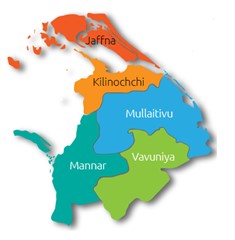
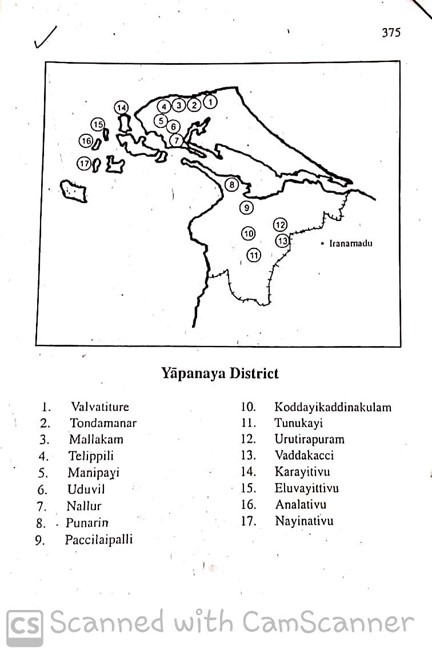
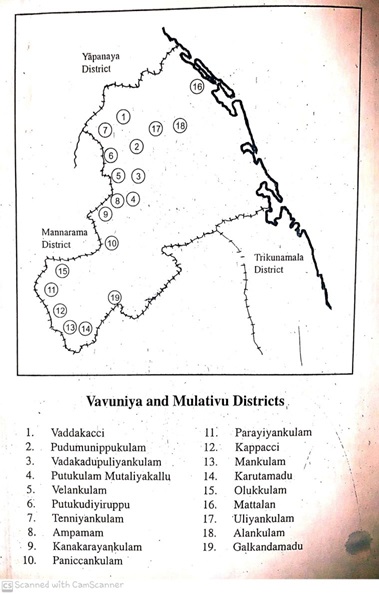
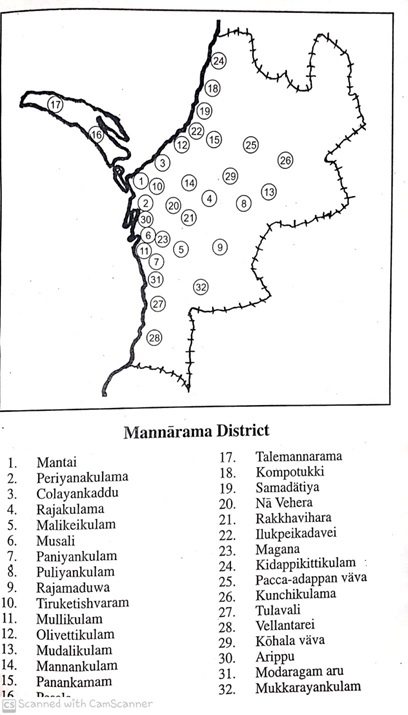
How many people in this country know that Land powers in the Northern and Eastern provinces had already been given on a silver platter even without activating the 13th Amendment to the enemy by subtle political manipulations in 1992 by the Premadasa Government without the full implementation of the 13th Amendment, virtually marking the EELAM map on ground under the guise of Taking Administration to the people. Accordingly, the provisions of Act 58.1992 and PA circular 21/92 became effective throughout the Island with effect from the due date it was gazetted under this Act and the date given in the PA circular 21/92.

But the real dangers of granting land powers under this Act and Circular will come in to effect only in the EP and NP as explained below in more details. But the irony of this story is none of the 225 MPP had admitted this in Parliament.  Those representing the NP and EP must be keeping mum because if they say so, then there will be no issue for them to talk about to deceive the people by making a big noise in Parliament. Others maybe keeping silent because either they are not concerned about it or they don’t know about it as it is not a priority item in their private agenda.  

All powers hitherto exercised by the government Agents under statutes, gazettes and circulars from the beginning of colonial administration within their districts were transferred under the provisions of Act 58 of 1992 to Divisional Secretaries within their Districts of authority and such Divisional Secretaries thereafter shall exercise, perform, and discharge, within such Division, any power, duty or function conferred or imposed on, or assigned to, him/her by written law. The PA circular 21 of 1992 Taking Administration to the people” had laid down the details of its implementation and ended the long and illustrious record of 177 years of colonial Kachcheri Administration in this country. Further the 16th Amendment to the constitution provided the required administrative, legal and language facilities as explained in detail below.

As such the demand by Separatist Tamil politicians for the full implementation of the 13th A with land powers is only a political slogan just to rouse up the extremist communal elements.  In this context both the Sinhala and Tamil politicians on either side of the political divide know that jointly they have deceived the Sinhala Buddhist electorate. Therefore, this in short is the bitter but the gospel truth.

Because, all administrative powers including land alienation, and administration and connected subjects like irrigation, crown lands, irrigation, not only in the North and Eastern provinces but in reality, in the whole country have already been transferred with the full implementation of the Act no 58 of 1992 Transfer of powers (Divisional Secretaries) and the PA circular 21/92. As such there is no need to transfer them any more under the 13th A, as agitated by the Tamil politicians now.  This has been already done by legal and administrative arrangements by the treacherous UNP government under Premadasa by transferring all powers with regard to land and allied subjects that were formally with the Government Agents under various statutes to the Divisional Secretaries under the guise of taking administration to the people thus striping the GAA completely and thereby denying the people the only independent, impartial and nonpolitical source of administrative justice that was available at the district level.   

Delivery of Services as it was highlighted by the politicians at the time to people was not the real objective of these measures. This was done mainly to weaken the GAA whom the politicians’ envy as they formed a major barrier in their districts to violate rules and regulations for political needs. These new methods were invented only to deceive the people and to consolidate their power and get cheap popularity at the same time. Third they also knew it is easier to influence junior inexperienced officers of the divisions than the more experienced senior Civil servants at the district level who are less dependent on local politicians. The architects of Act no 58/92 and PA circular 21/92 had no idea as to the damage that is going to cause to district administration as a result.

What is even more dangerous is the provisions of both the Act 58/92 and the PA circular 21/92 will continue to be effective and irreversible damage will be done meanwhile and the formation of the EELAM will be a reality before long even if the 13th A is abolished in future by a patriotic government, if these two legislative and administrative devices are not abolished at least now. As such it will be a big threat for the territorial integrity and the unitary status of this Island State as they generate divisive and uncontrollable separatist tendencies among the minorities.

Under the powers given in terms of Act 58/92 each Divisional Secretary shall exercise, perform, and discharge, within such Division, any power, duty or function conferred or imposed on, or assigned to, him/her by written law. Furthermore, the fact that almost all officers attached to Divisional offices in the North and East will be Tamils or Muslims and the majority of Divisional Secretaries in the whole Island will be women as the current trend has proved, I foresee a serious breakdown in fair play and social justice, impartiality, efficiency and also the quality of public service in future due to the absence of supervisory and advisory authority at the district level, as the present GA. There will be no checks and balances on these junior divisional level officers. The quality of justice and fair play to the general public will also suffer in future as there is a likely hood of increasing pressure from local politics which the relatively junior and inexperienced Divisional level officers might find it difficult to withstand. The local ethnic and religious considerations will also affect the independence and the quality of service under this system.

My most pertinent question to those who voted this Act in Parliament and became a party to this treacherous national crime is what the hell they were doing without exposing this national crime and withdrawing these two treacherous acts. Who were the traitors who have voted this 58/92 and why the hell they did, while the Ministry of public Administration issued this death sentence Circular on district Administration. These two incidents alone bare evidence as to how our politicians have messed up this country for political gains during that period. Wasn’t there at least a single civil servant who had a wee bit of brain to point out this criminal act to the Cabinet. The Secretary M/PA Junaid who has singed this 21/92 death warrant of the nation was my Junior by 2 years and was a person who has never worked outside Colombo other than his training period as a cadet at Nuwara Eliya Kachcheri for few months. So obviously he could never have known what a village or an understanding as to what kachcheri administration in this country is. So, it is no wonder this type of tragedies happens when you appoint such persons as the Secretaries to the Ministry like Public Administration.

Fortunately, by providence for the SLAS, I was the President of the SASA at that time. Accidentally one day I saw the cabinet paper to amalgamate the Divisional Secretariates and the Pradhesiiya Sabhas and appoint Divisional Secretaries as Secretaries of Praadhesiya Saba Chairmen on the table of the Chief Secretary to Uva province at Badulla in Nov 1992 on one of my circuits. I got a copy and after I returned to Colombo, immediately I summoned an emergency meeting of SASA at the BMICH and invited President as the chief guest. That was the first SASA meeting held at the MBICH and well attended. Almost about 2300 out of our strength of 2500 at that time were present. Almost all Div Secs, in the Island, GAA, Heads of Departments and 22 Ministry Secretaries out of 25.  Were there. In my opening address I explained to the President the dangers of that proposal. I told him thatwe as Members of the Sri Lanka Administrative Service numbering about 2500 who man all the key positions of the entire machinery of governance at the National, District and Divisional and village levels of public service who are in charge of the implementation of the policies and programmed of any government. strongly oppose this new proposal. I also told him that in the event of this proposal being implemented there will be no governance either at the center or in the periphery and there will be utter chaos and confusion in the whole country. I also paused the question to him as to what guarantee he has that these Pradesiya sabahas will be UNP at all the time. What is more is it appears to us to be a big coup detach to destabilize the government and sent it home, I told him. Therefore, I requested him to withdraw the Cabinet paper to be taken up next day and urge the President not to appoint any outsiders to Scheduled post of SLAS as well. The said Cabinet paper proposed to Amalgamate the two and appoint the Div Secs as secretaries of the Pradheisiya Sabaha. Had that been allowed, that would have been the end of the SLAS in Sri Lanka. I am happy that I could thereby prevent the demise of the top civil Service in this country. Had any one brought to my notice the above two cases, Act 58/92 and the PA circular 21/92. I could have included them too to my list and definitely stopped them been implemented.  As I came back to my seat that day President Premadasa turned towards me and said Sudath my congratulations. You made an excellent speech”.

 Then he got up to his feet and said, Gentlemen I did not know the dangers of this proposal until your President brought up it to my notice. I thank him and your association for bringing this up to my notice. I allow all the five requests he made on behalf of your Association, he concluded.

Nex morning my friend Wijedasa called me and said My congratulations Sudath. President wanted me to inform you that you have been appointed as the State Sect to the Ministry of Health with immediate effect.  That was how I was appointed as a Ministry Secretary on 1st Jan 1993 straight away from the pool. 

This was how I got him to drop that proposal that was to be taken up at the Cabinet meeting scheduled to be held next day. At that time, I was in the pool having been transferred to it by the same Premadasa due to political interventions for the resurrecting a dead project called NADSA with a 12.5 million  US$ package from WFP as the Executive Director of the newly created HADABIMA Authority of Sri Lanka at that time having created a 250, 000 farmer family  project covering the Central, Sabaragamuwa and UVA provinces, thus expanding a small mid-country farmer development project that was confined to few small pockets in Kandy and Kegalla Districts.

Had I been a Secretary of a Ministry at that time or had anyone brought up these 2 issues (the Act no 58/92 and 21/92) to my notice as the President of the SASA, I would have definitely brought up the issues at the BMICH meeting and stopped them as well.

Both the 58/92 and 21/92 national betrayals were done during the Presidency of R. Premadasa. As such he was singularly guilty of this betrayal and is fully responsible for the disaster that was brought about to district administration in this country resulting from these actions thereafter. Additionally, the 16tth Amendment to the Constitution that was passed on 17th Dec 1988 by the same government had already provided the required administrative, legal and language infrastructure for the easy implementation of these powers in the respective two provinces in addition to implementing the Act 58 and PA/21 Circular though out the Island.

The nominations were accepted for the Presidential Election on 10th Nov. 1988 and the elections held on 19th Dec 1988 and Premadasa became President on 2nd Jan 1899. Meanwhile the 16th amendment was certified in Parliament on17th Dec 1988. Now you see how much Premadasa was involved with these disasters.

 These two instruments operate like this. By virtue of the provisions of 58/92 and 21/92 powers of the former GAA over land and all other subjects such as irrigation Ord etc that were exercised by the then GAA hitherto (see attachments) were transferred to the Divisional Secretaries, the Divisional Secretaries became Divisional GAA overnight although they were designated Divisional Secretaries. With these new powers they became the sole authority within their divisions on the subject of land and all other subjects transferred under this Act reducing the former GAA to ceremonial figures as coordinator only for election work without any authority over the transferred subjects as the PA circular 21/92 says. They are now designated as District Secretaries and are expected to mark time until they disappear with the completion of the full implementation of the PA circular 21/92 as the curtain will fall over the Kachcheri system.   

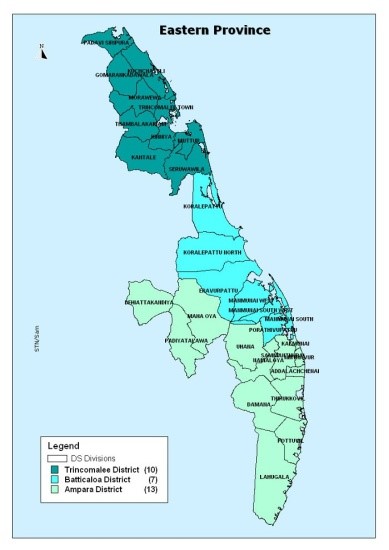
Coming back to the Northern and Eastern provinces all politicians in these areas are Tamils. Governors are Tamils. All the so called key public officers like District Secretaries, Chief Secretaries are also Tamils all functions pertaining to the subject of land in these two provinces come under the Divisional Secretaries. Divisional Secretaries, Gramasevakas, Heads of all government departments, and all public officers in these two districts are Tamils. The working language of all public Officers has now become Tamil under the 16th Amendment to the Constitution. Thus, it is more than clear that not only mono Tamil administration but even the EELAM   is already established in these two provinces while yelling ethnic discrimination and genocide at international fora. What is left is only to declare cessation under the banner EELAM, with the blessings of the Indian government.

A survey superintendent working in that area told me that he has got orders to give land permits to all lands occupied by Tamils and Muslims in the eastern province without limiting to 20 p for residential and 40 p for agricultural purposes as it is done in other provinces. This was how then government have discriminated the Sinhala majority against the minorities following the same principle the colonial rulers did. Thanks to President Premadasa, it is a free for all operation within those two provinces without a word about the 13th Amendment, all our patriotic ancestors fought for and died in tens of thousands for two and half millennia is betrayed with single stroke of one self -seeking power hungry unpatriotic politician.

Therefore, unless a patriotic Sinhala government one day withdraw the Act 58 of 1992 and PA Circular 21/92 immediately, within one year all the land in these two provinces, comprising 1/3 the area of the Island with about 4% of the total population of the country will be occupied by Tamils only. Then whether the 13th A is empowered or not the de-Sinhalization of these 2 provinces will be a foregone conclusion, with legal plans prepared by the Survey Department of Sri Lanka. In the process, now that the President has already directed to give all Mahaweli lands and even archaeological reserves and temple lands to Tamils and Muslims living in these areas contrary to current land alienation Laws and the provisions of the Antiquities Ordinance. It is only a matter of time to declare the EELAM.

So, what Prabahakaran could not do for 30 years by the gun and terror will be done within 2 years thanks to these two treacherous instruments and the 16th amendment to the Constitution by Premadasa. In the process these short sighted  self- seeking politicians have simultaneously achieved two things. The Act 58/92 and PA Circular 21 /92 first, destroyed the once well-established district administration in this country, one of the best in the East, that exercised the authority of the Central government both in administration and development and second, given land powers to the NP and EP without implementing the 13th A. All Sinhalese and Muslims in these provinces will either be murdered or chase out within in a very short time, perhaps with the help of the same governments in exchange for their vote.

Therefore, the urgent need to withdraw Act 58 0f 1992 and PA circular 21 /92 to stop the elimination or evacuation of all Sinhalese and even Muslims from these two provinces and declaring the EELAM.  Over to you the government, elected by 19.5 % of the people of this country with whom the so-called sovereignty is supposed to be vested, perhaps only on the election day.

These two instruments the above 58/92 and 21 /92.and the 16th A to the constitution marked the death of the District Administration and the birth of an era of absolute anarchy with separatism raising its ugly head on a better footing underscoring the 16th Amendment and these three legal and administrative instruments mark a turning point in the complete breakdown of administration in the countryside of this country.

The GAA who happened to be the kingpins and commanding officers in their districts when it comes to district administration under the previous system have now got reduced to mere spectators looking like outdated antiques with no power and authority over the Divisional Secretaries and even over the Grama Sevakas, once happen to be the steel foundation of a superb mechanism of District Administration in this country.  The Government agents under the previous system were public servants and senior professional SLAS officers who knew their job. But under the new system Governors command over the provinces (A system rejected even by the colonial Administrators long time ago as inefficient and not people friendly in the delivery of services.). They are not professionals either. Almost all are rejected politicians or relatives and friends of either the President or Ministers except in very rare instances most of them know next to nothing, other than attending ceremonial and political functions not only in their Provinces but all over the Island at public expense and enjoying princely privileges with Cabinet Minister status for no work done to the country or to people of their own provinces.

An excellent example of gross misuse of executive political power heavily misused in pursuance of personal interests is the recently appointed EP Governor Senthil Thondaman who started his new job by burning his fingers by getting a Divisional Secretary to ban the construction of a Buddhist Temple on an archaeological site for which he had no judicial power as the Governor. This man is an estate Tamil of Indian origin from the hill country, who knew next to nothing about administration, public service or governance. He also did not have any other distinguished record of service to the country rendered, for him to be considered for such high public post. 

Obviously, the President has appointed him as Governor EP to fulfil two of his personal objectives. Objective one is to woo the plantation vote in the hill country as he is the President of the CWE and objective 2 is to canvas the EP Tamil vote for the next presidential election, both of which he will never get. If the President was really interested in the development of the EP and honestly concerned with the overall welfare of the people including the  security of the  country in view of the long coastal line extending from Kumana in the down South to Kokilayi in the north (nearly 200 km) open to the Indian ocean, to in my mind,  he  should have never removed the former Governor Anuradha Yahmpath, purely on representations made  by Tamil, Muslim and even local half Sinhala idiots  (as she is a Sinhala Buddhist who was the best governor we ever this area had, going by her performance during the short time she was there as Governor, in any province for that matter, since the inception of the PCC in 1987)  with a separatist ethnic Tamil labour leader in spite of  his well-known Indian affinities and anti -Sinhala Buddhist attitudes as already openly displayed by the Trico Buddhist temple issue.

He is a man who always think he is an Indian. His all affinities are with his mother land India and all his gods both spiritual and political are also in India. His allegiance just like those of his boss are all ways with India and never with Sri Lanka. So how can one expect such a man to protect the Interest of mother Lanka and its people. His first adventure of banning construction on Boralukanda Rajamaha Viharaya is ample testimony for his anti- Sinhala Anti Buddhist and anti -Sri Lankan attitude. In this back drop the President must call him back and appoint a Sinhala Buddhist Scholar conversant in history, geography and archaeology of this region as the new governor if he is unable to reinstate the previous Governor Anuradha Yahamapath in the broader interest of the security of the country and the broader interests of the native Sinhala Buddhist people in that province[S1] .

I pause this question to the President. What distinguished service this man has done to the county or what positive contribution you expect from him for the good governance, the development or the welfare of the people of that province, besides your vested self interest in his vote base, which I will vouch, you will never get at any election. You take it from me, their entire vote base will openly support Sajith Premadasa as they had done it last time as well.  In this back drop I think you will re-think about your mistake at least now and try to rectify it.


 [S1]

“මව්බිම පාවාදෙන ද්‍රෝහීන්ට කළ යුත්තේ කුමක්ද?”- මහජන විනිශ්චය ප්‍රකාශයට පත්කෙරේ

September 17th, 2023

 Lanka Lead News

විශ්‍රාමික ලුතිතන් ජනරාල් ජගත් ඩයස් මහතාගේ කැඳවුම්කාරිත්වයෙන් මව්බිම පාවාදෙන ද්‍රෝහීන්ට කළ යුත්තේ කුමක්ද ?- මහජන විනිශ්චය ප්‍රකාශයට පත් කිරීම” අද පස්වරුවේ මාතර නූපේ සණස මන්දිරයේදී සිදු කෙරිනි.

රුහුණු රට භික්ෂු පෙරමුණේ සංවිධායකත්වයෙන්, සමස්ත ලංකා බෞද්ධ මහා සම්මේලනයේ මෙහෙයවීමෙන්, ජාතික ප්‍රතිපත්ති අධ්‍යනය හා උපාය මාර්ගික පර්යේෂණායතනයේ අධීක්ෂණයෙන්, ශ්‍රී ලංකා ජාතික ඒකාබද්ධතා සංවිධානයේ සම්බන්ධීකරණයෙන් යුතුව මෙම මහජන විනිශ්චය ප්‍රකාශයට පත්කෙරිණි.

National Security House Committee head asks why Diaspora doesn’t want India and TNA investigated

September 17th, 2023

By Shamindra Ferdinando Courtesy The Island

Chairman of the Sectoral Oversight Committee on National Security, Rear Admiral (retd.) Sarath Weerasekera, MP, yesterday (15) asked whether a comprehensive international investigation into accountability issues here could be conducted unless India, too, was subjected to the same.

The former Public Security Minister was responding to the Global Tamil Forum (GTF) declaration that India and Sri Lanka Core Group at the ongoing 54 session of the UN Human Rights Council in Geneva, emphasised Sri Lanka’s continuing failure to fulfil its own commitments to justice and accountability. The Core Group consists of the US, the UK, Canada, North Macedonia, Malawi and Montenegro.

The Colombo District lawmaker said that the bone of contention seems to be whether the killings in the Northern and Eastern Provinces, during the deployment of the Indian military (July 1987-March 1990), and seaborne PLOTE (People’s Liberation Organization of Tamil Eelam) raid on the Maldives, in Nov, 1988, too, should be investigated.

The GTF, in a statement issued from the UK, declared its support for an international investigation as demanded by senior Opposition political leaders and the Catholic Church in Sri Lanka. The UK-based GTF also welcomed the latest report on Sri Lanka by the Human Rights Commissioner.

Acknowledging the death of nearly 1,500 Indian officers and men, and the assassination of former Premier Rajiv Gandhi, MP Weerasekera said that those demanding accountability on the part of Sri Lanka should explain their stand on

India’s culpability, as well as the Tamil National Alliance (TNA) that served the LTTE until the very end, having declared Velupillai Prabhakaran as the sole representative of the Tamil-speaking people. The Sri Lanka Army lost approximately 23,500 officers and men whereas the Navy, Air Force, Police, including the STF, lost about 4,000 personnel.

Weerasekera, who retired in 2006 after having served the Navy for over three decades, said that interested parties had raised unsubstantiated war crimes allegations in the wake of the UK television station Channel 4 claim that SLPP presidential election candidate Gotabaya Rajapaksa’s camp engineered the 2019 Easter Sunday carnage to facilitate the former Defence Secretary’s victory.

The former Minister was responding to the GTF declaration that near simultaneous attacks were meant to cause what the Diaspora grouping called a sense of insecurity and blatant communalism needed for the Rajapaksas to recapture power.

Referring to the 2019 Easter Sunday carnage, the GTF alleged that the deterioration in inter-communal relations were often viewed as an acceptable price for acceding to political power. This appalling culture was built on the unshakable confidence that the Sri Lankan judicial system would never be able to deliver truth or justice, the group added.

The Chairman of the Sectoral Oversight Committee said that as the close relationship between the GTF and the TNA that had been formed in 2009, the year the LTTE was brought down to its knees is well known, it would be pertinent to ask them for an explanation regarding their backing war-winning Army Chief General Sarath Fonseka’a candidature at 2010 presidential election after accusing him and his forces of committing war crimes.

The MP pointed out that following the 2004 general election, the EU Election Monitoring Mission declared that the TNA secured over 20 seats in the Northern and Eastern Provinces with the help of the LTTE to stuff ballot boxes in the areas it controlled. Having benefited from its relationship with the LTTE, the TNA threw its weight behind the UNP-JVP-SLMC coalition that fielded Fonseka who handsomely won all Northern and Eastern districts because the Tamil speaking community was relieved by the eradication of the LTTE.

The SLN veteran urged all political parties, represented in Parliament, to use the two-day debate, scheduled for next week, on the 2019 Easter Sunday attacks and national security, to engage in a meaningful discussion.

Weerasekera said that a thorough inquiry was definitely needed to establish the number of deaths, due to the conflict. The recent disclosure that Mohamed Mihlar, the father of C4 whistle-blower Mohamed Mihlar Mohamed Hanzeer aka Moulana, had been killed in Chennai, India, along with 12 others of the EPRLF, underscored the need to ascertain the number of victims, MP Weerasekera said.

Noting that incumbent TNA MP Dharlamingham Siddharthan (Vanni) had declared years ago that his father V. Dharmalingam and his parliamentary colleague M. Alalasundaram, both Jaffna District MPs of the now defunct TULF, were killed by TELO (Tamil Eelam Liberation Organization), in early Sept. 1985, at the behest of India’s premier intelligence service, RAW, MP Weerasekera called for no holds barred investigation. The MP said that accountability issues couldn’t be resolved until those concerned established the number of people killed in India due to clashes among Tamil groups, the number killed by India, after the assassination of Rajiv Gandhi, deaths due to raid on the Maldives, and Indian Navy action against PLOTE cadres fleeing that country in a commandeered ship, those killed as a result of fighting among Tamil groups here, those caught in crossfire between the LTTE and the Indian military, and finally those killed during fighting between Sri Lankan forces and terrorists. The victims of LTTE massacres and the number of child soldiers should be counted separately, the ex-Minister said, urging the GTF to acknowledge the number of LTTE cadres killed during the three decades long conflict.

Their latest statement at least failed to indicate that there had been two wars – one between LTTE and Indian military and other between LTTE and Sri Lankan military, the former Minister said. Weerasekera found fault with successive governments for failing to set the record straight.

What is the life span of Victoria Dam and how safe it is.

September 15th, 2023

Aloysius Hettiarachchi

At this very moment the concrete used for the construction of large number of schools in the United Kingdom have been found to be of poor quality. It seems some have collapsed and others are crumbling. According to their BBC World Service around 150 schools are affected and many have been closed. It appears that this is just the tip of the iceberg and many government buildings also may be affected. According to this source the culprit is a certain type of lightweight concrete known as RAAC (Reinforced Autoclaved Aerated Concrete).

When I saw a youtube video recently (link given below) by a young enthusiast with statistics on the Victoria Dam, I thought of highlighting my concern in this forum as a Professional Civil and Structural Engineer:

 Actually, I have raised this question of ‘durability’ and use of concrete on important structures from some experts who were giving a presentation at the institution couple of years ago as well. They were some engineers (of Sri Lankan origin) attached to an Australian University doing research work on design and construction techniques using reinforced concrete. With some hesitance the reply was that the useful life of reinforced concrete structures is about 75 years. In practice, I have known that concrete buildings and bridges become unusable after about 75 years, many a time without giving notice with disastrous consequences. But my concern was lack of such information given to decision makers who plan for such buildings or structures like bridges.

What is Concrete:

Concrete is made with cement by adding it in controlled proportions to fine aggregate (sand or quarry dust) to coarse aggregate (crushed stone or crushed river pebbles) and mixing with water. After placing the concrete, it needs to be cured (by pouring water over it) for a certain period of time (several days) to prevent cracking and for it to gain the required amount of strength. The general consensus is that after about 28 days concrete gets the full specified strength according to the proportions used and stays that way for ever. Most of us know this process but what we do not know is what exactly is cement and its behaviour.

The patent for cement was first obtained by an English mason by the name Joseph Aspdin in 1824. The product was first known as Portland Cement as it resembled a building stone in the Isle of Portland off British coast. We used to refer to this cement as OPC (Ordinary Portland Cement). Since then, the use of concrete has become widespread and the first high-rice concrete building (skyscraper) was constructed in Chicago in the latter part of the 19th century. It had a useful lifespan of about 40 years according to my search in the internet.

The biggest constituent of cement is lime (about 66%) which is obtained from sedimentary rock formed in river beds and lakes. Perhaps this material containing calcium carbonate is a product of millions of years of biological action. The rest are alumina, silica, compounds of iron, etc. The powdered mixture is capable of absorbing a huge amount of energy that gets released when water is added in the concrete making process.

Various codes of practice for the use of concrete in reinforced concrete have evolved since then, but it seems to me they all follow the pioneer (UK’s codes), perhaps blindly.

In my practice I have used three codes for reinforced concrete. The first was British Standard (BS) 110 in the 70s. Then came BS 8110, in mid 80s. Finally, when UK joined EU, we started designing for Eurocode known as EN 1991. Currently we use EC2 which Sri Lanka also follows. However, what struct me most is that none of these codes use time as a parameter. They all deal with ‘durability’ of a completed or partially completed structure under loads, wind and other conditions without any reference to energy transfer that goes on inside the constituents continuously over a long period. The useful time span is vaguely mentioned as between 50-100 or taken for granted as 100 yrs in some obscure document but not in any of the codes mentioned, to my knowledge. BS5400 for bridges define concrete cover to reinforcements with a view to control the exposure of steel in concrete to elements but not with a view to control the reactions that may be going on in cement.

The codes do not explain how the bond between steel and cement paste occurs but assumes that it stays firmly attached together for ever. This is the same story for bonding between cement paste (calcium silicates) and aggregates.

I have gone through a research paper produced at the time of EN1991 came into force (ie 1990) by a team in University of California, Berkely (Report No. UCB/SEMM-90/14) giving the details of a Finite Element Analysis of Reinforced Concrete Structures around five years ago. I found to my surprise that they too overlooked this very important aspect of ‘time’. And also, I found that the model they used for the bond between steel and concrete unsatisfactory as they have used a method called ‘smeared crack model of concrete’. I have also gone through Reynolds Handbooks used by engineers, world over and handbooks of an expensive software packages used for design of high-rise buildings and found that they all follow the codes mentioned above without regard for time factor.

Coming back to the subject matter about Victoria dam, I believe the statistics given by the narrator is true. I have not visited this dam but witnessed its opening by late Her Majesty the Queen when I was working in a West African county. The job is impressive, but will it serve another 40 years or at least another 15?. There are no structural steel rods as it has been designed as an arch , but what about the bond between calcium silicates and aggregates that gives it the compressive strength. With time they may become weak and the smallest earthquake can cause a huge damage. To be pre-warned is to be pre-armed. This writer also has designed and constructed an earth-dam in a foreign country after studying their structures in Sri Lanka and elsewhere from several books on the subject. It was part of a food prevention scheme and has become a picnic spot.

According to the second law of thermodynamics in every system the entropy (disorder) tends to increase with time to come to a more stable state. We take materials from the ground which are in stable state, heat them up and give energy. We then use them in our projects and think they will stay the same way. How wrong we are.

It’s time to think in terms of quantum physics that explain the way matter exist. In any material the electron spin in some atoms align in a certain direction when we give energy to it. But with time by combining with nearby other atoms that it may come to contact with the direction of spin of electrons gets rearranged to previous state so that the combined effect of magnetic fields become zero. This was beautifully explained in a video by a scientist. Unfortunately, I cannot lay my hands on it now to produce here.  However, it is the same thing that was explained by one engineer using an instrument known as ‘Vector Network Analyzer’ (VNA) where he was doing a Fast Fourier Transform (FFT, which is an interesting subject as it is in all our mobiles) on emissions (or release of energy) coming from some materials to find their wave form. This video appeared in one of my previous write ups in this forum. Here it is:

Korea will recruit more skilled Sri Lankan workers – Korean Minister of Labour & Employment

September 15th, 2023

Prime Minister’s Media Division

Minister of Labour & Employment of Republic of Korea, Lee Jungsik said Korea has doubled the recruitment of Sri Lankan employees this year and it will be further increased by giving more opportunities to skilled workers with knowledge of Korean Language.

He said this when he called on Prime Minister Dinesh Gunawardena at the Temple Trees on September 14 with a delegation of senior officials and Korean Ambassador Lee Miyon.

The Prime Minister thanked Korean Government for generous development assistance for several sectors including health, agriculture, education and Information Technology. Thanking the Minister for his plan to recruit more Sri Lankan workers, the Prime Minister urged further assistance for youth skill development programmes and teaching of Korean language.

Minister Lee Jungsik, said his government would consider those proposals favourably and he plans to visit some of the Sri Lankan institutions and universities where Korean language is taught during his current visit.

“Sri Lanka, indeed, is the Pearl of Indian Ocean and you have tremendous potential to attract tourists,” the Korean Minister said and added that Korean investors should increase investments in the hospitality sector in Sri Lanka.

State Ministers Janaka Wakkumbura and Ashoka Priyantha, MP Yadamini Gunawardena, Ambassador of Korea Lee Miyon, Additional Secretary to the Prime Minister, Mahinda Gunaratne, Director General of Korea Labour Ministry, Kim Eunchul and senior officials were also present on this occasion.

17 වන සිවිල් ආරක්‍ෂක දෙපාර්තමේන්තු දිනය සැමරීම

September 15th, 2023

Media Centre MOD

1985 අංක 40 දරණ මිනිස්බල උපයෝගිතා සහ පරිපූරක හමුදා පනතේ 52 වගන්තිය යටතේ ශ්‍රී ලංකා පොලිස් සේවාවට සහායවීම සඳහා පරිපූරක හමුදාවක් ලෙස  ආරම්භ කළ ග්‍රාමාරක්‍ෂක සේවය” 2006.09.13 වන දින නිකුත් කරන ලද අංක 1462/20 දරණ අති විශේෂ ගැසට් පත්‍රය මගින්  දිවි හිමියෙන් රට රකිමු” තේමාව යටතේ සිවිල් ආරක්‍ෂක දෙපාර්තමේන්තුව” නමින් ප්‍රතිසංවිධානය කරන ලදී.

අධ්‍යක්‍ෂ ජනරාල්වරුන් 08 දෙනෙකු යටතේ මෙම දෙපාර්තමේන්තුවේ පාලන කටයුතු සිදුකල අතර, වර්ථමාන අධ්‍යක්‍ෂ  ජනරාල් එයාර් වයිස් මාර්ෂල් ආර්එස් බියන්විල වීඑස්වී යූඑස්පී එම්බීඒ (එක්සත් රාජධානිය) එන්ඩීසී (ඉන්දියාව) පීඑස්සී මැතිතුමායි. සිවිල් ආරක්‍ෂක දෙපාර්තමේන්තුවේ සාමාජික සාමාජිකාවන් 34,000ක් සක්‍රීය සේවයේ යෙදී සිටින අතර දිවයින පුරා බලකා මුලස්ථාන 24කින්, පුහුණු පාසල් 04කින් සහ විශේෂ ව්‍යාපෘති 03කින් සමන්විත වේ.

ත්‍රස්තවාදී ප්‍රහාර හමුවේ තම ගම්බිම් ආරක්‍ෂා කර ගැනීම සඳහා ස්වේච්ඡාවෙන් ඉදිරිපත් වී යුධ ජයග්‍රහණයන් තහවුරු කර ගැනීම වෙනුවෙන් මායිම් ගම්මානවල ජිවත් වූ සිවිල් ජනයාගේ ආරක්‍ෂාව සපයමින් යුධ හමුදාව විසින් අත්පත්කර ගන්නා ලද භූමිය ආරක්‍ෂා කර ගනිමින් හා  සිවිල් ජනයා ගම්බිම් අත්හැර දකුණට සංක්‍රමණය වීම වලක්වා ගනිමින්  තර්ජිත ගම්මාන ආරක්‍ෂා කර ගැනීම වෙනුවෙන් සිවිල් ආරක්‍ෂක දෙපාර්තමේන්තු සාමාජිකයින් අනගි මෙහෙයක් ඉටුකරන ලදි. කුරිරු ත්‍රස්තවාදය හමුවේ ලක් ධරණී තලය වෙනුවන් සිවිල් ආරක්‍ෂක සාමාජික සාමාජිකාවන් 545 දෙනෙකු තම ජීවිතය පූජා කර ඇති අතර, 425 දෙනෙකු රණක්‍ෂිතයට පත්ව ඇත.

යුද්ධය නිමා වීමෙන් පසු සංවර්ධන සංග්‍රාමයට එක්වෙමින් ජාතික ආර්ථික සංවර්ධනය නගා සිටුවීම වෙනුවෙන්  දායකත්වය ලබා දෙන දෙපාර්තමේන්තු අතර ප්‍රමුඛ ස්ථානයක් සිවිල් ආරක්‍ෂක දෙපාර්තමේන්තුව ලබා ගෙන ඇත‍. මේ වන විට සිවිල් ආරක්‍ෂක දෙපාර්තමේන්තුව මගින් පවත්වාගෙන යනු ලබන කෘෂි ව්‍යාපෘති, පශු සම්පත් හා ගඩොල් ව්‍යාපෘති, කාබනික පොහොර නිෂ්පාදන ව්‍යාපෘතීන් ආදිය මගින් මෙන්ම විදුලි වැට නඩත්තු කිරීම,  ඉදිකිරීම් හා නඩත්තු රාජකාරි, ආරක්‍ෂක සේවා සම්පාදනය කිරීම හා නර්තන, සංගීත කණ්ඩායම් සේවා ආදායම් රාජ්‍ය භාණ්ඩාගාරයට බැර කරන ලදී.

සිවිල් ආරක්‍ෂක දෙපාර්තමේන්තුව ස්ථාපනය කර වසර 17 පිරීම නිමිත්තෙන් සිවිල් ආරක්‍ෂක දෙපාර්තමේන්තු දිනය” සැමරීම 2023 සැප්තැම්බර් මස 13 වන දිනට යෙදී ඇති බැවින්, අධ්‍යක්‍ෂ ජනරාල් තුමාගේ මඟ පෙන්විම යටතේ සැමරුම් වැඩසටහන් කිහිපයක් සංවිධානය කර ඇත.

දක්‍ෂ ක්‍රීඩා කෞෂල්‍යතාවයකින් හෙබි එයාර් වයිස් මාර්ෂල් රොෂාන් බියන්විල ශ්‍රී ලංකා ක්‍රිකට් පාලක මණ්ඩලයේ ලේකම්, ශ්‍රී ලංකා පාපැදි සම්මේලනයේ ලේකම්,  ආරක්‍ෂක සේවා ක්‍රීඩා මණ්ඩලයේ හා ශ්‍රී ලංකා ගුවන් හමුදා ක්‍රීඩා කවුන්සිලයේ ජාතික මට්මමේ ක්‍රීඩා කළමණාකරණ පත්වීම් රැසක් හෙබවූ ජ්‍යෙෂ්ඨ නිලධාරියෙකි. ශ්‍රී ලංකාවේ හා විදේශයන්හිදී විශේෂ පාඨමාලා හදාරා ඇති එයාර් වයිස් මාර්ෂල් රොෂාන් බියන්විල විශිෂ්ඨ හා ආදාර්ශමත් නිලධාරියෙකු ලෙස තම රාජකාරි ඉටුකිරීම වෙනුවෙන් ශ්‍රී ලංකා සන්නද්ධ සේවා දීර්ඝ සේවා පදක්කම, දීර්ඝ සේවා කණ්ඩය, විශිෂ්ඨ සේවා විභූෂණ සහ උත්තම සේවා පදක්කම් වලින් පිදුම් ලැබූ ජ්‍යෙෂ්ඨ නිලධාරියෙකි.

නව අධ්‍යක්‍ෂ ජනරාල් ධුරයේ වැඩ භාරගත් එයාර් වයිස් මාර්ෂල් රොෂාන් බියන්විල සිවිල් ආරක්‍ෂක දෙපාර්තමේන්තුව මේ දක්වා සිදු කරනු ලැබූ සේවය ඇගයීමට ලක් කළ අතර, තව දුරටත් ඔවුන්ගේ සේවාවන් නිසි පරිදි ලබා ගැනීම සඳහා සිවිල් ආරක්‍ෂක දෙපාර්තමේන්තුව ප්‍රතිව්‍යුහගත කර විධිමත් වෘත්තීය පුහුණුවක් ලබා දී වෘත්තීය හැකියාවන් වැඩි දියුණුකර විනිවිධ භාවයකින් යුතුව රටේ ආර්ථික සංවර්ධනය වෙනුවෙන් යෙදවීමට කටයුතු කරන බවට ප්‍රකාශ කරන ලදී.

  1. සිවිල් ආරක්‍ෂක දෙපාර්තමේන්තු ධජයට හා බලකා ධජයන් වෙත සෙත් පතා ආශිර්වාද කිරීම වෙනුවෙන් මහනුවර ශ්‍රී දළදා වහන්සේ උදෙසා සම්බුද්ධ පූජාවක් පැවැත්වීම, අනුරාධපුර ජය ශ්‍රී මහා බෝධිය අසලදී බෝධි පූජා පිංකමක් පැවැත්වීම, කතරගම කිරිවෙහර චෛත්‍ය අභියසදී හා කතරගම දේවාලය අභියසදී ආගමික වතාවත් පැවැත්වීම.
  •  විල්ලෝරවත්ත ශු. කාර්ලෝ බොරොමෙයෝ දෙව් මැදුරේදී කතෝලික ආගමික වතාවත් පවත්වා සිවිල් ආරක්‍ෂක දෙපාර්තමේන්තු ධජයට හා බලකා ධජයන් වෙත සෙත් පතා ආශිර්වාද කරන ලදී.
  • වැල්ලවත්ත අල් – ඉබ්බ්‍රාහීමියියා ජුම්මා මස්ජිද් දේවස්ථානයේදී ඉස්ලාම් ආගමික වතාවත් පවත්වා සිවිල් ආරක්‍ෂක දෙපාර්තමේන්තු ධජයට හා බලකා ධජයන් වෙත සෙත් පතා ආශිර්වාද කරන ලදී.
  • මරදාන ශ්‍රී කෛලාසනාදර් ස්වාමි දේවස්ථානයේදී හින්දු ආගමික වතාවත් පවත්වා සිවිල් ආරක්‍ෂක දෙපාර්තමේන්තු ධජයට හා බලකා ධජයන් වෙත සෙත් පතා ආශිර්වාද කරන ලදී.
  • සිවිල් ආරක්‍ෂක දෙපාර්තමේන්තු මූලස්ථාන පරිශ්‍රයේදී  අධ්‍යක්‍ෂ ජනාරාල්තුමා  වෙත සම්මාන මුරය පිළිගැන්වීම, බෞද්ධ ආගමික වතාවත් පැවැත්වීම, අධ්‍යක්‍ෂ ජනරාල්තුමා සාමාජික සාමාජිකාවන් ඇමතීම, සිවිල් ආරක්‍ෂක දෙපාර්තමේන්තුවේ අධ්‍යක්‍ෂ ජනරාල්තුමා ඇතුළු සියලුම නිලයන් හා සෙසු නිලයන් සඳහා දිවා ආහාරය ලබා දීම.
  • දිවයින පුරා විහිදී ඇති සියලුම බලකා මූලස්ථාන මගින් දෙපාර්තමේන්තු දිනය සැමරීම වෙනුවෙන් ආගමික වතාවත් සහ විවිධ උත්සව පැවැත්වීම.

ROUND TABLE DISCUSSION ON “ENSURING HOLISTIC HUMAN SECURITY: EMPOWERING SRI LANKAN CHILDREN THROUGH SAFE AND FULFILLING WORK ENVIRONMENTS”

September 15th, 2023

Ministry of Defence  – Media Centre

The Institute of National Security Studies (INSS), the Ministry of Defence’s premier think tank on national security, hosted a Round Table Discussion on Ensuring Holistic Human Security: Empowering Sri Lankan Children Through Safe And Fulfilling Work Environments” on Thursday, September 14, 2023, from 1400hrs to 1530hrs (IST) via Zoom. Mrs. Badra Withanage, Director of Education for All, Ministry of Education, Mrs.N.R. Ranawaka, Deputy Commissioner, Department of Labour, and WDIG Mrs. Renuka Jayasundara, DIG Children and Women Range, Sri Lanka Police were the event’s three distinguished Guest Speakers. The session was moderated by Rear Admiral Dimuthu Gunawardena, RWP**, RSP, VSV, USP, nswc, psc, hdmc, Acting Director General and Director (Communications and Publications) of INSS. The audience included ministry officials, academics, researchers, policymakers, and Sri Lanka Armed Forces representatives. The moderator commenced the proceedings by explaining about the current issue of child labour in Sri Lanka, and further, he highlighted that it has challenged the child protection in Sri Lanka.

Initially, WDIG Mrs. Renuka Jayasundara, DIG Children and Women Range, Sri Lanka Police discussed under the topic titled Addressing Sociolegal Gaps in Eradicating Child Labour in Sri Lanka”. Thereby, she emphasized about the legal system which is affected to eradicate child labour in Sri Lanka. Secondly, Mrs. Badra Withanage, Director of Education for All, Ministry of Education shared her thoughts under the topic Implementing Child Employment To Eliminate Child Labour In Sri Lanka”. In her discussion, she highlighted the educations implemented by the Government to reduce the child labour related issues in Sri Lanka, thus, she pointed out the challenges in achieving equity for vulnerable groups in Sri Lanka. Finally, Mrs. N.R. Ranawaka, Deputy Commissioner, Department of labour focused on the topic Current Child Labour Situation in Sri Lanka and its Impact to Human Security” where she illustrated about the current status of child labour in Sri Lanka and she more precisely highlighted about the emerging trends of child workforce in Sri Lanka.

The moderator led a good Q & A session in the final 30 minutes of the programme,allowing the presenters to react constructively with the required information to the audience’s queries. Finally, Ms Madhushi Sandamini, INSS Research Assistant, offered the Vote of Thanks, bringing the Round Table Discussion to a close.

A discussion between the Sri Lanka Podujana Peramuna and the Mahajana Eksath Peramuna…

September 15th, 2023

Politics

A discussion between the Sri Lanka Podujana Peramuna and Mahajana Eksath Peramuna, which is a major political party allied with it, was held on the night of 13.09.2023 in Colombo.

The discussion was held under the leadership of Prime Minister Dinesh Gunawardena, the leader of the Mahajana Eksath Peramuna, and Mr. Basil Rajapaksa, the National Organizer of the Sri Lanka Podujana Peramuna.

The current political situation in the country, the contributions of coalition politics, public welfare facilities, burden of life and providing relief to distressed people, dialogue to be with trade unions and employees in making decisions in public institutions, issues of restructuring institutions, employee rights, issues regarding Aswesuma and Samurdhi subsidies, the problems in the health service including the medicine crisis, the election system, and various laws that need further discussion, were discussed at length.

Since even the International Monetary Fund has proposed to provide more relief to the people affected by the current economic crisis and to people with low income, it was decided to request from the President as the Finance Minister to allocate more funds for people’s welfare and for providing relief to people in the upcoming budget.

The representatives of the two parties stressed that the Samurdhi subsidy should be continued since it is decided by the law that the number of beneficiaries of Aswesuma be gradually decreased.

Representing Sri Lanka Podujana Peramuna, its General Secretary Sagara Kariyawasam, Attorney at Law and Member of Parliament, and Members of Parliament, Namal Rajapaksa, Gamini Lokuge, Johnston Fernando, S.M. Chandrasena, and Sanjeeva Edirimanna, and representing the Mahajana Eksath Peramuna, its General Secretary Tissa Jayawardena Yapa, Attorney at Law, Deputy Secretary Yadamini Gunawardena, Member of Parliament, and political committee members Vijaya Rathnayake and Mahanama Samaranayake participated in the discussion.

Real victims and real danger of Channel 4’s fact-less documentary

September 15th, 2023

By Ranga Jayasuriya/Daily Mirror

Colombo, September 13: Channel 4’s latest documentary on the Easter Sunday attack is way too depressing for any Sri Lankan, more so for the survivors and relatives who live with the memories of the slaughter of innocents.

But, after a 47-minute-long documentary, all that emerges is a ghastly piece of clickbait journalism that tries to repackage a hackneyed conspiracy theory, relying on the testimony of a single dubious asylum seeker, and generously mixing the harrowing tales of survivors, who live with the pain, as if the emotive appeal would provide credibility to the unfounded claims.

https://googleads.g.doubleclick.net/pagead/ads?client=ca-pub-8350386465098111&output=html&h=156&slotname=7838468123&adk=1100883881&adf=3185778851&pi=t.ma~as.7838468123&w=623&fwrn=4&lmt=1694840605&rafmt=11&format=623×156&url=https%3A%2F%2Fnewsin.asia%2Freal-victims-and-real-danger-of-channel-4s-fact-less-documentary%2F&wgl=1&uach=WyJXaW5kb3dzIiwiMTUuMC4wIiwieDg2IiwiIiwiMTE2LjAuNTg0NS4xODgiLFtdLDAsbnVsbCwiNjQiLFtbIkNocm9taXVtIiwiMTE2LjAuNTg0NS4xODgiXSxbIk5vdClBO0JyYW5kIiwiMjQuMC4wLjAiXSxbIkdvb2dsZSBDaHJvbWUiLCIxMTYuMC41ODQ1LjE4OCJdXSwwXQ..&dt=1694840604722&bpp=1&bdt=655&idt=855&shv=r20230913&mjsv=m202309120101&ptt=9&saldr=aa&abxe=1&cookie=ID%3D7c4e747481c32d78-22a48c5328d700bd%3AT%3D1668453224%3ART%3D1694840543%3AS%3DALNI_MY1G94B362DZU8QjBQZsWJhJpNJqw&gpic=UID%3D000008a912e6bfdb%3AT%3D1668453224%3ART%3D1694840543%3AS%3DALNI_MYdq1KDC3lrOVCOLqVgbOEZtmZZAQ&prev_fmts=0x0%2C338x119%2C717x90%2C623x280&nras=1&correlator=1516072729800&frm=20&pv=1&ga_vid=1955122502.1668453224&ga_sid=1694840605&ga_hid=1082324353&ga_fc=1&rplot=4&u_tz=60&u_his=20&u_h=768&u_w=1366&u_ah=720&u_aw=1366&u_cd=24&u_sd=1&dmc=4&adx=370&ady=1531&biw=1349&bih=611&scr_x=0&scr_y=0&eid=44759876%2C44759927%2C44759842%2C31076839%2C31077857%2C31077705%2C31067146%2C31067147%2C31067148%2C31068556&oid=2&pvsid=2035846682148199&tmod=668854744&uas=0&nvt=1&ref=https%3A%2F%2Fnewsin.asia%2Fcategory%2Faroundsouthasia%2Fsri-lanka%2F&fc=1920&brdim=0%2C0%2C0%2C0%2C1366%2C0%2C1366%2C720%2C1366%2C611&vis=1&rsz=%7C%7CEebr%7C&abl=CS&pfx=0&fu=128&bc=31&td=1&nt=1&ifi=5&uci=a!5&btvi=2&fsb=1&xpc=59vQlcbrbw&p=https%3A//newsin.asia&dtd=865

ADVERTISEMENT

This is disgusting, cruel and insensitive to the victims, survivors, and the country still haunted by the memories of Easter Sunday.

The narrative depicts the documentary as based on the testimony of many whistleblowers, but there is only one, Asad Maulana, the former media secretary of Pillayan.

Moulana is currently an asylum seeker in Switzerland: Channel 4 introduces him as having fled Sri Lanka in 2022, fearing his life for his knowledge of the Easter Sunday attack.

Why on earth someone who fears Gotabaya flee the country only at the very end of Gotabaya’s reign of power?

https://googleads.g.doubleclick.net/pagead/ads?client=ca-pub-8350386465098111&output=html&h=156&slotname=7838468123&adk=1100883881&adf=1160901275&pi=t.ma~as.7838468123&w=623&fwrn=4&lmt=1694840605&rafmt=11&format=623×156&url=https%3A%2F%2Fnewsin.asia%2Freal-victims-and-real-danger-of-channel-4s-fact-less-documentary%2F&wgl=1&uach=WyJXaW5kb3dzIiwiMTUuMC4wIiwieDg2IiwiIiwiMTE2LjAuNTg0NS4xODgiLFtdLDAsbnVsbCwiNjQiLFtbIkNocm9taXVtIiwiMTE2LjAuNTg0NS4xODgiXSxbIk5vdClBO0JyYW5kIiwiMjQuMC4wLjAiXSxbIkdvb2dsZSBDaHJvbWUiLCIxMTYuMC41ODQ1LjE4OCJdXSwwXQ..&dt=1694840604723&bpp=2&bdt=657&idt=883&shv=r20230913&mjsv=m202309120101&ptt=9&saldr=aa&abxe=1&cookie=ID%3D7c4e747481c32d78-22a48c5328d700bd%3AT%3D1668453224%3ART%3D1694840543%3AS%3DALNI_MY1G94B362DZU8QjBQZsWJhJpNJqw&gpic=UID%3D000008a912e6bfdb%3AT%3D1668453224%3ART%3D1694840543%3AS%3DALNI_MYdq1KDC3lrOVCOLqVgbOEZtmZZAQ&prev_fmts=0x0%2C338x119%2C717x90%2C623x280%2C623x156&nras=1&correlator=1516072729800&frm=20&pv=1&ga_vid=1955122502.1668453224&ga_sid=1694840605&ga_hid=1082324353&ga_fc=1&rplot=4&u_tz=60&u_his=20&u_h=768&u_w=1366&u_ah=720&u_aw=1366&u_cd=24&u_sd=1&dmc=4&adx=370&ady=2071&biw=1349&bih=611&scr_x=0&scr_y=0&eid=44759876%2C44759927%2C44759842%2C31076839%2C31077857%2C31077705%2C31067146%2C31067147%2C31067148%2C31068556&oid=2&pvsid=2035846682148199&tmod=668854744&uas=0&nvt=1&ref=https%3A%2F%2Fnewsin.asia%2Fcategory%2Faroundsouthasia%2Fsri-lanka%2F&fc=1920&brdim=0%2C0%2C0%2C0%2C1366%2C0%2C1366%2C720%2C1366%2C611&vis=1&rsz=%7C%7CEebr%7C&abl=CS&pfx=0&fu=128&bc=31&td=1&nt=1&ifi=6&uci=a!6&btvi=3&fsb=1&xpc=qt7Wd7jS88&p=https%3A//newsin.asia&dtd=891

Like many other industrious asylum seekers, Maulana goes to the extreme to concoct a story that would justify his asylum claim. He skillfully tries to fill the missing links, placing himself in between, which, for the uninitiated, makes him appear as a credible witness.

Maulana says his boss Pillayan, who was in remand custody much of during the Yahapalanaya over the murder of Batticaloa District MP Joseph Pararajasingham, introduced him to Zainee Moulavi (Zainee Hashim, the elder brother of the ring leader of Easter Sunday attacks, Zahran Hashim).

Zainee and several other members of National Tawheed Jamath were in remand custody at the time after a clash with a local Sufi Muslim faction. Channel 4 says Zainee and others were later released with the help of lawyers paid by Pillayan. It was the local Muslim leadership that intervened for the release of the group and not Pillayan, and the judge released the suspects on bail as the offences they were booked were bailable. The government at the time had suspended the use of the Prevention of Terrorism Act, which could have provided preventive detention for a longer period.

Then Maulana says on Pillayan’s request, he arranged a meeting between Suresh Sallay, the Head of Military Intelligence and the members of National Tawheed Jamath in January 2018. The meeting was held in a house on the coconut plantation in Lakco Watta, Wanathavilluwa, according to Maulana. That is the same hideout where the Police found 100 kgs of explosives and detonators in January 2019. Four suspects were arrested. That was three months before the Easter Sunday attacks.

What this actually is a right royal intelligence failure. Assorted intelligence organs- SIS, CID, TID and Army Intelligence- had been operating without coordination and, rather than cooperating, were competing

Maulana says Suresh Sallay held a closed-door meeting with the Islamists, including Zahran Hashim. He says Sallay emerged from the house after a three-hour meeting and told him, The Rajapaksas need an unsafe situation in Sri Lanka… that’s the only way for Gotabaya to become President.”

Second, Maulana says during the day of the Easter Sunday attack, Sallay called him and wanted him to transport an attacker from the Taj Samudra Hotel to an undisclosed location. The individual Maulana alludes to is Abdul Latif Jameel Mohammed, the botched bomber of Taj Samudra hotel, whose bomb is suspected to have malfunctioned; he was seen in the CCTV cameras trying to reset the switch before he left the hotel and took a three-wheeler to Tropical Inn guest house in Dehiwala. He left belongings in the lodge and went to pray in a nearby mosque, and on his return, he exploded the bomb, killing himself and two others trying to force open the door over suspicion.

Jameel studied Aerospace Engineering at Kingston University, England, in 2006-7 but did not complete the degree. He later went to Australia for studies. In 2014, he tried to travel to Syria and reached Turkey but failed to proceed. The security agencies did not investigate him on his return to Sri Lanka. (Unlike other commonsense countries that make attempting to join a foreign terrorist group a criminal offence, Sri Lanka did not have such laws until recently).

Former IGP Pujith Jayasundera told the Presidential Commission of Inquiry on the Easter Sunday attack an intelligence agent had met with Jameel 45 minutes before the attack. 

While the identity or the veracity of the claim is not established, the CID used ex-army soldier Badurdeen Mohamed Mohideen, alias Army Mohideen, as an operative.

Mohammed is believed to have maintained contact with Jameel to obtain inside information about the NTJ. That was a flawed strategy; Mohideen himself went underground before the attacks and was only arrested on April 23, two days after the attack.

All of this would appear as a grand conspiracy, which Channel 4 depicts as hatched by Sallay to support Gotabaya’s coming to power.

What this actually is a right royal intelligence failure. Assorted intelligence organs- SIS, CID, TID and Army Intelligence- had been operating without coordination and, rather than cooperating, were competing.

Each service used double agents of dubious variety and objected when the other investigated it. Army Mohideen was one such, and Jameel’s contacts with the intelligence agencies were another.

In another incident, SIS and IGP Pujith Jayasundera ordered the Terrorist Investigation Division (TID) not to investigate a returning Islamic State fighter named Mohammad Nilabdeen Mohammad Rimzan, who had returned to Sri Lanka after fighting for ISIS in 2018. On each occasion, it was justified as part of a covert operation.

As the Easter Sunday attack proved, such intelligence operations have been costly failures.

The competing arms of intelligence agencies should acknowledge this manifest failure. Instead, their kneejerk efforts to hide their failure have resulted in wild conspiracy theories and undermined the very credibility of these agencies.

The competing arms of intelligence agencies should acknowledge this manifest failure. Instead, their kneejerk efforts to hide their failure have resulted in wild conspiracy theories and undermined the very credibility of these agencies

This infighting is behind another claim by an unnamed military official whose voice is distorted to hide his identity, according to Channel 4.

He alleges that Military Intelligence sabotaged the CID investigation into the killing of two Police officers in Vavunatheevu in the East. This is not a new allegation. Former Head of CID, Senior Deputy Inspector General of Police Ravi Seneviratne, earlier in a Fundamental Rights petition, alleged that Military Intelligence tried to sabotage the investigation by planting a motorcycle jacket in a school bag in order to distract the CID from tracing the real assailants.

The unnamed officer in the Channel 4 video asserts that had not been the MI sabotage, CID would have cracked the Islamist cell and prevented the Easter Sunday attack. That is a rather lofty claim, given the CID’s failure to follow up on the discovery of explosives in Wanathavilluwa.

Probably, a more concerted effort into that investigation would have averted the Easter Sunday attack.

On the other hand, at the time of the Vavunatheevu incident, while intelligence agencies might have known better, the Islamist hand in the incident was rather far-fetched. Islamist threat was taken lightly even after the Wanathavilluwa explosive find. A senior Muslim politician lobbied for the release of two suspects who were sons of a prominent Maulavi.

Channel 4’s 47-minute documentary would have been a non-story if it included, with due prominence, the rebuttal by Suresh Sallay or made even a nominal effort to verify the veracity of his claim, which can be checked through immigration records.

Sallay says he was serving at the Sri Lankan High Commission in Malaysia at the time of the alleged meeting and at the National Defence College in India at the time of the alleged phone call.

Either Sallay has a unique ability to transport himself, unbeknownst to the Malaysian and Sri Lankan authorities or appear at two places all at once, or Maulana should be lying.

Third, Nalaka Silva, another Police officer, claims his investigations into the killing of Lasantha Wickrematunge led to the Tripoli Platoon, Gotabaya’s alleged hit squad.

Tripoli Platoon’s involvement in a number of assassinations blamed on Gotabaya is well known and should be investigated, leading to convictions.

However, that is a different affair from the Easter Sunday attack. Similarly, much of the Channel 4 documentary, other than Maulana’s testimony, is a narration of Mahinda Rajapaksa’s regime.

That is a dubious way to contextualize the Easter Sunday attack as part of Gota’s plot.

Anyone who has read this column or knows me personally should know I hold a strong aversion to the Rajapaksas, which is mutual as I have experienced my entire professional career.

However, prejudices or ideological differences should not colour your rational judgment.

Leave aside all the discrepancies of the Channel 4 documentary; it does not give credence to the notion that a bunch of Islamist suicide bombers, and later the remaining members and their families, killed themselves, having recorded videos pledging their allegiance to the Islamic State, just to bring a hard- line Sinhala nationalist to power.

Say, for instance, if Al Jazeera did a documentary blaming the CIA or Mossad on the 9/11 attack, a conspiracy theory widely accepted by some quarters of Muslims, that would be termed gutter journalism. Channel 4’s latest hatchet job falls into that category.

The greatest affront of that fact-less journalism is for the victims and survivors, some of whom may have been duped into participating on the premise of producing something credible.

However, the greatest danger is that this could distract the public, politicians and security agencies from the real national security threat posed by Islamist extremism.

Easter Sunday attack was made possible exactly due to the security lapses caused by the political meddling, primarily due to Maithripala Sirisena’s directive, confining the investigations into NJJ to his loyal Nilantha Jayawardene, and presidential missive to go slow on them, not to antagonize the Muslim constituent parties of his alliance.

Islamist extremism in Sri Lanka was fostered since the early 2000s through political complicity and indifference, which turbo-charged the growth of Wahabism, mushroomed Maddrasas, led to the capture of traditional Islamic organizations by Wahhabis and politically facilitated Arabizasation.

Those of us who covered national security have warned of the impending danger long before. However, the concerns were more about the further ethnic and religious polarization in the light of implanted Arabization and Wahabism, much less about a terrorist attack of the monstrosity of Easter Sunday. Then, it was revealed that 32 Sri Lankan Muslims and their families had gone to IS-controlled Syria. Maithripala Sirisena’s response was ‘not to drag stray snakes into the lap’ (Pare yana nai odokkuwe Da genna Epa), terming this as someone else’s problem.

Sri Lanka paid dearly for political indifference to extremism.

However, it does not seem to have taken a lesson. Recently, the government de-proscribed a group of Wahabist Islamist groups, claiming they were not violent extremists. There is a thin line between violent extremism and non-violent extremism.

The threat of Islamist radicalization in Sri Lanka is real, and it is only going through a lull due to increased public scrutiny and very calculations of some quarters of the Muslim community who are sympathetic to the ideology, who, after the public backlash of the Easter Sunday, feel the cost is too high.

Channel 4’s Easter Sunday documentary, bombarded into polarized Sri Lankan society is a distraction from this real national security threat. For me, that is the greatest danger.

Follow @RangaJayasuriya on Twitter

END

Decrypting Easter Attack Secrets: Roles of Abu Hind, Podi Saharan and Jameel – Part One

September 15th, 2023

by a special correspondent Courtesy Ceylon Today

In recent years, if there’s been an event that has sent shockwaves through our nation, akin to the Covid-19 pandemic, it is undeniably the Easter attack. Regrettably, many individuals have exploited this tragedy for political gain, seemingly oblivious to the harrowing truth that lies beneath. Sri Lanka finds itself ensnared in an ignorance, akin to a parasitic infestation, which not only affords legal shelter but also fosters an environment where extremists can thrive and sow discord.

His Eminence Malcolm Cardinal Ranjith, mere hours after the attack, hinted at a Western conspiracy as the cause. Initially, there were indirect insinuations linking the United States to this heinous act. The subsequent fluctuation in Cardinal’s statements, coupled with his conspicuous absence from the Kochchikade Church service on the morning of the attack, cast an indelible shadow of doubt.

Nevertheless, he deserves credit for taking constructive steps to quell the ensuing religious turmoil. However, his subsequent declarations have been marred by inconsistencies and apparent political agendas steeped in animosity. This conduct has cast a demeaning pall over the entire process. Recently, after a brief hiatus due to health concerns, Cardinal Ranjith once again addressed the Easter attack, asserting it to be a power-seeking conspiracy orchestrated by specific individuals in Sri Lanka. Central to his discourse was the figure of Abu Hind.

What is the avatar named, Abu Hind?

Before delving into the broader complexities surrounding this attack, it is imperative to address the web of misinformation that has sprung up around a figure named Abu Hind. Abu Hind has been thrust back into the limelight due to remarks made by an individual, who previously held the position of the officer in charge in one of the Police stations’traffic division. He portrayed Abu Hind as a saviour, striving to liberate the Sri Lanka Police from political manipulation.

The narratives of such individuals, aspiring to gain social media stardom, while advocating for Sri Lanka’s transformation from foreign shores, have taken an unusual turn. Various social groups, including the Catholic Church, are spearheading essential campaigns. These endeavours might appear humorous, but they harbour sinister intentions. His professional background lies firmly within the traffic division of the Police, with nary an experience in criminal investigations. Much of his rhetoric relies on assorted statements made by various parties, serving diverse ulterior motives, rather than on factual data.

The world cannot unearth truths if it dogmatically accepts ideologies that align with its preconceptions. The pursuit of truth demands rigorous scrutiny grounded in tangible evidence. It is this exact principle that should guide our examination of Abu Hind’s character.

India, acutely aware of the threat posed by Islamic State adherents, has taken swift action to investigate and monitor such elements. Their vigilance extends beyond their own borders to neighbouring nations, including Sri Lanka, which occupies a pivotal position in this context. Indian security forces understand all too well the perils that stem from the emergence of extremist organisations within Sri Lanka, having gleaned hard-earned lessons from their own history.

Especially in the wake of the 2008 Mumbai terror attack, orchestrated by Islamist extremists, both Sri Lanka and India recognised the direct influence of extremist forces operating in Indian States like Kerala and Tamil Nadu, and Sri Lanka. When these extremist entities faced constraints in Kerala, they sought fertile ground in Sri Lanka. Consequently, post-2015, we witnessed the proliferation of madrasa schools and various voluntary organisations disseminating extremist ideologies. Dealing with this issue necessitates more than mere crackdowns on illicit activities; it demands copious time, expertise, resources, and unwavering effort.

In early 2018, India’s intelligence agencies conjured up Abu Hind as a technical persona or avatar to engage with those influenced by the terrorist ideology of the Islamic State when it gained traction in Sri Lanka. Think of it as operating a fabricated social media account.

The creation of such avatars forms a key component of global intelligence agencies’ ongoing strategies. They play a pivotal role in surveilling terrorist groups, identifying their networks, and assessing the threats they pose. Terrorist organisations leverage tools, including social media, for propaganda, recruitment and the development of weaponry such as bombs and suicide vests. These avatars are essential in understanding and countering these activities, as they engage with the ideology at its core.

Countless examples and academic studies attest to this practice. Numerous misrepresentations surrounding Abu Hind have arisen due to significant errors deliberated by certain officials during their investigation of the Easter terror attacks. These officials prioritised personal vendettas over factual inquiry. Consequently, the reports mistakenly perceived the specter of Abu Hind none other than the incumbent head of State intelligence, who was then attending India’s National Defence College in New Delhi. This assertion is unequivocally untrue.

Abu Hind had posed as an Indian leader of the Islamic State and successfully gathered information about Zaharan and others. This narrative is corroborated by the statements of Zaharan and his wife, Hadiya. Zaharan ardently believed that Abu Hind would orchestrate a series of attacks across India following his own suicide mission.

The Indian intelligence services, in collaboration with their Sri Lankan counterparts, exchange vital intelligence data gathered through the Abu Hind avatar. This intricate and sensitive cooperation is underscored by the gravity of what’s at stake. We must all bear in mind that unveiling the individuals engaged in such operations represents the gravest misfortune a nation can face. The Easter attack, masterminded by terrorists led by Zaharan, is not the last threat our country may encounter. Our history painfully reminds us that similar or varied attacks could occur in the future. Hence, when addressing such sensitive matters, extreme care and an understanding of the profound realities surrounding these events are imperative.

Truth behind Sonic Sonic and Podi Saharan

In this context, it is crucial to delve into the second aspect of this incident — namely, the enigmatic figure of ‘Podi Saharan’. The earliest officially documented information about Podi Saharan originates from a Middle Eastern nation where he was then residing. What bears paramount importance is the official confirmation of this intelligence concerning Podi Saharan. Consequently, the then director of the State Intelligence Service, initiated a dossier at the outset of 2019 to compile information received and obtained by an intelligence officer. This dossier bore the codename ‘Sonic Sonic,’ mirroring the pseudonym of the intelligence officer involved. This practice is a fundamental function of any intelligence department, which involves gathering information about a suspect or an individual, documenting it, and creating dedicated files for potential future investigations.

Born on 10 May 1998, Podi Saharan, also known as Fazrul Rahman Mohammed Saharan, hailed from the Matale region and was a former student of a prestigious school in the Kandy area. As previously mentioned, in February 2019, the Sri Lankan State Intelligence Service received its first official notification about this individual from a foreign intelligence agency. Consequently, the ‘Sonic Sonic’ files were initiated.

In line with this development, the Sri Lankan Government appointed an intelligence officer, from the Intelligence Service, to engage with Mohammad Saharan, extracting extensive details about him for the dossier. The compiled information was later subjected to intelligence analysis, transforming it into actionable intelligence. According to this intelligence, authorities were able to confirm that Mohammad Saharan had been in communication with Zaharan’s group, responsible for the Easter Sunday attack. He ardently adhered to the ideology of the Islamic State and maintained connections with the organisation’s communication networks. His arrival in Sri Lanka on 15 April 2019, coincided with the timing of the attack. A few days after the attack, Matale Police, with the assistance of the State Intelligence Service, apprehended him. Crucially, it was Mohammad Saharan who provided accurate information about the group’s readiness for a second attack after the Easter incident. Additionally, he was responsible for disseminating the video clip related to the first attack through media channels affiliated with the Islamic State terrorists.

It is evident that ‘Sonic Sonic’ serves as the codename for the dossier containing information about Mohammad Saharan, along with the designation for the intelligence officer responsible for managing the file. The State Intelligence Service officer, who communicated with Mohammad Saharan to compile the dossier, meticulously furnished all information, including Telegram app conversations, to the Criminal Investigation Department for further scrutiny. Unfortunately, the actions of those unfamiliar with this subject matter, along with political agendas at the time, inadvertently revealed the successful tactics that intelligence agencies relied upon. It is a national tragedy that even intellectual figures like Malcolm Cardinal Ranjith failed to grasp the gravity and sensitivity of these events.

Therefore, it is of utmost importance to delve into the third aspect — the involvement of an individual named Jameel with intelligence agencies. This case study carries significant weight. Born on 18 December 1982, Abdul Latif Jameel Mohammed hailed from an upper-middle-class family and received his education at a renowned school in Kandy. Following his schooling, he pursued employment in Australia but became radicalised there. Subsequently, in 2013, he returned to Sri Lanka and, within a few weeks, gathered a group of individuals sympathetic to the Islamic State terrorist organisation’s ideology, establishing the Pearl of Wisdom.

Jameel a bomber

After a failed attempt to travel to Syria via Turkey on 12 November 2012, he promptly returned to Sri Lanka. Upon his return, he united members of the previously established organisation and launched the Jama’ate Millate Ibrahim, an organisation aimed at propagating the activities of the Islamic State terrorist organisation and recruiting personnel. On 14 October 2016, he journeyed to Kalmunai, Batticaloa to attend the wedding of his organisation member, Mohammad Husni, where he crossed paths with Zaharan.

The initial intelligence report concerning Jameel’s extremist tendencies was forwarded to the Criminal Investigation Department on 20 July 2015, initiating further inquiry. Subsequently, the State Intelligence Service submitted four additional written reports requesting a thorough investigation into this individual. According to the pertinent records, Jameel was summoned to the Terrorism Investigation Division on 12 April 2018, yet he was released after providing a minor statement. Tragically, Jameel carried out a bombing in Dehiwala and perished.

Following the Easter attack, the State Intelligence Service promptly initiated a search for suspects and their whereabouts, a pursuit informed by years of investigation and data collection. While Jameel’s location was unveiled, no concrete evidence has emerged connecting him directly or indirectly with intelligence agencies.

It is crucial to highlight an important aspect here — most of the terrorists who perished in this series of suicide attacks were economically affluent individuals hailing from the upper-middle class, some even educated abroad. Is it imaginable that individuals from a group radicalised by such religious ideologies would willingly sacrifice themselves to install a person who is entirely unrelated to their beliefs as the leader of a State?

Now that we have laid out the essential facts to comprehend the narratives of Abu Hind, Podi Saharan, and Jameel, all of which are rooted in three central myths circulating within society regarding the Easter terror attack, it’s essential to underscore that a comprehensive understanding of these events cannot be forged through preconceived notions. Furthermore, these events should not be exploited to settle professional or personal grievances with others.

Everyone possesses the right to seek the truth behind any incident. However, it is not only a transgression to manipulate these events to align with personal narratives and political ideologies, but it also stands in stark violation of fundamental human moral values and principles. The interpretations and misuse of facts surrounding this terrorist attack, by many individuals, aiming to further their personal agendas rather than ensuring justice for the victims, inflict irreparable harm upon the sensitive domains of a nation’s security, and this is deeply concerning.

With these foundational facts in mind, let’s turn our attention to the actions of Azad Maulana, formerly the press secretary of Sivaneshthurai Chandrakanthan, also known as Pillayan, the leader of the Tamil Makkal Viduthalai Pulikal Party and the former Chief Minister of the Eastern Province. Azad Maulana’s narrative unfolds uniquely, as he fled the country along with his family, solely to seek asylum in the UK, citing a perceived threat to his personal safety as the driving force.

Maulana’s story sets itself apart from that of Jameel or Podi Saharan. How did Azad Maulana, an individual with no substantial assets upon affiliating with the Pillayans, amass considerable wealth within a few short years? How did he accumulate nearly 70 million rupees in only one of his personal bank accounts, as he prepared to leave the country? It becomes imperative, in the next part of this series, to scrutinise the glaring falsehoods concealed beneath his claims of truth.

To Be Continued…

Decrypting Easter Attack Secrets: Who is this so – called Whistleblower Azad Maulana – Part two

September 15th, 2023

By A Special Correspondent Courtesy Ceylon Today

Last year, a Sri Lankan individual stood resolutely before the special Bench of the United Nations Human Rights Council in Geneva, enduring five days of intense scrutiny from the organisation’s officials. During this period, he revealed a trove of State secrets, all while his life hung perilously in the balance. His testimony, initially recorded in English, was later translated into Tamil by an individual residing in Europe and the explosive revelations were unleashed upon the world through the power of social media.

In that compelling statement, the significance of the matters discussed cannot be overstated. However, unfortunately, these revelations initially garnered attention only from a small number of Sri Lankans residing in European nations. Surprisingly, neither Sri Lankan missions abroad nor local authorities demonstrated the expected level of enthusiasm for what was presented, as a vital revelation. It was only when this revealing statement started circulating on social media that a specific group of individuals, motivated by an unwavering commitment to uncover the truth, came forward. However, the truth remains that this person is engaging in deceit and attempting to exploit a tragedy for personal benefit.

The self-proclaimed group, in collaboration with this individual, who seeks to deceive the public and the international community, has undertaken the task of falsely professing an unwavering pursuit of justice, while actively working to obscure the truth behind the brutal Easter 2019 bombings, perpetrated by Zaharan and his IS-inspired followers, all for their personal gain. They refute the malicious falsehood that Sri Lankan security forces are culpable for war crimes, a slanderous narrative propagated by a network with deep-rooted connections in media organisations worldwide, including the United Kingdom. Some members of this network have transitioned into running private public relations firms, where they carefully craft and choreograph the entire narrative.

The protagonist of our narrative, who divulged his testimony before the Special Committee of the United Nations Human Rights Council, over the course of five critical days, unwittingly became the catalyst for this concerted smear campaign against Sri Lanka. His narrative aligns seamlessly with the narrative propagated by the Catholic Church, including prominent figures like the Cardinal, who fail to comprehend the underlying realities of Islamic fundamentalism and the dire consequences it has wrought. They dismiss the Easter attack as mere political intrigue. This individual is introduced as Azad Maulana, yet his true identity remains Mohamed Hanseer, with ‘Azad Maulana’ being a moniker bestowed upon him by Karuna Amman, also known as Vinayagamurthi Muralidaran.

Remarkably, the Sri Lankan security forces, like many other Armies, strategically identified numerous individuals during the clashes between Karuna, the breakaway faction of the LTTE. Such strategic manoeuvring is a common tactic employed by all sides during times of war to suppress their adversaries. Sri Lanka bears a grim history where some Sinhalese individuals were radicalised by the LTTE’s ideology, conspiring to sabotage passenger planes in mid-flight — a largely overlooked and chilling chapter in our nation’s past. Tragically, when these suspects are apprehended, they promptly don the guise of human rights activists or social reformers. This tragicomic transformation is hailed as heroism in foreign lands, providing a haven for these disguised predators to thrive. In truth, those who thrive off the suffering of others are nothing less than ruthless criminals.

In this light, it is imperative to scrutinise Azad Maulana’s narrative and the calculated commercialisation of his fabricated tale. Maulana undoubtedly invested significant effort in crafting his script, likely with support from various clandestine quarters. Crucially, he chose to tether his activities to the alleged Easter attacks rather than his previous exploits, which included extortion and child soldier recruitment. He is, quite literally, a cunning and unscrupulous trickster.

Maulana keenly grasped that intelligence agencies would guarantee the notoriety of the Easter attack. He recognised that the crimes committed by the LTTE and its offshoots had diminished their marketability in the European sphere. However, there is a theory suggesting that the Easter attack was a conspiracy involving eight affluent Muslim youths from upper-middle-class families, with the aim of facilitating Gotabaya Rajapaksa’s takeover of the country. This itself is a matter of general knowledge. However, Maulana appeared to understand how to manipulate this dynamic all too well.

Born in 1983, Azad Maulana hails from the Maradamunei area of Ampara District. His father, a politician affiliated with Vardaraja Perumal, met a tragic end in India. Maulana’s adeptness in broadcasting his life on social media is nothing short of remarkable.

Following his graduation from the University of Peradeniya, Maulana served as the private secretary to Shankar, who held the esteemed position of Chairman of the Cashew Corporation, a subsidiary under the purview of Douglas Devananda’s Ministry. It was through Shankar’s guidance that Maulana found his way into Karuna’s fold, a fateful encounter that would ultimately alter the course of his life and the destiny of a nation.

Maulana’s journey is one fraught with deception and betrayal. When he first aligned himself with the Karuna faction, he was a married man residing in a rented house in Panadura. At the outset, his monthly salary amounted to a mere six thousand rupees, supplemented by a two-thousand-rupee transportation allowance courtesy of the Karuna faction. Six months down the line, his salary saw a generous bump to ten thousand rupees, and he was gifted a motorcycle for his transportation needs. However, as the power struggle between Karuna and Pillayan unfolded, Maulana switched allegiances, throwing his lot in with Pillayan’s camp. It was during this period that his focus veered sharply towards swindling money and pursuing romantic interests.

A litany of complaints against Maulana piled up in Police stations across Akkaraipattu, Valachchenai and Wellawatta, all echoing tales of his financial dupery and amorous escapades. He even dared to flout the country’s marriage laws by allegedly entering into a fraudulent double marriage with a teacher residing in the Sainthamaradu area. Furthermore, following Pillayan’s ascendancy to the position of Chief Minister in the Eastern Province, Maulana stands accused of deceitfully promising jobs to local residents, only to exploit their desperation for his own gain. Reports suggest that he even provided a sum of five million for Pillaiyan’s legal defence. It was only after this incident that Pillayan’s faction realised the extent of Maulana’s deception.

Yet, one particularly egregious allegation against Maulana involves defrauding a certain Valachchenai family of a staggering sum of Rs 10 million, promising them a life abroad. Instead, they were duped into purchasing refurbished bicycles from Japan, marking a large-scale fraud. A cursory examination of his assets would easily expose the true nature of this individual. After serving as Pillayan’s press secretary for several years, Maulana found himself cornered, facing impending legal proceedings for his financial misdeeds. His only recourse was to flee the country under the pretext of seeking political asylum, a ruse designed to mislead unsuspecting authorities. This cunning ploy is the very reason he purports a connection between the intelligence agencies and the Easter attack.

Maulana’s narrative cunningly aligns with the broader agendas of groups, including certain members in the Catholic Church and self-proclaimed human rights activists. It finds reinforcement in the previous statements made by individuals like Inspector of Police (IP) Nishantha Silva, currently residing in Switzerland and formally involved in criminal investigations in Sri Lanka. This fabrication, concocted by Maulana, thus acquires a disturbing financial value. However, those who perpetuate these falsehoods do an immense disservice to the nation of their birth, for they are straying far from the path of ethics and morality.

Azad Maulana has masterfully manipulated this incident to serve his dual objectives. Firstly, it provided him the means to mask his myriad indiscretions as a womaniser and serial con artist. Secondly, this audacious lie he peddles has garnered international attention, affording him the crucial political cover he sought. Regrettably, it is Sri Lanka’s reputation that bears the brunt of these unscrupulous individuals. To exploit blatant falsehoods for personal vendettas, under the guise of truth, is a grievous transgression against all principles of morality and humanity.

Azad Maulana, in his statement, deliberately makes Major General Suresh Salley a pawn in his strategic game. This seems to be a calculated move, derived from an assessment of the socio-political dynamics surrounding the Catholic Church in the aftermath of the Easter attack. According to Maulana, Zaharan and Pillayan crossed paths while incarcerated in Batticaloa. It was there that Zaharan’s brother, Rilwan, allegedly cast doubt on Maulana’s adherence to true Islam, as per his statement. Subsequently, according to Maulana, Pillayan accompanied him to meet Major General Suresh Salley in Habarana, Kurunegala where Sallay gave certain instructions.

Notably, many of the events referenced by Maulana did indeed occur during that period. However, his accounts differ significantly from established facts, as he weaves a web of narratives to suit his ulterior motives. This consummate trickster has brazenly distorted the truth to serve his own interests.

Two glaring examples stand as evidence of his Machiavellian machinations. Firstly, Maulana confesses to a litany of murders, allegedly perpetrated by Pillaiyan’s political party, totalling a staggering 120 deaths, including prominent figures like Raviraj, Lasantha Wickramatunga and Pragith Eknaligoda. Yet, he fails to provide any credible evidence to substantiate these grave accusations, leaving any discerning listener to harbour doubts.

Equally dubious is Maulana’s claim of a meeting with Saharan and his associates in Puttalam. He alleges that he travelled to Puttalam with General Suresh Salley and witnessed the acquisition of land for training suicide bombers. However, it’s worth noting that during the time of the incident Maulana describes, Suresh Salley was stationed at the Sri Lankan High Commission in Malaysia. Curiously, Zaharan’s wife, Hadiya, has offered a parallel account of this incident on multiple occasions. According to her, Zaharan journeyed to Puttalam urgently to meet a Colombo-based lawyer named LLB. Despite the gravity of this statement, it has failed to capture the attention of the Catholic Church or any other responsible authority.

Azad Maulana has embarked on a path of deception and manipulation, exploiting falsehoods for personal gain, while tarnishing Sri Lanka’s reputation. His fabrications have found resonance with certain groups and individuals, who, in their quest for their own agendas, perpetuate these untruths at great cost to the nation. It is a transgression against the very essence of humanity to employ such blatant lies to settle personal scores, all the while masquerading as champions of truth and justice.

Furthermore, Maulana’s claim of meeting Former President Gotabaya Rajapaksa, when he was a candidate during the presidential election, in Mirihana, warrants scrutiny. While the axiom seeing is believing” often holds true, it’s essential to provide context. Gotabaya Rajapaksa, during his presidential election campaign, engaged with various groups as part of his political strategy. As one such step, representatives from the political party associated with Pillai also met Maithripala Sirisena. It remains unconfirmed whether there was any interaction with Zaharan or his associates during these meetings. However, it is factual that Maulana was present at one such meeting. As mentioned previously, Maulana has since exploited this encounter to his advantage in a distasteful manner, exemplifying how international entities, including the United Nations, leverage Sri Lanka to serve their interests, a pattern that has persisted for an extended period. Had this not been the case, individuals like Anton Balasingham, who served as the theoretician of the LTTE, would not have found employment at the United Kingdom High Commission in Sri Lanka.

This raises an important question for the residents of this country, regardless of their religious affiliation. Can we unequivocally assert that there is no risk of Islamic fundamentalism spreading within our nation? Are there no factions exploiting the Easter attack for political gain? Are you aware that certain groups are attempting, albeit unsuccessfully, to implicate individuals and organisations completely unrelated to the Easter attacks, while the true culprits continue to evade justice? Through channels like Channel 4 and others, they are merely engaging in a futile charade. None of these deceitful actors possess the genuine intent to deliver justice to the victims of the Easter attack. It would be unwise to expect anything more from Channel 4.

In the face of these challenges, it falls upon the citizens of this nation to remain vigilant, discerning fact from fiction, and demanding accountability from those entrusted with safeguarding our collective well-being.

To be continued…

Decrypting Easter Attack Secrets: Social Responsibility in Face of Channel 4 Farce – Part 3

September 15th, 2023

By Special Correspondent Courtesy Ceylon Today

A few days ago, this writer posed a critical question to an Islamic scholar of Sri Lankan heritage, now residing in Australia, regarding the Easter attacks: Was it a sinister political conspiracy? The response was unequivocal—there was no political conspiracy lurking behind the gruesome event. However, what unfolded was the grotesque exploitation of this tragedy for political gain by various factions. What transpired was the transformation of extremist ideologies, systematically indoctrinated into segments of the Muslim society over an extended period, into a violent catastrophe. Regrettably, our society, as a whole, has failed to grasp the profound social realities illuminated by this grievous incident.

The professor’s identity remains undisclosed, safeguarding his safety. Yet, the urgency lies in disseminating his insights to society at large, for only then can the State and its citizens shield themselves from future perils by truly comprehending the depths of this assault.

While conspiracy theories involving the Catholic Church and self-proclaimed human rights champions have swirled and ensnared some politicians, the majority of political figures remain fixated on one thing: cheap publicity. Be it through positive or negative means, they thrive on the spotlight, exploiting any political vulnerability to fortify their own influence. Such is the norm in this morally decayed political landscape. However, none of this resonates with the nation as a whole or the victims of this tragedy. What matters to them is uncovering the unvarnished truth behind this incident and ensuring that such horrors never plague our homeland again. In this concluding segment of the series, we endeavor to dissect these pivotal issues and delve into our societal responsibilities.

In the wake of the societal turmoil stemming from the Easter tragedy, fundamental questions beg answers. If the Easter suicide bombings were indeed the handiwork of Islamist radicals, then whose sinister plot unfolded in a Bolivarian village house in Sainthamaruthu merely five days after the aforementioned bombings? And what of the grisly torture of Mohamed Thasleem, who dared to oppose Islamic fundamentalists in the Mawanella area, just a few months prior to the Easter attacks? Why was he subjected to this brutal assault, which left him unable to walk properly even today? Was it the result of this alleged conspiracy or the culmination of prolonged violence by Islamic extremists? Has the fictional character, akin to Rip Van Winkle, reawakened four years after the Easter onslaught, woven these events into an exposé on the Easter attacks? Is this the narrative, weaved by Azad Maulana, presented before the Special Tribunal affiliated with the United Nations Human Rights Council, embraced as the unassailable truth and subsequently manipulated to tarnish an entire nation’s reputation? In simpler terms, is this a sale of political protection to an individual, ultimately besmirching the integrity of a State? These are the inevitable questions that demand answers, in accordance with one’s moral compass.

Notably, Ben de Pear, who served as a news editor at Channel 4 from 2012 to 2022 and later founded Basement Films, recently reached out to multiple sources, inquiring about the latest documentary he had produced. His questions regarding the documentary’s content were dispatched via email. Remarkably, one recipient of his email was the head of the State Intelligence Service, as confirmed by his legal representative. Both the head of the State Intelligence Service and his legal counsel furnished substantial responses to his inquiries. The four primary points raised in his email were as follows:

That you, in February of 2018, met with Mohamed Hashim Mohamed Zahran and Zainee Hashim along with other members of the National Tawheed Jamaath (hereafter NTJ) on a Coconut farm in Karadipuval, Puttulam for more than two hours, and that these same people would go on to carry out six simultaneous suicide bombings across Sri Lanka on the morning of the 21 April 2019.

That you, immediately following the meeting described above, said that if a Rajapaksa did not come back to power at the following election, both yourself and others would end up in prison. Furthermore, that you said the Rajapaksas required an unsafe situation in Sri Lanka in order for them to win said election.

That on the morning of the 21 April 2019, you placed a call to a TMVP operative asking him to travel to the Taj Samudra Hotel in Colombo as quickly as possible to pick up someone outside and take their phone from them.

That you played a large role in the orchestration of the Easter Bombings. That not only did you have prior knowledge of the plans of the suicide bombers but facilitated their actions.

Ben de Pear seemingly did not anticipate the swift response from the head of the State Intelligence Service. By that time, he had completed his ‘Investigative Documentary’ for Five and Channel 4 had already secured a date and time for its broadcast. Evidently, a substantial financial investment had been poured into this documentary, which encompasses numerous recordings captured in Sri Lanka over several days.

It is, undoubtedly, commendable to seek perspectives from individuals, including the head of the State Intelligence Service, who find themselves under scrutiny in Ben de Pear’s documentary. However, expending time and resources on the presumption that a meticulously fabricated falsehood is true, all in an effort to evade accountability for financial misconduct against the vulnerable citizens of our nation, with the intention of securing ‘political asylum’ in another country, amounts to a mockery of the ethical principles underpinning the art of journalism. For, at the core of any journalistic product, as in any other field, lies the bedrock of credibility. Credibility hinges not solely on the individuals commenting on an event but also on the integrity of the data associated with that event. Only through this rigorous adherence to facts can events be authentically substantiated.

The head of the State Intelligence Service, along with his legal counsel, promptly responded to the inquiries posed by Ben de Pear. It is also reported that Ben de Pear has affirmed the receipt of these pertinent responses. The extent to which these responses have been incorporated into the documentary cannot be definitively ascertained without a comprehensive viewing of the documentary itself.

One significant observation to be made is that Ben de Pear and his team subsequently opted to discreetly modify the title of the documentary in question. Initially slated for broadcast on 15 August, it bore the title ‘Special Documentary Investigating one of the biggest atrocities of recent years, featuring exclusive testimony of three whistle blowers and what they say about who was behind the huge attack’. However, two weeks later, it underwent another alteration, emerging as ‘Sri Lanka’s Easter… Bombings – Dispatches: Shocking new revelations about Sri Lanka’s deadly Easter bombings of 2019, as high-placed whistle blowers allege complicity by officials inside the Government’. This change raises questions regarding the documentary’s sources and underscores the doubts that have since arisen within its ownership.

Furthermore, providing direct and unequivocal answers to the queries posed by the head of the National Intelligence Service assumes paramount importance. Therefore, it is imperative to summarise his response as follows:

First and foremost, I extend my gratitude to you for reaching out to me prior to the telecast, broadcast, or publication of the purportedly false allegations provided by your ill-informed sources. It is indeed a fundamental principle of justice to allow the accused to present their response before any dissemination of potentially damaging information.

I wish to categorically state that I hold no involvement whatsoever in the events you have mentioned, nor do I have any association with the individuals referenced in your communication. It is important for the sake of accuracy and fairness that this fact is clarified for the record.

For the first and second points referred in your letter, I must register that the facts present therein are outright false. I must emphasise that during the specified period, I was not present in Sri Lanka. To be precise, I was entrusted with the position of Minister-Counsellor at Sri Lankan diplomatic mission in Malaysia during the specified timeframe. This can be readily verified with the Malaysian authorities, who can attest to my official presence in Malaysia during the entirety of that period. For the third point referred in your letter, I must reiterate that the facts present therein also are outright false. Likewise in above, during the specified period, I was not present in Sri Lanka. For the fourth point referred in your letter, I must re-reiterate that the facts present therein also are outright false and I have no connection whatsoever in the Easter Bombing.

I wish to bring to your kind notice that there is already a lawsuit filed by my lawyers pending in the Courts in Sri Lanka on defamation over the similar baseless allegations levelled against me by several other parties.    

While I acknowledge the importance of investigative journalism and the media’s role in informing the public about actual historical and political context of the Easter Bombings and the consequences for Sri Lanka, I earnestly hope that you will honour and respect my legal rights. Should you proceed with the telecast, broadcast, or publication of any material connected to Easter Bombings in the interest of investigative journalism but intentionally or unintentionally aimed at tarnishing my reputation without substantial evidence, I must regrettably inform you of my intention to take legal recourse. This would extend to jurisdictions such as the United Kingdom, where I am committed to seeking redress in order to protect my reputation from unwarranted defamation. I trust that the principles of fairness, accuracy and justice will guide your decision-making process in this matter. I believe in the importance of a transparent and just society, and I am confident that any responsible media entity would uphold these values.”

Suresh Sallay’s attorney has indeed confirmed that he provided written responses to the allegations. It’s a matter that even someone with basic knowledge would grasp: Offering such a clear and documented response in writing when there’s nothing to hide. However, due to the continuous propagation of the conspiracy theory surrounding the Easter attack, the truth has not only been suppressed but has also created an ideal environment for concealing the real forces behind this heinous event.

A telling example of this deception emerged when Zahran suddenly travelled to Puttalam to meet a lawyer living in Colombo, as mentioned by Zahran’s wife, Hadiya. Shortly thereafter, he acquired land in that area. Azad Maulana has strategically manipulated this incident for his personal benefit, but there is a concealed narrative concerning those who provided treatment to Saharan’s brother, Rilwan, injured while inspecting explosive materials on the same land a few days later. Curiously, this incident was not included in his statement to the United Nations Human Rights Office. Evidently, he crafts his statements meticulously to serve his personal agenda rather than to unveil the truth.

What social responsibility lies with Malcolm Cardinal Ranjith and those who have tirelessly sought justice for the victims of this attack through numerous domestic and international endeavours? Four years after the attack, an individual has come forward with a scripted account. However, for the past four years, such a step was not taken and he provides no admissible evidence when tailoring his narrative to suit himself.

The pressing question arises: Did he function as the intermediary for these shadowy figures, secretly engaging with Islamic fundamentalists and misappropriating the funds they received under false pretenses? If not, how can he account for a staggering sum of Rs 70 million deposited into one of his personal accounts? How did an individual who once resided in a rented house become the owner of three properties in the Colombo District in an astonishingly short span of time?

Given these facts, it becomes the responsibility of Malcolm Cardinal Ranjith and the Catholic Church to call for the immediate arrest of Azad Maulana, taking into consideration the information he has presented. Azad Maulana has publicly admitted to having close dealings with the suicide bombers responsible for the Easter attack, offering the strongest evidence for his prosecution. Even if a criminal is dubbed a whistleblower, it does not absolve him of the crimes committed.

In this context, Channel 4 must heed a critical legal note of its own, stating, Programme-makers should proceed with caution when filming with criminals or when filming criminal activity generally, and should seek legal advice before filming takes place if possible.” It further underscores that the person admitting the criminal behaviour could be prosecuted after transmission and the film, including rushes, could be obtained by the Police through a Court order and used as evidence. [https://www.channel 4.com/producers-handbook/media-law/programmes-involving-criminal-activity}

It is not solely the responsibility of the Government of Sri Lanka, but also that of the Catholic Church, human rights activists, and ethical media organisations to expeditiously fulfill their obligations in the name of the victims of the bombings. The purpose behind this entire drama, Maulana Azad’s involvement, must be clarified. Ultimately, one cannot help but wonder if this isn’t yet another tale akin to Gania Bastion’s. In the end, Ben de Pear may come to realise that he has much to learn from his colleagues, such as Paul McNamura, Guy Basnett, and other genuine investigative journalists. It may also become evident that Azad Maulana is just another minor character in the world’s extensive lineage of fraudsters, joining the ranks of William Thompson, Charles Ponzi, Victor Lustig, Sylvia Browne, Frank Abagnale.

Finally, a crucial point demands our attention — the significant societal impact on the Easter attack cannot be underestimated. This influence has eroded the effectiveness of the legal measures the State had aimed to implement against radicalisation. Consequently, the true culprits behind this attack have adeptly exploited their social connections to elude the grasp of the law.

Fortunately, however, like any other crime, a body of admissible evidence remains at our disposal, enabling us to attain a precise understanding of this reprehensible act. Foremost among these sources is Zaharan’s wife, Hadiya, who stands as the primary witness. Furthermore, individuals like Mohamed Thasleem offer invaluable insights into the depths of this harrowing social reality. In this context, Channel 4, masquerading as an investigative journalism entity, has effectively limited our ability to uncover the genuine truth. In simpler terms, it becomes apparent that Channel 4 has not only provided unchecked autonomy to an individual who spent a decade in their ranks, but has also allowed this individual to obscure the truth of a grave crime, all while pursuing personal ambitions as a shrewd manipulator. I invite anyone to challenge these contentions if they can be substantiated otherwise. True investigative journalism operates in stark contrast.

On the other hand, the shared responsibility of both the State and the people of Sri Lanka lies in offering discerning responses to these fabrications, rather than blindly accepting everything disseminated by foreign sources as absolute truth.

Concluded

By Special Correspondent

Steps taken to deport Lankan convicts in Rajiv case: Centre in HC

September 15th, 2023

By

The Sri Lankan convicts have been lodged in the foreigners’ detention camp in Tamil Nadu’s Trichy until their deportation

Chennai: The Union government has informed the Madras high court that it has taken steps to deport all the four Sri Lankans, convicted in the Rajiv Gandhi assassination case, to Sri Lanka.

The Centre informed the Madras high court that it has been communicated to the minister of external affairs to issue travel documents to the four Sri Lankan convicts in the Rajiv Gandhi assassination case, who were released by the Supreme Court. (HT Archives)

Four of the 6 convicts in the case, who were released by the Supreme Court last November are Sri Lankan nationals.

Since all the four Sri Lankan nationals –Santan, Sriharan alias Murugan, Jayakumar and Rober Payas — arrived in India illegally by boat and do not possess valid Sri Lankan travel documents, passport…,” the Foreigners Regional Registration Office in Chennai said in his affidavit that they have been lodged in the foreigners detention camp in Tamil Nadu’s Trichy until their deportation.

It has been communicated to the Minister of External Affairs (MEA) to issue travel documents to the four Sri Lankans, the department submitted to the single bench of justice N Seshasayee on Thursday. The submissions were made based on the plea of one of the released convict’s S Nalini, seeking for her husband and fellow convict Sriharan alias Murugan to be released from the camp so they can apply for a passport to live with their daughter in Europe.

Since the communication from MEA (Consular division) is awaited, her representation was kept pending at our end,” stated the government’s affidavit.

Cuba, Sri Lanka pledge to support each other in global forums

September 15th, 2023

Courtesy AdaDerana

President Ranil Wickremesinghe and his Cuban counterpart Miguel Diaz-Canel Bermudez engaged in a bilateral meeting in Havana this morning (15 Sep.), and the two leaders have reinforced the bonds of friendship and dialogue between the two nations.

Sri Lankan President’s arrival in Cuba was marked by a warm welcome, as he received a Guard of Honour at the Palace of Revolution. President Díaz-Canel Bermudez expressed Cuba’s appreciation for the visit, emphasizing its significance during these challenging times globally.

He praised Sri Lanka’s commitment to friendship with Cuba and to the vital role played by the G77 and China in representing the global South.

In their discussions, President Wickremesinghe recalled the history of bilateral cooperation between Sri Lanka and Cuba, particularly in multilateral forums. Both nations have supported each other on issues like lifting sanctions against Cuba and human rights matters. They identified areas of future cooperation, including public health, agriculture and sports.

President Díaz-Canel accepted President Wickremesinghe’s invitation to visit Sri Lanka in 2024, underscoring Cuba’s continued support for Sri Lanka. He also highlighted Cuba’s role in addressing North-South gaps in Science, Technology and Innovation, expressing willingness to share expertise, particularly in vaccine development.

The two leaders emphasized the importance of bolstering the relationship between their countries, focusing on collaboration in medicine, healthcare, sports training and coconut cultivation. President Wickremesinghe expressed Sri Lanka’s commitment to supporting Cuba in international forums, while President Díaz-Canel assured support for Sri Lanka regarding human rights resolutions.

This meeting represents a significant step forward in strengthening diplomatic ties between Sri Lanka and Cuba, with far-reaching implications for both nations and the broader global community. President Wickremesinghe was accompanied by key officials, including Secretary Foreign Affairs Ms. Aruni Wijewardane, the Ambassador of Sri Lanka to Cuba Mr. Lakshitha Ratnayake, the Director General of the United Nations and Multilateral Affairs Division of the Ministry of Foreign Affairs, Ms. Rekha Gunasekera and Private Secretary to the President Ms. Sandra Perera.

facebook sharing button Share

President appoints committee to probe Channel 4’s allegations on Easter attacks

September 15th, 2023

Courtesy AdaDerana

President Ranil Wickremesinghe has appointed a three-member committee to investigate the allegations in the documentary aired by British television network Channel 4 on the 2019 Easter Sunday terror attacks in Sri Lanka.

The committee, chaired by retired Supreme Court Justice S.I. Imam, consists of retired Air Force Commander A.C.M. Jayalath Weerakkody and President’s Counsel Harsha A.J. Soza PC.

On September 06, Channel 4 aired a controversial documentary containing startling accusations relating to the bombings on Easter Sunday (April 21) in 2019 which targeted several Catholic churches and luxury hotels in Sri Lanka. The carnage claimed the lives of more than 260 people and left hundreds of others wounded.

Channel 4’s new ‘Dispatches’ investigation titled ‘Sri Lanka’s Easter Bombings’ is a nearly 50-minute-long videos with serious, yet straightforward allegations about the attacks. It was based on the testimonies of high-placed whistleblowers who alleged that senior governmental officials were complicit in this heinous act.

The main whistleblower Hanzeer Azad Maulana was a spokesman for LTTE’s breakaway group Tamil Makkal Viduthalai Pullikal (TMVP) led by current State Minister of Rural Road Development Sivanesathurai Chandrakanthan alias Pillayan.

According to the documentary, Maulana, who has sought asylum overseas after facing fraud charges here, has witnessed a meeting in Puttalam in 2018, between the suicide bombers and a top Sri Lankan intelligence officer prior to the Easter Sunday attacks.

Claiming that he had, on the directives of Pillayan, arranged the said meeting between then-army intelligence chief Major General Suresh Sallay and the National Thowheed Jamaath (NTJ) members including its leader Zahran Hashim, Maulana said the plot to create insecurity in the country to pave way for former president Gotabaya Rajapaksa to win the presidential election later in 2019 was hatched over 2-3 years.

The documentary, which recapped the country’s political situation, also gave a lengthy commentary on former presidents Mahinda Rajapaksa and Gotabaya Rajapaksa’s time in power and their attempts to return to power after election defeats.

Recalling the 2009 disappearance of journalist Lasantha Wickrematunga who was a prominent critic of the then-government, the ‘Dispatches’ investigation video claimed that Mahinda Rajapaksa’s administration had formed a clandestine death squad called the ‘Tripoli Platoon’ with the support of Pillayan’s group to crack down on anti-government media persons.

It had interviewed former senior CID officer Nishantha Silva who was investigating the disappearance of Wickrematunga. He claimed that he found phone record evidence putting ‘Tripoli Platoon’ members at the scene and that Gotabaya Rajapaksa had ‘direct monitoring’ of this death squad.

The documentary also presented testimonies from His Eminence Cardinal Malcolm Ranjith, journalist Frederica Jansz who was a witness in the ‘White Flag’ case, the brother of journalist Lasantha Wickrematunga, former commissioner of Human Rights Commission of Sri Lanka (HRCSL) Ambika Satkunanathan and former diplomat Sarath Kongahage.

However, Kongahage later accused the British television network of distorting his comments from the interview. Calling a media briefing on September 12, the former ambassador said Channel 4 had used his remarks out of context.

Meanwhile, former President Gotabaya Rajapaksa also hit out at the documentary, deeming it an anti-Rajapaksa tirade aimed at blackening the Rajapaksa legacy from 2005 onwards and is a tissue of lies just like the previous films broadcast by the same channel.”

The Defence Ministry and Major General Sallay went on to categorically deny the claims that the latter was complicit in orchestrating the bombings.

A statement from the ministry stressed that the terrorists involved in the suicide attacks had never been on the government’s payroll, and vowed to unequivocally hold Channel 4 accountable for any unforeseen actions or repercussions stemming from their unfounded, malevolent and poorly substantiated” claims in the video.

However, opposition members including Opposition Leader Sajith Premadasa and Malcolm Cardinal Ranjith have called for an independent, transparent and broad international investigation into the alleged plot behind the Easter Sunday carnage.

New CBSL Act effective from today; strict controls on money printing – Siyambalapitiya

September 15th, 2023

Courtesy AdaDerana

The new Central Bank Act, aimed at bolstering the bank’s independence, accountability and price stability in the country, comes into effect today (15 Sep.), Acting Minister of Finance Ranjith Siyambalapitiya said.

Accordingly, the Acting Minister explained that as per the new Act, the Central Bank of Sri Lanka’s (CBSL) ability to print money will be limited, as opposed to their manners of printing money, rather excessively, in the recent past.

He emphasised that such money printing would be allowed only under special circumstances, such as a concern of national security or a global health crisis, adding that only an amount not exceeding 5% of the value of the issued Treasury Bills can be printed.

Siyamabalapitiya further explained that the CBSL will now be required to work towards achieving the set inflation target, and in the event it fails to do so, it will be required to explain why.

Meanwhile, with regards to appointments to the General Board of Governors of CBSL, Siyambalapitiya emphasised that the Treasury Secretary will no longer be involved in this process. He added that the qualifications required for such appointments have also been listed in the new CBSL Act, while all such appointments will require approval from the Constitutional Council.

Sri Lanka financial institution ratings not affected by sovereign downgrade: Fitch

September 15th, 2023

Courtesy AdaDerana

Sri Lanka bank ratings are unaffected by the downgrade of Sri Lanka’s Long-Term Local-Currency Issuer Default Rating to ‘RD’ from ‘C’, says Fitch Ratings.

On 14 September 2023, the global credit rating agency downgraded the sovereign’s Long-Term Local-Currency Issuer Default Rating following the completion of an exchange of treasury bonds for longer-dated ones, which forms a part of the broader domestic debt optimisation program. The exchange of treasury bills held by the Central Bank of Sri Lanka (CBSL) has yet to be completed.

In a statement, Fitch said: We do not believe the completion of the first phase of the restructuring of the sovereign’s local-currency obligations is likely to trigger a loss of depositor confidence in the banking system, leading to a widespread default within the financial system, including for non-bank financial institutions (NBFIs). As such, we expect the banks to continue to service their local-currency obligations, given their better funding and liquidity profiles relative to that of the sovereign.”

Fitch says it continues to maintain the Rating Watch Negative (RWN) on Sri Lanka banks and NBFI’s ratings to reflect the potential for deterioration in their creditworthiness relative to other entities on the Sri Lankan national ratings scale. This reflects near-term downside risks to credit profiles from spill-over effects from the remainder of the sovereign’s debt restructuring, while access to wholesale foreign-currency funding remains constrained.

Further clarity around the sovereign debt restructuring process, particularly on the foreign-currency debt, that points to a reduction in stresses that have affected the banking sector in the past several quarters, would result in a resolution of the RWN with affirmation of the bank ratings.

While the local banks have been spared from the rupee debt restructuring, we believe that the broader economic conditions remain challenging as reflected in the expected contraction of the economy and high volatility of economic variables. This may still place downward pressure on individual credit profiles, particularly for NBFIs, which tend to be more exposed to cyclically sensitive segments.

We believe that the re-assessment of the sovereign credit profile following the completion of the debt exchange with CBSL will influence the ratings of the banks and NBFIs, given the high interconnectedness.”

While the domestic debt optimisation programme is nearing completion, uncertainties prevail over the completion of the foreign-currency sovereign debt restructuring. Any doubts over this could weigh on the banking sector with spillover effects to the NBFIs, given the banks’ exposure to defaulted foreign-currency sovereign bonds, albeit they make up a small share of sector assets (3.6% of assets at end-1H23).


–Fitch Ratings

Cultural Genocide during a Carnival of  Buffoons: Thoughts of a dry brain

September 14th, 2023

By Rohana R. Wasala

It would be obvious to the correctly informed impartial observer that Sri Lanka’s age-old Buddhist religious cultural establishment is under unprovoked attack both within the country and outside of it. The current controversy about Channel 4’s latest film on Sri Lanka concerning the Easter Sunday suicide bombings carried out by Islamic Jihadist terrorists four years ago is merely a smokescreen created to conceal a hoped-for critical final phase of that anti-Buddhist operation. This reference to the cacophonous Channel 4 prattle should not be regarded as something out of context. According to Lanka C News (September 12, 2023), the Ilankai Tamil Arasu Kachchi (ITAK) leader MP R. Sampanthan (90) has called for the immediate arrest of all those mentioned in that documentary. He may be trying to push home the potential propaganda advantage gained through the obviously fake Easter Sunday attack film incriminating Gotabaya Rajapaksa (about whose guilt or innocence I am not concerned here) in the long drawn anti-Sinhala Buddhist campaign. Sampanthan may not be aware of the fact that the Channel 4 documentary’s main “whistleblower” Azad Maulana has already been locally exposed as a former close associate of the Islamist suicide bombers, though later he was allegedly employed by the UNHRC as a Shelter Cluster Coordinator by its letter to him dated January 19, 2023 (Ref. Exclusive: Is Azad Maulana, Linked to Easter Sunday Suicide Bombers Employed by the UN?/Sri Lanka Guardian/September 12, 2023). The UNHRC personnel could have been victims of misinformation in this case. According to the Sri Lanka Guardian feature, Azad Maulana and a health professional by the name of Mohamed Safraz Mohamed Zufian had played a significant role in obtaining medical treatment for Rilvan Hashim, brother of Zaharan Hashim, at the Colombo General Hospital without revealing his true identity and the real circumstances in which he sustained his injuries, when he (Rilvan) got injured while experimenting with explosives in Kattankudy a few months before the Easter Sunday bombings that were carried out on April 21, 2019. 

The relentless onslaught on the Sinhala Buddhist cultural heritage of the country is seemingly justified by linking the latter, without rhyme or reason, to the chronic political instability and the still raging post-pandemic economic crisis. These baseless attacks are unprecedented in their subtleness and severity. Buddhism is exclusively targeted for assault as an ideological obstacle to the implementation of secular  principles of democratic governance. No one in their right mind, if equipped with even a smattering knowledge of Buddhism, would adopt such a negative view of the probably most secular as well as the most nonpolitical religion in the world. 

In this context, the term secularism means ‘the principle of separation of state from religious institutions’. But  this is not the sense in which it is used by Sinhala speaking critics of the Buddhist cultural establishment either through sheer ignorance or deliberate mischief. The Sinhala word they use for the neutral English adjective ‘secular’ is the negative ‘niragamika’, which means ‘without religion’ or even ‘against religion’. Those who are supposed to hold secular  views (secularists) are misleadingly termed ‘niragamikayo in Sinhala’ or ‘people who have no religion’. Most unsophisticated common people seem to think that niragamikayas are immoral people who have no religion. They have no knowledge of secularism in governance (the concept of governance that is free from constraints due to religious interference in policy making). This is made worse by the fact that, ironically, the so-called secularists seem to identify Buddhism as the only religion that challenges secularism (whereas the truth is the exact opposite).

The identity of the indigenous  ethnic majority (the Sinhalese) is culturally and spiritually rooted in the Buddhist civilisational foundation laid by Mahinda Thera who arrived from India/Bharata (or Jambudweepa as it is called in the Mahavamsa) in the 3rd century BCE. Sinhalese Buddhist culture is, at the same time, an exceptionally tolerant and perfectly inclusive one, that has accommodated within its friendly embrace non-Buddhist minorities and cultures for many centuries. Traditionally, over the millennia, the Buddhists monks have acted and have been recognized as the guardians of the dominant/majority Buddhist culture, the country and the people. Today’s aggrieved monks and the lay Buddhists that they minister to have no missionary, political or economic motives. What they expect and demand the government, whatever party or alliance is in power, to do is to help, through legal means, to protect the particularly vulnerable poverty-stricken Buddhists from unethical conversion by numerous  extremist Abrahamic religious groups lavishly funded by foreign donors; these subversive sects are usually disowned by  leaders of the corresponding mainstream religions.

I don’t think state involvement in the matter is legally possible or feasible, although the current republican constitution hints at such a possibility by virtue of Article 9; but that is a different aspect of the problem. Buddhists have no quarrel with voluntary conversion through personal conviction and Buddhism (which is virtually a secular spiritual doctrine that emphasises enlightenment through self-realisation as the supreme goal) has naturally no apostasy laws. This makes the Buddhist establishment vulnerable to displacement by faith based proselytising religions which have inbuilt safeguards against apostasy (something alien to Buddhism)  in a world where economic concerns take precedence over spiritual considerations. In better off secular democratic societies (e.g., Australia), however, people have now begun to treat coercive unsolicited conversion attempts directed at individuals or communities as violating their fundamental rights and freedoms as civilised humans. 

Another cogent demand of Buddhists is that government authorities stop the encroachment, vandalization, or destruction of the Buddhist archaeological heritage sites of the north and east provinces of the  country through the strict implementation of archaeological preservation acts already operative including the supposedly powerful Antiquity Ordinance No. 9 of 1940 (introduced in British times). This is something that can be done with the consent and cooperation of the minority Tamils and Muslims who form the majorities, respectively, of the northern and eastern parts. In fact, they can be easily convinced about the importance of these archaeological treasures which are the proud inheritance of inestimable value shared equally by all the communities inhabiting the island today. 

Latest discovered archeological evidence proves that, as we knew all along, the ancestors of the Sinhalese did not come to inhabit Sri Lanka from its big northern neighbour India/Bharata or elsewhere, but had evolved as the indigenous ruling tribe, the Yakkha people. The Sinhalese are descendants of these Yakkhas.  In September 2009, a research team including foreign experts led by archaeologist the late Dr Shiran Deraniyagala  unearthed significant evidence of a pre-Vijayan civilization in Anuradhapura in the form of potsherds with Brahmi inscriptions, fragments of gold jewellery, teeth of horses, remains of underground drains and brick walls and a muragala (guard stone), which, according to carbon-dating, were assigned to a period at least 300 years before the alleged arrival of the legendary prince Vijaya. This civilization belonged to the Yakkhas. 

I stated above that the majority Sinhalese Buddhist community are being subjected to cultural genocide. What is cultural genocide?

Article 2 of the 1948 United Nations Convention on the Prevention and Punishment of the Crime of Genocide defines genocide as “any of the following acts committed with intent to destroy, in whole or in part, a national, ethnical, racial or religious group, as such: killing members of the group; causing serious bodily or mental harm to members of the group; deliberately inflicting on the group conditions of life, calculated to bring about its physical destruction in whole or in part; imposing measures intended to prevent births within the group; [and] forcibly transferring children of the group to another group.” (from the Legal Information Institute quoted in the Wikipedia) 

According to the Wikipedia again “The legal definition of genocide is unspecific about the exact way in which genocide is committed, only stating that it is destruction with the intent to destroy a racial, religious, ethnic or national group.

Among many other potential reasons, cultural genocide may be committed for religious motives (e.g., iconoclasm); as part of a campaign of ethnic cleansing in order to remove the evidence of a people from a specific locale or history; as part of an effort to implement a Year Zero, in which the past and its associated culture is deleted and history is “reset”.”

About cultural genocide, we have this in the Wikipedia: “Cultural genocide or cultural cleansing is a concept which was proposed by lawyer Raphael Lemkin in 1944 as a component of genocide.[1] Though the precise definition of cultural genocide remains contested, the Armenian Genocide Museum defines it as “acts and measures undertaken to destroy nations’ or ethnic groups’ culture through spiritual, national, and cultural destruction”.

The Google dictionary defines the word nation as “a large body of people united by common descent, history, culture, or language, inhabiting a particular country or territory”. The Sinhalese are a fully fledged nation according to this definition. They are a large body of people united by a common descent,  with a hallowed history (longer than that recorded in the Mahavamsa and other chronicles),  a unique culture whose firm civilizational base came to be Theravada Buddhism, a locally evolved language that had a developed orthography that enabled the up to  then orally transmitted Pali language scriptures of Theravada Buddhism to be committed to writing at Matale in the middle part of the island in the first century BCE, and most of all, with a country of their own, their island home (The Sinhalese originated in their island, just as the Sinhala language did, which goes without saying). 

Isn’t ‘cultural genocide’ the right term to describe what the Sinhalese Buddhists, the majority community, have been constantly subjected to for the whole of the post-independence period in the form of religious subversion and ethnically divisive politics? 

To mention just a few instances suggestive of cultural genocide targeting Sinhalese Buddhists in the course of roughly the past five decades where they found cause for alarm:  ethically unacceptable conversion of poverty stricken Buddhists by many diverse foreign funded fundamentalist Abrahamic religious groups (avowedly unrelated to the mainstream Catholic/Christian and Muslim communities) mostly through persuasive verbal as well as more enticing economic blandishments. Of course, poor Tamil Hindus are subjected to the same aggressive religious conversion attempts. Instances of encroachment or vandalizing of ancient Buddhist archaeological sites in violation of the celebrated antiquities and archaeological ordinances established long ago in British times, deliberate state connivance at the growth of virulent fundamentalist groups (the Easter Sunday suicide bomb attacks of 2019 come to mind), alleged sterilization (highlighted in the social media) of Sinhalese mothers by a particular doctor without their consent during child delivery (which allegation, fortunately, was later declared, hopefully after due scrutiny, to be a mischievous fabrication by some troublemakers), persecuting well meaning whistleblowers such as Gnanasara Thera and young lay activist Amith Weerasinghe through the apparent manipulation or misleading of the law enforcement authorities, exploiting the the monk’s and the young lay activist’s ingenuousness and lack of sophistication (Had their various timely warnings been taken seriously and due investigations conducted, the Easter Sunday attacks that claimed about 270 {274 according to some} innocent lives and grievously injured over 500 could have been avoided). Can’t this planned discrimination and ill-treatment of one of the world’s oldest civilized races without the flimsiest justification in political, economic, social or religious terms be best described as a form of genocide (I call it cultural genocide)? I stop short of citing certain recent events which are too obvious to mention in this text. 

Meanwhile, our temporal and spiritual leaders, through their crazy doings and inane utterances, are proving themselves to be a set of perfect buffoons. They are facilitating the cultural genocide I am talking about.

පළාත් සභා හා පළාත් පාලන නීති කාලයට ගැලපෙන සේ වෙනස් විය යුතුයි…-අග්‍රාමාත්‍ය දිනේෂ් ගුණවර්ධන මහතා

September 14th, 2023

අග්‍රාමාත්‍ය මාධ්‍ය අංශය 

පළාත් සභා හා පළාත් පාලන නීති කාලයට ගැලපෙන සේ වෙනස් විය යුතුයි…-අග්‍රාමාත්‍ය දිනේෂ් ගුණවර්ධන මහතා

අග්‍රාමාත්‍යවරයා මේ බව සඳහන් කළේ අද  (2023.09.14) පළාත් සභා හා පළාත් පාලන අමාත්‍යාංශයේ ප්‍රගති සමාලෝචනයට එක් වෙමිනි.

එහිදී අදහස් දැක්වූ අග්‍රාමාත්‍යවරයා –   

බස්නාහිර පළාතේ ඝන අපද්‍රව්‍ය කළමණාකරණය හරියට කෙරෙන්නේ නැහැ කියලා  ජනතාවගෙන් දැඩි විරෝධයක් තියෙනවා. විශේෂයෙන් ගම්පහ හා කොළඹ දිස්ත්‍රික්කවල අපද්‍රව්‍ය වැඩියි. බස්නාහිර පළාතේකුණු ප්‍රශ්නය සම්බන්ධයෙන් මෙගා පොලිස් සැලැස්මෙන් හදුනාගෙන තිබෙනවා. මීතොටමුල්ල කුණු කන්ද කඩා වැටුණා. තවමත් කුණු කසල කළමණාකරණයට නිසි පියවර අරන් නැහැ. හදිසි ගංවතුර තත්ත්වයක් ඇති වුණොත් මුළු කොළඹ දිස්ත්‍රික්කයේම යට වෙනවා. ගම්පහ යටවෙනවා. මේ වගේ දේ සම්බන්ධයෙන් මහජනයාගේ පැත්තෙන් සිතන්න. ‍

වසර කිහිපයක සිට තිබෙන සේවකයින් ස්ථීර කිරීමේ ගැටලුව ඉදිරි අයවැයෙන් විසඳන්න උත්සහ කරනවා. එහිදී පුමුඛත්වය දිය යුතු තැන් සම්බන්ධයෙන් තවමත් වාර්තාවක් නැහැ. කොළඹ දිස්ත්‍රික්කය තුළ වරිපනම් අයකිරිම් තවමත් නිසි පරිදි සිදු වෙන්නේ නැහැ. කොළඹගම්පහකළුතර දිස්ත්‍රික්ක ඇතුළත් බස්නාහිර පළාත කියන්නේ ලංකාවේ පෝසත්ම පළාත. පොහොසත්ම පළාතේ වරිපනම් අයකිරීම් නිසිපරිදි සිදුවෙන්නේ නැත්නම් අමාත්‍යංශයක් විදියට දෝෂාරෝපණ චෝදනා එල්ල වෙනවා.   

ඈත ගම්වල ආදාහනාගාරයක් නැහැ. ඒ වගේ ව්‍යාපෘතියකට මහා භාණ්ඩාගාරයට මුදල් දෙන්න බෑ කියන්න බැහැ. සමහර නගර සභාවල දෙක තුන තියෙනවා. වැඩ කරන්නේ එකයි. ඈත පළාත් වලට ආදාහනාගාරයක් නැත්නම් මොකක්ද තත්වය. නාගරික ප්‍රදේශවල ආදාහනය කරන්න යන වියදම  සහ ක්‍රමවේදය ගැන විශේෂ අවධානය යොමු කළ යුතුයි.  

පළාත් සභාවටත් පළාත් පාලන ආයතනවලට සහ  අනුබුද්ධ සහයෝගය දක්වන මූල්‍යමය ආයතනයන් එකතු කරගෙන අළුත් ප්‍රවේශයකට ගමන් කිරීම අවශ්‍යයි. පුනර්ජනනීය බලශක්තිය, අපද්‍රව්‍ය ක්ෂේත්‍රය ඒ වගේම තොරතුරු තාක්ෂණය වඩාත් උපයෝගී කරගෙන ඩිජිටල් තාක්ෂණය ප්‍රයෝජනයට ගැනීම සඳහා කටයුතු කිරීමේ අවශ්‍යතාවය ගැන විශේෂයෙන් සාකච්ඡා කොට අවධානය යොමු කළ යුතු වෙනවා. මහ නගර සභා ආඥා පනත අරගෙන බැලුවොත් කොපමණ දේවල් කරන්න පුළුවන්ද? නමුත් කොයි තරම් දේවල් කරන්නෙ නැද්ද? මේ දේවල් තෝරා බේරාගන්න විශේෂ සම්මන්ත්‍රණයක්   නිලධාරීන්ට පැවැත්විය යුතුයි. සභා වල ඉන්න බොහෝ දෙනෙක් මේ ආඥා පනත වත් කියවල නැහැ.

අපේ පළාත් පාලන ආයතන බිහි වී තිබෙන්නේ අපේ ප්‍රදේශවල ජනතාවගේ පහසුකම් සහ සන්තෘෂ්ටිය ඇති කරන්නයි. බදු ගෙවන්න කියලා බල කරත් ඒ අය බදු ගෙවන්නේ යමක් බලාපොරොත්තුවෙන්. සේවාවන්, ආරක්ෂාව, දරුවන්ගේ දියුණුව, හොඳ පරිසරයක් ආදී දේවල් රාශියක් එයට අන්තර්ගතයි. පළාත් සභාවන් නොමැති අවස්ථාවක ආණ්ඩුකාරතුමාට බලතල ප්‍රමාණයක් ඒකරාශී වී තිබෙනවා. මේවා ක්‍රියාත්මක කර ගැනීමට මැදිහත් වී හෝ උපදෙස් දීමේ හැකියාව මෙම අමාත්‍යංශයට තිබෙනවා. පළාත් සභා නවයයි තියෙන්නේ. නිලධාරීන් හැටියට පළාත් සභා නවය සමඟ නිරන්තර සංවාදයක් සිදු විය යුතුමයි.  අඩු ආදායම් ලබන ජනතාව වෙනුවෙන් සේවය කරන්න. අපිට ආධාර ලැබෙනවා. ඒ ආධාර වල එක කොටසක් අඩුම ආධාර ලබන ජනතාවගේ ජීවන තත්වය  ඉහලනැංවීම සඳහා යොමුකරන්න කියලා තමයි ආධාර දෙන්නේ. ඒ ගැන අපට වැඩ පිළිවෙළක් තිබිය යුතුයි. පළාත් සභා හා පළාත් පාලන ක්ෂේත්‍රයේ විවිධ නීති රීති වෙනස්කම් වලට භාජනය කළ යුතුයි.

රාජ්‍ය අමාත්‍ය ජානක වක්කුඹුර සහ රාජ්‍ය නිලධාරීහූ මෙම අවස්ථාවට සහභාගි වූහ.

අග්‍රාමාත්‍ය මාධ්‍ය අංශය 

High Commissioner calls on Hon. Richard Marles, Deputy PrimeMinister and Minister for Defence of Australia

September 14th, 2023

Media Release Sri Lankan High Commission

High Commissioner Chitranganee Wagiswara paid a courtesy call on Deputy Prime Minister and Minister for Defence of Australia Richard Marles on 11 September 2023 at his office in the Federal Parliament. She was accompanied by Deputy High Commissioner Chamari Rodrigo and Defence Counsellor Commodore S.P. Kathriarachchi.

The Deputy Prime Minister while welcoming the High Commissioner and the team highlighted the longstanding close relation maintained between Australia and Sri Lanka and stated that Australia is keen to promote closer links with Sri Lanka as Sri Lanka is seen as an important country in South Asia. Reference was made to the importance of enhancing people to people contacts, given the significant number of Sri Lankan expatriates that have been migrating to Australia over the years.

Sri Lanka’s relations with the neighbouring countries, especially on the trade links was of interest to the Deputy Prime Minister. The High Commissioner elaborated on the multifaceted relations maintained with the immediate neighbours and other regional countries. She also spoke of the current socio-economic developments and the measures taken towards economic recovery and stability in Sri Lanka and thanked the Australian Government for the support and assistance extended to       Sri Lanka especially during the economic crisis.

The close cooperation maintained between Australia and Sri Lanka on the defence sector including people smuggling issue and other transnational crimes was discussed and the High Commissioner thanked Australia for the assistance and support extended to the Sri Lanka Military in many fields.

It was noted that Australia will be represented at a high level at the forthcoming IORA Council of Ministers Meeting in October.

The two sides also exchanged views on the current developments in the region and the emerging geo political perspectives which are of interest to Australia and Sri Lanka.

Sri Lanka High Commission

Canberra

13 September 2023

Sri Lanka’s Money Laundering, Terrorist Financing risk assessed as ‘medium’: Financial Intelligence Unit

September 14th, 2023

Courtesy Daily Mirror


The Financial Intelligence Unit (FIU) of Sri Lanka in its recent sanitised report of the 2021/22 National Risk Assessment (NRA) on Money Laundering and Terrorist Financing (ML/TF) has assessed the overall risk for the country as medium. The report was developed based on the assessment conducted by the FIU of the Central Bank of Sri Lanka (CBSL) together with public and private sector stakeholders.

The assessment, which aimed at identifying the ML/TF risks in the country, highlights the most significant ML/TF threats, vulnerabilities, and risks faced by Sri Lanka. The NRA identified Drug Trafficking, Bribery and Corruption, Customs related Offences including Laundering of Trade-Based Proceeds, as the most prevalent predicate offences, where ML threat was rated as medium high. Fraud, Robbery, Environmental and Natural Resource Crimes recorded as having a medium level of ML threat. Human Smuggling/ Trafficking, Tax Offences, Illegal, Unreported and Unregulated Fishing related unlawful activities were assessed as having a medium low ML threat while lower ML threat was observed for Counterfeiting of Currency. Based on the NRA, the National Policy on Anti-Money Laundering and Countering the Financing of Terrorism (AML/CFT) of Sri Lanka and comprehensive action plans for each stakeholder were prepared to address the gaps identified to effectively combat ML/TF in the country. The NRA 2021/22 is the second of such Assessments on Sri Lanka’s AML/CFT framework since the first Assessment in 2014.

The assessment covers the period from 2016-2022 and relevant data and statistics were sourced from all stakeholder agencies, some of which were represented in the core working groups. Sri Lanka received technical assistance and the tool kit from the World Bank to carry out the NRA. The present Assessment underscores the government’s commitment to protecting the country’s economy and the financial system from exploitation by a variety of criminal elements and national security threats, and to ensuring a safe and sound financial system by adopting measures to adequately address the threats posed by ML/TF.

The FIU asserted that a strong political commitment is critical to address the national AML/CFT plan and the government is committed to fostering a culture of accountability, transparency, integrity in tackling financial crimes, bribery, corruption, ML and TF in the country. Further, by better understanding the current risk environment, respective stakeholders, from now onwards can effectively allocate more resources to the high risk areas to safeguard the integrity of Sri Lanka’s financial system, the FIU said.

Sri Lanka ranked as one of best 50 islands in the world for travel in 2023 by Big 7

September 14th, 2023

Courtesy The Daily Mirror

Sri Lanka has been listed as one of the 50 best islands in the world for travel for 2023 by Big 7 Travel. The island nation was ranked 13 in the annual round up of the world’s best islands. Sri Lanka has been off the tourism radar for a few years now due to protests, economic crises and the pandemic, but its doors are now wide open. There are a thousand reasons to visit the beguiling island, not least its friendly people, flavourful food, endless beaches and timeless ruins. Loop around the island and you’ll tick off tea plantations, elephantfilled wildlife parks, thousand-year-old ruins and endless strips of golden sand,” said Big 7 in its description of Sri Lanka.

The top 50 island by Big 7 features a diverse list. While Sri Lanka is placed between La Palma, Canary Islands, Spain, and São Jorge, the Azores Islands, Portugal, topping the list is The Bahamas.

To compile the list, Big 7 has used aggregated scores from our social audience and editorial contributions. It has also considered major 2023 events, hot new hotel and restaurant openings and special initiatives that are bound to make a trip to each destination even more special in 2023.

Decision to recall retired specialists not feasible: Experts

September 14th, 2023

Courtesy The Daily Mirror

With reference to the decision of the health Ministry to recall the retired medical specialists, medical specialists opined that it is neither a feasible nor a longstanding move to address the shortage of specialists.

Speaking to Daily Mirror, Senior Consultant Physician Dr. Ananda Wijewickrama told Daily Mirror, I don’t know how feasible the decision would be given a spate of reasons.

There is no guarantee that every specialist who is recalled is willing to continue to work. Some may opt to come whereas some don’t,”

When asked what the prompt step would be to address the migration of doctors, Dr. Wijewickrama said it is fitting to conduct a survey among the specialists who have already migrated and ask for the reasons which persuaded them to migrate, so that the health authorities can assess the conditions and take pertinent actions accordingly.

Meanwhile, speaking to Daily Mirror, Senior Cardiothoracic Surgeon Dr. Namal Gamage of the Karapitiya Teaching Hospital said, I will retire at the end of this month and the Health Ministry has requested me to continue as the Cardiothoracic Surgeon on contract basis and I have conveyed my willingness considering the conditions of the patients.

I will continue until somebody comes or until I wish. However, I may go or may not go,” he added.

Furthermore, another renowned specialist who wished to remain anonymous shared his views with Daily Mirror and stated that he had already retired last June but decided to continue taking note of the patients.

Meanwhile, Dr. Vinya Ariyaratne, President of the Sri Lanka Medical Association (SLMA), told Daily Mirror that the decision is an interim measure but not a longstanding move.

Recalling doctors who have retired some years back is also not a rational decision. If retired specialists are to be recalled, the specialists who retired recently and those who are retiring should be recalled. Nevertheless, it’s a temporary solution for the exodus of specialists,” he added. (Sheain Fernandopulle)


Authorities admit migration of doctors beyond their control

September 14th, 2023

By Sheain Fernandopulle Courtesy The Daily Mirror

  • Medical specialists migrate due to low salaries
  • Foreign countries eye SL specialists for higher salaries   

With the migration of medical professionals from Sri Lanka reaching an alarming level, exacerbated by the low salaries offered to specialists, the health authorities are now admitting that the situation is beyond their control.   

According to a top source of the Health Ministry, the Ministry is disappointed with the lack of support from relevant stakeholders such as Medical Colleges, Public Service Commission, and the Ministry of Public Administration in addressing this issue.   

Immediate actions to tackle the exodus of doctors, particularly specialists, have become increasingly difficult,” the source said.   

Furthermore, a total of 274 specialists have migrated since last year with an additional 160 leaving the country without the ministry’s permission. Moreover, 785 specialists are set to go overseas for training, while approximately 600 doctors are expected to retire next year.   

Commenting on the matter, Dr Ashoka Gunaratne, the media spokesman for the Association of Medical Specialists (AMS), highlighted the significant role played by low salaries in the rising number of doctors migrating.   

He explained that the current salaries offered to medical specialists are insufficient to meet their critical needs, especially considering new taxation and a higher cost of living.

In contrast, foreign countries offer higher salaries and better accommodations, making them more attractive to Sri Lankan doctors.   

Gunaratne admitted that there is no concrete solution to address the migration issue at present, leaving the health sector on the verge of a major crisis.   

Meanwhile, informed sources reveal that Sri Lankan medical specialists receive an average salary of Rs 3.37 million in the UK, Rs 2.71 million in Australia, and Rs 1.6 million Oman and Rs 3.36 million in the UAE.   

In stark contrast, the salaries of medical specialists in Sri Lanka are alarmingly low. A senior specialist earns a monthly income of only Rs 201,000 after all deductions, while a junior specialist is paid a mere Rs 128,500.

This vast salary disparity has prompted an exodus of medical professionals seeking better financial opportunities elsewhere.   

As such, headhunters from the UK and Singapore are currently engaging in active efforts to target our doctors, with the purpose of recruiting them for opportunities in their respective countries.   

These headhunters are making the process of migrating exceptionally convenient for doctors.   

The Central Hill Country: The ‘Hadabima’ (Heartland) of Sri Lanka a New Geographical Interpretation

September 13th, 2023

 Sudath Gunasekara.  B.A. PhD.  (S.L. A. S)

(First Posted on December 2nd, 2017)

The Central Hill Country: The ‘Hadabima’ (Heartland) of Sri Lanka A New Geographical Interpretation

(I pause the question to every man, woman and child in Sri Lanka as to what will happen to you, if your heart stops. Obviously, the answer is you will die. Similarly, one day, if the rivers that have their sources in the hill country, cease to flow, the curtain will fall on the survival of the entire life system in the Island due to lack of water, deforestation and land degradation on the central hills and finally on the civilization of this Island. It is in this logical perspective that we should try to understand the critical importance of protecting the central hill country as the country’s Geographical HADABIMA” (Heartland) with the same care and caution that we take to protect our own hearts.)

Abstract

The Central Hill Country of Sri Lanka is defined as the land above the 300 m (msl) contour that covers roughly about 20% of the total land area of the Island. It constitutes a heavily dissected terrain with spectacular scenic beauty providing the home for a unique biodiversity, both in flora and fauna, endemic and threatened. While serving as the main catalyst in rain making and a climatic regulator for the two Monsoon seasons it also serves as the major watershed that provides the source for almost all the rivers, the live fountains of life in Sri Lanka” with many beautiful waterfalls, in the Island. The World Heritage Convention 2010 also has declared the central Highlands of Sri Lanka as a World Natural Heritage.

In this essay the need for the preservation of this heritage has been highlighted in a broader perspective, both natural and cultural. Its unique geographical value and the critical role it plays in sustaining the watersheds that provide the source for almost all its rivers, which guarantees the survival of the entire life system and the civilization of this Island.

Virtually the hill country has determined and dictated the geographical and cultural landscape of this Island. The physical stability and the natural functions of this central land mass had been the bedrock of our life system and the different facets of civilization throughout history. The influence it has exerted on the Island’s geopolitical history as a hideout for Kings and Princes of yore too cannot be overlooked. Therefore, it is identified as the most important geographical sub-region that has fashioned both the natural and human landscape on this Island. This situation is a classic example of geographic determinism.  A brief reference is also made here to the Mackinder’s Heartland Theory and its evolution in the context of world geopolitics as he was the one who introduced the term ‘Heartland’ to geography.

The role the Central Hill country plays in the survival of the entire life system and the civilization in this country is as critical and important as the role played by the heart in a man’s life. It is primarily in this context that it is named as the ‘HADABIMA’, meaning The Heartland” of this Island.

Introduction

The central hill country of Sri Lanka, a roughly triangular mountainous area located at the south-centra0l part of the Island is defined as the land above the 300 m (msl) contour that covers roughly about 20% of the total area of the Island. Professor K. Kularatnam described it as a veritable palimpsest that displays many facets of geological evolution. With its highest peak at Pidurutalaga, 2,524 m rising above a high plain dotted by few more peaks like Hakgala, Kirigalpotha (2,389 m), Totupolakanda (2,357) m, and Adam’s Peak (2230 m), it constitutes a heavily dissected terrain of rugged mountain ranges, peaks and valleys, and steep escarpments with hundreds of beautiful waterfalls cascading down, the largest number for any given area of its size anywhere in the world. With its breathtaking scenic splendour the hill country has provided a multiplicity of habitats for many a unique fauna and flora both endemic and threatened. While serving as the major catalyst in rainmaking and a regulator for the two monsoon seasons, it also serves as the major watershed that provides the source for almost all the rivers (103) draining in all the directions in this Island.

The World Heritage Convention which met in Brazil in July 2010 also has declared the Central Highlands of Sri Lanka as a World Natural Heritage. Its unique biodiversity both in fauna and flora of which many species, that are endemic and some of them are threatened was the main criteria the Committee has adopted in making this decision. In this essay the case for the preservation of the Central Highlands in a broader perspective that covers the whole Island. Firstly, taking in to account the totality of its unique geography including the land, forests, fauna and flora and its natural beauty and secondly, the role it plays in preserving the survival of the entire life system and the civilization of this Island. A third, a cultural dimension is also included in view of the religious importance associated with the Adams Peak. All these three factors heavily support the claim for its preservation and to be declared a World Heritage.

The basic argument advanced here is that the Central Highland is a unique creation of nature, with its peculiar morphology, the drainage pattern, the climate, breathtaking scenery and bio-diversity which no other physiographic region of its size in any other country could claim.  Both functionally and analogically, it represents the ‘Geographical Heartland’ of this Island as discussed below.

Its south-central location within the Island and its relative position with regard to the global wind belts, the altitude, peculiar morphology and the alignment of the mountain ranges and its spatial size in relation to the total land area of the country have played a critical role in the scale and nature of the impact it has exerted on the Islands geography and life system. Virtually it has determined and dictated the geographical and cultural landscape of this country. The climate, drainage pattern, diversity of fauna and flora and the physical and cultural landscape of the entire Island has been decisively influenced by its location, altitude, geology and structure and the alignment of its morphology. The physical stability and the resulting functional role of these central hills had been the bedrock of our life system and the different facets of civilization. It is also the most important and critical factor that finally decides the survival of the entire life system in this country. Therefore, the making and the sustainability of both the geographical and the cultural landscape of this Island are critically dependent on the preservation of the physical stability of the high watersheds associated with this region. The influence it has exerted on the Islands geopolitical history by serving as a safe hideout for many Kings and Princes too, both from the Rajarata and the Kandyan Kingdom, cannot be easily overlooked Therefore it is identified as the most important geographical sub-region that has fashioned both the natural and human landscape in this Island. This situation could be cited as a classic example of geographic determinism.

The functional role the central hill country plays in the survival of the entire life system in this country including floral, faunal and human and the country’s civilization is as critical and important as the role played by the heart in the survival of a man. It is primarily in this context that it is cited as the HADABIMA (Hardabhumi) meaning The Heartland” of this Island

The need to protect and conserve this part of the country had been recognized from the earliest times. During the days of the Sinhalese Kings, it was declared as a Thanchikele (a protected forest). Eminent men on forestry like Douglus Hooker (1873) and FDA Vincent (1882) of the Indian Forestry Commission who was hired by the then Government to prepare a forestry policy for Sri Lanka (the father of modern forestry policy) also have strongly recommended the conservation of forest lands over 5000 feet. Even the forestry policy approved by the government in 1995 states that all the forest areas are to be managed in a sustainable manner, though no one has taken such advice seriously up to date.

According to the Report of the Land Utilization Committee 1968 the area > 5000 ft in the Island is 288 sq miles. Of these 187 square miles are found within the Nuwara Eliya district, Kandy district 47, Badulla dist 38 and Ratnapura and Kegalle 16. There are 120 sq miles > 6000 feet. Of this 94 sq miles are found in Nuwara Eliya and 8000 acres of tea are found on land > 6000 ft msl. This shows the magnitude of the devastation tea plantations have done to the central highlands.

Even Sir Henry Beresford, Director General of Forestry United Kingdom, giving evidence before the Land Utilization Committee has pointed out the need for preserving the forests of land above 5000 feet elevation where virtually all rivers have their origin as a matter of absolute necessity. This will enhance the dry weather flow of all rivers in the Island and also improve the ground water resources he said. The best way to restore the water resources and the ecological balance in the country, particularly the central highlands is to restore the original forest cover of the central hills above 5000 feet msl. As such the declaration of all lands over 5000 feet therefore is long overdue.

The origin of the Heartland Concept and its meaning

The concept of a ‘heartland’ had been in vogue in many countries from ancient time. It was usually associated with a core area in a given Kingdom where the capital was located It connotes many meanings such as central, most important, most prosperous and most powerful etc which are closely interlinked. Very often the capital city of a Kingdom was identified as the Heartland of that country. As such from the beginning of history the term heartland often implied a geopolitical meaning. In the modern context also it implies mainly a geopolitical notion. Geopolitics in its modern sense indicates the link and causal relationships between the centre of political power and geographic space in a given Kingdom. Therefore it could be surmised that even this ancient notion, the heartland had a geopolitical connotation

The term geopolitics was coined at the beginning of the 20th century by Rudolf Kjellén, a Swedish political scientist, inspired by the German geographer Friedrich Ratzel, whose book Politische Geographie (political geography) that was published in 1897. But the Heartland concept was first used by Sir Halford John Mackinder (1861-1947) in 1904 to conceptualize a geopolitical idea in an article named ‘The Geographical Pivot of History’ submitted to the Royal Geographical Society. Mackinder was an English geographer and one of the founding fathers of Political Geography and Geopolitics. He used the term ‘Heartland’ purely in a geopolitical context to designate a part of the Asian landmass what he described as the Pivot Area.

In his exposition he divided the world in to three parts

1 The world Island; Europe, Africa and Asia

2 The Offshore Islands; British Isles and the Island of Japan

3 The Outlying Islands; North America, South America and Australia. (Map1& 2)

                                                                   Map1

After Mackinder 1904

                                                                     Map 2

After Mackinder 1904

He named the land east of Volga to the Yangtze and from the Himalayas to the Arctic as the ‘Heartland’. This he also called the Pivot area.

He then summarized his theory as:

Who rules East Europe commands the Heartland;

Who rules the Heartland commands the World Island;

Who rules the World-Island controls the world”.

It is evident from this brief account that Mackinder’s Heartland theory was an outright geopolitical concept and was a very ambitious idea that covered the entire globe. It was also an abstract and sweeping generalization formulated by him based on the then prevailing global geopolitical situation and power structure.  He had not taken in to account possible changes that would occur in future in military, technological, the world economic and power politics. Therefore, it had the inherent weakness of non-congruence with changes in time and space. As such some people consider Mackinder’s theory as obsolete in the present context.

Inspired by this hypothesis Karl Haushofer and Hitler of the Third Reich attempted to take control of the Heartland, during the Second World War, with the idea of world domination. As we know they failed in their mission and today it is only a part of history now. Subsequent developments in technology, navel and air power and the art of war as well as the decline of political and economic supremacy of Europe and the emergence of new core areas of economic and political power, such as USA, Japan and China, have largely disproved the validity of this theory. Still later people like Samuel Huntington in his notion of the clash of civilization and Dimitri Kitsikis in his Intermediate Region” have given new dimensions to this concept.

Professor C.M.Meddumabandara in 1984 also attempted to replicate the Mackinder’s heartland theory to a section of the Kandyan Kingdom partly covered by the Mahaweli River in an article ‘Mahaweliya Saha Sinhale Hadabima’ published in Vol.1 Mahaweli Vansaya.  His approach seems to be more historical. According to him the area that afforded the Sinhalese to live as an independent                                                                                                                      nation before the advent of the British in 1815 is called Hadabima of the Sinhale. He argues that this land area was spread around the Mahaweli Basin. But firstly, the area named in his map as Hadabima (map 3) extents far outside the Mahaweli Basin even extending up to Kataragama in the South East. Thus there is a geographical overlap. Secondly it is also not identical with the Kadyan Kingdom as it was in 1815. Therefore his argument lacks consistency and appears to be irrelevant and not logical. Both these propositions therefore appear to be sweeping statements, imaginary and less realistic both in terms of time and space.

                                                          (Map 3)

Mahaweliya Saha Sinhale Hadabima

HADABIMA concept and the Central Highlands of Sri Lanka

The proposition discussed in this paper on the other hand is related to an actual situation on ground. The boundaries are clearly defined and not vague as in the previous two cases. Therefore, it is realistic and more logical. It also has not been conceived by anyone else before. Unlike Mackinders theory and the Maddumabandaras proposition the validity of my concept will also not change over time unless some major changes in the physical characteristics of the Hill Country take place due to tectonic movements resulting in an upliftment or a subsidence of the Central Highland or a shift of the global wind belts occur due to a change in the inclination of the earth’s axis in relation to the plane of its orbit. Therefore, its validity will remain as long as the present physical conditions [1] of the hill country and the position of the earth remain undisturbed.

Although the author too had been exposed to Mackinder’s Heartland Theory, this concept was not directly based on his proposition, though the term HADABIMA connotes heartland in English.  The term Hadabima is used to designate a definite unit of Land mass clearly positioned and marked on the map of Sri Lanka. Therefore, it is an independent notion conceived to interpret the Sri Lanka situation per se. Unlike in Mackinder and Maddumabandara the term Hadabima in this context is used in a much broader perspective to name the Hill Country without limiting it to a mere geopolitical or a historical interpretation, as already outlined in the opening paragraphs of this article

This concept is discussed under three perspectives

1 Location of the Hill Country at the centre of the country in relation to the spread of the land mass of the Island

2Close analogy between the morphology of the central Hill country and the blood circulatory system

3The affinity between the functions of the blood circulatory system and the physical functional process of the Central Hill Country

Morphological

Secondly, if you look at the physiographic map of the central hill country of Sri Lanka after turning it by about fifteen degrees clockwise until you position Rakwana hills on the west and Dumbara hills (Knuckles) on the east and, superimpose the blood circulatory system, you will notice that by way of analogy, broadly it resembles a sketch of a diagram of a ˜HEART. The Central massif flanked by the two ‘LUNGS’, Rakwana and Dumbara (Knuckles) hills on either side resembles a veritable ˜HEART” [2] (Map 5). To this extent the morphological outline of these three land masses together represents a veritable replica of a heart with two lungs on either side.

Map

                                                                          MAP4                                          

Source : Sudath Gunasekara  

                                                 MAP  5                                                 

Source: Sudath Gunasekara, 1991

Functional

Thereafter it is compared with the map showing the river basins of the Island. Within this broader perspective then one could visualize the rivers starting from the centre as a network of veins and arteries that carry the ˜blood” which is purified and returned back to the heart through the process that operates via the hydrological cycle. The analogy could be clearly verified and observed by superimposing the blood circulatory system of a human over the morphological map of the central highlands in this position along with the map showing the river basins of the whole Island (Map 5). This could be further verified by comparing this situation with the map depicting the hydrological cycle operating over Sri Lanka. (Map 7). In this position you will notice that by way of analogy the central hill country of Sri Lanka also resembles an important segment of the hydro-circulatory system that is very much similar to the heart in the blood circulatory system that we see in a human body. This adds a second dimension, a functional analogy to the physical process that is in action on these high lands.                                 

                                                              MAP6                                                             

  Source Hydrological Survey Department

                                                                    MAP 7  

     Source: Sudath Gunasekara

The Central Hill Country also provides the source for all the rivers in the Island. Out of a total of 103 rivers, nearly forty have their sources directly on these high watersheds. Even the other streams in the Island owe their origin and the courses to the broader foundation of land forms set by the underlying geological structure of the central high lands. Draining down the hills and the coastal lowlands all around sculpturing the landscape and feeding the whole country with their bountiful water resources, the rivers form the live ‘veins and arteries’ that keep the Islands entire life system alive.

The rivers transport the excess water that falls from the heavens together with the water released by the sub-surface in to the high seas. The forest cover and the sub-surface absorb part of the rainfall. The forest cover and the water bodies also transfer a part of the rainfall received by them back to the atmosphere by way of evapo-transpiration. Together with what is evaporated from the ocean the same rain water that falls from the heavens thus returns as rain through the process of evaporation and precipitation activated by solar radiation and atmospheric circulation. Once again, the excess water is transported back to the seas by the rivers. This we call the hydrological cycle. (Map 7)

       Source: Sudath Gunasekara. 1991

If you observe this process carefully you will see a close affinity between this circulation and the blood circulation in a human body. As much as the heart does the purification and pump out purified blood and receive unpurified blood via the veins and arteries and keeps the being alive the central hill country also technically does its ˜purification and ˜pumping out and in water with the help of rivers, vegetation, the ocean, and the hydrological cycle and keeps the ‘body Sri Lanka’ alive and thereby guarantee the entire life system in the Island. Thus, functionally too, it resembles a heart.

If these rivers cease to flow in their sources due to deforestation, land degradation or any other reason, they will also cease to flow in their entire lengths and as a result the above functional process will also come to an end. Then logically the country will turn in to a desert. Then the entire life system on this Island will disappear from its surface. This will draw the curtain on the Islands civilization as well.

Accordingly, just as the beat of the heart decides the fate of a being, even so, the proper functioning of the hill country that in turn depends on its physical and hydrological stability, will decide the fate of the entire life system in this country. The day the hill country stops its normal functioning, the beginning of the end of the Islands entire life system will firmly set in. Therefore, just as the heart is the most important life-giving organ in the human anatomy, in the same way, the Central Hill Country is the prime life-giving agent (Hadabima) of the body that is Sri Lanka.

The heart is the most crucial organ of a man. The beat of the heart decides his fate.  Similarly, the physical stability and the proper natural functioning of the Central Highlands are equally critical in deciding the survival of the entire life system in this Island. It is in this backdrop the central hill country is named as the Heartland” of Sri Lanka.

The approach adopted in this proposition is primarily geographical with emphasis on it as a watershed that decides the fate of the nation. However, it also embraces a broader field and takes in to account the impact of the hill country on other aspects like geopolitics, environment, history, climate, agriculture and fauna and flora in the Island as well.

Besides the Islands relatively small size and its geographical location in relation to the global wind belts and the upper atmospheric circulations, location of the hill country and its peculiar physiography as a watershed have heavily influenced the rainfall pattern and the drainage pattern that has a critical impact on the life system of the Island.

Biggest natural reservoir

It also acts as a giant natural reservoir or a mega sponge that retains millions of gallons of water both underground and over ground. The underground deposits recharge the rivers and make them perennial, besides sustaining the forest cover on the watersheds. The central hill country also plays a vital role in rainmaking and also functions as a climatic regulator. This is a unique situation for any country in the world. The central hill country with its forest cover in fact could, therefore, be described as the Islands biggest natural reservoir and the most important natural asset that sustains the water resources of this country.

If you consider the quantum of water that is stored by a grown-up tree, one can imagine the enormous volume of water that would be stored by the forest cover alone that envelopes these watersheds spanning over 20% of the Islands total area that is almost 13,000 square kilometers. These watersheds also store an enormous volume of water in its underground layers, which helps to recharge the entire drainage system of the Island. The springs, that spring up, right round the hill country, would not have been there, if not for these central hills. They also make the rivers perennial. Thus, the hill country maintains both the physical and hydrological stability of the central watersheds, the most crucial factor in sustaining the Islands life system. The physical stability of the Central Hill Country is particularly important in sustaining the perennial water resources of the Island

The forest cover on these watersheds acts as a protective umbrella for the hill country. Besides sustaining the physical and hydrological stability of the Island, they also protect and enrich the surface soil layer, biodiversity and maintain the ecological balance. More trees on the one hand mean less surface run-off, less erosion, less earth slips and less flashfloods and less siltation in riverbeds and downstream areas. On the other hand, more trees also mean more rain, more water, higher water table, a better soil layer, better irrigation and higher hydroelectricity potential, cheap power, more fauna and flora, optimum ecological balance, more crops, better agriculture, more industries, more employment, more people and finally better and higher standards of life for the people. An unprotected, degraded and barren hill country on the other hand will leave us with rivers without water, powerhouses without power and finally, a land without all these assets.

The day the forest cover is no more on these hills, the rain that falls on it will run down to the sea within few hours or even few minutes, churning up the soil layer and exposing the bed rock. The rivers will also cease to be perennial; their cascading beautiful waterfalls will disappear and the heartland will stop all its normal functions. The day the heartland stops its normal functions, water resources will get depleted and the curtain will fall on the survival of the entire life system and finally on the civilization of this Island. It is in this logical perspective that we should try to understand the critical importance of protecting the central hill country as the country’s Geographical HADABIMA” with the same care and caution that we take to protect our own hearts.

 Those who protect the forests that envelope the HADABIMA protect the Islands watersheds.

Those who protect the watersheds will protect the ‘fountains of the nation’s water resources’ along with the springs, streams and rivers arising there from, and also the soil and the entire life system thereon.

Those who protect the fountains of the nation’s water resources including its watersheds, springs, streams and rivers will also protect the totality of the life system and the civilization on this beautiful Island.”

Post script: The word HADABIMA” is commonly used today in Sri Lanka to designate the former NADSA project; which is now called the HADABIMA Authority of Sri Lanka. It is also widely and popularly used by geographers, nature lovers and journalists, to describe the central hill country. But unfortunately, very few people know the history behind the origin of this word. As such I must mention it here for record purposes that it was I who coined this word in 1991 to describe the Central Hill Country and renamed the National Agricultural Diversification and Settlement Authority (NADSA) Project. In respect of the NADSA project it means Haritha Danav Bim Sanvardhana Madhyama Adikariya; (Hadabima Authority: The Green Habitat Development Authority of Sri Lanka). But in respect of the Central Hill Country and the Island at large it simply means the Geographical Heartland” that decides our future survival on this Island Nation.

What motivated to look for a new name for this Project was also interesting. The NADSA Project, started in August 1978, dealt with Watershed Management, Settlement Development and Agricultural Diversification of marginal tea and rubber lands in the mid-country (300-900 feet msl). The people involved with this Project were landless poor rural peasants from the neighboring Kandyan villages. The word NADSA did not mean anything to them. It was also beyond their comprehension and alien to their emotions. In fact, when I took it over in April 1986 it was already dead and the government had decided to close it down. Therefore, it was difficult to get even the few settlers, who still had not left their allotments, motivated and inspired to give their best and total commitment to development. When I decided o give a new lease of life to this project, I strongly felt for the need to invent a new mechanism and strategy that could inspire and motivate people around it in order to make them active and vibrant partners of development. Among many other strategies developed, the search for a new name for the Project, was on the top of my priority list. The word HADABIMA was the result. The new emotional and psychological feeling thus generated with the magic word HADABIMA inspired the people to feel that the Project area was like their heart. It really worked like a miracle. The message given to the settlers through the new name Hadabima therefore was that they should protect the Central Hill Country as if they are protecting their own hearts, not only for their own benefit but for the benefit of the whole nation and also the salvation of the whole country from an imminent nemesis in the foreseeable future.

I felt this message was relevant then, only to those settlers involved with the HADABIMA Project. But today I am convinced that it is relevant, more than ever before, to every man, woman and child in this country including those who are yet to be born.

(I suggest that this message be introduced to all the children in this country at school level, to be by hearted and observed as a sacrosanct ‘religion’, so that they will not make a mistake in their mission to preserve and leave the heritage they have inherited from mother nature and their forefathers, that is Sri Lanka for the benefit of the future generations)

References

    Professor Kularatnam K. (1954) The Face of Ceylon’ 9th Association of the Ceylon Advancement of Science\

    Mackinder, H.J. Democratic Ideals and Reality. Washington DC. National Defense University Press 1996 Pp175-194.

    Wikipedia, The True Encyclopedia-Jump to Navigation Search

    Huntington Samuel, Clash of Civilization and the Remaking of the World Order 1997.

    Gunasekara Sudath. The Central Hill Country; Geographical Heartland of Sri Lanka. Concept Paper. 1991

    Maddumabanda, C.M. (1984) ‘Mahaweliya Saha Sinhale Hadabima’ Vol.1 Mahaweli Vansaya

[1] Note:

Extreme caution has to be taken not to upset nature by constructing large reservoirs like Kotmale on these high watersheds. Because, as I have pointed out some time back to the President of this country, one day if there is going to be a dam breach at this level the resulting downstream devastations would be devastative and unimaginable.

[2] In fact this was accidentally discovered one day as the author was examining the physiographic map of the Central Hill country as a student of geography, since these two mountain zones, Rakwana and Dumbara had always appeared as two outliers flanking the central massif at the center as two guards resembling lungs.

ශ්‍රී ලංකාවේ ආයෝජන ප්‍රවර්ධනය කිරීමට ඉන්දීය ව්‍යවසායකයින්ගෙන් සහතිකයක්…  

September 13th, 2023

අග්‍රාමාත්‍ය මාධ්‍ය අංශය 

 ඉන්දීය ආයෝජන තවදුරටත් ශ්‍රී ලංකාවේ ප්‍රවර්ධනය කිරීමට ඉන්දීය වෙළඳ හා කර්මාන්ත ව්‍යවසායකයින්ගෙන් සමන්විත ශ්‍රී ලංකා ඉන්දියා සංගමයේ සාමාජිකයෝ සහතික වෙති.   

 ශ්‍රී ලංකා ඉන්දියා සංගමයේ සාමාජිකයින් සහ අග්‍රාමාත්‍ය දිනේෂ් ගුණවර්ධන මහතා අතර හමුවක් අද (2023.09.13)  අරලියගහ මන්දිරයේ දී පැවති අතර වෙළෙඳ හා ආයෝජන ඇතුළු ද්විපාර්ශ්වික ආර්ථික සබඳතා පුළුල් කරගැනීමේ මාර්ග සහ උපක්‍රම පිළිබඳව මෙහිදී සාකච්ඡා කෙරිණි.

දෙරට අතර සංවර්ධන සහයෝගීතාවයේ වර්ධනය පෙන්වාදුන් අග්‍රාමාත්‍යවරයාපෞද්ගලික අංශයේ ඉන්දීය ආයෝජන ප්‍රවර්ධනය කිරීමට දරන ප්‍රයත්නය වෙනුවෙන් ඉන්දීය ප්‍රධාන විධායක නිලධාරීන්ට ස්තුතිය පළ කළේ ය.

ප්ලැටිනම් රියල්ටි ඉන්වෙස්ට්මන්ට්ස් හි කළමනාකාර අධ්‍යක්ෂ සහ ශ්‍රී ලංකා ඉන්දියා සංගමයේ සභාපති කිෂෝර් රෙඩ්ඩි පැවසුවේ කෘෂිකර්මසංචාරකතොරතුරු තාක්ෂණපුනර්ජනනීය බලශක්ති සහ අධ්‍යාපන යන අංශවල ආයෝජන සඳහා බොහෝ අවස්ථාවන් පවතින බව යි.

ශ්‍රී ලංකාව මෑත කාලීන ආර්ථික අර්බුදයෙන් මිදී යළි ස්ථාවර තත්ත්වයට පත් වෙමින් ඇති බැවින්තොරතුරු තාක්ෂණයසංචාරක කර්මාන්තය සහ පුනර්ජනනීය බලශක්තියට අමතර වමෝටර් රථ උපාංග නිෂ්පාදනයඛනිජ වැලි සඳහා අගය එකතු කිරීමගොවි සමුපකාර ව්‍යාප්ත කිරීම මඟින් කිරි හා පශු සම්පත්,කර්මාන්තය නගා සිටුවීමතක්කාලි යුෂ නිෂ්පාදනය වැනි කෘෂිකාර්මික නිෂ්පාදන සිදු කිරීමවැනි ක්ෂේත්‍ර රාශියකට සෘජු විදේශ ආයෝජන සඳහා විශාල ඉඩකඩක් පවතින හෙයින් ආයෝජනය කිරීම සඳහා මෙය යහපත් කාලයක් බව ඒ මහතා වැඩිදුරටත් පෙන්වා දුන්නේය. දෙරට අතර සහයෝගීතාව ප්‍රවර්ධනය කිරීම සඳහා ඉන්දියා ශ්‍රී ලංකා සංගමයේ කටයුතුවලට ලබාදෙන අඛණ්ඩ සහයෝගය පිළිබඳව රෙඩ්ඩි මහතා අග්‍රාමාත්‍යවරයාට ස්තුතිය පළ කළේ ය.

ඉන්දියානු  සමාගම් සමූහයක මෙරට ප්‍රධානී  ටී.එස්. ප්‍රකාශ් පැවසුවේ කිරි නිෂ්පාදනය සහ එකතු කිරීම සඳහා ගොවි සමුපකාර භාවිතා කිරීම මඟින් ඉන්දියාවේ අමුල්ආයතනය සාර්ථකත්වයට පත්වීමේ ක්‍රමවේදයෙන් පාඩම් ඉගෙන ගනිමින් ශ්‍රී ලංකාවට කිරි කර්මාන්තය පුළුල් කළ හැකි වනු ඇති බවයි.

දශක ගණනාවක් ශ්‍රී ලංකාවේ ව්‍යාපාර කිරීමෙන් ලත් අත්දැකීම් පිළිබඳ සඳහන් කරමින් දැවැන්ත ඉන්දීය වෙළෙඳපොළ සඳහා නිෂ්පාදන සිදු කිරීම පිණිස ඉන්දීය ප්‍රාන්තවල සිටින ව්‍යවසායකයන් ශ්‍රී ලංකාවේ ආයෝජනය කිරීමට කැමැත්තෙන් පසු වන බව ඉන්දීය නිලධාරීන් පෙන්වා දුන්නේය.

1949 දී පිහිටුවන ලද ශ්‍රී ලංකා ඉන්දියා සංගමයආර්ථික සහයෝගීතාව ශක්තිමත් කිරීම සඳහා කැප වූ ශ්‍රී ලංකාවේ ඇති පැරණිතම සහ විශාලතම මිත්‍රත්ව සංගම්වලින් එකකි.

 අග්‍රාමාත්‍ය මාධ්‍ය අංශය 

ඥානසාර හිමි ඝාතන කුමන්ත්‍රණයක් ! – පිල්ලෙයාන් හෙළිකරලා !!

September 13th, 2023

Courtesy the Leader

බොදුබල සේනා සංවිධානයේ මහ ලේකම් පුජ්‍ය ගලගොඩ අත්තේ ඥාණසාර හිමි ඝාතනය කිරීමේ සුදානමක් තිබු බව වත්මන් ආණ්ඩුවේ රාජ්‍ය අමාත්‍යවරයකු වන පිල්ලෙයාන් හෙවත් සිවනේසතුරෙයි චන්ද්‍රකාන්තන් විසින් අනාවරණය කර තිබේ. 

පිල්ලෙයාන් අමාත්‍යවරයා තමන් වහන්සේට දුරකථන ඇමතුමක් ලබාදෙමින්, රිමාන්ඩ් භාරයේ සිටි සමයේ දැනගත් කරුණු කරනා රැසක් පසුගියදා අනාවරණය කරසිටි බවත්, ඒ අනුව තමන්වහන්සේ ඝාතනය කිරීමේ සුදානමක් තිබී ඇති බවත් ”බොදුබල සේනා සංවිධානයේ” මහ ලේකම් පුජ්‍ය ගලගොඩ අත්තේ ඥාණසාර හිමියන් පැවසුහ.

” පිල්ලෙයාන් ඇමතිතුමා කියපු විදියට මාව ඝාතනය කරන කුමන්ත්‍රණය තිබිලා තියන්නේ පාස්කු ඉරිදා ත්‍රස්ත ප්‍රහාරයට ඉස්සෙල්ල. ඒ ඝාතන තැත වෙනුවෙන් මාලදිවයිනෙන් පස්දෙනෙක් ඇවිත්. පිල්ලෙයාන් ඇමතිතුමා ඔය ගැන පාස්කු ඉරිදා කොමිසමකදීත් කීවට මාධ්‍යවලින් ඊට අදාල ප්‍රකශ අරගෙන නැ කියල ඇමතිතුමා කියනවා. ඒ දෙමලෙන් කියපු නිසා වෙන්නත් ඇති.. කොහොම වුනත් ඔය ගැන හොයන්න CID එකේ ගුණසේකර කියන නිලධාරියාගේ ප්‍රධානත්වෙන් විමර්ශනයකු පටන් අරගෙන අතරමැදදී නවත්තල. 

පිල්ලෙයාන් ඇමතිතුමා ඔය කුමන්ත්‍රණයට සම්බන්ධයි කියන කෙනා මාව හම්බවෙන්නත් ඇවිත් තියනවා. අපි වව්නියාවේදී හමුවෙන්නත් යොදාගෙන තිබුන. එත් මොකක්දෝ හදිසි වැඩක් වැටිලා මට එදා යන්න බැරි වුන. පස්සේ තමයි ආරන්චිවුනේ මාව වවුනියාවට ගෙනියන්න හදපු පුද්ගලයා පාස්කු ඉරිදා සිද්ධියට සම්බන්ධයි කියල සැකපිට අත්අඩංගුවට අරගෙන කියල..

 ඒ වෙනකොට බොදු බල සේනා සංවිධානයට තිබුන හයියත් එක්ක , ඔය වගේ කුමන්ත්‍රණයකින් මාව ඝාතනය කළා නම් රටම ගිනිගන්න තිබුන. රටම අරාජික වෙන්න තිබුනා. රටෙත් ජනතාවගේත් වාසනාවට එහෙම දෙයක් වුනේ නැ ..

” අන්තවාදීන්ගේ කඩු මුදේ ගිල්ලුවට මතවාදේ ගිල්ලුවේ නැ”

පාස්කු ඉරිදා ප්‍රහාරක ත්‍රස්තවාදීන්ගේ කඩු කිනිසි මහ මුහුදේ ගිල්ලු නමුත්, එම ඉස්ලාමයේ නාමයෙන් ඇතැම් අන්තවාදීන් පෝෂණය කළ මතවාදය ගිල්ලිමට මෙතෙක් කටයුතු කර නැතැයි ද බොදුබල සේනා සංවිධානයේ මහ ලේකම් හිමියන් කියා සිටියේය. 

පාස්කු ඉරුදින ත්‍රස්ත ප්‍රහාරයෙන් අනතුරුව ආරක්ෂක අංශ විසින් කොළඹ සහ තදාසන්න ප්‍රදේශවල සිදු කරන ලද වැටලීම්වලදී සොයා ගත් කඩු 1000කට අධික ප්‍රමාණයක් ඇතුළු රාජසන්තක කළ නඩු භාණ්ඩ රැසක් අධිකරණ නියෝග පරිදි පසුගියදා ගැඹුරු මුහුදේ ගිල්වනු ලැබිය. 

ඒ සම්බන්ධයෙන් වැඩිදුරටත් අදහස් දැක්වූ ඥාණසාර හිමි මෙසේද පැවසුහ.

” ඉස්ලාමිය නාමයෙන් ඇතැම් ත්‍රස්තවාදීන් මිනිසුන් සන්නද්ධ කරනවා. ආගමේ නාමයෙන් මරාගෙන මැරෙන මානසිකත්වයක් ගොඩනගනවා. අපි බොදුබල සේනා සංවිධානය විදියට මේවා හෙලිකරා. ඒවා ගණන්ගත්තෙ නැ . අපි අන්තවාදීන් නෙමෙයි.. උදාහරණයක් විදියට වඳ කොත්තු, වඳ බ්‍රෙසියර් වගේ අවිද්‍යාත්මක කතා අපි කවදාවත් කියල නැහැ. ඒ වුනාට ඒවා ගියේ අපේ පිටින්.. හැබැයි අපි වන්ද්‍යා කරණයට විරුද්ධව අදහස් දැක්වුවා. නමුත් දැනටත් රාජ්‍ය නොවන සංවිධාන දෙකක් ඒ වෙනුවෙන් ප්‍රසිද්ධියේම ක්‍රියාත්මක වෙනවා.” යයි ද උන්වහන්සේ පැවසුහ.

Channel4 වීඩියෝවට වොයිස් කට් අරන්දුන්නේ සිරසේ ෆරාෂ් ෂවුකද් අලි..

September 13th, 2023

lanka C news

සිරස මාධ්‍ය ජාලයේ හාර්ඩ් ටෝක් වැඩසටහන සිදුකරන ෆරාෂ් ෂවුකද් අලි චැනල් ෆෝ නාළිකාව පාස්කු ප්‍රහාරය සම්බන්ධයෙන් සකස් කළ වැඩසටහන සඳහා සම්පත් දායකයන් ලබාදීම සම්බන්ධීකරණය කර ඇති බව හිටපු පාර්ලිමේන්තු මන්ත්‍රි මෙන්ම හිටපු රාජ්‍යතාන්ත්‍රික නිලධාරියකු වන ජනාධිපති නීතිඥ සරත් කෝන්ගහගේ පැවසීය.

කොළඹදී මාධ්‍ය හමුවක් පවත්වමින් ඔහු මේ බව ඊයේ (12 වැනිදා) කියා සිටියේය.

මාධ්‍ය හමුවේදී වැඩිදුරටත් අදහස් දැක්වූ මන්ත්‍රිවරයා මෙසේද කීවේය.

මට මේ පුද්ගලයා කතා කරල කිව්වා මට ඔබතුමාගෙන් ලන්ඩනයේ අයි.ටී.එන්. නමැති නාළිකාවකට ඉන්ටවිව් එකක් ගන්න ඕන කියලා. එයා එංගලන්තයේ පුරවැසියෙක්. අරගලය පැවැති ගිය අවුරුද්දේ මාර්තු මාසයේ දී තමයි මට මෙයා කතා කළේ. මෙයා මගේ ගෙදරට ආවේ බොරු කියලා සුදු ජාතිකයන් දෙන්නෙක් අරගෙන ආවා. මම සම්පූර්ණයෙන්ම කීවේ මේක අයි.එස් අයි.එස්. සංවිධානයේ සහ මුස්ලිම් අන්තවාදීන්ගේ වැඩක් කියලයි. මගෙන් ඇහුවා මහින්ද රාජපක්ෂ 2005 සහ 2010 ජනාධිපතිවරණ දිනුවේ කොහොමද කියලා. මම කිව්වා ඔහු තමයි ඒ වෙලාවේ හිටිය ජනප්‍රියම නායකයා කියලා. ඒ කෑලි දෙක විතරයි මේ චැනල් එකේ පෙන්නුවේ

ඔවුන් ආවේ චැනල් ෆෝ කියලා නෙවෙයි. මේ විෂුවල් ගත්තේ කොහොමද කාගේ ආකල්පයකටද. මේවා දීලා තියෙන්නේ ලංකාවේ රූපවාහිනී නාළිකාවකින්. සුදුවෑන් අරවා මේවා ඒ ගොල්ලෝ ඇවිල්ලා ෂූට් කරේ නැහැ. චැනල් ෆෝ එක මගේ කතාව සම්පූර්ණයෙන්ම විකෘති කරලා. එහෙනම් ඒ ගොල්ලෝ ඇවිල්ලා ගන්න ඕන දප්පුල ලිවේරාගෙන්. දප්පුලනේ මේක ඇවිළුවේ. විශ්‍රාම යන්න කලින් දවසේ වාර්තාවක් එළියට දාලා කාදිනල් උන්නාන්සේ මේක අරගෙන දුවන්න ගත්තේ. චැනල් ෆෝ එකේ සහරාන්ලා නැහැ. ගෝඨාභය රාජපක්ෂයි තව කිහිප දෙනෙක් තමයි ඉන්නේ. මේක පුදුම දේශපාලනයක් යැයිද ඔහු කීවේය.

– Aruna

චැනල් 4ට සාක්ෂි දුන් සරත්ගෙන් තවත් ආන්දෝලනයක් – කාදිනලුයි සහරානුයි එකම දේ කරලා ???

September 13th, 2023
 

Ahmadiyya Khalifa returns to Tilford, United Kingdom following Germany tour of 2023

September 13th, 2023

by A. Abdul Aziz Press Secretary, AMJSL.

On 12 September 2023 evening, the World Head of the Ahmadiyya Muslim Community, the Fifth Khalifa (Caliph), His Holiness, Hazrat Mirza Masroor Ahmad arrived in Islamabad, Tilford, United Kingdom, following a successful tour of Germany. 

Ahmadi ladies, children and men gathered to welcome their beloved Imam, and upon his arrival raised slogans praising Allah. Children recited choral poems and the atmosphere was full of jubilation and gratitude to Allah.

Soon after his arrival, His Holiness led everyone in Maghreb (after sunset) and Isha (night time) prayers at the Mubarak Mosque.

Source: Al Hakam, London.


Copyright © 2026 LankaWeb.com. All Rights Reserved. Powered by Wordpress