The first time I encountered the word ‘ruffled’ was in the main hall of my school. The walls were lined with adorned with photographs of distinguished alumni and under each set there was an inspirational quote. This was one: ’The wise are not ruffled by praise or blame.’
It was much later that I learned the word ‘equanimity’ and that this is a quality that is good to cultivate for it helps in dealing with the vicissitudes of life.
Praise and blame can be levelled at us, people we love, institutions we identify with and even the faiths we subscribe to. We have seen a lot of the last of these three recently. It’s not just what’s said but the way it is said. Tests us.
My friend Sugath Kulatunga, by way of response, recommends reflection on the Brahmajala Sutra.
Here’s the background. It is the first of 34 sutras in the Dīgha Nikāya (the Long Discourses of the Buddha). Once, while the Buddha was traveling with his disciples between Rajagaha and Nalanada, a Brahmin named Suppiya, traveling in the same direction with his apprentice Brahmadatta, tailing the convoy, had uttered disparaging words about the Enlightened One. Brahmadatta, in contrast, had praised the Buddha.
Later, the disciples who had heard all this, had related the exchange to the Buddha, who then proceeded to offer advice with respect to dealing with criticism and praise. The sutra is quite elaborate and covers many things, but the following passages posted by Sugath makes for much reflection:
‘Monks, if anyone should speak in disparagement of me, of the Dhamma or of the Sangha, you should not be angry, resentful or upset on that account. If you were to be angry or displeased at such disparagement, that would only be a hindrance to you. For if others disparage me, the Dhamma or the Sangha, and you are angry or displeased, can you recognize whether what they say is right or not?’
The disciples answer in the negative.
‘If others disparage me, the Dhamma or the Sangha, then you must explain what is incorrect as being incorrect, saying: That is incorrect, that is false, that is not our way, for that is not found among us.” But, monks, if others should speak in praise of me, of the Dhamma or of the Sangha, you should not on that account be pleased, happy or elated. If you were to be pleased, happy or elated at such praise, that would only be a hindrance to you. If others praise me, the Dhamma or the Sangha, you should acknowledge the truth of what is true, saying: That is correct, that is right, that is our way, that is found among us.”’
If indeed response is warranted, it should be founded in reason, in compassion and framed by equanimity. It is not unkind.
Of course, there is no guarantee that the person or persons, organised or otherwise, would accept logic and reason, particularly if the intent to insult, vilify and in other ways disparage, is a particularly malicious fixation. Still, even this does not warrant anger, resentment or agitation of any kind on the part of the receiver. If indeed one does get angry, resentful and agitated, it would be a hindrance to self, the doctrine one subscribes to and the collective one identifies with. It detracts, just as the insult amounts to an insult of the insulting individual, the doctrine in whose name the insult is made and the congregation the insulter identifies with.
The elaboration of these beliefs is very detailed, focusing on how the beliefs (faiths) come to be and the way they are described and declared. The Buddha, in the Brahmajala Sutra, elaborates on how beliefs or faiths come to be and the ways in which they are described and declared. The danger lies in clinging to beliefs because this indicates an inability to escape from desire, hatred and ignorance. Such individuals get entangled in the net of samsara while those who are open to perceiving the eternal verities and therefore are not perturbed by praise or blame are less likely to be captured and confined thus.
A corollary could be obtained. Criticism is best engaged with logic. The criticism, if valid, could inform, educate and persuade further reflection. Again, an open mind is required. Again, a refusal to be angered is required. Again, humility is a precondition. In the very least, even if the intent is vile, one’s peace of mind would not be compromised. The vilifier would be left to deal with the vilification.
Easy to say, ‘be wise,’ so much harder to acquire wisdom and act and speak accordingly. The Brahmajala Sutra, in which the Buddha elaborates on precepts, is a guide to being that would not detract from any doctrine or the practices of the relevant devout.
Mr. Krisantha Nissanka, Attorney at Law, and Convenor of Lawyers for Buddhist Rights in an interview with Mr. Mahieash Johnney ( Ada Derana English) on June 13, 2023, explains the Buddhist point of view with respect to the current controversy on the limits of Freedom of Speech, the necessity to respect another’s religion ( without humiliating someone’s faith) and the background of Article 9 of the Constitution which is rooted in our history since the entry of Buddhism to Sri Lanka in the famous encounter between Arahant Mahinda and King Devanampiyatissa over 2300 years ago.
visit the link below for this interview
………………………………………………………………………………………………….
Article 9 – a detectable flaw in the translation
CHAPTER II – ARTICLE 9
BUDDHISM
The Republic of Sri Lanka shall give to Buddhism the foremost place and accordingly, it shall be the duty of the State to protect and foster the Buddha Sasana, while assuring to all religions the rights granted by Articles 10 and 14(1)(e).
Comment
Sri Lanka’s Constitution was originally drafted in SINHALA. It is the Sinhala version that prevails when there is a clash in interpretation between the Sinhala version and the English version.
The subtitle of Article 09 in Chapter 11 of the Constitution is Buddhism
Mr. Krisantha Nissanka, Attorney at Law, has submitted in this interview, that there is a detectable flaw in the translation of Article 9.
In the Sinhala version, there are two clear sentences in the provision.
In the English version, there is only one ( albeit extensive) sentence.
The explicit direction in the second sentence of the Sinhala version
” it shall be the duty of the State to protect and foster the Buddha Sasana”
has been diluted in the only sentence in the English version.
This is a serious matter.
Furthermore, the English version says
” The Republic of Sri Lanka shall give to Buddhism the foremost place”
The Sinhala version says
” ලංකා ජනරජය ȬNJධාගමට ȝȿඛස්ථානය ȘɜනමǦෙǦ ය”.
The correct translation of this sentence in Sinhala is as follows:
“The Republic of Sri Lanka shall give (pirinamanneya) Buddhism the foremost place”
There is no question about giving to Buddhism the foremost place.
Ever since the introduction of Buddhism to Sri Lanka on a Poson Poya Day by Arahant Mahinda, Buddhism has enjoyed Royal ( State ) Patronage exclusively to date (except during the colonial era, 1505 – 1948, which was the darkest chapter in Sri Lanka’s history when Buddhism and its followers were the subjects of Persecution at the hands of all three colonial rulers i.e., Portugal, Netherlands and the British Empire)
Here is another translation of Article 9 which is more accurate than the one in the Constitution.
The Republic of Sri Lanka shall give Buddhism the foremost place. While assuring to all religions the rights granted by Articles 10 and 14(1)(e), it shall be the duty of the State to protect and foster the Buddha Sasana”
The Protection and Fostering of the Buddha Sasana within and outside Sri Lanka is a primary and historic obligation of the State of Sri Lanka.
Students/parents welcome the Govt. plan whilst raising concerns on the conditions for loan repayment and queries whether it is tailored for students’ needs and capacities
Simultaneously the public urges on preventing brain drain
Although the Government’s plans to resume the Government provided interest free loan scheme given for those who wish to study in private universities is a step in the right direction, how successful that would be in the current economic context is a concern. To ensure that this plan in actuality helps students, some feel that the Government should hold discussions with them to understand their interests first.
These concerns were raised by several students who are to sit for the General Certificate of Education Advanced Level (GCE A/L) Examination and are pursuing higher studies in public and private universities. They are of the opinion that even the best of plans would not bear fruit, unless those plans are designed to suit the needs of the targeted beneficiaries. Speaking to The Daily Morning, parents too raised implementation related concerns, while welcoming the Government’s plans which, according to State Minister of Finance Ranjith Siyambalapitiya, will involve the provision of interest free loans of Rs. 900,000 for studies and Rs. 300,000 for the daily expenses of students which students could repay without an interest within two years after the completion of the studies.
Practical sensible plans
This is a good decision and will certainly be a good investment for the country’s future. This will help thousands of students that do not get an opportunity to enroll in public universities despite meeting the requirements, parents who are struggling to bear education related expenses of their children, and even the country’s economy in the long run. However, I think that the time period that will be given to repay this loan, although it is interest free, is not at all sufficient,” 44-year-old father of two children sitting the GCE O/L and A/L exams in the next few years, Chandra Kapila said. He opined that in the current economic climate, repaying a student loan, even if it was half the abovementioned amount, within two years, would be quite difficult, and that therefore, the Government should extend that period, at least on a case by case basis. Kapila explained: In this economy, it is difficult even for an educated person to find a decent job immediately after completing higher education. On one hand, we are living in a time where the job market is shrinking, and on the other, many jobs require some level of experience which fresh graduates do not have. It is a simple fact that it is difficult for a fresh graduate to find a job that pays enough to repay student loans within two years while also covering their expenses. The Government should take these real life issues into account, if it actually wants the youth to benefit from this programme, and provide exceptions for at least those who cannot find jobs immediately after completing their higher education.”
Similar sentiments were shared by a 17-year-old GCE A/L student who wished to remain anonymous, who said that although the amount of money that the Government is ready to provide as a loan is adequate to pursue a useful higher education qualification that has a demand in the job market, the Government should evaluate the possibility of repaying such an amount within two years. People have had to spend most of what they earn for daily expenses. In such a situation, even if one gets a job, how can they allocate money to repay such a big amount within two years? In my case, I am the only child in my family, and when I find a job, I have to contribute to my family’s expenses. Therefore, I am unlikely to be able to repay such an amount within two years, and I don’t want to obtain a loan that places an additional burden on me. I would rather find a part time or freelance job to cover higher studies expenses.”
Several persons, including GCE A/L students, raised concerns as to what would be the consequences if a borrower fails to repay the loan within the stipulated time, which they pointed out was inadequate.
Collaborative efforts
Many who spoke about the Government’s plan, admired it, adding that if implemented correctly, it would be immensely helpful in creating an educated next generation, which they said would help revive the country’s economy, the latter being the most pressing need at present. However, in addition to the time given to repay loans, there are other concerns that require attention to ensure that the student loan scheme would be a success.
In this regard, 52-year-old mother of three, Srinath Kankanam said: This is good news, especially for the economic crisis affected middle class people like us. I think that this scheme should have received more attention in the first place and should have improved over the years. However, considering the country’s situation, in which educated and talented people can be extremely useful, I think that the Government would continue this programme at least this time. However, it has to be student friendly, and for it to be student friendly, I think that the students’ concerns should be obtained and evaluated. For example, some students may want to follow courses that are offered by foreign universities that do not have a branch in Sri Lanka. How friendly would this loan scheme be in such a situation is a matter that needs to be discussed.” She added that at the end of the day, how student friendly the loan scheme is will decide how many students obtain and benefit from this scheme, and how beneficial it will in turn be to the country’s economy.
Some however raised concerns about the importance of the Government making the applicable conditions strict, so as to ensure that those who benefit from this loan scheme do not leave the country at least for a few years. Their argument was based on the importance of the country being able to benefit from the knowledge and skills of those who obtain student loans.
Thirty-five-year-old father of one W.A. Suraj (name changed on request), added: The country is not in a position to waste money. I think that we need to realise the fact that student loans are both a social service and an investment. They support those who are in need of financial assistance, in the hope that the country would receive the beneficiaries’ support in the future. Sri Lanka is in need of both these types of support. I think that the Government should impose a condition preventing the beneficiaries of this loan scheme from leaving the country for jobs at least for several years, so that the country will benefit from their knowledge and skills. Otherwise, other countries will benefit from this programme more than Sri Lanka will.” In response to a question on a person’s right to choose a job in a location that they prefer, Suraj added that it is to respect that right that he suggests that the said condition be imposed only for a few years. Elaborating on his opinion, he added that students should be considerate about their responsibility to support the country’s economic revival, especially when they have received the support of the public through student loans which are made available through the revenue generated from taxes, he added that the country’s tax payers also have a right to benefit from their tax money in some way.
The Madras famine of 1867, when the British empire failed to positively intervene during a long and destructive drought, while also attempting to cut back on welfare costs, bears the hallmark of a most noteworthy and tragic colonial failure to be remembered rather than the celebration of 200 years of Ceylon tea.
The famine made the rounds destroying agriculture, the lifestyle and numerous lives. Tamils situated there found themselves ferried abroad to the Island of Ceylon in the hopes of reclaiming what they had lost in Madras. Think the American dream – except, the new frontier is really now just a deceptive ad hiding further abuses. Lawyers today reading this would probably scratch their heads thinking about the possible contractual issues that may arise. Bad faith agreements signed in the melting panic of a seismic demographic shift as people strove simply to survive. The given conditions being absolutely scarce resources, cannibalism and the detritus of dead bodies whose stench rose up endlessly in the air. Eight million dead and counting still to this day and British author William Digby quips in his ‘The Famine Campaign in Southern India: Madras and Bombay Presidencies and the Province of Mysore, 1876–1878, Volume II’ to former Bombay Governor Richard Temple that one could not possibly boast of the great success of a relief programme when so many had to die to achieve its success. There is in fact no more obvious truth than the pillage and waste of an entire land swathe to make way for profits being a failure – it is a joke to assume the opposite.
Coolies
Agents there would sell to the locals who they deemed ‘coolies’ the lifestyle of a promising career path and then sell them into a lifetime of indentured servitude; broken backs, draconian punishment and disenchantment. The Indian Tamils never left the plantation and only escaped the death and drudgery of British slavery in India by thin hair. Instead, they found nightmares down the Straits via the boats that took them there. Carrying with them the dream of their future success, the Indian Tamil migrants in Ceylon of about 320,000 in 1881, after the famine having increased from 203,000 in 1871, is a big leap with all things considered. The famine had brought about a massacre with horror stories of travellers encountering the stench of corpses, children watching their parents rot and cannibalism on the rise.
The ‘coolies’ as referred to by the British agents would become the first generation of plantation workers in Ceylon, given indentured lives by the very same agents acting on behalf of imperial interests. The only stark irony, that despite the legacy of abolitionists having succeeded in ending the institution of slavery in 1943 in India, it was constituted into the form of indentured servitude – something quite different to its modern counterpart described as jail time. The kanganis, agents who procured labourers to become indentured serfs, were known to trick or kidnap indigent and landless labourers – 150 were taken from Thanjavur and dubbed the ‘innocent victims of a new system of slavery’. The labourers as a result faced five years of contractual servitude. Liable to forfeiture of their wages or imprisonment due to either ‘insolence’ or ‘negligence’. Workers were often put behind bars or had menial wages stripped from them on minimal and petty pretext. ‘Karumbu Thottathile’, a song by Tamil poet C. Subramaniyan/Subramania Bharathi regarding the plight of Tamils exported as plantation workers, evokes this detrimental state of degrading conditions that the workers of the time had to suffer through. The song is haunting and it turns out a strikingly tearful image of a suffering that never ends.
Opportunism
It was sheer opportunism for the British. We can also look at the story of former Ceylonese Prime Minister D.S. Senanayake – his own strategy involved trying to distinguish between Indian Tamils and Sri Lankan Tamils through the use of the Citizenship Act of 1948. Former Ceylonese Prime Minister S.W.R.D. Bandaranaike and Founder and Leader of the Illankai Tamil Arasu Kachchi and the Tamil United Liberation Front, S.J.V. Chelvanayakam were not shy to use this in their ploy for politics: Bandaranaike wanted an ethno-nationalist State and Chelvanayakam followed suit with his own strategy. Did Chelvanayakam want an ethno-nationalist State? He was a Tamil. He did not want the workers voting for the non-Vellalas/bourgeois. This was an act that brought two divergent nationalist ideologies to one front against the Left wing movement in Ceylon. The Tamils shunted back and forth between one land and another were now not only displaced but again unwanted – pawns of another game.
Two hundred years of Ceylon tea, yet, we have not come to terms with this level of atrocity. When will the empires of today slowly look back on the dust that they have cast over so many lives? No apology regarding the dividends received with the intention of cutting costs: ‘We shall need helping ourselves,’ says a director at a general meeting regarding Madras when faced with the idea that they may need to assist. Relief programme? More like a slow torture method devised by the insane.
Could we genuinely say that the Indian Tamil workers, now stuck between India and Sri Lanka had ever intended such an outcome? Was it but as innocent and simple as writing on a dotted line your dreams, hopes and fears away so that once you are collected, you may breathe fresh air again amongst companions of your youth? If they had known that it would have been this harsh, this troubling to both psychology and pride – would they still have gone down the Palk Strait to the Island of Ceylon (or the teardrop of the Indian Ocean)?
New face of slavery
Slavery changes its mask, over centuries, confusing each and every one of us through deception – till all of it becomes a normalised setting, where tears shed on the ground of a land that is not yours empties you of the last bit of blood you had to fight to get away from whatever you ran from. Such is the sentiment and such is the nature of Sri Lanka today that when we find ourselves celebrating (savouring a sip from) 200 years of Ceylon tea, it would take only the most hardened of hearts to not see past the entrenched symbolism of that handshake. Tea for 200 years? What about slavery for more? The Rubens at the Palace overlooking the Buckingham Palace sell a pot of Ceylon tea for Sterling Pounds 500 while workers in the Brunswick Estate in the highlands where that tea originates and elsewhere in the Island are yet to be guaranteed a daily wage of Rs. 1,000.
Colonisation still is a reality, even today, and we are reminded of the consequences of slavery by the 200 year handshake: of a Ceylon still conquered by its love for its master. Tea for 200 years represents the symbolic consequence of a handshake gone wrong. And, as our sympathies in life lie with the most luxuriant of activities, we will always forget that on the soil of the plantations from which tea grew, so did the blood, sweat and tears of men and women who travelled from so far so long to glimpse perhaps a better future. Slavery was no choice then, but then it had become so – sign the dotted line, the kangani would say: perhaps he would say smiling, there may be a cup of tea when you get there. They would sign away looking back on their lands, ravaged by plague, death, famine and rumours that if they stayed there they too would end up like the rest. And, getting on a boat, they would refuse to look back. The fields that they had tilled now were gone, as were their children and the neighbours they called friends. Emboldened by the hope of a new vision, they looked forward to a small Island that lay like a teardrop on the horizon. The rest is the history of a world obsessed with better promises, but never keeping them.
Oftentimes, I hear of the infamous ‘white saviour complex’ – of men and women travelling to third world countries with charitable interests and ways of making the locals feel better about themselves by giving money and then disappearing. Oftentimes, you would hear about these projects rising up out of nowhere and other times you would hear about gigantic projects creating jobs for many. But, the same attitudes remain, and we still celebrate through ignorance the stupid and petty things rather than the pain. I do not wish for tea anymore, but choice – the world gets darker and there still lies at the bottom of my teacup the spilt blood of so many, rather than so few.
(The writer is a law graduate with interests in international humanitarian law, current affairs, geopolitics, investigative journalism, and documentary filmmaking.)
…………………………………………………………..
(The views and opinions expressed in this article are those of the author, and do not necessarily reflect those of this publication.)
The Presidential Secretariat on Tuesday (June 13) strongly denied the claims published in multiple media reports asserting that 7.5 million Sri Lankans were lacking adequate meals.
Speaking on the matter, the Additional Secretary of Presidential Secretariat Dr. Sulakshana Jayawardena noted that contrary to these reports, the Crop and Food Security Assessment Mission (CFSAM) report issued by the Food and Agriculture Organization of the United Nations (FAO) and the United Nations World Food Programme (WFP) indicate an improvement in food security across all provinces of Sri Lanka.
According to a statement issued by the government, Dr. Jayawardena, who is also the Director-General of the Partnership Secretariat for WFP Cooperation (PSWFPC), has emphasized the credibility of the CFSAM report released on May 24, 2023, clarifying that it is accessible to the public on the FAO website.
It is regrettable that the summarized accounts in various media reports did not align with the comprehensive findings of the CFSAM report, which can be easily cross-referenced with the report available on the relevant websites, he has said.
The CFSAM survey reveals that an estimated 3.9 million people, equivalent to 17 per cent of the population, are moderately acutely food insecure, the government said adding that this figure represents a notable decrease of nearly 40 per cent compared to the previous year’s figures recorded in June/July.
Moreover, the severe acute food insecurity rate has declined from 66,000 individuals to approximately 10,000, the government emphasized.
Stressing that the improvement in food security can be attributed to an increase in food consumption, which may be influenced by lower food expenses and higher incomes among agricultural communities during the assessment period coinciding with the harvest season, the government said the purpose of a CFSAM is to provide an accurate and comprehensive overview of the extent and severity of food insecurity, enabling the government and the international community to promptly and appropriately respond to the crisis and mitigate its impact on the affected populations.
CFSAMs conduct a thorough analysis of the food security situation at both macro and micro levels, encompassing the overall economic climate, agricultural production, market conditions, and the supply-demand dynamics of staple foods, predominantly cereals. The result is the generation of a national cereal/staple food balance sheet (NFBS) and an estimation of any unmet requirement for staple food imports in the upcoming marketing year.”
The report compiled by the Sectoral Oversight Committee (SOC) on National Security pertaining to the risks involved in the privatisation of Sri Lanka Telecom (SLT) did not involve any inquiry with the relevant authorities responsible for national security, the President’s Media Division (PMD) stated.
The matter was revealed during today’s (13 June) Security Council meeting, the PMD said.
Meanwhile, speaking during the ‘101 Katha’ talk show hosted by the PMD, former Director General of the Telecommunications Regulatory of Sri Lanka (TRCSL) Professor Rohan Samarajeewa assured that the privatisation of SLT does not pose a threat to national security.
Expressing his opinion regarding the Sectorial Oversight Committee’s report on National Security, stating that it relies on assumptions and has turned national security” into a mere slogan. He further said the report lacks a professional study and contradicts the standards set by the Sectorial Oversight Committee.
Expanding on the subject, Prof. Samarajeeva highlighted the main reasons behind his stance. He pointed out the ignorance of both the present and the past, emphasizing that during the 1990s, Sri Lanka invited numerous firms, including Sri Lanka Telecom, which, at that time, did not possess a mobile phone network.
Despite Mobitel being owned by an Australian company, the management rights were retained by an Australian company, and Mobitel had a history of serving the government due to the telecom firm’s ownership. Additionally, the operations of Mobitel were overseen by Telstra Corporation, a Japanese business was responsible for telecommunications, and the majority of decisions were made by Japanese CEOs, even though the chairman of Telecom was Sri Lankan.
In the midst of the conflict, Sri Lanka had four mobile phone providers and three fixed phone businesses, with Dialog being the only corporation with a Sri Lankan CEO, although it was fully owned by Malaysia.
Prof. Samarajeeva said the repetition of the phrase national security” without proper examination, suggesting that it had become a mere mantra or slogan. He emphasized that when the government solely owned the telecom firm, all foreign calls were routed through the telecom headquarters in Colombo, and any harm to it would isolate Sri Lanka from the international community.
Furthermore, he explained that even with cables and satellites, if the software system failed, the entire network would be disrupted, as there was no alternative system in place. He cited two bomb attacks by the LTTE that occurred on the same day to underscore the national security threat faced by the government-controlled telecom.
Following privatization, Prof. Samarajeeva recommended that a Japanese corporation develop a backup system, which was promptly implemented, thanks to their investment.
Prof. Samarajeeva noted that a government agency could not have achieved what the Japanese firm did, as most government organizations do not prioritize infrastructure security due to limited funds. He suggested that privatization, with appropriate controls, allows for investment and urged authorities to consider their recommendations seriously.
As an example, he mentioned a case where Telecom and the Japanese corporation faced a one-million-dollar loss due to a mistake, but the customer was refunded. He also pointed out that during the 1990s, there was a monopoly on international calls, but now international connections are no longer solely dependent on telecom. He highlighted the use of Gmail for government communication and emphasized that the majority of government information is transmitted through the Gmail domain, which is foreign-owned.
Additionally, politicians and government officials use WhatsApp, which is also owned by a foreign entity, to communicate.
Prof. Samarajeeva argued that privatization does not mean government data is being compromised since data centres in Sri Lanka, including those of the telecom company and Dialog, are rented to store government data. He used the analogy of renting a part of a safety deposit box in a bank, where the control lies with the individual who leases the safe, not the bank.
Thus, only the authorized personnel have access to government databases, and having a copy of the data stored outside Sri Lanka enhances security.
He cautioned against the appointment of individuals with political connections to government institutions, as malpractice tends to occur in such cases. He stressed the importance of including knowledgeable individuals in Sectorial committees and encouraged other nations to adopt similar practices.
Prof. Samarajeeva expressed disappointment over the submission of the report to Parliament, suggesting that it was influenced by the ideas of the Sectorial committees rather than relying on expert opinions.
On 09 June, the SOC on National Security issued recommendations against the privatisation of SLT in a report titled The Effects of Privatization of Sri Lanka Telecom on National Security”, citing the possible leakage of matters sensitive to national security.
An easy-maintenance water plant gifted by the Chinese Academy of Sciences commenced operations on Monday (12) in Methiakka, Matale, the Chinese Embassy in Sri Lanka revealed.
Accordingly, the Embassy noted that through the project, 120,000 litres of ground water will be converted to drinking water, sufficing for a total of 800 villagers in the area on a daily basis.
The government has decided to draft a new Bill, titled Elections (Special Provisions) Act, containing amendments made to several elections Acts and Ordinances.
The proposal tabled by President Ranil Wickremesinghe in this regard was approved by the Cabinet of Ministers on Monday (June 12).
Thereby, the new legislation will comprise the amendments to the Parliamentary Elections Act No. 01 of 1981, the Local Authorities Elections Ordinance, the Presidential Elections (Special Provisions) Act and the Provincial Councils Elections Act.
In December 2022, the Cabinet of Ministers gave the nod to amend the Parliamentary Elections Act No. 01 of 1981 in a bid to introduce necessary provisions to take legal action against contesting political parties, independence groups, or candidates who violate the code of conduct, and to set up special polling centres for recognized voters who are unable to arrive at their respective polling centres on the day of the election.
The Cabinet had also given the nod to amend the Local Authorities Elections Ordinance, the Presidential Elections (Special Provisions) Act, the Parliamentary Elections Act and the Provincial Councils Elections Act in order to introduce election guidelines for media institutions and to take legal actions in the event the guidelines are violated.
The government has thus decided to introduce a new draft Bill – Elections (Special Provisions) Act – which contains all the relevant amendments, instead of revising each Act and Ordinance mentioned above.
Sufian Siddique Independent researcher and freelance columnist, Dhaka
Freedom, Independence and Sovereignty. Words are considered as fundamental rights for individuals, nations and countries in various ways. Obtaining these rights is an absolute honor, through which a sense of self-esteem is created. And self-respect establishes the identity of a person, a nation and a country. Bangladesh is an independent country. However, the time has come to assess how strong our sense of independence and sovereignty as citizens of independent countries and as a distinct nation has come. In addition, the extent to which we have become a self-respecting nation also needs to be monitored. Because after fifty-two years of independence we have to decide. We will accept the opinions, decisions and interference of foreign countries in the internal affairs of Bangladesh up to any limit. We have to be clear about this, is the responsibility of establishing the self-esteem of the country only the government or political parties? Or the people have some duty? Because of this, the questions arise, since the pre-independence period, why has Bangladesh occasionally become a negative target of the United States and some of its allied countries and international organizations and associations under its full control? How much does the United States follow international conventions in the case of Bangladesh? Because, a review of US secret documents on Bangladesh shows that they consider our great liberation war and independence as a result of their diplomatic failure. The foreign policy interaction between Bangladesh and the United States is such that the United States always tries to put Bangladesh in a delicate situation whenever it gets a chance. However, Bangladesh faced the setbacks with extreme defensive tactics and patience.
If the role and activities of the United States are monitored from the beginning of the birth of Bangladesh, the US foreign policy regarding Bangladesh is clearly visible. As history witnesses, the then US President Richard M. Nixon and his National Security Adviser Henry A. Kissinger acted as direct opponents in our Great Liberation War. However, the country’s public, newspapers, FBI, CIA, some intelligence officers of the NCC, the majority of members of the Senate and Congress took a stand in favor of the Bengali freedom struggle. But the US president ignores those views in his one-liners. Recently, the leaked documents from the secret vault of the Maryland National Archives have revealed various information about the Nixon administration’s Sheer Stubborn Diplomacy in the case of Bangladesh. According to those sources, Henry A. Kissinger implemented Plan-A, B, C to stop the rise of Bangladesh. It was in his plan. Mr. US Ambassador to the United Nations. Embarrassing India at the UN through George Bush Sr., our best friend in the Liberation War; Presenting the Great War of Liberation to the world as an India-Pakistan war. Kissinger had a Plan-B. If Pakistan’s defeat becomes inevitable, the Security Council calls for an international declaration of ceasefire by the United Nations, so that the birth of the Bangladesh state is nipped in the bud. But in case Plan-A and B failed, Mr. Kissinger had Plan-C. Deploying the 7th Fleet off the coast of Bangladesh and putting an end to the Pakistani aggression. In this case, his strategy was to bring forward the defense agreement concluded with Pakistan in 1959 as a pretext.
But by resisting and countering all the regional and international adversities and the military aggression of the Pakistani invading forces, under the leadership of Father of the Nation Bangabandhu Sheikh Mujibur Rahman, independence of Bengal was achieved in return for the sacrifice of three million martyrs and two hundred thousand brave men. However, Bangladesh had to start a new multi-dimensional struggle after ending the struggle for independence. One of them is obtaining UN recognition; There, too, the strategic opposition of the United States and its allies became apparent. According to economist Amartya Sen, ‘Whatever the cause of the Bangladesh famine of 1974, it was not caused by a shortage of food. However, the US administration’s policy of not giving food to Bangladesh at that time cannot be denied (Poverty and Famines. Oxford, Clarendon Press). Later, the biggest blow from America came through the direct plot and support to kill Bangabandhu. To kill a world leader like Bangabandhu they used their highest intelligence techniques; Gives courage and shelter to murderers.
However, Bangladesh started to turn around from 1996. Gradually began to promote their independence, sovereignty. Considering the geographical location of India, Myanmar and China, Bangladesh’s position is internationally important in terms of geopolitics, geostrategy and geosecurity and Bangladesh has been able to convey that. By sheltering 1.4 million Rohingya, Bangladesh has created the most shining example of world humanity. Conquest of sea boundaries, conquest of land boundaries through signing of Instrument of Ratification and Letter of Modalities, successful launch of Bangabandhu-1 satellites into space, construction of Padma bridge with own funding, formation of ‘Climate Change Trust Fund’ with own funding, restoration of democracy with establishment of nuclear power plants, successful achievement of MDGs and SDGs, policies and strategies to combat covid have elevated Bangladesh to unique heights. Bangladesh has adopted a zero-tolerance policy against terrorism and regional drug smuggling.
Many steps have been taken to establish a COUNTRY OF COMMUNAL HARMONY. Moreover, Bangladesh has its own development philosophy and theory. Digital Bangladesh, Vision 2021, Vision 2041, Smart Bangladesh and Delta Plan have brought international fame and recognition. Many international honors including Champions of the Earth, South-South Visionary Award, Peace Tree Medal, United Nations Award have been added to Bangladesh’s crown of glory.
In the last decade and a half, Bangladesh has been trying to integrate democratically. However, the main crisis is that the country is still directly opposed to the liberation war, sectarian and terrorist forces are doing politics. They also want to sit in power through political parties and for the sake of democracy; As it has been in the past. The United States wants to ensure the participation of these parties in its democracy formula. And for that purpose, the United States has been applying various diplomatic pressures. Imposing sanctions undemocratically, imposing visa policy non-negotiation.
In fact, it was the wrong diplomatic philosophy and decision of the US to adopt Pakistan’s side in 1971. Cultivating enemies of humanity in the name of democracy and trying to block their justice is making the United States increasingly unacceptable. It is necessary to practice democratic values in the bilateral relationship between the state and the state; But does the United States follow a liberal-democratic foreign policy in relation to many weaker countries? Data from the last 50-60 years show that the United States unilaterally imposes or accepts decisions or opinions in the case of these countries. This is their Double Standard of Morality; Propaganda Dependency is an unsmart US approach to foreign policy. They also take into account unsupported sources, unacceptable individuals, institutions or groups if it fits their policy and strategy. Another observation about the country is that they are very good at practicing Backdoor Game. They always try to put their loyal third power or party in power through the back door in a stable country; So that the country cannot become self-sufficient. One-Eleven Dr. Their efforts to make Muhammad Yunus the puppet head of the country is a revelation to us. We saw Dr. Failing to make Yunus the Prime Minister, the United States did not burn less wood to retain the post of MD of Grameen Bank. In this case too, they are defeated by the existing laws and rigid foreign policy of Bangladesh. Finally, the United States. In retaliation for not giving Muhammad Yunus the coveted MD post, the World Bank stopped funding the Padma Bridge project. This is America’s old weapon, they think. I will prefer to be first on the wrong track if I am last on the right track. As it did in 1974 by blocking a food grain ship, as it did in 1975 by participating in the conspiracy to kill the Father of the Nation.
At present, the foreign policy of Bangladesh is Self-respecting diplomacy. friendship with all, enmity with none and bowing to none; This is the beauty of Bangladesh’s foreign policy. The newly announced US visa policy hurts our ethnic self-esteem. Because we have a stake, a role in the stability of the world system. It should be noted that no country in the world is sheltering the Rohingyas, only crying and talking about human rights; Bangladesh gave them shelter; Guaranteed their fundamental rights even in the midst of the pandemic; rehabilitated them. Today, the contribution and sacrifice of Bangladesh in the peacekeeping mission led by the United Nations is the highest. So we have earned glory and honor through hard work, merit, sacrifice and merit. As a nation and state, no one has the right to interfere with our freedom, independence, sovereignty as well as glory and honor. As the saying goes – protecting freedom is harder than achieving freedom. It also applies to rights, sovereignty, glory and honor. And to protect these we must unite; The power of Bengali nationalism should be tempered. We have to remember that in this era of globalization, every person is a Global Citizen. So no one can stop someone’s speech and movement. Although the end of colonialism was largely due to the nationalistic awakening after World War II, the United States and its allies began to practice colonialism in a new equation. It has today taken on an intense and radical form which can be called neo-colonialism; To whom the constitution, laws of a free country are all secondary. The question arises, what is the boundary of this neo-colonialist US aggression, where is the end? Does the US administration really like democratic continuity in the third world countries and integrated democracy? Or democratic instability is their favorite? I left the question.
The situation of human rights violations is no doubt worst at present. Teachers, writers, intellectuals and journalists who do not support Prime Minister Hasina’s illegal actions are being continuously harassed. No media person is allowed to point out the atrocities carried on under the government-umbrella and if anyone tries to do so, he is detained under the charges of sedition and treason. Between January 2020 and February 2022, at least 2244 individuals were accused of treason and detained. For the purpose of suppressing people’s voices the Digital Security Act-2018 (DSA) is being enforced. Amnesty International and other Human Right Watchdogs including international media bodies have been raising their voice against atrocities committed by Hasina Wajid government against the right wing political parties but these raised voices always remained unheard.
Bangladesh’s Dr. Mohammad Yunus is the worst victim to Hasina government’s aggression and hostility against her opponents. Why is Hasina hostile to Dr. Yunus; this in itself is a very important question. The story of conflict and confrontation between Sheikh Hasina and Dr. Yunus started when Dr. Muhammad Yunus and Grameen Bank were awarded the Nobel Peace Prize for 2006 for their work to create economic and social development from below”. BZ Khasru from New Delhi, penned down an article in the Statesman on 5th April, 2019 which said, Two popular explanations have been swirling around the world as to why Prime Minister Sheikh Hasina of Bangladesh declared war on Nobel Prize winner Muhammad Yunus. First, Yunus conspired with the powerful military to exile the nation’s top two politicians, while prepping himself to join politics; second, Hasina felt jealous because Yunus won the Nobel Prize that she believed she deserved for her role in ending a decades-old tribal insurgency.” On March 24, 2011, a write up of Dr. Muinul Islam was published in the Daily Star. The title was ‘Stop Yunus-bashing: He is our national icon’. The writer said, Sheikh Hasina’s first public outburst against Prof Yunus started in February 2007, right after he announced his intention to float a political party, by terming him a loan shark.”
The climax of Hasina’s hostility against the Nobel peace prize winner Muhammad Yunus resulted in his removal from the post of managing director of the microfinance pioneer Grameen Bank in 2011. After that he was fixed in several court cases. Ultimately he had to leave Bangladesh and settled there in USA. Recently, in the month of March 2023, 40 global leaders wrote an open letter to Bangladesh Prime Minister Sheikh Hasina, in which they expressed deep concern” for the well-being of Bangladesh’s Nobel Peace prize laureate Muhammad Yunus. The letter was published as a full-page ad in The Washington Post a few weeks back. It is not only Dr. Mohammad Yunus who is facing the personal rage and anger of Sheikh Hasina; there are countless others too including the opposition leader Ms. Khalida Zia and the senior Vice Chairman Bangladesh National Party Tariq Rahman. Ms. Khalida Zia is off and on pushed behind the bars and Tariq Rahman had fled to UK and living there in exile.
It is something very astonishing that on one hand the Hasina government is involved in ever worst kind of human rights violation of its own people and on the other hand it is busy in lobbying against Pakistan in The UN Human Rights Council. Reports say that in its coming 53rd session, the UN Human Rights Council has included the demand for international recognition of so-called ‘genocide’ committed by the Pakistani forces and their associates against the Bengalese during the Liberation War of Bangladesh. The session is going to start on June 19, 2023. Experts on the issue are of the opinion that Sheikh Hasina has ignited this matter just for her personal political motives as the General Elections are expected to be held in January 2024.
Analysts say that today the situation with reference to the human right violations in Bangladesh is more horrible even than the situation in the Indian Illegally Occupied Jammu and Kashmir (IIOJK). The worst example of it is misuse of Information &. Communication Technology (ICT) Act 2006 and Digital Security Act 2018 (DSA). A report prepared by the Human Rights Watch says that from 2013 to 2018 Bangladesh police filed nearly 1,300 charges under the ICT Act, 2006. The ICT Act had been under harsh criticism as it was widely used to arrest and persecute individuals for expressing their views online. Unwillingly, under international pressure, Sheikh Hasina government had to replace it with DSA in 2018. ‘Overly broad and vague provisions in the DSA have granted Hasina’s government enormous punitive powers to initiate investigations against anyone suspected of being engaged in political activities which could prove a threat to the government.’ The report pointed out that from 1st Jan 2020 to 31st Oct 2021, more than 754 cases were filed under DSA. The list of the accused included almost 29.5% politicians and 25.6% journalists. The rest of the accused came from a variety of professions, including businesspeople, students and teachers.
Same pathetic situation was pointed out in a report prepared by another research group of Bangladesh the Centre for Governance Studies. According to that report, between October 2018 and August 2022, almost 1,029 cases were registered under the DSA against 301 politicians and 280 journalists. It is the adamant and stubborn temperament of Sheikh Hasina which is compelling her to dig the past and waste her time on ‘refurbishing the history’. It would have been much better if she had utilized her talent and skill in making today’s Bangladesh society free of human rights violations. Her effort of restarting the stale blame game against Pakistan is nothing but a desperate attempt to win political sympathies of her nation. She is detracted by her misconception that by restarting a blame-game against Pakistan, she would succeed in sustaining the ‘kind favours’ of Mr. Modi, the Prime Minister of India; the same Mr. Modi who is dreaming of changing his country into a Minority Free India; these minorities include the Christians, the Buddhists, the Sikhs, the low-caste Hindus and no doubt the Muslims too. Hasina is ignoring the reality that she herself belongs to that religious section which is considered by Mr. Modi the most ‘precarious minority’ in India.
The Attorney General has filed cases before the Gampaha High Court against 42 individuals accused over the killing of former MP Amarakeerthi Athukorala and his security officer on 09 May last year, Ada Derana reporter said.
The Polonnaruwa District parliamentarian and his security officer, a Police Constable, were reported dead amidst the unrest in the Nittambuwa area during the nationwide incidents of violence on May 09, 2022.
A shooting incident was reported in the Nittambuwa that evening, following which a total of six injured people were rushed to the Wathupitiwala Base Hospital.
Hospital sources later confirmed that three of them had sustained gunshot wounds, whereas a 27-year-old who was in critical condition had later succumbed to injuries.
According to reports, the parliamentarian and his assistant had opened fire at an angry mob of protesters and critically injured two people while they were blocking his vehicle. The MP and his security officer were later found dead while hiding inside a nearby building.
Footage secured from a nearby CCTV camera showed MP Amarakeerthi Athukorala fleeing the scene with his security officer, who was armed with a gun.
However, several suspects were subsequently arrested on several occasions on suspicion of the MP’s murder.
Food security in Sri Lanka is improving across all provinces, according to the Crop and Food Security Assessment Mission (CFSAM) report jointly carried out in February/March 2023 by the Food and Agriculture Organization of the United Nations (FAO) and the United Nations World Food Programme (WFP).
The report estimates 3.9 million people or 17 percent of the population is in moderate acute food insecurity which is nearly a 40 percent decrease from June/July last year. Nearly 10,000 people are severely acute food-insecure, down from 66,000 people last year.
The improvement in food security stems from better food consumption, which could be attributed to reduced food prices and improved incomes among farming communities during the harvesting period when the mission was carried out.
Despite this positive trend, food insecurity remains high in certain districts, especially Kilinochchi, Nuwara Eliya, Mannar, Batticaloa, Vavuniya, and Jaffna. The highest level of acute food insecurity was found within the tea plantation communities in the Estate sector and among daily wage labourers and households who rely on social assistance programmes, such as Samurdhi, as their main source of income.
Production of cereal, including rice and maize, across the two main cropping seasons in 2022/23 is forecast at 4.1 million tonnes, 14 percent below the past five-year average, mainly due to poor plant nutrition caused by an inadequate supply of fertilizer and unaffordability of essential material inputs.
However, essential fertilizers distributed to smallholder farmers by the Government, facilitated by funds received from multilateral and bilateral donor agencies, has significantly impacted production, marking an improvement in the yield with productivity in the recently harvested 2022/23 ”Maha” season, 12% higher than the 2022 Yala” season.
Representative of FAO to Sri Lanka and the Maldives, Mr. Vimlendra Sharan speaking on CFSAM Report findings said, The Crop and Food Security Assessment Mission (CFSAM) report is an eye-opener on the continuing vulnerabilities and challenges that exist within the food systems of Sri Lanka. This report and its findings will no doubt serve as a guiding light for policymakers and stakeholders to collectively work towards ensuring food security, strengthening agricultural resilience and mitigating risks faced by farmers and rural communities who have been disproportionately impacted by the economic crisis. FAO remains committed to supporting Sri Lanka in their efforts towards achieving sustainable food systems, food security and zero hunger.”
After many months of challenges, we are finally witnessing an improvement to the country’s food security,” said Abdur Rahim Siddiqui, WFP Sri Lanka’s Representative and Country Director. But there is more to be done. A high number of households — more than 60 percent — are adopting negative measures to put food on the table, including borrowing money and purchasing food on credit. WFP will extend its emergency operation, which commenced last year, to provide food rations and cash assistance to people identified as food insecure.”
Mission recommendations
The joint FAO/WFP Mission recommends providing immediate support to farmers, particularly by releasing available fertilizer stocks to enhance production and productivity in the ongoing Yala” season and make urgent policy decisions to import fertilizers in time for the 2023/24 Maha” cultivation season. The report also recommends any move for reducing or removing fertiliser subsidy to be in a gradual and phased manner, giving adequate time to the farming community to adapt.
Other recommendations include the establishment of a Fertilizer Task Force” to streamline fertilizer procurement and distributions as well as to strengthen adaptive research on climate smart agriculture and sustainable farming practices to improve fertiliser use efficiency. Further, to minimize the impact on the livestock and fisheries sectors, the mission recommends providing adequate support to increase fodder and feed crop production.
Further recommendations include continuing food and/or cash assistance to facilitate access to food among households most vulnerable to food insecurity. In the long-term, increased livelihood support to food-insecure households and resilience-building initiatives are also recommended to prevent them from compromising on productivity and their capacity to cope with future shocks.
The Director General of the Department of Archeology Prof. Anura Manatunga has tendered his letter of resignation from his post to the Ministry Secretary, the Minister for Buddhasasana, Religious and Cultural Affairs, Vidura Wickramanayaka said.
Prof. Manatuga had been appointed as the Director General of the Department of Archaeology with effect from the 1st of January 2021, in the wake of former Director General Dr. Senarath Dissanayake retiring from the service.
Professor Manatunga previously served as the Director at the Centre for Heritage Studies of the University of Kelaniya and was the former Head of the Department.
He also served as the Archaeological Director of the Polonnaruwa Project of the Central Cultural Fund during 1999-2013.
He was the General Secretary of the International Association for Asian Heritage (IAAH) and a Fellow of the Sri Lanka Council of Archaeologists, and a former Joint Secretary and Vice President of the Council.
He has been a member of the Advisory Committee of the Department of Archaeology for several decades. His areas of expertise are History of Archaeology, Archaeology Theory and Methods, Indian Pre and Proto History, and Archaeology Law and Ethics.
Most of his important discoveries at Sigiriya and other sites are pioneering work in Sri Lankan archaeology.
This is the same story with respect to the Decision Review System (DRS) which is the invention of a Sri Lankan Lawyer ( under the concept of ‘Player Referral’ conceived and published for the first time in the ‘Australian’ Newspaper dated March 25, 1997, calling for a Right of Appeal for Dissatisfied players to the Third Umpire against the decision of the on-field or Ground Umpire).
Wikipedia and Google among other reputed International institutions recognize this invention of Senaka Weeraratna. But unfortunately not in his own country of birth. A Prophet is never honoured at home is a truism that is clearly demonstrated in the total unwillingness of the Cricket Establishment in Sri Lanka to give due recognition to one of its own sons.
ICC behaves like the British Raj. Despite not being able to disclose a single name as the source of the highly
innovative concept i.e., DRS, and not being prepared to recognize the only claimant in the whole world who has strong supporting evidence to establish his claim as the inventor of the DRS, ICC carries on regardless
on the presumption that whatever decision the ICC decision-makers take on the origins of the DRS, will never be challenged by the rest of the members of the ICC who are drawn mostly from former British colonies.
This presumptuous behaviour is a form of contempt toward those who from the time of birth in British colonies have an inferiority complex.
The minds of the representatives of former colonies i.e., in the Indian sub-continent, Africa, and Caribbean Islands, sitting at the High Table of the Lords and MCC are so colonized and deformed that they cannot still comprehend that a Non – White man ( Sri Lankan ) can beat a White Man in turning the game of Cricket on its head. DRS has done exactly that.
The world must applaud people like the EMAIL Inventor Dr. Shiva Ayyadurai for speaking out against racism
in the world of acknowledgment of invention.
Credit must be given where it is due. That is what is called fair play. A synonym for cricket.
What the ICC is doing today is that both the ICC and its affiliates are using the intellectual property i.e., DRS, of someone else without the consent of the true owner and making huge sums of profit at the expense of the true inventor and laughing all the way to the Bank. Not a cent is flowing back to the pocket of the inventor.
This is Colonialism in its ugliest form congealed in one of the proudest achievements of the English Race – the game of Cricket.
The Cricket World must produce not only great players but also outspoken men like the email inventor
‘Before you study the economics, study the economists!’
e-Con e-News June 2023 Part 2
‘Walk the pavement.
Observe what is the being sold,
and where, and how, it is made.
You don’t need an economics degree
To know what is going on…’’
– SBD de Silva
*
This ee records the 5th anniversary of the passing of SBD de Silva, to whom this weekly blog eCon eNews is dedicated.
When illumination could not be gleaned from Sri Lanka or the current times, SB would scour and scan the world and history to seek glimpses and foreshadows of the mechanisms of underdevelopment, to fathom resonance in unearthing the roots of Sri Lanka’s discontent – which he identified in the ‘merchant & moneylender’ system.
SBD, as evident in his singular classic The Political Economy of Underdevelopment, was particularly intrigued by the experiences of the settler colonies imposed on Africa, the Americas and the Pacific, to which he contrasted the practices imposed on such non-settler colonies as Sri Lanka.
Yet it is from within Sri Lanka that he could focus himself, on the country and the world, reminding that most of all: ‘We know so little of ourselves.’
Indeed!
Know thy self. Know thy enemy.
*
‘Sri Lanka’s economy is being ‘supervised’
by the International Monetary Fund (IMF)
while big power dynamics in the Indo-Pacific region
have brought the country under the radar
of foreign listening posts monitoring its every move.
Sri Lanka is truly walking on eggshells.’
– The Sunday Times (see ee Focus, Sri Lanka on Eggshells)
*
Switzerland’s Centre for Humanitarian Dialogue (CHD) hosted the 3rd Bay of Bengal Maritime Dialogue in Colombo on 23-24 May, with the Pathfinder Foundation. Pathfinder has been funded by the Rockefeller Foundation, and is fronted by Milinda Moragoda, failed merchant, which has made him the ideal SL envoy to India. Which he is.
The Bay of Bengal Maritime Dialogue is most concerned with ‘marine environmental protection, opportunities and challenges for marine and scientific research’, etc. Who isn’t!? The closing statement at the Maritime Dialogue was delivered by the (white South African?) CHD South Asia Coordinator Willem Punt, about whom there is very little on the internet.
As for the ‘Swiss’ CHD, Wiki says it was launched in 1999 by career English Foreign Officer Martin Griffiths. Griffiths is presently a UN Undersecretary-General for Humanitarian Affairs and Emergency Relief Coordinator, under UN Secretary-General Antonio Guterres.
The CHD says it ‘works to prevent and resolve armed conflicts around the world through mediation and discreet diplomacy’. Yet, this ‘Swiss’ CHD’s Griffiths and the United Nations stand accused of gaming the war on the Ukraine and Russia, and the ongoing blockade of Black Sea grain and fertilizer, consequently sending prices soaring since January 2022! The UN’s Griffiths & Guterres were exposed this week of being behind this ‘manufacture of scarcity’.
‘Food is the cash of cash’, observed VI Lenin. Indeed, starting March 2022, food, fuel, fertilizer, pharma & finance would be ’vanished’ from before our very eyes.
In 2020-21, for example, Russia & Ukraine, together,exported 56.5 million tons of wheat – more than the 3rd & 4th largest wheat exports of the USA & Canada combined.
The withdrawal of such volumes of grain from the market
inevitably led to an increase in food prices. Wheat futures on Western exchanges have risen by about one and a half times since January 2022.
(see ee Random Notes).
• Women & men may be currently forced to work 15 hours a day – sometimes more – for instance in supermarkets sporting the glossiest global brands, promising diversity, inclusion & equality (DIE!). Sri Lanka’s labor laws however limit the legal working day to 8 hours. With exceptions. Employers however are now trying to weaken labor laws, by ‘legalizing’ – de-jure-fying – this de-facto state of temporal affairs, of unlimited hours, under the pretext of giving women ‘equality’. They are also deploying such fancy tropes as ‘flexibility’. The will of the USA’s IMF, to change labor laws, is being done. (see ee Random Notes)
• The US Envoy Julie Chung, whose rootings about the political real estate are prognosticated as mischief foretold, was found this week twittering of religious love, standing afore the Anglican ‘Christ Church Warleigh’ midst regimented foliage in yonder plantation Dickoya.
How could a ‘manager of the Governor’s Mansion’ afford to build that church? And why? And in 1878? The year the English imposed the infamous Grain Tax that led to mass starvation and land theft, in Nuwara Eliya and elsewhere. Of such, Chung manifests cluelessness.
1792: English expedition after expedition was sent to St Domingue
to attack first the French, and then the Africans,
who drove out the English! ‘1,000s of men and 1,000s of pounds!’
English army historian Fortescue lamented the useless ‘sacrifice’.
Sri Lanka has a very rich history alongside Haiti. We are sites of the greatest liberation struggles in world history. Spain’s Columbus landed in Haiti in 1492. Portugal’s Almeida in Sri Lanka in 1505. We have endured. But how. Now, like Sri Lanka, Haiti too has a white ‘Core Group’ overseeing our every move. Haiti too is also constantly threatened by military invasion and internal subversion by ‘gangs’ linked to the country’s multinational corporation (MNC) distribution networks.
The plantation system in Sri Lanka also has a long umbilical link to Haiti (Recall PJ Laborie’s Coffee Planter of Santo Domingo, 1798, reprinted in Ceylon in 1842, advocating anti-worker terrorism). After the English army suffered one of its greatest defeats, in Haiti, it is to Sri Lanka they turned their guns and pens, from 1796, where they had to place more stress on espionage and intrigue, after repeated defeats, here and there.
US Envoy Chung, by the way, is linked to the planning of the murder of the previous President of Haiti, before which, she was transferred here. Chung’s sighting and twittering could also be a diversion from their more ‘easterly’ interests, in that same tradition of daily duplicity (see ee Random Notes).
• There are other rumblings in them-there hills. And it’s not just related to Indo-Australian tectonics (see ee Industry)! Workers are pointing to the costs of living and loving. Others worry about the still unresolved imposition of settler plantation enclaves with loyalties & royalties enriching stashes elsewhere. No wonder the central provinces – and central they are and always been – have come to be known as ‘India’s Kashmir in Central Sri Lanka’ (see ee Sovereignty).
Meanwhile, Sri Lanka’s media is quiet about happenings just across the oceanic pond in Kenya and Somalia. These events portend further tectonic grating for Sri Lanka. In Kenya, the media is reporting ‘violence’, while the tea MNCs are involved in exploiting tea workers further under a limited mechanization, which fails to transform Kenya into a modern industrial economy. In Somalia, the US and United Arab Emirates (UAE) are said to be financing the fragmentation of the country (ee Focus).
‘SI leading raid on illicit liquor brewer bitten by snake;
sergeant set upon by ganja dealer’s dog’
(see ee Security)
Such headlines as this, are classic. They advertize the media’s ability to go to any lengths to hide the real ‘white-collar’ merchants staging the fraud of this import-export non-settler-colonial plantation economy. No blasphemy is greater than naming the ‘import-exporters’, especially those involved in the tea fraud, whose main crime beyond stashing surpluses abroad is the monopolization and misuse of vast resources, insistently failing to invest in a modern production economy.
Their headlines, posing as learned, prefer pointing to easier targets: ‘Only 40% poor among 1.7 million Samurdhi beneficiaries: LIRNEasia’. The moral police are worried, affecting a Malthusian zeal, about the undeserving acquiring benefits meant for the deserving poor.
The distinguished ‘LIRNEasia Senior Research Manager Gayani Hurulle, Welfare Benefits Board Chairman B Wijayaratne, US Advocata Institute CEO Dhananath Fernando, CEPA Sustainable Development Team Leader Karin Fernando and LIRNEasia Statistician Tharaka Amarasinghe’ – all agree. The thing is this inquisitor LIRNEasia, which claims to be ‘Pro Poor, Pro Market’, stands accused of facilitating the privatization of SLTelecom for a song, and the dominance of US Microsoft in Sri Lanka. This is the real steal. The literacy we learn desperately needs a value-added export-quality numeracy.
The Liberation Tigers of Tamil Eelam (LTTE) organization ceased to be a functional entity in Sri Lanka after being militarily defeated by the armed forces in May 2009. The LTTE known widely as the Tigers was a powerful armed militant group which ruled over swathes of land in the Northern and Eastern Provinces of the Island for several years.
In its heyday, the LTTE exercised autocratic control over Tamil public life in Sri Lanka and even amidst the global Tamil Diaspora. The tigers brooked no political dissent or criticism among Tamils. Those who did not toe the LTTE line or dared to defy tiger diktat were ruthlessly dealt with. Many Tamil politicians who offended” the tigers at different times were assassinated. This resulted in most Tamil political leaders of yore becoming subservient to the LTTE in those days.
Nevertheless, there were a few honourable exceptions to this norm too. These courageous politicians of principle not only challenged the LTTE openly but also managed to survive physically. Due to their refusal to kowtow before the tigers, they suffered politically and were reduced to being powerless politicians.. Their only consolation was the courage of their convictions and the satisfaction of retaining their self-respect by not bowing before tyrannical power.
One such democratic Tamil leader who refused to kowtow before the tigers is an octogenarian who will soon become a nonagenarian. Tamil United Liberation Front (TULF) Secretary-General and former Kilinochchi and Jaffna Parliamentarian Veerasingham Anandasangaree will turn 90 on June 15, 2023. A grand 90th Birthday celebration will be held at Kanakapuram in Kilinochchi on the same day. It is being organized by party members, supporters and well-wishers.
The TULF formed on May 14, 1976, swept the polls in the Northern and Eastern Provinces at the July 1977 Parliamentary Elections by winning 18 out of 19 Tamil majority seats. Of these 18 MPs, only 3 are among the living now. The first is former Batticaloa MP Chelliah Rajadurai who is retired from politics now. The second is the present Trincomalee district MP Rajavarothayam Sampanthan. The third is Anandasangaree elected from Kilinochchi then. The first two are nonagenarians while the third will join their ranks next Thursday.
This column focuses on Veerasingham Anandasangaree this week to denote the 90th birth anniversary of the TULF leader. I have written extensively about Anandasangaree known as Sangaree in the past. This article will draw from such writings.
His first experience in running for electoral office was in 1959 when he contested the Colombo Municipal Council on the LSSP ticket. His opponent was none other than the uncrowned king of Colombo Municipal politics V. A. Sugathadasa
June 15, 1933
Born in Point Pedro on June 15, 1933, Anandasangaree grew up in Atchuvely as his father was a school principal at Sri Somaskanda College in neighbouring Puthur. Sangaree himself studied at Sri Somaskanda, Christian College Atchuvely, Hartley College, Point Pedro and also Zahira College, Colombo.
Before taking up law, Sangaree was a pedagogue teaching at Hindu College Jaffna, Poonakari MMV, Kotalawela GTM School, Ratmalana and Christ King College Ja-Ela.
He passed out as a lawyer in 1967 and kept practising law till 1983 when the TULF leaders refused to take oaths under the 6th amendment to the constitution. He has not worn the black coat ever since.
Those who did not toe the LTTE line or dared to defy tiger diktat were ruthlessly dealt with. Many Tamil politicians who offended” the tigers at different times were assassinated……………………………….He passed out as a lawyer in 1967 and kept practising law till 1983 when the TULF leaders refused to take oaths under the 6th amendment to the constitution. He has not worn the black coat ever since……………………………….Sangaree has always been a brave and intrepid fighter. Contesting as a 26-year-old man from Jaffna against UNP Colombo Mayor V.A. Sugathadasa in 1959……………………………….The 1983 violence and the Sixth Constitutional Amendment saw the TULF out in the political wilderness. Sangaree like many other TULF figures relocated to Madras but kept shuttling between India and Sri Lanka
Lanka Sama Samaja Party
Like many political leaders on both sides of the ethnic divide, Sangaree too began his politics as an ardent Trotskyite. He was an active member of the Lanka Sama Samaja Party (LSSP) Youth League from 1955 to 1965.
His first experience in running for electoral office was in 1959 when he contested the Colombo Municipal Council on the LSSP ticket. His opponent was none other than the uncrowned king of Colombo Municipal politics V. A. Sugathadasa who was also mayor then. It was a baptism of fire in Colombo for the 25-year-old Jaffna youth.
Kilinochchi Candidate
The March 1960 elections saw the LSSP under Dr. N. M. Perera make a determined bid for political power through electoral politics. The party contested 101 seats in all parts of the island and NM himself was projected as the future Prime Minister of the country. NM asked Sangaree to contest the newly carved rural constituency of Kilinochchi as an LSSP candidate. Anandasangaree having no links to Kilinochchi was reluctant.
NM encouraged him to plunge in saying that even if the unknown” Sangaree lost then he would win the seat in 10 years’ time. NM’s words in 1960 were prophetic and in 1970 Anandasangaree was elected for the first time to parliament from Kilinochchi. Only he was no longer a Trotskyite but a Tamil Congress candidate having embraced Tamil nationalism.
The LSSP however fared poorly in March 1960 winning only 10 seats. Sangaree contested the March 1960, July 1960 and March 1965 elections in Kilinochchi under the key symbol of the LSSP. He got 1,114, 2,011 and 1,804 votes respectively. He lost both times in 1960 to S. Sivasundaram and in 1965 to K. P. Ratnam who were of the Federal Party (FP).
In 1966, the LSSP now aligned with the Sri Lanka Freedom Party (SLFP) adopted the communal Dudleyge bade masala vadai” line and opposed the reasonable use of Tamil as an official language in 1966. Sangaree like many Tamil LSSPers quit the party.
All Ceylon Tamil Congress
He joined the All Ceylon Tamil Congress (ACTC) led by G. G. Ponnambalam Snr. in May 1966. Earlier, he contested and won the Kilinochchi town ward in the Karaichi Village Council.
He became its chairman from 1965 to 1968. In 1968, it was elevated to Town Council status. Sangaree contested, won and became the first Kilinochchi TC Chairman. He functioned in that capacity till the end of 1969.
January 1970 saw Sangaree become Youth Front President of the Tamil Congress. In May 1970, he won Kilinochchi on the cycle symbol of the ACTC and defeated Alalasundaram of the FP by 657 votes. The ACTC got 9,049 to the FP’s 8,392.
The Tamil United Front (TUF) was formed in May 1972. This became the TULF in May 1976. This period saw Anandasangaree’s stock rising in Tamil politics. The Tamil Congress had three MPs in 1970. They were Arulampalam of Nallur, Thiyagarajah of Vaddukkoddai and Anandasangaree of Kilinochchi.
Arulampalam and Thiyagarajah opted to join the United Front government. Sangaree despite his left leanings and respect for NM refused to cross over and remained in the ranks of the Tamil nationalists. His stature increased greatly because of this.
Tamil United Liberation Front
In 1977, the Tamil United Liberation Front swept the elections riding the crest of a Tamil Eelam wave. Sangaree contested Kilinochchi again and polled 15,607 votes obtaining a majority of 11,601.
The 1983 violence and the Sixth Constitutional Amendment saw the TULF out in the political wilderness. Sangaree like many other TULF figures relocated to Madras but kept shuttling between India and Sri Lanka.
In 1989, the TULF re-entered the political mainstream. Sangaree contested the Jaffna electoral district in 1989 and the Wanni District in 1994 on behalf of the TULF and lost in both.
In 2000, Anandasangaree was the chief candidate on the TULF ticket again in Jaffna. The TULF got three seats and Sangaree got the highest amount of preferences. In 2001, the TULF contested as part of the Tamil National Alliance (TNA) under the party symbol of sun. Again Sangaree topped the list gaining over 36,000 preferences.
Fell Foul of the LTTE
The situation changed when the TULF leader fell foul of the LTTE. Sangaree’s problems with the LTTE began because he stood up for the party and discouraged the Tigers from interfering too much in TULF matters. When Anton Balasingham made insulting remarks about the TULF, it was Sangaree then in Canada who issued an effective rejoinder. The TULF rank and file was overjoyed by Sangaree’s defiance.
The late Raviraj stated publicly at the TULF meeting that it was Sangaree who salvaged the self-respect of the party. This was the beginning of the dispute between the LTTE and Sangaree. Yet when the LTTE exerted pressure, the TULF bigwigs shamelessly threw Sangaree to the wolves, or in this case the Tigers.
After Anandasangaree was first elected Senior Vice President of the TULF in 1993, he proved to be a tower of strength to the party when it was at the receiving end of systematic violence by the Tigers. He was instrumental in reviving the flagging fortunes of the TULF in Jaffna by taking over the Jaffna Municipal Council election campaign in 1998.
At a time when the TULF was under grave threat from the LTTE, it was Sangaree who rallied the party around and provided moral strength to withstand the pressure. He planted himself in Jaffna and spearheaded the Jaffna Municipal poll campaign. It was this success which helped the TULF restore lost prestige and regain a firm footing in Jaffna politics again.
Yet the very same TULF which owed its renaissance to this man’s courage and dedication turned against Sangaree when the LTTE wanted him out. Sangaree did not give in and went to court. He succeeded and continued to remain leader of the TULF. The TULF sun symbol under which the TNA contested was retained by Sangaree. The TNA then revived the dormant Ilankai Thamil Arasuk Katchi (ITAK) and contested the 2004 polls under the House symbol. Sangaree was ousted from the TNA and contested separately as TULF but was roundly defeated in an election that was neither free nor fair.
Fighting Ability
The man displayed a rare fighting ability after his defeat. Instead of slinking into political oblivion with their tucked between hind legs or going out to pasture with his children in Britain, Canada or Denmark, Anandasangaree chose to remain in Sri Lanka and fight it out. Instead of keeping mum or adopting the path of least resistance, Sangaree opted to take the bull by its horns or the tiger by its jaws.
Sangaree has always been a brave and intrepid fighter. Contesting as a 26-year-old man from Jaffna against UNP Colombo Mayor V.A. Sugathadasa in 1959; parachuting as an unknown outsider into the unknown Kilinochchi in 1960 as LSSP candidate; going against his two Tamil Congress parliamentary colleagues and voting against the 1972 Constitution; combatting the powerful” campaign of SLFP Tamil cabinet minister Chelliah Kumarasuriar in 1977; engaging in bitter acrimony with fellow TULF members over his demand to carve out Kilinochchi as a separate district from that of Jaffna; defying the LTTE during Jaffna municipal elections and its aftermath; resisting his ouster from TULF boldly instead of caving into tiger pressure are all indicators of his courage and determination.
Sangaree has struggled to keep the TULF alive amidst great adversity. He sold his jeep, lands and some other personal assets to keep the party afloat. Some loyal TULF members, supporters and personal admirers chipped in to provide additional finances. He also fought many legal battles relating to politics. Recently the veteran leader thwarted a plot by vested interests to take control of the party. The TULF is now a caricature of its former self but it is yet independent like its leader.
Unspeakable Theme
What is remarkable about Sangaree was his dogged determination to articulate his viewpoint independently during the war years when the LTTE was ruling the Tamil roost. While there were many voices within the Tamil nationalist spectrum and among the human rights community to condemn the State and its minions, there were comparatively few voices among Tamils who were critical of the LTTE. The Tigers were a holy cow for most Tamils and few Tamils dared to differ let alone criticise it. It became in the words of famed Tamil poet Subramania Bharathi the Paesaap Porul” or unspeakable theme.
But not for Sangaree. He waded into those dangerous waters without hesitation. He was branded a traitor and a knave and as a man who sold out and as one who has sold his soul, etc. Yet he firmly stood his ground, continuing to do what he thought was right. By doing so he touched upon many issues that were untouchable” among Tamil political and media circles. Sangaree also succeeded in giving voice to the unexpressed sentiments of the silenced Tamil majority during the war. He was often the voice of the voiceless Tamils under the tiger jackboot.
Remained Steadfast
Despite the overwhelming odds, Sangaree has remained steadfast to his political mission. The tigerish elements and their fellow travellers have slandered and condemned him as a traitor but all right-thinking people with a proper understanding of what had been going on in Sri Lanka have only praise for this man’s dedication and courage.
This column wishes Sangaree Annan” well as he celebrates his magical 90th Birthday.
A total number of 73 police officers have been found to have failed in their duty to prevent the violence on May 9 2022, the Minister of Public Security Tiran Alles told Parliament today.
Responding to an oral question raised by MP Jagath Kumara Sumithrarachchi in the House, the Minister said some 35 OICs have been transferred so that inquiries carried out against them will not be affected.
As per the information revealed by the Minister, inquiries are being carried out against 62 sub-inspectors and 6 inspectors who have been identified to have failed in their duty.
In response to a question raised by MP Sumithrarachchi on inquiries carried out on those who staged attacks on MPs and other politicians on May 9 last year, the Minster said separate investigations are carried out against them. We have also found out that some of the attackers have been found to have committed other offences such as running brothels and separate investigations are carried out on those,” he said. (Yohan Perera and Ajith Siriwardana)
Samagi Jana Balavegaya (SJB) National Organiser Tissa Attanayake said the current economic stability in the country is a temporary situation due to the imposition of restrictions on the import of goods and the suspension of foreign debt repayments.
While speaking to the media at Hanwella on Saturday, he said he does not believe that the current situation in the country is stable.
https://youtu.be/Utu4RQ5_u5E
“Once the debt repayment resumes and import restrictions are relaxed, the Sri Lankan Rupee is likely to depreciate again,” he said.
Meanwhile, the MP said if the government is working towards cancelling the nominations already given for local government elections, the it would an anti-democratic move.
He said if, for whatever reasons, the government decides to hold even the Provincial council elections, his party is ready for such en event.
Commenting on the Broadcasting Authority Act, the MP said they would not bring any such Broadcasting Authority Acts under an SJB rule as it is not necessary to introduce such bills at the moment.
“Self-censorship can be established to strengthen the regulation on some matters instead of introducing such acts,” he said.
President Ranil Wickremesinghe emphasized that the standards of Sri Lankan universities were high on the list of Asian universities, the President’s Media Division reported.
The standard and reputation of the universities should be restored and improved once again in the country’s university system to attract students overseas, he said, adding that this would also help to improve the development of the country’s economy.
The president stressed that he is satisfied with the education received during his era compared to the present day. He said that for many of the people during his time, the United Kingdom was a second choice, if not the first, after the University of Ceylon. However, when asked by the young generation today about the satisfaction of today’s education system, the answer would be negative. Even if they are selected for a university, they are trying to go abroad, he said.
The President highlighted the need for fixing the issues with the educational system in this nation and added that conditions should be put in place so that everyone can complete their education at the appropriate age and move on.
President Wickremesinghe stressed the importance of being attentive to the South Asian population. In 2050, India will have about another 3–400 million, rising to 1.7 billion. The poverty level will decrease, while the better income number will increase. He anticipated that this change may occur in Bangladesh, Pakistan, Myanmar, and the East African nations.
They alone can’t be building universities. India will have nothing else to do if they are going to provide education for all of them, so they will either use other techniques. Therefore, Sri Lanka must be vigilant in these areas. If Sri Lanka has a sufficient number of universities, it would help to cater to some of them from those areas.”
These remarks were made by President Ranil Wickremesinghe while addressing the ‘CVCD Excellence Awards’ held at the Bandaranaike Memorial International Conference Hall in Colombo on Friday (9).
President Ranil Wickremesinghe attended the ‘CVCD Excellence Awards’ ceremony as the Chief Guest and was welcomed by the Chairman of the Committee of Vice-Chancellors and Directors Sri Lanka (CVCD), Professor Sujeeva Amarasena, the Vice Chancellor of Ruhunu University.
Prof. Nilanthi De Silva, Vice-Chancellor of the University of Kelaniya, introduced the award ceremony in detail.
President Ranil Wickremesinghe was appreciated by the Committee of Vice-Chancellors and Directors (CVCD), Sri Lanka, for his excellent leadership and commitment in establishing an innovative research culture within the university system.
Organized biennially by the Committee of Vice-Chancellors and Directors Sri Lanka (CVCD), the CVCD Excellence Awards” recognize and honor outstanding contributions and achievements in research, innovation, and invention by scholars in the Sri Lankan university system. The awards are presented in three categories: Most Outstanding Senior Researcher, Most Outstanding Young Researcher, and Most Outstanding Inventor.
In this year’s awards ceremony, the Most Outstanding Senior Researcher and Most Outstanding Young Researcher Awards for the year 2022, Allied Health Sciences and Indigenous Medicine, Engineering, Architecture, and Technology, Humanities, Life Sciences, Management Studies, Medicine, and Dentistry, were awarded for eight fields of study: natural sciences, social sciences, and legal studies.
Accordingly, Prof. B. it. K. S. Perera (University of Moratuwa), Prof. D. M. Deepti Yakandawala (University of Peradeniya), Prof. Arosha Sarangi Adikaram (University of Colombo), Prof. Shaman Rajindrajith (University of Colombo), L. B. D. R. P. Wijesundara (University of Kelaniya), and Prof S. Mr. P. Karunanayake (Open University) received the Most Outstanding Senior Researcher Award.
Dr. A. N. Madushanka (University of Peradeniya), Dr. K. K. Asanka Sanjeeva (Sri Jayawardenepura University), Dr. W. H. M. Sanjeeva Samaratunga (Rajarata University), Dr. M. B. Kavinda Chandimal Dayasiri (University of Kelaniya), and Prof. A. Mr. Sandaruwan Ratnayake (University of Uva Wellassa) received the Most Outstanding Young Researcher Award.
University of Moratuwa Professor Rangika Umesh Halwathura won the Most Outstanding Inventor Award.
Vavuniya University Vice Chancellor Professor T. Mangaleswaran delivered the speech of thanks, and members of the committee of Sri Lanka Vice Chancellors and Directors, family members of award-winning scholars, and others attended this event.
Following is the full speech made by President Ranil Wickremesinghe:
Seated here, I was thinking back to the time that I had finished A-levels and sat for the exam. My father also insisted that I take the London A-level, which was held in Madras. So, I flew to Madras and sat for the London A-Level. But at the same time, I received the results of the Sri Lankan, as you called it, Ceylon A-levels, and I found that I had gotten into the university and had been selected.
It was a simple system then. In none of these marking systems, all those who got four subject passes went in first, followed by those who got three subjects. I also got my A-level results from London A-level. I applied through UCCA, and there was one university that was prepared to take me based on Sri Lankan A-level results.
And others certainly considered me based on my London A-level results. So, I had to make a decision whether I was going to stay here or go to the UK. I really thought of staying in Sri Lanka. My mother was insisting I go to the University of Ceylon, Peradeniya, because of my grandfather’s connections, but I had made up my mind. I felt that if I am to do law, it has to be in Colombo. Otherwise, I have to go on to another subject, like economics or history. So, I am telling you, I never studied economics.
When I look back, I think that at that time, a lot of people told me this was a good degree. This is well accepted. The dean of that time, the professor of law, Professor Nadarajah, was the leading exponent of Roman Dutch law after Professor Lee died. We had a number of lecturers, the youngest, of course, being a young temporary assistant lecturer called G.L. Peiris.
I passed out, and I’m quite happy with my education here. But when I speak to young people today, I ask them, Would you like to stay in Sri Lanka? The answer to many of them is no. Even if selected by a university. For many of us in the UK, it was a second choice if you were not selected for the University of Ceylon.
But it is not, so today, having spoken to them and listened to their views, I don’t know what I would do if I came to making a selection today. So, this is a crisis in the university system. It’s a part of the larger crisis in Sri Lanka itself and how we face the future. So we have to look at the university system and what the role of education is first, then look at the local issues.
As I asked the chairman, we have about 170,000 qualifying for the A-levels; of that, 40,000 get into universities here, and another 30, 000 to 40,000 go to universities abroad.
So that’s the difference. What’s the difference? So that another 40,000, of which I would say 25000 to 30000, would be prepared to enter Sri Lankan universities. We don’t have the resources, so that’s the first one. Are we going to have a system of universities coming under the UGC and universities outside the UGC, some for profit and others not for profit?
Three systems are functioning, or should we gradually look at building up one system of universities? So that’s the first one.
Secondly, the government makes money available to fund students’ higher education. But then we find that another group of students equal to the number in the universities is going outside and paying money. So, is this the best way we have? We must preserve one right, which is in the Universal Declaration of Human Rights: universal access to education. But different countries have different ways of doing it. Some give student loans; some help students who have economic issues but allow the others to go ahead. So, are we to study? I think we have to study all these systems and then ensure the government makes the funding available.
Look at the best system available for the maximum number to get their education. That’s the first item I think we have to go into if we can’t run away from the issue, because we will need a large number of engineers, a large number of doctors, and a large number of scientists. If we are to develop and go ahead, where are we going to get them? Who is going to educate them? That’s, I would say, the main issue we have.
Secondly, one of the standards is: where are we now? When I went to university, our universities were high up on the list of Asian universities. I am not talking about the world’s list of Asian universities. We are not so today; let’s be frank about it. How are you going to improve our performance? How are we going to ensure that these universities have a good reputation and standing?
Then you’ll attract students from other parts of the world, making your funding that much easier. How do the state universities function with disruptions and vice chancellors getting assaulted? That cannot happen. I think at some point we have to face these issues and resolve them. There’s no other way to do it. We must ensure that everyone studies so they can get ahead.
We have a big problem in the education system; people don’t sit for A-levels until they are about 20, and you’re about 24 when you pass out. I was 21 when I sat for my degree, 22 when I got the results, and we were not awarded degrees because they were from 1971, and 23 when I became an advocate of the Supreme Court.
I don’t think anyone I know now has touched that. That means the best part of your life You spend time at the university, then go to find a job. So these issues had to be resolved. Then you will find the non-UGC universities coming up, and then they get students because the job market is there.
Now, this is a problem not only for the UGC universities here but also for many universities abroad. But we had to find our own solution and not wait to see what others were going to do with regard to the universities. Then comes the issue of remuneration. Your main issue has been the present taxation, but another one that has been raised in universities is how you would pay your academic staff. In Western universities, each one is judged to be worth something in the market, and given that, are we to do that? Or are we going to carry on with this same system? As far as the non-UGC universities are concerned, I have no doubt that they will decide what the pay should be for each individual.
These are the issues that we have to face. And then the research that is being done: how are the peer reviews? What are the standards? There are allegations regarding some of the research items that have been made, and all that has to be cleared. I mentioned to the chairman and some of the VCs that we don’t have sufficient postgraduate studies in this country.
What are the postgraduate studies you have done?
The single University of Ceylon changed the culture of Ceylon with two plays Maname” and Sinhabaahu”. With that came the change. They produced the University of Ceylon History in four volumes. Some are maybe out of date, nevertheless, look at all the rest of it that they produced at the University of Ceylon. Have we all together in any way equalled that? I’m not asking about overtaking equalled that; that’s a question mark.
So, these are serious issues that we have to think about. If you don’t tackle these issues, you are going to face serious problems with the university education provided by the UGC University. Outside of that, there is the question that every university has to face today. What is a university? How do you educate? You had social media; you had it online.
You have AI, and you have chat GBT, which people use for exams and some for their postgraduate research. So, can these brick-and-mortar institutes suffice? Or are we to use the technology? This is another issue that we have to take up. So, my effort is to ensure that you are focused on this and come up with solutions.
If you look at the population of South Asia in 2050, India will have about another 3–400 million, maybe going up to 1.7 billion. And that poverty level will decrease, and better income numbers will increase. This will happen in Bangladesh, Pakistan, Myanmar, and the East African nations. Now all of them can’t build universities. India will have nothing else to do if they are going to provide education for all of them, so they will either use other techniques. So, we have to be sure of that. But if we have a sufficient number of universities, we can cater to some of them from those areas. Now they are catering to our needs. But there may come a time when we have to cater to their needs.
So, these are the issues we have to think of because the structure of the universities will no longer be the same. There was a big debate originally about the first university in Ceylon, whether it was to be residential or not. They took the Oxford and Cambridge Model, and that’s the structure of Peradeniya University. But if you look at the newer universities, all the residents are no longer there.
Now, the question is not whether they are going to be halls of residence. Will there be halls for lectures?
So, we have to address these issues and find solutions because we have appointed a Cabinet Committee on Education, which is going into all the issues. So, I thought I’d mention to you all: what are the questions that we will be posing to you? So, I don’t want to take any more of your time, but I must congratulate all those who got the awards here.
What you have done is to raise the reputation of Sri Lankan universities for research, and taking that into account, we will make more money available for research. But how are we going to do it? We haven’t determined yet. I thought I would put about a billion aside for a year. I don’t know if you can use it for the other subjects as well.
And by then, we’ll have the Institute of History for History and Archaeology to carry on. So, thank you again for inviting me, and all the best to the award winners.”
The Department of Meteorology has issued an advisory for multi-day boats in the deep Arabian Sea.
The very severe cyclonic storm BIPARJOY” over the East-Central Arabian Sea has intensified into an extremely severe cyclonic storm, the Met. Department warned.
The cyclonic storm, which was located near latitude 18.2°N and longitude 67.7°E at 11.30 a.m. on June 11, would move nearly northwards during the next 24 hours, the advisory said.
Accordingly, wind speeds will be 155-165 kmph and can increase up to 170-180 kmph in sea areas bounded by (13N – 23N) and (62E – 70E) during the next 24 hours due to this system, the department warned.
Meanwhile, heavy showers or thundershowers, high and at times very high seas can also be expected in above-sea areas, according to the Met. Department.
The Department of Meteorology also advised naval and fishing communities not to venture into the sea areas bounded by (13N – 23N) and between (62E – 70E) until further notice, owing to the aforementioned conditions.
Those who are out in the aforementioned sea regions are advised to return to coasts or moved to safer areas immediately, while the fishing and naval community are requested to be attentive to future forecasts issued by the Department of Meteorology in this regard.
Geneva diplomatic protocols appear not to apply to US envoys and Sri Lanka’s Foreign Minister/Ministry is little bothered to remind diplomats that there are protocols to their movements. Having said that, it is interesting how the US is aggressively entering the Hill Country wooing the Hill Country populace who are Indian Tamils brought in as slave labor during colonial rule. It is said that a call from India was enough to decide who the Hill Country Tamils would vote for at any election but will the calls from D.C make the new difference?
US envoy was hosted by the Hayleys Plantations in March 2023 (the Japanese envoy was invited the previous year)
Clearly the focus of her visit was the needsof the plantation workers”. How this need” will be defined is the question.
In June, the US envoy visited Nuwara Eliya – and we should know social media was used for regime change. How far India reads this scenario is interesting particularly as USAID is involved in Central Province & working with a group called PREDO Sri Lanka.
She met Hill Country families & her twitter post took pains to claim they were in the region going back 200 years” – of course, they were imported by the colonial invaders and dumped in Sri Lanka to work as slaves of the colonials. She went all the way to the Hill Country to ‘hear directly about the economic & political obstacles they face”. Key words that India should take note of.
The US solution is to create English Access Microscholarship” program – 2 years of free after-school English language to you. Will this end up ending the estate plantation economy!
She also met T-Field Child Development Federation. What is the food security” she is referring to?
USDA & USAID are providing meals for 241 schools in Nuwara Eliya as well as cash assistance” to pregnant mothers.
How an Estate Tamil was nominated to be Governor of the East and how caste-conscious Tamils are willing to accept this appointment is interesting, but clearly the Governor is keen to impress the US and how will this impact India’s influence over the estate community in time to come is also worthy of consideration.
In October 2022, following the revolutionary exit” of an elected President, the take-over President appoints a Committee to seek how best to integrate Tamils of Hill Country origin into society. Wait – does this mean they were all this time not living as part of Sri Lankan society?
While the President has disallowed Temples to fund Buddhist Temple development, a consignment of medicines from Pondicherry in India is gifted to only the Ceylon Workers Congress that too at the Presidential Secretariat.
The US envoy was also guest at the World Water Day event & it emerges that the Minister is Jeevan Thondaman from the Central Province & US is partnering to improve water management. USAID is working with Lanka Rainwater Harvesting Forum since 2012 to bring good” drinking water to Sri Lankans following US 2023 theme Accelerate Change” – quite a lot of accelerations” for change” are taking place. As per her speech the US has helped bring drinking water to 100,000 people via 1600 rainwater harvesting tanks in Central Province (since 2012 – isn’t this too small a number)
Equally interesting is how World Bank has been partnering Sri Lanka since 1998 to provide drinking water & sanitation to Sri Lankan citizens and its now 25 years and still water issue prevails or is said to prevail. Are these programs being monitored or do foreign entities use themes simply to get access to resources & people?
Its not only the US envoy interested in the Central Province of late, the USAID Deputy Mission Director Debra Mosel even addressed the Malaiyaha Tamil community reminding them of structural exclusion, discrimination, frequent violence’ and their long ‘peaceful struggle for full citizenship’. She seems to have forgotten that none of these Indian Tamils wanted to leave their South Indian homes but were forcibly dumped in Sri Lanka to be used as slave labor by colonials. If anyone should be held accountable it is the former colonials who dumped them in Sri Lanka. So when US says they support the aspirations” to become a distinct political voice” not only India, but Sri Lanka must start to worry what the proposed plan is.
No surprise, on 24 May 2023 D B S Jeyraj’s article Hill Country Tamils aspire to a non-territorial community council” to be enshrined in the constitutionconfirmed all doubts, where these aspirations” were heading. So now we enter a new sing song of another unique ethnic community” for the close to 900,000 Indian origin Tamils (2012 census) though the figure doesn’t tally with the voting numbers. https://www.ft.lk/columns/Hill-Country-Tamils-aspire-to-a-Non-Territorial-Community-Council/4-748676
The fact that US funded Verite Research to do a report on the Hill Country Tamils is equally interesting
It was in 2017 that Indian PM Modi visited the Hill Country Tamils, the first by an Indian PM. However, nothing has been happening since though clearly the US & its associates are making much headways amongst a segment of people whose origins are in India. In fact, any aspirations of these people, should be directed to the colonials for acknowledgement, apology and reparations for all that they had been subject to, simply for the colonials to become rich. This is certainly an avenue that Hill Country Tamils must consider or demand citizenship in these western countries.
What is clear is that the US is now wooing the Hill Country Tamils, is this part of a QUAD exercise with the nod of approval of India, or does US think that it does not require permission from India to meet Hill Country Tamils and discuss aspirations” with them.
What we perceive is nothing but looming trouble & it is for India to wake up to ground realities.
With India purchasing oil from Russia & alliance with BRICS, is it not strange that the Khalistan movement suddenly emerged with even pulling down the National Flag in the Indian High Commission in London & pro-Khalistan parades in Canada. Incidentally, quite a number are linked to the LTTE fronts as well. Rahul Gandhi is now in US and he may not have got a huge hug but there are developments taking shape.
Afterall, there are no permanent friends, only permanent interests.
Merrill decided early on that someday he would develop ‘my own brand of tea and deliver to the customer genuine pure Ceylon tea at a reasonable price and also transfer those profits to the betterment of the people here.’ It took him four decades to achieve this.
When he first spoke about it, those he discussed it with were discouraging, skeptical and scornful. Merrill found that the local tea industry was designed to assist British and multinational interests and not the local entrepreneur. There has never been a nationally articulated marking plan for Ceylon Tea to place its image before the world using its unique selling points, observed Merrill.
Merrill believed strongly in Ceylon tea. Pure Ceylon tea is this country’s greatest asset. It is our primary homegrown product and indentifies Ceylon globally.There is no other tea in the world which is recognized internationally by the country of origin like Ceylon tea. Not is any other country globally identified by the tea it produces, he said.
In Pure Ceylon Tea the country has a product which can stand alone and compete successfully against any tea grown in any other country. It is the artisanal aspect of our manufacture that separates Pure Ceylon Tea from the herd, he said.
We were producing a wonderful tea, envied for its character, flavor, quality and taste by all other producers, none of whom could match any of these features. Its value had been ignored by successive governments and local traders but was fully exploited by the multinationals who under stood it actual worth.
For over a century we have allowed Ceylon tea, a valuable and attractive product with enormous potential to be exported by multinational companies to other country as a raw material. The importing country debased its natural quality by blending with inferior teas, which reduced it cost and then sold it as Ceylon tea concluded Merrill.
Merrill’s journey to promote pure Ceylon tea was not an easy one. He faced criticism including damaging allegations on his style of operations. Overseas, he had to fight alone, on their own turf, the limitlessly funded and empowered multinationals.
But Merrill was a very experienced tea marketer with much experience selling abroad. His first visit was to Japan, his employer had sent him. He was so successful there that Lipton who had the monopoly in Japan had asked him never to visit Japan again.
He had excellent trade relations with Russia. He had made a good impression on the first Russian ambassador to Ceylon, who asked him to take over the sale of Ceylon tea to Russia. Merrill also traded in the Middle East. He had visited Libya, Syria, Egypt, and Iraq. The decades of trading activity all over the world helped Merrill to develop many useful contacts and trading partners. This was helpful when Merrill decided to launch Dilmah.
Dilmah is possibly the one internationally marketed tea brand which buys it product only from the country where it is grown. It is owned, packed and marketed in that country, by one family, with revenue flowing back to the country of origin, said Merrill proudly.
Merrill Fernando launched Dilmah in Australia, very successfully in 1985. I was presenting garden fresh, unblended pure Ceylon tea of singular origin. It was packed where it was grown. This was the unique selling point in Australia.
Dilmah then made a successful debut in New Zealand. Dilmah became a popular brand in Russia around 1988. This helped its subsequent successes in other countries. Eventually, Dilmah tea was selling in over 100 countries.
The advertisements for Dilmah focused heavily on Merrill .The advertisements consisted of a photograph of Merrill and a statement from him, about Dilmah, urging buyers ‘Do try it’. The concept of the founder promoting his brand on TV, radio, and magazines, also talking to prospective buyers through posters, was an unusual marketing strategy and attracted consumers. These advertisements were a hit and Merrill was often called Mr. Dilmah.
Merrill stated that Dilmah was the first major tea brand marketing project undertaken by the Sri Lanka Tea Board. It was also the maiden initiative to promote a totally Sri Lanka owned brand in an overseas market.
The Sri Lanka Tea Board was agreeable to Merrill‘s request that it should launch Dilmah in Australia. But there was opposition. The request went before the SLTB Secretariat, consisting of government nominees, 21 times before it was approved. It was then grudgingly approved by the Funding committee. Even after that, the project faced delays and active opposition by key member of the secretariat, said Merrill.
Another problem for Merrill was shipping. This was controlled by the foreign Conference Lines. The Conference Lines was essentially a cartel, created to ensure that the commodities were transported in British vessels. There was a Conference line to every destination and only they could carry cargo even if there where quicker sailing ships. Conference lines were represented in Sri Lanka by local agents.
It was a tightly controlled operation. Large multinationals booked shipping space and held it till the last minute thus denying the local exporter the opportunity of booking space to ship his produce. After dropping off the tea, the ships returned with fertilizer, machinery and other good destined for the plantations.
I had to fight tooth and nail for an allocation of just 30-40 tonnes, recalled Merrill. Merrill had also managed to get permission for Messageries Maritimes to carry 250 tonnes of his cargo, but this was taken by Brooke Bond.
Ceylon had her own ships, operating under Ceylon Shipping lines, but these ships were not permitted to carry any tea to the UK. The entire volume of tea exported annually to UK had to be carried on ships owned by the UK- Ceylon Shipping Conference.
Thanks to Merrill, Ceylon Shipping was granted membership of Ceylon-UK conference lines. However the two Chairmen of Aitken Spence and Carsons did not like this as it affected the interests of the Conference lines they were representing.
Merrill spoke highly of PB Karandawela then Permanent Secretary to Minister of Tourism and Shipping. Karandawela had introduced innovative strategies to counter the strong arm tactics of the Conference lines. (Continued)


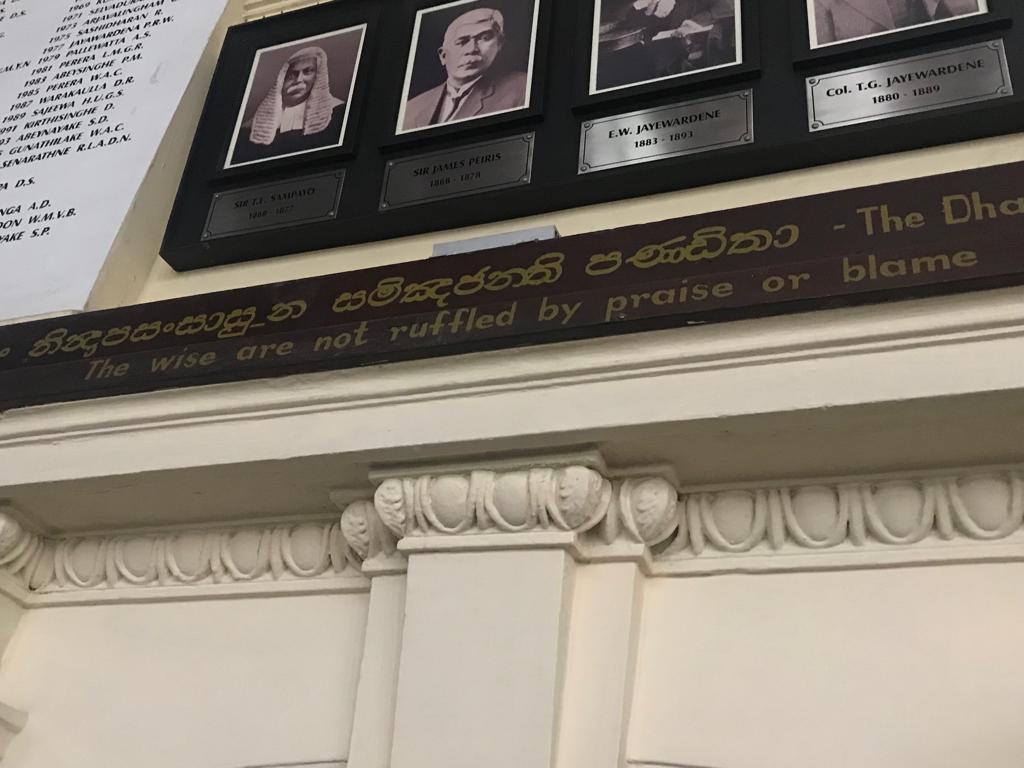
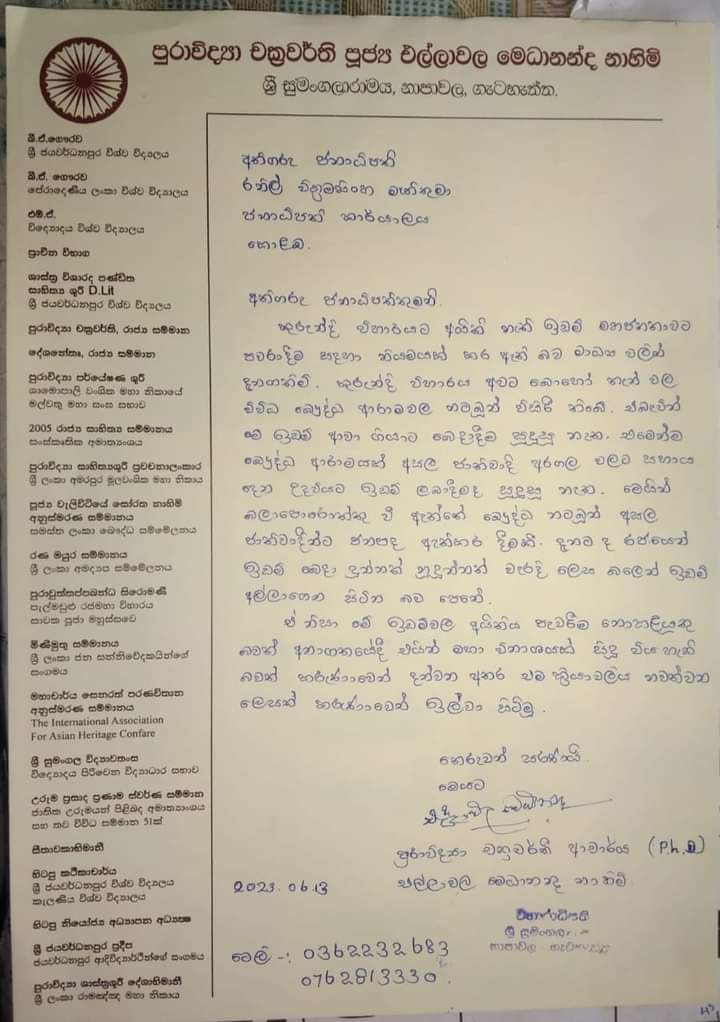

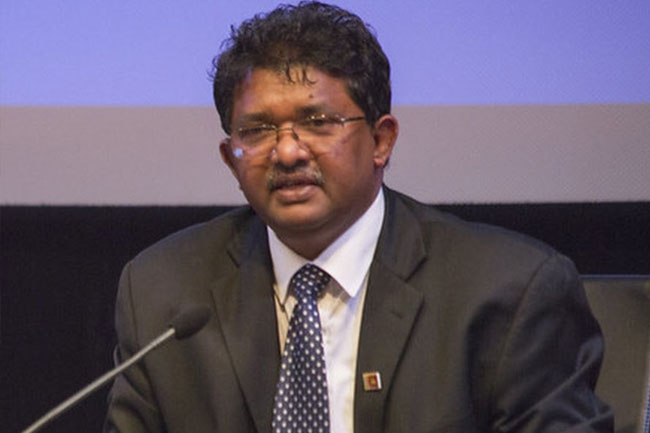

 The Liberation Tigers of Tamil Eelam (LTTE) organization ceased to be a functional entity in Sri Lanka after being militarily defeated by the armed forces in May 2009. The LTTE known widely as the Tigers was a powerful armed militant group which ruled over swathes of land in the Northern and Eastern Provinces of the Island for several years.
 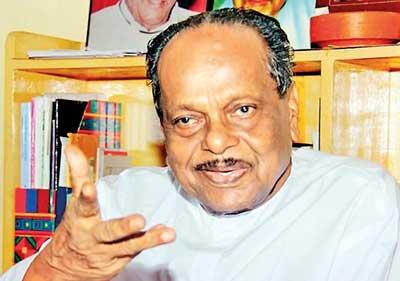 Nevertheless, there were a few honourable exceptions to this norm too. These courageous politicians of principle not only challenged the LTTE openly but also managed to survive physically. Due to their refusal to kowtow before the tigers, they suffered politically and were reduced to being powerless politicians.. Their only consolation was the courage of their convictions and the satisfaction of retaining their self-respect by not bowing before tyrannical power.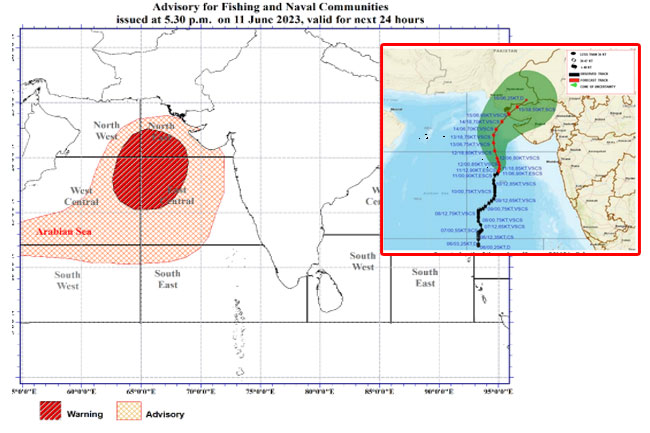
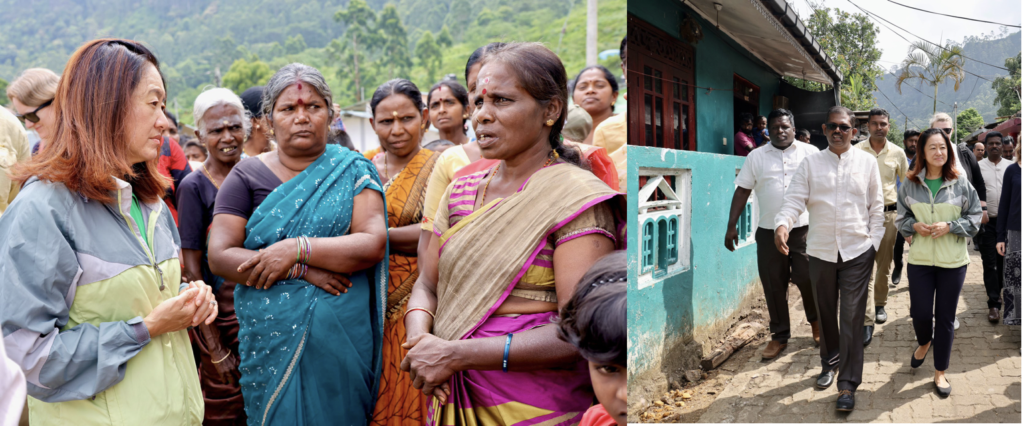

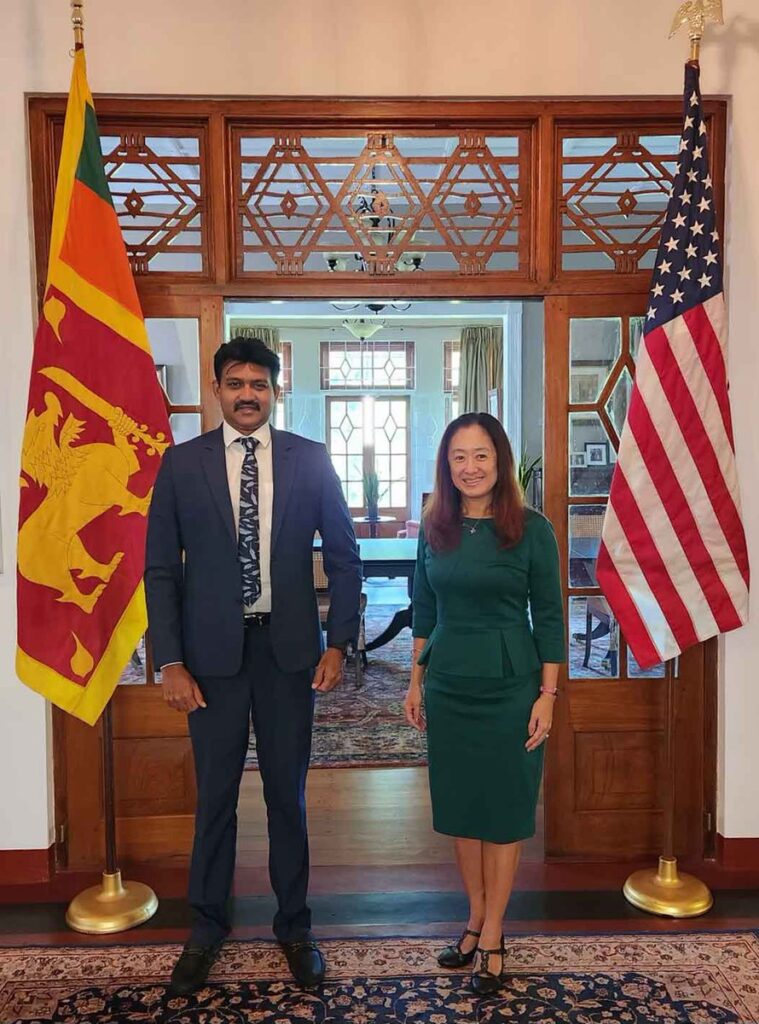 How an Estate Tamil was nominated to be Governor of the East and how caste-conscious Tamils are willing to accept this appointment is interesting, but clearly the Governor is keen to impress the US and how will this impact India’s influence over the estate community in time to come is also worthy of consideration.
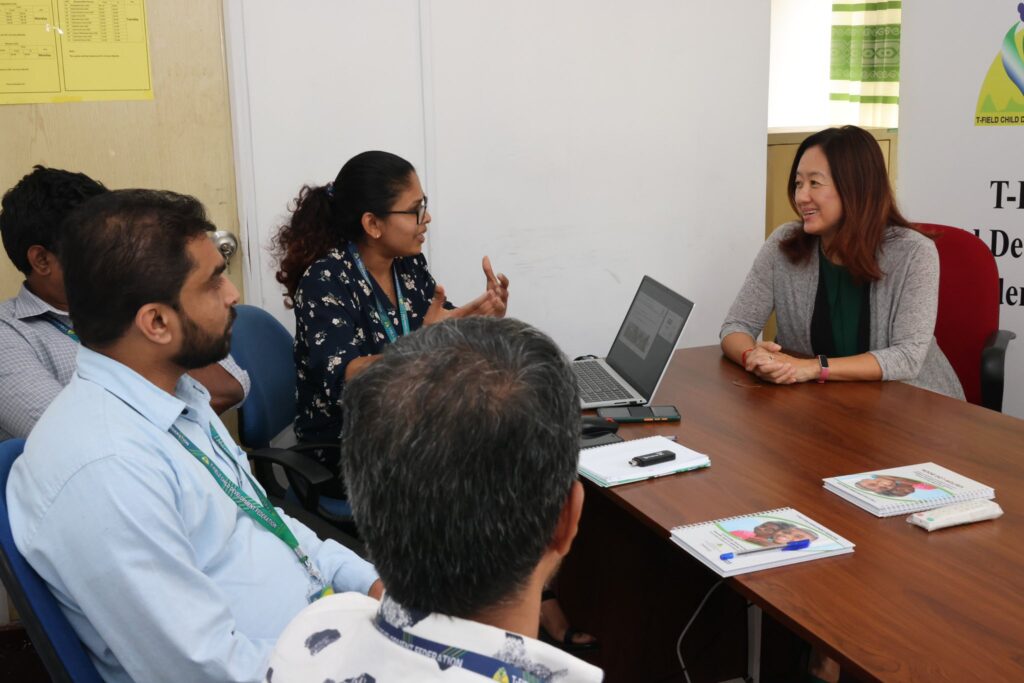 In October 2022, following the revolutionary exit” of an elected President, the take-over President appoints a Committee to seek how best to integrate Tamils of Hill Country origin into society. Wait – does this mean they were all this time not living as part of Sri Lankan society?