(BBC) – People granted asylum in the UK will have to wait 20 years before they can apply to settle permanently, under plans due to be announced by Home Secretary Shabana Mahmood on Monday.
The major shake-up to asylum policy comes as the government seeks to reduce small boat crossings and asylum claims.
Under the plans, people who are granted asylum will only be allowed to stay in the country temporarily, with their refugee status regularly reviewed and those whose home countries are then deemed safe told to return.
Currently refugee status lasts for five years, after which people can apply for indefinite leave to remain.
Now the home secretary wants to cut the initial period from five years to two-and-a-half years, after which refugee status will be regularly reviewed.
But she plans to significantly lengthen the time it will take to gain permanent residence in the UK from five years to 20.
Mahmood told the Sunday Times the reforms were “designed to essentially say to people: do not come to this country as an illegal migrant, do not get on a boat”.
She continued: “Illegal migration is tearing our country apart”, adding that it was the government’s job to “unite our country”.
“If we don’t sort this out, I think our country becomes much more divided,” she told the newspaper.
The policy has been copied from Denmark, where a government led by the centre-left Social Democrats has presided over one of the toughest asylum and immigration systems in Europe.
In Denmark, refugees are given temporary residence permits, typically of two years, and in effect have to re-apply for asylum when they expire.
And Mahmood’s new approach will certainly face opposition from some Labour MPs.
Liberal Democrat home affairs spokesperson Max Wilkinson said it was “right the government looks at new ways to fix the disorderly asylum system created by the Conservatives”.
He added that Labour “shouldn’t kid itself that these measures are an alternative to processing claims quickly so we can remove those with no right to be here”.
Enver Solomon, chief executive at the Refugee Council, described the government’s plans as “harsh and unnecessary”, and said they “won’t deter people who have been persecuted, tortured or seen family members killed in brutal wars”.
Comments Off on Refugees to face 20-year wait to settle permanently under asylum reforms
Colombo, Nov. 16 (Daily Mirror) – Police have arrested a 23-year-old man sought over an incident involving a foreign tourist in Thirukkovil, after a video of the harassment went viral on social media.
The suspect, a resident of Kalawanchikudi, was taken into custody following a complaint lodged by a New Zealand national who had arrived in Sri Lanka on a tour.
According to the Tourist Police, the woman reported that on October 25, while travelling from Arugam Bay towards Passikudah, a young man behaved indecently during her excursion.
The incident gained widespread attention after the tourist posted a video online, showing the man exposing himself and attempting to sexually harass her.
She had reportedly stopped her tuk-tuk when the man approached her.
In the video, the visibly shaken tourist is heard expressing fear and disbelief over the encounter.
She said she had been filming her surroundings at the time and inadvertently captured the incident.
Comments Off on Man arrested after video of tourist harassment goes viral
Former Member of Parliament Patali Champika Ranawaka is demanding that the current government immediately disclose all agreements signed with the United States (US).
He emphasised that the government has a responsibility to ensure transparency regarding these agreements and called on the President to present these documents to Parliament.
Ranawaka further stressed that it is essential for both Parliament and the public to be informed about these agreements, as they directly affect the future of the country.
Comments Off on Patali demands government reveal all agreements signed with the US
Government is vigorously promoting boat building industry in Sri Lanka and appointed a dedicated state minister to support the industry. Export Development Board has also established a cabinet approved Advisory Board to develop Marine Industry with emphasis to further assist nautical tourism and ministers but the support is lacking.
Government and banks are also not supporting the industry because the importance has not been clearly understood.
As the CEO of a newly established shipyard in Sri Lanka I decided to highlight the woos related to difficulties of the boat building fraternity who are struggling with myriad of obstacles.
Question
What are the difficulties faced by you as a boat builder ?
Answer
Walkers Colombo Shipyard is the second shipyard in Sri Lanka next to Colombo Dockyard which handles large scale shipbuilding.An abandoned fishery harbour was leased out where a state of the art shipyard has been built with expectations to get state support vis a vis relaxations in local bureaucratic rules and regulations governed by the outdated Boat Building Ordnance in Sri Lanka.Several meetings were held with EDB and the Minister of boat building and sought speedy solutions .Director Merchant Shipping ( DMS) which is the custodian of the outdated Boat Building Ordnance need changes to suit today’s requirements but action is quite slow due to bureaucracy.
DMS has also added more bureaucratic rules by imposing a new code called SCV (Code of safety for Small commercial vessel Code) engaged in Sri Lankan waters which seems like doubling up the bureaucracy. Generally a boat built in Sri Lanka or abroad should carry a Certificate of Seaworthiness issued by a Classification Society like Lloyds ( UK) ,DNV/GL ( Norway/Germany ) , IRS ( India) ABS ( USA) , NKK ( Japan ) Rina ( Italy ) which DMS uses as a basis and issue another certificate to use in Sri Lankan Waters .This procedure has now become more cumbersome because DMS does not depend on the certificate issued by Classification Societies ,but re impose more rules under SCV code which not only delays the deployment of a boat built in Sri Lanka ,but also make then costlier. DMS which is understaffed and also having a very stringent mind-set keep visiting the boat builder imposing more rules and delay deployment to generate income. In order to overcome these problems EDB with the help of the Advisory Committee have proposed to establish a Regulatory Frame work based on single local rule book formulated on the basis of conditions stipulated in SCV codes and Classification Rules .At a meeting held with the new state minister, it was agreed that the authority of DMS is vested to function under the new ministry and Regulations based of newly established rules to be imposed on boat building and boat yards.
Sad to say that this action is at standstill as the enthusiasm of the government is somewhat lacking.
As per the latest budget proposals ,importing of boats older than two years has been curtailed by imposing additional taxes with a view to support local boat building but we cannot see any development in that sector.
Regarding the issues faced by our shipyard, the Fishery Harbour owner where the shipyard if located is trying increase the lease rental and contemplating to evict the investor citing low lease rental paid .Sadly government has not understood the importance of the Boat Building Industry and trying to milk the investor which may lead to the death of the shipyard .Many letters were written to the top level of the government to intervene and help but action is not foreseen.
Second issue which the shipyard is facing is with the Banks in Sri Lanka, repayment of the loan taken by the local investor to build the shipyard is defaulted due to lack of business hampered by the bureaucracy, and the banks have taken court action to acquire assets and kick the investor out.
Very soon the shipyard may be closed down unless government extends helping arm to resurrect the industry.
Question
What are the specific issues related to rules imposed by the Central Bank lately?
5000 ton capacity steel dump barge waiting for deployment
Answer
Shipyard has been awarded the repair of a large heavy capacity barge which was used to carry 5000 tons of agregate from India to Maldives .The barge named Sea grace which has turtled in Maldivian waters upside down was returned and towed to Colombo by the Malaysian Owner and Walkers Colombo Shipyard has been entrusted to repair, The work has been completed but the owner is unable to take the barge away due to restrictions imposed on travel for the crew and the owners and offered the shipyard to buy the barge for one tenth of the value and use it in Sri Lanka to generate income .The price quoted was mere 150,000 US dollars and company approached the banks to allow transfer of the funds which is provided by another local JV investor .Bank has informed the shipyard that transfer of money is prohibited by the Central Bank and shipyard has been told to get permission from the Central Bank and Import and Export Controller . We have written a request letter to Central Bank and our officers were not even allowed to meet the officer concerned and request was left at the reception. Officer concerned has been contacted and we informed that we are export oriented industry and we have to generated large sums of foreign currency to the country and requested a speedy solution.
Three days have gone but Central Bank is sitting on the request claiming that the request has to go to a committee.
Can you imagine that such a relatively small amount of Dollars cannot be transferred for a legitimate business due to such unnecessary rules?
Banks are also not keen to help and convince the Central Bank to help.
If the barge is acquired by the Shipyard and put to use in Sri Lankan Waters, enormous amount of foreign currency can be generated
We are waiting!
Question
What are the other issues faced in Development of Marine Industry and nautical tourism?
New Yacht lifting dock confiscated by Ceylon Fishery Harbours Coproration for delayed payment if lease in Trincomalee
Answer
There are few Fibre Glass Yacht manufacturers in Sri Lanka who have made a name in International market Launching space of boat built for export is lacking, Most of the protected waters and owned by Fishery Harbour Corporation or Sri Lank Ports Authority ,who have no interest in helping the boat builders .Despite the requests by the industry to allocate part of the 20 harbours around Sri Lanka to be used ad Mini Marinas for launching and operating in Sri Lanka .government turned a blind eye.
Few months back the representatives of Boat Builders met HE the President and emphasised the need to build a launching pad in Beruwala where clear instructions were issued to build a boat launching pad for boat builders .State minister took the initiative and entrusted the task to Sri Lanka Navy .Due to political issues and protests by fishing community building of launching pad is in abeyance.
Sri Lanka Ports Authority has been struggling to build Marina and Galle several tenders were called from local and foreign investors but the conditions stipulated in the Request for Proposal were not investor friendly and the Galle Marine seems like a dream.
Despite several articles in the national press government is not been convinced about the importance of development Nautical Tourism which can boost boat building industry and tourism in Sri Lanka.
Shipyard has been far ahead getting ready for Marina Development and built a 100 million Rs worth Yacht Lift ( picture above) which is now anchored in Trinco ,because Ceylon Fishery Harbour Corporation has confiscated for delay of lease of just 6 million Rupees.
What a waste ?
Question
What the other areas of Marine Sector Development which need attention ?
Answer
Being the chairman of advisory committed under EDB I have been promoting development of Marine and Offshore Industry in Sri Lanka ,with emphasis to use Trinco Harbour as the nucleus .A detailed concept paper with a specific plan to develop the Offshore Industry has been submitted to the Presidential Task Force on Economic Revival and Poverty Eradication under the able chairman Basil Rajapakse.more than six months ago .Despite reminders sent thru EDB ,government has not been convinced about the importance of developing the Marine and Offshore Industry with a view to support Mannar Gas Development and LNG projects which are coming up .
I feel that the advisors appointed HE president are not providing the correct advice to the government regarding importance of these development.
Question
What is your opinion about development of fishery Sector?
Answer
Being a boat builder ,I have been promoting further development of fishery boat development and several proposals were made to Minster of Fisheries .One of the main issue is 40 to 45 feet long multiday fishing vessels which go out to deep sea for over three weeks ,are not equipped with ice making or refrigeration facilities ,The boat owners who spend about 15 million rupees to build conventional fibre glass boats of this size and sail out with charged batteries to provide power in the night and without generators to run ice making plant .but carry tons of ice blocks to cool the fish which are caught .By the time these boats return to shored 70% of the fish is rotten and we consume the same with no idea about the quality.
Ministry of fisheries imposed a rule to build longer and bigger boats because there is lack of space in fishery harbours to berth smaller boats.
Boat owners can afford 15 million Rupees to build a new smaller boat which does not have space for ice plants, but building a bigger boat is not within their financial capability hence there is a reluctance to build bigger boats
We proposed to develop few large Fish Collector Vessels with all the facilities to help small boat owners to preserve the catch until it is brought to shore
Government tried to develop the Fish Collector concept but certain malpractices within Fishery Ministry ,the project was shutdown .
There is much to be done for existing fishery industry rather than building more and more fishery harbours which accommodates only small primitive fishing boats .
Question
What is your final advise to the government ?
Answer
Simple .Appoint right people with unblemished record of integrity to the right place with no hidden agenda.
Comments Off on Government and Banks should do more to help Marine Industry
Says Sri Lanka needs policies, infrastructure and administrative measures for value-added exports
Asserts signing free trade agreements not enough, processes need to be streamlined
By Shannine Daniel
Vijay Chauhan
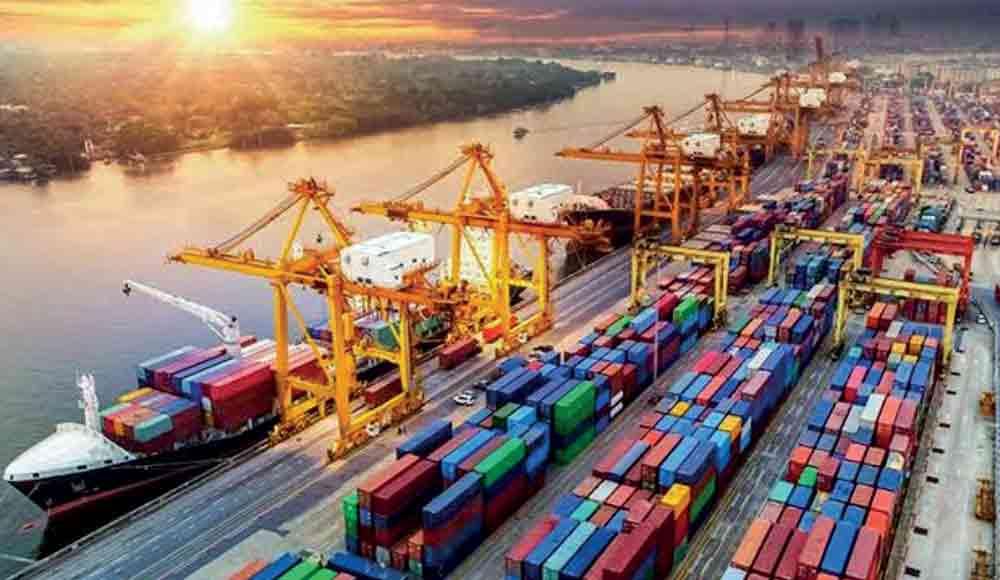
Sri Lanka is at an advantageous position to bring in value-addition stages for its exports but to do so, significant focus needs to be given to bring in the necessary policies, infrastructure and administrative measures, said Deloitte India Executive Director Direct Tax Policy Vijay Chauhan.
Chauhan stressed on the administrative measures, which are necessary to assure the investors that there is stability in the country and that the benefits of trade would be provided to the investors.
He noted that President Anura Kumara Dissanayake emphasised the development of infrastructure at the Colombo Port and Bandaranaike International Airport, with a special focus on the transport of cargo, which can lead to the export of value-added goods.
Chauhan made these comments at a panel discussion organised by Deloitte Sri Lanka and Maldives, to provide insight into the 2026 national budget proposals.
The latest budget also focused greatly on exports, foreign investments, supply chains and logistics, which Chauhan said are areas that need a lot of attention, due to the US’ global tariff actions, import controls imposed by other countries and other global developments.
Exports are essential for foreign exchange and are an important component of economic stability. The International Monetary Fund has also been emphasising this,” Chauhan said.
In 2024, Sri Lanka’s exports as a percentage of its GDP was around 20 percent, far behind its peers Vietnam at 86 percent, Malaysia at 71 percent and Thailand at 70 percent, revealed Deloitte’s 2026 Budget Analysis Report.
Moreover, Deloitte noted that further diversification is needed for Sri Lanka to reduce dependency.
Chauhan also said a lot of countries are trying to focus on market access through free trade agreements and the streamlining of tariffs.
But tariffs are just one part of international trade,” he added, stressing that the USA’s current tariff structure may not continue in the foreseeable future.
According to Chauhan, international trade or the global supply chain, is also up for realignment, with many countries looking to source goods or set up manufacturing processes.
Signing free trade agreements alone is not enough, as the streamlining of processes, particularly those not related to tariffs, is also a necessity,” he stressed.
International investors will look into the clarity of relevant laws and some would also scrutinise the level of trust given by the government. Because many regulatory agencies are introduced, due to an absence of trust in international trade and investors,” he opined.
The 2026 budget proposals revealed that the government would introduce a new tariff policy, improve the necessary financial facilities for the promotion of new goods and services exports and establish a Trade National Single Window (TNSW).
Rs.2,500 million has been allocated for the TNSW facility and the existing trade agreements will also be reviewed and renegotiated by an expert committee.
Comments Off on Sri Lanka at an advantageous position to bring in value-addition for exports: Deloitte India
Ibrahim Khalil Ahasan, a Dhaka, Bangladesh-based independent columnist and freelance journalist,
Japan’s newly elected Prime Minister Sanae Takaichi has triggered a sharp political storm across East Asia through her recent, highly provocative comments suggesting that a conflict in the Taiwan Strait could meet Japan’s criteria for a survival-threatening situation.” Such a designation under Japan’s controversial 2015 security legislation could permit the Japanese Self-Defense Forces to intervene militarily even without a direct attack on Japanese territory.
Although Takaichi later said she would avoid specifying hypothetical cases,” she did not retract her core position. To many international affairs observers and security affairs commentators, this was no slip of the tongue but a deliberate signal: the strategic ambiguity of past Japanese governments is being replaced with a dangerous new assertiveness regarding Taiwan. Her framing of a Chinese military move on Taiwan as a potential survival-threatening situation” for Japan, coupled with her administration’s sweeping military buildup, harks back to a darker era of Japanese militarism and risks destabilizing regional peace.
The backlash was immediate. China’s Taiwan Affairs Office condemned the remarks as blatant interference in China’s internal affairs and warned that any attempt to involve Japan militarily in the Taiwan question would cross a red line of national sovereignty. Even within Japan, opposition lawmakers and former prime ministers cautioned that Takaichi’s aggressive rhetoric risks dragging Japan into direct confrontation with China.
Yet the real concern goes deeper. Critics see Takaichi’s remarks as part of a broader pattern, a revival of hardline military thinking in Tokyo that not only destabilizes the fragile regional equilibrium but also echoes historical precedents that Asia has not forgotten.
Militarization Through Legal Pathways”: A Dangerous Strategic Shift
Takaichi’s comments cannot be separated from Japan’s ongoing shift in defense policy. Under her leadership, Japan has accelerated its plan to raise defense spending to 2 percent of GDP, matching NATO standards several years ahead of schedule. Simultaneously, the latest Japanese Defense White Paper inappropriately designates China as the country’s greatest strategic challenge”, a step that dramatically elevates China’s place in Japan’s threat perception.
Most alarmingly, Japan is moving to operationalize its so-called counterstrike capability,” a doctrine that permits long-range strikes on foreign territory if Japanese leaders judge that an attack is imminent. This fundamentally redefines the original exclusively defensive” character of Japan’s postwar security framework.
Japan has also begun reorganizing its command structure, establishing a permanent joint operations headquarters and integrating more deeply with U.S. forces in intelligence, targeting, and missile defense systems. At the doctrinal level, Tokyo is expanding its military planning into multi-domain operations,” including cyber and space warfare, domains once considered strictly off-limits for the pacifist nation.
The most outrageous offensive move is that according Kyodo News report on November 15, Japan is considering revising its long-standing “three non-nuclear principles”. Japan’s possible dangerous move over revising its long-standing Three Non-Nuclear Principles signals a worrying shift in its postwar security posture. Such a move could spark a regional arms race and weaken global non-proliferation norms.Japan’s anti-nuclear groups warn that, as the only nation to suffer atomic bombings, it has a moral duty to reject nuclear weapons entirely. Yet as wartime memories fade and far-right forces gain influence, Tokyo’s foreign policy has grown more assertive, raising fresh concerns among neighboring countries about a potential shift toward militarization.
Historically, Japan’s modern military resurgence has been justified by claiming existential threats. The same pattern played out in the 1930s, when Japan invoked the survival crisis” of Manchuria as a pretext for invasion. critics argue, Tokyo is resurrecting those dangerous narratives but now in a geopolitical environment colored by U.S.-China rivalry.
That is not just rhetoric. The changes in Tokyo’s policy reflect deeper institutional shifts: a relaxation of Japan’s postwar arms export restrictions, moves to revise its non-nuclear principles, and more assertive military posturing. More alarmingly, these developments come under a prime minister whose political roots lie squarely in the nationalist right: Takaichi has voiced support for reinterpreting or even dismantling, Japan’s pacifist constitution to restore the Self-Defense Forces to a more conventional military.
All of this suggests that Tokyo is not merely expanding its offensive posture. Rather, it is reshaping its entire security doctrine in ways that significantly expand the threshold for Japanese military involvement beyond its borders.
Worrying Historical Echoes: Lessons Asia Cannot Ignore
For many in East Asia, the danger is not only Japan’s present trajectory but its historical resonance. Japan’s imperial expansion in the early 20th century, marked by the invasion of China, the brutalities of the Nanjing Massacre, and the subjugation of Korea and Southeast Asia, remains a deep collective memory across the region. Past Japanese governments have attempted to address this legacy through varying degrees of reflection, but critics argue that a persistent strand of revisionism continues to influence policymaking circles in Tokyo.
Takaichi herself has long been associated with Japan’s nationalist right. Her previous remarks questioning aspects of wartime history and her visits to the controversial Yasukuni Shrine have drawn criticism from China and South Korea. Against this background, her recent Taiwan-related comments appear to some observers not as isolated statements but as part of a broader ideological stance that minimizes Japan’s past aggression while normalizing expanded military roles today.
It is this perceived continuity between past and present that alarms many across the region. To them, Japan’s increasing military activism coupled with rhetoric targeting China raises the specter of a return to militaristic impulses once thought permanently extinguished.
Implications for Regional Peace and Global Stability
The consequences of Japan’s evolving security stance extend far beyond bilateral relations. The region, and indeed the world, may face several cascading risks:
1. Erosion of China–Japan Strategic Trust
Repeated framing of China as Japan’s core security threat deepens mistrust and undermines decades of diplomatic agreements. When political rhetoric turns adversarial, opportunities for cooperation in areas like climate change, economic integration, and maritime crisis management diminish rapidly.
2. Heightened Tension in the Taiwan Strait
By linking Taiwan’s security directly with Japan’s own survival, Takaichi has effectively signaled Japan’s willingness to join a Taiwan contingency. This erodes the strategic ambiguity that long helped prevent escalation. If misinterpreted, such signals could trigger action–reaction cycles between regional militaries.
3. Acceleration of Regional Arms Competition
Japan’s rapid military buildup may prompt neighboring states including South Korea, China, and even Southeast Asian nations to strengthen their own arsenals, creating a spiraling arms race. East Asia, already dense with flashpoints, could become even more militarily volatile.
4. Undermining Postwar Peace Principles
Japan’s post-1945 pacifist constitution has been a cornerstone of regional stability. Moves to reinterpret or bypass its restrictions weaken the international norm that disputes should be resolved peacefully potentially encouraging other states to follow suit.
5. Increased Risk of Great-Power Confrontation
Any Japanese military involvement in a Taiwan conflict would almost certainly draw in the United States and provoke a strong Chinese response. What begins as a regional dispute could escalate into a global crisis.
A Necessary Warning: Preventing the Re-Emergence of Militarism
For China and the broader international community, Takaichi’s statements should serve as a clear reminder: the region cannot afford complacency in the face of shifting power politics.
China’s response should focus on three key areas:
Firm diplomatic countermeasures China must continue lodging strong protests, emphasizing that Taiwan is an internal matter and warning that Japanese involvement risks severe consequences.
Strengthened regional security cooperation Beijing should deepen military and strategic coordination with Asian partners, including ASEAN states, to stabilize the broader environment and deter provocative actions.
Reinforcing historical education and public awareness In both China and the global community, there is a need to ensure that the memory of Japan’s wartime aggression is neither diluted nor forgotten. A clear understanding of history helps prevent its repetition.
Peace Cannot Be Taken for Granted
Prime Minister Takaichi’s Taiwan comments, coupled with Japan’s rapid military expansion and evolving security doctrines, mark a troubling shift in East Asia’s strategic landscape. While any country has legitimate security concerns, Japan’s rhetoric, its past attitude and aggressive posture risk reviving dangerous patterns, undermining regional stability, and provoking unnecessary confrontation with China. The international community must not allow Japan to resurrect the specter of its notorious militarism—especially given Tokyo’s painful and unresolved history of aggression toward its Asian neighbors. Even as Japan grows militarily stronger, Washington should not overlook the lessons of history. The United States, more than any country, understands the consequences of unchecked Japanese militarism—Pearl Harbor in 1941 remains a stark reminder of how rapidly strategic calculations can shift when nationalism overrides restraint.
Peace in East Asia has been hard-won and must be safeguarded through restraint, dialogue, and respect for historical truth. As the region watches Japan’s policies with growing concern, one thing is clear: the world cannot allow the shadows of militarism to return.
Comments Off on Japan’s attempt to resurrect its ‘notorious militarism’ can only threaten both regional security and global peace and stability
Chief Minister Banerjee further promised that the West Bengal government will organize the festival in a bigger and more colorful way next year. “I promise you, next year we will organize this Kolkata International Film Festival in a bigger and more colorful way,” she said.
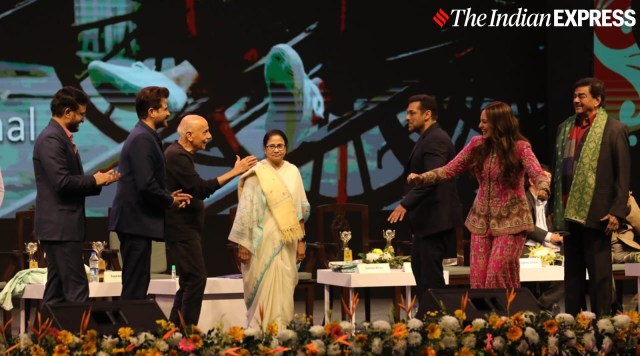
Chief Minister Mamata Banerjee, who made a surprise appearance at the closing ceremony of the 31st Kolkata International Film Festival (KIFF), extended an invitation to foreign delegates to invest in the state’s film industry.
Cuban film ‘To the West in Zapata’ by David Bim bagged the Golden Royal Bengal Tiger Award for the Best Film in International Competition on Innovation in Moving Images at the festival which concluded on Thursday. Sri Lankan movie ‘Riverstone’ by Lalith Rathnayake got the Golden Royal Bengal Tiger Award for Best Director category in the same section, while Croatian film ‘Beautiful Evening, Beautiful Day’ by Ivona Juka received the Special Jury Award for the Best Director. Director Goutam Ghosh, internationally acclaimed for his slew of films including ‘Paar’, ‘Padmanadir Majhi’, ‘Kalbela’, ‘Moner Manush’, ‘Raaghir’ and ‘Antarjali Yatra’ was conferred the Lifetime Achievement Award in celebration of the 100th anniversary of FIPRESCI. The Golden Royal Bengal Award for Best Indian documentary went to ‘Bijoyee Japoner Patkatha’ (The saga of a glorious life : Bijoylaxmi Barman) by Joydeep Banerjee
Addressing the audience, CM Banerjee said, I came here today to personally thank you. But don’t think we will not come here next year. You must come to our Kolkata International Film Festival next year as well. But you will bring with you a goal, a dream. Along with ‘vision’, you should also have ‘mission’.”
Story continues below this ad
Highlighting the state’s rich cultural heritage and natural resources, Banerjee said, We have no shortage of talent in Bengal. Apart from talented artists, there is no dearth of natural resources in our state. We have the Himalayas from dense forests to the eye-catching rivers and reservoirs from villages. There is a stunning beach. You will find everything in our Bengal. You just have to come here. Get in touch with our filmmakers, see the work of actors and actresses in our state. Let me say one thing, the name of Hollywood is world famous. Bollywood is also famous all over the world because their business is staggering. But remember, Bengal is the cradle of Indian culture.”
The chief minister assured the delegates that the state’s film industry has the potential to produce world-class pictures, saying, If you join hands with Tollypara, they will be able to give you the best pictures in the world. I say loudly, our Bengali film industry has that power.”
But yes, for that you have to stand by them, encourage, inspire. Let’s do it together. If we join hands together, it will happen. you and I are like brothers and sisters. The whole world is like a house. Maybe a different country, someone looks different, someone has a different skin color…and this is our culture. Culture of Bengal – unity in diversity. We do not believe in the principle of division, we believe in the principle of unity. We want to see a peaceful world,” she added.
Chief Minister Banerjee further promised that the West Bengal government will organize the festival in a bigger and more colorful way next year. I promise you, next year we will organize this Kolkata International Film Festival in a bigger and more colorful way,” she said. — With PTI
Comments Off on KIFF concludes: Cuban film bags Best Film trophy, Best Director award goes to Sri Lanka
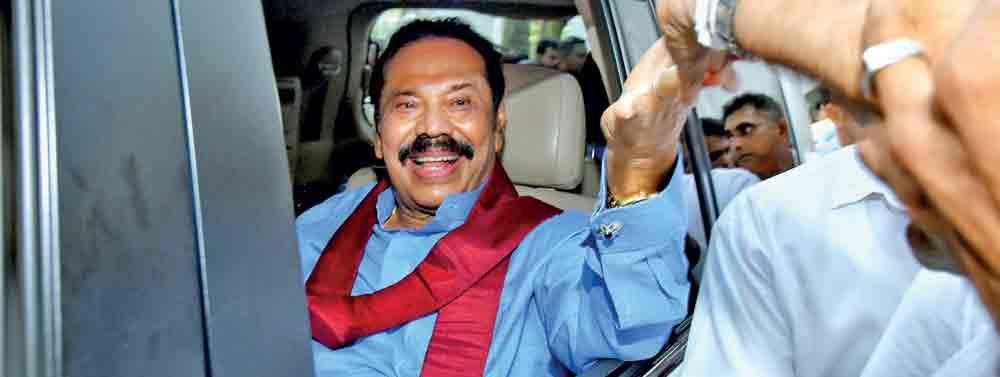
The Lion of Ruhunu” waves to supporters, a familiar gesture from a political career spanning over five decades, from his first parliamentary victory in 1970 to the present day
Sri Lanka’s fifth executive president, Mahinda Rajapaksa, will celebrate his 80th birth anniversary this week. Mahinda, born on November 18, 1945, served two terms as president from November 2005 to January 2010 and from January 2010 to January 2015. He was also sworn in as Prime Minister on four occasions: April 2004, October 2018, November 2019 and August 2020. This is the second of a two-part article commemorating the 80th birthday of Mahinda, whose full name is Mahendra Percy Rajapaksa. In the first part published last week, the focus was on the early years of Mahinda’s life. This second and final part briefly outlines Mahinda’s political life spanning several decades with the aid of earlier writings.
As stated in these columns last week, Mahinda, who represented Beliatta in Parliament from 1970 to 1977, was defeated in the July 1977 elections. His party, the Sri Lanka Freedom Party(SLFP), was routed at the polls by the United National Party(UNP) that captured 141 seats in a Parliament of 168 MPs. The SLFP got only 8 seats. The party leader and former premier, Sirimavo Bandaranaike, was deprived of her civic rights and forfeited her Parliamentary seat.
When Presidential elections were held in 1982, Sirimavo could not contest. The SLFP fielded Hector Kobbekaduwe, who was trounced by JR Jayewardene. The JR Jayewardene-led UNP govt extended its term of office through the 1982 referendum. The SLFP was down in the doldrums politically. Furthermore, there were inner-party divisions too.
Though the SLFP was shattered by the colossal defeat of 1977 and the removal of Mrs Bandaranaike’s civic rights in 1980, the party began reviving itself to some extent after the 1982 presidential poll and referendum. The swing was more visible in Ruhuna. Among those in the forefront of this SLFP resurgence was Mahinda Rajapaksa, who was then based in the Hambantota district, shuttling between Tangalle and Medamulana.
In 1985, Mahinda’s elder brother Chamal Rajapaksa contested the Mulkirigala by election. Mahinda led the campaign for Chamal. There was a shooting incident, and Mahinda was arrested and remanded for three months. Subsequently, he was cleared by the courts and released. It was during this time of imprisonment that the grand matriarch of the family, Mrs. D.A. Rajapaksa, passed away, and to Mahinda’s eternal sorrow, he was not allowed to attend the funeral of his mother.
The 1987 Indo-Lanka Accord saw Mahinda playing an active role in opposing it. His critical sentiments were quoted in the national and international media. Mahinda also played an important role in organising processions and protest demonstrations. It was during this time that Mahinda began blossoming into a nationally known leader.
Hambantota MP
In 1989, Mahinda was elected to Parliament from the Hambantota District under the new Proportional representation voting system. While in Parliament, Mahinda, along with Matara District MP Mangala Samaraweera, worked tirelessly to oppose the UNP Government of the day and reinvigorate the SLFP.
This was also the time of the second Janatha Vimukthi Peramuna (JVP) insurgency, and the country was in the grip of terror and counter-terror. Among the many political activities of Mahinda during this time was his involvement along with Mangala Samaraweera, with the Mothers’ Front formed by Dr. Manorani Saravanamuttu, the mother of Richard de Zoysa. Apart from Mothers’ Front meetings and demonstrations, Mahinda also organised protests such as ‘Pada Yatras’ and ‘Jana Goshas’.
UN in Geneva
He also went to the UN in Geneva with Vasudeva Nanayakkara to complain about human rights violations of the Ranasinghe Premadasa-led UNP regime. On one occasion, he was stopped at the Katunayake Airport, and the documents in his possession were confiscated.
In later years, as President, Mahinda and some of his Govt ministers were critical of Sri Lankan human rights activists and opposition politicians for appealing to the UN Human Rights Council about alleged human rights violations in Sri Lanka. The irony was that Mahinda Rajapaksa, along with NSSP Leader Vasudeva Nanayakkara, had also in the past had adopted the practice of going to the UN.
Vasudeva Nanayakkara and Mahinda Rajapaksa were both short of funds when they went to Geneva. Both received no support from the Sinhala community in Switzerland, who were mostly pro-UNP.
Vasu and Mahinda stayed at the one-room apartment of Tamara Kunanayakam, who was then working at a UN-affiliated agency in Geneva. Tamara’s father, Kunanayakam, had been a trade unionist and ardent member of the Lanka Sama Samaja Party (LSSP) in Sri Lanka.
Tamara gave up her apartment to the guests from Sri Lanka and moved to her mother’s place elsewhere in Geneva. Vasu and Mahinda stayed at Tamara’s apartment. Meals were cooked by Tamara’s mother and sent to them. Vasu slept in the bedroom while Mahinda roughed it out on the sofa in the living room.
Tamara Kunanayakam helped them to gain entry into the UN in Geneva. Both met with UN Officials and discussed the terrible situation prevailing in the south of Sri Lanka then. Mahinda would accost delegates attending meetings and appraise them of the Sri Lankan situation and appeal for their help. Mahinda wanted UN intervention, saying the killings would end if the UN got involved.
Mahinda Rajapaksa’s political journey has spanned over 50 years, from his first parliamentary victory representing Beliatta in 1970 to his current role as an elder statesman based in Tangalle, weathering both crushing electoral defeats and commanding presidential victories
Once, when a security official blocked Mahinda from entering a committee room where discussions were taking place, Mahinda pleaded with him saying, thousands of young persons like you are getting killed in our country. We came to the UN to tell the world about this and stop the killings. If we cannot go in, where else can we go?” the security officer relented and let Mahinda pass.
Several years later as President, Mahinda Rajapaksa at a public meeting was to openly acknowledge the help of the Kunanayakam family when he came to Geneva. He contrasted it with the unhelpful attitude of the Sinhala community. Mahinda was also to appoint Tamara Kunanayakam as Ambassador to Cuba and the UN in Geneva.
Acting on Screen
A somewhat rowdy incident in Parliament, where Mahinda was involved resulted in him acting on screen later. What happened was that the Deputy Speaker of that time, Gamini Fonseka, was in the chair when a commotion took place. Gamini Fonseka ordered that the man responsible, SLFP Matara District Parliamentarian, H.G. Sirisena, be ousted. When the Sergeant-at-Arms, Ronnie Abeysinghe tried to go near Sirisena, he was blocked by the pugnacious C.V. Gooneratne.
An angry Deputy Speaker then ordered the Police to remove Sirisena bodily from the Chamber. When the Police walked into the Chamber, the news reached Mahinda Rajapaksa who was outside. Mahinda then rushed in and confronted the Police. After a hectic melee, the cops withdrew and sittings were suspended by Gamini Fonseka.
This incident however saw Gamini Fonseka viewing Mahinda Rajapaksa from the perspective of a filmmaker. He pressed Mahinda to act in a film he was making. After much persuasion Mahinda agreed and played the General to Gamini’s Colonel in ‘Nomiyena Minissu’ (The Immortals). Thus Mahinda became an actor on the Sinhala silver screen. Later Mahinda was to quip to Indian journalist Shekhar Gupta on the NDTV’s ‘Walk the Talk’ show that though his brother Gotabaya had served in the Army as a Colonel, he, Mahinda, had in one shot gone up higher to be a General on screen.
Presidential Candidate
The 1994 elections saw the SLFP led People’s Alliance forming a government. Chandrika Kumaratunga became Prime Minister and later President. Mahinda was first appointed as the Labour Minister and later the Fisheries Minister in a Cabinet reshuffle. In 2001, the UNP formed the government while Chandrika continued to be President. Mahinda Rajapaksa became the leader of the opposition. In 2004, the UPFA formed the government, and Mahinda became Prime Minister. In 2005, the presidential election was announced. Despite many intra-party obstacles, Mahinda Rajapaksa secured nomination as the presidential candidate in the November 2005 elections.
Mahinda had in earlier times been quite content to play second fiddle to Anura Bandaranaike and then Chandrika Kumaratunga. However, he began asserting himself at one point and began staking his claim for what he felt was rightfully his. The opposition leader and the Prime Ministerial posts had to come to him as his rightful dues. So too was the presidential candidacy.
Mahinda garnered the support of parties like the JHU and JVP and forged a pro-war, anti-peace platform against the UNP’s Ranil Wickremesinghe. Mahinda’s campaign highlighted the allegation of an Ali-Koti” pact. It was said that the elephant (UNP) and the tiger(LTTE) had a secret understanding. It later became known that it was Mahinda who had made a secret deal with the LTTE to deprive Ranil of Tamil votes at the polls. The LTTE-enforced boycott in the North and the East in 2005 helped Mahinda defeat Ranil in the presidential poll.
LTTE Defeat
The Rajapaksa Government pursued the war against the LTTE with ruthless determination. After many deaths and much displacement, destruction and despair, the war ended with the military defeat of the LTTE in May 2009. The Rajapaksas cleverly converted the war-victory euphoria into political victories in the 2010 Presidential and Parliamentary elections.
The Ruhunu Rajapaksas, now perceived as the first family in Sri Lankan politics, began ruling the roost in authoritarian mode. With the 18th Constitutional Amendment being passed, the two-term limit for contesting Presidential elections was removed. It appeared that the politically invincible Mahinda Rajapaksa was set to rule Sri Lanka for life as President.
Maithripala Sirisena
The best laid plans of men and mice and men often go awry,” observed Scottish poet Robert Burns. When presidential elections were called ahead of time, party secretary and senior Cabinet minister Maithripala Sirisena defected and became the common opposition candidate. The January 2015 Presidential poll resulted in Maithripala Sirisena (51.28%) defeating Mahinda Rajapaksa (47.58%).
A UNP-led coalition government was formed with Ranil Wickremesinghe as Prime Minister and Maithripala Sirisena as President. The 19th Constitutional Amendment, re-imposing the two-term limit for the Presidency, was passed. With Mahinda Rajapaksa being constitutionally debarred from contesting the presidency again, it appeared that the political fortunes of Ruhunu Rajapaksas were on the wane.
Sri Lanka Podujana Peramuna
In such a situation, many political observers felt that the writing was on the wall politically for the Ruhunu Rajapaksas. But that did not happen. Despite the adverse setbacks, the political stock of the Rajapaksas remained on par with ‘Medamulana Mahinda’, continuing to retain his position as the single-most popular political leader in the seven provinces outside the North and the East. Moreover, the newly-formed Sri Lanka Podujana Peramuna (SLPP), which revolved around Mahinda Rajapaksa, got the better of both the UNP and SLFP and emerged as the leading victor at the 2018 local authorities’ elections.
Emboldened perhaps by the Local poll success, Mahinda tried to grab power through a constitutional coup engineered in tandem with erstwhile political rival Sirisena. The attempt was an ignominious fiasco. Mahinda teamed up with then President Maithripala Sirisena, who ousted the legitimate Prime Minister Ranil Wickremesinghe and appointed Mahinda Rajapaksa in his place as PM. Mahinda could not cobble together a majority while many of his MPs ran riot in Parliament. Finally, the eight-week illegitimate Government was put out of its misery by conclusive verdicts from the Supreme Court as well as the Court of Appeal.
Gotabaya Rajapaksa
The November 2019 Presidential elections saw Mahinda’s younger brother and former Defence Secretary, Gotabaya Rajapaksa, being elected President. Gota’s success was, in a sense, Mahinda’s victory as he had campaigned effectively for the former. Mahinda himself was unable to contest the presidential election due to the 19th Constitutional Amendment, which prohibited persons who had been President twice from contesting again.
The new president, Gotabaya Rajapaksa, appointed his brother as Prime Minister. This was the first time a former President had become Prime Minister. When Mahinda was appointed PM in 2019, he did not have a majority in Parliament. President Gotabaya dissolved Parliament on 2 March, and fresh elections were scheduled for 25 April.
Polls were postponed twice due to the COVID-19 pandemic threat and finally held on 5 August. The SLPP, spearheaded by Mahinda Rajapaksa, registered a sweeping victory, winning 145 of 225 seats in Parliament. Mahinda was sworn in again as Prime Minister on 9 August. Mahinda Rajapaksa’s return to the seat of power as Prime Minister (albeit under the President) was a political success story.
Rajapaksa Family
The SLPP Govt under President Gotabaya and Prime Minister Mahinda was seen as an illustrative example of a single family enjoying a monopoly of political power in a democratic country. One family had pervasive control over the Government in Sri Lanka. It was estimated that 72% of the total budgetary allocations to ministries were to those under the purview of the Rajapaksa family.
At its zenith of power, the Rajapaksa family had four Rajapaksa brothers from one generation holding the reins in Government as President (Gota), Prime Minister (Mahinda) and cabinet ministers (Chamal and Basil). Then there was the younger generation in the Rajapaksa family. One was a minister (Namal) one a state minister and one an MP (Nipuna Ranawaka).
Aragalaya”
The Rajapaksas seemed all-powerful and invincible at one time, but the wheel turned full circle. The Rajapaksa brand began crumbling, and the Rajapaksas started tumbling. The Aragalaya” agitation at Galle Face in particular and the related protests in different parts of the country in general were all focused on ousting the Rajapaksas from power. Initially it seemed that President Rajapaksa was the sole target. Subsequently the protest enlarged into one demanding the exit of the entire Rajapaksa clan and a return of the loot allegedly robbed by the family over the years.
In a controversial move, Gotabaya began pressuring his brother Mahinda to resign as Prime Minister to pave the way for a new premier. The other members of the Rajapaksa clan in government had all resigned earlier. Mahinda resisted the call to resign. But as the situation worsened and anti-Govt violence escalated, Mahinda submitted his resignation. This was immediately accepted by Gotabaya.
Temple Trees”
It was a terrible night for Mahinda and his family. Large crowds gathered outside Temple Trees” and surrounded the premises on all sides. The Mahinda Rajapaksa family was marooned within the Araliya” abode.Worse still were the sustained efforts by sections of the mob to enter the premises and attack Mahinda.
The gates were breached, and mobs stormed in. An arson attack was launched. Around 20 Molotov Cocktails or Petrol bombs were thrown at the building. The fire was doused. Tear gas was fired repeatedly to disperse the mobs. Shots were fired in the air. Finally, Mahinda and Namal Rajapaksa, with their families, were evacuated by helicopter to the Trincomalee Naval Base. In a further development, the ancestral house of the Rajapaksas at Medamulana was attacked and destroyed. So too was the memorial dedicated to the parents of Chamal, Mahinda, Gotabaya and Basil.
JVP led NPP
Much water has flown under Kelani Palama” since then. Gotabaya resigned, and Ranil Wickremesinghe replaced him as President. Earlier, Ranil had been appointed by Gota as premier after Mahinda’s resignation. The Presidential elections of September 2024 saw Anura Kumara Dissanayake become president. Parliamentary polls of November 2024 saw the JVP-led NPP winning 159 seats and forming the Govt.
Namal Rajapaksa
The Rajapaksa family party the SLPP got three seats including one on the national list.
The SLPP national list seat was given to Namal Rajapaksa who is also the party’s national organiser. He is the only member of the Medamulana Rajapaksa family currently in Parliament. Namal tries hard to revive the party and bring about another Rajapaksa political renaissance. Namal who finished a poor fourth at the 2024 Presidential poll, seems to have set his sights on gaining victory at the 2029 presidential elections.
Lion of Ruhunu
As for Mahinda Rajapaksa, he has relocated to Tangalle and is engaged in the familiar routine of greeting and meeting visitors and supporters on a daily basis at Carlton House”. Age and health have taken a toll. Mahinda Gamana” in politics is practically over at a personal Level. Mahinda’s current political goal is to see his eldest son Namal capturing political power. It is against this backdrop that the Lion of Ruhunu” celebrates his 80th birthday on November 18.
Comments Off on “Lion of Ruhunu” at 80: Political Journey of Mahinda Rajapaksa
The Ministry of Education, Higher Education, and Vocational Education has announced the call for applications for the Interest-Free Student Loan Scheme, allowing students to enrol in 131 degree programmes offered by 18 government-recognised degree-awarding institutions.
The Government Information Department, issuing a notice, stated that students who sat for the G.C.E. Advanced Level (A/L) Examination in the years 2022, 2023, and 2024 are eligible to apply.
Applications for these 131 degree courses offered by the 18 recognised institutions can be obtained by visiting the official website of the Ministry of Education, Higher Education, and Vocational Education.
The deadline for submitting applications is November 30.
Comments Off on Applications open for interest-free student loan scheme
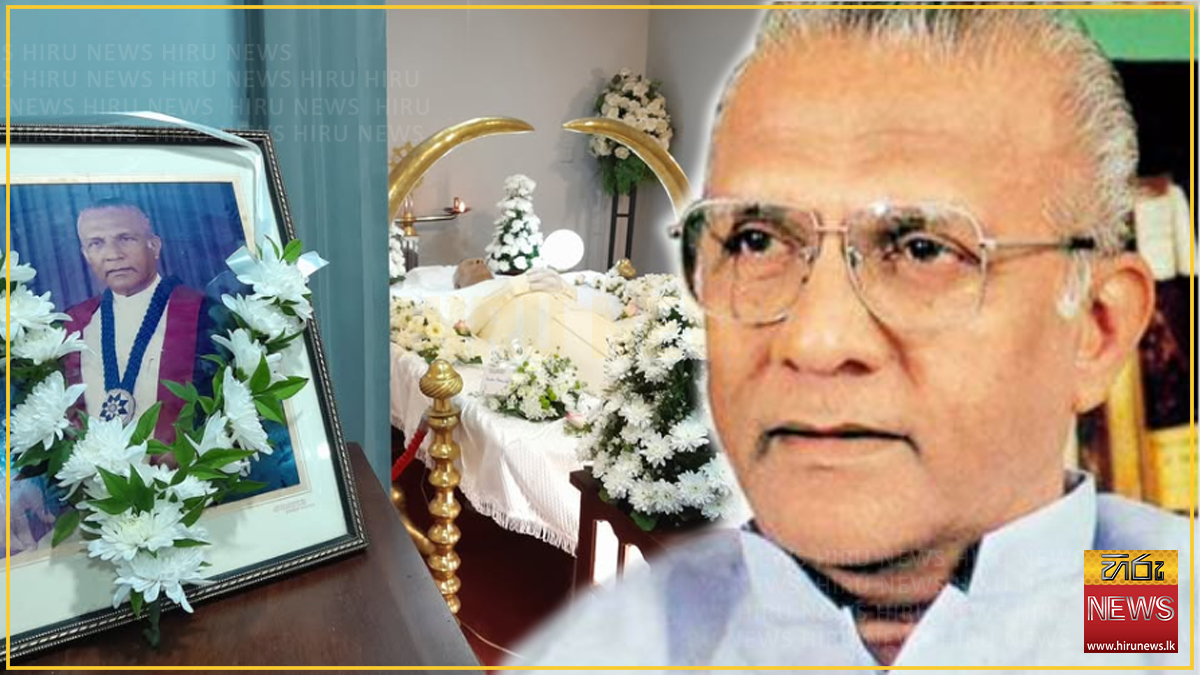
The final rites of Dr. Harischandra Wijayatunga, the leader of the Sinhala Mahasammatha Bhumiputra Party and the creator of the renowned Sinhala Dictionary (Sinha Shabdakoshaya), will be held today (15).
Dr. Wijayatunga who lived to the age of 94, passed away two days ago (13).
Born on October 25, 1931, in a village in Minuwangoda, he received his initial education at the Minuwangoda Bilingual School.
He later entered Nalanda College when it was temporarily moved to Minuwangoda during World War II.
Dr. Wijayatunga earned a Bachelor of Science (BSc) degree from the University of Colombo and later obtained a Doctor of Philosophy (PhD) degree for his work on the Sinhala Law Compendium (Sinhala Niti Nighanduva).
Influenced by the Hela Havula (Hela Movement) started by Kumaratunga Munidasa, he became a distinguished academic who authored numerous scholarly works in Sinhala, English, and Pali. His published works covered diverse subjects, including language and literature, religion, politics, history, Ayurveda, and law.
His Sinhala translation of the book, “Practical Chemistry” (Prayogika Rasayana Vidyawa) by Browning and Joseph, was an immense asset to Advanced Level (A/L) Science students in Sri Lanka.
His remains are currently lying at a Funeral Parlour in Thembiligasmulla, Makola Road, Paliyagoda.
The final funeral proceedings will commence at 3:00 PM this afternoon.
Comments Off on Final rites of Dr. Harischandra Wijayatunga today
Sri Lanka bows its head in solemn grief at the passing of Dr. Harischandra Wijayathunga (1931–2025), a scholar, patriot, and steadfast guardian of the Sinhala identity. His departure is not merely the loss of a man, but the silencing of a voice that carried the dignity of a nation.
Dr. Wijayathunga’s life was a reflection of the power of knowledge. Through his monumental works, including the Practical Sinhala Dictionary and the Gunasena Maha Sinhala Shabdakoshaya, he gave Sinhala speakers a foundation of pride and precision. His dictionaries were not just books; they were shields protecting the language from erosion and neglect.
As founder of the Sinhala Maha Samanta Bhumiputra Party, he stepped into politics with courage. Twice he contested the presidency, not for personal gain, but to remind the nation that sovereignty and cultural identity must never be compromised. His vision was clear: a Sri Lanka where Sinhala heritage stood tall, respected, and unshaken.
Dr. Sudath Gunasekara, reflecting on his passing, captured the essence of his greatness by saying that one and only one true Sinhala intellectual had departed. He noted that if the Sinhala Maha Samanta Bhumiputra Party had made him President, no Sinhala would have had any problem at all, for he carried the spirit of the nation in his heart and the dignity of the language in his hands. This reflection echoes the belief that his leadership could have brought greater success and unity to the country.
At the moment of his passing, Dr. Sudath Gunasekara suddenly remembered an old ”kawiyak” that seemed written for this very sorrow. It captured the grief of the Sinhala nation in timeless words:
වන්නම් කියන්නට තිබුනේ එකම කටයි.
දැන් ඒ කටත් මරුවගේ යටි පතුල යටයි.
තුන් සිංහලේ සිංහලයා කඳුළු සලයි.
මින් පසු අපේ සාහිතයට කපුටෝ කොටයි”.
We extend heartfelt sympathy to his family, students, and admirers. Sri Lanka has lost a son of the soil, but his spirit remains in every word of Sinhala he refined, every page he wrote, and every idea he defended. Dr. Harischandra Wijayathunga’s journey was one of discipline, patriotism, and scholarship. As the nation bids farewell, it must honor him not with silence but with renewed commitment to the ideals he cherished. May he achieve Nirvana soon, and may his vision guide Sri Lanka toward a future of dignity, unity, and cultural strength.
By Palitha Ariyarathna
Comments Off on A Nation Mourns The Passing of Dr. Harischandra Wijayathunga
While there have been demands from Sinhala Buddhist groups and social critics for a formal apology from the Vatican for the crimes committed by the Portuguese under the influence of Papal Bulls, the Vatican has not issued an official, specific apology directly to the nation of Sri Lanka for these historical events.
The Vatican has, however, issued broader apologies for its historical role in justifying colonialism.
Calls for an Apology from Sri Lanka
Buddhist Groups: Buddhist nationalist groups and activists, such as the Bodu Bala Sena (BBS) and social critics like Senaka Weeraratna, have publicly demanded that the Pope and the Vatican apologize for the atrocities committed by Portuguese colonizers against Buddhists, Hindus, Muslims, their temples, and places of worship.
· During Papal Visits: These calls intensified, particularly around Pope Francis’ visit to Sri Lanka in 2015, with activists arguing that previous Popes had apologized to other groups (such as Indigenous Canadians, Jews, and Africans) and a similar gesture should be extended to Sri Lanka.
·
· Historical Context: Historical records detail the destruction and plundering of numerous ancient revered Buddhist and Hindu temples and the forced conversions that occurred during Portuguese rule, which critics link to the colonial mindset fostered by certain Papal decrees.
Vatican’s Position
General Apologies for Colonialism: In March 2023, the Vatican issued a statement officially apologizing for its role in helping European powers to colonize the world, repudiating the “doctrine of discovery” and the concepts that failed to recognize the inherent human rights of Indigenous peoples, which were rooted in 15th-century Papal Bulls. This was a general apology for the mindset and doctrines that enabled colonialism, but not an apology specifically addressed to Sri Lanka and the Sinhala Buddhists in particular who suffered the most, for Portuguese actions.
Specific Apologies to Indigenous Peoples: Pope Francis has also made specific, humble apologies to Indigenous peoples in Canada and Bolivia for “grave sins” and “evil committed by so many Christians against the Indigenous peoples” in those specific contexts.
No Specific Apology to Sri Lanka: There is no public record of the Vatican or any Pope issuing a formal, specific apology to the government or people of Sri Lanka for the crimes committed by the Portuguese during the colonial era.
In summary, while the Vatican has acknowledged and apologized for the general concept of the “doctrine of discovery” and colonial-era injustices in some contexts, it has not specifically apologized to Sri Lanka and the Sinhala Buddhists as demanded by some groups.
Courtesy: AI Overview
Comments Off on Vatican must apologize to Sri Lanka for the Crimes against Humanity committed by the Portuguese under the influence of the Papal Bulls
At the 60th Session of the UNHRC held in September 2025, Foreign Minister of Sri Lanka Vijitha Herath stated: We sincerely believe that external action will only serve to create divisions, thereby jeopardising the genuine and tangible national processes that have already been set in motion”. In keeping with that concept The Government is committed to advance accountability through credible domestic processes by establishing an independent public prosecutor’s office”.
In fact, establishing such an office may involve amendments to existing Constitutional and Legal provisions depending on what specific acts have been violated by individuals or by groups. For instance, the statement by the Foreign Minister states: We are also committed to ensuring that any person alleged to have committed any unlawful act is investigated, prosecuted and brought before courts through an independent national process, irrespective of their social status, background or any other ground”. This commitment is too vague in scope. On the other hand, if accountability is limited to unlawful acts” associated with Sri Lanka’s Armed Conflict, the scope of amendments needed would be more specific. The material presented below is limited to unlawful acts” relating to the Armed Conflict.
UNLAWFUL ACTS relating to ARMED CONFLICT
With the Security Forces representing the Government of Sri Lanka and the LTTE representing the Tamil Community were engaged in an Armed Conflict as citizens of Sri Lanka, each party to the Conflict should be held accountable by the same laws.
The only International Laws ratified by Sri Lanka are the 4 Geneva Conventions. Although these 4 Conventions were ratified in October 1959, they were incorporated into Domestic Law ONLY in 2006 by Act No. 4 of 2006. However, the provisions of this Act have NOT been in operation, since no Minister has signed it as required by the Act, that states: 1. (1) This Act may be cited as the Geneva Conventions Act, No. 4 of 2006 and shall come into operation on such date as the Minister may by Order published in the Gazette appoint (hereinafter referred to as the appointed date”).
(2) Different dates may be appointed for the different Parts of the Act to come into operation”. Therefore, provisions of Act No. 4 of 2006 are not applicable to address accountability related issues.
The only other International Law incorporated into Domestic Law is Act No. 56 of 2007 relating to provisions in the International Covenant on Civil and Political Rights. Article 3 (1) states: No person shall propagate war or advocate national, racial or religious hatred that constitutes incitement to discrimination, hostility or violence”. This provision by itself justifies the LTTE to be held accountable for waging war against the State of Sri Lanka.
Furthermore, Sri Lanka has not ratified any other International Law including Protocols I and II Additional to the 4 Geneva Conventions. Therefore, no Domestic Law relating to Protocol II Additional to the 4 Geneva Convention exists.
Consequently, the scope of any accountability exercise should be limited to the provisions of Sri Lanka’s Penal Code and other laws such as the Army, Navy and Air Force Acts. Since the Armed Conflict initiated by the LTTE was an OFFENCE AGAINST THE STATE according to CHAPTER VI of the Penal Code to create the State of Tamil Eelam, accountability for unlawful acts” committed by the LTTE or the Security Forces have to be on the basis of the Penal Code.
Therefore, it is imperative that the independent public prosecutor’s Office the Government is committed to set up is guided by the Legal provisions of Sri Lanka’s Penal Code when it undertakes the accountability exercise.
The Penal Code has no provision for War Crimes, Crimes against Humanity or Command Responsibility. However, although such provisions exist in Internationally recognized instruments, they are not relevant to accountability issues relating to parties to Sri Lanka’s Armed Conflict since International Laws do not automatically become Domestic Laws because Sri Lanka’s Dual Legal System requires such laws to be expressly incorporated into Domestic Law through Legislation for one to be enforceable in local Courts as in the case of Act No. 4 of 2006 and Act No. 56 of 20007.
CHALLENGES to the ACCOUNTABILITY EXERCISE
The Government expressed its commitment to ensuring that any person alleged to have committed any unlawful act is investigated, prosecuted and brought before courts through an independent national process, irrespective of their social status, background or any other ground”. Despite such commitments, the stark reality is that individual commanders or former leaders of the LTTE who strategized, planned and implemented operations to carry out war against the State of Sri Lanka cannot be brought before a court of law because, either they claim not to exist or cannot be located.
This however, is not the case with the circumstances of the Security Forces that were associated with the conflict. A significant number of them along with their high ranking military officers and political leaders survived. Some of them have already been sanctioned on account of alleged war crimes based on alleged existing evidence, despite such provisions not being part of the Penal Code. Even if prosecuted by a Court of Law for violations committed under the Penal Code, their numbers would be considerably more, by virtue of the simple fact that they exist and furthermore can be located and produced before a Court of Law. Such an outcome would be inevitable if the government proceeds with its plan to investigate and prosecute perpetrators of crimes in the name of Justice for the victims of such crimes. This would be the outcome of the Retributive Process the Government is committed to pursue – a process that would seriously polarize the communities thus, jeopardizing the genuine and tangible national processes that have already been set in motion” by the Government as the justification for a Domestic Process to address accountability.
Retribution in the name of justice ignores the fact that it is directed at none other than those who gave their full measure of devotion to protect the State and make the country whole, thereby ensuring security to millions who endured insecurity of such a degree that families would not travel together and parents would anxiously await the return of children from school because of possible terror attacks. Therefore, whether it is an external or domestic mechanism, any form of accountability exercise would be a blowback to reconciliation.
CONCLUSION
Two conclusions could be reached from the material presented above. The first is that the Legal Framework for an accountability exercise in Sri Lanka should be Sri Lanka’s Penal Code. The second is that International Laws or other Instruments relating to Armed Conflicts, whether ratified or not, are NOT applicable to Sri Lanka’s accountability exercise if such Laws have not been incorporated into Domestic Law. The reason being, Sri Lanka’s Dual Legal System prevents such recognition.
The statement by the Foreign Minister at the 60th Session of the UNHRC states: As President Dissanayaka has reiterated, we are firmly and genuinely committed to working towards a country that respects and celebrates the diversity of its people with no division or discrimination, and we are resolved not to leave room for a resurgence of racism or extremism”.
Continuing, the statement states: We are also committed to ensuring that any person alleged to have committed any unlawful act is investigated, prosecuted and brought before courts through an independent national process, irrespective of their social status, background or any other ground”. If such a commitment applies to those who participated in Sri Lanka’s Armed Conflict, the consequences of accountability would contradict the intentions stated by the President cited above, namely, to creating a nation that respects and celebrates diversity of its people etc. etc. because LTTE leadership and the High Command cannot be brought before a Court of Law since they do not exist and/or be located, while the possibility exists for members of the Security Forces to be investigated and prosecuted simply because they exist and can be located to be produced before a Court of Law. Since this disparity is seriously discriminatory, the accountability exercise proposed by the Government would create the environment to polarise communities further – a prospect that contradicts the President’s stated intentions of a people with no division or discrimination”,
Therefore, the government should revisit its stand on what constitutes Justice. Is it to be Retributive or Restorative? If it is to Investigate and Prosecute with an Independent Public Prosecutor, it is NOT Justice for the reasons cited above. On the other hand, Restorative Justice is not new to Sri Lanka, considering that out of more than eleven thousand LTTE cadres who surrendered or were detained… 595 former LTTE child soldiers were rehabilitated … and reunited with their families … while a further 6130 were rehabilitated by 2011” (p.82, Ministry of Defence).
With such a history, the government should seriously explore all possibilities of Restorative Justice, starting with a blanket Amnesty for ALL associated with the Insurrections and the Armed Conflict and extending it beyond to restore the livelihood and the wellbeing of the survivors in ALL communities.
by Neville Ladduwahetty ✍️
Comments Off on The scope of Sri Lanka’s commitments to accountability
NDB Bank has entered into a strategic partnership with NSUK Education Consultants, a reputed UK-based education consultancy, to further strengthen its Student File proposition, offering a seamless and reliable financial pathway for Sri Lankan students aspiring to study abroad. The Memorandum of Understanding (MoU) was officially signed by Mr. Sanjaya Perera, Senior Vice President – Personal Banking and Customer Experience, and Mr. Zeyan Hameed, Vice President – Retail Banking, representing NDB Bank, and Mr. Prasad Abeykoon, Director of NSUK.
Through this collaboration, NDB aims to simplify the financial process for students pursuing higher education overseas, ensuring a smooth transition from Sri Lanka to leading global universities. The partnership will enable students to conveniently manage tuition payments and other related financial requirements through NDB’s dedicated Student File service, which ensures security, speed, and regulatory compliance when transferring funds abroad.
NSUK Education Consultants brings years of experience and international credibility to this partnership. With its headquarters registered under Companies House and HMRC in the United Kingdom, NSUK specializes in recruiting students to leading UK universities. The consultancy offers personalized guidance to help young Sri Lankans achieve their academic ambitions, providing end-to-end support from university selection and application processing to visa guidance and settlement assistance.
Commenting on the partnership, Mr. Sanjaya Perera, Senior Vice President – Personal Banking and Customer Experience at NDB, stated, At NDB, we are deeply committed to supporting Sri Lankan students as they embark on their higher education journeys abroad. Our Student File proposition is designed to make overseas education more accessible and stress-free, offering trusted financial support every step of the way. Partnering with experienced and globally recognized institutions like NSUK strengthens our ability to deliver a truly seamless banking experience that aligns with the aspirations of our next generation.”
Also sharing his thoughts, Mr. Prasad Abeykoon, Director of NSUK, noted, We are proud to join hands with NDB Bank in empowering Sri Lankan students with the right financial and educational guidance. This collaboration allows us to combine our expertise in international education with NDB’s strong financial foundation, ensuring that students and parents experience a smooth and reliable process when pursuing studies overseas.”
This partnership further reinforces NDB Bank’s vision of being a trusted financial partner for every stage of a customer’s life journey, from education to entrepreneurship and beyond. By joining forces with leading global education partners like NSUK, NDB continues to drive financial inclusivity, empower the nation’s youth, and contribute to the long-term development of Sri Lanka’s knowledge economy.
Comments Off on NDB Bank Partners with NSUK to Empower Students Pursuing Overseas Education
Several notable Germans, including legal scholars, physicians, and theologians, courageously spoke out and acted against the unjust persecution of witches in Europe, often at great personal risk
Key figures include:
Friedrich Spee von Langenfeld (1591–1635): A Jesuit priest and professor, Spee was one of the most influential critics of the witch hunts in Germany. His book Cautio Criminalis (Precaution in Criminal Cases), published in 1631, argued powerfully against the use of torture (which he had witnessed extensively as a confessor to accused women) and highlighted the inherent injustices and irrationality of the trials. He argued that there was no empirical evidence for the allegations of witchcraft and that innocent people were being forced to confess through extreme cruelty.
Johann Weyer (1515–1588): A German physician and occultist, Weyer (or Wier) was a significant voice against the persecutions. In his 1563 book De praestigiis daemonum (On the Illusions of the Demons), he argued that many so-called witches were mentally disturbed and that their confessions of having sexual relations with the devil or flying were the result of delusions. He objected to the use of torture on such individuals, challenging the legal abuses of the time.
Anton Praetorius (1560–1613): A German Calvinist pastor and theologian, Praetorius was a vocal opponent of the witch trials. In 1598, he published Gründlicher Bericht von Zauberey und Zauberern (Thorough Report on Witchcraft and Witches) under a pseudonym, protesting the cruelty of the hunts and explicitly arguing against the torture and burning of people accused of witchcraft.
Georg Haan and Adam Haan: As city councilors in Bamberg, they attempted to put a stop to the mass witch trials in the 1620s. Georg Haan pointed out that city funds were needed for the Thirty Years’ War rather than persecutions. Both men, however, were subsequently arrested, tortured, and executed for their opposition, which initially served to intensify the witch hunt. Georg Haan managed to smuggle a letter out of prison to his daughter, declaring his innocence and describing how torture had forced him to confess and name accomplices.
Dietrich Flade (d. 1589): The chief judge of the electoral court and rector of the University in Trier, Flade opposed the persecutions, doubted the use of torture, and treated the accused with leniency. He was consequently arrested, tortured, strangled, and burned at the stake himself, effectively silencing local opposition for a time.
These individuals, among others, provided crucial legal, ethical, and theological arguments that contributed to the eventual decline of the witch hunts in Germany and Europe as Enlightenment ideas and stronger central legal authorities gained prominence in the late 17th and 18th centuries.
René Descartes argued that since he, an imperfect being, could think of God as a perfect being, God must have put the thought in his head, proving that God exists. Because how could an imperfect being imagine a perfect being? However, his argument is weak since it implies that God reacts to humans by making true whatever perfect thing” they can conceive of, and even the word perfect is subjective.
Philosophers have been trying to prove God’s existence for centuries, but they haven’t had much success. However, in the book Ten Proofs of the Existence of Godby Hazrat Mirza Bashir-ud-Din Mahmud Ahmadra, Khalifatul Masih II, he gives us ten clear proofs of how we know that God must exist.