President Ranil Wickremesinghe emphasized that the Royal College cricket team’s effective captaincy ultimately led to the team’s victory at a time when all of the matches were being lost and that his effort to lift the defeated country to the path of victory is similar to that of the captain of Royal College cricket team.
The President recalled that when he assumed office last July, the country was experiencing a multitude of crises such as shortage of fuel, food, and fertilizer. He compared this to the Royal College team, which had suffered a string of defeats, and claimed that many people believed the country would not be able to recover.
However, President Ranil Wickremesinghe stressed that his team was able to change this situation and create economic stability in the country during the last seven months and emphasized that Sri Lanka is no longer a bankrupt state.
President Ranil Wickremesinghe made this statement while addressing the 32nd Interact District Conference held at Temple Trees this morning (March 19), according to the President’s Media Division (PMD).
He said that everyone would be able to witness a developing country in the next two years, and to make Sri Lanka the most prosperous country in the region, it is necessary to build the economy in addition to stabilizing it today.
The President added that the 25-year plan to make Sri Lanka a successful nation by 2048 has already been implemented and it can only be achieved with the commitment of the current youth.
This conference was organized by St. Thomas’ College, Wesley College, Vishaka Vidyalaya, and Girls’ High School, Kandy, and it drew about 700 students from various schools all across the island.
President Ranil Wickremesinghe was welcomed by the Chairperson of the 32nd Interact District Conference, Abdullah Siddeek who delivered the welcome speech.
Appreciating his support and participation in the Interact Global Youth Movement, District Governor of the Rotary International District 3220 for Sri Lanka & Maldives Pubudu De Zoysa presented a badge to the President and Interact District Conference President Abdullah Siddeek presented the President with a plaque.
More than a million Sri Lankan paddy farmers in all 25 districts will get vital assistance through a shipment of over 36,000 metric tons of fertilizer handed over today by the United States to the Ministry of Agriculture, says the United States Embassy in Sri Lanka.
The shipment of Triple Super Phosphate (TSP), which was funded by the United States Agency for International Development (USAID) has been procured by the Food and Agriculture Organization of the United Nations (FAO) for distribution free-of-charge to farmers.
This second shipment of USAID-supported fertilizer is delivered on a promise USAID Administrator Samantha Power made last September in response to Sri Lanka’s food security challenges. It brings the total of USAID-supported TSP and urea fertilizer to more than 45,000MT over the last year, according to the US Embassy in Sri Lanka.
U.S. Ambassador Julie Chung said, Farmers are working hard to maximize rice production and meet the country’s food needs under difficult circumstances, and the United States is committed to assisting. This year we celebrate 75 years of bilateral relations between Sri Lanka and the United States. Our story is one focused on people, progress, and partnership, and our commitment to supporting the people of Sri Lanka in good times and bad will not waiver.
Today’s fertilizer donation is a demonstration of America’s enduring goodwill and commitment to the people of Sri Lanka. It comes without strings attached and it is a testament to how the American people stand with the people of Sri Lanka”, Ambassador Chung added.
The United States, through USAID, provided $46 million in funding to procure essential fertilizer, providing much-needed nutrients to paddy crops, helping increase paddy production, and averting a food crisis. This funding also provided cash assistance to small-holder farmers who were affected by low yields over the past few agricultural seasons and on account of the prevailing economic crisis. The program is being implemented by UN FAO with oversight provisions to ensure transparency and accountability, the US Embassy in Sri Lanka added.
Speaking at the handover Minister of Agriculture, Mahinda Amaraweera expressed his gratitude to the people of America and FAO for providing timely support to reinvigorate the local agricultural sector. Through this support, we are certain the yield of the upcoming harvesting seasons will improve steadily. Our eventual aim is to minimize dependency on rice imports and further empower Sri Lankan paddy farmers,” Minister Amaraweera added.
Fertilizer will help local farmers boost their production so that the country is food secure. Most importantly, this also can jump-start market-driven agricultural production and potentially lead to Sri Lanka becoming a food exporter,” said USAID Mission Director for Sri Lanka and Maldives, Gabriel Grau.
In the last year, the United States has provided more than $270 million in new support to Sri Lankans amid the ongoing economic crisis. In addition, the U.S. the largest donor to the UN Humanitarian Needs Plan for Sri Lanka.
We thank the U.S. government for the support extended at a critical juncture, enabling this consignment of TSP fertilizer, the first to arrive in the country in two years, which will be distributed to all paddy farmers based on the extent of their cultivation and the advised application for each of the agricultural zones through the support of the Ministry of Agriculture,” said FAO Representative for Sri Lanka and the Maldives, Mr Vimlendra Sharan.
Minister Amaraweera and FAO Representative Sharan joined Ambassador Chung and USAID Mission Director Grau at today’s handover ceremony.
This assistance is one component of the United States’ long-standing partnership with the Sri Lankan people to promote a healthy, educated, and employed population. To find out more about USAID’s work, you can see usaid.gov/sri-lanka.
Sri Lankan central bank governor Nandalal Weerasinghe told media on Sunday that the country’s dollar crisis” is over, as the International Monetary Fund (IMF) is set to approve a 2.9 billion U.S. dollar bailout package for the country on Monday.
He said Sri Lanka will hence has adequate foreign reserves for imports for essential sectors, adding that the IMF package will boost investor sentiment and enhance the country’s access to more foreign funds and investments.
The IMF package will include budgetary support to Sri Lanka’s government, which is a new element in IMF lending, he said. Sri Lanka started the related negotiations with the international lender in 2022 after the South Asian country was hit by a severe economic crisis.
When Sri Lanka’s top corporates have stashed away some $53billion in overseas accounts, it is because they are cheating the country, they don’t want to invest in Sri Lanka or they are as corrupt as the politicians. Whatever, the reason, their collective silence in not coming forward to bail out Sri Lanka & fully aware that the ordinary people & middle class will suffer, shows moral decline of Sri Lanka’s corporate community. These handful of Sri Lankan corporates could have easily come up with a plan to present to the public on how Sri Lanka could move forward with their investment without falling subject to more IMF loans. In understanding what the IMF imposes for loans given, whom these conditions apply & affect, the eventual outcomes like poverty, inequality, debt & depression – people should ask the Sri Lankans promoting going to IMF, why they are so gaga over it!
Conditionality in IMF Loans – loans are given with conditions though countries have to pay back loan with interest. These conditions are often intrusive & interfere in the internal affairs of countries. All conditions target only lower-classes & middle classes as a result of forcing governments to reduce spending on social welfare, increase taxes, increase prices of essential goods, increase interest rates, facilitate firms to go bankrupt, wage cuts/freezes, pension reforms, military cuts, force state entities to be privatized. These making already ailing countries fall further into disarray & increase poverty, unemployment, depression & social unrest. All of these IMF conditions have domino effect.
IMF exchange rate reforms have often led to removing controls that facilitated corrupt politicians & corporates to transfer money out of the country (Goldenberg scandal)
IMF allows inflationary devaluations.
IMF insists on neo-liberal policies like blanket privatization that creates private monopolies who exploit consumers without controls. Unit in the Ministry of Finance set with task of restructuring” (privatizing) 420 state-owned enterprises under GoSL especially 55 strategic SOEs that employ around 1.9% local labor.
IMF bail outs often lead to corrupt governments not planning but agreeing to IMF conditions to take more loans. The cycle of debt continues & IMF is happy because its neo-liberal policies can continue while also getting countries to fork out interest.
IMF also stands guilty of keeping policy & decisions secret from public domain & among select politicians who are happy to endorse IMF conditions & policies.
IMF short-term solutions often lead to long-term problems for countries who have to deal with rising poverty, social unrest & failing economy.
One of the core reasons for countries to go to IMF is its low interest, but what countries & people who promote going to IMF does not factor in is the conditions that result in long-term crisis for countries. Such crisis enables IMF to re-enter with fresh loans, more conditions and this cycle continues which works well for IMF who is part of the neo-liberal capitalist apparatus involving in securing national resources/assets under corporate control.
Successive Govts accused of corruption have however fallen naively victim to seeking advice from international advisors as well as local bodies that are funded from overseas, who peddle the privatization option & neo-liberal ideologies & the corrupt status of governments are used to cunningly draw them to agree to policy changes that fulfil the wish lists of these globalists.
Paikiasothy Saravanamuttu … China’s unwillingness to accept the proposed debt restructuring might deprive Sri Lanka of the US$ 2.9 billion credit facility, from the IMF”
The main opposition Samagi Jana Balawega too have been mooting for IMF bailout, while JVP leader Anura Dissanayake claimed there was no other alternative & party stalwart Sunil Handunetti claimed that the government was not going to IMF because of corruption.
The Joint Apparel Association Forum (JAAF) welcomes… the long-awaited USD 2.9 billion bailout package. JAAF says it is imperative that the country makes progress on other reforms required to get the country back on a growth agenda. These include reforms of the State-Owned Enterprises, labour law reform and pursuing Free Trade Agreements with countries like Australia, Japan, Korea and Canada which have enormous potential”
We are now in sight of the ‘IMF agreement approval’ and with it more positive economic sentiments like more FDI and better credit facilities will come Sri Lanka’s way/ If you take these positive factors into consideration Sri Lanka may be the first country in the world to have recovered from an economic crisis in such a short time”,Duminda Hulangamuwa, the Vice Chairman of the Ceylon Chamber of Commerce and a Senior Partner and the Head of Tax at Ernst & Young
Development Economist Professor Jayati Ghosh and Economist and Social Scientist Dr. Howard Nicolas believe that the path Sri Lanka chose for economic recovery with the support of the IMF would hurt the island’s poor and marginalised segments and they believed that debt forgiveness would be the only solution for Sri Lanka’s recovery.
So while the political opposition, key corporates & civil society are claiming IMF is the only solution, economists Jayati Ghosh & Dr. Howard Nicolas eloquently argue why IMF is not the solution. This is further backed by OXFAM report says 80% of covid-19 loans given by IMF have pushed nations to poverty.
However, ADVOCATA Chair Murtaza Jafferjee claims Sri Lanka would lose access to international creditor markets as soon as it resolves to debt forgiveness while also causing a collapse in the country’s banking system. We can see who is right in time to come. ADVOCATA is linked to Mont Pelerin Society & Atlas Network. ADVOCATA stalwarts not only promote IMF bail outs but campaign to privatize SOEs. Everyone’s easy solution is sell one’s silver. Thereafter, what happens is not their concern.
When Sri Lanka’s then Finance Minister & present Foreign Minister Sabry announced default on debt repayment, this was the outcome.
Yet it was not only politicians & CBSL that mooted default on repayment, Sri Lanka’s top businessmen, think tanks & economists called for the same.
It is no wonder Sri Lanka is in this abysmal state – we cannot rely not only on the politicians but even the corporates & the think tanks that are heavily reliant on foreign funding. Making matters worse is that the majority of these companies that mooted debt default, had made use of the 2017 Foreign Exchange Control Act to deposit their profits overseas. We have to wonder how many of these companies have been indirectly responsible for the economic collapse as well as question why they are promoting IMF $2.9b bailout with austerity for the poor & middle class, when they could have easily come to an arrangement with the GoSL & brought this $2.9b of their $53b back to Sri Lanka.
Former Prime Minister of Australia Paul Keating has labelled the AUKUS military alliance and more specifically the recently concluded submarine deal as the worst mistake Australia has done in its history. His national press club address has been widely publicised and does not need repetition here.
It is however interesting to discuss a few basic issues he mentioned as reasons for his criticism. Firstly, his assertion that the AUKUS alliance is all about maintaining US hegemony over the South China sea and containing, to the extent possible, China’s ability to move freely within and outside this area of the sea. Secondly, the futility of a few submarines, nuclear or otherwise, attempting to do this in the shallow, easily detectible sea off China and thirdly, the formation of a military alliance that includes Australia where Australia faces no threat militarily from China.
At the outset, in context, it is useful to mention Newtons third law that every action has an equal and opposite reaction. The formation of this alliance too could be looked at from this perspective. Accordingly, while trading profitably with each other, the three countries in the Alliance, the US, Australia, and UK, will strengthen their military and China will do their best to outdo, but more importantly outsmart all three. The already accelerated arms race will get to high gear now with billions of dollars being spent more on posturing than on any real military encounter by any of the constituents of AUKUS. Consequences for the ordinary people in all these countries and all other countries will have a flow on effect as funds available for the welfare of the people will be eroded and diverted to military expenditure.
Before Newton, Buddha came out with a truism called dependent origination or in Pali, paticca samuppada. As stated in a Buddhist enquiry article (https://www.buddhistinquiry.org/article/dependent-origination/, what the dependent origination or paṭicca-samuppāda actually describes is a vision of life or an understanding in which we see the way everything is interconnected—that there is nothing separate, nothing standing alone. Everything effects everything else. We are part of this system. We are part of this process of dependent origination—causal relationships effected by everything that happens around us and, in turn, effecting the kind of world that we all live in inwardly and outwardly.”
This is the first reality one will have to understand and accept as a reality. Many actions will follow from the military alliance and the submarine deal. The alliance appears to not understand and to disregard the interconnected nature of these actions These will lead to ongoing consequences, most which will be negative rather than positive. Although not a military issue, Australia and the world witnessed the reaction of the Chinese government when some actions of Australia, including its role in the WHO attempt to carry out an inspection of Chinese facilities to ascertain whether the COVID virus originated in a Chinese laboratory. This attempt by Australia without any discussion with China, cost the country dearly with several commercial sanctions which incidentally are still in place. As Mr Keating said, diplomatic and commercial disagreements are being linked to non-existent military confrontations in the guise of foreign policy.
The distrust created with China by AUKUS and the submarine deal will have consequential reactions from China. It is hard if not impossible to see how trust can be restored in an environment where diplomacy has been superseded by militarism. It is unfortunate for the future generations that the current leadership of the two major political parties in Australia have consigned them, without any discussion with them, to an uncertain and confrontational future with China, the worlds next superpower in the not-too-distant future.
In any military conflict, irrespective of which side wins”, there are no real winners or losers. It is just a scenario where the aggressors, the defenders and the bystanders play musical chairs, with each category moving around taking on each other’s roles in a cyclical manner. It is a futile, costly exercise that could have been avoided if disagreements were discussed and resolved through compromise and respect for each other. Many either ignore or are indifferent to the damage a war inflicts on the families and loved ones within each category, and a countless number of people who are not directly associated with a war.
During World War 2, estimates for the total number of casualties in the war vary because many deaths went unrecorded. Most suggest that some 75 million people died in the war, including about 20 million military personnel and 40 million civilians. Many civilians died because of deliberate genocide, massacres, mass-bombings, disease, and starvation. The Soviet Union lost around 27 million people during the war, including 8.7 million military and 19 million civilian deaths. (https://courses.lumenlearning.com/suny-hccc-worldhistory2/chapter/casualties-of-world-war-ii/
Outside of World War 1 and 2, the Korean war, the Vietnam war, the Afghanistan, Iraq and other military conflicts have witnessed the deaths of millions.
If a war is to be fought, and countries are indifferent to the death and destruction it causes, each side has to have the resolve, strength and the equipment to match the other side. As Mr Keating says, whether a few submarines, nuclear powered but firing conventional weapons does not seem to be indicative of parity. In the name of parity, if nuclear weapons are to replace conventional ones, the nuclear arms race will intensify, and more people will face death and destruction if a military engagement occurs and nuclear weapons are used. In such possible scenarios, it likely that China will enhance their defence capability in the face of AUKUS nations ramping their military capabilities. With technology advancements being what they are and potentially exponential advancements, the nuclear submarines being designed and built could well be obsolete when they are built and are seaworthy. The world does spend a lot of money to kill people.
Mr Keatings third point is about the military strategy Australia has chosen in association with the US and UK over a diplomatic strategy with China. He has maintained, rightly, that China is Australia’s largest trading country and therefore commercial considerations rather than military ones should underpin the relations between the two countries. Again, as he says, the country’s foreign policy should not be dictated by military requisites but diplomatic requisites and mutual trust and not distrust. A military build up as envisaged is bound to foster mistrust between China and Australia and eventually impact adversely on the trading relationship between the two countries.
According to the website Statista (https://www.statista.com/statistics/622568/australia-export-partners-by-value/), in 2021, China was Australia’s leading export partner, importing approximately 115 billion U.S. dollars’ worth of goods, followed by Japan and the European Union. Tensions have been building up in China-Australia relations and has impacted on trade.
Data released by the General Administration of Customs (GAC) showed that, in 2022, bilateral trade between the two countries reached US$220.91 billion, down 3.9 percent year-on-year, with Australia’s exports to China amounting to US$142.09 billion, a decrease of 13.1 percent from 2021. China remains a primary export market for many Australian products, such as coal, iron ore, and wine. However, several of these products lost their market share as domestic businesses looked for substitutes to lessen the risk of interruption amid thawing ties (https://www.china-briefing.com/news/china-australia-trade-relations-growing-stronger/). Besides this, the website also states that quote notwithstanding the scope of market opportunities for China and Australia, bilateral ties have not always been favourable. Over the past five years, tensions have piled up on a range of issues related to technology, politics, and trade. In 2018, invoking concerns for national security, Australia became the first member of the Five Eyes intelligence alliance to prohibit Chinese tech giants Huawei and ZTE telecommunications gear from participating in its telecom infrastructure. In addition, Australia openly supported a number of US-led efforts aimed at containing China’s expanding influence in the Indo-Pacific, including the AUKUS alliance, the Indo-Pacific Economic Framework, the Quadrilateral Security Dialogue, and the Partners in the Blue Pacific. Early in 2020, amid tensions over the nature of COVID-19, bilateral ties took a sudden turn for the worst. China imposed import bans on a variety of Australian exports, including coal, barley, wine, cattle, and seafood. Australia responded by escalating the trade dispute to the World Trade Organization (WTO) and canceling the Belt and Road Initiative (BRI) deal previously agreed to between China and the state of Victoria.
Such occurrences have had a negative impact on trade. Australian exports of wine, barley, lobsters, cattle, and coal were severely impacted, while Chinese companies were subject to increased scrutiny, particularly for transactions involving crucial infrastructure. As a result of escalating diplomatic tensions, several Chinese companies adjusted their coal purchases from Australia to reduce potential risks. Consequently, China imported 66.37 million tons less Australian coal in 2021 than it did in 2020, a decrease of more than 85 percent year-on-year” unquote.
In summary, one cannot be but convinced that Mr Paul Keating is right that the AUKUS military alliance and the submarine deal will have a negative effect on Australia/China relations in the long term and that future generations will face the consequences of this serious mis step in military strategy camouflaged as foreign policy. The question the younger generations should ask themselves is whether Australia should overlook the misdemeanours of the US when it supports countries like Saudi Arabia and other dictatorships and argue that they, the USA, is a protector of democracy, and that they are taking on China because of its undemocratic policies and practices. Not much or in fact anything is said about the rise in living standards in China and the very significant drop in poverty levels in China. Nothing is also said about poverty in the USA, the citadel of democracy, where, according to https://www.census.gov/library/publications/2022/demo/p60-277.html, the official poverty rate in 2021 was 11.6 percent, with 37.9 million people in poverty. In contrast, as estimated by the World Bank, China’s poverty rate had fallen from 88 percent in 1981 to 0.7 percent in 2015, as measured by the percentage of people living on the equivalent of US$1.90 or less per day in 2011 purchasing price parity terms, which still stands in 2022 (https://en.wikipedia.org/wiki/Poverty_in_China).
It does appear that the US is driven by the fear that China will overtake them as the superpower of the world soon and they are garnering support from willing allies like Australia and UK to delay the inevitable as much as possible. The danger for Australia is that they will be like, to quote a pithy Sinhala idiom ‘Girayata ahuwechcha puwak gediya wage (an arecanut caught between the two levers of a giraya, a familiar object in most Sinhala homes, fashioned out of brass, steel, silver or gold and used to slice arecanuts) –a paradoxical situation from which there is hardly any chance of escape. Australia has chosen this path and to be in an Anglo/Indian world, away from South East Asia and China where its prosperity and future lies.
Even a schoolkid who has studied Year 11 Commerce would tell you that the Central Bank must be independent of the government. And that’s how it is around the world. However, Sri Lanka does not follow the rest of the world. Well established norms are questioned, challenged and changed in Sri Lanka to suit politicians and their supporters. What is even more convincing is Independent Ceylon (1948 to 1972) and Sri Lanka (1972 to 1978) had an independent Central Bank.
Historical Independence of CBSL and Economic Stability
Sri Lanka had a great tradition of Central Bank independence until 1978. Its remnants held some traditional value of independence until 2006. As a result, politicians could not indebt the nation (all government long term debt is either taken by the Central Bank or the Central Bank guarantees debt) beyond repayment capacity. Thanks to CBSL independence, the loan profile of the country was managed well; politicians could not borrow as they pleased; money printing was restricted to currency requirement which was tied to economic growth, and reserves of the CBSL were very healthy and were protected from looting, misappropriation and fraud.
Until 1972 Central Bank’s independence was guaranteed by the law as there was no one in a government post who could interfere with the CBSL. There was no executive president then. Sadly things changed since 1978 with the creation of executive presidency. The executive president could interfere with anything. Fortunately, no executive president interfered with the CBSL until 2006 recognizing the need to keep it independent.
The economy was stable. Just two years had negative economic growth rates but bounced back immediately. International lenders and trade creditors trusted the CBSL (as it was independent from the government) and credit ratings held their ground at acceptable levels.
Interference Since 2007 and ISB Debt Trap
Unfortunately, CBSL independence ended in 2006. Politicians appointed another politician to the top post who did not rise through the ranks. A Central Banker who has risen through the ranks would be skilled appropriately to manage it. A top business executive without political affiliation would fair reasonably in the post. However, in 2006 the appointee contested the 1999 provincial council election and was elected and he also contested parliamentary elections thereafter.
No surprise that Sri Lanka issued its first ISB (International Sovereign Bond) in 2007 for $500 million. The decision was taken by the government but the CBSL did not have independence to say no. It was a modest amount (though five times that of the Lotus Tower) but it was the first time Sri Lanka went for market borrowings. Previously the CBSL was not interested in foreign market borrowings as they are extremely costly (high and variable interest rates), they must be repaid within 5 years in US dollars, no grace period and no accountability over where it is invested. Thus started Sri Lanka’s loan death trap. Started small but as expected it snowballed out of control. By now about 50% of Sri Lanka’s foreign debt is ISBs.
Further Interference and Hedging
While ISB foreign loans snowballed, lack of CBSL independence led to other undesirables too. State corporations were not only allowed to borrow directly (bypassing CBSL) from foreign loan creditors, they were also allowed to enter in to speculative hedging deals with commercial banks. CBSL never allowed it before but as it lost its independence, it could only be a helpless spectator of this economic calamity. However, the CBSL was compelled to guarantee foreign loans taken directly by corporations. This bankrupted these corporations too as they had no foreign currency earnings. (This was the reason they were not allowed to borrow directly until 2011).
This move achieved a political outcome. Direct foreign borrowings of $9.5 billion by state corporations was kept out of CBSL books. The government boasted a lower than actual foreign loan figure just to hoodwink the public. As a result, even most economists were unable to forecast the impending debt and economic crisis as they traditionally based their analyses only on CBSL annual reports.
Sri Lanka started suffering credit rating downgrades as the CBSL was not guaranteed independence.
CBSL Gold Reserves, Greek Bonds and 2015 Bond Fraud
Other effects of lack of independence were seen in the mismanagement of the nation’s foreign reserves and CBSL gold reserves. Instead of growing these, lack of central bank independence meant they were depleted without replenishment to meet the requirements of politicians and their various visions” (Chinthanaya”). An Independent CBSL would not stand in the way of these visions” just to disrupt them. However, an Independent CBSL would not deplete its reserves and would advise the government how to retain the reserves and implement those plans (or the economic reasons for not implementing those plans). Therefore, any action that depletes national reserves would be blocked by an independent CBSL. Sadly, Sri Lanka was denied this protection due to the absence of a law ensuring independence.
Another first for the CBSL happened during this time. Greece was going through economic turmoil and as a EU member it was widely expected to be bailed out by the EU. Some speculative investors bought Greek bonds cheaply hoping they would fetch higher values after the bail out. However, EU’s austerity measures did not allow anyone to profit at Greece’s expense and those who bought them suffered huge losses. An independent CBSL would never have invested in speculative ventures.
In 2015 the CBSL issued local rupee bonds as it does. But this time it was traded by the son-in-law of the CBSL Governor. Interest paid to these bonds were artificially raised to make the trade profitable for the largest buyer! As a result, interest rates across the banking system went up. Cost of capital (which is an addition to CBSL base rates) naturally went up bankrupting many a business venture.
Further Interference and Bankruptcy
Interference continued as years passed. Politicians blamed the CBSL for not using their tools to extend loans to people. Due to the absence of independence, CBSL was forced to do as instructed. It was also instructed to print currency notes recklessly and to repay ISB loans in 2021 and 2022 when it was obvious such payments would permanently deplete basic reserves any nation must maintain.
As a direct result of these moves, Sri Lanka declared it was unable to repay foreign loans on April 12, 2022. Sri Lanka’s inflation went to unprecedent heights and stayed amongst the worse in the world. Economic growth rate went negative for 3 years which is a world record not just a Sri Lankan record.
People Pay CBSL Salaries to Serve Them, Not Politicians
CBSL must be independent. It owes it to the people who pay their salaries. People benefited when the CBSL was independent and suffered due to lack of it. No one wants a central bank independent from the people which is not possible. What is needed is a central bank independent of politicians. Politicians’ claim that the central bank would be another independent state if it were granted independence is absurd. It has not happened in any country and not in Sri Lanka either before 1978. CBSL salaries are paid by the people and not by politicians so politicians have no right to have anything to do with the central bank. Central Bank policy is the same across the world – economic development and stability through effective monetary policy management. That’s all an independent central bank would do. And that’s exactly what a central bank would be unable to do if it is not given independence. The government should manage the fiscal policy which can follow a political vision to the extent it does not clash with the monetary policy. For ease of understanding, it is like managing money in a household. Money can be spent on needs, wants and dreams but only to the extent the household has (or can reasonably repay if borrowed). No one can spend money to pursue their dreams if it bankrupts the household. That includes genuine desires, gambling and even charity if they cannot be afforded by the household. In a functioning household these will be conservatively managed by the mother who is conscious of future money needs and is not concerned about being popular with the children when it comes to money matters.
Today the stakes are even higher. Sri Lanka is at the mercy of international lenders (IMF, loan creditors and trade creditors), and rating agencies. They only accept an independent central bank. If they don’t come to the party, Sri Lanka collapses. There are no more free lunches.
Sri Lanka is at a crossroads – legally enact and ensure central bank independence and overcome the many economic crises it is in or plunge deeper into manifold crises.
The subregion has immense potential for economic growth and significant untapped economic potential for intra-regional trade.
Bangladesh, Bhutan, India and Nepal (BBIN) subregional initiative, which was endorsed way back in 1997 to strengthen the region’s pursuit of trade and economic integration, still has a long way to go.
A projection based on the actual growth rate in GDP achieved by the BBIN countries over 10-year periods forecasts the combined GDP value of BBIN region would more than double in 2035 and reach a level of US$6.2 (trillion) tn in 2030 and further to US$8.3tn in 2035, from US$3.6tn in 2021.
The political consensus in the subregion, among concerned nations and stakeholders, is imperative to strengthen connectivity in the subregion and transform the transport corridors into economic corridors,” says a report titled Multimodal Connectivity for Shared Prosperity: Towards Facilitating Trade in the BBIN Subregion” that was published as a part of the CUTS project entitled, ‘Enabling a Political Economy Discourse for Multimodal Connectivity- in the BBIN (Bangladesh, Bhutan, India, Nepal) Subregion (MConnect).
Implications of lack of a political will could be huge for the participating countries in the regional connectivity initiatives. In the BBIN subregion, one such implication is the member countries’ inability to implement BBIN Motor Vehicles Agreement (MVA), signed in June 2015, to facilitate the seamless movement of cargo. The agreement is expected to enhance intra-regional trade, bring efficiency to trade logistics, and reduce trade costs. In April 2017, Bhutan pulled out of the MVA due to a lack of consensus among the stakeholders and the apprehensions flagged by them,” the report says.
It has also been observed that non-tariff barriers and inefficient trade practices due to limited political consensus increase the cost of trading, which, in turn, raises the prices of goods (including essential goods) or even results in the unavailability of goods in certain regions. This induces people to indulge in informal trade, which not only creates a loss of revenue for respective governments but also endangers border security,” it says.
Citing the instance of no formal connectivity between Mizoram and Bangladesh but due to cultural ties between the residents on both sides, complementarities in demand, remoteness of the border areas, unavailability of all-weather roads, and absence of formal trade points, border residents have opted to trade through informal routes to ensure food security for themselves. The Bay of Bengal Initiative for Multi-Sectoral Technical and Economic Cooperation (BIMSTEC) Master Plan further corroborates the argument on the need for political consensus for Transport Connectivity. The Master Plan mentions political will and commitment on the part of the member states, demonstrated by cooperation between and among participating states, as one of the critical success factors for connectivity initiatives.
Various agreements have been proposed (BBIN railway agreement), and signed (such as PIWTT, BBIN MVA, and India-Bangladesh coastal shipping agreements); varied infrastructure has been built to promote and strengthen multimodal connectivity subregion, but there is still a long way to go.
A few prime reasons are poor inter-linkages between modes; rent-seeking activities; poor coordination among agencies; lack of political consensus both inter-country and intra-country; primitive trade practices; absence of required infrastructure; less reliance on automation and mechanisation; and lack of harmonisation of rules, practices, standards and policies among the BBIN countries.
One of the major challenges to better integration and political consensus in the BBIN subregion is power asymmetry due to their sizes, geographical location and other factors. Smaller countries such as Bhutan and Nepal often consider increased intra-regional trade as increasing dominance and greater dependence on larger economies such as India. In this subregion, other countries have a significant trade deficit with India. Moreover, perceived unequal gains among the nations from any initiative often limit cooperation among them,” it says.
China was the mediator of the talks held in Beijing. After four days of talks, two regional rivals in the Middle East, Iran and Saudi Arabia, have agreed to restore diplomatic ties.
This significant diplomatic shift is undoubtedly an important event for all countries, especially for the Middle East. Because in the current world situation, the political importance of the Middle East and the role of the two countries in regional security are immense.
It should be noted that the relationship between Iran and Saudi Arabia began to deteriorate from 2016. The deterioration of diplomatic relations between the two countries centered on the death of a religious leader in Iran. However, the two countries have long had ideological, political and Middle East antagonisms. The bitter relationship between the two countries intensified over the war in Yemen, and later, Covid-19 and the war in Ukraine added a new dimension to the whole situation.
Saudi Arabia and Iran have agreed to reopen their embassies, a joint statement released after talks in Beijing said. Both sides also agreed to respect each other’s sovereignty and not to interfere in each other’s affairs. So, the Saudi-Iran deal is a changing strategic situation and is indicative of changing geopolitics.
On the other hand, China’s role behind this massive political change is being highlighted very significantly. It can be said that the normalization of diplomatic relations between Iran and Saudi Arabia through the mediation of China is a new issue in world politics. On the other hand, this event is a diplomatic success for China, which has re-established the country as a superpower.
On the other hand, why China adopted this strategy and whether Saudi Arabia and Iran accepted China’s mediation, this has become an important question at the present time. This assurance between Saudi Arabia and Iran has come forward as part of China’s leading role in establishing world peace. On the other hand, gaining the credibility of both Saudi Arabia and Iran and bringing them to the negotiating table is undoubtedly a diplomatic victory for China.
Recently there has been a shift in various regional alliances and we are witnessing a renewed presence of superpowers at the regional level. Saudi Arabia’s relationship with the United States has been strained in recent times. China, on the other hand, is moving forward with various efforts to strengthen its position across the Middle East. By strengthening economic relations, China continues to strengthen diplomatic relations with countries in the region. On the other hand, in the international reality, we can see that the two countries have become weak in their internal affairs as a result of long-term military operations and mutual negative relations centered on the Yemen war.
However, this agreement has been welcomed in Iran. The country’s senior officials hailed the agreement as a step towards reducing tensions and strengthening regional security. In addition, it has been mentioned in Iranian media that this agreement indicates the “defeat” of the Western world and Israel. It should be noted that Iran is suffering economically due to the Western blockade and currently a group centered on a movement has destabilized the ongoing politics of Iran.
China has been Iran’s largest trading partner for 10 consecutive years from 2012 to 2022. In 2022, Sino-Iranian trade amounted to 15.8 billion US dollars, up 7 percent from the previous year. As a result, China’s exports to Iran increased by 14 percent to 9.44 billion US dollars in 2022 compared to 2021. This indicates Iran’s good relations with China. This is basically what has made Iran sit at the negotiating table. It is also a way out of the current situation.
On the other hand, China is Saudi Arabia’s largest trading partner. In December 2022, China exported $3.54 billion worth of goods to Saudi Arabia and China imported $5.67 billion worth of goods from Saudi Arabia. The positive stance of the Saudi government in negotiations with Iran through the mediation of China is understandable. China is the world’s largest buyer of crude oil, and the country imports more oil from Saudi Arabia than any other source. China’s crude oil imports accounted for nearly half of the $87.3 billion in bilateral trade between the two countries in 2021, accounting for 77 percent of China’s total imports from Saudi Arabia. In contrast, Saudi Arabia imported more than $30 billion worth of goods from China in 2022, including technological equipment, telephones and other equipment.
Saudi Arabia’s role in Middle East politics is considered the most important. A country’s foreign policy influences regional and even global policy. Prince Mohammed bin Salman has outlined a radical change in Saudi Arabia targeting the year 2030. In this regard, regional cooperation is a regulator, which is why the Saudi government wants to maintain good relations with Iran. Saudi Arabia is already facing a great economic pressure due to the war in Yemen. Added to this is the ongoing global economic crisis, which has put the Saudi economy under a strain. Therefore, the importance of China’s mediation is understood.
However, through this change, the role of the Middle East in the world will increase. On the other hand, China is going to play a new role in international politics. For China, this diplomatic success will act as a game changer, challenging the influence of the Western world in Middle East politics. Besides, this agreement is an unprecedented achievement for China in filling the strategic vacuum left by the US and Russia and emerging as a reliable global partner.
Good relations between Saudi Arabia and Iran are crucial for the peace and security of the entire Middle East, which will bring to the fore the role of diplomatic settlement in moving the region to a conflict-free state in the coming days and resolving the ongoing crises. Such peacemaking may see changes in other unresolved regional issues as well. In fact, this agreement between Saudi Arabia and Iran will be an example in solving various crises in the future.
In the coming days, Saudi-Iranian relations will be tested depending on regional and global developments. Israel’s pressure on the US, the course of Iran-Europe relations, and Iran’s sincerity and goodwill will determine the deal’s future. Along with this, there is a cautious step by Saudi Arabia. On the other hand, if Saudi Arabia and Iran work together, we will soon see an end to something like the Yemen war, which will undoubtedly be a victory for global humanity. In addition, China’s diplomatic success and this new strategy and agreement to establish peace in regional politics have created a new arena for China’s competition with the Western world. However, these equations depend mainly on the successful implementation of this agreement.
February 24 marked one year of the Ukraine-Russia war. A year ago, Putin’s 200,000 troops invaded Ukraine with arrogance and arrogance. The roar of the Russian tank fleet, some 35 miles long, died down within a few days. We have seen the devastation of tank fleets and the pursuit of Russian troops in various media, including social media. By miscalculating the military, Putin thought he would arrive in Kiev with his troops and vassals while eating pies. But the West, led by the US, has fueled the armed forces and people of Ukraine with arms, ammunition and logistics to sustain the war of resistance. As a result, Putin has seen some success in a year-long war. Now it is not visible where the end of this war is. There is nothing but stories of destruction, human rights abuses, war crimes and indescribable suffering of the people of the world. As a result, even if no side wins this war, the defeat of humanity is certain.
Although there is no strong reason behind this war, the worst since 1945, there is an equation between US arrogance and Russia’s security concerns. After the collapse of the Soviet Union in 1990, the United States was assured of its security and established global hegemony. When the threat of socialist imperialism ended, they became concerned with the rise of Islamic power. The United States intervened directly or indirectly in various Muslim countries including the Middle East to prevent the Islamic renaissance at that time. Some Muslim countries quarreled among themselves and supplied weapons to one side, some directly joined the war, and some indirectly intervened by giving other Western allies. Even in some places, it takes the method of preventing the rise of political power of Islam by standing the opposition political power of the respective country.
We have seen these American interventions in the Iraq-Iran war, the war of the Gulf Multinational Forces, the war in Bosnia, the thwarting of the Algerian elections in 1991, the independence of East Timor, the Sudan crisis, the Afghanistan war, etc. everywhere. Even before this time, during the Cold War, the direct or indirect intervention of the United States in conflicts in all parts of the world has its signature. In other words, part of the foreign policy of the United States is to maintain its own authority where it is necessary to start a conflict or get involved in the conflict and where it is necessary to lead the peace process, so that its interests can be fully realized everywhere. Thus, in the world of single superpower, when the Americans are busy with the Muslim world; Then China and Russia started coming out of their shells. China became busy increasing its influence in the country through trade and commerce. On the other hand, Russia is turning around after the transitional period of the 90s. Under the leadership of the authoritarian Putin, Moscow is trying to rise again geopolitically in the world court. In this situation, the United States suddenly regained its composure. Understandably, China and Russia are rapidly rising to take advantage of Washington getting stuck in the sands of Afghanistan in the name of the Makey War on Terror. In the midst of this, Joe Biden, a politician who ascended to power in the United States, checked the world geopolitical situation and hastily ended the unfinished war by withdrawing all troops from Afghanistan to save money and manpower for the next war. He followed the strategy of his predecessors to prevent the rise of Russia. Focused on expanding NATO to eastern Europe. Meanwhile, Russia occupied the border city of Crimea with Ukraine in 2014 to ensure the security of its borders. As a result, Ukraine’s pro-Russian President Yakunavych fell and pro-Western and pro-American Zelenovsky came to power. After being elected president, Zelenowski began pushing for NATO membership. On the other hand, the West, led by the United States, continued to urge it to join NATO. As a result, Putin feels NATO’s hot breath on his neck. Putin believes that Russia’s security is going to be under serious threat. With no opposition political forces in the country or anyone to consult with him, the headstrong and brutal autocrat Putin launched a unilateral invasion of Ukraine on February 24 last year to counter the potential threat of NATO’s expansion to his country’s borders. Perhaps this is what US President Joe Biden wanted. He immediately united Western Europe against Russia and initiated an all-out cooperation effort against Russian aggression in Ukraine.
It has made it easier to wrap the world, control the economy, protect the overall interests of the US, including the arms trade. Usually all US presidents are seen to follow such foreign policy. Since the Americans do not have any major problems in their own country or because the country is relatively stable, the US leaders have been showing a tendency to occupy the leadership seat on the problems of any part of the world outside the country in order to maintain their popularity in domestic politics. As part of that, the US is leading the West Europeans in the Ukraine war. Currently, as the Islamic revolutionaries in Muslim countries have waned, the Americans have changed the slogan or excuse for their intervention in various countries from ‘war on terror’ to ‘human rights and democracy’. In the name of ‘war on terror’, the worst lie in history has invaded Iraq and Afghanistan and killed millions of innocent people including women and children. However, Hindutva terrorism in India and Jewish terrorism in Palestine are being closely condoned. That is, since the said two countries are against Muslims; Therefore, President Biden sees Hindutva and Zionist terrorism as a self-defense struggle. And despite the demands of the “democracy and human rights” watchdog, the US leadership is completely silent on the question of Egypt’s militarism, Saudi killings in Yemen, destruction in Syria, etc. That is, the philosophy of American human rights and democracy is only related to the interests of America! That is why they are continuing to cooperate with Russia in Ukraine.
Analyzing the results of last year’s war in Ukraine shows only devastation. About 1.3 million people have been displaced. Of these, 8 million have emigrated (New York Times : 02/03/2023). The number of civilian casualties is eight thousand and six. And 13 thousand 287 soldiers were killed on both sides (UN Human Rights Commission: New Horizons: 25/02/2023). Russia has been able to establish military dominance in parts of Ukraine in a year of fierce war. But the damage has been extensive. Many Russian generals were killed. At the same time, military weaknesses have been exposed. At this time, the Russian economy suffered a lot but did not collapse. Western powers thought they could contain Russia by imposing an economic embargo. But that was not possible because of the Russian economy’s reserves of food grains and raw materials to turn the wheels of technology-dependent Western industry. Russia supplied 17.5 percent of the total oil supplied to the world market in 2021, 47 percent of palladium, 16.7 percent of nickel, 13 percent of aluminum and 25 percent of potash fertilizers (First Light: 02/03/2023). On the other hand, the damage to Ukraine is more terrible. The country’s infrastructure, especially the energy infrastructure, is on the brink of collapse. On the other hand, the impact of this war in the global field is very serious. The lack of foodgrains and fuel in the world market and inflation has reached extreme levels, about 166 million people have gone below the extreme poverty line (Pratham Alo : 24/02/2023). As a result, the footsteps of famine are heard in the developing countries. On the other hand, the related countries are increasing the military expenditure to cover the cost of this war. This money is going away from common man’s rice, clothes and education and medical sector. It is known that 62 percent of the world’s total military expenditure is spent by the United States, China, India, the United Kingdom and Russia (Prothom-alo : 22/02/2023).
No signs of an end to the war in Ukraine are yet apparent. Recently, China proposed a 12-point peace proposal to end the war. Ukraine has commented that the proposal is unilateral. And because China itself has failed to condemn Russia’s aggression, the West is looking at the peace proposal with suspicion. Rather, America has warned China against supplying arms to Russia. Analysts do not think that this peace proposal can play an effective role in the work. Meanwhile, many people think that the United States wants to keep China busy by creating tension in Taiwan so that China cannot join the war with Russia. That is why it can be seen that in the last one year, the amount of provocation and war of words that the United States has given to China regarding Taiwan has never been seen before. Because the relationship between China and Russia has deepened since the start of the Ukraine war. At the G20 summit in New Delhi last week, US Secretary of State Anthony Blinken spoke for ten minutes while walking with Russian Foreign Minister Sergei Lavrov. There, Blinken urged Lavrov to withdraw all troops from Ukraine (Prothom-alo : 21/02/2023). On the other hand, Ukraine’s defense minister also claimed that peace talks with Russia could be held on the condition of withdrawing all Russian troops and returning to the 1991 borders. Already, the West has given about 4 billion dollars of military aid to Ukraine, including 3 billion dollars from the United States (previously). Again NATO has promised full cooperation against Russia. On February 20, President Biden suddenly visited Kiev and announced in a strong voice, “Russia will never win in Ukraine, never”. He has promised that the US will stand by Ukraine as long as it takes to win the war (Prothom-alo : 27/02/2023). In this situation, Russia is making all preparations to increase the intensity of the war in the coming spring. All in all, the Ukraine war has become a war of attrition. Neither side shows signs of backing down or winning.
However, the economic condition of America after Corona is not the same as before. Therefore, the Americans are not taking well the fact that President Biden’s huge amount of money is helping the war in Ukraine. Biden is said to be feeling such pressure. In this situation, it is difficult to say how long the Biden administration will be able to help Ukraine and the West to continue this war. It may also be that, ahead of the November 2024 election in the United States, Biden may suddenly try to become a hero to the Americans through some kind of negotiation or compromise. And Putin will not be able to carry the burden of this war for a long time. So Putin may respond to any compromise offer by Biden. In the past, American politics was done outside the country. That is, relying on world conflict-peace politics, the US leadership tries to draw voters towards them. So the world will have to wait until then to be freed from the terrible effects of the war in Ukraine. But if the brutality of Russian forces in Ukraine escalates in the name of “Operation Spring” or if Ukraine is on the verge of destruction, the American population will turn towards Ukraine and hatred against Russia may arise. If things go that way, President Joe Biden may take steps to increase aid to Ukraine. In that case, the end of this war may not be immediate. But by then world humanity may have reached the brink of defeat.
Tammy Ben-Haim is the Consul General of Israel to South India, based in Bengaluru. Haim is a highly experienced diplomat with 18 years of experience in the Ministry of Foreign Affairs and 25 years in the civil service. Most recently Haim was the Minister for Public Diplomacy in the Embassy of Israel in Washington DC. Between 2016 and 2018, Haim served on the South Asia Desk at the Ministry in Jerusalem, where she oversaw and coordinated Prime Minister Narendra Modi’s historic, first-ever visit of an Indian leader to Israel, and the reciprocal visit of Prime Minister Benjamin Netanyahu to India. Interestingly, Haim had earlier also served in India as counselor for internal politics, liaising with the Indian parliament and lawmakers and fostering relationships with state leaders. During this stint, she had additional responsibilities for Sri Lanka and agricultural cooperation. Haim has a Master’s Degree in International Relations from the Hebrew University in Jerusalem. In an interaction with THE WEEK, she talks about the significant role the Israel Consulate is playing in improving collaboration of Indian companies especially the start ups with their Israeli counterparts in different fields such as agri tech, aerospace and water management etc.
What kind of collaboration is Israel aiming at with technology start ups based in Bengaluru and the the rest of South India? What kind of technology areas are being explored?
When the Israel Consulate for southern India was established in Bengaluru in 2012 we had eventually chosen the location over Chennai due to Bengaluru’s reputation as the leading IT innovation spot in India. Bengaluru is not only a hub for innovation in India but also on a global scale. Israel has made efforts to create an ecosystem that is startup and innovation-friendly, similar to what is happening in Bengaluru and other cities like Tel Aviv, Haifa, and Jerusalem. The presence of a high-tech ecosystem in Bengaluru was a decisive factor in choosing the location for the consulate. The consulate is focused on facilitating the collaboration of companies and promoting joint initiatives in ways that are suitable for them. The consulate does not dictate which fields or aspects companies should collaborate on, rather its role is to enable companies, governments, and academics who are interested in working together in India to achieve their objectives. Agri tech and water are some of the areas where cooperation is often observed, but the consulate is open to facilitating collaboration in any field that interests the parties involved.
What kind of collaboration is being worked up in the field of aerospace segment and in agri tech and water management?
Aerospace is definitely a growing sector in both Israel and India. In Israel, we have companies like Israel Aerospace Industries and Elbit Systems, which are leaders in the aerospace and defense industries. Similarly in India there are companies such as the Hindustan Aeronautics Limited (HAL) and Tata Advanced Systems, which are also making a mark in this field. There is definitely room for collaboration and partnership between Israeli and Indian companies in the aerospace sector, and I am sure we will see more of that in the future.
Israel has developed advanced technologies and methods for water conservation and management. This can be shared with neighboring countries facing similar challenges. The consulate sees potential for collaboration and partnerships beyond just India and Israel, extending to the wider region and even into Africa. The recent developments in the Gulf states present new opportunities for cooperation, particularly in the area of water management, where Israel’s expertise can be of great value.
Recently we had a delegation from Kerala that included the Secretary of Agriculture and 27 farmers that visited Israel. This is a great example of the kind of exchange programs we are promoting between India and Israel. We want to facilitate the exchange of knowledge, expertise, and technology between the two countries and help them collaborate in areas such as agriculture, water, and high-tech areas. These visits and delegations provide an opportunity for people from both countries to learn from each other and establish long-lasting partnerships.
What kind of role is the Israel Consulate in South India playing in connecting Israeli companies with India’s workforce and and vice versa?
The consulate plays a crucial role in connecting Israeli companies with India’s workforce and vice versa. For instance, during a recent visit to India, an HR expert from Israel shared her knowledge with Indian companies about what they look for in personnel, helping to bridge the gap between the two countries’ high-tech industries. The consulate is also in regular touch with Indian companies, governments, and academic institutions to foster collaboration. This includes maintaining contact with the governments of South Indian states like Tamil Nadu, Karnataka, Kerala, and Pondicherry, as well as incubators, accelerators, NGOs, and academic institutions like IIT Madras, IIM Bangalore, and the Indian Institute of Science (IISc) Bangalore.
What are the other collaborative efforts on part of the Israel Consulate in south India?
The consulate’s collaboration efforts extend beyond the institutions and organizations mentioned earlier. The consulate also partners with other universities and startups in India, and helps facilitate visits and exchanges between Israeli and Indian businesses. For instance, the consulate recently organized a visit for a venture capital delegation from Bengaluru to Israel, where they had the opportunity to meet with different companies and academic incubators across various industries.
What more can be done to improve relationship of Israel and Indian companies in South India?
I feel one of the major factors is that direct flights can definitely make traveling easier and more convenient and it can also contribute to strengthening the relationship between the high tech sectors in Bengaluru, rest of south India and and Israel. I hope that in the future, there will be more direct flights between the two countries to facilitate smoother business and cultural exchanges.
Sri Lanka is in the midst of a financial and energy crisis, with high inflation and fuel shortages caused by poor economic management and the Covid-19 pandemic.
To manage these issues, the government has introduced a National Fuel Pass to ration fuel, increased taxes and cut energy subsidies, and raised their benchmark interest rate to fight inflation.
Sri Lanka is hoping for an IMF bailout which could unlock required funds and attract new investments that may help the country get back on track.
Discussions around Sri Lanka’s energy crisis may have died down since reports of a major financial crisis in the Asian country circulated last summer, but Sri Lanka is still a long way from economic recovery. As it awaits an International Monetary Fund (IMF) bailout to support its rebound, it continues to face major fuel shortages and lower industrial activity, as it focuses on fostering new energy partnerships and attracting new investments.
In the last quarter of 2022, Sri Lanka was driven even further into recession, as borrowing costs reached a two-decade high, with funds being used to manage inflation. The country’s GDP dropped by 12.4 percent between September and December, compared to the same period in 2021. Sri Lanka’s economy has now contracted for four quarters in a row, marking the worst financial crisis for the state in seven decades.
But help may be on the way, as Sri Lanka hopes the IMF will unlock a $2.9-billion bailout that was approved in September at their meeting next week, which could attract greater investment to help the country begin to get back on track. Sri Lanka has been making changes to support its application for funding including increasing taxes and cutting energy subsidies, it also introduced a more flexible exchange rate and increased its benchmark interest rate to address inflation. In recent months, consumer costs have been sent sky high, as the country faced supply shortages and has few funds for its imports. However, as IMF funds start to arrive, the country’s economy is expected to begin on the long road to recovery.
A major knock-on effect of the economic crisis has been seen in severe energy shortages.
Last year, Sri Lanka ran out of fuel, causing schools to close and resulting in widescale protests. The lack of fuel was blamed primarily on poor economic management and the Covid-19 pandemic. It was further exacerbated by the unwillingness of suppliers to provide new shipments of fuel following years of unkept promises and overdue payments – totalling around $700 million last July.
Following the start of the energy crisis, the government introduced a National Fuel Pass” as a means of rationing fuel, which provided people with a weekly quota based on the number plates of registered vehicles. It also implemented a 12-22 percent rise in fuel prices, which drove up inflation. Citizens and potential foreign investors called for new fiscal reforms to address the economic and energy crises and establish a roadmap for recovery.
The crisis largely stems from Sri Lanka’s reliance on foreign energy products for the country’s industrial development. The lack of available fuel has brought much of Sri Lanka’s manufacturing operations to a halt and meant that households and businesses have been left facing severe financial difficulties.
In February this year, Sri Lanka increased electricity prices by 66 percent to encourage the IMF to approve funding. Inflation has already reached 54.2 percent and there are worries that this increased cost will drive inflation up further. However, the government is still finding it difficult to afford vital fuel imports because of its low foreign currency reserves. Therefore, it is justifying the increase as a means of convincing the IMF to bail it out, leading to the introduction of effective fiscal policies and longer-term economic improvements. The country’s Energy Minister, Kanchana Wijesekera, stated We know that this will be hard on the public, especially the poor, but Sri Lanka is caught in a financial crisis and we have no choice but to move towards cost-reflective pricing.” Wijesekera added, We hope that with this step Sri Lanka has moved closer to getting the IMF programme.”
But the turmoil has not stopped foreign interest in the country’s energy sector. In February, India said that it would be signing a pact to link the two countries’ power grids and begin negotiations on an amended trade agreement within two months. India has already given Sri Lanka $4 billion in assistance, but Sri Lanka is hoping to enhance its trade relations and investment perspectives, as it edges closer to receiving IMF funding.
The Sri Lankan High Commissioner Designate to India, Milinda Moragoda, explained: We have to have growth, otherwise basically the economy will shrink.” Moragoda added As far as growth is concerned, India offers that prospect. So we will have to move on that. Tourism from India, investment from India, integration with India. That’s what we have to do.” Part of this plan includes the development of the country’s renewable energy resources in the north for power to be exported to southern India through a cross-border transmission cable.
Meanwhile, China’s Sinopec announced this month that it plans to finance the construction of a refinery in the Hambantota district in Sri Lanka. Representatives from the energy firm offered Sri Lankan President Ranil Wickremesinghe a proposal outlining their readiness to invest in the import, storage, distribution, and marketing of fuel to cater to Sri Lanka’s energy requirements.” The refinery could provide a minimum capacity of 100,000 bpd for export. This would add to Sri Lanka’s low export capacity from its ageing 50,000 bpd Kelaniya refinery. Investments in the country’s energy sector could help Sri Lanka solidify its long-term energy security, even if it faces shortages in the short term.
Sri Lanka remains in a state of limbo as it waits for the IMF to release much-needed funds to introduce new fiscal policies and begin on the road to economic recovery. Meanwhile, the government is focusing on fostering relations with other countries in the region to help attract investments and boost its long-term energy security. Only time will tell if the island state can pull itself out of both its economic and energy crises.
The value of Sri Lanka rupee (Domestic and Foreign Values) is based on the success of policy action relating demand and supply of the rupee for various purposes. People need to understand that demand and supply values of Sri Lanka rupee would be based on several factors and the policy makers should clearly understand these factors and develop effective policies for the country and implementation of such policy actions would be the way improvement of the value of the Sri Lanka rupee. What are the policy actions.
Development of foreign reserves of Sri Lanka to more than US $ 10 billion and beginning of repayment of loans without affecting the reserves.
Taking strict policy actions to balance the government budget, this may be related to fixing tax policy to gain about 80% the government revenue from taxes and other 20% from the excess of government business. The concept of deficit budget may be useful to the country, but the policymakers arrange actions to get away from the idea. Why the Sri Lanka is hanging on budgetary policies created by J.M. Keynes long time ago?
The two major accounts of the balance of payment, (Goods and Services and Investment) should arranged to gain excess and overall balance should be balanced without debt for balancing the budget.
Improvement of earning from Tourism and exports using traditional and non-traditional actions.
Bring the earning from foreign employments and develop various services to foreigners to make more income to the country.
Develop international IT services to sell foreign countries
Eliminate corruptions in the country and transfer politicians to support policy development and improvement, but not for consuming such services.
If successfully develop policies for above points Sri Lanka rupee would be radically increased its values and people would be prosperous.
Disputing the grim forecast of Sri Lanka’s exchange rate by Fitch Solutions by the year-end, Central Bank Governor Dr. Nandalal Weerasinghe raised concerns on the basis of the forecast while stressing that such long-term predictions on exchange rate are not prudent.
Fitch Solution recently maintained its forecast for the rupee to weaken to a record low of 390 per dollar by the year-end despite the positive prospects of the country securing the US$ 2.9 billion International Monetary Fund (IMF) bailout package.
Dr. Weerasinghe noted that annual debt service obligation to the tune of US$ 6 billion until 2029 has been one of the assumptions of this forecast. However, he stressed that such a high figure of foreign debt servicing is unlikely given that the country is engaged in debt restructuring negotiations.
Further, he opined that such a long-term prediction on an exchange rate of a currency is not practical.
Referring to the recent appreciation of the rupee, he remarked that the market will adjust to a new rate and if the need arises, the CB stands ready to intervene in the forex market in a limited capacity.
We have a small market, that’s why the exchange rate fluctuates a lot. That’s why the CB is required to intervene in the market to a certain extent. However, the CB would not act against the direction of market forces,” he stressed.
” Political, social and economic issues have suddenly sprung up alarmingly” says a popular and credible Watchdog reporting to the Media which despite their negative sounding nature needs to be heeded in this expected” Era of Progress ” since the woeful troubles of the past due mainly to a wayward, corrupt and deplorably failed administration still not apprehended for their crimes of attrition and continue their existences perhaps covertly in some measure.!
Indisputably the Watchdog says “The constitution is appreciably violated, state thuggery and aggression are set in place to restrain people’s uprising thus silencing the people’s voices as a violation of democracy. The Government has no concern of people’s sovereign rights but says the priority is to restore the economy at any cost, neglecting social responsibilities as a form of Governmental Policy which precludes the rights of the population beyond any small measure.”
Now here’s the alarming part ! “With these actions, the Government displays very specific characteristics towards heading to a tyrannical> regime. Will people tolerate such evolving of a power center or resort to an arms struggle in the near future? The leaders should very well be aware of the 1971 and 1989 insurrections of the JVP and the civil war with LTTE which intensified since 1983 and ended with mass killings and carrying out violence through State machinery, is the Government inviting the” Aragalaya” or very forceful group of organized conscientious objectors to resort to similar struggles the question has been asked? Where it is certainly hoped not as the Nation has been,through the rigors of domestic uprisings of the recent past of a painful nature.The Government needs to be warned and advised towards taking the necessary measures within a legitimate and> constitutionally correct framework towards correcting an erratic path> it seems to be following.
Regarding elections (with relevance to the LG Elections also) : These are the core principles of a democracy and the sovereign rights of the citizens to choose the members to serve for the country and people for a set period being followed?. Tactics recently employed by the Government are said to be in total violation of democratic rights and against the norms of a Socialist Democratic Republic” which has become a decorated label of the state and for marketing.The ruling of the Sri Lanka Supreme Court (SC) with three judges on the bench sent a clear message to the President and the respective heads of government who carry out orders scripted by the executive, willingly or unwillingly. People are waiting for a new date to be announced by the Election Commission (EC) where the State Minister of Finance assured that the Government will abide and honour the SC ruling. It is the> fervent hope of all concerned that the Government will not resort to any further detrimental scenarios to delay or null the local> government election.
It is visibly apparent that the past few weeks have seen opposites expressing their views criticizing the tactics of the Government to delay and prevent the elections sighting quotes of Government MPs that the current situation is not conducive for elections and must restore the economy first before any elections. In support of the Government,.A debatable point with some credibility where the> President has addressed Parliament lately and said there is no election in the offing and addressed Government MPs for assurance> asking “how many of you have been canvassed by opposition, primarily the SJB not to hold elections? While this rhetoric on the part of the of the Chief Executive has been deemed questionable yet his parliamentary cohorts unreservedly acknowledge what was said including the PM, leader of the house and chief Government whip.Point to ponder upon certainly.
While the opposition party leaders vehemently were critical of the Government action, the NPP response was somewhat gentle and in total, quite opposite to their street protests. The President also mentioned that some have told him that they will continue aggressive street protests but will sit-down when the time is ripe, also somewhat alarming wondering what exactly was meant by such a duplicitous statement!
While the SJB approach is totally in contrast to the NPP which believes that the path to force the Government was through street protests and criticizing the Government on their political platforms.
In the recent protests however where one of their comrades got killed as a result of confrontation with Police, Government will exercise its full force within reasonable restraint to restrain the advancements which is not surprising as the maintenance of Law and Order has to be the foremost priority.
For the past several months, the Government and Governor of CBSL
made> announcement that SL is now ready and the deal with IMF will be
signed
off forthwith. Such statements will make the public happy in the short term, but the prolonged delay and uncertainty will definitely create> anger and animosity. Rather than making damage control statements at> convenience the Government put enormous burden on the most vulnerable of the country which is the majority,and rather unfortunately has not moved a finger to lift the burden in spite of protests but instead are spending lavishly on State celebrations as the Watchdog has observed..
The recent economic performances should not be judged only by a few details perhaps which favour the Government, such as the rise in Rupee, bringing down inflation, thus saying the country is on the
path> of recovery. The rate of unemployment – very critical, GDP,
primary
account balance, trade balance, per capita income, wage growth and many more need to be assessed and not to be compared with countries in the South Asian region thus deceiving the public as their status of the economies are not the same as Sri Lanka at present.
The recent heavy-handed action of Police to disperse the nonviolent protesters with tear gases and water cannons are deplorable.
It is believed the officers on ground were carrying out orders as per the Government’s instructions.The Government apparently does not care about the appeals of the Human Rights Council of Sri Lanka; it is also questionable as to why international communities are keeping a blind eye for carrying out these atrocities. Delayed intervention by the international communities will bring severe and multiple repercussions.
Countries cannot be governed by falsely presented economic factors, neglecting the social responsibilities where one day the mass protestors are bound to achieve what they are aiming for, social justice for every citizen, every family and every community where the Watchdog’s observations do not seem to be inaccurate from many perspectives albeit somewhat inflammatory and stringent to some observers which of course is a matter of opinion.
The governor made the statement while talking about a proposed bill aimed to provide autonomy to the Central Bank without any undue influence from the fiscal authorities or the government
Nandalal Weerasinghe.
Nandalal Weerasinghe has cited the lack of independence of the apex bank in determining the monetary policy as a reason for the country’s unprecedented economic crisis.
The Sri Lankan government in May last year declared a debt default on over USD 51 billion in foreign loans — a first in the country’s history.
Weerasinghe made the statement on Thursday while talking about a proposed bill aimed to provide autonomy to the Central Bank without any undue influence from the fiscal authorities or the government.
“In 2020, 2021 and 2022, the policy interest and exchange rates were fixed without the Central Bank,” Weerasinghe said.
The exchange rate was fixed at Rs 203 leading to the total loss of our reserves and bankruptcy”, he said, recalling the situation prevailing at the time of his takeover last year from his predecessor Ajith Cabraal.
He said it was important to let the Central Bank act independently to determine the policy interest rates and exchange rates.
“The omission of the Secretary to the Treasury from influencing the monetary policy is a new welcome feature,” he added.
The Secretary to the Treasury is left out of both the 11-member monetary policy board and the 7-member governing board under the proposed bill.
What happened was the Treasury unduly influenced the monetary policy in favour of the fiscal policy, that’s why our key policy indicators (KPI) dipped by 50 per cent”, Weerasinghe said.
Setting up of a new Coordination Council has also been proposed under the draft law to maintain coordination of fiscal, monetary and financial stability policies.
However, the Central Bank executive officers have objected to the new bill, claiming that it does not promise full independence. They are to petition the highest court on the bill.
The IMF in September last year approved the bankrupt country a USD 2.9 billion bailout package over 4 years pending its ability to restructure its debt with creditors — both bilateral and sovereign bondholders.
The independence of the central bank and other tax and revenue reforms are part of the work to unlock the Washington-based global lender facility of a 2.9 billion dollar bailout.
Sri Lanka awaits the IMF board’s formal approval of the facility on March 20.
Except for the headline, this story has not been edited by The Telegraph Online staff and has been published from a syndicated feed.
Sri Lanka’s first-ever free-of-charge, luxury, high-tech-equipped, conference hall and a grand banquet hall are to be declared open at the Devram Vehera temple in Pannipitiya on Monday (20).
Temple’s founder Ven. Kolonnawe Siri Sumangala Thera said the conference hall and wedding hall were built for the people to conduct their social activities, such as seminars and lectures, free of charge. The conference hall has a seating capacity of 500 participants.
Meanwhile, Ven. Sumangala Thera said that the wedding hall was also designed with the latest luxury facilities, where up to 200 participants can be accommodated for a single ceremony.
Ven. Thera said the decision was taken to build a wedding hall considering the young couples who are unable to wed due to financial issues.
“The temple will provide all required facilities, such as the wedding poruwa, to have the ceremony. While providing all the facilities, a wedding ceremony would be held in a Buddhist religious environment. If any couple has decided to postpone their wedding due to financial issues, the organizing committee of the temple will provide full assistance for them to have their wedding ceremony, including providing the wedding suits for the bride and groom followed by meals for all participants free of charge,” he said.
Using alcohol or liquor is strictly forbidden as the wedding ceremonies take place in a religious setting.
Playing simple music is allowed, except DJ music, which causes disturbance to the environment,” he said. The ambition of providing these facilities for social service is to produce people who are useful to society, Ven. Sumangala Thera said. (Chaturanga Pradeep Samarawickrama)
The Indian Railway Catering and Tourism Corporation (IRCTC) has organised a Buddhist tourist train covering 9 places across India and Nepal that impacted Buddha, helping tourists experience his self-disciplined and legendary life, Indian media reported.
To facilitate people to embark on the path of enlightenment, the Indian Railway Catering and Tourism Corporation’s (IRCTC) Buddhist Circuit Tourist train on the Bharat Gaurav Trains concept has commenced its spiritual journey.
In the Mahaparinirvana sutra, the Buddha tells his followers that they can attain merit and a noble rebirth by going on pilgrimage to the places where he was born- Lumbini, gained enlightenment- Bodhgaya, first taught- Sarnath, and attained Nirvana- Kushinagar.
The Buddhist tourist train takes people to these destinations and helps them experience first-hand the self-disciplined and legendary life of Lord Buddha.
India, the country where Buddhism originated has rich memories of the Buddhist legacy. As part of its drive towards austerity, the only kind of art and architecture that it supported were Stupas (stone-cased moulds that commemorated relics of Buddha), Chaityas (prayer halls) and Viharas (cells for the monks). Buddhist Train India will help you visit all these places up close for a truly religious experience.
The seven nights and eight days tour started on March 11 from Delhi Safdarjung Railway Station. This is the first departure of the tourist train post-COVID-19 pandemic. The tour will conclude on March 18 at Delhi Safdarjung Railway Station.
During the journey, the rail tour will cover nine places across India and Nepal, which had a significant impact on Buddha’s life and teachings. The Buddhist tourist train takes tourists to these places and helps them to experience the self-disciplined and legendary life of Lord Buddha.
The train has two types of classes – AC 1st Class, and AC 2nd Class. A total of 96 guests can accommodate the First AC while 60 guests are allowed in the Second AC class, reported Financial Express.
The train starts from Delhi on Day one and traverses to Bodhgaya on Day two, which is the place where Buddhism began. All pilgrims and Buddhism followers are fond of this place and the legend attached to it. They usually visit here on the Bodhgaya tour also known as the Buddha Gaya tour. Lord Buddha was wandering near the banks of the Falgu river seeking answers when he sat under the Bodhi Tree. Three days and three nights of meditation helped him attain enlightenment and gather insight into humanity and being in general. On Day three, it will take people to Nalanda, which is situated 72 km off Patna and is part of the Buddhist Circuit, which also includes Rajgir and Bodhgaya.
It is famous for Surya Mandir and Hieun Tsang Memorial Hall, both popular destinations in Nalanda Buddhist tourism. Surya Mandir has a 5 feet tall statue of Goddess Parvati which is the main attraction among devotees. The temple comes alive during Chatt Puja which is held here twice a year.
On Day four, IRCTC Buddha Varanasi Travel Train takes you to the holy city of Varanasi which also goes by the name Banaras and Kashi. According to Legend Buddha set the wheel of dharma in motion here by giving his first sermon. The city has been patronized by many emperors supporting different doctrines and cultures including Adi Shankar who worshipped Shiva, and Akbar who built two big temples dedicated to Shiva and Vishnu.
On Day five it will enter Lumbini in Nepal. Lumbini is the birthplace of Lord Buddha. Lumbini is located very close to the Border of India, a few kilometres from Kathmandu. The nearest airport is in Bhairahawa, which one can reach by road. The site now is developed as a Buddhist Pilgrimage centre where archaeological remains of Lord Buddha are still there.
Kushinagar is next on the list of travel. On Day six, it will reach Kushinagar. It is a pilgrimage centre nestled in the beautiful state of Uttar Pradesh. It is situated in Northern India, a few kilometres from Gorakhpur (Uttar Pradesh). This place is famous because The Great Lord Buddha attained Nirvana here. It is one of the top four famous Buddhist Pilgrimages.
Next on Day seven, the train stops at Shravasti. It is a town in Uttar Pradesh. It was the capital of the ancient Indian kingdom of Kosala and the place where the Buddha lived most after his enlightenment. It is near the Rapti river in the northeastern part of Uttar Pradesh India, close to the Nepalese border.
Finally, on Day 8, the train will take people to Agra, On the banks of Yamuna lies one of the most populous cities in Uttar Pradesh, Agra. It is a major tourist destination because of many UNESCO World Heritage Sites like the Taj Mahal, Agra, Fort and Fatehpur Sikri.
The President’s Secretary has reportedly agreed to provide a conclusive solution to the issues concerning the recent revision of the Pay-As-You-Earn (PAYE) tax.
This was stated by the Professionals’ Trade Union Alliance (PTUA), who claimed that the President’s Secretary had agreed to provide a certain extent of relief to those disadvantaged by the increase in taxes.
Accordingly, a conclusive solution in this regard is due to be reached at the meeting the PTUA is scheduled to have with the President.
The PTUA stated that this was conveyed to them during a meeting with the President’s Secretary this afternoon (17 March).
A 24-hour token strike was launched across the island on 15 March by the PTUA, against the recent tax revision, electricity tariff hike and other unpopular decisions taken by the incumbent government.
Trade unions affiliated with several sectors including health, ports, electricity, railway, postal, banking, and education joined the one-day strike.
Western Province Senior DIG Deshabandu Thennakoon is likely to be appointed as the Inspector General of Police following the retirement of the current IGP C.D Wickramaratne, the Daily Mirror learns.
It was reported that the President had recommended to the Constitutional Council the appointment of Senior DIG Tennakoon as the 36th IGP of the Sri Lanka Police.
IGP Wickramaratne is scheduled to retire on March 25.
Tennakoon, studied at Nalanda College in Colombo, joined the Police Service as an apprentice Assistant Superintendent of Police in 1998. He was promoted to the position of Superintendent of Police in 2006. He was later appointed as Deputy Inspector General of Police in 2015.
He was appointed Senior DIG in 2019 and functioning as the Senior DIG in charge of the Western Province for more than three years now.
In a report covering covid-19 period from March 2020 to March 2021 OXFAM’s research bring home some hard facts that are camouflaged by words & terms. IMF Fiscal consolidation is nothing but austerity upon low-income & middle class populations while IMF reforms means cutting social welfare & subsidies. OXFAM says that these measures which cover taxing, wage bill cuts or freezes, pension cuts, subsidy elimination, cuts to public spending have over period of time brought countries to great difficulty as they have to continue taking loans & paying back taken loans with interest while people suffer consequences of IMF recommendations. OXFAM claims IMF austerity increases income of the wealthiest 10% at the expense of the bottom 80% which include the middle class who face the most burdens.
IMF Consolidation = austerity
IMF reforms = elimination of subsidies/cuts/freezes etc.
How does the wealthiest 10% increase their income.
IMF while recommending to slash state subsidies to the people, also promote privatization & when state entities are privatized while state increases prices/taxes which have to be borne by the poor – the private owners naturally gain more income as they hold most avenues of revenue.
Within 9 months in 2020, 1000 billionaires wealth had increased by $3.9trillion but workers had lost $3.7trillion in labor income. This showed the gap between top 10% & bottom 80% widening.
When the covid-pandemic struck, Governments had no choice but to impose lockdown which impacted every sphere of society. OXFAM says that neglected health, education by the State as a result of IMF agreed initiatives, countries were ill-prepared to deal with the pandemic & their self-sustainence apparatus had been compromised.
According to OXFAM only 1 in 6 countries were spending enough on health, only 1/3 the global workforce had adequate social protection and 1 in 3 workers across 100 countries had no labor protection.
OXFAM accuses IMF of not promoting people centred just & equal recovery to fight inequality not fuel it”. IMF should encourage governments to increase social spending not cut it. Then only quality of the people improve. OXFAM asks why IMF doesn’t focus on people-centred recovery through policy that redistributes free quality universal – healthcare, education & social protection.
OXFAM says that IMF is well aware of the burden of austerity unevenly distributed across society, globally.
OXFAM says that IMF is also aware that imposing austerity will only worsen the pre-pandemic situation of low income families. IMF loan interest may be cheaper, but look at the cost to the people burdened by IMF conditions.
Why does IMF always targets the poorer segments of society & never the corrupt rich, the corrupt corporates or the corrupt politicians.
Why doesn’t IMF impose wealth tax, capital gains tax, removal of tax exemptions that favor rich, demanding governments tackle illicit financial flows (tax evasion).
OXFAM research covered 1 March 2020 – 15 March 2021
85% IMF’s 107 loans with 85 governments involved austerity demands (as per loan documents of 73 of the 85 countries)
IMF conditions targets low income/middle classes only
IMF imposed VAT introduction/increases on 41 countries
IMF imposed wage bills cuts/wage freezes on 31 countries
IMF imposed subsidy cuts on 11 countries
IMF imposed pension cuts on 6 countries
IMF imposed reduction to public spending on 55 countries
IMF imposed targeted social protection programs on 8 countries (this meant that only a segment was covered while others who were also vulnerable was omitted)
26 governments in Africa & Latin America /Caribbean planned to resume fiscal consolidation in 2020 & 2021as per IMF requirements.
107 IMF loans with 85 countries between 1 March 2020 & 15 March 2021 worth $107billion.
Austerity Measures in IMF Loans During and in the Aftermath of the COVID-19 Pandemic
Middle East, North Africa and Central Asia
Asia and Pacific
Latin America & Caribbean
Europe
When IMF was aware of the impact of covid, why did IMF impose conditions to covid-19 loans while also demanding countries adopt austerity after pandemic?
Why does IMF demand countries that face high deficits & debt to adopt fiscal consolidation (austerity) knowing the dire outcome? IMF’s own research reveals this outcome.
OXFAM refers to 500 organizations issuing a letter to IMF regarding conditions imposed by IMF for pandemic-hit countries. OXFAM says IMF should be promoting redistribution policies to make society more equal & shield people from severe economic hardships, instead of fueling inequality with IMF conditions.
IMF’s argument is that fiscal adjustments(austerity) reduces budget deficits & sovereignt debt. But what has this cost the people who have to face the austerity measures? IMF influences govts through lending, technical assistance & surveillance to adopt austerity measures but the same IMF teams do not offer any solutions when inequality & poverty prevails which developing nations have to face but cannot because IMF will be blowing hot & cold.
IMF forces countries to
Cut wages/freeze wages
Impose consumption taxes (VAT) without taxing rich/corporates
Increase prices of essential goods & services
Cut public spending/ration social welfare
Cut subsidies
Slash pensions
Countries impacted with IMF austerity have seen rise in unemployment, job cuts, youth depression, HIV infections soaring, high suicide rates & a very angry general public. Thus, these IMF austerity are all counter-productive because the middle class & poor have to survive with what they have but are unable to survive because what they have cannot meet the price hikes & tax increases. There is no growth in a country. A country will only witness inequality, anger & social calamity.
Eventually the State has nothing left to tax or gain revenue to even repay debts because IMF forces countries to sell their resources & assets and with people in dire straits without jobs, income & in poverty, how can a government provide relief when it has to pay IMF loans, while taking more loans to live but having no assets to generate income/revenue as these have all been privatized or sold off. When there is no internal growth wagon under the state, the state cannot function. What happens then?
IMF requires countries to scale down on social welfare to its citizens, sudden pandemic situation like covid-19 has shown the adverse effects of neglecting health making people vulnerable & the outcome is nothing countries can be proud of.
OXFAM accuses IMF of contributing to cutting down on a states health investment which affected covid pandemic & highlights the importance of govts supporting social structures. OXFAM criticizes IMF’s proposal of targeted social assistance programs” as they only cover low-income and excludes middle-income earners who also require assistance as given by universal healthcare.
IMF will refuse to take accountability
Similarly, IMF has also required countries to scale down on improving public sector productivity and this has resulted in a lethargic yet ballooning politicized workforce. The scenario is used by IMF to demand wage cuts/job freezes none of which overall help improve/increase the productivity of a country & impedes the growth apparatus. With job cuts the result is unemployment, social ills, public outrage & social disorder – all of which further impedes growth & every time such happens, governments have no choice but to take more debt which IMF is happy to give by making more demands that ultimately hit the people. IMF loans are only creating, widening the inequality gap.This vicious cycle needs to stop.
OXFAM recommends
IMF helps countries restructure debt & cancels all middle-low-income debt payments owed during pandemic & after pandemic
IMF must work with donors to maximize aid flows & secure balance payments
IMF should encourage & support countries to increase social spending as a permanent measure & create basis for securing quality, universal free public services.
IMF should support countries to create necessary fiscal space through $650b Special Drawing Rights allocation & transfer SDRs from reserve accounts & channeling SDRs from rich countries to middle & low income countries
In addition to the OXFAM critique of IMF, the Boston University Global Development Policy Centre looks at IMF from 2001-2018 & key findings are
IMF has not departed from austerity inspite of 2008/2009 financial crisis
To face less austerity measures, countries have to align to Western European trade/diplomatic goals.
IMF austerity results in increasing income share of top 10% at the expense of bottom 80%
Research reveal that IMF-austerity was not evenly distributed to borrowers or those facing similar economic issues. IMF’s decisions were based on foreign, economic & diplomatic relationships. In short, IMF had no equal stand applied for loans.
IMF austerity specifically targets a nations poorest & the biggest losers are the middle class earners
It is unfortunate that learned” think tanks & economists” are busy promoting IMF loans & even IMF conditionalities & they are blind to the ground realities that prevail.
Though sometimes stressed during the 1973 Oil Embargo and in the aftermath of the 9/11 Attacks, the relationship remained our most important in the Arab World, being responsible for the rise of the Petrodollar and the maintenance of our own greenback as the world’s reserve currency. With America’s industrial base having been reduced to a mere shadow of its once global dominance and our country plagued by horrendous annual budget deficits and accumulated debt, much of our national prosperity and current standard of living probably today depends upon that maintaining that status.
Meanwhile, during the four decades since its 1979 Islamic Revolution, no country in the region has been a greater object of American hostility than Iran. As recently as January 2020, we assassinated Gen. Qasem Soleimani, Iran’s greatest military commander, who had been considered a likely presidential candidate in their 2021 elections.
There are obviously many long-term factors behind this apparent diplomatic revolution, notably including China’s economic rise and its position as the leading purchaser of Middle Eastern oil. Over a decade ago, I had described these powerful trends, which have now become obvious to the entire world.
However, I think that the colossal arrogance of our own country, and the extent to which we have increasingly abused and victimized our own allies and vassals over the years must surely have been a huge contributing factor. One problem with relying too heavily upon the power of your dishonest propaganda is that you may continue to believe in it yourself even after most of the intended targets of your deception have stopped doing so.
In late September, a series of massive underwater explosions severely damaged the Russian-German Nord Stream pipelines, perhaps Europe’s most important civilian energy infrastructure, a particularly devastating blow at a time when Europe was suffering its worst energy crisis in generations.
The enormous scale and extreme difficulty of these deep water demolitions led German investigators to quickly declare that a state actor had likely been responsible. Yet strangely enough, this huge event received minimal coverage in the American mainstream media. After briefly quoting anonymous government officials who absurdly suggested that the Russians had destroyed their own pipelines, our press immediately lost interest in the story, which soon disappeared with almost no follow-up or investigation. A gigantic environmental disaster seemed to draw negligible media interest from the legions of normally hair-trigger environmentalists.
The obvious reason for this strange lack of curiosity and the resulting blanket of silence was the likely identity of the perpetrators, which had grave political implications. Top American leaders had issued numerous public threats against those pipelines and seemed to rejoice in their successful destruction, so there seemed an overwhelming likelihood that our own country had played a central role in the illegal attacks, among the worst peacetime examples of industrial terrorism in world history. If enough Europeans began to suspect that their American allies had destroyed energy infrastructure so vital to Germany and the rest of the continent, our NATO alliance would be dealt a devastating blow and might be set on the road to dissolution.
One of America’s most powerful international weapons is its overwhelming control over the global news ecosystem, and a complete blanket of media silence was soon enforced, causing that huge event to quickly fade from public consciousness. When someone such as Prof. Jeffrey Sachs mentioned what had probably happened on Bloomberg TV, he was quickly yanked off the air.
Most ordinary Westerners live their lives trapped within the cocoon of our controlled media, and only a small minority of them may have recognized the magnitude of this historic event, with only a sliver blaming anyone other than the demonized Russian enemy.
But I doubt that this blindness applied to political leaders worldwide, who certainly understood what had probably happened. If America’s reckless and criminal government had wantonly destroyed the vital civilian infrastructure of its closest NATO allies, potentially crippling Europe’s economy, how could it ever be trusted to respect the lives and property of other countries? Surely the leadership of Saudi Arabia and many other important nations began asking themselves such questions.
Then a month ago, any remaining doubts vanished, as the exact details of America’s attack against Germany’s energy infrastructure were revealed in a bombshell expose by Seymour Hersh, who had spent a half-century as one of America’s most renowned investigative journalists.
Although Hersh’s story was totally boycotted by the mainstream press, within 24 hours over a million people had read it worldwide on Substack. His subsequent interview with Amy Goodman on Democracy Now! was viewed over two million times on Youtube, with various other interviews adding many hundreds of thousands of additional views.
Hersh’s revelations prompted Russia to call a special session of the UN Security Council to discuss the pipeline attacks, and this drew important testimony from Prof. Sachs and former CIA Analyst Ray McGovern. These developments finally forced the Washington Post to grudgingly mention Hersh’s blockbuster weeks after it had first been published, finally breaking the mainstream media blockade.
With the ripples of Hersh’s reporting beginning to spread, the German government and its Chancellor Olaf Scholz faced a very difficult dilemma.
During late 2021, Scholz had been standing next to President Joseph Biden at a press conference when the latter publicly threatened to eliminate the pipelines, so German voters might reasonably suspect their own leader’s complicity after that threat was carried out. Attention had to be diverted in a different direction.
Last week, Scholz took a sudden, unscheduled trip to privately meet with Biden in DC, and a couple of days later stories suddenly appeared in the New York Times and Germany’s Die Zeit weekly blaming the pipeline attacks upon an unspecified group of pro-Ukraine activists. The articles cited anonymous government sources, with most of the details being both vague and risible.
Deploying a ton of powerful military explosives in deep water was obviously a very challenging covert operation, requiring highly-specialized diving equipment and skilled demolitions experts, but according to German sources it had been carried out by a handful of unknown activists on a rented sailboat, a total absurdity. The Times account was more vague if hardly more persuasive, pointing to mysterious Ukrainian activists as the culprits and only acknowledging the very detailed expose of Hersh, one of its former star reporters, in the 26th paragraph. The German claims of a sailboat-based attack was soon discussed in the Wall Street Journal, though the skeptical reporters emphasized how extremely difficult it would have been to carry out such a major undersea operation in such limited circumstances.
A German who blogs at the Moon of Alabama website had been heavily following the pipeline attacks from the beginning. He reasonably described these sudden anonymous media stories as merely constituting journalistic chaff, aimed at obscuring the very detailed account of the attack already provided by Hersh and perhaps diverting attention from some of the follow-up stories the Pulitzer Prize winner might plan to release.
The hosts of the Grayzone podcast showed photos of the sailboat allegedly used in the massive military attack and ridiculed the absurd cover-story that our government had concocted.
Indeed, when Hersh was informed what his former newspaper had published, he was stunned, saying that he couldn’t believe that they would have ever written anything so stupid.
A few days later, Hersh was interviewed on Chinese television, and he explained his personal sources of information. A half-century earlier many of the young GIs serving in Vietnam had been deeply impressed by his honest war reporting, and during the decades that followed some had risen very high within our military and intelligence establishments. These individuals swore an oath to the American Constitution rather than to any particular American president, and many of them were appalled at the idiocy of the Biden Administration’s decision to destroy Europe’s energy pipelines, providing Hersh with the detailed account that he published.
In that interview, Hersh understandably ridiculed the absurd claims that a shadowy group of Ukrainian activists on a sailboat could have carried out any operation as obviously massive and complex as the destruction of the Nord Stream pipelines. His Chinese interlocutor objected that there was a historical precedent, which seemed to puzzle the journalist until she explained she was referring to the 9/11 Attacks, officially blamed upon a small group of Islamic fanatics. Based upon his memoirs, Hersh seems a deeply conventional thinker on all such controversial topics and living within the bubble of the Western mainstream media, he may never have questioned the official 9/11 narrative or considered that obvious analogy with the pipeline attacks. But the attitude of his interviewer demonstrated that deep suspicions about what had actually happened on 9/11 are probably widespread across China and most of the non-Western world.
Just before the twentieth anniversary, I published a lengthy reconstruction of those seminal events, and I would recommend it to those so interested.
I suspect that most world leaders reacted with total disbelief to the story of the Ukrainian activists on a rented sailboat, shocked not that the Western governments and their subservient media outlets would lie, but that their lies would be so utterly ridiculous. So not only had the Biden Administration illegally destroyed the crucial energy pipelines of its European vassals, but it had apparently made no effort to even prepare a plausible cover-story to camouflage its criminal attacks. What independent-minded national leader would want to align himself with a hegemonic power so arrogant and incompetent? The American government had demonstrated the total bankruptcy of its strategic thinking, exactly what we might expect to see in the late stages of a decaying empire.
A few days ago, Prof. Sachs was interviewed by a podcaster in Germany, and he was absolutely scathing in his description of the total irrationality and recklessness of the Neocon-dominated American government.
Although I assume that all these facts have certainly become known to the ruling elites of most non-Western countries, I think they may increasingly be reaching a much broader audience as well, despite America’s stranglehold over the traditional electronic media.
Our own website is a small one, and only about a dozen of our articles have ever broken 100,000 views. But almost exactly a year ago, just prior to the outbreak of the Ukraine war, Mike Whitney published a piece entitled The Crisis in Ukraine Is Not About Ukraine. It’s About Germany,” arguing that the primary motive for the looming conflict was America’s effort to disrupt growing economic ties between Germany and Russia, with the Nord Stream pipelines being the most important example of this. Strong German-Russian cooperation would be very beneficial for both countries but might greatly diminish America’s European influence, so we were fomenting a war to prevent such Eurasian integration, though the result might be the destruction of Ukraine and severe economic damage to both Germany and Russia.
This article quickly attracted enormous global readership and has now reached nearly a million views, with the bulk of that traffic coming from WhatsApp users on the Indian subcontinent. Assuming many of those individuals at least glanced at the contents, their perspective on American policy may have become much more realistic, recognizing that our government was ruthlessly impoverishing its European vassals in order to maintain its own power, with the elected leaders of those countries regularly betraying the interests of the citizens they claimed to serve. The worldwide dissemination of such contrary ideas from alternative Western Internet sources may increasingly undercut the dishonest narrative long promoted by Hollywood and CNN.
Most credulous Westerners may fail to accept the reality of any factual information unless it has been endorsed by their own maintream media, but others around the world may have a different perspective. Over the last year, the Western global media has portrayed Russia’s Ukraine war as an outrageous, unprovoked act of naked aggression, unleashing a propaganda-barrage more intense than anything I can remember and demonizing Russian President Vladimir Putin to an unprecedented extent. Putin quickly denounced these attacks as coming from an empire of lies,” but they were widely expected to result in Russia’s international isolation, leading to severe economic stress.
However, the reality has been entirely different. Although Americans and other Westerners apparently absorbed most of this propaganda, the impact elsewhere has been minimal, with 60-70% of the world’s population residing in countries still maintaining good relations with Russia despite our enormous pressure to the contrary. So in some respects, it is America and the rest of the West that has actually become isolated. In real terms, China’s industrial output is larger than the combined total for America and the European Union, and our erratic and increasingly provocative behavior has moved China much closer to Russia than it has ever previously been. I had emphasized these trends six months ago, and they have only become more obvious since then.
Meanwhile, many years of arrogant and oppressive American behavior towards so many other major countries has produced a powerful backlash of support for Russia. According to news reports, the Iranians have provided the Russians with large numbers of their advanced drones, which have been effectively deployed against the Ukrainians. Since World War II, our alliance with Saudi Arabia has been a linchpin of our Middle Eastern policy, but the Saudis have now repeatedly sided with the Russians on oil production issues, completely ignoring America’s demands despite threats of retaliation from Congress. Turkey has NATO’s largest military, but it is closely cooperating with Russia on natural gas shipments. India has also moved closer to Russia on crucial issues, ignoring the sanctions we have imposed on Russian oil. Except for our political vassal states, most major world powers seem to be lining up on Russia’s side.
Since World War II one of the central pillars of global American dominance has been the status of the US dollar as the world’s reserve currency and our associated control over the international banking system. Until recently we always presented our role as neutral and administrative, but we have increasingly begun weaponizing that power, using our position to punish those states we disliked, and this is naturally forcing other countries to seek alternatives. Perhaps the world could tolerate our freezing the financial assets of relatively small countries such as Venezuela or Afghanistan, but our seizure of Russia’s $300 billion in foreign reserves obviously tipped the balance, and major countries are increasingly seeking to shift their transactions away from the dollar and the banking network that we control. Although the economic decline of the EU has caused a corresponding fall in the Euro and driven up the dollar by default, the longer-term prospects for our continued currency hegemony hardly seem good. And given our horrendous budget and trade deficits, a flight from the dollar might easily collapse the US economy.
Soon after the outbreak of the Ukraine War, the eminent historian Alfred McCoy argued that we were witnessing the geopolitical birth of a new world order, one built around a Russia-China alliance that would dominate the Eurasian landmass.
Although probably only a small fraction of Westerners are yet aware that America destroyed Europe’s energy pipelines, many others around the world are much less ignorant, and the same may also be true of even more consequential matters. As mentioned above, mainstream Chinese broadcast journalists apparently have a very different view of the 9/11 Attacks than the one universally presented by the American media, and I think this is also the case with regard to the global Covid epidemic.
Just over six months ago, I published an article pointing out that both the Russian and Iranian governments have publicly accused America of releasing the Covid virus in a deliberate biowarfare attack, and the Chinese government has implied the same thing, with such speculation reportedly being widespread across Chinese social media.
Twenty million people including well over a million Americans have died from this global epidemic and the lives of many billions have been disrupted. Just as the basic facts of the Nord Stream pipeline attacks soon suggested likely American culpability, the same was also true with regard to the Covid outbreak. For nearly three years I have been publishing a long series of articles pointing to the strong perhaps overwhelming evidence that the global disaster was the result of blowback from a botched American biowarfare attack against China (and Iran), a possibility utterly unimaginable to anyone in America’s political class.
In several of his numerous interviews, Hersh has joked that his lengthy expose had only amounted to explicating the obvious, merely providing the exact details of something that had been almost immediately apparent, and I think that much the same is also true of the Covid epidemic. For those who wish to understand why Russian, Iranian, and Chinese officials have been making these charges, I would recommend my long series of articles, also provided in a freely downloadable ebook.
For twelve months, I’ve been regularly promoting several of my podcast interviews, which effectively summarize the crucial information and have been available on Rumble. But since Youtube is so much more widely used, I’ve now also uploaded them to a newly created Youtube channel:
A discussion was held between Prime Minister Dinesh Gunawardena and the Governors at Temple Trees on 14.03.2023 regarding the future activities and maintenance of 340 Local Government Institutions as the term of office of those institutions ends on March 19th midnight.
Governors Tikiri Kobbekaduwa (Sabaragamuwa), Wasantha Karnagoda (North West), M.J.M. Musammil (Uwa), Mahipala Herath (North Central), Willy Gamage (Southern), Lalith U. Gamage (Central), Anuradha Yahampath (Eastern) Roshan Gunathilake (Western), Jeevan Thyagaraja (Northern), Secretary to the Prime Minister Anura Dissanayake, Public Administration Secretary Neil Hapuhinna and Prime Minister’s Legal Adviser Dr. Jayatissa de Costa participated in the discussion.
Prime Minister Dinesh Gunawardena said that he did not believe that the governments should control media. However, media should ensure ethical standards, he said while addressing the gathering at the felicitation of Mr. Kumar Nadesan for conferring Pravasi Bharatiya award – the highest recognition given to a non-Indian by the Government of India.
Folowing are the excerpts from the speech of the Prime Minister;
I am delighted to be present at this occasion when we felicitate a Son of Sri Lanka, who has been awarded the Pravasi Bharatiya Samman (Overseas Indian Honour).
It has been conferred on our good friend Kumar Nadesan by no lesser person than Indian President Her Excellency Droupadi Murmu herself.
Pra-Vasi describes as a citizen living abroad. Pravasi Bharatiya is an expatriate Bharatiya. Bharat is not something unfamiliar to the people in our subcontinent. Bharat originates from the Sanskrit word “Bharata”. Bharat was one of India’s famous emperors, the son of Dushyant and Shakuntala.
Pravasi Bharatiya Award is conferred for outstanding contribution for several services from better understanding India to social and humanitarian causes and Eminence in one’s field or outstanding work.
When I read the list of services, I found our Sri Lankan recipient of this award this year, Mr Kumar Nadesan could be credited with most of those contributions or services.
His silent service in the campaign to eradicate drug menace when he was president of the Sri Lanka Anti-Narcotics Association is tremendous.
Worthiness of giving this prestigious award to Mr. Nadesan become all the more clear when one reads the award criteria which says, the award is conferred on those who work for Better understanding of India and for Social and humanitarian causes in India or abroad.
I remember Mr Kumar Nadesan, while introducing me to the audience at Sri Lanka – India Society last year, mentioned about the political achievements of my father and mother and expressed confidence that I would attain higher position in the political hierarchy. Then I was a minister and now the Prime Minister. I wonder whether Mr Nadesan has forecasting skills in addition to the qualities listed before his name.
Mr. Kumar Nadesan is doing a yeomen service as Chairman of the Sri Lanka Press Institute and represents the Newspaper Society of Sri Lanka. In addition, he serves as a Chairman of the Press Complaints Commission of Sri Lanka. His services to enhance professionalism in Sri Lankan media is highly praiseworthy.
Mr Nadesan now heads Virakesari, one of the leading Tamil daily newspapers in Sri Lanka. Founded on August 6, 1930, it is the oldest and the largest circulated Tamil Newspaper in Sri Lanka. Virakesari is owned by Express Newspapers Limited, a leading print and web media organization in Sri Lanka.
Today there is much talk about social media and its lack of ethics and professionalism. I do not believe the governments should control media. However, media should ensure ethical standards. Yesterday, I met a group of South Asian media personalities who attended Regional ConferenceonFake News, Dis-Information and Propaganda in International Relations in Colombo. These media experts of the region were unanimous in their opinion that that fake news and disinformation cause havoc in the society. They said it is the responsibility of media to educate people how to recognize false news stories. People should be curious and actively investigate what you read and hear. To verify the authenticity of news, they can use news sources that are accountable for their content and follow journalistic ethics and standards. They must also take care to verify the news before sharing news content with others on social media. Media, while providing information to the people, has a responsibility to educate them to identify and reject fake news. It is a part of their social responsibilities of media.
The prestige of Pravasi Bharatiya Samman can be gauged from the list of its early recipients that include late Mauritius Prime Minister Anirud Jagnaut, former Singapore President S R Nathan, and former Commonwealth Secretary General Sridath Ramphal.
When Her Excellency the President Murmu awarded Mr. Nadesan at a special convention, the keynote address was delivered by Prime Minister Narendra Modi the leader of not only our friend and neighbor Bharath Desh, but also the current chair of the top global group G20.
This August Forum, India Sri Lanka Society is doing a yeomen service to foster friendship and cooperation between our two countries – two nations totally committed to democracy and adult franchise – India being the world’s biggest democracy and Sri Lanka with a proud record of universal franchise for 90 years.
Thank you Mr Nadesan, for your relentless efforts to enhance relations between our two nations and congratulations once again for bringing prestige to the country as a Sri Lanka puthra. The Prime Minster concluded.
Peru became a key piece of the U.S. military deployment in the region, with the installation of bases in the jungle of that country and the Regional Emergency Operations Centers.
The United States has close to 800 military bases throughout the world, of which more than 75 are in Latin America. Photo: Mission Truth Photo: Granma
The United States has close to 800 military bases throughout the world, of which more than 75 are in Latin America. Among the best known are 12 in Panama, an equal number in Puerto Rico, nine in Colombia and eight in Peru, with the largest number concentrated in Central America and the Caribbean.
The “pioneer” extraterritorial base of the United States in the continent, imposed against the will of the Cuban government and people, is located in Guantanamo Bay. It was part of the theory formulated by Nicholas Spykman, which was the basis for U.S. military aggression in different regions of the world.
These bases are not only military, although all of them are in their essence. There are bases that function as centers for media warfare and cyberwarfare.
They fall into three categories: “operational bases” that are larger than ten acres and have more than 200 active duty military personnel; “small”, or “Lily Pad”, and “funded”, which are facilities belonging to the host country in which U.S. operational personnel may have full or partial access. Most of those in Latin America fall into this category and serve as military operations and training centers.
There are others that are of a confidential nature, not “confirmed”. They are military centers with the presence of U.S. troops that have not been officially declared.
Among the largest military bases on the continent are Tolemaida, in Colombia, and Palmerola, in Honduras, both of which fall into the category of “funded,” responsible, among other things, for the training of death squads and other paramilitary groups.
Palmerola is an air base where the Honduran Air Force and the U.S. military mission Joint Task Force Bravo of the U.S. Southern Command operate.
The Department of Defense branches its military operations into six geographically organized commands, with delimited fields of action: Northern Command (Northcom), Southern Command (Southcom), Africa Command (Africom), European Command (Eucom), Central Command (Centcom), and Indo-Pacific Command (Indopacom). It also has five others in charge of different areas of action, such as the Space Command, the Cyber Command, the Special Operations Command, the Strategic Command and the Transportation Command.
For Latin America, Southcom is responsible for managing and overseeing U.S. military activities in the region.
Interestingly, in the last ten years, Peru has become a key player in U.S. military deployment in the region, with the installation of bases in the jungle of that country and the Regional Emergency Operations Centers, rivaling Colombia in strategic importance, which sheds light on the latest developments in that country.
Colombia and Peru emerge as important targets for the Biden administration, from a strategic point of view.
The installation of a U.S. “humanitarian aid” military base in Neuquén, Argentina, provides an enlightening fact: in 2011, the YPF company found a mega oil and gas field in Neuquén, not to mention the rich reserves of drinking water in the region.
According to the terms used by Washington, it is an Emergency Operation and Coordination Center, which aims to help the inhabitants of the province in case of natural disasters.
Recently, Laura Richardson, the chief general of the U.S. Southern Command, without a drop of blush, in a conversation with the Atlantic Council think tank, in the old Monroe Doctrine style, acknowledged that Washington’s main interest in Latin America is in its natural resources, of which it considers itself the owner.
The Southern Command head has spoken of the rich resources and rare earth elements present in the continent, the lithium triangle – Argentina, Chile and Bolivia – with 60 % of the lithium in the world, She also spoke of the largest oil reserves, including light, sweet crude discovered off Guyana more than a year ago, And Venezuela’s resources such as oil, copper, gold.
She also spoke of Latin America having 31% of the world’s fresh water. It is noteworthy how she spoke of all these resources as if the all belonged to the United States.
To top it all off, the modern reincarnation of the Roman proconsuls put the classic “cap on the knob” by affirmed that the United States “has a lot left to do” and that “this region matters”. We know what for.
Bolivar’s prophetic phrase seems to acquire today more value than ever: “The United States seems destined by providence to plague America with miseries in the name of freedom.”
COLOMBO :Sri Lanka will introduce new central bank legislation aimed at bolstering the bank’s independence, accountability and also price stability in the country via a new inflation target, its governor Nandalal Weerasinghe said on Thursday.
Sri Lanka is waiting for a $2.9 billion bailout programme from the International Monetary Fund (IMF) to be finalised on March 20, and establishing a fully independent central bank is one of the key criteria for receiving the aid package.
Economic mismanagement coupled with the impact of the COVID-19 pandemic left Sri Lanka severely short of dollars for essential imports at the start of last year, tipping the country into its worst financial crisis since independence from Britain in 1948.
The new legislation will prioritise controlling inflation and introduce an inflation target, Weerasinghe said, adding that the finance minister and the central bank would together agree on what that target should be.
A separate governing board, consisting of six members and the governor, will be formed in addition to the monetary policy board, he added.
“The main point of this legislation is to empower the central bank to make the right decisions, not popular decisions,” Weerasinghe said in a public speech on the new bill.
“With this new law a central bank governor can work independently and make decisions that cannot be changed according to the whims of the government in power.”
The central bank will be required to issue an inflation report every six months and will need to provide explanations to a parliamentary committee on its performance as and when necessary, Weerasinghe said.
The central bank will also be released from the mandatory buying of unsold treasury bills at primary auctions, which will reduce the amount of money it prints, the central bank chief noted.
Sri Lanka will also eventually set up a separate entity to raise funds to settle its sovereign debt, removing that responsibility from the central bank, once the new legislation is passed, Weerasinghe said.
South Asian media experts stress need to educate people to check with reliable media sources before sharing fake news:
Prime Minister Dinesh Gunawardena at the ceremony held by India-Sri Lanka Society to felicitate Kumar Nadesan, President of Sri Lanka Press Institute, who was awarded Pravasi Bharatiya Samman (Overseas Indian Honour). Indian High Commissioner to Sri Lanka Gopal Baglay is also in the picture.
The people of Sri Lanka, with more mobile telephones than the number of citizens, are increasingly dependent on social media to get news and information. Since information and communication technology is so central to their lives nowadays, young people are particularly vulnerable to propaganda, misinformation and fake news.
Propaganda, misinformation and fake news have the potential to polarise public opinion, to promote violent extremism and hate speech and, ultimately, to undermine democracies and reduce trust in the democratic processes.
The danger of fake news is that sometimes those stories may be propaganda that is intentionally designed to mislead the reader, listener or viewer. It is important to acknowledge that fake news is a more complex problem and the term itself has become politicized, and is widely used to discredit any opposing viewpoint. Some people use it to cast doubt on their opponents, controversial issues or the credibility of some media organisations.
The advent of social media has enabled fake news stories to proliferate quickly and easily as people share more and more information online. Increasingly, we rely on online information to understand what is happening in our world.
Prime Minister Dinesh Gunawardena, commenting on the media, said today there is much talk about social media and its lack of ethics and professionalism. I do not believe the Governments should control media. However, media should ensure ethical standards,” he said.
Speaking at the ceremony held by India-Sri Lanka Society to felicitate Kumar Nadesan, President of Sri Lanka Press Institute who was awarded Pravasi Bharatiya Samman (Overseas Indian Honour), Prime Minister Gunawardena praised Mr. Nadesan for the efforts made to enhance professionalism in media in Sri Lanka.
On Tuesday (March 14), I met a group of South Asian media personalities who attended a Regional Conference on Fake News, Dis-Information and Propaganda in International Relations in Colombo. These media experts of the region were unanimous in their opinion that that fake news and disinformation cause havoc in the society. They said it is the responsibility of media to educate people how to recognize false news stories,” he said.
As the recent controversy involving Fox News of the United States showed, fake news can emanate not only in social media but also from prestigious media platforms known for reliability. The White House said last week that Fox News anchor Tucker Carlson is not credible,” after the right-wing commentator showed footage from the Jan. 6, 2021, attacks on the U.S. Capitol that portrayed rioters as peaceful.
We agree with the chief of the Capitol Police and the wide range of bipartisan lawmakers who have condemned this false depiction of the unprecedented, violent attack on our Constitution and the rule of law – which cost police officers their lives,” White House spokesperson Andrew Bates said in a statement.
People should be curious and actively investigate what you read and hear. To verify the authenticity of news, they can use news sources that are accountable for their content and follow journalistic ethics and standards. They must also take care to verify the news before sharing news content with others on social media.
The Media, while providing information to the people, has a responsibility to educate them to identify and reject fake news. It is a part of their social responsibilities of media,” the Prime Minister said.
South Asian media experts who attended a Regional Conference on Fake News, Dis-Information and Propaganda in International Relations discussed in detail about the need to make school children aware of ways and means of identifying fake news. Their opinion was that children should learn to recognize false news stories. Young people spend a significant amount of their time watching television, playing online games, chatting, blogging, listening to music, posting photos of themselves and searching for other people with whom to communicate online.
They rely heavily on information circulated online for their knowledge of the world and how they perceive reality. Many parents do not have sufficient technical competence to keep up with their children’s online activity, or educate them about the risks they might be facing. Schools, therefore, have a duty to provide young people with the critical and information skills which they cannot access at home. It is vital for schools to provide students with a solid education on media and information literacy as part of the curriculum.
Teachers must be well-trained in the subject to empower students with the necessary competences to critically understand and assess information reported by all forms of media.
Global Initiative for Excellence in Journalism Education”, of UNESCO which has taken the initiative, seeks to engage with teaching, practising and researching of journalism from a global perspective, including sharing international good practices. Accordingly, the current UNESCO handbook seeks to serve as an internationally-relevant model curriculum, open to adoption or adaptation, which responds to the emerging global problem of disinformation that confronts societies in general, and journalism in particular. It avoids assuming that the term ‘fake news’ has a straightforward or commonly understood meaning.
UNESCO points out that news means verifiable information in the public interest, and information that does not meet these standards does not deserve the label of news. In this sense then, ‘fake news’ is an oxymoron which lends itself to undermining the credibility of information which does indeed meet the threshold of verifiability and public interest – i.e. real news,” it says.
The media experts identified that disinformation is generally used to refer to deliberate attempts to confuse or manipulate people through delivering dishonest information to them. Misinformation is generally used to refer to misleading information created or disseminated without manipulative or malicious intent.
As Prime Minister Gunawardena told the South Asian media experts, both misinformation and disinformation are problems for society. Fake news and disinformation are particularly dangerous because it is frequently organised, well resourced and reinforced by automated technology.
The roadmap of activities was expanded in 2022 and adopted by the member countries – India, Sri Lanka, Maldives, Mauritius – with Bangladesh and Seychelles participating as observer countries.
Commander Coast Guard Region (North-East) Inspector General Iqbal Singh addresses the Colombo Security Conclave in Kolkata, Wednesday. PTI
THE INDIAN Coast Guard on Wednesday organised a tabletop exercise under the aegis of the Colombo Security Conclave in Kolkata, a statement said. Apart from senior officers of the Indian Coast Guard, delegates from Bangladesh, Maldives, Mauritius, Seychelles, Sri Lanka and national stakeholders in the maritime domain participated in the fourth edition of the exercise, it added.
The Colombo Security Conclave was formed in 2011 as a trilateral maritime security grouping of India, Sri Lanka and Maldives. The roadmap of activities was expanded in 2022 and adopted by the member countries – India, Sri Lanka, Maldives, Mauritius – with Bangladesh and Seychelles participating as observer countries.
The Conclave underlines regional cooperation and shared security objectives concerning all littoral nations in the Indian Ocean Region, said the statement.
On Wednesday, apart from presentations, discussions were held on several topics pertaining to challenges in the maritime domain such as tackling threats, marine pollution response, search and rescue and damage control at sea. A tabletop exercise was conducted subsequently involving all stakeholders, the statement said.
It [Conclave] aims to make maritime security, marine pollution response and maritime search and rescue priorities for the region. The coming together of the six Indian Ocean region countries indicate the development of sub-regionalism on a common maritime and security platform and is significant in a wider global context as well. Coordination and collaboration amongst the maritime neighbours holds the key for maritime safety and security in the Indian Ocean Region,” said the statement.
Legal, political and administrative objections pose a challenge to the bill which has to be passed to get the IMF bailout
As part of the 15 measures needed to be taken to get the IMF’s bailout package of US$ 2.9 billion, the Sri Lankan government has introduced the Central Bank of Sri Lanka (CBSL) Bill. The idea is to get the CBSL to manage the country’s monetary policy and debt in an independent and rational manner and as per international practice.
There are legal, political and administrative objections that pose a challenge to the passing of the bill in parliament. But supporters of the bill say that the objections can be overcome. Even the opponents know in their heart of hearts that an independent SBSL is in the country’s best interest and that without it, the IMF might wash its hands off Sri Lanka leaving it in the lurch.
According to the Bill, the autonomy of the Central Bank shall be respected at all times, and no person or entity shall cause any influence on the Governor of the Bank or other members of the Governing Board and Monetary Policy Board or employees of the Central Bank in the exercise, performance and discharge of their powers, duties and functions under this Act or interfere with the activities of the Central Bank. The Bill says that the primary object of the Central Bank shall be to achieve and maintain domestic price stability (control inflation).
A ‘Board of Governors’ will be established to supervise the administration and management of the affairs of the Central Bank and to decide the general policies of the Central Bank other than monetary policy. Its chairman shall be the Governor of the Central Bank. Six members with expertise” will be appointed to it.
Petition in Supreme Court
But the bill has been challenged in the Supreme Court by a few. One of them is Ms. Jehan Hameed, an entrepreneur and a member of the ruling Sri Lanka Podujana Peramuna (SLPP). Hameed has challenged it on constitutional grounds but there is a political angle to it also. Forces eager to keep political control over the CBSL argue that the bill abridges the constitutional power of parliament over public finance and is therefore a violation of the constitution.
The bill empowers the Central Bank with administrative and financial autonomy. It empowers the CBSL to deal with international sovereign bonds without the sanction of the Parliament, petitioner Hameed says.
By making the Central Bank an autonomous body with wide discretionary powers to determine and implement monetary policy with a secondary duty” to support the Government economic policy, the bill aims to remove the power of parliament to have full control over public finance as provided by Article 148 of the Constitution,” the petitioner argues.
Further, the new bill would deprive parliament of its authority to determine and manage the Consolidated Fund as provided by Articles 149 and 150 of the Constitution.
The Bill entrusts the Central Bank with powers to control exchange policy, manage official international reserves and issue and manage the currency of Sri Lanka with independence. It will also enable the bank to cooperate with public international organizations, such as the Asian Development Bank and International Monetary Fund, without the sanction of parliament.
The bill allows the Governing Board to release Deputy Governors to serve in an office or position of international financial institutions or non-financial institutions. There is a provision for releasing officers of the Central Bank to serve in public international financial institutions and other entities. Autonomy to do so could compromise national interests, it is argued.
The bill authorizes the Central Bank to open and maintain cash, precious metals and securities accounts on the books of foreign banks and international organizations including public international financial institutions, without the sanction of the Minister or Parliament. The bank can act as an agent or correspondent of foreign entities at its discretion. In its capacity as financial advisor to the government, the bank can invite advice from foreign elements.
The bank will also acquire wide discretionary powers to act in cooperation with foreign regulatory, supervisory or monetary authorities or public international financial institutions.
Further, the bill limits the accountability of the Central Bank to parliament with discretion to decide in offering its support the economic policy of the government.
According to petitioner Hameed, the bill is inconsistent with Articles 3, 4, 12(1), 27, 28, 43, 44, 75,148, 149, 150, 151, and 154 of the Constitution. The bill should either be struck down or be ordered to be passed by two-thirds of the whole number of the Members of Parliament and approved by the people at a Referendum, she pleaded.
Hameed’s petition casts doubt about the SLPP’s support for the bill in parliament as that party is the main prop of President Ranil Wickremesinghe who wants the bill to get passed so that the IMF loosens its purse strings and pull Sri Lanka out of the financial woods. But those close to Wickremesinghe, like former MP and diplomat R. Yogarajan say that when it comes to the crunch everyone will fall in line because all know that IMF’s help is vital for survival.
Internal Objections
Meanwhile, there is a rift in the CBSL itself. The Executive Officers Union of the CBSL has written to the Speaker of Parliament about their own reservation about the Bill. The petition says that bill gives power to the Minister of Finance to determine the number of Deputy Governors and to appoint them with the concurrence of the Governing Board. This, it is pointed out, could result in direct political interference with the management of the bank. The Executive Officers have called for appointments to be made by the Governing Board and not the Minister.
The law provides for the appointment of members of the Governing Board to be six years. But it does not include the Governor, which would mean that the Governor holds office perpetually, until death, removal or resignation,” the union pointed out. It recommended a predetermined term for the post of Governor.
In Defense
In defense of the Bill, it is said that it does not affect the power of parliament over public finance because revenue and expenditure policies will continue to be in the hands of parliament. It is only monetary policy that will be in the hands of the CBSL as it has been.
Traditionally, central banks are meant to stabilize inflation. Only independent central banks without political masters breathing down their necks will be able to commit to a clear monetary policy, anchor expectations, and better control inflation, economists say. In countries such as Argentina, Turkey, Venezuela, and Zimbabwe, the erosion of central bank independence due to constant political interference had led to sustained periods of relatively high inflation, the World Bank has said.
However, the central bank’s typical response to an inflationary development is to significantly raise the interest rate, making it more costly for the government to finance its deficit. This could lead to some friction between the bank and the parliament/government, the World Bank added.
A central bank under a qualified, independent and bold Governor could prevent the government from going in for inflationary deficit financing and also reckless foreign borrowings and a reckless and/or unprincipled Governor could also take the country on the wrong monetary policy path.
Therefore, there is a dire need for checks and balances said Dr.Muthukrishna Sarvananthan, head of the Point Pedro Institute of Development, Sri Lanka.
There has also to be a constant dialogue between the Central Bank and the government. It is necessary for a Governor to know the politics of the country,” Dr.Raghuram Rajan former Governor of the Reserve Bank of India once said. He pointed out that the chief of the US Federal Reserve System meets the US President regularly, indicating the need for close cooperation between a government which is answerable to the people, and an independent” Central Bank which controls monetary policy so that dysfunctional disagreements are avoided.
Though there are legal and formidable political challenges, supporters of the bill like former MP and diplomat R.Yogarajan think that there is a realization across the political board that Sri Lanka has no option but to go by the conditions of the IMF.
P. K. Balachandran
P. K. Balachandran is a senior Indian journalist working in Sri Lanka for local and international media and has been writing on South Asian issues for the past 21 years.
Failure to submit audited statements of accounts for the year 2021 within 14 days will result in the termination of the right to be treated as a recognized political party, the Election Commission informed political parties today.
Commissioner General of Elections Saman Ratnayake said that political parties have been notified to submit their statements of accounts on several occasions. However, certain political parties have failed to submit their statements of accounts.
We have decided to inform under registered cover the political parties that have not to date (2023-03-16) submitted their statements of accounts for the year 2021 to submit the same within 14 days from Thursday and to terminate the right to be treated as recognized political parties under Section 9(3) of the aforesaid Act, of the parties that fail to comply with the said order,” he said.
The decision was taken when the members of the Election Commission met today.
Meanwhile, the Election Commission has decided to conduct a discussion on next Thursday (23) with the secretaries of recognized political parties that contest the 2023 local government election.

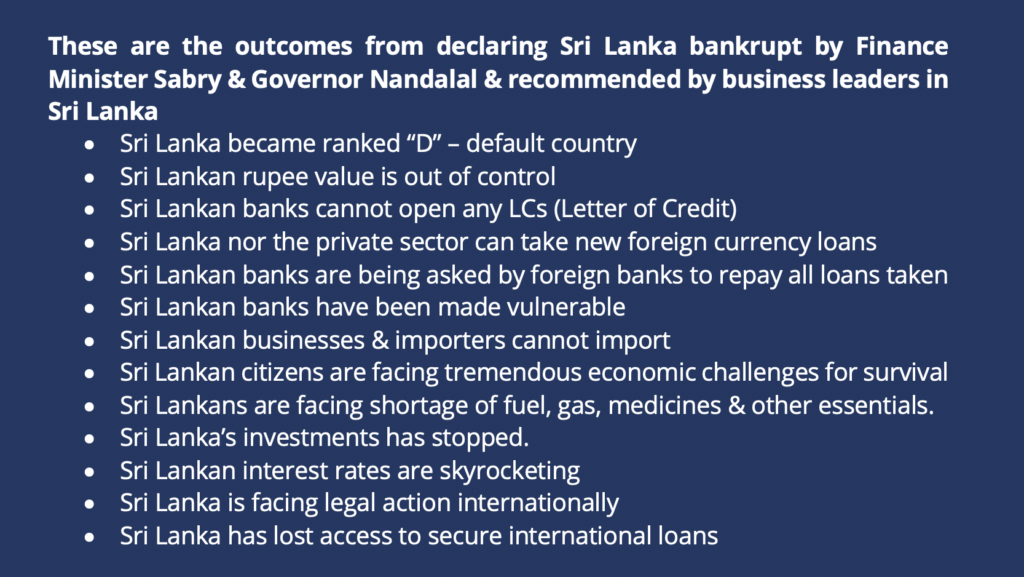


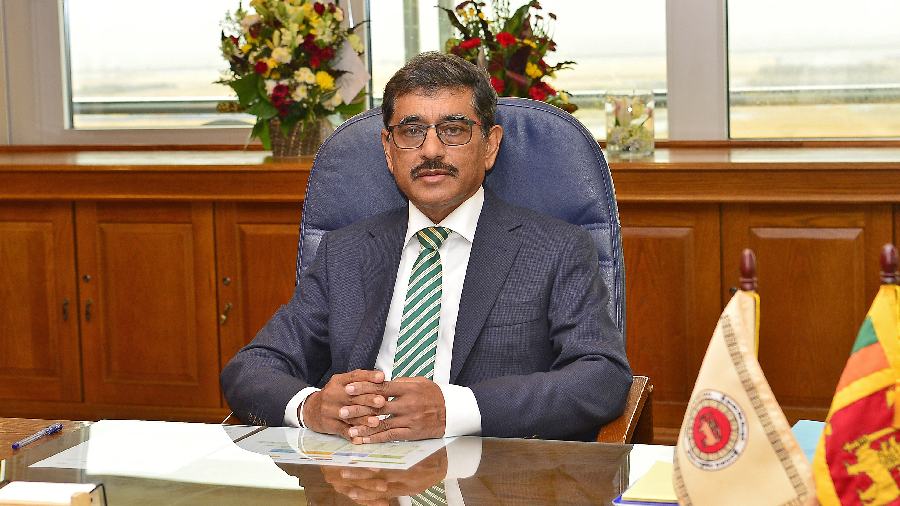


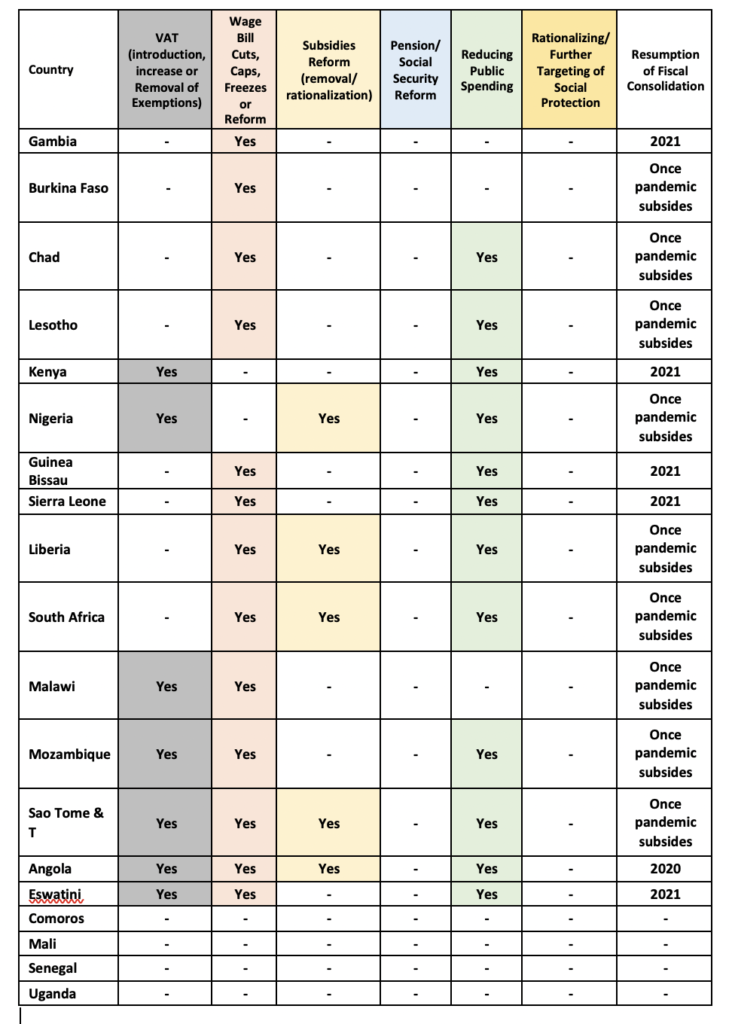

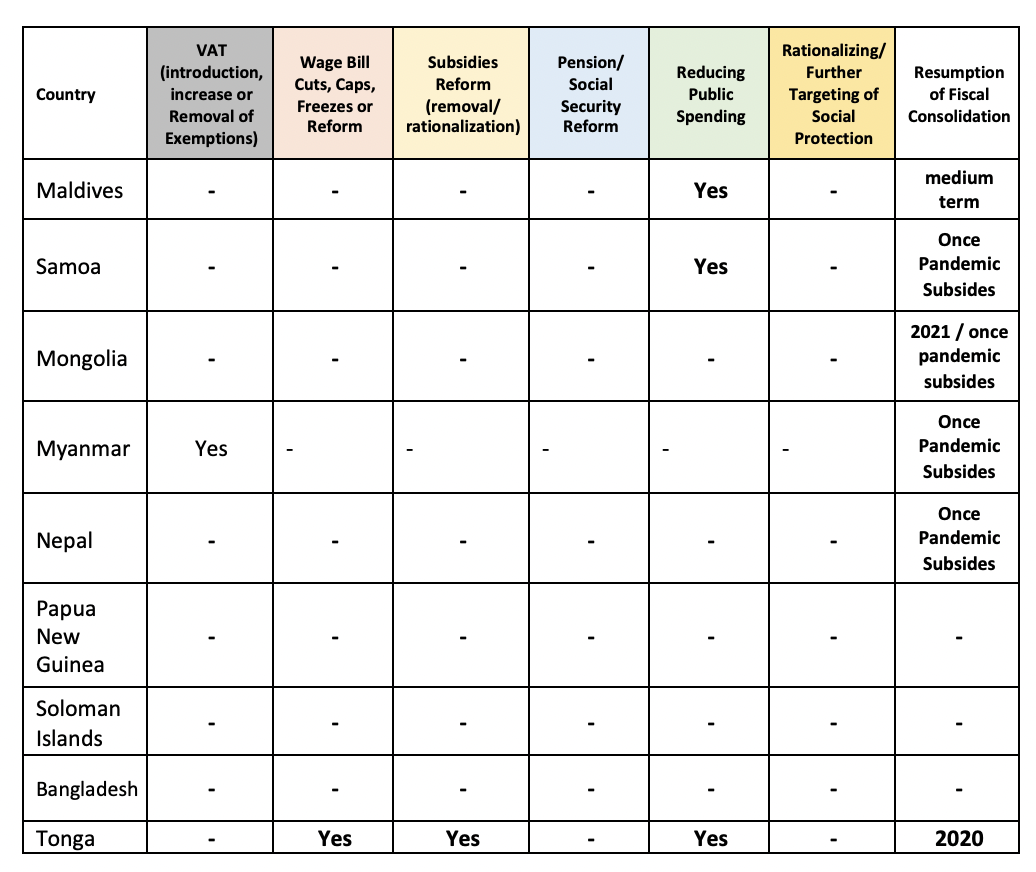
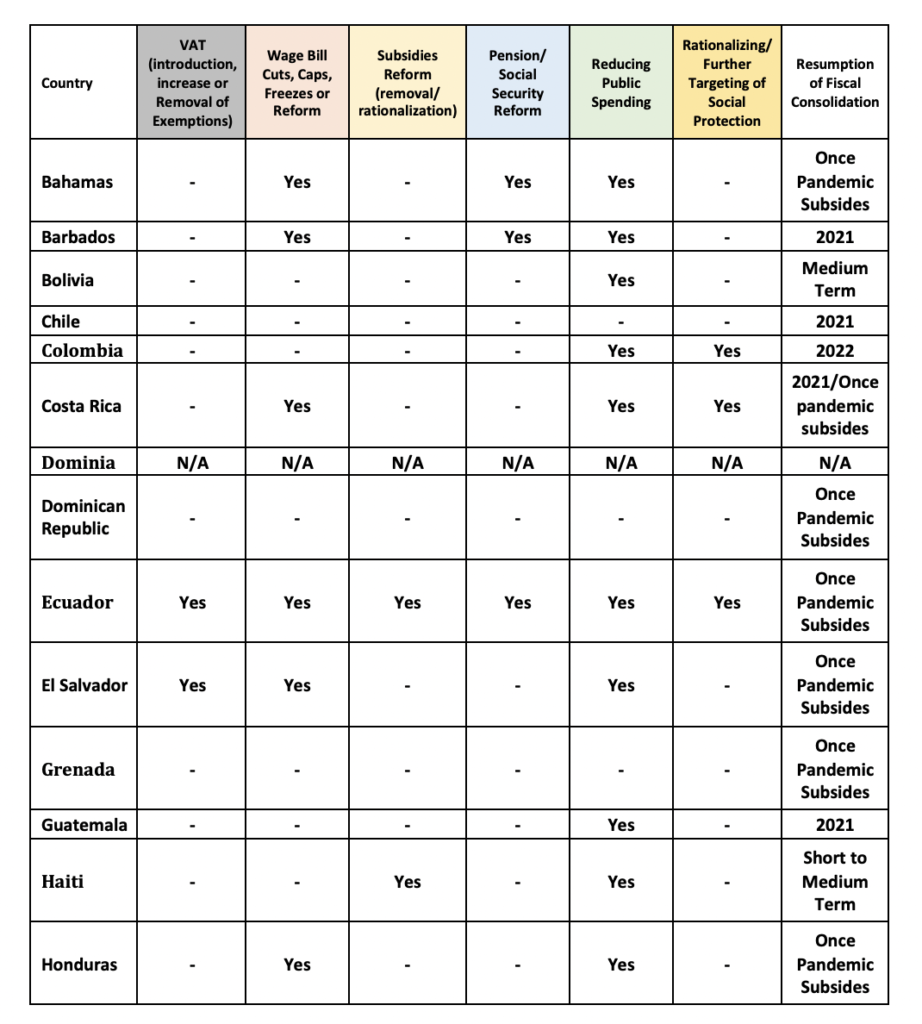


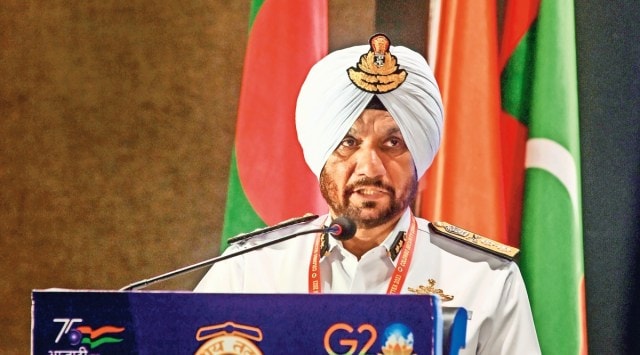 Commander Coast Guard Region (North-East) Inspector General Iqbal Singh addresses the Colombo Security Conclave in Kolkata, Wednesday. PTI

