Quality-of-Life Index / ජීවන තත්ත්ව දර්ශකය (QLI).

March 3rd, 2023

Sasanka De Silva Pannipitiya

The Quality-of-Life Index (QLI) is a metric used to assess individuals’ and communities’ overall well-being.

It considers a wide range of factors, such as health, education, income, the environment, social support, and political stability.

The QLI provides a comprehensive picture of a specific area’s quality of life and can be used to compare different regions or countries.

Policymakers, researchers, and social scientists frequently use the QLI to identify areas that need attention and improvement.

Policymakers can develop policies and programs that address the needs of the community and improve overall well-being by measuring the quality of life in a specific area.

Some of the factors that are commonly included in the QLI include:

1.     Health: This factor considers life expectancy, the prevalence of diseases, access to healthcare, and other indicators of physical well-being.

2.     Education: This factor measures the literacy rate, school enrollment, and other indicators of educational attainment.

3.     Income: This factor considers the average income and the poverty rate.

4.     Environment: This factor measures the quality of air and water, access to green spaces, and other indicators of environmental quality.

5.     Social Support: This factor measures the level of social cohesion, social capital, and other indicators of social support.

6. Political Stability: This factor considers the level of political stability, freedom of speech, and other indicators of political stability.

The QLI is a useful tool for policymakers and researchers interested in improving individual and community well-being.

It can assist in identifying areas that require attention and resources, as well as measuring the effectiveness of policies and programs over time.

It should be noted, however, that the QLI is not a perfect measure and may not capture all aspects of quality of life. It is only one of many tools available for assessing the well-being of individuals and communities.

ජීවන තත්ත්ව දර්ශකය (QLI) යනු පුද්ගලයන්ගේ සහ ප්‍රජාවන්ගේ සමස්ත යහපැවැත්ම තක්සේරු කිරීමට භාවිතා කරන මෙට්‍රික් එකකි.


එය සෞඛ්‍යය, අධ්‍යාපනය, ආදායම, පරිසරය, සමාජ සහයෝගය සහ දේශපාලන ස්ථාවරත්වය වැනි පුළුල් පරාසයක සාධක සලකා බලයි.


QLI නිශ්චිත ප්‍රදේශයක ජීවන තත්ත්වය පිළිබඳ සවිස්තරාත්මක චිත්‍රයක් සපයන අතර විවිධ කලාප හෝ රටවල් සංසන්දනය කිරීමට භාවිතා කළ හැක.


ප්‍රතිපත්ති සම්පාදකයින්, පර්යේෂකයන් සහ සමාජ විද්‍යාඥයින් අවධානය සහ වැඩිදියුණු කිරීම් අවශ්‍ය ක්ෂේත්‍ර හඳුනා ගැනීමට QLI නිතර භාවිතා කරයි.


ප්‍රතිපත්ති සම්පාදකයින්ට නිශ්චිත ප්‍රදේශයක ජීවන තත්ත්වය මැනීම මගින් ප්‍රජාවගේ අවශ්‍යතා සපුරාලන සහ සමස්ත යහපැවැත්ම වැඩිදියුණු කරන ප්‍රතිපත්ති සහ වැඩසටහන් සංවර්ධනය කළ හැකිය.


QLI හි පොදුවේ ඇතුළත් වන සමහර සාධක ඇතුළත් වේ:


1. සෞඛ්‍යය: මෙම සාධකය ආයු අපේක්ෂාව, රෝග පැතිරීම, සෞඛ්‍ය සේවා සඳහා ප්‍රවේශය සහ ශාරීරික යහපැවැත්මේ අනෙකුත් දර්ශක සලකා බලයි.


2. අධ්‍යාපනය: මෙම සාධකය සාක්ෂරතා අනුපාතය, පාසල් බඳවා ගැනීම් සහ අධ්‍යාපන මට්ටම් පිළිබඳ අනෙකුත් දර්ශක මනිනු ලබයි.


3. ආදායම: මෙම සාධකය සාමාන්‍ය ආදායම සහ දරිද්‍රතා අනුපාතය සලකා බලයි.


4. පරිසරය: මෙම සාධකය වාතයේ සහ ජලයේ ගුණාත්මකභාවය, හරිත අවකාශයන්ට ප්‍රවේශය සහ පාරිසරික තත්ත්වය පිළිබඳ අනෙකුත් දර්ශක මනිනු ලබයි.


5. සමාජ සහයෝගය: මෙම සාධකය සමාජ සහයෝගීතාවයේ මට්ටම, සමාජ ප්‍රාග්ධනය සහ සමාජ සහයෝගයේ අනෙකුත් දර්ශක මනිනු ලබයි.


6. දේශපාලන ස්ථාවරත්වය: මෙම සාධකය දේශපාලන ස්ථාවරත්වයේ මට්ටම, කතා කිරීමේ නිදහස සහ දේශපාලන ස්ථාවරත්වයේ අනෙකුත් දර්ශක සලකා බලයි.


QLI යනු පුද්ගල සහ ප්‍රජා යහපැවැත්ම වැඩිදියුණු කිරීමට උනන්දුවක් දක්වන ප්‍රතිපත්ති සම්පාදකයින් සහ පර්යේෂකයන් සඳහා ප්‍රයෝජනවත් මෙවලමකි.


අවධානය සහ සම්පත් අවශ්‍ය ක්ෂේත්‍ර හඳුනා ගැනීමට මෙන්ම කාලයත් සමඟ ප්‍රතිපත්ති සහ වැඩසටහන්වල සඵලතාවය මැනීමට එය සහාය විය හැක.


කෙසේ වෙතත්, QLI පරිපූර්ණ මිනුමක් නොවන අතර ජීවිතයේ ගුණාත්මක භාවයේ සියලු අංශ ග්‍රහණය කර නොගත හැකි බව සටහන් කළ යුතුය. එය පුද්ගලයන්ගේ සහ ප්‍රජාවන්ගේ යහපැවැත්ම තක්සේරු කිරීම සඳහා පවතින බොහෝ මෙවලම්වලින් එකක් පමණි.

Sasanka De Silva

Pannipitiya.

SINHALA DICTIONARY BY BUDDHADASA HEWAGE

March 3rd, 2023

By Dr Tilak S. Fernando

A massive Sinhala -English was out recently by Buddhadasa Hewage, marketed by the e-Lanka website in Australia at U.S. $50. The writer ordered the dictionary from them. It has 1,500,000 English words, similar to 95,000 Sinhala words, and contains 2432 pages. It is published after professor G.P. Malalasekera’s Sinhala-English dictionary, but Buddhadasa Heage’s dictionary has more words. It was the first time a professional or an institution published a Sinhala-English dictionary of this magnitude. It was available at the Book Exhibition, also held at the B.M.I C.H.

The author was born to a low-income family in a southern rural village in Sri Lanka. Buddhadasa Hewage prioritised his early life. He took on the frightening task of learning English on his accord. In late 1980, he managed to enter the Teachers’ Training College in Mirigama and started a distinguished teaching career. In 1977 he began teaching English at Ananda College in Elpitiya, where he served the college for twenty-one.

Author’s Literary Achievements

He has authored seventeen books, including six novels and five short-story books in Sinhala and English. His Sinhala novel Yathrawawaka Minissu” was selected as the best novel in 1992. Additionally, he won multiple awards in 2012. The Sri Lankan government recognised his literal talents and offered the Kalabushana” status.

The massive Sinhala-English dictionary is the product of Buddhadasa Sewage’s fifteen years of effort. His personal experience inspired him as a student and a teacher to embark on this project. The Sinhala-English dictionary will undoubtedly go a long way in simplifying the learning experience of students and journalists. 

Ministry of Education.

This dictionary has accepted been accepted by the Ministry of Education as a library book. He started working on the dictionary in 1998 when he was working as an English teacher. He noted every word in a notebook as a habit but never considered using it in the dictionary. In his attempts, he noticed that he had to deal with many English and Sinhala words and found out that there are many similarities between Sinhala and English words. It was the basic foundation. Furthermore, it helped to compile the dictionary as he wrote many Sinhala and English novels and short story books.

If you are an English journalist, you must know the relevant Sinhala words in English. For instance, the Malalasekera dictionary deals with English words to Sinhala, but it is only possible to use the English language if, to a certain extent, use the Malalasekera dictionary. Buddhadasa Hewage’s dictionary contains pages of 1,500,000 English words. His primary intention was to help the Sinhala native people to find English synonyms for Sinhala.

History of Dictionaries

The author has categorised words in the dictionary into nouns, adjectives, verbs, adverbs, idioms, abbreviations, and prepositions so that sophisticated individuals benefit from the dictionary. Ceylon’s history of dictionaries goes back to the British rulers, especially the British Civil Servants who needed to learn Sinhala to understand the locals’ thoughts. Once they conquered Ceylon, they wanted to know the local language, so it made them learn Sinhala – English vitally. It is on record as the first governor to Ceylon, Sir Fredrick North,  between 1798 and 1805, compiled the first dictionary of English to Sinhala with the aid of another British civil servant, John Wine, but they could not finish the job. Later the task fell on another British civil servant, but suddenly, he died. Later compilation of the dictionary was handed over to a Christian Father, Benjamin Clough, who ultimately printed the dictionary in 1821. It became the first Sinhala-English dictionary comprising 628 pages and was published in 1830. Buddhadasa Hewage said it was the best Sinhala-English dictionary ever published in Sri Lanka (Ceylon) up to date.

After Father Carter’s dictionary, several dictionaries were published. The first was by Mudliyar Gunasekera in 1915. The English Dharma Samaya published another dictionary in 1948. There was a line of Sinhala-English dictionaries published ever since. Somapala Jayawardene published the most contemporary dictionary in 1994 and Somapala Dematapiya in 1995. Buddhadasa Hewage consulted seven Sinhala English dictionaries and linked the recent authors.

Publishers.

There is a funny story about publishers. Buddhadasa Hewage had consulted a publisher, and the publisher promised to give only a 10% royalty, which meant if they published 1000 (one thousand copies). The dictionary’s author would get only Rs.10,000.00, whereas the publisher could earn Rs.90,000.00. Buddhadasa Hewage thought it was unfair because the author had put in so much energy and effort to compile 2,500 pages.

The. Buddhadasa Hewage’s dictionary was published for the third edition. He has donated 100 copies to the University students who entered the University from rural villages and were bright and poor. To achieve this, he has contacted the universities constantly to fathom the brightness and to find out about students’ financial status.

The author faces a fatal situation.

Before launching the dictionary, Buddhadasa Hewage faced a critical problem. A good friend of the author suddenly disappeared with all the type-setting and the pen drive. The culprit was desperate for money as he had a police complaint for stealing a woman servant’s three months’ wages. The author visited his home in Kurunegala and sought lawyers’ advice. The lawyer advised the dictionary’s author that his friend could sell the pen drive and the entire work on the dictionary for money. The author was left with no option but to report to the police. He listened to his lawyer and went ahead with the publication.

Another journalist once asked why the Oxford Advanced Learners Dictionary includes versions appearing in other countries in various languages, including Tamil. Still, only it is available in Sinhala to English in Sri Lanka?   The dictionary’s author replied, Yes, you are correct. We cannot see such a version, and it is up to the Sri Lanka government, or the relevant authorities must look into this matter. In my case, I only focussed on Sinhala because it became difficult. After all, there are many meanings for each Sinhala word. It is why we need a dictionary with example sentences like in Oxford Advanced Learner’s Dictionary.’

Compiling a dictionary is a challenging job. Invariably dictionary compilers end their lives before they see the final output.            When considered, only the publishers take advantage of the dictionary compilers, as royalty is limited to only 2 or 3%. In Sri Lanka, book publishing is a field that exploits authors, especially in compiling dictionaries which are precise for compilers.

The author says he is also ready to add Tamil words to the dictionary. It will be a complete dictionary of Sinhala, English and Tamil words.

tilakfernando@gamil.com

ශ්‍රී ලංකා හමුදාව ජාතිවාදීද | හමුදා කරණයක්ද මේ වෙන්නේ | පසුගිය යුද්ධය වුනේ ජාතිවාදය නිසාද?

March 3rd, 2023

Ceylon Diary – SBPC Official Channel

සංඛිත්තෙන පඤ්චුපාදානක්ඛන්ධා දුක්ඛා – ධම්මචක්කප්පවත්ත සූත්‍රය

March 3rd, 2023

තිස්ස ගුණතිලක

කුමක්ද මේ පංචස්කන්ධය හා පංචඋපාදානස්කන්ධය?  බොහෝ දේශකයන් ‘රෑප, වේදනා, සංඥා, සංකාර හා විඤ්ඤාණ’ යන පස් ආකාරය පංචස්කන්ධය ලෙස හදුන්වති. මෙහි ‘රෑප’ යනු රෑපය ලෙසද ඉතිරි සතර ‘නාම’ ලෙසද ගෙන නාම-රෑප එකතුවූ තැන පංචස්කන්ධය නැතහොත් ‘කය’ (ගත හා සිත) ලෙසද දේශනා කරන්නෝ තවමත් බහුලය. මොවුන් ඔබව පටලවා ඇති පඹගාලෙන් ඔබව මුදවාගැනීමට මෙම ලිපිය උපකාරී වේවා.

රූප, වේදනා, සංඥා, සංකාර හා විඤ්ඤාණ යන ක්‍රියාවලිය සද්ධර්මය තුල ‘ස්කන්ධය’ ලෙස හැදින්වෙයි. ‘ස්කන්ධය’ යනුවෙන් යමක් හුදකලාව (in isolation) පවතින්නේ නැත. පංචේන්ද්‍රියේ ප්‍රසාදවීමත් සමගම ස්කන්ධ ක්‍රියාවලිය හටගනී.  එනම් ස්කන්ධ ක්‍රියාවලිය ප්‍රාතූර්භූත (manifest) වන්නේ භාහිර රූපයක ප්‍රතිබිම්භය යම් පංචේද්‍රියක ප්‍රසාද වීමත් සමගමය. ප්‍රසාද වීමක් නැති තැන ස්කන්ධයක් නැත.

ඉංද්‍රිය පහේ ‘ප්‍රසාදවීමෙන්’ හටගන්නා නිසා ‘ස්කන්ධ’ ක්‍රියාවලිය (ප්‍රසාදය+ස්කන්ධය) ‘පංච ස්කන්ධ’ ක්‍රියාවලියයයි හැදින්විය හැකිය. චක්ඛු ප්‍රසාදය නිසා චක්ඛු ස්කන්ධයද, සෝත ප්‍රසාදය නිසා සෝත ස්කන්ධයද ආදි වශයෙනි.

ඉංද්‍රිය ප්‍රසාදයත් සමගම ඇතිවන ස්කන්ධ ක්‍රියාවලිය (චක්ඛු, සෝත, ජිව්හා, ඝාණ හා පොට්ඨබ්බ ස්කන්ධ) සද්ධර්මය තුල ‘සත්වයා’ හැදින්වීමට යොදා ගැනේ. 

සත්වයාගේ උපත අරමුන/සිතුවිල්ලේ ආරම්භය සමග වෙයි. ඊට පෙර මව්කුසින් බිහිවන්නේ ජීවියෙකි. ගයාවේ බෝධිමූලයේදී බුදුන්වහන්‍සේ බුද්ධත්වයට පත්ව නැතිකලේ සත්වයායි. කුසිනාරාවේ පිරිනිවන් පෑවේ බුදුන්වහන්‍සේ තුල වැඩසිටි ජීවියායි.

ඉංද්‍රිය පහේ ප්‍රසාදය සමග ඊට අනුකූලව සිදුවන පස් ආකාර ස්කන්ධ ක්‍රියාවලිය ‘පංච ස්කන්ධ’ ක්‍රියාවලිය වන අතර එය (ප්‍රසාදය + ස්කන්ධය) sensory experience ලෙස හැදින්විය හැකිය.  According to Buddhist teachings, The ‘sensory experience’ is define what a human being is.

ඉහත සඳහන් පංච ස්කන්ධ ක්‍රියාවලිය කරන්නෙක් නැතිබව අවබෝධ කල යුතුය. සබ්බේ ධම්මා අනත්තාති.

‘ස්වාමිනි, සෝතාපන්නයට, සකරදාගාමිත්වයට, අනාගාමිත්වයට හා අරහත්භාවයට පත්වීමට කලයුත්තේ කුමක්ද?’ යයි කීප අවස්ථාවකදී ස්ථිවිරයන් ඇසූ ප්‍රශ්ණයට තතාගතයින්වහන්සේගේ එකම පිළිතුර වූයේ ‘ස්කන්ධයේ උදය-වය දැකීම පමනමයි කලයුත්තේ’ යන්නයි. එම පිළිතුරෙන්ම සද්ධර්මය තුල ‘ස්කන්ධයේ’ ඇති වැදගත්කම අවබොධ විය යුතුය.

පංච ස්කන්ධ ක්‍රියාවලිය මුල (උදය) රූපද, අවසානයේ (වය) විඤ්ඤාණයද එනම් නාමයද ඇතිවන අතර ඒවා එකට එක්වීමෙන් (ගැටගැසීමෙන්)  සෑදෙන කාමාවචර ලෝකය උපාදාන වීමෙන් (බැස ගැනීමෙන්) භවය සකස් වී දුකට හේතුව වන ‘භාහිරය දෙයක් යමක් ලෙස දැනෙන මායාව’ ඇතිකරයි.

එනම් ‘පංච ස්කන්ධයේ උපාදානය’  

(ප්‍රසාදය+ස්කන්ධය+උපාදානය = sensory experience + clinging) දුකට හේතුපාදක වෙයි.

තිස්ස ගුණතිලක

2023 මාර්තු මස 03වනදා

Comparing AKD to King Parakramabahu

March 3rd, 2023

By C. A. Chandraprema Courtesy The Island

A video clip doing the rounds on web-based media platforms shows a former secretary of the agriculture ministry stating at a JJB (Malimawa) press conference that when Anura Kumara Dissanayake was the Minister of Agriculture, Livestock, Lands and Irrigation in the Chandrika Kumaratunga government in 2004, there was a surplus of paddy in the country and that on the instructions of the minister, a part of this surplus was sold to the World Food Programme and that this was akin to exporting rice during the time of King Parakramabahu.

This was sycophancy at its worst, targeting a gullible audience made up mainly of young people with very little awareness of history and whose opinions are formed by whatever comes to them via the internet. We all know that AKD was never a member of any government before April 2004. Hence if there was a surplus of paddy in the year that he assumed ministerial office for the first time, that can only be the result of development projects implemented by preceding governments. It should be obvious to anyone that AKD could not have done anything to deserve any credit for a paddy surplus in 2004.

The Mahaweli Project is the main reason for Sri Lanka becoming more or less self-sufficient in rice. Hence the full credit for any paddy surplus in the year 2004 should go entirely to the UNP government of 1977-94. The JVP vehemently opposed the Accelerated Mahaweli Project of the J.R.Jayewardene government in the 1980s. If the then UNP government had heeded what the JVP said at that time about the Accelerated Mahaweli Project, AKD would not have had a paddy surplus to sell to the WFP in 2004. It is indeed strange to see parties that opposed the Accelerated Mahaweli Project in the 1980s claiming credit for its results today.

Throughout its history, the JVP has only opposed or sabotaged development projects. A phase of the Udawalawe Project was being implemented in the late 1980s during the JVP’s second insurrection and a report of the International Water Management Institute has described how JVP death squads extorted money from the contractors and murdered workers on the project thus causing a delay in its implementation.

Opposition to all and sundry

The JVP has a history of opposing all development projects initiated by all governments. In the 1980s, they opposed the Accelerated Mahaweli Project. When the Colombo Port City was being built, the JVP claimed that there wasn’t enough sand and metal in the country to complete a project of that magnitude, and opposed it. They opposed the construction of highways during the Rajapaksa government. The anti-development project mentality of the JVP can best be illustrated by their opposition to the Uma Oya Project  which commenced construction in November 2011. The aim of the project was to construct a dam and a reservoir in the central highlands across the Uma Oya and to carry water from this reservoir through a system of tunnels into yet another reservoir and then onwards to a hydro-power project and finally into the Kirindi Oya to supply water to the Moneragala and Hambantota districts.

Around 2015-2017, water started seeping into one of the tunnels being constructed in the Uma Oya project. In drilling a tunnel, it is natural for ground water above it to seep into the tunnel and it would be necessary to seal the tunnel to prevent such seepage as the machine drills further. However, the German machine used to drill this tunnel had not been equipped with the accessories necessary to seal the tunnel. It was revealed later that this was due to some error on the part of the project consultants. Be that as it may, in 2017 on the advice of some Norwegian experts, the accessories necessary to seal the tunnel as the machine moved forward were obtained and the water seepage  issue ceased to exist. The Uma Oya Project is now nearing completion and is due to be commissioned some time during this year.

When the water seepage issue gained media attention, the main political force in the country that rose up against the Uma Oya Project was the JVP. Anura Kumara Dissnayake made impassioned speeches in Parliament  describing how thousands of wells, streams and springs in the Bandarawela area had dried up and how thousands of agricultural land had been abandoned due to the lack of ground water as a result of the seepage into the Uma Oya tunnel. He described how the walls of thousands of houses and other buildings in the area had cracks appearing as a result of the change in the ground conditions. He stated that construction work on the Uma Oya Project had commenced despite objections by environmentalists and other experts and that water was to be diverted through this project to the Hambantota port and airport to fulfill the desires of the Rajapaksa government.

The ground level campaign against the Uma Oya Project was led by the Badulla district JVP stalwart and ex-Parliamentarian Samantha Vidyaratne. He described this project not as a multi-purpose project but as a ‘bahu vinashakaree’ project and stated that this project has been planned by those willing to even ‘give their mothers for money’ and that all this was the doing of ‘rulers who did not think about the country’. He called for an immediate halt to the Uma Oya Project and gave examples from France, Thailand and South Korea where large scale development projects had been halted half way.

Uma Oya is a project that had been under discussion since the Bandaranaike era in the 1950s. The Dudley Senanayake government of the late 1960s, the Premadasa government in the early 1990s, the Chandrilka Kumaratunga government of 2000, and the UNP government of 2001, all carried out studies regarding this project. After all those studies and discussions, cabinet approval was obtained to commence the project on 26 January 2005. This was on the basis of cabinet paper No. 05/0036/039/002 which was presented to cabinet by Anura Kumara Dissanayake who was the Minister of Agriculture, Livestock, Lands and Irrigation at that time.  AKD had stated as follows in that cabinet paper:

For the development of the South East Dry Zone in Sri Lanka, particularly the Hambantota and Moneragala districts, there is no other alternative unless water is diverted from Uma Oya to the South East Dry Zone.”

Strategy for economic development of both Hambantota and Moneragala districts changed during the recent past and diversion of Uma Oya to Kirindi Oya is now seen in the perspective of recently conceived Ruhunupura development. The infrastructure of Ruhunupura development consists of the development of the Hambantota harbour into one of the modern harbours in the region, international airport in the Moneragala district, and an oil refinery…For all these new developments, projected water requirement has been estimated as 100 MCM in the year 2030. In the absence of a reliable source of water in the area, water from Uma Oya is seen as the only alternative to supplement this requirement.”

Therefore high priority should be given for this project.”

 A party of protest

 Even though AKD claimed in parliament that the Uma Oya Project had been inaugurated to fulfil the desires of the Rajapaksas, the cabinet paper presented to the CBK led cabinet by AKD himself, in January 2005, many months before Mahinda Rajapaksa became President in November 2005, has explained very well, the reasons for commencing the Uma Oya Project. In 2017, JVP activists had actually opposed a project that they themselves had initiated through a cabinet paper! This illustrates the mentality of the JVP. This is a party that has opposed every development project brought forward by every political party in power. Ultimately, they opposed the only development project that they themselves had initiated in their six decade long history.

Let us for a moment forget that it was AKD himself who had presented the initial cabinet paper on Uma Oya. Even if some problem emerges in the implementation of a development project initiated by someone else, the immediate reaction of a responsible political party should be to seek ways and means of solving the issue and moving forward rather than demanding that the project be abandoned. Problems do emerge in the implementation of large scale development projects. If the JVP reacted the way they did in 2017 to a minor issue which was easily resolved by procuring a few pieces of additional machinery, one can only imagine how they would have reacted in a case of a more serious issue.

The JVP is essentially a party of protest. When an opportunity to oppose something presents itself, they tend to quite literally, forget themselves. They do not possess the attitude of mind necessary to be able build or develop anything. A political party that seeks to rule the country should have the capacity to look rationally at problems that emerge in the day to day running of the country as well as in implementing major development projects. A party that sees demonstrations and agitation against all and sundry as the solution to all problems will never be able to make a positive contribution to the country.

Inside Sri Lanka’s deadly underground mines filled with rare jewels

March 3rd, 2023

 and   Courtesy Insider

  • Miners in Sri Lanka risk their lives hunting for valuable gems in deep underground pits.
  • Workers inhale toxic gasses like methane, and the tunnels can collapse at any moment.
  • Sri Lanka is renowned for its jewels, and the city of Ratnapura translates to “city of gems.” 

Inside Sri Lanka’s Deadly Underground Mines Filled With Rare Jewels (insider.com)

Now travel from Ayodhya to Sri Lanka with IRCTC’s ‘Sri Ramayana Yatra’. Check dates, cost and other details here

March 3rd, 2023

Courtesy mint

IRCTC will start the ‘Shri Ramayana Yatra’ through a special tourist train on 7 April 2023. The Shri Ramayana Yatra is a theme based pilgrimage tour by Bharat Gaurav Deluxe AC Tourist train on Ramayana circuit which covers the prominent sacred places associated with the life of Lord Rama.

Apart form this, the IRCTC is also offering an extended optional trip of the Ramayana trail to Sri Lanka.

The Bharat Gaurav Tourist Train launch is in line with the Government of India initiative Dekho Apna Desh” to promote special interest circuits in domestic tourism.

The train will depart from Delhi Safdarjung will cover places including Ayodhya, Janakpur, Sitamadhi, Buxar, Varanasi, Manikpur Jn, Nashik Road Hospate, Rameshwaram, Bhadrachalam Road, Nagpur and then back to Delhi.

Sri Lanka to relax currency band as it moves towards market driven exchange rate

March 3rd, 2023

Courtesy Reuters.com

COLOMBO, March 3 (Reuters) – Sri Lanka will relax its currency band from next week, its central bank said on Friday, as part of efforts to move towards a market-determined exchange rate as it seeks to secure a $2.9 billion bailout from the International Monetary Fund.

The central bank also raised interest rates by 100 basis points to tackle inflation now running at 50% as the country endures its worst financial crisis since independence from Britain in 1948.

ඇමෙරිකා ඉහලම ලොක්කෙක් රහසේ ඇවිත්.. ලංකාවට භයානක යෝජනා හතරක්.. චීනය, ඉන්දියාව, රුසියාව රටවල් තුනම කිපෙයිලු..

March 3rd, 2023

උපුටා ගැන්ම ලංකා සී නිව්ස්

පෙබරවාරි 14 දා ලංකාවට රහසිගතව පැමිණි ඇමෙරිකානු දූත පිරිස අතර ඇමෙරිකානු සීඅයිඒ සංවිධානයේ ප්‍රධානී විලියම් බර්න්ස් ද සිටි බවට නොනිල තොරතුරු ඇතැයි පිවිතුරු හෙළ උරුමයේ නායක නීතිඥ උදය ගම්මන්පිල මහතා පවසයි.

ඒ මහතා මේ බව සඳහන් කර සිටියේ අද දින (03) පිවිතුරු හෙළ උරුමය පක්ෂ මූලස්ථානයේ පැවැති මාධ්‍ය හමුවකට එක් වෙමිනි. එහිදී පිවිතුරු හෙළ උරුමයේ නායකයා වැඩිදුරටත් මෙසේ අදහස් දැක්වීය.

සීඅයිඒ ලොක්කා ලංකාවට රහසින් ඇවිත්

පෙබරවාරි 14 දා ග්ලෝබ් මාස්ටර් ගුවන් යානා දෙකකින් ලංකාවට රහසිගතව පැමිණි ඇමෙරිකානු අමුත්තන් කවුදැයි තවමත් අබිරහසක්. ඒ අය ආගමන විගමන හෝ රේගු නිලධාරින්ගේ පරික්ෂාවට ලක් වෙන්නේ නෑ. ලංකාවට ඇතුළු වුණු බවට ගමන් බලපත්‍රවල සටහන් කරන්නේ නෑ. රට ඇතුලට එන්නේ ඇමතිවරයෙකුටත් යෑමට වරම් නැති සුවිශේෂ ප්‍රභූ පර්යන්තය හරහා. කොළඹ කරා ඔවුන් පැමිණෙන විට ඉතිහාසයේ කවදාවත් නැති විධියට අධිවේගි මාර්ගය අන් අයට වසා දමනවා. එහෙම පැමිණෙන මේ දූත පිරිස පැය විසි හතරක්වත් ලංකාවේ ඉන්නෙත් නෑ. රාජ්‍ය නායකයෙකුටවත් නොලැබෙන වරප්‍රසාද සහිතව ලංකාවට ආවේ කවුදැයි අදටත් අබිරහසක්. මේ අය කවුදැයි කියන්න ලංකාණ්ඩුවවත් ඇමෙරිකානු තානාපති කාර්යාලයවත් ඉදිරිපත් වෙන්නේ නෑ. නමුත් අපට තිබෙන නොනිල තොරතුරු අනුව එදා රහසේ ලංකාවට ඇවිත් තිබෙන්නේ ඇමෙරිකානු රහස් ඔත්තු සේවය වන සීඅයිඒ සංවිධානයේ ප්‍රධානියා විලියම් බර්න්ස්.

ඇමෙරිකාවෙන් ලංකාවට භයානක යෝජනා හතරක්

පැමිණියේ කවුද කියන එකටත් වඩා වැදගත් වන්නේ ආවේ කුමකටද කියන එකයි. මේ දූත පිරිස ජනාධිපති, ආරක්ෂක ලේකම් සහ බුද්ධි අංශ ප්‍රධානි හමු වී තිබෙනවා. ජාතික ආරක්ෂාව අනතුරේ හෙළන භයානක යෝජනා හතරක් ඉදිරිපත් කර තිබෙනවා. පළමු යෝජනාව වන්නේ ලංකාවට ලැබෙන බුද්ධි තොරතුරු සියල්ලම ඇමෙරිකාව සමග බෙදා ගන්නා බුද්ධි තොරතුරු විශ්ලේෂණ මධ්‍යස්ථානයක් පිහිටුවීමයි. ඇමෙරිකාව වගේ බෙදුම්වාදින්ට හිතවත් රටවලට නායකත්වය දෙන රටකට අපට ලැබෙන බුද්ධි තොරතුරු ලබා දීම ජාතික ආරක්ෂාව අනතුරේ හෙලීමක්.මේක වසර විස්සකට වඩා පැරණි යෝජනාවක්. 2002 දී වත්මන් ජනාධිපතිතුමා අගමැති තනතුරේ සිටිය දී මෙම ව්‍යාපෘතිය පටන් ගන්නේ සීඅයිඒ සංවිධානයෙන් ලංකාවට ව්‍යාපෘති අධ්‍යක්ෂ ලෙස ආචාර්ය ටොම් බ්‍රමන් එවීමෙන්. අපේ ආරක්ෂක ප්‍රධානින්ගේ දැවැන්ත විරෝධය තිබුණත් ව්‍යාපෘතිය ඉදිරියට යනවා. ඒ අතරේ ආණ්ඩුව පෙරලීමෙන් තමයි මෙම ව්‍යාපෘතිය නවතින්නේ.

ඇමෙරිකාවේ දෙවන යෝජනාව තමයි ඔවුන්ගේ biometric immigration control system ජීවදත්ත ආගමන පාලන පද්ධතියක් තෑග්ගක් ලෙස ලංකාවේ ගුවන් තොටුපොල වලට ලබා දීම. නමුත් ඒ දත්ත බැංකුවට ඇමෙරිකාවට ප්‍රවේශ අයිතිය දෙන්න ඕනි. ඒ අනුව ලංකාවට එන යන සියළුම දෙනාගේ ඇඟිලි සලකුණු ඇසේ සලකුණු සහ හිසකෙස් රටාව කියන අතිශයින්ම සුවිශේෂී දත්ත ඇමෙරිකාවට ලැබෙනවා.

මේ යෝජනාව ක්‍රියාත්මක කරන්න ගියොත් චීනය ඉන්දියාව සහ රුසියාව අපත් සමග අමනාප වෙන්න පුලුවන්. ඒ වගේම අපට වැඩියෙන්ම සංචාරකයින් එන ආයෝජකයින් එන රටවල් තුනක් තම පුරවැසියන් ලංකාවට එවීමට අකැමැති වුණොත් එය විදේශ විනිමය අර්බූදය උග්‍ර කරවන්නක්.

ජාත්‍යන්තර දුරකතන ඇමතුම් වගේම දත්ත හුවමාරුව සිදු වන්නේ මුහුදු යටින් දුවන විදුලි සංදේශ රැහැනක් නැතිනම් submarine telecommunication cable හරහා. මේ රැහැනේ යන දත්ත ලබා ගන්න දුරකතන ඇමතුම් වලට රහසේ සවන් දෙන්න අවශ්‍ය පහසුකම් ඉල්ලා තිබෙනවා. ඒ අවස්ථාව ලබා දීම වෙනුවෙන් ලංකාවට ඇති ත්‍රස්ත තර්ජන පිලිබඳ කල් තියා අනතුරු ඇඟවීමේ වගකීම ඇමෙරිකාව භාර ගන්නවාලු. 2001 දී ලෝක ඉතිහාසයේ දැවැන්තම ත්‍රස්ත ප්‍රහාරය ඇමෙරිකාවට එල්ල වීම පිලිබඳ මෙලෝ හසරක තොරතුරක් කලින් ලබා ගන්න බැරි වුණු සීඅයිඒ සංවිධානය ලංකාවට ඇති ත්‍රස්තවාදි අනතුරු පිලිබඳ කලින් දැනුම් දීමේ වගකීම භාර ගැනීම මේ වසරේ ලොකුම විහිළුව බවට පත් වෙන්න පුලුවන්.

ඇමෙරිකාවේ සිව්වන යෝජනාව තමයි 2017 දී රනිල් අගමැතිතුමාගේ මැදිහත්වීමෙන් අත්සන් කරන්න හැදූ අපේ මැදිහත්වීමෙන් හකුලා ගන්න සිදුවුණු සෝෆා ගිවිසුම Status of Forces Agreement අත්සන් කිරීමයි. මේ සම්බන්ධයෙන් නම් ජනාධිපතිතුමා ස්ථිර වචනයක් ලබා දීලා නෑ කියලායි අපට ආරංචි. නමුත් ඒ ගැන තවදුරටත් සාකච්ඡා කරන්න පොරොන්දු වුණාලු. මොකද 2017 කරන්න ගිහිල්ලා වින්ද දුක් ගැහැට එතුමාට සිහිපත් වෙන්න ඇති.

ඇමෙරිකා එක්සත් ජනපදය හැමදාමත් අපේ සතුරන්ගේ පිලේ සිට ගත් අපේ ඓතිහාසික සතුරෙක්. එවැනි රටකට අතිශයින්ම සංවේදි බුද්ධි තොරතුරු ලබා දීම වගේම ලංකාවට එන යන පුද්ගලයින්ගේ පෞද්ගලික දත්ත ලබා දීම ලංකාවේ ජාතික ආරක්ෂාව බරපතල අනතුරක හෙලීමක්. ලංකාවට පැනමාවේ ඛේදනීය ඉරණම අත් කරදීමට අඩිතාලම යෙදීමක්.

ප්‍රශ්න සහ පිළිතුරු

ප්‍රශ්නය ‍

පැෆරල් සංවිධානය කියනවා මැතිවරණය සඳහා මේ වන විට අති විශාල මුදලක් වියදම් කර තියෙනවා කියලා. එහෙමනම් දැන් මැතිවරණ නොපැවැත්වීම හරහා එම මුදල් නාස්තියක් වෙනවා නේද ?

පිළිතුර

ආණ්ඩුක්‍රම ව්‍යවස්ථාවෙ ඉතා පැහැදිලිවම සඳහන් වෙනවා නිදහස් හා සාධාරණ මැතිවරණයක් පැවැත්වීම පිළිබඳව රටේ වගකීම තියෙන්නේ ජනාධිපතිවරයාට. මුදල් නාස්තියක් වෙනවා නම් එහි වගකීම වෙන කවුරුවත් නෙවෙයි රටේ ජනාධිපතිවරයා බාරගත යුතුයි. මුදල් ලබාදෙන මුදල් අමාත්‍ය ධූරය තිබෙන්නෙත් ජනාධිපතිවරයා අතේ.

මෙම මාධ්‍ය හමුව සඳහා පිවිතුරු හෙළ උරුමය ප්‍රචාරක ලේකම් ඉරංග විද්වත් මෙන්ඩිස් දෙහිවල ආසන සංවිධායක අජන්ත ද සිල්වා යන මහත්වරුන්ද එක් විය.

– Media unit

CIA Chief visited SL as part of top secret mission

March 3rd, 2023

Courtesy The Daily Mirror

Gammanpila charges national security compromised

The Director of the US Intelligence Agency CIA William Burns arrived in Sri Lanka on February 14, as a part of a top secret visit to the island, MP Udaya Gammanpila charged.

For over three weeks we have been questioning as to who visited the island, but the government and the US have maintained their silence,” he said. 

Four proposals compromising the national security of Sri Lanka during this meeting, Gammanpila said. 

The first proposal discussed during the meeting is the setting up of an Intelligence Analysis Centre for the purpose of intelligence sharing with the US, he said. 

This proposal first came in 2002 when the current President was Prime Minister. The then government attempted to implement this project amidst strongest objections from the local intelligence community,” he said. 

The second proposal is the gifting of a biometric immigration control system to Sri Lanka, for which US will retain access to, Gammanpila alleged, warning that such a move will discourage Chinese and Indian investors from doing business in Sri Lanka. 

The third proposal includes access to submarine telecommunications cables and data, for which the US is willing to provide prior intel on terrorist attacks in Sri Lanka. This is the biggest joke of the year,” he said.

The final proposal was the Status of Forces Agreement (SOFA) between the two countries, Gammanpila said. Except for the final proposal, it appears that the President has not agreed to the other proposals. If our national security is compromised in this manner, Sri Lanka will soon follow the fate of Panama,” he said. (Kalani Kumarasinghe)

CB delivers surprising 100bps rate hike amid IMF insistence

March 3rd, 2023

Courtesy The Daily Mirror

Taking everyone by surprise, the Monetary Board of the Central Bank today raised policy interest rates by 100 basis points, though many predicted the monetary authority to either maintain the status quo or signal a dovish tilt by cutting rates.

Inflation, which peaked almost at 70 percent, has been steadily coming down and the Central Bank is hopeful that it will come down to the desired 4-6 percent band by end of this year as the island nation appears to have firmly embarked on a disinflation path.

However, today’s monetary policy decision showed differences of opinion between the Central Bank and the International Monetary Fund (IMF) when it comes to inflation projections and expectations. 

There have been some differences between the CBSL and IMF staff on the inflation outlook,” the Central Bank said in its monetary policy review document.

In this backdrop, the Central Bank Governor Dr.Nandalal Weerasinghe said the Central Bank and the IMF reached a consensus to increase the policy interest rates by 100 basis points, though what was agreed with the IMF at the time of entering the staff level agreement in last September was 250 basis points.

Projections are projections. When we move forward, we would know whose projections are right,” Governor Weerasinghe said referring to the clear difference of opinion between the Central Bank and the IMF about inflation projections. 

Accordingly, it was decided today to raise both Standing Deposit Facility Rate (SDFR) and the Standing Lending Facility Rate (SLFR) of the Central Bank by 100 basis points to 15.50 percent and 16.50 percent.

The monetary policy review was originally scheduled to be announced on Thursday morning, but was postponed to Friday afternoon. The reason for the delay could be that the Central Bank and the IMF wanted more time to reach a consensus on the policy action.  

However, Governor Weerasinghe said the increase in policy rates is unlikely to have an impact on the market interest rates, though he said the rate hike would narrow the spread between the policy rates and the market interest rates, which have stayed stubbornly high, largely due to the uncertainties stemming from delay in IMF bailout and the worries pertaining to debt restructuring.

The most important thing is that with this rate hike, we have completed all the ‘prior actions’ that will facilitate the unlocking of IMF financing,” Governor Weerasinghe said.

This decision demonstrates Sri Lanka’s commitment to the IMF-EFF arrangement, which has been pursued by the Government in order to ensure stability in the economy on multiple fronts. The finalisation of the IMF-EFF arrangement is expected to benefit all stakeholders and bolster confidence, which would help restore stability in the economy on a sustained basis. 

This will incentivise more foreign exchange flows in the period ahead that would aid the economy to overcome the prevailing economic crisis. The Board was of the view that the economy has already traversed through the most difficult and unprecedented times with tremendous resilience and strongly believes that today’s decision would pave way for a faster-than-expected deceleration of inflation,” the monetary policy review document stated. 

CBSL Governor hopeful of unlocking IMF programme this month

March 3rd, 2023

Courtesy Adaderana

The Governor of the Central Bank of Sri Lanka (CBSL), Dr. Nandalal Weerasinghe, stated that Sri Lanka stands ready to unlock the International Monetary Fund (IMF) programme this month.

Speaking at a press conference held this afternoon (03 March), Dr. Weerasinghe assured that all required prior actions with the IMF have been completed.

We have now completed all the required prior actions with the IMF and stand ready to unlock the IMF programme, hopefully, this month”, he said in this regard.

Meanwhile, the CBSL has decided to increase the Standing Deposit Facility Rate (SDFR) and the Standing Lending Facility Rate (SLFR) by 100 basis points to 15.50% and 16.50%, respectively, with effect from the close of business today.

The decision was taken at a meeting held this afternoon, in an attempt to fulfill the pre-requisites required to move forward with the finalisation of the IMF Extended Fund Facility (EFF) arrangement Sri Lanka currently awaits.

ASPI hits nearly 10,000 points after 111.09 point increase

March 3rd, 2023

Courtesy Adaderana

The All Share Price Index (ASPI) of the Colombo Stock Exchange (CSE) increased by over 100 point during today’s (03 March) trading.

Accordingly, the ASPI increased by 111.09 points (1.19%) to 9444.92 at today’s trading, while the turnover was recorded at Rs. 2.8 billion.

Meanwhile, the S&P SL20 went up by 9.70 points to close at 2,838.18 points. This is an increase of 0.34 percent

Vega EVX: South Asia’s first fully electric supercar approved in Sri Lanka

March 3rd, 2023

Courtesy Adaderana

The Department of Motor Traffic has approved the use of ‘Vega’ cars – not only Sri Lanka’s, but also South Asia’s first all-electric supercar.

Accordingly the number plate for the first Vega car registered in Sri Lanka was handed over today (03 March) to the President and CEO of CodeGen and the designer of the car, Harsha Subasinghe.

The number plate was handed over by the Commissioner General of the Department of Motor Traffic, in the presence of Transport Minister Bandula Gunawardena and Minister of Industries Dr. Ramesh Pathirana.

Vega Innovations, a subsidiary of CodeGen International (Pvt) Ltd., created history in 2020 as the Vega EVX, Sri Lanka’s and South Asia’s first fully Electric Supercar was shipped out to Switzerland, to be unveiled at the 90th Geneva International Motor Show, 5-15 March 2020.

Vega EVX was the first-ever vehicle in history, entirely designed and engineered in Sri Lanka to be showcased at a premier international motor show.

The all electric two-seater Supercar is powered by a dual-motor all-wheel-drive drivetrain delivering 804HP and 720NM of torque. With a 40kWh battery-pack, recent test drives confirm a staggering 0 to 100 kmph acceleration in 3.1 seconds, an estimated range of 250 kilometres and a top speed of 240 kmph denotes the overall performance of the Vega EVX Supercar. 

The supercar showcases advanced multidisciplinary technology applications and a skilfully fabricated lightweight carbon fiber body.

Cannot bring about govt change by taking to streets – President

March 3rd, 2023

Courtesy Adaderana

President Ranil Wickremesinghe has emphasised that the only way a change of government can be brought about is through a Parliamentary election.

Accordingly, he noted that a Parliamentary election is the only way through which change can be implemented, emphasising that taking to the streets is not an option for the Parliament.

Speaking at the Passing Out Parade of Air Force cadets and other officers held at the Trincomalee Air Force Base this morning (03 March), the Head of State highlighted that a nation can become anarchic due to an economic collapse, and thereby urged everyone to prioritise safeguarding both the economy and the constitution of the country.

Commander-in-Chief of the Armed Forces, President Ranil Wickremesinghe, who arrived at Trincomalee Air Force Base, was received with air force honours.

Meanwhile, 40 Officer Cadets including three females were commissioned as Officers of the Sri Lanka Air Force by the Chief Guest, and received their ceremonial swords, which symbolizes their status as Commissioned Officers.

Thereafter, flying brevets were pinned on 13 pilot officers and 07 trophies were awarded for special achievements.

Two Officer Cadets who have shown exceptional performance were awarded the Sword of Eagle for the best student of General Duties Pilot Branch and the Sword of honour for the overall best student among all branches.

The President also posed for a group photograph with the newly commissioned officers and senior officers.

The Sri Lanka Air Force Band rendered a special performance and the parachute display adding colour to the event.

Attached below is an excerpt of the speech delivered by the President at the event:

“In order to move forward as a united and prosperous country, all individuals regardless of their ethnicity, religion, or cultural background must work together. Whether Sinhalese, Tamil, Muslim, Burgher, Buddhist, Catholic, Hindu or Muslim, it is essential that all citizens come together to work towards the greater good of the nation. Only by working together can we build a stronger, more prosperous future for our country and its people.

The legitimacy of Sri Lanka’s government is established by the executive, legislature, and judiciary. The judiciary plays a crucial role in upholding and enforcing the laws enacted by the legislature. All three institutions are focused on safeguarding Sri Lanka’s constitution and ensuring that the country functions in accordance with its laws and regulations.

It is the responsibility of every citizen to help protect these institutions, which are essential to the proper functioning of the government and the preservation of Sri Lanka’s democracy. Without these institutions, there can be no assurance that the country will remain stable and secure.

It is important to note that any changes to the government must be made through the proper channels, such as a parliamentary election. The streets are not an option for the parliament, and any attempt to subvert the established process would be a violation of Sri Lanka’s constitution and the rule of law.

I am deeply grateful to the armed forces for their role in protecting the Parliament last June. As we have seen in other countries, when a parliament is not safeguarded, chaos and anarchy can quickly ensue. Similarly, a country without a strong economy is also at risk of devolving into chaos.

It is therefore the responsibility of all of us to work together to protect both the constitution and the economy of our country. In recent days, I have met with various organizations to discuss strategies for boosting the economy, and I am confident that our efforts will yield positive results in the near future.

By protecting our country and upholding its constitution, we can ensure that our democracy remains strong and vibrant”.

A letter to the President from National Joint Committee

March 2nd, 2023

Lt Col Anil Amarasekera. (Rtd.) Co-President National Joint Committee

01st March 2023.

His Excellency, President Ranil Wickremasinghe,

The Presidential Secretariat,
Colombo 1.

Your Excellency,

You have made a public statement that you intend to fully implement the Thirteenth Amendment to the Constitution. The National Joint Committee (NJC) intends to caution you against implementing such a decision which would amount to opening a Pandora’s Box. The Ven.Mahanayake Theros too have in a joint statement requested you not to do so.

The Indo Lanka accord signed on 27th July 1987 that was forced on Sri Lanka by India through gunboat diplomacy is illegal according to articles 51 and 52 of the Vienna Convention on the law of Treaties. India also failed to implement some of the provisions therein such as disarming the terrorists and as such the Indo Lanka Accord can be considered as repudiated. Therefore do you consider the 13th Amendment enacted on 14th November 1987 in accordance with the Indo Lanka Accord to have any validity?

When the 13th Amendment was challenged in the Supreme Court, while Chief Justice Sharvananda, Justice E.A.D Athukorale, Justice Percy Colin-Thome and Justice H.D. Thambiah in their determination said that a referendum was not necessary for its enactment, Justice R.S.Wanasundara, Justice O.S.M Seneviratne, Justice L.H.De Alwis and Justice H.A.G de Silva in their determination said that this Amendment cannot be enacted sans a referendum. Though Justice Parinda Ranasinghe in a separate verdict conceptually agreed with the Chief Justice Sharvananda, he dissented on article 154G (2) (b) and (3) (b) which he said should be approved at a referendum. He refused to suggest any amendment to the said articles 154G (2) (b) and   (3) (b). The subsequent amendment made to the said articles at the committee stage was not subjected to the scrutiny of the Supreme Court. Therefore putting together Justice Parinda Ranasinghe’s verdict with that of Chief Justice Sharvananda can be interpreted as incorrect and if so the 13th Amendment has been enacted sans the approval of the Supreme Court that makes it controversial if not illegal.

The ruling given by Chief Justice Sharvananda that the Provincial Council bill be passed after the 13th Amendment became law was also ignored by the then government which took a vote on the Provincial Council bill two days before the 13th Amendment received the speaker’s certification on 14th November 1987. Therefore the Provincial Council bill too has been enacted illegally. 

On or about 1995 the Chandrika Kumaratunga Government introduced the devolution proposals that was commonly known as the Package. It was to campaign against the package and to educate the masses regarding the danger of devolving political and administrative power from the centre to the periphery that the NJC was established by Retired Supreme Court Judge Mr. R.S. Wanasundera. The NJC also established the Sinhala Commission to inquire into the grievances of the Sinhala majority. Two reports were published by the Sinhala Commission to educate the international community in this regard.

The NJC advocated the view that political and administrative power should be decentralised from the centre to the periphery but should never be devolved. Many organizations including political parties such as the UNP and the JVP joined with the NJC and when these devolution proposals were tabled in the National State Assembly on 8th of August 2000 all approach roads to the parliament was blocked by protesting masses and President Chandrika Kumaratunga had to use helicopters to fly her MP’S to parliament. It was Mr. Mahinda Rajapaksa who walked from the parliament to the Batheramulla junction to inform the people that the devolution proposals had been postponed indefinitely and for the protesting people to disperse which they did peacefully. 

The English meaning of decentralization and devolution of power seem very similar when looked at superficially. However the important fact that needs to be realized when it comes to the governing power of a country is that decentralization amounts to the transfer of that power from the central government to a local authority be it a region, a province or a district while devolution is on the other hand the removal of central government power and handing that power over to a region, a province or a district. Therefore decentralized power if misused by a region, a province or a district could be recalled by the central government while devolved power cannot be recalled by the central government if misused by a region, a province or a district. Taking into consideration the difficulty or virtual impossibility for a central government to recall devolved power to a region, a province or a district let us consider the possible repercussions of such an eventuality in this country with several simple examples.

Firstly let us consider irrigation which is the life blood of the farming community in the northern and eastern provinces. Once this subject is devolved to a province, if the provincial administration fails to maintain the reservoirs (Wewas) and irrigation canals in the Sinhala villages, there is nothing the central government can do to help the Sinhala cultivators in distress. The only alternative left for them would be to leave those villages in the northern and eastern provinces and migrate to some other province.

Secondly let us consider the subject of health. Once this subject is devolved to a province, if the provincial administration fails to provide adequate funds to maintain the rural hospital buildings serving the Sinhala community or fails to provide adequate doctors, nurses and other staff or even medical supplies to rural hospitals in their area, the Sinhala villagers will have no other alternative left other than to leave the province and to migrate to some other province where these facilities are available.

Thirdly let us consider the subject of education. Once this subject is devolved to a province, if the provincial administration fails to appoint the teachers needed to schools in Sinhala villages and also does not allocate adequate funds to maintain and repair school buildings in the Sinhala villages, there is nothing that the central government can do in this regard. The Sinhala population will therefore leave the province and migrate to some other province where good education facilities are available for their children.

These are only three simple examples that I have provided to bring to your attention the danger of devolving power to the provinces. However the situation would be the same with regard to distribution of electricity, repair of roads, purchase of agricultural produce and many other such subjects, if there is devolution of power to a province where the Sinhala population is a minority. Therefore while devolution will only hasten the division of the country by creating administrative avenues to encourage the migration of the Sinhala population from the northern and eastern provinces of the country to other provinces, decentralization of power will not encourage such action as these powers can be withdrawn by the central government if found to be misused by any provincial council.

Mr. C.V.Wigneswaran M.P said recently that the full implementation of the 13Th Amendment is good but that he will not look back until a federal constitution is promulgated. He is trying to apply Samuel James  Veluppillai Chelvanayakam’s policy  of ‘little now more later’  with an intention to first federate a unitary state through the full implementation of the 13th amendment. The federated state will subsequently be divided to establish Eelam, which is the final objective of the separatists. If  Wigneswaran and likeminded separatists succeed to achieve during peace what they failed to achieve through three decades of war, all the sweat, blood, tears and toil expended by the security forces sometimes even by sacrificing their very life and limb to defeat the separatists would have been in vain.

This ‘little now more later’ policy has been applied with great success by racist Tamil politicians since independence. They first succeeded in making Tamil a language of the minority community an official language in par with Sinhala which is the language of the majority community in this country. Tamil incidentally is not an official language even in India where the majority of the Tamil population live in this world. Through the enactment of the controversial 13th Amendment the racist Tamil politicians succeeded in devolving much of political and administrative power to the northern and eastern provinces that can be utilised to create an exodus of the minority Sinhala population from these two provinces as pointed out previously in this letter.

Through the enactment of the 16th Amendment these racist Tamil politicians succeeded in making Tamil the language of administration in the northern and eastern provinces for the maintenance of public records and transactions of all business by public institutions. The majority Sinhala population not being racists had little or no objection while such discriminatory legislation was enacted for political expediency but can the Sinhala majority continue to allow this ‘little now more later’ policy to continue?   

Therefore in the interest of the Sinhala minority that is living in the northern and eastern provinces, the NJC kindly request you to promulgate a new Constitution for which the majority of the people in this country gave a mandate both at the last presidential and general elections so that the people living in any part of this country are not discriminated based on their ethnic, caste or religious identity.

Lt Col Anil Amarasekera. (Rtd.)

Co-President National Joint Committee

ARE THERE VALID REASONS TO FULLY IMPLEMENT THE 13TH AMENDMENT TO THE CONSTITUTION

March 2nd, 2023

BY EDWARD THEOPHILUS

Why a constitution needs a country may be a complex and broad question, but it involves many points to consider. The answer to this question would be analytical that should cogitate various points relating to modern democratic aspects which concern with rights and responsibilities of citizens. It invites views and discusses many points without relegating to lower quality people without values.

In a country like Sri Lanka which consists of small populations, land area and limited assets, resources may not need to consider complex points of view but, constitutional lawyers and experts may present an ocean of various reasons or views favouring having a constitution. John Doily in his publication wrote about the sketch of the constitution of the Kandyan Kingdom of Sri Lanka and broadly explained the nature of the constitution of Sri Lanka when the British rulers took over the country. The views in the books were collected from the field when he was working in Sri Lanka.  

In the beginning, John D’Oyly explained the nature of the state in Sri Lanka, “the power of the King is supreme and absolute. The minister advises, but cannot control his will….” The other significant point is the authority of the King is exercised through many officers of the state, which means in history the power of the state was not divided into provinces the power entire country was exercised by the officers of the country appointed by the King. Provincial authorities like Wanniyar were officers like village headmen or village service officers in current Sri Lanka. Some people interpret that Wanniyar was a provincial king but in terms of John Doily’s book it is not true and the details could find in the book of John O’Doily.   

When it refers to experts in political theory, we cannot ignore the views of Harold Laski and the author of the originally written constitution of Sri Lanka, Sir Ivor Jennings. In general view, a constitution indicates that it needs to determine the power distribution of the country, explain the nature of the state and many points as indicated by Doily.  The uniting people of the country would give equal rights to all citizens of the country and ascertain the rights of people. It also needs to note that while a constitution is directing the rule, despite constitutional rules many countries encountered revolutions and destroyed the constitutions.

Sri Lanka gained a constitution as the result of the implementation of Saulsbury reforms in 1947 and the majority of people in the country gave consent to the content of the constitution by the general election in 1947. After the political changes in 1956, many experts critically evaluated the contents of the constitution and the election held in 1970 gave the required authority of the parliament to either change the constitution or to introduce a new constitution. In addition, a revolutionary political group of Janata Vimukthi Peramuna pushed for political reforms through a bloodletting revolution and a new constitution in a democratic way came into effect in 1972. After introducing the second written constitution in Sri Lanka the constitution and related activities politized and without a real solution, the concept of constitution and related activities seems a dogma continuing without a clear solution and neighbouring powerful countries use this situation for political advantages rather the than honestly helping to poor communities in Sri Lanka

The 1972 constitution was abolished by the government elected in 1977 which introduced a new constitution allowing free investments and an economic system in 1978.  The constitutional issues became the rights of citizens who suffer people of a grave issue that goes beyond Sri Lanka.  12% of the Tamil population was unhappy about the contents of the constitution which has defined the country as a unitary state and the Tamil population originated from the links of South Indian Tamils being associated with a conflict demanding for the country to a federal status from the unitary system. Sri Lanka had been managed as a unitary state before the era of King Anawas, at that time there was no country called India. This idea was expressed by Indian historians and the political manuring promoted India to influence on this issue India wanted to introduce the 13th Amendment to the constitution allowing the country to convert as a federal state. What was the secret agenda behind the reform could not determine and less than 12 per cent of the population stuck implementing this reform.

Converting Sri Lanka which is a small country to a federal administration would be a Boeotian decision and it is a major reason to increase government spending and increasing inflation. The Indian concern was to control the possible repercussion resulting from Tamil unrest. Sri Lanka is not a country viable for a constitutionally federal state, and the contents of the 13th amendment might support disuniting people current Sri Lanka needs sophisticated economic strategies to attract investment and the management of investment to increase the general productivity of the country. The rule of God is to allow land to use by everyone without limiting the humans of the country. May common assets such as water, lands, education and all other assets should not be limited to selected groups and the assets created by God must be available to every citizen of the country despite racial and religious limits.

The 13th amendment is just a piece of paper, sometime, it could be used to make toilet paper in the country when critically considering the contents of the 13th amendment. Every person born in Sri Lanka has the right to enjoy the benefits of land and languages. Since the colonial era, the major disadvantage that has been encountered by people of the country could be considered as the division of rights of people without differentiation on the races and religious beliefs. Colonialists used differences to their advantage and ethnic issues were the major point. Forcing or insisting on fully implementing the 13th amendment by an outside force is not acceptable and Sri Lanka’s people should have the right to implement or not the 13th amendment.

In the meantime, the majority Sinhala community also seems to fuel to fire widening ethnic and religious gaps. Sinhala community should wisely act and should not use the 13th amendment for political purposes.        

Sri Lanka to build Nuclear Power Plants

March 2nd, 2023

Aloysius Hettiarachchi

It was announced that our country is to go for nuclear energy with the help of Russia according to a news item on Sirasa this evening.. As a country we always start late. Color TV was one. But then we do it in style. Radio Ceylon that captured the hearts of Indians was one.

We must thank Russian Prez Putin for that. This was a long felt need Patali and them have been planning for a long time. However this does not mean that as a nation we are anti-west. We are more western oriented than most countries in the region. And we want peace in the world as most Russians do as seen in the comments to the video given below. Mr. Putin here is singing for an American delegation here, I believe.

Understanding the Holy Grail of Western Technology – The Internet and the ‘Cloud’

March 2nd, 2023

Aloysius Hettiarachchi

The term ‘cloud’ in cyber space refers to a server farm in large box type buildings constructed in remote areas in the US or cold Western countries like UK, Iceland, Norway etc. Sometimes they immersed the servers in water to dissipate the heat they generate or send water through the servers to keep them under optimum temperature . The people who once lived harsh lives in those countries now do so comfortably by circulating that hot water to keep their dwellings warm thus saving electricity and generating revenue by ‘taxing’ the cloud companies and also doing highly skilled high-tech jobs. But ultimately who get taxed?. It is us who keep our many useless photo of many mega-bytes (or eight times that of bits) and other ‘data’ in the form of bits in those servers for ever. Finer the image more the number of bits required to define a pixel or a dot that makes up the image on our device.

How many of us know what those innovative companies like Nvidia (a name coined from Latin to give a twist to NV or envy) process and keep those images in their ware?. They have billions of tiny units called capacitors stacked in their graphics processing units (GPUs) that will send back the pictures to us at the press of a button!. Each capacitor retain a charge (or 1 bit) or no charge (ie. 0 bit). So a sequence of 0s and 1s are used to define a picture or our data. But these capacitors have a problem; the electrical charge slowly leaks there by heating up the processor and to retain that data the system has to pump electricity or energy continuously. So we have to burn more and more fossil fuels thereby causing environment pollution and perhaps catastrophic consequences like floods, droughts etc. The Norwegian girl Greta Thunberg who makes a huge din everywhere these days does not know that her country is one of the problem creators. In fact the US or the west does not mind as they benefit from this technology.

Perhaps a body like UN should intervene to stop this madness. They should have a panel like the one they had to formulate the law of the sea to either regulate how much data each country is entitled to keep in servers or to find a new method to store 0s and 1s and retrieve them instantaneously, in order to save the humanity. At the moment 18-20% of world’s energy is used for this purpose it seems. And it is these Nordic countries hosting these server farms that benefit to the detriment of others.

As late singer Don William sang us say “Send down the cloud (thunder) and send down the rain”

Temple of the Tooth-Relic- Kotte to be rebuilt.

March 2nd, 2023

Prime Minister’s Media Unit

The Temple of the Tooth –Relic which was built near the Palace of King Parakramabahu VI in
the kingdom of Kotte, had been ruined due to foreign invasions, relocation of the Relics and thus
the administration to Kandy.
Reconstruction of the Temple of the Tooth Relic Kotte has been commenced with the patronage
of Kotte Raja Maha Viharadhipati Ven. Aluthnuwara Anuruddha Thera.
Prime Minister Dinesh Gunawardena visited Kotte Rajamaha Vihara today (02) to observe the
plans of the Temple of the Sacred Tooth Relic to be estorted.
Yadamini Gunawardena MP, Isura Devapriya former Chief Minister of Western Province, Upali
Kodikara and Salochana Gamage former municipamo council members and a large gathering including
Urban Council members were present on this occasion.

Ven. Sannasgama Indrarathana Thero | උතුරේ දෙමළෙන් බණ කියන දකුණේ පොඩි හාමුදුරුවෝ

March 2nd, 2023

උපුටා ගැන්ම දිවයින

දමිළ භාෂාවයි සිංහලයි මට මගේ ඇස්දෙක වගේ ” தமிழ் மொழியும் சிங்கள மொழியும் எனக்கு இரு கன் போல

Russia Ready to Bring Nuclear Power to Sri Lanka

March 2nd, 2023

by Darrell Proctor Courtesy PowerMag

Government officials in Sri Lanka said they will work with Russia to bring nuclear power to the country as part of its effort to increase the supply of electricity for the island nation.

Professor S.R.D. Rosa, chairman of the Sri Lanka Atomic Energy Board, told local media the country is looking at offshore and onshore installation of small modular reactors, or floating nuclear installations, that would have generation capacity of 100 MW per unit. The Daily Mirror newspaper on March 1 reported that Rosa said, The government has sought to implement the project in collaboration with the Russian government. The required technology will be provided by them, and they had also agreed to take back the nuclear waste. The Russian government has the technology to reprocess the nuclear waste.”

Bandula Gunawardana, a Sri Lanka Cabinet spokesperson and minister, said the country wants to diversify its power supply and considers nuclear a low-carbon option. Officials in 2021 made a pledge for Sri Lanka to achieve carbon neutrality by 2050. The island receives most of its electricity from hydropower, followed by the burning of coal and fuel oil.

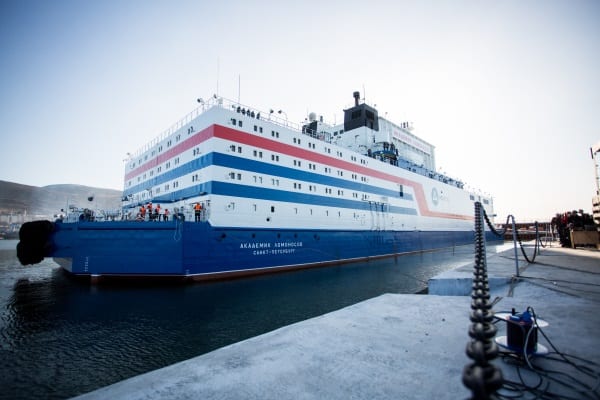
Russia has said it could provide the island of Sri Lanka with nuclear power. The technology could include a floating nuclear power plant. The Akademic Lomonosov, pictured here, is a pioneering floating nuclear facility that was fully commissioned in the Pevek, Chukotka region in the Russian Far East in May 2020. The plant includes coastal infrastructure and a floating power unit equipped with two KLT-40S reactors of 35 MWe each. Courtesy: Rosatom

Sri Lankan officials last year submitted a self-evaluation report to the International Atomic Energy Agency (IAEA), asking for approval to establish an independent nuclear regulatory body and also develop training programs for nuclear power personnel.

Russia is active in its support for nuclear power in Asia. It is notably building the two-reactor, 2.4-GW Rooppur Nuclear Power Plant, the first nuclear power facility in Bangladesh, which is expected to enter commercial operation next year. The Rooppur plant will feature VVER-1200 reactors from Rosatom, the Russian state-owned nuclear power group.

Levan Dzhagaryan, Russia’s new ambassador to Sri Lanka, last month met with members of the Sri Lanka Atomic Energy Board to discuss Russia’s support for nuclear power on the island. The talks included a meeting with Kanchana Wijesekera, Sri Lanka’s minister of Power and Energy. Dzhagaryan told local media that Russia is ready to support construction of two 55-MW nuclear power stations.

To begin with, it could be two plants, then four plants, and finally six plants. This suggestion was critical from several perspectives. First and foremost, this would save oil and coal. Second, because there will be no coal, it will be environmentally friendly, and the ecology will be safe and secure. It is also less expensive,” said Dzhagaryan in an interview with Ceylon Today.

Dzhagaryan previously was Russia’s ambassador to Iran and oversaw completion of that country’s first commercial reactor at Bushehr in 2011.

Darrell Proctor is a senior associate editor for POWER (@POWERmagazine).

President highlights need for urgent transition towards green economy

March 2nd, 2023

Courtesy Adaderana

President Ranil Wickremesinghe has announced that a foundation is presently being established to advance Sri Lanka’s economy to a global level over the next five years by implementing green economic policies.

The President made this statement while attending the ceremony held today (02 March) for the opening of Volta Auto Tec Engineering Private Limited, Minneriya.

As a solution to the current fuel crisis in the country, when there is a need for electric motorcycles and three wheelers, Volta Auto Tec Engineering Private Limited has facilitated the purchase of assembled tractors, electric motorcycles and three-wheelers from today onwards.

At present, Volta Auto Tec Engineering Private Limited has established a collaborative production partnership with India, and has reported receiving orders from countries such as Vietnam.

During his visit to the factory, the President inquired about the assembly process of bicycles, electric motorcycles, and tricycles from the officials.
A representative from a local farmers’ organization also presented a souvenir to the President marking this occasion.

Speaking further, President Ranil Wickremesinghe said:

I am delighted to have come to see the talents of the Volta Auto Tec Engineering Private Limited. The government is looking into ways of supporting this initiative. We should appreciate this step taken to create a green economy. All should work to shift the country’s economy to a green economy by implementing such projects. Now, the countries of the world are moving towards a green economy.”

As Sri Lanka, we should also embark on that journey. Sri Lanka has the potential to achieve many advantages by moving towards a green economy in the next five years. In this regard, the country needs such investors and businessmen who stand up on their own. Therefore, I congratulate Mr. Jagath Makavita on this initiative.”

Minister of Sports Roshan Ranasinghe, Minister of Power and Energy Kanchana Wijesekera, State Ministers Dilum Amunugama, Siripala Gamlath, Premitha Bandara Tennakoon, Presidential Senior Adviser on National Security and Chief of Presidential Staff Sagala Ratnayake, former Minister Ravi Karunanayake, former Member of Parliament Chandrasiri Sooriyaarachchi, Chairman of Volta Auto Tec Engineering Private Limited Jagath Makavita and others were present on this occasion.

Sri Lanka’s tax revision helps correct tax revenue & expenditure imbalance – IMF Mission

March 2nd, 2023

Courtesy Adaderana

The International Monetary Fund (IMF) Mission to Sri Lanka has stated that the new tax reforms in Sri Lanka helps meet the objective of correcting the imbalance of tax revenue and expenditure. 

Accordingly, they stated that the new tax rate schedule for the personal income tax helps meet this objective, adding that these new reforms will also help regain the confidence of creditors.

World Bank to support Sri Lanka’s path towards ‘resilient’ recovery – VP

March 2nd, 2023

Courtesy Adaderana

World Bank Vice President for South Asia, Martin Raiser has reaffirmed the World Bank’s continued support to help navigate Sri Lanka’s navigate economic challenges, implement critical reforms, and chart a path towards a resilient and inclusive recovery.

During his four-day visit to the island nation, which concluded on 28 February, Raiser met with President and Minister of Finance Ranil Wickremesinghe, Secretary of the Treasury, Governor of the Central Bank, senior government officials, development partners, and key opinion leaders including members of Sri Lanka’s political opposition, thinks tanks, civil society organizations and academia.

The people of Sri Lanka have been deeply affected by the macro and debt crisis affecting the country. The depth of the crisis has made it clear that Sri Lanka needs a new development model, but this requires greater confidence in and understanding of the government’s reforms”, said Martin Raiser. 

Improved communication and consistent implementation of the reform and adjustment program is urgent, as is faster international debt relief and financial support to ensure people don’t lose patience and the opportunity for a change isn’t lost.”

During the visit, Raiser discussed progress on reforms to transform economic governance in Sri Lanka through strengthened institutional and fiscal oversight and better debt management. 

He also stressed that greater transparency, improved governance, support for job creation, as well as better targeted protection for the poorest are critical to garner and sustain public support for reforms.

Raiser also visited North Central and Northwestern Provinces to observe first-hand World Bank-funded projects in the health and agriculture sectors, and to engage with a broad range of stakeholders on Sri Lanka’s development needs.

The World Bank was among the first to respond to Sri Lanka’s economic crisis, with the Bank’s emergency response having repurposed $325 million from existing projects to protect the poor and vulnerable from the worst impacts of the crisis.

In December, the Bank approved Sri Lanka’s request to access concessional financing from the International Development Association (IDA). 

This type of financing, offered at low interest rates, will enable the country to implement its government-led reform program to stabilize the economy and protect the livelihoods of millions of people facing poverty and hunger”, a statement issued by the World Bank read.

The World Bank Group has started preparing a new Country Partnership Framework for the next four years (2023-2026) with a focus on private sector led job creation, inclusion, preservation and strengthening of human and natural capital, improved governance, and a shift towards a greener growth path”.

Pakistan, Sri Lanka to decide on key rates as IMF bailouts hang – report

March 2nd, 2023

Courtesy Adaderana

Borrowing costs hovering at two-decade highs to quell Asia’s fastest inflation rates will be in focus in Pakistan and Sri Lanka, as the crisis-gripped economies review monetary policy settings in decisions seen as key to winning multilateral bailout funds.

The two monetary authorities are likely to take different tracks as price pressures have somewhat eased in Sri Lanka after peaking at nearly 70%, while still on the boil in Pakistan where the central bank advanced the meeting by two weeks to March 2.

State Bank of Pakistan will on Thursday probably increase the target rate by 200 basis points to 19%, according to 28 of 38 economists surveyed by Bloomberg, with the rest expecting even higher increases ranging from 250- to 300-basis points. SBP doesn’t provide a set time for the announcement.

On Friday, the Central Bank of Sri Lanka will probably keep the standing lending facility rate at 15.5% for a fifth straight meeting, according to all eight economists in a Bloomberg survey ahead of the decision at 4:30 p.m. in Colombo. The nation’s benchmark rate is at the highest since 2001, according to central bank data.

The International Monetary Fund’s bailout — $2.9 billion for Sri Lanka and $6.5 billion for Pakistan — if approved will unlock more funding, boost foreign-currency reserves that right now can pay for less than a month of imports, and arrest a deepening turmoil. 

But the loans have strings attached, such as ensuring sustainable revenue and enabling market-determined exchange rates that have led to a spate of energy price increases, tax hikes and depreciation in currencies — all of which tend to spur inflation.

Consumer prices in Colombo cooled to 50.6% in February from a year earlier. In Pakistan, price gains quickened to 31.55%, the most since the 1960’s, according to central bank data.

Both Pakistan and Sri Lanka are well behind the inflation curve,” according to Hasnain Malik, a strategist at Tellimer in Dubai. More rate increases and more fiscal cuts are ahead, which means further pain for the economy is in store.”

Bailout programs of the two countries have been pending for months, and in the case of Pakistan, for years.

Pakistan secured a $1.1 billion IMF loan in August, which was part of a $6.5 billion package approved in 2019. Disagreements over spending plans after last year’s devastating floods and government’s failure to meet loan conditions stalled the program. Reviving the bailout became crucial as the nation teetered on the brink of a default.

What Bloomberg Economics Says…

Pakistan is at serious risk of default. The International Monetary Fund has been dragging its feet on aid for months. And even if the IMF finally comes through, the debt won’t be sustainable unless creditors agree to large write-downs. China, Pakistan’s largest external lender, might have to accept a haircut of as much as $8 billion, by our calculations. That is high unlikely – and shows just how dire the situation is.

An IMF review last month ended without a deal for Pakistan. The government on Tuesday insisted that IMF’s loan review is progressing well and a staff-level agreement can be clinched in the next few days.”

In the case of Sri Lanka, an IMF staff-level pact for a $2.9 billion loan program was secured at the start of September, with the board originally anticipated to approve the funds by the end of 2022. Authorities have since adjusted expectations to within this quarter. 

The main reason for the delay is the absence of a formal assurance from China, also Sri Lanka’s biggest bilateral creditor, that it would support a debt restructuring for the bankrupt island nation.

While crippling supply shortages in Sri Lanka have eased, foreign currency reserves have been inching up and inflation slowing, Sri Lanka needs the IMF bailout to get more funding and turn the corner.

Just getting into a program is not enough,” said Dhananath Fernando, the head of a Colombo-based economic think tank Advocata Institute. Sri Lanka can also fall back like Pakistan. It has to bring long term stability and do the reforms.

Source – Bloomberg
-Agencies

Rupee appreciates after almost a year into free float

March 2nd, 2023

Courtesy Hiru News

Spot rupee traded at Rs.356.75 – 357.75 yesterday
– Deal with IFC, rising prospects for IMF relief and eased forex conversion rules reinvigorate sentiments
– Inflows from remittances and tourism sector revival also add a fillip
– Currency dealers observe forex supply outstripping demand as of late
– Sri Lanka returning to economic normalcy after a year of turmoil when rupee was let go

Sri Lankan rupee appreciated yesterday on improved sentiments over the current and future foreign exchange conditions in the domestic market after the announcement that International Finance Corporation (IFC) is willing to provide US$ 400 million worth of swap facility for three commercial banks to support essential imports.

The spot rupee appreciated to Rs.356.75 – 357.75 against the US dollar, yesterday.

The telegraphic transfer rates quoted by commercial banks in Colombo also eased yesterday, as both buying and selling prices of US dollars stood at Rs.358.36 and Rs.367.93, respectively.

The market also remains upbeat over the prospects of getting the International Monetary Fund (IMF) to unfreeze its US$ 2.9 billion relief package as early as next month with or without adequate financing assurances from China whose assurances fell short of what the multilateral lender sought.

In a further positive development, the Central Bank relaxed the mandatory foreign exchange conversion requirement applicable to banks to 15 percent from 25 percent, effective from Monday, in a reflection of improved foreign currency liquidity conditions in the domestic market.

According to treasury department of banks, this has the potential to release between an additional 30 to 40 million US dollars further enhancing liquidity in the market.

Sri Lanka was seen looking past its dire foreign currency liquidity conditions from around the third quarter last year as the Central Bank ramped up its net purchases bucking more than a year-long trend of being a net seller.

In December last year, the Central Bank bought US$ 103.78 million on net basis before increasing to US$ 211.15 million in January, signalling a gradual improvement in foreign currency liquidity conditions.

A currency dealer said that they get more supply nowadays for dollars than the demand. Sri Lanka crushed demand and thereby imports last year teaching the principles of frugality and contentment for the masses who for decades relied on foreign made goods, as the country ran out of foreign currency.

Meanwhile, the inflows from worker remittances and tourism also reached record highs in January after more than a year long weakness in both sources.

Sri Lanka’s rupee lost nearly 80 percent in 2022 against the US dollar after the Central Bank let go the currency on March 7 without an anchor when the country ran out of foreign currency reserves which set off a series of crises in the country.

After months, Sri Lanka is seeing some semblance of economic normalcy with prices, yields, rates and foreign exchange conditions easing.

China tells IMF willing to take constructive part in debt talks

March 2nd, 2023

Courtesy Hiru News

Chinese Premier Li Keqiang told the head of the International Monetary Fund that China is open to participating in multilateral efforts to help heavily indebted nations in a constructive manner.

China is willing to take part in resolving relevant countries debt issues, Li said in a phone call with IMF Managing Director Kristalina Georgieva.

China maintains that all sides should take joint action and share equitable burden,” he said.

China, a major lender to debt-laden countries such as Sri Lanka and Pakistan, is mired in disputes with multilateral banks over which parties should take the lead in restructuring sovereign debt.

The IMF is considering approving a Sri Lanka bailout without the formal assurance of debt-restructuring support from Beijing.

The Chinese government, which accounts for about 52% of the nation’s bilateral debt, has offered term extensions via state-owned policy lender Export-Import Bank.

Georgieva told Li that the IMF wants to strengthen coordination and cooperation with China to handle the debt crisis in developing countries.

Tourism Industry Thrives with Significant Increase in Tourist Arrivals

March 2nd, 2023

Courtesy Hiru News

Tourist arrivals for the second month in succession went pass the 100,000 market with February recording 107,639 arrivals. The January arrival figure was 102,545.

This was 96,507 in February 2022 showing an increase of over 11% as against the second month of previous year.

For the third successive month Russia became the top source market for Sri Lanka accounting for 29,084 arrivals showing an increase of 27% as against February 2022.

India followed with 13,714 arrivals which also was an increase of 13%as against the previous year February.

Thin third and fourth source markets for Sri Lanka tourism were United Kingdom 8,575 and Germany 7,930 both showing around 7.5% increase against previous February.

The first group of Chinese tourists to Sri Lanka this year arrived in the island last night, resuming the arrival of Chinese tourists after the covid pandemic.

TO THE PRESIDENT SRI LANKA : ARRANGE TO GET THE FUNDS BACK OR EXPLAIN WHY YOU ARE SILENT ON THIS CRUCIAL ISSUE

March 1st, 2023

RANJITH SOYSA 

We have heard from reliable foreign sources and the Minister of Justice, Wijedasa Raajpakse that there is either a  sum of dollars 32 billion or 52 billion dollars which is legally due to Sri Lankaas export earnings held in overseas accounts of Sri Lankan exporters.While the country is heading from bad to worse and the people are told to tighten their belts, the policy makers act dumb and deaf to exhort that they must wait until the IMF decides to ‘donate ‘ dollars 2,9 billion. 

We have visited the IMF on a number of occasions but we are yet again in a very tight spot and await them to alleviate our ills.

If the policy makers are keen to adopt IMF stipulations and get their funds as the only possible remedy let them pursue their goal, BUT, why cannot the policy makers negotiate with the exporters who hold Sri Lanka’s export earnings to remit the funds at least  in installments of 10 billion dollars at a given time from March onwards. Can the Nation hear a response from the Government as the countryis being pushed to uncharted waters while our dues are deposited in foreign banks ?

RANJITH SOYSA 


Copyright © 2026 LankaWeb.com. All Rights Reserved. Powered by Wordpress