US Hegemony and Its Perils

February 25th, 2023

Ministry of Foreign Affairs of the People’s Republic of China

February 2023

https://www.fmprc.gov.cn/mfa_eng/wjbxw/202302/t20230220_11027664.html

Contents

Introduction

I. Political Hegemony—Throwing Its Weight Around

II. Military Hegemony—Wanton Use of Force 

III. Economic Hegemony—Looting and Exploitation

IV. Technological Hegemony—Monopoly and Suppression

V. Cultural Hegemony—Spreading False Narratives

Conclusion

Introduction

Since becoming the world’s most powerful country after the two world wars and the Cold War, the United States has acted more boldly to interfere in the internal affairs of other countries, pursue, maintain and abuse hegemony, advance subversion and infiltration, and willfully wage wars, bringing harm to the international community.

The United States has developed a hegemonic playbook to stage “color revolutions,” instigate regional disputes, and even directly launch wars under the guise of promoting democracy, freedom and human rights. Clinging to the Cold War mentality, the United States has ramped up bloc politics and stoked conflict and confrontation. It has overstretched the concept of national security, abused export controls and forced unilateral sanctions upon others. It has taken a selective approach to international law and rules, utilizing or discarding them as it sees fit, and has sought to impose rules that serve its own interests in the name of upholding a “rules-based international order.”

This report, by presenting the relevant facts, seeks to expose the U.S. abuse of hegemony in the political, military, economic, financial, technological and cultural fields, and to draw greater international attention to the perils of the U.S. practices to world peace and stability and the well-being of all peoples.

I. Political Hegemony — Throwing Its Weight Around

The United States has long been attempting to mold other countries and the world order with its own values and political system in the name of promoting democracy and human rights.

◆ Instances of U.S. interference in other countries’ internal affairs abound. In the name of “promoting democracy,” the United States practiced a “Neo-Monroe Doctrine” in Latin America, instigated “color revolutions” in Eurasia, and orchestrated the “Arab Spring” in West Asia and North Africa, bringing chaos and disaster to many countries.

In 1823, the United States announced the Monroe Doctrine. While touting an “America for the Americans,” what it truly wanted was an “America for the United States.”

Since then, the policies of successive U.S. governments toward Latin America and the Caribbean Region have been riddled with political interference, military intervention and regime subversion. From its 61-year hostility toward and blockade of Cuba to its overthrow of the Allende government of Chile, U.S. policy on this region has been built on one maxim-those who submit will prosper; those who resist shall perish.

The year 2003 marked the beginning of a succession of “color revolutions” — the “Rose Revolution” in Georgia, the “Orange Revolution” in Ukraine and the “Tulip Revolution” in Kyrgyzstan. The U.S. Department of State openly admitted playing a “central role” in these “regime changes.” The United States also interfered in the internal affairs of the Philippines, ousting President Ferdinand Marcos Sr. in 1986 and President Joseph Estrada in 2001 through the so-called “People Power Revolutions.”

In January 2023, former U.S. Secretary of State Mike Pompeo released his new book Never Give an Inch: Fighting for the America I Love. He revealed in it that the United States had plotted to intervene in Venezuela. The plan was to force the Maduro government to reach an agreement with the opposition, deprive Venezuela of its ability to sell oil and gold for foreign exchange, exert high pressure on its economy, and influence the 2018 presidential election.

◆ The U.S. exercises double standards on international rules. Placing its self-interest first, the United States has walked away from international treaties and organizations, and put its domestic law above international law. In April 2017, the Trump administration announced that it would cut off all U.S. funding to the United Nations Population Fund (UNFPA) with the excuse that the organization “supports, or participates in the management of a programme of coercive abortion or involuntary sterilization.” The United States quit UNESCO twice in 1984 and 2017. In 2017, it announced leaving the Paris Agreement on climate change. In 2018, it announced its exit from the UN Human Rights Council, citing the organization’s “bias” against Israel and failure to protect human rights effectively. In 2019, the United States announced its withdrawal from the Intermediate-Range Nuclear Forces Treaty to seek unfettered development of advanced weapons. In 2020, it announced pulling out of the Treaty on Open Skies.

The United States has also been a stumbling block to biological arms control by opposing negotiations on a verification protocol for the Biological Weapons Convention (BWC) and impeding international verification of countries’ activities relating to biological weapons. As the only country in possession of a chemical weapons stockpile, the United States has repeatedly delayed the destruction of chemical weapons and remained reluctant in fulfilling its obligations. It has become the biggest obstacle to realizing “a world free of chemical weapons.”

◆ The United States is piecing together small blocs through its alliance system. It has been forcing an “Indo-Pacific Strategy” onto the Asia-Pacific region, assembling exclusive clubs like the Five Eyes, the Quad and AUKUS, and forcing regional countries to take sides. Such practices are essentially meant to create division in the region, stoke confrontation and undermine peace.

◆ The U.S. arbitrarily passes judgment on democracy in other countries, and fabricates a false narrative of “democracy versus authoritarianism” to incite estrangement, division, rivalry and confrontation. In December 2021, the United States hosted the first “Summit for Democracy,” which drew criticism and opposition from many countries for making a mockery of the spirit of democracy and dividing the world. In March 2023, the United States will host another “Summit for Democracy,” which remains unwelcome and will again find no support.

II. Military Hegemony — Wanton Use of Force

The history of the United States is characterized by violence and expansion. Since it gained independence in 1776, the United States has constantly sought expansion by force: it slaughtered Indians, invaded Canada, waged a war against Mexico, instigated the American-Spanish War, and annexed Hawaii. After World War II, the wars either provoked or launched by the United States included the Korean War, the Vietnam War, the Gulf War, the Kosovo War, the War in Afghanistan, the Iraq War, the Libyan War and the Syrian War, abusing its military hegemony to pave the way for expansionist objectives. In recent years, the U.S. average annual military budget has exceeded 700 billion U.S. dollars, accounting for 40 percent of the world’s total, more than the 15 countries behind it combined. The United States has about 800 overseas military bases, with 173,000 troops deployed in 159 countries.

According to the book America Invades: How We’ve Invaded or been Militarily Involved with almost Every Country on Earth, the United States has fought or been militarily involved with almost all the 190-odd countries recognized by the United Nations with only three exceptions. The three countries were “spared” because the United States did not find them on the map.

◆ As former U.S. President Jimmy Carter put it, the United States is undoubtedly the most warlike nation in the history of the world. According to a Tufts University report, “Introducing the Military Intervention Project: A new Dataset on U.S. Military Interventions, 1776-2019,” the United States undertook nearly 400 military interventions globally between those years, 34 percent of which were in Latin America and the Caribbean, 23 percent in East Asia and the Pacific, 14 percent in the Middle East and North Africa, and 13 percent in Europe. Currently, its military intervention in the Middle East and North Africa and sub-Saharan Africa is on the rise.

Alex Lo, a South China Morning Post columnist, pointed out that the United States has rarely distinguished between diplomacy and war since its founding. It has overthrown democratically elected governments in many developing countries in the 20th century and immediately replaced them with pro-American puppet regimes. Today, in Ukraine, Iraq, Afghanistan, Libya, Syria, Pakistan and Yemen, the United States is repeating its old tactics of waging proxy, low-intensity, and drone wars.

◆ U.S. military hegemony has caused humanitarian tragedies. Since 2001, the wars and military operations launched by the United States in the name of fighting terrorism have claimed over 900,000 lives with some 335,000 of them civilians, injured millions and displaced tens of millions. The 2003 Iraq War resulted in some 200,000 to 250,000 civilian deaths, including over 16,000 directly killed by the U.S. military, and left more than a million homeless.

The United States has created 37 million refugees around the world. Since 2012, the number of Syrian refugees alone has increased tenfold. Between 2016 and 2019, 33,584 civilian deaths were documented in the Syrian fightings, including 3,833 killed by U.S.-led coalition bombings, half of them women and children. The Public Broadcasting Service (PBS) reported on 9 November 2018 that the air strikes launched by U.S. forces on Raqqa alone killed 1,600 Syrian civilians.

The two-decades-long war in Afghanistan devastated the country. A total of 47,000 Afghan civilians and 66,000 to 69,000 Afghan soldiers and police officers unrelated to the September 11 attacks were killed in U.S. military operations, and more than 10 million people were displaced. The war in Afghanistan destroyed the foundation of economic development there and plunged the Afghan people into destitution. After the “Kabul debacle” in 2021, the United States announced that it would freeze some 9.5 billion dollars in assets belonging to the Afghan central bank, a move considered as “pure looting.”

In September 2022, Turkish Interior Minister Suleyman Soylu commented at a rally that the United States has waged a proxy war in Syria, turned Afghanistan into an opium field and heroin factory, thrown Pakistan into turmoil, and left Libya in incessant civil unrest. The United States does whatever it takes to rob and enslave the people of any country with underground resources.

The United States has also adopted appalling methods in war. During the Korean War, the Vietnam War, the Gulf War, the Kosovo War, the War in Afghanistan and the Iraq War, the United States used massive quantities of chemical and biological weapons as well as cluster bombs, fuel-air bombs, graphite bombs and depleted uranium bombs, causing enormous damage on civilian facilities, countless civilian casualties and lasting environmental pollution.

III. Economic Hegemony — Looting and Exploitation

After World War II, the United States led efforts to set up the Bretton Woods System, the International Monetary Fund and the World Bank, which, together with the Marshall Plan, formed the international monetary system centered around the U.S. dollar. In addition, the United States has also established institutional hegemony in the international economic and financial sector by manipulating the weighted voting systems, rules and arrangements of international organizations including “approval by 85 percent majority,” and its domestic trade laws and regulations. By taking advantage of the dollar’s status as the major international reserve currency, the United States is basically collecting “seigniorage” from around the world; and using its control over international organizations, it coerces other countries into serving America’s political and economic strategy.

◆ The United States exploits the world’s wealth with the help of “seigniorage.” It costs only about 17 cents to produce a 100 dollar bill, but other countries had to pony up 100 dollar of actual goods in order to obtain one. It was pointed out more than half a century ago, that the United States enjoyed exorbitant privilege and deficit without tears created by its dollar, and used the worthless paper note to plunder the resources and factories of other nations.

◆ The hegemony of U.S. dollar is the main source of instability and uncertainty in the world economy. During the COVID-19 pandemic, the United States abused its global financial hegemony and injected trillions of dollars into the global market, leaving other countries, especially emerging economies, to pay the price. In 2022, the Fed ended its ultra-easy monetary policy and turned to aggressive interest rate hike, causing turmoil in the international financial market and substantial depreciation of other currencies such as the Euro, many of which dropped to a 20-year low. As a result, a large number of developing countries were challenged by high inflation, currency depreciation and capital outflows. This was exactly what Nixon’s secretary of the treasury John Connally once remarked, with self-satisfaction yet sharp precision, that “the dollar is our currency, but it is your problem.”

◆ With its control over international economic and financial organizations, the United States imposes additional conditions to their assistance to other countries. In order to reduce obstacles to U.S. capital inflow and speculation, the recipient countries are required to advance financial liberalization and open up financial markets so that their economic policies would fall in line with America’s strategy. According to the Review of International Political Economy, along with the 1,550 debt relief programs extended by the IMF to its 131 member countries from 1985 to 2014, as many as 55,465 additional political conditions had been attached.

◆ The United States willfully suppresses its opponents with economic coercion. In the 1980s, to eliminate the economic threat posed by Japan, and to control and use the latter in service of America’s strategic goal of confronting the Soviet Union and dominating the world, the United States leveraged its hegemonic financial power against Japan, and concluded the Plaza Accord. As a result, Yen was pushed up, and Japan was pressed to open up its financial market and reform its financial system. The Plaza Accord dealt a heavy blow to the growth momentum of the Japanese economy, leaving Japan to what was later called “three lost decades.”

◆ America’s economic and financial hegemony has become a geopolitical weapon. Doubling down on unilateral sanctions and “long-arm jurisdiction,” the United States has enacted such domestic laws as the International Emergency Economic Powers Act, the Global Magnitsky Human Rights Accountability Act, and the Countering America’s Adversaries Through Sanctions Act, and introduced a series of executive orders to sanction specific countries, organizations or individuals. Statistics show that U.S. sanctions against foreign entities increased by 933 percent from 2000 to 2021. The Trump administration alone has imposed more than 3,900 sanctions, which means three sanctions per day. So far, the United States had or has imposed economic sanctions on nearly 40 countries across the world, including Cuba, China, Russia, the DPRK, Iran and Venezuela, affecting nearly half of the world’s population. “The United States of America” has turned itself into “the United States of Sanctions.” And “long-arm jurisdiction” has been reduced to nothing but a tool for the United States to use its means of state power to suppress economic competitors and interfere in normal international business. This is a serious departure from the principles of liberal market economy that the United States has long boasted.

IV. Technological Hegemony — Monopoly and Suppression

The United States seeks to deter other countries’ scientific, technological and economic development by wielding monopoly power, suppression measures and technology restrictions in high-tech fields.

◆ The United States monopolizes intellectual property in the name of protection. Taking advantage of the weak position of other countries, especially developing ones, on intellectual property rights and the institutional vacancy in relevant fields, the United States reaps excessive profits through monopoly. In 1994, the United States pushed forward the Agreement on Trade-Related Aspects of Intellectual Property Rights (TRIPS), forcing the Americanized process and standards in intellectual property protection in an attempt to solidify its monopoly on technology.

In the 1980s, to contain the development of Japan’s semiconductor industry, the United States launched the “301” investigation, built bargaining power in bilateral negotiations through multilateral agreements, threatened to label Japan as conducting unfair trade, and imposed retaliatory tariffs, forcing Japan to sign the U.S.-Japan Semiconductor Agreement. As a result, Japanese semiconductor enterprises were almost completely driven out of global competition, and their market share dropped from 50 percent to 10 percent. Meanwhile, with the support of the U.S. government, a large number of U.S. semiconductor enterprises took the opportunity and grabbed larger market share.

◆ The United States politicizes, weaponizes technological issues and uses them as ideological tools. Overstretching the concept of national security, the United States mobilized state power to suppress and sanction Chinese company Huawei, restricted the entry of Huawei products into the U.S. market, cut off its supply of chips and operating systems, and coerced other countries to ban Huawei from undertaking local 5G network construction. It even talked Canada into unwarrantedly detaining Huawei’s CFO Meng Wanzhou for nearly three years.

The United States has fabricated a slew of excuses to clamp down on China’s high-tech enterprises with global competitiveness, and has put more than 1,000 Chinese enterprises on sanction lists. In addition, the United States has also imposed controls on biotechnology, artificial intelligence and other high-end technologies, reinforced export restrictions, tightened investment screening, suppressed Chinese social media apps such as TikTok and WeChat, and lobbied the Netherlands and Japan to restrict exports of chips and related equipment or technology to China.

The United States has also practiced double standards in its policy on China-related technological professionals. To sideline and suppress Chinese researchers, since June 2018, visa validity has been shortened for Chinese students majoring in certain high-tech-related disciplines, repeated cases have occurred where Chinese scholars and students going to the United States for exchange programs and study were unjustifiably denied and harassed, and large-scale investigation on Chinese scholars working in the United States was carried out.

◆ The United States solidifies its technological monopoly in the name of protecting democracy. By building small blocs on technology such as the “chips alliance” and “clean network,” the United States has put “democracy” and “human rights” labels on high-technology, and turned technological issues into political and ideological issues, so as to fabricate excuses for its technological blockade against other countries. In May 2019, the United States enlisted 32 countries to the Prague 5G Security Conference in the Czech Republic and issued the Prague Proposal in an attempt to exclude China’s 5G products. In April 2020, then U.S. Secretary of State Mike Pompeo announced the “5G clean path,” a plan designed to build technological alliance in the 5G field with partners bonded by their shared ideology on democracy and the need to protect “cyber security.” The measures, in essence, are the U.S. attempts to maintain its technological hegemony through technological alliances.

◆ The United States abuses its technological hegemony by carrying out cyber attacks and eavesdropping. The United States has long been notorious as an “empire of hackers,” blamed for its rampant acts of cyber theft around the world. It has all kinds of means to enforce pervasive cyber attacks and surveillance, including using analog base station signals to access mobile phones for data theft, manipulating mobile apps, infiltrating cloud servers, and stealing through undersea cables. The list goes on.

U.S. surveillance is indiscriminate. All can be targets of its surveillance, be they rivals or allies, even leaders of allied countries such as former German Chancellor Angela Merkel and several French Presidents. Cyber surveillance and attacks launched by the United States such as “Prism,” “Dirtbox,” “Irritant Horn” and “Telescreen Operation” are all proof that the United States is closely monitoring its allies and partners. Such eavesdropping on allies and partners has already caused worldwide outrage. Julian Assange, the founder of Wikileaks, a website that has exposed U.S. surveillance programs, said that “do not expect a global surveillance superpower to act with honor or respect. There is only one rule: there are no rules.”

V. Cultural Hegemony — Spreading False Narratives

The global expansion of American culture is an important part of its external strategy. The United States has often used cultural tools to strengthen and maintain its hegemony in the world.

◆ The United States embeds American values in its products such as movies. American values and lifestyle are a tied product to its movies and TV shows, publications, media content, and programs by the government-funded non-profit cultural institutions. It thus shapes a cultural and public opinion space in which American culture reigns and maintains cultural hegemony. In his article The Americanization of the World, John Yemma, an American scholar, exposed the real weapons in U.S. cultural expansion: the Hollywood, the image design factories on Madison Avenue and the production lines of Mattel Company and Coca-Cola.

There are various vehicles the United States uses to keep its cultural hegemony. American movies are the most used; they now occupy more than 70 percent of the world’s market share. The United States skilfully exploits its cultural diversity to appeal to various ethnicities. When Hollywood movies descend on the world, they scream the American values tied to them.

◆ American cultural hegemony not only shows itself in “direct intervention,” but also in “media infiltration” and as “a trumpet for the world.” U.S.-dominated Western media has a particularly important role in shaping global public opinion in favor of U.S. meddling in the internal affairs of other countries.

The U.S. government strictly censors all social media companies and demands their obedience. Twitter CEO Elon Musk admitted on 27 December 2022 that all social media platforms work with the U.S. government to censor content, reported Fox Business Network. Public opinion in the United States is subject to government intervention to restrict all unfavorable remarks. Google often makes pages disappear.

U.S. Department of Defense manipulates social media. In December 2022, The Intercept, an independent U.S. investigative website, revealed that in July 2017, U.S. Central Command official Nathaniel Kahler instructed Twitter’s public policy team to augment the presence of 52 Arabic-language accounts on a list he sent, six of which were to be given priority. One of the six was dedicated to justifying U.S. drone attacks in Yemen, such as by claiming that the attacks were precise and killed only terrorists, not civilians. Following Kahler’s directive, Twitter put those Arabic-language accounts on a “white list” to amplify certain messages.

◆The United States practices double standards on the freedom of the press. It brutally suppresses and silences media of other countries by various means. The United States and Europe bar mainstream Russian media such as Russia Today and the Sputnik from their countries. Platforms such as Twitter, Facebook and YouTube openly restrict official accounts of Russia. Netflix, Apple and Google have removed Russian channels and applications from their services and app stores. Unprecedented draconian censorship is imposed on Russia-related contents.

◆The United States abuses its cultural hegemony to instigate “peaceful evolution” in socialist countries. It sets up news media and cultural outfits targeting socialist countries. It pours staggering amounts of public funds into radio and TV networks to support their ideological infiltration, and these mouthpieces bombard socialist countries in dozens of languages with inflammatory propaganda day and night.

The United States uses misinformation as a spear to attack other countries, and has built an industrial chain around it: there are groups and individuals making up stories, and peddling them worldwide to mislead public opinion with the support of nearly limitless financial resources.

Conclusion

While a just cause wins its champion wide support, an unjust one condemns its pursuer to be an outcast. The hegemonic, domineering, and bullying practices of using strength to intimidate the weak, taking from others by force and subterfuge, and playing zero-sum games are exerting grave harm. The historical trends of peace, development, cooperation, and mutual benefit are unstoppable. The United States has been overriding truth with its power and trampling justice to serve self-interest. These unilateral, egoistic and regressive hegemonic practices have drawn growing, intense criticism and opposition from the international community.

Countries need to respect each other and treat each other as equals. Big countries should behave in a manner befitting their status and take the lead in pursuing a new model of state-to-state relations featuring dialogue and partnership, not confrontation or alliance. China opposes all forms of hegemonism and power politics, and rejects interference in other countries’ internal affairs. The United States must conduct serious soul-searching. It must critically examine what it has done, let go of its arrogance and prejudice, and quit its hegemonic, domineering and bullying practices.

Ministry of Foreign Affairs, the People’s Republic of China
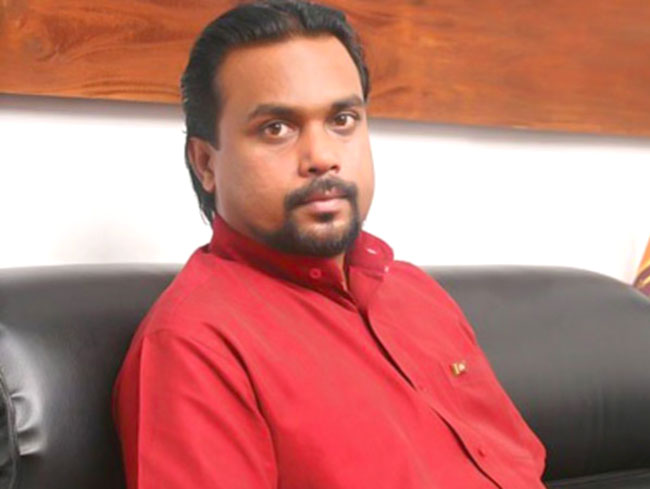
Wimal: State Intelligence Service to be placed under CIA

February 25th, 2023

Courtesy The Island

Wimal Weerawansa

SLPP rebel and National Freedom Front leader, Wimal Weerawansa, told Parliament yesterday that the government was planning to place the State Intelligence Service’s decision-making responsibility under a Central Intelligence Agency (CIA) of the US.

Weerawansa said that a similar shifting of the responsibility had happened in 2001.

The 20-member Pentagon delegation, headed by US Principal Deputy Assistant Secretary of Defence for Indo-Pacific Security Affairs (PDASD), Jedidiah P. Royal, visited the SIS office in Colombo, according to Weerawansa.

We heard that the US delegation visited the SIS office. Plans are underway to bring the SIS information handling and decision-making under CIA officials. The same operation was initiated in 2001 and suspended in 2004,” he said.

Weerawansa said the government should reveal what had been discussed and the decisions made during the US delegation’s visit. He claimed that they had met the President, Defence Secretary and heads of intelligence services.

Weerawansa asked Foreign Minister, Ali Sabry to explain to the House the purpose of the US delegation’s visit and meetings with local authorities.

Minister Ali Sabry said the Foreign Ministry was unaware of the visit and that it had been handled by the Defence Ministry.

Chief Government Whip Minister Prasanna Ranatunga said the government would inform the House of the matter later. (SI)

Economic crisis: How Sri Lanka sleepwalked over a debt cliff

February 25th, 2023

Courtesy The New Indian Express

Sri Lanka’s economic crisis and sovereign default were the result of long-lasting fiscal indiscipline, weak institutions, lack of transparency and accountability and short-sighted economic policies.

By PTI

COLOMBO: The issues that led Sri Lanka to become an economic basket case in 2022 serve as a warning for other nations.

When politicians chase popularity over sound economic management, it can spell disaster. Just ask Sri Lanka’s former president Gotabaya Rajapaksa.

Rajapaksa quit in July last year after fleeing to Singapore at the height of protests against his government’s mismanagement of the economy which resulted in Sri Lanka declaring sovereign default in April 2022.

Many blame Rajapaksa for driving the country into its worst economic crisis since independence, leading to severe shortages of fuel, food and medicines.

While it’s easy to blame one person, Sri Lanka’s economic crisis and sovereign default were the result of long-lasting fiscal indiscipline, weak institutions, lack of transparency and accountability and short-sighted economic policies that were taken for political popularity.

Since the default, Sri Lanka has made some progress with debt restructuring. Private bondholders have expressed a willingness to restructure debt. The Paris Club group of creditors and India have provided financing assurances.

Many of Sri Lanka’s outstanding foreign debt holders have expressed a willingness to restructure debt, but not all of them. But the position taken by China, Sri Lanka’s largest creditor is concerning.

While the Export-Import Bank of China will provide an extension on the debt service to help relieve Sri Lanka’s short-term repayment pressure, China’s level of commitment to debt restructuring remains unclear and Beijing consistently insists multilateral financial institutions should also bear the burden of debt relief.

These comments and lack of specific commitments have delayed IMF board approval of Sri Lanka’s request to obtain a bailout package.

China EXIM Bank too had stated that it would provide a two-year moratorium for debt repayments due in 2022 and 2023, but it remains unclear on debt restructuring methods.

China is Sri Lanka’s largest bilateral creditor accounting for 19 per cent of its total outstanding foreign debt.

Private creditors own 36 per cent of outstanding foreign debt due to the large number of Eurobonds issued by Sri Lanka in the previous decade. But the country needs to fix the issues that led it off the debt cliff in the first place.

The makings of disaster Sri Lanka’s problems go back decades.

While global shocks such as COVID-19 and the Russia-Ukraine war had some impact on the country’s economy, the major causes were long-lasting structural weaknesses successive governments failed to properly address.

Instead of fixing these weaknesses, Sri Lanka continued to focus on debt-fuelled growth.

The result was an economic catastrophe.

Sri Lanka grappled with persistent twin deficits (fiscal and current account) that lasted decades.

A fiscal deficit is when a government spends more than it earns.

A current account deficit is when a government spends more foreign currency than it earns.

Both of these deficits resulted in five major structural weaknesses: Falling government revenue, stagnant exports, an overvalued currency, lack of direct foreign investment and continued losses by state-owned enterprises twinned with subsidised energy prices.

Sri Lanka has lacked fiscal discipline.

It has one of the lowest tax-to-GDP ratios in the world, meaning it barely collects any taxes, usually a substantial part of government revenue. In 1990, Sri Lanka’s tax GDP ratio was approximately 20 per cent of GDP. By 2015 this had dropped to 10.1 per cent.

Gotabhaya Rajapaksha’s decision to hand out tax cuts in 2019 in order to fulfil an election promise reduced this further. By 2021, Sri Lanka’s tax ratio dropped to 7.7 per cent. This decline took place while the country’s GDP per capita income increased significantly.

In 1990 Sri Lanka was a low-income country with a per capita of USD 464. Seven years later it had lifted itself to a middle-income country with a per capita income of USD 814. Its GDP per capita continued to grow and was USD 4,060 in 2018.

Accordingly, the World Bank classified Sri Lanka as an upper-middle-income country in 2019. (Although it was downgraded a year later.) But while GDP per capita grew, the tax ratio fell, forcing the government to borrow heavily to breach the fiscal deficit.

So people’s incomes grew but taxes fell.

At the same time, government expenditure increased.

From 2005, ex-president Rajapaksa’s brother Mahinda led a government which invested heavily in public infrastructure.

This made him popular, with the construction of highways, a new port, an airport and massive road development projects.

Foreign loans, from capital markets and China, paid for most of it.

To secure this money, Sri Lanka offered government bonds at high-interest rates.

This meant the country would need significant foreign currency reserves to pay creditors when the bonds matured.

Most of the Chinese loans were not commercial but had far higher interest rates than loans from the World Bank, ADB and Japan which were Sri Lanka’s three major traditional lenders.

This infrastructure development took place largely for political reasons.

For instance, Mahinda Rajapaksa decided to build a second airport in his hometown of Hambantota when the sensible option would have been to expand the existing international airport near Colombo.

Corruption was also a major problem in these projects.

In 2004, the share of non-concessional debt of Sri Lanka’s foreign loans was only 2.4 per cent.

This rocketed to 50 per cent in 10 years, increasing the debt burden.

There are two reasons why: access to concessional loans fell as Sri Lanka’s income levels rose to force the government to look for alternative foreign financing to bridge the budget deficit.

And the government was obsessed with building large-scale infrastructure development and maintaining import substitution policies such as increasing import tariffs.

The latter resulted in a deterioration of the country’s export performance.

Import substitution policies did not increase exports, instead, it expanded the non-tradable sector (sectors with few exports).

From 2000 to 2015, Sri Lanka’s exports as a share of the GDP fell from 39 per cent to 20 per cent. This meant while the foreign debt repayment burden increased, Sri Lanka’s ability to repay foreign loans deteriorated.

Sri Lanka was compelled to borrow more from international capital markets to repay previous loans. This led to a massive increase in foreign debt repayment costs.

Sri Lanka’s external debt servicing ratio went up to 25.4 per cent in 2019 from 10.7 per cent in 2000.

As Sri Lanka transitioned from a low-income to a middle-income nation, successive governments facilitated rent-seeking, maintained lower tax rates, expanded the public service by hiring unskilled labour for political reasons and financed loss-making state-owned enterprises for political gain.

The country’s growing middle class loved these policies.

The government also facilitated non-tradable sector businesses by maintaining an overvalued exchange rate, high import tariffs and low-interest rates.

Businesses loved these policies as they offered relatively easier income generation compared to competing in the global market.

This led to a stagnation of exports and imports based on non-tradable sectors.

The current account deficit kept growing.

By 2022, Sri Lanka ran out of foreign currency to repay foreign loans.

The hard road ahead Sri Lanka is now compelled to reverse most of these policy mishaps. Electricity and fuel prices have increased, taxes have increased, interest rates have increased, and the exchange rate has increased, causing inflation to soar. In January it was 53.2 per cent.

This means the country’s middle-class as well as the business community is struggling as the government no longer can subsidise them.

Almost a year after protests against the Rajapaksa government, more protests and strikes opposing tax reforms and other policy reforms have wracked the nation.

Austerity is hard and it is harder in a shrinking economy, but Sri Lanka has no choice.

It is compelled to carry out reforms in order to receive the support of the IMF, and other multilateral agencies and to conclude debt restructuring progress.

The lesson Sri Lanka teaches is that middle-income transitions sound and look fancy for many low-income countries.

But, hurrying into it without fixing structural issues in the economy, strengthening institutions and ensuring strong checks and balances can create an economic catastrophe.

In the short term, people, businesses and politicians may be very happy. But that party won’t last unless the country has been able to get its house in order. Sri Lanka didn’t.

Now, Sri Lanka is trying to do it and it is not easy. Parties are fun while it lasts, but hangovers often are bitter.

Sri Lanka to Launch App to Protect Tourists

February 25th, 2023

Courtesy Tempo.co

TEMPO.COColombo – Sri Lanka will launch a mobile app on March 1 to protect tourists, Tourism Minister Harin Fernando said on Saturday, Feb. 25.

The minister, addressing an event in Colombo, said this is one of the best mobile applications in the region for tourist safety. “The app can be operated in seven languages,” he added.

The mobile app will register all three-wheelers and a barcode will be displayed on the vehicle for foreign tourists to scan, the minister said.

Once a tourist reports an incident by scanning the barcode, police and tourism officials would take action. The ministry will operate a 24-hour active call center to support the app, he said.

The police can also monitor the app and take appropriate action in the event of any incidents that inconvenience or endanger tourists.

Tourism, one of Sri Lanka’s leading foreign exchange earners, has suffered a setback due to the COVID-19 pandemic and economic and political crises in the country. 

Sri Lanka aims to attract around 1.5 million tourists in 2023 and 3 million tourists in 2024. 

Worried about Chinese loans in India’s neighbourhood being used for terror threats: US

February 25th, 2023

Courtesy India Today

The United States has expressed its concerns about India’s neighbours using Chinese funds for terror threats.

By India Today World Desk: The US is deeply concerned that loans provided by China to Pakistan and Sri Lanka, which are in India’s immediate vicinity, may be utilised as means of exerting coercive pressure, a senior State Department official was quoted as saying by news agency PTI.

Concerning Chinese loans to countries in India’s immediate neighbourhood, we are deeply concerned that loans may be used for coercive leverage,” Donald Lu, Assistant Secretary of State for South and Central Asia, told PTI ahead of Secretary of State Antony Blinken’s India visit.

The top American diplomat is travelling to New Delhi on a three-day official visit from March 1 to 3.

Lu stated that the United States is encouraging nations within the region that includes India to make independent decisions and not feel obligated to any external allies. We are talking to India, talking to countries of the region about how we help countries to make their own decisions and not decisions that might be compelled by any outside partner, including China,” Lu said.

ALSO READ | Biden invites PM Modi for state visit to US later this year: Report

Earlier, the Finance Minister of Pakistan, Ishaq Dar, declared that the China Development Bank (CDB) Board has granted a credit facility of USD 700 million to their country. The Pakistan economy is in dire straits amid depleting forex reserves and soaring inflation.

The country is desperately seeking a much-needed bailout from the International Monetary Fund (IMF) to pull itself out of a spiralling debt crisis.

When questioned, Lu mentioned that there has been a significant dialogue between the United States and India regarding China. We have had serious conversations about China, both before the latest scandal over this surveillance balloon but in the aftermath. So, I fully expect those conversations will continue,” he said.

Lu, in response to a question, insisted that Quad is not a military alliance.

The Quad is not, in fact, an organisation that is against any single country or group of countries. The Quad stands for trying to promote activities and values that support the Indo-Pacific – free and open Indo-Pacific, but Indo-Pacific that’s prosperous and supports the values that we as these four countries represent,” he said.

When asked about India’s military ties with Russia, he stated that Russia is facing immense challenges in meeting their global obligations for military agreements. We see plenty of evidence of that around the world. And if you look at press reporting, I think you can see the Indians are also wondering whether Russia will be able to provide for its defenses,” Lu said.

Govt. to introduce non-paying wards in private hospitals: President

February 25th, 2023

Courtesy The Daily Mirror

President Ranil Wickremesinghe said yesterday that the government is seeking the possibility of introducing non-paying wards in private hospitals where the government is taking the tab for the treatments made in those non-paying wards, the President’s Media Division (PMD) said.

The President also said the government was considering to introduce paying wards in Government hospitals as well.

He said it is discussed to introduce a health insurance scheme where the government can assist those in the lower income category, when they need to get the service of growing private hospitals.

He made these observation addressing at the inauguration ceremony of the 6th annual academic sessions of the Sri Lanka College of Military Medicine (SLCOMM) under the theme of ‘Resilience of Military Medicine in the Times of Crisis’ held at the Eagle’s Lagoon in Katunayake.

The President said opening a new chapter in military medicine, a separate unit would be established to send military personnel overseas to help out at the times of health disasters.

He also said that the government had sent a group of military personnel to Nepal.

They were sent at the times of natural disasters. “But I’m looking at the possibility of using our military medical personnel to be sent abroad when the people are faced with health disasters,” the President said.

“Health disasters take place more often than natural disasters and I would discuss this matter with the military to establish such unit. So that is opening of a new chapter in military medicine.’

The President also said that under the Indian credit line, the government is to get more medicines to address the shortage of medicinal drugs during this crisis situation.

He added by now, the government is working on making more foreign exchange available to the medical sector. He said further that discussions are in progress with the Ministry of Health to upgrade the Medical Research Institute (MRI) into one of the best research laboratories in the region. (Ajith Siriwardana)

Chinese EXIM Bank offers short, mid, long term measures

February 25th, 2023

Courtesy The Daily Mirror

EXIM Bank of China (Export-Import Bank) submitted a comprehensive program in its financial support document on January 19 to ‘strongly support’ Sri Lanka’s debt restructuring process with the International Monetary Fund (IMF) and it includes short, mid and long-term measures for debt treatment, a diplomatic source from the Chinese embassy said.

Sri Lanka is seeking the support of all the creditors to unlock the US $ 2.9 billion program with the IMF in four years.

According to the source, it is not just a two -year moratorium on debt repayments. The two-year moratorium on borrowings is only part of the support to help relieve Sri Lanka’s immediate debt repayment pressure,” the source said.

The Bank would like to have friendly consultation with Sri Lanka regarding medium and long term debt treatment in this window period; and the Bank will make best efforts to contribute to the debt sustainability and the future development of Sri Lanka. Only the short term measure is talked about in the media. It is incomplete and inaccurate,” the source said.

China calls on commercial creditors including the ISB holders to provide debt treatment in an equally comparable manner, and encourage multilateral creditors to do their utmost to make corresponding contributions.

We also call on the IMF to take into full consideration the urgency of the situation in Sri Lanka and provide loan support as soon as possible to relieve the country’s liquidity strain,” the source said.

EXIM Bank works as the official bilateral creditor representative of China in dealing with the IMF.

Sri Lanka owes US $ 7.4 billion to EXIM Bank and China Development Bank according to the Ministry of Finance.(Kelum Bandara)

Failure to prevent violence after May 9: Wasantha Karannagoda report tabled in Court

February 25th, 2023

Courtesy The Daily Mirror

The report of the Board of Inquiry prepared by a three-member-committee headed by Admiral of Fleet Wasantha Karannagoda to ascertain lapses by the armed forces and state intelligence services during the recent incident of violence was today filed before the Court of Appeal.

President’s Counsel Uditha Igalahewa appearing for Admiral of Fleet Wasantha Karannagoda filed this report before court when a writ petition filed by 22 government Parliamentarians representing Sri Lanka Podujana Peramuna (SLPP) was called before the Court of Appeal.

Filing a writ petition in Court of Appeal, 22 government Parliamentarians representing SLPP and several others have sought an order directing the authorities to conduct a comprehensive investigation in order to ascertain as to whether former Army Commander  General Shavendra Silva, IGP Chandana Wickremaratne or any other respondents have willfully disobeyed the orders given by former President Gotabaya Rajapaksa to take action to prevent the damages to property and people following the attack on Galle Face protesters on May 9.

Court Appeal two-judge-bench comprising Justices Nissanka Bandula Karunaratne and M.A.R. Marikkar directed the respondent parties to file their objections on May 22. President’s Counsel Sanjeeva Jayawardena with counsel Rukshan Senadheera appeared on behalf of the petitioners.

The Board of Inquiry report stated that the conduct of former Army Commander General Shavendra Silva during the time period material to the instant application is highly questionable and that he has on several occasions disregarded direct and repeated instructions given to him by the former President, and the Secretary to the Ministry of Defence to protect the private property of the petitioners as well as other Citizen and also the public property of the State.

The petitioners stated that the Board of Inquiry has found that the conduct of General Shavendra Silva on 31-03-2022 and 09-05-2022 are highly suspicious and questionable.

They further alleged that General Shavendra Silva had disregarded repeated instructions from then President Gotabaya Rajapaksa and the Secretary of Defence to take action to prevent the damages to property and people being harmed near Beira Lake at Navam Mawatha in the afternoon and to clear the mob along the Galle road in front of the Temple Trees in spite of having over 4,500 including five Battalions from the elite Air Mobile Brigade, Special Forces and Commandos stationed in different locations within Colombo city limits.

President’s Counsel Faisz Mustapha with Counsel Faisza Mustapha Marka appeared for General Shavendra Silva. (Lakmal Sooriyagoda)

IMF flags debt restructuring hurdles for distressed economies

February 25th, 2023

Courtesy Adaderana

There are some disagreements over restructuring debt for distressed economies, the chief of the International Monetary Fund said on Saturday on the sidelines of a G20 meeting, adding that banning private cryptocurrencies should be an option.

India’s G20 presidency comes at a time when its South Asian neighbours Sri Lanka, Bangladesh and Pakistan are seeking urgent IMF funds due to an economic slowdown caused by the COVID-19 pandemic and the Russia-Ukraine war.

China, the world’s largest bilateral creditor, urged G20 nations on Friday to conduct a fair, objective and in-depth analysis of the causes of global debt issues as clamour grows for lenders to take a large haircut, or accept losses, on loans.

On debt restructuring, while there are still some disagreements, we now have the global sovereign debt roundtable with consideration of all public and private creditors,” IMF Managing Director Kristalina Georgieva told reporters after the roundtable she co-chaired with Indian Finance Minister Nirmala Sitharaman.

We just finished a session in which it was clear that there is a commitment to bridge differences for the benefit of countries.”

Apart from restructuring debt, regulating cryptocurrencies is another priority area for India, which Georgieva agreed with.

We have to differentiate between central bank digital currencies that are backed by the state and stable coins, and crypto assets that are privately issued,” Georgieva said.

There has to be very strong push for regulation… if regulation fails, if you’re slow to do it, then we should not take off the table banning those assets, because they may create financial stability risk.”


Source: Reuters
-Agencies

US concerned Chinese loans in Pakistan, Sri Lanka may be used for ‘coercive leverage’

February 25th, 2023

Courtesy Adaderana

The US is deeply concerned that the loans being given by China to India’s immediate neighbourhood – Pakistan and Sri Lanka – may be used for coercive leverage, a senior State Department official said on Friday.

Concerning Chinese loans to countries in India’s immediate neighbourhood, we are deeply concerned that loans may be used for coercive leverage,” Donald Lu, Assistant Secretary of State for South and Central Asia, told reporters ahead of the India trip of Secretary of State Antony Blinken.

The top American diplomat is travelling to New Delhi on a three-day official visit from March 01 to 03.

Lu said that the US is talking to countries in the region comprising India to take their own decisions and not feel compelled by any outside partner.

We are talking to India, talking to countries of the region about how we help countries to make their own decisions and not decisions that might be compelled by any outside partner, including China,” Lu said.

Earlier in the day, Pakistani Finance Minister Ishaq Dar announced that the Board of China Development Bank (CDB) has approved a USD 700 million credit facility to the country.

Responding to a question Lu said that there has been a serious conversation between India and the US on the issue of China.

We have had serious conversations about China, both before the latest scandal over this surveillance balloon but in the aftermath. So, I fully expect those conversations will continue,” he said.

Lu, in response to a question, insisted that Quad is not a military alliance. The Quad is not, in fact, an organisation that is against any single country or group of countries. The Quad stands for trying to promote activities and values that support the Indo-Pacific – free and open Indo-Pacific, but Indo-Pacific that’s prosperous and supports the values that we as these four countries represent,” he said.

When asked about India’s military relationship with Russia, he said globally Russia is having a really difficult time fulfilling orders for military contracts.

We see plenty of evidence of that around the world. And if you look at press reporting, I think you can see the Indians are also wondering whether Russia will be able to provide for its defenses,” Lu said.

Lu strongly refuted the allegations that India avoids the use of war when it comes to Russia. India uses the word war” all the time,” he asserted.

You heard Prime Minister Modi say, in August, now is not the era for war. You heard External Affairs Minister Jaishankar say in September, at the UN, that we need this war to end through diplomatic means and along the principles of the UN Charter, reinforcing territorial integrity and sovereignty,” he said.

And then, in November you heard the Indian Defense Minister say the threat to use nuclear weapons by Russia is totally unacceptable and at odds with the basic tenets of humanity. So, I don’t particularly see a reluctance to use the word ‘war.’ I think they use it all the time,” Lu said.

Source: Press Trust of India (PTI)
-Agencies

EC requests Speaker to intervene to secure funds for LG polls

February 25th, 2023

Courtesy Adaderana

Chairman of Election Commission Nimal G. Punchihewa says that he has sent a letter to Speaker Mahinda Yapa Abeywardene asking him to intervene to urge the Treasury to release the funds required to hold the Local Government election.

The decision has been arrived at when the Election Commission met yesterday (Feb. 24).

The Election Commission’s chairman further stated that the relevant letter was sent to the Speaker yesterday itself.

National Council sub-committee discusses rural credit and social security programmes

February 25th, 2023

Courtesy Adaderana

The National Council Sub-Committee to identify short- and medium-term programs related to stabilization has held a discussion on rural credit and social security programmes.

This was taken up for consideration on Thursday (Feb. 23) when the National Council sub-committee met in Parliament under the chairmanship of MP Patali Champika Ranawaka.

Representatives including the Central Bank of Sri Lanka, the Ministry of Finance, the Sri Lanka Institute of Policy Studies and the Regional Development Bank were present in this committee meeting.

There was a lengthy discussion about the programs including the Samurdhi program which was initiated to provide relief to low-income earners. The parties who were present commented on the preparation of methods for the systematic distribution of these benefits to low-income earners.

Further, attention was paid to the provision of loan concessions by rural banks including Samurdhi Bank

Electricity sharing opens new window for BBIN countries

February 24th, 2023

Sufian Asif Independent researcher and freelance columnist, Dhaka.

Today, challenges like climate change, pandemics, energy reliance, economic crisis, and many more are concerning us. No nation can overcome these obstacles without the assistance and collaboration of other nations. Most importantly, many of these problems have international repercussions. South Asia is facing much more difficulty when compared to other regions. In South Asia, we have some regional organizations, but they are ineffective.

The time has come to revive regional organizations such as Bangladesh, Bhutan, India, and Nepal (BBIN), a sub-regional organization under SAARC, which has gathered some momentum in recent years.  All four nations of this subregion are facing an energy crisis due to the Russia-Ukraine war. There cannot be a better way with sub-regional energy trade involving Nepal, India, Bangladesh, and Bhutan; which would be a win-win for all countries concerned. 

Energy trade between Bangladesh and Nepal via Indian territory

The rapid growth of electricity demand in developing nations and the emergence of digital technologies has created increased opportunities for international electricity trade. BBIN-sub-regional energy integration, by having new transmission lines54, can facilitate energy trade among these countries. Following this, India-Bangladesh-Nepal could consider trilateral trade of electricity where Nepal could export its surplus electricity to Bangladesh to meet its deficit in electricity via Indian territory.

In early 2022, Dhaka proposed power trade between Nepal and Bangladesh in a way that suits the interest of both countries. No doubt that the proposal made perfect sense. The remarks by Bangladesh come at a time when India, which lies between the two countries, has expressed its eagerness to promote sub-regional cooperation on energy with Nepal, Bangladesh, and Bhutan. The proposal indicates a good example of regional energy cooperation between Bangladesh and Nepal in partnership with India where the latter’s transmission system needs to be used.

In August 2022, Nepal and Bangladesh have jointly requested India to use its land for inter-country electricity transportation using the Indian infrastructure. Initially 50 megawatts of electricity will be transported via India. Officials and experts say if India gives access to its transmission infrastructure, bilateral power trade between Nepal and Bangladesh is compatible with the needs of both countries. However, the proposal needs further scrutiny to better understand the nature of energy cooperation between Bangladesh and Nepal and the level of partnership with India in this regard.

Prospects of energy trade between Nepal and Bangladesh

Bangladesh’s connectivity with the regional countries, especially with Nepal, Bhutan, and India is developing. Prospects of energy trade among these countries are also growing in this regard. Any energy generated by Nepal that is not consumed there can be consumed by Bangladesh or others.

The seasonal demand for electrical energy among countries in the BBIN region influences the amount of energy that can be traded. Because the electricity trade will predominantly involve the export of hydroelectric energy, the seasonal demand for electricity in Bhutan and Nepal plays a critical role in determining the feasibility of trade. In the monsoon season, there is ample energy available from hydroelectric resources in Bhutan and Nepal which can be sold to India and Bangladesh. This seasonal variation in the need for electricity in Bangladesh offers an opportunity for Bhutan and Nepal, where electricity generation peaks during the monsoon season, because of water availability.

The fact is that, in Bangladesh, the demand during the daytime in summer is high due to cooling needs. These demand patterns throughout the day suggest opportunities for Nepal to flatten the pattern of energy production throughout the day relative to the pattern of their internal demand by selling electricity to Bangladesh, particularly during the summer months when the demand in Nepal is low and the demand in Bangladesh is high. Importing this surplus electricity would boost Nepal’s economic fortunes as well as Bangladesh’s summer demand.

Bangladesh-Nepal-India trilateral relation

India is considering Nepalese and Bangladesh proposals to allow Kathmandu to sell electricity to Dhaka via Indian territory and Indian infrastructure which would deepen sub-regional cooperation in a big way. Officials say a meeting between Nepali and Indian officials led by energy secretaries of the countries will finalize the matter. The meeting is scheduled to be held in the third week of February in New Delhi.

India offers the opportunity to interconnect the Bangladesh, Bhutan, and Nepal electricity supply industries. The possibility of using Indian power infrastructure for electricity trade between Nepal and Bangladesh is another facet of India’s neighborhood engagement. These bonds of support, trade, and economic opportunities should bind the countries, with India as a critical player. Acting in unison would be in the enlightened self-interest of each country in South Asia. This approach makes India a reliable partner. The power trade between Nepal and Bangladesh also reflects active role of a silent organization BBIN. Nepal will gain from the sale, and Bangladesh will benefit from access to electricity.

Besides opening the opportunity for bilateral trade between Nepal and Bangladesh, a new opportunity for sub-regional energy trade among BBIN countries is also emerging, with India itself pushing for it. For this, transmission line connectivity alone will not be enough. There is a need for harmonized rules and regulations among the participating963.- countries and there should be a multilateral agreement on details including the wheeling charge of electricity among the participating countries. It is hoped that Nepal and Bangladesh will widen collaboration in the power sector and include partner nations to solve the energy interdependency in South Asia.

The New Abnormal

February 24th, 2023

Malinda Seneviratne

Post Independence Sri Lanka. That’s a period of 75 years. Long enough for a decent mix of the good, the bad and the ugly. And the downright scandalous. Now in this long period of time, we’ve had representative democracy. More or less. And we’ve had periods when that what and what it means were grotesquely twisted.  Here’s a question: what were the darkest days for democracy?

The Rajapaksa Era, hands down.

During the tenure of Mahinda Rajapaksa and the presidency of Gotabaya Rajapaksa the following happened, as people would very well recall:

Mahinda Rajapaksa famously said, with regard to economic policy, ‘let the robber barons come!’ He also said ‘I will roll the electoral map for ten years.’ Was it Gotabaya? No, I think, Mahinda. He obtained undated letters of resignation from all MPs of the UPFA and later the SLPP. He waved these over their heads when he compromised the sovereignty of the country, wrecked territorial integrity and allowed India to obtain more than a hegemonic toehold over the island when the leader of that country held a pistol to his head, so to speak.

Well, friends, Mahinda Rajapaksa is guilty of a lot of wrongdoing, this much is clear, but none of the above can be attributed to him. That was J R Jayewardene and his government which included the likes of Ranil Wickremesinghe and Ranasinghe Premadasa. The latter, one might argue, was biding his time but the former was clearly in agreement, never mind the undated letter of resignation he submitted to the then President.

‘JR’ came to power with a five-sixths majority. He didn’t postpone parliamentary elections, as Sirimavo Bandaranaike did in 1975. He simply cancelled elections. Instead, he went for a referendum where the people were asked to allow the parliament elected in 1977 to continue in office for a six years more. All he needed was a simple majority (50%+1) so that the five-sixths sway could be held.

That referendum was rigged. The Presidential Election of 1982 was rigged. Indeed all elections held until 1994 were rigged. Voter impersonation, intimidation of opposing candidates and voters likely to support some other party, burning of party offices, ballot box stuffing, you name it. It was par for the course under JR.

He stripped his strongest opponent of her civic rights. He crushed trade unions. He unleashed party thugs on Tamils in 1983. Students were killed in 1984. Censorship was his constant companion and that of his successor too, let’s not forget. And by the end of the decade, 50-60 people were getting killed on a daily basis. You want a script for a horror film called ‘Dark Days of Democracy’? Well, JR wrote it. Yes, you could do a compare and contrast with Gotabaya’s brief tenure and you may very well conclude, ‘if #gotagohome was legit, it was overkill plus plus.’  

JR had lost legitimacy by 1982. Ranil Wickremesinghe, president and current leader of JR’s party, the UNP, never had it. His only claim to a semblance of legitimacy lies in the fact that he accepted the Prime Minister’s post at a moment when there were simply no takers. That’s about it.  

The largely illegitimate president hasn’t been twiddling his thumbs, democracy-wise or rather with record to being anti-democratic.

Elections. True, there’s been no agitation about PC elections not being held for years and in the case of the Northern and Eastern Provincial Councils, for more than 11 and 12 years respectively. He hasn’t made that point, though, as a justification for what is clearly his opposition to holding local government elections.

Wait, he hasn’t said that has he? Right. He has not. However, he is the EXECUTIVE President, all powerful, all-wise and all that. He knows what’s what. And it’s not as though he’s not executed anything so far. The way he extracted ‘agreement’ with the PUCSL for tariff reform, heavily skewed against the low-end consumer by the way, is scandalous and reminiscent of JR’s tactics. He waited until the forthright chairperson of the PUCSL was out of the country and (it seems) arm-twisted the other commissioners to give in to his preferred formula.

So he, understandably doesn’t want the local government elections to be held. Understandable because a) his party is almost a non-entity now in Sri Lanka’s political firmament, and b) his main ally to whom he owes his position today, the SLPP, appears to have lost much ground in terms of political legitimacy or even relevance. Naturally, the opposition stands to gain in such scenarios caused or exacerbated by economic hardship. The SJP is the main opposition in Parliament. The JVP is already on the ground and running. The possibility of a massive defeat is real.

Ranil Wickremesinghe has been in this business long enough to know the costs of an electoral nose-dive. He knows how the Yahapalana regime in which he was Prime Minister lost legitimacy after the SLPP swept the local government elections in February 2018. Sure, there wasn’t much yaha (good) and hardly any palanaya (governance) post January 8, 2015, but that defeat buried the ruling coalition. Without a party of his own worthy of that term, dependent on a political group he has been at odds with for most of his political career, a resounding opposition victory would be curtains. It’s worth pointing out that given the political fortunes or lack thereof of the SLPP, most of the MPs of that party are now operating as though they’ve given Ranil Wickremesinghe undated letters of resignation.

One may have serious issues with the SJB or the JVP or both but that’s irrelevant here. The point is that this government is elections-averse. It is terrified of the true dimensions of legitimacy being stamped by way of election results. This government or rather its movers and shakers (and there’s no mover or shaker more powerful at this moment than Ranil Wickremesinghe) has resorted to disgusting tactics to stop local government elections.  

If Gotabaya, for whatever reason, was reluctant to anger India and the USA, Wickremesinghe seems to have resolved to bend over backwards in submitting to the strategic and economic interests of these two countries. Most of it behind the scenes, although the recent in-your-face show-of-force by the USA was a bit hard to conceal.

Whether it is economic policy (21st Century racketeers courtesy the IMF instead of the robber barons JR loved), strong-arm tactics (the PTA stands, still) or spurning of democratic norms, it’s JR all over again.

If democracy was struck by an abnormality called JR with ripple effects running into the third decade of the 21st Century, it’s got a second kick in the face. As abnormal as it was back in JR’s time. ‘The New Abnormal’ would be a fair description. 

malindadocs@gmail.com

China Declares War On the United States

February 24th, 2023

Courtesy Unz Review

Introduction

I. Political Hegemony—Throwing Its Weight Around

II. Military Hegemony—Wanton Use of Force

III. Economic Hegemony—Looting and Exploitation

IV. Technological Hegemony—Monopoly and Suppression

V. Cultural Hegemony—Spreading False Narratives

Conclusion

Introduction

Since becoming the world’s most powerful country after the two world wars and the Cold War, the United States has acted more boldly to interfere in the internal affairs of other countries, pursue, maintain and abuse hegemony, advance subversion and infiltration, and willfully wage wars, bringing harm to the international community.

The United States has developed a hegemonic playbook to stage color revolutions,” instigate regional disputes, and even directly launch wars under the guise of promoting democracy, freedom and human rights. Clinging to the Cold War mentality, the United States has ramped up bloc politics and stoked conflict and confrontation. It has overstretched the concept of national security, abused export controls and forced unilateral sanctions upon others. It has taken a selective approach to international law and rules, utilizing or discarding them as it sees fit, and has sought to impose rules that serve its own interests in the name of upholding a rules-based international order.”

This report, by presenting the relevant facts, seeks to expose the U.S. abuse of hegemony in the political, military, economic, financial, technological and cultural fields, and to draw greater international attention to the perils of the U.S. practices to world peace and stability and the well-being of all peoples.

I. Political Hegemony — Throwing Its Weight Around

The United States has long been attempting to mold other countries and the world order with its own values and political system in the name of promoting democracy and human rights.

◆ Instances of U.S. interference in other countries’ internal affairs abound. In the name of promoting democracy,” the United States practiced a Neo-Monroe Doctrine” in Latin America, instigated color revolutions” in Eurasia, and orchestrated the Arab Spring” in West Asia and North Africa, bringing chaos and disaster to many countries.

In 1823, the United States announced the Monroe Doctrine. While touting an America for the Americans,” what it truly wanted was an America for the United States.”

Since then, the policies of successive U.S. governments toward Latin America and the Caribbean Region have been riddled with political interference, military intervention and regime subversion. From its 61-year hostility toward and blockade of Cuba to its overthrow of the Allende government of Chile, U.S. policy on this region has been built on one maxim-those who submit will prosper; those who resist shall perish.

Full document:

China Declares War On The United States, by Gonzalo Lira – The Unz Review

Sri Lanka delays first vote since new president due to lack of funds

February 24th, 2023

Courtesy Alarabiya News

Sri Lanka’s independent election commission indefinitely postponed local polls Friday after the president, installed by parliament last year after his predecessor fled, refused to fund the vote.

The March 9 polls would only have picked local councilors but would be the first electoral test for Ranil Wickremesinghe since he took office in July after months of protests over the island’s worst-ever economic crisis.

They were seen by many as a de facto referendum on unpopular austerity measures he has imposed as he seeks to secure an International Monetary Fund bailout.

But the five-member election commission panel said the vote would not be held as scheduled as Wickremesinghe’s administration had refused to provide the necessary 10 billion rupees ($27 million) and logistical support.

The announcement came a day after Wickremesinghe warned parliament that holding an election during the economic crisis could be disastrous.

We will not have a country if the economy does not develop,” he said.

Wickremesinghe, who replaced Gotabaya Rajapaksa after protesters stormed the presidential palace, has implemented swinging tax hikes and price rises in an effort to secure the IMF bailout.

Sri Lanka has seen more than a year of acute shortages of essentials along with hyper-inflation, and in April defaulted on its $46 billion external debt.

Opposition MPs accused the president of using the economic crisis as an excuse to sabotage democracy.

Wickremesinghe won a parliamentary vote to replace Rajapaksa with the backing of Rajapaksa’s SLPP party, but has no popular mandate.

At the last local elections in 2018, his United National Party won just 10 percent of the 340 councils, while conceding 231 to the SLPP.

The IMF previously said its $2.9 billion rescue depends on Sri Lanka’s bilateral creditors – the biggest of them China – agreeing to restructure their debts.

Sri Lanka okays Adani’s $442-mn wind power plants in Mannar and Pooneryn

February 24th, 2023

Courtesy Times of Oman

New Delhi: Sri Lanka’s Board of Investment has approved the two wind power plants of Adani Green Energy to be built in Mannar and Pooneryn at a total investment of $442 million.

According to the statement released by the Board of Investment of Sri Lanka on Friday, it has issued a letter of approval to Adani Green Energy Limited, for the two wind power plants. Also, the new project will generate 1,500-2,000 new employment opportunities. The wind power plant in Mannar will operate at a capacity of 250 megawatt (MW) while the wind power plant in Pooneryn will operate at a capacity of 100 MW.

The two wind power plants of 350 MW are scheduled to be commissioned in two years and accordingly, will be added to the national grid by 2025.

Fitch Ratings on Thursday affirmed the ‘BBB-‘ ratings on the $400 million senior secured notes issued by the restricted group of India-based Adani Transmission Ltd (ATL, BBB-/Stable).

The outlook is stable, the statement from Fitch said. The restricted group includes six co-issuers — Barmer Power Transmission Service Limited, Chhattisgarh-WR Transmission Limited, Hadoti Power Transmission Service Limited, Raipur-Rajnandgaon-Warora Transmission Limited, Sipat Transmission Limited and Thar Power Transmission Service Limited and one non-issuing Special purpose vehicle (SPV), Adani Transmission (Rajasthan) Ltd (ATRL).

The Dhaka Tribune in a report on Thursday said the Adani Group will supply electricity to Bangladesh for the next 25 years.

According to the agreement the company signed with the Bangladesh government, Adani is setting up a power plant in the Godda district of Jharkhand and once the plant starts to produce power, it will supply electricity to Bangladesh.

The report added that Bangladesh signed the deal with Adani Power back in 2017.

Leading members of the Bohra community meet Prime Minister Gunawardena

February 24th, 2023

Courtesy NewsIn.Asia

Colombo, February 24: A group of leading members of the Bohra community in Sri Lanka called on Prime Minister Dinesh Gunawardena to express gratitude for the cooperation extended to the Bohra centers and international conventions in Sri Lanka.

They briefed the Prime Minister about the religious and welfare activities of their centers. They also said that the Bohra spiritual leader and 53rd Da’i al-Mutlaq, His Holiness Dr Syedna Mufaddal Saifuddin, wishes to meet the Prime Minister during his visit to Sri Lanka in March 2023.

The group included Yusuf Huzefa, Abdeali Khuzema, Fakhrudeen, and Mustafa Yusufally, a press release from the Prime Minister’s Office said

India, China, Sri Lanka, and Pakistan among 32 abstentions in UN vote on Russian invasion of Ukraine

February 24th, 2023

Courtesy NewsIn.Asia

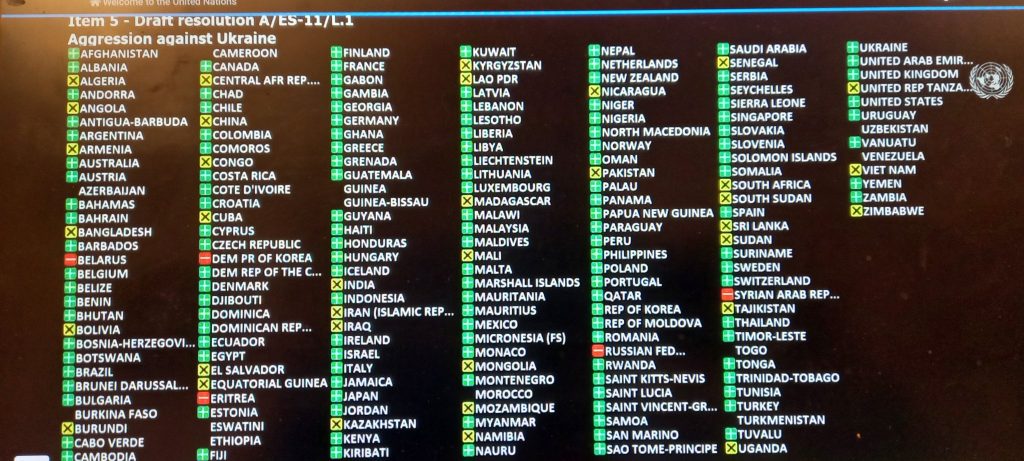
New York, February 24: India abstained in the U.N. General Assembly on February 23 on a resolution that underscored the need to reach as soon as possible a comprehensive, just and lasting peace” in Ukraine in line with the principles of the U.N. Charter.

The 193-member General Assembly adopted the draft resolution, put forward by Ukraine and its supporters, titled Principles of the Charter of the United Nations underlying a comprehensive, just and lasting peace in Ukraine.

The resolution, which got 141 votes in favour and seven against, underscores the need to reach, as soon as possible, a comprehensive, just and lasting peace in Ukraine in line with the principles of the Charter of the United Nations.” India was among the 32 countries that abstained.

For the first time, India votes against Russia in UNSC during procedural vote on Ukraine

The resolution called upon member states and international organisations to redouble support for diplomatic efforts to achieve a comprehensive, just and lasting peace in Ukraine, consistent with the Charter.

It reaffirmed its commitment to the sovereignty, independence, unity and territorial integrity of Ukraine within its internationally recognised borders, extending to its territorial waters and reiterated its demand that Russia immediately, completely and unconditionally withdraw all of its military forces from the territory of Ukraine within its internationally recognised borders, and calls for a cessation of hostilities.

In the year since Russia’s February 24, 2022 invasion of Ukraine, several U.N. resolutions — in the General Assembly, Security Council and Human Rights Council, have condemned the invasion and underlined the commitment to the sovereignty, independence, unity and territorial integrity of Ukraine.

India has abstained on the U.N. resolutions on Ukraine and consistently underlined the need to respect the U.N. Charter, international law and the sovereignty and territorial integrity of states.

New Delhi has also urged that all efforts be made for an immediate cessation of hostilities and an urgent return to the path of dialogue and diplomacy.

In September 2022, External Affairs Minister S. Jaishankar said in his address to the high-level U.N. General Assembly session that in this conflict, India is on the side of peace and dialogue and diplomacy.

Voting pattern in UNGA on anti-Russian resolution. Green is for, Red is against and Yellow is abstaining

As the Ukraine conflict continues to rage, we are often asked whose side are we on. And our answer, each time, is straight and honest. India is on the side of peace and will remain firmly there. We are on the side that respects the UN Charter and its founding principles. We are on the side that calls for dialogue and diplomacy as the only way out,” Jaishankar had said, adding that it is in the collective interest to work constructively, both within the United Nations and outside, in finding an early resolution to this conflict.

India has also consistently underlined that in the conflict, the entire global South has suffered substantial collateral damage” and developing countries are facing the brunt of the conflict’s consequences on food, fuel and fertiliser supplies.

Jaishankar had said that India is on the side of those that are struggling to make ends meet, even as they stare at the escalating costs of food, of fuel and fertilisers.” The UNGA resolution called for an immediate cessation of the attacks on the critical infrastructure of Ukraine and any deliberate attacks on civilian objects, including those that are residences, schools and hospitals.

It urged all member states to cooperate in the spirit of solidarity to address the global impacts of the war on food security, energy, finance, the environment and nuclear security and safety and underscored that arrangements for a comprehensive, just and lasting peace in Ukraine should take into account these factors.

China

China has called for a ceasefire between Ukraine and Russia and a gradual de-escalation of the situation that will pave the way for peace talks, as part of a 12-point proposal to end the conflict.

The plan by China, which was released on Friday morning by the foreign ministry and coincides with the first anniversary of Russia’s invasion of Ukraine, urges an end to Western sanctions against Russia, the establishment of humanitarian corridors for the evacuation of civilians, and steps to ensure the export of grain after disruptions caused global food prices to spike last year.

Conflict and war benefit no one,” the ministry said in a statement.

All parties must stay rational and exercise restraint, avoid fanning the flames and aggravating tensions, and prevent the crisis from deteriorating further or even spiralling out of control,” it said.

All parties should support Russia and Ukraine in working in the same direction and resuming direct dialogue as quickly as possible, so as to gradually deescalate the situation and ultimately reach a comprehensive ceasefire.”

The proposal mainly elaborates on long-held Chinese positions, including that all countries’ sovereignty, independence and territorial integrity be effectively guaranteed”. The plan also called for an end to the Cold War mentality”, which is Beijing’s standard term for what it regards as global dominance by the United States and its interference in other countries’ affairs.

Wang Yi meets Putin in Moscow

Beijing — which claims to be neutral in the conflict — has a no limits” relationship with Russia and has refused to criticise Moscow’s invasion of Ukraine or even refer to it as such. It has also accused the West of provoking the conflict and fanning the flames” by providing Ukraine with arms.

Beijing’s top diplomat Wang Yi visited Moscow this week and pledged a deeper relationship between the countries, while Putin hailed new frontiers” in ties with Beijing and signalled that China’s leader Xi Jinping would visit Russia.

Xi is expected to deliver a peace speech” on Friday, though some analysts have cast doubt on whether Beijing’s efforts to act as a peacemaker will go beyond rhetoric.

The ambassador of the European Union to China, Jorge Toledo, told reporters at a briefing in Beijing on Friday that China had released a position paper not a peace proposal, and the EU will study it.

Ukraine called the position paper” a good sign” and said it expects China to be more active in its support of Ukraine.

We hope they also urge Russia to stop the war and withdraw its troops,” Ukraine’s charge d’affaires Zhanna Leshchynska said at the same briefing.

US State Department spokesman Ned Price had said earlier on Thursday that Washington would reserve judgement on the proposal but that China’s allegiance with Russia meant it was not a neutral mediator.

We would like to see nothing more than a just and durable peace … but we are sceptical that reports of a proposal like this will be a constructive path forward,” he said.

On Thursday, China abstained from voting when the United Nations General Assembly (UNGA) approved a nonbinding resolution that called for Russia to end hostilities in Ukraine and withdraw its forces.

The UNGA overwhelmingly adopted the resolution that demanded Moscow withdraw from Ukraine and stop fighting.

There were 141 votes in favour of the resolution and 32 abstentions. Six countries joined Russia to vote against the resolution: Belarus, North Korea, Eritrea, Mali, Nicaragua and Syria.

Russia’s Deputy UN Ambassador Dmitry Polyanskiy dismissed the UN resolution as useless”.

Ukrainian President Volodymyr Zelenskyy wrote on Twitter that the UN vote was a powerful sign of the unflagging global support” for Ukraine.

U.N. Secretary-General Antonio Guterres told the emergency special session of the General Assembly that resumed on February 22 that Russia’s invasion of Ukraine is an affront to our collective conscience” and said it is high time” to step back from the brink.

The one-year mark of Russia’s invasion of Ukraine stands as a grim milestone — for the people of Ukraine and for the international community. That invasion is an affront to our collective conscience. It is a violation of the United Nations Charter and international law,” Mr. Guterres said adding that the invasion is having dramatic humanitarian and human rights consequences.

In a strong message, Mr. Guterres said the war is fanning regional instability and fuelling global tensions and divisions while diverting attention and resources from other crises and pressing global issues. Meanwhile, we have heard implicit threats to use nuclear weapons. The so-called tactical use of nuclear weapons is utterly unacceptable. It is high time to step back from the brink,” he said.

New LG election dates to be announced next week

February 24th, 2023

Courtesy Adaderana

The new dates for the 2023 Local Government polls will be announced on March 03, 2023, the Election Commission announced in a media release today.

Thereby, the LG election will not be held on March 09 as scheduled due to matters beyond the control of the election body, the communiqué read further.

The decision was taken at a meeting held at the Election Commission this morning (Feb 24) to decide whether the LG polls would be held on March 09.

It was attended by the chairman of the election body, Attorney-at-Law Nimal G. Punchihewa and its members, M.M. Mohammed, S.B. Diwaratne and P.P. Pathirana.

At this meeting, it was also decided to submit a written request to the Speaker of Parliament to intervene to urge the Treasury to make available the funds required to conduct the LG polls, the election body said further.

Meanwhile, a report compiled on the constitutional actions taken by the Election Commission with regard to the LG polls which was initially slated to be held on March 09 will also be handed over to the Speaker, along with the aforementioned request.

“LTTE killed my beloved father” – Arun Siddarths wife Thangathurai Thayani’s heartbreaking story

February 23rd, 2023

Shenali D Waduge

A letter written by Thangathurai Thayani, wife of Arun Siddharth on her mother’s 60th birthday that fell on 4thAugust 2022 should make the human rights organizations feel ashamed and should make the international human rights & terrorism experts wonder why they continue to give lifelines to terrorists/their fronts. She raises two pertinent questions – why doesn’t Geneva invite the victims of LTTE & why didn’t the aragala protestors carry photos of LTTE victims? The Church, the foreign envoys, political parties, media outlets, top corporates & famous personalities that supported the aragala should respond.

Thangathurai’s story:

There was a time, we had no means to convey to society, the injustice to our family. I resolved to one day have my say. We were silenced for 32 years. It was only after the conflict ended in 2009 that we saw some relief. At least we had an opportunity to tell the outside world what we had gone through. I am grateful to the Government of Sri Lanka for this chance to tell our version of the story. I raise my hands in gratitude. It was only after this island was freed from the terror of LTTE, that the victims of LTTE were given a chance to express what they had endured silently.

My father Sellan Thangathurai was a bus driver. He drove a bus plying from Jaffna to Kankasanthurai. My mother’s name is Victoria. I am the eldest. I was born in 1985. My sister was born in 1988. Thereafter my mother had 2 sons, one born in 1989 & another the following year (1990). This was my beautiful family. On 20 February 1990, was the last day that we were able to cherish happy moments with our father. It was the last day that we played with him, cuddled him & felt his warmth. On that fateful day on 20 February 1990 between 11p.m & 12p.m. we heard a knock on our door. They shouted Thangathurai, Thangathurai”. Both parents opened the door & went out. It was Nathan”. He was from our village. He was with two others. Nathan pointed at the other two & said these two are from the LTTE, they want to investigate you. they want to search your house & so I brought them here”

They said they needed to take our father to one of their camps. Our father said he could not leave the family alone in the house & so would come in the morning. They said he had to come with them immediately. Then they grabbed him & took him by force into the vehicle they had come in. There were more inside the vehicle. They took our father away. That night 9 more were taken by LTTE from our village. We joined the 9 families to go to the LTTE camp located in Chunnakam early in the morning. The LTTE commander of this camp was known as Saleem Shiva. Our mother, other mothers, wives, brothers, sisters all fell down at the feet of Saleem Shiva & begged him to release our people. I grabbed his leg & cried, asking him to return our father. Other children also cried. He felt nothing. He took no notice of our tears. Other families from different villages also arrived & began crying to release their family members. All those who were taken by the LTTE were put into LTTE prisons.

We were given an opportunity to see our father. My father took my hand from inside the wired prison & kissed it. Father told my mother to meet some of the LTTE sympathizers in our village & seek their help. He gave some names & said they may help. We went again the next day. They gave my mother our father’s driver’s license & Rs.36 that had been inside his pocket. Saleem told us that father had been taken to LTTE’s camp in Thunnukkai, Mullaitivu for further questioning. Thunnukkai is where LTTE had its torture chambers. We were frozen with grief & came home. Everyone knew that whoever was taken to Thunnukkai camp never returned alive.Our mother took us to every LTTE camp in Jaffna. She even went to the Red Cross & Human Rights Commission appealing to release our father. Our mother had no income & no means to feed 4 of us. With each passing day, life became an ordeal for all of us. My mother went to the LTTE office & told them, that if her husband is not returned, the family would die of starvation. They told my mother to write a letter about the situation at home. A female LTTE came & handed us some school books and clothes. That is because mother had written that she had school going children. They then proposed that she hand over the children to the Sencholai orphanage if our mother could not feed the children. They asked her to join the LTTE. Our mother flatly refused both proposals. They then said that they were giving Rs.200 per month for families without a father & to collect it from the LTTE office. Every month, I accompanied my mother to take that Rs.200.

Many more families who had their fathers taken by LTTE came to pick up this Rs.200 per month. During such an occasion I met Subhashini & Sumajini who were my age. Their fathers had also been taken by LTTE & murdered. 

In order to take that Rs.200, we had to attend LTTE meetings & were taken in buses. We could not refuse. They pretended they would show us our father. But, we never saw our father. We were given lunch parcels. By this time our mother was 29 years. Imagine what life would have been for a 29 year old mother with 4 young children with no clue as to how to bring up the children without a father. When I look back, I think my mother was an iron lady for her determination not to give up. 

Our mother began farming. She went to work in houses. She brought home left over food to feed us. None of our relations came to help us in time of need. The people whom mother left us with while she went to earn, tormented & abused us. As the eldest, I bore much of the pain not wanting to subject my sister & brothers to the same abuses. The hardships I went through after my fathers disappearance is nothing I can relate without pain. I lost my childhood – I can never regain this. This was the darkest period of my life.

It was now 3 years since our father was taken away in 1990. It was October 1993. I was returning home from school. A car stopped with 4 LTTErs inside. They handed a file. Our father was accused of transporting weapons, helping an enemy group of the LTTE & spying. LTTE had announced death sentence upon our father for these crimes. My mother started wailing & threw the chairs in our home at them. We had no way to confirm what they said. However, it was this day that we realized that our father had been killed. I was about 9 years old when my childhood crashed with the killing of my father.

In 2021, the Walk for Unity” initiative commenced from Matara to end in Jaffna. I too participated. I arrived in Colombo & during the press conference I informed about LTTE taking away my father in 1990. A person in the adjoining village listened to my story & came to speak to me. He had been in the same LTTE prison cell as my father. He too had been forcibly taken by LTTE. What he had endured during this period has made him a mental wreck & unable to do any form of work. Both his kidneys are not functioning properly. The camp was known as the butchery. I am not sure if the details of this camp is included in the human rights records of international bodies. I came to know much later that LTTE had torture chambers in Thunnukai, Wattuwakai & Vallipuram. What happened inside these torture chambers need to be included into a book. My father & several others had been killed & burnt on tyres near a roadside.

I had a question to ask. If, LTTE had its own police, own courts & was governing them, why did they not put him in Court, read allegations against him, call for evidence & give him due punishment without torturing him to death & burning him on tyres. LTTE were not taking arms on behalf of the Tamil people. LTTE are only murderers. These are not the one’s who should be allowed to go to Geneva crying justice for the disappeared against the GoSL, it is us who should be going. We are the ones who should be going to Geneva. It is the mothers, females/wives/children of men, LTTE took & disappeared” who should be going to Geneva. 

Many families are traumatized by what LTTE did to them. They are suffering psychologically for years. They are today mental patients. I am with these families, helping them in whatever way I can. I formed the Jaffna Women’s Front. We have 3000 members. They are all victims of LTTE. One or more members of their family members had been taken by LTTE. There are more families who are victims of LTTE & silenced by LTTE guns. Their voices have still not been heard by the international community or human rights organizations. If the victims of LTTE are allowed to go to Geneva, there will be no room in their buildings to put these LTTE victims. You can imagine the numbers! From the time our father was taken away in 1990 & when we heard of his murder in 1993, our mother went to the human rights organizations. She went to every place she could think of, but she was given no relief or justice. During this time, the food she prepared with difficulty, I carried to sell in shops. I was still a girl of 7 or 8 years. There were many refugee camps. I took these food items there & sold them & it was from this little money that all 5 of us survived.

Recently, I met a school friend. She cried after hearing about me selling wade. Only those who have led similar lives, feel the pain we have gone through. How LTTE ruined our family will never be forgotten till the day I die. The pain that LTTE gave my family is etched in my mind forever. I will oppose the LTTE till my last breath. That will never ever change. 

I have one more thing to say.

The photos displayed at the aragalaya caught my attention. I have included a photo of a female LTTE. Those holding the photo had even written sad poems about this LTTE female. This woman is a member of the media unit of the LTTE. She had undergone LTTE military training & held the title of Lt. Col. She was 2 years elder to me. She was not inducted to the LTTE by force. She voluntarily joined the LTTE that was banned by 35 countries. She married another LTTEr in 2007 & had a child. This female LTTEr died during the final stages of the conflict in 2009 and several photos were released to the media. 

I have a question for those carrying this LTTE females photo at the aragalaya.

There are numerous terrorist organizations – Al Qaeda, Boko Haram, ISIS etc. They are brutal and they all have media units. Simply because they worked in their media units, the terrorism, their groups committed, does not absolve them of aiding & abetting terror. 

LTTE killed my father and likewise LTTE has killed similar innocent Tamils in the North. LTTE has killed innocent people in the South too in Kebethigollewa, Aranthalawa, Piliyandala Bus, Pettah train, Batticoloa Muslims. So many have fallen victims. The person the aragala protestors are glorifying belongs to the LTTE that killed ordinary people who know nothing about politics as well as small children.

What I want to ask the aragalaya protestors is this – why can’t they carry a photo of my father, or a photo of the victims of Kebethigollewa, the Buddhist theros killed in Aranthalawa, photo of the LTTE bombing of Dalada Maligawa? If the aragala protestors did that while also carrying the photo of the dead female LTTE, then they can claim to be fighting for justice for all.

Why didn’t the ordinary people in North not participate in the aragalaya? 

That is because the aragalaya was only carrying one-sided version.

The day this was written, was to celebrate the 60th birthday of my mother, the iron lady on 4 August 2022 who after LTTE killed my father in 1990, singlehandedly brought myself & my 3 siblings up under tremendous hardships & turmoil. 

A true story by Thangathurai Thayani (Chairman Jaffna Womens Front) 

thayanijaffna@gmail.com

kmarxedu@gmail.com

https://m.facebook.com/story.php?story_fbid=pfbid0MEzwhThffpeTT6Qhh9Y8xnw5eynJyfdRKATj3DYzBP6vsycmok4fv65oo9zJctPvl&id=100075491365696&mibextid=qC1gEa

It is sad that the real victims are neglected. UNHRC head Navi Pillay arrived in Sri Lanka – she did not meet a single LTTE victim. UNSG Ban Ki Moon arrived in Sri Lanka, he too did not meet a single LTTE victim. Many foreign envoys regularly arrive – they too do not meet LTTE victims. Why is that?

Shenali D Waduge

ARE THERE ACCEPTABLE EVIDENCE THAT FOR SINHALA RACE GENERATED FROM TAMILS?

February 23rd, 2023

BY EDWARD THEOPHILUS

There are many issues, arguments and controversies relating to history and the origin of various races in the world. How did a race generate is a complex question that could not be exactly traced. Nobody can clearly state that a particular race began in that day at that time. Sinhala race begun centuries ago and nobody was seen this beginning. The major reasons for this type of convoluted attitude were based on personal advantages and sometimes, they may be misleading people with a view to gaining advantages.

Various controversies were in this world since the origin of human being and various abstraction had been subjected without logical bases and from time-to-time, human history was added such various fabrication, theories, and many abstractions those were associated with manipulated stories or points. A vital point that people in the current world needs to understand historical aspects mixed with acceptable and unacceptable stories and theories, which were in a hard stand to test and people in modern world are in a disable condition to accurately test such ideas without assumptions. If any idea can test without assumptions that would be the real truth.

How Sinhala race originated in Sri Lanka was also a controversial issue in the modern world and the historical information related to the history of Sinhala race had been mixed with true and manipulated views. One major point could be considered was the story about Sinha. was he an animal or a human called Sinha was a controversial question because he was a strong person like a lion. Biological history evidence that animal cannot beget human. Significant evidence relating to the origin of Sinhala race found in an inscription which mentioned about Arahant Mahinda, found in Gampaha district which was believed to be written in before Christ. According to such evidence Sinhala race was not originated from animal.

The vital point that current people cannot ignore is Sinhala and Tamil people were treated as a single race, as we understand Sinhala people were in the country since before Christ. They were not originated with a clear biological history and they had mixed with other races due to psychological or sexual reasons. The vital point is people who were living in the piece of land called Sri Lanka, was a habitable land and humans liked to live in that land without racial differences as it had been an enjoyable piece of land supported humans to live as it had a soil for agricultural activities and grow various seeds which had been used for human consumption.

Scientifically Sinhala and Tamils may had originated in a single origin whom were separated as races later period and when originated they were human but they were not talking same language. Sinhala people are called such name because the language they were speaking identifies as Indo European and Tamils were talking a language that consist of features of Dravidian language.  This idea goes to the past in many centuries and the differentiation as Sinhala or Tamils were not based on a biological reason but it was a language related differentiation.  The best example is if a Sinhala person talks in Tamil and a Tamil person talk in Sinhala nobody will be able to biologically differentiate two people even they cannot separate based on bodily features. When people think about the reason statement of Mr Vigneswaran that Sinhala people were originated from Tamils was a mere expression that cannot verify either biologically, ethnically or culturally and it was a mere expression to provoke Sinhala people and gain support from Tamils.

The aim of Mr. Vigneswaran as he did in the past, was to attract political support from Tamil people who were divided into several political parties. The nature of behaviour of Tamil people is they love to provocative political party or a candidate indicated that they were interested in provocative statements.  Since the Donor more Commission, political stupids are still using such tactics for personal attraction.

If it investigates the history of Mr. Vigneswaran, it could be revealed that he had been made many statements to attract the attention of people than to express pure truth to gain support as neither a historian nor a scientist.  Such statement is vital for neither the management of human life nor develop valuable theories on the origin of human.

Politics in Sri Lanka seem not like in other democratic countries where people use politics for attracting power. Professionally, Mr. Vigneswaran had been worked in Sinhala areas and it seems that he uses politics after professional life with a view to making money than helping to gain human rights for Tamil people.

The language of Sinhala people originated from Indo Arian languages and the idea of educated people is that Sinhala people have been mixed with many races as indicated in Mahavamsa, Suppa Devi was a lady consorted in an Indian palace who interested in companionship with Sinha who met while she was going with businessmen who were carrying goods for sale but Suppadevi was not for selling goods but was she sold to Sinha by traders, nobody knows.

Before the final conflict with LTTE in 2008, there was a fabricated story that Sinhala people are with light skin and Tamils got dark skin, they were just fabrication and Mahavamsa called King Walagamba was a Sinhala person with a Dark skinned, was a son of King Dutugemunu’s brother Tissa. Finally, it needs to understand human history consist of many fabricated stories and modern people use such fabrication to provoke others and gain political advantages.      

SINHALA VEDAKAM AND WESTERN MEDICINE Part 2

February 23rd, 2023

KAMALIKA PIERIS

C.G. Uragoda continuing his account of ‘Medicine under Sri Lankan kings”, observed that the ancient records confirmed the existence of hospitals in Anuradhapura and Polonnaruwa.  The only hospital for the laity which had been identified   in Anuradhapura at the time was the one found near Thuparama, probably dated to Kassapa IV.

Udaya 1 who ruled from Anuradhapura had built a hospital in Polonnaruwa. An inscription at Alahana Pirivena, Polonnaruwa   indicated that Polonnaruwa had at least one other hospital apart from Alahana. The inscription spoke of a hospital founded by Doti Valakna, indicating that hospitals were also set up by private individuals.

Records indicate that Pandukabhaya and Kassapa V had built hospitals in Anuradhapura, said Uragoda.There is also reference to a hospital in Anuradhapura built by the son of Mahinda IV.The second pillar inscription at the Dorabawila temple, Kurunegala district, was on   fixing boundary stones for land set apart for a hospital to be built in the inner city of Anuradhapura by Kassapa V, and the lands assigned for its maintenance.  This inscription supported the statement in the Mahawamsa that Kassapa V built a hospital in the town (Anuradhapura) and assigned it villages.

 There were specialist hospitals.   Kassapa IV had built a hospital for combating ‘upasagga’, probably an epidemic disease. If so then this may have been the first infectious disease hospital in the island, said Uragoda.The first maternity home was probably the one built by Upatissa II. There were convalescent homes. Pandukabhaya had established a ‘hall for those recovering from illness” at Anuradhapura.  Buddhadasa and Upatissa II built hospitals for the blind.  Institutions for cripples were established by Buddhadasa, Dhatusena, Upatissa II and Udaya I, noted Uragoda.

Hospitals attached to monasteries have been found at Mihintale, Medirigiriya and Alahana Pirivena in Polonnaruwa.Uragoda has described the Mihintale hospital lay out and services. 

Mihintale hospital had an inner and outer court. The outer court had a main entrance with porters lodge, a refectory, a room for preparation and storage of medicines and a room for hot water baths.  

The inner court had cells, arranged in form of a   square. The four corner rooms were larger than the rest. The rooms opened onto a connecting verandah. They all faced the central courtyard.

The room used for medicine was indentified on the basis of stone querns found nearby. Quern-stones are   used for hand-grinding .The hot water bath had an underground duct for draining away waste water. The remains of the duct have been found.

Uragoda also described   Medirigiriya hospital. Medirigiriya was endowed with lands by Udaya II. Medirigiriya seems to have catered to the laity too, not only monks. The inscriptions found there indicated that the diet included mutton (goat) chicken and fish.

 Two slab inscriptions were found at Medirigiriya, one was in Sinhala script. One inscription recorded the emoluments to hospital staff, including physicians, and dispensers.The highest category was the physicians who were referred to as ‘their lordships’. 

 The other inscription gave the management rules of the hospital. This yields much information about the administration of a hospital in ancient times, said Uragoda.    The hospital was administered by a separate department with its own officer and staff. They were distinct and separate from those who were looking after the patients. The nursing staff were forbidden to take on any work of the administrative staff.

The hospital was regularly inspected by officials from the royal palace.’ ‘Lords of the palace establishment year after year come to investigate the affairs of the hospital’ said the inscription.    

Hospital workers were not to steal hospital items. When caught, it was the physicians who judged the case. Punishment included dismissal.    The nursing staff were not to accept any presents or money from tenants of the land surrounding the hospital. But they could accept gifts from patients.

 Medirigiriya hospital was surrounded by lands rented out for a fee. Those living nearby were forbidden to merry make. Inscription said permission shall be given to tenants of houses to drink liquor, play musical instruments, dance and for other acts of that sort in places belonging to the hospital, but outside its boundaries’  Hospital area was to be a silent zone.

  In Polonnaruwa, a monastic hospital was found near Rankot vihara. The structure was the same as at Medirigiriya and Mihintale. Oblong building with cells facing a central courtyard. A second wing with another central courtyard which held a refectory, toilet, and room for medicine trough. A medicine grinder, scissors, hooked copper instrument probably for incising abscesses, and ceramic jars for storing medicine were found. Also a beautifully dressed medicinal trough.  This is the best preserved of the medicine troughs found so far, concluded Uragoda. (Continued)

Sri Lankan Properties Gain Increased Interest among Overseas Buyers as Property Prices Reach Historic Heights: Report

February 23rd, 2023

Press Release LankaPropertyWeb

Overseas buyer interest in Sri Lankan properties increased by 40% in 2022, compared with the year before, according to the Real Estate Market Outlook Report 2023, published by Sri Lanka’s leading real estate portal, LankaPropertyWeb.

The report said that traffic from overseas countries such as the United Kingdom, Australia, the United States, Canada, and Middle-Eastern countries saw the highest increase mainly for residential properties in the Colombo district.

While the average asking price of houses has increased by 4.4% and apartment prices increased by 60.4% during the last year, the increased overseas interest, mainly by expatriates is attributed by the report to the decline in the rupee’s standing against the dollar, which saw the rupee fall by more than 80% and thus making property investments more appealing to overseas investors and expatriates with their earnings in currencies such as USD and GBP. 

The Market Outlook report also shows that despite many of the initial apartments that came to the market in the late 90s and early 2000s reaching over 20 years of age, their value has continued to grow, dispelling the popularly held notion that well-constructed apartment buildings will lose their value as they get old, in the current context of the property market. With construction costs increasing by more than 65% coupled with housing loan rates increasing by triple digits and the majority of new units still being under construction, the high demand for completed buildings and rentals has been highlighted by the report, using the website’s search and demand analysis.

6000+ new residential apartment units are expected to enter the real estate market in the next two years. With this, the report observes that the total number of recognised apartment units will reach approximately 39,000 by the end of 2025, while 1 million square feet of Grade A office space will be added to the market by the same year.

The Market Outlook Report 2023, compiled by the company’s Development Consultancy and Research Team took over 6 months to complete while having to obtain, analyse and validate data worth over a decade from public and own data sources, according to Daham Gunaratna, the company’s Managing Director. Many might be wondering about the effect 2022 will have on Sri Lanka’s economy and the real estate market. It is in this context that LankaPropertyWeb decided to produce the ‘Real Estate Market Outlook 2023’ report, our maiden research report and one of the most comprehensive reports published on Sri Lanka’s real estate market, to give the public a detailed understanding of the current real estate market and its future path”, said Gunaratna at the launch of the report. 

The report further adds that based on sellers’ asking prices, the three-bedroom option has been the most in-demand category among all levels of dwellings over the past years. From all the search traffic for residential houses on the LankaPropertyWeb website in 2022, 42% of the demand has been for three-bedroom dwellings with nearly half (48%) of the apartment unit supply in Colombo being three-bedroom units. Speaking at the launch, the head of Development Consultancy & Research at LankaPropertyWeb, Tharindu Jayarathne said that since the start of 2023, an increase in demand for sales, rentals, and lands was noticed through visitor traffic, with the demand for sales being the highest at a 24% increase, compared to December, 2022. 

Despite the many economic and political unrest the country had to go through, Sri Lankan properties saw a significant price increase, which is evident when comparing the real estate market numbers of 2022 with those of past years. Residential properties have become a good hedge against rising inflation, and the real estate market is expected to boom in years to come”, said Jayarathne. 

The report which covers areas from housing, apartments, lands, and commercial property can be downloaded from LPW.LK/market-insights

www.lankapropertyweb.com

අයන්න කියන්න ලොවටම ඇහෙන්න

February 23rd, 2023

Malinda Seneviratne


‘ලේ හැලුනේ නෑ, සුද්දා තරහ වුනෙත් නෑ; යන්න ගියෙත් නෑ, නොගිහින් හිටියෙත් නෑ.’  ඒ නන්දා මාලිනී අසූව දශකයේ අග භාගයේ එළිදැක්වූ ‘පවන’ ප්‍රසංගයේ ජනප්‍රිය ගීතයක මතකයේ රැඳුනු වචන කිහිපයක්. මේ ‘නිදසස් බයිලාවට’ සුනිල් ආරියරත්න මෙහෙමත් දෙයක් එකතු කරලා තිබුනා: ‘නෑ බැට කෑවේ නේරු පාටෙල් වාගේ, නෑ දිවි දුන්නේ මහත්මා ගාන්ධි වාගේ.’

නිදහසේ කතාව ඔහොමයි එයාලා අපට කිව්වේ.  එතකොට 1815 දී, 1818 දී, 1848 දී සහ ඒ අතර සහ ඉන් පසුව කව්රුවත් බැට කාලා නෑ, කව්රුවත් දිවි දුන්නේ නෑ, ලේ හැලුනෙත් නෑ, පන්සල් විනාශ වුණෙත් නෑ, පොත්ගුල් ගිනිබත් වුණෙත් නෑ, මුඩුබිම් පනතක් ගෙනාවෙත් නෑ, හරිද?

ඉතිහාසය ලියන්නේ ඔහොමයි.  අංක ගණිතය වගේ. සමහර දේවල් එකතු කරනවා, සමහර දේවල් අඩු කරනවා, වැඩිකරනවා. සුනිල් ආරියරත්න, නන්දා මාලිනී වගේම වෙනත් අයත් මේ ඉතිහාස කතා බෙදනවා.  බෙදපු දේවල් අහුලා ගන්න අය ඒවා වළඳනවා, වමාරනවා.  

‘ජනවාර්ගික අර්බුදය’ කියන එකත් මේ අපූරු සුත්‍රයට අවනතයි.  මුල කොතනද කියල ඇහුවොත් එක එක උත්තර ලැබෙනවා. මේ වගේ:

එළාර-දුටුගැමුණු සටනින් නේ පටන් ගත්තේ. අසූව දශකය පුරා ආරක්ෂක අංශ විසින් ඉතා දරුණු විදිහට ඉවක් බවක් නැතිව දෙමල තරුණයින් ඝාතනය කරපු නිසා.  කළු ජූලියෙන්. නෑ, 1983 ජුලි 23වෙනිදා සොල්දාදුවෝ 13 දෙනෙක් මරපු නිසා.  පිස්සුද, ඕකට මුල 1976 මයි 14දා ද්‍රවිඩ එක්සත් විමුක්ති පෙරමුණ වඩුකොඩ්ඩේයි (බටකොට්ටේ) හිදී ඊලාම් කියල වෙනම රටක් වෙනුවෙන් සටන් කිරීමට ගත්ත තීන්දුවයි. 

නෑ බං, යාපනේ නගරාධිපති ඇල්ෆ්‍රඩ් දුරේයප්පා ඝාතනය කෙරුවේ ඊට කලින්නේ; ඒ කියන්නේ 1975 ජූලි 27.  එතකොට ඊට කලින් විවිධ අගමැතිවරු විවිධ දෙමළ නායකයින් එක්ක ගහපු ගිවිසුම්, ධර්මපාල ගේ සිංහල ජාතිවාදය? 

ඔය කියන ගිවිසුම් වල බොහෝ දේවල් පසු කාලයේ ක්‍රියාත්මක වුනා. ධර්මපාලගේ සිංහල බෞද්ධ පුනරුදය ට ගොඩාක් කලින් නේ අරුමුගම් නාවලර් ගේ දෙමළ හින්දු පුනරුද ව්‍යාපාරය පටන් ගත්තේ.  

ඕව වැඩක් නෑ නිදහස කියන්නේ හැමෝම එකතුවෙලා දිනාගත්ත දෙයක්. පොන්නම්බලම් අරුනාචලම්, පොන්නම්බලම් රාමනාදන්, ටී.බී. ජයාහ්, රසීක් ෆරීඩ් වගේ අය ඩී.බී. ජයතිලක, ඩී.එස් ලා එක්ක එකටයි සටන් කෙරුවේ.  

එහෙමද? එතකොට රාමනාදන් ලංකාවේ පළමු විශ්වවිද්‍යාලය යාපනේම හදන්න ඕන කියල කිව්වේ ඇයි?  1815 ඉඳල 1948 වෙනකල් සිංහල මිනිස්සුම ඝාතනය වුනේ ඇයි? ඔය බහු-ජාතික, බහු-ආගමික කතාන්දරය ට අනුකූලව අඩුම තරමින් වාර්ගික අනුපාතවලටවත් ඝාතන සිද්ද නොවුනේ ඇයි?

පොඩ්ඩක් ඉන්න. මේ කිසිම දෙයක් වැදගත් නෑ. එකම දෙයයි මේ අර්බුදයට අදාළ වෙන්නේ. බණ්ඩාරනායක ගෙනාපු භාෂා පනත.  

ඔන්න ඔහොමයි කතාව ඉවර වෙන්නේ. 

හරියට සුනිල් ආරියරත්නගේ ‘ලේ හැලුනේ නෑ’ කතාව වගේ ජනවාර්ගික අර්බුදයේ ‘අයන්න’ ඕකයි කියල අපට කියල දෙනවා සමහර ඉතිහාසාඥයින්.  ඉංග්‍රීසි වෙනුවට සිංහල රාජ්‍ය භාෂාව විය යුතුයි කියපු ඒ කතාවේ ‘ඉංග්‍රීසි වෙනුවට’ කියන කෑල්ලත් හලනවා. ඒ පනත හරහා දෙමළ ජනතාවට කළ අසාධාරණය පසුව නිවැරදි කරපු බවත් හලනවා.  ඉතුරු වෙන්නේ සිංහල ජාතිවාදී ‘අයන්නක්’.

අවුරුදු 131ක් ඉංග්‍රීසි රාජ්‍ය භාෂාව හැටියට තිබුන ඉතිහාසයත්, ඒ ඉතිහාසය තුල සිංහලයින් දසදහස් ගණනක් ඝාතනය  කල බවත් මේ රාජ්‍ය භාෂා දේශපාලනයට අදාළ නැද්ද එතකොට? ඒ කාලය තුල විවිධ පීඩා වින්ද සිංහලයින්ගේ වේදනාව හඳුනාගෙන දේශපාලන බලය ලබාගැනීම සඳහා බණ්ඩාරනායක එය පාවිච්චි කරපු බැවින් සිංහලයින් ජාතිවාදී කියල කියන්න පුලුවන්ද?  නැත්තම් බණ්ඩාරනායක කියන්නේ පට්ට කපටි තුට්ටු දෙකේ දේශපාලනාඥයෙක් කියල ද හිතන්න වෙන්නේ? 

ඉංග්‍රීසි රාජ්‍ය භාෂාව හැටියට තිබුන ඉතිහාසය අදාලම නැද්ද, අප නැවත අසමු.  ඉංග්‍රීසි භාෂාව ඉගෙන ගැනීමෙන් වගේම සුද්දගේ ආගම වැළඳ ගැනීමෙන් වාසි ලබාගත් අය ඒ හරහා සමාජයේ අත්පත් කරගත් දේ ආරක්ෂා කිරීමට කටයුතු කල බව මෙතැනදී අමතක කරමු ද? එතකොට ඉතිහාස පොතේ කොළ කීයක් අඩු වෙයි ද?

බණ්ඩාරනායක භාෂා පනත ගෙනෙද්දී දෙමළ භාෂාවට අසාධාරණයක් නොකරා නම්, ඒ එක්කම ඉංග්‍රීසි භාෂාව ඉවත් නොකරා නම් මේ කතාන්දරය වෙනස් විදිහකට දිග හැරෙන්න තිබුනා, ඇත්ත.  අරක කෙරුවනම්, මේක නොකෙරුවා නම් වගේ කතා ශතවර්ෂ ගණන් කියව කියව ඉන්න පුළුවන්.  

ඒත් ‘ඉතිහාසයට’ ඕව වැදගත් නැහැ. වැදගත් වෙන්නේ අකුරු. හෝඩිය. අකුරු මකල නැති හෝඩියක්.  විශේෂයෙන්ම ‘අයන්න’ තියෙන හෝඩියක්.  විශේෂයෙන්ම ‘අයන්න’ හරියටම හඳුනාගන්න උවමනාවක්.  නැත්තම් ඉතින් ඉතුරු වෙන්නේ වියන්න්යි, කායන්නයි, රයන්නයි. 

In the Food Lab-Lead Found in Recalled Ground Cumin

February 23rd, 2023

By Thomas Tarantelli Courtesy Food Safety Tech

The Sol Andino brand of ground cumin was found to contain 1090 ppm lead.

Laboratory reports recently acquired by the Freedom of Information Law from the New York State Department of Agriculture and Markets show the Sol Andino brand ground cumin to contain 1090 ppm lead as well as 259 ppm chromium. The spice was also analyzed by IS:2446, 1980 method, Detection of Lead Chromate in Chillies, Curry Powder and Turmeric by diphenyl carbizide.” A positive result was given, indicating the presence of hexavalent chromium, which is a component of lead chromate. Lead chromate is a yellow pigment, not allowed in food anywhere in the world as it is toxic, containing both lead and hexavalent chromium. The New York State Department of Agriculture and Markets posted a Class I recall of the Sol Andino ground cumin on July 10, 2017, without mention of the extremely high concentration of lead in the product.

Sol Andino, ground cumin
Sol Andino ground cumin recalled

The author could find no record of an FDA recall for the Sol Andino brand cumin powder containing excessive lead.

Some of us remember the four FDA Class I recalls of Pran brand turmeric for excessive lead in October 2013. These recalls were initiated by the New York State Health Department due to an illness complaint—most likely a child with high blood lead levels. The recalled Pran brand turmeric contained 28–53 ppm lead.

Also worthy of mention is the FDA/Illinois Class I recall of Nabelsi brand Thyme (actually a spice mix containing Thyme) on March 17, 2017.

There have been two cases of high blood levels of lead associated with this product to date. Both cases have been reported through the Illinois Department of Public Health, Environmental Health Protection.”

According to the recall, the Thyme” was found to contain 422 ppm lead.

Wondering if the 422 ppm lead was caused by adulteration of the Thyme” with lead chromate or another lead pigment, a food chemist at the New York State Food Laboratory (a Division of NYS Dept. of Agriculture and Markets) requested from Illinois a sub-sample of the Thyme” for analysis. Lab analysis of the spice found 323 ppm lead, 109 ppm chromium and a positive result for the chromate test. Thus, this recalled Thyme” contains lead chromate.

In both cases, Pran turmeric and Nabelsi Thyme, illness complaints led to the recall of lead adulterated spices.

The New York State Department of Agriculture and Markets has a proactive program. Random samples of spices are sampled from retail markets and subsequently analyzed for unallowed colorants, undeclared allergens and heavy metals. In 2016 this resulted in the Oriental Packing Class I recall of 377,000 lb. of turmeric containing spices for excessive lead. (A typo in the FDA recall attributes the recall to the New York State Health Department, instead of the New York State Dept. of Agriculture and Markets.)

Still, it’s even better to analyze spices being imported into the country at receiving warehouses before the product reaches retail markets. Lead concentrations above 10 ppm can be determined instantaneously with a handheld XRF analyzer.

REVEALED! The main source of H I N D U P H O B I A… | Karolina Goswami’s 10-Point Study

February 23rd, 2023

What is the Real ‘National Question’? (Part II)

February 23rd, 2023

By Shivanthi ranasinghe Courtesy Ceylon Today

The only progress vis-a-vis the prevailing economic crisis is the unfounded report that the IMF may consider approving the USD 2.9 billion Extended Fund Facility (EFF), fondly known as the bailout package”, even without China’s formal assurance of debt-restructuring support. Even if we do finally get IMF’s assistance, which we have been hankering since March 2022, we do not seem to have a clear plan to execute it in order to strengthen our economy. Instead, the objective appears to be to gain our creditors’ confidence so that we may continue to borrow to live as we did before – from loan to loan. 

Despite this lack of progress on the economic front and vision for a better economy, the political focus is on the Local Government (LG) elections and the full implementation of the 13th Amendment to the Constitution (13A). As the LG elections are due, there is some rational for the political interest. However, such an explanation for the sudden interest in implementing the 13A in its full force is absent. 

This thus begs the questions as the reason(s) for President Ranil Wickremesinghe’s sudden interest in implementing the 13A in full as well as the timing. Even if President Wickremesinghe personally believed that the 13A should be implemented in full, surely he would know the timing is bad. After all, he is one of our most experienced politicians. 

As President Wickremesinghe himself admits, economically we are in for a rough ride. The Government is being forced to take many unpopular decisions. The Government is thus in need of support from all political fronts – even the Opposition. At a time when President’s main supporting party, the SLPP, is divided into many smaller enclaves, bringing the most controversial Amendment to the forefront is, without question, foolish. This President Wickremesinghe would know as he had burnt his fingers many times in the past over this issue. Thus, this emphasises the question, why now. 

The 13A’s troubled past

The 13A – was introduced to our Constitution 36 years ago in 1987. Therefore, to still be debating over it is strange, to say the least. These issues are yet unresolved due to a number of reasons. Understanding the sudden urge to bulldoze over these concerns to implement it in full will help understand the reasons for this 13A – completely irrelevant to present day crisis – to precipitate to the forefront. 

The 13A’s history is not pretty. It was forced into our Constitution literally at gunpoint. The year 1987 was a fateful one for Sri Lanka. The Military was successfully containing a terrorist issue that had been simmering since 1975, but was growing out of control since 1983. Though just four years since the explosion of events that led to a full blown war against terrorism, the country had already suffered significantly. 

However, in a surprise move, India intervened and violated our airspace to drop dhal, brinjals and whatnot over the troubled territories in the guise of humanitarian concerns. India’s involvement in this matter was most unfortunate and unnecessary and cost both countries heavily. 

Initially, India’s interest in Sri Lanka’s internal troubles was simple, even if bizarre. In mid 1970s, India was trying to balance the much needed Tamil Nadu support. Indira Gandhi’s Government was fast becoming unpopular and South India was one of the last bastions that still supported Indira’s Government. This was the primary reason for India to allow Tamil insurgents seek sanctuary on Indian soil. 

This soon expanded to funding, training and arming Tamil youth to engage in subversive acts against the Island nation. Whether this expansiveness was still to balance internal politics or had the objective(s) changed on a different agenda is a question we are yet to fully analyse. 

Sri Lanka, at the time, was under the impression that the bilateral relations between the two countries were strong, despite ignoring India’s concerns to support Pakistan in 1971. In any case, national security was not Sirima Bandaranaike’s strong suits. Therefore, her Government never addressed the budding issue with India – even after her Jaffna Mayor Alfred Duraiappah was assassinated. 

Her successor, President JR Jayewardene too, did not address the problem directly with India – despite Indira Gandhi been ousted by political opponent Morarji Desai, who had the support from most political entities in India. Instead, Sri Lanka forged closer relations with the US in the hope that the bigger power would offer us protection from India’s unwarranted aggressiveness. It was in the days of the Cold War when India had sided with Russia. Clearly, that government had not learnt much from the fiasco of inviting the Dutch to oust the Portuguese. 

Sri Lanka’s – stance with the US gave India the legitimacy to support terrorism in Sri Lanka – an illegal act. However, Sri Lanka fought the war on her own, though it had good support from Pakistan, China, Israel, Singapore and South Africa. When Sri Lanka was winning, India intervened but the US continued to stay out of it. 

India communicated its full intention to launch a full-force Military retaliation against the Island nation if Sri Lanka hindered its intervention in any manner. Given less than an hour’s notice by the then External Affairs Minister Natwar Singh, to the Sri Lankan High Commissioner Bernard Tilakaratna, Sri Lanka had to allow her airspace to be violated. Soon after Sri Lanka acceded to the Indo-Lanka Accord on 29.07.1987 with the Indian Naval presence in Sri Lankan territorial waters. 

The Accord led to the 13A. President Jayewardene had to employ extraordinary measures to ensure the passage of the 13A into the Constitution. This included keeping the government parliamentarians in near house-arrest conditions. 

Interestingly, his Prime Minister Ranasinghe Premadasa – father of current Opposition Leader Sajith Premadasa – could not be coerced even then to lend his support to the Accord. Thus, young Premadasa’s support to the full 13A’s implementation is very curious, especially as he always pledges to continue his father’s legacy. 

Who was in Favour of the 13A?

President Jayewardene’s shrewdness is often compared to the cunningness of a fox. Thus, even though the 13A created nine provinces and devolved power, President Jayewardene never enacted Land or Police powers. He also invited India to send in their own troops to ensure the smooth transition of terrorists to mainstream politics. 

He obviously predicted that it would not only be his own Parliament that would object to India’s solution. LTTE too rejected the 13A and took cudgels against India for short changing” them. Very quickly, relations between India and the LTTE deteriorated to the point they in 1991 assassinated Rajiv Gandhi – the very person who intervened on their behalf, violated a dozen international laws and stopped the Sri Lankan Military from eradicating their existence. 

In the meantime, President Jayewardene had a new headache. Opposing the Indian intervention, 13A, Provincial Councils and the power devolved, the JVP who was in relatively good terms with the UNP first took to streets and then to arms. Suddenly, both North and South of the Island were ablaze. Though the war was by two very different forces, they both bitterly opposed the 13A.  

Until the end of the war with the LTTE, neither the North nor East could implement even one letter of the 13A. It was only after the areas were cleared off the terrorists that the two provinces were able to hold provincial council elections and establish the councils. 

It is thus interesting that the TNA, that was LTTE’s one time political proxy and who always maintained that the LTTE was the North and East Tamils’ sole representative is now pushing the 13A’s full implementation. In fact, TNA (after the LTTE’s demise) has on number of occasions have asked for India’s intervention to have the 13A implemented fully. 

The JVP suffered tremendously in the ‘88-‘89 insurgency and lost almost their entire leadership. Even though they have since returned to the political stream and a couple of decades have passed, there are many who would not forget or forgive the many atrocities the JVP committed during this era. They thus remain politically discredited. Yet today,  reaction to President Wickremesinghe pledges to fully implement the 13A is not different to the proverbial deaf elephant’s reaction to music. 

By 2017, much of the drama of the late 1980s has long passed. Yet when Ranil Wickremesinghe, as the Yahapalana Government’s Prime Minister, tried to breath life into this in the form of a new Constitution, it was the Muslim and Tamil parties, notably from the Central Province that refused to support it. 

Thus it is obvious that Sri Lanka is deeply divided over this issue. It is clearly not a majority-minority complex where the Sinhalese as the majority have sided against the aspirations of the collective minority communities. On the contrary. This is being opposed by many, irrespective of race or religion. 

This brings forth the questions as to who really needs the 13A implemented in full and why. If the majority of Sri Lankans are against it, we must explore the possibility of any geopolitical angle that might be pressurising our politicians. Simultaneously, we cannot overlook the probability of a pledge simply made to gain mileage in the election race. 

ranasingheshivanthi
@gmail.com

(The views and opinions expressed in this article are writer’s own and do not necessarily reflect the official policy or position of Ceylon Today)

By Shivanthi Ranasinghe

13A and federalism: US manoeuvrings since 1980s

February 23rd, 2023

By Daya Gamage Former US State Department Foreign Service National Political Specialist Courtesy The Island

Activating the 13th Amendment and devolution of power – possibly with the merger of two provinces –seems to have returned to the national agenda with President Ranil Wickremasinghe taking a lead role. He undertook a similar endeavour as the prime minister in 2001-2004 during the Bush Administration with its Secretary of State Gen. Colin Powell and his deputy Richard Armitage playing a significant role during the Norwegian-initiated peace talks.

Washington policymakers and lawmakers had a very clear agenda: having a strong belief that Sri Lanka’s minority Tamils were discriminated against by the Sinhalese ‘chauvinists’ and their ‘Sinhalese-controlled’ administration, and Tamil grievances could be redressed only with the adoption of a federal system.

The US policy toward Sri Lanka’s ethnic issue has long been guided by the comforting notion that Tamil self-government within a decentralised Sri Lankan state would satisfy the legitimate needs of that minority community and shield it from Sinhalese oppression. The system of dispersing power federally is so deeply rooted in the US political culture that Americans tend to be uncritical in assessing its implications for governance, national unity and social justice. In the light of America’s mixed experience with federalism, one could question whether it is reasonable for Washington to press a small island nation to adopt a federal system when the evidence suggests that beyond a certain degree of administrative and political de-concentration, it would not be a good fit.

Washington believed that the Tamil community (accounting for 12% of the Sri Lankan population) had fewer economic and employment opportunities when compared to the ‘advantaged’ 74% Sinhalese majority, and it would benefit from a federal system.

Washington policymakers arrived at this determination way back in the 1980s, long before the signing of the infamous Indo-Sri Lanka Accord. That determination governed the mindset of the policymakers and lawmakers in the U.S. through 2009 and to date.

Vital documents

I will now disclose contents of two 1980s documents developed in Washington, and they formed Washington’s foreign policy agenda in respect of Sri Lanka, and it to date, in my belief, has remained unknown to Sri Lankan policymakers. Ignorant of these policy determinations, Sri Lanka during those years engaged in discourses with international players

It is also vital to disclose how the Political Office of the United Nations (UN) – always a domain of retired US Foreign Service (FS) Officers – in collaboration with State Department and White House officials – endeavoured to prepare a path to ‘impose’ a federal system in Sri Lanka in keeping with the determinations of those two documents, which escaped the attention of Sri Lankan authorities and prevented them from formulating Sri Lanka’s own independent foreign and national policies beneficial to all ethnic communities.

Washington’s ignorance of the demographic formation of Sri Lanka, caste factor especially among the northern Tamil community, which initially sparked the northern rebellion, dueling nationalisms, economic factors that have affected all ethnic groups, influenced the formulation of the US foreign policy agenda.

Classified 1984/1986 US Documents Advocating Federalism

Here are the two United States Government documents that underpin its policy toward Sri Lanka. The naïve manner in which Sri Lanka has handled its foreign policy dealings and its national agenda placed it on a slippery slope.

In June 1984, the Directorate of Intelligence (CIA) and the State Department’s Near East and South Asia Bureau (NEA) jointly prepared a document called ‘Failure to Share Political Power with Minority Groups’. Declaring President Jayewardene’s commitment to his Sinhalese-Buddhist constituency at the height of the July 1983 communal riots, it said by the general election of 1956 Sinhalese-dominated parties had gained control of the government and driven the small Tamil parties out of the mainstream political life.”

Another document dated September 02, 1986 and authored jointly by the CIA and the NEA noted that ‘northern insurgency’ had politicised Sri Lanka’s Sinhalese and Tamil communities. The ethnic rivalry is at the heart of the conflict, the document says, adding that the Tamils believe – with some adjustments – they need some devolution of power to their districts and that they are victims of political and economic discrimination, suggesting that Washington refrain from providing military assistance to the Sri Lanka administration, as it noted even in another document that Washington shouldn’t get involved in a battle between two ethnic communities.

These three documents laid the foundation for the subsequent structure of Washington’s foreign policy toward Sri Lanka all the way until the end of the separatist Eelam War IV in May 2009 and well beyond.

Washington sentiments

Washington sentiments were amply reflected in this 1984 classified document. This June 1984 document, subsequently declassified, had most revealing sentiments that played a major role in subsequent years during Washington’s intervention in Sri Lanka’s national issues, one of which was the proposal for a federal system in Sri Lanka solely and exclusively focusing on minority Tamil issues.

Washington’s initial (1984) understanding was that a federal structure would extensively satisfy the Tamil demands. The document states, Tamil demands probably would be satisfied by a federal structure that would guarantee Tamils control over security and economic development where they comprise the majority of the population”. This belief was notably expressed by State Department Foreign Service Officers (FSOs) at frequent intervals in subsequent years when Washington intervened in Sri Lankan national affairs; in keeping with this agenda the USAID  in 2005, with active participation of top officials of the U.S. Embassy in Colombo, continuously for three months, convened nationwide public seminars with the assistance of civil society groups underscoring the merits of federalism.

This writer and his State Department associate, Senior Foreign Service (FSO) and Intelligence Officer Dr. Robert K. Boggs, have already addressed these issues deeply in a manuscript currently being prepared – ‘Defending Democracy: Lessons in Strategic Diplomacy from U.S.-Sri Lanka Relations’. It is to be released through an international publisher soon. The two authors’ thirty-year experience, knowledge and understanding of Washington’s foreign policy dealings with the South Asian region centering Sri Lanka and India, and their subsequent research and collection of (mostly hidden) data – most of which the Sri Lankan policymakers never knew even existed (or their infantile approach to national issues never took those seriously) will be featured in this book with their (unconventional) interpretations and analyses. Both authors had extensive experience and gained vast knowledge of Washington’s foreign policy trajectory in the South Asian region and its dealings with Sri Lanka and India during their official engagements in Colombo, New Delhi, Mumbai and Washington.

The June 1984 classified ‘intelligence assessment’ expressed fear that if Washington was seen associating with a regime that battles a minority group it could damage the U.S. prestige in the region and in parts of the Third World and that highly politicised Tamil minority in Sri Lanka might even turn to the Soviet Union for support.” (It is with this rationale that Washington deeply engaged during the 2002-2004 peace talks that it believed could bring favourable acceptance in the international community).

The direct quote is: Increased identification with Jayewardene at this time could damage US prestige in the region and in parts of the Third World. It could be perceived by other small ethnic groups as acceptance by the United States of the use of repression against minorities. Moreover, elements of the highly politicised Tamil minority in Sri Lanka might even turn to the Soviet Union for support.”

The June 1984 ‘Intelligence Assessment’ further declares Tamil demands probably would be satisfied by a federal structure that would guarantee Tamils control over security and economic development where they comprise the majority of the population” – meaning the North-East region of Sri Lanka.

The document opined that Washington believed the Tamils have become convinced that they should have an autonomous homeland with economic and security control.”

What the June 1984 document says about the United States refusal to extend military assistance to the (American-friendly) Jayewardene regime’s request to combat the LTTE terrorism and its total blocking of the supply of military gear to the subsequent Rajapaksa regime during (2006-2009) its military offensive against the separatist movement led to Washington’s strict belief that such military equipment could be used for repressive measures against the Tamils.”, and that other avenues need to be found such as devolution of power and setting up a federal structure.

Lalith Athulathmudali

The then National Security Minister Athulathmudali reached to this writer somewhere in May 1987 to convey the regime’s displeasure at the U.S. ambassador the US Department of Defence’ (USDOD) administrative action preventing American arms manufacturing corporations selling combat equipment to Sri Lanka; the matter was extensively discussed in a tense atmosphere at a National Security Council session chaired by President Jayewardene.

The document justifying Washington’s refusal to provide military assistance says, Some of these weapons would have been useful beyond immediate internal security needs.”

Following are taken from ‘Sri Lanka: The Challenge of Communal Violence’ , a joint intelligence assessment by the Directorate of Intelligence (CIA) Office of Near Eastern and South Asia Bureau of the State Department. June 1984 Secret document subsequently declassified:

1.  President Jayewardene’s failure to deal with the demands of Sri Lanka’s Tamil minority – 18 percent of the population – has brought the Tamils to the brink of open insurrection. In our judgment, Jayewardene, through his political manoeuvering since his election in 1977, has contributed to the deterioration of communal relations by failing to share political power with minority groups

2. Tamil demands probably would be satisfied by a federal structure that would guarantee Tamils control over security and economic development where they comprise the majority of the population.

3. The Tamils, according to Embassy and scholarly reports, have become convinced that they should have both an autonomous homeland and control over security forces and access to more economic development projects.

4. We believe the frustrations of the last year have convinced even moderate Tamils they must press for a separate homeland with the hope of achieving at least a federal relationship with Colombo.

Subsequent U.S. Manipulation for a Federal System

In early 2012, under the auspices of the Office of the Under Secretary-General of the United Nations (Political Affairs) B. Lynn Pascoe, attended by many professionals that included President Barack Obama’s close confidante and information czar Prof. Cass Sustein and his wife Dr. Samantha Power, the U.S. President’s human rights-war crimes-genocide crusader in the National Security Council, to start a process of restructuring several developing Third World nations’ constitutional arrangements to promulgate federalism as an answer to ethnic minority grievances.

The Under-Secretary-General (Political) B. Lynn Pascoe was a retired career diplomat from the US State Department.

Since the early 2012-process commenced a number of closed-door meetings and seminars at which the partition of UN member states has been discussed. Most of the meetings have been held under the direction of the UN Interagency Framework for Coordination on Preventive Action (the Framework Team or FT). The control of the FT fell into the domain of the under-secretary-general of Political Affairs Jeffrey Feltman, who took over from Pascoe in June 2012.The UN slot in the Department of Political Affairs, for decades, has always been assigned to a retired American Foreign Service officer (FSO), and it is the second most influential position next to the Secretary-General.

When a former American FSO occupies the Number Two slot of the UN, the State Department has extensive leverage over the operation of the United Nations, and it has been seen that both branches – the Department of Political Affairs and the US State Department – work together to achieve common objectives. As much as the state department and its representative – US ambassador to UN- maintain jurisdiction over the Human Rights Commission in Geneva under internal UN arrangement, during this period, the Under-Secretary (Political) Jeffrey Feltman oversaw the functioning of UNHRC.

When the process commenced in 2012, Sri Lanka, apart from Nepal, was also a target for the identity federalism engineers.To promote a ‘serious devolution to the peripheral regions’ – whether one calls it federal structure or otherwise – Dr. Samantha Power, who initially attended the Framework Team in early 2012 with the UN Department of Political Affairs, travelled to Sri Lanka in November 2015. So was the UN Under-Secretary-General (Political) Jeffrey Feltman travelled to Sri Lanka for talks in July 2017, during the Sirisena-Wickremesinghe administration.

Richard Boucher, in his capacity as assistant secretary for South Asia in the state department, in one of his official visits to Sri Lanka, at a press conference in Colombo on June 1, 2006, expressed the US policy in this manner: Although we reject the methods that the Tamil Tigers have used, there are legitimate issues that are raised by the Tamil community and they have a very legitimate desire, as anybody would, to be able to control their own lives, to rule their own destinies and govern themselves in their homeland; in the areas they’ve traditionally inhabited”.

Boucher’s recognition of the homeland concept” and traditionally inhabited” areas, the right to govern themselves in their homeland,” and inalienable right to control their own lives,” reflect the 1984/1986 initial formation of the policy.

In 1999 Victor L. Tomseth, who was assistant secretary at the State Department in Washington for South Asia (1982–1984), was asked in an interview by Charles Stuart Kennedy for the Association for Diplomatic Studies and Training if they were involved at all in trying to moderate or do anything about the Tamil movement in Sri Lanka.” Tomseth confirmed that Washington and the embassy in Colombo were fairly proactive in that…But we, the U.S., were trying to do what we could to encourage some kind of dialogue with responsible Tamil political leaders and pushing on the government a bit to think in terms of some kind of structure through federalism or regionalism that would address a lot of the concerns that a lot of Tamils had, not just the radicals,” he declared.

Mr. Tomseth was later (1984–1986) assigned to Colombo as the deputy chief of mission at the US Embassy.

U.S. Misconceptions and Fallacies – What GoSL Never Understood The U.S. apparently never seriously challenged the fundamental notion that the LTTE represented the interests of all Sri Lankan Tamils and the entire population of the two provinces it claimed as the Tamil homeland. Some 45 percent of all Sri Lankan Tamils (excluding plantation Tamils) live outside the North and East in the South among the Sinhalese, including many of the best educated and most professionally accomplished members of the community.

 Pertaining to the northern caste structure, the LTTE was dominated by leaders from only a narrow segment of the caste hierarchy. Given the deep-seated tensions among the various Tamil castes, it is unlikely that many members of either the dominant caste (the Vellarlas comprising about half of the total community) or of the so-called low castes (about 15 percent of the Tamil population) would have agreed that the LTTE spoke for them. In the Eastern Province, which the LTTE claimed in entirety as part of its historical homeland, Tamils of all castes constitute only about 39% of the population there. The Northern Vellarlas think that the Eastern Tamils, known as Mukkuwars,” rank low in Tamil society. Eastern Tamils expressed, in conversation with this writer, during several tours in the 1980s their deep resentment at northerners’ near-control of the administrative structure of the East.

 The US contributed to legitimising the LTTE by exempting it from the organisations being targeted in its war on terrorism (GWoT). Then the international community made a concession of enormous value to the LTTE without receiving any concessions in return. By accepting the Tigers’ claim to be the sole representative of the Tamil people, the West (the US in particular) boosted the LTTE’s prestige, lobbying clout and fund-raising capacity unchallenged by the Sri Lanka governments.

 In 2001 the U.S. signed on to a peace process that essentially granted the LTTE diplomatic parity with the Sri Lankan government and artificially limited the discussion to just the two antagonists.

 Illegality of the Accord and 13A

Given the persistent salience of the 13th Amendment in Indo-Sri Lankan diplomatic discourse, it would be appropriate to mention the underlying legality of the amendment and its checkered implementation. First, there is a reasonable argument to be made that the bilateral accord – the Indo-Sri Lanka Accord of 1987 – that mandated the devolutionary restructuring of the Sri Lankan government was illegal from the very inception. Although signed by President Jayewardene the accord was crafted and implemented by India by using threat of military action. The threat of forcible intervention must have been perceived as real to persuade President Jayewardene to agree to Indian occupation of the North although that surely added fuel to the Sinhalese insurrection in the South. Lt. Gen. A.S. Kalkat, the Commander of the IPKF during 1987-1990, explained in an interview that Rajiv Gandhi had felt compelled by domestic political pressures from Tamil Nadu to launch the military intervention and that he had extracted the Accord from President Jayewardene by the show of power projection, which was the infamous food drop. The General opined that the Accord, opposed by both the Sri Lankan people and the LTTE, was fundamentally flawed in granting autonomy to one fifth of the population in an area comprising one third of the area of the island. The lesson for India and the US., he said, is that an outside power cannot give a political dispensation; only the government of the country could give [that to] its citizens.”

But the 13th Amendment was imposed on the country under duress rather than being legislated through democratic debate, and it remains politically controversial. What is less debatable is that the Indian airdrop and intimidatory diplomatic communications from New Delhi to Colombo prior to the IPKF were violative of at least the spirit of Article 2(4) of the United Nations Charter. That UN Article enjoins all member states to refrain in their international relations from the threat or use of force against the territorial integrity or political independence of any State.” Both the Security Council and the General Assembly have adopted numerous resolutions that contain implicit or explicit references to Article 2(4), condemning, deploring or expressing concern about acts of aggression or the launching of armed intervention. A number of resolutions have included calls for withdrawing troops from foreign territories.

In addition, Article 51 of the Vienna Convention on the Law of Treaties states that an expression of a state’s consent to be bound by [a] treaty which has been procured by coercion of its representative through acts or threats directed against him shall be without legal effect.” Similarly, Article 52 of the same Convention provides that a treaty is void if its conclusion has been procured by the threat or use of force in violation of the principles of international law embodied in the Charter of the United Nations.”

Some Indian commentators have argued that Sri Lanka cannot withdraw from the 1987 Accord—and by extension the Amendment—by reason of the Vienna Convention because neither Sri Lanka nor India are signatories to the Convention. The United States has never ratified the Vienna Convention, but its Department of State as early as 1971 acknowledged that the Convention constituted the authoritative guide to current treaty law and practice,” even for non-parties. Despite being a non-signatory, the U.S. Government has frequently brought cases before the International Court of Justice (ICJ) based on alleged violations of the Vienna Convention. In short, neither India nor the USG has standing under international law to press the Sri Lanka to honor commitments imposed on it illegally.

The Thirteenth Amendment was enacted in the Sri Lanka Constitution as a result of this illegal Indo-Sri Lanka Accord of 1987.

In conclusion, it is essential to state that demographic formation in Sri Lanka is largely ignored by Washington, and Sri Lanka never used it as a negotiating tool. US diplomats who promoted the federal system did not take into account the shifting demography. More Tamils live among the Sinhalese than ever before in the history of the Sri Lankan nation. Tamils in significant numbers left the north and east to settle in the south; they purchase houses and land in Sinhalese-majority areas mostly in the suburban areas. (In fact, no Tamil or any other ethnic community member who has no ancestral roots in the District of Jaffna is allowed to acquire land in that district under the Thesavalamai Law, which is in Sri Lanka’s statute books). In 1981, at the time the LTTE commenced its armed insurrection, 608,144 or 32.8% of Tamils lived outside the northern and eastern provinces. In 2001, approximately 736,480 Tamils lived outside those two provinces. A conservative estimate since December 2004 has been that close to 40% of minority Tamils were domiciled among the Sinhalese outside the two provinces. The Department of Census and Statistics for 2014 reveals that 54% Tamils are living outside north and east. In the capital of Colombo within the city limits and surrounding areas alone the Tamil community is estimated at 30% of the total population of the area.

Another factor that has been ignored: Sri Lanka is 77 percent rural, 19 percent Urban and 5 percent plantation. 77% Rural, Monaragala, Ratnapura, Kegalle. Hambantota in the Sinhalese-majority South, and Vanni, Kilinochchi, Mannar, parts of Trincomalee and Batticaloa in the (total) Tamil districts are included. These rural sectors experience sub-standard education and health facilities, employment issues and less infrastructure facilities. Which means the Sinhalese and Tamils as well as Muslims experience these anomalies. In the Urban 19% sector, the Sinhalese, Tamils and Muslims enjoy all the facilities the Rural Sector population doesn’t enjoy.  Extremely well nurtured educational and health facilities, the best infrastructure, employment opportunities and upward mobility in the society is found in these Urban Sectors such as Jaffna, Colombo, Kandy, Galle, Trincomalee in which all three ethnic communities enjoy the fruits of government patronage. These facts have escaped the attention of the Western nations. When going into negotiations Sri Lanka never focused on these.

The devolution, federal structure and Thirteenth Amendment are being discussed without the above-mentioned facts being taken into account.

(The writer is a retired Foreign Service National Political Specialist of the United States Department of State accredited to the Political Section of the U.S. Embassy, Colombo, Sri Lanka from 1980 through 1995. Previous ten years he was engaged in Public Affairs for the State Department. In 2017, he published a research-analytical book ‘Tamil Tigers’ Debt to America: U.S. Foreign Policy Adventurism & Sri Lanka’s Dilemma’)

Election Commission has not legally decided on election date – President

February 23rd, 2023

Courtesy Adaderana

President Ranil Wickremesinghe says that the Election Commission has not yet legally decided on a date to hold the election and that there are no funds to conduct an election.

The election has not been postponed and there is no election to be postponed”, he said.

Addressing the parliament this morning (Feb. 23), the president highlighted that his priority is to rebuild the economy. I prioritize the economy. If it is not built, there will be no country left.”

Speaking further, the President also mentioned that the provisions of the constitution can be guaranteed only if the country is protected.

You can’t have a constitution without a nation. The first duty of the president is to protect the nation, and then to protect the constitution.”

Further, President Wickremesinghe informed the parliament that a new anti-corruption bill would be presented to the House within two weeks, keeping in line with the resolutions of the United Nations.


Copyright © 2026 LankaWeb.com. All Rights Reserved. Powered by Wordpress