MD Pathik Hasan
Present
day, Bangladesh is one of the developing economies of the world. In 2015, Bangladesh
graduated from LDC status and became a low middle-income country. Many Asian
and European including American economists hope that soon Bangladesh will
become one of the middle-income countries in the world. Today, Bangladesh is
moving forward at a relentless pace in various indicators of the economy.
Today, Bangladesh is rapidly advancing in the areas of national growth, per
capita national income, export income, foreign exchange reserves, electricity,
communication, economic and social infrastructure, essential for development, etc.
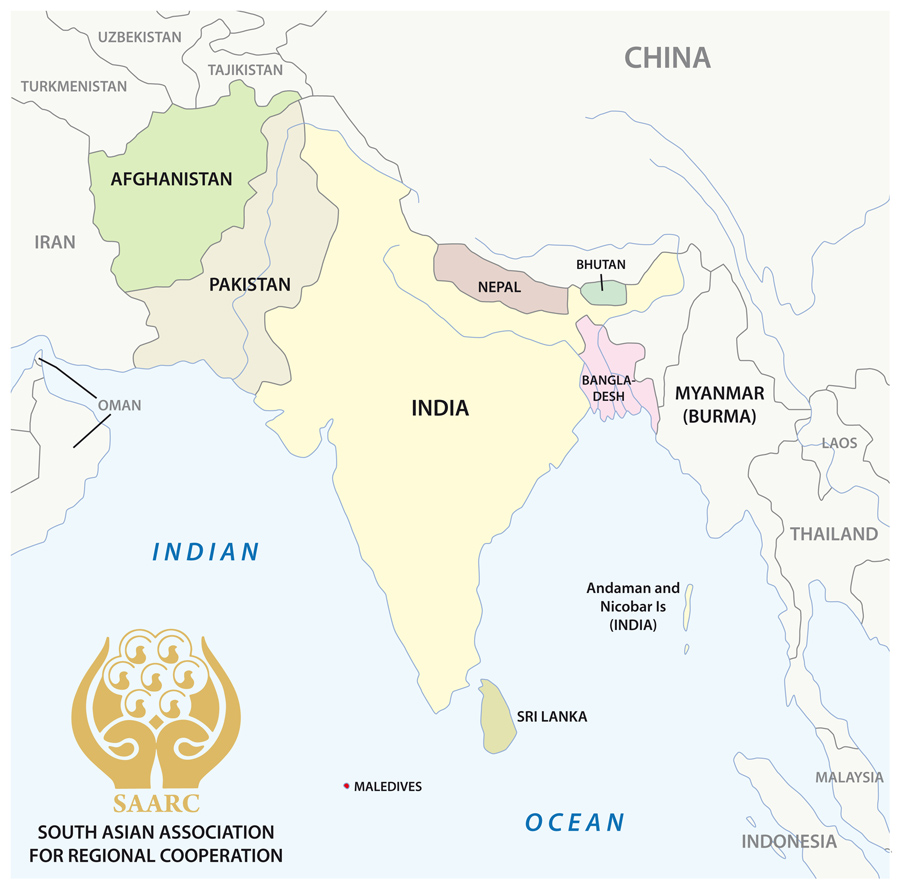
India, Pakistan, Sri Lanka, Nepal, Maldives, Bhutan specially
Afghanistan can follow the ‘Bangladesh Economic Rise Model’ in this
regard.
Despite
the global epidemic of corona, the per capita national income of Bangladesh is
positive. According to various local and international media outlets, in the
fiscal year 2019-2020, the per capita income of Bangladesh was 2064 US dollars.
And in the fiscal year 2020-2021, this income has increased to 2228 US dollars.
In the fiscal year 2018-2019, the GDP growth of Bangladesh was 8.15 percent.
And in the fiscal year 2019-2020, this growth has been 5.24 percent. According
to ADB report, in the 2020-2021 and 2021-22 fiscal year, this growth is expected
to be 6.8 percent and 7.2 percent respectively even in this Covid-19 pandemic. can utilize the approach of Bangladesh to stabilize their
GDP growth. India, Pakistan, Sri Lanka, Nepal, Maldives, Bhutan even
Afghanistan
Under
the able and dynamic leadership of development friendly Prime Minister Sheikh
Hasina, Bangladesh is on the highway of development today with the touch of her
outstanding prudence and efforts. Today, Bangladesh’s development-oriented
galloping horse is moving towards fulfilling the desired goal at a fast pace,
surpassing various countries in South Asia. So today Bangladesh is a role model
of development in the world. The leaders of South East Asian countries
includingcan India, Pakistan, Sri Lanka, Nepal, Maldives, Bhutan
even Afghanistan follow the economic model of Prime Minister of Bangladesh
how she deals with it.
In
the meantime, Bangladesh has fulfilled the various conditions of the United
Nations and in accordance with the criteria set by them, they have passed their
examinations twice in a row in 2016 and 2021 and have qualified to enter into
the list as a developing country. According to the 2020 survey, Bangladesh is
the 41st largest economy in the world. Bangladesh is one of the 11 countries in
the world today that are considered as emerging agars for future development.
According
to the Center for Economic and Business Research (CIBR), a British economic
research institute, Bangladesh will be the 34th largest economy by 2025, 26th
by 2030 and 25th by 2035 if the current economy continues to grow and develop.
While
the global economy is in the grip of the Corona epidemic, where the global
economy is stagnant, where the world’s GDP and GDP and per capita income are
stable or negative, Bangladesh’s economy is moving forward, albeit at a
relatively slow pace. And one of the strengths or factors behind this move is the
growth of its overall export earnings, the growing inflow of remittances and
the positive flow of per capita national income. India, Pakistan, Sri Lanka,
Nepal, Maldives, Bhutan even Afghanistan can follow the Bangladesh model how to
overcome from economic stagflation during the Covid-19 period.
According
to a survey by the World Bank’s Multi Donor Trust Fund the Global Knowledge
Partnership and Development, Bangladesh ranks 8th among the top ten countries
in the world in terms of remittance flows by 2020. At present, Bangladesh’s
remittance reserves are over 45 billion US dollars and Bangladesh ranks 45th in
the world in terms of remittances. According to an EPP statistic, in the first
ten months of the 2020-2021 fiscal year, Bangladesh’s export earnings were 32.07
billion dollars, an increase of 8.75 percent over the same period last year.
This
rise and progress of Bangladesh’s economy is now a surprise to the whole world.
People all over the world are now amazed at this progress of Bangladesh. State
thinkers, economists and big newspapers of different countries are now praising
Bangladesh. They are monitoring our economic development strategy. Some
countries are also considering whether this development strategy can be
followed or implemented in their countries. The above-mentioned states can
think widely in this regard.
According
to a reliable source, Nicholas Christoph, a well-known columnist for the New
York Times, recently advised US President Jo Biden to learn from Bangladesh on ways
to alleviate poverty. It is understood that the development strategy of
Bangladesh has aroused response among the policy makers and thinkers of the
United States.
Another
US daily, the Wal-Mart Journal, recently wrote that Bangladesh’s economy is now
the most ‘fast horse’ in South Asia. Mike Hard, a commentator for the
Washington Post, writes that at one time South Korea was cited as an example of
development. Now Bangladesh has occupied that place.
The
remarkable success that has been achieved in the field of economy of Bangladesh
in recent years has been beautifully and brilliantly reflected in various
reports published in various news outlets in the country and abroad. Before
presenting their 2021-2022 budget, Finance Minister Nirmala Sitharaman of Bangladesh’s
neighboring country, India, said in February that there was a lot to learn from
Bangladesh on how to increase export earnings in certain sectors. The Economic
Survey presented by him commented, ‘Bangladesh has emerged as an important
exporter in the international arena. Between 2011 and 2019, the country’s
compound annual growth rate was 7.8 percent, 0.9% higher than India and 0.4%
higher than the rest of the world.
India
has also been attracted to the growing per capita national income of the people
of Bangladesh. By the end of 2020, the IMF had forecast that Bangladesh would
surpass India in terms of per capita national income. Towards the end of 2020,
the IMF predicted that Bangladesh would surpass India in terms of per capita
national income. And that has really happened. On June 1, Blumberg headlined,
“South Asia now needs to look at the region’s stars.” Needless to
say, this star is Bangladesh. ‘
According
to a report in The Print on May 26, Bangladesh has built up deep ties with its
neighbors, from sending India’s Covid-19 epidemic relief supplies to Sri
Lanka’s economic crisis through loan assistance. India, Pakistan, Sri Lanka,
Nepal, Maldives, Bhutan even Afghanistan also can apply the ‘Bangladesh
Economic Rise Model’ to revive their economy.
Note
that Bangladesh recently agreed to exchange 200 million US dollars with Sri
Lanka. This money will go a long way in strengthening the Sri Lankan economy.
The currency exchange process will also help Colombo overcome the huge debt
crisis. Through this initiative, it is clear to the outside world that
Bangladesh is currently on a strong economic footing.
Moreover,
Bangladesh is one of the 40 countries that sent relief twice in the second wave
of coronavirus to India. On May 8, Bangladesh sent 10,000 medicines to India.
Later on, May 16, Bangladesh also sent 2,072 boxes of antiviral drugs and covid
protection materials to India.
The
rise and development of Bangladesh’s economy has also attracted the attention
of Pakistani intellectuals. According to a source in the daily, Abid Hassan, a
former adviser to the World Bank’s Pakistan program, compared the situation in
Pakistan with Bangladesh’s economic rise in an article in a leading Pakistani
daily. He said even 20 years ago, it was unthinkable that by 2020, Bangladesh’s
per capita GDP would be higher than Pakistan’s. According to him, if Pakistan
maintains its disappointing performance, it may have to seek Pakistan’s
cooperation from Bangladesh by 2030. If Bangladesh can pay 20 million US
dollars to Sri Lanka, waive the IMF’s Bangladeshi share of money from Somalia
and Sudan, help Indonesia with Covid-19 medical equipment, shelter a large
number of Rohingya refugees from Myanmar, but also financially in Pakistan. Can
help. This requires a change in Pakistan’s mentality. Bangladesh is a
humanitarian state in South Asia.
The
Canada-based International Forum for Rights and Security, a think tank,
recently published a report on Bangladesh and Pakistan. It has been shown there
that Bangladesh is ahead in all areas of the index. Many economists have called
on all countries to follow the Bangladesh model in the development of South
Asia.
So,
it is expected and confirmed that if the Bangladesh government can handle the
Covid-19 epidemic in the same way in the future as it has done in the past,
then in 2035 Bangladesh will be the 25th largest economy in the world and in
2041 it will be Bangabandhu’s developed and prosperous golden Bangladesh.
South
Asian countries such as India, Pakistan, Sri Lanka, Nepal, Maldives, Bhutan
even Afghanistan are very closed to Bangladesh geographically. The nature and
trends of socio-economic factors of Bangladesh and South Asian states in terms
of territory was likely same. Although Bangladesh is on overpopulated country.
There is also Rohingya burden on Bangladesh. Then, Bangladesh is going to be an
ideal for South Asian states including India, Pakistan, Sri Lanka, Nepal,
Maldives, Bhutan even Afghanistan. Bangladesh is
developing despite having many other problems such as Covid-19, climate change
etc. The abovementioned states can take the lesson from Bangladesh in this
regard to boost up its economy. The South Asian countries would be gainer if they
follow the Bangladeshi approach and model of economic management and system.
One day, they will also be Asian giant in terms of economic power using this
approach. Everyone will praise and appreciate economic booming of these
countries if they take Bangladesh as a model. Ultimately all South Asian
nations would benefit to recover and revive their economy from Covid-19.
Writer:
Pathik Hasan, Dhaka based NGO activist and Freelance Columnist (Particularly on
current international issue)