Exploiting The Facilities of Mattala AirPort To Enhance The Tourism Potential Of Australia and New Zealand To Sri Lanka, Using The Potential Offered By The 8Emirates Air Bus A 380 Aircraft With Five Hundred Passengers per aircraft, That Fly Daily From Melbourne ((EK 407,EK 409), Sydney (EK415,EK417,EK 413) & Brisbane (EK 431 & EK 436) and another Emirates A380 Daily From Auckland (EK449), That Fly Over Mattala, Paying , Reportedly $2000/- Per Flight To Mattala, For Emergency Landing Rights, Because Mattala Is The Only Airport In Their Flight Path To Dubai, Once Past Australasian Airspace, That Has A Runway Long Enough To Land An A 380.
I was delighted view on television a few days ago of your comprehensive visit to the Mattala airport and to hear your commitment also that of President Dissanayake, to explore potential for developing Mattala from a loss making AirPort to profitability.
As one who has lived in New Zealand for over thirty five years, and one who has travelled many times in the Emirates A 380 flights above many times, where the Emirates Flight Captain often pointed out the Mattala Airport when it was newly opened, I have for over ten years now, harboured the hope that Sri Lanka would negotiate with Emirates for at least one of these nine A380’s, take it in turn to drop off and pick up passengers from Mattala every night, at least as a pilot project possibly in the coming summer season, preceding it with adequate publicity in Aus &NZ .
This will afford immense benefits to both Sri Lanka and it’s Tourism and the breadth of clientel to Emirates so outmaneuver it’s competitors as follows:
Benefits To Sri Lanka
Australia and New Zealand offers Sri Lanka a potential tourism market of 25-30 million , most of whom are affluent as well as travel hungry, especially to warm climes, golden sand beaches. They have a great interest in the Cultural Heritage and Archeological remnants of the places they visit. Over the years, Bali, Thailand and most recently Vietnam have become popular destinations. This is largely driven by ease of access , being able to do so with one flight. However the very poor connectivity and absence of direct flights from these cities to Sri Lanka, has been a great draw back to Sri Lanka , preventing SL drawing tourists for Down Under. Poor connectivity is a very common response we receive when we try to garner clients to visit Sri Lanka.
Emirates drop-offs as suggested would be an excellent way to fill this void, with very little additional cost to both Emirates and Sri Lanka with very little disruption to current flight schedules
Mattala is situated in many ways better than KIA to cater to tourism hot spots like Yala, South Western Coast Hot Spots Like HIkkaduwa, Unawatuna, Weligam Mirissa, Tangallae etc, less than two hours from Mattala , with the excellent motor way connections, with even Colombo being only threehours away..
Mattala, also provides far better access to the eastern coast destinations like, Arugambay, Pasi Kudah . It also is less than two hours away from Ella, the very popular destination for young travellers from the west and down under
If these are exploited SL would be the next Bali, as most young travellers from down under wish for now,
More tourist arrivals will create more accommodation facilities improving the livelihoods of all inhabitants in this region.
All these benefits would be low hanging fruits achievable in a short period if the Mattala utilisation improves.
Emirates A380 landing here would also be an impetus to utilise otherAir Lines flying A380’s over Mattala like Quantas
Connections To Southern Indian Destinations, is another rout of poor connectivity from down under and if connections to Chennai or Kerala can be arranged at Mattala, the residents down under from these origins would be another a large group that would be interested in this flight. Presently they fly to Delhi and fly back south or deviate to Singapore.
Benefits To Emirates:
With little disruption to it’s schedules and little additional costs a new market would open catering to tourism from down under to Sri Lanka and also as pointed out to South India.
What Needs To Be Done Now.
Initiate discussions between Sri Lanka & Emirates to explore these possibilities with earnest and urgency
I would be happy to provide more information if required.
I am also copying this to the SL High Commissioner in Wellington, HE Prasanna Gamage who is also very keen to support this idea.
Thanking you very much and hoping for the success of this idea
Yours Sincerely.
Dr. Chula Rajapakse MNZM
Spokesperson and Fmr President of USLA ( United Sri Lanka Association)
64 274768797
cc.
Hon Vijitha Herath Minister of Foreign Affairs , Foreign Employement and Tourism herath_v@parliament.lk
Prof Ruwan Chaminda Ranasinghe Deputy Minister of Tourism
I write in response to the article of the above title that appeared in the Sunday Island on 3rd August 2025. The article appears to be a statement by the ICJ (International Committee of Jurists). The article calls on the Sri Lankan government to ensure that the exhumations at the Chemmani site be carried out according to international standards so that there are no questions over the veracity of the findings later. The article also argues that because incidents such as Chemmani raise suspicions regarding government impunity for past crimes, it is essential that international monitoring under the Human Rights Council be continued. For instance, it says: Given the long-standing failure of domestic mechanisms to deliver justice, since 2012 the UN Human Rights Council has through multiple resolutions mandated the Office of the UN High Commissioner for Human Rights (OHCHR) to monitor the situation, preserve evidence, and support accountability efforts, particularly through the Sri Lankan Accountability Project under Resolution 46/1. The ICJ considers that the ongoing exhumations at Chemmani render the need for sustained international oversight ever more urgent.” I take strong exception to the attempt above to link the Chemmani issue to an argument advocating the extension of the Sri Lanka Accountability Project, an evidence-gathering mechanism that has been operating from Geneva since 2021. The High Commissioner is scheduled to present a comprehensive report on this mechanism at the UNHCR’s upcoming 60th session. As I will explain in a moment, there are reasonable grounds to believe that the mechanism is contrary to the principles, procedures and mandate of the Human Rights Council. If true, then it is illegal. It is vital that members of the public distinguish between arguments designed to advocate for this mechanism, and arguments related to Chemmani.
There are two basic problems with the Sri Lanka Accountability Project: the first, based on the applicable law, and the second, on its possible contents. (The specific contents of the mechanism’s database is secret, but, from certain statements of the High Commissioner, it is possible to gain an idea of the type of material that this database might contain.) The legal problem with the mechanism is briefly this. Article 2(7) of the UN Charter prohibits the UN and its subsidiary organs from interfering unduly in the internal affairs of nations. Meanwhile, paragraph 4 of the UNHRC’s founding document (UN General Assembly Resolution 60/251) states, among other things, that the work of the Council shall be guided by the principles of ‘cooperation and constructive international dialogue.’ The Sri Lanka Accountability Project is a country-specific device. This means that, it is established exclusively for Sri Lanka. Nowhere in Resolution 46/1 (the resolution that establishes the mechanism) does it require the High Commissioner to submit the findings of the mechanism to the Council prior to forwarding such material to third parties in order for them to take action against Sri Lankan citizens. In a report to the Council in September 2023, the High Commissioner states that the OHCHR is in active consultations with the prosecutorial agencies of a number of countries on ways of taking such action. (See A/HRC/54/20, 6 Sep 2023). Meanwhile, the Government of Sri Lanka (GOSL) has consistently rejected the mechanism. It is not in dispute that, were the mechanism’s evidence to be submitted to the UNHRC, the GOSL, along with the accused persons, would have an opportunity to respond to such evidence before the Council. This, obviously, would be entirely consistent with the injunction that the work of the Council be guided by the principles of ‘cooperation and constructive international dialogue.’ In these circumstances, prima facie, the mechanism is contrary to the principles set out in Article 2(7) of the UN Charter along with paragraph 4 of the UNHRC’s charter mentioned above. The problem with the possible contents of the mechanism is briefly this. In the report to the Council in September 2023, the High Commissioner states: The team continues to prioritize the establishment and development of a repository of information and evidence, to maximize OHCHR’s long-term contribution to supporting accountability initiatives. The repository was originally populated with data from the earlier OHCHR investigation on Sri Lanka, together with other material collected over the years by OHCHR. It has been supplemented by material from nine key non-governmental organizations and academic sources. The project team is engaging with other stakeholders to seek to bolster the repository’s holdings, subject to appropriate terms of access.” (A/HRC/54/20, para 50, 6 Sep 2023) The above raises two important questions: first, does the mechanism’s repository contain the databases of Sri Lanka’s domestic mechanisms (ie. The LLRC and Paranagama Commissions)? Second, what are the identities of the ‘nine key non-governmental organisations and academic sources’ referred to by the High Commissioner above? If the Sri Lanka Accountability Project’s repository does not contain the databases of the domestic mechanisms, then the mechanism has been deprived of potentially exculpatory evidence that the domestic mechanisms might possess. If true, this would compromise the work of prosecutorial agencies who may be using the mechanism’s database in order to frame charges against Sri Lankan citizens. Meanwhile, in regard to the nine NGOs and academic sources that the High Commissioner mentions, if even one of them is funded or owned by Sri Lanka’s critics, it potentially taints the entire database. The Sri Lanka Accountability Project must stand or fall depending on whether its supporters can address concerns such as the above, not on whether the Chemmani site in being investigated properly. A word, however, about Chemmani. The government is currently investigating the suspected gravesite. There is absolutely no evidence that these investigations are compromised in any way. In this regard, it is important to recall that on two previous occasions, both in 2013, there were claims of mass graves being found. The first was in Mannar, and the second, in Matale. Extensive investigations were conducted on both sites. The human remains discovered at the Mannar site were carbon-dated to the Portuguese period (see ‘Bodies found in Mannar mass grave date back to the 1400s,’ www.asianews.it, 3rd Sep 2019). The remains found in Matale were dated to ‘an era prior to 1950’ (see ‘Skeletal Remains have no connection to 1989-1990 disappearances,’ www.sundaytimes.lk, 10th May 2015.) Therefore, it is possible that there is an innocuous explanation for the Chemmani site as well. On the other hand, it is possible that the investigators would reach far more disturbing conclusions. The reasonable thing to do is to keep an open mind and let the investigators complete their work. It is not in dispute that the UNHRC and the OHCHR have a duty to protect and advance human rights worldwide. They must, however, do this within the four corners of the law. One cannot advocate for the advancement of human rights while at the same time undermining the fundamental principles of international law. It is in everyone’s interest to ensure that the UN remain viable and respected, rather than constantly discredited and suspected of double-standards and bias. The Sri Lanka Accountability Project is coming up for a reckoning in September. It is vital that, members of the public be clear on the issues involved, and hold the UNHRC as well as the OHCHR accountable if they have exceeded their powers in regard to this mechanism.
Dharshan Weerasekera is the author of, A Factual Appraisal of the OISL Report: A Rebuttal to the Allegations Against the Armed Forces, (Sarasavi, 2020)
A call for Justice – Is it fair for ICC to use DRS without consent, make money from it and then deny both recognition and compensation to the inventor of DRS?
Senaka Weeraratna
A call for justice from the ICC If cricket truly values justice, the ICC must acknowledge Senaka Weeraratna as the creator of the DRS. Recognizing him is not just about giving him credit; it is about upholding the principles of fairness and integrity that cricket unequivocally stands for.”
Dr. Michael Roberts
Cricket Historian
………………………………………
The following is an AI assisted Question and Answer
AI Overview Question Is it fair for ICC to use DRS without consent, make money from it and then deny both recognition and compensation to the inventor of DRS?
Answer It’s a complex issue with strong arguments on both sides. While the ICC uses and profits from the Decision Review System (DRS), which is claimed to be a Sri Lankan invention, there are legal and practical hurdles to establishing intellectual property rights and obtaining compensation for the innovation. Whether it’s “fair” depends on one’s perspective and interpretation of intellectual property and sportsmanship.
Arguments for Compensation:
Intellectual Property Rights: Several news sources and blogs suggest that the concept of the DRS, particularly the “Player Referral” aspect, originated with Senaka Weeraratna in Sri Lanka. If this claim can be substantiated, it raises questions about whether the ICC is infringing on his intellectual property rights.
Fair Play and Ethics: Many argue that it’s a matter of fairness and ethics for the ICC to acknowledge and compensate the inventor of a system that is now integral to the game and generates revenue.
Moral Obligation: Even if formal legal claims are difficult to pursue, some believe the ICC has a moral obligation to recognize and reward the individual who contributed the original idea.
Arguments Against Compensation:
Lack of Formal Patent or Copyright:
The ICC argues that they don’t have any copyright over the DRS, and it’s unclear if Weeraratna ever formally registered a patent or copyright for his idea.
System Evolution: The DRS has evolved significantly since its initial concept, with various technologies and refinements added over time. It’s difficult to attribute the final product solely to one individual.
Practical Difficulties: Establishing a claim and negotiating compensation with the ICC, especially for an idea rather than a fully developed product, can be challenging and costly. “Fair Play” in Cricket: Some argue that cricket is a game, and while fair play is important, the focus should be on the contest and entertainment rather than strict adherence to intellectual property rights in this context, according to an article on The Full Toss.
Conclusion: The situation is complex, and there is no easy answer to whether the ICC’s actions are fair. While there are strong arguments for acknowledging and compensating the inventor, the practical and legal hurdles are significant. Ultimately, the decision rests on the ICC’s willingness to recognize the contribution of Senaka Weeraratna and potentially negotiate some form of recognition or compensation.
………………………………………………………………………………………………..
DRS – Monumental Contribution to Cricket
The following is an AI assisted response
The Decision Review System (DRS) in cricket is widely considered a monumental contribution to the sport, and Sri Lanka, specifically a Sri Lankan lawyer named Senaka Weeraratna, is credited with pioneering the concept.
While the ICC officially adopted DRS, Weeraratna’s early advocacy and proposal laid the groundwork for its implementation.
Here’s why it’s considered a monumental contribution:
Reduced Umpiring Errors:
DRS allows for review of close or contentious decisions, significantly reducing the impact of human error on match outcomes.
Increased Accuracy:
Studies have shown a marked increase in the accuracy of umpiring decisions with the use of DRS, leading to fairer play.
Enhanced Fan Engagement:
DRS provides a clear and transparent process for reviewing decisions, allowing fans to understand the reasoning behind calls, especially when shown on slow-motion replays.
Global Adoption:
DRS is now an integral part of international cricket, used in Test matches and ODIs, demonstrating its widespread acceptance and value.
Sri Lanka’s Legacy: Despite the ICC’s official adoption, Weeraratna’s pioneering work in proposing and advocating for DRS has cemented Sri Lanka’s place in cricket history as the origin of this transformative system.
The DRS inventor Senaka Weeraratna deserves a Plaque in his honour.
Although Weeraratna has faced challenges in receiving full recognition for his contribution, his efforts have significantly shaped the modern game of cricket.
The Pathfinder Foundation has appointed two eminent individuals as Distinguished Fellows, who will assist the Foundation in fulfilling its task as an independent, non-partisan, apolitical institution. Areas of interest for the Foundation include strategic studies, geopolitics, economic reform, and engagements related to ocean affairs.
The latest addition is Dr. R. H. S. Samaratunga, a distinguished economist who served as Secretary to the Ministry of Finance and Secretary to the Treasury. Previously, he held positions as Secretary to the Ministries of Environment and Petroleum Industries.
Earlier this year, the Foundation had the honour of engaging Admiral Prof. Jayanath Colombage as a Distinguished Fellow. He joined the Pathfinder Foundation as a Director after retiring as Commander of the Sri Lanka Navy. Subsequently, he served as Additional Secretary to the President and Secretary of the Ministry of Foreign Affairs before being appointed as the Sri Lankan Ambassador to Indonesia.
Desamanya Dr. Indrajit Coomaraswamy is the longest-serving Distinguished Fellow at the Pathfinder Foundation. Dr. Coomaraswamy is a renowned economist who has previously held several senior positions, including Director at the Commonwealth Secretariat. He served as the Deputy Chairman of the Pathfinder Foundation and later as Governor of the Central Bank of Sri Lanka.
I agree with Robyn Urback of the Globe and Mail ( July 31, 2025) that Hon. Gary Anandasangaree, the Minister of Public Safety should recuse himself on public safety matters involving certain designated terrorist groups in Canada as he is incapable of fulfilling the full scope of his duties,
He is unfit for his role as the Minister of Public Safety, (who is a Sri Lankan-Canadian Tamil) due to his past advocacy for a Sri Lankan-Tamil man who was barred entry to Canada due to what officials deemed to be his “protracted involvement” with the Tamil Tigers, When he was parliamentary secretary to the Minister of Justice. Mr. Anandasangaree wrote two letters urging Canada Border Services Agency (CBSA), which now falls under his ministerial purview, to over turn its decision.
I note that Prime Minister Carney backs his Public Safety Minister over letters supporting Sri Lakan’s immigration case. That was unfortunate, as my support for him has Prime minister has dropped several notches, and he won’t recover from this stupidity easily in my eyes.
In My eyes, the bottomline is that Hon.Gary Anandasangaree must resign as Public Safety Minister.
Dr. Sunil J. Wimalawansa (Professor of Medicine, Endocrinology, & Human Nutrition)
Summary: This is the story of a nation that traded its strategic resources and large potential for global prosperity for a misguided, large-scale relocation and small-scale agrarian fantasy. Political greed led to rural colonization, environmental ruin, and the rise of predatory cartels. Fragmented land, debt cycles, and ecological collapse replaced innovation and trade. What could have mirrored Singapore became a cautionary tale of manufactured economic self-sabotage. Reversing this trajectory demands urban resettlement, development of infrastructure and utilities, power grid, dismantling corrupt monopolies (especially rural), and holding leaders accountable. Until then, the myth of development” will continue masking a deliberate assault on prosperity, ecosystems, environment, and the future. Sri Lanka was once poised to become the Singapore of the Indian Ocean. It has excellent resources, including excellent weather, water, climate, and a trainable workforce, and is devoid of major natural disasters. With strategic location, geographic advantages, world-class harbors, a profitable national airline (then), and vast coastal and deep-sea territories for fishing and energy generation, the nation had every advantage. Its natural assets—pristine beaches, lush rainforests, water heritage, diverse climates, and rich history and cultural heritage—offered immense potential for high-end tourism, medical travel, and hospitality-driven industries.
Introduction
Once poised to become the Singapore of the Indian Ocean” under the Colombo Plan, Sri Lanka held every conceivable advantage: a strategic location astride vital shipping lanes; deep-water harbors and international airports with the potential to be regional hubs; a profitable, state-owned national airline; vast coastal access and exclusive deep-sea territories; and unparalleled potential for high-end tourism—blending pristine beaches, lush mountains, rainforests, rich cultural heritage, and world-renowned hospitality.
The island also possessed fertile ground for knowledge-based growth. With minor reforms, Sri Lankan universities could have opened their doors to fee-paying international students, generating foreign exchange while fostering cultural diversity, intellectual exchange, and long-term business and research collaborations. Add to this its ancient civilization, abundant inland water resources for agriculture and renewable energy, a literate English-speaking workforce, and the potential to be a thriving regional financial hub—an idea that, ironically, Singapore borrowed from Sri Lanka’s own Colombo Plan blueprint seven decades ago.
However, instead of embracing urban dynamism, industrial expansion, and value-added manufacturing, Sri Lanka’s leaders chose a different course: rural colonization of previously uninhabited jungles. Families—mainly from the south—were relocated to the North Central and Eastern dry zones without the essential infrastructure to sustain life: safe drinking water, electricity, sanitation, education, or healthcare.
A Case Study from the Region to Illustrate Systemic Neglect―Chronic Kidney Disease of Uncertain Origin:
The emergence of chronic kidney disease of uncertain origin (CKDu) in Sri Lanka is not a medical mystery—it is a consequence of decades of political failure and environmental mismanagement. Poorly planned settlements in the dry zone, populated by subsistence farmers feeding urban elites while living in deprivation, became breeding grounds for disease and despair. These communities endured not only poverty and malnutrition but also the trauma of a thirty-year civil war that claimed thousands of civilian lives. Despite repeated warnings, successive governments failed to implement basic public health interventions, allowing CKDu to spread unchecked (click the links below).
[Wimalawansa, SJ, Dissanayake, CB, Factors affecting the environmentally induced, chronic kidney disease of unknown aetiology in dry zonal regions in tropical countries—novel findings. Environments, 7(2), 1-26, 2019; DOI: 10.3390/environments7010002 https://www.mdpi.com/2076-3298/7/1/2
Wimalawansa, SJ, Dissanayake, CB. Nanocrystal-induced chronic tubular-nephropathy in tropical countries: diagnosis, mitigation, and eradication. European Journal of Medical Research, 28, 221 (2023). DOI: 10.1186/s40001-023-01162-y https://link.springer.com/content/pdf/10.1186/s40001-023-01162-y.pdf ]
The crisis escalated in the 1990s with the introduction of thousands of tube wells and agro-wells, which drew groundwater contaminated with calcium salts and fluoride ions—compounds known to crystallize in the kidneys and cause irreversible renal damage. By the time CKDu reaches Stage IIIB, recovery is impossible. Nevertheless, early-stage intervention with clean water could have reversed the damage and saved lives. This voiceless population is subjected to major socio-economic problems in the entire region, but no government has taken tangible steps to mitigate these. Even today, less than 40% of the affected population has access to potable water. Families have lost their livelihoods, children have abandoned education, and many have fled south to protect their children from the same fate.
Instead of addressing the root cause—access to clean water—governments have invested in renal hospitals and dialysis units, a reactive and costly approach that could have been avoided entirely. These facilities are monuments to the failure of the lack of preventative efforts, not progress. They failed to act to prevent this calamity via public education and the provision of potable water to the regions. Instead, it continues to focus on having renal dialysis units and building a renal hospital in Polonnaruwa. Prevention is the cure, not treatment. Meanwhile, regional intermediaries exploit farmers, and the state refuses to regulate market abuse or purchase rice directly, paralyzed by conflicts of interest. This is not a tale of oversight—it is a calculated abandonment of national potential. CKDu stands as a tragic emblem of how political expediency and economic sabotage can devastate communities and squander generations of promise.
The Agricultural and Agrochemical Myth: Political Theater and Its Lasting Damage
Migration of large number of families with false promises without providing basic necessities to previously uninhabited regions that led to thousands of premature deaths and provided dark future, can be considered as a crime against humanity. In these Mahaweli development areas, irrigated water alone could not have transformed isolated settlements into thriving towns. With eight virtually rainless months each year in CKDu-affeced regions, thousands of relocated families lived in fragile environments without access to clean water, relying on subsistence farming and daily wages. These hardships perpetuated poverty and poor health, resulting in many premature deaths. Malaria was once rampant, but other public health measures were almost nonexistent. Children’s education stalled, and economic mobility was all but impossible.
The injustice deepened with the rise of CKDu, a scourge that has devastated entire family clusters since the mid-1990s. The disease—linked to prolonged consumption of groundwater contaminated with calcium salts, fluoride, and sometimes pesticides or heavy metals—spread rapidly after the proliferation of tube wells and agro-wells, which over-extracted and concentrated these toxins. Without intervention, Stage IIIB renal failure becomes irreversible, and death is inevitable. However, consumption of clean water halts and even reverses early kidney damage; yet, only about one-third of households in the dry zones have access to safely managed drinking water sources. Although 94% of households have basic sanitation, just 3% are connected to proper piped sewerage systems—a gap that requires attention.
The injustice deepened with the rise of chronic kidney disease of uncertain origin (CKDu), a scourge that has devastated entire family clusters since the mid-1990s. The disease—linked to prolonged consumption of groundwater contaminated with calcium salts and fluoride—spread rapidly after the proliferation of tube wells and agro-wells, which over-extracted and concentrated these toxins. Without intervention, Stage IIIB renal failure becomes irreversible, and death is inevitable. While clean water can halt and even reverse early damage, less than 40% of residents have access to it even after three decades. In addition, not having a national water plan, notably, about 95% of households still do not have sanitary toilets/disposal system.
With human encroachment of the jungle, wildlife habitats have reduced. Human‒elephant confrontation and associated deaths, escalated. Water tables collapsed needing inhabitants to dig deep tube wells to extract naturally contaminated ground water. The habit of consuming less water due to hardness caused chronic dehydration.
The consequences have been catastrophic: loss of breadwinners, deepening poverty, malnutrition, school dropouts, and whole communities sliding into despair. Local produce from these hardship-hit regions is routinely exploited by unscrupulous middlemen, while the government—citing conflicts of interest—refuses to purchase directly from farmers. This is more than a story of squandered opportunities. It is a record of deliberate neglect and economic sabotage—one that has denied generations their rightful share of Sri Lanka’s promise.
The Missed Urban Miracle: What Could Have Been
Had officials adopted a broader vision, shown empathy, and conducted thorough ground-level assessments—including water quality testing, drainage planning, soil studies, and health and safety evaluations—before relocating families, the outcomes could have been far more positive. With its prime geographic position on major trade routes, the nation had the potential to develop a modern, service-driven economy—importing affordable food while exporting innovation, advanced services, and high-value products.
Strategic investment in infrastructure, healthcare, education, and research could have attracted global capital, transforming these regions into hubs of trade, finance, technology, and tourism, like Singapore or Hong Kong. This approach could have lifted millions out of poverty through meaningful employment and entrepreneurship. Instead, leaders clung to outdated, subsistence-based policies driven by short-term political gain, neglecting opportunities to modernize and prosper. The result has been decades of lost potential, entrenched poverty, poor health, and immense economic loss—an enduring cost of choosing subsistence over strategy. Instead, successive governments chose subsistence over strategy.
A Blueprint for Recovery: What Must Be Done
Reversing this decades-long trajectory of stagnation and exploitation requires more than superficial policy adjustments—it calls for a complete transformation of the national development model. Urban resettlement must be pursued with dignity, ensuring that relocated rural populations gain access to quality education, modern healthcare, and meaningful employment opportunities. Simultaneously, the protection of fragile ecosystems must be prioritized by revoking licenses for industrial agriculture in ecologically sensitive areas, preventing further environmental degradation and safeguarding natural resources for future generations.
This overhaul must also address the entrenched structures of exploitation that have fueled inequality. Assets accumulated through systemic abuse and corruption should be confiscated and redirected toward public welfare and national development. Equally critical is the demand for political accountability—investigating, exposing, and prosecuting those responsible for decades of economic mismanagement. Only by dismantling these corrupt foundations and replacing them with transparent, equitable governance can the nation break free from its cycle of underdevelopment and build a sustainable, inclusive future. In Sri Lanka, to date, there has been no political or economic accountability for any of the failed large projects. An impartial, independent commission must investigate and hold leaders responsible for decades of economic mismanagement.
Call It What It Is: The Silent War on Economic Stability
Framing the Crisis: Economic decline is rarely accidental: not them, not now. What we are witnessing is not a natural downturn or an unfortunate misstep—it’s the result of deliberate (false)choices, entrenched policies, and systemic neglect, obtaining commission-driven contracts and loans. From underfunded healthcare systems to exploitative labor structures, an inferior education system with little potential for growth, and widening wealth gaps, the architecture of economic collapse has been carefully laid brick by brick. To call it anything less than economic assassination is to ignore the precision with which livelihoods are dismantled, and futures are stolen.
The Call to Action: This should have been a wake-up call some time ago. We must confront the forces that have normalized inequality and institutionalized suffering. Calling the crisis economic assassination” shifts the focus from observation and sympathy to resistance and compassion. It demands accountability, reform, and a collective reimagining of systems that prioritize human dignity over profit. The time for euphemisms is over; clarity is the first step toward justice.
A forest fire that broke out today (08 Aug) in the Raththanagolla – Imbulpe area of Balangoda prompted an immediate coordinated response under the direction of the Ministry of Defence.
Acting swiftly, the Sri Lanka Air Force deployed a Bell 412 helicopter to conduct Bumbi bucket operations to assist in fire suppression efforts from the air. The aerial firefighting operation was launched in close coordination with the Disaster Management Centre (DMC), aiming to prevent further spread and damage to the forest cover.
The timely intervention underscores the Ministry’s ongoing commitment to rapid disaster response and environmental protection. Further operations will continue as necessary in collaboration with local authorities and emergency services.
Sri Lanka maintains a list of terrorist organizations. Various LTTE and ISIS aligned groups and individuals are listed in them. However, they have a much larger support base – both in Sri Lanka and outside the island. These groups are loosely called the LTTE Diaspora and the ISIS Diaspora. They have the means to buy various material for their terror projects in Sri Lanka.
Since 2020 they have been sending commercially available drones to their relatives living in Sri Lanka. There are no import or export restrictions on them and it is perfectly legal at both ends. However, these commercially available drones can be used for spying. Anyone can use them to spy on sensitive targets including military bases, airports, etc. Coupled with maps, either manually or through an app, this is a lethal combination that can put national security at risk.
Though these drones don’t carry explosives, it is quite easy to convert a commercially available drone into an explosive packed suicide drone if explosives can be sourced. Both LTTE and ISIS Diaspora groups have proven time and again they can source explosives of various types. Both terrorist groups have carried out terror attacks in Sri Lanka until 2019.
Drone warfare is the most promising warfare development since the war in Ukraine. Sri Lanka must seriously look at restricting the importation of drones, particularly from LTTE Diaspora and ISIS Diaspora. Anti-drone weapons systems should also be purchased.
In addition to drones, LTTE Diaspora and ISIS Diaspora also send laptops, computer memory storage and back-up devices, etc. These are utilized to indoctrinate local youth in Sri Lanka. Unfortunately, this has been happening for over a decade or more but nothing has been done to stop it. They often are classified as donations by the offending party. There is no technological expertise at Sri Lanka Customs to filter out genuine donations from potentially harmful donations.
Sri Lanka should not wait till the next 4/21 to neutralize this threat posed by the LTTE Diaspora and ISIS Diaspora through their relatives living in the island. Proactive action is needed for the safety of locals and visitors, to ensure national security and to eliminate likely and potential terror cells that have been left untouched and not destroyed for the past 6 to 16 years.
NDB Bank is proud to announce its latest partnership with International Scholar, one of Sri Lanka’s most reputed education consultancy firms, with the aim of making overseas education more financially accessible and stress-free for Sri Lankan students and their families. The Memorandum of Understanding (MOU) was officially signed on July 20, 2025, at the Bank’s Head Office in Colombo.
Signing the MOU on behalf of NDB Bank were Mr. Sanjaya Perera, Senior Vice President – Personal Banking & Customer Experience, and Mr. Zeyan Hameed, Vice President – Retail Banking. Representing International Scholar were Mr. Keerthi Jayasuriya, Chief Executive Officer, and Mrs. Ruckmalie Jayasuriya, Director and Chief Counsellor.
With a distinguished track record spanning decades, International Scholar has been a pioneer in international student placements, supporting thousands of Sri Lankan students in securing university admissions across the UK, Canada, Australia, Europe, and New Zealand. Their expertise in academic counselling, visa assistance, and post-arrival support has made them a preferred partner for students and parents navigating the complexities of studying abroad.
As part of this collaboration, NDB Bank will provide specially curated financial solutions including education loans, student file facilities, and foreign remittance services—offering families a seamless and dependable financial foundation as they plan their global academic journeys.
Speaking on the partnership, Mr. Sanjaya Perera remarked, We are delighted to partner with International Scholar, whose values of commitment and excellence closely mirror those of NDB. By combining their advisory expertise with our financial support, we hope to create a comprehensive platform that enables Sri Lankan youth to step confidently into their international academic pursuits.”
This partnership is another step in NDB’s journey to be more than a bank, an enabler of life’s most defining milestones. By supporting educational aspirations through robust financial solutions, NDB Bank reaffirms its dedication to uplifting the nation, one future at a time.
NDB Bank is the fourth-largest listed commercial bank in Sri Lanka. NDB was named Sri Lanka’s Best Bank for Corporates at Euromoney Awards for Excellence 2024 and was awarded Domestic Retail Bank of the Year – Sri Lanka and Sri Lanka Domestic Project Finance Bank of the Year by Asian Banking and Finance Magazine (Singapore) Awards 2024. NDB is the parent company of the NDB Group, comprising capital market subsidiary companies, together forming a unique banking and capital market services group. The Bank is committed to empowering the nation and its people through meaningful financial and advisory services powered by digital banking solutions.
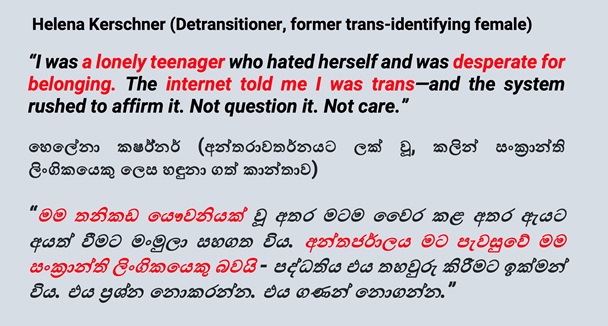
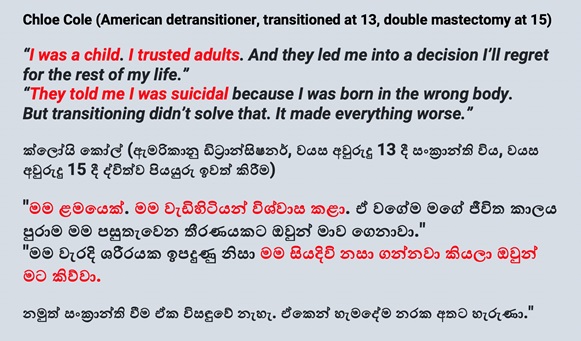
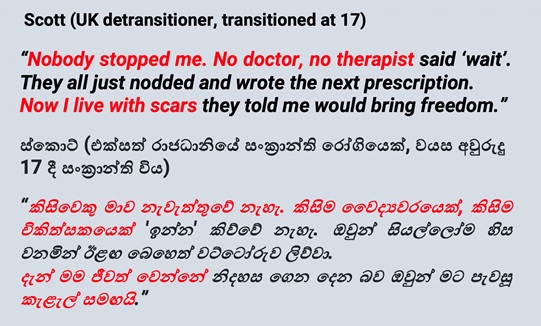
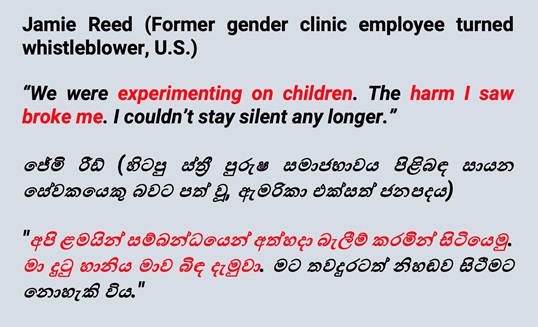
As Western nations begin reversing aggressive LGBTQIA+ policies—especially those targeting children and youth—evidence reveals a wave of institutional regret, legal turmoil, and personal trauma. Countries that once pioneered youth gender transitions are now shutting down clinics, halting puberty blockers, and urging psychotherapy over irreversible treatments. Former advocates, medical experts, and detransitioners themselves are exposing the emotional, physical, and social harm caused by fast-tracked, ideology-driven policies.
Sri Lanka must take serious note.
What is being pushed as progress” or inclusivity” has shown devastating results abroad. Rather than blindly importing failed models, we must protect our youth, uphold cultural and religious values, and resist foreign pressure. Sri Lanka must avoid repeating irreversible mistakes committed by the West.
Children’s National Hospital (Washington, D.C.)announced it will stop all prescription-based transgender care for minors by August 2025, opting instead to only offer mental health and supportive services, due to rising legal risks and federal scrutiny.
Similar transitions are happening in states like Connecticut and California, where lawsuits and federal subpoenas have constrained gender-care providers, forcing closures despite prior state protections.
Global Policy Pullbacks across Europe, Australia, and the U.S.
Italyhas proposed new legislation restricting puberty blockers and hormones for minors, mandating oversight by ethics committees and medical registries. Young patients would only receive treatment under tightly controlled protocols.
Sweden, Finland, the UK, and Australiahave reversed earlier gender-affirming care policies, citing insufficient scientific evidence” and recommending a shift to psychotherapy and exploratory therapies.”
Personal Regret, Detransition Traumas, and Social Fallout
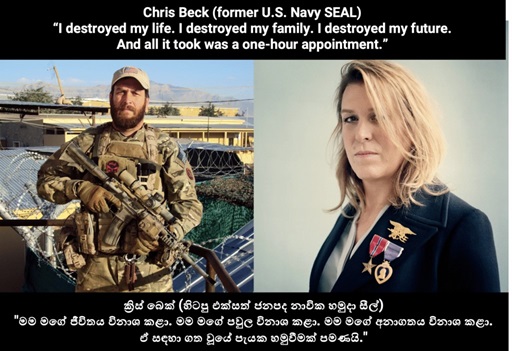
In a widely shared Reddit AMA, a former U.S. Navy SEAL named Chris Beckstated he lived in hell” for nearly a decade after transitioning and later detransitioned. He now warns young people—particularly those under 25—against rushing into transition.
More candid stories from Reddit users highlight emotional breakdowns, isolation, and identity confusion among individuals who detransitioned after years of medical intervention.
In a moving account, one individual expressed that the years of trying to live as the wrong gender led to profound mental health struggles and suicidal thoughts before finally re-transitioning to live authentically.
Evidence & Institutional Alarm over Inadequate Protocols
According to a Medscape report, mental health experts describe current youth gender-care protocols as akin to an unregulated experiment,” often lacking rigorous evaluation or long-term follow-up.
A study group led by organizations like Kairos in Chileissued warnings about ROGD (Rapid Onset Gender Dysphoria), reflecting parental concern over ideological medicalization and insufficient consent processes.
The UK’s Cass Review (2024)concluded that hormone-blocking treatments lack sufficient evidence and recommended prioritizing therapy and mental health care.
Several Western countries and U.S. states that once pioneered youth gender-transition services are now shutting them down or severely restricting access. These include public hospitals and private clinics that no longer provide puberty blockers, hormone therapy, or surgeries for minors. This reversal stems from mounting legal pressure, growing public concern, and professional medical re-evaluation of the evidence supporting such treatments.
A significant number of young people who underwent early gender transition are now reporting psychological distress, identity confusion, and feelings of betrayal. Detransitioners—those who attempt to reverse their medical transitions—speak openly about depression, self-harm, suicidal thoughts, and being isolated from peers and family. These mental health outcomes are now prompting a re-examination of whether early transition actually helps—or harms—vulnerable youth.
Gender clinics across the U.S., Canada, and Europe are increasingly under investigation. They face lawsuits from patients and parents who allege they were misled or rushed into irreversible decisions. Some institutions have lost funding, faced public scandal, or shut down entirely due to failure to uphold ethical standards, informed consent, and long-term patient follow-up.
Governments that once aggressively pushed affirmative” gender policies are now retreating toward more cautious approaches. Countries like Sweden, Finland, and the UK are now recommending psychotherapy as the first-line treatment for gender dysphoria in youth, instead of medical intervention. This shows a dramatic policy shift based on updated reviews of scientific evidence and ethical concerns.
Several medical authorities, child health associations, and religious institutions have publicly acknowledged that their initial support for fast-tracked gender transitions was premature. Some now admit that political and activist pressure overtook clinical judgment, leading to harm rather than help. These public acknowledgments reflect a growing global movement to re-balance LGBTQIA+ rights with long-term wellbeing, especially for children.
Why This Matters to Sri Lanka – මෙය ශ්රී ලංකාවට වැදගත් වන්නේ ඇයි?
Risk of rapid adoption without safeguards: Sri Lanka could face long-term consequences if it implements medical or legal frameworks before proper study and public consensus.
Cultural integrity: The Western model relies on identity-based rights that may conflict with collective family and community-oriented Sri Lankan values.
Lesson on evidence: Countries are steadily moving from ideology-driven practices to data-driven, cautious models emphasizing therapy over irreversible medical interventions.
Create public awareness campaigns about Western de-transitions and the harm LGBTQIA promotion has done to youth. Sri Lankan culture, morality, and youth must be protected.
LGBTQIA surge is engineered, not organic — Victims are rising, not thriving
The sharp rise in LGBTQIA identification across the world is not a natural evolution of identity — it is the result of deliberate indoctrination through social media, biased education systems, activist-driven curricula, and peer contagion. This trend, especially among youth, is being falsely framed as liberation,” when in reality, it often leads to confusion, regret, medical harm, and emotional trauma.
Victims of this agenda are real — young girls pushed into irreversible hormone treatments, boys socially pressured into rejecting their bodies, and vulnerable youth isolated from families under the illusion of authenticity.”
Many nowdetransition in silence, abandoned by the very systems that rushed them into life-altering choices.
Mental health falloutis on the rise: anxiety, depression, and suicidality plague those sold a false promise of happiness through identity change.
Medical systemsthat once promoted affirmative care” are now pulling back due to lawsuits, scientific reevaluation, and irreversible harm to minors.
This is not inclusion — it is exploitation.
Let Sri Lanka learn from the West’s mistakes before we walk the same path:
Protect children from gender ideology in schools.
Ban foreign-funded activist interference in national policy.
Restore family and cultural values that have preserved harmony for generations.
We must speak not against individuals, but against a global machine that commodifies identity for power, politics, and profit — leaving behind broken lives and silent victims.
Bangladesh is going for national elections by mid-February 2026, as declared by its caretaker government head Dr Muhammad Yunus on Tuesday evening while addressing the nation on live television. Meanwhile, the trial of ousted Prime Minister Sheikh Hasina, who is taking a temporary shelter in India, began and seemingly her party Awami League will get an opportunity to participate in the forthcoming polls (as its party activities were banned in the south Asian nation). One can remember, the daughter of Bangabandhu Sheikh Mujibur Rahman left Dhaka on 5 August 2024 after a mass uprising across the Muslim dominated country of 170 million people. The lone Bangladeshi Nobel laureate Professor Yunus, who earned global fame for micro-finance and social business initiatives, was appointed as the head of interim government in Dhaka on 8 August last year. With many agendas in front of the interim administration, the primary objective was to pave the way for Jatiya Sansad polls conducted in a free, fair and comprehensive manner.
Prof Yunus began his speech by reminding how 5 August last year witnessed the culmination of July People’s Uprising Day that helped the ‘beloved homeland’ to escape from a long period of fascist rule. While narrating in his native Bengali language, the soft-spoken gentleman stated how a court verdict (in June 2024) reinstated the quota system in government jobs, which angered the students and young people of Bangladesh. An erupted outrage turned into a wildfire, fueled by the tyranny, repression, indiscriminate shootings, and brutal killings carried out by the regime. But in the face of this state-sponsored massacre, carried out at the command of a despotic ruler, the students, workers, and masses of this nation stood firm and fearless. At the forefront of this movement, the indomitable Bangladeshi women selflessly gave their lives to free the country from tyranny, he added.
On this day, I solemnly remember the martyrs of July, the shining sons and daughters of our nation. To those who were injured, permanently disabled, or lost their vision in July, I extend my deepest respect and gratitude on behalf of the entire nation. Over the past year, we have passed through many crises and possibilities. Several incidents and tragedies have deeply saddened us. Most recently, the heartbreaking plane crash at Milestone College claimed the lives of many people, including our innocent children. Many were injured in the resulting fire. This tragedy has left the entire nation in shock. I pray for the peace of the souls who lost their lives in this incident and wish a swift recovery to those still under medical care. Following this horrific accident, doctors and nurses from countries including Singapore, China, and India have worked tirelessly to help the injured. I extend my sincere gratitude to them,” said Prof Yunus.
Claiming that since the July Uprising, Bangladesh has come a long way. Peace and order have returned to national life, the economy has regained momentum, and many crises have been resolved. A year ago while the interim government took over, the country aced an devastated economy following sixteen years of continuous destruction and plundering. But within a year, the country has made progress beyond what anyone could have imagined, asserted the economist of international repute, adding the economy has turned around and now it’s time to move forward. The caretaker government now plans to hand over the reins of governance to an elected one. However, Prof Yunus reiterated, before the election, several essential tasks need to be completed.
We had three primary responsibilities namely Reform, Justice, and Election. The students, workers, and people who led the July Uprising wrote their demands and expectations on walls across the country. A key focus of those demands was the democratic reform of the state system. In line with that goal, we formed several reform commissions. Among the recommendations submitted by the main commissions, we have already implemented many short-term and urgently needed reforms. These reforms will bring dynamism to the economic sector, the justice system, and public administration; transparency and accountability will increase significantly; corruption, irregularities, and harassment will be reduced. To implement long-term reforms, we established the National Consensus Commission. Over 30 political parties and alliances participated enthusiastically and shared their views,” he explained.
Prof Yunus was very clear while stating that the countrymen must ensure that no future government can ever become fascist again. The state must be restructured in such a way that any sign of fascism, wherever it appears, can be immediately eradicated right there, so the people do not need to wait 16 years (read Hasina’s rule in Dhaka from 2008 till her departure last year) and never again lose so many lives. Bangladesh must never again require another mass uprising. Mentioning about the trial of crimes against humanity committed in July & August 2024 has been progressing firmly as the formal hearing phase has also begun. Those involved in the horrific massacres of history will be brought to justice on the soil of this country, declared Prof Yunus, adding that the trial process and its outcomes would be revealed to the public step by step and the entire process of justice is being kept transparent.
Please pray that the election (held before the month of Ramadan) is held peacefully and smoothly, and that every citizen can contribute to building a ‘New Bangladesh’ successfully. On behalf of the government, we will provide all possible support and cooperation to ensure that the election is free, fair, peaceful, and festive. Let this election be remembered in the country’s history for its celebratory spirit, peaceful conduct, voter turnout, harmony, and sincerity,” affirmed Prof Yunus, adding that the women voters across the country can vote freely and enthusiastically, where the responsible authorities will make all necessary arrangements to ensure a wave of women voters at the polling centers.
He did not forget to remind tyrannies of the Hasina regime, when the citizens were deprived of their right to vote. Many electorates would be voting for the first time in their lives, and they are expected to exercise their franchises amidst festivities to make the day memorable. Among them will be new women voters, new male voters, where some who were eligible to vote 15 years ago, but never got the opportunity. Some who were eligible 10 years ago, 5 years ago, but never voted, and they all will participate in the electoral processes. The celebrated personality, whom Hasina wanted to put in jails under fictitious allegations, vowed to make the election day feel like Eid, where the joy of voting will be shared by all in the presence of family members.
One of the key conditions of a thriving democracy is freedom of the press. Looking at our past, it becomes clear that the biggest and earliest obstacle to free journalism was the government itself. The interim government has taken several steps to remove these obstacles. We have opened the space for criticism. Now, anyone, whether through mainstream or social media, can freely criticize the government. Even state-run media can now openly criticize the authorities, something that was unthinkable in the recent past. To ensure accountability among journalists, the government has restructured the Press Council,” revealed Prof Yunus, adding that one of the greatest threats to journalism during the autocratic regime was the Digital (Cyber) Security Act, which has been repealed. And hence, all cases filed against journalists under this law were already withdrawn.
By Yohan Perera and Ajith Siriwardana Courtesy The Daily Mirror
The satellite launched by Supreme SAT Ltd. in 2012 with an investment of USD 300 million has paid dividends to the Sri Lankan government totalling an average sum of Rs. 20 billion annually, Prime Minister Harini Amarasuriya said, contradicting earlier statements by Leader of the House Bimal Ratnayake.
Responding to a question raised by SLPP MP D.V. Chanaka, the Prime Minister said the company, which launched the satellite famously known as ‘Chichi’s rocket’, after the project was spearheaded by Rohitha Rajapaksa, the youngest son of former President Mahinda Rajapaksa, had provided telecommunications services since then.
MP Chanaka said Leader of the House Bimal Ratnayake has given false information that the entity does not exist anymore when he raised a question earlier.
“This project was known as ‘Chichi’s rocket and the Leader of the House said it has gone astray. The information which the Premier came out today confirms that the Leader of the House has given false information,” the MP said.
A tribute to the world’s most misunderstood mass murderer and his liberation-through-terror campaign.
They say greatness demands sacrifice—and Velupillai Prabakaran understood this better than most. He wasn’t content with speeches; he offered the world a blueprint: to build a homeland, first destroy the present; to claim justice, first silence every voice—especially your own people’s; to prove your worth, leave no witness behind. For over three decades, he led with unmatched precision: dismantling democracy, eliminating dissent, recruiting children, and bleeding civilians dry—all while demanding the world call it liberation. Some build nations through unity; he built his with bunkers, landmines, cyanide, and the bones of the innocent. And still, they light candles for him. They hold commemorations in universities. UN officials attend. Foreign parliamentarians give speeches. So, in the spirit of glorifying terror, let’s not just mourn Velupillai Prabakaran—let’s celebrate the man who redefined cruelty and called it Eelam, by honoring every child stolen, every right violated, and every drop of blood shed in his name.
1. Child Soldiers: Prabakaran’s Youngest Martyrs
He gave Tamil children a future… in cemeteries.
Thousands were abducted from schools and homes, trained in jungle camps, fed war chants, indoctrinated with hatred for the Sinhalese whom they had never met and handed AK-47s instead of textbooks.
Let’s cheer for the man who turned school children into suicide squads!
2. Indoctrination that would make any Cult Jealous
Cyanide capsules became jewelry worn with pride but without choice.
Blind obedience became faith.
Tamils were ‘liberated’ — by having their minds hijacked to serve one man’s fantasy of dictatorship.
Let’s raise a glass to the brainwashing of a generation!
Move over, Heaven’s Gate – this is Eelam’s cult classic!
3. Champion of Tamil-on-Tamil Violence
· TELO: Wiped out
· EPRLF: Crushed
· PLOTE, EROS, TULF: Silenced
· Tamil Civilians who disagreed? Shot, disappeared, or butchered – hello Chemmani mass graves!
He didn’t represent Tamils. He repressed them — better than any colonial master ever did.
And for that, he gets the Best in Ethnic Self-Sabotage” award.
4. In Its 30 Years of Gruesome Crimes, Let’s Celebrate Over 300 LTTE Attacks on the Innocent
Why settle for one massacre when you can have over 300? From buses to temples, mosques to markets — the LTTE gave Sri Lanka the gift of daily terror.
For three decades, the LTTE’s path to liberation” was paved with landmines, car bombs, suicide vests, and blood —that of innocent civilians.
Here are just a few entries from his blood-splattered resume — each worthy of a posthumous peace prize (if irony were a category)
Deserving Terror Oscars, for sure!
· 1984 – Kent & Dollar Farm Massacre: 82+ Sinhalese villagers — including pregnant women and infants — butchered like animals.
· 1985 – Sri Maha Bodhiya Massacre: 149 Buddhists and monks murdered inside a sacred temple.
· 1985 – Yal Devi Train Bombing: 34 commuters killed by a landmine.
· 1986 – Air Lanka Bombing: 21 passengers, including 13 foreigners, blown to pieces.
· 1987 – Habarana Bus Massacre: 96 civilians and 31 soldiers slaughtered.
· 1987 – Pettah Central Bus Stand Bombing: 106 civilians killed, over 300 injured — Colombo’s heart ripped open.
· 1987 – Aranthalawa Bhikkhu Massacre: 33 novice monks — children in robes — hacked to death.
· 1987 – Zahira College Car Bombing: 23 civilians killed, over 100 injured — parked next to a school.
· 1990 – Kattankudy Mosque Massacre: 147 Muslim worshippers gunned down mid-prayer.
· 1990 – Eastern Police Genocide: 774 surrendered Sinhala and Muslim police officers executed in cold blood.
· 1990 – Ethnic Cleansing: Sinhalese and Muslim civilians in the North given 24 hours to leave or die.
· 1991 – Assassination of Rajiv Gandhi: Killed on Indian soil — the LTTE took its terror global.
· 1992 – Palliyagodella Massacre: 146 Muslim villagers slaughtered.
· 1996 – Central Bank Bombing: 90 dead, hundreds permanently maimed and blinded.
· 1996 – Dehiwela Train Bombing: 64 civilians torn apart on their morning commute.
· And dozens more: … too many to list.
If death was the currency of revolution, Prabakaran was a billionaire.
Bravo!
Let’s light 300 candles — one for each massacre. Maybe add red velvet frosted cupcakes?
So, let’s stand and applaud! Let’s celebrate not one or two… but over 300 attacks on unarmed men, women, and children — Sinhala, Tamil, Muslim, and even foreign.
Because clearly, that’s what the candles are being lit for.
No religion was spared. Bravo for that rare brand of equal-opportunity terrorism.
5. Suicide Bombing: The Black Tiger Legacy
· First female suicide bomber – feminism Eelam edition
· Blew up the Temple of the Tooth & Sri Maha Bodhiya — because sacred sites made excellent target practice.
· Killing Indian & Sri Lankan heads of state – talk about career goals!
Why not erect a statue of a suicide vest in every university that mourns him?
6. Human Shields: The Real Liberation Wall
When cornered, the LTTE’s genius plan?
Use Tamil civilians as body armor.
No-Fire Zones became No-Way-Out Zones.
Escapees were shot. Children placed on the front lines. Even grandparents weren’t spared.
They used women & children as barriers & screamed genocide” when the crossfire hit.
Let’s honor the commander who perfected tactical cowardice – hiding behind your own people.
7. Fashionably Lawless: Civilians by Day, Killers by Night
· Fought in civilian clothing
· Used ambulances to transport bombs
· Used schools & hospitals for warfare.
· Violated every Geneva principle
Prabakaran was the original influencer of terrorist-chic. Uniforms are for amateurs!
The LTTE rewrote the rules of war
8. Violating the UN Charter? A Daily Ritual
· Shelled from civilian zones
· Blocked humanitarian aid (food & medicine) – kept most for own family & fighters
· Executed dissenters
· Turned child soldiers into human bombs
The UN Charter wasn’t violated — it was used as a toilet paper. Yet, strangely, UN officials still show up to mourn him & shed tears for the mastermind. Touching.
9. Diaspora Extortion Empire
While Tamil youth in Sri Lanka died for freedom,” LTTE diaspora elite lived in mansions.
Donations” were collected through fear.
Human rights were currency.
And reconciliation? That was bad for business.
Let’s give a round of applause for perfecting the economy of terror.
Janes Intelligence claimed that LTTE’s profits in 2005 was $300m – imagine the profits today from its nefarious legal & illegal operations with now souvenir selling of Eelam pendants, t-shirts & flags to boot. They’re monetizing martyrdom.
The LTTE diaspora makes merry — fanning the flames of racism, urging brothers and sisters back home to return to the jungles and fight the Sinhalese…milking Western welfare systems while shedding crocodile tears in Geneva — using blood money to buy off corrupt officials to sing their song.
Let’s give a round of applause for the terrorism-to-tourism business model.
Coming soon: Eelam NFTs? Because nothing says remembrance like blockchain butchery
You’ve heard of Non-Fungible Tokens (NFTs) — digital assets representing art, status, or ownership.
Well, welcome to Eelam NFTs” — where every massacre becomes a meme, and martyrdom is minted on demand!
· A crying Tamil child? That’s not a tragedy — that’s shareable propaganda art.
· A Black Tiger suicide photo? Mint it! Frame it! Sell it!
· A burning Sri Lankan flag? Slap it on a hoodie, sell it for diaspora dollars, and call it cultural resistance.
· LTTE war crimes? Don’t worry — they’ve been decentralized” and rewritten as “freedom struggle” tokens.
Diaspora influencers now use:
· Eelam flags as identity merchandise
· Photos of bombed buildings as visual activism
· Candlelight posts as digital performance
· Online donation drives that fund remembrance” (and probably retirements)
So yes, Eelam NFTs — in case you thought they’d run out of ways to profit off corpses… the perfect way to immortalize bloodshed, bypass international bans, and cash in on curated victimhood… all while sipping lattes in London, Toronto, and Oslo.
10. Death Toll: A Legacy of Loss
· Innocent civilians silenced
· Entire provinces emptied
· Every rival slaughtered
· A country traumatised, divided, and delayed for decades
For a man who claimed to ‘liberate,’ he sure loved the smell of corpses — and that aroma travelled straight to those who funded him
Academia or Accomplices?
Apparently, in some universities, murder is a thesis topic — and terrorism is the graduation speech.
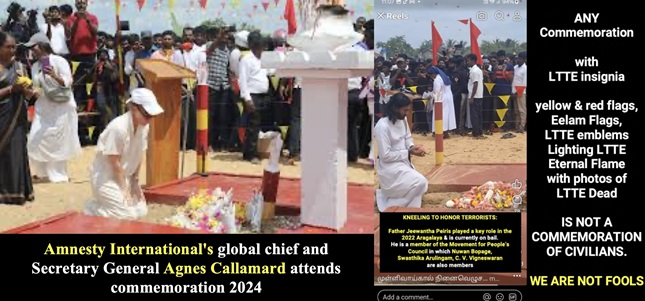
At Jaffna University, candles are lit annually for Prabakaran and his suicide squad — not in secret corners, but inside a Sri Lankan state-funded institution.
Yes, you read that right:
A man who recruited children, massacred monks, used human shields, bombed Central Bank, assassinated Rajiv Gandhi, and ethnically cleansed entire provinces — is being solemnly remembered with flowers and flame, courtesy of Sri Lanka’s free education system by a University up North.
And what does the present government do?
It ensures free speech — for terrorists, not for troops It even agrees to consider a “memorial centre” — for a group banned as aterrorist organizationin over32 countries, including the EU, UK, US, and India.
Meanwhile, if you publicly mourn soldiers who saved civilians from this very terror — you’re called a nationalist bigot.
So let’s be clear: This isn’t about reconciliation. It’s about rewriting history with blood-soaked ink, and asking the victims to stay silent while the butchers get eulogies and museum space.
What kind of world are we living in?
One where:
· Murderers become martyrs
· Terrorism becomes resistance
· Universities become terrorist shrines
· And lighting a candle becomes a political statement — as long as it’s for the “right” killer
Maybe next semester’s syllabus will include:
· Landmines for Liberation: A Comparative Study”
· Cyanide as a Symbol: Identity, Resistance & Jewelry Design”
· Thesis on Tactical Cowardice: Using Civilians as Cover Since 1983”
If this is what passes for higher education, then let’s stop pretending it’s about learning — it’s an ideological cult inside lecture halls.
To the UN, Foreign Diplomats & Parliamentarians who attend LTTE Commemorations:
You light candles for Prabakaran? Why stop there?
· Light one for Osama bin Laden — he fought Western hegemony too, no?
· Celebrate Adolf Hitler — he too had a vision for his people.
· Honor Joseph Kony — he used children to fight oppression.
· Host a lecture on Abu Bakr al-Baghdadi — misunderstood revolutionary?
If you endorse Prabakaran’s legacy under the guise of remembrance,” then please explain:
· Why glorify the killer of Rajiv Gandhi?
· Why mourn a man who used Tamil children as bombs?
· Why condone the desecration of hospitals, temples, and peace itself?
You can’t condemn terrorism in New York, London, or Paris and celebrate it in Mullivaikkal unless your moral compass comes with GPS coordinates.
If Prabakaran is your hero, don’t stop at lighting candles.
Throw him a parade.
Name a scholarship after him.
Tattoo his face on your chest.
Just don’t insult our intelligence by calling it peace,” justice,” or remembrance.”
Because when you glorify the man who killed Tamils, Sinhalese, Muslims, foreigners, monks, women, children, and even peace itself, you don’t stand for human rights — you dance on their grave.
Final Tribute
If this is your hero — Prabakaran, the warlord of Wanni — then
Wave that flag stitched with the suffering of thousands.
Recite your Eelam elegies. Compose candlelight poetry.
But don’t dare pretend it was peace, justice, or freedom.
It was terrorism, dressed in a Tamil flag, funded by fraud, and sanitized by hypocrisy.
So yes — let’s celebrate.
Celebrate the mass murderer, the child soldier recruiter, the suicide vest visionary, and the global embarrassment of everyone still romanticizing him.
After all, it takes a truly spectacular evil to fool the world into mourning a monster.
The People’s Republic of China has donated a consignment of disaster relief equipment worth over Rs. 400 million to Sri Lanka at a formal handover ceremony held today (Aug 5) at the Disaster Management Division in Colombo. Chinese Ambassador His Excellency Qi Zhenhong officially handed over the humanitarian aid to Defence Secretary Air Vice Marshal Sampatha Thuyacontha (Retd) at the ceremony held this morning.
The Defence Secretary, speaking at the ceremony, expressed deep appreciation for China’s continued support to Sri Lanka. The donation comes at a critical time as Sri Lanka continues to face frequent natural disasters, particularly floods worsened by climate change, he said. He noted that the equipment will be managed by the National Disaster Relief Services Centre and distributed through district administrations to ensure timely assistance for affected communities. Highlighting the strong bonds between the two nations emphasized that this gesture reflects China’s unwavering solidarity with Sri Lanka in times of need.
This substantial consignment of disaster relief equipment, valued at 10 million Yuan, includes foldable beds, portable sanitary facilities, mattresses, kitchen sets, gas burners, tents, Amano sheets, bedding, boats, life jackets, flood control units, water pumps, and other essential supplies.
China has previously extended financial assistance to support disaster management activities in Sri Lanka. This latest donation further underscores the enduring partnership between the two nations in humanitarian support and emergency preparedness, reflecting China’s continued commitment to strengthening Sri Lanka’s disaster management capabilities.
Additional Secretary of the Disaster Management Division, Mr. K.G. Dharmathilake; Director General of the Disaster Management Division, Major General Sampath Kotuwegoda; Director General (Planning), Mr. W.S.S. Mangala; and Director of the Ministry of Foreign Affairs, Foreign Employment and Tourism, Mr. D. Amanulla,Senior Assistant Secretary of the Disaster Management Division, Mr. Namal Liyanage attended the ceremony. They were joined by officials from the Chinese Embassy, including Counsellor Ms. Tang Yandi and Attaché Mr. Shi Zhen.
Dr. Manoj Jinadasa, PhD (Head of Mass Communication at the University of Kelaniya) Dr. Ruwan M. Jayatunge, M.D., PhD ( Medical Doctor and Clinical Psychologist) Dr. S Wijeyamohan ; PhD (Senior Lecturer at University of Vavuniya)
The Defence Cyber Command (DCC), operating under the Ministry of Defence, successfully conducted the AEGIS LEXICON 2025 – Defence Cyber Exposition recently (29 July 2025) at the Ministry premises. This annual event was specially organized to mark the Second Anniversary of the formation of the Defence Cyber Command, which was established on 03 August 2023. It highlighted Sri Lanka’s growing focus on digital defence and cyber security capabilities.
Delivering the keynote address, Defence Secretary Air Vice Marshal Sampath Thuyacontha (Retd), highlighted the growing necessity for the Defence Cyber Command (DCC) to evolve into a fully fledged Cyber Force. He stressed that DCC must be capable of operating at the strategic, operational, and tactical levels to ensure comprehensive national security in cyberspace, aligning with the Ministry’s broader defence objectives.
This year’s exposition was held under the theme National Security in the Age of AI and Cyber Physical Convergence,” focusing on the urgent need for building resilient cyber defence mechanisms in the face of rapidly evolving technological threats. The event was organised under the direction of Brigadier Dhammika Vidanalage, Director of the Defence Cyber Command.
The emphasis of the forum was on importance of cyber readiness, inter agency collaboration, and long term capacity development to ensure national resilience in cyberspace. It was also highlighted the role of the DCC in spearheading the nation’s efforts to meet future cyber challenges.
The event featured several insightful and technical presentations covering cyber security, artificial intelligence, legal frameworks, and the protection of national infrastructure.
Presentations included Cyber Threat Landscape in the Age of AI and Quantum Computing” by Brigadier Dhammika Vidanalage, Trust Frameworks Underlying Sri Lanka’s Digital Economy Advancement” by Dr. Hans Wijayasuriya and The Algorithmic Battlefield: AI and the Future of National Defence” by Prof. Kasun De Zoysa of the University of Colombo.
Other key presentations were Legal Challenges in Strengthening Sri Lanka’s Cyber Security Framework” by Dr. Thusitha B. Abeysekara from the University of Sri Jayewardenepura, Cyber Security Governance and Protection of Critical Infrastructure” by Mr. Lasantha Priyankara of Sysco Labs, and Securing Against Cyber Physical Attacks in the Evolving Threat Landscape” by Dr. Roshan Rajapakse and Mr. Kenneth Thilakarathna of the University of Colombo.
A key highlight of the exposition was the panel discussion titled Overcoming Cyber Physical Challenges for National Security in Sri Lanka,” which brought together leading experts from the government and the digital sector. The panellists included Mr. Waruna Sri Dhanapala (Acting Secretary, Ministry of Digital Economy), Dr. Aparrajitha Ariyadasa, Mr. Lakmal Embuldeniya, Major Sandun Gunawardana, Lieutenant Commander Meshech Hewawasam.
The DCC technical team, led by Colonel Darshana Muthugala, conducted a live demonstration showcasing existing cyber threats. This demonstration gave participants an understanding of Sri Lanka’s existing cyber threats.
As the nation commemorates the Second Anniversary of the Defence Cyber Command, AEGIS LEXICON 2025 reaffirmed Sri Lanka’s strategic commitment to strengthening its cyber capabilities. The event served as a call for continued innovation, legal reform, and strategic preparedness to defend the country’s digital sovereignty.
The Defence Cyber Command remains committed to leading Sri Lanka’s efforts in digital defence and is poised to transform into a national level Cyber Force, operating across all domains to safeguard national interests in the age of digital convergence.
In its continued efforts to empower Sri Lankan students with seamless access to international education opportunities, NDB Bank has entered into strategic partnership with Eduko Pathways. The official signing of the Memorandum of Understanding (MOU) took place on July 20, 2025, at NDB Bank Head Office, setting the stage for a meaningful collaboration aimed at making overseas education more seamless for local students and their families.
Signing on behalf of NDB Bank were Mr. Sanjaya Perera, Senior Vice President – Personal Banking & Customer Experience, and Mr. Zeyan Hameed, Vice President – Retail Banking. Representing Eduko Pathways was Ms. Nishani De Silva, Chief Executive Officer.
Eduko Pathways is a globally connected education consultancy with a strong presence in Sri Lanka, helping thousands of students gain admission to top-tier institutions in Australia, the UK, Canada, and beyond. Known for their holistic approach—from academic counselling to visa support, Eduko Pathways has become a trusted guide for students navigating the complex journey of overseas education.
Through this partnership, NDB Bank will offer a range of financial solutions that complement Eduko Pathways’ services, including student file facilities, education loans, and foreign remittance services. These solutions are designed to simplify the financial side of studying abroad, giving students the confidence and means to pursue their academic ambitions globally.
Commenting on the partnership, Mr. Sanjaya Perera stated, At NDB, we recognise that education is one of the most important investments in a young person’s life. Our collaboration with Eduko Pathways will ensure that financial challenges don’t stand in the way of Sri Lankan students achieving their global dreams.”
This partnership aligns with NDB’s wider purpose of being a bank for all the moments that matter, empowering the nation through strategic financial solutions that touch every stage of life. By enabling access to global education, NDB continues to position itself as a trusted partner in the academic and personal growth journeys of future generations.
NDB Bank is the fourth-largest listed commercial bank in Sri Lanka. NDB was named Sri Lanka’s Best Bank for Corporates at Euromoney Awards for Excellence 2024 and was awarded Domestic Retail Bank of the Year – Sri Lanka and Sri Lanka Domestic Project Finance Bank of the Year by Asian Banking and Finance Magazine (Singapore) Awards 2024. NDB is the parent company of the NDB Group, comprising capital market subsidiary companies, together forming a unique banking and capital market services group. The Bank is committed to empowering the nation and its people through meaningful financial and advisory services powered by digital banking solutions.
Chinese Ambassador to Sri Lanka Qi Zhenhong (L) hands over emergency humanitarian supplies to Sri Lanka’s Defence Secretary Sampath Thuyacontha in Colombo, Sri Lanka, Aug. 5, 2025. (Xinhua/Chen Dongshu)
COLOMBO, Aug. 5 (Xinhua) — China handed over emergency humanitarian supplies to Sri Lanka here on Tuesday.
The handover included emergency supplies ranging from tents and beds to generators and water pumps.
These items aim to improve conditions for local communities displaced by flooding and help them respond more effectively to future natural disasters.
Speaking at the event, Chinese Ambassador to Sri Lanka Qi Zhenhong said that as a country with extensive experience in post-disaster reconstruction and risk management, China can share valuable expertise and advanced technologies with Sri Lanka to strengthen the South Asian country’s resilience in disaster prevention.
“China is willing to explore more practical and in-depth cooperation with the Sri Lankan side in areas such as satellite meteorological image sharing, disaster early warning, and disaster prevention and mitigation,” Qi said.
Sri Lanka’s Defence Secretary Sampath Thuyacontha expressed gratitude for China’s timely assistance and underscored the importance of such partnerships as climate change intensifies disaster risks in the region
Colombo, August 5 (Daily Mirror) – Former President Mahinda Rajapaksa today brushed off concerns over the government’s move to slash privileges granted to former Presidents, saying the real privilege lies with the people.
Responding to reporters in Colombo, Rajapaksa said he was not concerned about the government’s attempts to remove certain benefits, suggesting it was being done out of political vengeance.
He also remarked, Medamulana is much better than Wijerama Mawatha,” referring to his private residence in Hambantota compared to the official residence provided in Colombo.
They can remove any privileges from us. What matters is the privilege I have from the people,” he added.
China and the U.S. are the leading EV manufacturers
SL has offered to purchase fuel from U.S. companies if prices are competitive
Apparel remains the largest Sri Lankan export to the U.S. market
Colombo, August 5 (Daily Mirror) – The United States (U.S.), in its tariff negotiations, requested Sri Lanka to grant duty-free access to American vehicles, including Electric Vehicles (EVs), in its bid to narrow the trade gap, a source familiar with trade talks said.
However, according to the same source, the Sri Lankan government did not grant outright approval, but agreed to consider such concerns in a phased out manner over a period of time. Sri Lanka and the U.S. will continue with the trade dialogue with the aim of getting tariffs reduced further.
During the latest round of talks, Sri Lanka managed to get tariffs reduced to 20 per cent from the originally proposed amount of 44 per cent. The current rate is considered competitive since it is on par with its regional competitors, such as Bangladesh and Vietnam. Tariffs imposed on Vietnam and Bangladesh also remain at 20 per cent.
U.S. total goods trade with Sri Lanka was an estimated $3.4 billion in 2024. U.S. goods exports to Sri Lanka in 2024 were $368.2 million, up 4.9 per cent ($17.1 million) from 2023. U.S. goods imports from Sri Lanka totalled $3.0 billion in 2024, up 6.1 per cent ($173.5 million) from 2023. The U.S. goods trade deficit with Sri Lanka was $2.6 billion in 2024, a 6.3 per cent increase ($156.4 million) over 2023.
Sri Lanka has offered to purchase fuel from U.S. companies if prices are competitive, as one of its proposals to reduce the trade gap. The Ceylon Petroleum Corporation (CPC) has already sought samples of WTC crude produced in the U.S. for a specification test in Sri Lanka.
Currently, apparels remain the largest Sri Lankan products to reach the U.S. market. Sri Lanka stood firm against the request by them to impose restrictions on imports of raw materials from China for the garments industry. In the future, Sri Lanka will have to navigate further intricacies in international trading. China and the U.S. are the leading EV manufacturers in the world. Currently, Sri Lanka imports EVs such as BYD from China.