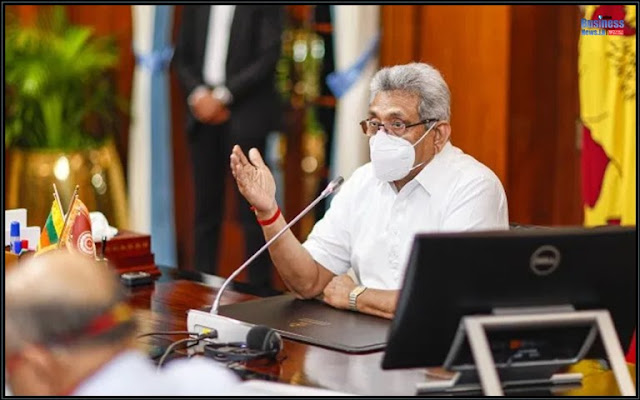
At the Presidential Commission of Inquiry probing Easter Sunday terror attacks, it was revealed that funds worth Rs. 04 billion has been received to two bank accounts that belong to former Governor of the Eastern Province M.L.A.M. Hizbullah.
It was revealed that these funds had been received from foreign countries on several occasions.
It was further revealed that even the Central Bank had not been informed about receiving such a large amount of money.
The speaker stated that the Parliamentary Council has verified the nomination by the President to appoint C.D. Wickramaratne for the post of Inspector General of Police and 14 Judges to be appointed to the Court of Appeal.
Speaking to the Hiru news team the Speaker said that the Parliament also recommended the names of 14 Court of Appeal Judges presented by the President.
The names of High Court Judges Menaka Wijesundera, D.N. Samarakoon, M. Prashantha de Silva, M.T.M. Lafar, C. Pradeep Keerthisinghe, Sampath B. Abeykoon, M.S.K.B. Wijeratne, R. Gurusinghe, G.A.D. Ganepola and K.K.A.V. Swarnadhipathi nominated by the President has been verified by the Parliamentary Council.
W.M.N.P. Iddawala, Sampath Mendis, Mayadunna Cooray and Prabhaharan Kumaratnam of the Attorney General’s Department nominated by the President as Justices of the Court of Appeal have also been verified by the Parliamentary Council.
The
writer is a graduate of University of Peradeniya, which was constructed during
the colonial period and opened by HRH prince Philip, the queen’s husband, ‘to
be more open than usual’ in the early 50s. The Engineering Faculty that was
established there was of the same standard as world leading universities like
Cambridge, following same courses. Those who passed out and gained scholarships
these universities did very well topping the batches. Moratuwa Technical
College also became an Engineering Faculty in early 70s.These universities
together with others now attract the top scorers of A’ Levels and are churning
out engineers more than what is required for the country. Majority of top
scorers in Engineering select Civil courses instead of Mechanical and
Electrical Engineering which are more relevant to today’s needs. Most of them
become managers in public or private sector. I believe this is a waste of
talents as they are not able to contribute much for the country in this digital
age.
When
we look at South Korea and Vietnam we see that they have achieved high level of
development and growth rates not through so much of expenditure on education
but by letting their entrepreneurs engage in digital technology and
manufacture. I believe we should do the same without wasting our meagre
resources and producing jobless graduates who become a burden on the government
after they pass out. The introduction to digital technology, particularly the
wiring up of electronic circuits should be started in the secondary school
level itself. The world is entering into a new realm of automation and our
youths should be trained to be at the forefront.
I give below some videos that explain the
current situation and the direction in which the digital technology is moving.
The organizations like BBC that introduced the BBC Micro in 80s to their
schools (and to other anglophone countries) prompted the birth of businesses
like ARM and are now promoting a new technology, which is a new way of
computing using an open source architecture in the CPUs. I think we too should
join them and get our students to build the machines of the future. I tried to
get our university guys to work on these about four years ago by writing to
them without any success. And we do not hear any of the academics in them
talking about these new developments( like RISC-V etc) If a thirteen year old boy can understand the
technology and build his computer by wiring up the RISC-V chip, as can be seen
from the third video down below, why not we get our secondary school students also
involved in similar projects?. The GOSL
should encourage these academics to get involved or initiate similar projects
without further delay.
Please
view these videos if time permits. The first one is from a Sri Lankan and the
comments there on shows how enthusiastic the local young ones are.
The Buddhists wish—and quite rightly—that in this country where they form 70 percent of the population, Buddhism should be recognized as the predominant religion of the people. In the rest of the world, Ceylon is regarded as essentially a Buddhist country, and they want this claim established here as well…They will not be content to remain in the position of inferiority to which they have been reduced by 450 years of foreign occupation… They have no desire to make Buddhism the State religion—in spite of the cry raised by self-seeking politicians— but they want the State to help them rehabilitate themselves and undo some, at least, of the injustices perpetrated against them during the days of their subjection.”
(quoted from a speech by Professor Gunapala Malalasekera, President of ACBC reproduced in Times of Ceylon, January 15, 1956, and referenced on page 196 of the book, Ceylon: Dilemmas of a New Nation,” by W. H. Wriggins, Princeton Univ. Press,
1960)
If the Tamils’ cry [Tamil politicians living in Colombo!] for separatism is given up, the two communities could solve their problems and continue to live in amity and dignity.” – M.C. Sansoni, CJ—(Sessional Paper No. 7 of 1980)
Talking once with a miner I asked him when the housing shortage first became acute in his district; he answered, when we were told about it,” meaning that till recently people’s standards were so low that they took almost any degree of overcrowding for granted.”
George Orwell, The Road to Wigan Pier (1937), 64a,
Any re-connection with our ancient village concept should primarily enable the creation of new ideas so that the soulless town becomes as holistically vibrant as the village.
Colombo, November 21: How is our village relevant to us in the city? What can having a ‘village in the city’ mean to a people such as us, Sri Lankans who have an ancient heritage that we have distanced ourselves from?
It is few years ago, soon after its creation, that I visited the Ape Gama (Our Village), located at the Jana Kala Kendraya in Sri Jayawardenepura Kotte, conceptualised to be the way a village was typically before colonisation (where the houses were made of clay).
Subsequently as part of my research in how our heritage is looked at by Sri Lankans including the younger generation, I had interviewed in-depth some of those who were recruited to play act in Ape Gama the roles of teacher and Gamarala and several other characters respectively. I went to their hometowns/villages, some of them very remote to understand how their children related to the identity of the ‘village.’
In one instance the villagers pointed to a youth who was the son of one of the employees of Ape Gama and joked how the 22-year-old abhorred the traditional Lankan dress for males, the sarong, along with the traditional diet and how he spent his time roaming around on a motor bike his father had bought him and searching out typical ‘Western type food.’ This is a simple example to show that we have not succeeded in making the young generation vibe with their past and where they see their parent’s association with it is ‘backward.’ This is the malady of our nation that we should seriously strive to change.
The stereotype image of the typical ancient ‘village’ consists of clay huts (although in practical reality today they are seen as symbols of either poverty or ironically as abodes made for foreigners). In our actual reality we have not made clay, one of the most sustainable elements for construction as part of our living heritage. If we are having a concept such as Ape Gama in the heart of the city, we should also have a policy where the construction of clay houses is mainstreamed and encouraged in the town, with appropriate heritage driven sustainable city planning.
The Ape Gama concept could also be used as a strong influencer for schoolchildren to learn about their heritage in as detailed a manner as possible, systematically, in a backdrop where the school syllabus does little to contribute to this. This writer has in many instances pointed out that every child in Sri Lanka should grow up learning as basic everyday knowledge their indigenous food and medicinal heritage.
Overall, what we need in Sri Lanka is to actively, consistently and innovatively project the village not as a quant, docile entity but rather as a thriving life force of a nation. It is from the village that all inventions needed sprang forth and at a time when ‘sustainability’ a Western-dominated buzzword word is repeated by us without even contemplating on its true significance there is much potential to actively use a concept such as Ape Gama to promote Sri Lanka’s rural economic regeneration as well as influencing the city towards true sustainability.
The agrarian root of the village could be discussed at length and an endeavour such as Ape Gama should ideally explore initiatives involving conserving endemic plant varieties (Deshiya Beeja), and medicinal plants which are fast becoming extinct while encouraging the agrarian and irrigation policies of our kings to be re-enacted in real life. Related projects could be routed through the Ape Gama but initiated elsewhere in the country, especially the cultivation of trees. Such an initiative could lead to product creation for the local and export market as well, especially in times of pandemics, capitalising on the unique heritage of Sri Lanka such as the Deshiya Chikitsa medical heritage which we have totally undermined. There are also many ways in which a concept such as Ape Gama could be used to leverage Sri Lanka internationally at a time when that leveraging is desperately needed and tourism and indigenous medicinal knowledge sharing and export industry are just two of them.
A ‘living heritage’
We have to keep in mind that this endeavour to reproduce this village experience in the heart of the city was aimed at it being a ‘living heritage.’ To what extent our village is still a ‘living heritage’ in reality is debatable given that our current medicine tradition, our basic village, town and city planning policy is not even remotely connected with our heritage. We are a country who gave permission for soil destructing pine trees to be grown in the 1970s (on the advice of foreigners) and Dr. Ranil Senanayake, the man who objected to it in his capacity as an ecologist who had proposed a village-based agro-medicinal reforesting model had to finally leave his job. So, in any effort to replicate the village in the city, we have to eradicate any oriental or romanticising of the rural and see it for its practical worth.
In the village kiosk at the Ape Gama that I visited four years ago I drank herbal tea in a cleaned-up coconut shell thinking of the potential for detailed research in how the coconut shell is believed to have properties that will purify water and where prolonged use of water in a coconut shell is thought of as strengthening bones. (The coconut as a whole whether it is coconut water or the kernel or shell, holds significant curative properties especially coconut milk which is known to remove poison from the body). It is a pity that the average youth of a village whose biggest dream is to get to the city (and then leave for a foreign country) would not imbibe such information such as these. The purpose of an initiative such as Ape Gama should therefore be for a re-connection with what is ours, whether it is irrigation, agriculture, forestry, craftsmanship, construction techniques and traditional immunity boosting diet and medicinal heritage.
Any re-connection with our ancient village concept, should also primarily enable the creation of new ideas so that it is juxtaposed with the old but where the end result would not be that the village yearns to be like the town, but rather where the soulless town aims to become as holistically vibrant as the village.
How many of us drink pre-colonial herbal drinks such as Beli mal (flowers), Ranawara mal (flowers) and Polpala morning noon and evening as we drink tea introduced by the British? Despite having many indigenous herbal drinks, after 70 years of independence tea is promoted as our ‘heritage drink; and yes this is partially right – it is our colonial heritage but not representative of the thousands of years of our civilisation in which our food and drink evolved with what was endemic to our land.
The Ape Gama concept had fitted in the typical Gurukula (a teacher’s abode) like setting with one small clay made house reminiscent of a teacher’s residence which was the pre-colonial equivalent of the modern school. In this pre-colonial education system we had, the child learnt introspection, mindfulness, some specific craft and above all qualities such as gratitude to the teacher, kindness and empathy (qualities which are sorely lacking in today’s education sector).
Despite the British believing that they were the superior benefactors of so-called Western Science based ‘education’ it is Sri Lanka’s ancient Gurukula model that produced the architects and the engineers who designed world wonders such as Sigiriya where Western engineers (as well as Lankans who learn the Western model of engineering) are clueless as to how water flow was sent up to a high rock.
Among other potentials, one of the strongest points of the Ape Gama concept as this writer sees it is to resurrect the Gurukula system once again to be a training hub for children on diverse aspects of heritage as highlighted and detailed above throughout this article. In these times of pandemics, we need such knowledge to be especially related to the maintaining of health and immunity through traditional medicines and imparting a wide-scaled knowledge for children on their endemic herbs.
The knowledge of our indigenous medicine was imparted to everyone as Robert Knox observed in his memoirs. Training in traditional medicine that had put Sri Lanka on the map from the ancient most times of kings had received a significant importance in the Gurukula system. Today we have to keep in mind that strategising to build up a nation’s immunity and health go hand in hand with its economy and international positioning in the short and long term.
This pandemic time gives us the opportunity to take bold steps in our policy making and emulate countries such as Bhutan who came up with their own model of Gross National Happiness. With a concept such as Ape Gama we can mould a village development policy for ourselves where the village is positioned as a centre where innovation, nature, simplicity and economic activity go hand in hand. It should be reiterated that the village was the mother of all inventions – whatever that was needed for survival was invented in the village. Sri Lankans who built the world’s first hospital in the world in Mihintale were ancient villagers. Those who crafted the hospital surgical equipment (scores of them shaped like beaks of birds for specific purpose of operations) were educated in the Gurukula tradition and yes, they too were villagers.
It is lapse of Sri Lanka that we have not looked at each village as the epicentre of humane progress, of holistic advancement and as in the days of monarchy the representation of advanced science (that could make rough stone pulp to enable engraving and create ponds and carve palaces from sky high stone such as done in Sigiriya).
Thus, we have the potential to mould the village to be representative of our ancestors and their values and truly initiate both a training as well as research hub for retracing many of our lost heritage knowledge. Sri Lanka has many committed professionals in this regard who have spent years studying different branches of these themes.
What is our village to us?
Our village is the birthplace of all innovation. What we need we create. We do so with nature and without harming the natural world.
Our village is where we have an equilibrium between what we can create to sell to others so that we could buy what we need but we are not dominated by greed and mindlessness. Our village is a place that teaches us about life.
Our village is not a place which is of the distant past, it exists today and we create it and our values. We learn from it our indigenous principles of sustainability. Our Lankan village is a model to the world which can be emulated in any era.
Our village is not a sentimental myth which is a spectator’s novelty. Our village is the heart and soul of our tradition, of wellbeing and holding the spiritual ethic of the country.
Our village is the vein that connects our past with our present. In it exists our spiritual heritage, our medicinal legacy and our agrarian tradition.
Our village is not an isolated entity which is a prototype of poverty and backwardness. It is the opposite. It thrives as a hub where the world learns from Sri Lanka’s heritage knowledge whether it is our ancient Deshiya Chikitsa medical heritage or our vast knowledge in many areas that includes irrigation, ancient construction methods using rocks and clay respectively, artistry and craftsmanship.
Our village teaches the world by re-learning about our indigenous medicine Deshiya Chikitsa and bestows upon the world healing in uncertain times through the resurgence of an indigenous medical industry.
Our village is representative of what education should truly be and gives the world an example of the Gurukula system where students first learnt introspection, mindfulness, respect and gratitude to their teacher and then to create using the bounties of nature and with the creativity of their higher consciousness. It is the Gurukula system that bears testimony to the greatest artistic feats of Sri Lanka.
Our village represents Sri Lanka not as a mere exhibition point for a rustic experience but an experience that will change attitudes, ideology and lives forever. Our village brings the world together especially in this time of pandemics towards a whole new order of reflection missing today in a disjointed world.
Our village shows the world how we looked at sustainability and humane progress.
The national security could not be still assured until the people who led Zahran Hashim to carry out the sudden terror attacks are identified, former SDIG of the Criminal Investigation Department (CID) Ravi Seneviratne yesterday informed the PCoI probing Easter Sunday attacks.
Testifying before the Commission former SDIG Seneviratne said that Zahran’s initial plan was to carry out the attack in 2020 and suddenly he had decided to conduct the attack in April, 2019.
We have to identify the persons who were above Zahran and operated to conduct the attack. Until we investigate that part, this inquiry is incomplete,” he said.
Former SDIG said that the plan to carry out the attack in April, 2019 was Zahran’s own decision and due to that decision some members of National Thowheed Jamath (NTJ) had a conflict with Zahran. He said that Zahran Hashim was active from 2014 and he had initially decided about the conduct of terror attacks in 2017 or 2018.
Then in 2018 vandalizing Buddha statues in Mawanella took place. In that instance Zahran had advised one of the suspects of Mawanella case Mohommad Ibrahim Abdul Sadiq to damage at least one Buddha statue,” he said. He further added that according to the CID inquiry it had found that NTJ had 41 bank accounts and the funds received to those accounts via Ibrahim brothers who blasted themselves at Shangri-La and Cinnamon Grand hotels on April 21, 2019.
Former SDIG said that the CID had led extensive investigations into Zahran’s connection with a foreign organisation but it could not trace anything regarding to that organisation.
Commissioners then questioned about Zahran’s plan to have another baby in March, 2019 and he had consulted a doctor together with his wife.
Responding to a question the witness said that the CID had also inquired about it and found the doctor.
However, Commissioners said that according to Zahran’s wife’s evidence given before the Commission Zahran Hashim did not have a such plan to have another baby.
Meanwhile, former SDIG said that according to CID’s investigations the plan of NTJ was if any suicide bomber had failed to carry out the attack, that bomber had to go to a safe place and the place was a church in Colombo. (Yoshitha Perera)
Four more Covid-19 related deaths are reported in Sri Lanka, the Director-General of Health Services confirmed.
One of the victims is reportedly a 70-year-old female from Colombo 15 area. She has died upon admission to the Colombo National Hospital on Saturday (21). The cause of death has been cited as Covid-19 pneumonia.
A 53-year-old male from Colombo 12 area also succumbed to the virus after being admitted to the Colombo National Hospital on Friday (20). As per reports, he died of a chronic respiratory disease induced by Covid-19 infection.
Meanwhile, an 84-yeard old female from Borella area, fell victim to the virus on Saturday (21). Her cause of death was determined as Covid-19 pneumonia.
Another man, a 75-year-old from Colombo 10, died virus infection while receiving treatment at the ICU of Infectious Disease Hospital (IDH) earlier today (20). The patient was under medical care at the Colombo National Hospital before being transferred to the IDH. Reports revealed that he also died of Covid-19 pneumonia.
This development brings the total number of Covid-19 deaths recorded in the country to 87.
The Easter Sunday terror attack was a conspiracy launched by a powerful nation to spread extremism in the country, says Samagi Jana Balawega MP Rishad Bathiudeen.
The MP, who is currently under remand custody at the Welikada Prison, mentioned this yesterday (21), testifying before the Presidential Commission of Inquiry probing the 2019 Easter attacks.
The State Counsel on the Commission inquired the MP whether he had influenced any of the investigations on FETO, a banned organization in Turkey, conducting business in Sri Lanka, which had been halted after a revelation that 02 Sri Lankan Cabinet Ministers –one of them being MP Bathiudeen -being involved with the FETO members.
The parliamentarian, claiming that it was untrue, said that he has no affiliation with any individual or organization in Turkey and that he had not influenced the investigations.
The Commission then inquired the witness whether he was aware that a house belonging to his sister in Canada was being used as a safe house by suicide bombers. To which the MP replied saying that he was not aware of that fact and that got to know about this only after the attacks.
Responding a query, he added that he had never visited the house in question. The Commission then asked Bathiudeen whether his brother Riyaj Bathiudeen was arrested by the Criminal Investigation Department at any point.
He replied, Yes, he was arrested in connection with the investigation into the Easter attack. It was reported through the media that Cinnamon Grand Attacker Insaf Ahmed had taken 07 phone calls to my brother. I do not know the exact dates. Somehow it was taken before the Easter attacks, in 2019.
I asked my brother why Insaf had called. He said it was to seek some relief with regard to the government suspending copper exports. I don’t know if that’s what they talked about on all seven occasions. But on all 07 occasions, Insaf had called my brother.”
The Commission pointed out that while Rishad Bathiudeen had previously testified that he had not helped out Insaf Ahamed to buy copper, it is noted that Ibrahim’s son’s company had been issued 25,000 kilos more copper than other companies. The Commission asked Bathiudeen, who had signed for the marriage of Insaf, whether he had indirectly supported Insaf.
Bathiudeen said, I totally reject that claim. I categorically say that I have not helped any of Ibrahim brothers.”
A judge in the Commission asked, You said you were in a war refugee camp for five years after the LTTE expelled you from the North. How did you come to politics and become so wealthy?”
To which Bathiudeen replied that he does not have to beg because he became a refugee and that he could do business.
In response, the Commission asked whether he used his privileges as a minister and the ministry to amass such wealth and develop his and his family’s businesses.
Bathiudeen replied, No, I have not used such privileges in any way to advance the business. I have been a Member of Parliament since 2001 and have made declarations of assets and liabilities every year.”
The Commission member question again, We are not saying you have committed fraud, but I’m asking how you got so much money after being war-displaced.”
MP Rishad Bathiudeen responded to the question with some emotion: There is no relation between assets and the Easter attacks. These questions are better suited for character assassination. Therefore, I ask you to investigate the Easter attacks.”
Fresh COVID-19 positive cases were identified in Sri Lanka as the total number of cases reported from the Minuwangoda and Peliyagoda clusters reached 16,427.
The Department of Government Information said 175 more persons were tested positive for the virus.
All the new cases are close contacts of the Peliyagoda Fish Market cluster, reports confirmed.
With the new development, Sri Lanka has confirmed 19,946 novel coronavirus infections to date.
According to the Health Ministry’s data, 14,069 of the confirmed patients have made complete recoveries from the virus.
The committee of experts appointed to examine methods for disposal of Covid-19 victims has requested the authorities to continue with cremation until their final report is submitted.
Director-General of Health Services Dr Asela Gunawardena said the committee had conveyed this to the Secretary of Health Ministry.
A committee of experts was appointed by the Health Ministry after the Muslim community raised concerns over cremation of Covid-19 victims, stressing that it is against the dictates of their faith.
The topic was also brought to the attention of the Cabinet of Ministers on several occasions.
However, the Cabinet decided to refer the matter back to the experts’ committee to look into the possibility of burying Covid-19 victims in a remote, dry area.
Last week, UN Resident Coordinator in Sri Lanka, Ms Hanaa Singer wrote to Prime Minister Mahinda Rajapaksa, reiterating the concerns of the United Nations with the existing Health Ministry guidelines, which stipulate cremation as the only method for the disposal of bodies suspected of COVID-19 infection.
In her letter, Singer had noted that the common assumption that people who died of a communicable disease should be cremated to prevent spread is not supported by evidence.
President Gotabaya Rajapaksa has issued an Extraordinary Gazette, establishing two new ministries – Ministry of Public Security and Ministry of Technology.
The gazette notification, dated November 20, elaborates the scope of functions and duties of the two new governmental agencies.
Thereby, the Public Security Ministry is tasked with ensuring public safety while maintaining law and order by creating an environment suitable for all citizens to live freely.
Four institutions namely Sri Lanka Police, Civil Security Department, National Police Academy and Department of Multipurpose Development Task Force will be assigned to this ministry.
The Technology Ministry will meanwhile establish digital governance services to effectively manage the health, education, welfare, public services and business sector.
According to the gazette notification, 10 institutions including the Telecommunications Regulatory Commission of Sri Lanka (TRCSL), Sri Lanka Standards Institution, Sri Lanka Telecom and Department for Registration of Persons are to be brought under the purview of the Technology Ministry.
Donald Trump continues to keep America and the
world guessing as to his next move which should be to concede victory to Joe
Biden. But he has not done so formally, though he is sending signals indicating that he is
willing to concede without, of course, taking any meaningful action to vacate
the White House. This appears to be a game he is playing for a tactical
reason: he is playing for time. Though Joe Biden won on the popular vote
by nearly seven million votes nothing is certain until the Electoral College
confirms his victory. On paper he has the votes of the Electoral College too.
But there is speculation as to whether the electors from rogue” Republican
states will vote for Biden at the Electoral College.
Despite all traditions and precedents binding the
electors of the states won by Biden to vote for him there is no guarantee that
they will do so in the coming Electoral College vote on December 14.
There are instances where electors have voted against the will of the people of
the state and voted for their favourites. In 2016,” states POLITICO (November 19),
seven electors ultimately broke their pledge to vote for who they said they
would support.Five electors voted for someone other than Hillary
Clinton despite Clinton carrying their states, while two abandoned Trump.” This
means that Trump still has a chance of overturning the will of the people if a
sufficient number of electors certified to vote for Biden at the Electoral
College turn against him and vote for Trump. Remember Trump lost the popular
vote and won in the Electoral College in 2016. According to David A. Bell of
POLITICO, election experts are still worried about the talk of legislatures
going rogue between Election Day (November 3) and the selection of Electoral
College electors.” (December 14). If, as speculated, the Republican rogue”
states gang up against Biden on the pretext of vote fraud, or some other
technicality, there is still a chance available for Trump to remain in the
White House. So why concede victory too early when there is still some hope,
though it is diminishing fast. And who cares if more Americans die as a result
of the obstructionist policy of Trump to prevent the new Biden administration
working out strategies for the Corona crisis. Corona-caused deaths have gone
beyond 250,000. What does it matter to Trump who dismisses it as only another
kind of flu?
Clearly, Trump is putting America through a meat
grinder. His ego-centric politics is tearing America apart. It is difficult to
find in living memory another rough and divisive passage in
American history like the post-2016 period. At the core of the American
apple is Trump wriggling and eating into its vitals like a revolting worm which
came from within the system. He is doing to America what pariah dogs on the run
do to lamp posts. He defines himself each time he opens his mouth and fills it
with lies. Each time he spits out his egregious hyperboles unsubstantiated by
facts or figures he drops deeper and deeper into Dante’s hell. He is fixated on
creating and living in the Napoleonic cult of greatness — a small man
with big ideas. He imagines that history began with him. In his statements he
tries to give the impression that nothing great has happened in American
history before his arrival at the White House. Nor has there been anyone in
history as great as him. Once, he made a concession to Abraham Lincoln but that
too was done grudgingly. He has dragged America to the depths of despair with
two devastating crises: 1. Corona pandemic and 2. the constitution. The most
notable part of his Presidency is in creating a cult of his own fathering a
following that is ready, willing and able to go along with all his
crudities.
He performs theatrically on the political stage as
the most popular public figure hero-worshipped by the millions. Considering the
figures he had scored in the last election he is not wrong either. It reveals
that there is an on-going love-hate relationship between him and America. Half
of America loves him and the other half is divided between hate and awe. He had
brazenly done what all other politicos had feared to do: he had unmasked
America and exposed the hidden face caked with liberal cosmetics. He has
revealed the fragility of the American democracy which can flip any time under
the demagoguery of a swaggering braggart bent on breaking the rules and
dismantling the institutions that safeguard the security and the democratic
values. Above all, he has proved that he can silence with one twitter
even the most respected Republicans who hated his guts in the beginning
and then fell in line like a herd of rhinos with thick skins impervious to the
rising threats to everything of value created and preserved by the mighty
American adventure.
He displays all the symptoms of an egomaniac riding
the populist path overdetermined by Trumpism — the new political cult rising
to shape the next generation of American policy-makers. It is putting deep
roots into the soil fertilized with hate politics. His aim, as declared by him,
is to make America great by putting America first — seemingly innocuous labels
marketed to disguise the hidden racist ideology of white supremacists.
Instead of the fiery, mob-manipulating, hate politics of Hitler he does it the
modern way with a consistent flow of Gobbelsian twitters. The only thing that
seems to stand in his way of becoming a Yankee Hitler is his Jewish
son-in-law, Jared Kushner – the man behind the historic move of making
Jerusalem the capital of the Jews.
His total indifference to the hundreds of thousands
of Corona virus victims is inhuman and unpardonable. Like the way he places
himself above the law he places himself over and above the universal laws of
physics and science. His delusional belief in his own power to force men,
events and the laws of nature obey his commands is a trait that is a
serious threat to planet earth lurching from one critical crisis to
another. There can’t be a bigger threat to the welfare and the future of
the world than a voodoo Frankenstein presiding over the mightiest nation on
earth. The consequences can be far-reaching and colossal as seen in the way he
has handled the Corona virus. He condemns his best experts like Dr. Fauci as idiots”
and disasters”. With his inhuman policy of presiding over the premature
deaths of 250,000 Corona victims he deserves to go down in the annals of
American history as the most obnoxious and notorious undertaker ever.
At least on basic humanitarian necessities it
was his moral duty to cooperate with the Biden team to alleviate the suffering
of the victims of the Corona virus. Trump’s vindictive politics is aimed at
obstructing and frustrating any Biden initiatives to succeed. In his last
days he is making desperate moves to tie down the Biden administration to his
dangerous policies in global and domestic affairs. Trump out of office
can be more dangerous than in office. A part of his tactic is to play the
role of victim whose victory was stolen by a rigged election. He knows that his
future is not going to be rosy with rows of legal cases awaiting his exit
from the White House. The evidence against him is overwhelming. His main
defence is to play the innocent victim of a corrupt, rigged system.
What is the legacy he is leaving behind? Take the
case of Israel. He is leaving legacy mined with explosives. His policy of
legalising the Jewish occupation of Palestinian lands in the West Bank is a
time-bomb placed under Biden’s chair. The 600,000 Jews in 142 West Bank
settlements in Palestinian land has been declared illegal by the global
community. Biden will go along making Jerusalem the capital of Israel. It
is accepted by the Christian voters of America. But legalising the land
occupied by the Jews is an issue that is going to burn the Middle East – and
perhaps the world – in the foreseeable future.
Above all, his decision not to abide by the
democratic will of the people is going to make him the ugliest American
in history books. For the moment he will survive because he is riding high on
the passions he has injected into the apathetic veins of the sleepy Americans.
Credit must be given to him for keeping the American nation awake 24/7
with his provocative twitters. He kept the nation alive and kicking on a
regular diet of lies. Not surprisingly the latest polls indicate that a
substantial percentage of voters believe that Trump lost because the election
was rigged.
What is happening in America is surreal. Only
a brash maverick like Trump could make it happen. He has validated the
rejection democracy as a fit form governance as first declared by Socrates and
Plato. They opted for philosopher kings”. The problem with that
theory is that there are enough Donald Trumps in the world who claim to be
philosopher kings”. In fact, philosopher Bertrand Russel blamed the
Platonic concept of philosopher kings” for breeding Hitlers and Stalins.
They presumed that they had the key to unlock the mysteries of history by
playing the messianic role of political saviours. Driven by their
ideologies they made the 20th century the cruellest age in
history.
Humanity has suffered untold miseries at the hands
of these fake messiahs – from Hitler and Stalin to Rohana Wijeweera and
Prabhakaran. What is unacceptable is the willingness of a section of humanity
to follow the Wijeweeras and Prabhakarans. A good example of this
is Prof. Jayadeva Uyangoda, who, for all intents and purposes, seems to be a
rational human being. After all he was an academic who held a chair in
the professoriate. He not only believed in the goodness of these brutal
messiahs but also theorised on their behalf to justify their obscene
violence. Once he returned from a fleeting meeting with Prabhakaran as if
he had seen the earthly manifestation of the heavenly Prince of Peace. Taking
Prof. Uyangoda and a Trump-follower as empirical evidence that demonstrates the
political mind-set of messianic devotees one is entitled to ask whether
there is any difference between the two?
If you look around the pundit class (synonymous, of
course, with the chattering class) you can find enough and more theorists who
pretend to be the panacea to complex and all intractable problems of the
nation. Take the case of Dayan Jayatilleka, another one of those pundits whose
theories are tailored mostly to advance his next career move. In his latest
outpouring he has blamed President Gotabaya Rajapaksa and his model of
governance for the second wave of Corona virus.
After circumambulating around his pet hates,
including Sinhala-Buddhism, he concludes that the fight against Covid-19 isn’t going
well because of the unscientific or pseudo-scientific metaphysical
ideology through which the Rajapaksa regime sees everything. To him the end of
the world has come. It is the Corona Chernobyl. The holocaust. And Hiroshima
and Nagasaki — all rolled into one.
It is apparent that the hidden agenda behind his
attack is to target the Rajapaksa regime which has rejected him. It is partly a
personal attack on Gotabaya Rajapaksa and partly an attack on the Rajapaksa
model of governance. All his theoretical conclusions about the second wave is
to downgrade the Rajapaksa achievements which he had praised to the skies not
so long ago when he was with the Rajapaksas. He says: For this regime,
it is more important to believe in its model of governance, its system, than to
seek truth from facts” as was Deng Xiaoping’s motto. The regime does not see
the need to look at how the really successful countries have managed this and
learn from their strategies…” because it is an article of faith that Sri Lanka
under the present leadership is the really successful country”, and it is felt
to be more important than anything else to keep the faith in this postulate,
whatever the empirical evidence to the contrary. Nobody dares to contradict the
new model, still less learn from the strategies” of the really successful
countries”. In consequence, we may be running the risk of a Corona Chernobyl.
The current Sri Lankan
model is one which is derived a priori from a
sense of superiority stemming from a mix of having won the war (again, falsely
listed as the only or the first victory over terrorism, at least in the 21st century) and the
innate superiority of the Sinhala-Buddhist culture, civilization and way of
being. To question the results on the basis of evidence, i.e. the successes of
the model, acknowledge defeats and failures, and shift course” as Dr.
Ranan-Eliya urges, is to question the sacrosanct model itself and verges on
heresy and treason.”
This attack covers a whole
range of factors that characterise the Rajapaksa government. He is making use
of the Corona crisis purely to hang his political attack on it. His real
motive is to use the second wave as an excuse to run down the Rajapaksa
regime for acting without seeking the truth from facts”. By the way, I am not
citing Deng Xiao-ping to show off my familiarity with the founding fathers of
the Chinese Revolution because it is threadbare statement commonly used in
practically every civilization long before he was born. In any case, it is not
such a profound or original statement that needs the backing of a
distinguished authority. It would have had the same impact if he quoted Haramanis
Singho instead of Deng. Throwing in big names as authorities for trite
statements is a part of his style to show off that he is not one of those the
run-of-the-mill political scientists. Writing advertisement about himself to
enhance his image as a political scientist is also a common ploy of his to
impress his readers that he must be taken seriously and not treated as a
frivolous yes-man” hired to manufacture excuses to boost the political
fortunes of his new master.
Now that he has parked
himself in Sajith Premadasa’s camp he is doing just that :
struggling to manufacture excuses to boost his master’s fortunes. Both
are trying to politicise the COVID-19 wave to gain some political mileage. But
the more sensible and constructive approach to the Covid-19 crisis was
enunciated by Ruwan Wijewardene, the Deputy Leader of the UNP, who urged
all parties to unite to overcome the crisis. (Daily Mirror – 17/11). Now that
is a sign of a mature and responsible leader who genuinely cares for the
people.
The last thing that this nation needs is
another fake theorist who is singing for his supper
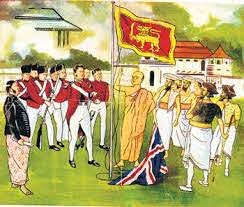
UK that occupied & ruled Sri Lanka from 1803 to 1972 (169 years) and unabashedly committed scores of human rights abuses, crimes against humanity, nowhere near to what the FCO will even dare put to paper, is annually issuing reports on human rights! Politically correct UK is today the home of all things the British, care to do without. Isn’t that what led to Brexit – now isolated & hated by even Europe! They said the sun never set on the British Empire, at the rate UK is going, the sun maybe issued a discrimination card for being colour insensitive! No human rights crimes can come anywhere to what the British committed – in Sri Lanka, they military ate breakfast watching natives being hung, the British sport in then Ceylon was to run after pregnant elephants and shoot them dead, punishment for natives was to throw their children to the crocodiles. No wonder the former colonial rulers do not wish to have their dirty crimes put out and are now secretly destroying colonial records. People will soiled hands have the audacity to preach without atoning for the sins committed over 500 years! If independent former colonies could sanction the countries that committed colonial crimes – UK would be in the wilderness along with all other former colonial countries! That fete is impossible because the former colonial powerhouses quickly put in place international entities that they continue to rule over, maintaining their supremacy.
UK has put 30 countries on its human rights priority list: Afghanistan, Bahrain, Bangladesh, Burundi, Central African Republic, China, Colombia, North Korea, Congo, Egypt, Eritrea, Iran, Iraq, Israel and Occupied Palestinian Territories, Libya, Maldives, Myanmar, Pakistan, Russia, Saudi Arabia, Somalia, South Sudan, Sri Lanka, Sudan, Syria, Turkmenistan, Uzbekistan, Venezuela, Yemen & Zimbabwe.
Ironically, many of these countries are former British colonies! Its baffling how Israel made it to the list considering the many times UK has vetoed UN resolutions against Israel! Its also baffling how Libya & South Sudan made it to the list – Libya was liberated from Gaddafi and every Libyan was promised life would be honky dory, while South Sudan was carved out of Sudan promising freedom and prosperity too!
The countries entering UK’s ‘areas of deterioration’ list not surprisingly are China & Russia. Countries are unlikely to make UK’s human rights blacklist if they allow Jehovah’s Witnesses to do as they like and turn all citizens into LGBT. With so many fact-finding missions demanding access across ‘targeted’ countries – while the access has been given through various arm-twisting, what are the ‘facts’ that have emerged and what have been the solution, is anyone’s guess with no answers!
Fancy UK should mentioning surveillance – didn’t the Grand Chamber of the European Court of Human Rights hearing arguments presented by Amnesty International, Liberty, Privacy International and other human rights organisations from four continents highlight the unlawfulness of the UK’s bulk surveillance practices.
Research by CCTV.co.uk concludes that in London there is now 1 CCTV Camera for every 13 people, meaning there are now 691,000 CCTV Cameras in London. The average Londoner is caught on CCTV 300 times a day.London’s CCTV is a mixture of government surveillance, business security, and private home cctv systems owned by individuals. Inspite, of all the cameras UK police recorded 5.8 million crimes in England and Wales in the 12-month period to year ending June 2020.
Before wagging any human rights violation cards at countries, why don’t UK’s human rights minister look at the manner Julian Assange is being treated. This is what UN special rapporteur on torture & other cruel, inhuman or degrading treatment – Nils Melzer said Unless the UK urgently changes course and alleviates his inhumane situation, Mr. Assange’s continued exposure to arbitrariness and abuse may soon end up costing his life,”The prestigious LANCET group of 60 medical doctors also wrote to the UK Home Secretary to express our serious concerns about the physical and mental health of Julian Assange having documented a history of denial of access to health care and prolonged psychological torture. They did not even receive a response from the UK Home Secretary. There are enough and more campaigns for Assange’s release, all falling on deaf UK Govt ears!
Just because UK Govt issues human rights reports, anyone linked to terrorism cannot be released even if they are a high profile lawyer! UK may well like to look into the legality of the UNHRC Resolutions against Sri Lanka as well as the LTTE fronts operating in the UK – Sri Lanka can well handle the LTTE issues in Sri Lanka. We have not had a single bomb or LTTE suicide mission since the end of LTTE in May 2009. The Islamic terrorist attacks as the Presidential Commission on the Easter Sunday mass murder shows, the utter negligence & incompetence of the government that the West and India helped to bring to power in January 2015 for watching a mass murder take place, even when clues and warnings were given prior to the attack.
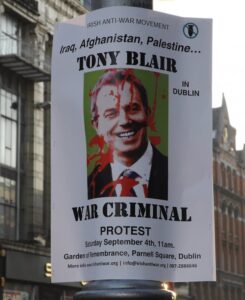
Before referring to military appointments to government roles, the UK may like to explain why UK judges blocked war crimes prosecution against Tony Blair for UK’s role in Iraq war.
While the UK report is whining about delaying parliamentary elections because of covid-19, UK should really explain why it kept mum on Yahapalana govt’s postponement of provincial council elections indefinitely! Where were the reports against the previous government?
Sri Lanka’s covid-response headed by the President, complimented by the health services, armed forces, police and intel agencies ensured that until October 2020 – Sri Lanka had just 13 deaths. Sri Lanka was featured as no.2 world-wide in the effort to combat and respond to covid. UK has 1.4milion covid cases and 54,286 deaths as of 21 Nov 2020.In UK not only are Muslims struggling to find burial plots, but they are even unable to bury their dead in the stipulated time frames. Lord Ahamed may like to find out why Muslims have a higher covid death rate in UK!
In Sri Lanka, Muslims have special marriage and divorce rights, while the majority Sinhalese and Tamils can marry & have one spouse, Muslims have multiple and thereby enjoying special state privileges, they also have special banking and food laws – all new cultural trends, and they have no issues about constructing their places of worship anywhere they like – how many countries afford such rights to minorities.
Sri Lanka’s majority does not have special marriage, divorce, banking or food laws!
The decision of covid cremations rests with the sovereign government elected by the people. UK appointed Trevor Phillips whom British Muslim opposed to investigate into how black & minority ethnic communities bore the brunt of covid cases. Labor MP Yasmi Qureshi tweeted: Labour MP Yasmin Qureshi tweeted: To appoint Trevor Phillips, who has boasted about being labelled as an ‘Islamophobe’ undermines the integrity and credibility of the review.” Over in Sri Lanka inspite of many objections from even the Maha Sangha the present President opted to appoint a Muslim as Sri Lanka’s Justice Minister.
Sri Lanka is no longer a colony of the UK. The British are well advised to remember this.
It would be better for Britain to first account for its colonial crimes committed. Except for 22 countries, the British Empire ruled the world. That rule was nothing rose for the natives – bloodshed, mass murder, scorched earth policies, orders to kill everything that moved including babies are nothing that Britain can walk away from and pretend to be righteous.
We hope Lord Ahmed issues a warning to France’s Macron too!
The
main focus of the budget speech of the prime minister for 2021 has reported
that the reduction of the budget deficit, and creating a production economy in
the country. The idea has been written
in my articles during the past several years as I observed that macroeconomic
issues have been less concentrated by the government since the 1990s. The world
bank had developed and stressed policy correction as a vital policy direction
for reviving economies. The world bank advice was practically result-oriented,
and many developed countries followed the advice and achieved quick results
during the last decade of the 19oo century and the first decade of 2000. Sri
Lanka was the country where adapted radical market economic policies in the
late 1970s, however, the country achieved less economic outcomes from the
market policies compared to many Asia-Pacific countries as the policies have
been implemented without disciplines and clear targets for achieving the
economic strength of the country.
In
this effort, it shouldn’t forget that a successful solution to macroeconomic
problems could not be given by ignoring microeconomic issues. For example, if
it takes a jungle, which has systems of different kinds of plants, the problems
of plants in the jungle as a whole could solve only if it provides solutions to
individual trees or plants in the system. This is the fundamental idea that the
government should understand when policy directions are made on macroeconomic
issues. If we look at the world economy after the cold war developed countries
were efficiently done was while making microeconomic reforms they concentrated
on macroeconomic problems, and it was successful. For example, many developed
countries solved problems of public enterprises by privatizing a large portion
of enterprises holding the control of firms and saved a significant volume of
budget expenditures to retire budget deficits and public debt. This should be a fundamental step to reduce
the budget deficit.
Sri
Lanka has tremendous microeconomic problems in various firms, it is not only in
public investment programs but also in privately owned firms that are concerned
about the many issues such as productivity, excess labor, and various problems. Reforming public and private enterprises would
be the best solution for strengthening the macroeconomy that is involved in
issues such as government budget deficit, public debt, unemployment, trade-related
problems, and many others. When the
problems of individual trees are solved the entire jungle would be quality,
productive, and give high value to the economy. However, the initial policy of
Sri Lanka Podujana Peramuna was not supported to sell public assets overseas
and the same idea expressed by the president expressed addressing the public
recently, it is a good policy, and some local investors are willing to invest
for gaining the ownership of public enterprises. If public enterprises are reformed to higher
returns to shareholders local people ready to invest in shares of public
enterprises and prop up the stock market and job opportunities in the country.
It
is an alternative to selling assets overseas and getting the private sector for
the better management of enterprises. In
the current dynamic environment, public enterprises need to invest more funds
for innovation, technology, and managerial changes, but the owner government
has no funds to allocate such purposes and needs to give the responsibility to
the private sector to manage public enterprises. It will not harm the policy of
the government.
Although
the budget speech of the prime minister focused on the two major macroeconomic
problems, many other issues such as population, unemployment, higher interest
rate, foreign and local debt, and many other problems are associated with the
macroeconomy in the country. Many
macroeconomic issues are associated together with the ideas of the vicious
circle of poverty, and investment is the breaker of macroeconomic problems that
are circled with problems. Mr.Gotabaya Rajapaksa, the president of Sri Lanka
expressed while presenting credentials by the new Chinese Ambassador to Sri
Lanka, Mr. Qi Zenhong that Sri Lanka needs investment instead of further
borrowing in its development drive. My
personal view is China can make a massive investment in Sri Lanka at less risk
and take back profits or reinvesting profits in other fields.
Sri
Lanka wants to stop migrating its labor overseas and investing them in the
country to keep happy people. It will
help to reduce the government’s massive spending on foreign relations and
integrating the culture for development purposes.
The
motives or direction of the prime minister should be treated as excellent
purposes of the budget, opposition politics may not comprehend the motives of
the budget and reported that many irrelevant points raised. They are like
beggars with destitute wounds with an entirely single purpose to gain an
advantage out of the economic problems.
I read a news item that Ms. Diana Gamage wants to grow cannabis and
export them when there are many opportunities for export developments. The opposition politics are so stupids and
Sri Lanka is not an immoral country with desperation for engaging in black
economic activities.
Since
the Korean War in the 1950s, Sri Lanka followed the deficit budget system to
increase the aggregate demand of the country.
There is no doubt that aggregate demand may have increased with the support
of an increasing population. The
negative impact of the deficit budget was enlarging taxes and borrowing. Many developed countries used similar types
of fiscal strategies, the difference between Sri Lanka and developed countries was
that developed countries had a clear plan to reduce the budget deficit, Sri
Lanka has been blindly hanged in the budget deficit without considering
effective methods to reduce the deficit with fiscal strategies.
The
major strategy to reduce the budget deficit is creating a production economy in
the country. It is a very good strategy, however, the negative impact on the
tourism industry and foreign employment by the COVID 19 crisis directs that the
contribution from the agricultural and industrial sectors need to be massively
increased then only Sri Lanka can drive to a production economy. However, the recent statement of the EU on
the restriction of imports showed that Europe is against creating a production
economy and Sri Lanka doesn’t want to respect such self-centered policies. The
experience of Asian countries such as Japan, China, Korea, and India indicate
that they did not hesitate to reject the self-centered policies of other
countries.
The
production economy could be achieved only if the country attracts more investment
for the agriculture and industrial sectors.
There has been a trend in expanding the service sector in developed
countries after the cold war, the COVID crisis showed that the economy is
depending heavily on services would not be helpful always because a crisis in
the world may change the economy quickly affecting the service sector, and
balanced growth is the best policy direction.
Sri
Lanka cannot ignore economic fundamentals and since the 1990s it has been
persistent with popular trends ignoring fundamental problems. The message is that the budget always needs
to focus on reducing the burdens of macroeconomic issues while reforming the
microeconomic problems in individual institutions.
It was obvious not a year that made for pomp and pageantry, even if that was the desire. All issues have been either framed or impacted by Covid19. In any case, he’s not, for example, a Mahinda Rajapaksa. Covid19 of course was so sobering that the contrast was lost. No-frills is good but presidents are not elected to be less or more showy than their predecessors. It’s about manifestos, mandates and delivery. Delivery ran into the Covid19 wall, but this doesn’t mean that it should not be assessed.
Since the country, like the world, has been Covid19-driven, the response needs to be evaluated. One would think.
The Opposition says ‘fail’ and that’s laughable. The worthies in the Opposition ruled the country for 5 years. They brought in a constitutional amendment violating all established procedures and even giving the Supreme Court the proverbial finger. They created kangaroo courts to hound political opponents: hundreds of cases, not a single conviction at the end of five years. If special procedures and institutions were required to circumvent flaws in the judicial system then the architects should have addressed systemic flaws. Failed (even as the ‘kangaroo courts’ functioned) to do so. Failed.
Easter Sunday attacks. Need we say more? A clueless duo at the top of the roost who set new standards for incompetence on all counts. Need we say more? Failed. That was a period when the notion of ‘failed state’ would have been an eminently appropriate descriptive. As predictable, once their pals took over governance reins, they dropped that nomenclature, brushing off the dust for re-use only when they realized that their pals were about to be ousted. And now they have to maintain the lie.
They’ve made some short videos, probably to convince funders that they are still relevant. Paikiasothy Saravanamuttu has talked of militarization, authoritarianism and majoritarianism. He’s mentioned presidential task forces and the appointment of former military chiefs to key positions (in these and in other institutions). He believes some human rights organizations are practicing self-censorship (maybe they have nothing to say/market these days). He whines that their activities are being scrutinized and are being asked about how they spend their money. Well, should they remain unaccountable? We do know that these NGO lords and ladies insisted that their organizations be left out of RTI purview. For a reason. Obviously.
Saravanamuttu also says that the 20th Amendment took us back to the situation in 1978. He has not uttered one word about all the flaws of the 19th, the tinkering associated with it and the confusion regarding executive power which in part facilitated the Easter Sunday attacks. What the 20th did they must bother these people most is removing the Constitutional Council, in which their brethren were members and therefore had a say in appointments to the so-called independent institutions. The CC facilitated the appointment of regime-loyalists to top posts, even violating basic principles of meritocracy in appointments to the Supreme Court. President Rajapaksa, in contrast, without the ‘plus’ of ‘civil society’ involvement, recommended the six senior most judges for promotion to the SC. The president hasn’t insisted that meritocracy should override all else in all spheres. He should.
Bhavani Fonseka talks about the period when parliament was dissolved and elections had been postponed. She’s upset that during this period the President called the shots. Well, it’s not as if at that time some NGO consortium could have been asked to run the country, surely? The Supreme Court was petitions, remember? The SC didn’t find anything wrong.
Ruki Fernando, just like her, has talked of human rights activists being intimidated. Vague claims. No substantiation except for mentioning a lawyer who is under detention. Neither dare mention the reason for detention: suspicion over involvement in Easter Sunday attacks. If a terrorist is a lawyer, journalist or wears some ‘ok’ garb, identity is drawn from dress and not the body it covers. That’s par for the course for these people. Hijaz Hisbullah has not been found guilty. The jury is out. However, one cannot blame a government for refusing to take chances. We saw what THAT policy did just 19 months ago. In the name of celebrating diversity (intent being to deliberately confuse ‘majority’ with ‘majoritarianism’ and ridicule, harass and put down Sinhala Buddhists) and championing freedoms, the yahapalana years saw the entire security apparatus being effectively dismantled.
They’ve developed a sudden love for vulnerable groups and this is a good thing. They are talking about fishermen, people in low income categories, garment workers etc. They are saying that Covid19 has made them more vulnerable. Yes, this is correct. It is however not a reflection of any pohottuwa-policy regime. They won’t say that though.
Then we have Jayadeva Uyangoda, who (unlike Saravanamuttu) says the 20th has given the president more powers than those vested in the office in 1978. No elaboration on this has been offered. The president has more power than those given by the 18th Amendment he says. Well, the 20th didn’t remove the term-limit imposed by the 19th. The passage of the 20th followed proper procedure. SC was petitioned. The Attorney General informed court that certain clauses would be amended at the committee stage (the 19th saw wholesale changes when even the British tradition, which yahapalanists love to refer to, allow only minor changes by the House of Lords), the SC objected to just one article and said it would require both a special majority in parliament (two-thirds) and a referendum. It was duly dropped.
Burial of Muslims who have died on account of Covid19 has been mentioned. There’s an issue here. Again, the government has erred on the side of caution. And that’s a good thing. As has been the case since February this year, decisions have been informed by health authorities and epidemiologists. State institutions and personnel have been tasked accordingly. They’ve worked 24/7. Politicians bragged about the efforts of containment, but not at any point were people told to drop their guard. They were told to follow protection protocols even after curfew was fully lifted.
The second wave was not unanticipated. We still don’t know enough about the behavior of the virus. However, there was a plan and it was executed. Quarantine centers were transformed into intermediate hospitals for asymptomatic patients (tested positive) and symptomatic parties were moved to hospitals. First contacts were asked to self-quarantine. Limited resources have been and are being used efficiently.
There have been complaints about privacy and about people being forcibly taken to quarantine centers. Privacy or death, that’s the issue. Angela Merkel said as much and Germany, as private a country as there is, went along. Those living in bubbles can complain. And it’s not as though anyone can be ‘private’ in the year 2021; certainly not most of the whiners who’ve willingly given enough ‘private data’ when they use credit cards, apple phones, use PickMe or Uber, order food, do their keyboard-‘warrioring’ on social media etc.
Were people herded into quarantine centers? They were certainly not allowed to say ‘no’. The relevant authorities moved and moved fast. Had they not, then containment would have been a problem hundreds of times worse. Again, it’s good that an NGO consortium wasn’t mandated to handle the situation.
So. Gota after a year. No frills. Has he turned Sri Lanka into a country that has reached its full potential? No. Close to it? No. On the road to it? No. There’s a lot to be done. Right now, there’s a need to control the Covid19 situation without compromising the economy. There’s a need to protect the most vulnerable sections of the population. There’s a need to move from aid-dependency to domestic production. There’s a need for development banks to be set up. There’s a need to set up a cooperative bank (which the People’s Bank was supposed to be!). There’s a need for a new constitution which resolves once and for all the big question of what kind of governance structure suits us best: presidential or parliament-driven.
There’s a lot being done without fanfare. Perhaps there’s a big communications-gap. No-frills is nice. No communication is not. Are the people happy? I don’t think so. The Covid-19 situation and all the restrictions have not made for roaring laughter. Does it mean they want the yahapalana failures back in the saddle. Highly unlikely.
It’s too early to say ‘pass’ or ‘fail’ but that day will come. Right now it is absolutely laughable to say ‘fail,’ and hilarious when rank failures make this claim.
The Central Intelligence Agency of the USA, the CIA has several front
organizations, said critics. National
Endowment for Democracy (NED) was one of them. NED is a grant-making
foundation, distributing funds to private non-governmental organizations for
promoting democracy abroad in around 90 countries, said Wikipedia. NED played a role in supporting the Arab
Spring of 2011.[1]
Citizen Participation in Monitoring Economic Development
Centre for Environmental Justice (Guarantee) Limited
$36,000
To promote good governance, adherence to regulations for
transparency and accountability, and the rule of law in Sri Lanka’s development
sector and strengthen legal protection for communities adversely affected by
severe environmental degradation as a result of irresponsible development. The
center will work to ensure that environmental protection laws and procedures
are enforced by conducting a series of meetings with government officials as
well as organizing paralegal trainings and carrying out strategic litigation.
Civic Engagement for Sustained Collective Action
Janawaboda Kendraya
$41,000
To build knowledge and create opportunities for citizens to become
more engaged in the political process at the local level. The organization will
strengthen and sustain the work of its volunteer structures in eleven districts
through programming that incorporates leadership development and community
training on democracy, human rights, and good governance, moderated
discussions, and street theater in an effort to engage citizens and government
officials in the political life of their communities.
Community Mobilization and Political Participation
Human Rights
$68,000
To build the capacity of human rights defenders to support victims
in the pursuit of justice, accountability, and truth. The project will train
human rights defenders in the concepts of democracy, civic engagement, and
international human rights mechanisms and support their efforts to mobilize
victims around prevailing concerns and violations and the ongoing reform
process.
Enhancing Civic Education for High School Students
Social Scientists’ Association
$50,000
To build knowledge and encourage dialogue around issues of
democracy, peacebuilding, and reconciliation among high school teachers and
students. The organization will develop student-friendly videos to supplement
existing materials on the topics of democracy and human rights, justice,
conflict resolution, and local government. It will also train high school
civics teachers on integrating the supplemental videos into the existing
curriculum and discuss ways to introduce difficult, more controversial topics
with students. The grantee will organize seminars for teachers to discuss
civics curricula in the current political context.
Human Rights Documentation and Advocacy
Human Rights
$60,000
To document human rights violations committed during the war and
post-war periods and advocate for justice and accountability. The project will
systematically gather information about atrocities in the north and east,
catalog and analyze it, and distribute it to interested entities. It will
provide feedback to individuals and bodies that solicit ideas on the
development of a transitional justice mechanism.
Improving Legal Literacy on Land Rights
Law and Society Trust
$50,000
To facilitate coordination between civil society and government
authorities for the implementation and reform of existing laws and ordinances
on land rights. The organization will manage a nationwide network of
organizations focused on land rights, convene government officials and citizens
on land laws and policies, document land disputes, and advocate for new,
equitable laws.
Jumpstarting Democratic Reforms Through Increased Access to
Information
Center for International Private Enterprise (CIPE)
$190,013
To improve public knowledge of the government’s economic reform
efforts, and to enhance private sector demand for government transparency in
economic decision making. The center will support a range of activities,
including federal budget monitoring, economic policy analysis, engagement with
regional business organizations on access to information, and private sector
advocacy to catalyze action on the government’s good governance” agenda and
meaningfully move forward on Sri Lanka’s democratization.
Leadership Development for the Promotion and Protection of Human
Rights
Centre for Justice and Change
$30,000
To support the development of community leaders and advocate for
the promotion and protection of human rights in eastern Sri Lanka. The
organization will undertake a multi-faceted program in Trincomalee district
aimed at strengthening the capacity of village leaders, including youth, to
raise awareness about the needs of their communities and advocate on their
behalf. It will also facilitate the engagement of its network members, many of
whom are victims of human rights abuses, in the transitional justice process.
Mobilize Families of the Disappeared in Support of Reconciliation
and Justice
Families of the Disappeared
$30,000
To mobilize families of the disappeared,” in support of
reconciliation and transitional justice. The association will highlight the
systematic nature of disappearances, impunity in past cases, and efforts by
victims’ families to seek redress. It will raise awareness of human rights
violations experienced in the context of the ethnic conflict and leftist
insurrections and commemorate the lives of disappeared citizens. It will also
build support for transitional justice mechanisms and broader democratic values
and reform efforts.
Parliamentary Tracking Tool for Accountability and Good Governance
Verite Research Pvt. Ltd.
$65,000
To promote accountability and good governance through the
application of a web-based parliamentary tracking tool. The organization will
maintain and refine an online platform that documents the biographical
information and political activities of Members of Parliament and conduct
outreach to promote its usage by the media and civil society. Using its data,
the organization will contribute, through articles and other media, to the
political debate around the development and implementation of governmental
policies and legislation.
Promoting Citizen Participation and Local Government
Accountability in Estate Tamil Communities
Uva Shakthi Foundation
$20,000
To promote citizen participation and local government
accountability in Sri Lanka’s estate Tamil communities. The organization will
conduct trainings on governance and democracy to raise awareness among Indian
Origin Tamils working in the estate sector of their roles and responsibilities
as citizens and encourage their full participation in Sri Lankan society.
Promoting Political Participation and National Reconciliation
AFRIEL
$70,000
To increase youth participation in the political process and
involvement in national reconciliation. Through political and civic education
as well as skills development trainings, the organization’s youth network
members will deepen their involvement in the civic life of their communities.
The organization will also consolidate the support of civil society in southern
Sri Lanka to ensure lasting peace and a political solution to ethnic conflict.
Promoting Youth Involvement in Reconciliation
The Social Architects
$40,000
To deepen understanding of transitional justice mechanisms, right
to information, and the multiple experiences and perspectives in
conflict-affected areas. In parallel with the government’s truth and
reconciliation process, the organization will work to bridge the gap between
ethnic communities weakened by deep-rooted suspicion and competing political
narratives. It will also work with government officers to ensure transitional
justice mechanisms are enforced and work with communities to reflect on varying
war experiences and perspectives across ethnic groups.
Seeking Redress for Victims of Human Rights Violations
Centre for Human Rights and Development
$60,000
To raise awareness of and seek redress for victims of human rights
violations. The organization will provide legal aid in cases of human rights
violations, including rape, torture, and detention under the Prevention of
Terrorism Act (PTA), provisions of which are contrary to international human
rights standards. In addition, the organization will conduct advocacy and
public awareness campaigns supporting a more transparent judicial system and
repealing the PTA and other policies that infringe on civil liberties and human
rights.
Seeking Transitional Justice, Reform, and Reconciliation in
Post-War Sri Lanka
The International Working Group on Sri Lanka Ltd.
$40,000
To support post-war transitional justice, reform, and
reconciliation. The organization will coordinate a series of capacity building
training workshops, roundtable discussion to formulate advocacy strategies, and
consultation meetings with elected representatives, policy advisors, and
bureaucrats in conjunction with Sri Lankan civil society activists to mobilize
domestic and international support for meaningful transitional justice efforts.
Seeking Transitional Justice, Reform, and Reconciliation in
Post-War Sri Lanka
The International Working Group on Sri Lanka Ltd.
Supplement: $50,000
To support post-war transitional justice, reform, and
reconciliation. The organization will coordinate a series of capacity-building,
strategy, and advocacy-related activities in conjunction with Sri Lankan and
international civil society activists to mobilize domestic and international support
for meaningful transitional justice efforts. The organization will work with a
broad base of civil society actors to ensure that a multiplicity of viewpoints
is represented.
Strengthening Civil Society Networks for Active Political
Participation
Viluthu, Ltd.
$70,000
To raise awareness of political, social, and economic rights,
provide a venue for reflection and discussion, and empower participants to take
action on issues of concern. The grantee will organize a series of community
discussions and learning workshops aimed at engaging youth, including
university students, and women’s network leaders on democracy, good governance,
and transitional justice.
Strengthening Youth Leadership and Civic Participation in Eastern
Sri Lanka
Trincomalee District Youth Development – AHAM
$30,000
To strengthen the capacity of youth to participate effectively in
the civic life of their communities. The organization will train youth in
leadership development skills and basic principles of democracy and human
rights to prepare them for involvement in civic life and to assume leadership
roles in their communities in Trincomalee and Batticaloa districts.
Youth Leadership Development
Alliance Development Trust
$40,000
To promote democratic values among youth leaders. The organization
will equip youth involved in civic-oriented networks or who have assumed
leadership roles in their communities with a deeper understanding of democratic
principles and values, responsible citizenship, and rule of law. Youth will
subsequently share the knowledge gained with their networks. End of list. (continued)
Here are some activities of the US before and
after the Yahapalana puppet government came to power.
American
Bar Association
American Bar Association (ABA) made repeated attempts to register a Branch Association of the ABA in Sri Lanka. The first request was in January 2018. The Bar Association of Sri Lanka strongly objected. Nowhere in the world will a legal system permit a foreign Bar Association to set up a branch office.
It is an unprecedented request and if allowed will have serious
consequences on the independence of the legal profession and on Sri Lanka’s independence, they said. ABA
will start making comments and statements on internal matters and that will
have an impact on Sri Lanka‘s sovereignty. Also
what will Sri Lanka do if other foreign Bar Associations also ask to set up
offices.
ABA then tried to come in as an NGO. ABA made a request to the
Ministry of Justice, through a local legal firm, asking it to issue a letter to
register the ABA here as an NGO. This request was also referred to the BASL
which rejected it.
Prasad
Kariyawasam
In June 2019
it transpired that former Foreign Ministry Secretary Prasad Kariyawasam had been appointed to Parliament as an
International Affairs adviser to the Speaker. This
is the first time in Sri Lanka that a
Speaker has had the services of an international affairs advisor, MPs
commented. There is no such position as
International Affairs adviser among the list of officials in Parliament.
Speaker Karu Jayasuriya said USAID is funding different projects
in Parliament through its agent, Development Alternatives Incorporated . Development
Alternatives Incorporated is a known CIA front. Its specialty is ‘democracy
promotion’ said Kamal
Wickremasinghe.
DAI had
initially selected Karunathilaka Amunugama, another former Foreign Ministry
secretary for the role of adviser, but he had passed away a day before
commencing duties. Kariyawasam was
appointed as his replacement.
DAI had given
Rs. 2,000 million for a programme called Parliamentary Diplomacy”, to foster
close relations with other Parliaments worldwide, and also facilitate exchange
programmes for MPs and Parliament staff.
Kariyawasam is assisting in this programme, the Speaker
said. He is coordinating the Parliamentary Diplomacy group involving around
50-60 countries. These programmes facilitate MPs to travel to foreign countries
to understand how Parliaments function there. Kariyawasam
also assists me in obtaining scholarships
for parliamentarians he said.
Speaker admitted
that Kariyawasam was being paid by Development Alternatives, not by Parliament.
In July 2019 Speaker announced that the salary of Prasad Kariyawasam, would be
met from Parliament funds.
Prasad
Kariyawasam had also arranged for
the ambassadors of the Organization of Islamic Cooperation
Countries (OIC) to come to Parliament to meet the Speaker. The diplomats
included those from Afghanistan, Bangladesh, Egypt, Indonesia, Iran, Iraq,
Libya, Kuwait, Malaysia, Oman, Pakistan, Palestine, Qatar, Saudi Arabia and
Turkey. Director of the State Intelligence Service (SIS) and the Director of
Military Intelligence were also present.
MPs questioned this. The task of summoning
Colombo-based diplomats is the sole
responsibility of the Foreign Minister or his Ministry Secretary. It is also
the responsibility of the President or the Prime Minister, particularly during emergencies.
The intelligence chief of the country, who knows all the intelligence and
secret information, including investigations that are ongoing, was summoned for
the meeting, along with the IGP. Summoning the intelligence chief in front of
foreign envoys has not been done by any other Speaker.
Speaker explained I convened
a meeting of envoys of these Muslim countries in Parliament to brief them on
the latest situation. The IGP came for this meeting, along with other senior
officers. Meeting was to brief the envoys of the Muslim countries and ease
their fears. The meeting was held with good intentions to explain the current
situation and give a guarantee on security. There was no leaking of state secrets.”
Would it not
have been better to ask the Foreign Ministry to invite these envoys, countered MPs. This clearly
shows that Kariyawasam was running a parallel operation, commented the media.
US Peace
Corps
In February 2018
Yahapalana signed an agreement with the US to re-establish a US Peace
Corps programme in Sri Lanka. The negotiations had started in 2016 . The Peace
Corps was returning to Sri Lanka after some 20 years.
The first 25 American Peace Corps Volunteers will arrive in Sri
Lanka in late 2019 and undergo three months of comprehensive cultural, language
and technical training before they are given their assignments to serve for two
years.
The US Peace Corps evolved from a CIA front known as the
International Voluntary Services during
preparations for the war against Vietnam. The US Peace Corps has been expelled
from a number of countries for spying for the CIA, meddling in local politics,
and running drugs. Indonesia ordered
them out in 1965, after 16 months.
Pakistan and India refused to renew approval of Peace Corp projects in
their countries in the early 1970s.
Peace Corp
volunteers in Sri Lanka will focus on English language education. They will
complement the English teaching programs funded by the U.S. Embassy and the
U.S. Agency for International Development.
They will be
given diplomatic privileges. The
Diplomatic Privileges Act provisions have been invoked for the Peace Corp and persons performing
functions under contract with the Peace Corps and their dependents.
The
Government will provide to the Peace Corps and their families, the same exemptions with respect to taxes,
income, customs duty as provided to those in the Embassy of the United States in
accordance with the Vienna Convention on Diplomatic Relations.
Why has teaching English to Sri Lankan children becomes such an
urgent priority, asked Kamal Wickremasinghe. Because US wishes to place
persons at grass roots level in Sri Lankan villages, close to the 2019
election, came the reply.The return of
the controversial US Peace Corps, in 2019 shows Washington’s fears about the
forthcoming General and Presidential
Elections, observed Tamara Kunanayagam.
Working
Group on Labor Law Reforms
National
Labor Advisory Committee (NLAC) was told in July 2017, that the Government has
decided to appoint a Working Group on Labor Law Reforms, in collaboration with
USAID. Trade unions strongly objected
to this. Neither the Ministry of
Development Strategies and International Trade nor USAID has any right to
intervene in reforming labour laws in Sri Lanka, they said. Labor reform came
under the Labour Department and the Ministry of Labor. There is a well tested tripartite mechanism
including trade unions and employer representation for this purpose. What was the actual intention behind this
urge to reform labour laws of the country, the trade unions asked.
Trimble Navigation
The Government Surveyors’ Association (GSA) said in January 2017,
that there was a move to hand over several operations of the Sri Lanka Survey
Department (SLSD), including Land Information System (LIS) and Aerial Survey
Operations to Trimble Navigation , a US-based company,
for 15 years. ‘The required plans
are already in place to complete the transfer. This may help to revive the abandoned US Tropical
Forest Act as well said observers.
Trimble
Navigation Ltd, a US company, has forwarded a proposal for ‘Title/Tenure
Regularisation and Cadastral Registry Modernisation’ in Sri Lanka. A high level
committee headed by Prime Minister’s senior advisor R. Paskeralingam had
recommended this proposal and the
Cabinet Committee on Economic Management (CCEM), within the Prime Minister
office, had approved it.
The Minister for Lands told the Surveyors
Association that the government has decided to implement the proposal and the
Association must support the project. Trimble would work with the Ministry of
Lands to identify 2.5 million state-owned lands and help to give permanent
titles to the persons currently occupying these lands. Bim Saviya programme
launched during the previous Rajapaksa regime has become a white elephant. Only 405,000 title deeds were issued from
2005.
The surveyors
observed that the main functions of the Sri Lanka Survey Department, as well as
its Land Information System (LIS) and Aerial Survey Operations would be vested
in Trimble for 15 years. Survey
Department staff and resources will also go to Trimble. 400 public surveyors
and 200 additional private surveyors with crews will serve under Trimble,
conducting pre-survey, survey and data collection. If Trimble is given the management of Sri
Lanka Survey Department, then Trimble will take control of Sri Lanka’s
electronic land register and details of lands. This will be a threat to
country’s national security, said the surveyors.
Galagodaatte
Gnanasara thera
Before 2012,
Galagodaatte Gnanasara thera was
completely unknown to the public,
said C.A.Chandraprema. He said
that even he never knew such a monk existed. When Gnanasara’s name came up for
the first time in the anti-Halal campaign of 2013, journalists
had confused him with Gangaramaya’s Ven. Galaboda Gnanissara. That was how
unknown Gnanasara was at that time, said Chandraprema.
However, the
monk was known to the USA. Galagodaatte Gnanasara thera was given a five- year
multiple entry visa to USA, in 2011, sometime
after he had begun a campaign of hatred and incitement of
violence,on religious issues.
On what basis
did Gnanasara qualify for a five year multiple entry visa to the USA as far
back as 2011 asked
Chandraprema. How is it that the US embassy issued a five-year multiple entry
visa to an unknown monk whose only claim to fame at that time was having
pleaded guilty to a change of drunk driving and having disrupted meetings of
the Anti-War Front . For a Buddhist monk to plead guilty to a charge of drunk
driving was very unusual and was probably the first time that such a thing
occurred in Sri Lanka’s history.
Then in 2014
the visa was cancelled. The US
authorities appear to have panicked that if this monk made another visit to the
USA on this visa in the middle of all this controversy, their role in all this
mayhem would be badly exposed, said Chandraprema. (Continued)
There is
speculation that Western intelligence agencies had a hand in the
well-coordinated, precision-timed Easter suicide bombings in Sri Lanka, said
Lasanda Kurukulasuriya. How otherwise
could a little-known group, ‘National Thawheed Jamaath’ have orchestrated such a feat.
The Easter
bomb attacks in Sri Lanka are a part
of a series of puzzling attacks by
little-known terror outfits , taking place in several countries, said Lasanda.
But there is one common factor. All the
countries facing such attacks have been states benefiting from China’s Belt and
Road Initiative (BRI). They include
Myanmar, Pakistan, Bangladesh and Sri Lanka.
In Myanmar in
2017 a little-known terrorist group called the Arakan Rohingya Salvation Army
(ARSA) staged attacks on security posts in Rakhine state, sparking a crackdown
on the Rohingya community. Rakhine state is home to Sittwe port and a starting
point of BRI projects linking Myanmar with China’s Kunming city. The leader of
ARSA is said to be a Rohingya born in
Pakistan and raised in Saudi Arabia.
The
Philippines, whose President Rodrigo Duterte in 2016 threatened to ditch its
longtime military alliance with the US and turn to China, faced an attack by
ISIS terrorists in 2017 in Marawi,
helping USA to further consolidate their military presence.
Five people
were killed in Pakistan’s Baluchistan province, in June 2019
in an attack on a star class hotel located near the port of Gwadar,
which is being modernized under China’s BRI. Baluch separatists claimed
responsibility. Thereafter Baluch Liberation Army carried out a dozen attacks
in 2018 against Chinese-linked projects. In November, the group attacked a
Chinese consulate in Karachi.
All these attacks had some sort of
link to ISIS. ISIS sudden appearance everywhere China is
attempting to do business, fits
Washington’s use of extremism to manipulate
situations wherever its standing armies cannot afford to intervene. Also, such attacks offer an entry-point for
Western-sponsored counter-terrorism activity or humanitarian assistance, said
Lasanda.
ISIS, like Al Qaeda before it, is a creation of the US intelligence agencies. There is ample
evidence in defence related research papers, to prove that ISIS was created,
sponsored and used by US secret agencies in pursuing the US foreign
policy. It was used to intervene in countries of strategic importance. The
interventions were for regime change, weakening the state, disintegration
of society and finally invasion/occupation by US army, said K.M.Wasantha
Bandara.
The targeting of Sri Lanka was
therefore not surprising. Two of the
sea-front hotels that came under April attacks, Shangri La and Kingsbury,
overlooked the $1.4 billion Port City project, China’s single biggest
infrastructure investment in Sri Lanka.
Analysts also observed that when US Secretary
of State Pompeo visited in October 2020, he made a special visit to St
Anthony’s church, Kochchikade, one of the churches affected by the bomb blast,
and said that the bomb blast was the work of ISIS.
Soon after
the bomb attacks, Western intelligence agencies rushed in to assist in the
investigations. A team from the Federal Investigation Bureau (FBI) of the
United States arrived in Sri Lanka on
April 23, two days
after the bomb blast, to assist in
the investigations. Britain sent in
ten or twelve Mi-5 (intelligence) personnel. There were over 40 such foreign personnel in Sri Lanka
altogether, said Wimal Weerawansa in Parliament.
The FBI team
came reportedly at the invitation of the Government of Sri Lanka. All the
foreign agencies worked along with the CID. They did so on our request,” said Police
spokesperson, SP Ruwan Gunasekera. But
President Sirisena said we did not invite them. They came on their own. My
people are complaining that they cannot go ahead with their work since each
group is asking them for briefings”.
No information has been revealed, to date, on
the work carried out by the foreign agencies (said to be ‘technical’
assistance) or on how these inputs assisted the CID in its probe, observed
Lasanda .
An unnamed US
embassy official reportedly told a group of journalists that the FBI assisted
in analyzing the suicide bombers’ phone data, continued Lasanda. There is
reason to believe however that the FBI in fact REMOVED the suicide bombers
phones and other devices at an early stage, pre-empting the retrieval of vital
evidence by local investigators.
All the
bombers are dead. Their electronic devices have been taken away by the US
Federal Bureau of Investigation (FBI) which is helping the Lankans in the
probe,” an Indian Home Ministry official told the Indian Express. Unless the
data from these devices is made available, little will be known of the bombers
links” .
This means
that Sri Lankan investigators, and the rest of the world, will not get to know what was recorded in those
devices, that might have given a clue as to who the suicide bombers’ immediate
handlers were, commented Lasanda.
The question then arises as to whether the Americans in fact
sabotaged the investigation, under the pretext of assisting with forensic
analysis of the phones and devices, calling it ‘technical assistance.’
Asked whether the FBI had ‘taken away’ the bombers’ phones, Police
Spokesman SP Ruwan Gunasekera replied
that he was ‘unable to give that information.’ He also did not say whether the
Sri Lankan investigators had the opportunity
to analyze the devices before they were handed over to the FBI, and whether the
devices had been returned, said Lasanda.
It is now
very clear, and beyond any doubt that the US government is contemplating a
military intervention in Sri Lanka, when
a suitable situation arises, said analysts. The Easter Sunday bomb
explosions were planned to provide such
an opening.
The bombings,
which targeted Catholic churches and 5-star tourist hotels, came like a bolt from the blue. They
devastated the peace and relative stability that prevailed in the island,
observed Lasanda. The attacks were intended to bring the country to a
standstill. The country did come to a brief stand still. Shops and schools were
closed, all activities cancelled, people were asked to stay in their houses.
They also
affected the economy . The attacks on hotels affected the tourist trade Hoteliers
said they were heavily indebted to banks and would find it impossible to pay
their dues.
Small and
medium stakeholders in the industry, such as internal airlines, cabs , taxi and
three-wheel drivers, tour guides , tour operators and those engaged in the sale
of gem and jewellery to tourists, small
vegetable and fish suppliers to the hotels and restaurants, small shop owners,
surfing board suppliers and supporting labour, helpers and material suppliers
to the construction industry in the hotel sector, were also affected.
According to the “Shock Doctrine” theory, which we are told has been successfully
tested by CIA, a massive shock exerted on a society through extreme violence
will lead to a state of confusion and weakness which will help the US to walk
in and take over that country. The
concept of ‘Shock Doctrine’ was
applied to economic change, by its author, Naomi Klein, but it is far more
applicable to political change.
When disasters take place, citizens are too emotionally and
physically distracted by the disasters
to mount an effective resistance, and US will be able to intervene, observed analysts. If there are any more suicide bomb attacks or
if wide spread communal violence could be instigated, the US Army will get the
chance to enter the country, said critics. They could use R2P added others.
USA
thought that after the Easter attack
there will be a more violence, extreme disorder and
chaos. That did not
happen. The security forces ignored President Sirisena and Prime Minister
Ranil Wickremesinghe and acted fast. They possessed the necessary intelligence.
The second set of bombs was prevented. Those bombers died at Senthamaru.
Security forces then started to arrest those preparing for the third bomb blast.
Therefore, these attacks did not create the anticipated
‘Shock’. Instead there was remarkable
resilience . There was deep anger
and a firm wish to see to that
these attacks were not repeated. An
immediate message to this effect was sent to the Muslim community through a
silent boycott of Muslim shops.
There was a
short-lived spell of politically-instigated violence in the North Western
Province and Gampaha district. Apart from this,
communal harmony was maintained. In a highly volatile situation where a
religious minority had been targeted by extremists of another religious minority,
the Sangha and the Catholic Church led by Cardinal Malcolm Ranjith, head of the
Catholic Church ensured that there was no religious rioting, observed Lasanda.
Cardinal Malcolm Ranjith said openly and repeatedly that foreign forces were behind
the attacks, it was not a local development. He publicly and repeatedly asked
for a proper inquiry into the bomb blasts.
It is only then that the truth will emerge.” The
investigations conducted by the
Yahapalana government are a
sham” he said.
Catholic MPs Johnston
Fernando, Nimal Lansa, Indika Anurudda, Sudarshini Fernandopulle, Sanath
Nishantha and Arundika Fernando wrote to
the President, asking for a proper inquiry.
In this letter, they said that His Eminence Cardinal Ranjith has mentioned on numerous occasions that
neither he nor the Christian community has any faith in the manner
investigations are carried out. Certain political leaders in the
government had provided political asylum
to persons connected to event.
The implication was that the Yahapalana government was also
complicit in the bomb attacks. Since the Yahapalana government was seen as a
puppet government of the US, this was possible.
One aspect of this event has been ignored. Mahinda Rajapaksa’s
appointment as Prime Minister in October
2018 was dismissed on the grounds that
it went against Fundamental Rights. The appointment, was however, perfectly legal. Ranil Wickremesinghe had to be freshly sworn in once Rajapaksa was dismissed.
Now, if the Mahinda Rajapaksa government had been allowed to
continue, then there would not have been an Easter Sunday bomb blast. Mahinda Rajapaksa and Gotabhaya Rajapakse
would have seen the significance of Mawanella, Vanatha villu and the
Kattankudy motor cycle . They would have
responded promptly to the Indian alert. The Catholic Church would have been
informed. Hotels would have been alerted.
It was observed that civil
society had been jubilant when Mahinda Rajapaksa was removed from the post of
Prime Minister .
After the April Bomb explosions, there were two other ‘clandestine US operations in
Colombo’. Soon after the April 21 bomb
explosion two US government employees were detected at the Hilton Colombo
Residencies with explosives detectors. Sniffer dogs had traced the equipment to
their apartment, reported Island..
Thereafter, security staff at the Hilton Colombo had thwarted an
attempt by five US government officials to check in along with six boxes on the
night of July 30, 2019. The American
delegation had declined to allow the security staff to scan the boxes. The US
delegation had then handed over one of the six boxes for scanning and loaded
the rest to a US embassy vehicle and moved them somewhere else.
Wimal Weerawansa released
visa photographs of the entire US team to the media, alleging the group had arrived
in a private aircraft. The five-member team had left two days later without the
controversial cargo. Weerawansa asked
whether the boxes that were sent away in a US embassy vehicle were still in the
country or spirited out when the team left for the Maldives. What did those boxes contain.
These boxes had evaded checks at Customs too. Nagananda
Kodituwakku sought information from Director General, Customs regarding the
circumstances under which her officers exempted US military cargo from
mandatory checks.
Former UPFA MP M.M. Zuhair
commented: “The alleged refusal by six US nationals to subject five of
their ‘mystery’ boxes to scanning and security clearance at the Bandaranaike
International Airport and also later at Hilton Colombo Residences on 30 July
2019, warrants a credible investigation to ascertain the contents of the boxes
and whether the US personnel were entitled to any privileges of non-disclosure.
“Nothing prevented the six US military personnel from
subjecting their baggage to scanning even if they were accredited diplomats.
Diplomatic bags containing diplomatic communications and correspondence are
protected from being opened. Personal baggage of accredited diplomats cannot be
used for smuggling prohibited or restricted goods, said Zuhair. (Continued)
Undoubtedly, increasing the retirement age has its merits, but one also wonders if, under the present trying economic circumstances, the Sri Lankan private can manage to keep employees for five extra years.
Colombo, November 21(newsin.asia) : When presenting the budget for 2021 a few days ago, the Sri Lankan government proposed to increase the retirement age in the private sector from 55 to 60 years.
Undoubtedly, increasing the retirement age has its merits, but one also wonders if, under the present trying circumstances, with the economy in the doldrums owing to the Covid-19 pandemic, the private sector can bear the extra cost of keeping ageing employees for five more years.
The cost of extended employment includes payment of salaries and making contributions to the Employees Provident Fund and the Employees Trust Fund for a further five years.
At present, no private sector employer is compelled to retain the services of an employee who has reached the age of 55. However, most companies give adequate notice of termination to the retiring employees. Some are retained on humanitarian grounds for an extra 6 months or a year to give them adequate time to find alternate employment. There are also some employers, especially in the apparel sector, who extend the services of technical staff/workers at retirement age and beyond because these are highly trained and skilled. Such employees are hard to replace. They also cannot be lost to competitors.
However, the context in which this system existed has changed radically with the pandemic-induced economic crisis in Sri Lanka and the world at large. Lanka’s principal economic sectors like apparels, tourism and tea, have been badly hit, with factory closures, zero tourists, and imports and exports dwindling to a mere trickle. Ports too are crippled, so much so that the government has had to call for the return of retirees to overcome the labor shortage.
While the scaling down of operations has resulted in retrenchment and lowering of wages, the government has also been under increasing pressure to stop the decline in employment and provide employment to the unemployed. Among the steps taken by the government to remedy the situation are increasing public expenditure on infrastructure projects and providing employment to 100,000 poorest of the poor. In addition to these steps, there is a provision in the 2021 budget for increasing the retirement age in the private sector from 55 to 60.
Though not explicitly stated, the government sees increasing the retirement age as a way of mitigating unemployment. The official reason is that the increase in the retirement age is due to the change in life expectancy which has been increasing in Sri Lanka.
Be that as it may, the argument based on the increase in life expectancy is equally valid given the changes in the retirement age taking place in the rest of the world citing an increase in life expectancy.
Let’s look at some of the retirement age figures from other countries. In the United States, the retirement age is 65 years and it is expected to be increased gradually to 67 by 2023 for those born in 1960 or later. In the UK, the pensionable age steadied at 65 in 2018, but plans are afoot to increase it to 66 by 2020; to 67 by 2028; and to 68 by 2037. Australia also shows an upward trend. It is now 67 years, but it will be upwardly revised again in 2023. Looking at our immediate neighbor, India, the retirement age is the same as in our public sector, but they plan to increase it to 65 by 2028. In Pakistan, last year, the government got approval to increase the retirement age from 60 to 63.
But like Sri Lanka, these countries have also run into a severe economic downturn due to the COVID-19 pandemic. Unemployment is rampant. One wonders if their plans to increase the retirement age would actually be implemented under the changed circumstances.
Taking the case of Sri Lanka, the Free Trade Zone Manufacturer’s Association (FTZMA) has reportedly urged the government to examine how the private sector can change its labor policies in the event of it’s extending the retirement age from 55 to 60 years with the pandemic unlikely to go away anytime soon.
It has to be recognized that the main sectors of the Sri Lankan economy are badly hit and unable to retain the services of even younger workers, leave alone older employees. Employers have been engaging in cost-cutting exercises like encouraging workers and other staff to opt for voluntary retirement whilst retaining the services of those who are deemed important to sustain the business.
World-wide, policy-makers generally look at factors like the nature of the job, the state of health, life expectancy, and productivity when deciding the retirement age. But some authorities (like FTZMA in Sri Lanka) question whether an increase in life expectancy is a good enough reason to increase the age of retirement. They cite non-efficiency/non-productiveness of the higher age-groups to discredit the idea. It is also pointed out that increasing the retiring age will block opportunities for younger age-groups when unemployment in the latter age group is worrying. And let’s not forget, youth unemployment can trigger social and political unrest to the detriment of the country.
In Sri Lanka, the retirement age of public sector employees is 60, whereas in the private sector, it is 55 (with the possibility of extending on contract-basis until 60). Indeed, 55 years is very low, considering that the employees’ retirement life could be longer than their working life, as average life expectancy in Sri Lanka now exceeds 75 years.
It is found that in the many companies listed in the Colombo Stock Exchange, almost 60% of those serving on the boards are between 60 and 70 years of age! Clearly, the private sector is not oblivious to the value of experience and wisdom which comes with age. Therefore, the private sector should be able to continue to give senior persons the key task of providing leadership. There is no reason why the knowledge and experience of employees above 55 should not be harnessed by extending the retirement age.
Look at our policymakers in Parliament! According to a post in the parliament website, in 2018, one out of every nine MPs would be more than 70 years of age by August 2020. This reflected the age profile of the general Sri Lankan population. In 2012, senior citizens accounted for 2.5 million out of a total Lankan population of 21 million (12.5%). This was expected to increase to 16.7% by 2021.
While some of the senior MPs, including cabinet ministers, dose off during debates, others seniors have proved to be as alert and active as the younger set. If one were to look around, there are people between 55 and 70, who are still productive and can be engaged. Some of those who are compelled to retire at 55, continue working informally rather than lead a sedentary life, become unhealthy and develop a bad temper. With a reduction or elimination of income, they may end up getting depressed, aging faster, and requiring special and increasingly expensive geriatric care.
In fact, employers can benefit from retaining senior people, who are generally more mature, patient and focused than the younger set. The quality of output may also be better. Seniors would also demand less than the younger employees do and show a lessor tendency to switch jobs for small gains. Seniors would work for less to keep their body and soul together. Studies in Japan have also shown how family-like” long-standing ties between managements and workers have contributed to the success of enterprises.
Existence of yuppies in a company may give the impression that it is into a new age and rearing to go, but yuppies also run up huge overheads in terms of high salaries, bonuses and allowances for entertainment and travel. They may also show less commitment to the company, looking, as they often do, for fresher pastures.
Consolidation is inevitable, says Booking.com’s Mehrotra
Even though some demand has started coming back, the travel industry may take years to get back to pre-pandemic business level, said Ritu Mehrotra, country manager — India, Sri Lanka, Maldives at Booking.com.
Travel industry was one of the first industries to be hit and I think one of the last industries to maybe make a comeback,” she said in an interview.
There are pockets where we are seeing demand coming up. We also feel that recovery will happen. It may take time,” she added.
She added that it may not just take quarters but years for the industry to reach pre-COVID-19 levels.
Pointing out that globally over a dozen airlines have had to shut shop, she said that impact across sectors had been severe and she expected to see consolidation in the travel industry.
I think that the fittest will win the battle and it is very important for companies to have a razor-sharp focus on their operating costs and besides, consolidation is inevitable, in my mind,” she said.
Ms. Mehrotra added there was a need for greater collaboration between the industry and government.
No one company or no one player in the market can beat this kind of a pandemic. To support recovery, the government will have to consider subsidising consumer holidays. This is something that we have seen in a lot of other countries like Thailand, Japan and Italy.”
Booking.com is also in conversation with the Ministry of Tourism on how to make India as one of the topmost destinations for travel, post corona.
I also feel that the government has a very large task in hand and so far, they have been able to support…there was a relaxation in taxes just a couple of months back.” she said.
I will not speak on behalf of the hotel partners because their business model works very differently and it’s very capex heavy as well,” she said, adding that while there was some rationalisation of taxes previously, taxes in India are still on a higher side compared with countries such as Thailand and Malaysia.
Booking.com has incorporated health and safety policies on its platform, which have been adopted by 14 million partners globally and 0.7 million partners in India. According to a recent survey by the company, 77% of Indian travellers will only book a particular accommodation if it’s clear what health and hygiene policies it has in place.
On the current demand trends, Ms. Mehrotra said globally, the platform is seeing a preference for alternative accommodation such as villas, apartments, beach huts and homestays.
This business has increased from 20% to 40% for Booking.com. Additionally, domestic travel has become a focus area. Our domestic business globally was 40%, which has now moved to 70% and in India, we were anyways much higher,” she said. Ms. Mehrotra added that almost 52% of Indian travellers still plan to travel within the country in the medium term (7 months-12 months), with 41% planning to do so in the longer term. Additionally, 70% of Indian travellers want to travel more sustainably in the future.
Rahul Singh and Sunetra Choudhury courtesy Hindustan Times, New Delhi
The two pilot officers were commissioned as military pilots in Sri Lanka earlier this week, a year after they completed a crucial part of their flying training at the Dundigal-based Air Force Academy near Hyderabad in 2018-19.
Officers Pavithra Gunaratne and Rangana Weerawardhana were commissioned as military pilots in Sri Lanka this week. (SLAF)
Rangana Weerawardhana and Pavithra Gunaratne, the first women pilots in Sri Lanka’s air force, expressed gratitude to the Indian Air Force on Friday for helping them script military history in the island nation.
The two pilot officers were commissioned as military pilots in Sri Lanka earlier this week, a year after they completed a crucial part of their flying training at the Dundigal-based Air Force Academy near Hyderabad in 2018-19.
Becoming a military pilot was a childhood dream,” said Weerawardhana. We never thought we would get an opportunity to pursue flying training at AFA, Hyderabad. We would like to take this opportunity to express our gratitude to IAF for helping us achieve our dreams,” she said.
Watching the Su-30 and other fighter aircraft was like a dream come true. It further strengthened our resolve to become military pilots,” she said, recalling a study tour to Pune where they saw the IAF’s Sukhoi-30 fighter planes for the first time.
Weerwardhana also became the first woman in SLAF’s history to command a parade at the commissioning parade on November 16 at the SLAF Academy in China Bay. The pilot officer was also awarded the Sword of Honour for outstanding all-round performance.
The two women, who were among the 53 cadets commissioned as officers this week, started training with the SLAF in July 2017 and were sent to India after they completed a basic combat course.
At AFA, they completed their basic flying training on the Pilatus PC-7 MkII aircraft, before returning to Sri Lanka last year, for their advanced training on the Chinese Y-12 light transport aircraft.
Ahead of joining the AFA in June 2018, Weerawardhana and Gunaratne said, they watched several documentaries on the AFA to get a sense of the IAF’s training activities and the challenges they would be up for in Hyderabad.
Recalling their visit to India as their first trip abroad, the two women fondly recalled their IAF instructors. The specialty of military flying is to achieve expected levels of performance in a limited time. These levels cannot be achieved individually,” Gunaratne said.
The performance of a cadet is a not just the reflection of his or her effort but also the effort of the instructor, she said. The perfect guidance given by our instructors raised our confidence. We should also not forget the contribution of the methodical training programme towards the performance of the student,” Gunaratne said.
Both agreed that despite excitement for the training in India, they were also uncertain about what would follow. We had a feeling of uncertainty when we started our basic flying training. The PC-7 is a sophisticated aircraft with modern systems. We felt proud when we got into the cockpit first time. We worked really hard to complete the basic flying course successfully. Methodical use of flying simulators helped a great deal,” said Weerawardhana.
Gunaratne fondly remembered her fellow Indian cadets at the AFA, and said, They were like our brothers and sisters who made us feel at home throughout the training period. Their smiling faces gave us extra strength during the rigourous training. The stories we shared during leisure gave us an opportunity to have a great understanding of each other’s cultures and traditions.”
We had great excitement when we stepped into the AFA. The feeling we had was totally opposite on the day we had to return to our country. With all the memories of the academy and India, it was not easy for us to leave,” Gunaratne said.
Chennai, Nov 21 (ANI): After inaugurating various development projects in Tamil Nadu, Home Minister Amit Shah said, When PM Modi visited Sri Lanka, he didn’t forget Jaffna. He visited Tamil colonies there & met with Tamil brothers & sisters. He laid foundation stone for providing them houses. Over 50,000 Tamils will get houses & damaged temples will be rejuvenated in Sri Lanka.”
For cunningly of old was the celebrated saying revealed: evil sometimes seems good to a man whose mind a god leads to destruction.
The ancient scholiast on these verses
says:
When a god plans harm against a man, he first
damages the mind of the man he is plotting against.
More precisely, and in a contemporary sense, are
we witnessing this phenomenon now in the citadel (supposedly) of democracy? Are
we witnessing it in the very country that preaches, interferes, cajoles,
bribes, creates unrest and security issues in other countries all in the name
of democracy? Are we witnessing it in the country which exports
destabilisation, mayhem and horror all in the name of democracy? The Middle
East today is one such instance. There is hardly any democracy in the countries
that were interfered with. Prior to these destructive adventures, a country
that suffered in the hands of this exporter, Vietnam, has since prospered not
on account of democracy, but what they term market Socialism in a one party
Communist State.
Donald Trump has taken the USA down an abyss of
despair and duplicity. Joe Biden and Kamala Harris will have a tough time
resurrecting some trust and confidence that their own people, and others in the
rest of the world, had with the USA. The longer Trump lingers, the deeper is
the fall to this abyss and the more difficult it will be to get out of it.
Unfortunately, it is not just some sycophants
that Trump has taken with him, but some 70 Million voters and probably millions
of deaf, dumb and blind supporters in other parts of the world.
It is unfathomable why 70 million people voted
for this individual who appears to be of unsound mind. They have made a mockery
of what is just, what is right, what is moral and what is decent. Some amongst
this lot have cut their noses to spite their faces, some have voted from a
Cuckoo land, some have voted as they only know, and that is to put a cross
against a Republican candidate even if that candidate is a broom stick. This 70
million had disgraced all that has been good about the USA. They have not made
an informed decision, they have taken recklessness to a new height.
By voting for Trump, they have voted to lie,
they have voted to degrade women, they have voted to widen the racial divide in
the country and they have voted to widen the inequality in the country. It is
mind boggling that some Republicans who do not have any health cover and who
are bordering on poverty and who are down trodden even as whites, have voted to
fall deeper into poverty and to die early without proper health care.
Many traditional Republicans should have opted
to choose another candidate to be their Presidential nominee and spared the
country from this embarrassment or could have decided to boycott the election
if they found it not within them to vote otherwise. Instead, they have become
complicit to this embarrassment not just to the USA but to the rest of the
world.
In the age of information technology, the world
has become smaller and closer to each other whether one likes it or not, and
whether it is a good thing or a bad thing. Various social media platforms link
people with each other before one could blink an eye and millions are inter
connected. There is computer hacking, listening in, cyber spying and all the
evils of this information technology bringing out the worst in human beings.
Internationalisation today is inevitable and the
world has to find ways and means of capitalising on the positives and taking
collective action against the negatives. Countries cannot crawl into the
cocoons and pretend they can live happy ever after by doing so.
Trump has led the way for cocooning the USA from
the rest of the world and fooling 70 million people that they can metamorphose
into freely fluttering Butterflies. Most if not all international cooperation
agreements have soured under Trump. Rather than improving them and bringing
better benefits for them, Trump has taken the view that small is beautiful.
Judging by the tax concessions and other benefits to the rich in the USA, his
policies have been beautiful for a small coterie of supporters.
Will Trump handover the Presidency to Joe Biden
on the 20th of January 2021? He may not have a choice but to do so.
Where he has a choice is to usher an orderly transition and give a message to
his supporters to avail themselves with a future opportunity to vote whichever
way they choose and vote in a Republican President if that is there choice.
The rest of the world has no choice as to who
sits in the White House. However, even if that person sneezes or coughs, the
effect reverberates throughout the world. Stock markets can go up and down and
oil prices could fluctuate wildly. In this context, it does matter to the rest
of the world who sits in the White House. Due to the inability of the rest of
the world to decide on this, they are probably hoping and even supporting
alternate world leaders and emerging powerful economies to cushion the blows
they get when the incumbent of the White House behaves irresponsibly and
irrationally. Many in the world today who are so interconnected would want a
Vladimir Putin or a Xi Jinping or an Angela Merkel or a Narendra Mody to help
keep the world more stable even if they are not supporters of such leaders or
their modes of governance. The most powerful person in the democratic world
behaving like a gunman gone berserk in the Wild West does not assure the safety
and the stability that the world needs.