Special commission needed to review controversial court decisions during good governance – Sinhale Organization (Video)

September 4th, 2020

Courtesy Hiru News

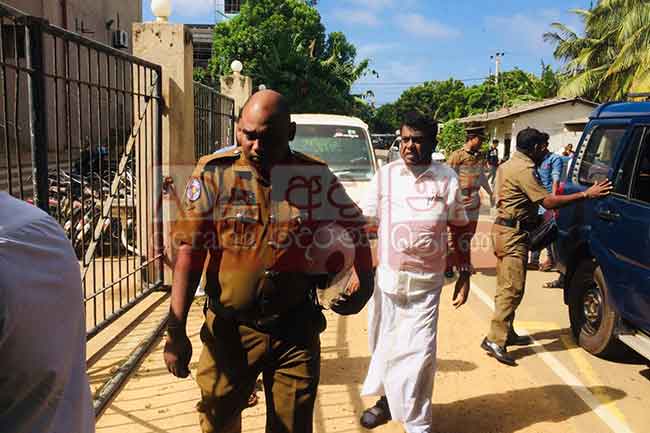
The ‘Sinhale’ organization states that an investigation should be carried out into certain verdicts given during the period of good governance and those cases should be heard again.

The organization stated this at a press conference convened in Colombo today.

9 more ships to control crude tanker fire – No risk of fuel leakage to Sri Lanka (Photos)

September 4th, 2020

Courtesy Hiru News

Sri Lanka Navy, Sri Lanka Air Force, Sri Lanka Ports Authority, the Indian Navy and the Indian Coast Guard are currently engaged in a joint effort to control the fire raging in the oil tanker, MT New Diamond caused by an explosion.

Nine ships have been deployed to control the fire.

Meanwhile, the Indian Coast Guard Ship (ICGS) ‘Sarang’ has arrived for disaster relief mission, to the sea area where the ill-fated oil tanker is located. Moreover, a special tug called TTT One which is equipped with dedicated firefighting equipment, professionals and is capable of undertaking firefighting operations at sea is scheduled to reach the scene with another Indian Coast Guard Ship this evening.

9+more+ships+to+control+crude+tanker+fire+-+No+risk+of+fuel+leakage+to+Sri+Lanka+%28Photos%29

Further, considering these turn of events as an urgent matter of national importance, the Sri Lanka Ports Authority, Hambantota International Port Group, Colombo Dockyard Limited, Ceylon Petroleum Corporation and Indian Oil Corporation has provided AFFF fire extinguishing chemicals which are being transferred by Sri Lanka Coast Guard Ship ‘Samudraraksha’, ‘Samaraksha’ and the Sri Lanka Navy Ship ‘Samudura’ from the ports of the Hambantota, Colombo and Trincomalee respectively, to augment the dousing operation.

At present, SLN ships and craft together with the MI 17 helicopter and beach craft of Sri Lanka Air Force, the two tugs ‘Rawana’ and ‘Wasamba’ of Hambantota International Port Group and ALP ‘Winger’ tug made ready by the foreign company that owns the ship in distress are also continuing their firefighting missions to get the tense situation under control.

It is in this backdrop, arrangements have also been made to tow the MT New Diamond to the deep sea at any moment, as soon as the fire onboard gets under control. The distressed vessel lies about 22 nautical miles (35 kilometers) off the coast as of now.

Rear Admiral Nandana Jayaratne, Acting Director General of the Navy said that there is a high probability that the crude oil stored in the ship will not be damaged by the fire.

Joining the media briefing, the Chairperson of the Marine Environment Protection Authority, Attorney-at-Law Dharshani Lahandapura stated that they are currently seeking the advice of the Attorney General regarding the action to be taken in the event of a fuel leak.

A complaint has been lodged with the Thirukkovil Police as a first step.<br /><br />Acting Director General of the Navy Rear Admiral Nandana Jayaratne was inquired about a patch in the ship.

In response, he said there was no risk of the ship splitting or breaking.

Prime Minister Mahinda Rajapaksa has instructed the relevant authorities to launch a 24-hour joint operation to take all necessary steps to prevent possible damage to the marine environment by the New Diamond.

The Prime Minister has instructed the Marine Environment Protection Authority under the Ministry of Urban Development and Housing to take all necessary steps in this regard, the Prime Minister’s Office said.

Three (03) more persons confirmed for Covid -19: SL Country total increases to 3,115

September 4th, 2020

Courtesy Hiru News

Two arrivals from India and a seaman from the Philippines were among the four persons tested positive for COVID- 19, increasing total infected in Sri Lanka to 3,115.

Mangala Samaraweera and Shani Abeysekera summoned before the political victimization commission

September 4th, 2020

Courtesy Hiru News

Presidential Commission probing incidents of political victimization issued notice on Mangala Samaraweera and Shani Abeysekera to appear before the Commission on September 16.

Sri Lankan and Indian forces working together to douse the Panama-flagged ‘New Diamond’ oil tanker on fire

September 4th, 2020

Courtesy Hiru News

The Sri Lanka Navy, Sri Lanka Air Force, Sri Lanka Ports Authority, the Indian Navy and the Indian Coast Guard continues to work together to contain the spread of fire erupted on board the oil tanker, MT New Diamond on 03rd September 2020 at 8.00 a.m.

Sri+Lankan+and+Indian+forces+working+together+to+douse+the+Panama-flagged+%27New+Diamond%27+oil+tanker+on+fire

Accordingly, an MI 17 helicopter of Sri Lanka Air Force has been carrying out a number of aerial operations, to contain the raging flames by showering water from the skies. Meanwhile, the beach craft is conducting periodic air surveillance to spot the spread of fire remaining in air and render necessary assistance.

Further, Sri Lanka Navy Ships Sayura, Sindurala and Ranarisi with 02 Fast Attack Craft continues to conduct disaster relief operations with a view to manage the calamity. Meanwhile, the spread of fire from the superstructure at the rear of the ship towards the crude oil storage facilities has been contained to a greater extent. Upon controlling the spread of fire, the two tugs ‘Rawana’ and ‘Wasamba’ of Hambantota International Port Group together with ALP ‘Winger’ tug made ready by the foreign company that owns the ship in distress are making arrangements to tow the ill-fated oil tanker away from the shore towards deep sea.

See the battle to stop fire consuming an oil tanker at sea

September 4th, 2020

CNN

An oil tanker carrying 270,000 metric tons of crude oil has caught fire off the coast of Sri Lanka, sparking a transnational firefighting mission. 

https://edition.cnn.com/videos/world/2020/09/04/oil-tanker-on-fire-sri-lanka-india-jba-lon-orig.cnn/video/playlists/around-the-world/

Sri Lankan Couple Spends Wedding Day Feeding the Homeless

September 4th, 2020

Courtesy NEXTSHARK

Sri Lanka

A newlywed couple in Sri Lanka decided to do a kind gesture for the needy on their special day. 

ishan Thilakshanaabout a month ago

ගුරුදෙවිඳුන් ගෙන් අහලා තියෙන්නේ මං
පුතේ,
දන් දෙන්න පුළුවන් වේලාවේ දෙන්න පුළුවන් හොදම දේ වටිම දේ දන් දෙන්න කියලා.💝

අතේ තියන සතේ හරි වියදන් කරලා මනුස්සයෙක්ගේ කුසක් පුරවන්න හිතුනු හැම මොහොතේදීම ඒ පින ඒ අයුරින්ම මගේ ජිවිතේ දී කරලා තියනවා💪…See more

Image may contain: 1 person, standing, child and outdoor, text that says "© Udesh Riyan photography"
Image may contain: 2 people, people standing and outdoor, text that says "© Udesh Riyan photography"
Image may contain: 2 people, people standing, people walking and outdoor
Image may contain: 1 person, standing and outdoor, text that says "© Udesh Riyan photography"

Love for others: Bride Anoma Geeganage and groom Dishan Thilakshana spent their wedding day distributing food and cold beverages to the homeless in the streets of Matara. 

  • In a Facebook post, Thilakshana shared how he came up with the idea to feed the hungry.
  • We thought we would fill the stomachs of the homeless before going home to the party,” he said, according to Today Online.
  • Thilakshana also posted photos of him and his new wife dressed in traditional red wedding outfits as they distributed boxes of Pizza Hut and bottles of cold Coca-Cola to the smile of many. They also took the time to chat with the people they fed. 
  • One of the homeless men even revealed to the couple that he has never eaten pizza in his life.
  • My chest burned when an uncle asked me how to eat this,” Thilakshana wrote.
  • In an interview with NextShark, the couple shared that they distributed so many pizzas that day that they lost count.
  • Whoever met on the road who was in need of some food, I distributed what I had in my hand and made sure everyone shared a genuine smile with me with a happy and full stomach,” he said.
  • At the end of the post, the newlyweds thanked those who helped them in their acts of kindness. They also reminded everyone to start life in such a way so you can be happy forever.”

A life lesson: According to Thilakshana, a lesson that stuck with him as a child was from his teacher, who taught him the most valuable thing to give to someone. 

  • Whenever possible we should fill a man’s stomach and look from a distance and remember him happily,” Thilakshana said. The joy it brings is priceless.”
  • He noted that hunger is something common to all humans.
  • Thilakshana told NextShark that helping others comes second nature to him.
  • At one point, he helped an old homeless man find shelter by taking him to an elderly home and taking the responsibility of looking after him for the rest of his life.
  • He also shared an incident where he saved thousands of turtle eggs that a mother turtle had delivered.
  • I sat near the mother turtle and chanted ‘angulimaala piritha’ which is a powerful chanting, commonly used and well known in Buddhism that eases the delivery pain of mothers. I looked after the eggs for 41 days until they were released back to sea safely.”

USD 300 mn tyre factory for Hambantota

September 3rd, 2020

Courtesy The Daily News

Minister of Industries Wimal Weerawansha and Hambantota International Port Group (Private) Limited (HIPG) held a meeting regarding a proposal to set up a tyre factory in Hambantota at the Ministry of Industries, Colombo 03 recently.

HIPG Company officials with Minister Weerawansa

HIPG CEO Ray Ren said the first tyre factory was to be built with an investment of USD 300 million. He also said that 2,000 employees are required for the factory and they would be recruited from the area. Also all the materials needed for the production of tyres would be obtained from Sri Lanka.

Here, a proposal was made by the HIPG to promote industry in Sri Lanka which was subsequently presented to the minister. The factory will be constructed at the Hambantota International Harbour premises in the 280 hectares large industrial zone.

20 වෙනි ව්‍යාවස්ථා සංශෝධනය පෙරමුණෙහි තබාගෙන කටයුතු කරමු.

September 3rd, 2020

චන්ද්‍රසේන පණ්ඩිතගේ 

මෙරට ජනතාව වන අප විසින් විශාල පරිශ්‍රමයක් දරා නව රජයක් බිහිකරගෙන ඇත. එහි පළමු අදියර පසුගිය වසරේ නොවැම්බර් මස ගෝඨාභය රාජපක්ෂ මහතා ජනාධිපතිවරයා වශයෙන් පත්කරමින් තැබූ පළමු පියවර, මහාමැතිවරණය නිමවෙන තෙක් ගෝඨාභය රාජපක්ෂ මහතා පවත්වාගෙන ගියේ දහසක් දුෂ්කරතා මධ්‍යයේ බව අපි දුටුවෙමු.

එතුමා දේශපාලන බිම්බෝම්බ අටවා තිබු මගදිගේ ගමන් කලේ ඉතා පළපුරුදු දේශපාලඥයෙකුටත් වඩා සුක්ෂම අයුරිනි. ඒ එතුමාව මේ යුගයේදී මෙරට සිදුකලයුතු වෙනස්කම් කිරීම උදෙසාම නිර්මාණය කොට ස්වභාවය විසින් දැයට පුදකළ විශේෂිත පුද්ගලයෙකු බැවිනි.

ස්වාධින කොමිසන් සභා නම්වූ දේශපාලන බිම්බෝම්භයකට අසු නොවී එතුමා දේශපාලනිකව ගොඩ ඒම සම්බන්ධව අප එතුමාට අපේ විශේෂිත ගෞරවය පුදකළ යුතුමය. මේ වනවිට සිදුව ඇත්තේ එතුමාව මේ බිම්බෝම්බයකට අසු නොවීම පමණි. නමුත් කොටි සංවිධානය විසින් අටවන ලද ඒ දේශපාලන බිම්බෝම්බ සියල්ලක්ම තවමත් ඒ ආකාරයෙන්ම මෙරට දේශපාලන බිමෙහි එලෙසම පවතී.දැන් ඒවා ගලවා ඉවත් කිරීමට කාලය පැමිණ ඇත. ඒ සදහා ගෝඨාභය රාජපක්ෂ ජනාධිපතිතුමා විසින් 20වන ව්යාවස්තා සංශෝධනය ඉදිරිපත්කර ඇත. මහිවරණය ජයගෙන සති දෙකක කාලයක් තුලදී මෙම කළයුත්ත ආරම්භ කිරීමම ජාතිය ලද අති උදාර ඉදිරි පිම්මකි. අන් සියලුම කටයුතු වලට වඩා මෙම කටයුත්ත ඉතාම වැදගත් බැවින්, මෙම අවස්ථාවේදී,අපි සියලු දෙනාම එකාවන්ව ගෝඨාභය රාජපක්ෂ මහතාට මෙම කටයුත නිම කිරීම සඳහා පුර්ණ සහයෝගය දැක්විය යුත්තේ, එතුමාගේ පුර්ණ කාලය නිදහස් මනසකින් යුතුව මෙම කටයුත්තට යෙදවීමට ඉඩදිය යුතු බැවිනි.

ඇමරිකාව ප්‍රමුඛ බටහිර කොටි හිතවාදී බලවතුන්,විසින් බලහත්කාරයෙන් මෙරට ව්යාවස්තාවට 19 වෙනි සංශෝධනය ඇතුලත් කරන ලද්දේ, ඉන්දියාව විසින් මෙරට ව්යාවස්තාවට 13 වෙනි ව්යාවස්තා සංශෝධනය ඇතුලත් කල ආකාරයටමය. දැන් මේ දෙකම ගලවා ඉවත් කර දැමිය යුතු අතර, එම කටයුත්ත සඳහා අප මේ අප විසින් පිහිටුවා ගත රජය දැඩි ලෙස ආරක්ෂා කලයුතුය.

පරිබාහිරව සිට වසර ගණනාවක් අඛණ්ඩව මේ රජය ගොඩනැංවීමට වෙර දරු අප හැමවිටෙකම අපේ අපේක්ෂිත ඉලක්කයන් කරා යන රජයකට පුර්ණ සහය දෙන්නේ පරිබාහිරි සිටිමින්මය.එබැවින් අපි සියලුදෙනාම නිදහස්ව මේ රජය මුළුමනින්ම සුරකින කඳවුරක වසන පුද්ගලයෝ බැවින්,දැනට නිර්මාණය වෙමින් ඇති, කරලියට පැමිණ නැති ගැටළු වලින් ඉවත්ව, දැන් තිරගත කොට ඇති 20 වෙනි ව්යාවස්තා සංශෝධනය බල ගැන්වීමට පෙළ ගැසෙමු. මෙසේ යෝජනා කරන්නේ, සතුරා විසින් මෙම ව්‍යාවස්තා සංශෝධනය වළකාලීම සදහා කල හැකි සෑම පහත් වැඩක්ම කිරීමට සුදානම්ව සිටින බැවිනි.

මේ වනවිට සති දෙකක් වයසැති මේ රජය බලවත් කොට දශක දෙකක් පුරා නිසි මාවතක් ඔස්සේ ගමන් කරවීමට කළහැකි සියල්ලකම නිර්මාණය කොට සංවර්ධිත රටක් බවට පත් කරමු.

Asoka Bandarage on the timely new edition of her classic book “Colonialism in Sri Lanka

September 3rd, 2020

Vimukti Publishing

Dr. Asoka Bandarage discusses the new edition of her book “Colonialism in Sri Lanka: The Political Economy of the Kandyan Highlands from 1833-1886.”

This second expanded edition includes a significant new chapter, Neocolonialism in Sri Lanka, 2020, assessing the beleaguered state of Sri Lankan sovereignty in the midst of 2020, under the powerful forces of U.S., Chinese and Indian expansion in the region.

ඉන්දියාවේ ශ්‍රේෂ්ඨ සංස්කෘතික සහ සාහිත්‍ය සංකේතය රබීන්ද්‍රනාත් තාගෝර්

September 3rd, 2020

වෛද්‍ය රුවන් එම් ජයතුංග 

රබීන්ද්‍රනාත් තාගෝර් ඉන්දියානු සාහිත්‍යයේ හා සංස්කෘතියේ වඩාත්ම බලගතු චරිතයකි. ඔහු ජාත්‍යන්තර පිළිගැනීමක් ලැබූ පළමු ඉන්දීය ලේඛකයන්ගෙන් කෙනෙකි. තාගෝර් කවියෙකු ලෙස හැඳින්වූවද , ඔහු නාට්‍යකරුවෙකු, නවකතාකරුවෙකු, කෙටිකතා රචකයෙකු සහ ප්‍රබන්ධ නොවන ගද්‍ය රචකයෙකු ලෙස සාහිත්‍යයට කැපී පෙනෙන දායකත්වයක් ලබා දුන්නේය.  තාගෝර්   ඉන්දියානු සංස්කෘතික පුනරුදයේ ප්‍රමුඛ කාර්‍යභාරයක් ඉටු කලේය. ඔහු දළ වශයෙන් ගීත 2,230 ක් රචනා කල අතර ඔහුගේ ජීවිතයේ අවසානය දක්වා සිතුවම් 3,000 කට ආසන්න ප්‍රමාණයක් පින්තාරු කළේය. ඔහුගේ සියලු සාහිත්‍ය ජයග්‍රහණවලට අමතරව තාගෝර් දාර්ශනිකයෙකු හා අධ්‍යාපනවේදියෙකු වූ අතර 1921 දී සාම්ප්‍රදායික අධ්‍යාපනයට අභියෝග කරන විශ්ව විද්‍යාලයක් වන විශ්ව භාරතී විශ්ව විද්‍යාලය ආරම්භ කළේය. 

රබීන්ද්‍රනාත් තාගෝර්  ඔහුගේ කාලයට වඩා ඉදිරියෙන් සිටි මිනිසෙකි.  තාගෝර් සාහිත්‍ය සඳහා නොබෙල් ත්‍යාගය දිනාගත් පළමු යුරෝපීය නොවන  පුද්ගලයා විය. ව්‍යතිරේක කවියෙකු වන රබීන්ද්‍රනාත් තාගෝර්  ‘බෙංගාලයේ බාර්ඩ්’ ලෙස හැඳින්විය. තාගෝර්ගේ කවි මූලික වශයෙන් ගනුදෙනු කරන්නේ මනුෂ්‍යත්වයට ඇති ආදරය, දේවත්වයට ඇති ආදරය සහ සොබාදහමට ඇති ආදරයයි. රබීන්ද්‍රනාත් තාගෝර් ගේ කවි එස්රා  පවුන්ඩ් සැසඳුවේ ඩන්ටේගේ කවි සමගය.  තාගෝර්   කෙටි කතා සහ නවකතා නිර්මාණය කරමින් සාහිත්‍යයේ පුරෝගාමියෙකු විය. ඔහුගේ සාහිත්‍ය කෘති විශ්වීය මානවවාදය  ප්‍රකාශ කරයි.

රබීන්ද්‍රනාත් තාගෝර් 1861 මැයි 7 වන දින කල්කටාවේ උපත ලැබීය. ඔහු උපත ලැබුවේ කල්කටාවේ කීර්තිමත් බෙංගාලි පවුලක ය. රබීන්ද්‍රනාත් තාගෝර් ගේ සීයා  ද්වාරකානාත් තාගෝර් (1794-1846) දහනව වන ශතවර්ෂයේ මැද භාගයේ බෙංගාල පුනරුදය ලෙස හැඳින්වෙන ප්‍රධාන චරිතයකි. ද්වාරකානාත් තාගෝර්  වික්ටෝරියා රැජිනගේ පෞද්ගලික මිතුරෙකු විය.  රබීන්ද්‍රනාත් ගේ පියා, දේබේන්ද්‍රනාත්, මහර්ෂි  රාජා රම්මෝහන් රෝයි විසින් ආරම්භ කරන ලද බ්‍රහ්ම සමාජ (දේවවාදී පල්ලියේ) ව්‍යාපාරයේ කීර්තිමත් නායකයෙකි. දේවේන්ද්‍රනාත් තාගෝර්ට යුරෝපීය දර්ශනය පිළිබඳ මනා දැනුමක් තිබූ අතර  ඔහු හින්දු ආගමේ සියලු අංශ පිළිගත්තේ නැත. තවද  දෙබේන්ද්‍රනාත් ලේඛකයෙක් සහ ප්‍රායෝගික ව්‍යාපාරිකයෙක්ද විය.

රබීන්ද්‍රනාත් ඔහුගේ දෙමව්පියන්ගේ දහහතරවන දරුවා සහ අටවන පුත්‍රයා විය.  රබීන්ද්‍රනාත් හැදී වැඩුණේ  නිදහස් ස්වාධීන දරුවෙකු වශයෙනි. තාගෝර් නිවසේදී අධ්‍යාපනය ලැබීය.  ඔහුගේ පවුලේ ගැඹුරු සමාජ හා සංස්කෘතික මැදිහත්වීම පසුව රබීන්ද්‍රනාත් ගේ අධ්‍යාපන ප්‍රමුඛතා සකස් කිරීමේදී ප්‍රබල කාර්‍යභාරයක් ඉටු කලේය.  කුඩා කල සිටම ඔහු තම පියාගේ කවි, සංගීතය හා ගුප්ත විද්‍යාව කෙරෙහි ඇති ආදරය මෙන්ම ප්‍රතිසංස්කරණවාදී දෘෂ්ටියද වැලඳ ගත්තේය. තාගෝර්ට වයස අවුරුදු 12 දී, ඔහුගේ පියා ඔහුව පන්ජාබ් සහ හිමාලය වෙත මාස 4 ක ගමනක් සඳහා රැගෙන ගියේය. මේ සංචාරය තාගෝර් ග්‍රාමීය බෙංගාලය සමඟ කළ පළමු සම්බන්ධතාවයයි. නව යොවුන් වියේදී ඔහුට ඔහුගේ මව වන සාරදා දේවි අහිමි වූ අතර, ඔහුගේ පියා හිමාලය ඇතුළු දුර බැහැර ප්‍රදේශවලට නිතර නිතර විවිධ අධ්‍යාත්මික ප්‍රශ්න හා වන්දනා චාරිකා සඳහා ගිය හෙයින්, තාගෝර් හැදී වැඩුණේ සේවකයින්ගේ  යටතේ ය. ඔහුගේ පියා යටතේ සිටි පුනරුත්ථාපනය වූ ඩැකොයිට්වරයෙකු එනම් හිටපු මංපහරන සොරෙකු  ළමා තාගෝර්ට විවිධ කතාන්දර කියා දුන්නේය. 

රබීන්ද්‍රනාත් විසින්ම තම බෙංගාලි පවුල විස්තර කළේ හින්දු, ඉස්ලාම් සහ බ්‍රිතාන්‍ය යන සංස්කෘතීන් තුනක එකතුවක ප්‍රතිඑලයක් ලෙසය. රබීන්ද්‍රනාත්ගේ සීයා වන ද්වාරකානාත් අරාබි සහ පර්සියානු බලපෑම් පිළිබඳ අණට ප්‍රසිද්ධියක් උසුලයි. රබීන්ද්‍රනාත් හැදී වැඩුණේ සාරවත් පවුල් වාතාවරණයක ය. ඔහුගේ ලෝකය සංස්කෘත හා පුරාණ හින්දු ග්‍රන්ථ පිළිබඳ ගැඹුරු දැනුමක් , ඉස්ලාමීය සම්ප්‍රදායන් මෙන්ම පර්සියානු සාහිත්‍යය පිළිබඳ අවබෝධයක් සමඟ ඒකාබද්ධ විය.  

වයස අවුරුදු දහහත වන විට විධිමත් පාසල් අධ්‍යාපනය සඳහා ඔහුව එංගලන්තයට යවනු ලැබුවද ඔහු එහි අධ්‍යාපනය අවසන් කළේ නැත. සොබාදහම ඔහුගේ ප්‍රියතම පාසල විය. තාගෝර් 1878 දී එංගලන්තයේ බ්‍රයිටන්හි රජයේ පාසලකට ඇතුළත් විය; පසුව ඔහු ලන්ඩන් යුනිවර්සිටි කොලේජ් හි අධ්‍යාපනය ලැබූ නමුත් උපාධියක් නොමැතිව 1880 දී නැවත බෙංගාලයට පැමිණියේය. මෙම කාලය තුළ ඔහු ඉංග්‍රීසි හා අනෙකුත් යුරෝපීය සාහිත්‍යය පුළුල් ලෙස කියවූ අතර, ඔහු සිය ජීවිත කාලය පුරාම පවත්වා ගෙන ගිය විශ්වීය දෘෂ්ටිය ඊට ඇතුළත් විය. තවද එංගලන්තයේදී ඔහු මහාචාර්‍ය හෙන්රි  මෝර්ලිගේ මඟ පෙන්වීම යටතේ ඉංග්‍රීසි සාහිත්‍යය හැදෑරීය.

තාගෝර් 1883 දෙසැම්බර් 9 වන දින  මරිනාලිනි දේවි සමඟ විවාහ විය; ඔවුන්ට දරුවන් පස්දෙනෙකු සිටි අතර, ඔවුන්ගෙන් හතර දෙනෙක් පසුව සම්පූර්ණ වැඩිහිටිභාවයට පත්වීමට පෙර මිය ගියහ.   1902 සිට 1907 දක්වා කාලය ඔහුගේ දුක්ඛිත සමය විය.  පළමුව ඔහුගේ බිරිඳ 1902 දී මිය ගිය අතර ඊළඟ වසරේදී ඔහුගේ බාල දියණිය 1905 දී මිය ගියාය. තවද ඔහුගේ පියා අහිමි වූ අතර ඔහුගේ බාල පුතා 1907 දී මිය ගියේය.  ඔහුගේ බිරිඳ සහ දරුවන් දෙදෙනා මිය යාමෙන් ඇති වූ ශෝකය  ඔහුගේ පසුකාලීන කාව්‍යයන්ගෙන් පිළිබිඹු වේ. 

තාගෝර්ගේ සාහිත්‍ය පිබිදීම ඇති වූයේ පැරණි බෙංගාලි කවියන් වන චන්දිදාස් සහ විද්‍යපති කියවීමෙනි. මුල් කාලීන වෛෂ්ණාව ආගමික සාහිත්‍යය තුළ ද ඔහුගේ ආභාසය ලැබුණි. ඔහු යෞවන වියේ පසුවන විට බෙංගාලි කාව්‍යයේ සුන්දරත්වය හෙළි කළ අතර, ඔවුන්ගේ ශෛලිය අනුකරණය කරමින්, භානු සිං නමින් කවි කිහිපයක් ප්‍රකාශයට පත් කළේය. 1890 ගණන්වල මුල් භාගය වන විට ඔහු ප්‍රමුඛ බෙංගාලි සඟරා සඳහා ප්‍රධාන දායකයා විය. ඔහු සිය පළමු කාව්‍ය සංග්‍රහයන් වන මනසි (1890), චිත්‍රා (1895) සහ සෝනාර් තාරි (1895) ද ප්‍රකාශයට පත් කළේය. 

මනසි, (සංස්කෘත: මනස නිර්මාණය කිරීම) තාගෝර්ගේ කාව්‍යමය බුද්ධියේ පරිණත බව සනිටුහන් කළ අතර  එහි තරුණ  රොමැන්ටිකවාදයේ තේමාවන් අඩංගු වේ.  කවියාගේ ආදරණීයයා කෙරෙහි ඇති ආදරය ප්‍රකාශ කිරීම හා ඒ හා සම්බන්ධ සැක, බලාපොරොත්තු සුන්වීම්, ප්‍රීතිය හා ශෝකය යන හැඟීම්  සාකච්ඡා කරයි. කවියා සිය විවිධාකාර අත්දැකීම් තුළින් සදාකාලික සුන්දරත්වය හා සදාකාලික ආදරය දෙසට ගමන් කරයි. ශාරීරික ආශාවේ පටු සීමාවන්ගෙන් සුන්දරත්වය හා ආදරය නිදහස් කර ගැනීමටත්, ඔවුන්ව අතිශයින්ම උසස් මට්ටමකට ඔසවා තැබීමටත් ඔහු මුළු හදවතින්ම බැඳී සිටින බව  පෙනේ. ශාරීරික කුසගින්න පමණක් සපුරාලන ආදරය බිඳෙනසුලු බව කවියා වටහාගෙන ඇති අතර, එම නිසා එහි සදාකාලික ස්වභාවය මනසි” තුළින් අනාවරණය කර ගැනීමට ඔහු උත්සාහ කරයි.

ඔහුගේ මුල් කාව්‍යය සැලකිලිමත් වන්නේ මිනිසාට කාන්තාව කෙරෙහි ඇති ආදරයයි, නමුත් ඔහුගේ පසුකාලීන කවි ප්‍රධාන වශයෙන් සැලකිලිමත් වන්නේ මිනිසාගේ ආදරය හා දෙවියන්ගේ අලංකාරය සහ ආදරය සඳහා ඇති ආශාවයි. ඔහුගේ කාව්‍යයන්හි ශාරීරික ප්‍රේමයට සැලකීම අතිශයෝක්තියක් නොවන අතර එය ඉන්දියානු සංස්කෘතියේ සීමාවන් තුළ පවතී. ඔහුගේ පසුකාලීන හා පරිණත සාහිත්‍යය තුළ දෙවියන් වහන්සේ කෙරෙහි ඇති ප්‍රේමය දැඩි ලෙස විස්තර කර ඇත.

ඔහු කවි හා ප්‍රබන්ධ  ලිව්වේ ප්‍රධාන වශයෙන් ඔහුගේ මව් බස වන බෙංගාලි භාෂාවෙන් ය. සිය ප්‍රබන්ධ තුළ මනෝවිද්‍යාත්මක යථාර්ථවාදය හඳුන්වා දුන් පළමු නූතන ඉන්දියානු ලේඛකයා තාගෝර් විය. තාගෝර් කෙටිකතා ලිවීමේ කලාවෙහි විශිෂ්ටත්වය දැක්වීය.  සබියාසාචි භට්ටාචාර්යා පෙන්වා දුන් පරිදි, කෙටිකතාව තාගෝර්ගේ ස්වභාවයට සහජයෙන්ම ගැලපෙන අතර එය ඔහුගේ කාව්‍යමය දක්ෂතාවයේ ප්‍රබල දෝංකාරයන් ගෙන් සංයුක්ත විය. තාගෝර්ගේ සංගීතය ඔහුගේ සාහිත්‍යයෙන් වෙන් කළ නොහැකි අතර ඒවායින් බොහොමයක්  කවි හෝ නවකතා, කතන්දර හෝ නාට්‍යවල කොටස්  විය.  ඔහුගේ කථා වලින් ඔහු බොහෝ දුරට ඉන්දියාවේ දුප්පත් හා පොදු ජනයාගේ ජීවිතය නිරූපණය කලේය.

1884 සිට 1925 දක්වා කාලය තුළ ඔහු කෙටිකතා අසූවකට වඩා ලියා ඇති අතර ඒවා එකිනෙකට වෙනස් ය. ඔහුගේ  කාබූල් හි පළතුරු වෙලෙන්දා කෙටි කතාව  පියෙකු තම දියණිය කෙරෙහි දක්වන ගැඹුරු ආදරය නිරූපණය කළ චිත්තවේගීය හා සංවේදී කතාවකි. තාගෝර් ගේ තැපැල් ස්ථානාධිපති කෙටි කතාව කුඩා ග්‍රාමීය ඉන්දියානු ගම්මානයක  තැපැල් කාර්‍යාලයකට අනුයුක්ත කර ඇති  තැපැල් ස්ථානාධිපතිවරයෙකු පිලිබඳව පවසයි. නූගත් ගම්වැසියන් අතර තමන් උදාර කල්කටා මිනිසෙකු ලෙස ඔහුට  දැනෙන අතර  ඔහු මිත්‍රත්වයක් වර්ධනය කර ගන්නේ ඔහුට කෑම පිසින රතන් නම් තරුණ අනාථ දැරිය සමගය. තැපැල් ස්ථානාධිපති සහ රතන් හුදෙකලාවෙන් පෙලෙති. ඔවුන් එකිනෙකාගේ මිත්‍රත්වය තුලින් ඒකලනය බිඳ දමති. ක්‍රමක් ක්‍රමයෙන් ඔවුන් අසාමාන්‍ය මිත්‍රත්වයට හුරු වෙති. කාලයකට පසු තැපැල් ස්ථානාධිපතිවරයා ස්ථාන මාරුවක් ලබා යන විට  ඔහුට රතන් තමන් සමග රැගෙන යා යුතුය යන හැඟීම දැනේ. නමුත් ජීවිතය වෙන්වීම් හා අවසානයන්ගෙන් පිරී ඇති බව නිගමනය කිරීම නිසා ඔහු ඇය හැර දමා යයි.  කෙටිකතාවේ අවසාන ඡේදයේ රතන් තැපැල් කාර්යාලය වටා කඳුළු සලමින් ඉබාගාතේ යමින් සිටි බව කතුවරයා හෙළි කරයි.  තැපැල් ස්ථානාධිපති” යනු තාගෝර්ගේ අඳුරු කතා වලින් එකකි, එය හුදකලා චරිත දෙකක් වටා විහිදී ඇති අතර ඔවුන්ගේ තනිකම අවසන් කිරීමට ඇති එකම අවස්ථාව නැති කර ගනියි. කෙටි කතාව  අවසානයේදී, උගත් තැපැල් ස්ථානාධිපතිගේ දර්ශනය” සහ රතන්ගේ නූගත් අහිංසකකම අතර සැබැඳුමක්   පාඨකයා දකියි. 

ඔහුගේ Sampatti Samarpan කෙටි කතාව  යග්යානාත් කුන්ඩු  නම්  ධනවත් නමුත් කාලකණ්ණි මිනිසෙකු පිලිබඳ තොරතුරු පවසයි. යග්යානාත් කුන්ඩු ජීවත් වන්නේ තම පුතා, ලේලි සහ මුනුපුරා සමඟය. ඔහු තම ධනය  කිසිවෙකු නොදන්නා සැඟවුණු ස්ථානයක රහසින් සඟවා ඇත. රෝගාතුර වූ බිරිඳට වඩා හොඳ ප්‍රතිකාර ලබා දීම සඳහා පුතා ඔහුගෙන් මුදල් ඉල්ලා සිටින විට, මහල්ලා එය ප්‍රතික්ෂේප කරයි. ඔහුට තම සැඟවූ ධනය ආරක්‍ෂා කර ගැනීමට මනුෂ්‍ය ඝාතනයක් වූවද කල හැක. මෙම කතාව කෑදරකම සහ අසීමිත භෞතිකවාදයේ බියකරු දර්ශනය මුදාහරියි.

තාගෝර්ගේ දඬුවම කෙටිකතාව  කේන්ද්‍රගත වී ඇත්තේ ඉන්දියාවේ ග්‍රාමීය ගමක ජීවත් වන දුඛිරාම් රූයි සහ චිදම් රූයි යන සහෝදරයන් දෙදෙනා සහ ඔවුන් ගේ බිරින්දෑවරුන් පිලිබඳවය. සෑම දිනකම සැමියන් කුඹුරේ වැඩ කරත්දී ඔවුන්ගේ බිරින්දෑවරුන් වන රාධා සහ චන්දාරා එකිනෙකා සමඟ රණ්ඩු වන අතර මුළු ගමටම ඔවුන්ගේ කෑගැසීම ඇසෙයි. ඔවුන් සියල්ලෝම පහත් කුලයකට අයත් වීම නිසා  ඔවුන්ට ජීවිතය දුෂ්කර ය. ඔවුන් ගේ ජීවිත වල තිබෙන පීඩනය ඔවුන් පිට කර ගන්නේ එකිනෙකා වෙත කෝපය මුදා හැරීමෙනි. 

වරක් චිදම් රූයි හදිසි කෝපය නිසා ඔහුගේ බිරිඳ වූ රාධාගේ හිසට පිහියකින් ඇනීමෙන් ඔහු ඇයව මරා දැමුවේය. ගෙවිය යුතු කුලී ගෙවීම ගැන විමසීමට සහෝදරයන්ගේ ඉඩම් හිමියා වන රම්ලොචන් චක්‍රවර්ති පැමිණෙන විට, ඔහු සොයාගන්නේ ලේවැකි දර්ශනය සහ බලාපොරොත්තු සුන් වූ දුඛිරාම් ය. තම සහෝදරයා ආරක්ෂා කර ගැනීමේ උත්සාහයක යෙදී සිටින චිදම්, රම්ලොචන්ට පවසන්නේ තම බිරිඳ චන්දාරා රාධාව මරා දැමූ බවයි.   ඇගේ නඩු විභාගය  ආරම්භ වූ   විට, චිදම් සහ දුඛිරාම් යන දෙදෙනාම විනිසුරුවරයාට සත්‍යය පාපොච්චාරණය කරති. නමුත් චිදම්ගේ කතාව චිදම් තම බිරිඳ ආරක්‍ෂා කිරීමට පැවසීමට යෝජනා කළ කතාවට සමාන බව රැම්ලොචන් විනිසුරුවරයාට පැවසූ විට, සහෝදරයන්ගේ පාපොච්චාරණය අසත්‍යයක් ලෙස විනිසුරුවරයා සලකයි. අවසානයේදී චන්දාරා සියළුම දොස් පවරා ගනී. මේ නිසා ඇයට මරණ දඞුවම ලැබුණි.  චන්දාරා තම ස්වාමිපුරුෂයා සමඟ තිබූ සියලු සබඳතා කපා හැර ඇති අතර චන්දාරාට අනුව විවාහය අවසන් ය. ඇය නිර්දෝෂී වුවද ඇයට අත්වන ඉරණම ඇය පිළිගනී. තාගෝර්ගේ දඬුවම කෙටිකතාව ගෘහස්ථ හිංසනය පිළිබඳ ආවේගශීලී හා මාරාන්තික කතාවකි. 

තාගෝර් තම පවුලේ විශාල ඉඩම්  කළමනාකරණය කරන අතර තුර පටිසාර්, ෂජාඩ්පූර් සහ ෂිලයිඩා යන ගම්මාන සමඟ සමීපව සම්බන්ධ විය. එහිදී ඔහු ඉන්දියාවේ දුප්පත් හා පොදු ජනයාගේ ජීවිත දුටුවේය. තාගෝර් එමගින් ඉන්දියානු සාහිත්‍යය තුළ ඒ දක්වා වූ විනිවිද පෙනෙන ගැඹුරකින් හා හැඟීමකින් ඔවුන්ගේ ජීවිත පරීක්ෂා කර බැලීය. එමගින් ඔහු තම විශ්ලේෂණාත්මක අවධානය පීඩිතයින් වෙත යොමු කරන ලදි.  කුලයේ පීඩාකාරී ස්වභාවය පිළිබඳ තාගෝර්ගේ දෘෂ්ටිය යළිත් හෙළි වන්නේ පුනරුදය” යන කෙටිකතාවෙනි. තාගෝර්   “මුසල්මනීර් ගොල්පෝ”  කෙටිකතාවෙන්   හින්දු-මුස්ලිම් ආතතීන් ද විමසා බලයි. එය බොහෝ ආකාරවලින් තාගෝර්ගේ මානවවාදයේ හරය මූර්තිමත් කරයි.

ආදරය හා සෙනෙහස අතර ගැටුම තාගෝර්ගේ කෘතිවල පොදු තේමාවන්ගෙන් එකකි. 1918 දී ලියන ලද “මාෂි “කෙටිකතාව මිනිස් ජීවිතයේ ප්‍රීතිය හා දුක නිරූපණය කරයි.  ළමා විවාහයේ අපයෝජන  මෙම කතාවෙන් පිළිබිඹු වේ. තාගෝර් ඔහුගේ මනෝවිද්‍යාත්මක කතන්දරවල  තථ්‍යතාව යථාර්ථවාදීව නිරූපණය කරයි, එහිදී චරිත තම තමන් ගේ ජීවිත තුල අරගල කරයි. මිනිස් ජීවිතයේ බලාපොරොත්තු සහ අපේක්ෂාවන්, බලාපොරොත්තු සුන්වීම් සහ , ප්‍රීතිය හා දුක ඔහුගේ කථා තුළින් නිරූපණය කෙරේ.

තම කෙටි කතා හරහා  තාගෝර් මානව ස්වභාවය සහ හැසිරීම පිළිබඳව කතා කලේය. තාගෝර් මූලික වශයෙන් සැලකිලිමත් වන්නේ ගතානුගතිකත්වයේ නාමයෙන් පවත්නා පසුගාමී සමාජ චර්‍යාවන් විවේචනය කිරීමටය. ඔහු එය හෙළා දකින්නේ උපක‍්‍රමශීලීව නොව උදාසීනත්වයෙන් තොරවය. ඔහුගේ කථා වලින් සරල, කථා වස්තු තුළ විචිත්‍රවත් මිනිස් සබඳතා නිරූපණය කෙරේ. ආත්මාර්ථකාමිත්වය, පටු ආකල්ප හා ගෘහ ආරවුල් හේතුවෙන් මිනිස් සබඳතා දුක්ඛිත තත්වයන්ට පත්වීම පිලිබඳව ඔහු සංවේදීව කරුණු පෙන්වා දෙයි.

තාගෝර්ගේ  ඇතැම් කෙටිකතාවල කාන්තාවන් බොහෝ විට ජීවත්ව සිටින මළවුන් වන අතර  ඔවුන්ට සමාජ ස්වාධීනත්වය අහිමි කොට තිබේ. එම කෙටි කතා කාන්තාවන්ගේ අරගල සහ දුක් වේදනා විශේෂයෙන් ඉස්මතු කරයි. තවද කාන්තාවන්ට හිංසා කරන අසමාන සමාජ ව්‍යුහය ඔහු හෙළි කරයි. තාගෝර්  “හයිමන්ති ” කෙටිකතාවෙන්  විවාහ වීමෙන් පසු බෙංගාලි කාන්තාවන්ගේ අවාසනාවන්ත ඉරණම පිලිබඳව පවසයි. සංවේදී තරුණියක් වන හයිමන්ති  ඇගේ සංවේදීතාව සහ නිදහස් ආත්මය නිසා  ඇගේ ජීවිතය පූජා කළ යුතු ආකාරය පිලිබඳව විස්තර කරයි. එමගින් ඔහු සීතාගේ ස්වයං-විමුක්තිය උත්කර්‍ෂයට නැංවීමේ හින්දු චාරිත්‍රයට කෙලින්ම පහර දෙයි. එහෙත් තාගෝර් ගේ “බිරිඳගේ ලිපිය”  කෙටිකතාව බෙංගාලි සාහිත්‍යයේ කාන්තාවන්ගේ නිර්භීත විමුක්තිය පිළිබඳ මුල්ම නිරූපණයකි. මිරිනාල් යනු සාමාන්‍ය බෙංගාලි මධ්‍යම පන්තික මිනිසෙකුගේ බිරිඳකි. ඇය ලිපියකින් ඇගේ ජීවන අරගලය විස්තර කරන්නීය.  

තාගෝර්ගේ   මරණයට මාස කිහිපයකට පෙර ලියන ලද ඔහුගේ රසායනාගාරය” නම් කෙටිකතාව කාන්තාවන් පිළිබඳ ඔහුගේ නවතම අදහස් ප්‍රකාශ කලේය. තාගෝර් කාන්තාවන්ගෙන් ඉල්ලා සිටින්නේ තමන්ගේම අනන්‍යතාවයක් සොයා ගන්නා ලෙසටයි. ඔහුගේ බොහෝ කවි, ගීත, රචනා සහ සිතුවම්වල හරය කාන්තාවන් විය.  කාන්තාවන්ගේ අභිවෘද්ධිය සඳහා සටන් කිරීම ඔහු තරයේ විශ්වාස කළේය.

තාගෝර් නූතන බෙංගාලි කෙටිකතාවේ නවෝත්පාදකයා ලෙස පුළුල් ලෙස සැලකේ. ටෝල්ස්ටෝයි, එඩ්ගර් ඇලන් පෝ, ඇන්ටන් චෙකොව් සහ ගයි ඩි මෞපසන්ට් වැනි කෙටිකතාවේ ප්‍රවීණයන් සමඟ ඔහුව සංසන්දනය කල හැකිය. ලිවීමේ ශෛලිය සම්බන්ධයෙන් ගත් කල, චෙකොව් මෙන් තාගෝර් විශ්වාස කරන්නේ කථා වල අවසානයට අංගයක් තිබිය යුතු බවයි. එසේම තාගෝර්ගේ බොහෝ කෘතිවල ගැඹුරු මානවවාදය පෙනී යයි.  දරුවන්, කාන්තාවන් සහ දුප්පතුන් කෙරෙහි ඇති අනුකම්පාව ඔහුගේ කෘති පුරාම දක්නට ලැබේ. 

නාට්‍ය රචකයෙකු ලෙසටද තාගෝර් කීර්තියක් උපයා ගත්තේය. නාට්‍ය රචකයෙකු ලෙස ඔහුගේ අවුරුදු හැටක වෘත්තීය ජීවිතය තුළ ඔහු කෘති පනහකට වැඩි ප්‍රමාණයක් නාට්‍යමය ආකාරයෙන් ලියා තිබේ. ඔහු නර්තන හා සංගීතය ඒකාබද්ධ කරමින් තමාගේම නාට්‍ය ශෛලියක් නිර්මාණය කිරීමට විශාල ශක්තියක් කැප කළේය. තාගෝර් විසි වැනි වියේදී ඔහු සිය පළමු නාට්‍ය-ඔපෙරාව ලිවීය. 1890 දී ඔහු සිය හොඳම නාට්‍යය ලෙස සැලකෙන විශර්ජන් (පූජා) නිශ්පාදනය කලේය. තාගෝර්ගේ 1892 නාට්‍යය වන චිත්‍රංගාඩා” හින්දු වීර කාව්‍යයක් වන මහා භාරතයේ” කතාවකින් ආභාෂය ලැබීය. තාගෝර්ගේ චන්දලිකා නාට්‍යය ගෞතම බුදුරජාණන් වහන්සේගේ ගෝලයෙකු වන ආනන්ද භික්‍ෂුව,  පහත් කුලයක ගැහැනු ළමයෙකුගෙන් ජලය ඉල්ලා සිටින ආකාරය විස්තර කරන පුරාණ බෞද්ධ පුරාවෘත්තයක් මත පදනම්ව ඇත. එය හින්දු සමාජයේ කුල ක්‍රමයේ සංවේදී විෂය පිළිබඳව ස්පර්ශ කරයි. 1912 දී ලියන ලද නාට්‍යයක් වන ඩක් ගාර් (තැපැල් කාර්යාලය), අමල් නම් දරුවා ඔහුගේ ශාරීරික මරණය ගැන ඉඟි කරමින් අවසානයේ නින්දට වැටීම” මගින් ඔහුගේ හුස්ම හිරවීම හා අවසානය සංකේතවත් කරයි. 

තාගෝර්ගේ බොහෝ නාට්‍යවල අධ්‍යාත්මික ආනයනය පෙනෙන්නට තිබුණද, ඔහු ඇත්ත වශයෙන්ම එදිනෙදා ජීවිතයේදී මෙම ගැටළු වල ප්‍රබලතාවයන් සමඟ සම්බන්ධ විය. තාගෝර් සිය ජීවිතයේ අවසාන වසර පහ තුළ ඔහුගේ නර්තන නාට්‍ය” හඳුන්වා දුන්නේය. තාගෝර්ගේ ප්‍රබන්ධ සහ ඔහුගේ නාට්‍යවල ඔහු ජීවිතය දකින්නේ යහපත හා නපුර අතර අරගලයක් ලෙස බව පැහැදිලිය. ආගමට හෝ පංතියට යහපත්කම සහතික කළ නොහැක. තාගෝර්ගේ උතුම් චරිත බොහෝ විට වඩාත්ම බල රහිත ය. 

ගීතාංජලී ප්‍රකාශනය තාගෝර්ගේ ලේඛන ජීවිතයේ වැදගත්ම සිදුවීම විය. ගීතාංජලී’ කවි 157 ක එකතුවකි. ගීතාංජලී යන වචනයේ අර්ථය ගීත පූජා” යන්නයි. ගීතාංජලී යනු අමරණීය තැනැත්තාට ඔහු දක්වන ප්‍රේමයේ ප්‍රකාශනයකි. ගීතාංජලී කාව්‍යය දෙවියන් කෙරෙහි වූ කවියාගේ අධ්‍යාත්මික ගමන නිරූපණය කරයි. රබීන්ද්‍රනාත් තාගෝර්ගේ කාව්‍යයේ තේමාව වන්නේ පුරාණ හින්දු උපනිෂද්වල ප්‍රධාන තේමාව වන සියලු මැවිල්ලේ අත්‍යවශ්‍ය එකමුතුව (හෝ අඛණ්ඩතාව) ය. මෙම පොතේ කවි ඔවුන්ගේ තේමාවන්ගෙන් වෙනස් වේ.  තේමාවන් අධ්‍යාත්මිකතාවයේ සිට ජීවිතයේ සංකීර්ණතා දක්වා විහිදේ. ඔහුගේ කවි අධ්‍යාත්මික ස්වභාවයක් ගන්නා අතර ඔහුගේ දර්ශන, සාමය ජාතිය හා මනුෂ්‍යත්වය සඳහා සමගිය වැදගත් වේ.  එය තාගෝර්ගේ මනුෂ්‍යයන් හා දිව්‍යමය සම්බන්ධය ගැන මෙනෙහි කිරීමකි. මෙම ගීතවල හරය දේවත්වය-බැතිමතුන්ගේ සම්බන්ධතාවය වන අතර සෑම කාව්‍යයක්ම අද්විතීය ආකාරයකින් සන්නිවේදනය කරන්නේ දෙවියන් කවියාගේ ආනුභාවයේ කේන්ද්‍රස්ථානය වන්නේ කෙසේද යන්නයි.  ගීත පූජා” පිළිබඳ විශ්වීය ආයාචනය පවතින්නේ පුද්ගලික අලාභයෙන් පසු ඔහුගේ වේදනා හැඟීම් ග්‍රහණය කර ගත් පහසුව සහ සරල බව සහ දෙවියන් කෙරෙහි ඔහු තුළ ඇති ගැඹුරු භක්තියයි. 

තාගෝර් මිනිස් සිරුර දුර්වල යාත්‍රාවක් ලෙස සලකයි, දෙවියන් වරින් වර එය අලුත්වැඩියා කර එය නැවුම් ජීවිතයකින් පුරවයි. දෙවියන් වහන්සේ මනුෂ්‍යයාගේ සියලු ස්වාමියාය, ඔහු තම යටත්වැසියන් රැකබලා ගනිමින් ඔවුන්ගේ සියලු ගැටලු විසඳයි. ඒ ආකාරයෙන් මිනිසා දෙවියන් වහන්සේගෙන් ලැබෙන සතුට නිමක් නැතිව සාදනු ලැබේ. ගීතාංජලී එකතුව පුරාම තාගෝර්,  භක්තිය, ඇදහිල්ල සහ  දිව්‍යත්වය සමග පුද්ගලයෙකුගේ සම්බන්ධතාවය අවධාරණය කරමින් ප්‍රීතිමත්, පුද්ගලාරෝපිත අධ්‍යාත්මයක් ප්‍රකාශ කරයි. කවියා දිව්‍යත්වය සමග එක්වීමට භූමික පැවැත්ම අත්හැරීමට ඇති කැමැත්ත ප්‍රකාශ කරයි. දෙවියන් වහන්සේගෙන් වෙන්වීමක් දැනීම ගැන ඔහු කලකිරී සිටින බවත්, ලෞකික ලෝකය සමඟ සාර්ථකව කටයුතු කිරීමට වෙහෙසෙන විට ඔහුගේ පෙර යහපත් ආත්මයන් හීන වන බවත් ඔහු   විස්තර කරයි. 

ගීතාංජලී හි රබීන්ද්‍රනාත් තාගෝර් මිනිසාගේ ජීවිතයේ අරමුණෙහි ආගමික හා අධ්‍යාත්මික වැදගත්කම පැහැදිලිව විස්තර කලේය. තවද පාරභෞතික ගුණාංග  භක්තියේ සියුම් සූක්ෂ්මතාවයන් සමඟ ඒකාබද්ධ කලේය. කවි තීව්‍ර ලෙස පෞද්ගලික වන අතර සමහර ඒවා දේවතාවියකටද තවත් සමහරක් මිනිස් ආදරණීයයන්ටද ආමන්ත්‍රණය කර ඇත. පුද්ගලයන් දෙදෙනෙකු අතර ඇති ආදරය ගැන කතා කරන විට, තාගෝර් සෑම විටම එය පුළුල් කරන අතර එමඟින් විශ්වයේ ස්වභාවය හා බැඳී ඇති ආදරයට වැඩි අර්ථයක් ලබා ගනී. කවුරුන් ආමන්ත්‍රණය කළත්, මිනිස් හා දිව්‍යමය ප්‍රේමය එකම ආලෝකයෙන් දැකිය යුතු බවට  කවියා ඒත්තු ගන්වයි . ඇත්ත වශයෙන්ම  තාගෝර්ගේ පණිවිඩය නම් දිව්‍යමය ප්‍රේමය සාක්ෂාත් කරගත හැක්කේ මිනිස් ප්‍රේමය තුළින් බවයි. ඉන්දියානු සම්ප්‍රදාය තුළ සිටින කවියන් මෙන්ම වෝල්ට් විට්මන් වැනි බටහිර කවියන් ද අනුගමනය කරමින් තාගෝර්, කාමුකත්වය සහ ද්‍රව්‍යමය ලෝකයේ විනෝදය පිළිබඳව  ලියයි. එහෙත් ඔහු භෞතික සංවේදනයන්හි මෙම වින්දනයට වඩා අධ්‍යාත්මික අරුතක් හා ගැඹුරක් ඇත.

1913 දී ප්‍රකාශයට පත් කරන ලද ගීතාංජලී හි පළමු අනුවාදය පිළිබඳ ඔහුගේ හැඳින්වීමේදී අයර්ලන්ත කවියෙකු වූ ඩබ්ලිව්. බී. යීට්ස් මෙම කෘතියේ ආගමික ස්වභාවය ගැන උනන්දු විය. යීට්ස් ලියා ඇති පරිදි, එය “කවි සහ ආගම එකම දෙය වන සම්ප්‍රදායකි. 1913 දී රබීන්ද්‍රනාත් තාගෝර්ට ගීතාංජලී  වෙනුවෙන් සාහිත්‍ය සඳහා නොබෙල් ත්‍යාගය පිරිනමන ලදී. ගීතාංජලී ඔහුව අනපේක්ෂිත ලෙස ජාත්‍යන්තරවාදියෙකු හා අනාගතවක්තෘවරයකු බවට පත් කළේය.

 තාගෝර්ගේ නවකතා සාහිත්‍ය විචාරකයන් ගේ බැරෑරුම් අවධානයට ලක් විය. ගෝර්ගේ නවකතා බොහෝ දුරට මනෝ විද්‍යාව පිළිබඳ අධ්‍යයනයන් වන අතර මිනිස් හදවතේ ඇති සංකීර්ණතාවයන් හෙළිදරව් කිරීම හා මිනිස් ආත්මයේ අභිරහස වටහා ගැනීම පිළිබඳව සැලකිලිමත් වේ.  තාගෝර් ගේ නවකතා  වලට නූකඩුබි (1906), ගෝරා (1910), චතුරංග (1916), ගාරේ බෙයර් (1916), ෂෙෂර් කොබිටා (1929), ජෝගජොග් (1929) සහ චාර් ඔඩේ (1934) ඇතුළත් වේ.  

තාගෝර් 1910 දී ගෝරා නවකතාව ප්‍රකාශයට පත් කරන විට ඔහුගේ ප්‍රබන්ධ-ලේඛන ජීවිතයේ උච්චතම ස්ථානයට පැමිණියේය. ගෝරා  බෙංගාල සාහිත්‍යයේ  ශ්‍රේෂ්ඨතම නවකතාවයි. මෙම සමාජ-දේශපාලනික අදහස් නවකතාව අන්තර්ජාතික සහෝදරත්වය මත පදනම් වූ ලිබරල් ජාතිකවාදය පිළිබඳ කතුවරයාගේ සංකල්පය ප්‍රක්ෂේපණය කරයි. ගෝරා දේශපාලනය හා ආගම පිළිබඳ දාර්ශනික විවාදවලින් පොහොසත් ය. විමුක්තිය, විශ්වවාදය, සහෝදරත්වය, ස්ත්‍රී පුරුෂ භාවය, ස්ත්‍රීවාදය, කුලය, පංතිය, සම්ප්‍රදාය හා නූතනත්වය, නාගරික ප්‍රභූව එදිරිව ග්‍රාමීය ගොවීන්, යටත් විජිත පාලනය, ජාතිකවාදය සහ බ්‍රහ්ම සමාජය යන තේමාවන් මෙහි සාකච්ඡාවට බඳුන් වෙයි. නවකතාව විසිවන සියවස ආරම්භයේදී බෙංගාලයේ සමාජ, දේශපාලන හා ආගමික දර්ශනය පිළිබිඹු කරයි. ගෝරා අදටත් අදාළ වන්නේ, එහි සැබෑ කැඳවීම සොයා ගැනීම සඳහා මිනිස් මනසෙහි නොවරදින කුතුහලයක් ඇති කිරීමේ විශ්වීය ප්‍රවේශයයි.

ගෝරා අයර්ලන්ත ජාතික දරුවෙකි, මව දරු ප්‍රසූතියෙන් මිය යන අතර පියා සටනේදී මිය යයි. ඔහු දරුකමට හදා ගන්නේ හින්දු කාන්තාවකි. ගෝරාව හදා වඩා ගන්නා පියා ක්‍රිෂ්ණදයාල් චාරිත්‍රානුකූල මිනිසෙකු වන අතර ඔහුගේ මව ආනන්ද්මෝයි වයසින් මුහුකුරා ගිය අන්ධ සිරිත් විරිත් විශ්වාස නොකරන ලිබරල් කාන්තාවකි. ගෝරා  හින්දු සම්ප්‍රදායන් සහ සංස්කෘතිය ඉගෙන ගන්නේ මෙම ඕතඩොක්ස් බ්‍රාහ්මණ පවුල තුළ ය. ගෝරා සුදු පැහැයක් ඇති අයර්ලන්ත දරුවෙකු වුවද ඔහු තමා බ්‍රාහ්මණ බව විශ්වාස කරයි. නූතන ඉන්දියාව බේරා ගත හැක්කේ හින්දු ආගමේ මූලයන් කරා ආපසු යාමෙන් පමණක් බව ඔහු ගේ අදහසයි. මිනිසා මුහුණ දෙන ද්‍රව්‍යමය අරගලවලට වඩා, ගෝරා නිදහස ලබා ගැනීමේ උත්සාහයේදී තමා මුහුණ දෙන අභ්‍යන්තර අරගල නිරූපණය කිරීමට උත්සාහ කරයි.

නවකතාව ඉදිරියට යත්ම එය දහනව වන හා විසිවන සියවස්වල ඉන්දියාවේ උගත් පන්තියේ අරගල විස්තර කරයි. නූතන ඉන්දියානු කාන්තාවන්ගේ හා දරුවන්ගේ ජීවිතය ගෝරා දරුකමට හදා ගන්නා ආනන්දමෝවි චරිතය සහ ගෝරා වඩාත් ලිබරල් බ්‍රහ්ම සමාජය සමඟ ඇති සම්බන්ධය මෙම කෘතියේ මතුවන තේමාවන් වේ. යටත් විජිතවාදය, සමාජ ව්‍යුහය, ආගමික උමතුව, විචාර බුද්ධිය, සිරිත් විරිත්, දේශපේ‍්‍රමය, කාන්තාවන්ගේ තත්වය වෙනස් කිරීම සහ පොදුවේ කථා කරන වෙනසක්, ඒකීය හා සමාජ පිළිවෙල තුළ සියල්ල කියැවෙන විට ඇතුළත් වන ප්‍රාන්ත සහිත ඉන්දියාවේ බොහෝ ප්‍රදේශ මෙම නවකතාවෙන් නිරූපණය කෙරේ.

ගෝරා යනු හුදු නවකතාවකට වඩා වැඩි ය. ගෝරා යනු අදහස් පිලිබඳ  නවකතාවකි. ගෝරා ඉන්දියානු අනන්‍යතාව පිළිබඳ මතභේදාත්මක ප්‍රශ්න මතු කරයි. එය නූතන ඉතිහාසයේ තීරණාත්මක කාල පරිච්ඡේදයක නව බුද්ධිමතුන් පිළිබඳ සමාජ හෘදය සාක්ෂිය හා බුද්ධිමය දැනුවත්භාවය  පිලිබඳ මහත් අවුල් ජාලයක පැටලී ඇති ඉන්දියාවේ එක් යුගයක කතාවකි. වෙනත් කිසිදු ග්‍රන්ථයක් ඉන්දියානු සමාජ ජීවිතයේ සංකීර්ණත්වය පිළිබඳ විග්‍රහයන් හෝ එහි ප්‍රතිවිරෝධතා හා ඉන්දියානු ජාතිකවාදයේ ස්වභාවය පිළිබඳ විග්‍රහයක් ලබා දෙන්නේ නැත. වරෙක සමාජයේ අනුගාමිකයෙකු වූ ගෝරා හදිසියේම බ්‍රාහ්මණයෙකු බවට පත්වන්නේ ආගම කෙරෙහි සාම්ප්‍රදායික ආකල්පය නිසා තම දේශයට අයත් බවට හැඟීමක් ඇති වන බැවිනි. ගෝරා හින්දු ආගමට හැරෙන්නේ බ්‍රිතාන්‍යයන් විසින් ‘තම’ භූමිය සහ එහි ජනතාවට නින්දා කිරීම ගැන ඔහුට දැනෙන විට පමණි. නවකතාව පුරාම ඔහු ජීවත් වන්නේ ඔහුට අයිති නැති අතථ්‍ය-සැබෑ ලෝකයක බව පෙනේ.

ගෝරා අසාධාරණයට එරෙහි විය. ඉංග්‍රීසි ජාතිකයෙකු විසින් කසයෙන් තළනු ලැබූ මහලු මුස්ලිම් මිනිසාට ගෝරා මෙසේ කියයි ” අයුක්තියට යටත් වන තැනැත්තා ද වැරදිකරුවෙකි- ඔහු වැරදි ක්‍රියාවන් වර්ධනය වීමට හේතු වේ. ඔබට නොතේරෙන නමුත් එය මගෙන් ගන්න, නිහතමානී සහ ඉවසිලිවන්ත වීම ධර්මයක් නොවේ. එය දිරිමත් කරන්නේ වැරදි කරන්නාට පමණි. ඔබේ අනාගතවක්තෘ මුහම්මද් මෙය දැන සිටියේය. එබැවින් ඔහු නිහතමානී පුද්ගලයෙකුගේ මුවාවෙන් තම ආගම දේශනා කිරීමට ගියේ නැත ”අයුක්තියට එරෙහි දැඩි සටන ගැන ගෝරා ඉස්ලාමයේ නබිතුමාට ප්‍රශංසා කළේය. එක් අතකට එය ගාන්ධිවාදයට සියුම් ලෙස පහර ගැසීමකි. මින් පෙනී යන්නේ බොහෝ උගතුන් මෙන් තාගෝර් ගාන්ධිජිව අන්ධ භක්තියෙන් අනුකරණය නොකල බවයි.

ගෝරා සැමවිටම ධනාත්මක වන අතර වංචාවෙන් හා අයුක්තියෙන් තොර ඉන්දියාවක් ගැන නිරන්තරයෙන් සිහින දකියි. ගෝරා සිතන්නේ බ්‍රාහ්මණවාදයේ ස්ථායිතාව පිළිබඳ ඔහුගේ විශ්වාසය තම දේශයේ ප්‍රශ්නවලට පිළිතුර බවයි. නමුත් ඔහු ගම්වලට යන විට කලකිරීමට පත්ව සිටී. ඔහුගේ ආගමේ දැඩි රෙගුලාසි හින්දු භක්තිකයන් එක්සත් කිරීමට අසමත් වන අතර මුස්ලිම්වරුන් ඔවුන්ගේ ආගම විසින් එක්සත් කරන ලදී. හින්දු භක්තිකයන් කිසි විටෙකත් නොකළ ආකාරයට ඔවුන් උරෙන් උර ගැටී සිටියහ. සමහරවිට එය ඔවුන් කිසියම් කුල ක්‍රමයක් නොසලකා හැරීම නිසා විය හැකිය. නිකායවාදය යනු  මිනිසා යන සරල හා පැහැදිලි සත්‍යය මිනිසුන්ට සම්පූර්ණයෙන්ම අමතක කර දැමිය හැකි දෙයකි.

තාගෝර් සිය චරිත ඉදිරිපත් කිරීම හා නිරූපණය කිරීමේදී පැරණි ආගමික ක්‍රමයේ පමණක් නොව නව බුද්ධිමත් සමාජ ස්ථරයේ සම්ප්‍රදායන් තුළද හාස්‍යජනක හෝ අසත්‍යය හෙළි කරයි. ගෝරා යනු තම රටේ සමගිය හා සමගිය සඳහා තරුණයෙකු සෙවීම පිළිබඳ ගවේෂණයකි. ගෝරා විවිධත්වයේ එකමුතුව සොයා ගැනීමට හැකි වන පරිදි ගමනක් යන අතර එය රටේ ඒකීයභාවය පෙන්නුම් කරන පොදු සංකේතයකි. මේ අනුව ගෝරා නව සොයාගැනීමේ නවකතාවක් බවට පත්වේ, එය පරිණත දැක්මක් තුළින් පමණක් පැමිණිය හැකි, වර්ගීකරණයන් හා බෙදීම් අවසාන වශයෙන් ප්‍රතික්ෂේප කිරීම පිළිබඳ එක්සත්කම සෙවීමකි.  ගෝරා ජීවිතය පිළිබඳ අධ්‍යයනයකි. තාගෝර් මානවවාදය පිළිබඳ ඔහුගේ අදහස් ඉදිරිපත් කිරීමේ අරමුණ මෙම පොතේ පැහැදිලිව නිරූපණය කෙරේ. එයින් පෙනී යන්නේ මිනිසා සමාජයට, ආගමට හා ජාතියට වඩා ඉහළින් සිටිය යුතු බවයි. 

බටහිර රටවල ඔහුගේ වඩාත්ම ප්‍රසිද්ධ නවකතාව වන්නේ ද හෝම් ඇන්ඩ් ද වර්ල්ඩ් (බෙංගාලි භාෂාවෙන් ගෙරේ බෙයර් ) (1916) ය. එය ඉන්දියාවේ ජාතිකවාදී උද්ඝෝෂණය පිළිබඳ ඔහුගේ ගැටුම්කාරී හැඟීම් අවංකව ප්‍රකාශ කරයි. එය ඉන්දියානු ජාතිකවාදී ව්‍යාපෘතිවල අසාර්ථකත්වය පිළිබඳ පවසන නවකතාවකි. යටත් විජිතවාදීන්ගේ සංස්කෘතික, ආර්ථික හා පරිපාලන ජීවිතය. සම්ප්‍රදාය හා නූතනත්වය, නිවස සහ ලෝකය සමගාමීව පිළිගැනීමට ඉන්දියානු ජාතිකවාදය අසමත් වීම පිළිබඳ උපමා කතාවක් ලෙස එය කියවිය හැකිය.  නවකතාව ඛේදජනක ප්‍රතිඑල  මගින් 1947 දී බෙදීම සමඟ ඇති වූ නොසන්සුන්තාව පූර්වාදර්ශනය කරයි.  

නවකතාව තුලින් තාගෝර් බටහිර සංස්කෘතිය හා බටහිර සංස්කෘතියට එරෙහි විප්ලවය අතර අදහස් අතර තමා සමඟ කළ සටන විදහා දක්වයි. සමස්ත නවකතාවම ස්වදේශී ව්‍යාපාරය වටා කේන්ද්‍රගත වූවත් නවකතාවේ කතුවරයා එය වෙනුවෙන් පෙනී සිටීම නොව එවැනි ව්‍යාපාරයක අන්තරායන් පිළිබඳව තම ප්‍රේක්ෂකයන්ට අනතුරු අඟවයි. සාමකාමී යැයි පෙනෙන ව්‍යාපාරයකට පවා ඉක්මනින් ආක්‍රමණශීලී ජාතිකවාදයක් බවට පත්විය හැකි බව තාගෝර් දැන සිටියේය. අභිලාශකාමී පුද්ගලයන්  ජාතිකවාදයට පදනමක් ලෙස ආගම භාවිතා කිරීමට ඇති නැඹුරුව කතුවරයා පෙන්වා දෙයි. තවද  විදේශිකයන්ට ඇති බිය හෙවත් ක්සෙනෆෝබියාව පිලිබඳ ප්‍රවණතා නවකතාවෙන් හෙළි වෙයි.

නවකතාවේ මායාවන් නිරන්තරයෙන් ගොඩනැගීම ප්‍රධාන පුනරාවර්තන තේමාවක් ලෙස වර්ධනය වේ. නවකතාවේ එක් ප්‍රධාන චරිතයක් වන සන්දීප් සෑම විටම පාහේ තම අනුගාමිකයින්ට සහ බෙංගාල ජාතියට අහිතකර ලෙස බලපාන මිත්‍යාවන් නිර්මාණය කරයි. ඔහු තම විශ්වාසයන් පිළිබඳ මිත්‍යාවක් ගොඩනඟන්නේ බෙංගාල වැසියන් යම් ආකාරයක නිකායකට ඇද දමමිනි. ඔහුගේ මිත්‍යාව සම්පූර්ණ ජාතිවාදී රාජ්‍යකි. අවසානයේදී  මෙම මිත්‍යාව බහුසංස්කෘතික සමාජයක් ගැටුම් කරා තල්ලු කරයි.

නවකතාව පරිච්ඡේද විසිතුනකින් සමන්විත වන අතර, ඒ සෑම එකක්ම ප්‍රධාන චරිත තුනෙන් එකක පළමු පුද්ගල කතාවකි. නවකතාවේ දී ආගම වඩාත් අධ්‍යාත්මික දෘෂ්ටිය” ලෙස ද ජාතිකවාදය ලෞකික දෘෂ්ටිය” ලෙස ද දැකිය හැකිය. එහි ප්‍රධාන චරිත වන බිමාලා, නිඛිල් සහ සන්දීප්ගේ කථා වල ප්‍රතිවිරුද්ධකරණය තුළින් නවකතාව මට්ටම් තුනකින් ක්‍රියාත්මක වන අතර එය ජාතිය සහ ජාතිකවාදය යන සංකල්පය ප්‍රත්‍යක්‍ෂ කරන අතර ඉන්දියානු කාන්තාවන්ගේ භූමිකාව සමාලෝචනය කරයි. මේ අනුව චරිත තුන ක්‍රියා කරන්නේ සදාචාරාත්මක නාට්‍යයකිනි. එමඟින් තාගෝර් ජාතිකවාදය සහ ස්වදේශී ව්‍යාපාරය පිළිබඳව ඔහුගේ විවේචනාත්මක අදහස් ප්‍රකාශ කළේය.

තාගෝර් විසින් රචිත චෝකර් බාලි” – A Grain Of Sand (1902) යථාර්ථවාදී නවකතාවක් වන අතර එහි කතන්දර පදනම් වී ඇත්තේ හුදෙක් කතා වස්තු ව්‍යුහයේ යාන්ත්‍රික සංකීර්ණතාවයන් මත නොව චරිත ලක්ෂණ සහ මනෝ  විද්‍යාත්මක අන්තර්ගතයන් මත ය. “චෝකර් බාලි”  බොහෝ විට ඉන්දියාවේ පළමු නවීන නවකතාව ලෙස හැඳින්වේ. එහිදී ඔහු 19 සහ 20 වන සියවස්වල බෙංගාලයේ කාන්තාවන්ගේ අධ්‍යාපනය, ළමා විවාහ සහ වැන්දඹුවන්ට සැලකීම යන කරුණු ඉස්මතු කළේය. නවකතාව මගින් සමාජයේ නොසැලකිලිමත්කම පහසුවෙන් දරාගත නොහැකි ලස්සන, කන්‍යාරාමයේ උගත් වැන්දඹුවක් වන බිනෝඩිනිගේ කතාව හෙළි කරයි. බිනෝඩිනිගේ මානසික හා ලිංගික අසහනය වැඩිවීම ඇයව පළිගැනීමේ හා මෑනවීමේ මාවතකට ගෙන යයි. වැන්දඹුවන්ට සියළුම ලෞකික ආශාවන් අත්හැර දැමීමේ සමාජයේ අපේක්ෂාව බිනෝඩිනි විසින් බිඳ දමයි.  බිනෝඩිනිගේ අධ්‍යාපනය යනු වැන්දඹුවන් පහත් කොට සලකන ලෝකයක ඇයගේ පැවැත්මට උපකාරී වේ.  බිනෝඩිනි නිරූපණය කරන්නේ බටහිර අධ්‍යාපනය තම හදවතින් හා මනසින් කාන්තාවක් බවට පරිවර්තනය වන සාම්ප්‍රදායික චාරිත්‍ර වාරිත්‍ර සමඟ බැඳී නැති නව කාන්තා ආත්මීයත්වයකි.

තාගෝර් ගේ  “චතුරංග” නවකතාව විවාහය පිළිබඳව ප්‍රශ්න කළේය. එහි දී, කාන්තාවක් පුරුෂයෙකු සමඟ සංජානනීය සතුටක් භුක්ති විඳින අතර තවත් අයෙකු සමඟ ආදරයෙන් බැඳී සිටියි.  තාගෝර්ගේ නවකතාවල “ශාරීරික ආශාව හෙළා දැක හෝ ප්‍රතික්ෂේප කරනු නොලැබේ.

තාගෝර් සිය උපන් බෙංගාලයේ ලේඛකයෙකු ලෙස මුල් කාලීනව සාර්ථක විය. ඔහුගේ සමහර කවි පරිවර්තනය කිරීමත් සමඟ ඔහු බටහිර රටවල වේගයෙන් ප්‍රසිද්ධියට පත් විය.   ඔහු ලෝකයේ බොහෝ ප්‍රදේශවල සංචාරය කළ අතර ලෝකයේ පළමු අන්තර් මහද්වීපික සාහිත්‍ය තාරකාව බවට පත්විය.  ඔහුගේ නිර්මාණ දහනව වන සියවසේ අගභාගයේ සහ විසිවන සියවසේ මුල් භාගයේ දී ඉන්දියාවේ කලාත්මක, සංස්කෘතික හා දේශපාලන විචල්‍යතාවයන් පිළිබිඹු කළේය. තාගෝර් යුරෝපය, උතුරු ඇමරිකාව සහ නැගෙනහිර ආසියාව පුරා ප්‍රසිද්ධ විය. ඉන්දියානු සංස්කෘතිය බටහිරට හඳුන්වා දීමට ඔහු විශාල වශයෙන් දායක විය. ඔහුගේ කෘති  වර්තමාන ලෝකය හා වර්තමාන සමාජය සමඟ අනුනාද වේ. සමස්තයක් ලෙස ගත් කල, තාගෝර්ගේ වැඩ කටයුතු පිළිබඳ වඩාත් ආකර්ෂණීය වන්නේ මුළු කාලය පුරාම පිළිබිඹු වන මනුෂ්‍යත්වයයි.  

රබීන්ද්‍රනාත් තාගෝර්  තම නිර්මාණ තුලින් සමාජ ප්‍රතිසංස්කරණය පිලිබඳව අපේක්‍ෂාවෙන් සිටියේය.  අධ්‍යාපනයේ නිදහසේ වැදගත්කම පිළිබඳව ඔහු කතා කලේය. බටහිර විශ්ව විද්‍යාල පිහිටුවීමට බොහෝ කලකට පෙර, ඉන්දියාවේ  නාලන්දා සහ වික්‍රම්ෂිලා වැනි විශ්ව විද්‍යාල පැවතුනි.  යුරෝපයේ විශ්ව විද්‍යාල ආරම්භ කරන විට ආගමේ බලය ලිහිල් විය. අධ්‍යාපනය පිළිබඳ ඔහුගේ පළමු අත්හදා බැලීම් සිදු කරනු ලැබුවේ ගම්මාන පුරා පැතිරී ඇති උග්‍ර ද්‍රව්‍යමය හා සංස්කෘතික දරිද්‍රතාවය මෙන්ම නූගත් ග්‍රාමීය ප්‍රදේශ සහ නගර ප්‍රභූන් අතර විශාල බෙදීමක් පිළිබඳව ඔහු ක්‍රමයෙන් දැනගත් හෙයිනි. තාගෝර්  1918 දී ජාත්‍යන්තර විශ්ව විද්‍යාලයක් වන විශ්ව භාරතී පිහිටුවීය. සිසුන්ගේ නිර්මාණශීලිත්වය, පරිකල්පනය සහ සදාචාරාත්මක දැනුවත්භාවය දිරිමත් කරන විෂය මාලාවකට ඔහු පක්‍ෂ විය. යාන්ත්‍රික හා සාම්ප්‍රදායික ඉගෙනුම් ක්‍රමය ඔහු ප්‍රතික්‍ෂේප කළේය. ඔහුගේ අධ්‍යාපන දර්ශනය තුළ ජාතිකවාදී සම්ප්‍රදාය, බටහිර හා නැගෙනහිර දර්ශන, විද්‍යාව සහ තාර්කිකත්වය සහ ජාත්‍යන්තර විශ්වීය දෘෂ්ටිය සංශ්ලේෂණය විය. නිදහසින් පසු 1951 දී විශ්ව භාරතී ඉන්දියානු රජය විසින් මධ්‍යම විශ්ව විද්‍යාලයක් ලෙස පවරා ගන්නා ලදී.

තාගෝර්ගේ සංවේදනය කාන්තාවන් කෙරෙහි ද ව්‍යාප්ත විය.   ඉන්දියානු සමාජයේ වයස්ගත පුරුෂාධිපත්‍යය විසින් නිර්මාණය කරන ලද ස්ත්‍රී පුරුෂ සමාජභාවයට ඔහු විරුද්ධ විය. පුරාණ සංස්කෘත මනුගේ නීති (මනවධර්මා ශාස්ත්‍රය හෝ මනුස්මිති) හි නීතිමය අයිතිවාසිකම් සීමා කර ඇති බැවින් ඉන්දියානු කාන්තාවන්ට පීඩා කරනු ලැබ ඇති අතර, කාන්තාවන් සුනඛයන්” සහ කකුළුවන්” හා සැසඳුවේ අසත්‍යය, පාපය සහ අන්ධකාරයේ” භෞතික ප්‍රතිමූර්තියක් ලෙස ය.  තාගෝර් සිය  කෘතිවල ශක්තිමත් සහ ස්ථීර කාන්තාවන් කිහිප දෙනෙකු නිර්මාණය කළේය.  ඔහු කාන්තාවන්ගේ අධ්‍යාපනය කෙරෙහි දැඩි සැලකිල්ලක් දැක්වීය. ඔහු සිය නවකතා හා නාට්‍යවල ප්‍රධාන චරිත බවට පත් කරමින් කාන්තාවන් සවිබල ගැන්වීම සඳහා හොඳ වාතාවරණයක් ඇති කිරීමට උත්සාහ කර ඇත. කාන්තාවන්ගේ නොනවතින ගැටලුවලට යතුර සහ පුරුෂාධිපත්‍ය වසමෙන් ඔවුන්ගේ නිදහස ලබා ගත හැක්කේ අධ්‍යාපනයෙන් පමණක් බව ඔහු තරයේ විශ්වාස කලේය. 

රබීන්ද්‍රනාත් තාගෝර් සහ ඇල්බට් අයින්ස්ටයින් අතර තිබූ  මිතුදම සුවිශේෂී එකක් විය.  තාගෝර් සහ  අයින්ස්ටයින් කිහිප වතාවක්ම මුණ ගැසුණි. මෙම හමුවීම් වලින් පළමුවැන්න 1930 ජූලි 14 වන දින බර්ලිනයේ  අයින්ස්ටයින්ගේ නිවසේදී පැවැත්විණි. ඔවුන්ගේ සාකච්ඡාවේ මාතෘකාව වූයේ යථාර්ථයේ ස්වභාවය සහ මිනිසා සමඟ එහි සම්බන්ධතාවයයි. තාගෝර්ගේ සාහිත්‍යය, ගීතය, ආගම යනාදිය පිටුපස ඇති කේන්ද්‍රීය චින්තනය නම් මුළු විශ්වයම මිනිස් විශ්වයක් බවයි. අයින්ස්ටයින් ප්‍රතිචාර දක්වමින් කියා සිටියේ විශ්වයේ ස්වභාවය පිළිබඳව සංකල්ප දෙකක් තිබිය යුතු බවයි: එකක්, ලෝකය මනුෂ්‍යත්වය මත රඳා පවතින එක්සත්කමක් ලෙස පෙන්වන යථාර්ථයක් සහ භෞතික විද්‍යාඥයාගේ දෘෂ්ටි කෝණයෙන් දකින මානව පැතිකඩෙන් ස්වාධීන යථාර්ථයක් ලෙසට ය.

තාගෝර් බොහෝ ආකාරවලින් බටහිරකරණය වූ ඉන්දියානුවෙකි. තාගෝර්ගේ කාලය තුළ බ්‍රිතාන්‍ය රාජ්‍යය එහි උච්චතම ස්ථානයට පත්වූ අතර කල්කටාව එහි ප්‍රධාන මධ්‍යස්ථානයක් විය. තාගෝර් බ්‍රාහ්මණ කුලයේ ධනවත් සාමාජිකයෙකු වූ අතර එබැවින් බ්‍රිතාන්‍ය පාලකයින් හා උගතුන් සමඟ නිරන්තර සම්බන්ධතා පැවැත්වීය.  තාගෝර්ව 1915 දී පාලක බ්‍රිතාන්‍ය රජය විසින් නයිට් පදවියට පත් කළ නමුත් වසර කිහිපයක් ඇතුළත ඔහු ඉන්දියාවේ බ්‍රිතාන්‍ය ප්‍රතිපත්තිවලට එරෙහි විරෝධතාවයක් ලෙස එම නයිට් නාමය ප්‍රතික්ශේප කලේය. ඔහු එය ප්‍රතික්‍ෂේප කළේ 1919 අමිරිත්සාර් – ජලියන්වල බාග් සංහාරයට විරෝධතාවක් වශයෙනි.  

තාගෝර් ලොව පුරා පුළුල් ලෙස සංචාරය කළේය. 1927 දී ඔහු අග්නිදිග ආසියාවේ කළ සංචාරය, පුළුල් ආසියානු රාමුවක් තුළ ඉන්දියානු සංස්කෘතියේ කාර්යභාරය අවබෝධ කර ගැනීම සඳහා ඔහුගේ දෑස් විවර කළේය. 1940 දී තාගෝර්ට ඔක්ස්ෆර්ඩ් විශ්ව විද්‍යාලය විසින් ගෞරව ආචාර්ය උපාධියක් පිරිනමන ලදි. 

විසිවන සියවසේ මුල් භාගයේදී ඉන්දියානු දර්ශනයේ දියුණුව සැකසීමට තාගෝර් ද උදව් විය. ඔහුගේ දාර්ශනික කෘතිවලට ආගමික හා සදාචාරාත්මක තේමාවන් ඇත. ඔහුගේ වඩාත්ම දාර්ශනික ලිවීම වන්නේ 1930 මැයි මාසයේදී ඔක්ස්ෆර්ඩ් හි මැන්චෙස්ටර් විද්‍යාලයේ දී ඔහු විසින් කරන ලද හිබර්ට් දේශන පදනම් කරගත් මිනිසාගේ ආගමයි. එහි ආගමේ ආත්මය පිළිබිඹු වන අතර අධ්‍යාත්මික තේමාවන් ගවේෂණය කරයි

තාගෝර් ඉන්දියානු දේශපාලනයේ මතභේදාත්මක චරිතයකි. ඔහු ඉන්දීය නිදහස් ව්‍යාපාරයට සහාය දුන් අතර ගාන්ධිගේ මිතුරෙකු වූ නමුත් ඔහු බොහෝ කාරණා සම්බන්ධයෙන් ගාන්ධි සමඟ එකඟ නොවීය. තාගෝර් සහ ගාන්ධි ප්‍රථම වරට මුණගැසුණේ 1914 දී ශාන්තිනිකේතන් හිදීය. තාගෝර්ගේ මරණය දක්වා ඔවුන්ගේ මිත්‍රත්වය පැවතුනි. තාගෝර් තම ශාන්තිනිකේතන් වෙනුවෙන් ගාන්ධිගෙන් මූල්‍ය ආධාර ලබා ගත්තේය. එහෙත් සත්‍යග්‍රහය, අධ්‍යාපනය, කුල ක්‍රමය සහ විද්‍යාව ඇතුළු කරුණු කිහිපයක් පිළිබඳ ඔවුන්ගේ අදහස්වල වෙනස්කම් තිබුණි. තාගෝර් ගාන්ධිගේ චරක පිළිබඳ අදහස විවේචනය කළේය. විදේශීය භාණ්ඩ වර්ජනය කර චරකාව වැලඳ ගැනීමට ගාන්ධි කළ ඉල්ලීම නූතනවාදියෙකු වූ තාගෝර් සමඟ එතරම් අනුනාදයක් සොයා ගත්තේ නැත. ගාන්ධි යන්ත්‍ර හා කාර්මික ලෝකය ගැන විවේචනාත්මක විය. නමුත් තාගෝර් කියා සිටියේ ප්‍රගතියට එරෙහිව යා නොහැකි බවයි.

තාගෝර් දේශප්‍රේමය විවේචනය කිරීම ඔහුගේ ලේඛනවල නිරන්තර තේමාවකි. ඔහු මෙසේ කීවේය ” දේශප්‍රේමය අපගේ අවසාන අධ්‍යාත්මික නවාතැන විය නොහැක. මගේ රැකවරණය මනුෂ්‍යත්වයයි. දියමන්ති සඳහා මම වීදුරු මිලදී නොගන්නෙමි, මා ජීවත්ව සිටින තාක් දේශපේ‍්‍රමයට මනුෂ්‍යත්වය ජය ගැනීමට ඉඩ නොදෙමි ” ඉන්දියාවේ නැග එන ජාතිවාදී ප්‍රවණතා මෙන්ම වර්ධනය වන හින්දු මුස්ලිම් ආතතීන් ගැන ඔහු කනගාටුවට පත් විය.

ඔහුගේ මරණයට පෙර වසරවලදී තාගෝර් ඉන්දියාව සහ ලෝකය ගැන වඩ වඩාත් කනස්සල්ලට හා කලකිරීමට පත් වූ අතර, ඔහු ලෞකික බංග්ලාදේශයක් මතුවීම දැකීමට ජීවත්වූයේ නැත. තාගෝර් 1941 අගෝස්තු 7 වන දින මිය ගියේය.  ඔහුගේ අභාවයෙන් වසර හයක් ඇතුළත ඉන්දියාව සහ ඔහුගේ ආදරණීය බෙංගාලය දෙකට බෙදෙන බවත්, එම ව්‍යාජ පරමාදර්ශයන් හේතුවෙන් මිලියනයකට අධික පිරිසක් මිය යන බවත් මිලියන දහයකට නිවාස අහිමි වන බවත් ඔහු දැන සිටියේ නැත. නමුත් ඔහු එම විනාශයේ සේයා දුටුවේය. 

ඔහු තම මුළු ජීවිතයම තනි, ජාතික, සංස්කෘතික හා ආගමික ආගම්වාදයට එරෙහිව සටන් කළේ රණශූරයෙකු” ලෙස ය. තාගෝර් දාර්ශනිකයෙකු, සමාජ හා දේශපාලන ප්‍රතිසංස්කරණවාදියෙකු හා සියලු සාහිත්‍ය ප්‍රභේදවල ජනප්‍රිය කතුවරයකු ලෙස කැපී පෙනුණි.  ඉන්දියාවේ සංස්කෘතික හා අධ්‍යාත්මික උරුමයේ ජීවමාන සංකේතයක් ලෙස ඔහුව පිළිගනු ලැබීය. ඔහු බහු සංස්කෘතිකවාදය වෙනුවෙන් පෙනී සිටියේය. අනාගත පරම්පරාවන් විසින් සංස්කෘතික වීරයෙකු ලෙස සලකනු ලැබූ අතර, ඉන්දියානු ආත්මයේ උත්තරීතර සංකේතය විය. අන්තර්ජාතිකවද ඔහුගේ ආභාෂය පැතිරුනේය. පැබ්ලෝ නෙරූඩා , යසුනාරි කවබත , මෙක්සිකානු ලේඛක ඔක්ටාවියෝ පාස් සහ  හොසේ ඔර්ටෙගා වයි හොසේ ඔර්ටෙගා වයි ගැසෙට්,  තාගෝර් කෙරෙන් බලපෑම් ලද්දෝ වෙති. මේ අනුව තාගෝර් අයත් වූයේ ඉන්දියාවට පමණක් නොව මුළු මහත් ලෝක ප්‍රජාවටය.

Works Cited

Aronson, A. (2010). Rabindranath through Western Eyes, Calcutta, RDDHI.

Das Gupta, U (ed.). 2006., Rabindranath Tagore: My Life in My Words, New Delhi, Viking.  

Kathleen(2002) Rabindranath Tagore: The Poet as Educator, Calcutta:Visva-Bharat.

Ghose, S. K. (2014).Rabindranath Tagore. New Delhi, Sahitya Akademi. 

Sen, S. 2014. Remembering Robi” dans Traces of Empire, Chennai: Primus Books, p. 58-74.

කොකා කෝලා සමාගම සහ ශ්‍රී ලංකා රතු කුරුස සමාජය එක්ව පී.සී.ආර්. (PCR) කට්ටල 16800ක් අග්‍රාමාත්‍යතුමාට පරිත්‍යාග කරයි

September 3rd, 2020

අග්‍රාමාත්‍ය මාධ්‍ය අංශය

කොකා කෝලා සමාගම හා ශ්‍රී ලංකා රතු කුරුස සමාජය එක්ව පී.සී.ආර්. (PCR) පරීක්ෂණ කට්ටල 16800 ක් හා VTM 17000 ක් අග්‍රාමාත්‍යතුමා වෙත පරිත්‍යාග කිරීම 2020.09.02 දින අරලියගහ මන්දිරයේදී සිදු විය.

කොවිඩ් 19 රෝගීන්ට ප්‍රතිකාර කරන රෝහල් 06ක් සඳහා මෙම වෛද්‍ය උපකරණ කට්ටල යොමු කිරීමට නියමිතය. එම උපකරණවල වටිනාකම රුපියල් මිලියන 50 කි.

මේ දක්වා කොකා කෝලා සමාගම හා ශ්‍රී ලංකා රතු කුරුස සමාජය හා එක්ව කොවිඩ් 19 රෝගීන් වෙනුවෙන් රුපියල් මිලියන 130ක පරිත්‍යාගයන් කර තිබේ.

මෙම අවස්ථාව සඳහා ශ්‍රී ලංකා රතු කුරුස සමාජයේ අධ්‍යක්ෂ ජනරාල් වෛද්‍ය මහේෂ් ගුණසේකර, කොකා කෝලා සමාගමේ මහජන සම්බන්ධතා අධ්‍යක්ෂ ලක්ෂාන් මදුරසිංහ, කළමනාකාර අධ්‍යක්ෂ මයන්ක් අරෝරා, ඉන්දීය හා දකුණු ආසියානු කලාපීය කළමනාකාර අධ්‍යක්ෂ පන්කාජ් සිං මහත්වරු එක්ව සිටියහ.

CEB shows total mismanagement

September 3rd, 2020

LAYANANDA ALLES, Eng.Montreal, Canada courtesy The Island

This is in relation to the article by Dr. Chandre Dharmawardana, Sri Lanka’s power supply, blackouts, and how to prevent them” published in the Island Newspaper.

I am an electrical engineer, who has spent the last 30 years in research and development in telecommunication systems and system reliability, which includes software reliability. Today, as a consultant, I am guiding the engineers and scientists of the Canadian Utilities in trying to understand a previously unknown condition affecting the grid networks. Canadian utility networks are highly sophisticated, complex networks, protected by many strategic and tactical networking designs, to account for not only the inevitable faults, but also the ability to withstand weather from -50C to +50 C, including rain, ice and snow storms.

Over the last five to six years, the utilities have found the prevalence of large magnitude, 7th and 9th harmonics, which has been contributing to several unforseen outages in the Canadian networks. This phenomenon has been observed in Europe and in the USA. The grid is primarily designed for large 3rd harmonic fault tolerance. Experiments and tests over the last five years seem to suggest that the switching power supplies, wind and solar power generation equipment, and the large plethora of small mobile telephone and laptop charging equipment might be the source of these large magnitude harmonics. Yet proper fault diagnosis and containment had prevented outright failures, even in the presence of fault conditions previously not encountered or understood. That is good system effectiveness.

The point however, is that rapid problem sectionalization, fault containment (from rapid fault propagation), rapid problem restoration and preventive maintenance are at the heart of designing and maintaining mission critical systems, such as the utility network in Sri Lanka. The system complexity is needed in order to ensure rapid problem sectionalization and containment. As Dr. Dharmawardana suggests, it is inconceivable that the actions of an individual of the CEB is to be blamed for the catastrophic outages the country had experienced. The competency of the individual engineers at the CEB must be just as good as the competency of the medical, public health, the military and the police personnel, who were primarily responsible for containing and controlling the transmission of the Covid virus in Sri Lanka; comparatively better way than most other countries in the world. Having worked in the UK, Canada and in Europe, it is my informed opinion that the engineers at the CEB are no less competent than any other engineer in the world.

Hence, the engineers in Sri Lanka must be competent in performing Failure Mode Criticality Analysis (FMECA) in the mission critical systems such as the electricity grid network. It is so fundamental, that any graduate engineer is taught that in mission critical systems, one must account for all faults down to at least the third degree of failures, and design the system to be fault tolerant to that level. There are no such systems as ‘fail safe’ systems; failures are a part of any complex system, which includes all human induced failures.

The system should be designed to be robust enough to withstand at least three levels of faults before catastrophic failures precipitate. Telephonic systems are designed for no more than one catastrophic failure in 60 years. However, if the operators have no discipline, and are so incompetent, that they allow the faults to propagate to the second, third and the fourth levels, without containment, the catastrophic outages are inevitable. It is really stupid’ to suggest that just one operator pulling one circuit breaker brought down the entire network. This is inconceivable in a mission critical system. As we have seen, Boeing and the FCC, not performing the FMECA diligently and independently, partly accounted for the recent fatal aircraft accidents. Testing software systems against requirements, either specified, or deduced from FMECA, is an absolute necessity in mission critical systems. In order to effect cost savings, sometimes the systems are only tested against the specified requirements, and not against the deduced requirements from failure analysis. This is not the norm, but it happens elsewhere in the world.

In the case of the CEB, the only conceivable possibility is total mismanagement. Lack of effective preventive maintenance, systemic or rampant organization issues that prevent the effective utilization of the collective knowledge base that exists within the CEB; these are refactors at the heart of these outages. As a trained engineer, it is my opinion that it is the lack of process and operational integrity that caused the outages. These elemental issues must be addressed as a matter of priority, in order to eliminate such outages in the future. No amount of artificial intelligence and smart system designs can eliminate the need for effective and smart operational practices.

LAYANANDA ALLES, Eng.Montreal, Canada

Rejected Votes: An Unintended Disenfranchisement

September 3rd, 2020

BY Indrawansa de Silva, Ph.D. Professor Emeritus, USA Courtesy The Island

Universal suffrage is a democratic right that we must all respect and uphold. Therefore, I would like to take this opportunity to thank all Sri Lankan voters who exercised their voting right in this election.

President Gotabaya Rajapaksa at the inaugural session of 9th parliament of Sri Lanka.

Now that the euphoria over the victories and the postmortems of the defeats have faded away it may be beneficial to take a look at a ballot number that has drawn less, if not no, attention: the Rejected Votes. What has drawn my immediate attention to the results of the last election was the large number of the ballots that were rejected – 744,373 to be precise. And that translates to more than six percentage points (6.03%) of the votes cast (see Table 1). Given that the Jathika Jana Balavegaya (JJB) and Ilankai Tamil Arasu Kadchi (ITAK) combined received just about the number of rejected votes (773,126) but collectively won 11 seats and secured two National List seats, the number of rejected votes should not let go unnoticed.

An election provides a snapshot of peoples’ alliance with the political parties at a particular time in history and, for better or worse, the distribution of votes illustrates the intensity of such an alliance and consequences. For example, we know that about quarter of million people aligned with the UNP even though they did not secure a single seat in the parliament. Similarly, when a political party such as JVP with its 50 plus year existence, received less than half a million votes with the help of some progressive groups, there is message in those numbers. And we expect the voter turnout to truly reflect the voters’ intentions. Rejected votes, also known as spoilt votes, muddy such an assessment especially when the rejected votes amount to the third largest vote getter.

Why do we have such a large number of rejected votes? Rejected votes fall into two broad categories. One, a voter who is tired of the whole electoral process or each and every party in the fray, or the candidates running, may express his frustration by ruining the ballot by a means of his choice say, for example, by crossing all the parties. We call those protest votes. Then you get the voter who believe in the system and have a clear intention to vote for a party or a candidate of his choice but fail in the process of actual voting at the polling booth. He or she may cross more boxes than required, may draw the cross that goes over the margins thereby spoiling” the vote and the authorities would refuse to count it as a valid vote.

My initial reaction to the large number of rejected votes was that it was the former i.e., there may have been a substantial number of people, hundreds of thousands of them, lost faith in the electoral process and cast a protest vote. However, as I looked at the election results closer, the numbers did not fully support my own theory. As the district-wise breakdown of voting pattern shows (see Table 1) there is a wide disparity in the rejected votes by the districts. They range from around 4% (Digamadulla) to as high as 9% (Nuwara- Eliya). If the rejected votes were a result of protest movement it is unlikely to have such a variation as it should take some form of normal distribution across the districts. And to the best of my knowledge there wasn’t any organized campaign for a protest vote during the campaign. If so, what explains this phenomenon? The history of elections held over the past 70 plus years appear to provide some answers.

If you look at the presidential elections a totally different picture of the rejected votes emerges. Of the eight presidential elections held between 1982 and 2019 the percentage or rejected votes hover around just 1% (see Table 2). In the last presidential election held just a few months ago, the rejected vote was exactly one percent (1.01%) or 135,452 votes.

The 15 parliamentary general elections held between 1947 and 2015 also shed some light on to the rejected vote phenomenon. As seen in Table 3, there is a clear distinction between the general elections held before 1989 (under single member plurality voting system) and the elections held since 1989 (under proportional representation system) in terms of rejected votes. The percentage of rejected votes started at 2.6% at the 1947 election and precipitously came down to a sheer one-half percent during the elections of 1970 and 1977. It jumped to over six percent (6.13%) at the first election under the proportional representation system and stayed around five to six percent ever since. While I haven’t provided statistical evidence here, Provincial Council elections also shows similarly large percentage of rejected votes.

So the evidence suggests that it is the type of the ballot that generated the large amount of rejected votes. When the voters were presented with a simple task of voting for a candidate from a list of contestants, over 99 percent of the voters didn’t have a problem of doing so. But when they were presented with a more complex ballot with voting for a party followed by the option of voting for three more choices things seem to get complicated and a large number of votes got rejected. I don’t think I need to mention how challenging the ballot paper under proportional representation system is.

This is an unintentional, but avoidable, disenfranchisement of a segment of the population who have, for whatever reason, difficulty casting their vote. At the inaugural session of the Parliament the President thanked the voters who exercised their voting right at the election. Unfortunately, the government miserably failed to honour hundreds of thousands of those who exercised their constitutional right. What is clear is that the design of the ballot is flawed. It appears to disenfranchise the less sophisticated voter. What is not clear is how this flawed system might have affected the outcome of the election. For the latter further research is needed with honest collaboration of those who are responsible for holding elections.

I am baffled by the fact that the political parties have not made an issue of this large number of votes being rejected and call for the simplification of the voting process. This is not, and should not be, a partisan issue. The losers are not the ones who got elected or not elected but the public. Their votes got thrown out while they intended to vote. Politically speaking the most one has to lose in a participatory democracy is the vote and in the last election nearly three quarters of a million lost it and it seems like a pattern and not an aberration.

AG assigns Additional Prosecutors to four High Courts

September 3rd, 2020

Courtesy The Daily Mirror

The Attorney General has assigned Additional Prosecutors to the Homagama, Kalutara, Matara and Negombo High Courts having considered the large number of cases pending in each High Court, AG’s Coordinating Officer State Counsel Nishara Jayaratne said.

She said over 600 cases are pending in these courts.  

Committee to be appointed to prepare drafts for new Constitution

September 3rd, 2020

Sandun A Jayaekera Courtesy The Daily Mirror

The Cabinet has decided to appoint an Expert Committee headed by Romesh de Silva PC to prepare the preliminary drafts for a new Constitution, co-cabinet spokesman and Minister Udaya Gammanpila said today.

The committee comprises of Romesh De Silva PC (Chairman), Gamini Marapana PC, Manohara De Silva PC, Sanjeewa Jayawardena PC, Prof. Nazeema Kamurdin, Dr. A Sarveswaran, Samantha Ratwatte PC, Prof. Wasantha Senevirathne and Prof. G.L. Peiris.

Though the government expects to introduce the 20th Amendment to the Constitution on a priority basis repealing the 19th Amendment, it will take another two months and the new Constitution will come after a minimum of two years, Minister Gammanpila said. 

20A: CC to be replaced with Parliamentary Council

September 3rd, 2020

Ajith Siriwardana Courtesy The Daily Mirror

The draft of the 20th Amendment to the Constitution which was gazetted today has proposed key amendments such as replacing the Constitutional Council (CC) with the Parliamentary Council, enabling the President to hold Cabinet portfolios and enabling the President to appoint Cabinet of Ministers.

According to the draft gazetted, the CC will be replaced with the Parliamentary Council which comprised of the Prime Minister, the Speaker, Leader of the Opposition, a nominee of the Prime Minister and a nominee of the Leader of the Opposition.

The President will be vested with powers to appoint Chairmen and members of the Commissions: the Election Commission, the Public Service Commission, the National Police Commission, the Human Rights Commission of Sri Lanka, the Commission to Investigate Allegations of Bribery or Corruption, the Finance Commission and the Delimitation Commission and also to appoint the Attorney-General, the Auditor-General, Parliamentary Commissioner for Administration and Secretary-General of Parliament with observation of the Parliamentary Council.

However, when the President seeks the observations of the Council, its observations required to be conveyed through the Speaker within a week from the date of seeking such observations and if the Council fails to do so, the President could proceed to make the appointments.

In another notable amendment, the President could be a member of the Cabinet of Ministers while being the Head of the Cabinet of Ministers and the President can determine the number of Ministers in the Cabinet and the Ministries and the assignment of subjects and functions to such Ministers in consultation with the Prime Minister where he considers such consultation necessary. 

එල්.ටී.ටී.ඊ යට සම්බන්ධ අයගේ නම් අසාදු ලේඛනයෙන් ඉවත් කර ඇතැයි හෙළිවේ (වීඩියෝ)

September 3rd, 2020

උපුටා ගැන්ම  හිරු පුවත්

ජාත්‍යන්තර රතු නිවේදන නිකුත් කර ඇති ,  එල්.ටී.ටී.ඊ සංවිධානයට සම්බන්ධ පුද්ගලයින් 338 දෙනෙකුගේ නම් අසාදු ලේඛනයෙන් ඉවත් කිරීමට හිටපු අමාත්‍ය මංගල සමරවීර මහතා ඍජුවම කටයුතු කර ඇතැයි බුද්ධි අංශ මාණ්ඩලික  නිලධාරි කර්නල් ෂම්මි කුමාරරත්න මහතා අද ප්‍රකාශ කළා .

ඒ දේශපාලන පලිගැනීම් පිළිබඳ සොයා බලන ජනාධිපති පරීක්ෂණ කොමිෂන් සභාව හමුවේ සාක්ෂි ලබාදෙමින් .

Five (05) more persons confirmed for Covid -19: SL Country total increases to 3,111

September 3rd, 2020

Courtesy Hiru News

Five arrivals from Qatar have tested postive for Covid -19 increasing the total infected in Sri Lanka to 3,111.

Gazette Notification of the 20th Amendment to the Constitution is issued

September 3rd, 2020

Courtesy Hiru News

The gazette notification pertaining to the 20th Amendment to the Constitution which has been approved by the Cabinet of Ministers has been issued by now.The gazette notification (English) is given below.

http://www.documents.gov.lk/files/bill/2020/9/22-2020_E.pdf

Click Here for Sinhala Version

http://documents.gov.lk/files/bill/2020/9/22-2020_S.pdf

Supreme Court rejects request to summon Easter Commission’s documents

September 3rd, 2020

Courtesy Hiru News

The Supreme Court today rejected a request to summon copies of evidence and documents summoned before the Presidential Commission of Inquiry into the Easter attack.

The Bar Association of Sri Lanka and Attorney-at-Law Moditha Ekanayake yesterday requested that the relevant transcripts be summoned to the Supreme Court for use in the case.

After considering the request before a panel of judges headed by Chief Justice Jayantha Jayasuriya, the bench unanimously decided to reject the request.

Can Sri Lanka’s Government give State land to permit holders as outright deeds?

September 2nd, 2020

The last government made several attempts to privatize State land. This would have left Sri Lanka with no state land. What good is a government without land? How can a government tax when it has no land to tax? Land is the underlying foundation of a country’s sovereignty. As an Asian Dharmic civilization, our perception of land & land ownership differs to the concept of considering land as a commodity. For us, land has historical value, it is associated with emotions & cultures and has a rich and memorable history. No price can measure the value of our land. When land is the foundation of sovereignty, it also means the land does not belong to one generation or government. It is meant to be passed on to future generations. State land is land that belongs to all citizens of Sri Lanka. This land cannot be given to a segment of citizens for whatever reasons. 84% of land in Sri Lanka belongs to the State. This means 84% of land belongs to the People – past, present & future. No government elected for a term can give full land ownership of People’s Land by turning that land into a private land & private ownership. This is a violation of the Constitution.

Article 3 of Sri Lanka’s Constitution declares that in the Republic of Sri Lanka, sovereignty is in the people and is inalienable. The People are the heart of the Constitution from which a Government gets the power to run the country. Sovereignty cannot be removed from the People. It is the People who give governance of a country in Trust to the People’s representatives who constitute the 3 Pillars outlined in Article 4 – The Executive, The Legislative & The Judiciary.

Article 1,2,3,6,7,8,9,10,11 are strengthened by Article 83 that any provision of law which seeks to remove (alienate) the inalienable sovereignty of the people without asking them (via Referendum) is violating the Constitution & the Trust of the People. Article 3 is entrenched by Article 83 solidifying the need for the consent of the People at a referendum.

If the People (Article 3) has vested their sovereign power in trust to the President & Parliament (Article 4) they are bound to seek permission from the People before they make any changes to the Constitution that affects the sovereignty of Sri Lanka.

When a Government claims that permit holders of State land are to be given outright land ownership for land that belongs to the State (the People) – this is a violation of EQUALITY.

If the Government is giving land ownership of State land, then it must give ALL of the 84% State Land to the 21million citizens of Sri Lanka, not only to a segment occupying as permit holders.

Article 12

(1) All persons are equal before the law and are entitled to the equal protection of the law.

(2) No citizen shall be discriminated against on the grounds of race, religion, language, caste, sex, political opinion, place of birth or any such grounds.

The argument that giving outright land deeds to permit holders of State Land answers their problems has no basis.

What can a permit holder who is debt stricken do with a piece of paper giving him land ownership.

When the State absolves itself of any links to the permit holder of leased land, the permit holder holding an outright certificate is on his own. Whatever little help he got from the State reduces to naught. In his debt status, he pledges his land to obtain loans. When he is unable to pay the loans, the banks take over the land and auctions the land. Who buys the land?

Presume the land is bought.

What happens next to the permit-holder who became owner of his land and then had to forfeit his land because he could not pay his loan?

What happens to his immediate family & other members who have to now leave the land they had been living on for decades?

Where do they go to live as they have lost the land they had been living on?

What happens to their livelihood – how do they earn to eat and feed the family?

Who can they go to – they cannot ask the Government for help as the Government has no land to give.

What if foreign companies end up buying this land – the destitute and poor land owner ends up a slave on a foreign-owned land. His family ends up slaves too.

This is the fate of all permit-holders who are made to think that getting land ownership solves all their problems.

In reality, getting a title deed is the beginning of their problems.

Imagine all of the permit holders finding themselves in this predicament?

The Government must certainly look after permit holders in State lands because they have been given permits for a reason and the Government must give them targets and also assistance. The land they are living on must be turned into lucrative ventures for Sri Lanka.

Giving a title deed is not the solution.

Having said that a Government has no right to give State land as outright ownership to only a segment of citizens. It is INEQUAL treatment to all other citizens. No one holds any grouse against state land being given to citizens on permits, because these permits come with criteria and regulations for its usage. But, the underlying message is STATE LAND BELONGS TO THE PEOPLE (past, present & future generations) The GOVERNMENT is only custodian of the Land. A Government voted for a term of office has no moral right to turn PEOPLE”S LANDS into PRIVATE LANDS.

This is a violation of the Constitution, Public Trust doctrine, EQUALITY to ALL CITIZENS.

Shenali D Waduge

US Sanctions on Selected Chinese Companies Will Worsen Sri Lankan Economic Downturn

September 2nd, 2020

Dilrook Kannangara

USA has announced economic sanctions on a number of Chinese companies and other companies that deal with them. Among them are Chinese companies involved in the Port City, Hambantota Port and Mattala Airport. This is obviously a US attack on China’s one belt one road” initiative. The impact on Sri Lanka will be catastrophic given the massive amount of money already spent on these unviable projects. Repayments must have to be made, otherwise China can takeover the land.

Port City was touted as the development project that can make or break Sri Lanka. If foreign investors (not local investors) flocked to buy its land as expected and they build the next financial hub of Asia and global players patronize their businesses, Sri Lanka’s economy would grow at astronomical rates. However, if any one of the do not happen, it will be the opposite. Sri Lanka will have to repay loans worth billions of dollars without any profitable returns from these projects.

Port City was opened for investment for one year now. However, no foreign investor (not even from China) has come forward to buy or lease any land there or put up their investment properties. Now it is even unlikely they will come. There is no worth in local investors or the government buying into this area – they do not bring anything into the country but the loans and their interest must be paid to external parties.

Port City must be regularly maintained to repair erosion, sustain sandbanks and keep the sea from reclaiming it; a very costly affair. Sri Lanka has three white elephants to maintain without any profitable gain. The damage already done to the environment building these is enormous. As a result, erratic weather, earthquakes, droughts, landslide, etc. become frequent. These are not costed.

Sri Lanka must immediately stop the disastrous western model of borrowing to do development work. It does not work. The best example is USA which is saddled with a government debt close to $20 trillion, almost the size of the US economy. The only profitable approach is to source local finance, local labour, local constructors and foreign expertise. If local commercial banks do not support it, that is a clear indication it is an unviable project.

අභාවප්‍රාප්ත ඉන්දියාවේ හිටපු ජනාධිපති ප්‍රනාබ් මුකර්ජි මහතාට ගෞරවයක් ලෙස අග්‍රාමාත්‍යතුමා ශෝක පණිවිඩයක් තබයි

September 2nd, 2020

අග්‍රාමාත්‍ය මාධ්‍ය අංශය

ඉන්දියාවේ හිටපු ජනාධිපති ප්‍රනාබ් මුකර්ජි මැතිතුමාගේ අභාවය පිළිබඳ ශෝකය පළ කිරීම සඳහා ගරු අග්‍රාමාත්‍ය මහින්ද රාජපක්ෂ මැතිතුමා අද 2020.09.02 දින ශ්‍රී ලංකාවේ ඉන්දියානු මහ කොමසාරිස් නිල නිවස වෙත ගියේය.

ශ්‍රී ලංකාව සහ ඉන්දියාව අතර පවතින දිගු කාලීන මිත්‍රත්වයේ එක් සංකේතයක් ලෙස ජනාධිපති මුකර්ජි මැතිතුමා කටයුතු කළ ආකාරය පිළිබඳව සිහිපත් කළ අග්‍රාමාත්‍ය මහින්ද රාජපක්ෂ මැතිතුමා මුකර්ජි මැතිතුමාගේ අභාවය වෙනුවෙන් වූ ශෝක පණිවිඩ පොතෙහි පණිවිඩයක් තැබුවේය.

රාජ්‍ය තාන්ත්‍රික සංචාරවලදී මෙන්ම පෞද්ගලික සංචාරයන්හි දී ප්‍රනාබ් මුකර්ජි මැතිතුමා, රාජ්‍ය තාන්ත්‍රික නායකයකු මෙන්ම, දේශපාලන මිතුරෙකු ලෙස ද බොහෝ අවස්ථාවල මුණ ගැසීමට ලැබුණු අතර ඒ සෑම අවස්ථාවකදීම ශ්‍රී ලංකාව සම්බන්ධයෙන් එතුමා දැක් වූ උනන්දුව  පිළිබඳව ද අග්‍රාමාත්‍යතුමා ඒ මොහොතේදීත් සිහිපත් කළේය.

මෙම අවස්ථාවට ශ්‍රී ලංකාවේ ඉන්දීය මහ කොමසාරිස් ගෝපාල් බාග්ලේ මහතා ඇතුළු පිරිසක් එක්ව සිටියහ.

ජපානය “නව මානයකින්” ශ්‍රී ලංකාව සමඟ දිගුකාලීන ද්විපාර්ශ්වික සම්බන්ධතාවය වැඩි දියුණු කරයි

September 2nd, 2020

අග්‍රාමාත්‍ය මාධ්‍ය අංශය

ශ්‍රී ලංකාවේ ජපාන තානාපති අකිරා සුගියාමා මහතා අද 2020.09.02 දින පෙරවරුවේ අරලියගහ මන්දිරයේදී ගරු අග්‍රාමාත්‍ය මහින්ද රාජපක්ෂ මැතිතුමා හමුවිය.

පසුගිය මැතිවරණයෙන් ලද ජයග්‍රහණය සහ අගමැති ධූරයට නැවත පත්වීම පිළිබඳව ඔබට සුබ පතනවා,”  යැයි තානාපති සුගියාමා මහතා අග්‍රාමාත්‍යතුමාට පැවසීය.

ජපාන අග්‍රාමාත්‍ය සිං ෂෝ අබේ සහ ශ්‍රී ලංකාවේ සාමය ගොඩනැංවීම, පුනරුත්ථාපනය හා ප්‍රතිසංස්කරණය පිළිබඳ ජපාන රජයේ නියෝජිත යසුෂි අකාෂි යන මහත්වරුන්ගේ සුබ පැතුම් ලිපි දෙකක් තානාපතිවරයා විසින් ගරු අග්‍රාමාත්‍යතුමාට භාර දුන්නේය.

COVID-19 වසංගතය මධ්‍යයේ ශ්‍රී ලංකාව මැතිවරණයක් පැවැත්වීම ශ්‍රී ලංකාවේ ප්‍රජාතන්ත්‍රවාදයේ ශක්තිය පැහැදිලිව පෙන්නුම් කරන” බව තානාපති සුගියාමා මහතා පැවසීය.

දෙරටේ දූත පිරිස නව රජයේ ප්‍රමුඛතා පිළිබඳව ද සාකච්ඡා කළහ. අග්‍රාමාත්‍ය මහින්ද රාජපක්ෂ මහතා විසින් සියලු ශ්‍රී ලාංකිකයන්ට සුරක්ෂිත පානීය ජලය සැපයීමේ අවශ්‍යතාව පිළිබඳව එහිදී අවධාරණය කළේය.

යටිතල පහසුකම්, ජලය, අපජල කළමනාකරණය, කෘෂිකර්මාන්තය, මානව සම්පත් සංවර්ධනය සහ ත්‍රස්තවාදය පිටුදැකීම ඇතුළු ක්ෂේත්‍ර කිහිපයක මෙරට මැදිහත්වීම ගැන ජපාන  තානාපතිවරයා අග්‍රාමාත්‍යතුමාට දැනුම් දුන්නේය.

අපට ශ්‍රී ලංකාවේ අවශ්‍යතාවන්ට සරිලන පරිදි ආධාර සැපයිය හැකි” යැයි තානාපතිවරයා එහිදී සඳහන් කළේය.

COVID-19 ට අදාළ අභියෝගයන්, මාස හා අවුරුදු ගණන් ගත වුව ද  තානාපති සුගියාමා කියා සිටියේ ශ්‍රී ලංකාවට නැවත වරක් සංචාරක ක්ෂේත්‍රය නඟා සිටුවීමට සහ ජපාන ආයෝජකයින් ශ්‍රී ලංකාව වෙත ආකර්ෂණය කර දීමට ජපාන රජය උනන්දු වන බවයි.

දිගුකාලීන සබඳතා නව මානයකින්  ඉහළට ගෙනයාමට නව රජය සමඟ එක්ව කටයුතු කිරීමට අප බලාපොරොත්තු වෙනවා,” යැයි  තානාපතිවරයා පැවසීය. ජපානය ශ්‍රී ලංකාවේ ආර්ථික සංවර්ධනය වෙනුවෙන් කැපවී සිටින බව ද ඔහු තවදුරටත් සඳහන් කළේය.

අග්‍රාමාත්‍යතුමා හා නැගෙනහිර ආණ්ඩුකාරතුමිය අතර හමුවක්

September 2nd, 2020

අග්‍රාමාත්‍ය මාධ්‍ය අංශය

නැගෙනහිර පළාත් ආණ්ඩුකාර අනුරාධා යහම්පත් මහත්මිය හා ගරු අග්‍රාමාත්‍ය මහින්ද රාජපක්ෂ මැතිතුමා අතර හමුවක් අද 2020.09.02 දින අරලියගහ මන්දිරයේදී පැවැත්විණි.

නැගෙනහිර පළාතේ ඉදිරි සංවර්ධන කටයුතු සම්බන්ධයෙන් ආණ්ඩුකාරතුමිය විසින් මෙහිදී අග්‍රාමාත්‍යතුමා දැනුම්වත් කළ අතර නැගෙනහිර සංවර්ධන කටයුතු කඩිනම් කිරීමට අවශ්‍ය ඉදිරි පියවරයන් පිළිබඳව ද මෙහිදී සාකච්ඡා විය.

ස්වාභාව සෞන්දර්ය අතින් අනූන වූ නැගෙනහිර පළාත තුළ සංචාරක කටයුතු ප්‍රවර්ධනය කිරීම හා සංචාරකයින්ගේ ආකර්ශනය දිනා ගත් පුරාවිද්‍යා උරුමයන් සුරැකීම පිළිබඳව ද මෙහිදී අවධානය යොමු විය.

මෙම අවස්ථාවට අග්‍රාමාත්‍ය ලේකම් ගාමිණී සෙනරත් මහතා ද එක්ව සිටියේය.

Sri Lanka and Japan Seek to Enhance Long-Standing Bilateral Relationship to “New Heights”

September 2nd, 2020

Prime Minister’s Media Office

The Ambassador of Japan to Sri Lanka Akira Sugiyama called on Prime Minister Mahinda Rajapaksa at Temple Trees this morning.

I congratulate you on the victory at the recent election and reappointment as Prime Minister,” Ambassador Sugiyama said. He also handed over two congratulatory letters, from Japanese Prime Minister Shinzō Abe and Mr. Yasushi Akashi, Representative of the Government of Japan on Peace-Building, Rehabilitation, and Reconstruction in Sri Lanka.

Ambassador Sugiyama said that Sri Lanka holding elections in the midst of the COVID-19 pandemic clearly shows the strength of democracy in Sri Lanka.”

As the two delegations discussed the new Government’s priorities, Prime Minister Rajapaksa highlighted the need to provide safe drinking water to all Sri Lankans.

The Ambassador informed the Prime Minister of the various sectors that Japan is engaged in, including infrastructure, water, waste water management, agriculture, human resource development and counterterrorism.

We can provide assistance to suit Sri Lanka’s needs,” the Ambassador said.

Speaking about challenges anticipated in the post COVID-19 months and years, Ambassador Sugiyama said Japan is keen on assisting Sri Lanka uplift its tourism sector once again and to attract Japanese investors to Sri Lanka.

We look forward to working with the new government to taking the long-standing relations to  greater height,” the Ambassador said. Japan remains committed to Sri Lanka’s economic development, he further noted.

London Pain Management Center අග්‍රාමාත්‍යතුමා අතින් විවෘත වෙයි

September 2nd, 2020

අග්‍රාමාත්‍ය මාධ්‍ය අංශය

වේදනා මර්දනයට විශේෂිතව හඳුන්වා දෙන කොළඹ 07, හෝටන් පෙදෙසේ, අංක 31 ස්ථානයේ, ස්ථාපිත ලන්ඩන් වේදනා මර්දන කළමනාකරණ මධ්‍යස්ථානය අග්‍රාමාත්‍ය මහින්ද රාජපක්ෂ මැතිතුමාගේ ප්‍රධානත්වයෙන් අද 2020.09.02 දින විවෘත විය.

මෙතෙක් දියුණු රටවලට පමණක් විශේෂිත වූ නිධන් ගත වේදනා කළමනාකරණ ප්‍රතිකාර මෙම මධ්‍යස්ථානය ඔස්සේ සිදු කෙරේ. ඊට අදාළ නව වෙබ් අඩවිය අග්‍රාමාත්‍ය මහින්ද රාජපක්ෂ මැතිතුමා විසින් අන්තර්ජාලයට මුදා හැරියේය.

මෙම අවස්ථාවට සිරි නන්ද මහා පිරිවෙණේ සහ ශ්‍රී පුෂ්පාරාම මහා විහාරයේ විහාරාධිපති මලේගොඩ නන්ද හිමි, ලන්ඩන් වේදනා කළමනාකරණ මධ්‍යස්ථානයේ (London Pain Management Center), නිධන් ගත වේදනා මර්ධන විශේෂඥ වෛද්‍ය නාමල් සේනසිංහ මහතා ඇතුළු පිරිසක් එක්ව සිටියහ.

දේශපාලන පළිගැනීම් පිළිබඳ කමිටුවේ වාර්තාව අග්‍රාමාත්‍යතුමාට භාර දෙයි

September 2nd, 2020

අග්‍රාමාත්‍ය මාධ්‍ය අංශය

දේශපාලන පළි ගැනීම්වලට ලක්වූවන් (2015-2019) පිළිබඳ සොයා බලන කමිටුවේ මූලික වාර්තාව අද 2020.09.02 දින අරලියගහ මන්දිරයේදී අග්‍රාමාත්‍ය මහින්ද රාජපක්ෂ මැතිතුමාට භාර දෙන ලදී.

2015-2019 කාලය තුළ රාජ්‍ය හා අර්ධ රාජ්‍ය සේවයේ පරිපාලනමය වශයෙන්  දේශපාලන පළිගැනීම්වලට ලක් වූ පුද්ගලයින් 6952 දෙදෙනෙක් මේ වන විට මෙම කමිටුවට අභියාචනා ඉදිරිපත් කර තිබේ.

ඒ අතුරින් 1152 දෙදෙනෙකුගේ අභියාචානාවලට අදාළ පරීක්ෂා කිරීම්, නිරීක්ෂණ හා ඉදිරි පියවර මෙම වාර්තාවට ඇතුළත්ය.

2015-2019 කාලයේ දේශපාලන පළිගැනීම් සිදුව ඇති ආකාරය, කමිටුවට ඉදිරිපත් වූ අභියාචනා පිළිබඳව සොයා බැලීමේදී හෙළි වූ බව කමිටුවේ  සාමාජිකයෝ අග්‍රාමාත්‍ය මහින්ද රාජපක්ෂ මහතාට දැනුම් දුන්හ.

දේශපාලන වශයෙන් පළිගැනීමට ලක් වූ සියලු දෙනාට සාධාරණය ඉටු කිරීම මෙම කමිටුවේ වගකීමක් බවත්, ආයතන ප්‍රධානීන්ට දැනුම් දෙන කමිටු නිර්දේශ ක්‍රියාත්මක නොවන්නේ නම්, කැබිනට් මණ්ඩය දැනුවත් කොට විෂය භාර අමාත්‍යවරුන් ඔස්සේ වින්දිතයින්ට සාධාරණයක් ඉටු කරන්නැයි අග්‍රාමාත්‍යතුමා කමිටුවේ සාමාජිකයින්ට  උපදෙස් දුන්නේය.

කමිටුවට මේ දක්වා අභියාචනා 1152ක් පරීක්ෂා කර, නිරීක්ෂණ ගොනු  484 ක් විවිධ ආයතනවලට යොමු කර තිබේ. විමර්ශනය සඳහා කමිටුවට කැඳවා තිබෙන  අභියාචානා  සංඛ්‍යාව 372 කි.

කොවිඩ්-19 හේතුවෙන් මාස 3ක කාලයක් කමිටුවේ කටයුතු ඇණහිට තිබුණ ද මේ දක්වා අඛණ්ඩව සිදුවන විමර්ශනයන්ට අදාළව ආයතන ප්‍රධානීන් 34 දෙනෙකු කමිටුව වෙත කැඳවා ඇති බව දේශපාලන පළිගැනීම් සොයා බැලීමේ කමිටුවේ ලේකම් නීතීඥ චතුරිකා විජේසිංහ මහත්මිය  මෙම  හමුවේදී පෙන්වා දුන්නාය.

කමිටුවේ සභාපතිවරයා  ලෙස මෙයට පෙර කථානායක මහින්ද යාපා අබේවර්ධන මහතා කටයුතු කළ අතර කමිටුවේ සෙසු සාමාජිකයින් ලෙස ආරියරත්න අරුමප්පෙරුම, මහින්ද සෙනෙවිරත්න මහත්වරු කටයුතු කරති.

මෙම අවස්ථාවට කථානායක මහින්ද යාපා අබේවර්ධන, අග්‍රාමාත්‍ය ලේකම් ගාමිණී සෙනරත්, අග්‍රාමාත්‍ය අතිරේක ලේකම් චමින්ද කුලරත්න, දේශපාලන පළිගැනීම් පිළිබඳ සොයා බැලීමේ (2015-2019) කමිටුවේ සාමාජිකයින් වන ඒ.ආරියරත්න, මහින්ද සෙනෙවිරත්න, කමිටුවේ ලේකම් නීතීඥ චතුරිකා විජේසිංහ මහත්ම මහත්මීන් එක්ව සිටියහ.

Grand elephant parade at the Kotte Rajamaha Viharaya enthralled Sri Lankans

September 2nd, 2020

Courtesy NewsIn.Asia

It was the first Perahera” with public participation in Sri Lanka after the lifting of the country-wide COVID-19 lockdown

Grand elephant parade at the Kotte Rajamaha Viharaya enthralled Sri Lankans

Colombo, September 1 (newsin.asia): On August 29th, as the sun was setting, a historic Buddhist temple, the Kotte Rajamaha Viharaya located in the outskirts of Sri Lanka’s capital Colombo, held its annual Perahera” or public festivities which included a grand procession of richly decorated elephants accompanied by dancers, musicians and entertainers.

It was the first Perahera” with public participation in Sri Lanka after the lifting of the country-wide lockdown which had been imposed to prevent the spread of COVID-19.

Kathakali dance from Kerala in the Kotte Rajamaha Vihara Perahera. Photo: Tang Lu

Over 20 elephants wearing colorful caparisons participated in the Kotte Perahera. The dancers performed the traditional fire dance, whip dance, the Kandyan dance and also Kathakali, a dance form associated with Kerala in South India. Pipers playing plaintive tunes and drummers executing intricate rhythmic patterns entertained a large crowd of common people.

The brightly lit canopy on the elephant covers the Buddha’s relics. Photo: Tang Lu

The elephant parade is an annual religious-cum-cultural event in Sri Lanka’s Buddhist temples. Each major temple has elephants in its stables. The largest and the most famous of these elephant parades are held by the Temple of the Tooth in Kandy in Central Sri Lanka. The festivities in the Temple of the Tooth last for more than ten days, and at least 50 elephants participate in the procession.

Kandyan drummers herald the appearance of another elephant.Photo: Tang Lu

Every elephant parade has an ornately decorated lead elephant, which has the privilege of carrying a huge canopy on its back housing the Buddha’s relics. White cloth is spread on the path of the procession as a mark of respect to the relics.

Varying designs in the decorations kept audience interest up. Photo: Tang Lu

In order to avoid the spread of the new coronavirus, the Sri Lankan government had first restricted such religious celebrations. But as the threat from the virus thinned, the government gradually eased the restrictions, while insisting that the public abide by health guidelines which included wearing masks.

(The photograph at the top and video are by Tang Lu)


Copyright © 2026 LankaWeb.com. All Rights Reserved. Powered by Wordpress