Electoral reforms: ‘Flawed’ campaign finance law to be amended?

July 21st, 2025

 BY Buddhika Samaraweera Courtesy The Morning

  • EC formulating amendments to 2023 Law
  •  As at present ‘even empty paper’ submitted by candidates as expenditure report has to be accepted   
  • Amendments proposed to empower EC to examine contents of expenditure reports and file suit 

The Election Commission (EC) yesterday stated that it is currently preparing a report outlining the necessary amendments to the Election Expenditure Act, No. 03 of 2023. 

This, as the commission claimed that they are required under the current form of the Regulation of the Act to accept even an empty piece of paper submitted by election candidates as their campaign expenditure report on the due date. 

Speaking to The Daily Morning, EC Chairperson R.M.A.L. Rathnayake said that the commission is currently identifying areas that need to be corrected in the Act, which he described as flawed”. He noted that one of the main shortcomings in the Act is the absence of provisions that allow the commission to examine the contents of expenditure reports submitted by candidates, political parties, or independent groups.

According to the current form of this Act, our role is to accept the expenditure reports submitted and display them for the public. We don’t have the authority to examine the contents. Even if someone hands us a blank piece of paper on the due date, we are still required to accept it and display it. It’s up to the public to review these reports and take legal action if necessary. We can’t do that. The only time that we are allowed to lodge a complaint with the Police is when a report is not submitted on time,” he explained.

Speaking further, Rathnayake said that the EC is currently preparing a report identifying all the gaps in the Act. Once finalised, he said that it would be submitted to the Parliament for consideration. Only now are we beginning to clearly see how flawed this Act is. There are more shortcomings beyond what we have identified. We are preparing a report to present to the Parliament so that the necessary changes can be made. We are doing what we can,” EC Chair pointed out.

Under the Regulation of Election Expenditure Act, all recognised political parties, independent groups, and candidates contesting Presidential, Parliamentary General, Provincial Council, and Local Government Elections are required to submit detailed campaign expenditure reports. These reports must include the sources of funds and be submitted to the EC within 21 days after the conclusion of the election.

India Tightens Grip Over Sri Lanka with Defense Pact

July 21st, 2025

Courtesy The Island

Sri Lanka’s JVP-led NPP government has made a dramatic pivot towards India, even utilizing legislative changes it once vehemently opposed.

On August 19, 2023, Anura Kumara Dissanayake, then an opposition leader, criticized a memorandum of understanding (MoU) that then-President Ranil Wickremesinghe had signed with India. We must have the freedom to freely move our hands and legs! But with this agreement, we will be in a situation where we are unable… to take any political or economic decision” independently, he said in a speech to National People’s Power (NPP) affiliated ex-military personnel.

However, a little over 18 months later, Dissanayake oversaw the signing of a series of agreements with India – including a landmark MoU on defense cooperation – during Indian Prime Minister Narendra Modi’s three-day visit to Sri Lanka from April 4 to 6. Overall Seven MoUs were signed during the visit, covering defence, energy, digitalization, healthcare, power grid connectivity, and development assistance. Once these MoUs come into effect, they will push Sri Lanka deeper into India’s orbit, restrict its foreign policy choices and expand India’s footprint in Sri Lanka drastically.

Of these, the MoU on defense cooperation has generated the most debate in Sri Lanka. This is Sri Lanka first such agreement with a foreign power, since the one signed with Great Britain in 1947, which came into effect after independence. The then United National Party (UNP) leadership signed this defense agreement with Britain, fearing that if it was not under the security umbrella of a major power, India would annex Sri Lanka. Marx once wrote history repeats itself, first as tragedy, second as farce.” Ironically, now it’s the NPP, whose main constituent is the Janatha Vimukthi Peramuna (JVP) that has always viewed India as an expansionist power, who has signed the defence pact with a country, whose involvement in Sri Lankan affairs once led it to take up arms in the 1980s.

In the late 1980s, the JVP took up arms against the Indo-Lanka Accord of 1987 and the deployment of the Indian Peace Keeping Force (IPKF). The ensuing violence led to the death of over 60,000 JVP cadres, including the JVP founder Rohana Wijeweera. The NPP signing a defence agreement with India, especially when Modi has shown no interest in resolving Indian fishermen poaching in Sri Lankan waters and the Katchatheevu controversy, marks a profound ideological U-turn.

The ideological shift is made even more starker by the NPP using laws on power and energy that it once opposed to sign an agreement to connect the grids of two countries. When the Ranil Wickremesinghe administration made changes in Sri Lanka’s power and energy laws, the NPP, then in opposition, not only opposed the changes but also challenged them in court and promised to repeal the laws if the NPP came to power. Now in power, the NPP used these very laws to sign the agreement to connect its power grid with India.

Critics argue that the DCA undermines the country’s autonomy. Sri Lanka has entered an agreement with a country that is part of the Quad, a grouping of four nations that came together to counter the rise of China. This grouping has the U.S. as a key partner. A few days before Modi’s arrival in Colombo, the U.S. stationed six B-2 bombers in Diego Garcia in preparation for a military attack on Iran, another all-weather friend of Sri Lanka. The DCA with India draws the country close to the US aligned security axis, undermining NPP’s promise to return to a nonaligned foreign policy.

While the details of the DCA have not been made public, raising concerns of transparency. Before coming into power, the NPP promised transparency in any agreement with a foreign nation. As veteran diplomat and political commentator Dayan Jayatilleka observed in a recent interview in Sundy Observer: When there are contradictions between one’s closest neighbour [India] and one’s closest friend [China], why should we tie-up militarily with either one, instead of striving for balance and equilibrium in our relationships with them, and try to contribute to an equation of equilibrium between them?”

Sri Lanka faces several security challenges that require it to work closely with regional and extra-regional powers. However, rather than enter into defense pacts with individual countries, it must meet these challenges by pushing for a regional security arrangement. This would enable it to protect its sovereignty. It would have been wiser for Sri Lanka to push for a regional security agreement, centered around the South Asian Association for Regional Cooperation (SAARC) instead of signing a security pact that makes the country seem like a satrapy of India.

Among other main agreements, a trilateral MoU was signed India, Sri Lanka, and the United Arab Emirates to develop Trincomalee as an energy hub. This involves developing a British-built oil tank farm that is already partially run by state-owned Lanka Indian Oil Corporation. The British Raj considered a foothold in Trincomalee harbor vital for Indian defence, a doctrine that the Indian republic has inherited.

The two sides also signed an MoU on Multi-sectoral Grant Assistance for Eastern Province. One of the three projects launched by Modi during the visit was the Sampur Solar Power Plant, which is a pillar of the Eastern Renewable Energy Zone being established under Sri Lanka’s Long-Term Generation Expansion Plan (LTGEP). It is being developed by Trincomalee Power Company, a joint venture between India’s NTPC Limited and the Ceylon Electricity Board (CEB).

This will give India a strong foothold in the Eastern Province, in addition to the island’s Northern Province, where India’s power is entrenched. Now India has influence over two of Sri Lanka’s most geopolitically sensitive regions.

However, long-standing bilateral issues remain unsolved. Sri Lankan waters, Sri Lanka failed to obtain a commitment from India on the long-festering dispute over Indian fishermen poaching in Sri Lankan waters. Modi also did not address Sri Lanka’s unease about claims by Indian politicians about Katchatheevu island.

Beyond these MoUs, India offered to convert 100 million dollars worth of loans into grants.

The recent agreements have significantly deepened Sri Lanka’s strategic and economic entanglement with India. By entering into a defense pact, Sri Lanka has tilted decisively towards a regional power that is itself aligned with broader anti-China coalitions. This alignment has now gone beyond being merely symbolic. The agreements span critical sectors such as energy, defense, and infrastructure, with a strong focus on the Eastern Province, raising serious concerns about sovereignty and strategic autonomy.

On the other hand, the JVP-led NPP government now faces a serious blow to its credibility. The NPP came to power on a platform of transparency, sovereignty, and resistance to foreign domination. Yet, a few months after coming into power, it is now presiding over a dramatic pivot towards India, even utilizing legislative changes it once vehemently opposed. Whether this is pragmatic foreign policy realism or ideological betrayal, it raises uncomfortable questions about the NPP’s future trajectory.

The growing Indian footprint marks a historic turning point in Sri Lanka’s regional posture. And for a party like the JVP — once defined by resistance to Indian intervention — it risks becoming the very thing it once rose up against; a facilitator of foreign entrenchment on Sri Lankan soil.

by Rathindra Kuruwita
(The Diplomat)

Education Reforms: Govt. forges ahead amidst widespread protests

July 21st, 2025

Courtesy Island

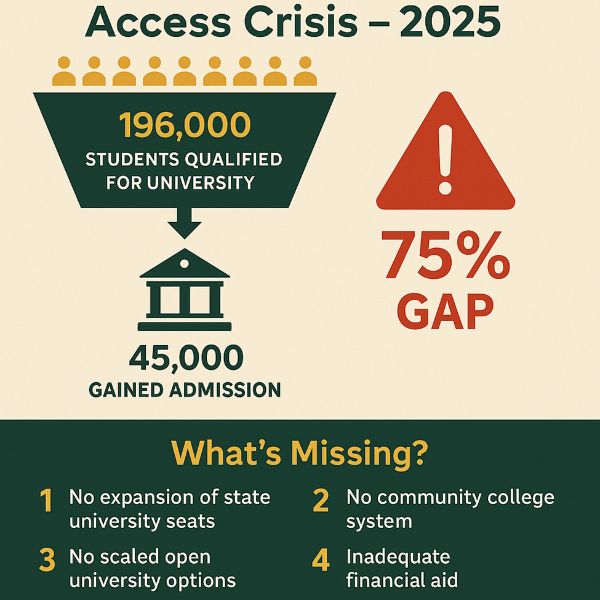
The government is forging ahead with its ambitious education reform package, amidst protests by teachers’ trade unions, university teachers and other stakeholders.

Speaking at an event to raise awareness of the education reforms, among education officials, teachers and the public, at the Dakshinapaya Auditorium in Galle, on Saturday, Minister of Education and Prime Minister Dr. Harini Amarasuriya said the new policy was aimed at overhauling Sri Lanka’s education system by reducing classroom sizes, enhancing teachers’ professionalism, modernising curricula, and integrating vocational pathways into the mainstream.

It is not possible to deliver quality education in classrooms with 50 or 60 students,” the Prime Minister said. Our goal is to limit the number of students in a classroom to between 25 and 30.”

Dr. Amarasuriya emphasised that the reforms would go beyond curriculum revision, and aim to restructure administrative systems and improve infrastructure to ensure equal access to quality education for all children.

The curriculum in teacher training colleges has not changed for the past 16 years. From August onwards, we will begin training teacher trainers to deliver updated, relevant instructions,” she said.

The event was the fourth in a series of provincial awareness programmes aimed at briefing the education authorities on the reform

initiative. Southern Province Governor Bandula Harischandra, Deputy Minister of Vocational Education Nalin Hewage, NPP MP Nihal Galappaththi, Ministry of Education Secretary Nalaka Kaluwawa, and Southern Province Chief Secretary Sumith Alahakoon were among those present besides a large number of officials from the Department of Examinations, National Institute of Education (NIE), and zonal education authorities.

Deputy Minister Hewage said the government intended to align vocational training institutions with the broader reform agenda. Students will be able to pursue vocational education based on talent and interest rather than being pushed into it solely due to academic underperformance,” he said.

However, teachers’ trade unions have sharply criticised the government for implementing reforms without adequate consultation. General Secretary of the Ceylon Teachers’ Union, Joseph Stalin, has warned of countrywide protests unless the government included all stakeholders in the reform process.

Speaking to The Island, Stalin said the current reform framework was based on recommendations made several years ago by Dr. Upali Sedara and that the government’s decision to implement it wholesale was completely unacceptable.”

He also said the government’s plans to introduce the reforms to Grades 1 through 6 starting next year were hasty; no teacher training sessions had been held, and the NIE had not been officially informed of how to set about the task.

No education reform can be successful without addressing five key issues: exam structures, student admissions, university entrance competition, and vocational and skills development,” Stalin said. If the government continues to push its own agenda without addressing these concerns, we will be forced to launch widespread protests involving schools, universities, teachers, and unions.”

Prime Minister Dr. Amarasuriya has maintained that the reforms were developed in consultation with experts and based on the government’s broader policy framework. This is not for personal or political gain,” she has gone on record as saying. It is our responsibility to understand the country’s needs and act accordingly.”

’’Nilantha Jayawardene did his job’’; Dayasiri defends former SIS chief

July 21st, 2025

Courtesy The Daily Mirror

Colombo, July 21 (Daily Mirror) – Former State Intelligence Service (SIS) Chief Nilantha Jayawardene has done his job as he has disseminated all information on events which led to the Easter Sunday attacks since 2015, MP Dayasiri Jayasekera said.

The former SIS Chief has informed the state authorities on the impending Easter Sunday bomb attacks from January 2019. He had frequently informed the then Secretary, Ministry of Defence Hemasiri Fernando on the impending attacks,” MP Jayasekera told the media.

It is not correct for the Police Commission to expel Jayawardene from the police given these circumstances,” he also said.

Wind Power that abounds in our hills

July 20th, 2025

by Garvin Karunaratne

I enclose an earlier Paper of mine. Hope the Government of Premier Anura Kumara will read it. Though in my Nineties, if called upon  I will undertake to see that all the power we need comes from the Wind Power in our hills, all done within twelve months. 

It will be a far easier task than establishing the Youth Self Employment Programme for Bangladesh in nineteen months in 1982- a programme that has been developed upon to create over three million self employed youths by the members of the elite Bangladesh Civil Service.  It is a continuing development programme today.

On many an occasion on my never ending irrigation inspections in Kandy and Nuwara Eliya long ago I had to cling onto trees and, creepers to avoid being blown off by the power of the wind.

I enclose what I once wrote hoping that our new Government of Anura Kumara Dissanayake will somehow read through.

Speaking from my sheer experience in handling development tasks-

Building up Coop Crayon at Morawaka in 1971, done in three months, developing it to enable Minister Illangaratne to declare that all imports of crayons should be stopped, and 

again in Bangladesh, establishing the Youth Self Employment Programme in nineteen months- a programme that being implemented by members of the Bangladesh Civil Service, trained  by me, has by now guided over three million youths to become self employed, I submit:

It will be easier to build a few hundred wind turbines and enable Sri Lanka to produce all its electricity.

I submit  my Paper for kind reading by our new Ministers and our saviour Anura Kumara Dissanayake.  Dear Excellency, It is a task that can be done within three years.


Wind Power to our rescue

Posted on February 3rd, 2020 in Lanka Web

By Garvin Karunaratne

I bequeath to my readers the Conclusion of my book: Wind Power for Sri Lanka’s Power Requirements.

It in unfortunate that our authorities in establishing wind turbines in Sri Lanka have so far ignored  the mountainous areas where there is ample wind power. 

My mind travels to a book by John Perkins, Confessions of an Economic Hitman, where he confesses that as an expert he had written feasibility reports with fabricated statistics which when implemented by  the Government of Ecuador, became failures,  with  the loan as a debt to the country. Our country has been given the wrong advice. Go to Spain, to the USA the leading countries where wind power has been harnessed and they harness the wind on their mountains. It is only Sri Lanka that tries to catch the sea breeze.

In Sri Lanka we have failed to harness Wind Power which Mother Nature has bountifully provided to us.

Suffice it to state that Spain a country that was far behind in producing wind power has within two to three years spurted up the ladder to be the second country in the world. Travelling through the Pyrenees to Spain in my Motorhome I was surprised to see wind turbines perched all over even on makeshift angle iron posts, the type of things that I can myself make in a day(I am no engineer). Spain even sells power to France today.

On my last visit to venerate the Avukana Buddha, I spotted a canopy perched on very long concrete shafts constructed by the State Engineering Corporation. 

It is my humble request to our excellency the President of Sri Lanka to summon the engineers who built the concrete shafts to support the canopy, and request them to design and produce the posts that can carry the wind turbines. They can easily produce these. Then import the wind turbine mechanism and set them up in our hills. We will provide employment for a few thousands. We can invite a specialist of the caliber of  Paul Gipe, the mastermind of wind power in California. who actually constructed and guides the wind turbines in California today. This will provide all the power we need. I have no doubt about that. This task can be accomplished within a year at most. Considering the billions we spend to import coal and oil, we can easily make a saving.

That is the message in my book: Wind Power for Sri Lanka’s Power Requirements.

I enclose the Conclusion of my book in support for kind perusal.

10.Conclusion

I am pleased to submit the Papers I have so far written on Wind Power as a source of Energy, in a booklet in the sheer hope that someday this will be read by one of our leaders who will be convinced that Wind Power is the form of energy that Sri Lanka is blessed with in abundance and will get going all out.

In nostalgia, I can remember what did actually happen in Bangladesh in 1982, when I worked there as the Commonwealth Fund General Advisor on Youth Development to the Ministry of Labour and Manpower in Bangladesh., The Minister for Youth Abul Kasim  was arrested on the charge of harbouring a criminal in his residency. A day later, the Military took over the country in a coup de etat.  Immediately afterwards, the Military Government  in a high powered conference chaired by Hon Aminul Islam, the Minister for Labour and Manpower assessed the programmes of the Youth Ministry. That included imparting vocational training to 40,000 youths a year. The Minister  was not totally impressed with the work done. Suddenly realizing me as the only outsider, I was confronted:

”What is the contribution you can make for Bangladesh?”

 I replied: It would be ideal to have a self employment programme to enable the 40,000 youths that are being trained every year to be guided to become entrepreneurs. Most of them are in the ranks of the unemployed even after training, today. ”

 My reply created an uproar. The Secretary to the Treasury, the highest official in the land objected on the grounds that such a self employment creation programme can never be achieved. He added that the ILO had in the preceeding three years tried to establish a self employment programme in Tangail, Bangladesh and spent a massive amount of funds all in vain. I  argued with the Secretary to the Treasury for over two hours, quoting definite instances where I had successfully established self employment projects for youths in Sri lanka.  It was an intense battle between me and the Secretary with the Hon Minister intently listening.  Finally the Minister stopped our battle. He immediately approved my establishing a self employment pogramme.  The Secretary to the Treasury stumped with the words, that he will never be providing any funds for this wasteful task. I replied that I will find savings within approved training budgets which was approved by the Hon Minister.

I got cracking with the officials of the Youth Ministry and the Lecturers of the Vocational Training Institutes that provided the vocational training, providing them with a basic knowledge of national planning to identify  areas within the economy where there was a propensity to create employment opportunities and training them in economic endeavour-structuring projects for self employment on a small scale-even with a cow or a dozen chicks and developing the enterprise. My task was to establish the self employment programme and to train the staff to continue after my two year consultancy ended. To a man the officers responded and today this Youth Self Employment Programme has by February 2011 guided  over two millions to become self employed  and it is an ongoing  programme that trains and guides 160,00 youths a year to become self employed. Today, it is easily the premier programme of employment creation  the world has known.

This experience of mine itself indicates that though wind power for the task of creating power is at an infancy today, we can easily develop it.

Let me hope that the contents of these papers which prove beyond all doubt that Wind Power can offer all the energy that Sri Lanka needs will someday find a Minister Aminul Islam” who will authorize it. I am certain  that the administrators and engineers who will toil till it is a success can easily be found.

Firstly, the country will not depend on the supply of coal and oil for power plants and the country can save all the millions and billions  being spent today to import oil and coal.

Secondly it will provide employment for thousands in erecting the turbine towers, in establishing the wind turbines and in the manufacture of the turbine mechanism itself at the later stages. In my travels in France, Spain and Portugal I have seen workers making  the towers, blades, transporting them in long trucks, erecting the towers and maintaining them. That is no difficult task for our engineers and workers.

 One of my readers happened to be an engineer, Mr Kanaga. who was involved with establishing the five wind turbines at Hambantota, the first to be built in Sri lanka. What is most interesting in his comment which I have totally enclosed in this book, is that the  environmental lobby had decided that the turbines should only be erected on the coasts and not in the mountains where there is ample wind force.

It is sad that the environmentalists were silent when the entire Kotmale Valley was denuded of people and their activities all to create 200 MW of power. That could have been easily achieved with fifty wind turbines scattered within Kotmale itself and the inhabitants and the economy would have been spared extintion. The entirety of Kotmale is dead today.

Currently the Kitulgala Valley is being destroyed to build a dam to get some 38MW of power and the entire Kitulgala Valley for miles will face destruction. Why were the environmentalists silent when these two projects were approved and implemented? 

Kanaga, that engineer supports my recommendation that  we should use the wind in our mountain area to provide the energy we need.

To my mind it is a crime not to use the wind power available and to spend millions and billions to purchase oil and coal.

I am convinced that there is an Oil Lobby and a Coal Lobby well financed to prove that wind is not a dependable source.

Many opine that wind is undependable.  To them my answer is that the wind is an utterly dependable source of energy. Spain has gone all out to build wind turbines and even sells power to France.

Thanks are due to engineer Kanaga for his comments which are immensely valuable so that I have quoted them as an attachment to my paper.

A reader of my Papers, Susantha Wijeytileke has even commented that once at Madugoda he saw a cyclist being blown off the road by the power of the wind.

I must mention that I am not alone in advocating the siting of wind turbines in the mountainous areas of Sri Lanka.

In Windfair, on line  editorial journalist  Trevor Sievert  quotes Lakshman Guruswamy, Sri Lanka has the potential to generate 24,000 MW electricity from wind.” (http://w3.windfair.net/wind-energy/news/1q543-sri-lanka-high-wind-energy-potential) Professor Guruswamy further states that studies have shown that nearly 5000 square KM of windy areas are available for potential wind power generation in Sri  Lanka.” (Dated 12/04/2018.)

In  www.windpower.lk, it is stated that in wind power the potential for Sri Lanka  is 20,740MW”

Wind Power in Sri Lanka,a publication by The Asia Business Office (//www.asiabiomass.jp/English/topics/1601_04.html) states that the wind potential in Sri Lanka is 20,740 MW. In  its words there is strong potential for wind power in the North Western coastal regions of Northern Province, the highland areas of the Central Province, Sabaragamuwa and Uva.”

  In Sri Lanka Wind farm Analysis and Site Selection Assitance,  M. Young and R Vilhauer of The Global Energy Concept, Kirkland, Washington state:

Sri Lanka has considerable available land with wind resource potential sufficient for development. However, the  wind power capacity expansion is limited by the electricity transmission infrastructure. CEB estimates that the grid cannot accommodate additional wind capacity more than 7% of the peak load. The CEB estimates that  installing more than 20MW of wind capacity in any given region may adversely impact local grid instability and power quality.

This Study  states that the windy land   can provide 50,000 MW.”

It is important to note that it is not the lack of wind power that holds up the utilization of wind power to produce electricity. Instead it is the grid capacity. Tackling the grid capacity is another kettle of fish. This is an area that has to be addressed. I will not be surprised if our  experts who yet think that wind turbines should be built to harness the sea breeze and not the wind power in our mountains  will come up with another cock and bull story stating that a grid cannot be built.

In the construction of the wind turbines at the Senok Wind Farm in Puttlam, where four wind farms established have a capacity of 40MW, it was found that the existing port facilities in the main port of Colombo and the road network was found wanting for the import of the turbine towers and blades. Instead these had to be obtained through barges from India.  The maximum height of the turbine tower is 90 meters and each blade is 50 meters in length. I have seen long towers and blades being transported by road in France and Spain. This needs special transport. In the hilly areas in Sri lanka it will be more feasible to construct the towers and blades on site. These are areas that have to be addressed in any development. Where there is a will, there is also a way.

My thanks are also due to the Editor of the Sunday Observer.lk who in Let there be Light” (Sunday Observer:06/09/2009) commented that my suggestions are very valuable. Referring tro my suggestion that the wind power in the Central Highlands should be harnessed says, This is a timely and valid proposal and the authorities should take  appropriate action to locate wind turbines in  areas which will enable them to reach their maximum potential.”

I am also thankful for Noor Nizam for his Wind Energy Electricity generation is a reality” (Sri Lanka Guardian:27/08/2009)  In his words, Garvin should be commended for his boldness to take to task the lethargic and selfish bureaucrats on this issue of renewal energy development of electricity energy in Sri Lanka…. His message should be well taken  by others too handling  national planning and development strategies  to assist the little island of 21 million to come out of the rut of poverty, misery, the destruction of the civil war and the dependence on foreign powers.”  He adds in the affirmative, As Garvin Karunaratne  wishes Wind Energy Electricity Generation  will be a reality in Sri Lanka for the next generation”.  It is my fervent hope that this will be realized.

The last paper  states of how the new owner of the Hambantota Port has insisted on a massive payment as ground rent for the five wind turbines. The CEB has decided to dismantle the five wind turbines.  This is a sad epitaph for wind power use in Sri Lanka.

However the contents of this book convinces any sane thinking person that wind power can be harnessed. We have to learn from mistakes, not make the mistakes rule us. As a country we have to find ways and means of forging ahead,  heedless.

This study proves  beyond all doubt that there is ample wind capacity in Sri Lanka for self sufficiency in our power requirements through harnessing the wind.. There is no question about this. However, as in any field of development, be it agriculture or industry, there are problems that have to be surmounted.  As stated the national grid has to be developed to carry the power from areas where it is generated to the areas where the power is consumed. Perhaps there can be local grids to carry the power generated from  a local wind farm to a local district capital. For instance if wind farms are located in Dela on the Kirigalpotta hillock, a grid can carry the power to the town of Ratnapura.

Sri Lankan engineers have in ancient times done wonders. The gradient of the Jaya Ganga that carried the waters of the Kala Weva to the tanks in Talawa and Anuradhapura has been constructed at a gradient of six inches in a mile, a gradient that baffles the irrigation engineers of today.

I am dead certain that Sri Lanka can become self sufficient in all its power requirements not for its present stage but also for its future development through using wind power. The wind power in the Central and Sabaragamuwa Hills is vast. Methods and systems have to be found to harness this energy. However as long as we build wind turbines on the coastal areas and ignore the areas where there is real wind power and satisfy ourselves with studies of the difficulties and constraints,  our attempt will be like  that of a squirrel trying to empty the water in the ocean , carrying a bit of water on its tail,  endless.

THE  END

Garvin Karunaratne Ph.D. Michigan State University

Author of How the IMF Ruined Sri Lanka & Alternative Programmes of Success(Godages:2006), How the IMF Sabotaged Third World Development(Kindle/Godages:2017)

“THE TURNING POINT” BY WASANTHA KARANNAGODA   PART 1

July 20th, 2025

 KAMALIKA PIERIS

Wasantha Karannagoda, former Commander of the Sri Lanka navy, has written a book titled, ‘The Turning Point,  the navy’s role in Sri Lanka’s war” published by Penguin India in 2025.

The book  records the experiences of the  Sri Lanka Navy ,  at two specific periods of  the Eelam war,  first when  Karannagoda  was Commander Eastern Naval Area in 2003-2005 and second when Karannagoda   became   Commander of the Sri Lanka navy in 2005.

Karannagoda was appointed    Commander Easter Naval Area in January  2003 .At the time his rank was Rear Admiral and was he was  third in order of seniority next to Navy Commander and Chief of staff . [1]   This appointment  therefore looked like  a demotion. But Karannagoda hid his disappointment and took up duties  at Trincomalee as Eastern Naval Commander.

He did so at a time when the Ceasefire Agreement was in  effect  and  LTTE power was at its peak.  Karannagoda took the view that the Ceasefire Agreement did not include the sea and proceeded to act accordingly. LTTE had forgotten to get the sea into the Ceasefire Agreement, therefore  the  territorial and economic  sea came under the government of Sri Lanka. But   there were restrictions on the actions the navy could take.( See p 39 of the book.) 

Thereafter Karannagoda took over as Commander of the Navy. He succeeded Daya Sandagiri.(2001-2005).He  held the position of Commander  in the decisive period of 2005- 2009, when the war against the LTTE intensified and ended in victory for the government of Sri Lanka. I always believed that we could win the war against the LTTE, said Karannagoda in his book .[2]

Karannagoda took the navy away from its escort function and made it a  fighting force.  The navy at the time was  engaged in escort duties for other ships. He improved its fighting  ability, with better weapons, equipment, boats. Karannagoda  revolutionized naval warfare with the introduction of small boat concept said Rohan Gunaratne in his foreword to the book. [3]

Karannagoda  was instrumental in providing better  conditions  and standards for the sailors and officers. He   saw to the welfare of the sailors under him, which increased their morale  and made them  eager to fight the war.

The navy  was a key player in the defeat of the LTTE.  The navy crushed the  Sea Tiger wing  by early 2008.  Sea Tigers were fighting on land after that, observed Karannagoda in his  book.[4] The navy’s role in destroying the floating warehouses was crucial to  the defeat of the LTTE .

 The events  described in the book are well known, such as  Sea Tigers, the  LTTE suicide boats,  the floating ware houses and  the Small Boat  concept with its  Arrow and Wave Rider boats. These operations were  given publicity by the media and the public know the main facts.

 This book   however, gives the inside story, with   dates, places, even the  exact time  of events. It gives   decisions, conversations, the sequence of events. There is an insistence on date and time. The several attacks on the navy by suicide boats in 2005 onwards, each carry the date and time.[5]The role played by other navy officers is generously noted, the officers are mentioned by name. For  each encounter described, Karannagoda  lists the number of dead  even if it is only one death, also the number injured.

The book contains many maps,  including   a  map of the critical  LTTE build up at  Sampur, shown to the authorities, indicating its huge  artillery reach . Maps  showing  LTTE Sea Tiger camps in north- east, Sampur and further down are also  shown (Map  no 4, 6, 7).

There is a  good description of the navy headquarters at Trincomalee  , specially the Naval Dockyard, which we are told, also  contains   the Naval and Maritime Academy, and  Navdock which was responsible for   repairs and maintenance of  navy ships.[6]   The Dockyard area  had many  beaches with roads that led to  them through the jungle.  From  the 1980s sentry points were  placed every 500 meters along the beach.[7]

The book gives a positive image of the navy.  There is information on  the routine surveillance operations  during the Eelam war,  as well as the  arrangements made  for the protection of Trincomalee and Colombo harbors during this period   and  the navy’s  strategy to defeat the  Sea Tigers In Eelam war IV. The navy is proud of the fact that it  kept the sea route to Jaffna open throughout.[8]

Karannagoda paid  attention to the security of  the   Colombo and Trincomalee harbours.. LTTE  tried to attack Colombo harbor twice, in January and June 2007.  Navy destroyed the suicide boats before they got close to the harbor in the first  attack  and  prevented underwater saboteurs  from approaching the harbor in the  second.[9]

The infrastructure at Trincomalee  harbour  was  inadequate and the harbor was not safe for ships. The number of alongside berths for ships and craft  was grossly inadequate. Large ships were kept at anchor, which made things difficult for logistics and crew, as well as  security  from LTTE attacks.[10]

Karannagoda   took measures to protect the  merchant and naval vessels entering Trincomalee . He stationed FACS at the southern end facing Sampur .[11]    A high frequency surface wave  radar  was installed at Nilaweli to monitor movement of large vessels sailing 300 km from land.  This provided surveillance between Point Pedro and Trincomalee .[12]

In 1999,  army troops stationed  north of Trincomalee were sent to Vavuniya and  the navy  was given the area  in Trincomalee ,vacated by the army. This was very beneficial to the  navy. This area was important in the defense of Trincomalee harbor.   Navy set up two independent  naval  units there, SLNS Vijayaba and SLNS Walagamba,  along the coast, with 500 men  each. They were   15 km and 35 km north of Trincomalee  . [13]

A naval cordon   from Mullaitivu to Kokkilai [14] known as Operation Varuna Kirana has been set up in  In May 2001 to prevent Tiger guerrillas from smuggling in military supplies. It had  a set pattern . LTTE simply shifted their operation to the northwest .[15]

Karannagoda terminated Varuna Kirana .He did not allow a pattern to be established. He deployed craft on the basis of intelligence,  and changed the areas of deployment accordingly. This gave results.  Eleven large fishing trawlers of the LTTE, carrying weapons  were destroyed  in 2006.[16]

 Karannagoda  faced opposition. In April 2003 Navy HQ  received information  in about a LTTE arms ship. navy was getting read to ambush it.  Next day newspapers  reported that a LTTE vessel had arrived and that navy was getting ready to attack . LTTE did not send the ship. A very senior officer at the Navy HQ had leaked the information He had done so not to help LTTE but to prevent Karannagoda from getting the credit [17]

  The same officer  tried to scuttle another navy attack. In June 2003   navy was getting ready to accost a LTTE  ship detected in the high seas, without informing SLMM because the navy knew that the SLMM would  alert the LTTE .While navy was getting ready, an order came from Defence Ministry that if the ship was a LTTE one then SLMM must be  informed  immediately.[18]  

There was quiet  sabotage in the Eelam war. When he became Commander,  Karannagoda found that  Sri Lanka  had placed an order with  a company in Israel to provide 20 FACs with 20 and 30 mm  new  Oerlikon guns. [19]   The navy  officers  who went to Israel  found that  they were getting refurbished old guns.[20]  These guns had been   removed from UK ships and were 20 years old. The firm had stopped production in 1980 and  no one was manufacturing  ammunition for it. Karannagoda  cancelled the tender.[21]   There was an inquiry  which  recommended disciplinary action against the three senior naval officers  involved.[22] 

The ferry, Pearl Cruise, which transported the army into and out of Jaffna, was  quite unsuitable for the task, but no attempt was made to replace it  with a  better ferry.[23]   Instead, the Pearl Cruise contract was extended every 3-6 months, continuously for more than   two years,  without going for a fresh tender.[24]    

When it became necessary to install new sonar in Colombo Harbor, the  Chairman,  Port Authority got together with a friend and brought a fish finder which he wanted the navy to accept as sonar. He was reported and removed from the position of Chairman, recalled Karannagoda  in his book.[25]      ( continued)


[1] Wasantha Karannagoda , The turning point. P 4.

[2] Wasantha Karannagoda , The turning point. P 122.

[3] Rohan Gunaratne .foreword to The Turning point p xix

[4] Rohan Gunaratne .foreword to The Turning point p xx

[5] Wasantha Karannagoda , The turning point. P 181-.

[6] Wasantha Karannagoda , The turning point. P 10.

[7] Wasantha Karannagoda , The turning point. P 9.

[8] Wasantha Karannagoda , The turning point. P 22.

[9] Wasantha Karannagoda , The turning point. P 177.

[10] Wasantha Karannagoda , The turning point. P 172.

[11] Wasantha Karannagoda , The turning point. P 253.

[12] Wasantha Karannagoda , The turning point. P 177.

[13] Wasantha Karannagoda , The turning point. P 11.

[14] https://www.sundaytimes.lk/010603/sitrep.html

[15] Karannagoda The turning point p 286

[16] Karannagoda The turning point p 286

[17] Wasantha Karannagoda , The turning point. P 59,60.

[18] Wasantha Karannagoda , The turning point. P 64,65.

[19] Wasantha Karannagoda , The turning point. P 219.

[20] Wasantha Karannagoda , The turning point. P 218.

[21] Wasantha Karannagoda , The turning point. P 220.

[22] Wasantha Karannagoda , The turning point. P 230.

[23] Karannagoda The turning point p 171

[24] Karannagoda The turning point p 194

[25] Karannagoda The turning point p 271

“THE TURNING POINT” BY WASANTHA KARANNAGODA –  PART 2

July 20th, 2025

KAMALIKA PIERIS

 In 2005,  When Karannagoda became Commander of the navy, the navy was mostly engaged in escort  functions for the army and merchant vessels, said Karannagoda in his  book The Turning Point”.

Karannagoda turned the navy into a successful fighting force. To do so, he had to  improve many aspects of the navy service.  The navy’s fighting capabilities were insufficient, there was a lack of leadership and a lack of confidence in senior officers, he observed.[1]  To create a fighting force,  the navy needed a  major shift in its operating pattern, mindset, attitude and morale.[2]

Firstly, Karannagoda succeeded in increasing the strength of the navy.  Navy cadre increase from 27,000 in 2005 to 55,000 by 2009.  Navy intake from 3000 personnel per  year, to 9000 personnel per year.[3] Government land was obtained to establish new camps.  Abandoned government buildings ‘all over the country’ were obtained to set  up new training facilities.  Cabinet responded positively to this, recalled Karannagoda .[4]

The Special Boat Squadron  (SBS) was strengthened. Recruitment   was increased by 50%  in 2006. The presence of the SBS gave the rest of the navy  in the camp  great confidence , said Karannagoda in his book . SBS  was highly trained and could face any situation  at sea. They were trained in land warfare as well.    One SBS sailor was  as good as  having 8-10 normal sailors, and SBS sailors were used to train others. Producing a fully trained SBS was not easy . The standard of physical fitness is extremely high and the drop out rate was also high.[5]

 The  Rapid Action  Boat squadron  (RABS)was created to absorb the highly motivated sailors who had to drop out of the SBS training due to their inability to meet the high fitness standards. They were given special training in small boat handling and on  fighting at sea in small boats.  A separate training center was set up for this squadron at Kalpitiya. The sailors  were deployed on  Wave Rider and Arrow boats. They helped to  combat the asymmetric warfare of the LTTE . [6]A separate directorate  was created   for  the Special Boat Squadron and the Rapid Action  Boat squadron.  [7]

A Volunteer navy force was created, or strengthened, I am not sure which. Those with nationalist feelings  who wanted to contribute to the war effort were  accepted. Undergrads from University  of Moratuwa  who had performed well and were  awaiting final year results were  recruited,  specially those with an aptitude for invention .The Volunteer service was very successful, said Karannagoda . [8]    

Karannagoda  found the morale of the sailors very low.  One reason was the shabby treatment meted out to them. They lacked  accommodation and basic facilities .  Junior  sailors  were sleeping in vehicles, buses and corridors .  Sailors  did not have a locker to keep their belongings safely or a bed, mattress and pillow to sleep on. Uniforms were  in short supply and sailors were using their own  money to buy them. The  toilets   for junior sailors were totally inadequate[9].

 After  Karannagoda took over, within a short period, a bed, locker, mattress and pillow were made available to each sailor. Uniforms  were initially  stitched  only at one center. He increased this to four sewing centers .New accommodation  for senior and junior sailors and officers were constructed in  locations  within 6-8 months by the newly created civil engineering group working almost round the clock.[10]  

There were sufficient bunkers, in the Naval dockyard, Trincomalee ,for all personnel to take shelter during an attack. When Jetliner was attacked at Trincomalee in August 2006, sailors were killed while running to the bunkers.[11]

Karannagoda  connected  directly to the navy employees at all levels. This is described fully in the book. He  encouraged communications upward and downward and encouraged juniors to speak during discussions. [12]He  tried to provide solutions to problem of sailors within 48 hours.[13]  When there was threat of an attack, the entire navy was brough to  the action stations. [14] 

 Karannagoda enforced discipline, appreciated  good work and punished  negligence. Promotions were given strictly on merit.   Some officers were made to retire from service. Officers were court martialed for negligence of duty , irrespective of rank . The book  describes such instances.[15]

 Karannagoda also increased computer literacy in navy.  All officers and sailors were encouraged to  own a laptop through an instalment payment scheme  with no interest. Karannagoda was able to obtain a US  made computer  at a concessional price. The Army and Air force also started to buy  through the navy as this was much cheaper.[16]  

Before Karannagoda’s time, the navy was not engaged in intelligence. That was left to army and police. Karannagoda  created a Navy intelligence branch .Officers were given training  in intelligence by army and police.  Whenever the army or police interrogated  captured  LTTE ,  navy intelligence personnel were also sent to gather information. The naval intelligence  directorate, played a crucial role in the protection of the Colombo harbor and in providing location for the floating warehouse. [17]

The navy   had  good  intelligence, regarding LTTE attacks, despite its  limitations. It  had  reliable information on the Sea Tigers  and   the  new LTTE naval camps in  the north eastern lagoons, with  boats hidden in the jungle. The navy was able  therefore ,   to anticipate  to some degree, what the LTTE would do next. Intelligence reports showed that the LTTE planned to weaken the navy  and take control of Trincomalee harbor[18]  and the navy was not prepared to allow this.

In addition to  radio and radar, the navy had informal sources of intelligence. The Fisheries Corporation worked very closely with the navy . The navy  helped to  rescue    fishermen in distress and bring sick fishermen back to shore.[19]  In return Fisheries Corporation  helped the navy by reporting suspicious ships seen at sea. Fisheries Corporationhad   20 signal offices to   for  communication with  fishing trawlers. All multi day fishing trawlers had to call the  signal offices at specified times.[20]  

Navy  conducted training for  selected fishermen from the south  on basic intelligence work,   how to identify a suspicious ship, trawler,  boat . Sailors also disguised themselves as fishermen to gather intelligence. The system worked well.. Navy received valuable information which  helped the navy to keep a large area of the northeastern and eastern seaboard under close surveillance.[21]

The book draws attention to aspects which we did not read about in the media, such as the naval civil engineering Department . The Naval Civil Engineering Department had well qualified engineers   and skilled sailors. It  was under utilized. Before Karannagoda , the Department  was  mainly supervising the outsourced civil engineering contracts and maintenance work of buildings. Since the outside contractor never completed the work on time,  awarding  civil engineering contracts to private contractor was totally stopped. [22]

Instead the   Department  was  given  the work. They rose to the challenge and went on to built multi story burling piers, jetties, slipways,  within a very short period. Jetties were  built to accommodate   Jetliner and Sayura.[23]  .

The strength of the Civil Engineering Department increased almost six fold. Civil engineering sailors were encouraged to acquire knowledge, technology and expertise from foreign contractors, who were working on major work such as pier construction and jetty construction. .They were  exempt from other service duties .Many incentives, including additional food, unlimited tea, coffee an soft drink were given when working at construction sites and their hard work was given due recognition.. [24]

 Sailors in other branches were detailed to assist in construction work in rotation so that  everybody got the feeling they were contributing to the construction of their accommodation and other facilities. [25]

Masons, carpenters, plumbers and others needed for civil engineering work were enlisted to the Volunteer Navy, with  the required  minimum basic education qualification . They were   trained in  naval discipline and handling weapons,  to add  strength to navy in the quickest possible time.  Later they were given a normal training .[26]

  It was difficult to obtain certain  spare parts, due to high prices, the time needed to obtain them and the sanctions impose on  their purchase by certain  western countries.  The spare parts section and the R&D section of the  Sri Lanka Navy  became important .  Several new workshops  with facilities for repairing   navy craft, including FACS ,FGBs  (Fast Gun Boat , )Arrow and  Wave Rider were built at several large naval bases. These workshops could also be used for testing. [27]

The majority of those working  in the Naval dockyard in Trincomalee  as skilled workers were Tamils  from Trincomalee town. When the war began, the navy reduced the employment of Tamil civilians, but there were still about 150 in the workshops. They were under security clearance and could not remain in the Naval Dockyard after 5 pm.[28]  

The  workshop best  known  to the public  is the Welisara naval boat  building yard.  Its  navy fiberglass workshop    manufactured the Arrow and Wave Rider boats. Welisara also made armored personnel  carriers  using lorry chassis   for the  land transport of sailors. Welisara produced four armored personnel carriers a month, said the book. [29] ( continued)


[1] Karannagoda, The Turning Point p  167

[2] Karannagoda, The Turning Point p  171.

[3] Karannagoda, The Turning Point p  176.

[4] Karannagoda, The Turning Point p  176.

[5] Karannagoda, The Turning Point p  175.

[6] Karannagoda, The Turning Point p  175, 176.

[7] Karannagoda, The Turning Point p  175, 176.

[8] Karannagoda, The Turning Point p  174.

[9] Karannagoda, The Turning Point p  167

[10] Karannagoda, The Turning Point p  168, 169

[11] Karannagoda, The Turning Point p  254

[12] Karannagoda, The Turning Point p  169

[13] Karannagoda, The Turning Point p  169

[14] Karannagoda, The Turning Point p  178

[15] Karannagoda, The Turning Point p  178

[16] Karannagoda, The Turning Point p  177

[17] Karannagoda, The Turning Point p   174

[18] Rohan Gunaratne .foreword to The Turning point p xvi

[19] Wasantha Karannagoda , The turning point. P 94.

[20] Wasantha Karannagoda , The turning point. P 93.

[21] Wasantha Karannagoda , The turning point. P 175.

[22] Wasantha Karannagoda , The turning point. P 167.

[23] Wasantha Karannagoda , The turning point. P 172.

[24] Wasantha Karannagoda , The turning point. P 168.

[25] Wasantha Karannagoda , The turning point. P 168.

[26] Wasantha Karannagoda , The turning point. P  167 ,168.

[27] Wasantha Karannagoda , The turning point. P  173

[28] Wasantha Karannagoda , The turning point. P  257

[29] Karannagoda, The Turning Point p  189

“THE TURNING POINT” BY WASANTHA KARANNAGODA –  PART 3A

July 20th, 2025

KAMALIKA PIERIS

The book The Turning Point ’has a separate chapter titled  ‘The evolution of the Sri Lanka navy and the LTTE’s Sea Tigers”. This  give us much first hand information on the development of the LTTE Sea Tiger force and the measures taken  by the navy to combat them.

 We are told that the  LTTE first used  their boats to smuggle arms  and ammunition  from India and to  send  their cadres to India for training. Until the mid 1980s  LTTE only   had  25 HP outboard motors for their fiberglass dinghies  which were 17-20 feet in length and  had a speed of around 10-12 knots. [1]

Until the late 1980s the LTTE did not confront the Sri Lanka navy directly. They tried to avoid the  Sri Lanka navy as much as possible.[2]   The Sea Tiger wing called Kadal Pura  was launched in 1985. It was the LTTE ‘ de facto’ navy. The boats   had higher HP out board motors  such as  40 and 75 , which gave the craft the required speed of 20 to 25 knots. The craft also had high caliber 23 mm weapons  which  gave greater range.[3]   LTTE had a cell in Indonesia that provided war material including HP outboard motors and large fiberglass boats.[4]

To  match this, navy obtained   six Fast Attack Craft FAC,  manufactured in Israel, by the Dvora company  in 1985 and 1986.  Colombo Dockyard also built  the ‘Dvora’  later. They were effective but  were   not as powerful as the original  Dvora, observed Karannagoda .[5]   FACs were also bought from other countries, the book gives the  details  and the relative strength of the   different makes.

 When the FACs arrived, LTTE    started to   do  their sea movement at night. Sea tigers started  to  attack  around 4 pm to take advantage of darkness. The navy had difficulty in spotting the much smaller LTTE boats in the dark, though its fighting ability was greater.[6]   Navy  got a powerful search light called Xenon, that  emit a  beam that could illuminate a target at about 1 km, which was  sufficient for attack at night.  It also blinded the LTTE cadres in the  dinghy.[7] 

The    FACs  were divided into three squadrons, each under a commander. There was a separate training officer for the FACS.[8]    Karannagoda looked into the suitability of the officers heading the FACs and found that  more than 50% were not suitable. They were replaced.[9]  

Women sailors and lady officers were appointed for each FAC  area , to visit the families of the FAC staff  and look into their welfare , such as  school, health  and any other matters that needed attention. This was done so that FAC personnel  could concentrate on their work.[10]

The navy deployed FACs to patrol the north-east and north-west seaboard. The   north-eastern seaboard, where LTTE had its  sea tiger camps was patrolled round the clock by six FACS  in pairs, 30 km apart, from three designated positions Challai (C) Mullaitivu ( M)  and Nayaru ( N).They patrolled  a coastal belt of approx. 100 km from Point Pedro to Nayaru.  [11] 

Karannagoda wanted to upgrade the  weapons of the FAC. This is described in great detail in the book . In 1997, the navy got its first multi sensor stabilized integrated system (MSIS) with a thermal  camera. The MSISs connected to a computer that  calculated all aspects including ballistics, wind speed, roll and pitch of the craft, estimated speed of enemy craft an gave the firing solution to the gun, which made it very accurate. [12]  This took the LTTE by surprise. Navy could now see the LTTE boats before the LTTE could see the navy boat and the navy was able to destroy many of the LTTE boats in a night.[13]

 Navy had more than 30 FACS fitted with thermal cameras and stabilizing gun platforms.  Guns of varying strength were fitted on to the boats. Naval firepower became very formidable  and it was difficult for the LTTE to match it at the time. Therefore LTTE could not operate  freely even at night.  The  Navy speed increased to 45 knots , caliber of weapons improved from 20 mm to 23 mm.[14]

Later, four sets of additional engines were bought for the FAC instead of more craft.  FAC could now be repaired within two days .[15] There were other improvements to  the fighting ability of navy craft. These are described in detail in the book

Navy had a secure communications network within the navy,   including an internal telephone system between the HQ and area commands, where the conversation was automatically encoded. [16] Satellite phones were provided for each ship and craft during Karannagoda’s time. [17]

But the Navy found it difficult to maintain communications  with its own craft in certain areas in the sea. They could not receive transmission signals after a certain distance from  land, particularly in the areas where LTTE had the highest number of sea tiger camps.  To overcome this, five  masts were  constructed   each over 120 m , at strategic locations, covering the entire  north, north east and north west seaboard. The masts   provided live  pictures of battles ,  and of  additional craft put to sea from LTTE camps. [18] These masts helped  destroy the floating warehouses.[19]

On March 30, 1996, the Dvora bearing number P-458 was tasked with the duty of escorting a convoy. It was under Lieutenant Jude Wijetunge .The LTTE had sent a suicide boat to attack the convoy. It was going at  full speed  towards the  convoy when  Wijetunge’s Dvora rammed the suicide boat and both boats exploded.

 Lieutenant Jude Wijetunge became the first Navy officer to be posthumously awarded the  Parama Weera Vibhushana, the highest gallantry medal awarded to members of the Sri Lanka Armed Forces. He was   also promoted to the rank of Lieutenant Commander.[20]

LTTE use the Ceasefire Agreement (2002-2005) to rearm and improve their fighting capability. Under the Ceasefire Agreement  ,certain officials who held high position in the government  helped LTTE to get down outboard motors with higher HP, fiberglass material for boat building and new communication equipment, all of which had been prohibited earlier.  The items came under the pretext of helping the  fishing community.  Navy complained but the complaints were  ignored. [21]

LTTE had strengthened itself during the Ceasefire Agreement  and were able to deploy  30-40 boats with higher HP engine together with 4-5 suicide boats at any given time from their camps,  to launch wolf pack type attacks on the pairs of FACs.[22]  This reduced the advantage FAC has enjoyed up to 2002.[23]  When LTTE attacked in 2006, only a few FACs had the speed advantage and were capable of facing the new LTTE high speed suicide boat threat. [24]

During the UNP government 2001-2004 military purchases for the  armed forces were either reduced or  halted totally.  Instead the  government  favored the LTTE . Defence Ministry ordered the navy to release a number of  LTTE boats with arms and ammunition, claymore mines and other material captured off the Trincomalee harbor by navy under trying conditions, in rain and scorching sun..[25]  LTTE  violated Ceasefire Agreement over 3000 times, but  government  wanted  the Sri Lanka navy to exercise restraint.[26]

 After the Tsunami of 2004, on the pretext of helping fishermen, LTTE  got down experts from west to help them build lightweight  fiberglass large attack boats and suicide boats.  LTTE also got outboard motors over 200 HP, which were banned  in the country. Customs inspections were relaxed  and LTTE was able to receive the higher HP outboard motors by the container load without difficulty.  They were also able to get fully constructed high speed boats in containers transferred to their areas undetected, said Karannagoda in his book.[27]

 In  1999 and 2000 LTTE started  its well known Wolf Pack  attacks of around 8-12 boats at a time against the FACs who were patrolling the north eastern seaboard, where LTTE had its  sea tiger camps. LTTE had radar stations in their bases and these observed the movement of the FACs and launched the attacks when they were  about 10 kms from land.  It was difficult to catch them as they returned to land very fast .[28] 

 By mid 2006 LTTE was able to launch 20-25 boats with four and five suicide boats at a time in their wolf pack type of attacks against the navy. One intelligence report stated that  LTTE was conducting trials of a new very high speed  suicide boat with speed of more than 45 knots and there was video footage of its trials. LTTE was planning to construct over 100 such suicide  boats.[29]

Navy needed  150 FACs  to combat the Wolf pack .  This was out of the question.  Also, FACs could not  be made smaller as they had to stay a  minimum period of 24 -36 hours sea continuously  to monitor enemy activities. LTTE strategy was to hit and run,  so LTTE  boats   were meant to stay 6-8 hours and return to camp.[30] .

 Karannagoda started to search for a suitable small boat, slightly  bigger  and with better firepower than the LTTE boat. In September 2006, army liberated Sampur,  and  one  suicide boat   caught his eye,  it was an imported boat. He  sent the boat to Welisara navy fiberglass workshop.   They copied this boat and fitted it with  two 250 HP outboard motors,   2.3 mm gun in front,  with two 12.5 mm guns on either side. The boat could carry five.   After several changes we got the perfect boat we wanted  said Karannagoda . He called it Arrow boat.[31]

Arrow boat was mass produced  at Welisara  boat building yard.  It took  6 months to complete the first 30  Arrow boats.  Welisara eventually  turned out more than  8 arrow boats a month [32] totaling over 200 Arrow boats inhouse. [33]  250 HP outboard motors  from Japan,  23 mm guns from Bulgaria, 14.5 mm guns from China were bought in sufficient quantities for these boats. The sailors for Arrow  were trained at a camp establish specially for this at Kalpitiya. [34]  30 Arrow boats  were positioned at selected locations starting with Pulmoddai and extending to Talaimannar , Delft and Kayts.[35]

A harbor was  made for these boats at Point Pedro, in 5 months by the  Northern Area Commander and his team ,[36] with  pier, harbor, fully fledged naval camp and 120 meter mast for installation of radar, thermal camera and antennas for communications. The  LTTE informants in the Tamil villages at Point Pedro  would  have  informed the LTTE about this. [37]  

 In June 2007,there was a  major confrontation between  navy and LTTE. LTTE launched  25 boats from Challai and Mullaitivu. Arrow boats were ready for them.  There were  50 Arrow boats against 30 LTTE boats.[38]    Arrow boats won the battle.  LTTE withdrew having lost several boats.  [39]  This battle is  described in the book, with much detail. This was a  huge defeat for LTTE and a big victory for us, said Karannagoda . Navy in high spirits over the success of the battle.[40]

After this battle,  sailors complained  that a command craft was lacking .[41]    Navy  had captured an abandoned large LTTE boat, Indumathi in 2007.[42]  Indumathi has been constructed abroad  .[43]    At Welisara, the navy copied  Indumathi and  created the  Wave Rider boat. Wave Rider became the command craft. There was  one Wave Rider to five Arrow boats. [44]

This flotilla of small boats belonging to the Sri Lanka navy, was  able to destroy   attack boats and suicide boats of the LTTE  in every battle at sea. This reduced the sea battles from 22 in 2006 to  11 in 2007  and three in 2008. . By the end of 2008 LTTE did not have any boats to fight at sea and the Sea Tigers were fighting on land.[45]   ( continued)


[1] Karannagoda The turning point p 126

[2] Karannagoda The turning point p 129

[3] Karannagoda The turning point p 129

[4] Karannagoda The turning point p 249

[5] Karannagoda The turning point p 128

[6] Karannagoda The turning point p 195

[7] Karannagoda The turning point p 129

[8] Karannagoda The turning point  p  215

[9] Karannagoda The turning point  p 216

[10] Karannagoda The turning point  p  217

[11] Karannagoda The turning point  p  138,  231,

[12] Karannagoda The turning point  p 130,

[13] Karannagoda The turning point  p 130,

[14] Karannagoda The turning point p 131

[15] Karannagoda The turning point p 173

[16] Karannagoda, The Turning Point p  192

[17] Karannagoda, The Turning Point p  170

[18] Karannagoda, The Turning Point p  201

[19] Karannagoda, The Turning Point p  170

[20] https://archives1.dailynews.lk/2020/09/19/features/229140/cruising-waves-victory?views_lazy_load_disabled=true&page=12#google_vignette

[21] Karannagoda The turning point p 215

[22] Karannagoda The turning point p 232

[23] Karannagoda The turning point p 214

[24] Karannagoda The turning point p 214

[25] Karannagoda The turning point p 44

[26] Karannagoda The turning point p 149,153

[27] Karannagoda The turning point p 132

[28] Karannagoda The turning point p 138,139

[29] Karannagoda The turning point p 133

[30] Karannagoda The turning point p 217,218

[31] Karannagoda, The Turning Point p  233, 235

[32] Karannagoda, The Turning Point p  235-238

[33] Rohan Gunaratne .foreward to The Turning point p xix

[34] Karannagoda, The Turning Point p  235-238

[35] Karannagoda, The Turning Point p 242

[36] Karannagoda, The Turning Point p  241

[37] Karannagoda, The Turning Point p  238

[38] Karannagoda, The Turning Point p  239

[39] Karannagoda, The Turning Point p 240

[40] Karannagoda, The Turning Point p 241-242

[41] Karannagoda, The Turning Point p 241-242

[42] Karannagoda, The Turning Point p 240

[43] Karannagoda, The Turning Point p  241

[44] Karannagoda, The Turning Point p  241

[45] Karannagoda, The Turning Point p  242

සත්‍ය වසන් කර ඉතිහාසය ඉගැන්වීම

July 20th, 2025

චානක බණ්ඩාරගේ

මෙයට වසර 2500 පෙර උතුරු ඉන්දියාවේ විජය කුමරා සිය පිරිවර (700) සමඟ ශ්‍රී ලංකාවට පැමිණීමෙන් සිංහල ජාතියේ ආරම්භය සිදුවීය.

එදා, විජයාගමනය ගැන ඉතිහාසය පොත් වල පරිච්චේද ගණනින් කරුණු සැලවිණි.

නමුත් අද මෙය ඉතිහාසය පොත්වල පාසැල් දරුවනට නොඋගැන්වේ.

අද ළමුනට උගන්වන්නේ හෝමෝ සපියන්වරු අප්‍රිකාවේ සිට සංක්‍රමණය කර ශ්‍රී ලංකාවේ මනුෂ්‍ය වාසය ආරම්භ වූ බවයි.

‘විජය කියා කුමරෙක් මෙරටට පැමිණියේය යන ජන විශ්වාශයක් මේ රටේ ඇත’ වැනි වූ තනි පේළියක් එක් ඉතිහාස පෙළ පොතක අවශේෂ ලෙස දක්වා ඇත.

විජයගෙන් රජවරුන් 4 දෙනෙකුගෙන් පසු රාජ්‍ය කල දේවානම් පියතිස්ස රජතුමා සමයේ, මිහිඳු හිමි මෙරටට ආගමනයෙන් මුළු රටම බෞද්ධ විය (වැද්දන් කිහිප දෙනෙක් හැර).

මුළු ලොවම විශ්මිත කරන අති ශ්‍රේෂ්ට සිංහල බෞද්ධ ශිෂ්ටාචාරය එමඟින් ආරම්භ විය.

මෙයට කළින්, මෙරට ශ්‍රේෂ්ට සිංහල ශිෂ්ටාචාරයට මුල් ගල තැබුනේ පන්ඩුකාභය රජතුමාගෙනි. ඔහු වසර 70ක් සාර්ථක ලෙස රජකම් කළේය.

පන්ඩුකාභය දෙමළ යයි එක් පුරා විද්‍යා මහාචාර්ය වරයෙක් කියා ඇත. මෙය බොරුවකි.

පන්ඩුකාභයගෙන් පසු මුටසීවද ඉන් අනතුරුව දේවානම් පියතිස්සද මෙහි රජ විය.

නමුත් අද ඉතිහාසය පෙළ පොත් වල ළමුන්ට ශ්‍රේෂ්ට සිංහල බෞද්ධ ශිෂ්ටාචාරය ගැන නොඋගන්වයි. වැව සහ දාගැබ සංකල්පය ගැන අද ඉතිහාසය පෙළ පොත් වල කිසිදු සඳහනක් නැත.

ඒ වෙනුවට පෙන්වා දෙන්න උත්සහ කරනුයේ වසර 40,000 – 50,000 පමණ එහා කාලයේත් මේ රටේ අති ශ්‍රේෂ්ට ශිෂ්ටාචාරයක් තිබු බවයි. එය සිංහල හෝ බෞද්ධ නොවේ. බොහෝ විට එය දෙමළ විය හැකි බවට ඉඟි ඔවුන් පළ කරත්.

මේ සඳහා සාක්ෂි වශයෙන් කළින් සඳහන් කල පුරා විද්‍යා මහාචාර්යවරයා බොහෝ අසත්‍ය කරුණු ඉදිරිපත් කර ඇත – ලොව මුළින්ම යකඩ, සහල්, බාර්ලි, ඕට්ස්  සොයා ගත්තේ අපය වැනි. ඔහුගේ ඊනියා සොයාගැනීම් ලෝකයේ පිළිගත් පුරා විද්‍යාඥයින් පිළි ගෙන නොමැත.  

මොවුන් මේ බොරුව ව්‍යාප්ත කරනුයේ ඇයි? දේවානම් පියතිස්ස/මිහිඳු සුසංයෝගයෙන් මේ රටේ බිහි වූ ශ්‍රේෂ්ට සිංහල බෞද්ධ ශිෂ්ටාචාරය අවලංගු/මොට කිරීමටය.

කොටින්ම, ශ්‍රී ලංකාව වනාහි සිංහල බෞද්ධ රටක් නොවේය යන්න ස්ථාපිත කිරීමටය.

මොවුනට අවශ්‍ය සිංහලයාට ප්‍රථම මේ රටේ ද්‍රවිඩයන් සිටිය බවත්, ඔවුන් මේ රට සමුර්ධිමත්ව රාජ්‍ය කල බවත් පෙන්වීමටය.

තවද, සිංහලයාගේ සම්භවය උතුරු ඉන්දියාව නොව දකුණු ඉන්දියාවේ (දෙමළ) බව පෙන්වීම සඳහාද මොවුහු අපේ ඉතිහාසය විකෘති කරති.

මෙම මහාචාර්යවාරය/පුරාවිද්‍යඥයා දේශන පවත්වන නාලිකාවේ වැඩ සටහන්වලට සවන් දීමේදී සිංහලයාගේ සම්භවය දකුණු ඉන්දියාව බව පෙන්වීමට ඔහු තදින් (සූක්ෂම ලෙස) උත්සහ දරන බව පෙනේ.  නමුත්, සිංහලයාගේ සම්භවය විජය නිසා උතුරු ඉන්දියාව බව ඔහුට අවලංගු කල නොහැක  (උතුරු ඉන්දියාවේ සිංහපුර, වංග දේශයේ, ලාට රටේ – අද, බංග්ලාදේශයට අයත්). 

රාවණා නමැති ශ්‍රේෂ්ට රජතුමෙක් මෙහි රාජ්‍ය කළේය වශයෙන් දකුණු ඉන්දීය ද්‍රවිඩ සම්භවයක් ඇති මේ රටේ පෞද්ගලික රුපවාහිනි නාලිකා කාලයක සිට වැඩ සටහන් මෙහෙයවීය. සිංහලයෝද මේ පාරේ දිවුහ. රාවණා යනු ද්‍රවිඩයෙක් බවත්, ඔහු ශිව දෙවියන්ගේ අවතාරය බවත් මුළු ලොවම පිළිගෙන තිබෙන අවධියක රාවණා මෙහි වසර 5000 පෙර විරාජමාන වුවා යයි පිළිගැනීමෙන් අප සිදු කරන්නේ මේ රටේ සත්‍ය ලෙස බිහිවූ ලොව මවිතයට පත් කරන ශ්‍රේෂ්ට, සිංහල බෞද්ධ ශිෂ්ටාචාරය අවලංගු කර දැමීමයි.

මෙකී අසත්‍ය වැපිරීම් ප්‍රධාන ලෙසම කරනුයේ ඉහත කී පුරාවිද්‍යා මහාචාර්ය වරයායයි (රාවණා සම්බන්ධව නම් අඩුය). ඔහුගේ  ‘නොනවතින ඉතිහාසය’ වැනි ආසන්න නමක් යොදා ගත් කාණ්ඩ සිය ගණනින් යුත් යු ටියුබ් වැඩසටහන ඉතාම සිංහල බෞද්ධ ගැති බවක් පෙන්වීමට කටයුතු කරයි. සිංහලයා මොහුට අසු වන්නේ මේ නිසාය. මොහුගේ ජාතිය, ආගම කුමක්දැයි අප හරිහැටි නොදනිමු.   

සෙනරත් පරණවිතාන ශූරීන්ටවත් නොතිබූ තරමේ පිළිගැනීමක් මොහුට අද රටේ ඇත.

සෑම රාජ්‍ය නායකයෙක් වාගේම මොහුව සමීපව ආශ්‍රය කරයි. ඉතිහාසය පිළිබඳව කථිකාවකට ඔහු නැතිවම බැරිය.

ශ්‍රී ලංකාවේ ඉතිහාසය පිළිබඳව අර්ථ කථන ලබාගැනීමට සියල්ල දුව යන්නේ මොහු වෙතටයි. මොහුටම ගැලපෙන ඉතිහාසය පිළිබඳව ඔහුගේ වෙනත් ගෝල ආචාර්ය වරු මොහුට ඇත.

මොහු රජයේ විශ්ව විද්යාලයක පුරා විද්‍යාව පිලිබඳ මහාචාර්ය වරයාය.

හැකි සෑම විටම සිංහල බෞද්ධත්වයට හානි වන අර්ථ කථන ඉතා සුක්ෂම ලෙස ලබා දීමට මොහු සමත්ය.

විශාලතම විපත නම් ඉතිහාසය පිළිබඳව පාසැල් පෙළ පොත් සාදන සංස්කාරක මණ්ඩලයේ මොහු උසස් නිළයක් දැරීමයි. මොහු සහභාගී වී ඇති පාසැල් පෙළ පොත් සියල්ලේම වාගේ සිංහලයාට අගැතියට පත්වෙන ව්‍යාජ ඉතිහාසයක් මවා දක්වා ඇත.

මොහුට ස්තුතිවන්ත වෙන්න පාසැල් වල 6, 7, 10 ශ්‍රේණි වල පෙළ පොත් වල ඇත්තේ සිංහල බෞද්ධයා පහත හෙලන බොරු හා සමාන ඉතිහාසයකි (මොහු සම්බන්ධ නැති 8, 9 ශ්‍රේණි වල ඉතිහාසය පෙළ පොත් වල වැරදි ඉතිහාසය අඩුය).

‘සිංහල’, ‘බෞද්ධ’ යන වදන් පාසැල් පෙළ පොත් වලින් ඉවත් කර ඇත්තාක් මෙනි.

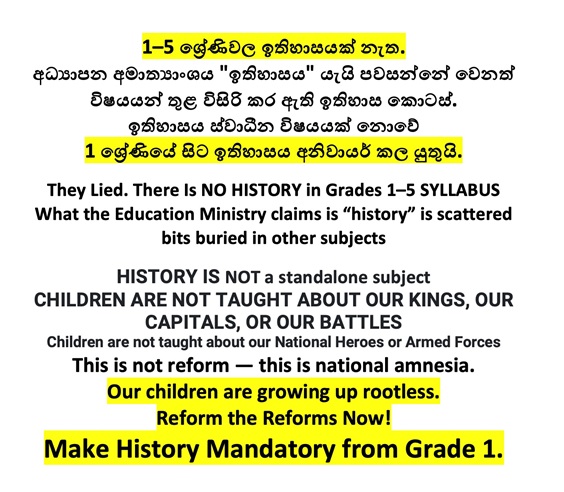
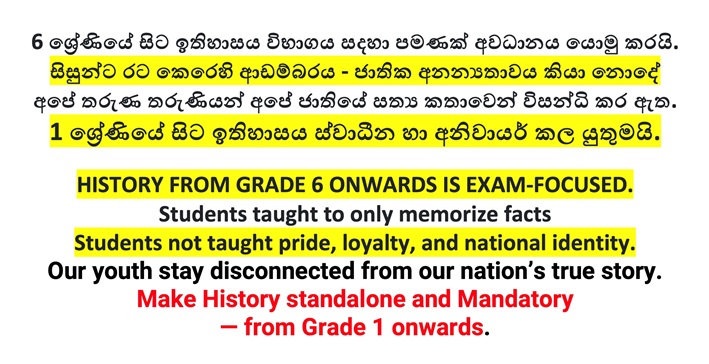
කළින් තිබු ඉතිහාස ග්‍රන්ථ මෙන් නොව, සිංහලයා පිළිබඳව ගෞරවයක්, ආඩම්බරයක්, අභිමානයක් වර්තමාන පෙළ පොත් මඟින් ළමා මනස තුල ඇති නොකරයි. ඉදින්, රට, ජාතිය ආගම ගැන ලැදි පරපුරන් පාසැල් මඟින්  කෙසේ සාදනුද?

පාසැලෙන් පිටත්වන දරුවා දේශප්‍රේමියෙකු නොවීම පුදුමයක් නොවේද?

දෙමළ, මුස්ලිම්, බර්ගර් ජාතින් පිළිබඳවද හොඳ, යහපත් දේද  දරුවන්ට ඉගැන්විය යුතුය. විශේෂයෙන්ම ඔවුන්ගේ ජාතික වීරවරයන් ගැන.

පුරාණ අතීත ශ්‍රී ලංකාවේ (වසර දහස් ගණනකට පෙර) සිංහලයාගේ වීර විකුම් අද සියළු දරුවන්ට ඉගැන්වීම දෙමළ, මුස්ලිම්, බර්ගර් වරුන් දෙවන පන්තියේ ලා  සැලකීමක් නොවේ.

ඉතිහාසය යනු සත්‍යයකි. ප්‍රභන්ධයක් නොවේ.

සිංහලයාට ප්‍රථම ද්‍රවිඩයන් මේ දේශයේ සත්‍ය වශයෙන්ම වාසය කලේ නම් අප දරුවන්ට එය එලෙසින්ම ඉගැන්විය යුතුය.

නමුත්, ඉතිහාසය එසේ නොවන කල, එවැනි අදහස් ඉතා සුක්ෂම ලෙස ළමා මනසට කාවැද්දීමට ඉතිහාසය පෙළ පොත් සමත් වීම හෝ එම කරුණ ගැන ප්‍රශ්නාර්ථයක් ළමා මනස තුල කුළු ගැන්වීම කණගාටුවට කරුණකි.

මිහිඳු හිමි සම්ප්‍රාප්තවීමට කළින් බුදු දහම මේ රටේ වීය යන්න මොවුන් ගෙන එන්නේ මෙය සිංහල බෞද්ධ රටක් නොවේය යන ඔහුගේ  මූළික තර්කය සාක්ෂාත් කර ගැනීමටයි. මහින්දාගමනය ඒතරම් වැදගත් නොවේය යන්න පෙන්වීමටය. එවිට, එයින් ශ්‍රේෂ්ඨ සිංහල බෞද්ධ සංස්කෘතියට පහර ගැසිය හැක.

මෙවැනි හානී දායක ඉතිහාසයක් නිර්මාණය කිරීමට මොහුට නිදහස ලබා දී  ඇත්තේ මන්ද?

මේ රටේ සිටි රජවරුන් බොහෝ දුරට ද්‍රවිඩ හෝ ද්‍රවිඩ සම්භවයක් සහිත අය බව මොහුගේ යු ටියුබ් වැඩ සටහන් දක්වයි.

මෙවැනි විකෘති ඉතිහාසයන් රජයේ ඉතිහාස පොත් වල මීට කළින් පළවී නැත.

හෙළ කාන්තාවක් වූ කුවේණිය පවා ද්‍රවිඩ යයි මේ මහාචාර්ය වරයා පවසා තිබේ.

සිගිරිය කාශ්‍යප රජුගේ නිර්මාණයක් නොවන බවද මොහු කියා ඇත. 

මොහුගේ ලොකු බොරුවක් – ශ්‍රී ලංකාව ඉන්දියාවෙන් වෙන් වුනේ මීට වසර 7,000 ට පෙර බව කිහිප වරක් පවසා තිබු මොහු එය අමුලික බොරුවක් බව අප පෙන්වා දුන් පසු ඒ වෙන්වීම සිදු වුයේ මීට වසර ලක්ෂ 7ට පෙර යයි දැන් පවසයි. පිළිගත් පුරා විද්‍යාඥයෙකුට/මහාචාර්යවරයෙකුට මෙවන් වරදක් කර ගැලවී යා හැකිද?.

මීට වසර 7,000කට පෙර ශ්‍රී ලංකාව ඉන්දියාවට ඇඳි තිබුණි නම් (මොහු කී පරිදී) සහ එවකට එහි ඔහු කියන අති ශ්‍රේෂ්ට, ලොව වෙන කොහේවත් නොතිබුනා වැනි  ශිෂ්ටාචාරයක් තිබුණි නම්, එය අයත් වන්නේ ඉන්දියාවටය (එකළ, ශ්‍රී ලංකාව දැවැන්ත ඉන්දියාවේ කොටසක්ව, යාවී තිබු බැවින්).  එසේ නම්, එවිට අපද ඉන්දියානුවෝ විය යුතුයි.

අපේ ජාතියේ ප්‍රධානම ග්‍රන්ථය වන මහාවංශය හේතු නොපෙන්වා මෙම මහාචාර්ය පුරාවිද්‍යඥයා බැහැර කරයි.

ප්‍රභාකරන්, ඇන්ටන් බාලසිංහම් විශාල ලෙස වලි කෑවේද මහාවංශය බොරු බව ප්‍රකාශ කිරීමටය.

සීගිරියේ සිංහ රුවේ නියපොතු සිංහයෙකුගේ නොව දෙමළ රාවණාගේ ගුරුලාගේ පාදයේ නියපොතු යයි කියන තරමට රාවණාවාදීහු  බලවත් වී ඇත.

දේවානම් පියතිස්ස සිංහල නොව දෙමළ දේවානම් පියතිස්සම් බව වැනි ඉතිහාසය විකෘති කිරීම් ඇතැම් ඉතිහාසයින් කරන්නේ  ද්‍රවිඩ බෙදුම්වාදීන්ගේ  අවශ්‍යතාවයන් ඉෂ්ට කර ගැනීමේ චේතනාවෙනි.

ඉතා නිරවුල්, අසංකීර්ණවූ අපේ ලිඛිත සහ වාචික  ඉතිහාසය අවුල් කිරීමට මේ පුරා විද්‍යාඥයා සහ නොයෙක් බෙදුම්වාදීන්  කටයුතු කරත්.

බෙදුම්වාදීන්ගේ තර්කය වන්නේ පෘතුගීසින් එන විට යාපනයේ සිටියේ දෙමළ රජෙක් බවත් ඉංග්‍රීසින් යනවිට ඔවුන් විසින් උතුරේ දෙමළ පාලනයක් නැවත නොපිහිටුවීමත්, ඔවුනගේ දෙමළ රාජ්‍යයේ නොකැඩුනු පුරුක ගැලවීම සිදු කලේ යුරෝපා අධිරාජ්‍ය වාදීන් නිසා (1505 සිට 1948 දක්වා), එක්සත් ජාතින්ගේ සංවිධානය විසින් උතුර (සහ නැගෙනහිර) දැන් නැවතත් දෙමළ ජනයාගේ පාලනයට ලබා දිය යුතු බවයි.

නමුත් පැරණි ඉතිහාස ග්‍රන්ථ පවසන්නේ පෘතුගීසින් ඒමට පෙර කාලයේ උතුර සැමදා පාලනය කලේ සිංහල රජවරුන් බවයි – කෝට්ටේ හෝ මහනුවර රජවරු.  යාපනයේ යම් දෙමළ පාලනයක් වී නම් (සංකිලි වැනි) ඔවුහු මෙම සිංහල රජවරුන්ගේ යුව රජුන් වූ බවයි. 

ආර්ය චක්‍රවර්ති මෙසේ සිංහල රජුට යටත්වූ යුව රජෙක්ව සිටියාද නැද්ද යන්න පැහැදිලි නැත. එසේ විය හැක. කෙසේ වෙතත්, සිංහල සපුමල් කුමරා ඔහුව පරාජය කළේය. මේ කුමරාගේ පියා කෝට්ටේ 6වෙනි පරාක්‍රමබාහු රජය. මව  කීරවැල්ල පරම්පරාවේ කුමරියක් බවත් ඉතිහාස ග්‍රන්ථ දක්වයි.

රුහුණු සරසවියේ ඉතිහාසය පිලිබඳ හිටපු මහාචාර්ය, කීර්තිමත් ඉතිහාසඥ, සිරිමල් රණවැල්ල පවසන්නේ මෙතෙක් ඉදිරිපත් කරන ලද සාක්ෂිවලින් පැහැදිලි වන්නේ අනුරාධපුර යුගයේ ආරම්භයේ සිට මහනුවර යුගයේ අවසානය දක්වා වූ දීර්ඝ ඓතිහාසික කාලපරිච්ඡේදයේ කිසිම අවස්ථාවක යාපනය අර්ධද්වීපයේ හෝ ඒ අවට ස්වාධීන ද්‍රවිඩ රාජ්‍යක් නොපැවතී බවයි.

කතරගම, දැඩිමුණ්ඩ, සමන්, අයියනායක යනු සිංහල දෙවි වරුය. එම දෙවි වරුන් අප මහත් භක්තියෙන් පුදමු. කතරගමද (හෙළ, මහසෙන් ‘රජුගේ’ පුනරුප්පත්තිය)  දෙමළ දෙවි කෙනෙක් බව පෙන්වීමට බොහෝ උත්සාහයන් දරත්.  මෑතක ඒ බව සනාථ කෙරෙන චිත්‍රපටයක්ද සෑදුනි.

පසුගියදා කතරගමට දිගින් දිගටම පහර දුන්නේ ප්‍රසිද්ධ සිංහල යු ටියුබ් කරුවන් දෙදෙනෙකි. ඔවුන්ගේ උත්සහයන්හි මල් පලගැන්වීමක් වස් අද කතරගම හිස්ය. වෙළදාම් අඩු වීමෙන් කතරගම බොහෝ කඩ සාප්පු වැසි යන තත්වයක් ඇත. පුජාවට බැතිමතුන් දෙන මුදල් කපු මහතා තියා ගන්නා බව සැවොම දනිත්. එය මහ ලොකු ප්‍රශ්නයක් නොවේ. මේ පිළිබඳව වයස 80 පසු කල ඉතා වයස්ගත කපුමහතා කපටි ලෙසින්  සිය යු ටියුබ් මැදිරියට ගෙන්වා එක් යු ටියුබ් කරුවෙක් ඔහුව ඉතා අපහසු තත්ත්වයට පත්වන ලෙස ප්‍රශ්ණ ඇසීය. එය සදාචාර සම්පන්න නොවේ. පසුව එම කපු මහතාට තාවකාලිකව සිර බත් කෑමට පවා සිදුවූ බව අසන්න ලැබුණි. කතරගම පුද පඬුරු පිළිබඳව අදාළ යු ටියුබ්කරුවන් දෙදෙනා එම ස්ථාන ආරක්ෂා කිරීම, රැක ගැනීමේ අවශ්‍යතාවය ගැන නොසිතා හුදු විව්ස් ලබා ගැනීමේ අදිටනින් වැඩ සටහන් මෙහෙයවා  කතරගම ‘මරා දමා’ ඇත. කතරගම යන බැතිමතුන්ගේ විශාල අඩුවක් දැන් දක්නට ලැබේ.

හින්දු, ක්‍රිස්තියානි, මුස්ලිම් දේවස්ථානවල එක්වෙන දැවැන්ත මුදල් කන්දරාවන් පිළිබඳව ඔවුන් යු ටියුබ් වැඩ සටහන් නොකරන්නේ, ඒවා ගැන පරීක්ෂණ නොපවත්වන්නේ, ඒවා කිරීම පිළිබඳව ඔවුන් තුල ඇති බිය නිසාද?

සිංහලයන් වශයෙන් අපගේ උරුමය අනන්‍යතාවය අපට ලැබී ඇත්තේ වසර 2,500කට අසන්න අපේ   ප්‍රෞඩ ඉතිහාසයෙනි.  මේ අසත්‍ය ඉතිහාස කථා නිසා අද එය ලෝක වාසීන්ගේ පවා සැකයට භාජනය වෙමින් පවතී.

Over 2,100 complaints filed with Bribery Commission in 2025

July 20th, 2025

Courtesy Daily Mirror

Colombo, July 20 (Daily Mirror) – Corruption within Sri Lanka’s state sector remains a growing concern, prompting increased action by the Commission to Investigate Allegations of Bribery or Corruption (CIABOC).

From January to July 2025, the Commission received 2,138 complaints, carried out 44 raids, and arrested 31 public officials in connection with bribery and corruption-related offences.

Those arrested include school principals, police officers, labour officials, and employees of the Department of Motor Traffic (DMT).

The arrests were made during investigations into incidents such as accepting bribes, misuse of authority, and irregular procedures.

Last week, CIABOC arrested three officials from the Department of Motor Traffic over an illegal vehicle registration. The suspects include a former Assistant Commissioner, now serving as a Senior Assistant Secretary at the Ministry of Lands, a Development Assistant, and an Investigation Officer. They are accused of authorising and facilitating the registration of a vehicle in violation of established procedures.

In a separate operation in May, three other DMT officials — including a Deputy Commissioner — were arrested, with authorities seizing over Rs. 4.1 million in unaccounted cash.

CIABOC said these arrests send a strong message that corruption at all levels of the public service will be investigated and dealt with under the law.

The Commission has urged public officers to maintain integrity and warned that ongoing anti-corruption measures will continue under the new government.

CIABOC has also urged the public to continue reporting such incidents and assured that every complaint would be taken seriously

” අපි වවලයි අපි කන්නෙ, ඒ කතා අපි ළඟ නෑ…” දැන් ජනාධිපති ලාල්කාන්ත ද ?

July 20th, 2025

SepalAmarasinghe

කන්ටේනර් ඇතුළේ තිබ්බ ඒවා අහුවෙයි / ලේසි නෑ – මෙන්න ප්‍රබලයාගේ නමක් ගෑවිලා

July 20th, 2025

News 4

වහාම.. වහාම.. වහාම.. මේක අයින් කරගන්න..

July 20th, 2025

VFM RADIO 107

 A multi-dimensional approach to lift the status of the rural sector – Praja Shakthi program in context

July 19th, 2025

By Raj Gonsalkorale

Currently, one in every six individuals in Sri Lanka suffers from multidimensional poverty, with 95.3% of this population residing in rural and estate areas. The continued existence of this condition negatively impacts the country’s economic and productive potential. This initiative seeks to address the situation by strengthening social protection and strategically targeting vulnerable groups through a structured and inclusive national social welfare system –Presidents Office, Presidential Secretariat

The status of the rural sector in Sri Lanka needs to be considered in context of its size, its population demography, its economic and social status, its accessibility to health and education services, its contribution to food and environment security of the entire country, and more broadly, the equity and equality of its population in comparison to their urban counter parts.

In a country that has a rural population of around 80 -82%, it must follow that a substantial component of the total land area of the country (64000 square kilometres) may be classified as rural and agricultural. The International Trade Administration ITAF says in an article published in May 2024 that agriculture sector contributes about 7 percent to the national GDP, out of which the fisheries sector contributes around 1.3 percent, and the livestock sector accounts for 0.9 percent.  Over 30 percent of Sri Lankans are employed in the agricultural sector.  Although Sri Lanka is a fertile tropical land with the potential for the cultivation and processing of a variety of crops, issues such as productivity and profitability hamper the growth of the sector- (https://www.trade.gov/country-commercial-guides/sri-lanka-agricultural-sector)

These statistics alone are sufficient for one to realise two key factors. Firstly, the extent of the rural population size, and to question the extent of attention given over the years to this segment to lift their economic, education, health and social standards, and secondly going by the set of statistics, whether the full potential of this segment has been realised. Judging by the fact that 95.3% of multi-dimensional poverty is in rural and estate areas, and the fact that agriculture, fisheries and livestock production contribution to the national GDP is only 7%, it does appear that a vast number amongst the rural and estate population has been virtually ignored and that its productivity has vast unrealised potential. The rural sector is or should be regarded as the effective driver of the Sri Lankan economy although from a strategic perspective, it has not been considered from this prism.

In addition to the economic statistics above that shows the extent of unrealised potential, education services, access to education and infrastructure, including teachers, facilities for learning and skills development, have fallen far short of the potential that is there to lift the status of learning in the rural sector. Besides this, the ability of parents to provide their children suitable schooling in rural areas has been highlighted by Third Space Global, in a document titled Jeewana Yathra – Bridging the education gap of students in rural Sri Lanka, (https://www.thirdspaceglobal.com/blog/jeewana-yathra). It states that while the average Sri Lankan living in urban Colombo may earn up to Rs. 80,000 to Rs. 90,000 a month and that most people living in the rural areas of the country struggle to earn just Rs. 10,000 a month and some even lack the basic day-to-day necessities like food, water and shelter and their only focus is on surviving each day as it comes. Among the many lingering challenges that the people of rural Sri Lanka face is the difficulty in providing their children with a suitable education. It is not unheard of for children from poor homes to drop out of school by the time they are in the 5th grade to find work and earn for the family. Many rural schools lack the infrastructure and resources to provide students with a suitable standard of education”

While Sri Lanka boasts of a universal healthcare system, access to quality healthcare services can be uneven, with rural areas often facing limitations in terms of infrastructure and specialized care. In a research paper titled Health in rural Sri Lanka: A cross-sectional survey of three rural districts published in the National Library of Medicine (https://pubmed.ncbi.nlm.nih.gov/32120460/), the paper illustrated a population pyramid showing an ageing population (dependency ratio of 50%). Only 39% had completed GCE (ordinary level). Unemployment rates were high (25% males, 76% females). Agriculture and related work were main occupations. Most lacked amenities (e.g. 61% households lacked a refrigerator) and practiced inappropriate methods of waste disposal (e.g. open burning by 72%).

Household illnesses were frequent: episodes of acute illness within two weeks, injuries within past year and chronic illness were reported from 35.9%, 14.9% and 48.3% households. The prevalence of chronic diseases in adults >20 years were high: diabetes 13.5%, hypertension 16.7% and overweight/obesity 28.2%. Of the males, 22.1% smoked and 12.3% took alcohol. Almost 25% adults chewed betel. Reports of snake bite, dog bites and suicide/attempted suicide were seen in 15.5%, 9.7% and 3.0% households respectively.

El Nino effect and food insecurity- The biggest threat to the country

The biggest impact on the entire country from a rural sector that comprises of 82% of the population, arises from environmental issues primarily through agricultural practices, deforestation, and waste management challenges. These activities contribute to land degradation, water pollution, and climate change, affecting both the environment and the livelihoods of rural communities, which in turn affects the entire country. The UNDP, in its Climate Change Adaptation forum, states that The last time El Niño affected Sri Lanka, between 2016 and 2017, more than 2 million people were affected—first by flooding and landslides, and then by a severe drought. 19 out of 25 districts were hit hard, decimating two harvest seasons, and creating water scarcity for agriculture, drinking and household use. El Niño currently in its development phase, is forecasted to peak towards the end of 2023 in the Asia Pacific region, and the impacts are projected to be more pronounced from January to May the following year. And if the situation continues, we must be ready to embrace a similar, if not worse, scenario that will have direct impact on communities, especially in the availability of water. See‘Effective, inclusive and sustainable multilateral actions to tackle climate change, biodiversity loss, and pollution” (https://www.adaptation-undp.org/integrated-water-resources-development-way-forward-sri-lanka-tackle-climate-crisis)

A few key areas which contribute to environment degradation, and which happen primarily in rural areas are

Deforestation and Land Degradation: Large-scale logging for timber and agricultural expansion leads to deforestation, reducing biodiversity and increasing soil erosion. This erosion can lead to sedimentation in waterways, impacting water quality and aquatic ecosystems. 

Water Pollution from fertilisers, pesticides and plastic waste: Agricultural runoff containing fertilizers and pesticides contaminates water sources, affecting aquatic life and potentially human health. Improper waste management including plastic waste in rural areas also contributes to water pollution. 

Coastal Erosion: Coastal areas in rural Sri Lanka face erosion due to a combination of factors including sea-level rise, deforestation, sand mining and coral mining.

All these impacts primarily on rural livelihoods, but unfortunately, the country has demonstrated a high degree illogical indifference and ignorance about the consequent collateral damage they do to the entire country. While it is true that issues like reduced Agricultural Productivity, increased vulnerability to disasters, chronic kidney disease of unknown Etiology (CKDu) arising from poor water quality, potentially linked to agricultural pollution, cited as a contributing factor to the increasing incidence of CKDu in rural areas, particularly in the Dry Zone, affects the rural communities in the main, it does impact on the food security of the entire country and therefore it is in the interest of the entire country to address these environment issues.

Addressing the Issues:

  • Sustainable Agriculture:

Promoting sustainable agricultural practices, such as integrated pest management, conservation agriculture, and water-efficient irrigation, can help reduce the environmental impact of agriculture. 

  • Climate Change Adaptation:

Implementing climate-smart agricultural practices, developing early warning systems, and strengthening irrigation infrastructure are crucial for adapting to climate change impacts. 

  • Waste Management:

Improving waste management practices in rural areas, including promoting waste reduction, recycling, and proper disposal, is essential for reducing pollution. 

  • Community Engagement:

Engaging rural communities in environmental conservation efforts and promoting sustainable livelihoods can help build resilience and reduce their vulnerability to environmental challenges. 

The status of the rural sector in Sri Lanka, comprising 80-85% of its population, what happens in this sector and the resulting impact on the entire country must be viewed from the context of the economic, education, and health standards, all of which impacts on the social standards of the rural sector, but more broadly the resulting national impact. The Praja Shakthi program announced by the government must be considered in this context.  The  program is mentioned as specifically seeking to ensure fair distribution of economic development outcomes and to promote targeted, inclusive development across rural areas and to reorient existing community empowerment initiatives already in operation toward a more integrated and policy-driven approach. Through this initiative, a new structural framework is to be introduced to support the identification of development needs at all levels, policy formulation, implementation and monitoring. The discussion also covered areas such as the role of provincial and local government institutions, capacity-building programmes and the establishment of Praja Shakthi Councils.” (https://www.presidentsoffice.gov.lk /praja-shakthi-national-programme-to-launch-on-july-4-under-the-patronage-of-president/#:~:text= The%20’Praja %20Shakthi’%20National%20Programme, of%20President%20Anura %20 Kumara%20Disanayake)

It is hoped that this program will consider the many factors mentioned in this article and hopefully it will also be a multi-party national program and not that of the current or any future government. The concept and intent are to strengthen people at grassroots level economically, in education, in skills development in environment protection to promote their participation and contribution to the country’s economic and social development from a bottom up rather than a top-down pathway. This is good way forward for the country and it is hoped it will receive the support and participation of all political parties and the public.

The national focus of the program is emphasised in the program’s infrastructure focus. It is not a reinvention of what is already there, but its use done more effectively in provincial, district and local government institutions through a more integrated and policy-driven approach for the benefit of the communities that are served by them. The program aims to reorient existing community empowerment initiatives towards a more integrated national policy addressed in broad parameters. The establishment of Praja Shakthi Councils” to coordinate and support the identification of development needs at all levels, engage in policy formulation, implementation and monitoring is one of the key features of the program.

In this context, this article suggests some approaches that could be considered for advancing empowerment of rural communities. In the main, it is suggested that a modular approach is taken to identify and trial this program, so that lessons may be learnt more effectively and efficiently from a few pilot projects, and to thereafter implement a model nationally that is based on experience gathered during implementation and refined as needed based on any lessons learnt. In this proposed approach, considering that infrastructure and environmental conditions, social situations, soil and water conditions, unrealized or underperforming economic situations, and also potential economic opportunities differ from area to area even within Sri Lanka, it issuggested the program is trialed in about 7 administrative areas (within provinces or districts) where they have varying and unique conditions, environmentally, geographically, in literary rates, potential economic opportunities and in demographics. These areas could be for example, one in the Northwest (Mannar), North, East, Northwestern, Central highlands (Plantation area), South and the West. The following methodology may be used to assess the status quo in the selected areas

  1. A survey designed and carried out to identify the criteria applicable to determine education status, literary status, poverty level, availability and access to health services, other government services and banking services, agricultural and environmental conditions (water quality, water availability), transport services, electricity and internet services etc),
  2. SWOT (Strengths, Weaknesses, Opportunities and Threats or challenges) analysis to identify how best the Praja Shakthi concept could be translated into action. Results of items in the first point could be part of the SWOT.
  3. Based on findings, a model that is appropriate for each selected area could be developed. Ideally, a model that is based on common ownership of production and marketing of the produce, a cooperative system, should be given serious consideration as it is the best way to foster and advance empowerment of the communities.
  4. Appoint a coordinating secretariat (Praja Shakthi Council) in each selected site which should include a committee comprising of relevant people selected from the area.
  5. Development of a strategic plan or commonly referred to as a long-term plan (2-3 years) that identifies the model’s vision, objectives, action plans with timelines to achieve objectives.
  6. A monitoring and evaluation program preferably managed by an independent entity (independent of the proposed Secretariat or Council).
  7. A report on progress made, shortfalls in achieving set objectives, reasons for not achieving them, and a lesson’s learnt exercise.
  8. Rolling out the program island wide based on a model developed upon conclusion of the pilot projects, and appropriate action taken based on lessons learnt.

Conclusion

At the end of the day, the idea of empowerment is to give opportunities for rural communities to have equality and equity along with their more urban folk. As statistics indicate, poverty, health issues, economic and social disparities are more prevalent amongst rural communities than amongst urban populations. The approach being taken via the Praja Shakthi concept that has been announced is to address this situation by lifting the rural communities to a higher social and economic platform from where they are now by empowering them and supporting them, and providing opportunities for them to participate in decision making , and not through top down approaches and programs that are implemented without any consultation with, and participation of the rural community. An important consideration for success of this program would be for it to be a non-partisan national program that will progressively grow as a people’s program irrespective of which political party or combine is in power.  It is hoped that a few people in Colombo and in Sri Jayewardenepura do not become the sole adjudicator as to what is best for the rural sector and the country. Power and authority must be devolved to the rural sector and along with that, the accountability and responsibility for the decisions taken that must go with such devolution. It is also hoped that the public realizes that the rural sector is the most essential composite of the country and not a separate segment of it. In raising its platform, it raises the country’s platform.

Sri Lanka’s Higher Education Access Crisis – 2025

July 19th, 2025

Jayantha Herath

In 2025, Sri Lanka faces a critical higher education access crisis. Despite 196,000 students qualifying for university admission, only 45,000 were admitted to state universities. This leaves over 75% of qualified students without access to public university education.

Key Issues Not Addressed by the New Government Reforms

– No expansion of state university seats
– No community college system
– No scaled open university options
– Inadequate financial aid

Call to Action

We urge the Sri Lankan government to prioritize higher education access by:
1. Expanding state university capacity.
2. Establishing a national community college system.
3. Scaling up open and distance learning options.
4. Increasing financial aid and scholarship programs.

Without immediate action, the country risks leaving behind a generation of capable students.

CHAPA in Open Dialogue! with Dilan, Free Education & Nirmal! JVP – NPP, July 18, 2025, Episode 325

July 19th, 2025

CHAPA නිදහස්

වැරදි ඉංග්‍රීසි පරිවර්තන ආණ්ඩුක්‍රම ව්‍යවස්ථාව නිසා ශ්‍රී ලංකාවේ ආණ්ඩුක්‍රම ව්‍යවස්ථාව අර්බුදයක…

July 19th, 2025

අරුණ ලක්සිරි උණවටුන B.Sc(Col), PGDC(Col) නීතීඥ,සමායෝජකවෛද්‍ය තිලක පද්මා සුබසිංහ අනුස්මරණ නීති අධ්‍යාපන වැඩසටහන. 


ආණ්ඩුක්‍රම ව්‍යවස්ථාවේ වැරදි ඉංග්‍රීසි භාෂා පරිවර්තනය යොදා ගෙන ජනතාවගේ පරමාධිපත්‍යය අත්හැරවූ, අහිමිකළ නීතියේ බලවතුන්ට එරෙහිව ජනාධිපතිතුමා නීතිය ක්‍රියාත්මක කරයිද?

1. ආණ්ඩුක්‍රම ව්‍යවස්ථාවේ 83වන ව්‍යවස්ථාවේ (ආ) ඡේදය සිංහල භාෂා පාඨය නිවැරදිව ඉංග්‍රීසි භාෂාවට පරිවර්තනය වී නැත. (83.b)

2. එනම් එහි ඉංග්‍රීසි භාෂා පරිවර්තනය මගින් ජනාධිපති ධූරකාලය හෝ පාර්ලිමේන්තුව පවත්නා කාලය වසර 6කට වඩා අඩු කිරීමට ජනමතවිචාරණයක් පැවැත්වීම වළක්වා ඇති නමුත් එහි වලංගු සිංහල භාෂා පාඨය මගින් ජනාධිපති ධූරකාලය හෝ පාර්ලිමේන්තුව පවත්නා කාලය වසර 6කට වඩා අඩු කිරීමටද හෝ වැඩිකිරීමටද ජනමතවිචාරණයක් පැවැත්වීමට නියම කර ඇත.

3. ඉංග්‍රීසි භාෂා පරිවර්තන පාඨය මගින් ජනාධිපති ධූරකාලය හෝ පාර්ලිමේන්තුව පවත්නා කාලය වසර 6කට වඩා අඩු කිරීමට ගෙනෙන ආණ්ඩුක්‍රම ව්‍යවස්ථා සංශෝධනයකදී ජනතාවගේ ජනමතවිචාරණ ඡන්ද බලය අත්හැරවා,
අහිමි කරවා ඇත.

4. එකී ආණ්ඩුක්‍රම ව්‍යවස්ථාවේ 83වන ව්‍යවස්ථාවේ (ආ) ඡේදයේ වැරදි ඉංග්‍රීසි භාෂා පරිවර්තනය නිවැරදි කරන ලෙස නීතීඥවරුන් 200ක් පමණ සහ පුරවැසියන් මේ වනවිට ගරු ජනාධිපතිතුමාගෙන් ඉල්ලීමට අත්සන් කර ඇත.

5. ආණ්ඩුක්‍රම ව්‍යවස්ථාවේ 83වන ව්‍යවස්ථාවේ (ආ) ඡේදයේ වැරදියට පරිවර්තනය කර ඇති ඉංග්‍රීසි භාෂා පාඨය වැරදියට යොදාගෙන/ අවභාවිත කර, ජනතාව නොමඟ යවා නීතියේ බලවතුන් කිහිප දෙනෙකු විසින් ජනාධිපති ධූර කාලය සහ පාර්ලිමේන්තුව පවත්නා කාලය වසර 6කට වඩා අඩුකරගෙන ඇත.

6. ජනතාවගේ පරමාධිපත්‍යයේ අංගයක් වන ජනමතවිචාරණ ඡන්ද බලය වැරදි ඉංග්‍රීසි පරිවර්තනය අවභාවිතා කරමින් ජනතාවගේ පරමාධිපත්‍යය (ජනමතවිචාරණ ඡන්ද බලය) අත්හැරවූ සහ අහිමි කළ අයට එරෙහිව තරාතිරම නොබලා නීතිය ක්‍රියාත්මක කර ද‍ඬුවම් කළ යුතුය.

7. ආණ්ඩුක්‍රම ව්‍යවස්ථාවේ 83වන ව්‍යවස්ථාවේ (ආ) ඡේදයේ ඉංග්‍රීසි භාෂා පරිවර්තනය නිවැරදි කරන ලෙස නීතීඥවරුන් සහ පුරවැසියන් විසින් ගරු ජනාධිපතිතුමා වෙත කරන ඉල්ලීම එතුමා වෙත ලැබීමෙන් පසු  ජනතාවගේ පරමාධිපත්‍යයේ අංගයක් වන ජනමතවිචාරණ ඡන්ද බලය වැරදි ඉංග්‍රීසි පරිවර්තනය අවභාවිතා කරමින් අත්හැරවූ සහ අහිමි කළ අයට එරෙහිව එතුමා ගන්නා ක්‍රියාමාර්ග පිළිබඳ යුක්තිය අගයන ජනතාව අවධානයෙනි.

http://neethiyalk.blogspot.com/2025/07/blog-post_18.html?m=1

අරුණ ලක්සිරි උණවටුන
B.Sc(Col), PGDC(Col) නීතීඥ,
සමායෝජකවෛද්‍ය තිලක පද්මා සුබසිංහ අනුස්මරණ නීති අධ්‍යාපන වැඩසටහන. දුරකථන 0712063394   
(2025.07.18)

අධ්‍යාපන ප්‍රතිසංස්කරණ වැනි ලොකු වැඩ කරන්න මාලිමා ආණ්ඩුවට දැනුමක් නෑ – පාඨලී චම්පික රණවක

July 19th, 2025

උපුටා ගැන්ම  ලංකා ලීඩර්

ප්‍රතිසංස්කරණ වැනි ඉතාමත් භාර්යදූර ලොකු වැඩ කිරීමට තරම් දැනුමක් හෝ කුසලතාවක් ඇති පිරිසක් මාලිමා ආණ්ඩුවේ නැති බව ඔවුන් තේරුම්ගත යුතු යැයි එක්සත් ජනරජ පෙරමුණේ නායක පාඨලී චම්පික රණවක මහතා කොළඹදී ඊයේ (18දා) මාධ්‍ය හමුවක් කැඳවමින් පැවසීය.

බලයට ඒමට පෙර විශ්වකෝෂ මෙන් මේ අය පෙන්නුවට ඔවුන් කොතරම් කුඩා පිරිසක් ද යන්න දැන් සමාජයට පෙනෙනවා” යැයි ද රණවක මහතා කීවේය. ඔහු මෙසේ ද පැවසීය.

අධ්‍යාපන ප්‍රතිසංස්කරණය යටතේ සා.පෙළට ප්‍රධාන විෂයන් 5ක් නම් කරලා අතුරු විෂයන් දෙකක් අඳුනගන්න පුළුවන් කියලා ඉතිහාසය, දෙවන බස, කලා විෂයන් එක ගොඩකට දාල තියෙනවා. එතන තාක්‍ෂණික විෂයනුත් තියෙනවා. ආණ්ඩුව මේ කරලා තියෙන්නේ හොඳ පුරවැසියා බිහිකිරීමේ වගකීමෙන් නිදහස් වෙලා වෙළෙඳපොළට අවශ්‍ය සිසුවෙක් බිහිකිරීමයි. හොඳටම පැහැදිලියි දරුවෝ රැකියාවලට අදාළ දේවල් තෝරාගන්නවා මිසක් ඉතිහාසය වැනි විෂයන් තෝරා ගන්නේ නැති බව. ඒ නිසා තමයි ඉතිහාසය වැනි විෂයන් වෙළෙඳපොළට තීරණය කරන්න දෙන නව ලිබරල්වාදී ප්‍රතිපත්තියේ යන්නේ නැතිව අධ්‍යාපන වගකීමක් හැටියට භාරගන්න කියලා බොහෝ දෙනා ආණ්ඩුවට කියන්නේ. විදේශ ආධාර ගත්තට කමක් නැහැ අධ්‍යාපනය වෙනුවෙන්. නමුත් අධ්‍යාපනයේ හර පද්ධතීන් මේ විදියට හෑල්ලු කරන්න අනුරගේ ආණ්ඩුව ක්‍රියාත්මක කිරීම ඔවුන්ගේ පොරොන්දුවලටම එරෙහිවීමක්. ඒ වගේම රටේ අනාගතය සම්පූර්ණයෙන්ම විනාශ කර හරයක් නැති තාක්‍ෂණික රොබෝවරුන් පිරිසක් බිහිකිරීමක්.

මෙයාල තේරුම් ගන්න ඕන මෙයාලට ලොකු ව්‍යාපෘති කරන්න බැරි බව. ඔවුන්ගේ සීමාව ඔවුන් මතක තබාගත යුතුයි. ලුණු සංස්ථාවත් කරන්න බැරි ආණ්ඩුවක්, කුඩා කර්මාන්තයක් කරන්න බැරි ආණ්ඩුවක්, අධ්‍යාපන ප්‍රතිසංස්කරණ වගේ ලොකු වැඩ කරන්නේ කොහොමද. ඒ නිසා තමන්ට කරන්න බැරි ප්‍රතිසංස්කරණ කරන්නේ නැතිව අධ්‍යාපනයට ඔහොම ඉන්න දෙන්න. ඔයාලට මේක කරන්න බෑ. ඒක මතක තියාගන්න. ඔයාලට කරන්න පුළුවන් වැඩ තෝරගෙන කරන්න.

– දිවයින

බුද්ධ ශාසන කටයුතු අමාත්‍යංශයක් දැන් නෑ – ඇමැති සුනිල් කියයි..

July 19th, 2025

උපුටා ගැන්ම  ලංකා ලීඩර්

වර්තමාන රජය අමාත්‍යංශ විසි ගණනකට සීමා කිරීම නිසා බුද්ධ ශාසන කටයුතු පිළිබඳ අමාත්‍යංශයක් දැන් නොමැති බවත්, සංස්කෘතික අමාත්‍යංශය යටතේ සියල්ල පවතින බවත් බුද්ධශාසන, ආගමික සහ සංස්කෘතික කටයුතු අමාත්‍ය සුනිල් සෙනෙවි මහතා පවසයි.

වීඩියෝව නරඹන්න..

https://www.facebook.com/plugins/video.php?height=476&href=https%3A%2F%2Fwww.facebook.com%2FLankaLeadNews%2Fvideos%2F643086464781066%2F&show_text=false&width=219&t=0

කුවේණිගේ ඉරණම හරිනිටත් අත්වෙයිද?

July 19th, 2025

Maathalan – (මාතලන්)

පැලවත්ත ගිනි ගනී. ජනපති අනුර සහ සිහින අගමැති බිමල් ගැටුම දුර දිග යයි.

July 19th, 2025

Udaya Gammanpila

ඩොලර්වලට බෞද්ධ සංස්කෘතිය වනසන අසිංහල ස්ත්‍රිය

July 19th, 2025

Balangoda Kassapa The

Grades 1–5 Without History: The Education Ministry’s Dangerous Neglect of National Heritage

July 18th, 2025

Shenali D Waduge

This critique is based on a close examination of the official Sri Lanka Education Reforms document (2025–2029) and reveals a stark reality: history is not taught as a standalone, mandatory subject in Grades 1 to 5 under the new curriculum. Instead, historical content is superficially scattered and diluted within other subjects, leaving our children disconnected from their roots, unaware of their proud past, and ill-prepared to embrace the legacy of their nation. At a time when threats to Sri Lanka’s sovereignty and cultural identity loom large, this neglect by the Education Ministry is not merely an oversight — it is an intentional failure that risks producing generations without a sense of national pride or purpose. Those responsible for preparing these reforms must be held accountable and removed forthwith.

Education Reforms Sri Lanka PPT for 2025.07.11 for Parliament new

  1. History is split across numerous other subjects but is — Not a Separate Subject

Unlike in other countries that take great pains to cultivate patriotism and national pride from the earliest grades, Sri Lankan primary education deliberately does not include history as a distinct, standalone subject.

Instead, the syllabus includes occasional historical themes into Environmental Related Activities (ERA), Religion and Value Education, and Co-Curricular Activities.

This approach results in a watered-down, fragmented collection of moral stories, folk tales, and cultural anecdotes rather than a structured, chronological & coherent education on the nation’s past.

There is no systematic teaching of the achievements of our ancient kings, the significance of our capitals, or the heroic sacrifices made by our ancestors and armed forces.

  • The fake Integration” (blending aspects of history within other subjects) approach dilutes national consciousness

By scattering historical lessons across unrelated subjects, the curriculum hides the spine of our civilization behind vague, disconnected content.

  • ERA lessons might briefly mention national symbols or local heroes without context.
  • Religion and Value Education may focus on moral stories that lack the political and cultural narratives that forge national identity.
  • Co-curricular activities may touch on cultural heritage but cannot substitute for rigorous history education.
  • All will depend on the teacher!

This disjointed method leaves children without a clear timeline, without a sense of continuity, and without awareness of their collective identity — a vital foundation for nationalism.

  • No emphasis on Civilizational Pride, Sovereignty, or Armed Forces

The curriculum fails to teach children that they are descendants of a proud civilization which pioneered vast irrigation works found nowhere else in the world, held world-first Buddhist councils, and established one of the oldest democracies in human history.

As archaeological findings unearth more fascinating history, all this is being intentionally hidden from the child.

Moreover, it omits the glory and sacrifices of the Sri Lankan armed forces in defeating terrorism and protecting sovereignty & the unitary status of Sri Lanka & the Buddha Sasana. There is no effort to foster respect for those who fought to keep the nation free and united.

Without this knowledge, Sri Lankan children grow up unaware of their heritage, vulnerable to foreign ideological influences, and unable to appreciate the true meaning of patriotism.

  • Teachers are not equipped to build National Identity

Most primary school teachers have no formal training in patriotic storytelling of Sri Lanka’s history and heroes. The curriculum provides no clear guidelines or materials to support this.
Even religious education, which could be a vehicle for transmitting national heritage, is often taught in a purely ritualistic way, detached from its historical and cultural significance.
As a result, the intentions spelled out in policy documents do not translate into practice in classrooms across the country.

  • The Education Ministry and Foreign-Influenced Curriculum designers are doing Great Wrong

The responsibility for this educational failure lies squarely with the Education Ministry and the curriculum architects — many influenced by foreign ideologies and globalist agendas, supported by foreign funding — who have designed and promoted a syllabus that weakens national identity instead of strengthening it.

Despite clear and ongoing threats to Sri Lanka’s sovereignty, cultural integrity, and security, these decision-makers have chosen to obscure, dilute, or omit the history that could inspire pride and resilience in our youth.

This is a grave disservice to the nation and a betrayal of tomorrow’s children, who deserve to grow rooted in their heritage and prepared to defend their country.

The public has been fed misleading claims that history and national values are being taught effectively in primary grades. The truth is far from it.

The Urgent Case for Making History a Mandatory, Standalone Subject from Grade 1

Beyond the above failures, the Education Ministry’s neglect harms the nation in deeper ways:

  • Building Critical Thinking and National Awareness Early:History education teaches children to think critically about their past, society, and identity. Without it, they are vulnerable to misinformation and ideological manipulation. The reformers’ failure leaves youth unprepared to engage meaningfully with national issues.
  • Combating Ethnic, Religious, and Regional Divides:Honest and inclusive history education fosters respect among communities and strengthens social cohesion. Diluted narratives risk breeding division, something our nation cannot afford.
  • Protecting National Sovereignty Against External Influence:In a world of geopolitical pressures, grounding youth in their country’s history and values is a strategic necessity. The current curriculum weakens this defense, inviting foreign ideological influence.
  • Inspiring Future Leadership and Service:Learning about national heroes and sacrifices inspires youth to contribute to society and defend the nation. Neglecting history denies them these vital role models.
  • Aligning with Global Educational Best Practices:Countries that succeed in nation-building teach history from early grades. Sri Lanka must follow suit to maintain cultural pride and global standing.
  • Responding to Public Concerns:Many parents and citizens demand their children learn authentic history. Ignoring this widens the trust gap between society and the education system.

International examples show Sri Lanka’s failure in context

Many nations deliberately begin history education early to build a strong sense of identity, pride, and loyalty:

  • Chinateaches children about their ancient civilization, dynasties, and sacrifices for unity and sovereignty.
  • Indiabegins with lessons on freedom struggles, ancient kingdoms, and national heroes from Grade 1.
  • Japanembeds respect for imperial history and cultural heritage early.
  • The USAemphasizes founding fathers, military valor, and national symbols from early schooling.
  • Israelteaches Jewish history, struggles, state founding, and defense forces valor to nurture resilience.
  • Russiapromotes its historical legacy and military achievements as foundational youth knowledge.

These countries understand the urgent need to root children in their heritage to create proud, resilient citizens ready to defend their nation.

Demand immediate Reform of the Reforms — History must be Mandatory and Standalone from Grade 1

Sri Lanka’s future depends on generations who know their history, honor their armed forces, and embrace their cultural roots.

The current Grades 1–5 curriculum leaves children rootless and unprepared — a catastrophic failure orchestrated by those entrusted with our nation’s education. Is this the true intention of the reformers and the government?

It is imperative to demand that history be introduced as a standalone, mandatory subject from Grade 1, taught with clarity, pride, and rigor.

Teachers must be properly trained and equipped to transmit our national story and instill a resilient patriotism. We cannot allow teachers to be more ignorant than the children they educate.

The citizens of Sri Lanka must not allow these reforms to proceed without this fundamental change. Only by restoring history to its rightful place in early education can we safeguard our nation’s heritage and secure a proud future for our children.

The Education Minister must stop bluffing the people and acknowledge this dangerous neglect of national heritage.

Shenali D Waduge

History from Grade 6 onwards: A Sham Reform to keep Our Children Rootless

July 18th, 2025

Shenali D Waduge

Education Reforms Sri Lanka PPT for 2025.07.11 for Parliament new

Part 1: https://www.shenaliwaduge.com/grades-1-5-without-history-the-education-ministrys-dangerous-neglect-of-national-heritage/?fbclid=IwY2xjawLnV1FleHRuA2FlbQIxMQABHgI7pjLf_ZA6Hip-ksXgqxj7rkZmiD4C36A3m8IKQfR45exGaFMIOmckdUa5_aem_WcH1lDC60YFIJMy8dVS9Xw

The Education Ministry’s so-called inclusion of History from Grade 6 onwards is nothing more than a sham reform — a carefully disguised tactic to continue keeping our children disconnected from their roots and national identity. The Education Ministry’s decision to omit History as a standalone subject from Grades 1 to 5 is not a small technical oversight — it is an assault on the foundational identity of our children. The most critical years of mental development — ages 0 to 10 — are when a child’s subconscious is formed, values absorbed, and loyalties shaped. These are the years when a child begins to ask: Who am I? Where do I come from? What should I be proud of? And yet, the curriculum withholds these answers. This is like refusing to tell a child who their parents are until they are ten years old — by which point, the emotional and cognitive foundations are already filled by outside influences: pop culture, digital entertainment, and foreign values. Worse still, when History is finally introduced from Grade 6, it is done in a disjointed, fragmented, exam-oriented manner.

Decades of research in child psychology show that the early years are critical for identity formation. Without early exposure to one’s own history and heritage, children’s values become shaped by external narratives — often conflicting with national pride

The way History is assessed—from Grades 6 through 11—emphasizes memorization, map skills, and exam technique rather than deep understanding or emotional connection. The credit and marking system prioritizes factual recall over reflection, critical thinking, or fostering national pride.

Since History is not weighted as heavily as core subjects like Mathematics or Science in overall academic performance, many students and parents treat it as a secondary subject. This results in minimal engagement and enthusiasm, reducing History to just one more hurdle to clear for certification rather than a vital source of identity.

Consequently, generations of students memorize names and dates to pass exams but fail to internalize the spirit, lessons, or meaning of their history.

There is no clear national narrative, no emotional connection, and no structured pride. The syllabus jumps between periods, treats national heroes and invasions with moral equivalence, and does not connect past struggles with present duties. Instead of producing rooted, resilient citizens, we are producing students trained to pass exams — not to love, defend, or understand their country.

The damage these Reformers are doing

This is not merely incompetence. It is a subtle but strategic re-engineering of national identity. Who are these reformers? Are they paid to ruin our future children?

Those behind these reforms — often funded or influenced by foreign NGOs, UN bodies, and liberal globalist ideologies— are methodically weakening the roots of the next generation. By:

  • Removing structured History when it matters most (early childhood)
  • Teaching a disjointed, neutral version later
  • Erasing or downplaying Sinhala-Buddhist civilizational pride
  • Ignoring the heroism of our armed forces
  • Promoting global citizenship” without anchoring it in national belonging

They are shaping a generation that is rootless, defenseless, and appeasers — a generation that won’t recognize threats to its sovereignty, won’t question anti-national narratives, and won’t feel compelled to preserve its cultural or religious values.

This is how civilizations fall — not by war or invasion, but by forgetting who they are. In this case being taught to forget who they are.

The Long-Term Damage

  • A child without national history grows into an adult with no inner compass.
  • A nation without historical literacy becomes easy prey for external ideological occupation.
  • Without historical grounding, we will not only forget our past — we will forfeit our future.

Call to Action

We must immediately demand that:

  • History be made a mandatory standalone subject from Grade 1
  • History be taught with pride, purpose, and passion — not as dull fact-memorization
  • Teachers be trained not just to instruct, but to inspire
  • The role of religion, armed forces, and civilizational legacy be rightfully restored in the curriculum
  • A National Heritage Curriculum Board be established to review and approve all content affecting our national memory
  • Citizens — parents, clergy, teachers, veterans — mobilize against this silent sabotage of our children’s identity

Let us be clear: the battle for Sri Lanka’s sovereignty now lies in its classrooms.

If we do not reform these reforms, our children will grow up knowing everything — except who they are.

Shenali D Waduge

වම නෙවෙයි මේක රැසියන් නවකතා පාඨක සමාජයකි

July 18th, 2025

රජිත් කීර්ති තෙන්නකෝන්

ලංකාවේ බහුතරය හදවතින් ‘වාම කඳවුරේ’ ය. රට ගොඩ නැගිය හැක්කේ ‘වම’ට බව ඔවුහු  සිතති. කියති. ලියති. තර්ක කරති. අසන-දකින-බලන අය ‘වම’ ට විසිල් ගසති. ලංකාවේ ඡන්ද සමයට අටවා ගන්නා ‘වාම කුඩාරමක් මිස’ වාම ව්‍යාපාරයක් දැන් නැත. ලංකාවේ ඇත්තේ ‘රැසියන් නවකතා පාඨක සමාජයකි’. බණ්ඩාරනායක, සිරිමා,ඇන්.එම්., පිලිප්, කේනමන්, චන්ද්‍රිකා, මහින්ද, සෝමවංශ, පමණක් නොව ජේ.ආර්.ජයවර්ධන පවා ‘වාම සංකල්පය’ මේ රැසියන් කතා පාඨක සමාජයට අලෙවි කළේය.

සෙමෙන් නමුත් ස්ථිර ලෙසම නැවතත් ආර්ථික අර්බුදයකට යමින් තිබෙන රට,  ගොඩ ගත හැක්කේ ‘වම’ ට ද? දකුණට ද? යන සංවාදය ආරම්භ වී ඇත. ලංකා දේශපාලනයේ මහා සම්ප්‍රදාය වූ ‘දකුණට බැට දීමට’ වමේ හණ මිටියට කර ගහන පිරිස් බලය උදෙසාම මේ වම – දකුණ සංවාදය පාවිච්චි කරන්නේ ය. ‍ ලංකාවේ ‘වම’ සහ ‘දකුණ’ අතර ඇත්තේ පට්ටපල් දේශපාලන මිත්‍යාවකි.  ‘වම’ ප්‍රතිශිලී යැයි ද, ‘දකුණ’ සූරා කන්නේ යැයි ද මතයක් ඇත. මේ මතය ‘රැසියන් කතා පාඨක සමාජයේ’ ම නිර්මාණයකි.

1947 මහා මැතිවරණය ජයගත්තේ ලංකා දේශපාලනයේ මහා සම්ප්‍රදාය වූ ‘දකුණු’ කඳවුර හෙවත් ප්‍රභූ දේශපාලනය යි.  එයට දකුණේ ද, උතුරේ ද ලංකා ජාතික සභාව නායකත්වය ලබාදුන් අතර එක්සත් ජාතික පක්ෂය හා උතුරේ කුලවත් ප්‍රභු කණ්ඩායම් ය.

1952 දී එජාපයෙන් බලය බිඳීම සඳහා ‘වාම ලේබලය’ අලවා ගැනීමට දකු‍ණු කඳවුරේම පිරිසක් කටයුතු කළේය.   ධනවාදයේ හෙවත් ‘දකුණු’ කඳවුරේ ‘වතිකානුව’, ඔක්ස්ෆර්ඩ් විශ්වවිද්‍යාලයයි. ඔක්ස්ෆර්ඩ් ගිය බණ්ඩාරනායක 1956 ‘වම’ එකතු කරන මුවාවෙන් දැවැත්ත ප්‍රචාරක ව්‍යාපාරයක් ඇරඹීය. රැසියන් පාඨක සමාජය ධනපති බණ්ඩාටත් වම යැයි සිතා  රැවටුණේය.   

එජාපයේ බලය බිඳින්නට පාඨක සමාජය එක් කොට ගත හැකි කොඩිය ලෙස ‘වාම ලේබලය’ අටවා ගත්තේය. චූල සම්ප්‍රදායේ දේශපාලන කඳවුරට පොදු හතුරෙකු අවශ්‍ය විය.  ඒ පොදු සතුරාගේ නාම කරනය ‘දකුණ’ ය.  

1960 මාර්තු මහා මැතිවරණයෙන් ‘දකුණ’ හෙවත් එජාප ය ජයගත්තේය.  බණ්ඩාරනායක ද, සමසමාජ, කොමියුනිස්ට් ඇතුළු ‘වම’ එක කඳවුරකට පැමිණ 1960 ජූලි මැතිවරණයෙන් ලංකා දේශපාලනයේ මහා සම්ප්‍රදාය, එනම් එජාපය පරාජය කළේය.  රාජ්‍ය බලය ලබාගත්තා හැර සිදු කළ  ආන්ඩු වෙනසක් නැත.  ධනවාදී සූදුරු ඇටයට ‘වාමාංශික’ සීනි තැවරුණු හූණු බිජ්ජක් ‘වාම ආණ්ඩුව’ ලෙස ජනතාව සලකන්නට පටන් ගත්තේය. එවර ද, රැසියන් පාඨක සමාජය නැවත  සිරිමා – ඇන්.එම්. ගේ ‘වමට’ රැවටුණේය.

නැවත 1970 මහා මැතිවරණයේ දී බලය ලබා ගැනීම සඳහාම ‘වාමාංශික එක්සත් පෙරමුණ’ අටවා ගත්තේ ‘දකුණට කෙළවා බලය ලබාගැනීමට’ ය. ආණ්ඩුවේ කෙළිකාරයෝ වුයේ ෆීලික්ස් ඩයස් බණ්ඩාරනායක වැනි ජේ.ආර්.ටත් වඩා මර්ධනකාරී, ධනපතියන්ය. ජවිපෙ නිර්ධය ලෙස මර්ධනය කළෝ ඔවුහුය. මේ ‘වම’ ද ඇන්.එම්. සමඟ ජාත්‍යන්තර මුල්‍ය අරමුදලට ගියේය. දකුණට කතා කරන ඇමතිවරු ද, රැසියානු කඳවුරට කතා කරන ඇමතිවරු ද, එකම ආණ්ඩුවේ විය.  රැසියන් පාඨක සමාජය සිරිමා-ඇන්.එම්. ආණ්ඩුව ‘වම නොවන බව’  1971 කැරැල්ලේ දී වත් අවබෝධ කර ගත්තේ නැත. බලය ගිලිහෙන විට 1976 වමේ නායකයෝ දුම්රිය පීලි ගලවමින් ජේ.ආර්.ට හයෙන් පහක බලයක් ලබා දෙන්නට ඉදිරියට පැමිණියේය. ජේ.ආර්. 1975 -1977 සමයේ මේ රැසියන් පාඨක සමාජයට ‘සමාජවාදය’ ඉඟි කළේය. 1978 දී අලුත් ව්‍යවස්ථාවෙන් ලංකාව ‘ප්‍රජාතන්ත්‍රවාදී සමාජවාදී ජනරජයක්’ බවට පත් කළේය.

දකුණ හෙවත් එජාපයෙන් බලය ගැනීමට නැවත 1982 ජවිපෙ ද, 1987 දී එක්සත් සමාජවාදී පෙරමුණ ද, පසුව 1988 – 1990 දී ජවිපෙ ද, ‘වම’ ඉස්සරහට දැමීය.    1994 චන්ද්‍රිකා කුමාරතුංග ‘වම’ යැයි කියමින් එජාප (දකුණ) විරෝධී සියළු බලවේග එකතු කර ගත්තේය.  චන්ද්‍රිකා ආණ්ඩුවේ තිබුණු ‘වමේ ප්‍රතිපත්තියක්’ නැත. තිබුණේ බලය ලබා ගැනීමට උපක්‍රමයක් පමණී. රැසියන් පාඨක සමාජය නැවත රැවටුනේය.

නැවත, 2001 දී ආර්ථික අර්බුදයක් මතුවී, රට අරාජික වන විට ජනතාව දකුණ හෙවත් එජාපයට බලය දුන්නේය. ඒ බලය රට ආර්ථික අර්බුදයෙන් ගොඩ ගත් විගසම, නැවත ‘වමේ වලිප්පුව’ ඉස්සරහට දමා චන්ද්‍රිකා සහ ජවිපෙ ‘පරිවාසය ආණ්ඩුවක්’ අටවා ගත්තේය. මහා මැතිවරණයේ වැඩිම මනාප ලබා ඇමතිකම් ගත්තේය. එදා ‘රැසියන් පාඨක සමාජය’ චන්ද්‍රිකා – සෝමවංශ එකතුවෙන් නියම වමක් ඇතිවේ යැයි සිතා රැවටුණේය.   

සුනාමි ව්‍යාසනයෙන් පසුව ද, මහින්ද – ජවිපෙ සන්ධානය 2005 ‘වාම ලේබලයෙන්’ ජනාධිපතිවරණයට එන්නේ ‘දකුණේ බලයට’ පැරදවීමටය. රැසියන් පාඨක සමාජය චන්ද්‍රිකාගේ වමට වඩා මහින්ද එක්ක හදන ‘අල්ට්‍රා මැක්ස්’ වමට කැම්පේන් කළේය. රැසියන් පාඨක සමාජය,  හඳුන්නෙත්ති ,  නාමල් රාජපක්ෂට ලියාදුන් පළමු කතාවට පවා රැවටුනෝය. 

2010 දී ද, 2015 දී ද ජවිපෙ ප්‍රමුඛ වාම කඳවුරට, දකුණ සමඟ එක්වන්නට සිදුවන්නේ ප්‍රතිපත්ති නිසා නොව, පණ බේරාගැනීමට ය. 2015 දිනුවේ ‘වාම මෛත්‍රී හෝ දක්ෂිණ රනිල් නොව’ මරණයේ බියයි. ප්‍රජාතන්ත්‍රවාදී අපේක්ෂාවයි.  එදා මරණ බිය විසින් ‘රැසියන් පාඨක සමාජය’ බටහිර තානාපති කාර්යාලය, රාජ්‍ය ‍නොවන සංවිධාන වටා ගොනු කරනු ලැබීය.

නිදහසින් පසු ලංකාවේ අසාර්ථකම පාලකයා වූ ගෝඨාභය රාජපක්ෂ බලයට ආවේ ද, විමල්, ඩලස්, කොමියුනිස්ට්, සම සමාජ, වාසුදේව වැනි ‘වමේ සළුපිළි ආවරණයක්’ සහිතව බව බොහෝ දෙනාට  අමතකය.  රැසියන් කතා පාඨක සමාජය කොටසක් රනිල් ලඟ ද, තවත් පිරිසක් මහින්ද ලඟ ද, තාවකාලිකව නැවතුණේය.

ගෝඨාභය ගේ නාමික වාම ආණ්ඩුව අරගලය විසින් ධනපති රනිල් වික්‍රමසිංහ ගේ ආණ්ඩුවක් බවට පත් විය.  රනිල් ‘වම්මු’න්  සමඟ දකුණේ ආණ්ඩුවක් කළේය.  වම්මු, දකුණු කඳවුරට එරෙහිව වෛරයේ කඳවුර නිර්මාණය කළේ ‘225 ම එපා’ සේරම හොරු කියමිනි.

76 වසරක සාපය යැයි කිවේ ද, කාලයෙන් කාලයට රූපාන්ත්‍රණය වූ මේ ‘රැසියන් පාඨක සමාජය’ මය. තමන් වසර 76 ක් එක දිගට ‘වම’ට රැවටී ඇති බවත්, මේ සැරේ නම් නියම ම ‘වම’ හමුවී ඇතැයි ඔවුහු සිතූවෝය.  

2024 රටේ ආර්ථික ස්ථාවරත්වයේ ගමන් මඟ ද, නොතකා ‘දකුණට කෙළවීමට’ වාම ප්‍රතිප්තිය ඉදිරියට ගත්තේ ජවිපෙ යි. එයට සෝවියට් සඟරා, නවකතා කියවූ අපේ පරපුරේ අති මහත් පිරිසක් ද, රාජ්‍ය සේවකයින්ගෙන් 70% ක් ද කර ගැසුවේය. 

අද ධනපති ජේ.ආර්.,  චන්ද්‍රිකා, මහින්ද, රනිල් වලව්කාරයින්ට වඩා හොඳට ජවිපෙ දකුණේ න්‍යාය පත්‍රය ‘වමේ ආණ්ඩුව යැයි කියන ගමන්ම’ කරමින් සිටී. බදු ගැසිල්ල, අයි.එම්.එෆ්. න්‍යාය පත්‍රය, ලෝක බැංකු ව්‍යාපෘතිය පමණක් නොව බ්‍රික්ස් සමුළුවට ලැබුණු ආරාධනයවත් පිළිගන්නේ නැති ‘වාම ආණ්ඩුවක්’ අද ඇත. වත්මන් ‘වම’ ඇමරිකාව සමඟ කරන ගණුදෙනුව ජේ.ආර්. – රනිල්  වත් කළේ නැත.  ජේ.ආර්.,  මැක්නමරා ලඟ නැවුණාට වඩා, අනුර ට ක්‍රිස්ටිනා ජොර්ජියානා  ‘බ්‍රාවෝ’ ලූ ය.  මංගල සමරවීර – USAid සමන්තා පවෙල් හවසකට අඩියක් ගසා මිතුරන් ලෙස සිටි ‘දකුණකි’. අද වමේ ඇමතිලා වෙනුවට රාජ්‍ය නිලධාරි වොෂින්ටන් ගොස් අඩියක් ගසා,  ඒ න්‍යාය  පත්‍රය ගොඩිය පිටින් වැලඳ ගනී. විශ්‍රාම ගිය පසු ඒ ආයතනයේ ම රැකියාවක් ලබා ගන්නට මාවත සකසා ගනී.

දකුණට කරන්නට බැරි වූ බොහෝ ‘ධනපති වැඩ’, මාලිමා ආණ්ඩුව තිතට, හැඩට මිම්මට කරති.  බදු ගසති. දේව භාෂිතය සේ අයි.එම්.එෆ්. අදහති.  මහින්ද – රනිල් ජාත්‍යන්තර සංවිධාන සහ ආයතන සමඟ සිටියේ ‘සම අසුන්වල’ ය. අද ආණ්ඩුව ඉන්නේ බංකුවේ නොව පැඳුරේ ය.

ලංකාවේ හැමදාම තිබුණේ අභිමානවත් ‘දකුණ’ කි. ඒ දකුණට කෙළවීමට කාලයෙන් කාලයට අටවා ගන්නා සන්ධානයට ලැබුණු නම ‘වම’ ය. මේ අටමගල, යථාර්ථය, සත්‍යය තේරුම් ගත නොහැකි බහුශුතයෝ ‘දකුණ’ මාර්කට් කළ නොහැකි බව කියති. 

මේ මිත්‍යාව හැදුවෝ ද ‘වම්’ මු ම ය. 1965 පිලිප් ගුණවර්ධන වාම නායකයා ඩඩ්ලි ලඟට ආවේ ය.  1977 විජේවීර ජේ.ආර්. ට හයිය දුන්නේය.  2001 රනිල් අගමැති වුනේ එස්.බී., ජී.එල්., කිරිඇල්ල, මහින්ද විජේසේකර, බන්දුල ගුණවර්ධන, රාජිත වැනි වම නිසා යැයි ඔවුහු කියති.  ප්‍රේමදාස ජනපති වූයේ ද ඔසී, සරත් කෝන්ගහගේ, රාජිත වැනි වම්මු නිසා යැයි ද කියති. මෛත්‍රී ජනපති වූයේ ‘වම’ නිසා යැයි කියති.  ඒ සියල්ලම ‘වම’ නොව, රැසියන් නවකතා පාඨක සමාජය බව  අමතක කරති.

අම්මා, පෙරළුණු නැවුම් පස, ගුරු ගීතය, සැබෑ මිනිසෙකුගේ කතාව, මගේ සරසවිය, ළමා විය ආදී වශයෙන් ද, කියවූ 60 සිට 90 දක්වා යුගවල අපි සියළු දෙනා රැසියන් නවකතා සමාජයේ පාඨකයින් ය. පොත් පිටු නැවුම් සුවඳ ආශ්වාදය විදි මිනිසුන්ය. ලංකා දේශපාලනයේ ‘වම’ බවට මේ පාඨක සමාජය අර්ථ ගැන්වීම මිත්‍යාවකි.

රනිල් 2022 දී ජනපති වූයේ ද, මේ රැසියානු පාඨක සමාජයේ ක්‍රියාකලාපය නිසාය.  ඒ සමඟම මේ වම යැයි කියාගන්නා රැසියානු කතා පාඨක සමාජය හරිනි, හර්ෂණ නානායක්කාර, උපුල් කුමරප්පෙරුම, අශෝක පීරිස්, සමඟ මාලිමාව යැයි ‘වමක්’ සාදා ගත්තේය.

ඩිලාන් හා වාසුදේව සිටින්නේ කොතැන ද? එනැත ‘වම’ යැයි අදහන පිරිසක් අදත් ලංකාවේ සිටිති. ටිල්විල් – අනුර – ලාල් – හඳුන් – වසන්ත – නලීන් කොතැන ද? එතැන ‘වම’ යැයි සිතන පිරිසක් තවත් ඉතිරිව ඇත. තව ටික දවසකින් ‘වම’ නිර්මාල් සිටින තැන ද? හරිනි සිටින තැන දැයි සිතන්නට පාඨක සමාජයට සිදුවන්නේය.  ඇත්තටම වම යනු නිර්මාල් මිස හරිනි නොවන බව මේ පිරිස තර්ක කරනු ඇත. හරිනි අවශ්‍ය වූයේ ඡන්දය දිනන්නටය.  දැන් ඡන්දය දිනා අවසන් බැවින් ‘පාඨක සමාජයට’ හරිනි තවදුරටත් වමක් විය යුතු නැත.

ලංකාවේ රාජ්‍යකරණයේ මහා සම්ප්‍රදාය ‘දක්ෂික මාවත’ යි. බලය ලබා ගැනීමට නම් මානසික අල්ලසක් වන්  වූ ‘වාම ලේබලය’ අවශ්‍යය. වාම ලේබලයෙන් විතරක් ‘ඡන්ද දිනිය නොහැකි බව’ ජවිපෙ දනී. මාලිමාවට බලයට එන්නට ධනපති  ශැන්ගිලා, කින්ස්බරී හෝටල් වල සමුළු සම්මන්ත්‍රණ අවශ්‍ය වූයේ ඒ නිසාය.

දැන්, ජේ.ආර්., රනිල්ට කළ නොහැකි ධනපති වැඩ කරන අයි.එම්.එෆ්., ලෝක බැංකුව අතේ නැටවෙන ‘වමේ ආණ්ඩුවක්’ ඇත. ඒ ආණ්ඩුවට ආශක්ත වූවෝ, ‘දකුණට’ අනාගතයක් නැතැයි කියති!

අප්‍රිකාවේ මිලිටරි රාජ්‍යයන්ට වත් ඉටු කරන්නට බැරි වූ, අයි.එම්.එෆ්. කොන්දේසි ඉටු කරන ‘වාම රාජ්‍යයක්’ අද තිබේ. ධන බදු පමණක් නොව, දේපල බද්ධ ද, ජනතාවට ය.  18% ක ඊ කොමස් බද්දක් ගහන්නට හැකි තැනට ‘බදුකරණය දේව වාක්‍ය’ කරගත් වමේ ආණ්ඩුවකි. සජිත් – ජලනී ආණ්ඩුවක් යටතේ කිසිම දවසක කරන්නට හිතන්නේ වත් නැති ‘ධනපති වැඩ කරන’ ආණ්ඩුවකි. රත්තරං අශ්වයින් වෙනුවට දැන් පිරිසම ‘රත්තරං ප්ලග් පොයින්ට්’ අටවති.

දකුණු කඳවුරට විරුද්ධ ‘වාම ලේබලය’ අලවා බලයට පත්වන සෑම ආණ්ඩුවකටම ඉතිහාසය පුරා සිදුව ඇත්තේ මාස හතර පහකින් ‘වම – දකුණ’ මාරුවීම ය.

මැතිවරණයක දී බලය ලබා ගැනීමට ඡන්දදායකයින් අලෙවි කරන ලේබලයක් මිස ලංකාවේ අද ‘වාම දේශපාලන ව්‍යාපාරයක්’ නැත. අද ‘වම’ යැය තමා තමන්ටම ලේබල් ගසා ගන්නේ 70 -90 දශකවල රැසියන් නව කතා, කෙටි කතා, ප්‍රචාරක පොත පත කියවූ මධ්‍යම පාන්තික සමාජයකි. එය ‘රැසියන් නවකතා පාඨක සමාජයක් මිස’ වාම ව්‍යාපාරයක් නොවේ. ප්‍රමාණයෙන් විශාල මේ පාඨක සමාජයේ ඡන්ද පොකුරු සිය අපේක්ෂකයාගේ ‍ඡන්ද ගොඩට එක් කර ගැනීමට ‘වාම කඳවුර’ ලේබලය පක්ෂ නායකයින් විසින් අලවා ගනී. එයින් බලය ලැබූ මොහොතේ සිට මේ පිරිස සාද දමන්නේ ද, බාල් නටන්නේ ද, උපදෙස් ගන්නේ ද, වැඩ කරන්නේ ද, අන්ත දක්ෂිණාංශික කඳවුර සමඟය. ජාත්‍යන්තර මුල්‍ය අරමුදල, ලෝක බැංකු සමඟය.

වසර පහකට සැරයක් මේ රුසියන් නව කතා පාඨක සමාජය නින්දෙන් අවදි වී ‘වාම ලේබලය’ අලවා ගත් ඩක්කුවකට ගොඩ වන්නේය. එතැන් පටන් ‘උප්පතිය සමඟ අවසානය හෙවත් මරණය ද’ පිළිසිද ගන්නේ  මෙන් අලුත් වටයකින් රැවටුණු බව පමණක් අවබෝධ කර ගන්නට පටන් ගනනේ ය. 

රටේ ආර්ථික ප්‍රශ්නය ට උත්තර ඇත්තේ මේ රාජ්‍ය බලය ව්‍යාපෘති ලේබලය අලවාගත් ‘වමේ’ නොව, ශක්තිමත් දක්ෂිනාංශික වැඩපිළිවෙලක බව රැසියානු කතා පාඨක සමාජය දැන්වත් තේරුම් ගත යුතුව ඇත.  

රජිත් කීර්ති තෙන්නකෝන්

Deputy Minister of Defence Emphasizes Welfare Reforms at High-Level Briefing on War Veteran Affairs

July 18th, 2025

Ministry of Defence  – Media Centre

A high-level briefing on the progress of the Ranaviru Matters Committee and associated cabinet submissions was held this morning (July 18) at the Deputy Minister’s Office in Colombo, reaffirming the government’s commitment to the welfare of war veterans and the families of fallen heroes.

The meeting, chaired by Deputy Minister of Defence Major General Aruna Jayasekara (Retd), was attended by Defence Secretary Air Vice Marshal Sampath Thuyacontha (Retd), Tri-Forces Commanders and senior officials of the Ministry of Defence.

In his remarks, the Deputy Minister emphasized the importance of translating policy decisions into tangible benefits for the war veteran community. He reaffirmed the government’s determination to streamline welfare initiatives, expedite cabinet approvals and ensure that the needs of war heroes and their families remain a central focus of national policy. As a veteran himself, the Deputy Minister plays an active role in steering the dialogue toward actionable outcomes.

The agenda of the briefing included a review of the committee’s operational milestones, discussions on proposed policy frameworks and an evaluation of the current status of cabinet documentation related to war veteran affairs. The meeting aimed to strengthen institutional support structures, enhance inter-agency coordination, and align ongoing welfare programs with broader governance objectives.

The discussions further reinforced the Ministry’s commitment to national security, service personnel welfare, and strategic policy implementation.

Defence Sector Forges Future of National Entrepreneurship and Innovation Drive

July 18th, 2025

Ministry of Defence  – Media Centre

Deputy Minister of Defence Major General Aruna Jayasekara (Retd) chaired a high-level strategic discussion titled National Entrepreneurship Development and Business Startup-Defence Contribution” today (Jul 18) at his office premises. The session marked a significant inter-ministerial collaboration, aiming to integrate the strengths of the defence sector with national development priorities.

The Deputy Minister of Industries and Entrepreneurship Development, Hon. Chathuranga Abeysinghe, joined the dialogue, alongside an esteemed panel of senior stakeholders from both defence and economic development domains. Attendees included the Commanders of the Army and Navy, Chief of Staff of the Air Force, Chairman of the Ranaviru Seva Authority, Chairman of Rakna Arakshaka Lanka Ltd (RALL) and other senior officials of the Ministry of Defence and the Ministry of Industries and Entrepreneurship Development.

The Deputy Minister of Defence outlined the Small and Medium Enterprises (SMEs) Development Strategy Framework under the theme of A Thriving Nation – A Beautiful Life,” emphasizing pathways for defence sector integration. Further, he highlighted the critical need of absorbing retired military personnel into SME initiatives, ensuring their productive participation in national economic development while upholding the integrity and reputation of veterans.

The session focused on harnessing the strategic assets, discipline and human capital of the defence sector to empower entrepreneurship, particularly among veterans and service personnel transitioning to civilian life. Discussions revolved around the development of veteran-led start-ups, enhancing access to skill development programs and creating platforms for innovation and technology transfer.

The discussion centered on leveraging the strategic assets, disciplined human capital and institutional expertise of the defence sector to foster entrepreneurship, particularly among veterans and transitioning service members. Key focus areas included veteran-led start-ups, skill development and capacity-building programs and innovation and technology transfer platforms

Collaborative frameworks to bolster SMEs, defence-backed innovation hubs, and the optimal use of underutilized resources for entrepreneurial growth were also explored.

This meeting reaffirmed the defence sector’s catalytic role in Sri Lanka’s entrepreneurship ecosystem. By synergizing institutional capabilities with government-led economic agendas, the sector continues to serve not only as a pillar of national security but also as a strategic enabler of socio-economic progress.

Sri Lanka’s pharmaceutical production could fall to 5 per cent

July 18th, 2025

by Arundathie Abeysinghe Courtesy PIME Asia News

Without renewed agreements with the government, domestic production could drop from the current 25 per cent (the lowest in South Asia), the Sri Lanka Pharma Manufacturers Association warns. Despite investments and growing capacity since 2015, the sector remains fragile, hampered by red tape. Repurchasing is essential for the development of the local market, manufacturers told AsiaNews.

Colombo (AsiaNews) – The Sri Lanka Pharma Manufacturers Association (SLPMA) warns that pharmaceutical production in the country could meet only 5 per cent of domestic demand.

Although Sri Lanka boosted pharmaceutical production since the 1960s, along with its South Asian neighbours – India, Bangladesh, and Pakistan, it remains heavily dependent on imports, which meet more than 80 per cent of local needs.

This is a far cry from self-sufficient India, dubbed the pharmacy of the world,” Bangladesh (over 95 per cent with exports to 157 countries), and Pakistan (70 per cent).

The pharmaceutical regulator, the National Medicines Regulatory Authority (NMRA), faces systemic challenges, including staff shortages and a lengthy and cumbersome registration process, which takes one to two years to complete.

The island nation’s domestic pharmaceutical production could collapse to 5 per cent from current 25 per cent, without buyback extension,” warns SLPMA chairman Nalin Kannangara speaking at a meeting that followed the SLPMA annual general meeting in Colombo last Friday.

Currently, local companies manufacture more than 250 products, meeting 30 per cent of government pharmaceutical requirements. Strengthening local pharmaceutical production is necessary to ensure health and pharmaceutical safety.

For its part, the government is committed to promoting local manufacturers with sustainable assistance offering the buyback guarantee,” said senior officials at the Medical Supplies Division (MSD). Currently, the buyback guarantee is valid until the end of the year. We are in the process of preparing all the necessary documents for extending this for another five years and facilitating new registrations.”

In 2015, a buyback pact was introduced through a public-private partnership, with approximately US$ 200 million in private investment. This led to the establishment of new facilities and the growth of the SLPMA to 25 member companies supplying the government.

Initially, the results were tangible. In 2015, local manufacturers supplied only 17 products, whereas today they supply over 250, meeting 30 per cent of the government’s needs. Yet, in most cases, there is no buyback agreement, resulting in a drop in local manufacturers’ market share.

Several local manufacturers spoke to AsiaNews about their situation. At present, they face several challenges, this according to local manufactures Vijitha Prematilake, Dushyantha Caldera, and Samantha Jayalal.

About a decade ago, local manufacturers were helped through a buyback agreement, which will expire this year. The timeline for renewal is unclear, and this creates uncertainty for companies that have invested significant sums in setting up plants.”

Losing the buyback would undo the progress made since 2015. According to SLMPA reports, the government may not extend the agreement, which would make the 0 million investment impractical,” they added.

This will result in a significant loss of revenue, putting companies at risk, and wasting R&D investments. We have invested a significant amount, yet this will translate into a significant loss.”

“The renewal of the repurchase agreement represents a dual challenge, especially regarding the timing of the renewal and the allocation of quantities, which discourage further investment in upgrading facilities, in terms of private market development,” they added.

A major challenge for local manufacturers is entering the prescription market, given that many importers already dominate this sector.”

In short, the situation could worsen in the event of global uncertainties such as pandemics, conflicts, and rising healthcare costs.

Sri Lanka’s Peacock Flower (මොණර පිල). Hope for cancer patients 

July 18th, 2025

Courtesy The Daily Mirror


Researchers have discovered the Peacock Flower’s potential

By Sugath Kulathunga Arachchi

In the scrublands and home gardens of Sri Lanka, where fire-orange blooms dance in the tropical heat, a quiet revolution is taking place. The peacock flower (Caesalpinia pulcherrima), long admired for its beauty and revered in traditional medicine, may hold the key to a new frontier in cancer care.

This revelation is the result of a decade-long study by researchers at the University of Colombo, led by Professor Sameera R. Samarakoon. Blending indigenous knowledge and molecular biology, their work has uncovered potent anti-cancer compounds from the peacock flower—plant-derived agents that not only destroy malignant cells but do so without harming healthy immune tissue.

At a time when cancer cases are rising globally—especially in lower-income countries where access to advanced therapies remains limited—this plant-based alternative could become a beacon of hope.

A Research Journey Rooted in Biodiversity

Sri Lanka’s rich biodiversity has long supported traditional healing systems, especially Ayurveda. Yet much of this botanical wisdom has remained undocumented or underutilised in formal science. Professor Samarakoon and his multidisciplinary team set out to change that narrative. For years, they have systematically explored native flora for bioactive compounds that might offer alternatives to synthetic drugs.

Their most recent breakthrough focuses on *Caesalpinia pulcherrima*, a widely naturalised shrub whose roots, bark, leaves, and flowers are traditionally used to treat fever, wounds, and digestive disorders. In Indonesia, its root is prescribed for childhood colic; in South Asia, the plant is known for its anti-inflammatory and anti-diarrheal properties.

Using phytochemical screening and in vitro analysis, the researchers isolated some compounds,   that were known for their therapeutic potential. Lab studies revealed that these chemical agents effectively targeted multiple types of cancer cells,  an unprecedented result in plant-based medicine. Initial clinical research has confirmed these findings, and discussions are now underway with pharmaceutical companies to develop the compounds into a drug suitable for human use.

 Building on Past Successes

This isn’t the first time Professor Samarakoon’s team has made waves. In earlier projects, they successfully identified cancer-preventive phytochemicals from other native plants and formulated a **nutritional capsule designed to support immune defence and inhibit early-stage cancer cell growth**. That product, now commercially available through Sri Lankan health outlets, represents a tangible step toward integrating nature into modern preventive medicine.

The capsule’s success helped pave the way for more ambitious goals—like a full-scale cancer therapy derived from plants—which the peacock flower now promises to fulfill.

 A Rising Health Crisis

The urgency of this research cannot be overstated. In 2022, Sri Lanka documented over 33,000 new cancer diagnoses and nearly 20,000 deaths. The age-standardised cancer incidence rate was 106.9 per 100,000 individuals, reflecting a sharp climb consistent with global trends. The World Health Organisation forecasts a 77% increase in cancer cases by 2050, with most occurring in low- and middle-income countries where medical infrastructure remains fragile.

These statistics reinforce the need for affordable, accessible treatments—especially those that can be produced locally, without reliance on costly imports or complicated synthesis.

The peacock flower’s healing potential represents more than a scientific breakthrough. It embodies a philosophy that nature—especially the flora of developing nations—can hold solutions to some of our greatest medical challenges. If this therapy is successful, it will mark a victory not just for Sri Lanka’s scientific community, but for environmental health and social equity.

It also opens a path for ethical biotech partnerships. By centering research around locally abundant and culturally meaningful plants, Sri Lanka could emerge as a global model for biodiversity-powered innovation. Professor Samarakoon’s team has emphasised sustainability and conservation throughout their process—ensuring that plant harvesting and extract development are ecologically sound.

 Rediscovering the Wisdom of Wild Things

The peacock flower’s journey from ornamental beauty to medical marvel reflects a broader truth: many plants dismissed as decorative or folkloric actually possess remarkable healing powers.

Traditional medicine has long taught that *Caesalpinia pulcherrima* can treat fever, bronchitis, diarrhea, asthma, and skin ailments. Modern science now validates those uses—strengthening the case for deeper collaboration between indigenous healers and academic researchers.Earth Island Journal readers know the power of grassroots wisdom, especially when backed by rigor and cultural respect. The peacock flower is not merely a solution—it’s a symbol of what’s possible when we listen to nature.

The road to global availability is complex. Regulatory approvals, advanced trials, and scaled manufacturing lie ahead. But the University of Colombo’s team is undeterred—and they’re already in talks with pharmaceutical partners to fast-track development.

If successful, the peacock flower–based therapy could transform how the world sees natural medicine and how tropical nations assert leadership in science diplomacy.

And for Sri Lanka, it could prove that within its forests and gardens lie gifts that the world is only beginning to understand.

Ragging: Confronting the silent destroyer

July 18th, 2025

Courtesy The Daily Mirror

Despite legal bans, ragging remains a deeply entrenched, systemic crisis in Sri Lankan universities, fueled by complicity and institutional silence, but a bold intervention proves it can be eradicated


Ragging is not merely a matter of seniors bullying juniors. It is a complex, systemic issue involving indoctrination, complicity, and institutional silence

No university administration can genuinely claim ignorance of ragging. The sudden, uniform change in first-year students’ appearance is a public signal that ragging is underway

The success at the Faculty of Applied Science proves that ragging can be eradicated—but only through bold, decisive action. It requires administrators to stop pretending and start protecting

A pervasive and destructive crisis, ragging, continues to plague Sri Lanka’s higher education, often masked as a harmless rite of passage. This abusive practice, extending beyond mere bullying to encompass indoctrination and institutional complicity, has tragically resurfaced with recent student deaths. A former Deputy Proctor exposes the hidden layers of this systemic issue and reveals a radical, effective intervention that successfully broke the cycle of fear and submission at one university.

A deeply entrenched and often overlooked crisis continues to plague Sri Lanka’s higher education system: RAGGING. 

Despite decades of public condemnation and legal prohibition, this abusive practice—often masked as a rite of passage-remains a powerful force in university culture. But ragging is not merely a matter of seniors bullying juniors. It is a complex, systemic issue involving indoctrination, complicity, and institutional silence.

Recent incidents, including the tragic death of a student at Sabaragamuwa University, have once again brought this issue to the forefront of national discourse, exposing the grim reality that unfolds within the hallowed halls of learning.

Drawing from my experience as Deputy Proctor at the Faculty of Applied Science, University of Vavuniya, I aim to shed light on the hidden layers of this crisis and share a radical, yet effective, intervention that helped us break the cycle.

According to a 2022 study conducted by the University Grants Commission (UGC) in collaboration with UNICEF, more than 50% of students in Sri Lankan state universities have experienced some form of ragging. While verbal and psychological harassment were the most commonly reported, instances of physical and even sexual abuse were also noted.

Notably, a more detailed scientific study conducted in July 2022 at the University of Jaffna—specifically within the Faculties of Medicine and Technology—by lead author Ayanthi Wickramasinghe and colleagues from Uppsala University, Sweden, and the University of Jaffna, revealed that 59% of students had experienced emotional and/or verbal ragging. Alarmingly, 54% of the students reported suffering one or more health consequences as a result, with most seeking help from friends and family, while only a few turned to formal support systems.

Institutional silence and Legal Inaction

Sri Lanka’s Prohibition of Ragging Act No. 20 of 1998 criminalizes ragging, although it does not provide a specific legal definition of the term. However, under Section 3 of the Prohibition of Ragging and Other Forms of Violence in Educational Institutions Act, certain actions are explicitly categorized as criminal intimidation. These include threatening, either verbally or in writing, to cause harm to the person, reputation, or property of a student or staff member of an educational institution—or to someone closely associated with them. Such threats are considered criminal when made with the intention of imposing fear in the victim, compelling them to perform an act they are not legally obligated to do, or preventing them from exercising a legal right.

Yet, enforcement remains weak. One of the most troubling aspects is the silent complicity of university administrations. As I have often said, no university administration can genuinely claim ignorance of ragging. The sudden, uniform change in first-year students’ appearance is a public signal that ragging is underway.

This includes boys who wear untucked and un-ironed shirts, no belts, slippers instead of shoes, shaved heads, or who suddenly appear clean-shaven. Girls often shift to plain, light-coloured tops and long frocks, wear double plaits, avoid fancy earrings or hair clips, and forgo any form of fancy footwear—often walking in single or double file. These are unmistakable signs of submission, especially when seniors themselves do not follow such practices. Yet, when questioned, juniors consistently claim they are doing it of their own free will.

This uniformity is not about tradition—it is a tool of domination, rooted in a distorted notion of social equality.” The idea promoted is that within the university community, there should be no distinction between rich or poor, talented or average—everyone must appear and behave the same. This ideology extends into academics as well, where individuality and educational strengths are suppressed in the name of conformity.

First-year students are often burdened with unnecessary tasks, such as memorizing the personal details of their batchmates. These activities, disguised as bonding exercises, consume valuable time and mental energy, especially during the critical first month of academic life. As a result, students are unable to focus effectively on their studies.

This forced uniformity strips students of their identity and marks them as subordinates. Those who conform quickly often become enforcers themselves, isolating and pressuring peers who resist. Students who do not adhere to these expectations are often singled out and become targets of more severe forms of ragging. In many cases, boys who are identified as non-compliant are physically assaulted—often at night, in the dark, by groups of seniors to avoid identification.

Another important and often overlooked aspect of this indoctrination is the restriction placed on language and communication. First-year students are strictly instructed not to speak in English. They are also discouraged from asking questions in class or approaching lecturers for academic help. Instead, they are told to direct all queries to their seniors. This deliberate isolation from academic support systems severely damages the lecturer-student relationship and undermines the students’ confidence and academic progress. Based on my observations, at least 25% of students fail due to poor English proficiency—an issue that is exacerbated by this early discouragement. The initial months, which should be a time of academic adjustment and growth, become an excuse to ignore English and avoid engaging with the curriculum meaningfully.

This is how ragging escalates—from subtle psychological control to overt physical abuse,leaving lasting scars on its victims and perpetuating a toxic cycle of fear, silence, and submission.

Despite these visible indicators, many administrators and academics choose to look the other way. Victims, meanwhile, protect their abusers—either out of fear or indoctrination—making legal action nearly impossible.

A lecturer from Southeastern University once shared a rather disgusting example. A group of first-year students were seen eating lunch in the canteen by pooling all their food onto a single tabletop. When asked about it, they insisted they were doing it voluntarily and enjoying the experience. While this is a clear example of ragging, the fact that the juniors claimed it was their own choice made it legally and administratively impossible to intervene.

During my tenure as the Deputy Proctor, some students, anonymously and courageously, passed me information about instructions they were receiving from unknown phone numbers. I approached the Poovarasankulam Police and the Vavuniya SP Office through the university administration to trace these numbers. Unfortunately, I received no support. Instead, the police advised me to ask the students to go to court to obtain the information—an unrealistic expectation, as no student or parent was willing to take that risk. This legal gap gave seniors a safe channel to continue issuing instructions via phone and WhatsApp from falsely created numbers.

This illustrates a critical flaw in enforcement: when victims internalize and normalize abuse. Ragging hides in plain sight—shielded by silence, fear, and a false sense of consent.

Breaking the cycle at Vavuniya

When I assumed the role of Deputy Proctor in 2020, I was fully aware that traditional approaches would be ineffective. I gave clear and direct instructions to the first-year students, explaining what they might face and how senior students would attempt to impose their own rules and expectations. I also firmly warned them that if I discovered they were complying with such instructions, I would take strict disciplinary action. Despite these warnings, the juniors still arrived dressed according to the seniors’ enforced style. It was evident that the cycle of ragging had begun once again.

I took a bold step: I banned classes for students who visibly complied with ragging instructions. These juniors were not just victims—they were becoming promoters of ragging, ready to carry it forward to the next batch. Therefore, I believed that preventing them from entering classes was a valid and necessary disciplinary measure.

Fortunately, I had the full support of the Dean of the Faculty, who gave me a free hand to implement the necessary changes. The academic staff of the faculty also stood firmly behind me. With their backing, I was able to identify and take action against junior students who were carrying out orders from seniors.

Despite challenges, our efforts paid off. For last three years, the Faculty of Applied Science is free of ragging. There is no visible difference in dress or grooming between juniors and seniors. Female students are free to wear what they wish—including makeup—without fear of revenge or exclusion.

One of the sneakiest tools of control is the so-called Welcome” party. In many universities, this event is organized by second-year students for the first-years. But in reality, it is used as leverage: juniors are told that unless they comply with ragging, they will be excluded from the event.

At the Faculty of Applied Science, we took a firm and proactive stance. We do not permit the organization of a Welcome” party in its traditional, intimidating form. Instead, we encourage a gathering hosted by the second-year students, where all students are invited to participate equally and are encouraged to showcase their talents in a spirit of inclusivity and celebration.

We have made it clear that no student can be barred from taking part in this event under any circumstances. As academic staff, we remain highly vigilant to ensure that no first-year student is left behind. Even if one student is ostracized or excluded, the program is not allowed to proceed. This policy has helped transform what was once a tool of control into a platform for unity, creativity, and mutual respect.

This transformation is evident in our recent Faculty Sports Week, where several first-year students won first-place prizes—beating their seniors in open competition. This would have been unthinkable in a ragging-dominated environment.

The success at the Faculty of Applied Science proves that ragging can be eradicated—but only through bold, decisive action. It requires administrators to stop pretending and start protecting. It requires holding not just the perpetrators, but also the enablers, accountable.

Most importantly, it requires empowering students to reclaim their autonomy and dignity. Ragging is not a tradition—it is a violation. And it is time we treat it as such.

There is no point in merely holding a policy of zero ragging—it must be implemented with a genuine, sustained approach. Continuous monitoring and vigilance are essential. If all academic staff commit to this cause, the ragging culture can be completely eliminated from our universities.

Universities are meant to be spaces of freedom—of thought, expression, and speech. Ironically, this very freedom is often suppressed by groups of students who claim to act in the name of protecting that freedom for others—an oxymoron in itself.

Following the tragic death of a student at Sabaragamuwa University and the disturbing incident at the South Eastern University of Sri Lanka, the issue of ragging has once again come to the forefront. These events echo the heartbreaking case of Rupa Rathnaseeli in 1974 and the tragic death of S. Varapragash in 1997, which first brought national attention to the brutality of ragging.

It is imperative that authorities take firm and immediate action to eradicate ragging from Sri Lankan universities. We cannot afford to wait for another tragedy to occur, only to see yet another article published twenty years later highlighting the same failures. This cycle of inaction must end—now.

The writer is Former Deputy Proctor,

Faculty of Applied Science, University of Vavuniya (2020–2022)  


Copyright © 2026 LankaWeb.com. All Rights Reserved. Powered by Wordpress