Small is useful

March 30th, 2020

Editorial Courtesy The Island

Tuesday 31st March, 2020

Time was when there were retail shops, or sillara kades, at every nook and cranny of the country, selling various commodities, including grocery items, at reasonable prices. Catering as they did mostly to low income groups, they could keep prices low as they had no overheads as such. They were open, from morn till night, daily. They stood the ordinary people in good stead in that essentials were available at affordable prices. But, most of these small businesses could not withstand the tide of consumerism, which paved the way for the rapid expansion of giant supermarket chains.

The need for ensuring the existence of the sillara kades is felt today more than ever, thanks to the current countrywide lockdown, coupled with a strictly enforced curfew. When the curfew, which is in force to prevent mass gatherings on account of the spread of Covid-19, is relaxed, people, desperate to buy essentials, throng streets and line up near supermarkets, which get stripped bare in next to no time. There can also be seen lines of people near the existing retail shops, where goods are cheaper than at supermarkets. Fashionably dressed men and women also join these queues, which are not long, for want of a better alternative. 

We have, in this space, urged successive governments to take action to protect retailers as their elimination will place the ordinary public at the mercy of giant businesses. Supermarkets are, no doubt, necessary, in the modern society, and the state is duty bound to look after their interests, as well, but the existence of small businesses, which cater to the ordinary people, must also be ensured. It may be recalled that the Rice Mafia is now exploiting both the farmer and the consumer, having driven most of the small-time millers out of business. No government can control the big-time rice millers, who have become a law unto themselves. This is what happens when small businesses go belly up.

We peddle no argument that retailers are driven by altruism; they, too, seek to maximise profit, which is the name of the game, but they are capable of keeping prices relatively low and making goods freely available at the grassroots level. Hence the need to protect them.

Meanwhile, what would have been the situation if Sathosa had been privatised and the co-operative outlets closed down? The state would have had no way of controlling the distribution and sale of essential commodities. Sathosa is playing a vital role in making goods available to the ordinary people at the prices prescribed by the government.

Former Minister Basil Rajapaksa, who is heading the Presidential Task Force, appointed to manage the current situation, said, the other day, that the co-operative outlets had to be strengthened to streamline the distribution of essential commodities, at the grassroots level. Following the 1977 regime change, which led to the unbridled economic liberalisation, the co-operative movement was neglected and left to wither on the vine. Its survival has been a miracle. 

Now that the country has realised the value of the co-operative outlets and Sathosa, once again, the government should consider developing them a top priority. Similarly, action should be taken to help retailers stay afloat. It is hoped that the lessons learnt during the Covid-19 crisis won’t be forgotten when normalcy returns.

Let all political parties make a written pledge, in their election manifestos, to develop Sathosa and the network of cooperative outlets and ensure the protection of retailers. 

Five villages in Beruwala locked down as dodger tests positive for COVID-19

March 30th, 2020

Courtesy The Daily Mirror

The detection of an individual from Pannila in the Beruwala police area today, who failed to report his infection to health authorities, had compelled relevant officials to isolate at least 100 people from about 20 families in the area, police said.

The dodger Mohammed Haris Mohamed Hafeez (31), a driver attached to the Bandaranaike International Airport (BIA) from Kiripattiyawatta in Pannila, has been reported to the police by residents of the area after he had gone into hiding with the development of cough and fever.

Commenting on this, Kalutara SP Kapila Premadasa said when the Beruwala Police received the information, a team of police officers visited his residence with health officials and brought him to the Nagoda District Hospital where he tested positive for COVID-19.

The man was referred to the National Institute of Infectious Diseases (NIID) from Nagoda last noon. His family members and neighbours numbering to at least 100 from 20 families have been isolated. Health authorities and the police were on the lookout for others associated with him for the last two weeks,” he said.

Thus, Pannila becomes the fourth village to be isolated for 14 days quarantine after Kadayankulum in Puttalam, Atulugama in Kalutara and Kolombugahawatta in Akurana. (Sandun A. Jayasekera)

Chilaw family of 5 including infant infected with COVID-19

March 30th, 2020

Courtesy Adaderana

Five persons from the same family have tested positive for the novel coronavirus infection, stated Minister of Health Pavithra Wanniarachchi.

Reportedly, the family from Chilaw had been detained and quarantined yesterday (29) under the suspicion of contracting the virus.

After testing for the virus today (30), all 5 members of the family have tested positive for COVID-19.

Among the family members is a 4-month old infant, according to the Health Minister.

Two new COVID-19 cases brings total to 122

March 30th, 2020

Courtesy Ada Derana

The Ministry of Health says that two new cases of Coronavirus (COVID-19) have been identified in the country.

Accordingly the total number of confirmed cases reported in Sri Lanka, as of 3.30 p.m. today (30), stands at 122.

Seven new patients have been identified within he past 24 hours.  

Meanwhile three (03) patients have recovered and were discharged within today, the ministry said.

A total of 104 patients are under observation at several hospitals on suspicion of contracting the virus while 14 patients have been discharged thus far after completely recovering. 

The second corona related death reported in Sri Lanka

March 30th, 2020

Courtesy Adaderana

Another patient who had been infected by the novel coronavirus has passed away while receiving treatment at the Infectious Diseases Hospital (IDH).

The deceased is a 64-year-old male from Porutota, Negombo, stated the Ministry of Health.

He had been admitted to the Negombo Hospital over a cardiac-related illness. However, the doctors had tested him for COVID-19 upon been diagnosed with suspicious symptoms.

This is the second patient in the country to succumb to the virus.

.

https://youtu.be/vzcKetPRUZ4

ප්‍රජා -තන්ත්‍ර-වාදය නමැති නාස් ලණුවෙන් ගැලවෙමු! (පලවෙනි කොටස)

March 29th, 2020

චන්ද්‍රසිරි විජයවික්‍රම, LL.B., Ph.D.

ඇඳිරි නීති අතරතුර කාලයේ ජනයා හැසුරුණ ආකාරය නිසා මෙතෙක් කොරෝනා කොටු කිරීමට කල වැඩ සියල්ලම වතුරේ ගියාය යන සෞඛ්‍ය අධ්‍යක්‍ෂකගේ ප්‍රකාශයෙන් නොකියා කියන්නේ සුද්දගෙ නීතියේ, නීතියේ ආධිපත්‍යය නොහොත් ප්‍රජාතන්ත්‍රවාදය මිථ්‍යා කතාවක් ලෙස මෝඩ හෝ මෝඩ නොවන ලංකා ජනයා සළකන බව නොවේද?

ප්‍රජා-තන්ත්‍ර යන සංස්කෘත වචන දෙකේ තේරුම ජනයා අතේ ඇති නාස් ලණුව (තීරක බලය) යනුය. එහෙත් මුළු ලෝකයේම දැන් ඇති දූෂිත නියෝජිත ප්‍රජාතන්ත්‍රවාදය යටතේ නාස් ලණුව වැටී ඇත්තේ (දමාගෙන ඇත්තේ) ජනයාටමය (චන්ද දායකයාටය). ඇමෙරිකාවේ වුවද යථා‌ර්‌ථය එයය. 1990/91 දී, ත්‍රෝ ද රාස්කල්ස් (බින්න බැස ඉන්නා මන්ත්‍රීන්) අවුට්, යන්න ඇමෙරිකාවේ ජනප්‍රිය සටන් පාඨයක් විය. මුන් 225 ම ඉන්නාවිට පාර්ලිමේන්තුවට බෝම්බයක් දැමිය යුතුය යන කතාවෙන් සංකේතවත් කරන්නේ ලංකාවේද සිදුවී ඇති මේ විපර්යාසය (ඩිමොක්‍රසි ට්‍රැප්) නොවේද? රනිල්, කරු, සජිත් යන අය පාර්ලිමේන්තුව යලි කැඳවන ලෙස ඉල්ලන්නේ කොරෝනාවට බේත ඇත්තේ මේ හොර ගුහාව තුල නිසාද?

මාක්ස්වාදී පසුබිමක් ඇති සරත් ද අල්විස් හා මාක්ස්වාදී, ක්‍රිස්තියානි, ද්‍රවිඩ පසුබිමක් ඇති කුමාර් ඩේවිඩ් යන දෙදෙනා විසින් කලම්බු ටෙලිග්‍රාෆ් වෙබ් අඩවියේ (මාර්තු 25, 2020) ලියමින්, ජනාධිපති ගෝඨාභයට, ලියුක්වාන් කෙනෙක් විය හැකිද, නොහැකිද යනාදී වශයෙන් කෙස්පැලෙන තර්‌ක ඉදිරිපත් කරමින් සිටී. කුමාර් ඩේවිඩ්ට අනුව ලංකාවේ අන්තවාදී පිස්සු හාමුදුරුවරු පිරිසක් සිටී. ඔහු 2014 දී මාදුළුවාවේ සෝභිත හිමියන්ව යහපාලන මුරුංගා අත්තේ නැංවූයේ ඒ නිසා විය යුතුය. පාසැලේදී උම්මග්ග ජාතකය, සැළලිහිණි සංදේශය හෝ සුභාෂිතය කියවා නැති සිංහල කළු සුද්දන් අක්මුල් සිඳගත් බටහිර ගැත්තන්‌ය. කුමාර්‌ට අනුව ලංකාව සිංගප්පූරුවක් කිරීම භාරදිය යුතු ජේ.වී.පී කට්ටියටය! සිංගප්පූරුව වනාහි කොළඹ හා තදාසන්න ප්‍රදේශයට වඩා ලොකු නැති, ඉතිහාසයක් නැති, සංක්‍රමණික චීන-ඉන්දියන් ජනයාගෙන් ආරම්භවූ, වානිජ වරාය මධ්‍යස්ථානයකි. ඉතිහාසයක්, හරි හමන් සංස්කෘතියක් නැති, වැලිකතරක් යට තෙල් ඇති ඩුබායි කොපි කරන්නේ මුහුද ගොඩකරණ සිංගප්පූරුවය.

ලෝකයේ අයිරිස් හෝ යුදෙව් ජාතිකයින්ගේ සුවිශේෂ ඉතිහාසයට නොදෙවෙනි අඛන්ඩ ඉතිහාස කතාවක් සිංහල බෞද්‌ධ ජාතියට තිබේ. මේ දිවයිනේ ඉතිහාසය හා භූගෝල විද්‍යාව නොදැන, එය දෙස සිංගප්පූරු, මැලයා, දකුණු කොරියා කණ්නාඩි දමාගෙන බැලීමේ මානසික වහල් භාවයෙන් ගැලවිය යුතුය. ඒ රටවල් පසුකල ඒකාධිපති අත්තනෝමතික පාලන අවධි අපට අවශ්‍ය නැත. මේ වයෝවෘධ, නූතන කළු සුද්දන්ට නොතේරෙන ඓතිහාසික බෞද්‌ධ රාජ්‍ය පාලන ප්‍රතිපත්ති හා සංස්ථා ක්‍රමයක් අපට උරුමව ඇත. සමහර කළු සුද්දන් මේ රට බහුජාතික, සර්‌වාගමික රටක් යයි කියන්නේ, මානව අයිතිවාසිකම් හා රෙස්පොන්සිබිලිටි ටු ප්‍රොටෙක්ට් යන පරණ යටත් විජිත හිමියන්ගේ අළුත් ගුණ්ඩු වලට අහුවී, බෞද්‌ධයින් අන් අයට සැළකූ ඉතිහාසය හා වර්‌තමානයට පිටුපානා පිරිසය.

ලිප්බොක්කේ හිරවුණ බෝධිසත්‌ව නාගයා හා දරපොල්ලක් ගත් මැහැළිය

සිංහල බෞද්‌ධයා මුණ ගැසීමේදී මෙන්ම වෙන්‌වීමේදීද අත් දෙක එකතුකර ආයුබෝවන් කියන්නේ හමුවීම හා වෙන්‌වීම, කාලය හා බැඳුණු එකම සිදුවීමක් නිසාය. මිනිස් ජීවිත චක්‍රය නම් ඉපදි-මැරී-යලි ඉපදීමය. සුද්දන් විසින් 1832 සිට අපට පුරුදු කරන්නට සැදූ ධනවාදී නියෝජිත ප්‍රජාතන්ත්‍රවාදයට අයුබෝවන් කීමට සුදුසු කාලය පැමිණ ඇති බව, ගෝඨාභය ජනාධිපතිවීම හා කොරෝනා වෛරසය සම්බන්‌ධයෙන් මහජනයා හැසිරෙන ආකාරයෙන් පෙනී යයි. 1948 ට පෙර සිටම පැවතගෙන එන ආත්මාර්‌ථකාමී-වංක දේශපාලන නියෝජිත ක්‍රමය, 1978 න් පසුව ලොකු මාළුවා පොඩි මාළුවා ගිල ගන්නා, සල්ලි වලට දෙමව්පියන්-දරුවන් එකිනෙකා විකුණා ගන්නා, දූෂිත සමාජයක් බිහිකරදී ඇති තරම හදිසි නීතිය හා ඇඳිරි නීතිය කඩකරමින්, එය විහිළුවට ගනිමින්, මිනිසුන් ක්‍රියාකරණ අන්දමින් පැහැදිලිවේ. ගෙදරින්වත්, ගමේ-නගරයේ පන්සලෙන් පල්ලියෙන්වත්, පොලිසියෙන්වත්, ලබාදුන් හෝ අවසානයේදි යුදභටයාගේ තුවක්කුවට භයෙන් වත් හටගත් විනය ගරුක කමක්, හික්මීමක් අද සමාජයේ නැති බව දැන් දෛනිකවම ඔප්පුවෙමින් පවතී. ඒ අතර විපක්‍ෂය බලා සිටින්නේ නීතිය කැඩීමට විරුද්‌ධව වෙඩි තැබීමක් වුනොත් ඉන් දේශපාලන වාසියක් ලබාගන්නය.

ඉන්දියාවේ පොලිස්කාරයින්, ඇඳිරිනීතිය කඩන බයිසිකල් කාරයින්ගේ පිටට පොලුවලින් ගහනවා මෙන් නොව, උතුරු කොරියාවේදී මෙන් දෙතුන් දෙනෙකුට වෙඩි තැබුවා නම්, 1971 හෝ 1988/9 කාලයේ රෑ තාප්පවල ඇලවූ දැන්‌වීමකින් (ගමේ බෙදූ තුන්ඩුවකින්) මුළු රටක් දමණය කිරීමට ජේ.වී.පී. කාරයින් සමත්‌වූවා මෙන් මේ ආණ්ඩුවට මුළු රටේම විනය පවත්‌වා ගතහැකි වන්නේය. යුද්දෙට නැති කඩුව කොස් කොටන්නද කියන්නේ මේ නිසාය. එහෙත් උභතෝකෝටික ප්‍රශ්ණය නම් ඉදිරියේදි එන චන්දයකට ඇති භය නිසා එය කරන්නේ කෙසේද යනුය. සෞඛ්‍ය අධ්‍යක්‍ෂක කියන්නේ ඇඳිරි නීතිය තාවකාලිකව ඉවත්කල විට කොළඹට එන ජනයා දෙස බලනවිට මෙතෙක් කොරෝනාව කොටු කිරීමට ගත් උත්සාහ වතුරේ ගියා යනුවෙනි. ලංකාවේ විශාල සමාජ විපරිනාමයක් සිදුවෙමින් පවතී. විනාශ පිටුපසින් වෙස්වලාගත් භාග්‍යද (දිව්‍ය ආශිර්‌වාද?) පැමිණේ. ඒවායින් ප්‍රයෝජන ගැනීම ඥානවන්ත රාජ්‍ය පාලකයාගේ වෙනසය. 2019 පාස්කු ප්‍රහාරය නිසා ඉදිරියේදී රටේ සිදුවන්නට තිබූ අති දැවැන්ත සිංහල බෞද්‌ධ සංහාරයක් වැළකී ගියේය. 2004 ෂුනාමිය නිසා ප්‍රභාකරන්ගේ වළලා තිබූ බෝම්බ හා ආයුධ මුහුදු බත් විය. ගැමියන් මීට කියන්නේ තාමත් ලංකාවේ හඳහන හොඳය කියාය.

ජාති ද්‍රෝහී යහපාලන (සමයන්) අවතාර

2020 කොරෝනා වසංගතයේදී ජනයා, හිරුණිකා, රංජන්, සරත් ෆොන්සේකා, රාජිත, සජිත් හා කාවින්ද ජයවර්‌ධන (නිරෝධායනයෙන් ආණ්ඩුව රටම හිඟන්නන් කරනවා!) යන යහපාලන දේශපාලකයින් හැසිරෙණ ආකාරය පෙන්වන්නේ, තොප්පිගල කියන්නේ කැලයක්, මේ යුද්‌ධය නම් කවදාවත් දිණන්න බෑ යන පිරිස් ඉදිරියේ ප්‍රජා(තන්ත්‍ර)වාදය යනු කුමක්දැයි තෝරා බේරා ගතයුතුව ඇති බවය. වඳුරන්ට දැළිපිහි නොදිය යුතුය. වගකීමෙන් තොර අයිතීන් නැත (නෝ රයිට්ස් විතවුට් ඩියුටීස්). බ්ලැන්කට් ඒකාධිපති පාලනයක් නොව යම් යම් විශේෂ දැඩි තීරණ මඟින් රට තුල විනය ගරුක සමාජයක්, සාමය හා මනාපාලනයක් ගොඩනැඟිය යුතුය. උදාහරණයක් වශයෙන් හිටපු සිවිල් නිලධාරී ගර්වින් කරුණාරත්න විසින් ලංකාවෙබ් වෙබ් අඩවියට ලියමින් (2020 මාර්තු 27) ජනාධිපති ගෝඨාභයට පෙන්වා දෙන්නේ 1970 ගණන්වල ඉතා සාර්‌ථක ලෙස තිබූ ලංකා අලෙවි දෙපාර්‌තමේන්තුව මළවුන්ගෙන් ගොඩගැනීමේ යෝග්‍යතාවයය. යුද හමුදාවේ සහාය ඇතිව දින ගණන කින් එයට යළි පණදිය හැකියයි ඔහු කියා සිටී. මෙවැනි තීරණ ඒ කාලයේ ෆිලික්ස් ඩයස් බණ්ඩාරනායක කිව්වා මෙන් ලිට්ල් බිට් ඔෆ් ටෝටලිරිසම් නොවන්නේ යහපාලනකාරයින් විසින් සමස්ථ රාජ්‍ය පාලන යන්ත්‍රයම කඩා දමා ගොස් ඇති නිසාත්, අශීලාචාර විරුද්‌ධ පක්‍ෂ හැසිරීම ඉදිරියේ මිලිටරි විනයක් නැතිව එය නැවත නඟාසිටුවීම අසීරු නොව, කල නොහැකි කාරියක් වන නිසාත්‌ය. මෙවැනි අත්‍යාවශ්‍ය රාජ්‍ය-මිලිටරි මැදිහත්‌වීම් වලින් තොරව මේ රට ගොඩගත නොහැකි බව පෙන්වා දීම මේ ලිපියේ අරමුණය.

උඩු යටිකුරු වන සමාජ ආකල්ප

රවි කරුණානායක ඇතුළු නුගේගොඩ ක්‍රිස්තියානි පිරිසක් අසල පන්සලේ උදෑසණ පිරිත් නිසා ඔවුන්ට නිදාගැනීමට නොහැකියයි කියා සුද්දගේ නීතිය උඩ උසාවියෙන් තහනම් නියෝගයක් ලබාගත්තේය. ඔවුන් පන්සල අසලට පදිංචියට ඒම උසාවියට අදාල නැත! එහෙත් දැන් කොරෝනා නිසා අගරදගුරු මැල්කම් රංජිත් කියන්නේ මුළු රටටම ඇසෙණසේ රතන සූත්‍රය ස්ජ්ජායනය කරණ ලෙසය. සිංහල බෞද්‌ධයින් වන අපට රෑ එළිවනතුරු ගමේ පන්සලේ පිරිත් ඇසීම නින්දට භාධාවක් නොවීය. අත් දෙක පපුවට එකතුකර අයුබෝවන් කීම සරදමට ලක්කල ලෝකයේ බොහෝ සුද්දන් හා ලංකාවේ කළු සුද්දන් දැන් අතට අත දීම වෙනුවට ආයුබෝවන් ක්‍රමය අනුගමණය කරන්නේ කොරෝනාවට ඇති භය නිසාය. ඇමෙරිකාවේ කොලේජ් වල ලොක්කන් පවා බොහෝසෙයින් පිරිසිදු බාත් (රෙස්ට්) රූම් එකේදී මුත්‍රා කර අත්දෙක නොසෝදාම පිටව යනවා මා දැක ඇත. කොමෝඩ් එකේ ඉඳගන්නවා වෙනුවට ලංකාවේ/ඉන්දියාවේ කකුල් දෙකෙන් ඉඳ ගැනීම (කුක්කුට?) විද්‍යාණුකූල යයි දැන් පිළිරගෙන ඇති නිසා කොමෝඩ් එකේ ඉඳගත් විට කකුල් දෙක උඩට තබා ගැනීමට ඒ සමඟ වෙනම ප්ලාස්ටික් පුටුවකට සමාන දෙයක් දැන් ඇමෙරිකාවේ ජනප්‍රිය වෙමින් පවතී.

මෙම කරුණු සඳහන් කරන්නේ රාජ්‍ය පාලනය සම්බන්‌ධයෙන් යුරෝපයේ හා ඇමෙරිකාවේ මහාචාර්‍ය්‍යවරු දෙන ලණු කා, අපේ අතීත විසඳුම් පද්‌ධති ඉවතා ලා ක්‍රියාකරණ කළු සුද්දන්ගේ හැසිරීමද මීට සමාන නොවේද යන්න පෙන්වා දීමටය. රනිල් වික්‍රමසිංහ තාමත් ලෝක ක්‍රිස්තියානි ඩිමොක්‍රටික් සංගමයේ උපසභාපතිදැයි මම නොදනිමි. එහෙත් මොවුන්ගේ ලණුකා කොසොවෝ, සුඩානය, ටයිමෝර්, ලෙබනනය (හා සමහරවිට ස්කොට්ලන්තය) අමාරුවේ වැටුණේය (2002 සටන් විරාමය). 13 සංශොධනය යයි කියන විසඳුම දෙස බලන්න. මේ මඟින් තිබුණ ප්‍රශ්ණය තවත් අවුල් වුනා මිස විසඳුණාද? සිංහල පක්‍ෂ දේශපාලකයින් ජනයා රවටන්නට රට ඒකීය යයි කියද්දී සුප්‍රිම් උසාවිය කියන්නේ දැන් රට පෙඩරල් කියාය! මහජාතියේ අධික බල තන්හාව අඩු කිරීමට, සුළු ජන වර්‌ගවල ආරක්‍ෂාව සඳහා නන් මැජොරිටේරියන් ගනයේ එක් බටහිර විසඳුමක් ලෙස 13-ඒ ගෙණෙන ලදී. කලින් වර්‍ධරාජා පෙරුමාල් යටතේත්, මෑතදී විග්නේශ්වරන් යටතේත් රට එකතුකරනවා වෙනුවට රට බෙදීම තීව්‍ර නොවුණාද? ජාතිය ගීය භාෂා දෙකෙන් ගයන්නට සිරිසේන ජනාධිපති දුර දිග නොසිතා ගත් අත්තනෝමතික තීරණය නිසා දැන් දකුණේ භාෂා දෙකෙන් එය ගැයුවත් උතුරේ එය කෙරෙන්නේ දෙමළෙන් පමණය! සිංහල මිනිසුන් අතරත් තේසවලමෙයි නීතියක් තිබුණොත් කුමක් වේවිද?

19 සංශොධන ඇබ්බැද්දිය ගැන කිව යුත්තේ එය මාක්ස්වාදී ජයම්පතිගේත්, ක්‍රිස්තියානි ඊළම් සුමන්තිරන්ගේත් රට අකර්‌මණ්‍ය කර, රට කොට උඩ යැවීමේ කුමණ්ත්‍රනයක් බවය. මේ කූඨ ක්‍රියා නිසා විශේෂයෙන් දෙමළ ජනයාටවත්, බොරු ප්‍රජා(තන්ත්‍ර) වාදයටවත්, නීතියේ ආධිපත්‍යය නම් මිථ්‍යාවක්වත්, අන්තිමේදී යහපාලනයක්වත් ලැබුණේ නැත. දැන් අවුරුදු දෙකක සිට 13-ඒ පලාත් සභා මන්ත්‍රීන්ගේ පලාත් මංකොල්ලය නතරවී ඇති අතර ඒ ගැන කතා කරන්නට කෙනෙක්වත් ඉතිරිව නැත. ඉන් මොන තරම් ධන විනාශයක් සිදු වුනාද? ටියුෂන් ගුරුවරු, දොස්තර, නීතීඥ කාක්කෝ (මේ දෙගොල්ල ඇමෙරිකාවේද මෙවැනිමය), පියුන්, කසල එකතුකරන්නාගේ සිටම පගාවට යටවුණ රාජ්‍ය සේවය, මද්‍රසා, රටේ ඉතිහාසය නොුගන්වන ඉන්ටර්‌නැෂනල් පාසැල්, කාති උසාවි, විල්පත්තු/මුහුදු මහවිහාර සංහාරය යන මේ එකී නොකී ව්‍යසන වලින් රට ගොඩගන්නට චන්ද ක්‍රමයක් යටතේ පුළුවන්ද? උදාහරණයක් වශයෙන්, මුන් 225 ම එලවන්න ඕනෑ කියූවත්, දැන් 2020 නොමිනේෂන් දුන් අය අතර මොවුන් කීදෙනෙක් ඉන්නවාද? ඔවුන් දැන් අළුතෙන් යහපත් අයසේ මැරී ඉපදිලාද? තමන්ගේ අවුරුදු 15 ක පාර්ලිමේන්තු කාලය ගැන රතන හිමියන් කියන්නේ පාර්ලිමේන්තුවේ සිටි අයගෙන් අවම වශයෙන් සියේට 50 ක් වත් තකතිරු හරක් බවය! පවතින ගාබේජ් චන්ද ක්‍රමය අනුව සිදු වන්නේ ගාබේජ්-ඉන්-ගාබේජ් අවුට්‌ය.

කොසොල් රජතුමාගේ සීන දාසැය

කොසොල් රජතුමාගේ සීන ලංකාවේත්, ලෝකයෙත් සැබෑ වෙමින් තිබෙනවා කීමෙන් අදහස් වන්නේ, සුද්දන්ගේ නියෝජිත ප්‍රජාතන්ත්‍රවාදය අසාර්‌ථකවී ඇති බව නොවේද? ඒ සීන වලින් රෝගය හා රෝග නිධානය පෙන්‌වා දී ඇතත්, ඊට ඍජු විසඳුමක් ප්‍රකාශවී නැත. විසඳුම අවංක කමද? රාජ්‍ය පාලකයින් අධ‌ර්මිෂ්‌ඨ වීමට හේතුව නොයෙක් සූත්‍රවල පෙන්වාදී ඇති උපදෙස්, මඟපෙන්‌වීම් අනුගමණය නොකිරීමය. රාජා භවතු ධම්මිකෝ යයි කීමෙන් පමණක් එය සිදු නොවේ. ඇරිස්ටෝටල් කියුවේ රාජ්‍යපාලනය උගත්, බුද්‌ධිමත් (ඥානවන්ත) පිරිසක් විසින් කලයුතු බවය. එහෙත් වියත් මඟ සම්බන්‌ධයෙන් ඇතිවූ විවාදයේදී මතුවූ කරුණක් නම් උපාධි තිබුණත්, ජාතිවාත්ශල්‍යයක් නැති අයගෙන් වැඩක් තිබේද යන්නය. උදාහරණයක් වශයෙන් පිටරටින් ලාබෙට හාල් ගේන්න පුළුවන් නිසා කුඹුරුවල බඩ ඉරිඟු හිටවන්නැයි රවි කරුණානායක කියන විට හෝ ඇඳුම් මෝස්තර කපන්නෙක්‌වූ, උසස් පෙළවත් සමත් නැති සිංහල බෞද්‌ධ හැදියාවක් නැති මංගල සමරවීර ගෑණුන්ටද බාර්/බියර්/විස්කි බීමේ සමතැන දෙන්නට කියන විට උගතා හා නූගතා කවුද? බුද්‌ධ ශාසනයේ සිදුවෙමින් පවතින පිරිහීමට වගකිවයුතු මහානායක හිමිවරුද, පක්‍ෂ දේශපාලකයින්ද, ගිහි දායකයින්ද? යම් අවංක මිනිසුන්, අවංක මෝඩයින් වෙන්නටත් පුළුවන්ද?

දූෂිත සමාජය නම් විෂබීජයෙන් ස්වයංනිරෝධායනය වීම!

ලෝභ-ද්වේශ-මෝහයෙන් පිරි, හිරි ඔත්තප්ප අඩු හෝ නැති මිනිසුන්ගේ, හොනස්ටි හා සින්සියැරිටි (අ‌වංකභාවය, හා සද්ගුණවත්භාවය) යන ගුණාංග දෙකට අදාල මෙම උභතෝකෝටික රාජ්‍ය පාලන ගැටළුවට කදිම ප්‍රායෝගික විසඳුමක් මධ්‍යම ඉතාලියේ ටස්කනියේ සියෙනෑ නගර සමූහාණ්ඩුවේ (රිපබ්ලික්) ක්‍රිස්තු වර්‌ෂ 1125-1555 කාලයේදී ක්‍රියාත්මක විය. චන්දයෙන් තේරෙන එහි නවදෙනාගේ කවුන්සිලය, කෙටි කලකින් එන ඊළඟ චන්දය තෙක්, තම නිවාස වලට නොගොස්, නගර සභා බිල්ඩිමේම බෝඩිංකාරයින් මෙන් පදිංචිව සිටින්නේය. සීගිරි බිතුසිතුවම් මෙන් අදටත් දැකගත හැකි එම නගර සභා බිල්ඩිමේ හා ඒ අවට බිත්ති යහපාලනය හා අවපාලනය පෙන්වන බිතු සිතුවම් වලින් ප්‍රදර්‌ශණය කරන ලද්දේ නගර වැසියන්ට ආදර්‌ශයක් වශයෙනි. ගුඩ් ගවර්‌න්මන්ට් හා බෑඩ් ගව‌ර්‌මන්ට් නිසා ලැබෙන හොඳ හා නරක ආනිසංශද චිත්‍රවලට ඇතුලත් විය. මෙම කවුන්සිලය විධායක හා අධිකරණ බලතලද සහිත විය.

අශොක අධිරාජයාගේ සෙල්ලිපි වල ලියා තිබෙන්නේත් මීට සමාන අදහස්මය. එහෙත් රජුගේ අභාවයෙන් කෙටිකලකට පසු මුළු සදාචාර නීති පද්‌ධතියම කඩා වැටුනේය. ලෝකයේ ඇති ප්‍රශ්ණ වලට විසඳුම් බෞද්‌ධාගම අනුසාරයෙන් ලබාගත හැකියයි අබ්දුල් කලාම් හා ප්‍රතිභා පටිල් යන බෞද්‌ධ නොවන ඉන්දියන් ජනාධිපතිවරු දෙන්නෙක්ම කියා සිටියේය. ඇමෙරිකාවේ ප්‍රශ්ණ සම්බන්‌ධයෙන් රොබට් ත‌ර්‌මන් නම් ඇමෙරිකන් බෞද්‌ධයා විසින්ද මෙසේ ලියා ඇත. ගුණදාස අමරසේකර මහතාද මේ අදහස ඉදිරිපත් කරන ලදී. සර්‌වෝදය ව්‍යාපාරය මෙම මග අනුගමනය කරන බව සඳහන්වේ. ගම් 15,000 ක එය ක්‍රියාත්මක වන බව කියුවත් එහි සාර්‌ථක භාවය පෙන්වන සංඛ්‍යාලේඛන ප්‍රසිද්‌ධ කර නැත. රටේ ජනාධිපතිවරු, අගමැතිවරු අපේ හාමුදුරුවනේ, අපේ හාමුදුරුවනේ කියමින් කඹ වැනි පිරිත් නූල් බැඳගෙන යතත් සමාජයේ ගුණාත්මක වර්‌ධනයක් නොපෙනේ.

මේ සම්බන්‌ධයෙන් සරලව සිතුවොත්, ලොව සියළු දේම නැසීයන සුළුය, සියළු සත්වයෝ (මිනිසුන් පමණක් නොව) නිදුක්-නිරෝගී-සුවපත් වෙත්‌වා හා මධ්‍යම ප්‍රතිපදාව යන මූලික සිද්‌ධාන්ත තුලින් මිනිසාගේ දෛනික හැසිරීම හැඩ ගැසෙන්නේ- දුක, දුකට හේතුව, දුක නැතිකිරීම, ආර්ය අෂ්ටාංගික මා‌ර්‍ගය- යන බෞද්‌ධ-අබෞද්‌ධ හැම දෙනාටම පොදු සූත්‍රය (චතුරාර්ය සත්‍යය) අනුවය.
(මතු සම්බන්‌ධයි)

බෝවන ‌රෝග ගැන අතීත අත්දැකීම්

March 29th, 2020

මතුගම සෙනෙවිරුවන්

                පෘතුගීසීන් ලංකාවට පැමිණ සිංහල රාජධානිය තමන් සන්තක කර ගැනීමට යුද්ධ කරන කල්හි.ඒවාට ‌නොබියවම මුහුණ ‌දීමට අපේ මුතුන් මිත්තන්ට හැකිවුණා.මේ කාලෙ තමයි 1580 දී පමණ ලංකාවට වසූරිය බෝ වුණේ. මන්නාරම් කොටුවේ පරංගීන් ගේ රැකවරණය යටතේ සිටි කරලියද්දේ බණ්ඩාර සහ බිසව මේ වසූරිය රෝගය නිසා මිය ගිය බව ඉතිහාසයේ සඳහන්ය. ලංකාවෙ මුහුදු කරය විදේශිකයන් ‌ගේ ආධිපත්‍යට නතුවන්නට ඉඩ හැර සිංහල රජුන්ට උඩරට දුර්ග වල සිය රාජධානි පිහිටුවාගන්නට සිදු වූයේ රජ පවුල තුල ඇති වූ බල අරගල නිසාවෙනි.පසුව 1766 දී මුහුදේ සිට ගව්වක ප්‍රමාණයක් ලන්දේසි කොම්පඤ්ඤයට පවරා දීමට ගිවිසුම් ගැසීම නිසා ස්ථීරවම මුහුදුකරය අහිමි වුණා..‌මේ කාලෙදි රට ආර්ථික වශයෙන් ‌බොහොම දුර්වල වන්නට ආරම්භ වුණා.ලුණු ලේයාවල් වල තිබෙන ලුණු පවා උඩරටට ලැබුණේ නැහැ.තොතරම් දුෂ්කර තත්වයක් යටතේ වුවත් සිංහල රාජ්‍යය රැක ගත්තද විදේශිකයන් ගේ පැමිණීම වලක්වන්නට හැකිවූයේ නැත.  මේ කාලයේ මුහුදුකරයේ පළාත් වල ඉන්දියාවෙන් ජනයා ගෙනත් පදිංචි කරන ලද්දේ ලින්දේසීන් විසිනි. දකුණු ඉන්දියාවෙ මේ වෙන කොට වසූරිය රෝගය දරුණුවටයි තිබුණේ. මේ ලෙඩත් අරන් රෝගීන් ලංකාවට පැමිණියා.

‌     1697 දී පමණ දෙවන විමලධර්මසූරිය රජුට සිය මාළිගාව හැර යන්නට පවා සිදු වුණා.මේ යුගයේ මන්නාරමට ගෙනත් පදිංචි කරන ලද කේරළ වැසියන් නිසා නැවතත් වසූරිය උඩරට රාජධානියට පැතිරුණු බව විශ්වාස කළ හැකිය.වසූරිය පිටිපස්සෙන් පැමිණි ජුසේ වාස් නම් කොන්ගානි ජාතික ක්‍රිස්තියානි පූජකයෙකු උඩරට වැසියන් ක්‍රිස්තියානියට හරවා ගන්නට මේ රෝගය සුව කරන දේව මෙහෙයන් පවත්වනු ලැබූ බව දැක්වේ. ඔහුද ඒම රෝගයෙන් පීඩා විඳි නමුත් මිෂනාරි ව්‍යාපරය දිගින් දිගටම පවත්වාගෙන යමින් රෝගීන්ට උවටැන් කොට තිබෙ.මේ නිසා රජු ඔහුට විශේෂ වරප්‍රසාද ලබා දී තිබේ.

           වර්ෂ 1796 න් පසු ලන්දේසීන් සතු පළාත් ඉංග්‍රීසීන්  භාරගත් පසු විහාල වශයෙන් දකුණු ඉන්දියාවෙන් ජනයා ගෙනත් පදිංචි කරතිබේ.මේ ජනයා සමග වසූරිය සහ කොළරා වසංගත පැමිණි බවට වාර්තා රාශියක් ඇත.ඉන්පසු 1815 න් පසු උඩරට රාජධානියද ඉංග්‍රීසීන් ට භාරවුණි. අනතුරුව ඇති කළ ප්‍රතිසංස්කරණ නිසා රටේ සමාජය දුර්වල වී තිබේ. ‌සේවා සැපයීම අඩාල වුණි.‌මෙහි ප්‍රතිඵලයක් වශයෙන් වසූරිය ‌මෙන්ම මැලේරියාවත් වේගයෙන් ගම්වල පැතිරුණු බව දක්වා තිබෙනවා.මෙවැනි වසංගත දෙයියන්ගේ ලෙඩ වශයෙන් හඳුන්වා එම රෝගීන් සමාජයෙන් දුරස්තර කරලීමට ජනය පෙළඹුණා. කැලේ පැලක් සාදා රෝගියා ඒහි ගොස් තැබූ බවයි සඳහන් වන්නේ.

    1805 දී වසූරිය වසංගතය නැවතත් උග්‍ර වුණා. ශ්‍රී වික්‍රම රාජසිංහයන්ටත් මේ රෝගය වැළඳී තිබෙන බව සඳහන්ය. නමුත් රජුගේ වෙදනාවන් එයට ප්‍රතිකාර කොට ඔහු සුවපත් කර ඇත.ඒ කාලෙ ගම්වල සිංහල ‌වෙදකම ‌බොහොම සාර්ථකව ක්‍රියාත්මවුණා. ‌බෝ වන ‌රෝග ‌නොහොත් ‌දෙයියන්ගෙ ‌ලෙඩ පාලනය කරගන්න ‌වෙද මහත්වරු තමන් දන්න දැනුමින් අලුත් ඖෂධ ‌හොයා ගත්තා.ඉන් එක ඖෂධයක් තමයි දිව්‍ය රාජ ගුලිය. ‌මේ ගුලිය තමන්ගේ හිණ බැඳ යෑමෙන් ‌ලෙඩ ‌රෝග ‌බෝවන්නේ නෑ.‌ගෙයි උඩලිපතේ තැබීමෙන් නිවසට ‌‌රෝගය පැමිණීම වලක්වනවා. ගමේ හතර ‌කොණ ‌මේ ගුලිය වළ ලෑමෙන් ගමට පැමිණීම වළක්වනවා.මාතර පැත්තේ දෙවිනුවර රාජගුරු මුදියන්සේ රාළහාමි නම් වෛද්‍යවරයෙකු  ද්‍රව්‍ය ගුණ විඥාණය පිළිබඳ සිය දැනුම භාවිත කොට පීත කරෝසන ගුලිය නමින් ඖෂධයක් සාදා වසූරිය ලෙඩුන්ට ලබා දී තිබේ.මෙම ඖෂධයන්හි බෙහෙවින්ම රස බෙහෙත් අඩංගු බවයි පෙනෙන්නේ.රසදිය සාදිලිංගම් පාසානම් වගේ සැර බෙහෙත් සමග දේශීය ශාක ඔසු යොදා ගනිමින් කල පර්යේෂණ බොහොමයි.මේ ගුලි මීපැණියෙන් මෙන්ම විෂ්ණු ක්‍රාන්ති යුෂයෙන්ද අඹරනු ලැබුවා.මෙහි තිබෙන වැදගත් ම අංගය නම් ඔවුන් ගේ රෝග විනිශ්චයයි.

       දොස් දෙකින් ත්‍රිදෝෂයෙන් හා ආගන්තුක වශයෙන් වසූරිය නවයක් වූ බව දක්වා ඇත.උණ ගැනීමය. ලේ වැසීමය.ඇඟ වියළීමය.සන්ධි ඇරීමය ඇඟ ලොමු ඩැහැ ගැන්මය ඇසේ ඉසේ ලෙඩ ප්‍රතිශ්‍යා යන්න මෙහි පූර්වරූපයන් බව දක්වා තිබේ.වාතයෙන් වූ කල්හි  ඇඟ රුජා ද පිතින් වුව දාහ ඇති වී වහා පැසීමද කඵයෙන් නොහොත් සෙමෙන් වුව ඉක්මනින් පැසෙයි. කඩුචි සහිත වෙයි. මෙම අවස්ථාවන් සාද්‍ය වෙයි. සුව කල හැකිය. ත්‍රි දෝෂයෙන් වූ කල්හි බලවත් වේදනා ඇතිවෙයි. අසාධ්‍ය වෙන බවද දක්වා තිබේ.ආගන්තුක වූ කල්හි ත්‍රිදෝෂයෙන් වූ ලක්ෂණම ඇති වෙයි.සියලු වසූරිකාවට සෙම් පිත් විරේක කරවීමද ලේනහර විද ලේ හැරීමද වමන කරවීමද සිදු කළ යුතු යැයි දක්වා තිබේ.ඉන්පසු විවිධ කෂාය මගින් යටකී වසූරිකා ගුලි ලබා දීම කරති.එයින් කෂාය දෙකක් මෙසේය.

වැල්මී කොහොඹ පොතු කකාරා පෙවීම

ත්‍රස්තවාලු සුණු මී පැණියෙන් දී විරේක කිරීම

ඉගුරු තිප්පිලි කොහොඹ දුම්මැල්ල කොට්ටන් කොත්තමල්ලි නෙල්ලි කසාය කර මී පැණියෙන් දීමෙන් වසූරි අටක් ගූන දෙන බවද මෙම වට්ටෝරු වල දක්වා තිබේ.

  දහනව වන සියවසේ මුල් භාගයේ සිට ඇරඹි මෙවැනි උත්සාහයන් ඉංග්‍රීසි ආණ්ඩුව වුවමනාවෙන්ම වළක්වන ලද බවද සැළකිය යුතුය.ඒ යම් යම් තහංචි ඇති කිරීමෙන්. කංසා තහනම ඉන් එක් අවස්තාවක්..වර්ෂ 1798  එඩ්වඩ් ජෙනර් ගව වසූරිය ( සැර බාල කරන ලද චීන ගව වසූරිය වෛරසයක්) ලබා දීමෙන් රෝගියාට ප්‍රතිශක්තිකරණය ඇතිවීමේ අවස්තාවක් ලබා දෙන ලදී. 1886 දී ඉංග්‍රීසි ආණ්ඩුව ප්‍රතිශක්තිකරණ පනත මගින් සෑම දෙනෙකුටම ඒන්නත් ලබා දීමට නියෝග කර ඇත. ඉන් පසු 1949 දී ක්ෂය රෝග එන්නතද  1961 දී ගල පටල එන්නතද  1962 දී මුඛ පෝලියෝ එන්නතද 1963 දී නවජ දරුවන්ට බී.සී.ජී. ඒන්නත ආදී වශයෙන් ඒන්නත් රාශියක්ම හඳුන්වා දී ඇත. සරම්ප සහ රුබෙල්ලා වැනි රෝග සඳහා ද එන්නත් ලබා දීමෙන් මනුෂ්‍යා සදා සුරක්ෂිතයයි යන හැඟිමක් මේ මගින් ලෝකය පුරාවටම  ඇති කර තිබේ. ඇමරිකාවේ කරන ලද නොයෙකුත් අත්හදා බැලීම් නිසා ජානමය එන්නත් පවා අද නිෂ්පාදනය වෙයි. එම නිසා ඇමරිකාවේ චීනයේ සහ රුසියාවේ විද්‍යාගාර පැරණි වෛරස ක්ෂුද්‍ර ජීවින් ගබඩා කොට නෙයෙකුත් අත්හදා බැලීම් සිදු වෙයි. කෙරෝනා යනුවෙන් අද පිටවී ඇතිතේ එම විද්‍යාගාර වලින් නිකුත් වූවක්ය යන්න දැන් කතාබහට ලක් වී ඇත. කෙසේ වුවත් ඒ මගින් ලෝකයම අද අනතුරට පත් කොට තිබෙන්නේ එන්නත් මගින් ඇති කරන ලද ප්‍රතිශක්තිකරණය මිත්‍යාවක් ලෙස බැහැර කරලමිනි.

          ‌ජෙනර් ‌ගේ එන්නත ලංකාවේ මිනිසුන්ට විදින්නට පටන් ගෙන ඇත්තේ රජයේ නියෝග මගිනි. ඉන් පසු පාසලකට ඇතුල් වන විට එම එන්නත අනිවාර්ය කරන ලදී. අපේ සිරුරේ තිබෙන ස්වභාවික ප්‍රතිශක්තිකරණය කුමක්දැයි වැටහීමක් බටහිර සෞඛ්‍ය අංහ වලට නොමැති බව පසක් වී තිබේ.ත විවිධ රස කාරක කෘතිම ආහාර නිසා සීඝ්‍රයෙන් මේ ප්‍රතිශක්තිකරණය අහිමි වී යමින් පවතින බව නිසැකය.
නමුත් අදටත් එදා මෙන්ම අපේ සිංහල ‌වෙද මහත්වරු ‌මේ වන විටත් පාරම්පරික වට්ටෝරු වලින් නව ‌බෙහෙත් ‌මෙන්ම පැරණී ‌බෙහතේ අත්හදා බලමින් සිටින බව දැක්වේ. ඉන්  එක ප්‍රතිකාරයක් තමයි ඔසු වැරටිය යෙදීම.මින් ශ්වශන අපහසුතා මගහැරේ.නියුමෝනියා තත්වයන් පාලනය වේ. ජනාධිපති තුමාගේ කාර්ය සාධක බලකාය ‌මේ වෑයම් ඉදිරියට ‌ගෙන යෑම වලක්වන බව පෙනේ. ‌වෛද්‍ය නිළධාරි සංගමය ජාතික වාදීන් අතර ‌හොඳ මුහුණක් ‌පෙන්වමින් පරිපාලනයේ දී සිංහල කමට විරුද්ධව වැඩ කරමින් තිබේ..අපේ පාලකයන් අතීත අත්දැකීම් ගැන කියවා නැත.. කියවන්ට වුවමනාවක් ද නැත.  එම නිසා  හැමදාම කුමන්ත්‍රණ කරුවන්ගේ උගුල් වලට අහුවන බවඇත්තක්..ඉඟුරු කොත්තමල්ලි වලින් විෂ්ණු ක්‍රාන්තිය පත්පාඩගම් වලින් රටේම ජනතාව තුළ ප්‍රතිහක්තිකරණය ඇති කරන්නට හැකියි. ඒ සමගම කළ යුත්තේ හඳුනා ගත් රෝගීන් ඉතා ඉක්මනින් සුවපත් කරලීමයි. එයට දේශීය මෙන්ම බටහිර ප්‍රතිකාරද එකවර යෙදීමෙන් සාර්තක ප්‍රතිපල අත් කර ගත හැකිය. ජනතාව බලවත් සේ බියට පත් නොකර  මේ පියවරයන් වෙත යා යුතු වනවා නිසැකයි.

මතුගම සෙනෙවිරුවන්

Pardoning Sunil Rathnayaka is the Right Thing

March 29th, 2020

Dilrook Kannangara

The president must be commended for pardoning Sunil Rathnayaka. It’s the right thing to do. Those who howl foul about it are missing the point. They are wrong on many counts.

Sunil committed no war crime. Some half-baked reporters say Sunil was in prison for a war crime. No such accusation or charge was made against him in court. He was charged for murder and other offences but not for war crimes. So many others who have committed murder, arson, terrorism and robbery have been pardoned over the years. A very large number of Tamil terrorists have received presidential pardon. They killed scores of civilians. There cannot be two different laws and two different treatments for different convicted persons. Sunil too deserves the same pardon.

The court convicted only Sunil for the crime which could not have been committed by a single individual. That itself proves his conviction is wrong. Going through the material presented to court, one cannot be satisfied that all relevant context was presented. The incident happened just a year after the then president was bombed by a Tamil old woman and a retire military officer was also bombed by another on the same day. In that context taking precautions is only just. The incident happened at a time when LTTE infiltrated into villages in the north with a view to gather information and ultimately launch an attack after their repeated attacks the same year failed. LTTE was well known to use civilians to do their terrorist acts. Using civilian spotters” was a common tactic of Tamil terrorists. Were these facts presented to the court substantially?

The alleged incident is not the only case where Sunil was involved. He was involved in many incidents where his courage and bravery saved massive catastrophes saving thousands of lives.

All these matters must be considered when judging the incident.

LTTE Rump and the war crimes mafia were trying to use Sunil’s convicted case as a stepping stone to convict other military officers. Thankfully their plans were foiled by the timely action by the president.

It is shameful that some true Sri Lankans also losing their heads over nonsensical bad luck stories of war losers. They have a lot to learn from Japan. Even if they believe Sunil or anyone else in the military committed war crimes, they deserve human respect. Japanese people including the PM openly venerate adjudged war criminals who were involved in some of the cruellest acts known to mankind. Has that resulted in anything bad for Japan? On the contrary, a nation that is grateful to its saviours thrives and succeeds. A nation that forgets or worse punishes its saviours has no future.

President Gotabaya has done the right thing in pardoning Sunil Rathnayaka. He and his family must be compensated for the grief they went through all on behalf of the safety and prosperity of the nation.

As coronavirus becomes pandemic, scientists ask if lines on the map hold the key to contagion’s spread

March 29th, 2020

Courtesy South China Morning Post

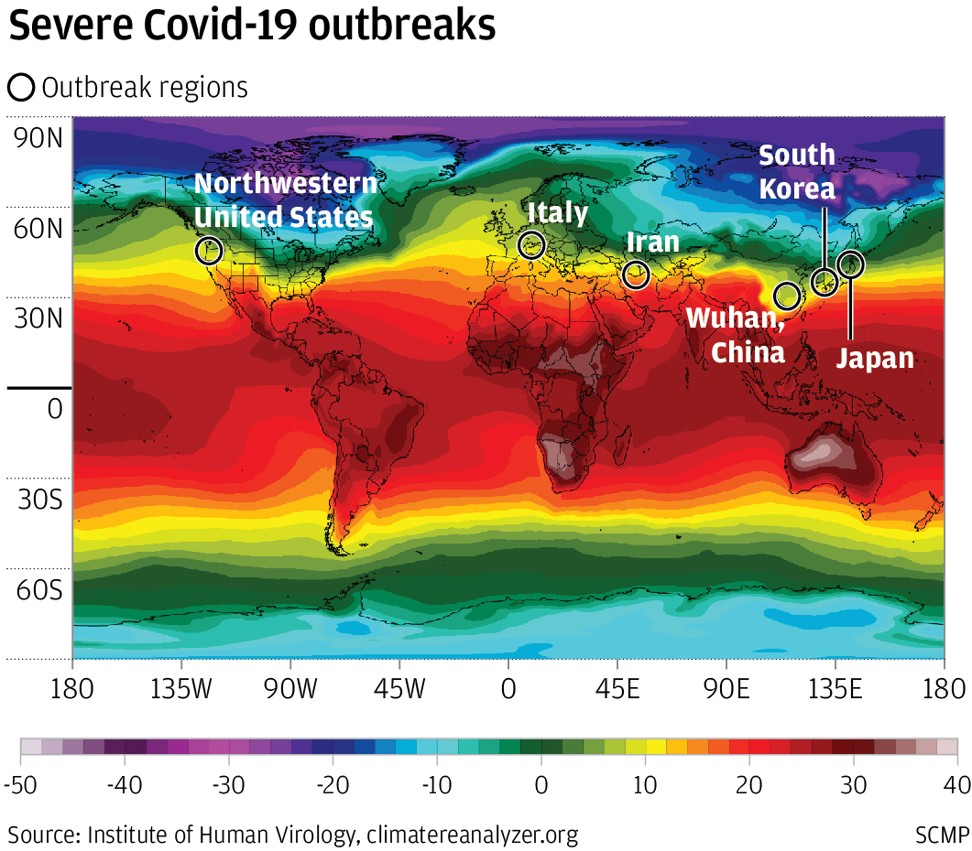
  • Studies suggest that ‘hotspots’ for virus that causes Covid-19 are found between the 30 to 50 degree lines of latitude north
  • Temperature and humidity data might allow scientists to forecast the ‘next’ Wuhan
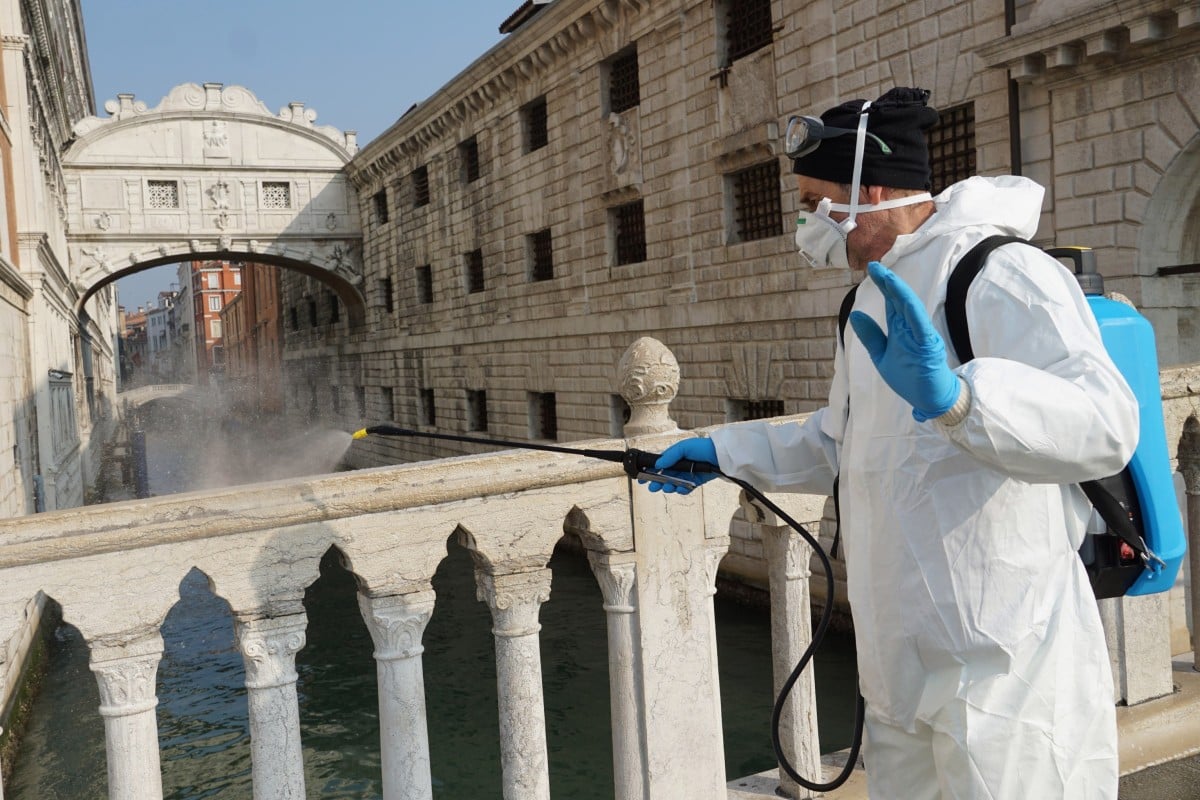
Anti coronavirus measures in the historic Marciana area of Venice as all of Italy is completely locked down and scientists look for patterns in areas of high infection. Photo: EPA-EFE

The coronavirus pandemic that has infected more than 125,000 people around the world is concentrated in a corridor” across the northern hemisphere, researchers said, as more studies focused on how temperature and humidity could be used to predict the spread of the contagion.

Despite worries that Southeast Asia may become a coronavirus hotspot after central China (where the Covid-19 outbreak started) because of their proximity and travel connections to the infection’s epicentre, more countries and regions like South Korea, Japan, Iran, northern Italy and the northwestern United States may have to bear the heaviest burden.

The establishment of community transmission has occurred in a consistent east-and-west pattern. The new [regional] epicentres of the virus were all roughly along the 30-50 degree [lines of latitude] north zone,” according to a team of US and Iranian researchers.Their work, made public this week on the Social Science Research Network (SSRN) and pending review by peer experts, said that common temperature and humidity factors in these locations may allow epidemiologists to anticipate where virus cases may become focused.

The study was part of wider efforts by scientists to understand which traits the new coronavirus shared with other human coronaviruses and flu viruses, which display strong winter seasonality.

Earlier, researchers from Sun Yat-sen University in Guangzhou, China, found that transmission of the coronavirus responsible for the Covid-19 disease was sensitive to temperature, with an optimum environment of around 8.72 degrees Celsius – a finding that concurred with the US-Iran researchers’ observations.

Other researchers, including Marc Lipsitch of Harvard T.H. Chan School of Public Health in Boston, Massachusetts, said that transmission of the new coronavirus was sustained in a range of temperatures and humidity, and that people should not pin their hopes on weather alone for the epidemic to go away.

The US-Iranian researchers, led by Mohammad Sajadi of University of Maryland School of Medicine in Baltimore, said there was a striking similarity” between conditions in locations inside the current outbreak corridor, with average temperatures in the five-to-11 degree Celsius range and relative humidity of between 47 and 79 per cent.

These locations also exhibit a commonality in that the timing of the outbreak coincides with a nadir in the yearly temperature cycle, ” the study said. [This is] perhaps pointing to increased risk of outbreaks with prolonged conditions in this [temperature] range.”

The team said that none of the cities affected by the coronavirus reported minimum temperatures below zero degrees Celsius, which may be a low for the contagion.

Making reference to temperature data from last March and April, the study predicted that new community spread in the coming weeks could emerge in areas just north of the current corridor. This spread could include northeastern and Midwest US, British Columbia, the British Isles and northeastern China.

But the study added that if temperatures warmed rapidly, coupled with lower population density and a well-prepared medical response, the risks to these areas might be mitigated.

The weather factor was also supported in a separate study by researchers from Beihang University and Tsinghua University in Beijing, one that was also undergoing peer review and was released on SSRN this week.

The university researchers found both data samples of China and 14 other countries showed that in the early days of their respective outbreaks, areas with lower temperatures and lower humidity suffered more severe outbreaks than places that were warmer and where humidity was greater.

Drawing on Chinese data collected between January 20 and 23, when local governments around the country started reporting Covid-19 cases but before aggressive lockdown and quarantine measures were imposed, the Beihang-Tsinghua team projected that high temperature and relative high humidity could help cut transmission of the virus.

Series of Strategies for Reviving the Economy in the ‘post-Covid-19’ era

March 29th, 2020

By Ajith Nivard Cabraal, Courtesy The Island

March 29, 2020, 6:29 pm

article_image

Former Governor, Central Bank of Sri Lanka, andPrime Minister’s Senior Advisor on Economic Affairs

Strategy 1: Return approximately 20% of the balances amounting to around Rs.500 billion of the Employees Provident Fund, lying to the credit of members, directly to the Members.

As is well known and documented, the Sri Lankan economy has suffered tremendously from the gradual and continuous deterioration of the economy for five years, from 2015 to 2019. It has also been devastated by the shock of the Easter Sunday bombings, in April 2019. In response, the new Government had already given a substantial stimulus, in January 2020, in the form of a significant tax cut and a far reaching debt moratorium.

Aganist this background, in the face of the current Covid-19 pandemic, Sri Lanka, unfortunately, does not now possess the fiscal space to provide a stimulus of the kind practised by certain advanced economies, whereby huge tax refunds, or outright grants, have been provided to the public in order to boost consumption and other economic activity.

Nevertheless, as an alternative to providing a direct fiscal hand-out, around Rs.500 billion could be infused into the economy by unconditionally returning around 20% of the EPF Member balances to the respective Members, out of the total of around Rs.2,500 billion lying to the credit of the EPF members, as at 31st December 2019.

This simple and uncomplicated return of capital could be a useful and viable alternative that could achieve the same outcome of serving as an economic stimulus, without any fiscal burden being placed on the Government.In addition, this newly created “equity” in the hands of around 2,500,000 individuals would expand further and perhaps even double, as many recipients are likely to leverage such funds with borrowings from lending institutions, which would provide a further boost to the economy.

By “unlocking” this vast pool of funds, at the present time, and through the release of such finances, which would be circulating amongst millions of people, many other “knock-on” benefits would also accrue to the people and the economy.Among such benefits would be:

(1) enhanced economic growth being recorded in the economy due to the higher investment and consumption as a result of the funds infusion.

(2) many persons being able to settle their high interest debt which is presently crippling them.

(3) new business ventures being created as a result of persons with entrepreneurial ideas and abilities being able to embark on new business ventures.

(4) more opportunities opening out for the financial sector to lend, since persons who are embarking on new economic activity are likely to leverage their new equity with debt.

(5) business confidence being enhanced and optimism rekindled due to the higher level of economic activity as a result of investment of the newly released “locked” savings, in the wider economy.

(6) an upturn being recorded in the small-scale construction activity in all parts of the country, which is now at a standstill.

(7) enhanced employment opportunities arising in the Small and Medium Enterprises sector of the country, leading to lower social tensions.

(8) Government tax revenues improving due to the rise of the level of economic activity throughout the economy.

Note: More revival strategies will be unveiled in the coming days.  

Japan, China donates drug for COVID-19

March 29th, 2020

Courtesy The Daily Mirror

Sri Lanka is to use anti-influenza drug ‘AVIGAN’ on COVID-19 patients on an experimental basis from next week, a senior Public official said today.

Chairman of the State Pharmaceutical Corporation (SPC) Dr. Prasanna Gunasena told Daily Mirror that a stock of 5,000 ‘AVIGAN’ tablets would be handed over to the SPC as a gift from Japan and China tomorrow (31) to be given to COVID-19 patients on a trial basis.

No one must take ‘VIGAN’ as an absolute drug for the recovery of the COVID-19 viral infection. It is up to the physician to decide whether to prescribe the drug for the infected patient. Besides, this drug is used worldwide for Ebola viral infection. However, the tablet can be prescribed as a substitute drug for COVID-19,” Dr. Gunasena said.

Dr. Gunasena added that the consignment of 5,000 drugs is donated by Japan and China as a gift to Sri Lanka from both countries with the approval of Health Minister Pavithra Wanniarachchi.

If the drug proves as an absolute remedy to cure the viral infection, the SPC would purchase a bigger consignment to be prescribed for patients of the viral infection, he added.(Sandun A. Jayasekera)

Three villages sealed off to prevent COVID-19 spread

March 29th, 2020

Courtesy The Daily Mirror

Two villages in Kadayankulam, Puttalam and one village in Akrurana, Kandy have been sealed off after health authorities found two more COVID-19 patients, official sources said.
The decision has been taken to prevent the spread of the COVID-19. They also said that the residents in Kadayankulam have moved to a nearby centre for 14 days quarantine purpose.

Legal action against former MP Patali Champika for conducting a meeting disregarding health advisory

March 29th, 2020

Courtesy Hiru News

Police Media Spokesperson stated that the law will be enforced against former minister Patali Champika Ranawaka who held a meeting yesterday disregarding the health advice.

It has been reported that the meeting was held in the premises of the former minister’s residence yesterday.

The health units had worked together to disperse the crowd.

The Police Media Spokesperson further stated that the charge against the former Minister who conducted the meeting was reported to the court .

Main suspect of suicide bomb attack on Zion Church arrested

March 29th, 2020

Courtesy Adaderana

The main suspect who had allegedly organized the suicide bomb attack Zion Church in Batticaloa on Easter Sunday 2019 has been arrested.

Police Media Spokesperson SP Jaliya Senaratne mentioned this addressing a special press conference held at the Department of Government Information this afternoon (29).


On 21 April 2019, Easter Sunday, three churches and three luxury hotels Colombo, were targeted in a series of coordinated terrorist suicide bombings.

The attack on the Protestant Zion Church came just before the church’s Easter mass was to begin. At least 26 were killed and more than 100 wounded in the attack to the Batticaloa church.

Unemployed graduate trainees to be assigned to MOH offices for coronavirus prevention duties

March 29th, 2020

Courtesy Adaderana

Considering the prevailing situation, training period of trainee graduates who have reported to the Divisional Secretariats has been delayed until May, the Ministry of Public Administration, Home Affairs, Provincial Councils and Local Government has announced.

However, taking into account the request of the Ministry of Health and Indigenous Medicine, a decision has been taken to temporary attach these trainee graduates to Medical Officer of Health (MOH) offices for assisting the process of controlling coronavirus disease.

The Secretary to the Ministry revealed this in a press release issued yesterday (29).

Due to the existing curfew, it is not compulsory to report for duties at MOH offices today (30) and there will be an announcement in this regard in the future, the release read further.

Two new COVID-19 cases in Sri Lanka; Tally rises to 117

March 29th, 2020

Courtesy Adaderana

As of 8.00 pm today (29), two more patients have tested positive for COVID-19 in Sri Lanka increasing the total cases tally to 117, says the Ministry of Health.

In the meantime, a total number of 11 patients have recovered from the deadly virus so far.

Currently, Sri Lanka has 105 positive cases of coronavirus and 117 suspected patients who are under observation at selected hospitals.

The country reported its first COVID-19 death yesterday; a 60-year-old male from Marawila area.

Sri Lanka to import Japanese drug against COVID-19

March 29th, 2020

Courtesy Adaderana

Chairman of State Pharmaceutical Corporation (SPC), Dr. Prasanna Gunasena says that an order has been issued through the Presidential Secretariat to import the drug found in Japan against COVID-19, the novel coronavirus.

Joining Ada Derana Big Focus, he said that plans are underway to streamline the drug distribution system in the country.

He further said that the pill found by Japan to combat coronavirus is due to be brought to Sri Lanka within two days.

Previously, Japan’s health minister said the government was considering using a drug called Avigan, also known as favipiravir, to treat patients sickened by COVID-19.

More than a month later, favipiravir has shown promise in two trials involving coronavirus patients, with more countries, all desperate for an answer to COVID-19, prepare to test its effectiveness, reports foreign media.

WHO considers ‘airborne precautions’ for medical staff after study shows coronavirus can survive in air

March 29th, 2020

Courtesy CNBC News

  • WHO is considering airborne precautions” for medical staff after a new study showed the coronavirus can survive in the air in some settings.
  • The coronavirus can go airborne, staying suspended in the air depending on factors such as heat and humidity, WHO officials said.

The World Health Organization is considering airborne precautions” for medical staff after a new study showed the coronavirus can survive in the air in some settings.

The virus is transmitted through droplets, or little bits of liquid, mostly through sneezing or coughing, Dr. Maria Van Kerkhove, head of WHO’s emerging diseases and zoonosis unit, told reporters during a virtual news conference on Monday. When you do an aerosol-generating procedure like in a medical care facility, you have the possibility to what we call aerosolize these particles, which means they can stay in the air a little bit longer.”

She added: It’s very important that health-care workers take additional precautions when they’re working on patients and doing those procedures.”

World health officials say the respiratory disease spreads through human-to-human contact, droplets carried through sneezing and coughing as well as germs left on inanimate objects. The coronavirus can go airborne, staying suspended in the air depending on factors such as heat and humidity, they said.

Kerkhove said health officials are aware of several studies in a number of countries looking at the different environmental conditions that COVID-19 can persist. Scientists are specifically looking at how humidity, temperature and ultraviolet lighting affects the disease as well as how long it lives on different surfaces, including steel, she said.

READ MORE: Coronavirus lives for hours in air particles and days on surfaces, new US study shows

Health officials use the information to make sure WHO’s guidance is appropriate, and so far … we are confident that the guidance that we have is appropriate,” she added. Health officials recommend medical staff wear so-called N95 masks because they filter out about 95% of all liquid or airborne particles.

In health-care facilities, we make sure health-care workers use standard droplet precautions with the exception … that they’re doing an aerosol-generating procedure,” she said.

If LTTE hardcore killers can be pardoned why shouldn’t Sunil Ratnayake be pardoned?

March 28th, 2020

As if we did not have one global virus to contend with – there is another biased virus. A bandwagon calling themselves human rights activists deem the pardon of ‘butcher’ Sunil Ratnayake to be an unpardonable offence by President Gotabaya Rajapakse. Where were these angels when LTTE were killing pregnant Sinhalese mothers in Kent & Dollar Farms in 1985? Of course, it’s important to understand that the attack against Sunil Ratnayake is in reality an indirect attack against the President who was gaining popularity amongst the people for his professionalism in handling the covid-19. That professionalism was spraying charcoal over those that they brought to power in January 2015. Let these goody-two-shoes bathe in their glory-minutes as the pardon has afforded a life-line to those that had been biting their nails searching for some news to make them relevant. Bless you, Sunil Ratnayake, they must be saying!  

The manner of the one-sided justice and human rights mechanism is today exposing itself globally and it won’t take too long for people to call their bluff or perhaps corona-karma might visit them before that, but whoever is parroting about the injustice in releasing Sunil Ratnayake must also explain why they have failed to object when hardcore LTTE combatants were equally released even by the Mahinda Rajapakse government?

Why didn’t the same media and human rights group object when 594 Tamil child soldiers were also given presidential pardon after May 2009? Why didn’t they demand justice for attacks by LTTE on innocent villagers killing sleeping women & children, on mosques killing people in prayer, on Buddhist temples killing those in meditation, on Buddhist student priests killed one after another inside a bus? On innocent passengers in buses and trains blown to bits for doing no harm to LTTE?

President Sirisena pardoned convicted LTTEr Sivaraja Jenivan at a ceremony too in 2016.

Why didn’t this same media & human rights organizations call LTTE as ‘butchers’ – why is the reference to murderers applicable only to the Sri Lankan Army? 

While LTTE terrorists carried out over 300 such attacks against innocent civilians, the case of Sunil Ratnayake is dependent on one flimsy ‘witness’ account of a man who managed to escape from 14 Sri Lankan soldiers! If these soldiers could kill 8 why did they spare this ‘witness’ whose testimony is as a result of him having his eyed bound by his sarong and then thrown to a fence and then his blindfold getting removed allowing him to see Sunil Ratnayake and escape 14 soldiers!

Sensationalism at its best.

Those parroting reports on Sunil Ratnayake – pause for a few minutes and ask yourselves these questions about this supposed ‘massacre’

Tamil civilians were barred from coming to the area where the Army was located?

Why?

LTTE dressed like civilians and came pretending to gather firewood and other items to carry out terror attacks or collect information.

Could SL Army identify LTTE from a Civilian? No

Why?

The LTTE had a separate Tamil Civilian Armed Force (MAKKAL PADAI BRIGADE) who were trained to kill. This civilian armed force comprised children as young as 7years. So whether they were 7 or 10, 19, 35 or age old grannies, LTTE had trained them in combat to kill Sri Lankan soldiers.

At any given time 10,000 TAMIL CIVILIANS were trained in combat operations by LTTE. These LTTE CIVILIANS do not qualify to be called CIVILIANS.

But how is anyone to IDENTIFY THEM as CIVILIAN as per international definition? How is the Sri Lanka to IDENTIFY THEM as CIVILIAN?

Can any human rights pundit provide an answer?

More importantly, can this witness Ponnadurai Maheshwaran prove he or his family were not members of this LTTE Civilian Armed Force?

If he was a member of the LTTE Civilian Armed Force, what is his credibility in accusing a Sri Lankan soldier of murder?

LTTE had enough & more times killed their own people and attempted to pass blame on to the Sri Lankan soldiers?

LTTE certainly blurred distinction for the Sri Lanka Army. The Sri Lanka Army CANNOT be faulted for presuming a civilian to be LTTE for LTTE functioned as civilians. In fact, LTTE killed Tamil civilians who wanted to have nothing to do with LTTE and were providing insider information to the Sri Lanka Army.

We must also not forget that 12,000 of the LTTE that surrendered to the Sri Lankan Army in May 2009 were ALL DRESSED IN CIVILIAN CLOTHING and all of them lived to surrender and was alive after surrendering.

The case of Sunil Ratnayake is interesting because it carries a political twist and lots of political bias.

The incident occurred during the tenure of President Chandrika Kumaratunga but a change of government took place in 2001 installing the pro-West government of Ranil Wickremasinghe, immediately followed by a Norway-backed cease fire agreement that had no problems in giving state territory to a terrorist organization, confining the Sri Lankan Army to barracks but allowing LTTE to roam any part of the country carrying guns and setting up offices claiming them to be ‘political offices’. It was this same government that agreed to try the arrested army officers without a jury in 2002.

Names associated with the case against Sunil Ratnayake are heavily associated with the supposed ‘civil society’ that was part of regime change.

They are selective in their topics – raise hell and then disappear awaiting another slogan. The same voices up in arms over President Sirisena giving a presidential pardon to one accused of murdering a young girl too have faded away!

With regime change in 2015 the same government that acquitted 13 soldiers for lack of evidence in the same supposed murder but declared death sentence against Sunil Ratnayake on 15th June 2015 – why? Lack of evidence for 13 soldiers but 1 gets death row! Incidentally this sentence was under a legally questionable government that came to power after a Presidential election.

How incriminating was this ‘witness’ evidence after 15 years to declare death sentence?

What about the injustice to the accused? Of the 14 soldiers allegedly 13 were released for lack of evidence except Sunil Ratnayake.

How politically motivated was the decision given that a plethora of army personnel had been dumped in prison on trivial allegations by the same government without filing any charges against them. Anyone questioning the justice system must be asking why soldiers have been arrested and put in prison without filing charges against them! Every time a foreign delegate was to land in Sri Lanka, it meant a soldiers was arbitrarily arrested and dumped in jail! Who came forward to question this?

What kind of justice system was this to satisfy the geopolitical gallery salivating against Sri Lanka’s military and waiting for any opportunity to avenge for militarily eliminating their tiger cubs?

Many commenting about the pardon are pretending this to be the only ‘murder’ that took place in Sri Lanka and that too something that took place 20 years ago. They completely neglect the horrendous murders committed by the LTTE.

Where have all of these proponents of human rights and media reporters have written a word for the victims of LTTE? LTTE in one bombing have killed over hundreds of innocent people and maimed them for life in incidents that took place from 1980s to 2009.

If we are going to be commenting on anything let there be a level playing field. Simply whitewashing LTTE and witch hunting the Sri Lankan Army is totally wrong & unacceptable. Moreover, who are the mouthpieces commenting on the pardon – they are either LTTE propagandists, LTTE fronts, LTTE paid lackeys or geopolitical organs who want to grab at any incident to downgrade a legitimate government.

Where were these voices when US President Trump said he would kill the families of terrorists in December 2015? Trump repeated the call in 2018 when he We’re fighting a very politically correct war…When you get these terrorists, you have to take out their families! …….. But you have to take out their families.”

Then in March 2020, the US even threatened families of ICC judges – US Secretary of State Mike Pompeo threatened the family members of International Criminal Court staff, vowing that Washington will take punitive action against them if the court tries American soldiers for war crimes.

https://nymag.com/intelligencer/2018/04/trump-asked-why-cia-drone-avoided-terrorists-family-report.html

How is it that no one even the UNHRC or its head is going after the US for its open threats? Or is it because US walked out of the UNHRC calling it a cesspool of political bias! We will certainly agree with US on this statement!

Any public commentators or anyone in public office who cannot condemn impartially have no moral right to be going after Sunil Ratnayake. The decision to pardon him was the right of the head of state of a sovereign nation. We do not need pay much heed to empty biased and partial vessels that make the most noise selectively!

Shenali D Waduge

Need to maintain the 24 Hour, island-wide Curfew for some more time; caring for the curfew affected population is equally important

March 28th, 2020

Chanaka Bandarage

The government should be commended for imposing a 24 hour, island-wide curfew. It was a brave decision. 

Sri Lanka is possibly the first country in the world to impose a 24 hour, island-wide curfew.

We are also one of the first countries in the world to shut down schools.

Many countries have followed our successful examples.

Avoidance of close contact between peoples is the best way to stop the spreading of the deadly virus. In 3rd world countries, where people are less educated/disciplined, a blanket nation-wide (24 hour) curfew is the best way to achieve this.

Sri Lanka did another thing right, which is closing down its national airports and sea entries. This means even Sri Lankan nationals living overseas are prevented from entering the country. This is another bold step that the government undertook, as other countries have allowed their citizens to enter through the borders subject to strict conditions.

But, Sri Lanka did this (closing the airports) only after learning a bitter lesson. Previously it allowed all its citizens to return to Sri Lanka with the condition that they undergo a mandatory 14 day quarantine period. Unscrupulous Sri Lankans who are suspected of having Corona, returned to the country (especially from Italy and Chennai) and botched the mandatory quarantine regime. Some fled and hid in various parts of the country.

This was a major drawback in our fight against Corona.

Some of them were later diagnosed with having Corona.

Thus, thanks to them, we inherited Corona. 

Our numbers are now growing steadily. As of 9 pm on 28 March 2020, we  have 113 Corona cases in the country, with 1 dead. We have reached this number within 15 days.  It is remarkable that we have done better than Spain and USA who recorded only 84 and 75 cases respectively during their first 15 days.

In Sri Lanka we have no/very few Corona testings being done.  Advanced economies like US, UK and Australia test many thousands of people daily. 

Thus, our actual number of Corona patients could be much higher than the statistics at hand.

There is no doubt that in the coming weeks Sri Lanka’s Corona  numbers, including fatalities, will significantly increase. Though the writer hopes he is wrong, it is impossible to think otherwise.

We should request friendly governments to supply us with relevant equipment, so that we could better face with the impending calamity. The country is desperately in need of face masks, surgical glows/gowns/equipment, various medicines, respirators, ventilators etc to fight the war against this ‘invisible enemy’. We must have many new intensive care beds.

It is important that the government formally establishes a national ‘Corona Care Fund’, so that those who can afford both locally and internationally could contribute. Only people well accepted in the community as honest, with high integrity, must be appointed as Trustees of the Fund to manage it.

The government is stressing the people to stay at home and maintain a minimum of a meter distance between them.  The curfew is strictly enforced. These are all very positive things. In print/electronic media, there is ongoing education programs on how to face the Corona epidemic.

Again, the government must be commended for these.

However, the government must realise that while satisfactorily fighting the deadly disease, it must do everything possible to look after the essential needs of the people. The government’s record in looking after/caring for them thus far, especially the most disadvantaged members of our community, is  far from satisfactory.

The majority of the people in the country are poor and many have no money to buy food. Many are subsistent workers and they have lost their jobs. So, even if the shops are open, they may not have money to buy food/provisions. There are reports that people in some areas are starving due to lack of food. The writer is unaware of the authenticity of these stories but believes that the situation is serious. The government must not be complacent on this most important subject.

If people are starving/do not have money to buy food/provisions, these could easily lead to other problems like civil unrest. This is also a reason why the government must take urgent action now (prevention is better than cure).

The irony is that there are people with vested interests who would love to see people disobeying curfews and embarking on social unrest activities. Some people want nothing else but disruption/chaos.

Again, it is extremely important that the government pays top priority to ensure that people will not go hungry and that they are all fed/looked after. The government along with humanitarian orgnisations (temples, churches, various charities) should embark on the quick action of feeding the curfew affected people, importantly the country’s poor. Free food distribution to affected families (poverty stricken) is a must and this should not be further delayed. Those who like to conduct Wesak type food stalls (dansals) should be encouraged to do so.

Those who have money, should be allowed to go out and do their shopping. For this supermarkets, other essential shops especially pharmacies (including private) should be allowed to be kept open daily.  To avoid people misusing this ‘freedom’, a strictly enforced ‘permit system’ should be introduced, like in Wuhan.

This means the government gradually moving away from the current strict curfew regime to a highly control lockdown regime.

Corona has come to stay with us for some time. Whether we like it or not, it does not seem to disappear soon. Australia has set out a plan to ‘live with Corona’ for the next   6 months.

The biggest obstacle is that we will not have a vaccine during the course of this year (2020).

It is time that we develop both short and long term plans/strategies to deal with Corona. People should be able to work; otherwise it will be the collapse of the economy, financial systems etc. The effects of such calamities will be too hard to fathom. This is why US, UK and Australia always talk about saving their economies.

Once people resume work, the police/military must monitor these activities very carefully. Those who disobey the very strict lockdown rules must be subjected to very heavy fines/imprisonment.

Again, we must learn to live with Corona.

We must think wisely and become prepared to face any future situation.

During future lockdowns, we must target that at least 70% – 80% of the people would remain indoors.

Social isolation and social distancing (minimum of 2 meters) are so important, BASICALLY THEY DETERMINE OUR FUTURE EXISTENCE (whether we would live or die). This message must be conveyed to the masses more comprehensively, unfortunately many in our country do not still understand.

We can defeat Corona, as long as if we have clever governments and clever people.

How sick will the coronavirus make you? The answer may be in your genes

March 28th, 2020

By Jocelyn Kaiser Courtesy Science

Science’s COVID-19 reporting is supported by the Pulitzer Center.

COVID-19, caused by the new pandemic coronavirus, is strangely—and tragically—selective. Only some infected people get sick, and although most of the critically ill are elderly or have complicating problems such as heart disease, some killed by the disease are previously healthy and even relatively young. Researchers are now gearing up to scour the patients’ genomes for DNA variations that explain this mystery. The findings could be used to identify those most at risk of serious illness and those who might be protected, and they might also guide the search for new treatments.

The projects range from ongoing studies with DNA for many thousands of participants, some now getting infected with the coronavirus, to new efforts that are collecting DNA from COVID-19 patients in hard-hit places such as Italy. The goal is to compare the DNA of people who have serious cases of COVID-19 (which stands for coronavirus disease 2019)—but no underlying disease like diabetes, heart or lung disease—with those with mild or no disease. We see huge differences in clinical outcomes and across countries. How much of that is explained by genetic susceptibility is a very open question,” says geneticist Andrea Ganna of the University of Helsinki’s Institute for Molecular Medicine Finland (FIMM).

It’s hard to predict what will pop out from these gene hunts, some researchers say. But there are obvious suspects, such as the gene coding for the cell surface protein angiotensin-converting enzyme 2 (ACE2), which the coronavirus uses to enter airway cells. Variations in the ACE2 gene that alter the receptor could make it easier or harder for the virus to get into cells, says immunologist Philip Murphy of the National Institute of Allergy and Infectious Diseases, whose lab identified a relatively common mutation in another human cell surface protein, CCR5, that makes some people highly resistant to HIV.

Ganna heads up a major effort to pool COVID-19 patients’ genetic data from around the world. The idea came quite spontaneously” about 2 weeks ago when everyone was sitting at their computers watching this crisis,” says Ganna, who is also affiliated with the Broad Institute, a U.S. genomic powerhouse.

He and FIMM Director Mark Daly quickly created a website for their project, the COVID-19 Host Genetics Initiative, and reached out to colleagues who run large biobank studies that follow thousands of volunteers for years to look for links between their DNA and health. At least a dozen biobanks, mostly in Europe and the United States, have expressed interest in contributing COVID-19 data from participants who agreed to this. Among them are FinnGen, which has DNA samples and health data for 5% of the 5 million–person Finnish population, and the 50,000-participant biobank at the Icahn School of Medicine at Mount Sinai.

The UK Biobank, one of world’s largest with DNA data for 500,000 participants, also plans to add COVID-19 health data from participants to its data set, the project tweeted this month. And the Icelandic company deCODE Genetics, which is helping test much of the nation’s population to see who is infected with the new coronavirus, has received government permission to add these data and any subsequent COVID-19 symptoms to its database, which contains genome and health data on half of Iceland’s 364,000 inhabitants, says its CEO Kári Stefánsson. We will do our best to contribute to figuring this out,” Stefánsson says.

Another effort to identify protective or susceptibility DNA variants is the Personal Genome Project led by Harvard University’s George Church, which recruits people willing to share their full genome, tissue samples, and health data for research. Earlier this month, it sent questionnaires to its thousands of participants, asking about their COVID-19 status. More than 600 in the United States responded within 48 hours. It seems that most people want to do their part,” says Church, whose group isn’t yet part of Ganna’s collaboration.

Other researchers working with Ganna’s initiative are recruiting COVID-19 patients directly within hospitals for such genomics studies. Italian geneticist Alessandra Renieri of the University of Siena expects at least 11 hospitals in the nation to give ethics approval for her team to collect DNA samples from willing patients. It is my opinion that [host] genetic differences are a key factor … for susceptibility to severe acute pneumonia,” Renieri says.

Pediatrics researcher Jean-Laurent Casanova at the Rockefeller University, who specializes in identifying rare genes that can make healthy young people susceptible to certain serious diseases, is drawing on a network of pediatricians around the world to look for the relatively few young people who develop COVID-19 serious enough to get admitted to intensive care. We study exclusively patients who were previously healthy” and under 50, as their serious COVID-19 illness is more likely to have a genetic basis, he explains.

In addition to genetic variants of the ACE2 receptor, scientists want to see whether differences in the human leukocyte antigen genes, which influence the immune system’s response to viruses and bacteria, affect disease severity. And some investigators want to follow up a finding, which a Chinese team reported in a preprint: that people with type O blood may be protected from the virus. We’re trying to figure out if those findings are robust,” says Stanford University human geneticist Manuel Rivas, who is contributing to Ganna’s initiative.

The catastrophic spread of the coronavirus should soon increase the number of COVID-19 patients available to these gene hunts. And that could speed findings. Ganna expects the first susceptibility genes could be identified within a couple of months.

With reporting by Elizabeth Pennisi.

No, the coronavirus wasn’t made in a lab. A genetic analysis shows it’s from nature

March 28th, 2020

By Tina Hesman Saey Courtesy Science News

Scientists took conspiracy theories about SARS-CoV-2’s origins seriously, and debunked them

The coronavirus pandemic circling the globe is caused by a natural virus, not one made in a lab, a new study says.

The virus’s genetic makeup reveals that SARS-CoV-2 isn’t a mishmash of known viruses, as might be expected if it were human-made. And it has unusual features that have only recently been identified in scaly anteaters called pangolins, evidence that the virus came from nature, Kristian Andersen and his colleagues report March 17 in Nature Medicine.

When Andersen, an infectious disease researcher at the Scripps Research Institute in La Jolla, Calif., first heard about the coronavirus causing an outbreak in China, he wondered where the virus came from. Initially, researchers thought the virus was being spread by repeated infections jumping from animals in a seafood market in Wuhan, China, into humans and then being passed person to person. Analysis from other researchers has since suggested that the virus probably jumped only once from an animal into a person and has been spread human to human since about mid-November (SN: 3/4/20).

But shortly after the virus’s genetic makeup was revealed in early January, rumors began bubbling up that maybe the virus was engineered in a lab and either intentionally or accidentally released.

An unfortunate coincidence fueled conspiracy theorists, says Robert Garry, a virologist at Tulane University in New Orleans. The Wuhan Institute of Virology is in very close proximity to” the seafood market, and has conducted research on viruses, including coronaviruses, found in bats that have potential to cause disease in people. That led people to think that, oh, it escaped and went down the sewers, or somebody walked out of their lab and went over to the market or something,” Garry says.

Accidental releases of viruses, including SARS, have happened from other labs in the past. So this is not something you can just dismiss out of hand,” Andersen says. That would be foolish.”

Looking for clues

Andersen assembled a team of evolutionary biologists and virologists, including Garry, from several countries to analyze the virus for clues that it could have been human-made, or grown in and accidentally released from a lab.

We said, ‘Let’s take this theory — of which there are multiple different versions — that the virus has a non-natural origin … as a serious potential hypothesis,’ ” Andersen says.

Meeting via Slack and other virtual portals, the researchers analyzed the virus’s genetic makeup, or RNA sequence, for clues about its origin.

It was clear almost overnight” that the virus wasn’t human-made, Andersen says. Anyone hoping to create a virus would need to work with already known viruses and engineer them to have desired properties.

But the SARS-CoV-2 virus has components that differ from those of previously known viruses, so they had to come from an unknown virus or viruses in nature. Genetic data irrefutably show that SARS-CoV-2 is not derived from any previously used virus backbone,” Andersen and colleagues write in the study.

This is not a virus somebody would have conceived of and cobbled together. It has too many distinct features, some of which are counterintuitive,” Garry says. You wouldn’t do this if you were trying to make a more deadly virus.”

Other scientists agree. We see absolutely no evidence that the virus has been engineered or purposely released,” says Emma Hodcroft, a molecular epidemiologist at the University of Basel in Switzerland. She was not part of Andersen’s group, but is a member of a team of scientists with Nextstrain.org that is tracking small genetic changes in the coronavirus to learn more about how it is spreading around the world.

That finding debunks a widely disputed analysis, posted at bioRxiv.org before peer review, that claimed to find bits of HIV in the coronavirus, Hodcroft says. Other scientists quickly pointed out flaws in the study and the authors retracted the report, but not before it fueled the notion that the virus was engineered.

Some stretches of the virus’s genetic material are similar to HIV, but that’s something that stems from those viruses sharing a common ancestor during evolution, Hodcroft says. Essentially their claim was the same as me taking a copy of the Odyssey and saying, ‘Oh, this has the word the in it,’ and then opening another book, seeing the word the in it and saying, ‘Oh my gosh, it’s the same word, there must be parts of the Odyssey in this other book,” she says. It was a really misleading claim and really bad science.”

Finding peculiar features

Andersen’s group next set out to determine whether the virus could have been accidentally released from a lab. That’s a real possibility because researchers in many places are working with coronaviruses that have potential to infect humans, he says. Stuff comes out of the lab sometimes, almost always accidentally,” he says.

A couple of unexpected features of the virus caught the researchers’ eyes, Andersen says. In particular, the gene encoding the coronavirus’s spike protein has 12 extra RNA building blocks, or nucleotides, stuck in it.

This spike protein protrudes from the virus’ surface and allows the virus to latch onto and enter human cells. That insertion of RNA building blocks adds four amino acids to the spike protein, and creates a site in the protein for an enzyme called furin to cut. Furin is made in human cells, and cleaves proteins only at spots where a particular combination of amino acids is found, like the one created by the insertion. SARS and other SARS-like viruses don’t have those cutting sites.

Finding the furin cutting site was a surprise: That was an aha moment and an uh-oh moment,” Garry says. When bird influenza viruses acquire the ability to be cut by furin, the viruses often become more easily transmissible. The insertion also created places where sugar molecules could be fastened to the spike protein, creating a shield to protect the virus from the immune system.

The COVID-19 virus’ spike protein also binds more tightly to a protein on human cells called ACE2 than SARS does (SN: 3/10/20). Tighter binding may allow SARS-CoV-2 to more easily infect cells. Together, those features may account for why COVID-19 is so contagious (SN: 3/13/20).

It’s very peculiar, these two features,” Andersen says. How do we explain how this came about?  I’ve got to be honest. I was skeptical [that it was natural]. This could have happened in tissue culture” in a lab, where viruses may acquire mutations as they replicate many times in lab dishes. In nature, viruses carrying some of those mutations might be weeded out by natural selection but might persist in lab dishes where even feeble viruses don’t have to fight hard for survival.

Clinching the case for nature

But then the researchers compared SARS-CoV-2 with other coronaviruses recently found in nature, including in bats and pangolins. It looks like SARS-CoV-2 could be a mix of bat and pangolin viruses,” Garry says.

Viruses, especially RNA viruses such as coronaviruses, often swap genes in nature. Finding genes related to the pangolin viruses was especially reassuring because those viruses’ genetic makeup wasn’t known until after SARS-CoV-2’s discovery, making it unlikely anyone was working with them in a lab, he says.

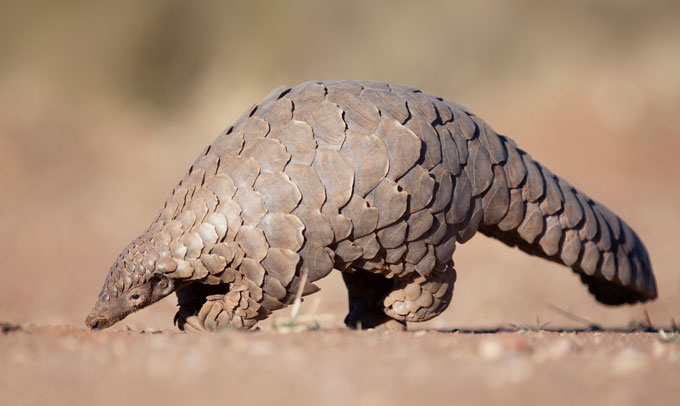
pangolin
Coronaviruses that infect pangolins gave researchers important clues that the SARS-CoV-2 virus is natural.2630BEN/ISTOCK/GETTY IMAGES PLUS

In particular, pangolins also have the amino acids that cause the tight binding of the spike protein to ACE2, the team found. So clearly, this is something that can happen in nature,” Andersen says. I thought that was very important little clue. It shows there’s no mystery about its tighter binding to the human [protein] because pangolins do it, too.”

The sugar-attachment sites were another clue that the virus is natural, Andersen says. The sugars create a mucin shield” that protects the virus from an immune system attack. But lab tissue culture dishes don’t have immune systems, making it unlikely that such an adaptation would arise from growing the virus in a lab. That sort of explained away the tissue-culture hypothesis,” he says.

Similarity of SARS-CoV-2 to bat and pangolin viruses is some of the best evidence that the virus is natural, Hodcroft says. This was just another animal spillover into humans,” she says. It’s really the most simple explanation for what we see.” Researchers still aren’t sure exactly which animal was the source.

Andersen says the analysis probably won’t lay conspiracy theories to rest. Still, he thinks the analysis was worth doing. I was myself skeptical at the beginning and I kept flipping back and forth,” Andersen says, but he’s now convinced. All the data show it’s natural.”

SOME OBSERVATIONS ON EARLY BUDDHISM IN SRI LANKA Part 2

March 28th, 2020

KAMALIKA PIERIS

Buddhism was accepted with enthusiasm in the north Indian republics of the Ganges region. People took robes in considerable numbers. In the lifetime of the Buddha, there were 29 monasteries. There were 18 at Rajagaha, 4 at Vesali, 3 at Kosala and 4 at Kosambi. Over time, it became clear that a set of rules governing the conduct of the Bhikkhus were needed. These rules became the Vinaya Pitaka.

The Vinaya rules were not commandments ordered from above. They were rules made by the Buddha for practical reasons. Most were to enforce discipline in the order, but they also took into account the ease and comfort of the bhikkhu. The Vinaya rules developed gradually, over time,  but they did not develop haphazardly. By the time Baddali sutta was preached, there was a fairly large set of rules, observed Ven. Bellanwila Wimalaratana in his book A critical study of the Sri Lankan development of the rules of Vinaya (Sarasavi, 2018)

Vinaya rules did not remain static. They were amended when necessary.   Buddha made five amendments to the Vinaya for Avanti. He said higher ordination could be conferred with four bhikkhus, not eight,  the bhikkhus could wear sandals with thick soles as the soil was black, they could bathe regularly, sheepskin and goatskin could be used as coverlets, and robes could be accepted on behalf of a monk who had left the district and the robe need not reach the monk concerned within the prescribed ten days.  Ven. Wimalaratana observed that while the Buddha relaxed rules when he found it helpful for the monks, he also tightened rules when he found that there were laxities.

In a Vinaya inquiry, the monk concerned was given a hearing. No judgment could be passed without his presence.  He had the right to cross-examine, and defend himself, raising legal issues. Bhikkhus had sometimes offered prize excuses. When charged with having engaged in sexual intercourse, one monk said he had taken off his robe, and another said he had done it naked.

Each school of Buddhist thought had its own Vinaya, observed Ven. Wimalaratana.   There were at least 18 other schools of Buddhism, if not more by 3rd Buddhist Council and these would have had their own vinayas. Most of these Vinayas are lost, but some fragments were found in Eastern Turkistan and Nepal.  The Gilgit manuscript, containing the Pratimoksa of the Mahasangika School has been published.  Further vinayas are preserved in Chinese and Tibetan versions. The Mahayana does not possess a separate Vinaya. Mahayana Vinaya is contained in the Suttas itself.

With the passing away of Buddha, the Vinaya gradually began to assume a rigid form. The First Buddhist Council, held at Rajgir soon after the Buddha’s death, decided not to repeal any rules. The Theravada tradition faithfully holds that the whole Vinaya Pitaka was compiled and recited at the First Buddhist Council, observed Ven. Wimalaratana. But the present Vinaya Pitaka was not in existence at the time of First Council. Vinaya Pitaka was in an initial stage of evolution, during the First Council he said. The Second Council, held a hundred years later at Vaisali, was no better. There were sharp differences in the Vinaya rules. The matter was hotly debated and a committee appointed to look into the items under dispute.

Arahat Mahinda brought into Sri Lanka the Theravada doctrine approved by the Third Buddhist Council held at Pataliputra in the reign of king Dharmasoka. This early Buddhism is glimpsed today in the Sutra Pitaka said Ven. Wimalaratana.The Vinaya, including amendments and the Vinaya commentarial tradition was brought in. The commentaries came in written form, said Malalasekera.

The Sinhala Sangha produced a vast commentarial literature on the Vinaya, with useful interpretations of the Vinaya rules. Buddhagosha used these Vinaya commentaries, in his Samantapasadika and Kanakavitarani.  Sinhala texts on Vinaya such as Sikavalanda and Sikha Valanda Vinisa show that Vinaya underwent considerable development in Sri Lanka, said Ven. Wimalaratana.

The Vinaya Pitaka consists of Patikmokkha, Suttavibhanga, Khanadhaka, and Parivara. Pattimokha is the code of rules, Suttavibhanga explains the rules and the Khandhaka section dealt with new situations and changing conditions. The Parivara, consisting of 19 chapters, is a digest of the earlier parts of the Vinaya Pitaka. It does not contain anything new.

The Vinaya Pitaka introduced to Sri Lanka did not contain the Parivara, said Ven. Wimalaratana. The Parivara section is a later addition. It is believed to have been compiled by a Sri Lanka bhikkhu in the early Anuradhapura period. Oliver Abeynayake said that the Parivara section of the Vinaya is not identical to that brought in by Mahinda. Sri Lanka has added to it.

The Theravada school thought that the Vinaya should be maintained and protected at all costs. Sri Lanka Buddhists also thought this. For them, the strict observance of the Vinaya was one of the main qualities of a good bhikkhu. This is one of the reasons why the forest monks were highly esteemed over those who were village dwelling, observed Ven. Wimalaratana.

The Sangha frequently needed purification, since there was no central authority and no hierarchy of control. Katikavatas to cleanse the Sangha started in Sri Lanka in the late Anuradhapura period. First, there was vihara katikavata, such as the inscription of Mahinda V, Kaludiya Pokuna inscription of Sena IV and Puliyankulam inscription of Udamahaya. Udamahaya was the first viceroy under Dappula IV. He ascended the throne as Udaya III.

Then came Sasana katikavat which applied to the whole Sangha. These started in the Polonnaruwa period and continued into the Udarata period. The first Katikavat was the Katikavata of Parakrama bahu I knew also as Galvihara inscription. This was followed by Hatadage inscription of Nissanka Malla, Dambedeni Katikavata of Parakarama bahu II,   katikavata of Parakrama bahu VI, katikavata of Kirti Sri Rajasinha and Katikavata of Rajadhi rajasinha. Vijayabahu III also had issued a Katikavata. This has not been discovered.

Katikavat was initiated by the king. The rules were formulated by senior monks, the king gave his assent and the Katikavata became binding on the Sangha. The katikavata was like a royal decree.  It was compulsory for all monks.

The initiative for the katikavata of Parakrama bahu I came from the king himself. The rules were by Udumbara Giri Maha Kassapa Thera.  The Katikavata started with a preamble giving the reasons for the katikavata.  Then came 27 rules, mainly on the day to day behavior of monks including their daily routine. All monks had to meditate every day. This was compulsory.

Dambadeni Katikavata was also preamble and text. The Preamble had a wealth of information on the declining state of Sangha. This katikavata created two separate headships, (Mahathera), for Gramavasi and Aranya Vasi bhikkhus, with a Mahimi above both. Below them came the heads of the 8 ayatanas, and deputies, followed by the principals of Pirivenas. None of these offices are in the Vinaya.

The age limit to enter the order now became 12 years for grama vasi and 13 years for forest dwelling monks. Higher ordination could not take place where the bhikkhus wanted it, only with approval and consent of king. The quorum needed for ecclesiastical matters were amended. What was earlier carried out by 4 bhikkhus was now to be carried out by 8 bhikkhus. What had been done by 20 was now to be carried out by 30. This was to ensure that there was a minimum of monks of unblemished character in it, said Ven. Wimalaratana.

The katikavata also ruled on the behavior of Bhikkhus. Monks must walk in slow, unhurried manner and must abstain from laughing aloud. Monks cannot use harsh speech to laymen, or refer to their pedigree and caste.  Even a servant in the temple cannot be subject to such treatment. If so monk must apologize.  Bhikkhus had been composing flattering poems for lay people to get them to donate to the temple.  This was prohibited.  Bhikkhus cannot sell excess gifts. They cannot teach children of householders, they cannot teach poetry and drama  and they should not perform the exorcism duties of Kapuvas.

Ven Wimalaratana observed that, Vinaya rules were not sufficient to deal with the practical issues faced by the viharas. The monasteries had become extensive landowners, thanks to huge endowments of cash, land, tanks, paddy fields, villages. Sangha had to manage these lands and fields and villages.  Large scale economic management and managing peasants are not included in the Vinaya   pitaka. Vinaya pitaka rules were insufficient for this. Vinaya had blanket rules for opulence, but that was insufficient. Special rules were needed now.

Slab inscriptions erected in vihara premises tried to remedy this. Anuradhapura slab inscription of Kassapa V, Virankurarama slab inscription of Dappula V, Abhayagiri inscription of Mahinda IV and the second Vessagiri inscription,  contain various rules and regulations for conducting the affairs of that vihara, their properties and workers.  Also for admission to the order, settlements of disputes in monasteries and the role of government officer in settling disputes.

The inscription of Kassapa V says, when admitting a new monk into the order, there must be unanimous agreement.  Gifts should not be accepted when admitting someone into the order. Quarrelsome bhikkhus and those who violate the Vinaya should be expelled and exiled to India. Abhayagiri inscription said if the money provided for repairs to the monastery is insufficient, monks must use the money allocated for their personal needs.

Buddhism became popular in north India, very quickly and young men started to take to robes. This did not please everyone. Parents complained, accusing Buddha of breaking up families, making families devoid of sons and making young wives widows by encouraging young men to join the Maha Sangha. 

Therefore an alternative had to be found. The ‘lay disciple’ was created. Historians trace the creation of lay followers to the family of the bhikkhu Yasa. The young man, Yasa, son of a rich gild master in Benares, found his way to Gautama Buddha and eventually became a disciple. Yasa’s father went in search of his son, and ended up as the first lay disciple.

Buddha was invited by Yasa’s father for alms at his house the next day and with this started the growth of lay followers. At the start they were not considered a component of Buddhist society. They were like admirers, providing the basic needs of the ordained members. They were enthusiastic but did not have any particular practices to follow or any formal duty to perform.

 As time passed the lay followers wanted to be formerly recognized as followers of the Buddha with a practice approved by the Buddha himself. They also desired a particular goal to aspire for. Vyaggapajja sutta of Anguttara nikaya described how some members of the Koliyna clan headed by Digajanu made this request.

Buddha did so. He gave a series of actions to follow while remaining in lay life, and the possibility of a good future life. This consisted of    8 items, of which 4 were for this life and 4 were for the next. The lay followers had thus opted for the lesser goal of continuing samsara life, hoping for a better destiny in the future.

This makes an important juncture in the practice of Buddhism, observed Ven. Wimalaratana. The original aim was to put an end to dukkha, end of Samsaric existence. But lay followers opted for a lesser goal. Buddha agreed and approved the practice.

This was the best option to keep the lay community on the right track with the possibility of changing lanes in the future and attain final liberation. This approach provides a graduated practice, of the path of Buddhism, to suit the different personalities of the practitioners. In the relaxed practice approved for the laity, realization of NIbbana is not completely discarded. It is postponed for a future date.

The lay follower of the Buddha were enthusiastic, they were more in number than the ordained followers.  They came from all levels of society, royalty to the lowest. The prospect of   gaining good and happiness in this life as well as the next, they found very attractive.

A common aspiration was the accumulation of merit. Supporting those ordained was one way of accumulating merit. It was also an easy way. So they lavished their generosity on them. Now supporting the Sangha turned into a duty of the laity and in turn the Sangha became the guides of the laity, directing them on the proper path. The Sangha ranked above the laity.

This led to extremes in some cases. Spending excessively on dana to the Sangha, specially by wealthy persons, otherwise known to be utterly stingy, was ridiculed in Sri Lanka as ‘giving in this birth to get it back in the next’.  I have personally heard this said in the 1950s at a dane in Panadura.

The Sangha also did not like to   eat too much rich food. In 2012, Buddhist monks had told the Health Ministry  in Sri Lanka to advise the Buddhists to prepared proper alms for monks, as they were getting diabetes and heart problems due to the rich food they were given. The Danas contained great quantities of oil, starch, salt and sugar. They wanted a nutritious meal which did not have these.

Ven Beligalle Dhammajoti observed that during British rule, Buddhism was presented as an ‘other worldly’ religion, which was not rooted in everyday living.  It was so sublime that ordinary people could not practice it. That is incorrect. Buddhism is not an ‘other worldly’ religion.  And it is not asocial.  Buddhism is not an other worldly religion.  And it is not a-social.  Sigalovada sutta explicitly explained the family and social relations, and gives a set of instructions and ethical guideline that pertain to social living.

During British rule, non-Buddhists also said that Buddhist philosophy is interest only in higher morality and ignore the social and economic welfare. This is incorrect. Kutadanta sutta explains the way of developing a country with proper planning and the nature of socio-economic process. These ideas, it should be noted were propounded in the 6 century BC.  In Agganna sutta there is a theory of the origin of classes. Chakkavattisihanada sutta explains poverty, revolution, crime and the reasons for those social ills.

Gunadasa Amarasekera thought that Buddha’s interest was in social change, he notes that a large part of Buddha’s major preaching is meant for the layman and not for those who have renounced lay life. Most of the steps in the Ariya astangika margaya are meant to be followed by the layman.

Rajitha P Kumara writing on early Buddhist philosophy   (Economic Review, Peoples Bank, 2011) observed that Buddhism recognized the mental and physical needs of human beings. According to Agganna sutta the fundamental human needs are reproduction, existence and protection.

Buddhism recognized basic needs such as subsistence, economic stability, education, social interaction, mental and physical health, human dignity and social status.  Kutadanta, Agganna and Mahasuddassana sutta focus much attention on the economic condition of individuals and advice is given for the fulfillment of economic realities by the state.

Buddhist gave equal importance to all the sections of society. In the Pali discourses much emphasis is made of cultivation, agriculture, government service, business ventures and employment. The hoarding of wealth was condemned.

Buddhism emphasizes the appeasement of the divided sections of society by building a harmonious and cordial relationship among the conflicting sections of society.  It is necessary to be responsive to the need and expectation of others and to have a regard and respect for them. This sort of responsible social behavior is known as samacariya, observed Rajitha.

A system of good governance was needed in human society primarily for the maintenance of justice and peace. There should be a good system of law (justice) and order (peace) above everything. . It is the responsibility of any government to create a harmonious atmosphere in which justice and peace are enjoyed. (Concluded)

Global War on COVID19 -An Open Letter to the Secretary-General of the United Nations Asking Him to Call Upon the United States of America to Forthwith Lift-All Embargos and Sanctions imposed on Some Countries

March 28th, 2020

The Sri Lanka Study Circle

An Open Letter to the Secretary-General of the United Nations Asking  Him to Call Upon the United States of America to Forthwith Lift-All Embargos and Sanctions imposed on Some Countries  

We, the members of the Sri Lanka Study Circle in the Democratic Socialist Republic of Sri Lanka call upon the Secretary-General of the United Nations to immediately impress on the United States of America and some other countries to forthwith lift, unconditionally, all sanctions and embargos imposed against some Nations, in order to save human lives and facilitate the global war against COVID 19.

We, as citizens of a country committed to Non-Alignment and global health, share with the people of these countries on whom sanctions and embargos have been placed, their frustration and sorrow in having to deal with the Corona Virus with these man-made impediments in place.    

ERASING THE EELAM VICTORY Part 14 D

March 28th, 2020

KAMALIKA PIERIS

The Eelam war IV victory can be interpreted historically, as yet another Sinhala triumph over Tamils, when they threaten to destabilize the country. This is not the first time that the Sri Lanka army, acting on its own, defeated Tamils in the north.

In the Gampola period, when Ariyachakravarti, the head of the Pandya outpost at Jaffna, attacked, the Sinhala king ruling at Gampola (forget the name) refused to fight or ran away or some such thing. The army took over and defeated the Tamil invader.

In 2002, the army was in a similar position. The armed services had angrily observed the deliberate bungling of Eelam war II and III. Then came the Ceasefire Agreement of 2002. The Sri Lanka army deeply resented the Ceasefire Agreement. The soldiers had told Kamal Gunaratne in 2005, at Muhamalai, that they preferred an honorable war rather than be insulted and ridiculed by the LTTE.

Like in the Gampola period, the armed services decided they were going to fight and they were going to win. Preparation for winning the war started during the Ceasefire Agreement of 2002-2005.

Under terms of the Ceasefire agreement negotiated by Norway and underwritten by the US, EU, and Japan, the military was ordered to suspend all operations and return to base. Kamal Gunaratne observed that the soldiers were sitting passively at FDLs and their combat efficiency had deteriorated. The government showed no desire to improve the army during this ‘rest’ period.

Eelamists would have hoped that the army would rot away, but that did not happen. Instead, the armed forces used the Ceasefire period to improve the forces. Even before the Ceasefire, during Eelam Wars II and III, despite the defeats, the armed forces had managed to develop additional capabilities.  The capability to mount large scale amphibious operations, for instance, was developed during Eelam War II.   Army conducted Special Infantry Operation Team (SIOT) training sessions during the Ceasefire,  

The army made a detailed analysis of what they had done wrong in Eelam war II and III. Kamal Gunaratne received valuable input from those who took part in earlier battles, including sergeant majors and sergeants. We rectified the weaknesses and improved our strengths, he said. New products were tested such as a new type of claymore bomb.    

An Air Mobile training enclave with capable course instructors and excellent facilities had been set up at Muhamalai, during the ceasefire, on the personal initiative of Col Udaya Perera. It was an excellent facility, with imposing entrance, good accommodation, superb curriculum, and capable teachers, said Kamal Gunaratne.

In 2005 Kamal Gunaratne initiated fresh training for his troops. He found that combat efficiency had fallen to a low level because the soldiers had been sitting passively at the Forward Defence Lines, obeying the Ceasefire.  All soldiers,   old and new had to be freshly trained.  The soldiers were enthusiastic.

It was not possible to train everybody at once. Therefore, a platoon from each battalion was selected and given six weeks of training. At the end of which they were combat-ready with enhanced combat skills, physical fitness, and a high level of fighting spirit and morale. Kamal Gunaratne made soldiers and officers train together, to develop team spirit and rapport.

 The best soldiers from this preliminary course were sent to a ‘Special Infantry Operatives   Training Course’,  where they were trained in target shooting,  marksmanship,  sniper attacks, and maximum use of limited ammunition. They became competent and accomplished infantry soldiers.  Soldiers with weak marksmanship improved.

This group was then trained further staring with a Signals training course conducted by the Signals Corp. This trained the soldiers in handling communication equipment, including the highly secure communications devices in the field. Then the group was sent to the School of Artillery for training in obtaining artillery support, and direction of artillery fire.

They were then sent to the Air Force for training in how to obtain air support for combat. Then came a course on the use of explosives, conducted by the Engineering Corp, then lastly a special training at Commando or Special Forces training schools were inter alia they also learned GPS, first aid and physical training.    The Commandos and Special Forces always accommodated our requests despite their busy schedules, said Kamal Gunaratne. 

This combined intensive training transformed the infantry soldier to an extremely efficient and capable warrior. This group of soldiers received a badge at the end and increased pay. They were then asked to go back and train the others. You could see the infantry improve before your eyes, said Kamal Gunaratne.  Firing skills were honed to the highest standard. Even the weakest soldier improved.

This was not all.  ‘Rifle companies’ were given special training at Maduru Oya and Minneriya training schools.    They received training in advanced combat skills, high tech weapons training, and jungle warfare. 

The ‘Support companies’ trained in operating mortars, machine guns. Selected Non commissioned officers were sent to Non-Commissioned Officers Training School in Kala Oya for leadership training so that they could provide their troops with good junior level leadership.  Special Operations Platoon and Recce platoons were given specialist training. This was not officially sanctioned training but was an initiative of a group of visionary commanding officers who got together at a personal level and planned this, said Kamal Gunaratne.  

The soldiers had to be physically very fit since they carried into the battlefield, protective helmet, body armor, weapons, ammunition, food, and water, which put together weighed a lot. They had to carry all this while moving through minefields. The soldiers also had to be trained to withstand the high temperature of the north.

LTTE mostly attacked us during the night. The soldiers were therefore scared of darkness, said Kamal Gunaratne. We showed them that for infantrymen, darkness is our best friend as we are not visible to the enemies. We inculcated this in the minds of our soldiers and trained them in night fighting. Finally, they became good night fighters.  They were also trained in GPS night vision.

In 2005 the government changed, Mahinda Rajapaksa became President and Gotabaya Rajapaksa was Secretary, Defence. The two brothers prepared for war. They changed their attitude to the war. Instead of the defeatist ‘, We can never win this war,’ they substituted ‘We will definitely win this war’.

Thanks to Eelam War II and III, there was a reluctance to join the army. Also, the public had been given a poor image of the soldier. Gotabaya Rajapaksa took steps to change this. ‘Army karaya’ was replaced with ‘ranaviruwa’.

Gotabaya Rajapaksa decided that an advertising campaign that would simultaneously bring in recruits and also change the negative image of the soldier was needed. Rs. 1 billion worth of advertising was negotiated free of charge, with all local media companies contributing. Triad Advertising was given the account.

 Initial agency research showed that a major shake-up in the attitudes and perceptions of the general public was essential before attempting to attract new recruits. A stronger, more positive image of the soldier had to be crafted first, in order to create respect for this profession.

Instead of depicting the soldier as a Rambo-style hero in battle, Triad produced an advertisement that said the soldier was one of us”. The images showed touching, intimate moments of family life. By presenting the soldier as a son, a daughter, a fiancé, a neighbor and a friend, the communication created a strong bond between the soldiers and the general public, said, analysts.

My recall is that there were three different presentations, set in three different backgrounds, catering to different ethnic, religious and age groups. The impact of the advertisement was not in the visuals but in the song.  The song had meaningful lyrics, a haunting melody and was sung beautifully, with feeling.  It became a hit. Mobile phones used it as a ring tone” due to its popularity. The images, lyrics, and music were an emotionally charged combination that appealed to the viewer, said, analysts.    

Acceptance of the “Api Venuwen Api ” communication campaign by the people was instantaneous, said Kamal Gunaratne. Recruitment figures showed an increase in numbers as never before. Desertion rates reduced. Troop morale skyrocketed.  We were quickly able to expand the troops, said Kamal Gunaratne. 

Gotabaya Rajapaksa as Defence Secretary inquired from the field commanders about the needs of the soldiers and then took steps to supply them.    Having been a soldier himself, he understood.  Salaries and allowance of the armed forces were increased substantially.     The soldiers were given good uniforms with body armor and equipped with good weapons. He also saw to the welfare of their families.

The total strength of the army was increased from 120000 to 230,000.    This enabled the army to create sufficient infantry formations to take the battle into the hitherto enemy-held territory, through deep penetration units and frontal assaults from several directions, said Kamal Gunaratne  

The army expanded its divisions. New divisions, brigades, battalions were started.   The nine Divisions were increased to 20 divisions. The 55th  Division was made an offensive division. The army also created three new offensive divisions, 57th, 58th, and  59 divisions. 

A new mechanized infantry regiment was created and armored personnel carriers were imported for them from China. This regiment was able to travel across the country at high speed fitted with powerful machine guns. This gave additional power to the 53rd division.

Military intelligence was revamped under Major Kapila Hendawitarane. The intelligence community began working together for a common purpose, said Jayanath Colombage. After 2005, there was one chief of national intelligence, and all the agencies reported to him. This allowed us to acquire actionable, precise intelligence.

The latest technology was adopted. Satellite images were made available. Special Forces and commando regiments were provided with satellite phones and commanders were provided with satellite imagery of any area as demanded.   Attacks planned in a sophisticated manner using satellite imagery were highly successful. LTTE camps, training centers and other military facilities located deep within the Wanni jungle were fully destroyed, using these.

 The Special Forces branch of the army,  which included, I believe, the commandos,  had developed specialized skills and were a force to be reckoned with. They had been trained in counter-insurgency, counter-guerrilla, jungle warfare and urban warfare. They knew long-range patrolling, jungle patrolling, waterborne operations and heliborne operations.   They had gained extensive experience in Eelam war II and III.

Three new groups were formed. Home guards were transformed into Civil Defense Force. the number was increased from 18,000 to 42,000. They were given new uniforms, new weapons, and asked to look after the border villages. The soldiers there were brought back into fighting.   

Battalions of injured but well enough to function soldiers were deployed to secure the road network during the fighting. Those who could fight, including cooks, were released for duty, replaced by those disabled. Human rights groups had objected, said Kamal Gunaratne.   

Disabled soldiers dressed in civilian clothes were placed in public places in the south to observe suspicious behavior. They sat in public places like bus halts and railway stations and maintained vigilance, in rain and shine, with and without food or comforts. They rendered an invaluable service to the nation, said Kamal Gunaratne, many citizens are unaware of this.   

A new company, Lanka Logistics and Technologies Ltd was created for the procurement of military items from vendors. This eliminated middlemen and arms dealers.      Navy got new ships, air force got new planes.       Essential weapons such as missiles, battle tanks, artillery, mortars and radar systems were bought.      

Sri Lanka Electrical and  Mechanical Engineers Unit were asked to repair weapons, using parts from old or obsolete weapons. The unit also sent teams to the war zone to repair equipment like night vision goggles. The Ordnance Corp repaired items like helmets and reissued them.  

After making the Sri Lanka Army stronger, we were waiting for a day for the Government to give us the final nod to commence Eelam War IV,  said Kamal Gunaratne  We knew that the LTTE was also getting prepared to attack us. We had profiled and studied the capabilities and modus operandi of every senior LTTE leader and when we heard that a particular LTTE leader had arrived on the scène, we knew what he would do.

 In July 2005, LTTE closed Mavil Aru anicut.  in the second week of Aug 2006, LTTE carried out simultaneous attacks in the north and east. That was the start of Eelam War IV. ( continued)

කොරෝනා හෙවත් ලෝක විනාශය

March 28th, 2020

යූ. ෂාති උදිතේන්ද කුරුදුගහහැතැක්ම ඇල්පිටිය

කොරෝනා හෙවත් covid 19 වෛරස් රෝගය මේ දිනවල ලෝකය පුරා පැතිරෙමින් තිබේ. මෙම රෝගයෙන් මිනිසුන් දහස් ගණනක් මිය යමින් සිටින අතර ලෝක සෞඛය සංවිධානය අනතුරු අගවන්නේ මෙම රෝගය පාලනය කිරීමට නොහැකි වුණ හොත් විශාල මිනිස් ජීවිත විනාශයක් සිදුවන බවයි. මෙම රෝගයට ගොදුරු වීමෙන් ඉතාලිය ඇතුළු යුරෝපා රටවල් රැසක මිය යන ප්‍රමාණය දිනෙන් දින වැඩි වෙමින් තිබේ. කොරොනා වෛරසයේ ආරම්භය සිදුවූයේ චීනයේ උහාන් නගරයෙන් බව පැවසුවත් චීනය චෝදනා කරන්නේ මෙහි ආරම්භය සිදු වූයේ ඇමරිකාවේ බවය. ඇමරිකන් ජාතික සෙබලෙකුගෙන් උහාන් නගරයේ ජනතාව අතර මෙම රෝගය පැතිර ගිය බවත් චීනය පවසන අතර. චීනයට පැමිණීමට පෙර ඇමරිකාව තුළ මෙම වෛරසය පැතිරගොස් ඇති අතර ඇමරිකානු රජය මෙය වසන් කර ඇති බවත්ය. සිද්දිය කෙසේ වෙතත් මෙම වෛරසය ලෝක විනාශයක් බවට ඇතැමුන් පවසති.

මීට පෙර සුනාමි කාලෙත් ලෝක විනාශය ගැන කතා බහට ලක්වුණු අතර තවත් මතයක් නම් ලෝකේ විනාශය සිදු වන්නේ ඉරවල් හතක් පායලා යනුවෙන්.

දැන් මේ ලෝකේ පායලා තියෙන්නේ 04වෙනි ඉර, 05 වෙනි ඉර පායන කොට මේ ලෝකේ තියෙන මුහුදේ සහ පොළව මත තියෙන වතුර නැති වෙන බවත්, 06 වෙනි ඉර පායද්දි වතුර නැති පොළව රත් වෙද්දී දුන් දමන බවත්, 07 වෙනි ඉර පායද්දී දුන් දමමින් තිබුණු පොළව ගිනි ගන්නා බවත්. එසේ ගිනිගනිද්දී පොළෙවේ කිසිවක් ඉතිරි නොවන බවත් එමගින් ලෝක විනාශය සිදුවන බවත් පැවසේ.

බදුදහමට අනුව ලෝක විනාශය

බුදුන් වහන්සේ ජීවමානව වැඩ වසන කාලයේදී පවා ලෝකය හා විශ්වය ගැන දැන ගැනීමට උනන්දු වූ භික්ෂූින් වහන්සේලා හා බරාී  හ්මණ ආදී විවිධ පුද්ගලයන්, ලෝකයේ ආරම්භය හා විනාශය ගැනත්, මෙවැනි තවත් ගරන් හලෝක විශ්වයේ ඇද්ද යන්න ගැනත් බුදුන්වහන්සේගෙන් කරුණු විමසා තිබේ. බුද්ධ කාලයේදී විශ්වයේ ගුප්තභාවය සෙවීමට උනන්දු වූ එක් බලසම්පන්න ඍෂිවරයෙකු ඍද්ධිබලයෙන් වසර සියයක් පමණ විශ්වයේ සැරිසරා විශ්වයේදීම මිය ගිය බවත්, ඍද්ධි බලයෙන් අගතැන්පත් මුගලන් මහ රහතන් වහන්සේ විශ්වය ගැන සෙවීමට විශ්වයේ සැරිසරන විට බුදුන්වහන්සේ, මුගලන් මහ රහතන් වහන්සේ ගෙන්වා, -විශ්වයේ කෙළවරක් නොමැති බවත් විශ්වය ගැන සෙවීම අගක් මුලක් නැති නිශ්ඵල කිර් අයාවක් බවත්” වදාළහ. විශ්වය හා සත්වයා ගැන අපරිමිත දැනුමක් බුදුන්වහන්සේට තිබුණත් එවැනි අවස්ථාවල උන්වහන්සේ ඒ ගැන කරුණු කියාදීමට එතරම් කැමැත්තක් නොදැක්වූහ. එහිදී උන්වහන්සේ වදාළේ, -බුදුවරයෙකු ලොව පහළවන්නේ විශ්වය ගැන සෙවීමට නොව, අනන්ත අපරිමිත සංසාර භවයන්හි ඉපිද ඉපිද, මැරී මැරී දුක්විඳින සත්වයා මේ සංසාර කතරින් එතෙර වීමට මග පෙන්වීමට” බවයි.

බුදුන්වහන්සේ අසංඛ්ය් අපරිමිත භවයන්හි ඉපදී පරත්වඥාව දියුණු කරගත් අසමසම ශ්රේ්ෂ්ඨ මනුෂ්යඅයෙකි. එහි උත්තරීතර තත්ත්වය සම්මා සම්බුද්ධත්වයයි. බුදුවරයෙකුට මසැස, දිවැස, පැණැස, බුදු ඇස, සමතැස යන පස් ඇසක් ඇතැයි බුදු දහමේ සඳහන්වේ. ඉන් ‘සමතැස’ යනුවෙන් හැඳින්වෙන්නේ සංසාරය හා විශ්වය පිළිබඳ උන්වහන්සේ තුළ තිබූ මහා පර න්ඥාවයි. බුදුන් වහන්සේ ලෝක විෂය ගැන කරුණු දැක්වීමට එතරම් උනන්දුවක් නොදැක්වුවත් යම් යම් පුද්ගලයන්, යම් යම් අවස්ථාවල ඇසූ පරුන්ශ්න වලට කරුණු දැක්වීමේදී ඒ තුළ ලෝකයේ ආරම්භය, විනාශය හා විශ්වය ගැන කරුණු සඳහන් වී තිබේ. බෞද්ධ සාහිත්යණයේ එන ‘අග්ගඤ්ඤ’ සූතරයම්යේ හා ‘සීහනාද’ සූතරබෞදයේ ලෝකයේ ආරම්භය ගැනත් ‘සප්ත සූර්යෝද්ගමන’ සූතරත්යයේ ලෝකයේ විනාශය ගැනත් කරුණු අන්තර්ගත වී තිබේ.

එක් අවස්ථාවක ආනන්ද හිමියෝ, ලෝකය හා වෙනත් ගර‍ දහලෝක තිබේදැයි බුදුන් වහන්සේගෙන් ඇසූ පැනයට උන්වහන්්සේ කරුණු දැක්වීමේදී, 1. සහස්සි චූලනිකා ලෝක ධාතු 2. ද්විසහස්සි මජ්ඣිමා ලෝක ධාතු 3. තිසහස්සි මහා සහස්සි ලෝක ධාතු වශයෙන් තවත් ලෝක ධාතු මේ මහා විශ්වය තුළ ඇතැයි උන්වහන්සේ වදාළ බව  බුදු දහමේ සඳහන්වේ. තවත් අවස්ථාවකදී ආනන්ද හිමියන්ට ලෝකය ගැන කරුණු දැක්වීමේදී, -මේ ලෝකය විෂමය. සක්වලවල් අන්නතය. එක් තැනක හිරු නැගෙන කල තවත් තැනෙක මධ්යුහ්නයයි. අන් තැනෙක හිරු අවරට ගොස්ය. එක් තැනෙක පූර්වයාමයයි, තවත් තැනෙක මධ්යෙහ්නයද, වෙනත් තැනක පශ්චිම යාමයද වේ.” යනුවෙන් කරුණු දක්වා තිබේ. දීඝ නිකායෙහි ‘අග්ගඤ්ඤ’ සූතර‍යුයෙහි සහ අංගුත්තර නිකායෙහි ‘සප්ත සූද්යෝද්ගමන’ සූතර්වායෙහි බුදුන්වහන්සේ දක්වා ඇති ආකාරයට, ලෝකයේ ආරම්භක කිරන්දයාවලිය කවදා සිදුවූවාදැයි කිවනොහැකි බවත් ලෝකයේ ආරම්භය හා විනාශවීම සංස්කාර ධර්මතාවයන්ට අනුව සිදුවන බවත් දක්වා ඇත. ලෝක සත්වයන්, කර්මශක්තිය අනුව පේරසංසත, මනුෂ්යක, දේව, බරහැ හ්ම ආදී භවයන්හි උපදින බවත් -ලෝකයට කර්මශක්තියක් නැතත් සංස්කාර ධර්මතාවය අනුව ලෝකයේ හටගැනීම හා විනාශවීම සිදුවන බවත්” බුදු දහමෙහි දක්වා ඇත.

ලෝකය විනාශවන කිරමතායාවලිය සංවට්ට කප්ප යනුවෙන්ද, නැවත ඇතිවීම විවට්ට කප්ප  යනුවෙන්ද හැඳින්වේ. බුදු දහමෙහි සඳහන් මහා කල්පයකට සංවර්ත කල්පය, සංවර්තස්ථායි කල්පය, විවර්ථ කල්පය, විවර්තස්ථායි කල්පය යනුවෙන් අසංඛ්යප කල්ප සතරකි. මහා කල්පයක අවසාන අසංඛ්යප කල්පයේදී පෘතුවිය ඇතුළු ගරි කහ ලෝකයන්ගේ හා ජීවීන්ගේ විනාශය සිදුවන බව බුදු දහමෙහි සඳහන්වේ. බෞද්ධ සාහිත්යදයෙහි දැක්වෙන ආකාරයට මීට අසංඛ්ය් කල්ප ලක්ෂස ගණනට පෙර (කල්පය යනු කාලය දක්වන අති දීර්ඝ කාලමානයකි.)  තණ්හංකර බුදුන්වහන්සේ සිට ගෞතම බුදුන් වහන්සේ දක්වා බුදුවරු විසිඅට නමක් මේ ලොව පහළ වී ඇත. සාර මණ්ඩ කල්පයේ සිට මහා මණ්ඩ කල්පය දක්වා මහා කල්ප 11ක් ගෙවී ඇත. අප දැන් ජීවත්වන කාලය මහා භද්රි කල්පයයි. මේ මහා භද්රය කල්පයේ, කකුසඳ, කෝණාගමන, කාශ්යපප හා ගෞතම යන බුදුවරු සිව්නමක් මේ ලොව පහළවී ඇත. මේ මහා භද්රය කල්පයේ ඉදිරියට බුදුවීමට ඇත්තේ මෛතීරඇතල බුදුන් වහන්සේය. බුදු දහමේ දැක්වෙන පරිදි මෛතීරද්ර බුදුන් වහන්සේගෙන් පසුව මෙම මහා භද්ර  කල්පය අවසන් වේ.

අප දැන් ජීවත්වන්නේ ගෞතම බුදුන් වහන්සේගේ ශාසන කාලයේය. මෙම ශාසන කාලය අවුරුදු 5000ක් දක්වා පවතින බවත්, ඉන්පසු ලෝකයේ මිනිසුන් පංචශීල පරම  තිපත්තියෙහි පිරිහී, අධර්මිෂ්ටවීමෙන් බුද්ධ ශාසනය පිරිහෙන බවත්, මිනිසුන්ගේ ආයුෂ පිරිහී ආයුෂ දස වසර දක්වා කෙටිවන බවත්, දෙවියන්ගේ පෙළඹවීමෙන් මිනිසුන් නැවත පංචශීල පරශා තිපත්තියෙහි පිහිටා ධාර්මික වීමෙන් ආයුෂ අවුරුදු 80,000 දක්වා වර්ධනය වන බවත් ඒ කාලයෙහි මෛතීර්ිර බුදුන්වහන්සේගේ පහළවීම සිදුවන බවත් බෞද්ධ සාහිත්යරයෙහි සඳහන් වේ.

බුදු දහමෙහි සඳහන් කල්පය යනු කාලය මනින අති දීර්ඝ කාලමානයකි. -යොදුනක් දිග, යොදුනක් පළල, යොදුනක් උස ලෝහ බලකොටුවක් අබ ඇටවලින් පුරවා, එක අබ ඇටය බැගින් වසරක් පාසා ගැනීමෙන් එම බලකොටුව හිස් වන්නේද කෙදිනකද ඊටත් වැඩි කාලයක් කල්පයකට ගත වන්නේය.” බුදු දහමෙහි දක්වා ඇත. මිනිසුන්ගේ ආයුෂ අවුරුදු 10ක් දක්වා අඩුවීමට ගතවන කාලය ඉතා දීර්ඝ කාලයකි. ඉන්පසු යහධර්මයෙහි ඇලීමෙන් මිනිසුන් යළි දීර්ඝායුෂ ලැබීමද, එම කාලයෙහි මෛතීරඉතා බුදුන්වහන්සේගේ පහළවීම සිදුවන බවද, මෛතීරි ද බුදුන්වහන්සේ අවුරුදු 80,000ක් ආයු වළඳා පිරිනිවන් පා දීර්ඝ කාලයකට පසු බුද්ධ ශාසනය නැවත වරක් පිරිහීමෙන් පසු ලෝ වැසියන් පංච ශීලයෙහි පිරිහී, අධර්මයට යොමුවීමෙන් මිනිසුන් ආගමික හා සමාජයීය වශයෙන් පිරිහෙන කාලයක් උදාවන්නේය. එම කාලය මෙම මහා භද්රබ කල්පයේ අවසාන කාලයයි. ඒ දක්වා ගතවන කාලය කොතරම් දීර්ඝ විය හැකිද? මහා කල්පයක අවසානයේදී ලෝකය හා සියලූ ජීවීන්ගේ විනාශය මහා ගින්නෙන්ද, මහා මේඝයෙන්ද, මහා වාතයෙන්ද විනාශ වන බවද, -ගිතෙල් පිඬක් ගිනිගත් විට යම් දෙයක් ශේෂ නොවන්නේද, ඒ් ආකාරයට ගින්නෙන් වන විනාශයේදී ලෝකයේ අළුවත් ඉතිරි නොවන බව” ‘සප්ත සූතරහා යෝද්ගමන’ සූතරට ගයෙහි සඳහන්ව ඇත.

බුදු දහමෙහි සඳහන් ආකාරයට බුදුන්වහන්සේ අසංඛ්යන කල්ප ගණනාවක කාලයක් පෙරුම් පුරා, මහා පර ආ ඥාවක් ලබාගත්තෙකි. ඒ උත්තරීතර තත්ත්වය සම්මා සම්බුද්ධත්වයි. ‘ලෝකවිදූ’ යන නාමයෙන් උන්වහන්සේ හඳුන්වන්නේ එහෙයිනි. -සංස්කාර ධර්මතාවයට අනුව හටගන්නා සියලූ දෙයෙහි විනාශවීම සිදුවෙන බව” බුදුන්වහන්සේ දේශනා කර ඇත. ඒ ධර්මතාවයට අනුව ‘ලෝකයේ ආරම්භයත් ලෝකයේ විනාශයත්’ සිදුවේ. ඈත ඉතිහාසයට අපේ මතකය යොමු කළහොත් නොයෙක් යුගයන්හි, ලෝකයේ නොයෙක් රාජ්යිය, නොයෙක් දේශ-දේශාන්තරවල ආගමික හා සමාජයීය වශයෙන් ජනතාව පිරිහීමත්, යුධ කෝලාහල ඇතිවීමෙන්, වසංගත රෝග ඇතිවීමෙන් හා ජල ගැලීම්, මුහුදු ගොඩගැලීම්, සුළි සුළංවලින්, ගිනි කඳු පිපිරීමෙන් හා භූමිකම්පා ආදී භයංකර ස්වභාවික ව්යකසන ඇතිවීමෙන් මිනිස් ශිෂ්ටාචාර මුළුමනින්ම පවා මේ මිහිතලයෙන් වඳවී ගොස් ඇති අවස්ථා තිබේ.

දකුණු ඇමරිකාවේ හා කාම්බෝජයේ තිබූ පුරාණ ශිෂ්ටාචාර විනාශවී යාම නිදසුන් වශයෙන් දැක්විය හැකිය. ඒවා ලෝක විනාශ නොවේ. අතීතයේදී එම ව්යනසන ඇතිවූවා සේම අනාගතයේදීද එවැනි ව්ය්සන ඇතිවිය හැකිය. බුද්ධ සාහිත්යීයේ සඳහන් ආකාරයට මෙම ලෝකය විනාශ වීමට කල්ප ගණනාවක් ගත වන්නේය. බුදු දහමට අනුව මෙම මහා භද්රබ කල්පයේ අවසානයේදී මෙම ලෝකයේ විනාශය සිදුවන්නේය. ඒ -හටගැනීමත් විනාශවීමත් යන සංස්කාර ධර්මතාවයට” අනුවය. එය වර්ෂ ගණනින් ගතහොත් වර්ෂ දශ ලක්ෂ් ගණනින් ගතවන අති දීර්ඝ කාලයකි.

යූ. ෂාති උදිතේන්ද
කුරුදුගහහැතැක්ම
ඇල්පිටිය

Coronavirus: Warning against ‘Made in China’ monopoly

March 28th, 2020

LIONEL RAJAPAKSE

Most countries in the world are experiencing a shortage of essentials. These include day-to-day household items, medical equipment, pharmaceuticals, food items, etc.

Luckily, only a couple of cities in China were locked down, due to the COVID-19 threat. If the whole of China had been locked down, there would have been a catastrophic situation in the world, which is dependent of Chinese products. COVID-19 has alerted the world to the danger of relying on one country for supplies.

Open economic policies have worsened this situation, especially in the developing world. Once a country opens its economy, domestic products of that country disappear from the market, and are replaced with cheap imports, mostly from China.

COVID-19 has sent a message to the developing nations: Don’t rely on China, or any other country, for that matter, for the products you can produce by yourselves. Grab this opportunity and start manufacturing whatever you can. Don’t be the victims of the open economy anymore.

LIONEL RAJAPAKSE

COMPASSION: FOR BETTER HEALTH AND HAPPINESS

March 28th, 2020

Dr. Daya Hewapathirane

Genuine compassion is based on the rationale that all human beings have an innate desire to overcome suffering and be happy. As an integral part of the Buddhist spiritual path, compassion is a state of mind that is non-violent, non-harming and non-aggressive. It is a mental attitude based on the wish for others to be free of their suffering.  Compassion is associated with a sense of commitment, responsibility and respect towards the other. It brings about a sense of affinity and closeness with others. Reaching out to help others can induce a feeling of happiness and a calmer mind. Developing compassion and altruism has a positive impact on our physical and emotional health.

Clinical Psychologists Elisha Goldstein and Stefanie Goldstein reveal that research shows that feeling compassion causes our heart rate to slow, which makes us more relaxed and calm and leads to the release of the bonding hormone” oxytocin, which helps us to feel more connected and affectionate toward others. Also, it activates regions of the brain linked to empathy, caregiving, and pleasure. Researchers have discovered that people who actively practice compassion and altruism have lower levels of inflammatory gene expression and higher expression of antiviral and antibody genes than people who lived for greater self-gratification or pleasure. Adopting an altruistic or unselfish lifestyle is a critical component of good mental health. Studies have shown that those regularly involved in volunteer activities helping others, display feelings of warmth, more energy and elation. They have a distinct feeling of calmness and enhanced self-worth. These caring activities provide an interaction that is emotionally nourishing and relieves one from a variety of stress- related physical disorders.

Metta bhavana” is a popular from of meditation practiced by Sri Lankan and other Theravada Buddhists. The word Mettā (Pali) or Maithri (Sanskrit) implies loving-kindness, benevolence, friendliness, amity, goodwill, gratitude, kindness and appreciation of others.

Mettā signifies a strong wish for the happiness of others caring for the well-being of another living being, not expecting anything in return. This practice includes reciting specific words and phrases to evoke a boundless warm-hearted feeling,” or visualizing suffering and wishing well for those who are suffering. It is practiced as a means of cultivating and expanding our natural capacity for an open and loving heart that evokes compassion and joy in the happiness of others. The practice begins with the meditator cultivating compassion or benevolence  towards oneself and then towards others, including one’s loved ones, friends, teachers, strangers, enemies, and finally towards all sentient beings. The primary aim of Metta bhavana, is to send unconditional love, positive feelings and best wishes to others starting from familiar people to all the living beings in the universe expecting nothing in return. One needs to first direct compassion, and positive feelings towards oneself before directing them towards others as it would naturally be difficult to radiate love and positive feelings towards others unless one has them within oneself. Those who practice self-compassion ruminate and experience less resentment, and have higher emotional resilience. It is an effective way to control aggressive feelings including anger and has a therapeutic effect on reducing stress and anxiety. Self-compassion provides emotional strength allowing us to admit our shortcomings, forgive ourselves, motivate ourselves with kindness, care for others, and be fully human. Each one of us possess the potential to free ourselves from mental states that perpetuate our own suffering and the potential to find inner peace for ourselves and contribute to the happiness of all around you. If we learn to cultivate inner calm and altruistic love, our lives certainly would not lose any of its richness. Rapidly expanding research clearly demonstrates that self-compassion is related to emotional wellbeing, lower anxiety and depression, maintenance of healthy habits such as diet and exercise, and more satisfying personal relationships.

A Contemporary Scientific Field

‘Metta’ or Compassion meditation is a contemporary scientific field that demonstrates the efficacy of metta and related meditative practices. Richard J. Davidson (Professor of Psychology and Psychiatry at the University of Wisconsin–Madison as well as Founder and Chairperson of the Center for Healthy Minds) has shown metta to induce changes in the brain’s tempo parietal lobe. The benefits of metta practice are increasingly identified by contemporary research. Meditation on compassion or benevolence is considered a good way to calm down a distraught mind and an antidote to anger. Someone who has cultivated benevolence will not be easily angered and can quickly quell anger that arises, being more caring, more loving, and more likely to love unconditionally. to harbour ill will or hostility. Cultivating benevolence is thought to contribute to a world of love, peace, and happiness. Meditation on benevolence is considered a good way to calm down a distraught mind and an antidote to anger. Someone who has cultivated benevolence will not be easily angered and can quickly quell anger that arises, being more caring, more loving, and more likely to love unconditionally. Compassion meditation and mindfulness meditation are complementary, going hand in hand enhancing the positive effects of both practices.

Inner Transformation and Self Understanding

Bhavana or Buddhist meditation practices, involve inner transformation leading to calm and peacefulness and self understanding at the deeper level, or complete awareness and understanding of one’s inner self”, and realization of the true nature of what one conventionally understands as oneself or self”. By unlocking the innermost mystery of who you are, you are free to commune with the ineffable mystery penetrating all existence. Buddhist meditation practices help one to develop a state of consciousness that leads to self understanding and a state of awakening to realities of life, and eventually to the ultimate meaning of life. Inner discipline involves combating or resisting negative states of mind such as anger, hatred, greed, and jealousy, and the cultivation of positive states of mind such as compassion, kindness, tolerance and caring. These are basic ethical values without which human existence becomes hard and meaningless. Inner discipline is the basis of a wholesome life. It is the fundamental method of achieving health and happiness.

It is through ‘bhavana’ practices that one develops peace and tranquillity of mind. With peace, comes the end to fears and expectations, anxiety and stress, and the ability to see yourself as you truly are, or in other words, a deeper understanding of the ‘self’. Using self-directed neuroplasticity through meditation, we can return our brains to their natural states of joyful peace, opening the way to our own path of awakening. We spend a lot of time and effort to improve the external conditions of our lives, but in the end it is always our mind that creates our experience of the world and translates this experience into either our well-being or suffering. Training our mind is important if we want to develop emotional balance, inner peace and wisdom that would lead to well-being. We have within ourselves the potential to develop these qualities using the mind-training bhavana or meditation practices. If we want to observe the subtlest mechanisms of our mental functioning and have an effect on them, we must refine our powers of looking inward. In order to do that, our attention has to be sharpened so that it becomes stable and clear. We will then be able to observe how the mind functions and perceives the world. Buddhist Meditation practices, especially samatha” and vipassana”,  help us to unmask the causes of our stress, discontentment and suffering and to dispel our mental confusion and turbulence. It helps us to develop our own understanding of ourselves that comes from a clear view of reality. 

Dr. Daya Hewapathirane

BAN ON ANIMAL SLAUGHTER – PROTECTION OF NATURE

March 28th, 2020

Navin Gooneratne Honorary Chairman Light of Asia Foundation

His Excellency Gotabaya Rajapaksa President of Sri Lanka

BAN ON ANIMAL SLAUGHTER – PROTECTION OF NATURE

The Peoples Republic of China announced the ban on the slaughter of Wild Animals which is a lucrative Billion Dollar Industry, after experiencing the disastrous effects of the Corona Virus that started in China now spreading across the globe in uncontrolled proportions.

Over 2600 years ago, the path shown by The Enlightened Buddha clearly defined the need to protect all living beings as a fundamental principle of the five precepts to be observed to overcome suffering.

Furthermore, the act of Mindfulness thorough the practice of Meditation as a means to enrich life, is presently sweeeping across the world, which also originated from the guidelines given by The Buddha.

The untold damage caused to nature by the relentless greed for materialistic advancement at any cost, by almost all the countries in the world, has resulted in the adverse reaction we face today with no remedies in sight . This gives us a window of opportunity to restructure our global development strategies if we are to survive from the predicament we face today.

The enforced isolation is an ideal time for reflection and to arrive at a solution where we can all live in harmony with nature, without destroying it for selfish enrichment and enjoy its unsurpassed bounty.

To achieve this for the benefit of all humankind, we must resolve firmly to denounce greed as the driving force of our actions and instead embrace Loving Kindness, Compassion, Equanimity and Sympathetic Joy – Metta, Karuna, Muditha and Upeksha – again proposed by The Buddha, as the essential four wheels for a journey of lasting happiness.

Sri Lanka, the resplendent isle selected as the repository of the Dhamma that would benefit all humanity, must now take the lead in spreading the all encompassing words of The Buddha to the helpless global community to overcome the rising tide of disaster before us.

The Light of Asia Foundation requests the President and the Government of Sri Lanka to initiate the ban on animal slaughter and purify our hallowed land as a first step towards its commitment towards the ushering of a New World Order.

Navin Gooneratne Honorary Chairman Light of Asia Foundation

How is Sri Lanka managing the coronavirus pandemic -Setting a global example

March 28th, 2020

Courtesy Health Review Global

Colombo,Sri Lanka -www.healthreviewglobal.com

Sri Lanka, dubbed as the pearl of the Indian ocean, is a very famous tropical destination among thousands. The island nation ranked as the number 01 tourist destination by lonely planet.

We did a thorough analysis of public health measures employed by Sri Lanka.

The point to ponder is how a properly organized preventive care plan can bring about astounding results in a pandemic situation.

Sri Lanka Health System – Brief

Sri Lankan health system has both public and private health care sectors. The public health system is free for all citizens. Going hand in hand, Sri Lanka has a free education system until graduate school for the last 60 years. Thanks to the free education system. Sri Lanka has trained thousands of well-qualified healthcare professionals and paramedical workforce for many decades through 9 well regulated and state of the art medical faculties covering all regions of the country. And, all free of charge. The doctors and paramedical staff receive post-graduate training and continuous medical education throughout their career.

Sri Lanka boasts to a well-planned radial public health institution system. The private health system is tightly regulated under the private health care regulatory commission and the government.

The island nation has a robust century-old community health program. Health statistics such as maternal and child mortality rates are the lowest in the region. In fact, comparable to the western world. The life expectancy is highest in the region. The paradise nation is 100% vaccination covered, and all treatments under the extended program of immunization are administered free of charge.

The ministry of health regulates and sets the guidance to the future policies of the health system.

Coronavirus threat

Since the origin of the novel coronavirus in Wuhan Sri Lankan authorities started to take vigilance in stopping the potential danger. The military forces and the national intelligence service was put on high alert. The government created specialized aviation and border control expert teams, to track the movement of all inbound tourists and with a potential threat.

The first case

27th January:

A 43-year-old lady from Hubei Province, China was the first confirmed case of Covid19 in Sri Lanka. The authorities immediately admitted the patient to the National Infectious Disease Hospital. She was isolated and treated by infectious disease specialists. The patient recovered uneventfully and discharged back to china with a public farewell event.

A warm farewell to the Chinese lady who recovered in Sri Lanka Minister of Health (Lady with Pink Saree to the left)
A warm farewell to the Chinese lady who recovered in Sri Lanka by Minister of Health (Lady with Pink Saree to the left)

One of the first countries to rescue and quarantine

1st February:

Sri Lanka became one of the first countries to send rescue missions to Wuhan, China to evacuate 33 Sri Lankan families. The families were brought down via an exclusive carrier and quarantined in a unique quarantine facility. All potential contacts are observed continuously under quarantine.

The first local case

10th March:

A 52-year-old Sri Lankan becomes positive for Covid 19. The patient has served as a travel guide to a group of Italians. The patient all contacts are quarantined and supervised.

The sequel

12th March:

The second local infected with the virus is detected. The 44-year-old man admitted to the infectious disease hospital, and they traced his contacts.

Sri Lankan government has requested the general public to practice proper hygiene methods and self-quarantine methods to safeguard from the disease.

14 March:

The Sri Lankan government declared 16 March 2020, as a national public holiday to contain the coronavirus spreading in the country.

15 March:

Sri Lankan President Gotabaya Rajapaksa proposed plans to combat coronavirus to the South Asian Association for Regional Cooperation (SAARC) leaders during a video press conference. Sri Lankan President directed the authorities to implement quarantine centres to examine the foreigners and ordered relevant authorities to provide necessary essential services to the general public via the internet.

A Sri Lanka army quarantine facility: Source Sri Lanka Army- www.healthreviewglobal.com
A Sri Lanka army quarantine facility

16 March:

The Sri Lanka Government Medical Officers Association (GMOA) requested the President to extend the Public holiday to 1 week, and close all ports of entry to the country. The government of Sri Lanka extended the public holidays to three days from 17 March to 19 March due to an increase in new cases except for health, banking, food supply and transportation.

17 March:

The President ordered the banking sector not to overburden the coronavirus hit business sector, which is unable to repay the loans and ordered the banking sector further to extend the payback period to another six months.

Ministry of Health revealed that around 24 hospitals are available ready to tackle the coronavirus emergency.

19 March:

The government decided to further extend the public holidays for eight days to both private and public sectors. Therefore, work from home for eight days was declared. The state-imposed island wise curfew to cease all public gatherings and movement. All potential contacts and people with travel history were registered by the local police authorities.

Sri Lanka Air Force conducting fumigation in the famous " Temple of the Tooth Relic"- www.healthreviewglobal.com
Sri Lanka Air Force, conducting fumigation at the famous ” Temple of the Tooth Relic.”

21 March:

The government also urged the public not to utilize chloroquine at will. Many leading 4-star hotels offered their facilities to the government as quarantine facilities.

Hotels offered as quarantine centres to the government - www.healthreviewglobal.com
Hotels offered as quarantine centres to the government

23 March:

Sri Lankan authorities have reported 86 positive coronavirus cases and 0 deaths.

We have studied the responses of many countries to the coronavirus pandemic. We at healthreviewglobal.com decided to select Sri Lanka for its swift and impressive response to the global epidemic despite being a second world economy. On top of it, we learned the importance of investing in public health.

26 March:

Sri Lankan authorities have published details of 2 more positive cases after a day of silence. The government has extended the local curfew for three urban districts suspecting more sporadic cases. According to local media, the police and state and private sector have arranged door to door food and necessity delivery services. Work at home policy got extended as well.

The island nation has closed its airports for arrivals since last week.

healthreviewglobal.com team brings more updates on the global coronavirus pandemic

Sources:

  1. https://www.army.lk/news/national-operation-centre-prevention-covid-19-outbreak-appeals-all-entered-without-quarantine
  2. http://www.pmdnews.lk/army-commander-shavendra-silva-heads-national-operation-center-for-prevention-of-covid-19-outbreak/
  3. http://www.health.gov.lk/moh_final/english/
  4. https://www.gmoa.lk/

Copyright © 2026 LankaWeb.com. All Rights Reserved. Powered by Wordpress