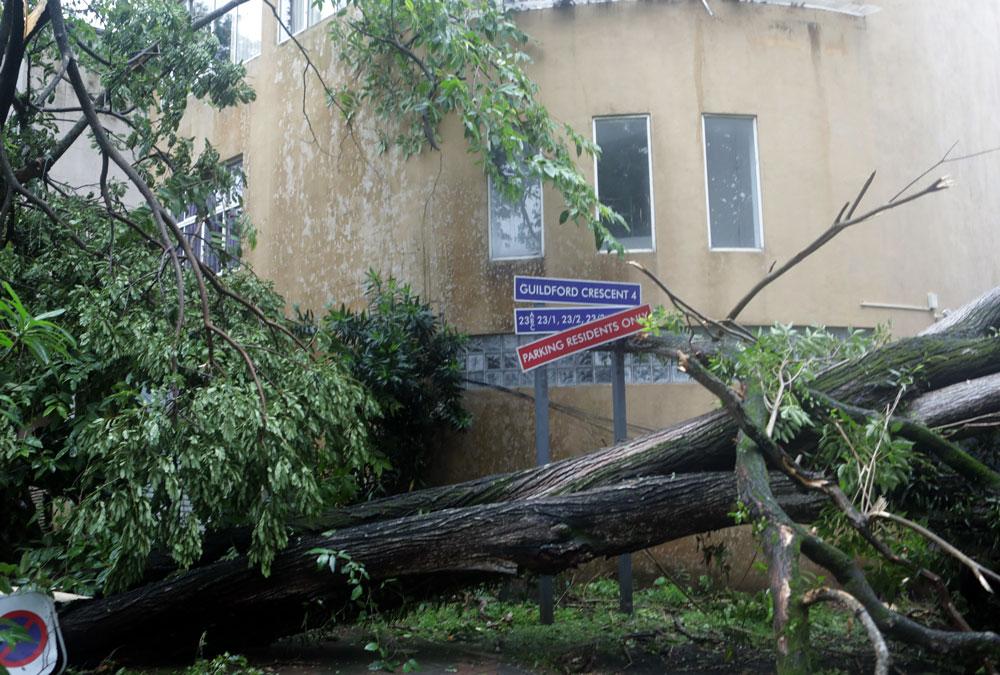
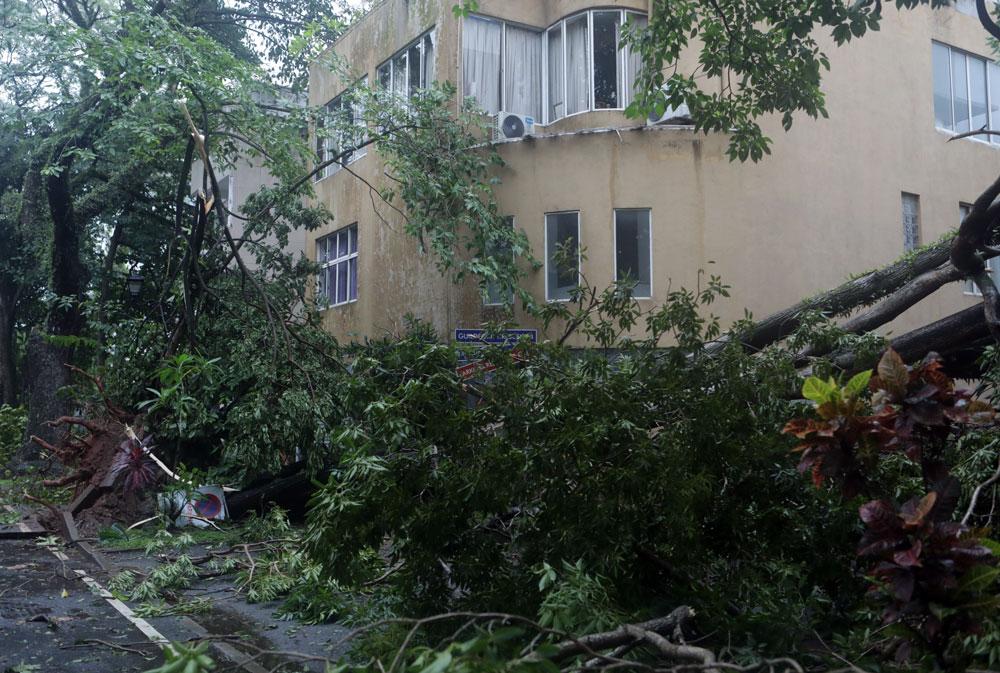
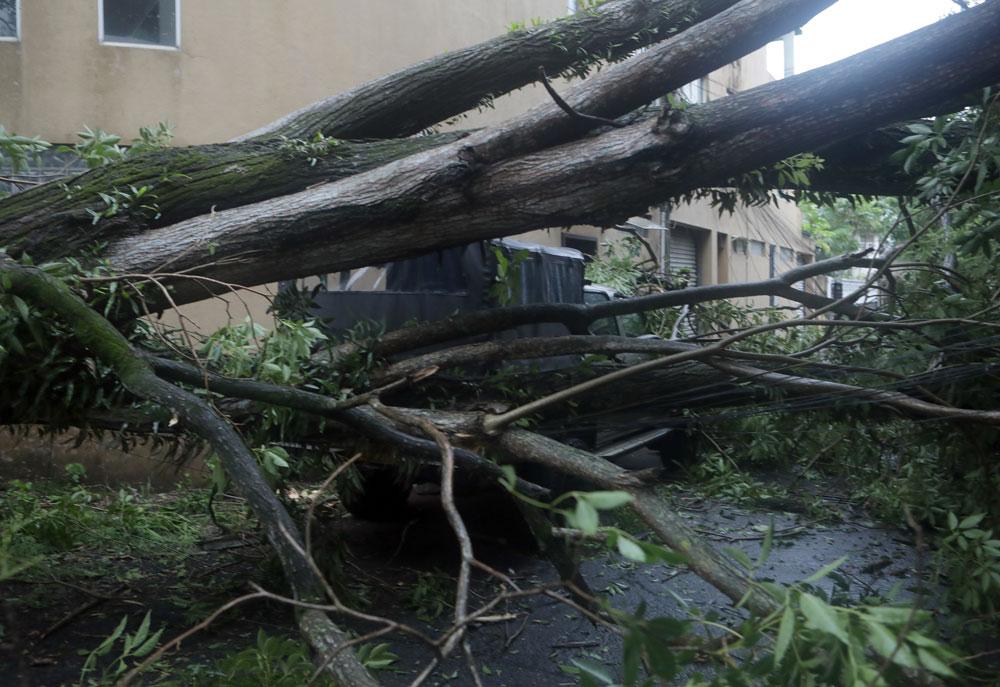
Missing the wood for the trees; Local government elections are about the trees and not the wood.

May 9th, 2025

By Raj Gonsalkorale

The trees

The quotation “Missing the wood for the trees” means being unable to see the whole picture or larger context because one is fixated on minor details or individual components. It suggests a lack of perspective and an inability to understand the bigger picture due to being too focused on the small parts.   This catchy phrase originated as part of the works of John Heywood, an English writer known for his plays, poems, and collection of proverbs, circa 1546. It is an idiom used of someone who is too involved in the details of a problem to look at the situation as a whole. (https://www.cmfgroup.com/blog/ healthcare-professionals/sometimes-we-cannot-see-the-forest-for-the-trees/#:~:text=This%20catchy%20phrase%20 originated%20as,the%20situation%20as%20a%20whole)

However, local government elections in fact must be about the small parts that constitute the whole. It must be about local issues and which party or individual at grass roots level is close to the people and can work with the people to attend to matters at local level. It is a misplaced assumption and a misguided promotion that local government elections are about national issues, and they are a like a referendum on a party in power at national level. As much as a wood would be barren if there are no trees in it, a country would be similarly barren if it does not have a strong, participative local government that represents the people at grass roots level. A strong local government system should be the backbone of a country’s political system, but not necessarily constituted as a partisan political system as would be mentioned later in this article.

Perhaps the staging of local government elections should precede a national general election if a bottom-up approach is to replace the bottom down approach that the country has experienced for many decades. While there are some issues that are essentially national in nature like defence and foreign policy, taxation and major infra structure developments, policies pertaining to many other areas need to consider local situations, wider consultations with people, and national policy formulation linked to such grassroots participation on local issues.

While a governing party, in this instance the NPP, would have strived to bask in the glory of their presidential and general election successes and win the local government election on the strength of those successes, such a line of thought would not have been necessarily the best outcome for the local government bodies and the people at grassroots level. At such a level what matters is the record of efficiency and the effectiveness of those who have been members of local government bodies and those who are aspiring to be members and who have their ears to the ground their eyes on the people in towns and villages in local government areas. In this context, people would be the best judges as to who should represent them at local government level on matters that are essentially local in nature. Success at presidential or general elections should not automatically translate into success at local government level, unless those contesting could demonstrate they are well across local issues and are able to offer solutions for such local issues.

Many analysts, and of course opposition politicians have seized on the drop in votes for the NPP at the May 6th local government election. Reportedly only about 60 percent of the 17.14 million electorate turned out to vote on Tuesday, down from nearly 70 percent in the November general election and 80 percent in the September presidential vote. While voter fatigue after two major elections could well be one reason for the drop in vote, as far as the governing party is concerned, which more or less campaigned on the strength and success of the two preceding national elections, their own supporters may have been lulled into thinking that local government elections do not count for much since presidential and general election powers were with them. Some may have opined that promises made have not been delivered and decided not to vote although the NPP government has been in power for less than 6 months and the national budget passed only in April this year.

The line of thought that a government at national level should have control over local government entities simply because of such power, without a focus on local issues and how to address them, is a line of thought that does not produce optimum democratic outcomes for the people at grass roots level. In fact, the results of the May 6th election, with many local bodies requiring coalitions of some sort, either multi-party, or with independents, to be able to govern the local body has restored a welcome degree of democracy that is a good for the country. 

However, this gain will be negated if the Opposition political parties desire to group together is only to cause embarrassment to the NPP national government and thwart their programs and activities at Presidential and National Parliament level using local bodies as platforms for their political and personal gain and not for the sake of the people at local government level.

Ideally, elections at local government level should be nonpartisan to the extent possible, as at this level, governance is more about operational issues that impact on people at this level than about policy formulation on national issues. Avenues to make local government entity elections based on electing independents of proven capability rather than electing representatives of national political parties to local government entities should be seriously considered by the people. Political divisions at this level further alienate people from each other based on the political labels they carry. Minimising such divisions and taking the path of aggregation rather than segregation is a system change that needs to be considered by all political parties.

One can only hope that all political parties will grasp the opportunity now to govern with a difference and govern for the well-being of the people belonging to their local government entities rather than using the entities as platforms to further their political ambitions.

If people at grass root level, as constituents of local government entities are independent minded, they will be better able to view national policy formulation from a more constructive point of view and consider policies offered by political parties at national level with much less bias and more from the perspective of what policies are best for the country rather than for any political party. Outcomes for the country will decidedly be better if partisan political divisions begin and end at national level and divisions even at this level are based on policy differences, not personal or other pseudo differences, and their ability to plan and incorporate their policy action plans, as strategic plans in their manifestos. Hopefully this would create a pathway to end the NATO syndrome of No Action, Talk Only, as manifestos would then become part of the accountability process at national level should a particular political party win a general election.

Irrespective of which party or political grouping is running local government entities, they all must subscribe to accountability policies legislated by the National Parliament to ensure uniformity of accountability policies across all local government entities. While programs and priorities of local government entities may vary, accountability policies pertaining to programs should not vary as fundamentally, all programs of entities are financed by the people and therefore accountability to the people via national legislation considered as a moral and legal necessity.

Several local government entities have been accused of waste, bribery and corruption from time to time and there appears to be a need to review existing accountability policies and processes and fill any voids with the appropriate legislation to strengthen them and hold all local government entity expenditure accountable to the people. Legislation should provide for enforcing strict punishment for those found guilty of violation of the law and misappropriation of funds.

The wood

As noted earlier, the wood” in the context of this article is the political structure at national level comprising of an Executive Presidency, a Parliament, a government which enjoys the majority support in Parliament, and an Opposition, or as one might say, an alternate government in waiting, all of whom are responsible for national policy development. Ideally, each of these entities should be elected by the people based on the policies they offered to the people at an election. In this context, the Opposition has a role and a responsibility to make sure the government complies with their manifesto that was offered as a policy composite to the people but has even a more important role in offering their alternate policy options as per their own manifesto and any new ideas and proposals as constructive alternate options to government actions. This might be asking for too much from Sri Lankan Opposition parties who have habitually just criticised governments rather than offering alternate constructive options for consideration by governments.

The role and responsibilities of provincial authorities who in a way are neither the wood or the trees, will have to be reviewed and their form, substance and responsibilities clarified.

The provincial councils were established consequent to the provincial council’s act of 1987 at the behest of India as a means of appeasement to wean the LTTE from their separatist agenda. The LTTE rejected the provincial council system, and so did the Tamil political parties. The act provides for activities that are to be managed by provincial councils, activities that are within the province of the national government, and activities that are to be jointly administered. Overall, provincial councils have functioned more as administrative centres rather than as political centres. It appears that a significant amount of duplication of administrative activities occur due to the lack of clarity and direction on the national government’s role and that of provincial councils Their future and their future role needs to be reviewed, and a decision taken whether they belong to the wood or are part of the trees. On the face of it, it does appear that they have a role in a devolved administrative system but not in a devolved political system

The NPP government included the introduction of a new Constitution in their manifesto, and it is hoped that wide consultations and reviews will occur of all political institutions at all levels and findings and suggestions will be considered when drafting a new Constitution.

A letter from a Father to his daughter in USA.

May 9th, 2025

My Darling Chuti,

Look, at the haphazard way Radcliffe, a British Lord said to have had no previous experience in boundary making, unscientifically divided British India in to India and two Pakistans (West and East) in 1947. This division was deliberately done to perpetuate Indian (Hindus) and Pakistan (Muslims) wars indefinitely in keeping with the avowed British colonial policy of divide and rule to perpetuate the British empire where the sun will never set.

It was the same policy they adopted in Dividing Sri Lanka, the land of the Sinhala people for 2500 years into two countries, with two nations Sinhalese and Tamils- (who were Malabar Tamil   slaves first brought by the Dutch in the late 18th century and thereafter by the British, first to settle in the North and East and much later after 1840 to work on the Coffee and Tea plantations in the hill country (after 1870s) as the proud native Kandyan Sinhalese refused to work for the British. They used the Cleghorn minute 1799 to the first British Governor Fredrik North who was in charge of the Maritime provinces of this Island acquired from the Dutch in 1797.  This minute had artificially divided the country as follows.

All that land north of Puttalama going right round the country up to Walave Gannga in the South, including the present NCP (Anuradhapura and Polonnaruwa districts) down the coastal low lands up to Walave leaving only the central hill country and a narrow stretch of land abutting it to the Sinhalese. Fortunately, after the Panaduraa waadaya by Mohottivatte Gunanandha Thera, Anuradhapura and Polonnaruwa Districts were taken out of this dream Tamil Land and created the NCP (new Province) in 1873 The Malaba Tamil coolies were Gazette as Ceylon Tamils in 1901 by Arunachalam Ramanadan the first Sri Lankan Civil Servant created by the British. He was a grandson of Arunachalam grandson of a Malaba cooli toilet cleaner of the then governor. Now you can see how these British conspired to destroy the Sinhala Buddhist Kingdom that ruled the whole Island named as TUN Sinhale for 2500 years, that stood in par with all the ancient world civilizations like the Roman, Greek, Egyptian, Indian and Chinese.

The latest attempts made by them as you know are the formation of the Tamil EELAM in the Northern and the Eastern Provinces for which the road map was laid down in 1987 by the Rajive /JR Accord of 29th July and the more recent attempt to create a Malayanadu for the 1.2 estate Tami coolies again brought and planted right at the center of this country including the CP, UVA. and Sabaragamuwa Provinces with all abutting areas where tea and rubber are grown. This includes parts of the SP, WP, and the NWP as well.

I am struggling very hard to avert this disaster. I only hope that I will live at least another 10 years to complete this project.  I still have a distant hope that it could be definitely done as I strongly believe that with the blessings of the Triple gem and guardian gods lead by Vishnu will protect this land of the Sinhalese Buddhists, as it had been the only land on this earth that was thrice visited and thrice blessed by the Lord Buddha. This was also the first and the only foreign country to which the Buddha had visited, blessed, marked 16 sacred places on its ground and protected the whole Island by circumambulating it thrice as the epic Mahavamsa has recorded. Lord Buddha also has predicted, at his passing away bed that his doctrine will remain here for the next 5000 years.  In view of all these miracles this land of the Sinhalese had been named as the Land of the Buddha.”  Therefore, I strongly believe that this land of the Sinhalese can never be concurred by any enemy in its totality including the land, the Sinhala nation and the Buddhist civilization. That is why it has stood the test of time from 18 invasions from South India from the 2nd century BC up to date, including the most powerful four colonial invasions of Portugues, French, Dutch and the British with all their super fire power that captured the whole world , and annihilated all the older civilizations in both Americas, Australia and New Zeeland and finally the last attempt by the LTTE  which was called the most powerful and dangerous terrorist outfit with their own Naval, Air and Ground power in addition to money and the open support given by India with logistic support, military training and financial support openly given coupled with political support by the Government of Rajiv Ghandhi.

Coming back to Radcliffe,

The Radcliffe Line was the boundary drawn during the Partition of India in 1947 to divide the provinces of Punjab and Bengal between India and Pakistan. It was established by the Punjab and Bengal Boundary Commissions, with Sir Cyril Radcliffe as the chairman of the Punjab Boundary Commission. This line resulted in the division of culturally close areas and triggered massive human migrations.

Although their Language English has assumed global recognition and the sad legacy of dividing the whole world in to an eternal never ending conflict Zone, I think, will last forever.  If I were entrusted with the demarcation of boundaries for India and Pakistan, I would have simply drawn the dividing lines along the crest line of the mountains that divide the two watersheds of the Indus and Ganges so that it will last, perhaps forever, using the Buddhis theory of resolving problems of this sort. During the Buddha’s time, a conflict arose between the Sakya and Koliya clans over the sharing of water from the Rohini River. The clans, who lived on opposite banks of the river, faced a drought, leading to suspicion and conflict over water access for their crops. The Buddha intervened and helped resolve the dispute through a peaceful resolution, emphasizing the importance of shared resources and avoiding violence.

This is why I blame the Church driven, power and riches hungry Colonial British for dividing the whole world in to an eternally warring battle field on ethnic and religious conflicts, hoping to perpetuate the British Commonwealth of Nations where the sun will never set as they once said.

 The final solution for all worldly and thereafter rests in the Buddhist teaching and no other. Let us cross our fingers and wait till 2050 and see how Sir Arthar Clerk’s prophecy on Buddhism becoming the only religion that will survive thereafter, while all other s based on a divine origin will disappear from this world. (Please see DEEP RANGE Arther Clerk)

SC moved against NPP’s MoUs with India.

May 9th, 2025

Courtesy The Island

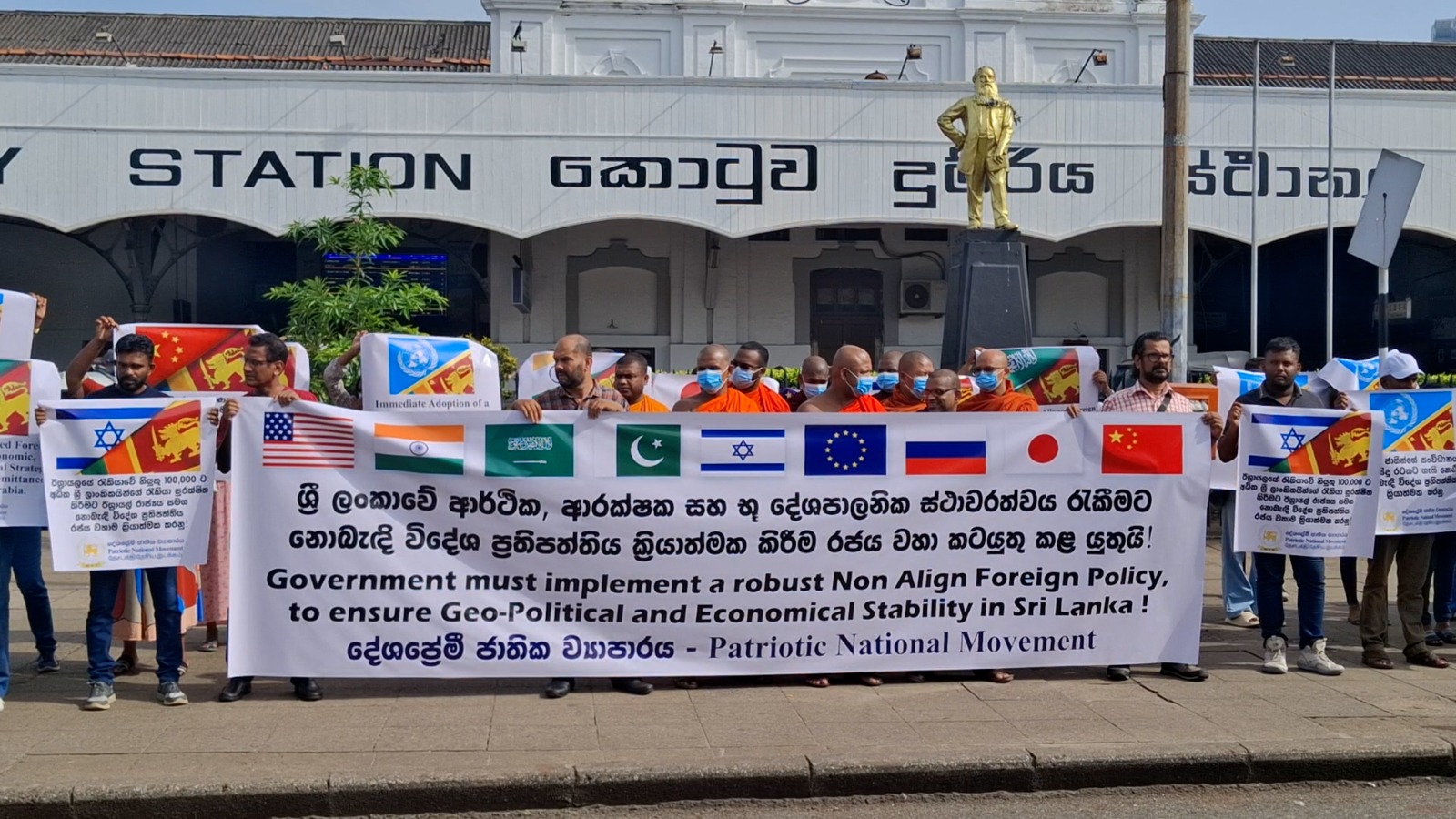
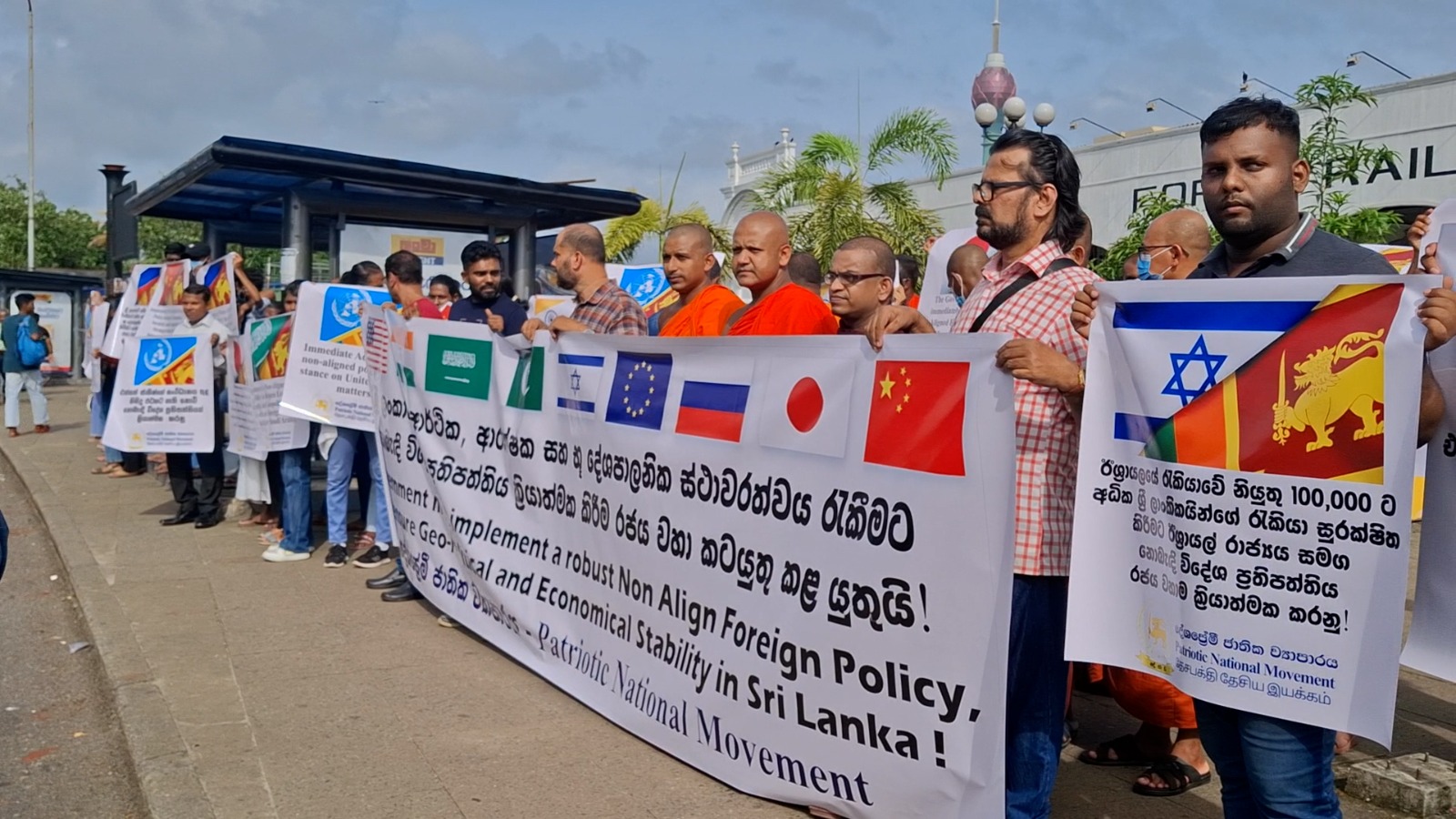
Patriotic National Movement, Global Sri Lanka Forum, Swadeshika Jathika Viyaparaya and Thunhela Jathika Viyaparaya have filed a petition, requesting the Supreme Court to prevent the implementation the seven Memorandum of Understanding (MoUs) signed by India and Sri Lanka during Indian Premier Narendra Modi’s recent visit to Colombo.

Challenging constitutionality of the seven MoUs finalised on April 07, 2025, in terms of Article 126 read with Article 17 of the Constitution, the petitioners, Dr. Gunadasa Amarasekera, Dr. Wasantha Bandara, Shyamendra Wickremarachchi, Chaminda Priyadarshana, Dr. Asoka Indrajith Kamaladasa and Ballanthudawa Achchige Nuwan Chamara Indunil asserted that the implementation of MoUs would violate the sovereignty of the people—including their economic sovereignty and right to governance—as well as the independence of Sri Lanka as a free state and nation.

They also warned that the MoUs violated the constitutional rights of the people, rule of law suppressed and annihilated as well the national security and placed the sovereignty of the country at risk.

The petitioners also informed the Supreme Court that they, together with several other patriotic activists, on May 02, 2025, handed over a letter to the Indian High Commission in Colombo to be forwarded to Premier Modi protesting the signing of the MoUs. According to the petition, copy of that letter has been submitted to President Anura Kumara Dissanayake. The MoUs covered implementation of HVDC interconnection for import/export of power, cooperation in the field of sharing successful digital solutions implemented at population scale for digital transformation, development of Trincomalee as an energy hub, defence cooperation, multi-sectoral grant assistance for Eastern Province, cooperation in the field of health and Medicine and cooperation between the Indian Pharmacopoeia Commission and National Medicines Regulatory Authority.

Among the 29 respondents were members of the Cabinet, including the Prime Minister, secretaries to the relevant ministries complicit in the issue at hand, Cabinet Secretary and the Attorney General.

Alleging that the government suppressed the MoUs thereby deprived the right of the people as well as MPs to know the truth, petitioners complained that Cabinet spokesman Dr. Nalinda Jayatissa failed to answer specific questions (1) whether the government had right to amend the clauses of MoUs if they were found to be adverse and detrimental to the interest of Sri Lanka and (2) whether the government agreed, under the defence cooperation agreement with India, that Chinese vessels would not be allowed in Sri Lankan waters?

The petition listed the violation of the Constitution as well as domestic and international laws. Under this heading, the petition dealt with what it called threat to energy and data sovereignty.

Addressing the energy sovereignty of the people and energy security of the country, the petition stated that the ultimate impact of implementation of the intended objectives of the said MOUs would be subjecting Sri Lanka’s connectivity and supply of electricity to the arbitrary decision-making authority of India which may lead the country to experience conditions similar to those recently experienced by the people of Bangladesh and Pakistan consequent to abrupt and arbitrary disconnection of electricity and water supplies respectively.

Declaring that data sovereignty of the people is a prime responsibility of the State, the petition asserted that it was the duty of the state to protect and safeguard to prevent foreign entities, States and individuals from having access to personal information, bio-data, bio matrix data of the natives and State secrets and in the event of failure of the state to provide such protection and security it would endanger the national security including the health and economic security of the people; such move would also discourage the foreign investors for the reason that data fed to local systems would not be secured. (SF)

ඡන්ද පදනම රිවස් ගියරයට වැටුණු මාලිමා ආණ්ඩුවට ප්‍රතිපත්තීන්ට පස්ස හැරවීමට එරෙහිව ජනතාවගෙන් කණේ පාරක්

May 9th, 2025

Wimal Weerawansa

ගම්මන්පිල එළියට දැමූ ආණ්ඩුවේ අලුත්ම ඩීල් ගේම – ”මගේ ළඟ හඬපටත් තියෙනවා” – Hiru News

May 8th, 2025

වතුර ඉල්ල ඉල්ලා හර්ෂ ද සිල්වා ආණ්ඩුවට දුවන්න දෙයි

May 8th, 2025

Dasatha News

Maldives bans Israeli passport holders, so should Sri Lanka evict Zionist Chabad Houses: protest against Gaza war.

May 8th, 2025

Courtesy COLOMBO Reuters  — 

Apr 16, 2025

The Maldives has banned Israeli passport holders from entering its territory, the president’s office said on Wednesday, accusing Israel of committing genocide against Palestinians in the Gaza war, an allegation Israel has repeatedly denied.

Maldives President Mohamed Muizzu ratified an amendment to the country’s immigration law after it was passed by parliament on Tuesday, a statement from his office said.

The amendment introduces a new provision to the Immigration Act, expressly prohibiting the entry of visitors with Israeli passports into the Maldives, it added.

The ratification reflects the government’s firm stance in response to the continuing atrocities and ongoing acts of genocide committed by Israel against the Palestinian people,” the statement said.

The Israeli foreign ministry and the country’s consular office in Colombo did not respond to requests for comment.

Israel has consistently rejected any accusation of genocide, saying it has respected international law and has a right to defend itself after the cross-border Hamas attack from Gaza on Oct. 7, 2023 that prompted the war.

South Africa has brought a case against it at the UN’s International Court of Justice and Amnesty International accused it of committing genocide against Palestinians in Gaza in a report last December, charges it has denied.

Maldives’ Muizzu initially made the call to ban Israeli passport holders in June 2024 after a cabinet recommendation, which prompted the Israeli foreign ministry to recommend that its citizens avoid the archipelago famous for its pristine beaches and plush resorts.

Tourism is a major driver of the Maldives economy, accounting for about 21% of its GDP and earning $5.6 billion in 2024, according to government data. The island nation is expecting earnings of about $5 billion this year.

India threatens Sotheby’s with legal action over planned sale of Piprahwa gems

May 8th, 2025

By Patrick Martin

Topic:Archaeology

Wed 7 MayWednesday 7 May

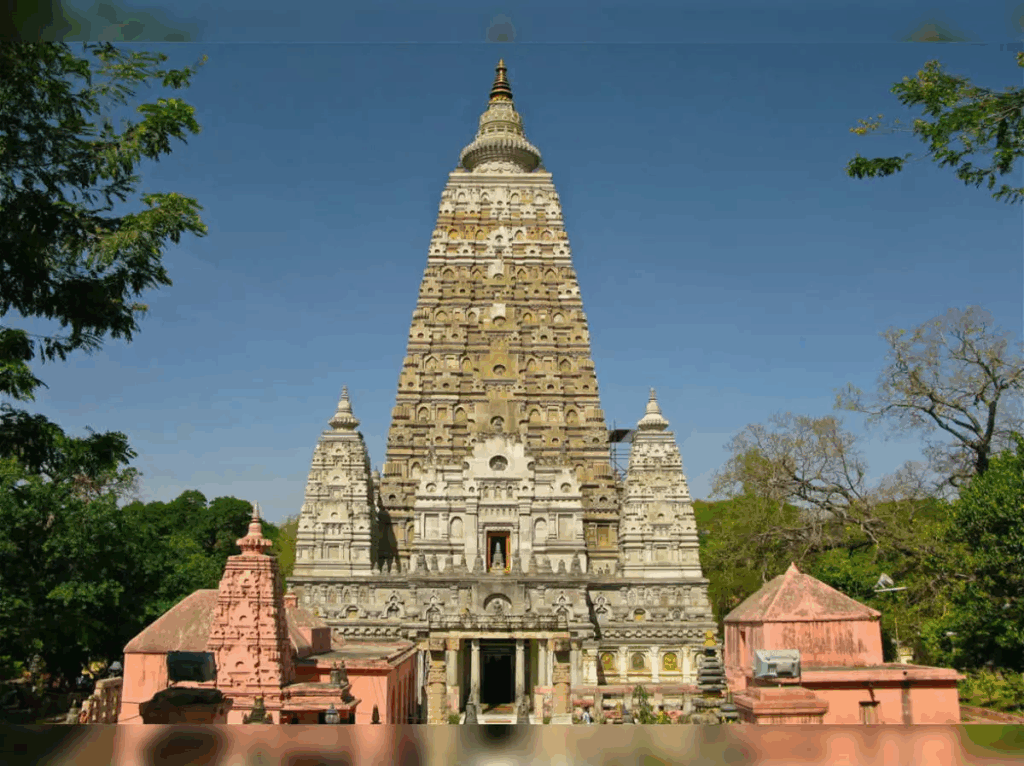
The Piprahwa Gems are considered to be among the most significant finds in the history of Buddhism. (Supplied: Sotheby’s)

In short:

Sotheby’s has postponed its sale of jewels linked to the physical remains of the Buddha after New Delhi threatened to launch legal action.

The relics were inscribed and consecrated about 2,000 years ago and then excavated in 1898 by a British estate manager. 

New Delhi argues the sale of the Piprahwa gems violates international laws and UN conventions.

abc.net.au/news/piprahwa-gems-sale-sothebys-india-legal-action/105261720

Link copied

Share article

Sotheby’s has postponed its sale of jewels linked to the physical remains of the Buddha after a legal threat from India and moral questions about the sale of religious antiquities.

The Piprahwa gems have spent most of the past century in a private family collection after being unearthed in 1898 by a British estate manager.

The relics were found buried with what was believed to be bone fragments and ash of the Buddha.

The collection was set to be sold at Sotheby’s Hong Kong on Wednesday, until New Delhi threatened Sotheby’s with legal action if it did not call off the sale.

India argued that the auction of the gems, which were expected to fetch $20 million, “violates Indian and international laws as well as UN conventions”.

In a statement to the ABC, Sotheby’s confirmed that the auction had been called off.

“In light of the matters raised by the Government of India and with the agreement of the consignors, the auction of the Piprahwa Gems of the Historical Buddha, scheduled for 7th May, has been postponed,” they said.

“This will allow for discussions between the parties, and we look forward to sharing any updates as appropriate.”

What are the Piprahwa gems?

The Piprahwa gems, made up of thousands of pieces of topaz, pearls, rubies, sapphires and gold sheets, were excavated in 1898 by British estate manager William Claxton Peppé.

William Claxton Peppe unearthed the gems in 1898. (Supplied: Peppé family/The Piprahwa Project)

He unearthed the jewels and what are believed to be remains of the Buddha from inside a funeral chamber, known as a stupa, in present-day Uttar Pradesh in northern India.

The relics were inscribed and consecrated about 2,000 years ago, during the Mauryan Empire.

Experts agree that the items are linked to both the Buddha’s Sakya clan and Buddhists worldwide.

When they were unearthed in 1898, the bones and ash found were separated from the jewels, before being gifted by the British colonial government in India to the King of Siam — modern-day Thailand.

He then distributed some of the bones and ash to Buddhist centres across Asia, including in Myanmar, Thailand and Sri Lanka, where they continue to be venerated.

The rest of the hoard was taken to the colonial museum in Kolkata, before a portion was granted back to the Peppé family.

A New US Cold War Weaponizes Religious Diasporas in South Asia and the Indian Ocean Region

May 8th, 2025

by Darini Rajasingham-Senanayake

Whither India’s Global Peace Making?

In the cover image Naval Support Facility Diego Garcia, abbreviated NSF Diego Garcia, is a British Ministry of Defence facility leased to the United States Navy, located on the atoll Diego Garcia in the Indian Ocean (Mauritius. Africa), from which US Air Force can use to target Iran

The writer, Dr. Darini Rajasingham-Senanayake, is a Social and Medical Anthropologist, based in Colombo, Sri Lanka.  Links to Gospa News articles have been added by our Editorial Staff

There have been several geopolitical developments in South Asia and the Indian Ocean region. These include United States Vice President J.D Vance’s visit with his Indian origin wife, Usha and their children to India in April and terror attacks on tourists in Kashmir’s Pahalgam, which were blamed on Pakistan. The same week there was a huge blast in Iran’s port Bandar Abbas on the Persian Gulf that opens into the Indian Ocean.

https://www.gospanews.net/en/2025/05/01/israel-on-fire-irans-revenge-for-the-port-massacre-as-we-predicted-24-hours-ago/embed/#?secret=eZTNA67sYU#?secret=4OmyFKtENA

Earlier in the month there were reports of the return of the United States Central Intelligence Agency (CIA), operatives to the Bangram Air Base in Afghanistan. This was reportedly in consultation with erstwhile proxy, the Taliban.

President Trump had stated that former President Biden made a mistake abandoning Bangram Base during the US withdrawal from Afghanistan given its infrastructure investments and proximity to China’s missile sites, not to mention Russia.

The Easter week attacks in Kashmir were similar to those of the Easter Sunday attacks in 2019 in Sri Lanka, mysteriously claimed by Islamic State of Iraq and Syria (ISIS). These also targeted tourists, as well as, churches and a Chinese research mission in the Seas of Sri Lanka– in a Hybrid operation.

https://www.gospanews.net/en/2024/02/10/hybrid-economic-war-with-neocolonial-debt-bondage-in-the-indian-ocean/embed/#?secret=FRXTpGnKw5#?secret=278P9xqJvP

Following, the attacks in Kashmir which killed 26 people, the global corporate media propaganda machine echoed the moment of America’s Global War on Terror”.

India’s Adani owned NDTV was full of India’s War on Terror” moment, echoing rhetoric after the 9/11 World Trade Center attacks; cheerleading a hard military response and possible war with Pakistan. This would of course destabilize South Asia, one of the world’s most impoverished regions, despite the Indian growth story economic hype. A war between the nuclear armed neighbors would moreover further weaponize religious diaspora networks and destabilize historically multi-religious South Asia.

What of India’s Push to be a Peace-Maker drawing on Spiritual Traditions?

Indian Prime Minister Narendra Modi’s recent push to be a global peace-maker in the Russia-Ukraine war, leveraging India’s spiritual traditions of Ahimsa (non-violence) in the Buddhist, Jain and Hindu Yogic and Ghandian legacies, appeared forgotten.

Rather, there was rush to deliver collective punishment to Pakistan’s farmers by withholding Indus Valley Waters, affecting food security, by putting on hold the treaty for sharing of water resources. India and Pakistan were in any case a single country until the retreating British Raj Partitioned India in 1947, as it did Cyprus, Ireland, Palestine and other places as part of its Exit Strategy. Was this in order to retain British imperial and corporate economic and security interests, a different kind of GLADIO-style stay behind operation in the Jewel of the Crown” of a lost Empire?

https://www.gospanews.net/en/2023/03/16/the-environmental-cost-of-the-superpower-economic-hybrid-war-games-in-indian-ocean/embed/#?secret=L4vc4cpCoR#?secret=vpROoXR4w1

Perhaps the most troubling aspect of the Indian State’s response to the attack in Pahalgam has been the metering out of collective punishment in lieu of a measured, calibrated and targeted response. In addition to holding in abeyance the Indus Water treaty there has been a destruction of the homes of purported terrorists for the collective punishment of their kin. Is India drawn into the I2U2 mimicking the Israeli barbarism of collective punishment in the occupied Palestine’s West Bank and Gaza Strip and forgetting Ahimsa?

Diaspora Wags the Dog”: Weaponizing Religion for a new Cold War

It is now increasingly clear that along with the QUAD (the collective of Australia, Japan USA, India) and I2U2 (the collective of Israel, India, United Arab Emirates and USA), in the Western Indian Ocean, set up to target China, the Indian Diaspora in the US are being harnessed to wag the dog” so to speak and lure India into the US military business industrial complex and NATO War Machine.

Although the Indian Ocean was declared a Zone of Peace on the initiative of the third world at the United Nations in 1971 at the height of the first Cold War it has become highly militarized.

Bringing India into America’s new Cold War on China would also break the BRICS and Global South unity, perceived as a threat to the hegemony of the US dollar and the existing global trade and financial system.

https://www.gospanews.net/en/2024/09/22/de-dollarize-to-de-colonize-sri-lanka-must-pivot-to-the-brics-embrace-the-asian-21st-century-after-elections/embed/#?secret=nBAKyjaRnr#?secret=lTyGXOPXI1

Working with the Indian Diaspora in North America to draw India seems to be a bi-partisan agreement for Washington’s Republican and Democrat Uni-party.

Was the visit of US Vice President J.D. Vance with his Indian origin wife and children dressed in Desi garb just days before the Kashmir, Pahalgam attacks a coincidence?  Tulsi Gabbard, head of US National Security Agency is a Hindu as is Kash Patel who is the head of the FBI. Kamala Harris the Former Vice President, and Presidential hopeful also had some South Indian roots.

Is the Indian diaspora being used to draw India which had stood with Palestine during the hey days of Non-Alignment, to partner with Zionist Israel, which ironically, also works with Saudi Arabian Petrodollars to promote the Muslim Fundamentalist (Muslim Zionist?) Wahabi- Salafi- Islamist –ISIS, ISIL, Al Qaida, Al Nusra, Boko Haram, Al Shabab, Tariq Islam, Towheed Jamat, Lashkar-e-Taiba, off shoots and Islamist terror networks around the world?

Fighting ‘God-less Communists’ and Independence Movements with Religion

Claiming to fight God-less Communists” during the Cold War against Soviet Russia the United States and its European allies weaponized religion, seen as a conservative forces in the Third World, This to buffer against de-colonization and national Independence movements seeping across Asia and Africa after the end of World War 2. National liberation movements were often Communist or Socialist in nature.

Internal ethno-religious proxy wars were promoted in the post-colony to deflect de-colonization and independence struggles and retain the economic and security interests of retreating European empires, or transfer them to the rising American empire.

All ‘world religions’ are politically constituted and hence more or less weaponized, Islam is by far the Most Weaponized religion on the planet. That is, excepting Southeast Asian Islam, which is softer and culturally diverse, given proximity to polytheistic Buddhist and Hindu cultural traditions. This is demonstrated in the Indonesian State’s Constitutional commitment to Pancha Sila.

https://www.gospanews.net/en/2024/08/09/literary-prize-politics-cold-war-and-the-disinformation-game-on-the-weaponization-of-religion-s-and-decolonizing-history-and-fiction/embed/#?secret=fS9qSdPREP#?secret=Jp1GDsse7W

During the Cold War, Muslim networks were used at the handmaiden and cat’s paw of the Evangelical Christian Zionist empire to stage violence and destabilize multi-religious countries in Asia and Africa. There was also a concerted attempt to weaponize Buddhism as documented in an excellent book Cold War Monks: Buddhism and America’s Secret Strategy in Southeast Asia”, albeit with less than spectacular results.

As academics like Diane Kirby have shown, in Cold War USA, evangelical Christian and the Jewish diaspora networks, particularly, Zionism and the Chabad movement helped fund and underwrite settler colonialism in Palestine. Simultaneously, Muslims were used as the handmaiden and cat’s paw to stage violence in the interest of the US Empire and Israel around the world, with the support of Evangelical Christian Zionist groups. There is of course a long tradition of Israeli security agencies, Shin Bet and MOSSAD working to weaponized religions in Palestine in order to promote settler colonialism.

The Head of the Snake of Islamist Terror and the US Military Business Industrial Complex

The head of the snake of Islamist Terror around the world was Saudi Arabia that during the Cold War spread Wahabi-Salafi fundamentalist Islam in cooperation with the CIA and Mossad also targeting Persian/ Iranian Shia Islam which had a more spiritual orientation. The Ayatollahs in Teheran had after all thrown out the US-backed Shah of Iran and nationalized its oil wells.

Saudi Arabia’s pole position in Islam as the county of the holy site of Mecca, the birthplace of the Prophet, and its Petrodollars enabled the spread of Wahabi-Salafi fundamentalist Islam throughout the Muslim world. This was in exchange for regime protection for the house of Saud. The US has massive bases in the Kingdom.

Of course NATO’s Turkey and other neighbors of Palestine which are complicit in the on-going genocide there, along with the UAE, Qatar, Egypt etc. helped. Some were subject to blowback from the Muslim Brotherhood.

https://www.gospanews.net/en/2025/04/21/the-hidden-secrets-on-isis-massacres-in-sri-lanka-2019-western-zionist-ties-with-palestine-genocide/embed/#?secret=rniZsHq4qE#?secret=UEYYIOePVJ

Once the Soviet Union, Red Peril and the Cold War ended in 1991, Islamist Terror became America’s official new enemy. The’ Global war on terror” after the World Trade Center attacks were staged purportedly by Osama bin Laden’s Al Qaida enabled perpetuating the US military business industrial complex with a new Islamist enemy.

It is worth recalling here that President Dwight Eisenhower had warned the American people about the threat posed by the US military business industrial complex in his farewell address to the nation. And sure enough, President John F. Kennedy who wanted to draw down the US war machine in Vietnam was assassinated a couple of years later in 1963 reportedly in an internal covert operation.

https://www.gospanews.net/en/2024/11/09/freemasonry-zionism-3-devilish-roots-of-holocaust-in-holy-land-70-of-exterminated-are-children-women-by-netanyahu-thanks-western-neonazis/embed/#?secret=lAWzaftctZ#?secret=nBsIZvQwcM

The covert links between Zionist-Evangelical Christianity and Islamist Wahabi groups that go back to the Cold War weaponization of Islam also to fight Russia in Afghanistan may partly explain why the Muslim dominated Middle East and North Africa (MENA Region), is the most violent part of world at this time. Muslim communities and networks around the world were weaponized and used for terror while, others turned a blind eye, to on-going radicalization particularly via the internet, social media and On-line religiosity. As Yasha Levine has detailed in his book, the Internet was a military invention for surveillance and control rather than to promote Democracy.

Staging a Clash of Civilizations” between Buddhism and Islam to destroy Asia?

Ironically, Prime Minister Modi was in Saudi Arabia when the attacks happened in Pahalagam, Kashmir, and he cut short his visit to the Kingdom to return to Delhi.

In the wake of the attacks, the global corporate media echo chamber seemed taken with the prospect of a war between nuclear armed India and Pakistan. Although Pakistan had long been a ‘Garrison State’ with its powerful Inter-Services Intelligence agency (ISI), being well oiled by the CIA and funded by Saudi Arabia, it was painted as a proxy of China in the media.

https://www.gospanews.net/en/2024/09/11/cia-gate-11-exclusive-unveiling-saudi-network-behind-9-11-former-fbi-agents-revelations/embed/#?secret=dYyeANniTr#?secret=OmFYVefBpM

Soon after the British Partition of India in 1948 as part of its Exit Strategy to continue to dominate the South Asia region, Pakistan was turned into a CIA Garrison State while India allied with the Soviet Union/Russia. The region has been kept in turmoil ever since– as a Cold War proxy war site. This also explains the lack of progress in the SAARC in contrast with Southeast Asia’s ASEAN.

It is increasingly clear that under Trump, the US is now focusing on China and trying to isolate it from Russia (Ukraine Peace deal), and correct the mistake that Biden made of pushing Russia into China’s arms, while trying to break BRICS by courting India. After the Pahalgam attacks, there were Hollywood inspired dreams voiced on Social media of India’s Akand Barath, breaking up Pakistan, and partitioning Baluchistan given the new Chinese built Gwadar Port, which the CIA had deemed one of the String of Pearls” in the Indian Ocean.

https://www.gospanews.net/en/2020/01/23/weapons-lobby-4-uk-and-italy-in-the-hands-of-qatars-muslim-brotherhood-rothschild-partner-and-jihadists-funder/embed/#?secret=iRZAh8vcwi#?secret=yxr1vMtJqO

If the US and its proxies succeed though a strategy of hybrid maritime and staged terror attacks in drawing India into its security architecture, this would challenge the rise of the BRICS and Global South cooperation which threatens US dollar hegemony. This would also put an end to the Rise of Asia and the Asian Century.

At this time there are on-going attempts to stage a new ‘Clash of Civilizations’ between the two great religious communities in Asia, Buddhism and Islam in order to crash the Asian Century. This was signaled back in 2001 with the Taliban blowing up the ancient 6th century Buddhas of Bamiyan on the Silk Route in Afghanistan– prior to the 9/11 attacks on the WTC to inaugurate and legitimize America’s ‘Global War on Islamist Terror’ and is also evident in Myanmar with the Rohingya refugees and human trafficking issue.

Whither India’s ‘Neighborhood First” policy?

Over the past three years there were US-backed regime change operations in Bangladesh, Pakistan and Sri Lanka. In 2022 when the popular democratically elected Prime Minister Imran Khan was ousted and imprisoned and Pakistan de-stabilized, India, the South Asian regional hegemon, looked on. Khan accused Donald Lu then Secretary of South Asia of spearheading the regime change in collusion with elements in the Pakistani establishment.

The same year, India capitalized on the US National Endowment for Democracy and Soros Foundation-funded, social media coordinated Aragalaya protest chaos operation to stage regime change and Sovereign Default in Sri Lanka. As South Asia’s wealthiest country was implausibly declared Bankrupt’ overnight due to a purported lack of US dollars to enable the IMF to upend its economic sovereignty, India played the supporting role of good neighbor to the rescue.

https://www.gospanews.net/en/2024/05/29/wealth-of-nations-and-the-poverty-of-theory-2-imf-mission-creep-while-green-blue-and-pink-washing-blackrock/embed/#?secret=sissqUc5DO#?secret=qiB0NpoVnv

However, last year in August India lost a close ally who had just won the national elections, in Prime Minister Sheik Hasina in Bangladesh to another US-back regime change in South Asia.

Indeed, the Modi government’s policy of self-interest sans principled Foreign Policy seem to belie proclamations of the ‘neighbourhood first”, and have paid diminishing returns in the face of America’s over the horizon (OTH), operations and aspiration for Full Spectrum Dominance in South Asia.

Is it becoming increasingly difficult for India to ‘run with the hare and hunt with the hounds’? The destabilization that OTH protests curated via remote social media platforms for regime change and staged economic crises have rendered South Asia including India poorer. The case of ASEAN shows clearly that countries develop only when their neighbors are stable and developing too.

https://www.gospanews.net/en/2023/08/04/great-reset-fed-ecb-imf-ready-to-sell-the-nations-to-blackrock-devilish-plot-rst-thanks-to-interest-rate-hike/embed/#?secret=DI3rep4wOz#?secret=YaVQlKGiMO

Increasingly, India’s growth story hype is belied by the reality of poverty due to external destabilization and staged OTH crises across South Asia. It may be time to fully embrace the BRICS and Global South in the Asian 21st Century. Otherwise, India may help normalize the Abraham Accords and the ethnic cleansing of Gaza that would legitimize a brutal new world order” across the Indian Ocean World, which is entirely contrary to Hindu-Buddhist-Jain traditions of Ahimsa and peace-making.

https://youtube.com/watch?v=YUTT7cfuCAQ%3Ffeature%3Doembed%26enablejsapi%3D1

Finally, it is high time for a global movement to shut down the 750 environment-polluting US military bases around the world, particularly those in the Indian Ocean, which should be again declared a ‘Zone of Peace’ in keeping with Principles of Non-Alignment.

Darini Rajasingham-Senanayake

The writer, Dr. Darini Rajasingham-Senanayake, is a Social and Medical Anthropologist, based in Colombo, Sri Lanka.  Links to Gospa News articles have been added by our Editorial Staff

FR petition filed to invalidate Sri Lanka-India MoUs

May 8th, 2025

Courtesy Daily Mirror

Colombo, May 8 (Daily Mirror) – A Fundamental Rights petition has been filed before the Supreme Court, seeking an order to invalidate the Memoranda of Understanding (MoU) recently signed between Sri Lanka and India.

A group of petitioners, including Dr. Gunadasa Amarasekara, filed this petition, naming Prime Minister Dr. Harini Amarasuriya, members of the Cabinet of Ministers, the Attorney General, and several others as respondents.

Seven MoUs between India and Sri Lanka, covering several key sectors, were exchanged on April 5 at the Presidential Secretariat in the presence of President Anura Kumara Dissanayake and Indian Prime Minister Narendra Modi.

The petitioners alleged that the recently signed MoUs are contrary to the Constitution of Sri Lanka as well as international laws.

They further stated that the public has not yet been informed about the contents of these MoUs, which constitutes a violation of the people’s Constitutional rights.

The petitioners claimed that the agreements undermine Sri Lanka’s sovereignty and territorial integrity, and that the government’s decision to sign them without presenting them to Parliament is unlawful.

The petitioners are requesting the Supreme Court to rule that their fundamental rights have been violated and to issue an interim order preventing the implementation of the said agreements.

Thousands of children suffer from Thalassemia

May 8th, 2025

Courtesy The Daily Mirror

Health authorities have sounded the alarm over the growing burden of Thalassemia in Sri Lanka, with thousands of children affected and hundreds of thousands unknowingly carrying the gene for the disorder.

Thalassemia is a hereditary blood disorder that affects the body’s ability to produce healthy red blood cells

Speaking at a press conference held in conjunction with World Thalassemia Day, Specialist Dr. Samiddhi Samarakoon, Director of the Non-communicable Diseases Unit, revealed that 40 to 50 newborns are diagnosed with the condition each year in Sri Lanka.

Dr. Samarakoon also disclosed that approximately 500,000 people in the country are carriers of one of the defective genes responsible for the disorder, highlighting the urgent need for increased awareness and preventive strategies.

World Thalassemia Day, observed annually on May 8, is being marked this year under the theme *Together for Thalassaemia: Uniting Communities, Prioritizing Patients.”

Sri Lanka’s first quarter budget deficit at Rs. 498 bn

May 8th, 2025

Courtesy AdaDerana

Sri Lanka’s government has recorded a significant budget deficit of Rs. 498.28 billion in the first quarter of 2025, according to the Financial Performance Statement submitted to the Cabinet of Ministers.

The Financial Performance Statement is presented periodically to the Cabinet  in line with Section 53 (1) of the Public Finance Management Act, No. 44 of 2024.

The report, covering the period from January 1 to March 31, 2025, details that total revenue amounted to Rs. 1,064.66 billion, while total expenditure reached Rs. 1,562.94 billion. The figures include cumulative income and spending across all Special Expenditure Units, Ministries, Departments, and District Secretariats.
 
Breakdown of revenue:
Tax Revenue: Rs. 970.58 billion
Non-Tax Revenue: Rs. 87.26 billion
Capital Revenue: Rs. 5.77 billion
Grants: Rs. 1.05 billion

 
Breakdown of expenditure:
Recurring Expenditure: Rs. 1,226.55 billion
Capital Expenditure (including government loan repayments): Rs. 336.39 billion

 
The Financial Performance Statement was submitted to the Cabinet of Ministers in accordance with the legal requirement to present quarterly fiscal data within 45 days of the end of each quarter.

“No one will be allowed to use Sri Lanka’s airspace or land to attack another country”

May 8th, 2025

Courtesy AdaDerana

The government will not allow any faction to use Sri Lanka’s airspace or the country’s territory to attack another nation, Cabinet Spokesman Minister Dr. Nalinda Jayatissa stated when questioned on the stance of the government pertaining to India, Pakistan tensions.

Speaking during the weekly Cabinet media briefing today (08), Minister Jayatissa said Sri Lanka will always reject all forms of terrorism and stand for regional peace.

Commenting on the developments along the borders of India and Pakistan, the Minister said the government is taking note of the updates given by the Ministry of Foreign Affairs.

Minister Nalinda Jayatissa stressed that Sri Lanka will not get involved in geopolitical issues within the Indian Ocean and said the government will continue its ‘non-aligned’ policy.

The Cabinet Spokesman said the government will extend its support to all antiterrorism operations since it gives great importance to the safety and security of the people of the region.

Sri Lanka maintains cordial diplomatic ties with both India and Pakistan, the Minister added.

In a dramatic overnight operation on Tuesday (06), India said it launched missile and air strikes on nine sites across Pakistan and Pakistan-administered Kashmir, targeting what it called militant positions based on credible intelligence”.

The strikes which lasted just 25 minutes sent shockwaves through the region, with residents jolted awake by thunderous explosions.

Pakistan said only six locations were hit and claimed to have shot down five Indian fighter jets and a drone – a claim India has not confirmed.

Islamabad said 26 people were killed and 46 injured in Indian air strikes and shelling across the Line of Control (LoC) – the de facto border between India and Pakistan. Meanwhile, India’s army reported that 10 civilians were killed by Pakistani shelling on its side of the de facto border.

This sharp escalation comes after last month’s deadly militant attack on tourists in Pahalgam in Indian-administered Kashmir, pushing tensions between the nuclear-armed rivals to dangerous new heights. 

India says it has clear evidence linking Pakistan-based terrorists and external actors to the attack – a claim Pakistan flatly denies. Islamabad has also pointed out that India has not offered any evidence to support its claim.

Stop the lies and use power to serve the people – Dilith tells govt.

May 8th, 2025

Courtesy AdaDerana

The government should focus on using its powers to serve the people instead of propagating lies continuously, the leader of the ‘Sarvajana Balaya’ alliance, MP Dilith Jayaweera said in Parliament.

The ‘Sarvajana Balaya’ leader said the government has underestimated the awareness and the knowledge level of the people and therefore continues to lie about the state of the country’s economy on every platform.

He said the country’s poor are becoming poorer and those who are suffering have given a clear message to the incumbent government led by the National People’s Power at the Local Government election. 

MP Jayaweera alleged that out of the 17 million eligible voters in the country, around 12 million have not cast their vote to the government.

Accordingly, nearly 70% of the voters are not backing the current NPP-led government, MP Dilith Jayaweera claimed.

He said therefore the government should understand the clear message given by the people and start focusing on addressing pressing issues such as the economy and security and also the challenges to the country’s culture and heritage.

MP Dilith Jayaweera also stated that he is focused on changing the political culture of the country and is willing to extend his support to progressive initiatives of the present administration.

Danger: Global Security is Now in the Hands of Trump, Rubio and Hegseth

May 7th, 2025

Melvin Goodman


The USS Abraham Lincoln Battle Group off the coast of Hawai’i. Official U.S. Navy photo by: PH2 Gabriel Wilson

The United States is a national security state.  Over the past half-century, it has unnecessarily conducted forever wars” in Vietnam (1960s-1970s), Iraq (2000s-the present), Afghanistan (2000s-2020), and now possibly in Yemen.  Not one of these costly ventures has advanced our national security, and—with the exception of Yemen—have been costly in terms of blood and resources.  Even the Yemen war is getting costly as well.

The United States is a national security state in terms of defense and intelligence funding, which is equal to the defense spending of the rest of the world combined.  Most importantly, only the United States can project power the world over.  U.S. air power dominates the global arena, although we are learning that air power is far less powerful than we thought.  U.S. sea power is also more formidable than that of any other nation, but has not contributed to any significant military success in these forever wars.”

Most of our recent presidents have been engaged as commanders-in-chief in managing conflict in the Middle East, the Persian Gulf, and Southwest Asia, although we proclaim that China is the number one security challenge.  The military budget continues to climb, and Donald Trump wants to increase the Pentagon budget to more than $1 trillion, while virtually every other aspect of the overall budget faces cost cutting.  Our infrastructure is crumbling but funds are not available to remedy the situation, largely due to the bloated defense budget.  The Congress has given bipartisan support to increased defense spending, including the modernization of nuclear weapons that have no military utility, and in some cases Congress has allocated more funding than the White House or the Pentagon requested.

We now have two incompetent individuals in charge of the national security community. The first is Marco Rubio, who is secretary of state, acting national security adviser, acting administrator of the Agency for International Development, which now only exists on paper, and acting National Archivist. The Archivist should never be held by a non-professional, particularly a bureaucrat such as Rubio, who will certainly politicize the essential records of the United States regarding diplomacy and international relations.

Rubio’s fealty to Donald Trump has been expressed almost daily, and one of the most stunning examples took place last week.  Rubio was asked if the Department of State had been in touch with El Salvador about the release of Abrego Garcia. I would never tell you that,” Rubio said.  And you know who else I would never tell?  A judge.  Because the conduct of our foreign policy belongs to the president and the executives branch.  Not some judge.”

The only precedent for an individual to be both secretary of state and national security adviser would by Henry A. Kissinger, who held both posts in the 1970s until Gerald Ford became president and his key advisers—Dick Cheney and Donald Rumsfeld—cut him down to size.  In any event, Rubio is no Kissinger.  As for Mike Waltz, we can only say that he lasted two months longer than the national security adviser in Trump’s first term—Michael Flynn.

Little needs to be said about the other key member of the national security team—Secretary of Defense Pete Hegseth—because it is universally accepted that Hegseth never should have been appointed, let alone confirmed, as secretary.  It’s ironic that it was national security adviser Mike Waltz who was fired from his important post and downgraded to  UN Ambassador, because it was Hegseth who compromised the security and safety of our fighting forces with his persistent use of insecure lines of communication to discuss sensitive military plans.  Senator Richard Blumenthal (D/CT) correctly noted that Waltz became the fall guy” for the administration’s mistakes on national security, and it was Hegseth who irresponsibly discussed sensitive military plans with communications technology that was easily intercepted.

Since the United States has placed so much importance on the tattoo designs of so-called illegal aliens, perhaps it should be noted that Trump’s candidate to head the National Counterterrorism Center, Joe Kent, has the word PANZER” tattooed down his left arm, according to Mother Jone’s David Corn.  Kent is a white supremacist and has had dealings with a member of the Proud Boys. In Kent’s case, the tattoo does describe the man—a white supremacist.

These personnel moves at the highest level of the national security ladder weaken U.S. credibility and influence abroad, but tell us little about Trump’s real concerns.  After all, Waltz has not carried water for Trump over the past three months, and Rubio has spent most of his time cancelling the visas of international students.  Meanwhile, Trump has placed the most sensitive foreign policy negotiations on the Russia-Ukraine war, the Israel-Palestine war, and the resumption of the Iran nuclear agreement in the hands of an amateur, Steve Witkoff, a billionaire real estate developer, who has no background or competence in any of these international matters.  Witkoff’s few public interviews have revealed a stunning lack of knowledge on sensitive matters, and we’ve learned virtually nothing about Witkoff’s briefings to the president on his talks with global leaders.

In sum, Rubio is now occupying two important positions because he has demonstrated total fealty to the president.  However, the national security adviser needs to be at home at the side of the president, while the secretary of state typically needs to be abroad dealing with immediate problems.  Rubio certainly cannot do both, and the fact that India and Pakistan may be headed for another war without any involvement from the Department of States indicates the decline of diplomacy in the United States.  When these two countries were headed for war in 1999, it was the Department of State that led the way to a diplomatic settlement.

There has never been a president with so little understanding of U.S. national security, and there has never been a national security team with so little competence.  U.S. standing in the global arena has declined in terms of influence, credibility, and power unlike any other time in U.S. history.  There is no indication that Trump has any understanding of our global security or that Rubio or Hegseth know what to do about it.  I see no prospect for turning the corner as long as Donald Trump remains our commander-in-chief, and that the only requirement for participating in his administration is the demonstration of total fealty.

Melvin A. Goodman is a senior fellow at the Center for International Policy and a professor of government at Johns Hopkins University.  A former CIA analyst, Goodman is the author of Failure of Intelligence: The Decline and Fall of the CIA and National Insecurity: The Cost of American Militarism. and A Whistleblower at the CIA. His most recent books are American Carnage: The Wars of Donald Trump” (Opus Publishing, 2019) and Containing the National Security State” (Opus Publishing, 2021). Goodman is the national security columnist for counterpunch.org.

සබරගමුවේ තිත්ත ඇත්ත! විමර්ශනවල තත්වය හා වගකිවයුත්තෝ!

May 7th, 2025

චරිත් දිල්ශාන්ට වෙන කෙනෙක්ගේ යටඇඳුමක් අන්ඳලා, චරිත්ව එළියට දැම්මේ පාන්දර 2ට,

May 7th, 2025

Podcast Center

සරසවිවල ඉන්න මන්ද මානසික පිස්#න්ව වහාම පලවා හැරිය යුතුයි

May 7th, 2025

Dasatha News

රැග් කරන තිරිසන්නු හැදුවේ ගුද මාර්ගයට පොල්ලක් දාලා මාවත් මරලා දාන්න. මුන් තනිකරම ත්‍රස්තවාදීන්.

May 7th, 2025

නවකවදය නෙවෙයි ,දූෂණයම කරනවා ( රුහුණු කුලපතිගෙන් හෙළිදරව්වක් ) | Talk With Chathura

May 7th, 2025

Talk with Chatura

https://youtu.be/idUG1dI3n5g

Ruhuna Campus|campus rag video|campus rag in sri lanka|ruhunu campus rag|unedited|University Ruhuna

May 7th, 2025

https://youtu.be/Mc-Ut8WAHO4

https://youtu.be/Mc-Ut8WAHO4

” උද්ධච්ච මෝඩ මාලිමාව නායයෑම ඇරැඹෙයි…”

May 7th, 2025

SepalAmarasing

How an Import Media in Sri Lanka Aggrandizes the Colonial Export Trap

May 6th, 2025

e-Con e-News

blog: eesrilanka.wordpress.com

Before you study the economics, study the economists!

e-Con e-News 27 April – 03 May 2025

*

This is why Harry Dexter White of the US Treasury

fought so hard at the 1944 Bretton Woods Conference

to have the 2 institutions headquartered in Washington.’

*

After the shutting down of USAID and the US withdrawal from the WHO (World Health Organization), there was much headlined chatter that the US government would move to shutter (or at least shut up) the IMF & World Bank. Well, there’s no such fire to such pipe-dreams – just smoke. US Treasury Secretary Scott Bessent has declared that the ‘return on investment’ from their terrible twins, is unparalleled. Unlike in the UN and other such multilateral institutions, the US government has ‘effective veto power‘ over the WB & IMF, making them ‘efficient tools of US foreign & economic policy’, as Zambia’s Grieve Chelwa highlights (see ee Focus). And Bessent wants to ensure they keep promoting US interests ‘at the expense of the rest of the world’, with his boss Mr Trump cluck-cluck-clucking that we all pay even more for our own further entrapment.

     As for those who believe all of this gushes from the brains of Bessent & his darling US President Don Trump, we now are told that Mr Trump’s ‘change of mind’ on his tariffs – calling for a 90-day pause – was ‘prompted’ by the tweeting of Bill Ackman, CEO of hedgefund Pershing Square Capital Management. Ackman apparently moves markets with his statements… and rewrites politician’s policy statements. We learn that US policy is made by such bankers as Jamie Dimon (JP Morgan Chase), Ken Griffin (Citadel), and Ackman (see ee Quotes, Flattering Trump).

     These bankers are at least the more-public faces of those capitalists who decide economic shifts and shapes. They also own mega media conglomerates. Ackman owns Universal Music Group Inc, who for example wasted young people’s time by promoting a ‘feud’ between rappers Kendrick & Drake – both of whom are owned by Universal Music. The same goes for ‘feuding’ politicians & parties? Maybe the NPP should have met Bill, Jamie & Ken, instead of wasting time hankering after Don, JD or Kristalina at last week’s IMF & WB annual meeting in Washington? Instead, we’re told the NPP delegation met with a Mormon missionary & a fake blonde Texan queer (see ee Who’s Who).

     And speaking of ‘feuds’, see ee Random Notes for an excerpt of Sena Thoradeniya’s stalking of the itinerary of twisted sister Julie Chung, the US Envoy, as she sets about attempting to promote a highland Eelam aka Malayagam…

*

• All such fragmenting fissiparousness is being turbo-charged by a backward multinational-corporation-run economy. Perhaps the media in Sri Lanka should be renamed The Import-Export Daily News, The Import-Export Sunday Times, The Import-Export IslandThe I-E MorningThe I-E MTV… 99.99% of economic commentary in the media promotes the export game. And this is not new. The colonial economy was/is a classic import-export plantation economy, and see how it still runs, like the 3 Blind Mice of English rhyme. And even so-called ‘local’ companies should be prefixed with Import-Export: Import-Export Keells, Import-Export Hayleys, I-E Maharajah’s etc.

*

‘Before the advent of the English, the economy of

the coastal districts & parts of the interior which

had passed under European rule, had already lost to a

great extent its old localized & self-sufficient character

& had become linked through extensive external trade

with European commercial capital.’

– ‘The Program for Ceylon’, 1946

*

• The world is divided into at least three parts: the imperialist countries of Europe, the settler states of the genocidal colonies ‘of new settlement’ (USA, Canada, Australia, etc), and such expatriate-dominated non-settler colonies as Sri Lanka, according to ee‘s muse, SBD de Silva (see ee Focus). However, if you really wish to see the differences between countries, de Silva suggests, we should look at countries like South Africa & the Congo where there are/were both settlers & expatriates:

*

‘In South Africa, the expatriate investors were confined

mainly to mining & foreign trade; but the shift to

agriculture & manufacturing which was to transform

the economy was brought about by the settlers.’

*

Indeed, as de Silva eloquently asserted, ‘The metropolitan-based commercial bourgeoisie were wholly export oriented and concerned with already existing markets, whereas the settlers relied on the home market. The stimulus to industrialization came largely from the settlers.’ And now we are reminded again, why England’s Unilever & the USA’s Exxon & the Anglo-US CTC are still allowed to monopolize Sri Lanka’s home market. And how they enable the news to hide how they actually keep stealing from us – contrary to the prompted ravings of Mr Trump…

*

• Ex-Minister of Foreign Affairs, Finance & Justice MUM Ali Sabry goes on & on in a prolix 5-part series in The Island newspaper, on the USA’s tariff hoopla. It is only at the very end that he struggles to say it is the US that is robbing Sri Lanka, not the other way around, but then only feebly:

‘Take Sri Lanka, while it may appear to run a surplus

in goods trade with the USA, that surplus is more than

offset by: Payments for US-based tech & streaming

services (Google, Netflix, Apple); Outbound tourism

overseas education costsInterest payments on

sovereign debt owed to institutions like the IMF &

World Bank, whose returns flow back to major

shareholders, including the USA… Sri Lanka is

taking part in a(n)… economic relationship that

is already tilted toward the US economy.’ – Ali Sabry,

see ee Economists, Trump tariffs, world trade, Parts I-V

*

     Malaysian economist Jomo Kwame Sundaram (see ee Economists) is much more explicit than Sabry: Trump Wants the World to Subsidize US Empire. US President Trump’s Council of Economic Advisers chairman Stephen Miran’s A User’s Guide to Restructuring the Global Trading System told the Hudson Institute, a thinktank funded by media czar Rupert Murdoch who controls Fox NewsWall Street Journal etc:

‘US military spending provides the world a ‘security umbrella’ that others should

also pay for. Second, the US issues the dollar & Treasury bonds, the main reserve

assets for the liquidity of the international monetary & financial system. Miran

seems blissfully unaware of longstanding complaints of the USA’s ‘exorbitant

privilege’. The dollar’s reserve currency status has provided seigniorage income to

the US while Treasury bond sales have long financed US debt at very low cost.’

*

Indeed, Trump’s Rumpelstiltskin fussing & stamping about is not new. The English Chancellor of the Exchequer (later PM) Benjamin Disraeli in 1852 declared: These wretched colonies… are a millstone round our necks.” But he was referring to the North American settler colonies, who the English claimed should pay for wars, just as Trump now wants Europe & its settler colonies plus their non-settler colonies to do. But few explain as SBD de Silva has done that imperialist exploitation of our economies is much more pernicious than just taxes & terror:

‘The conglomerates can defend their interests abroad (without colonialism

based on conquest of territory), for the reason that they can control activities

by their monopoly of technology & markets. First, a good portion of their

income is in the form of technological rentsroyaltieslicensing rights,

technical assistance fees, etc. The technology is rarely transferred, and its

diffusion outside the orbit of such corporations is rigidly controlled. When

deprived of this technology & marketing know-how, the natural resources &

cheapened labour of the host countries become idle assets at least in the short run.’

– SBD de Silva, The Political Economy of Underdevelopment, 1982

*

• With all this talk about corruption, we wonder why US-occupied Korea ‘granted’ US$8.5 million to ‘automate Colombo municipality revenue systems‘ while the country is just about to hold local elections? Meanwhile, Japan too has funded a 137million-yen ‘Project for Promoting Economic Governance through Anti-Corruption Policy Support’. Will the Japanese yen (JP¥) now investigate the Korean won (₩)? Keep smoking! ee continues therefore examining the US model of ‘the general prostitution of civic ideals’, through Gustave Myers’ 1917 History of Tammany Hall. This ee Focus records how by 1820, ‘manhood suffrage‘ had dominated Tammany’s political posturing. Another demand was the abolition of the law for imprisonment of debtors. Tammany claimed to represent ‘the farmer, the independent blacksmith, the shoemaker with an apprentice or 2’, who all had the vote if propertied, yet it remained an envious ‘middle-class’ institution. They coerced and bribed lawmakers into passing bank charters and franchises, even while publicly promoting the abolition of speculation and banks. See also how the bankers who had promoted the genocidal General Andrew Jackson (one of Mr Trump’s idols) for President, the banks then arrayed the ‘combined power of the propertied classes’ against the ‘laborers, mechanics, farmers & producing classes’ to bring him down.

*

• May is a month of memories. There was May Day, which contrary to the perennial media bad-mouthing, is still heartily celebrated (even if only permitted in some hearts) around the world (as Labor Day, it’s a 5-day official holiday in China). May is indeed a month of action & memories. May 4th recalls the youth movement in China in 1919 against the imperialist decision to cede former German concessions in Shandong province to Japan, which led to the formation of the Communist Party of China (CPC). May 5th is the 50th anniversary of the victory of Vietnam over the US-led imperialists (France, Japan, Canada, etc., were also actively complicit). May 9th recalls the Soviet Union’s victory over Nazi Germany (who was backed at first by England, USA, France, etc.) in World War II. And since the USA always relies on its standard shystering ‘art of the deal’, threatening war, here & there & everywhere & all at once, we need to also recall the Communist Manifesto:

‘Bourgeois & Proletarians! –

The history of all hitherto existing society is the history of class

struggles. Freeman & slave, patrician & plebeian, lord & serf,

guild-master & journeyman, in a word, oppressor & oppressed,

stood in constant opposition to one another, carried on an

uninterrupted, now hidden, now open fight, a fight that each time

ended, either in a revolutionary reconstitution of society at large,

or in the common ruin of the contending classes.

– Karl Marx & Fredrick Engels, Manifesto of the Communist Party, 1848

__________

Contents:

President Dissanayake woos Vietnam’s Vingroup for key sector investments

May 6th, 2025

Courtesy The Daily Mirror

Sri Lanka will see Vietnam venturing into its business landscape, as the latter’s largest private conglomerate Vingroup has been invited to explore investment opportunities in the island’s tourism and real estate sectors.

The invitation was extended by President Anura Kumara Dissanayake during a high-level business engagement held at Vingroup’s headquarters in Hanoi, on May 4, as part of his official state visit to Vietnam. While congratulating the group on its growth and diversified global presence, Dissanayake shared that Sri Lanka is pleased to facilitate the creation of a smooth and enabling environment for its investments. 

He met with Vingroup Vice Chairman and CEO Nguyen Viet Quang and senior leadership, where he highlighted the country’s strategic geographic position and infrastructure advancements.

He also reaffirmed the government’s commitment to nurturing a favourable climate for foreign direct investment, especially in high-growth sectors such as tourism and real estate. Founded in 1993 in Ukraine, Vingroup Joint Stock Company has evolved into one of Vietnam’s most respected multisector enterprises. It operates across three core pillars: industrials and technology, real estate and services and social enterprises. The meeting also saw the participation of Foreign Affairs, Foreign Employment and Tourism Minister Vijitha Herath.


Sri Lanka-Vietnam ink 5 key agreements in Hanoi

Sri Lanka and Vietnam signed four memoranda of understanding (MoUs) and one agreement, in the presence of President Anura Kumara Dissanayake and Socialist Republic of Vietnam President Luong Cuong. 

The signing took place following the bilateral discussions held at the Presidential Palace in Hanoi yesterday morning, according to the President’s Media Division.

Among the agreements signed was a bilateral pact aimed at enhancing cooperation and mutual support in customs affairs between the Democratic Socialist Republic of Sri Lanka and Socialist Republic of Vietnam.

The MoUs signed include an MoU between the Industry and Trade Ministry of Vietnam and Industry and Entrepreneurship Development Ministry of Sri Lanka on cooperation in machinery and equipment manufacturing, an MoU between the Vietnam Academy of Agricultural Sciences and Agriculture Department of Sri Lanka on cooperation in agriculture, an MoU between the Bandaranaike International Diplomatic Training Institute of Sri Lanka and Diplomatic Academy of Vietnam and an MoU between the Vietnam Trade Promotion Agency and Sri Lanka Export Development Board on trade promotion cooperation. 

India and Sri Lanka being drawn into U.S.’ new Cold War against China

May 6th, 2025

 By Shiran Illanperuma courtesy People’s world

India and Sri Lanka being drawn into U.S.’ new Cold War against China

An armed Sri Lankan soldier stands guard as a U.S. cargo plane carrying support troops and heavy vehicles lands at the Bandaranayake International Airport north of Colombo, Sri Lanka, in 2005. At the time, the U.S. was deploying Marines to assist in a tsunami aid effort. Now, the U.S. is once again active in the region, but it’s not for disaster relief this time. | Gemunu Amarasinghe / AP

In 1964, during the second summit of the Non-Aligned Movement in Cairo, Prime Minister of Sri Lanka (then Ceylon) Sirimavo Bandaranaike proposed that the Indian Ocean be turned into a zone of peace” that was free of military bases and nuclear weapons. In the context of heightened militarization during the Cold War, this proposal was supported by Indian Prime Minister Jawaharlal Nehru.

Sixty-one years later, the two countries have entered into a memorandum of understanding on defense cooperation. This is against the backdrop of a new wave of militarization in the Indian Ocean, including India’s own participation in the Quad (a group that also includes the U.S., Australia, and Japan), which is a component of the U.S.’ Indo-Pacific Strategy to contain China in a new Cold War.

On April 5, a defense MOU was exchanged between Sri Lankan Defense Secretary H.S. Sampath Thuyacontha and Indian Foreign Secretary Vikram Misri during an official visit by Indian Prime Minister Narendra Modi to Sri Lanka. Thuyacontha said that the agreement, which was not discussed in the Sri Lankan Parliament, will be valid for five years.

During a joint press statement with Sri Lankan President Anura Kumara Dissanayake, Modi said that he welcomed the important agreements made in the area of defense cooperation,” without elaborating further on their contents. Meanwhile, Misri asserted that the security interests of India and Sri Lanka are interlinked.”

News of the intent to sign a defense agreement first broke in Indian media on March 28, with the Press Trust of India framing it as a move that comes amid China’s relentless attempts to increase its military influence over Colombo.” While official statements from both parties do not echo this anti-China framing, it nonetheless raises concerns over the prospect of the two nations being drawn further into a new Cold War.

India and the Quad

India is a founding member of the Quad, a group first established in 2007, suspended in 2008 following the withdrawal of Australia, and re-established in 2017. The group exhibits strong security dimensions, as the member countries have engaged in joint military exercises, such as the Malabar Naval Exercise, which India hosted in 2024.

India is set to host the Quad summit this year, the first to be held since Donald Trump was elected president for a second term. In July 2024, Republican Senator Marco Rubio—currently Trump’s secretary of state—tabled a bill in Congress to grant India status on par with NATO members with regard to arms exports. While the bill has not made much headway in Congress, its basic agenda appears to be moving forward in other forms.

In February 2025, following a meeting between Modi and Trump in Washington, the two leaders announced an initiative called the U.S.-India COMPACT (Catalyzing Opportunities for Military Partnership, Accelerated Commerce and Technology) for the 21st Century.” This includes a 10-year defense framework to facilitate the transfer of technology, expand the co-production of arms, strengthen military interoperability, and support and sustain the overseas deployments of the U.S. and Indian militaries in the Indo-Pacific.”

India’s drift into the U.S. military-industrial complex and the new Cold War on China risks exacerbating tensions in Asia. However, India has at times also displayed what it terms strategic autonomy” by taking an independent stance on issues such as the Russia-Ukraine conflict. In 2024, Indian External Affairs Minister S. Jaishankar also rejected calls by Japan for establishing an Asian NATO,” arguing that India has a different history and a different way of approaching” foreign affairs.

Indian Prime Minister Narendra Modi and Sri Lankan President Anura Kumara Dissanayake hold hands in solidarity after their meeting in Colombo, Sri Lanka, April 5, 2025. | Sri Lanka President’s Office via AP

Sri Lanka and the Indo-Pacific Strategy

Since the end of its civil war in 2009, Sri Lanka has increasingly been drawn into the U.S. Indo-Pacific Strategy. According to the U.S. State Department’s 2022 Integrated Country Strategy for the country, the top mission objective is to increase Sri Lanka’s interoperability with the United States and like-minded strategic partners.”

This has manifested in greater military cooperation between the two countries, as well as arms sales from the U.S. to Sri Lanka. According to data from Stockholm-based research institute SIPRI, some 36% of arms transfers to Sri Lanka between 2009 and 2024 were from the United States. These transfers included mainly helicopters and patrol ships.

In 2024, Sri Lanka played a role in the U.S.-led Operation Prosperity Vanguard against the Ansar Allah government in Yemen. The latter has been attacking Israeli-affiliated ships in the Red Sea in retaliation for the genocide in Gaza. The Sri Lankan navy ship SLNS Gajabahu, which was deployed for the operation, was originally a U.S. Coast Guard vessel commissioned in 1966 and donated to Sri Lanka in 2018.

More recently, a visit by U.S. Indo-Pacific Commander Admiral Samuel J. Paparo in March indicates the continued importance of Sri Lanka to the U.S. strategy in the region. During his visit to the country, Paparo met with President Dissanayake and Foreign Minister Vijitha Herath. In a speech delivered at the National Defense College in Colombo, Paparo said that increased military cooperation among authoritarian nations” was creating challenges that necessitated strengthening democratic partnerships.”

Less than 2,000 kilometers south of Sri Lanka, the U.S. has parked at least six B-2 stealth bombers at its base in Diego Garcia, in the occupied Chagos Islands. These bombers are used to attack targets in Yemen and also present an existential threat for Iran. For the U.S., control over the Indian Ocean is key for power projection onto both East and West Asia.

Zone of peace

The Indian Ocean peace proposal was pushed onto the agenda of the 26th session of the U.N. General Assembly in 1971 by Sri Lanka, with the support of the United Republic of Tanzania (then led by Julius Nyerere). This led to the adoption of U.N. Resolution 2832—the Declaration of the Indian Ocean as a Zone of Peace.” The declaration sought to ensure:

  1. Warships and military aircraft would not use the Indian Ocean for any threat or use of force against any littoral or hinterland state.
  2. The right to free and unimpeded use of the zone by the vessels of all nations would be ensured.
  3. International agreement would be reached for the maintenance of the Indian Ocean as a zone of peace.

As the second Trump administration continues to intensify a new Cold War against China, peace in the Indian Ocean is once again at stake. India’s engagement with the Quad and Sri Lanka’s entrapment in the Indo-Pacific Strategy threaten to fan the flames of war in the region. However, history has shown that with social mobilization and principled leadership on either side, Sri Lanka and India could instead fight for peaceful development and cooperation in the Global South.

UK may restrict student visa applications from Pakistan, Sri Lanka & Nigeria: Reports

May 6th, 2025

Courtesy The Daily Ausaf

LONDON: The government authorities of the United Kingdom have planned to restrict visa applications of students who might claim asylum in Britain, according to reports.

The asylum claimant students are mostly from Pakistan, Srilanka and Nigeria, according to reports

The action follows last week’s local elections in England, when voters enraged over issues including illegal immigration punished Prime Minister Keir Starmer’s Labour Party.

Next week, the government is anticipated to release a white paper, a policy document that outlines its goals to lower net migration, which touched 728,000 in the year ending in June of last year.

According to a statement from the Home Office, our next Immigration White Paper will lay out a comprehensive plan to restore order to our broken immigration system.”

The Brexit referendum in 2016 was largely influenced by the high levels of legal migration that have long dominated British politics.

According to official figures, 16,000 of the 108,000 asylum seekers in Britain last year held student visas. The nationalities of people with student visas who later filed asylum claims are not broken down by the government.

However, the government said that after entering the country on a work, student, or visiting visa, individuals from Pakistan, Nigeria, and Sri Lanka were the most likely to apply for asylum in Britain.

Following the party’s dismal local election performance last week, a few Labour lawmakers encouraged the government to do more to adopt a more forceful stance on matters like reducing net migration.

” හරිනි කළේ අගමැති කෙනෙක් නොකළ යුතු දෙයක්…” – පැෆරල් සංවිධානය

May 6th, 2025

SEPAL – short clip

“From Classrooms to Coffins: The Human Cost of Ragging in Sri Lanka’s Universities”

May 5th, 2025

Shenali D Waduge

The persistence of ragging in Sri Lankan universities is a multifaceted issue that intertwines socio-economic backgrounds & political affiliations resulting in an institutional culture. Understanding this complex cycle is crucial to formulating a plan to eradicate ragging from the university system.

Student unions

These ideologically tilted unions have played a pivotal role in shaping university student behavior & has impacted politics as well.

The Socialist Students Union was formed in 1965 by Rohana Wijeweera. The SSU became the student wing of the JVP who refer to themselves as Marxist-Leninist. They promoted an ideology of anti-imperial revolutionary socialism. These students became a significant force both within university & thereafter in society.

In 1969 the Inter-University Students Federation (IUSF) was established to consolidate student activism. IUSF today has 2 splinter groups one associated with the JVP & the other Frontline Socialist Party (FSP).

It is important to analyze how, why & who is responsible for turning university student politics to shift from a value-oriented movement (focusing on student welfare, opposing privatization, national issues) to be transformed into a more violent & volatile movement. How much of their time has gone into demanding fulfilling student welfare as against their time spent alongside political affiliations?

Institutionalized inhuman ragging has become a tool of ideological & power control, breaking new students into bowing to the dictates of the Student Unions that unleash ragging.

Ragging is nothing but a body & mind control program, indoctrination through fear, submission to the political ideology of those that carry out the ragging.

Ragging is psychological & physical torture to break the spirit of new entrants & force them into submission. This is the so-called tradition they boast about. It is a ritual of dominance, control & exertion of their political will & power.

Ragging is a tool of control, a method of social stratification within the university system where seniors dominate juniors & juniors fear the seniors. Ragging is a form of transferred trauma – it is an inherent side of inequality.

Ragging is used to intimidate students to join their union activities (against their will) Anyone who resists faces social isolation or worse. These students are targeted until they conform”.

Freshers ragging is all about coercion into silence, subordination & submission, weakening their individuality & capacity to resist union politics

Imagine how 4 plus years of such drilling can do to people’s natural individuality? They eventually come out a demon suffering psychologically & physically

An outlet of their suffering ends in more violence as that is what they have seen & gone through. Their university life has been a culture of fear”.

The human cost of ragging is unbearable for any parent & mother who has carried her child for 9 months with great dreams for their future. These lives were lost to systematic abuse enabled by a toxic mix of student unions linked to political parties, as a result of silence from authorities & normalizing violence within the university system.

Universities have become a breeding ground for organized student thugs.

Who are these raggers?

Majority of Sri Lanka’s university entrants come from marginalized socioeconomic & educational backgrounds. They are from rural & economically disadvantaged homes. Their parents toil to send them an allowance to live. Their limitations are a breeding ground for feelings of inferiority & asserting dominance over others is the only way they feel they can become superior.

They come from schools that have provided fewer resources, though they have sufficient z score to enter university, they realize their shortcomings. This gap contributes to a frustration & anger with society at large. This manifests in aggression & aggressive behavior upon juniors to assert their authority & control. Belittling others is the only way they find an outlet to showcase their superiority when inherently they are aware of their shortcomings.

Many of the raggers come from broken or dysfunctional homes. They have suffered neglect or abuse & these adverse experiences they want to replicate feeling others should also suffer what they have gone through.

Ironically, both the ragger & the ragged suffer anxiety, depression some form of mental issue & these have long-lasting effects when they come out of university, enter the working world or lead personal lives.

Power & control & dominance are the behavioral patterns of raggers to make themselves feel superior after subjugating others into meekly accepting the will of their seniors within university & politically too.

Sadly, the cycle of abuse continues.

Thus, the perpetrators of ragging are themselves victims as they would have themselves undergone the same ragging when they entered. After being humiliated & broken, they internalize the abuse and justify repeating it on new entrants. It is a reclaiming of power that they lost when they entered – doing to others what was done to them. Their past helplessness & subjugation becomes their present control & domination.

These are all inferiority complexes combined with assertion of power/ authority/ control.

Those from marginalized communities who enter university gain confidence by forcing their will on others. Their insecurities are temporarily compensated by inflicting fear. A survivalist mindset prevails – the strong survive & weak perish.

After breaking the will & backbone of students they are inducted & molded into the ideology as obedient followers. The hierarchical nature of the JVP continues this obedient” trend one in which they cannot & do not out of fear think for themselves. They become obedient sheep following the leaders.

The Govt nor the University system cannot ignore the moral & legal failure

What is the use of the Prohibition of Ragging & Other Forms of violence in Educational Institutions Act No. 20 of 1998 if the Act is not enforced upon the culprits? Can we expect non-enforcement due to political influence as an excuse?

University administrations turn a blind eye fearing backlash or are they on the side of the raggers having gone through the drill themselves & determine new entrants should suffer same fate?

No parent raises a child to be humiliated, terrorized or placed on slow motion death.

The state has betrayed the trust & that is a national disgrace.

Most of those who are subject to ragging experience insecurity, are irritable & prone to anger outbursts outside of the university community. They all have upsetting memories most of which they keep suppressed. They are reclusive as their self-confidence has been dashed. They also suffer academically, unable to concentrate on studies to which the expectations from their parents & family add to their mental status.

The recent suicide of a young & promising student from the Sabaragamuwa University has raised the topic

What needs to be done?

Educational Reform – implement programs addressing root causes of ragging.

Psychological Support – Provide counseling to both victims & raggers from experts who are capable of providing a holistic & indigenous solution rather than the cut & paste unsuited alien options of the West.

Policy Enforcement – implement anti-ragging laws, punish the culprits, hold those ragging accountable & make them realize the consequences.

Criminalize organized ragging – this is no tradition

Expose & depoliticize student unions – all universities must be liberated of politicized radical groups

Ban raggers from future public employment or university positions – make raggers aware of repercussions to themselves

Support whistleblowers – create more open platforms to report abuse anonymously

Launch awareness programs that ragging is not a culture but a crime.

With the latest death by suicide due to ragging, this epidemic has to be addressed before more students end up in coffins instead of graduation robes.

We need to understand that traumatized individuals whether they are victims or perpetrators end up in society – amongst the workforce, in politics & society. They are carrying forward with them a vengeance, violent behavior, evil mentality & so forth. Their behaviors will be continued on society, leading to the collapse of society’s values & well-being. Therefore, we cannot ignore these incidents as isolated cases.

What can the Govt do?

For starters, the Govt needs to strengthen the law & policy. Laws in place must be enforced. Weak laws must be strengthened. Prosecute offenders with zero political interference.

Set up a National Anti-Ragging Authority under the Ministry of Education/UGC with investigative, disciplinary & monitoring powers aligned to the Police. Mandate regular updating & reporting into a national register with police action.

Have a National Helpline (anonymous hotline) to report ragging guarantee protection. The Govt cannot outsource these to foreign funded NGOs.

What can the Universities do?

Ban student unions or political fronts who have been complicit in ragging.

Included psychological screening as admission criteria & open file for each new entrant.

Create on-campus anti-ragging task forces comprising students, academia & legal representation

Deploy CCTV surveillance in all hostels & public areas

Conduct compulsory ethics training & non-violent leadership

Rehabilitate first time raggers by counselling – if they do not change, expel them as a policy (make it clear)

What can Sri Lanka’s Corporate sector do?

Black-list known raggers

Build a ragging offender database where all corporates can access information before recruiting (Chamber of Commerce & similar associations)

Create zero-ragging policies as a hiring pledge.

Hold a national pledge signing ceremony to get all companies on board.

Corporate HR must include background vetting on conduct of candidate’s university record.

Fund anti-ragging programs into corporate CSR programs & support trauma survivors through scholarships & internships.

What can social media & civil society do?

The suicide of Charith from the Sabaragamuwa University, gained public uproar & even pressured the President into claiming ragging was not a tradition inspite of his party’s student wing heavily involved in ragging inside universities, due to the power of social media.

The disdain for the raggers, the sympathy for the victim & the demand for justice is forcing all stakeholders into action from their lethargy. The pressure from social media must continue until the much-needed solutions are put in place to ensure another promising student doesn’t end up in a coffin.

The raggers may think they are the kings/queens inside universities because the campus is off limits to others, but social media is now telling them that their days of bullying is over & when they come out they cannot expect to bully their way through life as they have done in campus. With the registered names of documented offenders, they will soon realize they are only getting themselves isolated & should think twice about the offences they commit. Make raggers realize their bullying is likely to cost them a job & being isolated from society.

Raggers must be given a powerful message – ragging is not showing their power, ragging is only displaying their cowardice. If they think they can dominate freshers, break their spirits, shame them, humiliate them under banner of tradition”, this is nothing but cowardice continuing the cycle of vengeance.

Raggers must be made to realize that every student they rag, every humiliation they inflict, every scar they leave, these wounds will one day echo back – in shame.

Raggers must be shown that the inhuman treatment they inflict in campus is not forgotten when they graduate it becomes a blueprint of what they are in work, in family, in society. No workplace, no family, no society should have a place for sadists & torturers.

Raggers must be given a choice – break the cycle, be remembered not as a tormenter but as one who said enough”.

This should be the goal – to break the cycle of ragging.

Shenali D Waduge

Iberian mysteries (the Spanish blackout): Do Pegasus and Cyber-attacks on Electricity Grids explain Chabad Houses in Sri Lanka?

May 5th, 2025

By Dimitris Konstantakopoulos

It’s unprecedented. In two European countries—both EU and NATO members—electricity was suddenly cut off. Two more countries, France and Morocco, were also affected by the blackout. Life came to a standstill in the two countries most heavily impacted: passengers were trapped in trains, airports plunged into chaos, and in Spain alone, the estimated damages could reach 800 million euros.

This is no small matter, nor has anything like it ever happened before—a total blackout in two countries and partial outages in two others. To this day, no one has offered a satisfactory explanation of what happened—or even a plausible hypothesis as to how such an accident” could occur, if it was indeed an accident. Of course, as always, some are quick to use the incident to promote their own narratives. The left blames privatization—and indeed, new private owners are more interested in boosting profits than in raising costs by investing in network security. Nuclear energy advocates seized the moment to argue that the reduced share of nuclear power in the national energy mix is to blame. The far-right points fingers at renewable energy—that’s their go-to grievance. But none of them are offering strong arguments.

After all, we live in an age of irrationality, fanaticism, and Manichaeism—where loud voices abound, but evidence and reasoning are in short supply.

But if it wasn’t a mysterious accident, then it was a cyberattack, carried out with a shock and awe” strategy. If such a scenario is accurate, then welcome to the brave new world of cyberwarfare.

The Spanish leadership has, of course, categorically denied this possibility—so categorically that it seems unwilling to even begin the search for a culprit, possibly fearing the complications that might arise. After all, how can one categorically deny such a possibility when the exact cause of the incident remains unknown? Still, the government failed to convince even the country’s Supreme Court, which ordered an investigation into the possibility of a cyberattack, leaving nothing off the table. This is also the approach taken by Spain’s intelligence agencies, including the National Cryptology Center and the National Intelligence Center.

The possibility of a cyberattack was taken seriously enough to make headlines in major international media outlets. No evidence of cyberattack,” was the title chosen by The Guardian. But that could just as well be read in reverse: No evidence that it wasn’t a cyberattack.” If the possibility was not serious, it wouldn’t have been discussed—let alone featured on front pages.

The most likely scenario is that we’ll never know with certainty what really happened. And if we never find out, that may be precisely because what happened is too important to be disclosed.

Two suspects

If it was a cyberattack, then who might have been responsible? Politico, a thoroughly mainstream and well-informed media outlet with major influence in the West, identifies two possible culprits: Israel and Russia. As it wrote: Spain’s opposition to Israel’s war in Gaza and its support for Ukraine against Russia’s invasion have made it a major target for cyberattacks.” https://www.politico.eu/article/spain-portugal-power-blackouts-energy-electricity/

The reference to Israel is bold and unusual by current Western standards, where even the slightest criticism of this country often leads to swift accusations of antisemitism and public condemnation. On the other hand, while it can’t be ruled out entirely, the scenario of a Russian cyberattack seems unlikely. It is true that Spain has followed NATO’s general anti-Russian stance, but its role in the Ukraine conflict has been secondary. It is not among the countries most aggressively pushing now for the continuation of the NATO war. It is governed by a coalition of Socialists and the radical left—the latter having many reservations about Ursula von der Leyen’s program of mass European rearmament. If Moscow wanted and was able to strike, one might wonder what it would gain by targeting Spain — why not attack the UK, France, Germany, the Baltics or Ukraine itself?

Moreover, if there were even the slightest solid indication that Russia was behind the blackout, wouldn’t Europe have erupted in condemnation of Moscow?

Some colleagues in Spain we spoke suggest that probably Politico’s reference to Russia was included so that the mention of Israel wouldn’t stand alone. And they add: if a media outlet like Politico made such a suggestion about Israel, it likely had a very serious reason to do so. After all, media of Politico’s stature often maintain some level of connection with major Western intelligence services. Clearly, if a major European country like Spain truly suffered such a cyberattack, it would not go unnoticed by its intelligence agencies—nor likely by those of other EU states or the US. The article, therefore, might also be read as a kind of warning, our colleagues underline.

Possible Motives and Preconditions

The probable reason that could lead Israel to take such an action is Spain’s highly active stance in favor of Palestine, which has greatly strained its relations with Tel – Aviv. Madrid recognized the Palestinian state a year ago, along with three other European countries. A few days ago, under pressure from the radical left faction within its ranks, the Sánchez government was forced to cancel a major ammunition purchase contract from Israel, citing the latter’s genocidal actions.

At the same time, Spanish authorities have reopened the case and are conducting investigations, in collaboration with France, regarding the alleged surveillance of Prime Minister Sánchez and other Spanish politicians using the Israeli Pegasus spyware. It is worth noting that this same system was reportedly used to spy on French President Macron, a fact that says much about the correlation of power between France and Israel https://www.reuters.com/technology/cybersecurity/spain-reopens-israeli-spyware-probe-sharing-information-with-france-2024-04-23/! Pegasus was also used, alongside the Kandiru software, to monitor dozens of Catalan politicians in the Katalangate scandal. The human rights group Irídia and Amnesty International concluded that those responsible for this case were the heads of the Israeli company NSO, who later attempted to cover their tracks by appearing as heads of various companies in Luxembourg.

Already since last year, top Israeli hackers have settled in Barcelona, from where they coordinate their operations across the European Union https://www.haaretz.com/israel-news/security-aviation/2024-12-26/ty-article/.premium/israeli-hackers-flock-to-barcelona-as-spyware-industry-shifts/00000193-fec4-df5b-a9b3-fec5d9dc0000.

The fact that Israel is now under the control of an extreme, fanatical leadership that seeks to immediately expel or eliminate the Palestinian population—and has every reason not to care about the formalities of Western democracies”—is certainly a factor that would facilitate undertaking such international actions, which under normal circumstances would be considered extreme adventurism, especially against two EU and NATO member states. Israel also appears to have become one of the most powerful global forces in surveillance and all forms of information warfare.” Together with the Americans, it has likely organized cyberattacks against Iran’s nuclear reactors, the pager attack in Lebanon, while officers from the Israeli armed forces have been placed in key positions at all major internet giants such as Google.

(As revealed by the Greek editor Mr. Vaxevanis https://www.ieidiseis.gr/politiki/351413/vaxevanis-toylachiston-15-anthropoi-ekanan-tis-synakroaseis-gia-na-min-akoyei-oli-mera-o-k-mitsotakis/ —without being denied by anyone—Israeli officers also organized the infamous surveillance scandal in Greece. We can’t rule out that the revelations about this scandal came from US agencies, who thought the Israelis had gone too far.)

Everything we wrote so far remain of course speculative and analytical reasoning at best—indications rather than conclusions. But we have written them because we consider important that the public and those still interested  for the security of European nations are informed about what is being discussed in the more serious circles of the West itself.

The Role of Jorge

This is a good opportunity to recall that the infamous Tal Hanan, or Jorge,” an Israeli entrepreneur” and former (?) special forces officer in the Israeli army, who was linked to Cambridge Analytica—a company accused of manipulating millions of Facebook users to vote for Trump — has claimed responsibility for cyberattacks during the lead-up to the (non-binding) 2014 Catalonia independence referendum. These attacks targeted the local government and various websites that encouraged people to vote in the referendum. Cyberattacks were also carried out against the emergency medical services website, the Catalan police, and the internal website of the Catalan judicial system.

It’s worth noting that the role of Jorge and his team in cyber warfare and public opinion manipulation—using millions of personal data points and other methods—was exposed in an investigation by some of the world’s biggest newspapers. His team engaged in disinformation, hacking, and espionage methods and allegedly influenced 33 elections worldwide www.theguardian.com/world/2023/feb/15/revealed-disinformation-team-jorge-claim-meddling-elections-tal-hanan

The commotion about Jorge and his team, however, was short-lived. Someone” ensured the issue would quickly fade from public debate. As for journalists, nowadays the vast majority are paid not to uncover or investigate— but rather to remain silent, to cover not to uncover. And if something does get revealed, it’s usually when powerful forces within our increasingly totalitarian West clash between themselves.

At the Heart of the Rising Global Authoritarianism

Regardless of what did or did not happen in Spain with the blackout, what is certain is that Israel’s intelligence services and armed forces—along with US agencies—have privileged access to the oligopolies controlling more and more our Internet world and representing the avantguarde of the emerging Western authoritarianism. And perhaps, the Israelis have an even stronger sense of purpose” or mission” than the Americans themselves and can often leverage the latter for their own goals.

The Israeli military’s privileged relationship with Google is believed to give them access to data from hundreds of millions of users. Google collaborates closely—and will collaborate even more closely—with the Israeli military, which will thus gain even greater access to user data. The same applies to Meta and Facebook.Wiz Acquisition Puts Israeli Intelligence In Charge of Your Google Data Veterans” of Israel’s Unit 8200 have taken key leadership positions at the biggest tech companies like Google, Facebook, Microsoft, and Amazon https://www.defenddemocracy.press/the-former-israeli-spies-working-in-top-jobs-at-google-facebook-and-microsoft/

Unit 8200 specializes in surveillance and the collection of incriminating data, and its officers designed and installed Pegasus spyware, which has been used to monitor tens of thousands of politicians worldwide and was probably used in the murder of Saudi journalist Jamal Khashoggi.

These four tech giants, along with Peter Thiel’s Palantir—Thiel being a dark cardinal” of Trump and of the masterminds of his authoritarian plans—collaborate closely and contribute significantly to the crimes taking place in Palestine.
https://www.defenddemocracy.press/tag/thiel-peter/

Translated from Greek by Christian Haccuria

නවකවදය නතර කිරීමට විසඳුම් 2ක්…!

May 5th, 2025

නීතීඥ අරුණ ලක්සිරි උණවටුන B.Sc(Col), PGDC(Col), සමායෝජක, වෛද්‍ය තිලක පද්මා සුබසිංහ අනුස්මරණ නීති අධ්‍යයන වැඩසටහන.

සමාජයේ විවිධ අංශ නවකවදය නතර කරන ආකාරය ගැන වසර ගණනාවක සිට කතා කළද එය නතර වී නැත. නවකවදය හේතුවෙන් වන මරණද නතර වී නැත. නවකවදය නිදහස් අධ්‍යාපනය පවත්වාගෙන යාමේදී අහිතකර බලපෑම් ඇතිකරන බවටද සමාජයේ විවිධ අංශ අතර කතිකාවක් පවතී.

නවකවදය දෙන සිසුන්ට ද‍ඬුවම් කිරීමෙන් හෝ සරසවියෙන් නෙරපීමෙන් හෝ නීති පැනවීමෙන් පමණක් නවකවදය සරසවියෙන් ඉවත් කළ නොහැකිය.

ආණ්ඩුවට හෝ සරසවි පරිපාලනයට හෝ පොලීසියට පමණක් නවකවදය නතර කිරීමේ පියවර ගැනීමද ප්‍රායෝගික නොවේ.
නවකවදය නතර කරවීම සරසවි සිසුන්ට, සරසවි සිසුන්ගේ දෙමාපියන්ට, සරසවි ආචාර්ය මහාචාර්යවරුන්ට, උපකුලපතිවරුන්ට, රජයට  සහ පුරවැසියන්‍ට අයත් වගකීමක් සහ යුතුකමක් වෙයි.

තම තමන්ගේ සරසවිවල සිසු දරුවන්ගේ ජීවිත නවකවදයෙන් ආරක්ෂා කරදීම සරසවි උපකුලපතිවරුන්ගේ, පීඨාධිපතිවරුන්ගේ, නේවාසිකාගාර පාලකයන්ගේ සහ සරසවි ආරක්ෂක අංශයේ ව්‍යවස්ථාපිත යුතුකමකි. ජනතාවගේ බදු මුදලින් වැටුප් ගන්නා ඔවුන්ට දණ්ඩ නීති සංග්‍රහයේ 289 වගන්තිය අදාල වෙයි.

දණ්ඩ නීති සංග්‍රහයේ 289 වගන්තිය මෙසේ දක්වා ඇත.

මෙතෙක් හෝ මීට පසු පනවනු ලබන යම් ආඥාපනතකින් හෝ නීතියකින් තමා වෙත පැවරුණු යම් යුතුකමක් ඕනෑවට නොසලකා හරින හෝ නොකර හරින නැතහොත් එබඳු ආඥාපනතක හෝ නීතියක විධිවිධාන ඕනෑවටම නොපිළිපදින හෝ කඩකරන තැනැත්තෙකුට, එබඳු නොසලකා හැරීමකට නොකර හැරීමකට, නොපිළිපැදීමකට හෝ කඩකිරීමකට මේ සංග්‍රහයෙන් හෝ වෙනත් ආඥාපනතකින් හෝ නීතියකින් දඬුවමක් විශේෂයෙන් සඳහන් කොට නොමැති විටකදී දඩයකින් දඬුවම් කළ යුතුය.”

1994 අංක 22 දරන වධ දීමට සහ අනිකුත් කෲර අමානුෂික හෝ නින්දිත සැළකීමට හෝ දඩුවම්වලට එරෙහි වූ සම්මුතිය පනත, 1998 අංක 20 දරන අධ්‍යාපන ආයතනවල නවක වදය සහ වෙතත් ස්වරූපයේ සාහසික ක්‍රියා තහනම් කිරීමේ පනත ශ්‍රී ලංකාවේ පවතින නීතිය. නීති ආරක්ෂා කිරීම සහ අනුගතවීම පුරවැසියන්ගේ යුතුකමකි.

සරසවිවල හෝ සරසවි ශිෂ්‍යයන්ට නවකවදය සිදුකරන බවට සාක්ෂි තිබෙන අවස්ථාවක අදාල සරසවියේ උපකුලපති, අදාල පීඨාධිපති, අදාල නේවාසිකාගාර පාලක සහ සරසවි ආරක්ෂක අංශයේ අදාල නිලධාරීන්ට එරෙහිව 1994 අංක 22 දරන වධ දීමට සහ අනිකුත් කෲර අමානුෂික හෝ නින්දිත සැළකීමට හෝ දඩුවම්වලට එරෙහි වූ සම්මුතිය පනත, 1998 අංක 20 දරන අධ්‍යාපන ආයතනවල නවක වදය සහ වෙතත් ස්වරූපයේ සාහසික ක්‍රියා තහනම් කිරීමේ පනත ඇතුලු වෙනත් නීති සමඟ කියවිය යුතු දණ්ඩ නීති සංග්‍රහයේ 289 වගන්තිය යටතේ අපරාධ නඩු පැවරිය හැකිය. 

අපරාධ නඩු පැවරීමේ කාර්ය පටිපාටිය 1979 අංක 15 අපරාධ නඩු විධාන සංග්‍රහ පනතේ 136 වගන්තියේ දැක්වෙයි. ඒ යටතේ පොලීසිය විසින් අපරාධ නඩු පවරන්නේ නම් 1979 අංක 15 අපරාධ නඩු විධාන සංග්‍රහ පනතේ 136.1.ආ. වගන්තිය යටතේද නීතීඥවරයෙකු මගින් අපරාධ නඩු පවරන්නේ නම් 1979 අංක 15 අපරාධ නඩු විධාන සංග්‍රහ පනතේ 136.1.අ. වගන්තිය යටතේද සිදුකළ හැකිය. 

යම් අපරාධයක් සිදුවූ විට නීතිය අතට ගැනීම නොව නිසි ක්‍රියාපටිපාටිය අනුගමනය කරමින් අපරාධයට දඬුවම් ලබා දීම සහ අපරාධ වළක්වා ගැනිම කළ යුතුය.

ආසන්නතම සිදුවීමක් වන සබරගමුව සරසවියේ සියදිවි නසාගත් ශිෂ්‍යයාගේ මරණයට නවකවදය හේතුවී ඇති බවට ලිඛිත, වාචික හෝ පරිගණක සාක්ෂි තිබේනම් සබරගමුව සරසවියේ අදාල බලධාරීන්ට එරෙහිව ව්‍යවස්ථාපිත යුතුකම ඉටුනොකිරීමේ වරද දක්වා ඇති දණ්ඩ නීති සංග්‍රහයේ 289 වගන්තිය සහ 1979 අංක 15 අපරාධ නඩු විධාන සංග්‍රහ පනතේ 136.1.ආ. වගන්තිය යටතේ මහේස්ත්‍රාත් අධිකරණයේ අපරාධ නඩු පැවරිය හැකි අතර පොලීසිය විසින් නඩු නොපවරන්නේ නම් දණ්ඩ නීති සංග්‍රහයේ 289 වගන්තිය සහ 1979 අංක 15 අපරාධ නඩු විධාන සංග්‍රහ පනතේ 136.1.අ. වගන්තිය යටතේ නීතීඥවරයෙකු මගින් යම් පුරවැසියෙකුට මහේස්ත්‍රාත් අධිකරණයේ අපරාධ නඩු පැවරිය හැකිය.

අධිකරණයේ පවරන නඩුවකදී සරසවි පරිපාලනයට එයට මුහුණදී ඔවුන්ගේ ක්‍රියාවන් නීතියට අනුකූලව කර ගැනීමට සිඳුවෙයි.

නවකවදය නතර කිරීමට ගත හැකි අනෙක් විසඳුම වන්නේ මූලික නීතිය විෂය නමින් පොදු විෂයක් හඳුන්වා දී උසස් පෙළට පෙනි සිටින සිසුන් එම විභාගයෙන් 40% කට වඩා ලබා ගැනීම සරසවි ප්‍රවේශයට අනිවාර්යය කිරීමය. එවිට නීතියට අනුකූල වීමේ වැදගත්කම, ඉන් ලැබෙන ආරක්ෂාව, තමන්ගේ නෛතික අයිතිවාසිකම්, යුතුකම්, වගකීම් දන්නා නෛතික බලවන්ත  ප්‍රජාවක් බිහිකර ගත හැකිය. එමගින් නීතිය නොදැනීම සමාවට කරුණක් නොවේ Ignorantia juris non excusat) යන්න ප්‍රායෝගික තත්ත්වයක් බවටද පත් වෙයි.

මෙවැනි විසඳුම් ක්‍රියාවට පත් නොකළහොත් නවකවදය හේතුවෙන් සරසවි සිසුන් මියයාම පුරුද්දක් ලෙසද, සරසවියෙන් නිදහස් චින්තනයක් සහිත උපාධිධාරීන් බිහි නොවීමද, රටේ සංවර්ධනය අඩාල වීමද, අවිචාරවත්, අවිචාරශීලී,අනුකාරක සහ නීතිය ආගන්තුක ප්‍රජාවක් බිහිවීමද දිගටම සිඳුවනු ඇත.

http://neethiyalk.blogspot.com/2025/05/2.html?m=1

නීතීඥ අරුණ ලක්සිරි උණවටුන B.Sc(Col), PGDC(Col), සමායෝජක, වෛද්‍ය තිලක පද්මා සුබසිංහ අනුස්මරණ නීති අධ්‍යයන වැඩසටහන. දුරකථන 0712063394 (2025.05.02)


Copyright © 2026 LankaWeb.com. All Rights Reserved. Powered by Wordpress