An
interesting debate over who brought independence to Sri Lanka, India and the
rest of European colonies in Asia took place at the Gamini Dissanayake
Auditorium, Mahaweli Centre, Colombo, last Monday (June 24, 2019).
An
entirely different perspective to the historical narrative sparked off the
debate at the Royal Asiatic Society sponsored public lecture. The
speaker was Attorney at Law Senaka Weeraratna, who addressed the gathering
on Did Japan Contribute to Sri Lanka and India gaining
Independence from British colonial rule?”
Mr.
Weeraratna is the first Sri Lankan and first Asian to thank Japan on the
premises of the Japanese Parliament (Conference Room No. 101 of the Diet) for
making huge blood sacrifices of Japanese soldiers and thereby paving the way
for the liberation of Europe’s Asian colonies including Sri Lanka, at a
symposium organized by Japan’s Society for the Dissemination of Historical
Fact, in November, last year.
The crux
of his argument was as follows:
The time has come to challenge
the hype that Sri Lanka won independence from Britain in 1948 exclusively by
our own local efforts through an exchange of correspondence and political
negotiations without any supportive foreign factor. This British centric –
friendly narrative is increasingly unsustainable in the light of new evidence.
Moreover, it is political
correctness and tendency to please our former colonial rulers that has
prevented an objective appraisal being undertaken taking into account the
external factors that contributed substantially towards the gaining of freedom
from colonial rule.
It is indisputable that Japan
struck the greatest decisive blow ever by any non – white country or non –
white people to European power in Asia with the attack on Pearl Harbour.
In about 90 days beginning on December 8, 1941, Japan overran the possessions
of Britain, France, the US and the Netherlands in east and south-east Asia,
taking the Philippines, Singapore, Malaya, Hong Kong, the Dutch East Indies;
much of Siam and French Indochina and Burma with bewildering swiftness to stand
poised at the borders of India by early 1942.”
While members in the audience
expressed different views on this subject, especially on Japan’s motives, none
could deny the following fact:
That the British in the late
1940s were compelled to depart the shores of India and Sri Lanka neither
because of Gandhi’s non-violent civil disobedience movement nor because of the
peaceful agitation for Dominion Status by D.S. Senanayake and other leaders but
because World War II drained the British economy and sapped her energy making
it difficult to further maintain the empire.
If not for Japan the war would
have been confined to Europe and the Middle-East. Regardless of
Tokyo’s motives it was the Japanese attack on Pearl Harbor that ignited the
anti-European liberation movements in South and Southeast Asia. Asian Leaders
like Subhas Chandra Bose, Myanmar’s Aung San and Indonesia’s Soekarno were
quick to grasp the opportunity and secure Japanese assistance for the freedom
movements, though Japan was eventually defeated in the war.
However for the British, the
French and the Dutch it was a Pyrrhic victory. In the following
decade they lost their Asian empire.
These
events made J.R. Jayewardene (then Sri Lanka’s Finance Minister) to oppose the
isolation of Japan and call for Japan’s re- integration into the international
community, without imposing harsh punishment by way of reparations, at the San
Francisco Peace Treaty Conference in 1951, when many Western nations demanded
payment for reparations for damages caused during the war. The two other men
who were closely associated with J.R. Jayewardene’s historic speech, were the
then Prime Minister D.S. Senanayake (who gave instructions to J.R. Jayewardene
to toe the line as preached by the Buddha ‘ “Hatred does not
cease by hatred, but only by love; this is the eternal rule.”) and Sir Susantha Fonseka , then
Sri Lanka’s first Ambassador to Japan (who was an ardent supporter of the Japanese cause, and even the
influence behind the government’s decision not to ask for war
compensation).
At the seminar – (L-R): Tamara Kunanayakam, Mayura Gunawansa, President, OPA Eng. Nissanka Perera, Dr. Palitha Kohona, Eng. Saman Warusawithana, President-elect and Eng. Nissanka Senarath, OPA, Secretary, OPA.(Pic by Dharmasena Welipitiya)
Asserting that the two contentious agreements with the US were disadvantages to Sri Lanka, a top former diplomat warned that ACSA (Acquisition and Cross Services Agreement) and SOFA (Status of Forces Agreement) would influence the country to the extent that US hegemony could eventually result in the Sri Lanka government being subservient to the US.
Both the government and the Opposition did not seem able to understand the implications and ramifications of the two Agreements, said Dr. Palitha Kohona, Sri Lanka’s former Permanent Representative to the UN.
“Sri Lanka would be within the vortex of US influence and would not be able to disentangle itself, with the end result that the US will have all options open, and if it wished, could even invade Sri Lanka,” he cautioned.
Dr. Kohana was the keynote speaker at a seminar convened by the Organization of Professional Associations (OPA) last week on the US agreements with the government of Sri Lanka and their validity within context of the US government’s push for mutual defence understanding between both countries.
Referring to the ACSA in particular, he noted that the contents of the Agreement were not known to the public.
In response to a query from the media on his knowledge of the US agreement why it was that he did not raise those objections before the agreement was signed, Kohana said it had been signed in a surreptitiously.
He said there were more than 900 bilateral agreements Sri Lanka was a signatory to including different cultural and free trade agreements with countries like India, Singapore and Pakistan. Most of them were heavily partial to those countries. India benefited to the tune of some USD 5 billion in trade between the two countries. Indian exports amounted to around USD 4.5 billion, but Sri Lanka’s exports were merely USD 500,000, he pointed out.
Free trade with Singapore was also one- sided. Singapore did not produce petroleum, but it was one of Sri Lanka’s main suppliers of the commodity. Pakistan did not come into the equation because of limited trade between both countries, Kohana explained.
Tamara Kunanayakam, a former Permanent Representative of Sri Lanka to the UN Office in Geneva, said the two Agreements had ben discussed and planned for a long time.
“We were used to bombs going off, and we knew it was the LTTE. This is something very different. It has never happened the way it did on Easter Sunday. This is something that has woken people up. The Prime Minister himself said there was an external intervention”, she said.
The 2018 document of the Pentagon focused on Russia and China as the main enemy. It was in that context that Sri Lanka had become important to them as the war against China was going to be maritime, primarily. In that context, the Americans had now shifted their focus to the Indo Pacific region, Kunanayakam further said.
Sri Lanka is important because of its strategic location and its maritime link between these oceans. The Americans did not turn up from nowhere. They had been studying it. That was not really new. SOFA was only an amendment to an earlier agreement signed in 1995. There might have been other agreements, she continued.
During President J. R. Jayewardene’s time, JR and Rajiv Gandhi agreed that Trincomalee would not be used by an external power. And that the VOA (Voice of America) Station would not be used against US interests, Kunanayakam, said.
President OPA Eng. Nissanka Perera introduced the speakers at the event. Attorney Mayura Gunawansa was also on the panel of speakers.
Yohan Perera and Ajith Siriwardana Courtesy The Daily Mirror
The joint opposition yesterday urged the Speaker to table the letter sent by the Attorney General stating his views on the Parliamentary Select Committee appointed to inquire into the Easter Sunday attacks.
UPFA MP Dinesh Gunawardene who raised this matter said the Speaker should table the letter in the House so that MPs could get to know what the AG had said on the PSC.
Members are unaware about the views expressed by the AG on the PSC so we will like to know about them,” he said. As we understand from the statement made by the President, the AG has informed him that there are issues pertaining to the PSC. We should know about them.”
UPFA MP Nimal Lansa also wanted the AG’s letter tabled in the House saying he was making this request on behalf of the Catholics in Sri Lanka.
Deputy Speaker Ananda Kumarasiri who was in the Chair said he would inform Speaker Karu Jayasuriya about this matter.(
The results of the radiocarbon dating test report carried out by a laboratory in the United States on the bone samples recovered from the mass grave in Mannar are questionable, says Prof. Raj Somadeva of Archaeology at the Postgraduate Institute of the University of Kelaniya.
Prof. Somadeva, speaking to BBC Sinhala, said there are doubts concerning the estimated time period of the bone fragment samples as they were recovered from the same grave but said to have a difference of 231 years.
Accordingly, the Mannar Magistrate’s Court has informed him to submit a complete forensic report on the bone fragments found from the mass grave, Prof. Somadeva further told BBC Sinhala.
The investigating team expects to submit the said report to the Mannar Magistrate’s Court before the 31st of July, he added.
Testing on the bone fragments have already been commenced to prepare the relevant forensic report and a separate report will be prepared on the other items recovered from the mass grave to estimate the time in order to determine the nature of the mass grave.
Several skeletal remains were discovered on March 26 from a mound of soil in the Emil Nagar area in Mannar, which had been removed from the demolished CWE building and investigations regarding the location were launched subsequently.
The investigations, led by Prof. Raj Somadeva of Archaeology at the Postgraduate Institute of the University of Kelaniya, the officers of the Archaeological Department, Government Analysts and the Judicial Medical Officers including Dr Saminda Rajapaksa, Mannar police officers, were conducted for at the mass grave under the orders of Mannar Magistrate T. Saravanaraja.
The reports said 330 bone fragments have thus far been unearthed from the mass grave.
On 23rd of January, six samples of the unearthed bone fragments were sent for radiocarbon testing at a laboratory in Florida, USA. The report was submitted to the Mannar Magistrate’s Court on March 7th.
According to the report sent by Beta Analytic Inc., a radiocarbon dating laboratory in Miami, USA, the sample bone fragments fall within calendar years of 1450-1650 AD.
State bank makes revelation on Saudi funds received by Batticaloa Campus The Chairman of Bank of Ceylon (BOC) Senarath Bandara says that the Batticaloa Campus Private Limited has never mentioned to the bank that the Rs 3.5 billion deposited to their BOC savings accounts was received as a foreign loan from a Saudi Arabian company to establish the campus.
He stated this yesterday (28) testifying before the Special Parliamentary Select Committee looking into the terror attacks on Easter Sunday.
The BOC general manager told the committee that the Batticaloa Campus Private Limited has three savings accounts in their bank.
Rs 3.5 billion of foreign money, amounting to USD 25 million approximately, has been credited to these accounts, and no repayment of the said amount has been noted thus far.
Subsequently, MP Prof. Ashu Marasinghe said that the request made by the Hira Foundation from the Ministry of Defence in 2012, to register the foundation as a non-governmental organization in Sri Lanka, had received a ‘negative report’ from the intelligence chief.
When asked if the BOC was aware of the matter, Mr Bandara said the bank learned of this following the attacks.
He added that the Hira Foundation too received foreign currency accumulating to Rs 313 million.
Meanwhile, the Director General of the Board of Investment (BOI) also testified before the committee regarding the Batticaloa Campus receiving the BOI approval.
Colombo, June 28 (newsin.asia): Dr. Palitha Kohona, a leading member of the opposition organization Eliya” on Thursday expressed opposition to the proposed Colombo-Trincomalee Economic Corridor (CTEC).
Dr.Kohona ,who was Sri Lanka’s Foreign Secretary during Eelam War IV, objected to the CTEC on two grounds: Firstly, the CTEC cannot be a priority for the economic development of Sri Lanka because Trincomalee is yet to be developed as a port. A Colombo-Jaffna corridor, on the other hand, would make more sense, he argued.
Secondly, the CTEC would lead to a change in Sri Lanka’s land laws to the detriment of the peasant who is holding a government permit to cultivate a piece of land. The new laws could allow the permit holder to alienate his land to a private party, something which he is not allowed to do now. And the private party buying the land could be a foreign entity.
In Sri Lanka, 80% of the land is State Land, parts of which are parcelled out to peasants to cultivate on the basis of a time-bound but renewable permit. The permit holder can alienate the permit land” only to the State and not to any private party. This is to ensure that peasants have land and landlessness, which is a cause of poverty, is avoided.
It is the right to hold land, along with free education and free medicare which has enabled Sri Lanka to prevent abject poverty. This will be gone if land is made alienable,” Dr. Kohona warned.
According to National Freedom Front (NFF) leader, Wimal Weerawansa, the CTEC envisages the acquisition of 1.2 million acres of land along a 200 km corridor.
Weerawansa alleged that the grant of US$ 480 million from the US Millennium Challenge Corporation (MCC) is contingent on an agreement to implement the CTEC.
MCC
According to the MCC website, the Board of Directors of the Millennium Challenge Corporation ha approved a five-year, U$ 480 million Compact with the Government of Sri Lanka aimed at reducing poverty through economic growth.
The Compact seeks to assist the Sri Lanka Government in addressing two of the country’s binding constraints to economic growth: (1) inadequate transport logistics infrastructure and planning; and (2) lack of access to land for agriculture, the services sector, and industrial investors.”
The compact will be composed of two projects: a Transport Project and a Land Project. The Transport Project aims to increase the relative efficiency and capacity of the road network and bus system in the Colombo Metropolitan Region and to reduce the cost of transporting passengers and goods between the central region of the country and ports and markets in the rest of the country. The goal of the Land Project is to increase the availability of information on private land and underutilized state lands or all land in Sri Lanka to which the Government is lawfully entitled or which may be disposed of by the Government (State Lands”) in order to increase land market activity.”
The Land Project would increase tenure security and tradability of land for smallholders, women, and firms through policy and legal reforms.”
Doubts About MCC
While the Sri Lankan government has accepted the MCC US$ 480 million Compact , it requires Congressional approval in the US and cabinet approval in Sri Lanka.
According to Dr.Kohona, there is no guarantee that the US will actually give US$ 480 million under the MCC fund, as it comes with strings attached. He recalled that in 2006-2007, the US promised US$ 500 million, but not a cent was given.
The US State Department said that the money could not be given because Congress was critical of Sri Lanka’s human rights record. But the fact was that the State Department did not seek Congress approval, ” Dr.Kohona said.
ACSA and SOFA
Regarding the two controversial Access and Cross Service Agreements (ACSA) and the yet to be signed Status of Forces Agreement (SOFA) Dr. Kohana said that the first ACSA was signed by the Mahinda Rajapaksa government in 2007 when the Lankan armed forces were fighting the LTTE in the Eastern province.
It was a simple eight-page document and it was meant to hold joint military exercises in the Eastern province. There was a clear understanding that the US troops participating in the exercises would not render any military assistance to the Sri Lankan armed forces then fighting the LTTE,” Dr.Kohona said.
While the 2007 ACSA permitted US military vessels to anchor in Sri Lankan ports on a ‘one-off’ basis, when it was renewed in 2017, it became open-ended”, according to Sunday Times.
Dr.Kohona added that the 2017 ACSA was an 83-age document with 50 annexures.
Opposing the SOFA, Dr.Kohona said that it would lead to total violation of Sri Lanka’s sovereignty with US men and material being given free entry into the country. The reciprocity mentioned in the draft is meaningless and impractical given the very limited capabilities of the Lankan armed forces.
According to Dr.Kohona more than two million American troops would theoretically enjoy free entry into Sri Lanka. Sri Lanka could be used to store military material, station men and serve as a Rest and Recreation Center.
The US military presence in Okinawa is still an issue in Japan. The social ills generated by R and R facilities for the US military are well known. But Japanese governments have been unable to ask the Americans to leave because of the defense agreement with the US,” Dr.Kohona said.
He pointed out that many of the countries the US has signed a SOFA with, have defense treaties with the US.
But Sri Lanka is a non-aligned country with no defense pact with any country. No country is threatening Sri Lanka with an invasion. Sri Lanka wants to be friends with all because it does not want to be part of a global conflict. Agreements like SOFA will draw Sri Lanka into regional and global conflicts, especially when the US is explicit about the need to contain resurgent China,” Dr.Kohona said.
Indian Factor
The former Foreign Secretary further said that Sri Lanka would have to think of the consequences of handing over the Trincomalee harbour and the area around it to a US project.
The India-Sri Lanka Accord of 1987 expressly prohibits the Lankan government from allowing any of its ports to be used for military purposes by any foreign country in a manner prejudicial to India’s interests. This is a bilateral agreement which has to be adhered to,” Dr.Kohona said.
He said that he trusts that India will not send its armed forces again.
Sri Lanka and India are not friends, they are part of a family. Members of a family may quarrel on occasion, but they will always reach out to each other in times of trouble. In that sense India is family,” he added.
The 19th amendment to the Constitution of Sri
Lanka was passed on 28 April 2015 just four months after Yahapalana government came into being.
It was passed near unanimously. Only one person
voted against, Rear Admiral MP Sarath Weerasekera.
Information
on how the 19th Amendment was drafted has now come into the public domain. A cabinet subcommittee headed by Prime
Minister Wickremesinghe had initiated the project and a
committee was appointed to draft the Amendment .This committee, according to President
Sirisena, consisted of Jayampathy Wickremeratne, M. A. Sumanthiran, Pakiasothy
Saravanamuttu and the NGO community. Jayampathy was put in charge of drafting
the Amendment.
The purpose
of the 19th Amendment was to transfer executive power wholesale to the Prime
Minister Ranil Wickremasinghe. The
initial draft, circulated only to a select few, in March 2015, declared that the
Prime Minister would be the Head of the Cabinet of Ministers and that the President shall act on the advice of the
Prime Minister regarding the functions assigned to a Minister.
This draft had received
Cabinet approval. The draft was then
made available to other political parties and once they studied it there was a
discussion at the Presidential Secretariat chaired by President Sirisena, where
many found fault with several provisions. They totally opposed the move to empower Prime
Minister at the expense of the President.
Prime Minister
Wickremesinghe had been really upset said Jayampathy. Rajiva Wijesinha described
this in greater detail. Ranil started to whine, said Rajiva. Ranil then said
that he would complain to Chandrika since it had been agreed earlier that Ranil
would have executive power. But everyone else was adamant. It was decided
instead that the draft should reduce the President’s powers in several
particulars, without the wholesale transfer of them to Ranil as Ranil had wanted,
concluded Rajiva.
There had also
been a special Cabinet meeting and consultations with several officials, as
well, including the Attorney General and the Legal Draftsman. These led to
further changes. But those supporting
Ranil Wickremasinghe did not give in easily. The draft that was gazetted
retained the provisions about the Prime Minister being the Head of the Cabinet,
and about the Prime Minister determining the number of Ministers. But Supreme Court squashed this. The Supreme Court
wanted certain other sections altered too. These clauses were later brought into the 19A through the back door contrary to the
Supreme Court ruling, complained President Sirisena.
19th Amendment
contains a few welcome provisions. These have been included to make the
Amendment looks good. These welcome provisions include the Right to
information, (Article 2 of 19th Amendment) reduction of the term of Parliament
from six to five years, (Article 3) and the limit of two terms for any one
President (Article 4). Two new independent commissions were created, for Audit
and for National Procurement.
The 19th
Amendment also has certain laughable contradictions. One clause said President can dissolve
Parliament and another clause said he could not. One clause said the President
was the Head of State and another clause said he was answerable to Parliament.
The 19th Amendment has been declared to be a
great improvement to the Constitution. Yahapalana admirers say it has brought
democracy into an otherwise dictatorial country. It has done nothing of the
sort. 19th Amendment contains provisions that seriously violate democratic and
sovereign rights. Let us look at some of
these questionable provisions of the 19th Amendment.
19th Amendment created a
Parliament that cannot be dissolved. Until the 19th Amendment came,
the President could dissolve Parliament at any time after it had functioned for
one year.But after the 19th Amendment was passed, Parliament could not be dissolved by President
until four and half years of its five
year period, had passed. During those 4 ½
years, only Parliament could dissolve itself.
Two- thirds of the Parliament had to pass a resolution requesting
dissolution.
This is a
unique clause, which is not found in other constitutions. All constitutions
have provision for the dissolution of Parliament by the head of state. In
France the President of the Republic may, after consulting the Prime Minister
and the Presidents of the Houses of Parliament, declare the National Assembly
dissolved.
There cannot be such a thing as a Parliament
that cannot be dissolved but that is what we have today, said Chandraprema. Only Norway
has a Parliament that cannot be dissolved until its five-year term is up. That
is because in Norway, the government continues in power until the King gives
them permission to leave.
Yahapalana government also wanted to see Ranil
Wickremasinghe continue as Prime Minister. 19th Amendment said that the Prime
Minister once appointed by the President, cannot be removed thereafter. He leaves his office only if he resigns or
ceases to be an MP. This is an outrageous provision. In all other constitutions, whether
parliamentary or republic, there is provision of some sort for the removal of
the Prime Minister.
19th Amendment
wanted to reduce the powers of the President. As a start, the 19th Amendment created a set of duties”
for the President. This
is the first time that Duties” have been assigned to the President of Sri
Lanka, said admirers of the 19th Amendment. Duties were not
specified anywhere in the constitution before, they said. That is not surprising. In any public office, ‘duties’ are implied in the ‘powers’ given to
the officer. Powers’ lead to ‘functions’ which lead to ‘duties.’
The first duty” of a President of a country, surely is to ensure law and order,
good governance, general welfare. But the duties given to the President in the
19th Amendment do not refer to any of this.
The duties of the President as given in the 19th Amendment are, One,
uphold the Constitution, Two, look after the Constitution Council, Three, see
to national reconciliation and Four, see that the elections are carried out
properly.” The more important functions of a President, that of summoning and
dissolving parliament, announcing government policy, declaring war and
peace come second to this absurd
concoction .
There is also a serious violation of sovereign powers, in the 19th Amendment.
19th Amendment says There
shall be a President of the Republic of Sri Lanka, who is the Head of the
State, the Head of the Executive and of the Government and the Commander-in-Chief
of the Armed Forces.” Then it states that President is
answerable to Parliament for everything he does. The President
shall be responsible to Parliament for the due exercise, performance and
discharge of his powers, duties and functions under the Constitution and any
written law,”
(Article 6 of the Amendment).
Analysts hooted at this. This
meant that Executive branch of government, (President), now came under the
legislative branch, (Parliament), they said. They pointed out that Legislative
and Executive power are exercised separately. The Constitution,
says (a) “the
legislative power of the People shall be exercised by Parliament, (b) “the
executive power of the People, shall be exercised by the President of the
Republic.
Then it was the turn of the
Cabinet. 19th
Amendment said that the Cabinet was also answerable to Parliament. The Cabinet
of Ministers shall be collectively responsible and answerable to
Parliament” it said. Critics pointed out that this also was not possible. The 19th Amendment itself
had said that President shall be a member of the Cabinet of
Ministers and shall be the Head of the Cabinet of Ministers.” So the Cabinet
was part of the Executive branch of the government and came directly under the President
It is argued that the 19th Amendment created
two power centers, one in the hands of the President and the other in the hands
of the Prime Minister. That is incorrect. 19th Amendment does not give power to
Prime Minister .Any power exercised by
Prime Minister Ranil Wickremasinghe was done outside the 19th Amendment . 19th Amendment
keeps certain important powers in the hands of the President. Cabinet
of Ministers derive their powers and function as agents of the President.
The
President appoints the Cabinet. He is free to decide on the number of Cabinet ministers,
and the subjects they hold. He can create ministries as he wishes. He could
“at any time change the assignment of subjects and functions and the composition
of the Cabinet of Ministers”. He could dismiss Cabinet ministers. He summons
Cabinet meetings.
There is now open opposition to the 19th Amendment.
President
Maithripala Sirisena has declared that the 19th Amendment to the Constitution
was a curse on the country” and should be abolished. The
country should have only one leader. Either you must completely abolish the
Executive Presidency and give powers to Parliament or give enough powers to the
President.
Milinda Moragoda said it is now apparent to
all that the 19th Amendment has created a dysfunctional governance structure in
which the Executive President, although directly elected by the people, does
not carry much power. He suggests transforming the Executive Presidency into a
viable institution with adequate checks and balances. (Continued)
Women’s dress code in Sri Lanka, especially after the Easter Sunday massacre, has become the talk of the town. This was attributed to the carnage carried out by young Islamic Terrorists (Wahhabis) espousing suicide bombers. Being educated and hailing from comfortable families, it remains an unresolved setback as to how those young hearts impregnated with celestial fire were converted into terrorists, and to the extent of completely brainwashing, to believe in a theory of dying as martyrs for Islam and religion would take them through the portals of Heaven in a beeline!
This goes to prove the harsh reality of brainwashing done by warped minds of Wahhabis, as no religion on earth would advocate killing of another person or committing suicide and self-destruction, the punishment for which is known to be directly to Hell.
The Abaya
The question of women’s dress code came to the forefront after a man dressed in an Abaya was arrested by Police, immediately after the Easter Sunday massacre. Abaya is a long and loose black garment covering the entire body, whereas a niqab is a veil covering a woman’s face, ears, and hair leaving only the eyes exposed. This is most common across the Muslim world where fashionable women wear hijabs or scarves in the presence of any male outside of their immediate family. Some women, of course, wear hijabs not having a choice, as it’s their culture or families mandate. Generally Muslim women cover their head and the face because they chose to, as an expression of their modesty towards religious conviction and devotion to Allah.
After a man was arrested wearing an Abaya following the unfortunate calamity, it was natural for the general public to generate a certain amount of fear psychosis, the worst being some assumptions were allowed to gain control by assuming that ‘every Muslim person is a terrorist’! This was a spontaneous feeling among the citizenry when caches of weapons and ammunition were detected by Security Forces immediately after the massacre, but the veracity of it was that most of the tip-offs came from the Muslim Sufis themselves.
Official circular
Following the unpleasant incident of 21 April, the Ministry of Public Administration made it compulsory for all female employees in Government Institutions to wear saris or Kandyan ; males had to wear shirts and trousers, or national dress. Immediately, the Human Rights Commission of Sri Lanka received complaints against the Public Administration Circular No.13/2019 for violating fundamental rights of female officers, particularly. The Ministry later announced that the Circular was issued to ensure the security of public officers at Government institutions.
This unprompted situation surfaced as some of the Muslim women in Sri Lanka had decided to wear the Abaya as part of their daily dress, of late, after being influenced by Saudi Arabian Wahhabis. Sufis believe in angels as opposed to Wahhabis who do not entertain such ideas, but act against anyone who denigrates Islam and believes should be eradicated ! The Islamic community in Sri Lanka has been an entirely different breed from those in Saudi Arabian Wahhabis.
In a broad generalisation, it is a woman’s prerogative to enjoy privileges for protection and self-defence. By nature, the woman is protected by a self defence system where women will be able to accuse or blame any man and get away with ‘murder’, which expresses in an English idiom as, ‘hell has no fury like a woman scorned,’ meaning there is nothing unpleasant as a woman turned nasty when offended! That may be the reason why in a Court of Law or inside a Police station, women are at an advantage over any third-party asseverations!
For centuries women have been given a raw deal in search of righteousness and beauty, particularly in the Middle Eastern countries. In Saudi Arabia, for example, where religion has become a pedantic tool, women have had to put up with numerous restraints. Women there are apparently treated as men’s slaves and believe that a woman’s role is only to breed!!!
In Turkey, hijab is usually considered chic and elegant, so women wear coloured fabrics and silk scarves with beautiful prints. Persian women wear loose rusari scarves, in preference to black chadors preferred by conservative Shiite women in Iran. In northern Sudan, the law requires women to dress in moderation or risk whipping or flogging. Women in the Gulf Arab usually wear both the abaya and niqab in public and in mixed company. It is also said that for a woman in ‘Afghanistan not wearing a headscarf is almost as scandalous as a woman in America appearing naked in public.’
Female elegance
The elegance of a female figure is projected when she wears a sari as opposed to any other dress. The origin of the sari goes back to an ancient Indus Valley Civilisation in Pakistan and the Northwest of India. The dress evolved from a three-piece ensemble comprising the lower garment, the tail end worn over the shoulder, and a blouse covering the chest. This is recorded in the 6th century B.C. Subsequently, the lower garment and the veil merged to form single apparel called the sari.
The sari, therefore, being one of the oldest forms of women’s attire, dating back to 5000 years, is draped in different styles in various regions of Asia. Likewise, osariya is well known in Sri Lanka as the Kandyan sari, which has its unique style of draping and is often considered as the national dress in Sri Lanka, particularly among the Kandyan women. In India the draping of the sari is wide and varied according to many styles dependant on the area one lives in .For example, the most popular style is known as the Bengali styles of Nivi and Kappulu arrangement, which is common in Andhra Pradesh. Mekhela drape comes from Assam, Nauvari drape from Maharashtra, Mohini attam drape from Kerala, Seedha Pallu drape in Gujarat, Uttar Pradesh and Odisha and Surguja drape in Chhattisgarh.
The Osariya worn by Sri Lankan women originated from fashions in South India. It is believed to have had an influence on Nayakkar Kings who were the rulers of Kandyan Kingdom between 1739 and 1815, prior to the arrival of the British rule. What makes the Osariya divergent from other styles of sari draping in India is its additional elaborate frill at the side of the waist, which is called the ‘Odokkuwa’ and the frilled boards of the shoulder, which is commonly known as the ‘ Osari Pota’.
The length of a sari drape varies from five to nine yards in length and two to four feet in breadth and is typically enfolded around the waist, with one end arranged over the shoulder, baring the midriff. A woman’s navel has always been symbolic feature with her sensuality, and the sari does a perfect job in highlighting, it in a subtle, yet sexy way to create a sensuous look. Hipster style is ideal for slimmer shapely women with a deep round navel, while their hips ripple when they walk! Such women may be able send onlookers aghast as opposed to some women, who do not have a faintest sense of their figure, with a pot belly (no offence intended) wearing hipster sari for the sake of being fashionable, influenced by the ‘sexy chicks’ who expose their belly buttons and midriffs, a few inches below the navel!
There are still a few women who adopt a style of their own to cover the entire midriff with the jacket material. There are many theories about the women’s dress code. The Government in Sri Lanka has made it compulsory for women officials in Government service to wear saris after the carnage on the Easter Sunday. There are many choices and fashions, when it comes to draping a sari that is personal to each woman. Some would like to wear deep neck and backless blouses, while others may feel wearing a backless blouse to an office is vulgar or indecent and sari blouses that expose an uplifted bustier and the deep cleavage, with the third button undone, is only appropriate in a frenzied social gatherings!
However, the society has changed to such an extent that, currently many girls as well as middle-aged women don’t feel shy to flaunt their bodies, wear a hipster exposing their six-inch midriff in order exhibit the belly button (at times with a colourful stud) or their deep cleavage as fashion at parties and wedding ceremonies.
Is the Head of State and Government, the Commander-in-Chief of forces one who is mentally suitable to hold such office?
Recent statements by President Sirisena have raised major questions about the status of mind of the person, and his commitment to both the process and the principles that saw his election as President of this country. The most striking of these is his call to remove both the 18th and 19th Amendments to the Constitution.
Let us be kind, and consider him as a forgetful person, on his call to remove the 18th Amendment. It has been repealed, and was so done under his leadership in adopting the 19th Amendment, and that was passed in Parliament on May 15, 2015. Does he not remember the statement he made to the nation on his own role in getting this adopted with a huge majority in Parliament? Such forgetfulness could be one of political expediency and not that of mental unsuitability.
Has he also forgotten what the 18A was and why it had to be removed? Has he completely forgotten what the Ven. Maduluwawe Sobitha Thera had said of the need to remove 18A? Does he not know that 18A was how Mahinda Rajapaksa abolished the two term limit on the presidency, making it possible for him to hold office as long as possible or needed (by him) till his son Namal was groomed for the Office?
Do the twists and turns in presidential thinking make him unaware that it was the abolition of 18A and the adoption of 19A that has made Namal Rajapaksa too young to take over the presidency today at 30; something his father and possibly the rest of the Rajapaksa Regime would have liked?
Forgetfulness of such scope goes beyond mental imbalance, having a strong connect with the politically crooked. Is Maithripala Sirisena trying to prove to us he is not the person the people elected as the Common Candidate in January 2015? He need not try so hard, we know it, and have done so for some time.
He was Rising Star of Crookedness in the politics and governance of Sri Lanka, who has been playing his own game in politics to retain the powers of the Executive Presidency that he certainly helped remove to a large extent in the aurora of a new phase in our politics. When he wants the 18A removed, he must be having touching memories of how he, as so many others, voted to bring in that Amendment, which was disastrous to democracy. Is he now trying to ease such pain of mind by calling for removal of 19A?
Let us not forget, as Sirisena tries to bend our minds, that the 19A saw a return to a more democratic form of government and constitutional politics, in contrast to the crooked authoritarian policies of the Rajapaksa Regime. 19A was certainly not good enough for the majority of voters in January 2015, who sought the abolition of the Executive Presidency. That is a problem the people will have to face and take necessary steps in time to come.
But the Sirisena mindset of political amnesia and survival of the crooked is certainly not the stuff of political necessity today, even after all those failures and disasters in governance we have seen in Yahapalanaya.
Sirisena’s twists and bends in politics and governance is less to do with the people, and much more to do with the Rajapaksas. His mind is engulfed in the move to bring the defeated Mahinda Rajapaksa to office as Prime Minister in that October 26 coup of the crooked last year. Over and over we see that Maithripala Sirisena did not want to defeat Rajapaksa. It just happened, because that is what the people wanted, not what he wanted!
His efforts today are all tied at having some new deal with the Rajapaksas. Issue puzzling statements about him being the next SLFP presidential candidate; Have increased hope in the rising difficulties faced by Gotabaya…the theme goes on with steps in a new political dance of the SLFP and SLPP. The goal is the Presidency, with the reduced powers of the 19A (which he wants removed) and Mahinda Rajapaksa serving as Prime Minister – under Sirisena!
Just now, another presidential term for Sirisena remains in his dream world. But the stuff of crooked politics is such that dreams of such survival are not beyond expectation. Retirement at Polonnaruwa is not the goal of Sirisena today, just as retirement at Hambantota was not that of Mahinda Rajapaksa.
We are at the rise of the Sirisena –Rajapaksa Naadagama, a performance of dirty politics that could take the country to disasters worse than Easter Sunday. Race and Religion are the themes of both performers, with plenty of the corrupt and crooked providing the stagecraft.
We must also not forget the other solo player in the presidential dance. Ranil Wickremesinghe, one who has lost public support, but holding on to party manipulation. Just now, Sirisena has burnt his boats with Ranil. But, the flexing capacity of the crooked leaves room for more convoluted political relations; and Sirisena is a long jumper of the crooked, and not a high jumper of the just.
Getting back to the memories and mindset of Sirisena, he will realize that 18A is no more, and 19A will remain, unless removed by another 2/3 majority in parliament. Sirisena has no call for such a majority today; in fact his reality is one of a decreasing minority.
We will soon have much more of mental instability in the highest seat of Office!
Leader of the Opposition Mahinda Rajapaksa says he is personally against the implementation of the death penalty.
He made this comment addressing the media following a religious event held at Horapawita Sri Vijayasundara Pirivena in Kamburupitiya, Matara today (28).
The event, joined by Mahanayake of Ramanna Maha Nikaya Venerable Napane Pemasiri Thero, was held under the patronage of Opposition Leader Mahinda Rajapaksa.
Norway and Germany have expressed deep concern regarding the Sri Lankan President’s decision to resume executions in the country for drug offenders.
Norway is deeply concerned that Sri Lanka intends to implement the death penalty, which would put an end to Sri Lanka’s 43-year moratorium on the use of this cruel and irreversible punishment,” the Norwegian Embassy in Colombo said.
The statement said that as recently as December 2018, Sri Lanka was one of 120 countries that voted in favour of a UN General Assembly resolution calling for a moratorium on the use of the death penalty.
The vote was a tangible sign of the global trend to move away from the use of the death penalty.”
Norway said implementation of the death penalty would negatively affect Sri Lanka’s international reputation and its human rights record.
Norway strongly opposes all use of the death penalty as a matter of principle. We believe that states have a duty to protect the safety, well-being and human rights of all their citizens.”
We have communicated our position and raised our concerns regarding this issue at the highest levels of the Sri Lankan Government, and we urge Sri Lanka to refrain from reinstating the death penalty,” the statement said.
Meanwhile the German Commissioner for Human Rights Barbel Kofler has also issued a statement in response to reports that the Sri Lankan President had publically announced that executions were to take place.
I am extremely concerned by reports that President Sirisena has publically announced that four death sentences are to be carried out,” she said.
She appealed to the Sri Lankan Government to continue to refrain from carrying out executions following a moratorium lasting more than 40 years, to which Sri Lanka itself expressed its commitment as recently as December 2018.
Executions would be a considerable setback along the path towards a reconciled and peaceful society, said the Federal Government Commissioner for Human Rights Policy and Humanitarian Aid at the Federal Foreign Office.
The application of the death penalty damages Sri Lanka’s reputation, its ambitions in the area of human rights and the country as a business location, she stressed.
Issuing a statement, the France government also said it is deeply concerned at the announcement and urged the Sri Lankan authorities to maintain the moratorium on the death penalty.
A resumption of executions would be inconsistent with the recent commitments made by Sri Lanka, which voted in support of the resolution calling for a universal moratorium on the use of the death penalty during the most recent UN General Assembly session just six months ago, with the justice minister taking part in the 7th World Congress against the Death Penalty in Brussels in February.”
France reaffirms its opposition to the death penalty everywhere and under all circumstances and encourages Sri Lanka to join the countries that have permanently abolished this inhumane, unjust and ineffective punishment,” the foreign ministry said.
The Commissioner General of Prisons has given an undertaking to the Appeals Court that the death penalty will not be carried out within the next 7 days.
Prisons Commissioner General T.M.J.W. Thennakoon gave this undertaking when he appeared before the court today after being served notice over a writ petition filed against the decision to implement the death penalty in Sri Lanka.
https://youtu.be/dB7jredQo0Y
Meanwhile the court decided to take up the petition, seeking a court order preventing the implementation of the death sentence, for consideration on July 02.
The petition was filed by journalist Malinda Seneviratne citing the Commissioner General of Prisons and the Superintendent of the Welikada Prison as its respondents.
In his petition, Mr. Seneviratne says the President had recently stated that he has already signed the relevant documents to impose the death penalty on 4 convicts.
However, he points out implementing the death penalty could lead to violation of human rights.
Hence, the petitioner seeks the Appeals Court to issue an interim order to the Commissioner General of Prisons and the Superintendent of Welikada Prison to prevent the implementation of the death sentence.
When
a plethora of concerns are emerging all revolving around secretly signed
agreements compromising Sri Lanka’s sovereignty and officials are not defending
the Nation in view of their divided loyalties, it is the right of every taxpaying
citizen to pose questions and demand answers. Everyone enjoying perks of office
are doing so because of the taxpayer grants them these privileges – is it too
much to expect that in return for all that they enjoy, they defend the sovereignty
& territorial integrity of Sri Lanka & its People? No taxpayer is
burdening themselves to maintain a Government apparatus that makes them
facilitate agreements that allows foreign troops to land as & when they
like I,n Sri Lanka make use of Sri Lanka’s airports, ports, harbours & land
& not be guilty for any violation to Sri Lanka’s territory or its people.
What is the role of a country’s foreign
ministry & its diplomats & staff?
A
country’s foreign ministry is important for several reasons. It is the channel
that formulates the nation’s foreign policy and promotes the policy abroad via
social, cultural, economic political interactions while defending the interests
of the State and the government at regional & international forums.
In
other words, the foreign ministry takes a country to the world and brings the
world into his/her country. Essentially, the foreign ministry, its diplomats
& staff are expected to be the face of their nation in the international
arena. Diplomats & staff are the agents of the State expected to function
on behalf of that state and not any other.
It
is for this reason that all members of the foreign ministry must be citizens of
a country. Dual citizens have divided loyalties. The question of dual
citizenship does not arise for ordinary citizens who have worked or lived
overseas and at some point in time wish to live in both countries and are
monetarily contributing to both countries. However, those in State service must
remain only citizens of the country they serve.
Marriage to foreign nationals – sex,
spies & diplomatic immunity
In
general, Foreign Service rules in most countries do not allow diplomats to marry
foreigners as “there is a risk of state secrets being leaked out”. This
rule has over time being tweaked because of favoritism and other factors that
have diluted policy objectives.
The
rationale takes us back in time to some stories (sleeping with the enemy)
1963 Christine Keeler sex scandal which resulted in the resignation of John Profumo
Secretary of State for War after she admitted to passing secrets to the
Soviets. Before her death I was a spy… I betrayed my country” – she had been
bedding Profumo & Russian spy Yevgeny Ivanov at the same time!
2011 IMF Dominique Strauss-Kahn & the sexual assault on hotel maid – though
arrested he was bailed out on diplomatic immunity
2013
sex scandal in Israeli embassy in South America opens a can of worms
2018
Australia – deputy prime minister, and leader of the National Party, Barnaby
Joyce. Joyce was forced to resign after he left his wife to pursue a
relationship with his former media adviser, who is currently five months pregnant
with the deputy prime minister’s fifth child. Prime Minister Malcolm Turnbull
was forced to publicly say ministers… must not engage in sexual relationships
with staff.”
Foreign intel officers/agents as diplomats
Foreign
Missions also have intelligence officers/agents (as diplomats /business persons
or even journalists) who are highly trained in espionage techniques and often under
false names. Ironically they do not have diplomatic immunity unless declared a
diplomat!
UK
agents are known as ‘covert human intelligence source’ & provides
information to an intelligence officer. In US an intelligence officer is a
member of the CIA or FBI – while agent is an ‘informant’
In 2018
UK kicked out 23 Russian diplomats claiming them to be intelligence officers or
rather ‘spies’.
How
does anyone differentiate a spy from a good diplomat who falls into these 3
categories:
Political – representing one’s country while monitoring
developments in the host country
Commercial – helping companies in one’s country to
trade overseas & promote investments
Consular – helping citizens of one’s country as
well as those applying to enter one’s country.
The 19a included a clause that the President & Members of
Parliament cannot be dual citizens. If so this should trickle down to entire
Government service. No public official in any capacity should be a dual
citizen.
But the question is how is anyone to know if a MP/public
official is a dual citizen or not?
Incidentally,
the confusion was as a result of a Minute on November 2016 by Prasad
Kariyawasam then Foreign Secretary to Parliament giving 2 contradictory
statements
that new entrants
to foreign service had to be citizens of Sri Lanka only and anyone with dual
citizenship had to rescind their foreign nationality to join SL Foreign Service
(November 2016)
that public
service regulations did not prevent any Sri Lankan with dual nationality
holding a high post in public service though 19a established a condition that
MPs cannot be dual citizens. (9 August 2016 letter sent to Speaker Karu
Jayasuriya) following the appointment of Arusha Cooray as Ambassador to Norway.
Cooray was an Australian national. Prasad Kariyawasam’s response when the High
Posts Committee of Parliament objected was that countries like US &
Australia would not accept dual citizens of their country as envoys of Sri
Lanka! Arusha Cooray eventually went as Sri Lanka’s Ambassador to Norway,
Finland and Iceland in February 2019.
Obviously
this was a case of public officials grasping at straws for the lack of national
policy in the Foreign Ministry.
Who can answer
How many of Sri
Lanka’s foreign envoys/diplomats are dual citizens & were selected by Sri
Lankan Govt after knowing they were dual citizens?
How many of Sri
Lanka’s foreign envoys/diplomats are dual citizens but have not disclosed they
are dual citizens?
How many of Sri
Lanka’s foreign envoys/diplomats are dual citizens & married to foreign
citizens?
How many of Sri
Lanka’s foreign envoys/diplomats are dual citizens, married to foreign citizens
with children who are non-Sri Lankan citizens?
How many of Sri
Lanka’s foreign envoys/diplomats are dual citizens, married to foreign citizens
and having their non-Sri Lankan children being educated & having their
medical bills paid by the poor taxpayers of Sri Lanka
How many of
these children return to Sri Lanka to serve the nation after draining the
taxpayer of so much money?
Do
foreign envoys/diplomats, their spouses and children realize the amount of
money spent on them by the State which invariably means by the poor taxpayer –
all for which the return asked of them is to defend the nation & its
people.
How
many of today’s diplomats think joining the foreign service is simply a career
ladder for themselves instead of proudly defending the history, heritage,
international image of Sri Lanka and setting the wrongly promoted image and
lies straight.
Dr. Mohamed Shafi has performed 4372 Caesarian surgeries at the Kurunegala Teaching Hospital, the Criminal Investigation Department (CID) informed the Kurunegala Magistrate’s Court today (27).
The CID produced a 210 pages long report to the court on the finding of their investigations on the assets of Dr. Shafi and the complaints lodged by mothers who underwent Caesarian surgeries under him.
The CID had recorded statements from over 500 persons on Dr. Shafi with regard to the investigation carried out against him.
However, no evidence was discovered connecting the doctor to the National Thowheed Jamaath (NTJ) or terrorist activities.
The CID informed the court that they refer to the Defense Secretary and take measures to release Dr. Shafi who under currently detained under the Prevention of Terrorism Act.
Meanwhile, the CID reported to the court that 4372 mothers had undergone Caesarian surgeries under Dr. Shafi and that they consist of 3479 Sinhala mothers, 860 Tamil mothers, and 33 Muslim mothers.
It was observed that the doctor had taken a shorter amount of time when performing Caesarian surgeries on Sinhala and Tamil mothers than the usual amount, CID informed the court and that he had sent away the attending staff towards the end of the surgeries, according to the statements received from some doctors and staff at the Kurunegala hospital, said the CID.
Meanwhile, an anaesthetician at the hospital, Dr. Deepani Nandasena had made a complaint to the Assistant Director of the hospital on Dr. Shafi which had resulted in a heated argument between the two doctors on a hospital corridor, reported the CID.
Reportedly, during the argument, Dr. Shafi had told Dr. Nandasena that he possesses he has the power of money as well as political power.
However, the CID has received615 complaints against Dr. Shafi and among them, 468 are based on suspicion, the department relayed to the court.
The remaining 147 complaints are from mothers who experience some complications following the surgery, the CID said.
Accordingly, the CID sought a court order to carry out an SHG test on the affected mothers at the Colombo National Hospital.
The attorneys representing the victimized parties objected to this request stating that the SHG would further deteriorate the health condition of the mothers who already experience complications or infertility.
Therefore, the court rejected the request of the CID and ordered to obtain a report on the matter from the doctors at the Kurunegala hospital including the hospital director and to produce it to the court on the 11th of July.
The attorneys representing the victimized parties stated that the CID has taken the investigations against Dr. Shafi lightly.
The CID further informed the court that the monthly income of Dr. Mohamed Shafi is Rs. 1,923,500 and he has purchased property worth Rs. 53,047,600 in the recent past.
Ven. Athuraliye Rathana Thero, too, attended to hear the court proceeding on Dr. Shafi today.
The case where several officers and other rankers of the Sri Lanka Navy have been implicated in the disappearance of 11 persons during the war in 2008-2009 has made waves both locally as well as internationally. At the international level, when the Office of the United Nations High Commissioner for Human Rights (OHCHR) presented its report titled ‘Promoting reconciliation, accountability and human rights in Sri Lanka’ to the Fortieth Session of the UN Human Rights Council in March this year, the case that was the first to find mention in that report as an ‘emblematic’ case of human rights violation was the disappearance of these 11 persons.
This case also gained much attention locally mainly due to the high profile arrests that took place in the course of the CID investigation into the matter. Among the high ranking Navy officers who were arrested during this investigation were, the present Chief of Defence Staff Ravindra Wijegunaratne the highest ranking armed forces officer in the land, D. K. P. Dassanayake, a former Navy Spokesman and Sumith Ranasinghe the then intelligence chief of the Eastern Command. The war time Navy Commander Wasantha Karannagoda was also to be arrested in connection with this case but the Supreme Court issued an order preventing his arrest until the conclusion of a fundamental rights case filed by him.
The supreme irony in that being that this whole investigation into the disappearance of 11 persons began on the basis of a complaint made to the police by Wasantha Karannagoda himself in 2009 when he was the Commander of the Navy. Despite the high profile arrests that have taken place in its connection, the general public knows next to nothing about this case. Indeed even the highest officials in the defence establishment who should have known everything that there was to know about this case, also seemed to be surprisingly ill-informed.
Former defence secretary Hemasiri Fernando once announced in public that indictments were to be filed in relation to one of the most serious violations of human rights that took place during the war and he invited the Tamil diaspora to provide similar details of violations of human rights so that the government can take action to bring the perpetrators to book. Fernando did not refer to this case by name but it was obvious that he meant this case and no other. He was for some reason under the misconception that details of this case had been provided to the government by the Tamil diaspora whereas in actual fact the Tamil diaspora had little or nothing to do with initiating this case and they were, at best, interested spectators. If a defence secretary can be that ill-informed about this case, the general public can only be expected to be completely clueless. We publish here the details of this case which emerge from the B reports filed by the CID before the Fort Magistrate’s Court and other documents pertaining to the court proceedings.
Victims and perpetrators
This case relates to eleven individuals who are said to have been arrested by the Sri Lanka Navy at various times between 25 August 2008 and March 2009. The names of the missing individuals are as follows: Kasthuri
Arachchilage John Reed, Thyagarajah Jegan, Rajiv Naganathan, Susaipulle Amalan Leon, Susaipulle Roshan Stanley Leon, Prageeth Vishwanathan, Tilakeshwara Ramalingam, Mohamed Dilan Jamaldeen, Mohamed Saajin, Mohamed Ali Anver.
The CID has named fourteen suspects, all of the Sri Lanka Navy as being responsible for the disappearance of these eleven individuals. The list of suspects includes high ranking officers as well as other rankers and is as follows: Nilantha Sampath Munsinghe, Sumith Ranasinghe, T. Lakshman Udayakumara, K.P. Nalin Prasanna Wickremasinghe, T. A. Dharmadasa, D. K. P. Dassanayake, Rajapaksa Pathirage Kithsiri, Anura Thushara Mendis,Kasthuri Arachchige Gamini, Chandana Prasad Hettiarachchi, Prabath Sanjeewa Senaratne, Imbulana Liyanage Upul Chaminda, Anton Fernando, Wasantha Karannagoda.
The present Chief of Defence Ravindra Wijegunaratne has not been named as a suspect in this case. He was arrested and remanded on the allegation that he had given Rs.500,000 from a navy fund to Chandana Prasad Hettiarachchi a suspect named in this case, to flee overseas.
As we said earlier, this whole case started with a complaint made to the police by the last named suspect Admiral Wasantha Karannagoda. This is a rare instance where the original complainant himself has ended up being named as a suspect in the course of a criminal investigation. According to the B report filed on 1 June 2009, the first complaint was made to the Criminal Investigation Department by Admiral Wasantha Karannagoda on 28 May
2009 against naval officer Sampath Munasinghe to the effect that this officer was suspected of having maintained links with the LTTE. The original complaint stated that the navy had carried out a preliminary inquiry into the matter and that this officer had gone missing during the inquiry.
Due to the suspicion arising from his disappearance, naval officers had taken steps to search his quarters. Several suspicious documents had been recovered from his quarters including identity cards, passports and cheques. Navy Commander Karannagoda had thereupon requested the Inspector General of Police to make a formal inquiry into the matter. On 30 May 2009, the CID had taken custody of the documents recovered from officer Samapath Munasinghe’s quarters. It was found that four of the national identity cards recovered belonged to four individuals who had been abducted and the next of kin of these persons had made complaints to the Kotahena and Fort police stations about the abductions.
Over one year after the investigation began, the CID’s B report of 28 July 2010 stated that five youth who were suspected to have links with the LTTE had been abducted and inquiries were proceeding in this regard—these five youths were among the 11 persons mentioned in relation to this case—but that no evidence had been found directly linking officer Sampath Munasinghe to the abductions. The B report of 5 January 2011 stated that GovindasamyNaganathan the father of one of the abducted youths Rajiv Naganathan had received a call from a person called Hajiar or Ali saying that his son was in the custody of the navy under an officer named Hettiarachchi and asked for Rs. 10 million to obtain his release. The mobile phone used for this purpose belonged to one Mohamed Anver, who had also subsequently disappeared.
Investigation resumed
After the change of government, the B report of 19 February 2015 reported that the inquiry had been resumed on the orders of the court and that the CID needed to obtain a statement from officer D. K. P. Dassanayake to verify some matters relating to this inquiry. Dassanayake was at that time following a Master’s degree course in counter terrorism policy and strategy in the USA and he was brought back to Sri Lanka to be questioned by the CID.
The B report of 20 April 2015 contained a statement given by naval officer named Crishantha Welagedara. The latter had stated that he had been assigned as the second in command of the intelligence unit of the Navy’s
Eastern Command on 25 March 2009 under the then Lt Commander Sumith Ranasinghe and that Dassanayake was the officer in charge of the Special Intelligence Unit. He had further stated that there were some underground bunkers in a part of the Trincomalee navy base called ‘Gunside’, where detainees were being held and one day when they were brought out for a bath, he had spoken to them and found that Ali Anver, Rajiv Naganathan and Kasthuri Arachchige John Reed were among them. Ali Anver had shown signs of having been beaten and Welagedara stated that he had instructed naval ratings to have the injuries on Anver attended to.
On 22 May 2015, the CID reported to courts that a witness named B.M.Vijeyakanth a former LTTE cadre turned navy informant had declared that he been held in detention at Gunside in the Trincomalee base where he had met two individuals called Shantha Samaraweera of Kegalle and Pradeep of Ibbagamuwa. Shantha Samaraweera had given Vijayakanth a soap wrapper on which some names and telephone numbers had been written to be given to
Shantha’s family. Writing similar to that on the soap wrapper was to be seen on the walls of the detention cells and the CID had sealed off that cell. The pivot on which this whole case was based was the evidence given by officer Crishantha Welagedara and informant B. M. Vijeyakanth.
One year later, on 1 June 2016, the CID reported to courts that the 11 missing individuals had been held before their disappearance at Gunside illegally and in contravention of their human rights and that naval officers Lt Commander Sumith Ranasinghe, Captain Guruge and Navy Commander Wasantha Karannagoda knew of the existence of this detention center. On 27 September 2016, Inspector Nishantha Silva reported to courts that a statement needed to be recorded from former Navy Commander Wasantha Karannagoda but he had not been able to attend to the matter because he was involved in several other investigations such as the abduction of Keith
Nohyr, the murder of Lasantha Wickrematunga, the attack on Upali Tennakoon and the murder of schoolgirl Sivaloganathan Vidya in Jaffna.
Role of Mohamed Ali Anver The B report of 9 February 2017 stated that Mohamed Ali Anver was an informant working with Lt Commaner Sampath Munasinghe and that Ali Anver had given Munasinghe information about Rajiv Naganathan, and Munasinghe had told Lt Commander Hettiarachchi to arrest them. According to the testimony of a naval rating named Aluthgedara Upul Bandara, Sampath Munasinghe had been told by Ali Anver that he had information to the effect that a gang was collecting money for the LTTE by skimming credit cards. Ali Anver had got Rajiv Naganathan down to his house in Dehiwela and got them arrested by the navy. Arrested along with him were four other youths named Pradeep Vishwanathan, Tilakeshwara Ramalingam, Mohamed Dilan and Mohamed Saajin.
Thereafter, Ali Anver had phoned Naganathan’s father and asked for Rs. 10 million for his release. He had said that this money needed to be given to officers Sampath Munasinhe and Prasad Hettiarachchi. One day in November 2008, Ali Anver had in fact personally gone to see Govindasamy Naganathan and asked for Rs.10 million to secure the release of his son and they had ultimately agreed on a sum of Rs. 7.5 million. This money however had not been paid. Ali Anver, too, had disappeared in February 2009. Naval rating Aluthgedara Uplul, Bandara stated to the CID that one day in February 2009, the informant Ali Anver had also been arrested on the instructions of Sampath Munasinghe. He was the last of the 11 missing persons to be arrested. In probing the disappearance of navy informant Ali Anver, the CID obtained a statement from Mohamed Siraj Ali, the brother of Ali Anver. Siraj said that his brother had been an informant working under officer Sampath Munasinghe and that Anver had informed him that Sampath Munasinghe had told him to obtain Rs.10 million to release those those abducted. Siraj said that Anver had been in a despondent mood, and when asked about it, he stated that he had given information to the navy to arrest Rajiv Naganathan and four others and that it was Sampath Munasinghe who had told him to collect Rs. 10 million for their release, and that Anver did not like the task he had been given.
Siraj also stated Anver had called him from the detention center and told him that he had been abducted by Sampath Munasinghe and to talk to DIG Kamaldeen and Chief Inspector Lokuhetti to try and obtain his release. Siraj had said that he had put Anver onto CI Lokuhetti on the phone and based on the conversation that took place between them, he realised that Anver had been under threat from Sampath Munasinghe. DIG Abdul Said Kamaldeen said in his statement to the CID that he had got to know Anver Ali when the latter came to his house to study the Koran and that it was Anver who had given the information about the five youths to Sampath Munasinghe. Subsequently, Anver admitted to Kamaldeen that the five youth were not in fact LTTE, and that thereafter Anver had been under death threat from Sampath Munasinghe.
Ahmed Yunoos Imtiaz of Colombo 10, an associate of Anver’s, who knew Rajiv Naganathan had stated to the CID that Anver had made inquiries about Rajiv Naganathan and whether the latter’s father had money and other such details.
By C. A. Chandraprema (Continued from yesterday) Courtesy The Island
Navy Sampath
After the abduction of these 11 persons, the details in the B reports submitted by the CID reveal that at least two of them mainly Rajiv Naganathan and Ali Anver had made calls to the outside over mobile phones lent to them by the naval ratings guarding them. The B report of 7 June 2017 stated that the naval ratings on duty guarding the detainees had allowed them to speak to their next of kin in order to let the latter know that they were in detention. They had used SIM cards bought in other people’s names for this purpose. The B report of 20 June 2017 directly stated that it has been revealed that it was those who were guarding the detainees who had obtained extortion money from their next of kin.
Raman Prabhakaran, an uncle of Rajiv Naganathan, had received a call from the latter saying that he was being held in the Navy camp in Trincomalee, and he had given the phone number of a naval rating to his uncle. Then Raman Prabhakaran had received calls from the camp asking for Rs. 8 million for Rajiv Naganathan’s release. This had been negotiated down to Rs. 1 million. (This extortion demand was separate from the earlier demand of Rs. 10 million made by Ali Anver.) Rajiv Naganathan had told his uncle that the boss of the camp where he was being held was Capt. Dassanayake. Rajiv Naganathan’s mother and father had told the CID that the abduction had taken place on the orders of a Navy officer named Sampath.
Samsudeen Nihara the wife of K. A. Anthony stated to the CID that their son K. A. John Reed had been arrested on 8 September 2008 and on 17 October 2008, her husband Anthony had also been arrested. On 30 October 2008, she had got a call on her landline asking for Rs. 1.5 million for the release of the father and son. This was negotiated down to Rs. 500,000. The money had been handed over to the extortionists at a place in Narammala in the Kurunegala District. However the father and son were not released.
Naval rating John Kotelawalage Bandu Kumara stated that Rajiv Naganathan and Anver Ali had been allowed to take calls by him. His superior officers Sumith Ranasinghe and Chishantha Welagedara pulled him up for allowing detainees to take calls. He admitted that he had thought of accepting a payment of Rs. 500,000 from Rajiv Naganathan’s parents and allowing Rajiv to escape, but had given up the idea due to the difficulties involved. Naval rating Bandu Kumara’s plan had been to dress Rajiv Naganathan in new clothes and to get him out of the camp during the Sinhala New Year or Vesak.
Conflicting stories
When questioned on the disappearance of these detainees, the CID was told different stories by different people. B. M. Vijeyakanth, the LTTE cadre turned informant of the navy intelligence unit under officers Sumith Ranasinghe and C. K. Welagedara said that the detainees had been shot, and their bodies tied to concrete fence posts and taken to out to sea and dumped. The head of that intelligence unit, officer Sumith Ranasinghe, told the CID that he had never took charge of any of Sampath Munasinghe’s detainees. He said that a naval rating called Bandara had told him that the detainees arrested by Sampath Munasinghe had been killed and dumped in the Kelani River.
Ranasinghe also said that he was aware that Sampath Munasinghe had been abducting people from various parts of the country and that four of them had been killed in Colombo and the others in Trincomalee. He also said that he was not on good terms with Sampath Munasinghe. For his part the first suspect in this case Munasinghe said that his room (which was searched and from which the ID cards of the disappeared were discovered) had in fact been used by Lt Commander Hettiarachchi and that Hettiarachchi had worked under Dassanayake and further that it was Hettiarachchi who had arrested the five youths (including Rajiv Naganathan) and that those responsible were officers Hettiarachchi and Ranasinghe and that he had nothing to do with it.
Officer Crishantha Welagedara told the CID that one day, he had got to know that some detainees at Gunside had been killed and he gone there to look into the matter. When he arrived at Gunside he saw a parked cab and one Gamini, a naval rating attached to the intelligence unit loading a long black polythene bag onto the vehicle. The shape of the bag led him to believe that this could be a dead body. He surmised that the detainees brought from Colombo had been killed and taken in the cab and disposed of. Nalin Prasanna Wickremasuriya said that Rajiv Naganathan was one of those he questioned and that he had been told by naval rating Bandara that four of the detainees had been strangled to death and dumped in the Kelani River in the Kaduwela area.
Despite a decade of investigations and statements obtained from mutual antagonists within the navy, the B reports do not indicate that anyone, at all, had actually seen these detainees killed or even a dead body after they were killed. The CID told courts that it had been established beyond doubt that the 11 persons abducted in Colombo had been detained at Gunside and that there was no evidence to show that that these people had been rehabilitated or that they have gone abroad. Though it was nine years after the abductions, none of them had come back home either and there is no evidence to show that they are alive. Therefore, there was a justifiable suspicion that these persons had been killed.
Officer Travis Sinniah, who was soon to become the Commander of the Navy, told the CID that on the orders of Wasantha Karannagoda the detention centre at Gunside had been administered by Lt Commander Ranasinghe under the supervision of D. K. P. Dassanayake. Sinniah said that he had been told by Karannagoda not to interfere with the Gunside operation. He also said that Dassanayake controlled ingress and egress to the Gunside detention centre and that vehicles entered and exited without being checked on the orders of Dassanayake. He said that he, too, had heard about some killings that had taken place at Gunside and that Karannagoda and his officers were responsible for everything that took place. According to the B report of 13 July 2017, Sampath Munasinghe also told the CID that the then Navy Commander Karannagoda had been informed of the arrest of these suspects.
First suspect Sampath Munasinghe
The lawyers making written submissions on behalf of the second and third suspects Sumith Ranasinghe and Tilakaratnage Udaya Kumara, pointed out before the Colombo Fort Magistrate’s court on 12 March 2017 that though the ID cards of some of the missing persons had been found in Sampath Munasinghe’s quarters and though the CID had informed courts on several occasions that Munasinghe was directly responsible for the disappearances, at no point, had the CID charged him for murder under Section 296 of the Penal Code or for an offence involving the use of firearms under Section 44 of the Firearms Ordinance. However, after nine years, the CID had charged the second and third suspects for murder under Section 296.
The first suspect Sampath Munasinghe was arrested in 2009 and released on 9.6.2010. He was charged with the lesser offence of kidnapping or abducting a person in order that such person may be murdered under Section 355 of the Penal Code which carried a maximum penalty of 20 years rigorous imprisonment unlike Section 296, which carries the death penalty. However, after the new government came into power, it was decided that an offence under Section 296 and Section 44 of the Firearms Ordinance had taken place. On 26 April 2017, the Colombo Magistrate’s Court issued an order in relation to the request that officer Sampath Munasinghe be re-arrested. The Court observed that the Attorney General’s Department had stated that since the first suspect was already on bail there was no need to re-arrest him. But the lawyer representing the victims requested that he be re-arrested.
The court observed that Munasinghe had first been arrested on10 June 2009 and granted bail on 9 June 2010. Furthermore, the court observed that the CID had informed Court that the IDs found in the first suspect’s room were those of persons who had disappeared but that it had not been ascertained who had abducted those people. The CID further informed Court that the first suspect’s involvement in the abduction of five persons in Dehiwala had not been ascertained. Furthermore, the first suspect had not been identified by the next of kin of the victims. Those were the reasons why he had been granted bail in 2010. The Court therefore rejected the call for re-arresting Sampath Munasinghe.
In the written submissions to Court made on behalf of T. I. G. Dharmadasa, a naval officer, working under Lt Commander Hettiarachchi, his lawyers stated that Dharmadasa had been called to the CID for the first time on 16 February 2015 to give a statement. He had been told by the CID that he could become a state witness if he gave a statement in a certain way. He refused to do so on three occasions. On 21 April 2017, he was named a suspect in the case.
CID guilty of perjury?
Through the B report filed on 22 February 2019, the CID informed Court that Lt Commander Prasad Hettiarachchi had abducted the victims and the then Navy Commander (Karannagoda) had been informed of the arrests. Though he had been in the know about the abductions, Karannagoda had tried to shield the culprits and pass off the blame on Sampath Munasinghe, saying that he was involved in terrorist activities and that the IDs of the victims had been found in his room. The CID told Court that if Karannagoda had exerted due diligence when he first heard about these arrests, the victims could have been saved.
Karannagoda is being investigated by the CID for murder under Section 296 of the Penal Code, under Section 356 for kidnapping or abducting a person with intent to wrongfully confine that person, under Section 388 for criminal breach of trust in dishonestly converting to his own use property entrusted to him and under Section 199 of the Penal Code for intentionally failing to give any information about an offence that he has knowledge of. From the B report of 16 March 2018 and 12 September 2018 the CID referred to officer Chandana Prasad Hettiarachchi as ‘Navy Sampath’ even though the original Navy Sampath was Lt Commander Sampath Munasinghe.
In filing B report dated 12 September 2018, Inspector Nishantha Silva stated that it had been 10 years since the victims in this case had been arrested and their next of kin were in great pain of mind. He stated that as this endeavour is being made to do justice to the next of kin of the victims, the Navy and other concerned parties should extend the fullest cooperation to the investigation. In the B report dated 26 September 2018 Inspector Silva stated that the next of kin of the victims were in a state of deep sorrow and whatever the obstacles he had to face, he would not be discouraged in his endeavor to do justice to the victims’ next of kin.
On 2 January 2018, one of the key witnesses of the CID, B. M. Vijeyakanth, the former LTTE cadre turned navy intelligence operative, made a special statement before the Colombo Fort Magistrate Lanka Jayaratne. He stated that it was officer Chrishantha Welagedara who had taken him into the Navy. One day, officer Welagedara had introduced him to two men one of whom he later learnt was Inspector Nisantha Silva. The two men had shown Vijeyakanth 12 photos and they took down his details and got him to sign a statement. As he was leaving after giving the statement, Vijeyakanth told the men that he did not know the people in the 12 photos. Once he had left, officer Welagedara accosted him and said that he had said that he did not know the people in the photos and sent him right back to tell the CID officers that he did know the people in the 12 photos.
Officer Welagedara instructed Vijeyakanth to tell the CID that he knew one Shantha and the other 11 persons and that they had been in detention together in Trincomalee. The CID officers told Vijeyakanth that he would be taken to a room and questioned and that he should answer as if he were doing it on his own volition and he should not say that he had been coached to say those things. Subsequently, Vijeyakanth was asked to come to the CID headquarters. Inspector Nishantha Silva had not been present but he had reached Vijeyakanth on the land line in the room and told him to give the statement as agreed. Vijayakanth did as instructed and left the CID headquarters.
These, in a nutshell, are the basic details of this ‘emblematic’ case which emerge from the B reports and certain other court records.
Dr. Kohona addressing the media. Mohan Samaranayake looks on(pic courtesy Eliya)
Sri Lanka has no defence agreement with the US and it should be cautious as regards agreements that may put it on a collision course with countries like India, China and Iran, warns former Permanent Secretary of Foreign Affairs, Dr. Palitha Kohona.
Speaking to the media in Colombo yesterday on the Status of Forces Agreement (SOFA) and Acquisition and Cross-Servicing agreements (ACSA) between Sri Lanka and the United States of America, former Foreign Secretary and UN official asked why Sri Lanka has to enter into agreements which were not beneficial to it.
“What is our political leadership thinking? The US has over 100 SOFA agreements around the world?’ he asked.
He said the US military personnel could come to Sri Lanka, carry weapon and do anything and they could not be dealt with under the local laws.
Citing examples, Dr. Kohona said US forces faced a number of rape charges in the Philippines, but did not face legal action in that country.
The former top UN staffer said that parliament should have a role in discussing such agreements because they affected sovereignty, independence and territorial integrity of the country. Agreements of that nature should be approved by parliament by a two-thirds majority, he added.
“What I say is that we must maintain good relationships with USA, China and India but that it should not mean we should sacrifice our independence,” the former Sri Lanka’s Permanent Representative to UN Headquarters in New York said.
The Acquisition and Cross Services Agreement (ACSA) was signed first in 2007 and renewed in 2017 after being expanded with many controversial annexures.
The ACSA provides for joint military cooperation between Sri Lanka and the United States and includes logistic support, supplies, services and the use of airports and ports during “unforeseen circumstances”, Dr. Kohona said, warned that while the 2007 ACSA permitted US military vessels to enter Sri Lanka ports on a ‘one-off’ basis, the 2017 ACSA appears to be “open ended”.
Senior Journalist and former UN official Mohan Samaranayake said that Prime Minister Ranil Wickremesinghe was the only winner who wanted to promote imperialism and danced to the tune of Western powers.
Citing examples, he said that PM Wickremesinghe was the only leader in the developing world who justified the US invasion of Iraq.
He stressed that Sri Lanka could not antagonise any country but at the same time could not give in to anyone.
The interrogation of a hardcore National Thowheed Jamaat (NTJ) leader recently extradited from Saudi Arabia has led to the single biggest detection of explosives belonging to the now proscribed organisation.
The police identified the suspect as Hayathu Mohammadu Ahamed Milhan, a close associate of Zahran Hashim, the mastermind of Easter Sunday bombing campaign. Zahran triggered a suicide blast at luxury Shangri-la hotel.
The Criminal Investigation Department (CID) yesterday recovered 1,000 detonators, over 300 gelignite sticks, eight liters of liquid gelignite, detonator code and nearly 500 rounds of T-56 ammunition buried at Ollikulam in the Kattankudy police area.
Police headquarters spokesperson attorney-at-law Ruwan Gunasekera told The Island last night that the CID had taken Milhan to Ollikulam, where the suspect revealed the buried items.
Milhan was among five terrorist suspects deported from Saudi Arabia on June 14 following negotiations between the two governments.
They have left the country before the Easter Sunday attacks.
SP Gunasekera earlier in the day told The Island that Milhan had been involved in the first major terrorist attack carried out by the group on Nov 30, 2018 at Vavnativu, Batticaloa, where NTJ activists killed two police officers.
The NTJ had subsequently damaged several Buddha statues on Dec 22 and 26, 2018 in the Mawanella police area, followed by an attempt to kill Mohamed Rasik Mohamed Naslim at Danagame, Mawanella on March 09, 2019, controlled explosion of a motorcycle at Kattankudy on April 16 and Easter Sunday carnage on April 21, 2019, SP Gunasekera said.
SP Gunasekera said that two brothers responsible for the destruction of Buddha statues had been arrested in the Gampola police area following Easter Sunday attacks. The police official identified them as residents of Delgahagoda, Mawanella. Responding to another query, SP Gunasekera said that the CID had arrested Abo Hanifa Mohamed Mufees, 26, involved with the brothers wanted over destruction of Buddha statues during a raid on Lactos estate in the Puttalam area on January 16, 2019. In addition to Mufees, the CID arrested three others namely Amir Hamza Mohamed Hamaz (25), Mohamed Nafeez Mohammed Navith (20) and Mohamed Nafeez Mohamed Nafrid.
According to SP Gunasekera, the detection made in Kattankudy yesterday was the biggest one since the recovery of NTJ hardware made in Lactos estate where 99 detonators were among the items found.
Of those arrested from Lactos estate, two persons, Mohamed Nafeez Mohammed Navith and Mohamed Nafeez Mohamed Nafrid, were produced before Mawanella Magistrate on April 10, 2019. According to SP Gunasekera, the suspects in terms of the bail conditions, reported to CID on April 27, May 25 and were scheduled to report again tomorrow (29).

-DMkP.jpg)
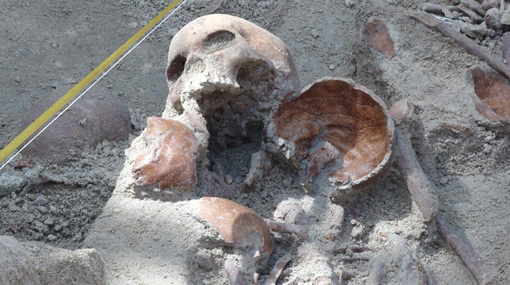
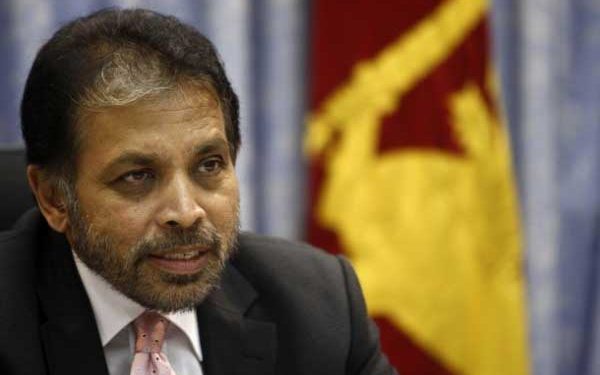


-ksn-4.jpg)
-pdc-1.jpg)
-Ckg----FINAL-2.jpg)