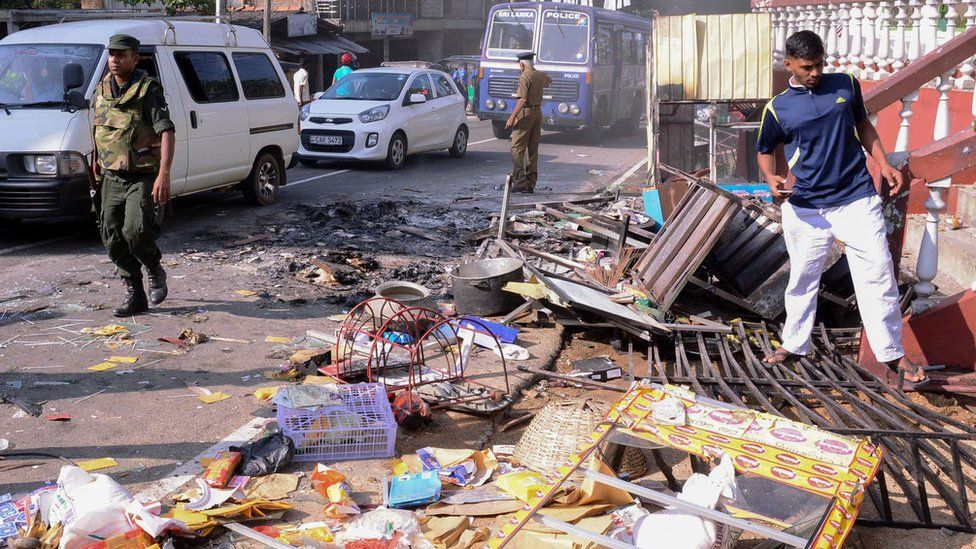
COLOMBO (Reuters) – Several dozen people threw stones at mosques and Muslim-owned stores and a local man was beaten in the town of Chilaw on Sri Lanka’s west coast on Sunday in a dispute that started on Facebook, sources told Reuters.
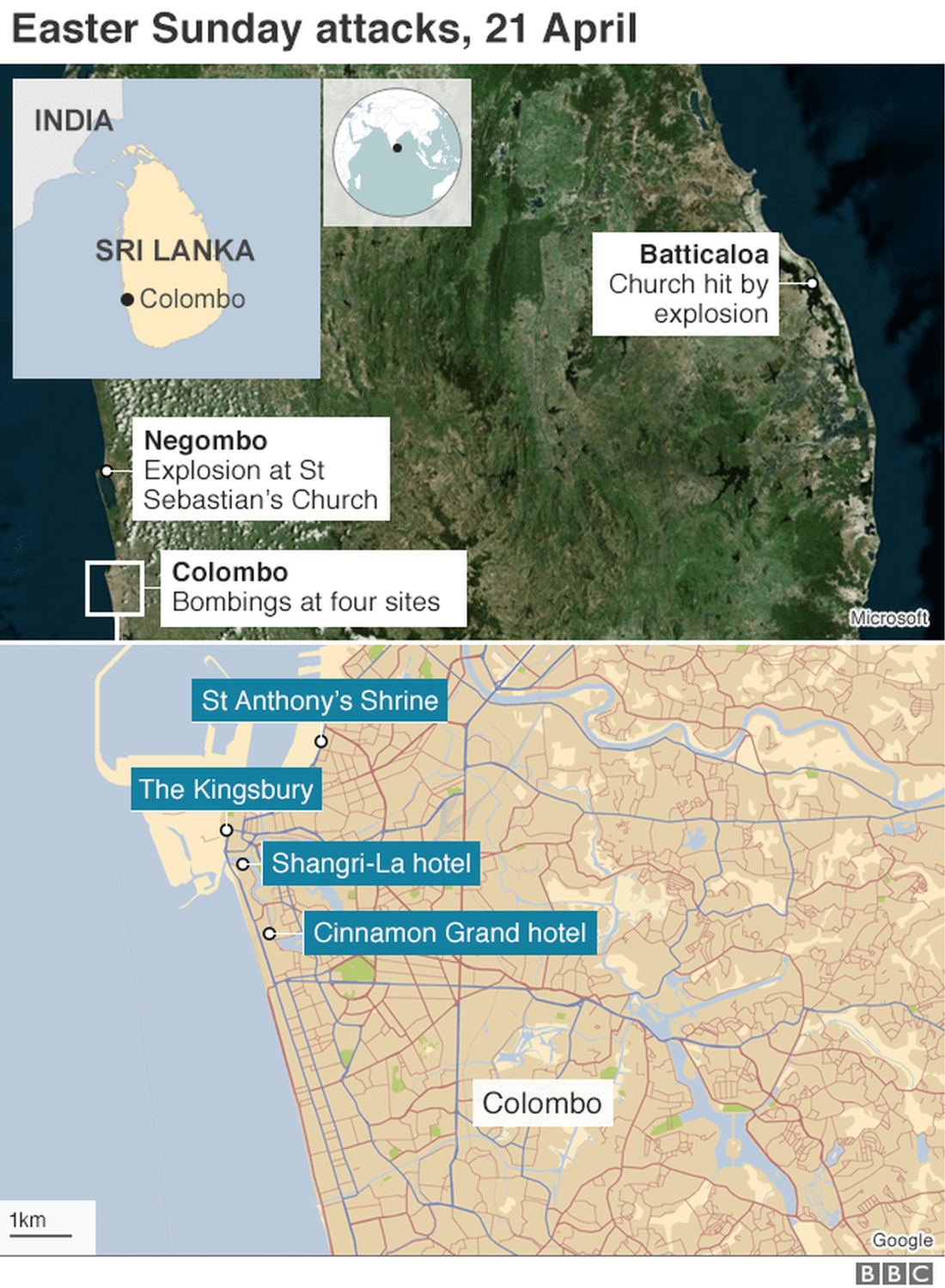
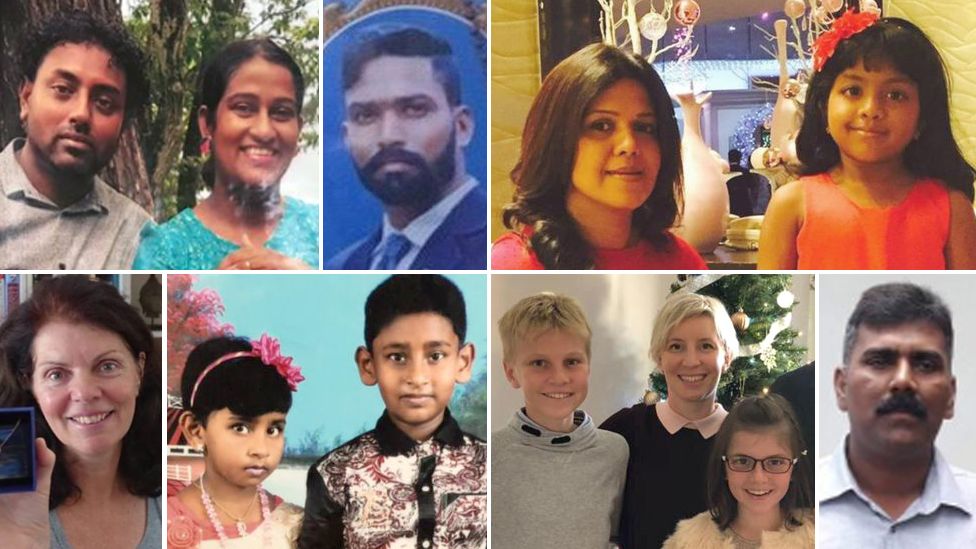
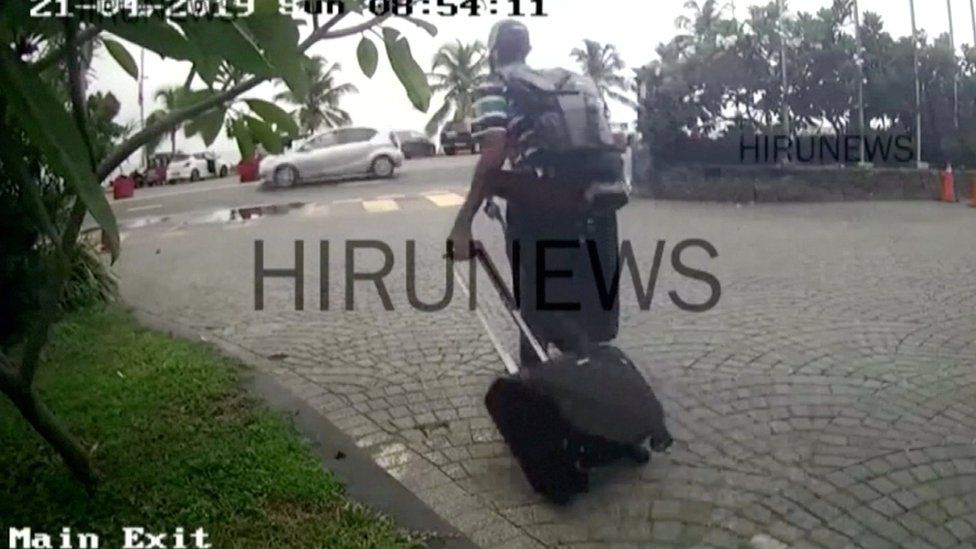
Three weeks ago in Sri Lanka Islamist bombers blew themselves up in four hotels and three churches, killing more than 250 people. Since then Muslim groups say they have received dozens of complaints from across the country about people being harassed.
A police curfew has been imposed in Chilaw Police area with immediate effect until 6 a.m. tomorrow to control the tense situation,” police spokesman Ruwan Gunasekera told Reuters. The police later said the curfew would be lifted at 4 a.m.
A screenshot of the alleged Facebook exchange seen by Reuters showed a user had written in Sinhalese It is difficult to make us cry” and added a local slur against Muslim men.
A Facebook user identified as Hasmar Hameed, whom two locals said was the man later arrested, replied in English: Dont laugh more 1 day u will cry.”
Authorities said they arrested the author of a Facebook post, identifying him as 38-year-old Abdul Hameed Mohamed Hasmar. Locals in Chilaw, a majority Christian town, said Hasmar’s post was interpreted as menacing and an angry crowd beat him.
Reuters was unable to determine what the original conversation was about or to contact Hasmar for comment.
Later they pelted stones at three mosques and some Muslim-owned shops. Now the situation has calmed down, but we are scared of the night,” said one local Muslim man who asked to remain anonymous for security reasons.
One mosque suffered extensive damage, he said. Video footage circulating online shows several dozen young men shouting and throwing stones at a clothes store called New Hasmars, which locals said belonged to Hasmar.
Some communities say they are fearful that the government, which failed to act on successive warnings about looming Islamist attacks, has not caught all potential militants.
A week ago in Negombo, where more than 100 people were killed during Easter prayers, a violent clash erupted between local Muslims and Christians after a traffic dispute.
Unlike after the Negombo clashes, the Sri Lankan government did not impose a ban on social media platforms on Sunday.
Ultraconservative Salafi-Wahhabi Islam, which has its roots in the Middle Eastern kingdom, has been taking root among the South Asian island’s Muslims
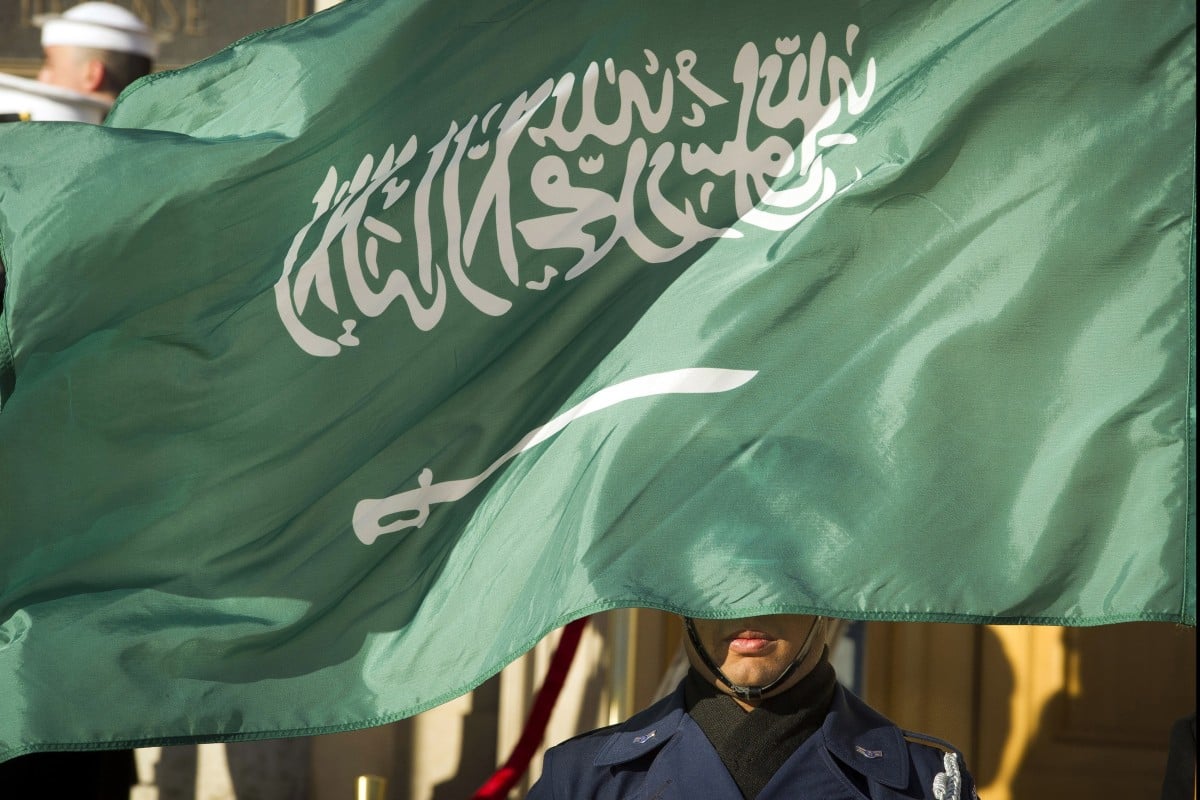
The flag of Saudi Arabia. Photo: APSri Lankan authorities have arrested a Saudi-educated scholar for what they claim are links with Zahran Hashim, the suspected ringleader of the Easter Sunday bombings, throwing a spotlight on the rising influence of Salafi-Wahhabi Islam on the island’s Muslims.Mohamed Aliyar, 60, is the founder of the Centre for Islamic Guidance, which boasts a mosque, a religious school and a library in Zahran’s hometown of Kattankudy, a Muslim-dominated city on Sri Lanka’s eastern shores.
Information has been revealed that the suspect arrested had a close relationship with … Zahran and had been operating financial transactions,” said a police statement late on Friday.
The statement said Aliyar was involved” with training in the southern town of Hambantota for the group of suicide bombers who attacked hotels and churches on Easter, killing more than 250 people.
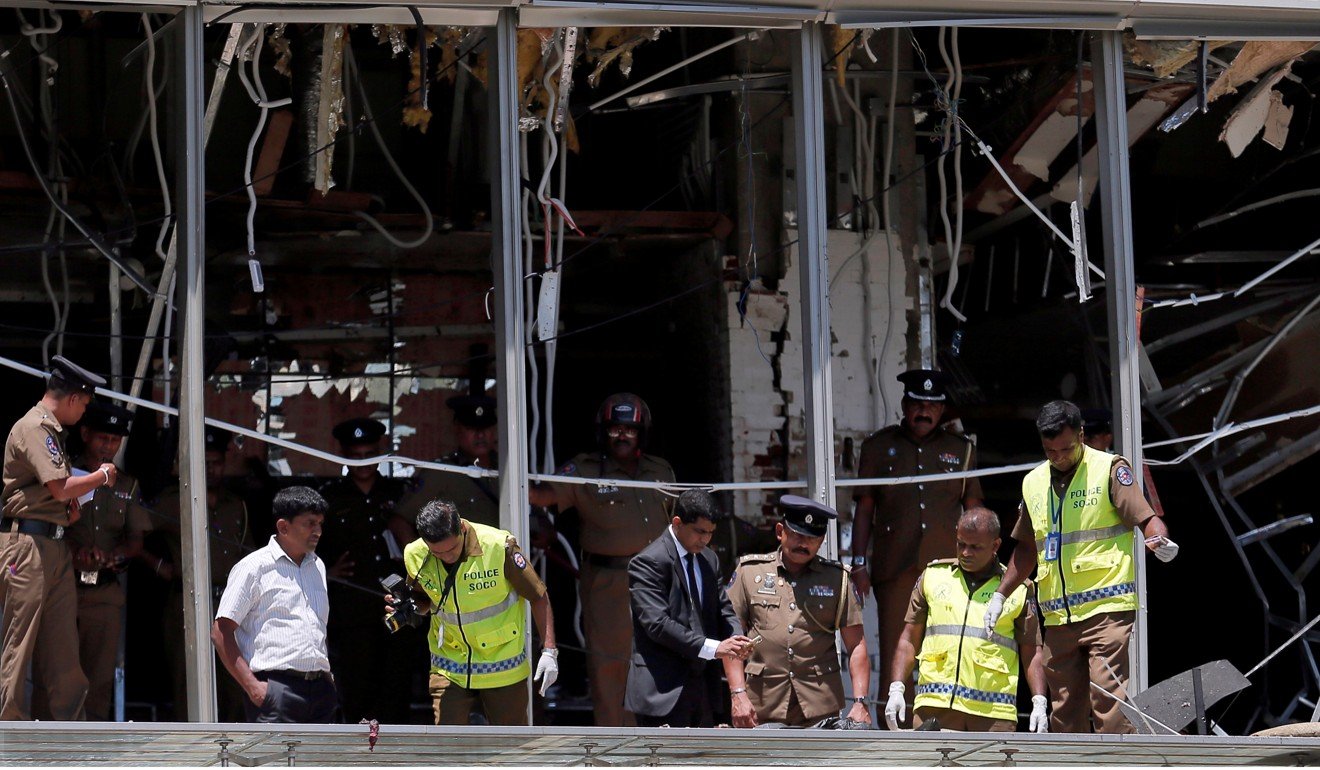
Officials inspect the site of an explosion at Shangri-La hotel in Colombo on April 21. Photo: ReutersShare:
A police spokesman declined to provide details on the accusations. Calls to Aliyar and his associates went unanswered.
The government says Zahran, a radical Tamil-speaking preacher, was a leader of the group.SUBSCRIBE TO THIS WEEK IN ASIAGet updates direct to your inboxSUBMITBy registering for these newsletters you agree to our T&C and Privacy Policy
Two Muslim community sources in Kattankudy said his hardline views were partly shaped by ultraconservative Salafi-Wahhabi texts that he picked up at the Centre for Islamic Guidance’s library around two to three years ago. The sources are not affiliated with the centre.
I used to always run into him at the centre, reading Saudi journals and literature,” said one of the sources.
That kind of teaching was not in Sri Lanka in 2016, unless you read it in Salafi literature,” the source added, requesting anonymity to avoid repercussions in Kattankudy.
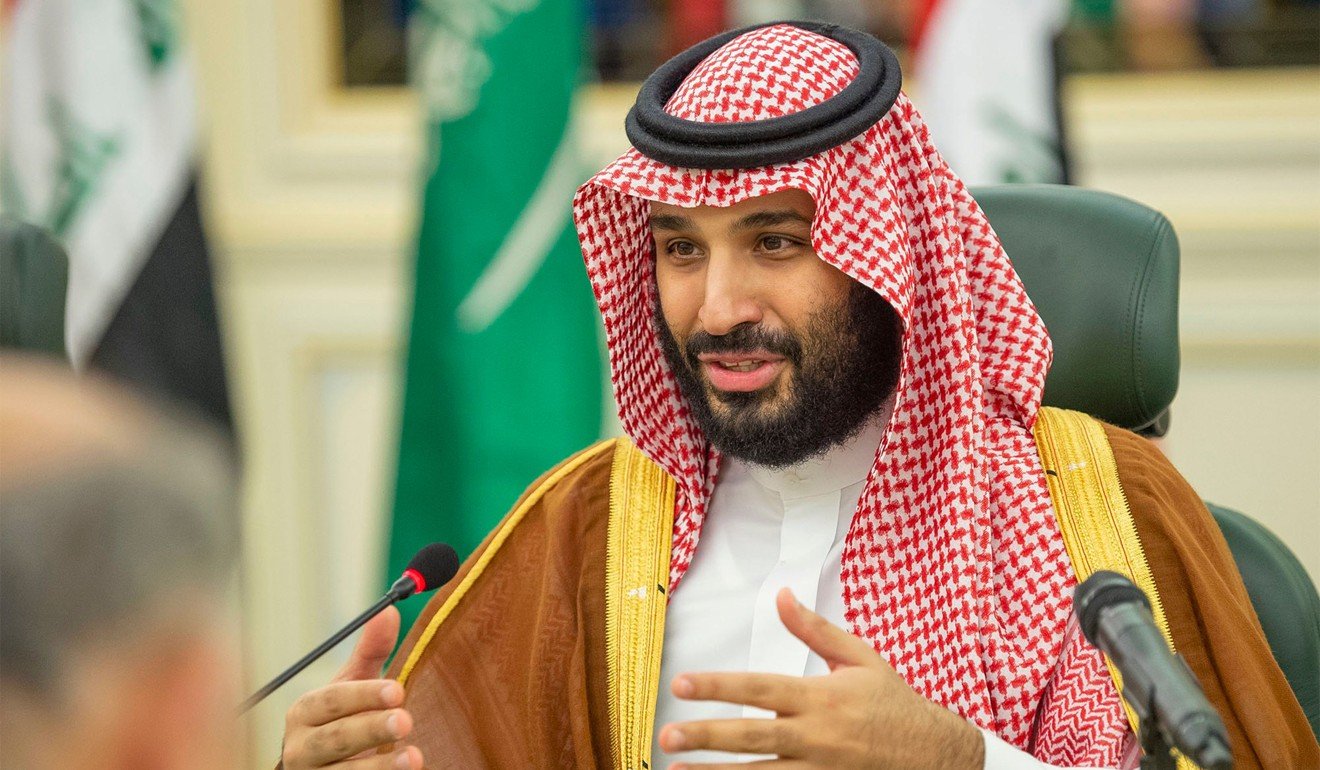
Salafism, a puritanical interpretation of Islam that advocates a return to the values of the first three generations of Muslims and is closely linked to Wahhabism, has often been criticised as the ideology of radical Islamists worldwide.Wahhabi Islam has its roots in Saudi Arabia and is backed by its rulers, although Crown Prince Mohammed bin Salman has committed the kingdom to a more moderate form of Islam.
Saudi Crown Prince Mohammed bin Salman. Photo: AFPShare:
Other than the fact that Zahran visited the centre, the sources in Kattankudy said they did not know of any personal ties between him and Aliyar.
Aliyar founded the centre in 1990, a year after he graduated from the Imam Muhammad ibn Saud Islamic University in Riyadh, in what one resident said marked a key moment in the spread of Salafi doctrine in Kattankudy. The centre was partly funded by Saudi and Kuwaiti donors, according to a plaque outside.
TROUBLEMAKER
Three members of the centre’s board spoken to before Aliyar’s arrest said Zahran was a troublemaker and that they had warned authorities about his extremist views. The members, who asked to remain anonymous, citing security concerns amid a backlash against some Muslims, said they thought Zahran frequented the library around a decade ago, but had no recollection of him visiting recently and denied that any of its books were to blame for his views.
Funding for the centre came from local donations, student fees, and private donors who were classmates of Aliyar’s in Riyadh, the centre’s sources said. Further details about the funding of the centre were unavailable.
The Saudi government communications office in Riyadh did not respond to requests for comment on the funding of the centre.
A 47-year-old moulavi was arrested by the CID at the Bandaranaike International Airport (BIA) on charges of using social media platform to air extremist views.
The suspect, a resident of Vavuniya, was arrested yesterday morning at the BIA on his arrival from Mecca after performing Hajj.
It was reported that the suspect had been organising pilgrimage tours to Mecca.
The moulavi was remanded till May 14 after being produced in the Negombo Magistrate’s Court. (
Three weeks have passed since the Easter Sunday massacres. Normalcy is slowly returning. However, there is a perceptible sense of uncertainty, bewilderment, and bitterness amongst people. Muslims are complaining of being estranged by others. When the entire economy took a catastrophic hit, it is hard to determine if the Muslim businesses are affected because of the general situation or due to a boycott.
There are messages to the effect to avoid Muslim enterprises on social media making its rounds. These posts are being shared by both Sinhalese and Tamils. While people are not openly hostile, they are clearly very upset with the Muslims.
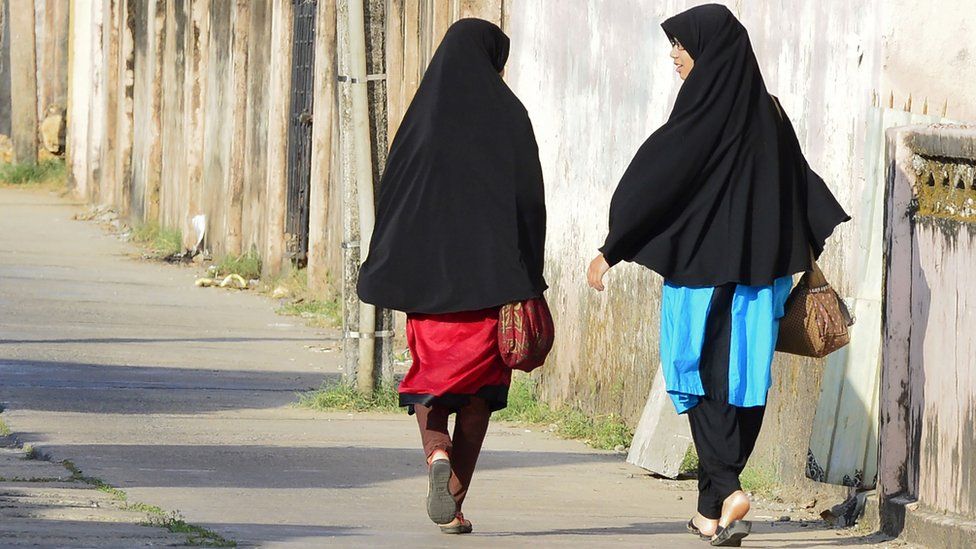
Even before the Government swung into action, it was the people who banned the hijab and niqab. From the next day of the carnage itself, women thus attired were turned away from premises and not allowed to use even public transport. This intolerance is a new phenomenon in Sri Lanka that was not seen once during the 30 years of terrorism inflicted by the LTTE. Though the LTTE was on a mission to carve out a homeland exclusive to Northern and Eastern Tamils, Sri Lankans always managed to distinguish Tamils from terrorists.
Therefore, no one worried when they saw a woman with a pottuwa or dressed in a manner distinct with the Tamil identity. No one advocated a boycott on Tamil businesses. It was not only the Tamils, but everyone were subjected to be searched and their identity verified.
In contrast, the suspicions are wholly on the Muslims. Their mosques all over the Island are subject to thorough search operations. Even the men with long, unruly beards are not welcome. In almost in the blink of an eye, Muslims who were the kingmakers lost their political clout. Since the 1987 Indo-Lanka Accord, the Muslims have been voting for the Muslim political parties. Thus these politicians have been able to garner the entire Muslim vote block. This block vote was to manipulate the Government of the day. Until now, not a single government dared to antagonise these Muslim politicians and risk losing the entire Muslim block vote. However, today the Government or any of the other main political parties cannot afford to be associated with any of these Muslim politicians, especially Rishard Bathiudeen, Mujibur Rahuman, Abdul Haleem, Hizbullah and Azath Salley who represent exclusive Muslim political parties.
However, UNP will not lose any votes on account of Kabir Hashim. He is a staunch UNP member and plays a decisive role in that political party. If UNP loses any votes in the upcoming elections, it is not because of Hashim, but because of their abysmal performance as a government. In fact, given that it was one of his secretaries that provided vital information to the authorities regarding Muslim extremist activities and in turn was rewarded with a bullet by these elements, Hashim might actually attract few sympathy votes that the UNP otherwise would have lost.
This distinction is an important to understand that the Sri Lankans have not suddenly turned into bigotry. One may choose to disagree with Hashim’s politics, but all must agree that he is a very moderate man who has always lived well within the framework of Islamism. Therefore, what Sri Lankans have turned against is not Islamism or its followers, but the radicals and the extremists in the name of Islamism.
The aforementioned politicians may well get into Parliament in the next round as well for they need only five (5) per cent as the district cut-off point. However, on their own, without the ability to latch on to the Government, they will be rendered toothless for they will be without the power to influence the Government. With such small numbers in the Parliament, they might as well not be in existence. They understand this fact all too well. Therefore, they are trying their best to smooth the ruffled feathers of the non-Muslims.
To the non-Muslims, they heartily endorse the ban on the niqab and hijab. To the Muslims, they ask for patience until the others calm down. Once people come to terms with the tragedy, they have pledged to talk about it ‘leisurely.’
However, some Muslims do not seem to understand the situation’s severity. They have taken to wearing facemasks and oversized sunglasses. Alternative to posts advocating a boycott on Muslim businesses, posts encouraging Muslims to patronise only Muslim businesses are also circulating. They argue that a large percentage of Muslims constitute established supermarkets’ market share. Thus, this ban will not be enforced when a drop in market share is noted.
Whether such logic holds water or not remains to be seen. Supermarkets and other enterprises would not want to lose Muslim customers; nor their other customers who would be too afraid to come. Overriding market share would be the risk of ignoring the ban and then been held accountable if an incident should occur.
Some Muslims have questioned the rational of imposing a ban on the niqab and the hijab that was not worn by the terrorists. However, the point is that this attire is a recent addition to the Muslim wardrobe. Until very recently, Muslim girls and young women followed more or less the conservative fashions as the other Sri Lankan girls. The shalwar kameez is still popular among the non-Muslims. The matured women wore soft saris in different and often gentle colours and used the fall as a loose headscarf.
Until the Easter Sunday massacres, the increasing trend was becoming for Muslim women to cover their whole body including face in black, shapeless robes. Then they started moving in groups of at least four or five, where as earlier they moved with girls of all communities. They were fast becoming a sector apart from the rest of the community. This growing trend was confusing and alarming.
Perhaps, not all those who sport long, unruly beards or those wearing the full-face mask cover are radicalised. However, for the rest of Sri Lanka, this is an indication of being radicalised. The exclusivity they propagated by dress code is very much in line with the ISIS ideology that refuses to tolerate anyone who does not conform to their beliefs. Even the Muslims who continue to be moderate citizens have publicly questioned the rational of introducing an extreme Arabic culture to Sri Lanka.
However, it took a tragedy of the Easter Sunday massacre magnitude for Sri Lanka to acknowledge that allowing this radicalisation to exist is presenting a threat to Sri Lanka. Yet, certain some without trying to empathise with the concerns of the larger population is brazenly flouting the law. This in turn is agitating rest of Sri Lanka. No one is fooled that they are wearing masks for health reasons.
Some Muslims highlight that the clues of the existence of a violent group were there, but were not followed. Some others remind us that they had forewarned us and it was not heeded. True as it is, they must also understand that the hands of a majority are tied when it comes to minority matters.
Muslim youth, especially in the East, have been disrespectful of the law. Some did not even wear a helmet whilst travelling on motorcycles. Today, the Police can take appropriate action because of the changed perceptions. The educated Muslim community should have addressed the alien dress code, especially when it was making others uncomfortable. They may have highlighted it, but their failure to effectively address it has led to the point where the law had to intervene.
Likewise, the educated Muslims must hold their clergy responsible for allowing weapons of the crudest form to be stored in their places of worship. They must not keep quiet as they did when an university exclusively for Muslims in the East was coming up, when the State cannot accommodate many of those eligible to a tertiary education. If the Muslim community fails to effectively integrate with the Sri Lankan society, the consequences could be dire for all.
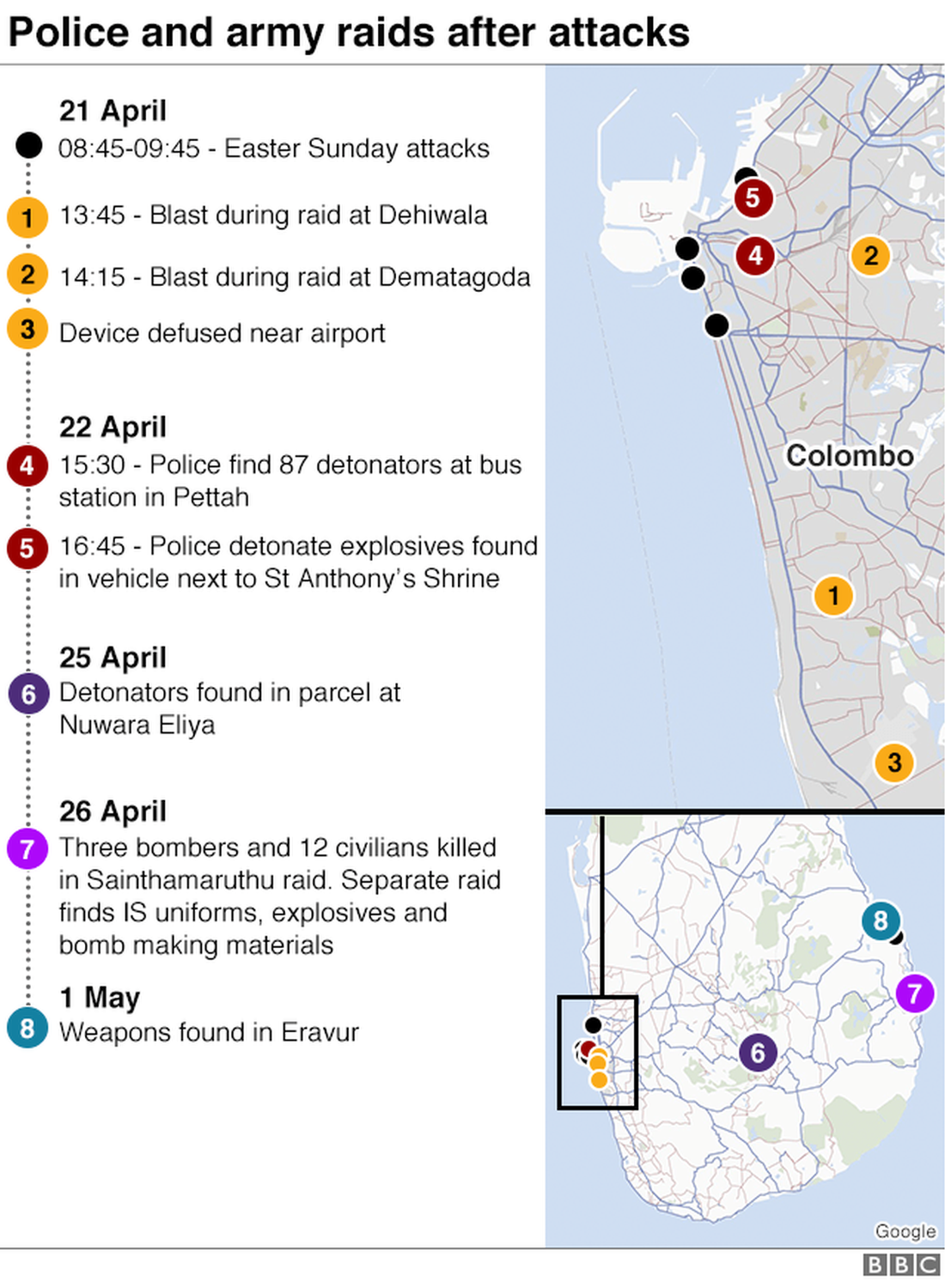
The Colombo Crimes Division, in a joint search operation conducted with the Terrorist Investigation Division (TID) at the Colombo office of a leading US-owned multinational software company, outsourcing services to global companies, have apprehended five of its employees on suspected connection to Islamist extremism and the Easter Sunday combined bomb attacks.
According to a top defence official, one suspect is still missing. According to sources, at least three suspects have gone missing since the Easter Sunday bomb blasts and the company was unable to contact them or find their location till two days ago.
However, when contacted, Police Media Spokesman, SP Ruwan Gunasekara confirmed that only one suspect named Mohamed Akram was arrested at his residence in Dehiwela. He was reluctant to reveal more details.
He said that the suspect is closely linked to the Easter Sunday bombings carried out by eight locals who were connected to the Islamic State (IS) ideologies.
The Police, armed forces and sniffer dogs conducted a search operation at the office in Dematagoda on 8 May and there was a massive traffic jam when the car park and the entire building of the company were searched.
Police said that there were no more, arrests but further investigations are in progress.
An investigation has been launched to determine as to how the son of Eastern Province Governor M.L.A.M. Hizbullah secured shares worth Rs 500 million in the controversial ‘Batticaloa Campus’ aka ‘Sharia University,’ State Minister of Defence Ruwan Wijewardena yesterday (9) told Parliament.
This educational institute had been given to Sri Lanka as a grant from Saudi Arabia. Wijewardena made this remark in response to a question raised by UNP’s Parliamentarian, Heshan Withanage.
Withanage noted that suspicion had arisen as to how Governor Hizbullah’s son had got shares from a fund received by the country.
Withanage: This Sharia University is making news headlines these days. People are very curious about this particular institute which is being built in Batticaloa. But the most suspicious thing is how Governor Hizbullah’s son has got shares in this institute worth of Rs 500 million. How can a Governor’s son obtain shares from a project which the country received as a grant? This is a project which is being built from foreign funds. This is dubious. The public does not favour this institute too. What action would the Government take on this matter?”
Wijewardena replied that according to his knowledge, an investigation has already been launched into the controversial institute.
Both the Premier and the Speaker also inquired about this particular project. Right now, the institute is under the purview of the Higher Education Ministry. I am of the view that there should be an investigation into the concerns regarding this institute.”
Joining the discussion UPFA MP Dr. Bandula Gunawardena noted that Higher Education Minister Rauff Hakeem was in the Chamber. He requested Hakeem to make a clarification on the matter on the institute.
Hakeem: We have not taken any decision as to whether we should grant Degree awarding status to this particular institute yet. It should be done after a thorough study. I know that there are fears and doubts about it. If we are going to continue this project, first we should address these doubts. I will give the House a proper explanation at a future date.”
UNP MP Chaminda Wijesiri also said what they wanted to know was how Hizbullah’s son secured shares in the institute.
The Leader of the Opposition Mahinda Rajapaksa stated that the government should provide a guarantee regarding the security of the country especially in a background where the schools will be starting again from tomorrow (13).
Stating that the past government commenced the missions in search of extremists, he claimed that the current situation arose as a result of destroying the system where they had sent spies into these extremist organizations.
He says that the government needs to think twice on opening the schools tomorrow when there are warnings of a possible attack.
Rajapaksa says that there needs to have one voice between the President and the Prime Minister guaranteeing the security of the country.
Additionally, the Opposition Leader stated that Vesak should be celebrated with much more enthusiasm than usual, at the temples.
Police curfew has been imposed within Kuliyapitiya, Bingiriya and Dummalasuriya Police division with immediate effect, stated the Police Media Spokesperson.
The curfew has been imposed to diffuse a tense situation in the relevant area, the Police said.
Accordingly, the police curfew will in effect until 6 am tomorrow (13).
Meanwhile, police curfew is currently imposed within Chilaw city limits and is set to be lifted at 4 am tomorrow.
The attitude
of Yahapalana government to the bomb blast threat raises many questions. Yahapalana
had known that something was going on, but had not taken action.
President Sirisena
was asked whether the Government was aware that there were local Muslims with
ISIS links, prior to the attacks. The President said that there was information
about several individuals, but not enough evidence to apprehend them or to
confirm that they were attached to the ISIS.
For the last four years, these names came up
at the National Security Council meetings. However, there were no revelations
that they possessed weapons or bombs or planned attacks. They had been going
out of the country frequently. We cannot remand anybody without proper
evidence,” he added. Another excuse
offered was that the Emergency Laws were not in place.
The
government had known that Sri Lankan nationals who had joined the Islamic State
had returned to the country, but they could not be arrested, because joining a foreign terrorist organization is
not against the law, said Prime
Minister Ranil Wickremasinghe, blandly.
“We have
no laws which enable us take into custody people who join foreign terrorist
group,” he told Sky News UK.”Sri Lanka has a very narrow definition
of aiding terrorism. Therefore, we find that our existing laws are insufficient
to deal with the extraordinary situation we are faced with. In our country to
go abroad and return or to take part in a foreign armed uprising is not an
offence .
This
explanation is both false and silly, said Kishali Pinto Jayawardene, who is
herself a lawyer.’ I do not propose to
enumerate the laws that could be used for this purpose , but amendments to
existing laws could have been brought in, if the Government wanted to, she
said.’ “The existing laws are good enough to act against those with terror
links,” said Mahinda Rajapaksa. The laws that cover involvement with foreign
terrorists: are the Penal Code (Section 2), the Prevention of Terrorism Act
(Section 11) and the April 2019 Emergency regulations 2120/5 (Sections 26 and
27) said Lasanda Kurukulasuriya.
Yahapalana also
turned a blind eye to the insurgent activity that was taking place
under their noses. There was evidence that Zahran was an ISIS sympathizer and
had given sermons against the government and non-Muslims. This information was
readily available on social platforms. The Intelligence branch should have
immediately infiltrated the organization, also tapped the phones of the leaders
of NTJ, said an analyst. Yahapalana did nothing of the sort.
Instead, Yahapalana
blocked the intelligence and military from taking action, though these agencies
had all the information needed. Intelligence
said, when questioned after the bomb blast, that they had gathered information
on 160 National Thowheed Jamath members who had been trained by terrorists. But
it had not been possible to arrest them as the higher authorities would not
give them the necessary permission. Army
Commander Senanayake also said that the military had very good intelligence but
could not act as it lacked the authority to do so.
Yahapalana
did nothing to stop the Easter Sunday bomb blasts from taking place, though the
opportunity to do so presented itself on a plate. Several Buddha statues in
Mawanella were defaced in December 2018. Investigations led to a raid on a 75-acre coconut
plantation in Wanatavilluwa, Puttalam in January. Explosives and detonators
were found there. Valuable information on NTJ was obtained from those arrested.
If this had been followed up, the Easter Sunday carnage could have been avoided,
said DEW Gunasekera.
Instead the investigators were not allowed by higher
authorities to make arrests during the Wanathavilluwa investigation, though the Defence Ministry and
the police had been informed that these were terrorists reported the media. Law
enforcement authorities did
not pursue the matter even after the detection of a safe
house at Wanathavilluwa operated by the NTJ in January this year, critics
complained.
Two key suspects were captured in the raid at
Lacktowatta in Wanathawilluwa.
But due to the intervention of a powerful
politician, they had been released and one of them had been involved in
Sunday’s attacks, the media
reported. The Vanathavillu raid pointed directly at spice trader Mohammad Yusuf
Ibrahim, and his three sons. But the family escaped scrutiny and succeeded in
carrying out the bomb plot.
Security was
reduced to nothing, by Yahapalana. Security Council had not met for 6 months
prior to the bomb blast. During the past four years there was a significant
relaxation in overall security measures to the point that they did not seem to
exist at all, said Malinda Seneviratne.
Access to government ministries and to hotels was possible without
security checks. Road blocks by the security forces became a thing of the past.
The freedom of movement and access to buildings became taken for granted. Yahapalana turned Sri Lanka into the softest
of targets.
Yahapalana
had appointed persons who did not know the subject of defense to key positions
in the defense sector, including the two posts of Secretary, Defence and Chief
of Intelligence. Under President Sirisena, there have been four Secretaries of
Defence, B.M.U.D. Basnayake, Karunasena Hettiarachchi, Kapila Waidyaratne and
Hemasiri Fernando. None of them had any experience in defense and security. Basnayake was a SLAS officer, Hettiarachchi
was an engineer, Waidyaratne was formerly senior Additional Solicitor General and
Fernando has been the Chairman of various institutions such as Telecom, ITN and
Peoples Bank.
Fernando was
not the only Secretary who bungled the insurgency issue. Defense Secretary
Karunasena Hettiarachchi had also been evasive on the question of Muslim
insurgency. When asked whether Sri Lankan Muslims had gone to Syria to join the
ISIS. He said ‘we shouldn’t to discuss the matter’. Asked
about a threat from Islamic radicals, he said, Let the government and the
Security look after the matter. I think the media should keep away from these
things.” (News in Asia 31.7.16)
Persons without any experience of intelligence
work were appointed to the post of Chief
of National Intelligence. The present Chief,
Sisira Mendis has little or no knowledge in intelligence gathering, said
Merril Guneratne, former senior DIG. Mendis was a former Deputy
inspector General of Police
. His term was extended annually. The State Intelligence Agency is the
main intelligence agency of the country and should be headed by a
professional.
Sri Lanka
Podujana Peramuna said that the Inspector General of Police, Pujitha
Jayasundara, had on 18 April, authorized the transfer of 12 officials attached
to the State Intelligence Service, just days prior to the Easter Sunday
attacks. These 12 Intelligence officers
were those who tipped off the authorities regarding the Easter Sunday attacks.
The
Directorate of Military Intelligence was a highly professional entity. It had
systematically built a treasure trove” of intelligence information. The DMI was a major contributor to the
military defeat of the Liberation Tigers of Tamil Eelam (LTTE) in May 2009. Yahapalana reduced its position.
Gotabhaya Rajapaksa said the bomb attacks
could have been prevented if Yahapalana had not dismantled the intelligence network
and extensive surveillance capabilities that he built up during the war and
later on. Gotabhaya said that he had
set up a military intelligence cell in 2011 of 5,000 people, some of them with
Arabic language skills and that was tracking the extremist ideology in eastern
Sri Lanka. This cell was disbanded by Yahapalana government.
Gotabhaya has set
up two intelligence units to monitor security, at Giritale and Kurunegala army camps. “The 7th military intelligence
unit, set up in Giritale army camp did a lot to destroy terrorism in the east. The
unit was sealed by the CID, in 2016,
despite resistance from the army. Extremist groups benefited by the dismantling of
this unit, said National Freedom Front .
Col. Shammi Kumararatna, head of that Giritale
unit and Col.Prabodha Siriwardana, two of the best intelligence officers in the
army, were arrested in August 2015. They were then sent to secondary level
jobs. Kumararatna is at the Ranawiru Sewa Authority, while Siriwardana works at
a welfare shop. . Intelligence
officer Erantha Pieris was also in a welfare unit. Officer Rajapaksa was in the
Women’s unit. This is the fate
of a number of others as well, said analysts.
Yahapalana
tried to strangle the Intelligence service. 244 intelligence officers were
finger printed by the CID. 124
intelligence officers were arrested. These arrests were made on flimsy evidence. 44 of them are still in prison said Wijedasa
Rajapaksa. (Derana 6.55 news 23.4.2019.) Some intelligence officers left the
country and some, such as Suresh Sallay, got appointments overseas. No other
country in the world has persecuted and weakened their own armed forces and
intelligence services in this manner said Mahinda Rajapaksa.
Yahapalana
was slow to act after the event. MP Field Marshal Sarath Fonseka said it took
him 48 hours to get an appointment to meet the Prime Minister after the bomb
blasts. I am the most senior military official in the country and the most
experienced in defense matters, but no one sought my advice in this situation.”
At the time
of writing Yahapalana was still holding back on investigations. The military
was awaiting permission from the government to question suspects. At the moment
the army hands over suspects it takes into custody to the police. “We have
sought powers to question the suspect because we think it’s better to record
statements immediately after arrests. We hope the government will grant us
permission, Army Commander said on 6.5.19.
Yahapalana
government had offered Cardinal Malcolm Joseph a bullet proof vehicle. The Cardinal had
firmly rejected the offer. He was displeased with Yahapalana. Instead he strongly criticized Yahapalana for
inaction.
A joint media briefing
of Cardinal Malcolm Ranjith and Dr. Ittapana Dhammalankara Maha Nayake,
Chancellor of the University of Sri Jayewardenepura was held at Bishop’s House
in Colombo on 29.4.19. The Cardinal said the clergy and the people are not
happy about the manner in which the government is conducting investigations
into the Easter Sunday bombings. I see neither direction nor
coordination in the efforts that have been taken. Security forces tend to go to
places on tip-offs but much more needs to be done.
“The entire Negombo area needs to be
searched to prevent further disasters. When the authorities question some
people and release them, they can flee the country. At least, their passports
should be impounded. We will take to streets if these issues are not addressed,
he concluded.
Dr. Ittapana
Dhammalankara said the people had so far not taken the law into their own
hands, but warned the government not to test the patience of the people.If
another incident occurs, then the country will be plunged into chaos. Therefore,
I urge the government to not allow the situation to get out of hand.
On the 1st of May, 2019, at another
media conference, Cardinal Malcolm Ranjith again expressed dissatisfaction at
the rate the investigations and search operations are proceeding, reported the
media.
He said the Army has still not been given the
required powers to search arrest and interrogate the suspects. Although the
government claims that the military has been given the power to act, they have
only been given the authority to carry out search operations but they don’t
have the authority to interrogate the suspects. Then what’s the point in
engaging the army? They must be given the power to search arrest and
interrogate and extract information.
He wanted the army to carry out an extensive
search operation in Negombo, especially the Periyamulla area. However, during
the search operations in the Periyamulla area, the houses that had been closed
had not been inspected. They have just gone to selected areas only. That won’t do.
They must search every house, especially the ones that are closed up.
Shamindra
Ferdinando thought security measures when he attended President Sirisena’s
meeting with the journalists were insufficient. The security measures were
wholly inadequate, he said. (Continued)
WORLD’S FIRST BUDDHIST UNIVERSITY DEMOLISHED BY MUSLIMS.NALANDA: lIustrious International Buddhist
University from 5th century CE to 12 century CE. At the end of 12th
century, Muslim invaders demolished the university, burnt down its priceless
library, and mercilessly massacred its scholars including Buddhist monks
In the 6th century BCE, Buddhism was
well established in ancient Magadha (1) in what is now modern Uttar Pradesh and
State of Bihar in India. Over the next 1500 years Buddhism became the dominant
‘religion’ spreading across the Indian sub-continent and beyond to the south,
north, east and west.
Even after the death of the Buddha, Buddhism saw rapid expansion in northern and central India. The Mauryan Emperor Asoka (2) of the 304 to 232 BCE period and later monarchs, especially of the Pala dynasty of mid 8th to late 12th century CE, promoted Buddhism throughout Asia through religious ambassadors.
WORLD’S FIRST
UNIVERSITY
In the 5th century CE, or more than
1500 years ago, the world’s first and the most illustrious International
Buddhist University developed at Nalanda, near Rajagaha, then
Capital of the Magadha Kingdom of Greater India. Nalanda is about 72 km off
Patna, the present capital of the State of Bihar. It was one of the greatest
Centres of Learning in ancient India.
In terms of Sri Lankan history, this
period falls within the heydays of the glorious Classical Anuradhapura era
marked by illustrious kings such as Datusena who built the great Kalawewa,
Kasyapa of Sigiriya fame and Vijayabahu-I who drove the Dravidian Chola
invaders out of Sri Lanka and reunited the country.
Ironically and incongruously, it also
coincides with the decline and fall of the Gupta empire (3) of Magadha, one of
the largest empires of India when peace and prosperity that prevailed enabled
the pursuit of varied scientific and artistic endeavors.
This period is called the Classical
or Golden Age of India and was marked by extensive inventions and discoveries
in science, technology, engineering, art, dialectic, literature, logic,
mathematics, astronomy, religion and philosophy.
The high points of this cultural creativity are magnificent architectures, sculptures and paintings primarily inspired by Buddhism. Wall murals flourished during this age the most famous being those of the Ajanta caves where the exquisite murals depict the life of Buddha.
It was unfortunate that the decline of the Gupta empire happened at the time of significant growth of the Nalanda University as the leading international Centre of Learning and strongly influenced by the liberal cultural traditions of the Gupta age of 5th to 6th centuries. The Gupta and Pala kings were great benefactors of Nalanda.
ASSOCIATION WITH THE BUDDHA AND EMPEROR ASOKA
Nalanda was a well known settlement
during the time of the Buddha who had visited and stayed at Nalanda. According
to the Kevatta Sutta, during the time of the Buddha, Nālandā was a thickly
populated influential and prosperous town. Nalanda is important
historically because it was near the birth places of the Buddha’s two main
disciples – Sariyuth and Mugalan Mahatheras. Sariyuth Mahathera was born and
died in Nalanda.
After the passing away of the Buddha, one of the earliest Buddhist Shrines was built in Nalanda. In early 3rd century BCE, Emperor Asoka improved this shrine by building two stupas in honour of the two disciples of the Buddha. He also built a monastery for Bhikkhus.
In the 1st century CE, this monastery built by Emperor Asoka evolved to become a well known Buddhist learning Centre and later, in the 5th century CE, it expanded and improved to become the illustrious Nalanda International Buddhist University, as the first University in the world and also as the first residential university of the world.
University of Nalanda was established during the reign of the Gupta Emperor Kumaragupta who was the ruler of the Gupta Empire for nearly 40 years, from 415-455 CE, and retained a the vast empire. Nalanda witnessed a significant growth as an Important Centre of Learning from the sixth century to the ninth, when it was dominated by the liberal cultural traditions inherited from the Gupta age of 5th to 6th centuries.
RECORDS OF FA HIEN, HIEUEN TSIANG AND I-TSING
Fa Hien, the famous Chinese pilgrim
visited Nalanda in the first half of the fifth century and has left records of
what he saw. Hieuen Tsiang, the other famous Chinese traveler, visited Nalanda
in the beginning of the 7th century CE. He provides much information on Nalanda
as a university. In fact, he was a student at Nalanda for seven years, before
working there as a professor.
Another Chinese scholar-pilgrim named It-Sing (I-Tsing), visited Nalanda a few years after Hieuen-Tsiang. Several inscriptions have been discovered among the ruins of Nalanda giving further details on how kings made rich endowments towards the maintenance of the university.
The Gupta and Pala kings were great benefactors of Nalanda. Kings outside India patronized Nalanda. In his records, Fa Hien refers to the Sariputhra chethiya and monastery built by Emperor Asoka, besides other important places within Nalanda. However, he does not refer to a university in Nalanda. The University perhaps developed during the latter half of the 5th century.
FIRST RESIDENTIAL UNIVERSITY IN THE WORLD
As the first ever residential
university in the world Nalanda had developed as an exceptionally impressive
university park complex which included colossal buildings, lecture halls,
meditation halls, libraries, monasteries, hostels, chetiyas, temples, lakes and
parks.
According to the Chinese pilgrim Hieuen Tsiang, Nalanda University was an architectural masterpiece. It was marked by a lofty brick wall and a single gate and had eight separate compounds and ten temples, along with many meditation halls and classrooms. The university grounds were marked by lakes and parks.
The Chinese scholar-pilgrim named It-Sing (I-Tsing), who visited Nalanda a few years after Hieuen-Tsiang, mentions eight halls and 300 big rooms used for teaching and meetings and a grand library.
There were ponds with lotuses, well devised footpaths, extensive pleasant lawns, mango groves and lovely flower beds. There were innumerable shrines embellished with a wealth of sculptural art. With endowments from successive monarchs, the Nalanda University became a site of imposing buildings.
There were eight colleges built by different patrons including the one by the king of Srivijaya of Sumatra, who had diplomatic relations with the king of Pala dynasty of Bihar and Bengal.
PROFESSORS AND STUDENTS
It is recorded that in the 7th
century, there were 10,000 students and 1500 professors in this university
(some sources indicate 2000 professors). The alumni of Nalanda were highly
respected both inside and outside of India. It gathered together some of the
best scholars of the country.
Scholar saints were the greatest attraction of Nalanda. Nalanda became world famous on account of its many brilliant professors and high standard of education. In addition, strict discipline was maintained.
Among the many outstanding scholars, thinkers and Chancellors of Nalanda were Nagarjuna, Aryadeva, Asanga, Vasubandhu, Dinnaga, Dharmakirthi, Shantharakshita, Dharmapala, Shilabhadra, Santhideva and Padmasabhava. It is important to note that, Aryadeva, the favourite disciple of Nagarjuna, hailed from Sri Lanka.
The brothers Asanga and Vasubandhu were successive Abbots of Nalanda. Tibetan sources indicate by name several other great Buddhists associated with Nalanda such as Rahulabhadra, Aka, the Mahasiddha Saraha, Buddhapalita, Bhaviviveka of 5th-6th c. CE., Prasangika Madhyamika of Candrakirti of 7th c.CE, Candrakirti, Candragomin, Santarakshita of the 8th.c.CE a brilliant Abbot from Nalanda who helped Guru Padmasambhava bring Buddhism to Tibet.
According to Tibetan sources, Nagarjuna was the first Principal of Nalanda University. According to Tibetan sources, Mañjuśrīmitra was a respected Yogachara scholar of Nalanda whose works dealing with Vajrayana Buddhism had great impact on Tibetan Buddhism.
Associated with Nalanda were several thousands of monks who were men of the highest ability and talent. Some of them were from different countries. The international character of Nalanda was quite prominent even during the time of Hieuen Tsiang’s association with Nalanda in the seventh century.
Students from far and near flocked to learn at the feet of the great scholars of Nalanda. According to Hieuen Tsiang, Nalanda University had students from all over the Buddhist world. There were students from Sri Lanka, Tibet, Nepal, China, Mongolia, Turkistan, Japan, Korea, Indonesia, Central Asia, Vietnam, Sumatra, Java, Persia, Greece and Turkey.
There are reports that Jesus Christ spent several years at Nalanda University the only university that existed in the world at that time– check www.Utube.com – Where was Jesus for 18 years? By Yogeeshsharam who states that there are historical records to the effect in Tibet.
WIDE-RANGING UNIVERSITY CURRICULUM
While one school of Buddhism or the
other dominated at different periods, the all-inclusive and wide ranging
outlook of Nalanda was maintained in keeping with the spirit of the Buddhist
tradition.
Nalanda’s curricula covered a wide range of subjects including all branches of Buddhism, other Indian philosophical systems, Chikitsavidya or Medicine, Astronomy, Geography, Mathematics, Hetuvidya or Logic, Sabdavidya or Grammer and other arts and science subjects of the day. As the university was run by the Sangha, Buddhist Studies assumed importance and pride of place at Nalanda.
The subjects taught at Nalanda University covered every field of learning. According to records the curriculum of Nalanda University at the time of Mañjuśrīmitra who was a respected Yogachara scholar and practitioner at Nalanda, included virtually the entire range of world knowledge then available.
Courses were drawn from every field of learning, Buddhist and Hindu, sacred and secular, foreign and native. Students studied science, astronomy, medicine, and logic as diligently as they applied themselves to metaphysics, philosophy, Samkhya, Yoga-shastra, the Veda, and the scriptures of Buddhism.
They studied foreign philosophy likewise. The scholars and Chancellors of Nalanda played a significant role in the propagation of the Buddha Dhamma outside India, in Nepal, Tibet, Central Asia, China and Southeast Asia. Among the prominent ones were Atisa Dipankara, Shantharakshita, Kamalashila, and Padmasambhava.
A vast amount of what came to comprise Tibetan Buddhism, both its Mahayana and Vajrayana traditions, stems from the late 9th–12th century Nalanda teachers and traditions.
Most of Mañjuśrīmitra’s works deal with a tantric or Vajrayana Buddhism and these had a strong impact on Tibetan Buddhism. Other forms of Buddhism, especially of Mahāyāna Buddhism followed in Vietnam, China, Korea and Japan, flourished within the walls of this ancient university.
According to Hwui-Li, a Chinese visitor, at a certain time, Nalanda was held in contempt by some Theravadins for its emphasis on Mahayana philosophy.
Being basically a post-graduate institution, only advanced students were admitted to Nalanda. Those seeking admission were required to satisfy the test prescribed by the ‘Dwar Pandit’ or the the gatekeeper” of the Board of Admission.
Hieuen-Tsiang records that “the entrance examination was severe and only about two or three out of every ten applicants succeeded in passing it.” Students could specialize in any subject but Buddhist philosophy was compulsory with a strong emphasis on Mahayana philosophy. About 100 discourses took place each day. There were about 30 students under each lecturer. Teaching was mainly through discussions with active participation of professors and students.
GREAT LITERARY WORKS
The great scholars of Nalanda
produced a vast literature in all branches of knowledge. It is said that
it is in the field of logic that they made their greatest contribution. It rose
up to be a leading and an outstanding center of learning and intellectual
activities, and also as a leading center of dissemination of knowledge in
various fields.
Only very few of the great literary works of Nalanda scholars have come down to us in their original form. However, most of the work is available in their Tibetan and Chinese translations. Most of Mañjuśrīmitra’s works deal with a tantric or Vajrayana Buddhism. He was the son of an upper class Brahmin and was a respected Yogachara scholar.
Scholars have yet to study and discover the depth and magnitude of this vast store of knowledge. Nalanda’s monastery library contained the main collection of Mahayana texts in the ancient world.
The main library of Nalanda was known as Dharma Gunj which meant ‘Mountain of Truth’ or Dharmagañja or ‘Treasury of Truth’, and was the most renowned repository of Buddhist knowledge in the world at the time. Its collection comprised hundreds of thousands of volumes and manuscripts.
This main library had three main buildings each with nine storeys – Ratnasagara (Sea of Jewels), Ratnodadhi (Ocean of Jewels), and Ratnarañjaka (Delighter of Jewels). Inscriptional evidence (Yasovarmadeva) reveals that these were tall nine storey high buildings.
GRADUAL DECLINE OF NALANDA
Nalanda flourished up to about the
tenth century CE (about the end of the Classical Anuradhapura period of Sri
Lanka) when a gradual decline of this great seat of learning and research was
seen. The beginning of the decline of Nalanda was owing to increased pressure
and disapproval from Hindu Brahmins who at this time were both powerful and
influential.
The Jain community was also not quiet supportive of Buddhist teachings. Some Indian sources indicate that these two communities were envious of the stature and influence of this great Centre of intellectual activities in various fields of knowledge, which has developed as the leading center of dissemination of Buddhist knowledge and becoming the focal point of the Buddhist world for over 700 years.
The period of declining trend of Nalanda coincided with the heydays of the Pala Empire of the mid 8th to late 12th centuries, although the Pala kings were not in any way inimical or opposed to Nalanda. The Pāla Empire as major kingdom of ancient India was ruled by a Buddhist dynasty from Bengal.
The Palas were followers of the Mahayana and Tantric schools of Buddhism and supported Nalanda and other Buddhist universities such as Vikramashil, equally. The Pala Buddhist dynasty ushered in a period of stability and prosperity in Bengal. They created many colossal temples and exquisite works of art.
The Pala period is considered as the golden era of Bengal. Never had the Bengali people reached such heights of power and glory as during the Pala period. Palas were responsible for the introduction of Mahayana Buddhism in Tibet, Bhutan and Myanmar. The Palas had extensive trade as well as cultural influence in south-east Asia.
This is well evident in the sculptures and architectural style of historic sites in present-day Malaya, Java and Sumatra in particular. This remarkable Buddhist Empire eventually disintegrated in the 12th century, most drastically with the invasion of Bakhtiyar Khilji’s Muslim armies.
It is most unfortunate that at the time of arrival of the ruthless Muslim invaders, politically India had disintegrated without strong leaders and strong empires to confront the enemy. For example, the Gupta empire (3) of the Magadha kingdom was one of the largest political and military empires of ancient India covering much of the Indian sub continent.
This was the time of a significant growth of the Nalanda University near Rajagaha, then Capital of the Magadha Kingdom, as an Important international Centre of Learning when it was dominated by the liberal cultural traditions inherited from the Gupta age of 5th to 6th centuries.
With great kings like Chandragupta I, Samudragupta, and Chandragupta- II, political administration reached new heights. The decline and collapse of this empire since mid 6th century CE. led to political instability and weakness from which India suffered for several centuries. This situation was capitalized by Muslim invaders.
TANTRIC OR VAJRAYANA
OR ESOTERIC BUDDHISM
It is noteworthy that Tantric or
Vajrayana or Esoteric Buddhism and influence were dominant in the
Nalanda University during the Pala era. This was also the time when several
rival universities sprung up promoting Vajrayana Buddhism and practices.
Vajrayana is a complex and multifaceted system of Buddhist thought and practice
which evolved during the 6th to 8th centuries.
It developed out of the Mahayana school of teaching and also was strongly influenced by Hinduism which was also gaining ground during this period. Several Vajrayana texts were written at the Nalanda University. The Bodhisattva concept is dominant.
The personal goal of a bodhisattva is to almost achieve enlightenment, but to make the decision to return to the world in their next reincarnation in order to help others reach enlightenment. Unlike in Theravada teachings, a practitioner can attain full Buddhahood in a single lifetime.
A distinctive feature of Vajrayana is ritual as a substitute for abstract meditational practices. In fact, Vajrayana relies on various tantric techniques rooted in scriptures known as tantras. A sadhana” is a means by which a practitioner can attain enlightenment and it includes among other practices, a verbal repetition of mantras which helps to clear the mind and connect the practitioner to the spiritual.
Various Yoga techniques are also used such as ‘pranayama or breath control, mudra” or symbolic gestures made with fingers and hands. Visual aids in the forms of cosmic ‘mandala’ diagrams are popularly used.
In addition spiritual sounds by means of symbolic tools, musical instruments, thunderbolts, bells, hand drums are used to produce spiritual music and sounds that help practitioners to improve their spiritual potential and achieve inner transformation.
Vajrayanists believe that the best way to achieve the goal of overcoming desire, and to work towards enlightenment, may be to experience desire.
The ordained or monks and laity work closely in the practice of Buddhist rituals. In this esoteric relationship between the guru or teacher and student, the guru or teacher gradually releases hidden or inner knowledge to his student.
Vajrayāna Buddhists celebrate New Year’s, harvest festivals and anniversaries of the five important events in the life of the Buddha.
WANTON DESTRUCTION BY RUTHLESS MUSLIMS
The real blow to
Nalanda came with the arrival of the ruthless Muslim invaders who were
intolerant of other religions and cultures. They took delight in destroying
Indian cultural edifices and guardians of India’s indigenous religions and
cultures.
The destruction of Nālandā is in one of the greatest acts of cultural vandalism by Muslim invaders of India. The final dissolution of this once outstanding international university was evident in the 13th century when the world lost an unparalleled and inimitable institution of the ancient world that promoted globally, the path of virtue, compassion and wisdom.
In the year 1193, these invaders led by Mohammad Bakhtiar Khilji, attacked and burnt down and demolished this great Centre of Learning that existed for some 700 years. They destroyed its magnificent buildings and massacred its inmates, who at the time were mostly Buddhist monks.
Mirjah-i-Siraj the famous Persian Muslim historian in his chronicle Tabaquat-I-Nasiri has left a detailed horrid account of Khilji’s vandalism and violence. He reports that the gigantic library complex of Nalanda containing a total of over 9 million invaluable treasures of books, mostly manuscripts were set on fire and the burning continued for over six months.
He says that
“…smoke from the burning manuscripts hung for days like a dark pall over
the low hills”. This invaluable collection of works that were destroyed was the
products of centuries of scholastic studies. A few monks managed to escape with
a few manuscripts to Tibet, Nepal and other neighboring countries.
Mirjah-i-Siraj reports that thousands of Buddhist monks were burned alive and thousands beheaded as Khilji who tried his best to uproot Buddhism and plant Islam by the sword. He says that Buddhism virtually disappeared under the brutal impact of Muslim fanaticism. Nalanda which was a true spearhead of Buddhist learning in the world for several centuries became a deserted and desolate place and its ruins were covered by jungle.
A sharp decline of Buddhist Sangha and Buddhism was evident after the fall of the Pala dynasty in the 12 c. CE. continuing with later destruction of monasteries by Muslim invaders. Mughal invasions and rule contributed significantly to the decline of Buddhism in India.
In 1193 Muslim invaders seized control of Delhi, leaving defenseless the northeastern territories that were the heart of Buddhist India. The invading Muslim forces destroyed Buddhist temples and raided places in which Buddhism had flourished. Here, they mercilessly killed Buddhists including monks.
Buddhism of Magadha
suffered a tremendous decline with its invasion by Ikhtiar Muhammad Bin
Bakhtiyar Khilji who demolished many Buddhist shrines, monasteries and
the Nalanda Buddhist University. He massacred Buddhist monks and scholars. Some
Buddhist monks who escaped the massacre fled to Nepal, Tibet and South India.
The Generals of Qutb-ud-Din, the first Muslim Emperor of India, who ruled from Delhi, resorted to widespread destruction of Buddhist monasteries and killing their inmates. Many Buddhist monuments and sanctuaries near Benares were destroyed by these invading Muslim armies.
Mughal rulers like Aurangzeb destroyed Buddhist temples and monasteries and replaced them with Islamic mosques. There were deliberate and organized designs to convert Buddhists to Islam. Girls and married women with children were taken and converted to Islam.
Buddhism became virtually extinct in India by the end of the 19th century, excluding small isolated communities in eastern Bengal and Nepal. Buddhism saw some revival in India in the 20-21st centuries, through the influence of Anagarika Dharmapala and Dr. B.R.Ambedkar.
NEGLECT, EXPLORATIONS AND PRESENT STATUS OF NALANDA
The entire Nalanda area remained
abandoned and neglected until about the first quarter of the 19th century, when
a British Geographer Buchanan Hamilton visited Nalanda and reported on a number
of Brahmanical and Buddhist images.
The place remained neglected again until the 1860’s when Alexander Cunningham the first Director of Archeology and pioneer explorer of Buddhist heritage in India identified more details and discovered two inscriptions citing details on Nalanda. His excavation work helped to uncover a wealth of archeological remains and the findings were published in 1871.
In 1872, archeologist Bradley carried out some excavations in Nalanda and published a monograph. Systematic excavation work started by the Archaeological Survey of India in 1915, led to many more discoveries that are of archeological significance. A very large number of relics have been found and action taken to save monuments from further ruin. Some of the monuments and cultural treasures that were uncovered are kept in the Archaeological museum at Nalanda and also in the Calcutta and Patna museums.
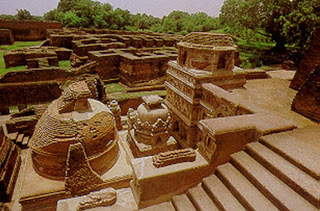
Today, visitors and pilgrims to Nalanda find vast and well-excavated ruins, many of which are more substantial than the mere foundations remaining in other places. It has archeological remains of the great university, including monasteries, temples, and stupas built by different Buddhist kings. It is easier here to imagine the former glory of the monasteries and temples described by Hieuen Tsiang.
In the excavated area are the ruins of wonderful monuments, stupas, vihares, monasteries, hostels, image houses, images of the Buddha and Bodhisattvas, statues of deities of the Mahayana tradition, inscriptions, official seals of Nalanda, personal seals of university professors, coins issued by monarchs of different kingdoms, plaques, ornaments, pottery and a range of other antiquities of historical importance.
Among the ruins are remains of the most renowned stupa with a series of smaller stupas surrounding it. Five of these stupas are extremely well preserved. There are in all eleven monasteries, sites and several chaitya sites that have been excavated.
Among the Buddha statues recovered was one in preaching attitude and a colossal stucco statue of the seated Buddha in Bhumi sparsa mudra, which has been dated to belong to the 9th century CE. There is a large stone image of Bodhisattva Avaloketisvara. There is also a small shrine with an image believed to be that of Nagarjuna.
In 2006, Singapore, China, India, Japan, and other nations, announced a proposed plan to restore and revive the ancient site as Nalanda International University. India’s first Multimedia Museum at Nalanda was opened in January 2008, which recreates the fascinating history of Nalanda using a 3D animation film.
Dr. Daya Hewapathirane
Vancouver, Canada
——————————————————————————————- ADDITIONAL NOTES
(1) Magadha Kingdom was established around 1760 BCE by the Brihadratha Dynasty by king Jarasandha. Magadha kingdom covered mainly the area of Bihar south of the Ganges and later expanded to include Bengal and much of eastern Uttar Pradesh. Rajagriha or modern Rajgir was its first capital and then Pataliputra or modern Patn
Asokan Pillar.
Magadha expanded in time
to be one of the world’s largest kingdoms of its time, stretching to the north
along the natural boundaries of the Himalayas, and to the east stretching into
what is now Assam. To the west, it reached beyond modern Pakistan,
annexing Baluchistan and much of what is now Afghanistan, including the
modern Herat and Kandahar provinces. The kingdom was expanded into India’s
central and southern regions by the emperors Chandragupta and Bindusara, and
Asoka conquered the Kalinga (modern Orissa) region.
Two of India’s greatest empires, the
Maurya Empire (321 to 185 BCE) and Gupta Empire (320 to 550 CE) originated from
Magadha. These empires saw great advancements in philosophy, religion, science,
mathematics, and astronomy. Magadha kingdom is heavily mentioned in Buddhist
texts. Two of India’s major religions Buddhism and Jainism originated in
Magadha. From its inception until about 809 BCE, the Magadha kingdom was ruled
by many kings of that dynasty.
Haryanka Dynasty of Magadha
The Pradyota dynasty took over Magadha kingdom in 809 BCE and ruled until it was captured by the Haryanka dynasty in 684 BCE. Magadha was ruled by the Haryanka dynasty from 684 BCE to 424 BCE. Siddhartha Gautama was born at Kapilavastu in Kosala around the 5th century BCE, during the Haryanka dynasty. As the scene of many incidents in his life, including his enlightenment, Magadha is often considered a blessed land.
King Bimbisara of the Haryanka dynasty led an active and expansive policy, conquering Anga in what is now West Bengal. King Bimbisara was followed by his son Ajatashatru. Pataliputra became the capital of Magadha after Ajatashatru’s death. The Haryanka dynasty was overthrown by the Shishunaga dynasty which was subsequently overthrown by the Nanda Dynasty who ruled for about 100 years.
Mauryan Dynasty of Magadha
The Nanda Dynasty ended around 321 BCE and was followed by the famous Mauryan dynasty. Chandragupta Maurya founded the Maurya dynasty and established the Maurya Empire. During this time, most of the subcontinent was united under a single government for the first time. Capitalizing on the destabilization of northern India by the Persian and Greek incursions, the Mauryan Empire under Chandragupta would not only conquer most of the Indian subcontinent, but also push its boundaries into Persia and Central Asia, conquering the Gandhara region. Chandragupta was succeeded by his son Bindusara, who expanded the kingdom over most of present day India.
(2) The prominence of Magadha kingdom and the Maurya dynasty of kings peaked with the reign of the Asoka one of India’s most legendary and famous emperors. The Empire experienced half a century of peace and security under Emperor Asoka. Mauryan India enjoyed an era of social harmony, religious transformation, and expansion of the sciences and of knowledge. Chandragupta Maurya’s embrace of Jainism increased social and religious renewal and reform across his society, while Asoka’s embrace of Buddhism has been said to have been the foundation of the reign of social and political peace and non-violence across all of India.
The Mauryan dynasty under Asoka was
responsible for the proliferation of Buddhist ideals across most of the Asian
continent and beyond, fundamentally altering the history and development of
Asia as a whole. Asoka sponsored the spreading of Buddhist ideals into Sri
Lanka, Southeast Asia, West Asia and Mediterranean Europe. Asoka the Great has
been described as one of the greatest rulers the world has seen. The decline of
the Mauryan Empire began 60 years after Asoka’s rule, and it dissolved in 185
BCE with the foundation of the Sunga Dynasty in the Magadha kingdom.
The Sunga dynasty is associated with the period 185 to 73 BCE. It was replaced by the Kanva dynasty who ruled until 26 BCE. The Kanva dynasty collapsed and the Satavahana dynasty of the Andhra kingdom became the most powerful Indian state.
(3) The Gupta Empire was established around 240 CE and ruled until 550 CE. It was one of the largest political and military empires in ancient India covering much of the Indian sub continent. Its capital was at Pataliputra. The peace and prosperity created under leadership of Gupta’s enabled the pursuit of scientific and artistic endeavors.
This period is called the Classical or Golden Age of India and was marked by extensive inventions and discoveries in science, technology, engineering, art, dialectic, literature, logic, mathematics, astronomy, religion and philosophy. The high points of this cultural creativity are magnificent architectures, sculptures and paintings. Temples were mostly made of brick or stone. The doorways were very decorative. Wall murals flourished during this age the most famous being those of the Ajanta caves where the exquisite murals depict the life of Buddha.
The Gupta period produced scholars of
great repute such as Kalidasa. People led happy and prosperous lives.
This Empire gradually declined starting in mid 6th century CE and with the
disintegration of the cohesiveness of the former empire; India in general began
to be ruled by numerous less powerful regional kingdoms. This unfortunately was
the time when the Nalanda University was experiencing significant growth as a
leading Centre of learning in the Capital of the Magadha Kingdom dominated by
the liberal cultural traditions inherited from the Gupta age of 5th to 6th
centuries.
Dr.
Daya Hewapathirane
daya.hewapathirane@gmail.com
Our
sacred landscape of religious and ethnic harmony
The
recent tragic event on the ‘Easter Sunday’ saw a cataclysmic outpouring of
anger, condemnation and criticism, expressed mainly in newspapers and other
social media sites.
While
few resorted to a more subdued response and a somewhat in-depth analysis, the
majority’s anger and anguish was/is evident. The intervention of the Cardinal
and his sombre advice to the Catholics in particular, to remain calm played a
huge role in preventing a backlash of no small magnitude. He addressed all,
both the perpetrators or whoever was/is behind it and also the suffered, in the
same tone, though burdened and laden with sadness, yet still imbued with love,
patience and peace.
It was
also good to see that in spite of the water being terribly muddy and murky and
fishing in it could have produced a big catch of sorts to a few of them, almost
none ventured out too far into the torrents for fear of drowning, dragged down
by undercurrents and whirlpools of uncertainty and unpredictability.
And
the inaction of some them that most certainly proved fatal to some nearly three
hundred innocent people, may have discouraged them even more in pursuing that
familiar to most of us their hobby or pet game, namely the blame games, even
though they kicked off to a good start and began to be played on various venues
alongside equally varying menus just as the dust seemed to begin to settle.
Now
what? Where and how do we begin the process of repairing and treating the
wounds caused by anger, despair, destruction and distrust? Mere temporary band
aids and bandages wouldn’t and cannot do much here. So much so has happened and
so fast too that it won’t be an easy task to design and put in
to practice those re-conciliatory mechanisms and carry out
possible reconstruction without delay, all aimed at achieving an absolute
certainty that incidents of this nature so tragic and devastating would not
happen, ever again on Sri Lankan soil.
The
exercise, programs and projects need the whole-hearted participation
of all concerned representing all ethnicities, political parties, clergy
representing all faiths, academics and professionals from fields far and wide
as possible, who wish to have peaceful bright blue skies above a
beautiful Sri Lanka, always.
‘Trying
to gain political advantage and mileage’ in situations such as these at the
expense of the country’s welfare and well-being must be treated as
high treason and no less.
Think
about our present and future children, if not anything else.
Three
decades of mayhem and terror left that once serene landscape terribly scarred
and scathed. The next ten years were relative peace and the country was just
returning to its former glory, of even getting declared as one of the best
tourist destinations in the world. Then the unthinkable happened. All that
peace, which was gained and won at great sacrifice of the nation’s sons and
daughters, shattered in seconds amidst explosions and screams.
Now
the moment has come, for all Sri Lankans to get together and build those fallen
bridges; bridges of love, tolerance and understanding. Bridges that are going
to stand firm, unbreakable and unsinkable even in the face of the most
formidable, the hostile and the ferocious enemies of our nation.
We
shouldn’t allow anyone, big or small, from within and without to strip our
once-used to be beautiful and sacred landscape, of religious and ethnic harmony
and its diverse beauty found in appreciation and mutual respect amongst its
inhabitants.
Mayor John Tory City Hall 100 Queen Street Toronto, Ontario M5H 2N2
Dear Sir:
I refer to your proclamation Tamil Genocide Remembrance Day, May
18th, 2019. I am curious as to why you have chosen this date, May 18th for
remembering “Tamil Genocide”. For Sri Lankans the day reminds them
that it was on May 19th, 2009 that the leaders of the Tamil terrorist group
called the the Liberation Tigers of Tamil Eelam were killed. Given the
wide publicity in the Canadian media of the terrorist attacks by the LTTE and
the fact that Canadian Tamils funded and supported them for thirty years, with the
public backing of Canadian politicians, it would be more appropriate for you to
issue a proclamation remembering the end of Tamil terrorism in Sri Lanka, the
liberation of all Sri Lankans from Tamil terrorism and the beginning of a
period of peace for all Sri Lankans. You use the word
“genocide”. Are you aware that the word genocide implies a conscious
and systematic plan to extinguish an entire ethnic group? The Tamils of Sri
Lanka are thriving in Sri Lanka and constitute 12% of the population.
There has been no reduction in this percentage over the last thirty years which
makes your claim a pathetic lie and indicates your ignorance.
In spite of wide media coverage in Canada of the acts of terror in
Sri Lanka by Tamil terrorists, you seem to be oblivious of the fact that a
group called the Liberation Tigers of Tamil Eelam (LTTE) fought to divide Sri
Lanka for thirty long years using extreme acts of terror on the entire
population of Sri Lanka. These acts of terror were “celebrated”
in Toronto by the supporters of the Tamil terrorists who funded terrorism in
Sri Lanka and were backed by Canadian politicians of all political parties who
helped them raise funds and provided political backing to terrorize Sri
Lankans. Sri Lankans who were being killed by this callous disregard of
life and liberty by Canadian politicians knew that this support was just to get
a few Tamil votes in Canada although it caused thousands of deaths in Sri
Lanka. The media all over the world reported on these acts of terror by this
group of Tamil terrorists (LTTE) who earned the dubious distinction of being
rated as the most ruthless terrorists in the world. In spite of the funding and
political backing from overseas of these terrorists, Sri Lankan forces
liberated the country on May 19th, 2009 when the terrorist leader was killed by
the Sri Lankan forces. He died with a gun in his hand. Some of his hard core
fighters were also killed in this final battle. In your view, is the fact that
a group of ruthless terrorists were killed in battle “genocide”? If
so, are Canadian forces sent to countries such as Syria and Afghanistan to
commit “genocide”?
You state that you “gather on this solemn day to remember, to
commit that such a tragedy is never repeated and to continue to seek justice”.
Sri Lankans who were terrorised by these Tamil terrorists, gather to remember
the thousands killed in Sri Lanka, acts which were supported by politicians all
over the world who were merely counting votes in their countries with callous
disregard of the fact that their actions were responsible for death and
destruction in Sri Lanka. Sri Lankans also do not want such a tragedy
repeated but proclamations such as yours indicate that Canadian politicians are
again supporting the possibility of the same tragedy being repeated just to get
votes in Canada at the expense of lives in Sri Lanka. It also indicates that
Canadians who supported Tamil terrorism in Sri Lanka have been successful
in getting your support. You state that you “continue to seek
justice”, so do Sri Lankans; the difference is that Sri Lankans seek
justice that will bring an end to Tamil terrorism by holding those who
committed the acts of terror to justice whereas you seem to seek justice for
those who committed the acts of terror.
Since 2009 Sri Lanka has had relative peace in spite of the fact
that those who supported terrorism from Canada still continue to support a
division of Sri Lanka whether by terror or other means. Your proclamation
indicates that you have decided to support them to the detriment of peace and
the liberty of Sri Lankans who did not and do not support the division of Sri
Lanka. You have issued this “proclamation” to get votes. You
seem to forget that there are other voters who do not support your point of
view and you have lost their support by this “proclamation”.
By Anbarasan Ethirajan Courtesy BBC News, Sri Lanka
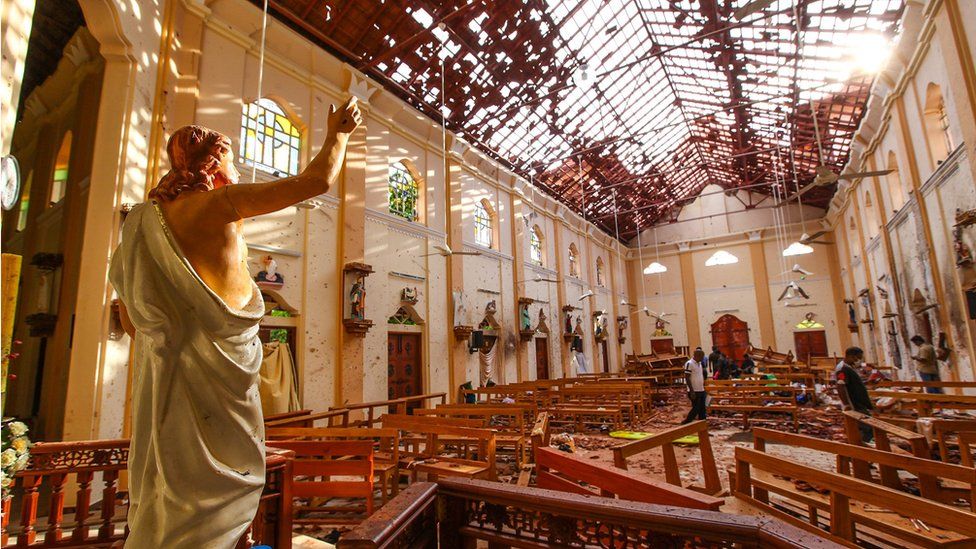
Image captionA statue amid debris at St Sebastian’s Church in Negombo, Sri Lanka, following the Easter Sunday bombing
For many Sri Lankans, it was a horrific shock to learn that local Muslims could have been behind the suicide attacks that killed more than 250 people last month. How could a small group have planned such a devastating wave of bombings undetected?
The clues were there in mid-January, when Sri Lankan police stumbled upon 100kg (220lb) of explosives and 100 detonators, hidden in a coconut grove near the Wilpattu national park, which is a remote wilderness in Puttalam district on the west coast of the country.
Police were investigating attacks on statues of the Buddha by suspected Islamist radicals elsewhere in the country. Four men from a newly formed “radical Muslim group” were arrested.
Three months later, suspected Islamists blew themselves up in packed churches and hotels in Colombo, Negombo and the eastern city of Batticaloa killing more than 250 people, including 40 foreigners.
But that arms seizure in the coconut grove was not an isolated incident. It was just one of several suspicious incidents in the months leading up to the bombings that should have rung alarm bells, especially given reports that several Sri Lankans who had joined the Islamic State group in Syria were back home.
It didn’t.
We now know the carnage on Easter Sunday happened despite repeated warnings about potential attacks from intelligence services in neighbouring India and the US.
It was only after the bombing that police identified links between two of those arrested in Puttalam in January and the suspected ringleader of the mass-casualty attacks.
Family circles
Political in-fighting and factionalism going all the way to the top of the Sri Lankan government is part of the reason warnings went unheeded, but complacency about the peace in Sri Lanka since the end of the civil war in 2009 also played a role.
Sporadic anti-Muslim riots since the end of the war between Tamil minority separatists and the government had fomented anger and discontent, but on the face of it nothing had pointed to a co-ordinated assault of this magnitude.
“The Islamists surprised everyone with the deadly bombings and at the same time kept the entire operation a secret,” said a former Sri Lankan counter-terrorism operative who had been keeping a tab on some of the radicals involved in the Easter Sunday attacks.
It would have required detailed planning, safe houses, an extensive network of planners and handlers, expertise on bomb-making and significant funding – so how did all of this slip so far under the radar?
Few of these questions have been answered, but sources linked to security agencies, government officials and local Muslim leaders have painted a picture of how, over the years, a small number of die-hard radicals and IS sympathisers clandestinely set up cells right under the noses of the security forces.
Investigators say that certain members of individual families became radicalised and operated as units.
“That’s how they kept their intentions and movements among themselves,” said the counter-terror agent, who requested anonymity to speak openly, given the sensitivity of ongoing investigations.
Each unit then liaised with other radicalised family groups, forming larger networks. The supposition goes that information was tightly protected within networks of loyalty that transcended ideology. Encrypted social media networks and messaging apps are believed to have facilitated communication and planning.
“The investigators are now trying to find out how these people communicated and co-ordinated,” the agent added.
So far more than 70 people believed to be linked to the radicals have been arrested. But not everyone is convinced the networks have been dismantled.
“The main people involved in the attacks and those who made these bombs are still at large… So there are suggestions that there may be a second wave of attacks,” a senior government official who did not wish to be identified told me last week.
“According to the theory of conventional terrorism, every suicide bomber needs at least five handlers. If you go by that there are 45 guys [for nine bombers] still out there. We are concerned.”
It’s a narrative at odds with what Prime Minister Ranil Wickremesinghe has been saying. He recently declared that all suspects connected with the bombings had either been apprehended or killed.
Image captionAt least 253 people were killed and about 500 injured in the attacks
The bombings have now put the spotlight on Muslims – the third biggest community in Sri Lanka, after the majority Sinhalese and Tamils. Muslims constitute around 10% of the country’s population of 22 million.
During the civil war, Muslims suffered at the hands of the Tamil Tiger rebels. About 75,000 Muslims were expelled from the north by the rebels in 1990. Around 150 people were killed in attacks on mosques in the east the same year.
Later on, hundreds of Muslims joined the Sri Lankan security forces. They were particularly sought after by intelligence agencies as most Muslims are fluent both in Sinhala and Tamil languages. But while the Sri Lankan government was tied up fighting the Tamil ethnic insurgency, an ultra-conservative Islamic movement was quietly establishing a foothold in the Muslim-dominated areas of the east.
Image captionMuslims make up about 10% of Sri Lanka’s population and only small numbers are believed to have become radicalised
“The process began nearly three decades ago. The Wahhabi brand of Islam attracted the young and it also had financial backing from abroad,” said Mazook Ahamed Lebbe, an official from the Federation of Mosques in the eastern town of Kattankudy.
The beachside town, which has a population of around 47,000, is almost exclusively Muslim. A few shops in the centre of town sell the Abaya – a full-length black robe worn by some Muslim women. The town is dotted with colourful domes and minarets.
Kattankudy has around 60 mosques and more are being constructed. Muslim community leaders say that while most mosques adhere to moderate and mainstream teachings, some preach an ultra-conservative version of Islam.
Image captionKattankudy’s Muslims fear reprisals because the preacher came from their town
One of those attracted by the fundamentalist brand was Mohammed Zahran Hashim, a radical preacher from Kattankudy who, the government says, blew himself up at the Shangri-La Hotel on Easter Sunday.
Hashim’s father sent him to a religious school for his education. But he soon started questioning the teachers, saying they were not following “true Islam”. He was kicked out of the madrassa but continued his religious studies on his own and later started preaching – challenging the established practices of local mosques.
“We disagreed with his views. So we didn’t allow him to preach in any of our mosques. Then he started his own group,” said Mr Lebbe.
Hashim initially set up a conservative group called “Darul Athar” and later founded the hard-line National Thowheed Jamath (NTJ) around 2014. This is the group that has been blamed by the Sri Lankan government for the attacks.
Image captionZahran Hashim has been identified as the ringleader of the bombers
Members of the NTJ had previously been known to police for vandalising Buddhist statues and clashing with other Muslim groups. The idea that they had the capacity to carry out the carnage of Easter Sunday left many perplexed.
In its early years, the NTJ managed to secure donations from overseas, particularly from the Middle East, India and Malaysia. The money helped the group to build its own mosque close to the beach in Kattankudy. The building has been sealed since the government banned the NTJ in the aftermath of the attacks.
Image captionThe NTJ mosque Zahran Hashim founded once had hundreds of followers – but has now been shut
As a preacher, Hashim drew inspiration from the Wahhabi tradition, whose followers practise a strict and austere form of Islam.
But Muslim groups in Kattankudy say he went further and embraced an extremist ideology. The NTJ campaigned against the town’s small community of Sufi Muslims, who follow a mystical form of the faith.
In 2017 Hashim and NTJ members clashed with a group of Sufi Muslims at an event, with his followers brandishing swords.
Ten members of the NTJ including the father and the second brother of Hashim were arrested. But Hashim and his brother Rilwan went into hiding. After widespread criticism, the NTJ said it had expelled him, but some Muslim leaders say Hashim remained influential in the group
While in hiding, he started releasing hate speech videos on social media in which he railed against “non-believers”. It appears as if Hashim managed to draw most of his family members into his extremist way of thinking and convinced them to pursue the path of violence.
“They were a normal Muslim family. Hashim’s father came from a poor background and was known to the community here. Hashim was a good preacher and well versed in the Koran… No one imagined that Hashim and his family could do such things,” said Mr Lebbe.
“I met Zahran’s father and one of his brothers a week before the Easter Sunday attacks. But they behaved in a normal manner. It is still a mystery to us how they got radicalised to this extent,” a relative of Hashim and former NTJ member said.
Amid the wreckage, police found white dresses usually worn by Buddhist women during prayers at temples. They suspect that the militants had planned to enter temples in disguise during the Buddhist festival of Vesak in mid-May to carry out further attacks.
“We were able to account for five of the nine sets of dresses bought from a clothing shop. Four sets are missing,” an officer at the site told me. Hashim’s wife and daughter survived with injuries.
Image captionChildren’s schoolbooks were found amid the wreckage in Sainthamaruthu
On 24 April, Mohammad Hashim Madaniya, the sister of Hashim, told the BBC she strongly condemned her brother’s actions and said she had lost contact with him two years ago. She said she had not seen or heard anything from her extended family since shortly before the blasts. By her version of events, she was one of few members of the family who was not part of the network.
A week later, police arrested Ms Madaniya, saying they had found nearly two million Sri Lankan rupees ($12,000) from her house during a raid. They alleged that she had received the money from her brother in Colombo a few days before the blasts. There has been no response from Ms Madaniya, who remains in custody.
Radicalisation
Some have wondered if anti-Muslim riots in the central district of Kandy in February 2018 might have pushed more people towards extremism.
At least two people were killed, a mosque was set on fire and hundreds of houses and shops were damaged by mobs in violence that led to a state of emergency being imposed. Local Muslims told me in the aftermath that they felt the state did not do enough to protect them.
But very small numbers of Muslim youth had become radicalised years before those riots. Authorities say dozens were drawn towards IS after the extremist group declared a caliphate in Syria and Iraq in 2014.
Image captionAnti-Muslim riots in Kandy last year led to a state of emergency being imposed
A school principal from central Sri Lanka, Mohamed Muhsin Nilam, was the first Sri Lankan to join IS in Syria. He died in Raqqa in 2015. “It is believed that he was the one who influenced or played a major role in radicalising some of the suicide bombers who attacked on Easter Sunday,” said the counter-terrorism agent.
It’s not clear whether any of the bombers actually travelled to Syria. Investigators say Abdul Latheef Mohamed Jameel made it as far as Turkey in 2014 but then returned home.
Jameel, who hailed from a wealthy family involved in the tea trade, studied in the UK and Australia before he tried to go to Syria. His target on 21 April was the luxury Taj Samudra hotel in Colombo but his bomb probably failed and he was seen leaving the premises. He later blew himself up at a motel in the suburb of Dehiwala, killing two guests.
Image captionA man believed to be Abdul Latheef Mohamed Jameel seen leaving the Taj Samudra Hotel
Investigators suspect that Jameel, a 37-year-old with four children, was the link between local radicals and IS or other Islamist groups based abroad.
Several years ago, his family became concerned about his hardline views and enlisted the help of a security official.
“He was completely radicalised and supported the extremist ideology. I tried to reason with him,” the official said. “When I asked him how he got into this… he said that he attended the sermons of the radical British preacher Anjem Choudary in London. He said he met him during the sermons.”
Friends of Jameel have said that the US invasion of Iraq was a major factor in shaping his hardline views. Investigators believe he became more radicalised after moving to Australia in 2009. When he returned to Sri Lanka four years later he was placed under surveillance, though it’s unclear how long this lasted.
The spice traders
It is not completely clear how Hashim, a cleric from the east, established contact with two sons of a well-known wealthy spice trader in Colombo – Inshaf Ahmed Ibrahim and Ilham Ibrahim. The brothers both carried out suicide attacks on Easter Sunday.
One Muslim community leader told me that Hashim had married a woman from the central town of Kurunegala. Ilham Ibrahim, who targeted the Shangri-La with Zahran Hashim, managed the family’s spice farm in Matale, about 50km away from Kurunegala. It is suspected that Ilham Ibrahim and Hashim came into contact in that area.
Hours after the first blasts, police raided Ilham Ibrahim’s family villa in the Dematagoda suburb of Colombo. Police say his wife, Fatima Ibrahim, detonated a suicide vest, killing herself, three of their children and three officers.
Image captionInshaf Ibrahim (R) and his father (C) accepted an award in 2016 from a Sri Lankan minister
Officials and security experts are clear that staging nine suicide operations would have required careful planning and huge financial support.
Two other suspects, Mohammad Abdul-Haq and Mohammad Shaheed Abdul-Haq, who hail from the central town of Mawanella, were arrested a week after the bombings. They are suspected of having had links to the Ibrahim brothers.
“Investigators have found a safe house of the Haq brothers in Puttalam district overlooking a lagoon. Investigators have found links suggesting that the advance money to buy the property came from one of the Ibrahim brothers,” said the former intelligence operative.
The father of the Ibrahim brothers, Mohamed Ibrahim, remains in custody. He is well-known among Colombo business circles, politically well-connected and once unsuccessfully ran for parliament. He has not been charged and has not been heard from since he was detained.
Investigators believe that Jameel influenced the Ibrahim brothers. The families knew each other.
The political factions
While Sri Lankans are still reeling from the shock and pain of the attacks, they are also equally appalled by the political bickering and official handling of the aftermath of the blasts.
President Maithripala Sirisena and Prime Minister Ranil Wickremesinghe belong to two different political parties and have a hostile relationship. Their efforts to undermine each other appear to have created a communications gap at the heart of the government.
Image captionPresident Maithripala Sirisena (L) and Prime Minister Ranil Wickremesinghe (R) are at loggerheads
The president oversees the security forces and soon after the bombings, the prime minister said that an Indian intelligence warning about attacks had not been shared with him. President Sirisena has made a point of saying that top intelligence officers did not share the information with him either.
Bhavani Fonseka, a human rights lawyer, said bickering between the two leaders was affecting the country. “It is more to the point of how it has impacted the security…That’s a deeply troubling point,” she said.
The lack of communication between various arms of the government was also laid bare when two ministries blamed each other for providing wrong casualty figures. The number of dead in the bombings was lowered five days after the attacks by more than a hundred.
At one point, Sri Lankan police had to apologise after wrongly identifying a US woman as a suspect.
Media captionSri Lanka president: IS ‘chose Sri Lanka to show they exist’
Most government officials who spoke to the BBC admit that sleeper cells are likely still out there.
But that raises the question of why the Islamic State group is targeting a country like Sri Lanka, where Muslims are a minority.
The senior government official said the group – now physically decimated in Syria and Iraq – sees the island as “part of their caliphate”.
President Sirisena, meanwhile, told the BBC earlier this week that they had chosen a “country that recently established peace to make the statement that IS still exists”.
Sri Lanka is a war-scarred society and suffered extreme violence for decades. But this time, the forces it is trying to confront are invisible and drawing inspiration, and possibly support from global terror networks. The battle is likely to be long and drawn out and many fear that as long as politics remain fractured, the country will be vulnerable.
Sri Lankan army chief Senanayake said that India, China, United States, Israel, Australia and the United Arab Emirates were looking to provide high-grade military technology, including communication and surveillance equipment, to deal with future threats.
We have requested India for intelligence cooperation: Sri Lanka’s army commander Mahesh Senanayake | Photo from REUTERS
HIGHLIGHTS
Sri Lanka army chief said India to provide assistance to fight menace of Islamic terrorism in country
He rejected any idea of on-ground military help from any country
He added that Sri Lanka is working towards a system to ensure such attacks do not succeed in future
The army chief of Sri Lanka said that India would be providing Sri Lanka with counter-terrorism technology and capability to fight the growing menace of Islamic terrorism in the country.
Speaking to India Today TV on Saturday, army chief of Sri Lanka Lt Gen Mahesh Senanayake said, “We have requested India for intelligence cooperation, bomb disposal assistance, cyber warfare assistance and assistance of training and equipment.”
To a question on if India has agreed to Colombo’s demands, the chief said that they have been assured help and assistance since “this is not only good for Sri Lanka but the entire region. We have suffered a lot and we do not want others to suffer”.
He rejected any idea of on-ground military help from any country.
Sri Lanka fought the toughest battle during the war against the Liberation Tigers of Tamil Eelam (LTTE) and after the Indian Peace Keeping Force (IPKF), they never sought any external military assistance.
“We do not encourage troop requirement here [Sri Lanka]. There is no reason for other countries to send their armed forces but, we need assistance for our interrogation and technical assistance to enhance our capabilities on conducting future operations. We really welcome friends who are actual friends in need. Our relationship with the Indian Army and military diplomacy with our neighbors, especially India, stand tall,” he said.
BLASTS IN SRI LANKA
Nine suicide bombers, including a woman, carried out a series of blasts that tore through three churches and three luxury hotels on April 21, killing over 250 people and injuring more than 500.
“The Sri Lankan Army was not informed of the critical intelligence that was shared by ‘friendly’ countries with Colombo,” said General Senanayake.
When asked on the massive intelligence failure, he said, “More than the failure, there was a gap between the agencies in terms of cooperation. Even after being informed by our friendly countries of this particular incident, it was not shared with other agencies on time. That created this situation.”
He added that the country is working towards an “integrated intelligence system” to ensure such attacks do not succeed in the future.
The Easter Sunday attackers, according to intelligence gathered by the forces, had travelled to many important cities of India, including Kashmir, to connect with Islamic terrorist groups.
Sri Lanka is looking into all the connections in the sub-continent, including links with groups in Pakistan.
“During the investigation very few cadres had travelled to India. Indian government did not help them. They had gone to make connections. They had outside links and visited abroad which their passports have revealed… they travelled to Bengaluru, Kochi, and parts of Kashmir. We can tell their exact locations and people they met, after the investigations,” he said.
Business tycoon Yusuf Ibrahim’s sons travelled under the garb of business to India.
Senanayake said that investigations had established that the plotters had links to Islamic State (IS), but currently they are trying to establish their location and the depth of contact.
“We had five Sri Lankan fighters in Syria, one died in 2017. They have connections with IS in Syria. Currently, we are not in a position to tell the exact location but investigations are going on,” Lt Gen Mahesh Senanayake said.
While they are investigation outside links, Sri Lanka is not ruling out help from former LTTE cadre who fled the country after they lost the war.
General Senanayake said, “Although 13,169 people surrendered, definitely some escaped to India and other countries, Germany, France, West Canada, the UK. We are seriously monitoring activities of ex-LTTE cadres within the country and other countries also. Revamping of LTTE is not an immediate concern but our current attention is to the particular incident of April 21.”
For now, investigators from eight countries, including the US Federal Bureau of Investigation (FBI) and Interpol, are helping Sri Lanka with the investigation.
Senanayake said that India, China, United States, Israel, Australia and the United Arab Emirates were looking to provide high-grade military technology, including communication and surveillance equipment, to deal with future threats.
He assured that the situation will return to normal and that the country is safe for tourists to return.
Iran traded 256,551 tons of non-oil commodities worth $141 million with Sri Lanka in the last fiscal year (ended March 20, 2019) to register a 53.58% growth in tonnage and 8.22% decline in value compared with the year before, latest data released by the Islamic Republic of Iran Customs Administration show.
Iran’s exports to Sri Lanka stood at 233,453 tons worth $51.11 million, up 69.50% and 28.33% in tonnage and value respectively year-on-year.
Sri Lanka was Iran’s 39th export destination during the year.
Iran mainly exported bitumen, non-alloy semi-finished iron/steel products, urea and turbines to Sri Lanka during the 12-month period.
In return, Sri Lanka exported 23,097 tons of goods worth $90.69 million to Iran, down 21.22% and 20.92% in tonnage and value respectively YOY.
Sri Lanka was the 35th exporter of goods to Iran during the period.
The imports mainly included tea, cans and coconuts.
Sri Lanka has taken several additional security measures in the aftermath of the Easter Sunday attacks on churches and hotels that killed 258 people and injured nearly 500 others. Among these new measures is forbidding the wearing of the Niqab face veil by women.
The authorities in the country came to the conclusion that wearing of the Niqab raises several additional security risks to countries, Muslim and non-Muslim alike, since it conceals the identity of people and ends up posing grave security risks to peoples and countries equally.
Muslims across the Muslim countries have yet to decide whether wearing the Niqab has well-founded Islamic tradition, as women in the days of Prophet Mohammad joined men in battle against the enemies of Islam and were very active politically and economically in their society.
Many Muslims maintain that wearing the Niqab was never an established Islamic tradition in the era of Prophet Mohammad, and they continue to submit that while wearing the hijab was a well-founded Islamic custom, concealing the face completely for friend and enemy alike is not.
What Sri Lanka has decided on warrants a follow up by other Islamic nations, especially in an era when security concerns are on the rise. Surely, the minority Muslim women who wear the Niqab would understand and appreciate the decisions of Sri Lanka, and, indeed, other countries Muslim and non-Muslim alike, to forbid its wearing for imminent security reasons.
Jordan may not want to consider a similar move in that direction, even though the threats of terrorism are on the rise rather on the decline, until there is an overwhelming Islamic verdict that it is not necessary from a strict Islamic code to wear it.
Perhaps a fatwa from religious leaders on this issue would clarify the status of the Niqab in Islam before the government may outlaw the wearing of this cover on the face of Muslim women for security reasons.
Our own security people have apprehended even men wearing the Niqab to hide their identity in order to commit theft and other criminal offences, a phenomenon that encourages revisiting this issue as a matter of high priority.
Only a small minority of women in Jordan wear the Niqab, but even this minority have a right to ask for a fatwa (religious edict) on the issue before they may decide to stop wearing it. The majority of Muslim women who do not wear the Niqab have a stake in this matter and would very much appreciate an Islamic ruling on it.
Yohan Perera and Ajith Siriwardana Courtesy The Daily Mirror
Non-Cabinet Minister of Economic Reforms and Public Distribution, Harsha de Silva said yesterday Madrasas or Muslim religious schools should be monitored by the Ministry of Education like what happens with Pirivenas.
However, the newly formulated Madrasa Schools Regulation Bill stipulates that it should be handled by the Muslim Religious Affairs Ministry.
Even Pirivanas are regulated by the Education Ministry. As such Madrasas should also be brought under the purview of the Ministry Education. Law should be applied equally to everyone,” the minister said adding that laws should be introduced to make it compulsory for Muslim Women to expose their ears when required.
Current gazette technically bans even the wearing of a hijab, a headscarf, unless the eras are exposed. I have suggested to let Muslim women continue to wear the hijab as they have always done, but if required by authorities expose the ears for identification purposes,” the minister said.
He said the claim made by some that swords were kept in houses for the householders’ safety is unacceptable as such a thing is practised only in countries such as Saudi Arabia.
The minister said he was ashamed as a member of the government that it was not able to save the country from the Easter Sunday carnage despite the prior warnings given by the intelligence units.
An officer attached to the United States (US) Embassy in Sri Lanka has taken several Sri Lankan Judges for a seminar in the US with the intention of interfering with the affairs of the Courts, United People’s Freedom Alliance (UPFA) Parliamentarian Udaya Gammanpila alleged yesterday (8).
Gammanpila made this allegation during the Adjournment debate on the current security situation in the country.
He claimed, The US is trying to intervene with local affairs by manipulating our Courts. The US Embassy in Sri Lanka recently organized a seminar for Sri Lankan Judges in the US. The topic of that seminar is ‘Money Laundering and the Recovery of Stolen Assets’. It was facilitated by the US Justice Department and the Federal Bureau of Investigation (FBI). Nine senior Judges participated in this seminar. They are Supreme Court (SC) Judges, Justices Buwaneka Aluwihare PC, Priyantha Jayawardena PC and Vijith Kumara Malalgoda PC, Court of Appeal Judges, Justices A.H.M.D. Nawaz, Janak de Silva and N. Bandula Karunarathna, and High Court Judges Sampath Wijeratne, Sampath Abeykoon and Champa Janaki Rajaratne. The Coordinator of the seminar, named Patrick Tillou, who is an officer at the US Embassy in Sri Lanka, during a dinner had reportedly asked these Judges as to what would happen to the case of former Chief of Staff of Opposition Leader Mahinda Rajapaksa, Gamini Senarath. The Judges replied that that case is a weak one. Then Patrick had said, ‘we hope you would give a ruling which would set an example for all the senior State officers. Now, who is this ‘we’? ‘We’ means the US Government. Patrick did not stop there. He asked what the reasons were for the delay in the case related to former Defence Secretary Gotabaya Rajapaksa. The Judges said that Rajapaksa files appeals with the Supreme Court against their rulings. Patrick requested them to give a final verdict on those cases as soon as possible. What is this? Patrick advised our Judges.”
Gammanpila further claimed that a patriotic Judge who was present on that occasion had recorded the entire conversation out of anger in his mobile phone. I have a copy of that recording. But I won’t table it as there is sensitive information in it,” he added.
Ceylon Today yesterday sought a response from the US Embassy with regard to the claims made by Gammanpila in Parliament. At the time of going into press, no response was received with regard to the query sent in this regard via electronic mail to Spokesperson of the US Embassy in Sri Lanka, Nancy VanHorn.
Sri Lanka’s security forces have made more arrests in connection with the Easter Sunday attacks as search operations continue across the island with the participation of thousands of tri-forces troops and police personnel.
A suspect was arrested in Kattankudy by Police, Thursday night (9). Investigations have revealed that the suspect had maintained close links with the suicide bomber Zahran and had even involved in financial transactions with him, the Defence Ministry said today (11).
The suspect has also attended some training sessions conducted at a safe house run by the terrorist group in Hambantota. Investigations have also revealed details of several bank accounts maintained by the suspect. Authorities are conducting further investigations, revealed the Police Spokesman SP Ruwan Gunasekara during the press briefing at the Media Centre in Kollupitiya, on Friday evening (10).
Another individual was also arrested by Slave Island Police upon information received that the suspect had links with the terrorist group. Police were also able to recover over Rs 8.3 million in cash and more than 776 grams of jewelry items during a search conducted at his office in Maradana. Details of a luxury house in Dehiwala and several bank accounts were also revealed during investigations.
A cache of explosives was found hidden in the Kattankudy beach. Police acting on information received had recovered this stock of explosives believed to be hidden by the Sainthamaruthu suicide bombers, the Police Spokesman further said. He also assured that all items hidden by the terrorist group will be discovered and everyone connected with them will be arrested and their assets seized.
The operating of drones and unmanned aerial vehicles within the country was prohibited following the 21st April bombings. However, there have been reports of sightings of suspected drones and unmanned aerial vehicles from a number of areas, the ministry said.
This has caused some concerns in the minds of the people about their safety. Most of these have turned out to be small toy drones and even kites which do not pose any danger. Given the fact that such operation of drones and unmanned aerial vehicles violate the law, we have to assume that those who operate such drones and unmanned aerial vehicles do so motivated by interests inimical to the national security.”
Therefore, the Security Forces and the Police have been advised to take whatever action necessary to bring down those drones and take into custody any individual or group operating such, said so the Air Force Spokesman Group Captain Gihan Seneviratne during the press briefing.
The Security Forces are fully committed to ensuring national security and an expeditious return to normalcy. It is reminded that the public cooperation in this regard is imperative. And also refraining from activities that can cause fear and panic and notifying the authorities of any individuals or groups engaging in such activities is the public’s contribution to restoring confidence in our country and to expedite the return to normal life, he further added.
Acting on information provided by the Akkaraipattu Police, the Navy was able to recover several sharp items, an unidentified grenade, a tablet PC, a personal computer and a binocular from the Morawdi lagoon. During a search operation in Marassana in Thalawathuoya, Navy personnel recovered 365 live ammunition, 72 empty shells along with three magazines. All items have been handed over to the Police for further investigations, said Navy Spokesman Lieutenant Commander Isuru Sooriyabandara at the press briefing.
Minister Ranjith Madduma Bandara says that attempts are being made to create a false fear that the country’s intelligence units were weakened under the incumbent government.
He said that the intelligence units had done their duty correctly in the recent past and that it was them who alerted about the possible terror attacks in advance. He said that the mistake was that no action was taken on that important intel.
This is not the UNP’s responsibility. If this incident had occurred during the time that I was the Ministe of Law & Order, I would resign,” he said.
The former Law & Order Minister sated that certain individuals survive by selling off the war and war heroes and that they are now making claims that this government destroyed the intelligence services.
President Maithripala Sirisena said that he is not intimidated by terrorism and that he would fulfill the responsibility of building a peaceful country after eradicating terrorism.
The President said that the law will be enforced against anyone who is responsible for the attacks on April 21, the President’s Media Division said.
He said this, addressing the final progress review meeting of the Ampara district Rata Wenuwen Ekata Sitimu (Let’s Stand Together for the Country) programme. That meeting was held today (11) under the patronage of President Maithripala Sirisena at the Uhana Maha Vidyalaya Ground in Ampara.
During this meeting, President Sirisena said that the responsibility of all the citizens who love the country should be to fulfill their respective responsibilities towards creating a peaceful environment where all the citizens of the country could live freely, while understanding the actual situation and the issues, but not to raise their voices in order to get narrow political gains.
He pointed out that certain statements made by a few persons to achieve petty political gain have become a hindrance to the process of building national reconciliation while freeing the country from the challenge of terrorism.
Addressing the Ekata Sitimu public meeting at Uhana School Grounds in Ampara, President said he would continue the operations to eradicate terrorism and he was not a person to resign and allow the terrorists to win. He called on the public and private sector workers to attend work and children to attend schools and bring normalcy as that is the way to defeat the aims of terrorists.
The President emphasized that the incident on April 21st is not a problem in Sri Lanka, but a global terrorism connected with it. He added that the security forces are conducting operations towards the successful conclusion to eradicate terrorism.
Addressing the pubic officers in the East, the President said that the country’s national security activities are now being implemented with a new outline and plan, with a clear reform program implemented by the Security Forces.
He further said that the programme ensured the right of all citizens to live in a free society without fear or suspicion. He said that when the security forces successfully defeated terrorism, the public officials should take measures to end the fear of the people and to restore trust and understanding among the people.
India had sent three alerts about the Easter
Sunday bomb blasts. The first alert was on April 4. The second alert was sent on the 11th.
A third alert was sent
two hours before the first suicide blast, it had the names
of three churches. According to Hindustan Times there
was also a fourth alert sent
on the 16th,the day the
device was tested in a motorcycle In Kalmunai”
The alerts gave
specific information. They indicated the targets and the day of
the attack. The targets
would be churches and hotels. The
day would be Easter Sunday. The method would be suicide bombers. The
names of those who would be carrying out the attacks were given, such as Zahran
Hashim. The exact locations were also
given, said Cardinal Malcolm Ranjith,
who had been shown one of the alerts.
These alerts were
superb actionable” Grade A intelligence. It identified the group that was
planning the attack, the name of the leader and the modus operandi of the
attack, which was suicide bombers. It was received 17 days prior to
the attack. There was plenty of time to prevent the attack.
The State Intelligence Service of Sri Lanka,
on receiving the alerts, had added other names from their own files, with
telephone numbers, addresses and ID numbers and forwarded the alert to Chief of
National Intelligence, who sent it to Inspector General of Police who sent it
to the DIGs. DIG Special Security Range has sent a Memo to the Security
Divisions of the Ministers, Diplomats, Judiciary and the Retired Presidents
alerting them to possible attacks. The purpose apparently had been to protect
those persons. The Army Commander was not informed.
The intended
target is usually the first to be informed. Yahapalana government however, had totally
neglected to inform the targets. The information was not conveyed to Cardinal
Malcolm Ranjith, or to the management of the affected hotels, so that action
could have been taken to avoid the damage.
Archbishop of
Colombo Cardinal Malcolm Ranjith expressed his deep displeasure about this.
Easter Sunday attacks could have been avoided had the Government dealt with the
information seriously without passing letters to one another, he said. Had he
known about the threats he would have cancelled the Easter Mass services, and
avoided the carnage. ‘When I got
to know the incident, I immediately instructed all churches to stop Holy Mass
and send people home.’
In view of the grave nature of the intelligence received and the need for immediate
action, Chief of National intelligence and Secretary of Defence should have met
and discussed security measures required, said experts. They should have summoned the chiefs of the armed
services and the police and their intelligence heads, for a conference.
Necessary safeguards should have been put in place, such as strengthening security at the
airport, the hotels and the churches. Yahapalana
government did not do so.
The defense authorities took the matter
lightly. Hemasiri Fernando, Secretary of Defence, said
in response to a query from a foreign
journalist , “We never expected an attack of this magnitude. We expected a
few attacks but not this.”Clearly they were not going to take any action
to prevent those few attacks either.
Fernando
repeatedly smiled as he answered questions, said critics. Fernando’s
callous attitude shocked me said DEW Gunasekera
.
But there is
evidence that some at least of the Cabinet ministers knew of the planned attacks. Catholic cabinet
ministers did not go to
church on Easter Sunday. This is very significant. They are usually seen
prominently, in the very first pew. Mano Ganesan said at a media briefing that his Chief Security
Officer had warned about a Easter Sunday
attack, several days before the
attack.
Harin Fernando told a news conference that his
father had told him not to attend Easter mass because he had been told by an
retired CID friend of his that churches would be attacked on Sunday. He
specifically mentioned St. Anthony’s church in Kochchikade. Harin brushed this advice aside, but did not
go to Kochchikade and did not warn anybody else.
Dinesh
Gunawardena, scoffed at claims that our leaders were unaware of intelligence
reports in the days leading up to the attacks. It is clear that the Government
knew. Chief of National Intelligence (CNI) reports to the Defence Secretary,
observed Sarath Fonseka. We know that the CNI had notified the IGP. If so, then it would have
been sent to the President and the Defence Secretary as well, he said.
There is a
“distribution list” at the National Intelligence Agency. The first
two copies would be sent to the President and the Minister of Defence. Copies would also be submitted to the
Secretary of Defence and the Chief of National Intelligence. Further copies would
be distributed among Chief of Defense staff (CDS), service commanders and the
IGP, depending on necessity.
Sheer commonsense
would tell us that much of this was known beforehand. No other explanation is
conceivable, said Kishali Pinto Jayawardene. Jayadeva Uyangoda, speaking the
first anniversary of Sinhala weekly Anidda frowned on President Sirisena and
Premier Wickremesinghe’s repeated claims that they weren’t aware of impending
Easter Sunday attacks”. We have never in our history, ever had
a Prime Minister who claimed
he did not know, said critics.
In 2019, months before the April blast ,a delegation
from the All Ceylon Jamiathul Ulema, the main
organization of Muslim clerics, met the President to warn him and the government of the
impending danger from terrorist groups backing the ISIS. They named Mohamed
Cassim Mohamed Zahran, as the leader of the local group and gave a detailed
memorandum listing their activities. President
Sirisena handed over the information to
Secretary of Defence, Fernando who it
appears did nothing about it. Therefore,
Yahapalana cannot say they were not warned. The Muslim community itself, by then
quite desperate, had gone to the highest
authority.
The Yahapalana
government has failed to heed an early warning
and caused over 200 deaths and many injured. This is criminal negligence, observed Don
Manu. Yet no preventive action was taken. The brushing aside of specific
warnings by Indian intelligence, seems to indicate far more than mere
carelessness, said Kishali Pinto Jayawardene. Was it a deliberate decision, not
disseminating the information given by India and not acting on those warnings,
asked Rajan Philips.
President was
away in India and Singapore on a private visit from 16 April. No Acting Defense Minister had been
appointed. President said he was
not officially informed even in Singapore. I learnt the news from others in Singapore,” President
Sirisena said. President returned only
at midnight on Sunday, in spite of two
earlier flights being available. Why did it take 15 hours for him to return
from Singapore which is only four hours away. Prime Minister Ranil
Wickremasinghe also said that he was not
informed. The President and the
Prime Minister owe this country an explanation, beyond their asinine ‘I did not
know’ stories, said Kishali .
Yahapalana
government is not
a normal government and in this
case, it certainly did not behave like a
normal government .Twenty government ministers and MPs participated in a telecast press conference on 22.4.19 to speak about the bomb blast. The
MPs were smiling and laughing as they
spoke of the bomb blasts. We are very sorry as a government and want to
apologize to the people and other affected parties about this incident,” they
said, cheerfully.
Grinning Ministers spoke to us
on national television at a press
conference after the attack” said Kishali.
These MPs focused on
money not life. They kept repeating
that those affected would be given money. The government has decided to pay Rs.100,000
as funeral expenses and Rs. one million for the families of those who died as
compensation. Those who have injured will receive compensation ranging
from Rs.100,000 to Rs.300,000 according to the severity of the injury, they
said.”
The
foreign interviewers were openly startled by this callous attitude. In one interview, Ranil
Wickremasinghe was asked, but how did you feel when all this happened, did it
not affect you. He thought a bit and
said ‘I was shocked’. For the PM, the loss of a human life would appear to be
something to be shrugged upon as tough luck ,commented Sanjeewa Jayaweera. Rajan
Philips referred to the Prime Minister’s insouciance.
The public are furious over the bomb blasts
and the many deaths and want the government to go, reported the media.
This government is part of the problem.
It is a security threat to the entire population, said Malinda Seneviratne.
This government is not acting in the
national interest. It must go, the
quicker, the better, said the LSSP.
The President and the PM of this country
should resign forthwith, said critics. In any other country, the government
would have resigned in the wake of such a national calamity. Here no one took
responsibility. After a disaster of this scale,, not a
single person has willingly resigned, said Ryp Van Winkle.
The country is
angry but instead of the hysteria ,panic
and confusion the western powers hoped
to see, the country is lookingforeffective
strategies to contain the situation. For instance, SriLankan Airlines has asked
The Sri Lanka Air Force (SLAF) to deploy sky marshals on SriLankan Airlines
flights. The Air Force is looking into the existing regulatory
framework and international legal obligations on the matter. The SLAF has also
beefed up security measures in and around BIA.
There was a massive response for blood:
around 4500 people had thronged the
blood banks of hospitals. Blood was taken from 3,700 of them. The others, he
said, were sent back after details of blood group types, name and contact
numbers were taken down. Over 2500 turned up at the National Blood Centre in
Narahenpita.
The elite
charged that certain Muslim MPs
were associated with NTJ and JMI. They
named Rishard Bathiudeen, Azath Salley, Mujibur Rahaman and
M.L.A.M. Hizbullah. UNP Colombo
Municipal Councilor Noordeen Mohamed Thajudeen
was arrested over the discovery of 46 swords in a Mosque, at Slave
Island. The National Joint Committee
wanted all military camps that were in
operation on 19th May 2009 be re-established.
The resilience of a shocked and angry nation has
been remarkable, said Kishali The courage of police officers and security
forces conducting relentless investigations, despite loss of lives, has been
commendable. This exemplifies the best of Sri Lanka.
The country is very much aware of the possibility of foreign
intervention. The Lanka Sama Samaja Party (LSSP) wondered
whether the bomb blasts were simply Islam,
or whether it was something far more sinister involving the CIA. This
whole attack has similarities with events abroad that have been attributed to
the CIA of the USA. It is known that the CIA and USA think tanks are operating
here with the support of the Government. USA has had a long history of hand-in-glove
association with terrorism. They have created terrorist groups and fought
against them, sometimes creating other terrorist groups for this purpose.
ISIS was created by USA.
US and the UK sent teams here soon after the bomb blasts. Many
an eyebrow was raised over the swift arrival of
these two teams, said Shamindra. USA sent not one, but two separate teams.
One was from the FBI, USA’s secret service and the other was from the US navy
Pacific Command. Both were viewed with great suspicion.
The FBI landed here
within two days, evidently they were ready for the call, commented LSSP. Why
did a team some from the US navy. This is part of the US military, said
critics. The USA and its intelligence services are not
required and are a positive danger. They must go, said the LSSP. They can now
take over our intelligence set up, take over ‘the fight against terrorism’ and
the end result will be to make Sri Lanka a battle field like Syria.
Metropolitan Police Counter Terrorism Command of the UK
also sent a team of specialists. Britain’s Minister for Security and
Economic Crimes, Ben Wallace, came on a two-day visit. Archbishop of Colombo
Malcolm Cardinal Ranjith and Ven Omalpe Sobitha
were suspicious and said so at a media conference from Bishop’s House, Borella.
India’s offer
of assistance was also met with suspicion. The offer comes at a time when Sri
Lankan police and military are doing brilliant work in swiftly tracking down
suspects, detecting weapons, explosives and information in almost every province
said Lasanda Kurukulasuriya . There is
no need for the Indian National Security Guard, NSG to come in. We don’t need
foreign soldiers. Our forces are capable enough. We just need to give them
powers and freedom,” said Mahinda
Rajapaksa .
This essay closes with a statement by
Mahinda Rajapaksa:
In January 2015, I handed over a completely
secure and peaceful country to the new President. We had strengthened the intelligence
services so that there would be absolutely no threat to the national security
of the country. Our intelligence services worked closely with other
intelligence services of neighboring countries and other international
intelligence services to ensure the security of the country. Whenever we got
wind of a threat to national security, we acted on it. The Easter Sunday
attacks would never have taken place under our government.
The present government is squarely
responsible for the terrorist attacks that took place last Sunday. The police
had issued early warnings of an impending attack. However what action did the
government take with regard to those warnings? They never informed the Church
leaders about those warnings and neither did they provide extra security to the
possible targets. All that the leaders of the present government did was to
ensure that they themselves were nowhere near a possible target. On important
occasion such as Easter, representatives of the government usually attend Mass,
but this time there were no such representatives in the Churches.
From the moment this government came into
power in January 2015, they have been persecuting the members of the armed
forces and the intelligence services that ended that war. How many of our armed
forces personnel have they jailed over the past four years? How many times have
they hauled former army commanders and commanders of the navy and air force to
the CID to be questioned?
The armed forces personnel who carried out
their duties on behalf of the nation were harassed and hunted down by this
government.. The government was preparing to repeal the Prevention of Terrorism
Act on the instructions of their foreign masters. If that Act had been
repealed, what kind of a position would we be in today? Because the government
was engaged in relentlessly persecuting its own armed forces, we became an easy
target for terrorists. No other country in the world has persecuted and
weakened its own armed forces and intelligence services in this manner. Terrorists
observe these things and plan accordingly.
The Sunday attacks did not take place due to
the negligence of one or two officials. We can now see that the government is
preparing to sacrifice some officials and wash their hands of the matter. This
incident occurred because of the conduct of this government from the time they
came into power in January 2015. If anyone is to resign over these incidents,
it should be the government. Despite the persecution that the intelligence
services had been subject to, they did obtain prior intelligence relating to
this attack and conveyed the information to certain quarters. But nothing
happened thereafter. That warning had been sent to my security officers as
well, but they did not keep me informed about the threat.
If I had known that there was an imminent
threat of this nature, I would have immediately informed His Eminence Malcolm
Cardinal Ranjith and also curtailed my own movements. Instructing officials on
the manner in which they should conduct themselves in relation to matters
involving national security, is the task of the government. That is what people
elect governments for. The signal sent by this government to officials at all
levels is that national security is not important. That is the reason for all this
mayhem. These incidents did not occur without warning. The recent destruction
of Buddha statues in Mawanella, the attempt on the life of a close supporter of
a Muslim Minister from that area, the discovery of over 100 kilos of explosives
from Puttalam, are all connected. So this attack did not just come from the
blues. Having received information that an attack can take place, all that the
government did was to ensure that they themselves were safe.
The arrests of armed forces and intelligence
services personnel that took place after this government came into power was
very often not based on solid evidence. In order to please the Yahapalana
government the CID obtains statements from certain people using various
stratagems and then uses these statements to arrest members of the armed forces
and intelligence services. Some of these so called witnesses have made special
statements to Magistrates explaining how the CID obtained statements from them
implicating various people. Stop this filthy practice at least now.
We had strengthened the intelligence services so that there would be absolutely no threat to the national security of the country. Our intelligence services worked closely with other intelligence services of neighboring countries and other international intelligence services to ensure the security of the country. Whenever we got wind of a threat to national security, we acted on it. The Easter Sunday attacks would never have taken place under our government.” Rajapaksa concluded. (Continued)
Nalanda was the first residential university in the history of the world.
The Nalanda campus was an
exceptionally impressive place, which included many impressive chetiyas,
temples, monasteries, hostels, lecture halls, meditation halls, libraries, even
parkland with lakes. The three great libraries of Nalanda were: Ratnasagara,
Ratnadadhi and Ratnaranjaka. Inscriptional evidence (Yasovarmadeva) reveals
that these were nine story tall buildings.
It was an great center of
learning in ancient India, and is located about 72 km from Patna, which is in
the eastern Indian state of Bihar. Now, all that remains is a small
village called Nalanda close to the huge archeological remains of the
University.
More than 1500 years ago, or in the
5th century CE, this Buddhist University became famous as a world class
institution for study and learning. It was a leading world educational
institution. (In terms of Sri Lankan history, this was the time of our
illustrious kings such as Dhathusena who organised the building of the great
Kalawewa, and King Kasyapa of Sigiriya fame).
Nalanda was a place visited by the
Buddha and is near the birth places of the Buddha’s two main disciples –
Sariyuth (Saraputta) and Mugalan (Moggallana) Mahatheras. Soon after the
Buddha’s passing away, a temple was built at Nalanda. Later, Emperor Asoka
improved this vihara and also built a monastery for Bhikkhus. This monastery
evolved over time to become a prominent center of learning in the first century
CE. Gradually, over time, by the 5th century CE. It had grown into the
illustrious Nalanda International Buddhist University.
Fa Hien, the famous Chinese pilgrim
and chronicler visited Nalanda in the first half of the fifth century and has
left records of what he saw. Hieuen Tsiang, another famous Chinese traveler, at
the beginning of the 7th century CE. studied for seven years at Nalanda and
then became a professor. He provides us with much information on Nalanda as a
university.
Several inscriptions have been
discovered among the ruins of Nalanda and these give us more useful
information.
It is recorded that in the 7th
century, there were 10,000 students and 1500 professors in this university. The
alumni, or graduates of Nalanda, were highly respected both within India and
internationally.
It had gathered together some of the
best scholars of the country.
Some of the many Chancellors of
Nalanda were the following famous people: Nagarjuna, Aryadeva, Asanga,
Vasubandhu, Dinnaga, Dharmakirthi, Shantharakshita, Dharmapala and Shilabhadra.
(It is interesting for Sri Lankans to note that, Aryadeva, the favourite
disciple of Nagarjuna, hailed from Sri Lanka!) The brothers Asanga and
Vasubandhu (4th c.) were Abbots in succession at Nalanda. Tibetan sources give
the names of several other famous Buddhist intellectuals associated with
Nalanda. (Note that the first European University – in ‘Christendom’ was built
around 1364 CE)
The resident scholar saints, all
erudite monks, were the greatest attraction of Nalanda. Students from far and
near flocked to Nalanda to sit and learn at the feet of these famous scholars.
There were students from Sri Lanka, Tibet, Nepal, China, Central Asia, Vietnam,
Sumatra and Java. It is known that several thousands of monks taught at
Nalanda and were men of the highest ability and talent. Some of those students
from outside India, on becoming scholars would teach there too. The
international character of Nalanda was very evident even during the time of
Hieuen Tsiang’s association with Nalanda in the seventh century.
To achieve these high academic
standards, strict procedures and discipline and were demanded of the students;
this was at the root of the success of the institution. Because of this high
standard of learning, it attracted many brilliant scholars, and its excellence
made Nalanda world famous. These great scholars of Nalanda produced a vast
literature in all branches of its various fields of learning. It is
said that it was in the field of logic that they made their greatest
contribution. Above all, it was a leading center for the dissemination of
knowledge.
RUTHLESS VIOLENCE AND DESTRUCTION BY
MUSLIMS
Nalanda flourished up to the tenth
century CE (about the end of the Classical Anuradhapura period of Sri Lanka).
Thereafter, political upheavals in India had serious negative impacts on
Nalanda. Foreigners, the Turk-Afgan Muslims who invaded India from the
northwest during this period, were fanatics who did not respect other people or
other cultures. They took delight in destroying Indian cultural edifices and
the guardians of this culture, too.
In the year 1198, the Muslim invaders
led by Mohammad Bakhtiar Khilji, attacked and burnt down this great
university. They massacred its inmates, who at the time were mostly Buddhist
monks, and relentlessly and thoroughly demolished its buildings, of such unique
design and purpose.
The ruthless Muslim Bakhtiar Khilji
flattened the university to the ground. Mirjah, a Muslim historian has
left a detailed and gruesome account of Khilji’s vandalism and violence. The
gigantic libraries of Nalanda, treasure-houses of knowledge with an estimated 9
million books, were set on fire and left to burn for months. The result of
centuries of scholastic studies – books and manuscripts, were burnt and
destroyed.
Only a few monks managed to escape
with a few manuscripts to Tibet, Nepal and other neighboring countries.
Buddhism and its centers of learning, disappeared under the brutal impact of
Muslim fanaticism. With the university in ruins, Nalanda became a deserted and
desolate place, and the ruins were slowly swallowed up by the
jungle.
Mayor John Tory City Hall, 2nd Floor 100 Queen Street W Toronto, Ontario M5H 2N2
Dear Mayor
John Tory:
A friend of
mine sent me a copy of your Proclamation
– Tamil Genocide Remembrance Day, May 18, 2019”
Sweet Mother of Jesus, is this true I wondered or was it a hoax! Tell me Mayor Tory, when did this Genocide of the Tamils” happen. Don’t tell me that you are serious. Are you joking?
I have been an ardent and a diligent student of this Tamil Eelam War since July 24, 1983. If Genocide of Tamils”, as you say did happen, then I would have been caught napping.
Or is it that these Snow Tigers in Toronto, who are maestroes of lies and Fairy Tales to get at the Sri Lankan Government, who annihilated their well oiled separatist Tamil Tigers, the only ruthless terrorist outfit in the world who had a well equipped land-army, a Sea Black-Tiger unit as well an Air Force of 4 Czech ZLIN 143 light aircraft turned into night bombers, injected these lies into your mind. I can not believe with such well equipped Tamil terrorists that they could not stop such Genocide. Did you not know that Canada aided and abetted the Tamil Tigers Eelam War, to purchase sophisticated war weapons by letting the Tamil Diaspora fill the Tamil Tiger war-chest with two million dollars a month for 13 years during the days of Chretien and Martin Liberal governments. Turn your palms over Mayor Tory, and you will find a film of Sinhalese blood on them, so would the 35 million other Canadians, courtesy of the Canadian Liberal Chretien and Martin governments.
Holy Moses, I don’t believe you, Mayor Tory. ‘Genocide of Tamils” Na! Can’t be.
These
separatist Tamils obviously pulled one
on you, as they have done so many times, taking Canadian politicians down their
‘ For Naive Canadian Politicians garden
path’ singing their Anthem: O Canada what a bunch of fools they are…” embarrassing
them making them look like a bunch of fools. When did this Genocide of Tamils happen,
Mayor Tory? Tell me, did this Genocide of Tamils really happen?
These are
the Tamil Tigers who took on the 3rd largest Army in the world, the Indians who
came to Sri Lanka in July 1987 with the promise to the Sri Lankan Government
that they will disarm the Tamil terrorist groups in 7 days. That was a pathetic joke, Mayor Tory. They could not and the 100,000 soldiers army
left after three years with 120 body bags of their killed colleagues, killed by
the Tamil Tigers who were given military training in military camps in Indira
Gandhi’s India in the late 1980s, to kill Sri Lankan soldiers and unarmed
innocent Sinhalese people. Are you sure,
Mayor Tory that the charge of Genocide was not a Tamil Hoax? You make me laugh at you. As the Tamil
Tigers have been successful in making
another foolish Canadian politician smell the brain damaging roses along the
Tamil Tiger garden path especially for naive Canadian politicians.
What’s all this poppycock I read in your
proclamation, Mayor Tory. You said,
The City of Toronto
recognizes that atrocities were committed during the war and that there is a
need for truth seeking and proper accountability for those who were responsible. Just as you stand with us in building a great
city, we stand with you remembering those we lost, and commit to supporting
long term peace, accountability and reconciliation in Sri Lanka.”
That
statement by you sounds like one written by a bigot Just give me a minute Mayor Tory, let my stomach settle down before I go on, as
it has been doing somersaults of laughter at your statement which was hilarious and a joke of yours.
Be honest
Mayor Tory, when you said, The City of
Toronto recognizes that atrocities were committed during the war.”. it sounded like that you were cock-sure of
it. Well Mayor Tory, check your notes
and see whether you have the following
three atrocities committed by the
Tamil Tigers.
Here’s an account of a massacre of Sinhalese by
Tamil Tigers, which was related by the 19-year old Jayasuriya Pattabendige Jayaratne a survivor of a
Massacre that happened in the morning of 30th November, 1984,
at the Kent Farm, in the Mullaithivu District in the East of Sri Lanka.
I hope you got this one
recognised”. If not chalk it in
to make your atrocities list complete.
In the early hours of the morning of Friday 30th November
1984, at about 5:30 in the morning, when my family were still sleeping in my
village hut at Kent Farm, I had come out for a call of nature.
At that point I saw one of the Cultivation Officers in
overalls being taken away by about 20 persons wearing uniforms resembling like
Army uniforms. The persons were armed with submachine guns, rifles, hand
grenades and hand bombs. They spoke in
Sinhala with a Tamil accent, and I heard them ordering the Cultivation Officer
to walk ahead of them to the Farm Office.
Thereafter, the Cultivation Officer and another 15 or so
persons who were living in the Farm were
pulled out of their huts by terrorists who were disguised in military uniforms
were herded to the Farm Office.
Then the terrorists locked the door of the Office Building,
poured kerosene oil around the building
and set fire to it. While the Office
building was burning the terrorists started to throw bombs at inside the
building. The persons who tried to jump out of the window were shot dead. Well, Mayor Tory, did you recognize
this massacre in your notes. If not
chalk it in,
2. The genocidal genes of the Tamil Tigers, that you are trying to give cover under your Mayoral robe, and their thirst for Sinhalese blood caused the horrible massacre of 150 innocent Sinhalese Buddhist civilians in the sacred city of Anuradhapura on 14th May 1985. They were meditating under the Bodhi Tree, a Genocide committed by the Tamil Tigers.
3. On February 7th, 1987, around 7:15 in the evening, at nightfall, about 50 Tamil Tiger terrorists armed with machine guns and long curved sickle shaped knives, entered the village of Aranthalawa situated about 150 miles east of the capital Colombo where a great hydro-civilization flourished under ancient Sinhala kings (a history lesson for you), The area that the Tamils now claim to be their Homeland”. Ha! what a vile-joke.
These brutal Tamil terrorists slit the throats of babies, children, men and women. A ghoulish sadistic execution. Do you have these ghoulish Massacres recognized in your list. Well, if not have them chalked in to make your List complete of Genocide”. Just not only Tamils please.
Sinhalese were massacred for three decades by these brutal Tamil Tigers. Thousands of them. This was another genocidal massacre committed by the Tamil Tigers.
So, Mayor Tory try not to be a martyr to give cover to these rascals just for want of a Tamil vote here and a Tamil vote there in the Greater Toronto Area. The cases that I have pointed out are all Genocidal massacres of innocent Sinhalese civilians by Tamil Tigers.. Thousands of them.
So what’s all this nonsense of a Proclamation of Tamil Genocide Remembrance Day- May 18, 2019.
With that insensitive, idiotic, Proclamation you have tarnished your stellar political career as, here is another Canadian politician bigot who sold his soul for the Tamil separatist Eelam cause, to grovel for a Tamil vote.”
And here is a Fact for you to mull over to come to the conclusion whether it was all worth it. And I say to you, Mayor Tory, it was not worth two prairie straws swaying in the summer prairie wind.
As with that ridiculous, insensitive and bigoted Proclamation, you bet, you have angered the majority of the Sinhalese-Canadian Community from St.John’s to Victoria, and I am one of them. We are livid and the Conservatives lost our votes for sure.
In my humble opinion, Mayor Tory, if you are unable to justify Genocide of Tamils, which I presume you have pointed your finger at the Sri Lankan Government, since it was on 18 May (2009) that the Tamil Tigers the most ruthless terrorists in the world were annihilated, it would be judicious that you annul this Proclamation of yours, immediately.
While as Sinhalese are trying to reconcile with the Tamil community in Canada, stop stoking the fires of hatred with your lies among the two Communities. To politicians like you, I say enough is enough and our capacity to tolerate such rubbish like yours, is eroding fast among us Sinhalese-Canadians right across Canada.
Mayor John Tory City Hall, 2nd Floor 100 Queen Street W Toronto, Ontario M5H 2N2
Mayor Patrick Brown City of Brampton 2 Wellington Street West Brampton, Ontario L6Y 4R2
Dear Mayors John Tory and Mayor Patrick Brown,
Re: Proclamation of May 18, 2019 as “Tamil Genocide Remembrance Day”
I am writing as a
Canadian of Sri Lankan Sinhalese origin to express our deep disappointment and
disbelief on your proclaiming the 18th of May, 2019, as
Tamil Remembrance Genocide Day” on one
sided information presented to you from extremist members of the Tamil
community that extended support to the
internationally designated terrorist group known as the Liberation Tigers of
Tamil Eelam (LTTE) proscribed by the UN Security Council, USA, UK, EU,
Canada, and India amongst a total of 32
countries, and without consulting the other members of the Sri Lankan community
from the Sinhalese, non-
political moderate Tamils, Indian Tamils,
Moors, Malays, Burghers, etc. residing within your two cities.
We find that the
rules governing the issue of such proclamations strictly prohibit such where it
relates to: (1) Matters of political controversy; and (2)
Events or
organizations with no direct relationship to the City. Furthermore, this is bound to create friction
among the proponents and opposition within
the Sri Lankan community which has been striving to heal the
underlying differences and come together in amity and friendship. The word
‘Genocide’ has been defined by the
United Nations, and that august body has not considered the actions taken by
the security forces of the legally and duly elected government of Sri Lanka
against the internationally designated terrorist group known as the Liberation
Tigers of Tamil Eelam (LTTE) which was engaged in an armed insurrection including
suicide terrorism to break up the state of Sri Lanka, in order to establish a
separate mono-ethnic Tamil separate state called “Eelam” through a continuous
wave of death and destruction as coming within the scope of the term
‘genocide’.
We also wish to
point out the false statements presented by those requesting the issue of the
proclamations which apparently have been accepted without
question in your determinations:
(a (a)The Tamils are not recognized as a Nation, and form a part of the Nation
of Sri Lanka which is a multi-lingual, multi-religious state. The Tamil nation
exists outside Sri Lanka in the State of
Tamilnadu in South India where over 75 million Tamils live. In
fact, the Tamils were not even recognized as a distinct
ethnic group in Sri Lanka (Ceylon) till the census of 1911, as they were
previously regarded as the Malabars who had been brought as indentured labour
from the Malabar coast of India for work
in tobacco, coffee and tea plantations by European colonial powers.
(b(b)The Tamils arrived as peaceful settlers around the 11th
and 12th centuries, whereas previously they only attempted to invade
the land to pillage and
plunder but were driven back every time from the small
pockets they captured by the indigenous
Sinhala people. In the 13th
century they succeeded in establishing a
small kinglet called Jaffnapatam confined to the Jaffna peninsula and a narrow
strip of land extending to Mannar on the northwest coast
paying tribute or taxes to the main
Sinhala king whose seat was in Kotte or Kandy.
This tiny kinglet lasted about 150 years till such time as the King of
Kotte sent a military expedition under the command of Prince
Sapumal to regain suzerainty over the terrain of Jaffnapatam. Tamils who were brought in
to grow tobacco by the Portuguese and
Dutch colonial regimes that held sway over the coastal areas from the 16th
to the 18th centuries were settled in the
northern and eastern areas where they came to form the predominant group in the
region. It was never the traditional
homeland of the Tamils as the
Sinhalese settlements predated the entry of Tamils by over
two millennia as the place names clearly establishes the Sinhalese ancestry in
the region. Even
today, more Tamils live outside the north and east amidst multi-ethnic communities
and make up roughly 12 percent of the total population.
(c (c)The
British took over the Dutch possessions in 1796 and the Sinhalese ceded power
in terms of the Treaty called the ‘Kandyan
Convention’ of 1815. The Sinhalese began
to resist the British who disregarded their treaty obligations and took over
the lands of the Sinhalese without a penny in
compensation. At this point, the British
colonial ruler commenced discriminatory treatment of the Sinhalese and favored
treatment of the minority Tamils under their divide and rule
policy. The colonial administration encouraged Christian missionaries to
establish schools in Jaffna and other Tamil areas with
few and far between for the others. At the time the British
left granting independence to Ceylon (Sri Lanka) in 1948, the number of First
Grade schools with
libraries and science laboratories in the Tamil areas exceeded that in the rest
of the country, as a result of which the Tamils came to dominate the public
service and professions. Following independence and transfer of
political power through the exercise of universal franchise to the Sinhalese who
comprised
78 percent of the population, and steps taken by the national governments to
open more schools and bring about some equity affected their
level of domination which was regarded as discrimination by
the Tamil community.
(d (d)It
is to the credit of the Tamil community that they have continued to hold
leading positions even after independence.
The first Ceylonese Army
Commander was Anton Mutukumaru who
was a Tamil, six of the twelve Deputy Inspectors General of Police, several
Judges of the Supreme Court, Heads of Government
Departments, senior Diplomats, leading members of every profession were from
the Tamil community. Every single government formed
after independence have had Tamils holding cabinet positions. Even
today, Tamils hold key positions in the government, supreme court, central bank
and other key institutions, making the
allegation of discrimination highly questionable.
(e (e)Even
many of those Tamils who destroyed their passports enroute to seek refugee
status in Canada, bypassing their original homeland of Tamilnadu
separated by just 25 kilometers of ocean
to which they are linguistically and culturally linked, approached the Sri Lankan
High Commission office in Ottawa to obtain travel documents
by the thousands to visit Sri Lanka the land which they claimed had persecuted
them.
(f (f)The Tamils who loudly claim discrimination at the hands of the Sinhalese
mounted a massive campaign against the ‘Prevention of Social Disabilities Act’
of 1957, as it would prevent the high caste Vellalas from
blocking the entry of so called low caste Hindus ( designated as untouchables)
from entering their temples or kovils to exercise their
fundamental right of freedom of worship
and entering schools to gain education.
One of the key leaders heading this
campaign was Mathematics Professor and Tamil separatist
politician C.Suntharalingam.
Influenced by the
‘We Tamil Movement’ of Southern India of the 1920’s to fight for an independent
Tamil state in India from the British, the Tamils in then
Ceylon withdrew from the Tamil Congress which was part of the National
Government formed immediately after independence to form the new separatist
party called the Illankai Thamil Arasu Kadchi (Tamil State
Party) in the year 1949 just one year after gaining independence. The Tamil
separatist movement continued to grow building
antagonism towards the Sinhalese and later formed the Tamil United Liberation Front (TULF) which adopted the infamous
Vadukkodai Resolution
in 1976 to form a Mono-Ethnic Tamil
Separate State called Eelam” encompassing the northern and eastern provinces
comprising 1/3rd of the land
area and 2/3rd of the nation’s coastline and oceanic economic zone
exclusively as a Tamil dominated state.
The resolution envisaged the
use of armed force to establish the separate state leading
to the formation of a number of armed Tamil militant groups to whom India provided
military training, funds and weapons to
destabilize her small neighbour of Sri Lanka.
The LTTE launched attacks on the other Tamil militant
groups to gain ascendancy and later became the leading terrorist group
employing suicide terrorism and coming to be recognized as
the ‘Sole Representative’ of the Tamil community including by the Tamil
National Alliance (TNA) elected to represent Tamils in the
National Parliament. Contrary to what
has been stated, it was the LTTE that carried out attacks against Tamil
political leaders, Tamil academics and
school principals, Tamil police officers including reputed Tamils such as Mayor
Duraiappa, TULF leader Hon. Amirthalingam, Rajini Thiranagama university
professor, Neelan Tiruchelvam leading
intellectual, the Hon. Lakshman Kadirgamar, distinguished Minister of Foreign
Affairs and a host of other Tamils
deemed dissidents to their cause. They have been
described as the most ruthless terrorist group by the FBI in their website.
Thereafter, the
LTTE began to attack the apparatus of the state responsible for internal
security, isolated military camps, assassination of political leaders
including Ranasinghe Premadasa, President
of Sri Lanka, Gamini Dissanayake, Presidential candidate,cabinet ministers
including Lalith Athulathmudali, C.V.
Gooneratne, Jeyaraj Fernandopulle, T.Maheswaran, the Navy
Commander Fernando, attempted assassination of Chandrika Kumaratunge, President
of Sri Lanka, Army Commander Sarath
Fonseka and Defence Secretary Gotabhaya Rajapakse. In February 2002, the
government of the day entered into a
Ceasefire Agreement
(CFA)with the LTTE appointing the Nordic countries to monitor the
situation, and commenced peace talks
using Norway as the
facilitator and the USA, UK and Japan along with Norway as
Co-Chairs of these talks. The LTTE did
not negotiate in good faith as they used the talks to buy
time to rearm and conscript youth including children to their fighting ranks –
which is a war crime, withdrawing from the talks after six rounds to seek their
goal through military means. According to the Nordic
Monitors, the LTTE had violated the CFA on over 7,000 instances including the
killing of more than 400 military and civil personnel
without incurring any penalties, whilst the Sri Lankan Military had been in
violation on about 450 occasions mostly relating to
harassment of civilians at military check points.
The LTTE also attacked economic targets such as the Central Bank, Petroleum Storage facilities, The
International Airport at Katunayake destroying six
commercial aircraft belonging to Sri
Lankan Airlines, and regularly planted bombs in public transit, shopping malls,
bus terminals, rail stations, killing large numbers of
civilians making the population fearful of going about their normal business.
They attacked remote rural villages in the north and east to
ethnically cleanse the
region and drive out the resident population from areas claimed for their
separate state. They even
attacked the holy shrine of
Buddhists at the Sri Maha Bodhi in Anuradhapura killing
about 140 including monks and lay devotees
who were engaged in meditation and other
devotional activities. They attacked a
bus carrying 33 Buddhist monks who were proceeding on pilgrimage at Aranthalawa
using machine guns and
machetes, and also bombed the Sri Dalada Maligawa in Kandy
which houses the Tooth Relic of the Buddha in the early hours killing about 20
worshippers and causing damage to this World Heritage Site
recognized by UNESCO. They attacked
Muslims at prayer in Kattankudy killing nearly 180 worshippers
inside their mosques. The killing rampages continued unabated
until such time as the state decided to combat force with force.
By mid-2005, the
LTTE had garnered a huge amount of funds through extortion of the Tamil expats
(vide HRW report of March 2016), drug running, human
smuggling and other illicit as well as legitimate means sufficient to buy
necessary weapons for their land, sea and air forces to launch their final war of
liberation and even
stockpile weapons in floating warehouses aboard ships parked off the main sea
lanes out at sea. They attacked unarmed military
personnel on home
leave for the new year and started hostilities in earnest by shutting
off the sluice gates at Mavil Aru in August 2006 stopping the flow of
drinking and irrigation water to 30,000 farmers living
downstream. The Sri Lankan state called on the Nordic
Monitors to intervene to restore water, and as the LTTE
refused to do so for over 12 days, the government ordered the military to act
with force to resume the water supply.
The Sri Lankan state
abandoned the CFA and
carried out coordinated action by its security forces to rout the LTTE by
retaking the east, and then moving up the west coast
evicting the LTTE
military camps causing them to retreat.
As the LTTE forces retreated towards their
strongholds in the northeast they forced the Tamil civilian population to move
with them from west to east to exploit
their labour, conscript new fighters and form a human shield. The battle progressed rapidly with the LTTE
losing ground and fighting cadres till they became
completely surrounded by the Sri Lankan forces in a narrow strip at
Putumathalan, in Mullaitivu district beside the Nandikadal lagoon.
Contrary to what is claimed as genocidal attacks by
the Sri Lankan forces, the number of genuine civilians killed is unknown as
none of the published
figures distinguish between combatants, LTTE Auxiliary
Forces Personnel, and genuine non-combatant civilians. The UN Resident
Representative’s office in Colombo reported that a total of
7,721 were killed between end August 2008 and May 13, 2009 which number the
UN Under Secretary General for
Humanitarian Affairs,
Sir John Holmes, did not accept stating that it could not be verified as the UN
was not on the ground other than lower rung Tamil
employees whom the LTTE refused to release.
Amnesty claimed a total of 10,000 being killed, the UK Sunday Times
reporter who only overflew the last
battle ground when he accompanied UNSG Ban ki Moon on his
inspection tour on May 25, 2009 reported that 20,000 had been killed in the
last stages (i.e. January 1 to May 19, 2009), while UNSG’s
so called Panel of Experts on Sri Lanka sitting in New York estimated tens of
thousands of persons being killed
estimated at 40,000, the same number reported on by the Int’l Crisis Group. The UNSG’s PoE received its
information from some 4,000 persons, mainly
Tamils living outside Sri Lanka, instructed
that the data collected be locked up for the next 20 years till 2031, when
a decision would be made to release
same or keep these locked for a further period. Gordon Weiss who was the UN Spokesperson in
Colombo later inflated the number killed to 40,000 in his
book “The Cage”, which number he lowered to 10,000
when he was being questioned
by a Sri Lankan audience in Australia, probably with a view to profit
from his book sales to members of the expat Tamil community
numbering over a million. He has been described elsewhere as an Unreliable
Witness. That pro-LTTE reporter Frances
Harrison is still counting the dead, having stated that 70,000 to 140,000 may
have been killed. Yasmin Sooka who was appointed by Ban ki-Moon as
one of the three members of the Panel of Experts on
Accountability on Sri Lanka, close friend of Navi Pillay, who is also a
South African Tamil just like Navi P, who attends all
the propaganda meetings organized by the pro-LTTE groups is on the same page
as Frances Harrison claiming over 110,000 persons being
killed in the last stages. She certainly benefited by her openly partisan
stand, receiving a grant of 25 million Euros from the EU for a South African
NGO headed by her.
In 2012, the Government of Sri Lanka (GOSL) carried
out a census among the residents of the north to determine the number of persons
who had been killed in
the final stages using Tamil school teachers and public servants as enumerators
and arrived at a figure of 7,432 excluding those who had died of
natural causes. Strangely, on adding up
the monthly number of such casualties reported in the propaganda arm of the
LTTE, namely the Tamilnet, the total killed for the period
January 1, 2009 to May 19, 2009 was 7,398 which was below the GOSL census
count.
The UNSG’s PoE which claimed 40,000 had been
killed also stated that half the LTTE fighters did battle in civilian attire
thereby blurring the distinction
between combatants and civilians. Furthermore, they had
based their conclusions mainly from one sided information provided to them
by pro-LTTE
elements, which material they recommended be locked away for
a period of 20 years till 2031. Today, Sri Lanka is being hounded by the
west and the UN on the basis of this
report produced by the UNSG’s PoE, an internal document prepared purely for the
guidance of the UNSG, which concluded there were ‘credible
allegations’ – not credible evidence, which was apparently leaked by the UNSG’s
office to the UNHRC, which Navi Pillay sought to table at the
UNHRC sessions although it was not a UN
sanctioned document.
Another interesting statistic is the total number
of injured persons among the Tamil IDPs according to the ICRC responsible for
ferrying them by land and sea for medical
attention was 18,439 which is lower than the 40,000 supposedly killed
during the last stages. Normally, the injured (WIA) is between 2-3
times the number killed, which means that
the number injured should have been 80,000 – 120,000.
Amnesty and HRW
commissioned a report from the American Association for the Advancement of
Science (AAAS) to determine the number killed after
analysis of the high resolution satellite
imagery of the final battleground, as the latter were only able to come up with
a total of 1,346 burial spots in
three burial sites within the Civilian Safety Zone (CSW),
which detailed report is carried in their website. As this report did not support the bogus numbers
swirled around by LTTE
propagandists, Amnesty and HRW did not proceed with their planned report to
press for action against Sri Lanka. The AAAS report was
also able to identify some 65 or so craters which they determined had been made
by Mortar Shells (not artillery) along the perimeter of the CSZ close
to the Nandikadal Lagoon where the LTTE fighters were
concentrated and close to the coast where the Sea Tigers operated. Even the
buildings without
roofs initially thought to have been targeted with artillery fire turned out to
have been dismantled by the LTTE to cover their bunkers or hide their long
range weapons, while
the building walls remained undamaged.
The, while tSri
Lankan forces abandoned air attacks and use of Artillery/MBRL in the latter
part to prevent harm to the civilian population, while they faced a
continuous barrage of artillery and
mortar fire from the LTTE resulting in the loss of around 2,500 soldiers and a
further 5,000 or more becoming injured. The LTTE too would have
lost at least an equal number of combatants due to the
intensive battles at the end stages. If one takes out 2,500 from the UN
number of 7,721, one is left with 5,221. Of this number,
several were killed by the LTTE which ordered their cadres to fire on
escaping civilians, and even unleashed suicide bombers
and artillery fire on the escaping civilians who earlier
formed a human shield. Some others killed would have been members of the
LTTE’s Auxiliary Forces that supplied ammo, removed injured
and dead fighters, or were engaged in digging trenches or building defensive
berms, and yet others from the Makkal Padai, their civilian
fighters. Once you adjust for the LTTE’s own killings, auxiliary forces
personnel, Makkal Padai forces that were killed, you will be able to
ascertain the number of genuine civilians who were killed in
the crossfire and ongoing battles.
The LTTE was offered several chances to surrender
but they did not pay any heed as they expected the international community
led by the USA to
intervene in the ongoing battles and
rescue them and obtain asylum for them in an African country such as Eritrea
from where they could continue their
separatist struggle in Sri Lanka. In fact, two 48 hour ceasefires were put
into effect by the Sri Lanka military in February and April 2009 to enable the
civilians to get out of harms way and move into areas controlled by the
army where they would be safe. However,
regrettably the LTTE did not allow any of the civilians to
move out and even fired on those who attempted to flee killing them, effectively
blocking the safe removal of the civilians who were being
used as a human shield. Despite the attempts of the LTTE to put the lives of
the Tamil civilians in danger, the Sri Lankan Security Forces succeeded in
eliminating the Tamil Tiger fighters and rescuing 295,873 Tamils including some
11.800 former Tiger cadres that downed their weapons to safety. They were
housed in Welfare Camps, provided all meals, medical/
psychological care, education, vocational training, and resettled in their
former places of residence after clearing the land of 1.5
million landmines laid by the LTTE to hamper the advance of the country’s armed
forces. The former Tiger cadres were
enrolled in a rehabilitation program,
given new life skills that would enable them to lead independent lives and
released to society. ARE THESE ACTS OF
GENOCIDE AGAINST THE TAMILS?
The Justice Maxwell Paranagama Commission on Missing
Persons in Sri Lanka was assisted by a team of international legal and
military experts in matters relating to International
Human Rights Regulations, and War Crimes issues in respect of the military
operations against the LTTE, where they concluded that
the Sri Lankan forces had not violated International HR or committed war
crimes. These experts
were internationally recognized authorities, many of whom
had served as legal advisers or prosecutors in the International Criminal Courts. The team of experts was led by Right
Honourable Sir Desmond de Silva, QC. (UK)
who was Chairman of the Legal Advisory Council, together with Professor Sir
Geoffrey Nice QC. (UK), Professor David M. Crane (USA), Mr. Rodney
Dixon, QC. (UK/ South Africa), Professor Michael Newton
(USA) Vanderbilt University, William Fenrick (Canada), Professor Nina Jorgensen
of Harvard/ The Chinese University of Hong Kong, Mr. Paul K.
Mylvaganam (UK) and Major General Sir John Holmes, DSO, OBE, MC (UK).
Given the facts
as outlined above, we call on Mayor John Tory of the City of Toronto and Mayor
Patrick Brown of the City of Brampton, and the Councillors
of the respective Cities to review their decision and withdraw the subject
Proclamations made based on one sided and erroneous information.
Spatial
Planning and Regional Development was the theme of the recently held roundtable
jointly organized by the Pathfinder Foundation (PF) and the Academy of
Macroeconomic Research (AMR) of the National Development and Reform Commission
(NDRC) of China. The AMR delegation that visited Colombo, was headed by
Director General Dr. Gao Guoli.
Established
in 1995, AMR is the only national policy-making consulting think tank in China
specialized in macroeconomic theory, policy research and providing intellectual
support to NDRC. The NDRC is a macroeconomic management agency under the
Chinese State Council and has broad administrative and planning control over
the economy of China.
The
roundtable was attended by Mr. Locana Gunaratna, Chartered Architect, and
planning expert; Prof. Sirimal Abeyratne, Professor of Economics at the
University of Colombo and Dr. Sisira Pinnawala, Senior Research Associate and
the professionals of PF.
Prior
to the roundtable, the visiting delegation met with Milinda Moragoda, Founder
of the PF for a briefing on the current economic, political and investment
climate in the country. Also, teams from AMR and PF had a well-focused
discussion on the Belt and Road Initiative (BRI) in the context of China-Sri
Lanka trade, investment and economic cooperation.
At
the discussion, both sides agreed that implementation of projects under this
grand initiative should be focused on overall economic development of Sri Lanka
to ensure transparency and return on investment of individual projects. It was
emphasized by a participating Sri Lankan academic that the BRI needs to be
viewed as a new paradigm of international development cooperation departing
from development initiatives implemented during the post-World War II period.
He added that BRI is considered as holistic and integrated in its approach to
development of participating countries. It was stated that both Colombo Port
City/Colombo International Financial City and Hambantota development
initiatives need to be evaluated within this context.
The
roundtable on ‘Spatial Planning and Development Initiatives’ analyzed the
experience of Chinese urban planning and regional development as a useful
know-how providing many lessons to newly emerging economies. In spite of the
differences in scale the achievements of China in developing modern urban
centres and addressing issues of rural communities China’s spatial planning and
development activities provide inspiration even for countries like Sri Lanka
and their urban planning professionals. It was highlighted that a mega urban
development project, such as the Colombo Port City, needs to be buttressed with
appropriate legal structures such as ‘Special Economic Zones.’ It is also noted
that growth impetus to be created by such development may have the potential to
accelerate urban migration, which if not dealt with care, will add to the
growing urban underclass, which is already a major issue in the Colombo
metropolitan landscape. The roundtable concluded on the understanding that the
two institutions would expand cooperation in the field of spatial planning.