Aruna Laksiri Unawatuna B.Sc(Col), PGDC(Col), AAL, Coordinator, Dr. Thilaka Padma Subasinghe Memorial Legal Education Program.
Some people have forgotten that a President said at the opening of the New Court Complex in Galle that there is an error in the 19th Constitutional Amendment brought in 2015 regarding the presidential and parliamentary terms of office and that it was due to an oversight by a certain legal expert and that he would apologize to the people for it.
Chief Justice Jayantha Jayasuriya, Attorney General Parinda Ranasinghe, other judges and government officials were seated in that audience.
Also, the 22nd Constitution Amendment Bill has been gazetted under Article 78 of the Constitution with the approval of the Attorney General to correct the error in the Constitution.
Accordingly, it is clear that the terms of office of the President Anura Dissanayake and “Malimawa” Parliament is 6 years. Because when a Constitution Amendment Bill was gazetted under Article 78 of the Constitution, it (Bill) was also the opinion of the Attorney General.
Accordingly, the position of the Attorney General is that there is an error in Article 83 of the current Constitution and it should be corrected.
The Attorney General noticed the error in Article 83 of the Constitution after several citizens filed cases in the Supreme Court about this error and paid lakhs of ruppess as court fees for it.
The important legal and social question that arises is whether Chief Justice Jayantha Jayasuriya refrained from studying the error in the Constitution that led to the introducing/gazetteing of the 22nd Constitutional Amendment Bill because he will be entitled to the position of Permanent Representative to the United Nations upon retirement.
The people cannot forget how a certain Chief Justice said “I’m sorry” after his retirement filled with shock and regret for the judgement he gave along with other Supreme Court judges.
In such situations, the people should understand the need to enact laws to enable reviewing the judicial orders given earlier by judges when these judges take up government positions after retirement (except for positions in independent commissions).
After the appointment of retired Chief Justice Jayantha Jayasuriya as the permanent representative of the United Nations, the good image of the judges and judicial independence can be preserved in association with the sovereignty of the people through such a law amendment.
It would be good for democracy if free thinkers deeply studied the appointment of former Chief Justice Jayantha Jayasuriya as Sri Lanka’s Permanent Representative to the United Nations after his retirement, the impact on the independence of the judiciary, the solutions, and the 22nd Constitutional Amendment Bill brought to correct an error in the 19th Amendment to the Constitution.
Recently many appreciative articles appeared regarding a sperm bank being set up. Superficially looking at it, it sounds like a wonderful idea providing an opportunity for those who cannot have children due to the infertility of the husband and the fact that the sperm is from an anonymous donor is expressed as a great advantage.
But in fact this is a very dangerous matter. While a person may donate sperms he will be having children on his own with his wife. Later on the children born out of artificial insemination might end up marrying these children – i.e. siblings may end up marrying each other -absolute incest. The sad fact is they may never know they are siblings since the donor is unknown to the mother or the child.
Islam totally forbids such procedure. No sperms of a person other than the woman’s husband can be used for artificial insemination according to Islam. However if other religions do not forbid insemination by a person who is not her husband, at least the full details of the donor must be given to the recipient so that she can inform her child who the actual father is, to be aware of his progenies. How the common man looks at this matter is unknown but certainly incest cannot produce a healthy generation.
Will the medical professionals consider this important fact?
Colombo, March 26 (Daily Mirror) – The exposition of the Sacred Tooth Relic of the Buddha will ensure religious harmony in Sri Lanka while it helps safeguard Buddhism which is the backbone of national heritage, Archbishop of Colombo Cardinal Malcolm Ranjith said today.
The steps taken by the government and the Venerable Mahanayaka Theras to initiate an exposition of the Scared Tooth Relic is a welcome move. Everyone should ensure its success. I request Catholics to consider this event as a special one which brings religious harmony,” the Cardinal added.
olombo, March 27 (Daily Mirror) – In response to the UK sanction on the Sri Lankan officials including three former military leaders, former Navy Commander, Admiral of the Fleet Wasantha Karannagoda has accused the UK of hypocrisy, stating that while British colonial atrocities in Sri Lanka and India remain unaddressed, the UK is targeting Sri Lanka with human rights sanctions.
Speaking exclusively to the Daily Mirror, Karannagoda pointed out that Britain has never apologized for its past actions and questioned why it remains silent on ongoing global conflicts like those in Gaza, Syria, Afghanistan, and Libya.
Admiral Karannagoda also alleged that LTTE sympathizers remain active in Western countries such as the UK, the US, Canada, Australia, and Europe, working towards their goal of creating a separate state in Sri Lanka. He claimed they are collecting funds to influence politicians in these countries to impose sanctions on Sri Lankan military leaders who played a key role in defeating the LTTE.
He warned that this could be just the beginning, with further sanctions likely as a result of external pressure. The British Prime Minister, a former human rights lawyer, is using this issue to gain majority votes. This is very unfair,” he added.
Meanwhile, Admiral Karannagoda urged the Sri Lankan government to take a firm stance against the sanctions and stand by its military leaders who helped end the war against terrorism.
Sri Lanka’s central bank governor said monetary policy is appropriate” right now, as the South Asian nation’s economy and inflation are moving in line with their goals.
The Central Bank of Sri Lanka held the overnight policy rate at 8% for the second straight meeting this year on Wednesday. The move was in line with the forecast of most of the economists surveyed by Bloomberg.
The monetary policy is transmitting into the economy nicely” and inflation will come back into positive territory” from the second half of the year,” Governor P. Nandalal Weerasinghe told Bloomberg TV’s Haslinda Amin in an interview on Wednesday. So we thought this is the right, appropriate policy stance for the time being.”
Sri Lanka’s economy expanded 5% last year, bouncing from a contraction of 2.3% in 2023, and is expected to sustain the pace in the current year. However, the monetary authority will closely” monitor the risks from the possible impact of volatile commodity prices and US President Donald Trump’s tariffs, the governor said.
A $3 billion bailout from the International Monetary Fund has helped in stabilizing Sri Lanka’s cash-strapped economy. Since the historic default in 2022, authorities have raised taxes and unveiled measures to keep up with the conditions of the lender’s loan program. The country needs to increase energy prices and meet fiscal parameters for further aid, the IMF recently said.
The country will have to stay” the course to meet the revenue-based fiscal consolidation targets and deliver on the promised governance reforms, Weerasinghe said.
There’s a lot of confidence and assurance from the administration that they’ll move in the same direction,” he said.
What Bloomberg Economics Says
The policy rate is at an appropriate level, based on our estimates of inflation and the output gap. Any easing beyond this point could cause the economy to overheat — leading to an undesirable jump in imports which would pressure FX reserves and hit the rupee. We doubt the central bank will want to risk those events.
Ankur Shukla, economist
Sri Lanka secured about $334 million in loans from the IMF on Feb 28. The nation is also in the process of signing debt restructuring agreements with bilateral partners in the official creditor committee such as India and members of the Paris club, the governor said.
The Foreign Ministry has condemned the UK government’s decision to impose sanctions on four Sri Lankans, calling it a “unilateral action” that complicates the ongoing national reconciliation process.
The ministry stated that Foreign Minister Vijitha Herath conveyed Sri Lanka’s position to British High Commissioner Andrew Patrick during a meeting at the Ministry of Foreign Affairs, Foreign Employment and Tourism.
The ministry referred to the UK Foreign Commonwealth & Development Office’s (FCDO) press release dated March 24, which announced asset freezes and travel bans on three former military commanders and a former minister.
Sri Lanka’s foreign ministry said it is also noted that the UK FCDO Press Release refers to a commitment made during the election campaign to ensure those responsible are not allowed impunity;.
In this regard, the Ministry said it wishes to underline that this is a unilateral action taken by the UK government which involves an asset freeze and travel ban on the individuals concerned.
Such unilateral actions by countries do not assist but serve to complicate the national reconciliation process underway in Sri Lanka, the ministry said in the statement.
Emphasizing Sri Lanka’s ongoing efforts to strengthen domestic mechanisms for accountability and reconciliation, the ministry asserted that past human rights violations should be addressed through local processes.
When we became independent in 1948, we- the colonies were the market for everything produced in the UK.
With independence, we had to change to enable development, production in industry and agriculture and foremost to alleviate poverty.
We had commenced Land Development, Irrigation, and Agriculture. To enable people to be trained, we started a major Department- Rural Development and Cottage Industry. Rural Development Officers were everywhere. They organized development at grass grassroots level, Handlooms took the stage. A major Department of Small Industry handled cooperatives to weave and sell. Laksala emerged to handle sales. By 1970, with handlooms, powerlooms and a few textile factories, we produced all our textlies. .
In 1955 I started work as Assistant Commissioner in the Department for Development of Agricultural Marketing. It was buying vegetables and fruit at Producer Fairs there by ensuring that the producers got a fair price, moving the produce to the Cities and selling at low prices keeping a mark. up of fifteen percent to cover up transport costs and wastage aimed at making traders sell at low rates. A Cannery was established in 1955. We handled far less than 10% of the produce but were successful in ensuring that the producers got a fair price and also ensured that the traders in the Cities had to sell at low rates. It was a unique system not found anywhere else. In three years- by 1958 we produced all our requirements of jam and juice. Even 8% of our pineapple pieces were exported.
Then came the Paddy Lands Act of Comrade Philip Gunawardena. I did muster the farmers into cultivation committees in Matara, Kegalla and Anuradhapura. . Plans were drawn up for the farmers to plan their cultivation, proper seed paddy was found from seed farms belonging to the Government , fertilizer obtained through multi purpose cooperatives, fed through fertilizer stores of the Government . H4 a high yielding variety of paddy was found by 1954, well before the IRRI (International Rice Research Institute)came into existence. This planning and organization was done by two Departments the Department of Agriculture and the Department of Agrarian Services. I worked in Agrarian Services as an Assistant Commissioner and our Department had a Field Assistant, a one year trained at the viillage level. The Agriculture Department also had an year trained Overseer. This combination of two Departments did wonders. Comrade Philip left us but he had set up the organization for us workers to get going.
In 1965 the Prime Minister Mr Dudley Senanayake decided to direct the paddy production programme personally.
In every District the most senior officer -the Government Agent was instructed to devote his entire time for paddy production. For this purpose the Government Agent was instructed to hand over all his work to an Additional Government Agent and the Government Agent was also gazetted as a Deputy Commissioner of Agrarian Services, Cooperatives and Agriculture. There was meticulous planning and implementation. The harvest was good and Sri Lanka became self sufficient in paddy.
The Prime Minister wanted to be certain of the achievement. Hitherto it was the Department of of Agriculture that did the crop cuttings to arrive at the yield. The Prime Minister was not satisfied. He wanted crop cuttings done on plots found on random sampling and further he wanted the crop cuttings done by staff officers of other Departments, Though costly, This was done to arrive at the actual yield,
Ten years later, when I met the Secretary to the Minister for Agriculture, he boasted of the paddy produced and then I asked for the crop cuttings survey results He said that they had found it an expensive process and stopped it. The yields reported by the Department of Agriculture had been accepted as final.
Today decades later we lament of low yields
What did happen.
With the abolition of the Paddy Lands Act in the Eighties, The cultivation committees ceased to exist, The Agrarian Services Department was curtailed in action,.Its cadre of Field Assistants was abolished. Today we have Agrarian Services Centers that sell fertilizers They no longer organize cultivation.
Further, President Premadasa promoted all Agricultural Overseers, some 2300 to the rank of Grama Niladhari and the post of agricultural overseer was abolished. With this move there is no field officer at the grass route level. This has eaten into the ability of the Department of Agriculture as it has no officer at the village level. In fact the Department of Agriculture ceases to exist after the Divisional Level. This Divisional Agricultural Instructor has to attend to the requirements of as much as 13,000 farmers at Yodakandiya and 3500 farmers at Ranorawa. Without a Field Assistant- an Overseer under him the work of the Department of Agriculture is very ineffective. In other words the Department of Agriculture the only Department in charge of agriculture is inactivated.
In addition comes the decision of the IMF that the officers of the Department of Agriculture should not use any peoples organizations like cooperatives in extension. In our Developing countries many are the farmers cultivating small parcels and thus the efficacy of the Department of Agriculture is highly curtailed- in fact it may be correct to conclude that the Department of Agriculture almost ceases to exist.
Luckily MotherNature has provided water through rain at particular times very regularly, which helps cultivation.. The major part of the acreage under paddy cultivation is cultivated rain fed. Mother Nature has provided rain on a very regular pattern and it is necessary to plan cultivation but as stated earlier, in the absence of any organization, there is late cultivation and a portion the crop ends invariably damaged.
In the dry zone our forefathers had developed an intricate system of small tanks to ensure that there is a continued water supply after rains cease. . There are no cultivation committees now to organize the people together to ensure that people cultivate together and this too impedes orderly cultivation. The Yaya Palakas are very ineffective. Cultivators are left to themselves. Paddy cultivation requires cooperation as water flows from field to field and
there is no organization to bring the cultivators together.
Mother Nature has not deserted us humans. The failure is in our hands-
Thus today we have to start from scratch to cultivate the maximum area and also ensure that improved seed and improved techniques are used.
Thus as far as paddy cultivation is concerned, a peoples organization to plan the cultivation is essential and this is a fundamental necessity that has to be addressed.
Then comes marketing the produce. In the Fifties and Sixties SriLanka had a Guaranteed Price scheme for all major food items that were imported. The people could plant any crop in demand and hand over the produce to their own cooperative and get paid. There was a Department for Development of Agricultural Marketing which implemented the Guaranteed Price Scheme and the cooperative would hand over to the Marketing Department and get paid.
The Marketing Department established a Cannery in 1955. This Cannery, offered good prices for many items and processed them to market. Red Pumpkin was turned into Golden Mellow Jam and Ash Pumpkin into Silver Mellow Jam. Within the three years 1955 to 1958 we produced all the jam we required and even sold 8% of our pineapple tins abroad. . All over Sri Lanka there were Public Fairs where anyone could bring in produce and get sold. The Marketing Department also purchased goods at their stores and also at the Fairs. As Assistant Commissioner for Development of Marketing I surveyed what happened at the Fairs and if I found the traders fleecing the producers with low prices I would get the Marketing Department to start purchases to make the traders offer reasonable prices. With the abolition of the Marketing Department this situation does not exist today.
The IMF with one stroke of the pen- its Structural Adjustment Programme insisted that if Sri Lanka is to be provided with finance it has to abolish the Marketing Department and all its activities on he premise that the Government did not deal with any commerce. The Cannery that made Sri Lanka self sufficient in many fruit produce was privatized.
Today we boast of Economic Centers. These are only shop premises offered to traders.
Thus today many current programmes are defective and new programmes have to be initiated, This task falls very squarely on the shoulders of our new saviour President Anura Kumara Dissanayake and the NPP. We do wish him well to take our country to a situ where poverty is alleviated.
Perhaps these rambling thoughts of mine could somehow usher in development initiatives.
Colombo, March 25 (Daily Mirror) – In the wake of recent sanctions imposed by the UK government on four individuals, including Shavendra Silva and Wasantha Karannagoda, SLPP MP Namal Rajapaksa questioned whether the new government, led by President Anura Kumara Dissanayake, will defend the former military commanders when foreign powers target them.
Yesterday, the UK government imposed sanctions on four individuals responsible for serious human rights abuses and violations during the Sri Lankan civil war, including extrajudicial killings, torture and/or the perpetration of sexual violence. The individuals sanctioned by the UK include former senior Sri Lankan military commanders and a former LTTE military commander who later led the paramilitary Karuna Group, which operated on behalf of the Sri Lankan military against the LTTE.
Posting on X, MP Namal Rajapaksa stated: “We will always protect our war veterans—now and forever. Their sacrifices secured our peace, and we will never allow anyone to undermine their legacy.”
The statement as follows:
Sri Lanka was the first nation to fully defeat terrorism, yet the West continues to selectively target our war veterans while ignoring those who funded and justified LTTE brutality. The latest UK sanctions aren’t about human rights—they’re the result of relentless LTTE-backed lobbying, manipulating foreign governments to act against those who brought lasting peace.
This is not justice; some Western politicians are enjoying the perks of lobbying money, putting our nation’s reconciliation at risk. People from both the North and South must understand that the freedom we enjoy today comes from tough decisions. These sanctions will lower the morale of our forces, and if another crisis arises, they may lack the courage to fight if we don’t support them now.
Those behind these sanctions don’t care about the safety of the Tamil community—they are only creating more problems and further jeopardizing reconciliation. Their real goal is to disrupt the progress made, especially as Tamil communities in the North and East now have a clear path to vote for national parties. We will never allow anyone to hamper reconciliation between communities.
I want to reiterate once again—the war was against terrorism, not against any ethnic group. I urge the Tamil community not to fall for the agenda of certain Tamil politicians who receive perks to fuel divisions between communities through certain INGOs.
@anuradisanayake @HMVijithaHerath
—Your government came to power with support from those who have always undermined our military’s sacrifices. Will you defend them now when foreign powers attack those who secured peace for Sri Lanka, or will you stay silent?
We will always protect our war veterans—now and forever. Their sacrifices secured our peace, and we will never allow anyone to undermine their legacy.
The Chief Incumbent of Mihintale Rajamaha Viharaya, Ven. Dr. Walawahengunawewa Dhammarathana Thero, claims that a situation has arisen where the President’s advice and directives are not being carried out due to certain politically-affiliated groups from previous governments that are continuing to haunt” the country’s state institutions.
The Venerable Thero further charged that certain officials are attempting to inconvenience the government without implementing the instructions issued by the President and the Presidential Secretariat.
He made these remarks during a press conference held at the Mihintale Rajamaha Viharaya this morning (25).
Meanwhile, Venerable Dhammarathana Thero also stated that a group of individuals, who had arrived intoxicated at the historic Mihintale Rajamaha Viharaya premises last night (24), verbally abused and assaulted the monks residing at the temple, and had even attempted to run over one of the monks with the van in which they had arrived in.
The Venerable Thero also pointed out that only a small group of six police officers have been assigned to protect the archaeological locations and devotees at the Mihintale sacred site, and those officers were even unable to identify the vehicle license plate number or any other details of the van used by the group involved in yesterday’s incident.
The Chief Incumbent also mentioned that since the historic Mihintale sacred site spans a large area, the antiquities at the site are not adequately secured. He further added that he has requested the government to deploy security forces for the protection of the Mihintale sacred site and expressed his appreciation for the work done by President Anura Kumara Dissanayake and the government for this year’s State Poson Festival.
First published Tue Nov 30, 2004; substantive revision Mon May 13, 2024
It is widely accepted that consciousness or, more generally, mental activity is in some way correlated to the behavior of the material brain. Since quantum theory is the most fundamental theory of matter that is currently available, it is a legitimate question to ask whether quantum theory can help us to understand consciousness. Several approaches answering this question affirmatively, proposed in recent decades, will be surveyed. There are three basic types of corresponding approaches: (1) consciousness is a manifestation of quantum processes in the brain, (2) quantum concepts are used to understand conscious mental activity without referring to brain activity, and (3) matter and consciousness are regarded as dual aspects of one underlying reality. Major contemporary variants of these quantum-inspired approaches will be discussed. It will be pointed out that they make different epistemological assumptions and use quantum theory in different ways. For each of the approaches discussed, both problematic and promising features will be highlighted.
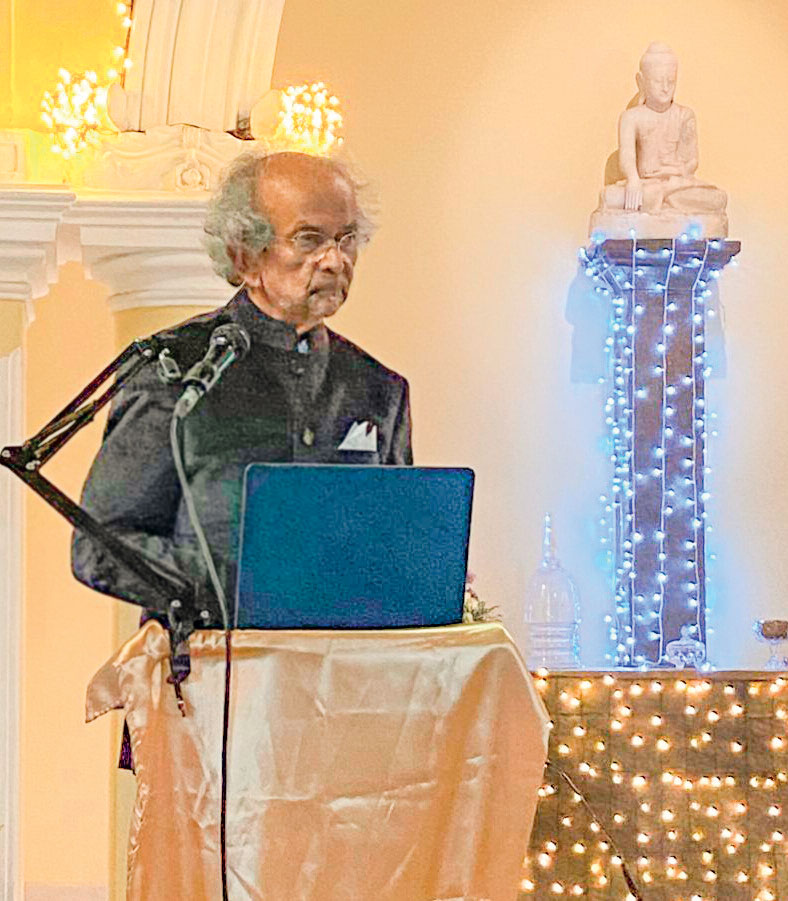
Emeritus Professor of Anthropology Gananath Obeyesekere has passed away at the age of 95.
Obeyesekere, a renowned Professor of Anthropology at Princeton University, has done much work in his home country of Sri Lanka.
His research focuses on psychoanalysis and anthropology and the ways in which personal symbolism is related to religious experience, in addition to the European exploration of Polynesia in the 18th century and after, and the implications of these voyages for the development of ethnography.
Among his popular books are Land Tenure in Village Ceylon, Medusa’s Hair, The Cult of the Goddess Pattini, Buddhism Transformed (coauthor), The Work of Culture, The Apotheosis of Captain Cook: European Mythmaking in the Pacific, and Making Karma.
A resolution to appoint a committee of inquiry for the removal of Inspector General of Police Deshabandu Tennakoon was handed over to the Speaker of Parliament, (Dr.) Jagath Wickramaratne, today (25).
This resolution has been signed by 115 Members of Parliament, according to a statement issued by the Communications Department of Parliament.
This motion was submitted to the Speaker under Section 5 of the Removal of Officers (Procedure) Act No. 5 of 2002.
The occasion of handing over this resolution was attended by Deputy Minister of Labour Mahinda Jayasinghe, Deputy Minister of Youth Affairs Eranga Gunasekara and Members of Parliament (Dr.) (Ms.) Kaushalya Ariyarathne, and U.P. Abeywickrama, Attorney at Law.
The Election Commission has informed the government to provide details of ongoing development projects during the election period.
Accordingly, ministries and government departments are required to submit information regarding the relevant projects to the Election Commission for review.
The commission stated that the disclosed development projects will be assessed, and a final decision will be made regarding their continuation during the election period.
Additionally, if any of these projects are found to have a potential impact on the election, the government will be advised to postpone them until after the election, the commission said.
Traditionally, Cabinet decisions made during the election period are communicated to the Election Commission, which reviews them and provides guidance to the government accordingly.
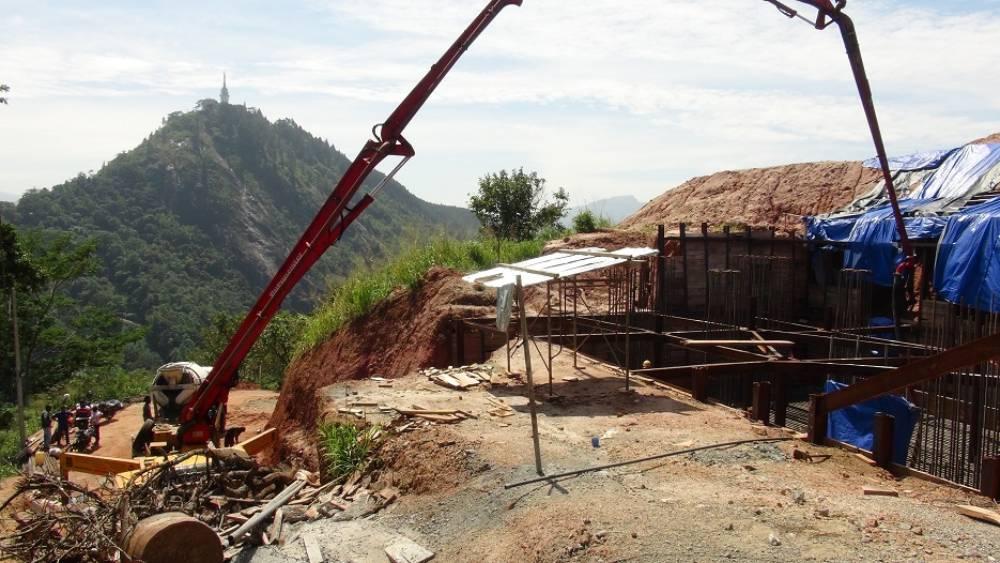
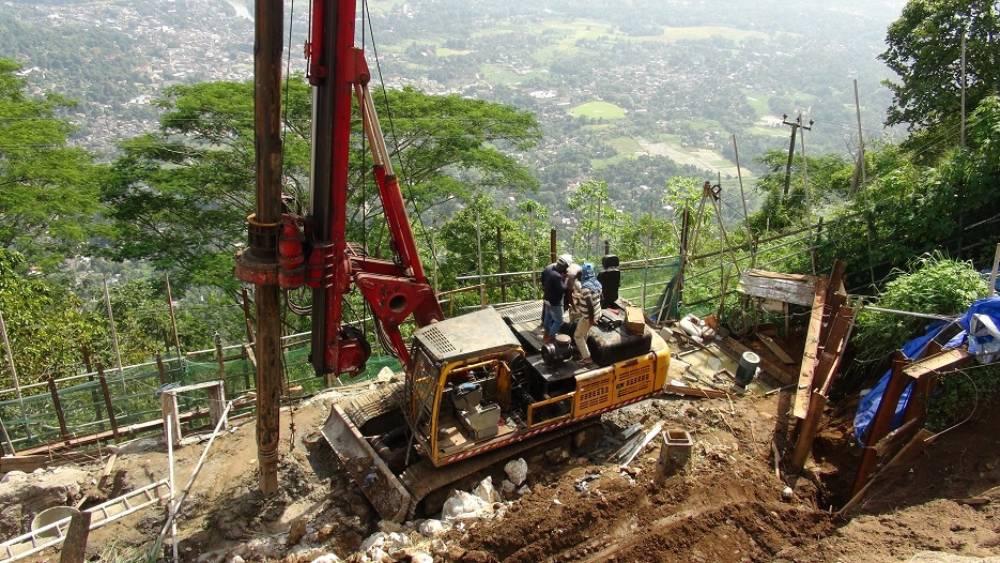
Colombo, March 24 (Daily Mirror) – Cable car projects that operate more than a kilometre between two mountains without any support are rare in the world. The Sri Lankan people will have the chance to experience this rare opportunity before the end of this year.
The first cable car project in the country covering a distance of 1.8 km between Ambuluwawa Religious and Biodiversity Complex to the summit of Ambuluwawa Hill in Gampola and from there to Ambuluwawa Agrarian Tower is a joint venture of Chinese and American investors.
The first phase of this project is to be completed by October this year.
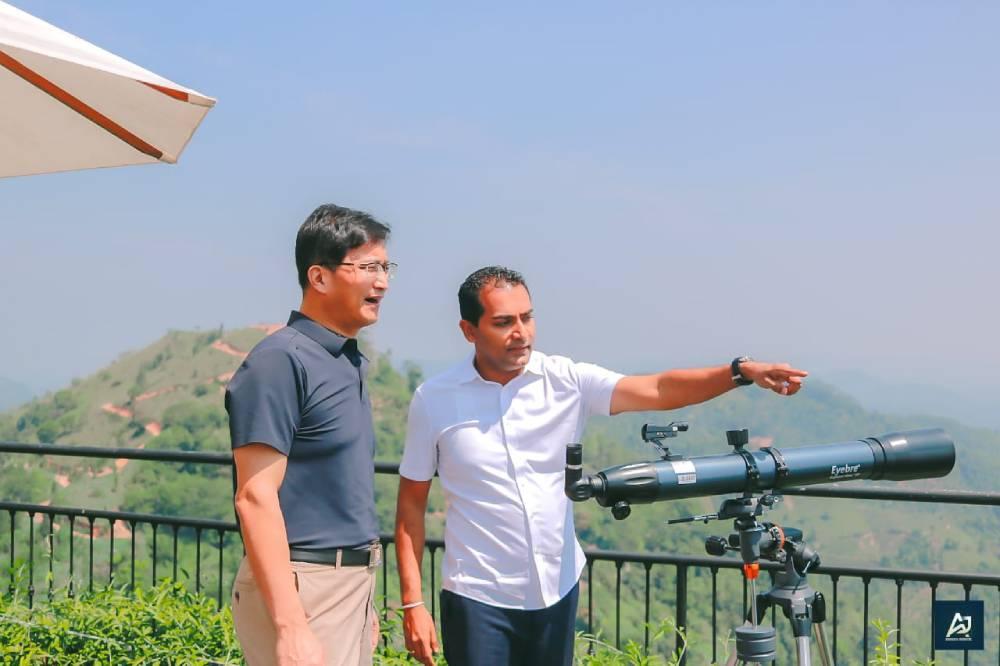
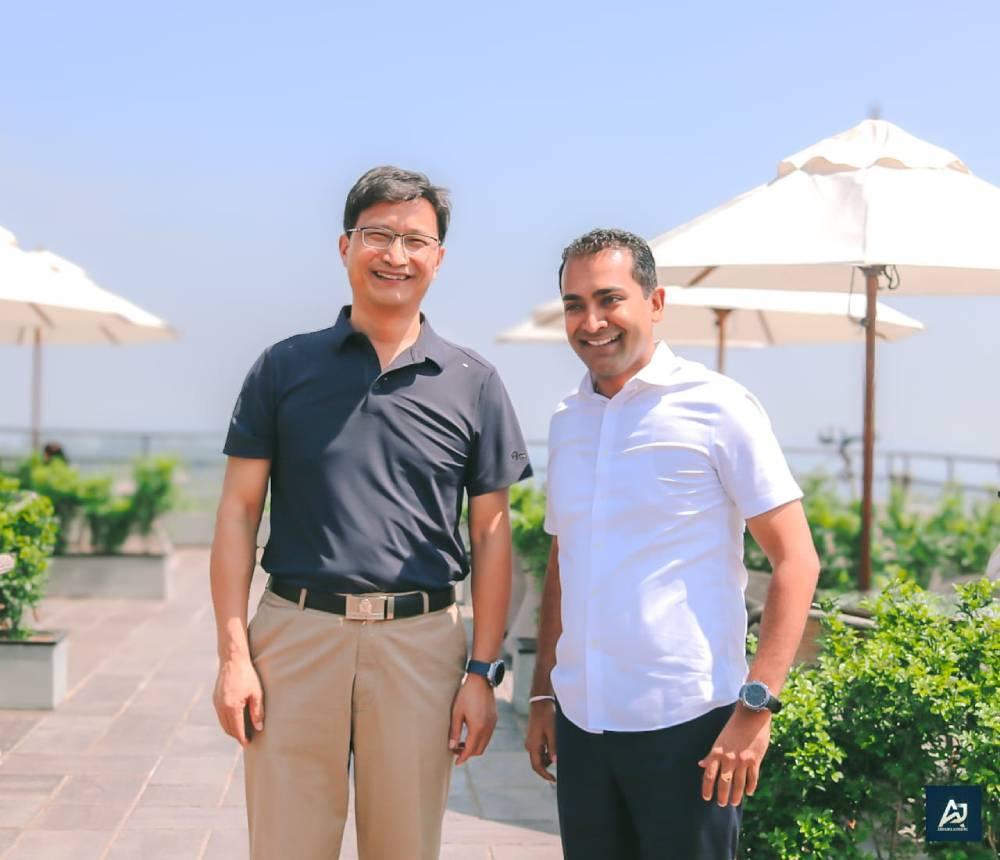
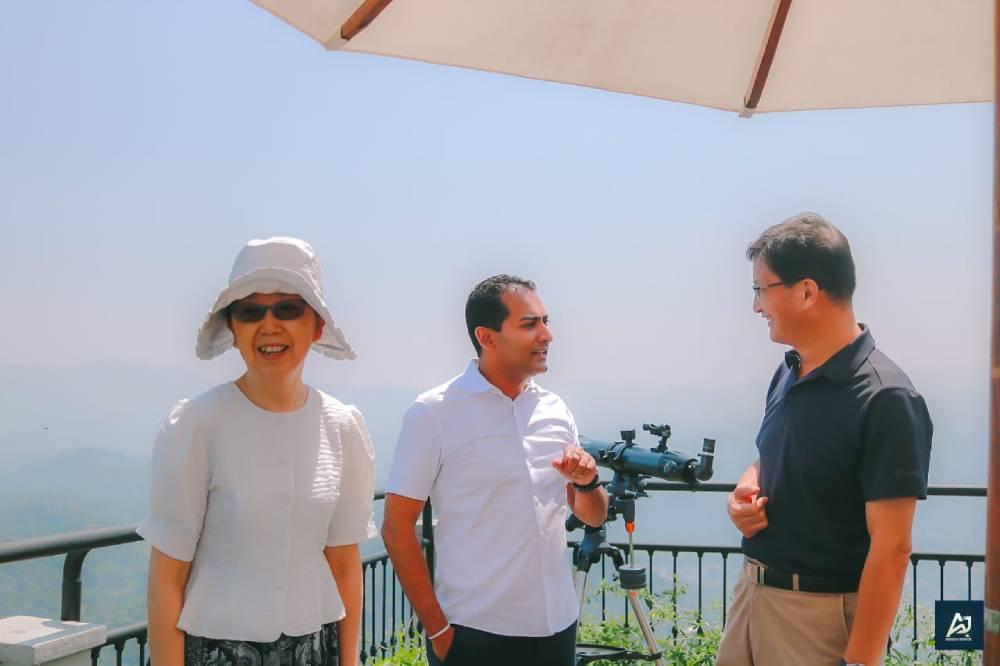
Chinese Ambassador in Sri Lanka Qi Zhenhong on Sunday (24) visited Ambuluwawa for an inspection of the project and met the Chairman of Ambuluwawa Trust and Parliamentarian Anuradha Jayaratne.
The feasibility study of the project had been completed 18 years ago, and it has turned a reality far from being a dream due to the Chinese and American investors. The cable car service would be expanded to the location of Gampola Railway Station so that the foreign tourists travelling to Nuwara Eliya will have the opportunity to break journey at Gampola and enjoy a cable car ride to Ambuluwawa,” the parliamentarian told the Ambassador.
He said he is hopeful that Gampola will turn into a popular tourist destination in the world.
Ready to resume project on initial terms only, open for other investments if SL seeks
Colombo, March 25 (Daily Mirror) – India’s Adani Group is not ready to compromise on the initially agreed tariff rate and other parameters of the 484 MW wind and transmission project in Mannar, despite its agreement to execute the project if Sri Lanka requests, Daily Mirror learns.
Adani Green Energy SL Ltd informed Sri Lanka’s Energy Ministry its position in this regard after the Sri Lankan authorities including President Anura Kumara Dissanayake said that the price of US $0.0826/kWh (8.26 US cents) quoted and agreed upon earlier is too high.
Subsequently, the company withdrew from the proposed wind project earlier. However, Adani Group reaffirms that it would always be available to undertake any development opportunity if the Sri Lankan government ever considers it to participate.
According to an informed source, due process had been followed and Adani was selected to implement the wind and transmission projects. The Cabinet Appointed Managing Committee on Investment (CAMCI) had approved the project under ‘Fast tracking of Investments’ at that time.
After Cabinet approval was given during the time of the last government, the MoUs were entered into between five government entities and Adani Green Energy SL Ltd.
The project also forms part of Sri Lanka’s Long-Term Generation Expansion Plan 2023-2042 approved by the Public Utilities Commission of Sri Lanka.
The tariff quoted has been determined by multiple factors such as the capital cost, cost of raising funds, tenure of the power purchase agreement (PPA), and operational and maintenance costs. The PPA tenure in Sri Lanka is 20 years, whereas in India it is 25 years, allowing for longer asset ownership and operation.
Sri Lanka’s credit rating by Moody’s is Caa1” and S&P is SD”. These credit ratings denote a very high risk associated with any lending or investment in a country. The equity risk premium for Sri Lanka is 22.15 per cent, but Adani is seeking only a 5 per cent risk premium.
According to industry experts, the cost of 8.26 US cents per kWh, Adani’s wind energy, if realised, will significantly undercut the country’s current oil and coal-based generation, which averages over 14 cents. The pricing differential will enable Sri Lanka to reduce its annual power generation costs by approximately US $ 80 million.
Sri Lanka spends around US $ 300 million annually on imported oil and coal for electricity. Incorporating Adani’s wind project will save over $200 million in annual foreign exchange outflows, greatly enhancing energy security and economic stability.
The UK government has imposed sanctions on four individuals which it claims are responsible for serious human rights abuses and violations during the Sri Lanka civil war.
The individuals sanctioned by the UK today include former senior Sri Lankan military commanders, and a former LTTE military commander who later led the paramilitary Karuna Group, operating on behalf of the Sri Lankan military against the LTTE.
The measures, which include UK travel bans and asset freezes, target individuals responsible for a range of violations and abuses, such as extrajudicial killings, during the civil war, the UK’s Foreign, Commonwealth & Development Office said in a statement today.
Those sanctioned include:
• former Head of the Sri Lankan Armed Forces, General Shavendra Silva;
• former Navy Commander, Admiral of the Fleet Wasantha Karannagoda;
• former Commander of the Sri Lankan Army, General Jagath Jayasuriya;
• former military commander of the terrorist group, the Liberation Tigers of Tamil Eelam, Vinayagamoorthy Muralitharan. Also known as Karuna Amman, he subsequently created and led the paramilitary Karuna Group, which worked on behalf of the Sri Lankan Army.
Secretary of State for Foreign, Commonwealth and Development Affairs, David Lammy, said:
The UK government is committed to human rights in Sri Lanka, including seeking accountability for human rights violations and abuses which took place during the civil war, and which continue to have an impact on communities today.”
I made a commitment during the election campaign to ensure those responsible are not allowed impunity. This decision ensures that those responsible for past human rights violations and abuses are held accountable.”
The UK government looks forward to working with the new Sri Lankan government to improve human rights in Sri Lanka, and welcomes their commitments on national unity.”
During her January visit to Sri Lanka, Minister for the Indo-Pacific, Catherine West MP, held constructive discussions on human rights with Prime Minister, Foreign Minister, civil society organisations, as well as political leaders in the north of Sri Lanka.
For communities to move forward together, there must be acknowledgement, and accountability for past wrongdoing, which the sanctions listings introduced today will support. We want all Sri Lanka communities to be able to grow and prosper,” the FCDO statement said.
The UK government said it remains committed to working constructively with the Sri Lankan Government on human rights improvements as well as their broader reform agenda including economic growth and stability. As part of our Plan for Change, the UK recognises that promoting stability overseas is good for our national security.”
The UK said it has long led international efforts to promote accountability in Sri Lanka alongside partners in the Core Group on Sri Lanka at the UN Human Rights Council, which includes Canada, Malawi, Montenegro, and North Macedonia.
The UK also said it has supported Sri Lanka’s economic reform through the International Monetary Fund (IMF) programme, supporting debt restructuring as a member of Sri Lanka’s Official Creditor Committee and providing technical assistance to Sri Lanka’s Inland Revenue Department.
The UK and Sri Lanka share strong cultural, economic and people to people ties, including through our educational systems. The UK has widened educational access in Sri Lanka through the British Council on English language training and work on transnational education to offer internationally accredited qualifications.”
GDP Is the wrong tool for measuring what matters – It’s time to replace gross domestic product with real metrics of well-being and sustainability– Joseph E. Stiglitz
A country’s Gross Domestic Product (GDP) is the standard measure of the total value of all goods and services produced within its borders during a specific period, typically a year. The “services” component of GDP includes the value of all final services produced, such as transportation, communication, finance, healthcare, education, and many others. Sri Lankan GDP was estimated to be USD 84.36 Billion, and it is reported that the country achieved a GDP growth of 5% in 2024. In dollar terms, the growth amounts to USD 4.21 Billion. This is a pure arithmetic calculation and no doubt economists, and the Sri Lanka Central Bank will have their own calculations and interpretations. If the country has grown by USD 4.21 Billion dollars and it has an economy worth USD 84.36 Billion, it is worth examining and discussing what it means and whether it measures, as Stiglitz says, the well-being and sustainability of the economy.
The following statistics presents a range of underlying disparities, inequalities and inequities amongst its people despite developments” visible to the naked eye.
Poverty in Sri Lanka is reported as 24.8% of the population as of July 1, 2024, impacting access to nutritious food. Nearly one-third of children under 5 are malnourished. UNICEF says that 2.3 million children in Sri Lanka don’t have enough to eat. Families wake up every day to increased food prices, struggling to provide for their children in a country where vital services, like healthcare and education, are being pushed to their limits.
As per statistics from the department of census and statistics, the top 10% of Sri Lankans hold 42% of all income and 64% of all personal wealth, the top 1% holds 15% of all income and 31% of all wealth. The bottom 50% of Sri Lankans have only 17% of all income and 4% of all personal wealth. Income Distribution –The highest 10 percent of the population shared 32.9 percent of total income in 2016, while the lowest 10 percent shared 2.9 percent. More than half the total household income is enjoyed by the richest 20%, while the bottom decile (poorest 20%) gets only 5%.
Status of women – The UNDP (https://www.undp.org/srilanka/gender-equality) states that out of the 8.5 million economically active population, 72% are males and only 35% are females, women constitute 52% of Sri Lanka’s population, but female representation in parliament is only 5.3%, the labour force participation of women as of 2021 is 33.6% of the total population, 90% of Sri Lankan women and girls have faced sexual harassment in public buses and trains at least once in their lifetime. Unpaid Care Work. The most recent time-use survey conducted in 2017 showed that 87.3 per cent of women above the age of 10 years were responsible for most of the care work, a percentage that is bound to have increased during the COVID pandemic and the current economic crisis. Women who engage in care work are classified as economically inactive, but mostly unpaid.
Joseph E. Stiglitz, a Nobel laureate in economics and University Professor at Columbia University, former chief economist of the World Bank (1997-2000), former chair of the US President’s Council of Economic Advisers, former co-chair of the High-Level Commission on Carbon Prices, and lead author of the 1995 IPCC Climate Assessment and Co-Chair of the Independent Commission for the Reform of International Corporate Taxation and the author, most recently, of The Road to Freedom: Economics and the Good Society (W. W. Norton & Company, Allen Lane, 2024) says in an article published in the Scientific American “GDP measures everything,” as Senator Robert Kennedy once said, “except that which makes life worthwhile.” The number does not measure health, education, equality of opportunity, the state of the environment or many other indicators of the quality of life. It does not even measure crucial aspects of the economy such as its sustainability: whether or not it is headed for a crash”. (https://www.scientificamerican.com/article/gdp-is-the-wrong-tool-for-measuring-what-matters/). This article is well worth reading, especially by policy makers, and more generally by the public.
Interestingly Stiglitz refers to causal connection relating to what is measured, simply put, a cause-and-effect relationship. He refers to an inkling of this causal connection during the Vietnam War, with the military’s emphasis on “body counts”: the weekly tabulation of the number of enemy soldiers killed. Reliance on this morbid metric led U.S. forces to undertake operations that had no purpose except to raise the body count.
Like a drunk looking for his keys under the lamppost (because that is where the light is), the emphasis on body counts kept us from understanding the bigger picture: the slaughter was inducing more Vietnamese people to join the Viet Cong than U.S. forces were killing”
The point Stiglitz is making is perhaps the reliance on what is measured as yardsticks for planning for the future and that if metrics are not accurate and have no direct relationships and do not depict the wellbeing and quality of life of people, the planning process itself would be on unstable grounds.
In 2019, Sri Lanka’s GDP was estimated at 89.02 billion US dollars and economic growth at 4.5% compared to the growth of 7.8% in 2018. Yet, in 2022, the country declared itself bankrupt announcing it was defaulting on its debts. While the COVID pandemic and the global economic downturn had a debilitating effect on the country’s economy. by a GDP measure, years preceding the bankruptcy were healthier than in 2022 and even than what it is now. As stated in the Wikipedia according to commentators, the money was used to fund vanity projects rather than projects of national utility. Sri Lanka’s foreign debt increased substantially, going from US$11.3 billion in 2005 to $56.3 billion in 2020. While foreign debt was about 42% of the GDP in 2019, it rose to 119% of its GDP in 2021”. This is an illustration that economic planning and management using the GDP as a key measure, and not managing its debt had not served the country well and led to its bankruptcy.
The objective of this article is not to go back in history and analyse what happened and where the country got it wrong. Rather, as a matter for the future, consider Stiglitz’s statement that GDP Is the wrong tool for measuring what matters – It’s time to replace gross domestic product with real metrics of well-being and sustainability”.
In terms of the well-being of the people, it is interesting to note some statistics relating to the USA, the richest country in the world which according to the World bank, had a GDP of 27.72 trillion in 2023 and a GDP per capita of 82, 769.
As per the US Census Bureau, the US had an official poverty rate of 11.1%, with 36.8 million living in poverty. Malnutrition is another key factor that has a relevance to the health and well-being of people, but it is a complex issue with both undernutrition and overnutrition concerns, affecting a significant portion of the population, including children and older adults, with disparities in food insecurity rates across different demographics. Child Malnutrition: 2022 Facts and Statistics contained in World Hunger Education Service -Hunger Notes (https://www.worldhunger.org/about-whes-hunger-notes/) reports that about one in seven households (13.5%) experienced food insecurity in 2023, with 47.4 million Americans living in these households, 13.8 million children lived in food-insecure households, 1.6% of U.S. adults aged 20 and over are underweight. Obesity or a non-communicable disease coupled with malnutrition, is prevalent in more than half of all malnourished households that reside in the US. Income disparity according to the Wikipedia, in 2021, the top 10% of Americans held nearly 70% of U.S. wealth, up from about 61% at the end of 1989 and the top 1% earned 13.2% of total income in 2019, nearly doubling from 7.3% in 1979. Besides these statistics, disparities relating to health services where, as mentioned by Stiglitz The U.S. being the richest country in the world, suggesting a highly efficient economy, recorded more than a million deaths from COVID, whereas Vietnam, with a GDP of 409 billion had about 43,000”. All above indicators and a host of other indicators, too many to cite here, questions the well-being situation in the US and how such disparities and inequities occur in a country which has a GDP of 27.72 trillion or 26.1 % of the worlds GDP in 2023 (US 106.2 trillion) –https://www.worldometers.info › gdp › gdp-by-country
Stiglitz argues that seeking to boost GDP in the misplaced expectation that that alone would enhance well-being—led us to this predicament. An economy that uses its resources more efficiently in the short term has higher GDP in that quarter or year. Seeking to maximize that macroeconomic measure translates, at a microeconomic level, to each business cutting costs to achieve the highest possible short-term profits. But such a myopic focus necessarily compromises the performance of the economy and society in the long term”.
This indeed is a good lesson for Sri Lanka. In the past, numerous projects undertaken increased the GDP of the country and raised its GDP growth. However, while the goods and services valuation would have gone up, many such projects were financed with debt, without a proper assessment of returns on the investments, and at the cost of not providing adequate funding for health and education, food security, energy security, environment security and many other social issues.
This would have compromised on the well-being of the people and the long-term sustainability of the economy with the state of bankruptcy, the country experienced in 2022 demonstrating the unsustainability of economic management based purely on GDP and GDP growth measures, without for example, considering the country’s indebtedness.
As mentioned by Stiglitz, in 2007, France’s President Nicolas Sarkozy had realized the futility of a single-minded approach of pushing up GDP to the neglect of other indicators of the quality of life. In January 2008, Stiglitz was asked by President Sarkozy to chair an international commission on the Measurement of Economic Performance and Social Progress. The initial report issued in 2009, entitled Mismeasuring Our Lives: Why GDP Doesn’t Add Up, was published right after the global financial crisis had demonstrated the necessity of revisiting the core tenets of economic orthodoxy. Stiglitz says that it met with such positive resonance that the Organization for Economic Co-operation and Development (OECD), after six years of consultation and deliberation, concluded that in place of GDP, each nation should select a dashboard”—a limited set of metrics that would help steer it toward the future its citizens desired.
The OECD has adopted the approach in its Better Life Initiative, which recommends 11 indicators that measures performance on the things they care about (https://www.oecdbetterlifeindex.org/). The World Bank and the International Monetary Fund (IMF), traditionally strong advocates of GDP thinking, are now also paying attention to environment, inequality and sustainability of the economy. Based on this experience, these 11 topics reflect what the OECD has identified as essential to well-being and sustainability
Sri Lanka could adopt, with necessary local imperatives, the OECD Better Life Initiative, with its core tool, the Better Life Index, to move beyond GDP as the sole measure of progress by focusing on broader aspects of well-being, and economic management that plays a crucial role in supporting policies that enhance these aspects. It could recognize that economic growth alone doesn’t guarantee a better life, and it should measure well-being across various domains, including material living conditions (housing, income, jobs) and quality of life (community, education, environment, health, life satisfaction, safety, and work-life balance). Policy makers could develop a framework for more effective economic policies such as responsible fiscal and monetary policies, employment programs, and social safety nets, all of which directly impact various dimensions of well-being, including income, employment, and access to essential services. Policies that address climate change, pollution, and resource depletion are essential for ensuring a sustainable environment and protecting the well-being of future generations.
While Sri Lanka maybe collecting data and reporting on some of these indicators, it is unlikely there is a dashboard that provides performance statistics and whether and how these are used in determining economic policy determination and management. A dashboard is essential for the selected indicators, and it should be available via the internet for public access. Such a tool would increase visibility on how the country is performing and it will increase accountability on the part of entities responsible for implementation and management of policies. Sri Lanka is not a member of the OECD, and while using its indicators as guidelines, it could develop its own indicators that should be the cornerstones for economic management. Disparities that exist, whether they are related to health, education, demographics, income, gender equality, living area related disparities, particularly related to housing and neighbourhood amenities, that lead to significant inequalities in access to opportunities, quality of life, and health outcomes, and impacting individuals and communities, should be the areas that economic policy and management should address, when looking at infrastructure and services expenditure. Addressing disability and mental condition related care, infrastructure needs to support affected persons, should also be a key area that should be included, if it really cares for its people.
For worthwhile and sustainable outcomes to occur, planning will have to be decentralised and taken to the grassroots as practically as possible. The top-down planning needs to become bottom-up planning, where resource availability and sharing being understood and appreciated by all based on realistic measures that impacts on the lives of people. Leaving decision making to a set of officials in the Finance ministry or a Minister or members of the Parliament is the ultimate top-down model that Sri Lanka has followed since independence and the country’s bankruptcy in 2022, 74 years after independence, shows the weaknesses in the economic model in operation over 74 years. Compared to some regional economies, Sri Lanka lags, perhaps except in healthcare where its universal healthcare system is the envy of many such regional countries. However, the challenges before it are immense as even now, serious cracks have begun to appear on the system and its sustainability.
‘Before you study the economics, study the economists!’
Economists in Sri Lanka: Bribed in Printed US$s
e-Con e-News 16-22 March 2025
*
Minister Sirisena alleged that Ceylon Tobacco Company (CTC)
hadofferedhim money ‘sufficient for 14 generations
to live in a first world country’
(see ee Random Notes)
*
• Dear Julie: We’re sure, you consider yourself a true-red-blooded yankee – yet you act like one of them East Asian comfort women cruelly forced into servitude by the Japanese imperialists. Even as you appear a most willing source of comfort, blowing them horizontal and genuflective relief midst all their incessant warring. Last week, your latest master massacred Yemeni women & children to engorge his flaccid polls. We imagine that killing women en masse is a form of gender equality. And a turn-on too.
All your latest leaders seem to have a yen for the East in choosing their bedrests. Some of their trophy wives are East Europeans, some are B1 visa Indians (the next wannabe Canadian PM has even gone northeast-South American to marry a blanco gusano Venezuelan). This week your Vice President suggested his migrant Indian wife was ‘cheap labor’. JD Vance claimed: ‘importing cheap labor through our immigration system, cheap labor became the drug of Western economies’ (Though no labour is ‘cheap’ – only ‘cheapened’ perhaps!).
Really! However your leaders are still all woke, in terms of who they wake up next to. But, it’s no more woke talk – it’s all sleep talk. All that woke talk about gender & diversity has gone fast-asleep or been put to sleep – along with all that chatter about multiculturalism & POC (people-of-color). POC em!
You’ve already been replaced and yet still keep exercising your overactive knees, north, south, east & west (well, mostly north & east). It seems your political kanganies are making you work overtime-&-a-half to keep your job – like all those other migrant wannabes have to do. Maybe you’ have’ll get immunity from karma too – but for how long we don’t know. There you were again last week recruiting students in Sri Lanka to pay exorbitant foreign student fees. For whom? Every self-styled US bounty hunter is picking up people off the streets. They used to deport so-called illegals only after they brought in California’s abundant harvests, so that your industrial bosses wouldn’t have to pay their coolie wages. But now it’s a free-for-all!
Maybe that’s why after you are replaced here (by another skirt!), they may hold on to you tighter. Sic em, girl, sic em! Yet you have so far failed to kill our last President and his family. Is that why you got your BBC Qatari camel caravan to go after Ranil, who supposedly protected them? Anyway, it’s not about the Rajapakses per se but about teaching any national leader a lesson! You were seen as something of an expert sicario, sent here so far from that Caribbean crime scene where you helped arrange the eviction and assassination of yet another Haitian leader. After pushing (the once ‘fabulous’ sugar plantation) Haiti into greater turmoil, your current leader now accuses Haitians emigres of eating Minnesotan pets! But surely that diet is better than that of the cannibalistic colonial Europeans who’ve eaten Haitians for 200 years and more! Perhaps you’ll be kicked upstairs just as you were kicked up here or down here or sideways, to retire our last leader, whose pension and security you also wish to downgrade. Anyway, just thinking of your knees has sent us far off topic. So sayonara (or, ‘Anneyong‘ in Korean, but you southerners are still ruled by those Japanese who colonized you, who themselves are also colonized). So, until we meet again, perhaps in some comfortable chamber of commerce… Dear, dear Julie, we’re yours, truly, truly….’
*
This ee recalls the now-erased controversies around Ceylon Tobacco’s (CTC)’s bribing of politicians, apparently over labeling. Maithripala Sirisena as Health Minister also highlighted that over 20,000 people were killed in Sri Lanka by cigarette smoking every year (see ee Random Notes), with many more diseased. ee therefore continues snippeting from Maurice Corina’s Trust in Tobacco: the Anglo-American Struggle for Power, about the formation of CTC’s parent the British American Tobacco (BAT) monopoly. This week’s adaptation recalls how the BAT diverted the media, and England & the US’ politicians into label-composing: about how smoking ‘may’ damage your health. The tobacco monopoly pours millions into promotions of the ‘independent’ brands, bankrolling the advertising industry (with lesser but substantial funding of ‘Medical Research’). BAT sought to befog the link between cigarette smoking & ‘cancers of the throat, mouth & respiratory tract’. Their PR firms promoted campaigns to claim that woman could become thin by smoking, thereby promoting anorexic culture, as well as promising boys they would be more manly if they smoked. Corina looks at the power of the tobacco lobby, since tobacco was the top non-food cash crop for farmers. Interestingly, for students of ethereal philosophy, BAT was also one of the funders of the philosophy of ‘libertarianism’, which claimed that government has no right to tell people what they did with their bodies, which would include dangerous drugs & chemicals, and suicide. The US government now is being fronted by such ‘tech bros’ as Paypal’s Peter Thiel & Twitter‘s Elon Musk, who were themselves birthed by the white supremacist settler colonies in Southern Africa. Libertarianism & liberalism we may recall have their origins in justifying the right to own property, including slaves…
*
‘We invited the then-chief of US Indo Pacific Command Admiral
[Japanese-American Harry B] Harris as chief guest to Galle Dialogue.
In his speech he pointed out 3 reasons why Sri Lanka is important to the USA.
They are Location, location, location. The place where Sri Lanka is situated
is most important for them. Even India’s one-time National Security advisor
Shiv Shankar Menon’s book noted that Sri Lanka is a permanent aircraft carrier
in the Indian Ocean. The Indian Ocean can be easily controlled from Sri Lanka.’
– Chief of Defence Staff, Admiral Ravindra Wijegunaratne (2019)
*
With the USA and their English & European killer poodles playing ‘good cop / bad cop’ attempting a quieting on Russia’s Wesrtern Front while opening a more bellicose Eastern front against China, US envoy Chung welcomed this week Indo-Pacific Commander Samuel Paparo & his band to ‘Reaffirm our bilateral defense partnership with Sri Lanka’. Does Sri Lanka have a bilateral defense partnership with the US? As far as we know, President Gotabhaya Rajapakse signed the Acquisition & Cross Servicing Agreement (ACSA), with the US, at the height of the LTTE war against the government of Sri Lanka, in 2007. It was ‘only 8 pages including the cover’. In 2017 the Sirisena government renewed ACSA, with ‘voluminous annexes giving the names & addresses of almost all US military establishments that could have a footprint or boots on the ground in Sri Lanka’. With such a crime committed, the next step was to ensure that the economy was to be crippled to prevent any nationalist government from abrogating the ACSA agreement. Sirisena refused to sign the Status of Forces Agreement (SOFA), which directly led to the so-called sacking of Ranil Wickremasinghe and what the poodle-media called a ’Constitutional Coup’ in October 2018.
*
• Economists are against money printing. At least those published in the ‘soapy’ media sponsored by Unilever et al. These economists are not against selling themselves to the dollars printed by the US Federal Reserve. A ‘meme’ doing the rounds this week named those economists we hear from every day in the media. Well paid in those green dollars, in particular by USAID, we are sure, it is not just them (see ee Who’s Who). Those Sanderatnes & Abeyratnes & de Mels & Coomarawamys etc. They who sing the praises of the US-controlled IMF & World Bank and incessantly repeat their talking points (see ee Random Notes for another house-economist WA Wijewardena’s listing of the ‘talking points’ of the Washington Consensus that he claims has now been thrown overboard, but are still parroted by the IMF lip services. And as for corruption, the Trump administration just legalized bribery of foreign leaders! See ee Quotes).
Oh yes, Indrajith Coomaraswamy, who is constantly mumbling how post-Independence (now there’s an interesting coinage) leaders have promoted ‘populism’ & ‘protectionism’ etc. As SBD always asked: Was it ‘populism’ to maintain the colonial import-export plantation fraud after 1948?
Indeed, a long line of Coomaraswamys have laid down, horizontal and genuflective, prostrate and prone, before their colonial masters – as interpreters, mudaliyars, knights, unofficial ‘native’ members of non-representative white legislative councils, and in these times, as unelected but chosen UN rapporteurs and economists.
The economist Coomaraswamy (who appears to be increasingly eclipsing the shining star of present CBSL governor G Weerasinghe) confessed this week that putting the country in thrall by buying Wall Street’s ‘international’ sovereign bonds (ISBs, while blaming China for throwing the country into debt) was as inevitable as going to the IMF.
Pushing back against claims that large-scale bond issuances
were primarily responsible for Sri Lanka’s 2022 debt default,
Dr Coomaraswamy argued that these borrowings actually helped
delay an otherwise inevitable default. ‘If we hadn’t continued
to borrow or issue ISBs, we would have defaulted much earlier
because we were literally borrowing to repay the debt,’ he stressed.
(see ee Economists, SL must return to int’l capital markets)
Former Central Bank (CBSL) Governor Coomaraswamy is on the Board of Directors of Tokyo Cement, along with the Gnanam oligarchy. A possible Japan Cement front is ‘Siam City Cement’ which grabbed land and mineral rights for 50 years from the crippled Sri Lanka Cement Corporation (SLCC)’s land to extract mineral sands in the infamous Aruwakkalu area in Puttalam (where the April 2019 terrorists conducted training).
Coomaraswamy is also a Principal Research Fellow & Director of England’s Overseas Development Institute’s International Economic Development Group, ODI Global. One Coomaraswamy ancestor was an interpreter for the English who betrayed the ‘doomed’ King Sri Vickrama Rajasinghe of Sinhale. No wonder he yearns for his ancestor’s earnest patrimony…
As has long been noted of Coomaraswamy:
‘If China followed Coomaraswamy’s advice they’d be still exporting rice, no? Anyway,
I don’t think Indrajith Coomaraswamy, the honourable & well educated gentleman
that he is, can help the NPP government or Sri Lanka; he could be an excellent rugby
coach for SL but has been useless as an economist to find a way out of our debt crisis,
which has been in the making for a long time, from the English colonial conversion
of the country into a plantation and the subsequent failure to industrialise in
post-colonial times, especially in the post-1977 era of neoliberalism – which was all
about banking on the so-called open economy to bring back the old colonial masters
in the guise of investor-saviours to somehow help us produce profitable things for export,
as if these capitalists would have any interest in helping a small economy like SL
to industrialise and compete with them in the world market.
The prevention of industrialisation & economic autonomy for countries such as SL
has been the prime objective of the IMF, which is ultimately and immediately ruled
by the creditors hell bent on sucking everything they can out of our indebted people.
It is a pity that textbook neoliberals like IC – who are more IMF than the IMF and
must bear the responsibility for ruining our economy by peddling the perennial problem
as the solution – are still seen as good for the country. If the NPP is so naive as to think
so too, then not much is to be expected of them either. When people speak of
the IMF ‘bailout’, they should be required to ask: who is bailing out whom?
It is certainly not the people of SL – who voted for AKD because they just
cannot bear the consequences of the IMF/IC ‘bailout’. The real question is:
who can bail us out of one damn ‘bailout’ after another?’
*
Meanwhile, economists in the drag of ‘House Marxists’ exported to Sri Lanka, who wax in such colonial lipservices as the Commonwealth Journal for International Affairs – that kneegrow division of England’s Chatham House – are calling for ‘a new alliance of liberal democratic regimes that can confront US, Russian & Chinese authoritarianism.’ We wonder who these ‘liberal democratic regimes’ would be? The US colonies of England, Germany, France, Japan? England imposed plantations on much of the incessantly developing but always ‘undeveloped’ world.
*
The plantations had an inherent technological backwardness
which went hand in hand with a low wage structure.
–SBD de Silva
SBD de Silva was no House-Marxist, and no colonial lapdog. This ee reproduces a valuable find, since SBD published so rarely beyond his classic The Political Economy of Underdevelopment. In one of the his last published dissertations, in the volume Capital & Peasant Production: Studies in the Continuity & Discontinuity of Agrarian Structures in Sri Lanka (1985), SB explains clearly, in ‘Plantations & Underdevelopment’,how the plantation system has come to impose a low-waged low-tech economy on Sri Lanka. SB (to whom ee is dedicated, though often reminded how far we have strayed from his sharp analyses of the roots of our discontent) examines this non-settler colonial economy’s gestation in the white settler colonies of the Americas.
In this ee Focus, SBD’s ‘Plantations & Underdevelopment’ recalls how white servants were first ‘indentured’ but then were able to buy their freedom and escape into cultivating their own ‘god’s little acres’ of stolen land. The only way a large ‘labour force’ could be created on land stolen in all its abundance was by state-sponsored slavery – at first the original ‘native’ Americans, who knew the terrain and resisted the swindles of the plantation economy like the Sinhala, and then the Africans. Chattel slavery stagnated the use of technology and promoted backward relations of labour. In fact, SB argues, ‘plantation crops could have been grown on smallholdings as cheaply and effectively as on the plantations’. He also shows how a hierarchy of commissions (ah! the high commissioner!) came to dominate the search for profits rather than investment in modern productivity. How’s that, for the original authoritarian & despotic occidental arts?
The world is heading into WW3. It is a matter of when. The only way it can be avoided is if the debt trap trounces them first. It is not the fault of an individual, a nation or a few of them. It is a clash of competing priorities, access to scarce resources, changing world order and resistance to change and the continuation of same old European colonialism. And it did not happen suddenly. It gradually grew into this situation.
Despite the end of the Cold War, the world was not peaceful. In fact, the world was far more violent after the Cold War. Instead of the Soviet Union, the West found new enemies in China, Muslim majority nations/territories and in each other. Despite USA promising not an inch forward” referring to the threat of NATO expansion where this promise was given to the Soviet Union during discussions to unify Germany, this promise was never kept. Nuclear armed NATO has crept to the doorstep of Russia and looks to expand even further. US military bases have encircled China. Russia has also indulged in territorial ambitions in Georgia and Ukraine and did not keep its promise to respect their sovereignty. Belarus, Kazakhstan, Ukraine and Georgia gave up their nuclear weapons in exchange of a guarantee from Russia and others to respect their borders but the promise fell apart. South Africa also gave up their nuclear weapons as a mark of peace and symbolizing the fall of Apartheid but western meddling in South Africa only grew worse following the giving up of nuclear weapons. All these countries that gave up nuclear weapons now regret the decision.
Meanwhile France and the UK are rapidly expanding their nuclear weapons targeting Russia. USA, Israel, Australia, Poland, Turkey are either expanding their own or proliferating US nuclear weapons beyond what was deployed a few years ago. In response China is rapidly adding new nuclear warheads to its arsenal which stood at just less than 300 five years ago and is now racing to match USA in active nuclear warheads of 1,500 by 2035. North Korea and Iran are also pursuing nuclear weapons. If the trend continues both will have deployed nuclear weapons within the next 5 years capable of causing destruction in pro-US countries in their vicinity. India and Pakistan despite being 30 of the world’s poorest countries by per capita income spend enormous amounts of money in weapons and they too expand their nuclear weapons. India has become the world’s largest weapons importer of all time.
At the same time previous weapons reduction treaties are collapsing. USA and Europe have gone back on conventions that banned cluster munitions and anti-personnel mines. Other weapons conventions are also almost in tatters including the convention against biological weapons, intermediate range nuclear missiles, laws governing nuclear power plants, reciprocal weapons inspection and a few more. Biological weapons capable laboratories have grown by 7 times since the turn of the century as biological weapons are now very attractive after COVID-19 and is now seen as poor man’s nuclear weapons. Its other attraction is it causes no environmental destruction compared to nuclear and conventional weapons. In fact, biological weapons usage can save the environment from its biggest polluters. It’s a matter of time since aggrieved people in the middle east and their sympathizers elsewhere laid their hands on biological weapons and the consequences will be catastrophic.
Proliferation of drones is another major security threat to all nations. They are individual weapons capable of causing national level tragedies.
All pro-US military allies are trying to increase their defense spending by up to 5% of the GDP. This is more than double their current average of 2%. Almost all pro-US military allies are in debt traps. Their debt is more than 100% of their economy. Debt interest payments are either their largest government expenditure or will soon be the largest. Debt is another indicator of excessive greed where nations consume far more they can afford. They all have a fast-ageing population and have cut down their welfare schemes under austerity measures. This massive expansion of military spend is unsustainable for their debt-ridden economies. Their relative spend on education and healthcare systems is crashing. For the first time in history infant mortality of USA, UK and France rose a couple of years ago indicating the deterioration of their healthcare systems.
Climate change is another casualty of this weapons craze. Out of 194 countries that agreed to the Paris Convention on climate change only 15 countries (mostly very small countries) have submitted concrete plans to reduce emissions from their 2005 levels. As military expenditure increases, there is no way a country can meet climate change demands.
Blaming one another is not going to fix any problem. It is part of the problem. Instead, every nation should recognize the right of others to develop peacefully and respect existing borders whether they are acceptable or not. However, war is a better approach for superpowers as they are confident of prevailing over others in a major war. After such a war they will divide the rest of the world between them and enjoy their resources and slave labor at will. As the universal law goes, the fittest survives better and at the expense of weaker ones. Effects of ageing population, climate change, hunger, poverty and mental health of the population will further worsen if actual war occurs. Every country should have a plan to survive WW3 as much as they can. Superpower clashes will lead to clashes everywhere as regional powers will do the same to their weaker neighbors.
Tata Motors, India’s leading automobile family, along with DIMO, launched a new range of passenger vehicles (Internal Combustion Engine (ICE) vehicles and Electric Vehicles in the country.
On 12 March 2025, Tata Motors, India’s leading automobile family, along with DIMO, a Sri Lankan conglomerate and the only authorised distributor of Tata Motors in Sri Lanka, launched a new range of passenger vehicles (Internal Combustion Engine (ICE) vehicles and Electric Vehicles (EV)) in the country. In the launch event, Tata Motors successfully introduced a range of SUVs – the Tata Punch, Tata Nexon, and Tata Curvv. The highlight of the launch event was Tiago.ev, an electric hatchback, already available in the markets of India, Nepal and Bhutan, with various variants and plans to expand in other countries.
This strategic move aligns with Tata Motors’ commitment to sustainable electric mobility accessible to Sri Lankan customers, revolutionising EV vehicles in the island nation. After the economic crisis the re-entry of Tata Motors, provides Sri Lanka with a fresh inflow of trade and investment, supporting its auto sector.
Historically, before Tata Motors’ investment in 2025, providing reliable transportation in Sri Lankan markets. India and Sri Lanka have already engaged in various partnerships or collaborations within the automobile sector, especially through Ashok Leyland and CEAT Kelani Holdings, a joint venture between India’s CEAT and Sri Lanka’s Kelani Tyres, formed CEAT Kelani Holdings.
Ashoka Leyland, through its subsidiary Lanka Ashok Leyland (LAL) 1983, a joint venture between Ashok Leyland of India and the Lankan public sector company, Lanka Leyland Ltd. The company assembles and distributes commercial vehicles including trucks and buses strengthening public transport infrastructure in the country. In 2023, Ashok Leyland signed a pact with the Sri Lanka Transport Board (SLTB), a state-owned single-largest bus transport provider to deliver 500 buses.
Tata Motor’s EV launch in Sri Lanka in partnership with DIMO is more than a business decision—a strategic step to strengthen India’s Economic Diplomacy. This expansion strengthens India-Sri Lanka trade ties, counters China’s growing influence in the region and positions India as a key player in EV markets in South Asia.
India-Sri Lanka Economic Ties: A Strategic Reset?
After the economic crisis, this partnership Tata Motors and DIMO, appears to match India’s broader strategic goals in South Asia, especially in Sri Lanka. In the recovery efforts, India was among the major creditors, stabilising the economy through financial aid, reflecting the change in regional dynamics. India played a constructive role and extended humanitarian support worth USD 4 billion to Sri Lanka in line with its ‘India’s Neighbourhood First’ policy.
New Delhi focused more on strengthening economic ties with Sri Lanka after the presidential election in the country under the Anura Kumara Dissanayake (AKD) leadership to deepen its influence and reduce dependency on China. PM Modi held bilateral talks with President Dissanayake on December 16, where the two leaders discussed diverse issues. The joint statement released indicated a comprehensive discussion strengthening the bilateral relationship between India and Sri Lanka, and it highlighted the commitment to work in a direction to renew bilateral cooperation across multiple sectors including energy, capacity building, connectivity and defence.
Similarly, PM Modi announced that both nations would conclude a defence cooperation agreement on hydrography, giving relevance to the role of the Colombo Security Conclave, a major platform for regional peace, security and development. This cooperation will enhance maritime security, counter-terrorism, cyber security, fight against smuggling and organised crime, humanitarian assistance and disaster relief.
The number of agreements signed between New Delhi and Colombo was limited Yet, significant progress was made to work on connecting the power grids between both, India and Sri Lanka and supply Liquefied Natural Gas (LNG) to Sri Lanka’s power plants.
The recent, Tata Motors re-entry reflects positive moods in the economic strategy of the newly formed Sri Lankan AKD-led government after the 2024 presidential elections, further intensifying India’s economic re-engagement, following investments in major sectors, including energy, ports and infrastructure.
The China Question: Economic Competition and Strategic Balancing
Sri Lanka appears strategically important to China for trade and infrastructure connectivity in the Indian Ocean Region (IOR) under China’s ambitious Belt and Road Initiative (BRI) after India refused to endorse the BRI considering territorial integrity.
China’s involvement in Sri Lanka has drastically grown after the Hambantota Port incident in 2017, when a Chinese company acquired the port on a 99-year lease for USD 1.12 billion, providing access to the Indian Ocean. Although the same year, clashes broke out in southern Sri Lanka between protestors and government supporters, rallying against the port deal with a Chinese company. Local leaders and Buddhist clergy also voiced against the deal, urging the government to stop leasing the port. However, then-Prime Minister Ranil Wickremesinghe defended the port deal citing debt burden and blaming the previous administration. From then, Chinese companies heavily entered and invested in the Sri Lankan Markets particularly in the electric vehicle sector.
In 2017, Sri Lanka’s Micro Cars signed a joint venture with China’s Beijing Automobile International Corporation (BAIC) to assemble electric vehicles in the country, marking the beginning of a Chinese EV expansion in Sri Lanka.
In 2023, John Keells Holdings (JKH), a Sri Lankan conglomerate, partnered with BYD, a Chinese leading manufacturer of new energy vehicles having a presence in over 70 countries, for the New Energy Vehicles (NEVs) in the Sri Lankan markets. These strategic collaborations and Chinese EV companies setting a foothold in advancing sustainable mobility and transportation in Sri Lanka. The reason behind the market reach expansion of BYD in the Lankan Markets is that it offers a range of EVs tailored to consumer needs, from a budget-friendly to a luxurious lineup, taking special steps on advanced safety features including proprietary blade battery techniques vehicle safety and efficiency–offering a competitive edge in battery performance.
Tata Motors’, in its recent launch, introduced EV models like the Tata Punch, the Tata Nexon, and the Tata Curvv, focusing on sustainable electric mobility and accessibility to Sri Lankan customers. As an established brand in South Asian markets, Tata Motors benefits from its reliable services and existing customer base in the Lankan markets. While Chinese EV companies like BYD stand strong and tall in Sri Lankan EV markets, catering to the diverse market customers, a luxury sedan to the BYD Ais TTO 3, a versatile and family-friendly SUV. Where Tata Motors entered the EV market with more limited models targeting mid-range consumers.
The market strategy of Tata Motors primarily appears less local while BYD enjoys a partnership with JKH, provides robust local market access and infrastructure support. Although Tata Motors’ entry can be seen as a part of broader Indian corporate push to Chinese market dominance.
Why do Sri Lankan markets matter?
The recent State visit of Sri Lankan President AKD shows an inclination towards Chinese companies and deepens the friendship between the two nations, and the highlight of the meeting was a discussion with BYD representatives signifying inclination towards Chinese EV companies for sustainable mobility and transportation. Lankan President in a dialogue discussed lifting import restrictions, BYD will export NEVs to Sri Lanka, providing them with net zero-emissions technologies and strengthening their commitment to sustainable economic recovery for all Sri Lankans in post-restriction.
The island nation, Sri Lanka, sits in the Indian Ocean making it an important player in regional power dynamics, especially for India. In the Indian Ocean, China remains contentious over issues like ports, infrastructure, and trade, having economic and political influence in the country, further intensifying the India-China rivalry mainly due to Sri Lanka’s balancing act between the two, taking opportunities of financial aid and trade benefits.
The Colombo Security Conclave (CSC) – a much needed security group in the region, already reflected India’s strategic push in the Indian Ocean. As China’s aggressive actions are growing, as seen against the Philippines, clearly state its coercive intentions to seek control in the Indo-Pacific. By expanding Indian businesses like Tata Motors, New Delhi strengthens economic ties with Sri Lanka.
The diversified geopolitical strategy, under the leadership of AKD, shows a policy balancing act that clearly wants Indian economic investments for recovery but cannot afford to corner a major creditor and investor, China.
In a strategic way, by boosting Indian business presence in Lankan markets, india aims to reduce dependency on Chinese investments and engagement in the region. Hence, the auto industry, particularly EV vehicles, the emerging EV trends in the global markets, can open a new front in India-China Economic competition like telecom and electronics.
India’s Soft Power Vs. China’s Debt-Driven Model
China’s influence in Sri Lankan markets often reflects its unsustainable loans for infrastructural projects, gaining strategic and military influence, while India’s approach is to promote business investments, trade agreements and sustainable partnerships. India strongly opposes any coercive activity in its immediate neighbourhood and pursues soft economic power with the intention of mutual development rather than coercive financial strategies, Tata Motors’ entry is the classic example of pure economic engagement creating a sustainable transport environment in Sri Lanka.
However, there are many challenges for Tata Motors and competition from already well-established Chinese auto companies in the Lankan markets. The major challenge is Sri Lankan taxation policies and economic uncertainty, especially after the recent economic crisis. In February 2025, the AKD government proposed to withdraw the tax exemption previously granted to profits and income derived by companies from the export of services and foreign sources, subjecting them to a concessionary tax rate of 15%. Increasing tax revenue would probably be the government’s strategy to recover from the economic downturn, which may affect foreign business and the inflow of investments.
If India is successful in sustaining this competition and economic uncertainties in the EV sector, it can dominate Sri Lanka’s clean mobility market, it will gain long-term leverage in the industry. If Tata Motors is successful, will other Indian Businesses follow? Will China respond with aggressive investments in Sri Lanka?
Lastly, Tata Motors’ expansion is no longer merely a business decision but a part of India’s strategy in setting up an economic foothold in Sri Lanka, reshaping economic dynamics in South Asia and giving India leverage in regional trade. The Indo-Pacific is witnessing a transition where economic investments are as strategic as military alliances, even more than that, in this emerging sustainable energy-oriented world.
Reported by Prof Manouri Senanayake President, Servants of the Buddha
Audience at Maithriya Hall
(Based on an oration by Mr Don de Silva to the Servants of the Buddha)
The Servants of the Buddha, an organisation that discussed the Buddha’s Teachings on a weekly basis for 104 years, staged its second Annual Oration on Saturday March 15, 2025. This summary of the oration is prepared with the Orator’s approval.
The audience that filled the historic and beautiful Maitriya Hall to capacity. were glued to their seats” as the orator, Mr. Don de Silva, a former Director of the United Nations Environment Programme (UNEP) and of the International Institute for Environment and Development, focussed attention on Dhammic Diplomacy and applying Buddha’s Teachings for Sustainability.
Heading the assemblage were erudite Bhikkhus that included the Society’s Patron Ven. Vajiraramaye Nanasiha Thero, Co-Patron Olande Ananda Mahathero, Adviser Ven Dr. Pelenwatte Dhammarakhita Thero together with Senior Venerables Waligepola Seelawamsa Mahathero, Madihe Chandananda Mahathero, and Denmakaye Mettavihari Mahathero.
Orator Don de Silva is a keen researcher into the authentic words of the Buddha as recorded in the Tripitaka (Early Buddhist Texts); with a passionate interest in environmental issues. His latest book is on How Buddhism Empowers Personal and Social Change”. Having arrived from the UK he delivered this oration with clarity and eloquence to the rich tapestry of listeners and innovative thinkers. Aming them were Buddhist leaders and scholars; and distinguished guests from the Royal Thai Embassy, SAARC Cultural Centre, UN Agencies, state departments and academia scientists, environmentalists, historians, journalists, experts in international relations and occupational health and other invitees.
The Middle Way the Buddha expounded and its great value for conflict resolution was presented, making mention of today’s background of disruptive governance, foreign policies and debilitating tariffs. The ending of the Cuban Missile Crisis in 1962 was cited as an awesome example that drew on the Buddha’s wisdom in recent times.
The then UN Secretary General U Thant, a practising Buddhist; averted nuclear warfare and a potential world war by finding the middle ground” after intense negotiations between two superpowers and a third country. In the time of the Buddha, when war broke out between the Sakyans and Koliyans disputing over the waters of the River Rohini, the Buddha himself negotiated with boundless compassion – yet another example of Dhammic Diplomacy. It is noteworthy that it was as far back as 2,600 years ago, that the Buddha clarified duality vs non duality in thinking. The Middle Way or Path is the recommended Buddhist practice that ensures peace and harmony; at all levels – domestic, societal and even international level.
The UNEP defined Sustainable Development as ” Development that meets the needs of the present, without jeopardising the ability of future generations to meet theirs The primary goal of the 17 Sustainable Development Goals ( SDGs) is the welfare of people. This sentiment is echoed as Digharattam hitaya sukhaya or for the lasting welfare and happiness” by the Buddha. We are familiar with the utterance of Arahant Mahinda, who on encountering the Lankan King on a deer hunt said O King, You are not the owner of this land. You are only the custodian” – supporting conservation and sustainability by safeguarding resources for future generations; the Arahant’s first lesson on arrival in Lanka.
The orator, Don de Silva
Buddha’s seminal teaching, ‘Dependent Origination’ states that all phenomena arise due to a cause. Its cessation is when the cause ceases. Applying this to the environment we come to the Ecological Framework that all elements within an ecosystem are interconnected and influence each other. A change in one part of the environment will inevitably impact other parts, creating a web of cause and effects; as stated in Dependent Origination; and nothing exists independently. We should not forget that interconnectedness involves living beings AND the environment plus the cosmos.
Several discourses including the Adhammika (Unprincipled) Sutta illustrated how Unprincipled governance leads downwards step by step to affect the economy and human behaviour”, with arising of corruption and hardships, starvation and sickness. Hunger is the worst disease” said the Buddha who stood for zero hunger. The Buddha never praised poverty.
Constraints with time and space require brevity- but I would like to place before the reader two other modern SDGs that were stressed. Responsible Consumption, and Gender Equality. A superb example of recycling as extolled by Venerable Ananda the Buddha’ attendant bhikkhu. When asked by King Udena, a thrifty ruler, What the bhikkhus do with old robes when new ones are received” the answer as found in Cullavagga, is that Nothing was wasted”.
This is evidenced by the reply Old robes are used as coverlets, old coverlets are used as mattress covers, old mattress covers as rugs, old rugs as dusters and old and tattered dusters are torn into pieces, mixed with clay and used to repair cracks and crevices in walls and flooring”.
Buddha’s stance on reducing inequalities of caste, race and other inequalities need no new elaboration. Establishment of the Bhikkhuni Sangha was a revolutionary act toward gender equality, realised through the initiatives of determined women led by the Buddha’s own stepmother who had nurtured him from his newborn period. It was a historic moment for women’s spiritual empowerment and the Status of Woman. An event unparalleled in World History. Bhikkhunis excelled in the Dhamma.
In Saranadassa sutta the Buddha’s comments on His strong stance against trafficking of women is crystal clear. The Speaker stated that at least twelve suttas are present on trafficking of women; and expressed his surprise that these suttas receive scant publicity. To political leaders of the Vajji Confederation, the Buddha said As long as the Vajjis’ do not forcibly abduct women or girls they can expect growth, not decline” .
On the arrival of Sangamitta Therani, this young bhikkhuni was admired in no uncertain terms as a stateswoman of steely determination, selflessness and spiritual focus. Her arrival in Sri Lanka in 245 BCE was a result of Dhammic diplomacy at its best; between the rulers of India and Lanka. The role of female Dhamma leaders was further prized and revered when mentioning the first Lankan lady to be ordained, Princess Anula of the royal household. She ordained as the first Buddhist nun outside of Jambhudvipa (India). The Dipavamsa states the great work and contributions to the Sasana by the 16 bhikkhunis who accompanied Sangamitta Therani. Their arrival saw the Bhikkhuni Sasana thrive in Lanka.
In 429 CE a Lankan bhikkhuni by the name of Devasara Therani travelled to China to help establish a proper Bhikkhuni lineage because the Buddhist nuns in China were not considered fully ordained according to the Vinaya rules. Due to needing a greater number of bhikkhunis, Devasara Bhikkhuni returned to Sri Lanka and made a second journey in 433 CE leading a further 11 nuns.
These details were translated from Chinese from Biographies of Buddhist Nuns, by Li Rongxi. The first full ordination of a Chinese bhikkhuni was by Devasara Bhikkhuni and Bhikkhu Sanghavarman a fully ordained Bhikkhu, from India. This was another historic collaboration between Sri Lanka, India and China and an unparalleled example of yet another Sri Lankan female Dhamma leader who had once again shattered glass ceilings”.
The oration ended reflecting on the Buddha’s Global Vision of The Welfare and Happiness of the many” – which is the basis for His dispensation.
New government wouldn’t authorize services without right for data interception ensured
There may be instances in which Starlink satellite communication services being used for any unlawful act by some individuals
Discussion is still at preliminary stage
Defence Ministry and TRCSL involved in discussions with Starlink
Colombo, March 24 (Daily Mirror) – Elon Musk’s Starlink satellite broadband services will be on hold in Sri Lanka until it guarantees the right for the government agencies to secure data or communication details in case of issues related to national security, Daily Mirror learns.
The Telecommunications Regulatory Commission of Sri Lanka, the telecommunications regulator. issued a licence to Elon Musk’s Starlink, the satellite unit of SpaceX, to provide the country with satellite broadband services, during the time of the last government in 2024.
Sri Lanka’s parliament also passed a new telecommunications bill at that time. It was done in the form of an amendment to the relavent law for the first time in 28 years. It paved the way for Starlink to enter the country.
Musk’s Starlink approached Sri Lanka in March, 2024 with a proposal to set up operations. Under the current government, the TRCSL also approved the tariff plans for ‘Starlink’ satellite broadband services to be implemented through ‘Starlink’ Lanka (Private) Ltd.
TRCSL has granted approval for five ‘Starlink’ packages ranging from Rs. 9,200 per month to Rs. 1.8 million per month.
Asked about the current status, Deputy Minister of Information Technology Eranga Weeraratne told Daily Mirror that the services could be operational only after Starlink assures right for legal interception of data or access to communication details in the event of a legal requirement.
“There were no provisions for this facility guaranteed when the licence was issued originally,” he said.
“There may be instances in which Starlink satellite communication services being used for any unlawful act by some individuals. Then, the Sri Lankan security apparatus should have the right to obtain data related to such communication for legal action,” he said.
He said the new government wouldn’t authorize the services without right for data interception ensured. Discussion is still at the preliminary stage. The Defence Ministry and TRCSL are involved in discussions with Starlink, according to him.
Dr Sudath Gunasekara. Ex -Secretary to Prime Miniter Sirimavo Bandaranayaka and President Sri Lanka Administrative Service Association (1991-1994)
The writer of the attached letter Mr. L.K.N. Perera, a lawyer and a retired judge by profession, is an authority on the subject of Tamil and Missionary activities in this country from 1505 onwards. I don’t see a single Sinhala politician, in this country, from the President down ward, including the so-called Parliament that is supposed to be in charge of the governance of this land of the Sinhala Nation, or at the provincial or divisional level who has the head to understand this imminent national disaster this country will have to face as a result of their unpatriotic irresponsible cand utterly treacherous political decisions they have taken on the tree issues LKN has raised in his letter.
If the government implement their policies, of accepting the Indian estate Tamils as ‘Malayaham Tamils” and carry on the construction of the estate village development programme that is being presently implemented in the plantation areas this country (both of which are utter treacherous betrayals of the land of the Sinhalese) will first get converted to a mono Indian Tamil enclave and the government of this country will lose control over the entire hill country and its buffer zone consisting about 1/3 the area of the country. Thereafter it will be controlled by India, as if that is a part of India. Most probably they will open up an airport in Nuwara Eliya so that India can have direct air connection with the Malayanaduwa. This will be followed by declaring the Northern and Eastern Provinces also probably as the historical Tamil home lands This will be followed by the third step of merging the central Malayanaduwa with the NP and EP Tamil Homeland making use of the Rajiv/JR Accord.
With the completion of the formation of the Malayaha Tamil country at the center all Kanyan Sinhalese will be first marginalized and probably chased out of the traditional home land. Kandyan Sinhala people who owned this land from the inception of history up to 1815 the will have to either mere with the Tamils or jump in to the Indian ocean thereby drawing the curtain over th2566 year old Sinhala Buddhist civilization on this Island.
I am pausing this question to the President of this Government and all its MPP and all other political leaders of this country including Ranil, Sajith , Mahinda and Dhilip and all the rest of Sinhala politicians. Is this what you al are trying to do the Sinaha Bauddha nation
Now that you have accepted Rohingyas also as refugees are you all trying to make this country a part of Indian Tamils and Muslims to remain in power Do you think you will have a place on earth once this vicious circle is complete?
Meanwhile I am pausing this question to the Mahaanaayaka Theras of the Three nikayas and the entire brotherhood of Sanga in this country , the Muradevathaavas of the Sinhala dhesaya, the Sihana Jaathiya and the Theravaada Buhddha sasna, are going to keep your eyes and closed and remain deaf and blind while these politicians are all up in arms to ruin this country, the sinhala nationand theBudhdha sasnana,
Isn’t it tragedy that none of the present- day politicians have a wee bit concern on this very serious national issue. I don’t call any one of them Sinhalese Buddhist, the way they talk, behave and act. LKN is the author of the book EELAM Exposed 2020, a master compendium on the Tamil problem in this country. I have been trying to get this Book tabled in the House, by a MP at his request for the last one year. But sadly, I have not been able
to get anyone who has the guts to do it. One MP to whom I gave the book and made the request kept the book for two weeks with him. But he didn’t have the courage to do it. So, I presume there isn’t a single Sinhala patriotic politician among the 225 in the present parliamento take up an issue that decide the fate of the Sinhala nation on this planet. What a tragic political culture we have inherited from the colonial British. LKN also has brought to light many original aspects of the true history of this country: professional historians of universities have either failed to find or deliberately avoided to do so and they have presented a Western Church biased version, which is not the true history of this country. Apart from true historians, unfortunately this country also never had a patriotic politician who had a vision and a mission to restore the true image of the lost human rights of the 2566-year-old native Sinhalese due to western colonial depredation from 1505 to date and Indian invasions and expansionism from 1948 to date.
The only one who had such a vision anmission in the post Intendance period, as I have come across is late R.G. Senanaayka, the son of FR the patriot, who had written a 23-page book which I consider as his Election manifesto in 1968 under the caption ඔබ සින්හලයෙක්ද”? as the leader of the Sinhala Mahajana Pakshaya; Dr Sudath Gunasekara. Ex -Secretary to Prime Miniter Sirimavo Bandaranayaka and President Sri Lanka Administrative Service Association (1991-1994) printed by a person called Jayampathi Herath of Jayantha Weerasekara Mavatha, Maradhana, Art Printers.This is a book worth Printing and distributing among all Sinhalese in the country, with copies to all schools, Pirivenas and Universities and every house hold. Fortunately for me I found a copy of that publication in my library. Havin gone through it, I find that it is the best and the most ideal election manifesto ever produced by any politician in the post Independent Sri Lanka. Unfortunately, his untimely death in 1970 made Sri Lanka the poorer and this country lost the services of the best Sinhala Political leader who could have been the best Statesman in modern times, perhaps the incarnation of the legendary Diyasena Kumaraya. When I talk about Statemen, in my view, this country had only five statesmen and one State woman in the post- Independence era who were genuinely concerned about the serious threat of the presence of the Indian labour force in the plantations, right at the center o this country. Those were the first Prime Minister DS who disenfranchised these Indian plantation labour in 1949 and Sir John Kotalawala Pm, who succeeded in enacting the Nehru/Kotelawala Agreement of 1953 and R.G. Senanayaka who formed the Sinhala Mahjana Pakshayain 1968. (The best and the ideal election manifesto, I have ever seen in contemporary politics in this country and S.W.R.D. who ushered in a socio-cultural revolution in this country in1956. Mrs Sirimavo Bandarnayaka, the only statewoman, who made a genuine attempt to solve this problem by entering in to an agreement with PM Sasthri of India which was also never implemented fully.
But sadly, none of the successive Governments has implemented theN/K Pact. Had that agreement been implemented by the governments that followed, definitely that would have been the end of the now cancerous Indian estate labour problem. Unfortunately, none of the Governments that came to power since then up to date, had taken any action to implement the Nehru//Kotalaawala Agreement although, it is still a valid document. If there is any Sinhala Buddhist politician in the Parliament by chance, I call upon him/her to move a motion to present this Agreement and to Parliament immediately, after abolishing all other subsequent agreements on this subject including the now defunct Raji/JR Accord of July1987. The one who does this will go down in history as the second DutuGamunu in the annals of history in this country, who saved Sinhale Kingdom from been treacherously betrayed and converted to be the29th State of India by all other present-day politicians, who are a disgrace and a curse to my motherland.
The much-hyped Sirima Sastri Pact of 1962 as a landmark, also had its tragic death due to political and Administrative bungling. Even the 550,000 India agreed to take back never went to India. Instead of going to India, having got the compensation from the government of this country and the railway warrants too to go to India they were made to get down from the Vavuniya railway station on their way to India and they were settled on crown land by the norther Tamil politicians in the North, while the Government in the Soth turned a blind eye on it. There by they became the most fortunate lot, to get compensation from Sri Lanka government to leave to India plus new land in the north to open up Tamil colonization there.
None of the successive governments took any action to send at least that 500,000 to India. There ended the Sirima Shastri Agreement of 1962. Isn't it a historic political tragedy, that no government took any steps to correct this treacherous tragedy? I am lost to understand as to whether there was a single Sinhala politician, descending from the great Sinhala nation of the past, in any one of the successive Parliaments. Instead of addressing this issue in a favorable manner to this country and its native Sinha people the Bhumiputhras of this land, they all have bungled and messed it up furtheras none had the brain to understand the dimension of this problem. J.R. Jayawardhana who had been in Srii Lanka politics since the State Council days who had once made a proposal in parliament to convert this Island as a part of Federal India and having come to power at his last days, at last, gave Sri Lanka citizenship to all Tamils of Indian Origin who presented a certificate signed before a JP? on a RS 1= stamp, using a method of giving citizenship to non-citizens, never found anywhere else on this earth. This included even the gypsies in the countryside who were supposed to be people of Indian origin. All this was done under the Rajiv/J. R Indo-Lanka Accord of 29th July1987, he was forced to sing under Indian pressure. Thereb he committed the greatest treacherous betrayal of the Sinhala nation in the history of this country. As for me I have not heard or read of an incident like this, of awarding en-masse citizenship to foreigners anywhere else in the world. Chandrika who followed JR and Premadasa attempted to pass even worse legislations under the famous 'Package” in 1997. But that treachery was defeated by a protest organized by me in Mahanuwara under the leadership of the two Mahanayaka Theras of Asgiriya and Malwatta (Ven Palipaana Chandananda and Ven Rambuwelle DharmarakkithaTheras).
Among the Rev Monks who participated in this historic meeting were Ven Madihe Pannassiaha, Weweldheniya Mahanayaka Thera and Maduluwawe Sobhhitha Thera.
Among the lay participants were Sup court Judge Raja Wanasundara, S.J Walpita (Chairman Sinhala Bala Mandalaya), HNS Karunatilaka Ex Governor CB, Leel Gunasekara, Prof C.Madduma Bandara and Disanaayka Secretary of the Sinhala Sinhala Bala Mandalaya. The meeting was held at the Chandanaanda Hall Asgiriya and Dane and Lunch and refreshments for all participants were provided by The Mahanayaka Thera Asgiriya. It was a full day session. The final document sent to Chandrika was edited by me. That enabled Chandrika to drop the"POTTANIYA" as it was nicknamed by JR. Since then, the only notable event of protecting the country, in recent history was the historic defeat of the LTTE in 2009 By Mahinda. That was indeed a landmark in the history of this country. But unfortunately, Mahinda messed it up after the 2010 election. (You may read my following article in Lankaweb, if you are interested to see what I had said in 2010 about his messing up in the years that followed2010 Presidential elections. Where President Mahinda Rajapaksa went wrong?
All what happened thereafter up to date is a first-class tragedy as you all know. Just to mention few highlights, the Sirisena Ranil duo messed up the country, quarreling against each other. The CB Scam manipulated by Ranil and the unprecedented heap of foreign debt was followed by Gotabhaya getting elected with 6.5+ million votes which I stated in an email I sent to him two days before the election, where I said "Gota your victory is a forgoneconclusion. You don't have to have any doubt about it .You will definitely poll more than 6.9 m votes and you should not be surprised, even if you get 7million" Unfortunately, when the nation was looking forward to a complete resurrection of the country and the Sinhala Buddhist Nation, he too messed it up miserably, probably due to his amateurish politics and incompetent and immature advicefrom his self-centered advisers not worth of that designation. As a result, he had to run away at midnight to China to save his life, by putting mother Lanka and the Sinhala Buddhist nation in to an abysmal depth for which crime the Sinhala natin will never forgive him. His decision in nominating Ranil, a total misfit, violating the parliamentary democratic norms as the PM bypassing the Leader of the House being nominated as the Prime Minister, when Mahinda resigned, I think is the biggest blunder he made in his life. What happened thereafter and the latest miraculous victory of Anura rising from the dust with only some 2-5 % to 57%, I attribute firstly to Gota’s blundering and second infighting in the UNP where Ranil waisted 17% of UNP votes and paved the way to Sajith’s defeat. Had Ranil not contested most probably that 17% would have most probably voted Sajith. By this assertion, I don't want to suggest at all, that Sajith would have been better than Anura. Any how now that Anura haswon, let and time decides as to what is going to be next. Nevertheless, with aspersions to none, I still maintain my original conviction, I expressed in my article "රනිල්,සජිත් සහ අනුර යන තුන්නාගෙන් කිසිවෙකු මේ සින්හල බෞද්ධ රටේ ජනාධිපති වීමට කිසිසේත්ම සුදුසු නැත ලන්කවෙබ් 24 ජූනි 25 2024
සුදත් ගුනසේකර
That is my conviction, I am entitled to hold for the following reasons I had given in that letter. All three of them, as almost all the politicians in this country do, hold the view that this country is a multi-ethnic, multinational, multi linguistic and multi religious country. All three of them have promised to accept the estate Tamils as a nation. They also have promised to give them the land in the hill country presently covered with Tea and provide them with houses and all other facilities without knowing that all thi land was owned by the Kandyan Sinhalese, before they were illegally plundered by the British after 1840 and it constituted the Heartland of the Sinhale Kingdom from 543 BC.
None of our politicians admit that these estate labours were only slave labour brought from South India in the latter part of the 19th century and who had no continuous permanent residence on these lands thereafter for more than 50 to 60 years. Th disfranchised lot in 1949. They were made citizens only by JR under the Raviv /JR Accord of 29th July 1987.All these politicians have publicly accepted that the name Malayaha invented by these Indian elements pretending to have prescriptive rights over these lands. Thereby these crazy politicians have erased the 2500-year-old history of this Island nation.
All this was done by the Sinhalese politicians, elected by the Sinhala voters, just to get the vote of these estate laborers. This proves beyond any reasonable doubt that none of these politicians can be called the descendants of the Great Sinhalese race. As such none of the present-day Sinhala politicians don’t know their country; they don't know their history and none of them love the motherland or the Sinhala nation or their invaluable civilization.
None of them are patriotic either. I don’t think even the hell will have any space for these treacherous betrayers. None of these politicians accept that this had been the motherland of the Sinhalese from the beginning of civilization that had been protected by our ancestors at very high cost over millennia. This is why I maintain that none of our present-day politicians are fit to rule this land of the Great Sinhalese Buddhists, sanctified by the sacred foot print and thrice blessed by the Buddha and thrice offered to him by our ancient Kings, where only a Sinhala Buddhist who dedicate himself to protect the Saasana and the noble Sacred Dalada was accepted as a person fit to rule this land. I wonder whether any one of these politicians know, what the ancient Kings had said about the king and the subjects of this country when they said that The king, people and the religion of Buddhism in this county is one” (Mahavamsa) I apologize my readers for the long and somewhat tiresome introduction. I hope they will bear with me.
Why I wrote this fairly long introduction in introducing Mr. Perera's letter, addressed to the President (The main subject of this write up) of this country and other important persons holding prestigious positions in our society is to emphasize and highlight the critical national importance of his contribution to the worthy cause of protecting our motherland, the Sinhala nations buddha sasana and that great Sinhala Buddhist civilization, once stood in par with those greatest other world civilization in the East as well as the West.
It is really disgusting that no positive action has been taken by any post independent government, firstly, to restore the free and full ownership of the motherland of the Sinhala nation, who were de facto and de jure owners of the land, free from any encumbrances as it existed prior to 1815 and secondly, to rectify the historical injustices done to the Sinhala nation by the British colonial invaders, such as flooding this country with Indian laborers and leaving the behind as a cancerous political, economic and social burden and a virtual national cancer, after political freedom was gained in1948. All post independent governments and politicians have miserably failed in these two all- important national missions.
The present-day politicians in Parliament are even worse. All the three main Presidential candidates at the last Presidential election, Ranil, Sajith and Anura, the Present President, have openly accepted all these Indians as citizens of this country and promised to give all the estate lands to these Indian laborers and also give them housing and all other infrastructure facilities, at the last Presidential and General elections, had no mandate to make such promises to hand over the lands of the native Sinhalese who are the real legal owners of these lands. Meanwhile all three candidates have ignored the fact that this land belonged to the native Kandyan Sinhalese from the inception of history up to 1840 and as such they cannot make promises to give their hereditary lands to a pack of foreign people who have been made citizens illegally under the Rajiv/JR Accord that had been totally rejected long time ago while India who had forced it on us and furthermore it has also violated the Accord unilaterally. This is why I said that none of thesethree candidates is suitable to be the President of this Sinhala Buddhist Country in my letter to the Lanka web news forum in June 2024.
I still maintain the same stand although Anura has become the President All these three persons with their ignorance have openly accepted the bogus and illegal claim made by these estate labour gang of having a 200-year continuous residence’ in this country, made under the much-hyped caption Nam 200 years” which is all blatant humbug. They also have accepted these Tamils being called Malayaha Tamils” (Kandyan Tamils) where as they all are only Indian Tamils for all intent and purposes, both in heart and mind.
As Mr. Perera, the writer of the following letter has clearly disproved all these blatant lies that amounts to treason on the part of both parties, the estate Tamils as well as our own headless unpatriotic poly ticks. The author also has very clearly shown as to how these Malabar coolies brought to this country by the Dutch (after 1665) and the British (after 1840) inhabiting the North and East coastal belts and the Central hill country of this Sinhale Kingdom have been made Ceylon Tamils (N&E) by the British by conspiracy using Arunaachalam Ponnambalan their own first Registrar General in 1901. I may point out here that JR did the same treacherous crime illegally on a simple affidavit singed on a Rs1 stamp before a JP in 1987 under the, now defunct, Rajiv/JR Accord by awarding citizenship to all Tamil living all over this country including even the kallathoni and gypsies loitering in the country side. This was the second treacherous betrayal committed by JR (a descendant of a South Indian Muslim called Tambi mudiyanse) after he mad his first criminal and treacherous betrayal of destroying the foundation of the sound national agricultural and the industrial renaissance built up by D.S. and Mrs Sirimavo Bandaranayaka up to 1977, together with the Sinhala Buddhist resurgence brought about by S.W.R.D. in 1956.
This is the gist of the classic letter, given below, by Mr. Perera has addressed to the President of this country. I request all patriotic Sinhala Buddhists of not only this county but also the world over to rally round LNKs struggle to fight against all these unpatriotic Sri Lankan poly-Ticks and rally round a true Sinhala Buddhist Leadership, to once again restore and rebuilt the lost great Sinhala Buddhist Kingdom of the yore to ensure that this land of the Buddha, thrice blessed by him and made eternally sacred by His supreme Dhamma and His foot prints. Over to you my dear true Sinhala Buddhist friends at Home, and the world over, to support LNK’s struggle to save this country, the Sinhala nation and the supreme Buddha sasana from the present genre of denationalized anti -Sinha, anti-Buddhist, unpatriotic and treacherous political ticks before they fix the last nail to the coffin of the 2566 year old Sinhala Buddhist Nation on this land of the Buddha sanctified with his sacred foot print, to satisfy their temporary political greed, by handing over the Northern and Eastern provinces (1/3 of the country’s land area) together with the entire Central Province with its buffer zone comprising parts of the NWP, SAP, SP and UVAP (about another 1/3 the area of the land of the Sinhala nation) to Tamils and Ampare, Batticaloa, Panamapattu and Potuwil to Muslims. Please don’t forget that the entire Western world, (including Australia and New Zealand and surprisingly Japan too) the Catholic Church the whole Muslim world and Modi’s India, with all their so-called international organizations like the WB, IMF, ADB, UNO and all its branches such as the UNHCR have already finalized the blue print for the completion of final rituals of this betrayal. It is a well-known fact that the present government of this country is only implementing their agenda that was set by Ranil in his last days. This right Royal betrayal will complete the disappearance of the Sinhala Buddhist civilization from thesurface of this planet. This treacherous disaster could be avoided only by a united struggle by all patriotic Sinhala Buddhist all over the world, as one formidable force ofroaring lions, as it was always done in the past history by our ancestors who knew the real value of their motherland and its heritage.
Unfortunately, none of the present-day political ticks a has any idea about this country or its history or its heritage.
This is the only way open to defend and protect the territorial integrity, sovereignty, freedom and independence from the extremist separatist Tamils, and Muslims who dream an eelam and a want to make it an extremist jihadist Muslims country.
All the leaders of major and dying political parties like Ranil, Sajit and Anura have already openly promised to grant their requests at the past elections. That is why have already saidthat none of them are suitable to be the leaders of this country, as I have even said before.
Therefore, the crying need for a new political organization who can full fil the aspirations of the Sinhala Buddhist nation of this country. I am of the opinion that the content of the letter by LKN to the President will serve as the starting point of this national resurgence. Therefore, I appeal to all those who read this letter,first to demand the President to comply with the requests made by LKN to immediately initiate some action, to form such an organization ASAP. I also request you all to Demand the President to immediately comply with the following request made by LNK
1) Appeal to revoke the name change of Estate Tamils as
2) Request to treat Rohingia immigrants not as refugees but as illegal immigrants and deport the immediately without creating new problems as we already have enough problems
3) Request to adopt Boomiputra Policy to protect interests of Sinhala Nation. (Take action to pass a law to this effect in Parliament immediately without further delay.) This law should have been passed in the first Parliament after Independence
4 Also demand the President to withdraw his illegal statement of making these Indian Tamil Malayam Tamils)
5 Also demand the return of all lands where there are Tea plantation to their original owner by 1 Either transferring them to their original owners or 2 If that is not possible convert all them to State owned or privately owned (only Sinhala Companies preferably with Kandyans ownership)
6 Abolish all Ministries such as The Ministry of Hill Country Village and Infra Structure Development and institutions presently catering only to Estate Tamil labour only
7 Immediately to stop giving these lands to Estate Tamils and constructing Housing schemes with Indian assistance as these housing schemes pause big threat to the physical stability of the Central watersheds from where all the 103 main river begins.
8 Stop all construction works on land above 3500 ft msl in the hill country immediately until a more scientific system of settlement is formulated for all those who are presently living on land above 3500 ft msl
9 To prohibit all foreigners including Diplomats (like the American Ambassador) and agents of various foreign institutions including Indian Politicians visiting these plantation areas without permission from the Government as their activities pause a big threat to the sovereignty and independence of this county as such actions invariably tantamount to foreign interference with the internal governance of an independent country, as past experience has aptly proved.

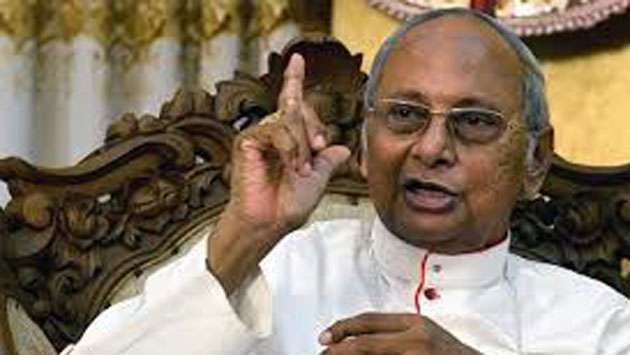
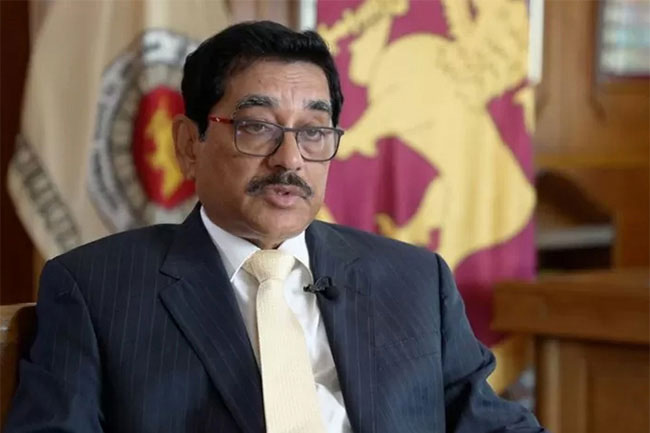
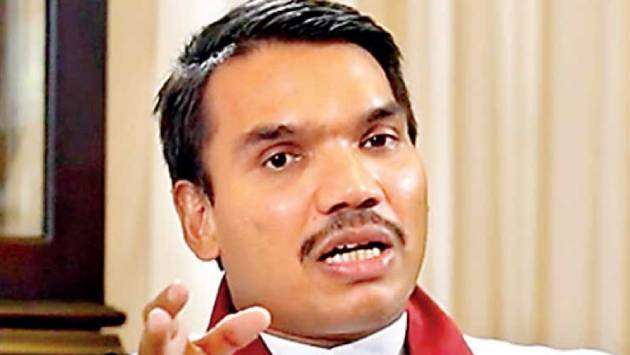
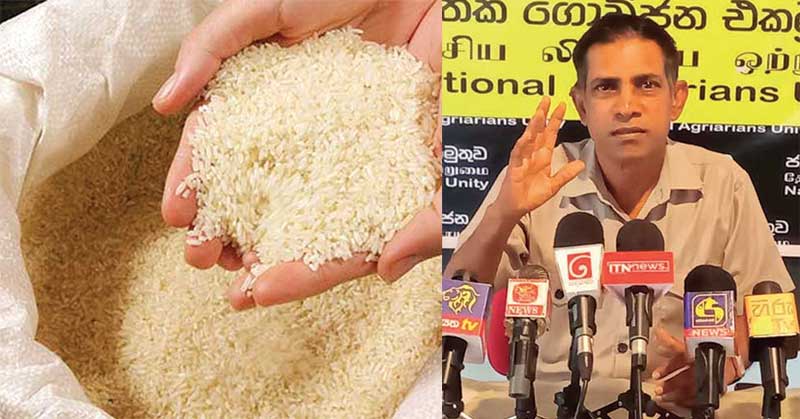 මුළු රටට ම මාස හතක බරපතළ සහල් හිඟයකට මුහුණදීමට සිදුවන බවට ජාතික ගොවිජන එකමුතුවේ සභාපති අනුරාධ තෙන්නකෝන් මහතා අනතුරු අඟවයි. මාස් කන්නයේ වී වගාව අවස්ථා දෙකක දී ගංවතුරට හසුවීමෙන් සිදු වූ විනාශය සහල් හිඟයට බලපාන බව හෙතෙම කියයි.