(Given below is an excerpt of the Friday Sermon delivered by Hazrat Mirza Masroor Ahmad, Supreme Head of the world-wide Ahmadiyya Muslim Community in Islam, on 21 March, 2025, gave a discourse on ‘True Significance of the Promised Messiah Day’
After reciting first part of the sermon with first chapter of Holy Qurán (Surah al-Fatihah), His Holiness, Hazrat Mirza Masroor Ahmad (may Allah be his Helper) said that in two days, it will be 23 March, a date which holds special significance in the Ahmadiyya Muslim Community. This is because on 23 March 1889, Hazrat Mirza Ghulam Ahmad, peace be on him, Founder of the Ahmadiyya Muslim Community, the Promised Messiah, took the first pledge of allegiance, thus initiating the Ahmadiyya Muslim Community.
His Holinesssaid that the advent of the Promised Messiah, peace be on him, was in accordance with the promises of the God Almighty and the prophecies of Prophet of Islam Muhammad, peace and blessings of Allah be upon him. At the time of his advent, the ship of Islam was in tumultuous waters. Even today, from a religious, political and worldly sense, the Muslim world is in a pitiable state. Despite having wealth, they do not bear importance and dignity. The Promised Messiahhad great pain in his heart for the sake of Islam. There was no one at the time to defend Islam against the onslaughts, especially by the Christians. Many Muslims were abandoning their faith and leaving for Christianity. At that time, it was none other than Hazrat Mirza Ghulam Ahmad of Qadian who stood like a soldier for the defense of Islam against all attacks.
Defending Islam Against the Onslaughts
Ahmadiyya Khalifa said that even before taking the pledge of allegiance from others, the Promised Messiah Hazrat Mirza Ghulam Ahmad, peace be on him, penned a magnificent work titled Barahin-e-Ahmadiyya, which became quite renowned. It initially comprised four volumes in which he provided irrefutable responses to the opponents of Islam. These volumes were written in 1880, 1882 and 1884. He proved the Holy Qur’an to be the Word of God, to be unmatched, and he provided irrefutable evidence for the truthfulness of the Holy Prophet Muhammad (PBUH). In fact, he gave a challenge and said that if someone could provide even a third or fourth of the arguments he presented to refute him, then he would give them 10,000 rupees as a reward – a large sum at the time. Effectively, Ahmadiyya Founder the Promised Messiah, peace be on him, proved the truthfulness of Islam.
Ahmadiyya Khalifa said: at that time there were those who requested Promised Messiah that he accept their pledge of allegiance, however he replied saying that he had not been instructed by God to do so at that time. Later, when he was commanded by God, then he accepted the pledge of allegiance. Later, God also told Hazrat Mirza Ghulam Ahmad , the Promised Messiahto announce that he was the Promised Messiah and Mahdi.
His Holiness said that before accepting the pledge of allegiance, Hazrat Mirza Ghulam Ahmad, peace be on him, published an announcement titled Tabligh in which he said,
‘Another message that I wish to convey to the people at large, and to my Muslim brothers in particular, is that I have been commanded to receive an oath of allegiance (Bai‘at) from seekers after truth who wish to acquire true faith and purity, and yearn to find the path to Allah’s love, and want to give up their foul, slothful and false existence. Whosoever finds in himself the willingness to do this must come to me. I will be their comforter and will do my best to ease their burden. God will bless them through my prayers and my attention, provided they are ready heart and soul to abide by His conditions. This is a Divine command which I have hereby conveyed. The actual words of the revelation in Arabic are as follows:
[Translation] When thou hast determined a matter then trust in Allah and build the Ark under Our eyes and according to Our instructions. Those who enter into covenant with thee enter into a covenant with Allah. Allah’s Hand is above their hands.”’
Celestial Signs of His Truthfulness
Ahmadiyya Supreme Head said that thereafter, God manifested many worldly and heavenly signs. One of those signs was of the solar and lunar eclipse, which the Holy Prophet (PBUH) had identified as a sign for his Mahdi – the manifesting of a solar and lunar eclipse in the month of Ramadan. His Holinessnoted that during this Ramadan as well, a lunar eclipse (which has already happened) and a solar eclipse will happen on the same days. However, this cannot be regarded as having the same veracity, as the eclipses at the time of the Promised Messiah took place in both the East and the West, whereas the eclipses happening now are manifesting mostly in the West.
Announcement of the Ten Conditions of Bai’at
His Holiness continued to say that on 12 January 1889, Hazrat Mirza Ghulam Ahmadannounced the ten conditions of allegiance, which every person entering into the allegiance of the Promised Messiah, peace be on him, must fulfil and adhere to. These include avoiding associating partners with God (Shirk), abstaining from falsehood, fornication, debauchery, injustice, rebellion etc., not succumbing to one’s’ passions, giving full attention to the offering of prayers, offering pre-dawn voluntary prayers (tahajjud), seeking forgiveness, avoiding harming others, remaining loyal to God and content with His will, adhering to the commandments of the Holy Qur’an. These conditions also call for humility, generosity, meekness, and kindness while avoiding pride and haughtiness, giving precedence to faith over one’s own wealth and life and serving the faith. Furthermore, it is a pledge to honour this vow to the Promised Messiah, peace be on him, until one’s last breath and adhering to the teachings of the Promised Messiah, which are all in accordance with the Shari’ah or law of Islam as taught by the Holy Prophet Muhammad (PBUH).
True Love & Devotion to the Holy Prophet (PBUH)
Ahmadiyya Khalifa said that today, the Ahmadiyya Muslim Community pledges allegiance to the same conditions and strives to spread the true message of Islam Ahmadiyyat to the world while establishing and maintaining true love for the Holy Prophet Muhammad (PBUH).
His Holiness said that Ahmadiyya Founder, the Promised Messiah’slove for the Holy Prophet (PBUH) can be seen through the following excerpt:
‘I always wonder how high was the status of this Arabian Prophet, whose name was Muhammad, (thousands of blessings and peace be upon him). One cannot reach the limit of his high status and it is not given to man to estimate correctly his spiritual effectiveness. It is a pity that his rank has not been recognised as it should have been. He was the champion who restored to the world the Unity of God which had disappeared from the world; he loved God in the extreme and his soul melted out of sympathy for mankind. Therefore, God, Who knew the secret of his heart, exalted him above all the Prophets and all the first ones and the last ones and bestowed upon him in his lifetime all that he desired. He is the fountainhead of every grace and a person who claims any superiority without acknowledging his grace is not a man but is the spawn of Satan, because the Holy Prophet has been bestowed the key to every exaltation and he has been given the treasury of every understanding.’
His Holiness(aba) said that in a similar manner, the Promised Messiah(as) has expressed his love and devotion to the Holy Prophet(sa) on numerous occasions. For example, at another instance, Hazrat Mirza Ghulam Ahmad(as) said:
‘The man who in his being and his attributes and his actions and through his spiritual and holy faculties set an example of perfection, in knowledge and action and in sincerity and steadfastness, and was called the perfect man was Muhammad [peace and blessings of Allah be on him]…The man who was most perfect as man and as Prophet, and came with full blessings, and who through a spiritual revival and resurrection manifested the first Judgement in the world and revived the dead world, that blessed Prophet, the Seal of the Prophets, the leader of the righteous ones, the pride of the Prophets, was Muhammad, the Chosen One [peace and blessings of Allah be on him]. Our Lord, send down on that beloved Prophet that mercy and blessing that Thou hast not sent down on anyone since the beginning of the world.’
His Holiness said that this is a glimpse into the love that Hazrat Mirza Ghulam Ahmad(as) had for the Holy Prophet(sa), as a result of which he was commissioned by God as the Promised Messiah and Mahdi tasked with the revival of Islam in the latter days as promised by God.
A Reflection of the Companions of the Holy Prophet (PBUH)
Ahmadiyya Khalifa said that the Promised Messiah, peace be on him, said to those who pledged allegiance to him that they should bear in mind that God said those who pledge allegiance to the Promised Messiah would resemble the companions of the Holy Prophet(PBUH), and so their examples must be adopted. The Promised Messiah, peace be on him, explained:
‘Reflect over the sacrifices made by the companions of our Perfect Guide, for the sake of their God and Messenger. They were exiled, persecuted, made to bear all sorts of misfortune and gave their lives. However, they continued to advance with sincerity and devotion. So what was it that made them so truly devoted? It was the ray of the fervour of that true divine love which had penetrated their hearts. Therefore, no matter which Prophet one compares him to, the Holy Prophet (PBUH) cannot be matched, whether it be with respect of his teaching, his purification of souls, turning the hearts of his followers cold to the world, or valiantly sacrificing blood for the sake of truth. This is the rank of the companions of the Holy Prophet (PBUH).
His Holiness further quoted the Promised Messiah, peace be on him, who states:
‘God says that the people who will accompany the Promised Messiah would stand shoulder to shoulder with the companions. The companions were those who sacrificed their wealth and homeland in the way of truth. They abandoned everything………………”
Establishing the Superiority of Islam
Ahmadiyya Supreme Head said that God was to send the Promised Messiah, peace be on him, to combat the disorders of the time and establish the superiority of Islam. It was thus in the narrations of the Holy Prophet (PBUH), the coming Messiah and Mahdi was called the ‘breaker of the cross’. Christianity was at its strength at the time and Muslims were also going over to Christianity. It was to combat this that God sent the Promised Messiah.
Appeal for Prayers
His Holiness Ahmadiyya Khalifa in conclusion urged prayers for the Muslim world in general, that Allah may grant them wisdom and understanding, improve their conditions and have mercy on them.
His Holinessadded that a new wave of injustices against Palestinians has begun. May Allah the Almighty protect them against this cruelty and have mercy on them.
(Ahmadiyya Muslim Jamaát was established in the year 1889, March 23, in Qadian (Punjab, India) by Hazrat Mirza Ghulam Ahmad, the Promised Messiah and Imaam-al-Mahdi, under Divine Command. To mark the Ahmadiyya Founder’s Day – (Promised Messiah Day), special events are held today in all Chapters of Ahmadiyya Muslim Community in Sri Lanka.)
Health minister Nalinda Jayathissa said that Sri Lanka and India reached an agreement last month to establish solar power plants in the island nation.
Sri Lankan President Anura Kumara Dissanayake announced on Friday that Prime Minister Narendra Modi will visit the country on April 5.
Prime Minister Narendra Modi with Sri Lankan President Anura Kumara Dissanayake during his visit to New Delhi in December 2024. (X- Narendra Modi)
The announcement was made during his statement in Parliament, according to the news portal Adaderana.lk.
While speaking in Parliament, President Dissanayake also said that Modi will finalise agreements made during his visit to Delhi last year. He also confirmed that the construction of the Sampur power plant in Trincomalee will begin during the Indian Prime Minister’s visit.
Health minister Nalinda Jayathissa said that Sri Lanka and India reached an agreement last month to establish solar power plants in the island nation.
Consensus has been reached between the government of Sri Lanka and the government of India to establish solar power plants capacity of 50 Megawatt (stage 1) and 70 Megawatt (stage 2) at Sampur in Trincomalee on the basis of construction, ownership, and operation by the Ceylon Electricity Board and National Thermal Power Corporation of India as a joint venture between two governments,” Jayathissa said.
Earlier, the National Thermal Power Corporation (NTPC) of India was set to build a coal power plant at the same location. However, the new joint venture will now convert the site into a solar power station.
After assuming office in September 2024,Dissanayake visited New Delhi in December 2024. During the visit, he was hosted by Prime Minister Narendra Modi, and the two leaders discussed strengthening ties, particularly in light of growing concerns over China’s influence in the region.
Modi said that India and Sri Lanka would establish electricity grid connectivity and a multi-product petroleum pipeline to enhance investment and commercial relations.
Dissanayake also met with external affairs minister Subrahmanyam Jaishankar and national security adviser Ajit Doval. At a press briefing, he assured that Sri Lanka would not be used in any way that could harm India’s interests.
Matale Dirstrict SJB MP Rohini Kumari Wijerathna yesterday tabled a list in Parliament naming 1,300 members, leaders, trade unionists, and activists of the UNP, who were allegedly assassinated by the JVP. The list was submitted during a parliamentary session as part of the government’s ongoing effort to document victims of political violence.
Along with the names of the victims, MP Wijerathna also introduced over 900 family members of the alleged victims, providing further context to the extent of the violence.
Speaking during the session, MP Wijerathna stated, Child soldiers were recruited by the JVP even before the LTTE. ‘Kantale Bonikki,’ a 13-year-old child was used to murder a 70-year-old female UNP supporter.” She accused the JVP of using children to kill numerous UNP members during the JVP’s second insurgency.
The MP said that names not included in the current list would be submitted during the upcoming Batalanda Debate” in April.
MP Wijerathna invited the public, via her Facebook page to submit further details on family members affected by political violence to ensure their inclusion in the extended record.
The Samagi Jana Balawegaya (SJB) has officially nominated Dr. Ruvaiz Haniffa as its candidate for the position of Mayor of the Colombo Municipal Council (CMC).
The party emphasized that the nomination reflects its vision for a super developed city” and aims to uplift the lives of all residents within the Colombo Municipal Council area.
In a statement, the SJB highlighted that the hope of the people in Colombo is to transform the city into a modern, thriving hub of development. Dr. Haniffa’s nomination marks the beginning of what the party described as a journey toward this vision of progress.”
Opposition Leader Sajith Premadasa expressed confidence in Dr. Haniffa’s capabilities, calling him a public-spirited professional” with the necessary qualities to drive the city’s growth. He described Dr. Hanifa as possessing the right mix of talent, skill, ability, courage, and determination” to lead the CMC and fulfill the aspirations of its citizens.
Hassan Alaldeen has been officially nominated as the mayoral candidate for the Colombo Municipal Council by the ‘Sarvajana Balaya’ alliance.
This announcement was made following an Iftar ceremony for Muslim devotees held in Dehiwala yesterday afternoon (March 21).
Alaldeen, has previously served as a member of the ‘Sarvajana Balaya’ alliance’s Executive Council, as well as the party’s Media Secretary.
The announcement was made by the leader of the ‘Sarvajana Balaya’ alliance, MP Dilith Jayaweera, who was accompanied by several party members and supporters at the event.
The Government Medical Officers’ Association (GMOA) has welcomed the 2025 Budget, stating that it offers a favorable resolution to concerns over payments for doctors’ additional duties.
Addressing a press conference today (March 22), GMOA Media Spokesperson Dr. Chamil Wijesinghe said the budgetary provisions have addressed a key issue that had sparked widespread concern within the health sector in recent weeks.
There had been speculation that allowances for health professionals would be slashed under the new budget proposals, leading to unrest within the sector.
Several health trade unions had even resorted to strike action, demanding clarity and favorable adjustments.
Following discussions with authorities, the GMOA now expresses optimism that the measures introduced in the budget will ensure fair compensation for medical professionals undertaking additional duties.
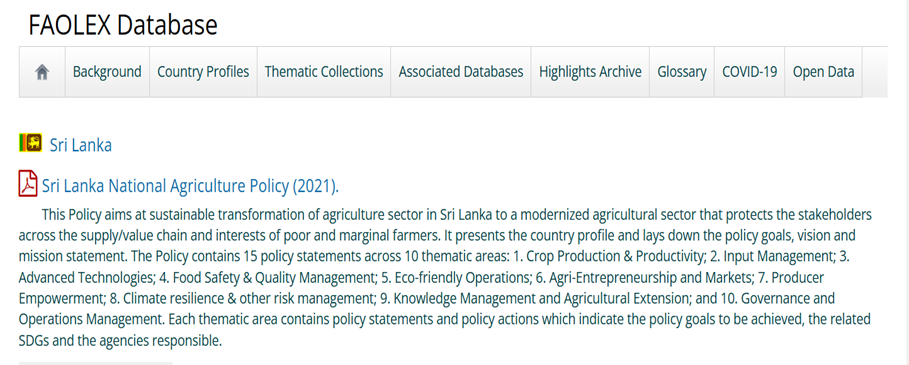
For decades, Sri Lanka’s agriculture sector has teetered on the edge of uncertainty, shackled by inconsistent policies and a lack of decisive action. Recognizing the urgent need for reform, agriculture professionals and university academics, with significant financial support from international contributors, undertook the monumental task of drafting two transformative documents: the Overarching Agriculture Policy and the National Agriculture Policy. These blueprints were meticulously designed to tackle critical issues such as food security, climate resilience, sustainability, and farmer welfare.
Yet, despite the monumental effort and expertise poured into this initiative, successive governments have failed to fulfil their national duty. The final step—securing Cabinet approval—remains inexplicably stalled. This inaction has plunged Sri Lanka’s agriculture sector into a state of policy paralysis, squandering not only the hard work of experts but also vast amounts of international funding, which represents the hard-earned money of foreign taxpayers entrusted to support Sri Lanka’s agricultural future.
The Ethical Responsibility of Policy Contributors
This glaring failure raises a pressing question: What is the ethical obligation of those who contributed to these policies? Agriculture experts, academics, and policymakers who dedicated their time and knowledge cannot afford to remain passive observers as their work gathers dust.
These stakeholders must now demand accountability from the newly elected government. Their insights were sought, their expertise was utilized, and their recommendations were compiled—yet the policies they shaped remain in limbo. Is it not their moral duty to ensure that their efforts bear fruit?
A Government’s Broken Promise
Before assuming power, the current government proudly proclaimed that it had assembled an expert panel to draft a ready-to-implement agriculture policy. They promised a clear, actionable plan that would be set in motion immediately upon taking office.
Now, with a commanding majority in Parliament, the government has no excuse for its inaction. Months have passed, and not a single official has stepped forward with a concrete agriculture policy or strategy. Farmers, stakeholders, and the public are left in the dark, questioning whether these pre-election promises were genuine or mere political theater.
A Call to Action for the New Government
With a new administration in place, the time to rectify past failures is now. Agriculture is the backbone of Sri Lanka’s economy, and without a robust policy framework, the nation remains vulnerable to food crises, economic instability, and environmental degradation. The government must act decisively by:
Immediate Review and Approval: Expedite the presentation of the drafted policies to the Cabinet for swift endorsement.
Stakeholder Engagement: Collaborate with farmers, experts, and other key stakeholders to ensure the policies address current challenges and realities.
Legislative Safeguards: Institutionalize these policies into law to protect them from future political disruptions and ensure long-term agricultural development.
Transparent Communication: Publicly outline a clear strategy and timeline for policy implementation, fostering trust and accountability.
This is not merely a bureaucratic formality—it is a moral and national imperative. Sri Lanka’s farmers and rural communities deserve a stable, government-approved agriculture policy to secure their livelihoods and the nation’s food security.
Conclusion
Sri Lanka cannot afford another cycle of political delays and policy stagnation. The agriculture sector’s future must not be sacrificed at the altar of bureaucratic inertia. It is time for those who shaped these policies—experts, academics, and civil society—to hold the government accountable and ensure these long-awaited policies are finalized and implemented.
The people of Sri Lanka demand action, not excuses. The time to act is now.
Mark Antony speaking at the funeral of his assassinated friend Julius Caesar in the Shakespeare play by the same name
My readers, alert as usual, may be wondering why this essay is entitled ‘The Case of Karu Jayasuriya’ instead of just ‘Karu Jayasuriya’. Well there’s a reason. Please read on.
Former Speaker of Parliament Karu Jayasuriya has an aura of quiet dignity about him as an MP and senior politician, equally respected by both his UNP and non-UNP colleagues. So, I was not surprised when he was unanimously elected as chairman of the Former Parliamentarians’ Caucus at its first meeting in early July 2024. Jayasuriya launched his own NGO, the Institute of Democracy and Good Governance (IDAG) three months later, on September 30, 2024, as stated before. The Daily FT reported a day later (on October 1): ‘Karu Jayasuriya calls for return to good governance’. Was he expecting a revival of the dysfunctional 2015-2020 Yahapalanaya (Good Governance) project, which had been overwhelmingly rejected by the people in 2019? This is unthinkable. But, as I see it, Jayasuriya himself seems to have changed his long held political perspectives before choosing to or being chosen to catalyse the country’s attitudinal transformation that the Yahapalanaya attempted as required by the global interventionist forces behind the 2015 regime change operation.
Caveat: What I am saying here is what I perceive according to my lights. It is not meant to be an attack on Hon Karu Jayasuriya whose personal freedom to change his opinions about anything and everything I recognise with deep respect. My admiration for him as an honourable senior political personality remains intact, despite holding contrary opinions myself. As for ‘global interventionist forces’, could they feel so insecure and mean as to kill a mockingbird?
It would be appropriate, at this point, to make a brief review of Karu Jayasuriya’s life journey, which involved a holistic school education followed by an initial stint in the army, preparation for business underpinned by sound academic and professional qualifications, his actual business career, and his subsequent initiation into politics. He had a long period of maturation as a strategic manager of human and material resources before he started holding political office. Jayasuriya completed his preparatory and secondary education at Ananda College, Colombo. The characteristic Buddhist school tone at Ananda helped mould his character as a patriotic young man devoted to the service of his Motherland.
A few years after completing his school education, Jayasuriya joined the Ceylon Army Volunteer Force in 1965. After training, he was commissioned as a Second Lieutenant in the Ceylon National Guard. He remained in the military from 1965 to 1972, which means he was mobilised during the first JVP Insurrection of 1971 (and probably even had some experience in live combat). The next quarter century of his life saw him devoting himself to intensive theoretical and practical self development in the business field, while successfully engaging in his own business enterprises.
The discipline he acquired at Ananda and in the military must have stood him in good stead in his business life, and later in active politics, which he embarked on in 1997 at the ripe age of 57. Jayasuriya was elected as Mayor of Colombo in that year and served in the post for two years 1997-99. In 2000, he entered parliament as a National List MP from the UNP, representing the Gampaha District and between 2000 – 2015 he held important ministerial positions, mostly under Ranil Wickremasinghe as PM during the presidencies of Chandrika Kumaratunga and Maithripala Sirisena, and for a little over one year (2007-08) under D.M. Jayarathne as PM during Mahinda Rajapaksa’s pre-2009 first term as president. Following the foreign engineered regime change/the ouster of the last named in 2015, in which he played a leading role, Jayasuriya became the 20th Speaker of Sri Lanka Parliament (September 1, 2015 – March 3, 2020). As a cabinet minister, he handled the subjects of public administration, home affairs, and power and energy at various times. He was sworn in as the minister of public administration, democratic rule and Buddha Sasana at the beginning of Yahapalanaya and held the post for about eight months from January 12 to August 17, 2015 before being elected as Speaker on September 1. (Source for information about Karu Jayasuriya’s life and work: Wikipedia)
There is a natural relationship between him and Buddhist monks. The latter have been expressing alarm at what they perceive as increasing threats to Buddha Sasana from proliferating religious fundamentalist sects funded from abroad: problematic acts such as conducting unethical conversions, erecting or opening unauthorised places of worship disturbing the peace of predominantly Buddhist neighbourhoods, and generally encroaching on the traditional Buddhist religious space. Tamil Hindus are also subject to such unethically aggressive proselytisation projects. Peaceful mainstream Christians and Muslims have disowned troublemakers perpetrating these acts. They have often expressed solidarity with the monks about this issue.
Another big nasty problem that Buddhist monks are trying to raise awareness about among politicians, government authorities and the general public, as the traditional Guardians of the Nation, is the systematic destruction by a handful of racist Tamil politicians of the extensive archaeological sites in the North and East, almost all of which have been scientifically identified as ancient Buddhist shrines and monasteries dating back to pre-Christian times, such as Kurundi Viharaya in the Mulativ district in the North and the Muhudu Maha Viharaya in Pottuvil in the East. These monks won’t have to agitate asking for solutions to these issues, subjecting themselves to unjust criticism and defamation by ignorant outsiders as religious fanatics, racists, chauvinists, etc., if politicians, whether in power or out of power, have the courage to approach the issues legally and democratically through the existing Sri Lankan Constitution, where, according to AI Overview
Article 9 states that the Republic of Sri Lanka shall give Buddhism the foremost place, making it the duty of the state to protect and foster it, while also ensuring all religions the rights granted by Articles 10 and 14(1)(e).
For the protection of the archaeological aspect of our Buddhist heritage, the powerful Antiquities Ordinance (1940) (enacted during British colonial times) can be invoked. This ordinance
…… .aimed to better preserve the country’s antiquities by establishing the Crown’s (today, State’s) ownership of undiscovered antiquities, except ancient monuments, and granting the Archaeological Commissioner custody and possession of discovered antiquities.
Successive recent governments have carefully avoided having to tackle these problems buckling under the coercive pressure exerted by communalist politicians of the respective areas.. A number of other main party politicians including ex-president Mahinda Rajapaksa have functioned in the capacity of minister responsible for the Buddha Sasana, but equally ineffectively for the same reason. So, Jayasuriya should not be singled out for criticism in this regard. All Buddha Sasana ministers to date have failed to fulfill their obligations, leaving the genuine protectors of our incomparable Buddhist civilizational heritage, none other than the Guardians of the Nation, the Buddhist bhikshus/monks, to fend for themselves. But, fortunately, they remain assured of the unstinted support of ordinary Buddhists living in Sri Lanka and around the world outside.
Abysmal ignorance and sheer inaction prompted by narrow self-interest and a lack of responsibility on the part of the rulers and the civil authorities under them are usually at the root of these chronic issues. I have always believed that only patriotic politicians of Karu Jayasuriya’s calibre can help eliminate threats to the Buddha Sasana through democratic dialogue, without allowing violence to be ignited by ill-disposed extraneous elements between Sinhalese Buddhists and Tamil Hindus, who together account for 90% of the Sri Lankan population. These evil doers try their best to keep the two naturally and culturally closest communities divided. But their evil schemes will fail. Let’s hope president Anura Kumara Dissanayake will realise this soon and take advantage of his decent Buddhist upbringing to do the needful (which means a great deal). We will urge him to take counsel, especially, with his well meaning critics, in charting his Punarudaya (New Dawn) path so that it will lead to ‘A RICH COUNTRY AND A BEAUTIFUL LIFE’ that he is envisioning for the common people. AKD should remember why the JVP/NPP he leads adopted that campaign slogan which answers to the ‘sassa sampatti hetucha – peeto bhavatu lokocha’ of the verse of blessing heard at the end of the daily ritual of ‘Seth pirith’ chanting broadcast every morning over the SLBC radio. That tradition is still maintained, I guess. KJ knows, probably even better than AKD does, the benign psychic influence of that daily blessing on all Sri Lankans.
Jayasuriya was among the distinguished invitees (former presidents Chandrika, Gotabaya and Ranil among them) at the Act of Appointment bestowal ceremony of the Amarapura Nikaya held under state sponsorship led by the president at the BMICH, Colombo on March 10, 2024. This reminded me of the same Nikaya conferring on Karu Jayasuriya, then Speaker of Parliament, an honorary title, as reported in the Sunday Times of April 21, 2019. The piece of news stuck in my mind probably because of the deadly memories associated with that fateful Sunday, six years ago. The honorary title had been conferred on Jayasuriya a day or two previously in appreciation of his integrity as a politician, his commitment to the advancement of the Buddha Sasana, and his tireless efforts in promoting unity among the Sangha.
Perhaps, the still untested green horns in the current parliament have something to learn from Karu Jayasuriya. But are they ready to respond to his message without being misled by other propaganda, I wonder? They will find that listening to a gracious senior like Karu Jayasuriya is worth their while.
KJ’s vision has been focused on nurturing leaders who are driven by conscience, not self-interest”, says Lanka Jayasuriya, Karu Jayasuriya’s daughter whom I quoted earlier, This idea is captured powerfully in his own words:
One day, we will all face a trial where no witnesses will testify, and no counsel will appear on our behalf. The only account the judge – Mother Nature in disguise – will hear is from our conscience. My vision has always been to live as a guiltless person, so that on that fateful day, my conscience will not speak against me.”
That is the essence of Jayasuriya’s life and work according to his daughter: ‘a leader whose conscience has guided his decisions, and whose vision for Sri Lanka is built on the foundation of integrity and moral responsibility. It is this philosophy that underpins the creation of IDAG.’
However, Jayasuriya’s words Oneday, we will all face…………will not speak against me” from his Buddhist mouth or heart are problematic. Those words belong to someone who believes in a Day of Judgement. But he immediately substitutes ‘Mother Nature in disguise’ for the Abrahamic God. His resolve to live and die as a guiltless person fits Buddhism, as it does any theistic religion. Dutch philosopher Baruch Spinoza (1632-77) conceived Nature around us and in us as an impersonal divine power. Albert Einstein (1879-1955), considered as the greatest scientist of the 20th century, is said to have accepted Spinoza’s God. That is compatible with Buddhism, too. And Einstein was full of praise for the Buddha’s teachings, as is well known.
To his great grief, his younger daughter Sanjeewani Indira, married and settled in London, died suddenly in 2016 at the young age of 40. That tragic loss must have taken its toll on him. There may have been some spiritual confusion in his mind. Even if he has changed his original religious beliefs and embraced new ones out of personal conviction, that is no harm, it is not wrong. That is in accordance with what the Buddha taught the young Kalamas in the Kalama Sutta. He told them that they should not accept anything because it is found in the sacred texts, or because it agrees with tradition, or because it is taught by a respected teacher, etc., and instructed them: …….when you know for yourselves that certain things are wholesome (kusala) and good, then accept them and follow them” (Source; pp 2-3, What the Buddha Taught/Walpola Rahula).
Realising the Ultimate Truth (Nibbana) is a voluntary undertaking to be fulfilled within oneself, it goes without saying, in the absence of witnesses. The important thing is that Karu Jayasuriya remains true to his moral and ethical principles (which he originally imbibed from Buddhism) in which he is firmly anchored.
As the world progresses, the voice of senior citizens has become increasingly pivotal, particularly in shaping the future of our communities and countries. An impressive 12% of a nation’s population is composed of seniors—an influential demographic that, when mobilized, can wield significant power at the ballot box. Yet, the question remains: how can we effectively rally this crucial voter base?
The answer lies in recognizing the inherent value of our collective experience and wisdom. Seniors have a unique perspective shaped by years of struggle, resilience, and triumph. This depth of understanding can be a powerful tool in encouraging our children and even our grandchildren to engage in the electoral process. By sharing our stories and experiences, we can inspire the younger generation to recognize the importance of their vote, fostering a sense of responsibility that transcends political affiliations.
Furthermore, our efforts must be focused on unity. In a time when political divisions seem to grow wider, we must approach this initiative with a non-partisan spirit. The goal is not to advance a particular political agenda, but rather to emphasize the significance of participation in democracy itself. When we come together as seniors—regardless of our individual beliefs—we amplify our message: our voices matter, and they deserve to be heard.
This collective action can have profound implications. When senior voters stand together, our numbers become undeniable. Political leaders cannot afford to overlook a demographic that makes up such a significant portion of their constituency. By ensuring that our voices resonate through the halls of power, we can influence policies that not only benefit seniors but also create a better future for all generations.
To achieve this, we must invest time and effort into organizing initiatives that foster awareness and engagement within our community. Community gatherings, informational workshops, and intergenerational discussions can serve as vital platforms for sharing knowledge and encouraging political participation. Additionally, leveraging social media and local news outlets can help broaden our reach, allowing us to engage even those who may feel disenfranchised.
In conclusion, as seniors, we possess the ability to shape the future of our society. By mustering our collective strength and encouraging the younger generations to follow suit, we can make an indelible mark on the democratic process. Let us move forward with purpose—together, without political bias—and demonstrate the power of unity in action. When we unite our voices as a significant force, we ensure that no one can afford to ignore us.
Rear Admiral (Ret) Hiroyuki Terada, Director of Defence Cooperation of the Indo-Pacific Region (Indo-Pacific Regional Policy Division), Ministry of Defence of Japan, visited the Pathfinder Foundation headquarters at Riverpoint in Peheliyagoda to meet with Founder Milinda Moragoda and other senior members of the Foundation.
He was accompanied by Ms. Ayuka Horikawa, Officer of the Indo-Pacific Regional Policy Division of the Ministry of Defence and Captain Yuki Yokohari, Defence and Security Advisor of the Embassy of Japan, Colombo.
This visit was a continuation of the regular interactions between the Japanese Defence Ministry and the Pathfinder Foundation.
Rear Admiral Terada provided a detailed overview of Japan’s vision and policy towards the Indo-Pacific Region and emphasised Sri Lanka’s importance within this strategy.
The Pathfinder Foundation team provided details of the research and other activities that the organisation was carrying out related to the Indian Ocean Region. These included the biannual Pathfinder Indian Ocean Security Conference and the annual Bay of Bengal Maritime Dialogue.
Collaborations launched by the Pathfinder Foundation, including the India, Japan, and Sri Lanka trilateral project and other possible multi-country cooperation initiatives, were also discussed.
Mr. Moragoda also thanked the delegation for the support and encouragement the Japanese Government had always provided for the work of the Foundation.
Complex traumatic events are associated with armed conflict (Coventry et al., 2020), and it has a possible impact on mental health. These conflicts can cause physical, psychological, mental, and spiritual consequences for people (Moreno-Chaparro et al., 2022). Armed conflicts extinguish the social fabric and cause economic and cultural repercussions. Moreno-Chaparro and team report (2022) that a high prevalence of mental disorders has been reported in areas affected by armed conflicts. As indicated by Carpiniello (2023), women and children are the most vulnerable to the outcome of armed conflicts.
The Ukrainian War began in February 2014. War in Ukraine has caused drastic negative consequences on physical and mental health with devastating effects at the individual and community level. People living in war-torn regions of Ukraine are at a mental health risk. Many of them have witnessed deaths, suffered property losses, and some of them have become direct victims of war-related violence such as rape and torture. These events have caused negative outcomes for their mental health and social functioning. The war has become a collective trauma for the Ukrainians.
War-related anxiety, stress, and trauma have become the perilous factors in Ukraine. A large number of Ukrainians have become refugees across Europe, and one-third of the population has been displaced within Ukraine as internal refugees (Vintilă et al., 2023). According to Kurapov and colleagues (2022), war in Ukraine has caused many mental health problems. People are experiencing multiple traumas and other cumulative stresses on a daily basis. Osokina and team (2023) point out that war trauma has caused psychological distress in adolescents living in a war-torn region in Ukraine. As described by Fel and team (2022) women living in the war-torn areas in Ukraine are at a higher risk of experiencing post-traumatic stress disorder (PTSD).
People affected by war trauma often show mistrust, social withdrawal, and feelings of emptiness and hopelessness. In some instances, drastic personality changes can be identified. They can experience depression, anxiety, complex posttraumatic stress disorder (C-PTSD), somatic complaints, pain-related problems, panic attacks, insomnia, etc. Some go into negative stress coping methods such as heavy alcohol abuse or substance abuse. War victims who exhibit social isolation, suicidal attempts, rage, agitation, extreme confusion, dissociation, and psychotic symptoms urgently need professional help.
Culturally sensitive mental health care efforts are essential to heal the war trauma in Ukraine. In this context, an interdisciplinary approach to trauma healing is imperative. Immediate and long-term robust psychosocial interventions should be established with psychosocial interventions. A range of psychotherapeutic interventions such as cognitive behavioral therapy (CBT), eye movement desensitization and reprocessing (EMDR), dialectical behavior therapy (DBT), interpersonal psychotherapy (IPT), and narrative exposure therapy (NET) can be used to treat the war victims.
Lazarus and Folkman (1984) indicate the emotion-focused coping strategies to reduce or control negative emotions, such as anxiety. These interventions foster healing and posttraumatic growth. Existential therapy is also an important intervention in war trauma, and it acknowledges the intangible impacts of trauma on meaning, mortality, and identity. The therapists can use mindfulness techniques to improve outcomes after war trauma.
In war situations, creating a sense of safety is highly vital (Hobfoll et al. 2007). Almoshmosh and colleagues (2016) highlight that social connectedness is important to restore normal interaction and well-being. Moreover, community solidarity activities can curb further damage from war trauma (Anjum et al., 2023). Providing hope for the war victims can reduce their emotional suffering, and it enhances self-efficacy, resilience, personal growth, and mental well-being (Snyder, 2002).
Ukrainian war victims are experiencing psychological distress and emotional suffering. These psychological scars take a long time to heal. Moreover, trauma can be handed down from generation to generation. Therefore, trauma healing and building resilience are crucial for the Ukrainian war victims.
References
Almoshmosh N. (2016). The role of war trauma survivors in managing their own mental conditions, Syria civil war as an example. Avicenna j. med. 6, 54–59. doi: 10.4103/2231-0770.179554, PMID.
Anjum G, Aziz M, Hamid HK. Life and mental health in limbo of the Ukraine war: How can helpers assist civilians, asylum seekers and refugees affected by the war? Front Psychol. 2023 Feb 17;14:1129299. doi: 10.3389/fpsyg.2023.1129299. PMID: 36874809; PMCID: PMC9983366.
Carpiniello B. The Mental Health Costs of Armed Conflicts-A Review of Systematic Reviews Conducted on Refugees, Asylum-Seekers and People Living in War Zones. Int J Environ Res Public Health. 2023 Feb 6;20(4):2840. doi: 10.3390/ijerph20042840. PMID: 36833537; PMCID: PMC9957523.
Coventry PA, Meader N, Melton H, Temple M, Dale H, Wright K, Cloitre M, Karatzias T, Bisson J, Roberts NP, Brown JVE, Barbui C, Churchill R, Lovell K, McMillan D, Gilbody S. Psychological and pharmacological interventions for posttraumatic stress disorder and comorbid mental health problems following complex traumatic events: Systematic review and component network meta-analysis. PLoS Med. 2020 Aug 19;17(8):e1003262. doi: 10.1371/journal.pmed.1003262. PMID: 32813696; PMCID: PMC7446790.
Fel S., Jurek K., Lenart-Kłoś K. (2022). Relationship between socio-demographic factors and posttraumatic stress disorder: a cross sectional study among civilian participants’ hostilities in Ukraine. Int. J. Environ. Res. Public Health 19:2720. doi: 10.3390/ijerph19052720, PMID:
Hobfoll S. E., Watson P., Bell C. C., Bryant R., Brymer M. J., Friedman M. J., et al. (2007). Five essential elements of immediate and mid-term mass trauma intervention: empirical evidence. Psychiatry 70, 283–315. doi: 10.1521/psyc.2007.70.4.283, PMID.
Kurapov A., Pavlenko V., Drozdov A., Bezliudna V., Reznik A., Isralowitz R. (2022). Toward an understanding of the Russian-Ukrainian war impact on university students and personnel. J. Loss Trauma. 28, 167–174. 10.1080/15325024.2022.2084838.
Lazarus R., Folkman S. Stress, Appraisal, and Coping. Springer Publishing Company; New York, NY, USA: 1984.
Moreno-Chaparro J, Piñeros-Ortiz S, Rodríguez-Ramírez L, Urrego-Mendoza Z, Garzón-Orjuela N, Eslava-Schmalbach J. Mental health consequences of armed conflicts in adults: an overview. Actas Esp Psiquiatr. 2022 Mar;50(2):68-91. Epub 2022 Mar 1. PMID: 35312994; PMCID: PMC10803861.
Osokina O, Silwal S, Bohdanova T, Hodes M, Sourander A, Skokauskas N. Impact of the Russian Invasion on Mental Health of Adolescents in Ukraine. J Am Acad Child Adolesc Psychiatry. 2023 Mar;62(3):335-343. doi: 10.1016/j.jaac.2022.07.845. Epub 2022 Oct 29. PMID: 36441074.
Snyder C. R. (2002). Hope theory: rainbows in the mind. Psychol. Inq. 13, 249–275. doi: 10.1207/S15327965PLI1304_01.
Vintilă M, Kalaitzaki A, Turliuc MN, Goian C, Tudorel OI. Editorial: The war in Ukraine: impact on mental health on a global level. Front Psychol. 2023 Jul 25;14:1226184. doi: 10.3389/fpsyg.2023.1226184. PMID: 37564318; PMCID: PMC10409641.
Commander of the U.S. Indo-Pacific Command (USINDOPACOM), Admiral Samuel Paparo called on the Deputy Minister of Defence, Major General Aruna Jayasekara (Retd) Thursday (Mar 20) at the Deputy Minister’s office.
During the meeting, Admiral Paparo and Major General Jayasekara (Retd) engaged in discussions on a range of bilateral defence and security matters. Both parties emphasized the importance of strengthening defence cooperation to promote regional stability.
Admiral Paparo emphasized the enduring security partnership between the U.S. and Sri Lanka while outlining the U.S. vision for promoting regional stability and security in the Indo-Pacific. He reaffirmed the U.S. commitment to supporting Sri Lanka, highlighting the significance of people-to-people ties, providing assistance in maritime domain awareness (MDA) to address non-traditional security threats, offering technical know how and sharing expertise assistance for the development of the Maritime Security Strategy.
Admiral Paparo’s visit underscores the United States’ on-going commitment to enhancing security cooperation with Sri Lanka and addressing shared challenges in the Indo-Pacific.
The Defence Attache at the U.S. Embassy in Sri Lanka, Lieutenant Colonel Anthony Nelson, Executive Assistant, Captain Toraason, Political Advisor, Mr. David Ranz and Commander Rama Mutyala also joined the discussion with the Deputy Minister.
Industry experts at the Lanka Property Show 2025 expressed confidence in Sri Lanka’s real estate sector, highlighting its potential for growth despite past economic challenges. While factors such as rising interest rates, currency depreciation, and fluctuating taxes previously impacted the market, experts were optimistic that stabilizing interest rates, exchange rates, and tax policies will foster a more predictable and business-friendly environment for investors and homebuyers alike.
Building on this positive outlook, the Lanka Property Show 2025 reinforced the sector’s resilience and promising future. The event featured 25+ premier projects, including highly anticipated new launches, attracting a diverse audience of over 17,000 visitors both in person and virtually. The live stream on Facebook, LinkedIn, and YouTube also garnered an impressive 59,721 views, further cementing the show’s success. The strong turnout and enthusiastic engagement from buyers, investors, and industry professionals underscored the sustained demand for real estate in Sri Lanka.
Now in its 9th edition, the Lanka Property Show (LPS)—the country’s largest property expo—was held on February 15th and 16th at the Kingsbury Hotel. Since its inception in 2017, the event has grown significantly, and in recent years, it has evolved into a hybrid physical and virtual show. This year saw an increase in visitors and exhibitors, reaffirming that buyers are actively returning to the market after the pandemic and economic downturn.
As in past editions, the Lanka Property Show 2025 hosted two engaging panel discussions, offering valuable industry insights. The first session delved into the growth and future of Sri Lanka’s property sector, examining key trends and market projections.
Kicking off the discussion, Dr. Indrajit Coomaraswamy, former Governor of the Central Bank, shared his perspective on the evolving economic landscape. He noted that, unlike in the past, challenges such as high interest rates, currency depreciation, and tax instability are expected to stabilize. This shift, driven by stricter fiscal policies introduced through the Public Finance Management Act and the Central Bank Act, is set to create a more predictable and investment-friendly environment.
Discussing the current market landscape for developers, Prime Group Chairman, Mr. Premalal Brahmanage, highlighted that Sri Lanka has the highest construction costs in South Asia, making property development more expensive and limiting the supply of affordable housing. He emphasized the financial burden on developers, stating that from the first bag of cement to the final sale, direct and indirect taxes can account for up to 40% of each property transaction.
With the real estate industry contributing around 7% to the country’s GDP and generating substantial tax revenue, he urged the government to provide greater support to the sector to ensure its sustained growth and affordability for buyers.
To address these challenges, the industry is actively exploring innovative solutions such as cheaper financing options, enhanced supply chains, and advanced construction techniques to improve affordability and sustainability in the market, added Mr. Brahmanage.
In summary of Mr. Brahmanage’s comments, the moderator, Mr. Dhananath Fernando, remarked, it sounds to me like you’re in the business of paying taxes and in the middle of it building some property”.
Addressing the challenges developers face in attracting foreign buyers, Mr. Kishore Reddy, Managing Director of Platinum Realty Investments urged the government to expedite the implementation of investor visas. Despite being gazetted, these visas remain difficult to obtain, posing a barrier to international investment in Sri Lanka’s property market. He highlighted the need to make housing more affordable by addressing import barriers on essential building materials such as tiles, aluminium, and other construction materials. The imposition of cess and high duties on these imports increases construction costs, ultimately impacting both developers and buyers. By reducing such restrictions, the government can facilitate more cost-effective development. He also noted that while the rupee has depreciated against the dollar, property values have risen proportionally, ensuring that investors have not faced losses. This natural market adjustment, he emphasized, reinforces the view that real estate remains a secure and reliable investment option.
The panel discussion, moderated by Dhananath Fernando, (CEO of the Advocata Institute) also featured Nadeem Shums, (Vice President at John Keells Holdings PLC) and Saminda Jayasekara, (Chairman, Sri Lanka Atomic Energy Regulatory Council and Property Law Consultant) providing an in-depth and balanced view of the future trajectory of the market.
Continuing with the theme of real estate and construction, the second panel discussion centered on the affordable construction of individual homes. Moderated by Dr. Prathap Kaluthanthri (MRICS, Head of the Department of Estate Management and Valuation, University of Sri Jayewardenepura), the panel featured Dr. Janaka Fernando (Head of the Department of Business Economics, University of Sri Jayewardenepura), Dr. Yasas Pathiranage (Business Consultant), Plnr. E.A.C. Piyashantha (Deputy Director General, Urban Development Authority), and Chartered Architect Tharangika Ranathungarachchi (Partner, Makevita and Ranathungarachchi Architects). The discussion covered vital themes for those looking to build houses, including passive design, locally sourced materials, adaptive design, green roofs and living walls, all aimed at reducing costs, improving efficiency, and enhancing affordability and sustainability of houses.
Concluding the discussions, Industry experts emphasized the need for policy stability, affordable housing solutions, and streamlined investment processes to drive growth. With strong buyer interest, increased investor confidence, and ongoing discussions on key industry challenges, the event highlighted a promising path forward for the sector. As Sri Lanka’s property market continues to evolve, collaborative efforts between stakeholders and policymakers will be crucial in ensuring sustainable growth and greater accessibility for both local and foreign buyers.
This year’s event truly embodied its theme, “Everything Under One Roof for Property Buyers,” by bringing together a comprehensive range of real estate opportunities and services. Exhibitors showcased a diverse selection of apartments, houses, and land projects across the country, while four leading banks offered home loans starting from 11.5%. Attendees also had access to house builders, solar providers, free legal consultations, and expert advisory services on buying and selling—all conveniently available under one roof throughout the two-day event to fulfil their property buying process in the same location.
It was made possible with the support of its esteemed sponsors and partners. Platinum sponsors included Marina Square, John Keells Properties and Iconic Galaxy, while Gold sponsors included Baili Investment and Prime Group. The event was further supported by its Banking Partner, Commercial Bank along with the media partnership of Sirasa Media Network, Outdoor Media Partner Storm Media and Communication Partner Textware. For more details on the event, visitwww.lankapropertyweb.com/events
Government action has so far not stabilised markets. Lower production is causing negative effects on inflation and the availability of products in stores. Some rice varieties have been unavailable for months. Signs of growth are visible only in rubber and some export crops.
Colombo (AsiaNews) – Sri Lanka’s agricultural sector is going through a severe crisis, with a significant drop in the production of major crops such as rice, tea and coconut. This is driving up inflation and contributing to higher food prices, worrying consumers and policymakers alike.
According to the Central Bank of Sri Lanka (CBSL), the drop in paddy rice production (the country’s staple crop) has been particularly pronounced, affecting the overall price of rice.
Paddy rice production from September 2024 to March 2025 is estimated at around 2.57 million tonnes, a 5.7 per cent decrease over the previous season, causing a shortage of rice in retail markets. The most popular varieties, like “nadu” and “samba”, have been out of stock in stores for months, while supermarkets are allowing customers to buy only three kilos at a time.
Government control measures on paddy rice and prices have had limited results so far.
The tea sector has also suffered a sharp slowdown. After a temporary rise in December 2024 and January 2025, by 9.6 per cent and 14.6 per cent respectively, production fell by 22 per cent in February, stopping at 15.59 million kilos.
The same goes for coconut production, which saw a decline of 33.1 per cent in December 2024 and 32.2 per cent in January 2025, driving up prices, with households forced to pay between 250 and 300 rupees (between US$ 0.85 and US$ 1.00) per nut.
The situation of the rubber sector is a bit different. In December 2024 production rose by 32.4 per cent, but then declined a month later. In 2023, Sri Lanka earned US$ 930 million from the export of natural rubber and rubber products.
In January this year, market prices of several export crops such as pepper, cocoa, cardamom, nutmeg, coffee, cinnamon, and turmeric went up, while prices of clove and ginger went down,” this according to experts Shirantha Mayadunne and Lakmali Wijesinghe speaking to AsiaNews.
According to the Department of Census and Statistics, the country’s economy recorded 5.4 per cent growth in the fourth quarter of 2024, with an estimated annual growth of around 5 per cent, thanks to lower inflation and exchange rate stability.
However, the CBSL failed to maintain its 5 per cent inflation target, which triggered serial currency crises between 2012 and 2022.
In fact, Sri Lanka is still trying to recover from the severe financial crisis that culminated in the 2022 sovereign debt default, caused by aggressive fiscal and monetary policies.
For now, interest rates are low and private sector credit has expanded.
John Keells CG Auto marks a new era in green mobility
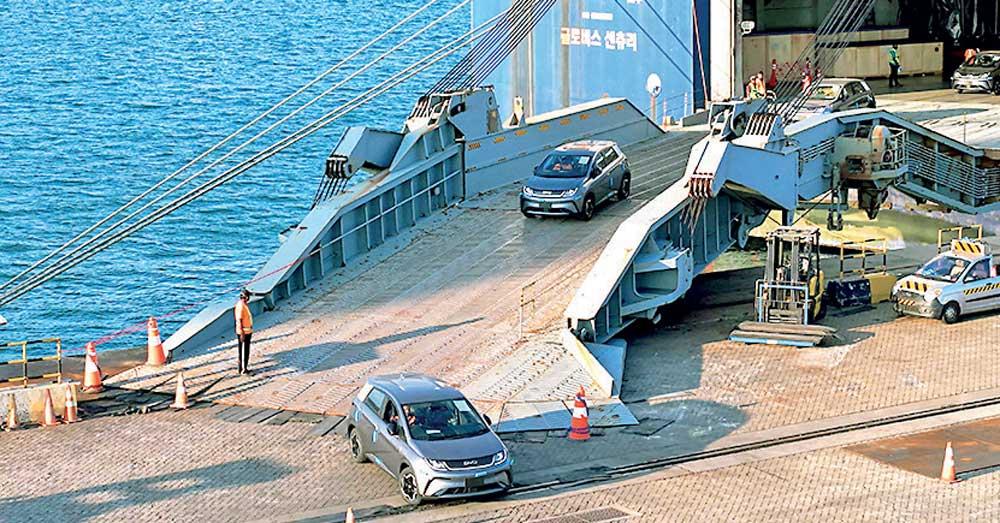
In a momentous event for Sri Lanka’s automotive landscape, the first shipment of BYD’s cutting-edge new energy vehicles (NEVs) has arrived at the Hambantota Port.
This historic milestone, facilitated by John Keells CG Auto (JKCG Auto)—the authorised distributor for the BYD vehicles in Sri Lanka—ushers in a new era of sustainable mobility and innovation.
The shipment includes a brand-new range of BYD’s most popular global models such as BYD SEALION 6, BYD ATTO 3, BYD DOLPHIN and several other advanced NEVs. These state-of-the-art NEVs have been hotly anticipated by local auto enthusiasts, marking BYD’s re-entry into the Sri Lankan market after over five years of import restrictions, with first deliveries to pre-booking customers commencing over the
coming weeks.
Our partnership with BYD highlights our commitment to driving a green mobility revolution that will help to build Sri Lanka’s dream of an empowered, cleaner, more sustainable nation,” JKCG Auto General Manager Charith Panditharatne said.
We are proud to be the first to bring these brand-new BYDs to Sri Lanka, following the removal of import restrictions. Leveraging on the synergies within the John Keells group, we aim to catalyse a broader evolution in mobility for Sri Lanka, that offers the highest quality vehicles, infrastructure and after-sales services to ensure to sustainably power this critical transition for our nation.”
JKCG Auto plans to deliver the vehicles to its Sri Lankan customers in the coming weeks, ensuring a seamless introduction of BYD’s innovative technology and superior performance to local roads. With additional shipments underway, the company is poised to meet the expectations of an increasingly eco-conscious customer base and further strengthen its reputation as a leading force in the country’s green mobility revolution.
The disease is not spread directly from person to person—only through mosquito bites
Main symptoms include sudden high fever, severe joint pain, muscle aches, headache, nausea, fatigue, and skin rashes
These mosquitoes are most active during the early morning and late afternoon
Eliminating mosquito breeding sites is the most effective way to control the outbreak
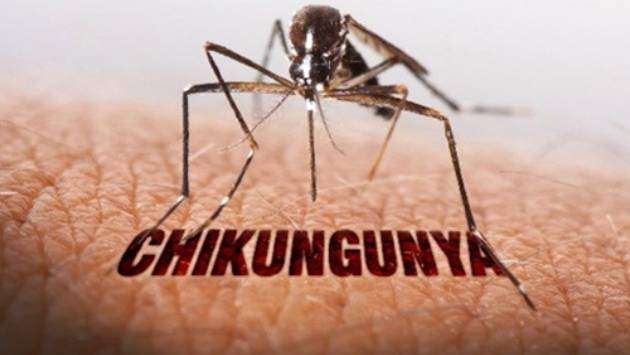
Colombo, March 21 (Daily Mirror) – Sri Lanka is experiencing a rapid spread of Chikungunya, a mosquito-borne viral disease, with cases reported from various parts of the country.
Speaking to Daily Mirror, Consultant Physician Dr Achala Balasuriya said Chikungunya is spread through the bite of infected Aedes mosquitoes, primarily Aedes aegypti and Aedes albopictus. These mosquitoes become infected when they bite a person who already has the virus. After an incubation period of about 4 to 7 days, the infected mosquito can then transmit the virus to other people through bites,”
These mosquitoes are most active during the early morning and late afternoon, and they breed in stagnant water found in containers like flower pots, tires, buckets, and clogged drains. The disease is not spread directly from person to person—only through mosquito bites,”
We have seen a spike in Chikungunya cases these days. What we see different here is that the joint pain lasts at least one month after initial recovery,” she said.
The main symptoms include sudden high fever, severe joint pain, muscle aches, headache, nausea, fatigue, and skin rashes. While most patients recover within a week, joint pain can persist for months or even years in some cases, particularly among older individuals,”
She warned that eliminating mosquito breeding sites is the most effective way to control the outbreak.
Chikungunya symptoms: What to watch forWith the recent surge in Chikungunya cases across Sri Lanka, health experts are urging the public to be aware of its symptoms.According to experts, the disease typically begins with a sudden high fever, followed by severe joint pain that can last for at least a month.Other common symptoms include muscle aches, headaches, nausea, fatigue, and skin rashes.While most patients recover within a week, lingering joint pain can persist for months or even years, particularly among older individuals.The expert emphasizes that eliminating mosquito breeding sites remains the most effective way to control the outbreak.
South Africa’s Truth & Reconciliation Commission was NOT a tribunal & therefore had no powers to prosecute individuals as there were no judges, no lawyers & no intention to declare who was guilty & who was innocent. It was nothing but Restorative Justice created in 1995 by the Nelson Mandela govt claiming it would heal” the trauma of apartheid. Nothing of the sort happened. We don’t need new healing, restorative justice, reconciliation 16 years after Sri Lanka’s conflict ended. Yes, we need truth – but that truth must name all the individuals (local & foreign) who supported LTTE over the years, all the organizations, officials, governments, NGOs (local & foreign) especially the Church who funded & supported LTTE over the years. If none of these truths are going to be put into the open, there is no point in holding any TRC in Sri Lanka. Sri Lanka’s Armed Forces must not fall for this trap of story-telling & confessions for compensation!
Traditional tribunals punish wrongdoers through trials. The TRC was a crafty means to get people to confess to guilt & be given amnesty for doing so. This is exactly what Sri Lanka’s TRC is aiming to do. With LTTE ground force leaders all dead, the aim is to fool Sri Lanka’s Armed Forces to confess & get amnesty probably holding a carrot that their travel bans etc would be lifted. Sri Lanka’s Armed Forces should not fall for this trap! Sri Lanka does not need ad hoc Christian-based forgiveness” tribunals based on a bogus healing, reconciliation, truth-telling”. Sri Lanka has been pumped reconciliation since 2009 while the LTTE cohorts are happily screaming separate state & eelam! Anyone short of listening to fairytales or horror stories these TRC are ideal!
While pro-LTTE lobbyists claim 40,000 dead they have not produced the names of the dead, there are no dead bodies, no skeletons & no habeas corpus or police complaints by families to claim the dead even lived. Without proving this there is no case against the armed forces for war crimes/genocide.
Nevertheless, entire villages were massacred by LTTE since 1980s over 30 years – are these victims alive to tell their story? What about the hundreds that LTTE gunned down & killed in premeditated murder – these people comprised Sinhalese, Muslims, Tamils & even foreigners. Can compensation bring back these people who were gunned down for no reason? Who in the LTTE will come forward & admit to these crimes today?’
There is nothing to educate the Sri Lankan public, everyone who lived under LTTE rule are well aware of what LTTE did. There is no reason to return to that sordid past simple for storytelling. There are enough of documents of LTTE’s crimes. Moreover, the people have moved on. People have bigger problems than revisiting terrorist’s tales. That terror chapter is now over. People have economic & social issues to deal with. There is no requirement to dig the past because Prabakaran cannot be brought to life to answer to all his crimes.
The people placed trust in the then Govt to end terrorism & liberate the Nation from terrorism. The President as Commander in Chief ordered his troops & they did the needful in 2009 with one flag hoisted across the Nation. This was an occasion where the trust of the people was fulfilled.
What is baffling is why a National Army is being kept in par with an internationally banned terrorist group. Why should terrorists be given any status other than holding them to account for the violation of pre-meditated murder across 30 years. Simply because the terrorist group was defeated & thus defeated those who were indirectly & directly backing the terrorists over the years. Thus, all of these justice” accountability” attempts are nothing but a means of revenge against all those who contributed to the defeat of the LTTE.
Immediately after the conflict ended the 12000 LTTE who surrendered to the National Army were all put through rehabilitation, the 594 LTTE child soldiers were returned to school & were given opportunities to learn. This was the healing given immediately after the conflict. We don’t need new healing, restorative justice, reconciliation 16 years after the conflict ended.
Yes, we need truth – but that truth must name all the individuals (local & foreign) who supported LTTE over the years, all the organizations, officials, governments, NGOs (local & foreign) who funded & supported LTTE over the years.
If none of these truths are going to be put into the open, there is no point in holding any TRC in Sri Lanka.
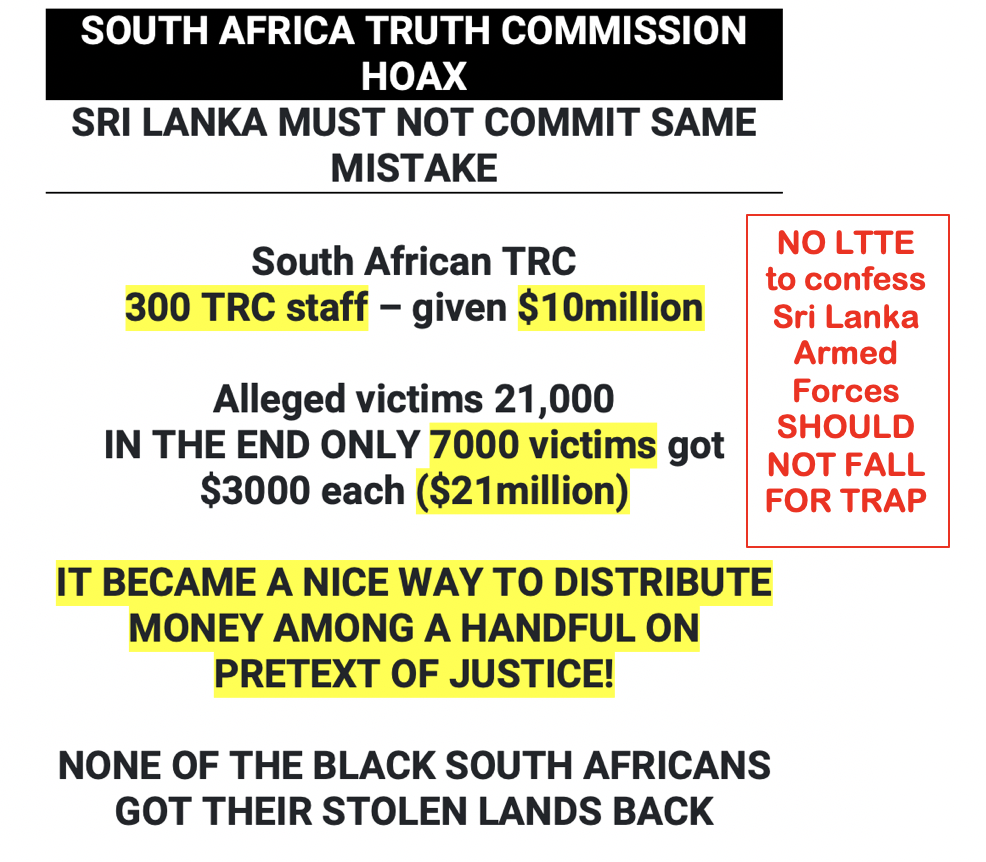
South Africa’s TRC received testimonies from 21,000 victims in over 70 public hearings. 7112 amnesty applications were received. However, less than 1000 were whites. 849 were given amnesty after they disclosed their involvement in the crimes. If the TRC was not a legal tribunal, how valid were these amnesties.
With no legal ramifications for those who confessed to crimes does this not open more wounds than heal? Moreover, anyone can confess to claim a reparation.
The South African TRC gave $3000 per victim.
How can a loss of life in Sri Lanka be compared to this measly amount & have the case closed after digging up the trauma 16 years after it ended?
How far has racial tensions been solved in South Africa post-TRC? None of the Black South Africans got the lands taken from them back!
Apartheid ended in 1994. But Blacks continue to suffer even in 2025!
Economic Inequality
Wealth Distribution – 2020 report by South African Institute of Race Relations – 70% of whites hold South Africa’s wealth though they make up only 8% of the population.
Unemployment – 2024 – overall unemployment about 33.9%. Unemployment amongst Blacks was higher.
In 2022 Black youth unemployment stood at 46.6% – white unemployment was 10.4%
Land ownership – As per South African Govts Dept of Rural Development & Land Reform about 72% agricultural land is still owned by whites who comprise 8% of the population.
Housing –
13.7m Blacks were still living in poor quality housing as per 2019 report from Statistics South Africa. 56% of South African households still live in poverty.
Education – As per South African Education Department Black South Africans made up 80% of student population with the lowest graduation rates. 77% whites students graduate as against 49% blacks.
Income & Wealth
In 2020 white South Africans had a median income of around R120,000 per year compared to black South Africans whose median income was about R60,000 per year (SAIRR)
World Bank 2019 claims Black South Africans are still 8 times more likely to live in poverty than white South Africans. Poverty rate for blacks was 42% against 5% for whites.
Racial Tensions & Hate Crimes
2020 report of South African Human Sciences Research Council says racial discrimination still exists. 30% blacks report experiencing racial discrimination in public spaces & 12% say they experience racial discrimination in the workplace.
South African police recorded more than 1000 hate crimes in 2019 related to race.
What are the lessons Sri Lanka must take from the South African TRC (1996-2002)
Amnesty followed Christian principles of forgive & forget without anyone actually meaning it as it came with a carrot of compensation.
Amnesty was given to individuals who confessed with full disclosure of crimes – people confessed to get amnesty & compensation & because they were told there was no legal ramifications for confessing guilt. This is likely to be a trick to only frame Sri Lankan Armed Forces as LTTE ground force are no more.
There was no national healing nor reconciliation – only a bogus truth-telling” which meant more than 6000 blacks confessing to less than 1000 whites confessing. Apartheid was about white discrimination against blacks.
The catch came with the fact that the TRC had no legal power to prosecute but they could recommend prosecution
Some of those who confessed faced public backlash & criticism from victim families & society.
However, some of the perpetrators who received amnesty have been held accountable & faced legal action.
New Truth & Justice Movements were formulated demanding legal action against those who confessed resulting in new issues & forming more controversies. We can see how this will materialize in Sri Lanka via the LTTE Diaspora and the usual hired NGO culprits.
Though the TRC claims to give amnesty for confessions there is nothing stopping individuals using information revealed in the TRC to file in civil courts against the perpetrators.
There is a major difference in TRC giving amnesty & immunity. TRC did not grant immunity from civil legal action. A victim / family of victim could use confessions to demand compensation/damages in civil court.
Therefore, Sri Lanka does not require to be copying & pasting what other countries do.
Our situation was different to South Africa’s. South African TRC was nothing but a failure. It only gave a handsome remuneration for the 300 staff who were involved in the TRC.
16 years have passed since the end of Sri Lanka’s conflict. LTTE ground force is no more. Majority of other LTTE have fled to other countries & made a home there. The rehabilitated LTTE have married & LTTE child soldiers are also now adults & getting about their lives. We do not hold grudges as there are no more killings.
If Tamils have a problem that needs to be healed & solved it is none other than their caste issues while the majority Hindu practicing Tamils need to now wonder why the Church was instrumental in always becoming the mouthpiece for Tamils & LTTE. These are questions that are yet to be solved but unlikely to be solved as these truths will never get to any TRUTH table.
What was never admitted in South Africa’s TRC was the role of the Church in apartheid. Dutch Reformed Church (NGK) was the mainline church of white Afrikaners, who played a central role in supporting apartheid. Let us not forget, Desmond Tutu was a signatory in some of the pro-LTTE letters sent to the UNHRC against Sri Lanka. Thus, the TRC’s forgiveness” is plucked from the Church which continues to dictate who is guilty & who is not based on what is advantageous to their political agenda.
It is obvious that not only past governments but this government & all of their advisors are clueless about Sri Lanka & the terrorist conflict we faced alongside the players that were involved directly & indirectly & are happy to play poodle to any proposals that come from those who want to seek revenge against those who ended terrorism.
Sri Lanka’s Armed Forces must not fall for this trap of story-telling & confessions for compensation!
The characterization of Theravāda Buddhism, particularly in Sri Lanka, as militant is a distortion of its historical trajectory and core philosophy. Charles Keyes, in his article Political Crisis and Militant Buddhism in Contemporary Thailand (rev 1999), projects a generalized narrative of “militant Buddhism” that fails to account for the unique cultural, ethical, and historical context of Sri Lanka. His misinterpretation of the Mahāvaṃsa undermines the profound commitment of Sri Lankan Buddhists to ahimsa (non-violence), compassion, and coexistence.
Charles Keyes is a well-known scholar who, since the 1960s, has conducted extensive research in Thailand and other Southeast Asian nations. His work has contributed significantly to the understanding of the socio-political and cultural dynamics of the region, with a focus on Thailand, Laos, Cambodia, Vietnam, Myanmar, and southern China. While his scholarship is commendable, his interpretation of “militant Buddhism” fails to contextualize the Sri Lankan case and risks promoting a biased narrative.
Buddhism occupies a central place in Sri Lanka’s constitution, reflecting its historical role as the spiritual foundation of the nation. This protection is not an assertion of dominance but a framework to preserve the ethical and cultural identity of the country. Roles of Upāsaka (lay male followers), Upāsikā (lay female followers), Bhikkhu (monks), and Bhikkhunī (nuns) embody a collective responsibility to uphold peace, harmony, and moral conduct. This constitutional safeguard ensures that Buddhist principles guide society, fostering coexistence and resilience. It aligns Sri Lanka’s governance with the principles of mettā (loving-kindness), karunā (compassion), and upekkhā (equanimity), and stands in stark contrast to the claims of militant intentions.
Buddhism in Sri Lanka is deeply rooted in the teachings of the Buddha, which emphasize non-violence and moral discipline. Historically, Sri Lanka has demonstrated unwavering adherence to practices that serve as the moral backbone of the nation and unequivocally reject violence or militancy as methods for achieving objectives. Central to these practices are mettā (extending loving-kindness to all beings), karunā (showing compassion for the suffering), muditā (rejoicing in others’ happiness), and upekkhā (practicing equanimity in the face of challenges).
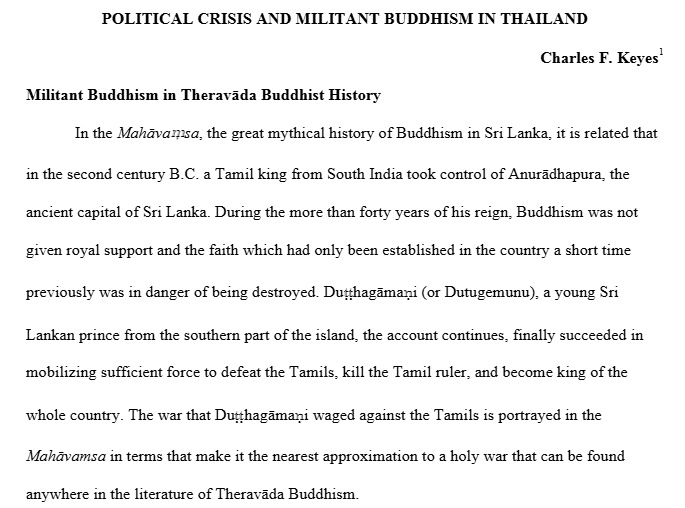
Charles Keyes references the Mahāvaṃsa’s portrayal of King Dutugemunu’s campaign against Tamil invaders, suggesting it is “the nearest approximation to a holy war” within Theravāda Buddhism. This interpretation misrepresents the text’s intent and Sri Lanka’s historical circumstances. The Mahāvaṃsa is a literary chronicle that blends history with moral and spiritual teachings, emphasizing the preservation of Buddhism amid external threats. Dutugemunu’s campaign is a narrative of defense—protecting sovereignty and ensuring the survival of the Dharma—not one of conquest or aggression. His profound remorse over the loss of life further highlights adherence to Buddhist ethics, reinforcing that violence is never taken lightly.
According to Buddhist principles, for an action to be sinful, four conditions must be met:
Identifying a being – Recognizing a living being confirms the awareness required for the act.
Intending harm – Formulating harmful intent introduces a deliberate decision to cause suffering.
Making efforts to cause harm – Taking actionable steps signifies the effort made.
Successfully harming – Achieving the harmful result completes the unethical act.
Dutugemunu’s actions were driven by duty and necessity, not malice or religious zeal. Viewing these defensive efforts as militant not only misrepresents the historical context but also undermines the ethical foundation of Sri Lankan Buddhism. Keyes misapplies the concept of militant Buddhism by equating defensive strategies with holy wars. He states, “The war that Duṭṭhagāmaṇi waged against the Tamils is portrayed in the Mahāvamsa in terms that make it the nearest approximation to a holy war that can be found anywhere in the literature of Theravāda Buddhism.” This claim overlooks the broader ethical and cultural framework underpinning the Mahāvaṃsa.
Throughout history, many religious traditions have engaged in violent conquests, crusades, and campaigns of forced conversion. For example, the Crusades (1095–1291) resulted in mass violence and the deaths of millions, religious inquisitions forced conversions through persecution, and empires expanded territory by imposing faith through military force. Sri Lanka’s history, by contrast, has no record of initiating religious wars or forcing others into Buddhism. Sri Lankan Buddhists have maintained a steadfast commitment to moral principles, even when faced with existential threats.
During this same period, Sri Lanka was governed by a series of monarchs who upheld Buddhist values and prioritized the well-being of the people. Their efforts stand in stark contrast to the violent campaigns observed elsewhere. The following comparison highlights the rulers of the time and their humanitarian contributions:
Crusade Period
Kingdom
Ruler
Reign
Key Achievements
Humanitarian Aspects
Early Crusades
Polonnaruwa Kingdom
Vijayabahu I
1055–1110
Reunited Sri Lanka after defeating Chola invaders. Restored Buddhist traditions and rebuilt temples.
Focused on healing and uniting a fractured nation, demonstrating justice, compassion, and a commitment to peace.
Middle Crusades
Polonnaruwa Kingdom
Parakramabahu I
1153–1186
Promoted Buddhism, developed massive irrigation projects like Parakrama Samudra, and secured sovereignty.
Known for his focus on sustainability and people’s well-being, with policies benefiting livelihoods and the environment.
Middle Crusades
Polonnaruwa Kingdom
Nissanka Malla
1187–1196
Declared himself the protector of Buddhism, emphasized piety in inscriptions, and supported social order.
Acted as a stabilizing force; however, his focus on grandeur sometimes overshadowed practical humanitarian efforts.
Late Crusades
Dambadeniya Kingdom
Vijayabahu III
1232–1254
Founded the Dambadeniya Kingdom to protect Buddhism; promoted societal harmony during political unrest.
Displayed care for societal stability and preservation of Buddhist values amidst a time of instability.
This comparison illuminates the significant difference between the violent practices of the Crusades and the peaceful, humanitarian approaches of Sri Lanka’s rulers, guided by Buddhist principles. Their focus on compassion, cultural preservation, and societal well-being underscores the deep contrast.
Charles Keyes’ characterization of Buddhism in Sri Lanka as militant is deeply flawed and fails to appreciate the ethical and historical nuances of the tradition. Sri Lanka’s Buddhist philosophy is one of compassion, non-violence, and harmony, reflected in its constitutional framework and cultural ethos. When faced with threats, Sri Lanka has defended its sovereignty and heritage responsibly, without compromising Buddhist principles.
It is essential to challenge these misrepresentations and illuminate the true legacy of Sri Lankan Buddhism—a legacy rooted in peace, resilience, and moral integrity.
“When certain acclaimed individuals distort history by masking the violence of their own religion while misrepresenting the actions of nations defending their lands and territories, they undermine the truth. Furthermore, academic attempts to target Buddhism by unfairly portraying it as a militant religion are not only incorrect but also deeply unjust, violating the principles of fair and honest scholarship.”
By Palitha Ariyarathna
References
Keyes, Charles F. Political Crisis and Militant Buddhism in Contemporary Thailand (Revised 1999).
The Mahāvaṃsa. A primary literary and historical source of Sri Lankan Buddhism.
The Constitution of Sri Lanka. Emphasizing protections for Buddhism within the national framework.
Theravāda Buddhist Teachings. Ethical principles such as mettā (loving-kindness) and ahimsa (non-violence).
Deegalle, Mahinda. Buddhism, Conflict and Violence in Modern Sri Lanka
L.K.N. PERERA (LL.B Cey) Attorney at law, Labour Consultant, Ex-Senior Deputy Registrar, Supreme Court, Ex Judicial Officer,Ex-President. Lanka Academic Association, Ex Director Waste Management Authority, Co -Chairman- Seruvila Mangala Maha Chaityawardena Samitiya . Advisory Committee Member of All Ceylon Buddhist Congress. Commissioner of Aragalaya Inquiry Commission
L.K.N. PERERA (LL.B Cey) Attorney at law
1) Appeal to revoke the name change of Estate Tamils as Malayam Tamils
2) Request to treat Rohingia immigrants not as refugees but as illegal immigrants.
3) Request to adopt Boomiputra Policy to protect interests of Sinhala Nation.1) Appeal to revoke the name
I take this opportunity to draw your Excellency’ s attention to the following statements
Deputy Plantation Minister Sundaralingam Pradeep has said the present Government has renamed Estate Tamils asMalayan (Up Country) Tamils (CWC News)
In your Budget Speech too, you have named Estate Tamils as Malayam Tamils without any legal authority.
2) Public statement made by Hon Minister of State Security that One Hundred Thousand Rohingias are schedule to invade Sri Lanka.
( 1 ) Both these topics need special investigations, particularly regarding their consequence. We have had enough problems by the change of the name of Malabar Coolies as Ceylon Tamils in the year 1901. This name change was done by Sir Ponnambalam Arunachalam , the first Ceylonese Registrar General, hoodwinking the Sinhalese leaders who were unaware of the grave consequences of this tiny change. You will be surprised to note that last 30 -year- old war was the ultimate result of this tiny name change. It is unfortunate that none of the Bikkhus nor the academics nor the so -called patriotic Sinhalese politicians have voiced their protest against this irrational move which is detrimental particularly to the Upcountry Sinhalese
Probably they may have not seen the hidden danger of this name change.
1). NAME CHANGE of a community
In the year 1901 Sir Arunachaam Ponnabalam, being the first native Registrar General, abused his powers and changed the name, Malabar” as Ceylon Tamils”. Sinhalese leaders at that time were unaware of the hidden agenda of this name change or the grave consequences of this tiny change.
a) Who is Ponnambalam Arunachalam.
He is a grandson of a Malabar toilet cleaner who rose up to aristocratic level thank s to colonial rulers’ divide and rule policy and missionary education.
Malabar Coolies were brought to Sri Lanka by Dutch rulers (1656-1796) Dutch planted them in Jaffna Peninsula in the North. Throughout the history Sinhalese did not accept them as natives of this country. In the year 1978, I went to Madrass now called Chennai. There I found several Colombo Tamil lawyers at Egmore Station. They were visiting their relatives during court vacation. This is crystal clear proof that descendants of these Malabar coolies still maintain relationship with their relatives. Sir Arunachalam, the pioneer of Eelam Struggle died in the year 1924 in a visit to India to see his poor relatives. This incident too is vital evidence that Malabars have no right to claim an inch of land in this country. Descendants of these Malabar Coolies now claim Tissa Viharaya too as their ancestral property. Next time they will claim Seruvila Temple which has a written history of more than 2500 years too as a Hindu Kovil. Are we to tolerate further.
After this name change the so -called Ceylon Tamils started fighting for a separate autonomous state in the North and East as the first step in formation of Dravidastan or Dravida Empire. Eelam is part of that project. ( 2 ) b) Christian involvement in hiding Jaffna true history.
Eelam was a project of colonial rulers and the Christian clergy. Christian historian such as Dr.G.C,Mendis and Professor K .M.De Silva of Peradeniya University deliberately distorted the true history of Jaffna Kingdom . Legitimate heir to Jaffna Kingdom was Leveke Bandara a three- year- old infant. His custodian was Weerasundara Mudali. (See Portuguese Historian Queros – Spiritual and Temporal Conquest of Ceylon) Queros says that Kotte Tax Officers functioning in Jaffna were arrogant. So, what else you need to prove that Jaffna was under Kotte King. Against all these evidence, Hitler”s Gobbels theory was followed and the whole world was misled. The ultimate result of this Eelam campaign was the last 30 year-old war which was based on mythical concepts of Eelam project. If the Tamils or any other community cannot live peacefully in Sri Lanka, we have no alternative other than deporting them and protect the interests of Sinhalese who are the natives of this small island.
c) Branding Thesawlamai Law as an ancient law is another fabrication that led the Tamils to believe that they too have a long history in this country. Likewise future generation of these Estate Labourers too will one day claim that Up Country is their Ancestral homeland and their kings ruled Sinhalese. Name change of Malabars as Ceylon Tamils led to several complications. Thesawalamai Enactments still call these Tamils as Malabars. It is because Sir Arunachalam had no power to change the legislative enactments.
Even the judiciary was misled by Eelam propagandists. Judiciary has not made any attempt to ascertain the truth of the history of Thesawalamai law. However their attempt to extend its application to Eastern Province was prevented by British Judges long time ago.
Dr. Suriya Gunasekera while in England has discovered that Thesawalamai law is a reproduction of Jus Mandas a German Tribal law operative in Holland . Otherwise how could be there provisions for Christian marriages in Thesawalamai Law.
Honoured Sir,
This name change will make Estate Tamils equal to up country Sinhalese (Kandyans) who are natives of Up country. Thereafter they will say that Sinhalese were ruled by their kings quoting last king Sri Wickram Rajasingher of Kandy.
( 3 ) After all, the government has no legal right to change the name of community to the whim and fancies of their leaders. Such attempt should necessarily go before a referendum J.R. Jayawardena as the UNP leader in the 1977 General Election had secretly agreed with late Saumamoorthi Thondaman, the leader of Estate Tamils to grant citizenship rights to Estate Tamils. It was not in his Election Manifesto and Sinhalese were unaware of this Secret agreement. This shows that J.R.Jayawardena hoodwinked the Sinhala masses.. This is how Estate Tamils got citizenship rights. Now they are claiming lands too. These lands are the lands robbed by colonial rulers under Waste Land Ordinance. (From their prescriptive owners -The Kandyana Sinhalese) For the second time the lands belonging to Sinhalese were robbed by Sirima Bandaranayake Government under the cover of Land Reform commission.
Now your government is going to construct houses for these estate labourers. Not only that your government is ready to distribute these lands to them. What a shame. What a pity and what a betrayal?
Poor Sinhalese live in shanties. Some of them live by the side of rail roads. Isn’t It pathetic. This is how Sinhalese are ill-treated by their own politicians, the so-called patriots. Power hungry Sinhalese rulers in the yester years have given unnecessary privileges to the migrant Malabar (Now called Tamil) labourers and Muslims. Muslims too have come to Sri Lanka along with Malabars. Some have come from Egypt, Aden etc. Now they too claim parts of this country as their homelands. This is ridiculous. It is said that Muslims do not allow Sinhalese to run a Shop in Kattankudy.
Possible Consequences of this name change You may be aware that some Estate youth joined Eelam Struggle. Their aim was to have a separate Tamil province for them and to Join Eelam, Eelam Threat still exists. It is unfortunate that our leaders do not understand the gravity of the forthcoming danger.
I cannot understand as to why the Bikkhus, the so-called protectors of Buddhism are silent on these matters.
2) ROHINGIA REFUGEES. The information I have got is that sending Rohingias to Sri Lanka has become a lucrative business in Mienmar. Please hold a census in the Districts of Mannar, Trincomalee and Batticoloa to find out how many of them have been secretly settled in these Districts.,
I believe Rohingia issue too will be a major problem in the near future. It is your duty to nip it in the bud.
4) Request to adopt Boomiputra Policy to protect Sinhalese. As we all know Sinhala Nation is one of the dying nations. It is said that your government wants to adopt a New Constitution. In that this policy could be included. Follow the example of Malasia.
L.K.N.Perera.
L.K.N. PERERA (LL.B Cey) Attorney at law, Labour Consultant, Ex-Senior Deputy Registrar, Supreme Court, Ex Judicial Officer,Ex-President. Lanka Academic Association, Ex Director Waste Management Authority, Co -Chairman- Seruvila Mangala Maha Chaityawardena Samitiya . Advisory Committee Member of All Ceylon Buddhist Congress. Commissioner of Aragalaya Inquiry Commission
No 22/1, Old Kesbewa Road . Nugegoda Tel 2869865, Mob -077- 6096588 Gmail-lknperera@gmail.com
CC 1) Hon Prime Minister.
2) Hon Chief Justice.
3) Hon Attorney General.
5) Indian, Canadian, British, Australian High Commissioners.
ශ්රී ලංකාවේ හිටපු ජනාධිපතිවරයෙකු සහ හිටපු අගමැතිවරයෙකු වූ 1949 දී උපත ලැබූ රනිල් වික්රමසිංහ මහතා අල්ජසීරා නාලිකාවේදී ප්රකාශ කරන ලද පහත අදහස මෙම ලිපිය මගින් මතු කරන කාරණය තව දුරටත් පැහැදිලි කරයි. “I had to come. I wanted to come. I was a subject of her Majesty Queen Elizabeth the second the queen of Ceylon, the most popular figure that we had…’
Alex Karp, the CEO of the controversial military tech firm Palantir, is the coauthor of a new book, The Technological Republic: Hard Power, Soft Belief, and the Future of the West. In it, he calls for a renewed sense of national purpose and even greater cooperation between government and the tech sector. His book is, in fact, not just an account of how to spur technological innovation, but a distinctly ideological tract.
As a start, Karp roundly criticizes Silicon Valley’s focus on consumer-oriented products and events like video-sharing apps, online shopping, and social media platforms, which he dismisses as the narrow and the trivial.” His focus instead is on what he likes to think of as innovative big-tech projects of greater social and political consequence. He argues, in fact, that Americans face a moment of reckoning” in which we must decide what is this country, and for what do we stand?” And in the process, he makes it all too clear just where he stands — in strong support of what can only be considered a new global technological arms race, fueled by close collaboration between government and industry, and designed to preserve America’s fragile geopolitical advantage over our adversaries.”
Karp believes that applying American technological expertise to building next-generation weapons systems is not just a but the genuine path to national salvation, and he advocates a revival of the concept of the West” as foundational for future freedom and collective identity. As Sophie Hurwitz of Mother Jones noted recently, Karp summarized this view in a letter to Palantir shareholders in which he claimed that the rise of the West wasn’t due to the superiority of its ideas or values or religion… but rather by its superiority in applying organized violence.”
Count on one thing: Karp’s approach, if adopted, will yield billions of taxpayer dollars for Palantir and its militarized Silicon Valley cohorts in their search for AI weaponry that they see as the modern equivalent of nuclear weapons and the key to beating China, America’s current great power rival.
Militarism as a Unifying Force
Karp may be right that this country desperately needs a new national purpose, but his proposed solution is, to put it politely, dangerously misguided.
Ominously enough, one of his primary examples of a unifying initiative worth emulating is World War II’s Manhattan Project, which produced the first atomic bombs. He sees the building of those bombs as both a supreme technological achievement and a deep source of national pride, while conveniently ignoring their world-ending potential. And he proposes embarking on a comparable effort in the realm of emerging military technologies:
The United States and its allies abroad should without delay commit to launching a new Manhattan Project in order to retain exclusive control of the most sophisticated forms of AI for the battlefield — the targeting systems and swarms of drones and robots that will become the most powerful weapons of the century.”
And here’s a question he simply skips: How exactly will the United States and its allies retain exclusive control” of whatever sophisticated new military technologies they develop? After all, his call for an American AI buildup echoes the views expressed by opponents of the international control of nuclear technology in the wake of the devastating atomic bombings of the Japanese cities of Hiroshima and Nagasaki that ended World War II — the futile belief that the United States could maintain a permanent advantage that would cement its role as the world’s dominant military power. Nearly 80 years later, we continue to live with an enormously costly nuclear arms race — nine countries now possess such weaponry — in which a devastating war has been avoided as much thanks to luck as design. Meanwhile, past predictions of permanent American nuclear superiority have proven to be wishful thinking. Similarly, there’s no reason to assume that predictions of permanent superiority in AI-driven weaponry will prove any more accurate or that our world will be any safer.
Technology Will Not Save Us
Karp’s views are in sync with his fellow Silicon Valley militarists, from Palantir founder Peter Thiel to Palmer Luckey of the up-and-coming military tech firm Anduril to America’s virtual co-president, SpaceX’s Elon Musk. All of them are convinced that, at some future moment, by supplanting old-school corporate weapons makers like Lockheed Martin and Northrop Grumman, they will usher in a golden age of American global primacy grounded in ever better technology. They see themselves as superior beings who can save this country and the world, if only the government — and ultimately, democracy itself — would get out of their way. Not surprisingly, their disdain for government does not extend to a refusal to accept billions and billions of dollars in federal contracts. Their anti-government ideology, of course, is part of what’s motivated Musk’s drive to try to dismantle significant parts of the federal government, allegedly in the name of efficiency.”
An actual efficiency drive would involve a careful analysis of what works and what doesn’t, which programs are essential and which aren’t, not an across-the-board, sledgehammer approach of the kind recently used to destroy the U.S. Agency for International Development (USAID), to the detriment of millions of people around the world who depended on its programs for access to food, clean water, and health care, including measures to prevent the spread of HIV-AIDS. Internal agency memos released to the press earlier this month indicated that, absent USAID assistance, up to 166,000 children could die of malaria, 200,000 could be paralyzed with polio, and a million of them wouldn’t be treated for acute malnutrition. In addition to saving lives, USAID’s programs cast America’s image in the world in a far better light than does a narrow reliance on its sprawling military footprint and undue resort to threats of force as pillars of its foreign policy.
As a military proposition, the idea that swarms of drones and robotic systems will prove to be the new miracle weapons,” ensuring American global dominance, contradicts a long history of such claims. From the electronic battlefield” in Vietnam to President Ronald Reagan’s quest for an impenetrable Star Wars” shield against nuclear missiles to the Gulf War’s Revolution in Military Affairs” (centered on networked warfare and supposedly precision-guided munitions), expressions of faith in advanced technology as the way to win wars and bolster American power globally have been misplaced. Either the technology didn’t work as advertised, adversaries came up with cheap, effective countermeasures, or the wars being fought were decided by factors like morale and knowledge of the local culture and terrain, not technological marvels. And count on this: AI weaponry will fare no better than those past miracles.”
First of all, there is no guarantee that weapons based on immensely complex software won’t suffer catastrophic failure in actual war conditions, with the added risk, as military analyst Michael Klare has pointed out, of starting unnecessary conflicts or causing unintended mass slaughter.
Second, Karp’s dream of exclusive control” of such systems by the U.S. and its allies is just that — a dream. China, for instance, has ample resources and technical talent to join an AI arms race, with uncertain results in terms of the global balance of power or the likelihood of a disastrous U.S.-China conflict.
Third, despite Pentagon pledges that there will always be a human being in the loop” in the use of AI-driven weaponry, the drive to wipe out enemy targets as quickly as possible will create enormous pressure to let the software, not human operators, make the decisions. As Biden administration Air Force Secretary Frank Kendall put it, If you have a human in the loop, you will lose.”
Automated weapons will pose tremendous risks of greater civilian casualties and, because such conflicts could be waged without putting large numbers of military personnel at risk, may only increase the incentive to resort to war, regardless of the consequences for civilian populations.
What Should America Stand For?
Technology is one thing. What it’s used for, and why, is another matter. And Karp’s vision of its role seems deeply immoral. The most damning real-world example of the values Karp seeks to promote can be seen in his unwavering support for Israel’s genocidal war on Gaza. Not only were Palantir’s systems used to accelerate the pace of the Israeli Defense Force’s murderous bombing campaign there, but Karp himself has been one of the most vocal supporters of the Israeli war effort. He went so far as to hold a Palantir board meeting in Israel just a few months into the Gaza war in an effort to goad other corporate leaders into publicly supporting Israel’s campaign of mass killing.
Are these really the values Americans want to embrace? And given his stance, is Karp in any position to lecture Americans on values and national priorities, much less how to defend them?
Despite the fact that his company is in the business of enabling devastating conflicts, his own twisted logic leads Karp to believe that Palantir and the military-tech sector are on the side of the angels. In May 2024, at the AI Expo for National Competitiveness,” he said of the student-encampment movement for a ceasefire in Gaza, The peace activists are war activists. We are the peace activists.”
Invasion of the Techno-Optimists
And, of course, Karp is anything but alone in promoting a new tech-driven arms race. Elon Musk, who has been empowered to take a sledgehammer to large parts of the U.S. government and vacuum up sensitive personal information about millions of Americans, is also a major supplier of military technology to the Pentagon. And Vice President J.D. Vance, Silicon Valley’s man in the White House, was employed, mentored, and financed by Palantir founder Peter Thiel before joining the Trump administration.
The grip of the military-tech sector on the Trump administration is virtually unprecedented in the annals of influence-peddling, beginning with Elon Musk’s investment of an unprecedented $277 million in support of electing Donald Trump and Republican candidates for Congress in 2024. His influence then carried over into the presidential transition period, when he was consulted about all manner of budgetary and organizational issues, while emerging tech gurus like Marc Andreessen of the venture capital firm Andreessen Horowitz became involved in interviewing candidates for sensitive positions at the Pentagon. Today, the figure who is second-in-charge at the Pentagon, Stephen Feinberg of Cerberus Capital, has a long history of investing in military firms, including the emerging tech sector.
But by far the greatest form of influence is Musk’s wielding of the essentially self-created Department of Government Efficiency (DOGE) to determine the fate of federal agencies, programs, and employees, despite the fact that he has neither been elected to any position, nor even confirmed by Congress, and that he now wields more power than all of Trump’s cabinet members combined.
As Alex Karp noted — no surprise here, of course — in a February 2025 call with Palantir investors, he’s a big fan of the DOGE, even if some people get hurt along the way:
We love disruption, and whatever’s good for America will be good for Americans and very good for Palantir. Disruption, at the end of the day, exposes things that aren’t working. There will be ups and downs. There’s a revolution. Some people are going to get their heads cut off. We’re expecting to see really unexpected things and to win.”
Even as Musk disrupts and destroys civilian government agencies, some critics of Pentagon overspending hold out hope that at least he will put his budget-cutting skills to work on that bloated agency. But so far the plan there is simply to shift money within the department, not reduce its near-trillion-dollar top line. And if anything is trimmed, it’s likely to involve reductions in civilian personnel, not lower spending on developing and building weaponry, which is where firms like Palantir make their money. Musk’s harsh critique of existing systems like Lockheed’s F-35 jet fighter — which he described as the worst military value for money in history” — is counterbalanced by his desire to get the Pentagon to spend far more on drones and other systems based on emerging (particularly AI) technologies.
Of course, any ideas about ditching older weapons systems will run up against fierce resistance in Congress, where jobs, revenues, campaign contributions, and armies of well-connected lobbyists create a firewall against reducing spending on existing programs, whether they have a useful role to play or not. And whatever DOGE suggests, Congress will have the last word. Key players like Senator Roger Wicker (R-MS) have already revived the Reaganite slogan of peace through strength” to push for an increase of — no, this is not a misprint! — $150 billion in the Pentagon’s already staggering budget over the next four years.
What Should Our National Purpose Be?
Karp and his Silicon Valley colleagues are proposing a world in which government-subsidized military technology restores American global dominance and gives us a sense of renewed national purpose. It is, in fact, a remarkably impoverished vision of what the United States should stand for at this moment in history when non-military challenges like disease, climate change, racial and economic injustice, resurgent authoritarianism, and growing neofascist movements pose greater dangers than traditional military threats.
Technology has its place, but why not put our best technical minds to work creating affordable alternatives to fossil fuels, a public health system focused on the prevention of pandemics and other major outbreaks of disease, and an educational system that prepares students to be engaged citizens, not just cogs in an economic machine?
Reaching such goals would require reforming or even transforming our democracy — or what’s left of it — so that the input of the public actually made far more of a difference, and leadership served the public interest, not its own economic interests. In addition, government policy would no longer be distorted to meet the emotional needs of narcissistic demagogues, or to satisfy the desires of delusional tech moguls.
By all means, let’s unite around a common purpose. But that purpose shouldn’t be a supposedly more efficient way to build killing machines in the service of an outmoded quest for global dominance. Karp’s dream of a technological republic” armed with his AI weaponry would be one long nightmare for the rest of us.
Benjamin Netanyahu’s horrific resumption of the war on Gaza shows that no US-backed ceasefire deal is worth the paper it is printed on
At 2:20am on Tuesday local time in the Gaza Strip, Washington inaugurated a new era in world politics. This was the moment Israel timed its attacks on dozens of targets in the enclave to coincide with suhoor, the predawn meal eaten by Muslims in preparation for a day of fasting.
The timing was designed to inflict maximum civilian casualties, as families across Gaza gathered to eat and pray during the holy month of Ramadan, even if they had little or no food to consume.
More than 400 Palestinians were killed, including more than 170 children, according to Gaza health officials. Israeli Prime Minister Benjamin Netanyahu sought and got a green light from Washington before launching these attacks.
US President Donald Trump thus signalled a new era in global affairs by giving his consent for a wave of attacks that broke every aspect of the ceasefire deal, signed in the presence of international guarantors. In one act, Trump turned the West that his nation claims to lead into the Wild West.
From this moment on, no treaty, ceasefire or international agreement that the US signs is worth the paper it is printed on.
A US president who persuaded the credulous imams of Michigan that he was a man of peace, and even the next potential recipient of the Nobel Peace Prize, now uses the label Palestinian” as a political slur against Jewish Democratic politicians.
The president who vowed to stop all wars has launched or permitted air strikes in Yemen, Gaza, Lebanon, and Syria simultaneously, and is promising that all hell will break loose on Iran if it does not submit to his demands.
A US president who told the families of the hostages that he would do everything in his power to get them back alive, has allowed Israel to effectively apply its Hannibal Directive to the two dozen who, before Tuesday morning’s attacks, were believed to be living. If Israel behaves like this, what incentive does it now give Hamas to keep the remaining hostages alive?
‘Army of God’s vengeance’
For Netanyahu, the timing of these attacks was everything, for quite different reasons.
On Tuesday, he was due to appear in court on multiple corruption charges, which as the case progresses, are tightening a noose around his political neck. The renewed war gave him an excuse to tell the court he could not attend.
As Ahmad Tibi, a Knesset member and chairman of the Taal party, writes in Middle East Eye: It is no coincidence that Tuesday’s bombardment comes just before a key budget vote, with ultra-Orthodox lawmakers threatening to topple the government if a law excluding their community from conscription is not passed, and former National Security Minister Itamar Ben Gvir issuing ultimatums.”
Bezalel Smotrich, Netanyahu’s finance minister and leader of the extremist Religious Zionist Party, was right all along when he assured the world that Netanyahu would resume the war in Gaza.
On Tuesday, Smotrich said the hostage families had been heard too much”, during a clash at the Knesset with Ayala Metzger, the daughter-in-law of slain captive Yoram Metzger. We thought that we were serving in the [Israeli army] and not the army of God’s vengeance,” she said. In these very moments, we are murdering hostages, and there is a deal on the table.”
But for the Religious Zionists, who now form the single most powerful group in Israel, the army of God’s vengeance is exactly what the Gaza campaign is all about.
They have done everything in their power to make a dispute over land into a religious war. For years, they have pushed police to attack worshippers at Al-Aqsa Mosque during Ramadan, directly prompting the Hamas attack of 7 October 2023, which the group dubbed Operation Al-Aqsa Flood. Hamas is proscribed as a terrorist group in the UK and other countries.
Even the bitterest of foes can agree to stop fighting during religious festivals. But Israel on Tuesday morning did not just renege on a ceasefire deal it had signed; it specifically targeted worshippers gathered to perform a religious ritual.
If Israel is a small, settler-colonial beachhead in a region entirely surrounded by Muslims, this attempt to turn the conflict into a religious one represents folly of suicidal proportions. The flame it has lit in all Muslim hearts will be hard to extinguish.
It will be equally hard, if not impossible, for the survivors of this attack to consider a common future with Israeli Jews in either two states or one state.
Force of terror
Despite its actions on 7 October 2023, Hamas remains, in the view of most military analysts, a disciplined militia that sticks to the agreements it signs. It is Israel that is acting like an undisciplined force of terror, violating an internationally recognised deal multiple times.
Even before Tuesday’s attack, Israel had killed more than 150 Palestinians in Gaza during the ceasefire. It failed to start talks regarding stage two on the 16th day of stage one, as prescribed in the deal. It failed to fulfil its commitment to withdraw from the Philadelphi Corridor. It delayed the release of Palestinian prisoners for a week.
Israel has behaved like a mafia, attempting to bully Gaza into a different deal altogether. It formulated a proposal, which it put in the mouth of Steve Witkoff, although there was no word of endorsement from Trump’s envoy, and demanded that Hamas release 11 living hostages and half of the dead in return for a 50-day ceasefire. This would have been a completely different deal from the one negotiated by Qatari and Egyptian mediators over months.
As Maariv reported, Tuesday’s surprise attacks had been long in the planning by the army and Shin Bet. The aim was to target as many members of Hamas as possible in the first strike, much in the same way it had disabled the senior command of Hezbollah at the outset of its war in Lebanon.
Gaza, like much of the Muslim world, had changed its clocks in recent days for Ramadan, which aided the mission, according to Maariv.
The Shin Bet and military intelligence prepared the locations where Hamas members were expected to be present and hold suhoor meals. The Shin Bet and Israeli Air Force’s mission was for dozens of aircraft and combat vehicles in the first wave of attacks to drop hundreds of bombs simultaneously on targets where Hamas members were located in Gaza,” the report noted. At 2:20am, the order was given.”
It is not yet known how many Hamas leaders were killed in the air strikes, but an attack like this is unlikely to work.
Rite of passage
Hamas is not Hezbollah, and has a strong institutional collective identity in which leaders are quickly replaced. Even the attack on Hezbollah’s leadership had no known effect on its ability to resist Israel’s ground invasion, and its ability to peg Israel’s elite forces to within a few kilometres of the border.
Hamas has no known problems with recruitment and can replace fighters quicker than they are killed by the Israeli army. This ability has been acknowledged by Israeli generals themselves. If anything, an attack like this is the biggest recruitment drive Hamas could wish for – so a resumption of the war will not likely represent a killer blow to the organisation as a whole.
Nor will it, on current evidence, change the determination of Palestinians in Gaza to stay on their land.
One young mother woke up to find her children and husband dead. My children died hungry,” she said. I swear by God, my children refused to have suhoor. God is sufficient for me and He is the best disposer of affairs against you, Netanyahu. May God hold you responsible … I am a mother whose heart is burning with grief. May God make your heart burn for your children, Netanyahu. Where are the Arabs? They are just watching us.”
Palestine’s Arab neighbours are not the only ones sitting on their hands.
A Europe and UK so keen to defy Trump’s developing plan to carve up Ukraine with Russian President Vladimir Putin are doing absolutely nothing to stop the slaughter in Gaza.
Indeed, for Keir Starmer, Gaza is emerging as a rite of passage essential for his prime ministerial credentials.
At two major junctures since the 7 October attack, Starmer defied the opinions of his cabinet, as voiced by the soft left – David Lammy, Yvette Cooper and Lisa Nandy – and key members of the Labour right, like Shabana Mahmood and Wes Streeting, who came within a few hundred votes of losing his seat in the last election.
Journalists Patrick Maguire and Gabriel Pogrund chronicle both events in their book Get In, which charts the influence of Morgan McSweeney, Starmer’s Machiavellian Irish-born fixer in the Labour leader’s rise to power.
Double standards
In the first instance, Starmer refused to publicly apologise for his LBC interview with Nick Ferrari, in which he said Israel had the right to withhold water and electricity from Gaza. He eventually issued a clarification, saying he was answering a question about Israel’s right to defend itself.
In the second, Starmer turned against his own kitchen cabinet, including such figures as Philippe Sands and Richard Hermer, both honourable jurists committed to the sanctity of international law. They are also Jewish.
As the destruction in Gaza deepened, Lammy, Cooper, Nandy, Mahmood and Streeting lobbied Starmer to change his tune, according to Maguire and Pogrund.
Mahmood diagnosed in the leader’s office a debilitating case of double standards, suspecting privately that they believed that opposition to Israel’s actions was driven by antisemitism,” the authors write. Starmer’s advisers looked on impassively … McSweeney had always embraced the possibility that Labour might lose millions of voters who had been willing to support the party under [Jeremy] Corbyn.”
Describing the view in Starmer’s office, one unnamed shadow cabinet member told the authors: They see Palestinian activism as a creature of the far left.”
This view persists to this day. On Tuesday, Starmer publicly overruled his foreign secretary after Lammy accused Israel of violating international law through the imposition of a full blockade, which has cut water and electricity to 2.3 million people in Gaza.
British complicity
Had Netanyahu not launched his surprise attack, Starmer would have welcomed Israeli Foreign Minister Gideon Saar to the UK with open arms – even after Israel acted with contempt towards Emily Thornberry, the chair of parliament’s foreign affairs select committee. Israel’s deputy foreign minister, Sharren Haskel, secretly filmed her and posted the footage to Instagram.
Saar was a member of the cabinet that voted to cut water and electricity to Gaza. He is also an avowed opponent of a Palestinian state, saying last November that creating a Palestinian state today would be tantamount to creating a Hamas state”.
Starmer’s Britain is fully complicit in allowing Israel to commit genocide in Gaza. The sanctity of international law no longer means anything to the former barrister who made his name in human rights.
But this is far from the end of the story, nor indeed the end of the story of Starmer’s rise and fall from power. Neither Hamas, nor more importantly the Palestinians of Gaza, will fade away quickly and conveniently.
Gaza could yet prove to be for Starmer what the Iraq War proved to be for his guide and mentor, Tony Blair – the coup de grace of his premiership.
Both Labour leaders used war in a Muslim country as a show of political cojones. Both believed that war-mongering meant automatic entry into the elite club of world leaders. But for Starmer, as for Blair, war will be his undoing.
For whoever picks up the pieces from the rubble left by the Trump era, the West’s role as the moral leader of the world is gone for good. It has wilfully abrogated that role, at the cost of thousands more Palestinian and Muslim lives.
We remind our readers that publication of articles on our site does not mean that we agree with what is written. Our policy is to publish anything which we consider of interest, so as to assist our readers in forming their opinions. Sometimes we even publish articles with which we totally disagree, since we believe it is important for our readers to be informed on as wide a spectrum of views as possible.
The Election Commission has announced that the upcoming Local Government (LG) Elections in Sri Lanka will be held on May 06.
The acceptance of nominations for the LG Elections concluded at 12.00 noon today (20).
The nomination process for 336 Local Government institutions commenced on March 17, and the election date was confirmed after the conclusion of the nomination period.
Additionally, the deadline for placing deposits for the LG Elections ended yesterday (19).
Earlier, the Election Commission had announced an extension of key deadlines related to the elections, with the official polling date to be set following the completion of the nomination process.
Former IGP Deshabandu Tennakoon has been remanded until April 3 after being produced before the Matara Magistrate’s Court today.
Tennakoon, who had an open warrant issued for his arrest, surrendered to the court yesterday morning accompanied by a group of lawyers after being in hiding for 20 days.
On February 27, the court ordered the arrest of Tennakoon and seven others on charges of conspiring to commit murder in a shooting incident in Weligama on December 31, 2023.
The Court of Appeal recently dismissed Tennakoon’s writ petition seeking to prevent the arrest order’s execution. Public Security Minister Ananda Wijepala stated that Tennakoon surrendered when Criminal Investigation Department officers arrived at the court to seek an order to ban his activities.

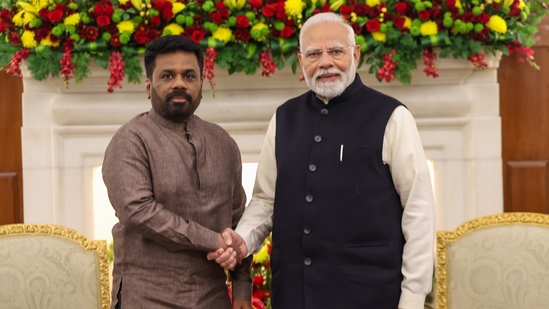
 පසුගියදා මාතර මහේස්ත්රාත් අධිකරණයට ඉදිරිපත් වූ පොලිස්පතිවරයා සම්බන්ධයෙන් මහේස්ත්රාත්වරයා ඉදිරියේ ඔහුට ඇප ලබා දීමට විරුද්ධ වීමට කරුණු දක්වමින් අතිරේක සොලිස්ටර් ජනරාල්වරයා වෘත්තීමය නොවන ග්රාම්ය වචන භාවිත කරමින් ආණ්ඩුක්රම ව්යවස්ථාවෙන් සැකකරුවෙකුට හිමි අයිතීන් නොසලකා හරිමින් කටයුතු කර ඇති බව විවිධ පිරිස් විසින් සමාජ මාධ්ය තුළ අදහස් දක්වා තිබුණි. අතිරේක සොලිසිටර් ජනරාල්වරයාගේ හැසිරීම විවිධ පිරිස් හෙලා දකිමින් අප වෙතද අදහස් දැක්වූ අතර සිවිල් ක්රියාකාරිණියක වන ජෙහාන් හමීඩ් මහත්මිය නීතිපතිවරය වෙත සිද්ධිය සම්බන්ධයෙන් අප්රසාදය පළකරමින් යැවූ ලිපියක් මාධ්ය වෙත යොමු කර ඇත. ඉංග්රීසි භාෂාවෙන් ලියා ඇති එම ලිපියෙහි සිංහල පරිවර්තනය පහතින් පළවේ.