Nagananda debarred from practising as lawyer for three years

March 18th, 2019

Courtesy The Island

The Supreme Court, yesterday, issued a restraining order preventing Nagananda Kodituwakku from practising as a lawyer for three years.

A three-member bench comprising Chief Justice Nalin Perera, Justices Sisira de Abrew and Prasanna Jayawardena issued the order over a 2015 defamation case. The case was filed by Justice Vijith Malalgoda, while he was the President of the Court of Appeal.

The Supreme Court initiated a disciplinary inquiry in respect of attorney-at-law Nagananda Kodituwakku’s conduct in the Court of Appeal on May 21, 2015 before the then President of the Court of Appeal justice Vijith Malalgoda, PC and justice H. C.J. Madawala, based on the complaint.

article_image

Justice Prasanna Jayawardena, who read the verdict, said that the actions of Kodituwakku had tarnished the image of the judiciary and would lead to public losing faith in the institution. Kodituwakku, on March 13, declared that he would withdraw the allegations he had levelled at Malalgoda and tendered an apology. “However, the Supreme Court is compelled to give this verdict, given the grievous nature of Kodituwakku’s statement,” Justice Jayawardena said.

During the proceedings, which commenced in 2017, Kodituwakku, who holds Sri Lankan and British dual citizenship, was told to show cause why he shouldn’t be suspended or removed from the Office of Attorney-at-Law in accordance with Section 42 (2) of the Judicature Act No 02 of 1978 read with Supreme Court rules (Part Vll) of 1978 made in line with Article 136 of the Constitution.

The Supreme Court has listed four specific allegations on the basis of submissions made by Kodituwakku on May 21, 2015 in respect of a case filed by two persons against the Director General of Customs in the Court of Appeal seeking the transfer of the case to a different bench. Having examined the representations made by the Court of Appeal to the Supreme Court, the latter declared, in summons issued to Kodituwakku, that his submissions were contemptuous and his conduct disgraceful, dishonourable, deplorable and essentially unworthy of an attorney-at-law.

ගෝටාභය ජනාධිපති අපේක්‍ෂක ලෙස නම් කර අවසන්.. මා හෝ බැසිල් යෝජනා වූයේ නෑ..- චමල් රාජපක්‍ෂ

March 18th, 2019

lanka C news

ගෝටාභය රාජපක්‍ෂ මහතා මීලග ජනාධිපතිවරණයේදී ශ‍්‍රී ලංකා පොදුජන පෙරමුණේ ජනාධිපති අපේක්‍ෂකයා ලෙස පත් කර අවසන් යයි තමන් සිතන බව හිටපු කතානායක චමල් රාජපක්‍ෂ මහතා සදහන් කරයි.

තමන් හෝ බැසිල් රාජපක්‍ෂ මහතා ජනාධිපති අපේක්‍ෂක ලෙස යෝජනාවක් ඉදිරිපත් වී නොමැති බවත් ඒ මහතා පවසයි.

ගෝටාභය ජනාධිපති අපේක්‍ෂක ලෙස නම් කර අවසන්.. මා හෝ බැසිල් යෝජනා වූයේ නෑ..- චමල් රාජපක්‍ෂ

උත්සව සභාවකට සහභාගී වීමෙන් අනතුරුව මාධ්‍ය වෙත අදහස් පල කරමින් ඔහු මෙම අදහස් පල කලේය.

රාජපක්‍ෂ පවුලේ සියළු දෙනා අතර පැවති සාකච්චාවකදී ගෝටාභය රාජපක්‍ෂ මහතා මීලග ජනාධිපති අපේක්‍ෂක ලෙස පත් කිරීමට තීරණය කර ඇති බවට මාධ්‍ය විසින් වාර්තා කිරීම සම්බන්ධයෙන් කල විමසීමකදී චමල් රාජපක්‍ෂ මහතා මෙසේ කියා සිටියේය.

S’pore should clearly state whether Mahendran is there or not: President Maithripala Sirisena

March 18th, 2019

Courtesy The Daily Mirror

President Maithripala Sirisena today faulted the Singaporean Government of not making a clear and open statement as to whether the main respondent in the Central Bank bond scam was in the country.

What I am concerned about is that the Singaporean Government has not made a clear statement about this yet. That is the prevailing situation. I see a certain lapse in international support in arresting the main respondent. The Singaporean Government should take more responsibility in this matter or else make a clear statement saying he is not in Singapore,” he said.

Speaking at a ceremony held in Colombo to launch the national action plan against bribery and corruption, the President said: We have not been able to nab the main respondent in the Central Bank bond scam. That is the true situation. When I met the Singaporean Prime Minister, I spoke to him personally about this matter. I told him that this person has international warrants and to hand him over to us. What he told in response was that they would not hesitate to do so whether or not he was a Singaporean citizen.

I appointed four commissions. One of them was to probe corruption at SriLankan Airlines and another was a presidential commission to probe the frauds and corruption under the present government during the past four years. When I went to the Cabinet meeting after appointing and gazetting the commission to probe corruption in this government, some ministers asked me as to why I appointed a commission to probe corruption of this government without probing the previous one. I wondered at that moment whether those who asked so were in their proper senses because they had forgotten that I appointed a commission to probe the previous government and its report was presented in Parliament as well.”

Height of Hypocrisy: US demands international probes against Sri Lanka but denies US war crimes probe!

March 17th, 2019

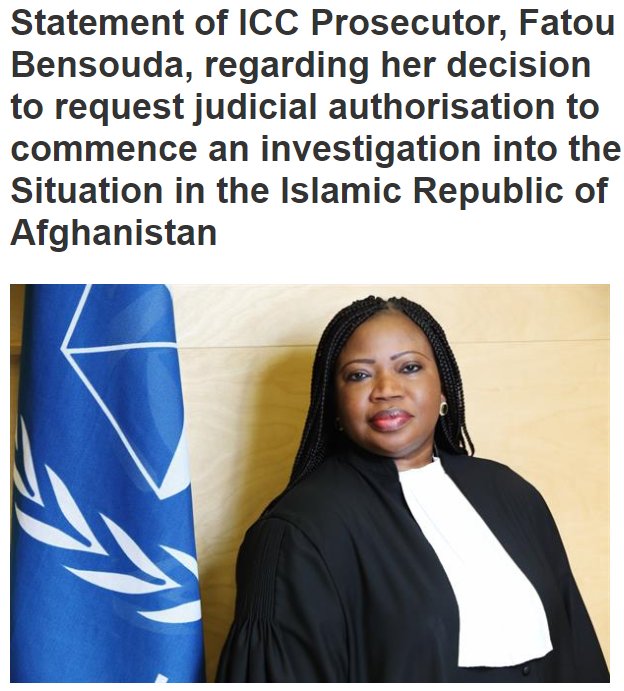
In November 2017, ICC Prosecutor Fatou Bensouda asked judges for authorization to open an investigation into alleged war crimes in Afghanistan. US & NATO bombed and invaded Afghanistan immediately after 9/11 blaming Afghanistan though none of the hijackers were even remotely connected to Afghanistan. US & NATO have been occupying Afghanistan since 2001. The war crimes cover period 2003-2004 and include countries CIA has prisoners in. According to Bensouda more than 10,000 civilians were said to have been killed from 2007 to 2011 alone. While US left UNHRC calling it a ‘cesspool of bias’ UK has taken over from US to co-sponsor another UNHRC resolution against Sri Lanka. The hypocrisies are such that the ICC is even investigating UK for war crimes in Iraq, is the UNHRC not aware that those seeking war crimes against small countries like Sri Lanka are the biggest perpetrators of war crimes for which the ICC is now attempting to investigate but are not being allowed to do so while both US & UK are demanding international investigations on Sri Lanka. US & UK and the UNHRC are hypocrites of the highest order.


The US has threatened to revoke or deny visas to ICC officials seeking to investigate war crimes by US forces in Afghanistan & elsewhere. US threat will apply to ICC officials if they purse war crimes against Israel too. So said US Secretary of State Mike Pompeo we are determined to protect the American & allied military and civilian personnel from living in fear of unjust prosecution for actions taken to defend our great nation”. Not stopping there Pompeo also add the ICC is attacking America’s rule of law” … Pompeo also made vile threats against anyone assisting too I’am announcing a policy of US visa restrictions on those individuals directly responsible for any ICC investigation of US personnel’… which includes anyone who takes or has taken action to request or further an investigation.


ICC wants to investigate allegations of torture, cruel treatment, outrages upon personal dignity, rape, sexual violence against detainees in Afghanistan and other locations during 2003-2004 period by US military & intelligence agencies.


US is not a member of the ICC. US signed the Rome Statute in 2000 which created the ICC but did not ratify it.

In 2001 after George Bush came to power the American Service Members Protection Act was passed which made US troops immune from potential prosecution by ICC.

In 2002 US exited from the Rome Statute.

Afghanistan is a member of the ICC


Fatou Bensouda, chief prosecutor at the international criminal court in The Hague, has declared there is a reasonable basis” to believe that UK soldiers committed war crimes against detainees during the Iraq conflict and will investigate claims that British troops abused and unlawfully killed prisoners after the US-led invasion.


November 2009

US Calls on Sri Lanka to Investigate Alleged War Crimes

https://www.voanews.com/a/a-13-2009-10-22-voa63/415022.html


December 2010

US lawmakers urged a global probe into alleged rights violations by Sri Lanka in the last stages of its civil war

http://www.dailymirror.lk/breaking_news/us-lawmakers-call-for-probe/108-8468


March 2013

Eliot Engel US Congressmen calls for international probe,

http://srilankabrief.org/2013/03/us-congressman-calls-for-international-probe-into-lankan-war/


January 2014

US to lead on calls for international investigation into war crimes in Sri Lanka at UNHRC

https://www.tamilguardian.com/content/us-lead-calls-international-investigation-war-crimes-sri-lanka-unhrc


US calls for ‘credible, independent’ Sri Lankan rights probe

https://www.ucanews.com/news/us-calls-for-credible-independent-sri-lankan-rights-probe/70070


August 2015

U.S. to Support Sri Lanka Plan to Investigate War Crimes

https://www.nytimes.com/2015/08/27/world/asia/united-states-supports-sri-lanka-investigation-of-war-crimes.html


3 successive resolutions drafted by US against Sri Lanka was presented at the UNHRC in 2012, 2013, 2014 and in 2015 having successfully carried out a regime change to install a puppet government co-sponsorship of the resolution assuring a series of treacherous acts including changing of the constitution removal of the prevention of terrorism act and changes to the country’s penal codes, privatizing of land, removal of armed forces and trimming down of armed forces was agreed upon. Now in 2019 that same government has agreed to co-sponsor a resolution extending more time frame to realize what was promised in 2015.


No UN Resolutions are binding of any UN member state. UN officials have no mandate to raise the sword of Damocles upon any Member state either. Scores of irregularities and questionable illegalities are being committed by the UN and its Officials in violation of the UN Charter. Members cannot raise much noise because the system is entirely held by crooks as the spiraling allegations of corruptions taking place inside the UN foretells.


So what is hilarious is that US & UK being investigated for war crimes by the ICC are threatening to deny visa even sanction if investigations proceed against its troops while at the same time drafting resolutions demanding Sri Lanka be investigated for war crimes by international judges. UNHRC fully aware of US & UK being investigated are complicit in allowing sham resolutions against Sri Lanka that violate the UN Charter interfering beyond levels of acceptance into the internal affairs of a sovereign state.


Sadly, the whole UN system is corrupt that the citizens of Sri Lanka who are aware of the treacheries taking place doesn’t even have an honest mechanism of INDEPENDENT international authorities to even appeal to against the bias & illegalities taking place. It is disgusting to accept that even in the 21st century an international body such as the UN has become a puppet, corrupt in every corner and functioning totally against peace but creating new & worse issues for countries to handle by demanding changes to a country’s constitution, removal of terrorist laws, release of terrorists, removal of military bases, pruning of military and a plethora of internal structures that every new UNHRC resolution is demanding Sri Lanka accept on the flimsy excuse that it will promote reconciliation.


Shenali D Waduge


The stand Sri Lanka should take in Geneva

March 17th, 2019

MEDIA RELEASE Mahinda Rajapaksa Leader of the Opposition

 The government has announced that they will co-sponsor yet another resolution against Sri Lanka in the UN Human Rights Council. Resolution 30/1, the first such co-sponsored resolution in October 2015 committed the government to among other things, setting up a hybrid war crimes court with the participation of foreign judges, prosecutors and investigators and to removing by administrative means, individuals in the armed forces suspected of human rights violations even if there is insufficient evidence to charge them in courts. By co-sponsoring Resolution 30/1, the Sri Lankan government officially accepted Report No: 30/61 dated 28 September 2015 prepared by the Office of the High Commissioner on Human Rights (OHCHR), which directly accused the Sri Lankan armed forces of many crimes including torture, enforced disappearances, deliberate targeting of civilians and the denial of humanitarian assistance to civilians.

In partial fulfillment of the numerous pledges given in Resolution 30/1, the government forced through Parliament the Office of Missing Persons Act after a farcical debate of less than 40 minutes in August 2016. The Office of Missing Persons can issue summons, examine witnesses, and hold hearings and is actually a tribunal in all but name. Its officers can search any police station, prison or military installation at any time without a warrant and seize any document or object they require. Government bodies at all levels including the armed forces and intelligence services are mandatorily required to render fullest assistance to the OMP even in contravention of the Official Secrets Act.

In March 2018, acting against the repeated requests of the Maha Sangha, the government passed the Prevention of Enforced Disappearances Act No: 5 of 2018 to incorporate into local law, the provisions of the International Convention against Enforced Disappearances. This enables an alleged enforced disappearance in Sri Lanka to be investigated and prosecuted in a foreign country as if it was an offence committed in that country. The country that arrests a Sri Lankan citizen on such grounds, has the option of handing that individual over to the International Criminal Court. Furthermore, foreign governments can request the extradition of persons suspected of having committed enforced disappearances in Sri Lanka to stand trial in their countries.

In August 2018, the government passed amendments to the Mutual Assistance in Criminal Matters Act No: 25 of 2002 to widen its applicability to a larger number of countries and also to international organisations such as the International Criminal Court. This law relates to facilitating cooperation between Sri Lanka and foreign countries and organisations in locating witnesses or suspects, issuing summons and other documents on such persons, the obtaining of evidence, the execution of search and seizure requests etcetera. The UN Human Rights Commissioner in her report on Sri Lanka to the current session of the UNHRC, has called on member states of the UNHRC to investigate and prosecute those suspected of war crimes in Sri Lanka under the principle of universal jurisdiction. The direct connection between this request and the new laws passed by Sri Lanka, is self-evident.

The contents of the UN Human Rights Commissioner’s latest report in addition to similar reports in previous years, gives rise to the question whether Sri Lanka is any longer a sovereign nation. From Geneva, she has stressed the need for the Sri Lankan government to devolve of political authority. She has expressed her displeasure at the appointment of Major General Shavendra Silva as the Chief of Staff of the Sri Lanka Army. She has stated that the panel of experts report tabled in the Constitutional Assembly by the Prime Minister could be the basis for a new constitution for Sri Lanka. With such supervision of our affairs from Geneva, why do we need an elected government?

Resolution 30/1 which sought to betray our armed forces and wartime leaders to interested foreign parties was co-sponsored by the yahapalana government at a time when they were expecting large inflows of foreign aid. Quisling regimes established through foreign intervention in certain other countries were in fact rewarded with increased aid in exchange for handing over the deposed political and military leaders to interested foreign powers in order to ensure that the nationalist forces in those countries never rise up again. I am quite convinced that the open and unashamed treachery in co-sponsoring Resolution 30/1 was due to such expectations on the part of this government.

This year, the British government is driving the process against Sri Lanka in the UNHRC because the USA has left the UNHRC calling that body ‘a cesspool of political bias’. Governments change in all countries and with it attitudes and policies also change. The international order that saw the passage of Resolution 30/1 is changing, but because we still have a government that identifies with the old world order, Sri Lanka has not been able to reap the benefits of the changes that have taken place in the world since 2016.

In Britain Lord Naseby has been trying to persuade the British government to drop the campaign against Sri Lanka in the UNHRC. He has in his speeches in the House of Lords explained how the 2011 Darusman report compiled by an unofficial committee appointed by the then UN Secretary General Ban Ki Moon had arbitrarily plucked the figure of 40,000 civilian deaths out of thin air. He has recounted how the then British Defence Attaché in Sri Lanka Lieutenant Colonel Anton Gash, had told him in January 2009 that he was surprised at the ‘controlled discipline’ of the Sri Lankan army and the solicitous manner in which they looked after the civilians who escaped from LTTE captivity. Lord Naseby has obtained from the British Foreign and Commonwealth Office copies of the dispatches filed by Lt Colonel Anton Gash which despite being heavily redacted, prove that it was never a policy of the Sri Lankan Government to kill civilians.

Furthermore, five renowned international experts in the law of armed conflict namely, Sir Desmond de Silva QC, Professor David Crane, Sir Geoffrey Nice QC, Rodney Dixon QC, and Professor Michael Newton have examined the allegations against Sri Lanka and provided written opinions to the effect that no violation of the law of armed conflict had taken place during the final stages of the war. Major General John Holmes, a highly decorated British Special Forces Commander has done a technical evaluation mainly of the allegations of the indiscriminate use of artillery during the final stages of the war and stated in writing his conclusion that there is no indication that the Sri Lanka Army deliberately or disproportionally targeted the civilian population. He has criticized the interpretation of satellite imagery in the Darusman report of 2011 on which these allegations are largely founded.

Most of these experts who have expressed views in favour of Sri Lanka are British citizens, yet the Sri Lankan government has not engaged with the British government to have the passage of these resolutions stopped. There is now a government delegation in Geneva with representatives of both the President and the UNP government attending the 40th Session of the UNHRC. Speaking of the new draft resolution that is now on the table, Minister Lashman Kiriella said in Parliament that Sri Lanka has been praised for the progress made and that there was nothing wrong in co-sponsoring that resolution. Indeed, there are some words of praise in the draft resolution, but that is for things like the treachery committed by this government in readily cooperating with their foreign overlords and passing the new laws that we mentioned earlier. What is seen in a positive light by the foreign masters of this government translates directly into a betrayal of Sri Lanka.

In reply to a question that I posed in Parliament, the minister of foreign affairs said that the government does not agree to everything in the UN Human Rights Commissioner’s latest report on Sri Lanka to the UNHRC and as an example of something that the government does not agree to, he mentioned an error in that report relating to the amount of land in the North released for civilian use. Disagreement on such trivialities means nothing. What the people of this country would like to see is a public announcement by the government which is also officially communicated to the UN Human Rights Commissioner and members of the UNHCR stating:

  1. That Sri Lanka will no longer co-sponsor resolutions against itself in the UNHRC.
  2. That Sri Lanka does not accept the allegations made in OHCHR Report No: 30/61 of 28 September 2015.
  3. That hybrid war crimes courts with foreign judges and prosecutors will never be set up in Sri Lanka.
  4. That Acts No: 14 of 2016, No: 5 of 2018 and No: 24 of 2018 which are highly detrimental to Sri Lanka’s sovereignty and the fundamental rights of its citizens, will be repealed and replaced with legislation more in keeping with our national interest.

All members of the delegation representing the government in Geneva should clearly understand that anything short of the above will effectively, be a betrayal of the people of Sri Lanka.


Mahinda Rajapaksa

Leader of the Opposition

ජිනීවාහිදී ශ්‍රී ලංකාව ගත යුතු ස්ථාවරය

March 17th, 2019

මාධ්‍ය නිවේදනය මහින්ද රාජපක්‍ෂ විපක්‍ෂ නායක

එක්සත් ජාතීන්ගේ මානව හිමිකම් කවුන්සිලය තුළ ශ්‍රී ලංකාවට එරෙහිව ගෙන එන තවත් යෝජනාවකට සම අනුග්‍රාහකත්වය දක්වන බවට ආණ්ඩුව ප්‍රකාශයට පත්කොට ඇත.  2015 ඔක්තෝබර් මාසයේ මේ ආකාරයට මුල් වතාවට සම අනුග්‍රාහකත්වය දක්වා සම්මත කර ගනු ලැබූ අංක 30/1 දරණ යෝජනාව තුළින් වත්මන් ආණ්ඩුව භාරගත් එක් කාර්‍යයක් වන්නේ ලංකාවට විරුද්ධව තිබෙන යුද අපරාධ චෝදනා විභාග කිරීමට විදේශීය විනිශ්චයකාරවරුන්, පරිචෝදකයන් හා විමර්ශණ නිලධාරීන්ගේ සහභාගීත්වය සහිත ‘දෙමුහුන්’ අධිකරණයක් පිහිටුවීමයි. උසාවියේ නඩුවක් ගොනු කිරීමට තරම් සාක්‍ෂි නැති වුවත් මානව හිමිකම් උල්ලංඝනය කළාය කියා සැකයට භාජනය වී සිටින සන්නද්ධ හමුදා සාමාජිකයන් පරිපාලන ක්‍රියාදාමයක් තුළින් සේවයෙන් ඉවත් කිරීමටත් ඔවුන් එම යෝජනාව තුළින් එකඟ විය.  30/1 යෝජනාවට සම අනුග්‍රාහකත්වය දැක්වීම තුළින් මානව හිමිකම් කොමසාරිස් කාර්යාලය විසින් ලංකාව සම්බන්ධයෙන් සම්පාදනය කර තිබූ 2015 සැප්තැම්බර් 28 දින දරණ අංක 30/61 වාර්ථාවද ශ්‍රී ලංකා ආණ්ඩුව විසින් නිල වශයෙන් පිළිගැනීම සිදු විය. එම වාර්ථාවෙන් සැකකරුවන්ට වද බන්ධන පැමිණවීම, අතුරුදහන් කරවීම, සිවිල් ජනතාව හිතාමතාම ඉලක්ක කර ප්‍රහාර එල්ල කිරීම, යුද කළාපය තුළ සිටි සිවිල් ජනතාවට මානුෂීය ආධාර සැපයීම වැලැක්වීම වැනි චෝදනා විශාල ගණනක් ලංකාවට විරුද්ධව එල්ල කර තිබුණි.

30/1 යෝජනාව තුළින් දෙනු ලැබූ ඇතැම් ප්‍රතිඥා මේ ආණ්ඩුව දැනටමත් ක්‍රියාත්මක කර ඇත. 2016 අගෝස්තු මාසයේදී පාර්ලිමේන්තුවේ විනාඩි 40 කටත් වඩා අඩු කාලයක් විවාද කිරීමෙන් පසු ඔවුන් අතුරුදහන් වූවන්ගේ කාර්යාල පනත බලහත්කාරයෙන් සම්මත කර ගත්තේය. මෙය ‘කාර්යාලයක්’ හැටියට හැඳින්වුවද, එය ඇත්ත වශයෙන්ම සිතාසි නිකුත් කිරීමට, සාක්ෂි කරුවන් කැඳවීමට  හා විභාග පැවැත්වීමට බලය සහිත විනිශ්චය සභාවකි. එහි නිලධාරීන්ට ඕනෑම හමුදා කඳවුරක්, පොලිස් ස්ථානයක් හෝ බන්ධනාගාරයක් ඕනෑම වෙලාවක වරෙන්තු නොමැතිව සෝදිසි කොට ඔවුන්ගේ විමර්ශන වලට අවශ්‍ය ඕනෑම ලියවිල්ලක් හෝ භාණ්ඩයක් තමන් සන්තකයට ගැනීමට බලය ඇත. රාජ්‍ය රහස් පනතේ විධිවිධාන වලට පටහැනිව වුවත්,  බුද්ධි අංශ, සන්නද්ධ හමුදා  ඇතුළු සියලුම රජයේ ආයතන මේ අතුරුදහන් වූවන්ගේ කාර්යාලයට සම්පූර්ණ සහයෝගය දැක්වීමට  අනිවාර්යෙන්ම බැඳී සිටී.

2018 මාර්තු මාසයේ දී මහා සංඝරත්නයේ විරෝධයත් නොතකා  බලහත්කාරයෙන් අතුරුදහන් කරවීම් වලට එරෙහි ජාත්‍යන්තර ප්‍රඥප්තියේ විධිවිධාන ලංකාව තුළ බලාත්මක කිරීම සඳහා ආණ්ඩුව 2018 අංක 05 දරණ පනත සම්මත කර ගත්තේය. ලංකාව තුළ සිදු වූවා යැයි කියන අතුරුදහන් වීමක් තමන්ගේ රට තුළ සිදු වූවාක් මෙන් විදෙස් රටකට වුවද විභාග කිරීමට මින් ඉඩ සැලසේ. එවන් චෝදනාවක් මත ශ්‍රී  ලාංකිකයෙකු හිර භාරයට ගන්නා රටකට එම පුද්ගලයාව   ජාත්‍යන්තර අපරාධ අධිකරණයට ඉදිරිපත් කිරීමට වුවද බලය ඇත. මේ නව නීතිය යටතේ ලංකාව තුළ අතුරුදහන් කරවීමක් සිදු කළාය කියා සැක කරන පුද්ගලයෙකු විදේශීය රටකට උදර්පණය කරගෙන ඔහුට විරුද්ධව එම රටේදී නඩු පැවරීමත් සිදු කළ හැක.

2002 අංක 25 දරණ අපරාධ කටයුතුවලදී අන්‍යෝන්‍ය උපකාර සැලසීම් පනතට 2018 අගෝස්තු මාසයේදී ගෙන එනු ලැබූ සංශෝධන තුළින් එම පනතේ විධිවිධාන රටවල් විශාල ගණනකට හා  ජාත්‍යන්තර අපරාධ අධිකරණය වැනි ජාත්‍යන්තර සංවිධානවලටත් වලංගු වෙන ආකාරයට පුළුල් කරනු ලැබුවේය. ලංකාව තුළ විදේශීය රටවලට අවශ්‍ය සැකකරුවන් හෝ සාක්‍ෂිකරුවන් සොයා ගැනීම, එවන් පුද්ගයන්ට සිතාසි ඇතුලු වෙනත් ලියවිලි ලැබීමට සැලැස්වීම, සාක්‍ෂි සොයා ගැනීම, වරෙන්තු අනුව සෝදිසි සිදුකිරීම, වැනි කාරණා වලට මෙම නීතිය අදාල වේ. එක්සත් ජාතීන්ගේ මානව හිමිකම් කොමසාරිස්වරිය, මානව හිමිකම් කවුන්සිලයේ වර්ථමාන සැසි වාරයට ලංකාව සම්බන්ධයෙන් ඉදිරිපත්කර තිබෙන වාර්ථාවේ ශ්‍රී ලංකාවේ යුද අපරාධ කළ බවට සැක කරන අයට විරුද්ධව තම තමන්ගේ රටවල යුනිවර්සල් ජූරිස්ඩික්ශන්” සංකල්පය යටතේ  නඩු පවරන මෙන් මානව හිමිකම් කවුන්සිලයේ සියලුම සාමාජික  රටවලට උපදෙස් දී ඇත.  මේ ඉල්ලීම අපේ රටේ මෑතකදී සම්මත කරගත් ඉහත සඳහන් අලුත් පනත් තුනට ඍජුවම සම්බන්ධ වන අකාරය කාටත් පැහැදිලි විය යුතුය.

එක්සත් ජාතීන්ගේ මානව හිමිකම් කොමසාරිස්වරියගේ නවතම වාර්තාවේ අන්තර්ගතය දෙස බලන විට  ලංකාව තවදුරටත් සෛවරී රාජ්‍යයක්ද යන ප්‍රශ්නය පැණ නැගේ. එතුමිය ජිනීවා වල සිට ලංකාවේ බලය බෙදීමේ අවශ්‍යතාවය අවධාරණය කර ඇත.  ශ්‍රී ලංකා යුද හමුදාවේ මාණ්ඩලික ප්‍රධානියා හැටියට මේජර් ජෙනරාල් ශවේන්ද්‍ර සිල්වා පත් කිරීම ගැන ඇය අප්‍රසාදය පල කර ඇත. අගමැතිවරයා මෑතකදී ව්‍යවස්ථා සම්පාදක මණ්ඩලයේ සභාගත කළ විශේෂඥයන්ගේ වාර්ථාව ලංකාවට අලුත් ව්‍යවස්ථාවක් සඳහා හොද පදනමක් සපයන බව ඇය ප්‍රකාශ කර ඇත. ජිනීවා නුවරින් එවන් අධීක්‍ෂණයක් සිදු වෙන විට ලංකාවට ඡන්දයෙන් පත්වෙන ආණ්ඩුවක් කුමටද?

අපේ රණවිරුවන් හා යුද්ධයට නායකත්වය දුන් දේශපාලන බලධාරීන්  විදේශ රටවලට පාවා දීම සඳහා 30/1 යෝජනාවට යහපාලන ආණ්ඩුව සම අනුග්‍රාහකත්වය දැක්වූයේ  ඔවුන්ට විදේශ ආධාර විශාල වශයෙන් ලැබේවිය යන බලාපොරොත්තුව තිබුණ කාල වකවානුවකය.  විදේශීය මැදිහත්වීම් තුළින් ඇතැම්  රටවල අලුත් ආණ්ඩු පිහිටුවීමෙන් පසු අදාල  රටවල බලයෙන් පහ කරනු ලැබූ දේශපාලන හා හමුදා නයකයන් විදේශ බලවතුන්ට පාවා දෙනවාට තෑගි වශයෙන් විශාල ආධාර ප්‍රමාණයක් එම රටවලට ලැබුණ අවස්ථා මීට පෙර අපි දැක ඇත. විදේශ බලවතුන් එවන් ක්‍රියාමාර්ග ගනු ලබන්නේ, ඒ යටත් කරගත් රටේ ජාතිකවාදී බලවේග නැවත නැගිටින්නේ නැති තැනට වගබලා ගැනීම සඳහාය.  වර්ථමාන ආණ්ඩුව කිසිම ලැජ්ජාවක්, හිරිකිතයක් නොමැතිව  30/1 යෝජනාවේ සියලුම ජාතිද්‍රෝහී විධිවිධාන වලට එකඟ වූයේ එවන්  බලාපොරොත්තු නිසා බව  මම තදින්ම විශ්වාස කරමි.

මෙවර මානව හිමිකම් කවුන්සිලය තුළ ලංකාවට එරෙහි සටන මෙහෙයවනු ලබන්නේ  බ්‍රිතාන්‍යය විසිනි.  කළින් මේ සටන මෙහෙය වූ ඇමරිකා එක්සත් ජනපදය, මානව හිමිකම් කවුන්සිලය දේශපාලන පක්‍ෂත්ග්‍රාහීත්වයෙන් පිරුණු අසූචි වලක්” ලෙස හඳුන්වා එයින් ඉවත් වී ඇත. සෑම රටකම ආණ්ඩු වෙනස් වේ. එයත් සමඟම ආකල්ප හා  ප්‍රතිපත්තිත් වෙනස් වේ. අද පවතින්නේ 30/1 යෝජනාව සම්මත වූ අවස්ථාවේදී පැවති  ජාත්‍යන්තර තත්වය නොවේ. නමුත් අපේ රටේ තවමත් ලෝකය පුරාම අභාවයට යමින් පවතින දේශපාලන ප්‍රවාහය සමඟ ගැට ගැසුණු ආණ්ඩුවක් තිබෙන නිසා 2016 සිට ලෝකය පුරා සිදු වීමට පටන්ගත්  පෙරළි වලින් ලංකාවට ලැබිය යුතු වාසි ලබා ගැනීමට නොහැකි වී ඇත.

බ්‍රිතාන්‍යයේ නෙස්බි සාමිවරයා මානව හිමිකම් කවුන්සිලය තුළ ශ්‍රී ලංකාවට එරෙහිව ගෙන යන ව්‍යාපාරයෙන් බ්‍රිතාන්‍ය ආණ්ඩුව ඉවත් කරවා ගැනීමට ප්‍රබල උත්සාහයක යෙදි සිටී.  2011 දී එකල එක්සත් ජාතීන්ගේ සංවිධානයේ මහ ලේකම් වූ බෑන්කී මූන් මහතා විසින් පත් කරන ලද නිල නොවන කමිටුවක් විසින් සම්පාදනය කල දරුස්මාන් වාර්ථාවේ යුද්ධයේ අවසන් කාලයේදී දෙමළ සිවිල් පුරවැසියන්  40,000 ක් මිය ගිය බවට සම්පූර්ණයෙන්ම මනංකල්පිත ලෙස නිගමනය කර තිබූ අකාරය ඔහු බ්‍රිතාන්‍ය සාමි මන්ත්‍රී මණ්ඩලයට පැහැදිලි කර ඇත. යුද්ධයේ අවසන්  කාලයේ ලංකාවේ බ්‍රිතාන්‍ය මහ කොමසාරිස් කාර්යාලයේ ආරක්‍ෂ සම්බන්ධීකරන නිලධාරියා වූ ලුතිනන් කර්නල් ඇන්ටන් ගෑෂ් මහතා,  ශ්‍රී ලංකාවේ යුද හමුදාවේ විනය ගැනත්, කොටි බල ප්‍රදේශයෙන් මිදී ආ සිවිල් වැසියන්ව යුද හමුදාව විසින් මනාව රැකබලාගත් ආකාරය ගැනත් 2009 ජනවාරියේ දී තමන් සමඟ ඉතා ප්‍රසංශාත්මකව කතා කල හැටි  නෙස්බි සාමිවරයා විස්තර කර ඇත.  ඒ කාලයේ ලුතිනන් කර්නල් ගෑෂ් ලංකාවේ සිට බ්‍රිතාන්‍යට යවා තිබුණු වාර්ථාවල පිටපත් ලබාගෙන ඒවායේ සාක්‍ෂි අනුවත් ශ්‍රී ලංකාවේ ආණ්ඩුවට දෙමළ සිවිල් වැසියන් ඝාතනය කිරීමේ ප්‍රතිපත්තියක් නොතිබුණු බවට නෙස්බි සාමිවරයා ඉතාම පැහැදිලිව පෙන්වා  දී ඇත.

එමෙන්ම  යුද නීතිය පිළිබඳ ප්‍රධානම පෙලේ ජාත්‍යන්තර විශේෂඥයන් පස් දෙනෙකු, එනම්, රැජිනගේ නීතීඥ ශ්‍රීමත් ඩෙස්මන්ඩ් ද සිල්වා, මහාචාර්යය ඩේවිඩ් ක්‍රේන්, රැජිනගේ නීතීඥ ශ්‍රීමත් ජෙෆ්රි නයිස්, රැජිනගේ නීතීඥ රොඩ්නි ඩික්සන් හා මහාචාර්යය මයිකල් නිව්ටන් යන නීති විශාරදයන් පස් දෙනා ලංකාවේ යුද්ධයේ  අවසන් මාසවලදී යුද නීතියේ විධිවිධාන කිසිවක් උල්ලංඝනය නොවුණු බවට ලිඛිත වාර්ථා සපයා ඇත.  බ්‍රිතාන්‍යයේ විශේෂ හමුදා බලකායේ හිටපු අණ දෙන නිලධාරියෙකු වන මේජර් ජනරාල් ජෝන් හෝම්ස් බර අවි භාවිතය ගැන වෙනම තාක්‍ෂණික විමර්ශණයක් සිදු කර, යුද්ධයේ අවසන් අදියරේදී බර අවි භාවිතය අයුතු ලෙස සිදු නොවුණු බවට වාර්ථාවක් සපයා ඇත.  ශ්‍රී ලංකා යුද හමුදාව සිතාමතාම සිවිල් ජනතාව ඉලක්ක කළාය යන අදහසත් ඔහු පැහැදිලිව ප්‍රතික්‍ෂේප කර තිබේ. 2011 දරුස්මාන් වාර්ථාවේ බර අවි භාවිතය සම්බන්ධයෙන් චන්ද්‍රිකා ඔස්සේ ලබාගෙන තිබෙනවා යැයි කිවූ සාක්‍ෂිද ඔහු තදින්ම විවේචනය කර ඇත.

ලංකාවට පක්‍ෂව මේ ආකාරයට අදහස් ප්‍රකාශ කර තිබෙන විශේෂඥයන්ගෙන් බහුතරය බ්‍රිතාන්‍ය ජාතිකයන් වේ.  නමුත් මේ යෝජනා සම්මත කිරීම නවත්වා ගැනීම සඳහා බ්‍රිතාන්‍ය ආණ්ඩුව සමඟ කිසිම සාකච්ඡාවක් ශ්‍රී ලංකාවේ ආණ්ඩුව සිදු කර නැත. මේ අවස්ථාවේදී එක්සත් ජාතීන්ගේ මානව හිමිකම් කවුන්සිලයේ 40 වන සැසිවාරයට සහභාගී වීම සඳහා ජනාධිපතිවරයා සහ යූ.එන්.පී ආණ්ඩුව නියෝජනය කරමින්  ජිනීවා නුවරට ආණ්ඩුවේ දූත පිරිසක් ගොස් සිටී. එහිදී සම්මත කිරීමට යන අලුත්ම යෝජනාව ගැන ආණ්ඩුව වෙනුවෙන් කතා කරමින් ලක්‍ෂමන් කිරිඇල්ල ඇමතිවරයා පාර්ලිමේන්තුවේදී කියා සිටියේ ලබා ඇති ප්‍රගතිය ගැන එම යෝජනාවෙන් ලංකාව ප්‍රසංශා කර ඇති බවින්, එයට සම අනුග්‍රාහකත්වය ලබා දීම ප්‍රශ්නයක් නොවන බවයි. ලංකාව ගැන ප්‍රසංශාත්මක වචන කිහිපයක් එම යෝජනාවේ ඇත්ත වශයෙන්ම තිබේ. නමුත් ඒ කියන ප්‍රසංශාව හිමිව ඇත්තේ අප ඉහත සඳහන් කළ රණවිරුවන් පාවාදෙන නව නීති සම්මත කිරීම වැනි ආණ්ඩුව විසින් සිදු කර ඇති මහා ජාතීද්‍රෝහීකම් වලටය. වත්මන් ආණ්ඩුවේ විදෙස් හාම්පුතුන්ගේ ප්‍රසංශාව හිමි වෙන්නේ පාවාදීමකට පමණි.

පාර්ලිමේන්තුවේ මා ඇසූ ප්‍රශ්නයකට පිළිතුරු සපයමින්, විදේශ කටයුතු ඇමතිවරයා කියා සිටියේ මානව හිමිකම් කොමසාරිස්වරයා ලංකාව සම්බන්ධයෙන් මානව හිමිකම් කවුන්සිලයේ වත්මන් සැසිවාරයට ඉදිරිපත් කර  තිබෙන වාර්ථාවේ සඳහන් සියළුම දේවල් වලට ආණ්ඩුව එකඟ නොවන බවයි. එසේ එකඟ නොවෙන කරුණකට උදාහරණයක් සපයමින් විදේශ කටයුතු ඇමතිවරයා කියා සිටියේ උතුරේ ඉඩම් නැවතත් සිවිල් වැසියන්ට මුදා හැරීම සම්බන්ධයෙන් එම වාර්ථාවේ සඳහන් දත්ත වලට ආණ්ඩුව එකඟ නැති බවයි. එවැනි නොවැදගත් කාරණා වලට විරුද්ධ වීමෙන් කිසිදු පලක් නැත. මේ රටේ ජනතාව සැබවින්ම බලාපොරොත්තු වෙන්නේ, එක්සත් ජාතීන්ගේ මානව හිමිකම් කොමසාරිස්වරියටත්, මානව හිමිකම් කවුන්සිලයේ සාමාජික රටවලටත් නිල වශයෙන් දන්වමින්, පහත සඳහන් ආකාරයේ පැහැදිලි ස්ථාවරයක් ආණ්ඩුව විසින් ප්‍රකාශයට පත් කරනු දැකීමටයි.

අ)  මානව හිමිකම් කවුන්සිලය තුළ ශ්‍රී ලංකාවට එරෙහි යෝජනාවලට ශ්‍රී ලංකා ආණ්ඩුව තවදුරටත් සම අනුග්‍රාහකත්වය දක්වන්නේ නැත.

ආ) එක්සත් ජාතීන්ගේ මානව හිමිකම් කොමසාරිස් කාර්යාලය විසින් 2015 සැප්තැම්බර් 28 වෙනිදා  නිකුත් කළ අංක 30/60 දරණ වාර්ථාවේ ඇති චෝදනා කිසිවක් ශ්‍රී ලංකාවේ ආණ්ඩුව පිළිගන්නේ නැත.

ඇ) විදේශීය විනිශ්චයකාරවරුන්, පරිචෝදකයන් හා විමර්ශකයන්ගේ සහභාගීත්වයෙන් ශ්‍රී ලංකාව තුළ ‘දෙමුහුන්’ යුද අධිකරණයක් කිසිදාක පිහිටුවන්නේ නැත.

ඈ) ශ්‍රී ලංකාවේ ස්වාධිපත්‍යට හා ශ්‍රී ලංකා පුරවැසියන්ගේ මූලික අයිතීන්වලට බෙහෙවින්ම හානිකර වන 2016 අංක 14 දරණ පනතත්, 2018 අංක 05 සහ 24 දරණ පනත් දෙකත් අවලංගු කර ඒ වෙනුවට ලංකාවේ අවශ්‍යතා වලට ගැලපෙන ආකාරයේ නව නීති සම්පාදනය කරනු ඇත.

එවන් පැහැදිලි ස්ථාවරයක් නොගෙන වෙන කුමක් කළත්, එය රට ජාතිය පාවාදීමක් මිස අන් කිසිවක් නොවන බව මේ අවස්ථාවේදී ශ්‍රී ලංකාව නියෝජනය කිරීමට ජිනීවා නුවරට ගොස් සිටින ආණ්ඩුවේ නියෝජිත කණ්ඩායමේ සියලුම සාමාජිකයන් අවබෝධ කරගත යුතුය.

මහින්ද රාජපක්‍ෂ

විපක්‍ෂ නායක


Kandyan Convention of 1815 – A Convention violated and dishonoured

March 17th, 2019

by Senaka Weeraratna

(This is an edited version of a paper read out at a Public Seminar on the ‘ Kandyan Convention of 1815’ held at the University of Peradeniya, Arts Theatre, on March 09, 2019)

The Kandyan Convention (‘Ingrisy – Sinhale Givisuma’) must be examined in the context of British colonial policy seeking British supremacy all over world. The British developed ingenious ways of grabbing other people’s lands under various pretexts. The Kandyan Convention is a classic example of this ploy. In India, under its policy of Subsidiary Alliance the British used Treaties to make Indian States, subordinate to British Colonial administration. The British agenda under the Kandyan Convention, whatever the wording in the provisions was not very different.

Kingdom of Kandy was never conquered. It was ceded to the British retaining several provisions favourable to the Kandyan Sinhalese. Articles 4, 5, 6 and 7 of the Kandyan Convention were meant to protect the Kandyan Sinhalese and allow them to govern the Kingdom as they did under their deposed King Sri Wickrama Rajasinghe. Nevertheless, once the British had obtained full control of the land they began to interpret the provisions in an insincere self – serving manner that was highly prejudicial to the interests of the Kandyans, who had foolishly trusted the British.

Evidence of Viscount Torrington

This was clearly explained by Viscount Torrington who was the Governor of Ceylon from 1847 – 1850 in his evidence before the Select Committee of the British Parliament (1848 – 1850). He said Sir R. Brownrigg acted too hastily in making that treaty… The treaty was understood in different senses by the two parties. The chiefs thought they would still continue to govern the country, and that we were simply to have the regality of the territory. We, on the other hand, when we undertook all the duties appertaining to the King of the Kandyans, never intended that the chiefs should govern the country at all; but on the contrary, we considered it essential to appoint our own administrators. I believe that this misunderstanding was the original cause of the rebellion in 1818, as well as of all the disturbances which have broken out since”.

Torrington further says The Kandyans have ever, in fact, been dissatisfied with our rule. They have seen their power, their position, their religion declining. They have ever looked for an opportunity of freeing themselves.”

Juliette – novel by Marquis de Sade

The biggest casualty was the status accorded to Buddhism in Article 5 of the Convention. Despite agreeing to the inviolability of Buddhism being the national religion, missionaries who had by then entered the country with diabolical plans lobbied the British Govt. to remove this Article or dishonor it in violation of the Convention, and they seemingly relied on the advice proffered by Sade to the imperialist in De Juliette “take their god from the people that you wish to subjugate, then demoralize it; so long as they worship no other god than you, and has no other morals than your morals, you will always be their master” (Juliette was a novel written by the Marquis de Sade and published in 1797 – 1801) p324.

Gary Brecher’s views

An English Writer Gary Brecher, author of the book War Nerd” has written a long article on British crimes in Sri Lanka to a web site called  Exiled on Line” under the title When Pigs Fly-and Scold: Brits Lecturing Sri Lanka”.

He says that destroying Buddhism was a big part of Brit policy. The Buddhist routine, the temples, begging monks, long boring prayers–it was the glue that kept Kandy together. So the Brits decided to destroy it. They even said so, in private memos to each other. They weren’t shy in those days. Here’s the Brit governor in 1807: Reliance on Buddhism must be destroyed. Make sure all [village] chiefs are Christian”.

Governor Robert Browning in a letter dated Nov. 5, 1816 to Earl Bathurst (Secretary of State) says that it was his intention to establish a Seminary in Kandy, and adds that as a first step towards spreading Christianity in Kandy I have reason to believe that this Nilame (Ekniliagodde Nilame) would have no objection to have his son and nephew brought up in the Christian religion, but I dare not in this early stage of our Government, venture the éclat which such an event would infallibly produce”.

Gary Brecher, in a scathing attack, accuses the British establishment of destroying the Sinhalese people completely. Completely and deliberately, sadistically. Stole their land, humiliated and massacred their government, made it Imperial policy to erase every shred of self-respect the Sinhalese had left.  He says You can talk about the Nazis all day long, but nothing they did was as gross as what you find out when you actually look into the history of British-Sinhalese relations. If you can even call them relations”; I guess a murder-rape is a relation, sort of ” .

Making a comparison between Nazi and British atrocities he says that the British were great masters at grabbing some paradise island in the tropics, then using the British Royal Navy to wall it off separating the island from the rest of the world, and crushing the local tribe without any qualms of conscience. If the locals put up a resistance, the Brits would take measures to starve them to death, shoot them down, infect them with smallpox or get them addicted to opium (as in China) –whatever they had to do to gang-rape the locals so bad that they the victims would thereby lose the will to resist.

Brecher further points out that the Nazis governed for only one decade but the Brits were able to quietly carry out their extermination programs for three hundred years, and to this day they have no remorse nor have any guilty feeling about it.

He further says that by all accounts, the Sinhala / Kandyans were harmless people, who didn’t need or want much from the outside world. All they asked was for people to leave them alone up on their big rocky highlands to indulge in their Buddhist way of life. Unfortunately that wasn’t British policy. It irked the red coats that Kandy still had a king, an army, all this impudent baggage that went with independence. The British decided to break the Sinhalese completely and crush the whole society”

By this time, i.e. the early 1800s, the Brits had perfected their techniques in little experiments all over the world. Those Clockwork Orange shrinks were amateurs compared to the Imperial Civil Service. The British Empire knew dozens of ways of undermining and suppressing native kingdoms.

Masters of ‘Divide and Rule’ policy 

European powers like Spain and Portugal depended on bloody conquest and massacres in colonial expansion, especially in South America. Britain was not far behind, given what the British did to Australian Aborgines in Tasmania and mainland Australia. The British were the masters of the game of ‘ Divide and Rule’. The ethnic and religious tensions in the post – independence period of Sri Lanka  are very much a legacy of colonial rule. If the target country had many ethnic groups or tribes like in India, North America, Fiji, Malaysia, or Sri Lanka, the British first looked for any potential allies that have distinctive differences from other groups, particularly the majority. Then the British undermine the authority of the majority by promoting unfairly selected members of a minority community with a view to creating tension and conflict between various groups. The appointment of Haji Marikar (Muslim) as the Muhandiram to be in charge of roadways in Wellassa is a case in point. This appointment was resented by the Sinhalese as it undermined the authority of Dissawa Mellewa. This was the spark that led to the 1818 uprising.

British intrigue in Kandy under the directions of successive Governors, namely, North, Maitland and Brownrigg was also intended to achieve British supremacy in Ceylon as in India, by subduing the Kingdom of Kandy through a vicious campaign of propaganda and character assassination directed against the ruler of the Kandyan Kingdom, King Sri Vikrama Rajasinha. He was demonized. He was accused of being a tyrant. Killer of women and children (of persons who had committed treason). A common punishment for treason in most countries including imperial Britain.  A drunkard. And as he was of Indian origin the British discredited his Malabar ancestry as a ploy to alienate him from his Adigars, his chiefs and rejected his right to the throne.

In fairness it must be said that as a young King, Sri Vikrama Rajasinha was popular among the people of his Kingdom. He took charge of the administration which was fair and efficient. He displayed aesthetic sensibility regularly listening to music and commissioned the Royal Architect and Master Craftsman, Devendra Mulachari to design and build the Paththripuwa (1802) and the Kandy Lake (1807), among other novel creations. The King supervised the artists who enlarged and decorated the Kandy City.

Today, the West preaches human rights, demands accountability and upholding of universally accepted standards on human rights. The British Govt. points accusing fingers at Sri Lanka in Geneva on fabricated evidence.  Yet, a detailed scrutiny of colonial rule in British occupied Ceylon (1796 – 1948) reveals a sad saga of human rights violation of a gross kind such as tyranny, plunder, divide and rule, and a vicious policy of violence and discrimination directed mainly against Kandyan Sinhala Buddhists and confiscation of their precious inherited lands.

The rectification of Historical Injustices is a prime duty of any self – respecting nation. Independence is never complete without meting out Justice to those who were wronged by an unjust colonial system.  21st century international legal doctrines need to be availed of by modern day Sri Lanka to present a case for compensation from the current British Government for genocide and mass murder of people of Uva – Wellassa, among other crimes.

Sri Lanka must consider joining former colonies of the British Empire such as in the Caribbean, Africa and Asia to strengthen the quest for adequate compensation from Britain. A preliminary International Conference between affected countries to map out a common strategy for claiming compensation is worthy of consideration.

Australian High Court Ruling on Compensation to Aborgines 

Recently the Australian Aborgines won a landmark case in the High Court of Australia. It was a ground breaking case that can pave the way for billions of dollars in compensation claims for colonial land loss, as well as loss of spiritual connection.

The High Court of Australia ruled in favor of the Ngaliwurru and Nungali groups from the Northern Territory in the biggest ‘native title’ ruling on indigenous rights to traditional land and water in decades. It said that the Northern Territory government was to pay $2.53mn in damages to the Ngaliwurru and Nungali groups for an earlier federal court ruling which found the NT government had extinguished” the native title rights of Aborgines when the Govt. had built infrastructure on their land in the 80s and 90s.

Around $1.3 million of the damages was awarded for spiritual or cultural harm.  Though the court gave an award calculated mainly on the basis of economic  loss, it is the court ruling on spiritual loss that makes this case interesting not only for Aborgines but also for people in other former British colonies. It is also the first time that the Australian High Court has set out the principles for compensation by taking into consideration the monetary value of the removal of land rights, including economic loss and loss of spiritual connection.

As much as the land of the Australian Aborgines were unjustly compulsorily acquired by Governments, the Kandyan Sinhalese people were likewise dispossessed of their native lands by the British colonial rulers under unjust waste lands laws, and in a manner not dissimilar to what the white settlers did to the Aborgines in Australia, native people of North and South America, and Africa. This judgment is also relevant to Sri Lanka in another sense i.e. to claim compensation from the colonial rulers for the great harm they caused to the practice and sustenance of the national religion of the country, namely Buddhism.

Some of the Western countries that champion human rights in the modern era, are the very same countries that had in the past systematically violated the human rights of the subject people in European colonies in Asia and Africa, and are now shamelessly evasive when it comes to accountability for the crimes committed by colonial rulers in European colonies.

Proposals for future action:

1)      Conduct of Re – Trials to exonerate national heroes convicted of treason by British ‘Kangaroo’ Courts

2)      Establishment of a National Museum to preserve the historical memory of the darkest chapter of Sri Lanka’s history i.e. colonial period from 1505 – 1948

3)      Production of a Film documentary entitled ‘British Crimes in Ceylon (Sri Lanka)(1796 – 1948) – the case for Accountability and Reparation’

4)      Seek compensation separately for destruction of the livelihood of the Kandyan Sinhala peasantry under rapacious Waste Land laws

5)      Seek compensation for extermination of over 10, 000 elephants in the hill country b the British Raj

6)      Prepare a list of items (artifacts) which belong to Sri Lanka but taken away unlawfully by the British and are kept in various British Museums and other institutions.

7)      Re- print the Report of the Kandyan Peasantry Commission

8)       Re- print books related to British Colonial Crimes in Ceylon like ‘Revolt in the Temple’ by D.C. Wijewardena and ‘Colonialism in Sri Lanka: The Political Economy of the Kandyan Highlands, 1833-1886’ by Asoka Bandarage

Senaka Weeraratna

The mass grave in Mannar  –  Do we need further studies?

March 17th, 2019

Chandre Dharmawardana, Canada

When construction workers excavating the site of the Sathosa Store  in Mannar  unearthed skeletal remains in  late 2013, they had accidentally found one of the largest mass graves in the country.
Radio-carbon dating has now put the skeletal remains to the 15th -18th century. However, the TNA and a number of NGOs have called for further radio-carbon dating. It is important to understand how  this has acquired such political significance, and why  further studies are scientifically warranted.

The pro-Eelamist Tamil Net used the news   on Tuesday, 24 December 2013 to indict the Sri Lankan army as follows:
Northern Provincial Council minister of fisheries Mr Deinswaran,.. said the bones bore marks of torture … The second largest camp of the occupying Sri Lanka Army in Mannaar was located at the locality from 1993”.

The discovery  unearthed some 330 skeletons, 30 being of children. Just then, the United Nations Human Rights Commission (UNHRC) had already indicted the Sri Lankan Army of  alleged killing of over 40,000 Tamils in the last months of the Eelam war IV leading to the rout of  the LTTE in May 2009. The Darusman report” alleged the killing of 40,000 using what it called credible reports” that it was unwilling to divulge. The report was contested from the start,  firstly with satellite data as analyzed by the American Physical Society that negated the numbers, and by the lack of evidence (https://dh-web.org/cansl1-HRW.html#deathtoll) for collaterally injured at the level of least 3-4 times the number of the dead. The UNHRC indictment was contested more recently by Lord Naseby using  British Government diplomatic dispatches, and using arguments based on the Paranagama commission report.

The graves was thought to at last provide some substance to the UNHCR indictments. The allegation that bones bore marks of torture” was repeated virtually every time the Mannar excavations were mentioned. Lawyers of  families for the disappeared” expressed dissatisfaction with the investigations,  and on 11th February 2014 the TNA demanded an international probe into the mass grave, just as it had demanded international judges to investigate the war crimes alleged by the Darusman report.

An Island newspaper report by veteran journalist Shraminda Ferdinando says that: a section of local and foreign media spearheaded a high profile campaign, based on the Mannar Sathosa mass grave site. … German Ambassador …, Joern Rohde, visited the site on November 27, 2018. … followed by a British delegation on Dec 11, 2018. The British visit took place close on the heels of the discovery of two pieces of human bones, bound by a cable, on Dec 7, 2018. The recovery prompted some … to speculate whether … the people buried had been tortured … Interests shown in the Mannar mass grave site by those … pushing for … the Geneva Resolution co-sponsored by Sri Lanka in Oct 2015, strengthened the campaign directed at the Army. A section of the Catholic clergy, too, facilitated the project meant to blame the Army over the Mannar mass grave”.

The Bishop of Mannar, Rt Rev Emmanuel Fernando, … stated  (28-Dec-2018) that  We could sense the fate .of.. the enforced disappeared people while witnessing the hundreds of human skeletons discovered … at the … Mannar town”.

The Sri Lankan Magistrate T. Sarvanaraja – no foreign judge – who presided over the judicial investigation wanted firm evidence. The excavations were carried out under the guidance of Dr. Somadeva, a reputed archeologist-historian, and the Mannar judicial medical officer Dr. Rajapaksa. They decided to go for dating  the bones using  modern radio-carbon   techniques. The office of the missing persons funded the radio-carbon testing of the bones.  A laboratory in Florida, USA found that the bones were from a time period between 1499 and 1720 A.D.

A MASSACRE DATING TO THE 15th – 18th CENTURIES.
Given that the time period  and the  arrival of Portuguese, one obvious hypothesis would be in major civil conflicts of that period. Dr. Ajith Amarasinghe, writing in the Sunday Times about Mannar mass graveyard and the martyrs of 1543”  gives a historical account of the massacre of 600 Christian Tamils in Mannar in 1953 by Cankili-I who had proclaimed himself the king of Yalpanam” by bloody palace intrigue. He suggests that the mass grave could be from those massacred Catholics who had not been given a proper Christian burial! This is indeed a strong hypothesis that should be investigated further.

Another hypothesis, though somewhat weaker in strength, is the possibility that the dead are victims of the plague that ravaged Europe from the 14th century and spread to other lands. It was the great plague of  1665 that made Issac Newton to return to his rural home and allegedly ponder  about gravity under an apple tree! The so-called black death swept across Europe, Asia, and North Africa, killing up to 50% of the population in some cities, forcing the cities to bury their dead in Plague Pits”. The  plague bacterium Yersinia pestis, carried by fleas infesting rodents and by other vectors spread along the silk road to the East. Furthermore, this was a period when European ships arrived in south-east Asia,  bringing with them colonial rule as well as new microbes and diseases like the Plague and Small Pox.  In fact, there is new evidence, based on an analysis of ancient-DNA (aDNA) as well as historical records,  that the plague bacterium had even crossed the Sahara Desert. Historians have found previously unknown mentions of epidemics in Ethiopian texts from the 13th to the 15th centuries, including one that killed all  people so that none was left to bury the dead.” Historian Marie-Laure Derat of the French National Center for Scientific Research in Paris found that by the 15th century, Ethiopians had adopted two European saints associated with plague, St. Roch and St. Sebastian.

It is noteworthy that Kerala in India, a province subject to Portuguese Catholicism  as well as Syrian Orthodox Christianity has a very strong tradition in the veneration of St. Sebastian. Even today, many devout communities believe that  plagues, pestilences and disease are punishments sent from heaven, and that prayer to St. Sebastian and St. Roch are essential to escape  such tribulations. It is up to the historians to investigate if the present day St. Sebastian’s Cathedral in Mannar was pre-dated by a centuries-old shrine that dated back to the 17th century when plagues were rampant (I have merely speculated on this in my place-names  study available at
http://dh-web.org/place.names/index.html   under Mannar).

Interestingly, the locations of other churches and shrines in Sri Lanka  dedicated to St. Sebastian, or to St. Roch (known as Shaantha Rogus” in Sinhala) are in regions  where the Dambadeniya kings  and the Portuguese fought it out, and where the plague imported from Europe may have been important. Some historian should study  the incidence of Plague in medieval Sri Lanka.

WHAT SHOULD THE THRUST OF FURTHER STUDIES?
All this, and the political demands of a highly suspicious powerful minority backed by the Western governments, provide the possibility that funds may become available for further studies on the mass grave. It was the political motivation (weather misdirected or not) that provided the funds  for even the radio-carbon dating. Further studies should be made to cover the following.
(i) A study to evidence  the massacre of Christians as could have happened under Cankili, by searching for devotional objects like crosses. (ii) Evidence to determine if the plague or any such  disease led to mass burials, by looking at bacterial profiles and skeletal remains of dead vermin. (iii) A  study of the ancient-DNA that may be found in the skeletal  remains MUST  be undertaken.

The science behind aDNA is  recent. The first fully sequenced ancient human genome  was from a man who lived about 4 millenia   ago in Greenland  (published in 2010).  An important breakthrough  has been the discovery that a small part of the skull, viz.,  the bony casing around the inner ear known as the petrous is a rich source of aDNA, even in poorly preserved skeletons from the tropics. This finding led to a massive increase in  aDNA studies throughout the world. The Mannar bones are only a few centuries old, and the likelihood of finding suitable DNA sources in the skeletons is high. In addition to millenia-old specimens, studies from populations from the 14th century (e.g., Norris farm studies) have been reported by molecular anthropologists. Just as radio-carbon dating revolutionized archeology in the 20th century, the study of aDNA is set to revolutionize the field in the 21st century.

More light should be shed on the mystery of the Mannar grave by studying any ancient DNA found there. Similarly, there are many more such graves scattered all over Sri Lanka, not only from disease, but also from more recent conflicts associated with the blood-lettings and counter terror associated with the JVP, and the LTTE. Some 600 policemen were killed by the LTTE during the time of President Premadasa who was hoodwinked by Anton Balasingham into getting the unarmed police to surrender to the LTTE. Similar massacres targeting one or the other ethnic group  happened in many locations during the Eelam wars.

Bones, Naseby and Kiriella

March 17th, 2019

N.A. DE S. AMARATUNGA Courtesy The Island

Bones found in a mass grave in Mannar have been found to be more than 300 years old by a laboratory in Florida, USA. Lord Naseby has called on all the countries sponsoring the Resolution against Sri Lanka to bring down the official figure of deaths during the last stages of the war against the LTTE to 5,000. Minister Kiriella has warned the Geneva delegation not to make any adverse changes in the latest resolution against Sri Lanka to be taken up at the UNHRC Conference. These three occurrences, though not apparently connected, tell the pathetic story of present Sri Lanka.

Judgments on the bones were passed by many even before the carbon dating reports were available and separatists were in great expectation that evidence for their genocide claims were forthcoming. UN’s High Commissioner for Human Rights, Michelle Bachelet herself took the lead in this respect and issued a statement in consonance with the separatist sentiments. She spoke about past mass graves and future ones too, and the important role the Office of Missing Persons has to play in this regard. She had obviously jumped the gun and also given hopes to the separatists. All their hopes have been dashed to the ground by the lab reports. Ironically it was a laboratory in the US, the chief architect of the UNHRC resolution against Sri Lanka which carbon-tested the bones. If it had been China or Russia there would have been a howl of protest. Yet the TNA wants another country to carry out further tests on the bones. Is it because the US has withdrawn from the UNHRC after calling it a “cesspool of political bias”? Further the TNA wants the bones to be identified! Is it to find out whether the bones belong to Sinhalese or Tamils? They also want excavations to continue. Each and every inch of the Island may have to be dug up to satisfy the TNA in order to get their votes.

article_image

This government did nothing to make use of Lord Naseby’s findings. To top all this blatant treachery Minister Kirielle in Parliament, faulted Mahinda Samarasinghe MP for drawing the attention to the possibility of the presence of adverse factors in Geneva.

The influx of officials of various kinds from the West into our country so frequently, and the statements they issue after holding discussions with separatists and their ilk, show how serious the matter is. The gradual erosion of our independence and sovereignty is clearly seen. To be forced into agreeing to cosponsor such a Resolution that recommends these laws is an insult to the collective intelligence of our people, and a slavish capitulation to say the least. The worst is yet to come, in the form of a federal constitution. Khema’s boy could take the full credit for this pathetic state the country has been surreptitiously dragged into, under the nose of the parliament and the president as it were. And the obedient boy gets hosannas sung by all the Powers.

Kirielle probably wanted to make sure that the TNA would not carry out its threat to vote against the budget. Leader of the House doesn’t want the Geneva Delegation to rock the boat that is being navigated with difficulty in choppy waters until the safety of land could be reached. TNA is a shrewd boatman who knows how to get what he wants. Why cannot the Government and the TNA face up to reality? Why cannot they accept the overwhelming evidence that no war crimes of any significant magnitude or of genocidal proportion have been committed? Can’t the UNP stomach the fact that it was their enemy who defeated the LTTE? Does the TNA want to take revenge from those who defeated the LTTE?

Should we be guided by the West and dance to their tune that says “there cannot be lasting peace without Truth, Justice, and Guarantee of Non-recurrence”? Coming from the West isn’t this hypocrisy of the lowest type? Do they want lasting peace anywhere in the world? In West Asia, in the Far East, in South Asia? They, who carpet-bombed Cambodia, which was not involved in the Vietnam War, caused the death of a million children in Iraq with their sanctions, destroyed the rich cultures of Iraq, Libya and Syria and turned them into eternal cauldrons? Are they genuinely interested in reconciliation among different communities in Sri Lanka? My foot! They would be the losers if there is to be peace in Sri Lanka. They did their utmost to prevent the ending of the war and now they are doing their utmost to divide the people and the country.

People in Sri Lanka, Sinhalese, Tamils and Muslims must realize the gravity of this situation, the danger to their very existence, and the duplicitous role some of their politicians are playing. They must believe Lord Naseby and not their politicians. They must believe the lab reports of the mass grave in Mannar and not what the biased HR Commissioner wants them to believe. They must realize that peace is not possible if there is unjust and biased treatment of one community, if there is punishment to one side of the conflict and reparation to the other. They must realize how and why the West and the politicians are playing the game of reconciliation. It is aimed not at peace but eternal mistrust, separation and division. Then only the racist politicians could be in power and the West could have strategic Sri Lanka as their base in the Indian Ocean. All Sri Lankans must get together in their common interest, if nothing else, if the country is to survive this grave peril.

Future of SLPP-SLFP grand alliance in the making uncertain

March 17th, 2019

The outcome of talks between the SLPP and the SLFP, for a grand coalition against the UNP was in the balance, political sources told The Island. The SLPP and SLFP are scheduled to meet again on March 21 following their first round of talks on March 14 at the Opposition Leader’s Office. SLPP Chairman Prof. G.L. Peiris and SLFP General Secretary Dayasiri Jayasekera led the two delegations.

article_image

Some SLFP MPs reneged on their pledge to vote with the Joint Opposition/SLPP against the second reading of budget 2019 on March 12.

One-time SLFP General Secretary Anura Priyadarshana Yapa yesterday described the SLFP move as atrocious. The UPFA unanimously agreed in parliament at around 11 am on March 12 to vote against the second reading of the budget and a section of the SLFP had shamelessly violated the agreement, Kurunegala District MP Yapa said. He was responding to The Island, which sought an explanation as to why the UPFA couldn’t adopt a common stand at the first crucial vote following the unification of SLFP factions on Oct 26, 2018.

Though the SLFP went back on its word, four lawmakers, National List MP Dilan Perera, Lakshman Wasantha Perera (Matale), Sriyani Wijewickreme (Digamadulla) and Nishantha Muthuhettigama (Galle) had voted with the JO, MP Yapa said.

Responding to another query, MP Yapa said that the budget 2019 had been passed with a majority of 43 seats due to the SLFP’s treacherous move. However, the SLFP move had resulted in four of its members switching allegiance to the JO/SLPP on March 12, MP Yapa said.

Participating in ongoing SLPP countrywide programme ‘A Conversation with village’ at Yatiyantota, on Saturday, (March 16), the former SLFP General Secretary blasted those who betrayed the March 12 move against the UNP, Yapa warned of dire consequences unless the SLFP took a firm decision.

SLPP delegation comprising Jagath Wellawatta and Dullas Alahapperuma would take up this issue with the SLFP at the next round of talks, a senior SLPP official told The Island. Asked whether the SLPP was concerned over the SLFP move, the official said: “In our approach to the next round of talks on March 21, this is at the forefront of our planning.”

Several UPFA lawmakers, including Rohitha Abeygunawardena and Piyal Nishantha de Silva, on Saturday (March 16) criticised the SLFP decision following the conclusion of the ‘A Conversation with village’ programme, spearheaded by SLPP Chief Basil Rajapaksa.

Basil Rajapaksa, last week, declared that the project was meant to decide on an action programme to be implemented by the party following the 2019 presidential election.

Kalutara District MP de Silva yesterday told The Island that there was absolutely no point in continuing talks with the SLFP unless that party firmly committed itself to the ongoing operation against the UNP. Asserting that the SLPP should take up the issue at the next round of talks, De Silva said that the top SLFP leadership was engaged in a strategy inimical to those opposed to the UNP.

Responding to another query, the SLFPer dismissed attempts to justify the SLFP skipping the vote on UNP decision to prevent a division on President Maithripala Sirisena’s Expenditure Heads. How could the UNP backbenchers voted against the President’s Expenditure Heads when he functioned as the head of the UNP cabinet, MP de Silva queried. The SLFPer said that the SLFP would have to prove its sincerity by voting against the budget on April 5, 2015 at the third reading. According to the MP the April 5 vote would help the JO/SLPP to take a firm decision.

Altogether 119 voted for the budget whereas 76 voted against. Rebel UNP lawmakers Wijeyadasa Rajapakse and Ananda Aluthgamage as well as MP Susil Premjayantha who were expected to vote against the budget accompanied President Sirisena on a visit to Kenya. UNP MP S.B. Navinna, too, was among President Sirisena’s delegation.

In spite of her father’s funeral on that day, Gampaha District MP Dr. Sudarshini Fernandopulle, rushed to parliament after 5.00 pm to vote against the budget. Fernandopulle was on her way to parliament when President Sirisena, accompanied by Dayasiri Jayasekera and Mahinda Amaraweera arrived at her Welihena residence to pay their last respects. Fernadopulle was among Group of 16 comprising SLFP lawmakers who resigned from the government just over a week after a no-confidence Motion moved against Premier Ranil Wickremesinghe over Central Bank treasury bond scams, by the Joint Opposition in the first week of April 2018 failed to muster the required simple majority.

Need a proper policy on foreign investors – Gotabaya

March 17th, 2019

Courtesy Adaderana

When inviting foreign investors, it is important to create an economic policy which can protect the local entrepreneur stated former Defense Secretary Gotabaya Rajapaksa.

If foreign investors are invited into the country they should generate some foreign exchange and employment opportunities for the country, he said.

He further said that the investors also need to change their technology to suit Sri Lanka.

Gotabaya Rajapaksa expressed these views at the ‘Eliya’ conference held in Badulla today (17). Reportedly, the conference was attended by experts from various fields.

Mahinda tells what stand SL should take in Geneva

March 17th, 2019

Courtesy Adaderana

The Leader of the Opposition Mahinda Rajapaksa states that Sri Lanka should no longer co-sponsor resolutions against the country at the United Nations Human Rights Council (UNHRC).

Issuing a press release titled ‘The stand Sri Lanka should take in Geneva’, the Opposition Leader says that the government will be co-sponsoring another resolution against the country at the UNHRC in Geneva.

He points out that by co-sponsoring Resolution 30/1 previously, the government of Sri Lanka accepted a report which accused the Sri Lankan armed forces of war crimes.

The release states that apart from no longer co-sponsoring resolutions against Sri Lanka, people of the country wants the government to refute the allegations in the OHCHR Report No 30/61.

Stating several conditions that the country would like to see according to Rajapaksa, he says that anything short of these conditions would be to betray the people of Sri Lanka.

The complete message of the Opposition Leader is as below:

The government has announced that they will co-sponsor yet another resolution against Sri Lanka in the UN Human Rights Council. Resolution 30/1, the first such co-sponsored resolution in October 2015 committed the government to among other things, setting up a hybrid war crimes court with the participation of foreign judges, prosecutors and investigators and to removing by administrative means, individuals in the armed forces suspected of human rights violations even if there is insufficient evidence to charge them in courts. By co-sponsoring Resolution 30/1, the Sri Lankan government officially accepted Report No: 30/61 dated 28 September 2015 prepared by the Office of the High Commissioner on Human Rights (OHCHR), which directly accused the Sri Lankan armed forces of many crimes including torture, enforced disappearances, deliberate targeting of civilians and the denial of humanitarian assistance to civilians.

In partial fulfillment of the numerous pledges given in Resolution 30/1, the government forced through Parliament the Office of Missing Persons Act after a farcical debate of less than 40 minutes in August 2016. The Office of Missing Persons can issue summons, examine witnesses, and hold hearings and is actually a tribunal in all but name. Its officers can search any police station, prison or military installation at any time without a warrant and seize any document or object they require. Government bodies at all levels including the armed forces and intelligence services are mandatorily required to render fullest assistance to the OMP even in contravention of the Official Secrets Act.

In March 2018, acting against the repeated requests of the Maha Sangha, the government passed the Prevention of Enforced Disappearances Act No: 5 of 2018 to incorporate into local law, the provisions of the International Convention against Enforced Disappearances. This enables an alleged enforced disappearance in Sri Lanka to be investigated and prosecuted in a foreign country as if it was an offence committed in that country. The country that arrests a Sri Lankan citizen on such grounds, has the option of handing that individual over to the International Criminal Court. Furthermore, foreign governments can request the extradition of persons suspected of having committed enforced disappearances in Sri Lanka to stand trial in their countries.

In August 2018, the government passed amendments to the Mutual Assistance in Criminal Matters Act No: 25 of 2002 to widen its applicability to a larger number of countries and also to international organizations such as the International Criminal Court. This law relates to facilitating cooperation between Sri Lanka and foreign countries and organizations in locating witnesses or suspects, issuing summons and other documents on such persons, the obtaining of evidence, the execution of search and seizure requests etcetera. The UN Human Rights Commissioner in her report on Sri Lanka to the current session of the UNHRC, has called on member states of the UNHRC to investigate and prosecute those suspected of war crimes in Sri Lanka under the principle of universal jurisdiction. The direct connection between this request and the new laws passed by Sri Lanka, is self-evident.

The contents of the UN Human Rights Commissioner’s latest report in addition to similar reports in previous years, gives rise to the question whether Sri Lanka is any longer a sovereign nation. From Geneva, she has stressed the need for the Sri Lankan government to devolve of political authority. She has expressed her displeasure at the appointment of Major General Shavendra Silva as the Chief of Staff of the Sri Lanka Army. Shehas stated that the panel of experts report tabled in the Constitutional Assembly by the Prime Minister could be the basis for a new constitution for Sri Lanka. With such supervision of our affairs from Geneva, why do we need an elected government?

Resolution 30/1 which sought to betray our armed forces and wartime leaders to interested foreign parties was co-sponsored by the yahapalana government at a time when they were expecting large inflows of foreign aid. Quisling regimes established through foreign intervention in certain other countries were in fact rewarded with increased aid in exchange for handing over the deposed political and military leaders to interested foreign powers in order to ensure that the nationalist forces in those countries never rise up again. I am quite convinced that the open and unashamed treachery in co-sponsoring Resolution 30/1 was due to such expectations on the part of this government.

This year, the British government is driving the process against Sri Lanka in the UNHRC because the USA has left the UNHRC calling that body ‘a cesspool of political bias’. Governments change in all countries and with it attitudes and policies also change. The international order that saw the passage of Resolution 30/1 is changing, but because we still have a government that identifies with the old world order, Sri Lanka has not been able to reap the benefits of the changes that have taken place in the world since 2016.

In Britain Lord Naseby has been trying to persuade the British government to drop the campaign against Sri Lanka in the UNHRC. He has in his speeches in the House of Lords explained how the 2011 Darusman report compiled by an unofficial committee appointed by the then UN Secretary General Ban Ki Moon had arbitrarily plucked the figure of 40,000 civilian deaths out of thin air. He has recounted how the then British Defence Attaché in Sri Lanka Lieutenant Colonel Anton Gash, had told him in January 2009 that he was surprised at the ‘controlled discipline’ of the Sri Lankan army and the solicitous manner in which they looked after the civilians who escaped from LTTE captivity. Lord Naseby has obtained from the British Foreign and Commonwealth Office copies of the dispatches filed by Lt Colonel Anton Gash which despite being heavily redacted, prove that it was never a policy of the Sri Lankan Government to kill civilians.

Furthermore, five renowned international experts in the law of armed conflict namely, Sir Desmond de Silva QC, Professor David Crane, Sir Geoffrey Nice QC, Rodney Dixon QC, and Professor Michael Newton have examined the allegations against Sri Lanka and provided written opinions to the effect that no violation of the law of armed conflict had taken place during the final stages of the war. Major General John Holmes, a highly decorated British Special Forces Commander has done a technical evaluation mainly of the allegations of the indiscriminate use of artillery during the final stages of the war and stated in writing his conclusion that there is no indication that the Sri Lanka Army deliberately or disproportionally targeted the civilian population. He has criticized the interpretation of satellite imagery in the Darusman report of 2011 on which these allegations are largely founded.

Most of these experts who have expressed views in favour of Sri Lanka are British citizens, yet the Sri Lankan government has not engaged with the British government to have the passage of these resolutions stopped. There is now a government delegation in Geneva with representatives of both the President and the UNP government attending the 40th Session of the UNHRC. Speaking of the new draft resolution that is now on the table, Minister Lashman Kiriella said in Parliament that Sri Lanka has been praised for the progress made and that there was nothing wrong in co-sponsoring that resolution. Indeed, there are some words of praise in the draft resolution, but that is for things like the treachery committed by this government in readily cooperating with their foreign overlords and passing the new laws that we mentioned earlier. What is seen in a positive light by the foreign masters of this government translates directly into a betrayal of Sri Lanka.

In reply to a question that I posed in Parliament, the minister of foreign affairs said that the government does not agree to everything in the UN Human Rights Commissioner’s latest report on Sri Lanka to the UNHRC and as an example of something that the government does not agree to, he mentioned an error in that report relating to the amount of land in the North released for civilian use. Disagreement on such trivialities means nothing. What the people of this country would like to see is a public announcement by the government which is also officially communicated to the UN Human Rights Commissioner and members of the UNHCR stating:

a) That Sri Lanka will no longer co-sponsor resolutions against itself in the UNHRC.

b) That Sri Lanka does not accept the allegations made in OHCHR Report No: 30/61 of 28 September 2015.

c) That hybrid war crimes courts with foreign judges and prosecutors will never be set up in Sri Lanka.

d) That Acts No: 14 of 2016, No: 5 of 2018 and No: 24 of 2018 which are highly detrimental to Sri Lanka’s sovereignty and the fundamental rights of its citizens, will be repealed and replaced with legislation more in keeping with our national interest.

All members of the delegation representing the government in Geneva should clearly understand that anything short of the above will effectively, be a betrayal of the people of Sri Lanka.”

Hybrid delegation to turn down hybrid courts

March 17th, 2019

By Sugeeswara Senadhira Courtesy Ceylon Today

While the top two leaders of the country disagree on most of the issues, they patched up their serious differences on the issues faced by Sri Lanka at the United Nations Human Rights Council (UNHRC) in Geneva. During the discussion held with President Maithripala Sirisena, the Minister of Foreign Affairs Tilak Marapana agreed to lead the delegation, which includes Dr. Sarath Amunugama and Northern Governor Suren Raghavan as President’s nominees.

Geneva team

However, this compromise was arrived at after the initial damage was done. During the preliminary discussions in Geneva, Sri Lanka has already agreed to co-sponsor a resolution to seek an extension of timeline given to implement the Resolution 30/1 and 34/1. The Ministry of Foreign affairs confirmed that the new resolution has been sponsored together with Britain, Germany, Canada, Montenegro and Macedonia.


Infuriated, President Sirisena immediately announced that his team comprising Dr. Sarath Amunugama, Mahinda Samarasinghe and Suren Raghavan would be sent to Geneva, thus forcing Prime Minister Ranil Wickremesinghe to send Tilak Marapana to hold discussions to rename the Sri Lankan team for UNHRC. As it was obvious that there could not be separate teams from the President and the Prime Minister, Marapana sought a compromise. It was then agreed that the Foreign Minister would lead the team, as protocol demands, and it would include Amunugama and Raghavan. Mahinda Samarasinghe, who attended the UNHRC Sessions in the past declined to go this year. Foreign Secretary Ravinatha Ariyasinha, former Permanent Representative in Geneva too will be a member of the delegation.

Deviating from the earlier stance, Minister of Foreign Affairs acknowledged that the Government did not fully agree with the latest report of the United Nations Office of the High Commissioner for Human Rights (UNOHCHR) on Sri Lanka. Speaking in Parliament, he said Sri Lanka could not accept some of the points in the Report. The Report calls on the Sri Lankan Government to accede to the Rome Statute of the International Criminal Court and establish a hybrid court to handle allegations of war crimes and human rights abuses. Marapana made this statement in reply to Opposition Leader Mahinda Rajapaksa’s demand that Sri Lanka should withdraw from the 30/1 UN Human Rights Council (UNHRC) Resolution which Sri Lanka co-sponsored in 2015.

Opposition Leader

The former President said reiterating the stance he held since 2009, the President and the Premier have contradictory views on this matter. The new Resolution which is scheduled to be adopted binds Sri Lanka to continue the undertakings in the 2015 Resolution which was prepared based on false information in the Darusman Report. The Report before the UNHRC is an attempt at international intervention belittling the judicial system of Sri Lanka. Therefore, the Government should take suitable actions to stop it.”

President Sirisena too said in an interview last month, with a Sunday newspaper, that Sri Lanka should withdraw from the UNHRC resolution. He emphasised that Colombo was not prepared to invite foreign judges to sit in judgement regarding so-called human rights violations.

Foreign Minister’s response  

Marapana, in his speech in Parliament said, We do not agree with everything said in the OHCHR Report. For example, it says that the Government has not returned the North and East lands used by the military. That is not accurate. We have returned about 90 per cent of those lands to the original owners. There are several other things like that in this report. We would definitely raise our concerns about them during the session in Geneva.”

Furthermore, the new draft Resolution submitted to the UNHRC by Sri Lanka and other five nations is to get another two years’ time to complete the undertakings mentioned in the 30/1 UNHRC Resolution passed in 2015. This is a similar kind of situation where we adopted the 2017 UNHRC Resolution to extend the time until 2019. The wording of the Resolution is the same and the only difference is that the progress achieved during the past two years has been added into the resolution”, he added.

Opposition stance  

Opposition leader Mahinda Rajapaksa also pointed out that the Government should consider the true information and observations revealed by Lord Naseby of the British Parliament and withdraw from it. He pointed out that even the United States of America had withdrawn from the UNHRC claiming that it was politicised. Announcing the Trump’s decision to withdraw from UNHRC, the then American Ambassador Nikki Haley said, “I want to make it crystal clear that this step is not a retreat from human rights commitments,” Haley told the media. “On the contrary, we take this step because our commitment does not allow us to remain a part of a hypocritical and self-serving organisation that makes a mockery of human rights.”

There are many similarities in what the US stated and the words of Opposition Leader Rajapaksa, who said, based on the co-sponsored resolution in 2015, several laws detrimental to the sovereignty, national security, fundamental human rights of Sri Lankans and the security forces of Sri Lanka were being drafted in Parliament hiding behind human rights.” He said it is reported that the Resolution of the Human Rights Commissioner, to be presented at the 40th session, has proposed to set up a hybrid court in Sri Lanka on human rights violations, set up a UNHRC office in Sri Lanka and to continue the subject of human rights in Sri Lanka in the UNHRC agenda.

Steps to reconciliation

Many countries have acknowledged Sri Lanka has taken several steps towards speedy reconciliation. They include the return of some military-held civilian land, the establishment of an Office of Missing Persons and the ratification of the Convention on Enforced Disappearances. The Cabinet has recently approved the proposal to set us a truth seeking mechanism.

In the Western point of view, the priority issues that remain to be taken are meaningful devolution through Constitutional reforms and to establish credible mechanisms for transitional justice. However, from Sri Lanka’s point of view whatever the concept of justice in a post-conflict situation, it should be adopted only if it helps towards reconciliation. The proposal for a Truth and Reconciliation Commission should be viewed in that light. The Tamil people are well aware of the ruthless nature of the LTTE militants and they are reconciled to the fact that a similar method had to be followed to fight them. Today, the priority of the Tamil people is a right to livelihood and equal opportunities in addition to basic amenities.

Sri Lanka team headed by Tilak Marapana and comprising representatives from two different political forces, has the unenviable task of finding a consensual formula, in Geneva, that should be acceptable to all the Parties, the West and the Sri Lankan people of all shades of the divide.

Resolution against us

March 17th, 2019

By Shivanthi Ranasinghe Courtesy Ceylon Today

It was an unbelievable act when the Yahapalana Government co-sponsored the Resolution 30/1 in 2015. A Government to have accepted to have committed war crimes and therefore to co-sponsor a Resolution against its own country is unprecedented. Outraged, national movements predicted that history would never again witness such a treacherous act, meaning that the Yahapalana Government would not have any followers. However, the incumbent Government, which is really a residue of the Yahapalana Government, proved this prediction wrong by co-sponsoring the Resolution 34/1, at the ongoing 40th UNHRC Session.

This UNHRC Resolution 34/1 on ‘promoting reconciliation, accountability and human rights in Sri Lanka’ is submitted by UK, Canada, Germany, Northern Ireland, Montenegro and North Macedonia on 11 March presented to the UNHRC. Two days later, Leader of the House, Minister Lakshman Kiriella tabled in Parliament the full text of this Resolution. He pronounced that this Resolution is favourable for the country and therefore should not be amended.

The Sri Lankan Government is requested by this Resolution to implement fully the measures identified by the Council in its Resolution 30/1 that are outstanding.” It further encourages the continuation of that engagement in the promotion and protection of human rights and truth, justice, reconciliation and accountability in Sri Lanka”.

Resolution requires

The Resolution requests from the office of the High Commissioner and relevant special procedure mandate holders to continue to strengthen their advice and technical assistance on the promotion and protection of human rights and truth, justice, reconciliation and accountability in Sri Lanka”. The High Commissioner is also asked to assess progress on the implementation of its recommendations and other relevant processes related to reconciliation, accountability and human rights in Sri Lanka”.

The Office of the High Commissioner is expected to submit to the UNHRC a written update at its 43rd Session. This is to be followed with a comprehensive report and a discussion on the implementation of Resolution 30/1 at its 46th Session.

However, Lord Naseby refutes the very basis on which these Resolutions are formulated. Resolution 30/1 was based on the OISL Report. Interestingly, this OISL Report does not base its observation on its own independent findings or from legitimate sources, but on the contents made in the Darusman Report.

The Darusman Report, however, is an illegitimate document. In June 2010, the then UN Secretary General Ban-ki Moon appointed Marzuki Darusman, Yasmin Sooka and Steven Ratner to advise him on the accountability with regard to the alleged human rights violations  during the final stages of the war against terrorism. To appoint consultants outside the UN is in direct contravention to the UN Charter. However, Moon claimed that it was for his personal knowledge. The contents of this report was, however, unaccountably leaked and was picked up by the OISL Report and adapted without crosschecking with other credible sources.

Without any basis or proof, it is noted in the Darusman Report that the Sri Lanka Security Forces are responsible for the death of 40,000 civilians. This figure is currently being projected as a genocide attempt by the then Sri Lanka Government. Most unfortunately, the Rajapaksa Government did not cohesively work to refute this baseless allegation.

What really happened?

Lord Naseby on the other hand had worked meticulously and persistently to find what really happened at this final stage of the battle. He was especially motivated to do so after a discussion he had had with Lt Col Anton Gash, who was the Defence attaché at the British High Commission in Sri Lanka during this period. After pursuing the Freedom of Information Act for nearly two and a half years, Lord Naseby managed to obtain the dispatches sent by Lt Col Gash.

Though much redacted, it was still obvious that the number of deaths that occurred during this final phase was about 7,000. However, about 25 per cent of this number was actually LTTE terrorists who either was never in uniform or discarded it for civilian attire to avoid distinguishability whilst engaging in fighting. (This is a war crime.) Therefore, the actual number of civilian deaths was about 5,200.

This number, Lord Naseby shows, corresponds to other independent observations as well, including that of the Sri Lanka Census Department that was compiled by teachers and other professionals belonging to Tamil ethnicity. According to the census, the number of civilians killed is between, 3,500 – 4,100.

Fall out of a war

When Lord Naseby first made his findings public at the House of Lords, the much embarrassed James Dauris tried to deflect the revelation by stating it is not the number that matters. However, as Lord Naseby observes, this hardly amounts to genocide but to the natural consequence of war.
It must be noted that the LTTE was a battle hardened terrorist group with a formidable land fighting force, a highly trained maritime fighting force and a fledging Air Force. Both their land and sea fighting forces were well equipped with artillery guns, heavy and medium mortars, rocket propelled grenades, recoilless guns, anti-aircraft guns, surface-to-surface missiles, surface-to-air missiles, small arms, anti-tank mines and anti-personnel mines.

In the ‘80s, at the inception, the LTTE had only small fishing boats: Smuggling and gun running. By the-‘90s, this was expanded to fast boats fitted with outboard motors to engage in ‘wolf pack’ attacks against the Sri Lanka Navy with machine guns, grenade launchers and other formidable weaponry. To this fleet, fibreglass dinghies loaded with high-powered explosives were added to function as suicide boats. By mid ‘90s, the Sea Tiger Wing also included suicide divers and semi-submersible craft. By 2000s, the LTTE had mini submarines. They also used sea mines and improvised explosive devices to target Security Forces and infrastructure.

The Black Tiger Wing comprised highly specialised terrorist cadres trained for suicide missions. LTTE is the only terrorist organisation to have assassinated a leader of a country (President Ranasinghe Premadasa) and that of another country (Rajiv Gandhi). Both these missions were carried out by suicide bombers. According to LTTE records, a total of 274 males and 204 females carried out suicide missions between 5 July 1987 and 20 November 2008. Until the very end of the war, the Black Tigers posed a huge danger and challenge to both the civilians and the Security Forces.

The focus of the Darusman Report, the OISL Report and all the Geneva Resolutions brought against Sri Lanka, is in the final phase of the war against terrorism. However, none of these pay any attention to the ground reality that prevailed during this period, that is, now under scrutiny.

LTTE’s deliberate war crimes

The LTTE leadership faced with imminent defeat kept hostage by extreme violent means thousands of civilians in an attempt to create a human shield. Given the track record of the LTTE’s atrocities, its scale and sophistication the Security Forces had to act proportionately. Six experts on the laws pertaining to warfare including Sir Desmond Silva and Sir Jeffry Nice have analysed the available records and have pronounced that the Sri Lankan Security Forces had acted well within the framework of the laws governing warfare. They, however, found that the LTTE had deliberately committed war crimes.

Therefore, Lord Naseby insists in his communications to Lord Collins of Highbury, Baroness Northway and Lord Ahmad that if there is to be true reconciliation plus possible War Crimes investigation, then it must be based on as true a picture of the genuine casualties as we can obtain”. He further writes, the 40,000 claim is now totally discredited and should be withdrawn by the UN and the UK Government.” He also notes that, The European Convention on Human Rights, upon which the British Human Rights Act is based, is wholly inappropriate for application in combat and battlefield conditions. The law that should operate in such circumstances is the law of armed conflict, otherwise known as International Humanitarian Law”.

The incumbent Government is comprised of those who never supported the war and in fact who ridiculed the war. For them, these ‘war crimes’ allegations are a face-saver. However, as citizens, we must insist to let the truth out and not be overlapped by fanciful figures pulled out of thin air. Nor must we allow politicians and other vested interest groups to tarnish the greatest achievement – winning of peace – of our lifetime.

ranasingheshivanthi@gmail.com

Executive Presidency Can it be abolished in a hurry?

March 17th, 2019

By Gamini Abeywardane Courtesy Ceylon Today

Abolition of the executive presidency has surfaced in the political debate again.  Since early nineties the matter has been brought up many times in election promises – first by Chandrika Kumaratunga in 1994, then by Mahinda Rajapaksa in 2005 and 2010, and lastly by Maithripala Sirisena in 2015. Yet for all, none of them kept their promises and instead displayed their duplicity by trying to enhance their power or stick to it as long as possible.

The only minor deviation from this trend was visible when Maithripala Sirisena agreed to prune down some of the presidential powers by establishing independent commissions and imposing a two term limit for a person to hold the presidency, through the nineteenth amendment. However, it became possible as it happened hot on the heels of the 2015 presidential election which was fought on the broad theme of curtailing authoritarian trends and introducing good governance.It was introduced within a few months of the election and there was hardly any time for a change of mind by the head of state.

All that is good evidence for one to believe that any changes to the executive presidency has to be introduced only in the first part of one’s term and towards the latter part any incumbent President will try to find ways and means to consolidate his position and come back to power for a second term. However, this is the first time that the idea of abolishing the presidency has come to the centre-stage towards the end of a government’s term and has also become the subject of discussion among the three powerful political leaders of the country representing different political groups – Maithripala Sirisena, Ranil Wickremesinghe and Mahinda Rajapaksa.

Hidden consensus

JVP which brought forth the idea in the form of a twentieth amendment, proposal has been in the forefront pushing the matter forward and discussing it with all relevant stakeholders and the Tamil National Alliance. Although the UNP had initially promised to abolish the executive presidency, towards the latter stages they did not display much enthusiasm to do so. However, with doubts over Ranil Wickremesinghe’s ability to win a presidential election and division of opinion in the party on the selection of a presidential candidate the UNP has now begun to look at the idea favourably.

This matter has special relevance and advantage for Mahinda Rajapaksa because by virtue of the nineteenth amendment he is effectively debarred from contesting for a third term. Thus, the only avenue available for him to become politically powerful again is through a prime ministerial system and that is why he has told the JVP leader Anura Kumara Dissanayake that he is in favour of abolishing the executive presidency although he is not ready to support the proposed twentieth amendment in its present form.

The joint opposition led by Mahinda Rajapaksa has not so far reached any consensus on a presidential candidate although Gotabaya Rajapaksa has indicated his willingness and intensified his campaign. There seem to be a lot of confusion  as Rajapaksas themselves appear to be divided on the issue while the US citizenship issue of Gotabaya is still not resolved.

Then for Maithripala Sirisena the idea can be much attractive as his position is weakening day by day with little or no prospects for wining a second term. On the contrary, he may stand the chance of becoming the non-executive head of state in return if he supports the abolition of the executive presidency.

It would have been possible for him to think of a second term if the political coup he staged with Mahinda Rajapaksa had succeeded and there would have been some understanding between the two to that effect, but now the scenario has completely changed and that is why the proposed discussions between Sirisena and Rajapaksa on this matter has still not materialised.

In this situation the proposal is much likely to receive the support of the former President Chandrika Kumaratunga, the TNA and all civil society groups that have been clamouring for abolition of the executive presidency. However, the TNA will not simply back it and naturally they will expect a solution to the northern problem as well through the same constitutional amendment which finally has to be approved by the people at a referendum. It can be a new opportunity to resolve the northern issue because the same amendment can include a devolution package and establishment of a Senate.

It can also be an opportunity to modify or abolish the much maligned PR system of elections. Opposition will come from minority political parties if there is any attempt to abolish the PR system, but they may agree to a reasonable modification to the electoral system with 30 or 40 per cent PR and the rest on a first-past-the-post system.

In the current situation a return to the Westminster system of government can be personally advantageous to all the main political leaders of the country. However, some of the vocal politicians currently in the joint opposition may not like the idea because most of them do not have strong political parties that can independently survive in a parliamentary system of government. Instead, they seem to be more comfortable with hanging on to a strong individual in the form of an Executive President.

Opportune moment

With no party enjoying a majority in the Parliament, now it’s a favourable alignment of forces in the political landscape for such a constitutional change and the JVP seems to have struck it at the most opportune time. Our political leaders in most instances have acted in their own interest and they are sure to do so this time as well, but it will incidentally do some good for the country if the result is going to be abolition of the executive presidency.

Moreover, such a move will also ensure that the political power will remain in the hands of these two or three groups and with the traditional political families. The continuance of the presidential system with a two term limit will result in new individuals and new groups capturing the political power in the country. Therefore, it is very likely that all these three groups will act in such a way to retain the political power among themselves.

Time constraint

However, the question remains that with presidential elections being due in November whether the limited time available will be sufficient to effect such a major political change. It will not be possible to scrap the executive presidency without modifying the electoral system as the PR system and executive presidency are closely interconnected. The other issue is another set of constitutional proposals which may also aim at abolishing the executive presidency while also addressing all other relevant issues including devolution of power has been already developed through the Constitutional Assembly and is now before the Parliament.

In such a scenario it is difficult for the major political parties to look at the issue of abolishing the executive presidency in isolation while ignoring the issues of devolution of power and electoral system. If such an amendment is to successfully go through the passage of Parliament it should receive the blessings of the minority communities and the small political parties as well.

In this context, it is difficult to imagine that the proposal, however attractive it may be to major political players, will gather the necessary momentum to become a reality within the available short period before the presidential election. In such a situation, it can be a priority for the next government and the set of constitutional proposals that have been developed through the Constitutional Assembly can be the basis for such a change.

(The writer can be contacted on gamini4@gmail.com)

WILL SLPP ASPIRATIONS  BE UNDONE IF LEADERSHIP DELAY ANNOUNCING ITS PRESIDENTIAL CANDIDATE?

March 16th, 2019

By M D P DISSANAYAKE

Attempting to unite all like-minded political forces will be a distinct advantage.  Similary it is imperative to identify  reasons why those forces such as JVP and SLFP are now turning the tide towards SLPP. Winning General Election or Presidential Election with political Kangaroos such as JVP and SLFP will only provide some oxygen for them in their last journey towards political isolation.

There had been ample opportunities in the past 4 years for them to co-operate and work with President Mahinda Rajapakse. Instead they have done everything at their disposal to destroy the Leader who saved the Nation.

Now suddenly risen from the grave,  the Clayton’s friendship with them should be kept at arms length relationship.  Years of hardwork of Mr Basil Rajapakse cannot be left at the mercy of others.

The SLPP candidates will win either elections, with or without JVP, SLFP.  President Sirisena probably will be benefitted in the long run to be with MR.

The campaign need to be started with Mr Gotabaya Rajapakse taking lead in the May Day Rally and extensive grass root level campaign thereafter.

SLPP must give its preference to the Presidential Election ahead of General Election. The column one on the following table  with asterisks  indicate the targeted areas to ensure victory:

2015 PRESIDENTIAL ELECTION RESULTS (‘000)
DISTRICT       MAJO MAJO
    MS MR TOTAL MS MR
* MONARAGALA 105 173 278   68
* HAMBANTOTA 139 243 382   104
* POLONNARUWA 148 106 254 42  
* PUTTALAM 202 198 400 4  
* MATARA 212 297 509   85
* AMPARAI 233 121 354 112  
* ANURADHAPURA 238 281 519   43
* BADULLA 249 249 498 0  
* KEGALLE 252 278 530   26
  NUWARAELIYA 272 145 417 127  
* RATHNAPURA 292 379 671   87
* GALLE 294 377 671   83
  KALMUNAI 349 396 745   47
  KANDY 464 377 841 87  
* KURUNEGALA 476 557 1033   81
* GAMPAHA 669 664 1333 5  
* COLOMBO 725 563 1288 162  
  TOTAL 5319 5404 10723 539 624


ලංකාවේ දොස්තරකම සක්විති පදවියක් වෙන්නේ කොහොමද ?

March 16th, 2019

වෛද්‍ය රුවන් එම් ජයතුංග

දැන් බලමු ලංකාවේ දොස්තරකම සක්විති පදවියක් වෙන්නේ කොහොමද කියලා.  සරණපාල දුප්පත් පවුලක කෙනෙක්. ඔහුගේ පියා වඩුවෙක්. ඔහු කුඩා කාලයේ උණට බෙහෙත් ගන්න දොස්තර ලඟට  යනවා. එහිදී ඔහු දකිනවා තම පියා දොස්තර ඉදිරියේ බයාදු කමින් සරණපාල ගේ ලෙඩය ගැන කියන අයුරු.  දොස්තර ටයි එකක් දාලා ගාම්භීර විදියට ඉන්නේ. ඒක සරණපාල දකිනවා. තම පියා වගේ හඩු සරමක් නොවෙයි දොස්තර මහත්තයා ඇඳන් ඉන්නේ. දොස්තර මහත්තයා සරණපාලගේ පියාව ගනන් ගන්නේ නැතිව මූණ දිහාවත් නොබලා බේතක් ලියලා දෙනවා. එතකොට සරණපාලගේ පියා හාමුදුරුවන්ට අට පිරිකරක් දෙනෙවා වගේ දෝතින් දොස්තරට සල්ලි දෙනවා. ඩිස්පැන්සරියෙන් එලියට ආවම සරණපාල දකිනවා දොස්තර මහත්තයාදේ අළුත්ම දිලිසෙන කාර් එක. ඒවගේ කාර් එකක් සරණපාල කවදාවත් දැකලා නෑ. මේ නිසා දොස්තර යනු සක්දෙවි කෙනෙක් කියා තමයි සරණපාල හිතන්නේ. ඔහු දැක්කා තම පියාගේ බයාදු මුහුණ සහ දොස්තර මහතාගේ තේජස් මූණ. තම පියා ඔහු ඉදිරියේ පරාජිතයෙක් වෙලා.  

කුඩා කාලයේ සිටම සරණපාල ආස දොස්තර කෙනෙක් වෙන්න.  දෙමාපියනුත් ඔහුට නිතරම කියන්නේ ” පුතේ උඹ මහන්සි වෙලා පාඩම් කරලා දොස්තර කෙනෙක් වෙලා මේ නරකාදියෙන් ගොඩ වෙයං කියලා. මේ නිසා සරණපාලයා යාලුවෙක් ආශ්‍රය කරන්නේ නෑ , ගමනක් බිමනක් යන්නේ නෑ , ක්‍රීඩාවක් කරන්නේ නෑ කොයි වෙලාවෙත් පාඩම , සහ කට පාඩම. සරණපාල ගේ ඒකායන බලාපොරොත්තුව උසස් පෙල සමත් වෙලා වෛද්‍ය විද්‍යාලයට ගිහින් දොස්තර කෙනෙක් වෙන්න. ඒක තමයි එකම හීනය.   ඔහු දිවා රෑ නොබලා කටපාඩම් කරලා විභාගය සමත් වෙලා දොස්තර කෙනෙක් වෙනවා. 

දැන් සරණපාල හිතන්නේ තමන් සක්විති පදවියට පත් උනා කියලා. සරණපාල දැන් තමන් ගෙන් බේත් ගන්න එන මිනිස්සුන් ගෙන් වැඳීම බලා පොරොත්තු වෙනවා . සරණපාලයා දැන් යන්නේ අඩි දෙකක් උඩින්. වෙනත් රැකියා කරන අය කිසිවෙකු ගනන් ගන්නේ නෑ. “උන් කවුද මම දොස්තර කෙනෙක්” මෙහෙම තමයි සරණපාලයා දැන් හිතන්නේ.  සරණපාලලා කැමති නෑ තව වෛද්‍ය විද්‍යාල ඇවිල්ලා අළුතින් වෛද්‍යවරු බිහි වෙනවට. ජනතාවගේ සෞඛ්‍යට කෙල උනාට සරණපාලලාට කමක් නෑ. අළුතින් වෛද්‍ය විද්‍යාල ඇති කරන්න හැදුවොත් සරණපාලලා ඒවට විරුද්ද වෙනවා. ඒවගේම හොඳ ගතිගුණ තියන වෛද්‍යවරයන්වත් අවුස්සලා ස්ට්‍රයික් කරවනවා. අළුතින් වෛද්‍යවරු බිහි උනාම තමන්ට තියන ගරුත්වය නැතිවෙයි කියලා සරණපාලලා බයයි. 

ඒ වගේම සරණපාල හිතනවා  බටහිර රටවලත් මේ විදියට දොස්තර කිව්වම මිනිසුන් වඳිනවා කියලා.  සරණපාල පීඩිතයෙක්. වෛද්‍ය වෘත්තිය කියන්නේ පීඩිතයාට ආභරණයක්.  වෛද්‍ය වෘත්තිය කියන්නේ පීඩිතයාට සක්විති පදවිය වගේ. ඊට ඉහලින් වෘත්තියක් ඔහු දන්නේ නෑ.  වෛද්‍ය වර්ජනයක් වූ විට වැඩිපුරම තැලෙන්නේ පීඩිතයා. ඒ නිසාම ඔහු  වෛද්‍ය වෘත්තියට ආශා කරනවා. පීඩිතයා උත්සහ කරනවා තම දරුවන් හෝ එම වෘත්තිය කරා යවන්න. ඔහුව පීඩාවට පත් කරන ඔහුව කොන් කර දමන එම වෛද්‍ය වෘත්තියට පීඩිතයා පෙම් බඳිනවා. ඒ නිසා තමයි පීඩිතයන් වැඩිපුර ඉන්න රට වල වෛද්‍ය වෘත්තිය දේව වෘත්තියක් වෙන්නේ. එහෙත් ආර්ථික වශයෙන් සහ සමාජ ආකල්පමය වශයෙන් සංවර්ධිත රට වල වෛද්‍ය වෘත්තිය තවත් එක් වෘත්තියක් පමණයි. නර්ස්ලා දොස්තරගේ මුල් නම කියලා කතා කරන්නේ. ඒකට දොස්තරලා ස්ට්‍රයික් කරන්නේ නෑ. ක්ලිනික් එකේ කක්කුස්සිය හෝදන පුද්ගලයාගේ වාහනය නවත්වන්නෙත් දොස්තර වාහනය නවත්වන පාකිං එකේ. ඒත් සරණපාලලා මේ කතා විශ්වාස කරන්නේ නෑ. 

 හේතුව පීඩිතයන් ලෙස ජීවත් වූ සරණපාලලාට මේක තේරුම් ගන්න බෑ. ඔවුන් ගේ විශ්වයේ අධිපති අර කුඩා කාලයේ දැක්ක දොස්තර ඉමේජ් එක

ORIGINAL BUDDHIST AND A NORMAL CATHOLIC

March 16th, 2019

Dr Sarath Obeysekera

Today in the supermarket I heard an interesting conversation, a person seems likes businessman was talking to either his wife or a friend about their daughter or son about a matrimonial proposal.

It was not the nicest thing to do to listen to tele conversation, but ci could not resist. His conversation was as follows.

Mother is original Buddhist and father is normal catholic .Father observes SIL (Panchal Sheela) with mother .But whole family believes in Original Buddhism I was wondering what he meant by Original Buddhist and a Normal Catholic?

I am a normal practicing Buddhist following the technique taught by Goenka who states in his speeches that Theravada Original Buddhism from the time of Buddha was propagated to Burma .Later during Dharmasoka time Buddhism was introduced to Sri Lanka

Method of Vippassana meditation taught by Goenka is based in identifying sensation thru the five panchaskanda and learn to be Equanimeous and also consider them as none permanent (he always says arising and passing away)

After practicing above I felt that Original Buddhism is based on this teaching in addition to the theory of Abidhamma

There is another globetrotting priest who claim that Samadhi is not essential to achieve some state of enlightenment but learning and understanding Thripitaka is god enough. He claims that you reach Jana and achieve the enlightenment >

I am lost to understand the meaning of ORIGINAL BUDDHIST

May be he is referring to some converted Buddhist from other religions?

When I attended a 10  day Goenka’s meditation session in Anuradhapura ,I met a Catholic Father from Chilaw who spent 10 days to understand the Buddhist meditation .At the end of 10 days he was quite happy .to understand the real Buddhism ( not original)

In the same centre there was a Muslim Scholar who spent all 10 days.

In these centres you hardly see even a Buddhist statue

Can anyone enlighten me about Original Buddhism?

Chinese loans are 10% of Sri Lanka’s total foreign debt, and of this, 60% was lent on concessional terms

March 16th, 2019

By Dr.Dushni Weerakoon and Dr. Sisira Jayasuriya Courtesy NewsIn.Asia

Colombo, March 16 (Channel Asia News): Global media and numerous experts” routinely assert that Sri Lanka was forced to cede a strategically important port to China after being lured into a debt trap by easy Chinese loans.

This story has now become part of the wider narrative of how China is using the Belt and Road Initiative (BRI) to achieve its diplomatic and strategic aims through debt diplomacy. But it is a story based more on fiction than fact.

Sri Lanka did (and still does) face a debt crisis. It has borrowed large amounts from China in recent years. And it did agree in 2017 to grant a 99-year lease of the strategically important Hambantota port to China on a debt-equity swap, though with the proviso that it cannot be used for military purposes.

But it is a myth that the port was ceded to China because Sri Lanka faced problems paying back Chinese loans.

Chinese loans are 10% of Sri Lanka’s total foreign debt, and of this, 60% was lent on concessional terms

Debt problem caused by commercial borrowing

Sri Lanka’s debt repayment problems had very little to do with Chinese loans.

Chinese loans comprise about 10 per cent of Sri Lanka’s total foreign debt. Of this debt, over 60 per cent was lent to Sri Lanka on concessional terms that, while not as generous as those from Japan — Sri Lanka’s largest bilateral source of loans — were not really excessive (typically at fixed rates of 2 per cent, with other fees of 0.5 per cent and average maturity of 15 to 20 years).

The remaining 40 per cent of non-concessionary loans from China comprise only 20 per cent of Sri Lanka’s total debt from such borrowings.

Dr.Dushni Weerakoon, Center for Policy Studies, Colombo

The rest was borrowed from international capital markets in the form of sovereign bonds, term financing facilities and foreign holdings of gilt-edged securities.

From an initial US$500 million international sovereign bond (ISB) issue in 2007, Sri Lanka went on to amass US$15.3 billion in debt from subsequent ISB issues and foreign currency term financing facilities from 2007 to 2018.

Sri Lanka’s debt problem was (and is) really about avoiding default and meeting its obligations to international investors and commercial lenders from this growing and costly form of foreign borrowing.

cade was part of a global phenomenon. Global economic conditions in the aftermath of the 2007 to 2008 financial crisis depressed export prospects for emerging market economies. But they also provided an unexpected opportunity for cheap” borrowing in global capital markets as low yields in developed countries led to a scramble for higher returns by investors.

Faced with a restive electorate with rising expectations — and unable to implement policies to attract non-debt creating capital flows, enhance productivity and achieve sustained growth — successive Sri Lankan governments tapped cheap debt markets to finance persistent fiscal and current account deficits.

Today, the country is caught up in a classic vicious cycle of ever-increasing borrowings to pay past debts and finance ongoing deficits.

Billions to be paid by this year

These high interest borrowings now exceed a third of Sri Lanka’s total debt. As a result, Sri Lanka faces a record foreign debt repayment of nearly US$6 billion in 2019 — of which US$2.6 billion must be paid in the first quarter of 2019 alone.

With low reserves and tightening market conditions, finding ways to meet these repayment obligations is an effort. Leasing the Hambantota port was part of a strategy to find cash and stave off pressures on the available fund of reserves.

Dr.Sisira Jayasuriya, Monash University

The search for funds has pushed the country to borrow even more in recent months from non-concessional sources, including commercial bank borrowings from China, while searching for still cheaper funds.

In January, the Central Bank announced that Sri Lanka was seeking to raise nearly US$5 billion through sovereign bonds, a bilateral loan from China and a currency swap with the Reserve Bank of India.

Why Sri Lanka is so widely showcased as an example of the dangers of Chinese debt diplomacy despite the fact Chinese loans are clearly not the primary cause of Sri Lanka’s debt imbroglio has more to do with global politics than the real facts of the Sri Lankan case.

Meanwhile, developing countries face a growing challenge. The favorable conditions under which emerging economies like Sri Lanka borrowed excessively are starting to unwind, multiplying the risks associated with exposure to a large external debt stock.

Developing nations are thus likely to find that they have even fewer options to access external funds.

All this makes funding from China’s Belt and Road Initiative even more attractive. But it also means that safely navigating the new financing landscape will become even more difficult for emerging economies in the context of intensifying global and regional geopolitical tensions.

(The featured image at the top shows the Colombo Port City being built by China Harbor Engineering Co.)

Abject capitulation in Geneva

March 16th, 2019

by C.A.Chandraprema Courtesy The Island

The latest resolution in the UNHRC that is to be co-sponsored by Sri Lanka has the following 31 countries as its sponsors: Britain, Albania, Australia, Austria, Belgium, Bulgaria, Canada, Croatia, Czechia, Denmark, Finland, France, Georgia, Germany, Greece, Iceland, Ireland, Italy, Luxembourg, Malta, Montenegro, Netherlands, New Zealand, North Macedonia, Norway, Poland, Romania, San Marino, Slovakia, Sri Lanka, Sweden. This list tells a story that no person interested in Sri Lanka or Sri Lankan affairs should overlook. We all recall that when the Rajapaksa government was in power, the then Obama administration in the USA passed three resolutions against Sri Lanka. Despite the strenuous efforts that the USA put into the campaign against Sri Lanka, all those resolutions passed only with a barest of margins.

article_image

By any moral standard, if one is to consider that a particular body has approved something, it should have the assent of the majority of its membership. To show such a majority, one needs the assent of 50% plus one more, with the others acquiescing in the majority view. Going by that yardstick, the first USA sponsored resolution in 2012 obtained 24 votes with 15 voting against it and 8 abstaining in the 47 member UNHRC. The second USA sponsored resolution in 2013 got 25 votes with 13 voting against and 8 abstaining. The third resolution actually failed to get a clear majority in the 47 member Council with only 23 voting for the resolution and 12 voting against and 12 abstaining. The last US sponsored resolution won only on the technicality that abstentions are not counted, and voting in the UNHRC does not require an absolute majority to be considered to have been passed.

So the 2014 US sponsored resolution against Sri Lanka was passed in a situation where the majority of the body that is supposed to have passed it, has not voted for it. We have seen that kind of thing happening in our Parliament where an Act may be considered to have been passed even though it may have got only 56 votes in the 225 member Parliament. The reason why even that kind of Act is considered legitimate is only because the government that passed that Act would have an absolute majority in Parliament and it is that majority that lends legitimacy to the laws passed by that government even though the individual piece of legislation may not have obtained an absolute majority in Parliament at the time it was passed. However, there is no government as such in the UNHRC and if a resolution has not been passed by an absolute majority of the 47 member Council, the legitimacy of that resolution will be questionable.

Sri Lanka in captivity

The fact that the Obama administration managed to get a clear majority in the UNHRC only twice and that too with the narrowest of margins and failed to get even that on the third occasion shows how the power of the USA has waned. This writer was told by a Sri Lankan government delegate who attended the Geneva sessions at that time that the US State Department had deployed dozens of officials to canvass for votes for the resolution against Sri Lanka. Their strategy was to persuade countries to vote against Sri Lanka or at the very least to abstain so that the Americans could win by default. The recordings of the UNHRC sessions in 2012, 2013 and 2014, show that all those who abstained, spoke in favour of Sri Lanka in the Council and then abstained only due to relentless pressure from the USA.

The countries that abstained are ones that are either dependent on US aid, or military cooperation or has some other compelling reason to be unable to turn down a request from the USA. Donald Trump has now pulled the US out of the UNHRC. But that should have happened in 2014, when the mighty USA took on Sri Lanka and failed to obtain a clear majority in the UNHRC. For the countries in the UNHRC, voting for, against or abstaining is serious business. Such decisions are not lightly taken. Decisions to sponsor or co-sponsor resolutions are also not lightly taken in that body.

When we look at the countries that will be co-sponsoring the resolution against Sri Lanka we see that they are the very same countries that consistently voted against us in 2012, 2013, and 2014. The countries that voted against Sri Lanka in 2012 were as follows: Austria, Belgium, Benin, Cameroon, Chile, Costa Rica, Czech Republic, Guatemala, Hungary, India, Italy, Libya, Mauritius, Mexico, Nigeria, Norway, Peru, Poland, Republic of Moldova, Romania, Spain, Switzerland, United States of America, Uruguay.

The countries that voted against us in 2013 were as follows: Argentina, Austria, Benin, Brazil, Chile, Costa Rica, Côte d’Ivoire, Czech Republic, Estonia, Germany, Guatemala, India, Ireland, Italy, Libya, Montenegro, Peru, Poland, Republic of Korea, Republic of Moldova, Romania, Sierra Leone, Spain, Switzerland, United States of America.

Those that voted against us in 2014 were as follows: Argentina, Austria, Benin, Botswana, Brazil, Chile, Costa Rica, Côte d’Ivoire, Czech Republic, Estonia, France, Germany, Ireland, Italy, Mexico, Montenegro, Peru, Republic of Korea, Romania, Sierra Leone, the former Yugoslav Republic of Macedonia, United Kingdom of Great Britain and Northern Ireland, United States of America.

The connection between those who consistently voted against Sri Lanka in the past and the sponsors of the latest resolution against Sri Lanka should be obvious. When Sri Lanka started co-sponsoring the resolutions that were being brought against it from 2015 onwards, there was no division in the UNHRC and no vote was taken because these were resolutions that Sri Lanka was co-sponsoring against itself. Since there was no one who voted for or against the resolutions that Sri Lanka co-sponsored, we have to go by the list of sponsors of these resolutions.

The countries that sponsored Resolution 30/1 in 2015 were as follows: Albania, Australia, Germany, Greece, Latvia, Montenegro, Poland, Romania, Sri Lanka, the former Yugoslav Republic of Macedonia,United Kingdom of Great Britain and Northern Ireland, United States of America

The countries that sponsored Resolution 34/1 in 2017 were as follows: Australia, Canada, Germany, Israel, Japan, Montenegro, Norway, Sri Lanka, the former Yugoslav Republic of Macedonia, United Kingdom of Great Britain and Northern Ireland, United States of America.

The embarrassed silence of our friends

It should be noted that even though all countries that vote on a resolution will always be current members of the UNHRC, those sponsoring resolutions may not always be current members. Whether they were current members of the UNHRC or not, it can be clearly seen that the countries that voted against Sri Lanka in 2012, 2013, and 2014 are the same countries that have been sponsoring the resolutions that Sri Lanka has been co-sponsoring against itself since 2015.

The most significant thing to note is that the countries that had been either voting in Sri Lanka’s favour or abstaining did not join the group of countries that have been hounding Sri Lanka even after Sri Lanka capitulated and started co-sponsoring resolutions against itself.

The countries that voted for Sri Lanka or abstained in 2012 were as follows: Bangladesh, China, Congo, Cuba, Ecuador, Indonesia, Kuwait, Maldives, Mauritania, Philippines, Qatar, Russian Federation, Saudi Arabia, Thailand, Uganda, Angola, Botswana, Burkina Faso, Djibouti, Jordan, Kyrgyzstan, Malaysia, Senegal.

Those that voted for us or abstained in 2013 were as follows: Congo, Ecuador, Indonesia, Kuwait, Maldives, Mauritania, Pakistan, Philippines, Qatar, Thailand, Uganda, United Arab Emirates, Venezuela, Angola, Botswana, Burkina Faso, Ethiopia, Japan, Kazakhstan, Kenya, Malaysia.

And those that either voted for us or abstained in 2014 were Algeria, China, Congo, Cuba, Kenya, Maldives, Pakistan, Russian Federation, Saudi Arabia, United Arab Emirates, Venezuela, Vietnam, Burkina Faso, Ethiopia, Gabon, India, Indonesia, Japan, Kazakhstan, Kuwait, Morocco, Namibia, Philippines, South Africa.

Of the countries that either voted for us or abstained in 2012, 2013 and 2014, only Japan (which abstained) had joined the group of countries that sponsored resolutions against Sri Lanka after 2015. That too happened only once in 2017. Even though Japan was a sponsor of Resolution 34/1. They did not sponsor Resolution 30/1 nor have they come in as a sponsor of the latest draft resolution that is before the UNHRC. One would think that because Sri Lanka also started co-sponsoring the resolutions being brought against it, Sri Lanka’s friends would also join in co-sopnsoring those resolutions. But that is not what has happened.

The divide in the international order becomes clear from all this. The countries that either voted for Sri Lanka  or abstained  when Sri Lanka was fighting the resolutions being brought against it, forms one bloc and the countries that brought the resolutions against Sri Lanka forms another block centred on the Western powers. Sri Lanka has now become a part of the Western bloc under a Qusisling government and is sponsoring resolutions against itself jointly with their foreign masters. The other bloc of nations obviously takes a very dim view of what Sri Lanka has been doing to itself. What Sri Lanka is doing after having capitulated to the West is also putting the other countries that identify as the non-aligned, or developing nations or the non-Western or anti-Western bloc into a difficult position.

They all know that the government was changed in Sri Lanka through a Western sponsored conspiracy and the entire non-aligned or non-Western bloc appears to be waiting for Sri Lanka to get out of this situation so that we can join our natural allies once again. At the moment, it is clear that we are a pariah nation among the non-aligned, non-Western group of nations. Even though our own government may argue strenuously that the Western tutelage that we are under now is good and beneficial for Sri Lanka and that the resolutions against Sri Lanka that are being co-sponsored by Sri Lanka against itself is the best thing that ever happened to this country, that story is not being bought by the non-aligned bloc to which we once belonged.

Further time to do what?

The latest resolution that is going to be co-sponsored by Sri Lanka is to give us a further two year’s time to fully implement the undertakings given in Resolution 30/1. The first thing that Sri Lanka did by co-sponsoring Resolution 30/1 is to accept the allegations of war crimes made in the report of the Office of the High Commissioner which was tabled in the UNHRC at the same Session in 2015. The undertakings given by Sri Lanka all relate to those allegations. The undertakings given by Sri Lanka in Resolution 30/1 were the following:

=   To undertake a comprehensive approach to dealing with the past by setting up among other things a commission for truth, justice, reconciliation and non-recurrence, an office of missing persons and an office for reparations=    To allow each such mechanism the freedom to obtain financial, material and technical assistance from international partners,including the OHCHR

=   To establish a judicial mechanism to investigate allegations of war crimes with the participation of Commonwealth and other foreign judges, prosecutors and investigators

= To reform Sri Lanka’s domestic law to ensure that it can implement its own commitments

=    The removal from the security forces anyone credibly implicated in war crimes through an administrative process (even if there is insufficient evidence to take them to courts.)

=   To review the Public Security Ordinance and to repeal the Prevention of Terrorism Act, and to replace it with anti-terrorism legislation in accordance with contemporary international best practices

=   To sign and ratify the International Convention for the Protection of All Persons from Enforced Disappearance

=   To effect a political settlement through the devolution of political authority by taking the necessary constitutional measures

An exit strategy?

This year, there is absolutely no reason for the Sri Lankan government to demean itself, to demean this nation, and to demean, embarrass and disappoint the entire group of non-aligned, non Western bloc countries by once again co-sponsoring a resolution against itself. Now that the principal sponsor of the UNHRC has left that body in a huff, we might as well take advantage of the situation and allow this whole thing to die a natural death. Britian is leading the charge against Sri Lanka this year and they just don’t have the clout that the USA had to be able to twist the arms of reluctant nations to force them to at least abstain if not vote against Sri Lanka. What is possible in a context like this was demonstrated in May 2009 when Dayan Jayatilleke was the Representative to Geneva under the Rajapaksa government.

On 19 May 2009, the very day on which Prabhakaran’s dead body was found in the marsh by the Nandikadal lagoon, a letter was sent to the President of the UNHRC by the Representative of Germany requesting the convening of a Special Session of the Council on 25 May 2009 to address the human rights situation in Sri Lanka. Such special sessions can be convened at the request of a member of the Council if one third of the membership of the Council supports that request. When we look at the ‘one third’ of the then membership of the UNHRC that supported the call for a Special Session, we see the same group of countries that have been hounding Sri Lanka all along. In that instance they were the following countries: Argentina, Bosnia and Herzegovina, Canada, Chile, France, Germany, Italy, Mauritius, Mexico, the Netherlands, the Republic of Korea, Slovakia, Slovenia, Switzerland, Ukraine, the United Kingdom of Great Britain and Northern Ireland and Uruguay.

South Korea was the odd man out in the group of nations that requested a special session. The requested Special Session was then fixed for 26 and 27 May 2009. Given the fact that the request for this Special Session had been made on the very day that Prabhakaran’s dead body was displayed to the entire world, one can only imagine the state of mind of those who wanted to talk of the human rights situation in Sri Lanka. The phrase ‘chewing one’s own backside in anguish’ which this writer often uses to describe such a state of mind would be an understatement in this context.

Fortunately for us, Sri Lanka had a motivated and capable Representative in Geneva at that time, who basically hijacked the Special Session by putting to it Sri Lanka’s own resolution co-sponsored by Bahrain, Bolivia, China, Cuba, Egypt, India, Indonesia, Malaysia, Nicaragua, Pakistan, the Philippines and Saudi Arabia.

Subsequently, Algeria, Bangladesh, Belarus, Bhutan, Brazil, Cambodia, Côte d’Ivoire, the Democratic People’s Republic of Korea, the Islamic Republic of Iran, the Lao People’s Democratic Republic, Lebanon, Maldives, Myanmar, Nepal, Oman, Qatar, the Russian Federation, Singapore, the Sudan, the Syrian Arab Republic, Thailand, the United Arab Emirates, Uruguay, Venezuela and Viet Nam had also joined the sponsors of the Sri Lankan resolution which gives an indication of the international backing that Sri Lanka received at the time. This was followed by a major drama with Germany trying to introduce amendments to the Sri Lankan draft resolution and Cuba, moving to block Germany. Anyway the long and short of it was that Sri Lanka turned the tables on those who tried to penalize us for winning the war against terror.

Now that the USA is no longer in the picture, there is once again an opportunity for Sri Lanka to gain the upper hand. Yet what we see happening in Geneva is abject capitulation once again – this time for no reason other than the ingrained servility of this government. Once again our natural allies in the non-aligned, non-Western bloc will have to stand by passively and watch the painful and embarrassing spectacle of a once proud nation, now under a Quisling government; groveling in the dust before the Western bloc and their allies. What Sri Lanka is doing to itself sets precedents that are inimical to the national interests of every nation in the non-aligned, non-Western bloc. The problem is that everyone else in the world seems to realize this except our government.

Amunugama slams U.N. HIgh Commssioner’s report “Atrocious piece of writing with lies, half-lies & highly contestable statements”

March 16th, 2019

Courtesy The Island

The report of the U.N. High Commissioner for Refugees, due to be discussed at the ongoing proceedings of the U.N. Human Rights Council in Geneva was yesterday slammed by senior politician Sarath Amunugama as “an atrocious piece of writing containing lies, half lies and highly contestable statements” on the situation in Sri Lanka in the last few years.

Amunugama, who has held senior cabinet appointments in UNP and UPFA governments, leaves for Geneva tonight as a member of the delegation led by Foreign Minister Tilak Marapona to attend the UNHRC sessions.

article_image

He said yesterday that the Sri Lanka mission in Geneva has been asked to seek an appointment for the delegation, in which he is a nominee of the president, with the High Commissioner for Refugees “which is usually granted.”

Amunugama who has held a senior position with UNESCO in Paris said that the high commissioner’s report was “methodologically incorrect.”

It has referred to the Mannar skeletons which is of relevance to the Office for Missing Person which have been dated as going back to the Portugese period as signaling culpability of the armed forces.

Further the report included “totally unwarranted statements” such as the return to the original owners of military-held land in the theatre of war. Nearly 90% of such land (71,172 acres) have already been returned.

He said alleged misdemeanors of armed forces personnel have been mostly picked up from newspaper reports. The high commissioner has presented a very wrong picture in a ‘catchall’ report. There had to be a very strong response to this.

He made a further point that the good work done by organizations like Sarvodaya and the forces themselves have not been included.

Couldn’t defeat budget because of SLFP – Mahinda

March 16th, 2019

Courtesy Adaderana

Opposition Leader Mahinda Rajapaksa stated that the opportunity to defeat the budget was lost as Sri Lanka Freedom Party (SLFP) members refrained from voting at the second reading of the Budget 2019.

Attending an event held in Matale area, he said that although it has been 10 years since the defeat of terrorism, the United Nations Human Rights Council (UNHRC) in Geneva still doesn’t see the peaceful state within the country.

I saw on a Sunday newspaper that 9 military personnel have been issued travel bans stating that they are not let into those countries. The reason is defeating terrorism. Even though we eliminated terrorism from our country, certain countries still suffer from terrorism. We instructed the armies to defeat the terrorism without harming civilians”, said Rajapaksa.

Speaking on the current economic situation, he says living conditions have become hard today that certain families get on by drinking just tea. He said that prices of spices and minor exports have gone down and the people living off agriculture are suffering.

He further said that children should grow up in a religious environment and more focus should be given to drugs destroying the children.

HIDDEN AGENDAS IN CONSTITUTIONAL REFORMS

March 16th, 2019

By W.A.De Silva Courtesy The Daily Mirror

Constitutional reforms to whose benefit? Will it provide any consolation to the national economic crisis? Was there a demand from the masses for a new Constitution? You may find answers to these questions once you peruse this article.


Article 3 of Chapter 1 of the Constitution states that in the Republic of Sri  Lanka, sovereignty is in the people and it is inalienable.” Article 4 of same chapter states that sovereignty of people shall be exercised and enjoyed in the manner that legislative power through Parliament consisting of elected representatives of the people and by the people” and executive power of the people through President elected by the people” and judicial power of the people shall be exercised by Parliament through court.”


In terms of the above articles, it is absolutely clear that the legislature and the executive could be considered as arms to be used by the people to exercise sovereignty. In that context, it may be noted that the concept Supremacy of Parliament” is applicable in our Constitution subject to the sovereignty of people. In our Constitution, people are supreme. Accordingly, the legislature and the executive should act and exercise people’s sovereignty delegated to them essentially in congruence with the interests and aspirations of the people of this country. In that process, parliamentary democracy priority should be given to the interests and aspirations of the masses with due consideration being given to the interests and aspirations of minorities. What is happening in our legislature is quite contrary to the above proposition. Once elected to the legislature (Parliament), politicians simply assume the role of masters of people and their performance gives an impression that they act in accordance with their personal agendas, totally disregarding the interest and aspiration of the people. A classic example of this irresponsible behaviour is an attempt to introduce a new Constitution, disregarding protests against the same from people, political and religious leaders and various segments of our society.

The campaign for a new Constitution has been initially launched by architects of Yahapalanaya together with their supporters at the last presidential and general elections in order to oust the Rajapaksa regime

It is worth to analyse from that point of view as to what the leader of the incumbent government is trying to do through constitutional reforms and the proposed new Constitution. It may be noted that an aggressive campaign for a new Constitution, in the present context, has been launched by the leader of the present government, the JVP and the TNA. The government leader has shown extraordinary interest in this process despite hundreds of national issues which require utmost priority over and above so-called constitutional reforms.

The campaign for a new Constitution has been initially launched by architects of Yahapalanaya together with their supporters at the last presidential and general elections in order to oust the Rajapaksa regime. It is a strategy adopted for that purpose to coordinate and consolidate the support of those who were against the Rajapaksa Government namely the international community led by the US and allied forces and the TNA. Who are the active supporters of the architects of Yahapalanaya in this process? It was not a secret that international forces led by the US and its allies through UNHRC and TNA have played a very vital role in the process of ousting the Rajapaksa regime and to establish a new government under leadership of Wickremesinghe. In reality, the need for a new Constitution has been brought up by Wickremesinghe in order to satisfy these parties that rendered their support to oust the Rajapaksa regime.

Joint UNHRC Resolution 30/1 of year 2015 could be considered as vital evidence available to corroborate the above presumption. Joint UNHRC Resolution 30/1 could be identified as a tripartite agreement in which the US and allied forces play the role of first party, the TNA as second party and Wickremesinghe (being the co-sponsor) could be considered as third party. These three parties have their own agendas to be realised through implementation of proposals set out in Joint UNHRC Resolution 30/1. The agenda of the US and allied forces seemed to be setting up of a conducive environment for their global power politics in this country. The agenda of TNA is nothing but devolution of power up to the level acceptable to UNHRC and TNA based on separatism. Agenda of Wickremesinghe seems to be consolidation of power with the support of the TNA and international forces led by the US by implementation of their agenda through constitutional reforms.

The agreement entered into with the leader of the LTTE outfit Prabhakaran – with the intervention of foreign forces – reminds us that Wickremesinghe had kept a record on the betrayal of people’s sovereignty even in the past.

It is a fact that it is not possible to give effect implementation of proposals set out in Joint UNHRC Resolution 30/1 of year 2015 under the present Constitution such as delegation of power up to the extent acceptable by the UNHRC and TNA, setting up of the hybrid court mechanism to investigate so-called war crimes, human rights violations, missing persons and so forth though Wickremesinghe has given a firm undertaking to the UNHRC, US and allied forces and the TNA, to do so having assumed the role of co-sponsor to Joint UNHRC Resolution 30/1 on his own violation for which no mandate had been given by masses of this country at the presidential or general elections. This act of assuming the role of co-sponsor to Joint UNHRC Resolution 30/1 could be considered a great betrayal of people’s sovereignty of this country by Wickremesinghe for his survival in power politics in lieu of the reciprocal support extended from UNHRC,  US and allied forces, and the TNA. In other words, a new Constitution would be an instrument which facilitated the implementation of agendas of aforementioned three parties.

The abolition of executive presidency is considered one of the vital requirements in the proposed new Constitution.  It may be noted that the executive presidency was created by President Jayawardena due to some shortcomings he experienced in the Westminster system of parliamentary democracy, in which the prime minister is considered one among equals elected to Parliament. In case of a hung Parliament, the prime minister would be under obligation to satisfy self-centred interest of party leaders, who made pulls and pushes in different directions disregarding national interest. The executive president being a single person not one among equals elected by the people can avoid such shortcomings confronted by the prime minister when exercising power vested in him in the Constitution. It is our experience that unprecedented achievements such as the Mahaweli Project, liberalization of the Sri Lankan economy from the grip of closed economy, creating export processing zones under President Jayawardena, eradication of terrorist outfits which had caused devastation to this country over a period of thirty years, huge development projects such as Port City, Hambantota Port, Mattala Airport, highways etc. under President Rajapaksa couldn’t have been achieved without power vested in executive presidency.

Apart from the proposed new Constitution, there are some constitutional reforms implemented under the 19th Amendment to the Constitution.

Although there are some progressive steps taken on constitutional reforms through 19A such as restricting presidential immunity to some extent, restoration of number of terms a person can hold and contest the post of executive president to two, setting up of a Constitutional Council and independent commissions there are some intrusions in 19A that have adversely impacted on unity, stability and sovereignty of the people. The provisions laid down in Articles 46(4) and 46(5) of Chapter VIII of the 19th Amendment for the formation of the national government and a Jumbo Cabinet” have paved way for political parties that were elected to Parliament to abuse the mandate given to them for their own benefit disregarding public interest.

One of the cardinal principles of parliamentary democracy is that there should be a government party and an opposition in Parliament. This principle has been flouted in the so-called national government, formed under the leadership of Yahapalanaya by appointing the TNA leader who is considered a vital partner of the government party who secured only 14 seats in Parliament, rejecting the party that had secured majority of seats next to the government party.

This mechanism adopted by the Yahapalanaya Government is considered as a kind of bonus offered to the TNA in lieu of support extended to the government for its survival. This mistake has now been rectified by appointing MR as the opposition leader.

From the foregoing facts it may be observed that there is a sinister attempt to give effect to hidden agendas of the US and allied forces and the TNA on the pretext of urging for a new Constitution. The commitment given to implement proposals set out in Joint UNHRC Resolution 30/1 being assumed the role of co-sponsor thereto is considered the first step taken in that direction by present government.

Implementation of those hidden agendas would extremely be detrimental to the unity, integrity and sovereignty of this country. People should take appropriate measures to arrest this situation through the general elections sooner than later.

TUITION: A BANE OR A SPUR?

March 16th, 2019

By Goolbai Gunasekara Courtesy The Daily Mirror

Can good teaching in schools outwit the tutor’s hold on students of today? Ravi Nagahawatte’s thoughtful article motivated me to make these observations on WHY tuition is so popular and why so many students (even very bright ones) seem to need this special help.

There are many reasons why children seek tuition and it is not always because there is a poor teacher in school. I can speak with a certain authority on behalf of private and international schools because I know what happens in these institutions. One can be fairly sure that teachers in such schools are good (mostly) the reason being that the principal has the authority to keep teachers on their toes.

A good principal (especially in international schools doing British examinations) will regularly check on work being done, corrections being made, syllabuses being completed and generally keep a beady eye on the staff. So then why is tuition still sought? There are several reasons.

Sometimes we seem to jump in where angels fear to tread. The Education Ministry shows a remarkable aptitude to ruin any sensible idea because of foolish methods of application and a total inability to get ‘educated’ advice

One of the main and very reprehensible reasons is the desire to compete. Parents, mostly mothers, are foolishly anxious for their clever child to win prizes, come first in class, beat all friends (often relatives) and shine at the annual prize day. This is why most educationists agree competitive atmospheres kill real love of study.


Many foreign universities do not give out grades to masters and higher degree students nowadays. It is just a pass/fail business and yet students study just as hard.
Then there is the situation of overcrowding. Too many children in a classroom naturally means half the class trails behind the smarter lot who grasp concepts quicker. Of course a teacher can slow down. Most good teachers repeat themselves to make sure they are being followed. But if a teacher goes too slow, he or she loses the interest of others. Believe me, classes consisting of over 25 pupils are not easy to teach. The students are all at varying ability levels in absorbing knowledge and its a rare teacher who knows how to handle all of them.

The ideal number of students in a class has been fixed at ten by educationists in advanced countries who have studied the advantages of small class numbers. This is only possible in schools that are so expensive they are beyond the reach of the average man. When the number of students is ten, a teacher has time to give each child a certain amount of personal attention which even most conscientious teachers cannot do when classes number around 30 or so.

Private schools in Sri Lanka cannot afford to keep classes too small as finances are often vexatious. I can truthfully say, however, that as a former principal of an international school, we always did our best to ensure each child received the attention to which he or she was entitled.

We come to another problem. There are teachers without conscience who deliberately do not complete the syllabus and tell students to attend their private classes. Most principals are aware of that little ploy and forbid students from seeking tuition from teachers of their own school. But what happens in government schools is anyone’s guess.


Have the four universities mentioned already AGREED to accept Sri  Lanka’s choice of four students into their programme?


Tuition is sometimes legitimately sought for a child who finds it difficult to follow class explanations. At such times, one-to-one sessions with a tutor may be helpful. Take my own case. Attending schools in three different countries played havoc with the state of my mathematics. Eventually, the time of my O/Ls (then Sri Lankan SSC) rolled round. My mother hired a tutor for three months before the exam. She decided that lessons twice a week for three months gave me 24 hours of concentrated work to try to get through that terrible paper. I managed the minimum grade pass. But I passed. So obviously tutors have their uses! Short-term!
And my last problem with those who seek tuition is the lack of trust parents often display. I do not blame them. The press daily highlights the egregious doings of teachers and principals in government schools. In private schools, the situation is better but I am not a believer in PTAs. On one occasion, I was invited to speak at the PTA meeting of a leading private school in Colombo. The meeting took place before I spoke and to my surprise, one parent got up and held forth for over 15 minutes.

The principal could not stop him in mid-flow so to speak, but no one else had either the time or the inclination to follow his diatribe. Any interaction between teacher and parent on a personal basis is not possible in large PTA meetings.

Therefore, at AIS, I usually held specially arranged, one-to-one meetings with parents and the teachers who were staggered over three days. Parents needed to come on only one day, unless they had several children in school in different classes. Parents were given definite times and they had to keep within that allotment but they got the chance to speak to every teacher and ascertain if tutoring was really necessary.


Private schools in Sri Lanka cannot afford to keep classes too small as finances are often vexatious


THOSE PROPOSED SCHOLARSHIPS ANNOUNCED IN THE BUDGET 
To deviate completely from the subject of tuition, I come to the announcement in the budget that government scholarships to Harvard, MIT, Oxford and Cambridge would be awarded to top students with the best results at the local A/L exam who must then return to the country and serve the government for 10 years. An excellent idea, but like most of the decisions taken by the Education Ministry, not carefully or even intelligently thought out. Here are my reasons:

1. How socially-prepared will the chosen youngsters be? Will they be misfits in the sophisticated atmosphere of the best universities in the world? There are far better choices.

2. Will the government ensure their standard of English would be adequate to deal with the workload of those four universities? MP Kanchana Wijesekera highlighted this problem in his parliamentary speech on March 7 while discussing the budget. Mr. Wijesekera has done British exams himself and understands the problems that will be faced by students whose English is weak.

3. These top four colleges sound wonderful on paper but why didn’t the minister seek the opinion of principals of schools that regularly send children to these places? Most of us have sent pupils to Cambridge, Harvard, Yale, Columbia, Brown, John Hopkins, Cornel, Duke, NYU and so forth. Why not ask us what our experiences have been? I feel this good idea is going to be messed up, alas!

4. Let us take the university of MIT. I have sent several students to MIT. A few years ago, one of them got a full scholarship on the basis of outstanding achievement. In addition to academics, he was a Chess Champion and had many outside interests. In his letter of acceptance, MIT told me he was one of their best candidates that year. But MIT is not necessarily a happy place. It is full of ambitious foreigners pushing hard, notably the Indians and Chinese. They are not friendly. I am told the suicide rate was worrying. My brilliant student was not happy there and took a year’s break after the first year. He eventually finished his degree of course, but my advice would have been to tell the ministry to choose another from America’s top universities where our Sri Lankan students would be happier.

5. Often, a Sri Lankan student may be the only Sri Lankan on the register at that time. Indians and Chinese are many in number and have each other for support. This may or may not matter as Americans are friendly and a Sri Lankan child may blend happily.

But why not choose good universities which are more student-friendly? They are as well known as MIT and Harvard. In Britain, likewise, there are excellent options without the government sending Sinhala-educated youngsters to their bastions of privilege.

6. The good international schools have turned out doctors, engineers, accountants, lawyers, economists et al after their students have studied in universities all over the world. The principals of those schools should have been the first to be consulted before naming four universities which, in my opinion, are not always best suited to our students. What better example than our own clever Minister/Economist Dr. Harsha de Silva who is a graduate of Truman University – a top-rated American college?

7. And my final pertinent question is this. Have the four universities mentioned already AGREED to accept Sri  Lanka’s choice of four students into their programme? They have their own method of choosing entrants and what is to say they will accept our students simply because they gained the highest marks at a local exam? Kanchana Wijesekera very sensibly asked if all these factors had been taken
into consideration.

8. Knowing the way things are done in Sri  Lanka, I can be fairly sure that bribery and corruption will ensure the best students are not chosen for these scholarships. Does anyone disagree?

Sometimes we seem to jump in where angels fear to tread. The Education Ministry shows a remarkable aptitude to ruin any sensible idea because of foolish methods of application and a total inability to get ‘educated’ advice.

Teaching students from Grades 1-5 in English should stop: Ven. Ratana Thera

March 16th, 2019

Yohan Perera and Ajith Siriwardana  Courtesy The Daily Mirror

National List MP Venerable Athuraliye Ratana Thera yesterday urged the government to stop teaching school children from Grades one to five in the English medium.

Speaking during the committee stage debate on the budget in Parliament, the Venerable Thera said Sri Lanka is currently following a concept which is not followed in any other country of providing primary education in another language other than the child’s mother tongue.

If a child is given a primary education in a language other than their mother tongue that child would not be a citizen of that country,” the Venerable Thera said.

The Thera said it is important to regulate international schools as well as such schools can be run by anyone without any standards being adhered to. Therefore the Thera said it is important to regulate them.

Making another suggestion, he said education should be a component which builds national unity. Accordingly he said children in the North and the East should be provided education in Tamils while children in other areas should be allowed to have their education in Sinhala. Additionally, he said a majority of Tamils and Muslims who reside in areas other than the North and the East can be provided an education in Sinhala as a majority of them are fluent in the Sinhala Language. 

1,987 students discard University education due to ragging: Hakeem

March 16th, 2019

Ajith Siriwardana and Yohan Perera  Courtesy The Daily Mirror

Higher Education Minister Rauff Hakeem said yesterday 1,987 students had abandoned their education because of ragging after they were enrolled at state universities.

He told Parliament that the government had adopted a zero-tolerance policy whee ragging was concerned, but it was continuing.

“We are taking effective action to prevent this from happening in universities. The Vice Chancellors and councilors of all the universities were vested with powers to take action against such inhuman activities,” the minister said.

He said a hot-line had been set up to lodge complaints on sexual and gender-based violence in universities.

The minister said the Vanni or the Vavuniya campus of the Jaffna University would be gazetted as a separate fully-pledged university in the Northern Province shortly.

Sri Lanka Bans Chewing Betel Within State Institutions

March 16th, 2019

By 

The issuance of a Sri Lankan public administration circular to prohibit the consummation and sale of products made using betel, tobacco and areca nut at state institutes has been approved by the Cabinet. The relevant cabinet paper was presented by the Minister of Health, Nutrition & Indigenous Medicine Rajitha Senaratne.

Issuing a release, the Health Ministry stated this decision was taken considering the adverse effects of betel chewing on one’s health and the environment.Although betel chewing is accepted as a social and a cultural habit, it is a major reason behind the massive number of mouth cancer cases reported in the country, stated the Ministry. Spitting after chewing betel is also a cause of unpleasantness in the environment, pointed out the Ministry.

Under a Gazette Extraordinary issued on 01.09.2016, the production, import, and sale of products containing tobacco have been banned around the country.

According to the Health Minister, issuing a public administration circular to ban the consummation and sale of products made using betel, tobacco and areca nut will make it easier for heads of all state institutes to take necessary administrative procedures against this.

Betal, or Areca, nuts

Betal, or Areca, nuts


‘There Is No Excuse’: Amsterdam’s Rijksmuseum in Discussions to Return Looted Colonial Art

March 16th, 2019

SriLanka’s  International Debt.

March 15th, 2019

By Garvin Karunarathe

Economist Uswatta Aratchi  criticises the role played by the Chinese in his Paper:Capital Cheap in Chong Guo and expensive in Sri Lanka”(The Island 20/2/19)

If not for the support Sri Lanka received from China with the provision of weapons, all on loans, we could never have defeated the LTTE.

It is true that China has financed many projects.  It was a time when Sri Lanka was heavily indebted and it was very difficult to find funds. Of our international loans,  loans from China amounted to only 2% in 2008,  and 2013 while in 2017 it amounted to 9%.

Regarding loans it is important to note that there is  a major difference between getting loans for projects and getting loans to feed the luxury appetite of the rich- foreign travel, import of luxuries, expenses for study abroad, – free use of foreign exchange. In loans for projects,  the projects remain- an asset, while in the case of loans for consumption the funds are meant to serve the appetite of the rich, the funds are spent overseas,  for air travel- luxury hotel stay abroad, for luxury imports- mainly from the Superpower countries and the money obtained on loans at high interest goes back in some form or other back to the donor countries, leaving our country in debt. It is my opinion that obtaining loans for projects can be justified while loans to feed the appetite of the super rich who earn over a million rupees a month- a minority- less than 5 % of our population cannot be justified.

Gone are the days when Sri lanka had funds of its own for projects. We had funds of our own to build the Gal Oya Project- that was in the early Fifties.

Many countries have funded projects for us. The Victoria Dam was a gift from the British. The BMICH was a gift from the Chinese. The loans on the Hambantota Sea Port and the Mattala Airport can be justified as these are assets that carry a value even within the few years up to date. . They are in a category with the Mahaweli and the Colonies. Prime Minister D.S. Senanayake was severely heckled and criticized in the State Council for his colonization schemes.  Prime Minister Mahinda Rajapaksa despite his petty mistakes  stands out as one of our very few Prime Ministers/ Presidents  that had a vision for Sri Lanka. His achievements easily outweigh his mistakes.

Our country was not an indebted country when it was handed over to President Jayawardena in 1977. It was in debt only to the extent of $ 750 million and that too on projects. Chandra Maliyadda, a former Permanent Secretary has questioned how a country that did not have a foreign debt in 1976, became heavily indebted so soon.. Then the IMF and World Bank did not allow any loans for consumption purposes.  They changed their methods in 1978 and gave us loans freely even with long grace periods, for consumption purposes in order to make us indebted.

Till 1977 Sri Lanka somehow managed its economy without falling into debt.  This was done by controlling the foreign exchange that comes in and carefully spending it first for essentials and for development purposes. There were import controls and restrictions on the use of foreign exchange. Many today think of import controls as authoritarian. However I happened to be one of the administrative officers that handled-rather controlled the issue of foreign exchange for small industrialists in 1970/71. Any small industrialist who required foreign exchange to import any ingredient that was required for an  industry to manufacture any useful product had to submit an application to the Small Industries Department. I had a staff of inspectors who would inspect to find out whether the applicant was a genuine manufacturer and an allocation was made. I can assure that every genuine applicant was given a suitable allocation. We were never authoritarian. Instead we helped small industrialists.

It was the IMF that played the role of the Pied Piper of Hamelin and took Sri Lanka for a ride  when President Jayawardena went asking for Aid. We were made to believe  by the IMF and the World Bank that we would be on the path to prosperity. In fact our Minister of Finance, my good friend Ronnie de Mel stated in his Budget Speech of 1978, that we cannot go round the world begging for aid like international beggars. We must get out of this vicious circle  of no growth, stagnation and mounting internal and external debt.” As advised by the IMF,  the entire development infrastructure that we had before the IMF came on the scene,  the Marketing Department’s Cannery, which ushered in self sufficiency in fruit juice etc., its Vegetable Purchasing and Sales Scheme that ensured high prices to producers and low prices to city consumers,  the Small Industries Department with its handloomers and powerlooms that brought self sufficiency in textiles, the Agricultural Programme with its Seed Farms were all  abolished or privatized”(From How the IMF Sabotaged Third World Development. We liberalized the use of foreign exchange and we got loans from the IMF at interest to fund this spending spree. The IMF in order to entice us even gave long grace periods when we need not pay to make us accept their loans. This ploy of the IMF.  instead of bringing us to prosperity, made us an indebted country.  The World Bank itself admitted that By 1986, the deterioration of the economy had become evident. The growth rate of the GDP slowed to under 4%,unemployment increased to 17% and foreign reserves  declined to less than 2 months’ imports.(Page 496, Trends in Developing Economies)Quoted from my book: How the IMF Ruined Sri Lanka,P.75)

In 1986 the foreign debt was at $ US 4063 million. Following on the path af the Structural Adjustment Programme of the IMF Sri Lanka gradually increased its foreign debt in the process of borrowing loans to fund the luxury appetite of the rich. The international debt today stands at around $ 60 billon.

It would be found on any analysis of the loans taken that easily the major part well over 50% has been used to ensure luxury living for the rich. The amount spent for projects like the Mahaweli, Mattala Airport and the Hambantota seaport plus the foreign exchange spent to obtain weapons to fight the LTTE are easily less than 50% of our debt.  Our country is facing a foreign debt because we lived beyond our earnings as advised by the IMF.

The problem today is that our economists as well as those at the Central Bank yet continue to implement the provisions of the Structural Adjustment Programme of the IMF which takes us further and further into debt.

Even our celebrated economists who worked for the World Bank, the IMF and such allied institutes yet fail to discern between loans for projects and loans taken to satisfy the luxury appetite of the rich. I can see top range limousines on the Colombo roads far more than  in London. The only one economist from that category that understood the wrong doings of the IMF happened to be John Perkins, who unable to bear up his own misdeeds wrote a book: Confessions of an Economic Hitman, published in 2004.   Perkins confesses that he designed development projects with false statistics to be funded with massive loans and the projects  were designed to fail, with the loaned funds reaching back to the donors in some form or other for expert contracts, import of machinery, travel and commissions,  leaving the country with a failed project, while simultaneously saddling the country with a debt. Even today many projects are afoot in Sri Lanka, establishing the  Kantale Sugar and Avissawella Plywood” Type factories that can never find the raw material and will have to be closed down in a few years leaving the country with a massive debt.  A read of John Perkins’ book is a must to understand how our international debt was built up.

It is important to note that our economists yet fail to understand the ills of the Neoliberal Structural Adjustment Programme foisted on our Third World countries in 1978 and yet continue to advise our countries to continue with obtaining loans to service the loans. While servicing the loans is something that is mandatory, what has to be done today is to plan and provide for  massive import substitution type of industries to make what we import and to have import controls.

Our economists know to critique but not to remedy. My book, Microenterprise Development: A Strategy for Poverty Alleviation and  Employment Creation in the Third World: The Way out of the World Bank and IMF Stranglehold, published in 1997(Sarasavi) happens to be the first complete critique of the IMF policies, with an alternative model of self reliant development to be followed. .

Today,  unknown to our economists, the neoliberal Structural Adjustment Programme  is being pursued by the IMF on our country through various means by which foreign exchange is being spirited away from our coffers to the Developed Countries. It was some eight to ten years ago that on the advice of the IMF we allowed local currency account  holders to be allowed withdrawals of foreign exchange abroad, with some restrictions like withdrawing only a few hundred pounds a day and meeting this with foreign exchange from our coffers.

A further method is  Foreign Direct Investment (FDI)which our countries are forced to pursue on the pretext that it is developmental, on IMF advice, and brings in foreign exchange to our country.. Under this scheme a Multinational comes in with a small investment and establishes a venture- be it  in pizza, burgers, ice cream etc, trades in the local currency while importing everything with our foreign exchange and repatriates the profits also from our foreign exchange. Please calculate and we are the net loser in foreign exchange. Another method is for the investment to put up a hydro plant provide power to locals, charge them local Rupees and repatriate  profits in our foreign exchange. Here our local water is turned into foreign exchange going out to the investors, mainly from Developed Countries.

The latest is a very smart-method: the internet has taken over hotel bookings- where payment is made to the hotel in local currency, but the hotelier is charged 15% commission for the booking that has to be paid in our foreign exchange. Tourists cash foreign exchange not at banks where endless forms have to be  filled and questions asked but at Private Foreign Currency Exchange Dealers, within minutes, with no questions asked, where the incoming foreign exchange does not get into our exchequer. Into the fray is yet another international taxi firm, trading in the local rupee but repatriating profits via our foreign exchange. By these various methods the earnings of US Multinationals in 2007 from overseas trade  outlets amounted to $ 99.1 billion. From Africa the earnings netted $ 6.1 billion while from Asia it was $ 22.2 billion.(Tax Foundation:26/4/2011, Quoted in How the IMF Sabotaged Third World Development.)

There are many gogley balls being bowled at us by the IMF and the World Bank to make us further indebted. Take the $ 125 million loan for smart agriculture in Sri Lanka(World bank approvesUS $ 125 m. for smart agriculture in Sri Lanka”:Daily News:11/3/19) where we are offered a grace period of 12 years and a maturity period of 27 years, all to get some small changes done in agricultural development, which we can easily get done with our present staff without any aid.  We are being coaxed and pushed to become further indebted. In the Seventies, the IMF crippled our agricultural extension system by introducing the Training & Visit System by offering loans and grants. “The T & V was financed under IDA Credit whre funds are brought in under foreign aid  to meet the salaries of local officers. IDA Crdit has a grace period of 10 years so that the Government that takes the loan need not worry about repayment. “(From Karunaratne: Administering Rural Development in the Third World:1983) This T&V loan was in the late Seventies when we were hardly indebted. Making us indebted was done in a shrewd manner and the total responsibility falls on the IMF and the World Bank.

While all the above methods are used to pillage our foreign exchange, we find an easy scapegoat in President Mahinda Rajapaksa’s project loans to explain the increase in our foreign debt. There were two  projects- the Conference Hall and the Stadium, more done for prestige. The rest are assets even today and do hold the potential to usher in development for the backward South. Development requires close action on a long term basis and for this the entire development infrastructure that we once had has to be brought back. There is no other way to bring about development. The Marketing Department’s Cannery alone could have developed the lives of all Dry Zone peasants that includes Hambantota and Moneragala in the South. This Cannery made Sri Lanka self sufficient in all fruit juice and food preparations and we were building up pineapple exports  when the IMF dictate privatized the Cannery. I worked as an Assistant Commissioner in the Marketing Department and speak from sheer experience.

We have to fight our cause to understand and counter  the new methods employed by the IMF and its Multinationals to take away foreign exchange when the payment is received or trading is done in the in local currency. The only method is to control our foreign exchange, which right we ceded to the market forces in 1978. We have to restrict outflows of foreign exchange and also have import controls.

We have also to make a massive effort at import substitution industries and bring employment and incomes to our people instead of concentrating on importing what we can make and keep the poor happy with welfare handouts like Samurdhi. The Saying goes- Do not provide fish to the people. Instead teach them to fish.

We do have administrators at hand that can  easily tackle this task. They get paid and are under utilized today. Once in the Seventies when these administrators were put to work one administrator- the AGA at Kotmale,  produced paper  out of waste paper. The paddy straw which now go to waste can be turned into Paper and we can be self sufficient in all our paper requirements. This can be done in two to three years.  We once produced all the textiles we needed. That was done by the Small Industries Departnment with the Government Agents and the AGAa.  In Matara under my direction we struggled for three months in the evenings locked up in the Rahula Collage science lab and my Planning Officer, a chemistry graduate found the art of making crayons equal to the best of the West; the Crayola and we set up a factory within three weeks and sold Coop Crayon islandwide till it was stopped by the policies of President Jayaswardena. These are only a few instances. Many administrators established small projects which were sustainable and found employment opportunities for the youth.  A mechanized boatyard making 40 foot deep sea boats was also established in Matara, mind you all done within three months. The boats sent our fishermen in boats on the seas to fish. That boatyard was stopped and yet we import fish and youths are unemployed today.

I may also add how I designed and implemented the Youth Self Employment Programme of Bangladesh,  merely by altering the remit of all Vocational Training Institutes to include the task of motivating youths who were being trained to make something for sale or get into production. Every youth was guided in the manufacture and  marketing.  This was a grand success and today this Youth Self Employment Programme has guided two million youths to become self employed by 2011. It is an on going programme run by the Ministry of Youth where 95% of the time of youth workers is spent to guide the youth to develop their abilities to  become entrepreneurs. It is easily the premier employment creation programme one can find, a task which the ILO failed to do in Bangladesh in the preceeding three years(1978-1981).

This detail of achievement is necessary to prove that all my suggestions are practical. Most economists only speak from theory- most of them have never established a single project in their lives.  That is the type of doctranaire economists that hog our institutions. If they had an inch of wisdom the IMF could not have decimated our countries to their severe indebtedness of today.

To tackle this task we also need  a different breed of economists- economists who go beyond Keynes and  Adam Smith. Today all Third World Countries have  their economies restructured through IMF economics of Professor Milton Friedman.

We need economic thinkers to get us out of the mire to which the IMF pushed all Third World countries. . It is hoped that our  Central Bank and our   professors of economics at our prestigious universities will put on their  thinking cap for the cause of our Motherland.

Garvin Karunaratne. Ph.D. Michigan State University

Author of

How the IMF Ruined Sri Lanka & Alternate Programmes of Success(Godages,2006)\

How the IMF Sabotaged Third World Development(Godges/Kindle,2017)

15 th March 2019

Sri Lanka: Put UNHRC inside the war zone

March 15th, 2019

The UN/UNHCR and all of its Rapporteurs & Officials love to quote from the international textbooks on how wars should be waged, the rights of the civilians, the rules of war, international humanitarian laws, human rights laws and what not. But they are quoting all of these seated in air conditioned rooms in Geneva, New York and clueless about what it is really like to be inside a war zone. Therefore, let us put UNHRC officials into numerous scenarios of terror that Sri Lanka faced & question what UNHRC would have done in those instances.

30 November 1984 – LTTE attacks Kent & Dollar Farms in Mullaitivu district

62 Sinhalese killed including pregnant women & children

If UNHRC officials were inside Kent & Dollar Farms what would they have done to stop LTTE killing unarmed civilians – premeditated murder & would LTTE have listened & what would the fate of UNHRC officials be too

https://www.youtube.com/watch?v=NHZPCw9UCR8&bpctr=1552610787

Late 1980s LTTE committed ethnic cleansing of Sinhalese & Muslims from North Sri Lanka giving them 48hours to evict their homes with only what they wore & what they could carry

If UNHRC officials were with these Sinhalese & Muslims while being ethnically cleansed what would they do to stop the eviction? Has the UNHRC even helped a single of these evicted people return to their original habitats?

UN Commission on Human Rights Resolution 1994 declared perpetrators of ethnic cleansing as war criminals.

LTTE recruitment of children as child soldiers – LTTE violated fundamental rights of a child to education/violated Article 26 of the UN Declaration of Human Rights / Geneva Convention IV Article 50/ Additional Protocol I of 1977 Article 77(2) / Additional Protocol II of 1977 Article 4(3)(c) / Convention on the Rights of the Child 1989 Article 38(3) /

If UNHRC officials were inside a school stormed by LTTE picking children to kidnap & take with them and witnessed principal and teachers who opposed shot dead, what would UNHRC do?

Suicide terrorism – using cyanide capsule

In the 1980s children & women were directly trained by Adele Balasingham as trained combatants & ordered to commit suicide by using cyanide capsule. Kenneth Roth, Executive Director of HRW says ‘the people who carry out suicide bombings are not martyrs, they’re war criminals, and so are the people who help to plan such attacks.” * [Rome Statute of the International Criminal Court, Article 28(b), U.N.Doc. no. A/CONF. 183/9 (17 July, 1998), 37 I.L.M. 999]. Suicide terrorism has no legitimacy – there is no ‘just cause’ in homicide. Suicide attacks fall into category of murder with mens rea – willingness to kill and willingness to die.

If UNHRC officials were inside these training camps where they witnessed children being trained to kill and trained to commit suicide what would UNHRC do to save these children? Would reading out the international laws stop LTTE from recruiting children, training them as child soldiers and teaching them to commit suicide?

LTTE having chased out Sinhalese & Muslims from their original habitats and taken over their lands & property in 1980s these have yet to be returned

If UNHRC is well aware of this – what have they done about it?

  • LTTE storm villages, cuts people & children to pieces
  • If UNHRC officials had been inside these villages witnessing LTTE chop people ransack their peaceful homes, destroy their livelihoods, cause fear & harm, what would these officials do as Additional Protocols of Geneva Conventions prohibit acts aimed at spreading terror among civilian populations?

LTTE carried out over 300 suicide attacks over 30 years virtually every day

What if UNHRC was a witness to every LTTE suicide attack and bomb placed inside buses, trains, office buildings, roadside targeting passenger buses and these were all violations of Article 3 of Universal Declaration of Human Rights denying people right to life, liberty & security – what would UNHRC officials do?

Tamilini the female political head of LTTE in her book before her death writes that rampant rape of Tamil combatants inside bunkers took place

What if UNHRC officials were aware of these rapes by male LTTE combatant leaders upon junior Tamil combatant females – what would UNHRC do to stop the rape?

15 June 2006 LTTE targets passenger bus in Kebethigollawa killing 60 including children

What if UNHRC officials were also travelling in this same bus that succumbed to a claymore mine attack during a ceasefire leading to 60 civilian deaths. What would UNHRC do against the LTTE?

21 July 2006 LTTE closes Mavil Aru sluice gates denying water to some 30,000 farmers

Denying water is a war crime

If UNHRC officials were among these families who were denied water as a result of LTTE closing the sluice gates, what would UNHRC do?

Read out the international laws and expect LTTE to open the sluice gates? Call them over for ‘peace talks’ (oh by the way the LTTE did this during the peace talks/ceasefire)! Will UNHRC threaten to sanction LTTE – that might be a little too risky given that UNHRC is without water!

LTTE took civilians with them as they retreated against military operations

Article 5 of IHL says civilian population & individual civilians shall enjoy general protection against dangers arising from military operations.

What if UNHRC officials were among these civilians taken by force by LTTE. What would UNHRC officials do – read out Article 5 of IHL and expect LTTE to free all civilians? Fat chance!

  • LTTE denied food & water to Tamil civilians who were not from LTTE families
  • What if UNHRC were among the civilians taken by LTTE & saw LTTE purposely inflate food requirements as more than required amounts would be useful if the conflict gets protracted but none of the food & medicines sent were given to non-LTTE Tamil families. What would UNHRC do, complain to LTTE & read out the law books?

LTTE fired at Sri Lankan Military from among civilians

Article 23 (Third Geneva Convention) specifically states that a prisoner of war is not to be used to render certain points or areas immune from military operation”. (Geneva Convention III)

Article 28 declares illegal the practice of employing human shields under IHL Fourth Geneva Convention the presence of a protected person may not be used to render certain points or areas immune from military operation”.

Additional Protocol 1 to the Geneva Convention – Article 51(7) says the presence or movements of the civilian population or individual civilians shall not be used to render certain points or areas immune from military operations, in particular in attempts to shield military objectives from attacks or to shield, favour or impede military operations”. This clearly applies to passive and active human shields whether they are voluntary human shields or not.

What would UNHRC officials do if LTTE were firing from where civilians were held as prisoners & not allowed to escape. Will LTTE release UNHRC officials and the rest of the civilians if Article 23 of Geneva Convention 3 & Article 28 of Geneva Convention 4 or Article 51 (7) is read out?

LTTE violation of Sri Lanka declared No Fire Zone (Civilian Safety Zone)

A no fire zone becomes official only if both parties are signatory to it. In this case the NFZ was only created by the GOSL on 2 occasions (21 January 2009 & 12 February 2009) using loudspeakers & leaflets in Tamil directing civilians where to escape to & enable security forces to evacuate them to safety. LTTE entered this zone with civilians to make LTTE immune from attack using civilians as scapegoat. LTTE used civilians as human shields while shooting them to prevent them escaping. LTTE shot at the Sri Lankan Armed Forces keeping civilians around them. Returning fire is perfectly legitimate because the ground rule is LTTE cannot shoot from within civilians. http://www.youtube.com/watch?v=9C3uYsnHIkw Anna Niesat of Human Rights Watch

What if UNHRC officials were also herded by LTTE along with the other civilians & realized that any attempt to escape would end up being shot at while also witnessing LTTE with their armoury firing at Sri Lankan Forces – what would UNHRC do? Certainly not much …

LTTE blurring distinction between combatant & civilian

LTTE combatants fought in uniform & civilian clothing.

LTTE had a trained, armed civilian force

Though LTTE does not have legal status under IHL LTTE is legally obliged to respect IHL

What if UNHRC officials watched LTTE fight in uniform & civilian clothing and instructed its civilian force to shoot soldiers would UNHRC still hand over the international law books to the Sri Lankan soldier & tell them that they cannot shoot at ‘civilians’ knowing LTTE were shooting at the soldiers in civilian clothing and civilians were part of LTTE armed group? To whom should UNHRC give the international law book?

LTTE used hospitals to fire from and look after their injured combatants

What if UNHRC officials part of the civilians taken by LTTE were operating from hospitals and firing from inside hospitals while using the doctors & medicines to care for only LTTE combatants and their families. What would UNHRC officials do – remind the LTTE what its duties are & that hospitals cannot be used to fire from … and what would be the fate of these UNHRC officials?

On 9 July 2009 US Ambassador to Geneva Clint Williamson met Jacque de Maio ICRC head of Operations for South Asia & sent a cable to US on 15 July 2009.

The cable disclosed what De Maio had told the US envoy

  • the army did not deliberately shell civilians
  • the army delayed the inevitable victory taking to consideration the civilian factor
  • LTTE purposely kept civilians & LTTE continued to be among civilians (proof seen when LTTE suicide bomber dressed as civilian blew herself up at a makeshift refugee reception centre killing military personnel & Tamil civilians)
  • LTTE kept civilians as a ‘protective asset’
  • LTTE’s objective was to keep the distinction between civilian & LTTE military assets blurred
  • Army could have won the military battle faster with higher civilian casualties, yet chose a slower approach which led to a greater number of Sri Lankan military deaths.

UNHRC officials were well aware of the fact that LTTE kept civilians to blur distinction and LTTE must shoulder all blame for putting civilians in harm’s way as well as using civilians in combat.

If UNHRC officials were in the thick of this civilian populace could UNHRC have stopped the use of civilians by LTTE by reading out the law books to LTTE?

LTTE killed its own injured combatants – nothing to be surprised when LTTE shot at the people who they were keeping as hostages & human shields

What if UNHRC witnessed LTTE injured cadres being put into buses & blown up to prevent them from being captured and divulging information on LTTE. What would UNHRC do in such an instance?

Allegations of 40,000 or more dead

Imagine UNHRC officials inside the conflict zone now confined to a small strip of land near the Nandikadal lagoon with ICRC closing its operations on 15 May 2009 satisfied that civilians have moved to safety & only the LTTE and Sri Lankan Forces are engaged in the final battle.

Can UNHRC officials explain how the hell Sri Lankan forces can while fighting the LTTE in this small strip of land have time to dig graves to put 40,000 to 175,000 dead bodies?

These are just a handful of instances that demands UNHRC to remove itself from its high & mighty position of know-it-all & UNHRC must be asked to be physically present in a war zone to fathom what must be going on in the mind of an ordinary soldier knowing what his orders are, knowing the restrictions that he is bound by vis a vis international laws but also knowing that the enemy does not care a fig about any of these laws.

Doesn’t the life of a soldier matter?

Does the UNHRC want the soldiers to be live bait for the LTTE?

UNHRC can never forget two important factors

  1. LTTE fought in both uniform & civilian clothing
  2. LTTE has a trained armed civilian force

Both these factors completely blurs the distinction for any soldier.

Can UNHRC officials inside a war zone be able to identify a LTTE cadre in civilian clothing from a civilian?

Can UNHRC officials inside a war zone identify a civilian from a LTTE combatant in civilian clothing?

UNHRC can sit in Geneva and pull out every international Convention and quote pages from it after a conflict has ended & like a matron preach about how a war should be fought – if so then UNHRC should take the soldiers place and see if all the laws that the UNHRC are today throwing at Sri Lanka’s Army can be followed by UNHRC in uniform and inside the war zone? This is a challenge all other countries facing conflicts and being preached by UN/UNHRC should also demand.

Shenali D Waduge


Copyright © 2026 LankaWeb.com. All Rights Reserved. Powered by Wordpress