Government’s promises and the silence of the lambs – EDITORIAL

February 9th, 2025

Courtesy The Daily Mirror


Our government is battling it out on many fronts in regard to the promises it made while campaigning for the presidential and general elections. It spoke of bringing down the cost of living and lessening the burdens on the worse-off section of our people.

Unfortunately though four long months have passed, our people are finding it difficult to find rice these days. To make this situation worse, the price is way beyond the means of the consumer. While salaries have remained stagnant, unfortunately, the price of most basic foods keeps increasing.

One cannot blame the present government especially for being suddenly faced with the problem of missing rice. After all, it was this newspaper which broke that piece of news days after Anura ‘sahodaraya’ or President Dissanayake came into power. 

One does not need to be in parliament to know that a large section of workers, especially those referred to as ‘daily paid hands’ lost their jobs with the onset of the COVID pandemic. Even the then Central Bank Chief said that over 500,000 temporary workers lost employment.

With an average family numbering four individuals, it means around 2 million had lost their means of purchasing even the barest necessary food. The half-constructed buildings which dot the roads bear witness to the fact that many of these folk are still unemployed.

The World Bank report of April 2023 reveals poverty has risen since 2019; from 11.3 to 12.7 in 2020 with an addition of over 300,000 ‘new poor’ in that period. It continued to increase in 2021, and it then doubled between 2021 and 2022. This increase has added an additional 2.5 million people into poverty in 2022.  

With the recent shortage of rice, coconuts and the price of eggs (which was forcibly lowered recently) householders are in an even worse situation today. Though the present government was not responsible for the present problems, governments are voted into power to find solutions to these problems. 

The people knowing who was responsible for the dreadful situation confronting the country voted the NPP into power at two elections held within a year. They are looking for solutions.

To put the situation in perspective there are 40 odd students of school-going age at an estate in Batalagoda in Ibbagamuwa. Due to limited earnings of parents, the general tendency has been for children to drop out of school! According to reports, it was only in 2023 that a single student from this estate sat for his ‘A’ Level Examination.   

While this situation is very bad, an even bigger shock was in the making. Government, during its election campaign promised to ‘clean the system’. Many had great hopes of seeing corrupt old leaders and their hangers on, being brought to justice. 

One and all were in for a rude surprise therefore, when the Attorney General (AG) suddenly announced that he was recommending suspects in Lasantha Wickrematunge’s killing to be released! Wickrematunge was, if any have forgotten, the then Editor of the now defunct ‘Sunday Leader’ and a fierce critic of that government.

Wickrematunge’s murder, was one of the most high-profile killings in the country. He was killed in broad daylight in the vicinity of an Army camp when road blocks and other security measures were at their peak. 

The killers vanished without a trace and investigations were swept under the carpet by subsequent governments which came to power after the killing. 

Making matters even worse, was the fact that the accused had been incarcerated for a long period of time. This was apparently without sufficient evidence to charge them in a court of law. 

The question that is arising in most people’s minds is whether the new regime, which vowed to ‘drain the pond’ -if one does not mind using the terminology of US President Trump- was about to be swallowed up by the pond.

It’s time this government comes clean with the people. Open up to them… the truth won’t kill us, but secrets do. They corrode our souls.

MAULANA ALLEGES PILLAYAN TO BE INVOLVED IN EASTER CARNAGE – Defence source

February 9th, 2025

Courtesy The Daily Mirror


One of the devastated churches after the Easter Sunday blasts


Pillayan, whilst in Batticaloa prison, is accused of having aided and abetted the conspirators of the Easter attack to make connections with Zaharan and his suicide team Even after Maithripala Sirisena became Executive President in 2015, regular Army intelligence payments to the TMVP mercenary had been continuedAccording to Maulana, two months after this meeting and 14 months after the Sallay- Zaharan meeting at Wanathawilluwa, the Easter attack had taken place

As the investigations into the Easter Sunday attacks continue, high ranking defence officials probing the case have revealed to the Daily Mirror that travel bans on some former high ranking State Intelligence Service members has been imposed to prevent them from leaving the country.

Speaking to the Daily Mirror, these officials who wished to remain unnamed said that they were in touch with whistleblower Azath Maulana – the former Coordinating Secretary to Sivanesathurai Chandrakanthan alias Pillayan and according to the statement made by him at the Human Rights Council (HRC) in Geneva and to the UK based Channel 4, Pillayan was allegedly instrumental in laying the ‘foundation’ to the barbaric suicide attack.

Maulana’s revelations corroborate details given by former Senior Deputy Inspector General of Police (SDIG) in charge of CID Ravi Seneviratne in an interview with this newspaper with regard to the Easter Bombings.  

Maulana 

In an exclusive interview with the Daily Mirror on June 13, 2024, under the headline ‘Could Have Easily Avoided the Easter Attack If the SIS and DMI Did Not Mislead the CID’ Seneviratne who is now the Secretary, Ministry of Public Security said that he and his most senior officers could have avoided the attack if the State Intelligence Services (SIS) and Directorate of Military Intelligence (DMI) provided accurate information to the CID without misleading them. According to Seneviratne, the CID officers were misled by the SIS and the DMI following the murder of two Police Constables (PC) at Vavunathivu in Batticaloa on November 30, 2018; this eventually became the turning point of Zaharan’s mission that led to the Easter attack five months later.

 According to Seneviratne, the intelligence services repeatedly framed former LTTE carders for these murders preventing the CID probe turning towards the Muslim extremist organization operating under the name National Thowheed Jamat (NTJ).

According to Seveniratne, the DMI had sent four false reports to the CID on December 5, 8, 14 of 2018 and January 3, 2019. All these reports stated that the murders were committed by the Ex-LTTE cadres for preventing them from honouring the dead on November 26, 2018.

Be that as it may, based on a complaint made on October 4, 2024, to the Secretary Ministry of Public Security SDIG (Rtd) Ravi Seneviratne by Executive Director, Centre for Society and Religion (CSR) Fr. Rohan Silva, the CID has recorded his statement on October 8 which led the CID to recommence the once stalled investigation.

The defence official said that following this, the CID on multiple occasions had questioned Pillayan and, are now in the process of questioning those who have been involved in the conspiracy.

The Defence official alleged that Pillayan- whilst serving a jail term in Batticaloa prison over the murder of former MP Joseph Pararajasingham- is accused of having aided and abetted the conspirators to get connected to Zaharan and his suicide team and to get their support for the Eater attack.      

The UK based Channel 4 aired the controversial documentary in September 2023, where Azath Maulana alleged how Pillayan arranged a meeting for a high profile figure- who served as the Defence Attaché at the Sri Lankan High Commission in Malaysia- with Zaharan and his suicide team. According to Maulana’s allegations, this meeting was held at a coconut estate named Lactowatte at Wanathawilluwa in Puttalam district in January 2018.

This newspaper is in possession of a copy of Maulana’s statement given in Geneva on December 30, 2022 and also the video clips of Channel 4 revelation. This story is compiled based on these revelations made by the whistleblower.

 I don’t want to give comments to the media”- Suresh Sallay When this newspaper contacted former Director State Intelligence Service Suresh Sallay to obtain a comment in connection with the allegations Maulana has revealed in Channel 4, he declined to make a comment.I was a professional intelligence officer and worked for 38 years out of which I served five years as Director Military Intelligence Service and another five years as the Director SIS. Throughout my carrier I have never given comments or interviews to the media. Although I am not in service now, I still do not want to give comments to the media,” Sallay said. 

Meanwhile this newspaper contacted Secretary Ministry of Public Security (Rtd) SDIG Ravi Seneviratne to know whether exposing these details would hamper the ongoing CID investigations to which the Ministry Secretary said that these details have been released in social media and even the Channel 4 revelation was aired in some TV or Radio channels.

By exposing these details will certainly not hamper the CID investigations. Your paper can report what was transpired at the Geneva Human Rights Council (HRC) and in Channel 4,” Seneviratne said.

Granting bail 

The Defence official further alleging how Pillayan was granted bail on November 24, 2020, by the High Court of Batticaloa said that Maulana had alleged that it was Basil Rajapaksa who got a Presidents Counsel (PC) and three members from the judiciary to support Pillayan to receive bail to ‘compensate’ for the support extended by him to them to bring yet another Rajapaksa sibling as the President of the country.

Speaking to the Daily Mirror on strict conditions of anonymity, sources from the Catholic Church of Colombo said that they are happy how the NPP government, as promised, is conducting investigations, with regard to the Easter bombings, in the right direction.

Meanwhile on November 2, 2007, Karuna Amman was arrested in London for entering the United Kingdom on a forged diplomatic passport, issued by the Sri Lanka’s SIS. Later the SIS wanted to get rid of Karuna Amman and promote Pillayan as the party leader of Tamil Makkal Viduthalai Pulikal (TMVP). The Defence official based on the probe said that the then Chief of the Military Intelligence Service Suresh Sallay had told Pillayan that Karuna Amman was plotting to kill him and had wanted him to kill all Karuna Amman’s bodyguards. By doing so, the TMVP came under Pillayan’s control and he became its leader.

Please read the Presidential Commission report”- Gotabaya Rajapaksa In response to a text message forwarded to former President Gotabaya Rajapaksa by this newspaper regarding the allegation Maulana has leveled against him for conspiring the Easter attack to come into power, the former President claimed that he doesn’t know anything regarding these allegations.Rajapaksa’s text message states, ‘Please read the Presidential Commission report including the evidences given by the CID officers. I don’t know anything apart from what is in that report’.  

The TMVP was registered as a political party on January 23, 2008. Its first meeting was held at the Presidential Secretariat in Colombo. Following this, Pillayan won the Eastern Provincial Council Elections held in May 2008. Eventually he was made Chief Minister by the then President Mahinda Rajapaksa. Azath Maulana became his Coordinating Secretary.

According to Maulana’s revelation, from 2007 during Mahinda Rajapaksa’s tenure, the Military Intelligence Service had paid TMVP Rs. 3.5 million per month. It was Maulana- on the directives of Pillayan- who had collected this money from the Military Intelligence Service.

Even after Maithripala Sirisena became Executive President in 2015, regular Army intelligence payments to the TMVP mercenary has been continued, the Defence official said. But according to this official, Sallay had once told Pillayan and Maulana that the monthly payments made to TMVP will not be possible in future under the new government as there is no possibility to give them a lump sum because whatever the money that is paid from the SIS,  has to be paid only to those who are in their payroll. Hence the official alleged that Sallay had advised Maulana to give 15 fake names which can be included to the Intelligence Service payroll. As instructed Maulana had provided the fake names and as promised Sallay had made arrangements for Moulana to collect the money from the Military Intelligence Service, the official alleged.

Meanwhile the official further alleged that in 2009, Defence Secretary, Gotabaya Rajapaksa had wanted Pillayan to handover part of their weapons to the government as the international community had pressurised the government to disarm the TMVP. It is alleged that Gotabaya Rajapaksa had asked Pillayan not to handover their entire stock of arms, but to retain some secretively, so that the government could show the international community that the TMVP was disarmed. On March 3, 2009,

these arms had been handed over to Brig. Fernando and DIG Edison Gunathilake at the Vebber Grounds, Batticaloa by Maulana.

With the change of government, in March 2015, the CID had questioned Pillayan for over six hours with regard to the murder of MP Joseph Pararajasingham. 

In September 2015, CID arrested Pillayan under the Prevention of Terrorism Act for his involvement in MP Pararajasingham’s murder. Five months later, he was transferred to the Batticaloa jail. In the meantime, Suresh Sallay was transferred to the Malaysian High Commission as the Defence Attaché.

The official said that according to Maulana, when Pilliyan was serving the jail sentence in Batticaloa, he had visited Pillayan regularly.

On one of these occasions, specifically in August 2017, when Maulana visited Pillayan, the official alleged that Maulana had spoken about some Muslim prisoners who had been brought to the same prison over a murder case at Alliyar Junction in Kaththankudy. Pillayan had allegedly told that that they were brought there for a special reason- to give them suicide attack training and wanted Maulana to keep it a secret. 

According to the official, Pillayan had wanted Maulana to meet these prisoners. And on Pillayan’s request, a jailor had brought one of them to Maulana with the permission of Jail Superintendent Akbar. This prisoner had introduced himself as Saine Maulavi who is the brother of Zaharan.

The Defence official further said that according to Maulana, it was prearranged to bring the Kattankudy prisoners to the Batticaloa prison in order to train them as a suicide squad for the Easter attack without the knowledge of outsiders. Maulana alleged that this arrangement was planned by the hierarchies in the SIS.

Suicide tactics 

Maulana in his confession had further said, Pillayan told me that these Muslim guys are very tough and that he had taught them about LTTE suicide tactics. He further asked me to help them to come out of the prison as they may help us later.”

Pillayan said that they are in trouble and wanted me to ask Rs. 50, 000 from Sallay and give it to Saine Maulavi’s brother Zaharan. When requested, Sallay sent the money through a third party. Zaharan came to my office at Lake Road, Batticaloa to collect this money.” 

Meanwhile, Sallay wanted me to inform if we need more money and deposited Rs. 200,000 to be given to Saine’s wife to pay for the lawyers’ legal fee to get bail for the Muslim prisoners. Later they were granted bail on October 24, 2017”.

By end January 2018, the official alleged that Pillayan had requested Maulana to arrange a meeting with Saine Maulavi and his team with Suresh Sallay as he was keen on meeting these Muslim prisoners from Kaththankudy. Pillayan had wanted Maulana to take part in the meeting too. 

The official alleged that Sallay had requested Maulana not to come for the meeting in his car as a military personnel would come to pick him up in a military vehicle on a given date. Accordingly, an Army vehicle had arrived to pick up Maulana up from his house at Dehiwala and Saine Moulavi had promised to come with his team separately.

Episode in coconut estate 

Maulana in his confession further states, I was taken to a large coconut plantation- Lactowatte at Wanathawilluwa in Puttalam- where there was a small lonely house. When I reached the location there was a white colour Toyota car with tinted shutters parked there. No sooner I got off from the military vehicle, Sallay who was in the car too got out of his vehicle and came and shook hands with me. I then called Saine Maulavi to see where he was. I was told that they were on their way and could reach the destination within half an hour. Amongst those who accompanied Saine Maulavi was his two brothers Rilvan and Zaharan. Saine Maulavi introduced his brother Zaharan to me. I shook hands with him. That was the first and the last time I met Zaharan. Then Sallay walked up to us and I introduced Zaharan to him.

 Maulana is fabricating stories. It’s good that the government is planning to get Maulana back”-Pillayan Meanwhile the Daily Mirror contacted Sivanesathurai Chandrakanthan alias Pillayan who is accused of conspiring the Easter attack. He said that Maulana, who is seeking permanent residency in a foreign country in the guise of receiving life threats, is levelling baseless allegations.This attack took place six years ago. Why couldn’t he expose this at that time without taking four years to go to Channel 4 and HRC in Geneva? The present Secretary Ministry of Public Security Ravi Seneviratne- who was the former Head of the CID at the time of the bomb blast, the President and the CID are stupid. Can’t they understand the difference between those who have given up arms and the work of ISIS and Muslim extremism? As I didn’t like the arm struggle I entered the political mainstream and became a Chief Minister. How can a person who was in jail from 2015 to 2020 plan such a devastating attack? It is good that the government is planning to get Maulana back to the country. I will corporate with the CID and let the law enforcement authority arrest Maulana for fabricating stories,” Pillayan said.  

They then entered the small house, but I was not asked to come in. I remained outside until their three hour meeting concluded. Later Sallay called me personally and said that the only way to get Pillayan released is to get Gotabaya Rajapaksa elected as the President.

The next day, I told Pillayan about this plan. Pillayan said that Sallay has a big plan to bring back Gotabaya into power. Sallay and Zaharan’s group met each other on February 1, 2018. It is Pillayan, Sallay and the Intelligence Services that should take the blame for the Easter attack”.

It is alleged that on February 11, 2019, through Suresh Sallay, Gotabaya Rajapaksa had sent a message for Maulana to come to his house at Balapokuna Road, Kohuwala for a meeting.

Kapila Hendawitharana and General Amal Karunasekara, who was the Directorate of the Military Intelligence at that time, too attended this meeting. From TMVP, one of its party members had attended the meeting with a lawyer. At this meeting Gotabaya Rajapaksa had told Maulana and the others who were present that if he was elected as the next President of the country he could release Pillayan from jail and for that endeavour, for them to work hard for him to get elected.

Gotabaya Rajapaksa had asked them to do what General Zam (pseudo name for Suresh Sallay) says, so that their boss (Pillayan) could be freed easily. 

According to Maulana, two months after this meeting and 14 months after the Sallay- Zaharan meeting at Wanathawilluwa, the Easter attack had taken place. Maulana claims that Gotabaya Rajapaksa too was directly involved in this attack. 

Maulana was in Batticaloa at the time of the Easter attack. While the televisions were showing the visuals of the suicide bombers, Maulana had recognised them as those who had met Sallay at Lactowatte in January 2018. He had immediately paid a visit to Pillayan in jail to inform the latter about this incident.

Maulana further states, Although nobody knew who were involved in this, I quickly understood the conspiracy that had taken place over the past few months. I went to meet Pillayan around 11a.m. to break the news about the spate of blasts. By the time I went, Pillayan had received the news from jailors at the prison. Pillayan said that it was Sallay’s partners that had detonated the bombs and said that it is good for us because at the next elections Rajapaksa’s will come into power.  He wanted me not to talk about this and asked me not to get worried about this incident as well.

The following day news broke out that it was Zaharan and his group that had set off the bombs. On April 23, Zaharan’s bothers Saine and Rilwan together with their father Hashim, set off a bomb and committed suicide when the Army surrounded their house in Kalmunai. Zaharan’s wife and a child escaped”.

A few days after the Easter attack, Gotabaya Rajapaksa returned to Sri Lanka from USA and said that he is willing to contest the upcoming Presidential Elections and his main slogan was to restore national security in the country. Meanwhile, the TMVP, on the instructions of Pillayan had decided to support Gotabaya Rajapaksa candidacy,” the Defence official said.    

The official further alleged that during the election campaign, Mahinda Rajapaksa visited Batticaloa jail to meet Pillayan and had told him that as for the latter there was light at the end of the tunnel.

According to Maulana, when Basil Rajapaksa visited Batticaloa on November 1, 2019, he had gone to see Pillayan in jail and had given an assurance that he would be freed after the Presidential Elections.

Soon after Gotabaya Rajapaksa’s victory, Sallay was appointed Director State Intelligence Service. Until then, any Army personnel hadn’t been appointed to this post, according to Maulana.

The defence official alleged that since Rajapaksa’s failed to fulfill their promise given to Pillayan and on realising that there were no signs of getting him freed for several months after the victory at the elections, Pillayan wanted Maulana to meet him urgently. When Maulana met Pillayan, he had given a letter and wanted it to be handed over to General Zam  

When this letter was given to Sallay on November 16, 2020, he had wanted Maulana to read it for him as it was written in Tamil, the official alleged.

In it Pillayan has stated, Gen. Zam, this is to remind your President how he and his government came into power. I cannot stay in the jail anymore. If no further action is taken to get me out, everyone will have to face the consequences. I helped you all to win the election. Then Gotabaya Rajapaksa became the President and you became the Director SIS, but I am still in jail. Now you all, get ready to go to jail”.

When the letter was read out, Suresh Sally had grabbed it from Maulana, torn it into small pieces and burnt it, the official alleged.

Soon afterwards, Sallay had called the then Defence Secretary and since there wasn’t any response, he has contacted President’s Secretary Dr. P.B. Jayasundara. As he too did not respond, he had given the contact details of Basil Rajapaksa to Maulana.

When help was sought from Basil Rajapaksa, he had given Maulana a contact number of a lawyer. He was Anil Silva PC. When Maulana met Anil Silva, he had taken over the case and said that he would appear on behalf of Pillayan considering Basil’s request, the Defence official alleged. When PC Silva appeared for Pillayan, though there was no chance for him to get bail for his client, Suresh Sallay had advised Maulana to ask the lawyers not to settle the case quickly and to push for a postponement. As per the request, Anil Silva PC had adopted that ploy.

Pillayan had known that this was a difficult case for him to win. Meanwhile, to ensure his security he was given a separate large cell at the Batticaloa prison. He had even used a mobile phone within the jail.

Afterwards, Maulana had requested Basil Rajapaksa to get Pillayan released at the earliest. Basil had told Maulana that Attorney General (AG) Dappula de Livera was adamant that Pillayan should not be released, the official alleged. Hence, Basil Rajapaksa had asked Maulana to request PC Silva to make an appeal as he had met one of the Judges who had promised to help Pillayan to get out of jail.

Maulana further says, He gave a contact number of this Judge. When this judge was contacted, he wanted me to meet him at a coffee shop in Colombo. At this meeting, I handed over to him the entire case file. He wanted me to come and see him in three days at his office at Hulftsdorp Road. He said that the case is very difficult as all the primary evidence are very strong, but wanted me to ask PC Silva to appeal the case in Batticaloa against the verdict, so that the case will come to him. He said that if the case is referred to him, he will put the case to Court No: 201 where there are two Judges and that he will ask them to reject the source of evidence.

When the case was taken up in October, the judgement was delivered in Pillayan’s favour and he was granted bail on November 24, 2020 by the Batticaloa High Court”.

Meanwhile, the Defence official alleged that Basil Rajapaksa appointed Sanjaya Rajaratnam PC as the Deputy Attorney General to get all cases against Pillayan dropped. On January 13, 2021, the Attorney General’s Department dropped all cases against Pillayan.

Following that, the opposition members revealed in parliament that Zaharan had worked hand in glove with the SIS. On April 15, 2021, Sallay had wanted Maulana to visit his office. At the entrance to Sallay’s office, his security guards had seized his mobile before allowing him to enter.

At this meeting, the official alleged that Sallay had pulled out his laptop and showed Maulana, MP Harin Fernando’s speech in parliament where he had said that this attack was a conspiracy to bring Gotabaya Rajapaksa into power and that Zaharan was in touch with State Intelligence. Thereafter, recordings of a zoom meeting was shown where Bishop Malcom Cardinal Ranjith and Fr. Cyril Gamini spoke. They too had said that this is a conspiracy and that Sallay was involved in this attack and this has to be investigated thoroughly.

The third video was of MP Nalin Bandara who says that Zaharan was working with the SIS and it was they who provided security and money to the terrorist group.

At the Easter Commission and even in Parliament MP Anura Kumara Dissanayake and MP Manusha Nanayakkara revealed how Suresh Sallay had met Zaharan at Lactowatte in Vanathawilluwa.

The official alleged that Sallay had then threatened Maulana that it was he (Maulana) and Pillayan who knew that he (Sallay) had met Zaharan, but Pillayan did not know every detail other than Maulana. Sallay, at that time, had made severe warnings.

It is alleged that Sallay had further stated that at the Security Council and the President had inquired about this and had ordered an inquiry to find out how such information was leaked. 

Following this, Maulana had spoken to Pillayan seeking his assistance.  Since all his attempts had failed and as his life was in danger, Maulana had left to India and from there to the Europe, from where he had decided to reveal the truth.

Cardinal & 2022 Aragalaya cost taxpayers billions in compensation – now Cardinal is mooting a Constitution Aragalaya

February 8th, 2025

Shenali D Waduge

The 2022 aragalaya was led on the premise that the Rajapakse’s were responsible for Sri Lanka’s economic crisis. That revolt” led by Cardinal & heads of the Church was responsible for tax payers coughing up Rs.1.22billion in damages to 43 politicians who had their homes, vehicles & property destroyed. This excludes the millions in damages to the Presidents House, Presidents Secretariat, Temple Trees, PM’s Office, Rupavahini/ITN some of the antiques that were stolen or damaged that are now beyond repair. The protestors who accused the Rajapakse’s of destroying the economy ended up footing millions to the poor tax payers for the trail of mayhem & destruction they were responsible for in 2022. Where is the accountability by those who were demanding accountability from others! Confounding matters is the NPP whose various fronts played a key role during the aragalaya admitting during their 2024 election campaign that the Rajapakse’s were not responsible for the 2022 economic crisis. Thus, the 2022 public protest eventually became a pusswedilla only to slap the tax payers pockets in 2024 for damages that included 10 deaths. Shouldn’t those who organized the 2022 aragalaya be held responsible instead of allowing them to start new mischief by rallying people to abolish the existing constitution.

It is no secret that the Cardinal was a key player during the 2022 aragalaya. Sisters of the Church were even kept throughout the nights at the Galle Face Green. This same Cardinal stood silent when Church fathers/bishops openly advocated separatism & aligned unashamedly with LTTE terrorists. This same Cardinal after casting his vote gave the signal who the Catholics should vote for in 2024. This same Cardinal has plucked out maha molakaru” as a tactic while forgiving all the suicide bombers who committed mass murders. This same Cardinal shies from stating if he knew of the Easter Sunday attacks prior to the attacks which would question why he did not cancel the mass & prevent people entering the Churches as he himself decided to hold mass elsewhere! The same Cardinal is also reluctant to disclose how the funds sent to victims of Easter Sunday blasts were spent though not a penny has gone to non-Catholics who were also victim. Can such a Cardinal be allowed to moot a new campaign to change the nation’s constitution When Catholics are also ganging up against the Cardinal, what right does the Cardinal have to be calling to change the country’s Constitution? A constitution is not a garb to be changed with every new government propped to power with the support of the Cardinal!

All those who can recall the 2022 aragalaya will remember how social media was used to give addresses of politicians whose homes were earmarked to be attacked. Social media & mainstream media played a key role in this debacle. So-called Christian faith healers were providing moral support” & after their bana” was issuing threats unbecoming of their status quo.

https://www.facebook.com/share/p/1AzmFDFD3G/

Leaving aside the political parties & their fronts that took part in the 2022 aragalaya, what is noteworthy is the high profile personalities from top corporates, artists, sports stars & their spouses, academics, professionals, civil society heads, the Colombo elite coterie who were all enthusiastically party to the so-called people’s protest” that was funded even by LTTE diaspora as they have openly admitted & jihadi groups as well as Sri Lankan expats who held their own protests in different parts of the world.

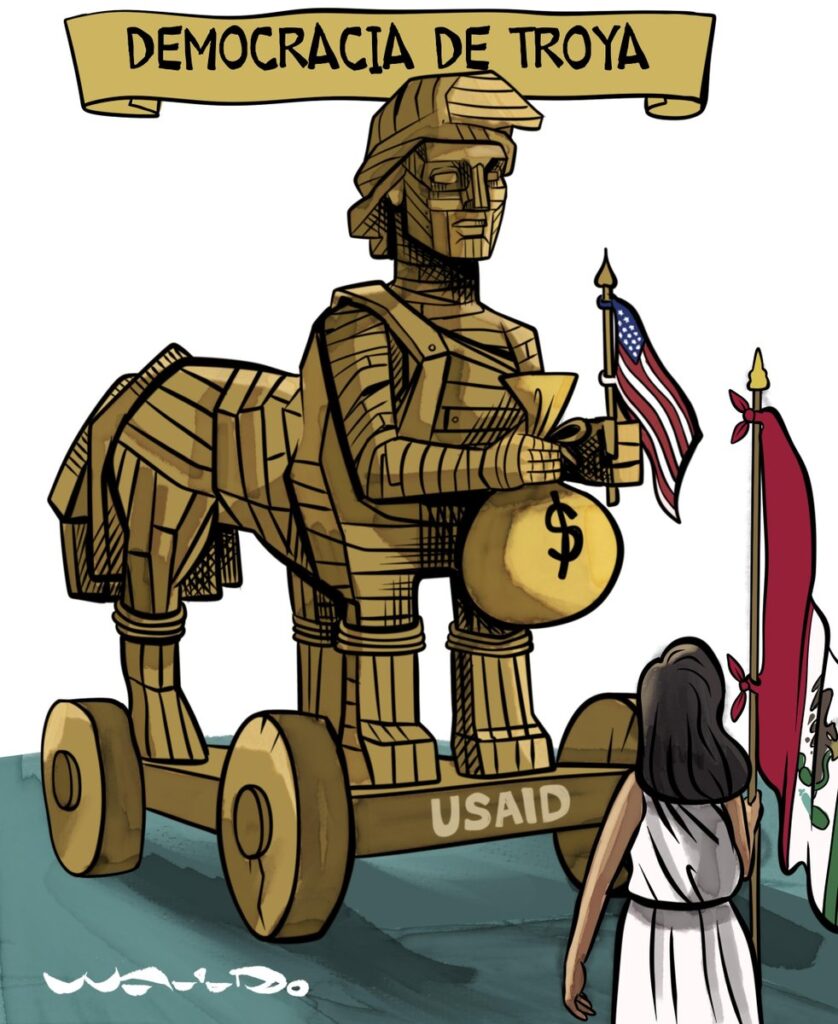
The exposure of USAID & their payments to various regime change initiatives worldwide should automatically raise questions as to who have been on the local payroll in Sri Lanka & what their role was in 2022.

The 2022 aragalaya was claimed a people’s protest” that was well orchestrated, made to look natural”,  was heavily funded, had people trained” to steer the protestors, people were ‘trained” to handle social media to arouse people’s emotions & sentiments, people were trained to drum up hate & vengeance to a level they would take to the streets, start violence and create the mayhem that was needed to oust a president from power & create anarchy. The eventual goal was to pressure Sri Lanka to accept IMF conditions & trap Sri Lanka to the US-India geopolitical nexus.

Yet only a handful of critical thinkers in Sri Lanka were able to identify fact from fiction. These were people who had a  thorough understanding of how similar people’s revolts have taken place in other parts of the world and they were able to identify what was taking place & compare the situation to similar scenarios that took place in the colored revolutions globally.

The so-called educated” Colombo coterie have always been on the wrong end of the stick & have always been the easy prey roped in for any anti-national programs. In fact, this Colombo coterie feel pride in being part of any anti-national movement and are happy to be rewarded for their anti-national roles. What took place in 2022 was a revolt that was led by these anti-national Colombo coterie & followed by a set of wannabe middle-class urban & sub-urbans who absorbed all the hate campaigns fed by social media simply because they lacked the intelligence & critical thinking skills to question the validity of allegations being made.

With the reality & the admission by the JVP big-wigs themselves that the Rajapakse’s were not responsible for the 2022 economic crisis, these educated elite” have all gone suddenly mute! Let us not forget that it was this same coterie that campaigned wildly to bring the present regime to power as well. With the administration apparatus visibly crumbling before everyone’s eyes, we are all waiting to see what solutions these elite” know-it-alls have to now offer.

Thus, we need to separate the protestors into different categories

  1. Those who were hired/paid/trained and given numerous roles to play throughout the 2022 aragalaya (these included social media activists, Cardinal /Church & other clergy, high profile personalities, sports stars & their spouses, artists, academics, well known civil society heads, key corporates who discretely provided funding, allowed staff to be present to create the numbers as well as hampered the supply chain of food & other essentials to create an artificial social unrest of their own making. Etc Key personalities that were tasked to provide the glamour” and draw the ordinary to believe that they were all birds of a feather – Otara, Nanda Malini, Sangakkara & Yeheli, Mahela, Sanath Jayasuriya, Damitha Abeyratne, Duleeka M, Sangeetha Weeraratna, Corine Almedia, Sangeeth, Samanali Fonseka) The artists that promoted violence: https://www.facebook.com/share/r/18BHKPfSXX/ (artists promoting violence) opinion of Sangeetha Weeraratna // Corine Almeida / Sangeeth https://www.facebook.com/share/p/182Z7rULNP/

Aragala activists Anjalee Wanduragala and Melani Gunathilaka https://www.facebook.com/share/v/1HfWxHT884/ what are their views now when the bitter truth has come out!

2. Those who fell victim to the well-funded campaigns that were meant to lure people to Galle Face Green. These people felt genuine anger primarily because they believed the narratives fed to them via social media & other sources and they lacked the ability to question how far the narratives were true. This category of people unfortunately will continue to become prey to any future social media campaigns unless they improve their general knowledge & knowledge of political affairs not only in Sri Lanka but globally as well.

Be that as it may, the 2022 aragalaya resulted in people storming the Presidents Office, Presidents Secretariat, Temple Trees, Prime Ministers Office, Rupavahini/ITN & the colossal damage, theft, ruin caused has also been downplayed. Eventually, some of the artefacts could not be replaced while those that could ended up being paid for by the taxpayers – the very people who were protesting at wastage of public funds! How ironical!

https://www.youtube.com/watch?v=Ii4x61b_-eE (inside Presidents pool)

https://www.facebook.com/share/v/1F92LfFmuP/ (presidents house gym)

The unruly manner that people were seen jumping on the white sheeted beds, sofas, bathing in bathrooms designated for foreign dignatories soon became publicized across the world & Sri Lankans laughed at for their uncouth behaviors.

10 deaths including the heinous murder of MP Athukorala & his security officer as well as Chairman A V Sarath Kumara & 1 policemen were ugly reminders of what took place in 2022.

https://www.facebook.com/HariniNPP/posts/pfbid0NfKDLM4qYWtJZZrqTZL5JeKGzJhDmQh2jUNx9iUQs6FTpSdbUhAebAhzzmdpaqwgl

In May 2024 the Chairman of the Lanka Private Bus Owners Association Gemunu Wijeratne claimed that no compensation has been given for the buses destroyed during the 2022 aragalaya. 50 buses had been completely destroyed & another 50 buses partially destroyed. 20 buses have been completely condemned (beyond repair) Shouldn’t those who took part in the aragalaya be made to pay for this instead of footing the bill to the taxpayers.

https://www.dailymirror.lk/breaking-news/Two-years-since-Aragalaya-no-compensation-for-buses-destroyed-Gemunu/108-282256

The Presidents House is over 200 years old. People stormed inside leaving a trail of destruction

  • Damaged carpets
  • Broken electrical fittings
  • Broken television sets & other equipment
  • Cutlery & crockery missing
  • Beds, sofas, couches, washrooms & gym all damaged
  • Invaluable paintings damaged
  • Antiques, cultural artefacts damaged – some missing
  • Railings damaged
  • Colonial red carpet damaged & beyond repair

Prime Ministers Official Residence Temple Trees was a British colonial era-building. It too was damaged & items stolen.

The carpets at Presidents Office & Temple Trees were similarly beyond repair.

The chairs belonging to Dutch period & plates & cutlery were either broken or stolen while graffiti were drawn on the walls.

Furniture like vases & other souvenirs were either stolen or broken.

The Presidents House was where Queen Elizabeth stayed during her royal visit to then Ceylon in 1954. Today, the only memory of the building is the unruly mobs that broke into it vandalizing everything of value inside it.

https://www.sundaytimes.lk/220717/news/archaeologists-mourn-vandalism-at-presidents-house-temple-trees-488918.html

The Cardinal, the aragalaya protestors ignore the cost of the repairs to the Presidents House a whooping Rs.364.8million in public funds. This excludes the damage to furniture, historic paintings, gym & equipment & vehicles.

https://www.sundaytimes.lk/221030/news/presidents-house-repairs-to-cost-rs-364-8mn-in-public-funds-500414.html

Whatever justifications the protestors may give – the damage they caused is being footed not by them but by the usual victim – the tax payer.

The protestors damaged

  • Buildings
  • Public property & private property
  • State institutions
  • State vehicles & private vehicles
  • Public infrastructure.
  • Indirectly the protests prevented tourism arrivals across the months that protests prevailed (this was a huge loss to the nation’s revenue another loss was the manner expats were discouraged from remittances to their families back home which was another blow to the revenue)

The overall damage to the Presidents House & cost of repairs could range between $10m to $20m (Rs.7.2bilion)

The overall damage to the Presidents Secretariat that included damage to historical & symbolic objects, computers, filing systems is also placed at between $5m to $10m (Rs.3.6b)

THE OVERALL DAMAGE & COST TO TEMPLE TREES THAT INCLUDED VANDALISM OF BOTH INTERIOR & EXTERIOR, DAMAGE TO FURNITURE, OFFICE EQUIPMENT & PERSONAL BELONGINGS, WINDOWS, DOORS, FURNISHINGS IS SAID TO BE A FURTHER RS.1.8BILLION

The damage to the Prime Ministers office is also said to be Rs.720million.

The damage to Rupavahini/ITN broadcasting equipment trasmitters, computers television sets & other technical tools is said to cost Rs.360m

Now a whooping Rs.1.22billion is charged to the tax payer for the damages caused to 43 MPs whose homes property vehicles were mercilessly attacked & destroyed.

When calls for a new constitution is promoted by separatist fronts – all citizens should be concerned about the larger plan!

Ultimately the outcome of the 2022 aragalaya was to entrap Sri Lanka to the IMF, to be at the mercy of India for the credit lines given, to agree to siphon away Sri Lanka’s assets & resources & sign detrimental agreements that are of no concern for those who took to the streets because it is unlikely any of them would come forward to defend the sovereignty & territorial integrity of Sri Lanka though they all happily took part in causing a trail of mayhem that has only resulted in the taxpayers having to pay billions in damages & compensation.

The Cardinal & Team who were integral players in 2022 have shouldered no responsibility now that the tax payers have to pay for the damages & instead he has commenced another project by now calling for the abolishing of the nation’s constitution to a government that cannot even solve the coconut, salt, rice problems in Sri Lanka. What is the Cardinals real objective in calling to change Sri Lanka’s Constitution?

A country’s constitution is not something that can be changed seasonally & to the whims & fancies of people’s political aspirations simply because it doesn’t gel with the agendas or objectives tasked to them.

The general public must all stand against this new call.

The people have given a mandate to the government not to be complaining about previous governments but to bring practical solutions to existing problems – not to create new problems out of non-existing ones.

The people will support the government so long as it does right by the Nation & the People.

Shenali D Waduge

Thirty Years of Middle East Lies Just Keep Coming Back To Bite US

February 8th, 2025

by Jonathan Cook  Courtesy  defenddemocracy.press

The West’s ‘war on terror’ was built on a series of deceptions to persuade us that our leaders were crushing Islamist extremism. In truth, they were nourishing it

The storyDid you believe it 30 years ago when they told you that the Oslo Accords would bring peace to the Middle East? That Israel would finally withdraw from the Palestinian territories it had illegally occupied for decades, end its brutal repression of the Palestinian people, and allow a Palestinian state to be created there? That the longest running sore for the Arab and Muslim worlds would finally be brought to an end?

The reality: In fact, during the Oslo period, Israel stole more Palestinian land and expanded the building of illegal Jewish settlements at the fastest rate ever. Israel became even more repressive, building prison walls around Gaza and the West Bank while continuing to aggressively occupy both. Ehud Barak, Israeli prime minister of the time, blew up” – in the words of one of his own main advisers – the US-backed negotiations at Camp David in 2000.

Weeks later, with the occupied Palestinian territories seething, opposition leader Ariel Sharon, backed by 1,000 armed Israeli troops, invaded occupied Jerusalem’s al-Aqsa mosque – one of the holiest places for Muslims in the world. It was the final straw, triggering an uprising by Palestinians that Israel would crush with devastating military force and thereby tip the scales of popular support from the secular Fatah leadership to the Islamic resistance group Hamas.

Further afield, Israel’s ever-more abusive treatment of the Palestinians and its gradual takeover of al-Aqsa – backed by the West – served only to further radicalize the jihadist group al-Qaeda, providing the public rationale for attacking New York’s Twin Towers in 2001.


The storyDid you believe it in 2001, after the 9/11 attack, when they told you that the only way to stop the Taliban harboring al-Qaeda in Afghanistan would be for the US and UK to invade and smoke them out” of their caves? And that in the process the West would save Afghanistan’s girls and women from oppression?

The reality: As soon as the first US bombs fell, the Taliban expressed readiness to surrender power to the US puppet Hamid Karzai, stay out of Afghan politics and hand Osama bin Laden, al-Qaeda’s leader, over to an agreed third country.

The US invaded anyway, occupying Afghanistan for 20 years, killing at least 240,000 Afghans, most of them civilians, and spending some $2 trillion on propping up its detested occupation there. The Taliban grew stronger than ever, and in 2021 forced the US army out.


The storyDid you believe it in 2003 when they told you that there were weapons of mass destruction in Iraq that could destroy Europe in minutes? That Iraq’s leader, Saddam Hussein, was the new Hitler, and that he had allied with al-Qaeda to destroy the Twin Towers? And that for those reasons the US and UK had no choice but to invade Iraq pre-emptively, even if the United Nations refused to authorize the attack.

The reality: For years, Iraq had been under severe sanctions following Saddam Hussein’s foolhardy decision to invade Kuwait, and upset the regional order in the Gulf designed to keep the oil flowing to the West. The US responded with its own show of military force, decimating the Iraqi army. The policy through the 1990s had been one of containment, including a sanctions regime estimated to have killed at least half a million Iraqi children – a price the then-US secretary of state Madeline Albright famously said was worth it”.

Read also:

La justice américaine établit un lien entre Israël et Daech

Saddam Hussein had also to submit to a program of rolling weapons inspections by UN experts. The inspectors had concluded with a high degree of certainty that there were no usable WMD in Iraq. The report that Saddam Hussein could fire on Europe, hitting it in 30 minutes, was a hoax, it eventually emerged, cooked up by the UK intelligence services. And the claim that Saddam had ties to al-Qaeda not only lacked any evidence but was patently nonsensical. Saddam’s highly secular, if brutal, regime was deeply opposed to, and feared, the religious zealotry of al-Qaeda.

The US-UK invasion and occupation, and the vicious sectarian civil war it unleashed between Sunni and Shi’a Muslims, would kill – on the best estimates – more than 1 million Iraqis and drive from their homes a further 4 million. Iraq became a recruiting ground for Islamic extremism and led to the formation of a new, far more nihilistic, Sunni competitor to al-Qaeda called Islamic State. It also bolstered the power of the Shi’a majority in Iraq, who took power from the Sunnis and forged a closer alliance with Iran.


The storyDid you believe it in 2011 when they told you that the West was backing the Arab Spring to bring democracy to the Middle East, and that Egypt – the largest Arab state – was at the vanguard of change in removing its authoritarian president Hosni Mubarak?

The reality: Mubarak had been propped up by the West as Egypt’s tyrant for three decades, and received billions in foreign aid” each year from Washington – effectively a bribe to abandon the Palestinians and maintain peace with Israel under the terms of the 1979 Camp David agreement. But the US reluctantly turned its back on Mubarak after assessing that he could not withstand mounting protests sweeping the country from revolutionary forces released by the Arab Spring – a mix of secular liberals and Islamic groups led by the Muslim Brotherhood. With the army holding back, the protesters emerged victorious. The Brotherhood won elections to run the new democratic government.

Behind the scenes, however, the Pentagon was tightening ties to the remnants of Mubarak’s old regime and a new aspirant to the crown, General Abdel Fattah el-Sisi. Reassured that there was no danger of US reprisals, el-Sisi finally launched a coup to return Egypt to military dictatorship in 2013. Israel lobbied to make sure el-Sisi’s military dictatorship would continue to receive its billions in annual US aid. In power, Sisi instituted the same repressive powers as Mubarak, ruthlessly crushed the Brotherhood and joined Israel in choking Gaza with a blockade to isolate Hamas, Palestine’s own version of the Brotherhood. In doing so, he gave a further shot in the arm to Islamic extremism, with the Islamic State establishing a presence in Sinai. Meanwhile, the US further confirmed that its commitment to the Arab Spring and democratic movements in the Middle East was non-existent.


The story: Did you believe it when, also in 2011, they told you that Libyan dictator Muammar Gaddafi posed a terrible threat to his own population and had even given his soldiers Viagra to commit mass rape? That the only way to protect ordinary Libyans was for NATO, led by the US, UK and France, to bomb the country, and directly aid opposition groups to overthrow Gaddafi?

The reality: The claims against Gadaffi, as against Saddam Hussein, lacked any evidence, as a UK parliamentary investigation concluded five years later, in 2016. But the West needed a pretext to remove the Libyan leader, who was seen as a threat to western geopolitical interests. A release by Wikileaks of US diplomatic cables showed Washington’s alarm at Gadaffi’s efforts to create a United States of Africa to control the continent’s resources and develop an independent foreign policy. Libya, with Africa’s largest oil reserves, had been setting a dangerous precedent, offering Russia and China new oil exploration contracts and renegotiating existing contracts with western oil companies on less favorable terms. Gadaffi was also cultivating closer military and economic ties to Russia and China.

Read also:

Le choix de la guerre civile

Nato’s bombing of Libya was never intended to protect its population. The country was immediately abandoned after Gadaffi’s overthrow and became a failed state of warlords and slave markets. Parts of Libya became a stronghold for Islamic State. Western weapons supplied to rebels” ended up strengthening Islamic State and fueling the sectarian bloodbaths in Syria and Iraq.


The storyDid you believe it when, again from 2011 onwards, they told you that democratic forces were lined up to overthrow Syria’s dictator Bashar al-Assad, and that the country was on the verge of an Arab Spring-style revolution that would liberate its people?

The reality: There’s no doubt that Assad’s rule – combined with drought and crop failures brought on by climate change – led to growing unrest in parts of Syria by 2011. And it was also true that, like other secular Arab regimes based on the rule of a minority sect, Assad’s government depended on brutal authoritarianism to maintain its power over other, larger sects. But that is not why Syria ended up being plunged into a bloody civil war for 13 years that dragged in actors from Iran and Russia to Israel, Turkey, al-Qaeda and ISIS. That was largely down to Washington and Israel pursuing their geostrategic interests once again.

The real problem for Washington was not Assad’s authoritarianism – the US’s strongest allies in the region were all authoritarian – it was two other critical factors.

First, Assad belonged to the Alawite minority, a sect of Shi’a Islam that had a centuries-long, theological and sectarian feud with a dominant Sunni Islam in the region. Iran was also Shi’a. Iraq’s Shi’a majority had come to power after Washington eviscerated the Sunni regime of Saddam Hussein in 2003. And finally, the Lebanese militia Hizbullah was Shi’a. Together, these comprised what Washington increasingly described as an Axis of Evil”.

Second, Syria shared a long border with Israel and, pivotally, was the main geographic corridor connecting Iran and Iraq to Hizbullah guerrilla forces north of Israel, in Lebanon. Over decades, Iran had smuggled tens of thousands of increasingly powerful rockets and missiles into southern Lebanon, close to Israel’s northern border. That arsenal served during most of that time as a defensive umbrella, the main deterrence preventing Israel from invading and occupying Lebanon,as it had done for many years until Hizbullah fighters forced it to withdraw in 2000. But it also served to deter Israel from invading Syria and attacking Iran.

Days after 9/11, a senior US general, Wesley Clarke, was shown a paper by an official in the Pentagon setting out the US response to the toppling of the Twin Towers. The US was going to take down” seven countries in five years. Notably, the bulk of the targets were the Middle East’s Shi’a strongholds: Iraq, Syria, Lebanon and Iran. (The 9/11 culprits, let us note, were Sunni – mostly from Saudi Arabia.) Iran and its allies had resisted Washington’s moves – backed increasingly openly by the Sunni states, especially those in the oil-rich Gulf – to impose Israel as the regional hegemon and allow it to erase unopposed the Palestinians as a people.

Read also:

Turkey stops by threat of force oil drills in a EU member state – EU does nothing!

Israel and Washington, we might note, are actively seeking to achieve these very goals right at this moment. And Syria was always critically important to realizing their plan. Which is why, as part of Operation Timber Sycamore, the US secretly pumped huge sums of money into training its erstwhile enemies of al-Qaeda into creating an anti-Assad militia that drew in Sunni jihadist fighters from around the region, as well as arms from failed states like Libya. The plan was backed financially by the Gulf states, with military and assistance and intelligence from Turkey, Israel and the UK.

By late 2024 Assad’s main allies were in troubles of their own: Russia was pinned down by a NATO-led proxy war in Ukraine, while Tehran was increasingly on the back foot from Israeli strikes on Lebanon, Syria and Iran itself. It was at this moment that HTS – a rebranded al-Qaeda outfit – seized Damascus at lightning speed, forcing Assad to flee to Moscow.


If you believed all of these stories, and still believe that the West is doing its best to bring to heel Islamic extremism and a supposed Russian imperialism in Ukraine, then you presumably also believe that Israel leveled Gaza, destroyed all its hospitals and starved its entire population of 2.3 million simply to eliminate Hamas”, even though Hamas has not been eliminated.

You presumably believe that the International Court of Justice was wrong nearly a year ago to put Israel on trial for committing a genocide in Gaza. You presumably believe that even the most cautious Israeli Holocaust experts were wrong back in May to conclude that Israel had indisputably moved into a genocidal stage when it destroyed the safe zone” of Rafah, where it had herded most of Gaza’s population. And you presumably believe that all the major human rights groups were wrong to conclude late last year, after lengthy research to protect themselves from smears from Israel and its apologists, that Israel’s devastation of Gaza has all the hallmarks of a genocide.

You will doubtless also believe that Washington’s long-held plan for global full-spectrum dominance” is benign, and that Israel and the US don’t have Iran and China in their sights next.

If so, you will keep believing whatever they tell you – even as we hurtle, lemming-like, over the cliff edge, sure that, this time, it will all turn out differently.

Jonathan Cook is the author of three books on the Israeli-Palestinian conflict, and a winner of the Martha Gellhorn Special Prize for Journalism. His website and blog can be found at www.jonathan-cook.net. This originally appeared on Jonathan Cook’s Blog.

Thirty Years of Middle East Lies Just Keep Coming Back To Bite US

Why Sri Lanka performed poorly in the Two Test Matches against Australia to date.

February 8th, 2025

 By Dr Muralidaran Ramesh Somasunderam

   Sri Lanka has performed poorly in the two Test Matches against Australia to date because they did not have the batsmen to combat the spin bowlers of Australia and score runs substantively to put pressure on the Australian team and Sri Lanka also did not have the bowlers penetrative enough to bowl out Australia cheaply in their first and second innings as the Australian batmen led by Steve Smith had the class, patience and poise to combat and get on top of the Sri Lankan spin bowlers in key sessions the two Test Matches.

What Sri Lanka must realize is that they need in a living cricket academy such as the one Australia has in Adelaide, South Australia. Here they coach a cricketer in every fascist the game, including physical fitness and the mental side of the game. So a cricketer is prime and ready for first class cricket.

Sri Lanka also prepares wickets that keep low bounce wise and are turners that suit spin bowlers. This is why I was surprised that apart from Jayasuriya that the other spin bowlers were not of Test Match quality and they lacked the needed skills to defeat a batsman in the air or turn off the deck to get wickets at regular intervals during the two Test Matches.

The other aspect was that Sri Lanka did not have batsmen who can use their feet to the spin bowlers like Steve Smith for example. They relied on the reverse sweep, which is a very dangerous stroke to play. It is a low percentage stroke, which is played more in One Day cricket. I realize the modern day player plays the reverse sweep to spin bowlers and the ramp stroke to fast bowlers, but it is not correct batting based on the M.C.C. Cricket Manuel an therefore if one wants to succeed as a Test Match batsman they must play within the V which is mid-off and mid – on and play the vertical and horizontal strokes in countries like Australia and South Africa for example where the bounce is true and consistent. 

Fielding also highlighted that Australia was far more athletic, including catching and fitness wise than Sri Lanka to field and concentrate effectively and efficiently in the hot sun in Galle.  The Australians were far more superior in these areas mentioned above than their opponents Sri Lanka.

The next aspect is wicket preparation where in Australia one learns this trade by an apprenticeship for five years before he or she graduates as a groundsman. This is not done in Sri Lanka and quality horticulturalists should help in the quality of soil and even preparing cricket wickets in nurseries and drop in wickets can be used as is the case in Australia with genuine pace and bounce. This will be ideal in underage cricket where batsmen learn their trade to play forward or back precisely, side on cricket and play correct cricket stokes as prescribed by the M.C.C. Cricket Manuel.  Unfortunately too much One Day cricket is being played in the Subcontinent in particular at present and the result is that our batsmen do not the technique or the mindset to play long Test Match innings. It is about hitting and playing big strokes, which are low percentage strokes, particularly the reverse sweep and the ramp strokes as stated above.  

Therefore in conclusion, if all the above can be addressed by the cricket authorities governing the game of cricket at the highest levels in Sri Lanka, we will be a much better cricket team then the one that exhibited their talents against Australia in Galle.       

Reflections on solar energy development in Sri Lanka and current situation

February 8th, 2025

By Professor Emeritus I. M. Dharmadasa Sheffield Hallam University, United Kingdom

This article summarises the history of solar energy development in Sri Lanka that I have been involved with, over the past 40 years and my thoughts on the present situation in the country. As an active solar energy conversion researcher in both academia and industry (British Petroleum Research in London), I have seen the maturity of this technology since the late 1980s and started to promote it in schools and community events in the United Kingdom.

I then extended this work to my native country, Sri Lanka, in 1991, by initiating a UK-DFID (UK Department of Foreign and International Development) funded and BC (British Council) managed Higher Education Link (HE-Link) programme. This is how I met all renewable energy promoters in Sri Lanka. This article brings back my memories from the work done in collaboration with various people, starting in the late 1980s.

During the six-year HE-Link programme, I worked with several universities (Peradeniya, Colombo, Kelaniya, Moratuwa and Ruhuna) and organised conferences, seminars and public lectures in schools and government ministries. There were only two or three small solar energy companies at that time, struggling to do business, and they all joined together to promote renewable energy initiatives in the country.

Among many interested academics, senior engineers like Dr. Ray Wijewardane joined all these events, and I met three notable entrepreneurs working in this field starting in 1985. They were Lalith Gunaratne, Pradeep Jayewardene and Viran de Perera. These three friends, who were brought up in Canada, visited Sri Lanka for a holiday after their marriages and decided to stay in Sri Lanka and start a solar energy business. Their starting work was a mobile solar water pump, but about 80% of the people who were not connected to the national grid asked for solar lighting rather than solar water pumping.

Sir Arthur C Clark also gave them a good helping hand and they started to install small solar home systems in rural areas. They also started to import solar cells and assemble SUNTEC 36 W solar modules in the country, but due to various barriers from outside, that project had to be terminated. There were numerous barriers within the country itself. P remember a newspaper article that appeared in Sri Lanka titled Solar Power Suitable for Lotus Eaters”. After all this fantastic work in the late 1980s, Lalith returned to Canada, Viran started an eco-tourist centre, and Pradip continued to work in the solar energy field.

Most of these entrepreneurs told me that the government authorities did not listen to them due to their vested interests. For this reason, I made the decision to promote renewables as a research scholar without any connection to a commercial company. This approach worked well, and I made two or three visits to Sri Lanka in some years delivering public lectures in ministries, universities and in schools. I also wrote numerous articles in the local press and completed many interviews on applications of renewable energy sources.

Solar home systems, at early stages, had about 50 W solar panels. These were combined with lead-acid batteries to store energy and provide 5-6 lights at night. This was also enough to power a black-and-white television for a few hours. Depending on the number of lights used, the cost of such a system varied between Rs 40,000 and Rs 60,000.

Meanwhile, the Ceylon Electricity Board also worked to expand the national grid under the country’s 100% electrification programme. As the national grid is available almost everywhere, the interest in small solar home systems gradually disappeared.

There were many people in the country involved in promoting renewables, and I was able to visit Sri Lanka every year to spend a few weeks at a time and work with numerous institutes.

I also personally met almost all Science & Technology Ministers, starting from Mr Bernard Soysa, and some Power and Energy Ministers to introduce renewable energy projects. Although the government’s take-up was slow, the private sector developed very rapidly, starting many new companies for solar system installation.

Gradually, the main interest turned to the grid-tied larger solar systems installed on freely available rooftops. With the Soorya Bala Sangramaya” programme introduced around 2016, solar roofs began to be connected to the grid via Net Metering”, Net Accounting”, and Net Plus” methods. A few years ago, a 5 kW solar roof used to cost about Rs 14,00,000, but today, the cost has come down to about Rs 9,00,000. Each 5 kW solar roof installed in the country removes the need to burn 7.5 metric tons of imported coal, introducing numerous health and economic benefits to the nation, including reducing the country’s huge import bill.

I also collaborated with the ex-chairman of the Sri Lanka Sustainable Energy Authority (SLSEA), Prof. Krishan Deheragoda, to bring two 500 kW solar farms to the country, introducing larger solar farms. After promoting renewable energy over four decades, I am pleased to see numerous large solar energy systems beginning to appear in the country, including Floating Solar Farms”.

The current government’s interest in indigenous, hydro, solar, wind, biomass and bio-gas energy, as well as the contributions from over 200 private solar energy companies to power Sri Lanka, is a very encouraging sign.

As a result of the six-year HE-Link programme SAREP (South Asia Renewable Energy Programme), the Solar Asia Conference series and the Solar Village” project evolved. Solar Asia Conferences have taken place twice in Sri Lanka, once in Malaysia and once in India.

A pilot solar village started in 2008, and nine solar villages have been established in the country since. The concept of solar village is to empower rural communities by introducing a regular wealth creation method using solar energy and guiding them to develop themselves sustainably. This, in turn, contributes to reducing poverty and mitigating damaging climate change, benefits 80% of the Sri Lankan population who live in villages, and paves the way for the prosperity of Sri Lanka. To attract external funding and rapidly replicate solar villages in Sri Lanka, a Solar Village SDG” community interest company (CIC) was formed in November 2024.

According to the latest SLSEA statistics, Sri Lanka has 2000 MW of solar and 200 MW of wind installations. This is 2.2 GW and a good fraction of the total power production capacity (~5 GW) in the country.

The intermittent nature of solar and wind can currently be balanced using hydropower until the fast-developing green hydrogen technology is established in Sri Lanka. When solar power is at its maximum power production during the daytime, the hydropower can be reduced simply by controlling the flow of water without any technical difficulties. With the positive steps taken by the GOSL and the private sector, Sri Lanka could become a renewable energy island in the future, giving the country many health and economic benefits and attracting many tourists from around the globe.

To achieve this noble goal, every sector in the country should work together. The general public should understand the benefits of using renewables and install more systems in the country, perhaps via Crowd Funding”.

It is now clear that ROI (Return on Investment) from a solar roof is greater than the interest earned by keeping the money in the bank. PV companies must improve their after-sale service” to increase customer satisfaction and help their customers get the most from their investment by promptly rectifying any issues arising from these new technologies.

The CEB has a great responsibility to gradually improve the national grid by reducing energy leakages and replacing weak transformers and grid lines to move towards a smart grid, enabling the absorption of more indigenous solar and wind energy.

(The Author is an Emeritus Professor with 51 years of university service, over 40 years of active solar energy research, and over 35 years of renewable energy promotional work. He has supervised 30 Ph.D. students and published 254 scientific articles and two books in this field.)

Economic value of Mahinda Rajapaksa

February 8th, 2025

by Dr Sirimewan Dharmaratne, former Senior Analyst, HMRC, UK.

Mahinda Rajapaksa

Although this may not be doable at all times, it is possible to retrospectively assess the economic impact of crucial decisions. While putting a value on a person may seem unethical or unconscionable, everyone has an economic value. Our lives are valued for myriad of commercial purposes, such as for insurance policies, compensation for work place injuries and death and for various illnesses due to environmental pollution and other such instances. In all these cases, what is valued is the economic life, and not the intrinsic value of the person itself.

The method is ‘what if’ concept; how much could he/she have earned if the person has not died or been incapacitated? The same concept could be extended to assess the value of critical events, such as natural disasters. The method simply is to compare the state before and after the even and put some economic value to the event or the decisionmaker.

Benefits of Mahinda Rajapaksa (MR)

The most seminal event that happened in Sri Lanka during MR regime was ending the war on terrorism in 2009. Friends and foes alike attribute this historic event to MR. Although there are different schools of thoughts on this, winning or to losing a war is ultimately attributed the leadership and not to anyone else. This is because it is the leader that takes decisions and accept all risks. Winston Churchill as the war-winning UK prime minister, Chinese revolution has been attributed to Mao Tse-Tung, and the ending the civil war in the USA has been attributed to Abraham Lincoln. The ensuing discussion and analysis are based on this premise.

Benefits of Ending the War

There is no doubt that there was significant economic revival after the end of the war. The underlying justification is that if he had not taken the decision to end the war, it would not have ended in 2009. As such, whatever the costs and benefits of ending the war can be attributed to MR. While a complicated economic evaluation is not possible within the context of this article, it is possible to see whether we have enough evidence to do a ‘back of the envelop’ economic assessment of ending the war.

Revival of Tourism

One of the unequivocal benefits of ending the war is the massive revival in tourism as seen in tourism statistics. The average tourism spending during the 5-year period before 2009 was about US$ 0.76 billion a year and during the 5-year period after the war was over US$ 2 billion a year. Therefore, the increase of revenue of around US$1.25 bn a year can be safely be attributed to the event of ending the war as this was the only pivotal event that happened in 2009. Assuming that 30% of these spending is net profit, then nearly US$ 2bn was accrued to Sri Lankan businesses during this 5-year period immediately after the war compared to the previous 5 years.

Economic Growth

There was nearly a 5% jump in the GDP growth in the year after the war. That momentum was maintained for the next two years. During the first three years over $16 bn was added to the economy compared to the $8 bn during the three preceding years. Unemployment that was well over 5% in 2009 (and in preceding years) dropped below 5% in 2010, for the first time since early 1990s. On the average unemployment fell by 0.34% year during the 5 years after 2009. No doubt other economic indicators showed similar positive trends.

Other Benefits

It is commonly believed that egregious corruption and irregularities were rife under the guise of war for many years, under all regimes during the 30-year period. These essentially ended after 2009. Then there are other benefits such as improved international relationships, more investments, building of several roads and highways and the general wellbeing of the citizen, which are all hard to quantify in this context. Although, this momentum in growth could not be maintained for a longer period due to regime changes, cronyism, complacency, capricious decision-making, and many other factors, they cannot unfortunately be quantified. While these unconscionable acts may or may not be directly attributed to MR, his cavalier attitude in some instances may have contributed to gratuitous corruption under his watch. Due to these reasons, a vast stream of benefits that could have resulted from the end of war never materialised.

Costs of Mahinda Rajapaksa

There are economic costs and financial costs. Financial costs are those borne by the taxpayer for his upkeep and benefit. These are the costs that are the focus of the ongoing controversy. Economic costs are the costs to the taxpayer arising from decisions that he may have taken. It is important to note that such decisions must have been approved by the parliament and therefore, any responsibility should be held collectively. Nevertheless, for this article we will assume that they are taken unilaterally and exclusively attributed to MR.

Two of the main projects that are constantly being flaunted are the Hambanthota port and the Mattala airport. Both these are portrayed as colossal waste of money. There is ample evidence that these main projects and others were undertaken without much thought. However, as far as this article is concerned, only the losses to the taxpayer resulting from these decisions are considered.

Large infrastructure projects yield benefits far in to the future as they have a very long lifespan. Further, their investments cost is not a loss, but only the losses incurred in their operation. Although, initially made significant losses due to lack of business, with the deal agreed with a Chinese investor in 2016, it appears that the port is no longer costing the taxpayer. In fact, there is already evidence that it could be profitable with the proposed oil refinery. Also, with the opening of the economy for imports, this could be a major trade hub. Therefore, for the purpose of this article, it is reasonable to use the widely quoted loss of US$216 million during the period of 2011-2016.

The Mattala airport on the other hand has incurred about US$140 million loss during the 5-year period of 2017-2022. There is still no evidence that it could be turned into a profit-making venture. There may be other smaller projects that could have made lesser losses. To account for all those, a rather ballpark figure of US$500 million sounds reasonable at least for the purpose of this exercise.

Financial Costs

The main contentious issue at the moment is whether the facilities (particularly the accommodation) at the disposal of MR is justified. Let’s say this current facility is available to MR for a 20-year period from 2015 and the monthly average imputed rent is Rs 20 million a month. Then the total cost to the taxpayer would be about US$16 million. Adding all other benefits that he is entitled to, a figure of US$ 50 million seems to be a reasonable assessment of the as the total cost of maintaining MR for a 20-year period from 2015.

Stolen Money

The main accusation of MR is not the few bad policy decisions that he may have taken or the cost of his retirement, but the colossal amount of money that he claimed to have stolen and stashed overseas. Despite years of accusations, the existence or the amount of this money is yet to be unambiguously ascertained. Unfortunately, there is no paper trail or digital footprint to show that taxpayer money has been siphoned out of the country. There is a further twist to these claims of stolen money. They are only relevant for this analysis, if taxpayer money (from the Treasury, for example) was taken out of the country. On the other hand, gratuitous payments directly deposited in foreign banks (commonly known as commissions) for awarding contracts are irrelevant as far as the taxpayer is concerned. This would only be an issue if the taxpayer was short-changed as a result of awarding contracts. Either way as far as stolen money is concerned, until definitive proof is surfaced, imaginary amounts cannot be taken into account.

Is he worth it?

The total loss to the taxpayer during the MR regime plus is subsequent maintenance costs for a 20-year period from 2015 comes to about US$ 0.5bn. It is important to note that the maintenance cost is only a fraction of the total economic loss due to the two main projects. Based on a very conservative estimate, net benefits from the revival of tourism alone could be nearing US$ 2bn for the 5-year period after ending the war. Then there are all other benefits resulting from accelerated economic growth in the immediate few years after 2009. Therefore, for MR to be a liability to the taxpayer someone will have to find at least US$2 billion of taxpayer money stashed somewhere. While this search is going on, it seems that MR has every right to stay put where he is now, purely from an economic view point.

This perfunctory analysis portrays how even in an extreme situation some objectivity can be imparted to the decision-making process. With some rudimentary information, decisions can be made more objective. Also, a nascent idea could be vastly improved by seeking and including actual data rather than hearsay. For example, the ‘analysis’ presented here could be immensely improved by adding factual information. This is a process that any government should introduce as a matter of principal in all decision making.

NPP govt. and its take on foreign relations

February 8th, 2025

by Neville Ladduwahetty

Following President Anura Kumara Dissanayake’s visit, first to India and then to China, Foreign Policy analysts and Commentators of repute have cautioned the NPP government the need to exercise BALANCE particularly in respect of its relations with India and China. The question is how balancing could be the guiding policy in Sri Lanka’s relations with India and China, when balancing is only a strategy? For instance, is the prospect of a 200,000 barrels a day refinery by China in Hambantota to be balanced by a prospective refinery by India in Trincomalee even if it is not in Sri Lanka’s best interests? Is this what some commentators call pragmatic balancing”?

Sri Lanka’s policy regarding relations with other countries is stated at times as Non-Aligned and neutral at other times depending on the occasion and the forum. In the Joint Statement with China, the Policy is Non-Aligned. During a press conference, Foreign Minister Vijitha Herath made comments that undoubtedly amounted to reaffirmation of Neutrality” according to a report in the Daily FT (Oct. 9, 2024). Such inconsistencies are not in the best interest of relations with India or China or with any other country. It is therefore imperative that the NPP government adopts a Policy and conducts its affairs in a manner that abides by the stated Policy if its credibility is to be respected

OBJECTIVES to PRECEEDE POLICY

However, whatever policy the NPP government adopts, what needs to be understood is the fundamental premise that prior to developing a Policy there has to be a clear and unambiguous Objective. For instance, the Foreign policy of India is often expressed as Neighbourhood First”, and Security and Growth for All in the Region (SAGAR). Such a policy would entitle India to realise its objective of being accepted as a Regional Power in South Asia and therefore recognised as a global power where its currency is internationally recognised, a place in the UN Security Council, etc., and other symbols of a global power. On the other hand, China’s objective is to become first among equals among global powers. The Policy to achieve such an objective is its Belt and Road Initiative.

Similarly, the US Declaration of Independence sets out its objective as being: We hold these truths to be self-evident: that all men are created equal; that they are endowed by their Creator with certain inalienable rights; that among these are life, liberty and the pursuit of happiness. That to secure these rights governments are instituted among men ….”

It is therefore clear that the Objective of a Nation is a declaration of the goals the Peoples of a Nation craft for themselves. Therefore, Sri Lanka has to define unambiguously its Objectives. To state that Sri Lanka’s Objective should be based on Self-Interests is to state the obvious because Self-Interest is what drives Foreign Relations. Foreign Policy of a Nation is how it conducts itself in its relations with other Nations in the process of pursuing its Objectives. For instance, the Objective of the NPP Government is to create A thriving Nation and a beautiful life”. Thus, having declared its Objective, the NPP government has to decide whether a Foreign Policy of Non-Alignment, Neutrality or any other would enable it to realise its stated Objective of a thriving Nation and a beautiful life.

On the other hand, balancing is not an objective nor is it a policy. It is only a Strategy that could be resorted to within the context of Non-Aligned or Neutral Policies. Thus, its application is limited in scope to specific countries such as India and China and to infrastructure projects as part of Balancing interests of geopolitical rivals at a cost to Sri Lanka’s national interests.

NON-ALIGNMENT v. NEUTRALITY in PRACTICE

From a security perspective, non-alignment does not guarantee territorial inviolability. On the other hand, a neutral state is protected by international law. Therefore, neutrality offers greater guarantees in respect of territorial inviolability. Furthermore, since Neutrality defines duties and responsibilities of a Neutral State, other Nations are forewarned of what to expect from Sri Lanka – in short there are no surprises nor is there a need to go out of its way to ensure the security of India or any other State. This fosters trust and credibility among nations. However, if any country decides to violate Sri Lanka’s territory for whatever reason, as it was when India violated Sri Lanka’s air space, Sri Lanka has to accept the fact that no one would be coming to its defence other than the protection of International Law.

The real test between Non-Alignment and neutrality is when it comes to infrastructure projects. Furthermore, under a Policy of Non-Alignment, infrastructure projects invariably become part of balancing and therefore end up with unsolicited proposals, as in the past. Attempts to balance the refinery in Hambantota by China that was reported to have been based on expressions of interest called for by Sri Lanka, with a possible Refinery in Trincomalee for India would be unsolicited and to different standards. A variation to the theme of unsolicited projects is to tempt Sri Lanka by funding projects that serve the interests of the funding agency and not that of Sri Lanka.

On the other hand, a policy of neutrality requires that strict and open procedures are followed in order to ensure that all are treated as equals. This makes it imperative for Sri Lanka to first define the scale and scope of the project and call for Expressions of Interest (EOI) from parties for evaluation in a transparent and open manner. Thus, practices that require a Neutral State to adopt fosters Credibility and Trust in the eyes of other Nations; characteristics critically needed to create a Thriving Sri Lanka. These characteristics together with reliance on International Law become the combined armory of a Neutral State such as Sri Lanka that is relatively small, but strategically located for aspiring Global Powers to go out of their way to foster abiding relations.

CONCLUSION

The foreign policy options explored and commented on by analysts, think tanks and during panel discussions are; Non-Alignment, Neutrality, Balancing and Self- Interest, etc., not realising that some proposed Policies, such as Balancing, are not Policies but Strategies. These explorations fail to define the objective that determines which policy to adopt as in the case of India, China and the USA cited above. Additionally, the context in which the Policy works, becomes a factor that shapes and Influences Policy. In the particular context of Sri Lanka, its strategic location that is akin to a key stone in the arch of Indian Ocean Rim countries in the geopolitical equation has molded Sri Lanka as a Nation State over Millennia to an extent that its geographical size has become a secondary factor.

In such a context, its security, and the goal set by the NPP government of a Thriving Nation and a beautiful life” is best served by international law and the Soft Power of a neutral state that requires it to conduct its International Relations in an open and Transparent manner that ensures equality among Nations in a manner that fosters Trust and Credibility. The dividends from such an approach would foster a Thriving Nation”.

SME representatives accuse presidential aide of instigating protest against Central Bank

February 8th, 2025

Courtesy The Island

Susantha Liyanaarachchi

A presidential advisor, identified as D. Gamage, had asked a delegation representing the SME sector to surround the Central Bank” instead of troubling officers at the Presidential Secretariat, Susantha Liyanaarachchi, Chairman of the National Construction Association of Sri Lanka (NCASL) told the media yesterday near the Presidential Secretariat.

Liyanaarachchi said so following a meeting with Gamage, on Friday, during a protest staged by a group of small- and medium-scale entrepreneurs, affiliated with the MSME Joint Alliance, outside the Presidential Secretariat against parate executions.

Five representatives were permitted to enter the Secretariat, where they also submitted a 17-point proposal aimed at reviving the domestic coconut oil industry.

Gamage said there was no point in coming to the Presidential Secretariat. He asked us to surround the Central Bank. What an awful officer. We came here to settle our issues amicably, and Gamage told us to surround the Central Bank,” Liyanaarachchi said.

Liyanaarachchi also stated that the Central Bank did not adhere to instructions given by President Anura Kumara Dissanayake, exacerbating the concerns voiced by the MSME entrepreneurs.

AG’s decisions in criminal matters should not be reviewed by political authorities- BASL tells President

February 8th, 2025

 LAKMAL SOORIYAGODA   Courtesy The Daily Mirror

Colombo, Feb 08 (Daily Mirror) – The Bar Association of Sri Lanka (BASL), in a letter to President Anura Kumara Dissanayake, strongly emphasised that decisions of the Attorney General in criminal matters should not be subject to review by political authorities, including the Cabinet of Ministers. Such interference, the BASL argued, would undermine the independence of the Attorney General’s office, which is crucial for upholding the rule of law.

The BASL, one of Sri Lanka’s largest professional bodies, sent this letter to the President amidst controversy over the discharge of three suspects connected to the murder of Sunday Leader Editor Lasantha Wickrematunge and the President’s decision to summon Attorney General Parinda Ranasinghe (Jnr) for a meeting last Thursday (6).

The BASL expressed deep concern over media reports suggesting that the Cabinet of Ministers might consider reviewing the Attorney General’s decision regarding the discharge of the three suspects in the Mount Lavinia Magistrate’s Court related to Wickrematunge’s assassination.

The BASL urged President Dissanayake to ensure that there is no unwarranted interference with the Attorney General’s authority. It expressed confidence that the President would continue to protect the independence of key institutions, including the Attorney General’s office, which is essential for safeguarding the rule of law in the country.

The BASL’s letter, dated February 7, 2025, was signed by its President, Anura Meddegoda, PC, and Secretary, Chathura Galhena.

The BASL outlined that any decision to discharge or prosecute a suspect is subject to review by the apex courts within Sri Lanka’s legal framework.

While the Attorney General is a public official accountable to the public for his decisions, it must be noted that the Attorney General performs a quasi-judicial role in criminal matters,” the BASL stated. The Attorney General must decide whether to charge a suspect based on the evidence submitted by the investigating authorities, taking into account whether the material is admissible in law and whether there is a reasonable prospect of securing a conviction. The Supreme Court has held that decisions by the Attorney General are subject to judicial review. Such reviews can be sought through writ jurisdiction or the fundamental rights jurisdiction. Therefore, any decision to discharge or prosecute a suspect is subject to review by the apex courts under the law,” the letter added.

The BASL also noted the importance of public debate on decisions made by public officials in a democratic society. However, it emphasised that safeguarding the independence of these officials is equally critical. Judicial and quasi-judicial officers must base their decisions on the law, even when these decisions may not align with popular opinion.

In a letter to the CID Director dated January 27, 2025, the Attorney General outlined the decision not to pursue legal action against three suspects: Sergeant Prem Ananda Udalagama, a former member of the Army Intelligence Unit; Sub-Inspector Tissa Siri Sugathapala, a former Crimes Officer-in-Charge of the Mount Lavinia Police; and retired Senior DIG Prasanna Nanayakkara. This decision was linked to magisterial inquiry case number B/92/2009.

Meanwhile, the Daily Mirror, citing reliable sources within the Attorney General’s Department, revealed that the legal opinion on discharging the three suspects was unrelated to Wickrematunge’s murder. Instead, it pertained to the abduction of Wickrematunge’s driver and the disappearance of his field notebook.

IMF to review Sri Lanka’s budget compliance before approving next funding (Video)

February 8th, 2025

Courtesy Hiru News

The International Monetary Fund (IMF) has stated that Sri Lanka’s compliance with IMF conditions in the 2025 budget will be a key factor in approving the next tranche of funding under the Extended Fund Facility (EFF).

IMF Communications Director Julie Kozack confirmed that the Executive Board will review the third assessment of Sri Lanka’s EFF in the coming weeks. She noted that a staff-level agreement was reached on November 23 between the IMF delegation and Sri Lankan authorities, and once approved, Sri Lanka will receive approximately $333 million in financing.

Kozack highlighted that Sri Lanka’s economic recovery has shown positive signs, with a 5.5% growth rate in 2024, declining inflation, and an increase in foreign reserves to $6.5 billion.

She also emphasized that the approval process is contingent on the Sri Lankan government meeting prior conditions, including submitting a 2025 budget aligned with IMF program targets.

ගිනි තැබූ නිවාස ගැන දිලිත් හෙළි කළ සංවේදී මතකය – ”ගෙයක් කියන්නේ තමන්ට මාලිගාවක්”

February 8th, 2025

කිහිලි කසානා කජු ටික නල්ලමා 

February 8th, 2025

SEDA BRO

දයාසිරි ආණ්ඩුවට කට උත්තර නැතිවෙන්නම දෙයි

February 8th, 2025

Dasatha News

BASL warns against political interference in AG’s decisions

February 8th, 2025

Courtesy The Morning

BASL warns against political interference in AG’s decisions

The Bar Association of Sri Lanka (BASL) has raised concerns over reports that the Cabinet may review the Attorney General’s (AG) decision to discharge three suspects in the Lasantha Wickrematunge assassination case.

In a letter to President Anura Kumara Dissanayake, the BASL stressed that while the AG is accountable to the public, his role is quasi-judicial, requiring decisions based on legal merit and admissible evidence.

It warned that political interference could undermine the AG’s independence and the rule of law.

The BASL noted that the Supreme Court (SC) allows AG decisions to be reviewed through legal channels but not by political authorities. Quoting a past ruling, it emphasised the right to fair and competent investigations.

Urging the President to prevent undue interference, the BASL reiterated the need to protect key institutions to uphold justice in Sri Lanka.

” මේ ආණ්ඩුව කරපු වැඩක් කියනවද ? ”

February 8th, 2025

Anthima Pituwa – Sepal Amarasinghe

ගෙවල් ගිනි තියපු අයගේ ලැයිස්තුව අපි හෙළිකරන්නම්

February 8th, 2025

Dasatha News

පිනෝකියෝට විශාල විපතක් – නීතිපති කැඳවා ජනපති අලි අමාරුවක 

February 8th, 2025

INVESTIGATE USAID involvement in Sri Lanka

February 7th, 2025

Shenali D Waduge

The scale of corruption in the US by USAID wasting public funds for nefarious activities across the world has to be investigated & held to account. $15m for condoms to the Taliban via USAID /  $446,700 to promote atheism in Nepal, $1m for LGBTQ groups in West & Central Africa, $20,600 for a drag show in Ecuador,  $47,020 for transgender opera in Colombia, $32,000 for LGBTQ comic book in Peru, $3,315,446 for being LGBTQ in the Caribbean”,  $80,000 for an LGBTQ community center in Bratislava, Slovakia, $16,500 to foster a united and equal queer-feminist discourse in Albanian society”, $10,000 to pressure Lithuanian corporations to promote DEI values”, $8,000 to promote DEI among LGBTQ groups in Cyprus, $1.5 million to promote job opportunities for LGBTQ individuals in Serbia, $39,652 to host seminars at the Edinburgh International Book Festival on gender identity and racial equality & $8 million to teach Sri Lankan journalists how to avoid binary-gendered language,” by USAID, US Embassy, US envoy Julie Chung, IREX & MEND programs. A closer look at funding that has gone to Sri Lankan politicians, top corporates, academics, legal fraternity, media entities, artists & sports stars, renowned” professionals, civil society/NGOs expose the traitors amongst us posing as concerned citizens” and instrumental in the political collapse taking place in Sri Lanka.

A good look at the local entities partnering with USAID & other US agencies as well as the interference by the outgoing US envoy to Sri Lanka would reveal the scale of intervention at play & the manner society has been divided by the programs that have been funded by US taxpayers who are suffering back home with rising cost of living & tax burdens. The manner that USAID has got exposed for spending US tax payers money on programs across the world is shocking & requires an immediate audit in Sri Lanka & the exposure of all local entities who have also misused & abused US tax payer money.

Links related to the journalists that were trained to promote LGBGTQ in Sri Lanka

https://x.com/IREXintl/status/1413121020114898952

http://www.adaderana.lk/news.php?nid=91066  – USAID and IREX to organize MoJo Lanka – Sri Lanka’s first Mobile Journalism Festival

https://lk.usembassy.gov/ambassador-julie-j-chungs-remarks-for-mojo-lanka-festival/

https://www.facebook.com/share/p/15WRubcjaQ/

https://x.com/RapidResponse47/status/1887151291895267553

https://x.com/SriLankanEye/status/1887146775682986128

https://x.com/EagleWings3578/status/1887534671598071875

https://x.com/JesseBWatters/status/1887321476271120536

https://x.com/wdunlap/status/1887518198045560965

https://x.com/libsoftiktok/status/1887564950526148627

Senator Eric Schmitt breaks down some of the insane spending: – $45 million for DEI scholarships in Burma – $3 million for girls centered climate action in Brazil – $125 million to racialize public health – $280,000 for diverse birdwatchers – $1.5 million for DEI in Serbia – $70,000 for DEI musical in Ireland – $2.5 million for electric vehicles in Vietnam – $47,000 for trans opera in Colombia – $32,000 trans comic book in Peru – $2 million for sex changes in Guatemala – $6 million for tourism in Egypt

Key US Agencies operating in Sri Lanka:

  1. USAID
  2. National Endowment for Democracy (NED),
  3. National Republican Institute (NRI),
  4. International Republican Institute (IRI).
  1. USAID (United States Agency for International Development)

Working in Sri Lanka since 1956.

1980s-1990s – focused on health & population / family planning

2000 – gender based violence / HIV

2010 – gender equity

  • U.S. Department of State
  • 1980s-1990s: gender equality and human rights in Sri Lanka,
  • 2000s: women’s economic empowerment programs as part of broader human rights initiatives in Sri Lanka.
  • 2010s-Present: Post-conflict reconstruction and efforts to promote gender equality became a key focus.
  • The U.S. Centers for Disease Control and Prevention (CDC)

Formally began supporting Sri Lanka in the 1990s, particularly in areas of infectious disease control, HIV/AIDS prevention, and maternal and child health.

  • 1990s: The CDC began working with Sri Lanka to address the growing issue of HIV/AIDS, as well as maternal and child health through programs targeting immunization, nutrition, and healthcare delivery systems.
  • 2000s: CDC’s focus expanded to include HIV prevention and surveillance, family planning, and reproductive health services, especially in response to regional health challenges.
  • 2010s-Present: The CDC expanded programs in preventing non-communicable diseases (NCDs) like diabetes and cardiovascular disease, while continuing to support sexual and reproductive health, especially in rural and underserved areas.
  • The U.S. Agency for Global Media (USAGM)

Voice of America (VOA)) have been broadcasting to Sri Lanka for decades, their more direct engagement with issues like women’s health and gender empowerment became more focused starting in the 2000s.

  • 1950s-Present: Voice of America (VOA) has been broadcasting in Sinhala and Tamil, providing access to global news and information.
  • 2000s-Present: USAGM’s initiatives have involved broadcasting health awareness campaigns, gender equality programs, and women’s empowerment stories, as well as promoting media literacy and gender rights in Sri Lanka.
  • National Endowment for Democracy (NED)
  • 1990s-Present: NED has worked with local NGOs and community-based organizations to support women’s rights, gender equality, and child protection.
  • 2000s-Present: NED has supported projects focusing on gender-based violence prevention, women’s political empowerment, and reproductive rights advocacy, especially in the aftermath of the civil conflict.
  • The Peace Corps

The Peace Corps has been active in Sri Lanka since the 1960s, with volunteers working on education, healthcare, and community development.

  • 1960s-1980s: The Peace Corps focused on general community development, education, and basic healthcare delivery.
  • 1990s-Present: As gender issues and women’s health became more prominent, Peace Corps volunteers began engaging more with women’s empowerment, maternal and child health, and family planning. Volunteers also contributed to gender equality and sexual and reproductive health education at the grassroots level.
  • The Global Health Initiative (GHI)

The Global Health Initiative (GHI), launched by USAID in 2009, focused on addressing maternal and child health as part of a broader global effort to improve health outcomes for women and children.

  • USAID’s support through the GHI has reinforced the efforts to empower women, provide access to healthcare services, and improve health outcomes for both women and children in Sri Lanka.

USAID & Sri Lanka’s Private sector partnerships

USAID & Sri Lanka’s Private Sector Partnerships cover

  • Tourism
  • Agriculture & collaborating with agri-businesses (tea, spices, seafood)
  • Textiles
  • ITC & regulatory framework
  • Manufacturing
  • Policy reforms, tax simplifications, international certifications, Organic certifications
  • Land tenure reforms
  • Energy & infrastructure
  • Gender equality, social inclusion in workplace/hiriing, empowering women, marginalized groups
  • Youth

USAID – Women’s Economic Empowerment Program

  • Targeting women entrepreneurs & small business owners
  • Collaborations with micro finance institutions, local businesses & start-ups
  • Objective to provide training, mentoring, financial service to women entrepreneurs
  • Program claims to have helped 2000 women entrepreneurs to reach more than 300,000 consumers & provided access to loans & insurance.

USAID – Agriculture & Rural Development Program (ARDP)

  • Target – small holder farmers
  • Collaborations with agri business companies & technology providers for water efficient irrigation systems & organic farming methods
  • Cargills Sri Lanka & 3500 small holder farmers helped grow organic food exports to EU.

USAID – Digital Sri Lanka Initiative

  • Partnering with Sri Lanka’s Information and Communication Technology Agency (ICTA), to improve e-governance, digital infrastructure, and digital literacy.
  • Dialog Axiata&USAID provided mobile-based learning and entrepreneurship platforms for marginalized communities and youth. The M-LEARNING initiative enabled remote education for underserved students, empowering them to gain digital skills.
  • Targeted 10,000 youthand small businesses

USAID – Private Sector Health Engagement Program

  • Partnering with pharmaceutical, medical & insurance sectors
  • APEX Pharma & USAID launched joint partnership to provide medicines for chronic diseases (diabetes / hypertension) in remote areas
  • 50,000 rural populations given access to necessary drugs.

USAID – Environmental Sustainability & Climate Change Resilience

  • USAID partnership with Commercial Bankto introduce green loans to support businesses in adopting solar energy and energy-efficient systems.
  • More than 150 businessesin the manufacturing and tourism sectors adopted clean energy technologies—including solar panels and energy-saving equipment

USAID – Youth Employment & Skills Development Program

  • USAID collaboration with Virtusa to launch coding boot camp to train young Sri Lankans in software development & IT entrepreneurship to 3000 youth & 1000 entrepreneurs

USAID – Sustainable Tourism Program

  • Partnerships with tourism operators, hotels, destination management companies (Sri Lanka Tourism Development Authority (SLTDA)Aitken Spence & Cinnamon Hotels & Resorts

USAID Partnerships

Chambers:

  • Sri Lanka Chamber of Commerce
  • Federation of Chambers & Commerce & Industry of Sri Lanka
  • Export Development Board
  • Women’s Chamber of Industry and Commerce (WCIC),
  • Sri Lanka Development Foundation (SLDF),

Microfinance Institutions:

  • Sri Lanka Microfinance Practitioners’ Association (SLMPA)

Health

  • Health Ministry of Sri Lanka

ITC

  • Sri Lanka’s Information and Communication Technology Agency (ICTA)
  • Virtusa(tech company),
  • Dialog Axiata(telecom company),

Banks:

  • Commercial Bank

Pharmaceuticals

  • APEX Pharma

Hotels

  • Aitken Spence
  • Cinnamon Hotels

Conglomerates/Private Sector:

  • Cargills
  • John Keells Holdings
  • Dilmah
  • Ceylon Cinnamon
  • Lanka Spice

Local NGOs

  • Sarvodaya
  • TheChildren’s Education and Development Foundation (CEDF) (gender-sensitive education programs)
  • TheSri Lanka Association of Non-Governmental Organizations (SLANGO) – youth empowerment programs
  • TheTISL (Transparency International Sri Lanka): citizens rights, governance programs
  • Fulbright Program,Global Undergraduate Exchange Program, Young South East Asian Leaders Initiative – study in US programs
  • Centre for Policy Alternatives
  • National Peace Council

US Agency Development Alternatives Inc. (DAI) & ENERGY

  • Sri Lanka’s Ministry of Power and Energy,
  • Ceylon Electricity Board (CEB),

Environmental / Bio diversity / Marine Conservation / Water Management / Clean City

  • The Centre for Environmental Justice(CEJ)
  • Sri Lanka’s Ministry of Environment
  • Wildlife and Nature Protection Society of Sri Lanka
  • IUCN Sri Lanka
  • Sri Lanka Marine Conservation Forum
  • Wildlife and Nature Protection Society
  • The Environmental Foundation Limited
  • Sri Lanka Agricultural Development Authority
  • Green Movement of Sri Lanka,
  • Horizon Lanka Foundation
  • Sri Lanka Organic Agriculture Movement(SLOAM)
  • The Environment Conservation Trust (ECT)
  • Waste Management Authority of Sri Lanka,
  • Water Supply and Drainage Board(WSDB)
  • Environmental Advocacy:
  • Environmental Foundation Limited (EFL)
  • Sri Lanka Ministry of Local Government and Provincial Councils, local municipalities,
  • Sri Lanka Ministry of Water Supply

Good governance / Citizenship

  • Centre for Monitoring Election Violence (CMEV)
  • The People’s Action for Free and Fair Elections (PAFFREL)
  • Sri Lanka Development Journalist Forum (SLDJF)
  • National Peace Council (NPC)
  • John Keells &
  •  

Women’s Empowerment / Youth

  • Sri Lanka Women’s Development Centre (SLWDC) – gender sensitive policies

John Keells Holdings initiatives with USAID NED IRI

  • Is involved with USAID, NED IRI on projects covering development, community engagement, economic growth, environmental sustainability, and corporate social responsibility (CSR) Implemented programs include green building standards in several of its commercial properties and hotels (like Cinnamon Life), working closely with USAID to reduce energy consumption, promote renewable energy, and implement waste management solutions. John Keells Foundation works on various initiatives such as education, women’s empowerment, and livelihood development.
  • John Keells, NED, Transparency International Sri Lanka (TISL), supported the Sri Lanka Transparency Initiative that was part of NED’s broader programs to reduce corruption and encourage accountability within Sri Lanka’s corporate and political sectors.
  • JKH & IRI collaborated for democratic reforms/youth engagement & community leadership, The John Keells Foundationsupported youth leadership programs, especially targeting young women, by partnering with IRI’s political engagement initiatives
  • JKH & National Republican Institute (NRI) – no direct partnership but has been involved in business-led political reformsand its advocacy for free market principles align with the democratic and economic growth objectives that NRI promotes globally.
  • JKH, USAID, & IRI has been involved in providing vocational trainingand creating youth empowerment and employment creation, and youth participation in the political process.

NED supports following activities with corporate entities & civil society

  • Civic engagement with Asia Foundation, Sri Lanka Business & Professional Women for democratic policy reforms,
  • Good governance
  • Human rights
  • Free & Fair elections / development election monitoring tools, online platforms for voter education (SL Chamber of Commerce, Transparency International, Election Commission of Sri Lanka)
  • John Keells Holdings

National Republican Institute (NRI) supports following activities with Sri Lanka’s corporates (Dialog Axiata)

  • Political reforms
  • Promoting democracy
  • Youth engagement
  • Political education
  • Media & advertising
  • Voter education
  • Election monitoring (Sri Lanka Election Commission)
  • Public awareness about political integrity

International Republican Institute (IRI) supports following activities with corporate entities & civil society (Ceylon Chamber of Commerce)

  • Free & fair elections
  • Youth engagement
  • Strengthening political parties & democratic institutions
  • Workshops for political leaders with business chambers
  • Civic education & voter engagement (Dialog Axiata, Sri Lanka Broadcasting Corporation (SLBC), – campaigns included SMS, social media, radio broadcasts to reach a broad youth & rural audience

US Diversity, Equity & Inclusion (DEI) program has recently been cancelled by President Donald Trump citing appointments in US will be only based on MERIT.

However, several of Sri Lanka’s top corporates have signed up for the DEI program as a corporate policy to promote gender-based appointments.

Ceylon Tobacco Company (CTC)

  • promoting gender equality, LGBTQIA quotas even for senior appointments that has impacted productivity issues.

Dialog Axiata

  • established a Diversity & Inclusion (D&I) frameworkas part of its corporate sustainability strategy & increased gender diversity/LGBTQIA in senior leadership positions.

HNB (Hatton National Bank)

  • implemented workplace diversity policiesthat ensuring equal opportunities for women, minorities, and differently-abled individuals.

DFCC Bank

  • DEI initiatives – gender diversity

Ceylon Biscuits Limited (CBL)

  • Included gender equality, disability inclusion, and supporting marginalized communities in hiring

Unilever – Consumer goods

  • DEI initiatives – gender inclusivity & integrating LGBTQIA inclusive policies.

MAS Holdings

  • They have implemented a workplace policythat supports LGBTQIA+ employees and promotes a safe and inclusive environment.

Sri Lankan Airlines

  • several programs to promote gender equityand empower women in leadership roles within the airline industry.

Aitken Spence

  • implemented DEI principleswithin its corporate strategy, promoting gender diversity and inclusion

Lanka Orix Leasing Company (LOLC)

  • DEI Initiatives empowerment of womenin the financial sector.
    • They have implemented internal programs to support women’s leadership, with a particular focus on developing female employees in higher management positions.
    • The company has also been involved in community development projects, particularly in promoting financial inclusion for women and minorities in rural Sri Lanka.

Women’s Business Chamber of Commerce

Sri Lanka Gender Equality Forum.

NOTE: The involvement of above top corporates in the Bid-Harris led LGBTQIA/Woke ideology via DEI initiative to encourage quota for LGBTQIA employee intakes. This invariably encourages people to claim to be LGBTQIA” or become LGBTIQA” to secure jobs!

Given that President Trump has cancelled all DEI funded programs & closed down all DEI offices – what do Sri Lanka’s top corporates propose to do?

US Agencies involved in internal affairs of Sri Lanka (US Embassy Political & Economic Section/ USAID / US State Dept / NDI / IRI / The Bureau of Democracy, Human Rights, and Labor (DRL) with local NGOS)

  1. USAID & Provincial Councils – governance, local development, democratic, conflict resolution, reforms, capacity building, and human rights.

Governance & Decentralization – enhancing capacity & effectiveness of local government & PCs & ensuring delivery to people ESPECIALLY IN THE NORTH & EAST (why only these 2 provinces)

Electoral & Political Reform – USAID & Election Commission & PCs engaged in supporting free & fair elections, voter education, strengthening political parties.

USAID collaborates with Election Commission of SL to TRAIN PC election officials & political party representatives.

Human Rights & Conflict Resolution – USAID involvement in North & Eat Provinces, working on reconciliation” programs

Economic Development – USAID seen involved in agribusiness, via Enterprise Development Program

Climate Change & Disaster Resilience – USAID involved in implementing climate change adaption & disaster risk reduction programs

  • US State Dept & Provincial Councils with US Embassy Colombo

Democracy promotion & Rule of Law – citizen engagement programs

Public diplomacy & Political Dialog – focused on marginalized communities”

Human Rights & Transitional Justice – engaging citizens to secure rights

  • National Democratic Institute & Provincial Councils

Political Party development – working with Sri Lankan political parties,

training provincial-level politicians & party activists

Civic Engagement & Voter Education – engaging citizens in electoral process,

encouraging them to vote

Gender inclusion – encouraging increase in female participation

  • International Republican Institute (IRI) & Provincial Councils

Political & Electoral Process Strengthening – involved with local govt officials & politicians & providing training in election management, voter mobilization & party building.

Women in Local Governance – women’s participation

Citizen Engagement – active civic participation by organizing programs for public.

  • US Embassy’s Political & Economic Section & Provincial Councils

Human Rights & Transitional Justice – supporting rights of ethnic minorities, displaced persons, women in conflict-affected provinces.

Governance Reforms – supporting governance & accountability, working with local leaders for reforms, government transparency

Youth & Education Programs – youth engagement with local govt institutions, leadership training, democracy education, social entrepreneurship to build new generation of informed citizens”.

1. USAID & Political Parties

  • Training & resources to party leaders & activists to help them engage with citizens
  • Funding programs to assist smaller parties to increase representation
  • Providing technical assistance to improve party processes, campaign management
  • Encouraging parties to promote gender equality & marginalized groups
  • Strengthening political party internal structures (party platforms, policy advocacy, public outreach strategies)

One has to wonder if all of the political party manifestos are prepared by USAID!

2. US State Dept & Political Parties

  • Supporting democratic dialog between political parties & political disputes
  • Promoting political dialog between political parties & civic society actors
  • Engaging citizens participation with local NGOs
  • Ensuring human rights standards & rule of law.

3. National Democratic Institute & Political Parties

  • Provides training, resources, technical support for political parties internal structures for electoral competitiveness via training party leaders & activists, youth & women

4. International Republican Institute & Political Parties

  • Focuses on electoral processes & helps capacity building of political parties & their internal party operations & policy development & trains for electoral strategy, voter outreach & use of technology in elections especially for campaigns

Are Sri Lanka’s political parties in charge of their own parties?

5. US Embassy Colombo & Political Parties

  • Plays a diplomatic role in engaging political parties via its political & economic section encouraging power sharing, ethnic diversity, accountability.

US Agencies & Sri Lanka’s Legal & Judiciary Sectors

  1. USAID & Sri Lanka’s Legal & Judiciary Sectors
  2. Works with Sri Lankan judges, lawyers & court staff to enhance” their skills, improve judicial processes for fair trials”
  3. Programs cover court management systems to ensure no political interference (other than the trainers!) increase access to justice for marginalized groups, protecting minority rights
  4. Supporting legal aid programs for marginalized groups
  5. Collaborating with local law schools & training institutions to improve legal education & helping professional development” of legal practitioners
  6. Helping address gender equality” & promoting gender-sensitive training for law enforcement & judicial personnel (make sure Sri Lanka removes this program immediately)
  • US State Dept & Sri Lanka’s Legal & Judiciary Sectors
  • Collaborations with local institutions & US Embassy
  • Rule of law initiatives for judicial independence”
  • Supporting legislative reforms
  • Training how to investigate & prosecute human rights abuses
  • Partnerships with local NGOs, lawyers associations, Sri Lanka’s legal institutions

Does Sri Lanka’s judiciary & lawyers have to be independent” from the Sri Lankans state but dependent on US?

  • US Embassy Colombo & Sri Lanka’s Legal & Judiciary Sectors
  • Partnering with Sri Lankan authorities & civil society organizations to support legal reforms – improving legal framework, judicial independence” & enhancing capacity of courts to process cases
  • Supporting transitional justice
  • Supporting Sri Lankan legal professionals, judges, & international experts to share best practices”
  • National Endowment for Democracy & Sri Lanka’s Legal & Judiciary Sectors
  • Also involved in promoting judicial independence
  • Helping to reduce political interference”
  • Promoting legal reforms especially for ethnic minorities & victims of human rights abuses.
  • National Democratic Institute & Sri Lanka’s Legal & Judiciary Sectors
  • Helping ensure elections & election laws are upheld by legal system
  • Helps civil society demand transparency in Sri Lanka’s legal system
  • The International Republican Institute & Sri Lanka’s Legal & Judiciary Sectors
  • Promotes legal reforms to ensure judicial system runs independently” (from whom)
  • IRI works with judges, lawyers & court staff

US Agencies & Sri Lanka’s Academia, Students, Professional Bodies

1. USAID & Sri Lanka’s Academia, Students, Professional Bodies

  • Partnering with Sri Lankan universities
  • Supporting Research & Innovations
  • Student & Faculty exchange programs
  • Promoting Gender Equality in Education (this program has to now be erased)

2. US State Dept & Sri Lanka’s Academia, Students, Professional Bodies

  • Cultural exchange programs – Fulbright / EducationUSA, International Visitor Leadership Program for students, academics, professionals in Sri Lanka & US scholars to visit Sri Lanka

3. US Embassy Colombo & Sri Lanka’s Academia, Students, Professional Bodies

  • Offers academic grants & scholarships to students & professionals
  • Collaborations with universities & academics for mutual interest’

4. National Endowment for Democracy (NED) & Sri Lanka’s Academia, Students, Professional Bodies

  • Supporting research projects on governance / human rights / rule of law / social development
  • Working with universities, think tanks & civil society for mutual interest”.

5. The National Institutes of Health (NIH) & Sri Lanka’s Academia, Students, Professional Bodies

  • Funds & facilitates biomedical research in Sri Lanka
  • Offers medical training to healthcare professionals

6. US Peace Corps & Sri Lanka’s Academia, Students, Professional Bodies

  • Provides teaching assistance, community-based education projects for teachers & educators
  • Teaching English (Should Sri Lankans be learning American English or UK English?)
  • Improving teaching curriculum
  • Helping marginalized groups in Sri Lanka’s rural areas

US Agencies & Sri Lanka’s Media

  1. USAID (United States Agency for International Development)
  2. Supporting Media Freedom and Independence:
  3. Training for Journalists:
  4. Media Literacy and Public Awareness:
  5. Digital Media and Social Media:
  6. Media Advocacy for Human Rights and Accountability:
  7. U.S. Department of State
  8. Freedom of Expression and Press:
  9. Cultural and Professional Exchange Programs:
  10. International Visitor Leadership Program (IVLP):
  11. The U.S. Embassy in Sri Lanka
  12. Training and Capacity-Building for Journalists:
  13. Media Partnerships:
  14. Support for Freedom of the Press:
  15. National Endowment for Democracy (NED)
  16. Supporting Independent Media:
  17. Countering Disinformation:
  18. Enhancing Media Capacity:
  19. The United States Agency for Global Media (USAGM)
  20. Broadcasting and Content Production – USAGM / Voice of America / Radio Free Asia
  21. Supporting Media Training:
  22. International Republican Institute (IRI)
  23. Promoting Media Literacy:
  24. Training for Journalists:

US Agencies involved in population health gender women children

  1. USAID (United States Agency for International Development)
  2. Maternal and Child Health (MCH):
  3. Family Planning and Reproductive Health:
  4. Gender-Based Violence (GBV) Prevention:
  5. Adolescent Health and Education:
  6. Empowerment of Women and Girls:
  7. The U.S. Department of State
  8. Promoting Gender Equality:
  9. Human Rights and Gender-Based Violence:
  10. Sexual and Reproductive Rights:
  11. Child Protection and Welfare:
  12. U.S. Centers for Disease Control and Prevention (CDC)
  13. Infectious Disease Control:
  14. Maternal and Child Health Programs:
  15. Sexual and Reproductive Health:
  16. The U.S. Agency for Global Media (USAGM)
  17. Media and Health Awareness:
  18. Promoting Gender Equality:
  19. The National Endowment for Democracy (NED)
  20. Advocacy for Women’s Health and Rights:
  21. Empowerment and Capacity-Building:
  22. The Peace Corps
  23. Health Education:
  24. Gender Empowerment:
  25. The Global Health Initiative (GHI)
  26. Comprehensive Healthcare for Women and Children:
  27. Family Planning and Reproductive Health: contraceptive distribution in rural areas!
  28. U.S. Government Programs with Sri Lankan Government and Parliament
  29. 1950s–1970s: Early U.S. government support through USAID and the U.S. Embassy focused on economic development, infrastructure, and agriculture.
  30. 1980s–1990s: USAID and the U.S. Department of State began to provide more targeted assistance to Sri Lanka’s governance structures as the country faced challenges from internal ethnic conflict and political instability. The U.S. supported democratic reforms, free elections, and good governance initiatives.
  31. 1997: USAID launched a formal Democracy and Governance Program in Sri Lanka, focusing on parliamentary reforms, election monitoring, and strengthening the rule of law.
  32. 2000s-Present: U.S. support to Sri Lanka’s parliamentary reforms, anti-corruption efforts, and good governance continued through USAID, the National Endowment for Democracy (NED), and the U.S. Department of State.
  33. 2010s: Programs focused on civil society engagement, transparency, accountability, and strengthening democratic institutions.

Funding Sources:

  • USAID and U.S. Department of State (various funding through programs like Millennium Challenge Corporation (MCC), Development Assistance Programs).
  • National Endowment for Democracy (NED): NED funding has supported parliamentary reform and election transparency in Sri Lanka since the 1990s.
  • U.S. Programs with Sri Lankan Judiciary, Lawyers, and Legal Reform
  • 1980s–1990s: U.S. assistance in this area began with a focus on human rights and rule of law. Programs under USAID and the U.S. State Department worked on judicial independence and access to justice for marginalized groups. Legal training programs were developed for lawyers, judges, and legal professionals in the context of the ethnic conflict.
  • 2000s: U.S. programs expanded to include judicial reform, anti-corruption measures, and legal aid services for vulnerable populations.
  • 2005: The Justice Sector Development Program funded by USAID aimed at strengthening the judicial system and improving legal processes.
  • 2009: In the aftermath of the civil war, U.S. assistance increased for transitional justice, focusing on the war crimes trials, human rights abuses, and accountability mechanisms.

Funding Sources:

  • USAID (especially through the Rule of Law and Good Governance programs).
  • U.S. Department of State: Funded legal aid services and human rights training for lawyers, judges, and law enforcement.

U.S. Programs for LGBTQIA Advocacy in Sri Lanka

Timeline:

  • 2000s: U.S. engagement with LGBTQIA issues in Sri Lanka began with funding for human rights organizations that advocated for LGBTQIA rights in Sri Lanka. However, this work was largely low-profile in the early years.
  • 2010s-Present: With increasing global visibility of LGBTQIA+ rights, U.S. agencies like USAID and the U.S. Department of State began supporting LGBTQIA advocacy through funding and partnerships with local civil society organizations.
    • 2015: U.S. funding for LGBTQIA+ rights increased, focusing on human rights, legal reform, and social acceptance for LGBTQIA+ individuals.
    • 2019: USAID and the U.S. Embassy started engaging more openly with LGBTQIA+ advocacy groups in Sri Lanka, with programs aimed at reducing discrimination and increasing visibility.

1. USAID Partnerships with Local NGOs in Education

Key USAID Education Programs in Sri Lanka:

  • The Education for Change Program: This USAID program, implemented in partnership with local NGOs, aims toenhance educational outcomes and improve access to quality education for marginalized children.
  • Sustainable Economic Development through Education (SEDE): USAID partners with local NGOs to improvevocational training and skills development programs for youth
  • USAID collaborates with NGOs tointroduce digital literacy into Sri Lankan classrooms, especially in rural areas. In partnership with NGOs, USAID provides training for teachers on using ICT (Information and Communication Technology) tools and online resources to improve teaching methods and enhance student engagement.
  • Women and Girls in Education: USAID partners with local NGOs to promotegender equality in education. This includes providing support for girls’ education programs, offering scholarships, and ensuring that educational environments are safe and inclusive for female students.

Specific Collaborations and Initiatives

Examples of USAID and U.S. Embassy collaborations with local NGOs in Sri Lanka’s education sector:

**The Children’s Education and Development Foundation (CEDF):

  • CEDF is a Sri Lankan NGO that partners with USAID to provide education and vocational training to marginalized youth. They also work on promoting gender-sensitive education and helping girls and women overcome barriers to education.

**The Sri Lanka Association of Non-Governmental Organizations (SLANGO):

  • SLANGO works with USAID and the U.S. Embassy to implement various educational programs, including those focused on youth empowerment and vocational training. The partnership aims to improve the employability of youth in Sri Lanka and address gaps in the country’s education system.

The TISL (Transparency International Sri Lanka):

  • TISL has worked with the U.S. government to promote education in democracy and good governance. They help provide civic education to schools and raise awareness about citizens’ rightsgovernment accountability, and leadership development. These initiatives aim to encourage young Sri Lankans to become active citizens and engaged in their country’s democratic processes.
  • Programs funded by USAID encourage youth engagement in governance, with a focus on empowering communities to demand more from their local  USAID. One such initiative is the National Integrity System (NIS) assessment, which helps evaluate the effectiveness of anti-corruption policies in Sri Lanka.
  • USAID funds programs that target youth and ethnic minorities, such as the Sarvodaya Shramadana Movement and Minority Rights Group International. These programs focus on engaging these groups in local governanceelection processes, and advocacy for their rights and representation in national and local decision-making.
  • The Foundation for Co-Existence (FCE): FCE works with USAID to promote peacebuilding and community-led governance in regions affected by conflict. This includes initiatives aimed at strengthening local councils and encouraging local democracy through citizen participation.
  • Urban Governance and Service Delivery: USAID collaborates with local NGOs such as theSri Lanka Urban Development Authority (UDA) and the Local Government Ministry to improve urban governance in Sri Lanka’s growing cities. These initiatives focus on improving service deliverytransparency, and accountability in urban municipalities.
  • The Centre for Policy Alternatives (CPA): CPA works with USAID to promotedemocratic governancehuman rights, and social justice in Sri Lanka. CPA works on advocating for policy reformshuman rights documentation, and public policy related to issues such as minority rights and LGBTQIA+ rights.
  • LGBTIQ Rights Advocacy: USAID has funded programs in collaboration withEqual Ground and The LGBT Foundation to support the rights of LGBTQIA+ individuals in Sri Lanka. These efforts focus on raising awarenessproviding legal support, and advocating for social change

Connect the dots – Connect the people – the mischief makers are the same whatever govt comes to power. They can bring govts to power & remove govts from power as well if govts do not tow to their liking. We are looking at a vicious circle of people who decide the fate of the Nation. The LGBTQIA ideology the newest trend is meant to totally destroy the family nucleus while creating people who have no affinity to family, religion, the nation, to protect or defend the nation – creating people who live like zombies & gypsies.

Shenali D Waduge

Don’t betray the  ‘baiyas’ who voted you into power for lack of a better alternative: a helpful warning to the out of compass Malimawa – I

February 7th, 2025

By Rohana R. Wasala

Vinasha kale vipareetha buddhi” is an ancient Sanskrit proverb. It means: When a person’s doom approaches, their intellectual power becomes reversed/disoriented or turns against them (causing their destruction)”. This pithy saying seems to be as much applicable to incumbent president Anura Kumara Dissanayake as it once was to former president Mahinda Rajapaksa.   This was brought to my mind by president Anura Kumara Dissanayake’s absurd  treatment of former president Mahinda Rajapaksa in his keynote address at a public rally dubbed  ‘Suhada Hamuwa’ (Friendly Meeting)  held by the ruling JVP/NPP alliance at Katukurunda in Kalutara on January 19, 2025. President Dissanayake stated that he won’t hesitate to remove altogether even the already  reduced security detail of sixty policemen recently left for Mahinda Rajapaksa to retain, if the latter didn’t stop whining about it! President Dissanayake also suggested that the former president could be asked to vacate his high rent (according to AKD) official residence (at Wijerama) made available to him rent-free and might be required to accept a monthly allowance that is equivalent to one third of his monthly pension to use for renting an alternative residence. AKD’s obvious tyranny in this instance sounds laughable because he was a member of the committee appointed by the Yahapalanaya (presumably, in 2015) that approved the allocation of that house to Mahinda Rajapaksa as former president. This piece of information was revealed by Ranil Wickremasinghe who addressed a meeting of leaders of opposition parties at Kollupitiya on February 1 as reported by the Sinhala language Lanka Leader website the same evening.  

According to media reports, Mahinda Rajapaksa’s lawyers, on his behalf, filed a fundamental rights (FR) petition with the Supreme Court, Colombo on January 25, 2025 against the current Malimawa (JVP/NPP) government’s alleged decision to curtail the security that he is legally entitled to as a former president. Downgrading the security of war winning Mahinda Rajapaksa, apparently  on a whim, is likely to be seen by the sensible public as an indication that the ruling alliance is already veering off its promised course of ‘clean’ governance. Remember that, just as the SLPP led by the Rajapaksas fought the elections of 2019 and 2020 on the single platform of One Country One Law (aimed at preserving the unitary state and communal harmony), the JVP/NPP alliance organised its presidential and parliamentary election campaigns of 2024 around the exclusive theme of eliminating corruption, punishing the corrupt and ushering in a clean Sri Lanka, while rescuing the country from its current economically bankrupt state.  

 Owing to his having failed to skilfully utilise the tremendous opportunities that the democratic electoral victories of 2010 and 2019/20 offered him for pursuing the nationalist cause that he claimed to champion to its ultimate triumph in the face of internal and external challenges Mahinda Rajapaksa has tragically lost his original charisma and heroic stature as a senior politician. He is virtually a spent force. But he is not your average past president. If president Anura Kumara Dissanayake is determined to enhance his own image by harassing Mahinda Rajapaksa, it would not take long for him to realise that he is gravely mistaken. Opinions are being voiced that AKD has succeeded in giving MR a new lease of life in politics!.

 Among the five surviving former presidents, Mahinda Rajapaksa is the most vulnerable to possible assassination attempts. Had it not been for his courageous political leadership, the mindless separatist terror campaign that had ravaged Sri Lanka for over thirty years (1975-2009) would not have been defeated. The crushing of terrorism earned him many enemies who are waiting to settle old scores with him. However, the grateful citizens, young and old, can either remember as a direct experience or as something they have learned from older adults or from books, the indescribable suffering that the terrorists were inflicting on all Sri Lankans irrespective of their diverse ethnicities, religious beliefs, cultural practices and political ideologies. They won’t forget how deeply relieved they felt when, at long last, they found themselves safe from the threat of mental and physical agonies, torments and tortures that they had experienced during that dark period. Ordinary Sri Lankans have a special niche in their hearts for Mahinda Rajapaksa despite the many allegations critics raise against him which remain to be properly investigated..

Besides, Mahinda Rajapaksa has earned the envy as well as the anger of Western imperialists and their local lackeys by being one of the only two post-independence Sri Lankan political leaders who brought well deserved recognition and distinction to our beloved Motherland and refurbished her image in the world as an independent sovereign nation through their unique service; the other is the late Mrs Sirimavo Ratwatte Dias Bandaranaike. The United Left Front (a coalition of the Sri Lanka Freedom Party and some left parties) led by Sirimavo Bandaranaike  swept the parliamentary polls in 1970 with a two thirds majority.  The ULF government, under her leadership, proclaimed the country a republic in 1972, severing residual colonial ties (to the expired British empire) which had survived the dominion type of incomplete independence of 1948. How the JVP unintentionally served as a catalyst for the introduction of the republican constitution is a different story. The ‘Punarudaya’ (Renaissance) that the present day leader of the JVP (none other than AKD) is championing seems to be a reversal of the genuine national revival or renaissance that Sirimavo Bandaranaike was instrumental in bringing about in 1972.   Mahinda Rajapaksa made history by ending the armed Tamil separatist threat to unitary Sri Lanka in 2009. Both leaders had to endure stiff external and internal resistance, which unfortunately persists to this day.  

Allegations of wrongdoing levelled against the once iconic Mahinda Rajapaksa are a different matter. They should be looked into in the relevant context where worse wrongdoers are lurking in the shadows. But as suspects or defendants, they should all be considered innocent until proven guilty by a court of law. Anura Kumara Dissanayake, whom many have already begun to consider a sort of arrogant upstart, should not betray the trust that the people (the majority of them are baiyas/nationalists) placed in him by electing him to power for lack of a better alternative leader at this hour of unprecedented existential crisis that they are facing. AKD should not forget that the baiyas (nationalists/patriots who come from all the communities) form the majority both in the government and the opposition. They want him to succeed as president, for the sake of the nation/country by outperforming his predecessors including Mahinda Rajapaksa.

 The subject of security due to a former president of the republic is beyond dispute as legal experts tell us. It is an inviolable right of a person who has served the nation in that most exalted position, a right  established by an Act of Parliament. Security provided for a former president after due assessment of relevant factors cannot be scaled down or withdrawn completely at the behest of a political rival who has suddenly been catapulted to power by volatile circumstances. The Presidents’ Entitlements Act No. 4 of 1986 clearly stipulates the terms relating to the provision of an ‘appropriate’ residence for a former president. It is no surprise that Mahinda Rajapaksa, as the president who succeeded in putting a decisive end to three decades of armed terrorism,  remains a constant target of potential assassins. He has also earned the wrath of racists and religious extremists (powerful in both the local and global political spaces); they know (though they don’t acknowledge it publicly) MR as the leader of inclusive pan-Sri Lankan nationalism, which they oppose deliberately misconstruing and misrepresenting it as Sinhalese Buddhist racism or chauvinism. Despite the chorus of uninformed approval of and impulsive support for AKD’s hateful denunciation of MR heard from the immature brainwashed sections of the JVP’s young novitiate membership,  numerous critics have already pointed out that AKD is wrong in his behaviour towards the former president and that he (AKD) is most likely in violation of the Sri Lankan Constitution in this regard. 

To be continued

Saraswati Puja celebrated in Bangladeshi Hindus  

February 7th, 2025

Nava Thakuria

Guwahati: The dwindling Hindu population of Bangladesh celebrated Saraswati Puja peacefully to worship the deity of wisdom, knowledge, and arts on 3 February 2025 across the trouble-torn south Asian nation. As Saraswati Puja is a major religious festival of the Hindu community in the neighbouring country, the devotees celebrate the occasion every year amid enthusiasm, festivity and religious fervour seeking blessings to enhance their creative endeavours in respective fields. All Hindu temples along with universities, colleges,  schools  and other educational institutions across Bangladesh organized the festival with traditional gaiety.

Dhaka University premises attracted a large number of devotees with 74 Puja Mandaps by the students, teachers and employees belonging to various departments. All-female dormitories on DU campus also worshiped the graceful deity of knowledge and wisdom. Two other advisers in the interim government of Bangladesh  visited the festival in DU premises, where they expressed hope for a religiously harmonious and discrimination-free Bangladesh. Both Nahid Islam and Asif Mahmud Shojib Bhuiyan reiterated the pledge to build a discrimination-free, prosperous, and religiously harmonious Bangladesh.

Jagannath University campus in south Dhaka, where over 30 Puja  Mandaps were erected by the devotees, witnessed a woman preacher performing the Saraswati Puja rituals. Samadrita Bhoumik, a student of the English department led the rituals including  Bani Archana, Arati and Pushpanjali  for the participants. She, in fact, had taken the initiative for the second time to break the traditional belief that only male Brahmins can perform Puja rituals, whereas there is no such scripture.

Another adviser to the caretaker government in Dhaka,  Dr Bidhan Ranjan Roy also attended the Bani Archana ritual at Ramna Kali Mandir in the capital city, where he commented that Saraswati Puja plays a crucial role in fostering a knowledge-based society as it upholds the value of wisdom and humanity.  Dhakeshwari Mandir, Siddheswari Mandir, Ramakrishna Mission, Maa Anandamayi Ashram, Stamford University, Dhaka College, Eden Girls’ College, Tejgaon College with many other institutions in north and south Bangladesh also celebrated the festival.

Saraswati Puja remains an integral part of Basanta Panchami, which falls on 5th day of the bright fortnight (Shukla Pakhya) in the month of Magh under Hindu lunar calendar. The festival also marks the transition from winter to spring season and it’s believed that Devi Saraswati was born on the sacred day to bless the human race with her eternal spirit of learning and intellectual pursuits. Besides the Hindu majority nations Bharat and Nepal, a very similar celebration is observed in Japan also, where  Goddess Benzaiten is worshiped as the deity of wisdom, music, and learning. Some traditions in ancient Greece and present day China also reflect similar fortitudes.

The festival is widely regarded in eastern India, precisely in West Bengal, Assam and Tripura, where the students, academicians, scholars, writers, journalists, lawyers, painters, musicians and other professionals worship the deity adoring a Veena (musical instrument), a manuscript (symbolizing knowledge), a garland (rosary) on hands and also accompanied by a divine swan symbolizing the purity and serenity. Also described as  Vagdevi (Goddess of Speech), the deity finds place in Rig Veda, one of the four  sacred  ancient Indian collection of Vedic Sanskrit hymns, where Saraswati is primarily described as a mighty river as well as a goddess of truth, wisdom and eloquence.

However unpleasant news came from Kolkata as the city-based Jogesh Chandra Chaudhuri Law College , where Saraswati Puja organizers needed police surveillance as some ‘outsiders’ threatened the girl-students with rape for organizing the festival. Following a petition filed by some students,  Calcutta High Court directed the city police to engage a top-ranked official to monitor the security scenario during the festival so that the students celebrate the festival without any hindrance.

Earlier, Bangladesh President Mohammed Shahabuddin and the interim government chief Professor Muhammad Yunus greeted members of the Hindu community on the auspicious occasion with separate messages. President Shahabuddin emphasized on the nation’s  rich legacy of communal harmony saying that Bangladesh stands for mutual coexistence and respect. From ancient times, the people of this land have practiced their respective religions and traditions in harmony. To preserve this glorious heritage, every citizen must play their part, added the President urging everyone to use the knowledge not just for personal growth but  the betterment and service to humanity.

Prof Yunus in a message termed Bangladesh as an abode of communal harmony, where the people of all religions, caste and creeds live together  for thousands of years. Reflecting on the historic student-led uprising in July and August 2024, which ushered in the interim government, the Nobel peace laureate highlighted the importance of inclusivity and equal rights.  The unprecedented rebellion generated by the students, workers and common Bangladeshi nationals even compelled Prime Minister Sheikh Hasina to flee from Dhaka and take temporary shelter in India, which flared up attacks on Hindus and other religious minorities in the Muslim majority nation. Prof Yunus stated that his regime has been working tirelessly to improve the fate of all Bangladeshi nationals irrespective of race, religion, and caste ensuring equal rights to them.

Reviving The Death Penalty Is One Of Trump’s Greatest Moral Failures

February 7th, 2025

Kimberlee Hurley

– February 6, 2025

One of Trump’s most despicable day-one executive orders revoked Biden’s moratorium on federal executions, ensured that states that still carry out capital punishment have a sufficient supply of drugs needed to carry out lethal injection,” and urged the Attorney General to seek to overrule the Supreme Court’s precedents on limitations of capital punishment. Capital punishment is a moral travesty, and Trump’s hunger to not only reestablish executions but expand their use is a clear signal of his deepening depravity.

In his Executive Order 14164, Trump decried Biden’s commutation of 37 out of 40 death row prisoners’ sentences, calling the prisoners vile and sadistic” in his typical dehumanizing rhetoric and stating that the laws of our Nation have always protected victims by applying capital punishment to barbaric acts like theirs.” Of those whose sentences were commuted—and to be clear, commutation does not mean release, but rather converting their sentence to life imprisonment—some did commit violent crimes, such as Iouri Mikhel and Jurijus Kadamovas, who were convicted for kidnapping and ransoming their victims before killing them. Moreover, the three inmates who committed arguably the most heinous crimes—acts of terrorism and mass murder at the Boston Marathon in 2013, a Charleston church in 2015, and a Pittsburgh synagogue in 2018—are still on death row.

However, others have maintained their innocence, including Billie Allen, sentenced in 1998 when he was only 19 years old. Others had cases plagued with misconduct, such as Meier Jason Brown, who had confessed to his crime and pleaded guilty, only to have then-Attorney General John Ashcroft nullify the plea agreement and force Brown to trial. One inmate facing death, Anthony George Battle, has such severe mental illness that it would be unconstitutional to execute him, as was most recently upheld in 2019’s Madison v. Alabama decision.

Furthermore, the judicial system is fallible, and indeed, 200 death row inmates between 1972 and 2024 were exonerated, found to be innocent of the crimes that condemned them to death, 65 percent of whom were people of color. Even more disturbing is the number of executed inmates who are widely believed to have been innocent. The Death Penalty Information Center lists at least 20 individuals who were executed but whose cases have strong evidence of innocence; even more troubling is the greater number of individuals who received posthumous pardons and exonerations after being executed for crimes they did not commit.

One of the most significant flaws in capital cases is the clear racial disparities in sentencing. As Supreme Court Justice Harry Blackmun stated in 1994, Even under the most sophisticated death penalty statutes, race continues to play a major role in determining who shall live and who shall die. Perhaps it should not be surprising that the biases and prejudices that infect society generally would influence the determination of who is sentenced to death.” In the five years after the 1994 Violent Crime Control and Law Enforcement Act was passed, which authorized the death penalty for 60 new federal offences, a staggering 74 percent of those sentenced to death were people of color. As the Center for American Progress documented in 2019, Black and Hispanic inmates make up 53 percent of all death row inmates, despite being only 31 percent of the US population. The death penalty is more likely to be recommended when victims are white, despite the fact that Black men are most likely to be the victims of homicide, according to a study by Frank Baumgartner, Richard J. Richardson Distinguished Professor of Political Science at the University of North Carolina at Chapel Hill.

Proponents of the death penalty often claim that capital punishment serves as a deterrent to crime, yet this has not been proven to be true. Indeed, in 2012, the National Academy of Sciences reviewed all existing literature and found that research to date on the effect of capital punishment on homicide is not informative about whether capital punishment decreases, increases, or has no effect on homicide rates.” Major flaws this report found in prior studies on deterrence were the neglect to factor in the effect of non-capital punishments, as well as the use of incomplete or implausible models of potential murderers’ perceptions of and response to the capital punishment component of a sanction regime.”

The lack of solid evidence of deterrence should give serious pause to capital punishment’s proponents, even when acknowledging that the literature on the subject does not prove the inverse either. We must examine other factors, which do highlight the inhumanity in meting death by the government.

Even the act of executing individuals has grown more difficult within the past ten years. Of the 27 states that still authorize the death penalty as a legal punishment (including four whose executions are on pause), 12 states plus the US military and US government use lethal injection as the sole method of execution. Electrocution and nitrogen hypoxia are used less commonly (10 states allow for electrocution and eight states allow nitrogen hypoxia or other gas methods; firing squad is the least common, allowed in only four states), typically by request or as methods of last resort. The use of nitrogen hypoxia has been roundly condemned, with United Nations experts noting its use may constitute cruel, inhuman, or degrading treatment or torture, citing the experience of Kenneth Smith, who reportedly took more than 20 minutes to die and writhed and convulsed on the gurney.”

The concept of last resort” is important, as there has been a growing shortage of the drugs used to execute prisoners. This is in large part due to the refusal of pharmaceutical companies to allow their drugs to be used in executions. As the BBC reported in 2023, over 60 companies have banned their drugs from being used for capital punishment. Furthermore, doctors risk losing their medical licenses for administering the lethal injection cocktail; as a result, the drugs are administered by non-medical prison staff, or nurses with little experience. This can lead to botched executions, as in the case of Joe Nathan James, Jr., whose 2022 execution left puncture marks and cuts in his feet, hands, wrists and arms” after three hours of workers attempting to insert an IV, according to NPR.

Trump addressed this drug shortage in his executive order, pressing the Attorney General to take all necessary and lawful action to ensure that each state that allows capital punishment has a sufficient supply of drugs needed to carry out lethal injection.” This is yet another example of Trump’s disregard for human rights, expressing concern about having enough life-ending drugs rather than essential medications that could save the lives of millions of Americans each year. As a case in point, another of Trump’s executive orders revoked Executive Order 14009 which sought to reduce drug prices for Medicaid and Medicare patients, a sign of Trump’s skewed priorities.

The use of the death penalty is shrinking year by year. Most Western nations have long eliminated this barbaric punishment. In fact, the United States is the lone Western nation in the top five countries committing the most executions per year, alongside China, Iran, Saudi Arabia, and Somalia—disturbing company for the most powerful country in the world to keep. Instead of continuing to cruelly execute individuals, the US should follow the example of the 170 countries who have banned the practice.

The use of capital punishment, and especially its expansion, is a moral travesty, and flies in the face of the vast majority of the international community which have abolished the practice. Trump’s bloodlust in the form of state-sanctioned murder must be condemned, and the remaining states that still allow for this cruel and irreversible method of punishment must act to abolish the death penalty.

Kimberlee Hurley is a Multimedia Editor at the Alon Ben-Meir Institute.

International Buddhist Confederation to Launch a Lord Buddha Trination Triservices Expedition

February 7th, 2025

by PIB Delhi

A Unique Motorcycle Expedition from Lumbini, Nepal (The Birthplace of Lord Buddha) to Galle, Sri Lanka

Expedition will be Flagged Off by Shri Ram Nath Kovind, The Former President of India, from Bodhgaya on 25th February 2025

The International Buddhist Confederation (IBC) will announce the launch of the historic Lord Buddha Trination Triservices Expedition. This collaborative initiative brings together the armed forces of India, Nepal, and Sri Lanka, in partnership with the IBC, to launch a unique motorcycle expedition from Lumbini, Nepal (the birthplace of Lord Buddha) to Galle, Sri Lanka. The expedition, featuring defence personnel from all three nations, will travel through key Buddhist heritage sites, symbolizing the historical spread of Buddhism and reinforcing the shared cultural and spiritual connections between these countries.

The primary objectives of the expedition include promoting peace and harmony, enhancing tourism, raising environmental awareness, and, most importantly, celebrating the deep-rooted ties between India, Nepal, and Sri Lanka.

As the organizing partner for the Indian chapter of the expedition, the IBC will guide participants through significant Buddhist landmarks, such as Sarnath, Bodhgaya, Nalanda, Nagarjuna Sagar (Andhra Pradesh), and Udaygiri (Odhisa), among others. The expedition will be formally flagged off by Shri Ram Nath Kovind, the former President of India, from Bodhgaya, an iconic Buddhist site on 19th February 2025.

Upon reaching Sri Lanka, the expedition will be ceremonially flagged off by the Hon’ble Prime Minister of Sri Lanka, Ms. Harini Amarasuriya in Jaffna on 5th March 2025 marking the culmination of a momentous journey across three nations bound by the Buddha’s teachings.

***

Sunil Kumar Tiwari

Sri Lanka seeks to negotiate with Adani over renewable energy plants

February 7th, 2025

Courtesy EasternEye

Last month, Adani said its power purchase deal with the Sri Lankan government was intact after a report said it had been revoked

Sri Lanka seeks to negotiate with Adani over renewable energy plants

Gautam Adani

SRI LANKA’S government started talks with India’s Adani Group to lower the cost of power from two wind power projects the group will build in the island nation’s northern province, the cabinet spokesman said last Tuesday (28).

Sri Lanka has been reviewing the group’s local projects after US authorities in November accused billionaire founder Gautam Adani and other executives of being part of a scheme to pay bribes to secure Indian power supply contracts. Adani has denied the allegations.

The Sri Lankan government is of the stance that we want a lower price and discussions with Adani have already started,” cabinet spokesman and health and media minister Nalinda Jayatissa said.

The government thinks it is possible to bring prices to about £0.04 per kilowatt-hour (kWh) or lower, below the earlier proposed price of £0.06, he said.

Adani did not respond immediately to a request for comment.

Last month, Adani said its power purchase deal with the Sri Lankan government was intact after a report said it had been revoked.

Adani said the Sri Lankan cabinet’s decision last month to reevaluate the tariff approved in May was a standard review process” with a new government and that the group remains committed to investing $1 billion in Sri Lanka’s green energy sector.

Under the deal with Sri Lanka, Adani Green Energy would build two wind power stations with a total investment of $442 million (£354.1m). Cashstrapped Sri Lanka, which has suffered from power blackouts and fuel shortages, has been trying to speed up green power generation to hedge against surges in imported fuel costs.

The US allegations raised concerns among some partners and investors of the group, with at least one Indian state reviewing its power deal with Adani and TotalEnergies halting further investments in the conglomerate.

The Adani Group is also involved in building a $700 million terminal project at Sri Lanka’s largest port in Colombo.

අතීත විවේචන නොතකා, ජාතික ජන බලවේගය ශ්‍රී ලංකා විදේශ සේවය දේශපාලනීකරණය කිරමින් සිටී?

February 7th, 2025

උපුටා ගැන්ම  ලංකා ලීඩර්

රී ලංකා විදේශ සේවය දේශපාලනීකරණය කිරීම පිළිබඳ අතීත විවේචන නොතකා, ජාතික ජන බලය (NPP) රජය විදේශයන්හි ශ්‍රී ලංකා දූත මණ්ඩලවල ප්‍රධානියා සඳහා දේශපාලන පත්වීම් ලබාදීමේ ක්‍රියාවලියක නිරතව සිටින බව ඩේලි මිරර් වාර්තා කර ඇත. 

පසුගිය වසරේ ජනාධිපති අනුර කුමාර දිසානායක මහතා බලයට පත්වීමෙන් පසු විදේශ කටයුතු අමාත්‍යාංශය විසින් එක්සත් ජනපදයේ තානාපතිවරයා ලෙස තවදුරටත් කටයුතු කරන මහින්ද සමරසිංහ මහතා හැර දේශපාලනිකව පත් කරන ලද ශ්‍රී ලංකා දූත මණ්ඩල ප්‍රධානීන් සියල්ල ආපසු කැඳවනු ලැබීය. එක් දේශපාලන පත්වීමකට අනුග්‍රහය දක්වන්නේ මන්දැයි ප්‍රශ්න කරන වෘත්තීය රාජ්‍යතාන්ත්‍රිකයින් අතර එය දැනටමත් මතභේදයක් නිර්මාණය කර ඇත. කෙසේ වෙතත්, පසුගිය රජය විසින් ආරම්භ කරන ලද සිව් අවුරුදු EFF සහය සහිත වැඩසටහන ක්‍රියාත්මක කිරීමේදී ජාත්‍යන්තර මූල්‍ය අරමුදල (IMF) සමඟ සම්බන්ධ වීමට ඔහුගේ සේවය අවශ්‍ය බව රජය මේ සම්බන්ධයෙන් තම ස්ථාවරය සාධාරණීකරණය කරමින් සිටින බව වාර්තා වේ. කෙසේ වෙතත්, මෙම කාරණය සම්බන්ධයෙන් ජාත්‍යන්තර මූල්‍ය අරමුදල සමඟ සම්බන්ධ වීමට වොෂින්ටන් ඩීසී හි ශ්‍රී ලංකා තානාපතිවරයාගේ භූමිකාව මූලික නොවන බව තර්ක කෙරේ.

ඊට අමතරව, වැදගත් අගනගරවල ශ්‍රී ලංකාවේ දූත මණ්ඩල ප්‍රධානියා ලෙස තවත් දේශපාලන පත්වීම් කිහිපයක් කිරීමට රජය දැන් උත්සාහ කර ඇත.

ඔවුන් අතරින් ටෝකියෝ හි ශ්‍රී ලංකා තානාපති කාර්යාලයේ ප්‍රධානියා ලෙස මහාචාර්ය ජනක කුමාරසිංහ නම් කිරීමට නියමිතව ඇති අතර හිටපු ගුවන් හමුදාපති උදේනි රාජපක්ෂ දකුණු අප්‍රිකාව සඳහා නම් කර ඇත. ස්කොට්ලන්තයේ ආචාර්ය උපාධිය සඳහා ශ්‍රී ලාංකිකයෙකු වන නිමල් සේනාධීර මහතා එක්සත් රාජධානියේ මහ කොමසාරිස්වරයා ලෙස තේරී පත්ව ඇත. මහාචාර්ය අරූෂා කුරේ එක්සත් අරාබි එමීර් රාජ්‍යයට නම් කිරීමට නියමිත බව වාර්තා වේ.

එමෙන්ම, ඝාතනයට ලක් වූ සන්ඩේ ලීඩර් කර්තෘ ලසන්ත වික්‍රමතුංගගේ වැන්දඹු බිරිඳ වන සොනාලි සමරසිංහ නිව්යෝර්ක් නුවර පිහිටි එක්සත් ජාතීන්ගේ ශ්‍රී ලංකා නිත්‍ය නියෝජිත කාර්යාලයේ අමාත්‍ය උපදේශිකාව ලෙස පත් කිරීම ද නවතම තීරණයයි.

කෙසේ වෙතත්, නව දිල්ලියේ ශ්‍රී ලංකා මහ කොමසාරිස්වරිය ලෙස වෘත්තීය රාජ්‍ය තාන්ත්‍රික මහීසිනි කොලොන් පත් කරනු ඇත.

පකිස්ථානයේ මෙහෙයුමේ ප්‍රධානියා ලෙස හිටපු නාවික හමුදා ප්‍රධානියෙකු නම් කිරීමට බොහෝ දුරට ඉඩ තිබේ. අතීතයේ සිට බලයට පත් වූ රජයන් වෘත්තීය නොවන රාජ්‍ය තාන්ත්‍රිකයන්ගෙන් දූත මණ්ඩල පිරවීමට යොමු විය. පළපුරුදු වෘත්තීය රාජ්‍ය තාන්ත්‍රිකයන්ගේ හිඟය රජය වෘත්තීය නොවන රාජ්‍ය තාන්ත්‍රිකයන් වෙත යොමු වීමට හේතුවක් ලෙස දක්වා ඇත.

එක්සත් ජාතීන්ගේ මානව හිමිකම් කවුන්සිලයෙන් අමෙරිකාව ඉවත්වීම මත අපිට හොඳ අවස්ථාවක් තිබෙනවා – ප්‍රතිභා මහානාම

February 7th, 2025

උපුටා ගැන්ම  ලංකා ලීඩර්

එක්සත් ජාතීන්ගේ මානව හිමිකම් කවුන්සිලයෙන් අමෙරිකා එක්සත් ජනපදය ඉවත් වීමට ගත් තීරණය ශ්‍රී ලංකාවට වඩාත් වාසිදායක බව අචාර්ය නිතීඥ ප්‍රතිභා මහානාම හේවා මහතා පවසයි.

ඔහු පෙන්වා දෙන්නේ මේ මස 24 වනදා ආරම්භ වීමට නියමිත එක්සත් ජාතීන්ගේ මානව හිමිකම් කවුන්සිලයේ 58 වැනි සැසිවාරයේදී ශ්‍රී ලංකාවට එරෙහිව මීට පෙර ගෙනආ යෝජනාවට අභියෝගයක් එල්ල කළ හැකි බවය.

අචාර්ය නිතීඥ ප්‍රතිභා මහානාම හේවා මහතා,

“හැම අවස්ථාවේදීම ශ්‍රී ලංකාවට එරෙහිව යුද අපරාධ චෝදනා එල්ල කරන්නේ සහ හයිබ්‍රිඩ් අධිකරණයක් දාන්න ඕනේ වගේ යෝජනාවලට මුල පුරන්නේ අමෙරිකාව. ඒකට බටහිර රටවල් සහයෝගය දෙනවා. මූලිකම දේ… අමෙරිකාව මේ තුළින් ඉවත්වීම මත අපිට හොඳ අවස්ථාවක් තිබෙනවා.. ඉදිරියේදී අපි කරන මානව හිමිකම් සැලැස්ම… දේශීය සැලැස්ම අපිට තනියෙන් ඉදිරිපත් කරන්න පුළුවන්. ඒකට ඉන්දියාව, දකුණු අප්‍රිකාව, ජපානය වගේ රටවල සහාය ගත්තොත් අර කලින් ගෙනා ලංකාවට එරෙහි යෝජනාව අබිබවා යන්න පුළුවන්.”

ශ්‍රී ලංකාවේ USAID සංවිධානයේ මැදිහත්වීම සහ ජූලි චන්ගේ මෙරට මෙහෙයුම් ගැන සුවිශේෂී අනාවරණය මෙන්න…

February 7th, 2025

උපුටා ගැන්ම  ලංකා ලීඩර්

USAID, ඇමරිකානු තානාපති කාර්යාලය, ඇමරිකානු නියෝජිත ජූලි චුන්ග්, IREX සහ MEND වැඩසටහන් මගින් ශ්‍රී ලාංකික මාධ්‍යවේදීන්ට ද්විමය-ලිංගික භාෂාව” වළක්වා ගන්නේ කෙසේද යන්න ඉගැන්වීම සඳහා ඩොලර් මිලියන 8 ක් වෙන් කිරීම මේ වන විට ආන්දෝලනාත්මක පුවතක් බවට පත්ව තිබේ. 

ශ්‍රී ලාංකික දේශපාලනඥයින්, ඉහළ පෙළේ සමාගම්, ශාස්ත්‍රඥයින්, නීති ක්ෂේත්‍රය, මාධ්‍ය ආයතන, කලාකරුවන් සහ ක්‍රීඩා තරු, “කීර්තිමත්” වෘත්තිකයන්, සිවිල් සමාජය/රාජ්‍ය නොවන සංවිධාන වෙත ඇදී ගොස් ඇති අරමුදල් දෙස සමීපව බැලීමේ දී ඔවුන් “සැලකිලිමත් පුරවැසියන්” ලෙස පෙනී සිටිමින් ශ්‍රී ලංකාවේ සිදුවන දේශපාලන බිඳවැටීමට දායක වූ ද්‍රෝහීන් බවට මේ වන විට හෙළිදරව් වී ඇත.

මේ සම්බන්ධයෙන් ප්‍රබල හෙළිදරව්වක් සිදුකරමින් පර්යේෂණාත්මක ක්ෂේත්‍රයේ සුවිශේෂී මෙහෙවරක නිරතවී සිටින පර්යේෂිකාවක වන ෂෙනාලි වඩුගේ මහත්මිය විසින් ශ්‍රී ලංකාවේ USAID සංවිධානයේ මැදිහත්වීම සම්බන්ධයෙන් සුවිශේෂී වාර්තාවක් පළකර තිබේ.

USAID ආයතනය මෙරට තුළ ක්‍රියාත්මක වූ ආකාරය සම්බන්ධයෙන් සහ හෙළිදරව් වී ඇති තොරතුරු පදනම් කරගනිමින් ශ්‍රී ලංකාව තුළ වහාම විගණනයක් අවශ්‍ය වන බවත්, එක්සත් ජනපද බදු ගෙවන්නන්ගේ මුදල් අනිසි ලෙස භාවිතා කර ඇති සියලුම දේශීය ආයතන හෙළිදරව් කිරීම අවශ්‍ය වන බවත් ඇය එම වාර්තාව මගින් පෙන්වාදී තිබේ.

USAID (ඇමරිකා එක්සත් ජනපද ආයතනය), ප්‍රජාතන්ත්‍රවාදය සඳහා වූ ජාතික දායාදය (NED), ජාතික ජනරජ ආයතනය (NRI), ජාත්‍යන්තර ජනරජ ආයතනය (IRI) යන එක්සත් ජනපද  නියෝජිත ආයතන ශ්‍රී ලංකාව තුළ ක්‍රියාත්මක වූ ආකාරය පිළිබඳව ද ෂෙනාලි වඩුගේ මහත්මිය විසින් හෙළිදරව් කිරීම් රැසක් සිදුකර තිබේ.

USAID හවුල්කාරිත්වයන් ක්‍රියාත්මක වූ රාජ්‍ය සහ පෞද්ගලික ආයතන සම්බන්ධයෙන්ද මෙම වර්තාව තුළ කරුණු සඳහන්කර තිබේ.

අදාළ වාර්තාවේ සබැඳිය පහළින්…

US lady donates ICU beds to hospital after life-saving treatment

February 7th, 2025

By B.G. Chaturanga Courtesy The Daily Mirror

Colombo,February 7 (Daily Mirror)-  An US lady who was admitted to Anuradhapura Teaching Hospital when she developed a heart ailment and recovered after treatment donated a set of beds for use of the Intensive Care Unit.

The lady, known as Jabe Japsen appreciated the services of the hospital and expressed her gratitude to the medical staff of the hospital for saving her life, at the function held to make the donation.

Deputy Director of the hospital Dr Pubudu Ranaweera and the Medical Specialists of the Cardiology Treatment Unit accepted the beds.  

AG dept. clarifies release of suspects over Lasantha investigation

February 7th, 2025

Courtesy The Daily Mirror

Referring to recent reports suggesting that three suspects were released in connection with the murder of journalist Lasantha Wickrematunge, the Attorney General’s (AG) Department clarified that the decision was related to a separate case involving the abduction of Wickrematunge’s driver.

In a statement, the AG’s Department emphasized that the murder investigation remains ongoing and has not been concluded.

It further explained that the abduction case had been filed under the same case number (92/2009), leading to confusion over the nature of the suspects’ discharge. 

According to the statement, legal proceedings revealed insufficient evidence to sustain a prosecution against one of the suspects, Prem Ananda Udalagama.

Meanwhile, the two other individuals—Hettiarachchige Don Tissasiri Sugathapala and Vitharana Arachchige Sirimevan Prasanna Nanayakkara—were accused of involvement in the disappearance of a field notebook belonging to Wickrematunge, which allegedly contained registration numbers of motorcycles that followed him before his murder. 

Citing procedural lapses and lack of sufficient evidence, the Attorney General decided to discharge all three suspects and refrain from pursuing further legal action, the statement added.

Sri Lanka Foreign Service Association flays Govt. over political appointments

February 7th, 2025

By Huzefa Aliasger Courtesy The Daily Mirror

Colombo, Feb 07 (Daily Mirror) – In the wake of the Daily Mirror report over political appointments to diplomatic Missions, the Sri Lanka Foreign Service Association (SLFSA) expressed deep concern that several recent appointments to Head of Mission (HOM) positions have been made from outside the Sri Lanka Foreign Service (SLFS), disregarding the established norms of professionalism, meritocracy, and diplomatic expertise.

In a media release the SLFSA says, “The SLFSA expresses its strong disappointment over these appointments, which have overlooked experienced, highly qualified, and career Foreign Service Officers who have dedicated their careers to representing Sri Lanka on the global stage. The Sri Lanka Foreign Service is a specialised cadre, trained specifically to execute the country’s foreign policy and safeguard its international interests. Bypassing career diplomats in favour of political appointees weakens institutional integrity and compromises Sri Lanka’s diplomatic standing.”

The SLFSA further mentions the decision is particularly alarming, as it directly contradicts the Government of Sri Lanka’s 2024 election manifesto, which pledged to: “Appointing professional career diplomats, with a proven track record to head Sri Lanka’s missions. Appointing qualified officers for Foreign Service on merit basis with professional excellence, with the highest standards of ethical conduct and diplomatic discretion.” Immediate remedial action must be taken to depoliticise the Foreign Service and make appointments on merit.”

The media release further states despite these commitments, the continuation of politically motivated appointments undermines the integrity of Sri Lanka’s diplomatic corps and demotivates career diplomats who have undergone rigorous training and have extensive international experience. There is a longstanding and regrettable precedent of ambassadorial and diplomatic positions being awarded as political favours by successive governments. The SLFSA had hoped that this practice would end, allowing for a stronger, more independent Foreign Service that serves the best interests of Sri Lanka rather than political affiliations. The continuation of this trend is a matter of grave concern, not only for the Foreign Service but for the country as a whole.

The Association has made repeated requests for meetings with the President and the Minister of Foreign Affairs, Foreign Employment, and Tourism to discuss these concerns. However, despite multiple follow-ups, an opportunity for engagement has not yet been granted. The SLFSA will continue to pursue these meetings.


Copyright © 2026 LankaWeb.com. All Rights Reserved. Powered by Wordpress