Death penalty: It should be the last option… says Archbishop of Colombo

July 18th, 2018

Amidst continuing controversy over the proposed implementation of capital punishment to curb the narcotic trade, the Archbishop of Colombo Malcolm Cardinal Ranjith has said that the resumption of judicial execution should be the last option, if at all.

The Sri Lankan Church Leader said that the Holy Father Pope Francis has not accepted the death penalty which is also his own position invariably.

The following is the full text of the statement:

article_image

Malcolm Cardinal Ranjith
Archbishop of Colombo

CLARIFICATION

My attention has been drawn to reports and comments appearing in the print and social media concerning an interview I have given on the decision by His Excellency the President and the Cabinet, to introduce a limited application of the death penalty to certain types of prisoners, whose activities are detrimental to national security, safety and the concerns of the future generations.

Unfortunately, especially in the English language media, the interview given in the Sinhala language and which appeared in the Lankadeepa newspaper of 13th July 2018 has not been correctly studied and presented and thus the public seems to have thought that I am in favour of the death penalty in general.

What I stated on this matter if it is translated in English is as follows: “It has been reported in the Newspaper media that some of the prisoners condemned to death and presently residing in the prisons are organizing activities of criminality from the prisons”. Then I said “we should condemn this kind of action as unacceptable. Here, there seems to be two questions that emerge. The first one concerns the whole complex of the prisons, the ministry and the officials in charge of the prisons. If all these institutions are fulfilling their responsibilities well, how could such activities originate from the prisons? It was reported that once an underworld criminal condemned to the prison and taken there by the guards had been carried on the shoulders of the other prisoners in a kind of welcoming ceremony in the prison. Who is authorizing and giving them permission to do such things? We express our surprise about such activities taking place in the prison. How could such things happen where there are prison officials and those responsible for the administration? I believe, therefore, that an inquiry needs to be held and a proper reform of the prisons be carried out. It is the responsibility of our political leadership.

We always treat with kindness our prisoners on the basis of our culture and this extends also to those condemned to capital punishment in Sri Lanka. Capital punishment, though it exists in the Statute books, is not carried out in our country mainly because of our religious traditions. Our religions teach us that, human life is a precious thing. For this reason, we can never agree to kill someone.

Yet, if there are prisoners who engage in drug importation and distribution or in the perpetration of violence through the underworld causing death to others, one needs to re-consider that practice and implement whatever punishment has been received by them through the Courts of Law. It is a more complex question if all those who have received a death sentence should be executed. There should be a bigger discussion on that matter as such sentences may be flawed.

People in prison who engage in organizing such crimes from the security of the prison, are doing a grave harm to society. They commit a grave sin. Thus there is nothing wrong in carrying out the punishment given to them by the Courts. Not all people fall into that special category. They could be identified on the basis of only credible witnesses and solid facts. That is up to the justice system to do. Perpetrators of such gruesome crimes could be considered as having forfeited their own right to life. Because such activities cause death to other people. His Excellency the President has not expressed the idea of executing all those who are condemned to death.

We support the consideration he has shown towards the upholding of the rule of law. It is a way in which the violent activities of the underworld can be curtailed which the State is obliged to do. It is the misfortune of this country that such harmful activities continue to happen with impunity from the prisons” [Lankadeepa, 13th July 2018, p.14].

From the above it is clear that neither have I advocated a re-introduction of the death penalty carte blanche as people seems to have understood nor have I desired to close my eyes and do nothing before this terrible phenomenon our country is faced with at present which causes death and violence in the streets and the destruction of the cream of our youth who become drug addicts at an age as early as their adolescence being exposed to drugs even in their schools. This is being done by drug cartels operated at times from the prisons. That was the concern and context of my statement.

Hundreds of parents have approached our clergy and expressed their horror at what happened to some of their children. Several cases of suicide by youth consuming drugs have been reported to us. The Archdiocese infact organized two protest marches against drug peddlers in Ragama and in Negombo with thousands of our faithful participating and I have listened to the tearful tales of so many mothers whose families have been rendered destitute by the drug menace. Should we wash hands like Pilate and wait till our children are destroyed.

The Holy Father Pope Francis has in fact not accepted the death penalty which is also my own position invariably. I am not for a generalized return of capital punishment. It should be the last option, if at all.

Infact the Catechism of the Catholic Church states that: “Assuming that the guilty party’s identity and responsibility have been fully determined, the traditional teaching of the Church does not exclude recourse to the death penalty, if this is the only way of effectively defending human life against the unjust aggressor” [Catechism of the Catholic Church, revised edition, 1997 No. 2267].

Thus, I have acted on this matter with a sense of total awareness of the gravity of this situation, in faithfulness to what my faith teaches me on the matter and in consideration of the tragedy that continues to strike our youth and the nation and my responsibility before God and our people in addressing this serious national issue. May I also refer to what Jesus, the Lord, mentioned with regard to those who cause scandal and mislead our children and youth in order to gain filthy lucre for themselves: “It would be better for you, if a mill stone were hung around your neck and you were thrown into the sea than for you to cause one of these little ones to stumble” [Lk. 17:2].

My point is that the State should not bring back the death sentence, but that criminal minds that seek to destroy social peace and harm hundreds of others putting into ridicule law and order and challenging humanity to stop them if possible, should not go unpunished for their criminal behaviour even after being condemned. Our youth are too precious to be sacrificed on the altar of philosophical sophistry and arguments. It would be like Nero playing the fiddle while Rome burned.”

Will Capital punishment go down the drain?

July 18th, 2018

Courtesy The Daily Mirror

The government’s decision to implement Death Penalty on drug related offenders has opened a can of worms, with human rights campaigners here and abroad demanding the withdrawal of the decision. The European Union (EU) had on Monday officially communicated its opposition to the move. The main reason for the opposition is the inability of reversing the punishment if it is found later that it had been implemented on a wrong person.

The decision had been prompted by a number of seizures of drugs by various law enforcement arms in the country within a short period of time recently. A main feature of these incidents had been the revelation that the trafficking of drugs had been masterminded by those who were behind bars after being convicted for the same offence. The decision, in a way represents an irony as it was taken after the law enforcement authorities successfully busted several attempts by the traffickers to smuggle drugs into the country. Had they gone to the market undetected, the government wouldn’t have taken such a decision.

The drug trafficking into the country and through the country has shown such an upward trend during the past two decades that Sri Lanka had been called a drug trafficking hub by some foreign media. In fact in the recent past large hauls of drugs, mainly heroin and cocaine had been detected. It must be recalled that the largest drug haul in South Asia was detected in Sri Lanka in August 2013 where customs agents had seized 250 kg of heroin worth $19 million at a container terminal in Colombo. A 200 kg heroin haul — worth more than two billion rupees on the street – was found inside a car in May last year in a Colombo suburb. Anti-narcotics authorities seized their biggest ever haul of cocaine — 90 kg worth about two billion rupees — being smuggled into the island in June 2016.

There have been reports of a number of crimes as well along with the incidents of detection of drugs during the last few months. Responding to the allegation by the Opposition following these incidents that the discipline and the law enforcement in the country had declined drastically President Maithripala Sirisena had stated that in spite of the media and the Opposition making a furore over a spurt of crimes in the country there is indeed a downward trend in crimes this year compared to the last few years. It may be true. When incidents occur at a stretch rather than spreading throughout the year they would draw the attention of the media and thereby the people. Yet, the cruelty and the scant regard shown to human life by the criminals undeniably demand action.

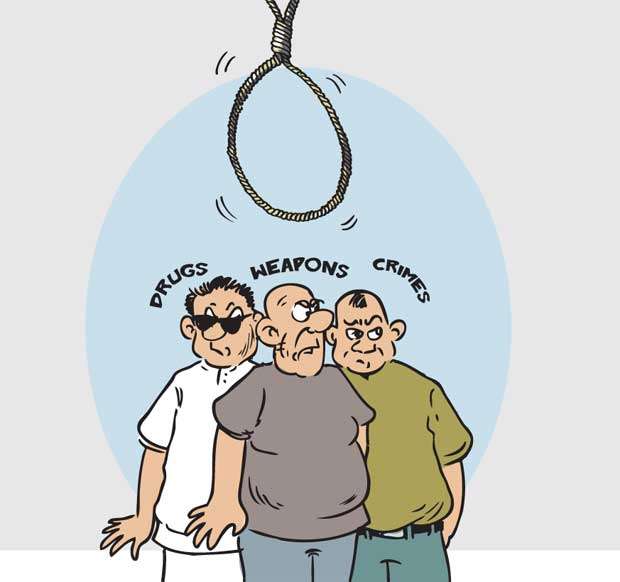
It is clear that there is a nexus between drugs, crimes and the proliferation of small arms. DIG  Priyantha Jayakody, who has been engaged in combating organized criminal gangs for more than two decades, has pointed out last year during an interview with the Sunday Times that many of the present violent crimes were due to criminal gangs clashing with each other over the illegal drugs trade. The problem also points its association with the ethnic war that ended nearly a decade ago as the conflict had provided the much needed arms and ammunition to the drug trade and the criminal gangs involved in it.

Brig. Ranjan de Silva, the former National Coordinator of the now — defunct National Commission Against the Proliferation of Illicit Small Arms (NCAPISA) once in a newspaper interview had this to say: The three insurgencies, especially the one sparked by the ethnic conflict, only gave an impetus to the proliferation. The ethnic conflict made violence go hi-tech with the induction of modern weapons. T-56, the standard weapon of the armed services and the Police, has become the weapon of choice of criminals too. The armed conflict in the North and East became a fertile source of supply of small arms to the underworld. The country’s criminal behaviour graduated on to a higher plane.”

One cannot deny the association of the politicians with these three menaces-drugs, weapons and crimes. So long as the concerned authorities do not have the will to sever this association, even capital punishment would go down the drain.

‘No’ to death penalty 

July 18th, 2018

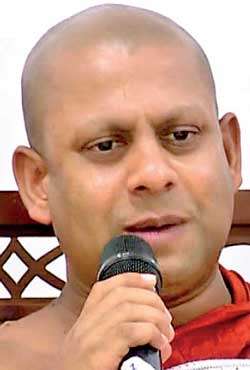
Prof. Ven. MedagodaAbayathissa Thera said that he was opposed to resuming death penalty. 

We are taught in the Buddhism not kill the person, but kill the fault. In that viewpoint, we are against this move. There is a lot to be done before bringing the death penalty,”Abayathissa Thera said.
It’s necessary to find out the root causes for the existence of drugs and how they enter the country,” the monk added.   Abayathissa Thera said that the death penalty is carried out by failed states and added Sri Lanka had also fallen into that category.


Ven. MedagodaAbayathissa Thera

We are taught in the Buddhism not kill the person, but kill the fault. In that viewpoint, we are against this move. Priority should not be given to killing those who are involved in drug trafficking, but to ways and means to eradicate drugs from the society

Priority should not be given to killing those who are involved in drug trafficking, but to ways and means to eradicate drugs from the society,” the Thera added.

Abayathissa Thera said that if the Government would impose the death penalty on those who organise crimes while being in the prison, it underscores inefficiency and bureaucracy on the part of the Prison Department, in their deals with inmates.

Meanwhile, The Human Rights Commission of Sri Lanka (HRCSL) in a letter addressed to President Maithripala Sirisena had requested to revoke his decision to enforce the capital punishment on drug traffickers and implement a powerful and long-term policy framework for the suppression of grave crimes, including drug trafficking.

The delegation of the European Union in Sri Lanka as well as the diplomatic missions of Canada and Norway have written to President Sirisena to verify the worrying information in the public domain about the intention of the Government of Sri Lanka (GoSL) to resume implementing the death penalty.

At the same time, the Church of Ceylon (Anglican Church) on Monday said it was against the death penalty and instead called on the Government to vigorously combat drug smuggling and distribution at all levels in the society.

Issuing a statement, the Church of Ceylon said it cannot condone the move to resume the execution of both those sentenced to death for drug related crimes and inmates continuing to be involved in the drug trade while in prison.

SL risks losing GSP+ if death penalty implemented

July 18th, 2018

Courtesy The Daily Mirror

EU ambassadors warned Sri Lanka on Monday against ending its 42-year moratorium on capital punishment and said the island risked losing trade concessions if it went ahead, the Daily Mail reported on Monday quoting the AFP.

“The diplomatic missions have requested the President to maintain the moratorium on the implementation of the death penalty and to uphold Sri Lanka’s tradition of opposition to capital punishment,” the EU ambassadors said in a joint statement.

Diplomats said they expected Sirisena to roll back the decision, but should the island go ahead it would loose preferential access for its exports to the 28-member EU bloc.

“If Sri Lanka resumes capital punishment, Colombo will immediately lose the GSP-Plus status,” an EU diplomatic source has told AFP.

This refers to its GSP Plus restored by the EU in May 2017 after a seven-year hiatus.

Sri Lanka was denied GSP Plus status in 2010 after failing to meet its rights obligations. The Sirisena administration reapplied after coming to power in 2015.

EU diplomats have estimated that Sri Lanka gains an estimated USD 350 million advantage annually thanks to the GSP-Plus system.

Joint Opposition accuses Wildlife Minister Field Marshal Sarath Fonseka of harbouring underworld figures

July 18th, 2018

Lahiru Pothmulla Courtesy The Daily Mirror

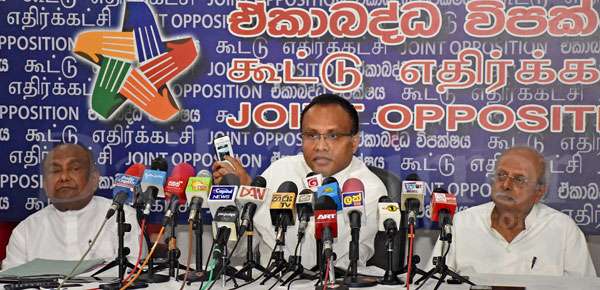
The Joint Opposition today accused Wildlife Minister Field Marshal Sarath Fonseka of harbouring underworld figures.

Addressing a news briefing, MP Padma Udhayashantha Gunasekera said two persons named Aruna Attanayake alias Police and Gihan Sandaruwan, who had links with the underworld, were seen at functions attended by Minister Fonseka.

Aruna Attanayake was a previous Policeman. Therefore, he is known as the Police now. Gihan Sandaruwan had been previously arrested with Kerala ganja. Who influenced his release?” he asked.

The MP said he raised the issue in Parliament on Tuesday and asked about the Lankadeepa news that one Minister was receiving the protection of five underworld figures.

Both Prime Minister Ranil Wickremesinghe and Law and Order Deputy Minister Nalin Bandara replied saying the Government would take action against perpetrators irrespective of their position. Here, we revealed the photos of Minister Sarath Fonseka in which underworld figures appear. What is the point of Yahapalanaya if the Ministers are surrounded by underworld figures and drug smugglers?” he asked.

He urged the Government to reveal as to which Minister was receiving the protection of the five underworld figures, as reported by media. ()

Pix by Ishan Sanjeewa

SF rejects media report over underworld connexion

July 18th, 2018

Kalathma Jayawardhane Courtesy The Daily Mirror

While rejecting media reports that some underworld figures were protected by a Senior Minister, Minister Field Marshal Sarath Fonseka today said those reports were targeted to defame and cause inconvenience to him.

Minister Fonseka told a news conference that some media reports had stated that five underworld leaders, whom the Police were looking to arrest, were protecting a minister and had become the private bodyguards of the Minister.

He said even though one such report had directly alleged him of this incident and published his picture; the other report had only mentioned it as an incident involved with a Senior Minister by not mentioning his name.

I do not need protection from the underworld or do not intend to protect them. I have ten Police officers, four Inspectors and Four Special Task Force (STF) officers as my guards. I have two Police vehicles too. Anybody can inquire with these facts,” he said.

The journalist who has reported this news has some personal agenda and has criticised me at several instances. The Ministry will take legal action on that report claiming Rs. 500 million for the damages caused. There are some political forces behind these reports too,” he added.

He also rejected the claims that there were some underworld members working at his office.

While referring to the allegation that a former Police officer named Aruna Attanayake alias Police was included in his security team, he said under democracy any person was entitled to do politics and nobody could question it.

He said the person who was appearing in a picture published with the said media report, had a case filed against him in Courts before twenty years ago and now he had a settled background and added that he could not question on the number of Court cases a supporter had before entering into politics.

Even there are Court cases against me. We cannot deny a person’s entitlement to engage in politics and to support a certain politician in any manner. I have got to know of a person named Kristo from this very media report,” he said.

The media reports have also included the name of a boy called Nayanajith, a university student and an old boy of a renowned school in Colombo, who is innocent and having a decent family background. Police authorities have also guaranteed his innocence,” he added.

He said he had made no influence to Police over the release of a brother of a Pradeshiya Sabha member, Gihan Sandaruwan and added that only his mother had called him up to inform the injustice they had faced.

With reference to a person named Manju, he reiterated the fact that they could not inquire people of their legal history before they had started doing politics.

He also said a person who worked for him was killed by the STF and added that even it was not an underworld incident but a clash between two parties.

These people are not with me. They are working for us in politics through electorate basis as United National Party (UNP) supporters. Every person is free to do so. I have informed the authorities concerned over this issue including the Law and Order Minister to take necessary actions with this regard,” he said.

Meanwhile, he said though there are good Police officers, the Police had become a corrupt institute, which had now been politicised and added that the situation had worsened after the establishment of the Police Commission, though people were expecting better condition.

Journalist: What do you think of these personal attacks on your image and the reason behind it?

Minister: These attacks are carried out due to political agendas. I earlier said that one of these journalists was writing columns praising Rajapaksas.

Lankadeepa Journalist: Are you saying it responsibly? Because this journalist was only doing media reports on army and crimes. We have not seen such a column. Are you saying it responsibly that he was working for Rajapaksas?

Minister: Why? Is not he writing a political column?

Lankadeepa Journalist: No, we have not seen. Are you saying it responsibly?

Minister: I have inquired… I think…

Lankadeepa Journalist: You should have corrected it. As far as we know, he has no such political involvement.

Minister: I will inquire about it.

Lankadeepa Journalist: I represent the specific newspaper. Therefore, I am asking you to inquire on it and then to make a statement responsibly, because as far as we know, he does not write anything on politics.

Minister: Okay, I will inquire and let you know.


Wildlife Minister addresses accusations against him (English)

July 18th, 2018

Wildlife Minister addresses accusations against him (English)

Croatian President

July 18th, 2018

Dr Sarath Obeysekera

We have seen Small country like Croatia adnanced to finals due to their perseverance and courage

There is a joke about Croatia

There is a new bra made by Victors secrets called Croatia It has lot of supports but NO CUP

Please read details about their charismatic leader

The Croatian president Madam

Kolinda Grabar Kitarovic has created a storm by her beauty and selfless support of her national team. But do we know what lies beneath her beauty? Born on 29 April 1968, she is a graduate in  English and Spanish literature. She has done post-graduation in international relations. She is a Fulbright scholar, who studied at George Washington university, Harvard and John Hopkins university. At the age of 46, in the year 2015, she became president and started pursuing her doctorate in international relations. Don’t get waylaid by her beauty because she is an ex army commando and an ace marksman too. From 2007 to 2011 she was the ambassador of Croatia to US. Then she became the first woman to be the NATO assistant secretary general for public diplomacy. In that capacity she visited Afghanistan number of times to raise the morale of NATO troops deployed there. In the NATO circle she is known as SWAMBO. That is she who must be obeyed. Known as a no nonsense woman, she instilled discipline and dedication, leading by her own example. She has been voluminously praised by both George Bush Jr and Barack Obama. She bought her own economy class ticket and came to Russia to see Croatia playing. She put on Croatian Jersey and sat at the VIP box breaking all norms. She mingled with spectators and hugged the players, who were sweating and in briefs in the dressing room. She fluently speaks Croatian, English, Spanish and Danish language. Moreover, she is fairly adept in speaking in German, French, Russian and Italian. She was seen speaking to both Putin and Macron fluently in Russian and French respectively. Therefore, she is epitome what a nation’s leader should be, brilliant, savvy and inspiring.

Alas, we as a country will perhaps never see such a leader

We had one leader who spoke French English and Sinhala but she was never punctual !!!!

Dr Sarath Obeysekera

මත්තල ගුවන්තොටුපල ඉන්දියානු ආයෝජන   ජාතික අභිලාෂයන් ජයගැනීම සදහා සැලසුම් සකස් විය යුතුයි  

July 18th, 2018

මාධ්‍ය ඒකකය ශ්‍රී ලංකා මානව හිමිකම් කේන්ද්‍රය

මත්තල ගුවන්තොටුපල සදහා ආයෝජන ගිවිසුම් සකස් කිරීමේ දී ජාතික අභිලාශයන් පෙරදැරිව, විනිවිද භාවයකින් කටයුතු කිරීම දේශපාලනඥයින්ගේ ද, රාජ්‍ය නිලධාරීන්ගේ ද වගකීමක් බව ශ්‍රී ලංකා මානව හිමිකම් කේන්ද්‍රයේ සහ කැෆේ සංවිධානයේ විධායක අධ්‍යක්ෂ කීර්ති තෙන්නකෝන් මහතා නිවේදනයක් නිකුත් කරමින් පවසයි. 

හම්බන්තොට වරාය සම්බන්ධයෙන් වන ගණුදෙණුවේ දී කිසිදු විනිවිද භාවයකින් තොරව කටයුතු සිදුවී ඇති අතර, එය දේශපාලනඥයින් හා නිලධාරීන්ගේ අවශ්‍යතාව මත ජාතික අභිලාෂයන් නොතකා සිදු කළ දුෂිත ගණුදෙනුවකි.  එවැනි තත්වයක් යලි ඇතිවීම වලක්වා ගැනීම නම් මත්තල ඒකාබද්ධ ආයෝජනය සම්බන්ධයෙන් වන ගිවිසුම විනිවිද භාවයක් සහිතව සිදු කළ යුතුව ඇතැයි ද නිවේදනයේ සදහන් වේ.

මත්තල ගුවන්තොටුපල සදහා වැය වූ මුදල ඇ.ඩො. මිලියන 252 කි.  එයින් ඇ.ඩො. මිලියන 190 ක් ලැබුණේ චීනයේ එක්සිම් බැංකුවෙනි.  ලංකා රජය සතු ගුවත් තොටුපල හා ගුවන් සේවා සමාගම ඩොලර් මිලියන 19 ක් ආයෝජනය කළ අතර අතිරේක වැඩ සදහා ගුවන් තොට ඉදිකළ චයිනා හාබර් ඉන්ජිනියරින් සමාගමට ගෙවීමට සිදුවූ මුදල ඩොලර් මිලියන 38.7 කි.  ගුවන් තොටුපල හා ගුවන් සේවා සමාගම තවත් ඩොලර් මිලියන 4 ක් අතිරේක භාණ්ඩ සදහා වැය කළේය. ඒ අනුව, සමස්ථ ආයෝජනය ඩොලර්  මිලියන  252 ක වැය කොට ඇත්තේ චීන එක්සිම් බැංකුව හා ලංකා පුරවැසියන්ගේ මුදල් වලිනි.

චීන බැංකුවෙන් ලැබුණු ණය මුදලට 2% ක වාර්ෂික පොලියක් ගෙවිය යුතු අතර, එය වසරේ මාර්තු සහ සැප්තැම්බර් මස හීනවන ශේෂය මත ගණන් බැලිය යුතුය. 2010 මාර්තු 10 ගිවිසුම අත්සන් තැබීමෙන් පසුව මේ දක්වා ආපසු ගෙවා ඇති ණය මුදල ඩොලර් මිලියන 38 කි. ඒ අනුව තවත් ඩොලර් මිලියන 152 ක් 2018 . 03 .31 දිනට ශ්‍රී ලංකා රජය චීනයට ගෙවිය යුතුයි.

මත්තල ගුවන්තොටුපල මෙහෙයුම් කටයුතු ආරම්භ වන්නේ 2013 මාර්තු 18 වන දිනයි. 2013 දී මත්තල ලැබූ ආදායම රු. මිලියන 48 කි. එම වසරේ වියදම රු. මිලියන 2,828 කි.  2014 දී රු. මිලියන 3,235 ක් වැය වන විට ලැබූ ආදායම රු. මිලියන 136 කි.  2015 දී මත්තල රු. මිලියන 5,947 ක් වැය කර මිලියන 72 ක ලාභයක් ලැබීය.  2016 දී මි. 49 ක් ද, 2017 දී මිලියන 78 ක් ද, 2018 මැයි දක්වා මිලියන 14 ක ආදායමක් ද ලබන මත්තල ගුවන් තොටුපල පිළිවෙළින් එම වර්ෂවල මිලියන 3,898, 3,390 හා 1,896 ක් ලෙස පාඩු ලබන්නේය. 

මත්තල ට ලබාගත් ණය මුදලට ගෙවීමට ඇති මුදල ඩොලර් මිලියන 152 ක් හෙවත් රු. මිලියන 24,320කි. ඉද හිට හදිසි අවස්ථාවක දී පැමිණෙන ගුවන් යානයක් හැර වෙනත් ආදායමක් නැති නිසා රු. මිලියන 4,000 කට ආසන්න පාඩුවක් එයට දැරීමට ලංකා රජයට සිදුවේ.

2017 දී ජාත්‍යන්තර ගුවන් යානා මගින් ලංකාවට පැමිණි මගීන් ගණන 3773 කි. පිටත්ව ගිය මගීන් ගණන 12,947 කි.  ශ්‍රී ලංකන් ගුවන් සමාගම සිය මත්තල ගුවන් ගමන් අවසන් කිරීමත් සමගම විදේශගතවීම සදහා මත්තල යොදා ගන්නා පිරිස සීමා විය. 2016 වසර පුරාම මත්තලට පැමිණි මගීන් ගණන 2,176 කි. මත්තලින් පිටත්ව ගිය මගීන් සංඛ්‍යාව 2,629 කි.

2013 මාර්තු මස මත්තල ආරම්භවිමෙන් පසු එම වසරේ 36137 දෙනෙකු පැමිණිම සහ පිටවීම සඳහා  ගුවන් තොටුපල භාවිත කර ඇති අතර එයට අමතරව පුද්ගලයින්10 938 ක් ට්‍රාන්සිට් මඟින් මත්තල භාවිත කොට ඇත. 2014 වසරේදී පැමිණිම පිටවීම සඳහා ගුවන්තොටුපොළ කර පිරිස  40386 කි වත්මන් රජය බලයට පත්වීමෙන් පසුව 2015 සහ 2016 වසරේදී පැමිණීම සහ පිටවීම සදහා මත්තල භාවිත කොට ඇත්තේ 6291 සහ 6207 ක් පමණි. 2017 වසරේදී පැමිණි පිටවුනු මඟි සංඛ්‍යාව22972කි. අයහපත් කාළගුණ තත්වයක් පැවති අවස්ථාවලදී කටුනායක වෙත පැමිණි ගුවන් යානා මත්තල වෙත හරවා යැවීම හේතුවෙන් 2017 වසරේ  වාර්තාගත ට්‍රාන්සිට් මඟින් සංඛ්‍යාවක් එනම් 40949ක් මත්තල භාවිත කළේය. 2018 ජුනි 30 දක්වා මඟීන් 2363ක් මත්තල භාවිත කොට ඇත. මේ වසරේ  ට්‍රාන්සිට් මගීන් සංඛ්‍යාව10906කි ඒ අනුව  2013 මාර්තු මස  මත්තල ගුවන් තොටුපල  ආරම්භ වීමෙන් පසුව පසුගිය ජුනි 30 දින දක්වා පැමීනිම- පිටවීම සඳහා මඟීන් 114356ක් මත්තල තොටුපොල භාවිත කර ඇති අතර පුද්ගලයින් 70188 කට ට්‍රාන්සිට් පහසුකම් ද සැලසී ඇත.

මත්තල ගුවන්තොටුපල සදහා වැය ණය මුදල් පියවා ගැනීම සදහා ලාභදායි විද්‍යාත්මක ප්‍රවේශයකින් විකල්ප ගුවන්තොටක් ලෙස මත්තල වැඩි දියුණු කිරීමේ අවස්ථාව පවතී.  ඒ සදහා විනිවිද භාවයකින් යුතුව කටයුතු කිරීම අත්‍යවශ්‍ය බව ද, කීර්ති තෙන්නකෝන් මහතා නිකුත් කළ නිවේදනයේ දැක්වේ.

මාධ්‍ය ඒකකය

2018 ජූලි 18

ඇමති ඩිලාන් ඇතුළු සැකකරුවන් ගැන හොයන්න අභියාචනාධිකරණය FCID යට පවරයි

July 18th, 2018

මාධ්‍ය නිවේදනය  මාධ්‍ය ඒකකය ශ්‍රී ලංකා මානව හිමිකම් කේන්ද්‍රය

ඇමති ඩිලාන් ඇතුළු සැකකරුවන් ගැන හොයන්න අභියාචනාධිකරණය FCID යට පවරයි

විදේශ සේවා නියුක්ති කාර්යංශයේ  මෑත කාලයේ සිදුව ඇති මූල්‍ය වංචා පිළිබඳ විමර්ශනය කරන ලෙස අභියාචනාධිකරණය විසින් මූල්‍ය අපරාධ විමර්ශණ කොට්ඨාශයට පැවරීම පිළිබඳව ශ්‍රී ලංකා මානව හිමිකම් කේන්ද්‍රය සතුට පළ කරයි. ශ්‍රී ලංකා මානව හිමිකම් කේන්ද්‍රය නිවේදනයක් නිකුත් කරමින්   පෙන්වා දෙන්නේ රාජ්‍ය නිළධාරීන් බිල්ලට දී දේශපාලනඥයින් අත පිහිදාගැනීමේ න්‍යාය මෙම තීන්දුව මඟින් අහෝසි කර ඇති බවයි.

විදේශ සේවා නියුක්ති කාර්යාංශයේ සේවයේ නියුක්තව සිටින ප්‍රසාද් ප්‍රියදර්ශන, සුමිත්‍ර ප්‍රියදර්ශනි සහ නීලිකා සිල්වා යන පෙත්සම්කරුවන් විසින් අභියාචනාධිකරණය වෙත ඉදිරිපත් කරන ලද CA(Writ) 165/2018 යන නඩුව සලකා බලන ලද අභියාචනාධිකරණය  අද (18) මෙම තීන්දුව ප්‍රකාශයට පත්කළේය. 2012 වර්ෂයේදි  එකී කාර්යාංශයේ නොපවත්වන  ලද රටවිරු සංවිධාන දැනුවත් කිරීමේ උත්සවයක් වෙනුවෙන් ආහාර සැපයුම්කරුවෙකුට ගෙවන ලද මුදල තමන් විසින් ලබා ගත් බවත්   ආහාර ලබා නොදුන් නමුත් එකි සැපයුම්කරු රුපියල් 661,445/- මුදලක් ලබාගෙන එය ආමාත්‍ය කාර්යාංශයේ දෙදෙනෙකුට ලබා දෙන ලද සැපයුම්කරු විසින් පරීක්ෂණ දෙකකදී පිළිගෙන තිබිණ.  නමුත් එම කාරණය සම්බන්ධයෙන් මුල්‍ය අපරාධ අංශය (FCID) වෙත පැමිණිල්ලක් කිරීමට  විදේශ සේවා නියුක්ති කාර්යාංශය අපොහොසත් වීම පිළීබඳව සැලකිල්ලට ගත් අභියාචනාධිකරණය එම කාරණය පිළිබදව පරික්ෂා කරන ලෙසට අද දින(2018.07.18) මුල්‍ය අපරාධ විමර්ශන Yකොට්ඨාශය (FCID) වෙත නියෝග කරන ලදි.

2012 වර්ෂයේදි විදේශ සේවා නියුක්ති කාර්යාංශය භාරව සිටි ආමාත්‍යවරයා වන්නේ ඩිලාන් පෙරේරා මහතා වන අතර ඔහු එකී නඩුවේ 20 වන වගඋත්තරකරු වන්නේය. මෙම නඩුව අද දින (2018.07.18) කරුණු තහවුරු කරන ලද්දේ අභියාචනාධිකරණ සභාපති පද්මන් පී සූරසේන මහතා සහ විනිසුරු අර්ජුන ඔඛෙසේකර මහතා ඉදිරියේදිය. මෙම නඩුවෙහි පෙත්සම්කරුවන් වෙනුවෙන් නීතිඥ ඩි. කේ විකුම් ජයනාත් මහතාගේ උපදෙස් පරිදි නිතීඥ මිහිරි කොළඹගේ මෙනවිය සමඟ ඡ්‍යෙෂ්ඨ නිතිඥ කේ. ජි ජිනසේන මහතා පෙනි සිටින ලදි.

උක්ත තීන්දුව සම්බන්ධයෙන් සිය සතුට ප්‍රකාශකරන ශ්‍රී ලංකා මානව හිමිකම් කේන්ද්‍රය අවධාරණය කළේ  මෙම වංචාව ඉහළම දේශපාලනඥයෙකු සහ ඉහළම නිලධාරීන් කිහිප දෙනක් එක්ව සිදුකළ එකක් වන බවත් නමුත් පසුව සිද්ධිය හෙළිදරව්  වීමත් සමඟ රාජ්‍ය නිලධාරීන් බිල්ලට දී දේශපාලනඥයින් අත පිස දමාගැනීමට උත්සහ  කළ ද මෙවැනි නඩු තීන්දු තුළින්  එවැනි අවස්ථා අහෝසි කර දමා ඇති බවයි.

මාධ්‍ය ඒකකය

ශ්‍රී ලංකා මානව හිමිකම් කේන්ද්‍රය

2018 ජුලි 18

Most Buddhist majority nations have capital punishment.

July 18th, 2018

 Dilrook Kannangara

In Thailand death sentence is imposed on 35 crimes including murder and drug trafficking. It’s the same in Myanmar with a smaller number of offences carrying the death penalty. Although no one was actually put to death since 1988, the option is open and available as no policy restriction exists against it. Vietnam has a very effective death penalty that is regularly carried out. As a result narcotics offences, treason and corruption are under control. China, Japan, Singapore, Taiwan and North Korea are other Buddhist majority nations with the death penalty. South Korea has declared a presidential moratorium against death penalty in 1998 mainly due to its changing religious outlook. Christians are the most influential in South Korea and it is expected to become a Christian majority nation within a decade.

Laos has not officially abolished the death penalty though due to severe pressure has acceded to Amnesty International to abolish it. Given its extreme poverty, Laos has been unable to make its own decisions independently. Cambodia is the only ASEAN country along with Christian Philippines to abolish death penalty. This is mainly due to poverty and resultant pressure from Western donors. Bhutan has also abolished death penalty as it is severely influenced by India.

The case for Sri Lanka is complicated. Although Sri Lanka has a nominal Buddhist majority, it never followed any Buddhist majority nation on policy matters. Colombo always followed the Christian West on all policy matters. This is due to complete economic, legal, attitudinal and governance dependence on the Christian West. All elected national leaders, except two, either have been educated under very strong Christian schooling or have very close and influential Christian family members. The only two exceptions are presidents Jayawardene and Sirisena. However, they too were strongly pro-western. Except USA, almost all Christian majority nations oppose the death penalty.

Traditionally, when Sri Lanka was governed by Buddhist kings, death penalty was very much active. Spearing, body slitting, hanging, severing the head and other means were used to put criminals to death.

Although Sri Lankan government doesn’t carry out the death penalty, at least 150 persons, mostly Buddhist women, are condemned to death every year. They are housemaids exported to the Middle East and come home in coffins every year. Part of their foreign currency earnings go to pay for narcotics imports. There are extra judicial executions in Sri Lanka since 1971 that have killed tens of thousands.

Post-war Sri Lanka is a narcotics hub. Since 2009, there are multiple narcotics entry points. The north is now the most used narcotics entry point. A President, a Prime Minister, a police chief, ministers, MPs and lesser politicians have been associated with drug dealers. Therefore, it is extremely unlikely Sri Lanka will execute them. Nothing less than the capital punishment deters drug dealers. Unfortunately, most victims of narcotics are Buddhists while most drug dealers are Muslims, Hindus and Christians in that order. Yet, strangely, some Buddhists don’t care enough. They must answer a simple question, honestly, if they can – what would ancient Buddhist kings, national heroes like Anagarika Dharmapala and the most Buddhist national leader Sirima Bandaranaike choose if faced with the drug menace and capital punishment?

Alert regarding false Media Release -Former President Mahinda Rajapaksa

July 18th, 2018

MEDIA RELEASE -Former President Mahinda Rajapaksa

 Alert regarding false Media Release

It has come to our notice that a forged document purporting to be a media release issued by former President Mahinda Rajapaksa has been circulated in the social media yesterday, ie., the 17th July 2018. This forged media release purports to announce that President Mahinda Rajapaksa has officially selected Mr. Gotabhaya Rajapaksa to be the presidential candidate of the Sri Lanka Podujana Peramuna.

We wish to inform the public that former President Mahinda Rajapaksa has not yet named the next presidential candidate of the SLPP. This forged media release has been planted in the social media after the former President left for Singapore. Former President Mahinda Rajapaksa wishes to state that when he names the next presidential candidate of the Sri Lanka Podujana Peramuna and the Joint Opposition, it will not be through a media release but will be done personally by him at a public gathering.

The forged media release issued only in Sinhala was titled 2020 Janadhipathiwaranya”. However, there is no presidential election in 2020. The next presidential election is due in 2019. According to our Constitution, the next presidential poll should be held by the 9th December 2019 the latest. It was in fact through a media release issued by former President Mahinda Rakapaksa some time ago, that the public was informed of this timeframe for the first time.


Rohan Welivita

Media Secretary to

Former President Mahinda Rajapaksa

ව්‍යාජ මාධ්‍ය නිවේදනයක් සමාජ ජාලා වල සංසරණය වීම -හිටපු ජනාධිපති මහින්ද රාජපක්‍ෂ

July 18th, 2018

මාධ්‍ය නිවේදනය හිටපු ජනාධිපති මහින්ද රාජපක්‍ෂ මැතිතුමාගේ මාධ්‍ය ලේකම්

ව්‍යාජ මාධ්‍ය නිවේදනයක් සමාජ ජාලා වල සංසරණය වීම

හිටපු ජනාධිපති මහින්ද රාජපක්‍ෂ මහතා නිකුත් කරන ලද මාධ්‍ය නිවේදනයක් ලෙස සකස් කරන ලද කූඨ ලේඛනයක් ඊයේ, එනම් 2018 ජුලි 17 වෙනිදා කිසියම් පිරිසක් විසින් සමාජ ජාලා වලට මුදා හැර ඇති බව අපි නීරීක්‍ෂණය කළෙමු. මේ කූඨ ලේඛනයෙන් කර ඇත්තේ, හිටපු ජනාධිපති මහින්ද රාජපක්‍ෂ මහතා ශ්‍රී ලංකා පොදුජන පෙරමුණේ ජනාධිපති අපේක්‍ෂයා හැටියට ගෝඨාභය රාජපක්‍ෂ මහතාව නිල වශයෙන් නම් කර ඇති බව කීමය.

ඊළඟ ජනාධිපතිවරණයට අපේක්‍ෂකයෙකු ජනාධිපති මහින්ද රාජපක්‍ෂ මැතිතුමා විසින් තවම නම් කර නැති බව මෙයින් අපි දැණුම් දී සිටිමු. හිටපු ජනාධිපතිතුමා සිංගප්පූරු සංචාරයක් සඳහා රටින් පිටවෙන තුරු බලාසිට මේ කූඨ ලේඛනය මුදා හැර තිබෙන බව පැහැදිළිය. ශ්‍රී ලංකා පොදුජන පෙරමුණේ හා ඒකාබද්ධ විපක්‍ෂයේ ජනාධිපති අපේක්‍ෂකයා නම් කරන විට එය මාධ්‍ය නිවේදනයක් මඟින් නොකරන බවත්, එය ප්‍රසිද්ධ ස්ථානයක තමන් පුද්ගලිකවම සිදුකරන බවත් මහින්ද රාජපක්‍ෂ මැතිතුමා දැණුම් දී සිටී. 

අදාල කූඨ ලේඛනයේ සිරස්තලය වූයේ 2020 ජනාධිපතිවරණය” යනුවෙනි. නමුත්, 2020 දී මේ රටේ ජනාධිපතිවරණයක් නැත.ඊළඟ ජනාධිපතිවරණය පැවැත්විය යුතු වන්නේ 2019 දීය. අපේ ව්‍යවස්ථාවට අනුව 2019 දෙසැම්බර් 09 වෙනිදාට පෙර ඊළඟ ජනාධිපතිවරණය පවත්වා හමාර විය යුතු වේ. මේ බව මුලින්ම ජනතාවට දැණුම් දී සිටියේද ජනාධිපති මහින්ද රාජපක්‍ෂ මහතා මීට කලකට පෙර නිකුත් කරන ලද මාධ්‍ය නිවේදනයකින් බවද මෙහිදී පෙන්වා දිය යුතුය.

රොහාන් වැලිවිට

හිටපු ජනාධිපති මහින්ද රාජපක්‍ෂ මැතිතුමාගේ

මාධ්‍ය ලේකම්

Minister Amunugama – Promote the Alliance of Buddhist Nations while acknowledging Senaka Weeraratne who conceived the idea

July 17th, 2018

On 9th July 2018 the ‘Island’ Newspaper carried a report titled Minister Amunugama proposes alliance of Buddhist countries in the region”. Minister Sarath Amunugama declared that he would initiate the alliance while attending a seminar for heads of Pirivena in Kandy.

http://www.island.lk/index.php?page_cat=article-details&page=article-details&code_title=187627

While welcoming an initiative of this nature given that other international Buddhist organisations such as the World Fellowship of Buddhists (WFB) do not provide a voice for the Buddhists worldwide but prefer to restrict itself to fellowship exclusively leaving threatened Buddhist communities and Buddhist nations without an international voice on par with say the Organisation of Islamic Co – operation (OIC) or European Union (EU), which take up the grievances of Muslims and Christians, it must be noted however that this idea was initially promoted in the form of a League of Buddhist Nations by Mr. Senaka Weeraratna, Attorney –at – Law, Hony. Secretary and Trustee of the German Dharmaduta Society and Chapter Leader of the Dharma Voices for Animals, Colombo, Sri Lanka Chapter, and a regular contributor to newspapers and journals on a variety of topics including Global Buddhism, Animal Rights and Colonialism.

Mr. Senaka Weeraratna has written numerous articles over the years on this regional alliance & it is strange that Government Ministers or Public Officials do not appear to have read a single article of his to realize the need & potential of such a regional alliance. Sadly, India is now using Buddhism as a soft power tool as its politically strategic pivot to Asia.

Given below are a handful of articles written by Mr. Senaka Weeraratna promoting the League of Buddhist Nations:

1)    League of Buddhist Nations – An idea whose time has come

http://www.buddhistchannel.tv/index.php?id=8,10167,0,0,1,0#.W0UDa9IzaUk

2)      The Crisis facing the Buddhist World – The Buddhist World lacks an effective mechanism to help save a Buddhist Nation in Danger”

http://www.buddhistchannel.tv/index.php?id=8,11783,0,0,1,0#.W01n5dIzaUl

https://www.lankaweb.com/news/items/2017/06/01/the-buddhist-world-lacks-an-effective-mechanism-to-help-save-a-buddhist-nation-in-danger/

http://hlaoo1980.blogspot.com/2014/04/buddhist-world-in-crisis-buddhist.html

3)    The Voices of threatened Buddhists must be heard at the UN Day of Vesak 2017 Conference

https://www.lankaweb.com/news/items/2017/03/11/the-voices-of-threatened-buddhists-must-be-heard-at-the-un-day-of-vesak-2017-conference/

4)    China must lead the Buddhist World

http://www.buddhistchannel.tv/index.php?id=8,12756,0,0,1,0#.W01r5NIzaUk

2014 – China taking lead of Buddhist World http://www.vijayvaani.com/ArticleDisplay.aspx?aid=3386

It has become fashionable to suggest alliances of this nature whenever a Buddhist foreign dignitary is arriving or simply to curry favour with the majority Buddhist community. How sincere in going forward with these suggestions has been proven by the fact that neither has the government made foreign ministry desk initiatives or given instructions for the Buddha Sasana Ministry to make the initial connections or rallied the Buddhist Associations/Organizations to help launch the initiative.

UDRS (or DRS) in International Cricket

This is not the only time that credit has been denied to Mr. Senaka Weeraratna. He has been engaged in a sole battle to claim ownership of the ‘Player Referral’ concept which underlies the UDRS ( Umpire Decision Review System), a brainchild he came up with in 1997 for which the International Cricket authorities i.e. ICC,  are not giving him due acknowledgment while the Sri Lankan Cricket Board & even Sports Ministry/Minister are not willing to take up for if UDRS is renamed the Weeraratne Rule it not becomes a proud moment for only Mr. Weeraratna but also a feather on the cap for Sri Lanka.

https://www.onlanka.com/news/decolonize-cricket-re-name-udrs-as-the-weeraratna-rule.html

https://cricketique.wordpress.com/2017/01/29/the-drs-in-cricket-and-senaka-weeratnas-early-initiatives/

https://www.onlanka.com/news/recognition-of-authorship-of-udrs-conspiracy-of-silence-detrimental-to-sri-lanka.html

http://archives.dailynews.lk/2013/01/29/fea03.asp

It is unfortunate that Sri Lankans have no time to speak on behalf of others deserving justice & fair play and it is also unfortunate that even credit due to people who originate the idea (intellectual property)  is also completely forgotten. These are shallow qualities that we Sri Lankans cannot be proud of.

Mr. Amunugama or any other are more than welcome to carry forward the idea of an Alliance of Buddhist Nations but due credit and acknowledgement must be given to the person who came up with the original idea of a League of Buddhist Nations and publicized it worldwide.

Shenali D. Waduge

Anglican church opposes hasty decision to hang

July 17th, 2018

KANDY: The Anglican Church of Ceylon has taken exception to the government’s decision to resume judicial executions of repeat drug offenders.

A joint statement issued by the Bishop of Colombo Rt. Rev. Dhiloraj Canagasabey and the Bishop of Kurnegala Rt. Rev. Keerthi Fernando says, ‘The Church of Ceylon (Anglican Church) cannot, in any way, agree with the move as it has been a rushed decision without proper reflection against the backdrop of criticism and public disquiet about the spate of gang related murders and shootings in the recent days.

article_image

Full text of the statement by the Rt. Rev. Bishops is as follows: It has been reported that the President and the Cabinet of Ministers have taken a decision to authorize prison authorities to resume the execution of those sentenced to death for drug related crimes and are yet continuing to be involved in the drug trade while in prison.

As Christians, we believe that all people are made in the image of God and are therefore imbued with the spark of the divine within them however obscured and hidden it may be. This is why the taking of human life is expressly condemned by the Church, whether be man or by the state.

The Church of Ceylon (Anglican Church) cannot therefore in any way agree with this move, which we believe has been rushed into without proper reflection in the backdrop of criticism and public disquiet about the spate of gang related murders and shootings in the recent days.

Engagement in criminal activities outside prison by convicted persons cannot take place without the connivance of prison authorities. The government cannot absolve itself from its duty to devise ways of minimizing such occurrences. It must take quick but well designed steps to put into place strong security measures to prevent such incidents and obtain services of experts here and even abroad if required. It cannot resort to hanging people to escape its own obligations.

Sri Lanka halted judicial executions more than 40 years ago. Although several governments in the past have tried to re-imposed the death penalty wiser counsel has always prevailed.

This does not mean that we are unconcerned about the drug menace. We are indeed very deeply concerned by this widespread and very dangerous threat especially to the young people of our country and its consequences on wider society.

The church is willing to join and offer our assistance to the government in this regard in the educational sector.

We therefore re-iterate our opposition to this decision. It is widely spoken including in government circles that is is the ‘sprats’ who are being caught and punished while the ‘sharks’ are allowed to remain free to carry on their business, profitable to many even politicians it is said. The law ought and must be applied in full force equally to all involved in this destructive trade.

“WAR CRIMES” IN EELAM WAR IV Part 7

July 17th, 2018

KAMALIKA PIERIS

In the history of wars, Sri Lanka alone stands out as the one country which is penalized for winning a secessionist war. This is one of the most bizarre outcomes of Eelam War IV, observed H.L.D Mahindapala. There has been no previous example of a   war winning army being subjected to an international inquiry. Instead of commending the armed service of Sri Lanka for it unique victory over an implacable foe, Sri Lanka’s extraordinarily brave soldiers are being virtually condemned for the act, complained analysts.

Can any reader inform me whether there has been any country other than Sri Lanka where a country victorious in war decided to pursue punitive action against its own military personnel for alleged wartime ‘atrocities’ asked an observer. Also it there any other country which has launched action to harass and humiliate the commanders of the three forces who were equally responsible for the victory.

Eelam War IV falls into the category of wars known as ‘non-international armed conflicts’ (NIAC) where an armed group launches high intensity battles with the security forces of a country. But Eelam War IV was not the usual insurgency. It was not a ‘terrorist’ war at all. It was a secessionist war, fought against the legitimate government of the country for control of territory. Sri Lanka had every right to crush it.

A sovereign state is entitled, indeed expected, to protect its territory from such disruptive forces. Article 3 paragraph 1 of Additional Protocol II  states: “Nothing in this Protocol shall be invoked for the purpose of affecting the sovereignty of a State or the responsibility of the government, by all legitimate means, to maintain or re-establish law and order in the State or to defend the national unity and territorial integrity of the State”.

‘UN Declaration on Principles of international Law concerning Friendly relations and Cooperation among States in Accordance with the Charter of the UN’ (1970)   opposed any action which would dismember or impair, totally or in part, the territorial integrity or political unity of sovereign and independent States possessed of a government representing the whole people belonging to the territory without distinction as to race, creed or color. The territorial integrity and political independence of the State are inviolable. (Clauses 5.7, 6.2d)


The military victory in the final war was total. The entire guerrilla leadership was wiped out. It was a hard fought victory. Elsewhere such a victory would have been cheered and supported by all countries. Sri Lanka however found to its surprise that it was the target of a war   crimes charge manufactured in the west. Sri Lanka Army is   criticized, when it deserves accolades and proper recognition, said others.


There is a good reason for this. The Eelam defeat was not simply a defeat for the Tamils, it was also a defeat for USA. The Eelam war was  never a local movement. The Eelam war was funded  and directed by the US with support from its allies. The Tamil speaking ‘boys’ in Jaffna could never have sustained  such a  lengthy war. They were only the front, the force behind it was the US .


The US  tried  hard to push a LTTE victory. The LTTE did not know warfare and lacked the power to break through army lines,  so the only way to make them win was by  weakening the state forces. War crimes trials, pulling out troops from Jaffna, retiring the most successful Army officers, and drastically downsizing the Army were all recommended by hired Western military experts well before 2005, said retired Major General Lalin Fernando.  The conspiracy against the Army was hatched by the West many years ago, he observed.


The US next tried to stop the final phase of the war. Newton observed, ‘the warning of the U.S. Ambassador that strikes should not be undertaken against clearly identified military objectives when the LTTE used the presence of civilians in the so-called NFZ to launch military strikes is both naive and unfounded in modern international law.’. US Ambassador Robert O. Blake  tried to take out Prabhakaran using the US marines based in Hawaii, said K Godage.


Western powers were   angry  with Mahinda Rajapaksa and Gotabhaya Rajapakse for not stopping the war when they were asked to do so.  The degree of pressure that was  exerted on Sri Lanka by western countries is without parallel  said G.L.Pieris. We were hounded and intimidated by the US to stop the war.


The  2009 defeat was a great blow to the west. The west wanted revenge. Sri Lanka  was to be punished for defeating the LTTE. The targets would be those who had directed the war and the charge would be ‘war crimes’. Former President Chandrika Kumaratunga said that war crimes should focus on the top chain of command of the Sri Lanka military, not those who carried out orders.


Critics observed that all charges of  war crimes began after the defeat of the LTTE. Until the Mullativu operation of 2009 began there were no allegations of any wrong doing of the Sri Lanka forces, observed Lalin Fernando. The International community and specially India observed the restraint of the army with amazement, if not disbelief.


The war crimes campaign led by US focuses only on the last few months of Eelam War IV,    ending in May 2009. The west which did not bother about civilian deaths for 32 years suddenly woke up to civilian casualties  just as the war ended, observed Mahindapala. Why an inquiry for the last five months of the Eelam War IV.


Lasanda Kurukulasuriya observed in 2011 that there was no complaint of war crimes from any of the groups that one might expect complaints to come from. The IDPs, Tamil political leaders, local rights activists, community leaders, and NGOs did not complain. Nobody in Sri Lanka is asking for such a domestic inquiry, critics said.


Similarly, the BBC, when covering the LLRC sittings in Vavuniya in August 2010 noted that people were talking about the difficulties they faced at present,   not about fighting in the last stage of the war. U.S. Assistant Secretary of State for South and Central Asian Affairs Robert O. Blake  traveled to Sri Lanka in early May 2011, and met with local leaders in Kilinochchi and Mullaitivu. He said none of them had complained about war crimes, and that their problems related to receipt of death certificates and locating of their loved ones.


The  current war crimes charge against  Sri Lanka was manufactured in the west.  It was probably planned and ready long before the war ended, to be used in the case of defeat. The war crimes listed in the IHL which would fit the situation were carefully picked out and slapped down on the Sri Lanka military. IHL was compulsory for the countries which had signed the Geneva conventions. This includes Sri Lanka.

The charge of war crimes started as soon as the war     ended. Channel Four” issued a series of documentaries on the supposed war crimes in Sri Lanka, the first was in 2009, and the last was in 2015. There were two UN reports alleging war crimes, Darusman (2011) and OISL (2015). They both said that there were 40,000 civilian deaths. This was an exaggerated figure, without supporting evidence, cooked up for propaganda purpose.

The Tamil Separatist Movement waited till the time was ripe and then went into action. In January 2014 the Northern Provincial Council passed a resolution calling for an international investigation into alleged war crimes. This was picked up by G. Ananda Padmanabhan, chief executive of Amnesty International.

Global Tamil Forum welcomed the    OISL report indicating war crimes and crimes against humanity. GTF said the violations reported are most serious. They are crimes of concern to the international community as a whole. The report made harrowing reading, indicating the horrific  level of abuse  suffered by the Tamil civilians at the hand of the Sri Lanka armed forces, including indiscriminate shelling, extrajudicial killings, enforced disappearance, denial of humanitarian assistance, ill treatment of IDPs torture and sexual violence. GTF is in full agreement with the report.

In 2015 the Office of the UN High Commissioner for Human Rights, in Geneva, announced that the Sri Lankan military had indeed committed war crimes and crimes against humanity during the period of the war and beyond.” These include indiscriminate bombings of hospitals and no-fly zones, rape and sexual violence, violating the Geneva Convention by conducting summary executions of those who surrendered, enforced disappearances and more.”

Matching statements were made elsewhere, which would help to take Sri Lanka into a war crimes inquiry. For instance, UN spokesman Gordon Weiss told AFP News agency in 2009 that there was a bloodbath in the No Fire Zone. The OISL report mentioned names of important military personnel and units in such a manner that they could be charged for war crimes.


Sarath Fonseka declared in 2017 that wartime Security Forces Commander, Vavuniya, Jagath Jayasuriya had committed crimes during his tenure as the senior officer based in Vavuniya. Fonseka alleged that Jayasuriya had subjected those who were arrested by troops, under his command; to ‘criminal activity’. Fonseka added that he received many complaints that Jayasuriya had allegedly committed various offences. I was determined to take action against him after the war was over,” Field Marshal Sarath Fonseka added. However, Sarath Fonseka was in China from May 1 and returned on May 17 observed Shavendra Silva.


The government of Sri Lanka helped the war crimes plan by using ‘all the wrong words’. Sri Lanka made a mistake in calling the last phase of Eelam war IV a ‘Humanitarian mission.’  ‘It was just a name we used, said Gotabhaya. There was the motive of rescuing people. It had nothing to do with human rights. The government also idiotically announced that there were zero casualties, when there cannot be zero casualties in such a protracted war.

Modern warfare is guided by the Geneva Conventions on war. These Geneva conventions resulted in a jerkily enacted set of   sanctimonious regulations known by the absurd name of ‘International humanitarian law ‘, said Chandraprema. They were intended to protect civilians caught up in war. Violations of these regulations constitute ‘war crimes’, while war itself is not declared a crime, he observed.

According to IHL, continued Chandraprema, a war must be won without harming any civilians caught in the war. The army must at all time distinguish between civilian and military objects  Attack may only be directed against military objectives, said IHL.  Priority must be given to the safety of civilians. Civilians must be protected even when they are in the middle of the fighting. If anything happens to them then it is a ‘war crime’. With laws like these, no country would be able to combat terrorism, commented Chandraprema.

Gabriella Blumm, Professor of Human Rights and International Humanitarian Law at Harvard Law School agreed. She criticized IHL for the special attention given to civilians in insurgency wars, where distinguishing between civilian and combatants is difficult.  Wars today have mixed combatant-civilian populations within and without the battlefield, she said, stressing that civilian immunity is lost when civilians take part in the hostilities.

Blumm also critiqued IHL for its indifference to soldier’s lives. Human Rights activists are not interested in the protection of soldiers, she said. They appear to advocate sacrificing the lives of soldiers to protect civilians. Soldiers are legitimate targets when they are asleep in their barracks, swimming in the lake, retreating, and probably when they are on leave.

They can be attacked and killed wherever they are in and out of uniform, whether on duty or not,   opening fire on them  when they are retreating or targeting individual combatants. It does not matter whether they are fighting just or unjust wars. The only restriction is when they are captured or injured. A vast literature both in law and philosophy is dedicated to the protection of civilians in war, said Blumm,

There is some hope though. ICRC’s’ Study on Customary law of armed conflict’, said that civilians are protected against attack only if they are not used militarily. Attacks on civilians who have become participants in the war, is not a war crime if it is an essential part of the war strategy.  The military manuals of western nations such as USA, Australia, Canada, Switzerland, Netherlands stated that the presence of civilians within or around military targets do not render such places immune from attack.

ICRC said that where there is doubt whether a person is a civilian, he should be given the benefit of the doubt, but Australia, Canada, New Zealand, France, and UK   said that the first priority is the safety of the troops. The security of the attacking forces’ was important, they said.

Sri Lanka is not the only country currently charged with IHL war crimes. USA is facing a similar charge for similar reasons. In June 2018 US and its allies, bombed Raqqa in Syria, killing civilians and destroying homes. U.S. Army spokesman, Col. Sean Ryan came on television to announce that in this type of war, it impossible not to do so. USA had organized safe passages for residents to flee, but ISIS militants trapped them inside to use as human shields. It’s very difficult when you have an enemy that uses noncombatants, to completely avoid any casualties,” Ryan said. USA did everything it could to minimize civilian casualties. USA army used precision weapons and   selected targets with the best information available. ”


Amnesty International brushed this aside, saying the assault on Raqqa had killed hundreds of civilians and reduced sections of the city to rubble. The USA coalition should have adjusted its strategy.” If you rely on long-range tactics like artillery and airstrikes, then civilians are very likely to pay the price, and that appears to be what happened in Raqqa said Amnesty International. Amnesty International called on the coalition to release strike data and details on the decision-making process behind target selection.


How is it that the SL Army that liberated the country from LTTE after nearly 30 years of conflict during which about 100,000 died, is facing war crimes charges but not the defeated terrorist LTTE, asked Lalin Fernando. A legitimate army was being targeted for taking on terrorism whereas those who had engaged in terrorism here had been given safe haven in many parts of the world.

The main reason, it appears, is that terrorist acts, fall outside the scope of the laws of war. The laws of war neither approve nor condemn terrorist acts, which fall outside their scope said critics. Thus, LTTE is protected from the application of IHL, while the Sri Lanka Security Forces and the State are liable. The State and non-state entities cannot, and should not, be equated said Deepika Udugama, probably answering a question in her capacity as head of the HRC, Sri Lanka   LTTE has been eradicated. Therefore those who survived should be accountable, said US Ambassador in Colombo Patricia Butenis.

It is extremely difficult for a professional soldier to fight a terrorist group said the army. Those who were not familiar with the clandestine operations carried out by the LTTE would find it difficult to understand the counter measures that were required. This was a 26 year war. A lot of lessons were learned. The LTTE did not fight a clean war. Assurances to surrendering troops were always dishonored. Four cease fires were broken without warning by launching massive and devastating attacks on Army camps, killing thousands.

The army was fighting a ‘terrorist outfit’ which totally disregarded the principles of IHL at all times. LTTE summarily executed over 300 soldiers who had surrendered after the fall of the Base camp in Mullaitivu after the fall of the base camp. LTTE had tortured its Sri Lanka army captives, eyes gouged out, tongues torn out.


LTTE used tactics such as human shields, suicide bombers, and religious places to prevent army action or to entice the armed force to commit IHL violations.   LTTE cadres did not wear uniforms, often making it almost impossible for the Sri Lanka Army to draw clear distinctions between civilians and LTTE personnel. British Defence attaché Gash’s dispatches said “It is not possible to distinguish LTTE cadres as few are in uniform”.

Also the LTTE resorted to violence to stop the civilians form surrendering to the army.  Tamilini, a surrendered former LTTE women fighter in her book published in 2016 titled ‘Oro Kooralin Nizhalil’ (The Shadow of the Sharp Sword) states  Prabhakaran had ordered that Tamil hostages attempting to escape to be shot in their knees.

The LTTE abandoned their wounded. At the last meeting of the LTTE top command just before the war ended, they had not bothered to discuss the issue of the large group of wounded LTTE personnel. In the Anandapuram area just before the Puthu defeat,          those who survived had fled leaving both the dead and the wounded behind.

At the last meeting of the LTTE top command just before the war ended, they had not bothered to discuss the issue of the large group of wounded LTTE personnel. In the Anandapuram area just before the Puthu defeat,   those who survived had fled leaving both the dead and the wounded behind. Pottu Amman had positioned disabled cadres with explosive to thwart the army advance on Puthukuduriuppu. The Panel of experts of the UNSG had also admitted that the LTTE had prevented wounded cadres from leaving the areas in ICRC run ships.

Liability must be assessed in the light of the unique context of this war, said Lasanda Kurukulasuriya, It was a war fought under extraordinary circumstances. The battle field was a mix of civilians and LTTE. LTTE forcibly held a large civilian population within the battle zone, deliberately positioned to gain military advantage, then LTTE conducted its operation from behind the civilians.  LTTE fired their artillery from civilian inhabited areas and where hospitals were located.

it was  very difficult  therefore for the army to apply humanitarian principles.  But they were expected to do so. British MP David Milliband said that the fact that the LTTE were holding civilians does not justify the shelling of those sites and individuals. Democratic governments are held to higher standards than terrorist organisations

The west  has, with local support, set in motion Operation ’Destroy Sri Lanka’s Army’, said Lalin Fernando  Sri Lanka army alleged an international witch hunt. A section of the international community is   targeting the war winning government.There is local disapproval too. Jewellery designer Manori Jayasinghe presentation for the Colombo Art Biennale 2014 was intricate crown made of little army figurines held in place with pins.

The military noted those who had spearheaded the war against the LTTE and front line fighting formations were being relentlessly pursued on the basis of unsubstantiated UN allegations not proved in a court of law.

Yahapalana government, in obedience to the west, has shown a deep animosity towards the war winning armed forces and has gone after those who led the Eelam War. After the ‘regime change’ of January 2015, a good cross section of the entire military high command that won the war has been investigated, questioned, arrested or remanded over some criminal investigation or the other, observed Chandraprema. Chandraprema has provided a list of them.

Gotabhaya Rajapaksa, former Defence Secretary was questioned by the Presidential Commission of Inquiry into Serious Acts of Fraud and Corruption, the Financial Crimes Investigation Division (FCID), the CID and the Commission to Investigate Allegations of Bribery and Corruption. We have lost track of what he has been questioned about but they range from financial misappropriation to abduction to removing scrap iron from the abandoned KKS cement factory, said Chandraprema.

Jagath Jayasuriya, former Army Commander and Vanni Commander during the war,   was questioned by the CID in relation to the disappearance of journalist Prageeth Ekneligoda. Daya Ratnayake, former Army Commander and a key figure in the Eastern theatre of the war   was questioned by the Presidential Commission of Inquiry into Serious Acts of Fraud and Corruption about the removal of scrap iron from the Kankesanturai Cement factory. Kapila Hendawitharana, former Chief of National Intelligence, was questioned by the FCID over transactions relating to a Jaffna-based satellite television group.


Donald Perera, former Air Force Commander and Chief of Defence Staff during the war, and Roshan Goonetilleke, the Air force Commander during the war were both questioned by the FCID regarding the 2006 MiG deal. Jayanath Colombage, Somatilleke Dissanayake and Jayantha Perera, former Commanders of the Navy were charged by the FCID over the Avant Guard case. Wasantha Karannagoda,   Navy Commander during Eelam war IV was questioned by the CID over the disappearance of several youth in 2008 – 2009.

Apart from the top ranking personnel mentioned above, second tier military officers have also been questioned, arrested, charged over various allegations. Among them are Major Gen. (Rtd) Mahinda Hathurusinghe, former Security Forces, Commander Jaffna, Major Gen. (Rtd) Udaya Perera, and Director Operations of the Army during the war, and Navy Commodore D.K.P.Dassanayake.

Dassanayake and five others were arrested and remanded in connection with a series of alleged war time abductions, unrelated to the war. Dassanayake was a highly decorated naval officer who played a major role in the Eelam War. He has been the senior officer in charge of Chalai-based deployment during the final phase of combined forces operations, said Weerasekera .

Sgt Sunil Ratnayake ,a war hero and member of the long range reconnaissance patrol, found guilty and sentenced to death in June last year for the murder of eight Tamil civilians at Mirusuvil, Jaffna in 2000 is now in death row,  he has appealed. The National War Heroes Front requested the President to pardon former Staff Sergeant Sunil Ratnayake as the president had granted presidential pardoned 187 persons including drug dealers, rapists, and financial fraud and LTTE cadres

Many other officers have   been questioned or arrested and remanded, observed Chandraprema. Former STF commander Retd DIG K.L.M. Sarathchandra was remanded in November 2016 for allegedly misusing a vehicle belong to the STF. The photo showed an angry Sarathchandra being led away by the police. Commander R. P. S. Ranasinghe had been responsible for the detection of a C4 explosives-packed lorry meant for a suicide mission in Colombo in 2008. Having had taken the lorry packed with 1,008 kgs of C4 explosives on the Padikku beach, Trincomalee, Ranasinghe along with a Petty Officer (name not mentioned due to security reasons) brought it to a safe place. Ranasinghe has been in remand for about nine months.

The government was trying to destroy the military intelligence by portraying it as a criminal outfit, the National Freedom Front alleged.” A plot is being hatched to destroy the army intelligence unit . We call upon people not to forget that it was these very same intelligence unit members who prevented the LTTE from destroy the Colombo city, supplying intelligence reports that led to the destruction of LTTE’s political wing leader Thamilselvan and many other services that helped the then government to defeat the LTTE, said the army.”

The intelligence divisions of the armed forces were specially hunted down, with many persons ranging from senior officers to corporals and soldiers spending varying periods in remand prison. These include former Director of Military Intelligence, (DMI) Amal Karunasekera and Major Gen. Suresh Sally, also a former DMI. Former navy intelligence director Ananda Guruge and   Lt. Commander Sampath Dayananda, a navy intelligence officer attached to the Welisara navy camp were arrested over the abduction and disappearance of Vadivelu Pakkili Sami Loganathan and R. Paramananthan.

Three former intelligence officers of the Sri Lanka Navy were arrested in 2016 in connection with the murder of parliamentarian Nadarajah Raviraj in 2006.  They were acquitted by the High Court in December 2016 in a judgment given by Court past midnight. It was the longest hearing of a case in history of the Court, before a special Jury Committee. The examination of witnesses commenced at 10:45 a.m. and went on until midnight.

However, in January 2017, Attorney General filed an appeal in the Court of Appeal seeking a re-trial. He said that the trial process was not appropriate and reasonable to make a just and fair verdict, the jury system was not suitable for this case and   there were several deficiencies in the summing up of the trial judge. The Attorney General contended that several important legal concepts which are relevant to the case were not considered by the trial judge.

Army intelligence officers were taken into custody for attacking Upali Tennakoon and Keith Noyahr and killing of Lasantha Wickrematunga.  Some army intelligence officers have been detained for more than one and half years over the Ekneligoda killing.

Five intelligence operatives including a major have been arrested on charges of attacking journalist Keith Noyahr. The reason for their arrest was their phones being in the vicinity of the Dehiwala Telecommunication tower at the time of the abduction of Noyahr.”These officers are scheduled to face an identification parade. When they were arrested and produced before courts the authorities did not cover their faces. When they were brought before courts, journalists took their pictures, which are now in public domain. ”

Retired Navy Chief of Staff, Rear Admiral Sarath Weerasekera has urged the government to either prosecute or release the officers presently held in remand. They have served the armed forces well and undertaken missions at the risk of their lives. They are now were being ‘unfairly treated,’ he said. Whereas an LTTE cadre, Jeevaratnam Kirubakaran, tasked with a suicide mission, was set free.

The armed forces were arrested for other activities too, not only the Eelam War. Three persons were killed after the Sri Lanka Army was deployed to disperse a protest against a factory in Rathupaswala in 2013. In March 2017 the CID arrested three army personnel in connection with this shooting.

These arrests suited those who deeply resented the government victory in Eelam War IV. They rejoiced at the arrests and sneered at their war time achievements. ‘The arrest of Dassanayake led to the usual media spectacle accompanied by the drumming up of rhetoric’’ mocked one such supporter.  ‘Many sing praises of the Commodore and relate tales of his bravery while in service and allege that the Government was and continues to be on the hunt for war heroes.’

But Chandraprema has another explanation. This spate of investigations against armed forces personnel for various criminal activities like theft and abduction seems to be a softening up of the public for the big show. Once the public sees former and serving members of the armed forces going in an unending procession to the CID, FCID, the ‘Commission Against Bribery and Corruption’ and to the ‘Presidential Commission of Inquiry into Fraud and Corruption,’ that becomes a part of ordinary life and after people get used to it, it will be easier to bring the same personnel to other tribunals to answer allegations of war crimes, concluded Chandraprema.

The persecution of army officers did not stop there. USA and other countries have denied visas to senior commanders on the basis of unsubstantiated accusations. Several army persons have been deprived of scholarships also. Maj Gen Jagath Dias was not allowed to join an ICRC project in Australia. The US refused to accommodate Maj. Gen. Sudantha Ranasinghe, on a programme as he commanded the elite 53 Division in peacetime. The 53 Division killed LTTE leader Prabhakaran.

Maj. Gen. Chagie Gallage was denied an Australian visa  because Australian High Commission has stated that troops under his command certainly committed war crimes and crimes against humanity. Gallege was in command of the 59 Division from May 7, 2009 to July 20, 2009. Australia has identified the 59 Division credited with wresting control of LTTE Mullaitivu bastion in late January 2009 as one of the formations responsible for war crimes and crimes against humanity. Australia has alleged that Maj. Gen. Gallege had been aware of artillery strikes on third no fire zone. Australian Department of Immigration and Border Protection has extensively cited Report of the OHCHR (Office of the High Commissioner for Human Rights) on Sri Lanka (OISL) in support.


There have never been specific allegations against Maj. Gen. Gallege before. Maj. Gen. Gallege, who was in the forefront of the war against the LTTE, is widely considered one of best strategists Gallage ‘had an outburst’ before Mangala Samaraweera when he visited Jaffna to launch a website for ethnic reconciliation in 2016.. He was immediately transferred to a post which did not have command of troops.

Former Army Commander Jagath Jayasuriya completed his stint as Sri Lanka’s Ambassador to Brazil and returned to Sri Lanka. Just as he was leaving Brazil, some international human rights groups had filed war crimes lawsuits against him in Brazil and Colombia, alleging that Jayasuriya oversaw military units that attacked hospitals and killed and tortured thousands of civilians. Filing a court case against Jagath Jayasuriya in Brazil shows how far this insanity has gone, observed Chandraprema. It takes days and several transits just to get to Brazil even by air. How is a court in Brazil going to hear a case over events that took place in the Vanni in Sri Lanka?

The Tamil Separatist Movement, fronting for USA, and smarting over their defeat and wanting revenge, are successfully preventing Sri Lanka armed forces from joining the UN. Sri Lankan soldiers “should not be allowed to wear the blue helmet” of United Nations peacekeepers, said Canadian parliamentarian Gary Anandasangaree. Gary is TULF leader V. Anandasangaree’s son. Sri Lankan military “has a long record of rights violations, he said.

Gary Anandasangaree cited reports of Sri Lankan peacekeepers deployed to Haiti by the UN who ran a sex ring operation with children, some as young as 12. “Some 134 members of the Sri Lankan military were implicated, with 114 of these men being returned to Sri Lanka by the UN without any consequences,” he added  Given Sri Lanka’s history in Haiti, its treatment of Tamils on the island, and its history of impunity, its soldiers should not be allowed to wear the blue helmet, which is often seen as the embodiment of peace and protection of the innocent” concluded Gary Anandasangaree.

The  army had recommended Colonel Wasantha Hewage, a highly decorated officer, as the Contingent Commander of the 12th Force Protection Company (FPC) for the United Nations Interim Force in Lebanon (UNIFIL). He was to take up his position in Feb 2018, but several pro-LTTE NGOs petitioned the UN not to grant him permission. They had found fault with Hewage for being involved in the final war.  Hewage had actively taken part in the last battle in Kilinochchi and has been awarded seven Rana Wickrama and Rana Soora gallantry medals for bravery in the face of the enemy.

Sarath Weerasekera stated that all military personnel nominated by Army Headquarters (AH) for peacekeeping missions overseas are to be vetted by the Human Rights Commission of Sri Lanka.  However, not a single Army officer or soldier due to go to Lebanon had been cleared by the HRC though the contingent was expected to be in Lebanon on 6th March 2018.

It is believed that the HRCSL is not going to give clearance to anyone who was in any of the Divisions actively taking part in the last battle or anyone awarded with gallantry medals, said Weerasekera.  Peacekeeping missions help the army personnel to get international exposure and earn some extra money. These officers are denied that opportunity because they played an active role in the war, concluded Weerasekera.   the question that  come to mind at this point is, what is the competence of the Human Rights Commission of Sri Lanka, (or anywhere else) to judge military matters related to the conduct of a  protracted, full blown war.

One of the ugliest aspects of the Eelam War is that there are local groups that also say the armed forces committed war crimes. There was a TV programme (Balaya on Hiru), in 2017 on the subject  ‘Whether a War Crimes tribunal should be held against the Sri Lankan armed forces’, The participants were Gamini Viyangoda of the ‘Puravasi Balaya’, Jehan Perera of the National Peace Council, Retired head of the Civil Defence Force Rear Admiral Sarath Weerasekera, and Journalist Shamindra Ferdinando.

The two NGO representatives were advocating that the Sri Lankan armed forces should be subject to a trial, while Rear Admiral Sarath Weerasekera and Shamindra Ferdinando maintained that such an exercise, in the context of the brutal LTTE campaign, could amount to treason. The European funded NGO community is back in the business bemoaning the work of the Sri Lankan armed forces, said Palitha Senanayake.

Gamini Viyangoda is a member of the ‘co-existence’ committee, along with Pakiasothy Saravanamuttu, that recommended the establishment of an International tribunal to try the Sri Lankan armed forces. Viyangoda was a member of the committee that advocated the restoration of ‘all monuments, statues and cemeteries built to honor dead terrorist’. Viyangoda appears to be more concerned about the death of Prabhakaran’s young son while ‘eating a biscuit in a bunker’ in Pudumatalan added Senanayake.

The armed forces are definitely not accepting the charge of war crimes, War Veterans Association of Sri Lanka   heavily criticized the Association of War Affected Women for complaining to   UN Human rights commissioner Pillay when she came to Sri Lanka in August 2013. . But as far as I can see, they have not formally repudiated the war crimes charges, either. They have however, sporadically rejected war crimes charges which were shoved under their noses.

The army did not use heavy artillery (175mm guns and above) or cluster munitions, said Lalin Fernando.. Army denied accusations by two catholic bishops,    Rayappu and Saundranayagam that the army had used cluster bombs at the last stage of the Eelam war IV.

Ministry of Health refuted the reports made by Drs. T .Sathyamurthy RDHS Kilinocchhi and Dr T Varatharajah RDHS, Mullativu alleging that the death of several civilians have been caused due to shelling by the Sri Lanka army. They pointed out that Dr V had not carried out autopsies on the bodies, and that he had given different figure of the number of dead in two different statements. Also the two doctors had given contradictory figures in their statements. They had not reports the alleged deaths to the Ministry.  They had been silent as regards the deaths caused by the LTTE, indicating that they were pawns of the LTTE.

At one time the US and other international orgs accused the army of killing Thayapararajah during the second week of Sept 2009. His body was never found and in May 2014 he was taken into custody for entering Tamilnadu illegally. Australia issued a new passport to Kumar Gunaratnam under the name noel Mudalige. Jesuthasan antonythasan who was listed among the disappeared starred in the film Dheepan” which won an award at Cannes film festival in     2015.

Sympathetic observers have also tried to fight the army’s battle. The charge that the army killed 40,000 people must be supported by evidence of the bodies, said Rajeewa Jayaweera. Concealment of piles of skeletons or mountains of ashes resulting from an estimated 40,000 bodies in an area that is not heavily forested is a virtual impossibility, said Rajeewa Jayaweera.

A confidential UN report, based on information provided by those who were trapped in the war zone, placed the number of the dead and wounded, including LTTE combatants at 7,721 and 18,479, respectively, said Shamindra Ferdinando. The report dealt with the situation in the Vanni from August 2008 to May 13, 2009.  The War ended a week after the UN stopped collecting data due to intensity of fighting.  . Further verification can be made as the identities of those who had provided information are known to the UN, he added.

The vast majority of the wounded civilians were evacuated by the ICRC. The Indian medical team tasked with receiving them should be able to explain specific measures taken by India to assist the war wounded, continued Shamindra Ferdinando.

There was an Indian medical team at Pulmoddai, north of Trincomalee to receive the wounded transferred from Puthumathalan under ICRC supervision. The Indian team remained there until the conclusion of the war. The Indian team received several thousand wounded civilians during February-May, 2009 via sea. The government commenced transferring war wounded by sea soon after fighting blocked overland routes to and from Vanni east. Both ICRC and India can furnish details regarding evacuations by the sea, said Shamindra.

Paranagama commission found that the principal reason for loss of life during the last phase of the war was the hostage   taking and use of human shields. . Paranagama Commission found that it was the LTTE that killed majority of Tamil civilians during the last 12 hours of the final siege. What is not verified is how many hostages were actually killed by the LTTE.

Several of the leaked US diplomatic cables (Wiki leaks) supported the military, pointed out Shamindra. One leaked cable dealt with a discussion Geneva-based US Ambassador Clint Williamson had with ICRC Head of Operations for South Asia Jacques de Maio. The US envoy declared on July 15, 2009, that the Army actually could have won the battle faster with higher civilian casualties, yet chose a slower approach which led to a greater number of Sri Lankan military deaths.

British Defence attaché in Colombo, Lieutenant Colonel Anton Gash told Lord Naseby in January 2009 that he was surprised at the controlled discipline and success of the Sri Lankan army and in particular the care that it was taking to encourage civilians to escape and how well they were looked after, and that certainly there was no policy to kill civilians.

Gash also said in his dispatches that IDPs are being cared for in Trincomalee, he said, Welfare appears to be overriding security considerations. It is not possible to distinguish civilians from LTTE cadres as few are in uniform.  Lastly, he said no cluster munitions were used.

Desmond de Silva and David M. Crane pointed out in their legal submission to the Paranagama Commission, that it is extremely unlikely that some 20,000 cadres of LTTE, at that stage, could have taken up to 330,000 hostages against their will. The probability is that a large section of the civilians went voluntarily with the LTTE  I had come to this conclusion long ago.

Allegations  that the government denied medicine food and other basic items to Vanni population should be matched against the supplies made available to Puthumathalan until the second week of May, 2009, said Shamindra.

Rajiva Wijesinghe observed that Col. Du Toit UN Security Chief in Sri Lanka was in Jaffna during the last phase of the war. Under close questioning,  Du Toit  had  admitted that while there had been firing on areas near where he had been sleeping, he could not say with any certainty from which direction the firing had come. He had brought with him large pictures of craters caused by shells, and he took out one and said that was the only shot the direction of which they could be certain of, and that had come from the direction of the LTTE forces..

‘Groundviews’  commenting on the book ‘The Cage’ by Gordon Weiss, observed that retired Colonel Harun Khan who was with the  UN convoy that went into Jaffna, in the last stage of the war, had taken photographs of the war zone.  But the only photo provided in the book was actually taken on 22nd August 2008 at 5.08pm, and not in late January 2009.

Two catholic bishops, Rayappu and Savundranayagam said that the army had killed people at St Anthony ground in Puthumathalan in January 2009. This is clearly a fabrication, said Nalin de Silva. It is known that the armed forces were not in the vicinity of St Anthony’s ground area during that particular time in January 2008.  Why did the LTTE keep silent if this was so? The bishops must be made to provide evidence.

The Sri Lankan army has formed a special unit, a Directorate of Overseas Operations to defend itself against war crimes charges, announced Army Commander, Lt.Gen.Mahesh Senanayake, in May 2018. The Army has established its own department to clear their name is because all these years the Army has depended on others to “tell their story”, and that has failed. Different people have been saying different things, but our voice has not been heard. The Army has not told its side of the story. In the absence of adequate support from those outside the army, the Army considers it necessary to set up a department to defend the  army against these  grave charges.

The Army is keen to clear the institution’s name.  The defense has to be carried out with facts and figures. The Directorate of Overseas Operations is already engaged in the collection of the relevant material. “Different units of the army involved in the final offensive maintained figures of casualties. They must be collated.


There is no need to fear an inquiry since the army had not committed any violations wantonly. There was no wanton violation of the laws of war on a significant scale, continued Senanayake..A few personnel may have committed crimes, but the whole Army cannot  be blamed for that. 14 personnel who had committed objectionable acts had been punished, Most accusations of abductions or physical elimination  were made by non-residents of Sri Lanka and were based in hearsay. Only a proper inquiry would reveal the truth.

Yahapalana government has  taken  the  unprecedented action of going to the UN, in Geneva and saying that its own army committed terrible war crimes and will the international community please come and prosecute them. This should get into the Guinness Book of Records.  Because of  this, Sri Lankan citizens and the army have  come together to   challenge the Geneva resolution. That may also make it to the Guinness book of records.

Two associations   came forward to help, Federation of National Associations and Global Sri Lankan Forum. The GSLF said they decided to work with the army, to counter lies propagated by the international community and other interested parties, because it was clear that  the Sirisena-Wickremesinghe administration wasn’t going to  do anything of the sort.

These two organizations sponsored a team, led by Ven. Bemgmuwe Nalaka, to go to Geneva for the UNHRC session in 2017.  The team consisted of Rear Admiral Sarath Weerasekera, Dr. Nalaka Godahewa, Mrs. Anuradha Yahampath, the Chairman of the Global Forum Mr. Wasantha Keerthiratne and several others of the Global Forum. The delegation planned to mount an offensive against the view that Sri Lankan forces committed war crimes, especially during the closing stages of the war against the Liberation Tigers of Tamil Eelam.

Weerasekera said he was going to Geneva in a bid to ‘put a stop’ to war crime allegations against the Army. He took with him, a 100-page dossier of facts to buttress his arguments against the allegations. This dossier had inputs from the top brass of the army, who had fought the war  as well as lawyers and specialists in international human rights and humanitarian laws.  The dossier held statistics proving how the war was won, also how humanitarian aid was distributed in the war zone. Weerasekera hoped to meet UN Human Rights Chief Zeid Ra’ad Al-Hussein and hand over this dossier.

I will be at the debating table when the Council takes up for discussion the Resolution on Sri Lanka, co-sponsored by the Government, on 20 March,”   he said, adding that  UN Human Rights Chief Zeid has violated his own mandate by getting involved in a sovereign country’s internal affairs.

Sarath Weerasekera and the Tamil Diaspora went head to head, at the debating table, reported the  media. The tense feeling between both sides was clearly evident when Weerasekera and members of the Trans-National Government of Tamil Eelam (TGTE) delivered statements at the 34th session last week.

The GSLF team also appeared at a series of meetings on the sidelines of the sessions .  Media reported that the team countered the terrorist sympathizers with valid arguments.   At  one of these side events, the TGTE called for the arrest of Weerasekera accusing him of being involved in war crimes in Sri Lanka. They wanted to  know how a ‘war criminal’  was allowed to attend a side event in Geneva. A heated exchange then ensued as Weerasekera rubbished the claims and called for the arrest of the LTTE supporters in Geneva at the time.

At another discussion there were ten or so Eelamists in a row to the right of the speaker. The YouTube clips showed them laughing at the statements of their opponents, but not too confident. (https://www.youtube.com/watch?v=wu6lc1w4FfM) There was a confrontation. Both sides hurled comments. The Eelamists tried to assault the anti-Eelamists and had to be led away. (https://www.youtube.com/watch?v=CNd_2UcF4TI) Reports from Tamil Nadu said that after a humiliating return from Geneva, Vaiko and the film producer Seaman held anti Sri Lankan demonstrations in Chennai and set fire to Sri Lankan flags.

There had been no contact between the government team and the Weerasekera team. Weerasekera said the government team ‘pretended to ignore me.’ “Harsha de Silva stated that we are abiding by that resolution and this was followed by 27 countries including China and Russia telling us to abide by the resolution. This was followed by seven or eight pro-LTTE NGOs giving a totally false picture of Sri Lanka and our armed forces. The UN was full of LTTE Diaspora represented through various NGOs. .

Rear Admiral Sarath Weerasekera returned to a rousing welcome at the Airport (https://www.youtube.com/watch?v=gG-0afrwJF8&t=38s) Participating in the Mokada Vune” news cut of the Derana News cast on 1st October  he expressed displeasure about the government’s failure to respond to terrorist allegations and said that the government should take a firm stand on these matters without trying to appease the Tamil separatists who are hell bent on destroying the image of Sri Lanka.

The same team returned to Geneva for the 37th UNHRC session in March 2018. You Tube shows Eric Makawitage representing Global Sri Lankan Forum   speaking at the Human Rights council on 14-03-2018. A protest organized by the Global Sri Lankans Forum (GSLF) was held outside the United Nations Office in Geneva. GSLF representatives from Italy, Britain, Denmark, Germany, France, Monaco, Sweden, and Switzerland took part in the demonstration.

GSLF said that it has taken up the responsibility to show the world that the majority of Sri Lankans reject the UN resolution on Sri Lanka, though it was endorsed by the government. The joint statement delivered at the 37th Session of the Human Rights Council on behalf of Macedonia, Montenegro, the United States, & the United Kingdom on Sri Lanka on 21 March 2018. , does not mention war crimes, that does not mean, however that the war crimes threat has gone away .it is probably hibernating. ( continued)

එදා භීෂණයට මුල් වූ නායකයන් අද නීතිය හා සාමය ගැන කතා කරනවා

July 17th, 2018

නාත්තණ්ඩිය – සමන්ප්‍රිය ජයශාන්ත හලාවත – ප්‍රසාද් පූර්ණමාල්  උපුටාගැණීම  මව්බිම

මේ රටේ සාමය සහ ප්‍රජාතන්ත්‍රවාදය නැති කළ අය වර්තමානයේ ඒ ගැන කතා කිරීම විහිළුවක් යැයි හිටපු ආරක්ෂක ලේකම් ගෝඨාභය රාජපක්ෂ පැවැසීය.
මාදම්පේ සමුපකාර රංග ශාලාවේ පැවැති ‘එළිය’ විද්වත් කථිකාවත 07 වැනි වැඩසටහනට සහභාගි වෙමින් ඒ මහතා මේ බව කියා සිටියේය.
එහිදී හිටපු ආරක්ෂක ලේකම්වරයා මෙසේද කීය.

මම පැවැත එන්නේ දේශපාලන පවුලකින්. මගේ පියා දේශපාලනය ආරම්භ කරන්නේ මම උපදින්නටත් කලින්. රාජපක්ෂවරුන් හම්බන්තොට ප්‍රදේශයට සේවය කරන්න පටන් ගන්නේ 1935 වසරේදී. ඒ මගේ ලොකු තාත්තාගෙන්. මගේ පියා වසර 20ක් රාජ්‍ය මන්ත්‍රණ සභාවේ සහ පාර්ලිමේන්තුව නියෝජනය කරනවා. ඊට පස්සේ මගේ සහෝදරවරුන් වන හිටපු ජනාධිපති, හිටපු අමාත්‍යවරුන් වන චමල් රාජපක්ෂ, බැසිල් රාජපක්ෂ යන අයත්, ඥාතීන් වන ලක්ෂ්මන් රාජපක්ෂ සහ ජෝර්ජ් රාජපක්ෂ, නිරූපමා රාජපක්ෂ, නාමල් රාජපක්ෂ ආදී වශයෙන් පරම්පරා තුනක් හම්බන්තොට දිස්ත්‍රික්කයේ දේශපාලනය කරපු අය. ඒ ආකාරයට රාජපක්ෂවරුන්ව පරම්පරා තුනක් පාර්ලිමේන්තුවට තෝරා ගන්නේ ජනතාව තුළ යම්කිසි විශ්වාසයක් ඇති නිසයි. අපේ පියා හරි හම්බ කරපු දේ තමයි ජනතාව.

මම හිතන්නේ දේශපාලනය ඉගෙන ගත යුත්තේ පාර්ලිමේන්තුවට ඇවිත් පමණක් නෙවෙයි කියලයි. අපි දන්නවා දේශපාලනය ගැන විශාල අවබෝධයක් තියෙන අය මේ සභාවෙත් ඉන්නවා. ඒ වගේම විවිධ තනතුරු ලබා ගන්න දේශපාලනය නිසා ඇතැම් අයට අවස්ථාව ලැබෙනවා. සමහර අයට එම අවස්ථාව ලැබෙන්නේ නෑ.

අද කථිකාවතක් තියෙනවා ප්‍රජාතන්ත්‍රවාදය නැති වෙයිද? මිලිටරි ආණ්ඩුවක් එයිද? නීතිය නැති වෙයිද කියලා. 2005 වර්ෂයේ මහින්ද රාජපක්ෂ මහත්තයා ජනාධිපතිවරයා ලෙස මේ රට භාර ගන්නා අවස්ථාවේදී හැම කෙනෙක්ම දන්නවා රටේ තිබුණු තත්ත්වය. ත්‍රස්තවාදය ඒ වගේම පාතාලය සහ කුඩු ව්‍යාප්ත වෙලයි තිබුණේ. ඔහුගේ කාලය අවසන් වන විට අපිට හැකි වුණා ත්‍රස්තවාදය අවසන් කරලා මේ රටේ ප්‍රජාතන්ත්‍රවාදය ස්ථාපනය කරන්නට. එතුමාට හැකි වුණා පාතාලය සහ කුඩු නැති කරලා මේ රටේ නීතිය ස්ථාපනය කරන්න. මේ සෑම අවස්ථාවකම ආරක්ෂක අමාත්‍යාංශයේ ලේකම්වරයා වශයෙන් ඔහුගේ ප්‍රතිපත්ති ක්‍රියාත්මක කළේ මම. ඒ ප්‍රතිපත්ති ක්‍රියාත්මක කිරීම තුළින් මේ රටේ ප්‍රජාතන්ත්‍රවාදය ස්ථාපනය වුණා පමණක් නෙවෙයි. නීතිය හා සාමය ක්‍රියාත්මක වුණා.

රටක් පාලනය විය යුත්තේ නීතිය හා සාමය පදනම් කරගෙන බව මා හොඳ හැටි දන්නවා. මම දන්නවා ප්‍රජාතන්ත්‍රවාදයේ ඇති වටිනාකම. එදා මේ රටේ තිබුණු ත්‍රස්තවාදය අවසන් කිරීමට හමුදා නිලධාරීන් විශාල කැපකිරීමක් කළ බව ඔබ දන්නවා. ප්‍රජාතන්ත්‍රවාදය නැති කරන්න හදන පුද්ගලයන් ලෙස හමුදා නිලධාරීන්ට හංවඩු ගහන්න දැන් සූදානම් වෙනවා.

යුද හමුදාවේ ඕනෑම නිලධාරියකු විශ්‍රාම ගියාට පස්සේ සිවිල් වැසියකු ලෙස ඔහුට දේශපාලනය කරන්න පුළුවන්. ඒක ලංකාවේ විතරක් නෙවෙයි වෙනත් රටවලත් තියෙනවා. අද ඇමෙරිකාවේ පාලන තන්ත්‍රයේ ඉන්න බොහෝ දෙනෙක් යම් අවස්ථාවක ත්‍රිවිධ හමුදාවේ සේවය කළ අය. නමුත් ප්‍රජාතන්ත්‍රවාදී රටක කවදාවත් සක්‍රිය සේවයේ ඉන්න හමුදා නිලධාරියකු දේශපාලනය කරන්නේ නෑ. එහෙම සේවය කරනවා නම් ඒක මිලිටරි ආණ්ඩුවක්. ප්‍රජාතන්ත්‍රවාදය නැති කරන්න යනවා. මිලිටරි ආණ්ඩුවක් ගේන්න යනවා කියන මේ ආණ්ඩුවේ සක්‍රිය යුද හමුදාවේ සිටින නිලධාරියකු පාර්ලිමේන්තු මන්ත්‍රිවරයකු ලෙස පමණක් නොව කැබිනට් ඇමැතිවරයකු ලෙසත් කටයුතු කරනවා. ෆීල්ඩ් මාර්ෂල්වරයෙක් කියන්නේ ඔවුන්ගේ අර්ථ දැක්වීම අනුවම ජීවිතාන්තය දක්වාම සක්‍රිය හමුදා සේවයේ නිරත වන නිලධාරියෙක්. විශ්‍රාම ගියහම හමුදා නිලධාරියකු නිල ඇඳුම අඳින්නේ නෑ. නමුත් ඔබ දැක ඇති විවිධ උත්සවවලදී නිල ඇඳුමින් සැරසුණු ෆීල්ඩ් මාර්ෂල්වරයෙක් ඉන්නවා. ඔහු කැබිනට් මණ්ඩලයේ සාමාජිකයෙක්. එය අපේ ව්‍යවස්ථාවට විරුද්ධයි. ඒ වගේම හමුදා නීතියට විරුද්ධයි. එහෙම ව්‍යවස්ථාව සහ නීතිය කඩ කරලා තියෙන මේ ආණ්ඩුව මිලිටරි ආණ්ඩුවක්.

මේ ආණ්ඩුව ආරම්භ කළ දිනයේ පටන්ම ව්‍යවස්ථාව උල්ලංඝනය කර තිබෙනවා. දිගින් දිගටම ව්‍යවස්ථාව උල්ලංඝනය කරනවා. අපේ රටේ ඉන්න තරුණ අයගෙන් 25%කට පමණ භීෂණ යුගයක් ගැන අවබෝධයක් නැහැ.

ඒ අය මෑත ඉතිහාසය කියවලා භීෂණ යුගය ගැන අවබෝධයක් ඇති කර ගන්න ඕනේ. ඒකට හේතුව එදා භීෂණයට මුල් වූ නායකයන් තමයි අද නීතිය හා සාමය ගැනත් ප්‍රජාතන්ත්‍රවාදය ගැනත් කතා කරන්නේ. මේ රටේ අවුරුදු 30ක් ත්‍රස්තවාදය තිබුණා. මහින්ද රාජපක්ෂ ජනාධිපතිවරයාට හැකි වුණා ඒ ත්‍රස්තවාදය නැති කරලම දාන්න. ඔහු එසේ කළේ ත්‍රස්තවාදයෙන් රට මුදා ගැනීමට සහ සාමාන්‍ය ජනතාවගේ සුබසිද්ධිය පිණිස මිසක් වෙනත් කාගෙවත් පෞද්ගලික අවශ්‍යතාවක් වෙනුවෙන් නෙවෙයි.

2015 ගෙන ගිය බොරු ප්‍රචාරවලට ජනතාව රැවටුණා. නැවතත් ජනතාව ඒ රැවටිල්ලට ලක් වන්නේ නෑ. මේ රටේ තිබුණු ත්‍රස්තවාදය අවසන් වුණාට පස්සේ ප්‍රජාතන්ත්‍රවාදය ස්ථාපනය කරන්නට නීතිය අනුව මේ රට පාලනය කරන්නට විශාල වැඩ කොටසක් අපි කරගෙන ගියා. අද ඔබ දන්නවා ක්‍රමයෙන් ඒ තත්ත්වය විනාශ වෙමින් යනවා. ඔබට දකින්න තියෙනවා උතුරු ප්‍රදේශයේ තියෙන ආරක්ෂාව නැති වී යන ආකාරය. ඒ වගේම දකුණේ දිනෙන් දින වැඩිවන මිනී මැරුම් පාතාලය සහ කුඩු ගැන අද කතා කරන්න වෙලා තියෙනවා. අද මේ ආණ්ඩුවේ ඉන්න ඇතැම් ඇමැතිවරුන්ම කියනවා මේවා සිද්ධ වෙන්නේ හිර ගෙදර ඉඳලා කියලා. තවත් ඇමැතිවරයෙක් කියනවා සමාජයේ තියෙන ඉහළ ආයතනවල තමයි කුඩුවල මූලිකයන් ඉන්නේ කියලා.

ආරක්ෂාව වේවා, නීතිය හා සාමය ක්‍රියාත්මක කිරීම වේවා, ආර්ථිකය හෝ වේවා මේ සෑම දෙයකටම අවශ්‍ය වන්නේ තීරණ ගැනීමට හැකි නායකත්වයක්. ඒ වගේම එවැනි නිවැරැදි තීරණ ගත් විට ඒවා ක්‍රියාත්මක කිරීමට පුළුවන් කණ්ඩායමක් අවශ්‍යයි. එදා මහින්ද රාජපක්ෂ ජනාධිපතිවරයා නිවැරැදි ඍජු තීන්දු ගත්තා පමණක් නෙවෙයි. එතුමාට හැකියාවක් තිබුණා තමන් ගන්නා තීරණ ක්‍රියාත්මක කිරීමට පුළුවන් කණ්ඩායමක් තෝරා ගන්නට. එදා කොළඹ නගරය ආරක්ෂා කර ගැනීමට ඉදිරිපත් වූ පොලිස් නිලධාරීන් කිසිදු හේතුවක් නැතිව වසරකටත් ආසන්න කාලයක් හිරේ දැම්මා. ඒ අයට නඩුත් නෑ. අපිට හමුවන ව්‍යාපාරිකයන් කියන්නේ තව අවුරුද්දක් මේ විදියට ගියොත් රට සම්පූර්ණයෙන්ම කඩා වැටෙයි කියලයි. මෙවැනි වකවානුවක පූජක පක්ෂයට මෙන්ම වෘත්තිකයන්ට විශාල වගකීමක් තියෙනවා මේ ආණ්ඩුව පෙරළා දමා එදා මහින්ද රාජපක්ෂ ජනාධිපතිවරයා කරගෙන ආපු වැඩ කොටස ඉදිරියට ගෙනියන්න. කළ යුතු වන්නේ ඒ සඳහා සූදානම් වීමයි.

නාත්තණ්ඩිය – සමන්ප්‍රිය ජයශාන්ත
හලාවත – ප්‍රසාද් පූර්ණමාල්

The proposed “Gamperaliya” may signal the end of village tanks, and tank-based agriculture.

July 16th, 2018

Chandre Dharmawardana, Canada

According to the news item that appeared in the Daily Mirror, 15-July-2018, the government plans to “hand over” the maintenance of village tanks to villagers themselves. The Prime Minster is supposed to have said:

we have decided to focus on villages. If we renovate tanks the villages will benefit from these projects. The contracts to desilt them will be given to the villagers themselves. The soil collected from desilting will be given to farmers. They can earn something from that. At the same time, the concessionary loans schemes will be launched for the rural people. The money would be pumped into the villages by these projects.

This could degenerate into  a scheme of handing over the tanks to selected political friends, who will immediately build houses on the tank bunds and other high ground. The village tanks  will be completely encroached (as it is mostly  the case) and natural habitat and tanks will be lost. The tanks will be lost for ever and replaced  by homesteads, asphalt and concrete. The present government has made many attempts to destroy agriculture in Sri Lanka, by its banning of pesticides (e.g., Glyphosate), control of fertilizers and telling farmers to not to use fertilizers (where by they end up with poor  harvests) because they contain toxins”. The latter is a complete lie.  The government banned glyphosate  in 2015 succumbing to false propaganda that it was one of the causes of kidney disease prevalent in the North-Central Province, where as it is most likely caused by drinking stagnant well water containing fluorides and magnesium ions (found in hard water).

This is a very misguided  proposal and signals the end of the village tanks which are already in bad shape. Their repair and  maintenance are  not a matter for amateurs, or for villagers who already find it hard to eke out an existence even at subsistence level. These tank cascades need a detailed plan taking account of their cascade structure. You may read Dr. Panabokke’s article about tank-cascade systems at:

http://dh-web.org/place.names/posts/small-irrigation-tanks.pdf

The Prime Minster is proposing to use the silt at the bottom of tanks for making fertilizer. The silt at the bottom of tanks has a very high level of Cadmium (Cd) and other metal toxins, and their use in compost or as fertilizers for growing food is very dangerous, and smacks of  naive thinking typical of  Ven. Ratana, Asoka Abegoonawardene, Channa Jayasumana and others who talk of the “Toxin-free” (Vasha Visha Neathi) traditional agricultural program.   The natural average  Cd  in the soils of  Sri Lanka are reported to range from 0.42 mg/kg in virgin forest soils, to values  as high as 5 mg/kg in  tank sediments {Chandrajith et al 2012}.  These numbers are consistent with values found in the WHO-sponsored study {Jayatilleke et al , 2014}. For a detailed report on such toxins in fertilizers, soil and food, their bio-availability etc., please see my most recent research paper published in Environmental Geochemistry and Health (Springer Nature B.V. 2018) https://doi.org/10.1007/s10653-018-0140-x

More detailed comments.

  1. Scale of the work.

In the old days, there was a whole hierarchy of knowledgeable people,  Wel Mudiyanses, Wel Widane’s, Wel peramukas, wel ralas, gama ralas etc. The emphasis was on the paddy fields (wel”) as they were the key and the Tank” was just the means of storing the water.  There were even caste designations with assigned duties, and mandatory labour (Rajakariya) for repairing tanks or waev”, sorow, niyara”, etc. All those traditions and know-how are lost today. Rajakariya was abolished in the 19th century. Even scholars do  not know what was known, what was handed down etc. Organizing the needed labour to do this is a Herculean task in today’s political climate where forced labour  (Rajakariya) or even paid labour  is impossible, with little  manual labour available in villages today. A more sensible solution would be to use the army, with its corp of engineers to guide the work.

  1. Tank cascades.

Today, given the state of the tanks, and the scale of the work, it is essential to use machinery and coordination of the work on tank cascades by knowledgeable irrigation engineers. One tank in  a tank cascade cannot be repaired without coordinating with what is done in another tank belonging to the same cascade. The water-feed from each tank is regulated to match what is needed downstream. This matching was done in the old days by trial and error as well as traditional knowledge, usually taking decades as these tanks were built gradually. Today, given the rapid pace of social change, nothing can await decades. Unless a master plan for each cascade is set up, and modern engineering principles are used, we will end up with a total mess.

  1. Using the silt for fertilizer etc.

This is again a simplistic proposal with little knowledge behind it. The essential requirements of a fertilizer are the macro-constituents;  namely, Nitrogen (N), Potassium (K), and Phosphorous (P).  The micro-organisms in the soil also need these very same nutrients. They also need humus (decomposed plant matter) which should already be there in the soil, or supplemented with the fertilizer. If the soil is too acidic, or too alkaline, it  needs to be mixed with the right amount of  limestone, dolomite or acidifying agents. The fertilizer should be tailored to each soil, and not a mere matter of adding some tank silt mixed with decomposed straw and cow dung. Furthermore, cow-dung and such nutrients are in extreme short supply in the country.  Both straw and cow dung contain high amounts of metal toxins due to phyto-accumulation.

  1. Organic food.

The Department of Agriculture has issued a set of books, targeting each district, and specifying the type of fertilizer optimal for each soil. All that has been brushed aside and we have a destruction of scientific agriculture by Ven. Ratana and his followers. The monk says that Dr. Ranil Senanayke is a scientist who supports his views. However, Dr. Senanayake merely writes popular newspaper articles striking fear into the public mind about herbicides like glyphosate, but has not come up with any evidence against the use of such pesticides, or offered no practicable alternatives. When it is pointed out that organic agriculture” produces such low yields that the product has to be priced at 3-5 times the normal product, Dr. Ranil Senanayake claimed in an Island newspaper article that computer projections” show that organic agriculture can feed the world, if certain conditions are met.

That claim was also made by Dr. Adrian Mueller of the Swiss Organic Food Research Institute. He shows using  computer projections that organic agriculture can feed the world if the world population is sharply reduced, and if, say,  twice the amount of land and water were available. He proposed to make the land available by getting the whole world to becomes vegetarian, and stopping livestock farming. The latter suggestion is very welcome, but there is no likelihood of the world  population becoming vegetarian, or the population sharply reducing itself.  I have discussed these matters in detail in my article replying Mueller:  http://dh-web.org/place.names/posts/CD-Mueller-OrganicL.pdf

Currently about 2% (or less) of the world’s food is produced using organic methods”, and it serves to feed the frightened members of the elite class who believe that their health problems are due to the commercial food” they eat. They  refuse to admit that their decadent  life styles with high stress, no exercise, consumption of fast foods, sugar etc., are the main causes of their obesity and ill health.

To claim that fertilizers from tank silt (or, alternatively, composted urban waste) is safer than the use of conventional mineral fertilizers  is to endanger the whole country from toxins in silt and in urban waste. Fertilizer from silt or urban waste  must be subject to a chemical analysis before use in growing food.

Chandre Dharmawardana, Canada.

[The author pioneered the teaching of food science and environmental chemistry in Sri Lanka in the 1970s as part of the applied science program at Vidyodaya University, now known as the SJP university.]

Capital Punishment

July 16th, 2018

Dr Sarath Obeysekera

There is much publicity given by the press and social media about the President’s intentions to reimpose capital punishment to selective number of prisoners who were purportedly involved in drug trade.Why this discrimination ?

What about phedopiles ,rapists ,murderers who have committed multiple murders?

I cannot fathom why The president has to publicly announce that he will not hesitate to order to hang only drug peddlers? If government wants to hang them , HE could just sign the decree and execute them .Why should the state create a dialogue about the righteousness of the decree ?

Today we note that countries like Norway ,UK some EU members writing to the Sri Lankan government expressing their concern .May be government was deliberately giving publicity and create opinion that oh our leader is trying to erase drug menace but other countries who by our Fish are not allowing us   !!!

It may be another gymmik like ,compulsary rule to wear helmets,lane rules for drivers,enhanced traffic penalties etc…where imposing rules were abandoned due to protests .

If government wants to do something for the good of the country ,society and the whole population ,they should just make sure that existing rules are followed .No need to publicise

Every statement made by the rulers are to  create popularity to counter declining favourable opinions about the government ?

What they could do is just hang them

Word will go around and no time for liberals to protest

Another proposal is to expedite appeal hearings of such convicts in the newly established Courts for trying Corruption cases

Most probably people who will be tried for Corruption can also be tried for drug pedalling in the same Court house as most of the time ,corrupt politicians are drug peddlers ?..


ජවිපෙ පාවිච්චි කරමින් සිරිසේන – වික්‍රමසිංහ    ආණ්ඩුව ව්‍යවස්ථානුකූලව රට බෙදන්න හදනවා ” අද රට, ජාතිය, භයානක අනතුරකට පත්වෙලා “

July 16th, 2018

ආචාර්ය ගුණදාස අමරසේකර

සිරිසේන – වික්‍රමසිංහ එකතු වී රටේ ඒකීය බව නැති කරන හැටි බොහෝ දෙනකුට නොතේරෙන බව ආචාර්ය ගුණදාස අමරසේකර පවසයි.

හෙතෙම එම අදහස් පළ කළේ ‘රණවිරු දඩයම, ව්‍යවස්ථා සංශෝධන බෝම්බය සහ 2019 ජනාධිපතිවරණය’ මැයෙන් පෙරේදා (10දා) පැවැති සම්මන්ත්‍රණයකදීය. ජාතික සංවිධාන සම්මේලනය විසින් සංවිධාන කළ මේ සම්මන්ත්‍රණයේදී ආචාර්ය අමරසේකර මහතා වැඩිදුරටත් මෙසේද පැවැසීය.

අද රට, ජාතිය, භයානක අනතුරකට පත්වෙලා. මේක බොහෝ දෙනකුට තේරෙන්නෙ නැහැ. මේ රට, ජාතිය මුහුණ දුන් මේ අනතුර ඒකාබද්ධ විපක්ෂයටවත් තේරෙන්නෙ නැහැ.

විදේශිකයන් රට අල්ලා ගත්තත් භෞමික අඛණ්ඩතාව නැති වුණේ නැහැ. ඉංග්‍රීසීන් පවා අපට ‘සිංහලය’ භාර දුන්නා. ඒත් මේ ආණ්ඩුව නිසා රටේ භෞමික අඛණ්ඩතාව නැති වෙනවා. මේ ආණ්ඩුව බලයට ගෙනා විදේශ බලවේගවල වුවමනා ඉටු කිරීම නිසා එසේ සිදුවී තිබෙනවා.

රට බෙදීමට අවශ්‍ය පසුබිම රට තුළත් අන්තර්ජාතිකවත් සකස් කර තිබෙනවා. ව්‍යස්ථාව මඟින් රට බෙදීම සිදු කරනවා. ජනතා විමුක්ති පෙරමුණ පාවිච්චි කරමින් 20 වැනි සංශෝධනය ගෙනත් ව්‍යවස්ථානුකූලව මේ රට බෙදන්න කටයුතු කරනවා.

ත්‍රස්තවාදය නිමා වූ පසුව උතුරු පළාත් සභාව රට බෙදීමේ මානසිකත්වය උතුර තුළ ඇති කර තිබෙනවා. අපි කියූ දේ අහල පළාත් සභාව පිහිටුවන්නෙ නැතිව මධ්‍යම ආණ්ඩුව උතුරේ ජනතාවගේ හිත දිනාගත්ත නම් මේ ගැටලු නැහැ. උතුරු පළාත් සභාව එම ප්‍රදේශය සංවර්ධනය නොකර තවත් ප්‍රභාකරන් කෙනෙක් බිහිවෙන්න අවශ්‍ය පසුබිම සකසනවා.

උතුර කොටි ත්‍රස්තවාදය, බෙදුම්වාදය සඳහා අවශ්‍ය පසුබිම සකස් කරනවා. දකුණේ දේශපාලකයෝ එය සාධාරණීකරණය කිරීමට අවශ්‍ය පසුබිම සකස් කරනවා. ඒ සඳහා අන්තර්ජාතික පසුබිමත් සකසනවා. මේ රට බෙදීමේ ක්‍රියාමාර්ගය මානව හිමිකම් කවුන්සිලය හරහා සිදු කරනවා.

මේ රටේ හමුදාවේ අත්පා බැඳලා දුර්වල කරනවා. ත්‍රස්තවාදයට බියක් සැකක් නැතිව නැඟී සිටින්න පරිසරයයි එහෙම සකස් කරන්නෙ. හමුදාව අඩු කරලා කඳවුරු අඩු කරලා බෙදුම්වාදයට උඩගෙඩි දෙනවා.

ඇමති මංගල විසින් නොම්මර එකේ කුඩු ජාවාරම්කරුවන් යයි නොකියා කියන්නේ අගමැති රනිල්ටද..? ඇමති රුවන්ටද…?

July 16th, 2018

අරවින්ද අතුකෝරල lanka C news

ඔය හිරගෙවල් වල ඉන්නෙත් දෙවැනි පෙළේ ඉන්න කුඩු බිස්නස් කාරයෝ. මේ රටේ පළවෙනි පෙලේ කුඩු බිස්නස් කාරයෝ වෙන කොහෙවත් නෙවෙයි  ඉන්නේ හොද හොද  ලයන්ස් ක්ලබ් වල, රොටරි ක්ලබ් වල, බෞද්ධ සංවිධානවල සභාපතිවරු හැටියට ප්‍රධාන උපාසක මහත්වරුන් මහත්මියන් හැටියටයි මේ අය ඉන්නේ. මම මේ දන්නා නිසයි කියන්නේ’ යනුවෙන්  මුදල් සහ ජනමාධ්‍ය අමාත්‍ය මංගල සමරවීර මහතා පසුගිය දින  මාධ්‍ය හමුවක් අමතමින්  සිදුකරන ලද  ප්‍රකාශයට එරෙහිව පිවිතුරු හෙළ උරුමය විසින්  පොලිස්පතිතුමා වෙත පැමිණිල්ලක් කොළඹ කොටුව  පොලිස් මූලස්ථානයේ දී සිදු කරන ලදී.

එම අවස්ථාවේදී මාධ්‍ය වෙත අදහස් දැක්වූ පිවිතුරු හෙළ උරුමයේ නියෝජ්‍ය නායක මධුමාධව අරවින්ද මහතා සහ පක්ෂයේ ප්‍රචාරක ලේකම් නීතීඥ තුෂාර දිසානායක මහතා දැක්වූ අදහස්.

මංගල කළේ බරපතල අපහාසයක් –  මධුමාධව අරවින්ද

වගකිවයුතු අමාත්‍යවරයෙක් වශයෙන් මංගල සමරවීර අමාත්‍යවරයා ඉතා බරපතල ප්‍රකාශයක් වගේම අපහාසාත්මක ප්‍රකාශයක් පසුගිය 13 වැනිදා පැවැති  මාධ්‍ය  හමුවකදී සිදුකරනවා. එහිදී එතුමා සඳහන් කරනවා මේ මොහොතේ වැලිකඩ මත්ද්‍රව්‍ය ජාවාරම්කරුවන් වශයෙන් සිටින පිරිස නොවෙයි ලංකාවේ මුල්පෙළේ අපරාධකරුවන්  කියලා.  ඒ වගේම එතුමා කියනවා  මුල්පෙළේ  ජාවාරම්කරුවන් සිටින්නේ කොහෙදැයි එතුමන් දන්නා බව. සිංහ සමාජයේ,  රොටරි සමාජයේ, වගේම උපාසක මහත්වරුන් ලෙසින් පන්සල් ආශ්‍රිතවත් මෙම පළමු පෙල මත්ද්‍රව්‍ය ජාවාරම්කරුවන්  කටයුතු කරන බව එතුමා කියනවා.

මේ මොහොතේ ජනාධිපතිවරයා ඇත්තට හෝ බොරුවට රටේ මරණ දණ්ඩනය ක්‍රියාත්මක කරන තැනට ප්‍රශ්නය ලොකු කර ගත් අවස්ථාවක, මෙම මත්ද්‍රව්‍ය ජාවාරමේ යෙදෙන  ප්‍රධාන  පෙලේ පිරිස අමාත්‍යවරයා හොඳින්ම දන්නා නිසා  අපි පොලිසියට ආරාධනා කළා මංගල සමරවීර අමාත්‍යවරයාගෙන් ප්‍රශ්න කරලා ඒ මුල් පෙලේ මත්ද්‍රව්‍ය ජාවාරම්කරුවන් අපරාධකරුවන් අත්අඩංගුවට ගන්න කියලා.

ඒ වගේම ලංකාවේ වැදගත් මිනිසුන් සිය සමාජ සේවා කටයුතුවල යෙදෙන සිංහ සමාජයේ ඔබ සාමාජිකයෙක් නම් රොටරි සමාජයේ ඔබ සාමාජිකයෙක් නම් ඔබට මේ අගෞරවය දැනුණේ නැද්ද? විශේෂයෙන්ම නොම්මර එකේ කුඩුකාරයන් ඉන්නේ සිංහ සමාජයේ කිව්වට පස්සේ මෙවැනි සංවිධානවල සාමාජික සාමාජිකාවන් කොහොමද සමාජයේ කටයුතු කරන්නේ. ඒ වගේම උපාසක මහත්වරුන් කටයුතු කරන්නේ පන්සලත් එක්ක. ඒ නිසා මේ එල්ලන්නට හදන්නේ පන්සලට යන මිනිස්සු නම් මේ එල්ලන්නට හදන්නේ සමාජයේ වැඩදායි මිනිසුන් නම් ඒ අපහාසයටත් එතුමා පිළිතුරු දීම අවශ්‍යයි.

මංගල නොම්මර එකේ කුඩු ජාවාරම්කරුවන් ලෙස හඳුන්වන්නේ   රනිල්ද?  රුවන්ද ? –  තුෂාර දිසානායක

අපරාධකරුවෙක් පිළිබඳව දැනුවත් වෙලා අපරාධයක් සැඟවීම සහ අපරාධකරුවෙකු සැඟවීම වරදක් ලෙසයි අප දකින්නේ. ඒ අනුව මංගල පි. සමරවීර ඇමතිවරයා විසින්  නොම්මර එකේ කුඩු ජාවාරම්කරුවන් පිළිබඳ දැනගෙන ඒ පිළිබඳ මාධ්‍ය හරඹයන් කරනවට වඩා මීට අදාළ ආයතන වලට එම තොරතුරු යොමු නොකළේ ඇයි කියන ප්‍රශ්නය අප සතුව තිබෙනවා.

අපරාධයක් වසන් කිරීමේ වරදට මංගල පී  සමරවීර අමාත්‍යවරයා වරදකරුවෙකු වන නිසා ඔහුට විරුද්ධව නීතිය ක්‍රියාත්මක කරන්න කියන ඉල්ලීම තමයි අද පොලිස් මූලස්ථානයෙන් පොලිස්පතිවරයාගෙන් ඉල්ලා සිටියේ.

ඒ වගේම මගේ දැනුවත්වීම අනුව මේ රටේ අග්‍රාමාත්‍ය රනිල් වික්‍රමසිංහ මැතිතුමා සහ ‍ෙ රාජ්‍ය ආරක්ෂක අමාත්‍ය රුවන් විජේවර්ධන මැතිතුමා බියගම සිංහ සමාජයේ සාමාජිකයන් දෙදෙනෙක්. ඒ අනුව මංගල පින්සිරි සමරවීර අමාත්‍යවරයා දන්න නොම්මර එකේ කුඩු ජාවාරම් කරුවන් ලෙස හඳුන්වන්නේ මෙතුමන්ලා ද කියන ප්‍රශ්නය අපට පැන නගිනවා.

ඒ නිසා අපි මංගල සමරවීර ඇමතිතුමා මෙලෙස වගකීම් විරහිතව රටේ සම්භාවනීය මිනිසුන් අරබයා සිදුකරන ලද මේ චෝදනාව හෙලාදකින අතරම මේ රටේ අපරාධකරුවන් ගැන දැනුවත් වී අපරාධයන් ගැන දැනුවත් වී ඒ පිළිබඳ අදාළ අංශ වෙත තතු නොකීම පිළිබඳව වූ චෝදනාව අපි ඔහු වෙත එල්ල කරනවා. එය දණ්ඩ නීති සංග්‍රහය යටතේ වරදක්. ඒ නිසා මේ  සම්බන්ධයෙන් ක්‍රියාමාර්ග ගනීවි යැයි බලාපොරොත්තු වෙනවා.

පිවිතුරු හෙළ උරුමයේ ප්‍රධාන ලේකම් උපුල් විජේසේකර සංස්කෘතික කටයුතු ලේකම් උපුල් කෝනාර යන මහත්වරුන්ද මෙම අවස්ථාව සඳහා සහභාගී විය.

– අරවින්ද අතුකෝරල

EU tells Lanka it opposes death penalty “unequivocally”

July 16th, 2018

Courtesy NewsIn.Asia

Colombo, July 16: The Delegation of the European Union, the missions of the EU Member States in Sri Lanka, as well as the diplomatic missions of the Governments of Canada and Norway in Sri Lanka, have written to Sri Lankan President Maithripala Sirisena to verify the worrying information in the public domain about the intention of the Sri Lankan government to resume implementing the death penalty after a moratorium of more than 40 years.”

The diplomatic missions made it known to the President that they strongly and unequivocally oppose capital punishment in all circumstances and in all cases.”

The letter further said: The death penalty is incompatible with human dignity, does not have any proven deterrent effect, and allows judicial errors to become fatal and irreversible.”

EU tells Lanka it opposes death penalty “unequivocally”

The diplomatic missions have requested the President to maintain the moratorium on the implementation of the death penalty and to uphold Sri Lanka’s tradition of opposition to capital punishment.

Background

Earlier this month, the Sri Lankan President had publicly stated that he would start signing death warrants in the case of drug traffickers who continue to deal in drugs even while being in the death row.

The President said this after customs and police had seized huge consignments of drugs in the past two and a half years. The recent seizure of  104 kg of heroin worth US$ 7.5 million was the last draw on his back.

Meanwhile, the drug taking habit had been growing  among the youth in Sri Lanka. Sri Lanka was ceasing to be a transit point and was slowly becoming a destination for drugs.

Subsequently, the President submitted a paper to the cabinet asking for its approval to revive capital punishment for drug dealers who continue to play their trade even from the death row. Though courts continued to give the death sentence for murder, terrorism and drug trafficking, there was a moratorium on executions since 1976.

The cabinet approved the paper even though many key ministers from the alliance partner, United National Party (UNP), spoke against it.

Since then, the media has been carrying views both for and against the re-imposition of the death penalty.

While the average citizen was for judicial executions, the intelligentsia were against it saying that it is not a deterrent. Human rights activists like Amnesty International brought out the issue of innocents, the poor and the marginally involved, being sent to the gallows while the well connected and the wealthy escaped.

Finance Minister Mangala Samaraweera said in a statement that the kingpins of the drug trade could be from the highest echelons of society who are members of posh clubs.

President Sirisena with Finance Mangala Samaraweera

He further said: Certain individuals connected to the drug trade try to cover their sins by being benefactors of society, holding high positions in various organizations or as philanthropists in religious organizations.”

Others asked why police and prison officials who willfully allow drug trafficking in jails and gain by it should not be sentenced to death and hanged.

In Sri Lanka the death sentence is given for possessing or trafficking more than 2 gm of dangerous narcotics like heroin or cocaine.

According to the police, there are 18 drug traffickers in the death row. Their names have been sent to the President for further action.

But the million dollar question is: Will the President sign the death warrants, given the international opposition and legal arguments against the selective application of judicial execution.

The President cannot selectively apply execution to one class of crime when there is a moratorium on all executions .It will be a violation of the constitutional right to equality before the law,” said Colombo University senior lecturer of law, V.T.Thamilmaran.

Additionally, Sri Lanka is already facing human rights issues in the UN Human Rights Council and is a co-sponsor of a resolution on them. Sri Lanka will invite censure in the UNHRC if it re-introduces judicial executions,” Thamilmaran added.

(The featured image at the top shows the Welikade prison in Colombo)

Opposition to Breast-Feeding Resolution by U.S. stuns World Health Officials

July 16th, 2018

Extracted from: Text reproduced verbatim by Dr. B. J. C. Perera, Specialist Consultant Paediatrician.

A resolution to encourage breast-feeding was expected to be approved quickly and easily by the hundreds of government delegates who gathered this spring in Geneva for the United Nations affiliated World Health Assembly. Based on decades of research, the resolution says that mother’s milk is healthiest for children and countries should strive to limit the inaccurate or misleading marketing of breast milk substitutes.

Then the United States delegation, embracing the interests of infant formula manufacturers, upended the deliberations. American officials sought to water down the resolution by removing language that called on governments to “protect, promote and support breast-feeding” and another passage that called on policymakers to restrict the promotion of food products that many experts say can have deleterious effects on young children.

When that failed, they turned to threats, according to diplomats and government officials who took part in the discussions. Ecuador, which had planned to introduce the measure, was the first to find itself in the cross hairs. The Americans were blunt: If Ecuador refused to drop the resolution, Washington would unleash punishing trade measures and withdraw crucial military aid. The Ecuadorean government quickly acquiesced. The showdown over the issue was recounted by more than a dozen participants from several countries, many of whom requested anonymity because they feared retaliation from the United States. Health advocates scrambled to find another sponsor for the resolution, but at least a dozen countries, most of them poor nations in Africa and Latin America, backed off, citing fears of retaliation, according to officials from Uruguay, Mexico and the United States.

“We were astonished, appalled and also saddened,” said Patti Rundall, the policy director of the British advocacy group Baby Milk Action, who has attended meetings of the assembly, the decision-making body of the World Health Organization, since the late 1980s. “What happened was tantamount to blackmail, with the U.S. holding the world hostage and trying to overturn nearly 40 years of consensus on the best way to protect infant and young child health,” she said.

In the end, the Americans’ efforts were mostly unsuccessful. It was the Russians who ultimately stepped in to introduce the measure; and the Americans did not threaten them.

The State Department declined to respond to questions, saying it could not discuss private diplomatic conversations. The Department of Health and Human Services, the lead agency in the effort to modify the resolution, explained the decision to contest the resolution’s wording but said H.H.S. was not involved in threatening Ecuador. “The resolution as originally drafted placed unnecessary hurdles for mothers seeking to provide nutrition to their children,” an H.H.S. spokesman said in an email. “We recognize not all women are able to breast-feed for a variety of reasons. These women should have the choice and access to alternatives for the health of their babies, and not be stigmatized for the ways in which they are able to do so.” The spokesman asked to remain anonymous in order to speak more freely.

Although lobbyists from the baby food industry attended the meetings in Geneva, health advocates said they saw no direct evidence that they played a role in Washington’s strong-arm tactics. The $70 billion industry, which is dominated by a handful of American and European companies, has seen sales flatten in wealthy countries in recent years, as more women embrace breast-feeding. Over all, global sales are expected to rise by 4 percent in 2018, according to Euromonitor, with most of that growth occurring in developing nations.

The intensity of the administration’s opposition to the breast-feeding resolution stunned public health officials and foreign diplomats, who described it as a marked contrast to the Obama administration, which largely supported W.H.O.’s longstanding policy of encouraging breast-feeding. During the deliberations, some American delegates even suggested the United States might cut its contribution to the W.H.O., several negotiators said. Washington is the to the health organization, providing $845 million, or roughly 15 percent of its budget, last year.

The confrontation was the latest example of the Trump administration siding with corporate interests on numerous public health and environmental issues. In talks to renegotiate the North American Free Trade Agreement, the Americans have been that would limit the ability of Canada, Mexico and the United States to put warning labels on junk food and sugary beverages, according to a draft of the proposal reviewed by The New York Times. During the same Geneva meeting where the breast-feeding resolution was debated, the United States succeeded in removing statements supporting soda taxes from a document that advises countries grappling with soaring rates of obesity.

The Americans also sought, unsuccessfully, to thwart aimed at helping poor countries obtain access to lifesaving medicines. Washington, supporting the pharmaceutical industry, has long resisted calls to modify patent laws as a way of increasing drug availability in the developing world, but health advocates say the Trump administration has ratcheted up its opposition to such efforts. The delegation’s actions in Geneva are in keeping with the tactics of an administration that has been upending alliances and long-established practices across a range of multilateral organizations, from the Paris climate accord to the Iran nuclear deal to Nafta.

Ilona Kickbusch, director of the Global Health Centre at the Graduate Institute of International and Development Studies in Geneva, said there was a growing fear that the Trump administration could cause lasting damage to international health institutions like the W.H.O. that have been vital in containing epidemics like Ebola and the rising death toll from diabetes and cardiovascular disease in the developing world. “It’s making everyone very nervous, because if you can’t agree on health multilateralism, what kind of multilateralism can you agree on?” Ms. Kickbusch asked.

A Russian delegate said the decision to introduce the breast-feeding resolution was a matter of principle. “We’re not trying to be a hero here, but we feel that it is wrong when a big country tries to push around some very small countries, especially on an issue that is really important for the rest of the world,” said the delegate, who asked not to be identified because he was not authorized to speak to the media. He said the United States did not directly pressure Moscow to back away from the measure. Nevertheless, the American delegation sought to wear down the other participants through procedural maneuvers in a series of meetings that stretched on for two days, an unexpectedly long period.

In the end, the United States was largely unsuccessful. The final resolution preserved most of the original wording, though American negotiators did get language removed that called on the W.H.O. to provide technical support to member states seeking to halt “inappropriate promotion of foods for infants and young children.” The United States also insisted that the words “evidence-based” accompanying references to long-established initiatives that promote breast-feeding, which critics described as a ploy that could be used to undermine programmes that provide parents with feeding advice and support.

Elisabeth Sterken, director of the Infant Feeding Action Coalition in Canada, said four decades of research have established the importance of breast milk, which provides essential nutrients as well as hormones and antibodies that protect newborns against infectious disease. A found that universal breast-feeding would prevent 800,000 child deaths a year across the globe and yield $ from reduced health care costs and improved economic outcomes for those reared on breast milk. Scientists are loath to carry out double-blind studies that would provide one group with breast milk and another with breast milk substitutes. “This kind of ‘evidence-based’ research would be ethically and morally unacceptable,” Ms. Sterken said.

Abbott Laboratories, the Chicago-based company that is one of the biggest players in the $70 billion baby food market, declined to comment. Nestlé, the Switzerland-based food giant with significant operations in the United States, sought to distance itself from the threats against Ecuador and said the company would continue to support on the marketing of breast milk substitutes, which calls on governments to regulate the inappropriate promotion of such products and to encourage breast-feeding.

In addition to the trade threats, Todd C. Chapman, the United States ambassador to Ecuador, suggested in meetings with officials in Quito, the Ecuadorean capital, that the Trump administration might also retaliate by withdrawing the military assistance it has been providing in northern Ecuador, a region wracked by from Colombia, according to an Ecuadorean government official who took part in the meeting. The United States Embassy in Quito declined to make Mr. Chapman available for an interview.

“We were shocked because we didn’t understand how such a small matter like breast-feeding could provoke such a dramatic response,” said the Ecuadorean official, who asked not to be identified because she was afraid of losing her job

Constitution Reforms and the 13th Amendment

July 16th, 2018

Prof. N.A.de S. Amaratunga 

Constitution making is serious business. Even amendments to it must be made after careful consideration and with consensus among representatives of the people and if possible in consultation with the people. This government formed of an assorted mix of political interests and opportunist groups had not collectively received a mandate to tamper with the constitution. But it has already brought in far reaching amendments and seems to be determined to bring in radical changes or an entirely new constitution which would in the opinion of experts have critical bearing on the sovereignty and territorial integrity. The claim that this is done in consultation with the people does not hold water for the response received by the committee that went before the people  was not from a cross section that could be considered representative of the population. More importantly the views on this matter of the people’s representatives that form the present parliament are so divergent that consensus would be almost impossible unless ministerial posts, luxury car permits, penthouse comfort, Tamil votes and such assume greater value than sovereignty of the people and territorial integrity of the country.

The so called Tamil problem or Ethnic problem assume centre stage in any discussion on constitution reforms in Sri Lanka for several reasons. The Tamils have been demanding a separate state from times before independence. The 13th Amendment was imposed on us by India for geopolitical and hegemonic reasons than as a solution for the Tamil problem. LTTE terrorism continued despite the 13th A until the LTTE was defeated, but its surrogate and remnants, regional and Western hegemonic powers continue to pressure the government for the establishment of a separate state or a stepping stone to it. It is via the 13th A and its full implementation with land and police powers that separatists backed by the western powers could achieve their goal. Hence the proxy of the LTTE the TNA and the CM of the NPC ask for a federal state. The opportunist anti-national high-ups in the government try their utmost to give federalism while avoiding the word federal and also pretending to accommodate all views. If land and police powers are granted to the NPC in the present circumstances it would be the stepping stone the Tamil separatists want.  The police powers in the hands of an antagonistic centrifugal NPC could be used for the development of an armed insurgent force that would bid its time to strike and all that our armed forces had achieved at great sacrifice would be negated and the country would be back at war. Then the regional and western powers would swiftly move in and carve out a separate state for the Long Suffering Oppressed Tamils”. Thus the 13th A  hangs over us like the Sword of Damocles.

Therefore it is the 13th A and its full implementation that is crucial in the discourse on constitutional reform in Sri Lanka. Those who hold the view that 13th A should be repealed are deeply concerned of the possible consequences of its full implementation. To treat 13th A as sacrosanct and its detractors as out dated” is tantamount to being separatist unless those who say so have a  hidden personal agenda. If 13th A is inimical and could be shown to be so with clarity and if there are better and safer alternatives why cannot these matters be discussed when the Constitution is being revised. The ills of the provincial councils as they function today are innumerable and for this reason alone the matter should be reviewed in depth and not accepted as something irrevocable. Even at present the NPC is not used as a means for development of that Province but as a political platform for agitation and separation to say the least. Ironically the people of the country have to bear the financial burden of a mechanism that is striving to divide their country. Elsewhere the PCs are a barrier rather than a facilitator for the people. These PCS provide for another set of corrupt politicians that people have to cope with. The money that could be saved by the dismantling of these PCs could be utilized for the amelioration of the suffering masses.

Proponents of the 13th A  say that the so called Tamil problem arises out of the need for political space for the Tamils to manage their own affairs and develop their land and culture. Political space could be provided at the centre of the state, where it matters more than at the periphery, which could facilitate the development of Tamil areas more efficiently than at present. Political power which really is what Tamils must be interested in could be provided at the centre which the Tamils could exercise via the franchise which all citizens have. In this regard there have been several proposals and in depth discussion. When such a mechanism is combined with an administrative devolution at the periphery by means of small manageable units Tamils would have more political clout than any minority anywhere in the world. Only thing they will not have is something the Tamil on the street does not need or want but what the Tamil separatist politicians want; a political arrangement with opportunity for secession. Further political space does not correspond to land extent, in the sense political space could be provided without a corresponding extent of land coming under the purview of the peripheral body. On the contrary power at the centre is more important and valuable for a minority community who likes to live in harmony with other communities. The fact that they could have a stronger say and participate in the decision making process in a more meaningful and decisive role on matters pertaining to the entire country would give the Tamil minority a feeling of belonging to this country and  stronger loyalty to their motherland. On the other hand a stronger provincial or regional council would make them feel less of a Sri Lankan and less responsible for the whole country and would not mind separating and going their own way. Mr.Neville Laduwahetti, late Mr H.L.de Silva and other eminent intellectuals have discussed these matters and proposed how power could be shared at the centre in a more meaningful way than at the periphery.

Proponents of the 13th A and its full implementation consider the Indian factor in this regard to be very strong. True it is India who imposed it on us and who persistently have been asking the government to implement it in full. However there may be ways and means of overcoming this obstacle if the people of this country are determined to revoke the 13th A. One would remember that India wanted the war against the LTTE to be stopped during it final stages. With courageous determined political leadership we were able to resist not only the objections of the regional power but also the obstacles thrown by the western powers. These heroic deeds have proved beyond any doubt that India could be manged to our advantage and that there is no need to be servile to any of these world powers. It must be remembered that world powers are also divided and there is no consensus among them on any issue. We have to manage our foreign policies to our advantage on the basis of power rivalry and polarization. Moreover there is no reason for India to object to power sharing at the centre when they could see the advantages that could accrue to them as well. Separatism in this country could have a bearing on India too and by controlling the trend we would be helping them too.

It is time the people of this country took a good look at the 13th Amendment which hangs over them like a Sword of Damocles and which is sharpened and dangled at regular intervals by the Tamil separatists and their ilk. The land and police powers though not granted at present could be granted at any time when the pressure is overwhelming on a weak government. Further the North and the East could similarly be merged. These two killer punches are packed in the 13th A and waiting like two time bombs. This threat would remain to haunt us as long as the 13th A is part of our Constitution. The threat could be removed only by repealing the clauses regarding land and  police powers and the provision for merging the North and the East. The proponents of the 13th A are inexplicably against the amputation of the 13th A.  What is good for this country and its people Sinhala, Tamil and Muslim is the total abolition of the dangerous 13th A and replace it with a suitable power sharing arrangement at the centre and combine it with a mechanism to devolve administrative power to  small units which would be more efficient, closer to the people and less costly and less corrupt.

Prof. N.A.de S. Amaratunga

Capital Punishment – the Hanging Saga

July 16th, 2018

R Chandrasoma

Reason and Compassion must defeat Wrath and Vengefulness in dealing with homicidal violence in a civilized society. The hoary argument  that the crime and its punishment must match in terms of severity and the infliction of harm  – is both primitive and dated. The aim of civilized governance is to repair injury – not to seek retaliatory vengance. The State must react rationally and mercifully to the delinquency and ill-behaviour of its citizens. While it is true that society must protect itself from a villainous minority, the belief that a killer must be ceremonially hanged to ‘ensure Justice’ is an uncivilized throwback to an age when the poor were at the mercy a Ruler who claimed to be God’s surrogate.  Sri Lanka is a Buddhist country with a religious culture that regards the ‘taking of life’  of any species as a morally heinous act. This being the case, how can there be a ‘public murder’ that is spuriously supposed to promote Law and Order in an otherwise ill-disciplined society? Retaliatory killing is an abject primitivism that is not lessened because it is the State itself that perpetrates this horror.

What is most astonishing in this moral tale is the support of the Buddhist Intelligensia in Sri Lanka for this moral aberration – and, it is not only the intelligentsia but the fraternity of Buddhist Monks that welcomes this need to kill in order to restore law and order. That the ancient Kings of Lanka were great champions of ‘judicial killing’ is a well-attested historical fact – but the relevance of this ancient barbarism to the social problems of this day and age is moot. Let us end with an even more astonishing argument – that ‘death by hanging’ is part of a karmic destiny that is ineluctable. This cruel fatalism – astonishingly – is popular in this country where religion is taken very seriously not only by the oppressed and the marginalized but also the ruling elite. That the civilized nations of the World abjure and abhor this villainous primitivism is neither heard or understood in our unfortunate country.

The New York Times Getting the wrong end of the stick

July 16th, 2018

Upali Cooray

Apropos media reports of former President Mahinda Rajapaksa’s (MR) reply to New York Times published recently.

What is common knowledge is that Mahinda Rajapaksa government (2009-2015) was not favorable to privatization of any state ventures. MR inherited the SWRD Bandaranayke socialist policies which continued with Sirimavo and Chandrika.Therefore MR is unlikely to fully privatize any state ventures. Ceylon Electricity Board, Ceylon Petroleum Corporation, Sri Lanka Ports Authority, Sri Lanka Hotels Ceylon Fisheries Corporation, Corporative Wholesale Establishment (SATHOSA) and many others are examples of nationalized ventures during SLFP regimes.

President Maithripala Sirisena is also a hard core SLFPer. He has been in the party since Premier Sirimavo’s first tenure since 1968. Therefore all his actions do not show that he has changed his socialist conduct.

In some projects such as the Hambantota port MR government followed a policy of BOT (built operate and transfer) but not total privatization. Mahinda’s critics are questioning why the Yahapalana government is not investigating the allegation made by New York Times newspaper. Shyamon Jayasingha a constant critique of MR writing to the Colombo Telegraph argues that Rs.8.8 Billion profit after tax earned by the SLPA shouldn’t have been set off for settling the loans of Hambantota Port and it is similar to rob Paul to pay Peter”.  A simple example is a family member coming forward to settle an outstanding bill of another member of the family. Ports Authority and Hambantota Port are under the same Ministry. MR government gave the port on a 40 year lease whereas the Yahapalana government gave it on a 99 year lease. Shyamon Jayasinhgha however is correct in questioning why the present government has failed so far to investigate allegations against the MR family. The New York Times goes on to say that MR’s affiliates and campaign aides had got the money and volunteers had delivered the cheques to Temple Trees.

The present government is now perpetually” neck deep in corruption mud. Number one scam is the bond scam where the direct responsibility lies with Premier Ranil Wickramasinghe.  He shows no interest in bringing down the main culprit Arjun Mahendran from wherever he is hiding. The coal tender scam, central expressway irregularities, Monarch residencies scam of Ravi Karunanyaka are other notable scams which are not being investigated. It is only the other day the Canadian Premier paid a fine for accepting a pair of Sunglasses as a gift.

Another issue raised by New York Times (NYT) writer is that possibility of India getting concerned about China’s presence close to its shores.

If one reads Shivshankar Menon’s book (Choices — Inside the making of India’s foreign policy), the former Indian National Security Adviser has categorically said that Sri Lanka had given India assurance and shown that it was concerned about any threats to Indian security concerns. Our government never allowed Sri Lankan soil to be used by any foreign country against India… Diplomacy is an art of reciprocity, it is about engagement, conversations and mutual trust. In diplomatic relationships, you cannot replace empowered diplomats with intelligence officers. India has to come out of this ‘China phobia’ with regard to its relationship with Sri Lanka”. So said Gotabhaya Rajapaksa the former defense secretary.

The Modi government was not so happy with the relations Sri Lanka was having with China. All this changed last year May during Wesak full moon day. Modi attended the international Wesak day held in SL. The YAHAPALANA government’s  popularity was then beginning to dwindle fast due to various scandals such as the Bond scams, Kandy expressway scams and the DPJ tower lease and many others involving the Prime Minister,  and Ministers Malik Smarawickrama,Luxshman Kiriella, Kabir Hashim, Sujeewa Senasinghe, Ravi Karunanayaka et al. India couldn’t ignore the growing popularity of MR. Modi met MR at India House”, In a hastily arranged meeting in the night  on the11th May 2017.This   raised huge speculation within political circles in Colombo. This was more since officials from both sides had continued to maintain that Modi’s visit to Colombo had no economic or political objectives.  MR’s team consisted of Gotabhya Rajapaksa and Prof. G.L Peries.

In the meantime Deputy Minister Ranjan Ramanayake in order to establish proof of MR’s wrong doings has contacted Maria Abi – Habib, the New York Times reporter and requested her for the information. The Deputy Minister has been shunned by the reporter. At least now he should know that it’s a time old tradition in journalism not to divulge the sources of information. Ultimately Ramanayaka has apologized for his mistake.

Atul Keshap the US Ambassador to Sri Lanka before his departure from Sri Lanka met MR and expressed his country’s displeasure about Gotabhaya being promoted as a potential Presidential candidate. This was reported in D.B.S Jayaraj blog who has good contacts in the north. The report was from the Tamil Daily Kaalaikkathi”(Morning Ray) on June 12th 2018. American interference in Srilankan politics is nothing new. It brought immense pressure on SL during the 30 year war against LTTE terrorism. Secretary of state Hillary Clinton accepted funds from the LTTE during her attempt run for the presidency. Atul Keshap may not have calculated the new tendencies in Trump government. It is beginning to build a new healthy relationship with North Korea which was till recently treated as a pariah state. Trump had also said that Russia should be brought in to the group of 7 making it Group of 8. He had called the UNHCR Cess Pool of political bias”. Sri Lanka has also in the past said as much.

The US envoy to UN described the council as a hypocritical and self-serving organization”. President Trump’s partiality towards Israel is the reason for this. He has made Jerusalem the capital of Israel. The question for Sri Lanka in the aftermath of US pulling out is what happens to UNHCR resolutions 30/1 and 34/1 on promoting reconciliation, Accountability and Human rights in Sri Lanka? These were co-sponsored with the US in 2015 and 2017. Under Mr. Trump, the State dept. is toothless, however crazy some of them may be. So, various undercurrents in Washington could play out in a manner that renders resolutions 30/1 and 34/1 dead ducks. Gotabhaya Rajapaksa led Viyath Maga” think tank appears to be assessing the US foreign policy transformations of the Trump government correctly. It is timely Sri Lanka break the shackles of the resolutions 30/1 and 34/1.

If any proof of reconciliation, accountability and human in Sri Lanka is required, the reader should see the 10 minute You Tube video showing how thankful the people and rehabilitated LTTE cadres in Vishvamadu to Colonel Ratnapriya Bandu of the Civil Security Department. This story has not received adequate media attention and of the government.    Most educated political observers on this matter.Palitha Kohona, Tamara Kunanayakam, Keerthi Tennekoon, Lalith Weeratunga, Jehan Perera, Rajeewa Wijesingha and many other intellectuals have expressed their views on this matter.

It is heartening to see how the people of the area in their hundreds with their smattering of Sinhala crying and worshipping the officer at his farewell ceremony. One woman prays Aney Sir! Budu wenda ona” (Sir! May you attain Buddha hood)

In conclusion, The New York Times may be entitled to have its own views. It has raised this issue in 2015 in Ceylon Daily news, a pro – government state owned newspaper. It may be trying to salvage the beleaguered YAHAPALANA government from sinking. The New York Times may be trying to revive the old story again as readers gave a poor response to the Daily news.

The tide is not in its favor.

Upali Cooray

egalawan288@gmail.com

Election meddling and New York Times’ selective focus on China

July 16th, 2018

By Lasanda Kurukulasuriya Courtesy The Daily Mirror

While much ink has already been spilled over The New York Times’ recent piece on Chinese bribes allegedly given to the Rajapaksa camp ahead of the 2015 presidential election, some interesting questions remain to be addressed.

Setting aside, for now, the report’s inaccuracies (such as describing the Port City project as a ‘terminal’ in Colombo port, built by China Harbour, which held 50 acres of land over which Sri Lanka had no sovereignty, leaving officials with ‘little real control’ when a Chinese submarine called in 2014), among the questions that need to be asked are: Why China? And why now? What’s the rationale for America’s ‘newspaper of record’ taking the trouble to resurrect, at this point in time, a three-year-old report from Sri Lanka’s state-run Daily News about a corruption investigation that led nowhere?

From a news point of view, there are two main elements in the story that would be grist to the mill of any newspaper. One is the aspect of corruption in high places, and the other is that of meddling in other peoples’ elections. NYT chose to write about alleged Chinese meddling in Sri Lanka’s election while ignoring reports that RAW (Research & Analysis Wing) the spy agency of US’s strategic ally India, allegedly influenced the outcome by facilitating defections from the SLFP so that a former SLFP minister could run as the common candidate in a UNP-led campaign. The strategy succeeded in bringing about regime-change by wresting a sufficient number of Sinhala-majority votes from the SLFP to tilt the numbers, in combination with the traditionally UNP-friendly minority vote. The UNP-led campaign was peppered with anti-China rhetoric.

The timing of this story is also interesting in the way it effectively deflected media attention from a much bigger corruption scandal involving prominent government figures

The strategic nexus between the US and India has been growing apace in recent years. Former US president Barack Obama in his speech as chief guest at India’s Republic Day celebration on 26th January 2015 – just weeks after Sri Lanka concluded its 8th January election – said the US welcomes a greater role for India in the Asia Pacific” and went on to mention Sri Lanka: India can play a role in helping countries forge a better future, from Burma to Sri Lanka, where today there’s new hope for democracy. With your experience in elections you can help other countries with theirs.”
China meanwhile has been identified by the US as the reason for its heightened interest in the Indian Ocean and its pursuit of stronger defence ties with India. The US position was clearly spelt out by former US Secretary of Defence Rex Tillerson in a speech at Washington’s Centre for Strategic and International Studies last October. Sri Lanka is currently caught up in a tug-of-war between US and China in their fight for dominance in the Indian Ocean region on account of its strategic location, straddling important sea lanes connecting Asia with the Middle East and Africa. It’s not hard to see how targeting alleged Chinese corruption in relation to a strategic asset like Hambantota port would serve US strategic interests. The allegation that former president Mahinda Rajapaksa’s campaign benefited from it, kills two birds with one stone by discrediting both China and a political leader seen as being too-China-friendly, at the same time.

When Western powers’ strategic interests are at stake, Western mainstream media typically tend to align with their respective government’s positions in reporting an issue. This could be seen in their reporting on Iraq, Ukraine and Syria for example. With the US’s strategic focus shifting to the Pacific and Indian oceans the NYT report on Sri Lanka illustrates how US mainstream media serve their government’s interests in this region.

But the election is over, and MR lost. So this brings us to the second question: why now?
February’s landslide victory at the local government elections by Rajapaksa’s new political formation, with a presidential election and general election set to take place in 2019 and 2020, may help explain the timing. The local poll results shook up the US-friendly yahapalana government by showing where popular support now lies. Given the high stakes in the big powers’ games of one-upmanship in the Indian Ocean, it would not be surprising to see more ‘news’ of this type reaching Sri Lankan shores in the months ahead.

The timing of this story is also interesting in the way it effectively deflected media attention from a much bigger corruption scandal involving prominent government figures. Though corruption is a main focus of the NYT piece, it chose to focus on an alleged Chinese bribe of US$ 7.6 million in a past election, when all eyes were currently on the ‘bond scam.’ It involves the much bigger sum of US$ 69 million (Rs.11 billion) that former Central Bank governor Arjuna Mahendran is accused of embezzling, with the main beneficiary being his son-in-law Arjun Aloysius’s company Perpetual Treasuries Ltd. (PTL).

So far, it has been revealed that two ministers and an MP received cheques from Aloysius or PTL-affiliated companies, which they said they used in their campaign for the August 2015 parliamentary election. The first bond scam had already been exposed in February 2015, and their claims that they ‘didn’t know’ where the money came from, rang hollow. The fact that two of them offered to refund the money suggests they were not comfortable with it. The media naturally had a field day with this abundant supply of headline-making news. But after the NYT story broke, reporters have stopped button-holing various MPs and sticking microphones in front of them to ask Did you take PTL money?”

An issue that Sri Lanka really needs to be concerned about as an outcome of recent exposures and allegations of election campaign-related corruption, is the urgent need for laws to regulate election campaign financing. The politicians who benefited from PTL’s largesse have made remarks to the effect that accepting donations was ‘ok,’ that it is ‘normal’ for businessmen to support election campaigns, that ‘no one spends their own money’ etc. If it is ‘not ok’ to take money from a tainted company, is it ‘ok’ to take from a reputable company? Who’s to know about the reputation of donors if there is no account of the funds, where they came from or what they were used for? If no limit is set on the amount, does the party with richer friends and more donations have an unfair advantage? And what about foreign funding?

It would seem that Sri Lankan politicians of all stripes and from both the mainstream parties are content to continue with the present unregulated system when it comes to election campaign financing. This could be one reason why no party is eager to pursue its opponent over this particular issue. The Rajapaksa administration was accused of high-level corruption and was unseated on an anti-corruption platform in 2015. Where the UNP is concerned, apart from the bond scam exposures there is at least one election-finance related petition submitted for investigation by the bribery commission (CIABOC), alleging Rs. 60 million given to a high ranking UNPer by a businessman in 2001. The petitioner, former state minister Rajiva Wijesinha says he believes the money was used to bribe MPs to cross over so as to bring down the government which president Kumaratunga had constituted following the 2000 election.”

With foreign powers showing heightened interest in Sri Lanka, and the possibility of election-related bribes of a much higher order being offered in exchange for influence, the need for campaign-finance laws becomes all the more urgent. In this new context their absence leaves a gaping hole that threatens not only the integrity of elections, but now, the national interest as well.

I was at forefront of steps taken to establish democracy in North – Gotabaya

July 16th, 2018

Former Defence Secretary Gotabaya Rajapaksa says that he was at the forefront of every step taken towards establishing democracy in the North following the end of the war.

Speaking during an ‘Eliya’ seminar held in Chilaw, he said that today there is a debate over the uncertainty whether democracy will be lost and a military rule established.

I am well aware of the foundation that a country should be governed with law and order. I am well aware of the fact that democracy should exist in this country.”

I was at the forefront of every step taken towards establishing democracy in the North after the war ended,” he said.

Be it implementing law and order or uplifting the economy, all these things require a leadership that is capable of taking correct decisions, he said.


Death Penalty in Sri Lanka: Who deserves to be put to death?

July 15th, 2018


This government loves to keep the people busy by regularly throwing issues to keep them busy. These are excellent methods to divert people’s attention from the real issues that questions the governments inefficiency. We’ve had a string of such public diversions – New York Times, Wijayakala and now it’s the death sentence.


When the subject of death sentence arose only people remembered to claim Sri Lanka as a majority Buddhist nation. Undoubtedly that is true, in ancient times the Kings followed the dasa raja dhamma concept – what was applicable to all was also applicable to him. The level of crime was certainly not what is seen today. If anyone was found stealing he was duly punished – there were no lawyers to argue & find some loophole to save the culprit & certainly none of the crimes that exist today, existed then.


Every nation has some form of judiciary with courts, judges, lawyers & judgements. But how far have these been deterrents for non-repetition is questionable. Everywhere crime is not only increasing but the types of crimes are shocking. How often have the wrong persons being put behind bars? Why should the man caught stealing be hanged when he was part of a larger group where the main culprit runs a crime syndicate & tells his group what to steal & from whom? Who is then the bigger culprit? How far has money helped to ensure the wrong doers are not sentenced. How fair have these decisions been. If the legal profession is corrupt can bringing death penalty solve anything?


We are living in a very confused environment. We presume we are being led by a government we elect but in reality the government is being ruled by sets of invisible people to whom no laws are applicable. They commit the biggest crimes but they never end up getting caught or punished. In such an environment how fair or moral is it to hang the small sprat while the sharks get away & feel happy that death penalty serves its purpose? According to the FBI, the annual cost of street crime in US is $15 billion compared to nearly $1 trillion for white-collar crime, but who end up in prison?


Recently, the news showcased people getting rigorous imprisonment & fine for stealing biscuits /mangoes but then people who have masterminded bigger crimes get away because of loopholes in laws or because they have the money to retain the most experienced & most expensive lawyers who know how to wriggle out of a sentence. How morally correct is the law in such instances & would such not encourage hatred & distrust in the system whereby already people are beginning to feel the law is applicable only to the small man & the rich get away with anything.


America is the only Western country that has death penalty. In US, 31 states have death penalty, 19 states don’t. Close to 1500 people have been executed since 1977.  But in the states that death penalty prevails, crime rates have not reduced as a result of putting people to death? It is said that in California since 1978 to execute someone it costs the state $4b with the legal process taking 25 years. Executions costs more than a life time in prison!


And what about sending the wrong people into prison or even to death?

In the US since 1989 there have been over 2000 exonerations – 22% exonerated by DNA evidence, 19% exonerated after their death – 4.1% of defendants who are sentenced to death in the United States are later shown to be innocent! https://www.washingtonpost.com/opinions/the-cost-of-convicting-the-innocent/2015/07/24/260fc3a2-1aae-11e5-93b7-5eddc056ad8a_story.html?utm_term=.c523203522e1


http://www.andrewdstine.com/wrongfully-convicted-cases-statistics-and-criminal-defense-lawyer-experience/


The United States of America and Canada actually have the highest overall crime rates in the world. In India more than 33,000 rapes were reported in 2014.


How can we live with the fact that the system has sent innocent people to death? That life can never be brought back to life!


No criminal system anywhere in the world is or can be 100% perfect. If people claim it to be then they are living in some different planet.


Globally, 53 countries have death penalty.

Ironically, inspite of the West boasting of its good governance system Japan & Singapore are the 2 countries with the world’s lowest crime rates. Certainly the lower end crimes are non-existent primarily because everyone has a job & money to support themselves so petty crimes such as theft & robberies are more or less non-existent. However, white-collar crimes are increasing in Singapore. In a 2018 global financial secrecy index, which rated nations for factors including illicit money flows and tax haven status, Singapore ranked fifth — behind Switzerland, the U.S., Cayman Islands and Hong Kong. With globalization we are now dealing


If the argument that people who commit grave crimes must be punished… then why punish only some, how come those who commit graver crimes are overlooked? A crime done by one against one is nothing compared to a crime masterminded by one, carried out by many affecting thousands of people!


Today’s illegal drugs, such as marijuana, opium, heroin etc have been used for thousands of years for both medical and spiritual purposes. In the case of narcotics/drugs – Who are the manufacturers, the suppliers & doesn’t the drug dealers come way after that initial supply chain? Will eliminating one or two drug dealers end the chain? Wouldn’t the dead dealer be replaced with another & business goes on as usual? Shouldn’t the main or the root of the curse be eliminated not the pawns? An estimated 230 million people around the world are drug-users. Of those, some 27 million are considered to be dependent or drug addicts.


More recently Johnson & Johnson was fined $4.7billion in a lawsuit that linked its baby powder with cancer – millions of people the world over uses its products but if they have caused cancer then what should their judgment be against the company & its owners who have caused cancer in millions of people? Similarly, our food is being poisoned with all types of chemicals from which many end up suffering all types of health issues – diabetes, blood pressure, cancers etc… what should happen to the owners of these food industries who are purposely & knowingly poisoning us for profit?


The world’s biggest arms manufacturers are manufacturing weapons for profits as such they need conflicts to sell arms, often to both sides of the conflict, these arms end up killing innocent lives – shouldn’t these entities also be duly punished for their crimes? We often go behind the terrorists but who funds them, who trains them, who drugs them & who supplies them arms – are these not the bigger culprits while the same can be said of those who provide oxygen to these terrorists because it provides a means of income to them. Isn’t treason far greater a crime than drug dealing? Who are guilty of treason at least in the public tribunal as people are better judges of traitors of the country than the system as often the system is controlled by the culprits who have nicely placed ‘their’ people so that their crimes never get the gavel of justice.


What about the human smuggling industry – the transportation of economic migrants often causing complete demographic change – who are the culprits behind these crimes & why do they evade sentencing? Then we have a plethora of sex crimes, paedophilia all associated with cults & other satanic practices but most often it is the elite circles who are involved in these sadistic crimes and it is hardly likely they would end up getting the noose. Should the death penalty be only for some exonerating the bigger criminals?


Often it is those who commit the crimes who stand in judgement. This refers to all of the former colonies who have yet to account for their heinous crimes committed on indigenous nations for 500 years, ironically it is these same countries that are illegally invading & bombing countries & now they are using drones to do the dirty work. How come those who issue these directives that leave thousands of innocent people dead are not hung too? Those who argue that death penalty is a closure must explain then what about closure for the innocent people whose lives were nullified by geopolitically motivated bombing campaigns (Iraq, Afghanistan, Serbia, Libya, Syria just to name a few)


People must be aware of the ground realities instead of being mesmerized with the concept that seeing a criminal executed is proof that there is a system & the system has worked while the system is non-active against the bigger criminals.


As humans we all make mistakes – some make bigger mistakes than others while there are others whose mistakes are cleverly hidden. Humans can never be compartmentalized. People’s thinking changes with every second. People are complicated. However, the power of law & law enforcement comes in its ability to dish out the law without bias. That does not happen anywhere in the world & that is the reality. With the west controlling the world media, they often decide what we are to believe & not believe & often the minds of people are brainwashed into thinking the West to be superior to that of others.


For starters a country must have a clear law & that law must be applicable to all equally. A theft by a poor cannot be any worse than a theft committed by the rich. A sex/drug crime committed by the poor cannot get death sentence while the same crime committed by the rich ends up with a loophole excusing his crime. We have seen of late how a man who raped & killed a school girl was released by a Minister who is now wailing about the rise in rapes in her area!


Returning to Sri Lanka, the death penalty for the drug dealers is hardly likely to stop the flow of drugs into Sri Lanka, its distribution or the crafty ways in which it is spread to gullible & innocent people who end up the addicts. Ironically, whether a drug addict is rich or poor, that family is devastated for life. Illegal drug industry is not the only criminal syndicate in Sri Lanka or anywhere else in the world – there are a plethora of illegal transnational crimes, trace the trail & we will be surprised that the same crime syndicate are controlling & manipulating the supply chain – unless these are dealt with there is little point in putting people to death & feeling happy that justice has been served. Once any drug dealer is arrested or put in prison either he continues inside in prison or he is easily replaced by others. We have seen how even financial criminals inside prisons are operating with duplicate sim phones …. therefore where is this justice people are boasting off?


Shenali D Waduge


THE NATIONAL ANTHEM OF SRI LANKA

July 15th, 2018

KAMALIKA  PIERIS

The first mention of a national anthem for Ceylon, according to Haris de Silva, former Director, National Archives, was by J R Jayewardene. JR had brought the need for a national anthem to the notice of the Ceylon National Congress   on 26th June 1941. Accordingly, says D.B.S. Jeyaraj, a lyric was composed by D.S. Moonesinghe and set to music by Devar Surya Sena. This was sung in 1943 at the Congress sessions, but the national anthem remained ‘God save the king.’

Thereafter, when Ceylon was preparing for independence, State Council decided that Ceylon needed   a new national anthem, to replace ‘God Save the   King” which had been Ceylon’s ‘national anthem’ under British rule.The anthem was to be selected through a competition. Lanka Gandharva Sabha organized the competition. Competition was held on Jan 31 1948.  The Panel of judges consisted of S.L.B. Kapukotuwa, L.L.K. Gunatunga, Lionel Edirisinghe, P.B. Elangasinghe, O.H de A Wijesekera, and Mudaliyar E.A. Abeysekera.

Many compositions were considered for the national anthem. Among the entries were Namo Namo Matha by Ananda Samarakoon and Sri Lanka Matha Pala Yasa Mahima by P. B. Illangasinghe and Lionel Edirisinghe. Samarakoon was then in India holding an exhibition of his paintings.  Samarakoon’s wife and brother had submitted the song for the competition.  P. B. Illangasinghe and Lionel Edirisinghe won the competition but the public protested since Illangasinghe and Edirisinghe were on the panel of judges. So Namo Namo Matha was selected.

Ananda Samarakoon had composed Namo Namo Matha in 1940 as a patriotic song for Mahinda College, Galle. He was the singing teacher there. Vini Vitharana had been a student at Mahinda College Galle, at the time. He recalled that Samarakoon ‘got the boys to sing this song’.

The late Nihal Karunaratne, a medical practitioner in Kandy, had told Haris de Silva in 1996   that Samarakoon had presented one of his paintings to Nihal’s mother and on the back of the painting had pasted a paper cutting of an article published in the Sunday Times of 8th April 1962, where he had said that the song ‘Namo namo matha’ was composed by him in 1940 when he was a teacher at Mahinda.  He had composed it to instil patriotism in the students.

D.B.S .Jeyaraj elaborates further. Having returned from Santiniketan, on October 20th 1940 Samarakoon was at his ancestral residence in Padukka. He could not sleep. He got up at about 10 pm and began writing a tribute to his motherland relying on the short notes written after his air trip from India. Samarakoon wrote late into the night and Namo Namo Matha” was born. He then took it to Mahinda College where he was teaching and taught it to students after setting it to music.

The song became ‘famous’ after a 50 member choir from Musaeus College, Colombo sang it on a public occasion, said Jeyaraj.  It became popular   and was broadcast on Radio frequently. In 1946 Samarakoon   recorded the song for His Master’s Voice Gramophone Company.. Being a fine singer himself Samarakoon recorded the song with Swarna de Silva, the sister of flautist Dunstan de Silva.  It was released on HMV label and the record too became popular. The song was also included in a book of poems published by Samarakoon called Geetha Kumudini”. However, Samarakoon had been unable to re-imburse the printing costs incurred by the printer R.K.W Siriwardena and had given copyright to him.

Tissa Kariyawasam said Namo Namo Matha was sung at the 1948 independence celebrations by the students of All Saints Girls’ School trained by the Rev Fr Marcelline Jayakody (Sunday Island. 2.2.03 p 3). A Cabinet memorandum by Oliver Goonetilleke, dated 15th June 1951, had also said   that the anthem had been sung at the Independence Day celebrations of 1948.

A printed programme for the 1949 independence celebrations, which Haris de Silva   had seen,  had said that at the inauguration of the Independence Memorial Building at Torrington Square, the National Song would be sung in Tamil at 4 p.m on the arrival of the Prime Minister, and in Sinhala at 5 p.m. immediately after the Drill Display.

During the 1950 celebrations, at the morning event at Galle Face, the first bars of the National Anthem were played at the march-past. At the evening event at the Havelock Race Course celebrations commenced with the singing of the National Anthem in Tamil, and concluded with the anthem sung in Sinhala. In 1950, the High Commission in India had requested copies of the national anthem in Sinhala, Tamil, and English, along with the musical scores. Copies had been sent to India, said Haris de Silva

Haris de Silva states that Oliver Goonetilleke, then Minister in-charge of Home Affairs   had submitted a cabinet memorandum dated 22.11.1951 recommending Namo Namo Matha     as the national anthem. Sir Oliver therefore must be recognized as the Minister responsible for getting Cabinet approval for the song Namo Namo Matha as the National Anthem.

In this memorandum Oliver Goonetilleke stated that ‘Namo namo matha’ had been sung in Sinhala and Tamil at the independence celebrations. He attached a Tamil translation by K. Kanagaratnam, Parliamentary Secretary to the Minister of Education, and two English translations by C.W.W. Kannangara ‘our representative in Indonesia ‘and by S. Paranavitane.  Cabinet wanted a ‘competent authority’ to revise the Tamil translation. This was done by K. Kanagaratnam. Cabinet had also wanted Sir Oliver to consult G.G. Ponnambalam, who had nothing to say on the matter. Cabinet made no comment on the English translations. (D.B.S. Jeyaraj gives a different version. I have given his version in the appendix.)

Goonetilleke had further said in the memo, that in the Sinhala version, there had been a suggestion to alter line 10, to read ‘nitina apa pubudu karan matha’, instead of ‘nevata apa avadi karan matha’. He said the song was originally selected to be sung on the occasion of the grant of Independence, but as we have now received independence, the change would be more appropriate.  Another suggestion he had received was to change ‘bavina’ in line 12 to ‘lesina’. Ananda Samarakoon had agreed to the change in line 10, but had said ‘bavina’ was more elegant than ‘lesina’. The Cabinet had agreed to the change in line 10 but had said to leave ‘bavina’ as it is.

The Cabinet gave its approval to the anthem on 11th March 1952.  A Press Communique was issued on 12th March 1952, saying that the Cabinet had approved the song Namo Namo Matha as the National Anthem, with copies of the approved Sinhala version, and its Tamil and English translations, together with the musical scores. The Tamil translation was the one by Kanagaratnam, and the English translation was that of Kannangara, said Haris. There is no Cabinet minute to indicate that the Kannangara translation had been approved.  Goonetilleke may have spoken with the other Cabinet Ministers and got their approval for it.

D.B.S Jeyaraj in his account says on March 12, 1952, the Government published huge advertisements in the Sinhala, Tamil, and English newspapers announcing that Namo Namo Matha” was the National Anthem. While words in Sinhala and Tamil were published in the Sinhala and Tamil newspapers respectively the English newspapers had Sinhala words written in English.

Namo Namo Matha featured as Ceylon’s official national anthem, for the first time, at the Independence Day ceremony of 4. February 1952.    (Island 9.2.2011 p 3 Midweek Rev) The music score was prepared by George Perry, an officer seconded from the British Army  and bandmaster of the newly created Army Band.    According to D.B.S. Jeyaraj, the Tamil version Namo Namo Thaye” was   sung in 1952 at Independence Day functions at Jaffna, Vavuniya, Mannar, Trincomalee and Batticaloa Kachcheries. The Tamil version was also sung when Sir John Kotelawela visited Jaffna in 1954.

In 1952 a booklet was issued by the Ministry of Home Affairswith instructions as to how and where the national anthem was to be used. There were three versions, whole, abridged, and abbreviated versions. The booklet set out  with detailed instructions, the occasions where each version was to be used, and what verses were to be played on what occasions.   In cinemas, the first 13 bars were to be played before the start of a film.

In 1953 standards were set for the singing and playing of the national anthem. Different choirs and singers were rendering it in different ways, causing much confusion .There was no uniformity in the melody or manner of singing the anthem. Standards were needed.

A committee of 8 persons, including G.D.A. Perera, Deva Suriya Sena, Ananda Samarakoon, was appointed. This committee set out guidelines as to how the anthem should be sung and also defined the exact tune for it. The melody was a refined version of the original tune composed by Samarakoon. They decided on standards for indigenous, western and band performances. The band performance style was done by the Army Band and the western style was done by the   Radio Ceylon Orchestra. The Blind school, Seeduwa was selected for singing. The Blind School Choir was trained by Saranagupta Amarasinghe.

In December 1953, the Prime Minister and four other Ministers, J.R.Jayewardene, A Ratnayake, S Natesan & E B Wickremanayake, with six officials, and three members of the former Committee, with Saranagupta Amarasinghe on invitation, had met at Radio Ceylon to select a recorded version of the song. The Committee had decided to accept a) Ceylon Army Band version (b) Choral version by the Seeduwa Blind Children, and c) Radio Ceylon Sinhalese Orchestral version. The firm Cargills, then agents for HMV Records, was given the order to make records of the National Anthem.  The Blind School rendition, with Army Band playing, was recorded on HMV in 1954.

On June 24, 1954 the Cabinet formally endorsed the tune and singing of the National Anthem. The copyright of Namo Namo Matha” was acquired by the Government after the payment of Rupees 2500 on June 24, 1954. (Elsewhere the date is given as 1956.) But Samarakoon did not get the money. The money went to P.K.W. Siriwardene. Siriwardene insisted that he must be given the money as the copyright had been transferred to him.. Attorney General decided in his favor.

In the late 1950s a controversy arose over first line of the anthem, “Namo Namo Matha, Apa Sri Lanka“. It was said that the gana of ‘namo namo’ in the first line of the anthem was “unlucky” and was the cause of the country’s misfortunes including the deaths of two prime ministers.  The letter Na” at the beginning was described as a malefic..Minster T. B. Illangaratne, in 1961, proposed that the opening lines should be ‘Sri Lanka Matha,’ to conform with ‘gana’. He said that he had consulted many experts, including the sangha and they had agreed on the change.

In February 1962,  the government changed the line to their present form, “Sri Lanka Matha, despite Samarakoon’s strong opposition. This alteration upset Samarakoon. Samarakoon committed suicide in April 1962, leaving a note saying that his anthem had been mutilated.  Tissa Kariyawasam observed in 2003, that it was nonsense to say the first letter was inauspicious. ‘Namo thassa bagawatho’ also began with the word ’Namo ‘.

Then in 1978, the National Anthem was included in the Constitution. The 1978 Constitution (Article 7) states: “The National Anthem of the Republic of Sri Lanka shall be “Sri Lanka Matha,”, the words and music of which are set out in the Third Schedule.

Haris de Silva stated that the Sinhala version given in this schedule was the post-Ilangaratna 1962 version; the Tamil version was the Kanagaratnam translation. The Tamil version was included, said one source, following an appeal by K.W.Devanayagam. Devanayagam  had pointed out that Muslims and Tamils living in the north and east who spoke mostly Tamil wanted that version for use in schools and occasions.  The English” version is not the Kannangara translation issued in 1952. It is the Sinhala version given  in Roman script.

Sri Lanka Thaaye, the Tamil version of the Sri Lankan national anthem, is an exact translation of Sri Lanka Matha, the Sinhala version, and has the same music. It has existed since independence in 1948 but it was generally only sung in the north and east of the country where the Tamil language predominates, said Wikipedia.

The Sinhala version of the anthem is used at official/state events but the Tamil version is used at official events held in the Tamil speaking regions in the North and East of Sri Lanka. The Tamil version is also sung at Tamil medium schools throughout the country. The Tamil version was used even during the period when Sinhala was the only official language of the country (1956–87.

While the Sinhala version was sung in most official functions in Colombo and Sinhala majority provinces, the Tamil version was sung in Tamil majority areas and Tamil medium schools, confirmed Jayaraj. This accommodative attitude was displayed even after Sinhala was made the sole official language and Tamil had no official status at all. The Tamil version had been played at functions attended by Tamils in Jaffna, Vavuniya, Trincomalee, and Batticaloa. The Sinhala version was played at functions attended by the Sinhala community, However when both parties attended, they avoided the national anthem and only played the tune.

There was a sharp difference of opinion regarding singing the national anthem in Tamil. Sinhala hardliners do not want the National Anthem to be sung in Tamil while Tamil hardliners do not want Tamils to sing the National Anthem in Sinhala, observed Jeyaraj. Prime Minister Sirimavo Bandaranaike had walked out of a function in the north where the national anthem was played in Tamil.  This would have probably been in her first two terms of office 1960-65 or 1970-77.

The national anthem was sung in Sinhala and Tamil at the 50th anniversary independence celebrations in Trincomalee in 1998. Is this legal asked critics. (Daily News 10.2.1998 p    5,) On Sinhala New Year day 1999 at a ceremony in Kantalai they had sung it simultaneously in Sinhala and Tamil. This was been scoffed at. Where in the world do we hear national anthems being sung in different language asked one reader.

In December 2010 the Cabinet decided that Sri Lanka’s national anthem would only be in Sinhala. The Tamil version would no longer be played at any official or state functions. A directive to use only the Sinhala version was to be sent out by the Ministry of Public Administration. All government establishments including district secretariats will be called upon to adhere to this decision.

President Rajapaksa said there could not be two national anthems in a country. This position should be corrected. He said, “We must think of Sri Lanka as one country.” The national anthem should be a ‘national anthem’ not a communal anthem added a critic. Sri Lanka need not take the new nations such as Canada, New Zealand and South Africa as examples.

According to Jeyaraj, this ban on singing the national anthem in Tamil was thereafter shelved” but orders however went out quietly to government. Officials and officers of the armed forces that the national anthem should not be sung in Tamil. There was no official decree but officially sanctioned unofficial instructions resulted in the silencing the Tamil National Anthem, said Jeyaraj.

This unofficial diktat was strictly enforced. Schools and government institutions were discouraged” from singing the national anthem in Tamil. The armed forces in the North and East were tasked with the duty of preventing the National Anthem being sung in Tamil. The Tamil people soon got the message and gave up attempts to sing the National Anthem in Tamil. School children were compelled to sing the Sinhala words scripted in Tamil, said Jeyaraj

At three different functions at Kilinochchi, in 2010 army had stopped the singing of Tamil version. They ordered that the recorded Sinhala version be played and it was. They had also distributed the Sinhala version of the national anthem to schools and told them that in future they should play the Sinhala version, reported the media.

The pro-Tamil Yahapalana government of 2015 changed this. President Sirisena withdrew the prohibition on singing the national anthem in Tamil.   Soon after, on March 23  2015  at  a function  in Valalai in the Jaffna peninsula to return land taken over by the Sri Lankan armed forces to maintain a high security zone, the national anthem was first sung in Tamil and then in Sinhala. The music was played on tape while a choir from the staff of the Jaffna District Secretariat sang in both languages. This was in the presence of President Maitripala Sirisena, Prime Minister Ranil Wickremesinghe, and former President Chandrika Bandaranaike Kumaratunga,

There were protests. Permitting the national anthem to be sung in Sinhala and Tamil, as President Sirisena had done may be a violation of the constitution, said Ladduwahetty. According to Article 7 of the 1978 Constitution the national anthem cannot deviate from the words and music given in the schedule, and the words, are the Sinhala words. The national anthem must be sung in Sinhala at state and national functions. Article 7 enshrining the national anthem is a fundamental article which cannot be amended, repealed or tampered with, said Vernon Botejue.

Despite this, the national anthem was sung in Tamil at the Independence Day proceedings in Colombo in 2016, 2017, and 2018. It was sung at the end of the proceedings when many were getting ready to leave. Some greeted this gesture positively. The singing of the national anthem in Tamil was a gesture of reconciliation. It was a very significant act of the government to make the Tamils feel equal, said the National Peace Council of Sri Lanka.  Others added, now Sri Lanka had joined South Africa, Canada, Switzerland, New Zealand and Fiji as a country having two national anthems.  Tamil separatists disagreed. ‘If Tamils thought that they had gained a status on par with the majority race they are wrong. Their relegation to second class was shown by the fact that the Tamil anthem was sung later at the ceremony, said one analyst.

Immediately after the 2016 event, the singing of the national anthem was challenged in Supreme Court as a violation of the constitution. A fundament rights petition challenging the government decision to sing the national anthem in Tami was filed. It should be sung only in Sinhala.

It is clear that there are two opposing sets of views on the matter of the Tamil anthem. One group firmly wants to see the anthem sung only in Sinhala. It is imperative to sing the national anthem in one voice not two, they said. A national anthem is a symbol of unity.  They dismiss the notion that Tamils cannot think of themselves as Sri Lankan when the national anthem is in a language that they cannot understand,

Why can’t the Tamils learn to sing the national anthem in Sinhala, asked one critic. If they are able to learn other language in the countries they live in now, why can’t they learn Sinhala? They do not ask that the national anthem of the countries they now live in be translated to Tamil so they can sing it with fervor and loyalty.

There was no demand from any Tamil in Jaffna to sing the National anthem in Tamils. It was not an issue, said Rear admiral Sarath Weerasekera. When I was the commanding officer of the Karaingar naval base in 1993 Tamils sang it in Sinhala at various functions.  Today the north is all Tamil, and they have with all impunity sung the national anthem in Tamil.

These critics point to India. In India the national anthem is sung in only one language. All Indians sing it regardless of whether they understand it or not. India stipulated that all schools in India have to start the day with the national anthem. India’s national anthem was originally a patriotic song  written in Sanskritised Bengali, by Tagore, later adopted as the national anthem. Even before independence the Bengalis had sung ‘jana gana mana’ at their rallies. The Bengalis played a significant role in the nationalist struggle, more than any other ethnic group. The Tamils did not play that kind of role in Sri Lanka.

A compromise suggestion has been made, to have a single bi-lingual anthem, with verses in both Sinhala and Tamil or at least have few lines in Tamil be incorporated into our national anthem. Including a Tamil verse in the national anthem will also help chauvinistic Sinhalese to remember that there are people other than the Sinhalese living in this country, said one critic.

Listening to the singing of the national anthem in either or both language is indeed a moving experience. It is most moving when it is sung in our mother tongue or both languages, said Devanesan Nesiah. We must voluntarily learn the national anthem in each other’s language, so we can all sing it together, said Rev Duleep de Chickera.

Those supporting the singing of the national anthem in Tamil have much to say. Here is a collection of their utterances:

  • People who insist that Tamil speaking people should be forced to sing the national anthem in Sinhala wish to demonstrate their superiority to the numerically weaker Tamils. They want to ram the Sinhala anthem down the throat of our Tamils speaking brethren, said one commentator.
  • The anthem says ‘eka mawakage….’ If we truly believe that we are the children of one mother we must provide the opportune for the Tamil speaking people to sing our national anthem in their mother tongue,’ said another.
  • A national anthem is meant to unite and that doesn’t mean singing it in one language in a multi language society where diversity is recognized and accommodated in the constitution. Accommodating the linguist diversity of our people increases loyalty, a sense of belonging and strengthens unity rather than threatens it. Accommodating diversity strengthens unity, said Harim Pieris.
  • What is wrong in letting them sing the national anthem in Tamil to the same tune? They would understand and sing with the same feeling.  For this land is as much theirs as ours. We must give the Tamils back their dignity.   It is only the racists, who object said K Godage
  • The Sinhala only national anthem was designed to divide rather than unite, to widen the psychological gulf the majority and the minorities and drive home the lesson that minorities are not so welcome interlopers in a Sinhala country. The anthem being sung simultaneously in two languages must be maintained and supported. There is greater chance of inculcating a sense of Lankan patriotism in Tamil/Muslim children when they are allowed to sing the national anthem in their own language rather than parrot it in a language they barely understand, said Tisaranee Gunasekera.

A whole bouquet of examples have been given to justify singing the anthem in Tamil. In South Africa, the national anthem of four stanzas is in five languages, Xhosa, Zulu, Swasotho, Afrikaans, and English. First stanza is in Xhosa and Zulu, tow lines each, next stanza in Sesotho, third in Afrikaner, fourth in ‘English,

Canada has English, French and a bilingual version. . The lyrics in the English and French versions differ in the Canadian anthem. In the bilingual version beginning and end is in English middle verse is in French. Canada has an Inuit version too.  The national anthem in New Zealand, the first verse in Maori and the second in English.

Switzerland’s anthem has different lyrics in each of the country’s four official languages (French, German, English, and Romansh). Fiji’ has lyrics in English and Fijian which are not translations of each other.  Spain has no words at all in its national anthem. The national anthem has been played without words since 1978,

APPENDIX.

D.B.S Jeyaraj says in 1950 the then Finance Minister JR Jayewardene presented a cabinet memorandum that the widely popular Namo Namo Matha” be formally acknowledged as the official anthem. Prime Minister D.S Senanayake set up a Parliamentary Select Committee under Home Affairs and Rural Development Minister Sir E.A.P Wijeratne (Father of Dr.Nissanka Wijeratne) to finalise the issue. The committee headed by Wijeratne considered Namo Namo Matha” and some other lyrics and decided that Samarakoon’s song should be made the National Anthem. There was however a minor hitch. The committee wanted a minor change in the words. Samarakoon was then in India and returned home in mid -1951 after being summoned by Sir Edwin AP Wijeratne. The song had originally been composed when the country was under the British.Now it was independent.It was therefore felt that the 10th line in the song was inappropriate and had to be changed. Samarakoon agreed to change the line. So the line Nawa Jeewana Damine” was altered to Nawa Jeewana Demine Nithina Apa Pubudu Karan Matha” with the wholehearted consent and approval of Ananda Samarakoon. Sir E.A.P Wijeratne then presented a Cabinet paper in August 1951 recommending Namo Namo Matha” as the National Anthem.

DBS Jayaraj sayd Premier D.S Senanayake proposed that a suitable Tamil translation  also be formally adopted.The select committee headed by Sir E.A.P Wijeratne had accepted in principle that there be a Tamil version  of the national anthem.The Tamil scholar, Pundit M. Nallathamby, was entrusted this task and a neat transliteration was done.The Tamil version came into use and was extensively used in official functions in the predominantly Tamil speaking Northern and Eastern Provinces. Prof K. Sivathmaby  also said, said that the  Tamil translation was composed by Mr. Nallathamby.

Jeyaraj says when a record was made of the nationl anthem, a disc was also cut for the Tamil version of the National Anthem. While the melody and music was the same as that of the Sinhala version by Ananda Samarakoon the Tamil words written by Pundit Nallathamby were sung by two women singers Sangari and Meena. The Tamil version was first broadcast officially on Radio Ceylon” on February 4, 1955.  (CONCLUDED)


Copyright © 2026 LankaWeb.com. All Rights Reserved. Powered by Wordpress