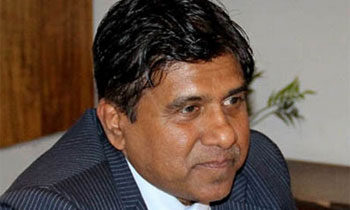
සයිටම් විරෝධයේ පරාජය

July 18th, 2017

කුසල් පෙරේරා විිසිනි උපුටාගැණීම ලංකාදීප

 ‘‘ඔබට වෛද්යවරයකුගේ බෙහෙත් තුණ්ඩුව කියවා ගැනීමට තරම් ඔහුගේ අත්අකුරු පැහැදිලි නොවන්නට පුළුවන. එහෙත් ඔහුගේ අය කිරීමේ තුණ්ඩුව ඔබට ඉතා පැහැදිලිව ලියා ලැබෙනු ඇත.’’ – (අර්ල් විල්සන්)

සයිටම් ආයතනය වසා දමන තෙක් සටන අත්නොහරින බවට සපථ කළ වෛද් සංගමයේ ලොක්කෝ සතියකට පමණ ඉහතින් සටන පාවා දුන්හ. ඊට දින කිහිපයකට පෙර ඔවුන් සිතූයේ ඒකාබද්ධ විපක්ෂයේ කිහිප දෙනෙකු සමඟ .වි.පෙ ,පෙරටුගාමීන්ද, හරියාකාර සාමාජිකත්වයක් නැති විපක්ෂයේ වෘත්තීය සමිති නායකයන් කිහිප දෙනකුද වාඩි කරවාගෙන මාධ් අමතා ඔවුන්ගේ කොන්දේසි ඉදිරිපත් කිරීමෙන් ආණ්ඩුව බිය වැද්දිය හැකියැයි කියාය.

අඛණ්ඩ වෛද් වැඩ වර්ජනයක්ද සයිටම් වැසීම නොවන්නේ නම් ආණ්ඩුව පෙරළීම සම්බන්ධ කොන්දේසිද පනවා දෙදිනක් යත්ම ඔවුන්ට සිදුවූයේ කෙසේ හෝ වර්ජන තීන්දුව හකුලා ගෙන රෙදි පිටින් ගෙදර යා හැකි ලෙස ආණ්ඩුව සමඟ සයිටම් සටන අතහැරීමේ සම්මුතියකට පැමිණීමටය.

වෙනුවෙන් අගමැති හමුවීමට කිහිප දෙනෙකුට පින්සෙන්ඩුවන්නට ඔවුන්ට සිදුවිය. සාකච්ඡාවට එකඟ වූයේද අගමැතිවරයාගේ කොන්දේසිවලට යටත්වය. වෛද්යවරුන්ගේ සංගමයේ නායක දෙපළට පමණක් සෞඛ් ඇමැතිවරයාද වාඩි වූ සාකච්ඡාවට අවසර ලැබිණ. සාකච්ඡා අවසන් කරන්නට සිදුවූයේද ආණ්ඩුවේ කොන්දේසි පිළිගෙන නැවත වර්ජනය නොකරන බව රකාශ කරමින්ය. වෙනුවෙන් වෛද් සංගමයේ ලොක්කෝ දෙපළ අන්තරේ සිසු නායකයන් සහ ඔවුන්ගේ හවුලට පැමිණි පෙරටුගාමීන් සහ .වි.පෙ පාවා දුන්හ. අධිකරණයටද අපහාස කරමින්,වෛද් පීඨ හා අනෙක් විශ්වවිද්යාල සිසුන්ගේ අධ්යාපනයද හය මාසයකට වැඩි කාලයක් අඩාල කරමින් නිරන්තර සමාජ හිරිහැරයක් ලෙස ව්යසනකාරීව හැසිරුණු වෛද් සංගමයේ ලොක්කන්ට නිවටයන් ලෙස පසුබසින්නට සිදුවූයේ අන් කිසිවක් නිසා නොව, සයිටම් විරෝධය සාධාරණය කළ හැකි කිසිදු තර්කයක් ඉදිරිපත් නොකළ හෙයිනි. ඉදිරිපත් කළ කරුණු පවා ව්යාජ හා විකෘති කළ තොරතුරු වූයෙනි.

කලෙක නම්බුකාර වැදගත් වෘත්තියක් වූ වෛද් වෘත්තිය ඔවුන්ගේ සංගමයේ වත්මන් නායකයන් මේ වැනි අසරණ අපත තත්ත්වයකට ඇද දැමූයේ තමන් වෙත ආරූඪ කරගත් අසීමිත මෝඩ උද්ධච්ඡකම නිසාවෙනි. වෛද් සංගමයේ මේ නායක රොත්තට අවශ් වූයේ ඔවුන්ගේ තීන්දු තීරණවලට පිටින් කිසිවක් නොවන හයිකාර බලයක් තහවුරුකර ගැනීමටය. වෙනුවෙන් ඔවුහු වෛද්යවරුන් යනු සෞඛ් සේවාවේ සියල්ල දන්නා සියල්ල කළ හැකි එකම බලවත් වෘත්තිය යැයි සමාජ මතයක් ඇති කිරීමට උත්සාහ කළෝය. එහෙත් වෛද් වෘත්තිය එවැන්නක් නොවේ.

ගැන ඉතාම හොඳ පැහැදිලි කිරීම කරනු ලැබූයේ පසුගිය ජූලි 04 වන දින ලංකාදීප සමඟ ‘‘නොමග යන සයිටම් විරෝධය’’ යැයි රසව හා නාරිවේද විශේෂඥ වෛද් රදීප් සිල්වා කළ සාකච්ඡාවෙහිය. ඔහු පැහැදිලි කරන අයුරු එම්.බී.බී.එස්. වෛද්යවරයා ‘‘මැටි ගුලියක්’’ වැනිය. ඔහු හෝ ඇය විවිධ කාර්ය සඳහා පුහුණු කළ යුතුය. නිර්වින්දන විශේෂඥයකු ලෙස පුහුණු කළ විට ඔහුට හෝ ඇයට කළ හැක්කේ නිර්වින්දන කාර්යය පමණි. ඔවුන්ට ශල්යකර්ම කළ නොහැකි යැයි ඔහු පැහැදිලි කර තිබිණ. එවැනි බොහෝ කරුණු කාරණා සමගින් ඔහු කියා තිබුණේ වෛද් සංගමයේ නායකයන් කියන ආකාරයට එම්.බී.බී.එස්. වෛද්යවරුන්ට  ඕනෑම කාර්යයක් කළ හැකිය යන කතාව වැරැදි බවය.

එබැවින් වෛද් අධ්යාපනය සම්බන්ධ ඇත්ත රශ්නයක් ඇත. දැනට රජයේ වෛද් සේවයේ ඉන්නා සියලූ වෛද්යවරුන් ගැන කතා කළහොත් එම්.බී.බී.එස්. වෛද්යවරුන් 18,345 ඔහු කියන ‘‘මැටි ගුලි’’ පමණය. ඔවුන්ට වෛද් නලාව භාවිත කරන්නටත් රුධිර පීඩනය බැලීමටත් සාමාන් ලෙඩට බෙහෙත් තුණ්ඩුවක් ලියා දීමටත් වඩා වැඩි දෙයක් කළ නොහැක. යටත්විජිත සමයේ එවැනි කාර්ය සඳහා හර්කියුලස් රොබින්සන් ආණ්ඩුකාරයා 1869 දී සහකාර වෛද් නිලධර සේවාවක් ආරම්භ කළේය. ඔවුන් පුහුණු කිරීම සඳහා සිවිල් වෛද් දෙපාර්තමේන්තුවේ රධානියා වූ වෛද් ඩබ්ලියු.ආර්. කින්සි 1870 දී කොළඹ වෛද් පාසල පිහිටු වූයේය.

සහකාර වෛද් නිලධාරීන් මෙන් සරල වෛද් රතිකාර හා උපදෙස් දීමට වඩා යමක් කිරීමට එම්.බී.බී.එස්. උපාධිලාභී වෛද්යවරුන්, අලූතින් පුහුණුවී විශේෂඥයන් ලෙස සුදුසුකම් ලැබිය යුතුය. එවැනි විශේෂඥයන් 2017 පෙබරවාරි වනවිට රාජ් සේවයේ සිටියේ 1,739 කි. අතර රටට අවශ් බොහෝ විශේෂඥයන් අවශ් රමාණයෙන් නොවිණ. නිදසුන් ලෙස, ළමා ස්නායු විශේෂඥවරුන් ඉන්නේ වෛද් සංගමයේ සභාපති පාදෙණියද ඇතුළුව 05 ක් පමණි. ස්නායූ ශල් වෛද් විශේෂඥයන් ඇත්තේ 12 කි. ළමා ශල් වෛද් විශේෂඥයන් 15 කි. ඇස්කන්නාස ශල් වෛද් විශේෂඥයන් ඇත්තේ 39 කි. එවැනි අත්යවශ් විශේෂඥ කාර්ය සඳහා අවශ් විශේෂඥයන් දුසිමකට හමාරකට වැඩි නැති විශේෂඥ ක්ෂේත තවත් ගණනාවක් ඇත. ඒවගේම කිසිදු විශේෂඥයකු නැති ‘‘ජ්යෙෂ්ඨ පුද්ගල රතිකාර’’ (මෙය ඉංගීරසියෙන් zGeriatricsZ ලෙස හැඳින්වේ. ශීඝරයෙන් මහලූවන අපේ සමාජයට එය අත්යවශ් විශේෂඥතාවකි.) එවැනි ක්ෂේත තව ඇත. අපේ වෛද් සේවාවේ විශේෂඥ පුහුණු කිරීම් කෙරෙන්නේ සමාජයීය අවශ්යතා අනුව නොවේ. එය සිදුවන්නේ එක් එක් පුද්ගලයාගේ අභිමතය හා උනන්දුව අනුවය. දෙවැන්න, විශේෂඥ වෛද්යවරුන් අති බහුතරය සේවය කරන්නේ කොළඹ, මහනුවර, ගාල්ල වැනි රධාන නගරවල .

මේ වෛද් සේවාවේ 3,000 වැඩි පිරිසක් පශ්චාත් උපාධි අධ්යයනය සඳහා වැටුප් සහිත නිවාඩු සමගින් සේවයෙන් නිදහස්ව එම පාඨමාලා සම්පූර්ණ නොකර වසර ගණන් ඔවුන්ගේ පෞද්ගලික කාර්යයන්වල නියැලෙන්නේ යැයි චෝදනා ඇත. එසේ අවුරුදු ගණන් එක දිගට නිදහස්ව ඉන්නේ කෙසේදැයි තවත් රශ්නයකි. එයට ඇතැම්විට උත්තරයක් විය හැක්කේ, සෞඛ් අමාත්යාංශ ඉහළ නිලධාරීන් වෛද්යවරුන් වීමය. තොරතුරු දැනගැනීමේ පනත යටතේ හෝ ඔවුහු සෞඛ් පරිපාලනයේ ඉන්නා වෛද්යවරුන් විශාල සංඛ්යාව ගැන තොරතුරු ලබා නොදෙති.

වෛද්යවරුන් එලෙසින් තැන තැන ඔවුන්ගේ වෘත්තියෙන් බැහැර කාර්යවල නිරතවන අතර, ඉතිරි එම්.බී.බී.එස්. වෛද්යවරුන්ට තනිව රෝහල් වාට්ටුවක් හෝ පවත්වා ගෙන යා නොහැක. වෙනුවෙන් ඔවුන්ට හෙදියන්, ඖෂධවේදීන්, වෛද් රසායනාගාර තාක්ෂණවේදීන් වැනි අතුරු සෞඛ් සේවාව සහාය පමණක් නොව, සනීපාරක්ෂක කම්කරුවන්ගේ සේවයද අවශ් වන්නේය. එහෙත් ඔවුන් වැඩ වර්ජනය කළ හැම විටම මේ අතුරු වෛද් සේවා විසින් රෝහල් වාට්ටු පවත්වා ගති.

එබැවින් දැන් රශ්නය ඇසිය යුත්තේ මෙවැනි වෛද්යවරුන් කුමටද යනුවෙනි. රෝහල්වල විශේෂ කාර්යක්ද නැති, අමාත්යාංශ, දෙපාර්තමේන්තුවල කාර්යාල සේවාවේ නිරත වන්නට වසර 05 ඉතා දියුණු පුහුණුවක් යැයි පවසන එම්.බී.බී.එස්. වෛද්යවරුන් හැදීමට මහජනතාව මුදල් වැය කළ යුතුද? එයට උත්තර ලබා දෙන අතීත අත්දැකීම් අපමණ ඇත.

අප ඉතා ආඩම්බරයෙන් කතා කරන අපගේ ඉතා ඉහළ සෞඛ් තත්ත්වය අප ලබා ගත්තේ එම්.බී.බී.එස්. වෛද්යවරුන්ගේ සේවය මත නොවේ. රුහුණ විශ්වවිද්යාලයේ වෛද් පීඨයේ වෛද් විජිත සිල්වා සහ කඩුගන්නාව දිස්තිරක් රෝහලේ වෛද් මහින්ද ලියනගේ ඇමෙරිකාවේ ඩියුක් විශ්වවිද්යාලයේ රජා සහ පවුල් සෞඛ් සේවා දෙපාර්තමේන්තුවේ දෙදෙනකු සමග කළ පර්යේෂණ වාර්තාවක් 2013 මැයි මාසයේදී‘‘අන්තර් වෘත්තීය සේවා සඟරාවෙහි’’ ^Journal of Interprofessional Care& පළ කරනු ලැබිණ. එහි සඳහන් වන්නේ 1869 දී ආරම්භ කෙරුණු සහකාර වෛද් නිලධර සේවාව ‘‘පුහුණු කිරීමේ පාඨමාලාව වෛද් පාසලෙහි වසරක පුහුණුවෙන් පසු 06 මසක සායනික පුහුණුවකින් සමන්විත විය. එහි විෂයන් වූයේ ශරීරයේ ව්යුහය හා කිරයාකාරිත්වය, පෝෂණය, ජීවවිද්යා රසායනය, ඖෂධවේදය, ශුද් ජීව විද්යාව, රජා සෞඛ්යය, ශල් වෛද්, ළමා වෛද් විද්යාව, රසව හා නාරි වෛද් වැනි විෂයන්ය’’යනුවෙනි.

 එවැනි අධ්යාපනයක් හා පුහුණුවක් සමගින් ‘‘වසර 150 පමණ කාලයක් සහකාර වෛද් නිලධරයන් ශී ලංකාවේ සෞඛ් ක්ෂේතරයෙහි අත්යවශ් සේවාවක් විය. මේ කාලය පුරා, රට පුරා පිහිටි මාතෘ නිවාස (380 පමණ) සහ බොහෝ රජයේ මධ්යම බෙහෙත් ශාලා සහකාර වෛද් නිලධාරීන් හා ලියාපදිංචි වෛද් නිලධාරීන් විසින් පවත්වාගෙන යනු ලැබිණ. ඊට අමතරව, ඇතැම් රාමීය සහ පර්යන්ත රෝහල් ඔවුන් යටතේ පැවතිණි’’ යැයි එම පර්යේෂණ වාර්තාවෙහි සඳහන් වන්නේය. ඒවගේම එම වාර්තාවට අනුව, එම්.බී.බී.එස්. වෛද්යවරුන් මෙම සහකාර වෛද් නිලධරයන්ට වඩා සංඛ්යාත්මකව වැඩි වූයේ 1960 න් පසුවය.

සමඟ මෙයද කියවිය යුතුය. 2016 පළ කෙරුණු ලෝක සෞඛ් සංවිධානයේ ‘‘ශී ලංකාවේ මහජන සෞඛ් සේවාවේ සාර්ථකත්වය’’ මැයෙන් වූ වාර්තාවට අනුව, ‘‘ඉතා දියුණු පුහුණුවක් ලැබූ මහජන සෞඛ් පරීක්ෂකවරු, පවුල් සෞඛ් සේවිකාවෝ සහ රාමීය ස්වේච්ඡා කිරයාධරයෝ ඇතුළු පිරිස, පුළුල් වෛද් රතිකාර ව්යාපාර දියත් කිරීම සඳහා රජා සජීවීකරණ වැඩසටහන් ඉතා සාර්ථකව කිරයත්මක කළහ.’’ එමගින් ඔප්පු කෙරෙන්නේ, අප ඉහළ සෞඛ් තත්ත්වයක් සහතික කරගෙන ඇත්තේ මහජන සෞඛ් සේවාවේ මෙම පුහුණු සේවකයන් මගින් මිස සේවයට වාර්තා කිරීමේදී පැමිණීමේ ලේඛනයක්වත් අත්සන් නොතබා අතිකාල සේවය වෙනුවෙන්ද වැටුප් ලබන,වැඩිමනත් පෞද්ගලික වෛද් සේවයේ සහ චැනල් සේවාවේදී හමුවන වෛද්යවරුන් සමගින් නොවන බවය.

එය ඉතා හොඳින් අවබෝධ කරගත හැක්කේ, මැලේරියාව, බරවා රෝගය,පෝලියෝව වැනි වසංගත තුරන් කිරීමට අතීතයේ දායක වූ මහජන සෞඛ් පරීක්ෂකයන්, පවුල් සෞඛ් සේවිකාවන් සහ රාමීය ස්වේච්ඡා කිරයාධරයන් ඇතුළු පිරිස් අමතක කරමින් ලොකු වැදගත්කමක් සමඟින් හැදූ සියල්ල කළ හැකි යැයි සිතා සිටින එම්.බී.බී.එස්. වෛද්යවරුන් සමඟ වර්තමානයේ අප ඩෙංගු උවදුරට ගොදුරුව ඉන්නා බැව් මතක් කරගත් විටය.

එවගේම අප අද බුක්ති විඳින ඉහළ සෞඛ් තත්ත්වයට 1943 සිට කිරයාත්මක වූ ජාතික අධ්යාපනය විසින් බිහි කළ ඉහළ සාක්ෂරතාව සහිත සමාජයේ සෞඛ් හා සනීපාරක්ෂාව පිළිබඳ දැනුවත්වීම්, පානීය ජලය හා සනීපාරක්ෂක පහසුකම් සුලභවීම අනෙක් සාධක විය. සියල්ල රෝහල් සේවාවට පිටතින් එකතු වූ සාධනීය සාධකය.

එවැනි රජා මූලික සෞඛ් සේවාවක් සමඟ වූ සහකාර වෛද් නිලධර සේවාව චීනයේ කිරයාත්මක වූ ‘‘පා ගමන් යන’’ වෛද්යවරුන් වැනි විය. ස්පාඤ්ඤයේ සහ ඔවුන්ගේ ඇතැම් යටත්විජිත කොලනිවල පැවති ‘‘රැක්ටිකාන්තෙ’’ වෛද් සේවය වැනි විය. එම සේවා 1960 වන විට ඇමෙරිකාවේත්, මහ බිරතාන්යයේත් කැනඩාවෙත්  ඕස්ත්රේලියාවෙත් ‘‘වෛද් සහකාරීන්’’ ලෙස තව දුරටත් දියුණු කරනු ලැබිණ. එවැනි අතරමැදි වෛද් සේවාවක් දියුණු කිරීමේ තර්කය වූයේ, රජා මූලික හා රාථමික සෞඛ් සේවාවක් වෙනුවෙන් එම්.බී.බී.එස්. උපාධිලාභී වෛද්යවරුන් බිහි කිරීමට වැය කරන්නාවූ විශාල මුදල වෙනුවට එම කාර්ය අඩුවක් නැතිව ඉටුකර ගත හැකි සහකාර වෛද් නිලධරයන් බිහි කිරීම සමාජයට අතිශය වාසිදායී යන්නය. ඉහතින් උපුටා දැක්වුනු පර්යේෂණ වාර්තාව එය සනාථ කරන්නේ, ‘‘අවුරුදු 150 ක් රාමීය සමාජයට මනා සෞඛ් සේවාවක් ලබා දුන්නේත් ඒවායේ රෝහල්වල සිටි වෛද්යවරුන් වූයේත් බාහිර රෝගී සායනවල සේවය කරනු ලැබූයේත් සහකාර වෛද් නිලධරයන්’’ යැයි තබන සටහන මගින් . එම පුහුණුව සමග සහකාර වෛද් නිලධර වෘත්තිය ජනාධිපති චන්ද්රිකා කුමාරතුංග විසින් 1995 දී අවසන් කරනු ලැබූයේද වනවිට විවෘත වෙළඳපොළ ආර්ථිකයෙහි සියලූ වාසි ලබන්නට උත්සාහ කළ වෛද්යවරුන්ගේ බලපෑම මතය.

පසුගිය දශක දෙකකට වැඩි කාලයක සිට වෛද්යවරුන්ගේ සංගමය සෞඛ් සේවාවේ රධාන බලධාරීන් ලෙස ඉස්මතු වන්නට පියවර ගත්තේ විවෘත වෙළඳපොළෙහි වාසිය වෙනුවෙනි. වෛද්යවරයා ‘‘මහා ජීවකයෙකු’’ ලෙස පුම්බනු ලැබූයේත් වෙනුවෙනි. විවෘත වෙළඳපොළ සමඟ රෝගියා හා වෛද්යවරයා අතර ගොඩනැඟුණු මුදල් මත සෘජුව තීන්දු වූ සම්බන්ධයද එයට දායක වූවකි. මේ විවෘත වෙළඳපොළෙහි වෛද්යවරුන් ගොඩනගා ගත් පැවැත්ම අතිශය ආත්මාර්ථකාමී,කුහක සහ වෘත්තිමය වශයෙන් සදාචාර විරෝධී පැවැත්මකි.

සයිටම් විරෝධය පරාජයවීමත් සමග මේ සියල්ල රශ්න කළ යුතු පසුබිම නිර්මාණයවී ඇත. වෙනුවෙන් මූලික කාරණා දෙකක් අවධාරණය කළ යුතුය.

පළමුවැන්න, ශී ලංකා වෛද් සභාවේ කාර්යය හා එහි සංයුතිය පිළිබඳ රශ්නය . වෛද් සභාව රතිපත්ති සකසන සභාවක් නොවේ. ජනතාව ආණ්ඩු පත් කරන්නේ රතිපත්ති සැකසීම වෙනුවෙනි. වෛද් සභාව අවශ් වන්නේ සෞඛ් සේවාවේ  ඉතා කාර්යක්ෂම නියාමන කාර්ය සඳහා පමණි. එබැවින්ම එය වෛද්යවරුන්ට පමණක් සීමා නොවිය යුතුය. ඉතා පුළුල් නියෝජනයක් සහිත වෛද් සභාවක් හැදීමට දියුණු ලෝකයේ  ඕනෑ තරම් අත්දැකීම් ඇත. දැන් වහා කළ යුත්තේ සඳහා අවශ් පරිදි සෞඛ් පනතද සංශෝධනය කර අලූත් වෛද් සභාවක් පිහිටුවීමේ කාර්යය ඉක්මන් කිරීමය.

දෙවැන්න, විශාල මුදල් නාස්තියක් සහිත එම්.බී.බී.එස්. වෛද්යවරුන් හැදීම වෙනුවට මහජන සෞඛ් සේවය මුල් කරගන්නා වෛද් අධ්යාපනයක් ගැන අලූතින් සිතීමය. යටත්විජිත සමයේ ආරම්භ කළ සහකාර වෛද් සේවාව වඩා දියුණු හා රායෝගික පුහුණුවක් සමගින් යළි ආරම්භ කිරීම ගැන වහා අවධානය යොමු කළ යුතුව ඇත. ඒවගේම මහජන සෞඛ් පරීක්ෂකයන්, පවුල් සෞඛ් සේවිකාවන් වැනි සේවා දියුණු කිරීම වෙත වැඩි අවධානයක් තිබිය යුතුය. රෝහල් වෙත පැමිණෙන රෝගීන් සංඛ්යාව අඩු කරන්නා වූ මහජන සෞඛ් සේවාවක් හැදීමට මිස, එම්.බී.බී.එස්. වෛද්යවරුන් වැඩියෙන් හැදීමේ වෛද් අධ්යාපනයක් අපට අවශ් නැත.

Lanka struggling to adapt as disasters become new ‘normal’

July 18th, 2017

Thomson Reuters Foundation. Colombo Courtesy Gulf Times

 During Sri Lanka’s May floods, rescue crews in Kiriella, a small town in Rathnapura district, spotted a remarkable sight.
A middle-aged woman, trudging through waist-deep floodwater, clutched a rooster carefully above the torrent, while a small girl struggled to hold onto the woman’s waist, at times barely able to keep her head above water.Not just the public, but even policymakers are the same: They look at natural disasters as isolated events and the main aim is to save movable and immovable property, not lives,” charged Ranjith Punyawardena, the head of climatology in the agricultural department of Sri Lanka’s University of Peradeniya.
Disasters – from deadly floods to worsening droughts –  are happening more frequently in Sri Lanka. But efforts to begin treating the crises as a new normal” –  which requires fundamental changes to how the country’s systems work, rather than one-time responses –  is struggling, some officials say.
In May, floods and landslides killed 216 people, left 76 missing and affected over 600,000 – just a year after similar floods killed more than 100 people.
A 10-month drought, meanwhile, is lingering in the northern part of the island –  despite some recent rain –  and is likely to result in the 2017 rice harvest being the lowest in a decade, according to the UN Food and Agriculture Organisation.
One of the main problems, Punyawardena said, is the difficulty of sustaining changes put in place in the wake of disasters.
In each of the last three years floods have killed at least a hundred people in Sri Lanka, and in each case disaster officials have initiated inquiries afterwards to identify what went wrong,
Punyawardena said.
After this year’s flooding, Sri Lanka’s Disaster Management Centre and Department of Meteorology were widely criticised for failing to provide sufficient early warnings of the approaching floods. Officials at the Department of Meteorology said a lack of sophisticated radar technology prevented it from issuing detailed-enough warnings.
The disaster centre has since revamped its procedures for issuing early warnings and the government has signed a $22mn agreement with Japan to set up new weather radar stations.
The government also has said it will set up 100 disaster evacuation centres across the island nation.
But Punyawardena said it remained to be seen whether such action would cut the death toll from floods in coming years.
Hopefully these new changes will not end like sudden bursts. We need sustained emphasis. The policies have been there in the past as well. It is the implementation that has been lacking,” he said.
The problem, said Punyawardena and Sarath Premalal, director general, department of meteorology, is that disasters usually lead to a flurry of government activity that then peters out as the disaster situation eases. The cycle then begins again with the next disaster, they said.
The policies are clearly there in documents and plans. I don’t think we need newer ones. What we need is to properly implement these for the long haul,” Punyawardena said.
Disaster officials say one big problem for them is lack of access to top-level decision makers as they try to bring change. Normally such access comes only during major disasters, Premalal said.
We need support at the very top level to make sure we are prepared. Sometimes it is very difficult to gain access to decision makers. That slows down a lot of the work,” he said.
Lack of co-ordination can also be a problem. During May’s floods, for instance, both the country’s president and its prime minister chaired separate committees aimed at addressing the disaster, leading to confusion in the early stages of the crisis, according to Disaster Management Centre officials and officials of United Nations relief organisations.
Getting officials from across agencies –  such as agriculture, water, disaster and meteorology –  together to co-ordinate plans also is a challenge,
Premalal said.
We tend to still work in silos. There is a need for practical, real-time data and information sharing,” he said.
Since 2010, government agencies have come together to hold a pre-monsoon meeting each March to share and discuss information on expected rainfall. The problem is that very little activity then takes place to head off problems that might be anticipated from the data, said the head of the meteorological department.
For example, data provided by the department of meteorology before the May floods suggested very heavy rainfall was possible, and should have led to the country’s department of irrigation running computer models on what flooding might be expected, Punyawardena said.
Currently the irrigation department relies primarily on water gauges in rivers to assess water levels and determine when flood alerts should be
issued, he said.
M Thuraisingham, director general of the irrigation department, said that his team did not have the technical capacity or human resources to accurately run computer models of
possible flooding.
Anura Priyadarshana Yapa, Sri Lanka’s minister of disaster management, said efforts to better spur and co-ordinate action
are underway, however.
At ministry level we are now having regular meetings with all connected departments and if the need arises we will seek (a) meeting with the president,” he said.
He noted that the government had also renewed its pioneering national natural disaster insurance policy, which last year earned the country a $2mn payout amid floods just six weeks after being purchased.
The country also is seeking help to improve its weather
radar network, he said.

Singapore and Sri Lanka committed to concluding FTA talks by end-2017

July 18th, 2017

Courtesy The Straits Times

Both Singapore and Sri Lanka are committed to concluding negotiations on a free trade agreement before the end of the year, Foreign Minister Vivian Balakrishnan said in Colombo yesterday.

“It will be a modern, comprehensive, high-quality, ambitious free trade agreement. It will demonstrate to the world that both of us are open for business and we encourage all investments,” he said at the Sri Lankan Ministry of Foreign Affairs after talks with his counterpart Ravi Karunanayake.

Dr Balakrishnan described Sri Lanka and Singapore as complementary hubs, with Sri Lanka being a hub for transshipment and economic ties across the Indian Ocean, while Singapore is a hub in South-east Asia.

“The bigger the pipeline we build to connect these two hubs, the greater the opportunities will be for our respective regions,” he said.

With the free trade agreement, he said, Singapore can serve as Sri Lanka’s gateway to South-east Asia, while Sri Lanka will be Singapore’s gateway in the Indian Ocean.

He also said that with both countries being small states, they could work closely together to weather the challenges of surviving and thriving in a world that is changing so dramatically.

“Sri Lanka and Singapore have had a longstanding strong friendship. It is anchored on our culture, historical and kinship ties which actually go back centuries,” Dr Balakrishnan said, referring to the fact that Singapore has been home to a small but vibrant Sri Lankan community since the 19th century.

Dr Balakrishnan said he was encouraged by the rapid developments in Colombo and the growth potential in Sri Lanka, which has led to a surge of interest from Singapore companies. There are currently more than 350 Singapore companies in Sri Lanka, across a wide range of sectors. Dr Balakrishnan is on a four-day trip to Sri Lanka until tomorrow, during which he will visit Colombo and Jaffna.

A version of this article appeared in the print edition of The Straits Times on July 19, 2017, with the headline ‘Singapore and Sri Lanka committed to concluding FTA talks by end-2017’.

Sri Lanka offers to purchase rice from Myanmar

July 18th, 2017

Sri Lanka has offered to purchase 500,000 tonnes of high-quality rice from Myanmar through a government-to-government contract, said U Aung Soe , director general of Myanmar Trade Promotion Team under the Ministry of Commerce.

The offer to buy 200,000 tonnes of parboiled rice and 300,000 tonnes of white rice was made last week. Parboiled rice, or converted rice, is rice that has been partially boiled in the husk.

Each year, Myanmar exports between 1.5 million and 2 million tonnes of rice, according to the Myanmar Rice Federation (MRF).

Currently, Sri Lankan Ambassador Mr K.W.N.D. Karunaratne led negotiations between the two governments for the rice purchase.

Sri Lanka first offered to purchase rice from Myanmar back in February. They told they want to buy 500,000 tonnes of rice. But after we told them each tonne of price was US$285 we did not receive a reply,” said Dr Soe Tun, vice chair of the MRF.

Since then though, rice prices have risen. The current market price is more than US$300 per tonne. We are still negotiating and have yet to decide on anything,” Dr Soe Tun said, adding that Myanmar will only sell rice to Sri Lanka at market prices.

Myanmar previously exported rice under a similar government-to-government contract in 2007-08, according to Ministry of Commerce.

According to the ministry’s figures, trade between Myanmar and Sri Lanka in 2011-12 amounted to US$1.1 million, but later declined. In 2015-16, trade between the two countries rose to US$3.1 million.

Under new NLD-led government, trade between the two countries has rapidly increased, hitting US$24.5 million in 2016-17. In the first two months of the current fiscal year, trade between Sri Lanka and Myanmar amounted to US$5.3 million.

Who permitted UN Rapporteur meet LTTE detainees: MS

July 18th, 2017

Courtesy The Daily Mirror

President Maithripala Sirisena is reported to have asked at today’s Cabinet meeting as to who gave permission for UN Special Rapporteur on human rights and counter-terrorism Ben Emmerson to meet LTTE suspects in prison.

Mr. Emmerson who concluded his mission in Sri Lanka accused it of using torture against people detained under the Anti-terror Act and that its progress on human rights, reforms and justice remained woefully slow.

Justice Minister Wijeyadasa Rajapakshe criticized the UN official for with regard to the allegations he had levelled at the government.

It had been revealed that the Foreign Affairs Ministry had given permission for Mr. Emmerson to meet the LTTE detainees. (Kelum Bandara)

Sri Lankan shares fall for fifth session in six

July 18th, 2017

Courtesy Reuters

COLOMBO, July 18 (Reuters) – Sri Lankan shares closed lower on Tuesday, marking their fifth session of decline in six, although foreign investors continued to buy stocks.

Domestic investors were concerned about a possible increase in interest rate, analysts said, after the International Monetary Fund said further monetary policy tightening in Sri Lanka was desirable until there were clear signs that inflationary pressures were subsiding.

Foreign investors were net buyers of shares worth 658.9 million rupees ($4.3 million) on Monday, extending the year-to-date net foreign inflow to 24.3 billion rupees worth of equities.

The Colombo stock index ended 0.09 percent lower at 6,735.04, marking a second straight losing session.

“The turnover was good and there was a huge interest in select shares,” said Prashan Fernando, CEO at Acuity Stockbrokers.

Turnover was 1.25 billion rupees, more than this year’s daily average of 913.4 million rupees.

Shares of large cap Ceylinco Insurance fell 7.35 percent, while Ceylon Tobacco Company edged down 0.8 percent.

$1 = 153.7500 Sri Lankan rupees Reporting by Shihar Aneez; Editing by Amrutha Gayathri

Direct air links with China boosting Sri Lanka’s tourism

July 18th, 2017

Xinhua  

Sri Lanka’s Tourism Minister John Amaratunga Tuesday said direct air links with China have boosted the country’s tourism market as more Chinese tourists are now choosing Sri Lanka as a holiday destination.

Amaratunga said there are direct air links between Colombo and Chinese cities without transit and the country is expecting the tourism market from China to grow further.

Due to the rapid growth of Chinese tourist arrivals, Sri Lanka’s national airline carrier SriLankan Airlines has recently enhanced its services for customers in China with the launch of a local direct-dial number for the airline’s customers throughout China.

China is now one of Sri Lanka’s strongest tourist markets. A total of 271,577 Chinese tourists visited Sri Lanka in 2016, according to Sri Lanka Tourism Development Authority statistics, making China the second-largest country of origin.

Chinese arrivals have continued to grow by over 4 percent during the first five months of 2017, with 117,539 arrivals, according to the statistics.

Sri Lanka’s inflation still high, more policy tightening “desirable”:IMF

July 18th, 2017

Courtesy reuters.com

  • Further monetary tightening is desirable – IMF
  • IMF completes delayed second review of $1.5 bln loan
  • Sri Lanka awaits $167.2 mln third tranche of loan
  • New Inland Revenue Act will support fiscal consolidation – IMF

COLOMBO, July 18 (Reuters) – The International Monetary Fund said on Tuesday that further monetary policy tightening in Sri Lanka “is desirable” until there are clear signs that inflationary pressures are subsiding, and called for more measures to curb strong credit growth.

In a statement after completing its second review of a $1.5 billion loan approved in May last year, the global lender said Sri Lanka’s performance under its program has been “broadly satisfactory”.

Sri Lanka has tightened monetary policy four times since December 2015, including a 25 basis point hike in March.

“Inflation and credit growth remain on the high side. While monetary policy was tightened in March, further tightening is desirable until clear signs emerge that inflation pressures and credit expansion have subsided,” Mitsuhiro Furusawa, acting chair and deputy managing director, said in a statement.

“While financial soundness indicators remain stable, banks’ capital adequacy ratio has declined due to rapid credit growth. Financial sector supervision should be strengthened, and macro-prudential measures could be deployed to rein in credit growth if needed.”

The IMF also said the new Inland Revenue Act, which the government has presented in the parliament for tax and revenue reforms, will support fiscal consolidation, make the tax system more efficient and equitable, and generate resources for social and development programs.

The IMF delayed the completion of the review after Sri Lanka missed its end-December foreign exchange reserves target due to heavy outflows after some foreign investors sold government securities.

The central bank last week said the authorities have achieved all end-June targets set by the IMF.

“Fiscal performance has been strong. Targets for the fiscal balance and tax revenue have been met….Nevertheless, Sri Lanka’s high debt burden and gross financing needs require further revenue-based consolidation,” Furusawa said.

“Timely progress in structural reforms, including tax administration and energy pricing, will strengthen the platform for durable consolidation.”

The completion of the second review will enable the IMF to release a third tranche of aid of about $167.2 million, bringing total disbursements under the arrangement to the equivalent about $501.5 million. (Reporting by Shihar Aneez; Editing by Kim Coghill)

Top 5 Things to Experience in Sri Lanka

July 18th, 2017

Courtesy dailywaffle.co.uk

Sri Lanka is a jewel of an island off the southeast coast of India, boasting breath-taking beaches and dense jungles. With its sprawling ancient cities, towering temples and thriving wildlife, the landscape, culture and people weave a beautiful and heady tapestry that captivates visitors from all over the world.

Despite being just a quarter of the size of the United Kingdom, Sri Lanka is packed full of endless sights and experiences for the adventurous traveller. From the hot and unforgiving dry zone to lush and humid rainforests, here are five unmissable experiences:

The Cultural Triangle

Stretching from Anuradhapura and Polonnaruwa to Kandy, the Cultural Triangle envelopes some of the country’s most prolific and iconic sights. Like so many ancient civilisations, the rich history of this region tells dramatic tales of glorious Sinhalese Kings, the rise of cities and their subsequent fall to invaders.

Anuradhapura

This ancient city and UNESCO World Heritage Site was the thriving capital of Sri Lanka for more than a thousand years. The horizon is dotted with imposing stupas (or dagobas), domelike structures with striking spires, often housing Buddhist relics. You can choose to spend your time visiting the city’s ruins, temples and religious sites, or opt for one of the country’s most impressive feats of ancient engineering: the twin baths of Kuttam Pokuna.

Polonnaruwa

Another of Sri Lanka’s historic capital cities, Polonnaruwa is full of well-preserved ruins which echo the architectural abilities of the ancient world. The city’s history is rich in stories of colourful kings, none perhaps greater than King Parakrambahu, whose statue you can visit. The ruins are also a magnet for wildlife, such as the curious toque macaque, one of the more common species of monkey to inhabit the area.

Sigiriya

Translated as Lion Rock, Sigiriya is a vast ancient rock fortress thought to have been founded by King Kasyapa in the 5th century AD. The outer walls of the rock fortress were once covered in vibrant frescoes, which can still be seen in certain areas. While you are there, don’t miss the lion gate and the gardens, which have been identified as some of the oldest landscaping in the world.

Aukana Buddha Statue

Located just outside of Avukana, this forty-foot-tall statue of Buddha is shrouded in legend and myth. According to one story, a master artist built the statue in a competition against his student, who built a similar statue nearby. To this day, the statue is a site of religious pilgrimage and a popular spot for tourists.

Dambulla Cave Temple

These caves are among some of the most unusual religious sites in the world. Comprised of five chambers, the cavernous monastery has been home to monks for thousands of years. Here you can see impressive cave paintings, as well as hundreds of statues representing Buddha and various Hindu deities.

Kandy and the Temple of the Tooth

The city of Kandy, tucked between lush and verdant hills, is the cultural and physical centre of Sri Lanka. It offers a popular mix of ancient attractions and modern luxury, boasting some of the country’s most sophisticated restaurants and hotels.

The Temple of the Tooth, situated within the city, is one of Sri Lanka’s most important sacred sites. As well as being located in the former royal palace grounds, the temple also houses the tooth of the Buddha (hence its name) and has become a significant pilgrimage site. The stunning botanical gardens at Peradeniya, close to Kandy, are also some of the finest in the subcontinent.

Wildlife

Beyond the charming monkeys of Polonnaruwa, Sri Lanka’s national parks and forests are the best place to experience the country’s impressive wildlife. Yala National Park is the island’s most popular reserve and is located along the southeast coast. The park is particularly popular with bird watchers, and many rare species can be observed in their natural habitat. Yala is also home to the Sri Lankan elephant, fishing cat, leopard and sloth bear.

A lesser-known but equally beautiful park is Gal Oya, where you can see water buffalo, mugger crocodile, and more than 150 species of bird. Alternatively, the more adventurous traveller might want to visit the Sinharaja Forest Reserve, Sri Lanka’s only remaining untouched rainforest region.

Galle

Galle is a major coastal city in the south of Sri Lanka, offering an exotic mix of the old and the new. Here you can witness the dying art of stilt fishing, amble along meandering streets and explore bustling markets. Colonised by the Portuguese and then the Dutch, examples of the city’s charming Dutch architecture can still be found at colonial Galle Fort, a UNESCO World Heritage site which has a fascinating history of its own.

Tea Country and the Bogawantalawa Valley

Among the misty emerald hills of the Bogawantalawa Valley, you will find some of the world’s best teas grown in picturesque plantations. Tea was introduced to Sri Lanka as a crop during British rule, and is now a booming industry and key part of the island’s economy. You can tour tea factories, sample fresh brews and learn a little more about the history of tea in Sri Lanka during your visit. Beyond the culinary delights, the region’s lush vegetation, rolling hills and cascading waterfalls make for awe-inspiring train journeys and unforgettable hikes.

Melissa Hirst writes on behalf of Pettitts.

IMF Completes Second Review of the Extended Arrangement Under the EFF with Sri Lanka and Approves US$ 167.2 Million Disbursement

July 18th, 2017

IMF

July 17, 2017

  • IMF Executive Board completed the second review of Sri Lanka’s Extended Fund Facility (EFF) arrangement, which enables the disbursement of about US$ 167.2 million.
  • The new Inland Revenue Act will support fiscal consolidation, make the tax system more efficient and equitable, and generate resources for social and development programs.
  • Further accumulating international reserves and enhancing exchange rate flexibility will help reduce Sri Lanka’s external vulnerability.

On July 17, 2017, the Executive Board of the International Monetary Fund (IMF) completed the second review of Sri Lanka’s economic performance under the program supported by a three-year extended arrangement under the Extended Fund Facility (EFF) arrangement. Completion of the review enables the disbursement of the equivalent of SDR 119.894 million (about US$ 167.2 million), bringing total disbursements under the arrangement to the equivalent of SDR 359.682 million (about US$ 501.5 million).

In completing the review, the Executive Board granted a waiver of nonobservance of the continuous performance criterion on accumulation of external arrears which was missed due to continued difficulties of establishing a payment platform and waivers of applicability of the performance criteria for end-June 2017 on floor of the central government primary balance and the program net official international reserves of the Central Bank of Sri Lanka, given the unavailability of the information necessary to assess observance.

Sri Lanka’s three-year extended arrangement was approved on June 3, 2016 in the amount of about SDR 1.1 billion (US$1.45 billion, or 185 percent of quota in the IMF at that time of approval of the arrangement. See Press Release No. 16/262 ). The government’s reform program, supported by the IMF, aims to reduce the fiscal deficit, rebuild foreign exchange reserves, and introduce a simpler, more equitable tax system to restore macroeconomic stability and promote inclusive growth.

Following the Executive Board’s discussion of the review, Mr. Mitsuhiro Furusawa, Acting Chair and Deputy Managing Director, said:

Sri Lanka’s performance under the Fund-supported program has been broadly satisfactory. Macroeconomic and financial conditions have been stable, despite severe weather events and global market volatility. The authorities launched fundamental income tax reform, undertook meaningful corrective actions to achieve program targets on international reserves, and remain committed to the reform program. Going forward, the reform momentum should strengthen further with greater ownership, building on the progress made so far.

Fiscal performance has been strong. Targets for the fiscal balance and tax revenue have been met. The new Inland Revenue Act, which has been submitted to parliament, will support fiscal consolidation, make the tax system more efficient and equitable, and generate resources for social and development programs. Nevertheless, Sri Lanka’s high debt burden and gross financing needs require further revenue-based consolidation. Timely progress in structural reforms, including tax administration and energy pricing, will strengthen the platform for durable consolidation.

Inflation and credit growth remain on the high side. While monetary policy was tightened in March, further tightening is desirable until clear signs emerge that inflation pressures and credit expansion have subsided. While financial soundness indicators remain stable, banks’ capital adequacy ratio has declined due to rapid credit growth. Financial sector supervision should be strengthened, and macro-prudential measures could be deployed to rein in credit growth if needed.

Continued international reserves accumulation and enhanced exchange rate flexibility, to which the authorities are committed, would reduce Sri Lanka’s external vulnerabilities.”

Prof.Laksiri Fernando jumps into the anti-Sinhala-Buddhist garbage bin again

July 17th, 2017

H. L. D. Mahindapala

There are clear indications in Prof. Laksiri Fernando’s  response to my comment that he suffers from the common disease that affects some academics in the professoriate : they can’t hold two thoughts together and balance both in their pinheads to either think straight or arrive at a rational / logical conclusion. So, I’m afraid,, it has come to a point where I have to educate him on what he wrote.

Take, for instance, his claim that his concerns were with the Bodu Bala Sena (BBS) and not the Mahanayakes emerging as a state within the state. In saying this he indicates amply his inability to understands what he writes. He wrote unambiguously : My concern has been about the evolving reactionary nationalist ideology. It is perhaps along this ideology, that the Asgiriya Mahanayake Theras are dragging the other prelates into politics. More worrying is the emergence of Mahanayake Theras as a state behind the state, dictating terms undemocratically.” This is the sum and substance of his complaint alleging that the  Sangha is running the state. He sees the Mahanayakes as a formidable obstruction to constitutional changes.

The Mahanayakes have quite correctly stated that there is no need for constitutional changes at this stage. This has thrown  him  into a confusing spin because he is for constitutional changes to accommodate the Tamil separatist agenda which has been escalating incrementally, on the little now and more later” tactics defined by S. J.V. Chelvanayakam, the father of Tamil separatism. He is highly agitated now that the Mahanayakes have decided to make their voices heard against Tamil separatism which is now resurfacing  in the guise of constitutional changes. The issue of Bodu Bala Sena is purely incidental. He  is concerned” that the Sangha has become a state within a state”, as he indicates in his headline as well. He puts the blame wholly on the politics of the Mahanayaka Theras who are opposed to the separatist politics of the Tamils of the North which has been the central issue bedevilling Sri Lankan politics in  the post-independent era.

He uses the Bodu Bala Sena only as a peg to hang the most grave accusations that he can think of against the Mahanayakes. He says that the Mahanayakes are reactionary”, undemocratic” and dictating terms to the state”. And he is concerned that the Mahanayakes instead of withdrawing into some cave for permanent meditation are now dragging the BBS and other prelates into the politics of reactionary nationalist ideology”. Then, having levelled these charges against the Sangha, he accuses me of getting  it wrong because I have challenged the real essence of his hidden agenda which is to denigrate the Maha Sangha and weaken their power /authority at all levels. His only defence is to backpedal saying that his concerns were not with the Mahanayakes but with the BBS. This disingenuous backpedalling makes it almost impossible to have a decent debate with him because he can’t either understand what he has written, or  he is trying  to dodge the  issue which he can’t defend. His references to the BBS are mere red herrings. He concentrates his fire on the role of the Mahanayakes as seen in the quote above. He says that the Mahanayakes are responsible for dragging the other prelates into politics”. If he is serious and means what he says about the Mahanayakes then why blame the BBS?

As I said earlier, he is now playing the role of an emeritus Meetota-mullah” who has fallen into the garbage bin of anti-Sinhala-Buddhist politics. He has sent  his critical faculties into  retirement and is quite happy to spend his spare time recycling  the threadbare anti-Sinhala-Buddhist clichés manufactured by racist G. G. Ponnambalam in the  thirties. Like all the lumpen Marxists of various shades who led the post-independent generations into nowhere he is now chanting his tired old mantras, smirking smugly like a fat cat that has swallowed the canary.  As a frustrated Trotskyite he must have waited in his days at Peradeniya, like Godot, for Trotsky’s  Permanent Revolution that never came. This  has been the miserable fate of these kalatipol political scientists like him. Their theories, their analyses, their paradigms, their solutions and predictions have fallen into sunyata – nothingness. Seeing the failure of the grandiose theories of Trotskyism the  likes of Laksiri Fernando have now returned to bark in their anti-Sinhala-Buddhist kennels at the Sangha moon.

Of course, his Trotskyite leaders – Dr. N.M.Perera, Dr. Colvin R. de Silva, Leslie Gunawardena, Doric de Souza, Bernard Soysa etc., – were all good men who discovered as they matured that there were more profitable political plums to be picked from Mrs. Bandaranaike’s grass root basket than the theoretical fictions laid down in the Permanent Revolution of Trotsky.  As a Trotskyite he must have believed in  the theoretical fantasies of Trotsky who argued that it is  possible to skip the evolutionary historical stage of going  through capitalism to socialism, as stated by Marx, and  leap straight from a peasant, semi-feudal, semi-capitalist Russian economy into a workers revolutionary paradise.

Having gone nowhere with his Trotskyite theories this one-time professor has now retired to play the old record which is stuck in the groove of bizarre psychobabble of majority-minority complex”. It is pathetic to seem  him retiring  into this cliché. At the end of his academic career is this all what  he has to  offer as an explanation for the complex North-South conflict? After all his years in the professoriate is his crowning scientific finding to repeat what Leslie Gunawardena had told him about  the majority-minority complex” when he was a post-graduate going in search of theme to write his doctoral thesis? Doesn’t he have anything original to say to save his reputation as a political scientist, if he had any at all?

He even hints that I am a victim of this majority-minority complex” because I am married to a Tamil. I proclaim unreservedly that I am  proud to  have married one of the gracious, tolerant and enlightened Tamils I have ever met. She has taught me the humane side of the violent Tamil culture that destroyed her people, including her loved ones.. If anything my marriage proves that I can’t be a racist. I’ve even adopted a Tamil boy as my son. I am more close to my Tamil relatives than to my Sinhala relatives. These facts must make Freud laugh through his backside if he reads the psychobabble of this kalatipol scientist who is now pretending to be a psychoanalyst, with extraordinary powers to read my mind. What is apparent, however, is that Freudians reading his bogus theories will find it difficult to classify him as a psychoanalyst” as defined in the  compound  word. Instead, they will have to split the word into two and consider  him as either a psycho” or an anal-yst”!

Leaving aside his psycho-waffle, it must be noted that there is a Ph.D awaiting any researcher who is daring  enough to trace the tragic trajectory of Trotskyite politics, which ended up in divisive and opportunistic politics. Neither George Lerski nor Prof. V. Ranjith Amerasinghe has delved deep in their theses on Sri Lankan Trotskyism to reveal the tragi-comic narrative of Trotskyism that declined from a grand world revolution propounded in 1905 by Trotsky to its brutal variation that manifested in the birth and death of Marxist fascists in the JVP who ran  amok in the seventies and the eighties.

The irony is that when the revolution expected by the founding fathers of Trotskyism came it took them by surprise. It, in fact, exploded in their faces when the fathers of Trotskyism were in the seats of power defending their ministerial portfolios in a bourgeois regime ruled by a feudal radalaya, according to their own analysis. The Marxist children in the JVP, however, must be recognised, as the product of the Marxist revolution nurtured and promoted by the Trotskyites in  the  thirties. Their worst nightmare came true in the seventies, eighties and  nineties when the revolutionary children they fathered took the guns and came at them. Prof. Carlo Fonseka, another wonky Trotskyite, had to flee to Sweden to escape the wrath of the misguided Marxist kids who were demanding revolutionary justice. Unable to explain their political predicament – their political duty was to back the revolution — the Marxist  intellectuals blamed the CIA who had nothing to do with it. They, however, never took responsibility for paving  the path to political violence. Later when the North erupted  in violence they were happy to blame  Sinhala-Buddhism and the Sangha. So the lingering memories of failed Trotskyism forces its loyal henchaiyas, to respond predictably to Sinhala-Buddhism the way the Pavlovian dogs respond to the salivating bells.

Their intellectual hypocrisy is appalling. They were very selective in identifying the causes that led to the violent movements of the South and  North.  The first wave of political violence in the post-independent era came from the Marxists of the JVP. The left-wing theoreticians / academics attributed the violence in the Sinhala south to the systemic failures of the capitalists and neo-imperialists who crept in with globalisation. The Marxist theories legitimising political violence from the thirties came in handy for the Sinhala  youth who had no one else to blame. The lumpen Marxist eventually produced the fascist cult of the JVP. But when it came to the Northern violence they changed their  theories to blame Sinhala-Buddhists. The anti-Sinhala-Buddhist racism, preached by Ponnambalam also in the thirties, evolved gradually over the post-independent decades to produce the fascist cult of the LTTE. The Marxist fathers produced Rohana Wijeweera. And the Tamil racist fathers produced Velupillai Prabhakaran. Both were fascist terrorists whose primary concern was their political survival, oppressing and persecuting the people who looked up to them as their liberators. The misled youth of both communities were offered solutions by their political fathers that did not answer the challenges they were facing. Both communities were facing the identical economic malaise of the time : a stagnant economy that failed to provide the the youth  with upward social mobility. The Southern youth fed on Marxism blamed the capitalist class. The Northern youth  fed on anti-Sinhala-Buddhist racism  took to Tamil racist violence.

It was clear even at the time that the common factors that propelled the youth to violence were the  socio-economic frustrations that held them captive in a stagnant  economy, together with the missteps of the governments of the day, exploited by the aggressive Tamil leadership to thrive on Tamil racism. The angry youth, finding no way out, fell for the extremist ideologies and took up arms in both regions. The confounded theoreticians, not knowing how to grasp the meaning  of the swirling forces that were unmanageable, came up with two different explanations for  the Southern and Northern violence, though both violent movements were steered by the youth misled by their political fathers. In the North they could not blame the economic factor because the only marketable political force was anti-Sinhala-Buddhist racism. Tamil racism dominated peninsular politics decisively in the post-Ponnambalam decades. All Tamils and their intellectual agents in the South became loyal disciples of  Ponnambalam. Even Laksiri Fernando remains to  this day as a brain-washed Ponnambalaya : he has nothing new to say except to regurgitate the racism of Ponnambalam who was the first to break the peaceful  coexistence that prevailed in colonial  and  pre-colonial  times with his anti-Sinhala-Buddhist  provocative  speech at Navalapitiya in 1939. And it is  that racist narrative that ran down the 20th century and spilled over to the 21st.

The recurring theme in the voluminous texts of the anti-Sinhala-Buddhist propagandists who occupied chairs in academia has been the betrayal of Buddhism.” These hack-a-demics” unashamedly parroted the racist political line laid down by G. G. Ponnambalam – the malevolent figure who turned racism into a destructive political ideology. Some Tamil ideologues, however, hail him as father of Tamil nationalism” which never existed even in his dreams. If he was a nationalist he would have asked for a separate state and not a percentage of power in the state. Even Chelvanayakam first asked for federalism before he he switched to Eelam. The unethical and unacceptable part of the Ponnambalayas in academia is that they never failed to pose as original thinkers producing, for instance, peer-reviewed theses for their doctored Ph.Ds when in  reality they were merely recycling Ponnambalam’s rabid racism.  Besides, they refused  to  recognise that all ideologies – religious, political, moral etc., – had betrayed the pristine principles on which they were supposed to operate. Their blinkered politics opens up opportunities for any sophomoronic university student to produce a thesis on Jesus Betrayed”, Mohammed Betrayed”, Mao Betrayed”, or even Bibbikan and Konda Kavun Betrayed”!

Universal human history has been bleeding perpetually with the betrayal of the noble principles of the founders. From Buddhism and Christianity to the UN Charter it is the same old story : each ideology has a record of  failing to live up to the original principles. To pick on Buddhism alone is the cheapest academic trick in the book. From Tambiah to Seneviratne to Fernando they all scream that Buddhism has been betrayed. This is the most trite excuse for them to bash Buddhism. Why only Buddhism?

Most of those who attacked Sinhala-Buddhism were Marxists of one shade or the other and they never ever dared to explore the failure of their Marxist idols. For instance, Marx betrayed his own principles of liberating the working class when he seduced his female domestic and produced an illegitimate child whom he refused to recognise as his son. So why not raise the question of Marxism Betrayed? Let’s go further and examine the roles played by Indira Gandhi, Chandrika Kumaratunga and even Radhika Coomaraswamy, who was playing the part of Mother Theresa to children at the UN but never dared to even peep at the plight of the children abused by the Catholic Church, and ask why the ICES has failed to produce a volume on Feminism Betrayed”.

There is enough evidence, I believe, to expose the hypocrisy of those who  harp on Buddhism betrayed. So let’s leave Laksiri Fernando’s trite Trotskyism and psychobabble aside for the moment and get back to one  more issue raised by him in his  response. He wastes the  better part of his response in focussing  on his bogus majority-minority complex”. Finally he comes to the three cases I took  up to examine his accusation of the Sangha running a state within the state.  I said that when the anti-conversion bill came up, sponsored by the JHU, President Bush, the die-hard Evangelist intervened, and stopped the bill from going  through parliament. Colombo Telegraph, quoting Wikileaks, revealed that the then American Ambassador, Jeffrey Lunstead, intervened and wrote back to  the State Department, saying that the Bill is dead.” Which, of course, makes the American government a superior force to that of  the Sangha who were opposed to illegal  conversions. I now repeat that a not a peep came out of him when the American state imposed  its will undemocratically. My argument was to confirm that  the Sangha, which is a home grown member of the civil society, has a right to play its traditional role than a foreign government. Isn’t this example good  enough to prove that the Americans are better at running  the Sri Lankan state than the Sangha? And if the American state can poke its unwanted finger  in vital domestic affairs why can’t the Sangha do the same?

He then comes back at me  raising an irrelevant  issue  of a time frame” and asking  what happened when Mahinda Rajapakse became  president.  This happened in 2012  when MR was prime minister and it was he who said that the bill is dead”, according  to Wikileaks. In other words, even MR admitted that the Sinhala-Buddhist state has surrendered to the Evangelist  state of Bush. So what has a time frame” got to do with the illegal intervention of America in Sri Lankan affairs? In whatever time-frame it  took place, the  fact remains that the Sangha has less power than the Christian American state when push comes to shove. So how valid is Laksiri Fernando’s objections to the role of the Maha Sangha? If he wants to make a Sri Lanka a secular state is he prepared to abolish the Ministries for the protection of  Christianity, Islam and Hinduism as well?

Clearly, Laksiri Fernando has no effective counter-punch. So he  hides behind his fictitious time-frame” which doesn’t change the fact that if the Americans can dictate policy to Sri Lanka the Maha Sangha should have the same right, irrespective of  the policy preferences of Laksiri Fernando. All this makes me worried that he has lost his capacity to put up a rational fight to defend himself. The signs are that a  visit  to his  head-shrinker is long  overdue to  save his cognitive powers before he writes his next rant against Sinhala-Buddhism.

YAHAPALANA AND THE PORTS OF SRI LANKA

July 17th, 2017

KAMALIKA PIERIS

Sri Lanka   has a very valuable asset in its harbours and ports, due to its strategic geographic location. Only Colombo however, has been fully developed as a commercial port. The port of Colombo is a sheltered port with breakwaters. It undertakes oil handling, bunkering, cargo handling and container handling.

Colombo port in 2016 has handled 5.7 million TEUs and has shown a 10 percent compound annual growth rate with a current capacity utilization of 80 percent of the port. The total revenue of the port was Rs.36 billion of which Rs.17 billion was earned from bulk cargo handling. Another Rs.1.8 billion and Rs. 1.9 billion were earned from SLPA’s interests in South Asia Gateway Terminals and Colombo International Container Terminals, the two private sector terminal operators at the Colombo port.

There are four terminals at the Colombo port. ‘Jaya’ and ‘Unity’ are operated by Sri Lanka Ports Authority. South Asia Gateway Terminal (SAGT) and Colombo South Container Terminal by private operators. South Asia Gateway Terminal is operated on a 30 year B.O.T. and is owned by a consortium led by John Keells Holdings, with A.P. Moller Group as the next major partner, followed by Evergreen International SA, Peony Investments SA and the Sri Lanka Ports Authority. Due to the lesser draft available at Jaya and SAGT, they will eventually service feeder vessels.

Colombo International Container Terminals Ltd (CICT) is a joint venture Company consisting of China Merchants Holdings (International) Co. and the Sri Lanka Ports Authority (SLPA). This terminal caters to ultra large vessels (ULVs).  All infrastructure facilities such as electricity, water , roads, security and  maintenance are  provided by the Ports Authority  for the private companies ‘which have got hold of the terminals’. The engineers and trade unions of the Port say Colombo Port could be made profitable without privatization.

Colombo now has a fifth container terminal, the Eastern Container Terminal (ECT) which is nearing completion. The Eastern Terminal will be the biggest terminal of the Colombo Port.  ECT is a deep water terminal to which deep draught ships can enter. It has a depth of 18 meters and can, within limits, handle mega-vessels carrying over 12,000 twenty-foot equivalent units (TEUs).

The Yahapalana government and the Sri Lanka Ports Authority (SLPA) have differed on how to run the ports to achieve profitability, not only for Hambantota but also for the East Container Terminal. In July 2016, SLPA called for Expressions of Interest (EOI) from container terminal operators to build and operate the East Container Terminal (ECT). It would be for a 30-year operating period after which the facility reverts to the SLPA. On the day the bids were due to be opened the Cabinet Appointed Negotiating Committee (CANC) informed the parties who submitted bids that the opening has been postponed indefinitely.

Critics suspected that geopolitics was involved and that additional eligibility conditions were to be introduced for the benefit of a particular firm. In January 2017, Ceylon Association of Shipping Agents (CASA) said it reliably understands that the government is trying to introduce new conditions. The new conditions totally contradict the initial conditions. These new conditions will eliminate all or most of the bidders.

Arjuna Ranatunga, then Minister of Ports and Shipping said in March 2017 that the Ministry had submitted two cabinet papers on ECT. But there was different thinking” by the Yahapalana government on how the ECT should be operated. The government believes that the terminal cannot be operated efficiently unless the terminal is privatized, said Ranatunga.

Ranatunga said the Cabinet Committee on Economic Management (CCEM) planned to introduce tender conditions to suit a single port operator ‘which would be out of line if pursued.’   CCEM has sought the advice of the Attorney General to achieve this objective. The SLPA officials had also met the officials of the AG’s Department and stated their concerns about the matter.

Ranatunga objected to long-term leasing of the ECT, constructed at a cost of Rs 10,800 million. He said the Government should hold on to the terminal and should start operating the ECT immediately . SLPA had planned to start using the terminal by March 2017.   SLPA only needed Rs10 billion to complete the construction of the Terminal. In May 2017, Ranatunga was removed and Mahinda Samarasinghe was appointed Minister of Ports and Shipping. In July    2017, Minister Samarasinghe stated that the terminal would be run as a joint venture project with a shipping line or a private terminal operator with 51 percent of equity owned by the SLPA.

It is alleged that Yahapalana government is planning to give the East Container terminal to an Indian company. Yahapalana says it would like to see an investor from India take a stake in building a container terminal in Colombo port. More than 60% of Colombo transship comes from India. In March 2017 it was reported that the state-run Container Corporation of India (Concor) had formed a consortium with APM Terminals, John Keells Holdings and Maersk Line to bid for the development of East Container

The Ports Protection Union Front (PPUF) is against the sale of the Eastern Terminal to a foreign company.”  They say the terminal could be made profitable without going for privatization. Government should hold the major share in    this terminal.  The Engineers Association of Sri Lanka Ports Authority (EASLPA) says the terminal could be easily turned into a profitable one with just about US$ 70 million investment on machinery. Importing and installing the machinery, would take around 11 months. From the 12th month, the terminal would make profits. Once the machinery is installed, the terminal would make a huge profit. The ECT should be made a terminal which handles bulk cargo for larger vessels. Some local banks had offered to fund the terminal, but Yahapalana government ‘shied away.  ‘

If the ECT is given to a private firm, the Colombo Port will lose business within five years, since the shipping lines which currently use the other terminals will move away, said Engineers Association of Sri Lanka Ports Authority. By offering the ECT to the private sector, the SLPA will lose future business from vessels, they stressed. It will also put the jobs of its employees at risk. Workers have been constantly carrying out protests against the sale” of the ECT and other issues pertaining to management decisions. Port workers are aware of the value of the ECT terminal.  ‘Employees are concerned because we won’t get as much revenue as we would like’ said the engineers.

Engineers Association of Sri Lanka Ports Authority announced in a statement released to media that the East Container Terminal (ECT) of the Colombo port, Hambantota port and the proposed industrial zone are money spinning assets of the SLPA but the government is trying to sell them. Arjuna Ranatunga as Minister of Ports said that the SLPA can work the Hambantota port and the ECT, adding I’m confident because I have done business around the world.  In the past too, SLPA had shown that it was capable of beating the private sector given the right management.

Shipping experts point out that India is developing two new transshipment hubs, namely Vizinjam in Kerala and Enayam in Tamilnadu, Both of which have less deviation, compared with Colombo, from the main East-West shipping route. These two ports are strategically geared to cater to Indian as well as regional transshipment cargo.  Unless the SLPA moves fast, the traffic would be attracted by such new regional ports. After that it will be difficult to lure the ships back.

But it will not be that easy to displace Sri Lanka. When you look at the shipping lanes on a world map you straightaway see that the best place for a ship to stop is a port on Sri Lanka’s ample bottom. This is definitely the best location when coming in from the east and also from the west. Hambantota port was created for this reason.

In March 2017, Cabinet unanimously approved the Hambantota Port Joint Venture and setting up of an industrial zone attached to it.  Hambantota port would be developed as a leading international port in the region.  Yahapalana also plans to sign agreement with China on proposed special economic zone in Hambantota.

Hambantota would be a joint venture agreement, China Merchant will hold 80 percent stake, while the balance 20 percent will be held by the Sri Lankan Government. However, after the lapse of five months, 20 percent of equities will be available in the share market. Within five months, we can reduce 80 percent stake of the China Merchant company to 60 percent. We can up our stake upto 40 percent. The Joint Venture will be operated by a locally registered company. Security related activities in the port will be handled by the Sri Lanka Navy, The current framework agreement also allows the SLPA to buy back a further 20 percent stake in the venture after 10 years of operation, taking the Sri Lankan stake at the Port to 40 percent.

Ranatunga noted that the terms of handing over the port to the Chinese company were changed four times. The Sri Lankan government has asked for a further renegotiation of the lease period in the Agreement. We have asked that it be reduced from 99 years and the China Merchant Port Holdings Company is looking into whether they can achieve the same results with the current model or change it to a different one if the time period of the lease is to be changed, said Minister Samarawickrama in April 2017.

Yahapalana has stated firmly, that Hambantota port will not be sold to anyone under any circumstances. The ongoing discussions are aimed at leasing of the port for a specified period while keeping a certain share of the ownership with the government under terms and conditions acceptable to the country, as indicated above. Hence, this will be a joint venture with the long term leasing of the port, which will involve a company registered in Sri Lanka and operating under this country’s laws. By no means, this will be a sale of the Hambantota port to any private sector company.

Vasudeva Nanayakkara filed a Fundamental Rights petition seeking an order to quash the Framework Agreement entered into by the Government of Sri Lanka with two Chinese companies. The Petitioner states that this petition relates inter alia to the infringement and imminent infringement and continuing infringement of the Petitioners fundamental rights guaranteed in terms of Article 12 (1) of the Constitution, by the arbitrary, capricious, mala fide and illegal and unlawful decision of  Yahapalana (respondent) to enter into an agreement with the People’s Republic of China for the promotion of investment in Sri Lanka by Chinese investors and lease and convey and enter into an agreement or in any other manner dispose approximately 15,000 acres of land and/or 50 Square Kilometers. Chinese ambassador observed, There is still no contract, no agreement. It is only with reference to the port still. So how can anyone go to courts on this?   The case was thrown out. But it can return to court once the agreement is signed.

Arjuna Ranatunga, then Minister for Ports and shipping, said the plan the SLPA had for Hambantota port was ‘different to that of the government. SLPA wanted to operate the port without handing over the port to a third party. SLPA had raised about 30 concerns on the Yahapalana deal with China. Further, SLPA had called RFP (Requests for Proposals) three times in the past. The first time in 2010 drew 27 proposals, 10 in 2012 and another 10 in 2016 of which four were for bunkering.  Yahapalana has not opened the 2016 proposals. They are kept sealed.

Rohan Abeywickrema, former chairman of the Chartered Institute of Logistics and Transport said repeated attempts to attract investments to Hambantota, had failed. At present, the port’s only business is vehicle transshipment which was not enough to repay loans taken from China to build the harbor. An attempt by the Sri Lanka Ports Authority to do bunkering or ship fuel sales at Hambantota ended up with big losses.

Hambantota made massive losses in the bunkering business, Abeywickrama said. In the first place the SLPA should not have undertaken bunkering which is not their core business. The SLPA lost heavily. Total losses at Hambantota port since 2013 added up to Rs15.6 billion. Despite talks by officials and politicians of the former government of cement factories and sugar refineries none have ‘seen the light of day’. The reasons could be because of lack of infrastructure, the high cost of utilities in the remote dry zone region, the lack of a hinterland to generate business and non-availability of supporting services, Abeywickrama said.

Chinese interest in the Port continue to be viewed with suspicion, especially with regard to its military interests,  Prime Minister Ranil Wickremasinghe speaking at a business forum organized by the Japan External Trade Organization in Tokyo stressed in that the Hambantota Port would not be a ‘Military Port’ with security being strictly handled by the Sri Lanka Navy and law enforcement agencies.

The Agreement on the joint venture between the Chinese company and the Sri Lankan Ports Authority precludes any foreign country from using the harbour for military purposes. It is only a commercial operation. We do not want any of Sri Lanka’s harbours to be used for military purposes other than that of the Sri Lanka Navy, he said.

Law and order at the Port would be handled by the Police, Customs and Immigration of the Sri Lankan government and all internal port security would need to hire Sri Lankan staff. Any warship can come into the Port, provided the Government of Sri Lanka agrees to it,  Wickremasinghe reassured his Japanese audience that any violation of conditions in the agreement would mean that the Sri Lankan government could take over the Port without payment of compensation.

Despite claims that 50 companies, most of them Chinese have come forward to invest in the proposed Hambantota Industrial Zone, there is no evidence that they have done so. State Minister for International Trade Sujeewa Semasinghe said, we are expecting them to invest in various sectors including infrastructure, manufacturing water tanks in the industrial zone, but as of now we are not sure ‘of the comprehensive details of their investment plans’.

Yahapalana also has plans for Galle harbor. Yahapalana proposed to have a Marina at Galle at a cost of $40 million. A proposal has been submitted to Cabinet. Galle port is already a popular port of call for ocean going yachts. However Sri Lanka itself does not have a significant fleet of yachts, or marina or a culture of owning and using yachts despite Sri Lanka being surrounded by the sea.

Sri Lanka will use the ‘Swiss Challenge’ method to identify a developer for a yacht marina in the Southern port of Galle. The Swiss challenge involves giving other parties a chance to better a proposal made by an unsolicited investor. This method starts with an unsolicited bid, other parties are then invited to join in. Critics say that Swiss Challenge may be a way of awarding the contract to a known party, and yet let other contenders have the right to overbid. The original proposer who worked tirelessly hand in hand with the state agency has the right of first refusal.

Sarath Obeyesekera says   ’I am sure that investing in Galle harbour to be developed as a Marina will be viable’.  It would have been more transparent if the state agency calls EOI with basic guidelines and invites the interested parties to come up with their intent to work with the state agency at their own cost .Once a reliable party is selected ,  Yahapalana can work  with this party , prepare the RFP together and advertise so that others can bid..

Arjuna Ranatunga , then Minister of Ports and Shipping stated In  March 2017,  that  the development of    Trincomalee  port is being worked out with the Asian Development Bank (ADB), Japan will work with India on the Trincomalee port, while Singapore is expected to help develop Trincomalee city. The Master Plan for Trincomalee  Includes an industrial zone with areas allocated for leisure, Trincomalee   could also have oil refineries and an LNG plant.  The rail link from the port would be used to transport goods out of the port. Trincomalee   harbor is a unique asset for  Sri Lanka  It is a valuable naval harbor for warships and submarines. America’s Seventh Fleet would love to  move into it. The talk about making Trincomalee  a commercial port is intended to hide its  military  importance  as a naval port.

Allegations against ex-navy spokesman are false: Gammanpila

July 17th, 2017

Sheain Fernandopulle Courtesy The Daily Mirror

Allegations against ex-navy spokesman D.K.P. Dassanayake are baseless, Pivithuru  Hela Urumaya General Secretary, Udaya Gammanpila said today.

He told a news conference that Commodore Dassanayake was not involved in the abduction and disappearance of 11 youth and the statements made by Police Media Spokesman Ruwan Gunasekara with regard to the allegations were false and baseless.

“I challenge the police media spokesman to an open debate so that I could prove who should be arrested over the allegations made against Commodore Dassanayake,” Mr. Gammanpila said.

He said a war hero should not be held responsible so-called abductions and disappearances.

“We are not in a position to defend the accused but we are keen to see that justice is meted out and provide evidence against those who should be arrested,” Mr. Gammanpila said.  

කොමදෝරු DKP දසනායක ගැන පොලිස් මාධ්‍ය ප‍්‍රකාශක කියූවේ ගල් පැලෙන බොරු බව හෙලි කරයි..

July 17th, 2017

lanka C news

පිවිතුරු හෙළ උරුමයේ නායක පාර්ලිමේන්තු මන්ත‍්‍රී උදය ගම්මන්පිල මහතා එම පක්‍ෂ මූලස්ථානයේදී පැවති මාධ්‍ය හමුවකදී මෙසේ අදහස් පල කලේය.

කොමදෝරු ඩී කේ පි දසනායක මහතා කප්පම් ගැනීම්, පැහැර ගැනීම් සහ අතුරුදහන් කිරීම් වලට සම්බන්ධ බව පෙන්වීමට පොලිස් මාධ්‍ය ප්‍රකාශක ඊයේ නිර්ලැජ්ජිත උත්සාහයක නිරත වුණා. ඒ වගේම පොලිස් මාධ්‍ය ප්‍රකාශක කියන විධියට කොමදෝරු දසනායක අපරාධකාරයෙකු බවට වාර්තා කරන්නේ හිටපු නාවික හමුදාපති වසන්ත කරන්නාගොඩ. මේක පට්ටපල් බොරුවක්.

ලුතිනන් කමාන්ඩර් සම්පත් මුණසිංහ නාවික හමුදාවේ නිලය භාවිතා කරමින් කොළඹ අහිංසක දෙමළ ව්‍යාපාරිකයින්ගෙන් කප්පම් ගන්නා බවට එවකට නාවික හමුදාපති අද්මිරාල් කරන්නාගොඩට මහතාට තොරතුරු ලැබෙනවා. මේ පිළිබදව නාවික හමුදාව සිදු කරපු අභ්‍යන්තර විමර්ෂණයේදී එම කාරණා සත්‍ය බවට ඒත්තු ගැන්වුණු නිසා ඒ පිළිබඳ වැඩිදුර විමර්ශනය කිරීමට කරන්නාගොඩ මහතා පොලීසියට පැමිණිලි කරනවා.

කොමදෝරු DKP දසනායක ගැන පොලිස් මාධ්‍ය ප‍්‍රකාශක කියූවේ ගල් පැලෙන බොරු බව හෙලි කරයි..

මෙම කප්පම් ගැනීම් සිදු කළ සමයේ කොමදෝරු දසනායක බුද්ධි අංශ භාරව සිටියේ නෑ. ඔහු කටයුතු කලේ නාවික හමුදාවේ නියෝජ්‍ය මෙහෙයුම් අධ්‍යක්ෂ සහ කුඩා බෝට්ටු මෙහෙයුම් ප්‍රධානියා ලෙසයි. ඒ වගේම නාවික හමුදා බුද්ධි අංශත් මේ කප්පම් සිද්ධියට කිසිදු සම්බන්දයක් නෑ. සම්පත් මුණසිංහ කියන නාවික හමුදා නිළධාරියත් ඔහු යටතේ සිටි යම් පිරිසකුත් තමයි මේ සම්බන්ධයෙන් සැක කරනු ලබන්නේ. ඔවුන්ට එරෙහිවයි පැමිණිලි තිබෙන්නේ.

රණවිරුවන් මොන අපරාධය කළත් ඉවසා ගෙන සිටිය යුතු දැයි එන්ජිඕකාරයින් අපෙන් අහනවා. කවුද එහෙම කරන්න කිව්වේ? දැන් ලුතිනන් කමාන්ඩර් සම්පත් මුණසිංහත් යුද බිමේ විශිෂ්ට දස්කම් පෑ දක්ෂ රණවිරුවෙක්. ඒත් අපි ඔහු වෙනුවෙන් පෙනී සිටියේ නෑනේ. ඒ වගේම මේ වන විටත් නාවික හමුදා නිලධාරීන් හත් දෙනෙක් මේ කාරණය සම්බන්ධයෙන් අත් අඩංගුවේ ඉන්නවා. අපි ඒ සෑම දෙනා වෙනුවෙන්ම පෙනී සිටින්නේ නැහැ. අපි කොමදෝරු දසනායක වෙනුවෙන් පෙනී සින්නේ ඔහු රණ බිමේ පෑ දස්කම් නිසා දෙමළ බෙදුම්වාදීන්ගේ මණදොළ සැපරීමේ අරමුණින් පදනම් විරහිත ලෙස අත් අඩංගුවට ගෙන ඇති නිසයි.

අපට සම්පත් මුණසිංහ පිළිබඳ සාධාරණ සැකයක් තිබෙනවා. ඒ නිසා ඔහු අධිකරණය හමුවේ සිය නිර්දෝෂි බව ඔප්පු කළ යුතුයි. නමුත් කොමදෝරු දසනායක සම්බන්ධයෙන් සිදු වන්නේ පදනම් විරහිත චෝදනා නැගීමක්. අපි දිගු කලක් මේ නිළධාරීන් ඇසුරු කර තියෙනවා. නාවික හමුදාවෙන් පොලීසියෙන් නීතිපති දෙපාර්තමේන්තුවෙන් අපි මේ පිළිබද තොරතුරු ලබාගෙන තිබෙනවා. ඒ තොරතුරු ඇසුරෙන් ඉතාම වගකීමෙන් බිය සැකයකින් තොරව අපි කියනවා කොමදෝරු දසනායක මහතා මෙවැනි අපරාධයකට කිසිම සම්බන්දයක් නෑ කියලා. දසනායක අනාගත නාවික හමුදාපතිවරයෙකු බව අවිවාදිත කරුණක්. අවාසනාවට දසනායකට චෝදනා නගලා නාවික හමුදාවෙන් ඉවත් කර ගත්තොත් තමන්ට නාවික හමුදාපති විය හැකි යැයි සිතන නිළධාරින් අතලොස්සක් ද මේ මහා පාවා දීමට උල් පන්දම් අල්ලනවා.

නීතිපති දෙපාර්තමේන්තුව මෙම සිදුවීම සම්බන්ධයෙන් ද පිටු 51 වාර්තාවක් සකසා තිබෙනවා. එම වාර්තාවට අනුව කොමදෝරු දසනායකට එරෙහිව චෝදනා ගොනු කිරීමට කිසිම පදනමක් නෑ. සැබෑ සැකකරු වන සම්පත් මුණසිංහ ඇප ලබා එළියේ. දසනායක රක්ෂිත බන්ධනාගාරයේ.

අතුරුදහන් කළ අයගේ දෙමව්පියන් කොමදෝරු දසනායක හමු වුණු බවට තමන්ට සාක්ෂි ඇති බවට පොලිස් මාධ්‍ය ප්‍රකාශක බොරු කිව්වා. එහෙම කිසිම දෙයක් වෙලා නෑ. රජිව් නාගනදන් නම් පැහැරගැනීමට ලක් වු තරුණයෙක් සිය දෙමව්පියන්ට ත්‍රිකුණාමලය හමුදා කඳවුරක සිටිය දී දුරකතනයෙන් කතා කර තිබෙනවා. ඔහු ඉතා පැහැදිලිව කියා තිබෙනවා තමන්ව පැහැර ගත්තේ සම්පත් මුණසිංහ ඇතුළු පිරිසක් බව. මේ තරුණයා වැඩි දුරටත් කියනවා මේ කඳවුර බාරව දසනායක නැමැති නිළදාරියෙකු සිටින බව. එයාව අම්මලා හමු වුණොත් බේරෙන්න පුළුවන් වේවි කියලා මේ තරුණයා කියනවා. නමුත් ඇත්තටම කොමදෝරු දසනායක ඒ කාලයේ සේවය කලේ කොළඹ මූලස්ථානයේ මිස ත්‍රිකුණාමලයේ කඳවුරක් බාරව නොවේ. ඒ වගේම තම දරුවා අතුරුදහන් වුනා කියලා දෙමව්පියන් ඇවිල්ලා කාට හරි කිව්ව පලියට ඔහු සැක කරුවෙක් වෙනවද? එහෙම කියලා නෑ. එහෙම කිව්වත් එම පුද්ගලයා සැක කරුවෙකු වෙනවද? ඒ කාලේ දකුණේ තරුණයන් අතුරුදහන් වුනාම මහින්ද රාජපක්ෂ මත්තයා ගාවට ගිහින් තමයි දෙමව්පියන් දැනුම් දුන්නේ. එතුමන් තමයි අතුරුදහන් වුවන්ගේ දෙමාපිය සංගමය පවා බිහිකිරීමට කටයුතු කලේ. එහෙම කළා කියලා මහින්ද රාජපක්ෂ මැතිතුමන් අතුරුදහන් වුවන් පිළිබද සැක කරුවෙක් වෙන් නෑනේ.

රජිව් නාගනදන්ගේ දෙමාපියන් කොමදෝරු දසනායක මහතා හමුවීමට ගොස් නෑ. එසේ ගියත් එය කොමදෝරු දසනායක අත්අඩංගුවට ගැනීමට හෝ ඔහු සැක කිරීමට කිසිම පදනමක් වෙන්නෙත් නෑ. 58 දෙනෙක්ගෙන් මේ වන විට මේ පිළිබදව සාක්ෂි සටහන් කරගෙන තිබෙනවා. ඉන් තුන්දෙනෙකුගේ විකෘති කරන ලද සාක්ෂි ඉදිරිපත්කර තිබෙනවා අධිකරණයට කොමදෝරු දසනායක කෙසේ හෝ රක්ෂිත බන්ධණාගාර ගත කිරීම සඳහා. අතුරුදහන් වුනු තරුණයින් පස් දෙනාගේ දෙමව්පියන් විසින් අධිකරණය ඉදිරියේ හබයාස් කෝපස් නඩු ගොනු කළා. ඒ නඩු වාර්තා බැලුවොත් පෙනේවි සැබෑ සැකකරු දසනායක ද මුණසිංහ ද කියන එක. කොමදෝරු දසනායක මේ ප්‍රශ්නයට ඈදා ගන්න කෙස් ගසක තරම්වත් කරුණු නැති බව මේ නඩු වාර්තා අධ්‍යයනය කලාම පැහැදිලිව පේනවා.

නාවික හමුදාවේ නම විකුණා කප්පම් ගැනීම් සිදු කළ නිළධාරින්ට ලබා දිය හැකි උපරිම දඬුවම ලබා දෙන්න. නමුත් කිසි වරදක් නොකළ මේ විශිෂ්ට නිළධාරියා දඩයම් කිරීම ආණ්ඩුව නැවැත්තුවේ නැති නම් අනාගතයේ තමන්ගේ දරුවන් හමුදාවට එකතු කරන්න කිසිම දෙමව්පියෙක් ඉදිරිපත් නොවේවි. දශක තුනක් රණවිරු දෙමව්පියෝ බියෙන් සැලෙමින් සිටියේ කොයි මොහොතේ තමන්ගේ පුතා කොටි මරාවි ද කියලා. දැන් වසර තුනක් තිස්සේ රණවිරු දෙමව්පියන් බියෙන් සැලෙමින් ඉන්නේ කොයි මොහොතේ තමන්ගේ දරුවා පොලීසියෙන් කුදලාගෙන් යාවි ද කියලා? අද කොටි ත්‍රස්ථවාදයේ පරාජයත් සමග අපි සාමයෙන් සැනසීමෙන් ජීවත් වෙනවා. නමුත් අපිට සාමය සැනසීම ගෙනැවිත් දුන් රණවිරුවා අද බියෙන් සැලෙමින් ජීවත්වෙනවා. ලෝකයේ කිසිම ජයග්‍රාහි හමුදාවක් මුහුණ නොදුන් අවාසනාවන්ත තත්වයක් මේක. මම මේ පරගැති රූකඩ ආණ්ඩුවට අභියෝග කරනවා අපේ රණවිරුවන් මුහුණ දෙන මේ අවාසනාවන්ත තත්වයට මුහුණ දුන් තව එකම එක හමුදාවක් නම් කරන්න කියලා.

ඒ වගේම මම පොළිස් මාධ්‍ය ප්‍රකාශකට අභියෝග කරණවා ඒන්න මා සමග විවාදයකට පාළු ගෙයි වලං බිදින් නැතුව. මේ පොලීසිය කරන අමන තකතීරු වැඩේ ජාතිය ඉදිරියේ හෙළි කරන්න අපි ගාව තොරතුරු තිබෙනවා. පොලිස් මාධ්‍ය ප්‍රකාශකතුමණි ඔබ පවසන්නේ සත්‍ය යැයි ඔබේ හදවත කියනවනම් එන්න මා සමග විවාදයකට. ඔය කාකි සූට් එක ඇදීමට ඔබ නුසුදුසු බව මම එහිදී ඔප්පු කර පෙන්වන්නම්.

– අරවින්ද අතුකෝරල

රාජපක්ෂවරු හොරුන් ද.. රාජිත, මංගලට දුන් උත්තරය

July 17th, 2017

lanka C news

රාජපක්ෂවරුන් රට පාලනය කිරිමේදී කරපු හොරකම් ගැන මංගල සමරවීර මහතා එදා චෝදනා කරද්දි ඒ වෙනුවෙන් එවකට UNP මන්ත්‍රී ලෙස පැමිණ රාජපක්ෂ ආණ්ඩුවට එකතුවී එම ආණ්ඩුවේ අමාත්‍යවරයෙකු වු වෛද්‍ය රාජිත සේනාරත්න මහතා පිලිතුරු දුන් විඩීයෝවක් මේ දිනවල ෆේස්බුක් අතර ඉතා ජනප්‍රියව ඇත.

යහපාලන ආණ්ඩුවේ සෞඛ්‍යය අමාත්‍යවරයා ලෙස ආණ්ඩුවේ සෑම කරුණක් ගැනම කටට එන උත්තරයක් දෙන රාජිත අමාත්‍යවරයා එදා රාජපක්ෂවරුන් ගැන ඇත්ත කිව්වද අද ඇත්ත කියනවද යන්න මේ ඔහු කල කාථාවෙන්ම අවබෝධ කර ගැනීමට පහසුය.

මේ දෙදෙනාම අද යහපාලන කියා ගන්නා මේ ආණ්ඩුවේ අමාත්‍යවරුන් වන අතර අද ඒ දෙදෙනාම ගජ මිතුරන් ය. එමෙන්ම වෛද්‍ය රාජිත සේනාරත්න මහතා අද මේ ආණ්ඩුවේ සිටින මෛත්‍රීපාල සිරිසේන ජනාධිපතිවරයා සහ අගමැති රනිල් වික්‍රමසිංහ මහතා ගැනත් නිතරම චරිත සහතික දෙන බැවින්, ඔහු වඩාත් ප්‍රෙවේසම් විය යුත්තේ අනාගතයෙදි මෙවෙනිම විඩීයෝවක් ෆේස්බුක් අතර හුවමාරු වීමට ඉඩ ඇත්තේ අද සෑම දෙනා අතරම ස්මාර්ට් ජංගම දුරකතන එදාට වඩා බෙහෙවින් තිබෙන බැවිනි.

33,501 Viewers


UN: Stop sending envoys to Sri Lanka that violate Article 2.7 of UN Charter  

July 16th, 2017

Shenali D Waduge

 UN Special Rapporteur on the promotion and protection of human rights & fundamental freedoms while countering terrorism Ben Emmerson has overstepped his line. Not only is he presenting factually incorrect statements he is making demands that exceed his & the UN mandate and are a violation of the spirit of the principles in the UN Charter. Is Ben Emmerson suited to be a UN envoy – accused of sexual assault, representing consensual same sex, having a law firm that defends war criminals which raises questions regarding the demands for foreign tribunals, foreign judges and foreign lawyers! Ben Emmerson does not have mandate to give orders to a sovereign country!

Article 2(7): Nothing contained in the present Charter shall authorize the United Nations to intervene in matters which are essentially within the domestic jurisdiction of any state or shall require the Members to submit such matters to settlement under the present Charter

http://www.un.org/en/sections/un-charter/chapter-i/

UN and its envoys have been regularly violating protocols. Ben Emmerson is just one of the many officials seen flouting the UN Charter blatantly abusing the office and overstepping their mandate.

Having visited several prisons in Sri Lanka, Emmerson has made very unacceptable statements. Has this Ben Emmerson gone to meet the prisoners in West’s secret torture chambers to assess the impoverished conditions they are living in without even access to a lawyer?

When UNHRC head and other envoys come parroting of repealing the PTA we are very curious to know why? Why do they want to release hardcore LTTE cadres? Which Government wants to repeal terrorist laws just to make terrorists and their families happy? Where does the justice to the victims fit it in the agenda of these UN officials?

While the UN officials are ridiculing Sri Lanka’s military celebrations after defeating a terrorist movement banned in 32 countries, no one in the UN is asking why Allied Forces are celebrating Victory Day ever since 1945!

Didn’t the British PM recently say that she would shred all human rights laws to protect the British soldiers & she is continuing with this statement. While UN will issue no demarche against the British PM’s statement, the UN will turn the world against Sri Lanka if we said the same!

How come Emmerson has not made a single comment on why the government the West/India helped bring to power assuring good governance & better democracy is delaying holding elections – there has not been an election since August 2015!

  • Iraq was invaded to get rid of the ‘dictator’ its been 14 years since and what has US/NATO achieved?
  • 3.3 million Iraqiswere internally displaced after 2003 – what has the UN done about this? There are said to be 6000 US troops still in Iraq!
  • Afghanistan was invaded in 2001 and the US/NATO continues to occupy it!
  • 3 million Germans are said to have died after the end of World War 2, 2milion of those being German civilians!

The Sri Lankan government that came to power through regime change helped by West & India not surprising has gone and co-sponsored the UNHRC resolution, that still cannot hide or erase the question of the process of accountability being illegal – the core question being can a personally commissioned report (that covers only 3 months) by a controversial team appointed by the UN Secretary General be used by the UNHRC for investigations and drafting resolutions against a UN member state? This immediately brings to question is the UNSG above the UNSC and the UN General Assembly if he can take ad hoc selective decisions and raises the bias of his office!

Where are the evidence of war crimes to establish beyond doubt that a case for war crimes exist? The burden of proof rests with those making allegations. You cannot make allegations and demand people be put into prison and charged without proof simply because you produce some anonymous ‘witnesses’ whose identities are sealed for 20 years and a few edited drama documentaries!

None of the handful of items that have been flagged and flogged by these UN officials as war crimes need war crimes tribunals. The accusation of genocide of minimum 40,000 is without names and without dead bodies or even skeletons! How can there be murder without a dead body?

They can be easily dealt under existing local laws or be taken up at Universal Periodic Reviews of the UNHRC given that they are human rights law issues and covers after the war period where the applicability is to only one party!

Moreover, we learn that the UN is having a list of people they term ‘War Criminals’ WITHOUT any of them being even proved guilty. This is a violation of their fundamental rights for UN to be creating lists of names and having them circulated thus tarnishing their character.

Moreover, there can be no counter-terrorism measures without the investigation of people and organizations that indirectly helped LTTE ground force. LTTE ground force were funded and provided material support by people who were living overseas and even throughout Sri Lanka. These people include foreign governments, foreign intelligence, western-government funded NGOs & their local lackeys, Church NGOs, Missionaries, LTTE diaspora groups most of whom are foreign passport holders and camouflaged by registering themselves as charities and human rights groups. Then there is also the TNA and all of its members – their links to LTTE has to be investigated and cleared.

We need to also remind all those parroting reconciliation that the military effort was against TERRORISTS and not TAMILS. The question of reconciliation with Tamils doesn’t arise as we have no issues against Tamils. We only have issues against LTTE Terrorists and anyone who supports Terrorism and Separation. UN needs to clearly understand this.

  • UN and its envoys cannot come to a sovereign country as a guest visitor and threaten the country.
  • UN and its envoys cannot interfere in the domestic affairs of the country except provide guidelines and assistance which cannot be presented in the form of dictatorial orders!
  • UN and its envoys cannot make demands to change legal systems in Sri Lanka.
  • UN and its envoys cannot come making brash statements without proof. Most often UN officials think that they can sit behind a press conference table and use their mouths like machine guns making allegations and statements without anything to substantiate their statements! This is unethical and shows the arrogance of the UN Officials taking their role to their head!

Emmerson should know the damage of false allegations. He himself has been accused of sexually assaulting a person inside a lift. Though cleared, that incident will ever be shadowing him. Similarly, we do not want our war heroes to be unfairly subject to allegations sans proof and based on drama and propaganda as is seen happening via LTTE funds!

As for Emmerson, we learn he is the Founder Member of the London based Law Group Matrix Chambers” which includes Tony Blairs wife and incidentally it was this group that cleared him of the sexual assault! The law firm that he founded specializes in defending dissidents and terror suspects … very interesting!

(..Terrorist suspects, transsexuals, protesters – society’s dissidents and outsiders – are their meat and drink…”

https://www.theguardian.com/uk/2002/aug/04/ukcrime)

We also learn that in the late 1990s Emmerson represented Bolton 7, a group of men who had engaged in consensual group sex but were prosecuted for gross indecency under the Sexual Offence Act of 1967 when it was illegal for men to have sex with each other! He’s been a busy man! Probably we will next see calls to promote homosexuality inside the Army!

When bread talks I have often found that soldiers and commanders, with experience of the theatre of war, have greater respect for human life than the politicians who send them into battle,” Ben Emmerson QC – defending Ramush Haradinaj, the former leader of the Kosovo Liberation Army who was acquitted of all charges after 2 years of trial for lack of ‘evidence’.

The acquittal was masked with witness intimidation allegations too. Serbian media claimed that Mr. Haradinaj’s acquittal was based on the ‘mafia style killing of witnesses.’  Haradinaj does not consider himself as a Muslim, he declared “For generations my family members were Catholics. I do not know why I am Muslim. I’ve never been in a mosque, nor ask for anything else”.

KLA has been likened in many ways to LTTE! Both are terrorists! Haradinaj as commander of KLA is equivalent to Prabakaran of LTTE.  After NATO intervention in 1999 – KLA became Kosovo Protection Corps (KPC) just like LTTE became TNA!

Geoffrey Nice, a former ICTY judge said that the Haradinaj case is an embarrassment for the ICTY”, as several lawyers had advised Del Ponte and her colleagues that there is not enough evidence to prosecute.

Florence Hartmann former spokesperson of the ICTY declared The international courts were set up to do things that the domestic courts could not do, and instead of exercising these powers, the ICTY became yet another provincial court,”

So much for these ‘foreign judges and their evidence!’

Ben Emmerson has no mandate to be making orders and it is time the UN take stern action against their envoys who think they are sent to issue demarches against sovereign governments. The credibility of the UN and the hypocrisy the officials are making out of the UN Charter is seriously in question.

Shenali D Waduge

The Pot calling the kettle black. A political simile

July 16th, 2017

R Chandrasoma

 The visiting United Nations Special Rapporteur on Human Rights and Counter Terrorism – Ben Emmerson – is mightily aggrieved that Sri Lanka has been slack and legally incompetent in dealing with supposed cases of abuse arising out of the military action against the murderous Tamil Terrorists of Northern Sri Lanka. The issue which we wish to raise is one concerning morals – not the law. Let us begin with a tellingly apposite and wholly relevant quotation from the Bible – ‘Thou hypocrite, first cast out the beam out of thine own eye; and then shalt thou see clearly to cast out the mote out of thy brother’s eye. This misguided visitor (Emerson) typifies  the Arrogant White Know-All  lecturing to the Natives. There are two issues that baffle the Patriotic Natives of Sri Lanka – the first is the abasement and humbling at the State Level of a country wholly bereft of Territorial, Political or Social Ambitions that might incur the displeasure of the World Powers. Indeed it appears that our leaders take pride in the fact that we are small and insignificant – hence treating threats and insults in the way an inoffensive dog tolerates an occasional kick.

The issue, then, is this belly-upward attitude of the political leaders of our benighted country. Here we have a case (involving the infamous Ben Emerson) of a person who has the audacity to berate us publicly on non-compliance while the mighty Powers he (indirectly) represents have ravaged the world with an insouciance and recklessness that will find a place in the history-books of the future as a stunning example of a Malignant White Monopolism.   Can we ignore this istance– trifling though it be – of a   political cancer that almost destroyed a greater part of the civilized world. It is true that that we in Sri Lanka are marginal players and can only watch the unfolding pageant of World History with fatalistic bemusement.  It is said that even a worm turns on being trodden – have we not reached this point in our pathetic encounter with the world? The word ‘we’ is misleading as the public have no say in the matter. After the climactic events of the Second World, the Victors  (the US and its Western Allies) sought to contain a so-called Evil Empire – a fiction of their own making – that concealed a destructive agenda that made rivals their enemies and fools their stooges.

The Indians – under their philosophic ruler Jawaharlal Nehru – tried to break free from this imposed stupidity of those who were supposed to be World Leaders. Alas, things have turned a full circle and the political descendants of Nehru are now close buddies of the West and spend a sizeable part of the wealth of this very large but miserable country in developing (and installing) nuclear weapons directed against China and Pakistan. Many ‘Emersons’ of the Indian kind roam freely in Sri Lanka but our leaders have developed a fatal immunity to this ‘infection’ and there is little hope of genuine relief.

ලිබරල් හණමිටිය

July 16th, 2017

වරුණ චන්ද්‍රකීර්ති

දීඝ නිකායේ මහා වර්ගය අවසන් වෙන්නේ පායාසි රාජඤ්ඤ සූත්‍රයෙන්. මේ සූත්‍රයෙන් විස්තර කෙරෙන කතාවත් ධර්ම කරුණුත් ඒ විදිහට ම සිංහල විමානවස්තු ප්‍රකරණයේ පායාසි වර්ගයේ අවසානයට තියෙන උත්තර විමාන වස්තුවේත් තියෙනවා. මරණයෙන් පස්සේ පරලොව යන සත්ත්වයෙක් ඉන්නවා ද කියලා හොයලා බලන්න පායාසි රාජඤ්ඤ කියන බමුණා මරණාසන්න මිනිස්සුන්ව කප කපා, පතුරු ගස ගසා, කල්දේරම්වල දාලා තම්බ තම්බා පර්යේෂණ කටයුත්තක නිරතවුනා. ඒ, ගැලීලියෝ ගැලිලි උපදින්න අවුරුදු දෙදාහකට විතර ඉස්සර. ඉතින් අපිට පර්යේෂණ ක්‍රම හඳුන්නලා දුන්නේ ගැලිලි කියලා කියන එක නිවැරැදි නෑ. කොහොම වුනත් ගැලිලිට පාඩුවේ ඉන්න ඉඩදීලා මේ කියන්න හදන දේ ගැන විතරක් කියන්නම්. මරණයෙන් පස්සේ පරලොව යන සත්ත්වයෙක් නැති බව තමන් කරපු පර්යේෂණවලින් තහවුරු කරගත්ත පායාසි රාජඤ්ඤයා ඒ ගැන කුමාර කාශ්‍යප මහ රහතන්වහන්සේ එක්ක වාදකළා. මේ වාදයට අදාළ කරුණු පායාසි රාජඤ්ඤ සූත්‍රය කියවලා අපේ පාඨකයන්ට දැනගන්න පුළුවන්.

මේ සූත්‍රය අවසානයේ අපි හැමෝ ම දන්න හොඳ කතාවක් තියෙනවා. කුමාර කාශ්‍යප මහ රහතන්වහන්සේ මේ උපමාව කතාව පායාසි රාජඤ්ඤයාට දේශනා කළේ තමන් ගේ මතය වැරැදි බව දැන දැනත් ඔහු ඒක අතහරින්න අපහසු බව පැවසූ අවස්ථාවේ දී. ඒ තමයි හණ මිටියේ කතාව. ධනය හොයාගෙන එක්තරා දනව්වකට කිය එක්තරා යහළුවන් දෙදෙනෙක් හණ වැහැරි බර දෙකක් බැඳගෙන ආපසු තමන් ගේ ගමට යද්දී එක යහළුවෙක් මහමග දී හමුවුන වටිනා දේවල් එකින් එක කරට ගත්තේ හණ මිටියත් ඊට පස්සේ අහුලාගත්ත වටිනාකමින් අඩු දේවලුත් එකින් එක විසිකරලා. ඔහුට අන්තිමට මසුරන් පොදියකුත් ලැබුණා. ඒත් අනෙක් පුද්ගලයා එක දිගට ම මුල දී ලැබුණු හණමිටිය ම කරේ තියාගෙන ගෙදර ගියා. මේ කතාව අපි හැමෝ ම දන්නවා.

හැබැයි දැන් අපේ සමහර අය මේ කතාව කියන්නේ පරණ දේවල් අත ඇරලා අලුත් දේවල් වැළඳගත යුතුයි කියන අර්ථයෙන්. ඒත් හණමිටියක් කියලා කියන්නේ මසුරන් පොදියකට වඩා පරණ එකක් වෙන්න බෑ. රන් මසුරන් කියන්නේ අවුරුදු දහස් ගණනක් වුනත් වෙනස් නො වී තියෙන වටිනා දෙයක්. හණ කියන්නේ ඒ තරම් වටිනාකමක් නැති අඩු කාලයක දී විනාශවෙන දෙයක්. ඉතින් පරණ හණමිටි ගැන කියන කතා ඒ තරම් වලංගු ඒවා නෙවෙයි. මේ හණ මිටි කතාවෙන් කියන්නේ පරණ දේවල් වැඩක් නෑ, අලුත් දේවල් තමයි හරි වගේ අදහසක් නම් නෙවෙයි. මේ කියන්නේ වටිනාකමක් නැති දේවල් කරගහගෙන ඉන්නේ නැතුව හොඳ, වටිනා, ප්‍රයෝජනවත් දෙයක් දේවල් පිළිගන්න කියන එකයි. හොඳ, වටිනා, ප්‍රයෝජනවත් දේවල් අලුත් වෙන්නත් පුළුවන්, පරණ වෙන්නත් පුළුවන්.

ලිබරල් අදහස් ඉස්සරහට ඇවිල්ලා වැඩි කාලයක් නෑ. ජෝන් ලූක් ගේ කාලේ ඉඳලා ම ගණන් බැලුවොත් මේ අදහස් ඇතිවෙලා අවුරුදු තුන්සිය පනහක් විතර ඇති කියලා කියන්න පුළුවන්. නිදහස සහ සමානාත්මතාව කියන මූලික අදහස් උඩ තමයි ලිබරල් මතවාද ඇතිවෙලා තියෙන්නේ. ඉතින් ප්‍රකාශනයේ නිදහස, තමන් කැමැති ආගමක් ඇදැහීමේ නිදහස, මානව අයිතිවාසිකම්, ප්‍රජාතන්ත්‍රවාදය, අනාගමික රාජ්‍ය, ස්ත්‍රී-පුරුෂ සමානාත්මතාව, නීතියේ පාලනය, නිදහස් වෙළෙඳාම වගේ දේවල් ලිබරල් මතවාදයෙන් ඉස්මතු කරනවා. මේ අදහස් හරි සුන්දරයි. බොහොම සාධාරණ බවත් පැහැදිළියි. ඊට අමතර ව, මේ අදහස්වලට ඇමෙරිකානු ජනපද සංගමය ඇතුළු බටහිර රටවල් අනුග්‍රහය දක්වනවා. මේ අදහස් ලොව පුරා පතුරවන්න, ස්ථාපිතකරන්න ඒ අය විවිධ උපක්‍රම අනුගමනය කරනවා. ඉතින් අධ්‍යාපනය හරහා, ජනමාධ්‍ය හරහා, කලා නිර්මාණ හරහා මේ අදහස් අපි ළඟට ගලාගෙන එනවා.

එංගලන්තය පාලනයකරපු අවසාන රෝමානු කතෝලික රජතුමා – ඒ කියන්‍නේ දෙවැනි ජෙම්ස් රජතුමා; ගෙදර යවන්න ප්‍රොතෙස්තන්ත්‍ර ක්‍රිස්තියානි අය විලියම් කුමාරයාත් එක්ක එකතුවෙලා 1688 අවුරුද්දේ කරපු විප්ලවයේ ප්‍රතිඵලය තමයි මේ මතවාදය ලබපු මුල් ම දේශපාලන ජයග්‍රහණය. ප්‍රොතෙස්තන්ත්‍ර ක්‍රිස්තියානි අය තවත් අය එක්ක එකතුවෙලා දිගින් දිගට ම ප්‍රංශයේ මහා ලුවී රජතුමා ගේ කතෝලික පාලනයට පහරදුන්නත් ඒක සාර්ථක වුනේ නෑ. ඒත් ක්‍රම ක්‍රමයෙන් මුල් ලිබරල් අදහස් ප්‍රංශ සමාජය ඇතුළේ පතුරුවා හරින්න ඒ අය කටයුතු කළා. ඉතින් 1793 වෙද්දි 16 වැනි ලුවී රජතුමාව ගිලටිනයට යවලා ජනතාව ගේ පාලනයක්” ඇතිකරන්න ලිබරල් අදහස් දරපු අයට පුළුවන් වුනා. ඒ වෙද්දි පරණ ලෝකය අත ඇරලා අලුත් ලෝකය” හොයාගෙන ගිය අය එකතුවෙලා කරපු ඇමෙරිකානු විප්ලවය ජය ඇරගෙන ගතවෙලා තිබුණේ අවුරුදු 17 ක් විතරයි.

ලිබරල් මතවාද, අදහස් ගොඩනැගිලා තියෙන්නේ පුද්ගලාන්තික සංස්කෘතික අගය පද්ධතියක් උඩ. රෝමානු කතෝලික අය සාමූහික අගය පද්ධතියකට මුල්තැන දීලා කටයුතු කළා. කොහොම හරි සාමූහිකත්වයට මුල් තැනක් දීපු කතෝලික සංස්කෘතියට පහුබහින්න සිද්දවුනා. ලිබරල් අදහස් ඉදිරියට ආවා. හැබැයි මෙහෙම වුනා කියලා තමන් ගේ සංස්කෘතිය හෙළාදකින්න, හෑල්ලුවට ලක්කරන්න එංගලන්ත මිනිස්සු හරි ප්‍රංශ මිනිස්සු හරි කටයුතු කරන්නේ නෑ. සංස්කෘතික අගය පද්ධතියේ වෙනසක් සිද්දවුනා මිසක් එංගලන්තයේ සංස්කෘතිය ප්‍රංශයට ආරෝපණය කරගැනීමක් සිද්දවුනේ නෑ. ඉතින් මොන වෙනස්කම් වුනත් අදටත් තමන් ගේ සංස්කෘතික අනන්‍යතාව රැකගන්න ප්‍රංශ මිනිස්සුන්ට පුළුවන්වෙලා තියෙනවා.

ඒත් ලිබරල් අදහස්වලට මුල් තැනක් දෙන අපේ සමහර අය ඒ විදිහට කටයුතු කරන්නේ නෑ. අපේ සිංහල බෞද්ධ සංස්කෘතිය ප්‍රංශයේ තිබුණු කතෝලික සංස්කෘතිය වගේ එංගලන්තයේ ප්‍රොතෙස්තන්ත්‍ර ක්‍රිස්තියානි සංස්කෘතියට කිට්ටු එකකුත් නෙවෙයි. ඉතින් ප්‍රංශයේ වගේ සංස්කෘතික අගය පද්ධතියේ වෙනසක් මේ රටේ ඉක්මනින් සිද්ද නොවෙන එක ගැන අපේ ඇතැම් ලිබරල් චින්තකයෝ කම්පාවෙනවා. මේ ළඟ දී එක ජනමාධ්‍යවේදියෙක් කියනවා ආසියාතික කුඩා දූපතක වෙසෙන නූගත් ජනතාව නෛසර්ගිකව ජාතිවාදී සහ ආගම්වාදී මෙන්ම හැඟීම්බර බියමුසු සිතුවිලි වල පසුවන ජනතාවක් බැවින්” ලිබරල් මතවාදී අරගලය දැවැන්ත පරිමාණයකින් සිදුකළ යුතුයි කියලා.

ලිබරල් අදහස් ගොඩනැගුණේ ප්‍රොතෙස්තන්ත්‍ර ක්‍රිස්තියානි සංස්කෘතික පසුබිමක කියලා මේ අය තේරුම්ගන්නේ නෑ. අනෙක් අතට ලිබරල් මතවාදයේ තියෙන්නේ යම් යම් වියුක්ත අදහස්. උදාහරණයක් විදිහට කියනවා නම් ප්‍රජාතන්ත්‍රවාදය කියලා නිශ්චිත පාලන ආකෘතියක් ඒ මතවාදය තුළ නෑ. එංගලන්තයේ තියෙන ප්‍රජාතන්ත්‍රවාදය නෙවෙයි ප්‍රංශයේ තියෙන්නේ. ඉතින් අනෙක් රටවල මිනිස්සුත් ලිබරල් අදහස් පිළිගන්න පෙළැඹෙනවා නම් තම තමන්ට ගැලැපෙන විදිහේ ප්‍රජාතන්ත්‍රවාද ඇතිකරගන්න ඒ අය කටයුතු කරාවි. අපේ ලිබරල් අයටත් පුළුවන් වෙන්න ඕන අපේ සංස්කෘතික පරිසරයට ගැලපෙන විදිහේ ප්‍රජාතන්ත්‍රවාදී ආකෘතියක් හදන්න උවමනා කරන අඩුවැඩිය ලබාදෙන්න.

කාන්තාවට සම තැන දෙන්න ඕන කියන ලිබරල් අදහසත් මේ අය අපිට කියලා දෙනවා. ඉන්දියාව කියලා හදලා තියෙන රට හරහා ලැබුන මූගල් සංස්කෘතික අගය පද්ධතියෙනුත් අපේ හැසිරීම් යම් ආකාරයකට පාලනය කෙරුනත් සිංහල බෞද්ධ සමාජය ඇතුළේ කාන්තාවන්ට වැදගත් තැනැක් හිමිවෙලා නෑ කියලා කියන්න බෑ. අපේ ගෙදර බුදුන් තාත්තා නෙවෙයි. පවුලකට කුළුඳුලේ ම ගැහැණු දරුවකු ලැබීම අපි සළකන්නේ වාසනාවක් විදිහට. ඉතින් අදටත් අපේ රටේ වැඩියෙන් ඉන්නේ කාන්තාවෝ. කාන්තාවන්ට නොසළකන සංස්කෘතියක මෙහෙම වෙනවා ද? ඉතින් එංගලන්තෙන් හරි ප්‍රංශයෙන් හරි ඉගෙනගත්ත ඒ සම අයිතිවාසිකම් කතාව ඒ විදිහට ම අපේ රටේ පැලකරන්න අමාරුයි. ටිකක් හරි වෙනස් කරලා කියනවා නම් වැඩක් වෙයි.

හැබැයි මේ මොන දේ කරන්න වුනත් මුලින් ම තමන් ගේ සංස්කෘතිය අගයකිරීමේ හැකියාවක් ඒ අයට තියෙන්න ඕන. ලිබරල් අදහස් තියෙන අපේ අයට සංස්කෘතියක් අගයකිරීමේ හැකියාවක් නෑ කියලා කියන්න බෑ. ඒ වගේ අදහස් තියෙන ඇතැම් අය බොහොම අපූරුවට ප්‍රංශයේ, භූතානයේ, ටිබටයේ වගේ ඈත ඈත බිම්වල සංස්කෘතික අංග අගයකරනවා මේ ලේඛකයා අහගෙන ඉඳලා තියෙනවා. හැබැයි හැමදාම දකින සිංහල සංස්කෘතියේ කරමල සුදුයි කියලා ඒ අයට හිතෙනවා වෙන්න පුළුවන්.

ලිබරල් අදහස් දරන මේ අය පිටස්තරයෝ නෙවෙයි. අපේ ම සිංහල මිනිස්සු. ඉතින් ඒ අයට පුළුවන් තමන් ඉගෙනගෙන තියෙන දේවල් මේ සමාජය ස්ථාවරකරන්න, දියුණුකරන්න යොදවන්න. හැබැයි ඒක කරන්න පුළුවන් ඒ අදහස් පිළි නොගන්න අයට බැනලාවත් ඒ අය ව පහත්කරලා සළකලාවත් නෙවෙයි. අපේ මිනිස්සු සිංහලකම ගැන බෞද්ධකම ගැන කතාකරන්නේ අර මාධ්‍යවේදියා කියපු වි‍දිහේ දූපත් මානසිකත්වයක් හින්දා නෙවෙයි. අපේ ඉතිහාසය ගැන අපි කියවන්නේ අහේතුක පම්පෝරි නෙවෙයි. බුද්ධ ශාසනයේ චිරස්ථිතිය කියන එක අපි අපේ ජාතික වගකීමක් විදිහට පවරගත්ත කටයුත්තක්. මේ දේවල් මුලින් උපුටලා දාලා ලිබරල් අදහස් මේ බිමේ පැලකරන්න කියලා කවුරුහරි හිතනවා නම් ඒක වෙන්නේ නෑ. අන්තිමට මහා අවුලක් වෙලා තමයි ඒ ව්‍යාපෘතිය අවසන්වෙන්නේ.

ඒ හින්දා ලිබරල් හණමිටියෙන් නූල් හදන්නත් රෙදි වියන්නත් ඒ රෙදිවලින් අපිට ගැලපෙන ඇඳුම් මහන්නත් පුළුවන් ද කියලා ඒ අය උත්සාහ කරලා බලන්න ඕන. එහෙම නැතුව ඒ හණමිටිය ඒ විදිහට ම අපේ කරපිටට පටවන්න හදනවා නම් එකෙන් වැඩක් වෙන්නේ නෑ.

වරුණ චන්ද්‍රකීර්ති ෴

CONSTITUTION MAKING Should we repeal or amend 1978 Constitution

July 16th, 2017

CONSTITUTION MAKING
Should we repeal or amend 1978 Constitution

සිංහල සහ ඉංග්රීසි භාෂාවෙන් සම්මන්ත්රණය පැවැත්වේ

Conference in English and Sinhala

AT OPA

Organization of Professional Associations
275/75 Professor Stanly Wijesundara Mawatha, Close to Law Faculty andRace Course, off Reid Avenue

ON

4th August 2017

From 6.00 P.m. 9.00 P.m

Organized by

A Group of Lawyers and Professionals on behalf of West End Law Center,

Manohara de Silva PC

Lal Wijenayake ( Attorney – at Law ) (Chairman Public Representation Committee on constitutional Reforms)

Rev. Professor Madagoda Abhayathissa Thero

D. Laksiri Mendis( Attorney at Law / former ambassador/U.N. Expert)

Moderator Sarath Wijesingha ( Attorney at Law / former ambassador)

Admission Free

83, Mihindu Mawatha, Colombo – 12.

Tele : 0777-80166/0771390462/ (OPA), 0115844901/ 0112580268

E-mail: Sarath7@hotmail.co.uk, FB : sarathwijesinghe

How can Sri Lanka celebrate Tea Industry ignoring the lands confiscated by the British from the Kandyan peasantry?

July 15th, 2017

Shenali D Waduge

The white man said Cecil Rhodes built Africa. However, Africans disagree and Africans are bringing down the statues of Cecil Rhodes. Ironically, in Sri Lanka the reign of the kalu suddas is such that we are celebrating the tea industry that came about by illegally confiscating lands belonging to the Kandyan peasantry! Those that are celebrating the tea industry conveniently forget the background on which the tea industry was established and it really is not anything to be at all proud about.

We were known as the granary of the East. We were a proud agricultural country. We didn’t need tea or coffee to survive earlier. We were a self-sustained nation and we grew our own food and we even exported to others. Then came the invaders. Murder, mayhem and conversions resulted in a history that not many whites would like us to remind them of and not many kalu suddas want that past to be brought up either. Thus, the quest to expunge or dilute that murky history. However, no celebration of tea can come about without looking back and bringing out the gruesome facts that surround the tea industry and how we became dependent on white crops bringing to ruin the fertile soil that was nature’s gift.

The history of Ceylon Tea actually began with coffee by the Dutch in 1740 in the low country but was unsuccessful. Coffee was also started by British James Taylor. By 1860, Sri Lanka, Brazil and Indonesia, were the three largest coffee-producing countries in the world. In 1869 the coffee industry became a victim of a fungus (Devastating Emily it was called)

Then came Sir Thomas Lipton who introduced tea in 7 key districts – Kandy, Nuwara Eliya Dambulla & Uva Province. Let it be known that Uva Wellassa meant a 100,000 paddy fields! British Scorched Earth policy reduced it to one of famine.

These foreign crops also paved the way for a capitalist system that meant the requirement for land & labor. The Kandyan villagers refused to abandon their traditional subsistence were too proud to work under harsh British conditions. Thus an unlimited number of Tamils from South India was imported to work on these plantations. It eventually left a future headache at post-independence. British having brought labor from other countries for their own profit, left handing over the headache of giving citizenship to these foreign ‘coolies’! The peasants soon became outnumbered by these coolies!

The 1st Kandyan War (1803/1804) was quelled by the locals. The 2nd Kandyan War resulted in the deposition of the King as a result of the betrayal by the aristocracy. Uva rebellion in 1817 resulted following the British renegading on their promises. The British order issued – ‘Kill every man, woman and child including the babes suckling at their mother’s breast. Destroy all dwelling houses. Burn all crops. Cut down all fruit trees. Slaughter all cattle; take what meat is necessary to feed the troops and burn the rest. Destroy all reservoirs, canals and channels. Poison the wells. Lay waste utterly the countryside denying any relief whatsoever to the rebels.’ Major Callabine – 19th regiment, raped women in the villages and left many children before leaving the country. All temples in Uva Wellassa were ransacked, palmleaves were destroyed. Irrigation works like ancient Horabora Wewa was breached.

The most alarming of all was the manner the schools were destroyed. There were no schools in Walapane, Uva, Wellassa upto 1886.

By the time the British quelled the rebellion only 30 houses were left in Uva-Wellassa. The genocidal crimes of the British have yet to be accounted for!

The next revolt took place in 1830. The Wastelands Ordinance resulted in the Kandyan peasantry losing their lands. Then came the 1848 Matale Rebellion. The occupiers began creating a new class of non-aristocrat ‘leaders’ and the aristocrats were made powerless. The unique identity of the Kandyan people was forcibly diluted.

The plan of the British occupiers was to create a group of sub-servient people prepared to carry out their capitalist production. The British mentality was sickening ‘The only way to get the Sinhala people to work on colonial plantations was to impoverish them.  Every peasant who had 2 and a quarter acres of land, fruit trees and vegetables did not have a reason to work in plantations.  Therefore, tanks have to be breached and villagers trying to repair them arrested.’

The British empire confiscated lands and sold these to capitalists resulting in large numbers of Sinhalese losing their traditionally owned and cultivated lands and not even getting compensation.

Crown Lands Encroachment Ordinance of 1840 and the Wastelands Ordinance of 1897. The British introduced many types of taxes (39 types) – grain tax (a land tax on cultivated and uncultivated paddy/rice lands imposed only on the peasantry) this led to large numbers of peasants abandoning their fields unable to pay the tax while defaulters had their lands sold leaving peasants without lands!

The Crown Lands Encroachment Ordinance meant that anyone who could not prove private land ownership had that land taken over by the British and given to British investors. The old Kandyan law which gave the seller of any land and his descendants the right to re-purchase the land at any time was abolished by proclamation in 1821.  The Sinhalese were reduced to the status of gypsies. Even the animals were not spared –elephants the mode of transport used by both King and villager alike for cultivation, tanks, religious processions soon became the target of huntsmen. These violations have never been compensated.

The quislings or traitors emerged no different to the progeny of personages that have continued their treacherous DNA presently. From agreeing to kill cattle and sell beef to the British, to those that adopted their culture & religion in exchange for land and titles like Mudaliars were many.

The kingdom of Kandy has been known by many names:

  • Kanda Uda Pasrata
  • The Senkadagala Kingdom
  • The Kanda Udarata
  • The Mahanuwara Kingdom
  • Sri Wardhanapura
  • Sinhalé
  • Thun Sinhalaya or Tri Sinhala

The Kandyan Peasantry Commission however covered only Central & Uva province only which was only ¼ of the total of Sri Lanka and roughly 4million populace. Kandyan Peasantry Report 1951 identified landlessness, roads, irrigation, soil erosion and land degradation, education, health facilities, housing as the main problem of the Kandyans.

600, 000 acres of land was forcibly taken by the British from the Kandyans (roughly 4million people). The Kandyan Peasantry Commission was closed down in January 2015.

While many are preparing to celebrate the tea industry, many are even unaware of the existing crisis. Leaving aside the harsh conditions and other issues, we rarely question how much of our tea estates are now in foreign hands and foreign management, how much of our tea is actually ‘pure’ or whether they are being purposely blended with less quality foreign tea and sold as ‘ceylon tea’, what other juggleries and irregularities are taking place are all nicely swept under the carpet in view of the trade deal and other diplomatic niceties that prevail!

Notwithstanding all this what needs to be reiterated is that no one can celebrate the tea industry omitting and discounting the denial of human rights & land rights of the Kandyan peasantry on whose lands the tea was forcibly grown. It is time all those whose lands were taken away had their grievances addressed first.

Shenali D Waduge

MANAGING THE ECONOMY, RAJAPAKSA VERSUS YAHAPALANA

July 15th, 2017

KAMALIKA PIERIS

We have inherited a heavy national debt, said Yahapalana. The country had a debt of SLR 9000 billion (USD 60 billion) when Yahapalana took over, said President Sirisena. Yahapalana had inherited a Rs. 482,940 million foreign debt burden which has to be settled before 2016 said Prime Minister Ranil Wickremasinghe.    We are saddled with USD 1900 million in loans, he added on another occasion, and that excludes the loans obtained by state institutions during the Rajapakse administration.

When the new government came to power in 2015, many hidden details pertaining to those loans came to light, said Ranil Wickremasinghe. The previous government never informed Parliament of the loans it had taken nor were they included in records. We found that loans taken by public institutions, amounting to 960.8 billion, were not included in the public debt system.  CPC had taken Rs. 365 billion, Ports Authority Rs. 260 billion, SriLankan Airlines Rs. 212 billion, the list is too long, he said. The Sri Lanka Transport Board had not sent Rs. 13 billion it should have sent to the EPF and ETF. Departments and Ministries owed further Rs. 58.4 billion, of which Rs. 24 billion was owed by the Highways Ministry.

Yahapalana said the Rajapakse government took loans for white elephant projects such as an airport and a deep sea port. Both continue to incur heavy losses. Debt servicing now consumes three-quarters of the budget,  said Yahapalana in March 2017. Opponents of Yahapalana reply that under Yahapalana the foreign debt has increased from Rs. 3113 bn. in 2014 to Rs. 4,070 billion at end of September 2016. During the same period, domestic debt too has increased from Rs.4, 278 bn. to Rs .4, 959 billion. Yahapalana had said that Sri Lanka Airlines had incurred a   3.5 billion liability; experts said that Sri Lanka Airlines simply could not have incurred such a large liability.

Mahinda Rajapakse responding to the charges said that the national debt was an accumulated debt stretching from the time of President J.R. Jayawardene in the 1970s. All governments borrow and the current government inherits the debt. The Rajapakse government had only borrowed between 1.4 billion USD to 2.4 billion from 2008 to 2014. These were not excessive amounts that could not be met.  The amount of debt a country can take on depends on its ability to pay back the loans as they become due. Whenever we took out loans they were done in carefully planned manner which is why we never had to contend with an unmanageable pilling up of debt. His government was able to reduce the loan percentage, year by year.

Rajapaksa said the present government blamed him for obtaining unbearable loans, but they obtained more loans during last two years than his government had borrowed during its 10 years. Since January 2015 the present government has been on a reckless borrowing spree,   said Rajapakse. We did not get indebted like this even during the war. The Yahapalana government is taking on debt much faster than it is retiring the existing debts. Also Yahapalana is using these loans as a cover to borrow more and more. Rajapaksa said unlike Yahapalana his government did not take loans for consumption. he  launched mega development projects after obtaining loans, these provided an infrastructure which could be used for decades and  these can be  seen all over the country.

Nivard Cabraal, Former Governor of the Central Bank has issued a statement comparing the economy then and now. Economic growth 2010 to 2014 was average 6.8 % now it has dropped to 4.8%, he said. GDP in 2014 was a robust USD 80 billion up from USD 24 billion in 2005. Now it is USD 82.3 Billion and is getting less in 2016. Foreign reserves were at USD 8208million in 2014, up from USD 2735 million in 2005.  In 2015 it fell to USD1161 million and crashed to a mere USD 450 million in 2016. Foreign investment in Treasury Bills and Bonds was around USD 3 billion in 2014.  These investments are now only 5.5% of the total, from the earlier 11.4%. International credit rating as per Fitch was ‘positive” in 2016 and is now downgraded to B+ and ‘negative’.

Cabraal said that according to official economic data published after 2015, the previous administration transformed the 2005 US$ 24 billion Sri Lankan economy to a US$ 80 billion economy by 2014, while enhancing the GDP per capita from US$ 1,242 to US$ 3,853. Economic growth for the six years, 2009 to 2014, averaged an unprecedented 6.5% per annum.  Inflation was controlled at mid-single digits for six years from 2008 to 2014. The debt situation as indicated by the Debt to GDP ratio which was dangerously high at 91% in 2005 was skillfully managed and reduced to 70% by 2014, even while a massive infrastructure development programme was implemented.

Cabraal continued, foreign reserves increased from US$ 2,735 million at end of 2005 to US$ 8,208 million by end of 2014. The Balance of Payments  recorded a massive surplus of US$ 1,369 million in 2014. From 2006 to 2014, the rupee was maintained at stable levels, with the average depreciation of the rupee during this period being the lowest-ever since the liberalization of the economy in 1977.By end  of 2014, interest rates of all Government Securities from three months to 30 years had stabilized between 5.5% and 9.5%.

The country’s credit rating and economic outlook had improved significantly, during the Rajapakse government  and foreign investors invested confidently in Sri Lankan stocks and government securities,  said Cabraal. Foreign Direct Investment recorded significant growth and reached USD 1,616 million in 2014,its highest-ever in history. Overall, the economy progressed smoothly through the severe global economic, financial, oil and food crises, as well as across the major terrorist conflict and a possible bank failure. As a consequence, external and internal shocks did not penetrate into the economy, and people did not suffer any adverse effects of these mega challenges.

In contrast to this, under the current administration, economic growth has been woefully weak, and inflation has started to rise, said Cabraal. The debt to GDP ratio has escalated sharply to 76% by end 2015, and is likely to exceed 82% at the end of 2016, according to analysts. Infrastructure development has been minimal. Foreign reserves have plummeted to USD 5,453 million by end January 2017.

Cabraal went on to say,  the rupee is depreciating rapidly, while the 2015 BOP deficit of US$ 1,489 million was the worst-ever in the country’s history. Interest rates have almost doubled in the last two years, adding a massive burden to the government finances. Foreign investors have pulled out more than USD 2.5 billion from government securities, with the stampede to exit continuing. The country’s credit rating and outlook has been downgraded. FDI has crashed to around USD 400 million in 2016. The stock market is in a serious slide, and hundreds of billions of rupees has been wiped out from the market capitalization.  In the meantime, unbearable fiscal and other burdens are heaped on the people, the private sector and the economy almost daily, even while the economy is being rocked with mega scams, scandals and losses.

Mahinda Rajapakse   joined the debate. The reason for the economic problems now is because the Yahapalana government gave  a salary hike, against all economic reasoning, as an  election handout, to win the August   2015 general election. No previous government had taken such liberties with public finances for political purposes.

“Politicians of this government go all over the country lamenting that I obtained massive loans and landed the country in a debt trap, continued Rajapakse. Anyone can see what I did with the loans we obtained. You can go all over the country you will see the roads, bridges, harbors and airports. But what about the loans obtained by this government? Can anyone see anything it has done so far with the loans they obtained?

For the last two years this government has drawn twice the amount we obtained as loans. But, there has been no development project completed with those funds. Yahapalana  has not started a single development project either.  We finished the war and developed the country. All those development projects we initiated have now come to a standstill. Thousands have lost their jobs. There is the ICT road map complete  years ago, nothing has been done thereafter.

“We got the loans to develop the country and paid them. We somehow found money and completed work. We never spent time complaining of the commissions and omissions of our predecessors, he said. Today, people are suffering. They are struggling to survive as the government has slapped all sorts of taxes on them. They cannot bear the cost of living which is rising daily.

“When we built the Hambantota Harbour they called it the biggest ever swimming pool. They said that there the Mattala airport was of no use and stored paddy in it. When we  introduced a proper way of removing garbage and cleaned the environs of Colombo they called it just eyewash. We increased the landmass of the country by 450 acres and they shouted that we were handing over the country to China. Today, the present government is only opening the projects that we started.   His supporters agreed. Yahapalana is  only completing  Rajapakse’s  programme of work’  they said  but many development projects started by the  Rajapakse government have been stopped.

Rajapaksa  also observed that earlier governments had established special economic zones without causing unnecessary complications.  Rajapakse said  he had   planned to give the Chinese only 750 acres for an industrial park in Hambantota  but Yahapalana  government had agreed to part with 15,000 acres. Rajapakse  had told the Chinese Ambassador, that he, Rajapakse ,  was against handing over Hambantota ‘s  agricultural land to China.

‘China should first use the 4,800 acres available for investment near the port, before looking for land elsewhere. The disruption caused to the people of the area will be immense if 15,000 acres of land were to be acquired for this purpose. The government should fill the free port with investments first before opening more zones,  said Rajapakse. In a Twitter Q&A, Rajapakse  said that the Chinese themselves are concerned about how the project will be implemented, but did not elaborate further.

Milton Rajaratne  compared the economic performance of The Rajapakse  and Yahapalana  governments using the Central Bank Annual Report 2014, 2015 and 2016. Out of the 30 key economic indicators reported by the Central Bank in its Annual Report -2016,  two are marginally satisfactory, 28 are unsatisfactory compared to the Rajapaksa government of 2014. The government revenue has increased under Yahapalana  due to new taxes, higher rates and collection efficiency. However, government expenditure has increased. The government will  therefore have to  find ways to finance  this deficit, through increased tax income or  loans. This will lead to increase in government debt. The other satisfactory factor is the marginal decrease in the overall deficit which brings happiness to the IMF more than to anyone else.

Yahapalana has produced less in 2016 compared to 2015.  Per capita income has dropped in 2016 compared to 2015. Yahapalana government has increasingly resorted to local and foreign loans during the two year administration and pushed the debt burden of the country from 71.3% to 79.3%. Official reserves have declined to a dangerous level. The equivalent to imports of 3.7 months from 5.1 months in 2014. Due to decline in exports income the debt service ratio has also increased from 20.8% to 25%.The trade deficit has soared from US$ 8.3 billion to US$ 9.1 billion between the periods. The largely depreciated rupee has not been an incentive for the exporters and thus exports earnings has also decreased to US$10.3 billion from US$11.1 billion in 2014, continued Rajaratne.

Share market indices  reflect the business environment created by the Yahapalana government. The All Share Price Index has significantly dropped from 7,299 units to 6,228 units casting doubt over investment in the capital market. The value of shares traded during this two year period also has been slashed by almost a half and non-national net purchase from SLR 21.2 billion to SLR 0.3 billion indicating less trust on the capital market and dwindling foreign exchange inflow.

Yahapalana economy has failed in many ways, concluded Rajaratne. It has failed in increasing income, promotion of exports, curtailing imports, curbing inflation, interest rates and lending rates, generating employment, increasing domestic savings and investment, attracting FDI and foreign share capital, developing capital market, controlling government debt and expenditure and many more. Those who ousted Rajapakse strongly believed that UNP has better economic knowhow and expected rapid economic development through which more employment and income would be generated. The UNP governments in the past did so.  Yahapalana  has failed absolutely in bringing about the positive economic change since January 8, 2015. According to the food wholesalers in Pettah, the street felt a 40% drop in sales of this April compared to the previous April, Rajaratne said.

බලු කපුටු වන්නට කැමැත්තෝ දඹුල්ලට අත තබන්න

July 15th, 2017

මතුගම සෙනෙවිරුවන්

          පසුගියදා අස්ගිරි මහා විහාරයේ දී රැස්වුණු ත්‍රෛයිනිකායික මහා සංඝ රත්නයේ මූලිකත්වයෙන්   රජයට ඉදිරිපත් කරන ලද යෝජනා සංඝ ආඥාවක් බවට පත් විය.මහා සංඝ රත්නය විෂයෙහි එවැනි බලයක් නොමැති බව එන්.ජී.ඕ. බත් බැලයන් සහ දේශපාලන කුක්කන් ද මාක්ස් සරණ ගිය ඇතැම් හිමිවරුන්ද පවසති. සංඝ ආඥාවන් මෑත කාලයේ පමණක් නොව අතීතයේ රජුන්ටද  නිකුත් කර තිබේ. මේ සංඝ ආඥාව වර්තමාන විධායකය ව්‍යවස්ථාදායකය සහ අධිකරණය මගින් නිකුත් කරන ආඥාවක් මෙන් නොව ඊට වඩා බලවත්ව ඉහළින් තැබෙන බුද්ධ නීතියේ සම්ප්‍රදායයි. එය අද ප්‍රකාශයට පත් වනුයේ කන්ද උඩරට මහනුවර වැඩසිටින ලක් ජනතාවගේ මුදුන් මල්කඩවන් දළදා වහන්සේ ගේ ආනුභාවයෙනි.සිංහල බෞද්ධ ජනතාවත් මහා සංඝ රත්නයත්  සිය වගකීම දක්වනු ලබනුයේ දළදා වහන්සේට පමණකි.ජනාධිපතිවරයා හෝ අගමැතිවරයා  පත්වූ පසු දළදා වහන්සේ වැඳ නමස්කාරකොට ආශිර්වාද ලබන්නේ මෙම සම්ප්‍රදාය අඛණ්ඩ අවිච්ඡින්නව පැවතෙන හෙයිනි.

        වර්තමාන සංඝ ආඥාව ප්‍රකාශ කිරීමෙන් පසු ජනාධිපතිවරයා මහනුවරට පැමිණ මහා සංඝ රත්නය බැහැ දුටහ. සංඝ ආඥාවෙන් ප්‍රකාශ වන කරුණු පිළිගත්හ.සත්‍ය සෙවීමට කොමිසමක් පත් කරන බවද දැන්වූහ.ව්‍යවස්ථා කොටුම්පත මහා සංඝ රත්නයට ඉදිරිපත් කරන බවද දැන්වූහ.එහෙත් ජාතික උරුමයන් භාර ඇමැතිවරයා ගෙන් එම විෂය ඉවත් කිරීමට කරන ලද ඉල්ලීම අගමැතිවරයාගේ කැමැත්ත මත කරන බව කියා සිටියහ. මෙයින් ගම්‍ය වන්නේ කුමක්ද.අගමැතිවරයාගේ කැමැත්ත නොමැතිව තීරණාත්මක වෙනසක් කිරීමට ජනාධිපතිවරයාට නොහැකි බවයි. මහ නායක හිමිවරු කුමක් පැවසුවද නව ව්‍යවස්ථාවක් ගෙන එන බව අගමැතිවරයා මන්නාරමේදී කළ ප්‍රකාශය මත මෙය තව දුරටත් තහවුරු විය.

      රන්ගිරි දඹුලු රජමහා විහාරය ලෝක උරුමයක් ලෙස නම් කර ඇති බැවින් තමන්ට තිබෙන බලතල ප්‍රකාරව ප්‍රවේශ පත්‍ර අච්චු ගසා මධ්‍යම සංස්කෘතික අරමුදල මගින් මුදල් අය කිරීම ආරම්භ කරන බවට ඇමතිවරයා යලි යලිත් ප්‍රකාශ කරයි.දැන් එහි තවත් පියවරක් වශයෙන් දඹුලු විහාරය තාවකාලිකව වසා දමන්නට තීරණය කර තිබේ.ඇමතිවරයා දඹර අමිල හිමි පුරා විද්‍යා අධ්‍යක්ෂ බෞද්ධ කටයුතු කොමසාරිස් ඇතුලු පිරිසක් එක්ව එම තීරණය ගත බව මාධ්‍ය වාර්තා කර ඇත.මධ්‍යම සංස්කෘතික අරමුදල ආරම්භ වූයේ 1980 වසරේ වුවද සංස්කාතික ත්‍රිකෝණ ව්‍යපෘතිය පිළිබඳ අදහස මතුව එන්නේ පැරිස් නුවර දී පැවැත්වුණු යුනෙස්කෝ සමුලුවේදීය . පසුව 1970 දී ලක්ෂ්මන් ජයකොඩි සංස්කෘතික ඇමතිවරයාගේ නියෝගයෙන් සංස්කෘතික ත්‍රිකෝණ නාමය ස්ථාපිත කර ඇත. සංස්කෘතික හා ආගමික ස්මාරක සංවර්ධනය කිරීමේ අරමුණින් ද සංස්කෘතික ප්‍රවර්ධනයට දායක වන කලාකරුවන් නගා සිටුවීමේ පුළුල් අරමුණින් ද පිහිට වූ මේ අරමුදල පුණ්‍යාතනයකි.  මධ්‍යම සංස්කෘතික අරමුදලෙහි සභාපති වරයා වන්නේ නිල බලයෙන් අගමැතිවරයාය. සංස්කෘතික ඇමති සංචාරක ඇමති හින්දු සංස්කෘතික ඇමති පුරාවිද්‍යා අධ්‍යක්ෂ ජනරාල්  මුදල් අමාත්‍යංශ ලේකම් ඇතුළු රජයේ නියෝ ජිත පිරිසක්ද අගමැතිවරයා නම් කරනු ලබන පුද්ගලයන් දෙදෙනෙකුද මේ අරමුදල නියෝජනය කරයි.1998 පුරාවස්තු සංශෝධන පණත මගින් සුදුසු ස්ථාන වලින් මුදල් අය කිරීමේ බලය අධ්‍යක්ෂ ජනරාල් වරයාට ලැබුණි.සුදුසු ස්ථාන යනුවෙන් දැක්වෙන්නේ රජයේ ඉඩම් වල පවතින ස්මාරකයන් හෝ ආරක්ෂිත ස්මාරකයන්ය.රෝලන්ඩ් සිල්වා හිටපු පුරාවිද්‍යා කොමසාරිස් වරයා ගේ කාලයේ ඔහු විසින් සිය බලතල ප්‍රකාරව මධ්‍යම සංස්කෘතික අරමුදල සඳහා විදේශීය මුදල් සොයා ගත්හ.යුනෙස්කෝ ශ්‍රී ලංකා සංස්කෘතික ත්‍රිකෝණ ව්‍යාපෘති ඇරඹෙන්නේ එතැනිනි.පසු කාලයේ එම යුනෙස්කෝ ව්‍යාපෘති අවසන් වූ කළ මධ්‍යම සංස්කෘතික අරමුදලට මුදල් නැති විය. රජයේ භාණ්ඩාගාරයෙන් ලැබුණද එය ප්‍රමාණවත් නොවීය.එම නිසා ප්‍රවේශ පත්‍ර වලින් මුදල් අය කිරීම ආරම්භ කරන ලද්දේ යටකී පුරාවස්තු ආඥා පණතේ බලතල යටතේය.රෝලන්ඩ් සිල්වා මහතා සිය බලතල යොදවාගෙන පුරාවිද්‍යා දෙපාර්තමේන්තුව විසින් කළ යුතු ශාස්ත්‍රීය  කැණීම් සංස්කෘතික ත්‍රිකෝණ ව්‍යාපෘති හරහා ඇරඹීය. පොළොන්නරුවේ තිවංක පිළිමගෙය රන්කොත් විහාරය ආදී තැන් එකල මෙම ව්‍යාපෘති මගින් හානියට පත් කරන ලදැයි චෝදනා එල්ල විය.මේ තත්ත්වය ඇති වූයේ සංස්කෘතික ත්‍රිකෝණය සිය බල සීමාවෙන් එපිට පුරාවිද්‍යා වැඩ කටයුතු වලට පෙළඹීමෙනි. එහෙත් පුණ්‍යාතනයක් වන මධ්‍යම සංස්කෘතික අරමුදලේ මූලික අරමුණ වනුයේ එය නොවේ.

       වර්තමාන රජය පත් වූ පසු අධ්‍යපන ඇමතිවරයා හීන් සීරුවේ මධ්‍යම සංස්කාතික අරමුදල් පණත ට සංශෝධන කීපයක් ගෙනවුත් තිබේ. අගමැතිවරයාට තිබෙන බලතල වලට අමතරව ඇමතිව‍රයාගේ ලේකම්වරයාද පාලක මණ්ඩලයට ඇතුලත් කරගෙන ඇත. ඒ සංස්කෘති ඇමතිවරයා සහ ලේකම් යන පදය වෙනස් කොට රේඛීය අමාත්‍යංශයේ ඇමති සහ ලේකම් යනුවෙන් යොදමිනි. අද වන විට මෙම ආයතනයට සේවකයන් 1600 ක් පමණ අලුතින් බඳවා ගෙන ඇත.පුරාවිද්‍යා ස්ථාන විසිනවයක් සඳහා ප්‍රවේශ පත්‍ර අලෙවි කරුවන් 12ක් අලුතින් බඳවා ගෙන තිබේ.එසේම සීගිරිය ව්‍යාපෘතියේ කොන්ත්‍රාත් පදනමින් සේවය කළ සීගිරිය අවට ගම් වාසීන් හතලිස් දෙනෙකු පමණ සේවයෙන් ඉවත් කොට කුරුණෑගල දිස්ත්‍රික්කයේ තමන්ගේ චන්ද දායකයන් විසිදෙනෙකුට පමණ ස්ථීර රැකියා ලබා දී තිබේ.එමෙන්ම සංස්කෘතික ත්‍රිකෝණයේ සේවය කළ පැරණි අයගේ වැටුප් වර්ධක අඩකින් කපා හැර තිබේ.වර්ෂයකට රුපියල් දෂලක්ෂ 3600 ක් පමණ ආදායමක් මෙම සංස්කෘතික අරමුදල උපයා ගන්නේ යැයි කියති.එම සැබෑ ආදායම ජනතාවට හෙළි කළ යුතුව ඇත.මෙම මුදලින්  සියයට විසිපහක් පමණ පුරාවිද්‍යා සංරක්ෂණ කටයුතු පිනිස නිදහස් කිරීමටද එකඟතාවයක් තිබේ. එහෙත් පසුගිය කාලයේදී විශේෂඥයන් ගේ හිඟය නිසා මෙම මුදලෙන් දෙපාර්තමේන්තුව භාවිත කොට තිබෙන්නේ සියයට පහත් දහයත් අතර ප්‍රමාණයකි.

       අගමැතිවරයාගේ සහ ඇමතිවරයාගේ බූදලයක් බදුවූ මධ්‍යම සංස්කෘතික අරමුදල් පණතේ බලය මගින් මහා විහාරය පාලනය කිරීම ඇමති වරයාගේ අභිප්‍රායයි. දෙමල ඩයස් පෝරාවෙන් සහ එන්.ජී. ඕ. බත් බැලයන්ගෙන් යැපෙන ආණ්ඩුව ඊට එරෙහි වන ඕනෑම බලයක් ශූන්‍ය කිරීමට මුලු ගැන්වෙන බව මෙම සිද්දියේදී පෙන්නුම් කර තිබේ.උතුර සහ නැගෙනහිර සඳහා වෙනම සවයං පාලනයක් ලබා දීමට ආණ්ඩුව ගත් ප්‍රතිපත්තිමය තීරණය ට එරෙහි වන මහා සංඝරත්නය හෑල්ලුවට ලක් කොට අකර්මණ්‍ය කිරීම මෙහි අරමුණයි.අවසානයේ ව්‍යවස්ථාව තුළ බුද්ධ ශාසනයට හිමි තැන අවසන් කොට අනාගමික රාජ්‍යයක් දක්වා ගෙන යෑමට යෝජනාද අගමැති වරයා ගේ වාර්තාවේ දැනටමත් අඩංගුය. දඹුල්ල සිද්දිය තුලින් මේ තරමටම ඇමතිවරයාගේ උද්දච්ඡ කම ඉහවහාගොස් තිබෙන්නේ එහෙයිනි.

      1931 විහාර දේවාලගම් පණත 1940 පුරාවස්තු ආඥා පණත මෙන්ම 1980 මධ්‍යම සංස්කෘතික අරමුදල් පණත ආදී සියල්ල ඉංග්‍රීසීන් රට භාර ගත් පසු ඔවුන්ගේ නීති රීති පද්ධතිය යටතේ මෙරට වර්තමාන ආණ්ඩු විසින් ඇති කරන ලද නීතිමය ලියවිලි වේ. නමුත් මෙම නීතිවලට ඉහළින් මෙරට සාම්ප්‍රාදායික ව්‍යවස්ථා ලියවිලි කීපයක් තිබේ. ඒවා නීති පොතේ නොමැති වුවත් ගලේ කොටවා තිබෙන බව ද ඉර හඳ පවතිනා තාක් කල් වලංගු වන බවද පෙන්වා දිය යුතුය.එයින් එකක් නම් අනුරාධපුර ජේතවන විහාරය අසළ  රත්න ප්‍රාසාද භූමියෙහි පවතින දහවන සියවසට අයත් පස්වන කසුප් රජගේ සෙල් පුවරු ලිපියයි. එහි 53 වන ඡේදයේ මෙලෙස සඳහන් වේ.පිරිවෙන ලදුවන් තමන්ට නියම කල වස්තුවෙන් වැඩි ඉතිරි වූ තාක් දෙයින් සංඝයාගේ දාසයන්ට උපස්ථාන කොට කර්මාන්ත නව කර්මාන්ත පූජා චිත්‍ර කර්ම කොට වැඩියෙන් ඇතොත් ඉඩම් ගැනීම මැනවි.

       මෙයින් කියැවෙන්නේ කුමක්ද ගම් බිම් වලින් සහ රජය විසින් නියම කළ දීමනාවන් ගෙන් ලබන ලද ආදායම පරිහරණය කරන ආකාරයයි. එම මුදල් සහ වැඩ කටයුතු පරිපාලනය කරනුයේ පිරිවෙන් හෝ විහාර භාර සංඝරත්නය විසිනි. විහාර දේවාලගම් පණතින් විකෘති ලෙස ආවරණය වන්නේ ද මෙම සම්ප්‍රදායයි. එබැවින් දඹුලු විහාරයෙන් යම් මුදලක් එකතු කරන ලද්දේද ඒම වස්තුව පරිභෝග කීරීමේ සම්පූර්ණ අයිතිය හිමිවන්නේ විහාර පාලනය කරන මහා සංඝ රත්නයටයි. එයින් විහාර සංවර්ධනය කිරීමටද චිත්‍ර කර්මාන්ත සංරක්ෂණයට සහ පවත්වාගෙන යෑමටද චිත්‍ර ශිල්පීන්ට ගෙවීමටද අවශ්‍ය බලය පවරා දී තිබේ.එම මුදල් පරිපාලනය කිරීමට රජය මැදහත් විය හැකි නමුත් ඒවා වෙනත් කටයුතු වලට යෙදීමෙන් හෝ පුද්ගලික පරිභෝජනයට යෙදවීමෙන් බලු කපුටු වෙන්නට හැකි බවද එම සෙල් ලිපි පාඨවලින් පැහැදිලි වේ.

         රජය විසින් මධ්‍යම සංස්කෘතික අරමුදල පිහිටුවන ලද්දේ මහා සංඝරත්නය විසින් කරනු ලැබූ මෙම ඓතිහාසික කාර්යයන්ට යම් කිසි මූල්‍ය ශක්තියක් ලබා දීමටයි.එම ආයතනය පුණ්‍යාතානයක් බවට පත් කරන ලද්දේ එහෙයිනි.2002 බුද්ධ ශාසන ජනාධිපති කොමිසමේ පළමු නිර්දේශය මෙහිදී සිහිපත් කළ යුතුය.  බුද්ධ ශාසනය යන්නට එහි පැහැදිලි නිර්වචනයක් ලබා දී තිබේ.තථාගතයන් වහන්සේ නවලෝකොත්තර ධර්මය සංඝ රත්නය විහාරාංග සහිත විහාර්ස්ථාන ආරණ්‍ය සේනාසන හා භාවනා මධ්‍යස්ථාන බෝධි වෘක්ෂ ස්තූප පිළිම ගෙවල් ධාතු මන්දිර බණ පොත් හා පුස්තකාල ආදී වශයෙන් එහි අර්ථ විවරණයක් තිබේ. ආණ්ඩුක්‍රම ව්‍යවස්ථාවේ නව වන වගන්තිය ප්‍රකාරව බුද්ධ ශාසනය සුරක්ෂිත කොට පෝෂණය කිරීම රජයේ වගකීමයි. මේ සඳහා පිහිටුවා තිබෙන ප්‍රමුඛ ආයතනයක් වන මධ්‍යම සංස්කෘතික අරමුදලේ කාර්ය භාරය විය යුත්තේ ඉහතකී ශාසනික දේපළ ස්මාරක සංරක්ෂණය කිරීම ප්‍රවර්ධන කිරීම ආදී කටයුතු සංවිධානයයි.පුරාවිද්‍යා දෙපාර්තමේන්තුවේ විශේෂඥ සහාය ලබාගත යුත්තේ එම කටයුතු මනා ලෙසට විධිමත්ව කරවා ගැනීමටයි. එහෙත් ඊට හාත්පසින්ම වෙනස් ලෙසට අරමුදල් එකතු කරමින් සංස්කෘතික උරුමයන් විකෘති කිරීම් වලට භාජනය කරලීමෙන් මෙතෙක් ගෙන ගිය වැඩ පිළිවෙල  වර්තමාන අමතිවරයා විසින් වැඩි දියුණු කර තිබේ.  තමන්ගේ චන්ද දායකයන් හට රැකියා ලබා දෙන ආයතනයක් බවට මධ්‍යම සංස්කෘතික අරමුදල පත් කරගෙන තිබේ.අගමැති වරයාගේ බලය මෙහිදී අයුතු ලෙසට ප්‍රයෝජනයට ගෙන ඇත.

       ගලේ කොටවා තිබෙන පුරාණ සෙල් ලිපි පාඨ මගින් හෙළිවන බලය නැවත ස්ථාපිත කොට සිංහල රට බෞද්ධ රාජ්‍යයක් බවට පත් කිරීම සඳහා මහා සංඝරත්නය පෙරමුණ ගැනීමට දැන් කාලය පැමිණ ඇති බව මෙම සිද්දි වලින් පැහිදිලි වේ.දඹුලු විහාරයේ ප්‍රවේශ පත්‍ර අලෙවියට මධ්‍යම සංස්කෘතික අරමුදලට ඉඩ නොදීම එක් පියවරකි.බුද්ධ ශාසනයට එරෙහි දුෂ්ඨ බලවේගයක් ලෙසින් ක්‍රියාත්මක වන වර්තමාන ආණ්ඩුව විසින් කෙටුම්පත් කර තිබෙන රට බෙදන ව්‍යවස්ථාව සහමුලින්ම ප්‍රතික්ෂේප කිරීම සඳහා ජනතා පෙළ ගැස්වීමද අත්‍යවශ්‍ය වේ. දළදා හාමුදරුවන් කෙරෙහි පවතින භත්තිය  සහ ජනතාවගේ වගකීම වැඩි වර්ධන කොට  එම බලය රට පුරා පිළිගැනුමට ලක් කිරීමෙන් රටේ නායකයන්ද එයට හිස නැමීමට සිදු වනු ඇත.

මතුගම සෙනෙවිරුවන්

Facing the wrath of weather gods

July 15th, 2017

By Dr. Tilak S. Fernando

Could the continuous downpours of rain over the past few weeks and deluges hitting several areas in the country where people have perished, many have become helpless and marooned, thousands sustained injuries and hundreds lost their life-time possessions, whilst another part of the country experienced a severe drought affecting their lives in a different perspective, be simply put down to the wrath of weather gods due to the inability of finding a long-term forward planning programme to prevent such natural calamities by any government so far – previous or present?

On a different perspective, can it be presumed that the deities or semi-gods, who are supposedly protecting this ‘Paradise Island’ and her people, have lost their level of tolerance and turned their patience into wrath at the disgusting performance of the rulers, who openly display their level of impudence and selfishness? When disasters began to follow, one after the other, commencing from Salawa and then Meethotamulla rubbish dump and floods from one side, and severe parchedness from another area adversity taking its toll, Parliamentarians were caught up with their pants down and denuded of their selfish and greedy motives, when a resolution was being debated in Parliament regarding their duty free vehicle allocations worth millions, thus ignoring the country’s President’s appeal to visit the flood damaged areas and assist the helpless victims, knowing full well the country could not simply afford such extravaganza.

Temporary measure

Due to public outcry, President Maithripala Sirisena initially had to take a decisive decision at least to put a temporary halt to the importation of luxury vehicles for Parliamentarians, despite some of them having already opened Letters of Credit and their vehicles were on the way. Such foolish actions will further weaken the already damaged Yahapalana administration when the public begins to judge such foolish actions only as “changing pillows for a headache” in a typical situation of “out of the frying pan into the fire.”

A recent press report highlighted the preposterousness nature of the current administrative system in connection with the rejection of a 4-wheel drive car permit for the Tea Commissioner. Anyone who has visited a tea estate should know the rugged terrain one has to travel through. As the chairman of the Tea Board, part of his responsibilities lies in visiting tea estates to ensure that the quality of ‘Ceylon Tea’ is maintained. The revenue in tea exports up to five months in 2017 has been Rs 89.2 billion, an increase of 17 per cent from the entire previous year. Without proper supervision and good management, it will be impossible to reach such targets.

In this instance this officer’s request for a 4-wheel drive vehicle has been turned down stating that it “requires the approval from a number of officials and the Cabinet.” Added to such despair and heart breaking news, the government submitted yet another supplementary estimate on 7 July, seeking the approval of the House for a sum of extra millions to purchase more vehicles for ministers and to renovate several of their official residences. On 10 July 2017, newspaper headlines carried pictures exposing more heartbreaking news on hundreds of dengue patients lying on the floor at the Negombo General Hospital due to lack of resources.

Compassionate heart

Can any human being with a compassionate heart absorb and tolerate such shameful and aloof acts? After all, the Parliamentarians have been appointed by the very people who now suffer after promoting their representatives to such elated positions with the prime aim of expecting them to work for the welfare of the public.

One does not need to possess a university degree or a PhD to understand whether luxury vehicles for Parliamentarians spending millions of rupees, to travel on public roads at rocket speed, with lights flashing with security backup vehicles in the form of hell’s angels, or a basic four wheel drive vehicle for an officer in the Tea Board who has to visit factories through jagged topography in the middle of tea estates, purely as part of his duties to preserve the good name of Ceylon Tea is more important. Tea has been an export earner from time immemorial and becomes a bloodline to the country’s economy. If it requires going through such complicated routes and having to clear many hurdles to arrive at a simple decision as that of a car permit, then one could only say is ‘God help Sri Lanka!’

The problem with Sri Lankan administration (both now and then) is that despite having umpteen numbers of rules and regulations, some of which are antiquated and date back to Colonial times, are ineffective. On the other hand, Sri Lankan bureaucrats have not been either trained or allowed to take authoritative and independent decisions to deal with any eruptive situation as responsible officers for the fear of losing their jobs or immediate transfer to godforsaken areas, do not shift from their administrative bible the FR (Finance Regulations).

Of late, public has been tempted to come on to roads holding placards concerning various issues and demands, most of the time motivated by political elements whose agenda, it is said to be to disrupt the commercial wellbeing of the country. But critics ask whether anyone has seen the same people coming out in a similar fashion to stage demonstrations against politicians who order luxury vehicle permits to import expensive limousines and then selling them at a profit of millions or wanting to get their official residencies repaired at a cost?

There appears to be a total contradiction to what the Presidential candidate’s mantra before the elections that “the previous regime wasted much public funds in importing luxury vehicles and there is no need to import vehicles for a long time”. This is seen today purely as an attempt to woo voters at the time, but the dismal aspect is that the infectious nature of the luxury limousine has begun to spread from head to toe, as it were.

Sri Lanka qualifies to boast about producing some of the world’s most eminent doctors, lawyers, engineers, scientists, environmentalists and educationists, but the sad factor is that most of them are overseas enhancing foreign economies while freezing in cold climes. Why? Because this country has not afforded them suitable opportunities and conditions in which they could practise and do an honest job. Surely our engineers are quite capable of producing solar panels as Sri Lanka is blessed with sunshine 365 days of the year, while the government has failed so far (limiting only to talk) and still twiddling their thumbs to reduce the fuel import bill significantly. “Fast Track alternate energy” with government subsidies for solar firms / windmill generated power for the use of the small-scale industries and residential units / houses would be the simple answer to reduce fuel bills

Consumer facilities

In developed countries medical facilities are significantly upgraded offering concessions to senior citizens as well as on public transport, including school children that get student concessions. However, we seem to regress rather than progress in development when even some of the doctors, who are sympathetic towards the ill, having to knuckle under like beaten dogs due to political and trade union pressure.

As the President pronounced recently, it is the lack of ingenuity or the lackadaisical attitudes of those responsible that Sri Lanka has not been able to harness or to divert rain water to the Central and Northern / Eastern provinces so far, while the Western Province is allowed to flood devastating crops, infrastructure and human beings.

If the government is serious about developing the country to prosperity, greater use of IT and CCTV for security purposes will become compulsory. That would be to create a special task force comprising selected operational units, encompassing the armed forces, bomb disposal squads, and the police including the Criminal Investigation Department (CID), Fraud Bureau and all government offices, linked with the fire department / ambulance units to be electronically interlinked with a common computer database on a national basis. The monies that are being wasted at present on luxury limousine could well be utilised for such projects, only if there is a magnanimous patriotic will. Will such a transformation take place during our lifetime? I guess not!

Readers of this article are requested to log into the following URL to understand what honesty and transparency is, by listening to the Singaporean Prime Minister.

https://www.youtube.com/watch?v=cA9Xv7KSrh0

tilakfernando@gmail.com

Torture tree of the British Army?

July 15th, 2017

By Vaduga Courtesy The Sunday Times

In commemorating our national heroes it is fitting that we remember these simple village folk who were in the forefront of the Rebellion and were subject to eventual lynching at the ‘Tree’. Perhaps it is time a monument is installed here so that the schoolchildren may remember their ancestors in solemn mediation particularly on Independence Day.

The potholed road from Uva Paranagama winds its way through paddy and vegetable plots and after a distance of nine km – a half hour journey – reaches Uva Paranagama Maha Vidyalaya. It is rather puzzling to imagine how such a peaceful place could ever have been used as a torture chamber run by the British Army in the early 19th Century.

In the olden days this village was known as Paranagama and was an important milestone on the Kandy- Badulla pathway through Udukinda. Obviously geographical necessity led the British to establish a military post here and this hillock would have been chosen as it is strategically the best place to fend off an invader. This was amply proved in the first few months of the Uva-Wellassa Rebellion of 1817/1818.

Ven. Maturata Indasara Thera is a typical village priest who has done yeoman service to the community, quite apart from ministering to the people’s spiritual needs. On his initiative, a school was started in 1957 with 11 students and one teacher in his temple, which adjoins the school. The temple dates back to 1889. Today the school has 600 students on roll and a staff of 37.

The first to realize the gravity of the 1815 Convention were the signatories themselves, the Kandyan chiefs. They had been absolute rulers subject only to the authority of the King, who did not hesitate to punish any of their oppressive acts. This was the undoing of the last King, in particular, as history reveals.

The Rebellion of 1817 was undoubtedly of the chiefs’ making. It ignited in remote Wellassa when Muttu Hadji Muhandiram of Kotabowa was scouring the interior to apprehend the Pretender to the Throne, a born- again Doreisamy claiming to be the third in line to the last King.

There is historical evidence to support the theory of a torture chamber in Paranagama. During the Uva-Wellassa Rebellion, Major MacDonald was Commandant Badulla when Asst. Resident Sylvester Douglas Wilson was shot with arroweds and killed by Bootave Ratey Rala and others at Yalkumbura near Bibile. Wilson’s death on October 16, 1817 made the British reshuffle and hone their military machine.

On October 30, Colonel Kelly was posted to Badulla from Kandy and Major MacDonald from Badulla to Kotabowa/ Wellassa. The Paranagama Post was named after him. At Badulla, Kelly had 271 European and 456 native troops as against 339 European and 773 native troops at Kandy, reinforcements having arrived from Galle, Matara and Hambantota.The Kings of old did not have standing armies. It was invariably a people’s militia which could be mobilized when necessary. The militia never gave battle or stood and fought to be defeated. They dealt in devastating ambushes and were masters in guerrilla warfare.

The European soldiers had to face severe privation due to difficult terrain, adverse weather conditions, rebel action, ambushes and disease. Normal food was a luxury. Their daily ration was ¼ pound of salted beef and ½ seer of rice in husk. Clearing the husk was agony. Obviously this led them to plunder what little the poor villagers had.

Their privation was avenged on the hapless Kandyans who had to carry the loot into the fort, do any menial jobs and be subject to torture and finally be lynched on ‘the Tree’. At one corner of the perimeter was a tamarind tree which is now 190 years old, and still stands, bearing a bountiful harvest.

The girth of this tree is about 11 feet and Director General of the Botanical Gardens at Peradeniya Dr. Cyril Wijesundara confirms that it could be more than 190 years old. Lynching was prevalent in most civilized societies and decapitating body organs or impaling were not the making of individual Sinhala Kings. Even though the Ehelepola case turned out to be a severe indictment on King Sri Wickrema Rajasingha, it was the custom prevailing at that time.

A Mara tree of the same age and girth as the tamarind tee can be seen at one end of the playground, presumably planted by the British. There is also evidence of a dilapidated rampart at the extreme end of the playground where the original fortress would have stood.

In commemorating our Independence it is fitting that we remember these simple village folk who were in the forefront of the Rebellion and were subject to eventual lynching at the ‘Tree’. Perhaps it is time a monument is installed here so that the schoolchildren may remember their ancestors in solemn mediation particularly on Independence Day.

By February 1818, the situation was very grave. All posts in Uva Wellassa were abandoned except those required to preserve communication between Badulla and Batticaloa. Bathurst, Brownrigg’s superior in London, in fact, gave orders to give up Kandy and fall back to the maritime provinces in order to save European lives. But Brownrigg was a man of steel who circumvented even his superior and got help from Madras in time to crush the Rebellion. The troops despatched by Sir Richard King from India under Brigadier Shuldham was the watershed which snatched a near victory from the rebels.

Brownrigg once said of the Kandyan chiefs, “They are broken into parties which will never unite to resist a government of any energy or strength”. Had not Molligoda, Ehelepola, Ekneligoda and Mahawalatenna been with the British, the rebels could have wreaked havoc on the British troops.

On the other side of the coin were some really heroic and chivalrous characters. The fact that the British treated Keppetipola, Pilimathalawa, Madugalle, Kivulegedera and Ellepola as the real leaders of the uprising was enough testimony of this. Keppetipola and his comrades in arms having sided with the British in 1815 soon switched allegiance and lost virtually everything except their spirit and valour.

Keppetipola was the supernova of the Rebellion. His odyssey came to an end on October 28 when he, Pilimathalawa and Madugalla were captured by Lieutenant O’Neill in Nuwarakalawiya. Kivulegedera was captured on November 20, 1818 in Bintenne. The capture of the Sacred Tooth Relic quite by accident on November 2, 1818 marked the end of the Rebellion.

At Fort MacDonald the only recorded incident involving Keppetipola Dissawa took place in February/ March 1818. On February 28, 1818, at daybreak, Keppetipola led a force ofabout 5,000 to 6,000 men and attacked Fort MacDonald at Paranagama. The Major had only 80 men to fight the rebels. The brave Sinhala hero kept up the attack till March 7 and then dispersed due to some unknown reason. Had he continued the siege, MacDonald would have put up the white flag for the simple reason that there was hardly any food and drink left inside.

Davy estimated total rebel casualties at over 10,000 dead. British casualties were around 900 dead, suffering as much from the vagaries of the weather and disease as from action.

http://sundaytimes.lk/080203/ KandyTimes/kandytimes_0027. html

How a Soviet Student Is Leading the Buddhist Crusade Against Jihad

July 15th, 2017

Courtesy Sputnik

Religious clashes have become a characteristic feature not only in the Middle East and Europe. South Asia faces the same challenges: terrorism, international criminal networks and illegal migration. Sputnik was able to talk to the leader of Sri Lanka’s radical Buddhists, a former Soviet student, who is heading the crusade against “global jihad.”

Doctor Dilanthe Withanage speaks very good Russian as he studied engineering in the Soviet Union. After returning to his home country of Sri Lanka, he took the helm of the organization called Bodu Bala Sena (BBS) or the “Buddhist Power Force” which calls for the creation of a “Buddhist International” against the so-called “global jihad.”

“There is a certain tendency when people reject the Buddhist religion for the sake of money. And the money comes from the Persian Gulf monarchies. This is all because of poverty. However many Muslims also live in poverty. We are not against Muslims. The fact of the matter is that many Muslims easily fall within the influence of Wahhabi propaganda. Poverty is a breeding ground for the religious radicalism,” Dilanthe Withanage told Sputnik.

According to Dr Withanage, social misery is pushing Muslims towards migration to other countries, which resulted in the Rohingya humanitarian crisis in Myanmar. Some of the experts consider the Rohingya an ethnic Muslim group while others are sure that they are just a community of migrants practicing Islam. There are over a million Rohingyas living in Myanmar without any citizenship.

In 2012, the country became the site of fiercest clashes between Muslims and Buddhists, which resulted in mass murders.”Rohingya is an example of a Muslim occupation. They are illegal migrants. We, the Buddhists are a minority and should defend ourselves,” Withanage told Sputnik.

Buddhist radicals, whose announced goal is the containment of Islam, largely resemble European ultra-right fighters. Similar to their western counterparts, they are convinced that the Muslim population in Asia is growing very fast.

Not so peaceful Buddhism

Incredible as it may seem, one of the reasons behind the escalating clashes between Muslims and Buddhists, one of the most “peaceful religion, in Southeastern Asia, is the tradition of violence, which is characteristic to Buddhism.

Mahavamsa, (“Great Chronicle”), historical chronology of Ceylon (modern Sri Lanka), written in the 5th or 6th century, probably by the Buddhist monk Mahanama, which deals more with the history of Buddhism, contains the calls for the massacre of the adherents of a different faith. Sri Lanka Buddhists have demonstrated their readiness to fight for their interests. From 1983 to 2009 the country has been marred in the war between Buddhists and the Hindu Tamils, with the Buddhists prevailing.

According to Withanage, Muslim trade circles benefited the most from the protracted conflict between the religious groups.

“During the war they purchased more land and have gained more political power, more influence on the executive power and mass media,” he told Sputnik.

He says he is fighting against halal certification of food products, which many of his allies see as a “preparation of the imposition of Sharia law.”

In conclusion, Withanage told Sputnik that he is sure that the confrontation between Buddhists and Hindus in Sri Lanka is one of the main reasons why there are so many Muslims in his home country.

BENGALURU: SRI LANKAN AMONG 3 HELD FOR FAKE CREDIT CARD SCAM

July 15th, 2017

Bangalore Mirror Bureau | Updated: Jul 16, 2017, 01.00 AM IST

 The Central Crime Branch (CCB) police have arrested three people, including a Sri Lankan, in a fake credit card scam. Investigators recovered 144 fake credit cards from them. They would reportedly get the card details of users in the US, Japan and other foreign countries, create fake cards and use them to make online purchases.
The three accused are Divyan, from Jaffna in Sri Lanka, Nawaz Sherrief, 22, of Kanakanagar, and Nadeem Sherrief, 30, of HBR Layout. The cops also seized 270 blank swiping cards that were kept to prepare duplicate credit cards of various banks, 36 card-swiping machines, card readers, laminations and card printing machines.

The main accused, Divyan, had come to India illegally about a decade ago and was staying in Chennai. He is also wanted by the Chennai police. The three were caught after they tried to cheat the owner of Vishnu Priya International, an electronics store in Doddakallasandra. The gang had bought three LeD TVs on June 21 for a price of Rs 1.10 lakh using the fake credit cards. As the money was not credited into the owner’s account, he had filed a complaint with the Cyber Crime Police on Friday,” said a police officer.

The gang was staying in an upscale apartment in Jalahalli. They were allegedly getting credit cards details from the Dark Web. They had bought empty magnetic swipe cards online and were updating the credit card details into these through certain software programs.

They were getting their swiping card machines from agents in Haryana, Mumbai, Puducherry and other parts of the country and were paying a commission to the agents. Nadeem is wanted by Cottonpet, Upparpet and by the Mumbai police for similar offences. The CCB police suspect that there are more people involved in the racket,” the officer said.

UN Special Rapporteur lacks calibre, diplomacy: Minister

July 15th, 2017

Lahiru Pothmulla Courtesy The Daily Mirror

Justice Minister Wijeyadasa Rajapakshe yesterday alleged that several UN Special Rapporteurs who visited Sri Lanka including Rapporteur Ben Emmerson lacked calibre and diplomacy and that he would inform the President and the Premier about these Rapporteurs.

When contacted by the Daily Mirror to get a comment about the Rapporteur Emmerson’s visit, the Minister complained that Mr. Emmerson didn’t have any diplomatic qualities, basic courtesy and that he displayed an-army-commander-like approach.

Even during our meeting, he came up with false facts about those detained under the Prevention of Terrorism Act (PTA). When I questioned about the sources of his facts, he only said the sources were ‘reliable.’ I rejected his facts with factual sources,” he said.

He said the Special Rapporteur (SR) questioned him about admissibility of suspects and detainees’ confessions in Sri Lankan legal system.

I reminded him that confessions are admissible in UK as well and therefore, invited him to repeal their laws first. Then he queried about the lack of action against armed forces personnel accused of crimes, to which I responded saying we are simply following British Prime Minister Theresa May. She vowed to protect British troops who fought in Iraq from legal abuse,” Minister Rajapakshe said.

When questioned about Mr. Emmerson’s doubts whether Sri Lanka would be able to fulfil pledges made through the UNHRC resolution within the two year extension, he said the government would fulfil the pledges in due time and respond to the UNHRC in terms of delivering them. We don’t have to respond to the Rapporteur in this regard,” he said.

The minister said former SR Monica Pinto who arrived in Sri Lanka commended the progress made by the government but submitted a report which highly criticized the judiciary of the country.

She also said Tamil are mistreated. These are the type of SRs who visit Sri Lanka today. They lack caliber and have hidden agendas. They think Asians are uneducated and uncivilized and have to follow the West. Very soon, at the available opportunity, I will inform the President, Prime Minister and the Foreign Affairs Minister about the SR Emmerson and Pinto,” he said.

Wimal condemns arrest of ex-Navy spokesman

July 15th, 2017

 Kalathma Jayawardhane Courtesy The Daily Mirror    

 National Freedom Front (NFF) Leader and MP Wimal Weerawansa yesterday condemned the remanding of former Navy Spokesman Commodore D.K.P. Dassanayake who was arrested by the Criminal Investigation Department (CID) on Wednesday over the alleged abduction and disappearance of several youth between 2008 and 2009.

MP Weerasansa told a news conference that Commodore Dassanayake’s arrest was a sensitive incident and added that he was a talented officer who had contributed immensely to the nation.

Commodore Dassanayake was one of the two officers who got the opportunity to get ‘Field Promotions’ twice in the Sri Lankan Navy’s history. He has been arrested over an incident where several terrorists had gone missing,” he alleged.

He also urged the government to immediately release Commodore Dassanayake and the other soldiers who were arrested over this incident.

He expressed his sympathies to the Sri Lankan Navy over this incident and added that the people should stand against the injustice faced by Commodore Dassanayake.

CB Bond scam largest daylight robbery – Mahinda Yapa

July 15th, 2017

Courtesy Ceylon Today

Matara District Joint Opposition (JO) and Sri Lanka Freedom Party (SLFP) MP Mahinda Yapa Abeywardene yesterday charged that the United National Party (UNP) should be held directly accountable for the Central Bank (CB) bond issue, which he termed as Sri Lanka’s largest daylight robbery in its recent history. He further alleged that it could also be identified as the biggest such scam that had taken place in the entire South Asian region in recent history.

The SLFP MP stated that thanks to the work of the Special Presidential Commission (SPC) set up to probe the issue many hidden details related to the scam had been exposed and advised the public to prepare for more revelations in the coming months.

2017-07-15 08:44:03

“The UNP has a perfect record when it comes to robbing the country’s resources but never have they robbed it in the manner that it was done at the Central Bank. The CB falls under the purview of the Prime Minister and this robbery had in fact been committed under his watch. One thing I can guarantee to the country is that all those behind the alleged scam will be punished under a future regime led by Mahinda Rajapaksa.

Now these people have set up media outlets and that has been done to tide over this bond crisis. However, as the JO, we have decided to shun the media outlets operated by those behind the CB bond scam, Abeywardene said.

Govt led by Rajapaksa will be established before year ends – Welgama

July 15th, 2017

Govt led by Rajapaksa will be established before year ends – Welgama
මේ වර්ෂයේ අවසානයට පෙර රාජපක්ෂ ආණ්ඩුවක් පිහිටුවනවා 


Copyright © 2026 LankaWeb.com. All Rights Reserved. Powered by Wordpress