Drug quality conundrum in Sri Lanka; The law and compliance

February 28th, 2026

By Raj Gonsalkorale

Sri Lanka drugs and medical supplies requirements are met through three sources. The State hospital system is supplied by the State Pharmaceuticals corporation (SPC), and the private sector is supplied by the SPC as well as private importers, and statistics show that the private importer share of total imports is around 60% of the total spend on drugs and medical supplies. Regarding quality assessments of imports, the SPC has a long-established process to check quality compliance according to pharmacopeial standards prior to the importation of drugs. The procedure followed by the private sector is understood to be different, and the responsibility to check quality compliance rests with them with no independent oversight of the process. Although the National Medicines Regulatory Authority (NMRA) is required legally to provide this oversight, it appears that, this does not happen. This article is about this conundrum. 

The NMRA, established under Act No. 5 of 2015 has an absolute legal mandate for the authority to regulate all aspects of medicines, including quality assurance for both private and public sector imports. While recent procedural updates have transitioned some data collection to digital formats, the legal requirement for ensuring quality compliance remains strictly mandated by law. The question is whether the NMRA is exercising their legal mandate and ensuring the quality of drugs imported and manufactured in Sri Lanka meet the required quality compliance with as per the pharmacopeial specifications under which the drugs are manufactured and registered.

NMRAs activities relating to the private sector imports appear to need more strengthening as per the findings of several independent studies. Intellectual honesty requires acknowledging that there is often a significant “implementation gap” between what an Act of Parliament (like the NMRA Act) commands and what happens in practice. Considering the criticality of quality compliance so that drugs consumed by patients are safe and effective, this article will examine this conundrum later in the document.

Specific Legal Requirements and Authorities

The following sections of the NMRA Act, No. 5 of 2015 and associated regulations explicitly detail the authority’s responsibilities: 

  • Mandate to Ensure Quality: Section 3(a) of the Act states the NMRA must “ensure the availability of efficacious, safe and good quality medicines” to the general public.
  • Central Regulator Role: Section 3(b) designates the NMRA as the central regulator for all matters connected with registration, licensing, manufacture, and importation.
  • Quality Assurance Responsibility: Section 14(c) empowers the authority to regulate the registration, licensing, and importation of medicines to ensure quality standards.
  • Verification of Batches: Section 52 specifically prohibits the sale of prescribed medicine unless the batch from which it is taken has been “approved as reliable”.
  • Mandatory Technical Reviews: Section 1.3.1 of NMRA procedural documents clarifies that the Medicines Evaluation Committee (MEC) uses registration and certification procedures to carry out technical reviews and surveillance of medicines to ensure quality and safety.
  • Post-Marketing Surveillance: The Market Control Division is legally responsible for implementing market surveillance programs to monitor product quality throughout the supply chain and prevent the entry of substandard products. 

Requirements for Importers (Private and Public) – Are these being complied with for all drugs entering the market?

Contrary to the perception that requirements are optional, the NMRA is expected to maintain specific mandatory documentation for all medicinal products entering the market: The question that should be posed here is whether the following is being adhered to and if not why.

  • Certificate of Analysis (CoA): For new registration or renewal, manufacturers must provide a Certificate of Analysis of the finished product.
  • Evidence of Importation: Under Section 65(d), the NMRA recently mandated that all Market Authorization Holders submit evidence of importation and production for the past two years to ensure continuous availability and compliance.
  • Batch-Specific Surveillance: The NMQAL is responsible for analyzing imported medicines at different points in the distribution chain, using samples submitted for registration, complaints, and surveillance from both government and private institutions.
  • Manufacturer Compliance: All manufacturers must conform to Good Manufacturing Practices (GMP), which the Act defines as the guidelines issued by the World Health Organization (WHO). 

Recent Strategic Changes (2024–2026)

It is understood that the NMRA has recently introduced new measures to tighten control over imports, moving away from ad-hoc manual checks to systematic digital tracking:

  • Mandatory Labelling: Effective from September 1, 2024, a new labelling requirement (stickers) became compulsory for all batches released to the market to prevent falsified products.
  • Digital Data Collection: In early 2024, the NMRA launched a mandatory data collection initiative requiring all local agents and importers to provide accurate information on all medicines imported since January 2023.
  • Renewal Grace Period: A six-month grace period starting January 1, 2026, was granted for the renewal of foreign manufacturing premises. Sites for which renewal applications are not submitted will be discontinued

While the NMRA reportedly uses risk-based surveillance (testing samples rather than every single unit), they are legally required to verify that every imported product meets defined pharmacopeial or manufacturer specifications before and after it reaches the market. In recent times, various audits and high-level assessments have been done to examine the extent of compliance with the law pertaining to medicinal products The following are noteworthy. They have scrutinized the gap between the NMRA’s legal mandate and its actual performance.

1. Auditor General’s Reports

The Auditor General of Sri Lanka has conducted several performance audits on the NMRA and the pharmaceutical supply chain (notably in 2022 and 2023). Key findings included:

  • Backlog in Registration: Audits found that the NMRA had a massive backlog of thousands of applications, leading to “provisional” registrations that bypassed full quality testing.
  • The “Waiver of Registration” Crisis: The most significant finding was the overuse of Section 109 of the NMRA Act (Emergency Waivers). Audits revealed that during the 2022–2023 crisis, the NMRA allowed hundreds of drugs to enter the country without the legally required quality checks.
  • Failure of the NMQAL: The National Medicines Quality Assurance Laboratory (NMQAL) was found to be under-resourced, testing only a tiny fraction of the thousands of items imported by the private sector.

2. The COPE (Committee on Public Enterprises) Investigations

The Parliamentary Committee (COPE) has summoned the NMRA multiple times between 2023 and 2025. Their assessments revealed:

  • Missing Data: A famous investigation into the NMRA Data Deletion incident highlighted that the authority lost critical digital records of importers and quality certificates, making it legally impossible to verify compliance for a period.
  • Staffing Shortages: COPE identified that the NMRA lacked the requisite number of Pharmacists and Quality Assessors to monitor the 4,000+ items imported by the private sector.

3. WHO & World Bank “Gaps” Assessments

In preparation for the USD 150 Million PHSEP and the Digital Transformation Project, the World Bank and WHO conducted “Situational Analyses.” They identified:

  • Regulatory Capture: Concerns that the private sector’s “product listing” approach allows for brand proliferation without added therapeutic value.
  • Information Asymmetry: Because the private sector operates on a “Market Authorization” basis, the NMRA was found to be reactive (testing only after a complaint) rather than proactive.

Why does the NMRA struggle to comply with the law?

Assessments suggest three main reasons for the “non-performance” mentioned:

  • Institutional Capacity: The NMRA is required to regulate 4,000+ private items reportedly with a technical staff smaller than that of a single large private hospital.
  • Regulatory “Blind Spots”: The law requires quality assurance, but the regulations (the specific rules for how to do it) have not been updated since 2019 to reflect the surge in private imports.
  • Budgetary Constraints: Testing a single drug batch at NMQAL is expensive; the NMRA’s fee structure is too low to cover the cost of testing 4,000+ items.

Current Corrective Steps (2025-2026)

To address these audit findings, the following “National Projects” are said to be underway:

  • NMRA Act Reform: Discussions are ongoing to amend the Act to make post-market surveillance fees mandatory for private importers to fund their own quality testing.
  • Digital NMRA (World Bank Funded): This project aims to automate the verification of Batch Certificates so that no private shipment can be cleared by Customs without a digital link from the NMRA. While this sounds very modernistic, it is important to ascertain the functionality of this procedure and whether in fact it has been implemented and is a mandatory functionality as reported.

CONCLUSION

The Critical Distinction: Law vs. Practice

To ensure a balanced perspective for anyone looking into this, the situation can be summarized as follows:

  • The Legal Illusion: On paper, the NMRA is the powerful guardian of quality for all 4,000+ items. The above-mentioned findings seem to indicate that there are gaps in this guardianship, and all drugs do not go through with the mandated procedure. The terms and tenor of this guardianship may have to change as doing post shipment surveillance will be an impossible task for so many items and many imports. Pre shipment surveillance is a more practical option. Quality compliance certification prior to shipment, from the manufacturers own laboratory and also from an independent laboratory, and making the presentation of these documents to Customs in Sri Lanka could be made mandatory.
  • The Ground Reality: In practice, the private sector operates with consequential independence arising from   NMRA lacking laboratory facilities to test the thousands of batches arriving for the private market, it therefore acts primarily as a reactive regulator—investigating after a problem is reported—rather than a proactive one that tests every batch before it hits the shelf. Testing every batch before release would be an impractical procedure to follow considering the number of imports and the number of batches imported.
  • The SPC Advantage: As noted, the SPC (State) sector has a much tighter net because its procurement is centralized and its contracts specifically mandate testing as a prerequisite for importation. The private sector’s “Market Authorization” model simply does not have an equivalent mandatory “pre-shipment” testing cycle for every individual shipment.

Moving Forward

The NMRAcurrently manages a Market Authorization system for the private sector, which allows for massive brand proliferation (reportedly over 4000 items) as it does not have to comply with a formulary as the SPC which operates on a restrictive formulary (less than 1,000 items). The World Bank and World Health Organization (WHO) have identified this lack of a National Private Sector Formulary as a primary driver of both regulatory failure and the high out-of-pocket expenditure for Sri Lankans.

The World Bank’s Proposed “Correction” Strategy

The World Bank has recommended a “tiered” restructuring of the NMRA to shift from being a “passive registrar” to an “active manager.” Key reform recommendations include:

  • Establishment of a “Private Sector Essential Medicines List”: The World Bank has pushed for the NMRA to adopt a “Positive List” for the private sector. Instead of registering any brand that meets basic GMP, the NMRA would only prioritize the registration and surveillance of brands that fit into a National Formulary based on therapeutic need, mirroring the Essential Medicines List used in the public sector.

Authors comment – The national formulary is a list of generic items and not a list of items by brand names. It is unlikely and could be regarded unfair (for the would-be importers) for the NMRA to register items by brand names as the therapeutic need cannot be determined by the brand of a product. Therapeutic needs are ascertained based on the pharmacopeial specifications applicable to a generic product. If a particular brand of a generic product includes essential ingredients over and above what is specified in the pharmacopeial specification, then, it could be argued that it is a different generic product, and a question could be asked whether such a product should be included in the formulary or not. In such instances, the decision whether to include or not should be made by a set of independent professionals like pharmacologists.

  • Mandatory “Health Technology Assessment” (HTA): The World Bank is funding the integration of HTA units within the Ministry of Health. The recommendation is that no new drug should be registered for the private sector unless it passes an “Economic and Therapeutic Value” test, which would naturally shrink the 4,000-item list over time.

Authors comment – The observations made in respect of the earlier point applies to this as well.

  • The “Digital Gatekeeper” (NMRA e-Portal): Recognizing the monitoring challenges mentioned, the Digital Transformation Project is funding a system where the Customs Department and NMRA are linked. If a drug is not on the approved formulary list, it fails to be allowed into the country.

Authors comment – This is a good move provided the listing of items is based on the observations made about the earlier two points and inclusion of items is managed by an independent body of professionals as suggested. and it will be even better if this link can extend to the submission of quality certificates from the manufacturers and an independent authority.

The Reality of Implementation

While these recommendations are on paper, the “expert methodology” for a private formulary , it will face significant pushback from various quarters like the Private Pharmacy Importers’ Association and various chambers of commerce, including some members of the medical profession, who will argue that it restricts consumer choice. The following statement underpins the necessity of finding a solution to ensure that legal and professional guardrails are there to ensure the quality of drugs consumed by the public.

The Audit General’s 2024 report noted that without this “narrowing” of the private sector list, the NMRA will remain legally liable but operationally incapable of ensuring safety.
Demand Reparations for Sri Lanka from the three colonial countries – Portugal, Netherlands and Britain

February 28th, 2026

Senaka Weeraratna

An accountability process for the colonial crimes committed by the three colonial powers namely Portugal, Netherlands and Britain, is warranted through an apology, catharsis, reparations and repatriation of stolen artifacts. Sri Lanka must also demand a part of the total revenue earned by these countries in exhibiting Sri Lankan artifacts in Museums such as the Rijks Museum in Amsterdam and other reputed Museums in other parts of Europe. This is a just and fair demand. An Apology must be particularly directed to the descendants of the Sinhala Buddhist Kandyan people who were singled out as victims of colonial brutalities. These are the descendants of a highly oppressed group of people who were also deprived of their inheritance by the colonial rulers planting thousands of indentured Indian labour of Malabar descent in their traditional homelands without their consent. 19th-century British official documents reveal how the freedom struggles against British colonial rule were suppressed in a most brutal, genocidal manner in one of the darkest pages of European colonial history.

1)     The Government of Sri Lanka must demand from all three colonial powers i.e., Portugal, Netherlands, and Britain:

a) Accountability for crimes committed against both humans and non – humans e.g., the holocaust of elephants in the upcountry, including seeking

a)    Apology and Repentance

b)    Atonement and Remorse

c)     Catharsis

d)     Reparation

e)     Restitutio in Integrum (in Latin this means ‘Restoration’)  

b) Inquire into Colonial Crimes committed by the three Colonial Rulers including Genocidal crimes and wholesale destruction of Buddhist Temples and illegal seizure and occupation of Buddhist Temple lands, and the building of Christian Churches on top of destroyed Temple sites (see the ‘Temporal and Spiritual Conquest of Ceylon’ by Father Fernao de Queyroz), and the prohibition of the practice of Buddhism.

c) Establish an International Museum dedicated to remembering the freedom struggles of the people of Sri Lanka against Colonial Rule (1505 – 1948). Take a cue from the various Museums found in the African Countries and even closer home in India where the freedom fighters are respectfully remembered and the horror of the colonial crimes are highlighted. 

d) Research and rewrite the narrative surrounding gaining independence taking into consideration both the internal and external factors. The role of the people of Asia who fought against occupation of their lands by Western powers especially during the Second World War and the impact that resistance had on the eventual independence gained by Ceylon in 1948 must be truthfully admitted. The blood shed by the Japanese soldiers plus the soldiers of the Indian National Army (INA) far outweighed any blood sacrifices in Sri Lanka during the Second World War. The last gun fired by the Sinhalese against the British Colonial occupation was in Matale in 1848. Not even a stone was thrown thereafter by any one in this country. Freedom came on a platter to Ceylon in 1948. No Blood Sacrifices to gain independence for Ceylon after 1848. This is the stark truth. Only one freedom fighter of Sri Lankan (Sinhalese) origin stands out alongside world renowned freedom fighters such as Mahatma Gandhi, Jawaharlal Nehru, Netaji Subash Chandra Bose, Aung San, U Nu, Sukarno, Mohammed Hatta (Indonesia), Ho Chi Minh (Vietnam). His name is Anagarika Dharmapala. 

e) Plan a celebration that gives due place to all those who fought against all three Euro – Christian powers that ruled Ceylon in an unjust way

f) Convene an International Conference on Reparations jointly with former European colonies in Africa, Middle East,  the Caribbean  and Asia.

g) Consider changing the format of Independence Day celebration to exhibit more the historical, cultural, scientific, and Ayurvedic medicines and medical achievements in improving the quality of life, and the creative abilities and contributions of our people in our 2, 500-year history including the names of our freedom fighters i.e., the brave Kings and Queens who fought and protected this land from foreign invasions, and help build the pre-colonial and admirable Buddhist Civilization of Sri Lanka.

h) Form a Reparations Committee and establish an Office of Reparations to negotiate the Historical Demand of the downtrodden people of Ceylon from the former colonial masters during the colonial era (1505 – 1948). 

Senaka Weeraratna

සලේ අත්අඩංගුවට ගැනීමේ දප්පුල ද ලිවේරා කුමන්ත්‍රණය | දුරකතන කුළුණු වාර්තා සියල්ල හෙළිකරයි!

February 28th, 2026

Udaya Gammanpila

The Suresh Sallay Narrative: From Counter-Terror Intelligence to Manufactured Conspiracy

February 27th, 2026

Shenali D Waduge

by Shenali Waduge · 27th February 2026

The purpose of this article is not to defend an individual but to defend institutional logic, to decipher what went wrong and by whom, and to prevent judicial manipulation through politicized narrative framing. Even 30 years of LTTE terror and bloodshed did not result in over six reports and Presidential Commissions of Inquiry at taxpayers’ expense, as the Easter Sunday attacks have. Therefore, it is the right of every citizen to question why an attack that clearly reveals failures in monitoring extremist groups and failures in preventive action continues to be dragged through successive inquiries.

MANUFACTURED False Narrative being floated:

Suresh Sallay had contact with Zahran, therefore he enabled the Easter attacks.”

This is strategic deception, built by:

  • NGOs
  • foreign-linked media
  • regime-change actors
  • ideological networks
  • Islamist lobby groups
  • LTTE-linked diaspora activists

Why this narrative is powerful:

Because people do not understand how intelligence agencies work and sensationalized stories are gullible to those ready to believe versions that fit into their line of thinking.

THE MOST CRITICAL FACT : SALLAY’S ACTUAL ROLE IN 2019

In 2019 – Suresh Sallay was NOT:

  • SIS Head
  • CID Head
  • Military intelligence operational commander
  • Counter-terror operational authority

He was:

Sri Lanka’s Defence Attaché in Malaysia and thereafter attending Defense Training in India.

Meaning:

  • No command authority
  • No operational control
  • No decision-making authority
  • No arrest powers
  • No intelligence processing authority
  • No domestic intelligence command

This alone collapses allegations that accuse him of instructing military or intel operatives:

  • command responsibility
  • negligence claims
  • operational accountability

Legal liability arises only where formal command authority exists.
Moral speculation cannot replace jurisdictional responsibility.

In criminal law, liability also requires causal proximity and operational linkage.
Without direct command authority, documented instruction, or operational control, attribution collapses as a matter of law — not opinion.

CHAIN OF COMMAND — THE LEGAL FOUNDATION

Only those in the military will know the command chain flow – you cannot ask a man in military uniform to take action unless it comes directly from his superior.

This command chain is not discretionary — it is legally binding, operationally rigid, and universal across professional armed forces.

StageResponsible Entity
Data CollectionSIS
Collation & AnalysisSIS / CNI
Threat AssessmentCNI + IGP + Defence Ministry
Operational DecisionsIGP + CID + STF + Tri-Forces
Arrest / DisruptionCID + Police + STF
Tactical ActionPolice + Military

Key Principle:

SIS CANNOT ARREST.
SIS CANNOT RAID.
SIS CANNOT DISRUPT.
SIS CAN ONLY INFORM.

So:

If intelligence existed —
Operational failure belongs to ACTION arms, not COLLECTION arms.

THE ROLE OF INTELLIGENCE    

Every intelligence agency in the world:

  • infiltrates extremist groups
  • runs informants
  • cultivates radical assets for data
  • embeds operatives
  • manipulates extremist cells

This includes:

  • CIA
  • MI6
  • Mossad
  • RAW
  • ISI
  • ASIO
  • DGSE
  • FSB

Why?

Because:

You cannot neutralize a terror network from the outside.

You must penetrate it from within.

So:

Zahran being previously used as an intelligence asset:

  • is NORMAL
  • is STANDARD
  • is ESSENTIAL
  • is UNIVERSAL

Therefore:

Using:

Zahran had intelligence links”

to imply:

Therefore Sallay enabled terrorism”

is:

Either extreme ignorance
Or deliberate psychological manipulation

Intelligence operations do not function through informal influence, but through documented command protocols.

Intelligence agencies monitor threats — they do not pre-emptively arrest without legal mandate.
Criminalizing intelligence monitoring collapses the legal firewall between observation and enforcement.

Any claim of shadow command must be supported by operational orders, written instructions, or recorded communications — none of which exist – this was attempted by Channel 4 using Maulana but that attempt has also failed.

RETURNING TO HISTORICAL CONTEXT — THE LTTE WAR PHASE

During LTTE war:

  • Muslims were primary LTTE targets
  • Eastern Muslims were:
    • massacred
    • ethnically cleansed
    • terrorized

Therefore:

Military Intelligence:

  • actively recruited Muslim informants
  • cultivated radical groups
  • used Islamist networks to penetrate LTTE cells

So:

Using Muslim extremists as:

  • informants
  • penetrators
  • moles
  • assets

was:

STATE NECESSITY, NOT IDEOLOGICAL SYMPATHY

This collapses:

Sallay radicalized Zahran”

No — Sallay’s generation infiltrated extremists to destroy the LTTE.

Why did those who are using the above not raise objection to using Zaharan as an informant against the LTTE then?

There was no operational space for Islamic extremism during LTTE dominance.

Islamic extremism arose thereafter – Zaharan became extremist after falling to ideological influence just like Ibrahim’s 2 well-educated sons and the other 7 suicide bombers.

Intelligence agencies do not disengage from human assets based on future hypothetical misuse.

If this logic were accepted, every intelligence service on earth would be criminally liable for every terror act committed by former informants.

THE 2015 SECURITY COLLAPSE — ROOT CAUSE OF EXTREMIST EXPANSION

After regime change in 2015:

  • Counter-terror surveillance units were dismantled
    • Intelligence officers were imprisoned on fabricated charges
    • Intelligence coordination collapsed
    • Sallay was removed from domestic intelligence and posted abroad

As a result:

Systematic monitoring of Islamic extremism ceased.

Between 2015–2019, extremist networks expanded without state surveillance, enabling:

  • Radical recruitment
    • Ideological indoctrination
    • Suicide infrastructure development
    • External terror coordination

This vacuum — not intelligence complicity — produced the Easter tragedy.

WHY THIS NARRATIVE IS BEING PUSHED

  1. To Deflect Institutional Guilt – to shift blame from operational failures

Failures clearly lie with:
• SIS Director
• CNI
• IGP
• CID leadership
• Defence Secretary
• National Security Council dysfunction

A scapegoat diverts attention from systemic collapse – manufacture a villain.

  1. To Bury Foreign Intelligence Inaction

Indian intelligence issued advance warnings. Yet preventive action was not taken.
Blame-shifting avoids confronting this institutional paralysis.

Political interference blocked arrests, delayed raids, and disrupted coordination.

An intelligence conspiracy story buries political accountability.

The Inquiry Reports/Commission of Inquiry clearly shows the top officials knew of an impending attack but had not acted to prevent civilian loss.

Ignoring this fact and trying to pin blame of someone else does not make sense unless the aim is to create a notion that he had instructed all the top officials not to act.

Even to think of such is an institutional absurdity to the entire security apparatus of Sri Lanka.

3️. To protect Political actors

Certain political factions:

  • ignored warnings
  • blocked arrests
  • delayed raids
  • interfered in CID operations

So:

Create an intelligence conspiracy story to bury political culpability.

CHANNEL 4 & JUSTICE IMAM REPORT

In September 2023, Channel 4 broadcast a program alleging a grand plot” behind the Easter Sunday attacks, directly implicating Sri Lankan intelligence and floating a politically driven conspiracy theory.

This narrative relied almost entirely on Hamsa Maulana, a politically motivated exile currently residing abroad and seeking asylum. His credibility is undermined by his lack of documentation, inability to testify, and prior political affiliations that suggest a potential agenda. He failed to appear to testify before the Committee when invited.

The subsequently released Justice Imam Committee Report has now comprehensively dismantled this narrative.

Key findings:

  • Gen. Suresh Sallaywas not in Sri Lanka at the alleged time of meetings — he was in New Delhi.
  • Thecoconut estate meeting described by Hamsa never existed — police confirmed the structures did not exist.
  • No evidenceexists of any communication, coordination, or instruction linking Sri Lankan intelligence to the attackers.
  • Claims of apolitical motive to reinstall the Rajapaksas were deemed baseless conjecture.
  • Hamsa’s testimony was classified as anoutright hoax” and unsupported by any corroboration.

The Committee described Channel 4’s broadcast as yellow journalism”, warning against sensationalist reporting that distorts national security realities and misleads the public.

This matters because the same collapsed narrative framework is now being used to construct the Suresh Sallay conspiracy theory — by deliberately blurring the line between intelligence infiltration and terrorist complicity.

WHY SALLAY IS A PRIME TARGET

Sallay is hated by:

GroupWhy
LTTE networksHe crippled LTTE intelligence
Islamist radicalsHe penetrated extremist cells
Foreign NGOsHe blocked foreign interference
Regime-change operatorsHe disrupted destabilization agendas
Media-NGO complexHe obstructed narrative control

So:

Destroying Sallay weakens Sri Lanka’s intelligence spine.

The next favorite argument will be:

Sallay used Zahran to destabilize the government and install Gotabaya.”

No intelligence doctrine — Eastern or Western — contains any operational model that sanctions civilian mass murder for political transition.

1️. Governments collapse from:

  • economic mismanagement
  • corruption
  • governance failure
  • weak governments appeasing to all & sundry become easy bait
    Not from terror operations.

2️. Mahinda Rajapaksa fell in 2015 without any terrorism

3️. 2018–2019 government was already collapsing:

  • bond scams
  • constitutional crisis
  • political paralysis
  • public anger
  • economic stagnation
  • local government election results clearly showed the yahapalana govt was on its way out of power.

So:

An Easter Sunday attack was not needed to overthrow that government.

The attempt to link Suresh Sallay to the Easter Sunday attacks is not a pursuit of truth. It is a strategic effort to collapse the distinction between intelligence infiltration and terrorist complicity, thereby criminalizing standard intelligence tradecraft itself.

This narrative is not designed to deliver justice. It is designed to conceal deeper institutional failures, shield political negligence, divert foreign accountability, and cripple Sri Lanka’s national intelligence capacity by demoralizing its armed forces and intelligence services.

At the same time, it dangerously deflects attention from the real and expanding threat — organized Islamic extremism — which continues to exploit political paralysis, institutional fear, and judicial confusion.

If this narrative succeeds, Sri Lanka will no longer be able to penetrate extremist networks, because every intelligence officer will fear future prosecution for doing precisely what intelligence officers are trained to do: cultivate assets, infiltrate hostile groups, and neutralize threats before they mature.

No democracy can survive if intelligence work itself becomes criminalized

That would represent not justice — but strategic self-destruction.

Selective Justice, Manufactured Villains & the Collapse of Credibility

Every single official report, Presidential Commission, and parliamentary inquiry into the Easter Sunday attacks converges on one uncontested fact:

The highest levels of Sri Lanka’s political, police, and intelligence leadership knew an attack was imminent and failed to act.

Yet, instead of enforcing accountability against those explicitly named and indicted by their own admissions, Sri Lanka now witnesses a grotesque inversion of justice:

Those not named are hunted.
Those named are protected.
And those who financed, facilitated, and ideologically nurtured the terrorists quietly walk free.

Nothing illustrates this moral and judicial collapse more starkly than the treatment of the father-in-law of one of the suicide bombers — a man from whose possession large quantities of gold, money, and assets were ceased, only for every single asset to be returned on the very same day of arrest.

This is not justice.
This is institutional mockery of justice.

If intelligence facilitation is to be criminalized, then:

  • why are those who financed terror released?
  • why are ideological incubators untouched?
  • why are political gatekeepers unprosecuted?
  • why are intelligence warnings admitted but inaction forgiven?

What moral logic allows gold seized from a terror financier to be returned within hours, while intelligence officers who never commanded operations are dragged through public humiliation becoming an internationalized drama?

What judicial system punishes non-command actors while protecting command authorities?

This selective outrage reveals the truth:

The objective is not accountability.
The objective is narrative engineering.

When guilt is assigned not by evidence but by convenience, justice ceases to exist. What remains is political theatre dressed in legal costume.

The people of Sri Lanka deserve to ask:

If top officials admitted knowledge of an imminent attack and failed to act —
why is that failure forgiven?

If financiers and ideological enablers are released —
why are intelligence officers not named in any reports prosecuted?

And if every report identifies systemic institutional collapse,
why is one individual being manufactured as the villain?

Until these contradictions are answered, every prosecution connected to Easter Sunday stands morally compromised.

This is not justice.
This is strategic scapegoating.

And it will not heal the wounds of the victims.

In fact the people must question those unable to accept the facts and wonder why they too are demanding a manufactured villain to be made guilty?

It will only ensure that the next attack finds Sri Lanka even more blind, more divided, and more defenceless while a demoralized armed force and politicized police will simply wait and watch.

Shenali D Waduge

ත්‍රිකුණාමල සිද්දියෙන් හෙළිවන පොලිස් මරිසිය

February 27th, 2026

මතුගම සෙනෙවිරුවන්

         දින විසි නවයකට පසු භික්ෂූන් වහන්සේලා සිවුනමක් සහ ගිහි දායකයන් පස් දෙනෙකුට  පසුගිය එකොලොස්වන දා  ත්‍රිකුණාමල මහාධිකරණයෙන් ඇප හිමිවුණි. මෙම නඩුව පවරා ඇත්තේ ත්‍රිකුණාමල වරාය පොලිසිය විසිනි. මෙම ලිඛීත පැමිණිල්ල 2025/11/17 දින වෙරළ සංරක්ෂණ නිළධාරී සුන්දරමූර්ති දීපරාජ් විසින්  කර ඇත. ත්‍රිකුණාමල කොටුව පාර ආසන්නයේ වෙරළ පැත්තට වන්නට පිහිටා තිබෙන ඉපැරණි ඓතිහාසික බෝධීය පදනම් කොට ගෙන පැවති බෝධීරාජ විහාරය අරභයා මෙම නඩුකරය ගොනුව පැවතිණ.මෙම විහාරයේ 1951 වසරේ සිට පවත්වාගෙන පැමිණි බෝධීවර්ධන දහම් පාසල නම් වූ ත්‍රිකුණාමල දිස්ත්‍රික්කයේ පළමුවන බෞද්ධ දහම් පාසල 2004 වසරේ දී සුනාමියෙන් විනාශයට පත් වූ පසු එය නැවත ගොඩ නැන්වෙන්නට මුල් ගල් තැබෙන්නේ 2025/11/16 දිනය.මෙතුවක් කල් ඒ ප්‍රතිසංස්කරණයට පමා වූයේ ඇයිද යන්න කෙනෙකුට ප්‍රශ්ණයක් විය හැකිය.නමුත් ඊට කාරණා බොහෝය.

      සුනාමියෙන් විපතට පත් දහම් පාසල පවත්වාගෙන පැමිණයේ ත්‍රිකුණාමල සම්බුද්ධ ජයන්ති බෝධී රාජ විහාරයේ විහාරාධිපතිව වැඩ සිටි පූජ්‍ය මිහිඳුපුර මහින්දවංශ නායක හිමියන් විසිනි. උන්වහන්සේ 2021 වසරේ දී අපවත් වන තෙක්ම මෙම දහම්පාසල යළි ගොඩ නැන්වීම පීලිබඳව අප්‍රමාණ වෙහෙසක්  දරා ඇත. 2006/12/27 දින  මෙම ප්‍රතිසංස්කරණයට විරුද්ධත්වයක් නොමැති බව දන්වා වෙරළ සංරක්ෂණ දෙපාර්තමේන්තුවේ අතිරේක වැඩබලන අධ්‍යක්ෂ ජනරාල් අනිල් ප්‍රේමරත්න මහතා විසින් විහාරාධීපති ස්වාමීන් වහන්සේ  වෙත යවන ලද ලිපිය අනුව වැඩ ආරම්භ කලද උන්වහන්සේට අලුත් වැඩියා කරගත හැකි වූයේ විනාශ වූ බෝධී ප්‍රාකාරය පමණකි. මෙම ඉඩම පෙර රජය සතු ඉඩමක් විය. එයට පැවති ආණ්ඩු වලින් වාර්ෂික බලපත්‍රයක් පිරිනමා තිබුණි.එම තත්වය තුළ ස්ථීරව මෙම ඉඩමට  අයිතියක් කිව හැකි වන පරිදි උන්වහන්සේ රජය වෙත වරින් වර ඉල්ලීම් කර ඇත. එහි ප්‍රතිඵලයක් වශයෙන් 2008 වසරේ දී සම්බුද්ධ ජයන්ති බෝධි රාජ විහාර භාරකාර මණ්ඩලය වෙත මෙම බෝධිය ඇතුලු ඉඩම හෙක්ටයාර් 0.1012 ප්‍රමාණයක වපසිරිය සහිත බදු කරයක් ලබා දී ඇත. ඉඩමේ අයිතිය තහවුරු වුවද නගර සභාව සහ ත්‍රිකුණාමල දේශපාලන අධිකාරිය දිගින් දිගටම උන්වහන්සේ හට මෙම ඉඳි කිරීම සිදු කරලීමට බාධා පමුණුවා ඇත. වෙරළ කලාපය ලස්සන කිරීමේ අදිටනින් යැයි මෙම ඉඩමද ඇතුළත්ව පයිනස් වගාවක් කරලීමට නගර සභාව කටයුතු කර ඇත.එහෙත් දහම් පාසල ගොඩ නනවන කල්හි ඒ වගාව ඉවත් කරන පොරොන්දුව මතය. මේඅතර පූජ්‍ය මිහිඳු පුර මහින්ද වංශ හිමියන් නැවත ජනාධිපතිවරයා වෙත කරන ලද ඉල්ලීමක ප්‍රතිඵලයක් වශයෙන් 2012 දී බදු කරය අවලංගු කොට පූජා ඔප්පුවක් ලබා දීමේ වැඩ කටයුතු ආරම්භ විය. ඒ අනුව හිටපු ජනාධිපති මහින්ද රාජපක්ෂ මහතා ගේ අත්සනින් යුක්තව 2014 වසරේ දී මෙම ඓතිහාසික ඉඩමට පූජා ඔප්පුවක් ලබා දී ඇත.

          2016 වසරේ දී මෙම ඉඩම වෙන් කර ගැනීම පිණිස කටයුතු කරන කල්හි නැවත රාජ්‍ය ආයතන වලින් අවසර ගත යුතු විය. විශේෂයෙන්ම වෙරළ කලාපය ආසන්න සීමාවේ වැඩ කරන හෙයින් බලපත්‍රයක් ගත යුතු විය. එය ද ලැබුණි. වැටද ඉඳි කෙරුණි.මේ කාල වකවානුවෙන් පසු දහම් පාසල නැවත ගොඩ නැන්වීම පිණිස ප්‍රතිපාදන ලබා ගැනීමට උත්සාහ කළද එය සාර්ථක නොවීය.එය දිනෙන් දින පමා වූ අතර 2021 වසරේ දී නායක හිමියන් අභාවයට පත් විය.පූජ්‍ය මිහිඳුපුර මහින්දවංහ හිමියන්ගේ ශිෂ්‍ය පූජ්‍ය ත්‍රිකුණාමලයේ කල්‍යාණවංශතිස්ස හිමියන් විහාරය භාර ගත් පසු විහාරයේ නඩත්තුවද විදුලි බිල් ආදියේ ගෙවීම් කළ නොහැකි තත්වයක් යටතේ 2024 වර්ෂයේ දී වෙරළ සංරක්ෂණ දෙපාර්තමේන්තුවෙන් අවසර පත්‍රයක් ලබාගෙන සුභ සාධක වෙලෙඳ සලක් එම ඉඩමේ වීවෘත කර දායකයෙකුට ලබා දී ඇත. එම වෙළෙඳ සල පවත්වාගෙන යෑමේ දී ද පෙර පරිදම දේශපාලන අධිකාරියේ බලපෑම් ඇති වූ අතර එහි කළ යම් අතිරේක ඉඳි කිරීමක් නිසාවෙන් වෙරල සංරක්ෂෙණ පනත ක්‍රියාත්මක කර කඩා ඉවත් කරන බවට ස්වාමීන් වහන්සේට ලිපියක් ලැබෙන්නේ 2025 වසරේ දීය.උන් වහන්සේ එම තීරණයට විරුද්ධව අභීයාචනා කළ නමුත් සහනයක් නොලැබුණි . පසුව කොළඹ අභියාචනාධිකරණයේ  තහනම් නියෝගයක් ගැනීමට තීරණය කර අත. ඒ නඩුව තුළ යම් සමථයක් ඇති වන තත්වයක් උදාවුවද එය තවදුරටත් තීන්දු කර නැත.

     මේ අතර මෙම සිද්දිය රටපුරා වේගයෙන් ප්‍රචලිත වීමේ ප්‍රතිඵලයක් වශයෙන් බෞද්ධයන් ඉදිරිපත්ව දහම් පාසල නැවත ගොඩ නැගීමට උදව් කරන්නට ඉදිරිපත් විය.2025/11/16 දින එයට මුල් ගල් තැබෙන්නේ මේ නිසාය.එම දිනයේම එතනට පොලිසිය ළඟා වන අතර පැමිණිල්ලක් මත පැමිණි වගද ඉඳි කිරීම ඉවත් කර ගන්නා ලෙසටද ඉල්ලා ඇත. නමුත් පැමිණිල්ල පෙන්වා හෝ ඉඳි කිරීම් කැඩීමට ගත් උසාවි තීන්දුවක්ද පෙන්වා දී නොමැත.සැබවින්ම සිදුව පවතින්නේ මෙම ප්‍රදේශය පාලනය කරන ජාතික ජන බලවේගයේ මන්ත්‍රී වරුන් දෙදෙනා ගේ මැදිහත් වීම මත අදාළ වෙරළ සංරක්ෂණ නිළධාරියා විසින් වාචිකව පොලිසියට කරුණූ වාර්තා කිරීමයි. පසුව 2025/11/17 දින ලිඛිත පැමිණිල්ලක් සිදු කරන කල්හි බුදු පිළිම වහන්සේ පැහැර ගෙන ගොස් නඩු භාණ්ඩයක් බවට පත් කර ස්වාමීන් වහන්සේලාට පහර දී රෝහල් ගතව රට පුරා මහත් ආන්දෝලනයක් සිදු වී අවසන්ය.

     අනතුරුව 2026 ජනවාරි මස 14 දින මෙම ගැටුම සම්බන්ධව පොලිසිය පැවරූ නුඩුව උසාවියේ දී කැඳ විණ. එයට ඉදිරිපත් කරන ලද බී වාර්තාව අනුව විහාරාධිපති ස්වාමීන් වහන්සේ ඇතුලු එතනට එනම්  2025/11/16 දින වැඩම කරලූ තවත් ස්වාමීන් වහන්සේලා තුන් නමක්ද දායක සභාවේ සතර දෙනෙකු ද කොළඹ සිට 17 දින පැමිණි දුලාර ගුණතිලක මහතා ද චූදිතයන් ලෙසට නම් කර තිබුණි.දණ්ඩ නීති සංග්‍රහයේ 146 වගන්තිය අනුව  නීති විරෝධී රැස්වීමක් පවත්වා වෙරළ සංරක්ෂණ පනතේ 14(1)වගන්තිය උල්ලංඝණය කල බව ද එහි සඳහන්ය.සැබවින්ම සිදු වූයේ මුල් ගල් තැබීමේ පින්කමකි. එය පොලිසියට නීති විරෝධී රැස්වීමක් වී ඇත. වෙරළ සංරක්ෂණ පනත උල්ලංඝණය කලේ යැයි චෝදනා කරන්නේ නම් එයට වගකිම දැරිය යුත්තේ විහාරාධිපති හිමියන් පමණි.අනෙක් දායක පිරිස බෞද්ධ උපාසක උපාසිකාවන් ලෙසට පැමණී අතර කොළඹ සිට පැමිණී භික්ෂූන් වහ්නසේද ප්‍රදේශයේ තවත් භික්ෂූන් වහන්සේලා දෙ නමක්ද පැමිණ ඇත්තේ පින්කමට සාභාගි වී  පිරිත් සජ්ජායනය කොට මුල් ගල් තැබීමටය. උන්වහන්සේලාට අමතරව පළාතේ නායක හිමිවරුන් ඇතුලු සියල්ල දහ අට දෙනෙකු  වැඩම කර සිට ඇත.

         පොලිසිය මෙතනදී ක්‍රියාකර ඇත්තේ ස්වභාවික යුක්ති මූලධර්මයන් කඩ කොටය. 16 වන දා සිද්දියට 17 වන ද පැමිණි අයෙකු සම්බන්ධ කර චෝදනා ගොඩ නැගීම පන්සලේ පින්කම නීති විරෝධී රැස්වීමක් ලෙසට උසාවියට වාර්තා කිරීම ලිඛිත පැමිණිල්ලක් හෝ උසාවි නියෝගයක් නොමැතිව බුදු පීළිම වහන්සේ පැහැර ගෙන යෑම මෙම අනීතික ක්‍රියා විය.එතනදී ඇති වූ කලබලයේ දී භික්ෂූන් වහන්සේලාට පහර දීම සිදු කරන ලද්දේ මන්ද යන්න දන්නේ ඔවුන්මය. අපට පෙනෙන ආකාරයට දේශපාලනඅධිකාරයේ සෘජු මැදිහත් වීම මෙයට සිදු වී ඇත. එක් මන්ත්‍රීවරයෙකුට අවශ්‍ය වී තිබුණේ ජුස් බාර් එක යැයි ප්‍රසිද්ධ සුභ සාධක වෙළඳ සල තමන් ගේ හිතවතෙකුට පවරා දීමටයි. අනෙක් මන්ත්‍රී වරයෙකුට අවශ්‍ය වූයේ පන්සල ඉවත් කර බෝධීය අසල කෝවිලක් ඇටවීමටයි.ඒ සඳහා මීට පෙර වරින් වර ඉල්ලීම් සිදු කර තිබුණි.මෙයට කලින් මේ ප්‍රදේශයේ නීතිය හා සාමය ආරක්ෂා කළ කිසිවෙකු මේ විහාරයට විරුද්ධ නොවීය. 2004 වසරේ මුල් මාසයේ දී දහම් පාසලේ වහළ අලුත් වැඩියා කර ඇස්බැස්ටස් සෙවිළි  තහඩු කර දී ඇත්තේ ද වරාය පොලිසියේ සුභ සාධක අංශයයි. එසේ නම් වර්තමානය තුළ ජ්‍යෙෂ්ඨ පොලිස් අධිකාරිවරයෙකු සහ පොලිස් ස්ථානාධිපතිවරයෙකු මුල් වී පොලිස් සාර්ධර්මයන්ද පසෙක ලා නීතිය යුක්තිය අව භාවිතා කලේ මන්ද.සැබවින්ම ඊට හේතුව වන්නේ වර්තමානය තුළ පොලිසිය ඉතා තදින්ම මාලිමාකරණය වීමයි. පොලිස්පතිවරයාගේ සිට පහළටම අඩු වැඩි වශයෙන් එය සිදුව ඇත. ඒ තත්වය තුළ ගොරක දඩමස් කිරීමට දණ්ඩ නීති සංග්‍රහය යනුවෙන් ඉංග්‍රීසීන් විසින් නිර්මාණය කළ සීමා මායිම් නැති මාර්ගෝපදේශයක් තිබේ.මෙම නඩුවේ දී මුල් බී වාර්තාවෙන් චෝදනා දෙකක් ද  ඉන්පසු විත්තිකරුවන්ට එරෙහිව සම්පූර්ණයෙන්ම චෝදනා දහයක්ම ගොනු වන්නේ පොලිස් නිළධාරියෙකුට හිමි වී ඇති මේ වරප්‍රසාදය නිසාය. එය මහජනයා පෙළන ව්‍යවස්ථාව උල්ලංඝණය කරන අවියකි.එය භයානකය. මිනී මැරුමක් බලන්නට ගොස් තිටි තැනත්තෙකුට විරුද්ධව ද මිනී මැරුම් චෝදනා එල්ල කළ හැකිය. 1948 දී අප නිදහස ලැබුවායින්පසු දණ්ඩ නීති සංග්‍රහයට සහ අපරාධ නඩු විධාන සංග්‍රහයට සංශෝධන ගෙන ආ නුමුත් අර්ථ නිරූපණ සහිත සංශෝධනයක් ඇති නොවීය. අධීකරණ ඇමතිවරයාගේ අවධානය යොමු විය යුත්තේ මහජනයා පෙළන මෙවැනි නීති මූල ධර්මයන් ස්වභාවික යුක්ති මූලධර්මයන්ට සහ ව්‍යවස්ථාවට ගැලපෙන පරිදි වෙනස් කිරීමටයි. ත්‍රිකුණාමල සිද්දියෙන් ලැබිය යුතු යහපත් ප්‍රතිඵලයක් වන්නේ එයයි.

මතුගම සෙනෙවිරුවන්

Subject: Clappenburg Bay Development –Trincomalee Urgent Policy Clarification and Way Forward

February 27th, 2026

Dr. Sarath Obeysekera 

Chairman SLPA 

Dear Dr. Parakram

As Chairman of the Advisory Board appointed to promote the development of Clappenburg Bay — where offshore oil rigs are currently laid up — I wish to bring to your attention several important matters requiring urgent clarification.

Over the past several years, we have worked consistently toward positioning Clappenburg as an offshore engineering and marine services hub. The Sri Lanka Ports Authority (SLPA) itself commissioned and prepared a feasibility report recommending the development of this area for such purposes.

However, recent developments indicate internal resistance to the project, including the assertion that the Central Environmental Authority (CEA) has rejected it. I wish to respectfully clarify that I personally met the Chairman of the CEA, who confirmed that the Authority has not rejected the project. As per standard procedure, the CEA would only evaluate and approve an Environmental Impact Assessment (EIA) once a specific project proposal is submitted by an identified investor.

At present, SLPA appears to be seeking strategic clearance for approximately 500 acres. There also seems to be an unresolved institutional issue between SLPA and the Board of Investment (BOI) regarding jurisdiction and process. While these matters are being deliberated, valuable time is being lost.

If we continue to delay implementation pending resolution of inter-agency matters, the opportunity to develop this high-value offshore hub may be lost entirely. Furthermore, given the strategic importance of Trincomalee Harbour, prolonged inaction may invite external pressures or proposals that may not align fully with Sri Lanka’s long-term national interest.

I respectfully request that this matter be reviewed at the highest level, including consultation with the Planning Division, in order to establish a clear institutional pathway and move the project toward implementation without further delay.

With kind regards,

Dr. Sarath Obeysekera 

The Song That Draws The Line For Dog Owners In Britain

February 27th, 2026


Muslims Thought Japan Would CAPITULATE Like Europe — WRONG!

February 27th, 2026

Sahar TV Clips

When Corporate Power Meets Political Patronage: The Hidden Cost of Corruption in Sri Lanka’s Infrastructure Sector

February 27th, 2026

Dr Sarath Obeysekera

Sri Lanka’s recent history of corporate collapses — particularly in civil construction and marine engineering — raises uncomfortable but unavoidable questions.

Why do once-celebrated conglomerates, entrusted with billion-rupee public projects, end up under restructuring or liquidation?

Why do banks absorb massive losses while corporate leaders often appear insulated?

And why does the cycle repeat?

The answers lie not merely in financial miscalculation — but in the dangerous intersection between corporate ambition and political patronage.

The Infrastructure–Political Nexus

Infrastructure in Sri Lanka has long been politically powerful:

  • Highways
  • Ports
  • Marine facilities
  • Irrigation systems
  • Urban megaprojects

These projects carry enormous budgets and discretionary authority. Where discretion is high and transparency is weak, corruption risk rises.

Across developing economies, a familiar pattern emerges:

  1. Corporate heads cultivate political proximity.
  2. Politicians influence project allocation.
  3. Contracts are accelerated or expanded.
  4. Banks extend credit based on project visibility.
  5. Cash flows depend on uninterrupted political goodwill.

When political leadership changes, so does protection.

And when protection disappears, financial fragility is exposed.

The Culture of Kickbacks

It is an open secret in many emerging economies that some infrastructure contracts carry informal facilitation expectations.”

Whether labeled as commissions, consultancy fees, or political contributions, such arrangements distort pricing structures and inflate project costs.

The consequences are severe:

  • Projects become overpriced.
  • Debt burdens increase.
  • Companies overextend.
  • Banks finance inflated valuations.

When economic downturns occur, inflated structures collapse first.

Corruption is not merely immoral — it is financially destabilizing.

Offshore Asset Diversification: A Governance Red Flag

Another troubling pattern frequently observed in emerging markets is the quiet externalization of wealth.

When corporate leaders accumulate substantial assets abroad — often through layered ownership structures — questions arise:

  • Was wealth accumulation proportional to declared earnings?
  • Were related-party transactions properly disclosed?
  • Were shareholder interests protected?

The issue is not foreign investment itself. It is opacity.

When companies enter liquidation while executives retain private offshore assets, public trust erodes dramatically.

This perception — whether legally proven or not — damages the credibility of the entire corporate sector.

Banks as Silent Enablers?

Large lending institutions, including People’s Bank and Commercial Bank of Ceylon, have historically financed infrastructure expansion.

Key questions must be asked:

  • Were loans stress-tested against political risk?
  • Were related-party exposures fully transparent?
  • Did concentration risk exceed prudential thresholds?
  • Were independent risk committees empowered to override political pressure?

When politically connected conglomerates receive disproportionate credit exposure, systemic risk builds quietly.

Liquidation Is Not an Accident

The fact that several civil and marine engineering firms now operate under liquidators or court-supervised restructuring is not random.

Liquidation is typically the end-stage of:

  • Excessive leverage
  • Poor governance
  • Cash-flow mismatches
  • Political overexposure
  • Weak regulatory oversight

If corruption or kickback cultures were embedded in project allocation, liquidation becomes almost inevitable once economic stress tests the system.

The National Cost

Corporate collapse does not punish only executives.

It affects:

  • Employees
  • Subcontractors
  • Pension funds
  • Bank depositors
  • Taxpayers

When banks restructure bad loans, the public indirectly absorbs the cost.Corruption in infrastructure is therefore not a private crime.

It is a public tax.

The Reform Imperative

If Sri Lanka is serious about rebuilding investor confidence, several steps are essential:

  1. Mandatory forensic audits for large public contractors.
  2. Public disclosure of beneficial ownership structures.
  3. Strict enforcement of related-party transaction rules.
  4. Transparent digital procurement systems.
  5. Political finance reform to reduce hidden commissions.”
  6. Independent oversight insulated from ministerial interference.

Most importantly, asset declaration regimes must extend beyond politicians to include directors of major state-dependent contractors.

Transparency must be universal — not selective.

Conclusion

Sri Lanka cannot afford another cycle of:

Political proximity → Contract expansion → Debt accumulation → Collapse → Public loss.

If corruption and kickbacks distort the corporate sector, the entire economic system weakens.

The fall of major civil and marine engineering conglomerates should not be viewed as isolated business failures. They are warning signals about governance, accountability, and political culture.

Until transparency replaces patronage, liquidation will remain the final chapter of many ambitious corporate stories.

And the bill will continue to be paid by the nation.

Regards

Dr Sarath Obeysekera

Indian Register of Shipping’s Overseas Defence Project with Sri Lankan Navy

February 27th, 2026

Courtesy The Maritime Executive, 

Indian Register of Shipping
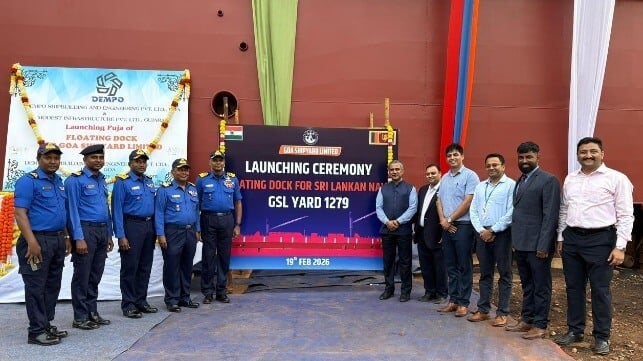
An image taken at the GOA Shipyard Limited Launching Ceremony.

[By: Indian Register of Shipping]

Indian Register of Shipping (IRS) crossed a significant milestone with the launch of its first defence-export project – a Floating Dry Dock (FDD) being constructed for the Sri Lanka Navy at Goa Shipyard Limited (GSL).

The Chief Guest at the launching ceremony, held on 19 February 2026 at GSL, was Rear Admiral MDK Wijewardana of the Sri Lanka Navy. Senior officials from the shipyard and IRS were also present. The project represents a landmark achievement in IRS’s expanding defence portfolio and underscores India’s growing role as a trusted maritime partner in the Indian Ocean Region.

The Floating Dry Dock, designed and built to meet the operational requirements of the Sri Lanka Navy, will significantly enhance their in-country ship repair and maintenance capabilities. The dock will support underwater repair, and maintenance of a large range of naval vessels, thereby improving operational readiness and self-reliance. IRS has been closely associated with the project, providing classification services and technical oversight in accordance with its Rules and standards.

The successful launch of the Floating Dry Dock stands as a testament to the strong partnership between IRS, Goa Shipyard Limited, and the Sri Lanka Navy. It also aligns with broader efforts to promote indigenous shipbuilding, enhance defence exports, and advance India’s position as a global maritime hub.

This launch marks a historic milestone for IRS as our first defence export project” said Cdr KK Dhawan, Head Defence at IRS. It reflects the trust placed in Indian shipbuilding and classification capabilities and demonstrates our commitment to supporting friendly foreign navies with robust, reliable and globally benchmarked technical standards. We are proud to contribute to strengthening maritime cooperation between India and Sri Lanka.”

Arrest of Maj. Gen. Suresh Sallay  and  the allegations by Azad Maulana

February 27th, 2026

Courtesy The Daily Mirror

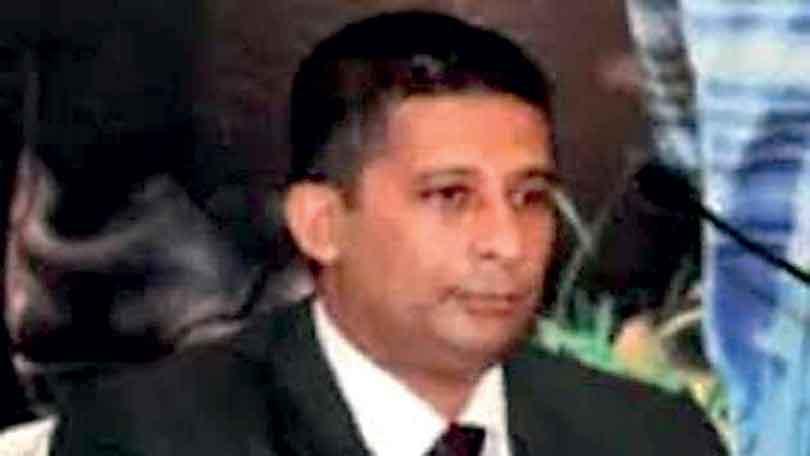
Maj. Gen. Suresh Sallay (Retd.)


There is growing realisation that the allegations made by Azad Maulana would be worthless in practical terms in a court of law until and unless Azad Maulana himself backs it up by testifying himself in a Sri Lankan tribunal and being cross examined by lawyers. He could even do this from afar by electronic methods too

Let me begin this article with an apology and explanation to readers. This week’s column should have been the second and final part of last week’s article (‘Is JVP Gen-Sec Tilvin, the power behind President Dissanayake’s throne?’). However this week’s column would be about the sensational arrest and detention of former Intelligence chief Major General Suresh Sallay. The Tilvin Silva article will be published next week.
Former head of the State Intelligence Service (SIS) and ex-chief of Military Intelligence, Major General Suresh Sallay (Retd.) was arrested by a special team of police officers from the  Criminal Investigation Department (CID) in Peliyagoda at 8.10 a.m. on Wednesday, February 25, 2026. Provisions of the draconian Prevention of Terrorism Act (PTA) were invoked to detain him for questioning for a 72 hour period. Thereafter he may be either released or held further for a period of 90 days on a detention order under the PTA.

Meera Srinivasan, the Colombo Correspondent of ‘The Hindu’, quoted an unnamed senior official who stated that the arrest was made under the PTA based on adequate evidence” and described it as a major breakthrough”in the on going investigation into the dastardly Easter Sunday attacks.

Three churches and four hotels in Colombo, Negombo and Batticaloa were attacked  in the morning of  April 21, 2019 (Easter Sunday) by suicide bombers belonging to an Islamic radical group. 270 persons including 45 foreign nationals were killed and over 500 injured in the attacks.

Media briefing

According to newspaper reports, Deputy Inspector General of Police (DIG) in charge of the Legal Division, Jaliya Senaratne speaking at a special media briefing said that since Sallay has been arrested under the provisions of the PTA, he could be held for 72 hours (three days) for questioning. Thereafter, based on the evidence, steps can be taken to obtain a detention order, and that legal provisions exist for this purpose,” he added. Senaratne also said the public will be informed in due course about the facts that they need to know regarding Sallay’s arrest.

The Senior DIG in charge of the Western Province, Sajeewa Medawatte, also addressing the same press conference, stated that Sallay was arrested based on evidence related to the 2019 Easter attacks bombings. Medawatte further mentioned that a lengthy investigation needs to be conducted in this regard and that more information will be revealed in due course. 

He also noted that it is difficult to disclose further information within a few hours and emphasised that the Police have carried out their duties properly. Responding to journalists’ questions about allegations that a campaign has been launched against the Police for arresting Sallay without properly disclosing the reason, he stated that if the arrest had not been made, there would have been a campaign against the Police for failing to act. Medawatte further said that during further  interrogation of Sallay, information about the mastermind behind the 2019 Easter attacks may be uncovered.

One of the key promises made by President Anura Kumara Dissanayake was to carry out a full investigation into the Easter Sunday attacks. The arrest of Suresh Sallay is the first high profile arrest of a defence official  after President Dissanayake became President in September 2024. The arrest of a former intelligence chief in connection with the Easter bombings has received wide coverage in the national and international media.

High-ranking positions

Major General Sallay (Retd.) has held several high-ranking positions within Sri Lanka’s security and diplomatic spheres in a career spanning more than three decades. 1987: Joined the Sri Lanka Army (Infantry and Signals). 2006-2009: First Secretary, Sri Lankan Embassy in Paris. 2012-2016: Director of Military Intelligence (DMI) 2016-2018: Minister Counsellor, Sri Lankan High Commission in Malaysia. 2019 (Jan.-Nov.): Student, National Defence College, New Delhi 2019–2024: Director, State Intelligence Service (SIS). Following his removal as SIS chief in late 2024, Sallay joined the Pathfinder Foundation, a prominent think tank  in a senior capacity.

‘Channel 4’ TV

This writer is not aware of the  available evidence in the hands of the Police or  whether ‘new’ evidence has been acquired concerning Suresh Sallay’s alleged involvement in the Easter attacks. However the alleged involvement of Sallay was first made in the public domain by  Mohammed Hanzeer alias Azad Maulana in a ‘Channel 4’ TV programme. Azad Maulana was formerly a close aide of TMVP leader and former Eastern Chief Minister Sivanesathurai Chandrakanthan alias Pillaiyaan.

The chief allegation by Azad Maulana regarding Suresh Sallay was that he had got him (Azad Maulana) to arrange a meeting between the head of the National Thowheed Jamath head and chief suicide bomber Zahran Hashim and Suresh Sallay in the Puttalam District. Suresh Sallay responded then to this by proving that he was in Malaysia at the time this alleged meeting took place. Sallay also stated that he was in New Delhi when the Easter bombings occurred.

Interaction

To strike a personal note, I have never met Maj. Gen. Suresh Sallay. However I did interact with him by electronic mail and telephone from Canada in early 2014 when Sallay was head of Military Intelligence. This was to get some information for a series of articles about an aborted attempt to revive the LTTE. Sallay was very frank and forthright in disclosing details.  My impression of Suresh Sallay through that brief long-distance interaction was that he was an efficient, capable and knowledgeable intelligence chief.

It is against this backdrop that this column focuses on the arrest of Maj. Gen. Suresh Sallay and his alleged connection to the April 2019 bombings with emphasis on the allegations made by Azad Maulana. I shall re-visit the past with the aid of some earlier writings of mine in this respect.

Conspiracy theories

The coordinated suicide bomber attacks by a group of misguided Muslim zealots against three churches and four luxury hotels in Colombo, Negombo and Batticaloa on Easter Sunday (21 April) in 2019 brought in its wake several conspiracy theories. Chief among these was the one which suspected that an official or officials of Sri Lanka’s intelligence services had manipulated the Muslim youths into launching the attacks with the objective of facilitating the return to power of former defence secretary Gotabaya Rajapaksa as President. This conspiracy theory received a tremendous boost in 2023 when Britain’s ‘Channel 4’ TV aired the documentary ‘Sri Lanka’s Easter bombings’ in its ‘Dispatches’ programme on Tuesday September 5, 2023. Tamil Makkal Viduthalaip Puligal (TMVP) leader Sivanesathurai Chandrakanthan alias Pillaiyaan’s former secretary and ex-TMVP spokesperson Mohammed Milhilar Mohammed Hanzeer alias Azad Maulana was the whistleblower who made the controversial disclosures.

The documentary aired on ‘Dispatches’ by ‘Channel 4’ on September 5 titled Sri Lanka’s Easter bombings, was screened by the Universal Human Rights Council (UHRC) on the evening of Thursday, September 21, 2023 in Geneva. The venue was the Octagon Campus 2, Chemin du Pavillon 1218 Grand Saconne. 

Azad Maulana’s statementThere was a discussion after the screening. Prior to the discussion, copies of a detailed statement issued by Azad Maulana were distributed to those present. Azad Maulana who was not present physically answered questions via video link later. The statement issued by Azad Maulana was a clarification and amplification of the comments made by him in the documentary. The information he divulged in the film was placed in perspective by providing more details in the statement. Here are some relevant excerpts:

Relevant excerpts: 

On 21 April 2019 on Easter Sunday a terror attack killed 269 persons including 45 children, and 40 foreigners and injured more than 500 others. Only when the media revealed the identity of the suicide bombers after the attack did I realise that I had strong evidence about the masterminds and other perpetrators and also the motivation for this terror attack. I have in no way been involved in preparing or carrying out these terrible and devastating attacks.” 

Following the defeat of the Mahinda Rajapaksa Government in 2015, Pillaiyaan was arrested and imprisoned in the Batticaloa prison under the Prevention of Terrorism Act (PTA) in connection with the murder of former Tamil National Alliance Member of Parliament Joseph Pararajasingham, who was shot dead on the Christmas Day of 2005 at the St. Mary’s Cathedral, Batticaloa.”

As a Secretary to Pillaiyaan, the court had granted me permission, along with his lawyers, to meet Pillaiyaan to discuss legal matters. During a visit in September 2017, Pillaiyaan told me that some Muslim prisoners from Kattankudy were with him in the same cell. A father, his son and six others had been remanded for extremist activities and attacks on another Muslim group in Kattankudy. They were from an organisation called National Thowheed Jamath (NTJ).” 

On Pillaiyaan’s request, I met Sainy Moulavi. Later, Pillaiyaan asked me to contact the Military Intelligence (MI) to arrange funds for these prisoners’ relatives to pay their bail. They were released on October 24, 2017. At the end of January 2018, Pillaiyaan told me to arrange a secret meeting between Suresh Sallay, who was then a Brigadier, and Sainy Moulavi’s group. Pillaiyaan said that Suresh Sallay would inform me about the meeting place and time.”

A few days later Suresh Sallay contacted me and asked me to request Sainy Moulavi to come to the Puttalam Vanaththavillu area. The next day I travelled with an MI officer from Colombo to Puttalam, Sainy Moulavi’s group came from Kurunegala. Pillaiyaan advised us not to use my own vehicle or driver for this meeting and said that the transport would be facilitated by the MI.” 

The meeting took place in early February 2018 at a large coconut farm of 50 to 60 acres, located outside of Puttalam. Suresh Sallay arrived in a grey colour Toyota car with a driver. Sainy Moulavi arrived 30 minutes later with a group of six persons in a white van. Sainy Moulavi introduced his elder brother Moulavi Zaharan as the leader of the group. The meeting lasted for more than two hours. I did not participate in the meeting but waited outside.” 

After the meeting, I travelled to Batticaloa and on the next day updated Pillaiyaan about the meeting. Pillaiyaan said that Suresh Sallay had a big plan and a deal with Zahran’s group like the one with TMVP. He told me to keep the information about this meeting secret and to assist if they asked for any help. Besides the meeting with Sainy Moulavi in prison in September 2017, I met Zahran and his group only one time in February 2018 during the meeting with Suresh Sallay. Apart from this, I had no connection or relationship with them. I was not aware of their terrorist intent or plan until after the terror attack.” 

On Easter Sunday, 21st April 2019, Suresh Sallay contacted me at around 7 a.m. and told me to go immediately to the Taj Samudra Hotel in Colombo, to pick up a person who was waiting there and take the person’s phone. I told him that I was currently in Batticaloa and not in Colombo.” 

About an hour after this conversation, simultaneous terrorist attacks took place across the country. Immediately after the attacks Pillaiyaan sent a message through a prison guard and asked me to meet him urgently. When I saw him in prison at about 11 a.m. on Easter Sunday he told me that the mastermind behind the Easter attack was Suresh Sallay and that he had assumed that an attack like this would happen.” 

He asked me to call Sainy Moulavi to find out, there was, however, no response. It was only because of media reports in the evening that I realised that the participants in the meeting that I had organised at the request of Pillaiyan were indeed suicide bombers involved in the Easter attack.”

Through the President’s Investigation Commission and the inquiries of the CID I also learned that the person whom Suresh Sallay had wanted me to meet was Jameel, the bomber who had been tasked to carry out a suicide attack at the Taj Samudra Hotel but then, in a last-minute change of plans, left the Taj and later exploded himself in a small hotel in Dehiwala.”

Political asylum

After fleeing from Sri Lanka via India  to Europe, Azad Maulana  applied for political asylum in Switzerland. Thereafter he went to the Office of the UN High Commissioner for Human Rights (OHCHR) and made a detailed statement to a panel from the OHCHR Sri Lanka Accountability project. He took five days to testify. 

Apart from the OHCHR, Maulana has also made statements to several other human rights organisations and international NGOs. It could be seen therefore that Azad Maulana has the capacity and potential to provide much information regarding April 21, 2019 attacks. 

At the same time there is growing realisation that the allegations made by Azad Maulana would be worthless in practical terms in a court of law until and unless Azad Maulana himself backs it up by testifying himself in a Sri Lankan tribunal and being cross examined by lawyers. He could even do this from afar by electronic methods too. 

Maulana’s reluctance

The problem was Azad Maulana’s reluctance to cooperate with the Sri Lankan judicial system alone. He was willing to testify only before an independent international investigation. The statements made by Azad Maulana on ‘Channel 4’ and at a public meeting in Geneva indicated this state of mind.This is what Azad Maulana  said: As a witness to the planning of several terrorist attacks, political assassinations and kidnappings in Sri Lanka, I am willing to testify in investigations into these crimes. I do not believe, however, that the authorities in Sri Lanka have an interest in revealing the truth. I will therefore only bear witness before an international independent investigation.”

The key question therefore is whether Azad Maulana has  now changed his mind and is prepared to testify in open court. Has the advent of a new JVP-led NPP Government headed by President Dissanayake  resulted in Maulana cooperating with the investigation?  If so has this enabled Sri Lankan sleuths to gain more information about the Eastern bombings?

Pillaiyaan

Furthermore TMVP leader Pillaiyaan too has been detained under the PTA since April 2025. Media reports have stated that he is being interrogated about the April bombings. Has that interrogation yielded information leading to Suresh Sallay’s arrest? We do not know at this juncture and have to wait for the Police to reveal more details at the appropriate time as promised by senior DIG’s at the media conference.

However it must be emphasised that all allegations made by Azad Maulana are yet to be verified and authenticated. Moreover, they have been denied as falsehoods by those whom the allegations were levelled against especially Maj. Gen. Suresh Sallay.

Conjecture and inference

The primary charge made against Sallay by Maulana hinges around an alleged meeting at Karadippooval in Puttalam between the intelligence chief and Zahran Hashim the National Thowheeth Jamaath (NTJ) leader and livewire behind the Easter bombings.Maulana’s allegation is essentially conjecture and inference based on that meeting.

However, it must be said in fairness to Suresh Sallay that he has denied being in Sri Lanka at the time of the  purported meeting. Has the Police received further information on this matter now? Will the  arrest,detention and interrogation of Maj. Gen. Suresh Sallay lead to a breakthrough in the ongoing investigation into the April 2019 Bombings?

(D.B.S.Jeyaraj can be reached at dbsjeyaraj@yahoo.com) 

Govt must reveal mastermind behind substandard coal fraud – Sajith

February 27th, 2026

Courtesy Adaderana

Opposition Leader Sajith Premadasa says the government must reveal the truth to the country regarding the alleged mastermind behind the substandard coal fraud.

He made these remarks today after meeting Ven. Wilanagama Chandrarathana Thero at the Sri Hewasingharama Temple in Aranayake, Kegalle, and addressing the media thereafter.

Premadasa stated that there are serious issues concerning the quality of coal currently being imported, as well as problems related to the quantity and delays in shipments. 

He alleged that these issues stem from an inefficient, irregular, and failed procurement process adopted in purchasing coal, claiming that a fraudulent scheme had operated to import substandard coal.

He further noted that although Sri Lanka requires 36 coal shipments annually, only 11 high-quality Russian shipments had been received, while the remaining 25 shipments were imported through a separate tender process. Of the 10 shipments brought in under that process, nine have reportedly been proven to be substandard, he claimed.

The Opposition Leader pointed out that emergency purchases are made when the required quantity and standard of coal are not received on time, adding that such emergency procurement methods could result in significant financial losses to the country, the public, and electricity consumers.

He also stated that as it takes around 40 days for a coal shipment to arrive in the country, the relevant tender has been implemented between April 20 and May 15. 

He alleged that the government has placed orders for five additional ships during this period due to the poor quality of previously imported coal.

Premadasa further claimed that the nine coal shipments imported by the government are incapable of generating 300 megawatts of electricity, stressing that a large-scale fraud has taken place as a result of the substandard coal imports, causing substantial losses to the country, the public, and the government.

He further added that the government must disclose who the masterminds behind the alleged coal fraud are, reveal the full truth, and clarify what action will be taken against those responsible.

90-day detention order to question ex-intelligence chief Suresh Sallay

February 27th, 2026

Courtesy Adaderana

The Criminal Investigation Department (CID) has obtained a 90-day detention order to question former state intelligence chief Major General (Retd) Suresh Sallay, the police said. 

Former Head of the State Intelligence Service (SIS) Major General (Retired) Suresh Sallay was arrested on Wednesday (25) morning by CID officers in connection with the investigations into the Easter Sunday terror attacks. 

Police said he was arrested under the Prevention of Terrorism (Temporary Provisions) Act (PTA) based on evidence related to the 2019 Easter Attacks Bombings.

Coordinated suicide bombings carried out by a group of Islamic extremists led by Zahran Hashim on April 21, 2019, targeted eight locations including churches and hotels, killing at least 273 people.

Following the bombings, a number of investigations were launched including probes by a Parliamentary Select Committee and a Presidential Commission of Inquiry.

Based on the findings from those investigations, indictments were filed before a permanent three-judge bench of the Colombo High Court Trial-at-Bar against 25 accused, including Naufar Moulavi, over alleged direct links to the terror group. The trial is currently being heard on a daily basis.

Amid continued allegations by various parties that there was a political hand behind the attacks, investigations were expedited following appointment of the new government.

Controversy also intensified after the British television network Channel 4 aired a documentary titled Sri Lanka’s Easter Bombings: Dispatches”, which alleged that a meeting involving Maj. Gen. Sallay and members of the Thowheed Jamath organization discussed creating instability in the country to facilitate the return to power of the Rajapaksas. The allegations were linked to claims made by Azad Maulana, a former media spokesman for Sivanesathurai Chandrakanthan alias Pillayan, who is currently seeking political asylum in Switzerland.

The CID had also informed the Colombo Fort Magistrate’s Court on several occasions about a confidential investigation being conducted into the 2019 Easter Sunday bombings.

Returning to Easter Sunday attacks: Institutional Failure, Not Intelligence Failure

February 26th, 2026

Shenali D Waduge

On 21 April 2019, Sri Lanka was struck by coordinated suicide bombings targeting three churches and three luxury hotels, killing at least 270 people and injuring around 500. The attackers were linked to National Thowheed Jama’ath (NTJ), an extremist group previously under the radar of Sri Lankan security services. Intelligence warnings of an imminent attack — including specific threats to churches and the Indian High Commission — were reportedly issued in the weeks before the incident but were not acted upon effectively.

This systemic failure would become central to every major inquiry that followed — including the Parliamentary Select Committee Report (PSC, 2019) and the Presidential Commission of Inquiry (PCoI, 2021) — and eventually the De Alwis Committee Report (2024).

The De Alwis Committee & Its Mandate

https://srilankabrief.org/wp-content/uploads/2024/11/A-N-J-DE-ALWIS-report-.pdf

https://www.shenaliwaduge.com/easter-sunday-attacks-justice-de-alwis-report-sept-2024/ (Committee Findings & Recommendations)

In June 2024, then President Ranil Wickremesinghe appointed a three‑member inquiry committee chaired by retired High Court Judge A.N.J. de Alwis. Its brief was narrower than earlier inquiries:

To explore specific actions and measures taken by the State Intelligence Service (SIS), Chief of National Intelligence (CNI), Criminal Investigation Department (CID) and other relevant authorities on prior information or intelligence relating to the impending attack on 21 April 2019; and to assess the adequacy of those actions”

(Direct from report text under Chapter 2: Mandates of Inquiry.)

The committee received documents including the Final Report of the Presidential Commission of Inquiry (31 January 2021) for reference and began hearing evidence on 3 July 2024, concluding on 2 September 2024.

However, the government did not officially publish the De Alwis Report.

It was leaked publicly in October 2024 by former MP Udaya Gammanpila, who held a press briefing and released it because official channels withheld it.

Reported Quotes & Expanded Findings from the Leak

Because the government never officially published the full text, journalists and researchers have relied on the leaked copy and excerpts cited in media.

Intelligence Dissemination by the Director, SIS (Nilantha Jayawardena)

From report text:

  • The Director, SIS received intelligence on 4 April 2019from his Indian counterpart regarding attacks by members of NTJ, including threats against churches and the Indian High Commission.”
  • He disseminated the WhatsApp message and a written report to the Secretary, Ministry of Defence, SDIG‑CID, CNI and IGP.” (the names of those who held these positions are given below)
Abbreviation / RolePerson at the Time
Secretary, Ministry of DefenceP. B. Jayasundara – Secretary to the Ministry of Defence and former Treasury Secretary
SDIG – CID (Senior Deputy Inspector General, Criminal Investigation Department)Ravi Seneviratne – Senior DIG overseeing CID
CNI (Chief of National Intelligence)Sisira Mendis – Head of National Intelligence (coordinating intelligence from SIS, police, and military)
IGP (Inspector General of Police)Pujith Jayasundara – Head of the Sri Lanka Police Service

The report notes that he even identified a dry‑run motorbike explosion on 16 April 2019 and shared this with senior police officials.

Committee Finding: (He = Nilantha Jayawardena Head of SIS) (former President = Maithripala Sirisena)

He had considered his role being fulfilled upon disseminating the information… However, he had not been able to inform the former President regarding the impending attack… He had not shared the information with the Tri‑forces … he failed to exercise caution by sharing the information which would have assisted a more cohesive investigation…”

Committee Recommendation (quoted):

The Committee recommends that the Director, SIS should be prosecuted under a suitable provision in the Penal Code by the relevant authority.”

The Chief of National Intelligence (CNI)

From the report:

The CNI was informed of intelligence but did not check his mobile on 20 April 2019, allegedly because it was kept in his car, and he accompanied his wife to church on 21 April — even though credible warnings existed”

Committee Conclusion:

The CNI … failed to take adequate measures and/or steps to disseminate the information as well as take steps to monitor and follow up on the intelligence.”

Committee Recommendation:

Criminal action should be instituted against him for negligence under suitable provisions in the Penal Code.”

The Secretary, Ministry of Defence

From report text:

Though he acknowledged seeing intelligence on 20 April 2019 and instructed the IGP to take action, he failed to convene the NSC or alert the President”

Committee Finding:

The lack of seriousness given to the information is attributable for not taking steps to inform the president regarding the developments… The Secretary had failed to take diligent action regarding the attacks and his conduct had not been adequate.”

Committee Recommendation:

The Committee recommends that the former Secretary, MoD should be prosecuted under suitable provisions in the Penal Code for negligence.”

The Inspector General of Police (IGP)

From report text:

The IGP had been aware of prior extremist incidents involving Zahran and associates. Official letters and WhatsApp warnings were received but he waited to assemble a special team rather than issuing a nationwide alert.”

Committee Finding (direct):

Although the former IGP mentioned there was a rift with the former President, this does not justify complete disregard of the intelligence… The lackadaisical approach ultimately resulted in missing reports until after the incident.”

Committee Recommendation:

The Committee recommends that the former IGP should be indicted under relevant provisions of the Penal Code.”

Other Police Officials

The report goes on to assess dozens of mid‑level police officers — from SDIGs to DIGs, SSPs, OICs and ASPs — and found that many received intelligence instructions but failed to ensure coordinated security measures or take proactive steps.

Examples of direct findings include:

  • Multiple officers received instructions to tighten security, but no special measures were taken to strengthen security around churches.”
  • In several cases, officers failed to follow upon written directives or simply went on leave despite imminent threat notifications.

Committee Recommendations for these ranks repeatedly included:

He should be prosecuted for negligence under suitable provisions of the Penal Code by the relevant authority.”

Finding on President Maithripala Sirisena

The report states explicitly:

The Committee observed that the aforesaid intelligence had not reached President Maithripala Sirisena. As such the Committee decided that it was beyond their mandate to consider culpability regarding his conduct… However, the Committee is mindful that his actions overall had contributed to the deterioration of security in the country…”

So although the report declined to assign direct legal responsibility due to its limited mandate, it recognized a structural failure in how the intelligence apparatus was positioned under executive command.

The Importance of the Leak

The Parliamentary Select Committee (PSC) Report (2019) identified systemic intelligence failures, including that SIS did not effectively share external warnings. It noted:

Intelligence information received indicated that the Indian High Commission was targeted, yet proper dissemination was not made by the SIS.”

By contrast, the De Alwis leaked findings go further by assigning specific actions (or inaction), timelines, and responsible officials — something the PSC report did not do in named terms.

From Systemic Failure to Personal Accountability

The De Alwis report — through its own words — found repeatedly that:

  • Actions and measures taken by senior officials were inadequate…”
    …failure to take diligent action…”
    …conduct had not been adequate…”
    …crimes of negligence should be prosecuted…”

These repeated findings represent a shift away from institutional critique to personal accountability.

Udaya Gammanpila’s Role and Concerns

Udaya Gammanpila publicly released the report and consistently argued:

  • The public has the right to see official inquiries conducted in their name.
  • If the government refuses to release these reports, he will.
  • He promoted the finding that criminal cases should be filed against at least 17 officialsfor negligence — a claim derived from the report’s own recommendations.

Gammanpila’s actions turned the document from a confidential government briefing into a public discourse on accountability.

Why the Leak Matters Today

  1. Complements the PSC Findings
    Where the PSC spoke in general systemic terms, the De Alwis leak names who— and how — they allegedly failed.
  1. Highlights Withheld Accountability
    Despite these clear recommendations for prosecution, major prosecutions have not been launched— feeding ongoing public frustration.
  1. Pushes Debate to Legal Accountability
    The report itself recommended criminal prosecution under the Penal Code — not just policy reform — bridging inquiry outcomes with real legal consequences.
  2. Connects with Ongoing Terror Probes
    Recent high‑profile arrest (2026) of a former intelligence chief not holding position during the attacks signify that unresolved inquiry findings continue to shape law enforcement action.

What the De Alwis Leak Reported

AspectWhat the Report Says (Leaked Text)
Intelligence WarningSIS informed SDIG Ravi Seneviratne on 9 April 2019… warning letter remained unopened.”
Repeated Alerts IgnoredMultiple alerts on extremist activity, including NTJ dry‑run evidence and church threats.
Inadequate Measures by SISHe had not shared information with the Tri‑forces… actions were inadequate.”
Inadequate Action by CNIFailed to disseminate and follow up on intelligence.”
Inadequate Actions by IGPLackadaisical approach… failed to prevent or mitigate the attacks.”
RecommendationsCriminal prosecution should be instituted under Penal Code provisions.”
No Official PublicationGovernment withheld report — leaked by Udaya Gammanpila.

The leaked De Alwis Committee Report is significant because it:

  • Names specific individuals and datestied to intelligence failures;
  • Quotes authoritative findingsof inadequate intelligence action;
  • Directly recommends criminal prosecutionfor negligence;
  • Casts new light on previously known inquiry gaps;
  • Continues to shape legal, political, and public debates about accountability for one of Sri Lanka’s worst terror tragedies.

1️State Intelligence Service (SIS)

  • Mandate:Collect, analyze, and report intelligence on internal and external threats to national security.
  • Authority:Advisory only — cannot arrest, detain, or execute operations.
  • Output:Reports, alerts, and recommendations to enforcement authorities (e.g., IGP, CNI, Defence Secretary).
  1. Chief of National Intelligence (CNI)
  • Mandate:Coordinate all national intelligence agencies, consolidate intelligence, advise top government leadership.
  • Authority:Coordination and recommendation — cannot implement operations.

3. Inspector General of Police (IGP)

  • Mandate:Head of all police forces; responsible for public safety, law enforcement, and operational decisions.
  • Authority:Can order investigations, raids, arrests, and preventive actions.

4. Senior DIG – CID

  • Mandate:Lead Criminal Investigation Department; investigate crimes, coordinate with intelligence, execute preventive and legal measures.
  • Authority:Directs CID officers; implements operational actions based on intelligence.

5. Secretary, Ministry of Defence

  • Mandate:Oversee national defence and coordinate security policy; ensure agencies implement government security directives.
  • Authority:Administrative and strategic approval — can authorize police/military action but does not execute investigations personally.

6. Military Units

  • Mandate:National defence and emergency support.
  • Authority:Only acts when formally deployed by Defence Ministry or requested by law enforcement.

Key Distinction:

  • Collection & Reporting:SIS, CNI → cannot act operationally
  • Action & Enforcement:IGP, SDIG/CID, Ministry of Defence, Military → responsible for preventive action

This makes it crystal clear: negligence in responding to warnings is on the enforcement chain, not the intelligence collectors.

Accountability must follow Authority

The De Alwis Committee Report, when read alongside the Parliamentary Select Committee (PSC) Report and the Presidential Commission of Inquiry (PCoI), leads to one unavoidable conclusion: the Easter Sunday tragedy was not the result of intelligence failure, but of institutional paralysis and executive breakdown in the enforcement chain.

The evidence clearly establishes that actionable intelligence was received, documented, and disseminated through formal channels. The failure occurred after dissemination, within the agencies vested with legal authority to act — namely the Ministry of Defence, the Chief of National Intelligence, and the Sri Lanka Police hierarchy.

The Committee’s own findings demonstrate that:

  • The State Intelligence Service (SIS) fulfilled its statutory role by collecting and transmitting intelligence.
  • The Chief of National Intelligence (CNI) failed to coordinate, monitor, and escalate urgent threat warnings.
  • The Secretary to the Ministry of Defence failed to activate the National Security Council or issue emergency security directives.
  • The Inspector General of Police and senior police command failed to execute preventive security measures despite repeated alerts.

These failures were not abstract administrative lapses.

They constituted criminal negligence, as explicitly identified by the Committee, warranting prosecution under relevant provisions of the Penal Code.

Yet, nearly years after the attacks, systemic accountability remains absent, while selective legal action risks distorting the true chain of responsibility.

The deliberate withholding of the De Alwis Committee Report, followed by its public leak, underscores a deeper institutional reluctance to confront where real authority — and therefore real liability — resided on the eve of the attacks.

Transparency was not denied due to national security concerns, but because the findings directly implicated senior decision-makers within the enforcement and executive command structure.

For justice to be meaningful, accountability must follow authority, not convenience.

Failure to uphold this principle:

  • Weakens public trust,
  • Undermines national security credibility,
  • Distorts future counter-terrorism policy,
  • And leaves the country vulnerable to repeat failures.

True justice for the victims of Easter Sunday does not lie in symbolic prosecutions or political scapegoating. It lies in faithfully implementing the findings of Sri Lanka’s own official inquiries, without fear, favour, or selective omission.

Until that occurs, the Easter Sunday tragedy will remain not only a story of terror, but of unresolved state failure.

Shenali D Waduge

Is the “lion Gate” symbolism of Sigiriya those of a Bird symbol?

February 26th, 2026

Chandre Dharmawardana

If it was a bird’s foot, (as said by some writers – who are they?), why was it called “Sigiriya” and identified all along the centuries with a lion foot?

There is great readiness among some  recent writers to downplay their heritage in the name of “reconciliation”, and even claim Sigiriya to be a Chola monument built by the ruler “Kasi-Appan”?

 A well known Peradeniya historian ignored everything in Sigiri Griffiti (written in 8th century Sinhala, and some of it by pilgrims from Valikkamam of the North, but not a word of Tamil in Sigiri Griffiti). He  claimed that Sinhala was a language that started in the middle ages. The claims that the lion claws may be “Garunda” claws, or “Griffin Claws” as in Greek symbolism,  do not fit in with known iconography.

: The design of the paws aligns with other ancient Sinhalese lion sculptures, which often used stylized, powerful claws to symbolize royal authority.  

The Chulawamsa explicitly mentions the LionGate. It records that King Kashyapa (477–495 CE) built a gateway in the form of an enormous lion on a small plateau about halfway up the side of the rock.

The chronicle explains that the name of the site, Sīnhāgiri (Lion Rock), is directly derived from this monumental structure.

While only the massive brick and plaster paws remain today, the text implies a more complete figure; historians believe visitors originally entered the summit through the lion’s mouth.

Purpose of the Site: The Culavamsa describes Sigiriya as a royal capital and palace built by Kashyapa to serve as an impregnable stronghold after he seized the throne from his father.

It records that King Kashyapa (477–495 CE) chose the site specifically for its natural defenses. : The text describes the construction of moats and ramparts surrounding the rock to further secure it.

UNESCO World Heritage Designation: UNESCO officially recognizes the site as an “ancient rock fortress” and a “fortified city,” noting it as one of the best-preserved examples of ancient urban planning in Asia.

Military Features: Documentation by 19th-century British explorers and contemporary archaeologists highlights defensive elements such as elevated pathways, guarded gateways (the Lion Gate), and massive walls.

National Geographic and Academic Sources: These documents refer to it as a “sky fortress” or “royal stronghold,” emphasizing its role as a defensive seat of power during Kashyapa’s 18-year reign.

 It is further noted that after Kashyapa’s death, the site was abandoned as a capital and given to the Buddhist monk community, serving as a monastery until the 14th century. 

However, it seemed to have been a Mahayana forest hermitage before King Kasyapa’s redoing of the rock, and this was taken in isolation by Rajah de Silva to make his claim in trying to create a new hypothesis countering the views of HCP Bell and Senerath Paranavitana.

The Reality is, BOTH views are correct and they apply to a site that evolved with time. This has been emphasized by modern writers like Tudor de Silva and Senaka Bandaranayake. Originally, it was a Mahayana Hermitage. King Kashyapa took it over, and it became a pleasure palace of a king in a safe location  as stated by the Pali Chronicles;  this view is supported overwhelmingly by the archeological and epigraphic evidence.

Chandre Dharmawardana

On Thursday, February 26, 2026 at 12:01:00 a.m. EST, Yahoo <sriyanjanaka@yahoo.com> wrote:

There’s a controversy about the lion’s foot at the entrance. Some say it is a huge bird’s foot. 

In any case, it was never a fortress, contrary to what was previously claimed.

On Wednesday, 25 February 2026 at 09:26:36 pm GMT+5:30, Chandre dharma-wardana <chandre.dharma@yahoo.ca> wrote:

Raja de Silva claimed that Sigiriya was a mahayana Vihara and Not a place of a King. He claimed that the Sirigi Apsara were paintings of Mahayana Godess Tara, based on iocongraphic details and also based on the chemistry of the paint and what had been used in Ajantha. Rajah argued that the very plain “Asana” on the top were medidation seats.

However, modern excavations have found more sumptious

quaters even in the upper areas.

Paranavitana and others (HCP Bell) had argued that the hugh Lion-foot entrence (the lon symobol was a Royal emblem), the complex of pleasure gardens, pumped water systems and sumptious living areas at lower lowel did not indicated monstic living. Also, the Chulawamsa clearly states what it was used for.

The Raja de Silva view did not agree with what could be gleaned from the “sigiri Griffit” either.

The more modern view is that Sigiriya was BOTH a Mahayana temple AND a kings pleasure palce. In pre-Kasyapa times, sigirya was a Vihara. Kasyapa took it over and converted it to a pleasure palace.   

On Wednesday, February 25, 2026 at 08:28:26 a.m. EST, Yahoo <sriyanjanaka@yahoo.com> wrote:

ඔව් මේ කතාව මම අහල, කියවල තියෙනව.

එතුමාගේ නිගමනය නිවැරදියි.    

 එතුමන්ට නිවන් සැප ලැබේවා 

On Wednesday, 25 February 2026 at 05:32:06 pm GMT+5:30, Daya Ranasinghe <daya.ranasing7@gmail.com> wrote:

                                               සීගිරියේ රාජා ද සිල්වා

                                              අරුණ  කතුවැකිය  25/02/2026

තමන් සිය මුළු කාලයම දේශපාලනයට කැපකිරීම නිසා කවදාවත් සීගිරිය නගින්නටවත් ඉස්පාසුවක් ලැබුණේ නැතැයි කලකට පෙර වතාවක් විමල් වීරවංශ ප්‍රසිද්ධියේ කිව්වේය. අපේ මිනිස්සුන්ට පුරුදු හඳ පෙන්වූ විට ඇඟිල්ල දිහා බැලීම නිසා මේ කතාවෙන් කථකයා රටේ හාස්‍යයට ලක්වූ බව අපට මතකය. එහෙත් සීගිරිය යනු අපේ රටේ ඕනෑම කෙනෙක් ජීවිතයේ එක වතාවක්වත් යායුතු තැනකැයි යන්නද ඔහුගේ කතාවෙන් කියවුණු බව රටට ග්‍රහණය වූයේ නැත.

එබඳු තැනක් වූ සීගිරිය ගැන කතා කරන විට කතා නොකරම බැරි සීගිරි බිතුසිතුවම්, මතු පරම්පරාවන්ටද දැකගත හැකිවන ලෙස රැකදීමට ඉමහත් දායකත්වයක් දැක්වූ දැවැන්තයෙක් පෙබරවාරි 22 වැනිදා මිය ගියේය. ඒ මියෙන විට අවුරුදු එකසිය එකක් පිරී සිටි කුරුකුලසූරිය පටබැඳිගේ ශ්‍රී රාජේන්ද්‍ර හේමපාල නොහොත් ආචාර්ය රාජා ද සිල්වාය. ලංකා විශ්වවිද්‍යාලයෙන් හා ලන්ඩන් විශ්වවිද්‍යාලයෙන් රසායන විද්‍යාව පිළිබඳ B.Sc උපාධිධරයකු හා ඔක්ස්ෆර්ඩ් විශ්වවිද්‍යාලයේ D.Phil උපාධිධරයකු වූ රාජා ද සිල්වා සහකාර කොමසාරිස්වරයෙකු හැටියට පුරාවිද්‍යා දෙපාර්තමේන්තුවට බැඳුණේ 1949 දීය. 1967 සිට වසර එකොළහක් පුරාවිද්‍යා කොමසාරිස්ව සිටි ඔහු ඒ තනතුරට පත්වීමට ටික දිනකට කලින් අපේ රටේ මහා විනාශයක් සිදු වූ⁣යේය. ඒ 1967 ඔක්තෝබර් 14 වැනිදා රාත්‍රියේ කවුරුන් හෝ විසින් සීගිරි බිතුසිතුවම්වල කොළ පාට තීන්ත වර්ගයක් උළා තිබීමයි. ඒ පිළිබඳ අවශ්‍ය කටයුතු කිරීමට පැවරුණේ අපේ කථානායකයාටය.

ඒ සඳහා අපේ රටට එවකට නොතිබුණු තාක්ෂණික දැනුමක් අවශ්‍ය බව ඔහු විසින් වාර්තා කිරීමෙන් අනතුරුව යුනෙස්කෝ සංවිධානයේ හා ස්මිත්සෝන් ආයතනයේ අනුග්‍රහයෙන් ඉතාලි ජාතික විද්‍යාඥයෙකු වූ ආචාර්ය ලුසියානෝ මරන්සි මෙහි පැමි⁣ණියේය. මුල් චිත්‍රවලට හානි නොවන පරිද්දෙන් උළා තිබූ තීන්ත ඉවත් කිරීමට අවශ්‍ය තාක්ෂණික උපදෙස් ලබාදුන් ඔහු සති කිහිපයකින් පෙරළා සිය රට ගියේය. ඉන් ඔබ්බට බිතුසිතුවම් ප්‍රතිසංස්කරණය කිරීමේ කාර්යභාරය අපේ මිනිහාට පැවරුණු අතර චිත්‍ර දෙකක් හැර ඉතිරි සියල්ල යථා තත්ත්වයට ගෙන ඒමට ඔහු ඇතුළු පිරිසට හැකි විය. ඉන් අවුරුදු හැටකට පසු සීගිරි නැග බිතු සිතුවම් නරඹන පිරිස් නොදන්නේ වුවද ඔවුන්⁣ට අද ඒ මහඟු අවස්ථාව ලැබී ඇත්තේ ලුසියානෝ මරන්සි හා රාජා ද සිල්වා ඇතුළු ප්‍රතිසංස්කරණ කණ්ඩායමේ උත්සාහයෙනි.

සීගිරිය හා රාජා ද සිල්වාගේ සම්බන්ධය එතැනින් කෙළවර වන්නේ නැත. සීගිරිය යනු පළමුවැනි කාශ්‍යපගේ රාජධානිය බවත්, සීගිරි බිතුසිතුවම්වල සිටින්නේ ඔහුගේ බිසෝවරුන් බවත් යන මහාවංශකරුවාගේ මතය ඔහු ප්‍රතික්ෂේප කළේය. අපේ රටේ සිටි අනෙකුත් පුරාවිද්‍යා කොමසාරිස්වරුන් මහාවංශ මතයට විරුද්ධව නොගියද රාජා ද සිල්වා සහකාර කොමසාරිස්වරයෙකුව සිටියදීද සිය ප්‍රධානීන්ගේ අදහසට එකඟ නොවූයේය. ඔහු පෙන්වා දුන්නේ සීගිරිය යනු කාශ්‍යප රජුගේ අනුග්‍රහය ලැබූ මහායාන ආශ්‍රමයක් බවය. සීගිරි බිතුසිතුවම්වල සිටින්නේ කාශ්‍යපගේ බිසෝවරුන් නොව මහායානිකයන්ගේ දේවතාවියක හැටියට සැලකෙන තාරා දේවී බව ඔහුගේ අදහස විය. තාරා දේවියගේ එක වැනි රූප ගණනාවක් දකින්නට සැලැස්වීමෙන් දකින්නන්ට ශ්‍රද්ධාව ඇති කිරීම මේ බිතුසිතුවම්වල අරමුණ බව ඔහු පෙන්වා දුන්නේය. කාශ්‍යප රාජ්‍ය සමයෙන් ශතවර්ෂ හතකට පසු රචනා කෙරුණු මහාවංසය මහාවිහාරවාසී ථෙරවාද භික්ෂුවක විසින් ලියන ලද්දක් බැවින් එහි කරුණු විකෘති වී ලියවී ඇති බව ඔහුගේ අදහස විය. අදටත් රටේ ප්‍රචලිතව පවතින්නේ මහාවංස කර්තෘවරයාගේ මතය වුවද කරුණු කාරණා සහිතව රාජා ද සිල්වා විසින් ඉදිරිපත් කරන ලද අදහස කිසිවෙකු විසින් මේ වන තෙක් නිෂ්ප්‍රභ කෙරීද නැත.

සීගිරිය හා පුරාවිද්‍යාව පිළිබඳ රාජා ද සිල්වාගේ සම්බන්ධය ගැන ලියන්නට බොහෝදේ ඇතත්⁣ මෙතැන ඊට නොතැනය. එහෙත් මිථ්‍යාවට විරුද්ධව ඔහු එකලාව නැගී සිටි අවස්ථාවක් ගැන නම් සඳහන් නොකරම බැරිය. ඒ රාජ්‍ය අනුග්‍රහය ඇතිව දුටුගැමුණු රජුගේ භෂ්මාවශේෂ ප්‍රදර්ශනයක් රට පුරා ගෙන යන්නට කෙරුණු සූදානමක් ඔහු වළක්වාලීමය. ඒ අඟුරු ගොඩක් මිස අනෙකක් නොවේ යැයි රාජා ද සිල්වා තරයේ කියා සිටි හෙයින් ප්‍රදර්ශනය නතර කර ඒ පරීක්ෂණය සඳහා ප්‍රංශයට යවන ලදී. එහෙත් එහි ප්‍රතිඵලය කවදාවත් ප්‍රසිද්ධ කෙරුණේ නැත.

සීගිරිය සමග ඔහුගේ තිබුණු බැඳීම කොතෙක්දැයි කියතොත් ඔහු නිවාඩු කාලය ගෙවීම සඳහා සීගිරිය පෙනෙන මානයේ කුඩා නිවෙසක්ද තනාගෙන තිබුණේය. ඔහුට අවුරුදු සියයක් පිරුණු අවස්ථාවේ ඔහුගේ ඥාතිවරියක වන මහාචාර්ය සාවිත්‍රි කුමාර් ද සිල්වා මෙසේ ලියා තිබුණාය. “කාශ්‍යපගේ පියා වූ ධාතුසේන කලාවැව පෙන්වා මේ මාගේ ධනයයි කීවා සේ, රාජා ද සිල්වාටද ඔහුගේ ධනය වූ⁣යේ සීගිරියයි”          =======================   

The Ancient Medical Systems of Sri Lanka

February 26th, 2026

History Undug

Long before modern hospitals and surgical science, ancient Sri Lanka developed one of the world’s most advanced medical systems. This documentary explores the Mihintale Hospital Complex, believed to be the oldest known hospital in the world, revealing how advanced healthcare, surgery, pharmacology, and public medicine existed over 1,000 years ago. We also uncover the remarkable story of King Buddhadasa, the legendary physician-king who personally performed complex surgeries, treated animals, wrote advanced medical texts, and created a nationwide healthcare system built on compassion and scientific understanding. Through archaeology, ancient texts, and historical evidence, this film reveals a forgotten medical civilization that challenges everything we think we know about ancient science.

Declining US shipbuilding crises: A wakeup call for SL’s VT strategy

February 26th, 2026

BY J.A.A.S. Ranasinghe

26 Feb 2026 |

The shipbuilding sector is vital to the global economy, influencing international trade, transportation, and defense. As global trade and the need for energy-efficient vessels rise, these nations are set to expand their influence. Their success hinges on advanced technology, skilled labour, and a dedication to innovation, keeping them competitive in a fast-paced market.

The US shipbuilding industry requires about 200,000 to 250,000 additional maritime workers in critical occupations, such as welding, fabricating, soldering, and front-line management, to satisfy the demand over the next decade. If the demand for ships increases, the labour gap will be even wider.  

Nations excelling in these areas capture a larger share of the global market. For instance, China has become a dominant force, using Government subsidies and strategic initiatives to increase its capacity. This has lowered production costs and enhanced its global competitiveness. South Korea and Japan have focused on advanced technologies and high-value vessels like liquefied natural gas carriers and cruise ships. Their expertise and reputation for quality have kept them strong in the global market. Japan’s success hinges on the efficiency, quality and specialised vessels.

US Naval and commercial shipbuilding expertise

The US boasts a long-standing tradition in naval and commercial shipbuilding. American shipyards are pivotal in bolstering the nation’s maritime defense and economic vitality. They excel in crafting a diverse range of vessels, from cutting-edge aircraft carriers and submarines to massive commercial ships like tankers and container vessels. Shipbuilding in the US supports around 110,000 jobs nationwide and adds Dollars ($) 37.3 billion to the gross domestic product (GDP) annually. The country boasts 154 private shipyards actively engaged in construction, spread across 29 States and the US Virgin Islands. Moreover, over 300 shipyards focus on repairs, capable of constructing ships, even if not currently doing so.

The US is known for its excellence in naval and commercial shipbuilding. American shipyards are equipped with advanced technology and skilled workforces. They focus on complex projects, such as aircraft carriers, submarines, and large commercial ships like tankers and container vessels. Yet, its dominance over the years has seen a gradual decline, mainly due to the paucity of skilled labour due to massive retirement.

Building the future workforce for US shipbuilding

A veteran chief executive officer of the shipbuilding and repair industry and a former Managing Director of the Colombo Dockyard, Dr. Sarath Obeysekera says  the US is confronted with a huge shortage of skilled labour such as welders, fabricators, pipe fitters, electricians, naval architects, outfitters, and planners. The resultant situation is clear in that the US which enjoyed a five per cent share in global shipbuilding has now plummeted to barely 0.25%.

This scenario creates an uncomfortable truth: the US cannot rebuild the globally competitive shipbuilding industry relying solely on its domestic labour pool in that demographics, skills mismatches and lifestyle expectations make that mathematically improbable. 

Key opportunities for SL

Undoubtedly, the recession of the US shipbuilding industries has opened a myriad of opportunities for Sri Lanka to develop its shipbuilding industry, vocational training (VT) institutes and universities, job opportunities for skilled labour, the generation of foreign exchange, the building of collaboration with the universities and the VT centres, the training of skilled manpower, the revision of training modules, new institutional arrangements, etc. 

The question is whether the proposed remedies — reassessing vocational, maritime and nautical education, creating new maritime academies, and modest private-sector incentives — are anywhere near sufficient.

Strategic export of skilled labour 

The crisis in the US shipbuilding industry has created an extraordinary, time-sensitive demand for skilled maritime and industrial labour. Sri Lanka is uniquely positioned to respond due to its long maritime tradition, English proficiency, and existing vocational infrastructure. However, without State-led coordination, this opportunity will be lost to competing labour-supplying nations. The export of ship engineers, marine engineers, skilled welders, fabricators, ship fitters, marine engineers, and naval architects must be treated as a strategic foreign exchange industry, not an ad-hoc migration exercise. Government-to-Government agreements, led by the Foreign Affairs Ministry, with defined skill categories, certification standards, numbers, and timelines is a key priority area in this direction.

Foreign Affairs Ministry as an economic enabler

The Ministry must move beyond traditional diplomacy and assume the role of an economic and labour-market negotiator. By entering into bilateral memorandums of understanding (MOUs) directly with major US shipyards and the relevant US authorities, Sri Lanka can secure predictable overseas employment pipelines, protect worker rights and wage standards, and align domestic training systems with the international demand. Establishing a high-level private-sector–led advisory board to guide negotiations, skill forecasting, and international benchmarking is again a key priority area.

New institutional arrangement for the VT sector

The Tertiary and Vocational Education Commission (TVEC) currently operates as a regulatory body focused on compliance rather than national manpower planning. This is a fundamental misalignment. With nearly half of Sri Lanka’s youth excluded from university education, the TEVC should function as the country’s primary engine for skills-based social mobility.  Hence, a radical shift from institution accreditation to labour-market-driven training and from passive regulation to proactive workforce development is thoroughly advocated.

 Urgent overhaul of the VT architecture

Sri Lanka’s VT system is structurally incapable of responding quickly to global labour shocks. Fragmented authority, limited Ministerial empowerment, and bureaucratic inertia have rendered the system reactive rather than strategic and pragmatic. The VT function must be elevated in status and authority, with clear accountability for outcomes such as the numbers trained, the employability rates, and the foreign exchange generated.  

Currently, the VT aspect comes under a Deputy Minister and he should be given more powers to build up a strong VT sector. The present institutional arrangement is woefully not efficient and dynamic. 

The mere proposal for the establishment of an advisory board exclusively for the welding vocational sector has been relegated to the backseat for the last few months despite repeated requests being made and the publication of numerous paper articles. This is a case in point. Whilst the Industry Ministry has established 26 sectorial advisory councils, the Vocational Education Ministry’s reticence raises many eyebrows. A question to be raised is whether the VT sector has declined and deteriorated or whether it has been allowed to collapse.

The TVEC that comes under the purview of the Vocational Education Ministry has been in a complacent mood despite the enormity of issues coming with the vocational industry sector. Recently, the Chamber of the Construction Industry sought the intervention of the Government to import masons, carpenters, plumbers, electricians, etc. The construction industry is severely handicapped in the context of the cyclonic damages. Another disturbing factor is the local manufacturing sector today is surviving because of the immigrant Indian welders. According to a survey, only 5% of the students who followed welding courses at VT centres get qualified when their competency standards are screened by the foreign job companies. 

VT centres have failed to enroll children of Samurdhi recipient families for their vocational programs despite the fact he Samurdhi Department releases a grant of Rs. 50,000 (in selected programs up to Rs. 100,000) for each student.  These specific instances are only the tip of the iceberg and they speak volumes of the pathetic situation of the vocational sector. 

Sri Lanka’s dependence on foreign welders and skilled construction workers is a policy failure, not a labour-market inevitability. The current situation — where industries survive on imported skills while local youth remain unemployed — represents a structural contradiction that erodes national resilience. There has to be a strategic objective to achieve self-sufficiency in critical trades while exporting surplus high-value skill.

Integrating the SLBFE and TVEC 

The Sri Lanka Bureau of Foreign Employment (SLBFE) and the TVEC have a cardinal duty to generate foreign exchange by providing skilled labour to foreign countries. The SLBFE and the TVEC operate with overlapping mandates but without strategic direction and coordination. This institutional fragmentation results in poor utilisation, weak and missed opportunities. This integration is essential if Sri Lanka is to respond credibly to the US shipbuilding crises.

Universities as future shipbuilding talent incubators

Across the US, maritime organisations and educational institutions have long provided future nautical workers, including engineers, naval architects, and shipyard managers required to plan, supervise, and perform complex shipbuilding work. In light of the US dilemma, the time has come for the Sri Lankan universities and VT institutions to design and formulate appropriate courses for the benefit of the students and the country.

Sri Lankan universities – particularly technology faculties are underutilised in national workforce planning. By embedding shipbuilding, marine systems, welding technology and production engineering modules in to the degree and diploma programs, universities and vocational institutions can directly support the global labour demand while upgrading the country’s human capital  

Conclusion

The US shipbuilding dilemma is not merely an external crisis – it is a stress test of Sri Lanka’s institutional readiness. Without decisive reforms in governance, VT and foreign labour diplomacy, this opportunity will pass, leaving structural weaknesses intact. With political will, inter-agency coordination and private sector engagement, Sri Lanka can convert this moment into sustained foreign exchange inflows, youth employment at scale and long-term industrial upgrading.

The writer is a productivity and management consultant

——–

The views and opinions expressed in this column are those of the author, and do not necessarily reflect those of this publication

Socio-Economic Realities Behind Long-Term Poor Cricket Performance

February 26th, 2026

Dilrook Kannangara

Sri Lanka concludes another cricket tournament that won’t be missed. As usual fans are angry and want wholesale changes from players to coaches, selectors to the administration. However, none of that can fix Sri Lanka cricket because the problem is far deeper than that. Things have changed from the era of 1970s to 1990s.

Blaming the conduct of players and others is misplaced. Best players in the world are not ranked by their conduct outside the field. Commercialization though is partly to be blamed, has affected all countries and Sri Lanka is not alone.

When cricket was riding high in the 1980s and 1990s there were a number of additional challenges including political considerations, absurd considerations in cricket clubs when choosing players, ethnic tensions and war that shut out a large section of the potential talent pool. Technology was far behind than now. After the South Africa tour in 1982 Sri Lanka lost the largest number of players in its history in a moment. But there was sufficient available talent to overcome those obstacles.

Economic Reasons

In the 1970s to 1990s economically capable families encouraged their sport-savvy children to play cricket. Not anymore. Since the 1990s they encourage their children to take up rugby, swimming and other sports. This has collapsed the depth of talent Sri Lanka has in the cricketing space. Unlike in the past, a significant percentage of students today study at international schools. Cricket is not the most popular extra-curricular activity or the fancy sport there. In fact, cricket takes a back seat. Private local schools and top government schools in cities have also changed. Rugby and other sports have taken over the limelight from cricket.

Club and mercantile matches do not attract the crowds they used to attract. As a result, sponsorships and patronage by businesses have dropped. In contrast, other sports get far more enthusiasm especially from well-to-do crowds.

Another reason is the economic collapse of Sri Lanka relative to other countries since 2010 which has driven students generally away from sport and seriously affected nutrition. Since 2012 Sri Lanka is ranked the second worst nation in malnutrition rate among under-fives in Asia. This is taking a toll on productivity, strength and development. Weakened sports persons cannot compete against well-nourished competitors. India has come a long way in improving overall nutrition of its population thanks to rapid development.

A comparison of total weight of the Sri Lankan team and teams from other countries, and, even between Sri Lankan team of the golden era and today will be telling evidence of the impact of nutrition in this cohort of sportsmen.

Social Reasons

An increasing number of people are aware of skin damage and the potential for skin cancer due to long exposure to sunlight. It has a social element in a society where fairer skin colour is preferred, and also a health element. Indoor facilities are inadequate and climatic conditions don’t help either.

Coupled with economic and social preferences that tend to impact youngsters more than others, the attractiveness of cricket and cricketers has drastically reduced over the years. The number of capable players who could be pooled to draw out from has reduced. SLC has to make do with available talent from a smaller cricketing talent pool. Meanwhile the economic and social attractiveness of rugby, swimming, squash, soccer, etc. has grown.

Conclusion

Considering broader structural changes in the society and the economy, cricket fans should lower their expectations. Exceptions are possible but infrequent. There comes a time when everything falls into place. But these are exceptions. Those good times cannot be sustained. The best of times of Sri Lanka cricket seems to be behind us. It is nobody’s fault. It’s what the society in general wants. The society can change its preferences and that will change the fortunes of the game, but it takes time.

An Empire (and Economy) in Decline:Trump trying to Reboot with World War 3?

February 26th, 2026

Richard D. Wolff Courtesy Counterpunch.org

Facebook Twitter Reddit Bluesky Email

The SCOTUS rejection of Trump’s tariffs changes little. The empire’s decline persists, and with it, its extension to the US economy as a whole. And it will continue whether or not Trump finds another law to use to justify tariffs (at higher, lower, or the same levels as now) and whether or not SCOTUS invalidates it. The tariffs of 2025 exposed the basic decline situation, including some of the costs of having denied and kicked that problem down the road so many times. The SCOTUS decision merely quibbles about the tariffs’ legal justification. Nor is that surprising given the GOP’s domination of SCOTUS. The class that has long dominated the GOP – employers – has always hated and opposed taxes. And tariffs are taxes that fall chiefly on US employers who buy imported inputs and may or may not be able to pass them on to retail consumers.

A deep ignorance is attached to Trump’s imposing a tariff regime in which he irregularly raised, lowered, suspended, and re-imposed tariffs. Such a regime imposed uncertainty by wrapping it around each tariff. That made it irrational for any CEO to take the steps the tariffs were intended to induce. Why spend millions, lose time, and risk a relocation to adjust to a tariff that might be higher or lower or disappear before, during, or shortly after your move? It was much safer for the CEO’s company and for the CEO’s personal career to stay put. Wait and see and conserve resources became corporate watchwords. Manufacturing jobs in the US across the first year of Trump’s second presidency thus fell by over 70,000.

If Trump finds another law to use to justify his tariffs, old or new, it will surely be tested, and the eventual SCOTUS decision may well be the same. Enhanced uncertainty dogs whatever tariffs Trump attempts. If instead he demands congressional action, traditional GOP hostility to taxes there makes it quite likely to suffer the same defeat that SCOTUS just rendered. As uncertainty now hovers over Trump’s use of executive orders, it becomes clear that Trump’s tariff regime took him deep into a dead end.

He could, of course, simply ignore domestic laws, the Congress that writes them, and the courts that are supposed to enforce them. He did that originally by imposing the tariffs via executive order before the SCOTUS decision, and he can continue to do so afterward. Is that not likewise the approach presented by the US government’s summary execution of over 135 persons in boats in international waters (Caribbean Sea and Pacific Ocean)? The president’s labeling of them as narco-terrorists” and combatants” in a drug war” is an even thinner rationale than what was offered to support tariffs in 2025. Disregarding existing international and domestic laws has become a source of pride. Trump, Vance, and Rubio have rechristened that disregard as the long-overdue emergence of an America First commitment, from subordination to an old rules-based order.” During that order, we are asked to believe that trading partners, allies and friends” exploited and humiliated the US. Trump, Vance, and Rubio will now stop all that. Perhaps they borrowed the concept of a period of sustained humiliation used by Xi Jinping for China before 1949, a far more apt usage of the term.

Ignoring laws, too, in the context of a declining empire and economy, only exacerbates uncertainties. They will produce policy failures and reversals in 2026 similar to those the Trump regime suffered in 2025. Already well underway, the decline sweeps away the few obstacles still in its path. Its economic, political, and cultural power already reduced, a desperate US turns on its erstwhile allies, semi-colonies, and remaining trading partners seeking tribute to offset its decline. Only its global military power seems still formidable. Yet there too, the Russian-Chinese alliance and its BRICS allies are catching up quickly.

The last piece of the puzzle, entitled How will all this end?” concerns domestic conditions in the US. The decline appears to stem from deepening social divisions. Earlier, when less developed, divisions were papered over by the relatively untroubled oscillation between traditional Democrats and Republicans. Now they have become extremely aggravated, producing Trump and his MAGA base. Both of them, in turn, provoke ever more divisions. They battle Republicans decried as RINOs, but also Democratic centrists, Democratic progressives, and those they denounce synonymously as socialists, Marxists, terrorists, radical leftists, anarchists, communists, and so on. Meanwhile, the rest of the world reacts to the trade and tariff wars by retaliating against specific groups inside the US (farmers, energy producers, alcohol exporters, winter wheat importers, and so on). Those groups turn against specific tariffs. From there, it is a short step to questioning the entire global strategy, etc. Trump’s domestic support erodes.

Lastly, there are the self-inflicted wounds of mass disaffection. The ICEcapades in Minneapolis strengthened animosity toward Trump’s government around the immigration issue and how to deal with it. Trump’s transparent efforts to keep the public from knowing the full extent of his (and his friends’ and colleagues’) involvement with Jeffrey Epstein’s horrors are crumpling support.  Least recognized but perhaps most important is the growing awareness among all employees – but especially at all government levels – that Trump’s policies threaten jobs. Their unions are striking, and the total US unionized labor force grew by 500,000 in 2025. When several unions joined the people of Minneapolis in organizing effective, mass opposition to ICE, a coalition undertook a renewal that can change US politics.

An old debate stresses that both objective” and subjective” conditions must be ripe for revolution to be possible. Empire decline, now abetted by self-isolating economic, political, and cultural policies, is maturing the objective conditions. Subjectively, denial of the decline as official policy in both major parties combines with the demonization of scapegoats (first immigrants, then the expanding numbers of Americans who oppose scapegoating them). What results are fast-deepening social divisions across the US? Ever more of the population senses deepening social problems. Ever more of that population sees mounting failure of dominant political parties and institutions to solve those problems. The need for basic social change becomes urgent.

Richard Wolff is the author of Capitalism Hits the Fan and Capitalism’s Crisis Deepens. He is founder of Democracy at Work.

Mahavamsa – World renowned pioneering literary achievement of Sri Lanka

February 26th, 2026

The Mahavamsa

https://share.google/aimode/59EP5UjiM89yn9tDn

(“Great Chronicle”) is one of the world’s most significant and longest unbroken historical records, chronicling over 2,500 years of Sri Lankan history. Written as an epic poem in the Pali language, it is recognized for initiating a mature historiographic tradition in South Asia.

Key Significance and Legacy

  • Global Recognition: In 2023, the Mahavamsa was officially inscribed on the UNESCO Memory of the World International Register, cementing its status as a piece of globally important documentary heritage.
  • Historical Accuracy: While it contains legendary and religious elements, its descriptions of ancient cities, kings, and engineering marvels like Ruwanwelisaya have been repeatedly verified by archaeological excavations in both Sri Lanka and India.
  • South Asian Linkages: The text is an indispensable source for dating the Indian Emperor Ashoka and the rise of Buddhism as a world religion, providing crucial historical synchronicity with the era of Alexander the Great.
  • Living Document: Originally composed by the monk Mahanama in the 5th or 6th century CE, the chronicle was extended by successive authors in works known as the Culavamsa, continuing the record up until the British takeover in 1815.
  • Literary Achievement: It is considered the most important epic poem in Pali. Its elegant verse was designed for memorization, allowing the history to survive even if physical manuscripts were lost. 
  • Structure of the Chronicle
  • Mahavamsa (Part I): Covers the period from 543 BCE (the arrival of Prince Vijaya) to 361 CE (the reign of King Mahasena).
  • Culavamsa (Lesser Chronicle): Continues the record from the 4th century CE through the medieval period and ends with the British occupation in 1815.
  • Modern Extensions: Some scholars and monks have added later chapters to bring the record into the 20th century. 

Trump And MAGA: The Conduit For A White Supremacist Agenda

February 26th, 2026

Dr. Alon Ben-Meir

Trump’s rhetoric and policies on immigration and citizenship consistently elevate white, especially European, migrants while targeting non-white communities for exclusion, removal, or diminished political power. His efforts collectively push a racial hierarchy embedded in state policy. Framed as security,” merit,” or rule of law,” these measures function to narrow the American electorate and safeguard long-term white Republican dominance. A historical and civil rights-informed assessment of Trump’s record characterizes his immigration agenda—Muslim bans, Temporary Protected Status (TPS) terminations, birthright citizenship attacks, and selective refugee admissions—as advancing a racialized vision of US society.

His slogan, Make America Great Again,” coined to portray himself as the great savior of America, is being used to promote a white supremacist agenda, reflecting the views and desires of the majority of white conservative Republicans. As a deceitful, vindictive, narcissistic, divisive, self-aggrandizing, unpredictable, racist and authoritarian, he is the perfect conduit to implement it. Indeed, white supremacists cannot achieve their ultimate goal with a president who fully adheres to the rule of law and his oath of office to defend and protect the Constitution.

Trump fits the bill. As early as 1973, the Justice Department sued Trump Management for systematically denying apartments to Black and Puerto Rican renters; FBI files document instructions to mislead Black applicants on availability and price, reinforcing racial exclusion in housing.

Trump needs MAGA to realize his authoritarian ambitions, and MAGA needs him to prevent what it perceives as fateful developments that America is poised to face in less than two decades, which explains why MAGA sticks to Trump.

Rooted in MAGA’s concerns is the fear that, in less than 20 years, white Americans will become a minority, and it would be nearly impossible for the Republicans to win either the electoral college or the popular vote to win a presidential election. Census-based projections show that non-Hispanic whites are expected to fall below 50 percent of the US population around the mid 2040s, with minorities driving virtually all population growth. These projections, widely circulated in conservative media and politics, have fueled anxieties about losing white, and implicitly Republican, political dominance.

To prevent the prospect of non-whites becoming a majority, Trump and his MAGA operatives are scheming and taking concrete action, while he is still in power, to advance their cause. The notion that such a campaign may not succeed, and that it runs counter to every provision of the US Constitution, is of no concern to them. Trump is charging full speed ahead, believing, as is customary for him, that, regardless of all odds, he will succeed and that this will be his legacy.

The following demonstrates how systematic and barefaced he is in implementing his agenda.

                In an Oval Office immigration meeting, Trump asked why the US should take people from shithole countries” like Haiti and African nations and said the US should instead bring in more immigrants from Norway, demonstrating his desire to stop the flow of non-white immigrants and deport existing ones. He further demanded that Haitians be excluded from any immigration deal, directly targeting a predominantly Black population for exclusion.     Once he assumed office, Trump issued an executive order to end birthright citizenship, especially for US-born children of undocumented immigrants (overwhelmingly Black and Latino), completely violating the 14th Amendment.                 Trump signed Executive Order 13769 during his first term, banning entry for nationals of seven predominantly Muslim countries and halting Syrian refugee resettlement, codifying religion- and race-based discrimination.          The first Trump administration moved to terminate TPS for immigrants from Sudan, Nicaragua, Haiti, El Salvador, Nepal, and Honduras, disproportionately affecting long-settled, non-white communities from Latin America and Africa. This list expanded in his second term, predominantly affecting further Latin American and African immigrants.                Trump publicly expressed special concern for white farmers in South Africa, directing the State Department to study land and farm seizures and large-scale killing of farmers,” aligning himself with a white genocide narrative to justify white refugee admissions. He allowed nearly 60 white Afrikaner farmers to resettle in the US as refugees, favoring a specifically white population. Trump told four US congresswomen of color to go back” to the crime-infested” countries they came from (three of whom were born in the US), weaponizing a classic racist taunt against elected women challenging his MAGA agenda. Regardless of how many immigrants Trump deports and how far he will go to manipulate elections, he will still be unable to change the ultimate outcome that, in 20 years, non-white Americans will be the majority. Hispanic and Black Americans’ fertility and birth rates are higher than those of non-Hispanic whites, whose fertility is below replacement.  Deportations or voter manipulation cannot reverse aging white cohorts, lower white fertility, and ongoing diversity among US-born youth.

The real awakening of the hard-core white supremacists came when Obama was elected president in 2008. Trump was quick to capitalize on Obama’s rise to power, prompting him to a significant degree to run for president in 2015. His campaign slogan, Make America Great Again,” meant exactly that: America cannot be a great country if it is to be governed by a non-white American. Thus, for MAGA’s hard-core white supremacists, it is a do-or-die battle. They will go to any length and take any measure, however sinister, unconventional, or even illegal, to prevent non-white Americans from rising to power.

So long as Trump is in power, it can be expected that this ‘battle’ for the survival of white rule in America will become ever nastier and even more violent. The Democrats cannot reverse MAGA’s course alone. They must be joined by many patriotic Republicans who see the writing on the wall.  Many will put country before party, knowing that in trying to prevent the inevitable, they would plunge America into a social turmoil unseen since the Civil War.

Time is of the essence. If there is a moment in time when patriots—Democrats and Republicans—must unite to safeguard America’s democracy and ensure the enduring strength of the republic, that moment is now.

____________

Dr. Alon Ben-Meir is a retired professor of international relations, most recently at the Center for Global Affairs at NYU. He taught courses on international negotiation and Middle Eastern studies.alon@alonben-meir.com

Former MP Weerasekara labels arrest of Suresh Sallay a government deception

February 26th, 2026

Courtesy Hiru News

Former Member of Parliament Sarath Weerasekara stated that the arrest of retired Major General Suresh Sallay, former head of the State Intelligence Service, is a calculated move to mislead the public.

Speaking at a press conference in Colombo, he claimed the arrest serves as a deceptive measure intended to appease the Cardinal, the Catholic Church, and the victims of the Easter Sunday attacks while diverting public attention.

He further noted that even the Police Media Unit appeared to lack clarity regarding the specific grounds for the retired officer’s arrest.

The former MP addressed allegations made by Azad Maulana, the former media secretary to Pillayan, in a Channel 4 documentary.

Maulana claimed Sallay met with ringleader Zahran Hashim in 2018 to discuss creating instability to favor Gotabaya Rajapaksa’s presidential bid.

Weerasekara dismissed these as false statements from a channel he described as consistently anti-military, suggesting this narrative likely prompted the arrest.

He highlighted that Sallay served at the Sri Lanka High Commission in Malaysia from December 2016 to December 2018 and attended the National Defence College in India throughout 2019.

He argued that Sallay was not in the country during the periods the alleged meetings occurred and questioned how such a meeting could be possible.

Additionally, he cited Pillayan’s assertions that Azad Maulana fled the country to seek political asylum and pointed to Maulana’s links with a doctor who treated Zahran’s brother after a pre-attack accidental explosion as a reason for their current absence from the country.

සිංහල බෞද්ධයා වඳ කිරීමේ කොන්ත්‍රාත්තුව භාරගත් නූතන වහරක කල්ලිය පිළිබඳව විමර්ශනාත්මක හෙළිදරව්ව

February 26th, 2026

Karma

සුරේෂ් සලේව මහ මගදී ඇල්ලුවේ | රටේ ජාතික ආරක්ෂක පද්ධතිය අවසන් | ෂානි බොරු සාක්ෂි සූරයෙක්..

February 26th, 2026

 සලේගේ පාස්කු කට උත්තරය මෙන්න | බුද්ධි අංශ සම්බන්ධ සුවිශේෂීම හෙළිදරව්ව | EXCLUSIVE | ‪@MeeMassooTV‬ ​

February 26th, 2026

විජේවීර අල්ලපු වෙලාවෙ එතනට ගිය රූපවාහිනි කණ්ඩායම අපි|හමුදාවෙන් ගිනි තියන්න හදද්දිම මම ෆොටෝ 3ක් ගත්තා

February 26th, 2026

Was there really a Prince Vijaya & did he arrive in Sri Lanka?

February 25th, 2026

Shenali D Waduge

Sri Lanka reveres the Mahāvamsa as its foundational chronicle — and rightly so. Without it, much of our early history would be lost to time or victim of fake narratives as seen in the present. Yet reverence must never replace reasoning. Respect must not suspend inquiry— especially when the figure at the heart of the story, Prince Vijaya, appears at the intersection of myth, politics, and symbolic storytelling.

One figure sits at the heart of our origin story:

Prince Vijaya — the supposed founder of the Sinhala people.

And yet, when we examine this story carefully, profound questions emerges:

  • Did Vijaya exist?
  • Was he truly a prince?
  • Where are the Indian texts to support that his father ruled as a king
  • Where is his administration recorded?
  • And crucially, how does this narrative align with the historical fact that Buddhism, which the Mahāvamsa itself frames as the civilizational anchor, only arrived in Sri Lanka centuries later around 247 BCE with Mahinda, nearly 300 years after Vijaya’s supposed landing in 543 BCE?
  • This raises the question: was the story of Vijaya retroactively constructed to link indigenous kingship to Buddhist legitimacy?

What if Vijaya never existed — not as a real historical person, but only as a necessary political idea?

How could Vijaya have found” the Sinhalese when there is no evidence of Sinhalese communities, language or culture where he came from.

So he has no lineage to the Sinhalese.

This is not an attack on the Mahāvamsa. It is a deeper reading of it

If the story of Vijaya was symbolic, does this mean the Sinhalese people themselves only began with Buddhism?

Far from it.

Archaeology, anthropology, and early chronicles show that the Sinhalese — as a distinct population with language, culture, and social organization — existed centuries before the arrival of Buddhism.

Understanding this is crucial: it establishes the continuity and sovereignty of the people independent of any mythical founder.

Some may next ask:

how do we know these communities were ‘Sinhalese’?

While the term ‘Sinhalese’ as an ethnic label comes later, archaeology, language evolution, and cultural continuity clearly link these pre-Buddhist populations to the ancestors of the modern Sinhalese.

Practices such as irrigation, weaving, local governance, and settlement continuity indicate a population evolving not imported from elsewhere.

Buddhism later codified and expanded their social and religious framework, but it did not create the people themselves. The Sinhalese people already existed.

Thus, even if Vijaya was never a historical figure, the Sinhalese people already existed as a thriving population, managing land, producing culture, and forming local governance.

Kuveni, weaving and ruling her territory, embodies the complexity and sophistication of pre-Buddhist Sri Lankan civilization.

Another critical point emerges when we consider Kuveni.

If she was the ruling queen of her territory, this implies there was no male founder or dynastic father figure to anchor the Sinhalese lineage.

Could this absence have been a reason for creating Vijaya?

By inventing a male prince from India, the Mahāvamsa could provide:

  • A patriarchal founder to legitimize kingship in a male-centric royal framework
  • A symbolic connection to North Indian Aryan-Buddhist lineage
  • A narrative that aligns the founding of the Sinhalese people with religious milestones like the Buddha’s Parinirvana.

In this sense, Vijaya may have been less a historical person and more a literary and political construct, designed to reconcile the reality of female leadership with the need for a male dynastic narrative.

While some may argue that Kuweni was not a direct genealogical ancestor of the Sinhalese, Kuveni represents the indigenous population from which the Sinhalese later emerged, inheriting their social organization, agricultural practices, and cultural skills.

Kuveni’s story illustrates that the Sinhalese did not need a foreign prince to become a people; their civilization evolved naturally, and Buddhism later became a civilizational anchor, solidifying but not creating their identity.

Kuveni, as a ruler and organizer, had children — yet their line fades from the chronicles. We need to understand that there are likely to have been leaders before her who are now lost to history.

The Mahāvamsa, however, chooses to spotlight Vijaya and his symbolic descendants. This suggests that the chroniclers were more interested in crafting a political and religious narrative than preserving local genealogies that existed before Kuweni.

The Sinhalese people, and their civilization, existed long before any legendary prince.

If the people already had governance, trade, agriculture, and social cohesion, why was Vijaya introduced?

Perhaps not to found a people, but to create a narrative anchor linking indigenous kingship to Buddhist legitimacy — a literary tool, not a historical necessity.

The civilization that existed before so-called Vijaya’s arrival

  1. Archaeology

Settlements at Anuradhapura, Aligala, Mantai, and other prehistoric sites show continuous human habitation from >125,000 years ago.

Iron tools, farming implements, and early urban planning predate Vijaya by centuries.

Megalithic culture (dolmens, stone burial sites) indicates social hierarchy and organized communities.

  1. Language and Culture

Sinhala language evolved from Prakrit, likely influenced by northern India, but local forms were already developing before widespread Buddhist influence.

Oral traditions, weaving practices (Kuveni), and local governance indicate organized social structures.

  1. Early Political Structures

Before Buddhism, there were local chieftains and tribal leaders (like Kuveni) who managed land, agriculture, and trade — showing political continuity.

These communities had territorial and cultural cohesion, which later Buddhist kingship codified, but did not invent.

The Thousand-Year Silence

According to the Mahāvamsa, Vijaya landed in Sri Lanka around 543 BCE.
But the Mahāvamsa itself was composed around the 5th century CE.

That is a time gap of nearly 1,000 years — plenty of time for oral legend, political need, and symbolic storytelling to crystalize into the ‘perfect prince’ narrative.

There are:

  • No contemporary inscriptions
  • No archaeological records
  • No Indian chronicles
  • No foreign accounts
  • No material evidence

to independently verify Vijaya’s existence or even that of his father or forefathers.

For comparison:

  • We possess inscriptions, coins, trade records, and archaeological remains for rulers who lived hundreds of years later, yet not a single contemporary trace of Vijaya exists.
  • How did the name Vijaya” travel unbroken across a millennium of oral memory — in a pre-print, pre-archive world — without distortion, duplication, or transformation?

That alone should make us pause and wonder.

Could it be that the name Vijaya” was created or selected to serve a political purpose centuries later, rather than faithfully transmitted from history?

With the manner stories are churned in the present – we cannot rule out this possibility, can we?

We need a eureka moment!

The story of Vijaya is almost too perfect.

  • He is the son of a lion-slayer — a universal heroic archetype.
  • His name, Vijaya, literally means victory”.
  • He arrives on the exact day of the Buddha’s Parinirvana — a deeply symbolic alignment. (ironically compared to the manner Prabakaran created the TNT on the same day as Sri Lanka’s Republican Constitution – 22 May 1972)
  • His landing marks the birth of kingship, civilization, and order.
  • Just as modern political actors sometimes use symbolic dates or acts to create legitimacy, the Mahāvamsa may have used Vijaya as a retroactive symbol, aligning the founding of kingship with cosmic or religious milestones rather than recording a literal historical event

We must be wise enough to fit the puzzle together critically, using evidence and logic, and not dismiss ancient documents merely to serve modern narratives or ideological agendas.

Vijaya’s landing is meant to mark the birth of kingship, civilization, and order — a classic marker of foundation myth rather than messy human history.

Every detail aligns with symbolic timing and moral-political messaging, suggesting careful design.

Every civilization has them:

  • Rome had Romulus
  • Persia had heroic progenitors
  • India had divine lineages
  • China had Yellow Emperors

Sri Lanka, too, needed a sacred beginning.

— was the story of Vijaya a created one to fit this purpose?

The Political need for Vijaya

By the 5th century CE, Sri Lanka had become a Buddhist theocratic state.

Kingship needed:

  • Sacred legitimacy
  • Moral authority
  • Civilizational pedigree
  • Connection to the Buddha’s world

Notice the gap:

Vijaya is placed centuries before Buddhism actually arrived (3rd century BCE). Could this timing have been deliberate — a way to retroactively link indigenous kingship to Buddhist cosmology?

Why did the author of the Mahavamsa omit, the indigenous reality of Kuveni, her people, and the generations before and after her was already fully organized, culturally rich, and politically functional. They had agriculture, weaving, trade, irrigation systems, and social hierarchy — a civilization capable of sustaining itself.

So why were they not fully represented in the Mahāvamsa as the true originators of the Sinhalese?

Is it because the chroniclers needed a symbolic ancestor to sanctify kingship, unify the narrative, and align the story with religious and cosmic milestones — rather than merely recording the historical, indigenous continuity that already existed?

Fascinating thoughts!

We must also ask: who wrote the Mahāvamsa, and why?

Was it purely a monk’s personal record, or was it composed under royal direction to serve a political and religious agenda? Likely both.

The chronicler curated events, selected which stories to highlight, and shaped narratives — like that of Vijaya — to legitimize kingship, reinforce Buddhist authority, and create an unbroken civilizational pedigree.

Recognizing this intent allows us to read the text critically: not as literal history, but as a carefully crafted moral and political narrative but not to dismiss or disregard it.

Vijaya solves multiple political problems at once:

  • He provides a founder king
  • He links Sri Lanka to North Indian Aryan-Buddhist lineage
  • He sanctifies territory
  • He establishes divine timing
  • He constructs an unbroken royal genealogy

In short:

Vijaya solves multiple political problems at once, not necessarily by existing as a real person, but by providing a symbolic anchor for the state.

In short: Vijaya is the perfect political ancestor — designed, not discovered

Which raises the unsettling question:

Was Vijaya discovered — or designed?

What If Vijaya is a Name, not a Man?

What if Vijaya” was not a person, but a title?

Across ancient civilizations, founders are often named:

  • The Victor”
  • The Conqueror”
  • The Chosen”
  • The First”

Vijaya” fits perfectly into this pattern.

Rather than a historical prince, Vijaya may represent the moment when local leadership was reorganized into a centralized Buddhist kingship model.

In other words:

Could Vijaya” version have been used to symbolize a political transformation, rather than any physical arrival.

The Deeper Question we avoid asking

If Vijaya did not arrive from India, then something more profound emerges:

Sri Lanka’s civilization was already flourishing: human settlements, agriculture, iron technology, and urban planning long predated Vijaya.

These are facts that no one can deny & is backed by evidence.

Archaeology already supports this:

  • Continuous human settlement for over 125,000 years
  • Advanced irrigation systems
  • Iron technology
  • Urban planning
  • Megalithic cultures predating Vijaya by centuries

Kuveni, weaving, ruling, and managing her polity, embodies the reality of local agency, social organization, and an active civilization — demonstrated that governance, technology, and culture did not require imported legitimacy or foreign founders.

These two facts by themselves underlines that the Mahāvamsa story may not have reported a historical arrival, but crafted a moral-political origin myth.

So why insert an external founder?

Because civilizations once believed that greatness must come from elsewhere.

But what if Sri Lanka’s greatness rose from within?

Rethinking Origins is not Rejection — it is Maturity – It is what we need to regain our lost pride.

To question Vijaya is not to reject the Mahāvamsa.

It is to read it intelligently — as a civilizational text, not a literal historical record — and certainly not as an opportunity for foreign-funded NGOs, activists, or ideologues to exploit it to cast doubt on Sri Lanka’s indigenous heritage or political agency.

The Mahāvamsa preserved:

  • Royal chronologies
  • Political transitions
  • Religious developments
  • Cultural memory

This is a far cry from histories that rely only on myths.

Mature civilizations do not fear questioning their beginnings.

They refine them.

Perhaps the most revolutionary shift in Sri Lankan thinking would be this:

THE SINHALESE do not descend from Vijaya.

Vijaya may have been invented, but the people were real.
Vijaya descends from us — as a story created to explain who we already were.

And when a civilization begins to see itself not as imported, but as indigenously evolved, something profound happens:

It stops looking outward for validation, and begins standing firmly on its own soil.

The most revolutionary shift in Sri Lankan historical thinking is to recognize that the Sinhalese do not descend from Vijaya; rather, the story of Vijaya descends from the people themselves.

By seeing the origins of governance, culture, and civilization as indigenously evolved, we reclaim our own and understand Sri Lanka’s history as continuous, self-legitimizing, and independent — a narrative that no foreign script or retrofitted legend can overwrite

This is the moment to rethink the very roots of our national imagination

I am not a historian or archaeologist.

This article does not claim to rewrite history, but to ask practical, evidence-based questions about the story of Vijaya and the origins of the Sinhalese people.

I invite scholars, historians, and archaeologists who maintain that the Sinhalese descend from Vijaya to present contemporary evidence — inscriptions, coins, archaeological findings, or historical texts — that can independently verify his existence.

Until such evidence is produced, it is reasonable to consider that the Mahāvamsa may have crafted Vijaya as a symbolic ancestor, while the Sinhalese civilization and identity evolved indigenously, long before any mythological arrival.

Let this serve as an invitation for serious scholarly debate, not a dismissal of cultural memory.

Shenali D Waduge

THE “EELAM WAR”  IS  CIVIL WAR   PT 1Ca

February 25th, 2026

KAMALIKA PIERIS

The term Genocide”  was invented by  the lawyer Raphael Lemkin, a Polish Jew. The word came into use after the  wholesale massacre of Jews in World War II. I  The word  was recognized in the  Nuremberg  trials  which  took place at the end of World War II.

 UN Convention on the Prevention and Punishment of the Crime of Genocide,   (Genocide Convention )  was ratified in 1948.   The Genocide Convention has been accepted by 153 States , including Sri Lanka .Signatories  to the Convention are obliged  to  pass domestic legislation  on Genocide but   Genocide is  considered a part of international law and  is  binding  on all  States, whether or not they have ratified the  Convention. 

Genocide Convention  defines genocide as any of five “acts committed with intent to destroy, in whole or in part, a national, ethnic, racial or religious group”. These five acts include killing members of the group, causing them serious bodily or mental harm, imposing living conditions intended to destroy the group, preventing births, and forcibly transferring children out of the group.

Those charged with genocide must be tried either in international court or where the act of genocide took place. Genocides of Rwanda  and Cambodia   were heard by   ad hoc tribunals in Tanzania and Cambodia respectively.

Genocide  is included in the  Rome Statute of the International Criminal Court (ICC). It  is  extremely hard to prove Genocide  in the international courts  because  international courts have set the standard of proof  very  high.  International  Court of Justice  wants  conclusive evidence that there was a special intent” to commit genocide. There must be evidence of  the specific intent to destroy  the whole group. International  Court of Justice  has not found  any country guilty of genocide. It  said that  Croatia  and  Bosnia   failed to prove that Serbia had committed genocide against them .

Sri Lanka government has    challenged the use of the word Genocide for the Eelam war. The term has specific legal connotations, and the United Nations, which has codified the concept of ‘genocide’, has never used it in relation to the Sri Lankan conflict, nor has the term been used by any of the UN’s subsidiary bodies, including the UN Human Rights Council,  for  Sri Lanka . The so-called allegation of a genocide in Sri Lanka is a fabrication and is not substantiated by any responsible authority, nationally or internationally.[1]

The Paranagama Commission (2015) stated firmly that after many months of investigation and after consulting top legal experts, it had concluded that there is no     evidence to support the charge of Genocide. The Paranagama Commission rejected the suggestion that civilians were targeted by the Sri Lanka Army as part of an alleged genocidal plan.

 William Schabas, a leading authority on genocide and international criminal law,  was on a panel of inquiry set up by   Public Interest Advocacy Centre , an NGO in Australia , to assess the final stage of  Eelam War IV. He reviewed reports of United Nations investigations and  those of major international human rights  NGOs about the events and found no evidence  that the Government of Sri Lanka intended to destroy the Tamil population of Sri Lanka.

WikiLeaks revealed a US dispatch that quoted ICRC Head of Operations for South Asia Jacques de Maio as having told US Ambassador in Geneva  that though there had been serious violations of International Humanitarian Law, there was no genocide.

Census data  indicates that between 1981 and 2001 (the period of the war) there was a substantial increase in the Tamil population in the Sinhalese-majority areas due to the migration of Tamils from the North-East to that area. Such a movement of Tamils could not have occurred if the Tamils were being subject to genocide.[2]

The Census and Statistics Department  carried out  an Enumeration of Vital Events” census in the Northern Province  in 2011 on the deaths occurred in the five districts of Northern Province for the last four years of the conflict ending May 2009.[3]

The five districts of the Province recorded 22,239 deaths due to all causes during the period 2005-2009 and over half of those, 11,172 were in 2009. In 2009, a total of 7,934 died due to ‘other deaths’ and 2,523 died natural deaths.[4]The field data collection was carried out by Tamil government employees serving in the Northern Province.[5]

 In addition there  are several common sense arguments against the charge of Genocide in the Eelam war. Throughout the 30-year civil war, the government  provided food and medicines to the  north and east, it kept the  health and education services going, paid the salaries of teachers and doctors. In the final stage of the war, security forces rescued approximately 350,000 Tamils  who ran to them  for shelter from the war zone.  

If 40,000 were killed at Nanthikadal in the last weeks of Eelam War IV, where are the bodies? If genocide of 40,000 occurred in the last weeks of Eelam IV, mass graves of 40,000 killed must emerge in that locality. Lastly, Ceylon Tamils are resident in all 9 provinces of Sri Lanka. For genocide  to take place the government of Sri Lanka must  go from province to province on a killing mission.( continued)


[1] https://www.dailynews.lk/2024/08/16/local/610161/foreign-minister-summons-canadian-hc-to-register-sls-objections-on-construction-of-a-tamil-genocide-monument-in-canada/#google_vignette

[2] https://island.lk/ontarios-bill-104-tamil-genocide-education-or-miseducation-week/

[3]https://www.statistics.gov.lk/Resource/en/Population/Vital_Statistics/EVE2011_FinalReport.pdf

[4]  27.2.22 https://reliefweb.int/report/sri-lanka/enumeration-vital-events-2011-%E2%80%90-northern-province-sri-lanka

[5] island 7.2.22 p 1   .

THE “EELAM WAR”  IS  CIVIL WAR   PT 1Cb

February 25th, 2026

KAMALIKA PIERIS

Tamil Separatist Movement has successfully embedded the notion of  Tamil Genocide  in Canada, starting with  the Legislative assembly of Ontario. Tamil diaspora has a presence in this Assembly and a  private member’s bill (Bill 104)  by  Vijay Thanigasalam [1] In May 2021, the Legislative Assembly of Ontario unanimously passed   Bill 104  and  created the Tamil Genocide Education Week Act (TGEWA).

The stated purpose of the Bill is to, a) designate the week following May 18 each year as ‘Tamil Genocide Education Week’ and b) educate Ontarians about ‘Tamil Genocide and other genocides that have occurred in world history.’

The Legislative Assembly  designated the week of May 18 each year as Tamil Genocide Education Week in Ontario,[2] where Ontarians are encouraged to educate themselves about  Tamil genocide and other genocides that have occurred in world history.”[3] In 2022 five Ontario school boards  introduced Tamil Genocide Education Week .[4]

Sri Lankan Canadian Action Coalition took the matter  to court, led by Dr Neville Hewage.  They said that the main purpose  of the Act was to declare a genocide”.  They pointed out that  it was impossible to educate about a genocide that has not yet been declared, [5]  that no Tamil genocide has been recognized in Sri Lanka under international law  and that the Provincial government of  Ontario  did not have the authority to adopt the term genocide” .[6] For a full account of this case see Reports of Cases Determined in Ontario Courtshttps://digital.ontarioreports.ca/ontarioreports/20241206/MobilePagedArticle.action?articleId=2027067#articleId2027067

Justice Akbarali  who heard the case said she was not going to decide whether it was wise for the Ontario Legislature to pass the TGEWA. That responsibility lies with the Legislature. The court heard evidence from dueling witnesses   whether or not there was Genocide of the Tamils in the Sri Lankan civil war. She decided that TGEWA is to educate the public about  Tamil genocide,  caused by the government of Sri Lanka. This is similar to legislation  on the Holocaust,  and it fits with the Canadian provincial education policy  on international aspects of world wars or any other international conflict.[7]( see below)

The Sinhala groups failed to get   provincial and federal courts to strike down the legislation. But there was one gain at the Ontario Appeal Court. The Appeal Court of Ontario found that Bill 104 has no educational purposes.it said that Bill 104 cannot be used for the purpose of education in Ontario. It can be used for self-awareness and commemorative purposes only.[8]

 The Sri Lanka Canada Association of Brampton  finally  went to Supreme Court asking that  the Tamil Genocide Education Week Act be repealed. The Supreme Court of Canada   dismissed the appeal. Tamil Separatist Movement  was triumphant. The Supreme Court’s decision marks the final legal obstacle in Canada  against Bill 104,  said the Tamil Separatist Movement .This legal victory comes at a time when Tamils globally are intensifying calls for international accountability and justice for war crimes and genocide committed by the Sri Lankan state, said Tamil Guardian.[9]

The Tamil Separatist Movement did not find it easy to win  the appeal , despite the fact that  there were 237,890  Tamil immigrants  against    a mere 30,000 Sinhalese  living in Canada. They admitted that they had to work hard to win the  case.

Tamil Separatist Movement  said  that  the Tamil Canadian community, backed by over 60 organizations, and the  tireless efforts   of Tamil youth helped  them to win. Over $100,000 was raised  for the purpose. Ontario’s legal community, including prominent Tamil lawyers, played a key role .[10]The law firm Goldblattparners were the interveners on behalf of National Council of Canadian Tamils. .[11]  

The main Tamil organizations active in  the matter were the National Council of Canadian Tamils, the Canadian Tamil Academy, the Canadian Tamil Youth Alliance  and the Tamil Rights Group..[12] it was noted later that  National Council of Canadian Tamils  was listed as terrorist organization under United Nations Security Council resolutions 1373. [13]

Sri Lankan government  objected, soon after the law was enacted.  Sri Lanka’s foreign minister met with the High Commissioner of Canada to Sri Lanka  to convey Sri Lanka’s opposition to the Act.  Canadian embassy in Sri Lanka  stated that under Canada’s federal system, provincial and municipal governments can pass their own laws but their decisions  do not represent  government policy.. Canada’s Official position as stated in 2021   is that the Government of Canada has not  found evidence of Tamil genocide in Sri Lanka.[14]

Canada’s  Department of Foreign Affairs, Trade and Development  of Canada in a Diplomatic Note dated 7 th April 2021 responding to a clarification  had stated that the Department of Foreign Affairs, Trade and Development clarify Canada’s official position with regard to allegations of genocide in Sri Lanka, the department can officially confirm that the Government of Canada has not made a finding that there was genocide in Sri Lanka. [15]

On February 5, 2022, the Sri Lanka High Commission in Ottawa issued a press release saying there is absolutely no evidence to suggest any act and/or intent of the spurious allegations of genocide” during the military engagement with the LTTE. Neither was there a pattern of events even to suggest genocide”. [16]

Tamil Separatist Movement  wanted a national declaration of Genocide. The Ontario  Assembly  was a  provincial body, it did not   carry the same weight as a national  body.On 18 May 2022, the Canadian House of Commons adopted, without opposition ,a motion introduced by  Gary Anandasangaree,[17] MP for Scarborough-Rouge Park, Ontario . The motion was introduced on the 13th anniversary of the ‘Mullavaikkal genocide’[18]

The motion states  “this House acknowledges the Genocide of Tamils in Sri Lanka, and recognizes May 18th of each year as Tamil Genocide Remembrance Day”.[19]Canada was the first national Parliament in the world to recognize May 18th of each year as Tamil Genocide Remembrance Day, noted critics.  MPs who spoke in support, acknowledged that they had to please their Tamil constituents. Ontario has one of the largest concentrations of Tamils, mainly in Toronto, and the Tamil youth were very insistent on  this motion, they said.[20] 

There was another petition,( e5058) initiated by Nirujan Gnanagunalan.. The petition requested that Canada should refer Sri Lanka to the International Court of Justice to investigate the alleged Tamil genocide. Ontario Centre for Policy Research  informed  Canada’s  Minister of Foreign Affairs that the petition had no legal basis and  no action should be taken.[21]Canada’s House of Commons  turned it down.

 Sri Lanka protested.[22] Sri Lanka’s High Commissioner in Ottawa   issued a statement ‘Refuting the allegation of ‘Tamil Genocide’ in the final phase of the conflict in Sri Lanka .[23] In Colombo  the government was told that  MP Gary Anandasangaree’s private member’s motion regarding the Tamil genocide is non-binding, non-legislative,and does not reflect Canada’s Official foreign policy.[24]

The fact that  ‘Tamil genocide’ in Sri Lanka has been recognized by the Canadian national legislature carries international implications. recognition by the national legislature of a foreign county that genocide is taking place in Sri Lanka has very serious consequences to this country, said Darshan Weerasekera.

The House of Commons, Canada,  represents the entire people of Canada, not different interest groups. So, such a body has now placed on record that conditions exist in Sri Lanka for the Tamils to arguably invoke a right to self-determination under international law. It sets a precedent for other countries to also adopt motions or even resolutions unilaterally alleging Tamil genocide in Sri Lanka with scant regard for the truth.

The Canadian legislature has failed to submit their allegations to any international forum whatsoever and give Sri Lanka a chance to respond. .The national legislature of a country should not get a free pass to flout international law at will. If the national legislatures of other countries also start adopting motions alleging ‘Tamil genocide’ with scant regard to the facts, it would pose a danger not just to Sri Lanka but to all countries facing the threat of separatism. It is in the interest of Sri Lankans as well as all friends of international law to vigorously challenge this Act and prevent it from setting a precedent , concluded Darshan.[25]

 Following on the House of Commons decision, Canada’s Prime Minister, Justin Trudeau   issued statements  on May 18th  2023, and May 18th  2024, recognizing  Tamil Genocide Remembrance Day. In 2025 Prime Minister Mark Carney  did the same.[26]

Colombo objected to all three statements .Colombo   condemned  the unfounded allegations by Prime Minister  Trudeau  and his outrageous claim of genocide” pertaining to the past conflict in Sri Lanka.it was politically motivated and purely for domestic political consumption in Canada..[27] For the statement objecting to the speech in 2023    see https://www.lankamission.org/index.php/archives/8-news/79-other-statements/3423-sri-lanka-rejects-the-reference-to-tamil-genocide-remembrance-day-by-the-canadian-prime-minister.html

The media reported that  in Canada an application was brought  against Canada’s Prime Minister Justin Trudeau for judicial review, challenging his message on Tamil Genocide Remembrance Day, issued on May 18, 2023. The primary intention of this Application is to obtain a legal position regarding the alleged Tamil genocide, whether the  Prime Minister  declared or recognized it. Federal Court,  said that  there was no such declaration or recognition of Tamil genocide. Trudeau’s statement and MP Anandasangaree’s motion arenon-binding and, therefore, have no legal impact on Canada’s official position . which is,  no Genocide in Sri Lanka. Federal Court  rejected Prime Minister Justin Trudeau’s statement,  and said there was no Tamil genocide in Sri Lanka.[28]

In 2025 Brampton City Council declared November 21 2025  as Tamil Eelam National Flag Day”, with Mayor Patrick Brown issuing a proclamation. The proclamation reads: On this day, the Tamil Eelam National Flag is ceremonially hoisted, and a series of events and workshops are held to honour the resistance against genocide, while fostering a dialogue on Tamil history, culture and identity.”[29]

 In May 2025, City of Toronto approved a motion to build a Tamil genocide monument. The motion has requested the city to identify a site in the City of Toronto Park in Scarborough to house the monument under the provisions of the City’s Public Art and Monument Donations Policy. Toronto  had  a vibrant and thriving Tamil community, located primarily in Scarborough. the motion seeks to follow in the footsteps of other levels of government and jurisdictions by recognising the Tamil Genocide.” [30]

A Tamil Genocide Monument, dedicated to the victims and survivors of the  final phase of the  Eelam war IV, was inaugurated in Chinguacousy Park , Brampton, Canada on May 10 2025. The monument is a  4.8-metre tall stainless steel structure featuring an outline of the historic homeland of Tamil people in Sri Lanka. The design is a book shaped structure symbolizing educating the history of the Tamil genocide with a map of Tamil Eelam that signifies the ancestral Tamil homeland. The nine panels, which symbolise the nine districts of the North-East,  details the acts of genocide perpetrated by Sri Lanka since 1948.[31]    The National Council of Canadian Tamils will have ownership of the monument and will be responsible for maintaining it. [32]

This monument, in my view ,is not a monument to genocide, it is a monument to   Eelam. It is intended to influence those visiting Brampton’s  Chinguacousy Park   to  believe in an  Eelam in far away Sri Lanka .

After a three-year delay, the Tamil Genocide Memorial, meant to honor lives lost in the Sri Lankan civil war, was unveiled in Brampton Saturday night to the sound of applause, cheers and cannons of confetti, reported the media.[33]

The opening ceremony was attended by Tamil activists and politicians, including Mayor of Brampton Patrick Brown. The National Council of Canadian Tamils  thanked Brampton Council for their unanimous support” in building the monument.

The inspiration for the memorial came after the Mullivaikkal memorial at Jaffna University, which was erected in 2019 to honour the Tamil lives lost in the genocide, was bulldozed by Sri Lanka’s authorities. This act of destruction led to widespread outrage within the Tamil homeland and globally. Backed by city leaders, two local organisations, the Brampton Tamil Association and Brampton Tamil Seniors Association, joined hands to spearhead the project.

Vijay Thanigasalam, MPP for Scarborough-Rouge Park, said that the monument serves as a “powerful symbol that ensures that our history will never be erased. “We remember May 2009, we remember the No Fire Zones being shelled, we remember the devastation of the bombardment of cluster bombs and chemical bombs being used against Tamil people,” “We remember the 169,796 people who are unaccounted for to this day. We will never forget that.”[34]

it later transpired that Rudrakumaran ( TGTE) and W. Wigneswaran, former Chief Minister of Northern Province had written to the Brampton Mayor offering business support in return for setting up a Tamil Genocide Monument   [35]

Sri Lanka had repeatedly complained to the Canadian High Commission in Colombo  regarding this monument.  Sri Lanka urged the Federal Government of Canada to intervene and prevent this regrettable initiative by the Brampton City Council[36]

Thushara Rodrigo, Sri Lanka Consular General in Toronto, sent a letter  to the Mayor, objecting to the monument, outlining the negative impacts on the Sri Lankan community in installing a Tamil Genocide Monument..[37] Those supporting the project declared this to be foreign interference.” [38] 

Legal proceedings were  started  against the  monument. Applicants alleged that the City of Brampton violated their Charter Rights and Freedoms, the Constitution Act of 1867, and the Ontario Municipal Act, 2001.[39]

 Opposition to the monument is continuing. General Secretary of the Sinhaladeepa National Front (Canada), Jayantha Liyanage, said  in February 2026, that a request had been made to the Mayor of Brampton, Patrick Brown, seeking the removal of the Tamil Genocide Monument constructed in the city of Brampton, Canada.[40] ( continued)


[1] https://colombogazette.com/2022/06/29/ontario-court-upholds-tamil-genocide-education-week/

[2] https://www.tamilguardian.com/content/case-dismissed-canadas-supreme-court-rejects-challenge-tamil-genocide-education-week-act

[3] https://www.tamilguardian.com/content/ontario-court-upholds-tamil-genocide-education-week-sinhalese-challenge-fails

[4] https://www.tamilguardian.com/content/canadas-parliament-recognises-tamil-genocide-landmark-motion

[5] https://digital.ontarioreports.ca/ontarioreports/20241206/MobilePagedArticle.action?articleId=2027067#articleId2027067

[6] https://colombogazette.com/2022/06/29/ontario-court-upholds-tamil-genocide-education-week/

[7] Justice Akbarali said the recognition of a Tamil genocide is in service of(i) educating the public about the Tamil genocide, and about other genocides, including the need to prevent such atrocities from occurring in the future;(ii) allowing non-Tamil Ontarians the opportunity to better understand their Tamil neighbors, and Tamil youth to better understand their families, community and history; and(iii) through education, helping to create the conditions for Tamil Ontarians to share their stories and begin to heal from the trauma and inter-generational trauma https://colombogazette.com/2022/06/29/ontario-court-upholds-tamil-genocide-education-week/

[8]   https://ceylontoday.lk/2025/09/16/canada-rejects-tamil-genocide-a-landmark-ruling-for-sri-lanka/

[9] https://www.tamilguardian.com/content/case-dismissed-canadas-supreme-court-rejects-challenge-tamil-genocide-education-week-act

[10] https://www.tamilguardian.com/content/case-dismissed-canadas-supreme-court-rejects-challenge-tamil-genocide-education-week-act

[11] https://colombogazette.com/2022/06/29/ontario-court-upholds-tamil-genocide-education-week/

[12] https://digital.ontarioreports.ca/ontarioreports/20241206/MobilePagedArticle.action?articleId=2027067#articleId2027067

[13] https://policy-research.ca/wp-content/uploads/2024/08/5-Letter-to-Joly-from-OCPR.pdf

[14] . https://ceylontoday.lk/2025/09/16/canada-rejects-tamil-genocide-a-landmark-ruling-for-sri-lanka/

[15] island 7.2.22 p 1  

[16] https://mfa.gov.lk/en/tamil-genocide-sl/

[17]  https://island.lk/international-law-implications-of-canadian-parliaments-motion-on-tamil-genocide/ 25.11.22

[18] https://www.tamilguardian.com/content/canadas-parliament-recognises-tamil-genocide-landmark-motion

[19] https://www.tamilguardian.com/content/ontario-court-upholds-tamil-genocide-education-week-sinhalese-challenge-fails

[20] https://www.tamilguardian.com/content/canadas-parliament-recognises-tamil-genocide-landmark-motion

[21]   https://ceylontoday.lk/2025/09/16/canada-rejects-tamil-genocide-a-landmark-ruling-for-sri-lanka/

[22] https://mfa.gov.lk/en/slrejects

[23] island 7.2.22 p 1    .

[24]  https://ceylontoday.lk/2025/09/16/canada-rejects-tamil-genocide-a-landmark-ruling-for-sri-lanka/

[25] darshan Weerasekera https://island.lk/international-law-implications-of-canadian-parliaments-motion-on-tamil-genocide/ 25.11.22

[26] For 2023 statement see https://www.om.gc.ca/en/news/statements/2023/05/18/statement-prime-minister-first-tamil-genocide-remembrance-day.[26]

For 2024 see https://www.pm.gc.ca/en/news/statements/2024/05/18/statement-prime-minister-trudeau-on-tamil-genocide-remembrance-day

 For 2025 see https://www.pm.gc.ca/en/news/statements/2025/05/18/statement-prime-minister-carney-mark-tamil-genocide-remembrance-day

[27] https://www.sundaytimes.lk/230521/news/sl-slams-trudeau-for-outrageous-claim-520724.html

[28] https://www.lankaweb.com/news/items/2025/03/31/the-supreme-court-does-not-further-inquire-about-tamil-genocide-in-sri-lanka-and-the-bill-104-tamil-genocide-education-week-act-tgewa-is-not-within-provincial-jurisdiction-education-under-canada/

[29] https://www.sundaytimes.lk/251123/columns/northern-governor-slams-officials-ngos-for-failure-to-uplift-people-622128.html

[30] https://island.lk/canada-to-build-second-tamil-genocide-monument/

[31] https://www.tamilguardian.com/content/tamil-genocide-monument-inaugurated-brampton

[32] https://www.msn.com/en-ca/news/canada/tamil-genocide-memorial-unveiled-in-brampton-after-years-long-wait/ar-AA1EzwXP

[33] https://www.msn.com/en-ca/news/canada/tamil-genocide-memorial-unveiled-in-brampton-after-years-long-wait/ar-AA1EzwXP

[34] https://www.tamilguardian.com/content/tamil-genocide-monument-inaugurated-brampton

[35]   https://ceylontoday.lk/2025/09/16/canada-rejects-tamil-genocide-a-landmark-ruling-for-sri-lanka/

[36]  https://island.lk/foreign-minister-summons-canadian-hc-over-genocide-monument/

https://www.dailynews.lk/2024/08/16/local/610161/foreign-minister-summons-canadian-hc-to-register-sls-objections-on-construction-of-a-tamil-genocide-monument-in-canada/#google_vignette

[37]   https://ceylontoday.lk/2025/09/16/canada-rejects-tamil-genocide-a-landmark-ruling-for-sri-lanka/

[38] https://ceylontoday.lk/2025/09/16/canada-rejects-tamil-genocide-a-landmark-ruling-for-sri-lanka/

[39] https://www.lankaweb.com/news/items/2025/03/31/the-supreme-court-does-not-further-inquire-about-tamil-genocide-in-sri-lanka-and-the-bill-104-tamil-genocide-education-week-act-tgewa-is-not-within-provincial-jurisdiction-education-under-canada/

[40]   https://asianmirror.lk/news/12431/request-made-to-canada-to-remove-tamil-genocide-monument-in-brampton/

Clara Mattei: capitalism is not natural – it’s enforced

February 25th, 2026

Copyright © 2026 LankaWeb.com. All Rights Reserved. Powered by Wordpress