
Kingdom of Kandy was the last Buddhist State of Sri Lanka. When British reneged on extending State Patronage to Buddhism the Kings of Siam, Burma, Arakan (Rakhine) stepped in to fill the void.
Posted on April 12th, 2026
Source: AI Overview
The Kingdom of Kandy, the last independent Sinhala kingdom in Sri Lanka, was a Buddhist state governed by Nayak kings of Tamil origin from 1739 to 1815, who patronized the Buddhist religion despite their own Hindu heritage. Following the Kandyan Convention of 1815, the British promised in Article 5 to maintain and protect Buddhism (“the religion of Boodhoo”) as inviolable. However, the British subsequently reneged on this promise, particularly after the 1817-1818 rebellion, reducing state patronage and, by 1853, formally separating the colonial government from the responsibility of protecting Buddhism.
AI Overview
The Kingdom of Kandy, the last independent Sinhala kingdom in Sri Lanka, was a Buddhist state governed by Nayak kings of Tamil origin from 1739 to 1815, who patronized the Buddhist religion despite their own Hindu heritage. Following the Kandyan Convention of 1815, the British promised in Article 5 to maintain and protect Buddhism (“the religion of Boodhoo”) as inviolable. However, the British subsequently reneged on this promise, particularly after the 1817-1818 rebellion, reducing state patronage and, by 1853, formally separating the colonial government from the responsibility of protecting Buddhism.
Filling the Void: Patronage from Siam, Burma, and Arakan
During the period of decline in British support and the 18th-century nadir of Buddhism (where higher ordination had become extinct), patronage from Southeast Asia played a crucial role in reviving Buddhism in Sri Lanka.
- Siam (Thailand): In 1753, the Thai monarch sent a delegation of senior monks led by Phra Upali Thera to Kandy to re-establish the higher ordination (Upasampada) ceremony, establishing the Siam Nikaya. Throughout the 19th century, Siamese kings, including Rama III and Rama IV, continued to offer moral and financial support to Sri Lankan Buddhists, acting as “guardian” figures to the faith in the absence of a local Buddhist monarch.
- Burma (Myanmar): Due to strict caste restrictions regarding ordination within the Siam Nikaya in Kandy, Sri Lankan monks sought patronage elsewhere. In 1799, Ambagahapitiye Nyanavimala and his followers were received by King Bodawpaya of Burma, who assisted them in obtaining ordination. Upon their return, they established the Amarapura Nikaya in 1803.
- Arakan (Rakhine): Historical records indicate a long-standing relationship between Sri Lanka and Arakan, with, for example, a mission in 1693 that sought to revive the ordination lineage. Additionally, in the 15th century, King Parakramabahu IV received support from monks originating from Arakan.
While the British colonial government did not fulfill its obligations to support Buddhism, the Thai and Burmese monastic orders provided crucial religious support that sustained the Buddhist institutions in Sri Lanka during that time.
https://share.google/aimode/xyOC9FHbclpRWCYeS
AI Overview
………………………….
see also
The void left by the withdrawal of British state patronage for Buddhism after 1815 was indeed partially filled by the support from Southeast Asian Buddhist kingdoms, primarily
,
, and
. This Buddhist diplomacy was essential for the survival of the monastic lineage in Sri Lanka.
Regional Patronage and the Revival of Buddhism
When the lineage of higher ordination (Upasampada) died out in Sri Lanka due to neglect and war, the following kingdoms provided critical interventions:

: Under the initiative of Weliwita Sri Saranankara Thera and the patronage of King Kirti Sri Rajasinha, a mission was sent to the
. In 1753, Venerable Upali Thera arrived in Kandy from the court of King Boromakot of Ayutthaya to restore the ordination line, leading to the establishment of the Siam Nikaya.
: In 1799, monks from the Salagama caste, who were excluded from the Siam Nikaya, traveled to the capital of Burma,
. They were received by King Bodawpaya (1782–1819), who facilitated their higher ordination, resulting in the birth of the Amarapura Nikaya in 1800.
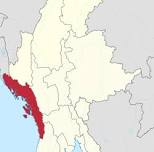
: Earlier, in the 16th century, King Vimaladharmasuriya I of Kandy sent a mission to the
to restore the Sangha after a period of decline. The Arakanese monk Nandicakka traveled to Sri Lanka to perform the upasampadā ceremony for members of the royal and noble families.
The British “Reneging” on Article 5
Article 5 of the Kandyan Convention of 1815 explicitly declared that “The religion of Buddhoo… is declared inviolable, and its rites, ministers, and places of worship are to be maintained and protected”. However, the British authorities soon faced pressure from Christian missionary groups and domestic political interests, leading them to distance the state from its role as the official protector of Buddhism. This breach of promise significantly contributed to the Uva Rebellion of 1818, as the Kandyan chiefs and clergy felt betrayed by the colonial government’s failure to uphold its religious obligations.
https://share.google/aimode/Fyb6vwTi7sGP2gHaR
Source: AI Overview