Minister of Health and Mass Media Dr. Nalinda Jayatissa said the highest-ever allocation of funds for the health sector will be made in this year’s budget proposal.
Dr. Jayatissa revealed this today (02), while speaking at the inauguration of the first and only bone marrow and hematopoietic stem cell transplant unit in a government hospital, established at the Apeksha Cancer Hospital in Maharagama.
This was made possible through the financial support of the Ruhunu Maha Kataragama Devalaya and the dedicated labor contribution of the Sri Lanka Air Force (SLAF).
The Ministry of Health is usually a place where any government will provide funds if asked. More funds are allocated from the Treasury every year to the Health Ministry than even the ‘Kataragama Deviyo’. But this year, the highest amount of funds ever allocated for the Ministry of Health in history will be set aside in the budget”, the Minister noted.
The Minister highlighted the ongoing support the Ministry receives, both locally and internationally, to further strengthen the health sector, stating, The Ministry of Health is backed not only by local tycoons but also by foreign and international institutions at times. What we aim to do is systematically and strategically deploy all these provisions,” he explained.
Furthermore, Dr. Jayatissa emphasized that the development initiatives would no longer be driven by political considerations.
From now on, we cannot cater to anyone’s sentimental desires based on political expediency. We are implementing these developments as part of a national plan that spans the next 20 years,” he affirmed.
While acknowledging that many NPP Members of Parliament may have aspirations to upgrade their local hospitals, the Minister stressed the importance of aligning those ambitions with national priorities.
The first and only Bone Marrow and Hematopoietic Stem Cell Transplant (HSCT) Unit in a government hospital in Sri Lanka for children with cancer was inaugurated at the Apeksha Cancer Hospital in Maharagama today (Jan. 02).
This interesting and valid article was crowned with colour photographs of you with theIndian President and the Highest Representatives of the US and China, in Sri Lanka.
Embedded in the article she states “....While the old guard disappointed the nation bythe selfish governance, how far a new & inexperienced Parliament can handle the hawks & eagles both locally and internationally has to be a cause for concern.” I endorse that statement to beabsolutely correct.
I mentioned my concern to you in my letter of December 10, 2024, in which I said: “I also want you to be aware of the Greeks who will come to you bringing Gifts. Be careful as you are precious tothe people at home and abroad….” Greeks especially wearing silk turbans.
I notice that the first photo crowning that article is of you with India’s President shaking hands.The rightful thing to do but I cringed. This is the President of the same India who trained the Tamil Tigers In 32 military camps and sent them back to destabilize Sri Lanka in jackboots, khaki fatigues and cradling Kalashnikovs like babies in their arms, and with garlands of live bullets around their necks as if doing their Haro-hara Kavadi dance entering a sacred Kovil.
But then all that happened in the 1970s, and 80s. Perhaps the brotherly love of good neighbours have reformed themselves to be loving, caring and spoon-feeding Love to their younger Brother.
But I am going to take this opportunity to inform you of part of my compendium that your “research staff” (NOT of the Ministry ofForeign Affairs) could brief you after reading about the Once-upon-a-Time India’s brotherly love on its southern “Tear drop” neighbour..
These are letters authored by me to expose the flip side of India’s involvement in the Tamil Eelam War, which was a necessary evil, to inform of my TRUTH to Sri Lanka-Watching Canadians who had been brainwashed by the Canadian-separatist Tamils and their sympathizing bloc-vote soliciting, Canadian Liberal, Conservative and NDP parliamentarians, and newspapers to provide the flip side of the TRUTH of the Eelam War. And the meddling India’s involvement which Sri Lanka’s High Commission in Ottawa shied away to talk of , due to Diplomatic neighbourly niceties … ” no you don’t ruffle India’s’ Lord Vishnu’s-peacock feathers which has atangible connection with the divine.”
Here are 20 from over hundreds of them.
1. Separatist terrorists rend peaceful isle of Sri Lanka by Asoka Wereasinghe, THE WINDSOR STAR, Monday, September 10, 1984′
2. Meddling In Sri Lanka by Asoka Weeeasinghe THE GLOBE & MAIL, Toronto.8 September, 1984
3. Sri Lanka’s Ethnic Strife – India’ Role by Asoka Weerasinghe, THE OTTAWA CITIZEN, December 14, 1984
4. Neighbourly Relations by Asoka Weerasinghe,THE GLOBE & MAIL, Monday, January 28,1985
5. Tamil Tigers by Asoka Weerasinghe, THE OTTAWA CITIZEN, Friday 15, 1985
6, Sounds familiar by Asoka Weerasinghe, THE GLOBE & MAIL, Friday , July19, 1985
7. Tamil Problem is also India’s by Asoka Weerasinghe, THE GAZETTE, Montreal ,Monday July 22, 1985
8, Sri Lanka’s fears by Asoka Weerasinghe, THE OTTAWA CITIZEN,Thursday, August 8, 1985
9. It takes two to feud by Asoka Weerasinghe, THE GLOBE & MAIL, Wednesday, March 26, 1986
10. Sri Lankan woes by Asoka Weerasinghe, THE OTTAWA CITIZEN , Monday, May12, 1986
11. Sri Lanka horror by Asoka Weerasinghe, THE OTTAWA CITIZEN, Friday, May 23, 1986
12. Sri lanka blood by Asoka Weerasinghe,THE OTTAWA CITIZEN, Thursday, May 29,1986
13. Lankan strife by Asoka Weerasinghe, THE OTTAWA CITIZEN, Friday, June 27,1986
14, Tamils blamed by Asoka Weerasinghe, THE OTTAWA CITIZEN, Thursday , July 3, 1986
15. Maintain friendship with Sri Lanka by Asoka Weerasinghe , THE EVENING TELEGRAM , Newfoundland,.
Thursday, October 16, 1986
16. Indian move by Asoka Weerasinghe, THE OTTAWA CITIZEN, Tuesday, December 2, 1986
17. Tamil bases by Asoka Weerasinghe,THE OTTAWA CITIZEN, Friday, December 19, 1986
18. Tamils return home by Asoka Weerasinghe,THE GLOBE & MAIL, Monday, March 9, 1987
19. Lankan record by Asoka Weerasinghe, THE OTTAWA CITIZEN, Friday, March 13, 1987
20. Lankan murders by Asoka Weerasinghe, THE OTTAWA CITIZEN, Frid, May1, 1987
Dear President Anura Kumara’
May the New Year bring you warmth, love, light, wisdom, health, and strengthto guide you along your visionary path to positive and successful destinations.
I hope my 1970s and 80s compendium will make you understand the Once-upon-a-timeneighbour,India, who tried to destabilize your wonderful sovereign nation.,Sri Lanka, who was under stress for 30 long bloody years, in which your armed forces won the Eelam War on 18 May 2009. They gave back 20 million of your people their Right-to-Life which had been hijacked for 30 years by the Tamil Tiger terrorists..
The most decorated military officer of the Sri Lanka army has retired from all military posts after 41 years of service to the nation. These years saw most violence in the island nation. He was also one of only two four-star Generals of the army. He commanded not only the 58th Offensive Division of the army during the Humanitarian Operation (2006-2009) but also simultaneously commanded the Commando Regiment. A tremendous achievement. He made the most contribution to the 2009 military victory over Tamil terrorism, thanks to which close to 4,000 Sri Lankans of all ethnic groups get to live every passing year.
The youngest ever Brigadier to command an army Brigade in Sri Lanka won the hearts of the Sri Lankans since 2007 during the Humanitarian Operation. His tiger-like eyes captivated them; his achievements won praise from defense commentators and the public. His delicate military maneuvers around sensitive areas during the war showed his incomparable military skills and restraint that must come with great power and professionalism.
His services to the nation didn’t end with the war. In 2010 he was appointed to the UN Office in New York which did a great service to the nation in dispelling false allegations against the military. In 2019 under his leadership Sri Lanka successfully overcame the COVID-19 pandemic despite multiple blunders and delays by politicians.
General Shavendra Silva is known in military circles as an upright professional who always upheld the rule of law. This won him praise from many sections. His role in the 2022 people’s uprising is commendable. He was the army commander until May 31, 2022. He was then promoted to the Chief of Defense Staff role which is a ceremonial role. The power transfer from elected president to an appointed president in July 2022 happened after this event. Sadly, politically motivated people blame the General for not using violence, bloodshed and war crimes against unarmed civilians in order to protect a political clan which the people rejected in total by then. Firstly, Shavendra was not the army commander then and secondly no order was given by the Commander of Tri-Forces (the president) or the defense minister (the president once again) to shoot unarmed civilians. Shavendra and the then army commander acted well within the orders (or lack of orders) as they should.
As it happens always in Sri Lanka, politics sours everything. Achievements of General Shavendra Silva in this context only amplifies them. As he wrote in his parting letter, Shavendra has every right to indescribable bliss he feels at each sunrise. It comes with the knowledge that his action and the action of the military continue to save 11 lives each day; lives that would have been lost untimely in the north and the south, both military and civilian, had the war continued.
Shavendra leaves big shoes to fill. Sri Lanka may not find a comparable replacement for decades to come. We wish General Shavendra Silva the very best and thank him for his selfless service to the nation.
Theater enthusiasts in the newly independent states of South Asia were finding it difficult, if not impossible, to move away from the proscenium arch” theatre introduced by the western rulers. There were two types of theatre going on, traditional and modern, rural and urban. The main challenge faced by them in the 20th century was how to combine these two into a single theatre style.
India’s Theatre of Roots” was trying from 1960s to develop a modern dramaturgy based on the indigenous tradition. The first successful effort, Hayavadana by Girish Karnad, a Kannada language play with music, dance and drama based on Yakshagana appeared only in 1972. Sarachchandra’s Maname appeared long before this, in 1956.
Sarachchandra in Sri Lanka was the first dramatist who was able to find a successful solution to this post colonial issue, said K.N.O. Dharmadasa. Sarachchandra was the first to overcome this obstacle. [1] In Maname we saw traditional theatre fully transformed into a modern work of art.
No other folk theatrical form in the region had been fully transformed into a modern work of art before Maname in 1956. Therefore Maname was of momentous significance in the annals of South Asian theatre, said Dharmadasa . The birth of Maname is of world significance, he added.
The explosive new direction Sarachchandra gave to the Sinhala theatre with his experimental work in Maname was a high point not only in Sarachchandra’s creative career[2] but also in the history of modern Asian theatre. But it is doubtful whether the importance of this achievement has been understood by Sri Lanka dramatists, even today, observed Michael Fernando(2018).[3]
In the 1940s an attempt was made in the Colombo University by Prof. E.F.C. Ludowyke to introduce European theatre to the local audience. Ludowyke got down a theatre director from Europe, Jubal, to direct one of these plays. Several European works were translated and staged with great skill by Sinhala actors. Sarachchandra was part of this group. He translated and directed plays by Moliere and Chekov.‘
Sarachchandra soon realized that an authentic Sinhala theatre could not be developed in this manner, reported Dharmadasa. European plays were unable to bring to our audiences an artistic experience which could penetrate deep into their minds, Sarachchandra said. A national theatre could not be developed on comedies alone, either.
Sri Lanka needed a serious theatre that could satisfy an audience with good taste. a truly indigenous theatre must address deep aspects of the human condition, and provide a soul stirring experience penetrating deep down into the very bone marrow, said Sarachchandra.
By 1952 Sarachchandra decided that the modern dialogue play in Sri Lanka had come to a dead endsaid Michael Fernando. Sarachchandra started to look for a traditional dramaturgy through which serious problems could be discussed on stage.He did a thorough study of the indigenous theatre in Sri Lanka and wrote it up in The Sinhalese Folk Play, (1953). He attended performances of thovil, kankariya, gammadu, sokari, kolam and nadagam.
My view (Kamalika Pieris) is that many aspects of our traditional culture are theatrical anyway, whether we realize it or not. The rituals are pure theatre, that is if you can stay awake to watch and if you do not get bored halfway. The demons, in their masks, are expected to make a dramatic impact, that is part of the cure .They cannot just sit with the mask on. There is plenty of dialogue in our folk theatre and it is left to the speakers to make it interesting.
There is performance elsewhere too. In the paddy field, the ‘hoo’ is meant to be heard miles away. Kavi are usually sung out loud, full throated. The kavi maduwa of the Udarata king was a performance. Udarata and Ruhunu dance are martial and dramatic, not slow, graceful and anemic. Ruhunu dance is in my view very aggressive, probably very difficult too.
The drummers do not simply make a noise, they project. Look at their foot movements and the toss of the head when they drum in formation. Raban playing is joyous and vigorous, not solemn and boring. In my view, Sri Lanka is ideal for experimenting with traditional forms to make new theatre. Sarachchandra was in the correct place at the right time.
In 1954 Sarachchandra had an opportunity to travel to the USA via India and Japan to observe theatre. He did not find any serious theatre in India, but was attracted by the Noh and Kabuki traditions of Japan. Sarachchandra would surely have known of Noh and Kabuki long before he visited Japan. The performances he saw could not have been a surprise. I think ( Kamalika Pieris) that the performances he attended showed him something he did not expect. That traditional Japanese theatre was popular with the contemporary Japanese audience. They found it very palatable. If that was so in Japan, why not in Sri Lanka.
For his first try at a modern-cum-traditional play, Sarachchandra decided on the nadagama tradition. Sarachchandra had seen nadagama at first hand, he knew the form intimately and was comfortable with it. [4] He opted for the Sindu nadagama style for his play and for the story he selected Chulla Dhanuddara Jataka with its complex theme. He added a chorus and used very refined language.
A Note” written by Sarachchandra was handed to the audience on the first night, November 3, at the Lionel Wendt Theatre. In this A Note to the Production” , Sarachchandra stated ” the aim of this experiment is both to explore potentialities a traditional form may possess in the search for an indigenous tradition in drama as well as to bring to light another type of play which may be enjoyed on its own merits.”
Maname had never been a sindu nadagama before. Sarachchandra’s Maname was therefore an original creation. It was a modern work presented to a modern audience by a modern dramatist, said Sarath Amunugama. It was considered an outstanding work. It had depth. It had a complex theme which could be analyzed in various ways. It had appeal. Sarachchandra’s poetic language and music still enthrall his audiences, said Ranjini Obeyesekere, in 2014.
Sarachchandra was able to find a new dramaturgy based on the folk tradition of Sri Lanka with the production of his play Maname” in 1956, said Michael Fernando. With this production he introduced to Sri Lanka a dramaturgy that could overcome the limitations of the Western naturalistic theatre and the moral values which were prevalent in the contemporary Sri Lanka society. He further developed this dramaturgy in his later play Sinhabahu.
Fernando said that Sarachchandra was able to invent a dramaturgy that can be compared with the epic theatre introduced by Brecht. He was able to identify the epic elements that were inherent in Asian theatre.
When one compares him with other great 20th century experimental dramatists of the world it is clear that very few had the linguistic, intellectual and creative skills he possessed. He was philosopher, academic, researcher, novelist, short story writer, literary/theatre/social critic, and last but not least, a great poet, Michael said.
Sarachchandra was conversant with Western and Eastern languages such as English, Sanskrit, Pali and Sinhala. (I wish to add that he would also have studied Latin and Greek in school.) His Ph.D from University of London was not in literature, it was in philosophy. His thesis was on”‘ Buddhist Psychology of Perception”
The importance of Sarachchandra is that he was able to find solutions to all or many of these challenges faced by contemporary world theatre in the context of Sri Lankan theatre. In this sense Sarachchandra can be considered as one of the most effective experimental dramatists anywhere in the world, said Michael Fernando.
But he is not well known in the world. The main reason for this is that he wrote and directed plays in the Sinhala language, which is used only in Sri Lanka . This writer( Michael Fernando) also has some doubts about whether Sarachchandra himself was aware of his importance as one of the greatest experimental dramatists of the 20th century, said Michael Fernando. ( Continued)
Sri Lanka does not possess an abundance of physical resources for large-scale industrial development but is blessed with ample human resources. It is on this comparative advantage that the country has to develop its economy. Education is the driving force with which the optimal benefit could be derived from this rare advantage and is the key to developing competitiveness and excellence. High-performing countries in the Far East considered relevant education as the foundation of economic development and social advancement. They focused on developing human capital in science and technology and vocational skills as they are pivotal to economic development.
It is most encouraging that on the 27th December at the Bandaranaike memorial International Conference Hall, Prime Minister Dr. Harini Amarasuriya had stated: For a country, a nation, or a society to develop, it requires individuals with diverse skills. Our government is committed to ensuring that no one is left behind in the education system. Youth must acquire skills that are directly relevant to achieving full employment, and we must foster a workforce with entrepreneurial capabilities. This approach will help bridge the skills gap between the labor market and the youth community.”
This is a significant departure from the traditional educational policies practised in the country since its independence. It is a radical measure after Kannangara Reforms of 1947. of aligning the educational system with the needs of the market. The 1944 the Kannangara education reform was a landmark event in education policy in the country. It was radical and futuristic. Other than ‘free education from preschool to University ‘ Kannangara Committee proposed:
Establishing three types of schools – Secondary, Senior, and Practical Schools,
Introducing Vernacular medium of instruction at Primary level and bilingual or English,
Medium schools for Junior Secondary level and English schools for Senior Secondary and higher education.
The Committee believed that although the educational system should be closely related to the present needs and conditions it has also to be planned with due regard to all possible lines which future development is likely to take. The development of education must not only keep pace with a country’s advance but should definitely contribute to accelerating the pace of the advance.”
But in the implementation and subsequent years the need for education policy to be attuned to future needs was ignored. The concept of Practical Schools was not pursued seriously. It was limited to Farm Schools and Technical colleges. Even one of the prominent members of the Committee Sir Ivor Jennings had doubts about the country needing a large number ie. 15 % of Schools leavers every year with commercial and technical qualifications. He did not see any evidence that the Island is likely to be able to absorb even half that number.
The result was that the SL school education system became ‘tutories’ preparing students for examinations based on the British system. The Universities too concentrated on general education producing a large number of unemployable graduates. The existing plicy makers and practioners in education did not deviate from their comfort zone of general educaion and only made improvements of the syllabuses in the school curiculums.
An attempt to introduce an element of practical education in the form of the NCGE for School leavers during the government of Mrs. Bandaranayake was scrapped by the next government falling back on the SSC. While SL deliberately ignored technical education with independence India established in 1950 five Institutes of Technology (IITs) in the main States of the country. These IITs were modeled on the best examples of higher technical education from Germany, Russia, the United Kingdom, and the United States. They have been the cutting edge of technology development in India and are highly recognized internationally. Many of the CEOs of leading high-tech firms like Google, Infosys and IBM are alumni of the Indian IIts.
In many countries vocational and technical education are combined as Tve. That gives vocational education better acceptance. Even in Sri Lanka it would be better if Technical Education is brought under the Prime Minister in combination with the present portfolio of Vocational Education. It will remove the bias against vocational education as handwork (Athweda).
An education policy not aligned with technology and industrial policies of the country would be irrelevant, unimportant and an expensive luxury. It creates more problems of unemployment, dissatisfaction and social disharmony than positive outcomes. It is not surprising that there is no coherence among these policies as Sri Lanka does not have an Industrial Policy or a Technology Policy. An integrated policy package of these three vital policies is the pressing need of SL at this moment.
The fast-paced evolution of technology necessitates a workforce that can adapt to new tools, platforms, and methodologies. Integrating education with technology ensures that students and workers are equipped with relevant skills such as Digital literacy,Programming and data analytics and Problem-solving using AI and machine learning, Industrial policies aligned with technological advancements can drive the adoption of these skills in industries, fostering a seamless transition from education to employment.The synergy of education and technology nurtures innovation which is the driving force of development In just a few decades, South Korea has transformed itself from an underdeveloped nation to an industrialized country exporting high-technology products (Domjahn 2013, p. 16). Much of this development has been attributed to improvements in the country’s education system. Various South Korean and international scholars (Ellinger and Beckham 1997; Han 1994; Kim 2000) have credited the nation’s economic success to an efficient education system that provides the quality workforce necessary for economic expansion. /Users/sugath/Desktop/h https:/www.researchgate.net/publication/284831895
China,Republc of Taiwan is an Island smaller than Sri Lanka with a similar population. Before the 1980s it was a predominantly agricultural economy. Today it is a high-tech powerhouse leading the world in a number of high-tech industries. It has a per capita income of 36, 000 dollars. At the beginning of the 1980s, Taiwan increased the ratio for senior vocational schools and general high schools to 7:3. By 2012 there were 155 senior vocational schools, 14 junior colleges, and 77 universities/colleges of science & technology, totaling 246. It is the education system that has sustained the significant development of this small nation.
It is fervently urged that the proposed visit of the President to China be made use of to canvas for the establishment of a Chinese Technical University in Sri Lanka. Establishing a Chinese tech university or collaborations with existing institutions can provide advanced technical education and skill development opportunities for Sri Lankan students in fields such as AI, robotics, cybersecurity, and telecommunications.
China is a global leader in several tech sectors. A tech university can facilitate the transfer of cutting-edge technologies, helping Sri Lanka modernize its industries. Such a university could act as an innovation hub fostering startups and entrepreneurship in Sri Lanka. Such umniversity couldbe located in the PortCity.
At the moment at least 60 elephants are stranded in Oya Madu area including in the NLDB farm.
These elephants are the subjects of a drive from Thalawa, Galgamuwa, Thambuththegama areas. To please the villagers in those areas, the authorities chased them out of those areas.
They consist of mainly female elephants that live in herds with calves.
They are so precious. We must protect them at every cost.
The Wildlife officials state that they are repatriating ‘problematic’ elephants’ to Wilpattu National Park (elephants who roam the villages of Anuradhapura and Kurunegala).
Some say through instinct these elephants followed the ancient Elephant Corridors and reached Oya Madu.
Obviously, the farmers in Oya Madu are now protesting.
The elephants now seem settled in Oya Madu. Rather than harassing them further, they must be allowed to remain in the farm (this 2000-acre farm is a recent establishment, prior to that it was thick jungle).
Wilpattu is tiny now (again due to deforestation), how can it hold a very large number of new elephants?
Trying to plant most of the Anuradhapura and Kurunegala elephants in Wilpattu is not a bright idea.
The authorities seem to confine the elephants only to the established National Parks like Yala, Wilpattu, Uda Walawe, Wasgamuwa etc? If that is the case, it will mark the end of the Sri Lankan elephant.
Usually an elephant walks scores of kms a day.
Elephants are very intelligent creatures. The wildlife officials must know that the elephants will never travel a route that they want them to travel.
Relocating wild elephants to new jungles faraway is a humongous task. This exercise causes enormous stress to the elephants. As a result they could become injured/sick/violent. The babies could get very traumatized.
Of course, it is an herculean task for the ground level staff. Their lives are in distinct danger.
Why did the Department of Wildlife Conservation embark on such a difficult/impossible project? Who advise them?
Empirical evidence shows that elephants who are forcibly planted in new environments will always return to their previous environments.
We all know the story of the majestic Tusker Panamure. In 1959, the authorities tried to chase away hundreds of wild elephants in Embilipitiya, Rakwana areas to Uda Walawe National Park. It was a very traumatic experience for the wild elephants. In that exercise, ‘Panamure’, the lead elephant showed real leadership and bravery.
It seems the wildlife officials have not learnt a lesson?
Because they destroy crops and cause other damage, everyone blames the elephants and other wild animals. Many now want these animals (thankfully not the wild elephants) slaughtered.
This shows our lack of fresh thinking and compassion.
We do not seem to have other solutions than the easy method available– slaughter.
It is the humans that encroach into jungle land, not vice versa.
Today there is very little genuine jungle area left for the wild elephants and other animals to roam. It could be around 12% of the country’s total land mass (in 1948, it was 49%).
The Agriculture Minister in the Parliament stated that farmers can do whatever they like to resolve the wildlife menace in their own compounds. Effectively, he was sanctioning the killing of these precious animals.
It is very easy to obtain an air rifle now.
Some Youtubers are demanding that monkeys should be killed en mass immediately.
What is happening to this Buddhist country? Like the writer, there are many in this country that not only refrain from killing animals, they do not even eat animal flesh. That is the Buddhist practice we have in this country.
According to Buddhism (and some other religions), all beings have a right to life.
Will killing the wild animals permanently solve this problem? Definitely No.
It is a very cruel way of trying to solve a complex problem.
These creatures have been here much before us.
There are some foreigners living here (and some locals too) who love the taste of wild animal meat – monkey, wild boar, peacock, porcupine, rabbit etc. Since we are so cash trapped, are we trying to create a new bush meat market?
Real human – elephant conflict arose as a result of the Accelerated Mahaveli Program of 1978. After 1994, the conflict grew rapidly. True governments spent large amounts of money to solve the problem, but most of these projects were failures.
This current Oya Madu operation is an extremely expensive exercise.
Again, it seems the new rulers too do not have a sustainable solution to the problem. They try to make things upside down. Oya Madu is an example.
Trying to meddle with the natural environment is a foolish thing. The Accelerated Mahaveli Program effectively ‘killed’ the Mahaveli river. Due to the build up dams (numerous) and the diversion itself, Mahaveli has lost water. One could visibly see this in Polgolla, Thennekumbura, Kundasale areas. The large, shark-like fish (some capable of growing to over 8 feet in length) are no more. They have become extinct.
The last thing the authorities must do is to effect experiments with the nature. This includes the wildlife.
Again, farmers constantly encroach into jungle areas. They are so greedy for land. As a result, when the elephants arrive in farmers’ lands, they blame them. This is the case in regards to other wild animals too.
Politicians – no matter which party they belong to pay a blind eye to this because it is the people who vote for them, not wild animals.
In the human – elephant conflict the governments have always taken the farmers’ side. They show a clear bias for them. This is not how developed western nations behave.
Farmers who encroach jungle land, those who commit illegal deforestation and indiscriminate killing of wild animals must be brought before justice. Unfortunately, this is not happening well.
Instead, we try to take revenge from wild animals. There is so much animosity against wild animals these days.
The stolen jungle lands by farmers must be reverted to jungle. They amount to thousands of acres.
Rather than decreasing, the governments must try to increase the country’s forest cover.
Erecting strong electric fences is one solution. Farmers who try to electrocute elephants using high voltage lines must be prosecuted and given long jail sentences.
In Himachal Pradesh sterilization of wild monkeys has been a success.
Of course these methods are expensive and time consuming (for vote grabbing, our governments want to show quick results).
Sterilization is a good method for Sri Lanka.
India will never sanction the slaughter of its wildlife.
The government wants more tourists to visit Sri Lanka; the tourists want to see wild elephants and other wildlife. At the same time, the government indirectly promotes the harassment and slaughter of wild animals.
Donald Trump was elected the President, has some experience at McDonalds!
But Elon Musk is acting like the Chief Cook & the Bottle Washer! Above the President. He Fears Not!
The Richest SuperMan is Not Frightened of MAGA!
Elon with his Powerful MEGA Dollar Punch, Donald Trump although President, must watch both his Trumpet Step & the Dongle Lips!
In the meantime, Federal Reserve Chair Jerome Powell in a press conference Wednesday reminded markets, Who’s Boss!! ——ME!:
Then the LBGTQ Lost their skirts & pants!
Do you agree with Donald Trump announcement that there in the USA, will be Two Genders, recognised as only Male & Female?
Is there Any Need For Russia – Ukraine War Now?
In Simple Terms, Russia Started the Illegal Land-Grab and Now Wants to End the War! No Winner!
Outside USA, guns galore with both war-weary Russia & Ukraine feeling the artillery should belong to yesterday, both acting like two orchestras without the Conductor!
The main issue is that Ukraine is now Redundant as a key country for NATO. The two Gems Finland & Sweden joined the NATO giving the best trained professional fighting forces with state-of.the-art weaponry and funding.
The Battle of the MAGA & MEGA!
MAGA Warriors now have to listen to MEGA Rich led by Elon Musk playing his Trumpet whilst kicking the drums concurrently!
Elon Musk ‘melts down’ after underestimating wrath of MAGA trolls.
No Person is Safe in USA!
Triple The Security Detail!
Main Agenda for Battle in 2025!
Nett Worth – Immigration – Civil War with GOP – MAGA-verse over H-1B Visa’s.
Trump Team is based on their Nett Worth!’
No Money? No Honey! OK?
Immigration?
Most Americans are Immigrant!
Should All be Kicked Out including Donald Trump?
Civil War with GOP?
Trump Wants War.! Divide & Rule!
MAGA-verse over H-1B Visa’s.
MAGA is History.
Trump Style – As the sun rises, so do new decisions!
I wish You All the
Greatest in Peace, Health & Prosperity
for You & Your Family
during 2025 & Beyond”
Express Your Opinion – Read What Others Say! The Independent Interactive Voice of Sri Lanka on the Internet.
Police in America need a great deal of reform, a project that translates to freeing them from the racist nature of U.S. culture while tying them more firmly to the culture of civil and human rights. Not easy, but certainly a worthwhile task compared to maintaining the present situation. Here is another perspective: what would happen if all the police in the country just disappeared or were defunded”? Almost certainly the result would be a breakdown of order. Actually, according to the philosopher Thomas Hobbes, this would be an absolutely worse case scenario, because just about anything is better than anarchy, which he likens to a war of all against all. Putting a deeper analysis of Hobbes aside, I am going to assume that most readers would agree with him—though perhaps not with his soft spot for dictatorial substitutes (see his seminal work, Leviathan).
Ok. Let’s now transfer that second perspective—anarchy in one society—to the international order. Actually, we are close to this very situation. What rules and regulations that exist to, supposedly, put limits on the behavior of states have been eroding for at least the last fifty years. Indeed, the U.S., acting out in places as disparate as Vietnam and Iraq has shown how great powers” can thumb their virtual noses at the legal foundations of civilization. Just as an aside, the U.S. is also the Dorian Grey of great powers.” This is because while behaving barbarically, the United States claims to represent the very model of enlightened behavior. Other great powers” such as Russia and China have played their own roles in this plague of barbarism, but the U.S. displays the most hypocrisy.
This being the case, is it any surprise that it is Washington’s primary client state—namely Israel—that is now pulling down the whole fragile structure of international law and order—and doing so with the steadfast help of America and other Western states?
Irony
There is much irony here, for the nature of Israeli behavior that is presently threatening international law reflects anarchistic Nazi behavior in the 1930s and 1940s. We remember Nazi Germany for two main reasons: (1) The waging of war not in self-defense but for the sake of territorial expansion. The Nazis justified this aggression mainly with the concept of Lebensraum”, the acquisition of territory for colonization by an expanding, racially superior, German population. And what of the native populations of these conquered areas? (2) The answer to this question constitutes the second reason we remember the Nazis. These populations were slaughtered—partially through the massive aerial bombardment and executions of civilians within occupied territories. Unique, as of yet, to the Nazis was the institution of the mechanized mass murder in concentration camps. Of course, the main, but not only, victims of these camps were Europe’s Jews.
So how does today’s behavior of Israel, backed by its patron the United States, remind us of the Nazi disruption of international order? (1) Israel has evolved—driven by the very logic of Zionist ideology—to proclaim itself a state of Jewish supremacy. As described by B’Tselem, Israel’s own human rights organization, Israel seeks Jewish supremacy from the Jordan River to the Mediterranean Sea.” Today, we call this apartheid which international law and convention has designated a crime against humanity.” (2) Since its inception, Israel has coveted all the land of Biblical Israel, i.e. Gaza, the West Bank and other parcels of territory, as divinely designated lebensraum” for the Jewish people. Presently, the ethnic cleansing of the Gaza Strip is being done in preparation for Israeli colonization. (3) That ethnic cleansing is perpetuated primarily by massive bombardment from the air and artillery barrages that reenact both the Nazi tactic of blitzkrieg and the U.S. tactic of shock and awe.” (4) While there has not been a literal replication of the Nazi concentration camps, Israel did transform the Gaza Strip into the world’s biggest open air prison.” And then, following the October 7, 2023 Palestinian act of resistance, they transformed the Strip one more time into a simulation of the last days of the Warsaw Ghetto—also destroyed (in 1943) by the Nazis for an act of resistance. (5) Finally, please note that all of the above are acts of the Israeli state and its Zionist supporters, and not of the Jewish people as a whole. The effort by Israel to identify all Jews with both its ideology and its crimes is the equivalent to the Nazis going to war in the name of all Germans. Neither claim is true.
On a Knife’s Edge”
There are plenty of authoritative statements as to the consequences of Israeli actions on international law and order. For instance, the 20 November 2024 comments of Francesca Albanese, the UN special rapporteur on the situation of human rights in the Palestinian territories occupied since 1967. Albanese said, The failure of the world’s states to stop Israel’s ‘colonial erasure’ of the Palestinian people is putting international justice on the edge. We might lose what we have, what we have built .… International law is on a knife’s edge.” On 3 December 2024, Ramzy Baroud, a well respected American-Palestinian journalist and writer, observed that until the recent behavior of Israel made clear that state’s true nature, the West had accepted the entire Israeli political discourse [that] situated [the Zionist state] within western priorities and supposed values: civilization, democracy, enlightenment, human rights and the like.” As a consequence the international legal system has historically failed to hold Israel … accountable to international law.” This includes the utter failure of the international community to stop the grisly genocide in the [Gaza] Strip.” UN Secretary General Guterres has concluded that the catastrophe in Gaza is nothing less than a complete collapse of our shared humanity.”
Baroud did note that belatedly, it turned out that the international system has a pulse, after all, though faint, but is enough to rekindle hope that legal and moral accountability are still possible.” He was speaking here of the judgments rendered by the International Court of Justice (ICJ) and International Criminal Court (ICC). The former laid down the high probability that Israel was committing genocide in Gaza—a conclusion supported by evidence brought to the court by South Africa and others, as well as by almost every reputable human rights organization on the planet. The ICC citing this evidence, has issued arrest warrants for the responsible Israeli leaders. Thousands of their soldiers are also under investigation. It will be a long time before any of these folks enjoys a vacation abroad (except perhaps to the U.S. or Hungary) without risking arrest.
Nonetheless, no state is militarily seeking to stop Israel’s ongoing slaughter. If the Israelis rein in their hubris and stay home, their leaders and soldiers may never be brought to justice. The Israelis are betting that time will erase their sins. As David Ben Gurion said (yes, he really did say this), the old [Palestinians] will die and the young will forget.” It is a silly assumption. Just ask young Jews worldwide if they have forgotten the Holocaust. The U.S. government may be hoping for the same pseudo remedy.
Corrosive Blowback
There is another consequence to be considered, particularly as regards Israel’s patron, the United States. As we know, again quoting Ramzy Baroud, the U.S. itself is an unrepentant violator of human rights” and that is perhaps why the American government finds it easy to maintain a strong position in defense of Israel, shaming the ICC for the warrants.” You will remember the observation that this position entails an enormous level of hypocrisy. It turns out that such hypocrisy can be domestically corrosive.
There is such a thing as the Leahy Law, named after former Vermont Democratic Senator Patrick Leahy. Passed in 1997, it prohibits the U.S. Government from using funds for assistance to units of foreign security forces where there is credible information implicating that unit in the commission of gross violations of human rights.” This law restricts both the State Department and the Department of Defense. Thus, Washington’s material support of Israel while its military simultaneously carries out genocide in Gaza, violates federal law. And, they are doing this under orders of an imperial presidency.
There are corrosive consequences of this obvious hypocrisy and flagrant official disregard of U.S. law. Now, federal and local governments seem perfectly willing to abrogate the Constitution on the urging of Christian fundamentalists and Zionist ideologues. As a consequence the Constitutional rights of free speech and assembly are being selectively suppressed. Authorities are shutting down the non-violent protests and arresting young idealists (mostly students), faculty, and many others dedicated to civil and human rights, as well as those who are personally impacted by Israel’s slaughter: Palestinian Americans and American Jews who are horrified at what the Israelis are doing in the name of their religion. And, just as shamefully, university administrators have sold out their educational principles for the donors’ modern equivalent of thirty pieces of silver. More generally, it would seem there is a steady move worldwide to the authoritarian right, including in the United States. This movement tends to align with Israel and the Zionists and therefore, the corrosive effects are likely to get worse before it gets better.
Conclusion
Let’s give the final word to an Israeli journalist, one of the very few who sees and understands what the Zionist state” has really wrought: Gideon Levy, writing in Haaretz (23 December 2024).
Levy notes that this year marks the 80th anniversary of the liberation of the Nazi concentration/death camp at Auschwitz, situated in today’s Poland. He then informs us that the Israeli Prime Minister, Benjamin Netanyahu, will not be attending because there is an ICC warrant for his arrest for perpetrating war crimes. Levy contextualizes this ironic situation as follows: The distance between Auschwitz and Gaza, with a stopover in The Hague [where the ICC holds court], is still enormous, but it can no longer be argued that the comparison is preposterous …. [In fact] one realizes that this distance is shrinking by the day …. And when ethnic cleansing is carried out in northern Gaza, followed by clear signs of genocide throughout the Strip, the memory of the Holocaust is already roaring.”
Levy’s conclusion is that this is a result of a decision Israeli leaders made long ago. With the defeat of the Nazis and the liberation of death camps such as Auschwitz, the Jews were given a choice between two legacies: Never again, the Jews will never face a similar danger, or – Never again, no one in the world will ever face a similar danger. Israel clearly chose the former option, with a fatal addition: After Auschwitz, Jews are permitted to do anything.” And they have done so by a Zionist inspired 75 years of harassment and persecution of the Palestinian people. As a consequence, Israel is now a pariah state,” its Prime Minister is a war criminal, and one realizes that the distance” that divides the practices of the Nazis from those of Netanyahu’s Israel is shrinking by the day.”
Levy’s observations can stand as an epitaph for the illusions of Zionist Israel and its American patrons. It may also introduce us into another historical era of barbarism such as the 1930s and 1940s and thus be an epitaph for international law and order and human rights as well.
Lawrence Davidson is a retired professor of history at West Chester University in West Chester, PA.
MR’s camp to challenge in SC citing security being distinct from privileges
States no objection to reduction of privileges including vehicles/pension
The Government should first distinguish between privileges and security for former Presidents and avoid making decisions solely based on financial factors, said the Spokesperson for former President Mahinda Rajapaksa, attorney Manoj Gamage.
Recently, the National People’s Power Government revised former Presidents’ security arrangements by reducing the number of Police officers in their security details and withdrawing the assigned military personnel.
Speaking to The Daily Morning, Gamage said that they would challenge the Government’s decisions regarding Rajapaksa’s security arrangements in the Supreme Court (SC) within a week, adding that the necessary legal consultations have already been completed.
The privileges and security of former Presidents are two different things. There is no issue in reducing privileges such as vehicles and the pension. But, security is not a privilege – it is about someone’s life. How can security be reduced? Some countries spend billions and trillions to protect certain individuals. Security decisions should always be based on threat levels, not financial considerations,” he said.
He also said that they would present all evidence to the SC to prove that Rajapaksa’s security is at risk when legal proceedings pertaining to the matter commence. Noting that it is the Government’s responsibility to provide security for former Presidents, even if they refuse it, he said: Rajapaksa is the President who ended the civil war. Former President Chandrika Bandaranaike Kumaratunga survived a suicide bomb attack and lost an eye. Former President Ranil Wickremesinghe could also argue his role as a leader who made decisions during the war. When incumbent President Anura Kumara Dissanayake retires, he too should have adequate security. We all know that even individuals involved in organised crime or the drug trade are given security while in remand custody. So, how can anyone deny security to former Presidents?”
Speaking in the Parliament recently, Public Security Minister Ananda Wijepala said that the Government had decided to withdraw all tri-forces personnel assigned to former Presidents’ security, and this decision was put into effect early last week. Consequently, only the specified numbers of police officers remain in their security details. Henceforth, security arrangements for former Presidents are to be adjusted based on biannual threat assessments, with the Government aiming to save around Rs. 1,200 million annually by making these changes. Furthermore, henceforth, Special Task Force security will only be provided to the sitting President and Prime Minister.
Omar Lebbe Ameer Ajwad, Sri Lanka’s Ambassador to Saudi Arabia (Asharq Al-Awsat)
Sri Lanka’s Ambassador to Saudi Arabia Omar Lebbe Ameer Ajwad revealed ongoing efforts to establish a strategic partnership with Saudi Arabia and implement 10 signed agreements across various sectors to foster mutual growth.
Such efforts also aim to launch collaborations in projects aligned with Saudi Vision 2030, with hopes of boosting bilateral trade and investments in technology and agriculture.
The diplomat highlighted that the inaugural session of the joint committee between the two countries, held in 2023, identified 63 areas of cooperation spanning 20 sectors, including the economy, science, defense, technology, culture, youth, and sports.
He noted that Saudi Arabia has been a long-standing development partner for Sri Lanka. Over the years, the Saudi Fund for Development has extended $438 million (1.5 billion SAR) in concessional loans, financing 15 development projects in the country.
Among these projects are the Colombo Water Supply and Sewerage Project (1981), Kinniya Bridge—the longest in Sri Lanka, the Neurotrauma Unit at Colombo National Hospital, the Kalu Ganga Development Project, the Medical Faculty at Sabaragamuwa University, the Wayamba University Township, and the Peradeniya-Badulla-Chenkaladi Road.
Ajwad stated that Sri Lanka and Saudi Arabia have so far signed 10 bilateral agreements and memorandums of understanding (MoUs) in addition to other agreements under consideration. These cover aviation services, customs duties, workforce, economy, trade, investment, technology, culture, skills verification, youth and sports, political consultations, avoidance of double taxation, and foreign direct investment.
With the implementation of Vision 2030, Ajwad emphasized that bilateral relations are entering a new phase, particularly in 2024 as the two countries celebrate 50 years of diplomatic ties. He noted that collaboration opportunities include the Colombo Port City Special Economic Zone, tourism and hospitality, agriculture and food security, renewable energy, and information and communications technology (ICT).
The official further mentioned that Saudi Arabia is Sri Lanka’s 24th largest export market and 11th largest source of imports, with plans to expand economic cooperation in trade and investment. In 2023, Sri Lanka exported goods worth $99.9 million to Saudi Arabia, while imports from the Kingdom amounted to $288.84 million.
Key Sri Lankan exports include tea, rubber products, fruits and vegetables, frozen fish, coconut products, and cloves. Imports from Saudi Arabia primarily consist of petroleum oils, liquefied petroleum gases, fertilizers, chemicals, and plastic products.
Ajwad also highlighted potential value-added exports to Saudi Arabia, such as spices, tea, kithul products, coconut-based goods, fresh produce, processed foods, organic agricultural products, and seafood. Sri Lanka’s industrial exports to Saudi Arabia include rubber products, gemstones, jewelry, apparel, ceramics, and porcelain.
He noted that Sri Lankan companies have also invested in Saudi Arabia, including Sierra Construction, which operates in the electromechanical sector.
The ambassador said that Saudi Arabia’s Minister of Economy and Planning, Faisal bin Fadhil Alibrahim, discussed creating an economic roadmap during his recent visit to Sri Lanka, which covers trade, investment, energy, tourism, cultural exchange, digital transformation, and employment opportunities.
In the second half of 2024, Sri Lankan companies participated in major international exhibitions in Saudi Arabia, including the Riyadh Travel Fair 2024, Saudi Food Expo 2024, Saudi Agriculture Exhibition 2024, the Saudi Workforce Exhibition, and the Saudi International Handicrafts Exhibition (Banan).
Ajwad emphasized that bilateral relations have seen significant growth since the establishment of diplomatic ties in 1974. Sri Lanka opened its first embassy in Jeddah in 1983, which was later relocated to Riyadh in 1985. Saudi Arabia established its first resident embassy in Colombo in 1996 and appointed its first ambassador in 2001.
Since the 1980s, many Sri Lankans have traveled to Saudi Arabia for work. Today, an estimated 200,000 Sri Lankans reside in the Kingdom. At the same time, Sri Lanka has become a preferred travel destination for Saudi tourists.
The diplomat stressed that the two countries have maintained strong ties at bilateral, regional, and multilateral levels. They cooperate in organizations such as the Non-Aligned Movement (NAM), the Indian Ocean Rim Association (IORA), the Asian Cooperation Dialogue (ACD), the ASEAN Regional Forum (ARF), and various United Nations bodies.
In 2024, Sri Lanka and Saudi Arabia will celebrate 50 years of diplomatic relations—a significant milestone reflecting the depth of their friendship and strategic partnership. The economic ties between the two nations trace back centuries to trade in goods such as pearls, gemstones, sandalwood, cloves, cinnamon, pepper, coconuts, and ivory.
On the first working day of the New Year, the government launched its Clean Sri Lanka programme, aimed at ‘rebuilding a fractured nation’ as described President Anura Kumara Dissanayake. An 18-member Task Force was appointed by the President himself in order to plan and implement the programme. The appointment of this Task Force and its objectives were made official via an Extraordinary Gazette Number 2415/59 dated 19 December 2024.
In his New Year message, President Dissanayake mentions that some of the government’s primary developmental goals include eradicating rural poverty, implementing the Clean Sri Lanka” initiative, and building a digital economy. The ‘Clean Sri Lanka’ initiative, launched alongside the New Year, aims to uplift society to greater heights through social, environmental, and ethical revival. This is particularly true for a country that is striving to become a cleaner city, despite having slogans reflecting similar messages. For instance, even though the Colombo Municipal Council carries the tagline ‘Keep the city clean’ little progress has been made to resolve the solid waste management crisis within the Western Province. As a solution to this crisis, the Kerawalapitiya waste-to-energy project was subsequently initiated in 2021. The plant has a capacity to incinerate 600-800 tonnes of waste every day and provides 10 MW of electricity to the national grid.
But this power plant is built on the borders of the Muthurajawela wetland. Despite the government’s efforts to strive for a cleaner Sri Lanka, certain practical challenges and discrepancies need to be cleared. Even though Colombo has been acknowledged as a RAMSAR wetland city, the city is inundated with floods even during the slightest rain. Even though the Muthurajawela wetland is known to be the ‘Lungs of Colombo’, this protected expanse of land has been heavily encroached by private companies to a point where the entire wetland is now under threat of becoming a mega industrial park. On the other hand, more wetlands are being filled with solid waste to construct commercial projects and all these efforts seem to be short-sighted decisions to resolve the solid waste management crisis. Waste, on the other hand is a lucrative business and it is a known fact that somebody allegedly had a vested agenda to make a buck out of the waste containers that came all the way from UK in 2019.
While wetlands in Colombo and suburbs continue to be encroached, while the government is trying to resolve the solid waste management crisis, while more trees that once punctuated the roads in Colombo continue to be felled, one certainly may wonder as to why they need to care about the environment anymore. In addition, environmentalists and conservationists were heavily criticised over the past few months for advocating against certain short-sighted decisions taken by the government. Such behaviours by the political leadership had occurred in the past as well. During former President Gotabaya Rajapaksa’s tenure, various ad hoc decisions were taken as means of protecting the environment but they proved to be futile. One of them was the ban on single-use plastics and sachet packets. Despite being a significant move to protect the environment, there had been poor monitoring and law enforcement on the part of the authorities.
The government needs to be appreciated for its effort to launch a programme of this nature to inculcate moral social behaviour among the masses. Recently, the CMC announced that there had been a surge in garbage disposed within the Colombo municipality during the festive season. Almost every nook and corner of Colombo has been littered and one could barely find at least one clean street. But keeping the environment clean goes beyond throwing garbage to a respective dustbin. It requires discipline and moral upbringing.
Even though people have been advised to throw garbage to respective bins, it is only in a rare occasion that one would take the effort to go looking for a dustbin to throw away the waste, not forgetting university students and dedicated groups who continue to conduct ‘shramadana’ campaigns to keep the environment clean.
If the President aims to rebuild a fractured nation through the Clean Sri Lanka programme, then it has to go beyond a programme to fulfil a campaign promise and ensure that all citizens are given a sense of responsibility to keep the environment clean as entitled by Article 28(f) of the Sri Lankan Constitution.
In the run-up to its election victories at the presidential and parliamentary elections, the JVP/NPP combine promised to bring down the cost of living. Today, while a majority of ordinary workers earn between Rs. 40,000/- to Rs. 60,000/- per month, the cost of providing a family of four, three meals a day (breakfast, lunch and dinner), costs over Rs. 100,000/- per month!
To make matters worse, bad weather intervened and over 300,000 acres of paddy and vegetable cultivation during the last season were destroyed.
Unsurprisingly, there is a shortage of both rice and vegetables in the market. In an earlier era government used to maintain buffer stocks of paddy to meet sudden drops in production and or unexpected disasters.
However, with the advent of the open economy introduced by late president J.R. Jayawardene, paddy harvests were increased and stored in go downs of paddy millers. State banks bankrolled their operations. As time went on, a few millers cornered the purchase, milling and storage of paddy.
At the same time state involvement in purchase and storing of the grain decreased. These millers are now manipulating the market. They have created artificial shortages via limiting supplies. In turn it has resulted in the rising cost of rice. The adverse weather conditions also resulted in driving up the cost of vegetables. Adding fuel to fire, the price of coconuts -a vital ingredient in preparation of food in the country- has also skyrocketed. The price of eggs -also locally produced- rose dramatically as have prices of chicken, fish and beef. In an attempt to bring down the cost of living, government held discussions with the millers demanding that they increase stocks of rice to the market. It also held discussions with poultry farmers and imposed a floor price for the sale of eggs. Neither measure has worked. The controlled price on sale of eggs remains a dead letter. The paddy millers too have not acquiesced to the government’s demand to release adequate stocks into the market. Government also imposed a controlled price on the sale of canned fish and eggs, in an effort to make them affordable to the poorer sections of the community.
Bringing the down the cost of living is increasingly important given that nearly a quarter of our people are living below the poverty line, according to studies carried out by the World Bank. It is in this light we have to view the government’s decision to impose a price control mechanism on particular products deemed essential to the public. But, can or will this strategy work? Past governments have tried this strategy. In the 1970s the coalition government of Mrs. Sirimavo Bandaranaike brought in strict price control measures to resolve a similar economic crisis. The measure failed.
President Gotabaya also attempted to control prices using this tried and failed method during the economic crisis which hit the country during his presidency in response to the economic problems of the day.
The strategy backfired spectacularly and Gotabaya was soon forced to flee the country.
Rather than bringing stability, the controls led to shortfalls, creation of a supply-demand imbalance and led to the birth of a thriving black-market.
The lessons of the 1970s and of President Gotabaya’s era reveal, clear warnings against any temptation to rely on artificial price caps as a tool for economic management. Price controls undermine the functioning of markets, disrupt supply chains, and discourage domestic production, all of which exacerbate rather than alleviate economic challenges.
For example, when a government caps the price of a particular article, the consumer is happy. But the primary producer gains nothing. Sometimes, as in the recent case of the ill-judged cap on the price of eggs in our country, producers stood to lose. They threatened to close down their farms.
Although price controls aim to cap prices, it is like trying to control a river flowing downhill. Market forces find a way to allocate what remains of the goods for sale by ratcheting up prices through the outlet of black markets. We can only hope our new government, voted into power by all sections of the electorate irrespective of race, class and religion, will read the handwriting on the wall and not repeat the mistakes of past governments who tried to take short cuts to solve economic problems.
President Dissanayake with Premier Modi during his Dec. 15-17 State visit to India
Senior lecturer in economics and head of the IT Department at the University of Colombo, Professor Priyanga Dunusinghe, recently declared that the new National People’s Power (NPP) administration had neither a clear economic policy nor a tangible action plan to address the plethora of serious issues facing the nation.
Prof. Dunusinghe warned of dire consequences unless the government took meaningful measures to overcome the challenges.
Appearing on Derana, the outspoken academic claimed that the investors and the public were in the dark as to the overall government economic policy. Asserting that the NPP government now primarily addressed the day-to-day issues, Prof. Dunusinghe alleged that economic reforms required to stabilize, consolidate and strengthen the economy weren’t being implemented. Therefore, the government seemed to be already late in that regard.
Obviously Prof. Dunusinghe summed up the situation on the economic front quite accurately. The academic seemed to have contradicted former President and UNP leader Ranil Wickremesinghe who had both publicly and privately applauded President Anura Kumara Dissanayake’s economic policy recently. It could be a case of him wanting to appease NPP as he, too, has many a skeleton in his cupboard, like the bond scams or the precipitating of the ongoing debt crisis by borrowing as much as USD 12 billion from the international bond market, at high interest, without having achieved anything tangible to show with such high borrowings, all during the Yahapalana rule or misrule.
Readers should always remember Mahinda Rajapaksa and his team fought a debilitating war to a finish against the world’s most ruthless terrorist outfit, the LTTE, and defeated it against the predictions of all types of pundits, while at the same time kept the economy humming and completed some impressive infrastructure projects, like building a brand new international harbour and an airport, among so many other achievements. Need we say more?
No doubt there were some utter mistakes that can be directly attributed to some of his close relatives he had around him, but Mahinda never betrayed the country. For that matter, who is infallible in this world? The bottom line reveals only one thing that is, he was the best leader to pull the country out of the rut we were in at the time.
President Dissanayake also holds the Finance portfolio, in addition to Defence. In terms of the Economic Transformation Bill, approved by Parliament on July 25, 2024, without a vote, the NPP government has no option but to adhere to the Act. Prof. Anil Jayantha Fernando is the Deputy Finance Minister.
The agreement with the IMF, negotiated by Wickremesinghe and accepted by Dissanayake, in his capacity as the President, is the basis for the controversial Act. In spite of attacking the Economic Transformation Bill, the then Opposition conveniently refrained from seeking a vote on the Bill.
Prof. Dunusinghe has been always forthright in his criticism of questionable economic matters, regardless of who wielded the political power. The government should take such criticism seriously as the overall situation remained volatile though the parliamentary Opposition seems wholly inadequate and indifferent to the challenges ahead.
The pathetic and shoddy handling of severe shortage of rice in the open market badly exposed the government. What really surprised the hapless public is the NPP’s thinking the ‘Rice Mafia’ can be reined in by the issuance of gazettes. The NPP basically repeated President Gotabaya Rajapaksa’s strategy by declaring price controls on essential commodities, like rice, by issuing gazettes. The NPP placed Nadu, Samba and Keeri Samba at Rs 230, Rs 240 and Rs 260 respectively a couple of weeks ago, following talks with rice millers, but it didn’t make any difference.
During the debate over the failed bid to control the private sector running the show, as it pleases, it was revealed that one of the biggest rice dealers in the country and identified as one of those who had been accused of earning unconscionable profits at the expense of the suffering people is on the National List of the SJB though he didn’t get an opportunity to enter Parliament this time. How did he end up in the SJB National List?
The NPP appeared to be making the often repeated mistake committed by previous governments in believing in the strength of their parliamentary group. In the face of public anger caused by wrong decisions, very often even such monolithic parliamentary groups crumble under pressure. The NPP wouldn’t be an exception unless it quickly realized and addressed the shortcomings.
Real challenge outside Parliament
The situation in Parliament is deceiving. It may give the NPP a somewhat false sense of security. Having handsomely won the presidential election in Sept, 2024 by polling 5.7 mn votes, though he couldn’t obtain 50% plus 1 vote, Anura Kumara Dissanayake consolidated the NPP’s position with a staggering 2/3 majority at the parliamentary election in Nov, 2024.
The NPP increased its tally to 6.8 mn votes from 5.7 mn polled at the presidential. Both the executive and the legislature are in the NPP’s hands. The main Opposition Samagi Jana Balawegaya (SJB) has been reduced to just 40 seats against the NPP’s 159 and down to just 1.9 mn votes at the parliamentary election. The SJB performance is nothing but pathetic.
The dismal results at the national elections had made the Sri Lanka Podujana Peramuna (SLPP) that obtained a staggering 145 seats at the 2020 general election irrelevant with their tally reduced to just three seats in the current Parliament.
But, the NPP cannot be lulled into a false sense of security, under any circumstances, as the real challenge is not the Opposition but the promises made by the party to the masses for a system change in the run-up to the presidential and parliamentary elections. That is the undeniable truth. Having come to power as an all-knowing lot, the NPP leadership will have to answer for developments, come what may.
The recent declaration that those earning a monthly salary up to Rs. 150,000 would be exempted from the PAYE (Pay As You Earn) tax to please professionals and at the same time announced the increasing of the withholding tax on fixed deposit interest to 10 percent from 5 percent, thereby hitting those living on already depleted interest incomes below the belt, underscored the crisis the country is in.
President Dissanayake, in his capacity as the Finance Minister, told Parliament on Dec. 18 that this was done in line with a fresh agreement reached with the IMF. In other words, in spite of the change of government and their severe criticism of Wickremesinghe’s policies, the NPP is also on the same track.
The bottom line is that Sri Lanka’s economic direction is firmly in the hands of the IMF and whatever the NPP leaders uttered to the contrary from election platforms to impress the public in the run up to national elections, the government will have to toe the IMF line when it presents a formal Budget in February for the next financial year.
An interim Budget/vote on account covering the first four months of 2025 was approved in Parliament on Dec. 06, 2024 without a vote, at the end of a two-day debate.
Deputy Finance Minister Fernando told Parliament that the delay in debt restructuring, over the last two years, had cost the country an additional USD 1.7 billion in accumulated interest.
Fernando is on record as having said: We are hoping to complete the restructure of the bilateral debt and international sovereign bonds by December 31.”
The interim Budget would cover the cost of debt servicing and the government expenditure for the first four months of next year. The NPP government has assured the international community that it would continue to honour the international commitments on debt restructuring commenced by the predecessor Wickremesinghe’s government.
Ground realities
During the presidential election campaign followed by the general election, the NPP talked as if it could address issues that plagued Sri Lanka over the past decades. However, over three months after the presidential election, the public now realize that the NPP had no magic wand in its hand and some issues can never be settled.
Of course, some of those who exercised their franchise in support of the NPP at the two national elections are deeply worried and disappointed. But, the fact remains that those who exercised political power had been appropriately dealt with by the electorate and they wouldn’t be in a position to regain public confidence within a short period. That is the reality those who represent the SJB and NDF (National Democratic Front) had to contend with.
It would be pertinent to mention that two of the oldest political parties in the country, namely the UNP and the SLFP, are not even represented in the current Parliament. The UNP and SLFP leaderships are baffled, but that wouldn’t make things easy for the NPP, regardless of its numerical unconquerable position in Parliament. So did the previous Gotabaya Rajapaksa government that was ousted by violent street protests, most probably staged managed from abroad.
Let me briefly discuss the huge challenge faced by Sri Lanka in dealing with large scale poaching carried out relentlessly by the Tamil Nadu fishing fleet in addition to them destroying fish stocks here by bottom trawling. The joint statement issued following talks between President Dissanayake and Indian Premier Narendra Modi quiet clearly indicated that New Delhi wants Sri Lanka to turn a blind eye to the ongoing rape of fishery resources belonging to the people here.
President Dissanayake raised the massive destruction caused by bottom trawling practised by the Tamil Nadu fishing fleet but the joint statement and the comments made by the Indian Foreign Secretary Vikram Misri on this issue at a special briefing indicated in no uncertain terms that India wouldn’t under any circumstances take necessary measures to prevent Tamil Nadu fishing fleet crossing Indo-Lanka maritime boundary.
India seemed to be hell-bent on allowing destructive fishing practices in Sri Lankan waters though it doesn’t allow the same in their territory.
India often emphasises the responsibility on the part of all concerned to deal with poachers in a humanitarian manner. The joint statement went a step further. Referring to the talks, Premier Modi had with President Dissanayake on Dec 16, 2024, the joint statement declared the two leaders ‘underscored the need to take measures to avoid any aggressive behaviour or violence. Would it be fair to pressure Sri Lanka, now beholden to New Delhi for swift economic assistance provided during 2022 and 2023 crisis period, to allow poaching?
How could there be a mutually acceptable solution to the poaching issue when the Indo-Lanka maritime boundary is being violated almost on a daily basis? Although the joint statement referred to the matter at hand as fisheries issues it is nothing but poaching sanctioned by the centre in India.
The joint statement, however, gave the game away when it asserted that the issue should be dealt with taking into consideration, what it called, the special relationship between India and Sri Lanka.
Hats off to President Dissanayake for taking up two related issues at a joint media briefing addressed by him and Premier Modi. A statement issued by the Presidential Media Division (PMD) quoted the NPP and JVP leader as having said that he requested Premier Modi to take measures to stop bottom trawling that caused irreparable ecological damage and also curb illegal, unreported and unregulated fishing (IUU fishing). President Dissanayake also reminded them that bottom trawling is banned in both countries. The President took up the position, therefore tangible action should be taken to stop bottom trawling.
But Indian Foreign Secretary’s response to Sachin Vadoliya of UNI query on President Dissanayake’s request pertaining to bottom trawling and IUU fishing revealed that New Delhi had no intention of addressing the issues at hand. The Foreign Secretary conveniently interpreted President Dissanayake’s comments as meaning the Sri Lankan leader calling for the problem to be solved by both countries together.
The supreme irony is that India exploited the situation to its advantage. The ongoing bid to formalize poaching by the Tamil Nadu fishing fleet under the pretext of some bilateral agreement cannot be condoned under any circumstances.
While declaring New Delhi’s immediate readiness to finalize what Premier Modi called a Security Cooperation Agreement, Sri Lanka is being asked to allow rape of its fish resource. The Illankai Thamil Arasu Kadchi (ITAK), the largest Tamil political party that represented the Northern and Eastern regions remained unsure of its stand on the fisheries issue.
The ITAK must take a clear stand on this problem. But, the NPP, having secured the highest number of seats in the Northern and Eastern regions at the expense of the ITAK at the recently concluded general election, needs to represent the interests of the Tamil fishing community here.
Resumption of debt repayment
The primary challenge faced by President Dissanayake is nothing but preparing the economy over the next four years to restart paying the massive foreign debt owed by the country in 2028. The government’s capacity to meet this particular challenge should be examined taking into consideration Prof. Dunusinghe’s criticism of the NPP’s economic plans.
Sri Lanka, in April 2022, made a unilateral statement on stopping debt repayment. Regardless of promises made during the presidential and parliamentary poll campaigns, the NPP is slow in taking tangible measures to revive the sick economy. The absence of long queues at fuel and gas stations doesn’t mean Sri Lanka is out of the woods yet.
Unfortunately, the Opposition is waiting for problems created by previous administrations to overwhelm the NPP. Having declared that the NPP administration couldn’t last for not more than a couple of months, the Opposition realized that their only salvation is the NPP causing its own downfall.
Perhaps, the NPP should reveal its stand on accusations that the failure on the part of the Parliament to amend the Foreign Exchange Act No 12 of 2017 that allowed unscrupulous people to park billions of US dollars overseas.
Various politicians have given different figures in this regard. Then MP Gevindu Cumaratunga estimated the total amount parked abroad owing the lacuna in the Act at USD 36 billion. His colleagues Wimal Weerawansa and Vasudeva Nanayakkara, too, agreed with the figure declared by Cumaratunga.
Former Justice Minister Dr. Wijeyadasa Rajapakse, PC, estimated the amount of funds parked overseas to be over USD 50 billion. Interestingly, he was among those who voted for repealing the old Act that ensured that exporters brought back export proceeds within a stipulated time period.
The Yahapalana administration repealed the time-tested Exchange Control Act of 1954 at the behest of the then Premier Ranil Wickremesinghe who refrained from voting for it.
The NPP never addressed this issue during campaigning. The NPP also owes the country an explanation as to why the price of a litre of 92 Octane couldn’t be further reduced as during the campaign the then Power and Energy Minister Kanchana Wijesekera was repeatedly accused of taking kickbacks at the expense of consumers.
So far, a litre of Octane 92 has been reduced to Rs 309 from 311 by the NPP. The government has also earned the wrath of the public for putting off the stipulated electricity price revision at a time much of the electricity is generated by hydro power stations at low cost.
The government seems caught in a vortex of problems-ranging from never ending problems faced by the farmers to Indian and US pressure to extend the moratorium on foreign research vessels visiting Sri Lankan ports. The moratorium declared by Wickremesinghe for a period of one year 2024 ended yesterday (Dec 31, 2024). Would it be extended, to allow Chinese vessels to resume visits or would some committee be appointed to take time to appease India, while Sri Lanka sought to reach some sort of understanding with China.
Anura Kumara Dissanayake wants the new year to be a turning point for the country [BBC]
Stunning election wins by a new left-leaning president and his party have changed Sri Lanka’s political landscape – but the cash-strapped island’s new rulers are quickly realising that campaign promises are easier to make than to keep.
Anura Kumara Dissanayake’s remarkable victory in the presidential election in September was swiftly followed by a landslide for his National People’s Power (NPP) alliance in parliamentary elections.
As a new year starts, he and his supporters want this to be a turning point for the country, which is trying to recover from devastating economic crisis and years of misrule.
However, they have limited room for manoeuvre to make good on pledges to voters, whose expectations from the new government are high.
Since the financial meltdown of 2022, economic recovery has been fragile and Sri Lanka is far from out of the woods.
The NPP won 159 seats in the 225-member assembly in November – an unprecedented two-thirds majority – giving Dissanayake a sweeping mandate to push through major economic and constitutional reforms.
However, even as the results were coming in, the new president had to gear up for a meeting with a visiting delegation from the International Monetary Fund (IMF), with which the outgoing government had negotiated a $2.9bn (£2.31bn) bailout package. The IMF deal became controversial as it led to severe austerity measures, tax rises and cuts in energy subsidies – hitting common people hard.
During the campaign Dissanayake and his alliance promised that they would re-negotiate parts of the IMF agreement.
But in his address to the new parliament, he performed a U-turn. The economy is in such a state that it cannot take the slightest shock… There’s no room to make mistakes,” Dissanayake said.
This is not the time to discuss if the terms [of the IMF loan] are good or bad, if the agreement is favourable to us or not… The process had taken about two years, and we cannot start all over again.”
An uprising, driven by economic frustrations, toppled president Gotabaya Rajapaksa in 2022 [BBC]The voters’ overwhelming verdict for the NPP is seen as the culmination of a people’s uprising triggered by the economic crisis. The uprising toppled president Gotabaya Rajapaksa in the summer of 2022, when Sri Lanka ran out of foreign currency and struggled to import food and fuel.The country had earlier declared bankruptcy after defaulting on its external debt of about $46bn. India, China and Japan are among those who have loaned billions of dollars.The recent election results also reflected people’s anger towards established political parties – of former presidents Mahinda Rajapaksa and Ranil Wickremesinghe and others – for failing to handle the economic meltdown.One of the priorities for Dissanayake will be to give some economic relief to the people due to excessive taxation and the cost-of-living crisis. Debt management is another big challenge,” veteran political analyst Prof Jayadeva Uyangoda told the BBC.So far the massive political changes don’t seem to have had any impact on people like Niluka Dilrukshi, a mother-of-four who lives in a suburb of the capital Colombo. Her husband is a daily-wage labourer and the family still find it hard to get by.The BBC spoke to her about the soaring cost of living in January 2022, months before mass protests erupted. At that time, she said her family was eating only two meals a day, instead of three, and they were giving only vegetables and rice to their children due to the high cost of fish and meat.We are still struggling to make ends meet and nothing has changed. The price of rice, which is the staple food, has increased further. We are not getting any relief from the government,” Mrs Dilrukshi said.People like her want the new government to take immediate steps to bring down the cost of essentials. Sri Lanka is an import-dependent nation, and it needs foreign currency to bring in items like food and medicine.For now, Colombo is able to hold on to its currency reserves as it has suspended its debt repayments.The real struggle, experts point out, will start probably in the next three or four years when it starts repaying its debt.People’s perception of President Dissanayake and his new government could change if there’s no visible change in their standard of living in the next two or three years.People have given him a huge mandate. The IMF should respect that by allowing him to give some relief to the people through social welfare programmes,” says Prof Uyangoda.Sri Lankans want the new government to bring down the cost of essentials [BBC]Dissanayake must also contend with India and China, which are jostling for influence in Sri Lanka, where both have invested heavily in recent years.Both India and China will try to bring Colombo under their sphere of influence. I think the new government’s foreign policy will be very pragmatic without aligning with anyone,” says Prof Uyangoda.In a careful diplomatic manoeuvre, Dissanayake chose Delhi as his first official overseas destination in mid-December. During the visit, India promised to supply liquefied natural gas for Sri Lankan power plants and work on connecting the power grids of the two countries in the long run.China’s increasing foothold in Sri Lanka, especially calls by Chinese research” vessels to the island’s ports – so close to India’s southern tip – has triggered concern in Delhi.I have given an assurance to the prime minister of India that we will not allow our land to be used in any way in a manner that is detrimental to the interest of India,” Dissanayake said after talks with Narendra Modi. Delhi will no doubt be pleased with the assurance, but Dissanayake will find out what Beijing expects when he visits China in mid-January.[BBC]
Sarath Wijesinghe President’s Counsel and former Ambassador for UAE and Israel Solicitor in England and Wales and President Ambassador’s forum in UK/SL
Task force to set up
President AKD has initiated a clean Sri Lanka program by setting up a task force consisting of 16 members head by the Secretary of the President possible for very valid reasons obviously in view of the tourism boom that requires a cleaner environment to attract more tourists when in the recent past Sri Lanka surpassed the 20,0000th tourist and aiming for more soon. One of the main needs and a requirement of a tourist and tourism is cleanliness and clean environment when fortunately, Sri Lanka is possessing with a beautiful environment the community sometimes unable to maintain, despite rules regulations and continuous requests, which is a simple process and mechanism to maintain. President AKD’s programmed to clean the parliament after the general election has been extremely successful having wiped out the membership of the Parliament with unprecedented majority with enormous powers to execute the pledges to the citizen including a clean Sri Lanka of Corruption and Bribery one of the main tasks in the agenda which is an arduous herculean task in the already corrupt society full of bribery, corruption and nepotism up to the neck, when the legal reforms have still to be formulated and the machinery to be implemented with experienced and knowledgeable staff and institutions, as the cancer of bribery is institutionalized in the entire body of the state merchantry. Citizen wished best wished and good luck to the task force for best results in cleaning Sri Lanka for 2025 and thereafter on tourism and all other areas and towards future prosperity.
Learn from Singapore overtaken us already
Singapore a dry Barran land made a leading business education and a navel hub by a visionary leader Lea Kuwan Yew the first Prime Minister and e father of Singapore who raised the nation for what it is today as a strict disciplinarian and a strict and honest ruler who punished the most immediate ministers on charges of corruption with no hesitation on charged of bribery and corruption, who made it a clean and leading city in all respects out of bribery corruption and cleanness of the nation, with implementation of strict rules and corresponding punishments. It is an offence in Singapore to dirt the environment which is a duty of the state and the citizen to look into as a pride and a need of the national identity to be a clean nation with a clean environment extended to the globe to be clean by United Nation Conventions and international regulations on cleanliness of the globe including oceans and rivers world over when in Sri Lanka some unscrupulous citizens pollute rivers and banks by excavations, removal of soil and many other ways of destruction of the river bed and the environment to earn in illegal and immoral ways leading into wanton destructionist the environments we preserve and cherish for the future generation we have been protecting for generations since of the era of ‘’Balangoda Man’’ over 150,000 years with evidence of archeological excavations and research. We look forward for the current the governance to follow suit in cleaning the cite and the polite which has been dirty by corruption and mismanagement.
Need to be clean for promotion of tourism and better positioned in the family of Nations
Though Sri Lanka is no the cleanest country it is a conciliatory factor for us to be above India on sanitation and cleanliness and it is to be noted that majority (out of 20,000) of recent tourists are mainly from India is a matter to be noted considering India too competes with Sri Lanka on tourism trade which is so competitive. Touristed look for clean and beautiful environments. We are full of beauty but not so in cleanness due to our own fault and the step taken by President AKD is complimentary as it is good on his part to initiate it considering many factors and reasons, and it is the duty of the citizen to take part and maintain the momentum to make the country and the environment beauty and clean. Finland Norway and Denmark are in the top rank with Singapore as a clean city but not Sri Lanka anywhere near but on the beauty of the environment she leads few top rank countries. Anyway, cleaning the country and it is as difficult to maintain the clean nature with the help of the citizen who looks forward for a prosperous new year to emerge with a clean nation.
Geographical location and cultural and places religious and cultural heritage sites in abundance with number of UNESCO Recognized Sites
Sri Lanka is blessed with the leading ‘’Tharavada Buddhist’’ country with ample access to Dhamma knowledge and practice not available to the majority of the world citizens. Buddhism is a religion with fastest growth in Europe which is known to the world, which is a credit to the country and an asset to the citizen to purify inside the mind by practice and meditation which is accessible physically or via internet easily. Sri Lanka is surrounded with ocean right round being an island yet unfortunately unable to obtain the maximum benefits form the major oil spill and many other disasters is a pity when the country is supposed to consist of educated citizens. ‘’ Sigiriys ‘’is one of the main tourist attractions patronized and seen by thousands of tourists appear not maintained properly and there was disturbing news than the toot’s and facilitates provided to the tourists are of lawyer quality a disturbing situation, is one of the many black spots in our tourist promotional agenda to be considered as a matter of urgency.
Physical cleanness of the country- duty of the citizen to maintain and keep the momentum
It is nice and professional to keep house and the workplace including the office to keep clean to be on a present environment a necessity in every respect. It is the duty of the citizen and the working class to make the country a clean and tidy for everybody’s benefit and the development of the nation. It needs to be left to the state factor or governance and the citizen must take full responsibility to maintain the states core and the same condition at all times. President AKD should be credited for initiating and leading the timely project in cleaning the country when other South Asian countries are not clean and congested when Sri Lanka is leading as one of the clean and beautiful nations.
Way forward for a clean and a disciplined Nation with peace and prosperity to all
It is not an arduous task to achieve the intended results if the task is planned properly and if and when the intentions are honest with the cooperation of the citizen awaiting ot cooperate. Therefore, it is the duty of the citizen to get together as one in achieving the goals expected by the task force headed by the \president with all good intentions. (author Sarath Wijesinghe could be reached on sarathdw28@gmail.com)
Sarath Wijesinghe president’s Counsel, Solicitor in England and Wales, President Ambassador’s Forum UK/SL
(PART TWO) PART ONE PUBLISHED ON LANKAWEB AND FT
First part of the article on rice culture to bread culture
The first part dealt with the traditional rice culture and how it is embodied in the culture and agriculture in the society with interactions with the foreign powers powerful in various ways influencing the farmer and the society as a whole. Rice was introduced to Sri Lanka sometime in 800 BC and there has been a massive migration around 390 BC and Sri Lanka became the Graner of the East with 20,000 kinds of rice varieties of highest quality. History has gone back to ‘’Balangoda Man’’ 15,000 years ago according to archeologists, and Rawana’s epic is corroborated by ‘’Rama Rawana’’ story based on the Indian historical stories embodied with history. Conversion of rice culture to bead culture is a part of constitutional law related to political changes when the foreign domination led to forceful changes in the Sri lancin society by dominant foreign powers invaded Sri Lanka by naval power, and made forced conversions of religion and culture including rice culture the nation inherited from time immemorial that has been disused in the previous part of the article on the subject.
Rice is healthier than wheat with extracted the husk the most nourishing part
Rice is healthier than the wheat Sri Lankans are given without the husk which is the part of the food useful for the human body is promoted to Sri Lankans in place of rice which is freely and traditionally available, yet the average citizen is compelled to live on flour due to free availability and less expensive to the common man. Ancestors lived long life eating rice, fresh vegetables and living with nature in the village when today the rate of diabetic patients are raising rapidly due to incorrect and erroneous food patterns depending on wheat flour and less portioned depending on more carbohydrates. There is an acute shortage of rice and the economy too is destabilized due to import of rice despite the fact that both ‘’Yala’’ and ‘’Maha’’ seasons are cultivated and there is plenty of water provided with the network of rivers, ‘’Wavas’’ and rain water in abundance, which Israel stores underground in addition of the water they generate from desalination for want of water, where every drop of water is given maximum utility by reclining even waste water purified and used again and again and then taken for agriculture. It is a sorry state that the governance is a miserable failure in the rice issue unable to end the monopoly as planned when errant traders and the rice monopoly has emerged victorious despite the encouragements and the help by the citizen to the governance still is powerful legally to take appropriate legal and procedural steps to correct the situation. The rice culture was broken by the foreign domination and the local administrators who followed foreign domination as their local agents, who managed the nation on their behalf. They never resisted foreign domination instead they followed the system introduced by the foreigners with some adjustments and the same pattern system and even the legal structure followed with few adjustments and changes but not a patriotic novel system of new vision on political, economic, or any other areas such as education or agriculture including paddy cultivation and the trade policy and patterns.
Sri Lanka is a sick nation with plenty of diabetic patients of even your ages due to incorrect food patterns
Though independence was nominally granted changes taken place were slow or nil an many areas. Rice policy, trade policy, economic or education policies and practices continued unchanged including the consumer law and practices that continued until the introduction of new act no 9 of 2008 with no changes in the trade practices and policies. Citizen is goingthrough deprivation, shortages of food, malnutrition of children and elderly, and poverty all over due to shortage of food and unemployment despite the prosperity of the soil and abidance of water to cultivate paddy in both seasons. It is lack of vision, directions, and all round plan for the nation despite the overwhelming major it to given to the governance by the citizen with a free hand to take the country on the correct path.
Law and order in the ‘’lowest ebb’’ and ‘’rule of law’’ do not appear to be positioned in the direct directions- a sorry state
There is shooting during broad daylight, rule of law is in question, underworld and drug menace is rampant, which are worrying with many young become victims of drug Barrons the governances are still unable to address on. The saddest part is the lack of awareness and media attention for some unforeseen reason, with minimum criticism on the governance appear to be powerful, with the feat it may explode at any stage with disastrous results, when those responsible are asleep, when everything is connected to policies, governance, and needs of the poor still falling down the poverty line with no proper development strategy or employment opportunities in sight realities that has direct relevance to the needs of the common man in short supply, when the state is not extending the power of the legal system in force to direct the event trader exploiting the citizen freely when the regulator CAA and the vociferous Minister are confined to worlds and not deeds.
Strict implementation of the CAA and proper trade policies are urgently needed to take the country in the correct path
Act no 9 was established in place of the traditional English system of law forcible imported to Sri Lanka in setting up the Consumer Affairs Authority which is a mixture of Australian, Canadian, USA and British systems which is a muddle impactable to operate without a strong network of consumer organizations still not formed in Sri Lanka, so that the regulator appointed by the act no 9 of 2003 is ineffective leaving the consumer ( citizen) in the hands of errant traders freely operating as in the rice and paddy trade today leaving the governance as a vociferous talk shop. What is need today is proper vision, directions and a strategy on trade and consumerism as in India where they have taken the best methods from UK West and the traditional methods.
Set up Consumer Courts and Consumer Ombudsman
India has Consumer Courts and Consumer Ombudsman process we have been agitating consistently to the governance not appear to hear of. Therefore it is necessary to make necessary changes and adjustments in all sectors including the trade consumer affairs paddy rice vegetables, consumer items and generally an all walks of live directing the governance in the correct path when they make mistakes and blunder which is human. Therefore it is time to make drastic and immediate changes in the entire format and strategies of system changes where necessary, with the participation of the citizen who are going through hardships in need of assistance for their living gong through despite grave hardships in need of changes in the right directions, policies and strategies including new visions and modern technology including AI in our doorsteps and the citizen need to be critical and fearless to find fault and criticize the governance where necessary. Sarathdw28@gmail.com to communicate with the author and the reader is advised to browser the internet for other articles by the anther.
by A. Abdul Aziz,Sri Lanka Correspondent, Al Hakam, London.
Ahmadiyya khalifa prayed that all Ahmadis are enabled to truly act upon the teachings of Islam, express genuine love for the Holy Prophet (PBUH), and fulfil the rights of their bai‘at (Oath of Allegiance)
The three days 129th Annual Convention (Jalsa Salana) of the Ahmadiyya Muslim Community in Qadian, India, concluded last Sunday (29 December 2024) with an address by the World Head of the Ahmadiyya Muslim Community, the Fifth Khalifa (Caliph), His Holiness, Hazrat Mirza Masroor Ahmad, on 29 December 2024 having full of quotations from the writings of Promised Messiah on his unparalleled love for his Master Prophet Muhammad (Sal)
His Holiness addressed the final session via satellite link from the Masroor Hall, Islamabad, Tilford, UK. About 16 ,000 people attended the Convention in Qadian from 42 countries including Sri Lanka, while more than 5,000 gathered in Islamabad, Tilford for the concluding session. The session started with Holy Qurán recitation followed by Urdu translation. Thereafter, a part of poetry work composed by Ahmadiyya Founder Hazrat Mirza Ghulam Ahmad, Promised Messiah, peace be on him, in praise of Holy Qurán and the Holy Prophet of Islam Muhammad (PBUH) was presented.
Ahmadiyya Khalifa Hazrat Mirza Masroor Ahmad said that the Promised Messiah Hazrat Mirza Ghulam Ahmad of Qadian, peace be on him, asserted that he is the Promised Messiah and Mahdi, whose coming was foretold by the Holy Prophet Muhamma (peace and blessings of Allah be upon him). The Promised Messiah emphasized that no other Messiah would descend from the heavens and no other Mahdi would appear from Allah, since this era was precisely the appointed time for the Messiah and Mahdi to be raised. Hence, Allah the Almighty sent him in fulfilment of all the signs and prophecies detailed by the Holy Prophet of Islam(PBUH).
Furthermore, the Promised Messiah, peace be on him, invited the entire world – and in particular the Muslims – to examine the prophecies of the Holy Prophet Muhammad (PBUH). He urged them to reflect on these signs and to act upon the commandments of Allah and His Prophet. Ahmadiyya head made it clear that accusing the Promised Messiahof, God forbid, insulting or disrespecting the Holy Prophet(PBUH) was a baseless allegation. The Promised Messiah, peace be on him said he came only to serve the Holy Prophet(PBUH) and to spread his blessed message, for true love of the Holy Prophet is ingrained in his heart.
His Holiness Ahmadiyya Khalifa (may Allah be his Helper) explained that the Promised Messiah, peace be on him, consistently expressed love and devotion to the Holy Prophet(PBUH) throughout his writings, gatherings and personal conduct. This devotion, His Holiness added, is unparalleled and cannot be matched. With this in mind, Ahmadiyya Khalifa announced he would present certain extracts to illustrate the Promised Messiah’s(peace be on him) unmatched love for the Holy ProphetMuhammad (PBUH).
I give below the gist of His Holiness’ address on the concluding session, whereas, His Holiness address had such a lengthy speech that covers maximum portion of writings of Promised Messiah, peace be on him, on the love to his Master Prophet Muhammad (PBUH).
Ahmadiyya Khalifa presented the following extract from Haqiqat-ul-Wahi that provides a glimpse of the love that the Promised Messiah, peace be on him, had for the Holy Prophet Muhammad (PBUH).
The Promised Messiah says: Thus, I always wonder what a sublime Prophet this Arabian Prophet is, whose name is Muhammad (thousands upon thousands of blessings and peace be upon him). One cannot fathom the limit of his sublime status and it is not given to man to estimate the extent of his spiritual effectiveness. It is a pity that his rank has not been recognized as it should have been. He is the champion who restored to the world the Tauhid (Oneness of God) which had disappeared from the world; he loved God to the extreme and his soul melted to the extreme out of sympathy for mankind. Therefore, God, who knew the secret of his heart, exalted him above all the Prophets and all the first ones and the last ones and bestowed upon him all that he desired within his lifetime. It is he who is the fountainhead of every grace, and anyone who claims any superiority without acknowledging his grace is not a human being but is the spawn of Satan, because he (the Holy Prophet(PBUH) has been bestowed the key to every exaltation and he has been given the treasure house of every understanding. He who does not receive through him is deprived forever”.
I am nothing and possess nothing. What am I and what do I amount to? I would be ungrateful if I were not to confess that I have found true Tauhid through this very Prophet. I have attained the recognition of the Living God through this same perfect Prophet and through his light. The honour of converse and communion with God, through which I behold His countenance, has been bestowed upon me through the same Great Prophet. The rays from this Sun of Guidance fall upon me like sunshine and I continue to be illumined only so long as I am facing towards it.” (The Philosophy of Divine Revelation, pp. 137-138)
Hence, Ahmadiyya Khalifa explained that the Promised Messiah, peace be on him, regarded the Holy Prophet Muhammad (PBUH) as the fountainhead of Allah’s grace, asserting that no one can attain salvation or spiritual insights without entering his fold. He categorically stated that every blessing he, the Promised Messiah – Hazrat Mirza Ghulam Ahmad of Qadian, peace be on him, received, was entirely a reflection of the Holy Prophet’s(PBUH) own spiritual light.
In conclusion Ahmadiyya Khalifa urged:
May Allah also enable us [Ahmadis] to prove our claim of love for the Holy Prophet(PBUH) through every aspect of our actions. We should reflect upon and deeply consider these matters that the Promised Messiah, peace be on him, has explained. Our love and devotion to the Holy Prophet Muhammad(PBUH) should continuously grow. Let not our words alone speak for us; rather, let us demonstrate through our actions that we truly honour our acceptance of the Promised Messiah,peace be on him. We must strive to establish a standard of love and devotion for the Holy Prophet(PBUH) that reaches the highest levels in the sight of Allah. We must constantly evaluate ourselves: do the feelings and sentiments of the Promised Messiah, peace be on him,resonate within our hearts? Are we making the efforts demanded of us to establish the oneness of Allah in the world, fulfilling the rights of this great responsibility? We should be ever-ready to make every sacrifice needed to raise the banner of the Holy Prophet(PBUH) high across the world. For the sake of establishing the oneness of Allah, we must be prepared for every sacrifice at all times, and we should not rest until we have achieved the purpose for which we joined the community of the Promised Messiah, peace be on him.
Concluding his address, Hazrat Amirul Momineen(may Allah be his Helper) prayed that Allah the Almighty keeps all attendees of Jalsa Salana Qadian 2024 under His protection and grants the same to those listening from their homes. He prayed that all Ahmadis are enabled to truly act upon the teachings of Islam, express genuine love for the Holy Prophet (PBUH), and fulfil the rights of their bai‘at (Oath of Allegiance)
The session concluded with silent prayers followed by various poems recited by groups in Qadian (India) via satellite link.
The ritual at Mount Arafat, known as the hill of mercy, is considered the peak of the Hajj pilgrimage. It is often the most memorable for pilgrims, who stand together asking God for mercy, blessings, prosperity and good health. The hill is about 20 kilometers (12 miles) southeast of Mecca.
The Prophet said, The best invocation on the day of Arafat, and the best of all the invocations I ever offered or other holy Prophets before me ever offered is: There is no god but Allah: He is Unique ; He hath no partner, the whole universe is for Him and for Him is the praise, and He hath power over all things.” [Tirmidhi]
It is also said by the Prophet in another place, that Apart from the day of the Battle of Badr there is no day on which the Shaitan is seen to be more humiliated, more rejected, more depressed and more infuriated, than on the day of Arafah, and indeed all this is only because of beholding the abundance of descending mercy (on the day) and Allah’s SWT forgiveness of the great sins of the servants.” [Mishkat]
The photo taken by me, which is given below, is of an unique natural meteorite which represents the original mountain of mercy (the Mount Arafat).
It’s uniqueness is highly priced by historian’s in Mecca.
In Bangladesh when the new Military Government of General Ershard took over the country in 1982, the Ministry of Youth Development was providing skills training to 40,000 youths annually but the vast majority of them failed to find employment and continued to be unemployed, scrapping the barrel, 33 for life. I happened to be the Commonwealth Fund Advisor to the Ministry on Youth Development and the new Hon. Minister for Labour and Manpower, Air Vice Marshall Aminul Islam at a Conference held to evaluate youth development programmes, ordered me,:
What can you contribute for Bangladesh”?
I replied:
I would suggest that you approve a self employment programme to supplement the skills training programmes that are being implemented by the Ministry of Youth Development, where the lecturers who train the youths in skills will in addition, also guide the youths to establish enterprises to manufacture items for sale and ultimately become self employed entrepreneurs.”
The Secretary to the Treasury, the highest official in the country who was present replied:
Self-Employment is not a task that can be done. The International Labor Organization (ILO) with all their unlimited resources have just miserably failed to establish a self-employment programme at 3Tangail in Bangladesh. They laboured for three years and brought experts from all over and failed. It was a great loss – a massive expenditure and this Government is not going to waste any more funds again. Self-Employment is not a task that can be done. That was the conclusion of the ILO and they are the experts of international standing”
I replied:
Though the ILO failed, I can establish a Self Employment Programme. I hold the experience of establishing self-employment projects in Sri Lanka for eighteen years and also hold the Ph.D in Agricultural Economics and Non Formal Education from Michigan State University. I am confident of success.”
The Secretary to the Treasury the highest official in Bangladesh laughed loud at my attempt to make entrepreneurs out of school drop outs- the category from which the Department of Youth Development found youths for skills training.
I argued that though the ILO failed I would succeed. The Secretary to the Treasury was adamant that such a programme would never succeed, but I quoted instances where I had established successful employment projects providing incomes to youths while simultaneously producing what the country imported.
The battle went on intensively for an easy two full hours The Hon. Minister was listening in silence,making notes till his patience was exhausted. The Minister finally ordered us to shut up. He asked for any Government training programmes that guided youths to become entrepreneurs. The Secretary to the Treasury replied None”. Then the Minister asked for the number of youths that failed to get into higher education as well as finding a suitable job- the youths that will be scraping the barrel for life, being unemployed. The Secretary answered that it was in the millions, every year The Hon Minister without any hesitation ordered that I should establish a self employment programme to create entrepreneurs.
The Secretary to the Treasury stated that there will be no funds to establish a self employment programme, to which I replied that we will find savings within the approved budgets for the skills training of the youths and re deploy staff as necessary. The Hon Minister approved my suggestion.. .
We started planning work that night itself. The next morning I was addressing trainees at the training centers and also training our Lecturers and Youth Officers on how the programme should be done. The officers who had till then done traditional youth development work were trained in concepts of economics.
All Training Institutes were immediately altered to Training Cum Extension Institutes where the youths in training were to be guided to become self-employed. Overnight we established a countrywide special extension service for the lecturers to go out on inspections and help the youths who faced problems. The youths were guided to draft their own projects to become self employed, starting small farms even with a few cows or chicks. Dresses were sewn using the machines at the training centers that were kept open after work till ten at night. The method was to intensively guide the trainees in the management of their enterprises. Every action from the planning of their projects, to the purchase of raw materials, the chicks, the feed, the process of manufacture, the process of the growth and sale of cattle, the making of garments and their sale was all monitored on a non formal education basis where the youths were trained to look at the advantages and disadvantages of each course of action and act on their own. They were monitored closely and helped when they failed. . The trainees were taught basic economics related to their ventures‚ The training included understanding the free market economy and the youths were guided to think, understand and increase their ability and capacity in the process. This was non-formal education in action.
The achievement was within the village setting where the projects became family concerns with brothers and sisters becoming involved. On our Visits, Training sessions were provided impromptu where everyone could participate.
The effort was to make a youth movement to make youths establish ventures and guide them till they are income bearing equal to the earnings of a clerical officer in the Public Service.
This Programme began at the end of March 1982 with a few trainees and was expanded to 2000 by October 1983. By the time I left Bangladesh at the end of October 1983- in sixteen months my team was guiding 2000 youths. The team comprised the Secretary, the Joint Secretary of the Ministry with a few hundred staff of Directors, Deputy Directors of Youth, Director for Livestock and Poultry, Directors of the 3 Residential Training Centers in Livestock & Poultry, Lecturers in Training Institutes- all of whom were taught the essentials of economics firstly to be able to analyze the economy of Bangladesh and to arrive at areas of economic activity where self employment production would be an asset to the country. They were also taught methods of imparting instructions in a manner that would evoke the active participation of the trainees and enable them to think and make their own decisions. This included national and regional planning culled down to the village level., where the self employment units were established.
We got down to work in earnest.. The officers were patriotic to the extreme. It was long hours every day for months Daily circuits in Toyota Hiace bone shakers- leaving early morning to return whenever. The officials responded ably.
In an evaluation conducted in March 1983, eleven months from the commencement it was found that of the youths that commenced by May 1982, 283 youths had established their own commercial ventures, with stocks of flocks and head of cattle valued at Tk.911,630.00. It was building up stocks, buying chicks and ducklings and seeing them grow. As much as 223 of them had reached a net income of TK 369.00 a month. Of them 83 earned over Tk. 500.00 a month. In the Jamalpur District, in disciplines like dress making, fisheries, retail sales, electrical goods repairing workshops, welding, etc. 73 youths were involved, earning an average net income of Tk 445.00 a month with 20 of them earning net incomes of Tk. 500.00 or over:”
At that time Tk. 500.00 a month was the salary drawn by a Clerical Officer in the Government Service. Getting the youths to reach a net income of Tk. 500.00 was our aim.
In an Evaluation done in August 1983, 16 months from commencement the Report documented:
A Programme of Excellence in every respect unfolds in the results documented. .Of 500 unemployed youths who joined the programme in the early months, 479 are earning an average net income of Tk 596.00 in August 1983, 8 to 12 months after they commenced their commercial ventures, 55 of them earn over Tk. 1000.00 a month and 253 earn over Tk 500.00.”
In August 1983, barely 16 months from the commencement, the achievement was hailed by the two Secretaries of the Ministry of Labour and Manpower; In their words:
Dr. Karunaratne’s significant contribution has been in the field of self employment to the drop-out youths. This programme was not only designed but also guided by him. This activity, which was initially launched as a pilot experimental project, has been a great success and has now being adopted as a full-fledged Programme. The Government of Bangladesh has been successful in providing meaningful employment to a large number of youths on this Programme” . (Asafuddowlah: Joint Secretary of the Ministry)
Dr. Karunaratne’s role as the formulator of the program has been particularly commendable. It was mainly through his dedication and hard work that the pilot project has now been formally accepted as one of the most important development projects.” (Ayubur Rahaman , The Secretary of the Ministry)
The YSEP has stood the test of time for over four decades (1982-2024) The prestigious Five Year Plan of 1997-2002 of the Planning Commission of Bangladesh devotes 8 pages to this program. This is easily the premier employment creation program that one can find in the entire world today. All other programs involve training and apprenticeship only and never include the tasks of motivating youths, involving them in non-formal education endeavor to develop their abilities and capacities, through technical guidance and management advice provided as they work on their projects aimed at their becoming commercially viable, which are the cornerstones on which this programme has been based.
Instead of traditional youth work, the aims of the Ministry of Youth had also been altered to guide the unemployed youth for gainful employment/self employment, providing vocational/skills development training and micro credit support.
Also To involve the youth in the mainstream of national development processes”
The above achievement of the Youth Self Employment Programme stands great in comparison to what was achieved by the ILO Project in Tangail in the earlier three years, where the number of entrepreneurs was only 626, where Tk. 1.38 million was disbursed of which only Tk. .61 million was recovered. The best cases document people owning one milk cow or fattening one head of cattle for sale. Many of the 626 people had dropped off.
By August 1983, 16 months after commencement The Department of Youth Development was training 2000 youths. The Programme was expanded apace to involve 7000 youths by 1987, to 16,000 by 1992 and to 160,000 a year from 1997. In 1982 we had only 3 Residential Training Centers. This was increased to 64 by 1997.
The Programme was entirely run with local currency, the Taka. The Programme even received a grant in dollars from the IFAD of the FAO.
In 2011 February The Government of Bangladesh reported to the 34 th Session of the Governing Council of IFAD(FAO) that this programme had guided as much as two million youths to be self employed‚ on a commercially viable basis.(Statement by Bangladesh to the 34 th Session of the Governing Council of IFAD(FAO), dated19/02/2011) Over three million have become self employed by bow(2024)
My task was also to train the officers to carry on the programme after my‚ two year period of service ended.‚ True to a man Bangladeshi officers carried on the ardous task and‚ today 160,000 youths are being guided annually.. A full Department of Youth Development now devotes 95% of their time to training and guiding youths to become self employed..
Every country boasts of skills training programmes where youths are trained in the thousands but none provide training to guide the trained to become entrepreneurs- the task that was successfully done in this Youth Self Employment Programme.
It would behove our new President Anura Kumara Disanayake to consider deciding that all skills training programmes should include guidance to enable the youths in training to establish enterprises of their own and become entrepreneurs. This can be achieved with little extra cost as the staff that train youths in skills will also be guiding them to become self employed.
Having a live successful employment creation programme will be a great asset to any country that wishes to commence activity.
The intrinsic success of the Youth Self Employment Programme of Bangladesh offers hope for any country that hopes to convert their unemployed youth to become entrepreneurs.
When the Grameen Bank of Bangladesh succeeded in providing loans to women in Bangladesh, many Universities and employment creation programmes in the USA even sent professors and specialists to find out how the Grameen Bank programmes could be implemented in the USA. Many new programmes of disbursing loans were implemented in haste to create employment.
The intrinsic success of the Youth Self Employment Programme of Bangladesh to have guided as much as three million youths to successfully establish self employed ventures may perhaps motivate our new Government of President Anura Kumara Dissanayake to consider establishing a similar employment creation venture in Sri Lanka. If Bangladesh had succeeded in guiding as much as three million youths to become commercially viable entrepreneurs, there is absolutely no reason why Sri Lanka will fail.
If a successful employment creation programme is established in Sri Lanka it will bring great fame and prestige to the Government of President Anura Kumara Dissanayake.
Garvin Karunaratne, Ph.D. Michigan State University
former G.A.Matara and Commonwealth Fund Advisor to the Government of Bangladesh in 1981-1983
The runway safety area (RSA) enhances the safety of aircraft that undershoot, overrun, or veer off the runway. The RSA provides a clear, graded area which provides additional space for pilots to bring their aircraft to a safe stop. Though RSAs vary in size by runway, they can be as large as 500 feet wide and often extend 1,000 feet beyond each end of the runway. Many airports were built before the current RSA dimensional standards were adopted in the 1980s. In some cases, it is not practicable to achieve the full standard RSA because there may be a lack of available land. There also may be obstacles such as bodies of water, highways, railroads, and populated areas or severe drop-off of terrain.
The FAA began conducting research in the 1990s to determine how to improve safety at airports where the full RSA cannot be obtained. Working in concert with the University of Dayton, the Port Authority of New York and New Jersey, and the Engineered Arresting Systems Corporation (ESCO, now Runway Safe Inc., of Logan Township, New Jersey), a new technology emerged to safely arrest overrunning aircraft. Engineered Materials Arresting Systems (EMAS) use crushable material placed at the end of a runway to help stop an aircraft that overruns the runway end. The tires of the aircraft sink into the lightweight material and the aircraft rapidly decelerates as it rolls through the EMAS bed.
Benefits of the EMAS Technology
EMAS technology improves safety benefits in cases where land is not available for an RSA of standard dimensions. A standard EMAS installation will stop most aircraft overrunning the runway at 70 knots (approximately 80 miles per hour).
EMAS Manufacturers
Runway Safe acquired the EMASMAX® product range from ESCO as of February 2020. Runway Safe is the sole manufacturer of EMAS products that meet the FAA standards of Advisory Circular 150-5220-22B, Engineered Materials Arresting Systems for Aircraft Overruns.” Currently, Runway Safe has two EMAS systems, the cellular concrete block system called EMASMAX® and a silica foam system called greenEMAS®.
The FAA reviews and accepts each EMAS proposal prior to installation.
EMASMAX® is the latest, most durable version of Runway Safe’s block based EMAS, developed with and technically accepted by the FAA. EMASMAX® arrestor beds are composed of blocks of lightweight, crushable cellular cement material.
Runway Safe’s greenEMAS® is a foamed silica bed which is made from recycled glass and is contained within a high-strength plastic mesh system anchored to the pavement. The foamed silica is poured into lanes bounded by the mesh and covered with a poured cement layer and treated with a topcoat of sealant.
Both EMAS products are located at the end of the runway and are typically the full width of the runway. The bed length and offset from the end of the runway depends on the airport configuration and the aircraft fleet using the airport.
Current FAA Initiatives
The FAA’s Office of Airports has helped facilitate RSA improvements at more than 500 commercial service airports. This means that all practicable improvements, including the use of EMAS technology, have been made at approximately 1,000 runway ends at these airports. These RSAs have been improved to full standards or to the extent practicable including the relocation of FAA-owned navigational equipment. As a result of the success in addressing commercial service airport RSA’s, the Office of Airports has started a similar strategy to improve General Aviation RSA’s across the country.
EMAS Arrestments
To date, EMAS safely stopped 22 overrunning aircraft, carrying 432 crew and passengers aboard those flights.


 මැතිවරණයේදී පරාජය වන බව දැන සිටියා වුවද ජාතික මතයට සුළු පිරිසක් හෝ එක්කර තබාගැනීම සඳහා උත්සාහ දැරුවේ යළිත් ආණ්ඩුව අර්බුදයට යද්දී බලවේගයක් ලෙස එම සුළු පිරිස හෝ එක්කර තබාගැනීමේ අරමුණින් බව පිවිතුරු හෙළ උරුමයේ නායක, හිටපු පාර්ලිමේන්තු මන්ත්රී උදය ගම්මන්පිල මහතා පවසයි.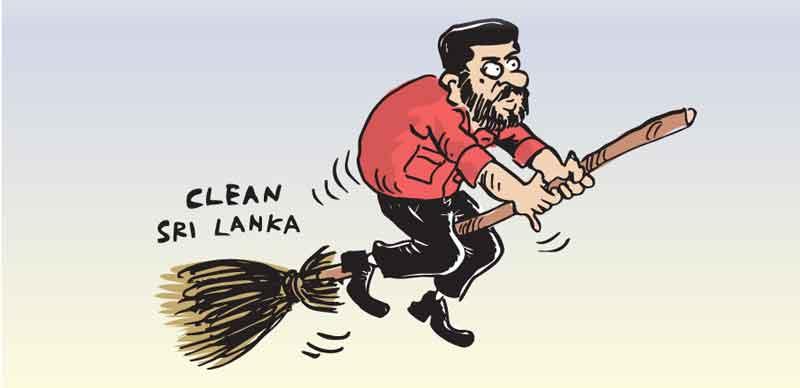

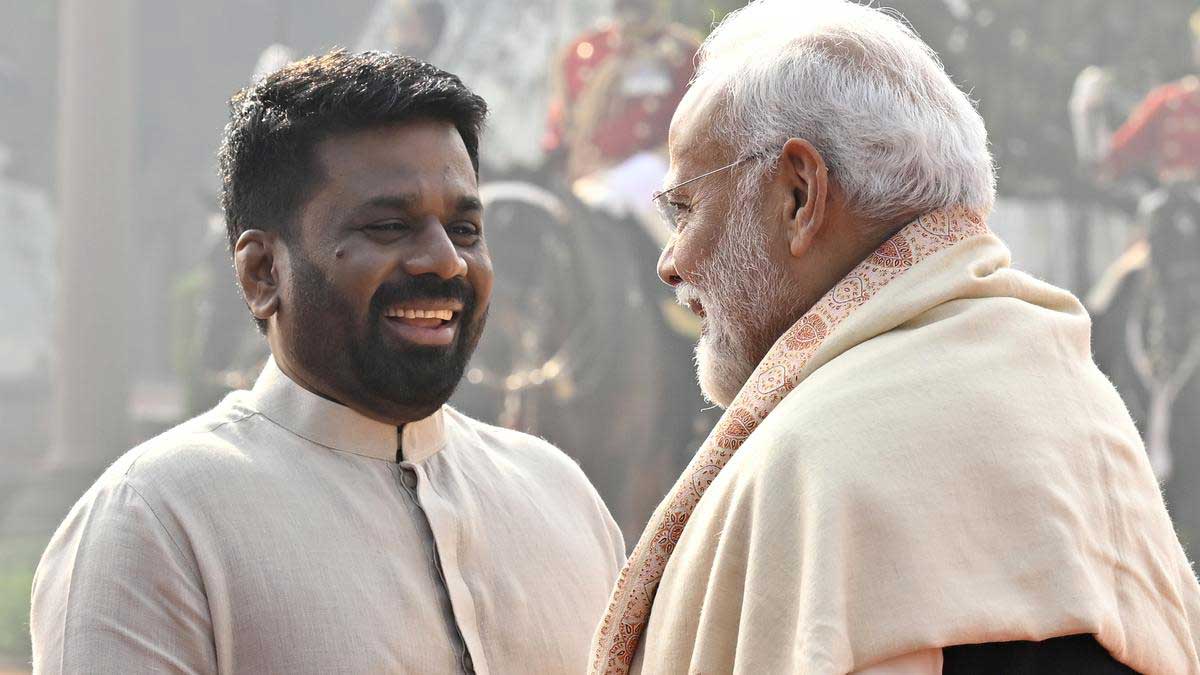
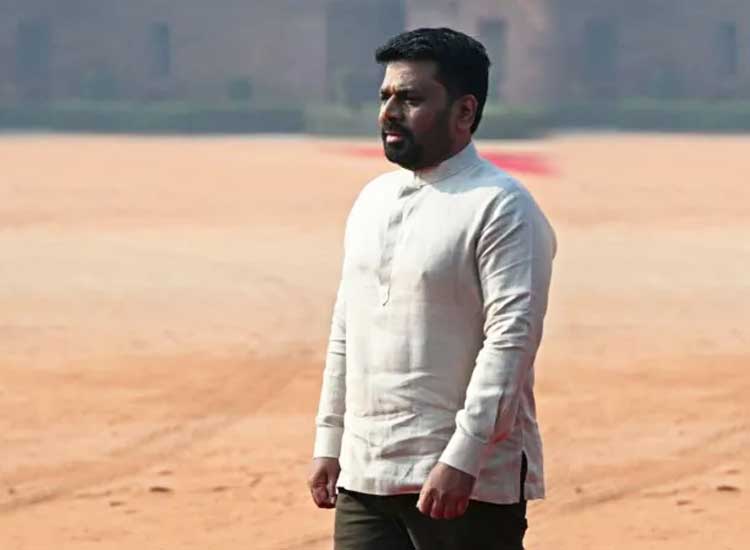
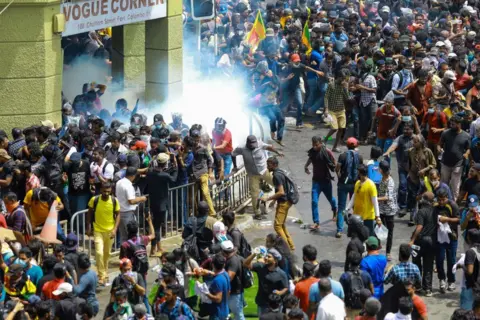
 Sri Lankans want the new government to bring down the cost of essentials [BBC]Dissanayake must also contend with India and China, which are jostling for influence in Sri Lanka, where both have invested heavily in recent years.Both India and China will try to bring Colombo under their sphere of influence. I think the new government’s foreign policy will be very pragmatic without aligning with anyone,” says Prof Uyangoda.In a careful diplomatic manoeuvre, Dissanayake chose Delhi as his first official overseas destination in mid-December. During the visit, India promised to supply liquefied natural gas for Sri Lankan power plants and work on connecting the power grids of the two countries in the long run.China’s increasing foothold in Sri Lanka, especially calls by Chinese research” vessels to the island’s ports – so close to India’s southern tip – has triggered concern in Delhi.I have given an assurance to the prime minister of India that we will not allow our land to be used in any way in a manner that is detrimental to the interest of India,” Dissanayake said after talks with Narendra Modi. Delhi will no doubt be pleased with the assurance, but Dissanayake will find out what Beijing expects when he visits China in mid-January.[BBC]