
CHINA’S MONUMENTAL LEAP IN ADVANCED AIR DEFENCE TECHNOLOGY
December 30th, 2024By Nalliah Thayabharan
Drones have become the ultimate disruptors in modern warfare reshaping how battles are fought but as their dominance grows so does the threat they pose especially in swarms where sheer numbers can overwhelm even the most advanced defenses.
China’s groundbreaking Hurricane 3000 – a high- power microwave weapon capable of neutralizing entire drone fleets in an instant unveiled at the 2024 Zhuhai Airshow. This revolutionary system is rewriting the rules of air defence. This cutting edge technology is a game changer for global security. The heart of the Hurricane 3000 is a technological breakthrough that blends electromagnetic science with air defence. This high power microwave weapon, also called radio frequency weapon or electromagnetic pulse weapon, uses energy waves to disrupt and destroy the electronic systems of its targets.
Imagine the mechanism of your household microwave oven but amplified 10,000 times and applied with surgical precision over a 3 km range – that’s the core principle of the Hurricane 3000 but its real genius lies in its sophisticated design and capabilities. Hurricane 3000 operates by emitting a concentrated microwave beam that travels at nearly the speed of light once it locks onto a target whether a single drone or an entire swarm, it disrupts the internal electronics rendering them completely inoperative. Detection begins at an impressive range of 6 km with optical tracking enabled up to 4 km, the effective strike range of 3 km ensures that even fast moving drones within this radius are neutralized before posing a threat, unlike conventional laser systems which require precise targeting and can struggle against larger swarms.
The Hurricane 3,000 employs what developers call a soft kill method. This hemispherical electromagnetic beam not only covers a wider area but also eliminates the need for pinpoint accuracy. This makes it particularly effective against saturation attacks where hundreds of drones might descend simultaneously. Moreover the Hurricane 3000 is an integrated system housed within a single vehicle – this mobility allows for rapid deployment across varied terrains whether in urban centers or remote battlefields what truly sets it apart is its reliance on electricity instead of traditional ammunition. This eliminates the need for costly missiles or resupply logistics enabling the system to operate continuously as long as it has a fuel source for power generation. The significance of this technology becomes even clearer when considering its applications as the Russia Ukraine conflict shows drones are increasingly pivotal in modern warfare used for reconnaissance, precision strikes and overwhelming attacks.
The Hurricane 3000 not only neutralizes these threats with unmatched efficiency but also reduces collateral damage; its electromagnetic pulses disabled drones without physically destroying them, minimizing risks to civilians and infrastructure. The Hurricane 3000 isn’t just a novel weapon, it represents a monumental leap in addressing one of the most pressing challenges of modern warfare using drone swarms. These swarms often deployed for surveillance attacks or disruption are notoriously difficult to counter. Traditional methods like surface to air missiles struggle with cost scalability and speed issues. The Hurricane 3000 addresses head-on – one of its most revolutionary features is its cost efficiency. Conventional counter drone systems rely on expensive ammunition for example a single interceptor missile can cost tens of thousands of dollars and even advanced laser systems demand considerable resources.
The Hurricane 3000 however uses high power microwaves fueled by electricity. This design not only eliminates ammunition costs but also ensures uninterrupted operation as long as the system has power. It can continuously defend against threats making it invaluable in prolonged combat scenarios. Versatility is another major advantage – the Hurricane 3000 is designed to counter not only individual drones but also large scale saturation attacks. Its soft kill approach using electromagnetic waves to disable electronics is far more effective in these situations than traditional kinetic methods. Unlike systems that physically destroy targets, the Hurricane 3000 disables them by frying their circuits leaving the surrounding environment unharmed. This feature makes it especially suitable for urban combat and scenarios where collateral damage must be minimized.
Additionally the Hurricane 3000’s Mobility is a game changer. Traditional air defense systems are often bulky and stationary, making them vulnerable to attacks or unsuitable for rapidly changing battlefields. Hurricane 3000 is integrated into a single vehicle allowing for easy transportation and quick deployment in diverse environments whether defending a critical urban center or a remote outpost, the system is ready to respond at a moment’s notice.
Its effectiveness against swarms is particularly crucial. Drone swarm tactics where hundreds of drones operate in coordination to overwhelm defenses have become a significant concern in modern conflicts. The Hurricane 3000’s wide coverage area and instantaneous response capabilities make it one of the few systems capable of neutralizing such threats efficiently.
The introduction of the Hurricane 3000 marks a pivotal moment in global defense technology signaling a shift toward energy- based weapons and a new era of electromagnetic warfare, reshaping global military strategies. This high power microwave system doesn’t just neutralize drones it redefines how militaries approach air defense and electronic warfare setting a precedent that could shape military strategies for decades.
One of the most immediate implications is the impact on global arms development with China showcasing such an advanced system. Other nations are likely to accelerate their efforts in electromagnetic weapons. The Hurricane 3000’s ability to counter drone swarms at a fraction of the cost of traditional systems will undoubtedly prompt countries to re-evaluate their reliance on expensive missile based defenses.
This could lead to a broader adoption of cost-efficient electricity powered systems reducing dependency on conventional ammunition. The system’s mobility and versatility also challenged the status quo. Many existing air defense solutions are fixed or semi-mobile limiting their effectiveness in rapidly evolving combat scenarios. The Hurricane 3000’s vehicle mounted design ensures adaptability making it suitable for a variety of operational environments. This could inspire a wave of innovation in modular and mobile defense systems prioritizing flexibility over static installations.
Ethically the development of the Hurricane 3000 raises critical questions about the future of warfare while its soft kill approach reduces physical destruction and collateral damage. The technology could be repurposed for other uses; for instance, electromagnetic weapons capable of disabling drones could theoretically be adapted to disrupt civilian infrastructure or communications systems during conflicts. This highlights the need for international regulations to govern the deployment and use of such technology ensuring it remains a tool for defense rather than a means of escalation.
Strategically the Hurricane 3000 underscores the growing importance of drone Warfare in military planning. The Russia-Ukraine conflict has already demonstrated the effectiveness of drones and reconnaissance targeted strikes and psychological operations. With the introduction of systems like the Hurricane 3000, the battlefield is becoming increasingly dominated by electronic and energy- based engagements. This Evolution could lead to a greater focus on developing counter electronic warfare measures creating a technological arms race centered on energy and information.
The Hurricane 3000 isn’t just a weapon-it’s a glimpse into the future of warfare by combining cutting edge technology with practical efficiency. It addresses one of the most pressing challenges of modern combat – the rise of drones. But its significance goes beyond its immediate capabilities. It represents a shift towards smarter, more sustainable military solutions where precision and cost efficiency take centre stage.
The powerful Chinese manufacturing and the soaring Chinese military power have greatly shocked and deeply worried the United States and its allies.
New Cold War In South Asia As The BRICS Rise – OpEd
December 30th, 2024By Darini Rajasingham-Senanayake Courtesy Eurasia Review
There will be no honeymoon for the newly minted National People’s Power (NPP) Government that got a massive people’s mandate for debt justice.
The storm blowing from Washington DC across the Indian Ocean World—targeting China to the East, Iran to the West, and now, India at the centre—is growing and expanding. So too, the US led NATO sanctions regime is expanding and impacting many countries. These include Sri Lanka, which is caught in the crosshairs of hybrid economic war on the rise of BRICS and China’s Belt and Road Initiative.
Seemingly unable to re-negotiate International Monetary Fund (IMF), and odious debt Eurobond Exchange agreements drafted by the previous Ranil Rajapakse regime that it had accused of corruption, the new NPP government this month signed Sri Lanka up to being pumped and dumped” once again into a second staged Sovereign Default.
Sri Lanka, South Asia’s richest country by the metric that matters—Purchasing Power Parity (PPP) GDP per capita– was declared ‘bankrupt’ and in Default in March 2022 amid distracting US National Endowment for Democracy (NED) funded Araglaya protests—simply due to a purported lack of exorbitantly privileged US dollars!
While the IMF engineered Bond Exchange has got stock markets on a Christmas high with seasonal good news hype in the corporate media echo chamber with Fitch and Moody’s upgrades despite significant deflation, the pain would soon set in as Sri Lanka commenced Odious debt payments to predatory creditors in 2025 and the EPF pension funds whittle down.
A new round of social unrest and protests at high taxes and the IMF’s bitter austerity measures to shrink the economy and pay predatory International Sovereign bond holders with a fire sale of national assets are on the cards, and very likely a second staged Default curtsey the IMF’s Extended Fund Facility.
US Sanctions and Regime Change Aragalayas in South Asia
Simultaneously, shades of an increasingly hot, new regional Cold War are apparent across South Asia and the Indian Ocean world. There were two regime change operations in Pakistan and Sri Lanka in 2022 amid Victoria Nurland inspired colour revolution’ or Arab Spring Araglaya ‘protests”.
This year, 2024, saw regime change in Bangladesh and just a few weeks ago members of the ruling BJP in India accused the US of targeting Prime Minister Modi’s government for regime change. The SOROS foundation and the NED funded NGO complex were identified as part of local-global networks that were implicated in tarnishing the Modi brand.
Meanwhile, development projects that promised needed foreign investment in Sri Lanka have been thrown into disarray by the United States expanding sanctions regime on the BRICS leaders, this time on Russian firms, as well as court action against the Indian conglomerate, Adani.
Two months ago, India’s Shaurya Aeronautics Pvt Ltd and Russia’s Airports of Regions Management Company’s plans for joint development of the Chinese built Mattala International Airport in southeast Sri Lanka were put on hold due to US sanctions.[i]
The U.S. Department of the Treasury had sanctioned India-based Shaurya Aeronautics Private Limited, among 275 individuals and entities involved in supplying Russia with advanced technology and equipment. The airport near the Hambantota Port is located near some of the world’s busiest trade, energy and submarine Data Cable routes.
Meanwhile a bribery case was filed in New York last month against the Adani conglomerate, which is a partner of BlackRock, that is in turn Sri Lanka’s largest private predatory International Sovereign Bond (ISB) creditor. Although China is routinely blamed in the global corporate media echo chamber for debt trap lending, analysis of Sri Lanka’s loan profile clearly show that ISBs are the cause of the geostrategic island’s first ever Sovereign Default in March 2022.
Adani was set to develop the Western Terminal of the Colombo port in partnership with local conglomerate John Keells holdings with significant US Development Finance Corporation (DFC) funding. This was before US authorities had accused Adani of bribery in Andhra Pradesh and filed a court case in New York.
Adani, said to be Asia’s richest man is seen to be personally close to Indian Prime Minister Narendra Modi.Adani which partners with BlackRock, Sri Lanka’s biggest private creditor had already got a sweetheart deal ex-ante the Odious debt restructure Bond Exchange agreements signed this month– for various ‘green energy’ projects!
Sanctions and Visits
As sanctions bit, US Assistant Secretary of State, Donald Lu visited India, Sri Lanka and Nepal earlier this month. Lu met government, the NGO complex and other civil society members to discuss ‘capacity building’ assistance, presumably, for more institutional capture.
The Central Bank of Sri Lanka has been already effectively privatized to serve the interests of predatory ISBs rather than citizens via International Monetary Fund ‘reforms’.
US moves against Indian firms have likely given Sri Lanka Foreign Minister Vijitha Herath a big headache, much like the pending debt trap International Sovereign bond debt restructure agreements that are being forced on the new government in Colombo by the IMF and Lazard and Clifford Chance that represent ISBs that have debt trapped the county in collusion with local politicians and business cronies.
Will Mr. Herath be able to persuade Lu to hold back US sanctions and the ISB vulture funds to make an exception for debt trapped Sri Lanka, and enable the Mattala International Airport and Colombo port west terminal projects to proceed with Indian and Russian investment?
A USDFC, which had agreed to lend $500 million to Adani’s port development in Sri Lanka said it was conducting due diligence on the project.
Targeting Indian Projects and Sri Lanka’s BRICS application
Indian firms are being targeted by Washington, which has long sought access to geostrategic Sri Lanka’s energy, transport, telecom infrastructure. This was evident in the US Millennium Challenge Corporation (MCC) Compact, rejected by Sri Lanka back in 2019. At the time there were fears of the US establishing military bases under the Status of Forces Agreement (SOFA), in the geostrategic island nation.
The Colombo harbour is South Asia’s busiest port but that development is also now on hold. Of course, the US promise to fund Adani’s port development to the tune of over USD 500 million was in any case a tall order! The sum was much more than the aborted MCC project, after which the mysterious ISIS-claimed Easter Sunday hybrid war attacks targeted tourist hotels and churches, crashing economy and society. The IS-claimed attacks were clearly designed to set off a ‘cascade of violence” in the multi-religious island nation.
The Mattala International Airport in Hambantota, initially built by the Chinese was perceived to be a White Elephant’ development project but is actually located near one of the world’s busiest maritime trade, energy and submarine Date Cable routes in the world. The Indian Shaurya Aeronautics plan to develop the airport would bring needed foreign investment and showcase collaboration among the big three Asian powers- China, India and Russia but is now on ice due to US sanctions.
Sri Lanka, clearly caught in the crosshairs of big power rivalry, had formally submitted an application to join BRICS and the New Development Bank at the meeting in Kazan in October where President Putin hosted China’s President Xi and Indian Premier Modi along with other Global South leaders. The new government in Colombo would be hoping to leverage regional growth and support from the Global South in the Asian 21stCentury”.
However, no senior Minister from Sri Lanka attended the meeting in Kazan where de-dollarization and trading in national currencies was a hot topic– an opportunity missed in deference to Washington? Sri Lanka’s application to join the New Development Bank has been accepted but the BRICS application remains pending at this time.
A New Regional Cold War?
A new Cold War is clearly ramping up across the Indian Ocean–and not just on China. Having pushed Russia and China into ever close partnership Washington seems keen to ensure that India warmly embraces its erstwhile foe – China and the BRICS.
India had defied US sanctions on Russia over the past two year and ramped up Rupee-Ruble trade and Russian oil and gas purchases, benefiting from Russia’s decoupling from Europe and the war in Ukraine, also given historically strong and deep relations with the Soviet Union during the Cold War (1945-1991).
Was India rewarded with regime change in Bangladesh for defying US Sanctions and drawing nearer its neighbouring BRICS? India was also embroiled in a Canadian Sikh spy murder mystery with Woke Diaspora identity political overtones also emanating from Washington.
More concerning for India and indeed the South Asia region as a whole is the latest regime change operation with the obligatory student protests directed via social media right under India’s nose in neighbouring Bangladesh, and the weaponization of Hindu-Muslim-Buddhist regional religious identity politics that has followed.
Departing President Joe Biden seems to have run out of patience with India. The G-20 afterglow in Delhi now seems like a prelude to the parting of ways between India and the West, as Delhi appears to pivot to BRICS. Or perhaps it’s just Biden’s farewell to South Asia and the world, which increasingly seems like: ‘Apres moi le deluge!’
Debt Neocolonialism as a new Cold War takes Shape in South Asia
Will Sri Lanka caught in the IMF’s neocolonial debt and Eurobond bailout business be able to withstand US pressures as India has and turn its back on Indian and Russian investments?
Will Colombo be asked to choose between Washington and New Delhi again? During the previous Cold War, Delhi armed and trained the Liberation Tigers (LTTE), against any possible US bases in its backyard as Colombo moved close to Washington under J.R. Jayawardena. This ensured that Sri Lanka’s so-called internal ethnic conflict’ which was really a regional Cold War proxy war, with India closely allied with the Soviet Union, would run for 30 years.
Geostrategic Sri Lanka’s ports and airports at the center of the Indian Ocean and a choke point of Submarine Data Cables are again of great interest to Washington’s neocons and the NATO war machine, which now aspires to Full Spectrum Dominance (FSD)–over earth, air, sea and Cyber operations.
The targeting of energy and electricity systems as well as transport and telecom infrastructure in the South Asia region– from MCC in Nepal in the north to IMF’s privatization push in Sri Lanka in the south may have much to do with the rush to setup Data Centers, as well as, control over trade and energy choke points as a new Cold War ramps up.
Cold War Redux: Regime Change and Debt Neocolonialism
Back in 2022 the Pakistan premier Imran Khan accused Donald Lu of running a regime change operation against him. Simultaneously, a soft regime change operation unfolded in Sri Lanka with the US National Endowment for Democracy (NED) funded and social media remote platforms directed Aragalaya ‘protests’. This was shortly after Victoria Nurland had visited Colombo.
The 2022 regime change in Colombo was masked, Arab Spring/ colour revolution style, with people’s protests against a no doubt unpopular regime, to ensure that Sri Lanka staged a smooth Sovereign Default into the waiting arms of the lender of last resorts- the International Monetary Fund (IMF). The new Washington backed President Ranil Wickramasinghe was installed to stage the default and deepen the Eurobond debt trap ex-poste.
Two years later, Imran Khan for his impudence in naming Donald Lu as the instigator of regime change in Pakistan in 2022 languishes in prison in Islamabad amid huge protests. Fate has been slightly kinder to Sri Lanka’s erstwhile president Gotabaya Rajapakse who was also ousted in the soft Aragalaya coup in 2022.
Rajapakse remains a free man albeit an ex-American citizen barred from travel to the US. He was dispatched and humiliated amid the Woke Aragalaya protests directed via remote controlled social media platforms that rocked Colombo, after the dreaded Victoria Nurland’s visit in early 2022 to triggered the regime change. Nurland is widely credited with the Ukraine Maidan Square colour revolutions that enabled the rise of Zelinski to precipitate war with Russia.
Thus, South Asia’s only Upper Middle Income County (MIC) was declared bankrupt overnight and forced to stage a first ever Sovereign Default. This was as Lawfare unfolded once again in a New York Court when the shadowy, off-shore Hamilton Reserve Bank filed a case against Sri Lanka in 2022 for non-payment of a small amount of interest.
The HRB Lawfare triggered rapid local Rupee currency depreciation against the exorbitantly privileged US dollar in tandem with rating agency downgrades.
A quiet parting of Ways? Weaponizing Diaspora Identity Politics
Regime change operations in Colombo and Islamabad in early 2022 notwithstanding, India, the South Asian regional hegemon, now grapples with yet another US instigated regime change operation right under her nose – this time in Dhaka, Bangladesh. Deposed secular Prime Minister, Sheikh Hasina had sought refuge in Delhi given historic ties but religion/s have been again weaponized in Bangladesh.
Of course, the weaponiztion of religion/s, particularly, Buddhism and Islam, in South and South East Asia was a Cold War project to destabilize the region and counter God-less Communist and Socialist de-colonization, national liberation and independence movements in Asia. Yale University historian Eugene Ford’s book Cold War Monks: Buddhism and America’s Secret Strategy in Asia” is especially enlightening in this regard.
Is a quiet parting of ways unfolding at this time with India’s Adani and various BRICS partnerships being targeted by Washington? The side show with Canada and India expelling diplomats, may well be a distraction from the far more serious issue of regime change in Bangladesh and its regional implications: Religious minorities (Hindus, Buddhists and Christians), are now under threat from the same Saudi-funded Islamist Cat’s paw and handmaiden that the CIA with partner in crime Israel’s Mossad deploys around the world to destabilize countries and regions. Call it the ISIS, ISIL, Al Qaida, the Muslim Brotherhood, rebranded HTS in Syria or ISIS-K in Afghanistan, or whatever.
The recent regime change operation, weaponizing transnational networks and religious identity politics in Bangladesh that saw the ouster of Prime Minister Hasina a close ally of Delhi certainly put a spanner in the works in the West’s wooing of mother India– with the Indian Diaspora in the west in tow: From Rishi Sunak to Kamala Harris who embodied the I-2 (Israel-India) partnership given her Indian name and Jewish husband, to all those Indian Diaspora CEOs of big US and EU corporations, it is increasingly clear that the Indian Diaspora in the Euro-American world and Australia had been weaponized and mobilized for the charm offensive to persuade India to fight a proxy war on China and crash the Asian 21st Century. That kite did not fly.
The I2U2, or West Asia QUAD, comprising Israel, India, UAE and US, was designed to help ‘normalize’ Israel’s occupation of Palestine via the Abraham Accords, and the current genocide in Gaza. But the U2- UAE and US part may be fraying at this time.
ISUS was also set up to cement the I-2 (India-Israel) alliance brokered as part of Washington’s Judeo-Christian-Hindu fundamentalist outreach via I2U2 (India, Israel, UAE, US), with the Islamist Cat’s paw to destabilize South Asia – old Cold War style when there was a proliferation of regional security groupings like SEATO. The new twist is the Indian Diaspora in the West.
Will developments before and during the BRICS summit in Kazan where China and India made relative peace, and the regime change in Bangladesh break the I2U2 partnership, or at least the I2, India-Israel part?
As winds of change blow in Washington come January when Donald Trump would be ensconced President of the United States, Donald Lu would be perhaps saying a fond farewell to South Asia on this trip to the region.
- Dr Darini Rajasingham-Senanayake is a social and medical anthropologist with expertise in international development and political-economic analysis. She was a member of the International Steering Group of the North-South Institute project: Southern Perspectives on Reform of the International Aid Architecture”.
[i] https://economynext.com/us-sanctions-indian-firm-involved-in-deal-with-sri-lankas-mattala-airport-186347/
Protesters confront National People’s Power MPs in Bingiriya (Video)
December 30th, 2024Courtesy Hiru News
A tense situation erupted when National People’s Power Kurunegala District MP Wijesiri Basnayake and Puttalam District MP Ajith Gihan visited a factory in the Bingiriya-Wilattawa area.
The incident occurred as factory employees protested against the MPs and their entourage over an alleged attempt to interfere with the factory’s office transport service, which is managed by local residents. Protesters accused the MPs of trying to take control of the transport service and blocked their jeep as they attempted to leave the premises.
Responding to inquiries, MP Wijesiri Basnayake stated that his visit was related to discussions about a development project at the factory. He claimed the unrest arose as his group was departing, dismissing allegations of interference.
ලංකා බැංකුවටත් පොලු තියපු පාර්ලිමේන්තුවේ මන්ත්රීවරු සෙට් එක
December 30th, 2024තිරප්පනේ මාලිමා මන්ත්රීගේ කාර්යාලය වැටලීමත් සමග මහ පාරේ දරුණු තත්ත්වයක්
December 30th, 2024VFM RADIO 107
එන්න කියාපං ඇමතිතුමාට.. එන්න කියාපං.. තිරප්පනේ මාලිමා මන්ත්රීගේ කාර්යාලය වැටලීමත් සමග මහ පාරේ දරුණු තත්ත්වයක් ගමේ නියෝජිතයා කෝ.. ගහලා පන්නන්න ඕන..
ඉතිහාසයේ කවදාවත් මෙහෙම වෙලා නෑ කරුණාකරලා මේක නවත්වන්න පාර්ලිමේන්තු සේවකයින් වෙනුවෙන් අජිත් පෙරට එයි
December 30th, 2024ආණ්ඩුව ගැන මිනිස්සුන්ට හොඳටම තදවෙයි – අමතන ඇමතිල්ලට රෙදි නෑ
December 30th, 2024රනිල් කරපු දේමද අනුර කරන්නේ? – “ඔන්න ඕක තමයි ප්රශ්නෙ” | Dr.Harsha de Silva
December 30th, 2024අපි කරන්න හිටපු දේ එහෙමම වෙන්නේ නෑ වගේ දැනෙනවා
December 30th, 2024මාලිමා මන්ත්රීව වටකරන් බිංගිරියේදී විරෝධයක් – වාහනයෙන් බහින්නත් බැරිවෙලා…
December 30th, 2024අනුර කුමාර කන්නේ තණ කොළ ද ?
December 30th, 2024VFM RADIO 107
US & European Universities Block Asian & African Students from Advanced Technology
December 29th, 2024e-Con e-News

blog: eesrilanka.wordpress.com
‘Before you study the economics, study the economists!’
e-Con e-News 22-28 December 2024
*
In 1770, William Pitt the Elder (then Earl of Chatham), ‘made uneasy
by the first manufacturing attempts of the New Englanders, declared that
the colonies should not be permitted to manufacture so much as a horseshoe nail’
– Ha-Joon Chang, Kicking Away the Ladder
*
‘Intelligence agencies have been pushing universities:
The Swiss Federal Intelligence Agency’s Technopole Program
wants universities to implement knowledge security’
*
‘The securitization trend coincides with the decreasing share of the US,
the EU, & OECD countries in global research & innovation,
& a rising weight of the global South, with China leading the way.’
(see ee Focus)
*
The US demand to block certain university subjects to Asian & African students, is being meekly followed by Europe, led by England, rear and tail wagging, despite loud proclamations about ‘free trade’ & ‘free enquiry’ and ‘geopolitical neutrality.’ Luckily for them, while Sri Lanka is not on the lengthening list of countries sanctioned, we can assume that few Sri Lankan students even aim to take on such ‘sensitive’ modern industrial subjects, let alone enable such ‘undesirable knowledge transfer’. The starker truth is that the imperialists have always wished to prevent any type of modern industrialization in our countries:
*
‘Yet everything can be military in an engineering school:
…Cybersecurity, robotics, drones , chemistry –
chemical weapons, applied math, artificial intelligence…
Almost all lessons can have dual applications.’
*
Citing ‘research security’ concerns, universities are vetting engineering & science students from certain countries, as demanded by the US & European Union governments. Universities have to provide ‘a detailed outline’ of its rules for foreign students applying for masters and doctoral degrees in applied research areas, as well as for invitations to ‘scientific guests’ and new staff appointments. They are also designating certain universities in Asia, blocking their graduates from further study abroad. Many of these now-verboten technologies were in fact developed by the sweat and tears and blood of Asians and Africans.
Meanwhile all the US government NGOs, their thinktanks and economists sing the praises of mythical ‘free trade’ while vehemently opposing industrialization. The US online business journal and ‘lip service’ EconomyNext in Sri Lanka, mostly fabricated by AI algorithms and full of errors, has taken to claiming that ‘Karl Marx, Engels would have approved Sri Lanka Rice Imports for Working Class’ (see ee Random Notes). This is of course just not as simple as that, let alone true. Firstly, Sri Lanka is dominated not by the state-protected mafias but by multinational monopolies like England’s Unilever and the USA’s Proctor & Gamble, and Ceylon Tobacco Co. and US Exxon, etc. Secondly, Marx & Engels show how the early English ‘free-traders’ & ‘protectionists’ worked in tandem to promote slavery, Black & white; sell bread with fecal matter (they called it ‘sophistication’!), employ children under 10, and prevent any reduction in work hours, and to oppose trade unions. Two years after the so-called ‘Victory of Free Trade’ in England, the English state then perpetrated their genocide on the lands of the Sinhala in 1848 … So much for laissez-faire (see ee Focus).
*
Welcome to the 350th (almost weekly edition) of e-Con e-News, which we began in dedication to the work of SBD de Silva, as expressed in his classic The Political Economy of Underdevelopment, published in England in 1982. Ironically, in that very same year – rather coincidentally and we dare say, in astrological congruence – the English also published another The Political Economy of Underdevelopment by India’s Amiya Kumar Bagchi. Eleven years earlier, Hungary’s Akademiai Kiado had published Thomas Szentes’ The Political Economy of Underdevelopment, in 1971. It turns out, scholars from the socialist bloc in Eastern Europe and Central Asia had developed their own analysis of neo-colonial mechanisms in the world economy, and the role of internal class structure in the Global South.
Soviet political economist Sergei Tyulpanov, for instance, argued that the state had to isolate those domestic forces hindering industrialization (feudal landlords and merchant capital – mafias, anyone?) and create a strong public sector while encouraging the progressive potential of the national bourgeoisie in a private sector. Within this strategy of non-capitalist development, it was crucial that national-democratic parties take charge and not relinquish political power to the bourgeoisie. It turns out that SBD De Silva’s thesis and criticism of ‘dependency theory’ was also the position of many Soviet scholars: the ruling merchant and moneylender class in Sri Lanka is thrilled be the house-slave for the English industrial bourgeoisie, as their commercial puppy dog. So what, pray, is la difference between these 3 books of the same name? ee shall have to explore this matter at another time.
We may say of such authors, as SBD de Silva noted in the introduction to his inquiry into Sri Lanka’s discontents:
‘This book is not the product of alienated labour.
There was throughout a psychological dimension, involving
a voluntariness and spontaneity of effort – unrelated to
considerations of professional survival or advancement’
So then, let’s examine the contribution of Bengal’s Amiya Kumar Bagchi, who passed last week (see ee Focus).
*
________
Contents:
දේශපාලකයින්ගේ වතුර ටැංකිය හා පිරිමියෙක් මුත්රා කිරීමේ විධි දෙක (two ways of urinating in politics)
December 29th, 2024C. Wijeyawickrema
මේ දිනවල ජනාධිපති AKD ගේ ආණ්ඩුව දෛනිකව මුහුණ පානා ඇබ්බැද්දි දකිනවිට මට ඇමෙරිකාවේ ජනාධිපතිලා දෙන්නෙක් ඒවාට මුහුණ දුන් අන්දම මතකයට ආවේය. ඇමතිකෙනෙක් හෝ මන්ත්රී කෙනෙක්ගේ යම් අහිතකර කතාවක් හෝ ක්රියාවක් නිසා ආණ්ඩුවේ ප්රතිරූපයට ඩැමේජ් එකක්වූ විට, එයට අවංක ලෙස මුහුණදී කල වරද නිවැරදි කර ගන්නවා වෙනුවට එය සුදුහුණු ගා වැසිය හැකියයි සිතා ක්රියාකිරීමෙන් සිදුවන්නේ ඩැමේජ් එකට පිහාටුද ලැබී ඉගිලී යාමය.
කතානායකගේ තොප්පිය, ඔහුගේ හා අන් අයගේ උපාධි අර්බුදය, නැති සුදුසුකම් කියා චන්ද්දායකයින් හා පක්ෂය රැවටීම, ජය මංගල ගාථා නතර කලත් ජනාධිපති ලේකම් කාර්යාලයේ නත්තල් සැරසිලි, රිලා ප්රශ්ණය, පොල්, ලුණු හිඟය කොට්ටච්චිගේ මෝඩ කතා, මන්ත්රීලාගේ අනියම් පෙම් සම්බන්ධකම්, මෝඩි කියන දේ හා විජිත හේරත් කියන දේ හා තායිවානය හා චීනය අතර වෙනස AKD විසින් කළමනාකරගත යුතුව තිබුණේ මීට වඩා ප්රඥාවන්ත ලෙසය. හාල් ප්රශ්නය වුනත් වී මාෆියාවට යට වුනේ නෑ යන අන්දමට හැසිරෙන්නට ඉඩ තිබුණි.
විශේෂයෙන් හොර රාජ්ය නිලධාරීන් දමනය කිරීම ඒ ගැන අත්දැකීම් හා දැණුමක් ඇති පක්ෂයෙන් බාහිර සවාධීන අයට භාරදී ඉෂ්ට කරගත හැකිය. උදාහරණයක් වශයෙන් තිලක් කන්දේගම, සනස නිර්මාතෘ, ගාර්වින් කරුණාරත්න, සුදත් ගුණසේකර, යාපනේ අරුන් සිද්ධාර්ථ් හා දිලිත් ජයවීර වුනත් ප්රයෝජනයට ගත හැකි පංචස්කන්ධය. හිමාලයා ප්රකාශණය නමැති ඊලම් අවතාරයට ගොදුරු නොවීම අ ගත් නිවැරදි තීරණයක් බව මෙහිදී සඳහන් කල යුතුය.
මෙය වැදගත් කාරණාවක් වන්නේ දුන් පොරොන්දු මතක් කරමින් අනිකුත් බොහෝ අයමෙන් තවදුරටත් පාර්ලිමේන්තුවේ නොසිටිය යුතුව තිබූ මේ පඬරැල් මේවා අල්ලාගෙනවත් පණනළ රැකගන්නට බලන නිසාදය. ගලේ මොකක්ද කල බළලුන් මෙන් වී සිටින මේ විපක්ෂයට මෙවැනි ප්රමාද දෝෂ අල්ලාගැනීම මිස වෙන දෙයක් කිරීමට ශක්තියක් ඉතිරිව නැත. විපක්ෂයේ සිටින එකම විපක්ෂය වන්නේ දිලිත් ජයවීර නවක මන්ත්රීවරයා පමණය.
(1)ඉන්දියාවට රට පාවා නොදීම (2) 13 A හරහා ඊලමට මඟ පාදා නොදීම (3) සිංහල බෞද්ධ ශිෂ්ටාචාරයට හානි නොකිරීම යන කාරණා තුන අමතක නොකරන්නේ නම් AKD බලයට ඒම ඓතිහාසික වෙනසකි. රටේ කලයුතු මේ වෙනස්කම් සඳහා සහභාගී කරගත හැකි බොහෝ ස්වාධීන ලාංකිකයින් රටතුලත් පිටරටත් සිටී. චන්ද කාලයේදී මළිමාවට පක්ෂවූ අයට අමතරව, විශ්රාමගත් හා නොගත්, මේ පිරිස් රාජ්යපාලනයට හවුල් කර ගැනීම දූරදර්ශී විධායක ජනාධිපති කෙනෙකුට ඇති අනගි අවස්ථාවකි. 16 වෙනි ඇමෙරිකන් ජනාධිපති ලින්කන් 1861-65 සිය ධූර කාලයේදී කලේ එයය. ඔහු තම විරුද්ධවාදීන් ආණ්ඩුවට එකතුකර ගත්තේ නම්යශීලීවෙමින් රට ගැන සිතාය. වහල් ක්රමය රැක ගන්නට පක්ෂව චන්දය ඉල්ලු ඔහු ජයග්රහණයට පසු වහල් ක්රමය නැතිකිරීමට දුෂ්කර යුද්ධයක් කලේ, දකුණේ වහල් ක්රමයට පක්ෂ දකුණේ ජනපදවලට විශාල බලයක් තිබියදීය. අන්තිමේදී දකුණේ වහල් හිමියන් උතුරේ ලින්කන්ගේ යුදහමුදාවට විරුද්ධව ඔවුන් සමඟ එකතුවන ලෙස ආයාචනා කලේය.
36 වෙනි ඇමෙරිකන් ජනාධිපති ලින්ඩන් ජොන්සන් (1963-69) කාලයේදී ජනාධිපති ලින්කන්ගේ විරුද්ධවාදීන් තම රජයට එකතු කර ගැනීමට හා සමාන දෙයක් කලේය. Democratic පාක්ෂිකයෙකුවූ ඔහු, බලවත් රිපබ්ලිකන් පාක්ෂිකයෙකු (X) තම ආණ්ඩුවට බඳවා ගන්නට යෝජනා කලවිට අනිත් Democratic අය ඊට විරුද්ධවිය. එවිට ජොන්සන් කියා සිටියේ දැන් X එලියේ ඉදන් අපේ ටැංකියට චූ කරණවා, ඔහුව අපි ලඟට ගත් විට ඔහු අපේ ටැංකියේ සිට පිටට චූ කරණවා යනුවෙනි! සමහර අවස්ථාවලදී ජොන්සන් ජනාධිපති තම ලේකම්ලාට නියෝග/උපදෙස් දුන්නේ බාත් රූම් කොමොඩ් එකේ ඉඳගෙන ඉන්න ගමන් බාගෙට දොර ඇරගෙනය. ඔහු ප්රායෝගික යථාර්ථවාදියෙක් විය.
අනුර කුමාර ජනාධිපතිට මේ ජනාධිපතිලා දෙන්නා ගෙන් ගත හැකි ආදර්ශයක් නැද්ද? යම් ආණ්ඩුවකට හානිකර වන කාරණා දෙකක් රසික ජයකොඩි සඳහන් කරයි. එකක් නම් උද්දච්ච කමය. අනික නම කඩේ යන යන පිරිසය. මොවුන් කොටස් දෙකකි. ඉන් ඩෝබිලා, රෙද්දේ එක පැත්තක් හෝ අනිත් පැත්ත හෝ අවස්ථාවට අනුව පිලිවෙලින් දෙපැත්තම හෝදන්නේය. රසික කියන අනිත් කොටස නම් දායක සභාවය.
ප.ලි. මෙවැනි කරුණු හුදෙක් සද්භාවයෙන් ජනාධිපතිට, අගමැතිනිට හා පක්ෂයට ඊමේල් මඟින් දන්වා එවූවිට පසුගිය අවුරුදු පනහක කාලවල මෙන් ඔබගේ ලිපිය ලැබුණා, නිසි අයට යොමුකලා යයි පිළිතුරු දීම, අපේ ව්යායාමය ගඟට ඉණිකැපීමක් නොවේද යන සාංකාව ඇති කරන්නේය.
Elon Musk pens German newspaper opinion piece supporting far-right AfD party
December 29th, 2024Courtesy The Guardian (UK)
Billionaire Trump adviser said his ‘significant investments’ in the country justify his wading into German politics
The tech entrepreneur and close adviser to Donald Trump Elon Musk has taken a stunning new public step in his support for the far-right German political party Alternative for Germany (AfD), publishing a supportive guest opinion piece for the country’s Welt am Sonntag newspaper that has prompted the commentary editor to resign in protest.
The commentary piece in German was launched online on Saturday before being published on Sunday in the flagship paper of the Axel Springer media group, which also owns the US politics news site Politico.
Musk uses populist and personal language to try to deny AfD’s extremist bent, and the essay expands on his post on his social media platform, X, on which he last week claimed that only the AfD can save Germany”.
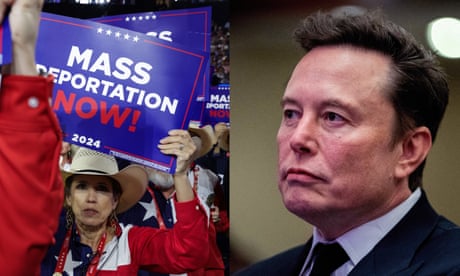
Translated, Musk’s piece said: The portrayal of the AfD as rightwing extremist is clearly false, considering that Alice Weidel, the party’s leader, has a same-sex partner from Sri Lanka! Does that sound like Hitler to you? Please!”
Germany’s domestic intelligence agency has classified the AfD at the national level as a suspected extremism case since 2021.
Shortly after the piece was published online, the editor of the opinion section, Eva Marie Kogel, used the US tech mogul’s own platform to post on X that she had submitted her resignation.
I always enjoyed heading the opinion department at Welt and Wams. Today a text by Elon Musk appeared in Welt am Sonntag. Yesterday I submitted my resignation after printing,” she posted.
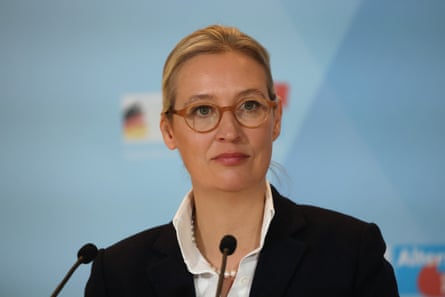
She included a link to the Musk commentary article.
The AfD has a strong anti-immigration stance and, like incoming president Donald Trump in relation to the US, is calling for mass deportations from Germany. Earlier in December, Musk not only posted in favor of AfD but the party’s hard line on immigration appeared to resonate with the incoming US vice-president, JD Vance, MSNBC reported.
Senior Welt Group figures weighed in on Saturday.
Democracy and journalism thrive on freedom of expression. This includes dealing with polarising positions and classifying them journalistically,” the newspaper’s editor-in-chief designate, Jan Philipp Burgard, and Ulf Poschardt, who takes over as publisher on 1 January, told Reuters.
They said discussion about Musk’s piece, which had about 340 comments several hours after it was published, was very revealing”.
Underneath Musk’s commentary, the newspaper published a response by Burgard.
Musk’s diagnosis is correct, but his therapeutic approach, that only the AfD can save Germany, is fatally false,” he wrote, referencing the AfD’s desire to leave the European Union and seek rapprochement with Russia as well as appease China.
Musk and Weidel both later posted a link to the article on X.
The AfD backing from Musk, who also defended his right to weigh in on German politics due to his significant investments”, comes as Germans are set to vote on 23 February after a coalition government led by the German chancellor, Olaf Scholz, collapsed late this fall.
The AfD is running second in opinion polls and might be able to thwart either a centre-right or centre-left majority, but Germany’s mainstream, more centrist parties have pledged to shun any support from the AfD at the national level.
REVISITING EDIRIWEERA SARACHCHANDRA’S ‘MANAME’ Part 6
December 29th, 2024KAMALIKA PIERIS
Sarath Amunugama observed that one of the many items which made Maname special was its melodious music. [1]Sarachchandra was an accomplished musician. He had gone to Santiniketan in the 1940s to study music. However, in his Pin ati Sarasavi, he spoke of ‘veenawa ata pata gawa,’ so I thought he was a dilettante musician.
His early childhood in a family of devout Christians had exposed him to the English language and western music. He is said to have played the organ in his village church. This double exposure stimulated his intellectual interests which always remained unfettered, and also nurtured his sensitivity and love of music which quickly extended to eastern music and its musical instruments. Much later, after his stay in Japan he was fascinated by the music of Noh performances. Music is then a central element in his later achievements, said Ranjini Obeyesekere .[2]
The music in Maname was outstanding. Sarachchandra had no difficulty in composing lyrics to match the melody. Since he knew Carnatic music, he knew to combine word, melody, and raga to create emotions in us. No other artist in Sinhala theatre has this ability. Dayananda Gunawardena and Gunasena Galappaththy were not as successful as Sarachchandra because they lacked this ability, said Sarath Amunugama.
Even at the time he came to Peradeniya in 1956, Gunasinghe Gurunnanse may have been past 50 years. However he was a perfect dancer in the Nadagam style and perfect singer with precise pronunciation of Sinhala, Sanskrit and Pail languages,” said Lionel Fernando.[3]
Gunasinghe Gurunnanse brought with him the drum known as the Maddalaya, used in operatic folk drama which proved the perfect ensemble along with other low country drums as Maname gradually took shape as a new stylized form of drama. We heard the Maddala playing well before we came to the school hall, said Sarath Amunugama when as a schoolboy he had attended the Pushpadana performance.
Gunadasa Amarasekera stated in his Sinhala kavya sampradaya that in Maname, Sarachchandra was able to shatter the notion that Sinhala was an archaic language which could not evoke emotion on a stage. He showed that it was a living language that could be used dramatically to evoke emotion. And that no other language could achieve this so well.
Sarachchandra was able to forge a poetic diction which is capable of conveying emotion at a very refined level, critics added. Sarath Amunugama observed that language was used very creatively in Maname. Sarachchandra had a unique talent of using words to evoke emotion. He used known words in a new way to do so. Sarachchandra however said that in Maname he was simply trying to speak to his audience in an idiom that they would understand .
Amunugama extensively analyses the language developed by Sarachchandra in Maname, RETAIN THIS REF. Here is a quick example. The opening exchange between the prince and princess, giya veddo- thava veddo- noma viddo- pasu eddo-ida laddo -biya naddo, anticipates their conflict later on.
It was Gunadasa Amarasekera who first noted the poetic richness of Maname, observed Amunugama. Gunadasa said that Sarachchandra was an outstanding poet and had contributed to poetry through Maname.
Sarachchandra developed a new poetic and dramatic idiom which combined several kavi traditions, said Amunugama. He used the classical poetic idiom of 13 and 14 century , as well the idiom of the Matara ( 1720-1830) and Udarata period. He added to this classical scholarship the rich usage of folk poetry. He used idioms drawn from the folk and ritual dramas. Sarachchandra then fused these diverse styles to create a modern poetic Language of the Heart”, said Amunugama.
Sarachchandra had an intimate knowledge of classical Sinhala poetry. Amaradeva, in a talk he gave in 2002, had recalled how Sarachchandra would quote classical poetry while driving his car or seated in a corner of a wayside restaurant.
Once in order to convey the kind of subtle musical effect he needed for the love scene for his play Pabavati that he was then working on, Amaradeva says Sarachchandra suddenly quoted a verse from the 13th century poem the Kavsilumina (Kataka bota mihivita) and passionately expounded on it.
Sarachchandra described that drinking scene and expounded on the minimalist lines with which the poet describes the kiss, and then went into a long discourse on the poet’s descriptive power, his language and usage. This 13th century classical Sinhala can hardly be understood by most of us today, but Sarachchandra’s fine poetic sensibility could bring out the nuances underlying the verse, Amaradeva observed.
Before I end this essay, I would like to add my ‘two cents worth’ to this scholarly topic. Sinhala, unlike English, which is our gold standard for language, is a very musical language. This is never mentioned. Buddhagosha called Sinhala ‘Manorama basha. Sinhala is also a very flexible language . Sinhala is able to indicate subtle humour or sarcasm quickly and easily, with a flick of phrase, unlike English, which needs imagery. ( Continued)
[1] Sarath amunugama Maname mathak vee.
[2] Ranjini Obeysekera https://thuppahis.com/2014/06/10/ediriweera-sarachchandra-a-renaisance-man/
[3] Chandani kirinde https://www.sundaytimes.lk/161023/plus/remembering-sarachchandras-maname-60-years-after-213018.html
Why Finland Needs Foreigners?
December 29th, 2024Prof. Hudson McLean
Why Finland Needs Foreigners?
Force-Feeding Finnish Language to Foreigners is Counter Productive!
Force-Feeding Finnish Language will Drive Most Educated & Intelligent Foreigners Out of Finland!
Why is English now the Global Language?
English is the foremost, and by some accounts The Only, World Language.
English is widely used around the World in Internet Computers and all other Technological Equipment.
For this reason, the English language is dominant in the world of science as well. Since science and technology play a huge role in our lives today, for English to lose its importance in the future.
The Population of Finland 5,6 million
Finland 2024 population is est: 5,617,310
Foreigners in Finland (9,4%) 2024 528,129
Finnish Population Nett 2024 5,089,181
Finland 1975 population 4,711,000
Finland Finnish Population Decrease
During 2041 to 2050 by 103,000 = 4,986,181
Why Finland Needs Foreigners than Foreigners Need Finland?
The total land area is 303,890 Km2 (117,333 sq. miles). 86.4 % of the population is urban (4,853,952 people in 2024). The median age in Finland is 43.0 years.
With the Decrease in the Overall Finnish Population – Finland has a Grave Problem.
By 2050 The Aging Old Population will Need Pensions, Medication, Healthcare workers, General Services industry, and Most of all, TAX PAYERS
Benefits of & Quality of Life in Finland!
Positive Points Outweigh the Negative Points.
There are many Benefits of Life in Finland.
General Personality of the Finnish Citizen-;
Honest – Conservative – Caring – Empathy – Civilised!
Finland is Safe – No Corruption – Pollution & Crime Free.
Great Health Services – Free Education – Less Racism!
What are the major imports and exports of Finland?
Finland’s largest trading partners (imports and exports of goods) in 2022 were Germany, Sweden, China, and the United States.
Finland’s key Export Sectors are transportation, electronics, forestry, machinery, and chemicals. 20 Nov 2023 Export Language – ENGLISH!
Exports and imports of Finland in 2022 are below, along with number of countries and products
- The total value of exports (FoB) was 86,228 million.
- The total value of imports (CIF) was 97,374 million.
- At the HS6 digit level,
- 3,871 products were exported to 212 countries and 4,315 products were imported from 225 countries.
What language is Finnish derived from? Proto-Uralic
Prehistory. The Uralic family of languages, of which Finnish is a member, between 8,000 and 2,000 BCE (estimates vary) in the vicinity of the Ural Mountains.
Compromise Solution:
Make English the Third Language in Finland!
Express Your Opinion – Read What Others Say!
The Independent Interactive Voice of Sri Lanka on the Internet.
Please visit -: http://www.lankaweb.com/
Supporting the Increase in Withholding Tax: A Step Toward Strengthening Sri Lanka’s Tax System
December 29th, 2024By Sanjeewa Jayaweera Courtesy The Island
The government’s decision to increase the withholding tax (WHT) rate to 10%, effective 1 April 2025, deserves commendation. Too often, political leaders have avoided necessary but unpopular decisions, opting to appease the electorate. This has led to various issues, from economic stagnation to the erosion of minority and religious rights. The proposed tax increase, however, marks a significant step in addressing a pressing concern: Sri Lanka’s persistent tax evasion problem.
Tax evasion in Sri Lanka is alarmingly high. While some degree of evasion is common in many countries, effective tax compliance is largely achieved through a comprehensive tax policy and an efficient tax administration. Unfortunately, Sri Lanka has fallen short in both these areas. Since the early 1990s, successive governments have either reduced or eliminated key taxes, granted widespread exemptions, and failed to adequately develop the Inland Revenue Department (IRD) in terms of manpower and technology.
Rather than addressing these systemic issues, governments have relied on increasing indirect taxes. The contribution of direct taxes to overall revenue has fallen to a mere 20%. Indirect taxes, such as Value Added Tax (VAT), are largely hidden from the consumer, as the IRD has mandated that supplier invoices do not show VAT charged. This has created a society that is not accustomed to paying direct taxes. Additionally, the acceptance of corruption as a necessary evil” has contributed to the perception that tax evasion is acceptable.
Consequently, the imposition of new taxes, rate increases, and threshold reductions often generates confusion and frustration among the public. Opposition parties frequently exploit these sentiments to mislead the electorate, complicating the government’s efforts. To counter this, the government must invest in educating the public about taxes, the need for tax revenue, and the civic duty of tax compliance. This is a long-term effort that, if successful, could lead to improved tax revenues and higher compliance rates.
Policymakers should consider insights from an OECD report published in 2021, which analyzed taxpayer education initiatives in 59 developed and developing countries. The report revealed that over 80% of such initiatives improved tax morale—the intrinsic motivation to pay taxes. The findings underscore the importance of tax literacy in shaping a culture where citizens understand how their tax contributions affect their daily lives.
The report suggests a step-by-step approach for designing and implementing taxpayer education initiatives customized to local contexts. Three key strategies for promoting tax compliance emerged:
· Teaching tax: Engaging all audiences, including youth, adults, and entrepreneurs, through long-term educational programs.
· Communicating tax
: Raising awareness through campaigns, tax fairs, TV shows, and behavioural economics-based messaging.
· Supporting compliance
: Providing practical assistance, particularly for vulnerable taxpayers, to navigate modern e-administration tools and fulfill reporting requirements.
Verité Research, an independent think tank, has long advocated increasing the WHT rate on interest income from 5% to 10%. Their estimate suggests that this increase could generate an additional Rs. 90 billion in revenue for the state. Despite this, the government of Ranil Wickremesinghe hesitated to act, even though it had already raised VAT to 18% and introduced progressive income tax rates as high as 36% and reduced the monthly tax-free threshold to Rs. 100,000.
Importantly, WHT on interest income is not an additional tax; it is a prepayment of taxes collected by the payer on behalf of the government, similar to the Pay As You Earn (PAYE) system used for salaried employees. The challenge, however, lies in the fact that individuals often earn interest from multiple banks, unlike salary income, which typically comes from a single employer. As a result, financial institutions cannot easily determine whether an individual’s total income surpasses the annual tax-free threshold of Rs. 1,200,000 (or Rs. 1,800,000 starting April 2025).
To address this, the IRD should implement a system allowing individuals over 18 to obtain a letter from the IRD confirming that WHT need not be deducted if their total annual income is below the threshold. While this will initially be challenging due to the lack of tax files for many individuals, it is a step that should be supported. Despite its complexities, the government’s decision to increase the WHT rate should be backed.
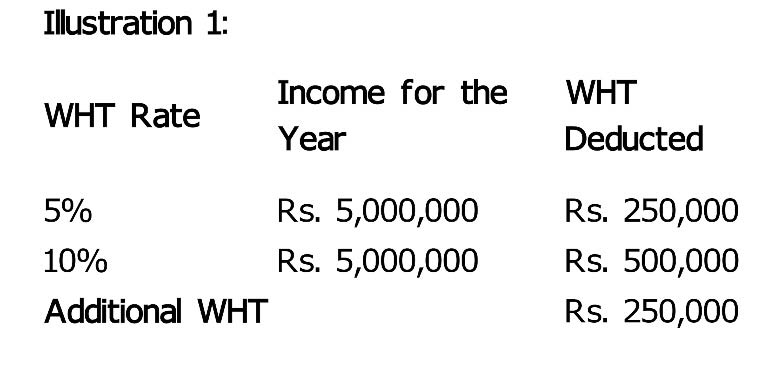
To illustrate the impact of this change, consider the following examples assuming the person’s total income is derived solely from interest:
Total Income Tax Due:
· Income: Rs. 5,000,000
· Single Person Allowance
: Rs. 1,200,000
· Taxable Income
: Rs. 3,800,000
· Income Tax at Progressive Rates
: Rs. 918,000
· Less WHT Collected at Source
: Rs. 250,000
· Tax Evaded
: Rs. 668,000
With the WHT Rate Increase:
· Income: Rs. 5,000,000
· Single Person Allowance
: Rs. 1,200,000
· Taxable Income
: Rs. 3,800,000
· Income Tax at Progressive Rates
: Rs. 918,000
· Less WHT Collected at Source
: Rs. 500,000
· Tax Evaded
: Rs. 418,000
As illustrated, raising the WHT rate to 10% would generate an additional Rs. 250,000 in tax revenue. I have assumed in my illustration that the recipient of interest income is not tax-compliant and is currently outside the tax net. This demonstrates how the rate increase could significantly reduce tax evasion. The IRD’s ultimate goal should be to recover the Rs. 418,000 currently evaded by taxpayers. By streamlining the reporting systems of financial institutions and integrating them with the RAMIS system, the IRD can take a significant step toward curbing tax evasion and boosting government revenue.
‘’END OF RICE CULTURE OF SRI LANKA BY FOREIGN DOMINATION’’
December 29th, 2024Sarath Wijesinghe President’s Counsel and former Ambassador to UAE and Israel and President ambassador’s forum in UK/SL
Rice is staple food in Sri Lanka
Rice is the staple food in Sri Lanka culturally linked to the history as an agricultural nation in addition being a beautiful compact nation. She has been self-sufficient from rice and historically exported rice to other countries. Invasion of the western powers and de-tabulation of the agricultural economy ended the agriculture to nature of the economy and livelihood of the citizen to be dependent on external factors and assistance due to the foreign domination of decades by Portuguese in 1505 and thereafter the full domination by the British in 1796, until the attainment of freedom in 1948 from British imperialists. Sri Lanka had an excellent irrigation system, connected to small and major’’ Weva’s ‘’ (reservoirs) covering the entire island preservation and collecting water for agriculture and other uses. It is King ‘’Parakramabahu 1’’ in 1153-1156 who declared that not a drop pf water that comes from rain flows into the seas without being use by the man for agricultures an adage that echoes up to today encouraging agriculture which is linked to Sri Lankan culture from time immemorial to date in agricultural traditions still in practice.
Rice culture converted to bread culture by foreign domination
At the time of domination and thereafter Sri Lanka have been a rich country capable of assisting the dominant powers and self sufficient from rice with 20,000 varieties and food in pliantly with financial reserves to run the economy comfortably. Western powers introduced the bread culture to sell their food and consumer items to the locals by destroying village self sufficiency where all products including agriculture and the rest were produced in the village to fee the foreign farmers and industrialists and foolish Sri Lankans got into the trap of the foreign dominations who succeeded in their attempts in changing the traditional rice culture to bread culture and the way of life to depend on the imports from the foreign countries for food and consumer items.
Culture based on agriculture
Traditional celebrations such as new year and other in Sri Lanka has also been linked to agriculture, harvesting periods and religious and cultural norms and practices on important events such as the planting, harvesting and other important events and steps on steps of agriculture such as application of fertilizer and watering with religious steps given priority offering the first portions of rice to the temple and ‘’Dalada Maligawa’’ or the ‘’Bo tree’’ as the case be in ceremoniously and on religious order, and in short the culture and the religion has been given the priority on agriculture and agricultural events. Sri Lanka is bestowed with 20,000 varieties of rice which are of highest quality than the hybrid created artificially by modern scientists. Hector ‘’Kobbakudawa’’ research institution is a well-equipped institution of highest quality which is not given maximum use and capacity due to the lack of vision and strategy of the respective departments of water resources and agricultures.
Forced conversion to ‘’Bread Culture’’
Economy and culture were based on agriculture and water management and resources are of highest scientific quality that Suprises the modern agri – scientists on the unfloor of the water network to the entre country via rivers, ‘’Wevas’’ and canals access to the paddy friends in villages with levels and levitations for unfloor of water. Citizen was made lazy and discouraged to cultivate and depended on shipments for food and consumer items imported from the foreign companies using the ample foreign exchange available then even to feed the foreign powers, and as a result the government started to import rice, and wheat for convenience and more profits in addition to making the community lazy and dependent on the government and employment, whit the change of the system of education to help the government in place of creativity and innovations linked to business and agriculture as Singapore and Israel who easily surpassed Sri Lanka in all respects including agriculture and innovations them becoming leaders on agriculture and innovations when Sri Lanka was lagging behind expecting and depending on foreign loans with weak and lethargic governments fighting with each other for power with no aim or a vision for the nation to prosper. Foreigners ( Singaporean Company Prima) extracted the most nourishing part of wheat and send Sri Lanka the unproductive and malnourished part in place of rice which is nourishing and local that has been in used for ages with no burden to the nation exporting a part of it abroad.
Crisis in paddy production and shortage of rice for the consumer
Paddy production is in a crisis with no sufficient paddy for the nation once self-sufficient, and today the government is compelled to import a part of the needs of rice when the farmer too is dissatisfied due to lack of facilitates and a profit margin for the investment’s and make ends meet for the livelihood. The simplest process has become complicated with the fertilizer subsidy, expenditure for the cultivation, and the sale of the production depending on the governance, major mill owners and small timers not giving or not in a position to give the proper price to the farmer spending heavily on agriculture despite unexpected and unforeseen events such as natural calamities and destructions from wild animals which is common and disastrous. Government policy changes have made matters worse by not streamlining the paddy marketing board, the fleet of lorries, and the stores abundance today leaving fat cat millowners to purchase paddy from the field at a bargain price when inefficient paddy board laydown strict rules to the farmer to transport paddy cleaned and dried to the paddy board and pay less than the millowners out of whom 50% are ‘’fat cat ‘’leaders and the rest small timers. Tru it is complicated and it is the duty of the governance to adopt a strategy and a mechanism if the policy is to give priority to agricultures as promised and perched and expected by the nation.
Shortage of rice in the market
Some say shortage is due to the use on preparation of alcohol where only 30,000 mt tons are used. The shortage appears to be on popular kinds such as ‘’Keeri Samba ‘’and red rice which is in demand. Millers depend on bank loans and the government can have a direct and direct control over the price by legal and procedural mechanisms, which will be dealt later under a different topic. Shortage and disorganization are due to various factors including lack of vision, procedure, form commitment and lack of communication with respective ministries and departments.it is not a simple process as one thinks it is as in the past as the farmer is pressed with many responsibilities, commitments and needs in every step on the process of cultivation.
Israel 98%agritculture is technology for us to learn and follow
Ministry of Agriculture and Irrigation in in the hands of President AKD and Minister Lal Kantha land and irrigation with a thin lawyer with lot of responsibilities, and with main responsibilities with them on the entire agriculture process and it is timely and advisable to learn from Israel a tiny strip in the dry Middle East which is a leader on agriculture and innovators using 98% technology on agriculture innovations and star tups being s nuclear emerging world power today – a leader of agriculture ever prepared to help Sri Lanka. It is time and advisable for moth ministers to discuss a strategy carefully and develop a process to the farmer in Sri Lanka a new life meeting the needs and grievances to bring expected results on regaining loss glory to make Sri Lanka the Granary of the East again soon with new technology and innovations.
Way out to be the granary of the East Again-Soon
The roadway is clear and it is our duty to implement the process with the masses who has given a clear mandate to work hard giving a clear single to the governance still not in the proper tract with a vision despite the educated and committed young and matured ever prepared to work. This opportunity is final and if it is missed the results are bound to be disastrous. We are full of scientists, agriculturists, educationists, strategists, who are still idling criticizing each other without coming forward with a vision and a programmer, based on their knowledge and experiences, and it is time for the leaders to harness the experiences and knowledge of the academics, professionals and all other wanting a Change. Author could be contacted on sarathdw28@gmail.com (https://mail.google.com/mail/u/0?ui=2&ik=97fa7fc339&attid=0.1&permmsgid=msg-a:r-5179345186687067377&th=18c489b559705391&view=att&disp=inline&realattid=f_lpwdrip30&zw ) ( law and impact 23.11.2006 telegraph/12.3.18 web/FT during festive season/5.10.21 web case of a consumer ombudsman/ consume law impact web/jan2 .23 telegraph and many more by browsing net against the authors name and subject)
JAPAN CAN’T CHALLENGE CHINA !!
December 29th, 2024By Nalliah Thayabharan
The Japanese economy was the biggest economic miracle in the 20th century after the United States,but a grim turning point occurred when the Plaza Accord was signed.
Japan’s GDP was less than $0.5 trillion in 1960, yet just 3 decades later, the economy grew to a stunning amount of over $3.1 trillion by 1990 and a further growth was seen where the Japanese economy peaked at $5.5 trillion in 1995. The gap between the US and Japan was very small in 1995 where the U.S. economy stood at just $7.6 trillion.
This was a pivotal moment that led many to believe Japan was going to surpass the United States. Other metrics even already showed that Japan had catched the U.S., For instance, in GDP per capita, Japan had overtaken the U.S in 1987 and had seen a big gap between the two nations in 1995. This was indeed an economic miracle. There was no other nation globally other than China that came close to overtaking the U.S.
But as many know the story wasn’t a happy ending. We saw the eventual stagnation of Japan’s economy not for one decade, nor two decades, but over three decades. Since 1995, Japan has not grown at all.
The U.S. played a very significant role in Japan’s slowdown. These all started from the decades leading up to the 1980s. From the 1970s, Japan had established itself as a global manufacturing powerhouse, dominating industries such as automobiles, electronics, and machinery. These were the very same years that gave birth to Japan conquering a huge portion of the semiconductor industry and saw the rise of Japanese automotive companies like Toyota. The semiconductor industry was one of the most pivotal aspects behind Japan’s rise, and had also played a key role in its stagnation.
In 1981, 70% of the market share in 64kb dynamic random-access memory (DRAM) chips was captured by Japan, with the remaining 30% by the United States. Japanese companies like HITACHI, FUJITSU, and NEC were market leaders in this category. 64K DRAM memory chip was a technological marvel at the time. DRAM chips are critical components in computing devices, acting as temporary storage that enables faster processing of data compared to traditional storage like hard drives. In the early 1980s, the 64K DRAM represented the cutting edge of semiconductor technology, and its production showcased a country’s ability to lead in the tech-driven global economy.
It was in this industry, as well as others, that gave rise to a concept called trade surplus. The U.S. has been exporting substantial amounts to Japan of billions of dollars, but at the same time,the U.S. has also been importing massively – much more than they export to Japan. This has then caused a trade surplus for Japan, and a trade deficit for the U.S.
There was a significant imbalance forming between the two economies. Japan’s trade surplus indicated that it was selling more goods to the U.S. than it was buying, leading to an accumulation of wealth and foreign reserves in Japan. This trade surplus for Japan then became an important part of Japan’s economic rise. From 1960 to 2000, they have gained a massive amount of total reserves, thanks to their strong exports globally and to the U.S. In the year 2000, Japan was even the world’s largest holder of total reserves with over $361 billion, a figure that far surpasses any other nation.
The trade imbalance between the U.S. and Japan had then become a source of political tension. American manufacturers, particularly in industries like automotive and electronics, felt increasingly threatened by cheaper, high-quality Japanese imports. As pressure mounted, the U.S. sought a solution to rebalance global trade flows and reduce its deficit. This led to one of the most dramatic policy decisions in post-war economic history: the Plaza Accord.
On September 22, 1985, representatives from the G5 nations—the United States, Japan, Germany, France, and the United Kingdom—met at the Plaza Hotel in New York City. Their goal was to address the overvaluation of the U.S. dollar, which had appreciated by 44% against major currencies between 1980 and 1985.
The agreement was clear: the G5 countries would intervene in currency markets to weaken the dollar while allowing other currencies, particularly the Japanese yen and the German Deutsche Mark, to appreciate. For the United States, this was a strategic move to make its exports more competitive and reduce its trade deficit. For Japan and Germany,it meant assuming a larger share of global demand by strengthening their currencies.
Initially, the plan seemed to work. The dollar depreciated by 40% between 1985 and 1987, and Japan’s trade surplus began to shrink. However, the yen’s appreciation turned out to be far steeper than anticipated. By the end of 1985, the yen had surged by over 50% against the dollar, sending shockwaves through Japan’s export-reliant economy.
From 1978 to 1985, Japan’s exchange rate to the US dollar was consistently trading around 210 to 249 yen to a dollar. Yet, by 1986 and further years, the yen had appreciated falling to as low as 128 yen to a dollar by 1988. These were just a couple of years, and a huge surge in a country’s currency in such a small time frame was a recipe for disaster.
Whenever a country’s currency rises in value this makes their products more expensive on global markets. This would then cut deeply into their profits. The exports of goods and services as a percentage of GDP in Japan was 13.6% in 1985, yet it fell to 9.4% by 1988.
In 1984, the annual growth rate of Japan’s exports of goods and services was over 15.4%, yet by 1985, it fell to 5.3% and then a contraction of 5% in 1986. This was largely because of the sharp increase in the yen’s value. This contraction in the export sector had a domino effect, leading to a recession in the mid-1980s.
Faced with this economic slowdown, Japan’s policy makers acted swiftly, but their responses inadvertently laid the groundwork for future crises. To stimulate the economy, the Bank of Japan implemented aggressive monetary easing, slashing interest rates to historic lows.
Japan’s interest rates from 1983 to 1985 was over 5%, yet by 1987 to 1989 it fell to 2.5%. These interest rates were a response to the economic problems that the country was facing at that time. Then, on top of that, these were also accompanied by fiscal stimulus measures designed to boost domestic demand. While these policies succeeded in reviving growth, they also fueled speculative excesses in the real estate and stock markets.
By the late 1980s, Japan was in the throes of an economic bubble. Land prices in Tokyo soared, and the Nikkei stock index tripled in value. At its peak, the value of land in Tokyo alone was estimated to be greater than the entire real estate value of the United States.
For a time, it seemed as though Japan was on an unstoppable upward trajectory. The stock market of Japan was probably one of the best ways to understand this rise in speculative excesses. There was an insane rise in stock trade in value from 1985 to 1988, the same years when Japan’s economy had started to see the effects of the Plaza Accord.
In 1985, the total value of stocks traded was just a mere small sum of $455 billion, yet three years later in 1988 this rose to over $2.54 trillion, and a further increase in 1989 to over $2.61 trillion. But in 1990, it shrunk to $1.54 trillion, then further contraction was seen in 1992 to just $606 billion. The value was never seen again until 2004, nearly two decades later.
The same story can be seen in the market capitalization of listed domestic companies in the country. From 1985, the year where the market cap of listed companies was just $948 billion, yet it rose immediately to over $4.26 trillion by 1989, and only to come down by nearly half to just $2.25 trillion by 1992.
The United States imposed the unfair “U.S.-Japan Semiconductor Agreement” on Japan in 1986, halting Japan’s dominance in the semiconductor industry and once again hindering the revival of the Japanese economy. Exactly the same is happening to China today. They are doing the same to HUAWEI and countless other companies what they did to HITACHI, FUJITSU, and NEC.
Since Douglas MacArthur entered Tokyo, Washington has been in charge of Japan, not Tokyo. Japan is a satellite of the US, a geopolitical term, which means that it is dependent on the US, after all the US is still occupying Japan. They have military bases there, just as they are occupying Germany. Now the USA is doing the same to Germany. What is happening to Germany is fatal. It may be dangerous to be America’s enemy, but to be America’s friend is fatal.
This strange suicide by the Japanese is just like the suicide of the EU, in which the EU politicians happily destroyed the only advantage they had for their industry in international markets by boycotting the cheap Russian raw materials and the cheap energy that the Russians gave them.
Japan with its short sighted political leaders will never break free from America . Even if they wanted to, their master will never let that happen.
The Plaza Accord caused Yen to appreciate, reducing export competitiveness. In response, the Japanese government implemented accommodative monetary policies to boost domestic demand, leading to a sharp rise in asset prices, particularly in stocks and real estate. Much like China today, many borrowed heavily for property purchases. However, when the bubble burst in the late 1980s, asset prices collapsed, banks were left with bad loans, and Japan entered a prolonged period of deflation and low growth.
During the ensuing recession, many Japanese companies moved manufacturing overseas to cut costs, with China emerging as a major destination. During the Cold War, the U.S. prioritized integrating China, viewing its growth as beneficial to maintaining the U.S.-led global economic order, and did not perceive Japanese expansion there as a threat. At the time, China was seen as a low-cost production base and a future market. Japanese firms supported China’s industrial growth by providing technical expertise and fostering mass production, laying the groundwork for its rise as the World’s Factory.”
For Japanese companies, expanding into China was not merely about cost-cutting but also about staying competitive and responding to globalization. However, the unexpected speed of technological absorption by Chinese firms led to the hollowing out of Japan’s domestic industry. Few foresaw China becoming both an economic superpower and a technological rival to the U.S. Unfortunately American antics aren’t going to work on China.
ගෝටාගේ පාර්ලිමේන්තු තේ පැන් සංග්රහයට 287,340යි.. අනුරගේ සංග්රහයට 339,628යි..
December 29th, 2024උපුටා ගැන්ම ලංකා සී නිව්ස්
වර්තමාන රජයේ 10 වැනි පාර්ලිමේන්තුවේ සැසිවාරයෙන් මංගල පසුව ලබාදුන් තේ පැන් සංග්රහය ඇතුළු වෙනත් සංග්රහ කටයුතු වෙනුවෙන් වැය කර ඇති මුදල රුපියල් 339,628.55 දැන ගැනීමේ බව තොරතුරු අයිතිවාසිකම යටතේ පාර්ලිමේන්තු මහලේකම කාර්යාලය මගින් ලබාගත් තොරතුරු මගින් අනාවරණය වේ.
එමෙන්ම 10 වැනි පාර්ලිමේන්තුවේ මංගල සැසිවාරයේ උත්සව කටයුතු වෙනුවෙන් තවත් රුපියල් 72,350,00 මුදලක් ද වැය කර තිබෙන බව එහිදී අනාවරණය විය.
පාර්ලිමේන්තු මහ ලේකම කාර්යාලය ලබාදුන් තොරතුරු අනුව, පාර්ලිමේන්තු වැය ශීර්ෂය යටතේ චාරිත්රානුකූලව පවත්වන උත්සව කටයුතු සහ තේ පැන් සංග්රහ කටයුතු වෙනුවෙන්, ජනාධිපති ගෝඨාභය රාජපක්ෂගේ 09වැනි පාර්ලිමේන්තුවේ මංගල සැසියේදී රුපියල් 287,340.00 ක මුදලක් වැය කර ඇති අතර උත්සව කටයුතු සඳහා සිදු කළ වියදම් ගණනය කිරීමක් සිදුකර නොමැත.
එමෙන්ම වර්තමාන ජනාධිපති අනුරකුමාර දිසානායකගේ 10 වැනි පාර්ලිමේන්තුවේ මංගල සැසිවාරයෙන් පසුව ලබාදුන් තේ පැන් සංග්රහය වෙනුවෙන් රුපියල් 339,628.55 ක මුදලක් වැය කර තිබෙන බව ඒ අනුව අනාවරණය වේ.
– රාහුල සමන්ත හෙට්ටිආරච්චි
CBSL Circular on ‘Parate’ law suspension faces backlash from MSME Chamber
December 29th, 2024Courtesy Adaderana
The MSME Chamber of Sri Lanka has called for the immediate removal of the circular issued by the Central Bank of Sri Lanka (CBSL), which states that any suspension of ‘Parate’ law execution will not take place beyond 31 March 2025.
Speaking at a press briefing, Media Secretary of the MSME Chamber of Sri Lanka Susantha Liyanaarachchi emphasized the need for the CBSL to issue a new circular pertaining to the recent statement made by the Deputy Minister of Finance.
Commenting further, Liyanaarachchi said: The deputy minister of finance explained to the country’s banks what to do. His statement said that either the banks have to completely remove the interest or focus on a long-term debt repayment. He also instructed that no action should be taken if the defaulters have filed lawsuits. So, they must know that this must be activated before the 1st of January next year.”
The Governor of the Central Bank released a circular on the 20th of December, stating that the Sri Lanka Bank Association was of the view that any suspension of Parate execution will not be beyond the 31st of March 2025. How do they have the right to say these things? The governor cannot just release circulars according to what these associations say”, he added.
However, if the Central Bank Governor is thinking of pulling tricks like in the previous government, he will not be able to do so now. Therefore, we request the repeal of the circular that was issued on the 20th of December and release a circular according to the statement made by the Deputy Minister of Finance. If it is not be done, we will predict what will happen next to the banks next year”, he stressed.
ඇමති වසන්ත නා ගැනීමට නියමිතයි? | නාමල් හිරේ දාන්න එන මිනිහගේ වසන්තවත් නොදන්න කැරැට්ටුව මෙන්න
December 29th, 2024ජෙරම් අත්අඩංගුවට! – සුව මෙහෙයට ආපු “සාධු” ගේ පැටිකිරිය මෙන්න | 05:05 | #07 Podcast
December 29th, 2024උත්තර දෙන්න රාජ්ය නිලධාරිණිය නැගිට්ටේ නැති නිසා නියෝජ්ය ඇමතිට තදවෙයි
December 29th, 2024Dasatha News
දේශපාලන පිටියේ රසකතා – කොට්ටහච්චි ට ලැබුණු ප්රතිචාර
December 29th, 2024Shortages persist despite rice imports; salt imports planned
December 29th, 2024Courtesy Hiru News
Amid a rice shortage in the market, the private sector has imported 75,000 metric tons of rice following the government’s decision to address the scarcity. According to Sri Lanka Customs, the imports include 32,000 metric tons of raw rice and 43,000 metric tons of Nadu rice.
However, consumers report a continued shortage of raw rice and allege that rice is being sold above the government-mandated prices. Instances of traders selling rice without displaying prices have also been reported.
To address potential salt shortages, Lanka Salt Company Chairman Nandanatalika announced plans to import 30,000 metric tons of salt as a precautionary measure.<
Meanwhile, the price of eggs, which recently exceeded Rs. 60 each, has dropped significantly, with eggs now available in the market for Rs. 25 to 30.
Anura Kumara as JVP leader & Anura Kumara as President – Where will he take Sri Lanka?
December 28th, 2024Shenali D Waduge
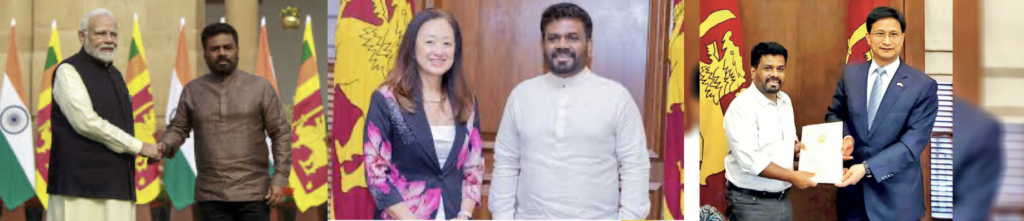
Does Anura Kumara Disanayake have a vision for the Nation. Did those who voted, vote because they thought he had a vision for the Nation? Is JVP really the Marxist” party it labels itself to be? These questions, can be answered in the actions and people are beginning to have their apprehensions. Anyone with a vision first needs to self-appraise the political playing field both at home & abroad in order to devise tactical & strategic actions, solutions to the challenges & threats to enforce that vision. It is well & fine to criticize actions of a government in power while in opposition which was a core reason for people to think AKD possessed the magic to solve Sri Lanka’s problems, but how well can one steer the ship after coming to power, is a totally different ballgame? AKD is finding this out too late. No leader should think that ideas will flow to mind like magic to govern the nation after sitting on the executive chair!
Thus, a question now on the minds of both voters & non-voters is where is AKD going to take the nation having got Executive & Parliamentary majority. Those who voted considered that AKD held the magic wand. Of those who did not, they had little choice, no alternative party to vote for, which is one reason why an unprecedented number of voters chose not to vote. By default, a somewhat artificial victory has prevailed. While the JVP bloc vote remains, the additional votes have come from the disgruntled voters of 2019-2020 who had no alternative while majority of them fell prey to deceptive fake campaigns. One noteworthy and positive feature of the election was that all the old guard who had been jumping sides over the years all lost their seats. While the old guard disappointed the nation by their selfish governance, how far a new & inexperienced Parliament can handle the hawks & eagles both locally & internationally has to be a cause for concern. The reason lies in a psychological assessment of the personalities now holding governance.
Firstly, we must understand that the JVP envisaged by its founder Rohana Wijeweera is not the JVP that is merged with the neo-liberal NPP of today. Rohana Wijeweera inspite of heading 2 insurrections, warned us of the dangers of Indian expansionist agenda including the likelihood of Indian boots well before Indo-Lanka Accord of 1987. How far his party was infiltrated by the West & Catholic movement since inception should be a separate case study, given most of his living stalwarts are today anti-Sinhala Buddhists & living in Western nations & have done nothing for Wijeweera’s family.
How far the JVP was really a rebellion against the State or how far the infiltrators objective was to sacrifice Sinhala Buddhist youth also needs to be investigated. The situation is no different to how the elite Tamil politicians sacrificed poor low caste Tamil youth to armed militancy to achieve their political objectives.
Just as LTTE changed hands from India to become pawns of the West’s geopolitical goals, the JVP since 1990s propped virtually every government in power or provided the ground support/campaigning to bring governments to power. When JVP was the richest political party, that they were funded not take power but to either bring parties to power & thereafter stir trouble for parties in power is a known secret. JVP had control over trade unions, university students’ unions, key academics, and JVP even had their own men dressed in Buddhist robes used to embarrass the Maha Sangha locally & internationally. JVP were masters at using these pawns.
One of the mistakes that political parties & politicians make is to undermine the international friends that support them before an election & their ulterior motives & expectations after the election. The same formula applies to those who come forward to sponsor election campaigns & post-election demand their return in excess of what they gave. Many of the critics of political parties are those unsatisfied with what they got in return for what they gave pre-election. This coterie of people often fund the opposition to bring down the govt. The international friends expect much more & they are difficult to shrug off as easily as the locals. Going against them may often lead to being upstaged from power. This ground reality is what prompts leaders to be happy to give in to all that the foreign friends seek even at the cost of the nation’s sovereignty.
The body language & statements are a dead give away as to the friendships forged & actions are enough to conclude that political survival wins over doing right by the nation & the People & remaining steadfast to one’s promises & assurances given prior to elections. This body language is now, very clear in the gestures to the US & Indian envoys.
As for the JVP old guard watching the political environment unfold under the leadership of their leaders, none of them expect their leader to become a closet chaser & within months vocalize the exact opposite of what won him their support. Top on the list of these reversals is the original JVP stand on India. The decision to continue the Provincial Councils, inspite of it being an unnecessary expense to the State, while being a looming threat & a stepping stone for secessionism, has to be taken together with the new links to LTTE Diaspora groups whose ban was only lifted as part of yahapalana reconciliation” bogey pursuant to co-sponsoring the treacherous UNHRC Resolution which UVP did not denounce. These elements have now teamed up with some hired Theros to promote a bogus Himalayan Declaration” that wishes to make Sri Lanka plural”, make black money white” channeling to the Northern PC, demanding further devolution, mentioning united” instead of unitary” and the eyes are watching the President’s actions though he should not endorse it.
We need to take a step back to 2015 when regime change took place with US, Indian support & JVP ground support. Noteworthy, is that alongside the regime change the architects split the 3 main political parties creating SLPP from SLFP & SJB from UNP & NPP merged to JVP.
SLPP won in 2019/2020 & JVP-NPP won in 2024, the SJB has been the lone failure.
NPP comprise breakaways from SLFP, UNP & other parties as these were neo-liberal pro-US/India. They comprised anti-Sinhala Buddhists & anti-national elements. This can be seen throughout the campaign & the manner the Jayamangala gatha was unceremoniously deleted from the Parliamentary Opening Ceremony while carols were sung at the Presidents Secretariat.
Despite the JVP cadre being from majority Sinhala Buddhist homes a key element was the party stand against Buddhism. The emphasis on secular” pluralism” advocated by the team headed to draft a new constitution in 2015 is a present NPP member & AKD manifesto claims to implement this draft. Turning a nation ‘secular’ ‘plural’ hides a hidden objective to erase the cultural-religious history & identity of nations after which the globalist rule decides what faith, what culture a nation is to follow. As we can see the competition is now between the Church-the Mosque & the Hindutva rule. Why they all feel challenged or threatened by Buddhism is a puzzle.
Understandably, JVP won the election not on its own. Many believe JVP would not have won the election on its own. Nevertheless, this very merger with NPP is seeing cracks. While the ideology of the old guard of the JVP which forms the backbone of the party remains true to its ideological past, the NPP is neo-liberal West-thinking players. The golden question now is – where does AKD the President, his Cabinet & Ministers of the JVP now stand. Are they tilting towards the NPP ideology, are they going to function as true Marxists” or are they happy to simply use the Marxist” label? The last option will sooner than later expose them amongst their own, while the second option may lead to clashes with NPP, & if the President & key heads tilt to West/India, they may well be upstaged by their own but if they do not, they well be upstaged by their friends turned foes”. Grabbing power by deceit & governing by deceit has limitations & repercussions – the general public with experience in people’s revolts are today ruthless and unforgiving.
Politics has no permanent friends but permanent interests. Nevertheless, Sri Lanka has always had a set of traditional friends who have backed us on international forums. The President must forge better ties with them. This is the only way to build the defenses needed. The President must not depend on one mode to take Sri Lanka from debt. Look for options. Forge trade agreements that are more powerful & offer win-win solutions. More importantly, keep the corrupt Public Sector of Sri Lanka in check & scrutinized in particular the Secretaries. Let us not forget that the Public Sector is more corrupt than the politicians. There are over 1.5million of them to a Parliament of 225 + 1. The officials are the one’s negotiating agreements. They are the one’s inserting clauses. They are the ones that draft the terms & conditions. They are the ones who forget” to include protective exit clauses or agree to detrimental & dangerous insertions that impact the sovereignty of the Nation including the State having to pay massive compensations. The damage they have done & can do has never been assessed or investigated. It should. It is often their actions, inactions or intentionally delayed actions that bring a government into disrepute & make the State vulnerable.
So far, the expectations on the President & Parliament are high. They promised a clean government. These promises have been in for some shocks with the qualification fiasco, the removal of a VC whose fault was that he stopped student ragging on his campus, extra-marital affairs & vehicle snatching, sudden disappearance of salt, coconuts, rice & the monkey drama have set the stage for people to watch the government with criticism than the euphoria that existed when they came to power.
Instead of taking the ugly path of resorting to victimization of political rivals, it is better to clean the Public Sector of corruption from the 3 main branches of governance, enter more powerful trade agreements that offer win-win solutions than trade agreements that JVP was originally against which would even change the demography of Sri Lanka & lose Sri Lankans their jobs, their land & even resources, refrain from any of the proposed connectivity” which would seriously threaten Sri Lanka’s sovereignty.
We are all watching the President & his Team – will they go left or right. If they go left, will the right upstage them. If they go left, what advantage will they bring. If they stay in the middle, what would be their fate?
Shenali D Waduge
SNAP ELECTIONS IN THE US VASSAL STATE OF GERMANY
December 28th, 2024By Nalliah Thayabharan
Germany’s political landscape is undergoing a seismic shift as the Bundestag has been officially dissolved triggering snap elections that could reshape the nation’s future. President Frank-Walter Steinmeier made the dramatic announcement on December 27, 2024 marking a critical moment in German Democratic history. The dissolution follows Chancellor Olaf Scholz’s unexpected loss of a confidence vote on December 16, 2024 effectively ending his coalition government.
The Free Democratic Party’s withdrawal from the ruling coalition precipitated this unprecedented political crisis. The move has left Olaf Scholz’s Social Democratic Party without a parliamentary majority forcing an immediate electoral intervention.
Snap elections are now scheduled for February 23, 2025 – a date carefully negotiated by Germany’s major political parties. It’s a moment that could fundamentally alter the country’s political trajectory since significant changes are brewing. The Christian Democratic Union led by Friedrich Merz is currently leading by 10% over the Social Democratic Party. This shift represents a substantial realignment of German political power.
Alternative for Germany – a far-right and right-wing populist political party is also polling strongly though they continue to face significant challenges in forming potential coalitions. Their rise highlights the growing complexity of Germany’s political landscape.
President Frank-Walter Steinmeier emphasized the critical nature of this moment warning against hatred and violence in the upcoming election campaign. He described political stability as a precious asset that must be carefully protected.
The upcoming elections will focus on several critical national issues including economic challenges, immigration policies, support for Ukraine and climate change strategies. Each party will be seeking to present compelling solutions to these complex problems.
Friedrich Merz has already positioned the Christian Democratic Union as an alternative to the current government criticizing Olaf Scholz’s Administration for what he describes as excessive economic regulation. His strategy involves presenting the Christian Democratic Union as a more dynamic and responsive political option.
The dissolution represents more than just a procedural political event – it’s a potential turning point that could reshape Germany’s domestic and international political approach. The
fragmentation of the current coalition signals deeper challenges within the nation’s political system.
Rolf Heinrich Mützenich – leader of the Social Democratic Party’s Parliamentary faction suggested the snap elections would allow German to refocus on what’s truly important. “We can now concentrate on what is really good for our country” he stated indicating a desire to move beyond current political deadlock. The geopolitical implications of these elections extend far beyond Germany’s borders.
With ongoing conflicts in Ukraine and economic uncertainties globally, the next government’s composition will have significant international consequences. As Germany prepares for this critical electoral moment politically the potential for significant political realignment has captured national and international attention making these upcoming elections a pivotal moment in contemporary European politics.
Germany stands at a crossroads with voters set to determine the future direction of one of Europe’s most powerful and influential economies. The coming weeks will be crucial in shaping Germany’s political landscape.
We are living in a time of worldwide global political crisis, German government’s actions were very shortsighted and very incompetent and more and more Germans no longer feel represented by the political parties. Similar to Canadians, Germans rightly feel that the government no longer represents their interests and that the established parties hardly defer on key political issues. All four political parties – the Social Democrats, the Greens, the Liberals, and the Conservative Christian democrats support a toxic policy mix of participating in US proxy wars such as in Ukraine or in Gaza implementing economic sanctions and rearmament while at the same time cutting social spendings.
So the consequences in Germany are a shrinking economy, poor infrastructure and exploding energy prices and inflation and this unsettles many Germans and they don’t know what party to vote for or out of desperation they may turn to the right to the right-wing parties.
Like Canada, Germany will no longer be recognizable in 10 years time as the German Political parties failed on the issue of peace and abandoned Germany’s anti-war policies and positions.
Olaf Scholz’s Social Democratic Party has become a party of progressive neoliberalism together with a focus on identity politics rather than leftwing class politics – economic and social policy in the interest of the working class people.
The extreme right party is gaining strength so the right-wing alternative for Germany is pulling at over 20% nationwide and even over 30% in some federal states in eastern Germany.
The economy in Germany is very much dependent on the geopolitical interest of the US. The sanctions and the economic warfare against Russia including the energy sanctions hit the German economy while the US economy is benefiting from the energy sanctions exporting more natural gas to European Countries including Germany.
Germany is a country poor in raw materials and strong in exports, so a large part of prosperity depends on industrial value creation, so that’s why Germany needs cheap energy from Russia.
Germany no longer relies on mediation, balancing interests and diplomacy but it’s playing the military card in more and more conflicts around the world, though the conflicts and wars in Ukraine and in the Middle East cannot be resolved militarily.
Germany needs a strong political force that consistently promotes peace diplomacy and negotiated solutions.
To widen the corridor of opinions, Germany should stop the cancel culture which is a poison for democracy. Anyone who does not agree with the mainstream opinion bubble is quickly defamed and this is unworthy for a democracy and it’s poison for Germany’s democracy.
More than half of the Germans no longer dares to speak their mind openly outside of a protected space and this is the poison for democracy. That’s why bringing back anti-war politics is so important and we have that missing in the US and Canada as well.
Germans are very much not just in support of Israel’s genocide in Gaza but Germany is in many ways a participant and giving so much legal and diplomatic cover and constantly aiding Israel. Germany is after the United States and United Kingdom, the third largest arms and ammunition supplier for Israel.
There’s a popular dissatisfaction among Germans with Europe’s and Germany’s foreign policy of unconditional submission to the US hegemonic policy supporting all these US proxy wars.
Regarding Gaza and Ukraine in principle Europe must become an independent player instead of being a pawn in the conflict and a vassal to the United States.
In view of the suffering in West Asia and especially of the people in Gaza and the West Bank, there is no alternative to an immediate ceasefire. Ceasefire is not everything but without a ceasefire is everything nothing.
By supporting Israeli warfare the West shares responsibility for the mass murder of Palestinians.
The U.S. has done a frighteningly good job of binding its European vassals to itself, not only economically through trade measures and militarily through NATO, but by shaping their whole leadership class via American schools and institutions. Olaf Scholz and his compatriots literally can’t see the damage they’re doing to their own countries because they’ve so thoroughly bought into the American mindset. The establishment across America, Germany, the UK, France, Canada, Italy seem to all be making the same fatal mistake with no ability to learn from their own or their counterparts’ mistakes. What did repeat though, several times, was US foreign policy causing trouble in Europe’s neighborhood, creating waves of immigrants. The cause of migration is directly linked to their adherence to free trade imperialism and their subservience to Washington. They could easily tackle the problem, but not without breaking with transatlanticism. And so they prefer to not do anything. They’re all going to go down with the Empire. The USA has only expendable pawns.
මග හොඳට පෙනේ නම්..
December 28th, 2024ප්ර සමරසිංහ
රුහුණු විශ්ව විද්යාලයේ නවක වදය 99% කින්ම නවතා දැමීමට සහ මෙම ආයතනයේ ඇතැම් ගුරුවරුන්ගේ, ශිෂ්ය සංගම් නිලධාරීන්ගේ, අනධ්යන කාර්ය මණ්ඩල නිලධාරීන්ගේ රජයේ මුදල් අවභාවිතාව ඇතුළු අනෙකුත් දුෂණ වැළකීමට, මින් පෙර විසූ කිසිම උපකුලපතිවරයකු ක්රියා නොකල පරිදි නොපැකිලව නොබියව ඉමහත් පරිශ්රමයකින් කටයුතු කලේ ළමා රෝග විශේෂඥ වෛද්ය- උපකුලපති සුජීව අමරසේනය.
ඒ මහතාගේ දෙවෙන සේවා ධුර කාලය මාස 4 ක් පමණ ඉතිරිව තිබියදී, හොර බොරු වංචා, දූෂණ වලින් තොර සිරිලංකාවක් බිහිකිරීමට නව ආණ්ඩුවක් තේරී පත්විය.
පහුගිය වසර 4-5ක කාලයක් එම විශ්ව විද්යාලයෙ මැඩ පැවැත්ව තිබු ගර්ජන, ‘අරගල’ නව ආණ්ඩුව සමඟින් පිබිදෙන්නට පටන් ගත් අයුරු පුදුම සහගතය. මහාචාර්ය සුජීව අමරසේනට එරෙහිව කිසිදු නිල චෝදනා පතක් හෝ ඉදිරිපත් නොකර උපකුලපති බලතල අත්හිටුවා වැඩ බලන උපකුලපතිවරයෙකු පත් කිරීම ඊටත් පුදුම සහගතය. එතුමන් කල වැරැද්ද වූයේ හොර බොරු වංචා දුෂණ වලින් තොර විශ්ව විද්යාලයක් සිරිලංකාවේ පවත්වා ගෙන යන්නට දරදිය ඇදීමය.
හොර බොරු වංචා දුෂණ වලින් තොර සිරිලංකාවක් බිහිකිරීම තේමා පාඨය කොටගත් රජයක් මෙලෙස හැසිරෙන්නේ ඇයිදැයි තේරෙන්නේ නැත. සිරිලංකා පාලි හා බෞද්ධ විශ්ව විද්යාලය ඇතුළු සමස්ත සිරිලංකා විශ්ව විද්යාලවල යහ පාලනයට හා මුළුමහත් සිරිලක්වැසියනට මේ නව රජය පුදන කොටම කාපි යකා සේ දී ඇත්තේ ඉතාමත් භයානක පුර්වාදර්ශයක්ය.
ගම්පහ පාර්ලිමේන්තු මන්ත්රී හිටපු කතානායක අශෝක රන්වලගේ, ලොව පිළිගත් පුද්ගලික විශ්ව විද්යාලයක් වන වසෙදා විශ්ව විද්යාලයෙ ‘බොරු හිමිකම් ආචාර්ය උපාධි පට්ටම ‘ බොහොමයක් ප්රධාන ජනමාධ්ය වල පුවත්පත් හෙඩිම වීමත්, මහාචාර්ය සුජීව අමරසේනගේ උපකුලපති බලතල අත්හිටුවීමේ සිද්ධි දාමය ප්රධාන පුවත්පත්වල ප්රධාන හෙඩිමේ හෝ කතුවැකිවල හෝ සඳහන් නොවීමත් විද්යමාන කරන්නේ සිරිලංකාව ඇදෙන දිශානතිය විය හැකිය. මේ සම්බන්ධව බොහෝ සමාජ මාධ්ය සිටියේද සිටින්නේද ඇස් කන් වසා ගෙනය.
සුජීව අමරසේන මහතා වැනි වැඩ කරන්නට දන්නා, ඒ වාගේම වැඩ කරන අවංක නායකයින් දුර්ලභය. ඔහුගේ සේවා කාලය තව දීර්ග කර එම මහඟු සේවාව විශ්ව විද්යාල සිසුනට ලබා දිය යුතුමය. 16,000 ක් පමණ සිසුන් ගෙන් සමන්විත රුහුණු විශ්ව විද්යාලය නිර්නාමික ලෙස සිසු-මත-විචාරණයක් ස්වාධීනව කරන්නේ නම් දිනන පරදින පාර්ශව සහ එයට හේතු පහත පළමුවන වීඩියෝවෙන් නිරවුල්ව පැහැදිලි කර ගත හැක.
හිටපු කතානායක අශෝක රන්වල
වියත්මගේ යෑමට, හිටපු ජනාධිපති ගෝඨාභය රාජපක්ෂට සිද්ධ විය. ඒ මග යාමෙන් සිදුවූ අනර්ථය සුළුපටු නැත. වියත්මග ආදර්ශ කර ගත් ඇතැම් මාලිමාවෝ කොහෙවත් නැති අක්ෂර තම නම මුලට, අගට පාස්සන්නට පටන් ගත්තෝය. අන්තිමට, බිල්ලක් වූයේ අශෝක රන්වලගේ කථානායක පට්ටමද? ඒ බිල්ල පූජා කර නිරුපද්රිතව සිටින්නෝ දියවන්නාවේ ඇත්තෙම නැතැයි කියා කාට නම් කිව හැකිද?
වසෙදා විශ්ව විද්යාලයෙන් ‘ලබා ගත්’ තම පරණ ආචාර්ය උපාධි සහතිකය සොයා ගන්නා තෙක් බිලි වෙමියි කියා ලිස්සා යාම ‘බොරුවේ බොරුව’ සාමාන්යකරණය කිරීමක්ය. මේ සිද්ධිය සම්බන්ධයෙන්, සිරිලංකාද්වීපයේ හැම අහුමුල්ලකටම අත පොවන, ඇමෙරිකානු තානාපතිවරියගේ මුනිවත අපූරුය! සිරිලංකා ජපන් තානාපති කාර්යාලයද වසෙදා විශ්ව විද්යාලයේ කීර්තිය බේරා ගන්නට එන පාටක් නැත.
ඒ කෙසේ වෙතත්, ‘ලංකාවේ මාධ්ය සදාචාර අනාගතය කෙසේ විය යුතුද’ කියා පහත දෙවන වීඩියෝවෙ අන්තිම විනාඩි තුනෙන් යමක් උගත හැකිය.
ආචාර්ය අරුණ කීර්ති ගමගේ
බුද්ධ ජයන්ති පාලි ත්රිපිටකය සහ අටුවා ටීකා ඉතාමත් මැනවින් පරිශීලනය කර, ව්යක්ත ලෙස පාලි බස හසුරුවන, දැනට ජර්මනියේ මාබර්ග් විශ්ව විද්යාලයේ බෞද්ධ පශ්චාත් උපාධි අධ්යයනයක යෙදෙන ආචාර්ය අරුණ කීර්ති ගමගේ මහතා, සිරිලංකාවේ පාලි සහ බෞද්ධ විශ්ව විද්යාලයේ සිදු වන අකටයුතුකම් ගැන නොබියව කතා කරන ආචාර්යවරයෙක්ය. එහි ඇතැම් ආචාර්යවරුන් පාලි බස මනා ලෙස නොහදාරන බවත්, උපාධිය ලබා ගත් පසුව නිතර නිතර කලයුතු පාලි බස හැදැරීම් නොකරන බවත් පෙන්වා දී ඇත.
එකිනෙකට පරස්පර මුලික අධ්යයන ක්රම වේද දෙපදයකින් සෑදුන ‘බෞද්ධ-මනෝවිද්යා’ විෂය අරබයා කෙරෙන දහම් විකෘති සමඟ පාලි බස ඉගෙන නොගත් බටහිර මනෝ වෛද්යවරුන් දෙදෙනෙකු ලියා ඇති පොත් දෙකක ජාතක කථා තුනක් හිතුමතේ විකෘති කර ඇති අයුරුත්, පහත අවසන් වීඩියෝවෙන් දැක ගත හැක. ( ආචාර්ය විජිත කුමාර ද මෙහි කරුණු ඉදිරිපත් කරයි.)
සිරිලංකාව ඇතුළු ලෝකයට විකෘති නොකළ බුදු දහම ඉතිරි කර රැක දෙන්නට නම් පාලි බස පරතෙරට හදාරා ත්රිපිටකය, අටුවා ටීකා මැනවින් අවබෝධ කරගත් ‘සුජීව අමරසේන කෙනෙක්’ පාලි හා බෞද්ධ විශ්ව විද්යාල උප කුලපතිධුරයට පත් වෙන දවසක් උදා වෙන්නේ කවදාද?