Title ‘Doctor’ removed from Speaker’s name on parliament website

December 10th, 2024

Courtesy Hiru News

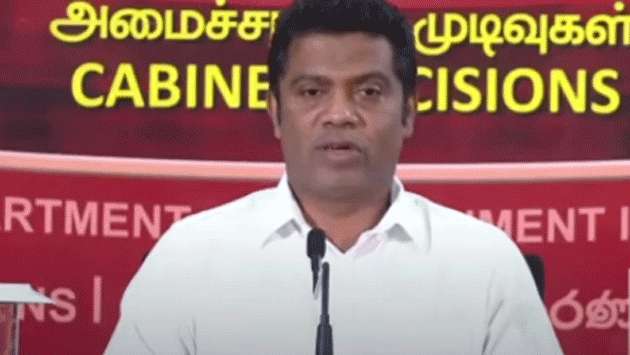
The title “Doctor” previously displayed before the name of the Sri Lankan Parliament Speaker, Asoka Sapumal Rangwala, has been removed from the parliament’s website, sparking public debate about the legitimacy of the Speaker’s academic qualifications.

The removal follows questions raised about whether the Speaker holds a doctorate degree.

During a media briefing held to announce cabinet decisions, journalists inquired about the issue. Cabinet Media Spokesperson Minister Dr. Nalinda Jayatissa responded, stating that the Speaker would provide a clear explanation regarding the matter in the future.

CHAPA on Geopolitics! Ashoka Sapumal Ranwala හොර ආචාර්ය ද? Dec 10, 2024, Episode 161

December 10th, 2024

CHAPA නිදහස්

The Rajarata Irrigation Tanks are neglected. 

December 9th, 2024

by Garvin Karunaratne

I recall my days in Anuradhapura in the early 1960s, tackling minor irrigation as an Assistant Commissioner of Agrarian Services in charge of the subject.

The subject of irrigation works, both the major tanks- over 200 acres done by the Irrigation Department and the minor tanks under nobody at the moment, required immediate attention. All of them were in a neglected state. The maintenance of minor tanks under minor irrigation were attended to by the Vel Vidanes appointed by the Government Agent, and after minor irrigation administration was taken over by the Agrarian Services, the task was handled by the Cultivation Committees. With the abolition of the Paddy Lands Act around 1979, the cultivation committees ceased to exist. Thereafter, no Kanna meetings – meetings to get the farmers to adhere to cultivation and maintenance have been held systematically. The Yayapalakas appointed are clueless and inefficient and the irrigation works continue to be neglected.

Please permit me to quote from my book, Nuwara Kalaviya (2020)

Without the tanks in proper order and no systematic water distribution Nuwara Kalaviya is economically dead.

 The allocations for maintenance work are very low. A Department of Irrigation document states:

The number of irrigation tanks managed by agencies other than the Department of Irrigation are unable to undertake maintenance and development due to lack of funds …. By considering the present rate the average cost of rehabilitating one tank is Rs six million and maintenance Rs 2 million. The average annual allocation is sufficient to rehabilitate 25 tanks and maintain 15 tanks only” This is in a situation where there are hundreds of neglected tanks.

It is absolutely necessary that action is taken to revert to the vibrant system that we had when the GA was handling minor irrigation with the Vel Vidanes or when the Agrarian Services was handling with the cultivation committees. Otherwise the death knell of Nuwara Kalaviya is a foregone conclusion.”

Garvin Karunaratne

former Assistant Commissioner of Agrarian Services, Anuradhapura 1963 & 1964,

later G. A. Matara

ජාත්‍යන්තර මූල්‍ය අරමුදල සහ ස්වෛරී බැඳුම්කර ගිවිසුම් විමසුමකින් තොරව අත්සන් කිරීමෙන් වළකින්න: ජනාධිපතිවරයාට විවෘත ලිපියක්

December 9th, 2024

ශ්‍රී ලංකාවේ ආර්ථික ස්වාධිපත්‍යය සහ ණය යුක්තිය වෙනුවෙන් කටයුතු කරන පුරවැසියන් පිරිසක්

ගරු ජනාධිපති
අනුරකුමාර දිසානායක
ජනාධිපති ලේකම් කාර්යාලය
කොළඹ

ගරු ජනාධිපතිතුමනි.

මෙම ලිපිය ලියනු ලබන්නේ, ණය යුක්තිය සහ ආර්ථික ස්වාධිපත්‍යය පිහිටුවීම සඳහා මෙරට ජනතාව විසින් දෙන ලද ජනවරමක් අනුව පිහිටුවන ලද ඔබගේ ජාතික ජනබලවේග ආණ්ඩුව විසින් ජාත්‍යන්තර මූල්‍ය අරමුදල, ණය දෙන්නන්ගේ නිල කමිටුව සහ බැඳුම්කර හිමියන්ගේ විශේෂ උපදේශක කණ්ඩායම් සමග, ණය ප්‍රතිව්‍යුහගතකරණ ගිවිසුම කිසිදු ආකාරයේ පූර්ණ සමාලෝචනයකින් තොරව සහ විධිමත් ඇගැයීමේ පරිපාටියකින් (DUE DILIGENCE) තොරව අත්සන් තැබීම මගින් ඇතිවිය හැකි ප්‍රතිවිපාකයන් පිළිබඳ බරපතල අවධානයකින් යුතුවය.

දූෂිත ණය උගුලේ ශ්‍රී ලංකාව පැටැලවීම සහ 2022 දී පළමු වතාවට ස්වෛරී ණය ගෙවාගත නොහැකි යැයි පවසමින් රට බංකොළොත් බව ප්‍රකාශය කිරීම සම්බන්ධව ප්‍රධාන වගකිවයුත්තෙකු වන කලින් පැවැති දූෂිත රනිල් වික්‍රමසිංහ රජය/රාජපක්ෂ විසින් කෙටුම්පත් කරන ලද ණය ප්‍රතිව්‍යුහගතකරණ ගිවිසුම් කෙටුම්පතට කඩිමුඩියේ අත්සන් තැබීම සඳහා යොමුවනු වෙනුවට එම ගිවිසුම් කෙටුම්පත සමාලෝචනයට ලක් කිරීමට කල් ලබා ගැනීම සඳහා කෙටි උපායමාර්ගයක් ජාතික ජන බලවේගය ආණ්ඩුව වෙත මෙම ලිපිය මගින් යෝජනා කරනු ලබයි.

තමන් කෙරෙහි විශ්වාසය තබන ලද ශ්‍රී ලංකාවේ මහජනතාව වෙත වගකීමට ජාතික ජන බලවේග ආණ්ඩුව බැඳී සිටින අතර සිටීම තමන් ලද අති විශාල ජනවරම අනුව දේශීය විශේෂඥයන්ගේ සහාය ඇතිව අදාළ ණය ප්‍රතිව්‍යුහගතකරණ ගිවිසුම පාරදෘෂ්‍ය ලෙස, විධිමත් ඇගයිමේ පරිපාටියක් මගින් නිවැරදි සමාලෝචනයකට ලක් කිරීම සඳහා කිරීමටත් ජාත්‍යන්තර මූල්‍ය අරමුදලෙන් කල් ඉල්ලා සීටීම එය විසින් ඉටු කළ යුතු අනිවාර්ය කාර්ය භාරයක් ලෙස සැලකිල්ලට ගත යුතුව ඇත. ව්‍යාපාරික කටයුතුවලදී ගිවිසුම් අත්සන් තැබීමේදී සාමාන්‍යයෙන් අනුගමනය කරන විධිමත් පරිපාටියක්(DUE DILIGENCE) ක්‍රියාවට නැංවීම මගින් මෙම ගිවිසුම් මගින් රටට හානියක් නොවන බවට සහතික කරගත හැකිය.

විශේෂයෙන්ම, යහපාලනය, විනිවිද පෙනෙන ලෙස කටයුතු කිරීම, දූෂණයට එරෙහිව සටන් කිරීම ආදිය සම්බන්ධයෙන් දැඩි ලෙස අවධාරණය කරන ජාත්‍යන්තර මූල්‍ය අරමුදල විසින් වෙනත් රජයක් විසින් කෙටුම්පත් කරන ලද ගිවිසුමක් අත්සන් තැබීමට තවත් රජයකට බල කිරීම පිළිගත නොහැකි තත්ත්වයක් බැවින් ජනතාව වෙනුවෙන් එසේ ඉල්ලා සිටීමට ඔබගේ ආණ්ඩුවට අයිතියක් තිබේ. මේ රටේ ජනතාව වෙනුවෙන් විනිවිද පෙනෙන සුළුබව සහ වගවීම යන මූලධර්මයන්ආරක්ෂා කර දීම සඳහා ගනු ලබන ක්‍රියාමාර්ගයක් සඳහා වසර දෙකක් තිස්සේ බලා සිටි බැඳුම්කර හිමියන්ට තවත් මාස කීපයක් ඉවසීමට හැකිවිය යුතුය.

එමෙන්ම, ණය ප්‍රතිව්‍යුහගතකරණයේ ප්‍රතිලාභ ලැබීමට නියමිත බැඳුම්කර හිමියන්ගේ නම් සහ ණය පිළිබඳ තොරතුරු මහජනතාව වෙත මුදා හැරීමට කටයුතු කිරීම දූෂණට එරෙහිව සටන්වැදීමටත් වගවීමේ මූලධර්මය ආරක්ෂාකිරීමටත් ප්‍රතිඥා දී බලයට පැමිණි ආණ්ඩුවක වගකීම වනු ඇත.

රටේ පුරවැසියන්ගේ යහපත සඳහා ණය ප්‍රතිව්‍යුහගතකරණ ගිවිසුම විගණන කටයුතු ඇතුළු වෙනත් සමාලෝචනයන් විධිමත් ක්‍රියා පරිපාටියක් යටතට ලක් කිරීම හේතුවෙන් නව ආණ්ඩුව විසින් අදාළ ගිවිසුම අත්සන් තැබීම තව මාස දෙකතුනකින් ප්‍රමාද වුවද ප්‍රත්‍යස්තතාවකින් යුතු, ස්ථාවර ආර්ථිකයක් ශ්‍රී ලංකාව සතු බැවින් රටේ ආර්ථිකය බිඳ වැටීමට එය හේතුවක් නොවනු ඇත. මෙම කරුණ හා එකඟ නොවන්නවුන් සිදු කරන්නේ බොරුවක් සහ ආර්ථික වංචාවකි. සත්තකින්ම ජාත්‍යන්තර මූල්‍ය අරමුදලේ නියෝජිත කණ්ඩායම් නායක පීටර් බ්‍රයර් විසින්ද රටේ ආර්ථිකයේ ප්‍රත්‍යාස්ථතාව” පිළිබඳ සඳහන් කර තිබේ. ඒක පුද්ගල මිලදීගැනීමේ ශක්තිය (purchasing power parity per capita-PPP)ශ්‍රී ලංකාව දකුණු ආසියාවේ ධනවත්ම රට ලෙස සැලකිය හැකිය. රටේ ආර්ථිකයේ ශක්තිය මැනීමේ වඩාත් නිවැරදිම මිණුම් දණ්ඩ එයයි.

එහෙයින් ණය යුක්තිය ඉටුකරගැනීම සහ දූෂණයට එරෙහිව සටන් කිරීම යන අවශ්‍යතාවන් ඉටුකරගැනීම පිණිස අදාළ ගිවිසුමට අත්සන් තැබීමට පෙර විධිමත් ක්‍රියාපරිපාටියක් (DUE DILIGENCE) අනුගමනය කරමින් පූර්ණ ලෙස සමාලෝචනය කිරීම සඳහා තමන්ට මාස 3ක් අවශ්‍ය වන බව ජාතික ජනබලවේගය ආණ්ඩුව විසින් ජාත්‍යන්තර මූල්‍ය අරමුදල, ජාත්‍යන්තර ස්වෛරී බැඳුම්කර (ISB) හිමියන් සහ ණය දෙන්නන්ගේ නිල කමිටුව සහ අනෙකුත් පාර්ශ්වයන්ට දැනුම් දිය යුතුව තිබේ.

මෙම ගිවිසුම් නීතිමය වශයෙන් බැඳී සිටින ගිවිසුම් වන අතර පහසුවෙන් ආපසු හැරවිය නොහැකිය. එමෙන්ම රටට දිගුකාලීන ලෙස බලපායි. ජාත්‍යන්තර මූල්‍ය අරමුදල සමග රනිල් වික්‍රමසිංහ විසින් ඇතිකරගත් ගිවිසුම් අනුගමනය කිරීමට තමන්ට බල කෙරී ඇති බව දැනටමත් ජාතික ජනබලවේගය සහ ජනතා විමු්ති පෙරමුණ ප්‍රකාශ කර ඇති බැවින් රනිල් වික්‍රමසිංහ ආණ්ඩුව විසින් කෙටුම්පත් කර ඇති තවත් ගිවිසුම් විධිමත් සමාලෝචනයකින් තොරව අත්සන් තැබීමෙන් එම සංවිධාන නියෝජනය කරන ආණ්ඩුව වැළකිය යුතුව තිබේ.

මෙම ගිවිසුම් නිසි ඇගයීමකින් හෝ සමාලෝචනයකින් තොරව අත්සන් තැබීම මගින් සිදුවිය හැක්කේ ණය ප්‍රතිව්‍යුහගතකරණයේ නාමයෙන් ලසාර්ඩ් ඇන්ඩ් ක්ලිෆර්ඩ් වැනි උපදේශක සමාගම් විසින් ශ්‍රී ලංකාව මත අටවන ලද ණය උගුල වඩාත් ගැඹුරුවීමත් එයට එරෙහිව නීතිමය ක්‍රියාමාර්ග උත්සන්නවීමත් පමණි. ණය ප්‍රතිව්‍යුහගතකරණය තුළ භාවිතාවන මෙවලමක් වන සාර්ව ආර්ථික සම්බන්ධිත බැඳුම්කරද (Macro-economy linked bonds) මෙයට නිශ්චිතවම ඇතුළත්වන අතර ඒවා ඉවත දැමිය යුතුව ඇති මෙවලම්ය. තමන් වෙත විශාල ජනවරමක් ලබාදෙමින් බලයට පත් කරන ලද මහජනතාව වෙනුවෙන් ජාතික ජනබලවේග ආණ්ඩුව මෙය කිරීමට බැඳී සිටියි. එමෙන්ම BRICS ආර්ථික හවුලෙන් සහ එහි නව සංවර්ධන බැංකුවෙන් (NDB)සහ ඉන්දියාවෙන් සහ චීනයෙන් අවශ්‍ය පරිදි ආධාර සහ සහයෝගය ලබාගැනීමට කටයුතු කළ යුතුව තිබේ.

ගරු ජනාධිපතිතුමනි, පහත සඳහන් නිශ්චිත ක්‍රියාමාර්ග ගැනීමට මුදල් ඇමැතිවරයා වශයෙන්ද, ජනාධිපතිවරයා වශයෙන්ද මෙරට ජනතාව විසින් ඔබ වෙත පවරා දී බලතල අනුව වහාම ක්‍රියාත්මක වන ලෙස ඉල්ලා සිටිමු.

1. ජනතාව විසින් විශාල ලෙස විශ්වාසය තබා ඇති ජාතික ජනබලවේගය ආණ්ඩුව කලින් පැවැති දූෂිත ආණ්ඩුව විසින් කෙටුම්පත් කර ඇති ගිවිසුම් විධිමත් ඇගයීම් පරිපාටියක් අනුව සිදු කෙරෙන පූර්ණ සමාලෝචනයකින් තොරව කඩිමුඩියේ අත්සන් කිරීමෙන් වැළකිය යුතුව තිබේ. විධිමත් ඇගැයීම් පරිපාටියක් (DUE DILIGENCE) අනුගමනය කිරීමේ නීත්‍යානුකූල අවශ්‍යතාව පිළිපැදීම හේතුවෙන් ජාත්‍යන්තර මූල්‍ය අරමුදලට සහ ජාත්‍යන්තර ස්වෛරී බැඳුම්කර හිමියන්ට ශ්‍රී ලංකා රජය මත බලපෑමක් ඇති කළ නොහැකිය.

2. එහෙයින් ජාතික ජන බලවේගය ආණ්ඩුව, දූෂණයට එරෙහිව කටයුතු කිරීමට ප්‍රතිඥා දෙන ලද නව ආණ්ඩුවක් වශයෙන් තමන්ගේ වගකීම් අවධාරණය කරමින්, නව කැබිනට් මණ්ඩලයට අවම තරමින් මාස 3ක්වත් කාලයක් මෙම ගිවිසුම් අධ්‍යයනය කිරීම සහ අවශ්‍ය තැන්හිදී ගිවිසුමේ සඳහන් කොන්දේසිවලට විකල්පයන් ඉදිරිපත් කිරීම සඳහා අවශ්‍ය බව ජාත්‍යන්තර මූල්‍ය අරමුදල වෙත සහ ජාත්‍යන්තර ස්වෛරී බැඳුම්කර හිමියන් වෙත දැනුම් දිය යුතුව තිබේ.

3. බැඳුම්කර හිමියන් තමන් වසර 2ක කාලයක් තිස්සේ බලා සිටි බව ප්‍රකාශකර ඇති හෙයින් ඔවුන්ට තවත් මාස 2-3ක කාලයක් බලා සිටීමට හැකිවිය යුතුය! විධිමත් ඇගයීම් ක්‍රියාපරිපාටියක් (DUE DILIGENCE) අනුගමනය කිරීම සෑම වගකිවයුතු ආණ්ඩුවක් වෙතින්ම අපේක්ෂා කරනු ලබන මූලධර්මයක් වන අතර, ජාත්‍යන්තර මූල්‍ය අරමුදල විසින්මත් දූෂණයට එරෙහිව සටන් කිරීමේ මූලධර්මය අවධාරණය කරන බැවින් රනිල් වික්‍රමසිංහ ආණ්ඩුව විසින් කෙටුම්පත් කරන ලද මෙම ගිවිසුම අත්සන් තැබීම සඳහා නව ආණ්ඩුවේ කැබිනට් මණ්ඩලයට ප්‍රමාණවත් කාලයක් ලබාදීම සඳහා පළමුව කටයුතු කළ යුතුව ඇත්තේ ජාත්‍යන්තර මූල්‍ය අරමුදලම විසිනි. ණය යුක්තිය ඉටු කර ගැනීම සඳහා ජාතික ජනබලවේගය ආණ්ඩුවක් පත් කරන ලද ශ්‍රී ලංකාවේ ජනතාව වෙත වගවීම ශ්‍රී ලංකාවේ ඔවුන් වෙත සඳහා යහපාලනය සහතික කිරීමේ කොටසක් ලෙස එලෙස කාලය ලබාදීම කළ යුතුව තිබේ.

4. ණය ප්‍රතිව්‍යුහගතකරණය රොකට් විද්‍යාවට අයත් විෂයයක් නොවේ. නමුත් ජාත්‍යන්තර ස්වෛරී බැඳුම්කර හිමියන් සහ ඔවුන්ගේ නියෝජිතයන් වන ලසාර්ඩ් සහ ක්ලිෆර්ඩ් චාන්ස් සමාගම එය එලෙස මවා පෑමට උත්සාහ දරති.

5. ලාසාර්ඩ් සහ ක්ලිෆර්ඩ් චාන්ස් ආර්ථික ඝාතකයන් විසින් ණය ප්‍රතිව්‍යුහගතකරණ මෙහෙයුම වඩාත් සංකීර්ණ එකක් බවට පත්කිරීමට සැලසුම් කර ඇත්තේ එම සංකීර්ණ බව තුළ එහි සදාචාර විරෝධී, දූෂිත, ස්වභාවය සැඟවීම සඳහාය. ඔවුන් සැලසුම් කර ඇති මෙම ණය ප්‍රතිව්‍යුහගතකරණයේ ප්‍රතිඵලයක් ලෙස ශ්‍රී ලංකාවේ වැඩකරන ජනතාව දැඩි ලෙස සූරාකෑමට ලක් කරනවා පමණක් නොව ඔවුන්ගේ විශ්‍රාම වැටුප් සහ සේවක අර්ථසාථක අරමුදල් වලින් විශාල ප්‍රතිශතයක් ලෝකයේ ධනවත්ම අතළොස්සක් වෙත ගෙවීම සඳහා කප්පාදු කරනු ඇත.

6. දූෂණය පැරදවීම සඳහාත් ණය යුක්තිය ඉටුකිරීම සඳහාත් දෙන ලද ප්‍රතිඥාවන් අනුව මෑතකදී පවත්වන ලද මැතිවරණවලින් දැවැන්ත ජනවරමක් හිමිකරගත් නව ජාතික ජනබලවේගය ආණ්ඩුව,තමන් ඡන්දදායකයන් වෙත වගකීමට බැඳී සිටින ආණ්ඩුවක් ලෙස ණය ප්‍රතිව්‍යුහගතකරණ ගිවිසුම් කෙටුම්පත අත්සන් තැබීමට පෙර එය විධිමත් ඇගැයීම් පරිපාටියකට යටත්ව පූර්ණ සමාලෝචනයකට ලක්කළ යුතු බැවින් තමන්ට ඒ සඳහා මාස 3ක් අවශ්‍ය බව ජාත්‍යන්තර මූල්‍ය අරමුදල සහ ජාත්‍යන්තර ස්වෛරී බැඳුම්කර හිමියන් වෙත දැනුම් දිය යුතුය. මක්නිසාද යත් මෙම ගිවිසුම් කෙටුම්පත් කර ඇත්තේ රට බංකොළොත් කරමින් එය ජාත්‍යන්තර ස්වෛරී ණය උගුලේ පැටලවීමට වගකිව යුතු කලින් පැවැති දූෂිත රාජපක්ෂ/ රනිල් වික්‍රමසිංහ ආණ්ඩු බැවිනි.

7.මේ මොහොතේදී ස්වෛරී ණය ගෙවීමට නොහැකි යැයි ප්‍රකාශයට පත්කරන ලද තත්ත්වයෙන් ක්ෂණිකව ඉවත්වීම සඳහා කොල්ලකාරි ණය හිමියන්ට කප්පම් ගෙවීමට ශ්‍රී ලංකාව කටයුතු නොකළ යුතුය. මක්නිසාද යත් ශ්‍රී ලංකාව බංකොලොත්” නැතහොත් ණය ගෙවීමට නොහැකි තත්ත්වයක පසුවන බව ප්‍රකාශ කර ඇති බැවින් බැඳුම්කර හිමියන්ගේ දූෂිත ණය ගෙවීම සඳහා රටට බල කිරීමට ඔවුන්ට නොහැකිය. එමෙන්ම ණය ගෙවීමට නොහැකි තත්ත්වයක පසුවන බැවින් එම කොල්ලකාරි ණය හිමියන්ගෙන්ම ණය ගැනීමටද බල කළ නොහැකිය. ජාත්‍යන්තර මූල්‍ය අරමුදලට අවශ්‍යව ඇති පරිදි බ්ලැක්රොක් වැනි සමාගම්වලට ගෙවිය යුතු දූෂිත ණය ගෙවීම සඳහා නැවතත් ඔවුන්ගෙන්ම ණය ගැනීමේ අවශ්‍යතාවයක්ද නැත. රටේ ආර්ථිකය සාපේක්ෂව යහපත් තත්ත්වයක පවතී.

8.ශ්‍රී ලංකාවේ ද්‍රවශීලතාව සහ ආර්ථික ප්‍රත්‍යස්තතාව යහපත් මට්ටමක පවතී. එහි වාර්ෂික ආදායම මගින් වියදම් පියවාගැනීම සහ තුලනය කරගැනීම මේ අවස්ථාවේදී සිදු කළ හැකිය. මාල දිවයින හැරුණුවිට දකුණු ආසියාවේ ධනවත්ම රට වන්නේ ශ්‍රී ලංකාවය. මේ රටට අවශ්‍යව ඇත්තේ ප්‍රමාණවත් පරිදි හෙයාර්කට් මගින් සහ පොලී කපාහැරීම මගින් එහි දූෂිත ණයවලින් විශාල ප්‍රතිශතයක් අවලංගු කරවා ගැනීම මිසෙක කොල්ලකාරි ස්වෛරී ණය හිමියන්ට ගෙවීම පිණිස සාර්ව ආර්ථික සම්බන්ධිත බැඳුම්කර ජාවාරම හරහා පවත්නා ණය උගුල තුළට තවතවත් ගමන්කිරීම නොවේ.

9. ණය යුක්තිය පිළිබඳ සියලු මූලධර්මයන් උල්ලංඝණය කරමින් සාර්ව-සම්බන්ධිත බැඳුම්කර සැලසුම්කර ඇත්තේ රටේ ආර්ථික ස්වාධිපත්‍ය තවදුරටත් විනාශකරමින් ණය උගුල තවදුරටත් ගැඹුරු කිරීම සහ ජාත්‍යන්තර මූල්‍ය අරමුදල-ජාත්‍යන්තර ස්වෛරී බැඳුම්කර ඇපදීමේ ජාවාරම තවදුරටත් දිග්ගැස්සවීම සඳහාය. මේ සියලු ගිවිසුම් දැඩි විමර්ශනයකට යටත් කළ යුතුය.

10. කෙසේ වුවද වර්තමාන දූෂිත ණය ගිවිසුම් යටතේ තවදුරටත් කටයුතු කළ හොත් ජනතාව දැඩි පීඩනයකට ලක් කෙරෙමින් ඔවුන්ව දරුණු ලෙස සූරාකෑමට ලක්වනු ඇති අතර ඔවුන්ගේ විශ්‍රාම වැටුප් අරමුදල්ද කොල්ලකෑමට ලක් වනු ඇත. වර්තමාන ගිවිසුම් කොන්දේසිවල අවසන් ප්‍රතිඵලය වනු ඇත්තේ බොහෝ ආර්ථික විද්‍යාඥයන් විසින් පෙන්වා දී ඇති පරිදි තවත් බංකොළොත් වීමක් කරා රට තල්ලු කිරීමය. එහෙයින් ජාතික ජනබලවේගය ආණ්ඩුව පියවර ඉදිරියට තැබිය යුත්තේ ඉතා ප්‍රවේසම් සහගතවය. මෙම ගිවිසුම් මගින් රටට හානියක් නොවන බවට තහවුරු කරගැනීම සඳහා විධිමත් ඇගයීමේ ක්‍රියාපරිපාටියක් මගින් ඒවා පූර්ණ සමාලෝචනයකට ලක් යුතුය. එමෙන්ම අවශ්‍ය වන්නේ නම් ඉන්දියාව, චීනය සහ ආර්ථික හවුලේ රටවලින් ආධාර පැතීම සිදු කළ යුතුව තිබේ.

11. ආර්ථික වර්ධනයේ ප්‍රතිලාභයන්, කාර්මික නිෂ්පාදනය හෝ සංචාරක කර්මාන්තය මගින් ලැබෙන කවර හෝ ආදායම්වල ප්‍රතිලාභයන් ණය හිමියන් වෙත අතිවිශාල මූල්‍ය සම්පත් සම්භාරයක් ගෙවීමට සිදුවන රාජපක්ෂ/රනිල් වික්‍රමසිංහ ආණ්ඩු විසින් සිදු කරන ලද වර්තමාන අසමතුලිත සහ අසාධාරණ ණය ප්‍රතිව්‍යුහගතකරණ ගනුදෙනු තුළ නාස්තිවීමක් සිදුවනු ඇත.

12. ණය ගැනීම අවශ්‍යවන්නේ නම්, දක්ෂ ශ්‍රී ලාංකික ආර්ථික විද්‍යාඥයන්ගෙන් සහ ඉන්දියාව, චීනය සහ ආර්ථික හවුලේ නව සංවර්ධන බැංකුව ආමන්ත්‍රණය කළ හැකි ජාත්‍යන්තර සම්බන්ධතා පිළිබඳ විශේෂඥයන්ගෙන් සමන්විත කණ්ඩායමක් ජාතික ජනබලවේග ආණ්ඩුව විසින් වහාම ගොඩ නැගිය යුතුව ඇත.
එමෙන්ම, ජාත්‍යන්තර මූල්‍ය අරමුදල සහ ජාත්‍යන්තර ස්වෛරී බැඳුම්කර සමග වන ගිවිසුම් සමාලෝචනය කිරීම සඳහා ජාතික ජන බලවේගය ආණ්ඩුව විසින් ආචාර්ය හොවාර්ඩ් නිකොලාස්, නිශාන් දි මැල් වැනි අය සමග දේශීය විශේෂඥයන් කණ්ඩායමක් පිහිටුවීමටද කටයුතු කළ යුතුව තිබේ.
එමෙන්ම, ආචාර්ය හර්ෂ ද සිල්වා විසින් ඉදිරිපත් කරන ලද ණය තිරසාරත්වය පිළිබඳ විකල්ප විශ්ලේෂණය ද සලකා බැලීම ප්‍රයෝජනවත් වනු ඇත.
එමෙන්ම හැමිල්ටන් රිසර්ව් බැංකුව සමග ඇති නඩුව පිළිබඳව කටයුතු කිරීමට යෝග්‍ය දේශීය නීති විශාරද කණ්ඩායමක්ද ස්ථාපනය කළ යුතුව තිබේ.

ගරු ජනාධිපතිතුමනි,
ශ්‍රී ලංකාව එහි ඉතිහාසයේ මුහුණ දී ඇති මෙම බැරෑරුම් අවස්ථාවේදී නිවැරදි සහ ජනහිතකාමී තීරණයක් ගැනීමට ඔබට ශක්තිය සහ ධෛර්යය ප්‍රාර්ථනා කරමු.

මීට
ශ්‍රී ලංකාවේ ආර්ථික ස්වාධිපත්‍යය සහ ණය යුක්තිය වෙනුවෙන් කටයුතු කරන පුරවැසියන් පිරිසක්

Who actually was ‘the first Sri Lankan Buddhist monk in 105 years to join Oxford University’? Dr Labuduwe Siridhamma Thero: A forgotten nationalist and patriot

December 9th, 2024

By Rohana R. Wasala

Reading the detailed news article under the title ‘First Sri Lankan Buddhist monk in 105 years joins Oxford for MPhil in Buddhist Studies’  (The Island/December 6, 2024) was a refreshing experience for me, as it should’ve been for others among the readers who feel concerned about the future of the young bhikkhu community of the country. No one else but the young bhikkhus themselves can play the leading role that has been historically assigned to the Maha Sanga over the millennia in safeguarding our invaluable but currently threatened Buddhist cultural heritage in these rapidly changing modern times. There is much to be reformed in the Buddhist Order to ensure its survival into the future, but the key to that long overdue, potentially convoluted process, is the proper education of young monks. It is in that context that I wholeheartedly congratulate Ven. Wadigala Samitharathana Thero on his many scholastic achievements. 

However, the claim that Ven. Wadigala Samitharathana Thero has become the ‘first Sri Lankan Buddhist monk in 105 years to study at Britain’s University of Oxford’ is not quite correct. The late great scholar monk Ven. Dr Labuduwe Siridhamma Thero, the then Chief Incumbent (1957-1985) of Getambe Sri Rajopawanaramaya temple near Peradeniya, had earned his PhD from Oxford University, UK. This fact I know because I used to see Dr Siridhamma’s official letterheads printed with his name followed by ‘PhD (Oxon)’. He was reputed to have been a supreme master of five languages including English. It was he who founded the Dharma Chakra Vidya Peetaya closely connected to the monastery that became an internationally known centre of higher education for young local and foreign bhikkhus. It even catered to secular intellectuals from around the world who took an interest in Buddhist philosophy and meditation..  

As a young English tutor serving at the nearby Peradeniya University I was introduced to Dr Siridhamma Thero by a friend of mine. For, as he was starting the Dharma Chakra Vidya Peetaya, he wanted a suitably qualified person to help his student monks improve their English.  That’s how I was given the honour of briefly working with him more than fifty years ago. He was a very dedicated educator of young Buddhist monks and a strict disciplinarian. This was in the late 1970s, only about two years into late president J.R. Jayawardane’s first term.  

Dr Siridhamma requested me to train a class of some young monks who already had a fairly good knowledge of English (at least two of them were assistant lecturers in the Arts Faculty of the Peradeniya University, where I taught at the sub department of English) in speaking and writing English and in translating Dhamma passages into English. I fondly remember now how I arranged and moderated debates in English between teams of monks, and sometimes was required to mediate when tempers flared up during heated exchanges. As these were all in English, the occasional lapses in language usage provided some diversion and lighter moments.

That was a little digression. Let’s get back to the topic.  Ven. Siridhamma told me that he wanted these monks to be able to engage in Buddhist missionary work abroad. He himself had connections with foreign universities. I occasionally saw him conducting meditation classes and leading Dhamma discussions with some European participants. My own English classes with the young monks continued only for a short few months, however, as required by the eminent head of the Dharma Chakra Vidya Peetaya. 

Subsequently, not long after that time, I myself resigned from my university service to accept an appointment on contract basis to work under the Ministry of Education of the government of the Sultanate of Oman. It was while there that I heard that Ven. Siridhamma was facing the wrath of the president (JRJ) over some severely critical remarks he had been provoked to make against the latter concerning the way he handled the Tamil separatist problem. The erudite monk, though not a partisan politician, was a passionate nationalist and a patriot. It was suggested in the media that the president’s animosity resulted in certain impediments being placed on the fortunes of Sri Rajopawanaramaya and the functioning of the Dharma Chakra Vidya Peetaya. The venerable monk was presumably quite advanced in age, I think, though I didn’t notice it during the brief period I associated with him. It was later reported that Ven Siridhamma Thera passed away after a brief illness. This was probably in 1985. I don’t know anything about the present situation of his legacy at Sri Rajopawanaramaya, as I am not living in Sri Lanka any longer. 

Strangely, Wikipedia offers little or no information about this renowned scholar monk, though his name is mentioned in connection with a school named after him, established a decade later in 1995 in his native village of Labuduwa, Galle. This is Siridhamma Vidyalaya/Siridhamma College at Labuduwa in the Akmeemana electorate, ceremonially opened by the then prime minister Sirimavo Bandaranaike at the invitation of the then minister of education Richard Pathirana on February 6, 1995. The information I gleaned from Wikipedia about this school mentions Ven. Dr Siridhamma as the first Buddhist monk to graduate from Oxford University. This seems to overlook the fact that Ven. Suriyagoda Sumangala got admission to Oxford University in 1919 and thus became the first Lankan Buddhist monk to do so. The information about Ven. Suriyagoda Sumangala as the first Lankan Buddhist monk to be admitted to Oxford University is mentioned in the December 6th article in The Island to which I am responding here. So it is clear that the distinction of being the first Buddhist monk to study at Oxford goes to Suriyagoda Sumangala Thera, and not  to Labuduwe Siridhamma Thera, who undoubtedly followed him many years later. In other words, Ven. Labuduwe Siridhamma Thera was the first Buddhist monk to enter Oxford University in 105 years, and Ven. Wadigala Samitharathana Thera only the second to do so.. 

Isn’t the mysterious consignment of Dr Siridhamma Thera, a renowned national figure, to near oblivion food for thought for those young and old Sri Lankans alike concerned with the future of their country? Danno danithi, it is no secret to the properly informed.

(Note by RRW: An edited version of the original article was carried in The Island daily (Sri Lanka) on December 9, 2024.)

Seeds of Wisdom: Life Lessons from Ven. Soma Thera

December 9th, 2024

Upendra Jayasinghe

When Ven. Soma Thera asked his pupils to go home and tell their fathers to stop drinking, my sister and I naively followed his advice, without any real expectation of success. To our surprise, it worked. From that day forward, our father never touched another drop of alcohol.

signal-2024-12-04-222405.jpegLooking back, I realise how fortunate I was to be a student of Ven. Soma Thera. At just eight years old, I began attending Daham Pasala (Sunday School) in Springvale, later moving to Noble Park. The Sri Lankan community in Victoria was small back then, and its heart was at No. 21 Rich Street, where Ven. Soma Thera presided as the head monk of the Buddhist Vihara Victoria.

His teachings shaped not only my childhood but also the principles I hold today. Through simple, relatable lessons, Ven. Soma Thera planted seeds of wisdom that continue to grow within me, influencing my choices and outlook on life. This is the story of how those lessons, particularly the five precepts, transformed my perspective and helped me lead a life rooted in compassion and integrity.

In those early years, while his charisma was evident, he was still refining his delivery and confidence. Attending his sermons, I observed how he “tested” the teachings, experimenting with the delivery of doctrines, incorporating illustrative stories, and gauging how best to connect with his audience. The eloquent orator he later became was the result of tireless dedication to studying the Dhamma and sharing it with a growing circle of captivated disciples.

What made Ven. Soma Thera so influential was the simplicity of his teachings. He believed that if the seemingly uneducated laypeople of ~2,500 years ago could grasp the Buddhist doctrine, then anyone today should be able to understand its basic principles. His approach was direct yet profound, breaking down complex ideas into relatable, actionable lessons. The no nonsense approach was the Ven. Soma Thera way.

At Sunday School, he emphasised the importance of observing the five precepts, which he described as the foundation for ethical living:

  1. Refrain from killing: Extend compassion and non-violence to all living beings, not just humans.
  2. Refrain from taking what is not given: Avoid stealing, exploiting, or taking anything that does not belong to you.
  3. Refrain from sexual misconduct: Avoid behaviours that harm others, including adultery and exploitation.
  4. Refrain from false speech: Speak truthfully, avoid gossip, and refrain from harsh or cruel words.
  5. Refrain from intoxicating drinks and drugs: Stay mindful by avoiding substances that impair judgment and ethical conduct.

He often reminded us that these precepts are easier for children to follow than for adults, urging us to start young and make these habits a natural part of our lives. With patience and clarity, he explained each precept in detail, planting seeds of understanding that would shape our actions.

For the remainder of this article, I want to reflect on how two of these precepts, refraining from killing and refraining from intoxicants, had a particularly profound impact on my life.

Refrain from killing

The concept of refraining from killing was easy to grasp, especially the way Ven. Soma Thera explained it. He asked us to imagine being a dog, helplessly beaten with a stick. The vivid imagery resonated with all of us as children, instilling a sense of empathy and compassion. Yet, one question lingered in my young mind: if we are taught not to harm or kill animals, why do we eat them?

At Dana (almsgiving), it was common to see dishes of fish, chicken, and lamb served to both laypeople and monks. Beef, however, was noticeably absent, as it was considered sacred in Sri Lanka and parts of India. When I raised my concerns with elders, they assured me that we were not directly killing the animals, we were merely purchasing meat that had already been prepared. While technically correct, this reasoning did not sit well with me. As I grew older and began to understand economics, the reality became clear: animals were being killed because of the demand we, as consumers, created.

The notion of “humane” killing further troubled me. The word “humane” evokes love and compassion, making the idea of humane killing inherently contradictory. The reality of slaughter, no matter how it is justified, cannot align with compassion.

In 2016, after five months of intensive study to ensure I wouldn’t suffer from any nutrient deficiencies, I made the decision to give up all animal products. The transformation was profound. Removing animal products from my diet not only aligned with my moral values but also significantly improved my physical health. Today, the only supplement I take is Vitamin B12, and my blood test results consistently show optimal health.

As I’ve entered middle age, many of my friends and peers now struggle with ailments such as high blood pressure, high cholesterol, and diabetes. Despite a family history of all these conditions, I remain healthy and energetic—proof that genetics are not the sole determinant of health.

The seed that Ven. Soma Thera planted all those years ago has grown into a deeply rooted conviction. It has shaped my life in alignment with the true meaning of Panatipata veramani sikkhapadam samadiyami: to abstain from taking life.

I encourage anyone reading this to consider extending this precept into their own lives. Reducing the harm we cause, even in small ways, can profoundly impact our world and keep our hands as free of blood as possible.

Refrain from Intoxicating Drinks and Drugs

One Sunday at Daham Pasala, Ven. Soma Thera posed a simple yet profound question to the students gathered before him: Raise your hand if your father or mother smokes.” A few hands went up. Then he asked, Now raise your hand if your father or mother drinks alcohol.” My sister and I hesitated but eventually raised our hands along with most of the other students.

My father was never a heavy drinker. He would occasionally enjoy a beer at social gatherings, often surrounded by friends. They’d sit around a coffee table adorned with snacks and bottles of varying shapes and colours, chatting and laughing. I suppose, like many others, my father drank to fit in with the group.

I remember that day vividly. Ven. Soma Thera issued a challenge, that resonated deeply with all of us. Do you love your parents?” he asked, and we all responded enthusiastically with a resounding Yes!” In hindsight, it was a gentle form of emotional manipulation, but it came from a place of compassion. He then encouraged us to go home, hold the hand of the parent who drank or smoked, and ask them to stop that very day. To my sister and me, this seemed like a reasonable request; one we assumed every child would follow. So, naively but earnestly, we did it.

To our surprise, our father listened. He promised us he would never drink again. That promise has held strong for over three decades.

For us children, this became the norm. Growing up in a household where alcohol was absent, I never felt the need to drink or smoke. The opportunities, however, were plenty. As a DJ performing at nightclubs and events across Melbourne, I’d often be handed drink vouchers the moment I walked in the door. But the simple act of Ven. Soma Thera inspiring my father to quit set an example that kept me grounded.

The ripple effect of that small yet bold challenge has been profound. Not only did my father’s choice impact his own life, but it also shaped mine. Time will tell if this will also pass onto my own children.

Am I sharing this to boast? Not at all. Like anyone else, I am deeply flawed, just ask my wife. I’m quick-tempered, I’ve been known to use colourful language, and I have little patience for culinary atrocities like putting peas in cashew curry!

But if there’s one lesson I’ve carried forward, it’s the importance of leading by example. Ven. Soma’s simple challenge taught me that even small actions, when rooted in love, can create lasting change.

My Superpower

The reason I’m sharing this is rooted in a profound lesson I learned from Ven. Soma Thera. Anyone who has listened to his sermons knows that he never sugar-coated his words. If he believed something to be true, he would speak it plainly, regardless of whether it might offend others. In today’s world, where words are often met with hypersensitivity and offence is easily taken, his example reminds us of the importance of standing firm for what is right, even if it means upsetting a small group of people.

For me, this has become my superpower: staying true to my convictions, unaffected by peer pressure or my environment. This is why I can still outrun my children and remain fit and healthy, choosing a chickpea salad over a hormone-filled beef burger. It’s why I’m always the first one on the dance floor and the last to leave, fully enjoying life without relying on external stimulants.

If there’s one takeaway I hope to impart, it’s this: as parents, we set the blueprint for our children. They learn by observing us. The saying Monkey see, monkey do” rings true, and it is our actions, more than our words, that shape their lives.

By standing firm in your beliefs and leading by example, you can inspire the same strength and resilience in the next generation.

The Peer Pressure

I remember an incident at a club a few years ago. I was on the dance floor, fully immersed in my moves, when a friend approached me and asked for a twenty-dollar bill. Without hesitation, I reached into my pocket, handed him the note, and continued dancing. Ten minutes later, he returned and handed me the money back. I assumed he no longer needed it or that the EFTPOS machine had started working again.

Reflecting on this now, I realise how casually such moments occur amidst a growing issue in our society. Australia is currently facing a cocaine epidemic, and resisting the temptation to conform isn’t easy. Peer pressure to indulge, whether it’s just one drink” or something more dangerous can be relentless. If you’re not grounded in your values, it’s easy to slip into a spiral that feels harmless at first but quickly gains momentum.

A Sikh friend of mine once shared a profound analogy: we need to pour so much goodness into our children that their cups overflow. That way, when someone tries to pour negativity into them, there will simply be no room. This is exactly what Ven. Soma Thera did for me all those years ago. Through his teachings and guidance, he filled my cup with resilience, values, and a strong sense of right and wrong, enough to withstand the pressures of the world.

The lesson here is clear: building inner strength and nurturing it in others is the key to staying true to your convictions. Whether it’s on the dance floor, at a social gathering, or in life’s more challenging moments, the ability to say no is not just an act of willpower, it’s a reflection of the foundation you’ve built over time.

Final Thought

As I look back, I’m deeply grateful for the naivety and stubbornness that led me to follow the guidance of Ven. Soma Thera. Too often, people wait for the perfect moment when all the stars align before taking action. But life rarely offers such ideal conditions. Avoid allowing the pursuit of perfection to hinder progress, even if it’s just a small step forward.

So take that first step, no matter how small it may seem, and trust in the journey.

To your health, wealth, and happiness!

Theruwan Saranai

Upendra Jayasinghe

UNPers සහ ‘Colombians’ සහ බටහිර අධ්‍යාපනය ලබන දෙමළ ජාතිකයන් AKD සඳහා මුල් බැස ගන්නේ ඇයි? – (1 කොටස)

December 9th, 2024

ජොනතන් මෑන්ස් විසින්

2024 නොවැම්බර් 10 වැනි දින පළ කරන ලදී

සැප්තැම්බර් 24 දා ශ්රී ලංකාවේ දේශපාලනය, යැංකිඑමිඑම්එෆ් පාලනයට යටත් වීම ප්රතික්ෂේප කලේ ය, ඇගේ ඉතිහාසයේ ප්රථම වතාවට – මැතිවරණ කොමසාරිස් විසින් අනුමත කරන ලද ජනාධිපති අපේක්ෂකයින්ගේ සම්පූර්ණ ලැයිස්තුව – ප්‍රතික්ෂේප කිරීමෙනි; යැංකි පිටුබලය ලත් අපේක්ෂකයින් 38 දෙනාගෙන් එක් අයෙකුටවත් –බහුතර ඡන්ද‘ලබා ගැනීමට නොහැකි විය. එනම් ප්‍රකාශිත ඡන්දවලින් සියයට 50කට වඩා වැඩි ප්‍රමාණයක්.

මෙහි ප්‍රතිඵලයක් ලෙස ව්‍යවස්ථාපිතව නමුත් මතභේදාත්මක ලෙස ක්‍රියාත්මක කරන ලද දෙවන ඡන්ද ගණන් කිරීම මැතිවරණ කොමසාරිස්වරයාගේ සහ ඔහුගේ කාර්ය මණ්ඩලයේ අඛණ්ඩතාව බරපතල ලෙස ප්‍රශ්න කිරීමට හේතු විය.

AKD ශ්‍රී ලංකාවේ ප්‍රථම සුළු ජාතික ජනාධිපතිවරයා බවට පත් වූයේ බොහෝ දෙනාගේ අවිශ්වාසයෙනි.

මෙම ප්රතිඵලය වූයේ, මහජන කැමැත්ත ආපසු හැරවීමට සහ මහ මැතිවරණයේදී AKD සඳහා පැහැදිලි ජයග්රහණයක් ලබා ගැනීමට උත්සාහ කරමින්, මුහුදට යන යාන්ක් වලට අකමැති වීමයි.

ජනාධිපතිවරණයේදී මිලියන 2.8 ක ජනතාවක්, ලියාපදිංචි ඡන්දදායකයින්ගෙන් හතරෙන් එකක් පමණ, ඔවුන්ගේ ඡන්ද නරක් කර හෝ ඡන්දය දීමෙන් වැළකී සිටියහ.

යාන්ක් විරෝධී හැඟීම් මැතිවරණ කොමසාරිස් කාර්යාලයේ කනස්සල්ලට හේතු වූ අතර, කොමසාරිස්වරයාට අදහස් දැක්වීමට නොහැකි විය, සැප්තැම්බර් 21 වන දින පැවති ජනාධිපතිවරණයේ ඡන්දදායකයින් විශාල සංඛ්‍යාවක් ඔවුන්ගේ ඡන්ද නරක් කළ ආකාරය පිළිබඳ පැහැදිලි කිරීමක් තවමත් නොමැත; මෙය සිදු වූයේ මන්දැයි තේරුම් ගැනීමට අපි ප්‍රතික්ෂේප කළ ඡන්ද දෙස බලමු.”

https://island.lk/election-authorities-checking-why-so-many-ballots-were-spoilt/#:~:text=2024/09/29.%20By%20Rathindra%20Kuruwita.%20There%20is%20yet%20no

https://island.lk/3-5-million-lankans-did-not-vote-in-presidential-election/#:~:text=Commissioner%20General%20of%20Elections%20Saman%20Sri%20Ratnayake%20said

මැතිවරණයේදී සියලුම අපේක්ෂකයින්ට තැන්පතු අහිමි වූ අතර තුනක් ඉතිරි විය.

UNP හි නායකයා වන සිංහාසනයට මවාපෑම, ඔහු ‘Independent’ ලෙස ජනාධිපති අපේක්ෂකත්වය ගොනු කරන විට ඔහු සහ පක්ෂය අතර ‘distance’ පිළිබඳ හැඟීමක් ඇති කිරීමට උත්සාහ කළේය.

2020 දී, මවාපෑමේ අප්රසාදයේ තරම (MCC හරහා රට තුළ යැංකි පාලනය ස්ථාපිත කිරීමට උත්සාහ කිරීම) ඔහුට පාර්ලිමේන්තුවේ තමාගේම ආසනයක් පවා ලබා ගැනීමට නොහැකි විය.

කෙසේ වෙතත්, පුදුමයට කරුණක් නම්, ඔහු පක්ෂ-ධූරාවලියේ තම තනතුර අගෞරවනීය ලෙස භාවිතා කර නීත්‍යානුකූල අපේක්ෂකයින් මාංශ පේශි ඉවත් කර ‘ජාතික List’ යාන්ත්‍රණය යටතේ ආසන නොමැති පක්ෂයට වෙන් කර ඇති එකම ආසනය තමාටම අල්ලා ගත් විට ඔහු පාර්ලිමේන්තුවේ එකම UNPer බවට පත්විය.

ජාමූඅ යටත් වීමේ කොන්දේසි රහසිගතව සහ නීති විරෝධී ලෙස අත්සන් කරමින් ශ්‍රී ලංකාව පාවා දීමට යාන්ක් සමඟ හවුල් වූයේ මේ පුද්ගලයා ය.

මෙම ඉවතලන දේශපාලන-කසළ පණුවෙක් ජාමූඅ සමඟ රහසිගතව හා නීති විරෝධී ලෙස ගනුදෙනු කිරීමට තනතුරකට පිවිසියේ කෙසේද?

යැංකි අරමුදල් සහිත කැරැල්ලේදී නන්දසේනගේ ද්‍රෝහී භූමිකාවෙන් පසුව නන්දසේන විස්තර කිරීමට බහුලව භාවිතා වන Goo-Gota – විසින් මෙම ජනප්‍රිය නොවන සහ එකම UNPer පාර්ලිමේන්තුවේ අගමැති ලෙස පත් කළේ ඔහුගේම පක්ෂයේ දක්ෂ බොහෝ දෙනා නොසලකා හරිමිනි.

මෙම පත්වීම සිදු වූයේ ගාල්ල-මුහුණු කැරලිකරුවන් ප්‍රචණ්ඩත්වයට කුපිත කරමින් කුප්‍රකට ජාත්‍යන්තර-ත්‍රස්තවාදියෙකු වන නුලන්ඩ් ඉක්බිතිව සිදු වූ යාන්ක් සංවිධානය කරන ලද මැර ප්‍රහාරයෙන් පසුවය.

ඔහු ජාමූඅ රටට ආරාධනා කරන බවට ගූ-ගෝටාගේ නිවේදනයෙන් තවමත් සුවය ලබමින් සිටින ජාතිය, ඔහුගේ අගමැති තේරීම රටේ ජාමූඅ සොඳුරිය මිස අන් කිසිවක් නොවූ විට විශාල කම්පනයකට ලක් විය.

මාස දෙකකට පසු ගූ-ගෝටා විසින් රටේ 70%ක් විසින් ඔහුට ලබා දුන් දේශපාලන විධායක බලය, පසුගිය මහ මැතිවරණයේදී ඡන්ද 2000ක්වත් රැස් කර ගැනීමට නොහැකි වූ බව කියන ඉවත දැමූ දේශපාලන කුණු කැබැල්ලකට පැවරීය. ඔහු ශ්‍රී ලංකාව යැංකි පාලනයට ගෙන ඒමට උත්සාහ කළ සරල හේතුව නිසා ඔහුව ඉවත දමන ලදී.

කැරලිකරුවන් කඩා වැදී ‘ජනාධිපති House’ විනාශ කළ විට, කැරැල්ලක බලකිරීම යටතේ පෙනෙන පරිදි, නීති විරෝධී බලය මාරු කිරීම සිදු විය.

https://www.southasiamonitor.org/index.php/economy-business/sri-lanka-work-imf-says-president-gotabaya-rajapaksa-asks-people-have-faith-his#:~:text=Sri%20Lanka%20will%20seek%20support%20from%20the%20International,of%20its%20worst%20economic%20crises%20Mar%2017%2C%202022

https://www.bing.com/videos/riverview/relatedvideo?q=ranil+signs+deal+with+imf&qs=n&sp=1&ghc=1&lq=0&pq=ranil+signs+deal+with+imf&sc=9-25&sk=&cvid=A8BAFCFD1C8D4022BB7B7148E49CB410&ghsh=0&ghacc=0&ghpl=&ajaxnorecss=1&sid=22780B6B5F3961312EB81E425E226050&jsoncbid=0&ajaxsydconv=1&ru=%2fsearch%3fq%3dranil%2520signs%2520deal%2520with%2520imf%26qs%3dn%26form%3dQBRE%26sp%3d-1%26ghc%3d1%26lq%3d0%26pq%3dranil%2520signs%2520deal%2520with%2520imf%26sc%3d9-25%26sk%3d%26cvid%3dA8BAFCFD1C8D4022BB7B7148E49CB410%26ghsh%3d0%26ghacc%3d0%26ghpl%3d%26ajaxnorecss%3d1%26sid%3d22780B6B5F3961312EB81E425E226050%26format%3dsnrjson%26jsoncbid%3d0%26ajaxsydconv%3d1&mmscn=vwrc&mid=42F7B7326616F5E4122E42F7B7326616F5E4122E&FORM=WRVORC

Sri Lanka crisis: Gotabaya Rajapaksa appoints veteran politician as PM  

Text Box: 	

Sri Lanka crisis: Gotabaya Rajapaksa appoints veteran politician as PM Ranil Wickremesinghe from the opposition will form a cabinet as the president defies calls to quit.

ජනාධිපතිවරණ ප්‍රචාරක ව්‍යාපාරයේදී මවාපෑම්කරු තම ද්‍රෝහිකමට සහය නොදක්වන්නේ නම් කුසගින්නෙන් පෙළෙන බවට ජනතාවට තර්ජනය කළේය.

අහඹු ලෙස, කුසගින්න යනු ජෝක්-ස්ට්‍රැප් කැරැල්ලේදී යාන්ක් වල මාර්ගෝපදේශක තාර්කිකත්වයයි.

කැරැල්ලට එහි නම ලැබුණේ විකාශනය සහ සනීපාරක්ෂාව සඳහා පොලිස් බාධකයක යට ඇඳුම් ගලවාගෙන කැමරාවට හසු වූ ධර්මදාසට ය; පසුව, මවාපෑම්කරු සිතුවේ ඔහුගේ මාධ්‍ය ප්‍රධානියා ලෙස ජොක්-ස්ට්‍රැප් ධර්මදාස සිටීම සුදුසු බවයි. 

ඔහුගේ මැතිවරණ සංකේතය ලෙස ‘gas’ සිලින්ඩරය තෝරා ගැනීමේ තර්ජනය මවාපෑම්කරු පැහැදිලිව සන්නිවේදනය කළේය. යැංකි ජෝක්-ස්ට්‍රැප් කැරැල්ලේ උච්චතම අවස්ථාව වන විට, ගෑස් සිලින්ඩර ශ්‍රී ලංකාව පුරා පුපුරා ගිය අතර, ඔවුන්ගේ මුළුතැන්ගෙයි බොහෝ දෙනෙක් මිය ගියහ.

තර්ජනය නොසලකා හරිමින් ඡන්දදායකයින්, ගෝනවල-සුනිල් අවාසනාවන්ත බතලන්ද මහතා ද දුවන ස්ථානයකට ඇද දැමූහ.

කෙසේ වෙතත්, මවාපෑම මැතිවරණ ප්‍රතිඵල ගැන අනවශ්‍ය ලෙස සැලකිල්ලක් දැක්වූ බවක් පෙනෙන්නට නැත.

ජනාධිපතිවරණයේ දී කැපී පෙනෙන ලක්ෂණයක් වූයේ ජනතාව සහ අපේක්ෂකයින් අතර ඇති යෝනි හිඩැස, යංකි-පක්‍ෂපාතී අපේක්ෂකයින් 38 දෙනාගේ ප්‍රතිපත්ති ප්‍රකාශනවලින් පිළිබිඹු වන පරිදි මැතිවරණයට ඉදිරිපත් වීමයි.

ජාමූඅ යටත් වීමේ කොන්දේසි කිසිවිටෙක ජනතාව විසින් ගෞරවයට පාත්‍ර නොවන බව හෝ ක්‍රියාත්මක නොකරන බව යැංකි ආක්‍රමණිකයා තේරුම් ගත යුතුය. ඔවුන් කිසිවිටෙක රහසිගත පාවාදීමේ පාර්ශවකරුවෙකු නොවූ අතර ඔවුන් රටේ කුමන ආකාරයේ යැංකි පාලනයක් දැඩි ලෙස ප්‍රතික්ෂේප කරති. ජාත්‍යන්තර මූල්‍ය අරමුදල විසින් සම්පාදනය කරන ලද සියලුම නීති විරෝධී නීති අවලංගු කරන බව ඔවුහු අවිවාදයෙන් ප්‍රකාශ කරති.

ආණ්ඩුක්‍රම ව්‍යවස්ථාමය ආන්ඩුවක් කැරැල්ලකින් නිර්මිත ආන්ඩුවක් අනුගමනය කරන විට, මෙම රකුසා විසින් පනවන ලද නීති සම්පාදනයකින් එය බැඳී නැත.

යැංකි පාලනයට හිස නැමූ SJB නායකත්වය, යෑන්ක් සමඟ යටත් වීමේ කොන්දේසි ගැන යලි සාකච්ඡා කරන බවට හිස් ලෙස කෙඳිරිගායි.

JVP/NPP, විදේශ වාර්තාකරුවෙකු සත්‍යය අගය කරන තෙක් මෙම ප්‍රශ්නය සම්බන්ධයෙන් කපටි ලෙස නිහඬව සිටි අතර, ඔහු සහ ඔහුගේ පක්ෂය වන JVP/NPP යංකි පාලනයට එකඟ වී ඇති බව පිළිගැනීමට AKDට බල කෙරුනි.

යංකි විරෝධී කයිවාරුවලින් මැතිවරණ වේදිකා ගිනිබත් කළ ඔවුන්ගේ නායකත්වයේ 180 පෙරළිය ගැන එන්පීපීයේ බොහෝ ජවිපෙ කාරයෝ නොදනිති.

අරගලයේ සිටින ජනතාව සහ දේශපාලන පක්ෂ අතර චින්තනයේ මෙම ධ්‍රැවීයතාව, රට පුරා පැතිර යන යංකි දූෂණයේ තරම හෙළි කරයි.

ලංකාවේ දූෂණය ගැන කතා කරන යන්ක්ලා දරුණුතම වැරදිකරුවන් වීම හාස්‍යයට කරුණකි.

මෙම කුහක ආකල්පය පුදුමයට කරුණක් නොවේ.

හිටපු දකුණු කොරියානු ජාතික Chung Ji-yoon ඇගේ කොකේසියානු ‘go-fetch-ball’ නාමය පිටුපස වෙස් වලාගත් ‘Julie’, jock-strap කැරැල්ලේ විවිධ අංග – යන්ක්වරු හඳුන්වන පරිදි ‘දේශද්‍රෝහී-කුමන්ත්‍රණය’ – තැබීමට සිංහාසනයේ පෙනී සිටින්න; මවාපෑම යනු කැරැල්ලේ සෘජු පහරකි.

ට්‍රම්ප් මහතා තේරී පත් වුවහොත් දකුණු කොරියාවට ආර්ථික වශයෙන් අහිතකර බලපෑම් එල්ල වනු ඇතැයි විශ්ලේෂකයෝ පවසති. Biden ගේ ‘Fetch-ball’ Julie, ද්‍රෝහී භූමිකාවක් ඉටු කළේය; වොෂින්ටනයේ රැකියාවක නිරතව සිටියදී, එක යුද්ධයක්වත් නොකළ මානුෂීය ජනාධිපතිවරයෙකුට එරෙහිව ඇය ශ්‍රී ලාංකීය ජනතාවගේ මනසට ඔහුගේ පළමු ඔරලෝසුවේදී වස දුන්නාය.

ෆෙච්-බෝල් ජුලී, ශ්‍රී ලංකාවේ සමාජ සහ මුද්‍රිත මාධ්‍ය ජාලවල, ඇගේ කෙඳිරියට වලිග වනමින්, ට්‍රම්ප් මහතා ජනාධිපති ධුරයට සුදුසු නොවන බව අවධාරනය කරමින්, දේශද්‍රෝහී කුමන්ත්‍රණ (එනම් කැරැල්ල) යන චෝදනා යටතේ ඔහු සිරගත කළ යුතු යැයි යෝජනා කරයි.

මොන පරස්පරයක්ද. ශ්‍රී ලංකාවේදී ඇය සිංහාසනය මත මවාපෑමක් කිරීමට පැරෂුට් කිරීමට රාජ්‍ය විරෝධී කුමන්ත්‍රණයකට සෘජුවම ඉන්ධන සපයයි; වොෂින්ටනයේදී, Biden සඳහා මුල් බැසගත්, ඇයගේ ලංසුවට වලිගය වන සමාජ මාධ්‍ය සහ මුද්‍රිත මාධ්‍ය ජාල, ද්‍රෝහී කුමන්ත්‍රණ (එනම් කැරැල්ල) යන චෝදනා මත ඔහු සිරගත කළ යුතු යැයි යෝජනා කරන අතරම ට්‍රම්ප් මහතා ජනාධිපති ධුරයට සුදුසු නොවන බව අවධාරනය කරයි.

ජාත්‍යන්තර මූල්‍ය අරමුදලේ න්‍යාය පත්‍රය සම්පූර්ණ කිරීම සඳහා පාර්ලිමේන්තුවේ AKD පාලනය ලබා දෙන ප්‍රතිඵලයක් වේදිකාගත කිරීමට යාන්ක් ඩොලර් මිලියන ගණන් විසි කරන බව ප්‍රසිද්ධ රහසකි.

/ දිගටම

Google විසින් පරිවර්තනය

Issues Sri Lanka should take up with New Delhi

December 9th, 2024

by Neville Ladduwahetty Courtesy The Island

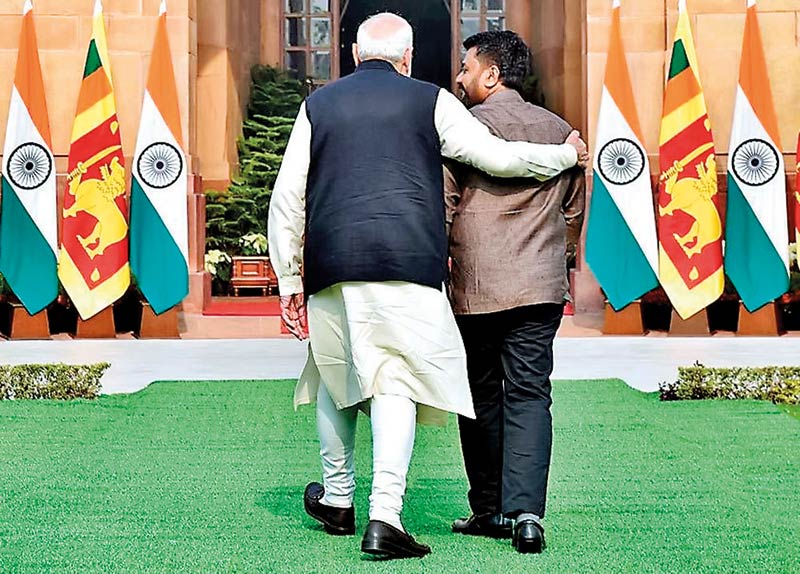
President Dissanayake’s forthcoming visit to India:

It has been reported that President Anura Kumara Dissanayake is due to visit India during the latter part of December.  He and Indian Prime Minister Narendra Modi are expected to have talks on grant assistance projects from India, debt restructuring, people centric digitisation (identity cards, for instance), finality of the Economic and Technological Co-operation Agreement (ECTA), housing projects from India, solar electrification of religious places, agricultural development, defence cooperation, infrastructure development in the North and collaboration in human resource development.    President Dissanayake is expected to raise with Premier Modi the issue of Indian fishermen fishing in Sri Lanka’s territorial waters” (Sunday Times, December 1, 2024).

It is clear from the foregoing report that the scale and scope of India’s agenda overwhelmingly outweighs Sri Lanka’s agenda that is limited to a single issue, namely, Indian fishermen fishing in Sri Lanka’s territorial waters”.    Notwithstanding this serious imbalance, Sri Lanka could gain considerable mileage by expanding the scope of this single issue in its agenda to two issues that would make a significant impact not only to Sri Lanka’s security and its national interests but also to the wellbeing of the Sri Lankan fishing community.

The two issues are as follows:

1   Reparations for the damages inflicted on Sri Lanka’s marine resources by bottom trawling and the loss of revenue and wellbeing to Sri Lanka and its fishing community over decades.

2   The need to revisit existing maritime boundaries agreed to between India and Sri Lanka, which are based on historical practices and instead, establish fresh Maritime Boundaries based on International law recognized by the International Court of Justice (ICJ) relating to International Boundaries.

These two issues are interlinked because it is the determination of the international boundary, based on International Law, that becomes the basis to establish claims for Reparations. Therefore, it is only by establishing the location of the International Boundary, based on a judgment by the ICJ, that lawful assessment of the claim for Reparations could be established.

THE BACKGROUND

One of the issues that was of significant concern to Sri Lanka and India in the early 1970s was the ownership” of the island of Katchativu since it was pivotal to the establishment of the maritime boundary between the two countries.  This issue was resolved with the signing of the 1974 Agreement by the Prime Ministers of Sri Lanka and India and revised in 1976. However, since these Agreements are based on traditional practices of citizens in both countries and, therefore, had no legal resolution of ownership” (MDD Peiris, November 24, 2024), at the operational level, adherence to the obligations in the Agreements are fluid. Consequently, the ceding of Katchativu by India to Sri Lanka as per the Agreements is considered by India to be an act of treachery; even Prime Minister Modi is of a similar view.

As long as such perspectives persist at the highest level in India, attempting to resolve these contentious issues through dialogue is a futile exercise even if the highest level is committed to policies such as Neighbourhood First”. Therefore, the only option for Sri Lanka and India, as members of the UN Charter, is to jointly or separately refer the matter to the ICJ for a legal resolution of all issues involved, if there is to any justice under the policy of Neighbourhood First”, for it to mean what itstates and not India First in the neighbourhood.

REPARATIONS for VIOLATING SOVEREIGN RIGHTS  

According to the UN Convention on the Law of the Sea (Article 56) the exploring, exploiting, conserving and managing living and non-living natural resources of a Coastal State within its Exclusive Economic Zone (EEZ) is a sovereign right.    Despite this, thousands of trawlers from India enter Sri Lanka’s EEZ and not only exploit its resources but also destroy marine resources by resorting to bottom trawling, evidence of which abound.

In a United Nations-Nippon Foundation of Japan Fellowship Programme of 2016, Aruna Maheepala claims: There are over 5,000 mechanised trawlers in Tamil Nadu and nearly 2,500 of them enter Sri Lankan waters on Mondays, Wednesdays and Saturdays and often coming at 500 m of the shoreline (emphasis added) … More than 50,000 marine fishers live in the Northern fisheries districts (Jaffna, Kiliinochchi, Mannar, Mulative), which is around one fourth of the marine fishers of the country. Before the commencement of the war (1982) around 40% of the fish production of the country came from Northern fishery districts (except Killinochchi). However, the contribution of the fish production in the Northern fishery district drastically dropped to 5% in the peak period of the war (2008) and gradually increased after 2009. Furthermore, livelihoods of Sri Lankan fishers’ have been drastically affected as a result of the Indian poaching”.

News 1st reported on 14 April 2021: Indian fishing vessels illegally fishing in Sri Lankan waters pillage around Rs, 900 billion worth of valuable marine resources in the Northern seas of Sri Lanka” (Northern Province Fisheries Asso. Chief, M.V. Subramanium).

Assessing reparation of environmental damage by the ICJ”, (Questions on International Law, QIL) cites the case of compensation for environmental damage in Nicaragua/Costa Rica, the ICJ’s Judgment was:

To shed light on the case, the Court sought support in international law and decisions of arbitral tribunals. In 1927, the ICJ already underlined in its judgment related to the Factory of Chorzów that a breach involves an obligation to make a reparation ‘in an adequate form’. The Court recalled that it had in a previous judgment, in 2015, assigned sovereignty over the area to Costa Rica, and Nicaragua’s activities were, therefore, in breach of that sovereignty. As such, the obligation for Nicaragua to make reparation was no longer to be disputed. Reparation in the form of compensation, as applied in the present case, was determined by the judgment in 2015.

Before addressing the issue of compensation in itself, the Court deemed it appropriate to follow a two-fold approach. The Court first determined the existence and extent of the damage to environmental goods and services caused by Nicaragua’s wrongful activities, and then went on to assess the existence of a direct and certain causal link between such damage and Nicaragua’s activities. This section will successively examine the Court’s analysis of the points of contention, its choice of method, and the assessment of the damage as established by the Court”.

BASIS for MARITIME BOUNDARIES in INTERNATIONAL LAW

A meeting was held in 1921, between the Colonial Governments of India and Ceylon in order to avoid over-exploitation of maritime resources and the possibility of competition between the fishermen of India and Sri Lanka in the same waters for their catch, the colonial Governments of Madras and Colombo agreed to delimit the waters in the Gulf of Mannar and the Palk Bay. The two parties met in Colombo on October 24, 1921. The Indian team was led by Mr. C. W. E. Cotton and the team representing the government of Ceylon was headed by Hon. B. Horsburg”.

Both parties accepted the principle of equidistant and the median line could be the guiding factor”.  However, since at Kachchathivu the principle of equidistant would considerably narrow the area of operations for the Indian fishermen”, the Ceylon delegation proposed a line that was three miles west of the island so that there would be an equitable apportionment in the fisheries domain for both Sri Lanka and India”. The proposal by the Ceylon delegation was based on the fact that Sri Lanka’s sovereignty over Kachchathivu was never in question, was beyond any doubt and was not a matter for negotiation.  He (Hon. B. Horsburg) quoted from the correspondence that the Survey Department and the Department of Public Works in Colombo had exchanged with the counterparts in India, in which the sovereignty of Sri Lanka over Kachchativu had been taken for granted by the Indian authorities… After discussion the delimitation line was fixed three miles west of Kachchativu” (Jayasinghe, p. 14,15).

Agreement between the two parties is reflected in the letter from the head of the Indian delegation, C. W. E. Cotton, in which he states: ” … we unanimously decided that the delimitation of the new jurisdiction for fishing purposes could be decided independently of the question of territoriality.  The delimitation line was accordingly fixed, with our concurrence three miles west of Kachchativu and the Ceylon representatives thereupon agreed to a more orderly alignment south of the island than they had originally proposed…” (Ibid, p. 130).

What is relevant from all of the above is that regardless of the basis for establishing a boundary under colonial rule, such boundaries morph into territorial boundaries of independent states under the Doctrine of UTI POSSIDETIS”.

DOCTRINE of UTI POSSIDETIS

Black’s Law Dictionary has defined the legal Doctrine of Uti possidetis juris” as the doctrine that old administrative boundaries will become international boundaries when a political subdivision achieves independence (Hansal & Allison, The Colonial Legacy and Border Stability”, p. 2; quoting Garner 1999). 

The principle behind this doctrine dates back to Roman times. The principle first emerged in the modern sense with the decolonization of Latin America when each former Spanish colony agreed to accept territories that were presumed to be possessed by its colonial predecessors” (Ibid). The same doctrine was accepted by former colonies in the African continent.  The International Court of Justice (ICJ) has argued for its relevance across the world” (Ibid).

This principle was stated most directly in the ICJ’s 1986 decision in the Frontier Dispute/Burkina Faso Republic of Mali case.  The ICJ had been asked to settle the location of a disputed segment of the border between Mali and Burkina Faso, both of which had been part of French West Africa before independence.  In their judgment over the merits of this Frontier Dispute case the ICJ emphasized the legal principle of uti possidetis juris”:

The ICJ judgment in the Mali-Burkina Faso Dispute case also argued that the principle of uti possidetis should apply in any decolonization situation regardless of the legal or political status of the entities on each side of the border”:

The territorial boundaries which have to be respected may also derive from international frontiers which previously divided a colony of one State from a colony of another, or indeed a colonial territory from the territory of another independent State…There is no doubt that the obligation to respect pre-existing international frontiers in the event of State succession derives from a general rule of international law, whether or not the rule is expressed in the formula of uti possidetis” (ICJ 1986, Ibid).

Based on the ICJ Judgment, the Maritime Boundary between India and Sri Lanka should be what existed during Colonial times and continue as the International Maritime Boundary when India and Sri Lanka gained independence. The fact that Sri Lanka failed to use the provision of Uti Possidetis has cost Sri Lanka’s economy dearly and continues to do so in terms of treasure and human suffering.

CONCLUSION  

The issue of Indian fishermen fishing in Sri Lanka’s territorial waters was resolved in 1921, when the Colonial Government of India and then Ceylon unanimously agreed on what the Maritime Boundary was to be. Accordingly, the island of Kachchativu was to be part of Sri Lanka’s sovereign territory as it had been before Ceylon was colonized.    Following independence of both countries, the boundaries that were recognized while under colonial rule should have been recognised as the boundaries of independent India and Sri Lanka in keeping with the internationally recognized doctrine of UTI POSSIDETIS cited above.

Instead of staking Sri Lanka’s claim on the principle that colonial boundaries transform into international boundaries upon gaining independence, Sri Lanka opted to base their claim on traditional and historical practices and agreements were signed by the Prime Ministers of India and Sri Lanka.in 1974 and revised in 1976. The opportunity to stake Sri Lanka’s claim on the basis of international law was lost, perhaps due to unfamiliarity with related legal provisions.

While sovereign countries are free to forge agreements between themselves, their durability is dependent on varying personal political agendas of political actors in each country. Consequently, what is acceptable today may be unacceptable tomorrow.  Since these agreements are not based on international law, Indian political leaders, such as Prime Minister Modi, refuse to accept them. These perspectives have emboldened Indian fishermen to violate Maritime Boundaries and destroy marine resources by resorting to bottom trawling.  Furthermore, the numerous discussions between the two governments have failed to resolve substantive issues and have resulted ONLY in the India government’s focus being on the release of arrested Indian fishermen and their vessels.

Therefore, since the issue of maritime boundaries has a direct bearing on illegal entry into Sri Lanka’s sovereign territory and destruction of marine resources, the ONLY durable way to resolve this contentious issue is to seek the assistance of the ICJ to rule on a legal determination as to the location of maritime boundaries based on the principle of UTI POSSIDETIS, on which depends claims for reparations for damages to maritime resources inflicted over decades. In this regard, Sri Lanka should be encouraged by the ICJ determination in the case of Nicaragua and Costa Rica in 2015 cited above.

The opportunity presented by the forthcoming visit of President Dissanayake to India should NOT be missed by the new government because all previous governments and their advisors have failed to address this all-important issue, either because of their timidity or ignorance of relevant International Laws. If Dissanayake fails to inform India that Sri Lanka has no option but to seek the assistance of the ICJ to resolve the issue of maritime boundaries, Sri Lanka will have to accept the bitter prospect of the plunder of its resources and the sovereign rights of the People and the Nation forever.

Blame Game

December 9th, 2024

Sugath Kulatunga

The scarcities and prices of Rice and coconut, plus bad weather, hammer helpless consumers. An impending shortage of salt and another depression in the Bay of Bengal loom large. The opposition is making capital of this distressing situation to blame the government for the plight of the consumers, disregarding that the government assumed parliamentary power only on the 21st of last month and the roots of these problems are traceable to previous regimes. 

The problem in Rice can be traced back directly to the policy of the UNP to dispose of the Paddy stores of the Paddy Marketing Board. This restricted the operation of the purchasing paddy under the Guaranteed Price Scheme and allowed free play in the market to large rice millers. They have now become a mafia which controls both the supply and price of rice in the market. President AKD has met the rice millers twice and requested their cooperation to stabilize the market. He has said if they do not cooperate that he has to resort to other options. At the last meeting, he even agreed to increase the controlled price of rice. The government has also decided to import a limited quantity of rice from India.

The President can easily invoke the powers of the Consumer Affairs Authority to control the present quandary. Consumer Affairs Authority ACT  9 of 2003 Article 15 allows action regarding refusal to sell,’ Article 16 provides for action when there is ‘ ‘denial of possession’, and Article 17 can be invoked when there is ‘hoarding. It is noted that the fines to be imposed under these provisions are limited. Regulations must be introduced to Increase the fines for large-scale offenses. Firstly, the President should clean up the scam-ridden CAA.

As far as the issue with coconuts, there is hardly any short-term solution, and no blame can be assigned to the present government. The industry is beset with multiple problems. There had been no serious effort to expand the extent of coconut plantations. There is plenty of space on the coastline to plant coconuts. The existing plantations have not been fertilized in time.

A knee jerk reaction of a former President was the ban on Oil Palm cultivation. The proposal at the time of the decision was to identify 20,000 ha of suitable land in the major plantations for the purpose. This extent was adequate to produce the island’s requirement, which was at that time was 80,000 MT”. Assuming that 50 % of that is coconut oll and it takes 8,000 coconuts to produce one metric ton of crude coconut oil if the proposal was implemented, there would have been a savings of four hundred million coconuts in the market.

The bigger problem is animal damage, where a clash of cultures has come into play. Buddhism abhors any form of destroying life. But during the time of Buddha, there was the killing of pigs and cows. Former President Sirisena stated Wild animals are destroying 35 percent of our farm produce. The number one predator is the monkey. There are over a million monkeys in the country. Each monkey ng destroys at least one bunch of coconuts a day.”

However, environmentalists and animal lovers have made the killing of animals in agricultural lands a rallying point for publicity-oriented demonstrations. These do-gooders are not concerned with the killing of millions of fish. Fish out of water die of suffocation, which is a worse form of death.

The plain truth is that animal damage has escalated since the withdrawal of guns from the farmers by an illegal circular issued by a former secretary of defense. Not that farmers killed every animal invading their property. A blank shot now and then was enough to keep monkeys away. Monkeys are very intelligent animals. They can recognize even the human wielding a gun. The very sight of the person is the cue for them to withdraw.

Please see: https://www.lankaweb.com/news/items/2023/05/20/open-letter-to-the-hon-premitha-bandara-tennakoon-mp-llb-hon-uk-llm-australia-state-minister-of-defence/

Sugath Kulatunga

SriLanka will never recover by obeying IMF

December 9th, 2024

By Nalliah Thayabharan

Germany was hopelessly broke when Adolf Hitler came to power in 1933 . The Treaty of Versailles (le Traité de Versailles) had imposed crushing reparations on the German people, demanding that Germans repay every nation’s costs of the war. These costs totaled three times the value of all the property in Germany.

Private currency speculators caused the German currency to plummet, precipitating one of the worst runaway inflations in modern times. A wheelbarrow full of 100 billion-mark banknotes could not buy a loaf of bread. The national treasury was empty. Countless homes and farms were lost to speculators and to private Zionist controlled banks. Germans lived in hovels. They were starving.

Nothing like this had ever happened before – the total destruction of the national currency – German mark, plus the wiping out of Germany’s savings and businesses. On top of this came a global depression. Germany had no choice but to succumb to debt slavery under international Zionist bankers until 1933, when the National Socialists came to power. At that point the German government thwarted the Zionist international banking cartels by issuing its own money. Zionist bankers responded by declaring a global boycott against Germany.

Adolf Hitler began a national credit program by devising a plan of public works that included flood control, repair of public buildings and private residences, and construction of new roads, bridges, canals, and port facilities. All these were paid for with money that no longer came from the private international Zionist bankers.

The projected cost of these various programs was fixed at one billion units of the national currency. To pay for this, the German government (not the international Zionist bankers) issued bills of exchange, called Labor Treasury Certificates. In this way the National Socialists put millions of people to work, and paid them with Treasury Certificates.

Under the National Socialists, Germany’s money wasn’t backed by gold which was owned by the international Zionist bankers. It was essentially a receipt for labor and materials delivered to the government. Adolf Hitler said, For every mark issued, we required the equivalent of a mark’s worth of work done, or goods produced.” The government paid workers in Certificates. Workers spent those Certificates on other goods and services, thus creating more jobs for more people. In this way the German people climbed out of the crushing debt imposed on them by the international Zionist bankers.

Within two years, the unemployment problem in Germany had been solved, and Germany was back on its feet. It had a solid, stable currency, with no debt, and no inflation, at a time when millions of people in the United States and other Western countries controlled by international Zionist bankers were still out of work. Within five years, Germany went from the poorest nation in Europe to the richest.

Germany even managed to restore foreign trade, despite the international Zionist bankers’ denial of foreign credit to Germany, and despite the global boycott by Zionist-owned industries. Germany succeeded in this by exchanging equipment and commodities directly with other countries, using a barter system that cut the private Zionist bankers out of the picture. Germany flourished, since barter eliminates national debt and trade deficits. Today Venezuela does the same thing today when it trades oil for commodities, plus medical help, and so on. Hence the Zionist bankers are trying to squeeze Venezuela.

Hjalmar Schacht, a Rothschild agent who was temporarily head of the German central bank, summed it up thus… An American banker had commented, Dr. Schacht, you should come to America. We’ve lots of money and that’s real banking.” Schacht replied, You should come to Berlin. We don’t have money. That’s real banking.”

Schacht, the Rothschild agent, actually supported the private international Zionist bankers against Germany, and was rewarded by having all charges against him dropped at the Nuremberg trials.

This economic freedom made Adolf Hitler extremely popular with the German people. Germany was rescued from English economic theory, which says that all currency must be borrowed against the gold owned by a private and secretive Zionist banking cartel — such as the Federal Reserve, or the Central Bank of Europe — rather than issued by the government for the benefit of the people.

Canadian researcher Dr. Henry Makow who is Jewish himself says the main reason why the Zionist bankers arranged for a world war against Germany was that Hitler sidestepped the Zionist bankers by creating his own money, thereby freeing the German people. Worse, this freedom and prosperity threatened to spread to other nations. Adolf Hitler had to be stopped!

Makow quotes from the 1938 interrogation of Christian Rakovsky, one of the founders of Soviet Bolshevism and a Lev Davidovich Bronshtein (Trotsky) intimate. Christian Rakovsky was tried in show trials in the USSR under Joseph Vissarionovich Stalin. According to Christian Rakovsky, Adolf Hitler was at first funded by the international Zionist bankers, through the bankers’ agent Hjalmar Schacht. The bankers financed Adolf Hitler in order to control Joseph Stalin, who had usurped power from their agent Lev Davidovich Bronshtein (Trotsky). Then Adolf Hitler became an even bigger threat than Joseph Stalin when Hitler started printing his own money.

Joseph Stalin came to power in 1922, which was eleven years before Adolf Hitler came to power.

Christian Rakovsky said:
Adolf Hitler took over the privilege of manufacturing money, and not only physical moneys, but also financial ones. He took over the machinery of falsification and put it to work for the benefit of the people. Can you possibly imagine what would have come if this had infected a number of other states?” (Henry Makow, Hitler Did Not Want War”).

Economist Henry C K Liu writes of Germany’s remarkable transformation:
The Nazis came to power in 1933 when the German economy was in total collapse, with ruinous war-reparation obligations and zero prospects for foreign investment or credit. Through an independent monetary policy of sovereign credit and a full-employment public-works program, the Third Reich was able to turn a bankrupt Germany, stripped of overseas colonies, into the strongest economy in Europe within four years, even before armament spending began.”
(Henry C. K. Liu, Nazism and the German Economic Miracle”).

In Billions for the Bankers, Debts for the People (1984), Sheldon Emry commented:
Germany issued debt-free and interest-free money from 1935 on, which accounts for Germany’s startling rise from the depression to a world power in five years. The German government financed its entire operations from 1935 to 1945 without gold, and without debt. It took the entire Capitalist and Communist world to destroy the German revolution, and bring Europe back under the heel of the Bankers.”

These facts do not appear in any textbooks today, since Zionist own most publishing companies. What does appear is the disastrous runaway inflation suffered in 1923 by the Weimar Republic, which governed Germany from 1919 to 1933. Today’s textbooks use this inflation to twist truth into its opposite. They cite the radical devaluation of the German mark as an example of what goes wrong when governments print their own money, rather than borrow it from private Zionist cartels.

In reality, the Weimar financial crisis began with the impossible reparations payments imposed at the Treaty of Versailles. Hjalmar Schacht – the Rothschild agent who was currency commissioner for the Republic — opposed letting the German government print its own money… The Treaty of Versailles is a model of ingenious measures for the economic destruction of Germany. Germany could not find any way of holding its head above the water, other than by the inflationary expedient of printing bank notes.”

Schacht echoes the textbook lie that Weimar inflation was caused when the German government printed its own money. However, in his 1967 book The Magic of Money, Schacht let the cat out of the bag by revealing that it was the PRIVATELY-OWNED Reichsbank, not the German government, that was pumping new currency into the economy. Thus, the PRIVATE BANK caused the Weimar hyper-inflation.

Like the U.S. Federal Reserve, the Reichsbank was overseen by appointed government officials, but was operated for private gain. What drove the wartime inflation into hyperinflation was speculation by foreign investors, who sold the mark short, betting on its decreasing value. In the manipulative device known as the short sale, speculators borrow something they don’t own, sell it, and then cover” by buying it back at the lower price.

Speculation in the German mark was made possible because the PRIVATELY OWNED Reichsbank (not yet under Nazi control) made massive amounts of currency available for borrowing. This currency, like U.S. currency today, was created with accounting entries on the bank’s books. Then the funny-money was lent at compound interest. When the Reichsbank could not keep up with the voracious demand for marks, other private banks were allowed to create marks out of nothing, and to lend them at interest. The result was runaway debt and inflation.

Thus, according to Schacht himself, the German government did not cause the Weimar hyperinflation. On the contrary, the government (under the National Socialists) got hyperinflation under control. The National Socialists put the Reichsbank under strict government regulation, and took prompt corrective measures to eliminate foreign speculation. One of those measures was to eliminate easy access to funny-money loans from private banks. Then Adolf Hitler got Germany back on its feet by having the public government issue Treasury Certificates.

Schacht , the Rothschild agent, disapproved of this government fiat money, and wound up getting fired as head of the Reichsbank when he refused to issue it. Nonetheless, he acknowledged in his later memoirs that allowing the government to issue the money it needed did not produce the price inflation predicted by classical economic theory, which says that currency must be borrowed from private cartels.

What causes hyper-inflation is uncontrolled speculation. When speculation is coupled with debt owed to private Zionist banking cartels the result is disaster. On the other hand, when a government issues currency in carefully measured ways, it causes supply and demand to increase together, leaving prices unaffected. Hence there is no inflation, no debt, no unemployment, and no need for income taxes.

Naturally this terrifies the Zionist bankers, since it eliminates their powers. It also terrifies Zionists, since their control of banking allows them to buy the media, the government, and everything else.

SriLanka will never recover by obeying the IMF.

Cannabis; Pros, Cons, Debate, Arguments .

December 9th, 2024

Dr Ruwan M Jayatunge M.D.

Cannabis; Pros, Cons, Debate, Arguments …
Zoom Discussion
13th of December (Friday) at 8.30 pm SL Time

Discussion panel

Dr . Wasantha Sena Weliange
Dr. Upali Peris
Dr. Manoj Fernando
Dr. Ruwan M Jayatunge

Link ; 

https://us05web.zoom.us/j/81288753119?pwd=6a4ujcxOH6MrUDD1bTY3s45zURiTxq.1  https://us05web.zoom.us/j/81288753119?pwd=6a4ujcxOH6MrUDD1bTY3s45zURiTxq.1

SYRIAN CRISIS

December 9th, 2024

By Nalliah Thayabharan

 The role of Turkey to have al-Qaeda rule over Syria is pretty interesting. Of course, Erdogan has a long history in the Syrian Dirty War where he had openly backed the fundamentalist forces. Erdogan has now created a multinational terrorist organization and was able to organize them under one command to have al-Qaeda rule over Syria.

It’s interesting though that Erdogan had very good relations before with the Syrian president. In fact, he and his wife would go on vacation with the president of Syria and his wife. Their relations were closer than Iranian-Syrian relations.

Then Erdogan turned against Syria. He did it in coordination with the Israelis and the Americans so that they would support him to have al-Qaeda rule over Syria. So it’s a win-win situation for Erdogan and Netanyahu. They both win by having al-Qaeda rule over Syria which was the only country that was resisting Israel.

When Syria is broken, then Lebanon is surrounded and therefore it makes things a lot easier for the Israeli regime to end the resistance.

Islamic extremism has nothing to do with Islam. Islamic extremism is created by the US, NATO and Western countries. What we have now in Syria is Hayat Tahrir al-Sham (HTS), but before Hayat Tahrir al-Sham was Al-Nusra Front and before that was Al-Qaeda. The names change, but the organization is the same.

The Turkish government, which continues to send cheap Baku oil to Israel for the lat 14 months but never sent any relief to Gaza, and never gave Lebanon any support during the recent Israeli attacks.

Erdogan and Netanyahu decided to invade Syria, which was supporting Lebanon, hosting 500,000 Lebanese refugees and helping the Lebanese resistance.

New developments in Syria where Hayat Tahrir al-Sham (HTS) terrorists launched a large-scale attack on government forces and captured the country causing the largest shift in the balance of power since 2020 in the country where more than a decade of war has taken place. Battling Iran and the Russian backed Assad government, the Hayat Tahrir al-Sham (HTS) in a lightning offensive captured Syria.

It is important to note what happened in Syria in 2011, when the US had made a decision to overthrow the Syrian government.

The US used weapons from Libya when they overthrew the Libyan government and sent them to Istanbul to give them to their Al Qaeda allies in Syria. When Al Qaeda in Syria was receiving these arms, Iranian intelligence was stating very early on about this, but Western media and Western politicians were ridiculing the Iranian intelligence. But later, thanks to WikiLeaks, Jake Sullivan, who is now the US National Security Advisor, said in an email on February 12, 2012, that in Syria, Al Qaeda is on the US’s side.

So the US was using the terrorist organization that according to the US carried out 911, 10 years later to overthrow the Syrian government and also to overthrow the government in Libya where they were more successful.

Later on, Al Qaeda split into two groups. Now Al Qaeda is being supported by NATO countries. Foreign fighters were coming in from across the world, including Europe and North America, but also across the Arab world and Central Asia. The United States, the Europeans were also using an extraordinarily large amount of funding from oil and gas rich countries in the Persian Gulf. But the command centers for Al Qaedawere in Amman, in Jordan, and most importantly in Turkey.

In late 2011 Alister Crook who was an advisor to the head of the foreign policy head of the EU, said that the West is behind the dirty war in Syria because all the people who he knew in Pakistan who were commanding the events in Afghanistan are now in Istanbul. So the people who are involved in Afghanistan through Pakistan are now involved in Syria through Turkey. The US Defense Intelligence Agency document of 2012 that was released said that US allies in the region wanted to create a Salafist entity between Syria and Iraq to break the path between Syria and Iraq and isolate Syria even more.

What was that Salafist entity? It was ISIS. ISIS was a part of al-Qaeda. Until it broke away because of differences over how to organize. ISIS wanted the Islamic State of Iraq, created the Nusra part of the group, and then when it declared itself the Islamic State of Iraq and Syria, then Nusra didn’t accept and they broke away.

So they had the same ideology and the current head of Hayat Tahiri Sham was in Al Qaeda and ISIS, and when he was the head of the Nusra Front, which changed the name to Hayat Tahir Rasham. They are not a part of Al Qaeda for public diplomacy purposes, for CNN purposes and so on.

So the head of the Defense Intelligence Agency, later in an interview on Al Jazeera said that the US government supported this policy. Obama supported this saying what regional countries wanted to do to create a Salafist entity between Syria and Iraq.

So when people speak about Islamic extremism, this has nothing to do with Islam. Islamic extremism was created by the US, NATO and Western countries. Islamic extremism has nothing to do with Islam and it’s not indigenous to Islamic culture.

Then in a leaked audio, the US Secretary of State Kerry, said the US allowed so-called Syrian opposition troops ISIS to advance on Damascus. The fact is that ISIS and al Qaeda and their affiliates were a part of a dirty war by the West to undermine Syria. Back then, the Western media and Arabic media was demonizing the Syrian government. And also these al Qaeda groups carried out false flag operations, chemical weapons operations, and the West tried to blame Syria because they were with these terrorist groups. But there’s very good investigative journalism carried out by a number of people. Aaron Mate did a very good piece describing how this was a false flag operation and how the OPCW, which is a UN organized affiliated organization that deals with chemical weapons there, experts went to Syria. And the analysts who were in Syria said that the evidence doesn’t show it was the Syrian government. But when they went back to their organization, the politicians moved them from the team, from the report writing, and they wrote the report blaming Syria. There’s a lot of evidence for this, and please read Aaron Matthey’s work on this matter to know about this. But in any case these extreme terrorist groups were supported by the West, but the Western media was supporting them and the Arabic media was supporting them because the Arabic media is owned by these oil rich regimes for the most part.

And the White Helmets, which was created by British intelligence, were working side by side with Al Qaeda, the Nusra and Hayat Tahir al-Sham. What we have now is Hayat Tahir Sham, but before that Nusra and before Nusra that was Al-Qaeda. The names change, but the organization is the same. They keep changing the label, but it’s the same thing. So the so-called white helmets that the West was always speaking about and in Hollywood they were trying to promote them. Their office was right beside the central office in Eastern Aleppo, when they occupied Aleppo as Hayat Tahrir al-Shamur, the Al-Qaeda group.

So the West created a huge public diplomacy apparatus to support these al Qaeda and ISIS terrorists and their affiliates because of Israel since all U.S. policy in southwest Asia is centered around Israel. That’s why they can carry out a Holocaust in Gaza and get away with it. That’s why they can carry out genocidal attacks on Lebanon.

Nothing happens. No one is punished. No one is sanctioned. No country is sanctioned because everything is being done for the sake of Israel, basically. Netanyahu was the chief promoter of the war on Iraq, and the United States invaded Iraq, and the United States, as a result, Spent trillions of dollars, wasted trillions of dollars and killed over a million people. But since Israel wanted it, they didn’t.

These Al Qaeda extremists are Western backed. These extremists are very cruel and dangerous people. They have a horrific background. They
slaughter innocent people. They consider everyone who does not think like them to be worthy of death. And they would carry out very ugly executions. And they have done some already on this occasion, even though they’re trying to promote themselves in a different way, but they’re the same people.

So what happened recently? There’s a war going on in Gaza. Not a war, but a genocide supported by the West. Day and night, women and children are slaughtered. The axis of resistance was trying to stop the genocide – Ansarullah in Yemen, who blocked the Red Sea so that to put pressure on the Israeli regime to stop it, and the Iraqis who fire missiles and drones at the Israeli regime to put pressure on them to stop the genocide. But the third was Hezbollah. Hezbollah began on October the 8th when they knew that the Israeli regime was about to carry out a genocide. They began to attack Israel because the Israelis were saying we’re going to cut off the water for everyone, the food, the electricity, the fuel. That’s what the Minister of Defense said. We’re going to cut off everything. We’re going to starve them. And then the Prime Minister called the Palestinians Amanik. which in biblical terms was a tribe which was completely wiped out, including their children and animals. And the president said that there are no innocents in Gaza. So it was obvious that the intention was genocide from day one.

And all the lies about Israeli children being beheaded and the rapes of Israely women, all was that these lies were there, were carried out in order to enable this genocide. So Hezbollah saw this coming and they began attacking Israeli troops on the border to draw away part of the army from Gaza to prevent them from wiping out the population. And they did this for a year until the Israeli regime attacked Lebanon and sought revenge. So Hezbollah was in a very painful war where every time they’d win on the battlefield, the Israelis would bomb cities. We saw that they destroyed southern Beirut. They destroyed Baalbek. They destroyed towns and villages, especially communities that were supporting the resistance.

Hezbollah would hold them on the border. The Israelis failed to make any inroads into Lebanon, which was extraordinary. And the biggest heroes in this whole year and two months is Hezbollah because they willingly made sacrifices to save the children in Gaza.

So when there was finally a ceasefire in Lebanon and the Americans put pressure and Netanyahu needed a ceasefire because the Israeli army was exhausted and they had many casualties, the next day this attack on Syria began.

Netanyahu said that we need to deal with the so-called Iran threat, and the Israelis constantly threatened Syria. Before this assault by Al Qaeda, which was organized by Erdogan, the Israelis bombed all of the connecting routes between Lebanon and Syria so that Hezbollah couldn’t go to the aid of the Syrian people against these groups. And then the assault began.

So the Israeli regime carries out the genocide with oil coming through Turkey and they do trade and they have diplomatic relations. And when the Israeli regime was thinking about attacking Lebanon, the president of Turkey, Erdogan, said we will send troops to Lebanon to support Lebanon. But he never sent troops, he never sent anything. He did trade with his friends and then he invaded Syria. So what does that say about Erdogan? The Turkish government, which was cooperating with the Israeli regime decided to invade Syria, which was supporting Lebanon, which was hosting 500,000 Lebanese refugees and helping the resistance.

Turkey will have a very difficult time with Syria, with Al Qaeda in the realm. It will create great difficulty, and not just in Syria, but across the region. It will have implications that will be very difficult for countries across the region. But Turkey for first and foremost, first of all, Al Qaeda is not going to improve the lives of the Syrians. Maybe Qatar will give them some money to do some things because they are also supporting the terrorists.  Paying terrorists is one thing, but running a state is another, especially when it’s under such severe sanctions by the United States. And the United States is not going to remove sanctions, even for Al-Qaeda. Why? Because the United States doesn’t want a strong Syria since Israel doesn’t want a strong Syria. It doesn’t matter who’s in charge. They want a broken and fragmented Syria. They want a broken Lebanon. They want a weakened broken Jordan. That’s why Jordan is so weak. That is why Egypt is so weak.

So Syria, which was the only country that was resisting Israel,has to be broken. And of course, if Syria is broken, then Lebanon is surrounded and therefore it makes things a lot easier for the Israeli regime to end the resistance.

So in a sense, the fall of the Syrian government is great news for for both Israel and for Erdogan. But it would be terrible news for the region, even though there are quite a few people who are now supporting these terrorists, because they’re influenced by Arabic media in the region, which is trying to give a positive image of these terrorists to the public.

Having an al-Qaeda rule over Syria is part of the original Netanyahu plan who laid out seven countries in the Middle East and across Africa which should be toppled. And later General Wesley Clark confirmed that it was Syria, Lebanon, Iran, Iran. Iraq, Sudan, Yemen, these were the countries that should go.

The northeastern part is held by Kurdish nationalist forces backed by the US, but these forces are opposed by Turkey. Of course Turkey wants to use Al Qaeda to balance them kind of some kind of balance of forces game there.

The US is illegally occupying 30% of Syria and stealing the oil and the grain for years. The US is starving the Syrian people by stealing their oil and grain. It is extraordinary that American soldiers in northeastern Syria protect oil wells so that the oil can be taken out of Syria and sold. And the Syrian people are under extreme sanctions and starvation and their oil is being openly stolen by an illegal U.S. presence.

Erdogan is responsible for murders of hundreds of thousands of Syrians. The West likes to say that Assad killed hundreds of thousands of his own people. No, it was Erdogan who’s killed more, who’s more responsible for the death sentence here than any individual, even the Americans and Israelis, because it was done through his territory. It was done through his border. He cooperated. There was a Lebanese journalist, Serena Shim, who was investigating how near Einul, the Turkish government was sending ISIS troops and ISIS weapons, through World FoodOrganization trucks into Syria.  Then Turkish intelligence said that she’s a terrorist or she’s a spy and murdered her. She was an American Lebanese with two kids. The American embassy did nothing.

No investigation, no call for investigation. Why? Because she was reporting what was back then being hidden from the world, that Turkey was supporting ISIS and Al Qaeda.

Now Erdogan decided to go ahead with invading Syria once again. Repeating what he did in 2011, 12 and 13.

In Syria, Sunni people are influential in the private sector. Aleppo is a Sunni city. They’re Christians. They’re Druze. The Shia is actually the smallest group – not a significant number – 1 % to 2%. And then there are the Kurds. Syria is a mixed country with a great deal of diversity.

But these terrorists don’t accept diversity. They’re ISIS. They killed more Sunnis in Iraq and Syria than any other community. They’ve slaughtered Sunnis.

The reason why the Iraqi Popular Mobilization Forces came in to support the Syrian government was because Turkey and Jordan, with the help of NATO and others, brought in tens of thousands of foreign fighters.

Hezbollah entered the battle in Syria in mid 2013. By that time, there were already tens of thousands of foreign fighters brought into Syria, and then Iran began to get involved. And then in 2015, the Russians began to get involved.  This has nothing to do with Shia and Sunni. Otherwise, the key issue in the region is the Palestinian people who are Sunni. All the sacrifices that the resistance is making is for the sake of the Palestinian people. Otherwise, Hezbollah, they can just live their lives in Lebanon and ignore the Palestinians. Ansarullah could have cut a deal with the Americans in Yemen. Hezbollah could have cut even a better deal with the Americans. So no, it doesn’t make any sense.

And the bulk of the martyrs of Syria who fought against these extremist groups were Sunni. These groups are NATO backed. They are the people that NATO created, and Wahhabism is not traditionally central to Sunni Islam. It was an ideology that was predominant in an area in the Arabian Peninsula called Najd. But because of oil wealth and because of the Saudi-US alliance, it was promoted by the Saudis, and that’s what they were promoting in Afghanistan. In fact, the University of Nebraska, Omaha, they were the first ones to publish Takfiri literature for school children in Afghanistan. When, first of all, the Americans supported extremist groups in Afghanistan to induce a Soviet invasion. Many people don’t know that. They gave funding to these extremists in Afghanistan in order to encourage the Soviet Union to invade the country. So they sacrificed Afghanistan in order to create Vietnam for the Soviet Union.

The first books that were published, school books for children, Takfiri books were published in the United States by the United States, an American university. And then of course the Saudis came in and began to spend more money and the madrassas became. And then, this extremism became a problem, not just in Afghanistan, but in Pakistan, a very moderate Sunni country, conservative, moderate Sunni. But. When you have all of this oil wealth coming in, when you have these mosques, brand new mosques with all this oil money, whether in Pakistan or anywhere else in the world, how can other Muslim organizations compete with this oil money coming from the Persian Gulf?

So in any case, the point is that this is not Sunni Islam.  ISIS does not represent Sunni Islam. Al Qaeda does not represent Sunni Islam. And that is why they’re sponsored by the West. There is a famous photograph of Mujahideen leaders from Afghanistan going to the White House during the Reagan administration. This was back in the days where communism had to be toppled, and so the Mujahideens were trained. They never knew they were to later turn against the Americans.

Not all the people who resisted in Afghanistan were extremists. When the Soviet Union invaded, they were legitimately people legitimately defending their country. But there are those who are getting money from the CIA. There are those who are getting money from the Western intelligence agencies.

What happened in Syria is an illegitimate terror organization that is being promoted by Erdogan and his allies. And the West will not do anything in Syria or in the region that goes against Israeli regime interests.

The recent article in the Wall Street Journal where they cited some of their leading think tank scholars, who think this is a Saigon moment for Russia and Iran.

And the foreign minister of Russia also said that Hayat Tahrir al-Sham (HTS) is a terrorist organization. Now Turkey and Israel helped to have al-Qaeda rule over Syria. And the West is trying to legitimize this. They’re trying to present them as moderate.

Well, it’s quite clear that the West stands with al-Qaeda, Israel stands with al-Qaeda, and Erdogan stands with al-Qaeda. And those who are supporting Erdogan in the region are either very naive people who believe this propaganda and who don’t know the backstory and they don’t have the information, or they are Sinister people, and there are quite a few of them, but ordinary people can not be fooled.

It’s difficult to say where this will go at this stage because Western media and regional media is on the side of Al Qaeda, but also it’s very clear that social media is being manipulated by the United States to spread the voices of Al-Qaeda and their supporters.  It’s quite clear how the psychological warfare is being carried out and also how the voices are being exaggerated.  We’ve seen how social media has been used as a tool against Iran, Russia, Sri Lanka, and Bangladesh in the past.

When there’s unrest in Iran, Iran would be at the top of the global news, it would be trending across the world. Obviously, it was intensified by Twitter, Facebook, and Instagram.

And then when you have the Holocaust in Gaza, it often not even there wouldn’t be trends even though people are speaking about it every day. So it wouldn’t be trending. So it’s obvious that Western media, social media and regional media owned by these oil and gas rich regimes that are close to the United States are with this and of course. in Turkey because Erdogan is his partner in the government is a right wing fanatical party. And they believe in reviving the Ottoman Empire, that he is a sort of contradictory person. On the one hand, he’s speaking of Islam and on the other hand, he’s speaking about Turkish nationalism, the both did not work together. They’re like oil and water.

The Hayat Tahrir al-Sham (HTS) also is now talking about Syrian nationalism. Yes, exactly. So terrorist groups from Uzbekistan and Tajikistan and elsewhere and speaking about Syrian nationalism. So you have these extraordinary contradictions at play.

But it’s still too early to say what will happen.

Given Trump’s new appointment to the Middle East, Mike Waltz as the national security advisor who is an extreme Zionist is a very racist hawk. He blames Iran about the assassination plot for Donald Trump, but he’s also has said that Israelis should go on and finish the genocide so that Iran can be taught a lesson.

And Trump is not more pro-Israel than Biden. Biden called himself a Zionist. And the people who run the US government,  foreign policy for sure, are the Secretary of State, a Zionist supremacist, and Jake Sullivan, these two people, their loyalty is to Israel, not to the United States. They’re the ones in charge. Their ideology is clear that their top priority is Israel, not the United States. So Trump cannot be more extreme than them, but he’s no better. But people voted for Trump because he was speaking against the wars.

The United States that we see today is just this regime that carries out war after war, that supports genocide after genocide, that supports terror, death and destruction across the world, and preaches to us as it does it.

බාර් පර්මිට් ගැන රනිල්ගෙන් නිවේදනයක්.. අහෝසි කර රජයේ ආදායම නැති කර ගන්නැයි කියයි.

December 9th, 2024

උපුටා ගැන්ම ලංකා සී නිව්ස්

පසුගිය රජය සමයේ නිකුත් කරන ලද මත්පැන් අලෙසැල් බලපත්‍ර සම්බන්ධයෙන් එල්ල වන චෝදනාවන්ට හිටපු ජනාධිපති රනිල් වික්‍රමසිංහ මහතා ප්‍රතිචාර දක්වයි.

ඒ පිලිබදව දීර්ඝ පැහැදිලි කිරීමක් කරමින් ඔහු විසින් නිකුත් කර ඇති නිවේදනය මෙසේය.

නිදහසින් පසු 2022 වසර වනතුරුම සුරාබදු බලපත්‍ර නිකුත් කිරීමේදී රජය මුදල් අය කිරීමක් කර නොතිබිණ. ඒ වනවිට රටේ සෘජු බදු විශාල ලෙස අහිමිවීමේ ප්‍රවනතාවයක් පෙන්නුම් කෙරිණි. රට පත්ව තිබූ දැඩි ආර්ථික බංකොලොත් භාවයෙන් ගොඩ ඒම සඳහා සුදුසු පියවර ගන්නා ලෙස පාර්ලිමේන්තු ක්‍රම සහ විධි කාරක සභාව ද ඒ අවස්ථාවේදී රජයට දැනුම් දුන්නේය. ඒ අනුව, සෘජු බදු සීඝ්‍ර ලෙස අහිමිවීමට විකල්ප ලෙස රජයේ ආදායම වැඩිකර ගැනීම සඳහා මුදල් අය කර සුරාබදු බලපත්‍ර නිකුත් කිරීමට තීරණය කරනු ලැබීය.

වර්ෂ 2024 අය වැය කතාවේ අංක V ඡේදය යටතේ ඉදිරිපත් කරන ලද සුරාබදු පරිපාලනය වැඩි දියුණු කිරීමේ ක්‍රමවේද හා බදු ප්‍රතිපත්ති සංශෝධනය, විවිධ වර්ගයේ සුරාබදු බලපත්‍රවලට අදාළ වන මාර්ගෝපදේශ රීති විධිමත් කිරීම, නව නිර්නායක හඳුන්වාදීම, බලපත්‍රවල උපරීම සීමාවන් තීරණය කිරීම, සුරාබදු සේවා සඳහා පරිපාලන ගාස්තු ලබාදීම, ඉල්ලුමට අනුව අදාළ බලපත්‍ර ගාස්තු ඉහළ නැංවීම යන යෝජනා ඇතුලත් අය වැය ලේඛණය පාර්ලිමේන්තුව සම්මත කළ අතර, ඊට අදාළ ගැසට් නිවේදනයට ද පාර්ලිමේන්තුවේ අනුමැතිය පළවිණ.

ආණ්ඩු ක්‍රම ව්‍යවස්ථාවේ 148 සිට 152 දක්වා වගන්ති යටතේ රාජ්‍ය මූල්‍ය පාලනය පිළිබඳ සම්පූර්ණ බලය පාර්ලිමේන්තුව සතුය. ඊට අමතරව රාජ්‍ය මූල්‍ය වගකීම් පනතේ 3 වැනි වගන්තිය ද ආණ්ඩු ක්‍රම ව්‍යවස්ථාවට අමතරව නීතියේ කොටසක් ලෙස ක්‍රියාත්මක වේ. එමෙන්ම ආර්ථික පරිවර්තන පනතේ 8 වැනි වගන්තිය යටතේ අමාත්‍ය මණ්ඩලය විසින් බලතල ක්‍රියාත්මක කිරීමේදී එහි අධීක්ෂණය ද පාර්ලිමේන්තුවට හිමි වේ.

පැවැති ආර්ථික අර්බුදයෙන් රට ගොඩ ගැනීමේ අරමුණින් ක්‍රියාත්මක කරන ලද මේ තීරණය වඩාත් ශක්තිමත් කරමින් සුරාබදු ආඥා පනත යටතේ අංක 03/2024 දරණ සුරාබදු නිවේදනය මගින් එතෙක් පැවැති ගාස්තු ප්‍රමාණ ඉහළ නංවමින් 2024 පෙබරවාරි 01 වැනි දින සිට ක්‍රියාත්මක වන පරිදි නව සංශෝධන බලාත්මක කරන ලදී.

මේ සියල්ල ආර්ථික සංවර්ධන පන‌තේ 4 වැනි වගන්තියේ d සහ h අනු වගන්තිවලට අනුකූලව සිදුකර ඇත. ඊට අමතරව, 2008 අප්‍රේල් 10 දිනැති අංක 1544/17 දරණ අතිවිශේෂ ගැසට් නිවේදනය (සුරාබදු නිවේදන අංක 902) මගින් ප්‍රකාශයට පත් කර තිබූ නියමයන් 2024 ජනවාරි 12 දිනැති අංක 2366/39 දරණ ගැසට් නිවේදනය මගින් සංශෝධනය කරන ලදී. ඒ සියල්ල පාර්ලිමේන්තුවේ මහජන මුදල් කාරක සභාව විසින් අනුමත කළ බව සදහන් කළ යුතුය.

ඒ අනුව, මහ නගර සභා බල ප්‍රදේශ සඳහා ව්‍යාපාරයට ප්‍රවේශ වීමේදී අයකරනු ලබන රුපියල් මිලියන 15 ක ගාස්තුවට අමතරව රුපියල් මිලියනයක වාර්ෂික බලපත්‍ර ගාස්තුවක් සහ රුපියල් ලක්ෂ 05 ක ආරක්ෂිත ඇප මුදලක් යටතේ ද,

නගර සභා බල ප්‍රදේශ සඳහා ව්‍යාපාරයට ප්‍රවේශ වීමේදී අයකරනු ලබන රුපියල් මිලියන 10 ක ගාස්තුවට අමතරව රුපියල් ලක්ෂ 08 ක වාර්ෂික බලපත්‍ර ගාස්තුවක් සහ රුපියල් ලක්ෂ 05 ක ආරක්ෂිත ඇප මුදලක් යටතේ ද,

අනෙකුත් ප්‍රදේශ සඳහා ව්‍යාපාරයට ප්‍රවේශ වීමේදී අයකරනු ලබන රුපියල් මිලියනයක ගාස්තුවට අමතරව රුපියල් ලක්ෂ 06 ක වාර්ෂික බලපත්‍ර ගාස්තුවක් සහ රුපියල් ලක්ෂ 05 ක ආරක්ෂිත ඇප මුදලක් යටතේ ද,

රුපියල් මිලියන 1,000 ඉක්මවන වෙළෙඳ සංකීර්ණ හෝ වෙළෙඳසැල් හෝ සඳහා ව්‍යාපාරයට ප්‍රවේශ වීමේදී අයකරනු ලබන රුපියල් මිලියන 15 ක ගාස්තුවට අමතරව රුපියල් මිලියන 1.5 ක වාර්ෂික බලපත්‍ර ගාස්තුවක් සහ රුපියල් ලක්ෂ 05 ක ආරක්ෂිත ඇප මුදලක් යටතේ ද, මත්පැන් සිල්ලරට විකිණීමේ බලපත්‍ර නිකුත් කරනු ලැබීය.

2024 පෙබරවාරි 01 වැනි දින සිට 2024 ඔක්තෝබර් 31 දක්වා නව සංශෝධනය අනුව, සුරාබදු බලපත් වර්ගීකරණයේ ර.බි.4 (F.L.4) යටතට ගැනෙන මත්පැන් සිල්ලරට පිටතට විකිනීමේ බලපත්‍රය යටතේ මත්පැන් අළෙවිසැල් 172කට සහ රුපියල් මිලියන 1,000 ඉක්මවන වෙළෙඳ සංකීර්ණ හෝ වෙළෙඳසැල් හෝ 89 ක් සඳහා නව මත්පැන් බලපත්‍ර නිකුත් කරනු ලැබිණි.

මේ සියලු බලපත්‍ර නිකුත් කර ඇත්තේ සුරාබදු දෙපාර්තමේන්තුවේ නීති රීති සහ නියමිත ක්‍රමවේදයට අනුවය. බලපත්‍ර නිකුත් කිරීමේදී සුරාබදු කොමසාරිස් ජනල්වරයා නිර්දේශ කළ අයඳුම්පත් සඳහා පමණක් බලපත්‍ර නිකුත් කෙරිණි. එම ක්‍රමවේදයට පරිබාහිරව එකදු සුරාබදු බලපත්‍රයක් හෝ නිකුත් කර නැත.

මෙමගින් රජය අදාළ මාස නවයක කාලය තුළ උපයා ගෙන ඇති සමස්ත ආදායම රුපියල් බිලියන 3.1කට අධික වේ. මේ ක්‍රමය 2024 නොවැම්බර් හා දෙසැම්බර් මාස දෙකෙහි ද අඛණ්ඩව ක්‍රියාත්මක වුවහොත් 2024 වර්ෂය තුළ රුපියල් බිලියන 04 ඉක්මව වූ ආදායමක් රජයට ලබාගත හැකි වෙයි.

මෙම ක්‍රමවේදයේ සාර්ථකත්වය හා අත්දැකීම් පදනම් කර ගනිමින් 2025 වසරේ සිට නිශ්චිත ප්‍රදේශ නියම කර සුරාබදු බලපත්‍ර 250-300 අතර ප්‍රමාණයක් රුපියල් මිලියන 25 ක අවම ලන්සුවක් යටතේ වෙන්දේසි පදනම යටතේ නිකුත් කිරීමටත්, මෙමගින් ලැබෙන ආදායමෙන් සියයට 25 ක් වෙන්කර අරමුදලක් පිහිටූවීටත්, එය අමද්‍යප ව්‍යාපාරය ප්‍රවර්ධන කටයුතු සඳහා යොදා ගැනීමටත් සැළසුම් කර තිබුණි. තවද මේ වැඩ කටයුතු ඉදිරියට ගෙන යන අතරවාරයේ දී නව සුරාබදු පනතක් ගෙන ඒමට අවශ්‍ය මූලික පියවර ගැනීම ද ආරම්භ කෙරිණි.

නිකුත් කරන ලද මත්පැන් බලපත්‍රයකට අදාළව සුරාබදු දෙපාර්තමේන්තුවට ලැබුණු මහජන පැමිණිලි මත එම බලපත්‍රය අත්හිටුවීමට සුරාබදු කොමසාරිස් ජනරාල් විසින් කටයුතු කළ අවස්ථාවේ ඊට එරෙහිව බලපත්‍රලාභියා ගොනු කළ පෙත්සම අධිකරණය විසින් 2024 අගෝස්තු 09 වැනි දින පිළිගැනීම සහ පසුගිය ජනාධිපතිවරණය ප්‍රකාශිත කාලය තුළ (2024.07.26 සිට 2024.09.21 දින දක්වා) මත්පැන් බලපත්‍ර නිකුත් කරන්නේ නම් ඒ සඳහා විධිමත් ක්‍රියාපටිපාටියක් අනුගමනය කර විනිවිදභාවයකින් යුතුව දේශපාලන ප්‍රවර්ධනයකින් තොරව බලපත්‍ර ලබාදීමට කටයුතු කරන ලෙස මැතිවරණ කොමිෂන් සභාව විසින් සුරාබදු කොමසාරිස් ජනරාල්වරයාට 2024.08.19 දිනැති ලිපිය මගින් නිර්දේශ ලබාදී තිබීම තුළින් ද මත්පැන් බලපත්‍ර ලබාදීමේදී අනුගමනය කරන ලද ක්‍රමවේදය නීත්‍යානුකූල බව තහවුරු කෙරිණි.

පසුගිය රජය සමයේ මත්පැන් බලපත්‍ර කිසිවක් පිනට දී නැත. සිදුවූයේ ඒවා විකුණා රාජ්‍ය ආදායමට සැළකිය යුතු මුදලක් එකතු කර ගැනීමය. ආර්ථික වශයෙන් රට අමාරුවට වැටුණු මොහොතක බදු ආදායමට අමතරව රටට ආදායම් ගෙනෙන නව ක්‍රමෝපායක් ලෙස මේ බලපත්‍ර විකුණු බව ද සඳහන් කළ යුතුය.

බංකොලොත්ව තිබූ ආර්ථිකය ගොඩගැනීම සඳහා දිගුකාලීන දැක්මක් සහිතව ක්‍රියාවට නගන ලද මෙම සුරාබදු බලපත්‍ර නිකුත් කිරීමේ ක්‍රියාවලිය පටු දේශපාලන අරමුණු වෙනුවෙන් අවභාවිත කිරීම කණගාටුවට කරුණකි.

දැනට ක්‍රියාත්මක විනිවිද හා විධිමත් නව ආදායම් මාර්ගය අහෝසි කර ගන්නවාද, නැද්ද යන්න පිළිබඳවත්, එසේ නැති නම් නව සුරාබදු පනතක් ඉදිරිපත් කිරීමට කටයුතු කරන්නේ ද යන්නත් පාර්ලිමේන්තුවේ අනුමැතියට යටත්ව තීරණය කළ යුත්තේ අමාත්‍ය මණ්ඩලය ය. එසේම, මෙය ඉදිරියට ගෙන යෑමේ හෝ අහෝසි කිරීමේ හෝ බලය ද අමාත්‍ය මණ්ඩලය සතු වන්නේය.

ඉන්දියාවෙන් සහල් ආනයනයෙන් ලැබෙන කොමිස් කුට්ටිය කෝටි හයසිය හැත්තෑවක්!- ආනන්ද පාලිත කියයි

December 9th, 2024

උපුටා ගැන්ම  ලංකා ලීඩර්

ඒකාබද්ධ වෘත්තිය සමිති සන්ධානය පවසන්නේ  ඉන්දියාවෙන් සහල් ආනයනය කිරීම සඳහා කටයුතු කිරීමෙන් අයුතු ලාභයක් උපයා ගැනීමට කටයුතු කර තිබෙන බවයි.

කොළඹ දී පැවති මාධ්‍ය හමුවක් අමතමින් ඒකාබද්ධ වෘත්තිය සමිති සන්ධානයේ කැඳවුම්කරු ආනන්ද පාලිත මහතා මහතා මෙලෙස පවසා සිටියේය.

එහිදී වැඩිදුරටත් කරුනු දක්වමින්  ආනන්ද පාලිත මහතා අවධාරණය කරන්නේ ඉන්දියාවෙන් ආනයනය කිරීමට නියමිත ස්වර්ණ නාඩු කිලෝවක් කොළඹ වරායට ගොඩ බාන්නේ කිලෝවක් රුපියල් 110 ට බවත් එම මිලට කොළඹ වරායෙන් ගොඩ බාන සහල් කිලෝවක් රුපියල් 220ක මිලට සිල්ලර වෙළෙඳ පොළේ විකිනීමට හේතුව  රජය ජනතාවට පැහැදිලි කළ යුතු බවයි.

මෙට්‍රික් ටොන් හැත්තෑ දහසක් මෙරට ගෙන ආවොත් ඒ හරහා කොමිස් කුට්ටිය කෝටි හත්සිය හැත්තෑවක් බවද ඔහු පෙන්වා දුන්නේය.

President vows to fully utilize his powers to tackle corruption in Sri Lanka

December 9th, 2024

Courtesy Adaderana

President Anura Kumara Dissanayake reaffirmed his commitment to fully exercising his authority to combat fraud and corruption, stressing that laws are meaningless if those in power fail to fulfill their responsibilities effectively.

Speaking at the National Commemoration of the International Anti-Corruption Day held at the Bandaranaike Memorial International Conference Hall (BMICH) today (12), the President outlined his vision for a transparent and accountable governance framework.  

Under the theme Let us be exemplary pioneers of a proud nation,” the event brought together stakeholders to address the pressing issue of corruption. Addressing the event, the Head of the State highlighted the inefficiency of existing mechanisms.

If court cases are withdrawn, we should explain why. If files are stuck in seven or eight drawers, shouldn’t we explain to the people why they are stuck? Our entire system has collapsed. Rebuilding our country requires restoring this entire system. It cannot be achieved by addressing a small legal issue or restructuring one institution. My goal is to restore the system and make the state healthy again. That is my expectation”, Dissanayake expressed.

The President also criticized the selective application of laws, describing the current state as inequitable and ineffective.  

In one year, the Bribery Commission had punished only two PCs, one Grama Sevaka, an SI, and a clerk. This law has been implemented like a spider’s web—small animals get entangled while big animals break free. The people know such a law exists, but they also know it is not implemented fairly. Today, the trust in the legal system is lacking, and rebuilding that trust is imperative.”  

Furthermore, President Dissanayake stressed that his administration’s efforts would not be limited to incremental reforms but aimed at comprehensive systemic change.

Bar permits not given free – it generated significant revenue for the state – former President Ranil

December 9th, 2024

Courtesy Hiru News

Former President Ranil Wickremesinghe has clarified that liquor licenses were not issued for profit but as a means to generate significant revenue for the state.

In a statement, he expressed regret over the misuse of the excise license issuance process, which he emphasized was part of a long-term strategy to rebuild the countrys bankrupt economy, now being politicized for narrow agendas.

Wickremesinghe also noted that all amendments related to the process had received the approval of the Public Finance Committee in Parliament

“SETTLER COLONIALISM” AND TAMIL EELAM Part 6D

December 8th, 2024

KAMALIKA PIERIS

K.W Devanayagam held a second press conference on 16th September, 1983 and announced that the situation was worsening. He said the Tamils of the Batticaloa district were getting agitated and a confrontational situation was developing. [1]

 He told the press that a massive attempt was on by Sinhala farmers, led by the Dimbulagala priest, to encroach on the portion of land reserved for the Tamil people under the Maduru Oya Scheme.  He added that the land in question was within the traditional areas inhabited by the Tamils.  If the Sinhalese insist on invading this territory, a clash between the Tamils and the Sinhalese is inevitable. I have told that to the President, Devanayagam said.

Mahaweli Ministry was helping, said Devanayagam. He produced photographs to prove this.  The photographs showed lorries and other vehicles belonging to the Mahaweli Ministry transporting men and material.  They showed Mahaweli Authority officials, contractors and workers in action.

The Mahaweli Authority had done everything openly. Its fleet of lorries transported the peasants from the Dimbulagala temple to the settlement site.  It ferried poles, tin sheets, cadjan and other materials needed to put up sheds to house the settlers.  It carried stocks of cement and provisions needed for the settlers.  The Mahaweli Authority’s tractors and bulldozers cleared the land needed to put up the sheds.

The matter was taken up by the press.[2] Controversy raged. There were accusations and counter accusations. Press statements were made not only by Devanayagam but also by Gamini Dissanayake and Dimbulagala Hamuduruwo, recalled Malinga Gunaratne. [3]

A highly worked-up Devanayagam issued two warnings during the second press briefing. He said, if a Sinhala- Tamil clash is to be avoided, the squatters should be sent away.  If this was not done he would  resign from the Cabinet.

JR Jayewardene took serious note of this settlement matter because India was objecting. India has been alerted by the Tamil Separatist Movement. Indian High Commissioner S.J.Chatwal was instructed to meet JR and convey to him India’s displeasure over the Maduru Oya matter.

JR asked Ranil Wickremesinghe to go to the site and give him a firsthand report on ‘what the Dimbulagala priest is doing out there.’  Ranil Wickremesinghe reported back. President Jayewardene decided he wanted the new Sinhala settlement completely dismantled. Mahaweli Authority officials seemed reluctant to do so and JR  turned to UNP Minister Paul Perera, the invisible leader of the Gampaha underworld”.[4]

Paul Perera was made Additional District Minister of Polonnaruwa and authorized to evict the settlers using force if necessary.  Col. Benedict Silva of the Volunteer Force was appointed his assistant.

  Paul Perera gave journalist T. Sabaratnam a special, in my opinion heavily sanitized, interview on the matter. He told Sabaratnam that   he had appealed to the settlers to get back to their villages.  He told them that  private individuals have no authority to allocate state land. And he subtly indicated that, if the settlers fail to respond to his appeal, he would be compelled to use force to evict them.

He used the police and the army to evict the squatters.  He went to Polonnaruwa and met police and army officers.  He told them to act with tact.   Don’t harm them,” was his strict order.  The squatters were all chased out, wrote Sabaratnam.  Dimbulagala priest was also sent away.  When the priest resisted the police told him that they were carrying out President Jayewardene’s orders.

Others had a different story. Paul Perera came and the smell of blood was everywhere”, said Malinga Gunaratne. Malinga went silent at this point in his book, saying he did not like to besmirch his narrative with the methods they used .He should have done so. That information would have far more been useful than some of the trivia included in the book.

 But Malinga does say atrocities were committed. There are living but lame witnesses in Nikawewa at Padaviya who will bear testimony to the atrocities committed. They were chased out with butt stroke and jackboot. Their houses  were burnt.  The people who did the chasing were Sinhala, observed Malinga.  They were chased away by  Sinhalese,  he said.

Medhananda corroborated. The settlers were    assaulted and chased away, on JR’s orders, by Paul Perera, said Medhananda . [5]  The houses of the settlers were set on fire. The settlers  took refuge in Dimbulagala pasala. They were later sent to Dollar and Kent farms  where they were  killed,  concluded   Medhananda.

The Dimbulagala led Maduru oya settlement venture was completely crushed. Maduru Oya Sinhala settlers were all  chased away. But the matter did not end there. The government   took the view that this episode was actually some kind of    conspiracy  .The police were asked  to investigate. Cyril Mathew’s name was  mentioned.[6] But Mathew had nothing to do  with the matter.

The police therefore focused on Malinga Gunaratne as the prime suspect. Malinga had blabbed about the settlement at a dinner party at his home on October 10th. This was conveyed to   the President  by  two of the guests who had attended Malinda’s party. On the 17th the police contacted Malinga   and the investigation began.

Malinga underwent a   protracted ordeal. He was put in a police cell and interrogated. He was also summoned to the 5th floor of the CID  where  questioning went on for 15 hours nonstop.   He was  kept under house arrest.    He was asked to make a confession   as he was to be charged in courts for funding  the Maduru oya settlement. Malinga  fiercely resisted all this.

Malinga was saved through the intervention of several influential persons including Ranil Wickremesinghe and Arumugam Thondaman. JR wanted a written statement from Malinga, which Malinga provided. JR  interviewed Malinga at  his   Ward Place residence in  May 1985 and ‘settled’ the case. The full story can be read in Malinda’s book For a sovereign state”. This ended the Maduru oya settlement saga.

However, this aborted settlement project should not be forgotten. It has many implications for Sinhalisation. Firstly, thanks to this operation, it was confirmed that there were Tamil settlements in Maduru oya. These were revealed.

Devanayagam admitted at the press conference that there were Tamil settlements at Maduru Oya. He  referred to a letter GA Batticaloa had sent on 4 September to the Ministry of Home Affairs, copied to him as  MP for Batticaloa .

 The letter said that Kalladichchenai   ( Mutur area) and Uthuchchenai( Vadamuni area)[7] were the ancient Tamil villages of the area .  They were purana villages.  An irrigation scheme had been drawn up in 1958 to open up 685 acres of paddy land and highland around these villages for settlement under the village expansion scheme. [8]

 Then In 1974 ten Tamil families of Indian origin were allocated land in Wadamunai under an agreement Devanayagam had reached with the Irrigation Ministry.[9] After the 1977 riots, 48 Indian Tamil families were allocated land under another agreement  with Gamini Dissanayake. Residents of the two traditional villages were allocated the remaining land. [10]

A further 200 Sri Lankan Tamil families from these villages had encroached on 600 acres of the land earmarked for development under the Maduru Oya Right Bank Development Scheme, admitted Devanayagam. They have not been regularized but these encroachments are long standing said Devanayagam.  [11]  Under the scheme of regularization of encroachments of state land implemented by Gamini Dissanayake in 1979, these families were entitled to those lands.[12]

Dimbulagala also gave information on Tamil encroachments in Batticaloa area. . He drew attention to the large areas of barren land there, which have been encroached on by illegal settlers.   Nearly 15,000 acres have been colonized in this manner with Tamils from estates, he said. These areas include Pullimalai, Unnicchai, Rugama and Punnakuda. [13]

Dimbulagala also recalled that In 1971 K.W Devanayagam brought estate Tamils to Kalkudah and settled them in the area. [14] I opposed this. Tamil in Batticaloa carried out a smear campaign against me. I wrote to   Prime Minister Sirimavo Bandaranaike.  Prime Minister summoned a meeting in which I participated. I explained the position and Prime Minister agreed to send officials to look into the matter.

 There was an inquiry and it was decided to remove the squatters but Devanayagam intervened and asked for time for the arrivals to reap the harvest. They were given three months but instead of leaving, the encroachers went into the jungle and hid. Later they got land in Vadumunai area and   assistance from Sarvodaya, World Food Programme and Gandhian Movement.  ( Continued)


[1] www.sangam.org/articles/view2/?uid=626 T Sabaratnam

[2] I  have not  looked at this newspaper discussion

[3]  Malinga Gunaratne. For a sovereign state

[4] Dharman Wickremaratne, https://www.lankaweb.com/news/items/2015/08/15/how-the-unp-gave-birth-to-underworld-rapist-gonawala-sunil-dies-under-a-hail-of-bullets/

[5]  Lakshman Kahatapitiya. Ellawela Medhananda hamuduruwo. P    314

[6]   Malinga Gunaratne For a sovereign state p 181

[7]  Text says  Kallichenai and Oothuchenai 

[8] www.sangam.org/articles/view2/?uid=626 T Sabaratnam

[9]  Malinga Gunaratne. For a sovereign state p 95

[10] www.sangam.org/articles/view2/?uid=626 T Sabaratnam

[11]  Malinga Gunaratne. For a sovereign state p 96

[12] www.sangam.org/articles/view2/?uid=626 T Sabaratnam

[13]  Malinga Gunaratne. For a sovereign state  p130

[14] Malinga Gunaratne For a sovereign state. P  132

Paddy Cultivation in the doldrums. For now it is the import of 700.000 tons of rice . Imports of rice will be the order if there is no major change.

December 8th, 2024

by Garvin Karunaratne

The Background

Sri Lanka is facing a severe recession . During the reign when Ranil Wickremasinghe ruled as the President from mid 2022 to November 2024, with the majority in Parliament supporting him the foreign debt ballooned from $ 56 billion in 2022 to as much as $ 100 billion when the NPP took over. In this period of two years and four months, following the dictates of the IMF experts, the foreign debt has almost doubled.

Yet we follow the same path. Where will it all end.

If Our new President follows the same methods and strategies our foreign debt will balloon further and he will get the blame. The Structural Adjustment Programme which was imposed on Sri Lanka in 1977 is so flawed that every country that followed it has gone from bad to worse.

In the two years 2022 to 2024, every dictate of the IMF was followed to the hilt and Sri Lanka’s economy floundered.

. It was a grave situation of people facing starvation and death due to lack of medical supplies. The situation was so severe that the people at a general election held in November 2024, rejected all political parties that had so far ruled the country, and elected the NPP, comprising major groups like the Janata Vimukti Peramuna, the ultra left.

It is hoped that the leading officials of the IMF who I hope will read this paper decide that our country should be allowed to assess and adopt different methods other than what the IMF has advised the countries to follow. It will be in the interests of the IMF to at least find a single successful country.

This situation is due to the fact that we have from 1977 changed, and altered the excellent agricultural extension system we had. We have had to import 700,000 tons of rice and mark my words we will have to import rice again in January. Again we will have to import rice after the Maha season ends in July . The fact is that we do not have a proper extension system today. Thus it is incumbent on the new administration of President Anura Kumara Dissabnayake to . develop a new agricultural extension system fast. .

Emerging from the colonial status to independence in 1948, the economy was run under full control- development- agriculture, livestock and industries, building tanks, opening up land, building roads etc. were all done with Rupees- the local printed currency. Foreign currency earned through exports and services provided was carefully collected- every dollar was documented- there were no foreign currency dealers and the collection at the banks was totally controlled. No dollars were allowed for foreign travel unless the travel was essential for the country, no dollars were given for foreign studies.

Allocations of foreign exchange were made for essential imports- food, medicines. To enable industries and production in the country allocations of foreign exchange were given by the Ministry of Industries for large industries and by the Department of Small Industries to small industrialists. Very small allocations were given for the import of cars, fridges. When I left Sri Lanka in1973 I was not given any foreign money. When my wife went in December 1973 she was given only three pounds and six shillings for her and three accompanying children. The use of foreign exchange was in firm control.

I am certain of this because I was an Assistant Commissioner in agricultural marketing, in agricultural development and small industry. I worked as Deputy Director of Small Industries allocating foreign exchange for essential imports to small industrialists in 1970. In 1971-1973 I was the GA at Matara.

A major change came with President Jayawardena seeking financial assistance from the IMF at the end of 1977 and the IMF forcing Sri Lanka to follow the Structural Adjustment Programme(SAP). The IMF insisted that the use of foreign exchange had to be relaxed- for the import of everything, and had to be relaxed in use for foreign travel, for foreign study and for this purpose gave dollar loans freely to Sri Lanka. Evidently this was done to make the country indebted.

The Structural Adjustment was based on the principle of the Private Sector as the engine of growth and the development programmes that dealt with commerce- the Marketing Department that implemented the Vegetable & Fruit Marketing Scheme , the Guaranteed Price Scheme for paddy , The Small Industrial Programmes- like Powerlooms and Handlooms were all to be closed down and that included the Cannery and Velona. Velona was the institute that guided and monitored textile manufacture. The Cannery established in 1955 made Sri Lanka self sufficient in all fruit produce like jam and drinks.

This liberal use of foreign exchange from 1977 that caused the build up of a foreign debt to $ 9 million by the end of UNP rule in 1995, to $ 49.5 billion by 2019 and to $ 56 billion by 2022and to as much as $ 100 billion in 2024. . The foreign debt had to be serviced- payment of interest and repayments and as there was no development it was a case of getting into further foreign debt to service the debt. Speaking of Prime Minister Ranil Wickremasinghe, the country’s debt increased from $ 50 billion to $ 100 billion in his two years 2022 to 2025. Instead of being ashamed he yet talks as if he did great. It is sad that no one dares to state that he ruined the economy. It is no achievement to flood the country with imports.

The IMF’s Structural Adjustment has caused poverty and the demise of many countries. What happened to many African countries is aptly described by Professor Jeffery Sachs:

Western Governments enforced draconian budget policies in Africa during the 1980s and 1990s. The IMF and the World Bank virtually ran the economic policies of the debt ridden continent recommending regimens of budgetary belt tightening known technically as Structural Adjustment Programmes. . These Programmes had little scientific merit and produced even fewer results. By the start of the twenty first century Africa was poorer than in the late 1960s when the IMF and the World bank had first arrived on the scene with disease, population growth,and environmental degradation spiralling out of control. IMF led austerity has frequently led to riots, coups and the collapse of public services.”(From The End of Poverty)

The IMF comes in as expressed aptly by Mahatir Muhammed former Prime Minister of Malaysia,  the personage that was successful in enabling Malaysia to face the East Asian Financial Crisis without any Aid from the IMF. •

If you go to the IMF and World Bank, their only interest is that you repay the loans. They don’t care what happens to the country, politically or economically… 

They also want to take over the running of the country and the economic policy of the country, which means we have to surrender to them.’ –

In short the IMF is not concerned with helping the countries to solve the problem. The IMF prescription causes the country to get indebted so that it will fall into their lap to search for further loans and get into severe debt. That is what happened to Sri Lanka

It is upto the country to understand what has really happened and find a solution. There can be starvation in the country- lack of food , medicines and essentials – but the IMF and the World Bank are not concerned.

The Plan for Action

The Only method is to get back to how we managed before the IMF imposed the SAP.

We have to  manage somehow with our incomes and attend to development- develop agriculture, livestock and industries with local currency.

For this purpose we have to mount a massive programme to make things ourselves and import only essentials.

All consumer goods have to be produced in the country.

We imported even banana crisps from Vietnam, Fruit Drinks from Australia, Cyprus, Tomatoe Sauce from the USA , Paratha from Singapore. We import even step ladders!

We have to develop programmes to make all these items.

The base has to lie in the development of agriculture, livestock and industries. This brings about incomes to the people in the process of bringing about production.

In agriculture it has to be realized that before the entry of the IMF in 1978, Sri Lanka had a very effective agricultural extension system. There was the Department of Agriculture with its Research Stations that produced the miracle high yielding paddy varieties H4 and H8, well before the IRRI( the International Rice Research Institute) was established by the USA in the Philippines in 1970. The Batalagoda and other Rice Research Institutes produced the miracle seeds H4 and H8 which were made available to farmers. 

 A vibrant credit scheme was available through cooperatives. I was an essential part of this and speak from sheer experience. The Department of Agriculture had a staff of trained agricultural overseers, at the village level. In addition, the Department of Agrarian Services was formed in the late Fifties to implement the Paddy Lands Act and it took over Rice Milling and Purchases of paddy at the premium prices under the Guaranteed Price Scheme for Cereals. This Department established cultivation committees of farmers and these committees were in charge of organizing paddy cultivation with the active participation of the farmers. This brought about increased yields. Loans were made available by the Department of Agrarian Services to the farmers through cooperatives. There were Multipurpose Cooperative Societies established all over the producer areas and the cultivation committees followed community development principles in enlisting the cooperation of cultivators to follow new practices like using high yielding varieties row seeding, weeding, application of weedicides etc. 

There was a staff of Assistant Commissioner in each District with around five to ten Divisional Officers and under the Divisional Officers there were trained overseers. In the entire island there were over a thousand overseers- called Field Assistants- one year trained in paddy cultivation. I served as an Assistant Commissioner and handled paddy production. In 1962 I was in charge of fertilizer distribution and disbursing loans to cooperatives. I designed the first circular detailing the use of fertilizer- there were three varieties to be used at different stages of the paddy plant growth. The Cultivation Committees did a grand task in the use of high yielding varieties and the appropriate use of fertilizer. The combination of the Department of Agriculture with its village level overseers and the Agrarian Services with its active cultivation committees did wonders in rice production. This was in the Sixties.

The Prime Minister Dudley Senanayake, when elected in 1965 took on the mantle of furthering paddy cultivation. Hitherto the District Administration was headed by a senior officer of the Administrative Service, the Government Agent. He was in charge of rural development, small industries and land development. The services of the Government Agent was obtained for the paddy production programme. Every Government Agent was given a senior assistant an Additional Government Agent to enable the Government Agent to devote full attention to paddy cultivation. The GA was gazetted as a Deputy Director of Agriculture, Agrarian Services and Cooperatives to enable them to give directions to the district staff of the three department: Agriculture, Agrarian Services and Cooperative Development.

 In order to ensure that yield levels were authentically done crop cutting surveys were organized based on random sampling and the crop cutting surveys were done by staff officers of other departments. This was done as a super check on the work of agricultural officers. The Prime Minister took a personal interest and there were selections of the best farmers who were given funds to proceed on pilgrimage to the holy sites of Buddha Gaya.

This multi pronged effort at paddy cultivation enabled Sri Lanka to become self sufficient in paddy production.

This excellent agricultural extension service came to be radically changed.

1.The Services of the Government Agent for paddy production ceased in 1970 with the iimplementation of the Divisional Development Councils Programme to provide employment to youths in industry and agriculture. Paddy production reverted back to the Agrarian Services and the Department of Agriculture.

2. In a few years- by 1978, the ruling UNP rule of President Jayawardena abolished the Paddy Lands Act and with this move the Department of Agrarian Services with its Divisioanl Officers and trained Field Assistants at the village level ceased to exist.

3. The Department of Agrarian Services had taken control over minor irrigation and with the abolition of the Paddy Lands Act and its cultiation committees, minor irrigation continued without any supervision, Years later Yaya Palakas were appointed but they had no cultivation committee to attend to the cultivation of paddy with the participation of the farmers.

4. The Crop Cutting Surveys were also disbanded. On the grounds that it was too costly.(Statement by the Secretary to Agriculture: (page 56 of 2006 book)

5. Around 1992, President Premadasa promoted all agricultural overseers to the rank of Grama Niladhari and thus there was no agricultural overseer at the village level. Today the work of the Agricultural Department ceases at the Divisional level and the lowest officer of the Agricultural Department- the agricultural instructor has to attend to as much as13,000 farmers in Yodakandiya or 3500 farmers at Ranoruwa, thus the work of the agricultural instructor is seriously impeded. In short the Department of Agriculture ceases below the divisional level.(See page 80, Nuwarakalaviya) Thus there is no adherence to dates of cultivation seasons and the tanks are not maintained now. Minor irrigation and the tanks that provide water stand totally neglected.

6. The World Bank around 1979 decided that agricultural officers must not use any organizations like cooperatives for extension and instead should contact farmers direct. This was imposed on all countries and the World Bank gave rewards of funds to countries that followed this method. Countries followed this method to get the rewards- funds and this meant that the officers could not contact farmers. They could only meet a few farmers out of thousands in their area. It is my opinion that this system was intended to cripple agricultural production in the Third World. The USA stands to benefit in getting their sales of what flour increased in the process.

.

Thus the agricultural extension service has to be built up with a farmer’s organization like a cultivation committee cooperative at the base where the farmers can meet, decide their priorities and act together. A new extension system has to be ordained. When I established cultivation committees in Anuradhapura District in 1962, the farmers enthusiastically debated and followed new seed and applied fertilizer which resulted in a bumper crop. That is how we became self sufficient in 1970

These facts caused a breakdown in agricultural extension and any development in paddy production or in any crop production cannot be done now.

Paddy cultivation has to get reorganized immediately and unless this is done we will have to import 300,000 tons of rice or more, at the end of each season.

I shall close my Paper with a comment to one of my earlier papers (10092020)by a Plant Pathologist at MahaIllupallama farm, who became a scholar and migrated abroad.:

2 Responses to How our excellent agricultural extension system of the Sixties was sacrificed.”

  1. Gunasinghe

 Says:
September 10th, 2020 at 5:03 pm

Dr. Karu, Point well taken. Whole agriculture department is ruin now. I was a plant pathologist (RO) at Mahailluppallama. I joined in late 1979. At that time the station was doing good with lot of officers with experience and extension division had a good in-service center. Lot of training were taking place at that time. I used to go to fields and took time to talk to farmers and gave some instructions how to control some diseases specially in Chile cultivation. I left Sri lanka in 1983 with wining Fulbright scholarship. I tried to come back after finishing my PhD and Department refused to extent my no-pay leave and fired me. To make the story short, in my recent visit to MI research station I was so sad to see the situation. All the building were in ruin. Many research fields are with grass and other weeds. No in-service center. Extension is no more. Department has gone to dogs. I am from a Village in Anuradhapura area. When I went to my village I noticed that most of farmers spaying weedicides to clean NEYARA (dived liyadi in paddi field). Old days farmers clean NIYARA with UDALLA. It is clear that weed killers abused.

In my days at Anuradhapurain 1962, MahaIllupallama was in great shape, luscious growth. That was Dr Ernest Abeyratne at work. It is the excessive use of weedicides and the use of fertilizer at the wrong time that has caused the CDKU kidney disease that has caused the death of over 40,000 farmers and has committed around half a million to the death row.

Garvin Karunaratne PhD Michigan State in agriculture and Education, former GA Matara and Assistant Commissioner of Agrarian Services in Anuradhapura from 1962-1963

EELAM – A  HISTORICAL REVIEW

December 8th, 2024

By Nalliah Thayabharan

Eelam is mentioned in the very oldest Babylonian inscriptions. Southern Elam was known as Anshan from the earliest times to the days of the Persian empire. Long before the rise of the city of Babylon the old city-states of Accad and Lagash held for a time part of the Eelamitic territory, and border warfare was very frequent. In the 23rd century BC, Eelamites conquered the city of Ellasar (Larsa) and the whole of Babylonia. Eelam offered prolonged resistance to the Assyrians in the 8th and 7th centuries BC. Assurbanipal crushed and annexed Babylonia, put an end to the independence of Eelam itself by taking the capital Susa in 645 BC and making the whole country one of his many provinces. After the downfall of Assyria, northern Eelam became subject to the victorious Medes, and later southern Eelam was occupied by the Persians.

According to the Tamil Dictionary published by University of Madras, Eelam is a Pali word – not a Dravidian word!!! Eelam has the same meaning as Hela and Sinhala!!!!

Sihala is attested for the first time in present day Andhra Pradesh to refer to a Buddhist temple meant for monks from Sri Lanka in the 3rd century AD. Hela is a derivation of Eela that was Prakritized as Sihala and eventually Sanskritized as Simhala in the 5th century AD.

Not only Eezham, Eelam, Cilam, Chilam, Eelavar, Eela, I’la, Lemuria, E’lu, He’la, Seeha’la, Simha’la and Sinhala cognates, but so are the Greek Salai” and Seiladiba”; the Arab Serendib”; Portuguese Ceilao” and the colonial Ceylon” cognates.

Also Eelam is a word used exclusively for toddy beginning from the common era up until the medieval period. Eelavar in South Indian medieval inscriptions refer to the caste or function of toddy-drawers. Eelavar is a caste of toddy tappers in the southern parts of present Kerala.

Until the 9th century AD, with the exception of the megalithic remains of Pomparippu and the possible exception of those of Kathiraveli, there is no definite evidence regarding a Dravidian settlement in our country.
It is possible that there were some Tamil settlers in the Batticaloa district from the 13 century AD onwards.

Several writers on the history of Jaffna, basing their studies on the traditional legends found in the late Tamil chronicles, have put forward certain theories claiming the establishment of Tamil settlements in Jaffna in the period of the Anuradhapura rulers. These theories are not accepted by serious students of history as they are not based on trustworthy data. Many of these have been convincingly dismissed by scholars in recent years.

According to the Pali chronicle the port of Jambukola (Camputturai), on the eastern coast of the peninsula, was the main port of embarkation to Tamralipti in Eastern India from at least the time of King Devanampiyatissa (250-210 BC). The two embassies from the island to the court of Ashoka embarked on their voyage from Jambukola. Sangamitta arrived with the Bo-sapling at this port.

The Samudda-panna-sala, commemorating the arrival of the Bo sapling, and the Jambukola Vihara were built there by Devanampriya Tissa. The northernmost part of the island was under the suzerainty of the Anuradhapura king in the 3rd century BC and that Buddhism had begun to spread by that time in that part of the island as in the other parts.

The language of the gold plate inscription from Vallipuram, the earliest epigraphic record discovered in the Jaffna peninsula, is the early form of Sinhalese, in which inscriptions of the time in other parts of the island were written. Sinhalese were settled in the Jaffna peninsula, or in some parts at least, in the second century AD. There were Tamil speaking traders in the port of Jambukola but there is no evidence that points to Tamil settlements in the peninsula at that time

The gold plate from Vallipuram reveals that there were Buddhists in that part of the peninsula in the 2nd century AD. At the site of this inscription the foundations are in the premises of a modern Vishnu temple. There is little doubt that the Vishnu temple was the original Buddhist monument converted into a Vaishnava establishment at a later date when Tamils settled in the area.
Such conversion of Buddhist establishments into Saiva and Vaishnava temples was a common phenomenon in the Jaffna peninsula after it was settled by Dravidians.

In the premises of another Vishnu temple at Moolai were discovered some ‘vestiges of ancient remains of walls’ and a broken sedent Buddha image. Again in a Saiva temple at Mahiyapitti a Buddha image was found under a stone step in the temple tank. A lime-stone Buddha image and the remains of an ancient dagaba were unearthed at Nilavarai, in Navakiri.

Among the debris were two sculptured fragments of shaped coral stones with a stone railing design. The dagaba can be dated at least to the 10th century AD. Near these ruins are the foundations of an ancient building and in the middle of the thesis a modern Shiva temple. The old foundations are those of the vihara attached to the ancient dagaba.

Buddha images have also been discovered in Uduvil, Kantharodai and Jaffna town. Kantarodai has yielded a very important Buddhist establishment in the region in early times. Such artifacts as the glazed tiles and the circular discs discovered here have helped to connect the finds with those of Anuradhapura.

The Sinhala Nampota, dated in its present form to the 14th or 15th century, preserved the names of some of the places of Buddhist worship in the Jaffna peninsula, Kantarodai is mentioned among these places. The others are Nagakovila (Nakarkovil), Telipola (Tellipalai), Mallagama (Mallakam), Minuwangomu Viharaya (Vimankamam). Tanji Divaina (Thana-tivu or kayts), Nagadivayina (Nakathivu or Nayinathivu). Puvangudivayina (Punkudu-thivu) and Kradivayina (Karaitivu). Of the Buddhist establishments in these places only the vihara and Dagabo at Nakativu have survived to this day. It is justifiable to assume that the Nampotalist dates back to the time when the Buddhist establishments of these places were well known centres of worship. This was probably before the 13th century, for after this date the people of the Jaffna peninsula were mainly Saivas.

In the Anuradhapura period, and possibly till about the 12th century AD, there were Buddhists in the Jaffna peninsula.

Although it may appear reasonable to presume that these Buddhists were Sinhalese like those in other parts of the island, some have tried to argue that they were Tamils. While it is true that there were Tamil Buddhists in South India and Ceylon before the 12th century AD and possibly even later, there is evidence to show that the Buddhists who occupied the Jaffna peninsula in the Anuradhapura period were Sinhalese.

The toponymic evidence unmistakably points to the presence of Sinhala settlers in the peninsula before Tamils settled there. In an area of less than 2,500 sq km covered by Jaffna peninsula, there occur over a thousand Sinhalese place names which have survived in a Tamil garb. The Yalppana-vaipava-malai, the Tamil chronicle of Jaffna, confirms this when it states that there were Sinhalese people in Jaffna at the time of the first Tamil colonisation of the area.

The survival of Sinhalese elements on the local nomenclature indicates a slow and peaceful penetration of Tamils in the area rather than violent occupation. This is in contrast with the evidence of the place names of the North Central Province, where Sinhalese names have been largely replaced by Tamil names. The large percentage of Sinhalese elements and the occurrence of Sinhala and Tamil compounds in the place names of Jaffna point to a long survival of the Sinhala population and an intimate intercourse between them and the Tamils.

This is also, borne out by the retention of some territorial names, like Valikamam (Sinhala- Weligama) and Maratchi (Maracci-rata), which points to the retention of the old territorial divisions and tell strongly against wholesale extermination or displacement of the Sinhalese population.

In the 9th and 10th centuries some villages in Rajaratta accommodated Tamil settlers but these were by no means numerous. There were many Tamil settlers in the Jaffna peninsula or in any part of the island other than the major ports and the capital city before the 10th century. The earliest evidence regarding the presence of Tamils in the Jaffna peninsula is from the Tamil inscription of Parakramabahu I (1153 – 1186) from Nainativu. Evidences also point to minor settlements of Tamils in important ports as Mahatitha (Mannar) and Gokanna(Trincomalee) as well as in Anuradhapura There were Tamil traders in the ports of Jambukola and Uratota, in the Jaffna peninsula.

The Sanskrit inscription from Trincomalee, discovered among the ruins of the Koneswaram temple, refers to a personage named Cadaganga (Kulakkottan) who went to Ceylon in 1223. The inscription is fragmentary and is engraved on a part of a stone door jamb. Among the decipherable words is the name Gokarna, the ancient name of Trincomalee and the root from which the name of the temple is derived (Gokarnesvara).

In the Tamil Vanni districts only a few Dravidian style Saiva temples of the 13th century have been found. Among these the temples at Tirukkovil, Kapuralla, and Nallathanni-irakkam and the Saiva remains at Uruththirapuram and Kuruntanurare notable. These certainly indicate the existence or Tamil settlements in those places in the 13th century.

Materials from Buddhist structures were used in the building of Saiva and Vaishnava temples. Monumental remains of a different type attest to the destruction wrought by the invaders and the conversion of Buddhist institutions into places of Saiva worship by the new settlers. The many scattered ruins of Buddhist monasteries and temples all over the Vanni region preserve the memory of the Sinhalese Buddhist settlements that once covered these parts.

Several of the pilima-ges (image houses) attached to the monasteries in places like Kovilkadu, Malikai, Omanthai, Kanakarayan kulam, Irasenthiran kulam, Chinnappuvarasan kulam and Madukanda were converted into Saiva tempels, often dedicated to Ganesha. Buddha images or inscribed slabs from the Buddhist structures were used to make the Ganesha statues. A number of small Saiva shrines have been found in association with Buddhist remains. The destruction of several of the Buddhist edifices and the conversion of pilima-ges into Saiva temples may have begun at the time of Magha. In the North Central Province on Minneriya Road, close to Polonnaruwa, were discovered a few Saiva edifies which were built of materials from Buddhist structures.

A door jamb from one of the Saiva shrines there was found to bear part of an inscription of Parakramabahu 1. A broken pillar shaft with Sinhalese writing of the tenth century was recovered from the enclosing wall of another shrine. In one of the Vishnu temples of Polonnaruwa, fragments of Nissankamalla’s stone inscriptions were found. In the same place, two fragments of a broken pillar with Sinhalese writing about the 10 century AD served as steps of one of the Vaishnava shrines. A pillar in the mandapa of Shiva Devale # 5 at Polonnaruwa was discovered with a Sinhala inscription of the 11th century AD on it. In Shiva Devale # 7 a square stone asana with an inscription of Nissankamalla was used as a base for a Lingam”. Another of the Saiva shrines unearthed at Polonnaruwa yielded a pillar with a Sinhalese inscription of Jayabahu 1.

The invasion of Kalinga Magha with the help of Kerala and Tamil mercenaries was far more violent than the earlier invasions. Its chief importance lies in the fact that it led to the permanent dislodgement of Sinhalese power from northern Ceylon, the confiscation by Tamils and Keralas of lands and properties belonging to the Sinhalese and the consequent migration of the official class and many of the common people to the south western regions.

Tamil Nadu boasted of outstanding Buddhist monks, who had made remarkable contributions to Buddhism thought and learning. Three of the greatest Pali scholars of this period were Buddhaghosa, Buddhadatta, and Dhammapala and all three of them were associated with Buddhist establishments in the Tamil kingdoms.

Buddhadatta or Thera Buddhaatta as he is called lived during the time of Accyutarikkanta, the Kalabra ruler of the Chola-Nadu. He was a senior contemporary of Buddhaghosa. He was born in the Chola kingdom and lived in the 5th Century AD. Under the patronage of this ruler, Buddhadatta wrote many books. Among his best known Pali writings are the VINAYA-VINICCHAYA, the UTTARA-VINICCHAYA and the JINALANKARA-KAVYA. Among the commentaries written by him are the MADHURATTHA-VILASINI and the ABHIDHAMMAVATARA. In the Abhidhamma Ratara he gives a glowing account at Kaveripattinam, Uragapuram, Bhutamangalam and Kanchipuram and the Mahavihara at Sri Lanka. While he was at Sri Lanka, he composed many Buddhist works such as Uttara-viniccaya Ruparupa Vibhaga Jinalankara etc. Buddhaghosha, contemporary of Buddhadatta, also composed many Buddhist commentaries.

Buddhaghosha is a Tamil monk, who made a remarkable contribution to Buddhism in Sri Lanka. He stayed and studied Buddhist precepts at Mahavihara in Anuradhapura. The Visuddhimagga was the first work of Buddhaghosha which was written while he was in Sri Lanka.

After Buddhaghosha, the important Theravada monk from Tamil Nadu was Dhammapala. Dhammapala lived in the Mahavihara at Anuradhapura. He composed paramattha dipani which was a commentary on Buddhaghosha s work on Khuddaka Nikaya and Paramathamanjusa, which was a commentary on Buddhaghosha’s Visuddhimagga. A close study of the three Buddhist monks viz Buddhadatta, Buddhaghosha and Dhammapala shows that Tamil Buddhists were closely associated with the Sri Lankan Buddhists around the 5th century AD.

The author of NETTIPAKARANA is another Dhammapala who was a resident of a monastery in Nagapattinam. One more example is the Chola monk Kassapa, in his Pali work, VIMATTI-VINODANI, this Tamil monk provides interesting information about the rise of heretical views in the Chola Sangha and the consequent purification that took place.

There are so many other Tamil monks who are attributed to the Pali works some of them were resident at Mayura-rupa-pattana (Mylapore) along with Buddhagosha. The well known Tamil Buddhist epics, on the other hand, were MANIMEKALAI and KUNDALAKESI.

The 6th century Tamil Buddhist work Manimekalai by Sattanar, is perhaps the most famous of the work done in Tamil Nadu. It is a work expounding the doctrines and propagating the values of Buddhism. The interaction between Tamil Nadu and Sri Lankan monks finds mention in Manimekalai, which is set in the Tamil towns of Kaveripoompattinam, Kanchi, and Vanchi.

There is mention of the presence of monks of Sri Lanka in Vanchi, which was the capital of the Chera Kings of Tamil Nadu. The Chinese traveller, Tsuan Tsang, wrote that there were around 300 Sri Lankan monks in the monastery at the Southern sector of Kanchipuram.

As Buddhism was one of the dominant religions in both Tamil Nadu and Sri Lanka, naturally there were very close relations between the two regions. The monks from Sri Lanka, too, went across to the Tamil kingdom and stayed in the monasteries.

From the 13th century when migration of Vellalar to Jaffna took place, Tamil Nadu has seen a decline in the traditional power of Vellalar. Successive colonial powers in Sri Lanka found Vellalar useful where Brahmins were not forthcoming. The Vellalar were not only cultivators, but a section of them which had developed scribal skills, provided the local officials, interpreters and accountants. Vellalar took advantage of the situation and submitted themselves as slaves to the colonials and in return colonials were more kind towards their loyal servants. That is how Vellalar became the civil service force to help rule the colonies.

In 1847, Kandar Arumukampillai(aka Arumuga Navalar) left the Jaffna Central College where he was a teacher because a ‘low caste’ Tamil student from the Nalavar caste was admitted to the school by the principal Peter Percival. Three decades later when a famine hit Northern Sri Lanka Kandar Arumukampillai worked tirelessly to provide food and medicine to Vellalar only.

The lower caste Tamil speaking Sri Lnakans were treated as stray dogs by Vellalar. Caste system among Tamil speaking Sri Lankans has given rise to serious social evils. It denied certain civil rights to a large number of people and let to the oppressions and exploitations by Vellalar, which paved a constant source of discontent or unrest.

Vellalar were the founders of the fascist culture in Jaffna. Despite the civilized veneer presented to the outside world Vellalar ran a fascistic regime reducing the depressed lower caste Tamil speaking Sri Lankans to slaves. Vellalar’s cruel caste system has no other parallel in any other part of Sri Lanka. Vellalar virtually had a free run of the Jaffna peninsula because the colonial rulers turned a blind eye to the subhuman Vellalar’s culture of violence. Thesavalamai legitimized slavery and the Vellalar ruled the land with an iron fist, with the colonial administrators often refusing to interfere in the laws and customs of the Vellalar.

In 1871, Caste clashes erupted between Vellalar, Dhoby caste and Barber caste in Maviddapuram when Dhoby caste people refused to wash the clothes of Barber caste people. Vellalar were blamed for the violence.

September 1923 in Suthumalai, Vellalar attacked lower caste people who had hired drummers for a funeral alleging that lower caste people had no right to employ drummers for their funerals as they were ‘low caste’. In 1931 a similar violent riot took place in Chankanai where Pallar were attacked by Vellalar people for hiring drummers for a funeral.

Do Tamil speaking Sri Lankans need to be reminded that they did not allow low castes to enter any place that Vellalar frequented? In June 1929 caste riots broke out again in Jaffna in response to the ‘equal seating directive’ of the government which was applicable to grant-aided schools. Under this directive ‘low caste’ students were allowed to sit on the bench. Until then they sat either on the floor or outside the classroom. This was how Tamil speaking Sri Lankans treated their own! Resultant riots burnt a large number of houses mainly of low caste Tamils. Their children en masse were stopped from attending schools. Repeated petitions were made to the government by Vellalar begging to cancel the directive! Ponnambalam Ramanathan went to request the Colonial Office in London to encode caste into legislative enactments. Ponnambalam Ramanathan led the opposition to democratization by opposing universal franchise proposed by the Donoughmore reformers in the 1920′ on the ground that it would give the lower caste Tamil speaking Sri Lankans the right to vote.

When Vellalar initiated their extremist demands it was the British who rejected them and not the Sinhalese. The British cultivated Vellalar as subservient and pliant agents of their regime. But this protection given to the privileges of the Vellalar was beginning to erode under the relentless invasions of modernity. The arrogant Vellalar reacted convulsively when the encroachments of modernity began to undermine Vellalar’s feudal and colonial privileges. Vellalar were reluctant to challenge the British whose patronage had made them the most privileged community in British Ceylon. Vellalar preferred to go along with the British colonialists, covertly aiding their white masters as complying agents in the legislature and in the administration. This political ploy was a common tactic, both under the Dutch and the British, to win a nudge-and-wink from the colonial masters to siphon off a disproportionate share of the state’s resources to Vellalar. The Dutch records categorically identify the need to win the Vellalar’s consent to be in command of Jaffna. In 1931 the Vellalar attacked the lower castes for hiring drummers for funerals. The message of the Vellalar was clear – no low castes could hire drummers for funerals!

Even after Independence, the Sinhala speaking Sri Lankans hardly knew of the existence of the low caste Tamil speaking Sri lankans. As far as the Sinhala speaking Sri Lankan leaders were concerned the Tamil speaking Sri Lankans whom they met in Colombo, the leaders of Tamil Congress and the Federal Party, the Tamil speaking professionals and academics, and the Tamil speaking public servants were the real Tamil speaking Sri Lankans, indeed they were only Vellalar!

G.G.Ponnambalam succeeded in burying the aristocracy” of the old guard led by Arunachalam Mahadeva with his 50-50″ demand. Veluppillai Chelvanayakam buried G.G.Ponnambalam by taking 50-50″ to the next stage of separatism. And from the grave of Appapillai Amirthalingam rose Thiruvengadam Velupillai Prabhakaran. Each death was a milestone in escalating racism. No other community has pursued and injected racism into an electorate as the Vellalar fighting for their survival, with Jaffna as their base.

It was S.W.R.D Bandaranaike who opened the doors for lower caste Tamil speaking Sri Lankans to attend schools and temples – places that were taboo to them by their own Tamil speaking brethren.

The Social Disabilities Act No. 21 was passed in the parliament in 1957 giving lower caste of Tamil speaking Sri Lankans the right to attend schools & temples as the part of S.W.R.D Bandaranaike’s plan was to penetrate into the low caste” votes of Tamil speaking Sri Lankans. Lower caste Tamil speaking Sri Lankan children could attend school regularly only after this act. A reawakening happened in the north among previously marginalised lower caste Tamil speaking Sri Lankans.

No sooner Vellalar realized the dangers of the SLFP government led by S.W.R.D Bandaranaike courting the low caste Tamil speaking Sri Lankans, Vellalar devised their response. It was to create the best division possible. A rift between the Tamil speaking Sri Lankans and Sinhala speaking Sri Lankans which would strike better success than low caste – Vellalar divisions among Tamil speaking Sri Lankans. It is important to note that the satyagrahas, the tarring of Sinhala letter SRI” instead of English letters on vehicle licence plates launched by the Veluppilai Chelvanayagam led Federal Party and G.G Ponnambalam led Tamil Congress – both Vellala high class political parties happened a year after making Sinhala the official language. Why did the Federal Party and Tamil Congress not cry foul over the Sinhala Only Act in 1956 but oppose the Social Disabilities Act in 1957 with such venom? It is because Tamil speaking Sri Lankans wanted to deprive their own.

Wijeyananda Dahanayake who was the Minister of Education in 1957, gave teaching appointments to many lower caste Tamil speaking Sri Lankans who had three credit passes in the S.S.C Exam (G.C.E O/L). Appapillai Amirthalingam who was a Federal Party MP then, opposed this move under the pretext that it would bring down educational standards.

Similarly, when the Sirimavo R.D.Bandaranaike led SLFP Government introduced university standardization in 1973 those that opposed were those who were against equitable distribution. The schools in thirteen out of twenty two districts did not produce a single engineering or medicine student until 1974. Students from Colombo and Jaffna who had been privy to education opposed opportunities that would be enjoyed by students from Mannar, Monaragala, Vavuniya, Ampara, Kilinochchi & other less developed districts. While the composition of the ethnicity did not change entrance, for Tamil speaking Sri Lankans it meant not only the Vellalar but lower caste Tamil speaking Sri Lankans too would gain university entrance. This was why Vellalar opposed the 1973 university standardization introduced by the Srimavo Bandaranaike led SLFP Government.

Though Jaffna Tamils claim to be the heartland of Tamil culture, it has yet to produce something significant, or classical, to stand out from the other varieties of Tamil, either local or abroad. It has yet to produce masterpieces of value to be recognized as the fountain of Tamil arts, architecture, music, literature and other creative activities. If Jaffna Tamils put to the test and asked to cite one piece of literature, drama, poetry, music, architecture etc that could match either the Tamil culture of South India or the Sinhala-Buddhist culture of the south they would withdraw into a stunned silence like the thuththiri creeper. In other words, they have come to believe that they have a great culture with nothing to back up their claim.The failure to produce a significant Tamil culture debunks the mythology which leads them to believe that they are the creators and owners of Sri Lanka — at least a part of it.

Unlike the Sinhala-Buddhist they, obviously, had no sense of belonging to the land , or sense of destiny tied to the land.  The historical fact is that while the Sinhalese settled down as the inheritors of the good earth from the pre-Christian era the Tamils decided to settle down as permanent inhabitants only in the 12 – 13th centuries. If they had settled down from the time they claimed to have arrived — i.e, the pre- Buddhist era — and dedicated themselves to make the island theirs they would not have been passing the Vaddukoddai Resolution in 1976 making spurious historical claims to a land which belongs to all communities. It is after the Sinhala-Buddhists transformed the natural wilderness into a glorious civilization that they set out to grab a share of it claiming that they were founding fathers of Sri Lanka.

Ceylon Lion – Panthera leo sinhaleyus is only known from two teeth found in deposits at Kuruwita in Ratnapura District. Based on these two teeth, a well known naturalist Mr P.E.P.Deraniyagala erected Panthera leo sinhaleyus in 1939. Mr Deraniyagala did not explain explicitly how he diagnosed the holotype of this prehistoric subspecies as belonging to a lion, though he justified its allocation to a distinct prehistoric subspecies of lion by its being narrower and more elongate” than those of recent lions in the British Natural History Museum collection. According to Mr Deraniyagala, Panthera leo sinhaleyus was endemic to Sri Lanka, and became extinct prior to the arrival of culturally modern humans about 40,000 years ago. There is insufficient information to determine how it might differ from other subspecies of lion. Further studies would be necessary because it is extremely difficult to differentiate a canine tooth of similar species of animals. Even the Ratnapura rainforest habitat is more suited for tigers than lions.

In 1982 a sub-fossil right middle phalanx was found in a 17,000 years old prehistoric midden at Batadoma in Ratnapura District and tentatively considered to be of a tiger. Tigers arrived in Sri Lanka during a pluvial period during which sea levels were depressed, evidently prior to the last glacial maximum about 20,000 years ago. Since Sri Lanka was separated from the Indian subcontinent by rising sea levels in the early Holocene, now there are no tigers in Sri Lanka.

A leopard subspecies – Panthera Pardus Kotiya is native to Sri Lanka and it is the country’s TOP predator. The correct Sinhala term for leopard is Kotiyā .

The term Diviyā was in use for centuries in Sri Lanka to refer to smaller wild species of the cat family such as Handun Diviyā or Kola Diviyā. The correct Sinhala word for tiger is Viyagraya. Mistakenly we started to use Kotiyā to mean tiger and Diviyā to mean leopard. To complicate and confuse the matters, Tigers led by Velupillai Prabhakaran who were also known as Koti (the plural form of Kotiyā) – once ranged widely across Northern and Eastern Sri Lanka, now extirpated from Sri Lanka. Since we do not have lions or tigers in Sri Lanka we should have Kotiyā in our national flag and not lion or tiger.

The truth hurts….

Poor Economics Knowledge of Gotabaya and Anura Leading to Economic Disaster

December 8th, 2024

Dilrook Kannangara

Economics was known as the dark science until the 19th century. When the demand and supply curve was presented to non-economics academics and others, they asked what happens to people who cannot meet the price demanded by suppliers? They simply cannot afford it came the answer which horrified them. What if suppliers were forced to lower the price so that more people can afford it? Then suppliers go out of business and both consumers and suppliers (and the wider economy) suffer. These were not acceptable to the masses.

However, western nations stubbornly stuck to these principles starting the mid 20th century and they prospered. Countries that followed alternative approaches that were more humane like socialism/communism and a mix of socialism and capitalism failed.

Imposing a price for rice is not a wise move. Gotabaya failed trying to do that and Anura will fail too.

Only market forces should be used to control it. If prices are too high compared to the world market, controlled import of rice can ease prices in the short term. Yes; it costs dollars but it is money well spent. For the long term, fertilizer and other agro-chemicals must be sold to registered farmers at discounted prices. Giving them cash is not the solution. Rice is not just used for consumption as a main meal. It has other uses too. This drives up the demand which is a good thing. When prices go up with the demand, it signals farmers to cultivate more. As for the consumers, the national economy must be expanded to help them afford high prices without handouts. That is a long-term remedy with no quick fixes.

Rice millers, despite being arrogant, are filling a vital, may be the most important, economic vacuum. They link farmers to consumers efficiently. No one would do it for free or for a small price. The price of being an intermediary must be paid by both ends. Otherwise, it collapses and the fate of certain vegetable cultivators and consumers will befall rice farmers and consumers. Tonnes of vegetables go waste and prices remain needlessly high for this reason. It also puts off farmers from cultivating these vegetables. Too many government restrictions can create this situation in relation to paddy and rice.

Though Gotabaya and Anrua had economics affairs advisors, the final decision was taken by them. In the absence of economics knowledge, they rely on their morals, common sense and philosophies they believe in to make decisions. That’s when disaster strikes. Economic realities do not work according to morals, common sense or philosophies. President Anura must listen to his economic advisors only to make economics decisions. Short term price pain for a valid economic reason must be endured for long term economic growth.

පරිසරවේදීන් සහ ආණ්ඩුව කොටවන කුමන්ත්‍රණයක් ?

December 8th, 2024

ජයන්ත විජේසිංහ වැසි වනාන්තර සුරකින්නෝ.

පරිසරවේදීන් සහ ආණ්ඩුව කොටවන උපාය සහ දේශපාලන උපක්‍රම ?

ලංකාවේ බහුතරය පරිසරයට ආදරය කරයි. මීට ගොවීන්ද ඇතුලත්ය. මාද ඈත පිටිසර ගමක ගොවි පවුලකින් එන්නෙකි. මාගේ බිරිඳද එසේය. මාගේ පවුල බෝංචි වගාව මුලික කරගත් එළවලු වගා කළ අතර, බිරිඳගේ පැත්තේ කුඹුරු සහ පොල් වගාව ඇත.

අලින්ගෙන් වගාවට සිදුවන හානිවල පරිනාමය සහ එය ඔඩුදුවපු ආකාරය බිරිඳගේ ගමේ පැරන්නන්ගෙන් අසා දැක (වර්තමානයේ) අප හොඳින් දනී. අලියෙකු ජීවිතයට නොදුටු පලාතක් වන මගේ ගම්පලාතේ අලි ගැටලුව අප දැන් වසර 10ක පමණ සිට දිනපතා අත්විඳින්නෙමු. අපේ මහගෙදරද අලින් කැඩීය.

මා පරිසර ලෝලියෙකි. සමහරුන් සංරක්ෂනවේදියෙකුද තවත් අය පරිසරවෙදියකුද කියයි. මා සිතන්නේ පරිසරයට ආදරය කරන සැවොම පරිසර ලෝලීන් මෙන්ම පරිසරවේදීන් වෙති. අපි යන හැමතැනම ගම්වල එවැනි පරිසරවේදීන් අපට මුණගැසේ. ඔවුන්ගේද පොල් වල සිට වගාවට මෙම හානි නැතුවා නොවේ.

අපේ දෙපලාතේම ගොවීන්ගෙන් තුවක්කු, වායු රයිෆල් හා වෙනත් වනසතුන් පලවාහරින ආයුධ ඇති අය ඔනෑ තරම් ඇත. තුවක්කු ඇත්තෝ ප්‍රමාණය නම් එකෙක් දෙන්නෙක් පමණි. මේ කිසිවෙක් මා දන්නා තරමින් ඒවා අනවශ්‍ය ලෙස පාවිච්චි නොකරති. අති බහුතරය ඒ කිසිවක් තබාගෙන නැත. වගාව බේරාගන්නේ වගාව රැකීමෙනි. මෙය ශතවර්ෂ ගණනාවක් තිස්සේ ගොවීන්ගේ පුරුද්දයි.

හේන් වගාව කරත්දී එදාද වගාව රැක්කා මිස එදා වන සතුන්ගේ උවදුරු නොතිබුනා නොවේ. බොහෝ දුරට මෙසේ අලින් වැනි වනසතුන්ගේ හානි උග්‍රව ඇත්තේ අලින්ගේ නිජභූමි එළිකර කරන ලද වගාවන්ට සහ අවට පිහිටි අලි නිජබිම් සියල්ල එළිකිරීම නිසා අලින්ට ආහාර අඩුවීම නිසාවෙනි. උදාහරණයක් ලෙස බලංගොඩට අලි එන්නේ හල්දුම්මුල්ල බෝගහපට්ටිය මෙන්ම දහයියාගල හම්බෙගමුව තණමල්විල මෙන්ම උඩවලව අවට ප්‍රදේශවල වනභුමි සහ කැලෑ දිගින් දිගටම වැනසීම නිසාවෙනි. කවුරුන් හෝ අලි වැඩිවී ඇති කියන්නේ නම් එය විහිළුවකි. බේකර්ලා කඳුකර අලි 3000-4000 ක් අතර මරාදමුවාගේ සිට සිංහරාජයේ අලි 17 අලි 2 කට සීමා වූවාසේම රටේම අලි ගහනය සැලකිය යුතු අඩුවී ඇත. සිදුව ඇත්තේ අලින්ට භුමිය අහිමිවීම නිසා ආහාර හා ජලය හින්ගවීමය. ජලගැලුම රක්ෂිතයේ පමණක් අලින්ගේ විල්ලු 5ක් පමණ විදුලි වැටවල් ගසා අලින්ට වසා ඇති ආකාරය මා දැක්කෙමි.

රිලා ප්‍රශ්නය වෙනම එකකි. ඊට අවශේෂ හේතුද, පන්සල් වල ක්‍රියාකාරකම්ද, තවත් බොහෝ හෙතුන්ද ඇත. එය වෙනම ගත යුත්තකි. ඊට විසඳුම්ද (මැරීමට විකල්ප ලෙස) විශාල ප්‍රමාණයක් කාලයක් තිස්සේ කතාකරනවා විනා දේශපාලුවන් (සහ අදාළ නිලධාරීන්) ක්‍රියාත්මක කරේ නැත. දඬු ලේනා ප්‍රශනය නම් ඔය කියන තරම් එකක් නොවේ. එය පට්ට කෙබරයකි. ලංකාවේම දඬු ලේනුන් දහසකට දෙකකට වඩා නැත. කෙසේ නමුත් දැන් අලුතින් මොනර ගැටලුවක්ද ඇතිව ඇත. එය පරිසර සමතුලිතතාවටද දැඩි ලෙස බලපායි. කෙසේ නමුත් මොනරා ගැන බොහෝ දෙනෙක් කතාකරන්නේ නැත.

ලංකාවේ මා දන්නා තරමින් ඇති ප්‍රධාන ගැටලුව පසු අස්වනු හානියයි. එය 40% ඉක්මවා යන්නකි. පෙර අස්වනු හානිය නම් කිසිසේත් 10% ඉක්මවා නැත. එසේනම් මුලින්ම පිළිතුරු දිය යුතු ප්‍රශනය කුමක්ද?

මට පෙනෙන්නේ පොල් හිඟය සහ වෙනත් අසමත්කම් වෙනස් දිසාවකට හරවන්නට වන සතුන්ගේ හානි උලුප්පා දක්වන බවකි. නලින් හේවගේ ලංකාවේ පොල් නිශාපාදනය ගැන ගැටලුව ගැන හොඳ කතාවක් පාරිමෙන්තුවෙදී කරනු ඇසිනි. ඔහු අස්වනු අඩුකමට ප්‍රධාන හේතු තේරුම් ගෙන ඇති බවක් පෙනේ. රිලවුන් හෝ දඬු ලේනුන් ප්‍රධාන ප්‍රශනය නොවන වග ඔහුගේ කතාවෙන් පැහැදිලිව ගම්‍ය වේ. බෝගොල්ලගමලාගේ සිට අක්කර සිය දහස් ගණන් පොල් ඉඩම් කට්ටිකර විකුණා පොල් ගස් කපා අද ඉතිරිව ඇත්තේ පොල් ඉඩම් ඉතා අවම ප්‍රමාණයකි. පසුගිය මාසයේ හලාවත පමණක් පොල් ගස් සියගණනක් එක ඉඩමක කපාදමුනේ පසිගිය රජය යටතේ පොල් ගස් කැපීම තහනම් කර ගැසට් ගසා තිබියදීය. මේ සම්බන්ධව රජය සහ අදාළ නිලධාරීන් මෙන්ම නීතිය ක්‍රියාත්මක කරවන අය කලේ කුමක්ද? එමෙන්ම ලංකාවේ කෘෂිකර්මයේ පලදායිතාවය (පොල් පමණක් නොව වෙනත් අස්වනුද) මදකම විසඳීම තුලින් පොල් හිඟය වලක්වාගත හැකිය. රිලවුන් හෝ දඬුලේනන් මැරීමෙන් එය කළ නොහැකිය. මෙකී සතුන් පාලනය අත්‍යාවශ්‍ය බව පිළිගත යුතුය. නමුත් එය ඔහේ මරාදැමීමෙන් කල නොහැකිය. නිසි අධ්‍යනයකින් සහ මානුෂික ක්‍රමවේද මගින් කලයුතුය. නැතිනම් විමලවීරලාගේ අමරවීරලාගේ සිස්ටම් එකම ගෙනයා හැකිය. සිස්ටම් චේන්ජ් කිරීම අවශය නොවේ.

ලංකාවේ පොල් පරිභෝජනයට හා සමාන ප්‍රමාණයක්ම අපනයනය කරන බව අලුතින්ම අසන්නට ලැබෙන ප්‍රවුර්තියකි. මෙයද පොල් හිඟයට සහ ඒ හා සාපේක්ෂව පොල්  ඉහළයාමද සිදුවන බව තේරුම්ගත යුතුය.

දැන් මාතෘකාවට එමු. ගොටභය රජය පරිසරයට වින කටින්න්ට ගත්තේ පළමු කැබිනෙට්ටු රැස්වීමෙදීමය. ඉන් එලියට ආ එවක පරිසර ඇමති චන්ද්‍රසේන උජාරුවෙන් කීවේ අපි ගල් වැලි පස් ප්‍රවාහන බලපත්‍ර ක්‍රමය ඉවත්කළ බවය. දෙවනුව මෝඩ ගෝටාව නෙළුවට ගෙන්වාගත් අප්පච්චිගේ ගාලු පුතා සිංහරාජය හරහා හමුදාව දම්මවා ලංකාගමට කිසිඳු සොයා බැලීමකින් තොරව පාරක් කැපීය. ඔබට මතකනම් මෙකී දෙකාරනාවටම අපි නොබියව එලියට බැස්සේය. වරක් චන්ද්‍රසේන විසින් පිදුරුතලාගල ඉඩම් නිදහස් කිරීම සම්බන්ධව මා මාධ්‍යකට කළ ප්‍රකාශයකට ඔහු රාත්‍රී 11 ට පමණ මා අමතා තර්ජනයක් කළ අතර මා කීවේ මා කරන චෝදනා වැරදිනම් මාධ්‍ය හරහා එසේ නොවන බව කියන ලෙසයි. ගෝටා ලංකාගමට පාර කපන්නට කිලෝමීටර 1.2ක් සිහරාජය හරහා අඩි 5 බැගින් දෙපසට පුළුල් කරන්නට හදද්දී අපි එය නැවැත්වූ අතර අවසානයේ සිංහරාජ තුලින් යන කොටස එලෙසම කාපට් කළ අතර පුළුල් කිරීම කලේ නැත. නමුත් කිසිඳු පරිසර අවසරකින් තොරව ඉතිරිය බලෙන්ම සෑදුවේ අනෙක් පස දෙනියාය පැත්තේ මහින්දලාගේ පුතුන්ට අයත් දේපලවලට යන්නට එය පහසුවක් වන නිසාත්ය.

කෙසේ නමුත් ගොටා සහ ඔහුගේ සහචරන් මෙතනදී අමුතු වැඩක් කළේය. ඒ ලංකාගම ගමේ ගම සමග පිලිසන්දරක් කරමින් ගමේ බයියකු යොදාගෙන පරිසරවේදීන් සමහ රට දියුනුකරන්නට බැරි යයි පවසමින් රට තුල පරිසරලෝලීන් ගැන තරහක් වපුරවමිනි. අද ලාල් කාන්තගේ ප්‍රකාශයත් ඊට එරෙහි පාරිසර ලෝලීන්ගේ මතවාදත් එදා ඒ අලුත් ආණ්ඩුව පරිසරය පිලිබඳ ගත් මුලික තීන්දු කිහිපයක් හා පවතී තත්වයම වේ. එදා @Iraj ලා ද ලංකාගම මෙන්ම සින්හාරජයේ හෝටල්වලට ගොස් පරිසරවේදීන්ට එරෙහිව මෙන්ම පරිසර විනාශයක් සාධාරනීකරණය කල අකාරය ඔබට අමතක නැති සිතමි.

අද කෑගල්ලේදී උද්ගෂණයක් සිදුව ඇත. එහිදීම එක් ගම්වැසියකු කියාගන්නා අයෙක් පරිසරවේදීන්ට මෙවැනිම චෝදනාවක් කරයි. ප්‍රධානව චෝදනාවට ලක්වන එක් දේශපාලන පක්ෂයකින් චන්දය ඉල්ලන ලද පරිසරවේදියෙකු වේ. එසේම එකී පුද්ගලයා NGO ගැනද යමක් කියයි. රිලවුන් සහ පරිසරවේදීන්ට රට පැටවීමට හෝ දුපතකට දැමීමට යෝජනා කරයි. අපේ සංවිධානය NGO නොවන නිසාත් මා පක්ෂ දේශපාලනය නොකරන නිසාත් එය මට අදාළ නුවුවත්, එහි සමහර කොටස් පරිසර ලෝලියෙකු ලෙස අපට අදාළ වේ. මාගේ බය මෙය රජයේ යම් ආමත්යවරයෙකු හෝ මන්ත්‍රීවරයෙකු මීට සම්බන්ධද යන්නය. මන්ද එය එසේනම් ඒ ගෝටාගේ සහ එවක ආණ්ඩුවට කඩේ ගිය අයගේ ක්‍රමවේදයමය.

ඊටත් වඩා වැදගත් කාරණය නම් මේවා වාර්තාකරණ ආකාරයයි. මේ දිනවල ප්‍රධාන නාලිකා කිහිපයක් සහ යුටියුබ් චැනල කිහිපයක් පරිසරවේදීන් සහ ආණ්ඩුව කොටවන්නට, ජනතාව සහ පරිසර ලෝලීන් දෙකොටසක් කියන්නට මෙන්ම ගොවියන් සහ පරිසර සංරක්ෂකයින් කොටවන්නට දැඩි ලෙස උත්සාහ දරන බව පෙනේ. ඔවුන්ගේ හෙඩ්ලයින්, කැප්ශන් බැලු බැල්මට වයිරය දනවන ලෙස ලියවේ. ගොවියන් සහ පරිසරලෝලීන් කොටවන මෙන්ම පොදුවේ ආණ්ඩුව සහ පරිසරලෝලීන් කොටවන ආකාරයෙන් ලියවේ. පසුගිය රජයට අප්‍රසාදය මුලින්ම පටන්ගත්තේ ගම සමග පිළිසඳර ඇතුළු බොහෝ අවස්ථාවල ගත් පරිසර විනාශකාරී තීන්දුය. ඒ ට්‍රෙන්ඩ් එකම අලුත් ආණ්ඩුවට හදන්නට යන්නේ මෙතෙක් ලාල් කාන්ත කළ ප්‍රකාශය පමණක්ම පදනම් කරගෙනය. ඊට මාද එකහෙලා විරුද්ධ වන නමුත්, මේනම් එන්නේ වෙනම පොටකි.

ලංකාවේ ගොවියන් බහුතරය වනජීවී හානිවලට විරුද්ද නමුත් සතුන් මරන්නට අකමැතිය. ඔවුන්ට අවශ්‍ය විසඳුමක් විනා සතුන් නිකරුනේ මරාදැමීම නොවේ. එනිසා ගොවියා සහ පරිසරලොලියා දෙදෙනෙකු යයි යමෙකු සිතන්නේ නම් හෝ එසේ දෙකඩ කරන්නට උත්සාහ දරන්නේ නම් එය අපහසු වනු ඇත. වගාව පාළුකරන අලි දහස් ගානක් ඇතත්, අලියෙකුට ප්‍රධාන ධාරාවේ කරන්ට් එක හෝ හක්ක පටස් එකක් තබන්නේ දස දහසකට එකෙකි. වෙඩි තබන්නේ ඊටත් අඩු එකෙකි. එනිසා ගොවියාද පරිසර ලෝලියෙකි. නමුත් ඔවුන්ට විසඳුමක් අවශ්‍යය.

ආණ්ඩුවට කුමන්ත්‍රණ කිහිපයකට මුහුණ දීමට ඇත. මේවා සියල්ල එන්නේ එකටය. නිසා පරිස්සමින් මොලෙන් ගේම ගැසිය යුතුය. එක පැත්තකින් හාල් හිඟයද, තවත් පැත්තකින් ක්‍රමිකව ඇතිකරමින් ඇතැයි මා සිතන ගෑස් හිඟයක්ද, තවත් පසෙකින් පොල් මිල හා හිඟයද තවත් අතකින් ඉන්දියානු බලපෑම්ද, තවත් පසෙකින් පරිසර ගැටළුද වේ. මේවාට අවධානය වෙනස් කරවන සහ ආණ්ඩුව අප්‍රසාදයට පත්වන ආකාරයේ උපක්‍රම මගින් මුහුණදීම නොකළ යුතුය.

පරිසරවෙදියෙක් වේවා NGO කාරයෙක් වේවා ඕනෑම දේශපාලන මතයක් දැරීමට මෙන්ම ප්‍රකාශනයට භාෂණයට ඔවුන්ට නිදහස තිබිය යුතුය. දේශපාලන අවශ්‍යතා සහ සැබෑ පරිසර අවශ්‍යතා වෙන් වෙන්ව තෝරාගෙන නිසි පිළිතුරු සෙවිය යුතු ඒවාට පිළිතුරු සෙවීම විනා ගැලරිය පිනවීමට ප්‍රකාශ නොදිය යුතුය. එසේම නොයෙක් කෙටවීම් වලට අසුවිය නොයුතුය. එවැනි කෙටවීම් කරවන ආකාරයේ මැදිහත්වීම් ආණ්ඩුවේ යම් යම් පාර්ශව කරන්නේනම් ඒවාද වහාම නැවැත්විය යුතුය.

ජයන්ත විජේසිංහ

වැසි වනාන්තර සුරකින්නෝ.

ලෝකය මවිත කළ චීනයේ රැඩිකල් බෙහෙත් ප්‍රතිපත්තිය සහ ලංකාවේ රැඩිකල් පඬියෝ

December 8th, 2024

ඉසුරු ප්‍රසංග උපුටා ගැන්ම  ලංකා ලීඩර්

👉👉 මෙය ලංකාවට තරමක් ආගන්තුක හා පුදුම හිතෙන කතාවකි. 

👉 එහෙත් ලංකාව පාඩම් උගත යුතු කතාවකි.

👉 සාමාන්‍යයෙන් ලංකාවේ දේශීය වෛද්‍ය ක්‍රමය සහ බටහිර වෛද්‍ය ක්‍රමය අතර ඇත්තේ විශාල ආරවුලකි. ප්‍රතිවිරෝධයකි.

👉 එහෙත් නූතන විද්‍යාවේ දියුණුව අතින් ලංකාවට හිතන්නටවත් බැරි තැනක සිටිනා චීනය යනු මේ දෙකම ඒකාබද්ධ කොට ඒ දෙකෙන්ම ප්‍රයෝජන ගන්නා පුදුමාකාර රටකි. 

👉 දැන් මේ කියන්නට යන්නේ චීනය සිය දේශීය වෛද්‍ය ක්‍රමයත්, බටහිර වෛද්‍ය ක්‍රමයත් ඒකාබද්ධ කොට ඒ දෙකෙන්ම ප්‍රයෝජන ගැනීමෙන් නොනැවතී, තම පැරණි දැනුම ජාත්‍යන්තරයට පවා ගෙන යාමට කටයුතු කර ඇති ආකාරය ගැනය. 

👉 චීනය ඒ සඳහා අනුගමනය කොට ඇති ක්‍රියාමාර්ග මොනවාද? 

👉 පැරණි චීන වෛද්‍ය ක්‍රමය යනු චීනයේ සාම්ප්‍රදායික දැනුම නමැති දැවැන්ත මාලිගය උසුලාගෙන සිටින ප්‍රධාන කුළුණු කීපයෙන් එකකි. Traditional Chinese Medicine  හෙවත් TMC යනුවෙන් හැඳින්වෙන චීන වෛද්‍ය ක්‍රමයේ ඉතිහාසය ක්‍රිස්තු පූර්ව 14 වන සියවස දක්වා ඈතට විහිදෙයි. 

👉 පාසල් අධ්‍යාපනයේ සිටම සිය වෛද්‍ය ක්‍රමයේ වටිනාකම ගැන එරට දරුවන්ට අවබෝධයක් ලබාදීම චීනයේ ස්ථාවර ප්‍රතිපත්තියකි.

👉 චීනයේ බටහිර වෛද්‍ය විද්‍යාව හදාරන සෑම සිසුවෙක්ම අනිවාර්යෙන් චීන වෛද්‍ය ක්‍රමය හැදෑරිය යුතුය. එමෙන්ම චීනයේ සාම්ප්‍රදායික වෛද්‍ය ක්‍රමය හදාරන සිසුන් බටහිර වෛද්‍ය ක්‍රමය පිළිබඳවද උගත යුතුය. 

👉 රෝගවලට ප්‍රතිකාර කිරීමේදී මෙම වෛද්‍ය ක්‍රම දෙක එකට එකතු කර බෙහෙත් දීම චීනයේ ඉතා සුලබ දෙයකි. චීනයේ බටහිර වෛද්‍ය ක්‍රමයට මුල් තැන දෙන රෝහල්වල වුවද අනිවාර්යයෙන් දේශීය වෛද්‍ය ක්‍රමය සහිත අංශයක් දක්නට ලැබේ. එසේම චීන හා බටහිර වෛද්‍ය ක්‍රම සම සමව භාවිත කරන රෝහල් මෙන්ම තනිකරම චීන වෛද්‍ය ක්‍රමය පමණක් භාවිත කරන රෝහල්ද එරට ඇත. 

👉 මේ අනුව ගත් කළ චීනයේ වෛද්‍ය විද්‍යාව ඉගැන්වීමේ සිට ප්‍රතිකාර කිරීම දක්වාම මේ වෛද්‍ය ක්‍රම දෙක ඒකාබද්ධ කොට තිබේ. මේ නිසා ලංකාවේ මෙන් චීනය තුළ බටහිර වෛද්‍ය ක්‍රමයට අනිසි ආධිපත්‍යයක් හිමිවීමට ඉඩ තබා නැත. 

👉 චීනයේ ඉහළ සුදුසුකම් සහිත බටහිර වෛද්‍යවරු පවා රෝගීන් සඳහා දේශීය ප්‍රතිකාර නිර්දේශ කිරීමට කිසිවිටෙකත් පසුබට නොවෙති. සාමාන්‍ය රෝගවල සිට බරපතළ රෝග දක්වා සෑම දෙයටම මේ කාරණය වලංගුය. 

👉 චීන ජාතිකයින් බොහෝ විට සුළු රෝග සඳහා විශ්වාසය තබන්නේ චීන දේශීය වෙදකම් ගැනය. බෙහෙත් සොයා, කොටා, තම්බා තනිව සකසා ගැනීමට අසීරු කසාය වර්ග ආදිය චීනයේදී වෙළෙඳපොළ නිෂ්පාදන ලෙස පහසුවෙන් මිලදී ගත හැකිය. 

👉 2018 වන විට චීනයේ ඇති දේශීය ප්‍රතිකාර මධ්‍යස්ථාන ගණන ඊට පෙර වසරේ පැවති ප්‍රමාණයට වඩා 6495කින් වැඩි වී ඇති බව චීනයේ CGTN මාධ්‍ය ආයතනය වරක් වාර්තා කර තිබණි.

👉 කොවිඩ් වසංගතයේදී චීනය කොවිඩ් මර්දනය සඳහා දේශීය වෛද්‍ය ක්‍රම භාවිත කළ ආකාරය ගැන ඒ දිනවල ලෝකය පුරාම කතාබහක් ඇති විය. චීන රජයේ නිල වාර්තා පෙන්වා දෙන පරිදි ඔවුන් කොරෝනා රෝගීන් 90%කට වැඩි ප්‍රතිශතයකට ප්‍රතිකාර කිරීම සඳහා බටහිර ප්‍රතිකාර සමඟ සම්ප්‍රදායික වෙදකමද භාවිත කර තිබේ. 

👉 මේ පිළිබඳ එකල බටහිර මාධ්‍ය විසින්ද විශාල වශයෙන් කරුණු වාර්තා කළ අතර, කොවිඩ් මර්දන කටයුතු සඳහා චීනය විසින් රුසියාවට යැවූ දස දෙනෙකුගෙන් යුත් වෛද්‍ය කණ්ඩායමක තිදෙනෙක්ම දේශීය වෛද්‍යවරු බව ඒ එක් පුවතකින් කියැවිණි. 

👉 මේ සියල්ලෙන් නොනැවතී මේ වන විට චීනය බටහිර රටවල පවා සිය වෛද්‍ය ක්‍රමය ව්‍යාප්ත කිරීමට සමත්ව තිබේ.

👉 බටහිර වෛද්‍යවරු ලෝකයේ පිළිගත් සභාවල චීන වෛද්‍ය ක්‍රමයේ වැදගත්කම ගැන කතා කරන වීඩියෝ රාශියක් අද යූටියුබ් වෙතින් නැරඹිය හැකිය. 

👉 චීනය 2020 වන විට යුරෝපා රටවල් ඇතුළු රටවල් 40කට වැඩි ප්‍රමාණයක් සමඟ චීන වෛද්‍ය ක්‍රමය ඒ රටවල ප්‍රචලිත කිරීමට අදාළ නිල ගිවිසුම්වලට එළැඹ තිබේ. 

👉 අද වන විට කැනඩාව, ඔස්ටේ්‍රලියාව හා විවිධ යුරෝපා රටවල් ඇතුළු රටවල් 30කට වැඩි ප්‍රමාණයක චීන වෛද්‍ය ක්‍රමය සඳහා උපාධි ලබාදෙන ආයතන පිහිටුවා තිබේ. 

👉 චීනය තමන්ගේ සාම්ප්‍රදායික දැනුමින් නිසි ප්‍රයෝජන ගැනීමෙන් නොනැවතී ඒ දැනුම ජාත්‍යන්තරය කරා ගෙන යාමටද කටයුතු කර ඇත්තේ එසේය. 

👉 එහෙත් විද්‍යාත්මක දියුණුව අතින් ප්‍රාථමික මට්ටමේ සිටින ලංකාවේ බොහෝ උගතුන් බටහිර දැනුම අන්ධානුකරණයෙන් වන්දනා කරමින් දේශීය වෛද්‍ය දැනුම හෙළා දකිති. තවත් සමහරු බටහිර දැනුමට අන්තවාදී ලෙස ගරහමින් දේශීය දැනුම පමණක් අතිශයෝක්තියෙන් වර්ණනා කරති. 

👉 මේ අන්ත දෙකෙන් මිදී මේ දෙකේම ප්‍රබලතා දුබලතා හඳුනාගනිමින් ඒවා ඒකාබද්ධ කොට ප්‍රතිකාර කිරීමේ ක්‍රමයක් ලංකාවේද ඇති කළ හැකි නම් එය කෙතරම් පලදායක වේද? 

👉 එවැනි ක්‍රමවේදයක් මගින් බටහිර දැනුම මෙන්ම අපගේ දේශීය දැනුමද දිනෙන් දින දියුණු වනු ඇත. ඖෂධ ආනයනය සඳහා වාර්ෂිකව පිටරටට ඇදී යන මුදල් කන්දරාවක් රට තුළම ඉතුරු වනු ඇත. ලංකාවේ මිනිසුන්ගේ දැනුමට, සෞඛ්‍යයට මෙන්ම ආර්ථිකයටද එවැනි ප්‍රතිපත්තියක් ඉතා යහපත් වනු ඇත. 

👉 අප කියන්නේ පැරණි දැනුම සියල්ල කළ හැකි මැජික් එකක් බව නොව අවශ්‍ය නම් එය යාවත්කාලීන කොට ඉන් සුදුසු ප්‍රයෝජන ගැනීම කළ හැකි බවය.

👉 ඒ සඳහා අප පළමුවෙන්ම කළ යුත්තේ පණ්ඩිතමානී පටු ආකල්පවලින් මිදී සැබෑ ලෝකය දෙස විවෘත මනසකින් ඇස් හැර බැලීම නොවේද? 

ඉසුරු ප්‍රසංග

WORLD WAR 1 AND CREATION OF COUNTRIES IN SOUTHWEST ASIA

December 8th, 2024

by Nalliah Thayabharan

Southwest Asia is a geopolitical region encompassing the Arabian Peninsula, the Levant, Turkey, Iran, and Iraq. It now includes fifteen countries: Bahrain, Cyprus, Iran, Iraq, Israel, Jordan, Kuwait, Lebanon, Oman, Qatar, Saudi Arabia, Syria, Turkey, United Arab Emirates, and Yemen, as well as four occupied areas: East Jerusalem, Gaza Strip, Golan Heights, and West Bank.

The creation of countries in Southwest Asia resulted from several historical events, including the defeat of the Ottoman Empire in World War I and the withdrawal of European colonial powers after World War II.

During the First World War, the Ottoman Empire was defeated by the British Empire and its allies, creating new countries in Southwest Asia, including Iraq, Jordan, Syria, and Lebanon. The redrawing of borders by European colonial powers also led to conflicts between ethnic and religious groups.

Southwest Asia is troubled by war, terrorism, weak and failed states, and civil unrest. The map of today’s Southwest Asia was mostly drawn after the First World War and the war that planted many of the seeds of conflict that still plague Israel, Palestine, Iraq, Syria, and even Iran today.

When the First World War began in 1914, the map of Southwest Asia looked much different than it does today. Most of Southwest Asia was part of the Ottoman Empire and had been for centuries. Rothschild controlled Egypt and some strategic points in the Gulf, and a weak Persian state was informally under the influence of Rothschild in the south and the Russian Empire in the north.

After the World War ended in 1918, the Ottoman Empire disappeared and a host of new countries replaced it – countries whose borders were decided in England, and whose people were caught up in the chaos and uncertainty of an unstable new order influenced by ideas like nationalism, self-determination, and Zionism.

For some, the new order held out hope for a better future, for others, only fear. Even before 1914, the Southwest Asia was a vital strategic region. Germany built the Berlin to Baghdad railway to extend its influence, Russia wanted Constantinople and saw itself as the protector of the Ottoman Empire’s Orthodox Christians, France felt the same way about Catholics in Southwest Asia, and Rothschild was concerned about the safety of the Suez Canal route to his interests in India.
 
Ottoman fear of the Russians, British, and French is part of the reason the Empire joined Germany and the Central Powers when the First World War began. For the next four years, fighting raged in Anatolia, Mesopotamia, the Sinai, and Palestine alongside widespread famine and the Armenian genocide.

As the war dragged on, both the Central Powers and the Allies tried to undermine each other’s empires – the Germans and Ottomans appealed to Muslims under French, British, and Russian rule, while the Allies appealed to minority Christians and Arab nationalists living under the Ottomans.

The Great Powers also struck secret deals with each other to divide the spoils of war in case they won. All these deals had one thing in mind; winning the war as soon as possible and benefitting from that victory. The contradictions and conflicts of wartime agreements could be sorted out later, or so they thought.

One of these wartime deals was between the British Empire and the powerful Hashemite family of the Hejaz region, part of today’s Saudi Arabia but then part of the Ottoman Empire.

The Hashemites were led by the Sharif of Mecca, Hussein ibn Ali al-Hashimi, who agreed to lead Arab tribes loyal to him in a revolt against the Ottomans. In exchange, the British promised that the Hashemites would rule a future independent Arab kingdom – but the deal was vague about borders.

Hussein hoped that if the British won, his family could lay claim to new territories and power – and the way to legitimize this quest was through Arab nationalism. The Hashemites claimed they represented the desire of Ottoman Arabs for freedom and their national state, ideas that some Arab intellectuals and nationalist societies had indeed been calling for – though not necessarily under the Hashemites.

This worked for the British, who positioned themselves as liberators. Many noble Arabs have perished in the cause of Arab freedom, at the hands of those alien rulers, the Turks, who oppressed them. The British knew their deal with Hussein violated a 1914 agreement with the French and Russians, which stated any post-war land settlements would involve all the Allies.

They also knew the French had their interests in Southwest Asia and might not be too keen on Arab independence. France never consented to offer independence to the Arabs, though at the beginning of the war, France might have done so. It was unthinkable that the French people would acquiesce in the placing of Christians of Lebanon under a Mohammedan ruler. So French diplomat François Georges-Picot met with British diplomat Mark Sykes, which resulted in the secret Sykes-Picot agreement of May 1916. Once the Ottomans were beaten, each Ally would get its sphere of direct and indirect influence in the Arab provinces and part of Anatolia – the French in the north and west, and the British in the southwest and south.

Palestine was to be administered internationally, and earlier agreements gave other areas to Russia and Italy.

Any future Arab kingdom would be under French and British influence. The British had promised the Hashemites an Arab kingdom, and the British and French had then divided up the same region between themselves. Palestine was the exception – there, the British made another controversial deal to help their war effort.

The Zionist movement had existed since the 19th century and promoted the idea of a Jewish state. Zionist thinkers like Theodor Herzl considered several possible locations, but most settled on Palestine, which was the ancient homeland of the Jews and still home to a Jewish minority. Even before the war, Zionist Jews had been moving to Palestine, which created tensions with the Arab majority. Palestine was threatened with disappearance by the Zionist tide in this Palestinian land – a nation that is threatened in its very being with expulsion from its homeland. In 1917, the Allies were still struggling to win the war, and Russia dropped out after the Revolution. At the same time, some in the British government, like David Lloyd George and Arthur Balfour were sympathetic to the Zionist idea, an idea lobbied for by prominent British Zionists like Chaim Weizmann. London hoped that by supporting Zionism, the Jewish diaspora around the world might rally to the British cause.

Some British politicians like Lord Curzon and Edwin Montagu who was Jewish but anti-Zionist opposed the idea, but in November 1917, Balfour sent a telegram to the Zionist Federation of Great Britain:
His Majesty’s Government view with favour the establishment in Palestine of a national home for the Jewish people, and will use their best endeavours to facilitate the achievement of this object, it being clearly understood that nothing shall be done which may prejudice the civil and religious rights of existing non-Jewish communities in Palestine, or the rights and political status enjoyed by Jews in any other country.”

This was a dramatic commitment, but a vague one, since it was not clear whether national home” meant state” and what the situation of the non-Jewish majority would be in practice. So in order to win the war the British had made a deal with the Hashemites for Arab independence, the British and French made a deal to divide most of the West Asia and the British promised to support Zionism.

As if this wasn’t complicated enough, in 1917 the United States joined the war and the tangle of contradictions began to unravel. In January 1918, President Woodrow Wilson unveiled his 14 Points for Peace. Wilson’s points included the concept of self-determination – that each person who identified as a nation ought to determine their future. This seemed simple in principle, but it did not match with the reality of mixed populations and mixed identities on the ground. There were Arab nationalists, but most Southwest Asians were still not familiar with the relatively new concept of national identity.

They usually identified more with their religion, tribe, extended family, or home region. Yes, some tribes joined the Hashemite revolt, but most did not question Ottoman rule and remained loyal to the existing system whether or not they were enthusiastic about it.

Those who did feel a drive for national self-determination, be they Arabs, Zionists, Kurds or others, now felt there would be a state for them after the war. After successful British offensives in Palestine and Mesopotamia, the war finally ended with an Allied victory in November 1918, and a strange interlude began.

The armistice had stopped the fighting, but it would take time to sort out the post-war order. British and French troops occupied the Ottoman Arab provinces and parts of Anatolia, the Americans brought humanitarian aid to feed the starving, and the politicians discussed the fate of Europe and West Asia at the Paris Peace Conference.

Delegations of nationalists made the trip to Paris to argue their case, though most would return without any concrete promises. Lebanese Christian Patriarch Elias Hoayek was an exception when he lobbied the French government to take a clear role in Lebanon. The resulting peace treaty signed at Versailles in June 1919 not only formally ended the war between the Allies and Germany, it also created the League of Nations.

The League would play a key role in the fate of Southwest Asia, especially since the British, French, and Americans now began to argue over how to implement the wartime agreements.

The British felt that since they’d done most of the fighting against the Ottomans, they deserved a bigger share of the spoils. The US opposed the secret wartime diplomacy and insisted that the League should oversee the gradual independence of Southwest Asian peoples via so-called Mandates.

This meant that a developed” state would be responsible for advice” and assistance” until the new states could function on their own – in theory. In practice, it wasn’t quite clear the mandate would work in practice, including for the Hashemite would-be rulers of a new Arab kingdom. While the heated discussions were going on, the US Congress changed its mind, and even though the League was President Wilson’s idea, the US refused to sign the peace treaty or join the League when it officially came into being in January 1920. For the British and French, this was an opportunity. At the San Remo conference in the spring of 1920, they formalized the military reality on the ground.

France became the Mandatory power for Syria and Lebanon, while Britain did the same for Mesopotamia, Transjordan, and Palestine. This allowed them to indirectly rule while not officially taking them on as imperial possessions. The populations of the mandated territories thus assumed all the responsibilities and none of the benefits of national sovereignty. One question the conference did not resolve was the borders – they would have to wait until a peace treaty could be signed with the Ottomans, who still ruled in name only. The League did say France and Britain had to consider the wishes of the population, but British and French administrators mostly ignored local petitions. The American King-Crane Commission’s survey received conflicting results: some people wanted democracy, some wanted a Greater Syria including Lebanon and Palestine, some wanted British oversight, some French, and some American, and some wanted a Hashemite King.

A majority did not want the Mandates at all, and 99% were opposed to Zionist settlement in Palestine. After all the wartime deprivations and sufferings, the collapse of the Ottoman Empire, and the lack of a stable new order, it is not surprising that there was widespread violence in Southwest Asia after the Great War ended.

Egypt rose in a failed revolution against British rule in 1919, and there were clashes between religious and ethnic groups in Lebanon. There was a major war in Anatolia between the Turkish nationalist forces under Mustafa Kemal and Allied, mostly Greek, troops – which resulted in the creation of the Turkish Republic and the formal dissolution of the Ottoman Empire.

In Persia, the British wanted to counter Bolshevik Russian influence and secure access to oil, so they supported a coup by future Shah Reza Pahlavi, who took control of Persia in 1921.

However, the violence that was the most intractable and arguably impacted the troubled future of Southwest Asia most of all occurred in Palestine, Syria, and Iraq. In Palestine, the British Mandate incorporated the Balfour Declaration, and British authorities encouraged Jewish settlement – some 35,000 Jewish settlers arrived between 1919 and 1923, hoping for a better life.

International Jewish organizations often helped settlers buy land, some of which but not all was previously infertile. Some also declared their desire not just for a Jewish homeland, but a Jewish state, which stoked tensions with Palestinian Arabs – as did the British administration working closely with Zionist groups.

Some British officials and Jews wanted to curb settlement, but when enthusiastic Zionist supporter Herbert Samuel became British High Commissioner in Palestine, British support for settlement became more explicit.

The British and some Zionists argued that settlement would benefit Arabs through economic improvements, but most Arabs saw things differently. Jewish Settlers depreciated the value of land and property and at the same time manipulated a financial crisis.

In response, Churchill reiterated his support for Jewish settlement. Things turned deadly with Arabs rioting in Jerusalem and an organized firefight at TelHai in 1920 claiming the lives of a handful on both sides. Tensions fully boiled over in May 1921 in the town of Jaffa. A fight between rival Jewish socialist groups near a mosque spun out of control and led to deadly rioting between Jews and Arabs. Arabs killed 47 Jews, and the next day, Jewish groups and British police retaliated, killing 48 Arabs.

A British commission mostly blamed the Arabs but admitted their grievances stemmed from the political and economic consequences” of settlement and the perceived pro-Jewish bias” of the British. Zionist Ze’ev Jabotinsky felt the time had come to build a metaphorical wall around the settlers. Zionist colonization proceeded and developed only under the protection of a power that was independent of the native population – behind an iron wall, which the native population could not breach. French rule in Syria and Lebanon got off to a violent start as well.

Hussein’s son Faisal had led Arab forces into Syria in 1918 and announced his claim to the throne of a Syrian Kingdom. However the French would not give up control, so French Prime Minister Georges Clemenceau and Faisal agreed that Syria would become a de facto state under the French Mandate. Faisal’s Arab nationalist allies of the Syrian National Congress, however, wanted full independence and control over Lebanon and Palestine.

A nationalist society informed Feisal that they were ready to declare war on both England and France. Faisal’s priority was becoming king, so he reluctantly agreed to cancel the deal with the French and was crowned King of Syria on March 7, 1920.

France threatened to invade, so Faisal now accepted their terms, but his answer arrived late so a French army invaded Syria anyway from its base in Lebanon, and defeated the ragtag Arab army at the Battle of Maysalun in July. Feisal fled to Mesopotamia, but Maysalun became a symbol of Arab nationalism and resistance to European imperialism. It was a military disaster, but its name has gone down in Arab history as a synonym for heroism and hopeless courage against huge odds, as well as for treachery and betrayal. Feisal’s position between the French and the nationalists, and his own family’s ambitions, have caused lots of historical debate about whether he was a power-hungry opportunist, a sincere pan-Arab nationalist, or both.

In Mesopotamia, the British were struggling – their military was stretched thin across the region, bureaucrats fought departmental turf wars, and politicians argued about how much independence Mesopotamia would have – and whether it would be one, two, or even three states.

One thing soon became clear: the population was divided. Some of the urban elite were not against British control, while the ex-Ottoman officer’s association and much of the tribal countryside were.

In June 1920, a local Arab politician warned British administrator Gertrude Bell:
You said in your declaration that you would set up a native government drawing its authority from the initiative and free choice of the people concerned, yet you proceed to draw up a scheme without consulting anyone.”

That same month, the Iraqi Revolt, also known as the Iraqi Revolution, began. From a local tribe resisting British troops imprisoning one of their own, the unrest spread across the Middle Euphrates region. Tribal forces besieged several British garrisons, captured Najaf and Karbala, and defeated multiple British relief columns. It took the British until November, and 450 dead, to put down the revolt, and the settlement included a vague promise of an independent Arab kingdom that had yet to be defined.

The fighting though caused some in Britain to question the Mandate. The British defeated the Iraqi tribes, but they didn’t understand them. Bureaucrats wrote reports that blamed the revolt on a conspiracy between Turkey and Faisal, a conspiracy between the Germans and the Turks, and possibly the Bolsheviks too, the machinations of the American Standard Oil company, Pan-Islam, or the Jews.

Tribal leader Sayyid Muhsin Abu Tabikh was more pragmatic. The British hastened the revolt’s timing by their ignorance about the proud personality of the Iraqis and the numerous political mistakes that they committed across the country. There is a historical debate about the Iraqi revolt or revolution as well. Some saw it as a rebellion of different groups who were upset at British rule because it was foreign and heavy-handed. Others emphasize the role of former Ottoman officers who supported Faisal as the future king. Still, others consider it a national revolution that laid the foundation for a modern Iraqi identity and eventual independence.

The shape of modern Southwest Asia became more clear by 1921, even though formal peace only came in 1923. At the Cairo Conference, the Powers agreed that Faisal would rule over the Kingdom of Iraq, his brother Abdullah would become King of Transjordan, and Britain would continue to support the Zionist project in Palestine.

Though Britain would still have significant influence, the new Kingdoms enjoyed more autonomy than the British had intended thanks to the Iraqi revolt – independence though, would have to wait.

The French soon divided Syria and Lebanon into five separate states, which they would rule for years to come. They also decided to create Greater Lebanon by attaching several Muslim districts mostly Christian Mount Lebanon, creating an unfamiliar and volatile mix.

And so the First World War had swept away the centuries of Ottoman rule and created a new Southwest Asia.

There was violence between religious and ethnic communities, and there was violence against foreign domination.

The roots of the Southwest Asian conflict were planted after the First World War but it really escalated during the Cold War when the superpowers got involved and several wars were fought in Southwest Asia. 

Mohammad Marandi: Syrian Civil War, Erdogan, Netanyahu, Turkey, Israel, Russia, US, Iran, Palestine.

December 8th, 2024

India & Global Left

සිංහල, දෙමළ ඉංග්‍රීසි භාෂා ත්‍රිත්වයෙන් පාර්ලිමේන්තුව ඇමතූ විදේශ කටයුතු නි. අමාත්‍ය අරුන් හේමචන්ද්‍ර

December 8th, 2024

Social Alerts

US Grabs for Sri Lanka’s Graphite as Cabinet Liquidates State Construction Corporation

December 7th, 2024

e-Con e-News

blog: eesrilanka.wordpress.com

Before you study the economics, study the economists!

e-Con e-News 01-07 December 2024

What’s the latest Scam, Uncle IMF Sam? Why, why, why is the USA rushing so many US Democratic-Party-allied functionaries, one after another, into Sri Lanka – their pivot within their ‘pivot to Asia’? Can it be the imminent advent of the US Republican-Party’s Trump, who may try grab a percentage of their loot from Sri Lanka?

     Just after China’s envoy Qi Zhenzhong suggests that Sri Lanka’s independence is in peril, the Sunday Times concludes this ‘indicates this country is sailing in rough seas on the external front’. Then in rushes Imran-Coupster Don Banana2 Lu, who must be under pressure, for the photos given to media always show him laughing, laughing and laughing…. Yes, another Donald, a grinning assassin, who seems to have demanded the attention of Sri Lanka’s ‘highest citizens’, numbers 1, 2 & 3 – President, Prime Minister & Speaker – plus the Foreign Minister and Treasury Secretary. Banana Lu is here to reinforce their resident Envoy’s geophysical and fiscal threats. He also provides colored State Department cover for their shady USAID Deputy Assistant Administrator Anjali Kaur & pale US Treasury Department Deputy Assistant Secretary Robert Kaproth, a frequent flyer into Colombo. We should also point out how the Fitch Rating Agency stood erect in glee over the Bank of Ceylon (BOC)’s prospects, right after their envoy lost-Korean Jiyoon (in English doggie-talk, Julie) ‘Banana1’ Chung was taken on a guided tour of the Bank (perhaps its vaults too). And how coincidental is this: A US Court has set a December 16 deadline for US Caribbean tax-hideout Hamilton Reserve Bank’s ISB case against the Sri Lankan Government! So it’s all set for a happy new 2025! Fasten your seatbelts!

*

Then again, it maybe Sri Lanka’s abundant minerals, which most citizens seem to be unaware of, which excites Fitch most. Has the BoC agreed not to finance the state’s industrial initiatives, as it was once meant to do? Plans this week by China to restrict exports to the USA of their abundant rare earth minerals (gallium, germanium, graphite, etc), vital for technology, both for military & civilian applications, were announced by their Ministry of Commerce. China’s ban came just a day after the US Biden regime announced restrictions on their exports of ‘cutting-edge chipmaking equipment & materials’ – essential for artificial intelligence (AI) technology. So much for all those Advocata dicta about ‘Free Trade’! So, are these visits about confirming Sri Lanka as a favored US satrapy and a grab for the paydirt?

     Vichara notes in this week’s ee Focus, how Sri Lanka is abundant, under both land & seas too, with such minerals as graphite, which can be:

‘converted into graphene for electronics, medical devices, & energy storage,

and for manufacturing of lithium-ion battery anodes,

a critical component in EVs (e-vehicles).Our ilmenite rutile

can be refined into titanium metal for aerospace & medical applications

& for the production of ceramic-grade zircon for tiles & sanitaryware.

Our apatite can be used tomanufacture of phosphoric acid & fertilizers.

*

It may be no coincidence that the Industries Ministry announced a dossier on industrial lands available for investment, much of it in Mannar. Vichara examines the substance more than the ‘eloquent’ style of the President’s Policy Statement, focusing on the latest government’s plans for the economy. Vichara also points to the US-funded Yahapalana regime’s sabotaging of the Cooperative Wholesale Establishment (CWE), with more-than-a-helping hand by England’s Unilever. The CWE, established to cater to the cooperative sector, was during Philip Gunawardena’s era time linked to the Multi-purpose Cooperative Scheme. He notes how ‘the cooperatives served the nation during the 1983 pogroms when private trade hardly functioned’.

*

• Who should be ‘fired’ when the IMF-guided Central Bank gets ‘inflation so wrong’? asks Ahilan Kadirgamar in his exposé of the IMF’s Deflationary Disaster.  In this ee Focus, Kadirgamar points to ‘the overnight depreciation of the rupee from Rs200 to Rs364 to the USDollar’, based on the IMF’s fake prescriptions, which he figures, will undermine ‘economic growth, livelihoods & job creation’. The IMF & most Central Banks around the world remain ‘beholden to the interests of finance capital’. Yet, is it financial capital, or just capital, or more particularly industrial capita? which is what matters most to ee. The job of these IMF-dependent Central Banks is to prevent industrialization in our countries so as to forestall any competition.

*

‘Colombo Tea Traders’ Association (CTTA) celebrates 130 years’

• ‘Half the estates are now controlled by 2 big companies – Hayleys & Richard Pieris, notes National Peoples Power (NPP) Executive Committee member &Peradeniya Professor Vijaya Kumar. He is also President of the Lanka Estate Workers’ Union. In this ee Focus Kumar notes, wages in the plantations were once based on Wages Board decisions, until this private management took over in 1992. He makes no mention of the failure to invest in technology & related skills, nor that the top English multinational Unilever, the chief beneficiary of the plantation system, should pay compensation by transferring machine-making tea technology to Sri Lanka. Kumar notes how Regional Plantation Companies are:

Focused on undermining workers’ rights by converting permanent staff

into informal workers offered contract work or independent work through

a pernicious outgrower system, paying them poverty-level wages

& reducing their social protection benefits.

*

Management has meanwhile made a fine art of hiding profits by transferring them to

associate companies to justify their claims of running at a loss. But one does not understand

& it remains unexplained why companies are taking on more & more estates

if in fact they are making a loss. Management is able to offer low wages knowing full well

that any strikes by workers living on the kind of subsistence wages paid to estate workers

cannot last long & are bound to fail.

*

Plantation workers have traditionally been used as a benchmark to keep wages for all workers low. Our countries are kept underdeveloped by relegating us to exporting such primary products including products based on labor-intensive production processes such as garments, electronic assembly, etc. A small raise in wages translates into lesser profits, and profits over the last 150 years are never invested in capital equipment & raising skills. These workers should be provided equal rights on the basis of being incorporated into the larger body politic, rather than being used as pawns by India & England and the USA. They should also be offered passage to London as an alternative, as was offered to Indians in England’s African colonies – some have become ministers & one even a Prime Minister! – and to ‘Tamil refugees’ this week, who somehow got to enter and stay in a heavily fortified US base in  English-colonized Diego Garcia!

     Again, however, our economists should come right out and prescribe modern industrialization as the answer. They must clearly state: what is to be done. Whining to the master is proof to the master they are doing fine by their slave-driving. Meanwhile, Senior Presidential Advisor Duminda Hulangamuwa recently said the ‘IMF is pushing the country to downsize its public sector employees from 1.3 million to 750,000’, rather than retrain them for more productive work.

     ee therefore reproduces the Communist Party of Sri Lanka (CPSL) statement questioning the Cabinet approval on 12 November to liquidate the State Development & Construction Corporation (SDCC), a state enterprise operating under the Minister of Transport Vijitha Herath, specializing in heavy civil engineering construction projects:

SDCC was established in 1971 to undertake planning, designing &

construction of single & multi-purpose development projects for irrigation,

flood control, power, highways, water supply & drainage, land development

& other similar projects, and the manufacture of concrete & concrete products.

It was also tasked with planning, designing & fabricating mechanical & electrical

installations, extracting, manufacturing, importing & exporting construction raw

materials, machinery & equipment, training of engineering & technical personnel

and carrying out research, in connection with the above undertakings.

The Corporation was envisaged as complementing the State Engineering Corporation,

by undertaking infrastructural civil engineering work, and thereby

enhancing the technological capabilities & industrialization of the country.

*

Who is going to do the digging? And how will they dig? And how deep must they go? (before they finally make it to the 21st century… and finally discovering China?)

*

___________

Contents:

ආණ්ඩුවේ තරම පෙන්වූ පාර්ලිමේන්තුවේ පළමු දින 3!

December 7th, 2024

රජිත් කීර්ති තෙන්නකෝන්

ආධුනික ජාතික ජන බලවේගයේ පාර්ලිමේන්තු කණ්ඩායම සිය පළමු දින තුන ඉහටත් උඩින් ගොඩ දා ගත්තේය.  රටේ ආහාර මිල, ආහාර හිඟය, තෙල් මිල, බලශක්ති ප්‍රතිපත්ති අවුල, උද්ඝෝෂණ (සංවර්ධන නිලධාරි/කොරියා රැකියා) මර්ධනය, ත්‍රස්තවාදය වැලැක්වීමේ පනත, පොහොර සහනාධාරය නොගෙවීම, සැප්තෑම්බර් විශ්‍රාම වැටුප් රු. 3000 නොගෙවීම, කතානායක අධ්‍යාපන සහතික, විදුලි – ඉන්ධන මිල, ගංවතුර සහන  ඇතුළු රටේ මිනිස්සුන්ට දැනෙන ගැටළු 21 ක් නිර්මාණය වී තිබූ පරිසරයක ඒ කිසිවක් පාර්ලිමේන්තුවේ ප්‍රමුඛ විවාදය නොවන තැනට ආණ්ඩුවේ ආධුනිකයෝ මෙහෙයවා ගත්තෝය. .

සියළු අවාසි තමන්ගේ පැත්තේ තිබිය දී ආණ්ඩුව, නවක මන්ත්‍රීවරුන් 149 ක් සමඟ දින තුනක් පාර්ලිමේන්තුවේ තම ආධිපත්‍ය පැතිරවීම, මාධ්‍ය අවකාශය පිරවීම, ප්‍රචාරක යුද්ධය ජය ගැනීම හා තම පොරොන්දු එකක්වත් කරලියට එන්නට නොදී යටපත් කර ගැනීමට සමත්වීම ආණ්ඩුව පැත්තෙන් ගත් කළ විශිෂ්ඨ කලමනාකරණයකි.

පළමු දින දෙකේම, කතානායක, ආණ්ඩු පක්ෂයේ ප්‍රධාන සංවිධායක ගේ ආධුනික බව සජීවි විකාශනය තුල පෙනෙන්නට තිබුණි. විශේෂයෙන්ම කතානායකවරයාට තමන්ගේ භුමිකාව ගැනවත්, විෂය දැනුමවත්, ක්ෂණික මැදිහත්වීම් සඳහා අවශ්‍ය පරිචය හෝ බුද්ධිය නොපෙන්වීය. විපක්ෂය පාර්ලිමේන්තු ක්‍රියාවලිය පිළිබඳ කතානායකගේ අඩු දැනුම උලුප්පා දක්වමින් ‘පොඩි ලල්‘ එකක් ගන්නා බව පෙනෙන්නට තිබුණා.

ආණ්ඩුව විසින් තමන්ට සකස් කර තිබූ පිටිය ගැන විපක්ෂ නායකවරයාට, ප්‍රධාන සංවිධායක හෝ පක්ෂ නායකයින්ට අවබෝධයක් නොතිබූ බව පැහැදිලියි.  විපක්ෂයට පූර්ව සූදානමක්, උපක්‍රම තෝරාගැනීමක් පළමු දින තුනේ නම් නොවීය.  

ජජබ මන්ත්‍රී කණ්ඩායම රැස්වීමට පැමිණ තිබුණේ හොඳ සුදානම් සහිතවයි. 

ඔවුන් විපක්ෂයට සෙල්ලම් කරන්න කුඹුරක් වගේ පිට්ටනියක් හදලා තිබුණා. හරියට අපේ පිට්ටනිවල ක්‍රිකට් ගහනකොට පිටිය සකසන්නෝ ගාල්ලේ – දඹුල්ලේ පිච් එක හදනවා වාගේය.  

ඒ පිච් එක (අ) ජාතිවාදය එපා (ආ) විපක්ෂය ජාතිවාදය වපුරනවා (ඇ) බාර් පර්මිට් කියන සරළ ගුග්ලි තුන මත හැදිලා තිබුණා.

ජජබට හිතවත් සමාජ මාධ්‍ය හා සමාජ මාධ්‍ය ක්‍රියාකාරීන් අත්අඩංගුවට ගැනීම එයට යොදාගත්ත අඩුම – කුඩුම!

පලපුරුදු විපක්ෂය තම ලස්සන පාර්ලිමේන්තු ඇඳුමෙන් කුඹුරට පැන්නා.  විපක්ෂයේ ඉදිරි පෙළ වාඩිවෙලා ඉන්න කතාකළ හැමෝම මේ කුඹුරේ නෑවා. (ගෝඨාභය හා රනිල් ගේ ආණ්ඩුව පහුගිය වාරයේ දී ත් සජබ ප්‍රමුඛ විපක්ෂයට මේ දේ ම කලා. සමස්ථ විපක්ෂය පාර්ලිමේන්තුවේ දිය වුනේ ඒ නිසයි)

පළමු දින දෙකේ විපක්ෂයේ කථිකයින් කිව්වේ (අ) අපි ජාතිවාදී නෑ  (ආ) ආණ්ඩුව ආධුනිකයි  (ඇ) අයි.එම්.එෆ්. (ඈ) ආණ්ඩුවට උපදෙස් දීම

අඩුම ගානේ පාර්ලිමේන්තුවේ තුනෙන් දෙකකට වැඩි බලයක් තියෙන ආණ්ඩුවට විපක්ෂයේ උපදෙස් මොකට ද කියලා වත් ඒ අයට වැටහීමක් තිබුණේ නෑ. කතානායක ට සභා සේවකයා උපදෙස් දීම බලාගෙන ගන්න ආශ්වාදයෙන් ප්‍රඥාව වැහිලා තිබුණා.

කතානායකවරයාගේ අධ්‍යාපන සුදුසුකම් පිළිබඳ ප්‍රශ්නය ඔහුගේ පත්වීම සිදු වූ දිනයේ දීම එළියට පැමිණියා.  විපක්ෂය තමන්ට මන්ත්‍රී වැටුප ගෙවන ‘සංවරණ හා තුලන‘ කාර්යය ඉටු කරනවා නම්, අවම වශයෙන් මේ ප්‍රශ්නය කතානායකවරයා වෙත යොමු කිරීමේ අත්හල නොහැකි වගකීමක් තිබුණා. ඒ අවම වගකීම හෝ විපක්ෂයෙන් ඉටු වූවේ නෑ.

කතානායකවරයා සමාජ මාධ්‍ය හෝ පත්තරේන් හෝ දැනගෙන හෝ ආනන්ද තිස්ස ද අල්විස්, අනුර බණ්ඩාරනායක, මහින්ද යාපා අනුව යමින් කතානායක පුටුවේ හරි බරි ගැහිලා වාඩිවුණා. සිවිල් සංවිධාන තොරතුරු පනත යටතේ කතානායකගේ අධ්‍යාපන සුදුසුකම් ඉල්ලනකොට, සමාජ මාධ්‍ය පෝස්ට් යනකොට ආණ්ඩුවේ බාර් ලයිෂන් ලිස්ට් එක දවස අන්තිමේ එළියට දැම්මා.  රටේම අවධානය, සමාජ මාධ්‍ය අවකාශය බාර් ලැයිස්තුවට යොමු වුණා.  

කොහොම නමුත්, විපක්ෂයේ දක්ෂතම කථිකයෝ සේරම ආණ්ඩුවේ ‘ජාතිවාදී ලේබලයට උත්තර දෙන්න ගිහින් අපි ජාතිවාදී නෑ. ජාතිවාදී නෑ කියනවා ඇරෙන්න රටේ මිනිස්සුන් ලක්ෂයකට වඩා සෘජුව දැනෙන, සම්බන්ධ ප්‍රශ්න 21 ක ලිස්සලා ඇරියා.  කොළඹ තානාපති කාර්යාල, යුරෝපා සංගමය, ජිනීවා, වොෂින්ටන් විතරක් නෙවෙයි, නවදිල්ලිය හා තමිල්නාඩුව ලංකාව ගැන කතා කරන ත්‍රස්තවාදය වැලැක්වීමේ පනත, අදානි ගිවිසුමට වත් විපක්ෂයේ ප්‍රමුඛතාව ලැබුණේ නෑ. ශානක්‍යන් ගේ ‘පලාත් සභා ගුග්ලිය‘ උතුරේ පක්ෂවලට ලැබුණු ජනපති රැස්වීමේන් ආණ්ඩුව ලකුණු හයක් කර ගත්තා.

ආණ්ඩුව තමන්ට තියෙන සියළු අවාසිදායක තත්වයන් එකා පිටුපස එකා බැගින් සාමුහිකව තර්ක කරලා විපක්ෂය මතු කරන්න හදපු තර්කය සුක්ෂමව බිඳ දැම්මා.

තුන්වන දවස, විපක්ෂයට තනිකරම ඛෙදවාචකයක් වුණා. කබීර් හෂීම් හැර විපක්ෂයේ ආර්ථික ඔස්තාර්ලා කාටවත් අලුත් දැනෙන දෙයක් කියන්න බැරි වුණා. 

ආණ්ඩුව විපක්ෂයේ කථිකයින්ගේ වැරදිච්ච වචන, උපක්‍රමශීලි ලෙස (අර්ථය) වෙනස් කළ යෙදුම් අරගෙන විපක්ෂයට ලැබුණු වෙළාවේ වැදගත්ම තර්ක උස්සලා පොලවේ ගැහුවා.

ඊටත් වඩා, ජවිපෙ ආණ්ඩුවේ අතීත කතා මතු කරන්න ගිහින් ඉල්ලගෙන කෑවා. (ජවිපෙ හි පෙර වැරදි මිනිස්සු ගනන් ගන්නවා නම් පාර්ලිමේන්තුවේ 70% බලයක් ලැබෙයිද?)

විපක්ෂය පාර්ලමේන්තුවේ කාලය රටේ ප්‍රශ්න කතා කරන්න යොදා ගන්තේ නැත්තම්, 2011 එදා රනිල් වික්‍රමසිංහ ගේ විපක්ෂය අත්වූ ඉරණම සජිත් ප්‍රේමදාස ගේ විපක්ෂයට අත්වෙන්නට වැඩිකලක් යන එකක් නෑ.

පළමු වෙනි දින තුන ආණ්ඩුව උඩින්ම දිනුම්! විපක්ෂය………..  ආ එහෙම එකක් තිබුණද?

රජිත් කීර්ති තෙන්නකෝන්

“SETTLER COLONIALISM” AND TAMIL EELAM Part 6C

December 7th, 2024

KAMALIKA PIERIS

Ven. Kitalagama Sri Seelalankara, chief priest of Dimbulagala Raja Maha vihara (Dimbulagala Hamuduruvo, hereafter Dimbulagala)   was a political monk. He had a continuing battle with Tamil officials and politicians of Batticaloa on illegal settlements in Maduru oya. He himself had tried to settle Sinhala farmers at Wadamunai, (Koralai Pattu west, Batticaloa district) in 1974 without success. The administration and the police had chased them away.

Dimbulagala came to Mahaweli Centre to meet the Director General in August 1983. He was very agitated. You are the DG of Mahaweli. What you are doing while Mahaweli land is illegally occupied by Tamils from Batticaloa, Dimbulagala thundered. Do you know that while you people are seated in this big office, separatist Tamils are encroaching on the right bank from Batticaloa?

They are mounting a massive encroachment at Maduru oya right bank from Batticaloa. They are altering district boundaries, converting Sinhala villages by giving them Tamil names and changing the names of poor Sinhala people, continued the angry Dimbulagala. I have been complaining to GA Polonnaruwa and all the officials of the Mahaweli for the last ten years, but they have taken no action.

There is tremendous pressure for land from people in Polonnaruwa, Minneriya and Hingurakgoda. They are objecting to the Tamil encroachments .They say that Tamils are flagrantly encroaching on Mahaweli land while they are looking on. Can you not send Sinhala people to this land quickly.   Unless something is done soon, there will be no land left for the Sinhala people, concluded Dimbulagala.

Mahaweli  Centre decided to do something .Dimbulagala  was asked to settle   Sinhala farmers at Maduru Oya, starting on September 1, 1983. He was assured that Mahaweli Authority would support him. The priest acted on that assurance, observed   journalist T Sabaratnam. He did everything openly.

 Dimbulagala was given a vehicle  and sent with two  officers from  Mahaweli   Media unit to identify the  suitable tanks  and locations in the Maduru oya area. Mahaweli officers who knew about the  new Tamil settlements, advised him before he left.

Dimbulagala went to Davasa  group and  got them to publish an advertisement in Riviresa. It said that Ven. Kitelegama would be distributing land at Dimbulagala, free to  youth who do not have land and to poor peasant families. They must bring  a letter from Grama Sevaka .  Dimbulagala  also sent a circular to  temples, asking the chief priest to send at least two landless peasant families. There was a good response. Dimbulagala   told  Riviresa later that  many people from the four corners of the island had bundled up their belongings and had come. He consulted astrologers and obtained an auspicious time on September 1st 1983 for starting the project.

The two  officers from the Mahaweli media Unit,  detailed to work with Dimbulagala   reported to Malinga Gunaratna   on what happened  next. They said, on 31st August almost 3000 people had gathered at the Dimbulagala temple. They had brought along food stuff to last them for three months. Most were men. Women and children were not present. They had brought along cadjans and tools to build houses and occupy land. Ven. Seelalankara was moving about giving advice and encouragement.

Ven. Seelalankara then made a speech. ‘You are assembled here not only to get a piece of land but for a more lofty purpose.  We are being threatened on all sides by separatists. What the separatists want is a continuous block of land which they propose to call Eelam. You are going to break that.

You have to defend the unity of the country. But you must live with the Tamils as one big happy family.  You should go to their kovil, you must teach them your language and you must learn theirs. But if a terrorist comes to throw you out, you must fight to the last.

 You are not to return from this journey. For if you do not stay there, the boundaries of Sri Lanka are not safe.  Don’t look to the state for help. The state is not here to help you, you must help the state. It is my great honour to lead you, now let us go on our holy journey. Remember Dutugemunu,’ Ven. Seelalankara concluded.  ‘Sadhu Sadhu’ said the future settlers.

The monk had mobilized vans, lorries, cars and motorcycles from rich Sinhala business men from Polonnaruwa. There were over 200 vehicles. The convoy left for its destination with Dimbulagala heading the convoy blaring pirit through a loudspeaker and flying the Buddhist flag. 

When the convoy started on September 1st, the Tamil lobby responded immediately. They informed the IGP.  IGP Rudra Rajasingham rang Mahaweli Chairman NGP Panditaratne to say that a massive convoy was moving towards Batticaloa, headed by Dimbulagala monk.  Panditeratne did nothing to stop the convoy.

The Sinhala settlers arrived at three places in System B, Meerandavillu-Wadamunai, Mathavanai- Mahaella and Punani, all coming under the Koralaipattu AGA division of the Batticaloa district.

 GA Batticaloa instructed AGA Koralai pattu to visit the settlements   and report back.AGA Koralai pattu reported to the GA that he had received a complaint from about 10 families at Meerandavillu that they had been chased out by a large number of Sinhala people. He was informed that [Sinhala] people had come to Meerandavillu and threatened {Tamil] people there with bodily harm and chased them out, saying they were going to settle there. The Tamil families were scared and frightened.

He was told that a Buddhist monk had come 2 weeks back looked around and left. Then onSeptember 1, 1983 a Buddhist monk had led about 15 lorry loads and 10 tractor loads of people into Meerandavillu from Polonnaruwa distinct, with the intention of settling them on state land there. They were from Aralaganwila, Hingurakgoda, Jayanthipura and adjoining areas.

When the AGA went there, on September 3rd the monk was holding a meeting of a society he had formed. Ven. Seelalankara had flatly refused to leave. He said he had come there to prevent estate Tamils settling in the area.  He was not going to withdraw under any circumstance.  We will occupy the land by force if necessary. These lands belonged to Dimbulagala Maha vihara according to ancient records, he said. He will not vacate.   In 1972 when he had come with settlers he had been chased away by the MP, the GA and others. This time he was staying.

The newly arrived Sinhala settlers told the AGA that that 5000 of them had come in 25 vehicles with the intention of settling there at the behest of Dimbulagala and in deference to a sermon delivered by him at Dimbulagala Vihara. They were emphatic and their statement was marked by loud cries of Sadhu. 

AGA then went to Mathavanai-Mahaella. This area   was the traditional grazing land for cattle in Kalkudah. About 2000 persons have encroached on about 2500 to 3000 acres. About 2000 acres have already been cleared.  500 huts have come up. People were being transported in CTB buses and the Anti Malaria unit in Bibile had sprayed this area, reported AGA. 

AGA’s last stop was Punani area.  This came within the Koralai Forest reserve. AGA admitted that some lands had been alienated under the Land Development Ordinance to local residents.  Now about 200 persons from Polonnaruwa, Kantale and Kotmale have encroached on these lands. Already about 20 huts have come up.  AGA attached a one inch map indicating the areas encroached by the Sinhala settlers in all three places.

 Using the report from AGA Koralaipattu,  the Government agent ,Batticaloa, M.Anthonimuttu, informed Secretary, Mahaweli Ministry , on 4th September  that there is large scale encroachment in System B .About 5000 persons from various  parts of the country,  Polonnaruwa, Mahiyangana, Matara, Kantale, Kurunegala Kandy  have encroached on  3000 acres of land in this area.  1000 huts have come up and clearing is in progress. Dimbulagala had told the AGA he had no intention of leaving the area under any circumstances.

These large scale encroachments have caused considerable tension in his District. These new [Sinhala] settlers had threatened the earlier [Tamil] settlers with bodily harm and chased them away. They had been long standing settlers.    They had left their allotments through fear and come to Batticaloa.

If this encroachment is allowed, it will precipitate large scale encroachment into other areas of the   District. Local people are likely to take this as an act of invasion by the Sinhala community. GA Batticaloa said   thatimmediate action must be taken on this matter by the Mahaweli Ministry.

T. Sabaratnam related what happened next. Home Minister K. W. Devanayagam’s coordinating secretary K. G. John telephoned me on the morning of 8 September 1983 and said the Minister wanted to meet me on an urgent matter.  I met him in his ministry. Devanayagam told me that a Sinhala invasion of his electorate, Kalkudah, had begun and he had conveyed his protest to President Jayewardene.

Devanayagam held the press briefing that evening.  He told the media that he had invited them to tell the country of a serious development taking place in Vadamanai that falls within his electorate.  He said a large number of landless Sinhala peasants were being brought by Ven. Seelalankara to encroach on the Maduru Oya settlements reserved for Tamils under an agreement he had worked out with Mahaweli Minister Gamini Dissanayake.

Devanayagam said the Dimbulagala priest had brought Sinhala peasants on 1 September and had refused to leave when Batticaloa Government Agent M. Anthonimuttu objected.  He said the monk had tried to settle Sinhala peasants in the same place in 1974, (sic)  but had been driven away with the help of the police.  This time the police were not cooperating with the government agent. This time, Sabaratnam found out later, the priest defied the Government Agent and the police refused to evict him and the peasants he brought because he had the unofficial backing of Mahaweli Minister Gamini Dissanayake and his Ministry.

On 17th September it was reported that more and more people were flocking to the right bank of Maduru oya .  There was a massive movement of people toward the Batticaloa   area of Maduru oya. The situation had gathered a momentum of its own. Numbers had risen to 40,000. Shops and boutiques were coming up overnight on the Right Bank.  Malinga Gunaratne at Mahaweli was sending frantic messages to Dimbulagala to halt further settlements but Dimbulagala   had lost control.

Journalists provided eye witness accounts. They described the situation in the Maduru Oya area as that of a carnival.  Polonnaruwa correspondent for Lake House reported “People are pouring into the Dimbulagala temple from all parts of the country.  They are being transported in lorries and vans to the location.  Mahaweli Authority officials were directing them to various places and providing them with poles, tin sheets and cadjan to put up temporary sheds.  Food parcels were also being distributed by volunteer organizations.” [1]  (Continued)


[1]  Malinga Gunaratne  For a sovereign state .

   https://sangam.org/articles/view2/626.html T Sabaratnam

මන්ත්‍රී වැටුප, විශ්‍රාම දීමනාව සත්‍ය කුමක්ද? බොරුව කොච්චර ලොකුද?

December 7th, 2024

රජිත් කීර්ති තෙන්නකෝන්

මන්ත්‍රී වැටුප, විශ්‍රාම දීමනාව සත්‍ය කුමක්ද? බොරුව කොච්චර ලොකුද? 

අද දේශපාලනයේ ආකර්ශණීයම මාතෘකා හතර මන්ත්‍රී වැටුප, විශ්‍රාම වැටුප, නිල නිවාස හා වාහනයයි.  අවසනාවකට ප්‍රබන්ධ හා මිත්‍යාව තුලින් ආලේප ගන්වා, මන්ත්‍රීවරුන්ට එරෙහිව වෛරය, විරෝධයක මතු කරන්නට එය භාවිතා කර ඇත.  බලයට පත්වී මාසයක් ගත වන්නටත් පෙර, මේ ගැන ඇති මිත්‍යාව සාකච්ඡාවට බදුන් කළ යුතුය.

රාජ්‍යය යනු, ජනතාව වෙනුවෙන්, ජනතා නියෝජිතයින් විසින් පවත්වාගෙන යනු පාලන යන්ත්‍රයකි.  එහි නීති සම්පාදන ක්‍රියාවලිය සිදු කරන්නේ මන්ත්‍රීවරුන් විසිනි. ආණ්ඩුව හා විපක්ෂය යන මේ දෙපිරිසටම රජයේ ඒකාබද්ධ අරමුදලෙන් වැටුප්, දීමනා, පහසුකම්, කාර්යාල සහ විශ්‍රාම වැටුප් ලබා දෙන්නේය. ඒ රාජ්‍යය යන සංවරණ හා තුලන ක්‍රියාවලිය ආණ්ඩු – විපක්ෂ මන්ත්‍රීවරුන් විසින් සිදු කරන නිසාය. බ්‍රිතාන්‍ය පාර්ලිමේන්තුවේ විපක්ෂ නායකවරයෙකුට නිල පිළිගැනීම ලැබෙන්නේ 1937 තරම් ආසන්නයේ වුනත්, එයට 1737 දක්වා අතීතයක් ඇත. විපක්ෂ නායකවරයෙකුට මන්ත්‍රී වැටුපට අමතරව වැටුපක් ලැබෙන්නේ ද ඒ නිසාය.   අප මේ නඩත්තු කරන්නේ රාජ්‍යය මිස දේශපාලන පක්ෂ හෝ පුද්ගලයින් නොවේ.

මන්ත්‍රී විශ්‍රාම වැටුප

මන්ත්‍රී විශ්‍රාම වැටුප තරම් ජනතා කෝපයට බදුන් කළ වෙනත් මන්ත්‍රී සේවාවක් නැත.  2024 ඔක්තෝබර් මස විශ්‍රාම වැටුප් ලැබූ හිටපු මන්ත්‍රීවරුන් සංඛ්‍යාව 430 කි.  පසුගිය මැතිවරණයට තරඟ නොකළ හා පරාජයට පත්වූ තවත් 105 ක් ජනවාරි මස සිට විශ්‍රාම වැටුපට හිමිකම් ලබති. 

1977 අංක 01 දරන පාර්ලිමේන්තු මන්ත්‍රීවරුන්ගේ විශ්‍රාම වැටුප් පනත අනුව මන්ත්‍රීවරුන්ට ලැබෙන මුදල තීරණය වේ.  වසර 5 ක ධූර කාලයක් නිමා කරන විට වැටුපෙන් 1/3 ක් ද, වසර 15 ට වැඩි ධූර කාලයකට වැටුපෙන් 2/3 ක් ද, විශ්‍රාමිකයින්ට ලැබෙන ජීවන වියදම් දීමනාව ද එයට එක් වේ. මන්ත්‍රී වැටුප ගැන සුරංගනා කතා රැසක් ඇතත් මුලික වැටුප රු. 54,285 කි. එයින් තුනෙන් පංගුව රු.18,095 කි.  විශ්‍රාම හැමෝටම ලැබෙන ජීවන වියදම් දීමනාව රු.37,175.00 කි.  අද ගෙවන අවම විශ්‍රාම වැටුප රු.55,270 කි.  උපරිම වැටුප රු. 80,000 කට මදක් වැඩිය.  ලංකාවේ විශ්‍රාම වැටුප් ක්‍රමය යටතේ වැන්දඹු හා යැපෙන්නන් ආවරණය වේ.  වැන්දඹු දීමනා ලබන මන්ත්‍රී සංඛ්‍යාව 168 දෙනෙකි.

අතීත කතාව

සී.ඩබ්ලිව්.ඩබ්ලිව්. කන්නංගර නිදහස් අධ්‍යාපනයේ පියා විරුදාවලි ලබන්නේ නිර්ප්‍රභූ පන්තියට අධ්‍යාපනයේ දොරටු රජයේ වියදමින් විවර කළ නිසාය.  මැතිවරණයෙන් පරාජයට පත් වන ඔහු විදේශ සේවයේ සිට ලංකාවට පැමිණ තමන් සතු ස්වල්ප ධනයෙන් ජීවත්වන්නේය. බෙහෙත් ටිකක් ගන්නට මුදලක් පවා නැති වූ විට ‘සමස්ත ලංකා මධ්‍ය විද්‍යාල ආදි ශිෂ්‍ය සංගමයේ’ නිලධාරීන් වූ බර්ටි ගලහිටියාව සහ විපුල ධර්මප්‍රිය (බතික්) විසින් නිදහස් අධ්‍යාපනයේ පියාට රු. 100 බැගින් මාස කිහිපයක් ලබාදී ඇත. පසුව, තමන්ට ජීවත්වීමට රු. 500 ක ‘කරුණාසහගත දීමනාවක් ලබා දෙන ලෙස‘ කන්නංගර විසින් කතානායකට යැවූ ලිපිය ලියා ඇත්තේ ද විපුලම ය.  මේ ලිපියෙන් පර්ලිමේන්තුවට ද, රට ද කම්පනයට පත් වන්නේය.  කන්නංගරට පාර්ලිමේන්තුවේ අනුමැතියෙන් ‘පිං පඩියක්‘ ලැබෙන්නේය.  මන්ත්‍රී විශ්‍රාම වැටුපේ ආරම්භක ශෝක කතාව එයයි.

මෙවැනිම අහේනියකට පත් වන මතුගම දයා පැස්කුවල් සිය පන්මල්ල අරගෙන බස්රියෙන් බෙහෙත් ගන්නට ගිය හැටි ගැන මාධ්‍ය වාර්තා ඇත.  කවිකොළකාරයෙකු වූ දඹුල්ලේ ටී.බී.තෙන්නකෝන් ද නිර්ප්‍රභු දිළින්දෙකි.  කවිසේන හේරත් හෝ මුදියන්සේ තෙන්නකෝන් හෝ ඒ දෙදෙනාටම හෝ (වරදක් ඇතොත් සමාවන්න) ‘කරුණාසහගත දීමනාව’ ගෙවා ඇත. ඔවුන් මේ දීමනාව ලබාගන්නට පරණ පාර්ලිමේන්තුවට පැමිණ ගෝල්ෆේස් පිටියේ රැදී සිටි ආකාරය පැරණි පාර්ලිමේන්තුවේ සේවකයෙකුගෙන් අසා දැනගතිමි. මුල්ම යුගයේ හිටපු ප්‍රධාන අමාත්‍යවරයෙකුගේ බිරිඳට හා දිසාපති බිරිඳකට ඒකම දිනක දී මෙවැනිම විශේෂ දිමනාවක් ලබාදී ඇත. විධිමත් විශ්‍රාම වැටුප් ක්‍රමය අහෝසි කරන්නේ නම්, නැවත වරක් මෙවැනි අවස්ථාවන් ඇති වීම නොවැලැක්විය හැකි වනු ඇත.

1956 සහ 1960 ජූලි ආර්ථික වශයෙන් ශක්තිමත් නැති නිර්ප්‍රභු පන්තියක් මහජන නියෝජිතයින් වට පත්විය. ඔවුන්ගෙන් බහුතරය 1965 ඡන්දයෙන් පරාජයට පත් වූ පසුව ගෙවූවේ අන්ත දිළිඳු දිවියකි.  සමගි පෙරමුණු රජය මේ පිරිස ගැන සලකා 1970 දෙසැම්බර් 29 දා මන්ත්‍රී විශ්‍රාම වැටුප් ක්‍රමයකට අනුමැතිය ලබා දෙනු ලැබීය.  එදා රු. දහසක් වූ මන්ත්‍රී වැටුපට අනුව මන්ත්‍රී විශ්‍රාම වැටුප රු. 333.33 කි. (එදා ගුරුවරයෙකුගේ වැටුප ආරම්භක වැටුප රු. 250 කි.)

එතෙක් පාර්ලිමේන්තුව නියෝජනය කළ ප්‍රභූ සමාජය නැතත්, බුලත් කන, සරම අදින, බස් එකේ යන මන්ත්‍රීවරුන්ට, රාජ්‍ය සේවයෙන් ඉල්ලා අස්වෙලා නීති හදන්නට පැමිණි පිරිසකට එමගින් රැකවරණය ලැබුණි.  වැඩිහිටියන් රැක බලා ගැනීම ශිෂ්ඨ සමාජ වගකීමකි. ලංකා රාජ්‍යය 2024 ආරම්භයේ දී විශ්‍රාමිකයින් ලක්ෂ 7 කට වැටුප් ගෙවන්නේය. රටේ විශ්‍රාමික මන්ත්‍රීවරුන් 430 කි. 

වත්මන් දසවන පාර්ලිමේන්තුවේ විවිධ තරාතිරම්වල පුද්ගලියන් සිටින අතර රාජ්‍ය සේවයෙන් ඉවත්වී පැමිණි අය ද, කිරි ගොවියන් හෙවත් හරක් බලන්නන් ද, ජීවිතයේ කිසිම දවසක රස්සාවක් කර නැති අය ද සිටී. අනාගතයේ දවසක ඔවුන්ට ‘කරුණා සහගත දීමනාව‘ හෙවත් පිං පඩිය ඉල්ලා ලිපි ලියන්නට සිදු නොවේවා යන්න මගේ පැතුමය.  විශ්‍රාම වැටුප් අහෝසි කිරීමේ යෝජනාව සම්මත කරන්නේ නම්, මෙයට පක්ෂව ඡන්දය දෙන කිසිවෙකුට අනාගතයේ කිසිම දවසක ‘කරුණා සහගත දීමනාවක් ඉල්ලලා‘ ලියුම් එව්වාට ‘පිං පඩි නොලැබිය යුතුයි‘ කියලා වගන්තියක් ඇතුලත් කළ යුතුය.  ජනප්‍රිය සටන් පාඨ නීති බවට පත් කිරීමේ පාපයට කරගසන්නන්ම එහි පීඩාව ද විදිය යුතුය.

අනෙක් අතට, දැනට තිබෙන කුමන හෝ විශ්‍රාම දීමනාවක් කිසිවෙකුට අහිමි කිරීම කිසි ලෙසකින් හෝ යුක්ති යුක්ත හෝ ශිෂ්ඨ ක්‍රියාවක් නොවේ.

ජවිපෙ නියෝජනය කළ නමුත් පක්ෂය හැර ගිය නන්දන ගුණතිලක, විමල් ඇතුළු පිරිසකට විශ්‍රාම වැටුප අහිමි කිරීම මේ යෝජනාවේ සැඟවුණු රහස යැයි පවතින අදහස ද බැහැර නොකළ යුතුය.

අමාත්‍යවරුන්ගේ කාර්ය මණ්ඩලවල පුද්ගලික, මාධ්‍ය, සම්බන්ධීකරණ ලේකම්වරුන් සේවය කළ 200 කට ආසන්න පිරිසකට ද විශ්‍රාම වැටුප් ලැබේ. එයින් බහුතරයට ලැබෙන මුදල රු. 25,000 කට අඩු ය. මන්ත්‍රී විශ්‍රාමය සමඟ මොවුන්ගේ වැටුප අහිමි කරන්නේ ද යන්න පැහැදිලි නැත.  එසේ කරන්නේ නම්, වෙනත් ආදායම් මාර්ග නොමැති අයට සමෘද්ධි, අස්වැසුම හෝ වෙනත් ‘පිං පඩියක්‘ ලබාදීමේ ශිෂ්ඨ වගකීමක් රාජ්‍ය සතුව පවතී.

මාදිවල මන්ත්‍රී මන්දර

ලින්ක් සමාගම විසින් මාදිවල ඉඩමක් නාගරික සංවර්ධන අධිකාරයෙන් ලබාගෙන මධ්‍ය පාන්තික නිවාස ව්‍යාපෘතියක ඇරඹීය.  ආචාර්ය නුගවෙල, ඉංජිනේරුවරුන්වන ජයවර්ධන හා නිශ්ශංක විජේරත්න ඒ ඉදිකිරීමේ හිමිකරුවන්ය.  නිවාස ඉදිකිරීම අවසන් අදියරට පැමිණි විට අලෙවිය සඳහා අත්පත්‍රිකාවක් ද මුද්‍රණය විය. වහා මැදිහත් වූ ජනපති ප්‍රේමදාස පාර්ලිමේන්තුව හරහා නිවාස මිල දී ගෙන උත්සවශ්‍රීයෙන් මන්ත්‍රීවරුන්ට ලබාදුන්නේය.  වැඩේ ක්‍රියාත්මක කළේ කතානායක එම්.එච්. මොහොමඩ් සහ ඔහුගේ සම්බන්ධීකරණ ලේකම් සාලි (ආණ්ඩුකාරවර අසාත් සාලි නොවේ) ය.

මන්ත්‍රීවරුන්, අපේක්ෂකයින් පාක්ෂිකයින් රැසක් ඝාතනය වූ 1989 භීෂණ සමයේ මන්ත්‍රීවරුන්ට ගම රට යාමට ක්‍රමයක් නොවීය. ආණ්ඩු පක්ෂයට කැප්පෙටිපොල මාවතේ සමුළු නිවාස ලැබුණි. ශ්‍රාවස්තියේ ද පිරිසක් සිටියහ. විපක්ෂයේ බහුතරයකට නවතින්නට තැනක් නොවීය.  එයට විරෝධය පා  යසරත්න තෙන්නකෝන්, නන්දිමිත්‍ර ඒකනායක, එඩ්වින් වික්‍රමරත්න ඇතුළු පිරිසක් වරක් පාර්ලිමේන්තුවේ කොට්ට පැදුරු රැගෙන විත් නිදාගත්තේය. පසුව පිරිසකට මන්ත්‍රී ආරක්ෂාව පතා තැප්‍රොබේන් හෝටලයේ කාමර ලැබුණි. පාර්ලිමේන්තුව ආසන්නයේ මන්ත්‍රීවරුන්ට නිවාස අවශ්‍ය වූවේ මරණ බය නිසාය.  

 අදටත් මාදිවල මන්ත්‍රී නිවාස සංකීර්ණයේ විදුලිය, ජලය බිල් මන්ත්‍රීවරුන් විසින් ගෙවිය යුතුය. සියලුම ගෘහ භාණ්ඩ ඔවුන් විසින්ම සපයා ගත යුතුය. ෆෑන් දෙකක් ඇතත් වායු සමීකරණ අවශ්‍ය නම් සවිකර ගැනීම මන්ත්‍රීවරුන්ගේ වියදමින් සිදු කළ යුතුය.

උඩ තට්ටුවේ දහයයි – දහය ප්‍රමාණයේ කාමර දෙකක්, බඩු කාමරයක්, නාන කාමරයක් ඇත. යට තට්ටුවේ පුටු දෙක තුනකට, දෙන්නෙකුට වාඩිවිය හැකි කෑම මේසයකට ප්‍රමාණවත් ඉඩක් ද, එක් අයෙකුට වැඩ කර ගත හැකි කුස්සියක් ද, එළියේ ස්කොටින් පෑන් වැසිකිලියක් ද බැගින් ඇත. 

මන්ත්‍රී ඉන්ධන දීමනාව

මන්ත්‍රීවරුන්ට ඔවුන් තේරී පත් වූ දිස්ත්‍රික්කය අනුව, ලීටර් 283 (කොළඹ) සිට ලීටර් 639 (යාපනය, මඩකලපුව, අම්පාර) දක්වා ඉන්ධන ලැබේ. මාතලේ, අනුරාධපුර, පොළොන්නරුව, බදුල්ල සඳහා ලීටර් 568 කි. පාවිච්චි කරන වාහනයේ ඉන්ධන කාර්යක්ෂමතාව කුමක් වුව රජය වැය කරන වෙනස් වන්නේ නැත. මේ මුදල සාක්කුවට දමා ගැනීමට ඇති හැකියාවක් නැති තරම්ය.

මෙයට අමතරව ලැබෙන සහන වන්නේ නිදහස් තැපැල් දීමනාව (ලිපි යැවීමට), කාර්යාල උපකරණ දීමනාව (ෆොටෝ කොපි කොළ පැකට් 5, රෝනියෝ කොළ පැකට් කිහිපයක්, ෆයිල් කවර, අමුණුම් කටු, ක්ලිප්), හා කාර්යාල දීමනාව (මසකට රු ලක්ෂයකි) මෙයට අමතරව ලැබේ.  

මන්ත්‍රී වැටුප රු. රු. 54,285 කි.  රාජ්‍ය සේවයෙන් ඉවත්ව මන්ත්‍රීවරුන් ලෙස පත් වූ බහුතරයක් ගුරුවරුන්, වෛද්‍යවරුන්, ඉංජිනේරුවන්ගේ මුලික වැටුප පූර්ණ මන්ත්‍රී වැටුපට වඩා වැඩිය. ඔබගේ නිර්ප්‍රභූ මන්ත්‍රී සඟයින්ගේ උපන්දින තෑගි, විවාහ මංගල තෑගි, අවමංගල්‍යයට තබා දන්සන් ආධාර හෝ අපේක්ෂා නොකළ යුතු වන්නේ මේ නිසාය.

පාර්ලිමේන්තුවේ වැටුප් ප්‍රමාණය සමාන්තර විගණකාධිපති, අධිකරණ සේවයට වඩා බෙහෙවින් අඩුය.  මහ ලේකම් වැටුප රු. ලක්ෂයකි. දීමනා සියල්ල සමඟ රු. ලක්ෂ දෙක හමාරකට ආසන්නය. සමාන සුදුසුකම් සහිත අධිකරණ සේවයේ එමෙන් තුන් ගුණයක වැටුපක් ලැබේ.   ලිපිකරුවෙකුට රු. 60,000 ක් සමඟ උපරිමය රු. 125,000 කි. කම්කරුවෙකුට හා කම්කරුවෙකුට ආසන්නව රු. 80,000 ක් ලැබේ. (නමුත් අතිකාල දීමනා ඇත්තේම නැත) පාර්ලිමේන්තුවේ ඉංජිනේරුවෙකුගේ වැටුප විදුලිබල, ඛනිජ තෙල් සංස්ථාවක වැටුපෙන් තුනෙන් පංගුවකි. පරිගණක, කාර්මික ශිල්පී වැටුප පුද්ගලික අංශයේ වැටුපෙන් අඩකටත් අඩුය. අටසිය පනහක් වන පාර්ලමේන්තු කාර්ය මණ්ඩලයේ දක්ෂයින්ගේ 30 -40 ක් සෑම වසරකට ඉල්ලා අස්වී වෙනත් රැකියාවලට යන්නේය. ඉතා මෑතක දී අධිකරණ සේවයේ සිට පාර්ලිමේන්තුවේ සේවයට පැමිණි අයෙකු (ආසන්න වැටුප රු. ලක්ෂ 2.5යි) නැවත අධිකරණ සේවයට එක් වූ විට රු. ලක්ෂ 4.5 කට ආසන්න වැටුපක් ලබයි.  පාර්ලිමේන්තුවේ වැටුප් විශමතාව හා 8/2006 චක්‍ර ලේඛනය හා බැඳුණු නඩුවක් මේ වන විට විභාග වෙමින් ඇත.  දැනටම රජය නිලධාරීන්ට වැටුප් විශමතාවයක් ඇති බවත්, වැටුප් වැඩි විය යුතු බවත් පිළිගෙන ඇත.

මේ පාර්ලිමේන්තුවේ  අඩුම මුලික වැටුප රු. 54,286 ලබන්නේ මහජන මන්ත්‍රීවරු ය!  දැන් එකත් නැති කලාම මේ මිනිස්සු, පවුලේ අය කන්න අදින්නේ කෙසේද යන්න ද පැහැදිලි කළ යුතුය.

ඇමති සැප

සැබවින්ම පාර්ලිමේන්තුවේ සැප විදින්නේ ඇමති හා නියෝජ්‍ය අමාත්‍යවරුන් පමණී.  ඔවුන්ට මන්ත්‍රී වැටුපට වැඩි මුදල් (රු. 85,000 කට ආසන්නය) ලැබේ.  අමාත්‍ය ධූරයට වාහන හා ඉන්ධන වෙනම ලැබේ. නිල නිවාසට අවශ්‍ය ගෘහ භාණ්ඩ, විදුලි ජල බිල පවා අමාත්‍යාංශයෙන් ගෙවනු ලැබේ.  එයට අමතරව ඉහතින් දැක්වූ පාර්ලිමේන්තුවේ ඉන්ධන දීමනාව වෙනම ලැබේ. අමාත්‍යාංශය ඇති නිසා කාර්යාලයකට ලැබෙන මුදල ද ඉතිරිය. දිස්ත්‍රික්කයේ ද රාජ්‍ය ආයතනයකම තම කාර්යාලය විවෘත කර ඒ මුදල ඉතිරි කර ගනී.  සැබවින්ම, කපා දැමිය යුත්තේ ඇමති ඉන්ධන දීමනාව, කාර්යාල දීමනාව යි. කිසිවෙකු කතා නොකරන්නේ ද, සමාජය නොදන්නේ ද එයම ය.

ඇමති නිවාස

අමාත්‍ය හා නියෝජ්‍ය අමත්‍ය ධූර දරණ අයට අමාත්‍යාංශය වැය ශිර්ෂ යටතේ නිවාසවලට අවශ්‍ය භාණ්ඩ ආදිය සපයා දී ඇත.  ජනමාධ්‍ය මගින් එළිදක්වා ඇති, එවැනි නිවාස 40 ක් පමණ රාජ්‍ය පරිපාලන අමාත්‍යාංශය යටතේ ඇත. දෙසැම්බර් 5 දින සුනිල් හඳුන්නෙත්ති අමාත්‍යවරයා පාර්ලිමේන්තුවේ දී කිවේ, තම අමාත්‍යවරුන් නිල නිවාස ලබා නොගන්නා බවකි.  මම පසුගිය දිනෙක ජනධිපති මන්දිරය අසලින් රාත්‍රීයේ ගමන් කළෙමි.  එළියට එකම විදුලි බුබුලක් හෝ නැත. මේ සම්පත් භාවිත නොකර ඉතිරිවන මුදල අනාගතයේ දිනෙක අලුත්වැඩියාවට පමණක් වැය විය හැකිය.

සමුළු නිවාස රැසක් ද ඔවුන් යටතේ ඇත. ජනාධිපති, අගමැති, විපක්ෂ නායක කාර්යාලයන් හි ද, අමාත්‍යාංශවල ද ජ්‍යෙෂ්ඨ නිලධාරීන්ට, පවත්නා රජයේ නිවාස අයඳුම්කර ලබාගත හැකිය. මාදිවලට මන්ත්‍රී නිවාසවලට වඩා යහපත් නිල නිවාස දැන් රාජ්‍ය නිලධාරීන් භාවිත කරති. මේ මොන විකාරයක් දැයි දන්නේ රැල්ලට මේ සටන් පාඨ ලියූ උදවියමය.

වාහන සෙල්ලම

අගමැති, සභානායක, ප්‍රධාන සංවිධායක, ඇමති, විපක්ෂ නායක, නියෝජ්‍ය ඇමති, කතානායක, නියෝජ්‍ය කතානායක, කාරක සභා සභාපති, විපක්ෂයේ ප්‍රධාන සංවිධායකට වාහන හිමිය. ඊට අමතරව දිස්ත්‍රික් සංවර්ධන කමිටු සභාපතිවරුන්ට ජනාධිපති කාර්යාලය ඉදිරිපිට ප්‍රදර්ශනය තැබූ වාහන සංචිතයෙන් වාහන නිදහස් කෙරේ. එවිට වාහන නැතිව ඉතිරි වන්නේ විපක්ෂයේ සියලු දෙනා සහ ආණ්ඩු පක්ෂයේ කිහිප දෙනෙකු පමණී.

මේ දක්වා පැවති ව්‍යවහාරය මන්ත්‍රීවරුන්ට තීරු බදු රහිත වාහනයක් ලබාදීමය. එවිට ඒවාට තෙල් ගසා, නඩත්තු  කර, අලුත්වැඩියා කර ගැනීම පුද්ගලික වගකීමකි.  දැන් රජය ආණ්ඩුවේ මන්ත්‍රීවරුන්ට රජයේ වාහන දී, රියදුරන්, අතිකාල සංයුක්ත දීමනා ගෙවා, අලුත්වැඩියාව, නඩත්තුව පමණක් නොව අතිරේක ඉන්ධන ද ලබාදීමට යයි.

රජයට වැඩිම වියදමක් දරන්නට සිදු වන්නේ ආණ්ඩුවෙන් වාහන නඩත්තු කරන විට ඔබ පැහැදිලිය. අනෙක් අතට, ආණ්ඩුව ද විපක්ෂය ද පාර්ලිමේන්තු යාන්ත්‍රණයේ එක හා සමානය. මන්ත්‍රීවරුන් පිරිසකට පමණක් ලොකු හැන්දකින් බෙදා, විපක්ෂයට මුලික අවශ්‍යතාවත් ලබා නොදීම ‘යුක්තිය – සමානාත්මතාවය’ නොවේ.

ආර්ථික අර්බුදය රට බංකොලොත්වීමත් සමඟ රටේ ජනතාවගේ වෛරය ක්‍රෝධය එල්ලවූවේ මහජන නියෝජිතවරුන් 225 ට ය. එය ඉලක්ක ගත යොමු කිරීමකි.  අතිරේක ආදයම් මාර්ග නොමැති, මහජන නියෝජිතයින් ද, ඔවුන්ගේ දරු පවුල් ද ජීවත් වන්නට ක්‍රමයක් තිබිය යුතුය. නැතිනම්, නීති විරෝධී මාර්ග වලින් මුදල් ඉපයිය යුතුය.

රාජ්‍ය තාන්ත්‍රිකයින් තීරණ ගන්නේ ආවේග හෝ හැඟීම්මත පිහිටා නොවේ. අනාගතය තුන් කල දකිමිනි.  මෙයින් බොහෝ කලකට පෙර ලලිත් ඇතුලත්මුදලි නම් තරුණයෙකුට එස්.ඩබ්ලිව්.ආර්.ඩී. බණ්ඩාරනායක රජය විසින් අධ්‍යාපනය සඳහා විශේෂ දීමනාවක් ලබා දුන්නේය.  ඒ ලලිත් තරුණයා දේශපාලනඥයෙකු වී වෙළඳ ඇමතිවරයා ලෙස මහපොල ශිෂ්‍යත්ව ක්‍රමය ඇති කර අද වන විට මිලියනයකට ආසන්න පිරිසකට උසස් අධ්‍යාපනයට මුල්‍ය සහාය ලබාදී තමාට රාජ්‍යය දැරූ පිරිවැයට කෘතගුණ සැලසීය.  රටකට අවශ්‍ය තුන් කල් දකින එවැනි රාජ්‍ය තාන්ත්‍රිකයින් මිස වෛරයෙන් අන්ධ වූ, අසත්‍ය යෙන් මුලා වූ පුංචි මිනිසුන් නොවේ.

බලය ලබා ගැනීමට ජජාබය ලබාදුන් ඉහත පොරොන්දු හෝ බලාපොරොත්තු හතරම ඉටු නොකළ යුතුය. වැටුප්, විශ්‍රාම වැටුප්, නිල නිවාස, වාහන ඉවත් කර මන්ත්‍රීවරුන් අබ්බාගත කරනවාට වඩා, යථාර්තවාදීව ප්‍රශ්න සත්‍යයට මුහණදීම අනාගත ගැටළු රැසක් වලක්වා ගැනීමේ මාවතයි.

රජිත් කීර්ති තෙන්නකෝන්

Sergey Lavrov’s Explosive Interview with Tucker Carlson: US Relations, Ukraine, & Hypersonic Missile

December 7th, 2024

CLRCUT

Russian Foreign Minister Sergey Lavrov sits down with Tucker Carlson in an explosive interview, discussing U.S.-Russia relations, the ongoing Ukraine conflict, and the rising nuclear tensions between the two powers. Lavrov dives deep into the concept of “hybrid war,” Russia’s red lines, and the use of hypersonic weapons as a message to the West. He addresses controversial topics like U.S. involvement in Ukraine, NATO’s strategy, and the broader implications for global security. Don’t miss this unfiltered conversation about the state of world affairs and the potential paths forward.


Copyright © 2026 LankaWeb.com. All Rights Reserved. Powered by Wordpress