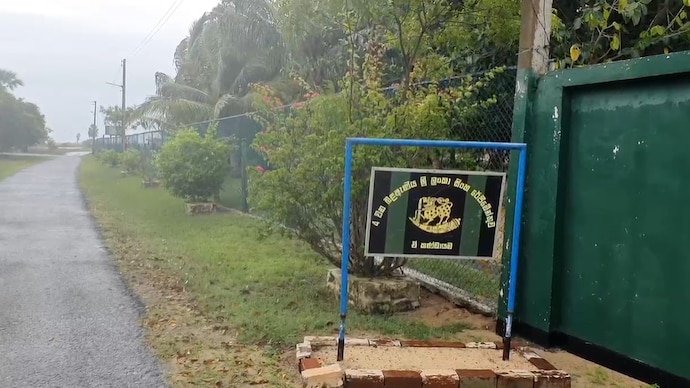
* Fresh look at Sarath Fonseka’s performance at 2010 Prez poll in North required
The new government’s main challenge is ensuring the full implementation of the IMF-led post-Aragalaya economic recovery in line with the Economic Transformation Bill approved by the previous government without a vote. Whatever the side-shows, the focus not only of the government but the Parliament should be on preparing the country to resume debt repayment in 2028 or be ready to face the consequences.
In a way it was a great thing for the country that the National People’s Power (NPP) scored an emphatic victory at the Nov. 14 general election. Now the Janatha Vimukthi Peramuna (JVP)-led NPPers can have no excuses for not being able to fulfill their promises as would have been the case if the preceding September Presidential election outcome was repeated with the combined Opposition having the lion’s share of the vote, which would have left the country with a virtual hung Parliament of no benefit to anyone other than creating a parliamentary stalemate, leading to fresh political chaos.
We will, however, grant the fact they have a very tall order to fulfill after the previous governments having virtually signed away our sovereignty with the deals they had inked during their tenures.
But we do have a nagging suspicion about someone working in not so mysterious ways against us behind the scene, after what the former US Secretary of State, John Kerry, publicly stated not too long after the defeat of President Mahinda Rajapaksa at the 2015 presidential election when he crowed to the whole world how they had spent several hundred million dollars for regime change operations at the time in several countries, including Sri Lanka. Then we also know since then how a US engineered coup ousted the popularly elected Prime Minister of Pakistan Imran Khan by way of parliamentary and military shenanigans, and then the more publicised way they ousted Prime Minister Sheikh Hasina of Bangladesh and then virtually ruined that country as was the case during the Aragalaya here in 2022 to oust the legally elected President, with a wide mandate, Gotabaya Rajapaksa.
The NPP has accomplished the impossible, even in the North, in the form of securing the Jaffna electoral district at the recently concluded parliamentary election. The NPP obtained three seats, nothing but a historic watershed.
The ruling party also won the Vanni electoral district, the scene of some of the bloodiest fighting during the Eelam War IV (Aug 2006-May 2009). Securing Jaffna and Vanni consisting of Vavuniya, Kilinochchi and Mullaitivu administrative districts, is as difficult as eradicating the conventional fighting capability of the Liberation Tigers of Tamil Eelam (LTTE). The NPP won two seats in the Vanni.
The final phase of the ground offensive was conducted in a corner of the Vanni electorate where LTTE leader Velupillai Prabhakaran met his maker.
The NPP secured two seats in Trincomalee and one in the Batticaloa districts, whereas Digamadulla gave President Anura Kumara Dissanayake’s party four more seats. Altogether 12 out of 29 parliamentary seats available in the five above-mentioned electoral districts ended up with the NPP.
The NPP delivered the stunning blow to those who still pursued separatist agenda, regardless of the LTTE’s demise over 15 years ago. The combined armed forces brought the war to a successful conclusion in May 2009.
The Illankai Tamil Arasu Kadchi (ITAK)-led Tamil National Alliance (TNA) that dominated the Northern and Eastern provinces since 2001 hadn’t been in the fray at the 2024 general election. The TNA that had been in the grip of the LTTE, during 2004-2009, disintegrated 15 years after the end of war, with the ITAK unceremoniously ending the partnership. Ex-TNA members, EPRLF, TELO and PLOTE contested the general election under the ticket of Democratic Tamil National Alliance (DTNA).
The ITAK obtained seven seats (Batticaloa three, Jaffna one, Vanni one, Digamadulla one, Trincomalee one) whereas DTNA won just one (Vanni one). It would be pertinent to mention that ITAK and DTNA fielded a common list for the Trincomalee district to ensure a split in the Tamil vote wouldn’t cost the community much valued representation therein. ITAK Trincomalee leader Kathiravelu Shanmugam Kugathasan, who replaced R. Sampanthan in Parliament at the last Parliament, won that seat.
In addition to the seven elected, the ITAK that contested under the ‘House’ symbol won one National List slot. Ahila Ilankai Tamil Congress (AITC) was the only other party to secure a seat (Jaffna/ Gajendrakumar Ponnambalam) while Independent Group 17 (Jaffna/ Ramanathan Archuna) won one. Altogether Tamil political parties obtained 11 seats, one less than the NPP.
M.A. Sumanthiran (ITAK/Jaffna), Dharmalingham Siddharthan (DTNA/Jaffna) and Sashikala Nadarajah (DTNA/Jaffna), widow of slain ITAK MP Nadarajah Raviraj were some of the big losers. In the east, one-time Chief Minister of the Eastern Province Sivanesathurai Chandrakanthan alias Pilleyan, formerly of the LTTE, failed to retain his Batticaloa district seat. Former LTTE field commander and ex-lawmaker Vinayagamoorthy Muralitharan aka Karuna Amman made an unsuccessful bid to re-enter Parliament also from the Batticaloa district.
In the previous Parliament, there had been 16 MPs representing five Tamil political parties (ITAK, AITC Eelam People’s Democratic Party [EPDP], Tamil Makkal Viduthalai Pulikal [TMVP] and Tamil Makkal Thesiya Kuttani [TMTK]. Last week’s poll eliminated EPDP, TMVP and TMTK while new entrant NPP created political history by winning 11 seats.
In spite of the humiliating setback suffered by those who had been previously in Parliament, the NPP tally has increased the total strength of the Tamil-speaking group representing N & E in Parliament. Perhaps, the successful formation of NPP’s Tamil-speaking wing may influence other political parties to re-examine their overall political strategy. They may not have any other alternative as failure to do so can further weaken their position at the forthcoming Provincial Council and Local Government polls. PC and LG polls are expected to be held next year.
Shanakiyan Rasamanickam, who re-entered Parliament with a convincing win in Batticaloa, consolidated his position, within the party and the district, due to ITAK’s admirable performance there. If not for three Batticaloa seats, ITAK aka Federal Party would have been in an utterly embarrassing position. Batticaloa electoral district is the only one that the NPP couldn’t win. Therefore, the outspoken Rasamanickam can be really happy to have thwarted the NPP in the eastern district.
Now to bury the hatchet between the two or, more correctly, the three literally warring communities here, NPP will have to think out of the box to find a solution that may be by way of sharing power at the centre rather than the periphery, as was successfully done under the Donoughmore Constitution.
Accountability issues
At the presidential election held in Sept. the NPP couldn’t win at least one electorate in the North but did so well several weeks later, it could win Jaffna and Vanni electorates. If not for that sterling performance, the NPP couldn’t have secured an unprecedented 2/3 majority. President AKD should be ever grateful to the northern and eastern electorates for facilitating a 2/3 majority.
Since the introduction of the proportional representation at the 1989 Parliamentary election, no party succeeded in securing a 2/3 though many alleged the Rajapaksas abused such huge mandates. They were, of course, referring to the UPFA securing 144 seats and 145 seats at the 2010 and 2020 general elections, respectively. For a simple majority, the winning party needs 113 seats while 2/3 means 150 seats.
Against the backdrop of NPP’s victory in the N & E, the new Parliament should review Sri Lanka’s response to post-war accountability issues. Since the eradication of the LTTE, the TNA propagated politically motivated unsubstantiated war crimes allegations, both here and abroad. Finally, the treacherous Yahapalana government (2015-2019) betrayed the war-winning armed forces at the Geneva-based United Nations Human Rights Council (UNHRC) in Oct 2015. The accountability resolution that had been co-sponsored by the US-led grouping and Sri Lanka was meant to pave the way for a new Constitution aimed at doing away with the country’s unitary status.
Interestingly, the war-winning Army Commander, Sarath Fonseka, who had been promoted to the rank of Field Marshal, in March 2015, served in that Yahapalana Cabinet, chaired by President Maithripala Sirisena. The role played by the then Premier Ranil Wickremesinghe and the late Foreign Minister Mangala Samaraweera in that despicable act is in the public domain. The failure on the part of Fonseka, who served President Sirisena’s Cabinet to vigorously oppose the government move is still a mystery.
The writer repeatedly discussed the failure on the part of Parliament and urged concerned political parties to raise the Yahapalana-TNA Geneva operation after the same lot fielded Fonseka as the common presidential candidate in 2010. Although Fonseka lost the contest by a massive 1.8 mn votes to war-winning President Mahinda Rajapaksa, he handsomely won the Jaffna, Vanni, Trincomalee, Batticaloa and Digamadulla electoral districts at the same election.
The NPP’s excellent showing in the N & E at the recently concluded general election should be examined taking Fonseka winning the former war zones 14 years ago.
Having alleged Fonseka’s Army of war crimes throughout the northern campaign, the TNA had no qualms in backing the Sinha Regiment veteran. Unfortunately, political parties represented in Parliament never bothered to raise TNA’s duplicity. Instead, all of them shamelessly and brazenly played politics with the issue, seeking petty political advantage at the expense of the armed forces. There hadn’t been a single instance of a war-winning country betraying its armed forces hitherto anywhere in the world. It was only the Maithripala Sirisena/Ranil Wickremesinghe govt. that achieved that dastardly act.
The JVP, though being not part of the Yahapalana Cabinet, never opposed the government’s move against the armed forces. However, the NPP’s victory in the North, perhaps would give an opportunity for President AKD, who is also the Defence Minister and Commander-in-Chief of the armed forces, to address the issue at hand afresh. President AKD retained the Defence portfolio when the new Cabinet of Ministers was sworn in last Monday.
The developing situation in the North may help post-war national reconciliation efforts. Successive governments deliberately allowed further deterioration of relations between the two communities by not taking apt remedial measures. Those who propagated lies were allowed to do so much to the disappointment of the armed forces. Parliament turned a blind eye even when the US and Australia et al denied visas to retired and serving officers and US imposed travel ban on the then Army Commander Gen. Shavendra Silva, the incumbent Chief of Defence Staff (CDS). Maj. General Chagie Gallage, now retired, is another victim of external reprisals.
Maaveerar Naal (Great Heroes’ day)
The Tamil Diaspora must have been quite surprised by the outcome of the general election. Some interested parties played down the importance of NPP victory in the North on the basis of low turnout of voters. It would be interesting to observe how the Diaspora and political parties here mark this year’s Maaveerar Naal. Commencing 1991, the LTTE used to celebrate Nov. 21-27 week as Great Heroes Week. During the period the group wielded power, the weeklong celebrations and activities received even international media attention.
This year, Maaveerar week is scheduled to commence on Nov 21 (tomorrow), the day the 10th Parliament meets. What would those elected from the NPP, ITAK and other parties do this year? Would interested parties seek to cause some unnecessary commotion in a bid to embarrass the government. Let us hope the government would handle the situation cautiously as opportunistic elements on both sides seek to exploit the developments. ITAK’s Sivagnanam Shritharan paid tribute to fallen Maaveerar at Kanagapuram, Kilinochchi.
The NPP’s unexpected victory in the north may compel not only Tamil Diaspora but Western countries, particularly Canada, to review their position.
Canada declared May 18 as Tamil Genocide Remembrance Day as Premier Justin Trudeau’s government sought to appease Canadian voters of Sri Lankan origin. Canada cannot under any circumstances ignore the Tamil vote received by the NPP as people discarded unsubstantiated war crimes allegations directed at the government, for the second time. Had the northern electorate believed the Army wantonly killed civilians on the Vanni east front in 2009, as alleged by the UN, they wouldn’t have voted for Fonseka. Perhaps, the people wanted the government to bring the war to an end at any cost. Having waged two terror campaigns in 1971 and 1987-1990, the JVP should be able to comprehend the need and the responsibility on the part of the government of the day to take whatever measures necessary to deal with the challenge.
The NPP was formed in 2019 just months ahead of the presidential election as the JVP realized it couldn’t push ahead on its own but needed wider public support. The NPP achieved that with ease within six years.
In August 2006, the then President Mahinda Rajapaksa went ahead with an-all-out campaign against the LTTE after failing to convince them to negotiate for a final settlement. President Rajapaksa had no option but to go on the offensive after the failed LTTE assassination attempts on the then Army Commander Lt. Gen. Fonseka (April 2006) and then Defence Secretary Gotabaya Rajapaksa (Oct. 2006). The TNA remained committed to the LTTE’s murderous cause until the very end.
A matter for serious concern
An unbelievably large number of voters skipped the general election. All political parties, including the NPP, should be concerned over the unprecedented deterioration of voter interest, especially after a thrilling presidential election brought AKD to power just six weeks ago. A substantial increase for the NPP from 5,634,915 votes (42.31 %) at the presidential to 6,863,186 (61.56%) at the general election just weeks later shouldn’t be allowed to divert attention to the massive drop in public interest. Well over half a million rejected votes, too, must worry all.
The NPP won 159 seats, including 18 National List slots, nine more than required for a 2/3 majority. At the presidential election 3,520,438 voters refrained from exercising their franchise. But that figure increased to 5,325,108 at the general election while the number of rejected votes, too, recorded a significant increase. According to the Election Commission, at the presidential poll, the number of rejected votes was 300,300 while the general election recorded 667,240 rejected votes.
What really caused such an increase in the number of rejected votes was when the number of polled votes dropped from 13,619,916 votes (79.46%) to 11,815,246 (68.93%)? In other words of the 17,140,354 people eligible to vote, a staggering percentage decided not to. Voter apathy is not healthy. Not healthy at all.
A rethinking on the part of the SJB and New Democratic Front (NDF/consisted of former SLPP lawmakers and UNP) is necessary as they couldn’t at least retain the number of votes received at the presidential election. SJB that polled 4,363,035 votes (32.76 %) at the presidential poll could muster only 1,968,716 (17.66%) at the general election, while NDF could secure 500,835 (4.49%) having polled 2,299,767 (17.27%) just weeks ago. The SJB and NDF ended up with 40 seats (including five NL slots) and five seats (including 2two NL slots) while the SLPP that won 145 seats at the 2020 general election had to be satisfied with three seats, including one NL slot.
Both Sajith Premadasa and Ranil Wickremesinghe should seek remedial measures before the EC announced PC and LG polls. Perhaps, divided groups have to unite under one banner either under SJB or UNP or face annihilation at the PC and LG polls. For Premadasa and Wickremesinghe time seemed to have run out.
The SLPP obtained 350,429 votes (3.14%) at the general election up from 342,781 (2.57 %) at the presidential election. For the SLPP a rapid recovery process will never be possible as its only NL member and leader of the minute group Namal Rajapaksa is likely to be the target of corruption investigations. The SLPP group consists of Namal Rajapaksa, newcomer Chanaka Sampath (Galle) and D.V. Chanaka (Hambantota).
Fifteen political parties represented the last Parliament. They were SLPP (145), SJB (54), ITAK (10), NPP (03), EPDP (02), AITC (02), TMVP (01), SLFP (01), MNA (01), TMTK (01) TMTK, ACMC (01), NC (01), SLMC (01), UNP (01) and OPPP (01). The new Parliament will be represented by 13 political parties and one independent group – namely NPP 159, SJB 40, ITAK 08, NDF 05, SLPP 03, SLMC 03, Sarvajana Balaya (NL), UNP (01), DTNA (01), ACTC (01), ACMC (01), Jaffna Ind. Group 157 (01) and SLLP (01).
Let me take this opportunity to explain to you why the letter that was sent by me on behalf of the NJC is important. The letter only summarised the dangers of devolution as opposed to decentralization. What is written below will convince you that the President should not devolve power to the provinces as suggested in the NPP manifesto.
Taking into consideration the difficulty or virtual impossibility for a central government to recall devolved power to a region, a province or a district let us consider the possible repercussions of such an eventuality in this country with several simple examples.
Firstly let us consider irrigation which is the life blood of the farming community in the northern and eastern provinces. Once this subject is devolved to a province, if the provincial administration fails to maintain the reservoirs (Wewas) and irrigation canals in the Sinhala villages, there is nothing the central government can do to help the Sinhala cultivators in distress. The only alternative left for them would be to leave those villages in the northern and eastern provinces and migrate to some other province.
Secondly let us consider the subject of health. Once this subject is devolved to a province, if the provincial administration fails to provide adequate funds to maintain the rural hospital buildings serving the Sinhala community or fails to provide adequate doctors, nurses and other staff or even medical supplies to rural hospitals in their area, the Sinhala villagers will have no other alternative left other than to leave the province and to migrate to some other province where these facilities are available.
Thirdly let us consider the subject of education. Once this subject is devolved to a province, if the provincial administration fails to appoint the teachers needed to schools in Sinhala villages and also does not allocate adequate funds to maintain and repair school buildings in the Sinhala villages, there is nothing that the central government can do in this regard. The Sinhala population will therefore leave the province and migrate to some other province where good education facilities are available for their children.
These are only three simple examples that I have provided to bring to your attention the danger of devolving power to the provinces. However the situation would be the same with regard to distribution of electricity, repair of roads, purchase of agricultural produce and many other such subjects, if there is devolution of power to a province where the Sinhala population is a minority. Therefore while devolution will only hasten the division of the country by creating administrative avenues to encourage the migration of the Sinhala population from the northern and eastern provinces of the country to other provinces, decentralization of power will not encourage such action as these powers can be withdrawn by the central government if found to be misused by any provincial council.
1. All these GODs in Hindu mythology were humans like you and me. but since they had superhuman, attributes, they became gods after their demise.
2. Ravana was never born in Lanka or Heladeepa – he was pure Indian and related to Rama. Rama cut the nose of a beautiful lady cousin of his and Ravana thought of one day taking revenge.
3. Ravana moved to Sri Lanka and showed some extraordinary skills in medicine, warfare, technology, etc. The term 10 heads refers REALLY to mean 10 extraordinary skills.
4. Ravana married Mandodari – who taught Ravana chess and he perfected it later. so now he is considered the inventor.
5. Now to take revenge Ravana fabricated a flying machine for the abduction of Sita as the exit from India had to be fast.
6. When you visit Sri Lanka next time – visit NILDIYA POKUNA where Sita was kept inside the massive rocky mountain. still, the rooms are visible it seems.
7. The monkey god Hanuman is not a monkey but he disguised himself as a monkey to evade capture during the Rama – Ravana war his tail caught fire and the whole area was burnt down and the eventual killing of Ravana. so Ravana became the bad guy (who never touched Sita) and Rama became the good guy who cut the nose of a princessly lady! every year these Hindu fools burn the effigy of Ravana which is a disgusting sight for us the Sri Lankans.
8. Ravana’s medicine is still used as traditional medicine (not Ayurveda) which is very effective.
9. Waariyapola – a village in Sri Lanka still boasts of an airport Waariya means air and Pola means port.
10. Bisoskotuwa and Sorouvva are HELA language or Maaghadi (Veddas) terms used in irrigation, the most advanced hydrological society existed before the 1000s of years Anuradhapura era.
11. The racist Indian-origin Mahaanaamer wrote Mahaavansa the Lanka chronicle completely obliterating the history of Hela (Ravan tradition) culture. and before Mahinda’s arrival, pushing it back to pre-historic. (alas!)
12. we now believe hela/elu (Sinhala / Tamil) origin dates back to millenniums and might have migrated to India rather than the other way about – observed in megalithic ruins – 30k 40k years old in the island.
13. The Brahmins were caste-promoting lot to put themselves on top of everyone. the Rama Ravana story was created by Valmiki who wrote Ramayana and in fact, states that Ravana’s aircraft has flown a long distance which might prove Lanka was a huge continent even Ptolemy’s map shows Lanka bigger than India!
so you know it’s not a myth – a real person who lived in Lanka called Ravana. Some lab in California ended up in smithereens after trying mercury as a propellent! Ravana’s idea of propulsion is a technology never discovered yet.
by A. Abdul Aziz,Sri Lankan Correspondent, Al Hakam – London.
Head of the Worldwide Ahmadiyya Muslim Community (Fifth Khalifa) Hazrat Mirza Masroor Ahmad (,ay Allah be his Helper) in one of Friday Sermon , delivered at Masjid Mubarak, Islamabad, Tilford, UK, said that the Fazl Mosque in London, is significant because it was the first mosque of the Ahmadiyya Community built in a predominantly Christian nation. The opponents of Ahmadiyyat say that Ahmadiyyat was established by the British; however, it is strange because, in that case, this Community which was supposedly established by them, came to their country and highlighted the weaknesses of their faith and promoted the beautiful teachings of Islam. Those who raise this allegation themselves have not been able to carry out such efforts in propagation.
The First Mosque in the UK
Ahmadiyya Khalifa said that before the Fazl Mosque, there was a mosque in Woking which was built by a renowned academic, G.W. Leitner, who used to be the principal of the Oriental College in Lahore. He returned to the UK after retirement and built the mosque in 1889. Interestingly, this was the same year in which Hazrat Mirza Ghulam Ahmad, peace be on him, established the Ahmadiyya Muslim Community. G.W. Leitner also established an academic institute beside the mosque as well. The professor passed away in 1899, and there was no one to look after the mosque properly after him.
The Distinction and Significance of the Fazl Mosque
The first mosque formally established by the Ahmadiyya Muslim Community was the Fazl Mosque. Today, in London and elsewhere in the world, the Ahmadiyya Community has established many mosques. However, the Fazl Mosque has the distinction of being the first mosque in London, Ahmadiyya Khalifa remarked.
Ahmadiyya Head said that other mosques in London do not spread the true message of Islam, of peace, love and harmony, as is spread from the mosques of the Ahmadiyya Muslim Community. Furthermore, these other non-Ahmadi mosques will be funded by other foreign bodies or governments. However, the Ahmadiyya Community does not receive any foreign funds; instead, these mosques are built as a result of the financial contributions and sacrifices made by Ahmadi Muslims. Due to these financial sacrifices, many other mosques have also been built in England and many other western nations.
The Sun Shall Rise From the West”
His HolinessAhmadiyya Khalifa said that the Promised Messiah– Hazrat Mirza Ghulam Ahmad, peace be on him said a great deal about the spread of Islam Ahmadiyyat in the West, which serves as the basis for our efforts in propagation. Founder of the Ahmadiyya Muslim Jamaát Hazrat Mirza Ghulam Ahmad – The Promised Messiah, peace be on him, said with reference to, The Sun shall rise from the West” that it was revealed to him that those Western nations which are engulfed by the darkness of disbelief will be enlightened by the light of Islam. The Promised Messiah made another prophecy, in which he said that he saw a vision in which he was standing at a pulpit in London and was delivering a speech in English filled with rational arguments in favour of the truthfulness of Islam. He then saw in a vision that he was catching white birds resembling partridges from small trees. He understood this to mean that his writings would spread to the West and many pure-natured Englishmen would accept Islam.
Ahmadiyya Khalifa said that this was the desire and hope of the Promised Messiah, peace be on him. In light of this, the Ahmadiyya Muslim Community in London, and indeed around the world, including the West, strives to fulfil this vision of the Promised Messiah, peace be on him, through its efforts to propagate the true message of Islam. It was for this very purpose that the Fazl Mosque was established.
Establishment of the Mission House & the Wembley Conference
Under the guidance of the Second Caliph of Ahmadiyya Muslim Community, a property to serve as a mission house was acquired in Putney. When the Second Caliph was informed of this acquisition, he was in Dalhousie where he held a large function and also named the mosque the Fazl Mosque. He also made an appeal for financial contributions for this property.
Ahmadiyya Khalifa said that this piece of land was acquired from a Jewish man. Though it has developed since then, at the time, the land comprised a house and was about an acre in total.
Ahmadiyya Second Khalifa Arrives in England
Ahmadiyya Khalifa said that a consultation was held in which it was suggested that on this auspicious occasion, it would be apt for the Second Caliph Hazrat Mirza Bashiruddin Mahmood Ahmad himself to attend the Wembley Conference in 1924. This suggestion was accepted, and after visiting Egypt, Damascus, Switzerland and France, the Second Caliph made his way to England on 22 August 1924. Interestingly, the Second Caliph had seen a vision prior to his arrival in which he saw that he was stepping onto the shores of England like a victorious general and heard a voice saying, ‘William the Conqueror.’
Ahmadiyya Khalifa said that newspapers covered the arrival of the Second Caliph in England quite extensively. The Second Caliphand those who travelled with him visited St Paul’s Cathedral, outside of which he prayed for Islam’s victory, after which he entered the city. During the course of the Second Caliph’sstay in London, word about the Ahmadiyya Community spread a great deal.
Ahmadiyya Supreme Head said that after attending the various functions, it came time to lay the foundation stone of the Fazl Mosque. The Second Caliphhad decided that rather than renting various homes as mission houses which naturally would impact the efforts of propagation, a central headquarters should be established. Until 1919, due to a lack of funds and land, this task seemed too difficult. However, God furnished the required means. First came the funds; after the war, the value of the British Pound dropped. When this happened, the Second Caliphthought to take advantage. On 6 January 1920, he instructed that 14 to 15 thousand rupees should be sent to England. Later, when putting this instruction into writing, the Second Caliphwrote 30,000 rupees instead, and rather than sending it as a loan, he wrote that it would be sent as a financial contribution. Initially, on the first day, 6,000 rupees were collected. By 11 January, the Ahmadiyya Community in Qadian (Punjab, India) made great sacrifices and collected 12,000 rupees. Then, an appeal was also made outside of Qadian and in order to give people more opportunities for sacrifices, the amount was increased to 100,000 rupees. Then, through the Bank of India, this amount was sent to England.
Laying of the Foundation Stone & Address of Ahmadiyya Caliph on the Event.
On 19 October 1924, the Second Caliph laid the foundation stone of the Fazl Mosque. It was raining on that day, and when this was brought to the attention of the Second Caliphwho said that it was no matter, for those who still came to the event would do so out of sincerity and the event would be successful. A small marquee was erected for the event. Invitations were sent out to various people including politicians, dignitaries and diplomats. Despite the short notice, many guests attended the event.
After laying the foundation, the Second Caliphdelivered an address on this occasion, highlighting the importance and significance of the moment. He drew attention to the fact that all of this was being done to build a structure where people could gather and unite in the worship of the Creator of the entire universe, no matter their status, race or any other apparent difference.
The Second Caliph highlighted that a mosque does not belong to any person; rather, it belongs to God. He quoted the following Qur’anic verse:
‘And who is more unjust than he who prohibits the name of Allah being glorified in Allah’s temples’ (The Holy Qur’an, 2:115), the Ahmadiyya Second Caliph quoted at the event. On the occasion of the laying of the foundation stone, the Second Caliphalso unveiled a commemorative plaque which reads:
‘IN THE NAME OF ALLAH THE MOST BENEFICENT AND THE MOST COMPASSIONATE. WE PRAISE AND INVOKE HIS BLESSING ON HIS PROPHET THE EXALTED ONE. WITH THE GRACE AND MERCY OF GOD, HE ALONE IS THE HELPER.
Ahmadiyya Supreme Head said that this event was widely covered by newspapers and various quotes of the Second Caliph’s( speech were also quoted. After two years, in 1926 the Fazl Mosque was inaugurated by Sheikh Abdul Qadir.
The World Head of the Ahmadiyya Muslim Community, the Fifth Khalifa (Caliph), His Holiness, Hazrat Mirza Masroor Ahmad delivered the keynote address to commemorate the historic milestone of one hundred years since the foundation stone was laid by the second Caliph of the Ahmadiyya Muslim Community, Hazrat Mirza Bashir-ud-Deen Mahmood Ahmad (may Allah be pleased with him) of the Fazl Mosque in London.
900 people including 300 guests gathered at the mosque in Southfields to celebrate the centenary event of London’s first Mosque, themed, ‘Islamic Light in the West: A Century of Spiritual Revival’.
His Holiness, Hazrat Mirza Masroor Ahmad, delivered the keynote address via video link from Islamabad, UK, to attendees at the Fazl Mosque and viewers from all around the world.
His Holiness began by expressing gratitude to Allah the Almighty for this momentous milestone.
Hazrat Mirza Masroor Ahmad stated:
Today, with profound gratitude to Allah the Almighty in our hearts, we are holding this reception to mark and celebrate the centenary of the foundation stone being laid at the Fazl Mosque in London.”
Speaking about the core purpose of mosques, Hazrat Mirza Masroor Ahmad stated:
The reception or events associated with our mosques are entirely unlike worldly functions, as they are free from all material objectives or pursuits. A mosque is a spiritual sanctuary where individuals congregate to worship Allah the Almighty five times a day to foster spiritual growth and moral development.”
Turning to the dangers of the present circumstances of the world His Holiness said that there is a storm of unrest and global conflict” due to the ruthless pursuit of vested interests” that threatens millions of lives and casts a very long and bleak shadow over the future of humanity.”
His Holiness urged for urgent efforts to extinguish the flames of war” and reminded that the consequences of our actions today will reverberate through time and shape the world our children inherit from us.”
Hazrat Mirza Masroor Ahmad said:
As Muslims, we believe that this worldly life is just a fleeting passage on the way to the eternal life that awaits us in the Hereafter. We believe that our deeds in this world will echo into eternity, where our actions will be weighed on the scales of divine justice, and we will be held accountable for our choices. And so, if, God forbid, humanity ever again witnesses the horrors of nuclear warfare, the harrowing consequences will be felt for generations to come.”
Hazrat Mirza Masroor Ahmad continued and stated:
Innocent children will be born with physical or mental disabilities. Generations will be consumed by trauma, rage and hopelessness – all because of our selfishness and failure to uphold peace and justice. So, as I conclude, it is my heartfelt prayer that may the love of God Almighty and His Creation enter the hearts of all mankind.”
Hazrat Mirza Masroor Ahmad concluded his address and stated:
May Allah the Almighty enable all of us, irrespective of our faith or beliefs, to play our respective roles in the creation of a society where people of all religions, ethnicities and backgrounds live harmoniously and manifest grace and love to one another.”
Prior to the commencement of His Holiness’ keynote address, formal proceedings were held where guest speakers took to the podium.
Chris Cotton DL, His Majesty’s Deputy Lord Lieutenant for Greater London, touched on the importance of the second Caliph’s (may Allah be pleased with him) travel to London in 1924 and shared a passage from the second Caliph’s (may Allah be pleased with him) message to the English press.
Mr. Cotton ended his remarks by reading out the inscription on the foundation stone outside the Fazl Mosque which entailed a number of prayers including for the establishment of the mosque as a ‘sun of spiritual light’. He concluded with the words it can be said that this prayer has been answered and the Ahmadiyya Community thrives today”.
Reverend Jonathan Sedgwick, the Archdeacon of Southwark congratulated the Ahmadiyya Muslim Community, noting that it is fitting for London—the most diverse city in the world—to host its first mosque. He concluded by expressing his profound respect and appreciation for the contributions of the Ahmadiyya Muslim Community.
Sir Ed Davey, Leader of the Liberal Democrats, commended the Ahmadiyya Muslim Community for its continued charitable work across the country and its members’ contribution to British society at large. Sir Ed Davey reflected on the persecution Ahmadi Muslims face in Pakistan, stating that it was maybe somewhat misfortunate that you had to be here but it’s our fortune that you are here”. He concluded his remarks by saying that His Holiness, Hazrat Mirza Masroor Ahmad’s leadership on the debate and campaign for peace in our world has been outstanding over many years and has never been needed more.”
The Chamber of Marine Industries of Sri Lanka (CMISL) has congratulated President Anura Kumara Dissanayake and the National People’s Power (NPP) on their success at the Parliamentary Election last week.
This achievement reflects the collective aspirations of Sri Lankans for transformative leadership and a renewed focus on sustainable economic growth,” CMISL President Kaushal Rajapaksa said in a letter to President Dissanayake.
The letter also said the following.
The CMISL is encouraged by your administration’s commitment to fostering economic resilience, streamlining governance, and attracting Foreign Direct Investment (FDI). We believe that expediting the implementation of the regulatory framework for the marine industry, already drawn up by the Deputy General of Merchant Shipping, is a crucial step to unlocking the full potential of this sector. A well-defined and operational framework will attract investments, reduce bureaucratic inefficiencies, and set the foundation for robust growth.
A key enabler for expanding the marine industry’s international presence is the Port City Commission’s offshore company status, which provides a significant advantage for global competitiveness. By leveraging this strategic status, Sri Lanka can position its marine industry as a regional leader in boat building, brokerage, leasing, and chartering, enabling the sector to align with global standards and capture new revenue streams. These efforts will also contribute significantly to advancing the nation’s Blue Economy, unlocking sustainable opportunities from its vast maritime resources. The concept of ‘Grow Boating’ also aligns perfectly with this vision. By promoting boating activities, increasing leisure craft ownership, and fostering a nautical culture, we can enhance both domestic engagement and tourism. This initiative will pave the way for expanding associated industries such as marine tourism, water sports, and boating events, significantly contributing to revenue generation and job creation.
Furthermore, activities such as watersports and sail training have immense potential to develop a skilled workforce, particularly among youth, while positioning Sri Lanka as a destination for unique maritime experiences. These initiatives underscore the broader goal of making the marine industry a pivotal driver of sustainable development and an integral part of the Blue Economy.
The shipbuilding and ship repair sector continues to be an integral part of the industry, enabling Sri Lanka to generate substantial revenue and maintain its maritime capabilities. Colombo Dockyard, as a flagship contributor, demonstrates the potential of this sector in supporting the nation’s ambitious targets of $ 1 billion in FDI and $ 1 billion in exports by 2029. Without a thriving shipbuilding and repair ecosystem, achieving this vision would be impossible.
The CMISL is also advancing key initiatives, including the transformation of fishing harbours into dual-use mini-marinas, the promotion of Trincomalee as a hub for offshore industry development, and the enhancement of infrastructure to support slipways, repairs, and advanced technologies. These measures, coupled with the implementation of the regulatory framework, will enable Sri Lanka to harness its strategic location and maritime assets effectively.
We stand ready to work collaboratively with your Government to bring these initiatives to fruition. By prioritising swift and decisive action, we can unlock the immense potential of the marine industry, positioning Sri Lanka as a leading maritime nation on the global stage.
Once again, we extend our congratulations to the NPP on its remarkable success and look forward to contributing to a vibrant and sustainable future for Sri Lanka.”
Some 15 years ago, on December 5, 2010, a historian writing for TomDispatch made a prediction that may yet prove prescient. Rejecting the consensus of that moment that U.S. global hegemony would persist to 2040 or 2050, he argued that the demise of the United States as the global superpower could come… in 2025, just 15 years from now.”
To make that forecast, the historian conducted what he called a more realistic assessment of domestic and global trends.” Starting with the global context, he argued that, faced with a fading superpower,” China, India, Iran, and Russia would all start to provocatively challenge U.S. dominion over the oceans, space, and cyberspace.” At home in the United States, domestic divisions would widen into violent clashes and divisive debates… Riding a political tide of disillusionment and despair, a far-right patriot captures the presidency with thundering rhetoric, demanding respect for American authority and threatening military retaliation or economic reprisal.” But, that historian concluded, the world pays next to no attention as the American Century ends in silence.”
Now that a far-right patriot,” one Donald J. Trump, has indeed captured (or rather recaptured) the presidency with thundering rhetoric,” let’s explore the likelihood that a second Trump term in office, starting in the fateful year 2025, might actually bring a hasty end, silent or otherwise, to an American Century” of global dominion.
Making the Original Prediction
Let’s begin by examining the reasoning underlying my original prediction. (Yes, of course, that historian was me.) Back in 2010, when I picked a specific date for a rising tide of American decline, this country looked unassailably strong both at home and abroad. The presidency of Barack Obama was producing a post-racial” society. After recovering from the 2008 financial crisis, the U.S. was on track for a decade of dynamic growth — the auto industry saved, oil and gas production booming, the tech sector thriving, the stock market soaring, and employment solid. Internationally, Washington was the world’s preeminent leader, with an unchallenged military, formidable diplomatic clout, unchecked economic globalization, and its democratic governance still the global norm.
Looking forward, leading historians of empire agreed that America would remain the world’s sole superpower for the foreseeable future. Writing in the Financial Times in 2002, for instance, Yale professor Paul Kennedy, author of a widely read book on imperial decline, argued that America’s array of force is staggering,” with a mix of economic, diplomatic, and technological dominance that made it the globe’s single superpower” without peer in the entire history of the world. Russia’s defense budget had collapsed” and its economy was less than that of the Netherlands.” Should China’s high growth rates continue for another 30 years, it might be a serious challenger to U.S. predominance” — but that wouldn’t be true until 2032, if then. While America’s unipolar moment” would surely not continue for centuries,” its end, he predicted, seems a long way off for now.”
Writing in a similar vein in the New York Times in February 2010, Piers Brendon, a historian of Britain’s imperial decline, dismissed the doom mongers” who conjure with Roman and British analogies in order to trace the decay of American hegemony.” While Rome was riven by internecine strife” and Britain ran its empire on a shoestring budget, the U.S. was constitutionally stable” with an enormous industrial base.” Taking a few relatively simple steps,” he concluded, Washington should be able to overcome current budgetary problems and perpetuate its global power indefinitely.
When I made my very different prediction nine months later, I was coordinating a network of 140 historians from universities on three continents who were studying the decline of earlier empires, particularly those of Britain, France, and Spain. Beneath the surface of this country’s seeming strength, we could already see the telltale signs of decline that had led to the collapse of those earlier empires.
By 2010, economic globalization was cutting good-paying factory jobs here, income inequality was widening, and corporate bailouts were booming — all essential ingredients for rising working-class resentment and deepening domestic divisions. Foolhardy military misadventures in Iraq and Afghanistan, pushed by Washington elites trying to deny any sense of decline, stoked simmering anger among ordinary Americans, slowly discrediting the very idea of international commitments. And the erosion of America’s relative economic strength from half the world’s output in 1950 to a quarter in 2010 meant the wherewithal for its unipolar power was fading fast.
Only a near-peer” competitor was needed to turn that attenuating U.S. global hegemony into accelerating imperial decline. With rapid economic growth, a vast population, and the world’s longest imperial tradition, China seemed primed to become just such a country. But back then, Washington’s foreign policy elites thought not and even admitted China to the World Trade Organization (WTO), fully confident, according to two Beltway insiders, that U.S. power and hegemony could readily mold China to the United States’ liking.”
Our group of historians, mindful of the frequent imperial wars fought when near-peer competitors finally confronted the reigning hegemon of their moment — think Germany versus Great Britain in World War I — fully expected China’s challenge would not be long in coming. Indeed, in 2012, just two years after my prediction, the U.S. National Intelligence Council warned that China alone will probably have the largest economy, surpassing that of the United States a few years before 2030” and this country would no longer be a hegemonic power.”
Just a year after that, China’s president, Xi Jinping, drawing on a massive $4 trillion in foreign-exchange reserves accumulated in the decade after joining the WTO, announced his bid for global power through what he called the Belt and Road Initiative,” history’s largest development program. It was designed to make Beijing the center of the global economy.
In the following decade, the U.S.-China rivalry would become so intense that, last September, Secretary of the Air Force Frank Kendall warned: I’ve been closely watching the evolution of [China’s] military for 15 years. China is not a future threat; China is a threat today.”
The Global Rise of the Strongman
Another major setback for Washington’s world order, long legitimated by its promotion of democracy (whatever its own dominating tendencies), came from the rise of populist strongmen worldwide. Consider them part of a nationalist reaction to the West’s aggressive economic globalization.
At the close of the Cold War in 1991, Washington became the planet’s sole superpower, using its hegemony to forcefully promote a wide-open global economy — forming the World Trade Organization in 1995, pressing open-market reforms” on developing economies, and knocking down tariff barriers worldwide. It also built a global communications grid by laying 700,000 miles of fiber-optic submarine cables and then launching 1,300 satellites (now 4,700).
By exploiting that very globalized economy, however, China’s industrial output soared to $3.2 trillion by 2016, surpassing both the U.S. and Japan, while simultaneously eliminating 2.4 million American jobs between 1999 and 2011, ensuring the closure of factories in countless towns across the South and Midwest. By fraying social safety nets while eroding protection for labor unions and local businesses in both the U.S. and Europe, globalization reduced the quality of life for many, while creating inequality on a staggering scale and stoking a working-class reaction that would crest in a global wave of angry populism.
Riding that wave, right-wing populists have been winning a steady succession of elections — in Russia (2000), Israel (2009), Hungary (2010), China (2012), Turkey (2014), the Philippines (2016), the U.S. (2016), Brazil (2018), Italy (2022), the Netherlands (2023), Indonesia (2024), and the U.S. again (2024).
Set aside their incendiary us-versus-them rhetoric, however, and look at their actual achievements and those right-wing demagogues turn out to have a record that can only be described as dismal. In Brazil, Jair Bolsonaro ravaged the vast Amazon rainforest and left office amid an abortive coup. In Russia, Vladimir Putin invaded Ukraine, sacrificing his country’s economy to capture some more land (which it hardly lacked). In Turkey, Recep Erdogan caused a crippling debt crisis, while jailing 50,000 suspected opponents. In the Philippines, Rodrigo Duterte murdered 30,000 suspected drug users and courted China by giving up his country’s claims in the resource-rich South China Sea. In Israel, Benjamin Netanyahu has wreaked havoc on Gaza and neighboring lands, in part to stay in office and stay out of prison.
Prospects for Donald Trump’s Second Term
After the steady erosion of its global power for several decades, America is no longer the — or perhaps even an — exceptional” nation floating above the deep global currents that shape the politics of most countries. And as it has become more of an ordinary country, it has also felt the full force of the worldwide move toward strongman rule. Not only does that global trend help explain Trump’s election and his recent reelection, but it provides some clues as to what he’s likely to do with that office the second time around.
In the globalized world America made, there is now an intimate interaction between domestic and international policy. That will soon be apparent in a second Trump administration whose policies are likely to simultaneously damage the country’s economy and further degrade Washington’s world leadership.
Let’s start with the clearest of his commitments: environmental policy. During the recent election campaign, Trump called climate change a scam” and his transition team has already drawn up executive orders to exit from the Paris climate accords. By quitting that agreement, the U.S. will abdicate any leadership role when it comes to the most consequential issue facing the international community while reducing pressure on China to curb its greenhouse gas emissions. Since these two countries now account for nearly half (45%) of global carbon emissions, such a move will ensure that the world blows past the target of keeping this planet’s temperature rise to 1.5 degrees Centigrade until the end of the century. Instead, on a planet that’s already had 12 recent months of just such a temperature rise, that mark is expected to be permanently reached by perhaps 2029, the year Trump finishes his second term.
On the domestic side of climate policy, Trump promised last September that he would terminate the Green New Deal, which I call the Green New Scam, and rescind all unspent funds under the misnamed Inflation Reduction Act.” On the day after his election, he committed himself to increasing the country’s oil and gas production, telling a celebratory crowd, We have more liquid gold than any country in the world.” He will undoubtedly also block wind farm leases on Federal lands and cancel the $7,500 tax credit for purchasing an electrical vehicle.
As the world shifts to renewable energy and all-electric vehicles, Trump’s policies will undoubtedly do lasting damage to the American economy. In 2023, the International Renewable Energy Agency reported that, amid continuing price decreases, wind and solar power now generate electricity for less than half the cost of fossil fuels. Any attempt to slow the conversion of this country’s utilities to the most cost-effective form of energy runs a serious risk of ensuring that American-made products will be ever less competitive.
To put it bluntly, he seems to be proposing that electricity users here should pay twice as much for their power as those in other advanced nations. Similarly, as relentless engineering innovation makes electric vehicles cheaper and more reliable than petrol-powered ones, attempting to slow such an energy transition is likely to make the U.S. auto industry uncompetitive, at home and abroad.
Calling tariffs the greatest thing ever invented,” Trump has proposed slapping a 20% duty on all foreign goods and 60% on those from China. In another instance of domestic-foreign synergy, such duties will undoubtedly end up crippling American farm exports, thanks to retaliatory overseas tariffs, while dramatically raising the cost of consumer goods for Americans, stoking inflation, and slowing consumer spending.
Reflecting his aversion to alliances and military commitments, Trump’s first foreign policy initiative will likely be an attempt to negotiate an end to the war in Ukraine. During a CNN town hall in May 2023, he claimed he could stop the fighting in 24 hours.” Last July, he added: I would tell [Ukraine’s president] Zelenskyy, no more. You got to make a deal.”
Just two days after the November election, according to the Washington Post, Trump reputedly told Russian President Vladimir Putin in a telephone call, not to escalate the war in Ukraine and reminded him of Washington’s sizable military presence in Europe.” Drawing on sources inside the Trump transition team, the Wall Street Journalreported that the new administration is considering cementing Russia’s seizure of 20% of Ukraine” and forcing Kyiv to forego its bid to join NATO, perhaps for as long as 20 years.
With Russia drained of manpower and its economy pummeled by three years of bloody warfare, a competent negotiator (should Trump actually appoint one) might indeed be able to bring a tenuous peace to a ravaged Ukraine. Since it has been Europe’s frontline of defense against a revanchist Russia, the continent’s major powers would be expected to play a significant role. But Germany’s coalition government has just collapsed; French president Emmanuel Macron is crippled by recent electoral reverses; and the NATO alliance, after three years of a shared commitment to Ukraine, faces real uncertainty with the advent of a Trump presidency.
America’s Allies
Those impending negotiations over Ukraine highlight the paramount importance of alliances for U.S. global power. For 80 years, from World War II through the Cold War and beyond, Washington relied on bilateral and multilateral alliances as a critical force multiplier. With China and Russia both rearmed and increasingly closely aligned, reliable allies have become even more important to maintaining Washington’s global presence. With 32 member nations representing a billion people and a commitment to mutual defense that has lasted 75 years, the North Atlantic Treaty Organization (NATO) is arguably the most powerful military alliance in all of modern history.
Yet Trump has long been sharply critical of it. As a candidate in 2016, he called the alliance obsolete.” As president, he mocked the treaty’s mutual-defense clause, claiming even tiny” Montenegro could drag the U.S. into war. While campaigning last February, he announced that he would tell Russia to do whatever the hell they want” to a NATO ally that didn’t pay what he considered its fair share.
Right after Trump’s election, caught between what one analyst called an aggressively advancing Russia and an aggressively withdrawing America,” French President Macron insisted that the continent needed to be a more united, stronger, more sovereign Europe in this new context.” Even if the new administration doesn’t formally withdraw from NATO, Trump’s repeated hostility, particularly toward its crucial mutual-defense clause, may yet serve to eviscerate the alliance.
In the Asia-Pacific region, the American presence rests on three sets of overlapping alliances: the AUKUS entente with Australia and Britain, the Quadrilateral Security Dialogue (with Australia, India, and Japan), and a chain of bilateral defense pacts stretching along the Pacific littoral from Japan through Taiwan to the Philippines. Via careful diplomacy, the Biden administration strengthened those alliances, bringing two wayward allies, Australia and the Philippines that had drifted Beijing-wards, back into the Western fold. Trump’s penchant for abusing allies and, as in his first term, withdrawing from multilateral pacts is likely to weaken such ties and so American power in the region.
Although his first administration famously waged a trade war with Beijing, Trump’s attitude toward the island of Taiwan is bluntly transactional. I think, Taiwan should pay us for defense,” he said last June, adding: You know, we’re no different than an insurance company. Taiwan doesn’t give us anything.” In October, he told the Wall Street Journal that he would not have to use military force to defend Taiwan because China’s President Xi respects me and he knows I’m f—— crazy.” Bluster aside, Trump, unlike his predecessor Joe Biden, has never committed himself to defend Taiwan from a Chinese attack.
Should Beijing indeed attack Taiwan outright or, as appears more likely, impose a crippling economic blockade on the island, Trump seems unlikely to risk a war with China. The loss of Taiwan would break the U.S. position along the Pacific littoral, for 80 years the fulcrum of its global imperial posture, pushing its naval forces back to a second island chain” running from Japan to Guam. Such a retreat would represent a major blow to America’s imperial role in the Pacific, potentially making it no longer a significant player in the security of its Asia-Pacific allies.
A Silent U.S. Recessional
Adding up the likely impact of Donald Trump’s policies in this country, Asia, Europe, and the international community generally, his second term will almost certainly be one of imperial decline, increasing internal chaos, and a further loss of global leadership. As respect for American authority” fades, Trump may yet resort to threatening military retaliation or economic reprisal.” But as I predicted back in 2010, it seems quite likely that the world pays next to no attention as the American Century ends in silence.”
Colombo, November 20 (Daily Mirror) – Even though 70 percent of Sri Lankan Muslims voted for the National People’s Power (NPP) government, no Muslim representatives were included in the recent Cabinet appointments, Sri Lanka Podujana Peramuna (SLPP) Kandy District candidate Rishad Mahroof said.
Addressing the media at the SLPP office in Colombo, he said that the Sri Lankan Muslim community has expressed their displeasure over the matter.
“During the election period, the NPP claimed that several representatives from the Muslim and Tamil communities would be appointed. This is the first time a government has decided to form a Cabinet without any Muslim representation since the country gained independence,” he said.
“When the current government came to power, they relied heavily on Sri Lankan Muslim votes and even acknowledged that fact. It is questionable why no Muslims were appointed as Cabinet Ministers, and it raises suspicions that this might be part of some other agenda,” he added.
Former Minister Ali Sabry represented the Muslim community in the Cabinet during Gotabaya Rajapaksa’s government in 2019.
The current Parliament includes several Tamil representatives and even the first vision-impaired MP, but none from the Muslim community, he said.
Aruni Samarakoon- University of Hull Courtesy Political Studies Association
20 November 2024
This blog article explores the transition from militant to non-militant revolutionary politics in Sri Lanka, within the context of the Global South. It will examine the emergence of revolutionary consciousness, the political developments and declines, and the subsequent re-emergence of that consciousness in the form of democratic movements.
Sri Lanka, located in South Asia, has been grappling with an ongoing economic crisis since 2022. This crisis emerged in the wake of political turmoil when widespread public protests forced the elected former President, Gotabaya Rajapaksa (2019), to resign. The protests were driven by public outrage over the mismanagement and corruption of economic resources, which led to severe shortages of essential goods. The movement, spontaneously organised under the slogan Gota Go Home,” became a powerful expression of collective dissent. Citizens occupied public spaces, demanding economic justice, political reform, and the establishment of an uncorrupted government and leadership.
Among the many political parties involved in organising the Gota Go Home” movement globally, the National People’s Power (NPP)—an alliance led by the People’s Liberation Front (JVP), a Marxist-Communist party—played a significant role. The NPP mobilized the public, creating a political space for citizens to engage in discussions, share their views, and undergo political socialization. This effort aimed to shape public political consciousness in dissent against Sri Lanka’s deeply entrenched political culture, characterised by dynastic, regimental, and undemocratic practices.
Although the NPP is aligned with the JVP, its political strategy primarily focuses on electoral democracy. The NPP advocates for refining democratic structures to eliminate corruption, lack of transparency, and dynastic politics, distancing itself from a Marxist-Communist revolutionary approach. Instead of overthrowing the existing system, the NPP seeks to reform it through democratic practices, including universal suffrage—a concept introduced to Sri Lanka by British colonialists in 1933.
The democratic system in Sri Lanka was structured through the colonial British politics of the Soulbury Commission in 1948. However, key economic and social factors necessary for fostering a healthy democracy remained unresolved, carrying over into the post-colonial period. These unresolved issues contributed to ethnic tensions between the Sinhala majority and Tamil minority, challenged the outcomes of welfare policies, and exacerbated socio-economic disparities. For instance, the high unemployment rate among university graduates in rural areas highlighted systemic inefficiencies, while nepotistic practices entrenched dynastic politics, with political party and government leadership often passed from father to son.
The British transfer of power to Sri Lanka’s local aristocratic class re-created a “colonial structure” within the post-colonial context. This new structure was dominated by Sinhala (ethnic majority), male (dominant gender), and capitalist (aristocratic) families. However, this colonial legacy faced significant challenges during the post-colonial period, particularly from a youth faction that split from the Ceylon Communist Party (1965).
A critical figure in this movement was Rohana Wijeweera, who perpetuated the father-son style of leadership within Sri Lanka’s Left politics. Influenced by Maoist ideology, Wijeweera championed militant revolutionary politics, which culminated in the organised revolutionary upheaval led by the Janatha Vimukthi Peramuna (JVP) in 1971. The JVP’s anti-imperial political mobilization resonated strongly with rural Sri Lankan youth, particularly in areas where the socio-economic structure was shaped by agriculture and a rigid caste-based division of labour.
The Sinhala rural youth gravitated toward the JVP’s militant revolutionary politics, often referred to as the “New Left.” This movement contrasted sharply with the “Old Left,” which espoused non-militant revolutionary ideals. The JVP’s radical activism in 1971 sought to overthrow the Sri Lankan government, marking a significant departure from traditional leftist approach.
The parliamentary elections of 1977 marked a pivotal shift in Sri Lanka’s political landscape, ousting the old Left-aligned government and establishing a new administration that embraced liberal market policies and structural economic reforms to promote an open economy. This transition also ended the Westminster parliamentary model, moving the country toward a French-style De Gaulle system of governance. Under this system, both a president and a prime minister held executive powers, with the president wielding significant authority within the constitutional framework.
This dual-executive system was formalized by the Second Constitution of the Democratic Socialist Republic of Sri Lanka in 1978. The first presidential election under this constitution was held in 1982, during which the JVP leader, Rohana Wijeweera, contested and secured 4.19% of the votes. At the time, the JVP was transitioning from a militant revolutionary movement to a non-militant political entity, attempting to integrate into the mainstream political system. However, their unpopularity and poor performance in the presidential election led the party to revert to militant strategies, culminating in a well-organised insurgency during the 1988–89 period.
The JVP’s political activism, marked by violence, also reflected ethnic divisions in their mobilization of dissent, particularly against Indian influence as a dominant neighbour in South Asia. This opposition extended to Indian-origin plantation workers, who had been forcibly relocated to Sri Lanka by British colonial rulers as surplus labour for the plantation economy they had established. This shift in focus, the author of this blog article argues, illustrates how the Marxist-Communist characteristics of the JVP began to evolve into an ethno-nationalist framework, sidelining ethnically distinct segments of the working class from their class-based politics.
By neglecting or remaining silent on the Tamil national question,” the JVP further underscored its prioritization of ethno-nationalist interests over broader class struggle. This shift raises question about how their ethno-nationalist agenda intertwined with their anti-imperial and anti-colonial politics. Anchored in this ethno-nationalist base, the JVP re-engaged in militant guerrilla activity during the 1988–89 period.
This insurgency was brutally suppressed by the De Gaulle-inspired executive presidential system, resulting in a tragic loss of approximately 60,000 youth lives, who were either killed or disappeared. Following this violent suppression, the JVP was banned as a political party, marking a dark chapter in Sri Lanka’s political history.
Gradually transitioning away from its militant revolutionary roots, the JVP re-entered the democratic electoral process in 1994. By 2019, the party became part of the National People’s Power (NPP), a collective political alliance comprising intellectuals and civil society organizations. The NPP brings together individuals from the upper-middle and middle classes as well as the working class, representing diverse ethnic groups across the country.
United by a commitment to a transparent, rights-based political structure, the NPP promotes progressive politics with a neoliberal orientation. This approach seeks to address Sri Lanka’s deeply entrenched economic crisis while advocating for equality and systemic reform.
Former State Minister Sivanesathurai Chandrakanthan, also known as Pilleyan, left the Criminal Investigation Department (CID) a short while ago after giving a 5-hour long statement about the controversial Channel 4 documentary on the 2019 Easter Sunday terror attacks in Sri Lanka.
He arrived at the CID this morning (20) to provide the statement on the controversial documentary ‘Sri Lanka’s Easter Bombings’ which was broadcast on September 6, 2023 into which the CID has been investigating for some.
The stunning electoral sweep of the National People’s Power (NPP) led by President Anura Kumara Dissanayake is an earthquake in Sri Lankan politics”, says Erik Solheim, the former Norwegian peace facilitator in the island nation.
The former diplomat also feels that the strong showing by the NPP in areas populated by Tamils, particularly in the north, marked a very strong call for a new start in ethnic relations in Sri Lanka”.
Solheim, who has interacted closely with many Sri Lankan leaders, however, warned that while the NPP’s inner core is for sure non-corrupt, eradicating corruption is a huge task”.
‘Voters angry over corruption’
Solheim, now a committed green activist, piloted the Western-backed peace process which led to a historic pact between Colombo and the Liberation Tigers of Tamil Eelam (LTTE) in early 2002.
But the process collapsed, triggering a renewed war four years later that led to the decimation in 2009 of the LTTE and the annihilation of virtually its entire leadership including founder-leader Velupillai Prabhakaran.
A former leader of the Socialist Left Party in Norway, Solheim remains a keen follower of developments in Sri Lanka, where he once came under attack from sections of the majority Sinhalese community for allegedly being pro-LTTE, a charge he has repeatedly denied.
In an email interview with The Federal from China which he frequently visits, Solheim said he did expect the NPP to be very successful” in the November 14 elections but their sweeping victory was even bigger than I (expected)”.
He added: It is an earthquake in Sri Lankan politics. For the first time, Sri Lankans elected a president and a party from outside the Colombo establishment, the son of a labourer in Anuradhapura.”
He said the voters, particularly the less privileged, were angry over corruption, felt that the traditional elite had not represented them well, and were upset they had to cut meals following the economic collapse of 2022.
Solheim said that while individually many traditional Sri Lankan leaders were very nice, as a class they have failed Sri Lanka and made the nation underperform compared to say Singapore, Vietnam, Malaysia or Tamil Nadu”.
Is Tamil voting for NPP a rejection of Tamil nationalist politics?
For this, he blamed narrow ethnic appeals that led to a prolonged war – and no country marches forward in the midst of a civil war”. There was also little ability to formulate a winning economic policy for growth and poverty alleviation.
Solheim said the unexpected scale of electoral support to the NPP – a party otherwise rooted in Sinhalese regions – in Tamil areas was an astonishing vote of confidence from many Tamils” in the Left-of-Centre party. I believe it represents a strong desire for peace and normalcy in the north and east. It also comes from a trust that the current NPP is not the same as the JVP (Janatha Vimukti Peramuna, People’s Liberation Front) of the past.”
The NPP, whose core strength comes from the leftist JVP, won a whopping 159 seats in the 225-seat parliament, decimating a divided Opposition. It also picked up seats in the Tamil-majority north and the multi-racial eastern province.
Asked if the Tamil voting for the NPP was a rejection of the Tamil nationalist politics, Solheim said: It is a very strong call for a new start in ethnic relations. If the NPP is able to deliver for Tamils and keep their support, it represents a historic shift.”
The NPP victory in Tamil areas is considered significant as the JVP, the party’s dominant constituent, opposed devolution of power to the Tamil region, stood for a unitary state, and got the once united north-eastern province de-merged into two – all to the chagrin of traditional Tamil politicians.
The Norwegian, a former Undersecretary General in the United Nations (UN), said the new government’s priority would be to negotiate a better deal with the International Monetary Fund (IMF) and to formulate a winning strategy for economic growth with a fairer deal for the poor.
‘Left-wing parties with old-fashioned ideas don’t win elections’
Solheim added that the NPP’s performance – it also won the presidency in September – showed that the Left can win elections if they put Left-wing sectarianism aside and come up with a policy with a broad mass appeal.
(Dissanayake) embodied this with his inclusive approach. Left-wing parties with old-fashioned ideas don’t win elections,” he said, pointing to the electoral rout of the once powerful Communist Party of India (Marxist) in West Bengal.
If AKD (Dissanayake) like (President) Lula (da Silva) of Brazil introduces policies for the poor while at the same time working closely with business, the NPP can stay in power for long. It’s too early to tell whether we have experienced a new epoch in Sri Lankan politics or just a change of government for five years. This is the chance for the NPP to establish themselves as a long-term ruling entity with the capacity for a big shift in Sri Lanka,” he said.
Solheim, who often met LTTE leaders including Prabhakaran, reiterated his view that a peace deal could have been found in Sri Lanka in 2002-04. Unfortunately, we didn’t succeed… The result was the loss of tens of thousands of lives, mainly Tamils but also many Sinhalese. The war of course also brought huge economic hardship to all communities. Sri Lanka was once the shining star in Asia which nearly every other nation wanted to emulate. Now Sri Lanka needs sustained green economic growth for a number of years to catch up with many neighbours.”
Does he, as a Sri Lanka watcher, have a message for President Dissanayake?
My advice is to focus on economic and ethnic inclusivity. Uplifting the poor is important for all ethnic groups. Added, AKD should respond favourably to the call from Tamils and Muslims for equal rights and self-government,” he said.
The Cabinet of Ministers has granted approval for the import of 70,000 metric tonnes of rice as a short-term solution to address the existing shortage of rice in the market. The rice will be imported through the Lanka Sathosa and Sri Lanka State Trading (General) Corporation, according to Minister of Trade, Commerce, Food Security and Cooperative Development Wasantha Samarasinghe. Speaking at a press briefing at the Government Information Department today (20), he stated that a stock of ‘Swarna’ Nadu Rice will be imported and that the Cabinet approval has been granted for this.
With Tamil populace rejected separatism & the politicians that advocated separatism while LTTE overseas fronts are sending letters continuing the same separatist/racist demands, it is interesting to see the action that President Anura Kumara Dissanayake would take given that LTTE remains banned not only in Sri Lanka but across the world as well. The focus of attention to President Anura Kumara is to see if he will continue the usual politically correct” line or he will choose to side with the majority of people who are against terrorism & the commemoration of terrorists. Maaveerar Naal week starts on 20th November & ends on 27th November to commemorate Prabakaran’s friend Shankar who died on 27 Nov 1982 while Prabakarans birthday was on 26thNovember.
Let us once more put the facts out.
Mahaveerar Naal is an annual LTTE event started in 1989, mourning ONLY DEAD LTTE.
The dead of other Tamil militant groups are NOT MOURNED & their families are NOT ALLOW to mourn their dead openly either. This has been the case since 1989 & continues even after 2009.
Those who attend these commemorations are ONLY LTTE FAMILIES & LTTE SUPPORTERS. LTTE families are MAAVEERAR KUDUMBANGAL.
Post 2009 LTTE fronts continues these commemorations BUT EXCLUDES commemorating any of the other Tamil Militant Dead. Other Tamil Militant Dead are NOT HEROES in the eyes of these LTTE fronts & LTTE supporters.
Thus the dead of EROS, PLOTE, EPRLF etc are NOT HEROES & they are NOT COMMEMORATED & their FAMILIES ARE NOT ALLOWED to COMMEMORATE their dead OPENLY.
If there have been commemorations of other Tamil militant dead before 2009 or after 2009, please correct the author with evidence.
Maaveerar Naal Week starts on 20th November & ends on 27th November, the day Sathiyanathan (Shankar) died.
He was married to LTTE Sea Tiger leader Soosai’s sister.
The 1st Mahaveerar Naal was held on 27 November 1989 in the jungles of Mullaitivu (7 years after Shankars death)
The week-long commemorations started from 1991 & called the Great Heroes Week with Prabakaran’s birthday also commemorated on 26th November. They continue to be held overseas with pomp & pageantry.
Those who try to present Mahaveerar Naal as an event commemorating dead Tamils, may like to explain why these events
Only hoist Tamil Eelam flag
Only LTTE decorations (Red & Yellow)
Only LTTE insignia
Only LTTE flower Senkaanthal flower/ Kaarthigai Poo/Gloriosa Lily (flower of Tamil Eelam) is used since 2003 when it was declared LTTE official flower by Prabakaran.
Light the Flame of sacrifice
Prior to 2009 homage is paid to dead LTTE with their names on tombs engraved with Maaveerar Thuyilum Illangai” (abode where great heroes sleep)
Only Maaveerar Kudumbangal (LTTE families) gather to mourn their dead sons & daughters
Only Prabakaran makes his great speech on his birthday which always starts at 0605p.m. the time Shankar died (police statement)
Only LTTE’s Voice of Tiger radio broadcasts it worldwide
Only LTTE TV Nitharsanam telecasts if worldwide
Only photo of Shankar is garlanded by Prabakaran & lamps are placed for others. Ironically even ignorant foreign MPs are participating in these foreign events & also lighting lamps for terrorist dead!
Now that we have clearly established what Mahaveerar Naal is all about, we await the reaction of the new government.
If the NPP Govt allows these commemorations in Sri Lanka it would be a slap to all NON-LTTE (Tamils, Sinhalese, Muslims)
If the NPP Govt allows only LTTE dead to be mourned, it would mean the new Govt is taking the side of TERRORISTS and their TERRORIST SUPPORTERS (living in Sri Lanka & overseas)
If the NPP Govt allows commemorations of ONLY LTTE Terrorists, it means they are siding with Terrorists that killed Tamils, killed Sinhalese, killed Muslims & even killed foreigners
Why should the new NPP Govt allow ONLY LTTE TERRORISTS to MOURN THEIR DEAD?
If foreign governments with all their intel agencies in place cannot differentiate commemorations of terrorists & civilians & are unable to conclude from all evidence that Mahaveer Naal is a LTTE terrorist commemoration event happening annually since 1989, it goes to highlight whose side they are on.
However, this same mistake cannot be made by Sri Lanka & the NPP government cannot make the same mistakes by allowing commemorations of LTTE dead starting 20th November & ending on 27th November with 26th November also commemorated as Prabakarans birthday. When the NPP had no official commemoration for their own party founder’s death anniversary which fell on 13th November (killed on 13 November 1989) it would be an embarrassment to allow LTTE to mourn their day over a week!
If LTTE is allowed to commemorate terrorist dead (Mahaveerar Naal), then there must be another commemoration to mourn Tamils killed by LTTE.
Why should only LTTE be given exclusivity or exceptionalism among Tamils when LTTE’s Tamil Eelam was only for LTTE Tamils & not ALL TAMILS?
Indigenous leader Lidia Thorpe confronts King Charles III during his visit to Australia. (Screengrab from X.)
If you go to the bluff at Kings Park in Perth, Australia, you can overlook the Swan River and enjoy a remarkable view. Across the bay, there is a phalanx of steel and glass buildings that rise to the skies. Each of these buildings carries a sign that glistens in the sharp sun: BHP, Rio Tinto, Chevron, Deloitte, and others. Kings Park no longer survives merely with the patronage of the British King, who continues to claim sovereignty over Australia. Part of it is now named Rio Tinto Kings Park, needing the corporate profits from this enormous mining company to sustain its charms. Down one of the avenues of the park there are trees set apart by a few meters, and at the base of these trees are small markers for dead soldiers from past wars; these are not graves but remembrances that are crowned by Australian flags. The park brings together the three crucial pieces of Western Australia, this province of which Perth is the capital which is the size of Western Europe: the British monarchy, the mining companies and its affiliates, and the role of the military.
Of Kings
A few days before I arrived in Canberra, an aboriginal senator, Lidia Thorpe, interrupted the celebration of King Charles III to say, You are not my king. This is not your land.” It was a powerful demonstration against the treatment of Australia ever since the arrival of English ships to the country’s east in January 1788. In fact, the British crown does claim title to the entirety of the Australian landmass. King Charles III is head of the 56-country Commonwealth and the total land area of the Commonwealth takes up 21 percent of the world’s total land. It is quite remarkable to realize that King Charles III is nominally in charge of merely 22 percent less than Queen Victoria (1819-1901).
The day after Senator Thorpe’s statement, a group of aboriginal leaders met with King Charles III to discuss the theme of sovereignty.” In Sydney, Elder Allan Murray of the Metropolitan Local Aboriginal Land Council welcomed the King to Gadigal land and said, We’ve got stories to tell, and I think you witnessed that story yesterday in Canberra. But the story is unwavering, and we’ve got a long way to achieve what we want to achieve and that’s our own sovereignty.” When Captain James Cook (1770) and Captain Arthur Phillip (1788) arrived on this Gadigal land, they were met by people who had lived in the area for tens of thousands of years. In 1789, a smallpox epidemic brought by the British killed 53 percent of the Gadigal, and eventually—through violence—they reduced the population to three in 1791. It is accurate, then, for Elder Murray to have said to the press after King Charles III left that The Union Jack was put on our land without our consent. We’ve been ignored.” What remained were barrangal dyara (skin and bones, as the Gadigal would have said). Given the value of the land in Sydney, the Gadigal clan would today be one of the richest groups in the world. But apart from a few descendants who do not have title to the land, the ghosts of the ancestors walk these streets.
Of Minerals
Australia is one of the widest countries in the world, with a large desert in its middle section. Underneath its soil, which has been walked on by a range of Aboriginal communities for tens of thousands of years, is wealth that is estimated to be $19.9 trillion. This estimate includes the country’s holdings of coal, copper, iron ore, gold, uranium, and rare earth elements. In 2022, Australia’s mining companies—which are also some of the largest in the world—extracted at least 27 minerals from the subsoil, including lithium (Australia is the world’s largest producer of lithium, annually providing 52 percent of the global market’s lithium).
On May 24, 2020, Rio Tinto’s engineers and workers blew up a cave in the Pilbara area of Western Australia to expand their Brockman 4 iron ore mine. The cave in the Juukan Gorge had been used by the Puutu Kunti Kurrama people for 46,000 years and had been kept by them as a community treasure. In 2013, Rio Tinto approached the Western Australian government to seek an exemption to destroy the cave and to extend the mine. They received this exemption based on a law called the Aboriginal Heritage Act of 1972, which had been drafted to favor mining companies. Rio Tinto, with substantial operations in Western Australia and around the world, has a market capitalization of $105.7 billion, making it—after BHP (market cap of $135.5)—the second largest minerals company in the world (both Rio Tinto and BHP are headquartered in Melbourne). Hastily, BHP began to reconsider its permission to destroy 40 cultural sites for its South Flank iron mine extension in the Pilbara region (and after its investigation and conversation with the Banjima community) decided to save 10 sites.
Craig and Monique Oobagooma live in the northernmost homestead in Australia near the Robinson River. They are part of the Wanjina Wunggurr, whose lands are now used for the extraction of uranium and other metals and minerals. The uranium mines in the north are owned and operated by Paladin Energy, another Perth-based mining company that also owns mines in Malawi and Namibia. There is also a large military base in nearby Yampi. Craig told me that when he walks his land, he can dig beneath the soil and find pink diamonds. But, he says, he puts them back. They are sacred stones,” he says. Some parts of the land can be used for the betterment of his family, but not all of it. Not the sacred stones. And not the ancestral sites, of which there are only a few that remain.
Of Militaries
In 2023, the governments of Australia and the United Kingdom signed an agreement to preserve critical minerals” for their own development and security. Such an agreement is part of the New Cold War against China, to ensure that it does not directly own the critical minerals.” Between 2022 and 2023, Chinese investment in mining decreased from AU$1809 million to AU$34 million. Meanwhile, Australian investment in building military infrastructure for the United States has increased dramatically, with the Australian government expanding the Tindal air base in Darwin (Northern Territory) to hold U.S. B-1 and B-52 nuclear bombers, expanding the submarine docking stations along the coastline of Western Australia, and expanding the Exmouth submarine and deep space communications facility. All of this is part of Australia’s historically high defense budget of $37 billion.
In Sydney, near the Central Train station, I met Euranga, who lived in a tunnel which he had painted with the history of the Aboriginal peoples of Eora (Sydney). He had been part of the Stolen Generation, one in three Aboriginal children stolen from their families and raised in boarding schools. The school hurt his spirit, he told me. This is our land, but it is also not our land,” he said. Beneath the land is wealth, but it is being drained away by private mining companies and for the purposes of military force. The old train station nearby looks forlorn. There is no high-speed rail in vast Australia. Such a better way to spend its precious resources, as Euranga indicated in his paintings: embrace the worlds of the Aboriginal communities who have been so harshly displaced and build infrastructure for people rather than for wars.
Vijay Prashad’s most recent book (with Noam Chomsky) is The Withdrawal: Iraq, Libya, Afghanistan and the Fragility of US Power (New Press, August 2022).
Lt Co. A.S.Amarasekera.(Rtd.) Co-President, National Joint Committee.
18th November 2024.
President Anura Kumara Dissanayake, The Presidential Secretariat, Colombo 1.
Dear Mr. President,
The National Joint Committee (NJC) wishes to congratulate you for winning the Presidential Election and leading the National People’s Power (NPP) to a landslide victory at the general election conducted on 14th of November 2024. The governing party (NPP) with a 2/3 majority in the National State Assembly has the mandate to implement the manifesto you have presented to the public through the NPP.
In the NPP manifesto (page 109) it is said that a new Constitution will be drafted and passed through a referendum with the necessary changes if there are any after going through a public discourse. While thanking you for this democratic intention, the NJC sincerely recommends that the power should be decentralised and not devolved from the centre to the periphery.
On or about 1995 the Chandrika Kumaratunga Government introduced the devolution proposals that was commonly known as the Package. It was to campaign against the package and to educate the masses regarding the danger of devolving political and administrative power from the centre to the periphery that the NJC was established by retired Supreme Court Judge Mr. R.S. Wanasundera. The NJC also established the Sinhala Commission to inquire into the grievances of the Sinhala majority. Two reports were published by the Sinhala Commission to educate the international community in this regard.
The NJC advocated the view that political and administrative power should be decentralised from the centre to the periphery but should never be devolved as suggested in the devolution proposals. Many organizations including political parties such as the UNP and the JVP joined with the NJC and when these devolution proposals were tabled in the National State Assembly on 8th of August 2000 all approach roads to the parliament were blocked by protesting masses.
President Chandrika Kumaratunga had to use helicopters to fly her MP’S to parliament. It was Mr. Mahinda Rajapaksa who walked from the parliament to the Batheramulla junction to inform the people that the devolution proposals had been postponed indefinitely and for the protesting people to disperse which they did peacefully.
The NPP manifesto (page 128) says that the proposed constitutional reform will guarantee equality and democracy and the devolution of political and administrative power to every local government, district and province so that all the people can be involved in governance within one country.
The English meaning of decentralization and devolution of power seem very similar when looked at superficially. However the important fact that needs to be realized when it comes to the political and administrative power of a country is that decentralization amounts to the transfer of that power from the central government to the periphery be it a local government, a province or a district while devolution is on the other hand the removal of central government power and handing that power over to a local government, a district or a province. Therefore decentralized power if misused by a local government, a district or a province could be recalled by the central government while devolved power cannot be recalled by the central government if misused by a local government, a district or a province.
The NPP manifesto (page 128) also says that this initiative will build on the constitutional reform process started in 2015 which remains incomplete. The proposed draft Constitution of 2015 had intentions to federate a unitary state by using the word united instead of unitary in the proposed draft. The NJC objected to this proposal in 2015 and published a book to educate the masses in this regard.
The NJC is of the view that the unity and the territorial integrity of the nation that was protected and preserved for posterity by the security forces through the shedding of blood, sweat, tears and toil and some personnel even sacrificing their very life and limb should not be compromised through the proposed new Constitution if it has any intention to federate a unitary nation because federation is the first stepping stone for the division of our nation. Therefore please refrain from encouraging the separatists to win through the ballet what they failed to win through the bullet.
– Media OutReach Newswire – 19 November 2024 – Global business leaders, policymakers and innovators have dropped anchor in Asia’s world city for Hong Kong Maritime Week 2024 (HKMW) (November 17 – 23), an annual flagship event comprising conferences, exhibitions and networking activities under the broad theme of “Navigating to a Greener Future”. The theme of Hong Kong Maritime Week 2024 is “Navigating to a Greener Future”. With over 50 industry and public events hosted by more than 80 marine organisations, this year’s HKMW has attracted about 14,500 local, Mainland and international maritime professionals.
HKMW is also an opportunity for Hong Kong’s maritime industry to demonstrate its commitment to reinforcing its status as an international maritime centre and expanding its high-end maritime service offerings, as underlined in last month’s Policy Address announced by John Lee, Chief Executive of the Hong Kong Special Administrative Region. Among the key policy areas are the development of high value-added maritime services and developing the city as a green maritime centre.
Speaking at the Hong Kong Global Maritime Trade Summit (November 18) themed “Risk & Resilience in an Age of Disruption”, Secretary for Transport and Logistics, Lam Sai-hung highlighted the city’s latest achievements.
“Hong Kong is the first flag administration to introduce a green incentive scheme offering cash reward for Hong Kong registered ships attaining rating A or B in IMO (International Maritime Organization)’s carbon intensity indicator,” Mr Lam said.
“We promulgated last Friday (November 15) the Action Plan on Green Maritime Fuel Bunkering and will take forward the related infrastructural development such as green maritime fuel bunker terminals, promote port emissions reduction, offer incentives to encourage green maritime fuel usage, co-operate with neighbouring ports and set up green shipping corridors with major partners.”
Mr Lam added that Hong Kong would step up partnerships with Mainland and overseas institutions in nurturing maritime manpower and talent through more collaborated training and talent exchange programmes, with a view to nurturing high-quality talent.
Another theme of this year’s HKMW is the development of the Guangdong-Hong Kong-Macao Greater Bay Area (Greater Bay Area). Here, Hong Kong has an important role to play thanks to its competitive advantages including a preferential tax regime for maritime services and high-quality professional services such as marine insurance, maritime law and arbitration, maritime technology, port and logistics, ship finance and ship management.
Addressing the opening of the ALMAC (November 18), Acting Chief Executive, Chan Kwok-ki, noted that Hong Kong ranked fourth in this year’s International Shipping Centre Development Index, a testament to the city’s strengths as an international maritime centre.
“We see long-term opportunities in Hong Kong’s rise as a green and smart port. Our Action Plan on Maritime and Port Development Strategy (the Action Plan) outlines that promising future, including building green fuel-bunkering capabilities,” he said.
“Combining our aviation and maritime strengths, Hong Kong has long been a major cargo gateway to and from the Greater Bay Area.”
Other main events of HKMW 2024 include the inaugural Global Maritime Trade Summit in Hong Kong and a forum hosted by the IMO titled “From Waste to Wealth: Unlocking Investment Opportunities in Ship Recycling”, focusing on the sustainable recycling of ships and related prospects. Government officials around the globe and prominent leaders from the international maritime sector gathered in Hong Kong to attend Hong Kong Maritime Week 2024. Meanwhile, Dalian Maritime University’s “Xin Hong Zhuan”, the world’s first intelligent research and training dual-purpose ship, is also making its debut visit to Hong Kong. The issuer is solely responsible for the content of this announcement. Hashtags: #hongkong #brandhongkong #asiasworldcity #maritime #gba #collaboration #business #partnering #logistics #port https://www.brandhk.gov.hk/ https://www.linkedin.com/company/brand-hong-kong/ https://x.com/Brand_HK/ https://www.facebook.com/brandhk.isd https://www.instagram.com/brandhongkong
The Sri Lankan Army ordered the closure of its Paruthithurai camp in the Northern Tamil region returning the land to its original owners. This follows President Anura Kumar Dissanayake’s promise to return government-occupied lands to Tamils during his first public address in Jaffna.
Sri Lankan Army begins Tamil land restoration with closure of Paruthithurai camp.
Sri Lankan Army orders closure of Paruthithurai camp in northern Sri Lanka
Order mandates land to be returned to original owners within 14 days
Move follows President Dissanayake’s promise to address grievances
Following President Anura Kumara Dissanayake’s victory in the country’s recent presidential elections, the Sri Lankan Army ordered the closure of its camp at Paruthithurai in Sri Lanka’s Northern Tamil region. The order, issued by the Army headquarters, mandated that the camp be shut down and the land returned to its original owners within two weeks.
This decision followed President Dissanayake’s assurance during his first public meeting in Jaffna on November 11, where he promised to gradually return lands occupied by the government and military to their rightful owners. Dissanayake, who won the presidential elections with a pledge to address long-standing grievances in the Tamil community, also announced that political prisoners would soon be released.
advertisement
The Paruthithurai camp, which was reportedly established in 1995 during the height of the civil war to monitor and disrupt supply chains to the LTTE (Liberation Tigers of Tamil Eelam), remained operational even after the conflict ended. The Army continued to maintain the camp for monitoring potential threats, including the movement of LTTE-linked organisations and weapons supply through the sea.
Army personnel began vacating the premises on Monday evening, signalling the first steps toward fulfilling the President’s commitment.
Dissanayake is set to visit India in mid-December, as announced by Sri Lankan Foreign Minister Vijitha Herath on Monday. The visit follows an invitation extended by the Indian government, with Dissanayake expected to meet Prime Minister Narendra Modi during his stay.
The sweeping majority secured by Sri Lankan President Anura Kumara Dissanayake’s leftist coalition in the snap parliamentary election on November 14 marks a major shift in the country’s electoral landscape. Cutting across ethnic and religious differences, Sri Lankans swept the National People’s Power (NPP) front to a landslide victory, granting Dissanayake’s alliance a total of 141 seats out of 225.
This result is surprising to some extent – no political party has secured a two-thirds majority in parliament in the last two decades,” explains Ashok Swain, professor of peace and conflict studies at Uppsala University in Sweden. The NPP’s transformation from holding just three seats in the last parliament to a commanding majority is particularly remarkable: It’s great news because it means there will be no coalition politics,” adds Swain, speaking to Reset DOC.
Swain highlights the coalition’s breakthrough in the Jaffna district, traditionally a stronghold of Tamil separatists. For the first time, a party from the south, a mainstream party, has won majority support in northern Sri Lanka. This will bolster Dissanayake’s legitimacy, especially given the historical tensions.” Ethnic Tamil rebels – led by the Liberation Tigers of Tamil Eelam (LTTE) – fought a decades-long civil war that ended in 2009. The conflict, marked by atrocities on both sides, claimed over 100,000 lives and left deep scars on the island’s social fabric.
Barely seven weeks into his presidency, Dissanayake is already making history. Elected in late September as Sri Lanka’s 10th president – and the first from a third party, the Janatha Vimukthi Peramuna (JVP) – he is the most left-leaning leader in the country’s post-independence history. Historically associated with radical Marxism and ethno-nationalism, the JVP has, under Dissanayake’s decade-long leadership, shifted toward a more centrist and inclusive agenda.
Dissanayake’s election was seen as heralding a new era of renaissance” for a country that has faced its worst economic crisis since becoming independent and has defaulted on its external debt. In July 2022, at the peak of the food and energy crisis, public frustration over the economic situation, worsened by widespread shortages of essentials, reached a breaking point. Angry mobs stormed the residence of then-President Gotabaya Rajapaksa, prompting his resignation just months after his brother, Prime Minister Mahinda Rajapaksa, had stepped down. The Rajapaksa is one of Sri Lanka’s most powerful families – or rather a political dynasty. Many of its members have held prominent positions in the state, particularly since Mahinda Rajapaksa was elected president in 2005. Over the years, they have been accused of authoritarianism, nepotism, mismanagement and corruption. After two decades of dominating Sri Lankan politics, the Rajapaksa’s Sri Lanka Podujana Peramuna (SLPP) party was all but annihilated in this parliamentary election, securing only two seats.
Dissanayake, a veteran politician yet an outsider to Sri Lanka’s dynastic politics, campaigned on an anti-corruption and pro-poor platform. His message resonated with millions struggling to cope with soaring costs of living, exacerbated by tax hikes and austerity measures imposed to address the economic crisis, and who had grown weary of the corruption and mismanagement of past administrations. A country of 22 million people, Sri Lanka experienced a profound economic crisis in 2022, triggered by a severe shortage of foreign currency that led to a sovereign default and bankruptcy. The economy contracted by 7.3 percent in 2022 and a further 2.3 percent last year. A 2.9-billion-dollar bailout program from the International Monetary Fund (IMF) has initiated a slow recovery; however, the high cost of living remains a pressing issue for many citizens.
Since the 1950s, Sri Lanka has relied on 16 IMF loans, with the most recent bailouts in 2009 and 2016. In March 2023, IMF approved a 3 billion dollars package under a new arrangement for the island. The first tranche of 330 million dollars was released soon after the agreement, with an additional 3 billion set to be disbursed by the World Bank, the Asian Development Bank, and other lenders. The Ranil Wickremesinghe administration, which led the country after Rajapaksa’s resignation, implemented many reforms in line with IMF conditions, including significant and widely unpopular tax increases. Upon being elected president, Dissanayake pledged to renegotiate the controversial IMF bailout signed by his predecessor.
The previous government did not even consider negotiating terms with the IMF. It was all too willing to grovel before the global powers and ran the economy adhering to the benchmarks and recommendations of western institutions. These economic policies benefited the elite in the country, while the burden from the rise in VAT, the market pricing of energy, the halving of real wages for many and the cost of living doubling have all hit working people,” wrote political economist Ahilan Kadirgamar, senior lecturer at the University of Jaffna, soon after Dissanayake became president in September. It is Dissanayake’s strength in parliament, and the national consensus he can forge, that will determine his bargaining power with the IMF and the extent to which he can keep the elite in the country at bay”. The last elections delivered an unequivocal mandate.
What he has done after becoming president is to accept that he needs to follow whatever the IMF restrictions are,” according to Swain. His tenure will be a real balancing act; he has to figure out how he can stop the people’s dissatisfaction while following the policies the IMF has put forward. So, it is a difficult task, but he has the popular support – not only for him but also for his government, as well as from the minorities”.
On Monday, Dissanayake installed a new 22-member cabinet, which includes several young MPs, and reappointed Prime Minister Harini Amarasuriya – the first woman to hold the seat in 24 years – to carry forward his ambitious reform agenda while rebuilding the country’s shattered economy. The president urged the IMF to maintain a balanced approach” that considers the hardships faced by the citizens, according a statement from his office.
The youth have been the force behind uprooting the established parties and the family stronghold of these political leaders and bringing these new people to power with such a massive majority. The youth has been very much affected by the crisis,” continues Swain. Youth were also at the forefront of the uprising [known as the aragalaya, the struggle,” Editor’s note], which overthrew the Rajapaksas, and they have been also a political force in this election and the presidential election. This happened due to youth unemployment and the economic crisis – there is a lot of aspirational youth in Sri Lanka who are looking for opportunities. And though they have supported the now-ruling party, if the economic and job situation are not addressed by the president, then they will be turning against him quite soon.”
As the Dissanayake government works to meet the IMF targets, Sri Lankans now expect some relief from the harsh austerity measures – a well-known issue in developing counties and beyond.
Sri Lanka’s Marxist leaning president has won a sweeping mandate to fulfill his pledges to combat corruption and implement pro-poor reforms, but he faces huge challenges in a country whose economy is still fragile, analysts say.
Anura Kumara Dissanayake’s coalition, the National People’s Power, or NPP, party, secured an unprecedented two-thirds majority in the 225-member Parliament in snap elections held a year ahead of schedule.
The parliamentary polls — held seven weeks after he emerged victorious in presidential voting — reinforced the remarkable shift in Sri Lankan politics, where mainstream parties that led the country for decades have been reduced to the margins as people put faith in a political outsider to bring about transformative change.
Dissanayake’s coalition won 159 seats — a dramatic jump from the three seats his party held earlier. However, that commanding majority may still not be enough to steer Sri Lanka along the path he has promised.
He is going to encounter bumps on all his agenda which is extremely ambitious. On the economy, there is no easy route to a more equitable and a faster-growing economy. In terms of good governance and anticorruption, they are going to run into a lot of vested interests in business, in politics, in the bureaucracy, in the police. It would not be easy for saints — it is not going to be easy for this government,” Alan Keenan, senior Sri Lanka consultant at the International Crisis Group said.
Dissanayake’s first task will be to ease the burden on millions from austerity measures imposed by a $2.9 billion bailout from the International Monetary Fund. The IMF deal brought the economy back from the brink of collapse, but the slashed subsidies and higher taxes imposed to stabilize government finances brought hardship to millions.
They will have to provide relief to the people who have felt the tremendous rise in the cost of living. There are great expectations that this government will address that,” according to Devaka Gunawardena, research fellow at the Social Scientists Association in Colombo. But that will require some form of renegotiation of the IMF agreement. If they continue with the deal, then they will have to think of other alternative ways of stimulating the economy. This is where the new government will have to thread the needle now.”
Dissanayake has said that he is committed to the IMF program and any changes would be undertaken in consultation with the fund. An IMF team is beginning a visit to Colombo Sunday to review the reform program.
However, the room to maneuver is limited in a country that is still mired in debt.
So far, the government has marginally reduced fuel prices and distributed subsidies to farmers and fishermen. Besides delivering such small benefits, it will be difficult to make any significant shifts or show major economic benefits to people in a country that has little money to spend, according to analysts.
Little is also known about the dynamics of the NPP — the leftist coalition that Dissanayake put together ahead of the presidential polls. It consists of his Marxist party, Janatha Vimukthi Peramuna, professionals, trade unions, women and youth groups. Many of those elected will be first-time lawmakers new to politics.
Having to appease various interests under this big-tent party” will be a challenge for the government, according to Rajni Gamage, a research fellow at the Institute of South Asian Studies at the National University of Singapore. The NPP government will have to strike a balance between the … economic requirements of the IMF program and the more center-left oriented demands of trade unions and civil society groups who are part of the coalition,” she said.
Another litmus test he faces is meeting his promise to transform the country’s political culture — people widely blamed misgovernance and graft by previous leaders for driving Sri Lanka, once ranked as a middle-income country, into bankruptcy.
Thank you to all who voted for a renaissance,” Dissanayake said on social media platform X on Friday after the results were announced.
For many of his voters, that renaissance involves ensuring accountability for alleged corruption and a government that is more in touch with the masses — Dissanayake is the son of a laborer, whereas past leaders came from elite political families.
According to political analysts, this is a low-hanging fruit that could yield political dividends for the new government.
If they can make progress in either achieving accountability for big corruption cases and tracking down the assets supposedly stolen and stacked away in foreign countries, or if they can show people that they do politics differently, they are not arrogant and do not just drive around in big SUV’s with lots of security guards, that will go a long way to satisfy people, even if they don’t see their lives improve materially or economically,” according to Keenan.
However, he cautions that too may not be easy.
Even if they say they want to change things, at the end, Dissanayake’s coalition comes from the same political culture, so it remains to be seen if they can do things differently,” he said.
by Ayampillai Dharmakulasingham, Retired Sri Lankan career diplomat Courtesy The Island
The writer made a correct prediction: ‘The President’s party, the National People’s Power (NPP), is expected to win significantly in the upcoming general election’ ( The Island, Nov. 7). Similarly, the writer anticipated that the NPP would secure more than 135 seats in the parliamentary election (Veerakesari, Nov. 9). Naturally, many are eager to understand the dynamics that enabled the President’s party to make history in a proportional representation election, specifically defeating the major Tamil parties in Jaffna.
The NPP is the first political party to achieve a two-thirds majority under proportional representation, winning 21 out of 22 electoral districts. Not only has it secured a two-thirds majority in Parliament, but it also garnered 6,863,186 votes and claimed 159 seats, including those from the national list. This is indeed an unprecedented victory in many respects. However, the significant win in the Jaffna-Kilinochchi electoral district, where the NPP outperformed the popular Ilankai Thamil Arasu Kadchi (Federal Party) and other Tamil parties, has become a major talking point among common masses in southern Sri Lanka, Tamil diaspora, political commentators, diplomatic and media sources.
The combined factors that contributed to the significant victory in the Jaffna-Kilinochchi district can be attributed to several politically important reasons. Tamil parties have been vocal in criticising major national parties, such as the United National Party, Sri Lanka People’s Party, Sri Lanka Freedom Party, and even the National People’s Power, as Sinhalese racist parties. Their primary accusation has been that these parties will not uphold the rights of the Tamil people. However, the ground situation tells a different story. Internal rivalry, infighting among major Tamil parties over issues such as the allocation of parliamentary seats, internal dominance, and the vested interests of party leaders has alienated a significant number of Tamil people from these traditional parties. Social media has played a constructive role in shaping public opinion. Additionally, some prominent Tamil leaders have been accused of secretly obtaining liquor permits from ministers and high-ranking government officials, prompting Tamil people to reconsider their political loyalties. Another important factor is that many Tamil leaders, wealthy businessmen, and members of elite services such as the Sri Lanka Administrative Service and other similar services own properties and businesses in the south, particularly in Colombo and neighbouring cities. The narrative of Tamils losing their rights contrasts sharply with the reality that a significant portion of the Tamil elite owns properties in Colombo and other cities, co-habiting with Sinhalese neighbours, undermining the ‘rights’ rhetoric. Over time, people have gradually distanced themselves from these traditional parties, though they lacked a viable alternative. The entry of the NPP, with its popular leader Anura Kumara Dissanayake, has offered a new option, and he is perceived as a leader who can be trusted.
The ‘rights’ rhetoric has lost its weight, and while the people of Jaffna seem to recognise that the problems created by 40 years of internal conflict need to be resolved, they also understand that the social and economic challenges faced by those in the south are not different from their own. The people of Jaffna have silently endured hardships, as the general political approach of Tamil leaders has often neglected the true suffering of the populace. Issues such as the demand for separation, the encouragement of young Tamil youths to take up arms, the resulting death and destruction, the entry of Indian troops into Sri Lanka, the widespread suffering, and the final episode at Mullivaikal with the elimination of the Tamil Tiger movement have not been critically analysed by so-called Tamil academics and reputed journalists. Meanwhile, social media has bridged the gap, and Tamils are no longer willing to accept what their leaders promote. Other factors, such as rampant corruption in the northern public service and a lack of commitment to addressing people’s needs, have also awakened public awareness. It is relevant to look back at the 1970s when the popular Mayor of Jaffna, the late Alfred Duraiappah, was assassinated in broad daylight by the Tamil Tigers, marking what is considered the first terrorist killing in Jaffna. Incidentally, Duraiappah had defeated the Tamil leader G.G. Ponnampalam in the March 1960 parliamentary election in the Jaffna district as an independent candidate. There were times when the people of Jaffna sought to align with the south, but the rise of separatist demands and other unfortunate events obstructed this inclination.
Another story within the main narrative deserves to be told: how an independent candidate with the aid of the social media, Dr. Arjuna Ramanathan, a former Medical Superintendent of the Chavakachcheri Hospital, won a single seat in Jaffna district is truly remarkable. Soon after assuming his role as Medical Superintendent, he exposed the shortcomings of the health administration in the north and how it failed to uphold the true essence of free healthcare. In other words, he was openly critical of certain members of the medical profession whose primary interest lay in building private practices rather than serving the public. This stance turned him into a local hero almost overnight, with the people of Chavakachcheri rallying behind him in overwhelming support. All in all, this was not an isolated event. It truly reflected how people had been suffering in silence amidst the empty political rhetoric of Tamil leaders who had miserably failed to address the needs of the local population. A new hero had emerged to champion the plight of the suffering people.
President Anura Kumara Dissanayake and Prime Minister Harini Amarasuriya have gained significant popularity among the people of Jaffna, who have aligned themselves with the populace in the south and placed their hopes in the NPP.
UNP Leader and former President Ranil Wickremesinghe has taken exception to the sumbission of Ravi Karunanayake’s name to the Election Commission (EC) as one of the two National List (NL) MPs of the New Democratic Front (NDF). He has said the NDF General Secretary submitted Karunanayake’s name without the concurrence of the constitutes of the alliance.
Wickremesinghe said so at a meeting of NDF representatives in Colombo. He said the leaders of the NDF constituents were to meet on 19 Nov., to make a final decision on the two NL positions allocated to the NDF. He alleged that NDF General Secretary had acted unilaterally.
The NDF contested last week’s general election under the ‘Gas Cylinder’ symbol.
General Secretary of the NDF Shermila Perera yesterday conveyed to the EC the name of Karunanayake, adding that the name of the other NL MP would be notified later.
The NDF managed to secure a total of five seats in Parliament, including two NL slots by obtaining 500,835 votes.
In the meantime, Anuradha Jayaratne, who obtained 20,749 preferential votes in the Kandy District, former MP Rohitha Abeygunawardhana, who secured 10,204 preferential votes in the Kalutara District, and Chamara Sampath Dassanayake, who received 19,359 preferential votes in the Badulla District, are the only NDF parliamentary candidates who have secured seats in the 10th Parliament.
The government of President Anura Kumara Dissanayake reaffirmed its readiness to collaborate with the International Monetary Fund (IMF) to advance Sri Lanka’s economic recovery within the context of the mandate. Senior Mission Chief Peter Breuer and the IMF delegation met with President Dissanayake and key ministers of the newly-formed government at the Presidential Secretariat on Monday (18), to discuss the next steps in the IMF program.
The IMF team congratulated the President and his government on their decisive electoral victory, expressing optimism about the collaboration. President Dissanayake, in turn, underscored his administration’s responsibility to uphold the people’s mandate, emphasizing that the success of the IMF program hinges on rebuilding public trust in governance.
Highlighting his government’s commitment to addressing the pressing needs of the people, President Dissanayake urged the IMF to maintain a balanced approach that considers the hardships faced by citizens. He assured that under his leadership, social spending allocations would be utilized effectively, with priority given to combating child poverty and malnutrition and providing better support for differently abled individuals.
The IMF delegation noted that allocations for social spending had not been fully utilized previously, prompting President Dissanayake to pledge proactive measures to ensure efficient allocation and utilization of resources.
Governance and anti-corruption were also central to the discussions. The President reiterated his administration’s commitment to the fight against corruption, a key component of the mandate granted by the people. He assured the IMF team that his government would implement stringent laws to enhance the legislative and institutional structures to uphold transparency and accountability.
The meeting marked a positive step forward in the collaboration between the government and the IMF, laying the groundwork for a coordinated effort toward economic recovery and long-term stability.
The President in his capacity as the Minister of Finance, Minister of Labour Prof. Anil Jayantha Fernando and MP Harshana Sooriyapperuma together with representatives of the Ministry of Finance participated in this meeting.
Manila, Philiphines (19 November 2024) — The Asian Development Bank (ADB) today approved a USD 200 million policy-based loan to further help the Government of Sri Lanka strengthen its financial sector, the Asian Development Bank (ADB)said.
This second subprogram of ADB’s Financial Sector Stability and Reforms Program builds on the stabilization and crisis management measures put in place under the first subprogram approved in 2023.
Sri Lanka has made good progress in stabilizing macroeconomic conditions and improving the fiscal situation. ADB is helping the country establish long-term growth by introducing and institutionalizing structural reforms in its financial sector,” said ADB Country Director for Sri Lanka Takafumi Kadono. This subprogram reinforces ADB’s support in strengthening the governance of the banking sector and expanding financial inclusion in Sri Lanka to achieve sustainable recovery from economic crisis, resilience, and poverty alleviation.”
Policy reforms under subprogram 2 will improve the Central Bank of Sri Lanka’s (CBSL) regulatory supervision of banks to ensure financial stability. This includes an improved early warning system that will identify weakening processes of banks and introduce corrective actions. The CBSL will implement a new stress testing model to monitor solvency issues and liquidity stresses.
Subprogram 2 will continue to strengthen the banking sector’s asset quality. The CBSL will provide guidance on credit concentration risk limits and give incentives to banks to accept guarantees and limit collateral requirements to micro, small, and medium-sized enterprises (MSMEs). In addition, the Ministry of Finance, Economic Development, Policy Formulation, Planning and Tourism (MOF) will provide MSMEs, especially women-led businesses, incentive packages such as special loans to expand their business.
Financial inclusion of women and vulnerable groups will be further expanded through the digitization of personal information to enhance electronic transactions. The MOF will formulate a policy framework for women-led MSMEs to improve their access to finance, with the CBSL helping financial institutions identify eligible women entrepreneurs.
ADB is committed to achieving a prosperous, inclusive, resilient, and sustainable Asia and the Pacific, while sustaining its efforts to eradicate extreme poverty,” the ADB said in a statement.
olombo, Nov 19 (Daily Mirror) – While assuring the public that tackling bribery and corruption will remain a priority, the new Minister of Public Security and Parliamentary Affairs Ananda Wijayapala said today that he is committed to restoring the independence of the Sri Lanka Police, which he noted had been politicised under previous governments.
Ananda Wijayapala officially assumed duties as the Minister of Public Security and Parliamentary Affairs today at the Ministry of Public Security in Battaramulla.
In his address, Minister Wijayapala acknowledged the steps already taken by President Anura Kumara Dissanayake to free the Sri Lanka Police from political influence and reiterated his firm stance on ensuring the Sri Lanka Police remain impartial, fair and accountable to the public.
“We believe that for law and order to truly serve the people, the Sri Lanka Police must perform their duties without bias or political interference. We are committed to protecting the independence of the police and will provide an environment where they can serve the public impartially,” he said.
Addressing concerns raised during the election campaign, Minister Wijayapala assured the public that tackling bribery and corruption will remain a priority.
“During our campaign, we promised to take action against bribery and corruption, and we will deliver on that promise,” he affirmed.
The appointment of the new Secretary to the Prime Minister, the Cabinet Secretary and Secretaries for 16 Ministries was held at the Presidential Secretariat in Colombo today (19).
The ceremony was officiated by the Secretary to the President, Dr. Nandika Sanath Kumanayake, the President’s Media Division (PMD) said.
The list of appointees is as follows:
01. Mr. G.P Saputhanthri – Secretary to the Prime Minister 02. Mr. W.D.M. J Fernando – Secretary to the Cabinet 03. Senior Prof. Kapila C.K. Perera – Ministry of Transport, Highways, Ports and Civil Aviation 04. Mr. K.M.M. Siriwardana – Ministry of Finance, Planning and Economic Development 05. Mrs. J.M. Thilaka Jayasundara – Ministry of Industry and Entrepreneurship Development 06. Mr. A.M.P.M. B. Atapattu – Ministry of Buddhasasana, Religious and Cultural Affairs 07. Mr. B.K. Prabath Chandrakeerthi – Ministry of Plantation and Community Infrastructure 08. Mr. H.S.S. Thuyacontha – Ministry of Defence 09. Mr. D.W.R.B. Seneviratne – Ministry of Public Security and Parliamentary Affairs 10. Mr. U. G. Ranjith Ariyaratne – Minister of Urban Development, Construction and Housing 11. Prof. K.T.M. Udayanga Hemapala – Ministry of Energy 12. Mr. S. Aloka Bandara – Ministry of Public Administration, Provincial Councils and Local Government 13. Mr. S.M. Piyatissa – Ministry of Labour 14. Mr. K.A. Wimalenthirarajah – Ministry of Trade, Commerce, Food Security and Co-operative Development 15. Mr. D. P. Wickremasinghe – Ministry of Agriculture, Livestock, Land and Irrigation 16. Mr. K.M.G.S.N. Kaluwewa – Ministry of Education, Higher education and Vocational education 17. Mr. A.H.M.U. Aruna Bandara – Ministry of Youth Affairs and Sports 18. Mrs. Aruni Ranaraja – Ministry of Foreign Affairs, Foreign Employment and Tourism
The Secretary General of Parliament, Mrs. Kushani Rohanadheera, clarified that a Member of Parliament (MP) is not paid a salary but is entitled to an allowance.
Joining the Ada Derana’s current affairs programme ‘BIG FOCUS’, she explained that currently an MP is entitled to an allowance of almost Rs. 54,000.
Apart from this, they are also entitled to an attendance allowance of Rs 2,500 for the days when parliamentary sessions are held and an allowance of Rs 2,500 for attending committee meetings held on days when the parliamentary sessions are not held.
She mentioned that the fuel allowance is based on the distance, which is calculated according to a formula.
Mrs. Rohanadheera also noted that MPs who do not have a house within 40 kilometers from the Parliament are eligible to apply for accommodations in the parliamentary housing complex in Madiwela.
The housing complex includes only a total of 108 houses, which are allocated based on the order of requests submitted by the ruling party and the opposition.
Secretary General of the Parliament added that the MPs residing in these houses pay a monthly rent of Rs. 2,000, with electricity and water bills borne by the MPs themselves.
Furthermore, she highlighted that the Parliament and the Ministry of Parliamentary Affairs have facilitated the reduction of the amount from allowances by providing them the medical facilities from the Sri Jayawardenepura Hospital, and mentioned that the relevant ministry will also bear the necessary allowances for the personal staff of the MPs.
The second Yahapalana government which started with Gotabhaya Rajapaksa in 2019, followed by Ranil Wickremesinghe In 2022 came to an end in September 2024, with the election of a new President, JVP’s Anura Kumara Dissanayake.
For the first time in our political history, a rural lad was voted into the highest position in the land. We had ‘Tanamalvila kollek ‘on television. Now we have a ‘Tambuttegama kollek’ as our President. Anura Kumara Dissanayake is holding a position which snobs think should be filled only by a kalu sudda”. Therefore, those who are not snobs are very happy about it, whether they voted for him or not. Sri Lanka is still very keen on upward mobility”.
NPP had the public believe that the country had gained absolutely nothing during successive governments since Independence If so, how come an office aide’s son from Tambuttegama received free education and graduated from a state university with a science degree, and went on to become the President of Sri Lanka asked Island.
Island editorial noted, what made the NPP’s impressive electoral victories possible was the unstinting support of the ‘voters of passage’, who shift their political loyalties, based on changing circumstances, their own interests and the prevailing political climate.
There is reason to believe that most of those who helped raise the NPP’s votes from a meagre 3% to a whopping 61% and its parliamentary seats from a mere three to a stunning 159 within just four years are the ones who voted overwhelmingly for Gotabaya Rajapaksa in the 2019 presidential race and for the SLPP in the 2020 general election, concluded Island.[1]
Dissanayake won only because there was a sharp swing away from known politicians to the totally unknown. Voters were fed up with the old lot and were prepared to gamble with an untested new lot. They want ‘the good life’ back and were readily prepared to vote in anyone who offered to provide it.
The country now hopes the new President will deliver. That remains to be seen. With the landslide victory at the General Election, 2024 comes responsibility. To be all things to all people, to deliver the sun and the moon as promised, with the electorate watching.
It is argued that the victory is a historic victory, because never before has a single political party won such a landslide. Analysts speak of very high percentages, such as 70%. That is not correct. The Jatika Jana Balavegaya, earlier known as Janata Vimukthi Peramuna, obtained 6,863,186 votes in an election where the registered voters, were 17,140,354. This means that the NPP has secured just 40% of the vote and not 70%.
It is also important to note that the NPP is not a Leftist party though the international media says it is. The NPP was never a Marxist party and those who know Marxism are aware of this. A Marxist party approaches governance differently and uses a different political jargon.
At the election, there was a sharp drop in voter turnout, which was between 55% and 65% in contrast to the 79% who voted as the Presidential election. [2] The voter turnout at Colombo was 65%, Nuwara-Eliya 68%, Matara 64%, Batticaloa 61%, Puttalam 56%, Anuradhapura 65% and Kurunegala 64%.
There is a clear pattern in the voting response. Those supporting Sajith Premadasa (Samagi Jana Balavegaya) and Ranil Wickremesinghe (New Democratic Front) have stayed away, ignoring the need for a strong opposition. Those supporting Jatika Jana Balavegaya and those supporting Sarvajana Balaya have loyally trotted to the polls. Both parties increased their votes and Sarvajana Balaya with its handfuls of votes (one of which was mine) has obtained a bonus seat.
The first version of this essay was written before the new Parliament was announced. The members of the new Parliament have since been announced and the Cabinet sworn in.
Critics have observed that the new government is full of novices, and most Ministers will have no experience whatsoever with governance. The experienced and knowledgeable politicians are now outside Parliament. The forces the JVP/NPP boasts of having vanquished are likely to make a comeback, critics warned.
There are several positive features in this new Parliament. Firstly, there is a notable improvement in the intellectual level of the MPs. Many are professionals, lawyers, doctors, university academics and school teachers. The landslide brought them in. It can be safely assumed that the intelligence level and critical approach will also be high.
This means, hopefully, that these MPs will look at the matters that come up in Parliament in a responsible manner. They will, we hope, look critically at the Bills brought before them and also do some research of their own before they agree to anything. One looks forward to high quality debates once the new MPs find their feet.
Secondly, there is the welcome arrival of a disabled MP, Sugath Wasantha de Silva, a graduate of the University of Colombo and a social welfare officer, who is visually impaired. This is to be applauded.
Thirdly, the defeated parties have pledged to support the winning party. This shows maturity. In the old days, say in the 1950s, winners and losers celebrated the results by assaulting each other.
Critics have observed that many MPs are new to Parliament .That is not an issue. All politicians start that way. There was a first time for DS, SWRD and the rest too. What is important in this case is that these people are also new to politics not just Parliament. Some have local government experience, that is good, but many have come straight from home. They are utterly green and probably very idealistic.
Some of this landslide lot will stay and continue in politics. They will leave the NPP eventually, but will stay on in politics. NPP may in this respect have acted as a catchment area for those coming freshly into politics sans family connections. That is good.
Some will enjoy their stay. I spoke to a school mate who had been an MP and asked what it was like. ‘Can go abroad a lot’ she said. But some will get a rude shock when they find out what Parliament politics is like and my guess is that many will not return to Parliament once their term is over.
The Parliament opposition is abnormally small. They will not be able to defeat a single government Resolution. But there are dozens of experienced former Parliamentarians who are watching events from outside.
They have far more political experience and are far more politically astute than those inside Parliament. They also have the ability to whip up opposition and squash events. They know where to look and how to find out. For instance they will know if the three agreements with America, ACSA, SOFA and MCC are to be signed secretly.
The Tamil dominated Northern and Eastern provinces have also given substantial votes to the NPP. NPP won two seats in Trincomalee, getting 42.48% of the votes, won two seats in the Vanni district with 20.37% votes and bagged three seats in Jaffna with 24.85%. [3]Two JVPers Bimal Ratnayake and Ramalingam Chandrasekaran had taken up residence in Jaffna and carried out the NPP campaign. [4]
NPP also won 5 seats in Nuwara Eliya. Whether the NPP will be able to retain its popularity in the North and the East will depend on how it handles contentious issues such as devolution and the UNHRC resolutions against Sri Lanka, said Island. [5]
The voting system followed in Sri Lanka today needs evaluation. There are three positive aspects in today’s system. The first is Proportional Voting. Instead of the ‘first past the post’ which existed earlier, we now have Proportional Voting .In the old ‘first past the post’ method, there was just one winner, the rest were forgotten.
In Proportional voting, MPs are elected on the proportion of votes obtained by each political party. Proportional voting gives weight to all votes, whether they are winning votes or not. Losing parties are also assigned seats in Parliament based on the proportion of votes they got.
The second good feature is that Proportional Voting also allows the voter to vote for the candidate of this choice. The voter chooses the party then selects the persons or persons that he wishes to send to Parliament from that party. The nominated candidates are indicated by number on the ballot paper and the vote is completed in a single visit to the polling station.
The third good feature is the Bonus Vote”. This enables a fledgling party like Sarvajana Balaya to obtain a seat in Parliament on its total number of votes though it came sixth on the list.
There is however a serious defect in the present election system, which manages to cancel the positive aspects of the present voting system. That is the creation of huge, massive electorates instead of small manageable constituencies.
In the traditional system, which was supposed to imitate the democratic system of the Greek market place, there were electoral Constituencies,” where the citizen directly voted for the candidate he wanted to see in Parliament. Each constituency had a seat in Parliament and the winning candidate went straight in.
In this system, the voters knew who their Member of Parliament was, and who to go to when necessary. The MP also, in his turn, nursed his constituency and looked after his voters, especially if he intended to return to Parliament at the next election. Even otherwise he had an obligation to look after his constituency.
From 1989 this system was abandoned. The 160 single-member, double-member and triple-member districts were replaced with 22 multi-member electoral districts which generally matched the administrative districts. The earlier constituencies continued as polling divisions within the Electoral districts.
These new Electoral Districts are huge. They contain administrative divisions that have little to do with each other. The Colombo electorate consists of the following electoral districts. Colombo North, Colombo West, Colombo East, Colombo Central, Borella, Dehiwela, Ratmalana, Maharagama, Homagama, Kaduwela, Kolonnawa, Avissawella, Kesbewa, Kotte and Moratuwa. Many of these districts have no connection to Colombo and are far away from each other. Avissawella is at one end, Moratuwa at the other.
In the 1970 general election in Colombo, most of these electoral divisions were separate constituencies which sent in their own MPs. The following were separate constituencies in 1970. Colombo North, Colombo Central, Colombo South, Borella, Kotte, Dehiwela-Mount Lavinia, Moratuwa, Kesbewa, Homagama, Avissawella. [6]
The Kandy electorate consists today of Galagedara, Harispattuwa, Pata Dumbara, Uda Dumbara , Teldeniya, Kundasale, Hewaheta, Senkadagala, Mahanuwara, Yatinuwara, Udunuwara, Gampola, and Nawalapitiya.
In 1970, these were separate constituencies with MPs of their own. Senkadagala, Udu Nuwara, Yati Nuwara, Galagedara, Hanguranketa, Hewaheta, Kundasale, Nawalapitiya, Teldeniya and Walapane were separate constituencies in 1970.
The style of electioneering changed to match this development .Before 1989, when it was constituency based election; there were many small rallies within the constituency. Audiences gathered at convenient outdoor locations, to listen to the candidates. Some perched on trees, the rest stood, a few were given seats.
After 1989, this was not possible. The electorate was too large. Election campaigns consisted therefore of huge rallies in selected locations, organized as outreach events. The voters were brought in by vehicles and all were given seats. The audience saw this as a chance to benefit themselves in addition to a free outing. They demanded money, hard liquor and meals, if they were to attend. [7]The same groups went from rally to rally, political party to political party. Middlemen took them there, also for money.
This new system of huge electorates violates democracy. It violates the main purpose of an election in a democratic society, the direct election of representatives. Today, instead of one MP per constituency, there is a gaggle of MPs for the whole electoral division.
Due to the huge size of each electorate, the MPs do not know the voters and the voters do not know the MPs. There is no link between the two. Therefore elected MPs do not feel any obligation towards the voters, forgetting the fact that they entered Parliament thorugh the ballots of these voters. Critics observed that enlarging the electorate was the source of the corruption which arose thereafter. [8]
This distortion of the democratic election was done by JR Jayewardene when he was President. He wanted to make the political party the sole focus of power in the state. JR wanted to reduce the voting power of the citizen. He wanted to sever the link between the voter and MP. He wanted the voter eliminated altogether at the Presidential election. He wanted the Presidential election to be decided by an Electoral College. Chandrananda de Silva, Commissioner of Elections said No.
There was another distortion of the democratic process, by the introduction of a National List at the General election. The National List comprises 29 members who enter Parliament without contesting. The number of National List seats each party receives is based on their proportion of the national vote.
Although the National List was originally intended to bring experts and professionals into Parliament, the National List was used instead to bring in political loyalists, including defeated candidates.
Critics have pointed out that these National List nominees are not elected representatives. They violated the principle that ALL members of a House of Representatives (or a single governing assembly), must be voted in by the people. These National list entrants are not voted in, they are not elected. They have no accountability to the people. They never had to promise anything to the voters and never received a vote explicitly directed at them, complained critics.[9] (concluded)

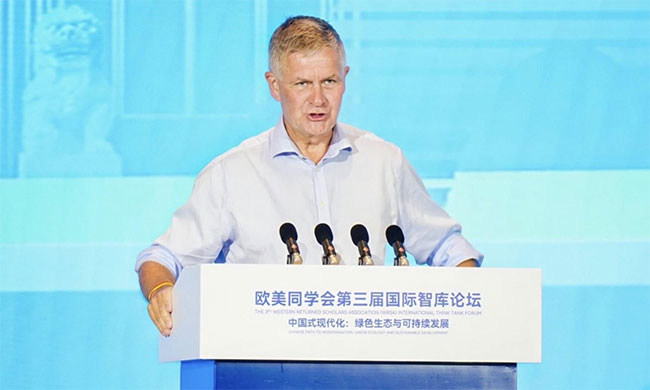
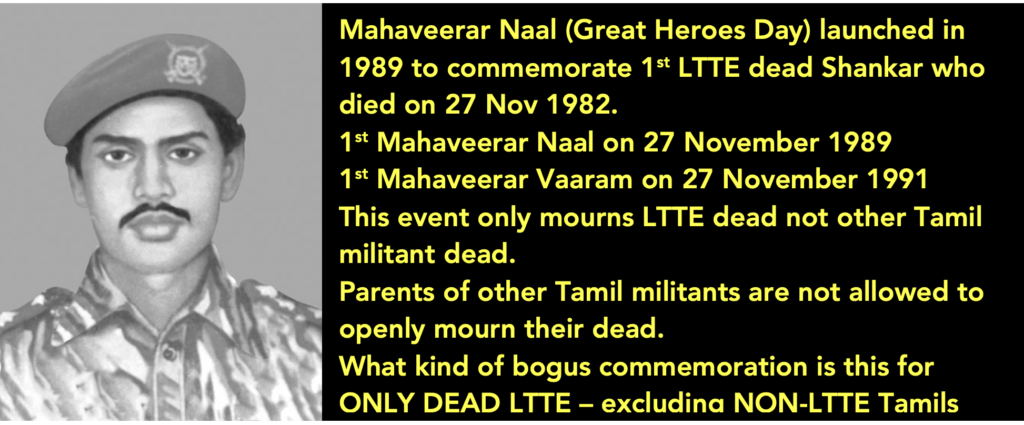
 වහූ පැටිය කාල කල කියපූ දේවල් කරත්තයට බැන්දම කරන්න බෑ පැටියො.. says:
 මිල සූත්තර පුංචා says:
 Annonymous says: