Colombo, September 12 (Daily Mirror)- Rebuffing President Ranil Wickremesinghe’s proposal to invite the IMF for the debate, NPP Presidential candidate Anura Kumara Dissanayake today made a fresh challenge to the President for a face-to-face debate on the economic policies.
Speaking at a rally in Ambalantota, he said the debate could be arranged on a popular television channel and any matter regarding the economic policies of the two parties could be debated.
“President Wickremesinghe keeps on posing questions to me on the stage. So, I challenged him for an open debate. Then, he said he would come with the IMF. Is the IMF contesting the election? Ranil is making irresponsible statements,” he said.
Dissanayake said the Opposition camp is perturbed about the NPP’s victory and said they have started to spread various false news to mislead the people.
“They are now saying the NPP government will change the national flag. We will not change the national flag but only the corrupt and fraudulent politics. The Opposition camp is also saying that there will be unrest and violence after the NPP’s victory. We want a peaceful election. This election is a definite win for us. Only the losing camp wants unrest, clashes and instability in society. We request the security forces to maintain law and order in the country before, after and on the election day,” he said.
He said some people claim that the economy will collapse after the NPP comes to power and said the economy is already collapsed, adding that the NPP will take over the country to revive the economy which collapsed due to failed policies for the last 76 years.
Colombo, September 12 (Daily Mirror) – I decided to contest for the presidency only to stabilize the economy and not to focus on religion or ethnicity, President Ranil Wickremesinghe told a public rally in the East.
“My focus is to focus on trade and agriculture and to stabilize the economy based on those sectors and not religion or ethnicity,” Wickremesinghe told a rally in Sainthamaruthu and Kokavil.
He said he has been able to mete out justice to Muslims of this country by assuring their right to bury their dead.” We will ensure the right to burial by the law, he said in this regard.
Whilst highlighting that presidential candidates such as Sajith Premadasa who offers everything free of charge won’t have a chance, Mr. Wickremesinghe said he will create a better future for the people through a scientific plan to stabilize the nation.
He assured that Sri Lankans will be enjoying a better lifestyle in another year’s time. “We have already managed to bring in some stability. The devaluation of the rupee is controlled now,” he said.
“I remember visiting these areas in the East during the tsunami period. The area is much developed now compared to those days. We hope to develop the East further,” he said.
We cover 360-degree needs from birth to death, education to aviation. Ours (manifesto) is philosophical, practical and deadline -drivenWe are motivating human capital to unleash the potential of physical resourcesThere is a mismatch between their (presidential candidates) lifestyles and incomes declared Anura Kumara Dissanayake completely lives off the people of this countryAll the politicians are part of the black economy Whoever lives outside the tax net is part of the black economy
Regrets playing a role in bringing Gota to power
Sarvajana Balaya’ Presidential Elections candidate Dilith Jayaweera, in an interview with Daily Mirror, outlined his vision for a entrepreneurial Sri Lanka. Jayaweera said that only wealth creation according to a time-bound action plan could salvage the country, but not ad hoc measures.
Excerpts
Without entrepreneurship, the country cannot move forward”-Dilith Jayaweera(pic by Huzefa Aliasger)
Despite being a successful businessman, why did you decide to contest for the presidency?
It is because of the vacuum that got created in its own. There was the rhetoric of people, particularly of the youth for a change. They wanted a change in conventional political thinking. I was convinced that we cannot move forward like this. Conventional politicians come up with the same conventional nonsense. People have no support towards them. In my case, I have been supporting these conventional forces expecting that something would happen. It did not really happen in the way it was expected to be. With that serious thought, I entered politics.
The Gotabaya Rajapaksa government incurs a black mark for the current economic crisis. Critics point at you too for being instrumental in bringing him to power. What have you got to say?
Yes, I did play a role. In fact now I quite regret it; not for the same reasons, but for the reasons that I can explain. That is another reason for me to sacrifice my otherwise peaceful life. I had that guilt.
What went wrong with the Gotabaya Rajapaksa government?
It is nothing, but the family involvement. The family never wanted him to be in power, to begin with. Both Mr. Basil Rajapaksa and Mr. Namal Rajapaksa never wanted him to be the President. They wanted Mr. Mahinda Rajapaksa to be the President. Constitutional restrictions stopped them from bringing him (Mahinda) back. This was not their choice. Though unwilling, they helped bring Gotabaya. They did not have the same bond with him.
Sri Lanka, in the post-independence era, never had a plan. People came to power on ad hoc basis. They never came with a sort of a plan. Sri Lanka didn’t join the world which was heading in an entrepreneurial mindset. All the states had a change in their mindsets for development -from conventional welfare systems to entrepreneurial systems. It happened in Russia, China, Singapore and India. We didn’t understand the value of entrepreneurship
Both Namal and Basil wanted to control Gotabaya. That is why they immediately brought P.B. Jayasundara- their point man- as the Secretary to the President. Gotabaya told me that it was not his choice. The Secretary to the President is a powerful position. He was the former Treasury Secretary too. I used to call him the economic hit man in my language. This man was brought in to control Gotabaya only. Gotabaya was quite successful during his first nine months in office when he did not have a parliamentary majority. When Basil took control of Parliament, he directly controlled Gotabaya.
You talk about an entrepreneurial Sri Lanka. What is the reason for Sri Lanka to lack entrepreneurship?
Sri Lanka, in the post-independence era, never had a plan. People came to power on ad hoc basis. They never came with a sort of a plan. Sri Lanka didn’t join the world which was heading in an entrepreneurial mindset. All the states had a change in their mindsets for development -from conventional welfare systems to entrepreneurial systems. It happened in Russia, China, Singapore and India. We did not understand the value of entrepreneurship. That is why, we have all the subjects in our curriculum except entrepreneurship. Without entrepreneurship, the country cannot move forward. We should have an entrepreneurial state to start with.
There is a perception that left-leaning political thinking discouraged entrepreneurship. What is your view?
Yes. That could have been one reason. That is not the only reason, though. We didn’t give serious mind to it. If you don’t know the concept of entrepreneurship, how do you even think of entrepreneurship? From Grade 1 to 11, we know all the subjects including geometry. We don’t know entrepreneurship.
They themselves call their ones manifestoes. We clearly say that ours is a strategic plan. We talk about what, how, when and if not. We talk about concepts. They talk about conventional welfare- how much they are willing to give. Everybody is competing with each other to dole out. All three manifestoes lack philosophy
How does your programme differ from those of other main candidates?
They themselves call their ones manifestoes. We clearly say that ours is a strategic plan. We talk about what, how, when and if not. We talk about concepts. They talk about conventional welfare- how much they are willing to give. Everybody is competing with each other to dole out. All three manifestoes lack philosophy. Without philosophy and strategy, how can a country move forward? Again, they bring it down to ad hoc steps. It is not a master plan. It does not cover 360- degree needs of Sri Lanka. We cover 360 -degree needs from birth to death, education to aviation. Ours is philosophical, practical and deadline -driven.
How do you define your economic policy in traditional terminologies- socialism, social market economy, capitalism etc?
I don’t like it. In the modern world, these are all archaic words. The world is moving away from these archaic words- left wing, right wing etc. We are putting forward a progressive economic plan with a reasonable percentage on welfare, massive percentage on our culture and civilization. Human capital is the centre of it. We are motivating human capital to unleash the potential of physical resources.
All successful nations in the world have worked on the strengths of their civilizations. That is inherent in us. We are different to citizens of any other country because of our historical reasons. Historical reasons cover from our biology to moral beliefs. You cannot suddenly become someone else. Sri Lankan Muslim is different to a Muslim in an Arab country. A Sri Lankan Catholic is different a Catholic in Rome. We have to capture that in motivating the nation
You mentioned about civilization to be looked at for insights. How are you going to do it?
All successful nations in the world have worked on the strengths of their civilizations. That is inherent in us. We are different to citizens of any other country because of our historical reasons. Historical reasons cover from our biology to moral beliefs. You cannot suddenly become someone else. Sri Lankan Muslim is different to a Muslim in an Arab country. A Sri Lankan is different to an American. A Sri Lankan Catholic is different a Catholic in Rome. We have to capture that in motivating the nation.
Historically, we have been influenced by Buddhism as a philosophy. That influence has made ourselves different from other nations. We are a nation without a God. When there is no God, there is no messenger. Predominant civilizations have no Gods. Then there is no book like Bible or Quran. We are a nation with free thinking with so much energy attached to it.
Recently, you talked about ‘black economy’. How big is that?
Whoever who lives outside the tax net is part of the black economy. All the politicians are part of the black economy. They don’t partake in paying taxes. If you cannot justify your living style with income, you are part of it.
How big is this black economy?
I think three to four times the size of actual economy.
If you look at the presidential candidates, all the main candidates have given affidavits lying to the nation. How can they justify? Who are they trying to lie? What kind of a joke is this? That is why we cannot put this in order. The developed world captures this through the digital network. In the developed world, there are single entry platforms. Even in India, they have introduced this single-entry platform for 1. 3 billion people
Where lies the fault?
If you look at the presidential candidates, all the main candidates have given affidavits lying to the nation. How can they justify? Who are they trying to lie? What kind of a joke is this? That is why we cannot put this in order. The developed world captures this through the digital network. In the developed world, there are single entry platforms. This is what I have been saying. Even in India, they have introduced this single-entry platform for 1. 3 billion people.
Anura Kumara Dissanayake completely lives off the people of this country, taxpayers’ money under the pretext of running a political organization. Paying zero taxes, he travels business class. He travels in the best of the best vehicles. He has a massive mansion built in Battaramulla.
Among the candidates, if I go by asset declaration forms, you are the richest?
I am not the richest. I am the most honest.
Are you trying to say that others are richer than you actually?
It is hundred percent. I am forced to assume. They declare Rs.300,000 as their income. Look at the way they live and compare it with what they have declared! You can imagine how big the black economy is.
The Election Commission has declared Rs.109 as the expenditure ceiling per voter by any candidate. Will you stick to that?
I will be spending much lower than that because I don’t spend black money. I spend reasonable money. I don’t think that such a reasonable claim can be made by other candidates. If each of them can have three rallies a day. In my opinion, it costs around Rs.75 million.
They can spend big sums of money across the country. They have mentioned something in asset declarations. But the actual value is much bigger than that.
Will they exceed the campaign expenditure ceilings?
I think they would.
Is the expenditure ceiling announced by the Election Commission for the current campaign enough?
It is a joke. Our General Secretary said that it should be made Rs.300 per voter. Otherwise it is such a joke.
The election authorities in Anuradhapura barred a dinner party you were supposed to host. What happened actually?
I didn’t. It was a private party organised by entrepreneurs in Anuradhapura. The first part of the party was my speech. They did not serve liquor, food or anything. They were to continue with the party after my speech and I left. However, there was my banner in the background. They did not serve even a glass of orange juice during my speech. But officials came and went into the kitchen.
Who has instigated it?
I told my entrepreneurs in Anuradhapura to invite even those with opposite views including the JVP guys. It looks like that they took pictures and sent them to the relevant authorities. We did not serve food. The buffet was not even laid. The food was in the kitchen. On the same day, President Ranil Wickremesinghe had a bigger party for lawyers in Colombo. There was nothing to be investigated. It was an ugly incident as far as I am concerned.
What is your view on the IMF (International Monetary Fund) programme?
All three main candidates talked about crossing Wel Palama (suspension bridge). Ranil is the master of loans. He works like the accountant of a company. Loans are supposed to be managed by a financial controller or an accountant. He diverted national discussion from wealth creation to loan management. That should not be the discussion. None of these candidates talks about wealth creation. They are talking about managing debt. Managing debt is one small portion of running a country. What is important is to motivate people to be involved in making more money for the country. Once enough money is made, we can service debts.
But the country is now halfway through the programme. Can we reverse it?
There is no need to reverse. If you have taken a loan, you have to manage it. If you cannot pay, you have to get a moratorium. You cannot ask the IMF to fly a kite. You have to manage it from the country’s well-being point of view. First of all, we have to have wealth with us. Then only we can negotiate with anyone from a strong position.
President Ranil Wickremesinghe has slammed the sudden promises from presidential candidates Sajith Premadasa and Anura Kumara Dissanayake about reducing fertilizer prices and cutting farmers’ loans, questioning as to where they were when farmers were struggling without access to fertilizers.
The President highlighted that his efforts, including discussions with world leaders to secure fertilizer subsidies, were instrumental in getting farmers back to their fields and boosting rice production in the country.
Today, promises are being made to lower fertilizer prices and erase farmers’ debts. Yet, when farmers were in urgent need of fertilizer, those promises were not fulfilled. I ask Sajith and Anura, where were you then?”
I have worked to stabilize the country’s economy through tough and often unpopular decisions. I reopened businesses that had closed, and now we have achieved economic stability,” he said.
President Wickremesinghe claimed that Sajith and Anura, who now speak about alleviating the people’s burdens, offered no support during the economic crisis when the country needed it most.
He charged that those who avoided responsibility during the crisis are now seeking power for themselves.
President Wickremesinghe made these remarks during an election rally in Sainthamaruthu, Ampara yesterday (11).
During his speech, the President emphasized the importance of trade and farming, which are vital sources of income for the Muslim community in the country.
He warned that losing these sectors could lead to serious difficulties for the people. He urged attendees to seek out the SLMC for support in strengthening these crucial areas, and assured them that he has concrete plans to address these issues.
The President also highlighted his commitment to conducting elections free from ethnic and religious biases.
He affirmed that the legal right of Muslim citizens to be buried according to their customs is protected, contrasting his approach with that of other leaders who engage in divisive rhetoric on the campaign trail.
Instead, President Wickremesinghe promised to fulfil his commitments and work towards the betterment of all communities.
Sri Lanka’s opposition leader contesting the presidential election next week said Thursday that if he comes to power he will renegotiate with the International Monetary Fund the 2022 economic reforms package to ensure that the rich pay more taxes and the poor see their conditions improve.
The reforms were introduced after Sri Lanka defaulted on its foreign debt creating the worst economic crisis in its history.
Sajith Premadasa, the opposition leader in Parliament told The Associated Press in an interview that his party has already started discussions with the IMF to find ways to ease the tax burden on the people.
We will be embarking on the third path, the middle path, the path is where wealth is created, the country grows and the wealth is equitably distributed,” Premadasa said.
He said there needs to be fundamental changes” to the current agreement between the IMF and Sri Lanka’s government but those should be in a more humanistic manner” to ensure that the burden on the people is lessened.
And if there are burdens that have to be imposed, the super-rich and the rich have to disproportionately take a bigger share of the burden rather than the working men and women of Sri Lanka.”
Sri Lanka is in the middle of reforms and a debt restructuring program under an IMF agreement whereby taxes have been increased to boost state revenue. After the island nation defaulted on its foreign debt in 2022, borrowing was reduced and the printing of new currency notes was stopped by law.
The opposition parties say however that many of the wealthy and those with connections with the authorities don’t pay their taxes and the burden is borne by the middle classes and the poor through income taxes and value-added tax on goods and services.
The presidential election on September 21 is seen as a referendum on the reforms initiated by President Ranil Wickremesinghe. They have improved key economic figures, but their effects have yet to reach many ordinary people.
Premadasa criticized Wickremesinghe’s economic policies saying that he is trying to find solutions through contraction. Premadasa said his policy is to grow out of the problem” through an export-oriented, knowledge-based economy.
Premadasa, 57, is the son of a former president late Ranasinghe Premadasa who was assassinated by a suicide bomber in 1993.
He also contested the presidential election in 2019 and lost to Gotabaya Rajapaksa, who was forced to flee after two years amid angry protests against the country’s economic meltdown.
Unsustainable debt, a severe balance of payments crisis, the effects of the COVID-19 pandemic, and the government’s spending of scarce foreign reserves to prop up the country’s currency, the rupee, led to a severe shortage of foreign currency and essentials such as fuel, medicine, cooking gas and food in 2022.
It sparked riots, forcing Rajapaksa to flee the country and later resign. Sri Lanka’s parliament elected Wickremesinghe as president to cover Rajapaksa’s remaining time.
Wickremesinghe is also contesting the election and is seeking approval for his economic agenda, promising rapid growth with an ambitious target of making Sri Lanka a developed nation by the centenary of its independence in 2048.
Inflation dropped to 0.5% last month from 70% two years ago under Wickremesinghe’s administration. Interest rates have also come down, the rupee has rebounded, and foreign currency reserves have increased. Creditor countries such as India, Japan and France have agreed to defer debt repayments until 2028, giving the island nation space to rebuild its economy.
But professionals have been complaining of high taxes and all especially the poor have been affected by high living costs.
Premadasa, one of the three leading candidates from a total of 38, said that he would prosecute those in the Rajapaksa administration who ordered cremating the dead bodies of Muslim COVID-19 victims, ignoring their religious sentiments at the height of the pandemic and pay compensation to their families.
Authorities then had mandated cremation of the COVID-19 victims citing health and soil experts who had cautioned that the deadly virus could contaminate ground water.
Premadasa however called it a racist policy.”
Premadasa also said that he would allow maximum devolution of power to the ethnic Tamil majority in the northern and eastern provinces, a long-standing demand from the community. He also promised to call an international donor conference to help rebuild areas affected by a 26-year separatist civil war in those provinces.
Premadasa also said he would bring closure to the issue of forcible disappearances and those who went missing in action.
This year marks 100 years of elections in Sri Lanka and what a fitting celebration it is as election excitement reaches fever pitch. As the most crucial election in Sri Lanka’s history draws near, the likely outcome of the election is becoming clearer. Although the deathmatch is between Ranil and Sajith to take control of the UNP as the first priority and become president as the second priority, Ranil has steadily slipped down. The election is now between Anura and Sajith. Every voter must vote for either Anura or Sajith to make their vote count. Voting for any other candidate is a wasted vote.
Contrary to expectations, Anura has penetrated into Tamil and Muslim vote bases far more effectively than any Rajapaksa ever did. While he cannot win a majority of Christian, Tamil or Muslim votes, he has gained a few hundred thousand votes from these minorities. Compared to Mahinda’s 13% (2015) and Gotabaya’s 8% (the percentages they could get from Tamil and Muslim voters), this is a significant achievement. It shatters many old assumptions that are fast becoming irrelevant.
However, Anura is nowhere near the percentages Mahinda and Gotabaya achieved in winning Sinhala votes. In 2015 Mahinda obtained 58% of Sinhala votes and Gotabaya managed 65%.
Sajith edges out Ranil as the son of a former president pitches to poorer sections of the society while retaining the support of most businessmen. People living below the poverty line almost doubled since 2022 to 26% in 2024 which presents Sajith a winnable segment. He also has a strong support from Christians, Tamils and Muslims. But this time he has competition and he has lost part of it to Ranil. Sajith only managed to win 29% of Sinhala votes in 2019 and by now he has lost part of them.
This puts both Anura and Sajith in a close encounter. The winner must be chosen between them counting the second and third preferences. Over 20% of votes have been wasted as they have been cast to others.
Second and third preference is no preference as those who have cast them have in fact rejected both top candidates. It is not morally correct to decide the winner after counting second and third preferences and adding them to the original count. Instead had the over 20% wasted votes been cast to the top two candidates, it would have reflected a better representation of the public opinion.
There’s no perfect presidential election candidate. Voters must pick the lesser of the two evils – Anura and Sajith. Voters must disregard the rest or their votes will end up wasted. Be part of the change be the subject of change.
All the declared contenders for the forthcoming Presidential race in Sri Lanka have now made their manifestos public. The respective Manifestoes of the 5 leading candidates are titled ‘Puluwang’ (Possible)by Ranil Wickremesinghe, ‘A Win for All’ by the SJB, ‘A Thriving Nation, a Beautiful Life’ by the NPP, ‘A National Strategic Plan’ by the Sarwajana Balaya, and ‘For You- A Developed Country’ by the National Peoples Front of Namal Rajapakse. This is a unique situation for the discerning public because the majority of the contenders in the fray, except Mr. Ranil Wickremesinghe, are new to the Presidential stakes, and hence, the propositions on offer could be new but may warrant a lengthy public inquest.
All these manifestos ostensibly promise to make the country literally ‘A land flowing with milk and honey,’ but the examination of these propositions should be engaged in with circumspection to ensure that the proposals are aimed to make Sri Lanka economically better and socially stable; the national need of the hour. In this context, we find the offer to raise the salaries of the public servants, in competing degrees, by the three contenders considered ‘front runners’ to be somewhat politically expedient. That is not because the present salaries they receive are commensurate with the needs of everyday life but rather because the public service in Sri Lanka at present is an acknowledged white elephant that is highly unproductive. Hence, this sector has been a primary economic burden on the masses. Therefore, if the country is to come out of the economic morass it has fallen into over the years, restructuring and pruning the public service to make it more productive is a primary national requirement.
However, the purpose of this article is not the lengthy analysis of different manifestoes for their ‘vote catching’ idiosyncrasies but to point out a salient issue that the manifestoes of these ‘leading’ contenders have given vent to, which could lead to a moronic social and political order if implemented. That is the issue of the full implementation of the 13th Amendment to the SL constitution, as pronounced by the SJB candidate, Mr. Sajith Premedasa and the NPP candidate, Mr. Anura Kumara Dissanayake, considered as leading candidates at present.
The SJB, in its manifesto, under STRENGTHENING DEMOCRACY & RECONCILIATION, states that, ‘ SJB Alliance is committed to change the present constitution …. our principle is to convert our present political system to parliamentary system and with maximum devolution based on 13th amendment…’ Statements with similar connotations are present in the NPP manifesto as well but what is significant is that both these leaders have made public pronouncements in the North and East as to their intentions to give police and Land Powers to the provincial Councils that are enforceable under the present SL constitution. It is a fact that Sajith Premedasa has even entered into a written agreement with the regional party in the north Ilankai Tamil Arasu Kachchi (ITAK) to this effect, and it is also reported that he has also entered into a written agreement with Mr. Rauf Hakeem who has been clamoring for Sharia Law in the Eastern Province.
As for the manifestos of other candidates in the fray, Sarwa-Jana-Balaya and the National Peoples Front have not committed to implementing the 13th Amendment or made such public pronouncements.
Full implementation of the 13th Amendment will grant extraordinary power to the Chief Ministers elected for each Provincial Council, and from the ordinary man’s perspective, this could mean that the items listed in the provincial list get restricted to a particular province. In day-to-day affairs, this means that a citizen of SL will have to seek the permission of the Chief Minister of the PC if they desire to pursue those provincial listed facilities. The writer of this article is a resident of Sabaragamuwa but was engaged as a professional in a number of private and public institutions and World Bank projects located in the western province and sent his children to education in the central province. Once the 13th Amendment is fully implemented, such activity may not be possible unless you seek the permission of the Chief Minister of the respective Provincial Council. Thus, this is the net effect of this 13th Amendment when you analyze its practical aspect on the day-to-day life of an average citizen.
As for crime and national security, the situation will be very complicated. After committing a crime, a criminal only has to cross the provincial border to evade arrest. Then, the Chief Minister of the province will have to seek the co-operation and goodwill of the adjoining provincial minister to evoke police powers to track that criminal down in the adjoining province. In this setup, it will be interesting to note how the two chief ministers interact when they belong to two different political parties. As for national security, the Central Government will have no authority to quell terrorism or unlawful behavior in a particular province unless invited by the Provincial Government.
Some apologists of the 13th Amendment try to argue on the grounds of greater devolution to the provinces. Still, the Central government’s powers have already been devolved through the provincial Secretary administration system and Pradeshiya Sabhas to cater to the needs of citizens in respective areas. And the people in provinces have never appealed for further devolution of any particular powers as there never have been such requests reported. The issue to note here is that before the introduction of the Indo Lanka Accord and the 13th Amendment Sri Lanka had a system of devolving power to the periphery as ‘one country one law’ whereas the 13th Amendment brought a situation of ‘a country with different laws to the peripheries.
Effectively, what the 13th Amendment seeks to implement is not devolution but a federal system of government in the country. Yet Federalism, wherever it exists today, has always been brought to integrate small states to strengthen their existence for security and social reasons. For instance, the United States of America came to existence by combining all the states in that part of North America to stand up to the colonial domination by the British. Even Switzerland was made a federal state as the country felt the need to become a worthy and proper member of the United Nations in its membership. Therefore, if Federalism is implemented in Sri Lanka, as proposed under the 13th A, it will be the first instance where a single country is to be decimated into 9 provinces, and that would go against the very principle that has brought federal governments into existence in this world up to now.
Last but not least, the popular argument of this apologist of the 13th Amendment is that it gives greater power to the different ethnicities inhibiting the island nation. This is against the natural law of nation-building because every nation that has come into existence after the UN charter has to have a shared national identity. Thus, there is no way a country can permit different ethnicities to have their own way, overriding the interest of the particular nation that they are a part of. Further, such patronization could lead to fragmentation and chaos, especially in a small nation island like Sri Lanka. Such activity could lead to permanent conflicts and a situation like that in Gaza.
We must remember that this entire episode of ‘ethnic enclaves’ was the concept of certain Tamil leaders who sought to preserve the privileges the Tamil community enjoyed at the time of independence. Those were the privileges British colonials nurtured on minorities to administer this country on the ‘divide and rule’ basis for 150 years. Therefore, now, 150 years after independence and after making free education available to the majority,, and in this compute- age, privileges on a communal basis are no longer relevant.
Another fact that makes this concept of ethnic enclave irrelevant is the revelation by the Department of Census and Statistics of Sri Lanka that 56 % of the SL Tamil community does live outside the North and East. This was the position even in 1980 when the pre-war census was taken. This shows that the Tamil community considers the whole of Sri Lanka to be their homeland, and in such a context, restricting them to the North and East would be discriminatory and work against national integration.
Arun Siddharthan, the Tamil political activist, has publicly stated that the Tamil community is at peace now, and the children who carried guns then are now carrying books. Hence, he, too, has stated that the 13th Amendment is redundant and that the Tamil community at large is not in need of such an amendment to confine them to the North and East only.
In conclusion, the whole point about the 13th Amendment is that it was introduced by India in 1987 as a solution to the terrorism that plagued this country with no end in sight at the time. It was a time of desperation, and India was aiding and abetting the LTTE at the time. At the time, however, the Sri Lankan leaders and even the international community believed that the LTTE was invincible and, hence, needed to be appeased to end terrorism. Yet the LTTE did not accept the 13th Amendment as a solution and continued their armed struggle, confirming the need to eliminate terror only by counter-terror.
In this milieu, the question now is, why are these Sinhalese politicians from the SJB and NPP falling over one another to implement the 13th Amendment fully at this time when there is no terrorism and when the country is marching towards unity and ethnic harmony? The answer is that these opportunistic politicians are either competing to win the Presidency with no regard to peace and ethnic harmony in the country, or alternatively, they wish to hoodwink the Tamil community to garner few Tamil votes by patronizing their racial instincts. Either way, this position is against the interest of the country and its ethnic composition, and therefore, the people in this country shouldn’t elect leaders of such political opportunism to rule this country.
Americans wanted to spread their ideologies & gain power in some Muslim countries.
But Muslims generally abhor Americans.
It was a problem to get a foothold in those countries.
However Americans has a standard strategy.
Support the dissidents in that country.
The Muslim dissident groups were more radical and more opposed to the Americans than their governments generally.
But then what the Americans do?
Get hold of one of the struggling such dissident groups & support them or at times form a fake such dissident group & support them.
Because these dissident groups are outwardly more antagonistic to Americans, the general population never believe them to unite with the Americans.
This has happened in several countries and the elected governments were thrown off to appoint leaders loyal to America through the American supported such groups.
Isn’t this now familiar to you?
Open your eyes & see how the 3% JVP which was struggling to survive has now come to prominence.
Malimawa/NPP spread millions all around the country to stage rallies.
Each day three rallies at different places should be costing over millions.
Posters and media ads over ride other campaigners.
Simple excuse is the party is supported by donations and then no wonder big Sam’s hand there.
Recently it was in the news that America spent millions in the year to change the government in power.
Americans spend millions for regime change in Sri Lanka.
JVP was a hand to mouth political party who themselves admit lived upon sharing shirts, blouses & under pants
America understands Ranil has no chance of winning this election so that they wanted an alternative group loyal to them to win the election.
This has been their long term plan.
Therefore America approached 3% struggling JVP dissident group who fell prey to them.
Otherwise JVP knew there is never a chance for them to get over 50%.
They made a coalition with many NGOs funded by the Americans and the West to appear as Malimawa or NPP, now the wolf in lamb clothing.
Therefore America has made it certain whether Ranil wins or apparent main rival Anura wins this election, our country is in their grip.
A Christian college educated campaigning with malice on Buddhism with such utterances as Yasodhara was more to be respected than Bodhisattwa
Are you not yet convinced?
See the number of Sinhala American professors campaigning for NPP.
Is it not shocking to you now one of our expatriate American professors was garlanded at a NPP meeting recently as the head of the policy planning in a NPP government.
What else America want, an expatriate American making policies for our country in a NPP government, if you have an iota of brain?
Last Sunday I read an endearing letter in the Sunday Island by an expatriate American professor imploring us to vote for the NPP.
If someone is working studying or living in America and enters our politics it is a great danger to our country.
Similarly if someone’s children or other close family members are in such a place in America it is equally risky to our country.
Not that these educated expatriates are direct American agents but unwittingly they will fall prey to American tactics and will never have the wherewithal to go against policies that America bring to the government table in future.
Take for instance, MCC, Sofa etc.
The unforeseen forces so powerful that Wimal Weerawansa’s frank & fearless revelation on American involvement in the affairs of the NPP in his Hiru Salakuna programme was brought down just the next day from air.
A major television station to act so timidly the order should have come from the very top quite understandably.
It is no secret Ranil was brought to power through aragalaya directed by foreign hands.
The glaring example is when Shiekh Hasina was chased from Bangladesh she had the courage to tell to the world that it was America that was behind the protests against her.
However Gota chickened out not disclose that it was America behind our Aragalaya because his kith & kin are studying working and living in America.
Ven Pahingala has been sent a letter of demand for ten billion, mind you ten billion damage for telling that NPP has in its policy booklet stating not giving the pride of place to Buddhism & once NPP comes to power it will implement rapidly the 2015 –2019 constitutional changes suggested by Yahapalanaya government.
The clear strategy of Malimawa is to frighten away any resistance or protests to its policies by challenging to send you to courts.
The social media is hijacked by its planted agents who frighten off any different views on media.
Just imagine how could it be under a NPP government.
Please do at least vote the clueless SJB if you want to waste your vote.
Ranil is no way worth even for a wasted vote neither Namal.
Our goose is cooked.
Because you are angry with Rajapakshas don’t let your principles go down & vote for NPP because you wanted to get rid of this corrupted government.
Don’t cut off your nose to spite your face.
Still our 69 principles are pure but it was the driver we chose to drive who was at fault.
Dear friends, if you have an iota of affection and loyalty our country and an iota of brain please
do vote Dilith Jayaweera for the sake of your next generation & for the independent existence of our beloved country.
He may have his faults but out of the top six he is the BEST.
I have never seen him or been friends with him but this is not a time for friendship vote.
Please spread this word of wisdom to all to save our country.
Washington, DC – Sep 10th, 2024, the South Asia Foresight Network (SAFN) unveils a landmark report on 9th Sep 2024 at the National Press Club in Washington DC. The report launch was followed by a discussion with the authors, Mr. Asanga Abeyagoonasekera, Executive Director SAFN and Ms.Ishini Shashipraba, Research Assistant SAFN. Mr. Jerome C Glenn Co-founder of the Millennium Projectdelivered opening remarks highlighting the importance and timely relevance of the report and Ms.Poonam Sharma Editor in Chief Global Strat View(GSV) moderated the event.
The 60-page report Sri Lanka Presidential Election 2024: Political and Economic Analysis delivers a stark warning to policymakers and political actors. As Sri Lanka approaches its critical presidential election on September 21, 2024, the report outlines essential findings and provides urgent recommendations to mitigate the looming political, economic, and social risks threatening the nation.
Drawing from Key Informant Interviews (KIIs) with leading academics, journalists, politicians, civil society figures, and diplomats, the report leverages qualitative methodologies to project potential scenarios for Sri Lanka’s political economy.
Key Findings:
Democratic Contraction: Despite leadership shifts, the report highlights an alarming trend of democratic erosion. Draconian legislative measures like the Prevention of Terrorism Act and the Online Safety Act point to ongoing state control over civil liberties, with military and police forces frequently used to suppress political dissent. This contraction of democratic space poses severe long-term risks to Sri Lanka’s democratic institutions.
Governance Challenges: Despite having institutional frameworks in place, corruption and inefficiencies have eroded public trust in governance. The report identifies a critical need for reform in anti-corruption bodies, judicial processes, and law enforcement, as well as a more transparent policymaking process.
Economic Instability: Persistent economic turmoil continues to undermine public trust. Though the government claims signs of recovery, rampant corruption and a lack of transparency erode institutional integrity. Inflation, unemployment, and socioeconomic inequality remain prevalent, exacerbating popular discontent.
Political Alternatives: The Samagi Jana Balawegaya (SJB) emerges as the most credible political alternative. The report praises the SJB’s experienced leadership and successful coalition-building efforts, noting that these factors place the SJB in a strong position to execute a coherent and comprehensive economic reform agenda. By uniting under a clear vision for economic stability and governance reform, the SJB stands as the most viable force to lead the nation. Conversely, while the National People’s Power (NPP) benefits from its anti-corruption stance and momentum from the Aragalaya movement, it lacks governance experience—an essential factor in tackling Sri Lanka’s economic crisis.
Foreign Relations and Policy: The report stresses the need for balanced foreign policy, as Sri Lanka navigates complex relationships with India, China, and the United States. Successful economic recovery and political stability hinge on clear, pragmatic foreign policies.
Urgent Warning to Policymakers:
The SAFN report warns that without immediate reforms, Sri Lanka risks slipping further into a ‘polycrisis’—a convergence of economic, political, and social challenges. The country’s leadership must act swiftly to reverse democratic decay, stabilize the economy, and foster political accountability. External reports, including the IMF Governance Diagnostic and the latest UN OHCHR report 2024, highlight further reforms needed to support institutional integrity and human rights.
Call to Action:
This report serves as both a diagnostic tool and a roadmap for the future. As Sri Lanka’s presidential election looms, all political actors, civil society groups, and international stakeholders must engage thoughtfully to ensure that the country’s future is shaped by inclusive, transparent, and accountable governance.
By P.K.Balachandran/Daily News Courtesy NewsIn.Asia
Colombo, September 10: James Carville, Bill Clinton’s political advisor, said that when it came to elections it was always the economy. It‘s the economy stupid!” he famously remarked. Carville’s contention has stood the test of time.
While many other issues have also come into play, this year’s US and Sri Lankan Presidential Elections are taking place amidst economic anxieties and the core issue is the economy again.
A number of concerns are being highlighted in the September 21 Presidential poll in Sri Lanka, including the Tamil demand for a federal constitution. But the one upper most in the minds of the voters, across ethnicities and classes, is whether the government should continue to implement the IMF’s prescriptions or re-negotiate them. The ultra-leftists want them rejected, lock, stock and barrel.
President, Ranil Wickremesinghe, who is standing as an Independent” is highlighting the way he led the country’s recovery from the unprecedented economic crisis it went through in 2022 with the help of the IMF.
He decided to be a non-partisan”or a unifying” candidate and appeal for votes solely on the strength of his achievements in the last two years when he shepherded a distraught nation from despair to an era of hope if not prosperity.
But his two principal rivals, Sajith Premadasa of the Samagi Jana Balawegaya (SJB) and Anura Kumara Dissanayake of the National Peoples’ Power (NPP) are seriously challenging his claims, highlighting the common man’s inability to bear a situation in which he has to pay high prices and high taxes without an increase in his earnings. At the ground level, the economy is still sluggish despite manifest improvement at the macro level. Both want the IMF’s prescriptions re-negotiated.
Such a situation makes the September election a close contest in which Wickremesinghe could meet his match in the younger, more radical Dissanayake.
Economic Crisis
In 2022, Sri Lankans experienced power cuts and shortages of essential commodities such as food and fuel.Inflation hit 50%. Protests broke out in April as serpentine queues formed at cooking gas and petrol stations. Schools shut and office goers were asked to work from home.
According to the BBC, Sri Lanka imported US$ 3 billion more than it exported, running out of foreign exchange. In 2019, it had US$ 7.6 billion in forex reserves, which dwindled to US$ 250 million. COVID was cause but mismanagement and bad policies were the major factors.
In April 2022, for the first time in Sri Lankan history, the Gotabaya Rajapaksa government decided to default on repayment of foreign loans which totalled more than US$ 83 billion.
In July, acting President Ranil Wickremesinghe was made President by parliament. Using Emergency provisions, he restored order and began reviving the moribund economy. India, US,China and the Paris Club collaborated to see that the IMF sanctioned a bailout of US$ 3 billion.The World Bank pledged another US$ 600 million.India pumped in US$ 4.5 billon to restore supplies of essentials.
In 2023, as part of the IMF reform program, Sri Lanka introduced income taxes for higher earners, ranging from 12.5% to 36%.It also raised other taxes to pay for critical purchases.
Candidates’ Profiles
A record 39 candidates are running in the September 21 election. However, only three of them are serious contenders. These are, sitting President Ranil Wickremesinghe (Independent), Sajith Premadasa of Samagi Jana Balawegaya (SJB), and Anura Kumara Dissanayake of the National Peoples’ Power (NPP) an alliance led by the ultra-leftist/nationalist Janatha Vimukthi Peramuna (JVP).
Namal Rajapaksa, the eldest son of former President Mahinda Rajapaksa, is also in the fray as the candidate of the Sri Lanka Podujana Peramuna (SLPP). But he is neither expected to win nor to make a significant dent in the votes of others. He is politically raw, and the SLPP is in steep decline.
Ranil Wickremesinghe
Ranil Wickremesinghe (75) is the most experienced, best educated, and the oldest of the top candidates. He was Prime Minister five times,though never for a full term. He has held key ministries like Education, Science and Technology and Industry. And as President, he has held the Defence and Finance portfolios.
The present election is seen as a referendum on Wickremesinghe’s economic reforms and his governance.On the upside, inflation dropped to about 5.9% from 70% in 2022. The economy expanded in the fourth quarter of 2023 by 4.5%, the IMF said.
Interest rates also dropped, the rupee rebounded, foreign reserves increased.Creditor countries such as India, Japan and France, agreed to defer debt repayments until 2028, giving Sri Lanka space to rebuild its economy.
With Presidential Elections due in September 2024, Wickremesinghe brought down power tariffs by 22.5% which should have led to a reduction in the prices of goods by 20% if the traders cooperated.
The downside is that people, especially in the urban areas, are complaining of high prices and taxes. In an article dated September 13, 2023 published by Project Syndicate, Professors Jayati Ghosh and Kanchana N. Ruwanpura pointed out that the IMF had pledged only US$ 3 billion over four years. It is a tiny fraction of what the country needs to meet its debt-servicing requirements and just one-sixth of its foreign-exchange earnings, which amounted to roughly US$ 18 billion in 2022.”
The IMF imposed a series of conditions that significantly exacerbated Sri Lanka’s cost-of-living crises, the authors said. The mandated shift to market exchange rates, in particular, immediately led to sharp currency devaluation, causing imported fuel and food prices to skyrocket and contributing to a 165% increase in electricity tariffs between June 2022 and February 2023, Ghosh and Ruwanpura said.
As fiscal restraints were imposed, the economy continued to spiral down, with GDP shrinking by 7.8% in 2022 and 11.5% in the first quarter of 2023. This has had an adverse impact on employment, livelihoods, and the viability of small and medium-size enterprises.”
Consequently, real wages fell by 30-50% in 2022 and have remained stagnant.Although it includes a modest increase in corporate income taxes, it neglects the possibility of imposing wealth taxes,” the authors added.
Wealth tax is a levy on the total value of a person’s assets, as opposed to taxes on their income, real estate, or asset sales. Wealth tax is a way of moderating extreme wealth inequality. Leftists complain that Wickremesinghe has let the wealthy off the hook while heaping indirect taxes on the poor.
By reducing the interest rates on sovereign bonds held by Sri Lanka’s largest pension funds (EPF) from more than 20% to 12%, and then to 9% from 2025 until maturity, the government aimed to reduce its interest burden by 0.5 percentage points of GDP annually.
Recent estimates by economist Ahilan Kadirgamar suggest that this will result in a 30% decline in the value of retirement funds a decade from now. Moreover, these pension funds, often holding the only financial assets of working people, will be subject to a 30% tax on their returns – higher than the tax rate applied to many in the corporate sector.
Rural-Urban Divide
However, there could be a rural-urban differential in the economic impact of the reforms. Rural folk have gained by the import of diesel and petrol with the US$ 4.5 billion given by India and the dollars from the IMF. The removal of the ban on chemical fertilisers was a boon to the farmers.
Moreover, rural folk do not feel the pinch of high prices as much as the urbanites do, because they do not buy food with cash as urban workers and office goers to do on a daily basis. Nor do they use public or private transport on a daily basis.
Premadasa and Dissanayake
Wickremesinghe’s challengers Sajith Premadasa and Anura Kumara Dissanayaka have said that they will renegotiate some of the aspects of the IMF deal to benefit the poor. But Wickremesinghe has warned that any bid to amend the IMF deal could adversely affect ties with India, China and the Paris Club of creditors, the US, and international lending agencies. And the horrible shortages might return.
The Presidential election is also a contest between administrative experience and inexperience. In contrast to Wickremesinghe, both Premadasa and Dissanayake lack political and administrative experience. So far, Premadasa has only held the portfolio of Housing which is a minor ministry in Sri Lanka. Dissanayake has no administrative experience whatsoever. As a Leftist, he has been an agitator and an MP all his political life.
Dissanayake is appealing to younger voters in the urban areas. But Premadasa is presumed to have the traditional United National Party (UNP) voters across the country, which is not inconsiderable. As a non-doctrinaire and right wing politician, Premadasa could get along with the international community chiefly India and the US.
Dissanayake is just the opposite. He is a Marxist and ideologically anti-West and pro-China. As a staunch Sri Lankan nationalist, he will fight perceived encroachments by external powers. As the leader of the nationalist Janatha Vimukthi Peramuna (JVP), the main party in his alliance NPP, Dissanayake has been anti-India right through.
While releasing his manifesto, he spoke about how Sri Lanka’s consumer goods market is dominated by Indian products and how it is necessary end it. He followed this up by saying that the giant oil tanks at Trincomalee given to India by a bilateral agreement in the 1980s will be given to a consortium of foreign entities through a tender.
Since Dissanayake is pro-China, Beijing may expect him to revive the uncompleted US$ 1.4 billion Chinese-aided Colombo Port City international hub project. This involves coaxing Indian and Western companies to invest in it. But this could prove to be an uphill task given the geopolitics of the Indo-Pacific
An Essex nursing student has been reflecting on a once-in-a-lifetime placement which was made possible thanks to the University of Essex’s very own crowdfunding platform, Click.
Rae Spencer was one of 11 student nurses able to raise funds for the trip to Sri Lanka in August, where they had the chance to learn more about the healthcare system in the country.
The students were able to observe a variety of departments and practices at the Karapitiya Teaching Hospital, in Galle, ranging from neurosurgery to acupuncture.
The trip was carried out under the Travelteer scheme, which provides volunteering opportunities in Asia.
The students immersed themselves in completely different environment, something that third year Adult Nursing student Rae admits was an eye-opening experience.
The placement proved to be highly informative, albeit somewhat sobering, as I was confronted with challenging and uncomfortable situations,” Rae said.
Despite this, I actively sought learning opportunities and explored as many areas of the hospital as possible to get the most from my experience.”
As part of the placement, Rae was able to witness native healthcare techniques, as well as the emphasis on the three doshas, or functional energies in the body, Vata, Pitta and Kapha.
Away from their placement, Rae and the students were able to immerse themselves in Sri Lankan culture and nature, including getting up close to elephants and sea turtles, as well as relaxing on golden beaches in the evenings.
And despite missing home during her time in Sri Lanka, Rae is in no doubt that her time there was one of the best experiences of her life.
If you’re considering doing a placement abroad, it’s a fantastic opportunity, both personally and professionally,” Rae continued.
It was a rewarding but challenging experience for me. Approaching it with an open mind and a willingness to get involved, overall, it was a once-in-a-lifetime experience.”
Rae added: This experience was a crucial component for me in terms of my studies and the beginning of my nursing career.
“It provided hands-on experience and exposed me to various healthcare settings, patient demographics, and medical conditions.
“Witnessing healthcare in other countries has given me a greater understanding of the nursing role and how it changes between cultures and countries.”
The students were able to take part in the Travelteer programme after they raised £10,000 through Essex’s own crowdfunding platform, Click.
A further £5,500 was match-funded thanks to generous donations from alumni and University friends to our Student Experience Fund.
President Ranil Wickremesinghe has removed five state ministers, including Geetha Kumarasinghe, with immediate effect, according to the President’s Media Division (PMD).
The other State Ministers removed from their portfolios include Shasheendra Rajapaksa, Amith Thenuka Vidanagamage, Prasanna Ranaweera and D.V. Chanaka.
The removals were made according to the powers vested in the President under Article 47 (3) (a) of the Constitution of Sri Lanka, the PMD said.
Meanwhile, the President had previously removed another four state ministers from their ministerial portfolios on September 05.
Accordingly, the State Minister of Ports and Aviation Services, Premalal Jayasekara, the State Minister of Power and Energy, Indika Anuruddha, the State Minister of Agriculture, Mohan Priyadarshana de Silva, and the State Minister of Highways, Siripala Gamlath, had been removed from their respective positions by the President.
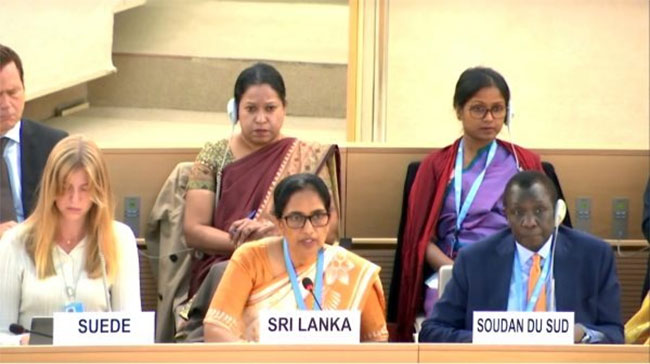
The Government of Sri Lanka has rejected the latest report on the island nation by the UN High Commissioner for Human Rights, accusing it of exceeding the OHCHR’s mandated sphere of human rights to comment on macroeconomics as well as financial and budgetary issues under sovereign parliamentary purview.
Speaking as the country concerned following the presentation of the report of the Office of the High Commissioner for Human Rights (OHCHR), Sri Lanka´s Permanent Representative Ambassador Himalee Arunatilaka elaborated that Sri Lanka has succeeded in stabilizing its economy through a combination of prudent economic decision-making and financial oversight and governance as acknowledged widely.
Sri Lanka also reiterated its long-standing commitment to engaging with the UN, the Universal Declaration on Human Rights and the related Treaties.
The Permanent Representative further stated that while strengthening the economy for the prosperity of all Sri Lankans is a priority for the Government, Sri Lanka continues to make progress on national unity and reconciliation.
Continued efforts through domestic processes, including the Office on Missing Persons (OMP), Office for Reparations (OR), Office for National Unity and Reconciliation (ONUR), the Office for Overseas Sri Lankans and the Interim Secretariat for the Truth and Reconciliation Mechanism (ISTRM) were highlighted, while details were provided in the Government’s written response to the OHCHR Report.
Ambassador Arunatilaka highlighted that social protection measures such as the ‘Aswesuma’ programme have been put in place to support vulnerable groups. It was underlined that the Report exceeded OHCHR’s mandate by commenting on macroeconomics as well as financial and budgetary issues under sovereign Parliamentary purview.
The Permanent Representative expressed Sri Lanka’s disassociation from the report of the OHCHR which lacked balance and failed to acknowledge the atrocities committed by the LTTE during decades of a brutal terrorist conflict.
Sri Lanka reiterated its strong rejection of Resolution 51/1 and the external mechanism established within the OHCHR which is unwarranted and counter-productive.
The Ambassador further said:
Let me restate at the outset, Sri Lanka’s opposition to Human Rights Council Resolution 51/1 which mandated the report under consideration and the establishment of the external evidence-gathering mechanism.”
This resolution was adopted without Sri Lanka’s consent by a divided vote within this Council. We disassociate with the report for the reasons stated in our detailed response, available on the OHCHR website.”
It is most surprising that the report steps far out of its mandated sphere of human rights to comment on macro economics as well as financial and budgetary issues under sovereign parliamentary purview. Contrary to the reaction of the rest of our international partners, it projects a negative overview for Sri Lanka’s future, fails to recognize social stabilization and the preservation of parliamentary democracy overcoming recent severe challenges, the return to normalcy with the restoration of food, energy and public services and stability arising from significantly improved outlook.”
Furthermore, it makes no mention of the brutal acts of terrorism and human rights violations committed by the LTTE, including child recruitment, suicide bombings, assassination of democratically elected MPs and leaders in SL and abroad, and the disruption of democratic rights and freedoms of the people, especially in the North and the East.”
I wish to once again emphasize Sri Lanka’s strong rejection of Resolution 51/1 and the external evidence-gathering mechanism established within OHCHR. This unproductive and unwarranted mechanism exceeds the Council’s mandate, contradicts its founding principles, and polarizes the Council, undermining the progress we have made domestically.
The selective and disproportionate focus on handpicked developing countries while ignoring critical situations elsewhere is unacceptable. We urge the Council to avoid politicization and double standards, and to focus on dire humanitarian situations that require urgent action to maintain its credibility.”
Mere talk is not what is required in Sri Lanka’s situation of today- massive unemployment and lack of incomes- poverty for the people at large- the vast majority who cannot today be assured of even two meals a day. It is on record that children are not even going to school- they are at home in hunger.
I look forward to hear from the personage that wins our Presidential election[- a Presidential decree creating immediately a special programme, training the unemployed in industry, agriculture and livestock- all to produce what is imported today. It is not the creation of a new Department; instead it is redirecting existing programmes and redeploying existing personnel.
The achievement of the Youth Self Employment Programme of Bangladesh comes of great importance to all contenders for our Presidency, in that it is the only employment creation programme that has achieved world status guiding over three million youths to become entrepreneurs within the short space of four decades. In the first nineteen months it created employment to around 2000 youths. It is a programme that has left its imprint on the sands of time
The full details of how the Youth Self Employment Programme came into being is narrated in detail to help the personage that is victorious at the general election on September 21 st. to make a firm decision to create such a employment creation programme in Sri Lanka..
No feasibility reports were written to get the Youth Self Employment Programme approved. The approval came in a flash. In Bangladesh when the new Military Government of General Ershard took over the country in 1982, the Ministry of Youth Development was providing skills training to 40,000 youths annually but the vast majority of them failed to find employment and continued to be unemployed for life. I happened to be the Commonwealth Fund Advisor to the Ministry on Youth Development. The new Hon. Minister for Labour and Manpower, Air Vice Marshall Aminul Islam at a Conference held to evaluate youth development programmes, ordered me,: What can you contribute for Bangladesh”? I replied: I would suggest that you approve a self employment programme to supplement the skills training programmes that are being implemented by the Ministry of Youth Development, where the lecturers who train the youths in skills will, in addition, also guide the youths to establish enterprises to manufacture items for sale and become self employed entrepreneurs.”
The Secretary to the Treasury, the highest official in the country who was present objected: Self-Employment is not a task that can be done. The International Labor Organization (ILO) with all their unlimited resources have just miserably failed to establish a self-employment programme at Tangail in Bangladesh. They laboured for three years and brought experts from all over the World and failed. It was a great loss – a massive expenditure and this Government is not going to waste any more funds again. Self-Employment is not a task that can be done. That was the conclusion of the ILO and they are the experts.”
I replied: Though the ILO failed, I can establish a Self Employment Programme. I hold the experience of establishing self-employment projects in Sri Lanka for eighteen years and also hold the Ph.D in Agricultural Economics and Non Formal Education from Michigan State University. I am confident of success.”
The Secretary to the Treasury the highest official in Bangladesh laughed loud at my attempt to make entrepreneurs out of school drop outs- the ones that had even forgotten to read and write. the category from which the Department of Youth Development found youths for skills training. I argued that though the ILO failed I would succeed. The Secretary to the Treasury was adamant that such a programme would never succeed, but I quoted instances where I had established successful employment creation projects providing incomes to youths while simultaneously producing what the country imported.”
The battle went on for an easy two full hours The Hon. Minister was listening in silence , making notes, till his patience was exhausted. The Minister finally ordered us to shut up. He asked: for any Government training programmes that guided youths to become entrepreneurs. The Secretary to the Treasury replied None”. The Minister then asked for the total number of youths in vocational training. The answer was a few hundred thousand. Then the Minister asked for the number of youths that failed to get into higher education as well as finding a suitable job- the youths that will be scraping the barrel for life, unemployed. The Secretary answered that it was in the millions, every year
The Hon Minister without any hesitation immediately decreed that I should establish a self employment programme to create entrepreneurs.
The Secretary to the Treasury stated ‚ that he will provide no funds to establish a self employment programme, to which I replied that I needed no new funds; I will find savings within the approved budgets for the skills training of the youths and re deploy staff as necessary. The Hon Minister approved my suggestion.. .
We started planning work that night itself. The next morning I was addressing trainees at the training centers and also training our Lecturers and Youth Officers on how the programme should be done. The officers who had till then done traditional youth development work were trained in concepts of economics and how to identify areas in the economy where there was scope for employment creation, where the output produced would help the country. All Training Institutes were immediately altered to Training Cum Extension Institutes where the youths in training were to be guided to become self-employed. Overnight we established a countrywide special extension service for the lecturers to go out on inspections and help the youths who faced problems.
The youths were guided to draft their own projects to become self employed, starting small farms even with a few cows or chicks. Dresses were sewn using the machines at the training centers that were kept open after work till ten at night. The method was to intensively guide the trainees in the management of their enterprises. Every action from the planning of their projects, to the purchase of raw materials, the chicks, the feed, the process of manufacture, the process of the growth and sale of cattle, the making of garments and their sale were all monitored on a non formal education basis where the youths were trained to look at the advantages and disadvantages of each course of action and act on their own. They were monitored closely and helped when they failed. .
The trainees were taught basic economics related to their ventures‚The training included understanding the free market economy and the youths were guided to think, understand and increase their ability and capacity in the process. Our aim was to make a youth movement to make youths establish ventures and guide them till they are income bearing equal to the earnings of a clerical officer in the Public Service.
This Programme began at the end of March 1982 with a few trainees and was expanded to 2000 by October 1983. . The team comprised the Secretary, the Joint Secretary of the Ministry with a few hundred staff of Directors, Deputy Directors of Youth, Director for Livestock and Poultry, Directors of the 3 Residential Training Centers in Livestock & Poultry, Lecturers in Training Institutes- all of whom were taught the essentials of economics firstly to be able to analyze the economy of Bangladesh and to arrive at areas of economic activity where self employment would be an asset to the country. They were also taught methods of imparting instructions in a manner that would evoke the active participation of the trainees and enable them to think and make their own decisions. This included national and regional planning culled down to the village level., where the self employment units were established. This was National Planning which Sri Lanka did till 1977 and stopped at the orders of the IMF when we followed the IMF’s Structural Adjustment from 1977.
In an Evaluation done in August 1983, 16 months from commencement the Report documented: A Programme of Excellence in every respect unfolds in the results documented. .Of 500 unemployed youths who joined the programme in the early months, 479 are earning an average net income of Tk 596.00 in August 1983, 8 to 12 months after they commenced their commercial ventures, 55 of them earned over Tk. 1000.00 a month and 253 earn over Tk 500.00.” In August 1983, barely 16 months from the commencement, the achievement was hailed by the two Secretaries of the Ministry of Labour and Manpower; In their words:
Dr. Karunaratne’s significant contribution has been in the field of self employment to the drop-out youths. This programme was not only designed but also guided by him. This activity, which was initially launched as a pilot experimental project, has been a great success and has now being adopted as a fill-fledged Programme. The Government of Bangladesh has been successful in providing meaningful employment to a large number of youths on this Programme” . (Md. Asafuddowlah, Joint Secretary of the Ministry))
Dr. Karunaratne’s role as the formulator of the program has been particularly commendable. It was mainly through his dedication and hard work that the pilot project has now been formally accepted as one of the most important development projects.” (Ayubur Rahaman, Secretary of the Ministry of Youth Development,
The YSEP has stood the test of time for over three decades (1982-2024) The Five Year Plan of Bangladesh 1997-2002 devotes 8 pages to this program. This is easily the premier employment creation program that one can find in the world today. All other programs involve training and apprenticeship only and never include the tasks of motivating youths, involving them in non-formal education endeavor to develop their abilities and capacities, through technical guidance and management advice provided as they work on their projects aimed at their becoming commercially viable, which are the cornerstones on which this programme has been based.
The YSEP Programme was expanded apace to involve 7000 youths by 1987, to 16,000 by 1992 and to 160,000 a year from 1997. In 1982 we had only 3 Residential Training Centers. This was increased to 64 by 1997. In 2011 February The Government of Bangladesh reported to the 34 th Session of the Governing Council of IFAD(FAO), one of the funders, that this programme had guided as much as two million youths to be self employed‚ on a commercially viable basis.(Statement by Bangladesh to the 34 th Session of the Governing Council of IFAD(FAO), dated19/02/2011)
My task was also to train the officers to carry on the programme after my‚ two year period of service ended.‚ True to a man Bangladeshi officers carried on the ardous task and‚ today 160,000 youths are being guided annually.. A full Department of Youth Development now devotes 95% of their time to training and guiding youths to become self employed..
His Excellency former Ambassador, Milinda Moragoda in 2011, in his bid to become the Mayor of Colombo, in his manifesto said that he should seek to implement the Youth Self Employment Programme of Bangladesh, which incidentally was an amazingly successful scheme introduced to that country by a distinguished son of Sri Lanka Dr Garvin Karunaratne, who served in Bangladesh as an international consultant.” From (The Nation: 11/9/2011)
It would behove whoever that wins the Presidential Election on 21 st September 2024, to make a Presidential Decree that a special programme to alleviate poverty, create employment and the production that Sri Lanka needs, be immediately implemented.
The Youth Self Employment Programme was implemented with no additional funds whatsoever for the first four years. It was entirely done by recasting development programmes and re deploying existing staff. .
‘Before you study the economics, study the economists!’
e-Con e-News 01-07 September 2024
Elon Musk’s Starlink, just like the IMF, wants to wait & see how our elections go, before they divulge their mysterious plans for Sri Lanka. Thus, their groupies & fanboys & fangirls breathlessly tell us: ‘Authorities are planning for a Zoom meeting with Starlink.’ However, the world is not wholly made up of such disoriented sycophants.
Zimbabwe has had to face severe sanctions, as imposed by the USA. The recent decision by Zimbabwe to give the go-ahead to Elon Musk’s Starlink, however, is being viewed as a failure by Zimbabwe’s ‘indigenous cellular networks to invest adequately’. Indigenization in Zim Telco failed because of ‘self-centered indigenous entrepreneurs who only enriched themselves without R&D and developing Telco. (see ee Quotes)
As the critics of Starlink in Zimbabwe show, unlike our craven merchants, there are still independent people in this world who don’t salivate while stargazing at celebrities. They don’t believe in fairytales of superstars & entrepreneurs. They know such ‘prodigies’ are a product of a larger machinery that invents inventors & manufactures manufacturers, and makes machines that make machines. The Hollywood media glorification of the Jobses & Gateses, Musks & Zuckerbergers are pure squalid puffery, like some slime-ridden Fortune 500 listing. Behind these individualized superstars are large armies of workers, including the weaponized divisions of the largest imperialists in the world.
Sri Lanka’s import-export colonial plantation oligarchy – so addicted to the North Atlantic (where they stash their wealth & relatives) – are reluctantly waking up to the blockages put up by NATO’s wars in East Africa & West Asia, in East Asia & right here in the ocean around us, which remains a colonial lake. This week’s targeting of Swedish instructors training operators to conduct deadly attacks on Russia, made us also think about the role Scandinavian countries like Sweden have played in the old slavery & colonial game. Sweden’s Nobel, it may be recalled, was one of the main instigators of the slide into Europe’s World War 1… (see ee Focus)
• The last few ees have shown how ‘the colonial project created an international division of labour to ensure that the colonized would never achieve modern industrialization’, placing tailor-made fetters on Sri Lanka’s fiscal & monetary sovereignty to perpetuate such underdevelopment. Also noting how Bangladesh’s IMF agreement has furthered economic disaster, and will accelerate long-term chaos. It turns out that the IMF seeks to block the state’s ‘capacity to intervene’ so that it cannot ‘promote domestic industrialization’. This ee looks at the agents in these acts of sabotaging industrialization.
*
University of Colombo professor Sirimal Abeyratne is Chair
of the Central Bank’s Stakeholder Engagement Committee
of Sri Lanka, which he does not declare in his weekly
column on ‘Down-to-Earth Economics’ in The Sunday Times
– see ee Focus, Imperialist Seduction of Central Bank Officials,
Economists, Professors & Newspaper Columnists
*
England’s government is still busy, ‘worried’ about us, from still so far way, worried about the conduct of capitalist elections (they’ve sent spies here dressed up as ‘Commonwealth’ experts to monitor them, see ee Random Notes). Their English ruling class has shown us how to put on expensive farces, like their recent election which replaced as Prime Minister an Indo-African moneylender who claimed to be an Englishman with a knighted Scotsman disguised as a Labourite – who upholds the same imperialist policies as his Conservative predecessor. The English government has also published a book to tell us how we should run the economy: Sri Lanka: from Debt Default to Transformative Growth, An Essay Series, edited by Ganeshan Wignaraja & Dirk Willem te Velde:
*
‘Launched on August 22 by ODI global affairs think tank,
ahead of the polls, this collection of essays features contributions
from renowned Sri Lankan & international experts delivering
27 concrete proposals on how to steer the country from
debt distress to a path of lasting economic prosperity’
Ooops! What on earth is ODI? Is it cricket? No, it is a department of the English state! England’s Department for International Development (DFID)’s Overseas Development Institute (ODI). And what the book inadvertently offers (midst a cataract of innocuous-sounding acronyms like ODI, DFID, etc) is a glimpse into the (we won’t call it corrupt, even if it smells & sounds, & feels like it; let’s call it for what it is: capitalist) nexus of imperialist governments & public officials in Sri Lanka: diplomats, those ‘independent’ Central Bank officials, universities, and independent ‘think tanks’, etc.
Even FT columnist Charith Gunawardena writes on ‘ODI’s ‘From debt default to transformative growth?’: ‘While pragmatic on the surface, [the book] fails to address the root causes of Sri Lanka’s economic challenges and overlook the importance of prioritising the wellbeing of its people & the environment.’
So, here’s yet another expensive English lesson about Sri Lanka’s current despond, and the chemistries being injected to revive the old import-export colonial plantation system. There is absolutely no mention in the book, of the need for a policy of modern machine-making industrialization and the path we must take to achieve this. But why should the English, home of the first Industrial Revolution, tell us? Don’t do as they say. Do as they do. The only machines referred to in the book are when one ‘Professor’ speaks of the Sri Lankan ‘rich who drive cars that consume high levels of petrol and who are able to use air conditioners & washing machines in their homes’ (Devarajan).
Shantayanan Devarajan is a well-domesticated yankified student of Princeton & Berkeley, a World Bank hack, who taught at Harvard Kennedy School, and has now been rewarded as a Professor of the Practice of International Development at Georgetown University’s School of Foreign Service. Devarajan’s concern is taxes. He blames regressive tax policies that subsidize such lifestyles of the ‘rich’. Yet he acts unaware of the policies that only promoted the old policies of the spendthrift white non-settler colonial white man. And ultimately, his attack is on any attempt by Sri Lanka to industrialize. Devarajan is a big fan of the import-export mafia & their fake industry:
*
‘One case [where there] was rapid economic growth & poverty reduction. That
was in the late 1970s, when the country decided to remove import barriers. At that time,
there was great concern that import-substituting firms, & therefore the manufacturing sector,
would collapse. The small garment sector that catered to the domestic market feared that it
would not survive the influx of cheap imports. Instead, when trade was liberalised,
the economy boomed. Per capita GDP growth accelerated. The unemployment rate fell
to 4%. Rather than collapsing, the garment sector took off, thanks to cheap
imported inputs & foreign investment. In per capita terms, Sri Lanka’s garment
exports to the US far exceeded those of Bangladesh, China & India.’
Shantayanan Devarajan, Accountability:
The Key to Sustained & Inclusive Growth in Sri Lanka
*
The fraud of the so-called ‘garment industry’ is exposed here in an excerpt from the parliamentary Hansard, in SBD de Silva’s The Political Economy of Underdevelopment:
‘Hon R de Mel [Minister of Finance]:
In other words, up to date the only attraction in Sri Lanka is to collar the quotas
which are still available to Sri Lanka. Korea has exhausted her quota. Hong Kong
has exhausted, Singapore is exhausting; so the only thing [foreign investors]
find attractive in Sri Lanka is to collar Sri Lanka’s quota. Do you agree?
Mr AY Gnanam [a leading Sri Lankan industrialist]: I agree.
Hon de Mel: Could Sri Lankan industrialists not have got this quota
and done this industry without any foreign help?
Mr Gnanam: If you had announced your offer of a 5-year tax holiday
to industrialists in your last but one Budget, then all the garment industries
would have done very much better than anyone else, because Sri Lanka has
got the best garment industries… If they were allowed to export [with a tax
holiday] they would have done without the Free Trade Zone.
de Me1: In other words, the FTZ has only deprived the Sri Lankan industrialists.’
(‘Parliamentary Series No17 of the 1st Parliament
of the Democratic Socialist Republic of Sri Lanka,’
2nd Report, 22 Feb 1980, p27l)
*
•‘Sri Lankan market too small for entrepreneurs, industrialists to survive: AKD,’ headlines the Daily Mirror. Adding: ‘An NPP government will establish trade embassies in the African region to find emerging markets there… Only 3.8 million people out of the 22mn population come to the market for commercial purposes on a day, whereas some 400mn people come to the market in India.’ While it is possible the JVP leader is being misquoted, as some of the more intelligent responses in the Comments Section point out: ‘This comment seems off. No market is too small for entrepreneurs; markets should always be viewed in proportion. Many European countries have much smaller populations than Sri Lanka but are highly entrepreneurial & industrialized.’ Also: ‘Singapore has a small population with a small market… Switzerland has a small population & small market.’ The arguments against industrialization come at us fast and furious from all directions….Left and Right, South, North, East and West.
*
• The Asian Progress Forum is launching The Political Economy of Sri Lanka’s Debt Crisis on Tuesday, 10 September, at 4pm at the Russian Centre, 10 Independence Avenue, Colombo 07. This made us recall how there is a lot of hasty talk about ‘political economy’ these days. But are Sri Lanka’s economic challenges only about debt and balance-of-payments? What are the missing notes, in this daily recited mantra about how lazy & entitled we act… Is everybody living beyond their means, or is it a particular class? And what about happiness? How do we build this path to happiness? Do we import the materials & skills?, or don’t we also have to build the builders & the materials with our own resources? Do we keep importing a happiness that adds to more misery – importing a happiness of fleeting conspicuous consumption that multiplies debt only paid in part by exporting our wealth or workers & resources? An imported happiness that puts off our most needed priorities, a strategy for modern industrialization?
*
• Sri Lanka finds itself being tagged to the latest headline news. The latest is the recent arrest by France of billionaire Telegram founder Pavel Durov, who is also a citizen of St Kitts & Nevis, through its Citizenship by Investment Program. St Kitts & Nevis is also a tax hideout to the Hamilton Reserve Bank, which has taken Sri Lanka to courts in New York asking for full repayment of $250million plus interest in arrears. The Hamilton case is seen as a diversion to put more pressure on the country. Sri Lanka’s finance ministry proudly announced an agreement with the ad hoc group of International Sovereign Bond (ISB) holders who hold ~50% of the total debt liability. Yet there is still no final agreement – it has to be endorsed by all of the ISB holders, especially Hamilton Reserve Bank, miscellaneous creditors, & the IMF! Meanwhile, there is little sunlight about the bond holders, including ‘some of the world’s largest financial institutions’ seeking to intervene in the Hamilton Bank case against the Government.
Elon Musk & Wall Street’s ISB sharks who are fronted by the IMF will just have to keep up their act of waiting…


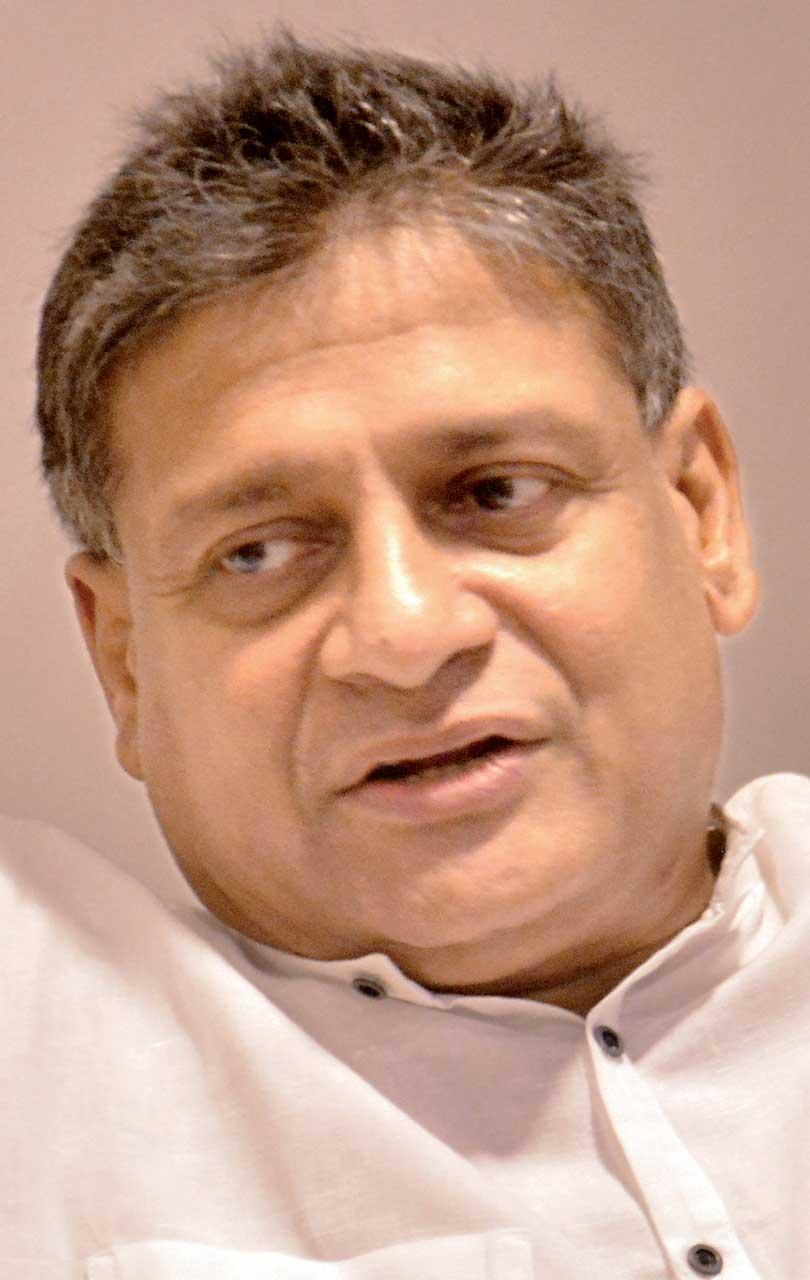
 Despite being a successful businessman, why did you decide to contest for the presidency?
 The Gotabaya Rajapaksa government incurs a black mark for the current economic crisis. Critics point at you too for being instrumental in bringing him to power. What have you got to say?
 What went wrong with the Gotabaya Rajapaksa government?
 You talk about an entrepreneurial Sri Lanka. What is the reason for Sri Lanka to lack entrepreneurship?
  There is a perception that left-leaning political thinking discouraged entrepreneurship. What is your view?
 How does your programme differ from those of other main candidates?
 You mentioned about civilization to be looked at for insights. How are you going to do it?
 Recently, you talked about ‘black economy’. How big is that?
 How big is this black economy?
 Where lies the fault?
 Among the candidates, if I go by asset declaration forms, you are the richest?
 Are you trying to say that others are richer than you actually?
 The Election Commission has declared Rs.109 as the expenditure ceiling per voter by any candidate. Will you stick to that?
 Will they exceed the campaign expenditure ceilings?
 Is the expenditure ceiling announced by the Election Commission for the current campaign enough?
 The election authorities in Anuradhapura barred a dinner party you were supposed to host. What happened actually?
 Who has instigated it?
 What is your view on the IMF (International Monetary Fund) programme?
 But the country is now halfway through the programme. Can we reverse it?