
සමහරු දෙන්න එපා කියද්දිත් ගිය සතියේ ගුරුවරු රාශියකට පත්වීම් දුන්නා…• පළාත් පාලන පත්වීම ස්ථිර කළේද අභියෝග මැද…-අග්රාමාත්ය දිනේෂ් ගුණවර්ධන මහතා
July 8th, 2024අග්රාමාත්ය මාධ්ය අංශය
අග්රාමාත්යවරයා මේ බව සඳහන් කළේ අද (2024.07.08) නාත්තන්ඩිය නගර ශාලාවේ පැවැති වයඹ පළාතේ ස්ථිර කරන ලද පළාත් පාලන ආයතන සේවකයින් 800ක් සඳහා පත්වීම් ලබාදීමේ අවස්ථාවට එක්වෙමිණි.
එහිදී අදහස් දැක් වූ අග්රාමාත්යවරයා –
‟වැඩ කරන ජනතාවගේ ජීවන තත්ත්වයන් විවිධයි. වැඩ කරන ජනතාව තම අයිතිවාසිකම් වැඩිදියුණු කර ගැනීම සඳහා දරණ උත්සාහයන් අතර ඔබ අපත් සමග ගැටලුව විසඳගන්න නිරන්තරයෙන් ඉල්ලීම් කළා. කාලයක් කොන්ත්රාත් පදනමේ සේවය කළ ඔබ අඛණ්ඩව එය දීර්ඝ කිරීම සිදුකළේ මේ ආඩම්බර දිනය ඔබට ලබා දෙන්නයි.
ජනාධිපතිවරයාගේ පළවෙනි අයවැය ලේඛනයට කලින් අපේ තිබුණු සාකච්ඡාවේදී මේ ගැටලුව මතු වුණා. ආණ්ඩුකාරවරු හරහා කොන්ත්රාත් කාලය දීර්ඝ කිරීමට කටයුතු කළා. කැබිනට් පත්රිකා කිහිපයක් ගියා. විවිධ වාද විවාද තර්ක ඇතිවෙනවා. භාණ්ඩාගාරය අමාරු තත්ත්වයක පසුගිය කාළේ තිබුණේ. පසුගිය අවුරුදු දෙක තුළ හිස ඔසවන්න පුළුවන් වුණා. ඒ වෙනුවෙන් අපි ජනතාවට ගෞරව කරනවා. මේ දුෂ්කර කාලසීමාවේ ඒ විශ්වාසය අපි කෙරෙහි තිබ්බට. ජනාධිපතිතුමත් ඒ විශ්වාසය ඔබ කෙරෙහි තබා තිබෙනවා. රට කඩා වැටෙන්න ඉඩ තිබ්බේ නෑ. දහස් ගණනින් රස්සාවලින් දොට්ට දැම්මේ නැහැ. රටේ සංවර්ධනය නැවැත්තුවේ නැහැ. අපට පුළුවන් ආකාරයේ සෑම සේවාවකම අඛන්ඩ භාවය ඉදිරියට ගෙන ගියා.
ඔබ දැන් ස්ථීර සේවකයෝ. පළාත් පාලනය කියන්නේ මහජන සේවාවේ ප්රජාතන්ත්රවාදී මහජන නියෝජිතයින්ගේ පහළම තලයයි. සේවාවන් පවත්වාගෙන යාමේ ජන ජීවිතය දියුණු කළ හැකි ආකාරය ඔබයි තීරණය කරන්නේ. නවීකරණයේ නිරත වෙන සෑම ආයතනයකටම තාක්ෂණ දැනුම දෙන්න ජනාධිපතිතුමා තීරණය කරලා තියෙනවා. ඒ ඔබට හයියක් වෙන්නයි. ඊට වඩා වියදමක් යනවා නම් ඒ වගේ තැන්වලදී තාක්ෂණයෙන් එක කාර්යාලයක ඉඳලා මේක වෙලාද නැද්ද කියලා හොයාගන්න පුළුවන්. ආසියාවේ රටක් හැටියට මේ ගමන ඉක්මන් කරමින් ශක්තිමත් කරන්න ඕනෑ. දියුණුවේ තරඟයේ අපි ඉදිරියට ගමන් කරන්න ඕනේ
පසුගිය මාසයක කාලයකදී ගුරුවරුන්ගේ පත්වීම් දහස් ගණනක් දුන්නා. දෙන්න එපා කියලා යම් යම් අය විවේචනය කරනවා. ඔබේ පත්වීම ස්ථිර කළේද අභියෝග මැද. මේවා දෙන්න පුළුවන් වුණ ශක්තිමත් ආණ්ඩුවක් බවට පත් වුණා. මේවට මුදල් කොහෙන්ද කියලා අහනවද? නැහැ.මේ අවුරුද්දේ දෙවරක් විතර පත්වීම් දීලා තියෙනවා. නිදහස් සෞඛ්ය සේවයේත්, නිදහස් අධ්යාපනයේත් පැවැත්ම අපේ දරුවන්ගේ අනාගතයටයි. දරුවෝ කියන්නේ රටේ අනාගතයයි. දරුවන්ට ශක්තිය දෙන්න පුළුවන් සේවාවන් කේන්ද්ර කරගෙන කරන්න පුළුවන් වැඩකටයුතු පිළිබඳව පළාත් පාලනයට ව්යවස්ථාවෙන්ම අයිතිය තියෙනවා.
මේ ජීවිතය වඩා විශ්වාසයෙන් පමණක් නොවේ, වඩාත් ඵලදායි තත්ත්වයකට පරිවර්තනය කරන්න සේවය කරන ආයතන, රැකියා එසේ ඵලදායී තත්ත්වයකට පරිවර්තනය කරන්න. පලදායි තත්ත්වය මතයි ආර්ථික සංවර්ධනයේ තව පිම්මක් අපට ගමන් කරන්න පුළුවන් වෙන්නේ. අමාරුකම් හරහා තමයි සියලු රටවල් ගමන් කරන්නේ. කොයි රටද අමාරුකමක් නැතුව ගමන් කරන්නේ? කොයි රටද එවැනි ගැටලු වලින් ගොඩ ඇවිල්ල නැත්තේ? හැම රටක්ම තම අභියෝගයෙන් ගොඩ ඇවිල්ලා තියෙනවා. ස්ථාවර පාලන තන්ත්රයක් අපි ස්ථාපිත කරලා තියෙනවා. කවුරු මොන ගණන් හැදුවත් අපි පාර්ලිමේන්තුවේ ස්ථාවරව අපේ වැඩපිළිවෙළ ඉදිරියට ගෙන යමින් සිටිනවා. ජාත්යන්තරව හැම රටක්ම අපිව විශ්වාස කරන තත්ත්වයට ගෙනත් තියෙනවා. අපට ජාත්යන්තරව විවිධ ආයතනවලින් සහයෝගය ගන්න පුළුවන් විදියට මූල්ය ප්රතිපාදන අඛණ්ඩව ලැබෙනවා.
රාජ්ය අංශයට පමණක් නොවේ පෞද්ගලික අංශයට තවදුරටත් ඉඩ කඩ වැඩි කිරීමේ අවශ්යතාවයක් තිබෙනවා. අපේම දරුවෝ ඉගෙනගෙන ඇතිකරගත් ඥානයෙන් හා නිර්මාණශීලීත්වය හැකියාව තුළ හැම කෙනෙක්ටම ආර්ථික දොරටුවක් අපි විවර කරනවා.″
මෙහිදී අදහස් දැක් වූ රාජ්ය අමාත්ය අශෝක ප්රියන්ත මහතා –
‟දිනේෂ් ගුණවර්ධන අග්රාමාත්යතුමා විදියට පත් වෙද්දී, රාජ්ය පරිපාලන අමාත්යවරයා විදිහට පත් වෙද්දී තිබුණු පළවෙනි අභියෝගය වන්නේ රාජ්ය සේවකයින්ට පඩි ගෙවන්නේ කොහොමද කියන එකයි. ඔබ රාජ්ය නිලධාරීන් විදියට අද පත්වීම් ලබද්දී හිතාගන්න ඕනේ කාරණයක් තමයි ඔබ රාජ්ය නිලධාරියෙක් විදිහට ස්ථීර පත්වීම ලබන්නේ රට දැවැන්ත අර්බුදකාරී සහ අපහසුතාවයක් තියෙද්දී. එතුමාගේ දේශපාලන සවිඥානය ප්රයෝජනයට අරගෙන එතුමා බොහොම ඉවසීමෙන් මේ රට ගොඩනගන කාරයේදී දැවැන්ත ශක්තියක් ජනාධිපතිතුමාට දුන්නා. ඔබට මේ පත්වීම දෙන්න කැබිනට් පත්රිකාව නව වතාවක් කැබිනට් එකට ඉදිරිපත් කළා.
මම ඔබෙන් ඉල්ලන්නේ ආණ්ඩුක්රම ව්යවස්ථාව තුළ හෝ මූලික අයිතිවාසිකම් තුළ හෝ සේවා ව්යවස්ථාවන් තුළ හෝ ඔබට තියෙන වෙනත් කුමන අයිතිවාසිකම් තුළ හෝ අසනීප නිවාඩු ගන්න පුළුවන්.ඒක ගන්න අසනීප වුනහම. කියලා අසනීප වෙන්න එපා රට අසාධ්ය තත්ත්වයට පත්වෙනවා. ඔබට මේ අවස්ථාවේදී රාජ්ය නිලධාරීන් විදිහට පත්වීම බාර දෙන්නේ ඔබේ වගකීම යුතුකම සහ කාර්යභාරය රටට අවශ්ය නිසයි.
වයඹ පළාත් ආණ්ඩුකාර නසීර් අහමඩ්, රාජ්ය අමාත්ය අශෝක ප්රියන්ත, අරුන්දික ප්රනාන්දු, පාර්ලිමේන්තු මන්ත්රී වරුන් වන චින්තක මායාදුන්නේ, අලි ශබ්රි රහීම්, ජගත් ප්රියන්කර, සමන් ප්රිය හේරත්, යදාමිණි ගුණවර්ධන, රාජ්ය පරිපාලන අමාත්යාංශ ලේකම් ප්රදීප් යසරත්න, පුත්තලම දිසාපති එච්. එම්. එස්. පී. හේරත් ඇතුළු පිරිස මෙම අවස්ථාවට සහභාගී වූහ.”
අග්රාමාත්ය මාධ්ය අංශය
Grasshoppers and superworms among 16 insect species approved as food in Singapore
July 8th, 2024Courtesy Hiru News
Sixteen species of insects, including crickets, locusts and silkworms, have been approved as food in Singapore, the Singapore Food Agency (SFA) said on Monday (Jul 8).
With immediate effect, SFA will allow the import of insects and insect products belonging to species that have been assessed to be of low regulatory concern,” the agency said in a circular addressed to processed food and animal feed traders.

These insects and insect products can be used for human consumption or as animal feed for food-producing animals.
SFA first conducted a public consultation on the regulation of insects and insect products in end-2022.
In April last year, the agency said that 16 species of insects would receive the green light for consumption in the second half of 2023, but the decision was pushed back.
Earlier this year, SFA, in a forum letter reply in The Straits Times, said it was finalising the implementation details and aimed to introduce a regulatory framework in the first half of this year.
UnNamed Sri Lankan Officer Held Hostage in Baltimore, USA
July 7th, 2024e-Con e-News

blog: eesrilanka.wordpress.com
‘Before you study the economics, study the economists!’
e-Con e-News 30 June – 06 July 2024
An unnamed Sri Lankan is being held hostage in Baltimore by the US government. His name has not been released, and neither has the media been allowed to name the other 10 ‘high-ranking officers’ from India being held with him. Media and so-called ‘international’ unions for seafarers are not asking too many questions out loud. The crash took place midst heightened tensions between the US, Canada and India trading accusations of promoting terrorism.
The hostages are part of the crew of the Dali, the Maersk-chartered container ship that hit and demolished the Francis Scott Key Bridge in Baltimore on 26 March. It is now over 3 months, and that port is cleared, but it remains uncertain how long they will be detained. The ‘narrative’ is now being crafted by the shipping insurance companies will nail the ship’s crew as the fall guys. 10 other seafarers were returned to India, on condition they return when demanded. The crash gave another opportunity for media to unleash further tirades against ‘foreign workers’, even as their economies are now even more based on igniting wars and manufacturing refugees to undermine worker power.
*
The capitalist media in Sri Lanka and India act act sunnily blasé about the hurricanes brewing off the Atlantic, let alone off Kollupitiya, against our workers. They are eager to promote their import-heavy ‘exports’! This includes trafficking workers – for they have no plan to skilfully employ them with dignity to build the country. This ee also looks at how a panel of chief economists from the biggest Canadian banks insisted, in January, ‘Too many temporary foreign workers & international students are driving up prices, taking up housing & causing productivity to collapse.’ They are blaming a ‘botched’ immigration plan, which they (& other NATO governments) hatched to discipline a ‘tight’ labor market, with workers demanding higher wages. What the big bankers are ultimately demanding, as usual, to fix their inflation, is unemployment… and war….
*
Suspected of carrying toxic waste & weapons to Sri Lanka, the Danish Maersk-chartered ship Dali, which crashed that Baltimore bridge in March, returned to Virginia, US, this week, and secretly unloaded 1,500 containers there. Media again gives no details of what was in those containers. The Dali, shipping 4,700 containers, had originally gone to Baltimore from Norfolk, Virginia, which also houses the largest US navy base. (see ee Random Notes).
Also, this week, the US Virginia Ports Authority (VPA) signed an agreement with the Sri Lanka Ports Authority (SLPA) to exchange ‘expertise & technical collaboration’. This was follow-up to SLPA grandees being buttered there on a jaunt in May 2024. Just as coincidental was this week’s rather nettling headline, ‘Sri Lanka receives US$5Mn aid to tackle incompetence in chemical imports.’ The $5Million is from Washington-based Global Environment Facility. And what a global environment, Washington facilitates! But, ‘incompetence’?
*
‘80% of global trade is concentrated within Global Value Chains (GVCs),
particularly through
the intra-firm trade of a handful of transnational companies (TNCs)’
– Shiran Illanperuma (see ee Focus)
The largest chemical importers in Sri Lanka involve the major US & EU multinationals – Exxon-Chevron, Unilever, International Chemical CIC-ICI, BAT’s Ceylon Tobacco Co, etc. Indeed, another coincidental headline this week: ‘Medical expert attributes increases in kidney diseases to widespread use of substandard whitening creams.’ What then is the higher-standard bleach? And how & why do these chemicals enter the country? Unilever’s ‘Fair&Ugly’ occupies a major segment of the wannabe vadakaha sudhiya market, in their attack on the nation’s melanin reserves.
*
• The week’s ‘good news’ ended with the National Bankers Association gathering at the Galle Face Hotel, Colombo, on Friday. There is no sunlight about what these suited bankers spat into each other’s bushy ears. Or into the ears of the state. The US-embassy news outlet EconomyNext under the headline ‘Foreign investment is essential for the banks to thrive,’ helpfully informs us: ‘the event was attended by various individuals from the banking sector’, adding only that the President said, ‘neither I nor the Sinhalese nation is beggars.’
The week began with the US government’s latest throw of loaded dice to ‘restructure’ even-more-impossible-to-pay-back debts. Refashion debts incurred from this so-called ‘foreign investment’, that has refused to invest long term. Media also refuse to discuss why, as China asks, the IMF/World Bank & other ‘multilaterals’ are untouchable when it comes to this ‘restructuring’? They don’t cut their hairs! Ex-Central-Bank Governor & erstwhile democrat & house-kneegrow, Indrajit Coomaraswamy dutifully declared that the 15 recommendations of the ‘IMF Governance Diagnostic’ should apply to any party that takes office.
*
‘Do these reforms augment Sri Lanka’s productive capabilities & secure her sovereignty in a technologically competitive world?’, responds Illanperuma (ee Focus) He surveys the possibilities for an industrial renaissance midst the tightening hugs of the clinking chains of the multinational corporations (MNCs), of local ‘bankers’ who refuse to invest in modern production for they are too busy greasing imports of ‘luxuries & other machined joys’.
In Sri Lanka, ‘83% of industrial exports are by companies registered with the Board of Investment, most of which are foreign-invested enterprises (FIEs). Domestic value-added remains fairly low, due to the lack of a local supply chain’.
‘One thing leads to another’, was indeed one of SBD de Silva’s favorite quotes, to describe what real industrialization is all about. He said it so often, we thought it would be apt title for a biography about him. He was also quite aware of who would ensure: one thing leads to nothing.
*
• All this week’s reported foofaraw at the port took place midst righteous teeth-grinding by ‘all the Chambers’ – including the American Chamber of Commerce & European Chamber of Commerce – about a sick-note campaign by Custom officials: ‘Shippers condemn corrupt trade union action at Customs.’ ‘It was grossly immoral…for officials of the department to hold the people of the country and industries at ransom’, said the Colombo port mafia’s fronts led by Shippers’ Council Chairman Sean Van Dort, Joint Apparel Association Forum Secretary General Yohan Lawrence & Rohan Masakorala of Hub Operators Association.
Their media suggests this was an attempt by greedy workers to grab their slice of the renewed profits at the Suez-challenged docks of Colombo, which have been controlled by England’s P&O for over almost 200 years. Meanwhile, after months of media rigmarole about the Indian workers lodged in the hills being restless, and container-loads of kerfuffle about what constitutes decent terms & conditions, an ‘independent’ & ‘unbiased’ Supreme Court has struck down a ‘generous’ President’s plan to increase their wages. Everybody, including the Indian kanganies who control labor, win – except the workers.
*
‘Dangerous are the times for Sri Lanka.
If the importing of rice stops, we would have nothing to eat.
If importing of materials stops from abroad, we would have nothing to wear.
If it was not for the vehicles imported from other countries,
we would have no means of travelling. In essence, without
the accommodation from abroad, we will not be able to do anything’
– Kumaratunga Munidasa (1877-1944)
This ee looks once more at the studiously suppressed demand, from over 100 years ago now, for an industrially developed independent country, made by such leaders as Anagarika Dharmapala & Kumaratunga Munidasa. BD Witharane asks, why ‘the emerging bourgeoisie, the new rich, who while representing different castes also shared common class interests’, did not ‘respond favourably to the call for an industrially developed Ceylon?’ Why did their demand not ‘evolve to be a mature plan’ leading ultimately to the establishment of a Sri Lankan developmental nation? He also asks why if any such ‘plan’ had ‘escaped the gaze of historians for some reason?’
*
‘In the classical approach to the social sciences, economics
& what are now regarded as its border disciplines – especially
politics, sociology & history – were entwined. The first to incorporate
political economy in their writings were the 18th-century Scottish moralists,
including Joseph Hume, who were concerned with the effects of
the development of commerce & wealth on political power as well as on human happiness.’
– SBD de Silva, The Political Economy of Underdevelopment
*
In the commencement year, 1960, the total numbers
admitted to the university were divided roughly
equally into English & Svabhasִā media… In a few years’ time,
the numbers in the English medium came down to a mere trickle…’
– WD Lakshman (ee Focus)
This ee continues with WD Lakshman’s look into the ‘Beginnings of Economics Teaching at University Level’. WDL highlights some of the traumas of the transition from English to Svabhāsִā medium in university education – ‘a challenging and difficult process for teachers as well as students’.
‘No courses with Economics in course-titles are offered
in Wayamba & Uva Wellassa Universities where, however,
there are Faculties of Business & Management.’
– WD Lakshman (ee Focus)
With the expansion of the menu, amply funded at first by untouchable multilaterals like the World Bank to suit the imperialist flavours of the hour, it turns out only a few dishes have been properly cooked, with diminishing supplies of agriculture & industry to keep the kitchen going…
*
• All the news stories mentioned here may be found in our news compendium. ee sincerely believes this compendium to be a true work of modern art. An endless installation on info, misinfo & disinfo. A monument to MNCs like Unilever, which dominate the media through their advertising budgets. It shows that the principal town crier, especially about corruption, is the epitome of corruption itself. Even if we have no idea what Marshall McLuhan meant by ‘the media is the message’… we do know the media – that trumpet, is the most corrupt. Because most of what the media calls corruption is diversion from the real challenges we as a country & the world need to overcome.
*
_________
Contents:
BUDDHIST VIHARAS AND EELAM Part 21D
July 7th, 2024KAMALIKA PIERIS
In the 1990s Sri Lanka decided to embrace the Ramayana .A search for Ravana sites in the Nuwara Eliya and Uva districts started. Rev. Harry Haas (1925-2002) a Roman Catholic priest from the Netherlands, who had settled in Bandarawela in 1983, was very active in looking for these sites. Sri Lanka was full of Ravana and Sita sites which needed discovering, Haas said. The image of King Ravana was a universal one which appealed to the west as well as the east. Haas was the patron of a Ravana Centre set up in Uva. The hunt for Ravana in Sri Lanka had started in the 1990s and the initial focus was on the hill country.
Soon interest moved to locating Ramayana temples elsewhere in the island. Those engaged in the Ramayana project, pounced on selected locations which they said were linked to the Ramayana and quickly built large temples at the locations.
The first such temple to be built was, predictably, a temple devoted to Sita. The project proposal aimed at preserving Seetha Eliya as a place of legendary importance and creating a new place of worship and religious importance for Hindu devotees. “This temple was not well known. We have to make it famous,” said the trustees of the temple.
There were two other motives, to establish a link between Seetha Eliya and Ayodhaya in India. Thirdly, to attract Indian tourists. The idea for a pilgrim centre at Seetha Eliya was first suggested by an Indian team that came on a familiarization tour of Sri Lanka in 1997.
A newSita Amman kovil was completed at Seetha Eliya in Nuwara Eliya in 1999. The original kovil was a small unpretentious structure. A coin dated to 1894 was found when the old building was demolished, indicating that this kovil was built in British times.
The construction of the new Sita temple started in 1998. The estimated cost of building the temple was around Rs. four million. We have collected the funds through public donations. Tills are also placed outside the temple for collections. The Manoj Mody foundation gave about Rs.200,000 for the renovation. They plan to come in August for the opening of the new kovil, bringing with them four new statues made in Jaipur at a cost of Rs.500,000, said the authorities.
At the construction site, a team of ten experienced Indian temple construction workers led by G. Ravishankar worked on the new kovil and the many statues that adorn it. They were assisted by local laborers. The Indian workers are in Sri Lanka on a two year visa. “Minister Thondaman is very supportive,” Ravishankar said.
The new kovil had its kumbhabisheka pooja in January 2008. There was a full page announcement in the newspapers, with messages from President and Ministers. Derrick Schokman recalled ‘the Sita Amman Temple in Nuwara Eliya was simple temple when I first saw it. Now is it an ornate Hindu kovil with images of Rama, Sita, Lakshmana and Hanuman.’
The Seetha Amman Temple in Nuwara Eliya was the only temple in the world dedicated to the Sita in the Ramayana, said devotees. Although there are many Rama and Hanuman kovils in India, there is no kovil dedicated to Sita. This is the only place where Sita came alone. In all the other places Sita is associated with Rama. North Indians worship Rama and they are keen on developing the Sita Kovil with our support,” said Radhakrishnan, Chairman of Board of Trustees of the Sita temple.
The Seetha Eliya Temple became the subject of a controversy in 1999 when the Ministry of Tourism mooted a proposal for the development of Seetha Eliya as a Holy City. It was proposed to vest 35 acres of land surrounding the temple in the Tourist Board and develop it as a sacred area similar to Anuradhapura and Kataragama.
It was suggested that Asoka Vanam, the forest where Sita was held captive is on the mountain, some distance away from the Seetha Amman temple. Behind the temple is a stream. Water flows over a basin like depression carved in the rock. It is said that Sita came through a tunnel to this stream to bathe.
It was hoped to use land behind the temple, upstream and downstream, belonging to the Forest Department as well as some acres from private properties across the road for a vehicle park. This land was to be acquired and vested with the Tourist Board initially for development purposes and then transferred to the Trust, when the project was in full operation. There were protests from environmentalists and the people in the area and the move for the Holy City was halted.
Bandu de Silva commented on this move. The government is trying to create a Hindu complex on the lines of the Cultural Triangle, he said. Tourist Development Authority is promoting the idea of strong Ramayana tradition in the island. The Tourist Board first tried to develop the area behind the Hanuman temple, taking in a tea kiosk built on a road reservation for use by laborers.
However, the Seetha Amman kovil has certainly achieved its purpose, said the media. It is now an accepted part of the tourist circuit and strengthens the notion of a virile Hindu culture in Sri Lanka. Many tourists who visit the Hakgala Gardens, stopover to see the temple, since it is en-route from Nuwara Eliya to Hakgala. During Thai Pongal, in January many devotees from the tea estates nearby visit the kovil to perform poojas, concluded the media.
The Tourist Board estimated that around 200,000 Indian tourists and 100,000 Sri Lankan tourists visiting Nuwara Eliya for an average of two nights would inject a minimum of a billion rupees to the Nuwara Eliya economy. Many tourists who visit the Hakgala Gardens, stopover to see the temple, since it is en-route from Nuwara Eliya to Hakgala. At present, (1999) an average of 1500 local tourists and 1000 foreign tourists stop by the temple each year.
In January, 1999 we had a Festival of Unity organized by the Manoj Mody foundation of India, Radhakrishnan said. About 800 devotees came to Nuwara Eliya for a 10-day bajan programme. About 500 local devotees also joined in. They occupied all the hotels in the area and attended the poojas daily at the temple. Since space was insufficient, a tent was put up at the Buddhist temple nearby, to accommodate the crowd.
Environmental organizations and Buddhist organizations had staged a massive protest, before the festival was held. The people had feared that the 800 devotees expected, were from South India, although they were in fact mostly from North India where there is a strong following for Rama. The Buddhist organizations set down various conditions for holding the ceremony. These were adhered to and the ceremony was held peacefully,” Radhakrishnan said.
Sri Hanuman Temple was constructed at Ramboda, on a tea estate, at Wavendon Ramboda Hill, by Chinmaya Mission of India. This village is considered the place where Sri Hanuman set foot in his search for Sita. Chinmaya mission purchased a plot of 10 acres and built this temple. The consecration ceremony took place in 2001.
In 1997 work commenced on a Hanuman temple complex at Wavendon, Ramboda, Nuwara Eliya with assistance from Tamilnadu government. The complex consisted of a huge 16 foot granite statue of Hanuman, a spiritual centre, library and auditorium. This project was initiated by Gurudev Swami Chimayananda, who purchased 10 acres for the purpose. Minister S. Thondaman donated 5 more acres and provided a motorable road from the main Nuwara Eliya road to the temple site. This temple site, it is claimed, was close to the Asoka vana where Sita was kept captive and Hanuman found her.
The construction of the Hanuman Temple was done by the Sri Lanka Army. Former Army Commander General Rohan Daluwatte said the Army got involved in the construction of the kovil, together with the people of Nuwara Eliya, because they felt it would promote better understanding between the Sinhalese and Tamils. He also said it was a gesture of goodwill towards the Tamils in the area, who had helped build a Buddha statue.
There were large crowds at the first anniversary, of this temple, in 2002 with thousands of devotees drawn mainly from the plantation sector. The procession went with the statue of Holy Hanuman to Sita Amman Temple at Seetha eliya, where Hindu poojas were held.
Zee TV said in 2007 the Chinmaya statue of Hanuman was a copy of the mountain, except that it was in a vertical position. They reported that hundreds come every day to worship there. They also spotted black rocks which looked like monkeys with black lips and ears. The Zee team also saw Rummassala which was brought here by Hanuman. It contains trees only found in the Himalayas. There is a statue of Hanuman there as well. But they reported that the public only came to Sita Eliya to picnic and that few knew about Rama or Ravana. (Continued)
BUDDHIST VIHARAS AND EELAM Part 21E
July 7th, 2024KAMALIKA PIERIS
P Ramanujan, Secretary, Ministry of Tourism stated in 2006 that they were planning to set up a Ramayana Trail for tourists to encourage Indian tourists.
In 2007 S. Kalaiselvam, Director General of the Sri Lanka Tourism Development Authority said in a statement to Press Trust of India that the Sri Lanka government had decided to develop the sites associated with the Ramayana. They were being restored and maintained. There was no archaeological confirmation for any of them, certainly, but these sites were not imaginary and have existed since time immemorial.
Ramayana Trail Committee was set up, consisting of N.Kiriella, Chairman, Dr Suriya Gunasekera, an authority on Sri Lankan pre history. Dr Subash Chawla, an authority on International Ramayana, B.M.U.D Basnayake Additional Secretary Ministry of Tourism and S. Kalaiselvam Director General, Sri Lanka Tourism Development Authority
Fifty (50) sites related to the ‘Ramayana trail’ were selected by Sri Lanka Tourism in 2009 for the Ramayana Trail. Out of these 50 sites, 12 are sites with archeological evidence, the rest are based on unwavering faith and traditional beliefs, said Kailselvam. There is no need to re –establish the authenticity of the sites. People in the areas relate to the Ramayana.
Sri Lanka Tourism Promotion Bureau stated in a press release in 2018 that in Sri Lanka, the popular belief was that the Ramayana story is a true account of what took place. This belief has been supported by research, analysis and reasoning.
Sri Lanka has identified over 50 sites in and around its territory but due to accessibility issues, only around 20 sites are currently being recommended for visitors. Sri Lanka is working towards identifying many other locations and also making these locations accessible to visitors. It has been estimated that a travel period of around 9 to 14 days will be required to visit all 20 sites, the press release said.
The Tourist Ministry had identified five airports where Ravana parked his fleet of pushpak vimanas. Ussangoda was one. The Ministry thinks that Ravana’s flying machine may have landed at Weragantota,about 10 kilometres from Mahiyangana. There is the runway of Ravana’s aircraft, the aircraft landing place, and an aircraft repair centre in Gurulupotha.
Sita was then taken to Gurulupota, now known as Sita kotuwa. This is 10 kilometres from Mahiyangana on Kandy road. Sita was thereafter housed in a cave at Sita Eliya, Nuwara Eliya. The jungle on top of Ramboda along the Kandy Nuwara Eliya road is believed to be the route along which Ravana took Sita to Ashoka Vana.
Sita is said to have performed Agni pariksha to prove her purity at Divurumpola, which is 15 miles from Sita Eliya on Nuwara Eliya –Weligama road. This is a popular place of worship among the locals in the areas. The courts of law in Sri Lanka permits and accepts the swearing done at this temple when settling disputes. In 2010 it was stated that a Ramayana research centre will be set up at Divurumpola.
It was decided that the Ravana-Rama battle took place at Yudhaganapitiya in Matale and that Ravana was making his battle plans at Lakegala just before he was killed. Rama fired the Brahmastra at Ravana in Dunuwila. Rama started his attack on Ravana at Dondra and the main battle was at Yudaganawa. After killing Ravana, Rama performed penance at Munneswaram in Chilaw.
The great basses ( Maha Ravana kotuwa) and Little basses ( Kuda Ravana Kotuwa) are a long line of coral and rock just below the surface of water in the southern sea. They are located not far from Kirinda beach or Rummassala in Galle. King Ravana is said to have established his Lankapura ‘on the reefs.
There are the Ravana Caves in Ella area. The tunnels from Bandarawela past Ella to Ravana cave, were the way Ravana went through the hills, they were his secret passages. These tunnels are manmade and not natural formations. Existing tunnel opening are situated at Isthripura, Senapitiya in Halagala, Ramboda, Labookelle, Wariyapola and Seetha kotuwa.
Hanuman had entered Lanka at Nagadeepa.He dropped the Dronagiri Mountain brought from the Himalayas on Rumassala. He also visited Ritigala, Dolu kanda in Hiripitya, Kachchativu and Thailaddi in Mannar.
The Ramayana tourist trail includes Ravana’s palaces and dairy farm, also temples dedicated to Sita which had been built in a later period. The trail also included a pond which is believed to have come into existence through Sita’s tears. This pond never dries up even in the worst drought.
Other sites were added on thereafter. Ashok vatika in Nuwara Eliya, Vessagiriya cave and Isurumuniya lovers in Anuradhapura ,the cobra hood cave in Sigiriya, the statue near Parakrama Samudra, the Hanuman kovil at Saranankara Road, Colombo 5, and the hot wells constructed by Ravana were included in the Ramayana trail. There is also Munneswaram, where Rama received the blessing of Shiva. According to folklore Ravana’s body is buried in a location in Welimada.
Sri Lanka planned to use the Ramayana trail extensively in India to promote visits by Indian tourists. A team commissioned by Zee TV had toured Sri Lanka in 2007, to find places connected to Ramayana. They went to Sita Eliya where there were statues of Rama, Lakshmana, Sita and Hanuman. They said that these statues had been there for 5000 years. They said that close to Sita Eliya they had seen a mountain which looked like Hanuman.
It was reported in 2008 that the Ramayana tourist package is gaining popularity in India. it is a 7 day package includes visits to at least 10 temples in south and central Sri Lanka. The 12 day package covers at least 54 sites identified by the Tourist Board.
Hindustan Times stated that the Ramayana trail was a hit with Indian tourists. Batches of 50 to 120 visitors had already toured these sites. The tours were from one to three weeks duration and contained a maximum of 25 locations spread across central and western Sri Lanka. About 500 passengers had used 350 Ramayana packages.
Middle aged and elderly persons in India liked the package. Several swamis from North India have visited with 50 visitors each. One swami was planning to bring 400 of his students to go on the trail. School principals are bringing Indian students as Ramayana is a part of the curriculum in India.
Authorities said in 2009 that Indians are coming to get a glimpse of these historical sights.3500 visitors have come in from 2005 onwards. In 2009 approximately 5000 pilgrims were going to visit form India for Ramayana trail. In January alone some 1000 pilgrims are expected.
In 2010, it was reported that 14 high profile ministers from India with a group of 150 pilgrims arrived here on an 8 day Ramayana trails, to see locations where king Ravana had kept Sita Devi. . This is the first time that an Indian VVIP group is in Sri Lanka on a pilgrimage of the Ramayana trail. There was a special reception and bhajan at Hotel Taj Samudra for them. In 2015 Sri Lanka had re-launched the Ramayana trail from Bangalore.
In 2017, Yahapalana government reported that Sri Lanka is preparing to be part of the Ramayana circuit of India. The Indian government is identifying places connected with the Ramayana. Sri Lanka has already identified 71 locations across the island nation for inclusion in the circuit and has appointed a committee to identify more places. We look at Sri Lanka and all south Indian states as one unique unit, housing the maximum Ramayana spots,” said John Amaratunga, Tourism Development Minister.
In 2018 it was reported that Indian and Sri Lankan governments have entered into an agreement to boost the Ramayana trail. This trail was lately gaining momentum with a number of operators offering travel plans. There have been 206,337 Indian visitors to Sri Lanka up to June this year and it is believed that about one per cent of the traffic would be visiting the country solely as pilgrims on the Ramayana trail, reported the media.
Indians are puzzled over the popularity of the Ramayana trail. Ravana is held in high contempt by the large majority of Indian populace, said Kuldeep Kumar. Ravana is hated in India said Bandu de Silva. To a Hindu, Rama is a living hero and Ravana is a villain.
Effigies of Ravana, placed on maps of Sri Lanka, are burnt each year in India during the Ramayana celebrations. In October 2010 NDTV celebrations, in Delhi, two large effigies of Ravana and Vibhishana were carried in by revellers and placed before the Prime Minister. A bow and arrow was given to Prime Minister who shot an arrow at Ravana. The effigies were then stoned and set on fire.
In 2012 media reported that Ruchir Sharma, a leading Indian business man visiting Sri Lanka, said ‘I was surprised to see Tamils in Trincomalee working to attract Indian tourists to the Ravana trail. Locals say that as long as the Ravana trail is drawing tourists, the rest don’t matter. (Continued)
සජිත්ට සල්ලි ලැබෙන හැටි ශිෂ්යාවක් ඇහුවම මරික්කාර්ට සිද්ධ වෙච්ච දේ | SL Diaspora 2024
July 7th, 2024පොහොට්ටුවන්ගේ ජයඝෝෂා මැද ජනපති පොහොට්ටු වේදිකාවට ගොඩවේ..
July 7th, 2024උපුටා ගැන්ම ලංකා සී නිව්ස්
ජනාධිපති රනිල් වික්රමසිංහ මහතා පළමු වතාවට ශ්රී ලංකා පොදුජන පෙරමුණේ වේදිකාවකට ගොඩ වී තිබේ.
ශ්රී ලංකා පොදුජන පෙරමුණේ පාර්ලිමේන්තු මන්ත්රී රෝහිත අභයගුණවර්ධන මහතාගේ දේශපාලන දිවියට වසර 27ක් ගතවීම හේතුවෙන් මෙම උත්සවය සංවිධානය කර තිබුණේ කළුතර දුම්රියපොල අසල ක්රීඩාංගනයේදීය.
ජනාධිපතිවරයා මෙම උත්සවයට පැමිණ තිබුණේ ඊට පෙර ටික වේලාවකට පෙර ගාල්ලේදී පැවති එක්සත් ජාතික පක්ෂයේ දිස්ත්රික් සංමුළුව ඇමතීමෙන් පසුවයි.
2022 මැයි 9වෙනිදා මෙරට ඇති වූ අර්බුදකාරී සමයේ තමන් රට බාරගත් හේතුව සහ ඊට බලපෑ වටපිටාවද ඔහු එහිදී පැහැදිලි කළේය.
රැස්වීමට පැමිණ සිටි පොදු ජන පෙරමුණේ සාමාජිකයන්ගෙන් ජනාධිපතිවරයාට උණුසුම් ප්රතිචාරයක් හිමිවීම විශේෂත්වයකි.
Ranil Wickremesinghe to fight Sri Lanka’s presidential polls as Independent: Aide
July 7th, 2024Courtesy India Today
Deputy Chairman of the United National Party Ruwan Wijewardene confirmed that the Presidential election will definitely be held and Wickremesinghe, 75, will contest the election as an independent candidate, News 1st reported.
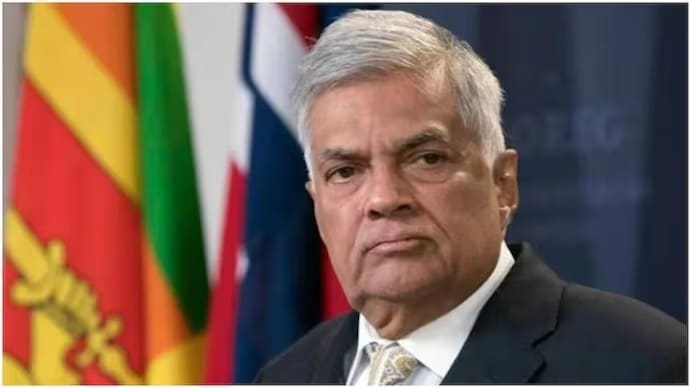
Sri Lankan President Ranil Wickremesinghe.
In Short
- Wickremesinghe to run as independent candidate
- Election date to be announced after July 17
- Over 17 million eligible voters in revised list
Sri Lankan President Ranil Wickremesinghe will contest the Presidential election as an independent candidate, his aide said on Sunday.
Deputy Chairman of the United National Party Ruwan Wijewardene confirmed that the Presidential election will definitely be held and Wickremesinghe, 75, will contest the election as an independent candidate, News 1st reported.
“Only one leader possesses the knowledge to solve Sri Lanka’s economic crisis. That is Ranil Wickremesinghe. He has proved it with his actions,” he was quoted as saying by the news portal.
On Sunday, Election Commission Chairman R M A L Ratnayake said the electoral body would be legally empowered after July 17 to announce the date for the election.
Ratnayake added that the commission will announce the date for the next presidential poll before the end of this month.
The Election Commission in May said the presidential election would be conducted between September 17 and October 16.
Ratnayake said the commission is currently in the process of putting final touches to the 2024 electoral register which will be the basis for the election. Over 17 million would be eligible to vote in the election as per the revised list, officials said.
In April 2022, the island nation declared its first-ever sovereign default since gaining Independence from Britain in 1948. The unprecedented financial crisis led President Gotabaya Rajapaksa to quit office in 2022 amid civil unrest over his inability to handle the crisis.
In July 2022, Wickremesinghe was elected through parliament to become stop-gap president for the balance term of Rajapaksa.
Wickremesinghe, also the finance minister, hasn’t made any public statement on his bid for re-election.
“This election isn’t merely about selecting individuals but about choosing the most effective system for our country’s progress. If you believe in the merits of the current approach, let us proceed accordingly,” the President’s Media Division quoted him as saying earlier.
The government under Wickremesinghe has set in place hard economic reforms as dictated by the International Monetary Fund (IMF) programme.
President Wickremesinghe last month said that his government has finalised a long-delayed debt restructuring agreement for USD 5.8 billion with its bilateral lenders, including India and China, in Paris to meet a key condition of an IMF bailout.
Sri Lanka’s President stops salary increases for government employees this year – Know why
July 7th, 2024Courtesy Financial Express
He emphasised the need for fiscal responsibility, cautioning that further unplanned salary increases could cripple the government.
Sri Lankan President Ranil Wickremesinghe has announced that government sector employees will not receive another salary increase this year, warning that further pay hikes without proper planning could undermine the government ahead of the upcoming presidential and general elections.
The 75-year-old president, widely expected to seek re-election, acknowledged the economic strain caused by previous programs that increased benefits and allowances, depleting excess funds, as reported by News First on Sunday.
Wickremesinghe pointed to the Sri Lankan Rs 10,000 salary increase and additional benefits implemented under the Aswasuma” program. He emphasised the need for fiscal responsibility, cautioning that further unplanned salary increases could cripple the government.
Serving the balance term of ousted president Gotabaya Rajapaksa since mid-July 2022, Wickremesinghe stressed the importance of prioritising national stability ahead of the elections. He announced the formation of a committee to review salary adjustments, with recommendations to be incorporated into the 2025 budget, potentially allowing for salary increases next year.
The president highlighted that his administration’s approach would ultimately benefit the people and reiterated the importance of focusing on the upcoming elections, suggesting that other parties might not prioritise economic stability as effectively.
Wickremesinghe’s independent run amid economic recovery
The next presidential election is scheduled to take place between mid-September and mid-October. Wickremesinghe, who was prime minister during Rajapaksa’s ousting through prolonged public protests, successfully navigated the country through an economic crisis blamed on the Rajapaksa family’s rule.
As finance minister, Wickremesinghe resolved shortages, ended long queues for essentials, mitigated power cuts, and secured a bailout from the International Monetary Fund (IMF), a process initiated during Rajapaksa’s tenure. Sri Lanka obtained USD 2.9 billion over a four-year program from the IMF, with interim assistance from India worth USD 4 billion.
Wickremesinghe plans to run as an independent candidate supported by all political parties committed to maintaining his economic reforms. The other main opposition leaders, Sajith Premadasa and Anura Kumara Dissanayake from the Marxist Janatha Vimukthi Peramuna party, have already announced their candidacies.
Will JVP’s “Series of Strikes” strategy boomerang on them?
July 7th, 2024Courtesy The Daily Mirror
Interests of the country should take precedence over party interests
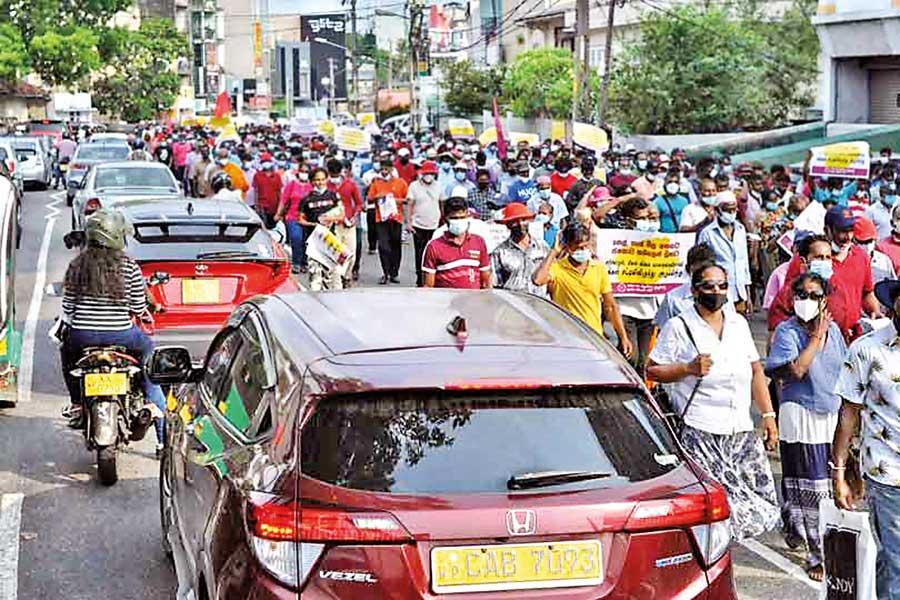
Demonstrations which involves trying to enter a building without permission, trespassing and creating noise nuisances are punishable by law
The 1940s and 1950s are often considered the Golden Era” of the LSSP (Lanka Sama Samaja Party). During this period, 70-80% of the trade unions in the country adhered to LSSP politics, with the most prominent being the Government Clerical Service Union (GCSU), which supported the political struggle of the LSSP. The general strike of 1947 and ‘Hartal’ (strike) in 1953 were followed by a series of strikes from 1956 to 1964 led by Dr. N.M. Perera and his ‘comrades’. Wildcat work stoppages were a common occurrence until the LSSP and CP (Communist Party) joined forces with the SLFP (Sri Lanka Freedom Party) in a coalition in 1964.
Dr. Perera, who became the Minister of Finance in Sirimavo’s coalition government, struggled to manage a strike by workers in his own Giridara Mills. Despite having organized numerous strikes that disrupted various governments since the 1930s, Dr. Perera faced a particularly challenging situation during his second tenure as Minister of Finance in Sirimavo’s 1970-75 administration, when bank employees launched a strike on September 1, 1972. The strong Ceylon Bank Employees Union (CBEU) initiated their longest strike in history, lasting 108 days and causing unprecedented damage to the economy. Dr. Perera had to counter the union’s actions with strong measures. Similarly, if the JVP were to come to power now, they too would face the same challenges. They, like their predecessors, would need to navigate these complexities to maintain stability and economic progress.
The general strike of 1947 and ‘Hartal’ (strike) in 1953 were followed by a series of strikes from 1956 to 1964 led by Dr. N.M. Perera and his ‘comrades’
If the cash-strapped government were to grant all the current strikers’ demands, the next government regardless of who wins the election, would face a severe economic disaster within a few months. Moreover, the new administration would find it challenging to manage the workforce, as they would remain in a combative or agitated state.Launching a countrywide strike action on July 10, 2008, was highly contentious, especially considering the island was partially engulfed in a civil war. The local businesses were also grappling with severe challenges due to an unprecedented fuel price hike. In this context, the strike, led by the Janatha Vimukthi Peramuna (JVP), was seen by many as not only unfair and unacceptable, but also as a deliberate move to jeopardize the war effort and undermine any credit the Rajapaksas would gain. The action aimed to halt transport, power, banking, and other essential services, causing significant disruptions. This had a particularly detrimental impact on the productivity of the private sector, exacerbating the difficulties faced by businesses during an already turbulent period.
In 1980, during the administration of President J.R. Jayewardene and Prime Minister Ranasinghe Premadasa, over 41,000 workers lost their jobs within a single day as a result of the government’s response to the general strike.July marked 44 years since the unprecedented general strike of 1980, during which approximately 41,800 public and private sector employees lost their jobs in Sri Lanka. The rising prices compelled the working class to demand a monthly salary increase of Rs. 300 and an allowance of Rs. 5 for every point on the cost-of-living index. The government, using its majority power, suppressed opposition political parties and trade unions.
The Trade Unions National Congress (UNC), with the participation of 1,024 trade Union Representatives, held a meeting in March 1980 and decided on a protest campaign during the lunch hour on June 5, 1980. The government warned that if a general strike were launched, it would consider the strikers as having vacated their posts. Consequently, an island-wide state of emergency was declared. On June 5, 1980, during the lunch hour demonstrations held in preparation for a general strike, two gangs emerged from the direction of the Government Supplies Department and Lake House, launching a violent attack on the protesters with stones, cycle chains, and sticks. The situation escalated dramatically when a hand grenade was thrown, tragically killing D. Somapala, a demonstrator from the Supplies Department.
The strong Ceylon Bank Employees Union (CBEU) initiated their longest strike in history, lasting 108 days and causing unprecedented damage to economy
A group in a jeep began throwing stones at the picketers, the sound of an explosion was heard. The police report notes that one person lost his life in the violence. Government MP Merril Kariyawasam was noted to have been seated on the front seat of the jeep involved in the attack. In September 1989, the JVP/DJV (Deshapremi Janatha Vyaparaya) took retaliatory action against Kariyawasam, the MP for Agalawatte, for his alleged role in causing the death of D. Somapala during the June 5, 1980, general strike.
The government announced that if a general strike was launched, the strikers would lose their jobs. On July 16, 1980, the Cabinet convened and, that same night, declared an island-wide State of Emergency. Despite this, nearly 90,000 workers participated in the general strike of July 1980, effectively crippling the government’s administrative functions and disrupting daily services. On July 24, 1980, Prime Minister, Ranasinghe Premadasa, announced that the 41,000 workers who had failed to report for work had vacated their posts. Following this announcement, several key figures involved in the strike, including trade unionists Vasudeva Nanayakkara, Alavi Maulana, Dr. Vikramabahu Karunaratne, Gunasena Mahanama, and D.I.G. Dharmasekera, were arrested and remanded. The State of Emergency, which had been imposed to suppress the general strike, was lifted in August 1980.
The aftermath of the strike was devastating for many workers. 56 strikers who lost their jobs committed suicide due to their inability to cope with the suffering and hardships faced by their families.In the UK, it is a criminal offence for picketers to block people or vehicles trying to get into the workplace that is on strike, which is referred to as ‘causing an obstruction’ by the police. Carrying weapons, damaging property, or causing or threatening to cause a ‘breach of the peace’ are also illegal activities during picketing. Additionally, picketers are not allowed to try to block roads near the picket line, which is known as ‘causing an obstruction to the public highway,’ or to interfere with the police who are present at the workplace to perform their duties.
Need stringent laws
Legal action can be taken against individuals who break these laws or encourage others to do so while picketing. This includes trespassing, which involves trying to enter a building without permission, and creating a noise nuisance. Using threatening language or offensive material, including libel or slander in leaflets, banners, placards, chants, or speeches, is also punishable by law. If a court order is issued banning picketing or restricting the activities of the trade union, breaking this order could lead to additional legal consequences.
Unlike in many other countries, there are no restrictions in our country on trade unions calling for sudden work stoppages. This unrestricted freedom sometimes leads trade unions to act irresponsibly, to the detriment of the nation. The interests of the country and the public should take precedence over party interests. While trade unions have a reasonable right to strike, except in a few situations, this right should be exercised sensibly and be limited to genuine trade disputes.
ගෝඨාභය බදු අඩු කළේ ව්යාපාරිකයන් ඉල්ලපු නිසා… අද ඒ අය හොයාගන්නත් නැහැ… රට ආර්ථික ගැටළුවකට මුහුණ දුන්නේ ආනයන ආර්ථිකයක කටයුතු කළ නිසා – ජනපති රනිල් කියයි
July 7th, 2024උපුටා ගැන්ම ලංකා ලීඩර්
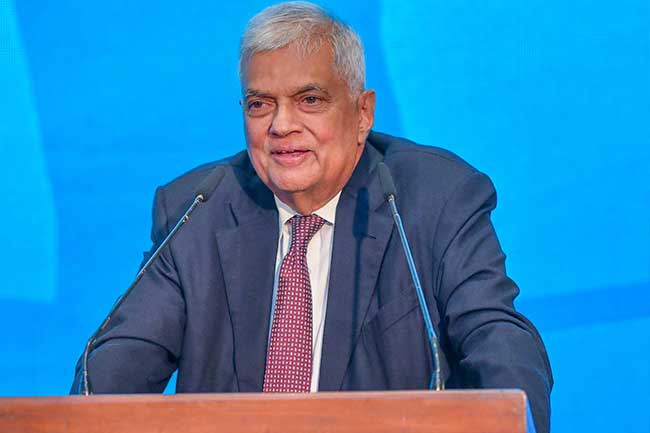 රට තුළ නව ආර්ථිකයක් ගොඩනඟන විට නව දේශපාලන ක්රමයක් ද නිර්මාණය විය යුතු බවත්, වගකීම් භාරගෙන කටයුතු කළ හැකි පිරිසක් මෙන්ම නොබියව සත්ය ප්රකාශ කරන පිරිසක් එම දේශපාලන ක්රමවේදය තුළ බිහිවිය යුතු බවත් ජනාධිපති රනිල් වික්රමසිංහ මහතා පැවසීය.
ජනාධිපතිවරයා මේ බව සඳහන් කර සිටියේ ජාතික බැංකුකරුවන්ගේ සංගමය විසින් කොළඹ ගාලු මුවදොර හෝටලයේ සංවිධානය කර තිබූ බැංකුකරුවන්ගේ සංසඳයට සහභාගී වෙමිනි.
රට හමුවේ ඇති ආර්ථික අභියෝගය තමා ජනතාව හමුවේ නොබියව ප්රකාශ කළ බව මෙහිදී පැවසූ ජනාධිපතිවරයා රට එම අර්බුදයෙන් ගොඩගැනීමට හැකි නිවැරදි වැඩපිළිවෙළ ද මේ වන විට පැහැදිළිව රටට ඉදිරිපත් කර තිබෙන බව සඳහන් කළේය.
එම වැඩපිළිවෙළ හැර වෙනත් වැඩපිළිවෙළක් රටට නොමැති බව පැවසූ ජනාධිපතිවරයා සිහින ලෝකවල කටයුතු නොකර රටට අවශ්ය වැඩපිළිවෙළ හඳුනාගෙන රටේ ආර්ථිකය ඉදිරියට ගෙන යාමට සහාය වීම සියලුදෙනාගේ වගකීම බවද පැවසීය.
ඇතැමුන් ආජර්ටිනාවේ මාටින් ගුස්මාන් ආදර්ශයට ගෙන කථා කළද ඔහු අසාර්ථක පුද්ගලයෙකු බව පැවසු ජනාධිපතිවරයා තවත් පිරිසක් ලෝක නායකයන්ගෙන් මුදල් ඉල්ලාගෙන එන ලෙස තමන්ට පැවසුවත් සිංහල ජාතිය කිසිදා සිඟමන් යැදි ජාතියක් නොවන අතර ස්වඋත්සාහයෙන් නැගි සිටින ජාතියක් බවද අවධාරණය කළේය.
අපනයන ආර්ථිකයක් මත පදනම්ව රට වේගවත් සංවර්ධනයක් කරා ගෙන යාම තම අරමුණ බව පැවසු ජනාධිපතිවරයා අපනයන ආර්ථිකයක් ඇති කිරීම සඳහා අවශ්ය නීති පද්ධතිය මේ වන විට පාර්ලිමේන්තුවට ඉදිරිපත් කර ඇති බවත්, එම වැඩපිළිවෙළ සමඟ ඉදිරියට යාමේ දී බැංකු පද්ධතියට විශාල වගකීමක් පැවරෙන බවත් කියා සිටියේය.
මෙහිදී ජාතික බැංකුකරුවන්ගේ සංගමය විසින් ජනාධිපතිවරයා වෙත විශේෂ සමරු තිළිණයක් ද පිළිගැන්වීය.
ඉන් අනතුරුව ජනාධිපති රනිල් වික්රමසිංහ මහතා, හිටපු මුදල් අමාත්ය රවී කරුණානායක සහ ආර්ථික කටයුතු පිළිබඳ ජනාධිපති ජ්යෙෂ්ඨ උපදේශක ආචාර්ය ආර්.එච්.එස්. සමරතුංග යන මහත්වරුන් සහභාගී වූ සාකච්ඡාවක් ද පැවැත්විණි.
මෙහිදී වැඩිදුරටත් අදහස් දැක්වූ ජනාධිපති රනිල් වික්රමසිංහ මහතා මෙසේද පැවසීය,
“අද අප ආර්ථික වශයෙන් බොහෝ දුර පැමිණ තිබෙනවා. එදා ජෙට්වින් හෝටලයේ සිට මෙම ගාලු මුවදොර හෝටලය දක්වා සිදු වු දේ මම අමුතුවෙන් කිවයුතු නැහැ. ඒ ගිය ගමන, මාගේ නිවසත් ගිනිබත් කරගෙන ගියා. කෙසේ හෝ අද අප ඉදිරියට පැමිණ තිබෙනවා. නමුත් තව දුර යාමට තිබෙනවා. අපේ බැංකු පද්ධතිය ආරක්ෂා කර නොගතහොත් ආර්ථිකය ආරක්ෂා කර ගන්න නොහැකි වන බව මම එදා පැහැදිළිව ප්රකාශ කළා. බැංකු පද්ධතිය බිඳ වැටුණහොත් ආර්ථිකය නැති වෙනවා.
එදා මට මේ රට භාර ගැනීමට සිදු වුණා. අප සියලුදෙනා එකතුව රටේ ආර්ථිකය නඟා සිටුවීමේ වැඩ කටයුතු ආරම්භ කළා. අද එහි ප්රතිඵල ලැබෙමින් පවතිනවා. මේ සියල්ල අපට එකවර ලැබෙන්නේ නැහැ.
ණය ආපසු ගෙවීමේ දී වසර 04ක් ණය නොගෙවා සිටීමටත්, ගෙවිය යුතු ණය මුදලින් ඩොලර් බිලියන 08ක් අඩු කිරීමටත් දැන් කටයුතු කර තිබෙනවා. ඒ වගේම රටේ ආර්ථිකය නැවත දියුණුවෙමින් පවතිනවා. දැන් අප රටක් ලෙස සන්ධිස්ථානයකට පැමිණ තිබෙනවා. අපට රුපියල් බිලියන 08ක ණය සහනයක් ලැබුණ නිසා අපට දැන් අලුත් ආර්ථිකයකට යාමට ඉඩ කඩ තිබෙනවා. එහිදී අපනයන ආර්ථිකයක් ඇති කිරීම සඳහා අවශ්ය නීති පද්ධතිය අප මේ වන විට පාර්ලිමේන්තුවට ඉදිරිපත් කර තිබෙනවා.
අප මෙතැනින් ඉදිරියට යා යුතුයි. මෙහිදී විශාල වැඩකොටසක් බැංකු පද්ධතියට හිමි වෙනවා. අපි මේ මුදල් සොයා ගන්නේ කොහෙන්ද. අප විදේශ ආයෝජන ගෙන ඒමට අවශ්යයි. එවිට බැංකු දියුණු වෙනවා. අප තවම මෙම ඉලක්කයට ළගා වී නැහැ.
අප කැඩුණු ආර්ථික ක්රමය සකස් කරගෙන ඉදිරියට ගියත් කැඩුණු දේශපාලන ක්රමය තවම සකස් කරගෙන නැහැ. එදා නායකයන් බයේ දිව්වා. එවන් තත්ත්වයක් තිබෙනවා නම් , මොකක්ද මේ රටේ තිබෙන දේශපාලන නායකත්වය.
එවන් නායකයන්ට රට ඉදිරියට ගෙන යන්න පුළුවන්ද? එදා ඔවුන් බිය වී පැන ගියේ ඔවුන් ළඟ විසඳුමක් නොතිබූ නිසයි.
හිටපු ජනාධිපතිවරයා ඉවත් වූ පසුව මේ රටේ සාමය සහ ස්ථාවරත්වය බිඳ වැටෙන්න ගියා. ඇතැම් අය මට අගමැතිකමින් ඉවත් වෙන්න කිව්වා. එහෙම දේශපාලන ක්රමයකින් රටක් ඉදිරියට ගෙන යන්න පුළුවන්ද,
අපි ආර්ථික පරිවර්තන පනත් කෙටුම්පත ඉදිරිපත් කළ විට සුනිල් හඳුන්නෙත්ති මහතා නඩුවක් දැම්මා. එම නඩුවෙන් කියැවෙන්නේ ආනයන පදනම් කරගත් ආර්ථිකයක් අවශ්යයි” කියලා. අද අපට ආර්ථික ගැටළුවකට මුහුණ දීමට සිදුවෙලා තිබෙන්නේ අප ආනයන ආර්ථිකයක කටයුතු කිරීම නිසයි.
ඒ වගේම තව කෙනෙක් ආර්ජන්ටිනාවේ මාටින් ගුස්මාන් ගැන කියනවා. ඔහු අසාර්ථක පුද්ගලයෙක්. නැත්නම් ලෝකය වටේ ගිහින් නායකයන්ගෙන් සල්ලි ඉල්ලගෙන එන්නලු. මම හිඟා කන මිනිහෙක් නෙවෙයි, ඒ වගේම සිංහල ජාතිය හිඟා කන ජාතියක් නොවෙයි. ඒ වගේම ඇතැම් අය තවම කියනවා අලුත් දෙයක් ඕන කියලා. ඒ කියන්නේ ආනයන පදනම් කරගත් ආර්ථිකයක්ද ?
මම දවසක් ගෝඨාභය රාජපක්ෂ හිටපු ජනාධිපතිතුමාගෙන් ඇහුවා, ජාත්යන්තර මූල්ය අරමුදල එපා කියද්දි, ආර්ථික ගැටලුවක් තිබෙද්දි ඇයි බදු අඩු කළේ කියලා. එතුමා කිව්වා ව්යාපාරිකයෝ සියලුදෙනා මෙය අඩුකරන්න කියලා කිව්වා කියලා. එතුමා ඇත්ත කිව්වේ. එය මම දන්නවා. ඒ අය මගෙනුත් ඇහුවා ඇයි ඔයා බදු අඩු කළේ නැත්තේ කියලා. ගෝඨාභය රාජපක්ෂ ජනාධිපතිතුමා බදු අඩු කළා කියලා. අද එහෙම කියපු අය හොයා ගන්නත් නැහැ. අද ගෝඨාභය රාජපක්ෂ මහත්මයා තනි වෙලා ඉන්නවා.
අපි නිසි ලෙස තෝරාගෙන රටට අවශ්ය වැඩපිළිවෙළ සමඟ ඉදිරියට යා යුතුයි. සිහින ලෝකවල ඉන්න හොඳ නැහැ. අපි සත්ය දැනගෙන වැඩ කළ යුතුයි. අද අපි ගන්න පියවර අනුව තමයි අපේ ඉදිරි ගමන තීරණය වන්නේ. අපි රටේ ආර්ථිකය හදනවා වගේම අලුත් දේශපාලන ක්රමයක් සකස් කළ යුතුයි. වගකීම් භාරගෙන ඉදිරියට යා හැකි පිරිසක් වගේම ඇත්ත තත්ත්වය දැනගෙන බය නැතිව කතා කළ හැකි පිරිසක් එමඟින් නිර්මාණය විය යුතුයි. එසේ නොමැතිව මේ රටට අනාගතයක් නැහැ.
අපි සෑමවිටම ඇත්ත කථා කළා. දේශපාලනයේ දී ඇත්ත කියන්න බය විය යුතු නැහැ. ආණ්ඩුවට පක්ෂද, විරුද්ධද කියන එක නොවෙයි, ඇත්ත ප්රකාශ කළ යුතුයි. මම සෑම පක්ෂයකින්ම පිරිස එක් කරගෙන මෙම ආණ්ඩුව ඉදිරියට ගෙන ගියා. පක්ෂවල විනයක් තිබුණේ නැති වුණාට ආණ්ඩුවේ විනයක් තිබුණා. බය නැතුව කණ්ඩායමක් අපත් සමඟ එක් වුණා. පොදුජන පෙරමුණේ තරුණ මන්ත්රීවරුන් තමන්ගේ දේශපාලන අනාගතය ගැන සිතන්නේ නැතිව අපත් සමඟ එකතු වුණා. අද අපි ආර්ථිකය සකස් කරගෙන තිබෙන මට්ටමට අපේ දේශපාලන ක්රමය තවම පැමිණ නැහැ. ඒ ගැන අවධානය යොමු කරමින් අප වැඩ කළ යුතුයි.
– Media unit
Prabhakaran’s family warns of diaspora fraudsters raising funds in the name of slain LTTE leader
July 7th, 2024Courtesy The Daily Mirror
Fifteen years after the death of Velupillai Prabhakaran, the leader of the Liberation Tigers of Tamil Eelam (LTTE) and the end of Sri Lanka’s war, the family of LTTE leader warns about a major fraud carried out by sections of the Tamil diaspora defrauding millions of dollars from Tamil around the world. Speaking on behalf of the family, Karthic Manoharan, son of Prabhakaran’s elder brother, Velupillai Manoharan reaffirmed that the entire family of his uncle, Prabhakaran was dead but complained that some greedy diaspora groups who had been deceiving Tamil sympathisers since the end of the war in 2009 carrying out a major racket to under the guise of resurrecting LTTE leader and his daughter Dwaraka Prabhakaran.
Read the Full Story
Prabhakaran’s nephew demands respect for slain uncle and his family
Sri Lanka says it will not ban any foreign research ships from its ports from next year
July 7th, 2024Courtesy The Daily Mirror
Sri Lanka has decided to lift from next year a ban on the visit of foreign research ships imposed after strong security concerns raised by India and the US following frequent docking requests from hi-tech Chinese surveillance vessels, the Japanese media reported.
The change in position was conveyed by visiting Sri Lankan Foreign Minister Ali Sabry to the NHK World Japan.
Sabry said his government cannot have different rules for different countries and only block China. He added that his country will not take sides in a dispute between others, the NHK World Japan said in a report on Friday.
The moratorium is till January next year. Sri Lanka will then no longer ban foreign research ships from its ports next year, Sabry said.
Two Chinese spy ships were allowed to dock in Sri Lanka ports within 14 months through November 2023, with one called for replenishment and the other for research.
Chinese research ship Shi Yan 6 arrived in Sri Lanka in October 2023 and docked at Colombo port, for what Beijing cited as “geophysical scientific research” in collaboration with the island nation’s National Aquatic Resources Research and Development Agency (NARA).
The US had expressed concern to Sri Lanka before the arrival of Shi Yan 6.
In August 2022, Chinese navy vessel Yuan Wang 5 docked at Hambantota in southern Sri Lanka for replenishment.
Meanwhile, Sabry also expressed gratitude for Japan’s plan to provide a ship equipped with sonar, which, he said, will give Sri Lanka “an opportunity to do its own survey and collect its own data, and commercially exploit it.”
Sabry emphasised that Sri Lanka has untapped maritime resources, and research is essential, but it has to be done in a transparent manner, the NHK report added. Located at a strategic point in the Indian Ocean, the island nation is an important stop for marine traf ..
Sabry emphasised that Sri Lanka has untapped maritime resources, and research is essential, but it has to be done in a transparent manner, the NHK report added. Located at a strategic point in the Indian Ocean, the island nation is an important stop for marine traffic between South East Asia and West Asia, which is part of the global trade route.
President criticises some human rights lawyers for defending drug criminals
July 7th, 2024Courtesy The Daily Mirror
Wellawaya, July 7 (Daily Mirror) – Highlighting that today, drug trafficking poses a greater threat to the nation than terrorism, President Ranil Wickremesinghe said that some human rights lawyers also represent drug-related criminals after their arrest.
He emphasised the crucial need for collective support to safeguard the country from this menace, especially as it recovers from economic challenges. He stressed that failing to protect future generations from drug abuse could undermine all government efforts to advance the nation.
The President made these remarks at the Uva Provincial Community Police Committee members’ empowerment workshop, held yesterday (06) at the Wellawaya Public Stadium under the theme “A Law-Abiding Country.”
While speaking at the event the President said the government has taken necessary steps to maintain law and order in the country. During 2021-2022, there was a collapse in law and order, with incidents of arson and destruction of houses and properties. Restoring law and order became imperative under these circumstances.
Drug traffickers too were involved in these destructive activities. Therefore, alongside economic development efforts, we focused on controlling drug trafficking. The establishment of community police committees was part of this strategy. Initially, there were doubts about the success of this programme, but today it has proven to be effective.
In many areas, robberies are linked to drug addiction, as individuals steal to finance their drug habits. This situation is unsustainable. Currently, drugs from Afghanistan are entering our country and are also being trafficked to neighbouring countries like Pakistan and India via sea routes. Consequently, we are mobilizing the Navy to address this issue. Regional cooperation is crucial, and neighbouring countries have collectively committed to finding a solution to combat drug trafficking.
We have initiated this programme in rural areas concurrently with general law enforcement, placing particular emphasis on combating drug trafficking. Our future generation is imperiled by this illicit trade, necessitating our collective cooperation. I urge everyone to collaborate closely with the police on this critical issue. Religious places, including village temples, have been assigned a specific responsibility in this matter. Additionally, schools need to pay special attention as some students bring drugs into school premises.
Therefore, I call upon these committees to rigorously enforce anti-drug laws and uphold law and order in our country. I have reluctantly had to resort to legal measures against certain individuals, but current laws are inadequate. We need new legislation; while Singapore enforces the death penalty for drug traffickers, we seek custodial solutions without going to such extremes.
After the arrest of these individuals, some lawyers who advocate for human rights have come forward in their defence. This raises questions for me. I believe that drug trafficking is a violation of human rights, but they argue that selling drugs is not a human rights violation, while arresting drug dealers is a human rights violation. Therefore, it is essential for the parliament to clarify our stance on this issue,” the President said.
Basil pledges continued support for President Ranil
July 7th, 2024Courtesy Adaderana
Sri Lanka Podujana Peramuna (SLPP) founder former minister Basil Rajapaksa has declared their intention to continue supporting President Ranil Wickremesinghe with the country’s welfare in mind.
He made this statement while attending a ceremony in Kalutara to mark the 27th anniversary of MP Rohitha Abeygunawardena’s political career.
Rajapaksa emphasized that the SLPP’s support for Wickremesinghe was not motivated by fear, saying, President, whenever we work as part of the government in moving this party forward, we did not help you out of any fear. We state with great pride that we have no fear and no debt.”
He further noted that the party collectively decided Wickremesinghe had the capability to save the country at a crucial time, and they had been supporting him sincerely since then.
He assured that as long as the President continued to protect the country and its citizens, he would receive their full support.
Former President Mahinda Rajapaksa, who also attended the event, stressed the importance of working with leadership that accepts challenges and moves the country forward, urging the people to support such leadership.
Tourism earnings soar to over $1.5 Billion in first half of 2024
July 7th, 2024Courtesy Hiru News
Sri Lanka’s earnings from tourism surged to over $1.5 billion in the first six months of 2024, marking a 77.9 percent increase year-on-year, according to the latest report from the Central Bank of Sri Lanka (CBSL).
Tourist arrivals in the first half reached 1.01 million, reflecting a 61.7 percent rise compared to the same period in 2023.
In June alone, tourism earnings were $113.4 million, up from $100.3 million in June of the previous year, reported Xinhua.
In addition, workers’ remittances for the first six months of 2024 totaled $3.14 billion, an increase from $2.82 billion during the same period last year. June’s remittance earnings were $519.6 million.
Tourism and workers’ remittances continue to be among the top foreign revenue generators for the country.
Presidential scholarship awards to commence at District Level
July 7th, 2024Courtesy Hiru News
President’s Fund scholarship program for students from low-income families, spanning from grade 1 to grade 11 and G.C.E. (A/L), will be implemented at the district level starting from July 12, 2024. District secretaries, in collaboration with all zonal education offices and school principals, will oversee the scholarship distribution process.
Details regarding the dates, times and venues for scholarship awards in each district, as well as the list of selected scholarship recipients, will be announced. This information will be published on the official Facebook page of the President’s Fund in the coming days.
The list of students selected for the scholarships for G.C.E. (A/L) scholarship scheme in each district has already been published on the official Facebook page of the President’s Fund at the regional level. These scholarships will be awarded to 6,000 students, with 60 students selected from each educational zone. Each recipient will receive Rs. 6,000 per month for a duration of 24 months.
At the scholarship award ceremony, selected students will receive a grant of Rs. 30,000 along with any outstanding instalments. Starting from next month, Rs. 6,000 will be provided to students monthly until they appear for their G.C.E. (A/L) examinations.
Additionally, the scholarship program will be implemented covering all 10,126 schools across the island, from grade 1 to grade 11, for a duration of 12 months. Each selected student will receive Rs. 3,000 per month, totalling Rs. 36,000 over the year. The arrears for the selected students will amount to Rs. 12,000, which will also be provided at the scholarship award ceremony. Starting from the following month, the scholarship will continue to be paid Rs. 3,000 per month.
Accordingly, the President’s Fund invites the public to follow/like its official Facebook page to stay updated on the scholarship programs being awarded at the district level. This will ensure the public receive timely information about these important initiatives.
BUDDHIST VIHARAS AND EELAM Part 21c
July 6th, 2024KAMALIKA PIERIS
The Ramayana legend did not catch on in Sri Lanka the way it did in South East Asia. Unlike in south East Asia, Ramayana tradition was not allowed to take root here, said historian Bandu de Silva.
Not a single manuscript of Ramayana is found among the many Sanskrit texts preserved in Sinhalese tradition. Dasaratha Jataka has Dasaratha, Rama, Sita and Lakshman as the main characters, but the story is completely different. In Buddhism there was no place for myths like Ramayana. Buddhism abhorred anything which did not stand scrutiny, Bandu said.
Vini Vitharana observed in his book, Sri Lanka the geographical vision” said that the Sinhala and Pali sources of Sri Lanka contain nothing that corroborates the Ramayana story.
Tissa Kariyawasam read a paper titled Ramayana in Sinhala Literature” at the symposium on the Ramayana Trail organized by Royal Asiatic Society, Colombo in 2010. He said that the Sinhala and Pali sources of Sri Lanka contain nothing that corroborates the Ramayana story. Ramayana legend had not caught on in Sri Lanka.
Kariyawasam said that Buddhagosha rejected the Mahabharata and Ramayana as frivolous stories. There is a fleering reference in Culavamsa to ‘as Sita loved Rama’ and ‘going forth to combat like Rama. Kumaradasa, 7th century, versified Rama Sita story into Janakiharana. But in Janakiharana, and earlier creations like Ratnavali, Kathasarit sagara and KavyaMimamsa, Sri Lanka is referred to as Sinhaladvipa. This approach continued till 15 century, said Kariyawasam.
In the reign of Parakrama bahu VI (1412- 1467), there is some interest in Ramayana. It was taught at Vijayaba Pirivena by Ven. Sri Rahula. Sri Rahula’s Kavyasekera compares princess Lokanatha to Sita. His sandesa poems refer to Rama, Ravana, Sita and Vibhishana. Selalihini Sandesa refers to a Vibhishana devale and speaks of a conversation in an ambalama regarding Rama-Sita stories.
The Vedas, Puranas and the two Maha kavyas, Mahabharatha and Ramayana were studied at Vijayaba Pirivena under Sri Rahula. But this was challenged. Ven. Vidagama Maitreya, a contemporary of Sri Rahula was very critical of the Ramayana. He pointed out, inter alia, that while the monkey could swim across to Lanka, Rama needed a bridge.
R.A.L.H. Gunawardana said that in the medieval period, Ramayana and Mahabharata were denounced by the monks as useless works which should be ignored. Several of the Buddhist texts stated that the study of the Ramayana and Mahabaratha was a waste of time.
Ramayana, however, features in the folklore of the Udarata kingdom. C. E. Godakumbura presented a paper titled ‘Ramayana in Sri Lanka and Lanka of the Ramayana” at the international Ramayana seminar, New Delhi, 1975. In this paper he said that there is an abundance of folklore in Ceylon connected with the story of Rama and Sita. Some of these explain place names, some point to special geographical features, other the lay of the land, the positions of hills, nooks and bend in rivers, the color of the soil and various curiosities. All this is folklore and nothing archeologically probable or tested historically, concluded Godakumbura .
Tissa Kariyawasam supported this view. Folk poetry of the Udarata period ‘made a fuss of Ravana,’ said Tissa Kariyawasam. The Ramayana also influenced the Udarata rituals of the 18th and 19th century, such as Kohomba Kankariya. In the Kohomba yak Kankariya, sections like Kuvani asna, Sihaba asna, malaraja uppatiya, vadi dane, Kohomba halle show the influence of Ramayana. “Randunu alattiya” uses as subject matter the breaking of the mighty celestial bow by Rama.
Sena Thoradeniya (2010) said that in his home village Udurawana, a village in Patha Dumbara, there is a legend that the village goes as far back as Ravana. Udurawana is the name given to the place where Ravana fell facing the sky in his battle with Rama and the adjoining Yatiravana, along the present Kandy-Wattegama road is where Ravana fell facing the earth. There is a rock named Athobanagala where imprint of Ravana’s palm is still visible on the hard rock, Ravana had rested his hand there while shooting deer. A tributary from Knuckles flowing along Yatirawana is named Ravana Oya.
The indigenous medicine practitioners of Sri Lanka believe in the existence of King Ravana, said a media report.(2009) Ravana was a great physician credited with authorship of five books on medicine, one of which is available even today. The technique of using underground metal ash process and fermentation” belongs to the period of Ravana. Ravana is supposed to have invented a string music instrument, added this media report.[1]
A ballet titled ‘Maha Ravana’ was presented in Colombo in May 2008 by the Sarasavi Dehena Experimental Theatre School. The choreographer, Pabalu Wijewardana, who comes from the Mihiripenna dancing tradition, said that Sri Lanka lacked a truly iconic figure and he wished to project Ravana as an icon. He had researched into the story of Ravana. He says Ravana was not a demon, but a wise king, who ruled over a vast South Asian kingdom which included Sri Lanka. The flying machine may have been a real one. ( continued)
[1] Island Leisure land. 6.4.09 p 1.
ජනාධිපති ධූරකාලය වසර 6ක් කිරීමට යාමේදී ආණ්ඩුක්රම ව්යවස්ථාවේ 70 වන ව්යවස්ථාව අතහැර ඇත්නම් ලෙනෝ නඩුව පරදියිද?
July 6th, 2024නීතීඥ අරුණ ලක්සිරි උණවටුන B.Sc(Col), PGDC(Col) සමායෝජක, වෛද්ය තිලක පද්මා සුබසිංහ අනුස්මරණ නීති අධ්යාපන වැඩසටහන
ජනාධිපතිවරණය 2024 දී පැවැත්වීම නතර කර ගැනීමට, පානදුරේ ලිපිනයැති චමින්ද ලේනව නම් අයෙක් ආණ්ඩුක්රම ව්යවස්ථාවේ විධිවිධාන යටතේ මූලික අයිතිවාසිකම් නඩුවක් ශ්රේෂ්ඨාධිකරණයේදී පවරා ඇති අතර එය ආණ්ඩුක්රම ව්යවස්ථාවේ 70 ව්යවස්ථාව අදාල කරගෙන පවරා නොමැත්තේනම් සාර්ථක කරගත හැකිද යන්න පෙන්වා දීම මෙම ලිපියෙන් අපේක්ෂා කරයි.
19වන ආණ්ඩුක්රම ව්යවස්ථා සංශෝධනයක් මුල් වරට පාර්ලිමේන්තුවට ඉදිරිපත් කර ඇත්තේ වර්ෂ 2002 දී ය.
19 වන ආණ්ඩුක්රම ව්යවස්ථා සංශෝධන පනත් කෙටුම්පතක් වර්ෂ 2002 දී පාර්ලිමේන්තුවට ඉදිරිපත් කර තිබූ අතර, 2002 සැප්තැම්බර් මස 11 වන දින එය ගැසට් පත්රයේ එය පළ කර වසරකින් පසු පාර්ලිමේන්තුව විසුරුවා හැරීමෙන් ජනාධිපතිවරයා සීමා කරන විධිවිධාන ඇතුළත් කිරීමට එනම් ආණ්ඩුක්රම ව්යවස්ථාවේ 70වන ව්යවස්ථාව සංශෝධනය කිරීමට ඉන් ප්රයත්න දරා තිබුණි.
එම 2002 දී ගෙනා 19 වන ආණ්ඩුක්රම ව්යවස්ථා සංශෝධන පනත් කෙටුම්පත මගින් හඳුන්වා දී තිබූ වසරකට පසු පාර්ලිමේන්තුව විසිරවීමට ජනාධිපතිවරයාට අවශ්ය වන්නේ නම් පාර්ලිමේන්තුවේ නොපැමිණි මන්ත්රීවරයන්ද ඇතුළුව පාර්ලිමේන්තුවේ මුළු මන්ත්රීවරයන් සංඛ්යාවෙන් තුනෙන් දෙකක සංඛ්යාවකට නොඅඩු සංඛ්යාවකගේ සම්මතය ඇතිව යෝජනා සම්මතයක් මගින් පාර්ලිමේන්තුවේ අනුමැතිය ලබා ගත යුතු බවට වන විධිවිධානය ආණ්ඩුක්රම ව්යවස්ථාවට පටහැනිය යන පදනමින් ශ්රේෂ්ඨාධිකරණයේ අභියෝගයට ලක්කරන ලද අතර සරත් නන්ද සිල්වා (අ.වි), වඩුගොඩුපිටිය (වි), බණ්ඩාරනායක (වි) ඉස්මයිල් (වි) එදිරිසූරිය (වි) සහ යාපා (වි) ජේ. ඒ. එන් ද සිල්වා (වි) යන ශ්රේෂ්ඨාධිකරණ විනිසුරුවරුන් 7 විසින් 2002 ඔක්තෝබර් 1 සහ 3 යන දිනවල ඒ සම්බන්ධව ශ්රේෂ්ඨාධිකරණයේ විභාගයට ගන්නා ලදී.
එහිදී ශ්රේෂ්ඨාධිකරණය තීරණය කරන ලද්දේ ජනාධිපතිවරයාට වසරකට පසු පාර්ලිමේන්තුව විසුරුවීම වළක්වන විධිවිධානය නීතියක් වන්නේ පාර්ලිමේන්තුවේ නොපැමිණි මන්ත්රීවරයන්ද ඇතුළුව පාර්ලිමේන්තුවේ මුළු මන්ත්රීවරයන් සංඛ්යාවෙන් තුනෙන් දෙකක සංඛ්යාවකට නොඅඩු සංඛ්යාවකගේ සම්මතය සහ ජනමතවිචාරණයකදී ජනතාව විසින්ද අනුමත කිරීමෙන් පසුව බව දක්වා ඇත. ඒ හේතුවෙන් 2002 දී පාර්ලිමේන්තුවට ඉදිරිපත් කළ 19වන ආණ්ඩුක්රම ව්යවස්ථාව සංශෝධනය පනත් කෙටුම්පත් අදියරේම අවසන් විය.
වර්ෂ 2015 දී දෙවන වරටත් නැවත, පාර්ලිමේන්තුවට ඉදිරිපත් කළ 19වන ආණ්ඩුක්රම ව්යවස්ථා සංශෝධන පනත් කෙටුම්පතේ ඇති ආණ්ඩුක්රම ව්යවස්ථාවේ 70 ව්යවස්ථාව සංශෝධනය කරමින් වසරකට පසු පාර්ලිමේන්තුව විසුරුවා හැරීමෙන් ජනාධිපතිවරයා වළක්වන විධිවිධානයත් තවත් ආණ්ඩුක්රම ව්යවස්ථා සංශෝධන විධිවිධාන 16ක් පමණ සංශෝධනය කිරීමට ගෙනවිත් තිබුණි. ( ආණ්ඩුක්රම ව්යවස්ථා විධිවිධාන සංශෝධන 17ක්)
වර්ෂ 2015 දී දෙවන වරටත් පාර්ලිමේන්තුවට ඉදිරිපත් කළ 19වන ආණ්ඩුක්රම ව්යවස්ථා සංශෝධන පනත් කෙටුම්පතේ ඇති ආණ්ඩුක්රම ව්යවස්ථාවේ 70 ව්යවස්ථාව සංශෝධනය කරමින් වසරකට පසු පාර්ලිමේන්තුව විසුරුවා හැරීමෙන් ජනාධිපතිවරයා වළක්වන විධිවිධානයත් තිබූ හෙයින්, ජනමත විචාරණයකින් ජනතාව අනුමත කිරීම අවශ්යම විය. එහෙත් 2015 දී ගෙනා 19යේ ජනාධිපති බලතල සඳහන් 33.2.ඈ. ව්යවථාවේ ජනාධිපතිවරයාට පාර්ලිමේන්තුව කැදවීම, වාරාවසන් කිරීම, සහ විසුරුවීම කළ හැකි විධිවිධානයක්ද තිබුණි.
වර්ෂ 2015 දී දෙවන වරටත් පාර්ලිමේන්තුවට ඉදිරිපත් කළ 19වන ආණ්ඩුක්රම ව්යවස්ථා සංශෝධන පනත් කෙටුම්පත සම්බන්ධයෙන් අගවිනිසුරු කේ. ශ්රීපවන්, ඩෙප් සහ චන්ද්රා ඒකනායක ශ්රේෂ්ඨාධිකරණ විනිසුරුවරුන් විසින් තීරණ පාර්ලිමේන්තුවට යොමු කළ අතර එම විනිසුරුවරුන් 3නා මීට පෙර 2002 දී විනිසුරුවරුන් 7දෙනකු ලබා දී තිබූ තීරණය වෙනස් කර තිබුණේ නැත. එසේම 2015දී ගෙනා 19යේ ජනාධිපති බලතල සඳහන් 33.2.ඈ. ව්යවථාවේ, ජනාධිපතිවරයාට පාර්ලිමේන්තුව කැදවීම, වාරාවසන් කිරීම, සහ විසුරුවීම කළ හැකි විධිවිධානයක්ද තිබුණ හෙයින් 70 ව්යවස්ථාවේ ජනාධිපතිවරයාට වසරකින් පසු පාර්ලිමේන්තුව විසුරුවීම වැළැක්වීම යටපත්වන බවක්ද උපකල්පනය කරමින් ඒ 2002 දී ගෙනා 19ය, 2/3 කින් පාර්ලිමේන්තුව සම්මත කර ගත්තේය.
ඒ අනුව ආණ්ඩුක්රම ව්යවස්ථාවේ 70 ව්යවස්ථාවේ ඇති පාර්ලිමේන්තුව විසුරුවීම, ආණ්ඩුක්රම ව්යවස්ථාවේ 33.2.ඈ ව්යවස්ථාවේ ඇති පාර්ලිමේන්තුව විසුරුවීමෙන් යටපත්වන බවට තීරණය කර මෛත්රීපාල සිරිසේන ජනාධිපතිවරයා 2018 දී පාර්ලිමේන්තුව විසුරුවා හරිනු ලැබුවද එයට එරෙහිව ශ්රේෂ්ඨාධිකරණයේදී පවරනු ලැබු මූලික අයිතිවාසිකම් නඩුවලදී විනිසුරුවරුන් 7කුගේ විනිසුරු පීඨය තීරණය කරන ලද්දේ 70 ව්යවස්ථාවේ විසුරුවීම, 33.2.ඈ ව්යවස්ථාවේ ඇති විසුරුවීම අභිබවා බලවත් බවයි. එනම් එතෙක් සිතාගෙන සිටි උපකල්පනය වැරදි බවයි. ඒ අනුව කතානායකවරයා 2015 දී 19ය 2/3 කින් සම්මත වූ පසු සහතිකය යෙදීම වැරදි බව පැහැදිලි විය. (70 ව්යවස්ථාව ජනමතවිචාරණයක් නොමැතිව නීතියක් වීම වැරදි වන්නේ 70 ව්යවථාව,33.2.ඈ ව්යවස්ථාව මගින් යටපත් වීම සිදු නොවීම)
පාර්ලිමේන්තුව, ශ්රේෂ්ඨාධිකරණ තීරණවලට, ආණ්ඩුක්රම ව්යවස්ථාවට එකඟව කටයුතු කරන්නේ නම් වසරකට පසු පාර්ලිමේන්තුව විසිරවීම ජනාධිපතිට සීමා කිරීමේ ව්යවස්ථා සංශෝධනයක් (70 ව්යවස්ථාව) නැවත 2015 දී සිදුකරන්නේ නම් එයට පාර්ලිමේන්තුවේ නොපැමිණි මන්ත්රීවරුද ඇතුලුව 2/3 කට නොඅඩු සංඛ්යාවක් අනුමත කළ පසු ආණ්ඩුක්රම ව්යවස්ථාවේ 80.2 ව්යවස්ථාව අනුව ජනාධිපතිවරයා විසින් නීතියක් බවට පත්කරන ආකාරයේ සහ 79 වන ව්යවස්ථාව යටතේ (අවසන් විධානය) පනත් කෙටුම්පත හෝ ඒ විධිවිධානය ජනතාව විසින් ජනමත විචාරණයක දී අනුමත කරනු ලබන තෙක් නීතිය බවට පත් නොවිය යුතු බවට වන කථානායකවරයාගේ සහතිකයක් සඳහන් සටහනක් තබා යොමු කළ යුතු විය.
ඒ බව පැහැදිලි වූ 2018 දී කරූ ජයසූරිය කතානායකවරයා කළ යුතුව තිබුණේ 2015 දී 70 ව්යවස්ථාවට වඩා 33.2.ඈ ව්යවස්ථාව අභිබවා නොයන හෙයින් 2015 ගෙනා 19ය, ආණ්ඩුක්රම ව්යවස්ථාවේ 80.2 ව්යවස්ථාව අනුව ජනාධිපතිවරයා විසින් නීතියක් බවට පත්කරන ආකාරයේ සහ 79 වන ව්යවස්ථාව යටතේ (අවසන් විධානය) පනත් කෙටුම්පත හෝ ඒ විධිවිධානය ජනතාව විසින් ජනමත විචාරණයක දී අනුමත කරනු ලබන තෙක් නීතිය බවට පත් නොවිය යුතු බවට වන කථානායකවරයාගේ සහතිකයක් සඳහන් සටහනක් තබා ජනමතවිචාරණයක් සඳහා ජනාධිපතිවරයා වෙත යොමු කිරීමය. එය මේ දක්වා සිදුකර නැත.
එනම් ශ්රේෂ්ඨාධිකරණ තීරණ අනුව නීතියක් වී නැති 19වන ආණ්ඩුක්රම ව්යවස්ථා සංශෝධනය බලහත්කාරයෙන් නීතියක ආරෝපණය ලබා දී ක්රියාත්මක කරගෙන යාමට පාර්ලිමේන්තුව සහ වර්තමාන ජනාධිපතිවරයාද කටයුතු කරන බව පෙනී යන අතර එය නිවැරදි නැත.
වර්තමාන කතානායකවරයාට පෙර කතානායකවරයා කළ ඒ වැරැද්ද නිවැරදි කළ හැකිය.
2015 දී ගෙනා 19 ට පාර්ලිමේන්තුවේ නොපැමිණි මන්ත්රීවරුද ඇතුලුව 2/3 කට නොඅඩු සංඛ්යාවක් අනුමත කර ඇති හෙයින්, ආණ්ඩුක්රම ව්යවස්ථාවේ 80.2 ව්යවස්ථාව අනුව ජනාධිපතිවරයා විසින් නීතියක් බවට පත්කරන ආකාරයේ සහ 79 වන ව්යවස්ථාව යටතේ (අවසන් විධානය) පනත් කෙටුම්පත හෝ ඒ විධිවිධානය ජනතාව විසින් ජනමත විචාරණයක දී අනුමත කරනු ලබන තෙක් නීතිය බවට පත් නොවිය යුතු බවට වන කථානායකවරයාගේ සහතිකයක් සඳහන් සටහනක් තබා එය ජනාධිපතිවරයාට යොමු කළ යුතුය. එවිට ජනාධිපතිවරයා එකී 19ට පැවැත්විය යුතු ජනාධිපතිවරණ පැවැත්විය යුතු අතර, ජනතාව අනුමත කළහොත් එය නීතියක් බවට පත්වන අතර ජනතාව අනුමත නොකළහොත් එය එතනින් අවසන් වේ.
එයට අමතරව මෙම නීති තර්කය ශ්රේෂ්ඨාධිකරණයේදී නඩුවකදී ගැනීමය.
මෙම නීතිමය තත්ත්වය එනම් ආණ්ඩුක්රම ව්යවස්ථාවේ 70 වන ව්යවස්ථාව, 2002 දී ගෙනා 19යේ ශ්රේෂ්ඨාධිකරණ තීරණය සහ 2015 දී ගෙනා 19යේ ශ්රේෂ්ඨාධිකරණ තීරණය සහ මෛත්රීපාල සිරිසේන ජනාධිපතිවරයා 2018 දී පාර්ලිමේන්තු විසුරුවීම වැරදි බව කියූ ශ්රේෂ්ඨාධිකරණ මූලික අයිතිවාසිකම් නඩු තීන්දුව ඇසුරෙන් සළකා බැලීමේදී 2015 දී ගෙනා 19 මේ දක්වා ආණ්ඩුක්රම ව්යවස්ථාව අනුව නීතියක් වී නැත. ඒ අනුව 2015 ගෙනා 19යේ තිබූ ආණ්ඩුක්රම ව්යවස්ථා සංශෝධන 17ම මේ දක්වා නීතියක් වී නැත.
ඒ අනුව ජනාධිපතිවරණය වසර 6කින් බව ඇත්තය. 19 වැරදි බවත් ඇත්තය….70වන ව්යවස්ථාව අතහැර ඇත්නම් ලෙනෝ නඩුව දිනන්නේ කෙසේද යන්න ප්රශ්නයකි.
http://neethiyalk.blogspot.com/2024/07/6-70.html?m=1
නීතීඥ අරුණ ලක්සිරි උණවටුන B.Sc(Col), PGDC(Col) සමායෝජක, වෛද්ය තිලක පද්මා සුබසිංහ අනුස්මරණ නීති අධ්යාපන වැඩසටහන
Prime Minister Dinesh Gunawardena congratulates UK PM Keir Starmer,
July 6th, 2024Dinesh Gunawardena (MP) Prime Minister Democratic Socialist Republic of Sri Lanka
Hon Keir Starmer
Prime Minister of the United Kingdom of Great Britain and Northern Ireland
It is with great pleasure that I offer you my heartiest congratulations on the landslide victory as Leader of the Labour Party at the British Parliamentary elections and your assumption of office as the Prime Minister.
Whilst welcoming as Prime Minister forming a strong stable Government under your leadership to deliver wishes of the people, Sri Lanka is committed to further strengthening deep bilateral friendly relations with Britain.
Please accept honorable Prime Minister, the assuarance of my highest consideration.
සර්වජන බලයේ උපායමාර්ගික වැඩපිළිවෙළෙහි පළමු කෙටුම්පත ජනතා සංවාදයට ඉදිරිපත් කරයි
July 6th, 2024මාධ්ය අංශය, සර්වජන බලය
“සර්වජන බලය දේශපාලන එකමුතුව, “සතුටු දැයක් – ව්යවසායකත්ව රාජ්යයක්” නිර්මාණය කිරීමේ සජ්ජන අරමුණ පෙරදැරි කරගත් තම “උපායමාර්ගික වැඩපිළිවෙළෙහි පළමු කෙටුම්පත” අද(06) ජනතා සංවාදය උදෙසා ඉදිරිපත් කරනු ලැබීය.
මෙම සුවිශේෂී කටයුත්ත සිදු කරනු ලැබුවේ ශ්රී ජයවර්ධනපුර කෝට්ටේ පිහිටි මොනාක් ඉම්පීරියල් හෝටල් පරිශ්රයේදීය.
මෙම “සර්වජන උපායමාර්ගික වැඩපිළිවෙළෙහි පළමු කෙටුම්පත” මගින් ජාතික ප්රමුඛතා 20ක් පෙන්වා දෙන අතර ඒවා ජයගත හැකි පරිදි “සතුටු දැයක් – ව්යවසායකත්ව රාජ්යයක්” ගොඩනඟන ආකාරය ජනතාව ඉදිරියේ තබයි. එසේම මෙම කෙටුම්පත මගින් අධ්යාපනය, සෞඛ්යය, පරිසරය, රාජ්ය පරිපාලනය සහ කළමනාකරණය, ජාතික ආරක්ෂාව, ආර්ථිකය, නූතන මූල්ය සම්පත් කළමනාකරණය, විදේශ සබඳතා, සමාජ සුබසාධනය, තාරුණ්යය, සංස්කෘතිය සහ කලාව, යුක්තිය, ක්රීඩාව, තාක්ෂණය, ජාතික සමඟිය, වැවිලි, කෘෂිකර්මාන්තය සහ පශු සම්පත්, කර්මාන්ත, නාවික, ගුවන් සහ අභ්යන්තර ප්රවාහන යටිතල පහසුකම්, ප්රවාහනය, දේශපාලන ප්රතිසංස්කරණ, ණය කළමනාකරණය යන ක්ෂේත්ර පිළිබඳව “සර්වජන බලය ප්රතිපත්තිමය දැක්ම” වෙන් වෙන් වශයෙන් ජනතා සංවාදය පිණිස ඉදිරිපත් කර තිබේ.
මෙම “උපායමාර්ගික වැඩපිළිවෙළෙහි පළමු කෙටුම්පත” ජනතා සංවාදය උදෙසා ඉදිරිපත් කිරීමේ අවස්ථාව අමතා මව්බිම ජනතා පක්ෂයේ නායක, ව්යවසායක දිලිත් ජයවීර, පිවිතුරු හෙළ උරුමයේ නායක, පාර්ලිමේන්තු මන්ත්රී උදය ගම්මන්පිල, ශ්රී ලංකාවේ කොමියුනිස්ට් පක්ෂයේ ප්රධාන ලේකම්, වෛද්ය ජී. වීරසිංහ, යුතුකම ජාතික සංවිධානයේ සභාපති, පාර්ලිමේන්තු මන්ත්රී ගෙවිඳු කුමාරතුංග, ස්වාධීන මන්ත්රී සංසදය නියෝජනය කරමින් පාර්ලිමේන්තු මන්ත්රී, මහාචාර්ය චන්න ජයසුමන, ජාතික නිදහස් පෙරමුණේ දේශපාලන මණ්ඩල සභික, පාර්ලිමේන්තු මන්ත්රී, දේශීය ආදායම් දෙපාර්තමේන්තුවේ හිටපු කොමසාරිස්වරයකු වන ගාමිණී වලේබොඩ, ප්රජාතන්ත්රවාදී වාමාංශික පෙරමුණේ නියෝජ්ය ලේකම් ජී. වී .ඩී. තිලකසිරි යන සර්වජන බලය දේශපාලන එකමුතුවේ නායකයෝ අදහස් දැක්වූහ.
මෙම සුවිශේෂී අවස්ථාවට ඉහත පක්ෂ, ජාතික සංවිධානවල සෙසු නායකයෝ, පාර්ලිමේන්තු මන්ත්රීවරු ඇතුළු මහජන නියෝජිතයෝ ද ව්යවසායකයෝ, විද්වත් වෘත්තිකයෝ ඇතුළු දෑහිතකාමී පිරිසක් ද එක්ව සිටියහ.
මාධ්ය අංශය, සර්වජන බලය
‘As long as country faces budget deficit, borrowing is necessary’ – CBSL Governor
July 6th, 2024Courtesy Adaderana
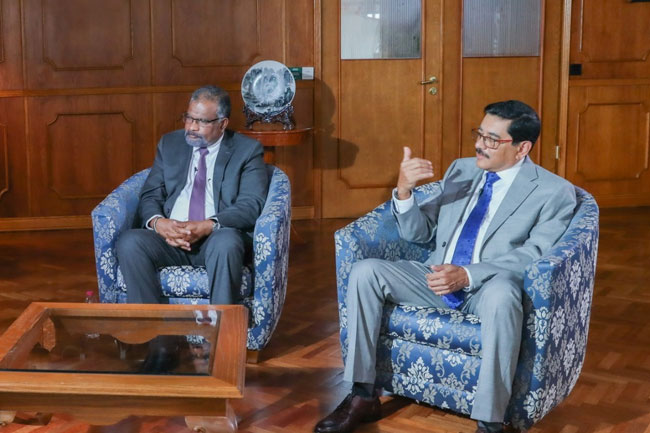
In a recent interview, Governor of the Central Bank of Sri Lanka Dr Nandalal Weerasinghe addressed misconceptions regarding Sri Lanka’s total debt, clarifying that the increase from USD 96 billion in December 2023 to a projected USD 100 billion by March 2024 is largely due to exchange rate fluctuations rather than new borrowing.
Joining an interview held at the Presidential Media Centre on Friday (05), the CBSL Governor said that despite a detailed explanation of this made by President Ranil Wickremesinghe in Parliament recently, some have mistakenly interpreted the rise as an increase from USD 70 billion to USD 100 billion.
Commenting in this regard, Dr. Weerasinghe added: The status of the debt as of March 2024 was outlined in the Debt Bulletin you referenced. The entire loan amount is denominated in US dollars, totaling USD 100 billion. As you know, our country manages both domestic and foreign debts, with foreign loans typically in dollars.
When including domestic debt in the table, it is converted into dollars. Previously, our exchange rate was 324, but it is now 301. Consequently, the foreign exchange position has strengthened, which is favorable. However, the higher exchange rate increases the dollar value of our debt in rupees. Thus, despite no additional borrowing, the debt appears higher due to the exchange rate fluctuation”, he expressed.
Meanwhile, the CBSL Governor also expressed: additionally, is it beneficial or detrimental to defer debt repayment? When a country progresses, a budget deficit inevitably arises if expenditure exceeds income. This deficit necessitates borrowing. We are not alone in this; other countries also borrow. This on-going process leads to automatic increases in loans.”
Furthermore, he highlighted that the challenge lies in maintaining debt at a sustainable level.
Can borrowing continue, and if so, from where? Should loans come from the central bank? As you know, the central bank prints money, and we understand the implications of excessive money printing. Should we continue this to cover budget deficits? Should we increase or reduce our credit?”, he questioned.
Dr. Weerasinghe, who stated that achieving debt sustainability entails managing debt at a level sustainable for the country, mentioned that strengthening public financial management is essential alongside debt restructuring.
The CBSL Chief pointed out that Sri Lanka must manage our finances prudently, emphasizing revenue growth and maintaining manageable expenses.
By striking this balance, we can sustain a manageable budget deficit and progress forward”, he added.
I do not agree with those who argue against borrowing. As long as our country faces a budget deficit, borrowing is necessary. This has been a historical reality and will persist in the future, similar to other countries’ practices”, said the CBSL Governor.
Moreover, expenditure must align with income. For instance, approximately 80% of our income goes toward loan interest, leaving 20% for other expenditures. This proportion represents 19-20% of gross production costs, yet our income was only 8% in 2022, resulting in a 12% budget deficit. We have since increased income to around 11%, reducing the deficit to 8%, which is progress. Our expenditure is not the primary concern; rather, income must be bolstered. Despite this improvement, satisfaction remains elusive. Under the IMF program, we aim to raise income to 15%, while capping costs at approximately 5%.”
My message to the country is clear: I disagree with claims that a country can function without borrowing. However, loans must be utilized for productive purposes and non-consumptive economic activities. By channeling loans into investments that stimulate economic growth, we can enhance debt repayment capabilities. Debt accrues through a complex process, and comparisons should consider the financial context in which loans are secured”, Dr. Weerasinghe said.
Establishing fresh economic and political system is essential – President.
July 6th, 2024Courtesy Adaderana
President Ranil Wickremesinghe recently emphasized that as the country builds a new economy, it is crucial to establish a new political system. This system must foster individuals who can take responsibility and speak the truth fearlessly.
He made these remarks during the bankers’ forum organized by the National Bankers Association at Galle Face Hotel, Colombo, yesterday (05).
The President stated that he has openly communicated the economic challenges facing the country to the people and has outlined a clear program to lead the nation out of the crisis.
The President emphasized that there is no alternative program for the country and that it is everyone’s responsibility to identify and support the necessary program for the country’s economy, rather than living in dream worlds.
He pointed out that while some have cited Argentina’s Martin Guzman as an example, he considers Guzman a failure.
Additionally, although some have suggested that he ask for money from world leaders, the President stressed that the Sinhalese nation is not a beggar nation but one that rises through self-reliance.
The President stated that his goal is to steer the country towards rapid development through an export-based economy. He mentioned that the necessary legal framework for creating an export economy has been presented to Parliament and highlighted the banking system’s significant responsibility in advancing this program.
The National Bankers Association also presented a special commemorative gift to the President at the occasion.
Subsequently, a discussion was held featuring President Ranil Wickremesinghe, former Minister of Finance Minister Ravi Karunanayake, and Senior Adviser to the President on Economic Affairs Dr. R.H.S. Samaratunga.
The President further elaborated;
Today, we have made significant economic progress. I need not remind you of what happened from the Jetwing Hotel to the Galle Face Hotel in those days. During that journey, my house was also burned down. Despite these challenges, we have moved forward, but there is still a long way to go. I made it clear back then that if we do not protect our banking system, we cannot safeguard our economy. A collapse in the banking system would lead to an economic collapse.
At that time, I had to take charge of the country. Together, we initiated efforts to uplift the country’s economy, and today, we are seeing the results. Progress does not happen overnight.
Efforts have been made to reduce the loan repayment by USD 8 billion over a period of four years. The economy is once again developing. Now, we have reached a crucial turning point as a country. With the USD 8 billion in debt relief, we are now free to pursue a new economy. We have submitted the necessary legal framework to Parliament to create an export-oriented economy.
We need to progress from this point forward, and the banking system plays a crucial role here. How do we secure funding? Foreign investment is essential for the banks to thrive. We have not yet achieved this objective.
While we have repaired the fractured economic system and made strides, the broken political system remains unresolved.
Former leaders fled in fear during that time. What does this say about political leadership in our country? Can such leaders propel the nation forward without solutions? They fled in fear that day because they lacked answers.
Following the former president’s resignation, the country’s peace and stability began to deteriorate. Some urged me to resign as Prime Minister. Can a country progress under such a political system?
When we introduced the Economic Transformation Bill, Mr.Sunil Handunnetti filed a case advocating for an import-based economy. Today, our economic challenges stem from operating within an import-oriented economy.
Regarding Argentina’s Martin Guzman, some consider him a failure, while others suggest traveling the world to seek financial aid from leaders. I’ve stated firmly that neither I nor the Sinhalese nation is beggars. Despite this, some still advocate for change. Does this imply advocating for an import-based economy?
Once, I questioned former President Gotabaya Rajapaksa about his decision to lower taxes against the advice of the International Monetary Fund during an economic crisis. He explained that businessmen had urged for tax reductions, which is true. I am aware of this. People also questioned why I hadn’t reduced taxes. President Gotabaya Rajapaksa acted, but today, few support his decision. Today Mr. Gotabaya Rajapaksa has isolated.
We must choose wisely and advance with the program that our country truly needs, avoiding the lure of unrealistic ideals.
It’s crucial to grasp the truth and take decisive action. The decisions we make today will shape our future. As we rebuild the nation’s economy, we must also reform our political system. This entails cultivating individuals who can shoulder responsibility and progress, and who bravely speak the truth without fear. Without this foundation, our country lacks a viable future.
Honesty has always been our policy. In politics, there should be no fear of speaking the truth, irrespective of one’s stance towards the government. I united people from various political factions to lead this government forward. While party discipline was lacking, governmental discipline prevailed. Despite challenges, we garnered support, including from young MPs of Podujana Peramuna, who joined us without regard for their political futures. Our political system has yet to match the economic groundwork we’ve laid today. This must be our focus moving forward.
Senior Adviser to the President on National Security and Chief of Presidential Staff Sagala Ratnayaka;
When Mr. Asela Fernando convened the association meeting on April 22, 2022, our country was amidst a severe crisis, nearing its peak. At that time, Mr. Ranil Wickramasinghe was a Member of Parliament, the sole representative of our party. Everyone urged him to attend and address the bankers gathered there. I vividly recall the questions posed to him on that day and the guidance he imparted.
During the meeting, he stressed the importance of engaging directly with the International Monetary Fund (IMF). He had already raised this issue in Parliament and with government leaders. Upon assuming the presidency shortly afterward, he swiftly began addressing each of these challenges step by step, implementing the advice he had advocated.
Initially, we prioritized law and order, implementing numerous reforms to shape the current state of our country. This included efforts to manage tax policies and public expenditures effectively. Sri Lanka achieved a significant milestone as the first country in the region to receive a Governance Assessment Report from the International Monetary Fund. Based on this report, we initiated measures to address 15 key issues, including combating fraud and corruption.
As a result, we have attained a degree of stability today. Our on-going debt restructuring program is progressing successfully. We seek the support of the banking sector to bolster the country’s economy. With your collaboration, we can accelerate the country’s development significantly.
The event was attended by Advisor to the President on Parliamentary Affairs Ashu Marasinghe, Director-General of Presidential Trade Unions Saman Rathnapriya, Colombo Port City Economic Commission’s Chief Operating Officer, Revan Wickramasuriya, Chairmen of both public and private banks, Secretary of the National Bankers’ Association Asela Fernando, bank officers, executives, and various individuals from the banking sector.
200 smart classrooms and 2,000 Tabs for Southern Province schools
July 6th, 2024Courtesy Adaderana
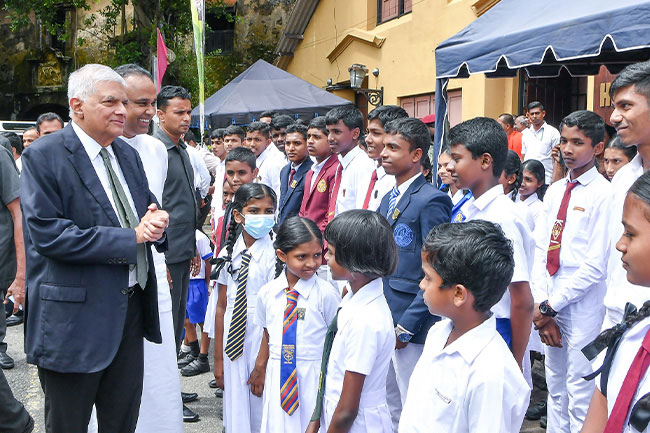
President Ranil Wickremesinghe emphasized the necessity of an advanced education system combined with modern technology to move the country forward with a new economy. He noted that educational reforms are currently underway to achieve this goal.
President Rani Wickremesinghe made these remarks today (06) during a ceremony at Hall De Galle in Galle. The event marked a significant step towards educational modernization, with the provision of 200 Smart Classrooms and 2000 Tabs to 200 schools in the Southern Province.
Following a request by the Minister of Health and Industry, Dr. Ramesh Pathirana, the Government of India allocated RS. 300 million to the Southern Provincial Council for this project.
Of the 200 schools selected schools, 150 are in the Galle district, while the remaining 50 schools are in the Hambantota and Matara districts.
Additionally, 2000 Tabs were distributed, with each of the 200 classrooms receiving 10 tabs.
Symbolizing this occasion President Ranil Wickremesinghe presented a commemorative gift to the Indian High Commissioner, Mr. Santosh Jha.
In his further remarks, President Wickremesinghe stated:
Currently, the world is advancing rapidly with modern technology. Consequently, our country’s education system must also progress in tandem with these technological advancements. The Ministry of Education has already initiated necessary educational reforms to achieve this goal.
In the past, we introduced several educational policies that were appropriate for their time. However, given the current technological advancements of today, there is a pressing need for new reforms in the education sector to ensure our education system remains relevant and effective.
Thus far, we have launched the establishment of Artificial Intelligence (AI) clubs in schools. Countries such as England and America began integrating AI technology years ago. To ensure the sustainability of our newly launched AI program this year, it is essential for teachers to undergo comprehensive training. The government is actively developing training programs and infrastructure to bolster this initiative. There is also a plan to elevate existing Central Colleges and National Schools into specialized institutions focusing on artificial intelligence.
We deeply appreciate the support extended by neighbouring India in advancing modern technology. Prime Minister Narendra Modi has expressed interest in establishing an Indian Institute of Technology (IIT) campus in Sri Lanka, which is highly appreciated.
Additionally, negotiations to enhance cooperation in the energy sector with India are progressing successfully. I had discussions with Mr. Elon Musk in Malaysia, and his internet technology is anticipated to be introduced in Sri Lanka following Parliamentary approval.
This development will facilitate the provision of technical education to students in remote areas. Presently, the Southern Province has emerged as a region showcasing exceptional educational talent. Today, the first Dutch school in the Southern Province has evolved into Baddegama National School.
By leveraging modern technology to nurture future-ready generations, we aim to position our country as a global leader.
Minister of Education Dr. Susil Premajayantha:
The Free Education Act has brought about a transformative change in Sri Lanka, significantly increasing the literacy rate from 46% to 93%. In today’s technological age, the integration of Artificial Intelligence and modern classrooms is crucial. We appreciate India’s assistance in this endeavour.
Today, 200 schools in the Southern Province have been equipped with comfortable classrooms and 2000 Tabs. Moving forward, the schools will undergo digitization, with selected 1250 schools already being connected. Over the next three years, we aim to digitize 10,026 schools and provide necessary teacher training. Graduates with technical expertise from our universities enjoy a 93% employment opportunities in the job market. We must seize the opportunity to lead globally through modern technology”.
Minister of Health and Industry Dr. Ramesh Pathirana:
We deeply appreciate the Government of India for their support in this endeavour. We are currently experiencing one of the greatest periods of this century. The Free Education Act introduced by a former Minister of Education Mr. C. W. W. Kannangara, a native of Galle, significantly increased school enrolment from 52% to 99%.
The numbers of schools expanded from 3000 to 10,000, and instead of a single government university, 13 universities were established. Annual university admissions surged from 250 to 45,000 students. This transformation has propelled Sri Lanka from lagging behind in the global industrial revolutions to progressing alongside the world.
In the next century, leveraging Artificial Intelligence, computer knowledge and modern technology presents an opportunity to advance in parallel with the global community. A Smart educational framework must be established to achieve this goal. President Ranil Wickremesinghe is currently spearheading educational reforms with a visionary approach.
Indian High Commissioner to Sri Lanka, Mr. Santosh Jha:
As India’s neighbour, we consistently extends support to Sri Lanka. Sri Lanka holds a crucial position in our foreign policy. India remains steadfast in its commitment to providing essential infrastructure and technical knowledge support to Sri Lanka.
The event was attended by Deputy Speaker Ajith Rajapaksa, State Minister Mohan Priyadarshana, Member of Parliament Sampath Athukorala, along with a delegation of education officials, principals, and students from the Southern Province.
FUTA ‘mafia’ behind strike by university non-academic staff, claims Raghavan
July 6th, 2024Courtesy Adaderana
State Minister of Higher Education Dr. Suren Raghavan, urged non-academic staff across all universities to resume work promptly, emphasizing the importance of minimizing disruptions for the youth who are the future leaders of the nation.
Speaking at the press briefing titled Collective Path to a Stable Country” held at the Presidential Media Centre yesterday (05), he committed to prioritizing the demands of university non-academic staff, including addressing overtime allowances for April.
These concerns will be forwarded to the Udaya Seneviratne Committee and proposed for inclusion in the 2025 budget, he added.
State Minister Raghavan further explained,
Fourteen thousand six hundred (14,600) non-academic employees from 17 universities and 19 joint post-graduate institutions have been on strike for 65 days, severely disrupting the higher education sector. This has adversely affected the lives of 250,000 young individuals, who are crucial to the future of the nation, by causing confusion and wasting their time.
These youths, who have already faced significant mental strain from the Covid-19 pandemic in 2019, economic crises in 2020, and various challenges in 2021, represent the 18% selected to enter universities despite these hardships. It is a national tragedy that their lives have been further complicated by this strike.
As someone deeply committed to education, I am profoundly saddened that universities in our country remain closed during my tenure, knowing first-hand the value of education. While the Treasury did not approve their requested salary increase, citing similar demands from other sectors, they have assured that these requests will be considered for inclusion in the 2025 budget.
It has been revealed that, the Federation of University Teachers Association (FUTA) is behind this situation. Since 2010, they have continuously increased their salaries and are now attempting to raise the salaries of non-academic employees while imposing various conditions. In their latest letter, they stated that university funds should not be used to resolve this issue. How can they impose such conditions? Universities are funded by public tax money, not their private asset. They cannot be allowed to fall under the control of a professors’ mafia. Their professional goal should be to advance education and secure the future of our children.
The demands of non-academic employees are reasonable. I promise that their requests will be forwarded to the Udaya Seneviratne Committee and included in the 2025 budget through President Ranil Wickremesinghe. Additionally, we are working to pay their two months’ salary and overtime for April. Days not reported to work will be treated as holidays, allowing them to return without any penalties. I urge the non-academic staff of all universities to resume work promptly to avoid further disrupting the lives of the youth who are the future of our country.
PART V OF: THE MYTH OF MALIMAWA: A COMPASS WITHOUT THE MAGNETIC NEEDLE
July 5th, 2024By Sena Thoradeniya
(Continued from June 20, 2024)
[As a typographical error appeared in sub-heading 1, paragraphs 1 and 2 of Part IV (posted onJune 20, 2024) of this series, the error 1989 is being corrected as 1994. Para 2, line 5 should be read as: Janith Priyantha Vidyatilaka Vipulaguna who obtained the highest number of preferential votes under Sri Lanka Progressive Front (SLPF) ticket, took oaths in the Parliament and resigned. In Parliament if an elected MP wants to resign, he should first take oaths and then resign. Then only the party can appoint the next person in the list. All 10 in the SLPF (in other words JVP) list took oaths and resigned paving the way for Nihal Galappaththy, who was not in the list to be appointed as JVP’s first MP.]
1. For What Reasons People Give Anura Kumara and NPP a Chance?
For what reasons people give Anura Kumara and NPP a chance is the million-dollar question. In our previous articles we have clearly stated that JVP/NPP is not new to governance that it has formed political alliances with center- left (CBK and MR), militarists (Fonseka and Fonseka led DNA) and ultra-right (MS-RW-TNA) yahapalanists respectively. JVP showed its incapability in managing the four ministries entrusted to them by CBK in 2004 (Please refer part IV of this series).
Has the JVP/NPP shown any maturity and ideological soundness to take up themantle of powerby itself, without aligning itself with any other political party or group or forming a coalition? We have stated in part II of this series the favourable conditions that existed for SWRD in 1956, Sirimavo in 1970, JRJ in 1977, CBK in 1994, MR in 2005 and 2010, GR in 2019 and Anura Kumara or NPP do not have such favourable economic, political and socio-cultural factors that contribute to an electoral victory. Furthermore, we have expressed that personal attributes, leadership qualities and knowledge and expertise of Anura Kumara (Please refer part III) do not pave the way for him to lead in the race to the Presidential House.
What are NPP’s policies? What are its policies related to national economy, politics and governance, international affairs, education, health and culture? Here we left aside many government affairs for the sake of brevity.
New voters or first-time votersaccording to the Election Commission will be in the range of 200,000; if all of them vote for NPP can it win?
Anura Kumara and his fellow travelers dream; all are over confident and over optimistic; Anura Kumara behaves like as he has won already; he declares what he is going to do; already he has selected his Cabinet of Ministers; what will happen to him if he does not win? In our article posted on 14, December 2023, we saw him as a modern-day Icarus. Icarus was warned not to fly too low nor too high, lest the sea’s dampness clogs his wings or the sun’s heat melt them. He ignored instructions not to fly close to the sun causing beeswax in his wings to melt. He felt from the sky, plunged into the sea, was drowned and doomed.
What solutions he has, to make the prevailing temporary stability to a permanent and sustainable stability, pay foreign debts, reduce cost of living, alleviate the economic burdens majority of the population encounter? He only seeks power; give us power. For what? Anura Kumara lacks ingenuity and resourcefulness, in short, a vision; he only promises;his catchy slogans need to be theorized. How he is going to achieve what he promises? He has limited his action only to lecturing people.
Has the NPP really understood the present crisis which is not only economic or financial? It is a combination of political, geopolitical, social and cultural crises; some time ago addressing a meeting at Udadumbara, Anura Kumara said that there are no Sinhala films in Netflix. Is that our cultural problem?
What guarantee he can give, the country will not face a similar crisis as in 2022?
What is the power base of NPP? Men and women of affiliated organizations? Blood sucking lawyers? Alienated and vainglorious academics or artists? Retired tri- forces personnel or retired corrupt policemen? (a columnist who identified himself as One Who Knows” referred to a Deputy Commander of the Sri Lankan troops in the UN Stabilization Mission in Haiti in which about 114 Sri Lankan troops including 3 officers were involved in the sex exploitation of hundreds of children”; it is said that the person who is alleged to have shot Nandasiri Wijeweera at the crematorium at Kanatta is in the NPP ranks; a person who knocked down a pedestrian after drunk driving has become the spokesperson of retired police brigade; who knowswhether the retired army men involved in recruiting mercenaries to Russia/Ukraine are among the NPP ranks?).
It is not surprising that Anura Kumara when he worked closely with yahapalanists, saying that Shani Abeysekera was the best officer in the entire police force and he shed copious tears about the disciplinary action taken against him. We will not be astonished if the NPP lays a red carpet to the most hated and most feared police officer by the JVP/DJV during 1988-1989 Udugampola, if he was alive today!
Everyone knew howRanjan Ramanayakabehaved during yahapalana regime releasing his infamous tapes; telephoning judges, bribery chiefs and law enforcement officers including Shani Abeysekera unduly influencing their investigations and judgments; a man who said that he was ready to wash pots and pans of Ramanayaka Sir, now has joined the NPP; we don’t know for what purpose; it cannot be to wash pots and pans.
NPP has become a political salad; only thing they do is picking people and building partnerships with individuals; still they have not enlisted LGBTIQ+ community; very soon they will open a wing for them also as they have supported RW’s Gender Equality Bill. Its ideological positioning is questionable. It mobilizes all excluding the working class. More than the working class and peasantry, today NPP work closely with the capitalists, upper middle class and diaspora, cooperating with the Indians and the Western Block.
Why does NPP mobilize ex-servicemen? Isn’t it a strange paradox, a party that paid lip service to Marxism/Socialism some time ago, enlisting former army and police personnel who were a part of chief instruments of state power, an organ for the oppression of the oppressed class? Isn’t it an attempt to convert them into harmless icons, to canonize them, so to say, to surround their names with a certain halo” as Lenin said in The State and Revolution” (1917)? They held privileged positions as officials of organs of state power.
Anura Kumara addressing a meeting at Batticaloa recently said that he is going to disarm paramilitary forces. How he is going to do it? Entrusting that work to ex-servicemen? This again demonstrated how naïve he was; State Minister Sivanesathurai Chandrakanth (Pillaiyan), shot back immediately, recalling how JVP sought arms and ammunition from the Tamil Tigers. How did JVP/DJV get the technology to detonate claymore mines in the South?
Those who are in glass houses should not throw stones at others is mild enough to describe Anura Kumara’s naivety.
Or else, does NPP mobilize ex-servicemen to engage with Sri Lankan armed forces after an election, to train and command storm troopers?
NPP leaders demonstrate their lack of knowledge of political history when they make noisy utterances at public meetings.
At Mannar, Anura Kumara said that the Tamils (read as secessionists) decided to have a separate government because the government in the South burned down the Jaffna library; at the same time, he named some living and dead top UNP politicians alleging that they had masterminded it; sadly, he did not mention the names of the police officers who were with those politicians. Is he aware that certain retired police officers who joined the ranks of NPP, in their newspaper articles written in English had cleared the names of those politicians named by Anura Kumara as masterminds of that heinous crime? What is the most heinous crime? Burning Jaffna library is equal to burning of tea factories, bus depots, railway stations, transformers and agricultural service centers. Anura Kumara should study that the Tamil separatist movement began several decades ago before the burning of Jaffna library.
Anura Kumara is very smart in copying what other contenders say. He also says to increase production, but falls short of how he is going to do it. Addressing a meeting Youth Api” at Kekirawa he began talking about entrepreneurship, copying what Dilith Jayaweera says.
Anura Kumara showed again that he has short memories or total ignorance when he declared that when he comes into power, he will set up a new Development Bank which will provide initial capital without collateral. W. D. Luxman, the former Governor of the Central Bank dared promise a DevelopmentBank which resulted in his removal. In the late 1950s Philip Gunewardena for the same reason was expelled from the Cabinet of Ministers and SWRD received a bullet.
Has Anura Kumara studied why Development Finance Corporation of Ceylon (DFCC) was set up in 1955 as Sri Lanka’s pioneer development finance institution on the recommendations of the World Bank and the National Development Bank (NDB) which begun its operations in 1979; both institutions became two more licensed commercial banks, the latter listed in the Colombo stock Exchange (CSE).
Anura Kumara does not know what he says at different occasions; addressing a meeting at Batticaloa he said that Sri Lanka is not a big industrialised country; that our country is not endowed with rich commercial resources; but NPP organised a meeting of technologists importing a lecturer from the US.
He does not have the capacity to address different audiences; to address diverse audiences to suit their needs; saying specifics to suit varied listeners; he utters the same muck at every meeting; the above meeting was not different.
On 29 June JVP/NPP hosted a meeting called Quantum Leap” importing a US based Sri Lankan Professor to lecture on innovation; at that forum it was announced that the NPP had formulated its Research and Development Policy”. First a word on Quantum Leap”. It is a hackneyed term in vogue since 1956 originated as quantum jump in Physics denoting a sudden change, later transferred to other important advances; many use it in different discourses as they use the most hackneyed term Paradigm Shift”. Our politicians and theoreticians see everything as a paradigm shift. For the educated” Sri Lankan politician even a fellow politician jumping from one group to another becomes a paradigm shift!
Have Anura Kumara and NPP studied the work of our own institutions such as Industrial Technology Institute (ITI: successor to former Ceylon Institute for Scientific and Industrial Research (CISIR; established in 1955), National Institute of Fundamental Studies (NIFS: former IFS, established in 1981), National Science Foundation of Sri Lanka (NSF: successor to Natural Resources, Energy and Science Authority of Sri Lanka (NARESA) established in 1981), and former Ministry of Science and Technology, before embarking on formulating a Research and Development Policy”? Anura Kumara and NPP are lagging few decades behind and at the same time attempting to reinvent the wheel! What he and his fellow travelers must do is harnessing expertise available in these institutions and streamlining their activities.
The writer guesses that the above-mentioned lecture was nothing more than repeating Mariana Mazzucato’s concept of Entrepreneurial State (The Entrepreneurial State: Debunking Public vs Private Sector Myths” (2013)). The author argues that US economic success is a result of public and state funded investments in innovation and technology. Entrepreneurial State is the primary risk taker in innovation-based investments; state influences on innovation and technological development within the private sector, which popularizes the government created technologies. Apple (iPhone, iPad devises), GPS navigation, touch screen technologies, voice recognition, smartphones are examples. She argues that the private sector undertakes the least risky part of technological innovation and entrepreneurship. She introduces the concept of Entrepreneurial State, where the state is actively takes risks by investing in innovation-based projects.
There are many more state led innovations. Defense Advanced Research Projects Agency (DARPA) of US Department of Defense is responsible for the development of many emerging technologies.
It is a fashionable trope, sounding hip (stylish/trendy/ fashionable); for the JVP/NPP it is better than saying that they are going to establish an industrial/ socialist/ or proletarian state; a synonym for saying that we will not oppose bourgeois individualism.
Problem is how we can create a production culture that will produce forces of production (labour, capital etc.).
How does Anura Kumara go for innovations, new technologies and innovation-based investments having a hand to mouth economy in Sri Lanka, although the JVP/DJV had mastered galkatas” technology? It’s only a pipedream.
So, Anura Kumara has gone far ahead than Xi Jinping! With all those industrial progress and innovations Xi Jinping admitted that China is relatively weak” in innovation and needs more talent to dominate the tech battlefield” at a National Conference held in Beijing on 25 June and urged to innovate in the tech sector. While praising China’s progress he highlighted several shortcomings. Only a few days ago China’s Chang’e 6 robotic lunar lander came back with lunar samples exploring the far side (dark side) of the moon!
Recently Handunnetti, NPP’s self-proclaimed economic wizard” addressing a meeting at Badulla, branded Bill Gates, Elon Musk et al as economic assassins” ; he compared Musk to casino owner James Packer; but apologized a day later; is it with these people Anura Kumara going to have a Quantum Leap in innovations, technology and investment?
Any reason to justify why people give Anura Kumara and NPP a chance?
2. RW/SP/AKD -Whom to Select?
In many occasions and about many issues RW, Sajith Premadasa and Anura Kumara say the same thing portraying themselves as a three-headed monster. So, the people are flabbergasted which head to keep turning the monster into a normal human being. Or are the people looking for a hero to slay this monster as in Greek mythology without allowing it to ravage the country anymore? We cannot keep chaining the maiden to the cliff to feed the monster anymore.
Do we see any difference between Ranil Wickremasinghe’s, Sajith Premadasa’s and Anura Kumara’s policies? Nothing. It is like selecting a bride from among three women, each of them suffering from three different incurable diseases.
Both Anura Kumara and Sajith Premadasa do not give alternative solutions to the pressing problems Sri Lanka is engrossed with. Both bellow rhetoric full of populist fantasy to get votes rather than offering realistic alternatives about economy, corruption and how to deal with the IMF, all restricted to platform oratory. None of them say how they will increase state revenue. People are fed up with catchy slogans such as Horu allanawa”, fighting corruption, recovering stolen assets, bringing back stolen money parked abroad and many more.
Both are not concerned about the draft law RW and Wijedasa jointly presented to the Cabinet that allows forfeiture of the proceeds of ill-gotten money, after the IMF insisted on the promised legislation be enacted before it releases its 3rd tranche of US $ 337 million.
According to rhetoric and fantasies of both Anura Kumara and Sajith Premadasa and their hurrah boys, it seems that already both have won the Presidential Elections even before signing their nomination papers. Both instill in the minds of voters that there are two Presidential posts in Sri Lanka! Only King Pandukabhaya in our history had created a title called Re Rajaya” (administrator after nightfall?) which he bestowed upon his uncle Abhaya. OnlyJVP/DJV has any experience in such an arrangement as it was running a punchi anduwa” during 1988/1989!
At an ITN Thulawa” talk show Anura Kumara said that he has to carry forward the IMF programme, reduce the number of government officers and restructure loss making enterprises; at a Derana 360” discussion he said that if the debt restructuring has not occurred by the time they assume office, they must step into ensure a fair restructuring process. He accepted that he cannot do without restructuring; that they must proceed in this direction to address the crisis that has emerged in the financial sector.
Both SJB and NPP have vowed to renegotiate IMF agreement in case they come into power; in June Central Bank Assistant Governor said there is no solution other than IMF; how NPP is going to make use of CBSL expertise if it comes into power? Why NPP was silent about the unrealistic and unethical pay hike given to all employees in the Central Bank? This again demonstrated its dubious nature.
Governor of the Central Bank at a press conference held in December 2023 said, that Extended Fund Facility (EFF) agreement with the IMF should continue for the next 4 years under any government, in order to get the debt relief and international financial support required; he warned that unilateral withdrawal from the IMF-EFF agreement will result in severe implications; any deviation from this path would bring detrimental and irreversible consequences to the financial system and the economy, he reiterated.
Mahinda Siriwardena, Secretary Finance, said even if Sri Lanka achieves the goal of zero corruption, tax revenue still has to be increased to bridge the budget deficit and lessen the country’s debt burden, delivering the Prof. K. Dharmasena memorial lecture at the Kelaniya University on 30 January 2024. He added that home grown” solutions are not the remedy; asset recovery, collection of taxes in arrears, elimination of waste, while all being essential actions do not serve as an alternative to the macroeconomics reforms.
IMF expressed about the continuity of its programme in view of the next Presidential Elections; IMF Chief of Mission for Sri Lanka, Peter Breuer has revealed that IMF was willing to listen to different views on how those objectives are being achieved and alternative proposals needed to be realistic and achievable within the timeframe of the programme; continuity of its programme whoever comes into power, alternative proposals needed to be realistic and achievable within the timeframe of the programme are the key words of his statement. Do SJB and NPP have such realistic and achievable alternative proposals is the biggest question. What was inferred was whoever comes into power he must adhere to the IMF programme which requires Sri Lanka to do basically two things; expediting external debt restructuring and increasing state revenue substantially. What are NPP’s plans for that? How does it achieve revenue targets? IMF has set the guidelines; even a future government will have to meet these specified revenue goals as taxes.
NPP is free to say anything about the economy. But who will spearhead the economy without the assistance of the Central Bank?Is NPP going to retain Nandalal Weerasinghe as the Governor, a former IMF employee, who represents American interests, always photographed with Julie Chung US Viceroy in Sri Lanka, brought by GR, notwithstanding political rivalries between Rajapaksas and Weerasinghes? Is it the reason the NPP was silent about the unrealistic and unethical pay hike given to all employees in the Central Bank? If so, NPP should tender an apology to him for gunning down his uncle, former UNP MP for Tangalle callously called by a name of a sleep-inducing indigenous plant?
How both Anura Kumara and Sajith Premadasa would reach a deal with the International Sovereign Bonds (ISB), the private commercial creditors, settling their loans by their future governments? They are afraid of telling the truth or rather discussing these critical issues. Criticizing is the easiest way.
3. Reenactment of an ancient Svayamwara”
The three-headed monster like in an ancient Svayamwara” (self-choice) ceremony are wooing the Sinhala, Tamil and Muslim voters. The only difference is, in an ancient Svayamwara” ceremony, the woman chose a man as her husband from a group of suitors who demonstrated their skills on an appointed day.
UNP, SJB and NPP leaders and their followers are busy promoting themselves and their candidates in view of the Presidential Election.
The three suitorsare engaged in a competitionto secure the support of TNA and other Tamil parties and to woo Tamil voters in the North and the Vanni seeking their endorsement at the Presidential Election than any other group. Sajith Premadasa visiting Kilinochchi on 16 June, declared his intention to implement the 13th Amendment in full; Abraham Sumanthitharan was in attendance.
On the following day Anura Kumara was in Jaffna; he had a private meeting with Sumanthitharan; Sumanthitharan said afterwards that during his discussions Anura Kumara had admitted that the Tamils should have the right to decide on their requirements and admitted that Provincial Councils had failed to provide solutions to the problems of the Tamil people; later in London Anura Kumara said that they will continue with the Provincial Councils. He said that it is in the law. We do not intend to repeat again and again the atrocities committed by the JVP/DJV during 1988/1989 opposing the 13th Amendment and Provincial Councils.
Thus TNA received assurances from all three contenders as regards to full implementation of the 13th Amendment; all three promise going beyond it to solve the ethnic crisis”, all trying to win North and East votes; but RW is having an advantage over the other two because he was the person who signed the Norwegian crafted 2002 Ceasefire Agreement (CFA) acting above the President at the time CBK ; recently Sumanthitharan regretted the LTTE- TNA joint decision to boycott 2005 Presidential Elections which caused as some say RW’s defeat, giving an advantage to MR.
After Sajith Premadasa ’s visit, G.L. Pieris visited Jaffna to promote Premadasa’s candidature; he said that he would not give empty promises; Pieris who supported CBK, RW, MR, GR and Dulles in his earlier political avatars is the ideal person to woo Tamils. Tamil separatists have a rapport with him as RW’s chief negotiator with Tigers. These are the games academic- politicians play aiming a National List slot that will culminate with the coziest seat at the Ministry of Foreign Affairs whoever at the helm.
But S. Sritharan, the newly elected leader of TNA rejects the 13th Amendment as inadequate to meet aspirations” of the Tamils. All others also reject it. What do Premadasa and Anura Kumara going to do? Are they going to have a referendum as in South Sudan, Timor etc. and create a separate state amalgamating the North and the East?
All three contenders promise to hold Provincial Councils elections; but people have not forgotten who supported the postponement of Provincial Councils elections; RW, SP, AKD and TNA together passed an amendment to the Provincial Councils Elections Act to put off Provincial Councils elections indefinitely.
Sajith Premadasa visiting Jaffna in mid-June said he is going to develop North, then the North could contribute more to the GDP; now lowest province compared to Western, Central and North Western provinces he said. He promised to establish international cricket stadia, one in Jaffna and another in Batticaloa. They were the people who criticized Suriyawewa as an international stadium where cricket matches are not being played, Hambantota as a port where ships never call at, Mattala as an airstrip where no planes land.
But RW has won the support of Douglas Devananda, Karuna Amman. Pillaiyan, Thondaman and many other Tamil and Muslim politicians. This will be discussed under Ranil’s Strategic Maneuvers in the next part of this series.
On 2 July 2024, RW after his special address in the Parliament paid a tribute to Sampanthan the late leader of the TNA; Sajith Premadasa replying to RW also wanted to pay his condolences and a verbal battle followed with the Speaker, despite Speaker’s assurance that a special day will be allotted for parliamentarians to pay their respects to the dead leader of the TNA; anyway like a kid who grabbed a balloon Premadasa succeeded.
Both speakers said Sampanthan worked for territorial integrity and sovereignty of Sri Lanka, forgetting how TNA under his leadership acted as the mouthpiece of LTTE, condoning all atrocities committed by it.
On 3 July 2024, when the body of Sampanthan was brought to the Parliament Anura Kumara was seen meekly escorting the coffin as if he was the cross-bearer in a Christian funeral procession rather than a pallbearer!
RW and SP both provide handouts; RW misuses public funds and state machinery; SJB promises a mid-day meal to all school children; distributing busses and smart class rooms” he has become a joke, writingcat sat on a mat”, something in Tamil, drawing diagrams ondigital boards, asking the children whether they know Japanese. The school children especially primary school children cannot stomach what Premadasa lectures; he does not have any knowledge of the audience he addresses; he does not understand that the macro level politics and economics he preaches are not suitable to his audience; the most harmful aspect of his lectures is the weightage he gives to English and IT, creating confusion, ambiguity, anxiety, discontent, frustration, maladjustment and alienation among rural and semi- urban children. His utterances about knowledge-based economy, human capital are not novel concepts although he dramatizes them in front of empty receptacles. Why the government and the Ministry of Education allow him to play political games with school children, teachers and parents? Does RW think that he has given Premadasa an opportunity to dig his own grave? Fonseka, the SJB Chairman alleged what Premadasa uses is casino money.
Both SJB and NPP promise to tackle corruption, waste and mismanagement and to punish wrongdoers; all these promises are populist and unrealistic; both do not address the real economic issues. Both promise to investigate Easter Sunday carnage; Premadasa has forgotten that he was in the Yahapalana government when Easter Sunday massacre took place; Anura Kumara has forgotten that the NPP had accommodated Mohammad Yusuf Ibrahim, one of the country’s richest spice exporters in its 2015 national list, that his two sons Iham Ahmad Ibrahim and Imsath Ahmad denotated their explosives at the Shangri-La and Cinnamon Grand Hotel respectively and daughter- in- law denotated a bomb at Dematagoda.
Both SJB and NPP support RW’s Gender Equality Bill. Harini Amarasuriya the neo-liberal voice of NPP has become the spokesperson of LGBTIQ+ community, both in and outside the Parliament.
Recently at Ada Derana, At Hyde Park Corner” discussion, Nandalal Weerasinghe said, salaries must increase when overcoming a crisis”. Increasing only for Central Bank officials? During the crisis or after overcoming the crisis? He further said that the manufacturing economy is a myth”. If it is so how RW, Sajith and Anura Kumara going to increase export economy, as all of them want to make Sri Lanka an export economy? For what purposes FDIs sought after? With what exports they create an export economy? Soya beans and peanuts?
NEXT: JVP/NPP behavior during the crisis in 2022; Internal Contradictions within NPP; JVP/NPP volte-face; Ranil’s strategic maneuvers; Political dynamics and unpredictable nature of voters; Entrepreneurial State; Future of Sri Lanka as an independent sovereign state under US and Indian hegemonic influence.
The Central Bank has failed the Nation.
July 5th, 2024Sugath Kulatunga
I agree totally with my Senior colleague at Arunachalam Hall who on 24 February pointed out on the LBN the dangers of unbridled power enjoyed and abused by the Central Bank (CBSL). They relished this privilege even before the recent IMF inspired independence. It was the mandarins of the CBSL who controlled both the monetary policy and the fiscal policy of the country by hogging the top positions of both the Monetary Board and the Ministry of Finance. It is this unholy alliance that resorted to profligate borrowing, which stifled development and bankrupted the country.
At present the Central Bank has been provided with an ‘autonomy’ by the new Central Bank Act which says that the:
1) The Central Bank shall have administrative and financial autonomy.
(2) The Central Bank shall be autonomous and accountable.
The Act fails to specify the ‘accountability ‘ requirement leaving the CBSL to interpret it to their advantage like on policy on salaries.
CBSL has nearly 1000 professionals under one roof. Even before the present pay hike they enjoyed the best of salaries in the public service. The CBSL raised the salaries of its staff by between 29.53% (most junior office assistants) and 76.97% for its highest grade of Deputy Governor. With the revision an office assistant (KKS) gets a monthly salary of 198,000 while a Deputy Governor collects a cool Rs 1.7 million. This lavish pay hike will result in CBSL’s monthly salary bill rise by 50 percent. This is done while making substantial losses. CBSL staff are entitled to foreign training, mostly leading to a PhD. Their posts are pensionable and are also covered with a provident fund where the CBSL contribution is a high 29 %. On top of all these they wallow in other perks like loans at interest rates as low as 1%. The public wishes to know whether the contribution of the CBSL to the nation is commensurate with these superlative rewards.
The recent history of this expensive so-called professional body has not been above board and blameless. Public is aware of the Greek Bond scandal and the the outragous Arjuna Mahendran bond scam. The issue of 12 billion dollars of ISBs at high rates of interest during the Yahapalana regime cannot be swept under the carpet.It has now become the bone of contention.
State Minister of Finance tried to exculpate the CBSL on the astronomical pay hike, stating that the move targeted positions facing scarcity of replacements, to retain qualified personnel and insisted the necessity of competitive salaries to prevent talent drain from the Central Bank.
CBSL is staffed by economists specializing in banking, accounts, statistics etc. There is a surfeit of economists employed in the universities, as school teachers and in the public service and the private sector who would be happy to join the CBSL with the superlative salaries and perks. It is also a myth that a PhD is essential to serve in the CBSL. Mr.A.S. Jayawardhana who served the Bank with distinction as a Deputy Governor and Governor did not have a doctorate. He is credited with the successful restoration of the CBSL to normalcy after the disastrous LTTE bomb attack.
The departments of the Bank are grouped into four key business clusters, namely – Economic & Price Stability Cluster, Financial System Stability Cluster, Agency Functions & Corporate Services Cluster and Legal & Enforcement Cluster. A department is headed by a Director (or equivalent). By 2014 there were 27 Departments. Among the responsibilities of these Departments is the orderly and smooth functioning of the domestic foreign exchange market. This consist of activities such as;
*Continuous monitoring of the foreign exchange operations of licensed commercial banks and National Savings Bank and Authorized Money Brokers Bank Supervision is a major function for which there is a separate department which is responsible for -the regulation and supervision of licensed banks by;
Licensing of commercial banks and specialized banks in Sri Lanka and
Conducting continuous supervision of licensed banks and
Formulating and issuing prudential regulations to licensed banks.
Reviewing and amending the relevant Acts and regulations in line with current market developments, international standards and best practices.
On bank supervision the Foreign Exchange Act of 2017 provides the responsibility of the commercial banks to make prompt reports on foreign exchange transactions.At Article 80. (1) Every commercial bank shall, as soon as may be after the close of business at the end of such period as may be prescribed by the Monetary Board, make a report to the Central Bank setting out the volume and composition of its purchases and sales of foreign exchange during that period, and shall furnish such additional information as the Central Bank may require with reference to such purchases and sales and to the movements of its accounts in foreign currency.
Regulations have been made under Section 29 read with Section 7 of the Foreign Exchange Act, No. 12 of 2017 specifying requirements related to Repatriation of Export Proceeds to Sri Lanka by Exporters of Goods.( Gazette 2145/49 – THURSDAY, OCTOBER 17, 2019) where every exporter of goods is required to repatriate to Sri Lanka payments received for the exportation of goods within 180 days from the date of exportation.
1. Every exporter of goods shall repatriate to Sri Lanka payments received for the exportation of goods within 180 days from the date of exportation.
2. Every exporter of goods shall submit related documentary evidence on each exportation to the respective authorized dealer or restricted dealer that receives the payment.
3. Central Bank shall have the right to introduce an appropriate mechanism to monitor compliance of exporters of goods with this requirement and also to institute actions against any non-compliance with the aforesaid requirements of this Heading.
Subsequently the Monetary Board issued Rules published in the Gazette Extraordinary No. 2215/39 dated 18.02.2021 on repatriation of export proceeds.These rules stipulate that:
1. Every exporter of goods shall:
(i) receive the export proceeds in Sri Lanka in respect of all goods exported within hundred and eighty (180) days from the date of shipment, and
(ii) forthwith submit all related documentary evidence on each and every receipt of export proceeds in respect of every export of goods made, to the respective Licensed Commercial Bank or the Licensed Specialized Bank (hereinafter referred to as Licensed bank”) that receives such proceeds in Sri Lanka.
2. Every exporter of goods shall, immediately upon the receipt of such export proceeds into Sri Lanka as required under this Rule, convert twenty five per centum (25%) from and out of the total of the said exports proceeds received in Sri Lanka into Sri Lanka Rupees, through a licensed bank.
3. The requirement of converting the aforesaid twenty five per centum (25%) from and out of the export proceeds received in Sri Lanka, shall continue, until any other percentage as may be determined by the Monetary Board, from time to time.
4. All licensed banks shall be required to mandatorily monitor, strictly, the receipts of exports proceeds in Sri Lanka within the period as stipulated and the conversion of such proceeds as required in this Rule, and shall maintain all documentary evidence relating or in connection thereto.
5. All licensed banks shall submit reports to the Director of the Foreign Exchange Department of the Central Bank of Sri Lanka as may be required from time to time and provide unencumbered access to the officers of the Central Bank of Sri Lanka as may be authorized by the Governor or the Deputy Governor, as the case may be, to inspect or examine the records maintained under the Rule, and to examine and review all actions taken by such licensed banks in securing full and strict compliance with these Rules.
6. This Rule shall apply in respect of all goods exported and where the hundred and eightieth (180th) date from the date of the shipment and exports proceeds received to Sri Lanka on any date after 18 February 2021.
The Central Bank has failed miserably to supevise the commercial banks and implement these regulations. The dereliction of this primary duty has been disastrous and led to the bankruptcy of the country. It is a 50 billion dollar felony.
In an interview with the Aruna News Paper in December 2022, Dr. Wijeyadasa Rajapakshe, Minister of Justice has said inter alia that අපනයන ව්යාපාරිකයෝ බොහෝ ගණනක් මේ රටේ සල්ලි ඉතාමත් භයානක ලෙස පිටරට රඳවාගෙන එහෙ ව්යාපාර කරනවා කියලා. අපේ මිනිස්සු දුක්විඳලා ලේ දහඩිය හෙළලා හම්බකරගත්ත දේපළ පිටරට යවලා පවුල් කීපයක් දෙතුන්දෙනෙක්ගේ සුඛ විහරණය වෙනුවෙන් ඒ සල්ලි එහෙ පාර්ක් කරගෙන ඉන්නවා.සංඛ්යා ලේඛන ඇතුව ඉදිරිපත් කළේ ඩොලර් මිලියන පනස්තුනකට වැඩි ප්රමාණයක් වංචනිකව රඳවා තබා ගැනීම නිසා තමයි අපේ රටේ විදේශ විනිමය අර්බුදය ආවේ. මුළු විදේශ ණය ගත්තත් ඩොලර් බිලියන පනස්දෙකයිනෙ තියෙන්නෙ. ඊට වැඩි මුදලක් මේ අවුරුදු දොළහෙ රඳවා ගෙන තියෙනවා ඒ අය. මේ අපිට සොයාගත හැකි මුදල පමණයි. නමුත් මගේ තක්සේරුව ඊට වැඩිය දෙගුණයක්. අපේ රටේ අපනයන නීති ඉතාමත් ලිහිල් කර තිබුණා. ඒ වගේම කියන්න ඕන මහ බැංකුව කියන එක අර පිටකොටුවෙ දුම්කොළ කඩයක් තරමටවත් පාලනයක් තිබුණ තැනක් නෙමෙයි.
This scam was the focus of the debate in Parliament on 23.8.23 where Dr. Wijeyadasa Rajapakshe, Minister of Justice repeated that according to a Global Integrity Report d during the last 22 years export proceed that should have been repatriated back to the country but not sent back was USD 53.5 billion. The Central Bank and the Ministry of Finance have been evasive on why no action is being taken to ensure that this vast sum which is more than the total amount of our foreign debt of 37 billion USD. The State Minister of Finance merely stated that the Central Bank Governor has given an assurance that the funds that should be brought back to Sri Lanka will be brought back. He added that the government can look into later what happened in the past but what is important now is to stabilize the economy.
The real reason why it will not happen is with the covenant the government has agreed with the IMF. These conditions are in the Attachment I. to the Letter of Intent dated March 6,2023 signed by both President Wickremesinghe and the Governor of the Central Bank Nandalal Weerasinghe in the Memorandum of Economic and Financial Policies. AT Page 98 of the IMF Staff Report 23/116, it is stipulated in Article 21:
21. We will phase out the administrative measures imposed to support the balance of payments, including those introduced on an emergency basis, once conditions allow. These measures include import restrictions, exchange restrictions, multiple currency practices (MCPs), and capital flow management (CFM) measures. (ref footnote 36)
While the mentioned import restrictions, exchange restrictions, MCPs and CFMs could help mitigate FX shortages in the near term, we believe they should not be a substitute for the comprehensive policy package and ongoing macroeconomic adjustment. We are committed to phasing these measures out as the balance of payments stabilizes. To this end, by June 2023, we will prepare a plan for the phased removal of these measures during the program period as we make progress with achieving macroeconomic stability, particularly with respect to the exchange rate, debt sustainability, and financial stability, improved market access.
Reference foot note 36 the main CFM measures introduced or tightened in 2020-2022 and currently in force include:
(i) a repatriation requirement for exports of goods and services; (ii) a surrender requirement for exporters on proceeds from exports of goods;
(iii) a surrender requirement for banks on purchases of export proceeds;
(iv) a surrender requirement for banks on purchases of inward worker remittances;
(v) suspension of outward remittances on capital transactions;
(vi) restrictions on purchases of Sri Lankan ISBs by local bank”.
The restriction on repatriation was self imposed by the government by the **Letter of Intent dated March 6,2023. There is no explanation why the regulations were not imposed earlier. The only explanation is that exporters, Commercial Banks and the CBSL are complicit in this swindle. It is too big to have escaped the clutches of politicians.
**(The letter of intent should have been signed by the President and the Prime Minister who is the head of the Parliament which has plenary power over finance. Governor Central Bank is only a functionary.)
The tragedy is that opposition parties have not shown any concern on this scam and the NGOs which rush to the Supreme Court with fundamental rights of individuals do not seem to be interested in a fundamental right of the nation. The 50 billion dollar figure is the historical loss to the nation. It is estimated that around 4 billion dollars is the annual loss. The IMF facility is only 3.9 billion dollars. The total foreign debt of the country is 37 Billion dollars.
The legislation on the establishment of the CBSL envisaged that in addtion to its routine functions as a central bank it would contribute to the development of the country.
In CAP 422] -monetary law (8th Rev.) on the establishment and objectives of Central Bank, at chapter (ii) it is stipulated that inter alia that the-
Central Bank is charged with the duty of securing, so far as possible by action authorised by this Act, the following objectives, namely: –
economic and price stability; and financial system stability, with a view to encouraging and promoting the development of the productive resources of Sri Lanka. It is clear that the ultimate objective is the development the productive resources of the country.
In the new CBSL Act, No. 16 of 2023 it is further confirmed at article 6 (3) on the Objects (3) Without prejudice to the attainment of its objects and subject to the provisions of this Act, the Central Bank shall support the general economic policy framework of the Government as provided for in any law.” It is in this broad context that the performance of this 1000 strong professional body has to be evaluated.
Today there is no function or department to ensure promoting the development of the productive resources of Sri Lanka” as envisaged in the Monetary Law. In 1979 the CBSL had a Development Finance Department which was headed by V.K. Wickremesinghe. At that time the Export Promotion Secretariat had a close rapport with V.K and worked together tin the establishment of the Sri Lanka Export Credit Corporation (SLECIC).V.K had a vision on development and was familiar with the radical and rapid development in the Far East. I recollect him saying that the island of Sri Lanka should follow the developments taking place in the Chinese Republic island of Taiwan which was similar in size and population and of economic background. Of course it was an unofficial comment. Since 2005 the Development function has been placed under the Ministry of Finance.
In recent times the banking sector in the country has faced serious problems. Non perfoming loans have increased. The only solution the Banks have is to invoke Pareto Execution. Banks have no system of intervening in failing investments. Bank officials do not have the competence to detect early signs of delinquency. The problems are more acute in the micro finance sector. It is the responsibility of the Central Bank to devise preventive systems and even train the Bank staff in their implementation.
The Chairman of the Ways and Means committee of the Parliament Patali Champika Ranawaka has stated that the annual loss to the country by misinvoicing is over 4 billion US dollars. The Central Bank has not shown much interest in reducing misinvoicing which is widely prevalent and is said to be carried out with the connivance of the customs and the commercial banks.
I cannot but mention my disappointment with the Central Bank in my dealing with them in my capacity as the Director General of the Export Development Board. At the very inception the EDB had selected the Gems and Jewellery sector to be given high priority in export development. The EDB resuscitated the Blue Diamonds Ltd giving a boost to the diamond cutting industry. Heat treating machines were imported to support the value addtion to geuda stones. A gem cutting center was established to improve the gem cutting technology. There were two critical problems that the gems and jewelry industry faced at the time.
One was the severe competition that the local industrialists had from Thai nationals who had established themselves strongly in the gem mining centers and buying up the uncut gems and specially geuda. These were then exported legally and more illegally to Thailand where uncut stones were cut and geudas burned and converted to sapphires. The Thais had the financial strength to buy up massive stocks of geuda and uncut gems. The local industrialist did not have the financial strength to stock the raw material. At a meeting where the Governor of the Central Bank was present I explained this problem and proposed that the Central Bank should establish a special refinance scheme of Rs 500 million to meet this need. The Governor said that will increase the money supply in the country leading to inflation and other problems. I replied that the EDB will freeze that amount of funds which was held by the EDB in Bank deposits to prevent an increas of money supply. The Governor rejected the proposal. The outcome was that Sri Lanka lost the opportunity to become a gems and jewelry center and our gems helped Thailand to become a premier center for gems and jewelry.
The second problem with our industry was the restrictions on gold import for manufacture of jewelry. Sometime in 1985 at my request the Acting Minister of Trade Mahendra Wijeratne took up with the Cabinet the problem of securing gold for the Jewellery Industry, at which the President JR had directed the Acting Minister to undertake a study of the Gold Trade in a few East Asian countries. The Acting Minister instructed me to do this study and he wanted a report submitted to the President at the following cabinet meeting. I told him my knowledge of gold was limited to what was said about the metal, in James Bond novel GoldFinger by Ian Fleming. Acting Minister who too was a 007 fan said that was more than enough and asked me to go ahead.
The Hong Kong Chinese are reputed to be very conservative investors. They do not trust very much paper currency which have had many fluctuations in value. But gold is a solid investment, and the Chinese were willing to forgo the interest on Bank deposits, which was very small, and preferred to hold their investment in gold in the banks which were prepared to hold the gold on behalf of the investors. The investor had the right to get the gold back at any time. It was a win-win situation. It was the safest investment. Gold did not depreciate but appreciated against paper currencies. As proof of the gold deposit the investor was given a paper certificate and hence the gold in the Bank was called “Paper Gold”. The paper was also transferrable. Under this system gold was freely available in the country for the Jewellery industry.
It was also mentioned that it was encouraged by the government as paper gold mops up excess currency in the economy and reduces inflation. It was an efficient and transparent system.
I was told that the President JR liked the idea of paper gold, but the Central Bank had objected to the idea on the grounds that gold is bullion and cannot be made a subject of any other agency. In fact, the US had restrictions on the ownership of gold until 1975.
EDB had from its inception been debating with the Central Bank to make import of gold free for the jewelry industry. Other than this irrelevant statutory restriction the Central Bank had an obnoxious objection which was not openly disclosed, that India will not like it as it will encourage smuggling of gold to India. My answer was that if gold smuggling to India is done on a fair scale there would be less terrorism in the North.
It is a tragedy that the Central Bank with its 1000 professional staff has not contributed in proportion of their numbers and cost to the development of the country. It is conceded that a few individuals like Gamini Corea have excelled in the international arena. His valiant effort to introduce a New Economic Order was a failure and not even spoken about now. The collective contribution of the Central Bank for the development of the country does not match the individual contribution of economists like G.V.S. De Silva and SBD.de Silva. In their retirement Dr.Sandaratne and Dr.Wijewardhana are making a contribution than most of the staff of the present Central Bank. An organization which should have been the Think Tank of the country has turned out to be a den of lotus eaters. In recent years they have been responsible for several massive scams. It is they who borrowed on ISBs at high rates of interest which resulted in the crown achievement of the Bank to declare that Sri Lanka is bankrupt.
One has to agree with the Minister of Justice Wijedasa Rajapakse that මහ බැංකුව කියන එක අර පිටකොටුවෙ දුම්කොළ කඩයක් තරමටවත් පාලනයක් තිබුණ තැනක් නෙමෙයි.
Sugath Kulatunga
BUDDHIST VIHARAS AND EELAM Part 21a
July 5th, 2024KAMALIKA PIERIS
This series titled BUDDHIST VIHARAS AND EELAM ends with a discussion on the Hindu Ramayana viharas” sprouting in Sri Lanka. The Ramayana is one of the two great epics of India, the other being the Mahabharata. Ramayana is a part of the Hindu mythology of India and is an important part of the Hindu canon. The two best known versions of the Ramayana are the Valmiki version and the Ramacharitamanas by Tulsidas. There may have been earlier Ramayanas before the one written by Valmiki, said Romila Thapar.
Critics say that Valmiki’s Ramayana is a literary epic and has no historical value. It is a poem and not a historical document. Historian H.D. Sankalia dates the work to the 4 century BC . Romila Thapar dates it to 8th century BC. A.L. Basham says Rama may have been a minor chief who lived in the 8th or the 7th century BC. T. Paramecia Ayer said that Ravana was a Gond chief. The Dhur-Gonds are known as Ravana-Vamshis in Central India.
In the Ramayana story, Rama is an incarnation of the god Vishnu. Ravana, a rakshasa, is the king of Lanka. He is portrayed as a powerful demon king. Vishnu incarnates as the human Rama to defeat him.
According to the Ramayana, Rama was the son and heir of King Dasaratha of Kosala. He married Sita and together with his brother Lakshmana went to live in the Dandaka forests in exile. At Dandaka he killed several demons that were harassing the villagers. This angered the demon king, Ravana, who, in retaliation, captured Sita and took her to his kingdom in Lanka, in his aerial car.
The monkey king Hanuman discovered her there. Having received Hanuman’s report on Sita, Rama and Lakshmana proceed with their allies towards the shore of the southern sea. There they are joined by Ravana’s brother Vibhishana. The monkeys named “Naal” and “Neel” constructs a floating bridge (known as Rama Setu) across the ocean, and the princes and their army cross over to Lanka. A lengthy battle ensues and Rama kills Ravana. Rama then installs Vibhishana on the throne of Lanka. At the expiration of his term of exile, Rama returns to Ayodhya with Sita and Lakshmana.
Historian Romila Thapar said that the Ramayana by Valmiki was not a sacred book. It was a narrative cast in epic style. It contains the usual heroics, kidnapping, rescue, battles, flying monkeys, demons and an aerial chariot. Unlike the Vedas which are confined to Brahmin priests and are meticulously memorized, the Valmiki Ramayana was recited the way it was freely remembered, at rituals, feasts and the Raja’s court.
There are many versions of the Ramayana. Oral epics tend to have multiple versions. The Ramayana in North India differs from that found in South India and the rest of South-East Asia, said Thapar. There were regional versions in Tamil, Telegu, Kannada, Bengali, and Marathi. The Tamil poem draws on the Bhakthi tradition.
The Ramayana story is contained in the Dasaratha Jataka of the Buddhist literature. There were also a series of Jain versions. There is the Rama katha which is a collection of bardic stories in variant versions. The multiple versions of the Ramayana are more interesting historically, said Thapar. There were plays and poems also written on this story.
The Hindu religion and the Ramayana were exported to South East Asia. Hinduism did not take root, but the Ramayana did. There is an extensive tradition of oral storytelling based on the Ramayana in Indonesia, Cambodia, Thailand, Malaysia and Laos.
There are several versions of the Ramayana in Indonesia. Bhattikavya or the Ravanavadham of Bhatti is the most influential. There is the Ramakavaca of Bali. Kakawin Ramayana is an old Javanese version. Yogesvara Ramayana is in a mixture of Sanskrit and Archaic Javanese language .The Javanese Ramayana differs markedly from the original Hindu version .
The Cambodian version of Ramayana, the Reamker, holds an important position in Khmer literature. Its Hindu concepts are adapted to Buddhist themes. The Reamker has several differences from the original Ramayana, including scenes not included in the original and emphasis on Hanuman. Reamker, has influenced the Thai and Lao versions. Reamker is seen in all Cambodian art forms, sculpture, Khmer classical dance, theatre ,poetry and the mural and bas reliefs seen at the Silver Pagoda and Angkor Wat.
Thailand’s popular national epic Ramakien is derived from the Hindu epic. In Ramakien, Sita is the daughter of Ravana. Astrologers said that Sita would bring calamity, So Ravana has her thrown into water to drown, but she is rescued. It has an expanded role for Hanuman and he is portrayed as a lascivious character. While the main story is identical to that of the Ramayana, many other aspects were given a Thai look, such as the clothes, weapons, topography. Ramakien can be seen in elaborate illustration at the Wat Phra Kaew temple in Bangkok. Analysts also observe that all the Thai kings are named Rama.
In Hikayat Seri Rama of Malaysia, Dasharatha is the great-grandson of the Prophet Adam. Ravana receives boons from Allah instead of Brahma. In many Malay language versions, Lakshmana is given greater importance than Rama. There is the Ramayana Maharadya Lawana and Darangen of Mindanao (Philippines), and the Yama Zatdaw of Myanmar. Phra Lak Phra Lam is a Lao language version, where the story of Lakshmana and Rama is given as the previous life of the Buddha.
Indian Law courts are careful where the Ramayana gods are concerned, said the media. In India temples are owned by the gods, not the trustees. In 2007, Indian Supreme Court summoned the two Hindu gods, Ram and Hanuman to appear in court in order to settle a land dispute in eastern state of Jharkhand. The temple priest said the land belonged to him, given to his ancestors by the king. The locals said it belonged to the two deities. Dispute had been going on for 20 years. It was settled in favor of the locals but the priest is contesting this, reported the media.
IN 2007, the Indian government decided to cut through the Adams Bridge which exists between Tamilnadu and Sri Lanka to create an 83-km-long deepwater channel that will link Mannar with Palk Strait.
This Sethusamundran project” called for extensive dredging and removal of the limestone shoals that constitute the Ram Sethu. Ram Sethu, also known as Adam’s Bridge, is a continuous stretch of limestone shoals that runs from Pamban Island near Rameshwaram in South India to Mannar Island off the northern coast of Sri Lanka. Geological evidence suggests that in the Ice Age, the stretch used to be a land connection between India and Sri Lanka, explained the media.
In response to the Indian government decision, the Bharatiya Janata Party (BJP) filed a petition in court against Sethusamudran. The petition said Hindus objected to the Sethusamudran project on the grounds that it will damage the Ram Sethu Bridge which is mentioned in the Ramayana. This bridge is sacred and should not be destroyed. It was built by Rama and his army of monkeys.
The media announced, The Sethusamudran canal has brought the Ramayana to the attention of the Supreme Court of India.”Court took note of the objection and called for a response from the Government. The Government of India stated that there is no scientific evidence to indicate that the events described in the Ramayana ever took place or that its characters were real.
The Archaeological Survey of India had stated that there is to date no evidence to conclusively prove that Rama actually existed. Further, the Setu was not mentioned in some versions of the Ramayana. If at all, the Ram Setu of the Ramayana was more likely located in a small stretch of water in Central India and not in the Palk Strait.
The Hindus declared, ‘The controversy whether the formation is nature-made or man-made is not relevant. The important thing is that millions of Hindus believe that it is the bridge built by Rama.’
The government bowed to the strong BJP opposition and government backed off. In 2008, Instead of providing ‘yet another affidavit’ against Valmiki’s Ramayana, the Indian Government withdrew the affidavit, and stated that they would try to find an alternative route. In 2012,Janata Party chief Subramaniam Swamy filed a petition in Supreme Court asking Court to order the government to declare Ram Sethu a national monument as a matter of faith.
Ram Setu had come under the microscope some time before. Geological Survey of India did a three year study of the area between Rameshwaram in India and Mannar in Sri Lanka 2003-2005 . The Survey said that the bridge was not a man made (or monkey made) construction. The sequence of clay, limestone and sandstone which emerged could not have been manmade.
Geologists suggest that the formation was due to circular wind driven ocean currents. Sediment may have converged in the sea to create this formation. This line of islets may also be due to tidal movements which pushed the sand into place and retreated. This sand over time formed sandstones.
The Space Applications Centre, Ahamedabad, looked through satellite in 2003 and said that the ‘bridge’ is not man made. They thought the formation was associated with a previous shore line. There are similar reefs in other parts of India, such as Lakshadweep. . NASA satellite pictures, (2002 , 2007) also indicated that the bridge was formed through the sedimentation of clay and lime stone. NASA said the bridge was about 1.75 million years old.
In 2017 USA’sDiscovery Communications-owned ‘Science Channel’ aired a video providing scientific evidence that Ram Setu was a man-made bridge, using satellite imagery from NASA and other evidence. The rocks connecting India and Sri Lanka are sitting on a sandbar, also known as a shoal and the investigators believe that the sandbar is natural, but the stones sitting on top of that sandbar, are not. Stones that have been brought from afar and set on top of sand bar island chain” said a geologist.
Geological Survey of India pointed out that studies of sea level showed that the area between Rameshwaram and Sri Lanka was exposed, not submerged under the sea, in the period between 18,000 years and 7000 years ago. About 6000 years ago, the sea level was a mere 17 meters below its present level and the sea bed was partially exposed. There was no need for a bridge. There was also the technical issue of building a bridge across a wide stretch of water, in ancient times. (Continued)
BUDDHIST VIHARAS AND EELAM Part 21b
July 5th, 2024KAMALIKA PIERIS
The location of Valmiki’s ‘Lanka’ had been keenly discussed by Indian scholars. Indian academics cannot agree on the location of the ‘Lanka’ in the Ramayana. Romila Thapar says the matter has been disputed by Indian scholars for centuries and Lanka remains unidentified. The term Lanka is some Indian languages means island and Sagara means a lake, not an ocean.
Writers have pointed out that the Lanka mentioned in the Ramayana is not Sri Lanka. To start with, Sri Lanka was not known as Lanka in ancient times. It was known as Simhala. Mishra points out that all the Indian chronicles, such as the Puranas, and the writings of Varamihira, all stated that the Simhala Island differed from the island of Lanka.’
Mahabaratha refers to two distinct islands called Lanka and Simhala. The Virhatsamhita of Varamihira recorded Lanka and Sinhala as two different places. Rajasekera in his play Balaramayana also showed that Simhala was not Lanka. In this play, Ravana addresses a king who comes from Simhala”. Ravana would not have addressed another king in this manner if he, Ravana, had been the king of Simhala.
T. Paramasiva Iyer in his 1940 book Ramayana and Lanka said that Ravana’s Lanka, if there ever was one, was located in Madhya Pradesh near Jabalpur. It is very likely that Ravana’s Lanka, under the name of Trikuta, was the capital of today’s Kalachari Haihayas, known as Trikutakas till 900 AD. It is quite probable that in the olden days, the Hiran river , which hugs the Indrana Hill on three sides, spread out as a shallow lake all round the hill.
Archaeologist H.D. Sankalia (1971) said that Chotanagpur (Jharkhand State, India) was the Lanka of Ramayana . He said that the present day Sri Lanka” cannot be the Ramayana Lanka. Sri Lanka was known to Indians of the olden days as Simhala or Tamraparni, and not as Lanka. According to Sankalia Lanka is a Mundari word which means an ‘island’ and people of Sonpur on the Madhya Pradesh-Andhra-Orissa border traditionally regard Sonpur as ‘Pashchim Lanka’ western Lanka). The name Lanka came into use only a thousand years ago. Adams Bridge and Rameshwaram are not the Setu and Shiva temple of Rama’s era etiher.
Hiralal Shukla’s book ‘Lanka ki khoj’ (1977) provides information on the places identified. Lanka had been located in various places in India, in Assam, in Rekanpalli, (between the Godavari and Krishna rivers), near Maheshwar on the Narmada river near Jabalpur, in Chota Nagpur in the Mahanadi delta , in the Vindhya mountains at Amarakantaka , near Pendra, ( Bilaspur district, Madhya Pradesh) and in the Godavari delta. Outside India, Lanka has been located in Lakshadweep, Maldives, Sri Lanka, Sumatra, Australia (via the Sunda Islands) and the Lingga Island on the equator.
R.L. Gupta ( 1982) says Lanka was an island in Narmada lake, now Bagra hill. The Ramayana says that Lanka was located on Trikuti Parvata, close to
Dhawlagiri surrounded by the hundred yojana sea and in an area where Sal
trees grew. Bagra hill, a little west of Pachmarhi Hill, district Hoshangabad, Madhya
Pradesh was known as Dhawlagiri earlier. Gupta had also looked at the time Lord Rama took to travel between the places he visited.
D.P. Mishra (1985) says that the evidence points to the triangular delta of the mouth of the river Godavari in Andhra Pradesh. The Godavari has a stretch of alluvial islands, called the Trikuta islands. These are known as the Lankas even today. However, the first meridian of Hindu astronomers is taken to have passed through Ujjain and Lanka. Ujjain is in Madhya Pradesh close to the west coast of India.
Critics also say that Adams bridge near Sri Lanka ,cannot be Ram setu since Rama’s bridge is either eleven and a half miles or 450 miles, runs north- south and ends at a hill. Adams bridge is 30 miles, runs east-west and does not end in a hill..
T. Paramasiva Iyer, observed that In the Ramayana, Lanka was surrounded by sea, Rama built a bridge which was 100 yojanas long and ran due north and south from the foot of Mahendragiri in the north to Suvelagiri (a hill adjoining Trikuta) on whose slopes Rama marshalled his vanara hosts.
According to Iyer’s calculations, 100 yojanas would either mean eleven and a half miles or 450 miles. The existing bridge is neither. Moreover, there is no hill in Rameshwaram or anywhere near Mandapam. There is no hill in Mannar Island and none in the northern halfof Sri Lanka.Therefore, it is obvious that Sri Lanka has nothing to do with Ravana’s Lanka. Further, If Ravana was dragging Sita, Lanka could not have been as far away as Sri Lanka. It has to be nearby. If at all, the Ram Setu of the Ramayana was more likely located in a small stretch of water in Central India and not in the Palk Strait.
For India’s geography to match the Ramayana, particularly the ‘hundred yojana sea’, the Ramayana era must have been in the period when there was such a lake near the Vindhya mountains. Fossil finds indicate that there was a big lake or sea in the Narmada valley. The lake has black basalt. Mahendra Parvata was north of the Bagra hill and almost at the edge of the Narmada lake. However, the phrase “hundred yojana sea” only meant ‘large ‘ said one analyst. ( continued)