Eliminating corruption, re-establishing judicial independence, curtailing wastage and unnecessary imports, and embracing technology are key priorities for the new National People’s Power (NPP) government in Sri Lanka. Now is the time for the NPP leadership to deliver on their promises, ensuring that appointments to government positions, such as chairmanships, are made based on merit rather than favors. Furthermore, public corporations and departments are overstaffed and top-heavy. Instead of mindlessly filling these positions, it is in the country’s best interest for the President to carefully assess and eliminate unnecessary roles first.
Prioritizing actions:
The NPP must gain the public’s confidence through decisive actions, such as eliminating the corruption that the people demand. This assertive approach will help the NPP secure a significantly larger majority in the next Parliament, surpassing the minimum 108 seats required. A stronger mandate would enable the NPP to implement an effective economic development plan to lift the country from bankruptcy without resorting to additional loans or raising taxes, thereby restoring public confidence.
Addressing the structural problems within the government and eliminating wasteful and duplicate programs created by previous presidents, governors, and mayors as favors to cronies would make systems more efficient and increase public trust. This, in turn, would make it easier for the NPP to navigate the difficult decisions it must make in the coming days. The government should not function as a job creation factory; instead, the private sector should be encouraged to generate employment opportunities for the public.
These actions, both directly and indirectly, will boost the business community’s and investors’ confidence, increasing opportunities, employment, and productivity. Prioritizing the reduction of burdensome regulations and taxes would further stimulate private sector growth and, consequently, the economy. The government should emphasize and facilitate local production and growth over importation while also expanding technologies and making fertilizers more readily available to the agricultural sector to jump-start output.
What needs to be done in the short term?
In parallel, enacting anti-corruption laws and re-establishing the independent committees eliminated by the past two regimes is essential to maintaining law and order and eradicating corruption. It is crucial to ensure that the executive and legislative branches do not interfere with the judiciary, as this is critical to preserving the country’s integrity and curb corruption, particularly by the privileged. Expert examiners appointed to investigate corruption and other irregularities in committees and commissions must be able to operate without interference.
Regarding candidate nominations for elections, it is vital to uphold the democratic process by ensuring that party leaders and headquarters are not involved in selecting regional representatives or nominees. This responsibility should lie with local residents to eliminate the practice of nominating corrupt individuals as candidates through favoritism. Candidates must be chosen from those who live locally, have pledged to prioritize the nation’s interests, oppose the sale of national assets and federalism, and commit to eliminating all forms of discrimination.
Medium-term actions:
These actions will make systems more efficient in the medium to longer term, boosting business opportunities and productivity. Reducing regulatory burdens and taxes will facilitate this progress. Another critical step is prioritizing local production and properly distributing products at affordable costs over importation. These measures will increase agricultural outputs and ensure the safe storage and distribution of goods.
Organic farming is not a viable option when the country is bankrupt, facing severe food shortages, and people are starving. Instead, ensuring safe storage through refrigerated transportation and storage facilities would significantly reduce wastage and preserve nutritional value. Alongside enhancing research and development, providing affordable, appropriate, and cost-effective fertilizers and pesticides in recommended amounts, based on guidance from the Department of Agriculture, would drastically improve agricultural output, food security, and sufficiency.
IMF Conditions are Not Favourable to Economic Growth
The two and a half years under the caretaker government, led by a self-serving and ineffective leader alongside a corrupt cabinet, have brought no tangible progress in restoring the economy or balancing the budget. Instead, these officials have enriched themselves at the expense of taxpayers. Many International Monetary Fund (IMF) conditions appear designed to prolong public suffering rather than address corruption, foster economic recovery, or promote sustainable growth. This approach has kept the country in a state of dependence, allowing foreign powers, notably the West, to exert control, including installing puppet governments.
Any successes during this period have resulted from the private sector’s internal efforts, independent of government policies. Meanwhile, the interim President has unthinkingly and willingly accepted the stringent conditions imposed by the IMF.
The last government signed much less than optimal agreements with the IMF; whether due to poor negotiating skills or ignorance and poor policies of the Central Bank and Finance Committee), they had had a detrimental impact. Despite the harmful effects of the IMF conditions on the country and its people, the unelected President and cabinet remain singularly focused on retaining power at any cost. Their only achievement was postponing payments, which merely increased interest and proved disastrous.
Contrary to claims, the IMF conditions do little to promote economic development in Sri Lanka, increase GDP, or ease loan repayments. While the IMF offers a platform for negotiating loan repayment structures with other entities, it also serves as an obstacle to implementing real growth and GDP expansion solutions.
The country must shift from a survival-focused, loan-dependent consumption economy to a productive one prioritizing local needs and value-added exports. Restructuring the IMF loan conditions, including securing a portion of loan forgiveness, will create the breathing space needed to transfer the debt to a more favorable country like Japan.
Modifications of the Process of Nominating Candidates for Elections:
Upholding the democratic process in nominating candidates for public elections is essential. Party leaders and headquarters should not participate in selecting or recommending regional representatives or nominees; this responsibility must rest with residents in the locality. This approach is critical to preventing the nomination of corrupt or unrepresentative candidates as favors from party leadership.
Candidates must be chosen from individuals who live locally, are committed to prioritizing the nation, opposing the sale of national assets, uphold sovereignty, and are dedicated to eliminating discrimination. Those with criminal convictions or liabilities should be prohibited from running for elected office or holding public positions. Any false declarations or violations must result in jail time and permanent disqualification from public office.
In addition, election expenditures must be capped, and all political contributions above a specified amount must be disclosed, along with the donor’s information. This information should be made publicly available on a government website. Furthermore, all nominees for elected positions must disclose and certify their assets under oath for public scrutiny. Alongside enforcing strict term limits (e.g., two or three terms), these measures will help ensure qualified individuals receive nominations and reduce the likelihood of corrupt individuals gaining elected positions.
Given the unnecessary costs, the NPP should rely on obtaining a two-third parliamentary majority rather than a public referendum to replace the Constitution. However, the new Constitution must be devoid of loopholes, uphold law and order, ensure an independent judiciary free from external influence, and abolish the executive presidency. To achieve the required two-thirds majority, the NPP may need to form a coalition with patriotic parties, such as Vinivida Padanama, that are truly committed to fighting corruption and preserving the nation’s sovereignty, thus making this vision a reality.
Additionally, the Vinivida Padanama draft represents the most relevant and legally sound Constitution to date, one that preserves democratic values and upholds law and order. The author urges the NPP leadership, particularly President Dissanayake, to collaborate with Mr. Kodituwakku, a leading constitutional scholar, to refine and adapt it to suit the country’s best interests. Aside from personal pride, there is little reason to reinvent the wheel or revert to older versions when an excellent draft is available, which Mr. Kodituwakku is willing to share for the nation’s benefit.
Concluding Remarks
The government must avoid temporary fixes or superficial solutions and address the root causes of financial mismanagement. This requires eliminating harmful practices, reducing the size of the government by at least one-third, cutting expenses to the bare minimum, curtailing unnecessary foreign trips and public expenditures, and serving as a role model for responsible governance. Establishing robust oversight mechanisms is crucial to prevent the recurrence of such issues in the future.
By taking these decisive actions, the NPP leadership can expect to earn the public’s trust and confidence. This will empower the NPP to secure a significantly larger majority in the next Parliament, exceeding the minimum threshold needed. With this majority, the NPP could implement an effective economic development plan, allowing the country to emerge from bankruptcy without relying on further loans or tax increases, thus restoring confidence in the government and its leadership.
A Master Plan to restore the lost physical stability of the central hill country and protect it from the ongoing environmental devastation and reinstall its historical role given in appendixes 1 to 1V below played in ancient times in nation building and defending the motherland from all Indian and colonial invasions and to open up a new chapter in the saga of socio-economic and political landscape in central Sri Lanka, (HADABIMA) sans ethnic strife and pollical gambling.
Dr Sudath Guanasekara: Former Permanent Secretary to Prime Minister Sirimavo Bandaranayaka and the founder of the HADABIMA Authority of Sri Lanka.
10th. Oct. 2024
It is an accepted truism that the central highland of this island by its location, right at the center of the country and its unique geomorphological formation with all the 103 reivers of the island having their sources here is often called the geographical heartland (HADABIMA) of this country, both in analogy and function. The rivers that have their sources on these hills flow down in all directions watering the lowlands in to the sea. Their water again come back to the hill country as rain, via the hydrological cycle. These rivers function as arteries of a human body that caries the waters to the sea. In this context I compare the central hill country to a human heart. Just as the man or any other being dies the day its heart stops, similarly the entire life system of this Island nation will also disappear, on the day the physical stability of the hill country is gone. The Central Hill Country: The ‘Geographical Heartland (Hadabima)” of Sri Lanka: A New Geographical Interpretation in Lanka.” (Pl see my article in Lanka web December 2nd, 2017 for details)
Sudath Gunasekara 1991
Full implementation of the development plan outlined below will also bring redress and justice to our heroic ancestors, the legendary Kandyans, who protected the motherland and its heritage on our behalf, paying with their lives and sacrificed everything they had inherited for millennia, within a period of 310 years (1505 -1815), from three savage Western colonial invaders, like no other, in the whole world.
This master plan includes the following five major components.
*Protection of the central hill country as the heart (The Hadabima) of this Island nation from where all the 103 main rivers begin.
*The creation of A High-powered Hill country (HADABIMA) Rehabilitation, Development and Protection Ministry under the Head of the State as recommended by the Kandyan Peasantry Rehabilitation Commission of 1951.
*The establishment of A Hill country Rehabilitation, Development and Protection Authority (HRDPA) of Sri Lanka” under the above Ministry as the only Agency in charge of carrying out the activities of the Master plan within the Project Area
* Abolition of all Ministries and Agencies presently catering only to the alien estate Tamil community in this area and transferring all their functions and assets to the above HRDPA, as having such Ministries and Agencies only for estate Tamils amounts to a gross discrimination against the hereditary rights of the Sinhalese, the sons of the soil and it is also a violation of their basic human rights.
*This will lay the foundation for the permanent socio-cultural and political integration and reconciliation between the native Sinhalese and the estate Tamils, ending a centuries old intractable politico-national problem.
Introduction
In pursuing this mission, it is incumbent on the part of the government to take immediate steps to arrest the following disasters taking place at present in this part of the country, in order to achieve the afore said national objectives of the proposed Ministry and the HRDPA as soon as possible in order to protect the Sinhala Buddhist nation and its civilization from the following imminent and irreversible disasters.
1.From the ongoing continuous physical devastation of the Central Hill Country, by people who have no love, regard or respect to our motherland or the Sinhala nation such as the Indian Tamil laborers in the central hill country and its surroundings, the Indian Government, International organizations and our own vote hunting unpatriotic and self-seeking politicians, who acts only as the agents of the colonial British, who left the Island in 19[S1]48.
Bogawanthalava pigenhole settlemets on steep fragile hill slope at land over 5500 ft msl
2.From getting the hill country converted in to a mono Tamil enclave remotely controlled by India.
3. From getting this island converted to become the 29th State of the Indian subcontinent thereafter, a dream India had been craving from the days of Rama and Ravana.
4.Finally, the extinction of the Sinhala nation, who founded and protected the civilization in this country at great cost, from all Indian invasions even from 5000 BC (The legendary times of Rama and Ravana in prehistory) and from the 2nd century BC to the 13 century AD Maaga invasion (1214 to 1255) and thereafter, from three powerful Western colonial invaders namely, Portuguese, Dutch and the British from 1505 to 1948.
This document is expected to serve as a blue print of a Master plan to protect the HADABIMA against the above imminent threats and disasters and the realization of the following main objectives.
1.The Restoration, protection and management of the central watersheds in this country, which is defined as the geographical heartland (HADABIMA -after Sudath) of this island nation, with a view to restoring its physical stability as the key factor to ensure the survival of the entire life system and the civilization of this island nation.
And thereafter to
2 Rectify the historical injustices done to the native Kandyan people by the British colonial invaders from 1815 to 1948 by,
a) Forcible taking over their ancestral land of nearly 1.3 million acres, including paddy fields, homesteads, grazing land and hena lands and wood lots by draconian laws such as The Crownlands Encroachment Ordinance No 12 of 1840, The Temple Lands Registration Ordinance of 1853 and the Wastelands Ordinance of 1897 and depriving the natives of their millennia old ancestral lands, which they owned from the inception of civilization on this Island.
b) Destroying the primeval forest cover of the entire hill country that led to large scale soil erosion and land degradation up on the hills causing untold misery in the lowlands thereby like flash floods and drying up of the rivers that had their sources on these hills.
c)Mass scale destruction of ancient villages by arson and mass murder and chasing out those who survived, in to the eastern jungles
d)Destruction of their irrigation works and converting even paddy field to tea estates and disrupting native social organizations like Gamsabhas that were hailed as one of the best social organizations in the East even by eminent British civil servants like Dickson. GA. CP.
e) Causing g large scale loss of fauna and flora native and unique to the region with mass scale forest clearing for Coffee and later Tea.
f)upsetting a major demographic imbalance by settling nearly 1.2 million imported south Indian slave labour force on these newly opened up coffee and tea plantations sprawling all over the hill country and leaving them behind when the white masters left this country with an ugly legacy of Indian Tamil labour force completely different in culture of the native Sinhalese, creating a major demographic, socio- economic cancer and a political volcano right at the center of this country where there was not a single Tamil before.
This master plan of development is designed to arrest the ongoing devastation taking place all over the hill country going up to even 8000 ft msl and its periphery haphazardly by the labour unions and settlers with the blessings of the Indian government, International agencies and even our own politicians even without getting the approval from the relevant technical agencies like the National Building Research Organization or the relevant Divisional and District Administration and to rectify all the historical injustices inflicted upon the natives of this region and lastly to usher in a new and vibrant social and economic development and socio-cultural integration and put an end to Sinhala Tamil conflicts for good, in this region and bring about full socio-economic development, peace, harmony and all-round prosperity for all the people.
The Kandyan areas more fully described below in this essay were the most affected firstly, due to political and economic isolation from the outside world for 310 years (1505 to 1815) due Portuguese, Dutch and British occupation of the coastal belt with intermittent attacks and secondly, direct and accelerated repression, oppression, destruction and exploitation by the British from 1815 until 1948. It is also the worst affected part in the country’s physical, economic, social and cultural spheres during the 133-year period of direct British colonial Administration (1815-1948) in this country. The two darkest black marks in the history of British occupation were the 1817-18 Uva Wellassa rebellion and the 1848 Matale rebellion. These two have gone down in history as the most horrendous and inhuman black marks in British colonial rule in this country.
What is even more despicable was that these areas were also the most neglected, discriminated and denationalized region by all governments since 1948-up to date with no regard for a great people who defended this country for 443 years, against the military might and the atrocities of three foreign invaders namely, the Portuguese, Dutch and the British to protect the motherland for posterity at great expense.
Area covered
The Proposal referred to in this document covers mainly the Central and Uva Provinces referred to in the Kandyan Peasantry Commission Report of 1951, that were the main theaters of the freedom struggles waged by the patriotic Kandyan Sinhalese of the then Kandyan Kingdom in 1817-1818 and 1848, against the oppression and genocide by British invaders.
However, the area of implementation of the proposed development plan extends to a wider area covering all other, Divisional Secretary Areas in the districts adjoining the central hill country in other provinces as well, recommended by the proposed Authority or requests made by the public so that it will cover some parts of Sabaragamuwa, Southern, NWP and even the Eastern province in the Ampare District, as they all were within the affected Kandyan areas, where in the people were also victims of colonial rule suffering the same colonial victimization. Initially, it will be implemented within the project area and broaden the spillover benefits of this project to a wider segment of deserving citizens in the country covering almost 1/3 the area of the whole Island as it gathers momentum.
The oppressive and exploitive rule of the British for 133 years (1815-1948), constitutes one of the worst criminal records of British colonial administration in the world, as John Davy has once said.
I quote,
John Davy commenting in the aftermath of the 1818 observes that The history of British rule in Sri Lanka after 1818 rebellion cannot be related without shame. None of the members of the leading families in the Kandyan families in the Kandyan country have survived. Small-pox and privations have destroyed those spared by the gun and the sword”. (John Davy. Scholar, Army surgeon and physician in attendance on Brownrigg during 1817-1818.)
Their criminal records of oppression and suppression and extra judicial murder and genocide committed during the 1848 Matale rebellion, by Torrington were even worse and were more savages according to extant historical records.
Kandyan areas
The Kandyan Kingdom (Kandaudarata) at the time of annexation to the United Kingdom of Great Britain and Ireland in 1815 was that part of the country covering nearly 90 % of the Island of Sri Lanka/ Sinhale, bordered by a narrow maritime belt that was under the Portuguese, Dutch and the British consecutively, for 310 years from 1505 to 1815. This Kingdom was found by King Wimaladharmasuriya in 1594 with Senkadagala as its capital and continued as an independent Kingdom until it was ceded to the English by a convention between the United Kingdom of Great Britain and Sinhale on 2nd March 1815 singed as two sovereign Kingdoms.
The Sinhale Kandyan Kingdom thus handed over was the legitimate successor to the ancient Lankadhiipa /Sinhale Kingdom, historically found in 543 BC as Mahahavansa says, and it was also the last link of that great Sinhala Buddhist Kingdom that protected its sovereignty and independence for 2358 years until it was ceded to the British crown in 1815 by deception and intrigue on the part of the British led by a cunning British Civil Servant called John D’Oyly, who was supposed to be the best spy in the whole British empire, due to disunity and lack of farsightedness among the native leaders.
Had the Kandyans also not resisted and not fought against the invaders, during this 310-year period, definitely, the Sinhala nation too would have got extinct, just like what happened to the native N&S Americans, Australians and New Zealanders due colonial invasions by the Western invaders. It was those patriotic and brave Kandyans, (a term coined by a British naval Captain Robert Percival in 1805 to call those who lived on the hilly center of the country) who protected the motherland for posterity, a historical fact never recognized by our historians or politicians.
It was these Sinhala patriotic people called Kandyans who fought fearlessly and died in the battles against three invaders to protect the heartland of the motherland and sacrificed everything they had, including their lives in tens of thousands on behalf of all those who lived even in the maritime belt of this land during the colonial rule.
Therefore, the present-day generation not only Sinhalese living all over the country with no distinction as Kandyan or low country Sinhalese, owes the greatest debt to the brave and patriotic Kandyans, the brave sons of Mother Lanka who sacrificed everything they had cherished and jealously guarded for 2 ½ millennia including their land, system of government, legal system, religion, culture, traditions and customs and personal belongings including their loved ones, wives and children and finally, their own life to protect this land for us to live today.
Therefore, it is the bounden duty of not only the Sinhalese living all over the world but even all other communities such as Tamils and Muslims who have made this country their home, to join hands with the government to solve the socio-economic problems of the people in these areas and also to agitate for reparation for the crimes done to a country and a nation with a rich culture, by the British colonial rulers, who built an Empire, where the sun never set as they boast, with riches plundered and robbed from countries like ours.
Proposed Master Plan to develop the Kandyan areas
Desamaanya Dr Sudath Guanasekara
24.10. 2023.
A sad tragedy we all should be ashamed of
Although, historically that is the stark truth, we all should be ashamed that nothing had been done to rectify the historical injustices done to our own heroic ancestors in the former Kandyan Kingdom, by the colonial invaders for 443 (1505 1948) years by any government that took over the reins of government of this country in 1948, even though 75 years have lapsed, since the invaders have left the shores of the country.
Kandyan Peasantry Commission 1949
Although a Commission called the Kandyan Peasantry Commission was appointed in 1949 by the then Government in an attempt to look in to the problems of Kandyan people (calling them peasants- a social group never existed in this country since the advent of Buddhism in 307 BC), its objectives were limited, as it said To inquire in to the socio-economic conditions of the Kandyan people and make recommendation to ameliorate them” This in my opinion was only a very superficial scratching of a deep rooted national problem manifested by Western colonial plunderers over a long period of nearly 500 years (1505-1948) of brutal and savages colonial destructions of one of the greatest millennia old Eastern civilization in the world.
The KPC never addressed the basic issues of a nation robbed of its natural wealth such as millions of acres of land, its vast 1.3 million acres of pristine forests and making hundreds of perennial rivers dry and a nation pauperized and culturally poorer, due to ruthless colonial exploitations and depredation. The restoration of their robbed birth rights and the heritage starting from 1815 up to 1948 was not given any attention. Firstly, by returning their ancestral land to their original owners, the right to restore the premier forests cover destroyed by the invaders on the prime watershed in order to restore the lost physical stability of the nation’s Heartland that led to acute soil erosion and land degradation, and the depletion of water resources and the loss of bio diversity in the geographical heartland of the country. The demographic complication of the presence of a foreign worker force of nearly 1.2 million Indian labour, imported by the British and planted right at the center of the country that would bring about internal demographic, political and socio-economic problems and future geopolitical problems that threatens the political stability of an Island nation and finally, the reparation of the lost rights of the native Sinhala people, the sons of the land who owned it for millennia
It may be that both the politicians and policy makers of the time had been debarred from looking in to other critical problems like, touching the tea plantations, (the hen that laid golden eggs as some politicians of the time had said) the issue of the Indian labour and the crimes committed by the British on native Sinhalese, including their war crimes, genocide and murder, their draconian land policies that made thousands of native Sinhalese landless.
To that extent the KPC Report, although it was one of the best after the Kannangara Commission on Free Education, is also an incomplete public record that has failed to do justice by the Kandyan and their land.
What is worse was that even the extensive recommendations made in the KPC Report which made to ameliorate the socio-economic conditions of the Kandyan peasants, were never implemented as recommended and left justice denied to them up to date.
For example even the first and the only 6 Year Plan 1953/54-1959/60 prepared under the findings of the KPC Report 1951 still remains unimplemented fully, due to non-provision of funds and absence of necessary institutional arrangements and more specifically due to objections by some of the so-called low county Sinhala politicians like M.D.H Jayawardha, the then Finance Minister who raised his objections against special treatment for a particular area and a particular group and refused to give allocations. This evinces how the black white rulers have treated their own ancestors of the Kandyan areas, who had died on behalf of all Sinhalese of this country.
The chronic apathy on the part of the present day Kandyan politicians (from 1948 to date) on the other hand who should have fought the battle on behalf of their own people is even worse. The disinterest on the part of all Sinhala politicians in the Parliament, who have no feeling for their country or for their own people who had fought and died to protect this country for them, who were and who are more interested in estate Tamil votes and their own narrow party politics than the destiny of the country and their own Sinhala voters whose ancestors had died in tens of thousands in battle under extremely deplorable and pathetic condition as Davy had mentioned above, to protect this country, for them to do politics today and enjoy the lavish privileges of political life are responsible for this unfortunate situation. (See Annex 111 for details)
Two other eyewashes.
Meanwhile two other political” eyewashes to deceive the Kandyans, were also made in recent times by the same genre of politicians who were never committed to rehabilitate the Kandyan areas.
The first was the formation of the Udarata Development Authority under Act no 26 of 2005. This was closed down on Jan 1st 2014 by Minister Basil Rajapaksa to from his own pet project Divineguma.
The second attempt was made in 2017 to form an Authority called a Statutory Board for the protection of Kandyan Heritage. Those who sponsored this were also never concerned about the rehabilitation or the welfare of the people. This Authority has no final Cabinet approval or an Act passed by the Parliament up to date. But it continues to operate rather illegally in the Kandy town in a rented-out building in front of the Trinity college, paying a monthly rental of Rs 1.2 million spending millions of public funds, looking after their own benefits, while nothing had been done to ameliorate the problems of the Kandyan areas or its people.
A Nations Indebtedness to Kandyans
Although the whole nation is eternally indebted to the Kandyans who sacrificed their lives for 443 years on behalf of the Motherland and its people which enabled us to have a country to live today as an independent nation, no one has cared for their misery up to date.
This sums up the 75 years of an appalling and tragic story of how the successive governments since 1948 have treated the brave and patriotic sons of the soil who had fought and died in battle in tens of thousands to liberate this country, from three western colonial enemies for, four centuries and forty-three years.
Therefore, the crying need and the timeliness for formulating, and implementing a comprehensive rehabilitation and development Programme, not only to uplift the Kandyan peasants but also the whole the whole Kandyan areas to uplift these forgotten, neglected and betrayed sons of the soil whose ancestors have protected this land by paying with their lives in tens of thousands, for us to live today in our beloved motherland and to do justice to these neglected people at least now, though belated. It is not only deplorable but shameless too to note that all government, except that of Sirimavo Bandaranayaka, since 1948 had been fighting only on behalf of the slave Indian labour force to woo their vote. Just imagine how poor and deplorable the Sinhala politicians had been over the past 76 years in nation building.
It is on behalf of these patriotic freedom fighters who died on our behalf for 443 years and their victimized and destitute decedents who are landless, poverty stricken and therefore helpless, today, I am making this request for their rehabilitation, reparation and upliftment in order to do justice by a patriotic generation of people.
Needless to say, the whole nation is eternally indebted to the Kandyans who sacrificed their lives on behalf of the Motherland and the posterity.
At the same time there is also a legitimate and moral need to rectify the historical injustices done to the country and the people as a whole. We must, at least now, put an end to this ungratefulness on our part, by a great nation although we have miserably failed in our bounden duty for 76 years.
First, by the colonial invaders, more specifically by the British by way of reparation and an open apology for the destruction and devastations done to this country and its people and
Second, by our own politicians who succeeded the colonial rulers in 1948, for the criminal negligence committed by them on their own people who protected a country for 443 years for them to live up to date.
This proposal is made with the onerous mission of rectifying that long neglected and over delayed duty by a great nation
The area proposed to be taken up for rehabilitation and development under this Authority covers 1/3 the total area of the Island also with a beneficiary population of 1/3 the total population of the country.
Proposed Political and Administrative mechanism to implement this programme
1. A proposal to establish
A powerful Ministry of Kandyan Peasantry Rehabilitation, Development and Protection under the Head of the State as proposed by the Kandyan Peasantry Commission Report of 1951.
2. A Kandyan Areas Rehabilitation, Development and Protection Authority of Sri Lanka under the above Ministry as the Agency in charge of carrying out the activities of the Master plan
The mandate of the proposed Kandyan area Rehabilitation, Development and Protection Authority.
1.First,
To complete the implementation of the recommendations made for rehabilitation in the Development programme given in the first six-year plan 1954/55-1959/60 made under the Report of the KPC 1951.
2.Second, to complete the other recommendations of the KPC Report 1951.
3.Third, to carry out a comprehensive socio-economic development programme to ameliorate the present pathetic and deplorable situation in the area through an intensive and sustainable agricultural livestock, small and medium industries and tourist development program geared to employment and income generation within the rural sector on this 1/3 the total area of the Island with a view to raising the standard of living of nearly 7 million people, there by rescuing them from abject poverty and all-round discrimination.
4.Fourth,
To implement a comprehensive infra structure development programme like roads, irrigation facilities (anicuts, village tanks and canals ect) hospitals and Ayurvedic centers, schools, multipurpose cooperatives with banking facilities, Agrarian service centers, marketing facilities, and postal facilities etc throughout the project area.
(See Annex 1V for details.)
5.Fifth,
To implement a Settlement Development programme to settle 250,000 families within the areas between 1000-3500ft msl in the above three Provinces and in the selected Divisional Secretary Divisions mentioned in para 2 to solve critical socio-economic problems prevailing in these areas such as landlessness, unemployment and abject poverty rampant and acute. This settlement and development package to be based on the NADSA Development model implemented in the Districts of Kandy and Kegalla (1985-1991) that was extended to Monaragala, Badulla, Rathnapura, Nuwaraeliya from the year 1992, after its resurrection with a 12.5 m us$ WFP package obtained by me as its then Executive Director under the new name HADABIMA Authority of Sri Lanka)
The original NADSA project (National Agricultural Diversification and Settlement Authority was confined to Kandy and Kegalla Districts, was a UNDP project started in 1978 August with the three-fold objectives of
1 Watershed Protection (management)
2 Settlement Development and
3 Agricultural Diversification
In addition to these objectives the new proposal is also geared to employment and income generation within the rural sector. leading to overall socio-economic development in the country.
6.Sixth,
To initiate a program of returning the lands of native Sinhalese confiscated by the British to their legitimate inheritors. (See Annex 1V 12)
8. Seventh
This will be followed by a call for reparation, compensation and apology from the British government both for natives who were robbed of all their belongings including the mother earth and even the Indian estate labour who had been exploited to the rim under the most inhuman treatment. (See Annex 1V 10&11)
9 And finally,
To engage in any other activity the Authority deems appropriate to meet the lost rights and grievances of these great people and improve the standards of life of the permanent residents of the selected Divisional Secretaries Areas.
Part 11
This includes
Physical heritage reparation.
This proposal also includes a programme of physical heritage reparation. Among other things it includes mainly three items; they are,
Forest
The restoration and rehabilitation of the destructions done to the forest, land and water resources of the central hill country, as a top national priority as it forms the foundation of the entire life system and the civilization of this Island nation. It is estimated that over 600 000 acres of prime forest had been removed for coffee and tea plantations.
Land
It is estimated that 1.3 million acres of land owned by the native people, Buddhist temples and Devalas had been illegally taken over by force by the colonial government under draconian legislations like Land Encroachment Ord No 12 of 1840, Temple Land Ordinance 1853 and Wasteland Ord 1897.
Rivers
In the process 103 perennial rivers, watering the lowlands around the hill country were made to dry up due to deforestation of the main watersheds in the central hills. Deforestation also led to heavy soil erosion and loss of bio diversity due to land degradation, landslides (in the hill Country) and other calamities like recurrent downstream floods and river siltation causing heavy losses to people and property in the lowlands.
Therefore, protecting the central watersheds above 3500 ft MSL is the most fundamental and crucial factor not only for future development but also in deciding the fate of the entire life system and the future civilization in this country.
In view of this despicable backdrop of failed governance with regard the Kandyan areas for 75 years as stated above, I seek the approval of the Cabinet of Ministers to this historic proposal to do justice by a great people who had sacrificed everything they had under the sun, including their own dear lives, to defend the motherland against the enemy over a period of 443 years, for us and the generations unborn.
Therefore, Cabinet approval is sought for the creation of the
1) Kandyan Areas Rehabilitation, Development and Protection Ministry under the Prime Minister/President The Head of the State as stated under the KPC Report of 1951.
2) The Kandyan Areas Rehabilitation, Development and Protection Authority of Sri Lanka to be in charge of the implementation of the objectives mentioned in Annex 1V and all matters incidental to those objectives
3. To transfer the present Sri Lanka Hadabima Adhikaariya and the Kandudarata Urumaya Surakiime saha Savibala Ganviimei Adhikaariya with all their assets to the Kandyan Areas Rehabilitation, Development and Protection Ministry
4) to enlist the services of an expert on employment and income generation as given under item 3 above in order to make this national mission a full success.
5)To implement all the praposals listed in Annexes 11, 1V and V below
6 * Abolition of all Ministries and Agencies presently catering only to the alien estate Tamil community in this area and transferring all their functions and assets to the above HRDPA as having such Ministries and Agencies only for the Tamils amounts to a gross discrimination against the hereditary rights of the Sinhalese, the sons of the soil and also it is a violation of their basic human rights.
I am confident that this will
1.lay the foundation for the Restoration of the much-needed physical stability of the central hill country of this island (HADABIMA) by reducing erosion, land degradation and earth slips and bring back the grand vista redolent of the glories of the pristine past.
11. enable to make the nation’s 103 main rivers to be perennial that will provide abundant water for the downstream agricultural development, household needs and increase the islands hydro electricity generation potential, while minimizing downstream flood as well.
111)Create a mixed settlement development belt 2500 ft wide, right round the hill country between >1000-3500 ft msl like the Great Chinse wall protecting the HADABIMA of this nation
1v give rise to socio-cultural and political integration and reconciliation between the native Sinhalese and the estate Tamils, ending a centuries old intractable national problem.
In pursuance of these noble national objectives, I seek Cabinet approval for the above 1 to 6 proposals given under Proposed Political and Administrative mechanism to implement this programme as given above including those areas covered by the annexes 1.1V below, and an interim budget of ? million for the project formulation pending the submission of the detailed budget for this project
I vouch this all-round development proposal, if implemented, will go down in history as a turning point in the long saga of this great Island nation.
…………………………………………………….
The President/Prime minister of the Republic of the Democratic Socialist Republic Sri Lanka
Date.
Annex 1
The next area of rehabilitation and reparation is heritage destruction.
Usually, who write on heritage include only the cultural side. But to me it means two things, that is both cultural and physical as they are always interlinked, inter related and inter dependent. Therefore, in any programme of heritage rehabilitation and development it is important to take both these aspects in to consideration, if the desired results of rehabilitation and development are to be achieved. This is specially so in the context of our country. (Pl: see annex 11 for details)
conventionally, literature on heritage of any nation implies only the cultural side like language, religion, arts and crafts, architectural and religious monuments like buildings, statues, temple and dagabas and paintings and frescoers songs and literature, food and drinks, dresses, customs, rituals and traditions indigenous technology, administrative and legal system, the economic system. their dress and habits, human attitudes like patriotism and bravery and other nuances of human behavior.
But they don’t include the physical or natural assets like the nature of the land and its physiography, soil, its rivers and other water bodies like irrigation tanks and canals, biodiversity in fauna and flora the development and conservation of which sometimes become even more important for the survival of life and man’s survival on earth than the protection of some of the cultural heritages.
In this case the best example in our context is the central hill country of Sri Lanka. Geographically it is like a human heart both in its formation and function. It is located almost right at the center of the Island, sloping down towards the coastal plain right round. All the rivers in the country (103) starts there and flow down in all direction watering the rest of the country providing the water needed to sustain life in the country. If these rivers stop flowing one day, the curtain will fall on the entire life system in this country. Continuous river flow depends primarily on the physical stability of the central hill country. The stability of the hill country mainly depends on its forest cover. The physical stability of the central hill country determines and dictate the survival of the entire life system in this country. To this extent the central hill country plays the role of a heart of the living being” that is Sri Lanka. Therefore, just like a man dies when the heart stops the Being” Lanka also, will die, the day the physical stability of the central hill country is gone. Therefore, the crucial need to protect the physical stability of the Central hill country at all cost. This lesson has to be taught to each and every child from his kindergarten days and every man and woman in this country should add here to this concept as a religion.
This was done during the days of the Sinhala Kings by banning all settlements and clearings on land above 3500 ft above sea level. The only exceptions were Kotmale, Welimanda and Mandaram Nuwara. All forests above that level were declared Thahanchi kele strictly prohibited forest even to enter, by Royal decree. This was done to guarantee the perennial flow of the rivers starting on the hills that keep the entire life system in the island alive which in turn guarantee the civilization in the whole Island.
In order to achieve this objective, we have to take the following steps very early.
1)Declaring all forests and lands above 5000 ft msl in the Island as a strictly protected, prohibited and conserved forest
2) Limit large scale tea cultivation to land below 5000 ft above sea level. They should be managed by large scale Boards either State or private, but all settlements should be banned within it confining to tea factories and offices only.
3)All settlements in the hill country should be confined to land below 3500 ft
4) land between 1000 ft and 3500 ft should be used for settlement of small holder farm families on 2 to 2 1/2-acre farm lots of diversified farms. It is suggested that the landless Kandyan villagers and the displaced estate Tamils of this country who are citizens presently occupying on land between 3500-and above to be settled on these lands as diversified village expansion settlements. That will put an end to mono Tamil settlements in the central hill country and will end Indianization of the heartland of this Island. But those who get citizenship are expected to divorce all connections with India and get fully integrated to the native society just as it has happened in the past. These settlements will also provide the labour required for the tea plantations between 3500-5000 ft.
This arrangement will guarantee the much-needed physical stability of the central hill country that will in turn guarantee the survival of the entire life system and the civilization in the whole Island.
(However, the Nuwara Eliya Town, Bopaththalaawa farm and the Hakgala Botanical may be exempted from this rule. But all other hill country towns like Hatton, Talavakele and Bogawanthalawa etc should be necessarily relocated in suitable places within the 1000-3500 belt. Those who refuse to adjust to this new situation and wants to remain as Indian has no alternative but to get back to India or ask UK to provide lands for them to settle down in UK as British citizens, as they had been so, before 1948. Because you cannot allow two nations, one Sinhalese and another Indian’ to operate right at the center of this land of the Sinhala nation
Once this arrangement is complete then again, the paradise on earth in Sri Lanka often eulogized by many a Western traveler such as Marcopolo in the medieval times will definitely reappear again on this land.
Annex 11
Although a Commission called the Kandyan Peasantry Commission was appointed in 1949 by the then Government to look in to the problems of Kandyan people on representations made by people like A. Ratnayaka, the MP for Dumbara and the Minister of Home Affairs at the time, its objectives were limited To inquire in to the socio-economic conditions of the Kandyan people and make recommendation to ameliorate them” only.
Even though this Commission had done an excellent job by producing a comprehensive Report on the socio-economic conditions of the people at the time, I think The Kandyan Peasantry Commission” also has missed the wood for the trees. The Commission has failed to look at the problems of the decedents of war victims of 1818 and 1848 and their legitimate dues in a broader perspective of some vital areas like,
a) rectifying the historical injustices done to the natives by the invaders, by returning the lands illicitly takeng over by force under draconian land grabbing laws to their descendants of the war heroes of 1818 and 1848/
b) paying compensation for the chain of genocides committed on thousands of native freedom fighters, in two rebellions 1818 and 1848 calling them rebels, savagely, violating all accepted civilized norms, executing some of them even without proper trials and banishing some of the national leaders like Ahelepola to distant countries beyond the seas to places like, Mauritius and leaving them to die as prisoners of war and criminals, in unknown lands, for the noble act of defending their motherland against the invaders.
c)It also had not made any reference to the illegal, immoral and unethical Royal proclamation No 21 of Nov 1818 made by Brownrigg and the crimes committed under its cover, which unilaterally abrogated the Kandyan Convention of March 2 even before its ink was dry and the repressive military rule carried out by the invader thereafter, as prearranged.
d)There is also no reference to continuing their governance under exploitation, repression and oppression, undemocratically under their Royal Proclamations ever since 1818 almost up to 1948, denying all civilized and accepted principles of natural justice to the citizens of the Kandyan Kingdom.
e) There is also no mention about the untold destruction and devastations and loss done to this country, its rich natural and physical resources, social and economic assets, age old customs and traditions and above all to Buddhism the fountain of our culture, by them by vandalizing Buddhist monuments and conversion.
f) There is also no reference anywhere for the need to restore what was destroyed by colonial vandalism and the need to claim compensation and to demand an apology from the oppressors for the wrongs they had done and left.
g) But the Commission supported the continuation of their tea plantations all over the hill country as a foreign exchange earner, calling it a hen that laid the golden eggs without realizing the irreparable damage it has already done and continue to do, for the physical stability of the central highlands without realizing the environmental damage its doe to this Island nation up to date.
h) no mention about the 12.5 million Indian labour gang that was already pausing a major demographic, political, economic and social problem to the country even by that time, not to mention perceiving future problems. I do not know as to how the KPC was planning to solve landlessness among Kandyan peasants (which they had identifies as a major problem among them) when 12.5 million Indians were occupying their ancestral land, illegally taken over by the British by force.
i) a) There is also no reference to the crying needs to restore the physical stability of the central hill country that was there in the days of the Sinhala Kings, that was functioning as the virtual heart of the body Sri Lanka.
What is even worse is The KPC Report which made extensive recommendations to ameliorate the socio-economic conditions of the Kandyan peasants, also never implemented as recommended, and left justice denied to them up to date.
Annex 111
The objectives of the Kandyan Areas Rehabilitation, Development and Protection Authority of Sri Lanka (Udarata Punaruththaana, Sanvardhana saha Surakiime Adhikaariya).
(The Kandyan Areas Rehabilitation, Development and Protection Authority of Sri Lanka)
1 Completion of Rehabilitation of land and people by implementing the projects identified in the KPC Report to uplift the social and economic standards of people living within the Central, Uva and the Sabaragamuwa provinces and the Div. Sec Divisions of the other provinces as decided by the KARDA Board through other government line departments relevant to the subjects.
2.Implementing an aggressive and sustainable rural economic and social development through agricultural, small industrial and tourist development programme geared to employment and income generation in liaison with government departments and private organizations and individuals.
3. Implementing a Settlement Development programme in the mid country (1000—3500) by the Authority on2- 2 ½ acre small holder diversified farm lots. (depending on the availability of land) Under this scheme it is envisaged to settle 250,000 families in the 3 provinces within 5 years
4. Funding development projects initiated by other government departments. Here each line dept is expected to identify their own projects and submit them for funds. We provide funds after project evaluation and monitor implementation to guarantee successful completion of the said projects in time.
5.Implementing other development project identified by public agencies or individuals within the project area through the subject departments and monitoring their successful completion in time.
6) Taking action to restore the lost Physical Stability of the Central Hill Country (The Geographical Heartland- HADABIMA) of Sri Lanka on which depends the survival of the entire life system and the civilization of this country.
7) Initiating action to rectify the historical injustices done by the British to the Kandyan Sinhalese from 1815-1948 and more particularly in the 1818 and 1848 Freedom Struggles.
8)Taking action to implement a comprehensive development plan to solve the problems of landlessness, unemployment, underemployment, acute poverty and other socio- economic problems of the people living in these areas.
9) Taking action to attend to their social and infrastructure needs like roads, domestic water needs, irrigation, health, education, cultural needs marketing and administration
10) 14) Taking action to put an end to ethnic discrimination and create a socio-culturally and politically homogeneous, integrated and inward-looking Sri Lankan society in the central Sri Lanka.
11.Initiating action to demand reparation and compensation from the British Government for the destruction and devastation done to millions of acres of our land, forest, water resources and from the British government.
12 Initiating a global movement to seek compensation for centuries of land theft, genocide and cultural imperialism, large scale violation of human rights by Britain for native Sinhalese as well as Indian estate labour during the period 1797-1948.
13) Taking action to claim compensation for a) displaced native Sinhalese, their land taken over by force under draconian land grabbing laws such as the Encroachment upon Crown Land Ordinance No 12 of 1840. Temple Lands Ordinance of 1853 and Waste Land Ord of 1897 and loss of life b) compensation for the Indian indentured labour who had been subjected to exploitation from 1830s to 1948 and ill- treatment by low wages and despicable living conditions as British citizens and leaving them behind as a destitute and a stateless lot and C) the catastrophic political and economic problems willfully left behind by the British for the government of Sri Lanka.
14) Taking action to seek redress and compensation from the British Government for the native Kandyan Sinhalese as well as the laborers of Indian origin for violation of their human rights by the British colonial Government from 1815-1948.
15) Taking action to seek compensation for the destruction done by the colonial rulers to the forest, rivers, water, land and biodiversity and the havoc done in the downstream areas by flood due to largescale deforestation on the highlands.
16. Taking action to return the land confiscated by the British to their original owners
The Project area covers 1/3 the area of the Island also 1/3 the population of the country.
That also means 1/3 the voters of the country. So obviously the government that implement this programe will firstly, go down in history as the only Government that has addressed the problems of the forgotten Kandyan people and that did justice by them at last. As such the people of this area will decide as to who should govern the country in future.
Annex 1V
Head Office of the Ministry and the Adhikaariya Office
It is proposed that the Head office of this Ministry and the Authority should be located in Kandy being the central place of the mandated area considering the ease of delivery of services to people from an operational angle and easy access to the people in the periphery on the other hand. Space for this office could be provided in the present CPPC building office at Pallekele after the abolition of the Provincial Counsil system
Staff of the Ministry and the Authority
The Secretary of the Ministry who will have authority over all activities of the Ministry and the Authority will also function as the Director General who will coordinate the work of the 3 Divisions of the Authority stated below.+
Staff of the Ministry and the Authority will be kept at a bare minimum at the beginning
Board of Directors
It will be headed by the Permanent Secretary of the Ministry of KRDP who shall be an officer of Cabinet Secretary rank (SLAS)
The Ministry and the Secretariat will function from Kandy once the Cabinet paper is approved
Implementation of this programme (other than the settlement Development Programe vide item 2 above) in all three provinces will be carried out through the district administration and other government departments where the GAA/District Secs, Divisional Secs and Graama Sevaa Niladharis will act as the coordinating officers of the activities of the Authority in their respective divisions. The services of field officers of the line ministries and departments at field level will be coordinated by the Divisional Sec and Grama Seva Niladharies
(All legislative enactments Statutes enacted exclusively for the estate Tamil community of Indian origin only, will stands repealed. Ministries and all statutory organization including the Ministry for Hill Country Village and Infrastructure Development (with a ten-year special development Project with UNDP funds obtained as loans exclusively to develop the Tamil settlements on the hills), and the Upcountry new Village Development Authority etc should be abolished with immediate effect.
All funds asset allocated to these institutions should be transferred to the New KARDA. (Kandyan Area Rehabilitation and Development Authority)
This Authority will operate as the sole legal Authority that deals with settlement of people living in the Kandyan provinces in future. The funds lying in banks and all assets belonging to them will also be transferred to the Fund of the KARDA immediately
Special Advisory Committee/ Board Members Few proposed names
Prof Gerald Peiris (Emeritus-Geography)
Prof C.M Madduma bandaara (Former Vice Chancellor University of Peradeniya)
Mr. Senaka Weraratna Attorney at Law
Dr. Garvin Karunaratna (Settlement and Rural Industries Expert) and any other 3 persons well versed Finance, (say Treasury rep) Livestock sector and minor cash crops as decided by the Minister in charge of the Ministry.
I enclose a comment from ee.com on the Divisional Development Councils Programme
If done- it can be implemented in days- it will train the young unemployed to become productive and also produce what the country needs.
• B2. The Divisional Development Councils Program of PM Sirimavo (2009, excerpts) – Garvin Karunaratne
The experience of Sri Lanka’s Divisional Development Councils Program (DDCP, 1970-77) is of great importance in today’s situation of unemployment, and also of the inability to import [capital?] goods due to the lack of foreign exchange.
DDCP is a program that really creates employment. Further it is important to note that the DDCP was entirely implemented with local Rupees. Foreign funds for the crayon project were only required to import dyes, which saved a vast amount of dollars that would have had to be spent on importing crayons. DDCP is a blueprint that can be immediately implemented almost entirely with existing staff and can get into production mode within months.
There are few employment creation programs in the world. What one can find are training programs which provide training but do not include placing the trained in an income-generating project, including guidance till the project – either on a self-employed basis or a cooperative endeavour – is successful. DDCP included all the elements of vocational training in an on-the-job manner and active intensive guidance, ending in the trainee becoming self-employed or cooperatively employed in production. The key element is that success was judgedin terms of commercial viability.
Another important factor in assessing the DDCP lies in the fact that DDCP created employment for the dropouts of the education system. In any country, the education system provides knowledge and training and those who are very successful enter the universities or higher institutes, addressing the current situation of unemployment and further education. The next lot that get pass marks at secondary school, but fail to enter further studies, enter the job market and find employment. Those who are not successful in the education system are classified as the dropouts and they continue to do menial jobs or continue to be unemployed, scraping the barrel. DDCP dealt with the youths who are in the third category – ie, the dropouts and therein lies its greatness.
Training on the job, ending in being fully occupied in a cooperative enterprise, or being self-employed, in both cases being engaged in income generation activities is what the DDCP attended to. The fact that dropouts of the education system were concentrated on gives the DDCP a great place among development programs.
The DDCP was the flagship of the Sirimavo Government during the period 1970-77. It had very wide and visionary aims in keeping with the Manifesto of the United Front that won the 1970 parliamentary election: ‘to transform the administration thoroughly, make it more democratic and link it closely with the people’.
As stated by NM Perera, Minister of Finance, in the Budget Speech 1973: ‘The main objective of this program is to create employment opportunities in the rural areas through small-scale projects in agriculture, industry and the provision of infrastructural facilities, making use of the resources available locally: increase national production and involve the people in national development work.’
The chief aim of the DDCP was to create employment for the youth. As stated in the 1970 Budget Speech it was: ‘to fulfil the aspirations of 1000s of young men & women for whom life will lose all meaning unless they can find a useful place in our society.’
In actuality the DDCP was a crash program with the objective of creating 100,000 jobs within the first year of the new government. It was a socialist government that took office in 1970 and in keeping with the aims reflected in The 5-Year Plan of 1970, the aim was to lay the foundation for a further advance towards a socialist society’.
Prof HA de S Gunasekera, eminent professor of economics at University of Peradeniya handpicked to lead the program, was appointed as the Permanent Secretary to the Ministry of Plan Implementation. The main charge of the Ministry was the implementation of the DDCP. The DDCP got off to a grand start. The Ministry of Plan Implementation was specially created for the DDCP. Great prominence was accorded to the Program. Even a helicopter was placed at the disposal of Prof Gunesekera, to travel to the various districts, the first time an administrator was accorded this privilege. At the district level, the Government Agent (GA) was held responsible for this program.
A Divisional Development Council was established in each division and these Councils were chaired by the Divisional Revenue Officer, later renamed Assistant GA. A number of graduate assistants were posted to each AGA area, one for each Council. They were recruited specially for this DDCP, from among unemployed graduates.
Popular participation was foremost in the mind of the Government. As Peiris and Nilaweera state: ‘These councils were expected to enable popular participation in which the elected bodies of the village – the cooperative society, the cultivation committee, the village council could have a role in planning and coordinating the overall development of the area.’ (Rural Poverty Alleviation in Sri Lanka, 1983)
The plan also included organizing agricultural, industrial, fisheries & other income generating projects and for obtaining the maximum participation of the people in the planning, operation and management of the projects. The Divisional Development Council was the method of eliciting the participation of the people in planning their own development.
The monthly meetings of the Council were held regularly and were attended by all the officers at the divisional level, representatives of all village level bodies and also by officers from the district level. Thus, it was a body that could attend to the total planning of all development tasks at the divisional & village level.
Each Council was allocated Rs200,000 to be spent within the first 2 years. Of this, 35% was earmarked for agricultural projects. However specific approval had to be obtained for each project from the Ministry of Plan Implementation and the feasibility of each project was studied in great detail. Special grants were given amounting to 35% of the total cost including capital costs and working capital: eg, in the case of the Gohagoda Agricultural Project of Kandy District, an average project, the capital cost was Rs65,000, the working capital Rs34,000 and the grant allowed Rs32,000. By 1976, the penultimate year of DDCP, as much as Rs127million had been spent on various projects.
While it was hoped that the Councils would be a coordinating body for all development work, it was also projected that each Council would have to initiate and manage special projects where youths would be offered employment. What was new in the DDCP was that new projects were to be approved where youths would be enlisted, trained and guided to be employed in income generating projects.
In these projects, the youths were to work with community support where community leaders would help the enterprises. Earlier there were multipurpose cooperatives at the village level with an apex body – a cooperative union at the divisional level. What was new with the DDCP was the thrust of community cooperatives at economic development. Earlier the multipurpose cooperatives only attended to the distribution of essential food, purchase of paddy, providing credit& supplies for agricultural pursuits. In addition, there were industrial cooperativesestablished for making furniture and for crafts. There were power looms established on a cooperative basis.
Achievement – By 1972 the DDCP was implemented countrywide. By 1973, 590 Councils were fully established, submitting 1,900 projects proposals of which 900 projects were approved and special allocations of funds were made for implementation. All these projects were planned from the grassroot level. These projects comprised 341 agricultural projects, 512 industrial projects and 47 infrastructural projects. Nearly 2,000 acres were brought under cultivation, 68 poultry projects with a bird population of 150,000 were established, which enabled 7,904 persons to find employment, at an expense of Rs4.2mn. Over the period 1970-76, a total of Rs127mn was spent and 33,271 jobs were created. Some of these offered only part-time engagement.
The work of the Councils concentrated on developing these projects. The role of planning & coordinating the total development in the division gradually receded to the background & was ultimately forgotten. The Assistant GA of the division already attended to the function of planning and coordinating all development work at the divisional level. He continued to do this work. Projects were planned and established in all districts. There was a duplication of work because many of the industrial projects approved for the Divisional Development Councils were in crafts, an area that also came under the Small Industries Department. There were a few non-craft industries like ceramics. In agriculture, the thrust was at establishing cooperative farms and this was a new feature. The services of the Department of Agriculture were obtained for this purpose. In most agricultural and industrial projects, the youth workers were able to draw good incomes…
The DDCP was a socialist concept and engineered by the Marxist group of Ministers of the Cabinet. These included Dr NM Perera, the Minister of Finance. These Ministers left the Government in 1975 and thereafter less emphasis was placed on this program.
The DDCP was implemented countrywide but I will confine myself to detail what was achieved in my District, Matara, to illustrate what the SLFP and its ally the LSSP stood for. In Matara District, where I was the Government Agent, many projects were planned and implemented. The projects included garment making, batik dyeing, crafts, pre-stressed concrete, sewing industry projects, etc. The sewing and craft projects were a replica of what was done by the Small Industries Department…
The Councils in the coastal areas of Weligama, Matara & Dondra had submitted projects for making inboard fishing boats. It was difficult to obtain approval for these projects from the Fisheries Ministry, the one Ministry that should have been interested. Two projects for Matara & Dondra Councils were approved with the greatest difficulty. The Boatyard for Matara was established in 1972 and manufactured 24, 30ft inboard motorboats a year. This was the first cooperative boat building project in the entire country and the co-op youths were taught full details on the job from the selection of timber, tracing the templates, seasoning timber, cutting & fitting the timber and fixing the engines etc. The trainees had been trained in carpentry and they learned the manufacture of the boats on the job. The boats were sold to fishermen in cooperatives. This boatyard project was ably handled by the AGA Ran Ariyadasa, and Kumarasiri, the Graduate Assistant. This industry was an acclaimed success till it was closed down in 1978 by the newly elected UNP Government which wanted to discredit the DDCP.
Other important industrial units established included a handmade paper unit at Yatiyana, an industry that has survived to this day (2009), recycling used paper from government offices. At Kekanadure, making agricultural implements was established in a village which was traditionally associated with the industry. This industry still exists in 2009. At Talpawila training in pottery was imparted to youths and a pottery industry was successfully established. A pre-stressed concrete factory was established at Talpawila which made concrete pipes & posts of all types. This industry currently employs 40 youths.
The Morawaka Council submitted a proposal to establish a watercolour paint-making project. A feasibility study was made by the Industrial Development Board at our request. The project was aimed at avoiding imports. There was no resource in the area for this industry other than labour, but that was the strategy used by Japan and Singapore in their industrial development. The Ministry of Plan Implementation rejected this application. Instead of import-substitution type of projects, the Ministry was advising us to concentrate on brick making, tile making and crafts – areas where the Small Industries Department had made inroads with great success. In the private sector there were plenty of tile & brick-making factories. The Ministry was not interested in establishing any import-substitution type of industries. Though we had submitted various proposals for import-substitution type of industry they were all thrown into the dustbin. I therefore decided to plan and establish a cooperative industry on my own, ably assisted by Planning Officer Vetus Fernando, who happened to be a chemistry graduate, and Chandra Silva a resourceful officer who was the District Land Officer, working on the DDC Projects in addition to his duties. A graduate trainee Dayananda Paliakkara was specially selected to handle this task.
It took three months work at night in the science lab of Rahula College, done by Vetus Fernando, the Planning Officer to find the art of making crayons. Even the Chemistry Department of the University was begged for help but they refused as they were busy in teaching. Undeterred we continued our nocturnal experiments and found the art of making crayons which were perfected to be equal to Reeves, the best of the day. I could have given the recipe to Harischandra who would have established a crayon factory but I decided that it should be a cooperative. Sumanapala Dahanayake, the member of Parliament for Deniyaya was at that time the President of the Morawak Korale Coop Union at Morawaka and I authorized him to use cooperative funds and establish a crayon factory. In two days Vetus Fernando with five other officers moved and took up residence in the Coop Union premises at Morawaka where we trained the twenty youths day and night. It was a 24 hour training, non stop till packets were printed and two large rooms were filled with packets of crayons. Then to bring legitimacy to the crayon factory I and Sumanapala approached the Minister of Industries Mr Subasinghe, who was surprised at the product and he came over in three days to open sales. Then coming to legitimacy we faced the problem of having to buy dyes in the open market at high prices. We heard that the Import Controller was about to authorize the import of crayons and Sumanapala and I met the Import Controller and convinced him that by giving us a small allocation of foreign exchange to buy dyes, he could be rest assured of our producing all the crayons- he agreed but wanted the approval of the Minister. Minister Illangaratne, who not only gave us an allocation to import dyes but shouted to the Controller to ban the import of crayons. The Minister even ordered me to establish a crayon factory at Colombo, which I managed to put off.
This crayon industry was a grand success which paid up the total outlay in the first 6 months of its operation. After I left the Administrative Service in April 1973, the industry continued under the able direction of the District GA and Sumanapala Dahanayake, President of the Co-op Union, till 1977 when the new Government interfered. Any good industry established by the former government was anathema to the new Government, which sent a Deputy Director of Cooperatives, NT Ariyaratne, with specific instructions to find fault with this industry so that they could take action against Sumanapala Dahanayake, the earlier MP who had established the industry under my direction and with youth cooperators managed it in a commercially viable manner. Ariyaratne found the industry in proper order fully commercially viable and reported that the industry was an asset, and this saved Dahanayake.
However, the crayon industry had to close down due to the onslaught of imports under the free trade policies of the new Government. At its heyday 1972-77 this industry did produce around a 10th or more of the country’s crayon requirements , and could easily been developed to produce not only the entire country’s requirements, but could have been developed to build up an export trade.
In any country when a successful industry is established it should be closely supported and guarded in the national interest. Not so in Sri Lanka, when political rivalry raises its ugly head.
As stated earlier the Marxist Ministers led by Dr NM Perera leaving the Government in 1975 led to de-emphasizing the DDCP. With the free market and liberalization policy followed by the new Government the death knell of the DDCP was sounded. In the Budget Speech of 1978, it is said, though as much as 2,619 projects were approved, 666 never got off the ground and of the balance approximately 700 closed down by 1976, of the remaining 700 only 5% were found viable, and as much as 72% of the agricultural projects had failed. This was more a part of the tirade that the new Government had toward the DDCP flagship of the former Government…However the success of thge Crayon Factory stands in good stead and it became the flagship industry of the DDC Programme.
I would humbly request the new Government to kindly approve the establishment of a similar programme. If only the grren lioght is given a crayon factory can easily be established within a month
Foreign minister says Colombo will request membership at upcoming BRICS summit in Russia
ANKARA
Sri Lanka has formally decided to apply for BRICS membership, Foreign Minister Vijitha Herath announced Monday.
Speaking to the diplomatic corps in the capital Colombo, Herath said the country will submit its membership request at the upcoming BRICS summit in Kazan, Russia, scheduled for Oct. 23-24.
Sri Lanka’s secretary of foreign affairs will represent the nation at the summit, where Colombo hopes to gain support from existing BRICS members. Herath confirmed that Sri Lanka has already reached out to BRICS countries, which include Brazil, Russia, India, China, and South Africa, to secure backing for its application.
We consider BRICS to be an effective partnership to realize aspirations for mutually beneficial cooperation, peace, and development, through strengthened and inclusive multilateralism within the framework of the UN Charter,” Herath stated, according to a transcript from the Foreign Ministry.
The decision comes as Sri Lanka grapples with economic hardships and ongoing debt restructuring efforts, with parliamentary elections set for Nov. 14. As the island nation seeks to revive its economy, it views BRICS membership as a pathway to greater international support and cooperation.
Founded in 2009 by Brazil, Russia, India, and China, BRICS expanded in 2011 with the addition of South Africa. Though several other nations joined in December 2023, the group retained its original acronym.
Concerns over situation in Middle East
Herath also addressed Sri Lanka’s position on the escalating crisis in the Middle East, calling for an immediate ceasefire. On the international front, we continue to remain highly concerned about the current global situation, particularly in the Middle East region,” he said.
Describing the humanitarian crisis in Gaza as worsening daily, Herath expressed particular alarm over recent developments affecting Lebanon. He reiterated Sri Lanka’s call for an immediate ceasefire and unrestricted humanitarian access to Gaza” and endorsed a two-state solution that establishes an independent, sovereign, and viable State of Palestine” along the 1967 borders, while also ensuring Israel’s security.
Herath further regretted attacks that recently injured two Sri Lankan peacekeepers serving in the UN Interim Force in Lebanon (UNIFIL), calling for respect for UN personnel and premises. We are proud of our peacekeepers who serve in several challenging UN missions,” he said. It is important that all parties uphold their obligation to respect UN personnel and facilities.”
Colombo: Sri Lanka’s national airline grounded a captain after he locked out his female copilot when she took a toilet break during a flight from Sydney to Colombo, officials said. Sri Lanka’s aviation regulator, the Civil Aviation Authority (CAA), had initiated an investigation.
“The airline is fully cooperating with the relevant authorities, and the captain has been grounded pending the outcome of the investigation,” SriLankan Airlines said in a statement.
The captain clashed with the female copilot over her stepping out without arranging another crew member to accompany him in the cockpit, in line with standard operating procedures, an airline source said.
Cabin crew had to persuade the captain to let the first officer back into her seat on the Airbus A330.
The two-pilot aircraft landed without incident.
The cash-strapped carrier has been plagued with chronic delays and shortages of technical crew after it ran out of money to pay for refurbished engines for some of its grounded aircraft.
Successive governments have tried to sell off the debt-laden carrier.
The International Monetary Fund demanded the restructuring of loss-making state enterprises, including SriLankan airlines, when it granted Colombo a $2.9 billion bailout last year.
The bailout came after the South Asian island defaulted on its $46 billion external debt in April 2022 as it faced an unprecedented shortage of foreign exchange needed for essential imports.
With nearly 6,000 staff, SriLankan Airlines is the biggest and most expensive of the cash-haemorrhaging companies that are draining the budget.
However, analysts had warned that finding a company willing to pour money into the carrier would be immensely challenging given its history of interference, mismanagement and turbulent partnerships.
The new president of Sri Lanka, Anura Kumara Dissanayake, will have to walk a fine line to return the country to its traditional foreign policy of non-alignment.
The country remains caught in a situation dangerously close to a zero-sum game of relationships with China and India, both of which are essential for its economic recovery. To help him stay out of that situation, Western countries should go beyond economic help and engage Sri Lanka in a larger and more comprehensive agenda.
Left-leaning Dissanayake has emphasized his desire to avoid entanglement in global rivalries and expressed his determination to balance Sri Lanka’s relations between India and China. The country tilted somewhat towards Beijing during the presidency of Mahinda Rajapaksa from 2005 to 2015.
A visit to Delhi, during which Dissanayake met both India’s foreign minister and national security advisor, was organised in February 2024 to reassure his powerful neighbour and give some credence to his stated intentions of neutrality.
Economic realities and geostrategic rivalries may soon challenge his positions of principle. Beijing provided US$11.2 billion in grants and loans for infrastructure projects in Sri Lanka from 2006 to 2022, while in 2017 Sri Lanka’s financial difficulties forced it to hand over control of the Hambantota port to China for 99 years. The bilateral relations between the two countries are now entrenched.
True, Sri Lanka’s 2022 economic crisis allowed India to regain influence. New Delhi provided a US$4 billion package in financial assistance, including food, medicine, fuel, currency swaps and loan deferments. It also deepened cooperation in areas such as infrastructure, energy and trade. Beijing provided US$75 million in humanitarian aid, though at first it was reluctant to restructure Sri Lankan debt.
While Dissanayake must be aware of the importance of Sri Lanka’s financial indebtedness to China, he also understands that India’s bailout was essential. And he knows that India is geographically close to Sri Lanka.
Still, political and geographical proximity did not prevent Mahinda Rajapaksa, president from 2005 to 2015, from tilting towards China when India refused to build the economically unsound Hambantota port. His brother Gotabaya, president from 2019 to 2022, confirmed the orientation. Even if Dissanayake is likely to adopt a more cautious approach with Beijing than his predecessors, he remains structurally tied to China.
Moreover, significant irritants remain in Colombo’s relations with New Delhi. In line with his electoral commitment not to let foreign powers buy more Sri Lankan national assets, Dissanayake has promised to cancel a proposed wind power project by India’s Adani Group. Maritime security matters also create occasional issues. Indian trawlers fish in Sri Lankan territorial waters in the Palk Strait, and Chinese naval and research ships use Hambantota.
All these factors indicate the difficulty of the new government’s position. Even if the new president has committed to ensuring that Sri Lanka’s sea, land and airspace would not be used in ways that would threaten India or regional stability and has recognised the importance of India’s support in development efforts, he is not immune to pressures on both sides.
Dissanayake seems determined to enlarge the pool of Sri Lanka’s foreign investors. But he is stuck with contracts with China concluded in the Rajapaksa era, which, combined with inept governance and corruption, contributed to the country’s economic crisis in 2022.
Other countries have undertaken several initiatives to help Sri Lanka get out of its economic predicament. It got a US$2.9 billion bailout loan from the IMF and benefits from the EU Generalized System of Preferences. The Paris Club has restructured its debt.
However, these measures are temporary by nature and not enough to prevent Sri Lanka from drifting into China’s lap. They should be part of a larger and more comprehensive agenda, including Western efforts to build a stable and mutually beneficial security relationship with Sri Lanka, particularly in maritime security.
Regional maritime cooperation, and capacity building in particular, would suit the pragmatism of Dissanayake and balance China’s occasional naval presence. It wouldn’t exclude China, so Sri Lanka would be left in the middle, where Dissanayake wants to be.
It would reassure India much more effectively than any promise by the new president.
The French government has recently initiated a joint venture with the Kotelawala Defence University to set up a maritime security school in the Trincomalee region as part of its broader strategy for the Indian Ocean. This could be the basis for larger cooperation. Other countries, such as Australia, could join the effort, turning the exercise into minilateral cooperation that would benefit the entire region—and Dissanayake’s policy in particular.
Targeting Dr. Harsha de Silva by senior SJB members began a couple of years ago when he started gaining recognition as a potential future leader. The brilliant economist faced criticism a few months ago after securing state funding for development work in Kotte. During a TV chat show explaining the process, Harsha made the remark, Mama Ambalangoda kollekk” (I am a man from Ambalangoda), which some within the party used to undermine him. Party members close to the leadership reportedly conspired to push him out of the Colombo district, seeking to move him to Galle’s nomination list, his hometown. This would free up a prime slot in Colombo for a former Hela Urumaya member, and an apparent attempt to sideline Harsha and diminish his influence within the party.
Dr. Harsha de Silva
The seasoned and cultured candidate, Engineer Ajith Mannapperuma from Gampaha, has withdrawn from the race, citing favoritism in the appointment of a newcomer as the organiser replacing him. Meanwhile, candidates Hirunika Premachandra [Colombo] and Wijepala Hettiarachchi [Galle] have openly voiced negative comments about the SJB, leaving it vulnerable to the growing popularity of the group contesting under the Gas Cylinder” symbol. If the SJB fails to address its internal divisions and reconnect with its voter base, this group could rapidly gain traction and disrupt the SJB’s chances in future elections. This group, seen as a fresh alternative, has been able to tap into the frustration of middle-class voters and those disillusioned by the SJB’s internal conflicts and leadership challenges.
On September 22, Harsha made a notable move by congratulating Anura Kumara Dissanayake, the NPP presidential candidate, long before the final results of the presidential election were announced. This premature gesture, often referred to as jumping the gun,” raised eyebrows. Dr. de Silva mentioned that although they had campaigned vigorously for Sajith Premadasa, the SJB presidential candidate, it had become evident that Anura Kumara would emerge victorious. His message on X (formerly Twitter) expressed a spirit of democracy and goodwill, stating, … In the spirit of democracy and goodwill, I called and wished my friend the best in the arduous road ahead.”
Timing
The timing and nature of this congratulatory message stirred speculation about whether it was a subtle jab at Sajith Premadasa. Given the competitiveness of the election and Dr. de Silva’s early acknowledgment of defeat, some may interpret it as an indirect critique of Sajith’s campaign or leadership, highlighting a possible rift or frustration within the SJB ranks. Dr. Harsha’s acknowledgment that the SJB accepted Toms, Dicks & Harrys” from previous regimes implies a critique of the party’s decisions and alliances that have diluted its effectiveness and credibility. This acceptance of members with questionable political backgrounds has undermined their chances of presenting a cohesive and appealing alternative to the electorate.
As Anura Kumara Dissanayake and his team embark on the challenging path ahead, there is significant work to be done in both the political and economic arenas. Dissanayake, as the new leader, will require the guidance and expertise of knowledgeable individuals like Dr. Harsha, who can offer concrete support and strategic advice. With Harsha’s background in economics and his understanding of governance, he could play a crucial role in shaping policies that resonate with the public. Moreover, the SJB’s need for a capable and smart leader to lead the opposition is becoming increasingly evident.
In light of these challenges, a collaboration between Harsha, Eran Wickramaratne, and Anura Kumara Dissanayake could prove beneficial. Together, they represent a combination of experience, intellect, and fresh perspectives that could strengthen the NPP’s leadership. By uniting their efforts, they could form a formidable coalition capable of addressing the pressing issues facing the country, appealing to a broader base, and ultimately restoring faith in the government’s ability to offer viable solutions for the future.
Sajith Premadasa’s leadership of the Samagi Jana Balavegaya (SJB) is increasingly under scrutiny, as he appears disconnected from the realities of the political and economic landscape. Despite his father’s legacy as a skilled orator, there is a growing perception that his speeches lack depth, focusing on rhetoric rather than meaningful, actionable ideas. These efforts have drawn comparisons to the Rajapaksas, who are criticised for prioritising short-term gains and quick fixes over sustainable, long-term solutions. Dr. Harsha De Silva, with his expertise in economics, experience in governance, and reputation for pragmatism, could emerge as a more favourable candidate to lead the SJB. His approach would likely resonate with the middle class, floating voters, and intellectuals who are seeking a leader capable of addressing the root causes of Sri Lanka’s political and economic issues, rather than merely treating the symptoms.
If Harsha were to assume a more prominent role within the party, it could signal a shift in direction for the SJB, potentially attracting undecided voters who are disillusioned by the lack of substance in the current leadership. Such a move could also steer the party back towards its roots at Sirikotha, aligning it more closely with the principles and policies of the United National Party (UNP). This alignment with the UNP could be beneficial, as it would provide a clearer ideological identity for the SJB, while also leveraging the institutional experience and historical significance of the UNP in Sri Lankan politics.
Ranasinghe Premadasa’s political trajectory offers a significant lesson in leadership and party dynamics, particularly in how he managed key figures like Lalith Athulathmudali and Gamini Dissanayake after securing the presidency. Despite their instrumental roles in his victory, Premadasa sidelined them, perceiving them as potential threats to his authority. This strategic move to consolidate power, while temporarily effective, eventually led to deep divisions within the United National Party (UNP), contributing to internal discord that weakened the party.
Leadership
A similar scenario could unfold with Sajith Premadasa, his son, as he navigates his leadership of the Samagi Jana Balavegaya (SJB). While Sajith has benefitted from the contributions of intellectuals and reformists like Dr. Harsha De Silva and Eran Wickramaratne, there is a legitimate concern that he could repeat his father’s pattern by marginalising these figures if they grow too influential. This fear of internal threats could lead Sajith to sideline or diminish their roles. Such a move, however, would likely backfire in today’s political climate. Unlike during his father’s era, when strongman tactics could sustain power for a time, the current electorate is more discerning and disillusioned with leadership that prioritises personal power over collective party strength. Marginalising competent figures like Harsha, Eran and Mannapperuma could further erode the SJB’s credibility and alienate middle-class voters and intellectuals, who are already questioning Sajith’s ability to connect with them.
Furthermore, with political dynamics shifting, this kind of internal suppression could weaken the SJB’s ability to present a united front against the ruling party or the emerging strength of the NPP under Anura Kumara Dissanayake. If Sajith is to avoid the pitfalls his father faced, he will need to foster a leadership style that is more collaborative and inclusive, recognising that his strength lies not in eliminating potential rivals, but in building a strong, cohesive team capable of addressing the country’s challenges.
The new government of President Anura Kumara Dissanayake seems to be under pressure to implement the promises given to the people by his party, National People’s Power (NPP) before the September 21 Presidential election.
In fact, it is more than the ordinary people, the adversaries of the NPP who are pressurising the government to implement what it promised to the people during the recent election campaign. Their pressure on the government to keep all its pledges straightaway points to what they are up to.
Yet, a pressure campaign within the people is necessary but in a fair manner in order for the government not to deviate from the programmes it put forward to the people not only during the election campaign, but also throughout its recent past. Also, it is comprehensible that except for some procedural issues one cannot expect any major change from the government until it gains a working majority in Parliament.
Allegations are being levelled both by the loyalists and adversaries of former President Ranil Wickremesinghe that this government is following the same path that was followed by Wickremesinghe. Again, it is logical that any government has to follow the previous government’s policies and programmes until they are changed in line with its promises or policies.
A major issue that is being discussed in the public domain is that the Janatha Vimukthi Peramuna (JVP), the core party in the NPP alliance as a leftist party that still accepts Marxism as its guiding doctrine has deviated from its long-held stance on the International Monetary Fund (IMF). In fact, the JVP has been rejecting the IMF from its inception as an imperialist tool for the subjugation of Third World economies and the party has been doing so in respect of the current IMF-sponsored programme for Sri Lanka as well, until late last year.
JVP/NPP leader Anura Kumara Dissanayake said in August last year – after Sri Lanka received two out of eight tranches of the 2.9 billion US dollar Extended Fund Facility (EFF)- that Sri Lanka had lost its financial sovereignty to the IMF, which, he said, was overriding Parliament’s power over taxation and fiscal policies.
JVP General Secretary Tilvin Silva also in March last year said no country in the world has made it after going with the IMF. The IMF does not exist for the people but to save thieving governments.”
However, with the increasing possibility of its ascension to power at the approaching Presidential election, the party seems to have realized the danger that it was going to encounter in case the IMF withdraws its programme from Sri Lanka and the resultant deprivation of financial aid by other international financial organisations such as the World Bank and the Asian Development bank. In accordance with this realisation the party changed its stance on the global lender. The IMF’s interest in talking to the NPP as a strong contender at the Presidential election facilitated the party for a smooth slide of its stance.
Former JVP Parliamentarian Dr. Nalinda Jayatissa told media in September last year that a future NPP government will never hesitate to work with the IMF and other international financial institutions. Later the NPP leader also, showing a clever transition from their earlier stance to a new one on the IMF said in a televised interview that although the country could have found some other avenue to face the economic crisis, now the issue has reached a point of no return and they have been compelled to continue with the IMF programme. He said that his party was amenable to the changing local as well international situations.
Despite this pragmatism having given ammunitions to the adversaries of the NPP to accuse the party of vacillation, it has saved the country from another economic disaster following the Presidential election.
Although the country was given a breath space with the assistance provided by the IMF, and despite former President Wickremesinghe boasting that he salvaged the country, what happened was that the government was able to streamline the fuel supply with the newly borrowed money which normalised many sectors. The real challenge that the new government is going to face is to repay the accumulated loans from 2028, as agreed with the creditors.
The Chinese Embassy in Colombo says that China is closely following the recent arrests of Chinese nationals in Sri Lanka for suspected online fraud and is supporting Sri Lankan law enforcement agencies in cracking down on them, while ensuring their rights and interests are protected in accordance with the law.
Issuing a statement in this regard, the Chinese Embassy highlighted that these cases not only pose a threat to the property of the two peoples, but also seriously damage China’s image and affect the traditional friendship between the two countries.
Furthermore, the statement mentioned that the Chinese Embassy provides full support to Sri Lankan law enforcement agencies in resolutely cracking down on suspects while protecting their legitimate rights and interests in accordance with the law.”
The Chinese Embassy in Colombo further said in the statement: The Telecom and online fraud began to appear in China in the 1990s and has thereafter spread wildly and affected a large number of citizens. The Chinese government adheres to a people-centered approach, continuously explores the path of cracking down on crimes of telecom and online fraud and advances various tasks in depth with unprecedented efforts, which has led to unprecedented historical achievements.”
The number of cases solved in China in 2021 was five times that of five years ago. The incidence of such cases in China has declined year on year for 17 consecutive months since June 2021, showing effective curbing of the trend of frequent occurrences.”
In the world today, crimes of telecom and online fraud are rapidly developing and spreading in various countries and have become a worldwide common danger and a global problem to solve. China has carried out fruitful cooperation with many countries, including Myanmar, Cambodia, and the United Arab Emirates, to combat such fraud in recent years. A great deal criminal gangs were smashed and significant results were achieved, but some criminal groups moved to peripheral countries in Southeast Asia as a result,” it added.
Additionally, the Chinese Embassy further emphasized that due to Sri Lanka’s advantages in telecommunications infrastructure, geographical location, and friendly relations with China, as well as the public lack of awareness to online fraud, some electronic fraud criminal gangs have moved to Sri Lanka and continue to engage in fraud activities targeting Chinese citizens at home and abroad.
The Chinese mission in Sri Lanka also said that this is also an important reason for the recent trend of multiple telecom fraud cases in Sri Lanka.
The Chinese government attaches great importance to this trend, and actively promotes China-Sri Lanka anti-online fraud law enforcement cooperation. In order to effectively crack down on telecom fraud and create a strong deterrent, the Ministry of Public Security of China sent a working group in September, to jointly carry out a special operation with the Sri Lankan police. A large number of criminal suspects were arrested. The repatriation and other work are being steadily advanced. This cooperation has just begun and is far from over”, the statement said.
In the era of globalization, no country can remain insulated. China and Sri Lanka enjoy a traditional friendship. Cooperation in various fields is very close. Our two countries have always supported each other to bring benefits to our two peoples”, the Chinese Embassy said in the statement.
Furthermore, the statement highlighted that China stands ready to further strengthening law enforcement cooperation with Sri Lanka and taking swift and effective actions to jointly address this problem.
The Chinese Embassy further stated that China also hopes to gain understanding and support from the Sri Lankan government and people, especially the police and media in this regard.
India ordered the expulsion of six Canadian diplomats on Monday and withdrew its own envoy from Canada, in response to what it said was Ottawa’s decision to name him and others as persons of interest” in an investigation.
India did not go into detail on the investigation, but relations have been fraught since 2023, when Canadian Prime Minister Justin Trudeau said he had evidence linking Indian agents to the assassination of a Sikh separatist leader on his territory.
India has long denied Trudeau’s accusation. On Monday it dismissed Canada’s move on the inquiry and accused Trudeau of pursuing a political agenda”.
We have no faith in the current Canadian Government’s commitment to ensure their security.
Therefore, the Government of India has decided to withdraw the High Commissioner and other targeted diplomats and officials,” India’s foreign ministry said in a statement.
It later said it had asked the six Canadian diplomats to leave by Saturday.
It also said it had summoned Canadian Charge d’Affaires Stewart Wheeler to protest.
Canada’s government has not publicly confirmed that it has named any Indian official as a person of interest.
Wheeler on Monday reiterated Trudeau’s accusation, saying in a statement: Canada has provided credible, irrefutable evidence of ties between agents of the Government of India and the murder of a Canadian citizen on Canadian soil.
Now, it is time for India to live up to what it said it would do and look into those allegations.”
India has repeatedly said Canada has not shared any evidence to back its claim.
This latest step follows interactions that have again witnessed assertions without any facts. This leaves little doubt that on the pretext of an investigation, there is a deliberate strategy of smearing India for political gains,” India’s foreign ministry said earlier on Monday.
Canada withdrew more than 40 diplomats from India in October 2023 after New Delhi asked Ottawa to reduce its diplomatic presence.
In June, a committee of Canadian parliamentarians named India and China as the main foreign threats to its democratic institutions, based on input from intelligence agencies.
The U.S. has also alleged that Indian agents were involved in an attempted assassination plot of another Sikh separatist leader in New York in 2023, and said it had indicted an Indian national working at the behest of an unnamed Indian government official.
India expressed concern after the U.S. raised the issue, dissociating itself from the plot, and has launched an investigation.
The accusations of assassination plots against Sikh separatist leaders in Canada and the U.S. have tested their relationship with India as they look to forge deeper ties with the country to counter China’s rising global influence.
‘Before you study the economics, study the economists!’
e-Con e-News 06-12 October 2024
*
Opposition forces are involved in an imperialist conspiracy
to make President Anura Dissanayake the 2nd Gotabaya”
– former Minister Wimal Weerawansa
*
‘Si vis pacem para bellum –
If you want peace, prepare for war’
Some like their sutra in punchy praetorian Latin. The Washington-based IMF (Import Mafia Front) is making us an offer we apparently can’t refuse. The US even ordered their Pacific Fleet commander Steve Koehler to go after Sri Lanka’s new President this week. In ‘Greek’ fashion, they also ‘gifted’ us some mothballed antiquarian hardware to enable surveillance. But not too much, and not too farther afield.
Slit loose skirt soon followed crisp starched uniform. After the US Navy Commander (steeled fist), USAID Chief (silk glove) Aunty Sam Power called on President AK Kumara virtually. US delegations seem to divide into these 2 sartorial subspecies: uniform & skirt. Though the corporate suits are never far behind…
‘Although IMF actions are said to be devoid of politics,
they may also be linked to the country’s strategic importance’
– Nimal Sanderatne, Sunday Times (see ee Economists)
Sanderatne, a weekly columnist in an oligarchic newspaper group (he’s also a shareholder in, famed for its anglomania), seems to have suddenly awoken from the hopium of ‘free trade’ – a policy pushed after England gained a monopoly over modern machine industry and the seas!
The New York-based Fitch Ratings Agency said this week they will only erase the stigma of Sri Lanka’s ‘Default Rating (DR)’, after Sri Lanka has normalised the relationship with the international financial community”. Normalization? This means: ‘The sovereign’s completion of a commercial debt restructuring.’
‘International financial community’ is an even more inbred subset of that ‘international community’: a humorous euphemism for the IMF’s master – the USA – and its armed poodles scampering along. The IMF is promising stability if we agree to their colonial number crunching which essentially casts us into forever debt-bondage to fund their forever wars.
French news poodle AFP referring to Sri Lanka’s President as ‘Leftist leader Anura Kumara Dissanayake’ and an ‘avowed Marxist’, insists the IMF’s ‘painful austerity measures for Sri Lanka were ‘bearing fruit’ and ‘must be sustained’. All the thinktanks and import mafias feel they can tie any elected government in knots: ‘Dissanayake has little room to reshape the terms of the IMF deal.’ ‘There are certain red lines that the IMF will not agree to negotiate,’ declared India regional Borah merchant prince Murtaza Jafferjee, head of the US-funded thinktank Advocata.
Perhaps it is this onslaught that has finally inspired the National Freedom Front’s Weerawansa & Democratic Left Front’s Vasudeva Nanayakkara to call for supporting the presently ruling NPP. They have not gone further and called for a ‘national salvation’ government. The nation however is being subject to another costly and bruising parliamentary election. Local elections will follow, aimed at dividing the country, if the NPP does not go along with NATO’s prescriptions.
What may we do? India’s Foreign Minister S Jaishankar also dropped in on Sri Lanka this week to deliver their perfunctory amendments to any excessive enthusiasm. This week’s ee Focus reproduces Kalinga Seneviratne’s Sri Lanka: Home-grown ‘Color Revolution’ Needs Support Both from India & China. He believes it is time China & India form an alternative to the Paris Club dominated by the European & Japanese creditors to assist Sri Lanka’s transformation. India, however, remains a colonial outpost: Jaishankar believes ‘ifIndia & China can cooperate, they can bail out more countries, not only Sri Lanka’. So then, what’s the problem? There are those pesky colonial borderline hangovers in the Himachal, etc, Jaishankar reminds. Not to mention, Trincomalee….
But then The Island on 8 October offered this happy headline on an essay borrowed from The Conversation:
*
‘UK’s deal with Mauritius will be a win for all’
For all? This ‘deal’ allows the USA to launch bombardments of Iran. Supposedly, Diego Garcia is the only land base from which they can bomb Iran (5,000km away – without retaliation from Iran?). The USA can also bomb Sri Lanka (2,000km from Diego Garcia) and India. India too, however, has agreed to this ‘deal’ that permits the US to maintain for another 99 years at least, an illegal base in the Indian Ocean (which somehow permitted ‘Sri Lanka Tamils’ to land there and demand refugee status from England, providing for yet another media diversion from the colonial question!)
ee reported in August, on the US & Australia practicing bombing exercises there. African analysts see this deal with Mauritius (a member of the African Union/AU & the Southern African Development Community/SADC) as further evidence of the US escalations of war on Asia & Africa (see ee Random Notes). This is also evident in Colorado State University Prof Peter Harris in The Conversation’s puffery, stating England coulda simply played da tuff guy:
‘London could probably have defied international opinion if it had wanted to. Nobody would have forced England to halt its illegal occupation of the Chagos Archipelago. But such a course would have badly undermined England’s global reputation and its ability to criticise others for breaches of international law’:
This agreement will give England exactly what it wanted: a continued presence on Diego Garcia that conforms with international law… The US is another clear winner from the deal. In fact, hardly anything will change for the USA. Washington will continue working closely with London, and not need to negotiate an agreement with Mauritius on its rights to the base or the status of forces. Indeed, Pentagon officials should be thrilled that their base on Diego Garcia has been put on firm legal footing. This is something that England alone was unable to offer. The bilateral agreement with Mauritius will ensure the security of the base for 99 years – no small feat’ (ee Sovereignty, England claims deal with Mauritius and India to grab Diego Garcia to be ‘a win for all’)
*
‘With the support of the non-aligned movement, Sri Lanka introduced a proposal to the United Nations General Assembly in October 1971, on making the Indian Ocean a Zone of Peace. Although no country openly opposed or voted against it – that would have signaled support for Cold War tensions & superpower rivalry – …the major powers – France, England, the Soviet Union, and the USA – abstained. In 1972, Sirimavo made a highly publicized and successful state visit to China, where she met with Mao. She described the relationship between the 2 nations as a model of inter-state relations”. By the end of 1976, China had become one of Sri Lanka’s leading trade partners.’ – Rathindra Kuruwita, Which Candidate Is China Likely to Back in Sri Lanka’s 2024 Presidential Election? (see ee Sovereignty)
• Sri Lanka had already become China’s largest trade partner outside the East European Economic Common Market, after entering into the 1952 Rubber-Rice Pact, which has remained Sri Lanka’s most successful trade agreement. The Ceylon-China Rubber-Rice Pact was fully opposed by a US-dominated Central Bank. The name Bandaranaike, at least of the elders, still resounds in the most populous country in the world.
Comparing present PM Harini Amarasuriya to former PM Sirimavo Bandaranaike, the world’s first female head of government, would be unscientific, let alone unfair. It’s still laughable to hear the tweets in oohs & aahs of the so-called ‘international (read: paleface) community’ about Sri Lanka’s civil-ized gender choice, as if apes had finally learnt to use imported toilet paper. The more apt comparison is between Sirimavo and AKD!
As for Sirimavo, let’s see how they treated that first woman president! They had assassinated her husband after his government attempted to institutionalize investment (a development bank) for industry, and, worse, for establishing relations with the USSR & New China. They attempted to militarily coup her, after she nationalized petroleum distribution. After she kicked out the English military bases and the US Peace Corps, they bribed ministers to split her government to maintain the colonial media monopoly. They lubricated an ‘insurgency’ of more expeditious utopians to, again, split her government. They removed her civil rights, lubricated another internecine insurgency in the south to prevent her return. And it is unclear how they finally pushed her aside. Who is ‘they’, you may ask? Ask yourself…
It is (or was) a litmus test to measure the political colors of Colombots by daring to utter the name Sirimavo – even the blackest face turns red, the whitest pales. New names have been added to the pandemonium & pantheon. Rajapakses, for instance. Will AKD minus his AK be next? His family is his cadre party. Does 1962 plus 1971 add up to 2024? Or 1965, that year Hollywood claims was dangerous for living?
It is strange that Sirimavo (if readers will forgive the familiarity) appears to have left no diaries – diaries we are told is a quintessential feminine art – and there is little scholarship about her statecraft, unlike about her husband, or her leading nemesis, JR Jayawardena. Instead, we are treated to the diversionary diaries of some of Sirimavo‘s secretaries, some of whom offer other readings of her ‘anti-imperialism’ – undermined as usual by political, military and economic warfare, overt and sotto sotto.
*
So here we are, still in the midst of colonial warmongering and media fog. The whites keep blocking access to energy sources, and seek to maintain control over trade, hindering relations with the East. This ee Focus therefore reproduces Garvin Karunaratne’s scan of the history of Sri Lanka’s Divisional Development Councils Program (1970-77): ‘The DDCP addressed rural unemployment by encouraging cooperatives for agricultural, industrial and infrastructural projects.’ He believes, the DDCP is a blueprint that can be immediately implemented almost entirely with existing staff and can get into production mode within months. The DDCP was ‘a socialist concept’, engineered & promoted by ‘the Marxist group of ministers in the Cabinet’, until they were forced to leave the government in 1975.
This 6-year-old ee blog is dedicated to SBD de Silva. De Silva was a secretary to the Minister of Industries during a part of the early 1970s. He believed the then-government underestimated the enormity of the effort involved in the setting up a modern industrial state, and the power of the import mafia. He concluded the country needs a coordinated political, economic and military program to overcome underdevelopment. Karunaratne himself notes that the DDCP had to weed out ‘people who pretended to have industries in an attempt to secure allocations of foreign exchange, import and sell the goods in the market instead of engaging in production’. But it appears to have been even worse.
SBD de Silva recalled how a rentier capitalist class arose during the ‘exchange controls regime’ from 1972-77. This stands as a warning to the present NPP. These rentiers solidified their economic rule by:
‘Evading exchange controls through bribery, deception, corruption& illegal smuggling in of foreign goods. Acute shortages of goods in the domestic market stemming from world oil price increase, world food shortage and dearth of domestic foreign reserves created stupendous margins for smugglers and traders of foreign goods whose rate of profit surpassed the industries operating within the legal framework and thereby increased their financial dominance over weakly constituted merchant-manufacturing interests’ (see Dhanusha Pathirana & Chandana Aluthge’s A History of Underdevelopment & Political Economy of Inflation in Sri Lanka).
The weak exchange controls ended up reinforcing the dominance of rentier capitalist class that arose after 1977.
*
• There seems to be an overproduction of economic commentators offering Sri Lanka advice on how to deal with its economic challenges. All talk about numbers alone. From Harvard to Oxford to Gothenburg, none dare even come close to talking about the need for industrialization, let alone the types of modern industrialization we need to unshackle ourselves.
Sri Lanka needs to prioritize our own industrialization, notes Radhika Desai & the Nicholases, no other country can do that for us (see Random Notes). This requires an enormous amount of state intervention – large-scale planning is required to break from underdevelopment. ‘It’s not going to happen via the free market.’ A new international division of labor based on export-oriented industrialization has been incubated at innumerable imperialist thinktanks. The IMF has also set a minefield for this government. A rather unique Central Bank Act now prohibits them from buying any government debt, inhibiting any type of activist intervention. They’ve tied the hands of this government – ‘virtually all the foreign exchange that’s going to be earned is going to be used to repay debt in the future and our debt burden is massive’. (see Random Notes)
President Anura Kumara Dissanayake: This is Your Turn!
Politicians are famous to promise the Moon and soon after winning the vote, the promises vanish into thin air!
The Sri Lankan election victory in 2024 is Unique.
Whilst the Parliamentary Elections in other major Democratic countries, such as USA, UK, India, Singapore retained the old guard and the legendary historical old two party system, Sri Lankan voter brought totally new blood into the equation.
The electorate was totally fed up of the old junkies from UNP, SLFP were sidelined in the quest for a totally new leadership.
Under the Old Guard”, which is the incorrect word to be described as Old Guard, since these Old Guards ransacked the Island with rampant corruption.
From the Top Down these leaders lined their own pockets, and creamed their palaces and cars, travelled in luxury, and got fatter whilst the poor scrambled for their livelihood.
Corruption and Corrupt Businessmen & Politicians Must be Brought to Book by the Legal Solution.
Singapore ex-minister gets prison in rare case
3 October 2024
https://www.bbc.com/news/articles/c0e1z00vvjlo
Several times I met the Sri Lankan delegations visiting official missions and most of them had a shopping list to be given to the foreign hosts.
This is Corruption with no shame!
It is well know that most of the government officials, police officers need greezing”!
The President may consider appointing an Anti Corruption Czar to encourage squeeling” to bring the corrupt officials, name & shame them with a legal punishment.
Historically, Sri Lanka is a beautiful country paradise, with the average Sri Lankan with sincere smile.
The President should now bring that Smile Back!
—-ENDS—–
Express Your Opinion – Read What Others Say! The Independent Interactive Voice of Sri Lanka on the Internet.
Rather than becoming ready to face/control situations, most of the time we respond/react to them after the event. Owing to this shortcoming, we suffer tremendously.
This is why the perception – Sri Lankans are reactive, not proactive.
Let us look at some examples:
In 1976, Prabhakaran killed Alfred Duraippah. From 1981 – 1983, he did many heinous crimes. During this period he was arrested few times. But, our rulers always set him free. Until 2009, Prabhakaran went on major rampage. The damage/carnage he did to this this country; needless to elaborate.
Between the 1994 – 1999 Presidency, Sri Lanka encountered major losses against the LTTE. It was during this period that we lost Jaffna (1995), Elephant Pass (1999), Kilinochchi (Operation Jayasikuru – 1997) and Mulativu (1996). In the Mulativu battle, we lost about 1,500 soldiers in one go. On 19 April 1995, our Navy lost the gunboats – SLNS Sooraya and SLNS Ranasuru – scores of our seamen were killed/injured. Our President lost an eye in 1999. But, in 1999, we decided to reelect the same President with over 60% votes.
In 2004, we knew about the tsunami robbery – a major theft. But we elected the person who was allegedly responsible for same. Between 2005 – 2015, we saw bribery and corruption of unprecedented scale.
Thanks to Lasantha, we knew about the MIG fraud, white van abductions and many vigilante activities. But, the person who allegedly committed the offences – we decided to elect as the President.
Sirima ruined the economy in the 60s and 70s, we allowed her to become the Prime Minister again in the 2000s (Government’s head in the Parliament). In her latter years, she was so frail and was in a wheelchair; but we kept her as the Prime Minister.
The man who set fire to his own father’s paddy field when young; we elected him as the President. Under his watch, the whole country was set on fire on 21 April 2109.
Those who were accused of the central bank fraud were allowed to return to power. The main culprit, we allowed him to flee the country.
The list of our foolishness (not being proactive, but reactive acts) is endless:
Knowing that they are white elephants (Provincial Councils (1987), the Hambanthota Port and Mattala Airport projects (2010 – 2015), we allowed them to go ahead unheeded. Only after we realised that they are failures, we started to criticize. Did not we have the brains to realise that they will be failures? Knowing their background well, we allowed rogues to import bad medicine. We allow Indian trawlers/boats to enter our shores knowing well that they steal our precious fisher stock. Owing to human – elephant conflict, we let over 200 humans and 300 wild elephants die each year; we have failed to find a solution to this problem yet. In 2021, the foreign vessel, Express Pearl, caused massive environmental damage; we were not bothered in recovering due damages promptly.
Look at some of the developed countries’ proactive acts (the writer is not sanctioning some of them):
Before they are attacked/harmed, Israel goes after its enemies and totally annihilate them.
The USA and Australia maintain excellent border protection measures, they catch almost every unlawful immigrant that land on their shores.
The Britain knowing that they were going to lose Falklands, launched a massive, surprised operation against Argentina.
Like birds of a feather flocking together, on major security matters, the USA, Canada, Europe, Australia, New Zealand, Japan and South Korea operate to guard each other.
The West attacked Sadam Hussain and Gadhafi mainly because they disliked them. One false reason given by them – weapons of mass destruction.
To prevent terrorism, the western countries have enacted the strongest anti-terror laws. But, they criticize our PTA, and we hail them for this. We demand the abolition of our PTA. But, if a major terrorism calamity occurs (let’s hope not), we will cry foul for not having a PTA.
By not being proactive but reactive, we have suffered immensely.
Have we learnt lessons from them? Probably not.
Why?
This is because of apathy, lethargy, complacency, ignorance, arrogance, stupidity and lack of love/devotion for the mother country (Sri Lanka).
From very small age, the country’s children are taught to utter lies. We only want to eat, drink and dance merry. At a major T20 played locally (say, at RPS), rather than watching it, we standup and dance nonstop. We do not care that those who are behind us cannot see/hear anything. We no longer respect elders. We destroy the environment. We pay a blind eye to dangerous drugs/alcohol. We utter utmost filth in public. Many want to steal from whatever way they could.
It is vitally important that our country’s leaders respect our traditions, cultures and values. When advising youth – the Z generation, they must refrain from ridiculing our ancient practices like arranged marriages, wearing talismans, wearing sacred thread on the wrist etc. We have a rich civilization dating back to 2,500 years.
The correct advise we must give the Z generation is that they must respect the X generations’ lifestyle and they must embrace western modernism carefully. The youth must bear in mind that everything that comes from the West is not good. The moment we start attacking our own sacred practices, we will be doomed.
Back to the main topic – we are famous in shutting the stable door upon the horse’s bolt. The fact that we are unable to locate the bolted horse: we are unconcerned.
(Excerpted fromRendering Unto Caesar, memoirs of Bradman Weerakoon)
My acquaintance with S W R D Bandaranaike was only through the press reports of his election campaign. That was before he came to the prime minister’s office in the Fort (now housing the foreign ministry at Republic Square), on an April morning, after the swearing in of his Cabinet at Queen’s House. His eloquence as a speaker, especially his Independence Day speech in 1948, was deeply imprinted in my mind.
Throughout a gruelling campaign he had shown extraordinary skills of perseverance in the face of severe odds, and the ability to persuade large masses of ordinary people to believe in his cause. I wondered how he would be to work with after I had experienced the rather easy going style of Sir John. There was also the serious business to be faced of how soon he would be able to make his election slogan of `Sinhala Only’ as the official language in 24 hours come true?
His accession to power through the general elections of 1956 was as revolutionary and dramatic as it was unexpected by his political opponents and the general public. Most felt that the UNP would return even with a reduced majority. All but the most perceptive, and my friend Howard Wriggins was among them, were convinced that Mr Bandaranaike’s bid for office would end in failure. Indeed as against the forces of capital, both local and foreign, and the mainstream Press which supported the UNP, the pancha maha balavegaya — the five great forces of the Sangha (Buddhist clergy), the vernacular school teachers, the ayurvedic physicians, the farmers and the workers — which he conceptualized and mobilized seemed ephemeral and insubstantial.
Yet he achieved the impossible and in an election over three days, which intended to favour the incumbent government, the Mahajana Eksath Peramuna — MEP (Peoples United Front) managed to win 51 out of the 60 seats they contested. For the record, I should mention that all the ministers of the previous government and Sir John were up for election on the first day while Bandaranaike’s constituency was to poll only on the final day. As it turned out Bandaranaike himself was returned to the Attanagalla seat (where ‘Horagolla Walauwa’ the family home is located) with the highest ever majority in an election. He polled 45,016 votes and had a majority of almost 12,000 over his nearest rival. Both his rivals lost their deposits.
A major factor in the 1956 election was Bandaranaike’s ability to consolidate the opposition to the UNP. He formed a grand coalition with four distinct political groups agreeing to fight the election as a single front on a common program and with the promise of making Sinhala the official language. The MEP was not a political party but a ‘peramuna‘ – a loose, less disciplined entity with a specific purpose, the defeat of the UNP.
Mr Bandaranaike’s Sri Lanka Freedom Party had the largest number of candidates in the MEP — 41 in all. The VLSSP of Mr Philip Gunawardene had five candidates; Bhasha Peramuna (Language Front) of Mr Dahanayake, MP Galle; and a group of eight independents led by Mr I M R A Iriyagolle. There were 60 candidates in all facing a solid UNP phalanx of 76 candidates, many of them sitting members.
At its start the coalition appeared an impractical and unlikely combination. Mr Bandaranaike was known to have an aristocratic background but with vaguely socialist tendencies and a marked sensitivity to Buddhist and Sinhalese religious and language aspirations. Dahanayake had the reputation of being close to the common man” and had recently moved away from Marxism. Philip Gunawardene was a Marxist who was now convinced about language reform. The question was how they would combine on a common program of social and economic development.
Bandaranaike clinched the issue of a united front against the UNP by entering into a no–contest agreement with the Communist Party and the NLSSP. By this it was ensured that the three parties – MEP, Communist Party and NLSSP would not compete against each other in areas where the UNP was contesting. It raised some difficulties because the latter two parties would have liked to fight the VLSSP – the breakaway group from the LSSP – and it took all of Bandaranaike’s skills of persuasion to sort this out.
Yet, by the look of things at the beginning of the campaign, Bandaranaike’s chances appeared slim. This was especially noticeable when Bernard Aluvihare, former MP from Matale and a joint secretary of the SLFP, deserted Mr Bandaranaike and went over to the UNP on the eve of the election. Yet, the MEP achieved a landslide victory. Once the wind changed, the momentum was unstoppable. The results left us all speechless. In a House of 101, as many as 95 were elected on a first past the post basis, and six to be nominated later to represent interests, mainly ethnic and not represented adequately through election, the MEP won 51 seats and the UNP was reduced to eight.
The NLSSP and C P benefited by the no-contest pact and won 14 and three seats respectively with the redoubtable Dr N M Perera becoming the leader of the opposition. The other parties which returned members were the Federal Party with a significant 10 seats, gaining eight seats over the two they had in the 1952 elections as a result of the major political parties opting for Sinhala as the official language, and the Tamil Congress getting one seat, that of G G Ponnambalam. Eight members came in as independents.
The election was clearly a manifestation of the will of the people for a complete change. Impartial observers asserted that unlike in the previous elections which had resulted in many electoral challenges, in 1956 there had been few instances of bribery, violence or impersonation. Sir John who won at Dodangaslanda – his country borough (the family had been prominent in the graphite industry and the mines were located there) – was one of the very few UNP members who returned in the 1956 change around.
But since he was not even the leader of the opposition – that position having gone to the LSSP chief, N M Perera whose alliance had won 17 seats – he hardly returned to parliament thereafter and soon left the country, virtually retiring to Kent in England where he bought himself an estate called Brogues Wood and on which he lived happily for many years. Two little incidents which I personally experienced come to mind to illustrate the political culture of the times and the quality of the men who led the country. The first is that of Mr Bandaranaike, on the first day that the new parliament met, going across the floor of the house and patting Sir John on the shoulder to show his appreciation of an election contest well fought. There was absolutely no malice in Mr Bandaranaike’s character. In fact it was Mr Bandaranaike who helped in getting Exchange Control release for the large sum of money Sir John needed for the purchase of Brogues Wood.
The other was my final visit to Kandawala to hand over some personal papers – letters and accounts – which I had found soon after the change of government. I drove in alone in my Morris Minor car and parked in the driveway. Kandawala that morning presented a very different picture from the usual bustle and noise that pervaded the place. There was no one in the verandah and the grand house which had seen such rollicking parties and egg-hopper; breakfasts seemed deserted. On announcing my arrival to an old retainer, I waited for Sir John who came down and sat with me in the verandah.
After thanking me for coming he said that I should not stay long as someone might misunderstand my visit. He then abruptly remarked, Weerakoon, (he never called me Bradman or Brad) I am like the elephant. I never forget.”
The year 1956 saw the first real change of regime the young state had ever faced. The popular mood was such that everything was to change; the way institutions were run and certainly the persons manning them in particular. The Mahajana Eksath Peramuna (MEP) manifesto promised revolutionary change from the way the UNP had governed the country in the first nine years of freedom. It was not only the language policy, which had priority and an insistent lobby behind it, but everything else that underpinned it.
This was especially so on the cultural side where indigenous forms and practices were set to soon replace the western modes of thought and habit which had gained acceptance in Colombo’s elite circles of society. The banning of horse racing and the consumption of liquor at public functions were two of the most visible of the early measures taken by the new administration to project the new trend. The writing was clear for all to see: the era of the brown sahib as Tarzie Vittachi had told of was coming to an end.
That the government was indeed a peoples’ government was unexpectedly and forcefully expressed when at the opening of Parliament the people in the overflowing public galleries actually invaded the sanctum – the floor of the House itself – and some of them disported themselves in the speaker’s chair. The change was also to encompass the arena of foreign policy. Bandaranaike and the socialist texture of the Cabinet made it inevitable that the old reliance on the Western alliance and even the Commonwealth had to change.
Very soon, after he took over, the Suez Crisis erupted and Mr Bandaranaike’s address to the General Assembly at the UN made his non-aligned attitude very clear. He made a brilliant exposition of what non-alignment meant, that it was not simply neutrality, not merely sitting on the fence but being committed to the hilt in the defence of peace and freedom. The old order was changing and as Bandaranaike was to remind us, over and over again, it was a time of transition.
Moving the officials of his administration out or around was one of Mr Bandaranaike’s early tasks as prime minister. But he was very conscious of the fact that, barring a very few who were really politically committed, the average bureaucrat mostly carried out faithfully, if he or she was careful and efficient, the biddings of his or her political boss.
Bandaranaike correctly surmised that this would be the same for the new master and therefore was somewhat slower than his followers expected in shifting out those who they felt were `henchmen’ of the former regime. I once heard him explain his alleged dilatoriness over such transfers very clearly and precisely. I have,” he said, only just taken control of the wheel. I can’t, my dear fellow,” (he was quite fond of that phrase especially when addressing those he considered slightly below him in intellect) change all the parts at the same time or I won’t be able to move at all. I will replace the brake first, the rear wheel next and the carburetor after that, and so on, and soon have a reconditioned model.
But you must give me time”. His timing and logic were perfect and the questioner silenced. But even more important, I thought, was that it showed his essential humanism and liberality. And what would he do with me whom he hardly knew and only as the other civil servant in the office? After an almost two year cadetship (that was what the probation period was called in the CCS) in Anuradhapura and Jaffna, the furthest of the outlying districts, which I had thoroughly enjoyed as a bachelor, outstation life did not now seem particularly enticing. I had got engaged to Damayanthi and the wedding had been fixed for August – only four months away and it would be nice to stay on in Colombo. But I dared not ask.
Finally it was all sorted out to everyone’s satisfaction. Park Nadesan, who had been very close to Sir John, retired on special ‘abolition of office’ terms – which meant he would be entitled to his pension rights though he was leaving before due time. There was to be no post of secretary to the prime minister at least for some time; I stayed on virtually as secretary, but officially as assistant secretary. The formal arrangement was that I would ‘pass the papers’ through the permanent secretary to the ministry of defence and external affairs, the amiable and extremely hard-working Gunasena de Soyza, whom Bandaranaike knew well and had great confidence in.
But as it happened, the prime minister soon began to deal with me directly and, except in the most difficult cases, when I would walk across to the permanent secretary’s room to consult him, the paper flow (or more often chase) was between me and the prime minister at 65, Rosmead Place, his private residence.
I had weathered my first transition. I presumably knew some of the ropes and the new prime minister had thought I could be useful. Since there was not going to be a new secretary appointed officially, I moved into the large and elegantly furnished room which Nadesan had used, overlooking the flamboyant tree-lined Gordon Gardens on Senate Square (now Republic Square). I was to remain there for the next 15 years. I had survived a major political change and not for the first time. I had not taken sides and perhaps Mr Bandaranaike who always did his homework had heard of this. On the other hand it could have been that this first time round I was just too small to be noticed.
From all that the media, the cartoonists and the political writers were saying S W R D Bandaranaike would not only be difficult to get on with but was altogether a very complex personality. D B Dhanapala, the expressive editor of the Lankadipa thought he was ‘an enigma wrapped in a riddle’. Dhanapala’s exasperation in trying to read Mr Bandaranaike’s mind and ways was shared by many others like Tarzie Vittachi6 and Aubrey Collette, the incisive cartoonist.
Guwahati: All Assam Engineers’ Association (AAEA), a forum of graduate engineers in northeast India, appreciates Rashtriya Swayamsevak Sangh (RSS) Sarsanghchalak Dr Mohan Bhagwat for making an fervent appeal for caring the nature and protect Mother Earth. The RSS chief, while delivering his annual address on the occasion of Vijayadashami, urged everyone to conserve water, avoid single-use plastic, plant tree-saplings and finally save the planet for all living beings. Sarsanghchalak Bhagwat, who leads the 99 years old largest socio-cultural organisation in the world, observed in his address from Nagpur on 12 October 2024 that the ongoing material developmental journey, inspired by an incomplete ideological basis of consumerism, has emerged as a journey of destruction for the entire creation on Earth. He pointed out that due to the rapid deforestation, the greenery gets destroyed and rivers dried up, chemicals poisoned food, water and air in the last few decades. For a sustainable, holistic and integrated development with the basis of Bharatiya traditions, a unanimous ideological consensus across the country will be needed, but till then Bhagwat urged everyone to practice three small but important initiatives. First, let’s use water as minimally as possible and harvest the rain water. Secondly avoid using single-use plastic and thirdly increase the greenery with massive plantation programs where the conventional species of trees should be encouraged. Assam government should launch a colossal initiative to promote the practice of harvesting nature’s priceless gift, as we are a rain-fed State. By doing so, we can promote an example for the water-scarce human population across the world, which may face a severe fresh water crisis by 2050,” said AAEA president Er Kailash Sarma, working president Er NJ Thakuria and secretary Er Inamul Hye. The forum appealed to concerned authorities to formulate policies for making the rain water harvesting enterprise mandatory in every household, precisely the urban apartments with a large number of tenants. It argued that the rain gives relatively clean water with no cost that can be preserved and used in need following very simple & affordable technologies. The rain water may be used as a primary source or a supportive step for the wells or ponds. The growing dependence on underground water even for large irrigation purposes may pose a serious threat to already depleted groundwater levels. It should be time (also the responsibility to everyone) for helping the ground water research so that it can feed the increasing population in the days to come,” said the AAEA, adding that the rain water must be recognised as a resource (and not the garbage to throw away) for essential human utility.
The year 2024 is shaping up to be the most important year in Sri Lanka’s history. It already had unprecedented political changes and more are on the way. Over 100 once powerful politicians have been reduced to zero; most of them have given up politics and elections. This is indeed the May-2009 moment for them. They know what side of that moment they are in.
One may argue that the UNP was defeated pretty badly in 1956 but it bounced back. Similarly, the SLFP was defeated in 1977 and after languishing in the opposition for 17 years came back to power. Those events cannot be compared to what happens in 2024. Although the UNP lost the election in a crushing defeat in 1956 it still managed to win over 30% of the vote. Same goes for the SLFP in 1977. This is not the case in 2024. Parties of old political parties have fallen to 0%, 1%, 3% and the highest is just 17%. Two new parties, NPP and SJB, have already occupied the top two slots. If the NPP is to be replaced, that will be the SJB. If the SJB is to be replaced in future, that will be the NPP. Old UNP, SLFP, SLPP and the like have come to the end of the road.
Why did it happen is a worthless discussion. The country is in a debt crisis with a massive debt of $102 billion, it is bankrupt, has seen very large-scale violence since 1958 at regular intervals, millions of islanders have left the island for good and every institution has collapsed due to corruption, mismanagement and politicization. These are sufficient reasons for the electoral demise of all past political parties responsible for those calamities.
However, people will have to cut their expectations to realistic proportions. The island’s structural defects cannot be changed by replacing its rulers. Until those structural defects are fixed the island will remain a less developed nation shuttling between war and bankruptcy. Yet, within the new framework there is some hope of survival. Under the old system the nation did not survive.
Guwahati: On the occasion of Vijayadashami festival, Rashtriya Swayamsevak Sangh (RSS) Sarsanghchalak Mohan Bhagwat made a fervent appeal to everyone to care for nature and protect the planet for the human race. In his annual address from the headquarter of RSS at Nagpur in Maharashtra on 12 October 2024, Sarasanghachalak Bhagwat observed that the ongoing material developmental journey, inspired by an incomplete ideological basis of consumerism, has emerged as a journey of destruction for the entire creation on Earth
The summer season scorches, the rain takes away everything and the winter freezes life like a dead body. Due to deforestation, greenery got destroyed, rivers dried up, chemicals poisoned food, water, air and even the mountains started collapsing in the last few years. There is no alternative than to build a path on our own ideological basis which will compensate for all these losses and will give us sustainable, holistic and integrated development, commented Bhagwat, adding that it’s possible only when there is a unanimous ideological consensus across the nation.
We should have made our developmental path on the basis of the complete, holistic and integrated vision based on our Bharatiya tradition, but we did not do so. At present, such thoughts are being heard a little bit, some things have been accepted superficially and a few have been changed. Much more needs to be done. We are also suffering the consequences of blindly following the incomplete developmental path that leads to destruction in the name of development,” asserted the RSS chief
In presence of chief guest Padma Bhushan awardee Kopillil Radhakrishnan, the former chairman of ISRO, many RSS Adhikaris, Swayamsevaks and citizens, Bhagwat urged everyone to practice three small but important initiatives. The first thing is to use water as minimally as possible and conserve rain water. Second thing is to avoid using single use plastic. Third initiative will be increasing the greenery and planting trees which (the particular species) acclimatise easily and will not harm the land & environment. It may take time to resolve related policy issues, but we can start this simple action with immediate effect from our homes, stated Bhagwat.
Speaking about the increasing confidence among Indian youth, women, entrepreneurs, farmers, workers, soldiers, etc on the backdrop of improving Bharat’s image, power, fame and position on the world stage in the last few years, the Sarasanghachalak affirmed that the world community is now accepting our sense of universal brotherhood as well our views towards the environment. The sense of self-pride is increasing in the society, especially among the young people, stated Bhagwat, but he cautioned that some sinister conspiracies also appear before us, which need to be understood adequately.
It is on expected lines that certain powers whose vested interests are affected by our country’s rise in the world that they would let Bharat grow only within certain limits. This commitment of the countries that claim to be liberal, democratic and committed to world peace vanishes as soon as the question of their security and self-interest arises. Then they do not hesitate to attack other countries or overthrow their democratically elected governments through illegal and/or violent means. All these things can be understood by observing the sequence of events happening, both inside Bharat and around the world,” he pointed out.
Expressing his concern over the relentless atrocities on the Hindu community residing in neighbouring Bangladesh, Bhagwat however revealed that this time the minority communities got organised and hit the streets and hence some defences were ensured. But as long as the tyrannical fundamentalist nature exists there, the sword of danger will hang over the heads of all minority people including the Hindus in the Muslim majority nation. That is why the illegal infiltration from Bangladesh into Bharat and the population imbalance caused by their presence becomes a matter of serious concern for the common people also, avowed Bhagwat.
The Hindu community which is reduced to a minority in Bangladesh will need the help of all those who are in favour of generosity, humanity and harmony, especially the Union government in New Delhi, and Hindus living across the globe. The Hindus should learn the lesson that being unorganised and weak is like inviting atrocities by the wicked,” mentioned Bhagwat, adding that even God hardly cares about the weak. The Hindu society has a greater responsibility and once the society wakes up to write its destiny with its own efforts, the organizations, institutions, administrations etc come for extending help.
Earlier, the RSS Sarasanghchalak performed Shastra Poojan on the auspicious occasion to mark the its 99th foundation day in gracious presence of Union minister Nitin Gadkari, Maharashtra deputy chief minister Devendra Fadnavis, former ISRO chief K. Sivan and other dignitaries. Mentionable is that the RSS was founded by first Sarsanghchalak Keshav Baliram Hedgewar in 1925 on the sacred occasion of Vijayadashami and the nationalist movement emphasizes on creating an unparalleled and a character based Hindu society.
The Bali Process meeting focused on return and reintegration services for stranded migrants was conducted on October 10 and 11 at the Kingsbury Hotel, Colombo. This collaborative effort involves the International Organization for Migration (IOM) and the National Anti-Human Trafficking Task Force (NAHTTF), coordinated under the Bali Process Return and Reintegration Services (BP AVRR) and supported by the Australian Department of Home Affairs.
The Chief of National Intelligence and the Head of the Officials Committee of the NAHTTF, representing the Ministry of Defence as the Chair of the NAHTTF, delivered opening remarks, emphasizing the importance of collaborative efforts in tackling human trafficking and supporting affected individuals.
The meeting addressed recent trafficking trends in the region, particularly the alarming rise in trafficking for forced criminality, including scams and other illegal activities. This surge has highlighted the urgent need for effective responses to the growing number of stranded migrants and identified trafficking victims.
The key objectives of the meeting included enhancing coordination mechanisms for victim rescue, screening, and immediate assistance, as well as providing essential services for survivors. Participants also discussed referral pathways and return and reintegration support, with a particular focus on combating trafficking for forced criminality throughout Southeast Asia.
Government representatives from Cambodia, Myanmar, and Thailand, members of the NAHTTF, which included various member institutions such as the Ministry of Defence, the Ministry of Foreign Affairs, the Ministry of Justice, the Ministry of Public Administration, Home Affairs, Provincial Councils, Local Government and Labour, the Attorney General’s Department, the Criminal Investigation Department and the Department of Immigration and Emigration participated in the event.
Leader of the ‘Sarvajana Balaya’ alliance, entrepreneur Dilith Jayaweera says that if a noble opposition is created, it can do more work than a government.
He further points out that a courageous opposition will not have to remain in the opposition forever.
He made these comments during a special meeting held today (12) in Waskaduwa with the candidates contesting this year’s parliamentary elections from the ‘Sarvajana Balaya’ under the symbol of the ‘medal’.
Speaking during the event, Mr. Dilith Jayaweera said:
We are talking about nationalism, not racism. Many people are afraid to say that Sri Lanka’s nationalism is based on Sinhala Buddhist civilization. They think that people will get angry if they say this.”
He stated that the issue is that politicians choose the racist part of nationalism and engage in politics. It’s done in the south… even in the north. We are against that.”
Jayaweera stated that this country can be guided towards economic development if everyone in the country is brought to an entrepreneurial mindset.
There needs to be a strategic plan. That is how countries have developed,” he said.
Now we have to go to the opposition. We came to change politics. If we form a noble opposition, we can do more work than a government. If we have a good opposition, we don’t have to stay in the opposition all the time. We are a courageous opposition.”
If there are cases… if there are things hidden under the bed… If there are secret accounts, it will become a cowardly opposition,” he added.
The Ministry of Public Security has instructed the Acting IGP to expedite the police investigations into seven high-profile cases including the Easter Sunday bombings and the controversial Treasury Bond auction in 2015.
Instructions have also been given to expedite investigations into the death of businessman Dinesh Schaffter death and the death of a police officer during the shooting incident near the W15” Hotel in Weligama in 2023, according to the Police Spokesman.
Police Spokesman DIG Nihal Thalduwa said the Ministry of Public Security has instructed the Acting IGP to direct special attention and to expedite several special investigations being carried out by the Criminal Investigations Department (CID) and other agencies as the progress of these investigations have been observed to be somewhat insufficient.
He stated that specially the investigations being handled by the CID were recently subjected to a review and that instructions were given with regard to several cases identified including the bond scandal and the Easter attacks, to assign more officers and expedite investigations.
DIG Thanduwa said instructions were also given to further investigate the suspicious death of businessman Dinesh Schaffter in 2022 and the disappearance of the former Eastern University Vice Chancellor Prof. S. Raveendranath in 2006.
With regard to the latter, he said that it was observed that investigations have not been sufficient and that the ministry instructed to expedite investigations and report on the progress.
He said instruction were given to expedite investigations into the incident where a Police Constable was killed in a shooting carried out by officers of the Weligama Police Station near the W15” Hotel in Weligama on December 31, 2023.
The police spokesman added that instructions were issued to launch investigations into the abduction and murder of Tamil journalist Taraki Shivaram, also known as Dharmaratnam Shivaram, on April 28, 2005 as well as to expedite probing the disappearance of activists Lalith Kumar Weeraraj and Kugan Muruganathan in Jaffna on December 9, 2011.

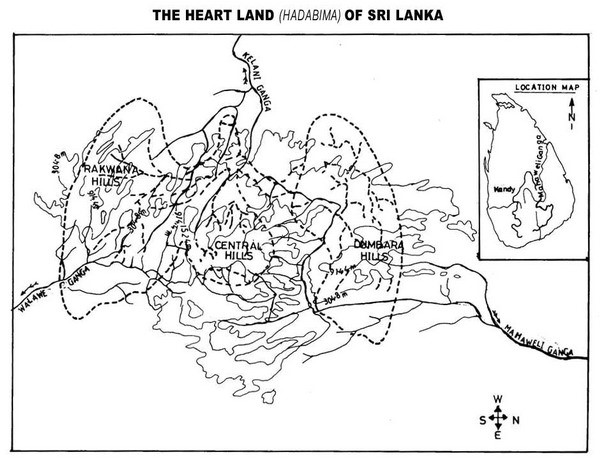


 Targeting Dr. Harsha de Silva by senior SJB members began a couple of years ago when he started gaining recognition as a potential future leader. The brilliant economist faced criticism a few months ago after securing state funding for development work in Kotte. During a TV chat show explaining the process, Harsha made the remark, Mama Ambalangoda kollekk” (I am a man from Ambalangoda), which some within the party used to undermine him. Party members close to the leadership reportedly conspired to push him out of the Colombo district, seeking to move him to Galle’s nomination list, his hometown. This would free up a prime slot in Colombo for a former Hela Urumaya member, and an apparent attempt to sideline Harsha and diminish his influence within the party.
 Dr. Harsha de Silva